4 Exegetical Views for Premillennialism PDF Free Download
1 / 25/25
100%

1
Entrust Eschatology 4 Exegetical Views for Premillennialism 3/28/24
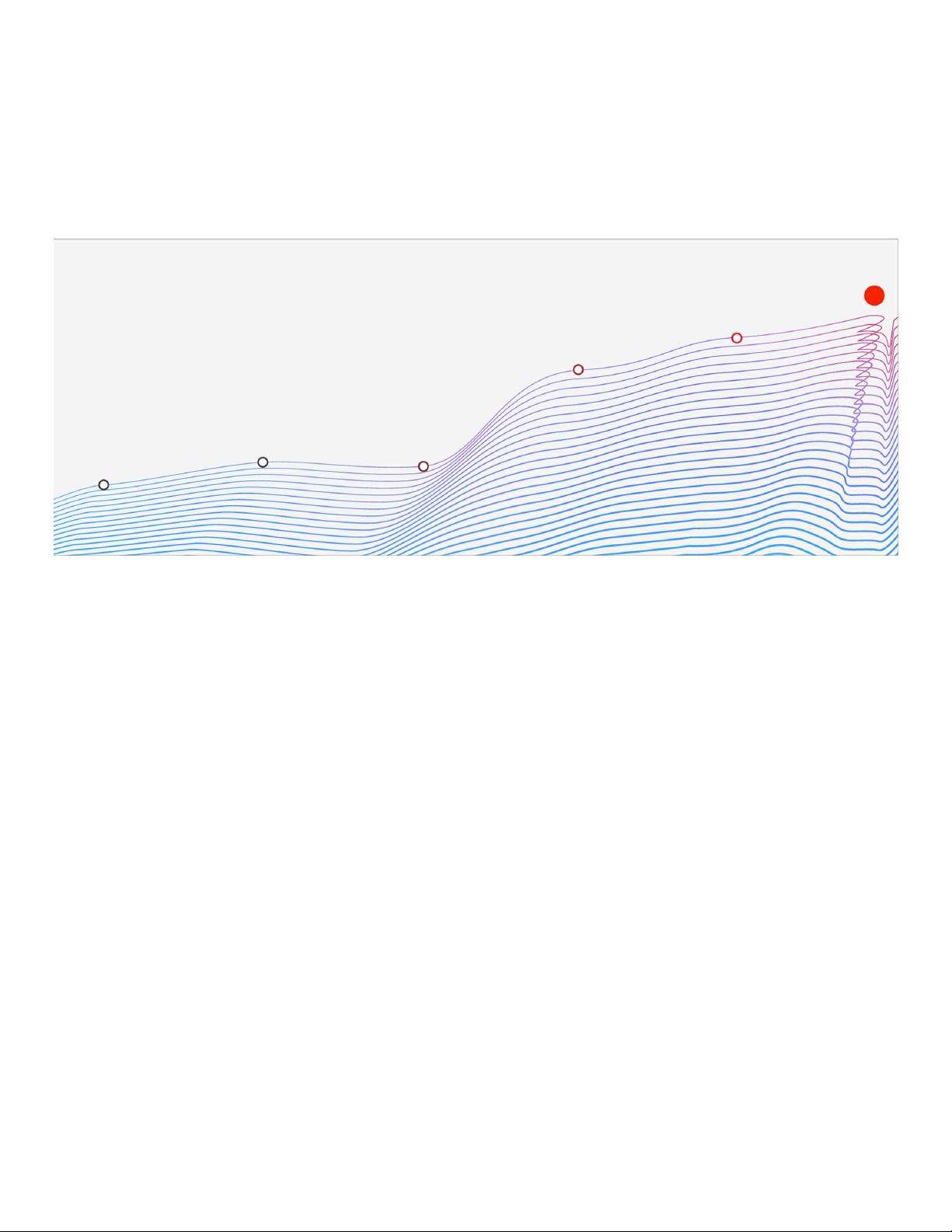
Eschatology timeline
1. The Imminent Rapture of the Church
2. The Judgment Seat of Christ
3. The Seventieth Week of Daniel
4. The Divine Restoration of Israel
5. The Second Coming of Christ
6. The Millennial Reign of Christ
7. The Final Judgment of Unbelievers
8. The Final State of Eternity
The Millennial Reign of Jesus Christ
4 Exegetical Issues which Demonstrate that Premillennialism is the Biblical View of
Eschatology
1) Exegetical Issue #1: The Duration of the Millennium
2) Exegetical Issue #2: The Timing of Satan’s Binding
3) Exegetical Issue #3: The Nature of the First Resurrection
4) Exegetical Issue #4: The Chronology of Revelation 19—20

2
Exegetical Issue #1 Which Supports a Premillennial View of Eschatology: The
Duration of the Millennium
A. The Length of the Millennium
1. The length of the Millennial Kingdom is not specified in the Old Testament
2. Designated “Many Days” in Isaiah 24:22
3. Designated “a Thousand Years” in Revelation 20
Key Question: Should the number “1000” be understood literally or
symbolically?
B. The Challenge for Amillennialism
If the millennium = the present age, how can the 1,000 years of Rev 20 refer to a
period of time that is nearly 2,000 years and counting?
If the 1,000 years is literal, the millennium cannot be equated with the present
age.
I. The Amillennial View of the Thousand Years
The 1000 Years =
o “a symbolic number, spanning the entire church age” (Kim Riddlebarger)
o “not a literal period of one thousand years, but the entire period, perfect,
complete and extensive, between the first and second comings of Christ”
(Cornelis Venema)
The Case for the Symbolic View
a. Symbolism in the Book of Revelation
Cornelis Venema: “A book like Revelation, with its rich symbolism and
use of biblical types and figures, gives no obvious reason to take
literally the term of one thousand years.”
b. Symbolism in the Immediate Context

3
Kim Riddlebarger: “The immediate context and the figurative nature
of many words used by John, such as chain, abyss, serpent, beast, and so
on, should remind us that numbers are also symbolic of something
else.”
c. The Symbolic Use of the Number Elsewhere in Scripture
Anthony Hoekema: “Since the number ten signifies completeness, and
since a thousand is ten to the third power, we may think of the
expression ‘a thousand years’ as standing for a complete period, a very
long period of indeterminate length.”
d. The Significance of the Symbolism
1. The Symbolic Significance of the Number 1000
“a long era”
“a long period of time”
“an indefinitely long period of time”
“an age-long, but definitely limited period of time”
“an extensive period of time”
“an extended, but indefinite, period of time”
“an ideal period of time”
“an ideal epoch”
“a great epoch in human history”
“a complete period”
“a time of completion”
“absolute completeness”
“the complete time that God has determined”
“a complete period of time, the length…known only by God”
“the exceeding fullness of the divine action”
“a very long period of indeterminate length”
“a period of fullness
“completion and perfection [in] God’s redemptive plan”
“the designated space of time within which the triune God will
complete his redemptive purpose”

4
II. The Premillennial View of the Thousand Years
A. The Case for the Literal View
1. The Literal Use of Numbers in Revelation
Besides the six times that the number “1000” is used in Revelation 20:1-7,
whenever a number is used with a time indicator elsewhere in the book—(2:10
(“ten days”); 9:5 (“torment for five months”), 9:10 (“five months”); 11:2 (“42
months”), 11:33 (“1260 days”), 9 (“3 ½ days”); 12:6 (“1260 days”); 13:5 (“42
months”)—there is no clear indication that it is symbolic.
2. The Literal Use of the Number 1000 Elsewhere in Scripture
Genesis 20:16 To Sarah he said, “Behold, I have given your brother a thousand
pieces of silver; behold, it is your vindication before all who are with you, and
before all men you are cleared.”
Exodus 18:25 Moses chose able men out of all Israel and made them heads over
the people, leaders of thousands, of hundreds, of fifties and of tens.
3. The Use in 2 Peter 3:8
The context:
2 Peter 3:3–9 Know this first of all, that in the last days mockers will come with their
mocking, following after their own lusts, 4 and saying, “Where is the promise of His
coming? For ever since the fathers fell asleep, all continues just as it was from the
beginning of creation.” 5 For when they maintain this, it escapes their notice that by
the word of God the heavens existed long ago and the earth was formed out of water
and by water, 6 through which the world at that time was destroyed, being flooded
with water. 7 But by His word the present heavens and earth are being reserved for
fire, kept for the day of judgment and destruction of ungodly men. 8 But do not let
this one fact escape your notice, beloved, that with the Lord one day is like a
thousand years, and a thousand years like one day. 9 The Lord is not slow about His
promise, as some count slowness, but is patient toward you, not wishing for any to
perish but for all to come to repentance.
What is context? Peter’s point? The point of using the number, 1000?
5
4. The Use of Indefinite Temporal Expressions in Revelation
“for a little while longer” (6:11)
“a short time” (12:12)
“a little while” (17:10)
“for a short time” (20:3)
B. A Closer Look at the Symbolic View
1. Contrasting Approaches to Identifying Symbolic Language
Premillennial Approach: Assume the language is literal (unless compelled to take
it symbolically)
Bernard Ramm: “Whenever we read a book, an essay, or a poem we presume the
literal sense in the document until the nature of the literature may force us to
another level…. The non-literal is always a secondary meaning which presumes
an already existing literal understanding of literature. This previous stratum of
language is the necessary point of departure for the interpretation of all
literature.”
Amillennial Approach: Assume the language is symbolic (unless compelled to
take it literally)
Either Way: Specific criteria must be identified.
George Ladd: “The recognition of the symbolic language of the Apocalypse does
not carry with it the corollary that every phrase must involve a symbol.”
2. Three Questions for Identifying Symbolic Language
a. Does it possess a degree of absurdity when taken literally?
“Thousand Years” in Revelation 20: Yes No
b. Does it possess a degree of clarity when taken symbolically?
“Thousand Years” in Revelation 20: Yes No

6
c. Does it fall into an established category of symbolic language?
“Thousand Years” in Revelation 20: Yes No
3. Amillennial Criteria for Identifying Symbolic Language
G.K. Beale, The Book of Revelation, p. 57. How to identify symbolic language:
formal linking of two words of totally different meanings so that one is
compared to the other (1:20)
use of a key descriptive term to alert the reader to the presence of a comparative
relationship (1:20; 11:8)
Rev 11:8 And their dead bodies will lie in the street of the great city which spiritually is
called Sodom and Egypt, where also their Lord was crucified.
the impossibility of any intelligible literal interpretation (10:10)
Rev 10:10 I took the little book out of the angel’s hand and ate it, and in my mouth it was
sweet as honey; and when I had eaten it, my stomach was made bitter.
a statement that would be outrageously false or contradictory if taken literally
context that renders a literal interpretation improbable (2 Pet 3:8-9)
clear and repeated figurative use of the same word elsewhere in the Apocalypse
Key Question: Do these criteria lead to a symbolic interpretation of the “thousand
years”?

7
Exegetical Issue #2 Which Supports a Premillennial View of Eschatology: The Timing
of Satan’s Binding
I. Introduction
Rev 20:1-3 Then I saw an angel coming down from heaven, holding the key of the abyss
and a great chain in his hand. 2 And he laid hold of the dragon, the serpent of old, who
is the devil and Satan, and bound him for a thousand years; 3 and he threw him into the
abyss, and shut it and sealed it over him, so that he would not deceive the nations any
longer, until the thousand years were completed; after these things he must be released
for a short time.
Key Question: Is the binding of Satan present or future?
Amillennial Premillennial
Timing of Binding: Present (now/church age) Future (at the return of Christ)
Degree of Restriction: Partial Complete
II. The Premillennial Argument
Since amillennialism teaches that the millennium of Revelation 20 is current
(from the cross until the return of Christ), the view also holds that Satan is
currently bound and sealed in the abyss (Rev 20:2-3).
The binding of Satan in Revelation 20 is incompatible with the NT’s portrayal of
his influence during the present age, and therefore the millennium must be
future, taking place between the Second Coming (Rev 19) and the eternal state
(Rev 21–22).
A. The Absolute Degree of the Restriction
Satan is seized (v. 2)
Satan is bound (v. 2)
Satan is thrown into abyss (v. 3)
The abyss is shut and sealed over him (v. 3)
8
Wayne Grudem: “The imagery of throwing Satan into a pit and shutting it and
sealing it over him gives a picture of total removal from influence on earth.”
B. The Present-Day Activity of Satan
The NT teaching on the activity of Satan during this present age presents a
significant obstacle to the amillennial view that, presently during the
millennium, Satan has been “seized,” “bound,” “sealed” in the abyss, and not
“deceive the nations any longer” (Rev 20:2-3).
The following statements are made in the NT, which was written after the
resurrection of Christ, and thus during the time which amillennialism teaches
that Satan is seized, bound, sealed in the abyss, and unable to deceive the
nations:
1) He is “the god of this age” (2 Cor 4:4).
2) He has “blinded the minds of the unbelieving so that they might not see the
light of the gospel of the glory of Christ” (2 Cor 4:4).
3) He is “the ruler of this world” (John 12:31).
4) He “prowls about like a roaring lion” (1 Pet 5:8).
5) He tells lies (John 8:44).
6) He tempts believers to sin (1 Cor 7:5; Eph 4:27).
7) He disguises himself as an angel of light (2 Cor 11:14).
8) He seeks to deceive the children of God (2 Cor 11:3).
9) He snatches the gospel from unbelieving hearts (Matt 13:19; Mark 4:15;
Luke 8:12; cf. 1 Thess 3:5; 1 Tim 1:20; 4:1–2).
10) He takes advantage of believers (2 Cor 2:11).
11) He influences people to lie (Acts 5:3).
12) He holds unbelievers under his power (1 Jn 3:8–10; 5:19; Eph 2:2; Acts
26:18).
13) He torments the servants of God (2 Cor 12:7).
14) He thwarts the progress of ministry (1 Thess 2:18; Rev 2:10).
15) He seeks to destroy the faith of believers (Luke 22:31).
16) He wages war against the church (Eph 6:11–17).
17) He traps and deceives unbelievers (2 Tim 2:26).
18) He holds unbelievers captive to do his will (2 Tim 2:26).
CONCLUSION: Satan can either be locked away in the abyss, or he can be engaging in
the various activities ascribed to him in the present age, but he cannot be both. The
binding and incarceration of Satan in the abyss cannot be a present-day reality, thus
rendering the amillennial understanding of Revelation 20 view as untenable.
9
III. The Amillennial View
A. The Present-Day Timing of Satan’s Binding
Binding took place at the first coming of Christ
Incarceration extends throughout the present age
Therefore, the 1000 years equals the present age
B. The Partial Restriction of Satan’s Binding
Binding does not eliminate Satan’s activities
It merely limits them to some extent
Therefore, Satan is both active on earth and imprisoned in the abyss
Kim Riddlebarger: “The point of John’s vision was that the angel restrains Satan’s
evil activities. His binding does not eliminate them. Even though Satan is presently
bound and cannot deceive the nations, he remains a dangerous foe, the same way in
which a mortally wounded animal is far more dangerous than a healthy one.”
IV. The Amillennial Argument
To argue for their view, amillennialists typically point to three related aspects of the
binding of Satan: (a) the significance of the abyss, (b) the purpose of the binding, and (c)
the parallels to Revelation 20:1–3 elsewhere in the New Testament
A. The Significance of the Abyss
AMILLENNIAL ARGUMENT
The abyss is not an actual location.
The abyss = “one of the various metaphors representing the spiritual sphere in
which the devil and his accomplices operate” (G.K. Beale).
Therefore, Satan can be active on earth while simultaneously in the abyss.
10
PREMILLENNIAL RESPONSE:
The abyss is an actual location in the spiritual realm where evil spirits are
confined and prevented from any earthly activity/influence.
The Abyss in Luke 8:26–33
Luke 8:30–31 And Jesus asked him, “What is your name?” And he said,
“Legion”; for many demons had entered him. 31 They were imploring Him not to
command them to go away into the abyss.
o The abyss is an actual location.
o The abyss is a well-known spirit-prison.
o Confinement in this spirit prison involves the complete removal of
demonic activity and influence upon the earth.
These evil spirits could either be imprisoned in the abyss or they could be
prowling about the earth—engaged in demonic activities—but they could not be
both.
Questions for the Amillennial View:
Regarding Luke 8:30-31
o What sense does it make for demons to plead with Jesus not to cast them
into the spiritual sphere where they normally function?
o Weren’t they already there prior to their encounter with Jesus?
o If the abyss is the spiritual realm in which demons operate, how is being
confined in the abyss any different from indwelling the demon-possessed
man or the herd of swine?
The Abyss in Revelation 9:1–6
o Demons must first be released from the abyss before they are able to cause
harm on the earth.
11
The Abyss in Revelation 20:1–3
o Satan is thrown “into the abyss” which is “shut” and “sealed” over him.
o Satan must first be “released from his prison” (v. 7) before he can “come
out to deceive the nations…in the four corners of the earth” (v. 8).
o But as long as he is confined in the abyss, Satan is not able to depart from
his prison and therefore his activity on earth is completely non-existent.
Questions for the Amillennial View:
How can Satan be seized and thrown into the spiritual realm in which he
normally functions?
Wasn’t he already there prior to being seized?
This would be similar to seizing a dangerous shark in the Pacific Ocean and
locking it in a “prison,” only to then define that prison as the entirety of the
Pacific Ocean.
Conclusion: Rather than allowing for the kind of freedom that the amillennialist
claims, imprisonment in the abyss eliminates the activity of the devil on earth and
therefore the binding of Satan in Revelation 20 cannot be a present reality.
B. The Purpose of the Binding
AMILLENNIAL ARGUMENT
The purpose clause in Rev 20:3 indicates that Satan is bound in one respect and
one respect only: “so that he would not deceive the nations any longer.”
Therefore, Satan is free to partake in every other activity attributed to him in the
NT.
PREMILLENNIAL RESPONSE:
The degree of Satan’s restriction in Revelation 20 is determined not by the
purpose clause alone, but also by the location of his imprisonment, the abyss,
which removes him from earth and cuts him off from any influence there.
12
Furthermore, the NT teaches that Satan is actively deceiving the nations
throughout the present age:
o 2 Corinthians 4:3–4 And even if our gospel is veiled, it is veiled to those
who are perishing, 4 in whose case the god of this world has blinded the
minds of the unbelieving so that they might not see the light of the gospel
of the glory of Christ, who is the image of God.
o 2 Timothy 2:26 and they may come to their senses and escape from the
snare of the devil, having been held captive by him to do his will.
o 1 John 5:19 We know that we are of God, and that the whole world lies in
the power of the evil one.
The NT also teaches that Satan will continue to deceive the nations right up until
the Second Coming when he is cast into the abyss:
o Revelation 12:9 And the great dragon was thrown down, the serpent of
old who is called the devil and Satan, who deceives the whole world; he
was thrown down to the earth, and his angels were thrown down with
him.
See also:
o Revelation 13:14
o Revelation 18:23
o Revelation 19:20
C. The New Testament Parallels
AMILLENNIAL ARGUMENT
Several NT passages describe the victory of Jesus over Satan at the first coming of
Christ (Matt 12:29; Luke 10:17–18; John 12:31-32; Col 2:15; Heb 2:14–15; 1 John 3:8;
Rev 12:7–11).
These passages are said to be parallel to the binding of Satan in Rev 20 and
therefore indicate that this binding took place at the start of the present age.
13
PREMILLENNIAL RESPONSE:
None of these passages actually refers to what is described in Rev 20:1–3, and
therefore they tell us nothing about the meaning of John’s vision.
o Matthew 12:29 “Or how can anyone enter the strong man’s house and
carry off his property, unless he first binds the strong man? And then he
will plunder his house.”
The inability of Satan to prevent Jesus from delivering demoniacs
(Matt 12:29) is simply not the same as his inability to deceive the
nations of the world (Rev 20:1–3).
o John 12:31–32 “Now judgment is upon this world; now the ruler of this
world shall be cast out.”
This, and any other passage, must be understood alongside the 18 points
above under “The Present-Day Activity of Satan.”
o Colossians 2:15 “When He had disarmed the rulers and authorities, He
made a public display of them, having triumphed over them through
Him. “
Cf. Hebrews 2:14–15 / 1 John 3:8
o These passages describe the victory accomplished by Jesus through His
death and resurrection as He triumphed over Satan and redeemed from
his control those who believe in Christ.
o The amillennial argument cannot account for the release of Satan in
Revelation 20, for whatever is accomplished in the imprisonment of verses
1–3 is undone in the release of verse 7.
o If the binding of Satan in Revelation 20 refers to Christ’s work of
redemption on the cross, the finished work of Christ turns out to be His
unfinished work when Satan is released!
o Therefore, these passages must not describe the same act of divine
judgment against Satan as what John describes in Revelation 20:1–3.
o George Ladd: “These words are difficult to understand if they are applied
to our Lord’s binding of Satan in his earthly ministry. The victory he won

14
over Satan [on the cross] was won once for all. Satan will never be loosed
from the bondage that Christ won by his death and resurrection.”
Revelation 12:7–11
Revelation 12:7–11 And there was war in heaven, Michael and his angels waging
war with the dragon. The dragon and his angels waged war, 8 and they were not
strong enough, and there was no longer a place found for them in heaven. 9 And
the great dragon was thrown down, the serpent of old who is called the devil
and Satan, who deceives the whole world; he was thrown down to the earth, and
his angels were thrown down with him. 10 Then I heard a loud voice in heaven,
saying, “Now the salvation, and the power, and the kingdom of our God and the
authority of His Christ have come, for the accuser of our brethren has been
thrown down, he who accuses them before our God day and night. 11 “And they
overcame him because of the blood of the Lamb and because of the word of their
testimony, and they did not love their life even when faced with death.
o According to amillennialism, the following parallels show that Revelation
12:7–11 describes the same casting down of Satan as Revelation 20:1–3,
which indicates that both passages describe the present age: Riddlebarger,
A Case for Amillennialism, 229.
15
o This argument focuses on superficial points of similarity while ignoring
key differences between the two passages, differences which make it
impossible for them to be describing the same events or time period.
KEY DIFFERENCES:
Revelation 12 Revelation 20
Origin: Heaven Earth
Destination: Earth Abyss
Outcome: Deception No Deception
None of these supposed parallels actually refer to what is described in Rev 20:1–
3, and therefore this approach fails to bring clarity to the divinely intended
meaning of John’s vision.
V. Conclusion
Despite the aforementioned passages proposed by amillennialism, the binding of
Satan in Revelation 20 is incompatible with the NT’s portrayal of his influence
during the present age. Therefore, the millennium must be future, taking place
between the Second Coming (Rev 19) and the eternal state (Rev 21–22).

16
Exegetical Issue #3 Which Supports a Premillennial View of Eschatology: The Nature
of the First Resurrection
I. Introduction
Rev 20:4-6 Then I saw thrones, and they sat on them, and judgment was given to them.
And I saw the souls of those who had been beheaded because of their testimony of
Jesus and because of the word of God, and those who had not worshiped the beast or
his image, and had not received the mark on their forehead and on their hand; and they
came to life and reigned with Christ for a thousand years. 5 The rest of the dead did not
come to life until the thousand years were completed. This is the first resurrection. 6
Blessed and holy is the one who has a part in the first resurrection; over these the
second death has no power, but they will be priests of God and of Christ and will reign
with Him for a thousand years.
Revelation 20 foretells of a resurrection that will occur during the millennium.
Another major issue facing amillennialism and premillennialism is the nature of
this “first resurrection.”
Initial Observations:
Key Question: Is the “first resurrection” _physical_ or _spiritual_?
Comparison of Views:
Millennial View First Resurrection Second Resurrection
Premillennialism: Physical Resurrection Physical Resurrection of the Righteous of
the Wicked
Amillennialism: Spiritual Resurrection Physical Resurrection of the Righteous of
Righteous and Wicked
KEY DISTINCTION:
Premillennialism: The First Resurrection is _______________________.
Amillennialism: The First Resurrection is _________________________.
17
II. The Premillennial View of the First Resurrection
A. The Premillennial Argument
1. The Use of the Word “Resurrection”
38 out of its other 39 uses in the NT refer to a physical resurrection
This places the burden of proof on those who reject a physical resurrection to
demonstrate that it should be taken spiritually/figuratively.
2. The Confirmation of the Immediate Context
a. The Identity of the Resurrected
“had been beheaded because of their testimony of Jesus and because of the word
of God, and those who had not worshiped the beast or his image, and had not
received the mark on their forehead and on their hand” (v. 4)
Those who “had not worshiped the best or his image” refers to people
who were mentioned earlier in Revelation 13:12 and 15; actual people who
experienced persecution for their faithfulness to Christ.
b. The Description of the Resurrections
The repetition of the same form of the same verb ἔζησαν (“they came to life”) in
verses 4 and 5 indicates that both resurrections must be physical.
First: “they came to life ἔζησαν and reigned with Christ for a thousand years” (v.
4)
Second: “the rest of the dead did not come to life ἔζησαν until the thousand years
were completed” (v. 5a)
B. The Primary Objection
The most common objection to the premillennial view is that the Bible teaches a
single, general resurrection of the righteous and the wicked at the same time in the
following passages: Daniel 12:2, John 5:28–29, Acts 24:15. Amillennialism holds: 1) the
millennium is the present church age; 2) the physical resurrection of the righteous and
wicked must happen simultaneously; 3) the wicked were not physically resurrected at
18
the time of the cross (when amillennialism teaches the millennium began); 4) therefore,
the resurrection spoken of in Rev 20 must be spiritual/figurative.
PREMILLENNIAL RESPONSE:
III. The Amillennial Views of the First Resurrection
A. View 1: The Regeneration of the Believer
The “first resurrection” refers to the regeneration of believers at the point of
conversion, which is often described as a rising from the dead in the spiritual
realm (e.g., Eph 2:1–7; Col 2:12–13; 3:1; 1 John 3:14).
DIFFICULTIES WITH THIS VIEW:
1. The word “resurrection” never refers to regeneration in the NT.
2. The phrase “for a thousand years” (v. 4) indicates that all who are raised
in the first resurrection are resurrected together at the beginning of the
millennium and reign together for the entirety of the thousand years.
3. According to this view, the saints in verse 4 are not regenerated until after
they are martyred for their faith in Christ.
B. View 2: The Death of the Believer
The “first resurrection” refers to the believer’s entrance into heaven at the point
of physical death (and reigning with Christ refers to the believer’s experience of
blessing in the intermediate state).
DIFFICULTIES WITH THIS VIEW:
1. The word “resurrection” never refers to the translation of the believer’s soul into
heaven at the point of death.
2. This view the first resurrection is completely inconsistent with the very concept of a
“resurrection.”
Physical Resurrection: from physical death physical life
Spiritual Regeneration: from spiritual death spiritual life
19
Death of Believer: from physical life physical death
from spiritual life spiritual life
(on earth) (in heaven)
3. The phrase “for a thousand years” (v. 4) indicates that all who are raised in the first
resurrection are resurrected together at the beginning of the millennium and reign
together for the entirety of the thousand years.

20
Exegetical Issue #4 Which Supports a Premillennial View of Eschatology: The
Chronology of Revelation 19—20
I. Introduction
Revelation 19:11–13 And I saw heaven opened, and behold, a white horse, and He
who sat on it is called Faithful and True, and in righteousness He judges and wages
war. 12 His eyes are a flame of fire, and on His head are many diadems; and He has a
name written on Him which no one knows except Himself. 13 He is clothed with a
robe dipped in blood, and His name is called The Word of God … 15 From His
mouth comes a sharp sword, so that with it He may strike down the nations, and He
will rule them with a rod of iron; and He treads the wine press of the fierce wrath of
God, the Almighty … 16 And on His robe and on His thigh He has a name written,
“KING OF KINGS, AND LORD OF LORDS.” … 19 And I saw the beast and the
kings of the earth and their armies assembled to make war against Him who sat on
the horse and against His army … 20 And the beast was seized, and with him the
false prophet who performed the signs in his presence, by which he deceived those
who had received the mark of the beast and those who worshiped his image; these
two were thrown alive into the lake of fire which burns with brimstone. 21 And the
rest were killed with the sword which came from the mouth of Him who sat on the
horse, and all the birds were filled with their flesh.
Revelation 20:1–2 Then I saw an angel coming down from heaven, holding the key
of the abyss and a great chain in his hand. 2 And he laid hold of the dragon, the
serpent of old, who is the devil and Satan, and bound him for a thousand years
Key Question: Do the events of Revelation 20 occur after the events of Rev 19:11–
21? Which is to say, does Christ return bodily to begin his Millennial Reign at the
end of the 7-year Tribulation? (as premillennialism teaches)
OR
Do the events of Revelation 19 occur before Revelation 20? Does Rev 20 take the
reader back to the beginning of the NT era so that verses 1–6 describe the present
age? (as amillennialism teaches)
Comparison of the 2 Views
The Sequential View of Premillennialism
The Millennium described in Rev 20 follows the Second Coming of Christ in Rev 19

21
The Recapitulation View of Amillennialism
The Millennium described in Rev 20 precedes the Second Coming of Christ Rev 19
II. The Sequential View of Premillennialism
A. The Introductory “And/Then I Saw” (Rev 20:1)
“Then I saw an angel coming down from heaven…”
Used 32x in Book of Revelation
Almost always introduces historical progression
B. The Content of the Visions (Rev 20:1–6)
The binding of Satan is future (not present)
The first resurrection is physical (not spiritual)
The thousand years is literal (not symbolic)
Therefore: The chronology of Rev 19-20 must be sequential
C. The Use of “Any Longer” (Rev 20:3)
“so that [Satan] would not deceive the nations any longer” (Rev 20:3)
Rev 12–19 repeatedly highlights the satanic deception of the nations in the
second half of the Tribulation (12:9; 13:14; 16:14; 18:23; 19:19–20).
In Rev 20, immediately following the Tribulation, Satan is then locked in the
abyss “so that he would not deceive the nations any longer” (Rev 20:3), which
indicates the interruption of a deception that was already taking place
(during the Tribulation).
This connection indicates a historical progression in which the binding of
Rev 20 is designed to halt the deception described in Rev 12–19.
Therefore, the events of Revelation 20 cannot be said to occur after
Revelation 19.

22
D. The Description of the Lake of Fire (Rev 20:10)
At the Second Coming of Christ, the beast and false prophet are thrown into
the lake of fire (Rev 19:20).
At the end of the thousand years, Satan is “thrown into the lake of fire and
brimstone, where the beast and the false prophet are also” (Rev 20:10).
Therefore, the most natural way to read Revelation 19–20 is to see a
chronological sequence in which:
o The beast and false prophet are cast into the lake of fire (19:20).
o Satan is then bound and sealed in the abyss for 1000 years (20:1–6).
o Then, Satan is released from the abyss after the 1000 years (20:7).
o Satan attacks Jerusalem and is defeated by fire from heaven (20:8–9).
o Satan is cast into the lake of fire where the beast and false prophet already are
(20:10).
Key Observation: In support of the premillennial position, there is no compelling
exegetical reason to depart from a sequential reading of Rev 19–20.
III. The Amillennial Argument for Recapitulation
The three most common amillennial arguments for the non-sequential,
recapitulation view of Revelation 19-20 concern the following:
A. The Alleged Discrepancy Between Revelation 19:11–21 and 20:1–3
If all of Christ’s enemies are destroyed in Rev 19:11–21—and if Rev 20:1–3
describes events after that destruction—there won’t be any unbelieving nations
left for Satan to deceive.
According to the sequential/premillennial view, where do these unbelieving
nations come from when Satan deceives the nations after his release in Rev 20:8?
23
TWO PREMILLENNIAL RESPONSES:
1. Revelation 19:17-21 does not require that all unbelievers who are alive on earth at the
Second Coming be destroyed.
However:
2. The nations will likely arise from Tribulation converts who are alive at the time of
Christ’s return, and thus enter the millennium in their natural bodies and give birth to
subsequent generations of non-glorified people.
B. The Similarities between the Battles in 16:12–16, 19:11–21, and 20:7–10
Amillennialism holds that Revelation 16:12–16, 19:11–21, and 20:7–10 are all said
to describe the same final battle when Jesus will return to earth to destroy His
enemies. As evidence for this, amillennialists often highlight three similarities
between the three passages:
1. The Identity of the Enemies is the Same
Rev: 16:14: “the kings of the whole world”
Rev 19:18: “kings…commanders and…mighty men” “all men, both free and
slave, both small and great”
Rev 20:8: “the nations that are at the four corners of the earth”
PREMILLENNIAL RESPONSE:
Similar language does not require an identical event
o Rev. 16:14 describes the preparation for the battle at Christ’s return
o Rev. 19:18 describes the actual battle at Christ’s return
o The context of Rev. 20:8 is after the millennium
2. The Gathering of the Enemies is the Same
Not only are the enemies deceived into participating in all three passages, but
their gathering is described in nearly identical terminology:
Rev 16:14: “to gather them together for the war”
Rev 19:19: “assembled to make war”
24
Rev 20:8: “to gather them together for the war”
PREMILLENNIAL RESPONSE:
Again, similar languages does not require the same event, especially as
Revelation describes a chronology of events (e.g. “And I saw…”).
The battle described in Revelation 16 and 19 at the return of Christ was led by the
beast, the one in Revelation 20 by Satan. The army of the battle in Rev. 16 and 19
was destroyed by the sword from the mouth of the Lord, the army in Rev. 20 by
fire coming down from heaven.
3. The Destruction of the Enemies is the Same
In two of the three passages, the enemies of God experience the final and eternal
wrath of God through the means of burning sulfur:
o Rev 19:20: beast and false prophet “thrown alive into the lake of fire”
o Rev 20:9: “fire came down from heaven and devoured them”
o Rev 20:10: “the devil…was thrown into the lake of fire”
PREMILLENNIAL RESPONSE: Rev 19 describes the beast and the false prophet being
thrown into the lake of fire at the return of Christ, while Rev 20 describes the
devil/Satan being thrown therein after the millennial reign of Christ.
C. The Fulfillment of Ezekiel 38–39 in Revelation 19–20
Amillennialism teaches that the prophecy of Ezekiel 38–39 is fulfilled in the
events of Rev 19:11–21 and 20:7–10.
This is said to prove that Rev 19:11–21 and 20:7–10 provide two different camera
angles of the same battle at the end of present age.
PREMILLENNIAL RESPONSE:
Ezekiel 38–39:
Gog = the prince of Rosh, Meschech, and Tubal (38:2–3)
Magog = the land where Gog is from (38:2; 39:6)
Revelation 20:
25
Gog & Magog = the nations of the world (8–9)
Rev 20:8 “and will come out to deceive the nations which are in the four corners
of the earth, Gog and Magog, to gather them together for the war; the number of
them is like the sand of the seashore.”
Therefore, the aforementioned exegetical evidence refutes the amillennial
idea that the identity of the enemies, the gathering of the enemies, and the
destruction of the enemies are all the same. Consequently, the assertion that
Revelation 20 occurs before Revelation 19 is not biblically correct.
IV. Conclusion
The term “1000 years” in Rev. 20:1-6 Literal
o And thus cannot support a view that 1000 years refers to a symbolic
period of time during this present church age between Christ’s two
advents
Satan’s Binding described in Rev. 20:3 Future
o And thus cannot support the idea of a partial binding of Satan during this
present church age between Christ’s two advents
The first resurrection described in Rev. 20:5 Physical
o And thus cannot support the idea that Revelation 20 describes this present
church age between Christ’s two advents where “resurrection” is
something other than physical
The chronology of Rev. 19-20 Sequential
o And thus cannot support the idea that: 1) Revelation 20 occurs after
Revelation 19 and 2) Revelation 20 describes this present church age
between Christ’s two advents
Therefore, it has been demonstrated by these four exegetical issues (The Duration
of the Millennium, The Timing of Satan’s Binding, The Nature of the First Resurrection,
The Chronology of Revelation 19—20) that Scripture teaches a premillennial
understanding of eschatology, rendering the amillennial view of eschatology is
biblically untenable.