Hall Caine Correspondences PDF Free Download
1 / 154/154
100%

Hall Caine Correspondences
Word count: 40,218
Ophélie Malcolm
Student number: 01502906
Supervisor: Prof. Dr. Marysa Demoor
A dissertation submitted to Ghent University in partial fulfilment of the requirements for the degree of
Master of Arts in Linguistics and Literature (Dutch - English).
Academic year: 2019 – 2020


Malcolm Ophélie 1
Abstract
Sir Thomas Henry Hall Caine (14 May 1853 – 31 August 1931) was a much celebrated and popular
British author in his days. His works were widely sold and his readership reached overseas in America
and Australia. Large sales figures imply large audiences, and this inevitably generates influence. In the
Victorian era, influence through literature was considered dangerous if it did not align with the moral
expectations of society. Most literary works were under scrutiny for their (im)moral content and some
were even censored. While Hall Caine aimed to educate his audience and raise awareness about the
social injustices in the Victorian society, some of his works were deemed immoral by critics.
I will have a closer look at what the periodical press tells us about Hall Caine. If Caine is not
well-known today, the contrary is true for his own age when he was a widely read author. A considerable
amount of articles appeared about him, as well as reviews of his novels. He was a celebrity who
simultaneously experienced admiration as well as continuous scrutiny. In this dissertation I will try to
find out why the notability of a celebrated author like Hall Caine has diminished overtime. I will focus
on the role of criticism and reviewing in the periodical press and how this affected Hall Caine’s
popularity.
My central focus is the body of letters that accompany this work. The correspondences are all
letters addressed to Hall Caine. The content of the letters deals with a large range of topics, ranging from
film rights to costume prices for plays. But quite strikingly, most of the letters deal with reviewing in
some way.
I will delineate what literary genre Hall Caine’s work belongs to. It is necessary to know his
conception of literature in order to understand what is to be expected from his works, and whether his
critics took this into account. His literary output can be defined as melodramatic romances. Important
to note is Hall Caine’s affinity with idealism. We will have a closer look at his essay “The New
Watchwords of Fiction”, in which he praises idealism over realism. Recent studies, however, tend to
consider Caine’s work as a merge of idealism and realism. Given his journalistic background, he often
integrated his observations in his literature, an approach that ties in with realism.

Malcolm Ophélie 2
In many ways, Hall Caine was a versatile artist. Some of his works were adapted into three
different media: book, film, drama.
The reviews and articles on the subject of Caine exposed to what extent the purpose of his
writing was misunderstood and how he reacted to the negative reactions. The fact that he wrote popular
fiction and had a broad audience was frowned upon by his critics. They thought Caine wrote sensational
novels to boost financial gains. Most articles and critics tended to address the same inadequacies in
Caine’s works. Very often critics argued that his novels were highly immoral, while Caine contested
that his novels were meant to expose the immoralities of society and awaken higher morals in his readers.
We will see how this criticism in the reviews did not align with the commentary Caine received in his
correspondences.

Malcolm Ophélie 3
Acknowledgements
The transcription of the letters was an enriching experience. Not only did I learn a lot about Hall Caine
throughout the process, I could also delve into his professional and personal letters. I would hereby like
to thank professor Marysa Demoor for giving me this opportunity. The body of correspondences belongs
to her private collection. For a long time these correspondences had been waiting to be analysed and
transcribed and it was an honour to be the first person who could work on this collection. I am also very
grateful to the University of Ghent for providing acces to online periodical archives. Finally, I would
like to thank my parents and my brother who have read my work and have communicated their feedback.

Malcolm Ophélie 4
Table of Contents
Abstract ..............................................................................................................................................1
Acknowledgements .............................................................................................................................3
List of Figures ....................................................................................................................................7
List of Abbreviations ..........................................................................................................................9
List of Symbols...................................................................................................................................9
PART I : Hall Caine and his image in the periodical press ................................................................. 10
Introduction: What Hall Caine is today and what he used to be ...................................................... 11
Methodology................................................................................................................................. 15
State of the art ............................................................................................................................... 17
The author in Victorian society.................................................................................................. 17
Hall Caine’s Topicality ............................................................................................................. 20
Hall Caine and Idealism ............................................................................................................ 21
Hall Caine’s hybridity ............................................................................................................... 25
Analysis ........................................................................................................................................ 28
Hall Caine concerning the war ................................................................................................... 31
Hall Caine’s Manx literature ..................................................................................................... 34
Hall Caine’s The Christian ........................................................................................................ 39
Hall Caine’s The Woman Thou Gavest Me ................................................................................. 44
Hall Caine’s response to criticism.............................................................................................. 50
Conclusion .................................................................................................................................... 58
PART II : Editorial Notes.................................................................................................................. 60
Introduction of the letters and the structure of this work ................................................................ 61
Structure of each letter .................................................................................................................. 62
Spelling and grammar issues ......................................................................................................... 63
Abbreviations and symbols ........................................................................................................... 64
PART III : Correspondences ............................................................................................................. 65
Charles Bang, employee Heinemann Ltd. ...................................................................................... 66
31 January 1923 : second serial rights of The Prodigal Son........................................................ 66
30 January 1923 : enclosed letter of William Lees to Charles Bang, ........................................... 68
Sir Arthur Beverley Baxter, journalist (1891 – 1964) ..................................................................... 69
2 January 1923 : request for a serial story .................................................................................. 69
Ralph David Blumenfeld, editor (1864 – 1948) ............................................................................. 70
27 December 1918 : Hall Caine’s Woodrow Wilson article ....................................................... 70
Mary Chandler, wife of Hall Caine (1863 – 1932) ......................................................................... 72

Malcolm Ophélie 5
27 June 1916 : The Deemster film ............................................................................................. 72
Albert Curtis Brown, literary agent (1866 – 1945) ......................................................................... 76
27 September 1924 : erroneous payment by Pearson’s Weekly .................................................. 76
26 September 1924 : enclosed letter from A.M. Head to Curtis Brown ...................................... 79
Reginald Golding Bright, drama critic (1875 – 1941) .................................................................... 80
4 November 1918 : Australian rights The Woman Thou Gavest Me ............................................ 80
8 November 1918 : World’s film rights of The Woman Thou Gavest Me .................................... 84
1 January 1919 : Darby and Joan film matter ............................................................................ 86
Date unknown : a review of The Manxman ................................................................................ 87
Sewell Haggard, editor of Nash’s Magazine (1879 – 1928)............................................................ 94
30 May 1919 : overseas publications ......................................................................................... 94
Sir William F. Jury, head of the Film Division of the British Ministry of Information .................... 96
12 December 1918 : Victory and Peace ..................................................................................... 96
John Merry Lesage, journalist and newspaper editor (1837 – 1926) ............................................... 98
11 July 1918 : France’s Day ...................................................................................................... 98
Marie Kaye Wouldes Löhr, actress (1890–1975) ......................................................................... 100
20 November 1918 : concerning a matinee .............................................................................. 100
Arthur Milner, employee J.B. Lippincott Company ..................................................................... 102
4 August 1921 : publication of The Master of Man .................................................................. 102
8 August 1921 : enclosed letter from Sydney S. Pawling to Hall Caine .................................... 103
Maurice O’Byrne ........................................................................................................................ 105
28 September 1913 : concerning Christian conventions ........................................................... 105
Sydney Southgate Pawling, librarian, publisher and cricketer (1862 – 1922) ................................ 110
Date unknown : Louis Couperus’ The Book of Small Souls ...................................................... 110
28 June 1918 : concerning a receipt and Gordon Ralph Hall Caine .......................................... 113
27 June 1918 : enclosed receipt ............................................................................................... 114
9 September 1919 : the omission of the raid scene ................................................................... 114
Charles Reade, novelist and playwright (1814–1884) .................................................................. 116
3 June [1873] .......................................................................................................................... 116
24 June 1873 ........................................................................................................................... 118
8 April .................................................................................................................................... 119
9 April .................................................................................................................................... 120
28 April [1876] ....................................................................................................................... 120
19 December ........................................................................................................................... 121
V.R.D. ........................................................................................................................................ 122
Date unknown ......................................................................................................................... 122
Malcolm Ophélie 6
Sir William Watson, author and poet (1858-1935) ....................................................................... 123
12 April 1882 : Dante Gabriel Rossetti’s death ........................................................................ 123
H. Watt, literary agent ................................................................................................................. 125
30 January 1919 : film rights of The Prodigal Son ................................................................... 125
Theodore Watts-Dunton, author and poet (1832 – 1914) .............................................................. 127
10 February 1890 : a review .................................................................................................... 127
Alfred Wilson Barrett, author (1870 – 1945) ............................................................................... 129
9 August 1913 : concerning a book and Mrs. Bouty ................................................................. 129
Wilson Barrett, actor and playwright (1846 – 1904) .................................................................... 131
27 March 1890 : Ben-my-chree ............................................................................................... 131
Pearkes Withers, author of Cassell and Co Ltd. Publishers .......................................................... 135
9 February 1923 : symposium La Garçonne ............................................................................ 135
Works Cited.................................................................................................................................... 137
Malcolm Ophélie 7
List of Figures
Figure 1: Hall Caine in the 1870s. ..................................................................................................... 10
Figure 2: Mr. and Mrs. Hall Caine at Greeba Castle, postcard, printed between 1903 and 1959. ........ 13
Figure 3: Greeba Castle, postcard, printed between 1903 and 1959. ................................................... 14
Figure 4: To My Country, by Hall Caine, appeared in The Air-Co Rag on 1 April 1918. ................... 32
Figure 5: CAINE, Hall. The Master of Man, The Story of a Sin. Philadelphia: J. B. Lippincott Co.,
1921. ................................................................................................................................................ 35
Figure 6: Parody on Caine's excessive travelling, appeared in Punch in 1902. .................................... 44
Figure 7: Ad for the American film The Woman Thou Gavest Me (1919) with Katherine MacDonald,
Jack Holt, Milton Sills, and Fritzi Brunette, on pages 456 and 457 of the April 26, 1919 Moving
Picture World. .................................................................................................................................. 47
Figure 8: Sydney Southgate Pawling by Charles Hawkins. ................................................................ 50
Figure 9: Ogden's 'Guinea Gold' cigarette card, published circa 1894-1907........................................ 55
Figure 10: Charles van Enger (cameraman), Maurice Tourneur (director) and Sir Hall Caine, c. 1923 -
taken from the Kevin Brownlow Collection 2007. ............................................................................. 60
Figure 11: Abbreviations and symbols overview. .............................................................................. 64
Figure 12: Mrs. Hall Caine, 1902. ..................................................................................................... 65
Figure 13: Hall Caine SS (+1937)Picture taken from Wreck Site. ...................................................... 80
Figure 14: Picture taken from "'For the Love of the Art': The life and work of Percy Nash, film
producer and director of the silent era." Film History: An International Journal, vol. 19 no. 3, 2007, p.
292-301. ........................................................................................................................................... 82
Figure 15: View of Fort Anne Hotel from a 1920's postcard. ............................................................. 84
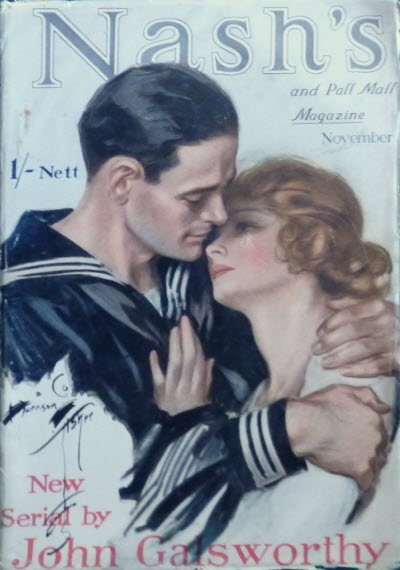
Figure 16: cover of Nash's magazine, November 1918. ..................................................................... 94
Figure 17: British poster advertising a fundraiser for the French Red Cross during the celebration of
France's Day on 14 July. Image taken from Temple University Libraries. .......................................... 98
Figure 18: Hall Caine's article on France's Day, 12 July 1918. ........................................................... 99
Figure 19: An advertisement for the play Nurse Benson, starring Marie Löhr, United Kingdom, 1918,
National Library of Medicine. ......................................................................................................... 100
Figure 20: Image taken from Maria Luddy's Prostitution an Irish Society, 1800-1940. ..................... 109
Figure 21: Excerpt taken from The Dart: A Journal of Sense and Satire, 13 Aug 1897, p.7. ............. 110
Figure 22: Louis Couperus' The Book of Small Souls, original Dutch version. ................................ 111
Figure 23: Charles Reade, by Charles Mercier, given to the National Portrait Gallery, London in 1929.
....................................................................................................................................................... 116
Figure 24: Sir William Watson, oil painting by R.G. Eves; in the National Portrait Gallery, London.
....................................................................................................................................................... 123
Figure 25: The Pines, 11 Putney Hill ............................................................................................... 127

Malcolm Ophélie 8
Figure 26: A corner in The Pines, 11 Putney Hill............................................................................. 128
Figure 27: An original programme for the Ben-my-Chree on 17 May 1888. .................................... 131
Figure 28: Article with poem on Russian influenza, appeared in Moonshine, 18 January 1890. ........ 134
Figure 29: Sir Hall Caine and Mr Derwent Hall Caine, late nineteenth century - early twentieth
century............................................................................................................................................ 137

Malcolm Ophélie 9
List of Abbreviations
ALS : autographed letter, signed
TLS : Typed letter, signed
Photocopy : Photocopy of letter
List of Symbols
[vertically] : Following segment is written vertically in original letter
[Handwritten text] : Following word is handwritten in original, typed letter
◊ : illegible letter
◊ : illegible letter, crossed out
Λ : illegible word
Λ : illegible word, crossed out
0 : scribble
0 : scribble, blotted out
* … * : Sequence that has been added interlineally by the writer

Malcolm Ophélie 10
PART I : Hall Caine and his image in the periodical press
Figure 1: Hall Caine in the 1870s.

Malcolm Ophélie 11
Introduction: What Hall Caine is today and what he used to be
“I can hardly recall a time when I did not write”
(Hall Caine, My Story 35)
Acclaimed by many, criticised by plenty. Sir Thomas Henry Hall Caine was a common name on the
best-selling authors’ list in his days. The English periodical press commented daily on him, and his fame
reached overseas to Australia and America. His loyal audience followed him to his public lectures, his
plays, and later even his films. The gates of his grand mansion, Greeba castle, where he spent most of
his time – if not travelling around the globe – were packed with crowds who were trying to catch the
slightest glimpse of the celebrity author. The curse of fame, however, gave way to criticism and his
popularity diminished substantially after his death, which, curiously enough, was not the case for
contemporary authors such as Joseph Conrad and Bram Stoker. Apparently, less than a decade after
Caine’s death, his name was not included in George Sampson's Concise History of English Literature
(MacWilliams, “The Novelistic Melodramas” 427). MacWilliams suggests this was due to Caine’s
homogeneity of theme, plot, and character (428).
In this dissertation I will try to find out why the notability of a celebrated author like Hall Caine
has diminished after his death. I will focus on the role of criticism and reviewing in the periodical press
and how this affected Hall Caine’s popularity and his personality.
Let me begin with a brief introduction to Hall Caine’s life, and discuss the milestones that have
defined him. Born from Manx and Cumbrian parents on 14 May 1853, he learned to read and write in
the schools of the Isle of Man and Liverpool. Little did he know he was familiarising with what would
become his modus vivendi. While pursuing architecture studies, he was preoccupied with his writings
for building trade journals, which already hinted at his passion for writing. Quite evidently, Caine had
never been a practicing architect, and took up a career as a journalist instead. He debuted as leading
writer of the Liverpool Mercury. In the meantime, he gave lectures on literature. In the transition from
1878 to 1879, Caine gave three lectures on Dante Gabriel Rossetti’s work, the content of which he

Malcolm Ophélie 12
combined and published in Colburn’s New Monthly Magazine. Caine sent a copy of the magazine to
Rossetti, which signalled the start of a lifelong friendship.
It was Rossetti who advised Caine to move to London, which he eventually did. It was only
after Rossetti’s death in 1882 that Caine actively began his writing career. He started by publishing his
non-fictional works Sonnets of Three Centuries (1882), Recollections of Rossetti (1882) and Life of
Coleridge (1887). His first novel came out in 1885 and was titled The Shadow of a Crime, but it was his
1887 novel The Deemster that established his reputation. His following works included The Bondman
(1890), The Scapegoat (1891), The Manxman (1894), The Christian (1897), The Eternal city (1901) and
My Story (1908), some of which were later dramatised. Hall Caine was a dominating figure in the world
of literature. He was a novelist, dramatist, journalist and screenplay writer. Throughout his life, Caine
had acquaintances amongst many notable authors, who became his friends, including Bram Stoker,
Henry Irving, and the entire Rossetti family.
Very often, people were intimidated by Caine at first glance, given his stern look which made
him seem arrogant. But in fact he was an empathic and loyal friend who deemed friendship very
important. He did not hesitate to leave his work aside and help a friend in need. In this way he assisted
Bram Stoker with his writing. Even George Bernard Shaw, who had written a critique on Caine and who
had said “who is Hall Caine?”, was astonished by Caine’s patience and kindness when they met in
person afterwards (Allen 737).
Caine always dwelled in intellectual circles. When he lived in the Clement’s Inn rooms with his
friend Eric Robertson, Caine claimed that this was a solitary period in his life. Vivien Allen proves,
however, that this was not the case. In fact, she says that the whole of intellectual London gathered in
their rooms (153). Caine and his friends lived a carefree life during this period, being invited to dinner
or having dinner delivered at the door by two young girls, aged around thirteen years old.
These girls, one of which was Mary Chandler, would later become their wives. Robertson
married Mary’s friend, and Mary was to become Caine’s wife, but only in 1886. Before meeting Mary,
Hall Caine never intended to get married, especially not a girl sixteen years his junior. As Allen (154)
explains, child brides were not unusual in Victorian times. The age of consent was thirteen. Caine was
familiar with men who married younger girls, and those marriages turned out to be unsuccessful in

Malcolm Ophélie 13
nearly every case. But one of the main reasons why Caine was reluctant to marry the thirteen year old
Mary was the political campaign that gained importance around 1882 to raise the age of consent to
sixteen. Caine had publicly supported this movement (Allen 155).
It was Mary’s stepfather, Ward, who urged Hall Caine to marry her. At one point Ward dropped
Mary off at Caine’s residence and left Caine with no other option than taking her in. Caine thought it
better that she stayed with him rather than leaving a young girl by herself in the streets of London. He
decided to provide Mary with an education by sending her to a private school, and he intended to
postpone marriage until she was mature enough. Nevertheless, their first child, Gordon Ralph, was born
out of wedlock in 1884. Mary and Caine had one other son,
Derwent Hall Caine. In 1912, Derwent had an illegitimate
daughter, Elin, and she was brought up by Caine and Mary as
their own child.
Hall Caine’s involvement in a political campaign to raise
the age of consent is only a glimpse of what Caine did for society,
and especially for womens’ rights. Although he was a Victorian
novelist, he was a modern thinker. He saw a world under
transition and felt the need to provide clarity on the changing
society. He advocated political change, and contributed to the
Woman Question in many ways, for instance with his so-called
“divorce novel” The Woman Thou Gavest Me (1913). He was also
a Christian socialist, which was reflected in some of his novels.
Hall Caine believed in the word of God above religious authority.
He believed, for instance, that only God had the right to make marriage sacred, and not humankind or
organised religion (MacWilliams, Reconsidering Hall Caine 100). Furthermore he was the founder of
the Liverpool Shakespeare Society in 1878 and he was also a member of the Ruskin Society. His career
as a journalist influenced a great deal of his writing. Whether he was working on the street or present in
court rooms, he observed what was happening around him and gathered information which afterwards
appeared suitable for his writings. Sometimes however, he crossed the line and integrated confidential
Figure 2: Mr. and Mrs. Hall Caine at Greeba Castle,
postcard, printed between 1903 and 1959.

Malcolm Ophélie 14
information disclosed by friends or acquaintances into his novels. The most striking instance is an
exhumation scene in his novel The Prodigal Son (1904), which seemed to allude to a passage in the life
of his close friend Dante Gabriel Rossetti. Rossetti actually exhumed the body of his wife, Lizzie Siddal,
in order to retrieve the poems he had interlaced in her hair when she was buried.
Despite the fact that Hall Caine was very much involved in the social and cultural issues of his
day, his literature tended to stagnate in terms of style. His works were often criticised for being overly
melodramatic and clinging too much to the Victorian aesthetic, while society and the readers’ needs
were evolving. Even though his style remained traditional, this does not imply that his writing was
monotonous, on the contrary. His work proves his hybridity as an author: he started his career by writing
for the mere thrill of sensation. Overtime, this grew into a more didactic aim. Hall Caine’s affinity with
the Victorian style went hand in hand with his admiration for idealism. In a society drifting away from
idealism and increasingly adopting the new theory of realism, originating in France, Hall Caine strongly
defended idealism in his essay “The New Watchwords of Fiction”. Ironically, Caine was sometimes
categorised as a realist as well, given the fact that his inspiration derived from observation. The
convergence of Caine’s melodramatic style, his connection with idealism, some of his inspiration
coming from confidential information and his continuous presence in the press led critics to despise him.
Figure 3: Greeba Castle, postcard, printed between 1903 and 1959.

Malcolm Ophélie 15
Methodology
I will have a closer look at what the periodical press tells us about Hall Caine. Unlike today, he used to
be the most read author of his time, which meant that a considerable amount of articles appeared
commenting about him, as well as reviews on his novels. He was a controversial celebrity who
simultaneously experienced scrutiny and admiration. Additionally, Hall Caine was a journalist himself,
which enabled him to inform newspapers when he was working on a new novel or if he was going
abroad for research and inspiration.
Besides Vivien Allen’s (1997) thorough biography of Hall Caine, and some papers discussing
the content of his novels, the academic research concerning Hall Caine is not as elaborate as that of
some of his contemporaries, which makes the study of his correspondences and works all the more
exciting, and the analysis of his appearance in the press worthwhile.
Another reason why I proceed with an analysis of Caine in the periodical press is because it
played an important role in Caine’s life. As I will mention later, Hall Caine’s success did not matter to
him as long as the reviews of his works were unfavourable. His correspondences to fellow authors and
his publishers establish his perfectionism and how he tried to avoid criticism at all costs. The reactions
to his works – which were not always positive – intensely occupied his mind. Of course, the increasing
importance of the press equally motivates the analysis of Hall Caine in this new medium. During Hall
Caine’s era, that is to say, the second half of the nineteenth century, the periodical press underwent a
significant technological evolution.
I proceeded with my analysis by complementing the currently available papers and biographies
on Hall Caine with articles about him and his work that appeared in the periodical press. But of course,
I kept into account the body of letters that accompany this work. The correspondences are all letters
addressed to Hall Caine. At first glance it was only a subset of Hall Caine’s correspondences and the
content of the letters dealt with a large scope of topics, ranging from film rights to costume prices for
plays. Most of the letters Caine received dealt with reviewing in some way. There are, for instance,
letters that relate to Caine’s The Woman Thou Gavest Me, a story which caused much controversy and
was widely reviewed in the press.
Malcolm Ophélie 16
Even more explicitly connected with reviewing and criticism was the letter of Reginald Golding
Bright, in which he enclosed a thorough and praising review of The Manxman. Furthermore there are
the correspondences between Hall Caine and Maurice O’Byrne, Wilson Barrett, Pearkes Withers,
Theodore Watts-Dunton and Sydney S. Pawling that all involved reviews and will be discussed below.
With this analysis I will attempt to find out how Hall Caine was perceived by his audience and
his critics. In doing so, I also learn how friends and fellow-authors advised him throughout his career
and remained loyal to him during the backlashes of criticism. The reviews and articles on the subject of
Caine show the extent to which his writing was understood or misunderstood. The emphasis on criticism
also enabled to connect the pieces of the puzzle as to why his success has diminished after his death.
Quite surprisingly, this focus on the response to Caine’s literary work sheds light on his self-
consciousness and his personality in general.

Malcolm Ophélie 17
State of the art
The author in Victorian society
First of all, it is worthwhile to focus on the position of authors in the Victorian era. One of the
reasons of Caine’s success – and most of his contemporaries – was the emerging popularity of literature
during the transition between the nineteenth and the twentieth century. The novel as a commercial
product enjoyed a “rise to a position of market dominance during the nineteenth century” (Hammond
41). A convergence of factors contributed to this boom: the printing technology progressed, urbanisation
emerged in England and other European countries, and the growing population and surging literacy rates
meant an increased readership. This rising popularity lead to an increasing awareness of the power such
a medium could hold. In The literature of the Victorian Era, Hugh Walker explains how liberty of
thought was uncommon in the nineteenth century. Newspapers, authors and publishers risked
prosecution when they dared to express “unpopular thoughts” (Walker 10). Novels were said to “keep
employees from their work, and its contents were thought to encourage any number of vices from theft
to divorce” (Richard D. Altick qtd. In Hammond 42). This comment ties in with the main criticism Caine
had endured with his novel The Woman Thou Gavest Me. With this novel, Caine wanted to dispell the
taboo around divorce.
Not only literature enjoyed success, but also the periodical press. The periodical press enabled
citizens to expand their knowledge and get in touch with culture, entertainment and current affairs. This
medium confronted the reader with conflicting opinions and it invited them to formulate a point of view
of their own, which was nonetheless hugely influenced by the paper, in most cases. At some point, the
government imposed taxes on knowledge in order to prevent radical press from spreading.
For authors, the most relevant part of a magazine or journal besides advertising, was the
reviewing section. A simple mention in a journal of the newest novel could make or break an author.
Whether or not an author decided to grant importance to the criticism, the reviews impacted the sales
figures. In her “Reading in Review: The Victorian Book Review in the New Media Moment”, Miller
explains the importance of reviewing in the Victorian era:
Malcolm Ophélie 18
The massive unwieldiness of nineteenth-century literature was, in short, a burden also faced by
nineteenth-century readers, and the book review emerged as a means of navigating this
sublimity of print material through selective processing. It was not the only way of navigating
the print log-jam, of course; specialist periodicals and other print innovations of the period might
likewise be read as technologies for information management. But the literary review clearly
spoke to a fantasy of rendering nineteenth-century literature in its totality at the limited scale of
the individual reader. (Miller 629)
The proliferation of reading material necessitated guidance as to what novel would suit the reader best.
Miller’s statement proves how the Victorian reader would first consult the review section in a periodical
before they would engage in a new book. Hall Caine’s novels were widely sold, and his name was very
familiar in the cultural and literary world. So obviously, when one of his new works appeared – be it a
novel, a play, a lecture or a film – it was discussed in the press.
In light of this emergent bewilderment in the literary scene, MacWilliams (Reconsidering Hall
Caine 183) mentions the critics’ attempt from the 1880’s onwards to define and standardise good fiction.
Concerning Hall Caine criticism, this meant that the reviews revolved more around the qualities of good
or bad fiction than they did about Caine’s work specifically (MacWilliams 182). Reviewers regarded
themselves as the ‘guardians of taste’, at the expense of popular authors. Caine, being a popular and
best-selling author, was a pre-eminent target in the discussion of popular versus quality art.
The selection process was not limited to reviewing, there was another way to dismiss newly
written books: censorship. Indeed, some novels were not deemed respectable or morally appropriate
enough to be published and sold. Despite the fact that Hall Caine wrote his novels for moralistic
purposes, some of them did not pass the censor. His The Woman Thou Gavest Me, for instance, was long
banned from the libraries. Hammond draws attention to the effect these selection processes have on the
establishment of the literary canon: “Victorian publishers, booksellers and libraries, increasingly
organised along patriarchal/capitalist lines, helped through their editorial, selection, censorship and
advertising procedures to create the mostly male-authored canon of ‘classic’ novels that emerged in the
1880s” (Hammond 42).
Malcolm Ophélie 19
In his The English Common Reader: a social history of the mass reading public, 1800-1900,
Altick explains how the growth of the periodical press enabled systematic reviewing, literary essays,
and criticism to emerge in the public sphere: “In the late thirties literary essays and criticisms began to
appear in the Gentleman's Magazine, and by the fifties notices of current books were a regular feature
of the magazine. Thus interest in books was more widely diffused than ever before; newspapers,
magazines, and reviews brought literary topics to the attention of tens of thousands whose fathers had
been indifferent to such matters” (Altick 47). The way in which the periodicals were adapted to the
needs of the reading public, naturally augmented the attention for periodicals and, more importantly,
literary topics (Altick 318). The affordable price made periodicals and newspapers more attractive to
the mass audience than the literary alternative, books. Altick adds that the format was particularly
appealing to people who considered reading an entire book as too ambitious. But what really made
audiences purchase periodicals was the topicality of the press. In the midst of evolving technologies,
science and gossip, the need grew to keep up with the world. Needless to say, the periodical was an
exclusive medium that met the readers’ needs.

Malcolm Ophélie 20
Hall Caine’s Topicality
David MacWilliams’ “The Novelistic Melodramas of Hall Caine: Seventy Years On” focuses
on the thematical content of Hall Caine’s novels and the writing style he applied. A striking thought in
MacWilliams’ analysis is that even though Caine’s work might seem too melodramatic for the
contemporary reader, it reflects the average taste of the nineteenth century audience. Given Caine’s
popularity, his novels are emblematic to what the mass audience enjoyed. MacWilliams concludes the
following: “Over seventy years after his death, his work, surely in small doses, is worth revisitation
because in it literary scholars of the Transition period and scholars of the history of popular culture will
find a most rewarding touchstone to the popular literary tastes of Caine's day” (426). Hammond agrees
with MacWilliams that an analysis of Caine’s work is worthwhile for historians of melodrama. Caine,
being an author in a progressing society, was an influential figure in the artistic world of his days. The
articles Hall Caine wrote during his journalistic career, and the articles that appeared about him indicated
how he was concerned with his time. Caine had a genuine interest in the developments of society and
used his fiction as a tool to ‘improve’ the public opinion. In this way, his novel The Woman Thou Gavest
Me touched upon the Woman Question, which was of huge interest in the Victorian era. The ‘Woman
Question’ was, according to Allen, not just a matter of the suffrage:
It covered the whole field of the woman’s position in society: equality (or inequality) with men
both sexual and intellectual, marriage, prostitution, equal opportunities in business, the
professions and the arts. There was much solemn debate on whether or not women should expect
to be completely fulfilled by marriage and child-rearing and whether or not they had any right
to enter the world of men. By the 1890s the New Woman, complete with bicycle, had arrived
on the scene but the ‘Woman Question’ had not been settled. (Allen, 254)

Malcolm Ophélie 21
Hall Caine and Idealism
“Fiction is not nature, it is not character, it is not imagined history; it is fallacy, poetic fallacy,
pathetic fallacy, a lie if you like, a beautiful lie, a lie that is at once false and true – false to fact, true to
faith”
(Caine, “The New Watchwords” 485)
If we want to know Hall Caine’s conception of good literature, it is worthwhile to mention his
essay “The New Watchwords of Fiction”. It is an important statement Hall Caine had written in defence
of idealism, during the increasing emergence of realism in the English literary scene. The essay appeared
on 1 January 1890 in the Contemporary Review. While reading the essay, it becomes clear that Hall
Caine disagreed with the “little circle of influential writers for the Press”, who claim that – in literature
– every tendency towards romanticism is a step back, a decline. Realism, according to the literary
scholars, was newer and purer, and therefore considered more desirable. Caine maintained that this
perspective would wipe out “the making of good literature, the appreciation of good literature, and the
moral effects of good literature wherever it gains credence and support” (479). Caine was aware of
literature’s influence on moral behaviour. He argued that only good literature could empower higher
moral effects. He further pointed to the narrow-mindedness of the ‘realism’ and ‘idealism’ opposition
and he argued that ‘realism’ did not exist, or at least, was not attainable in literature. In an attempt to
paint the world as it is, the realist writer cannot do any justice to the world. Moreover, the people and
settings portrayed in realist fiction are not what right-minded people want to look deeper into.
According to Caine, seeing evil in the world is inherent to human nature. Only the eye of
imagination can see how evil is balanced with good. Without imagination our view of the world would
be tremendously gloomy: “If the physical eye in its pride goes abroad to believe only what it can see, it
comes home either blurred with tears,… or shining with ridicule” (480). There is no chance for salvation
in the latter case. It can only bring about the real pitfall of realism: cynicism, which is the deadliest
enemy that good literature ever had or can have, according to Caine. Not only is cynicism more
dangerous and powerful than imagination, but it also prompts people to unvirtuous behaviour. Whereas
Malcolm Ophélie 22
cynicism and imagination are binary opposites to Caine, imagination and enthusiasm are
complementary. This enthusiasm is the main impetus of the good on Earth. Caine explained how French
fiction lacked enthusiasm: “We see how surely it has been so with French fiction, which, for twenty
years past, has been the least imaginative fiction produced in Europe. It has no salt of enthusiasm in it,
and so it rots and stinks. It is cynical, and so it does the world no good” (Caine, 481).
The idealist, Caine explained, has the same starting point as the realist. Both start from daily life
scenes. The difference lies in the fact that the idealist beliefs that there is more to the world than what
the bare eye can perceive. In fact, Caine argued that fiction and thus imagination can bring humanity
closer to reality. More than pure reality, it makes the reader empathise with the protagonist in historical
circumstances. A similar feeling emerges when reading Dickens’s novels. In his Oliver Twist, for
instance, Dickens exposed the gruesome reality of working class people in the Victorian era through
fiction. An accurate historical account would not have done as much justice to reality as Dickens’s
fictional world. As a matter of fact, Caine described Dickens as a “great idealist” (482) in his essay.
According to Dickens, a writer should allow himself to be led by his creative forces, but these forces
need to be controlled so that the novel does not become too obscure. The purpose is that the author can
reach large audiences, and provide clarity on topical issues (Childers, 410). Like Caine, Dickens
considered literature as a tool to change the public opinion and raise awareness about social and political
affairs. In fact, Dickens had been criticised for similar matters as Caine.
Caine illustrated the difference between the realist and the idealist as following: when seeing a
wealthy, but villainous man, the realist would wonder wistfully “If this is true, what is God doing?”.
The idealist, on the other hand, would look further than what the eye can perceive and seek the deeper
truth behind the surface. Abundant wealth would then appear to come with a moral degradation so pitiful
that the reader cries “Not that, not that at any price” (Caine, 481). Caine continued to suggest that the
idealist paints the world as he perceives it, and instructs his audience. Again, Caine’s moral and didactic
interests emerge. This idealism is closely connected to romanticism. Caine then expressed an idea that
ties in with many defenders of idealism: “To condemn all forms of romance, as the Zola manifesto tried
to do, to banish from fiction all incidents that are out of the common, all effects that are startling and
“sensational,” all light and colour that are not found in every-day life, is to confound the function of the
Malcolm Ophélie 23
novelist with that of the historian” (Caine, 482). A more recent study of Childers draws upon the inability
to depict history as it occurred, and illustrates this with an account of Carlyle, a devoted historian who
acknowledged the deficits of pure history: “for a critic like Carlyle, fiction’s attempt to compete
descriptively with history could lead only to failure” (Childers, 407).
Hall Caine felt that literature is and must remain an imaginative art, which should not be bound
to the limits of reality. The aim of the novelist is to observe the world more profoundly and shed light
on the great mysteries of human life in order to find a solution. Caine drew upon a storyline that recalls
the ‘overused’ plot he was criticised for: Two good men who love the same woman. One man ought to
be rejected, which is the central conflict of the novel that needs to be resolved. Caine suggested that the
realist, seeing the world exactly as it is, would have the rejected man kill the other man, or the woman,
or both. This, Caine said, paints the world worse than it is. The idealist would strive for heroism, a virtue
that inspires more and depicts the world he lives in as more picturesque.
Caine also quoted Goethe’s statement on the beauty of idealism: “Art because it is not Nature”
(484). He further added: “Fiction is not nature, it is not character, it is not imagined history; it is fallacy,
poetic fallacy, pathetic fallacy, a lie if you like, a beautiful lie, a lie that is at once false and true – false
to fact, true to faith” (Caine, 485). By saying that fiction is not nature, Caine confirmed that fiction and
pure reality are not the same thing. Neither is fiction sheer imagination. It is rather a hybrid phenomenon,
that is as close to reality as it is to imagination. For Caine, the proof that idealism is the excellent formula
for a good novel, lies in the fact that English literature is more acclaimed than any other literature in the
world. He maintained that the English fiction of the previous thirty years was notable to many up to his
day, despite the abundance of criticism concerning its degeneracy. What English literature needed, in
Caine’s opinion, is liberty. Not the limits of realism, but the liberty of romanticism. The reader should
rediscover the age of Elizabethan England through the eyes of romanticism, with passion. Caine further
elaborated on the criticism that had been dominating literary production of the previous years, and which
had affected his writing as well. The English literary critics had been telling audiences that strong
emotions were a sign of ignorance, and that it was the duty of educators to help people control and
conceal their strong feelings. This, of course, nullified the main purpose of literature, which Caine gladly
reasserted. He then argued that “no such plea ever had a hearing in the days when English literature was
Malcolm Ophélie 24
at its best” (486). Caine’s emphasis on fiction’s didactic purpose resurfaced when he argued that “justice
is the only end for a work of imaginative art, whatever may be the frequent end of life” (486). It is justice
that gives art the right to exist, and this poetic justice, as Caine described it, is the essence of
romanticism. Regardless of what critics said, Hall Caine strongly believed that romanticism was by no
means a degeneracy. England was still following the stream of romanticism, despite the emergence of
realism. Caine said how the defenders of realism would slowly but surely, more than they suspected,
return to romanticism. He named this return “the new Romanticism”. In line with Caine’s attention for
topicality, he argued that romance is “the cry of the time”. He concluded his essay by stating that the
new watchwords of fiction were idealism and romanticism.
It is clear that Hall Caine considered himself an idealist, or at least, he would have liked his
work to be associated with idealism. Recent studies argue, however, that Caine’s work could be
interpreted as a merge of “the ‘art’ connotations attached to realism with the spiritual, action-centred,
ultra-English and ultimately populist appeal of a romance form derived from Walter Scott” (Hammond,
39). MacWilliams agrees that Caine was a very keen observer of his surroundings, and a considerable
amount of his material derives from real events. Caine did not completely dismiss realism in his
argumentation. He was aware of the fact that there was such a thing as a ‘bad’, or an ‘imperfect’ ideal,
which was vague and superficial. Caine acknowledged that human nature has a fascination for fact:
rather than reading what an author fancies, we want to read what the author knows. “This craving for
the real,” as he further suggested, “is good and healthy, but it ought in no means to be set in opposition
to the craving for the ideal” (484). Reality, for a novelist, should be his starting point, not the final
product. This idea is well-represented in his work. Caine’s involvement in political and social initiatives,
his journalistic career, and his Manx upbringing, formed a great part of his inspiration.
Some events in his stories are derived from personal events, to the dismay of his acquaintances,
such as the exhumation scene in The Prodigal Son. Caine also interviewed some Manx fishermen in
view of writing his Manx novels, but these fishermen complained afterwards that Caine had quoted parts
of the conversations literally, without asking permission first. He even plagiarised a newspaper article
of his sister’s wedding to depict a wedding scene in The Christian (MacWilliams 34-35).

Malcolm Ophélie 25
Hall Caine’s hybridity
There has been a clear evolution in Hall Caine’s writing, which is further emphasised in Philip
Waller’s Writers, Readers, and Reputations: Literary Life in Britain 1870-1918. When writing his first
novel, The Shadow of a Crime, he “only wanted to write a thrilling tale”. But Hall Caine acknowledged
that he later sought to write for “a spiritual interest, a problem of life” (Hall Caine qtd. in Waller 740).
Some of his critics would argue the same. Whereas Caine used to write more sensational stories, he
increasingly shifted to stories with a rather didactic aim. The message Hall Caine tried to convey with
these new novels was that the audiences should keep their soul alive in order to find salvation. Another
idea of Caine was that justice would always prevail in the end. The way in which Caine defended his
work can be linked to religion. Hall Caine deemed the Bible as a vital source to establish his didactic
purpose.
In “The Novelistic Melodrama’s of Hall Caine: Seventy Years On”, MacWilliams also interprets
Hall Caine’s evolution in writing, or, at least, an episode of it: “The Bondman reveals many of the
characteristics of Caine's later fiction, both good and bad” (MacWilliams 428). This novel was set in
Iceland, as Caine sought to create an Icelandic saga, a genre which enjoyed a considerable popularity
thanks to William Morris’s translations and renderings of the epics (428). MacWilliams further adds
that “Caine imitated some of the narrative conventions of the Icelandic epic in his prose, such as
alliteration, repetition, and natural speech rhythms, all aspects of his mature style, though not always
executed successfully” (428). Thus, not only was Caine’s literature led by moralistic purposes, he also
changed his writing style according to the new experiences he acquired abroad.
Mary Hammond had already indicated that Hall Caine’s genre can be defined as hybrid, since
his works encompass both realism and romanticism. The fact that he was simultaneously a novelist,
critic, playwright and screenwriter characterised him as a versatile all-rounder in terms of style. His
works could be either ‘popular’, or innovative, and even morally dangerous (Hammond 40). As
mentioned earlier, Hammond stated that the 1880s were characterised by a male-authored canon. Thus,
fiction in the late nineteenth century was ruled by a male authorship. The masculinity of a novel defined
it as a qualitative, ‘literary’ work. On the other end of the spectrum, there was the ‘popular’ fiction,
Malcolm Ophélie 26
which was considered more feminine. This prevailing opposition categorised the popular novel in such
a way that its content, author and even its readership were held low in esteem. With this in mind it is
worthwhile to assess Hall Caine’s position on the spectrum. Full of despise, Joseph Conrad compared
Hall Caine to the best-selling Marie Corelli (Hammond 42), which again adds to Caine’s hybrid persona
in the press. According to Hammond, it was Caine’s public display, vanity and popularity that led his
critics to categorise him as a popular, feminine novelist.
In terms of audience, Hall Caine’s works attracted people of different social backgrounds. His
melodramatic genre mainly attracted the lower-class audiences. Nevertheless, highly priced theatre
tickets were sold and some people even hired messenger boys to stand in line for the ticket sale, which
proves that wealthy people enjoyed Caine’s plays as much as the more ambitious ‘artistic’ plays.
Another artistic medium emerged at the start of the twentieth century which seemed to embody Hall
Caine’s position as an artist: the cinema. The main criticism the cinema received parallels that of Hall
Caine’s oeuvre. The cinema was for the early twentieth century masses a cheap alternative for the
theatre, but it soon became the preferred entertainment. However, the moral and physical effect of this
emerging artform on the audiences was questioned. From the mid-nineteenth century onwards, novels
were considered both a pleasure and a threat to morality. Thus, in the emergence of cinema, a similar
fear for immorality was to be expected. Caine was used to work with a medium that was contested for
being too thought-provoking, and the idea of filmmaking did not scare him away. Supporters of the
cinema maintained that it kept the lower classes off the streets and out of the pubs (Hammond 50).
Another presumed benefit from the artform was that the cinema could be an excellent educational tool,
a benefit that lends itself to Hall Caine’s didactic ambitions. For Caine, the emergence of cinema enabled
him to start from a clean slate. As Hammond noticed: “The film industry seemed to find it expedient to
ignore both Caine’s entire history with various censors and his ambiguous position in the art/market
dichotomy” (54).
Malcolm Ophélie 27
MacWilliams’ Reconsidering Hall Caine: A Popular Novelist a Century Later, indicates how
Hall Caine’s literary works, besides being classified as romances, could also be divided into two
different categories that were prevalent during his days: the regionalist and the reformist novels. But the
categorization is not strictly divided into “regional” and “reformist”, since Caine used to borrow
conventions from any number of genres and subgenres (MacWilliams, Reconsidering Hall Caine 16).
Besides, Caine’s works display a growing interest for socialism and other political issues. This evolution
was not uncommon in the transition from the Victorian to the Edwardian era. Many of Caine’s
contemporaries experienced the same change, such as H.G. Wells, Rider Haggard, and Robert Louis
Stevenson. As MacWilliams (16) indicates, these authors “all earned their initial fame as romance
writers, but all three wrote “more serious” novels in the realist or social realist genres”, but “Caine is
distinctive in that his novels remained romances no matter the topic”.
While analysing Caine’s multi-faceted authorship, it is worthwhile to reconsider his essay “The
New Watchwords of Fiction”, in which he loathed realists for depicting reality in such a detailed way
that it alienates the reader. Even though his statements and his overall stance towards realism were clear,
recent studies categorise him as both a romanticist and a realist. Caine is a strong defender of idealism,
but, as MacWilliams states, Caine is:
Encroaching upon territory normally reserved for the realist: the here and now. Caine’s critical
reception clearly suffered because he set his romances in realistic, that is, recognizable, settings,
and so his audience expected to read novels that adhered to realistic conventions: historical
accuracy in setting and costume; attention to observable, physical detail; fully realised (and
often, working class) characters; and plot lines that were recognizable as quotidian.
(MacWilliams, Reconsidering Hall Caine 25)
His novels were based on facts, which he elevated to a more fictional world in order to achieve his
didactic purpose. Not everyone agreed to Caine’s adherence to reality, but MacWilliams’ statement
proves that in some aspects, Caine can be considered a realist.

Malcolm Ophélie 28
Analysis
Vivien Allen discusses a correspondence between Hall Caine and Edward Dowden, equally
Shakespeare enthusiast and a member of the Christian Socialists (Hall Caine: Portrait of a Victorian
Romancer 57). Hall Caine had sent Dowden a piece of writing he had been working on, to which
Dowden then replied in a most praising way. Hall Caine was pleasantly surprised by Dowden’s feedback
and he wrote that when he began to write he had been “blamed and ridiculed on the one hand and praised
and flattered on the other with equal vehemence and intensity” (qtd. In Allen 57), a description which
Allen aptly predicts would be his lot for the rest of his career. Caine explained to Dowden how he
enjoyed writing without restrictions, in his own vivid and colourful style. He loathed the idea of
changing a rich and charming word into a plain one. Nevertheless, he attempted to mitigate his
unrestrained writing. In Caine’s letter to Dowden on 2 May 1878, it became clear that Caine did buckle
under the criticism, which, as he wrote, hurt him physically (Allen, 58). In this way, Allen provides a
further insight into Caine’s personality. In his correspondences to Dowden, Caine explained how he was
quite self-conscious, and he even talked about a “torturing nervous temperament” (qtd. In Allen, 58). At
the beginning of his literary career, when he gave lectures, he was always nervous days before his
performance, but once on stage he felt at ease and could perform flawlessly. This demonstrates Caine’s
literary and performative skills, but also his inevitable self-doubting and obsessive perfectionism. Allen
argues that this shyness paradoxically caused him to appear arrogant and stern, which complicated his
professional and social networking.
This image of an insecure Hall Caine is different to what we read in the periodical press, where
Caine is repeatedly depicted as a hypocrite who is greedy for money. This image is equally different
from the information we gather from Caine’s correspondences, in which Caine seems to be a respected
artist. The managing editor of the Sunday Express, Sir Arthur Beverley Baxter, for instance, wrote Caine
with the view of having a serial story written by him in the newspaper: “It is a long time since the
“Sunday Express” has run any serial story and I don’t want to reintroduce this feature unless we can get
something really worth while. For that reason I naturally turn to someone like yourself”. The last
sentence demonstrates the respect Caine received from an eminent editor like Beverley Baxter.
Malcolm Ophélie 29
Maurice O’Byrne, whose correspondence will be discussed further, also attested to Caine’s
authority. He commenced his letter with the following phrase: “I was glad to get your letter and to know
you did not think me rather impertinent!”. Some letters give the impression that Caine was a kind-
hearted man, such as Alfred Wilson Barrett’s letter: “How very like you to reply with double kindness
to my bothering. I shall always remember the very kind compliment you have paid me while at the same
time, I am sure, making mrs Bouty enormously grateful, and I wish though I daren’t do it, that I could
also treasure the book”. Just like in George Bernard Shaw’s account, Caine appears to be a generous
man. Nevertheless, the amount of letters that contain apologies – concerning publication issues, payment
issues and film right problems – do represent Caine as an intimidating figure.
The criticism Hall Caine received in the periodical press did not adhere to the respectable image
we observe when reading his correspondences. In this section, I will analyse reviews that appeared about
Hall Caine and his work. These reviews and articles concern Hall Caine’s nationalistic stance, his Manx
novels and two of his more controversial novels, The Woman Thou Gavest Me and The Christian.
Commentary about Hall Caine’s reused and implausible plotlines were recurring points of criticism, as
we will see in a review in the Nation. Some reviewers discussed the factual mistakes that were present
in Caine’s works.
Most of the articles I will discuss had something to do with the information present in the body
of correspondences. Some letters discussed The Woman Thou Gavest Me, mostly concerning the film
rights. The letter of Reginald Golding Bright thoroughly reviews The Manxman. This novel was notable
to many in Caine’s days and regarded as one of his better ones. Maurice O’Byrne’s correspondence
indicates how Caine was looking for expert advice in order to avoid making factual mistakes. O’Byrne
gave information about liturgy and Christianity probably with regard to Caine’s The Christian.
The reviews clarify to what extent Hall Caine was affected by criticism and how he sought to
reassert his reputation. He was very aware of the criticism and either reacted strongly against it, or he
let the criticism influence his work. This he did by asking feedback to his friends or by performing public
readings before publishing his works. He also edited the original material between book and serialised
version. The advice Caine received from fellow-artists and experts as well as their opinions on reviews
and criticism is visible throughout the correspondences and will be discussed alongside the reviews.
Malcolm Ophélie 30
Other correspondences, that I will not discuss alongside the articles, also showed how Caine
granted importance to reviewing. Some of his acquaintances asked Caine to read certain reviews or write
some himself. Pearkes Withers, author of Cassell and Co Ltd. Publishers, asked Hall Caine whether he
could review La Garçonne, a Victor Margueritte novel that had the author expelled from the French
Legion of Honour. This letter also displays Caine’s popularity, as Withers wrote: “The expressions of
opinion are to be confined entirely to well-known British authors”. On another occasion, Sydney S.
Pawling, co-director of Heinemann, expressed his enthusiasm for a review of Couperus’ The Book of
Small Souls in the Westminster Gazette. Pawling asked Caine whether he agreed with the reviewer’s
(and Pawling’s) statement that the book establishes Couperus’ craftsmanship. So even when Caine’s
work was not being reviewed, Caine’s correspondents continued to discuss the topic of reviewing with
him. Hall Caine’s correspondents valued his opinion, even though the press abounded with criticism of
his writing.

Malcolm Ophélie 31
Hall Caine concerning the war
I will start the analysis of the reviews of Hall Caine’s work with a piece of criticism that was
aimed directly at Caine. It is an open letter that appeared in The New Crusader on 28 June 1918. The
author of the letter was Theodora Wilson Wilson, and she wrote in regard of Hall Caine’s newest film,
Victory and Peace. In her letter, she did not mention the title, but she indicated that the film dealt with
the Great War and that the negatives of the newly finished film were destroyed by a fire, which was the
case for Victory and Peace. The storyline was written by Hall Caine himself and the film was directed
by Herbert Brenon. The idea of having the film made came from Lloyd George, Prime Minister of the
United Kingdom from 1916 to 1922. In order to keep the nation informed, a National War Aims
Committee was set up in 1917, under Lloyd George’s governance. He subsequently requested Hall Caine
to create a screenplay that would serve the Committee’s purpose of diffusing knowledge on the War, a
request that delighted Caine (Allen 366). Even though Brenon and Caine had re-filmed Victory and
Peace within just four months after the fire of June 1918, the film had never been released after all
(Slide). The reason lies in the fact that the Great War was over. As Lloyd George’s intention with Victory
and Peace was to inform the English people on the war, the need for the film was gone after the
armistice.
This film matter was also the subject of the correspondence between William F. Jury and Hall
Caine on 12 December 1918. Film producer William F. Jury, wrote the following to Caine: “Personally
I feel in view of the fact that the production was intended solely for the objects of the War, and such
objects having now passed, it is extremely doubtful if any good would be gained by attempting to effect
– which would be a matter of great difficulty – the distribution of the Film”. In his A Special
Relationship: Britain Comes to Hollywood and Hollywood Comes to Britain, Anthony Slide adds
another reason why the film did not make it to the big screen: “It has been strongly suggested that the
British government was embarrassed by the production’s anti-German theme and ordered its
destruction”. Theodora Wilson Wilson’s review of the film echoes this perception.

Malcolm Ophélie 32
In her open letter, Theodora Wilson Wilson responded to the fire drama and she saw this as an
opportunity to convince Hall Caine into changing the focus of his film, since it was still supposed to be
re-filmed at that moment. She criticised Caine with being narrow-
minded: “a true artist has no country save the world. Will you, in
short, change your film, and prove yourself a prophet of to-day by
standing by the side of the Prophets of all the Ages…”. It seems
as if Caine was making a film with a nationalistic stance, which
is why Theodora Wilson Wilson was urging him to focus on the
doom lived by everyone, including the Germans. She said that
“we piled their [i.e. German] bodies to the sky”. She saw the
world as one entity. A couple of months before, Caine had written
an encouraging article for the British in the Sunday Pictorial,
which appeared in other periodicals as well. This article, titled
“To my Country” appeared during the last year of the war. Hall
Caine gave an account on how the British, although discouraged, should stay strong and not despair.
Quite strikingly, he did so by claiming how the Germans were doing worse, and were being punished
even more: “Remember that for every British soldier taken prisoner to-day ten German soldiers are
being left dead on the battlefield”. This clearly represents how nationalistic Hall Caine was. This attitude
was, however, not uncommon for authors during the First World War.
Nevertheless, Caine did respect the war efforts of other nations. An article he had written as a
tribute to the Canadian soldiers in Britain testifies to his compassion. The journalist of the Canadian
Daily Record complimented Hall Caine on his article that appeared in the Daily Telegraph, in 1919.
Hall Caine was introduced as “the famous English writer”, and his article was “a magnificent tribute to
the Canadian troops” (3). Hall Caine explained how the Canadian soldiers in Britain had risked their
lives for humanity on a daily basis during war. Once the war was over, the repatriation of the Canadian
soldiers did not proceed smoothly. In the aftermath of the war, transportation facilities were not yet
restored, which caused considerable delays.
Figure 4: To My Country, by Hall Caine,
appeared in The Air-Co Rag on 1 April 1918.
Malcolm Ophélie 33
As Caine explained in his article, the Canadian soldiers had to be patient. Since they did not
have any occupation left after the war, the waiting seemed endless and some Canadians lost their
discipline. The Canadian troops were charged with lawlessness and indiscipline, which Hall Caine
sought to correct in his article. He wrote that when the war was over, the Canadian troops “were doomed
to do nothing, or what seemed to them to be even less than nothing”. He further justified the increasingly
undesirable behaviour of the troops by saying “what wonder if their restlessness sometimes expressed
itself in rebellion?” (3). Caine argued that this flawed behaviour was inherent to human nature. Everyone
would have lost their temper in such a situation and Caine invited the British to be more empathetic.
Besides, the Canadian troops were extremely impatient because their families were waiting for them at
home. Caine concluded his tribute by assuring the Canadians that “the British Press and public, as a
whole, are profoundly conscious of the Empire’s debt to Canada, and have taken the recent unfortunate
incidents at no more than their proper values” (4). Caine was known for being respectful towards soldiers
and war heroes in general. He had always contributed to the war effort, as shown in the open letter
discussed above.

Malcolm Ophélie 34
Hall Caine’s Manx literature
“Humanity is one and the same everywhere, and nothing I had known of our tiny Manx race was
out of harmony with what I saw in races great and small at the farthest corners of the earth”
(Hall Caine, My Story 7)
Caine’s Manx novels, which included The Deemster, The Bondman, The Manxman and Captain
Davie’s Honeymoon (1893) were highly acclaimed. It was a genre that pleased both the Isle of Man
citizens and non-Manx readers. Caine’s publisher, William Heinemann, expected Caine to write a novel
every year, but inspiration was lacking and Caine focused mainly on his history lectures. The lectures
revolved around the history of the Isle of Man, which Heinemann then published in The Little Manx
Nation (1891). Caine had written the history as it occurred, or at least as he saw it. But he also received
a lot of information on Manx legends and ballads from Thomas Edward Brown, to whom The Little
Manx Nation was dedicated afterwards. In the process, however, he remarked that women had not had
a central role in the entire Manx history. This, Vivien Allen states, is odd considering the fact that women
were given the vote in the Isle of Man in 1882 (Hall Caine: Portrait of a Victorian Romancer, 212). A
book review that appeared in The Academy in 1891 explained that “the content of this pleasant little
volume consists of the three lectures delivered by Mr. Hall Caine at the Royal Institution”. In the review,
Caine is praised for his excellent style, which – for once – did not seem melodramatic and tiresome. It
becomes clear that Hall Caine had aptly adapted his literary style to a historical account. The reviewer
added that the story was very interesting for Manxmen, but also for people who were less acquainted
with the island. He further drew attention to the difference in delivery between the lectures and the story
in book form. Apparently, Hall Caine’s tone in speaking was even more exuberant than in writing. The
reviewer said that if his speech were for print only, Caine would have toned down some passages.

Malcolm Ophélie 35
During the Great War, Hall Caine did not want to write fiction anymore until the war was over.
Instead, he worked on newspaper articles and the film release of The Deemster, and a couple of plays.
In 1919, he was working on a post-war novel, The Master of Man, which was published by Heinemann
in 1921. In the meantime, he was preoccupied with his films. His film adaptation of Darby and Joan
was not much of a success in the theatres, according to Allen. Caine also worked on The Woman Thou
Gavest Me, of which the adaptation was more complicated due to technical issues and contracting issues,
but the acclaim was favourable.
The Master of Man: The Story of a Sin was a great financial success. It sold easily and was to
be translated in multiple languages. His inspiration for the novel, Allen (380) explains, came from a
petition Hall Caine received in 1908. The petition dealt with the case of Daisy Lord, a 21-year old
woman who gave birth in solitude and murdered her new-born child so that it would not endure the same
fate she did. She was tried for murder and sentenced to death. The writer
of the petition argued that the woman had suffered enough “for what is
the fault of our sex” (qtd. In Allen 380). Despite the good sales figures,
the reviews of the novel remained mixed, and The Master of Man was
not amongst the best-sellers for weeks. Whereas the style and tone
recalled his famous novels The Christian and The Manxman, the
success was not comparable. Allen explains that Caine preserved the
Victorian character, and omitted the war in his novel, while his
contemporaries did grant attention to the war in their post-war novels,
and they did change their style in accordance with the new reality. In fact, “melodrama and preaching
were out of fashion” at this time (Allen 381). Hall Caine wanted his story to end in tragedy, since that
was the novel’s genre, and having the culprit punished was the only way justice would prevail. His
friends, however, to whom Caine turned for advice, urged him to give the story a happy ending (Allen,
381). This is not exactly what Caine wanted, and it shows in his writing, which appears less determined.
Caine reported this would be his last novel
1
.
1
In fact, his last novel was The Woman of Knockaloe: A Parable, published in 1923.
Figure 5: CAINE, Hall. The Master of
Man, The Story of a Sin.
Philadelphia: J. B. Lippincott Co.,
1921.
Malcolm Ophélie 36
There are more instances where Caine received advice from friends and colleagues. In a
correspondence between Hall Caine and theatrical agent Wilson Barrett, the latter said he altered a scene
in a play, because he dreaded too much gloom. Wilson Barrett argued that the audiences were more
attracted to cheerful plays, instead of gloomy ones. The result proved itself favourable for Wilson
Barrett, since his adaptation gained more popularity than Hall Caine’s original. The fact that Caine stuck
to the Victorian era in his writing did not detract from the fact that he was present and involved in the
ongoing events of his time. “In 1921, he was raising funds for the relief of the terrible famine in Russia
after the Revolution” (Allen 387). And, of course, Caine’s Manx novels contained considerably more
realism than his other romances. Although they are fictional stories (except for The Little Manx Nation),
most critics came to the conclusion that Caine had skilfully depicted the Isle of Man and its inhabitants.
According to Allen, Hall Caine quickly became “astonishingly popular and famous”, producing
up to fifteen novels. “The Manxman (1894) was an immediate success, and is probably Caine's best-
known book”. Being dramatised multiple times and eventually filmed by the London Film Company in
1916, and in 1929 by Alfred Hitchcock, this novel set the tone for most of Caine’s works. It is the most
worthwhile novel to consider when analysing Hall Caine’s body of work, since it is emblematic of his
oeuvre. Like most of Caine’s novels, it is a romance with a melodramatic tone. The plot involves
friendship, dedication and a love triangle. According to Allen, the many elements that are typical of
Caine’s work are much more balanced out in The Manxman. The melodrama does not involve
implausible scenes or peripeteia, as pointed out by MacWilliams for Caine’s other novels. In addition,
the novel familiarises the reader with the Isle of Man.
The reviewer in The Contemporary Review, T.E. Brown, was clearly a supporter of Hall Caine
and his work. Together with Caine, T.E. Brown contributed to the Manx literature. Brown said that
before Caine, the Manx island had been neglected and dismissed. When at last someone talked about
the Isle of Man, it was to poke fun at its constitution, which allegedly showed remains of a Scandinavian
political system. But Hall Caine had revitalised the Island he held so dear. T.E. Brown praised Caine for
his unceasing faith in humanity, and said that Hall Caine “has revealed the Manx people to themselves,
if to no one else – to themselves specially, and by divination almost prophetic” (The Contemporary
Review 643).
Malcolm Ophélie 37
Brown further displayed how Caine was the best person to depict the Manx. He was familiar
with the accent and did not hesitate to incorporate it in his works, he included all the particularities of
Manx characters and anecdotes. The Isle of Man, according to Brown, was Caine’s source of
imagination. Interestingly, while Caine displayed himself as a defender of idealism, Brown argued that
Caine had discovered realism in The Manxman. Caine was not, however, the English Zola. Contrary to
Zola’s relationship with the French, Caine loved his Manxmen. T.E. Brown actually noted how Caine
merged realism with romanticism: besides writing with immense passion, Caine used a most powerful
psychological microscope. Hall Caine challenged his reader to step away from the stereotypical coarse
image the English have of the Manx, and discover the underlying complexity and passion of these
people. Brown also congratulated Caine on his use of humour. It was a very refined kind of humour, a
humour of relief in a novel where “the gray and the gay interchange” (648). Brown even dismantled
previous criticism towards the novel. Apparently, Caine had been accused of imitating Hawthorne’s The
Scarlett Letter. Brown agreed that both novels end in the same manner: with a confession. But the
psychological treatment could not be compared.
In his correspondence with Hall Caine, drama critic Reginald Golding Bright wrote a review on
The Manxman. Not only was he praising Hall Caine’s craft, he also reprimanded Andrew Lang, one of
Hall Caine’s most fervent and influential critics. Interestingly, Golding Bright discussed multiple faults
in the novel that were easy to overcome, according to him. Allen also commented on these minor
mistakes, the majority of which were factual mistakes. Golding Bright was in admiration of Caine’s
linguistic skills: “The story is not one which need tax the ingenuity of the reader to any great extent, but
it is put forth in words both terrible in their intensity and moving in their pathos”. Golding Bright seemed
very thrilled about this Manx novel and trusted it would be widely read, and he expressed how “it is
impossible in a review like this to do full justice to author and characters”.
Malcolm Ophélie 38
The Spectator discussed The Bondman in their section “Current Literature”. The Bondman
actually embodies Hall Caine’s persona. As a travel enthusiast, he partly set the story in the Isle of Man,
and partly abroad. The foreign setting is Iceland, but in the preface Hall Caine warned his reader that
the settings were not to be taken too literally, because they did not fully depict reality. Instead of
providing an exact depiction of Iceland and the Isle of Man, Caine rather presented “substantially the
true features” of these places. Then the review proceeded with the novel’s synopsis, which again
revolved around a problematic relationship between a disloyal man and a good-hearted woman. The two
sons of the man, both from another woman, fall in love with the same girl. The reviewer gave a quite
favourable presentation of this novel. According to him, there was great strength in the development of
the plot. There were, however, minor inadequacies similar to what MacWilliams suggested in his
analysis of Caine’s work. Even for his contemporaries, Caine’s tragic tone was exaggerated.
Nevertheless, the article concluded on a positive note: “on the whole, we may congratulate Mr. Caine
on having written a tale that is truly powerful in conception and execution, and enforces a lofty moral”
(The Spectator, 666).

Malcolm Ophélie 39
Hall Caine’s The Christian
The Christian is another of Hall Caine’s much celebrated novels that received a considerable
amount of criticism. The main source of criticism of this novel lies in the fact that Caine had not
thoroughly effectuated his fact-checking. Whereas he used to travel around the globe to gather
information for his stories, The Christian did not seem to reflect this according to his critics and friends.
The Christian started as a serial, which appeared in January 1897. It gave way to many responses
from Caine’s acquaintances and readers. Vivien Allen describes how most correspondences came from
supporters, enthusiastic about Caine’s “extravagant terms” (253). Of course, not all of the comments
were as praising and some correspondents even took to point out mistakes in the novel. Allen explains
how some mistakes were corrected before the story was published as a book. But some of his errors
were too deep-rooted to adjust. In fact, the critics concluded that they were reading a story that could
not possibly have taken place in reality. Allen goes a step further by suggesting there would be nothing
left of the story if Caine were to omit the fundamental flaws. Nevertheless, the mistakes did not seem to
hamper the success of the story and the adoration for the characters. As usual, Caine took the criticism
seriously and asked his critics what could possibly be corrected before the book version were to be
published.
A correspondence between Hall Caine and Maurice O’Byrne shows how Caine was kept
informed on religious matters. Maurice O’Byrne had written a lengthy letter that seemed to have been
enquired for by Caine. O’Byrne described and defined multiple conventions of the Church, nuns, and
litanies. Given the fact that Caine, in anticipation of criticism, did not hesitate to ask advice and
informative questions, it is quite possible that O’Byrne had written Caine so that he would have his facts
right in his work. The opening of the letter seems to confirm this: “Dear Mr. Hall Caine, I was glad to
get your letter and to know you did not think me rather impertinent! In answer to your first question– so
“to the litany and ora pro nobis” being always sung together”. Yes! They are if it is a litany of the Saints
or the Blessed Virgin” (Maurice O’Byrne).
Malcolm Ophélie 40
Hall Caine’s involvement with the Woman Question is visible through the character of Glory
Quayle in his novel The Christian. She is a young woman who strives for a career. This ambition, Allen
claims, is more pronounced in the play than it is in the novel (254). Therefore, the play was regarded as
an important mirror of society. It displayed the difficult position of the woman in society, and it clarified
that the Woman Question was the man’s question as well, as stated by Sofia Bevan, who is an eminent
feminist in the nineteenth century (Allen 255). With this statement, Bevan implied that the future of the
human race depends on the harmony between men and women. Hall Caine had also asserted that when
women are unhappy in their marriage, this ultimately affects the husband in a negative way.
In America, The Christian had an excellent reception. Despite some critics arguing that the
Church was depicted in a bad light, Caine received an appreciative letter from the Bishop of New York,
which Caine decided to preserve in case the Church were to denounce him. Outside of America,
however, the reviews of his novel were mixed. Allen (256) states that Caine had been furious over an
unfavourable review written by W.T. Stead. Feeling hurt and upset, he wanted to react to the negative
reactions. Heinemann urged Caine to calm down and not bother about the criticism. But Caine was
unable to remain untroubled. While Heinemann implored Caine not to enter the lion’s den, Caine was
determined to summon the press and he even contemplated to file a lawsuit about the matter. Again, this
shows Caine’s difficulty in handling criticism.
In a society that was transitioning from a fin-de-siècle era to the twentieth century, melodramatic
romanticism gave way to modernism. In a 1897 article of Hall Caine’s The Christian, the reviewer of
Poet Lore suggested that “perhaps it would not be stretching the point too far to call it fin-de-siècle
Romanticism, in which fore-end century melodrama appears in a slight veneer of latter-end century
sociology” (602). The article further explained how Hall Caine tended to limit the characterisation in
his novels to flat characters, a recurring comment on Caine’s work. Caine rather portrayed primitive
emotions, and dismissed any form of external influence. The article suggested that Caine’s characters
were mostly “untroubled by social problems, occupied alone with working out their own salvation
through the simple leadings of nature, and moreover in a society with but a few very definite ideals as
to the proper modes of action” (607). Nevertheless, the author of the article praised Caine’s masterly
unfolding of the main character, Pete, in the end. The fact that Caine’s characters are preoccupied with
Malcolm Ophélie 41
their own salvation, adds to Waller’s notion that Caine was very much interested in the search for
salvation and the didactic role of literature in this quest.
The Christian also shows Caine’s ability to adapt, or as the article states, there are “familiar
properties of the modern novel, a reformer and a new woman…” (607). Given the fact that Caine was
extremely conscious of the situation of women in the nineteenth century, it is not surprising that he
would include a New Woman in one of his novels. The author of the article then talked about the girl in
the story, Glory, and how she married John Storm. She was a very passionate and artistic girl and put
all of her ambitions aside to marry John. It had not occurred to any of the characters, as the author of the
article suggested, that Glory could pursue her career, regardless of her marriage. The article further
focused on the representation of the Church in The Christian. The Church was represented as an utterly
corrupt entity and the clergymen in the novel were all depicted as hypocrites.
On 3 September 1898, an article reported on a public discussion between Hall Caine and
Archdeacon Sinclair concerning The Christian. Archdeacon Sinclair commented on the depiction of
Hall Caine’s Archdeacon Wealthy in the novel, saying how implausible such an archdeacon would be
in reality: “No such worldly and vulgar-minded archdeacon as Archdeacon Wealthy existed or could
exist in London” (Archdeacon Sinclair, qtd. In The Academy 224). Hall Caine never intended to upset
Archdeacon Sinclair. In fact, it was a London newspaper that declared how Archdeacon Wealthy was a
representation of Archdeacon Sinclair. Hall Caine had done everything he could to prevent this
statement going public. Archdeacon Sinclair denounced the novel for its unfavourable depiction of the
London Church. The Church was represented as an incompetent, global entity, contrasted with the
enlightened protagonist, John Storm.
Here below follows an exhaustive list of reviews written by other papers on The Christian. The
Chronicle wrote that the novel “suffers not a little from unreality, though much of it is written with a
power which places it above anything its author has hitherto accomplished”, which was a regular
comment on Caine’s work. Not all of the reviews were as enthusiastic, however. The Daily News blamed
Caine for writing in an overly theatrical manner, with The Christian surpassing all his previous failures
in this direction. The Daily News talked about Caine’s “sham satire, faked pathos, cheap morality” and
“caricatured Christianity”.
Malcolm Ophélie 42
On a more light-hearted note, the Academy wrote an article about Hall Caine, who had come all
the way from the Isle of Man to America for the premiere of The Christian on stage. The article quoted
another article that appeared in an Albany paper, which described Hall Caine’s physical appearance,
rather than the play. He was sitting in a box at the left side of the stage, his hair was long and his beard
was ginger. Throughout the prologue, Caine appeared quite nervous in his manner. This is quite
characteristic of Caine. He was a perfectionist who was unceasingly hard on himself. In the end, the
audience demonstrated their enthusiasm with a warm round of applause, to which Caine cordially
responded. The article confirmed that Caine was admired by his audience.
In a later article that appeared in The Academy on 3 August 1901, E. J. Newell argued that the
novel should be widely read. He read The Christian as the “protest of a manly soul against religious
humbug, against the fashionable compromise which pretends to be Christianity, but which is little better
than civilised heathenism” (99). Newell said that such a protest should be well received. He understood
Hall Caine’s purpose since his position towards the Church was well-known. As Caine was a fervent
Christian Socialist, he advocated against any authority that abused religion for influence and oppression.
Newell saw the artistic power and truth of the book, and reacted against the many critics. According to
him, the only possible source for criticism would result in confusion and would be a mistake.
Interestingly, he undermined the fact that critics would ascribe the opinions of the main
character, John Storm, to Hall Caine himself. Newell dismissed this possibility by saying that “John
Storm is merely an intensely passionate and sincere man, driven to madness by the hypocrisy and
falseness of all around him… If others of us looked upon life after the same manner, it might make us
mad also” (99). This ties in with Hall Caine’s own opinion about the Canadian troops matter, where he
justified the Canadian’s loss of discipline and explained it would occur to anyone of human nature.
Instead of judging someone’s behaviour, one has to be empathic and understand what could have caused
such undesirable conduct.
Malcolm Ophélie 43
Clearly, Newell and Hall Caine were on the same page when it comes to criticism. The conduct
of a character has to be understood in light of the circumstances. The reader is invited to think critically
and not draw upon assumptions. Caine’s works can be seen as sociological studies that shed light on
truths that are mostly swept under the rug, so to say. On this note, Newell ends his article with an
anecdote of something he saw in what he described as “a very fashionable church”. In a nutshell, a well-
attired lady arrived late to church and urged two crippled people to free the seat that she claimed was
hers. By mentioning this, Newell used Hall Caine’s literary device to reveal how respected entities do
not necessarily promise generosity and goodness.

Malcolm Ophélie 44
Hall Caine’s The Woman Thou Gavest Me
The Woman Thou Gavest Me was, at the time the story was published, a thought-provoking
novel, to say the least. The novel was written to promote the possibility of divorce. In the Victorian era,
divorce was hugely contested by the public opinion and periodicals. Caine, however, argued that
sometimes divorce was not an act of unloyalty or immorality, but rather a necessity, a last resort to
peace. But this underlying idea was dismissed for being too provocative. The protagonist Mary O'Neill
was forced into marriage with an utterly disloyal man, who humiliated her publicly and abused her in
private. While most critics renounced the novel for its sensational content, Hall Caine’s purpose was to
lay bare the reality of abhorrent marriages and to increase awareness of divorce as a viable option.
Nevertheless, Caine was far from being the only one to appreciate the female voice in literature. Some
reviewers could see past the unconventional scenes and acknowledged Caine’s pioneering role in the
matter of divorce. In sum, this is one of Caine’s most widely reviewed works. It had been acclaimed,
reviled and even censored by the English Circulating Libraries' Association.
A review of The Woman Thou Gavest Me in The Academy of 9
August 1913 criticised Hall Caine’s old-fashioned style: “The author is a
past-matter in the art of old-fashioned melodrama” (177). Apparently,
Caine was too melodramatic for the Edwardian audience. The author of the
article said that as a reader, you are continuously hesitating to read through
the end, which is a similar statement to that of Caine’s most fervent critic,
Andrew Lang, about Caine’s novel The Christian. The reviewer also
mentioned the eventfulness of the storyline: “incident follows incident, with
seldom a pause between” (177). The main character, the newly wedded
Mary O’Neill travels a lot with her husband. Caine set his story in different
locations such as Rome, Paris, London and Monte Carlo. The author of the
article did not criticise this, on the contrary, he said that there was no lack of scenery. Other critics,
however, disapproved of Caine’s name-dropping of places. Caine travelled often to draw inspiration for
Figure 6: Parody on Caine's excessive travelling,
appeared in Punch in 1902.
Malcolm Ophélie 45
his novels, but critics saw his visits to other countries as an act of self-advertising. The succession of
events without a pause is equally a typical storyline of Caine’s that has been criticised.
The novel’s subject matter was unprecedented for its time. Despite her catholic upbringing and
her obedient nature, Mary O’Neill has a strong will of her own. She refuses her manipulative and disloyal
husband the marital rights to which he feels entitled to. According to the reviewer, this is a remarkable
situation. Knowing Caine’s faith in women’s independence, it is as if he tried to prove to his female
audience that they can break away from marriage. The consequences of Mary’s strong will, however,
uncover the drawbacks of her decisions, and will eventually be the source of her troubled life-course.
The story’s ending does not herald virtue’s victory. It ends with Mary clinging on to religion,
while being deceived by her husband once more. Having discovered this dishonesty through the press,
she abandons her virtuous behaviour at once and falls in the arms of her childhood friend and romance,
Martin. Out of atonement, however, she decides to withdraw herself from Martin. Eventually, Martin
proceeds to live a successful life, whereas Mary, divorced and pregnant, embodies the image of the
fallen woman. This ending contrasts with Caine’s own attitude towards women. Mary pursues her
intuition and appears to act independently, but her actions do not have the desired result. Perhaps Caine
wanted to awaken his audience’s thoughts on divorce and unhappy marriages, while keeping into
account the possible reaction of the reader. The reason why Mary O’Neill’s strong personality results in
her status as a fallen woman, could be a deliberate choice of Caine, in order to have the plot still
correspond to the contemporary attitudes.
MacWilliams points out another instance in The Woman Thou Gavest Me where Caine
anticipated the critics’ responses. This occured during the wedding night scene, in which Mary writes
down an intimate account. Caine, aware of the reactions such a passage could entail, let his protagonist
explain how difficult it had been to put her thoughts on paper. In doing so, the reader knew that Mary
herself was aware of the objections the passage would evoke (MacWilliams, Reconsidering Hall Caine
132).
Malcolm Ophélie 46
Besides Caine’s awareness of the woman’s position, there is another indication of Caine’s
progressive mentality: the character Martin Conrad, who is an Antarctic explorer. The reviewer,
pleasantly surprised, called this “a fashionable calling just now, and so up-to-date Mr. Hall Caine
ingeniously finds it a niche in his story” (177). Here, the reviewer praised Caine for his attention to
topicality. The reviewer finalised his account by saying that the novel had potential to become really
successful, “but it is far from being one of Mr. Hall Caine’s best” (178).
Another review on The Woman Thou Gavest Me that appeared in the Nation focused on the style
that has been exploited in the novel. Not only did the review discuss Hall Caine’s newest novel, it also
commented on Sudermann’s Das Hohe Lied, and more specifically the English translation the Song of
Songs, a realist piece. It is quite interesting that the reviewer, who remains unknown, discussed both
Song of Songs and The Woman Thou Gavest Me. Both novels deal with a woman who seeks her place
in a relationship but fails, and subsequently goes back to a man that did not regard her as his priority.
However, the novels deviate from one another in terms of style: the Song of Songs belongs to the realist
tradition whereas The Woman Thou Gavest Me belongs to the romantic tradition.
The reviewer experienced the Song of Songs as being too dry, too stern, and he imagined the
German original to be more romantic in language. So perhaps, as he argued, a lot of the romance had
been lost in translation. He further described realism as “the style of writing in England, but also in
France, during the last quarter of the nineteenth century, a style still extensively employed, is, while
energetic and clever, lacking in beauty and nobility” (586). This craving for more beauty, to the prejudice
of realism echoes Caine’s argumentation in his “The New Watchwords of Fiction”. The reviewer
expressed how Sudermann has “the weakness of the realist – unreality”. While trying to be too real, and
observing and analysing the characters too much, Sudermann slowly but surely pulls the reader away
from a state of immersion. The reader who is distracted by the overly detailed depictions of the
characters, loses empathy for them. Sympathising with characters, the reviewer argued, would have been
easier if more had been left to the imagination. The abundance of details also harms the longevity of the
novel. Details limit the novel in time and place. What is familiar to a German, will not resonate with an
Englishman, and common concepts from the 1913s will not speak to the mind of the reader of fifty years
later.

Malcolm Ophélie 47
Then, the reviewer described Hall Caine’s The Woman Thou Gavest Me, a novel which is The
Song of Songs’s binary opposition, in his opinion. Whereas Sudermann’s novel is utterly dry, Caine’s
novel is overly pompous. The reviewer mentioned how the core of each plotline is similar, but the spirit
is completely different. The first chapters, the article suggested, were pretty quiet and therefore amongst
the best parts of the book. The reader empathises with the heroine, Mary O’Neill, through the depiction
of her as a child. But then the style completely changes, and the reviewer compared this style to that of
a “shilling shocker” of “sixty years ago”. So perhaps not only realistic novels tend to be restricted in
time. In addition, the reviewer was astonished by the multiple changes of style in one single novel. The
style ranges from melodrama, to a more quiet and simple narration, and then it draws to poetry and
pathos. The last part of the novel reminded the reviewer of Dickens’s sentimentality, which makes sense,
considering Caine’s great admiration for Dickens.
In terms of characters, the reviewer criticised Caine for his overused types, which is nothing
new in Caine criticism. Furthermore, the credibility of the plot is being scrutinised. In the novel, Mary
O’Neill goes to great lengths to provide her child with necessary medications, while she could merely
have gone to the hospital at once, according to the reviewer. If there is one thing that more or less seemed
to have pleased the reviewer, it was the reader’s need for creative imagination, because a wicked society
is being depicted which most likely does not exist in real life. What ultimately drew the attention of the
reviewer was that the novel was to be translated in fourteen languages, which would cause multiple
countries to have a distorted
image of the British according to
him. The reviewer then tempered
this fear by suggesting that the
readers of such a novel merely
read for leisure and will not be
influenced by its content.
Figure 7: Ad for the American film The Woman Thou Gavest Me (1919) with
Katherine MacDonald, Jack Holt, Milton Sills, and Fritzi Brunette, on pages 456
and 457 of the April 26, 1919 Moving Picture World.
Malcolm Ophélie 48
On 1 December 1913, The Woman Thou Gavest Me was reviewed in Maclean’s magazine. The
title already hints at the tone of the article: “Best Selling Book of the Month: Hall Caine’s Remarkable
Novel”. The reviewer, Findlay I. Weaver described the novel as “the exponent of higher morality”, and
reminded the reader of the criticism Caine had endured throughout his career, and especially regarding
this novel. Interestingly, he discussed how the ban was imposed on The Woman Thou Gavest Me in
America and England and Hall Caine’s trial that followed it. Hall Caine fought back and threatened to
boycott the Circulating Libraries’ Association. The outcome was favourable for Caine and the ban
against his book was lifted. According to the North Western Courier of 7 November 1913, the ban meant
that the book was still sold in libraries, but the novel was not advertised the same way as the other books
were. The lift of this ban finally enabled the book to be advertised.
Weaver explained Hall Caine’s observation that praise and criticism went hand in hand. Caine
mentioned other celebrated authors that endured the same precarious fame such as Charlotte Brontë with
her Jane Eyre, Tolstoy with Anna Karenina, Hardy’s Tess of the d’Urbervilles and many more. All of
these novels had also been banned or censored in the past. Caine was aware of the moral duty of
librarians and custodians to censor books that were too questionable for the reader public, but at the
same time, this power could lead to the expulsion of a novel.
Further in the article, Weaver words the moral message of the novel as a plea for a higher
reverence for women and an enlightened understanding of marriage (134). According to the reviewer,
this message could have been delivered in a more temperate way. Caine depicted scenes that were very
likely to raise questions on morality. To Caine, Weaver clarified, these extreme depictions did reflect
reality, and it was the duty of the reader to accept this confrontation. Only when we can see the world
in light of the truth, can we correct its evils.
Malcolm Ophélie 49
Weaver said that Caine understood why his novel might have been considered immoral: “it
presents so strong a revolt against present-day conditions”. But Caine described his point of view, saying
that the scenes that have been criticised for being too immoral actually present the highest moral
viewpoint. This notion of a higher viewpoint is present in other contemporary novels as well. In Mark
Twain’s Huckleberry Finn, for instance, the scene where Huck helps the slave Jim is completely
contradictory of the white Southern society Huck lives in. Helping a slave was considered a crime, and
Huck, aware of committing a sin, was frightened while doing so. Nevertheless, he did help the slave,
which makes him all the more respectable to the reader who understands that Huck is prepared to risk
his life in order to help a slave. Huck’s ‘sinful’ action is deemed a lawful one.
Mary O’Neill’s situation reflects a similar idea. She refused to consummate her marriage
because she was not in love with her husband and she wanted to give this right to the man she did love.
Such a decision might have seemed immoral to the contemporary reader, but Hall Caine actually
challenged his reader to observe the situation from a different moral perspective. In doing so, the reader
will understand Mary O’Neill fears, and will respect her for breaking conventions for the sake of both
parties. At least this is what Caine wanted the audience to experience. Besides, the book exposes divorce
not as the easy way out of a relationship, but as the “necessary evil”, as Caine described it. Weaver
argued that Caine “has a serious conception of the literary calling” (134). While admitting that most
novels were meant to entertain the reader and depict beautiful images of courtly love, Hall Caine
maintained that these kind of novels do not instruct the reader on vital questions of social life. Literature
is an important medium that has far-reaching effects, and this has to be used for the best purposes.

Malcolm Ophélie 50
Hall Caine’s response to criticism
“The moral seems to be that it is folly to contradict anything. The more reason there is to
contradict an erroneous statement the less wisdom there is in contradicting it”
(Hall Caine, “Erroneous reports concerning Hall Caine”)
The day after the above-mentioned article on The Woman Thou Gavest Me appeared, on 2
December 1913, Hall Caine had written an interesting article for the Daily Mail as a direct response to
the criticism on this novel. Hall Caine sought to clarify and reassert his motives for writing such a
thought-provoking novel. He addressed the way in which his books had been dismissed by critics almost
immediately:
When my book was published at the beginning of August it was declared to be an immorality.
As a consequence the subject I set out to deal with has been obscured, and I have wasted two
months in contending with a number of people who have raised a side issue – the group of book-
distributors who have censored my book, and thereby restricted the circulation of it by means
of a trade combine, which I believe to be illegal, and know to be immoral; the group of malicious
critics who have rejoiced in an opportunity of saying that I have prostituted my talents in the
writing of an indelicate story for the sake of large profits; the group of unclean-minded persons
who (sometimes in lewd language) have put interpretations upon my scenes which could never
have occurred to myself. (Hall Caine, The Daily Mail)
In this opening, Caine mentioned the different kinds of people who
have caused the obscurity of his novel. He was fed up with critics
censoring or banishing his novels, people thinking that his sole motive
for writing was monetary gain, and critics wrongly interpreting his
novel’s intentions. Hall Caine further substantiated that enlightened
people agreed with him and found nothing but sincerity in his aim.
Occasionally, Caine’s acquaintances assured him that his novels were
not as provocative as the critics claimed.
Figure 8: Sydney Southgate Pawling by
Charles Hawkins.
Malcolm Ophélie 51
In a correspondence of 9 September 1919, Sydney S. Pawling wrote Caine concerning the
omission of a particular scene. Apparently, English author and journalist Richard Whiteing suggested
to omit a raid scene in Caine’s The Woman of Knockaloe. Pawling disagreed with Whiteing: “It is, of
course, invaluable to have Richard Whiteing’s opinion on the subject, but, curiously enough both Evans
and I independently came to the conclusion that the scene he advises you to cut is a very vital one and
shows the intention of your theme; although you do it quite frankly there is nothing that even a prude
could object to”. Eventually, the scene was kept, but it contained gruesome depictions indeed.
In this Daily Mail article, Caine questioned whether it was worthwhile to write a response in the
first place: “Perhaps I might leave matters at this, trusting to my work to justify itself in the long run”.
But he grew too “impatient of the prolonged misinterpretation of foolish people, with heads like a bell
and tongues like its clapper”, that he considered it necessary to say what his book was really about.
Knowing that Caine was very protective of his work, and considering the long succession of criticism
he had received up to his final days, it is not a surprise that he wrote this article. He could not accept the
bad comments, and grew so defensive that in some cases he even reacted badly to criticism (Allen, 270).
In this article, Hall Caine uncovered his opinion on womanhood. He made the reader aware of
the fact that women were very limited in civil and personal rights, which was what Caine was trying to
convey through his novel. He also drew attention to the law’s fallacies. While critics claimed that there
had been a vast number of attempts to improve and protect the material position of women, Hall Caine
maintained that women were still not free: “But in all essentials of free choice in the government of her
life, the bestowal of her love, the possession of her children, and even the control of her own person, the
world has from the first denied freedom to woman, and down to this day it denies it”. He then explained
how the title The Woman Thou Gavest Me alluded to the Scriptures of the Bible. The Bible, when
interpreted literally, suggests that the woman came out of man, and therefore belonged to him. Caine
did not agree with this interpretation, and he regarded it as a symbolical rendering of a man’s conception
of woman’s origin and moral functions. The title suggests that the woman is given to the man. Never in
history had a woman taken a husband, said Caine. This biblical understanding was a man’s earliest
conception of woman’s place, and use in the world, whereupon Caine asked if the world has altered it
very materially during the thousands of years since.
Malcolm Ophélie 52
Caine’s answer to this question was negative. Civilisation and law had only ratified and
authorised this initial conception, according to him. Interestingly, Caine did not only mention the
relationship between a woman and her husband, but also between a woman and her father. By right of
law, a father has to “give away” his daughter into marriage. Her free will is unaccounted for in this
matter, Caine said. It leads to a woman entering a marriage with a man whom she does not love, which
is a part of the female subjection Hall Caine intended to expose with this novel.
Caine further distinguished two types of fatherhood: the human parent and the collective (or
social) parent, which is the world. A woman in the nineteenth and twentieth century had a submissive
private role at home, and a submissive social role in the world. Caine pleaded for the human parent to
educate his daughter, to enlighten her enough so that she can make decisions independently. The social
parent, in turn, has to provide the woman with fair economic opportunities. Caine wanted women to be
able to exploit their talents, have their own income, and practise a profession they genuinely enjoy.
Although this was not an uncommon outlook, it was a provocative one. Whereas some papers
strongly agreed with Caine, and promoted the need for women’s rights, others remained more cautious.
Reviews concerning The Woman Thou Gavest Me were polarised: in light of the divorce rights matter
the tone of the review reflected the writer’s own beliefs on divorce. Thus, a more conservative reviewer
would not be keen on Caine’s divorce novel, while a defender of divorce rights would highly praise the
novel. Keeping this polarisation in mind, the negative reviews did not necessarily reflect a negative
attitude towards Caine’s novel, but rather an unwillingness to let go of marital conventions. Hall Caine,
who was himself a devout Christian and conservative, exposed the necessity of divorce under extreme
circumstances. MacWilliams (110) similarly concluded that critics attacked Caine considerably more in
reviews of The Christian and The Woman Thou Gavest Me. His explanation is that these novels used
the first-person narrative by a woman, which provoked misogynist reviewers that represented a majority.
Malcolm Ophélie 53
Hall Caine fought back against the criticism and used his background as a theatre critic and a
journalist to restore his reputation. Besides, he was not alone in this struggle for recognition. Other
English authors such as Thomas Hardy had contributed to a debate of which the specifics appeared in
the New Review. Caine’s part in the debate had too often been ignored, to Hammond’s disappointment
(43). Although criticised, Hall Caine’s dramatic scenarios were crucial for the theatre experience. Some
reviewers even praised the spectacular staging effects that Caine and Wilson Barrett brought together.
It is not difficult to imagine that props such as a trained flock of sheep caught the attention of the
audience. While watching these plays, the audience goes through all emotional stages and is caught up
in the spectacle. So Hall Caine’s dramatic performances could be considered innovative for his time.
Hammond suggests that Caine’s novels seemed “tailor-made for adaptation to the popular theatre”
because of their “vast rural sweeps, dramatic weatherscapes and Biblical themes” (48).
Hall Caine also started to anticipate criticism by rewriting his stories. Of course, the rewriting
was a natural necessity, given the translation between the three different disciplines: literature, drama
and film. However, correspondences of Hall Caine and his publishers, friends and other colleagues have
proven to what extent Caine started to change his storylines to improve the reception of his writing. For
example, Hall Caine worked on The Prodigal Son’s drama, the serial and the novel simultaneously, and
the plot is significantly re-worked for the separate versions (Hammond, 50). For the dramatic adaptation,
Caine even provided four different endings, one of which had to be chosen by the theatre manager.
Hammond suggests that Caine’s purpose was to accommodate the audience’s expectations and most
likely avoid censorship issues.
The Academy published an article that dealt with books that were being reprinted during the last
few months preceding the article. Four books were listed, including Hall Caine’s Cobwebs of Criticism
(1883). Cobwebs of Criticism: a Review of the First Reviewers of the Lake, Satanic, And Cockney
Schools is one of Caine’s non-fictional works, in which he lists the works of early nineteenth-century
poets alongside the criticism their poems received in the press. The opening of his work is a citation of
Erasmus, which clearly reflects Caine’s dissatisfaction with criticism: “For it is not, I ask, very unfair,
when every trade and profession is allowed its own sport and travesty, not to extend the same permission
to literature?” (Erasmus qtd. In Cobwebs of Criticism).
Malcolm Ophélie 54
In this work, Caine also drew attention to the poets’ reaction to criticism and the mechanism of
censure. The reviewer commented on Caine’s revised introduction. It becomes clear further in the article
that Caine had received criticism when his work, as the author says, “has been noticed at all” (779).
Caine had reworked his introduction and added that he was “not an author with a grievance”, whereupon
the journalist questioned the purpose of rewriting the introduction at all. The reviewer interpreted the
rewriting of the introduction as a direct response to the chain of criticism, which Caine then disclaimed
by saying he had no grievance. On behalf of The Academy, the journalist concluded his article stating
that Caine’s “tangle of incoherencies” only deserves silence as criticism. The fact that Caine had decided
to rewrite his introduction following the negative reviews, shows to what extent Hall Caine sought to
mitigate further comments.
In a correspondence between Hall Caine and Theodore Watts-Dunton, the latter wrote about a
review that was not quite what Caine had hoped for. Apparently, the review under discussion seemed to
be a rather friendly one to Watts-Dunton. To Caine, however, the review was not as praising as he hoped
for, nor did it grant much importance to Caine’s work. This correspondence exposes Caine’s
disappointment even when the reviews were positive. So perhaps the reviewer of The Academy was not
quite wrong when he questioned Caine’s statement that he is “not an author with grievance”.
In 1901, The Academy mentioned Signor Ugo Ojetti’s review on Caine’s The Eternal City,
which appeared in the Daily News. Hall Caine’s response to Signor Ugo Ojetti’s complaint demonstrates
Caine’s increasing defensiveness. In an attempt to rectify his work, Hall Caine took the argument further.
Signor Ugo Ojetti was an outstanding Italian writer, journalist and founder of journals Pègaso and Pan.
As the article suggests, “[Ugo Ojetti’s] knowledge and point of view give his judgement more than
ordinary weight” (252). So his review was undoubtedly taken very seriously. Ugo Ojetti praised Hall
Caine for his “many qualities of emotion and conviction”. His appreciation, however, ends on this note,
because he proceeded to comment on Caine’s anachronisms and historical inaccuracies. The novel itself
can be seen as a sociological study, with Rome the Eternal city as background. In the end, “an ideal
republic is born, whose creed is the brotherhood of God and the brotherhood of man” (C.D. Warner et
al.). Perhaps Hall Caine did not mean to write a historically correct account of Rome, and he used the
city merely as a background considering his admiration for Italy and foreign settings in general.

Malcolm Ophélie 55
The article clarified that Ugo Ojetti was rather dissatisfied with the way in which the Italian
government was depicted: “The Italian Government appears in The Eternal City more corrupt than that
of Turkey; spies and delators – the masters of public affairs; Deputies reduced to such baseness that after
the Speech of the Throne they rush to the public lottery;…” (253).
The Academy proceeded with Hall Caine’s rather sharp response to Ugo Ojetti’s comments.
Caine said that if he had wanted to depict the Italian government in a bad light, he could have done even
more so, while adhering closer to the truth. Although this was not the response the Italian representative
had hoped for, it does give an idea of Caine’s character. He did not shy away to counter criticism and
he stood to his ground with strong argumentations.
Not only was Hall Caine criticised, he was also a target
for mockery. Caine sought to reassert his reputation in a letter
that was published in The Academy in 1899. Apparently, a
number of erroneous, and seemingly satirical statements were
spread in papers about Hall Caine’s plans. In his letter, Hall
Caine commented on the question whether he had any new
information regarding his novel The Drunkard. Obviously, this
rumour upset Hall Caine, who had no intention to write such a
novel. Caine did not plan to correct this rumour, since he
considered this a waste of time and effort. Knowing Caine,
however, he reacted to the rumour anyway, as he took the
opportunity to expose the long chain of falsehoods that had been published about him. He explained
how he had been accused of suggesting that women were inferior to men, while that was the exact
opposite of his thinking. On another occasion, someone reported on Caine’s obvious self-advertising
because he agreed to an interview. He concluded his letter with the following insight: “The moral seems
to be that it is folly to contradict anything. The more reason there is to contradict an erroneous statement
the less wisdom there is in contradicting it”.
Figure 9: Ogden's 'Guinea Gold' cigarette
card, published circa 1894-1907
Malcolm Ophélie 56
One thing Hall Caine did correct in his career, was the controversy around his friend Rossetti’s
exhumation. A book review in The New Statesman discussed Hall Caine’s Recollections of Rossetti,
which is a biography of Dante Gabriel Rossetti. Hall Caine himself was aware that he could only give
an account of the last part of Dante Gabriel Rossetti’s life and he even suggested that the biography
could possibly be completed by someone who had been close to Rossetti during his younger years. The
reviewer then explained how Caine had already alluded to some parts of Rossetti’s life in his 1904 novel
The Prodigal Son. The review pardons Caine by stating that in the biography, Caine clarified how
Rossetti had been pressed upon by his friends to retrieve the manuscripts out of his wife’s grave. Caine
argued that Rossetti could repeat every line of verse he had ever written by heart, which proved that the
exhumation was not necessary for Rossetti, and he was not to be blamed.
I would like to end this analysis with a captivating letter of C. Fred Kenyon in defence of Hall
Caine, and the freedom of literature in general. The letter was published in The Academy on 27 July
1901. C. Fred Kenyon praised Hall Caine in this published letter and expressed his disagreement with
the negative statements that appeared on Caine’s The Christian in the Quarterly. Kenyon explained how
Hall Caine was critically acclaimed by high quality English papers, and many acknowledged
intellectuals like John Ruskin, Wilkie Collins and T.E. Brown had praised Caine’s works as well. The
Quarterly Review critic, however, maintained that these literary representatives were utterly wrong.
Kenyon asserted that Hall Caine “has a sense of style, excellent spelling, and correct grammar”. He
acknowledged that many inferior writers attained an immense popularity, but that did not imply that
every popular author was inferior. This is an interesting statement, given the fact that Caine’s work was
often dismissed by his critics on the grounds that he was a ‘popular’ author. Then, Kenyon makes a valid
point by asking the following question: “was there ever a time when the critics accepted large
circulations without demur?” (79). It is a fact that critics very often attacked widely circulating books,
which does not mean that the books are therefore any less good. As Huyssen explains, the gendering of
mass culture as feminine and inferior had a primary place in the late nineteenth century. Only recently
has this rhetoric lost its power (After the Great Divide 62). Kenyon further illustrates his idea with
Dickens, who had been quite familiar to criticism as well, and despite that, he was canonised. According
to Kenyon, the same was true for Caine.
Malcolm Ophélie 57
Although Hall Caine’s fiction was widely sold and categorised as ‘popular’, his actual prestige
as an author was much debated throughout his life and his notoriety had already declined substantially
before his death in 1931 (MacWilliams, Reconsidering Hall Caine 1). This decline was due to Caine’s
categorisation as a ‘feminine’ novelist rather than an elite novelist in a society where misogynist critics
standardised qualitative fiction. In 2001, MacWilliams argued how Caine’s work was worth revisitation.
Twenty years later, however, Hall Caine’s works had not been further discussed by literary historians.
When Hall Caine’s name does occur in publications, it concerns his relation to other artists such as Bram
Stoker or Dante Gabriel Rossetti. In 2019, for instance, Jonathan Rowe examined the relationship
between Henry Irving and Bram Stoker in the Western Daily Press of Bristol. In one sentence, he
illustrated the close friendship between Irving and Stoker by citing Hall Caine: “Bram Stoker died on
12 April 1912. His friend, novelist Hall Caine, to whom Stoker had dedicated Dracula, wrote of the
relationship between Stoker and Irving as "the strongest love that man may feel for man."” (Rowe 22).
A 1998 review of Katherine J. Mayberry establishes Caine’s presence in Carolyn Hares-Stryker's An
Anthology of Pre-Raphaelite Writings. Mayberry interpreted this Pre-Raphaelite circle as “a rich choir
of conversations and personalities, always dominated by the "deep, full baritone" of Gabriel Rossetti's
voice” (Mayberry 460). Hall Caine is mentioned in this anthology in terms of his relationship to Rossetti
and his Recollections of Dante Gabriel Rossetti.

Malcolm Ophélie 58
Conclusion
This selection of articles has proven that there are recurring ideas concerning Hall Caine’s
works. In most reviews, critics as well as supporters of Caine noted that the majority of Caine’s romances
revolve around a similar plot: that of a love triangle between two men and one woman. Whereas the
critics argued that this was an overused storyline, Caine’s supporters nuanced this by stating how Caine’s
artistic craft and linguistic skills in a sense justified this recurrence. Hall Caine’s melodramatic style has
also been a common source for criticism, which, again, was part and parcel of Caine’s geniality,
according to his supporters. Caine was repeatedly reprimanded for the inaccuracies that appeared in his
novels. While Caine’s romances were fiction, and it was widely known that he did not intend to write
realist stories, some inaccuracies were unacceptable to his critics. People who genuinely appreciated
Caine’s writing overlooked these faults. The reactions to Caine’s oeuvre were mitigated.
While Hall Caine still enjoyed a successful career and his novels were widely sold and read, his
critics grew fed up with his accomplishments and wealth. Critics depicted Caine as being a hypocrite,
solely writing for money. What Caine was trying to channel through his works, was the need for
guidance in a changing and modernising society. Caine was an author who was very conscious of the
era he lived in, and wanted to propagate his opinion on societal matters. Perhaps this explains why his
novels had more tendency towards ‘popular’ fiction, and not ‘literary’ fiction. He wanted to expand his
audience, not merely for financial reasons, but also for didactic reasons. The more people read his books,
the more minds he would influence. This persuasive purpose is something Caine did not hesitate to
assert. When the bad reports were dominant, Caine wrote about his work and defined his intentions.
The way in which Caine responded to the criticism in the press was an attest to Caine’s pride
and self-consciousness. He was very aware of the criticism and wished to be a respected author. Thus,
he asked advice to fellow authors and tried to rewrite his stories when he had the opportunity. Although
his editing originated from the necessity to adapt his works into different formats – lectures, books,
theatre and films – the rewriting was mostly triggered by criticism, as seen in Caine’s introduction of
Cobwebs of Criticism, or in the wedding night scene of The Woman Thou Gavest Me.
Malcolm Ophélie 59
Hall Caine’s correspondences displayed this willingness to change his stories and to adapt it to
the reader’s expectations. Some correspondents reassured Caine that the message behind his works were
clear. Others alluded to factual mistakes Caine had made and sought to draw Caine’s attention to the
(in)credibility of his stories. Caine would then enquire for more information with experts, but his
inadequacies remained a fundamental source of criticism. In some letters it is clear that Caine’s
adaptations had different endings, depending on the publisher’s or theatre manager’s taste. Author and
playwright Wilson Barrett, for instance, wrote how he decided to alter a scene in one of Caine’s plays
to make the plot more cheerful. What this proves of Caine as an artist is that he let his audience and
acquaintances influence his works, and not the other way around, as he would have wanted it.
One thing is clear: after Hall Caine’s death, his critics did not hesitate to omit him from the
press, a place he commonly occupied during his life. Indeed, his controversial works and his own
publications and reactions to criticism in the press, contributed to his public presence. These same
reasons, however, caused his contemporaries to despise and neglect him.
Fortunately for Caine, his supporters defended him earnestly. There is a significant incongruity
between the representation of Hall Caine in the periodical press and his image in the correspondences.
While Caine’s critics do not seek to spare him, his correspondents address him in a most respectful way.
While reading the letters, the image we obtain of Hall Caine is a pleasant one. Even though we have no
access to his response, we imagine the stern-looking, friendly man – perhaps attired in his “outlandish
garb”, as his critics would boast – reading the letters attentively at the desk upon which he created his
illustrious novels.

Malcolm Ophélie 60
PART II : Editorial Notes
Figure 10: Charles van Enger (cameraman), Maurice Tourneur (director) and Sir Hall Caine, c. 1923 - taken from the Kevin Brownlow Collection 2007.

Malcolm Ophélie 61
Introduction of the letters and the structure of this work
The correspondences included in this work all belong to a private repository. All of them are letters that
were destined to Hall Caine, with few exceptions. Amongst the letters that mentioned the date, the
earliest letter dates from 24 January 1873, which is a letter of Charles Reade. The last letter came from
Albert Curtis Brown and was sent on 27 September 1924. The correspondents include publishing houses,
family members, fellow-authors, close friends and other acquaintances of Hall Caine. The topics range
from film rights to serial rights. Publishing houses of periodicals reached out to Hall Caine to enquire if
they could use an existent story of Hall Caine, or, whether Hall Caine could write a new story that would
then be published in serials. The correspondence of Beverley Baxter, managing editor of the Sunday
Express, is an example of the former case. While reading the letters, it also became obvious that Hall
Caine was held in high esteem by his correspondents.
The addressee is Hall Caine in nearly every letter, thus the correspondences will be structured
alphabetically, according to the sender’s surnames. Sometimes the same correspondent had sent multiple
letters to Hall Caine. Therefore, the letters per correspondent will be organised chronologically. One
exception to the chronological order is when a letter had been enclosed by a correspondent. The enclosed
letter will appear after the correspondent’s own letter, just like Hall Caine would have read it.

Malcolm Ophélie 62
Structure of each letter
Before the transcription of each letter, I provide an introduction including information about the sender,
as well as their relationship to Hall Caine. The context in which the letter was written will also be
indicated, so that the bigger picture as to why, when and how the letter was written is clear.
After the introduction follows the heading of the letter, which is organised in the following way:
❖ full name of correspondent
❖ full date of letter’s composition [square brackets when an element in the date had been added
or estimated afterwards]
❖ recipient’s address
❖ sender’s name
❖ sender’s address
❖ form of source text
As stated before, the correspondent is Hall Caine in most of the letters. For the date of the letter’s
composition, square brackets are used to indicate if an element in the date had been added or estimated
afterwards. In order to stay as close as possible to the appearance of the original letters, the destined and
the sender’s address are written in the same way as the sender has written it down. So sometimes, the
same address will appear to be written in different ways. For instance, the address of the Daily Telegraph
offices is “Fleet Street, London” in multiple correspondences. But in the correspondences with
Blumenfeld, the address of the Daily Telegraph is written as “St Bride, London”. I write it down as
such. The different possible forms of source texts are mentioned in the section “Abbreviations and
symbols”. After the heading of the letter follows the transcription.

Malcolm Ophélie 63
Spelling and grammar issues
In terms of spelling and grammar, I also stay as close as possible to the original letters. Even when in
some instances there seem to be spelling or punctuation mistakes, I leave it as such and indicate what
the sender could have meant, or a correction in the footnotes. In this way, the reader sees the letter as
the addressee saw it. Mary Alice Hall Caine has, for instance, erroneously written “pasily” instead of
“parsley”, a mistake which is easily made when in haste. Thus, instead of correcting it directly in the
transcription, I add a footnote with the correction. There is, however, one occasion in which I transcribe
the letter in the conventional spelling, because in the original letter there is no clear distinction between
capital letters and lowercase letters. The sender, Mary Alice Hall Caine, seems to have sporadically
written some words with a capital letter, not because she was mistaken, but because this was her way of
writing. Therefore, I only wrote the capital letter when it had significance, i.e. for proper names, titles,
and at the beginning of a sentence. In a typed letter of Reginald Golding Bright, he wrote the title The
Woman Thou Gavest Me entirely in capital letters, which I have maintained in the transcription.
Concerning the corrections that have been applied by the senders themselves, I attempt to show
how the correction has been made. Thus, a word or sentence that has been crossed out and corrected
interlineally, will be crossed out and corrected in the transcription as well. The symbol with which I
indicate interlineal additions is mentioned in the section “Abbreviation and Symbols”. I wanted to
provide the reader with as much as possible insight in the original letter. The reader does not see the
final, corrected intention of the sender. When a word has been underlined, I underline it as well in the
transcription. In the correspondence with Reginald Golding Bright, he quotes an excerpt from The
Manxman and underlines the words “you” and “I”: If you won’t speak, I will.
Sometimes, the punctuation of the letters seemed erratic. Most of the letters were written in
haste, or written in a peculiar handwriting. What seemed like a full stop could have been a comma, or a
dash of a ‘t’ earlier in the sentence. This, I have attempted to copy as correctly as possible, but I cannot
assure that the punctuation is completely as the sender of the letters have meant it.

Malcolm Ophélie 64
Abbreviations and symbols
Abbreviation/symbol
Meaning
Extra information
[vertically]
Following segment
is written vertically
in original letter
Due to a lack of space, some lines can be written down
vertically (i.e. across the page). In the transcription, however,
I write it down horizontally. by using [vertically], I mention
that the following sentence has been written vertically in the
original letter.
◊
illegible letter
◊
illegible letter,
crossed out
Λ
illegible word
Λ
illegible word,
crossed out
0
scribble
0
scribble, blotted out
* … *
Sequence that has
been added
interlineally by the
writer
Assume it handwritten when this occurs in typed text. So I
will not specify it is handwritten text.
[Handwritten text]
Following word is
handwritten in
original, typed letter
The note of [handwritten text] only deals with the first word
that follows it. Not the rest. Still, it might be unclear where
the handwritten part ends. So just assume inserted parts in *
… * are always handwritten, since it is impossible to add
words interlineally by any other means than handwriting.
When longer parts occur in handwriting that are not added
interlineally, I mention it in the footnotes. Sometimes, there
are punctuation marks added by hand. When this occurs, I
mention it in the footnotes to keep the readability.
ALS
autographed letter,
signed
Form of source text
TLS
Typed letter, signed
Form of source text
Photocopy
Photocopy of letter
Form of source text. Typed text in every case.
Figure 11: Abbreviations and symbols overview.

Malcolm Ophélie 65
PART III : Correspondences
Figure 12: Mrs. Hall Caine, 1902.

Malcolm Ophélie 66
Charles Bang, employee Heinemann Ltd.
31 January 1923 : second serial rights of The Prodigal Son
The heading of the letter indicates that Charles Bang is writing in name of William Heinemann, Ltd
Publishers. This is a London-based publishing company, founded by William Heinemann. According to
Fritschner, “the first book published by the firm was Hall Caine's The Bondman (1890), which had been
rejected by Cassell
2
. This book had great popular success and put Heinemann on the road to fortune”.
In the letter, Bang mentions a letter he received from Edward Hulton and Co., a private publishing
company based in London. Bang has provided Hall Caine with a copy of the letter from Hulton and Co.
The sender is William Lees, employee at Edward Hulton and Co. He has written Charles Bang
concerning a problem with the second serial rights
3
of Caine’s The Progidal Son. Caine was “perturbed”
with Lees’ decision to omit the novel as a serial in the Hulton & Co. papers. The reason why Lees did
not incorporate the serial is because the first publication of the novel was much earlier. Due to a
miscommunication, Caine interpreted this omission as his story being “turned down” by the publishing
company. In his letter, Lees is seeking to reassert his intention.
2
Founder of publishing firm Cassell & Co
3
Second Serial (Reprint) Rights: A license of Second Serial Rights gives the publication the right to publish the
story, article or poem after the piece has already been published by another periodical. Second Serial Rights are
nonexclusive; the author may license the piece to more than one publication. (White)

Malcolm Ophélie 67
Transcription
Hall Caine
31 January 1923
Greeba Castle, Isle of Man
Charles Bang
20-21 Bedford Street, London
TLS
Dear Sir Hall Caine,
I have just received a letter from Hulton and Company in reply to my letter of the 26th instant. I
enclose you a copy of same.
I am off to the Continent to-night so please excuse this brevity.
Yours sincerely,
[handwritten text] Bang
P.S. Under separate cover I am sending you a copy of your “MASTER OF MAN” which I have
presented to Mr. Comfield, who is one of the chief men at Messrs.
4
Simpkin, Marshall, Hamilton, Kent
& Co, Ltd., 17, Ave Maria Lane, E.C.4.
Would you be so kind as to dedicate this copy to him. His name is W. Comfield, of the before mentioned
address.
[handwritten text] He has done a lot for your books.
Enc.
5
4
Used as the plural of ‘Mr’ before a list of names and before names of business companies (OALD 975)
5
Enclosed

Malcolm Ophélie 68
30 January 1923 : enclosed letter of William Lees to Charles Bang,
Transcription
Charles Bang
30 January 1923
Address unknown
William Lees
47, Shoe Lane, London
Photocopy
Dear Mr. Bang,
I am very sorry that Sir Hall Caine was perturbed by my letter in connection with the second
serial rights in the “The Progidal Son.” Probably you did not explain to him the exact circumstances,
which were these.
I got into touch with you about taking the second serial rights in the story “The Woman Thou
Gavest Me”, but the negotiations fell through. In conversation on the telephone you mentioned that “The
Prodigal Son” was being released as a film, and I asked you to let me see a copy of the book, so that I
could re-read it. Before doing so, however, I decided that it was so long since this book was first
published that I did not care to run it again as a serial in one of our papers. This was a very different
matter from “turning down” a story by Sir Hall Caine. In his work, indeed, I am so much interested that
I should very much like to have the offer of the first serial rights in his next story. I told you this some
time ago,
Yours faithfully,
William Lees.

Malcolm Ophélie 69
Sir Arthur Beverley Baxter, journalist (1891 – 1964)
2 January 1923 : request for a serial story
Sir Arthur Beverley Baxter is a Canadian-born journalist. In 1922 he became managing editor of the
Sunday Express, moving in 1924 to the same position at the Daily Express (Thompson). Baxter writes
to Hall Caine because he thinks the Sunday Express is in need for a new serial story. He says he could
only think of someone like Hall Caine to take on the task. The fact that a prominent editor like Baxter
expresses recognition, indicates Caine’s prestige as an author. Perhaps Caine dismissed this offer, since
there is no record in the Sunday Express archives that mentions Hall Caine.
Transcription
Hall Caine
2 January 1923
Greeba Castle, Isle of Man
Sir Arthur Baxter
8, Shoe Lane, Fleet Street, London
TLS
Dear Sir Hall,
Have you made arrangements yet for the serial publication of your next novel? It is a long time
since the “Sunday Express” has run any serial story and I don’t want to reintroduce this feature unless
we can get something really worth while. For that reason I naturally turn to someone like yourself. I
would be so glad if you would be good enough to let me know if you have anything on hand, or will
have shortly.
With every good wish for the New Year, I remain, yours faithfully,
[handwritten text] A. Beverley Baxter
MANAGING EDITOR.

Malcolm Ophélie 70
Ralph David Blumenfeld, editor (1864 – 1948)
27 December 1918 : Hall Caine’s Woodrow Wilson article
Ralph David Blumenfeld was born in Wisconsin, USA. He was born from German parents. His father,
David Blumenfeld, founded Der Weltbürger, one of the first German-language newspapers in the
Midwest (Morris). Blumenfeld was further known as the editor of The Daily Express.
Blumenfeld mentions a “Wilson article”. In fact, many articles occurred concerning Woodrow
Wilson’s visit to the UK in December 1918. A peace conference took place at Buckingham Palace and
in Downing Street, and the letter suggests that Hall Caine has written an article about this. His article,
however, was too long according to the Newspaper Proprietors Association, and had to be cut down.
Blumenfeld has sent the entire article, as Hall Caine has written it, to Nash Magazine. The shortened
version was sent to the Daily Telegraph.
Transcription
Hall Caine
27 December 1918
Fort Anne, Douglas
R.D. Blumenfeld
St Bride, London
TLS
Dear Sir Hall Caine,
I am exceedingly sorry about the Wilson article. I was anxious to use it, but I was confronted
with a mountain of difficulties. When Lord Beaverbrook rang me up and asked me about it I told him I
could run a column and booked accordingly.

Malcolm Ophélie 71
It was not until late yesterday afternoon that I had your message saying that you could not do it
under 2.000 words, and then it was too late to warn you because you were putting it on the wires
6
, and
I assumed by that time you had already done so. The telegraph service, as you know, is hopelessly
dislocated.
My main difficulties are these: We are not permitted under agreement with the Newspaper
Proprietors Association, owing to the paper shortage, to produce more than a ten-page paper. I found on
measuring up that the bare election returns would take 21/2 pages, to say nothing of tabulated matter and
introduction, which practically devours 3 pages. Then there is Wilson’s big speech at the Guildhall,
cables and other essentials of news which must be carried. The result was that I had to proceed to a
slaughter of the innocents, ruthless and without reservation or evasion. You are *a* journalist
[handwritten text] and enough to know what this means – the
7
first number with all the big strawberries
swept from the top of the basket.
I could have done a column of your article, but I did not want to cut it down “on my own”
8
.
Hence my telegram to you.
I sent the original copy to Nash’s and the flimsy to the “Daily Telegraph” as requested, and beg
once more to express my sincere regrets.
Yours faithfully,
[handwritten text] R.D. Blumenfeld
P.S. I even threw out 10 columns of advertising from the make-up this morning.
6
Telegram (OALD)
7
Hyphen and letter “t” are handwritten
8
Quotation marks are handwritten

Malcolm Ophélie 72
Mary Chandler, wife of Hall Caine (1863 – 1932)
27 June 1916 : The Deemster film
In this letter we read how Mary Alice, wife of Hall Caine, has ordered clothing that will presumably
serve as costumes for a play or film. Mary Alice emphasizes how much labour the costume cleaning and
making has been. Her occupation now is to list the necessary clothing and estimating the cost of it all.
The letter indicates for whom the costumes are destined: the Bishop’s sons. In addition to this, there are
soldier coats mentioned and riding boots. Most of the clothes received attributes such as “old”, “very
old” or even “shabby”.
The costumes have undoubtedly been used for the film adaptation of Hall Caine’s novel The
Deemster. The motion picture was first screened in the Broadway Theatre and it immediately received
critical acclaim. The New York Times reported praising words, including the following: “The popularity
of the works of Hall Caine was attested yesterday by audiences which established new records for the
Broadway Theatre” (New York Times, April 16, 1917). According to this newspaper, Hall Caine’s
literary production is destined to be converted into film, given the dramatic nature of his stories. In this
way, the article concludes that “Mr. Caine's stories abound in action swift and often melodramatic, and
of such is the kingdom of the cinema.” The same New York Times issue mentioned the fact that Hall
Caine’s son, Derwent Hall Caine, was a cast member in the motion picture. This explains why Mary
Alice talks about informing Derwent about the costumes in this letter to her husband.
In her biography of Hall Caine, Vivien Allen made clear how often Caine used to be away from
home. In most cases, he was not necessarily far away, for instance when he stayed over at Bram Stoker’s
house to work on his writing. Most of the time, Mary did not only suffer solitude, but illness as well.
Given the fact that she had a lively personality and loved social events, this solitary marriage did at times
upset her to the point that she did not shy away to express her misery in her letters. Mary aspired to live
in the city, in London. But this was not quite evident, since Caine needed to stay at Greeba castle for
work affairs. Mary had to wait until 1914 before she could live in the city. At last she had her London
house, which was situated in Heath Brow.

Malcolm Ophélie 73
Mary loved to be involved in Caine’s writing and work ever since she lived with him. When he
worked on The Master of Man, he had not shown her any of his writing, to her disappointment. In fact,
he had not shown anyone yet what he had been writing. This possibly had to do with the content of the
story. Despite being fiction, The Master of Man contained hidden references to Caine’s personal life,
including recollections of when he met Mary and helped her to obtain an education, and eventually had
a child with her out of wedlock.
Transcription
Hall Caine
27 June 1916
Greeba Castle Crosby, Isle of Man
Lady Mary Alice [Caine]
Heath Brow, Hampstead Heath
ALS
My darling, I have at last sent off all the Bishops Son’s clothes this morning. I enclose the list of things
I sent, you will see I have marked & valued them as low as possible for the customs. The whole
household were working on the clothes cleaning & mending everything
[vertically] & it took us the whole day.
they really are not bad now they are cleaned & mended. & of course the style & period could not be
bought in America. The agent tells me the cost for sending the two baskets will cost be about £ 3.12.0.
I thought they were worth sending. I insured the lot for £ 20 … I wrote to Derwent saying, the costumes
would need lace frills & hats, & shoes. I sent old pairs *of shoes* to show the style. I sent him the list
of the clothes in baskets, also keys. The agent took one of the lists to the War Office this morning & if
he can get them passed they will go off by Saturday’s boat. 0 the two baskets are being sent to Liverpool
today. I don’t mind all the trouble I have had if it will help that boy to start work. Ralph said over the
phone last night he was very busy. Had got a big order from the government about three thousand pounds
worth of work. Both factories are working at top speed. I trust you are working well, & keeping all right.

Malcolm Ophélie 74
I missed you dreadfully at night, I should be afraid to cross until after the war. So I shall have to wait
until you return. I sent Elin a little sunshade
9
, was she pleased with it?
With all my love & kisses
Mary.
P.s. Tell Lou the plants & gooseberries mint & pasiley
10
arrived all right. I received 3 telegrams from
you yesterday.
[Attachment: typed text]
The Bishops Sons wardrobe.
Number one basket
Containing: -
5 print dresses, very old … 2/- each
5 choir-boys white cotton shirts … 9d. each
3 cotton smocks … 9d. each
2 old bodices … 1/-
4 pairs of shoes, very old … 2/- lot.
Dan’s clothes
1 smock …
1 belt
2 prs
11
. knickers 8/- lot.
1 stocking cap very old & worn
13 old waiscoats … 13/- lot.
15 prs. Knickers, very old … 2/- each
9 prs. Soldiers trousers … (old and shabby) 2/6 each
2 odd prs. trousers (old and shabby) 1/- each
9
Since a fair complexion was desirable during the Victorian era, parasols, more specifically defined as
sunshades, were used to protect the skin from the sun. At the beginning of Queen Victoria’s reign the parasols
were quite plain, but by about 1850 tassels and frills grew in popularity and the sunshade had become an item
of fashion. (Fleming)
10
Has to be “parsley”.
11
pairs

Malcolm Ophélie 75
9 soldiers’ coats … 5/- each
Total : £ 5. 19. 6.
No. 2 Basket, value: £ 7. 12. 6.
Total : £ 13. 12. 0.
Number two basket
Containing: -
11 old English coats … 5/- each
9 old English coats (very old) … 3/- each
Dan’s cloak & cord … 10/-
1 old pr. trousers … 2/6
2 soldiers’ hats (very old) … 1/6 each
1 old fur coat & cap … 15/-
1 pr. riding boots (old) 10/-
1 old overcoat … 5/-
1 bishop’s silk knickers (very old) 5/-
2 property swords … 20/-
£ 7. 12. 6.
No. 1 Basket (value): £ 5. 19. 6.
Total: £ 13. 12. 0.

Malcolm Ophélie 76
Albert Curtis Brown, literary agent (1866 – 1945)
27 September 1924 : erroneous payment by Pearson’s Weekly
Albert Curtis Brown was born in 1866 in upstate New York. In 1888, he moved to England in order to
manage the International Publishing Bureau. In London, he started his own literary agency in 1905.
Slowly but surely, war approached and Brown established the U.S. branch of Curtis Brown Ltd. in New
York City to market US rights in works by Curtis Brown’s British clients. His clients included D.H.
Lawrence, C.S. Lewis, Daphne du Maurier, A.A. Milne and Winston Churchill. The agency also had a
mandate to cultivate American authors, and added key figures to its venerable list including W.H.
Auden, Theodore Dreiser, Ayn Rand and Ogden Nash. Separate offices of Curtis Brown later existed in
New York, London, Toronto and Sydney, each operating as an independent company.
(Curtisbrown.com)
Curtis Brown sent a letter to Hall Caine concerning a payment to Caine that did not go as planned
due to a misunderstanding. He enclosed a letter he received from Miss Head, the acting editor of Nash’s
Magazine. The content of both letters suggests that Pearson’s Weekly wanted to have Hall Caine’s The
Master of Man serialised. Hall Caine was supposed to gain £600 from this serialization. When making
the arrangement, however, it appeared that Pearson’s Weekly intended to pay £500, which was then
made official in the contract, and was subsequently irreversible given the limitation clause
12
. This meant
that Hall Caine would only receive £500, which he was entitled to, and not the £600 he had agreed to.
The editor of Pearson’s Weekly felt quite distressed after hearing about the mistake, since he had already
printed a considerable amount of circulars. In her letter, Miss Head explained that the editor of Pearson’s
Weekly should not feel guilty in this matter. The main cause was the fact that Miss Head herself did not
understand the details of the contract-making and she left the matter to her colleague. Besides, Curtis
Brown was in America when the arrangement was made, which enabled such a misunderstanding.
12
A limitation clause covers what a party will owe to the other if they don't hold up their end of the agreement.
This consequence is also called a liability.

Malcolm Ophélie 77
Miss Head then suggested a compromise implying that Hall Caine will immediately receive his
first half of the payment, which was £250. Curtis Brown enquired whether Hall Caine would be willing
to accept this offer.
The journal Pearson's Weekly was founded in 1890 by Cyril Arthur Pearson. In 1884, he debuted
in the publishing business when he won a general knowledge quiz in Sir George Newnes' journal Tit-
Bits. The prize was a clerkship at the Tit-Bits London office at a salary of £100 a year, which is valued
at approximately £6,618.47 in 2017. By the following year he had pushed himself into the position of
manager (McKernan). After almost six years of working with Newnes, Pearson increasingly felt the
need to found his own journal, which he eventually did with his Pearson’s Weekly in 1890. As stated by
McKernan, Pearson's Weekly initially struggled financially, until Pearson hit upon the key to his fortune,
the ‘Missing Word’ competition, launched in December 1891. The required shilling postal order for
each entry made Pearson a wealthy man.

Malcolm Ophélie 78
Transcription
Hall Caine
27 September 1924
Heath End House, Hampstead Heath
Curtis Brown
6, Henrietta Street, Covent Garden, London
TLS
Dear Sir Hall Caine:
I enclose letter received from Miss Head, the acting editor of “Nash’s”, following a personal interview.
It seems the price paid by “Pearson’s Weekly” was £500 instead of £600, and that the arrangement was
that half should be paid *down* on completion of the arrangement, and the other half on the beginning
of publication on November 1st. The arrangement was made while I was in America, and quite evidently
in ignorance of the limitation clause in the contract. I hope you will feel that the suggestion that the other
£250 should be paid over to you is satisfactory in the circumstances, as the editor of “Pearson’s Weekly”
is much distressed and disturbed, as it seems he had printed some two million circulars
13
already. I have
informed him of Miss Head’s letter, and he is, of course, hoping and praying that you will accept it.
This outcome *also* relieves the situation with Newman Flower, who would probably not wish
to buy if there were danger of litigation over it. He is away until Monday, but I have asked his secretary
to let him know at once that “Pearson’s Weekly” paid £750 for “THE CHRISTIAN”.
If this letter has to be forwarded to Greeba Castle, perhaps you will be willing to wire me, as to
your views, so that I may put the Pearson man out of misery promptly. It has been an anxious and
troubled week, and I confess I shall be glad on my own account if the suggested settlement is satisfactory
to you.
Yours sincerely,
[handwritten text] Curtis Brown
13
A printed letter, notice or advertisement that is sent to a large number of people at the same time. (OALD
264)

Malcolm Ophélie 79
26 September 1924 : enclosed letter from A.M. Head to Curtis Brown
Transcription
Curtis Brown
26 September 1924
Address unknown
A.M. Head
153 Queen Victoria St.
Photocopy
Dear Mr. Curtis Brown,
I am very sorry for this trouble that has arisen concerning the proposed serialization of “THE
MASTER OF MAN” in Pearson’s Weekly. Mr. McPeake handled this matter entirely himself, and it
has been extremely difficult for me to familiarize myself with all the details of it at a minute’s notice. I
do feel very strongly, however, that Pearson’s Weekly should not be made to suffer for it as they are
entirely innocent in the matter. If, as seems the case, we are at fault, do you think Sir Hall Caine would
be willing to settle it by accepting the £250 that still remains unpaid on account of this story.
Mr. McPeake was always strictly just in all business matters, and I believe this is the solution
he would suggest.
Yours very truly,
A.M. HEAD (Signed)

Malcolm Ophélie 80
Reginald Golding Bright, drama critic (1875 – 1941)
4 November 1918 : Australian rights The Woman Thou Gavest Me
The envelope of the letter suggests that the sender was Miss Elisabeth Marbury, theatrical agent of the
American Play Company. Marbury represented many contemporary high-brow authors and playwrights
including Hall Caine. The letter was, however, written by Reginald Golding Bright, another theatrical
agent of the company. The American Play Company had offices in New York, London and Paris, and
Reginald Golding Bright was the representative in London. He was a theatre critic and was well
acquainted with other authors such as Bernard Shaw and Somerset Maugham. As far as the content of
the letter is concerned, theatrical agent Golding Bright writes Hall Caine to inform that he has drafted
the agreement for the Australian film rights of the novel The Woman Thou gavest Me, better known as
his controversy-provoking novel.
There is a stamp visible on the envelope that says “with war bonds”. According to the Oxford
Advanced Learner's Dictionary of Current English, a bond is “an agreement by a government or a
company to pay you interest on the money you have lent”. Thus, war bonds are debt securities issued
by a government to finance military operations and other expenditure in times of war. In this way,
everyone could participate in war and prevent inflation. Kimble
(24) says in his Mobilizing the Home Front: War Bonds and
Domestic Propaganda, that besides being sold at banks, war
bonds were also sold at post offices, which explains the presence
of such a stamp on a letter.
In the letter, Golding Bright discussed the Australian
rights for the novel The Woman Thou Gavest Me. The connection
between Hall Caine and Australia lies in the first film of Hall Caine, The Christian, which was produced
in Australia. Other films were also adapted in Australia, for instance Pete, a movie adaptation of his
novel The Manxman. Hall Caine was a much celebrated author worldwide, and especially in England,
Figure 13: Hall Caine SS (+1937)Picture taken
from Wreck Site.
Malcolm Ophélie 81
America and, of course, Australia. There is even a vessel named after him, an Australian cargo ship
called SS Hall Caine.
Interestingly, Australian newspaper The Mail mentioned the publication of The Woman Thou
Gavest Me in Australian Woman’s Weekly, 1912:
The sole Australian rights in this new Hall Caine story [i.e. The woman Thou Gavest Me] have
been secured by the proprietors of the “Australian Woman's Weekly” at enormous cost, and it
will be noted that not only is this the first time the Australian public has been given an
opportunity of reading one of this eminent novelist's fascinating stories before its appearance in
book form, but it is the first time a Hall Caine story has been presented to the readers of a penny
journal in any part of the world. The first instalment of this thrilling novel, which will be
illustrated by Mr. Frank Craig, R.I., will appear in the “Australian Woman's Weekly” on
November 21. (The Mail, 3)
One year later, the controversy the novel provoked became visible in an article by G. K. Chesterton in
The North Western Courier. The article explained how libraries were allegedly censoring the novel.
Chesterton asserted that this censorship did not involve a prohibition of the book. The libraries merely
refused to advertise The Woman Thou Gavest Me the same way non-censored novels were advertised.
Chesterton further discussed what it is that makes people like him “hate” books like The Woman Thou
Gavest Me:
I cannot stand Mr. Hall Caine for a moment when he writes this particular sort of book. His
earliest stories were real stories; stories that happened to positive people in a positive place. But
when he left the Isle of Man he ceased to be Man. The universe narrowed him … He talked not
only about what he did not understand, but about what nobody could expect him to understand,
such as the Roman view of marriage, or, the political tradition of Italy. But It is not this that I,
personally, detest in such books as The Woman Thou Gavest Me. What I detest in them is the
unconscious but unfathomable modern contempt for women. These modern romances always
represent the woman not only as a slave, but as a sleepy slave: a somnambulist. She seems to
get- into every situation by accident; and everybody else is to blame. She loses her love in a
trance; she marries some manifest blackguard in a trance; she elopes (generally with some

Malcolm Ophélie 82
equally manifest blackguard) also in a trance. She is never anything but a victim of
circumstances. Hardly any of the women I have known, old or young, have been of this sort.
Most of them have had much more self-control and self-respect than I have.
(Chesterton, G. K., 5)
Again, this was not the kind of commentary Hall Caine would have
wanted to read. Not necessarily because the overall tone is negative, but
because the critic did not grasp Hall Caine’s underlying message. The
critic interpreted the protagonist as a passive figure, while Caine treated
Mary O’Neill as virtue incarnate, who by opting for divorce, deliberately
broke conventions to regain happiness and self-respect.
Furthermore, Golding Bright mentioned how Derwent Hall
Caine, actor and son of Hall Caine, was to be playing two pieces in
Australia. In the 1919 film version of The Woman Thou Gavest Me,
Derwent was not part of the cast. He did, nevertheless, star in Darby and
Joan, a film which is also mentioned in Golding Bright’s letter. Darby
and Joan was one of the many screenplays Hall Caine has written. It was
a silent film, released in 1920 and set on the Isle of Man.
Figure 14: Picture taken from "'For the Love
of the Art': The life and work of Percy Nash,
film producer and director of the silent era."
Film History: An International Journal, vol. 19
no. 3, 2007, p. 292-301.

Malcolm Ophélie 83
Transcription
Hall Caine
4 November 1918
Greeba Castle, Douglas, Isle of Man
Reginald Golding Bright
20, Green Street, Leicester Square, London, W.C.
TLS
My dear Hall Caine,
I have drafted the agreement for the Australian rights of “THE WOMAN THOU GAVEST
ME”, and shall send them to you tomorrow. I think you will find they cover every possible contingency.
I am not sure how the other contingency,
14
of which Mr. Thring advises me, namely that
Derwent should play the two pieces in Australia, is to be covered, as apparently the terms of this
arrangement are to be established between Derwent and the Management. Don’t you think a letter would
be the best way of covering this?
Have you any news about “DARBY AND JOAN” film matter? I feel sure we could do some
good business through *with it if you could Λ Λ * Mr. Warren.
Yours sincerely,
[handwritten text] R. Golding Bright
14
Comma has been added by hand.

Malcolm Ophélie 84
8 November 1918 : World’s film rights of The Woman Thou Gavest Me
On the envelope of the letter we see what appears to be a probatio pennae. Someone has repetitively
written down the names “Hall Caine” and “Elin”. There are even a few illegible letters scribbled down
here and there. What seem to be the original names written on the envelope are “Fort Anne Hotel” and
“Douglas”. There is also a stamp visible that says “with war bonds”. The address “Greeba Castle,
Douglas” has been crossed out and changed into “Fort Anne Hotel, Douglas”, which is the final
destination. The latter destination is not what is mentioned on the letter itself, which still says “Greeba
Castle”. This implies that the address was changed after the envelope was closed. Fort Anne Hotel was
built around 1796-1798 by Thomas Whaley and his mistress Maria Courtenay. It only became a hotel
in the early 1840s. Caine was staying at the Fort Anne Hotel because work was being done at Greeba
castle (Allen, 388).
Figure 15: View of Fort Anne Hotel from a 1920's postcard.

Malcolm Ophélie 85
Transcription
Hall Caine
7 November 1918
Fort Anne Hotel, Douglas, Isle of Man
Reginald Golding Bright
20, Green Street, Leicester Square, London, W.C.
TLS
My dear Hall Caine,
I have an enquiry for the World’s film rights of “THE WOMAN THOU GAVEST ME”. Will
you kindly let me know whether they are available, and if so, what your terms would be.
Yours sincerely,
[handwritten text] R. Golding Bright

Malcolm Ophélie 86
1 January 1919 : Darby and Joan film matter
In the following letter, it becomes clear that there has been an issue with the film matter of Darby and
Joan. Hall Caine has presumably informed Golding Bright about an unpleasant experience and the latter
suggests that the best option is to not have the film released at all. Apparently, the people in charge of
the film are to blame for this outcome. The film has nonetheless been released in September 1920.
Additionally, Golding Bright mentions he did not get an offer for The Prodigal Son or The Woman film
rights. The Prodigal Son is another Hall Caine novel that has been adapted into film. “The Woman”
probably refers to The Woman Thou Gavest Me, because The Woman of Knockaloe, another novel of
Hall Caine, was only published in 1923, and the letter under discussion dates from 1919. The Prime
Minister, a 1916 play of Caine, is also mentioned.
Transcription
Hall Caine
1 January 1919
Fort Anne Hotel, Douglas, Isle of Man
Reginald Golding Bright
20, Green Street, Leicester Square, London, W.C.
TLS
My dear Hall Caine,
Many thanks for your letter. I am sorry you should have had such an unpleasant experience over
the film matter, but I always anticipated something of the kind in view of the people who were in charge
of it. I think from everybody’s point of view the best thing that could happen would be that it should not
be released at all, and I gather from your letter that there is a possibility of this happening.
I have not yet any definite offer either for “THE PRODIGAL SON” or “THE WOMAN” film
rights, but as soon as I get anything definite I shall let you know.

Malcolm Ophélie 87
I note what you say about the liberties that have been taken with “THE PRIME MINISTER” on
tour, and I am writing to Porteous on the subject.
With kindest regards,
Yours sincerely,
[handwritten text] R. Golding Bright
Date unknown : a review of The Manxman
This correspondence, contains no envelope, nor an exordium. There is, however, a final salutation. The
sender is Reginald Golding Bright, and the addressee is presumably a literary magazine of some sort,
since the content of the letter reveals itself to be a literary review. Whether or not the review has been
published, remains unknown. The letter is probably written before 1912, since poet and literary critic
Andrew Lang, who died in 1912 is mentioned as being still an active literary critic. Golding Bright has
numbered all of the pages of the letter.
Golding Bright is commenting on the novel The Manxman. The Manxman is considered to be
Hall Caine’s masterpiece. Interestingly, it is his first novel located on the Isle of Man, advised by Dante
Gabriel Rossetti. On 21 March 1908, The Australian Star mentioned the following, regarding the novel’s
setting: “The "Manxman," by the way, was originally moulded to fit characters on the Island, but was
written round Polish Jews. The author, however, discovered that, he could not hope to scintillate over
Russian writers, so he turned it into a tale of Manxland.” This means that Caine retrieved inspiration for
his novel from the Jewish matters, but he did not feel competent enough to thoroughly write in light of
this subject.

Malcolm Ophélie 88
Transcription
Correspondent unknown
Date unknown
Destined address unknown
Reginald Golding Bright
8, Regent’s Park Terrace
ALS
“The Manxman”
Mr Hall Caine’s powers as a novelist, would seem to be limitless. “The Bondman” was hailed as a
masterpiece, but it was superseded by “The Deemster”, which in turn gave way to “The Scapegoat”, and
now, at the fag-end of the season, “The Manxman” arrives. There may be two opinions about the
comparative merits of mr. Caine’s previous works, but there can be “no possible shadow or manner of
doubt whatever” as to the place which this, his latest novel, must occupy – it is ‘facile princeps’. In very
truth, mr. Caine has 0 written a brilliant, and withal highly interesting, romance, – a romance which will
be read and re-read with keen attention by many a thousand, and which should be the means of handing
down its author’s name as one of the most brilliant finest novelists of our time.
There are faults however, even in such a masterpiece as this, but they are faults easy to overcome and
of but small importance when surrounded by the great mass of good work which hems them in. the two
great blemishes are firstly, the continual treatment of the novel as if it had been a play, the result of
which is is a striving after effects, which does much to mar the highly artistic level of the whole; and
secondly the constant introduction of ‘comic relief’, which draws off the interest from the main
personages just as a crisis is reached, and done no doubt with the laudable intention of not harming our
souls too much at a time. To some people such a cause may be agre e able, but I must confer that it only
jars on me. These errors were very much ‘en evidence’ in “The Deemster”, and are with us once more
in “The Manxman”, though in a smaller degree.

Malcolm Ophélie 89
The story is not one which need tax the ingenuity of the reader to any great extent, but it is put forth in
words both terrible in their intensity and moving in their pathos. Philip Christian
15
is the descendant of
an old Manx family which for six generations has held the high office of Deemster in its midst, though
the post is not and never can be hereditary. Once only, has the line of succession been broken, and that
was when Philip’s father stooping to the love of a fisherman’s daughter, made an honest woman of his
sweetheart, married her and was promptly disinherited. The result of such a wedding might be foreseen,
the man accustomed to different surroundings begins almost to loathe his lawful wife, whilst the woman
slummed by the husband’s relations, reviles the man who has left all for her sake. A child is born to
them, but little Philip proves only to be a source of constant bickering and strife twixt the pain, and the
broken-hearted man sinks into an early grave from his sheer grief, whilst his wife drinks herself to death.
But though the father has failed in the great battle of life, he has hoped that his son may win regain the
position he has lost, and it is around this struggle for greatness, that the author has worked out his story.
Philip has an illegitimate cousin, one Pete Quilliam
16
, who being but an ignorant fellow himself worships
the very ground which Philip treads on, and loves him with the constancy of a dog. And it is this simple
man, this faithful friend whom Philip wrongs and dishonours! Pete loves the daughter of a neighbouring
publican, a canting methodist; but being unable to win his consent to the match, he goes to Kimberley
to make his fortune, and leaves Philip as his Dooiney molla
17
, literally , “the “man-praiser”, 0 whose
office is to guard over the affianced bride and to see that no harm befalls her. Unconsciously Philip &
Kate drift into the whirlpool of love, which both do their best to hide from the other, until the news
arrives that Pete is dead, and then the great wave of passionate, resistless love which has been polluting
15
Philip Christian is besides Pete Quilliam one of the two main characters in The Manxman.
16
Pete Quilliam is one of the main characters
17
Dooiney molla is a dialect Manx term, which is integrated in Joseph Wright’s The English dialect dictionary,
being the complete vocabulary of all dialect words still in use, or known to have been in use during the last two
hundred years. In fact, this dictionary illustrates the use of “Dooiney molla” by an excerpt from Hall Caine’s The
Manxman:
They call him the Dooiney Molla – literally the manpraiser. His primary function is that of an informal,
unmercenary, purely friendly and philanthropic matchmaker introduced by the young man to
persuade the parents of the young woman that he is a splendid fellow with substantial possessions or
magnificent prospects, and entirely fit to marry her. But he has a secondary function less frequent
though scarcely less familiar, and it is that of lover by proxy, or intended husband by deputy, with
duties of moral guardianship over the girl while the man himself is off at the herrings, CAINE Manxman
(1894) pt. 1. Vii. (Wright 123)

Malcolm Ophélie 90
their hearts in secret, bursts forth and they fall, as many have done before. The passage which details
the fall is one of the best in the whole book and deserves to be quoted in full; Philip has striven to break
off the connexion before it assumes a sinful turn,
“Listen! I’m leaving Ramsey
18
for good – don’t intend to practise in the northern courts any longer –
settling in Douglas – best work lies there, you see – worst of it is – we shan’t meet again soon – not very
soon, you know, not for years, perhaps – “
“Philip, you must not go!” she cried.
“I’m sorry, Kate, very sorry. Shall always remember so tenderly – not to say fondly – the happy boy
and girl days together.”
He could hear her bosom heaving under her loose red bodice
19
. She took hold of his arm and dragged at
it.
“Won’t you spare me? Will you shame me to death? Must I tell you? If you won’t speak, I will. You
cannot leave me, Philip, because – because – what do I care? – because I love you!”
“Don’t say that, Kate!”
“I love you, Philip – I love you – I love you!”
“Would to God I had never been born!”
“But I will show you how sweet it is to be alive. Take me, take me – I am yours!”
Her upturned face seemed to flash. He staggered like one seized with giddiness. “Though apart, we shall
remember each other, Kate.”
“I don’t want to remember. I want to have you with me.”
“Our hearts will always be together”
“Come to me then, Philip, come to me!”
“The purest part of our hearts – our souls – “
“But I want you! Will you drive a girl to shame herself again? I want you, Philip! I want your eyes that
I may see them every day;
18
Location
19
Clothing

Malcolm Ophélie 91
and your hair, that I may feel it with my hands; and your lips – can I help it? – yes, and your lips, that I
may kiss and kiss them!”
“Kate! Kate! Turn your eyes away. Don’t look at me like that!”
He was fighting for her life. It was to be now or never.
“If you won’t come to me, I’ll go to you!” she cried; and then, she sprang upon him, and all grew
confused, the berries of the nightshade whipped his forehead, and the moon and the stars went out. “My
love! My darling! My girl!”
“You won’t go now?” she sobbed.
“God forgive me, I cannot.”
“kiss me. I feel your heart beating. You are mine – mine – mine! Say you won’t go now!”
“God forgive us both!”
“Kiss me again, Philip! Don’t despise me that I love you better than myself!”
She was weeping, she was laughing, her heart was throbbing up to her throat. At the next moment she
had broken from his embrace and was gone.
“Kate! Kate!”
Her voice came from the tholtan
20
.
“Philip!”.
So ends a scene which 0 has probably never been equalled in its brilliancy of depicting the human
passions, swayed and tossed by wayward men and women.
Complications soon arise however, for Pete is not dead but alive and coming post e -haste to claim his
bride. At this juncture too, the Deemstership falls vacant, and Philip is first favourite for the place. Both
are in the throes of agony and remorse, Philip is unwilling to share his father’s fate in marrying beneath
him, whilst at the same time anxious that Kate should remain away from Pete, without giving him any
reason for her strange conduct. But ‘l’homme propose, mais Dieu dispose’
21
, and Kate is forced into this
20
Manx English word. A ruined or dilapidated cottage or barn. (OED)
21
Biblical expression, meaning that men can only imagine what they would like to happen, but it is God who
ultimately decides fate.

Malcolm Ophélie 92
loveless marriage, whilst Philip in due course becomes Deemster. A child is born to the married couple,
which Kate realises in an instant is the offspring of Philip! Spite of the
loving protection and care which the uncultured Pete lavishes upon her, she still longs for the love of
the intellectual Philip, and unable to stand the atmosphere of hypocrisy in which she is living, flies to
her lover, and leaves the child to console her husband. Philip keeps her secretly in his home whilst Pete
like another Ham Peggotty
22
, Λ strives to keep her name free from stain by inventing a story of a visit
to an imaginary uncle in England and to carry out the fiction to the bitter end, writes letters to himself
from his wife, but his plot is discovered, and he is fain to admit that Λ she has gone away, whither he
knows not.
Meantime Kate has fared but little better; when away from her husband, she realises that she is a drag
upon the future career of Philip, and heroically leaves him and goes away. She returns however, on
hearing of her child’s illness and is discovered by Pete at the cradle-ride. Believing her to be dead, he
speaks of her as buried and “gone from this home for ever”, and she thinking that he has cast her off for
ever, attempts suicide, and is brought before the Deemster, Philip to be judged
23
: he does not recognize
her, as her head is bent and low, and he consults her thus:
“When a woman is so unhappy as to try to take her life, it sometimes occurs, only too sadly, that another
is partly to blame for the condition that tempts her to the crime.”
The Deemster’s voice was as soft as a caress.
“If there is such a one in this case, we ought to learn it. He ought to stand by your side. It is only right;
it is only just. Is there anyone here who knows you?”
The prisoner was now crying piteously.
“Ah! We mean no harm to anyone. It is in the nature of woman, however low she may sink, however
deep her misfortunes, to shield her dearest enemy. That is the brave impulse among women, and all
good men respect it. But the law has its duty, and in this instance it is one of mercy.”
The woman moaned audibly.
22
Ham Peggotty: character in Dickens’ novel David Copperfield.
23
Maybe explain why she is judged, on the ground of what

Malcolm Ophélie 93
“Don’t be afraid, my poor girl. Nobody shall harm you here. Take courage and look around. Is there
anybody in court who can speak for you – who can tell us how you came to the place where you are
now standing?”
The woman let fall her hands, raised her head, and looked up at the Deemster, face to face and eye to
eye.
“Yes”, she said, “there is one.”
Philip is so overcome by this scene that he faints in court and is carried to Pete’s house. In his delirium,
he blurts t the whole secret out, but Pete seeing matters from a higher standpoint than most people would
under similar circumstances, gives Philip charge of the child, obtains a divorce Λ from his wife, and so
enables them to marry her lover, and then goes away to Kimberley once more.
Philip however has determined on his course of action. He is appointed Governor of the Island, but
renounces both that and his Deemstership before a world gathered to do him honour, and confesses his
sin. Then releasing Kate who has been held in custody till now, he goes forth with her to fight the whole
world, to strive and let us hope, to conquer.
Truly, a noble ending to a great and noble book. It is impossible in a review like this to do full justice to
author and characters, but in spite of Philip’s sin, his weakness and his betrayal of his friend, it is imposs
impossible to deny him our sympathy, whilst even to Kate, who has wrecked three lives in her passion,
a certain amount of pity must be given. As for Pete, a species of Ham Peggotty
24
, true friend, loving
husband, and too-generous foe, our tears very heart-strings must be wrung by his bitter experiences and
his attempts to pass them off lightly.
If Mr. Andrew Lang
25
is still under the impression that there are no books in England worth certifying,
let him try “The Manxman”, and I am sure he will admit his mistake.
Reginald Golding-Bright
8, Regent’s Park Terrace,
N-W.
24
Character in Charles Dickens’s 1850 novel David Copperfield. Ham Peggotty is a virtuous sailor. He is known
for his good nature, which is why Golding Bright compares him with Pete from The Manxman.
25
Andrew Lang published an ‘infinitely droll parody on Hall Caine’ in Punch. (Waller 759)

Malcolm Ophélie 94
Sewell Haggard, editor of Nash’s Magazine (1879 – 1928)
30 May 1919 : overseas publications
Sewell Haggard was an American-born editor, who worked for Nash’s
Magazine. In his letter, he was trying to convince Hall Caine to start a contract
with publishing house Nash’s Magazine and publisher National Magazine Co
Ltd, 1917. It is clear that the publishing house was hopeful to work with Hall
Caine since he received attractive promises regarding overseas publications.
Haggard’s opening sentence seemed to indicate that Hall Caine himself
disagreed, regarding the book contract.
Transcription
Hall Caine
30 May 1919
Heath Brow, Hampstead
Sewell Haggard
69, Fleet Street, London
TLS
My Dear Sir Hall Caine,
I can appreciate your position in regard to the book contract but I would not be fulfilling my
duty to my organization if I did not again remind you of our enormous advantages in the way of
advertising facilities over any other book organization in America. To me it seems perfectly clear that
we could an would sell more of your book than any one else because we have the facilities for making
it known and accessible to more buyers than any other publishing house.
In book sales in America the surface has only been scratched because no firm has been able to
afford the cost of advertising and distribution necessary to realize the full possibilities. It is obvious that
Figure 16: cover of Nash's
magazine, November 1918.
Malcolm Ophélie 95
we have the best of it in this and, now that we have started in with orders for “full speed ahead”, there
is a big reward for you and somehow I feel that I know you are going to come in with us.
May I come and have a further talk with you on Friday? Any hour will be convenient for me.
Very sincerely yours,
[handwritten text] Sewell Haggard

Malcolm Ophélie 96
Sir William F. Jury, head of the Film Division of the British Ministry of Information
12 December 1918 : Victory and Peace
The envelope has a stamp that says “Jury’s Imperial Pictures”. Sir William Jury was head of the Film
Division of the British Ministry of Information (Nelson Current, 379). Jury seemed to be hesitant
towards the production of a certain film. His argument was that the film dealt with the war, while the
war was over and therefore the film had lost its value and purpose. Although the film in particular is not
mentioned, there are indications that it concerns the film Victory and Peace, starring Marie Löhr.
The first indication is the fact that Jury had written his letter on 12 December 1918, which was
the same year the film was produced. Furthermore, the fact that the film discussed in the letter dealt with
the War can only apply to Victory and Peace. More importantly, Jury’s argument as to why the film
should not be released reflects the main reason why Victory and Peace was never screened: the film
should not be released after war, which makes sense since the purpose of the film was to inform its
audience on the ongoing events.
Transcription
Hall Caine
12 December 1918
Heath Brow, Hampstead Heath, N.W.
W.F. Jury
19, 20 & 21, Tower Street, Upper St. Martin’s Lane, London
TLS
Dear Sir Hall Caine,
I have been expecting to hear further from you supplementing your letter of the 5th inst., as promised at
our interview on Monday afternoon. Personally I feel in view of the fact that the production was intended
solely for the objects of the War, and such objects having now passed, it is extremely doubtful if any
Malcolm Ophélie 97
good would be gained by attempting to effect – which would be a matter of great difficulty – the
distribution of the Film.
However, perhaps you would be good enough to let me have your further views at your earliest
convenience so that I may take some decisive step in the matter.
My kindest regards,
Yours faithfully,
[handwritten text] WF Jury

Malcolm Ophélie 98
John Merry Lesage, journalist and newspaper editor (1837 – 1926)
11 July 1918 : France’s Day
On 11 July 1918, Great-Britain was preparing for France’s Day, “the
day where we [the British] cherish in our hearts a keen sense of
gratitude and admiration towards our great Ally [France]”, as to The
Daily Telegraph (July 13th, 1918). John M. Lesage, managing-editor of
The Daily Telegraph, has written to Hall Caine on the subject of an
article the latter has written for the reputable newspaper. In the letter,
Lesage recommended that the article should be published the following
day, since the content of it was most appropriate for the festivities of
France’s Day. In his Patriotism and Propaganda in First World War
Britain: The National War Aims Committee and Civilian Morale,
David Monger defines France’s Day as “a centrally promoted NWAC
event organised to ‘let our gallant Allies [the French] see that our
people [the British] are not unmindful of the debt we owe to the French people’ and to reciprocate
France’s celebration of St George’s Day” (147). In this way, Britain provided a varied programme to
honour France: from putting up the French flag on all of the public buildings to playing the Marseillaise
at places of public entertainment.
The article discussed in the letter has indeed been published the following day on 12 July 1918,
when the celebration of France’s Day took place in London. The relevance for the publication of Hall
Caine’s article on this specific day becomes clear. The title itself is “France’s Day”. Hall Caine has
written a tribute to France. He was saying how France preserved her liveliness despite the damage caused
by the War.
Figure 17: British poster advertising a
fundraiser for the French Red Cross
during the celebration of France's Day on
14 July. Image taken from Temple
University Libraries.

Malcolm Ophélie 99
Transcription
Hall Caine
11 July 1918, Thursday, 2.30 p.m.
Greeba Castle, Isle of Man
John M. Lesage
Fleet Street, London, E.C. 4.
TLS
My dear Sir Hall Caine,
I have just received your letter dated the 9th inst.
26
As the celebration of France’s Day in London is fixed for Friday, we thought it
would be more appropriate to publish your article that morning. We have already
made record of the interesting fact that the MS
27
of your tribute was sold by Mr
George Robey for £450.
Yours faithfully,
[handwritten text] John M. Lesage
26
9th of the current month. Abbreviation used for dating of correspondences.
27
Manuscript
Figure 18: Hall Caine's article on
France's Day, 12 July 1918.

Malcolm Ophélie 100
Marie Kaye Wouldes Löhr, actress (1890–1975)
20 November 1918 : concerning a matinee
The envelope of this letter indicates that it was sent to Fort Anne
Hotel, where Hall Caine resided in November 1918, as seen in
Caine’s correspondences with Golding Bright. The sender of
this letter is Marie Kaye Wouldes Löhr (1890–1975). She was
an actress born in Sydney on 28 July 1890. Her father, Lewis J.
Löhr, was treasurer of the opera house of Melbourne. Marie
Löhr’s mother, Kate Bishop, was an English born actress who
had acted on the London stage for twenty years and had been a
member of the original cast of Our Boys at the Vaudeville
Theatre in 1875. Growing up in this theatrical environment,
Marie Löhr naturally evolved into an actress in theatre and film.
In January 1918, she and her husband took on the management
of the Globe Theatre in Shaftesbury Avenue. She appeared in
several successful productions at the theatre, including Nurse Benson by R. C. Carton (Baker). Marie
Löhr has worked together with Hall Caine. She played in the film Victory and Peace, written by Hall
Caine and directed by Herbert Brenon.
Figure 19: An advertisement for the play
Nurse Benson, starring Marie Löhr, United
Kingdom, 1918, National Library of Medicine.

Malcolm Ophélie 101
Transcription
Hall Caine
20 November 1918
Fort Anne, Douglas
Marie Löhr
Globe Theatre, Shaftsbury Avenue, W.I.
TLS
Dear Sir Hall Caine,
A thousand thanks for your most charming wire. It was indeed kind of you to think of me, and
I am glad to tell you that the matinee
28
has been a real success, and we shall be able to send a nice big
cheque £o
29
the Fund.
Yours very sincerely.
[handwritten text] Marie Löhr
28
An afternoon performance of a play (OALD)
29
Has to be “to”.

Malcolm Ophélie 102
Arthur Milner, employee J.B. Lippincott Company
4 August 1921 : publication of The Master of Man
Arthur Milner worked for J.B. Lippincott Company and he expressed his disapproval to Hall Caine after
hearing that the publication of The Master of Man was going to be postponed. In the letter we also learn
that the reason for the postponement had not been clarified, as Milner asked for explanations. When
Hall Caine received this letter, he sent it to Sydney S. Pawling, so that he could read Milner’s point of
view on the matter. Sydney S. Pawling then answered Hall Caine by saying he was writing a letter to
Milner and sought to temper his feelings. The real reason of the postponement was still not mentioned
in Pawling’s letter, but it could have had something to do with the Canadian market of which Pawling
claimed he had not said a word.
Transcription
Hall Caine
4 August 1921
Greeba Castle, Isle of Man
Arthur Milner
Durham House, 16 John Street, Adelphi
TLS
Dear Sir Hall,
I have just returned from a few days holiday and found a most distressing letter from Mr. Joseph
Lippincott awaiting me. He tells me that in accordance with a cable request from Mr. Pawling to
postpone publication of “The Master of Man” from August 1st to August 15th, or later, we decided to
issue, on August 29th. We had not up to the time of the letter being written to me, learned the reason
which has necessitated the postponement, and I can get no information whatever from Bedford Street. I
did not want to trouble you in the matter but thought it right to let you know that this unnecessary

Malcolm Ophélie 103
postponement of publication will most seriously interfere with the sales of “The Master of Man” in
America. Our plans had progressed to the point where it was not an easy matter to change it. Window
displays were arranged for all over the country, reviews timed, etc., and best of all we had, on August 1
the whole field to ourselves, there being no new work of fiction of any consequence ready before the
middle of August. You will see from this that a lot of the money spent on advertising will be absolutely
thrown away.
Will you kindly let me know what has caused this disastrous postponement at the last moment.
An explanation, more than “urgent reasons”, should have been given in Mr. Pawling’s cable message,
If this were not a big book, it would make little or no difference but the quantities involved are so great
that the retailers with any excuse are only too anxious to play for safety and cut down their original
orders especially as competition after the middle of August is going to be tremendous in fiction this
year,
With kindest regards,
Yours very sincerely,
[handwritten text] Arthur Milner
8 August 1921 : enclosed letter from Sydney S. Pawling to Hall Caine
Transcription
Hall Caine
8 August 1921
Greeba Castle, Isle of Man
Sydney S. Pawling
20-21 Bedford Street, W.C.2.
TLS
My dear Caine,

Malcolm Ophélie 104
I am writing to Mr. Milner and now return his letter to you. On paper, his case looks serious,
but I came to the firm conclusion when I talked with him about the matter, that he was exaggerating the
case. Of course, I did not give the slightest hint about the Canadian market. He, and the Lippincotts are
more particularly upset because the cardinal and fundamental mistake was theirs. Surely, if they had felt
so strongly, they could have cabled pointing out the great difficulties and disadvantages to themselves,
and both you and I would have been prepared most carefully to reconsider the question of date. But so
little importance did they attach to the matter – judging by their cable – that they themselves suggested
even a further delay than we had asked for. What I told Milner at our interview last week was that the
difference in the date of publication when THE WOMAN THOU GAVEST ME was published made
no difference at all; in fact, as I pointed out to him, it is quite possible that the first reviews which
appeared in England, and which were sent to them, helped the book over there; and we were following
the same method in this case. They cannot possibly dispute any question of payment to you; they could
not do it morally or legally because they accepted the small delay asked for without demur. I will do my
best to smoothe Milner’s feelings and will also write personally to young Lippincott. When I was in
Philadelphia, I got the impression that they had great timidity and I am inclined to think that they raise
their own “bogeys”
30
. Their customers in America know that they have a certain big seller, which they
can sell from their shelves with no trouble, and I cannot possibly believe that any of their orders will be
reduced.
The other matters in your letter are being carefully watched and attended to, and I very strongly
agree with your view that we should concentrate on calling the public’s attention to the book as a great
story, and switch away from the definite moral appeal, [handwritten text]
31
either in the press or in other
advertisements.
With best wishes,
Yours sincerely,
[handwritten text] Sydney S. Pawling
30
A thing that causes fear, often without reason (OALD, 160)
31
From “either” to “advertisments”

Malcolm Ophélie 105
Maurice O’Byrne
28 September 1913 : concerning Christian conventions
On the envelope, Greeba Castle has been crossed out and the address has been replaced by 62 Avenue
Rd., Regent's Park London. So when the letter was written, in September 1913, Hall Caine resided at
this address. There is other evidence that proves the presence of Hall Caine in Regent’s Park London
during this time, namely a correspondence between Hall Caine and Lloyd George. His dear friend, Dante
Gabriel Rossetti used to live nearby in a Tudor House at 16, Cheyne Walk, in Chelsea. He was the one
who advised Hall Caine to move to London.
In the letter, O’Byrne answered Caine’s questions and provided more information about
religious traditions. Caine probably needed this information with a view to using it in a new novel or
script. The content of the letter reveals that the novel under discussion is most likely The Christian. It is
clear that Maurice O’Byrne knew a lot about liturgy and religion, which was why Hall Caine has asked
him some questions concerning the litanies. O’Byrne sent the letter from Monkstown, Dublin. In his
letter, there are a few references to Ireland, such as Kingstown.
Transcription
Hall Caine
28 September 1913
62 Avenue Rd., Regent's Park, London
Maurice O’Byrne
Woodville, Monkstown
ALS

Malcolm Ophélie 106
Dear Mr. Hall Caine
I was glad to get your letter and to know you did not think me rather impertinent!
In answer to your first question–
32
so “to the litany
33
and ora pro nobis
34
” being always sung together”
35
.
Yes! They are if it is a litany of the Saints or the Blessed Virgin.
On no occasion could a catholic understand what you meant, if you said “let us say the ora pro
nobis.
36
The words are simply the end of a prayer. There is no litany called ora pro nobis. For instance
in the litany of the Blessed Virgin, one person says, virgin of virgin, the other “pray for us” mother
37
of
our redeemer – pray for us, mother of our creator – pray for us. The using of it the way you do would
be the same, as if some person said, speaking of your church service, “Did they say the *good* Lord
deliver us”? Meaning “did they say the litany”?
As the protestant service has only one litany, this would be more easily understood than what
you have said, we have as many litanies that we are obliged to say indicate which, saying “Let us say
the Litany of the Saints” or “the litany of the seven dolours” or “the litany for the dying” or, of St-
Joseph. The answers in all these are “ora pro nobis”.
There are other litanies “The Litany of Jesus” and others when we do not ora pro nobis does not
occur at all.
I hope I have made this clear, but as you see I am not much good at writing. Only I can say quite
decidedly the form is absolutely without meaning, no one would understand you.
Nuns can certainly visit or take their holidays in a community of the same order, or even if they are
obliged to stay in a place where there is no convent of their own order, they can stay wh with the
permission of their superior, at a convent of another order – while their business be finished, but always
two together.
32
Punctuation is not clear at all. Sometimes it seems to be a thinking mark, but it turns out to be a point. Even
the distinction between comma’s and dots is not clear.
33
A series of prayers to God for use in church services, spoken by a priest, etc., with set responses by the
people. (OALD, 910)
34
“Pray for us”. Latin phrase.
35
Extra quotation mark, but it has no function
36
Here, there should be another quotation mark, but there is none.
37
Very often, he does not draw the line on the t

Malcolm Ophélie 107
If the superior went to the Alban Hills
38
, she would take other nuns with her, and also would go
lithly [sic] to some convent of the order. Impossible otherwise.
There is no private society of nuns in the Catholic Church. They all belong to certain orders, *&* have
their own rules, but very very little, or indeed none at all in this rule, that the Rev mother
39
must be a
nun tried in different ways for years before she could become the head of the house. It is the other sisters
she must know and be able to give them the duties they are qualified for, also be able to manage them.
You are quite right about the making of a Pope. Bishops also are often chosen from orders, and put over
secular priests.
You must remember first of all (re
40
the little sisters of the poor) they are not nuns who go out
after the fallen. They beg food for the poor, and keep a home for the helpless, old or young, or sick. If a
fallen woman comes to them destitute they will keep her, but this is not their work – I don’t know about
London, but we have Magdalene Asylums
41
here, very many, one here in Kingstown
42
, who take no one
in but this class, & give them employment, but the nuns never go out to seek the women.
The women know of it and go themselves or are sent by some one
43
else.
The “Sisters of Mercy” have a refuge near here, Kingstown, but they never go ot out themselves,
except when they are changed from one convent to another.
Protestant sisters are very different from ours, and I think it a very good idea living in the place
where they are wanted, but you see there is no order at present that permits its nuns to go out to the high
ways & by ways to compel them to come in. I have wondered ever since I read your book why you
38
Alban Hills, Italian Colli Albani or Monti Albani, volcanic area in the Lazio (Latium) regione (region) of central
Italy, southeast of Rome.
39
Reverend Mother. A title of respect used when talking to or about a Mother Superior (= the head of a female
religious community) (OALD, 1327)
40
With reference to, from Latin rē.
41
Makarushka Irena (2012): “This order of nuns ran many of the Magdalene Asylums throughout Ireland,
Australia and the United States since the 1800s. Notwithstanding their name, these Asylums were anything but
places to which vulnerable women could retreat to find a safe haven. More mercenary than merciful, the
Sisters of Mercy betrayed the very values they purported to embrace by creating environments that were
punitive rather than restorative. Ostensibly, they proffered shelter and solace. In reality, the nuns ran what
amounted to penal institutions wherein vulnerable young women were victims of systematic and sustained
abuse.”
42
Now: Dunleary. Known as Dunleary until it was renamed Kingstown in honour of King George IV's visit in
1821. In 1920 it was given its present name.
43
Written seperately

Malcolm Ophélie 108
introduced the novice & priest’s elopement, and subsequent misery, it does not influence the other
characters one way or another, and I think rather mars the book. It is like the French novel “Marie Claire”
but one does not expect these things in English books.
Of course one knows, it often occurs, must, as long as we have our animal natures, which are
hard to chain up. Still it has no certain use in the book, I think.
Another thing I thought of while reading your book, the marriage had never been consummated.
Therefore they were not really married in the eyes of the Church, no priest would give a life absolution
if she did not submit herself to her husband.
It is a mortal sin in the Catholic Church for a wife to deny her body to her husband under any
circumstances I myself think this is a terrible fact to say a woman cannot call her body her own, but so
it is.
I have not got your book at hand, as it was lent to me by a friend and I had to read it in three
days, but I do not think there is any other mistake. It certainly is written in a most wonderfully catholic
spirit, for one of another faith.
Also, it takes such a clear view from the woman’s side. I always think if I were a man I should
be frightfully ashamed of my fellow men! The terrible ghastly things men do, destroy girls lives for
ever, and have no respect whatever for the fruit of their own bodies. They have children here, there,
anywhere! They know not and they care not where. Their children may be born in a ditch and brought
up thieves , starved and beaten, no they are begotten in the same way as their legitimate progeny are.
This is what makes me think the love of a father can never be anywhere near to the love of a mother for
her child.
I have a daughter an Ursuline
44
nun in Rome. I could find out anything more you should require
to know from her.
44
Ursuline, Roman Catholic religious order of women founded at Brescia, Italy, in 1535, by St. Angela Merici.
The order was the first institute for women dedicated exclusively to the education of girls.

Malcolm Ophélie 109
I expect there were many who read your book that observed what I mentioned to you, but they
did not take the trouble to tell you. I should not have written to you, only I could not bear your book to
be spoiled by inaccuracies which could be easily remedied. I shall be most happy to give you my (or
any?) information you may wish and if you like to send me the proofs of the alterations you may make,
I shall be very pleased to see if they are all right.
If you got a cheap Catholic prayer book you would see all the litanies. I think any Catholic will
tell you I am right in this, also about the nuns. I also think it is unnecessary for you to indicate the
occasion of the falling of the nun and priest. A nun could run away with a priest without any difficulty
even if the Rev mother, mistress of novices and all the other sisters were there. There are always ways
she could slip out if she wished to do so. They are not kept prisoners. I think it a mistake not to mention
the Sacred Heart order
45
. As they are most cold, calm, Λ women & also, they may hear of it and resent
it!
Please forgive me for writing so much. I hope I shall be some use to you.
Yours very sincerely,
Maurice O Byrne
Figure 20: Image taken from Maria Luddy's Prostitution an Irish Society, 1800-1940.
45
Roman Catholic religious congregation of women devoted to the education of girls. The Society of the Sacred
Heart was founded in France in 1800 by St. Madeleine Sophie Barat.

Malcolm Ophélie 110
Sydney Southgate Pawling, librarian, publisher and cricketer (1862 – 1922)
Date unknown : Louis Couperus’ The Book of Small Souls
Sydney S. Pawling was the co-director of Heinemann. Interestingly, Sydney S. Pawling played a part in
Hall Caine’s drama “The Christian”. He played the part of the Prime Minister. Other known figures,
such as Mr. William Heinemann, or Hall Caine himself were part of the cast as well. It was a ‘copyright
performance’ that was given at the Grand Theatre in Douglas. Allen (256) clarifies that this staging was
rather a reading. The novel was to be published two days later in London and in New York.
Figure 21: Excerpt taken from The Dart: A Journal of Sense and Satire, 13 Aug 1897, p.7.
The letter is about a review in the Westminster Gazette of 7 March 1914. Sydney S. Pawling enclosed
the cutting of the journal in his letter and made the relevant article apparent by adding crosses next to
the title. The author of the review, who remains unknown, praises Louis Couperus’ novel The Book of
Small Souls. This book is a typical representation of Couperus’ Literary Naturalism, which questions
the character’s behaviour and emphasises the fate of not being able to escape from convention. Sydney
S. Pawling praised the reviewer as much as he praised Couperus himself.

Malcolm Ophélie 111
The exchange of reviews proves of the importance of reviewing in the Victorian era and to what
extent the reviewers themselves accounted of literature in a most literary way, to the delight of the
reader, in this instance, Sydney S. Pawling. Given the wide range of periodicals and novels being
printed, the Victorian reader had to make a selection of what they esteemed worthy enough to read. In
order to facilitate the selection process, Literary criticism emerged.
Pawling says The Book of Small Souls is a proof of high craftsmanship, despite the poor sales
figures. A possible reason for the low sales could lie in the fact that Couperus granted a lot of attention
to the presentation of his novels. He even selected artists to design the novels. As a result, his books
were celebrated for their lavishly executed editions, but they were particularly expensive.
Figure 22: Louis Couperus' The Book of Small Souls,
original Dutch version.

Malcolm Ophélie 112
Transcription
Hall Caine
Date unknown, March 1914 ?
Greeba Castle, Isle of Man
Sydney S. Pawling
Sender’s address unknown
ALS
My dear Caine,
I’ve just read encld
46
review over a chop
47
at a restaurant, & I can’t help sending it on to you for surely
this is “reviewing” at the highest point of intelligence. I do hope you have read the book itself, which I
gave you, for when I read the MS
48
, I felt this man Couperus is a master of his craft, & although the
book doesn’t sell, & won’t sell this review makes me feel justified. I know you are a craftsman, & have
often taught me much about the sheer “craft” of the novelists, Dickens, Wilkie Collins, Charlotte Bronte,
mr Henry Wood all master workmen. & so I want to know if you don’t think in the exact technique of
“craft” this man is a great master. I’m not talking of art, or plot or elementals or heart, because the book
won’t sell but merely as a master worker this book is perfect in balance & cameo
49
cutting.
Isn’t it?
I hope you are well, & happily working.
Reynold’s adv.’s are prominent, they have well seized their chance. Let me know if I can do anything
for you in the house at Hampstead or anything else.
Yours always truly
Sydney S. Pawling
46
Enclosed
47
A thick slice of meat with a bone attached to it, especially from a pig or a sheep: a pork/lamb chop. (OALD,
259)
48
Manuscript
49
A small part in a film/movie or play for a famous actor: a cameo role/appearance. (OALD, 212)

Malcolm Ophélie 113
28 June 1918 : concerning a receipt and Gordon Ralph Hall Caine
The envelope says “with war bonds”. Again, the sender is Sydney S. Pawling. In this letter, the address
is mentioned, which is that of the publishing company Heinemann. Pawling enclosed a receipt from The
Union of London and Smiths Bank Limited. Pawling also mentioned The Wold’s Work, which was an
illustrated magazine of national efficiency and social progress.
Transcription
Hall Caine
28 June 1918
Greeba Castle, Isle of Man
Sydney S. Pawling
20-21 Bedford Street, W.C.2.
TLS
My dear Caine,
Here is the receipt. I hope you have had a comfortable journey and have already benefited.
I met Ralph yesterday, and found him at his best. He has been very helpful to our “World’s
Work” expert, Mr Talbot, and the story he has given him as regards paper manufacture etc, promises
very well.
Yours sincerely,
[handwritten text]
50
Syd. S. Pawling
Signed after M. Pawling has left the office csr
51
.
50
From “Syd. S. Pawling” to “csr.”
51
Corporate Social Responsibility (CSR)

Malcolm Ophélie 114
27 June 1918 : enclosed receipt
Transcription
The Union of London & Smiths Bank Limited,
CHANCERY LANE, W.C.2. Branch,
27th June, 1918.
W. Heinemann, Esq.,
20-21, Bedford Street,
W.C.2.
Dear Sir,
a/c Sir Hall Caine, K.B.E.
I beg to acknowledge the receipt of your letter of the 26th instant enclosing a remittance amounting to
£800: 0: 0.
Which shall be disposed of as directed.
Yours faithfully,
[handwritten text] Λ
Manager.
9 September 1919 : the omission of the raid scene
Apparently Caine has written a story that involved a “raid” scene. This scene might have been
susceptible to immorality, which then lead to Richard Whiteing’s suggestion to cut the scene out of the
story. Pawling has written to Caine to assure that the scene was not shocking enough to have it cut out.
The novel in which this scene appeared could be The Woman of Knockaloe, because it includes a scene
in which a shocking story is told about a bomb raid over London.

Malcolm Ophélie 115
Transcription
Hall Caine
9 September 1919
Greeba Castle, Isle of Man
Sydney S. Pawling
20-21 Bedford Street, London, W.C.2.
TLS
My dear Caine,
Please excuse a hurried typed letter.
It is, of course, invaluable to have Richard Whiteing’s opinion on the subject, but, curiously enough
both Evans and I independently came to the conclusion that the scene he advises you to cut is a very
vital one and shows the intention of your theme; although you do it quite frankly there is nothing that
even a prude could object to. But I shall be able to write to you more fully when I see the revised galley-
proofs
52
. I do not think the [handwritten text]
53
“raid” scene, for a moment impedes the flow of the story,
and after all it was a natural sequel to the Hell Club of the Island, and logically brought that institution
to the proper end [handwritten text]
54
, besides marking a needed mile-stone in the hero’s profess.
I hope you are very very fit & well,
Always yours
Sydney S. Pawling
52
Penultimate proof of a page being typeset for printing, before it is set (imposed) as a page of a book or
booklet. Galley proofs are traditionally printed as a single column on a long strip of paper, and generally do not
include illustrations.
53
Only “raid” is handwritten.
54
From “besides” to “Syndney S. Pawling”.

Malcolm Ophélie 116
Charles Reade, novelist and playwright (1814–1884)
3 June [1873]
Charles Reade was a novelist and playwright from
Oxfordshire. He had a strong connection with his
mother, who was a devout evangelical. Edwards
describes how “many of his most distinctive
qualities as a writer, including his crusading
humanitarian zeal, his dogmatism, and blind
conviction of his own rightness, and even his
brusque prose style, have been plausibly attributed
to her influence”.
Just like Caine, Charles Reade was fascinated by the workings of the courtrooms. While Caine’s
enthusiasm sprung from his journalistic career, Reade’s affinity with courtrooms comes from his law
education. Although he never practiced law, his legal education highly influenced his approach, which
mainly focused on ‘facts’, i.e. the documentary evidence presented in the style of a courtroom advocate.
He defined his oeuvre as novels and plays ‘with a purpose’ (Edwards). His works reflect his
aim for a documentary adherence to the ‘truth’, especially in the treatment of social problems. His main
sources of facts were newspaper cuttings, which he collected in high quantities throughout his career.
Charles Reade initially wanted to pursue a career in the theatre. Edwards explains that his first three
novels were all written as plays and then turned into novels. Most of his letters to Hall Caine seem to
involve the cost of theatre props.
Figure 23: Charles Reade, by Charles Mercier, given to the National
Portrait Gallery, London in 1929.
Malcolm Ophélie 117
Transcription
Hall Caine
3 June [1873]
Destined address unknown
Charles Reade
2 Albert Terrace, Knightsbridge
ALS
Dear Sir,
Thanks for your communication .
I have not authorized as such Λ as what you refer to. Λ but that I think is a fine subject and one I would
sternly deal with if I could see my very Λ it commute a female interest with it. If you will send me your
work when finished I shall view it with intend.
Yrs truly
C. Reade

Malcolm Ophélie 118
24 June 1873
Transcription
Hall Caine
24 June 1873
Destined address unknown
Charles Reade
2 Albert Terrace, Knightsbridge
ALS
My dear Sir,
I really don’t know what to say about it. It is very difficult to set a price on another material that probably
I shall never use. But I suppose I must try and get your way and have a look at it.
Yrs truly
Reade

Malcolm Ophélie 119
8 April
Transcription
Hall Caine
8 April
Destined address unknown
Charles Reade
2 Albert Terrace, Knightsbridge
ALS
Dear Sir,
Just now I think I could do something with the “woman,” section.
I presume there would not be about a dozen boys on that.
I can only say that if I should find another I can use I will pay liberally for the use. So much of course I
do not mean. I’d take anybody but Λ Λ.
Yrs truly
Charles Reade

Malcolm Ophélie 120
9 April
Transcription
Hall Caine
9 April
Destined address unknown
Charles Reade
2 Albert Terrace, Knightsbridge
ALS
Dear Sir,
I must deal liberally with you for anything I cannot use, and a very brief inspection could enable me to
decide.
But I really do not see a way to clear the Λ blendfund. I apprehend that on your saying you have a
probable criticism for one section in “the Woman section”, this would let your cake that one Λ away for
enough purpose, passing then a slice. Should we come to terms.
Yrs truly
Charles Reade
28 April [1876]
Transcription
Hall Caine
28 April [1876]
Destined address unknown
Charles Reade
2 Albert Terrace, Knightsbridge
ALS

Malcolm Ophélie 121
Dear Sir,
I am distracted with family trouble, hence delay.
I can think of no way but this.
Buy the whole collection “Princess” & the whole collection “ships” for inspection. Name a price for
loan eighteen months, and a price for sale,
Of course they are two very different things.
Yrs vy truly,
Charles Reade
19 December
Transcription
Hall Caine
19 December
Destined address unknown
Charles Reade
2 Albert Terrace, Knightsbridge
ALS
Dear Sir,
Thanks for your letter in re Cd. Daher
I should very much like to see your common place-book or collectanea clapificata
Could that be managed? I am always at home in the evening generally in the morning from eleven till
one and from four till seven.
Yrs truly
Reade

Malcolm Ophélie 122
V.R.D.
Date unknown
Besides the initials “V.R.D.” and the address, which is Picadilly Hotel, London, there is no further
information of the sender.
Transcription
Hall Caine
Date unknown [Tuesday night]
Whitehall Court 2, London
V.R.D.
Piccadilly Hotel, London
ALS
Dear Mr Caine,
I am so sorry you couldn’t wait for me. I dressed as fast as ever I could but when I got downstairs you
were gone and I could not find the man who had taken the Λ so I don’t quite understand it. Anyway
won’t you telephone me so we can arrange a definite time. Our stay is so short (Saturday) and I do so
want to see you all. I expect to go to a matinee tomorrow afternoon (probably Λ Λ ) but shall be at home
in the evening in fact [vertically] any time after 6:15 I feel Λ Nash’s but
Very sincerely yours
V.R.D.

Malcolm Ophélie 123
Sir William Watson, author and poet (1858-1935)
12 April 1882 : Dante Gabriel Rossetti’s death
Sir William Watson was a friend and contemporary of Hall Caine (Allen,
78). According to the Encyclopaedia Britannica, he was an English
author of lyrical and political verse, best-known for his occasional poems.
In terms of style, his poetry can be categorised both as Pre-Raphaelite and
Victorian.
The letter deals with Dante Gabriel Rossetti’s death on the 9th of April
1882. An event which deeply saddened Hall Caine, since Rossetti was not
only a fellow artist, but also a close friend of Caine.
Transcription
Hall Caine
12 April 1882
Destined address unknown
Sir William Watson
Spring Bank, Lathom, Ormskirk
ALS
My dear Caine,
The sad news – which there is no need that I should name – was read by me with the deepest emotion.
No doubt you have just now many things to do and but little heart to write, so I shall not expect an
answer to this note. But when you have leisure to send me a line I shall be very glad. As yet I have not
even heard what was the cause or manner of his death
55
. The word will come in, you see. May any new
55
Dante Gabriel Rossetti died of blood poisoning from uric acid on April 9, 1882. (Poetryfoundation.org)
Figure 24: Sir William Watson, oil
painting by R.G. Eves; in the
National Portrait Gallery, London.

Malcolm Ophélie 124
plans of life you yourself meditate, be – to use the dead man’s own words – “to all fortunate favours
wed”!
56
So wishes yours sincerely
W. Watson
56
Quote from Dante Gabriel Rossetti’s sonnet “Life the Beloved”.

Malcolm Ophélie 125
H. Watt, literary agent
30 January 1919 : film rights of The Prodigal Son
Literary Agency A.P. Watt was founded in 1875 by Alexander Pollock Watt (1834-1914), A. P. Watt is
the longest-established literary agency in the world. It is also one of the most dynamic and successful
agencies. The literary estates this agency represents include some of the foremost British and Irish
writers of the 20th Century (Columbia University Rare Book and Manuscript Library). When reading
the following letter it becomes clear that correspondent H. Watt was Hall Caine’s agent.
The letter dates from 30 January 1919, a period in which Hall Caine had issues concerning the
film rights of The Prodigal Son, because earlier that month, on the 1st of January, a correspondence
between Golding Bright and Hall Caine already covered the film rights’ matter. In his letter, Golding
Bright said there was “not yet any definite offer” for The Prodigal Son film rights. Now, in Watt’s letter,
we learn that the cinema rights of The Prodigal Son were not available. Apparently, it was the decision
of the producers not to make a film. Eventually, the novel was converted into film in 1923, by A.E.
Coleby. Even though Hall Caine wanted his son to act in the production, Derwent is not present in the
cast of the film.
Malcolm Ophélie 126
Transcription
Hall Caine
30 January 1919
Fort Anne Hotel, Douglas, Isle of Man
H. Watt
Hastings House, 10 Norfolk Street, Strand, London
TLS
Dear Sir Hall Caine,
Many thanks for your letter of the 28th., the contents of which I have carefully noted.
I am sorry to hear that the cinema rights of “THE PROGIDAL SON” are not available, and so
of course are the people with whom I was in communication. I suggested to them as an alternative “THE
WOMAN THOU GAVEST ME” but I am sorry to say that they are not disposed to make an offer for
that particular work. Personally, I am entirely of your own opinion that it would make a most admirable
film, and I am very sorry that the producers do not see eye to eye with me in the matter. They are,
however, keenly interested in your books, and perhaps under these circumstances you will be able to
suggest another novel which is available. I may perhaps point out that their arrangements would not
permit of their agreeing to the condition that your son should act in the production. Perhaps that
condition only applied to “THE WOMAN THOU GAVEST ME”.
I shall look forward to hearing from you again at your convenience, and I hope very much that
you will be able to propose another of your novels. If so, perhaps you will let me know at the same time
what price you are asking for the film rights. In this connection, you will no doubt bear in mind that I
propose to act as your Agent in the matter, charging you my usual commission of ten per cent.
I am,
Yours sincerely,
[handwritten text] H. Watt

Malcolm Ophélie 127
Theodore Watts-Dunton, author and poet (1832 – 1914)
10 February 1890 : a review
Besides his soliciting career, Theodore Watts-Dunton was a writer and a poet. It was thanks to his charm
as a conversationalist and his devotion as a friend that Watts-Dunton became acquainted with the pre-
Raphaelite group of poets and artists. Fellow artists such as J. M. Whistler called him 'Watts the
worldling'. Eventually, he completely ceased his legal
profession and started working as a literary critic.
Just like Hall Caine, he was a close friend of
Dante Gabriel Rossetti and stood by his side until
Dante’s death. In fact, Hall Caine was first introduced
to Theodore Watts-Dunton by their common friend,
Rossetti. Through Rossetti, Caine also became
acquainted with many other members of the London
literary and artistic society such as Ford Madox Brown,
William Sharp, Frederic Shields, and Christina
Rossetti (Allen).
The letter is sent from Theodore Watts-Dunion’s residence at the Pines, 11 Putney Hill.
Interestingly, poet Algernon Charles Swinburne lived with him from 1879 to 1909. They met in London,
and from the 1870s onwards, Watts-Dunton became Swinburne’s literary agent. According to Stephan,
“Swinburne called Watts-Dunton 'one of the best friends I ever had—or any one else ever had, for that
matter'”, which again establishes Watts-Dunton’s devotion as a friend.
After the death of his father, Swinburne’s life started to fall apart: he became an alcoholic and
had to cope with financial problems. Watts-Dunton decided to take care of his friend and he let
Swinburne move in with him. Stephan adds that “He managed to convince Swinburne to give up
drinking and encouraged him in regular work and sleep habits, and he took charge of all his business
matters. They continued to live together until Swinburne's death in 1909”.
Figure 25: The Pines, 11 Putney Hill

Malcolm Ophélie 128
Figure 26: A corner in The Pines, 11 Putney Hill.
Transcription
Hall Caine
10 February 1890
Destined address unknown
Theodore Watts-Dunton
The Pines, Putney Hill
ALS
My Dear Caine
Indeed I know not what to suggest. The article of course is friendly enough, but it is unimportant,
jejune
57
. what do you think about the reviewer’s commenting the 0 novel with the preliminary
apologue
58
?
Λ & really intend the two to be so connected? Of course the novel is not really injunct by the review a
novel must stand upon its own strength as a story. I am truly vexed & sorry for the mishap. Had I
reviewed it I could at least have given you another of more [vertically] strength and importance and I
certainly could have had a deal more to say in its praise.
Yours ever sincerely,
Theo Watts
57
Naïve, simplistic, superficial.
58
An allegorical narrative usually intended to convey a moral. (Merriamwebster.com)

Malcolm Ophélie 129
Alfred Wilson Barrett, author (1870 – 1945)
9 August 1913 : concerning a book and Mrs. Bouty
Alfred Wilson Barrett was the son of William Henry Barrett. The envelope shows how the letter was
initially destined to “2, Whitehall Court”, but this address has been crossed out and replaced by Greeba
Castle, Isle of Man. Perhaps it is a reused envelope, because the letter in it says “Author’s club, 2,
whitehall court” in the heading.
In the review “A History of the Authors’ Club of London 1891-2016”, Schüler explains that the
Club was “Founded in July 1891, the aim being to “advance the cause of Letters”. The Authors’ Club
was originally the social arm of the Society of Authors; admitting journalists, editors, men of science,
dramatists and academics, and not only the writers of books”. Alfred Wilson Barrett undoubtedly
belonged to the Author’s Club, as he was a fervent novelist himself. His oeuvre includes novels such as
The Golden Lotus and The Silver Pin.
Transcription
Hall Caine
9 August 1913
Greeba Castle, Isle of Man
Alfred Wilson Barrett
Author’s club, 2, whitehall court
ALS
Dear mr. Hall Caine,
How very like you to reply with double kindness to my bothering. I shall always remember the very
kind compliment you have paid me while at the same time, I am sure, making mrs Bouty enormously
grateful, and I wish though I daren’t do it, that I could also treasure the book. Some day soon I hope you
will hear of mrs Bouty’s husband, an inventor who has discovered how to take perfect natural colour
Malcolm Ophélie 130
photographs, and is on the road to fame. He is an Australian artist and a little bit of a poet, so you can
understand your book is going where it will be doubly welcome – very many thanks.
Very sincerely,
Alfred Wilson Barrett

Malcolm Ophélie 131
Wilson Barrett, actor and playwright (1846 – 1904)
27 March 1890 : Ben-my-chree
Wilson Barrett (born William Henry Barrett) was an English actor and
playwright. He was born on 18 February 1846 at Manor House Farm,
Chelmsford, Essex (Emeljanow). Barrett managed the Princess's
Theatre in Oxford Street, London and he also took over the Court
Theatre in 1879 and the Globe Theatre from 1887 to 1888.
Similarly to Caine, Wilson Barrett frequently dealt with
criticism. In Barrett’s case, the criticism led him to extreme debts and
almost a bankruptcy. To regain financial stability and popularity, Barrett
took his theatre company to America in September 1886, and opened at
the Star Theatre in New York. His company then toured across America
to Boston, Chicago, Washington, and Philadelphia. This journey turned
out profitably, and Barrett’s company returned to England in May 1887.
When he returned to the Princess's Theatre, he began to work with Hall Caine on a dramatic
adaptation of The Deemster, which was renamed Ben-my-chree (premiere on 17 May 1888). It was
Wilson Barrett’s only real success, and he added it to his repertory on his second American tour, which
began in Boston in October 1889, and this time he went to St-Louis and San Francisco (Emeljanow).
In fact, Caine had been given an offer to stage a version of his novel The Deemster before. It
was his close friend, Henry Irving who made the offer in 1887. But because Irving was touring abroad,
and the sales from the novel gave cause for concern, Caine had decided to take the bird in the hand and
accept the offer from Wilson Barrett (Hammond, 47). Although Caine regretted turning down Irving’s
offer, it has been favourable to work with Wilson Barrett and the play was a success. Eventually, Caine
was offered a second chance to work with Irving two years later. They were supposed to stage a play
titled The Prophet, but it was never staged due to censor issues. Caine was not envisaging to abandon
his theatrical work, but he did acknowledge that The Prophet was his last chance to work with Irving,
Figure 27: An original programme for the
Ben-my-Chree on 17 May 1888.
Malcolm Ophélie 132
“an actor/manager with a reputation for creating ‘art’ theatre” (Hammond 47). This explains why the
majority of Caine’s subsequent works were staged in popular theatres, by an actor-manager like Wilson
Barrett.
Hammond suggests that Hall Caine’s connection with Barrett was a “mixed blessing” (47).
Wilson Barrett was considered as one of Drury Lane’s most important producers. He received critical
acclaim for his spectacular staging effects. This lack of subtility, however, was one of the reasons why
highbrow critics categorised Barrett as a popular theatre manager. Nevertheless, Wilson Barrett
continuously sought to distance himself from lower theatrical forms. According to Hammond, Barrett’s
mission in taking over the Princess’s Theatre in the 1880’s was to protect the English melodrama, by
focusing on English authors and English settings with an important moral purpose. This strongly adheres
to Hall Caine’s work ethic. But just like Hall Caine, Barrett’s emphasis on the melodrama and the
romantic tradition categorised his work as popular art, rather than high art. Caine and Barrett’s first
collaboration, Ben-my-Chree, was highly acclaimed and some reviewers defined it as a work of art, but
the comments on their following works were considerably less celebrated.
During the years 1892 to 1894, Wilson Barrett lost his two daughters and two brothers. A family
tragedy which reflected itself in his acting performances. But this was somewhat neutralised by his
performances as Othello at the Court Theatre, Liverpool, and as Pete Quilliam in his own version of
Hall Caine's The Manxman at Leeds.
Nevertheless Barrett was an astute manager and entrepreneur who appreciated the value of
publicity, which many of his fellow managers saw as vulgar and self-aggrandising. He was devoted to
the fellow actors in his companies, assisting them with their stagecraft and caring for their welfare with
unflagging paternalism just as he diligently developed the dramatic talents of such writers as Jones and
Caine. Though he may have been despised and rejected by many critics, his religious plays undoubtedly
attracted new audiences to the theatre and provided enduring subject matter for the cinema. (Emeljanow)

Malcolm Ophélie 133
In light of the letter that Wilson Barrett sent to Hall Caine, one should keep in mind Hammond’s
explanation on how Caine’s dramatisations did not always faithfully follow the original novel:
[Hall Caine’s] first co-production with Barrett, Ben-my-Chree, was criticised as too gloomy
during its first performances, so Barrett – suffering financial troubles and needing a hit –
changed the ending to a happier one. He and Barrett so disagreed over the adaptation of The
Manxman in 1894 that they agreed to write two versions, Caine’s concentrating on the gloomy
story of Phillip, Barrett’s on the happier story of Pete. Caine’s version failed, while Barrett’s
was an unqualified success. (Hammond, 49)
It is quite noteworthy that in his letter, Wilson Barrett did indeed mention a specific act of an implied
play, which he had decided to adapt in a more joyful way. In the letter Barrett explicitly said “I dread
too much gloom”, and he further commented how a gloomy atmosphere was more appreciated in the
past, but here it was no longer what the audience asked for. The play under discussion could very likely
be Ben-my-Chree, since this is what he worked on with Hall Caine in 1888, and with this adaptation he
toured through America in 1890. The address of the letter, Philadelphia, confirms that he was touring in
America.
Transcription
Hall Caine
27 March 1890
The Hawthorns, Keswick, Cumberland, England
Wilson Barrett
Bellevue Hotel, Philadelphia
ALS

Malcolm Ophélie 134
Mr Hall Caine,
I am writing in haste to catch the mail. Sincere congratulations on the success of “The Bondman” &
earnest wishes for your recovery from the fall & La Grippe
59
if you have it. It is a very wretched
complaint, mind the after effects. Take Tonics. Anti-fungine has saved me from breaking down. I tried
to make act second amusing. I dread too much gloom. People will not go to such pieces nowadays. This
could have made the fortunes of authors & actors formerly. I am hent
60
visitor at the general reception
of the Ben-my-chree Λ & in England of the general public. The Bondman must be made more amusing
– taleful and I wish you could work on the draft. The scenery of act one & two are well on the way &
will be very bright. Do not fear this. I am funding Bright & Jeromes
61
play 0 Miss Eastlake on trial rally.
Address Philadelphia
Bellevue Hotel
Until April 19”
Yours always,
Wilson Barrett
59
La Grippe, or Russian influenza, which began in late 1889. It has long been recognised as a major global
epidemic. (Ewing)
60
Archaic. To seize; grasp; anything that has been grasped. (Collins Dictionary)
61
Helen Jerome. Adapted Pride and Prejudice for the Wilson Barrett Company. (Cano, 188)
Figure 28: Article with poem on Russian influenza, appeared
in Moonshine, 18 January 1890.

Malcolm Ophélie 135
Pearkes Withers, author of Cassell and Co Ltd. Publishers
9 February 1923 : symposium La Garçonne
On the envelope, the destined address Greeba Castle has been crossed out and replaced by Fort Anne
Hotel. Hall Caine resided there in November 1918, as seen in Golding Bright’s letter destined to Hall
Caine and Marie Löhr’s letter to Caine. This letter dates from February 1923. The sender was Pearkes
Withers, author of Cassell and Co Ltd. Publishers. Withers informed Caine that a new weekly paper
would come out soon. Given the date of the letter, the paper under discussion is most likely Cassell’s
Weekly, which was founded by Cassell and Co. in 1923.
Withers’ task was to ask the opinion of multiple well-regarded authors, concerning the French
novel La Garçonne, by Victor Margueritte. This novel gave way to much controversy, leading the author
to be expelled from the French Legion of Honour. The controversy was discussed in many newspapers
at the time. The Scone Advocate of 5 January 1923, for instance mentions the following: “A special
committee of the Legion of Honor has deprived Victor Margueritte, the novelist, of his commandership,
on the ground that his novel, “La Garconne
62
,” was a travesty on French life, a danger to public morals,
and susceptible of use as anti-French propaganda” (“General News” 3). Of course, Withers is writing to
Hall Caine in view of integrating Caine’s opinion on the book in his article.
62
Should be written as “Garçonne”.

Malcolm Ophélie 136
Transcription
Hall Caine
9 February 1923
Fort Anne Hotel, Douglas
Pearkes Withers
“The Brier Patch”, Kingsfold, Billingshurst, Sussex
TLS
Dear Sir Hall Caine,
For a new weekly paper (of about the same calibre as “John O’London’s Weekly”) which
Cassells are bringing out in a few weeks’ time, I have been commissioned by Newman Flower, the
Editor-in-Chief, to compile a sort of symposium
63
under the general title, “IS ‘LA GARCONNE’
REALLY BEYOND THE PALE?”
The expressions of opinion are to be confined entirely to well-known British authors. As
doubtless you know, Victor Margueritte, the author of “La Garconne” was expelled from the French
Legion of Honour for writing the book, and recently an emissary from Scotland Yard induced all the
sellers of foreign books in London to hold up any copies they possess. Max Pemberton recently told Mr.
Flower that in his opinion even for a French book “La Garconne” goes beyond all limits.
I am hoping that you have read the book and that you will very kindly give me an expression of
your own views concerning it for publication.
Will you?
Yours sincerely,
[handwritten text] Pearkes Withers
63
A meeting at which experts have discussions about a particular subject; a small conference (OALD)

Malcolm Ophélie 137
Works Cited
Figure 29: Sir Hall Caine and Mr Derwent Hall Caine, late nineteenth century - early twentieth century.

Malcolm Ophélie 138
Works Cited
""Recollections of Rossetti". Caine (Book Review)." New Statesman, vol. 32, no. 807, Oct 13, 1928,
pp. 22. ProQuest, https://search.proquest.com/docview/1306859680?accountid=11077.
"Caine, Hall. Cobwebs of Criticism (Book Review)." The Academy, vol. 74, no. 1879, 1908, pp. 778.
ProQuest, https://search.proquest.com/docview/1298667553?accountid=11077.
"Caine, Mr. Hall, Erroneous Reports Concerning." The Academy, vol. 56, no. 1398, 1899, pp. 146.
ProQuest, https://search.proquest.com/docview/1298638127?accountid=11077.
"Caine, Mr. Hall, in America." The Academy, vol. 55, no. 1385, 1898, pp. 187. ProQuest,
https://search.proquest.com/docview/1298640708?accountid=11077.
"Caine, Mr. Hall." The Academy, vol. 61, no. 1524, 1901, pp. 78. ProQuest,
https://search.proquest.com/docview/1298684822?accountid=11077.
"Caine's (Hall) The Christian (Book Review)." The Academy, vol. 52, no. 1324, 1897, pp. 207.
ProQuest, https://search.proquest.com/docview/1298649804?accountid=11077.
"Caine's (Hall) the Little Manx Nation (Book Review)." The Academy, vol. 40, no. 1016, 1891, pp.
357. ProQuest, https://search.proquest.com/docview/1298654129?accountid=11077.
"CANADA'S SOLDIERS.: MAGNIFICENT TRIBUTE PAID BY SIR HALL CAINE." Canadian
Daily Record, no. 771, Jul 12, 1919, pp. 3-4. ProQuest,
https://search.proquest.com/docview/1556244355?accountid=11077.

Malcolm Ophélie 139
"Hall Caine and Censorship." The North Western Courier (Narrabri, NSW : 1913 - 1955) 7 November
1913: 5. Web. 26 apr 2020 http://nla.gov.au/nla.news-article135208511.
"Hall Caine's Last Novel." Poet Lore, vol. 9, 1897, pp. 636. ProQuest,
https://search.proquest.com/docview/1296816601?accountid=11077.
"Ojetti, Signor Ugo, on Mr. Hall Caine's the Eternal City." The Academy, vol. 61, no. 1533, 1901, pp.
252. ProQuest, https://search.proquest.com/docview/1298655940?accountid=11077.
"Sinclair, Archdeacon, and Mr. Hall Caine." The Academy, vol. 54, no. 1377, 1898, pp. 224.
ProQuest, https://search.proquest.com/docview/1298691968?accountid=11077.
"Sudermann and Mr. Hall Caine (Book Review)." Nation, vol. 14, no. 13, 1913, pp. 586. ProQuest,
https://search.proquest.com/docview/1302789795?accountid=11077.
"The Bondman. by Hall Caine (Book Review)." The Spectator, vol. 64, no. 3228, May 10, 1890, pp.
665. ProQuest, https://search.proquest.com/docview/1295427984?accountid=11077.
"THE CHRISTIAN." The Dart: A Journal of Sense and Satire, 13 Aug. 1897, p. 7. Nineteenth
Century UK Periodicals,
https://link.gale.com/apps/doc/DX1901162060/NCUK?u=gent&sid=NCUK&xid=1840f429. Accessed
19 Feb. 2020.
"THE PREMIER PORTUGAL-LED." Moonshine, 18 Jan. 1890, p. 36. Nineteenth Century UK
Periodicals,
https://link.gale.com/apps/doc/DX1901714569/NCUK?u=gent&sid=NCUK&xid=99c8f14c. Accessed
18 Mar. 2020.

Malcolm Ophélie 140
"Woman Thou Gavest Me, the. Hall Caine (Book Review)." The Academy and Literature, vol. 85, no.
2154, 1913, pp. 177. ProQuest, https://search.proquest.com/docview/1298690435?accountid=11077.
(Hall) the Christian (Book Review)." The Academy, vol. 52, no. 1324, 1897, pp. 207. ProQuest,
https://search.proquest.com/docview/1298649804?accountid=11077.
“About Curtis Brown, LTD.” Curtis Brown LTD, https://www.curtisbrown.com/about/. Accessed 14
March 2020.
“Apologue”. Merriam Webster, https://www.merriam-webster.com/dictionary/apologue. Accessed 14
March 2020.
“Dante Gabriel Rossetti.” Poetry Foundation, https://www.poetryfoundation.org/poets/dante-gabriel-
rossetti. Accessed 13 February 2020.
“General News.” The Scone Advocate, 5 January 1923, p.3.
“HALL CAINE STORY IN FILM.; Thrills in "The Deemster," with Novelist's Son in the Cast.” New
York Times, 16 April 1917.
“Hall Caine, 62 Avenue Rd., Regent's Park, to Mr. Lloyd George. Holograph 16 Oct 1913.” The
National Archives, https://discovery.nationalarchives.gov.uk/details/r/1885fcdb-bda4-4e8c-86e9-
77d03915b54d. Accessed 11 January 2020.
“HALL CAINE.” The Australian Star, 21 March 1908, p. 6.
“Hall Caine’s New Novel.” The Mail, 9 Nov. 1912, p. 3

Malcolm Ophélie 141
“Pearson’s Weekly.” The Encyclopedia of Science Fiction, http://www.sf-
encyclopedia.com/entry/pearsons_weekly. Accessed 14 March 2020.
“Sir William Watson.” Encyclopædia Britannica, https://www.britannica.com/biography/William-
Watson. Accessed 13 February 2020.
“The Christian”. The Dart: A Journal of Sense and Satire, 13 Aug 1897, p.7.
1888 Wilson Barrett Mary Eastlake Ben-My-Chree Royal Princess's Theatre London. 2020. Picclick,
https://picclick.co.uk/1888-Wilson-Barrett-Mary-Eastlake-Ben-My-Chree-Royal-Princesss-
283786491513.html.
A corner in ‘The Pines,’ showing the Chinese Divan described in ‘Aylwin’. The Project Gutenberg
eBook, https://www.gutenberg.org/files/41792/41792-h/41792-h.htm.
Allen, Vivien. "Caine, Sir (Thomas Henry) Hall (1853–1931), novelist." Oxford Dictionary of
National Biography. January 06, 2011. Oxford University Press. Date of access 22 Apr. 2020,
https://www.oxforddnb.com/view/10.1093/ref:odnb/9780198614128.001.0001/odnb-9780198614128-
e-32237
Altick, Richard Daniel. The English common reader: a social history of the mass reading public, 1800-
1900. the Ohio State University Press, 1998.
At the Circulating Library: A Database of Victorian Fiction, 1837-1901. Bassett, Troy J., 2019,
https://www.victorianresearch.org/atcl/show_author.php?aid=3060. Accessed 13 February 2020.

Malcolm Ophélie 142
Baker, Anne Pimlott. "Löhr, Marie Kaye Wouldes (1890–1975), actress." Oxford Dictionary of
National Biography. September 23, 2004. Oxford University Press. Date of access 11 Feb. 2020,
https://www.oxforddnb.com/view/10.1093/ref:odnb/9780198614128.001.0001/odnb-9780198614128-
e-40471
Baumer, Lewis. Nurse Benson Globe Theatre. 1918. U.S. National Library of Medecine,
https://apps.nlm.nih.gov/exhibition/digitalgallery/index.cfm?action=browse&view=detail&asset=570
&selected=A. Accessed 5 March 2020.
Best, Andrew, Elizabeth Stevens, and Clare L. Taylor. "Brown, Spencer Curtis (1906–1980), literary
agent." Oxford Dictionary of National Biography. September 23, 2004. Oxford University Press. Date
of access 17 Feb. 2020,
https://www.oxforddnb.com/view/10.1093/ref:odnb/9780198614128.001.0001/odnb-9780198614128-
e-30993.
C.D. Warner et al., “The Eternal City: Hall Caine (1853-1931).” Bartleby.com,
https://www.bartleby.com/library/readersdigest/696.html. Accessed 14 April 2020.
Caine, Hall, Sir, 1853-1931. Cobwebs of Criticism: a Review of the First Reviewers of the Lake,
Satanic, And Cockney Schools. London: E. Stock, 1883.
Caine, Hall. "TO MY COUNTRY.: BY HALL CAINE." The Air-Co Rag: Formerly The Aircraft Rag,
The Magazine of the Employees of the Aircraft Manufacturing Co.Ltd., vol. 1, no. 12, Apr 01, 1918,
pp. 133. ProQuest, https://search.proquest.com/docview/1505155404?accountid=11077.
Caine, Hall. “France’s Day.” The Daily Telegraph, 12 July 1918, p. 3.
Caine, Hall. “The New Watchwords of Fiction”, The Contemporary Review, 1 Jan 1890.
Malcolm Ophélie 143
Caine, Hall. “Woman’s Place in the Human Family.” Daily Mail, 2 December 1913.
Caine, Hall. Cap'n Davey's Honeymoon. Creative Media Partners, 2019.
Caine, Hall. Cobwebs of Criticism: A Review of the First Reviewers of the 'Lake', 'Satanic', and
'Cockney' School. Forgotten Books, 2017.
Caine, Hall. Recollections of Dante Gabriel Rossetti. Outlook, 2018.
Caine, Hall. Sonnets of three centuries. Forgotten Books, 2017.
Caine, Hall. The Bondman: A New Saga. Echo Library, 2010.
Caine, Hall. The Christian. Outlook, 2018.
Caine, Hall. The Deemster. Good Press, 2019.
Caine, Hall. The Eternal City. Good Press, 2019.
Caine, Hall. The Little Manx Nation. Good Press, 2019.
Caine, Hall. The Manxman. Outlook, 2018.
Caine, Hall. The Master of Man: The Story of a Sin. Lipincott, 1921.
Caine, Hall. The Prodigal Son. Good Press, 2020.

Malcolm Ophélie 144
Caine, Hall. The Scapegoat. W. Heinemann, 1891.
Caine, Hall. The Shadow of a Crime: A Cumbrian Romance. Good Press, 2019.
Caine, Hall. The White Prophet. W. Heinemann, 1909.
Caine, Hall. The Woman of Knockaloe: A Parable. Ryerson Press, 1923.
Caine, Hall. The Woman Thou Gavest Me. Outlook, 2018.
Cano, Marina. Jane Austen and Performance. Limerick, Palgrave Macmillan, 2017.
Charles van Enger, Maurice Tourneur and Sir Hall Caine making the film ' The Christian' (1923). C.
1923. Imuseum, https://www.imuseum.im/search/archive_record/view/40?id=mnh-museum-
423435&type=archive&tab=all&from=40&term=hall+caine&size=20&sort=&filter=&view=&images
=&ttmgp=0&rfname=&rlname=&machine=&race=&raceyear=&linked=0&pos=47.
Chesterton, G. K. “Hall Caine and Censorship.” The North Western Courier, 7 Nov. 1913, p. 5.
Childers, Joseph W. "Victorian Theories of the Novel." A Companion to the Victorian Novel 85
(2002): 406-411.
Cowen, George Bellett. Hall Caine (b.1853-d.1931). 1870. Imuseum,
https://www.imuseum.im/search/archive_record/view/20?id=mnh-museum-
498631&type=archive&tab=archive&from=20&term=mnh-agent-18258&size=20&sort=title-
desc&filter=&view=&images=&ttmgp=0&rfname=&rlname=&machine=&race=&raceyear=&linked
=0&collection=&title=&creator=&idno=&aids=&dfrom=&dto=¢ury=&period=&name=&langua
ge=&display=&pos=25.

Malcolm Ophélie 145
Cowen, George Bellett. Mrs Hall Caine. 1902. Imuseum,
https://www.imuseum.im/search/archive_record/view/20?id=mnh-museum-
115229&type=archive&tab=all&from=20&term=hall+caine&size=20&sort=&filter=&view=&images
=&ttmgp=0&rfname=&rlname=&machine=&race=&raceyear=&linked=0&pos=37.
Daly, Selena: Ojetti, Ugo , in: 1914-1918-online. International Encyclopedia of the First World War,
ed. by Ute Daniel, Peter Gatrell, Oliver Janz, Heather Jones, Jennifer Keene, Alan Kramer, and Bill
Nasson, issued by Freie Universität Berlin, Berlin 2015-06-15. DOI: 10.15463/ie1418.10663.
Edwards, P. D. "Reade, Charles (1814–1884), novelist and playwright." Oxford Dictionary of National
Biography. September 25, 2014. Oxford University Press. Date of access 6 May. 2020,
https://www.oxforddnb.com/view/10.1093/ref:odnb/9780198614128.001.0001/odnb-9780198614128-
e-23224
Emeljanow, Victor. "Barrett, Wilson [real name William Henry Barrett] (1846–1904), actor and
playwright." Oxford Dictionary of National Biography. January 03, 2008. Oxford University Press.
Date of access 21 Apr. 2020,
https://www.oxforddnb.com/view/10.1093/ref:odnb/9780198614128.001.0001/odnb-9780198614128-
e-30616
Eves, R.G. Sir William Watson. Circa 1929. National Portrait Gallery,
https://www.npg.org.uk/collections/search/portrait/mw06610/Sir-John-William-
Watson?LinkID=mp60577&search=sas&sText=william+watson&role=sit&rNo=0.
Ewing, E Thomas. “La Grippe or Russian influenza: Mortality statistics during the 1890 Epidemic in
Indiana.” Influenza and other respiratory viruses vol. 13,3 (2019): 279-287. doi:10.1111/irv.12632.
Fleming, R.S. “Parasols During the Early Victorian Era.” Kate Tattersall Adventures,
http://www.katetattersall.com/parasols-during-the-early-victorian-era/. Accessed 5 March 2020.

Malcolm Ophélie 146
Forestier, Amde. France's Day : French Red Cross. ca. 1914-1918. Temple University Libraries,
https://digital.library.temple.edu/digital/collection/p16002coll9/id/2928/.
Fritschner, Linda Marie. "Heinemann, William Henry (1863–1920), publisher." Oxford Dictionary of
National Biography. October 08, 2009. Oxford University Press. Date of access 12 Feb. 2020,
https://www.oxforddnb.com/view/10.1093/ref:odnb/9780198614128.001.0001/odnb-9780198614128-
e-33800.
galley proof. BusinessDictionary.com. WebFinance, Inc. February 17, 2020
http://www.businessdictionary.com/definition/galley-proof.html.
Greeba Castle. 1903, Internet Archive, https://archive.org/details/nby_LL10940/mode/1up.
Hall Caine SS (+1937). Wreck Site, https://www.wrecksite.eu/wreck.aspx?51184.
Harding, James. "Robey, Sir George [real name George Edward Wade] (1869–1954), comedian."
Oxford Dictionary of National Biography. January 06, 2011. Oxford University Press. Date of access
17 Feb. 2020, https://www.oxforddnb.com/view/10.1093/ref:odnb/9780198614128.001.0001/odnb-
9780198614128-e-35788 .
Hawkins, Charles. Sydney Southgate Pawling. National Portrait Gallery,
https://www.npg.org.uk/collections/search/portrait/mw175171/Sydney-Southgate-Pawling?.
Hornby, Albert S, Anthony P. Cowie, and Jack W. Lewis. Oxford Advanced Learner's Dictionary of
Current English. London: Oxford University Press, 1974. Print.
https://en.wikipedia.org/wiki/D%C3%BAn_Laoghaire .

Malcolm Ophélie 147
Huyssen, Andreas. After the Great Divide: Modernism, Mass Culture, Postmodernism. Indiana
University Press, 1986.
Ince, Bernard. "'For the Love of the Art': The life and work of Percy Nash, film producer and director
of the silent era." Film History: An International Journal, vol. 19 no. 3, 2007, p. 292-301. Project
MUSE muse.jhu.edu/article/223525.
Kimble, James J. Mobilizing the home front: war bonds and domestic propaganda. Vol. 15. Texas
A&M University Press, 2006.
Lemon, Mark, Henry Mayhew, Tom Taylor, Shirley Brooks, F C. Burnand, and Owen Seaman.
Punch.
London: Punch Publications, etc., 1841. Internet resource.
Low, Rachael. History of British Film (Volume 4): The History of the British Film 1918 – 1929.
Routledge, 2013.
Luddy, Maria. Prostitution and Irish Society, 1800-1940. Cambridge University Press, 2007.
MacWilliams, David C. "The Novelistic Melodramas of Hall Caine: Seventy Years On." English
Literature in Transition, 1880-1920 45.4 (2002): 426-439.
MacWilliams, David C. Reconsidering Hall Caine: A Popular Novelist a Century Later, The
University of North Carolina at Greensboro, Ann Arbor, 2001. ProQuest,
https://search.proquest.com/docview/304713640?accountid=11077.

Malcolm Ophélie 148
Makarushka, Irena S. M. Ph.D. (2012) "The Magdalene Sisters: How to Solve the Problem of ‘Bad’
Girls," Journal of Religion & Film: Vol. 16 : Iss. 2 , Article 1.
Margueritte, Victor. La Garçonne. E. Flammarion, 1969.
Mayberry, Katherine J. "Pre-Raphaelite Anthology." English Literature in Transition, 1880-1920 41.4
(1998): 459-463.
McEwen, John M. “The National Press during the First World War: Ownership and Circulation.”
Journal of Contemporary History, vol. 17, no. 3, 1982, pp. 459–486. JSTOR,
www.jstor.org/stable/260556.
McKernan, Luke. "Pearson, Sir (Cyril) Arthur, first baronet (1866–1921), newspaper proprietor and
philanthropist." Oxford Dictionary of National Biography. May 26, 2016. Oxford University Press.
Date of access 14 Mar. 2020,
https://www.oxforddnb.com/view/10.1093/ref:odnb/9780198614128.001.0001/odnb-9780198614128-
e-35441
Mercier, Charles. Charles Reade. Circa 1870. National Portrait Gallery,
https://www.npg.org.uk/collections/search/portrait/mw05240/Charles-Reade.
Miller, Elizabeth Carolyn. "Reading in review: The victorian book review in the new media
moment." Victorian Periodicals Review 49.4 (2016): 626-642.

Malcolm Ophélie 149
Monger, D. (2012). Patriotism for a Purpose: NWAC Propaganda. In Patriotism and Propaganda in
First World War Britain: The National War Aims Committee and Civilian Morale. Liverpool
University Press.
https://books.google.be/books?id=r8PZLKmYyFQC&pg=PA147&dq=France%27s+day&hl=nl&sa=
X&ved=0ahUKEwj768W-
vO_lAhUHJVAKHYazDjQQ6AEINzAC#v=onepage&q=France's%20day&f=false
Monger, David. Patriotism and Propaganda in First World War Britain. Liverpool, Liverpool
University Press, 2012.
Morris, A. J. A. "Blumenfeld, Ralph David (1864–1948), newspaper editor." Oxford Dictionary of
National Biography. January 03, 2008. Oxford University Press. Date of access 16 Feb. 2020,
https://www.oxforddnb.com/view/10.1093/ref:odnb/9780198614128.001.0001/odnb-9780198614128-
e-31935
Mr and Mrs Hall Caine at Greeba Castle. 1903, Internet Archive,
https://archive.org/details/nby_LL10940/mode/1up.
Nash’s Magazine November 1918. 1918. Galactic Central,
http://www.philsp.com/data/images/n/nashs_and_pall_mall_191811.jpg.
Nelson Current, Richard. Film and Propaganda in America: World War I. Greenwood Publishing
Group, 1990.
Ogden’s. Hall Caine and family' (Mary Alice (née Chandler), Lady Caine and Sir (Thomas Henry)
Hall Caine with their son). circa 1894-1907. National Portrait Gallery,
https://www.npg.org.uk/collections/search/portrait/mw228398/Hall-Caine-and-family-Mary-Alice-ne-
Chandler-Lady-Caine-and-Sir-Thomas-Henry-Hall-Caine-with-their-son?.

Malcolm Ophélie 150
Rare Book & Manuscript Library, https://findingaids.library.columbia.edu/ead/nnc-rb/ldpd_4079831.
Accessed 16 February 2020.
Rossetti, Dante G. “Life the Beloved.” The Collected Works of Dante Gabriel Rossetti. 1st ed. Ellis and
Scrutton, 1886. 225. Print.
Rowe, Jonathan. "Inspiring Dracula: The Actor, the Author and a Tale of Unrequited Love: Somerset-
Born Henry Irving was One of Victorian Britain's Greatest Actors. but another Man's Unrequited Love
for Him might also have been the Inspiration Behind One of the Greatest Fictional Characters of all
Time. Jonathan Rowe Gets His Teeth into the Evidence." Western Daily Press, Apr 16, 2019, pp. 22.
ProQuest, https://search.proquest.com/docview/2210009862?accountid=11077.
Schüler, C. J. “A History of the Authors’ Club of London 1891-2016.” Bookblast.com, 24 April 2017,
https://bookblast.com/blog/review-a-history-of-the-authors-club-of-london-1891-2016-by-c-j-schuler/.
Accessed 13 February 2020.
Slide, Anthony. A Special Relationship: Britain Comes to Hollywood and Hollywood Comes to
Britain. University Press of Mississippi, 2015.
The Author of "Fo'c'sle Yarns". ""the Manxman"-Manx Life and Manxland." The Contemporary
Review, vol. 66, Jul 01, 1894, pp. 642. ProQuest,
https://search.proquest.com/docview/1294625809?accountid=11077.
THEODORA, WILSON W. "AN OPEN LETTER TO SIR HALL CAINE." The New Crusader, vol.
2, no. 26, Jun 28, 1918, pp. 1. ProQuest,
https://search.proquest.com/docview/1630328391?accountid=11077.

Malcolm Ophélie 151
The Woman Thou Gavest Me: A Paramount Artcraft Special. 1919. Internet Archive,
https://archive.org/details/movwor40chal/page/n323/mode/2up/search/hall+caine.
Thompson, Neville. "Baxter, Sir (Arthur) Beverley (1891–1964), journalist." Oxford Dictionary of
National Biography. September 25, 2014. Oxford University Press. Date of access 12 Feb. 2020,
https://www.oxforddnb.com/view/10.1093/ref:odnb/9780198614128.001.0001/odnb-9780198614128-
e-56735
View of Fort Anne Hotel from a 1920’s postcard. Isle-of-man.com, http://www.isle-of-
man.com/manxnotebook/towns/douglas/ftanne.htm.
Walker, Hugh. The literature of the Victorian era. Cambridge University Press, 2011.
Waller, Philip. Writers, Readers, and Reputations: Literary Life in Britain 1870-1918. Oxford
University Press, 2006.
Warburton, William Henry. Sir Hall Caine & Mr Derwent Hall Caine. Circa 1900. Imuseum,
https://www.imuseum.im/search/archive_record/view?id=mnh-museum-
493721&type=archive&tab=all&from=0&term=hall+caine&size=20&sort=&filter=&view=&images=
&ttmgp=0&rfname=&rlname=&machine=&race=&raceyear=&linked=0&pos=11.
Weaver, Findlay I. "Best Selling Book of the Month: Hall Caine's Remarkable Novel." Maclean's, vol.
27, no. 2, Dec 01, 1913, pp. 2. ProQuest,
https://search.proquest.com/docview/1519906012?accountid=11077.
White, Claire E. “A Novice Writer's Guide to Rights”. The Internet Writing Journal.
https://www.writerswrite.com/journal/a-novice-writers-guide-to-rights-12977. Accessed 12 February
2020.
Malcolm Ophélie 152
Wright, Joseph. The English dialect dictionary, being the complete vocabulary of all dialect words
still in use, or known to have been in use during the last two hundred years. London, Henry Frowde,
Amen Corner, E.C., 1900.