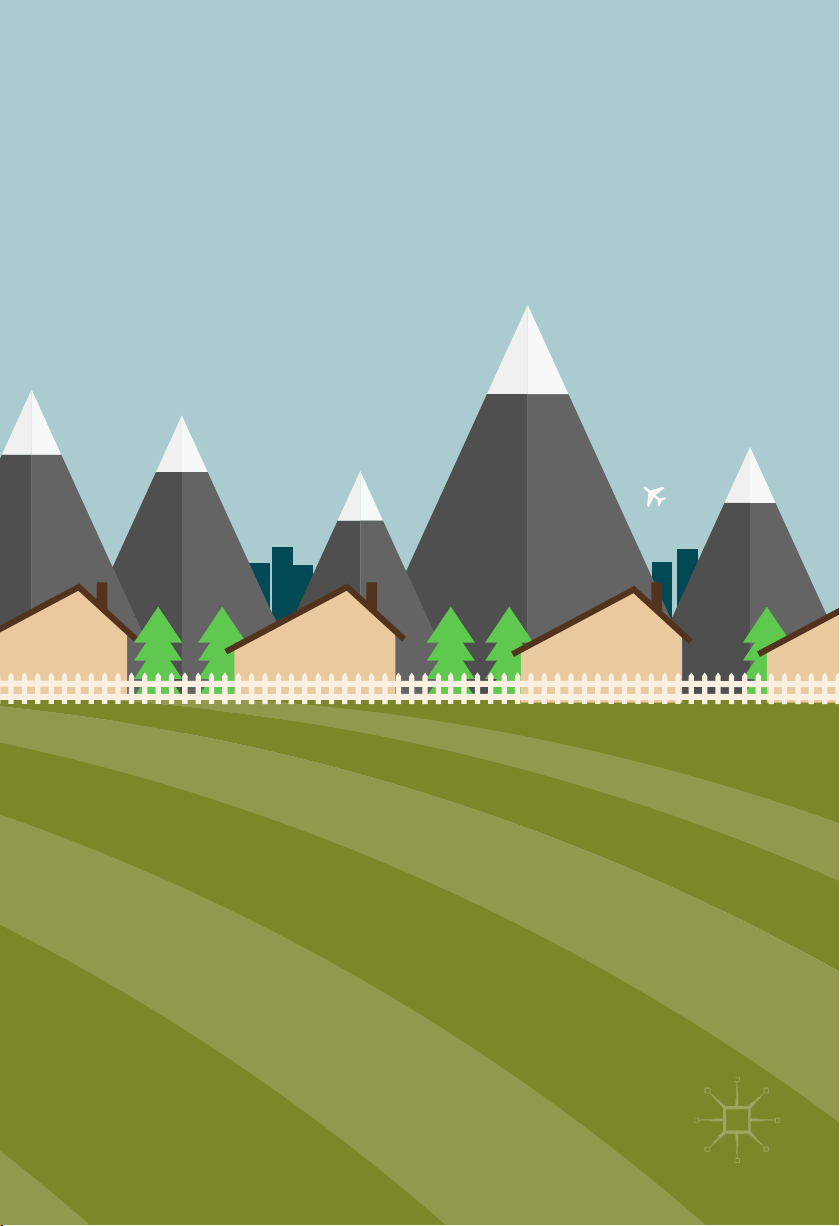
Power and Powerlessness: Quiescence and Rebellion in an Appalachian Valley PDF Free Download
1 / 17/17
100%


26
Power and Participation
values? This book argues that these problems are surmount-
able. Broad guidelines used for the empirical study are
presented here. Then, the telling test for the method, as for
the model, will be the extent to which it helps to illuminate
the empirical case itself.
In the first instance, the methodology assumes Frey's
suggestion that 'we can expect non-issues when: 1) glaring
inequalities occur in the distribution of things avowedly
valued by actors in the system, and 2) those inequalities do
not seem to occasion ameliorative influence attempts by
those getting less of those values'." Secondly, rather than
assuming the inaction or inertia to be 'natural' in the mass
and activism as the phenomenon to be explained (as is done
in the pluralist methodolody), this approach initially assumes
that remedial action upon inequalities by those affected would
occur were it not for power relationships. The study of
quiescence in a situation of potential conflict becomes the
task, rather than the study of manifest conflict in a situation
otherwise assumed to be conflict-free.
It is not adequate, however, merely to observe that in-
equalities exist and that such inequalities are met only by
quiescence, to conclude that non-challenge is a product of
power. As Lukes questions, 'Can we always assume that the
victims of injustice and inequality would, but for the exercise
of power, strive for justice and equality?'" On the contrary,
he writes, 'we need to justify our expectation that B would
have thought and acted differently, and we need to specify
the means or mechanisms by which A has prevented, or else
acted (or abstained from acting) in a manner sufficient to
prevent B from doing so'.
69
From the model put forward, I
suggest there arc several means in an empirical study through
which mechanisms can be identified and through which
`relevant counterfactuals' can be demonstrated to substantiate
the expectation that B would have thought and acted differ-
ently, were it not for A's power.
'Frey, op. cit., p. 1097. This is essentially the approach used by Crenson,
who objectively identifies varying levels in air pollution, assumes that people
generally do not want to be poisoned, and asks why action upon pollution does
not occur.
66
op. cit., p. 46.
69
ibid., pp.
41
-2.
Power and Participation
27
In general, to do so requires going outside the decision-
making arenas and carrying on extensive, time-consuming
research in the community in question. There, non-actors
and non-leaders become important, not as objects of scrutiny
in themselves but to discover through their experiences, lives,
conditions, and attitudes, whether and by what means power
processes may serve to maintain non-conflict.
In pursuing the answer to the question more specifically, it
may be necessary, first, to look at the historical development
of an apparent 'consensus'. In so doing, it may be possible to
determine whether that situation has been arrived at by
`choice' or whether it has been shaped by power relations.
And, the background study may help to identify certain key
symbols, cues, or routines that affect the maintenance of
quiescence in a given situation but which may not be identi-
fiable as part of the 'language of power' without knowledge
of their antecedents.
Secondly, within a given situation of apparent non-challenge,
processes of communication, socialization, acculturation,
etc., can be studied to determine whether there is a specific
relationship between the actions or ideologies of the power-
holders and the action, inaction or beliefs of the powerless.
In addition, it might be possible to determine whether the
conditions do exist under which the actions and conscious-
ness of B could develop, or whether identifiable power
harriers serve to preclude their development, as in the indirect
mechanisms of power.
Thirdly, it might be possible in a given or changing situation
to posit or participate in ideas or actions which speculate
about or attempt to develop challenges. The response of the
quiescent population to such possibilities, and the response
of the powerholders to the beginning formulation or raising
of issues may help to show whether power mechanisms are
at work to preclude challenge from emerging.
Even if the identification of specific processes of power is
successful, it still does not satisfy the requirement of justifying
the 'expectation that B would have thought and acted differ-
ently'. Several more types of evidence must be gathered.
First, as Lukes suggests, it may be possible to observe what
occurs on the part of B when the power of A over B weakens,


r
32
Power and Participation
is affected by the values of the colonizer, as well as the
extent to which the shaping is strengthened because of the
sense of inadequacy or submissiveness amongst the domi-
nated. Memmi, for instance, writes that as power develops
its justifying ideology, so, too, must powerlessness:
There undoubtedly exists—at some point in its evolution—a certain
adherence of the colonized to colonization. However, this adherence
is the result of colonization not its cause. It arises after and not before
colonial occupation. In order for the colonizer to be complete master,
it is not enough for him to be so in actual fact, but he must believe in
its legitimacy. In order for the legitimacy to be complete, it is not
enough for the colonized to be a slave, he must also accept this role."
In short, the development of the colonial situation involves
the shaping of wants, values, roles, and beliefs of the colon-
ized. It is a third-dimensional power relationship.
Do similar processes exist within developed societies? How
can one tell? Admittedly, it may be more difficult to observe
whether the second and third faces of power are behind
apparent quiescence amongst inequalities in more open or
homogenous societies. But the difficulties in . observation
should not alone refute the possibilities of the occurrence.
Rather than avoid the problem, it might be preferable to
attempt further to develop a theory of power relationships
as well as a method for their study through an intermediary
step: a focus upon the perhaps more visible processes that
affect a dominated but relatively non-integrated sector
within industrial democracy itself. The possibility for such an
exploration lies in the study of the impact of power and
powerlessness upon the actions and conceptions of the
people of an under-developed region of the United States
known as Central Appalachia.
"Albert Memmi,
The Colonizer and the Colonized
(Beacon Press, Boston,
1967), pp. 88-9.