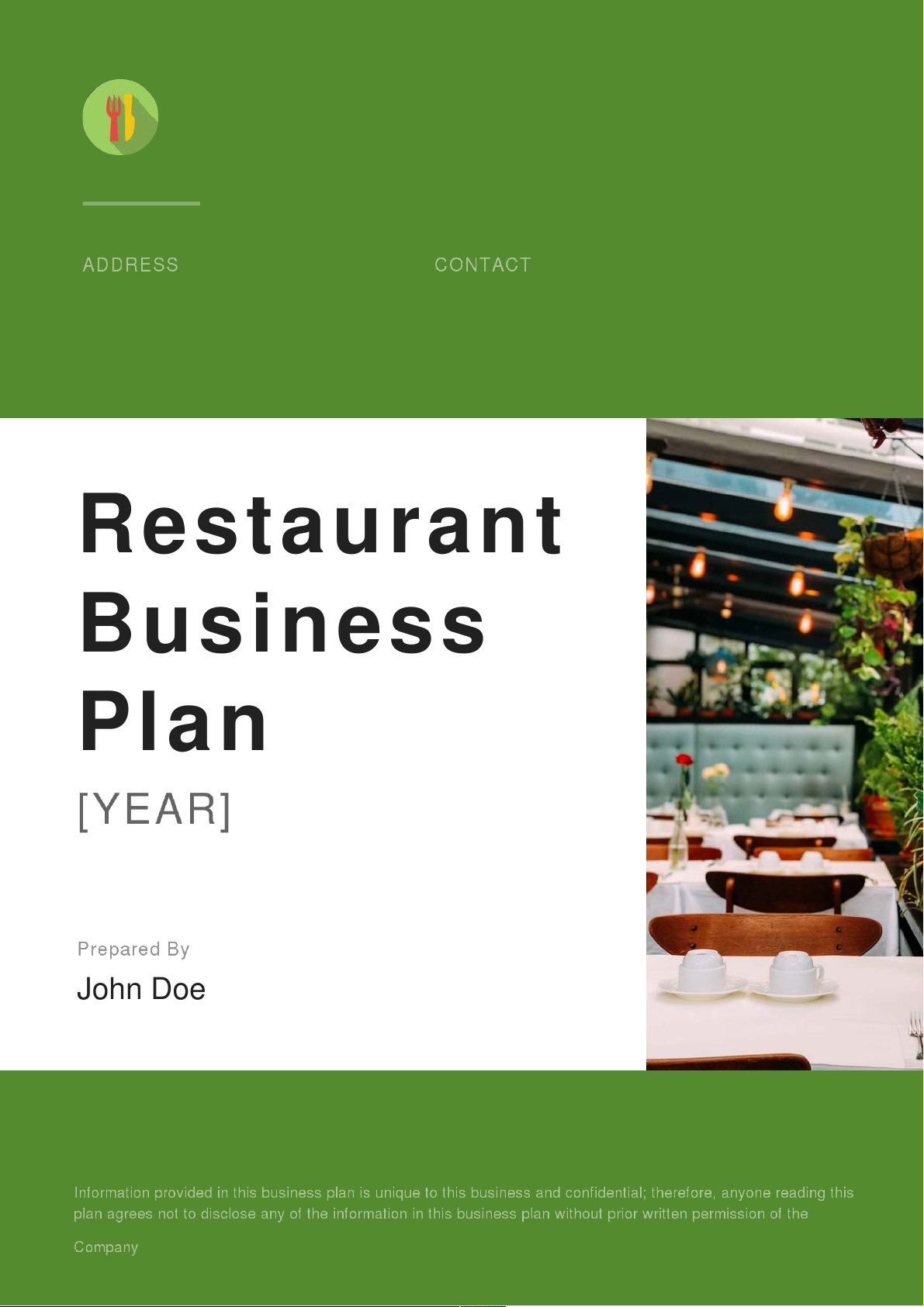
Reimagining a Sustainable Restaurant Industry in New York WHERE ALL STAKEHOLDERS THRIVE PDF Free Download
1 / 57/57
100%

Reimagining a
Sustainable Restaurant
Industry in New York
WHERE ALL STAKEHOLDERS THRIVE
This paper is intended to provide a common fact-base around (1) the contribution of the restaurant industry to
New York State, (2) the challenges facing the restaurant industry and those who work in it in New York State
both before and during COVID-19, (3) the potential scenarios of COVID-19’s impact on the restaurant in industry
and those who work in it, and (4) examples of what others jurisdictions have done to address similar challenges.
This analysis does not recommend or evaluate any specific policies. These analyses are based on discrete data
from one point in time. They are not intended as a prediction or forecast.
This report is based on a detailed analysis conducted June and July 2020, based on existing data and literature,
a purpose-built survey of ~400 New York restaurant workers and ~250 New York restaurateurs, and interviews
with 30+ representatives of the New York restaurant industry and restaurant workers.
Please note that all references to “New York” refer to the State of New York, unless otherwise indicated.

Reimagining
a Sustainable
Restaurant
Industry in
New York
2020
WHERE ALL STAKEHOLDERS THRIVE
This paper is intended to provide a common fact-base around (1) the contribution of the restaurant industry to
New York State, (2) the challenges facing the restaurant industry and those who work in it in New York State
both before and during COVID-19, (3) the potential scenarios of COVID-19’s impact on the restaurant in industry
and those who work in it, and (4) examples of what others jurisdictions have done to address similar challenges.
This analysis does not recommend or evaluate any specific policies. These analyses are based on discrete data
from one point in time. They are not intended as a prediction or forecast.
This report is based on a detailed analysis conducted June and July 2020, based on existing data and literature,
a purpose-built survey of ~400 New York restaurant workers and ~250 New York restaurateurs, and interviews
with 30+ representatives of the New York restaurant industry and restaurant workers.
Please note that all references to “New York” refer to the State of New York, unless otherwise indicated.

1Reimagining a Sustainable Restaurant Industry in New York
Content
Context
Executive Summary
Survey Demographics
and Methodology
1. Restaurants are critical
to the economic and cultural
vitality of new york
2. Covid-19 Has Hit
The New York Restaurant
Industry Hard
3. Covid-19 Has Highlighted
And Exacerbated Structural
Issues In The Industry
4. The New York Restaurant
Industry Can Profit From
The Experiences Of Others
Facing Similar Challenges
5. Inaction Has A High Cost
01
04
02
07
12
13
36
39

1Reimagining a Sustainable Restaurant Industry in New York
Context For
This Document
This is an unprecedented time for the restaurant industry, those
who work in it, and all those who are a part of its ecosystem.
Owners and workers have traditionally faced many challenges,
which have been exacerbated or been added to by COVID-
19. The Ford Foundation has facilitated this analysis of the
challenges facing the industry and those who work in it.
This document is intended to provide a
common fact-base on
1. The contribution of the restaurant industry to New York State;
2. The challenges facing the restaurant industry and those who
work in it in the State of New York both before and during
COVID-19;
3. The potential scenarios of COVID-19’s impact on the
restaurant in industry and those who work in it;
4. Examples of what other jurisdictions have done to address
similar challenges.
This analysis was conducted in June and July 2020 based on a
number of different sources, including publicly available data and
sources (which have been referenced throughout) among which
the Bureau of Labor Statistics, EMSI, CHD, and many others.
In addition, this work builds on a purpose-built survey of ~400
New York restaurant workers and ~250 New York restaurateurs,
interviews with 30+ restaurant industry stakeholders, and analysis
conducted by McKinsey & Company.
This analysis does not recommend or evaluate any specific
policies. These analyses are based on discrete data gathered
at one point in time. They are not intended to serve as
predictions or forecasts.

2Reimagining a Sustainable Restaurant Industry in New York
Methodology
In July 2020, we surveyed 251 restaurant owners and senior managers in New York State.
We asked about their main challenges in running a restaurant before and during COVID as well
as their expectations for the re-opening period. Within the challenges we focused on labor,
rent and delivery in more detail.
The survey was conducted as an online questionnaire, where respondents were selecting one or more
responses based on the type of question asked (rather than typing free text). The average duration
of the survey was 25 minutes.
Survey Demographics
and Methodology
Region Respondents Experience
NYC 176 (70%) Less than a year 2 (1%)
Downstate
(ex-NYC)
20 (8%) One –
two years
18 (7%)
Five – ten years 107 (43%)
Upstate 55 (22%) Three – four
years
78 (31%)
More than ten
years
In the
industry
2 (1%)
4 (2%)
119 (47%)
42 (17%)
84 (33%) 46 (18%)
In current
role
Upscale /
Fine dining
71 (28%) Owner 191 (76%) One 106 (42%)
Quick service /
Fast casual
71 (28%)
Casual dining 105 (42%) Senior
manager
105 (42%) Two - five 118 (47%)
Six - ten 24 (10%)
More than ten 3 (1%)
Coffee / ice
cream / snacks
4 (2%)
Restaurant
type Role
Number of
restaurants
managed
Respondents Respondents Respondents
Note that all survey results have been weighted to approximate the actual distribution
of restaurants, which is 51% in NYC, and 49% in rest of the State
NEW YORK STATE RESTAURANT MANAGER/OWNER SURVEY RESPONDENTS
OVERVIEW

3Reimagining a Sustainable Restaurant Industry in New York
Methodology
In July 2020, we surveyed 393 restaurant workers who work in New York State. We asked about the
elements of their restaurant job, including their satisfaction and attitudes towards their work, pay,
hours, ability to cover living expenses, and how COVID-19 has affected their work.
The survey was conducted as an online questionnaire, where respondents were selecting one or more
responses based on the type of question asked (rather than typing free text). The average duration of
the survey was 11 minutes.
Male 198 (50%)
Yes 88 (22%)
White or
Caucasian
232 (59%)
18-35 242 (32%)
New York City 198 (50%)
Less than
a year
198 (50%)
Upscale full
service
99 (25%)
Dishwasher 10 (3%)
Fast food or
counter worker
30 (8%)
Other gender
identity
1 (<1%)
Asian 59 (15%)
Some other
ethnicity
18 (5%)
American
Indian, Alaska
Native, Native
Hawaiian or
other Pacific
Islander
6(2%)
New Jersey 43 (11%)
3-4 years 1 (<1%)
More than
10 years
108 (27%)
QSR/fast
casual limited
service
79 (20%)
Coffee/ice
cream limited
service
15 (4%)
Other 15 (4%)
Female 194 (49%)
No 305 (78%)
Black or
African
American
71 (18%)
36+ 151 (38%)
Rest of New
York State
194 (49%)
1-2 years 194 (49%)
5-10 years 78 (20%)
Casual full
service
185 (47%)
Dining
attendant or
barback
4 (1%)
Cashier 28 (7%)
Cook 29 (7%)
First-line
supervisor
23 (6%)
Host or
hostess
19 (%)
Food service
manager
62 (16%)
Food
preparation
worker
25 (6%)
Waiter or
waitress
72 (18%)
Chef or head
cook
40 (10%)
Bartender 26 (7%)
Busser/runner 11 (3%)
Other 14 (4%)
Gender
Restaurant
experienceRespondents Respondents
Hispanic Respondents
Race Respondents
Age Respondents
Living
Region Respondents
Restaurant
experience Respondents
Restaurant
type Respondents
Note that all survey results
have been weighted to
approximate the actual
distribution
of restaurants, which is
51% in NYC, and 49% in
rest of the State
NEW YORK STATE RESTAURANT SURVEY RESPONDENTS OVERVIEW


5Reimagining a Sustainable Restaurant Industry in New York
Executive Summary
1. Restaurants are critical to the economic and cultural vitality of New York.
The restaurant industry is crucial to the state economy. In 2019, restaurants created $76
billion in GDP, supported more than one million jobs, and contributed over $40 billion
taxable dollars.1
Over the past 20 years, restaurant employment in New York grew 60 percent and
accounted for about 20 percent of the state’s total job growth. Workers of color are
disproportionately represented in New York’s restaurant industry. Almost half of
restaurant workers in New York – and almost two-thirds in New York City – are people of
color.
Restaurants contribute to the cultural and social vitality of New York City and help
make the city uniquely “New York.” New York City restaurants offer at least 94 national
cuisines. New Yorkers cherish their restaurants; 82 percent called restaurants their favorite
city amenity.
2. COVID-19 has hit the New York restaurant industry hard, much harder
than many other industries. Consumer spending in New York City restaurants
dropped more than 75 percent in April and, as of July, remained almost 50 percent below
pre-pandemic levels.
This deep, protracted decline has translated into substantial job losses, especially among
low-income workers. By April, almost 70 percent of low-income restaurant workers in
New York had lost their jobs, and, as of early June, restaurant employment remained down
more than 50 percent.
3. COVID-19 has highlighted and exacerbated structural issues in the
industry. Both restaurant owners and workers face daunting challenges.
Owners struggle with thin profit margins; high costs for rent, labor, and food and
beverages; high taxes; competition; reliance on third-party delivery companies; increasing
need for digital innovation; and their own limited business knowledge.
Workers struggle with below-cost-of-living wages and tip inequities; limited (or no)
benefits; race and gender inequities in wages and worker treatment; and job instability.
There is fertile ground for a path forward that works for all stakeholders. For example,
close to 80 percent of restaurant owners surveyed were very or somewhat likely to support
higher minimum wages for their workers.
Reimagining a Sustainable Restaurant Industry in New
York – where all stakeholders thrive
1 NYS Department of Taxation and Finance; NY Open Data

6Reimagining a Sustainable Restaurant Industry in New York
4. The New York restaurant industry can benefit from the experiences of
others facing similar challenges to restructure the industry in a way that balances the
interests of all stakeholders. A review of efforts by industry participants and local, state,
and national governments to address the challenges provides some ideas on the potential
path forward. Industry groups often use their collective power to improve their cost base
and operations; third parties often support these efforts. Governments often use tools like
mandates, spending, and, in some cases, regulatory reform to help industry participants.
5. Inaction has a high cost. If COVID-19 resurges and how it resurges may have
severe impact on the New York restaurant industry. The extent and duration of sales and
job losses and restaurant closures will depend on the effectiveness of public health and
economic policy responses.
There are many scenarios for how the crisis will evolve, and significant uncertainty
remains. The most frequently believed scenarios include only partially effective economic
policy responses and either an effective public health response despite a regional virus
resurgence (“virus resurgence” scenario) or a rapid and effective public health response
that controls virus spread (“virus contained” scenario).
Under a virus resurgence scenario, only partially effective public health and economic
policy responses would lead to the failure of virus containment and a prolonged economic
downturn. Sales and job losses and restaurant closures in New York might be substantial
and sustained, perhaps as long as 5-10 years.
Under a virus contained scenario, a rapid and effective public health response could
control virus spread, and the restaurant industry could return to growth relatively quickly,
sometime in 2021. Restaurant closures would be limited, and restaurant employment
would rebound.
This scenario remains on the table. But the recent resurgence of COVID-19 in many states
in other parts of the country may decrease the likelihood of this scenario.
Both scenarios have two implications that industry stakeholders should contemplate. Fine
dining and casual restaurants may see the greatest sales declines and the highest closure
rates. New York may lose more than a quarter of its restaurants, damaging its social and
cultural vitality.
While New York may have fewer restaurants immediately after the pandemic, the
creative, entrepreneurial spirit of New York’s restaurateurs remains, and post-COVID-19
restructuring offers opportunities to address some of the longstanding challenges that have
plagued the industry.

7Reimagining a Sustainable Restaurant Industry in New York

8Reimagining a Sustainable Restaurant Industry in New York
1. RESTAURANTS ARE CRITICAL TO THE ECONOMIC
AND CULTURAL VITALITY OF NEW YORK.
The restaurant industry is crucial to the state economy. In 2019, restaurants contributed $35 billion
to New York’s GDP and employed some 680,000 people.
EXHIBIT 1 – RESTAURANTS DIRECT CONTRIBUTION
TO NEW YORK’S ECONOMY
Total direct GDP contribution by restaurant
subsector, USD
Total employment contribution by restaurant
subsector, # of jobs
Coffee shops
Other food prep
and services
Bars
Total direct
GDP
USD
Total direct
employment
# of jobs
Full-service
restaurants
Limited-service
restaurants
$19B
$34B
$9B
$2B
$1B
$3B
338K
677K
188K
59K
28K
64K
Source: Economic Modeling Specialists International (EMSI)

9Reimagining a Sustainable Restaurant Industry in New York
Including upstream industries like local farmers and equipment suppliers and employee spending
on local businesses, New York restaurants created $76 billion in GDP and supported more than one
million jobs in 2019.2
EXHIBIT 2 – TOTAL CONTRIBUTION OF RESTAURANT INDUSTRY
Total GDP effect of NY restaurant industry,
USD
Total employment effect of NY restaurant
industry, # of jobs
$76B
Total direct GDP1
USD 1,004K
Total employment
effect
# of jobs
$35B
Restaurant direct
value contribution
(GDP), e.g.,
employee wages
and value of food
prep and dining
experience
Restaurant direct
employment, e.g.,
chefs, servers
676K
Indirect GDP effect
of restaurants
on suppliers
of restaurants,
e.g., value of
goods from local
farms,equipment
suppliers, flowers
$15B
Indirect employment
effect of restaurants
on suppliers, e.g.,
local farmers, food
distributors, florists
117K
Induced GDP effect
of spendingby
employees of
restaurants
and restaurant
suppliers, e.g.,
spend supported
at grocers,health
care providers, retail
storesby employees
$26B 210K
Induced employment
effect of spending
by employees of
restaurants and
suppliers, e.g.,
supermarket
employees,
insurers, clothing
retailers
2 Economic Modeling Specialists International (EMSI)
Source: EMSI
1 Excludes restaurant effects on property values and downstream industries such as delivery aggregators

10Reimagining a Sustainable Restaurant Industry in New York
Restaurants contribute more to the state sales and service tax than any other industry. In 2018-2019,
restaurants generated 40.1 billion taxable dollars ─ 11 percent of total taxable sales and purchases.3
Accounting for all taxes generated through restaurant sales and supplier and employee spending,
restaurants contributed $11 billion in tax revenues to local and state governments.4
EXHIBIT 3
New York restaurant industry’s direct, indirect and induced
fiscal contribution to state and local budgets USD, millions
Sales & service tax $3,336
$843
Unemployment
insurance tax
$0Commercial rent tax
$65Alcohol excise taxes
$248Business taxes
$6,005$2,734
$4,971 $6,187
$3,271 $2,237 $2,916
$11,158
Total
$1,513Income taxes paid
$0
Commercial property
taxes
State and local budgets
Statewide revenue
impact
New York State
budget
New York State
budgetTotal
$3,753
$0
$18
$9
$237
$5,153
$511
$625
Total
3 NYS Department of Taxation and Finance; NY Open Data
4 EMSI, NYS, NYC, IBO, Tax Calculator, DOLETA, Zillow, REIT, Modern Restaurant, Moody’s
Direct
Indirect and induced
Source: See detailed sources on pages 12-13; EMSI, NYS, NYC, IBO, Tax Calculator, DOLETA, Zillow, REIT, Modern Restaurant, Moody’s

11Reimagining a Sustainable Restaurant Industry in New York
New York restaurants draw millions of visitors and capture billions of dollars in tourist spend. In
2018, tourists spent $17 billion in New York restaurants ─ about 24 percent of total tourist spending.5
Furthermore, 72 percent of travelers choose their destination based on its food and beverages.6
Restaurants provide livelihoods for many New Yorkers, especially those with lower educational
attainment. Over the past 20 years, restaurant employment in New York grew 60 percent and
accounted for about 20 percent of the state’s total job growth.7
Workers of color are disproportionately represented in New York’s restaurant industry. Almost half
of all restaurant workers in New York – and almost two-thirds in New York City – are people of
color.8 Restaurants also disproportionately employ workers with a high school education or less and
provide opportunities for some workers who lack higher degrees to secure relatively higher-paid jobs
like chefs and head cooks.9
EXHIBIT 4
Race and ethnicity breakdown of restaurant workforce versus total workforce,
% of total employment, 2019
5 Oxford Economics and NY ESD
6 World Food Travel Association, Food Travel Monitor 2020
7 BLS, Moody’s Analytics estimates; ACS
8 EMSI
9 IPUMS using ACS 5-year 2018 microdata estimates; National Restaurant Association
Difference in
employment
of people of
color
+10 p.p. +4 p.p. +6 p.p.
People
of color1
White2
NYC -
Restaurants
NYC -
Restaurants
NYC -
Restaurants
NYC -
Workforce
NYC -
Workforce
NYC -
Workforce
63% 51% 34%
31%
47% 41%
47% 37% 47%
37% 47%
37%
Source: Economic Modeling Specialists International (EMSI)
1 Includes Hispanic population of all races;
2 Excludes Hispanic or Latino population
White2 People of color

12Reimagining a Sustainable Restaurant Industry in New York
Restaurants contribute to the cultural and social vitality of New York City and help make the
city uniquely “New York.”
New York City restaurants offer the most diverse cuisines of any city in the world – at least 94
national cuisines.10
New York is a national leader in independent restaurants (83 percent of restaurants statewide) and
restaurants per capita. Before COVID-19, among metropolitan areas, only San Francisco had more
restaurants per capita than New York City.11,12
New Yorkers cherish their restaurants. Eighty-two percent of city-dwellers called restaurants their
favorite city amenity.13
COVID-19 has highlighted the critical role that restaurants play in cities like New York as a source
of social connectivity and psychological health; 60 percent of the city-dwellers surveyed said that
restaurants help them feel connected to their community, and almost half called restaurants a primary
reason for visiting a new neighborhood in their city.14,15 Dining in their favorite restaurant was the
activity that survey respondents were most excited to resume post-COVID-19. 16
10 CHD-Expert Database (2020), Bott & Co analysis using Google Maps data, 2018; Note: Not exhaustive, but includes national cuisines that are machine-
readable via Google Maps
11 CHD-Expert Database (2020)
12 Yelp Local Economic Outlook (2018)
13 Sasaki Associates survey of 1,000 residents of New York, Austin, Boston, Chicago, San Francisco, and Washington DC
14 Datassential, survey of 1,000 US consumers on April 24
15 Sasaki Associates
16 Datassential, survey of 4,000 US consumers between April 27 and May 7

13Reimagining a Sustainable Restaurant Industry in New York

14Reimagining a Sustainable Restaurant Industry in New York
17 Chetty, Friedman, Hendren, Stepner using data provided by Affinity Solutions
18 Chetty, Friedman, Hendren, Stepner using data provided by Homebase and Earnin
19 Datassential, June 26, 2020
2. COVID-19 HAS HIT THE NEW YORK
RESTAURANT INDUSTRY HARD
The impact on the restaurant industry has been much more severe than that on many other industries.
In New York City, consumer spending in restaurants dropped more than 75 percent in April and,
as of July, remained almost 50 percent below pre-pandemic levels. By contrast, national consumer
spending across all categories fell 33 percent in April but has recovered to within 10 percent of pre-
pandemic levels.17
This deep, protracted decline in restaurant spending has translated into substantial job losses,
especially among low-income workers. By April, almost 70 percent of low-income restaurant workers
in New York had lost their jobs, and, as of early June, restaurant employment remained down more
than 50 percent.18
Many American consumers are still not ready to return to restaurants, especially indoor dining,
even when the government lifts restrictions. As of late June, almost half of consumers surveyed
nationwide would not feel safe eating in a fine dining restaurant.19
EXHIBIT 5
Change in employment of low-income restaurant and hospitality workers versus January
20201, % change
-38% -40%
Change
employment
Note: Employment data available through
May, whereas consumer spending data
available through June; these figures
compare June 1 to June 1 for both sources
Change
resto. sales
-55% -49%
-66% -58%
-71% N.A
10
Mar Apr May Jun
USA
NY2
NYC
Manhattan
-10
-30
-50
-70
-90
10
-20
-40
-60
-80
Source: Chetty, Friedman, Hendren, Stepner using data provided by Earnin and Homebase (2020)
1 Defined as workers with median income of ~$20,000 after taxes
2 Includes NYC

15Reimagining a Sustainable Restaurant Industry in New York
20 NYC Hospitality Alliance Restaurateur Survey, 2019
3. COVID-19 HAS HIGHLIGHTED AND EXACERBATED
STRUCTURAL ISSUES IN THE INDUSTRY
The industry does not work well for all participants. Both restaurant owners and workers face
daunting challenges.
Long before COVID-19 emerged, restaurant owners faced a long list of challenges, and the
pandemic has only intensified some of the most difficult ones.
EXHIBIT 6
Thin profit margins. Profitability has long eluded many restaurants, with profits averaging 5-10
percent before COVID-19.20 Restaurants in New York have high fixed costs, particularly for rent,
thanks to high demand for commercial real estate.
NYS restaurant owners / managers identifying their major challenges1,
% of respondents selecting each challenge among top 5
Dealing with increased competition from other
restaurants
Hiring and retaining the right people
Managing employees
Running business day-to-day
Optimizing how I run the restaurant
Getting enough customers to break even
Paying rent
Paying employees
Investing in new technology
Paying taxes
Paying delivery fees to third-party aggregators
Compliance with regulations
Paying back loans
Investing in expansion
Litigation (e.g., the 80/20 tipping rule)
Other
46%
55%
46%
45%
38%
35%
33%
32%
34%
28%
27%
26%
24%
20%
10%
1%
Pre-COVID-19
Source: New York Restaurant Manager/Owner Survey, July 2020; n = 251 restaurant owners (76%) and senior managers (24%) in New York, with 70% in
NYC; 28% Upscale, 42% Casual, 28% QSR and 2% Coffee / Snacks; 42% managing one restaurant, 58% managing multiple, but no more than 10
1 Q: Before COVID-19, what were the areas you struggled with most in managing your business? ; During COVID-19 what have been the areas you
struggled with most in managing your business? (Please, rank up to 5, where 1 – most important)

16Reimagining a Sustainable Restaurant Industry in New York
21 Bloom Intelligence; includes 6 percent of sales for rent and 4 percent for utilities and other occupancy costs
22 NY Department of Taxation and Finance, NY Open Data
23 Inc. analysis of CoStar data
1 Occupancy costs include rent plus other occupancy-related charges like utilities
2 Based on 2019 survey of 108 NYC restaurants conducted by NYC Hospitality Alliance and Citrin Cooperman. Assumes restaurants that have relatively
low rent costs are the same restaurants that have relatively low utilities and other costs. Estimates are approximate
3 Bloom Intelligence; includes 6% of sales for rent and 4% of sales for utilities and other occupancy costs
High rent is a major factor in New York restaurateurs’ thin profit margins. While the industry
benchmark for rent (or occupancy) is about 10 percent of revenues, New York survey respondents
said that they spend about 14 percent of sales on occupancy on average, which is 40 percent above the
industry benchmark. Only about 20 percent of fine dining restaurants and 40 percent of casual dining
restaurants in New York City keep occupancy costs below the industry benchmark.21
EXHIBIT 7
Demand for commercial real estate, which peaked between 2015 and 2017, has driven up
ground floor retail rent in New York, especially in New York City. Rents have peaked in many
neighborhoods (e.g., rent in Midtown South peaked at $1,000 per square foot in fall 2015). But, while
rent increased 19 percent between 2011 and 2019, sales per restaurant grew 33 percent, far outpacing
rent increases.22
Competition for retail space suitable for restaurants is increasing, particularly in New York City; and,
at $40, the rate per square foot is almost double the average rate in most other US cities ($22). 23
Distribution of NYC restaurants by total occupancy costs as percent of sales,1,2
Percent of restaurants
Occupancy
costs Fine dining restaurants Casual dining restaurants
10 to 14% 32
46
14% to 18% 1417
Over 18% 1016
Industry
benchmark
(10%)3
Less than
10% of sales 21 38

17Reimagining a Sustainable Restaurant Industry in New York
1 Mastercard data analyzed by NYC Comptroller
2 Inc. analysis of CoStar data
3 Excludes NYC; also includes San Jose, East Bay, Denver, Raleigh, Charlotte, Columbus, Milwaukee, and Cincinnati; using weighted
average based on population
Drug
stores
SF
Houston
Detroit
Seattle
Austin
Chicago
Pittsburgh
NYC
Philadelphia
18-city
average3
Minneapolis
Cleveland
Bars and
restaurants
Health
services
Beauty
services
All
merchants
Clothing
stores
General
merchan-
dise
NYC, 2012 to 2018 Retail rent per square foot2 USD, 2017
Rent, 5-yr
change, %
70 19%
14%
27%
18%
16%
17%
8%
5%
9%
8%
5%
9%
38
29
27
21
-7
-12
EXHIBIT 8
There is increased competition for retail
space suitable for restaurants in NYC,
Percent change in number of merchants1
Retail rents in NYC are roughly double those
in many other cities,
Average retail rent per square foot
COVID-19 has made paying rent more difficult for restaurateurs; 43 percent of survey respondents
called paying rent a major challenge (surpassed only by breaking even and paying employees).24 One
restaurateur we interviewed, who manages a casual restaurant on the Lower East Side in Manhattan,
said: “Rent is the biggest issue….We haven’t paid rent in the past three months, and now we need to
figure out how to start paying again as we slowly reopen.”25
Another interviewee, who owns nine food-and-drink establishments across New York, said:
“Renting a restaurant space in the US is particularly difficult, as the lease includes a personal
guarantee, which makes the restaurant owner liable for any rent not paid by the restaurant. In times
of crisis like the COVID-19 pandemic, this puts restaurateurs like me in a terrible financial position,
because if I don’t pay rent on my nine restaurants that were closed during the pandemic, my house
and my kids’ college funds are at risk.”26
24 New York State Restaurant Manager/Owner Survey, July 2020 (n = 251)
25 Expert interviews
26 Ibid
1.8x

18Reimagining a Sustainable Restaurant Industry in New York
In New York City, only 53 percent of independent restaurants have been operating for at least
two years, compared with an average of 65 percent across the rest of the state. This might suggest
that restaurant startups in the city struggle to reach a sustainable level of sales that can handle the
occupancy costs. As one interviewee, who used to manage a chain of upscale bakeries in New York,
said: “The first year is all about surviving….Restaurants that manage to get through that usually go
on for at least five years; but after six or seven years, people reconsider whether to stay, especially if
their rent is going up, even if their place is very successful.”27
The COVID-19-related shutdown of in-person dining and mandate for social distancing cut the
revenues needed to pay rent. Survey respondents reported an average sales decrease of 35 percent.28
Some restaurateurs have found their landlords open to conversations about the future rent for their
restaurants “because he realizes what will happen to commercial real estate in the near future,” but
others reported inflexible or locked-in lease terms.29 Commercial property owners face interest
penalties of 18 percent if they do not pay their property taxes because tenants like restaurants do not
pay their rent.
Increasing cost of labor. Labor is the largest cost item for restaurants, generally consuming about 30
percent of revenues. Labor has become more expensive over the past five years as the minimum wage
has risen to 35 percent of revenues in New York City and 20 percent in the rest of the state.30
Since 2016, minimum wages in New York have increased 10-40 percent. The minimum wage that
restaurateurs in New York City pay has increased about 40 percent for non-tipped workers (from
$11.00 to $15.00) and 30 percent for tipped workers (from $7.50 to $10.00), in the case of maximum
tip credit application. Across the rest of the state, the increase has been about 30 percent for non-
tipped workers (from $9.70 to $12.50) and 10 percent for tipped workers (from $7.50 to $8.30).31 One
interviewee pointed out: “Recent massive changes in the minimum wage made profitability a real
struggle. We can’t increase prices that much that quickly.”32 However, almost 80 percent of restaurant
owners surveyed are very or somewhat likely to support higher minimum wages for their workers.33
The higher minimum wage, coupled with complex labor laws, makes managing and paying
employees one of the most challenging tasks for restaurateurs.
The government assistance to help employers weather COVID-19 (e.g., Paycheck Protection Program
[PPP]) intensified the struggle by linking the support received to employee retention. Thirty-three
percent of the survey respondents said that they did not apply for PPP because they were worried
about not meeting the requirements, specifically not retaining enough employees.34
Cost of goods sold. COGS has traditionally been a large operating expense for restaurants,
accounting for some 30 percent of revenues. Independent restaurants have paid even more for food
and beverages because they lack the collective bargaining power to negotiate prices that many
chains enjoy. While food prices have generally dropped during COVID-19, potential supply chain
disruptions are likely to fuel price uncertainty post-crisis.35
27 Interview with a former Yelp executive, focusing on the New York City area, June 2020
28 New York State Restaurant Manager/Owner Survey, July 2020
29 Interview with Manhattan-based restaurateur, June 2020
30 NY Department of Labor, 2020
31 NY Department of Labor
32 Restaurateur in New York and three other states; founder of a beverage company
33 New York State Restaurant Manager/Owner Survey, July 2020
34 Ibid
35 Expert interviews


20Reimagining a Sustainable Restaurant Industry in New York
Taxes and fines. Among states with the highest number of total restaurants, New York’s businesses
face the second-highest level of overall taxation. Taxes consume about 10 percent of restaurant
revenues in New York, and in New York City taxes are 46 percent higher than the average across
other large US cities (largely attributable to higher personal income taxes).36
Penalties imposed on restaurants by the New York City Department of Health for violations
decreased from $3,900 per restaurant in 2009 to $1,100 per restaurant in 2019.
During the COVID-19 pandemic, some New York restaurants have reported cash flow challenges in
making standard quarterly sales tax payments to the state.
Competition. Since 2005, the number of restaurants per capita has increased 27 percent statewide.
Today, New York has 26 restaurants per 10,000 people, compared with a national average of 20.37
36 Citizens Budget Commission, 2015
37 BLS; US Census
EXHIBIT 9
Taxes per $100 of taxable resources1
New York City Other large cities2
Personal income
tax
Other taxes
Business income
tax
Total
Property tax
Sales tax
NYC
additional
tax
burden
$19B
$1.56
$3.12
$1.06
$1.00
$1.73
$0.95
$0.55
$1.04
$1.89$2.28
$9.02 $6.16 46%
Source: Citizens Budget Commission, 2015
1 Taxable resources are the combined dollar amount of resident household incomes and business surpluses (income less employee
compensation) in each city
2 Includes Los Angeles, Chicago, Houston, Phoenix, Philadelphia, San Diego, San Antonio, and Dallas

21Reimagining a Sustainable Restaurant Industry in New York
More than half of the restaurateur survey respondents called increasing competition their primary
challenge before COVID-19. Since the pandemic began, many restaurants have closed and relieved
the pressure. Only a third of survey respondents still considered competition their primary
challenge.38 Overall, whether competition returns to being a major issue challenging restaurant profit
margins is unclear.
Third-party delivery companies. Restaurants have grown increasingly dependent on third-party
delivery companies, especially during COVID-19. These companies charge fees of 5-35 percent of
delivery revenues and thus significantly decrease or even eliminate profits.39 Small, independent
restaurants often pay at the high end of the range. Restaurants typically tap third-party delivery to
grow revenue by acquiring new customers, while making use of excess kitchen capacity, but not all
have achieved the desired incremental growth.
Even before COVID-19, delivery was gaining popularity, and third-party delivery companies were
taking share from restaurants’ own digital channels. Forecasts showed delivery growing at a 27
percent compound annual growth rate (CAGR ) through 2022 for third-party apps and a 10 percent
CAGR for restaurant-owned digital channels, while on-site dining was expected to decline at a -2
percent CAGR.
Third-party delivery has grown even faster during the pandemic. Restaurateurs have reported
completing about 60 percent of deliveries through third parties,40 and monthly sales of US delivery
companies have doubled.41
Pre-COVID-19, consumers preferred to order directly through a restaurant’s own channel, when
possible. Fifty-one percent of consumers surveyed in 2019 ordered directly from a restaurant’s
website; 38 percent ordered through a third-party app.
During COVID-19, consumers have preferred to order through third-party delivery apps, and the
delivery channel has increased its share of overall restaurant sales. Ordering directly from restaurants
has decreased 17 percent, and ordering through third-party apps has increased 17 percent. In the first
weeks of the pandemic, delivery sales grew across all segments, with average growth of 6.5 percent.
Together, the four major third-party delivery companies ─ Grubhub, DoorDash, UberEats, and
Postmates ─ hold 98 percent of the market, and consolidation is increasing. All four have grown
tremendously over the past five years. None have yet reached breakeven, but scale helps offset their
investments in technology.
Fees charged by third-party delivery companies have been increasing. This may have significant
impact on the profits that restaurants get from delivered meals. Since COVID-19 emerged, the
volume shift from dine-in to delivery has hit the typical restaurant P&L and may hinder the efforts
of small, independent restaurants to become profitable enterprises. Many city governments across
the country have implemented temporary fee caps of about 15 percent to reduce the pressure of third-
party delivery companies on restaurants.
38 New York State Restaurant Manager/Owner Survey, July 2020
39 Expert interviews, “Four Horsemen” (Medium.com), New York State Restaurant Manager/Owner Survey, July
40 New York State Restaurant Manager/Owner Survey, July 2020
41 Second Measure, “Which company is winning the food delivery war?”

22Reimagining a Sustainable Restaurant Industry in New York
Restaurants have two options ─ build their in-house delivery capability or embrace the hybrid model.
Building an in-house digital channel involves high upfront costs and skills that larger chains and
businesses may be able to handle but that may prove challenging for small, independent restaurants.
Digital innovation. The need for digital innovation in the industry is growing and pushing
restaurants to invest time and money in following the trends.
Consumers demand speed and convenience and rely heavily on phones and tablets. More than half of
would-be guests (51 percent) called the ability to make online reservations extremely important. (By
contrast, only 8 percent called drive-through extremely important).42
Wi-Fi availability is the must-have restaurant technology; 69 percent of the restaurateurs surveyed
called it extremely important. POS and credit card processing tops the list of tech solutions that a
restaurant needs, followed by accounting and reporting and analytics software. Labor software
(i.e., scheduling tools) like HotSchedules and 7shifts that enables staff to view schedules and share
feedback with managers is gaining currency.
More than a third of the surveyed restaurateurs ranked investing in new technology among their top
five challenges, and 36 percent said that they wish they had tech/digital skills ─ making this skill set
their third most desired skill.43 Most restaurants work with tech vendors; 97 percent work with at
least one, and 13 percent work with six or more.
The COVID-19 stay-at-home orders made digital innovation critical to restaurant survival. While
online ordering and delivery cut revenues as much as 30 percent, they became essential to doing
business. The subsequent rules for dining on-site at reduced capacity will make the costly installation
of kiosks and tablets helpful to reopening.
Reported limited business knowledge. Some restaurant owners volunteered that they lack the
business knowledge to navigate the complexities of permits, taxes, and business operations required
to run a profitable business. Survey respondents found labor management especially challenging.
Almost half (42 percent) reported having difficulty recruiting and hiring the right employees in a
convenient time frame; a third called employee turnover a major challenge.44 During the pandemic,
limited business knowledge has made taking advantage of COVID-19-related government benefits
more difficult.
Sixteen percent of survey respondents said that they lack specific skills they need to be successful.
Asked what skills they wish they had, 40 percent cited marketing and advertising skills, followed by
accounting and tax skills (39 percent) and digital/technology skills (36 percent).45
In addition to handling their restaurant’s management tasks, restaurateurs have to address
government regulations, ranging from labor laws to food safety standards. Survey respondents
did not see this as a significant challenge, however. Only a quarter said that managing compliance
with labor laws is difficult, and 24 percent said the same about managing compliance with other
regulations.46
COVID-19 has brought a plethora of new regulations. Even government relief programs designed
to ameliorate the damage to the industry have introduced complex business administration tasks,
ranging from permits for outdoor seating and alcohol to-go to loan applications. Twenty-six percent
of survey respondents said that they did not apply for the PPP because they did not know how to, and
12 percent said that they could not process all the paperwork.47
42 Toast Restaurant Success Report, 2019
43 New York State Restaurant Manager/Owner Survey, July 2020
44 Ibid
45 New York State Restaurant Manager/Owner Survey, July 2020
46 Ibid
47 Ibid

23Reimagining a Sustainable Restaurant Industry in New York
Compliance actions against New York restaurants have decreased in recent years. For example,
wage and hour compliance actions by the US Department of Justice peaked in 2012, and Fair Labor
Standards Act complaints filed in New York’s Southern District Court peaked in 2015. Only 10
percent of the restaurateur survey respondents considered litigation a Top 5 business concern pre-
COVID-19. But litigation is a great concern for some businesses, and restaurateurs called compliance
with local labor laws a Top 5 employee management issue (failure to comply can trigger litigation).
Impact of COVID-19 on the structural issues. COVID-19 has exacerbated the structural issues
of the restaurant industry. High costs for rent and labor consume an even larger share of restaurant
revenues diminished by social distancing limitations and changing consumer preferences.48 The
uncertainties around future reopening guidelines and consumer demand have made planning
operations extremely difficult and created the potential for further cash flow disruptions and
closures.
The COVID-19 pandemic has seen household income and spending in New York state decline.
Consumers have only recently signaled intentions to increase spending on meals in restaurants.
Experiences during the financial crisis of 2008-2009 suggest that spending on restaurants may take
years to recover to pre-COVID-19 levels.
Maintaining revenues at decreased capacity has been a major challenge during the pandemic. Fifty-
four percent of survey respondents stated that maintaining enough business to break even is one of
their top challenges; 63 percent of restaurant owners said that COVID-19 has had a negative impact
on their income.49 As of July 2020, only a third were offering on-site (outdoor) dining.
New health and safety regulations and decreased operating capacity and demand will require
restaurateurs to redesign their operations:
• Pivoting to address a different market (e.g., shifting from restaurant wholesale to grocery, from
dine-in to delivery)
• Adjusting dine-in layout to accommodate social distancing requirements
• Protecting their front-line employees.
Restaurant workers too face significant challenges. Low wages, limited benefits, racial and
gender inequities, and job instability head the list.
Wages. Federal and state minimum wages have not kept pace with the rising cost of living. For all
restaurant roles excluding chefs/head cooks, first-line supervisors, and bartenders, average hourly
wages fall below living wages (as defined by MIT), even after recent increases in minimum wages
boosted restaurant wages in New York.50 The gaps in New York City range from $4.10 per hour for a
single adult with no children to $9.70 per hour for two working adults with two children. 51 This could
also be potentially linked to thin and pressured margins operators face.
48 Ibid
49 New York State Restaurant Manager/Owner Survey, July 2020
50 EMSI using BLS OES data
51 EMSI using BLS OES data; MIT Living Wage


25Reimagining a Sustainable Restaurant Industry in New York
52 New York State Restaurant Workers Survey, July 2020; n=393, weighted by restaurant type to match state breakdown (14% upscale FSR, 37% casual
FSR, 41% QSR LSR, 8% other LSR)
53 Ibid
54 Restaurant Report
EXHIBIT 10
NYC Rest of NY
Chefs and Head Cooks
Cooks, Restaurant
Cooks, Short Order
First-Line Supervisors
Hosts and Hostesses
Dishwashers
Fast food prep and service
workers
Averag e for all NYC/N Y wo rke rs
Waiters and Waitresses
Cooks, Fast Food
Bartenders
Food Preparation Workers
Bussers and barbacks
Counter attendants
Many NY restaurant occupations do not provide living wages, even for single workers
without families, Average hourly wage, USD, 20191
26.0
23.5
20.1
16.4
14.9
14.8
14.1
13.9
13.6
13.1
13.1
13.0
12.6
12.3
23.5
22.4
16.6
12.4
13.1
13.0
11.8
12.3
12.1
12.0
11.4
11.5
11.6
11.4
16.40 12.5022.60 19.80
Living wage, single adult no children Living wage, 2 working adults, 2 children2
1 EMSI using BLS OES data
2 PayScale Restaurant Report
The surveyed restaurant workers in New York state reported working 30 or more hours per week.
Managers, cooks, and chefs work the most hours ─ on average, 40 hours a week.52 Seventy-three
percent of the surveyed workers said that they are satisfied with their hours worked. The least
satisfied are those who work the least hours, on average (other food preparation and service workers
like hosts and servers).53 But according to PayScale, restaurant workers are more likely than other
workers to say that they are underemployed ─ 59 percent vs. 43 percent.54

26Reimagining a Sustainable Restaurant Industry in New York
55 New York State Restaurant Workers Survey, July 2020
56 Ibid
57 Ibid
EXHIBIT 11
NYS restaurant workers’ ability to cover cost of living, Percent of respondents1
NYS restaurant worker attitudes towards lifestyle, Percent of respondents3
Restaurant workers have positive attitudes toward their time worked and their schedules. More than
75 percent of workers surveyed agreed that their schedules allow time for themselves and time for
other responsibilities. 63 percent agreed that they can afford to take time off when sick,55 although
only 29 percent indicated that they have paid sick leave.
More than half of restaurant workers in New York state (55 percent) can only afford to cover food,
bills, and basic expenses such as clothing.56 More than half (51 percent) have to work multiple jobs to
earn enough money, and almost one-third (27 percent) cannot afford to live close to their jobs.57
Cashiers
and
counter
workers
Other
food
prep.
service
Hosts
and
servers
Managers Cooks
and
chefs
Cashiers
and
counter
workers
All
restaurant
workers
Cover everything and
luxuries, e.g., vacations
Cover food/bills and basic
expenses, e.g., clothes
Cover food/bills and basic
expenses, e.g., clothes
Only cover the
bills and food
8% 10% 14% 10% 14% 7% 11%
21% 25%
36% 38% 33% 52% 33%
42% 39%
25% 30% 37%
33%
33%
28% 26% 25% 21% 15% 8%
22%
Disagree Agree
I have to work multiple jobs
to earn enough money 49% 51%
I can afford to live close
to my job 27% 73%
I can afford to eat at the
restaurant where I work 16% 84%
New York State Restaurant Workers Survey, July 2020; n=393, weighted by restaurant type to match state demographics (14% upscale FSR,
37% casual FSR, 41% QSR LSR, 8% other LSR)
Q: Which of the following statements best describes your financial situation? What I earn allows me to…
Q: In percentages, what share of your weekly earnings do you spend on the following expenses…
Q: Please indicate how strongly you agree or disagree with each of the following statements. Please select only one response for each
statement. Bottom 2 – strongly disagree and disagree; Top 2 – strongly agree and agree

27Reimagining a Sustainable Restaurant Industry in New York
58 Nolo - “State Laws for Tipped Employees”, Davis Wright Tremaine – “Tip Pooling with Back of House is in”, Fox Rothschild – “New Labor Regulation
Would Allow Nontraditional Tip Pooling”, Jackson Lewis – “DOL Proposes FLSA Regulations to Close Door on ‘80/20’ Rule, Implement Tip Pooling
Amendments”, NY Department of Labor – Hospitality Wage Order, US House of Representatives, 116th Congress (2019) – Raise the Wage Act, US Census,
Restaurant Research LLC
59 EMSI, NY Department of Labor, MIT Living Wage (2020)
Tipping policies in New York impact earnings for some restaurant workers. New York’s 80/20 rule
prohibits employers from using the tip credit for an entire shift if a worker performs non-tipped tasks
more than 20 percent of the shift. The tip credit is the difference between the cash wage paid by the
employer and the full minimum wage required by the state. The employer can count tips received
by employees toward the full minimum wage. New York City allows a tip credit of up to $2.50 per
hour; the rest of downstate allows $2.15, and the rest of the state allows $1.95. New York is one of the
two states that have a state-level 80/20 rule and is one of only a few states that prohibit mandatory or
voluntary sharing of tips or service gratuities with back-of-house employees, even in restaurants that
do not use tip credits.
New York plans to eliminate tip credits for occupations like nail salon and car wash workers in 2021
but plans to retain tip credits for restaurant and other hospitality workers.58 Because back-of-house
employees cannot participate in tip pooling in New York and New York’s minimum wages remain
less than living wages, some back-of-house workers may be more likely to earn wages that cannot
provide the basic necessities.59
EXHIBIT 12
Back-of-house hourly wages, Average hourly wage, USD, 2018
Chefs and Head Cooks 26.04 23.53
Current minimum wage 15.00 11.80
Cooks, Restaurant 14.86 13.11
Food Preparation Workers 13.88 12.43
Cooks, Short Order 13.60 12.08
Cooks, Fast Food 13.09 11.9 9
Dishwashers 13.08 11.44
Food prep and serving, including fast
food 12.56 11.57
2018 minimum wage (small employers) 12.00 10.40
NYC Rest of NY
16.40 12.5022.60 19.80
Living wage, single adult no children Living wage, 2 working adults, 2 children
Source: EMSI, NY Department of Labor,MIT Living Wage (2020)
In NY, back-of-house employee wages cannot be bolstered to living wage levels
through tips in part due to the prohibition on tip pooling with back-of-house staff

28Reimagining a Sustainable Restaurant Industry in New York
60 New York State Restaurant Worker Survey, July 2020
61 New York Restaurant Manager/Owner Survey, July 2020
62 Ibid
63 Fight for 15
64 EMSI using BLS data
65 Payscale nationwide survey of 15,000 restaurant employees, 2015
The surveyed restaurant workers, both front-of-house and back-of-house, called New York’s current
tipping policies (i.e., tip credits plus tip pooling, front-of-house-only) the least preferred of six survey
options. The most preferred options were full minimum wages plus tips and full minimum wages
plus tip pooling for all workers.60
While about 90 percent of surveyed restaurant owners called the 80/20 rule fair and useful, given
the existence of the tip credit, almost 80 percent would probably support higher minimum wages for
their workers.61
Most restaurant respondents reported that they are unlikely to implement a no tip model. Their
views on sharing tips with back-of-house workers were evenly split.62
Low wages have persisted, especially for front-of-the-house workers, despite some increases due to
New York’s Minimum Wage Act and the raises for 22 million people across the country advocated by
the Fight for $15 Movement (started in 2012 when fast-food workers in New York City demanded a
minimum wage of $15 per hour).63
Official data does not show significant compensation discrepancies between back-of-house and
front-of-house staff,64 but independent surveys that asked workers about tips found that tip-eligible
front-of-house employees tend to report higher compensation.65
EXHIBIT 13
New York State wage and tip data, Based on US Bureau of Labor Statistics data, 20181
Back-of-house jobs Front-of-house jobs
Median Total Hourly Pay
% of Total Hourly Pay from Tips
Dishwashers
Waiters and waitresses
Cooks, short order
Bartenders
Cooks, restaurant
Food prep workers
Chefs and head cooks
Hosts and hostesses
First-line supervisors
of food prep workers
Dining room attendants
and barbacks
$12.30
$12.30
$12.80
$12.90
$13.10
$13.90
$14.00
$14.40
$18.40
$24.80
Source: EMSI using BLS data; Payscale nationwide survey of 15,000 restaurant employees, 2015
1 It is generally believed that tips are underreported in official data sources, e.g., see related Economic Policy Institute report here
Note: Interviews with restaurant industry experts indicate front-of-house and back-of-house wage disparities may be especially prevalent
in fine dining establishments

29Reimagining a Sustainable Restaurant Industry in New York

30Reimagining a Sustainable Restaurant Industry in New York
66 IPUMS using ACS 2018 five-year microdata estimates
67 New York Restaurant Worker Survey, July 2020
Limited benefits. Restaurant workers lack access to affordable coverage so they face high healthcare
bills or inadequate care. Restaurant workers are about 30 percent less likely to receive employer-
provided health insurance than workers in other industries. Despite a paid sick leave law being in
effect for several years in New York City, only 29 percent of survey respondents reported having paid
sick leave.66 More than one-third of the surveyed restaurant workers (37 percent) reported receiving
no employer-provided benefits, and almost half (44 percent) are dissatisfied with their benefits.
Medical coverage varies by role and favors higher-paid workers.67
EXHIBIT 14
Medical insurance coverage varies by restaurant role and favors more highly paid workers,
Role, percent of respondents receiving medical insurance from employers1, median hourly wage pre-tip3
Over a third of restaurant workers surveyed
have no benefits available to them at all,
Percent of respondents receiving that benefit1
Almost one half of restaurant workers are
dissatisfied with their benefits, Percent of
respondents reporting dissatisfaction2
No benefits Hosts and servers
Cashiers and counter
workers
Other food prep. Service
Bar staff
Managers
Cooks and chefs
All restaurant workers
Paid time off
Paid sick leave
Paid holidays
Medical insurance
Family leave
Retirement Plans
Dental insurance
Life insurance
37% 58%
58%
47%
46%
35%
47%
44%
32%
29%
27%
26%
18%
15%
15%
14%
Cooks and chefs
Managers
Bar staff
Hosts and servers
Cashiers and counter workers
Other food prep. service
37%
43%
14%
14%
18%
19%
$20
$18
$12
$12.25
$14
$13.50
New York State Restaurant Workers Survey, July 2020; n=393, weighted by restaurant type to match state demographics (14% upscale FSR,
37% casual FSR, 41% QSR LSR, 8% other LSR)
1 Q: Have you received any of the following benefits in your last place of employment
2 Q: Please rate how satisfied you are with the following aspects of your job: Benefits received (e.g., paid sick leave, healthcare). Chart depicts
percent of responses rating 1-5 (1 – Extremely dissatisfied, 10 – Extremely satisfied).
3 Q: Assuming a typical week before COVID-19, what was your average wage per hour (excluding tips)?

31Reimagining a Sustainable Restaurant Industry in New York
68 Ibid
69 EMSI, IPUMS using 5-yr 2018 ACS microdata
69 EMSI
69 Michael Lynn, Cornell University School of Hotel Administration, “Consumer Racial Discrimination in Tipping: A Replication and Extension,” 2009
Race and gender inequities. Inequality between front-of-house and back-of-house wages
exacerbates racial inequity in the industry. People of color are more likely to hold relatively low-
paying back-of-house jobs; more than 70 percent of (tip-ineligible) cooks and dishwashers are people
of color.69 But front-of-house workers, who are eligible to receive tips, are more likely to be white.
The majority of those in roles like bartenders, hosts, and servers are white (56-74 percent).70 Cornell
University research finds that people of color who do work front-of-house may receive lower tips for
similar levels of service.71
EXHIBIT 15
NYS restaurant workers attitudes towards COVID-19 context
% of respondents1
After COVID-19, I am concerned
about catching COVID-19 working
in the restaurant industry
After COVID-19, I am concerned
about making enough money from
restaurants
After COVID-19, I would not work
in the restaurant industry if I had
other options that paid the same
54%
52%
44%
19%
21%
15%
Somewhat Agree/Agree Strongly Agree
COVID-19 has exacerbated these issues by putting those working on the front line (e.g., serving
meals or washing dishes) and commuting to work (especially in New York City) at substantial risk of
infection. The surveyed restaurant workers are very concerned and 59 percent would not work in the
restaurant industry if they had similar paying options for work.68

32Reimagining a Sustainable Restaurant Industry in New York
72 IPUMS
73 Urban Institute, “How COVID-19 Is Affecting Black and Latino Families’ Employment and Financial Well-Being”
74 Severity of challenges estimated based on insights from expert interviews, New York restaurant survey, and New York restaurant owner survey, as well as restaurant
P&L analysis
75 New York Restaurant Worker Survey, July 2020
EXHIBIT 16
People of color are more likely to hold back-
of-house jobs, Percent total employment by
race, 2019
Occupations more likely to be held by
people of color are less likely to have
health insurance
White Workers of color Front-of-house jobs
Source: EMSI, IPUMS using 5-yr 2018 ACS microdata
1 See Urban Institute “How COVID-19 Is Affecting Black and Latino Families’ Employment and Financial Well-Being”
Bartenders
Predominately white
NY
average
wages1
Percent with employer-provided
coverage, NY
Percent positions held by persons of
color, NY
Predominately people of color
$14.40
Hosts and Hostesses $12.90
Waiters and Waitresses $13.90
Fast food prep & serving $12.10
First-line supervisors $18.40
Cooks, Short Order $12.80
Food prep workers $13.10
Dishwashers $12.30
Cooks, Restaurant $14.00
Cooks, Fast Food2 $12.50
Bussers and barbacks $12.30
Chefs and Head Cooks $24.80
All food prep & serving -
74
59
57
74
54
48
46
44
41
41
40
35
52
26
41
43
74
46
52
54
56
59
59
60
65
48
Black restaurant workers are 11 percent less likely to receive health insurance than white workers.
Hispanic workers and Asian workers are 23 percent and 26 percent less likely to receive coverage,
respectively.72
People of color hold about half of all restaurant jobs and have filled three quarters of all new
restaurant jobs created since 2010. The massive unemployment of restaurant workers caused
by COVID-19 is disproportionately affecting the health and livelihoods of people of color,73
exacerbating the existing racial inequities in the restaurant industry.74
Systemic gender issues and the predominance of male chefs and restaurant owners aggravate gender
inequity in the industry. Women are less likely to hold the highest-paying jobs. Only 31 percent of
cooks and chefs and 36 percent of managers are women.75

33Reimagining a Sustainable Restaurant Industry in New York
76 Ibid
77 Ibid
78 “Women Representation in Food,” Eater, 2017
79 U.S. Equal Employment Opportunity Commission; includes only cases reported to EEOC (excluding cases internally resolved or never reported),
2010-2016
EXHIBIT 17
Women are underrepresented in the highest paid
roles within the NYS restaurant industry, Percent
who are women and median hourly earnings1
Women are overrepresented in server
roles, Percent who are women, median
hourly earnings1, share of income received
in tips2
Women represent 6.3% of head chefs at prominent
restaurant groups’ kitchens, Women in head chef
positions at 15 prominent U.S. restaurant groups2
The percentage of women recognized at
food festivals, rankings and awards is
3-5x their overall representation as head
chefs, Percent who are women3
1 New York State Restaurant Workers Survey, July 2020; n=393, weighted by restaurant type to match state demographics (14% upscale
FSR, 37% casual FSR, 41% QSR LSR, 8% other LSR); Q: Assuming a typical week before COVID-19, what was your average wage per
hour (excluding tips)?
2 New York State Restaurant Workers Survey, July 2020; Q: Assuming a typical week before COVID-19, what share of your earnings came
from tips?
3 “Women Everywhere in Food Empires but No Head Chefs”, Bloomberg, 2014
4 “Women Representation in Food”, Eater, 2017
Women are more likely to hold lower-wage, tip-eligible, server positions. Most (77 percent) of the
surveyed workers in server positions were women. Their median hourly wage is $12, and tips provide
35 percent of their income.76
Women account for only 6.3 percent of head chefs in prominent restaurant groups’ kitchens.77
Despite this poor representation, women chefs win recognition in food festivals, rankings, and
awards.78
New York City Wine &
Food Festival Chefs
James Beard Award
Chef Finalists
Food & Wine Best New
Chefs
21%
28%
33%
Cooks and chefs Share of NYS waiters
surveyed who are women 77%
35%
Share of income coming
from tips
$12 Median hourly wage
Cashiers and counter
workers
Managers
Other food prep. service
Hosts and servers
Bar staff
31% $20
$18
$14
$13.50
$12.25
$12
36%
51%
47%
76%
47%

34Reimagining a Sustainable Restaurant Industry in New York
80 “The Glass Floor: Sexual Harassment in the Restaurant Industry,” Restaurant Opportunities Center United, 2014
81 “New York City Restaurant Worker Report & Survey,” Hunter College New York City Food Policy Center, 2019
The restaurant industry is the single largest source of Equal Employment Opportunity Commission
(EEOC) sexual harassment claims,79 despite the fact that most women restaurant workers “ignore”
sexual harassment rather than reporting it.80
Seventy-seven percent of the women working in the New York City restaurant industry who
participated in a Hunter College survey reported having experienced sexual harassment and cited
five reasons that women are unlikely to report the harassment. Tip-eligible women believed that they
would face multiple repercussions if they reported sexual harassment by guests.81
EXHIBIT 18
The restaurant industry is the single largest source of EEOC sexual harassment claims,
Sexual harassment claims by industry of origin1
Most women restaurant workers “ignore” sexual harassment,
Percent of respondents2
General Medical and Surgical Hospitals
Limited-Service Restaurants
Hotels (excl. Casino Hotels) and Motels
Nursing Care Facilities
All other industries
All claims
Full-Service Restaurants 7%
3%
2%
2%
2%
83%
100%
1,558
21,419
733
478
474
394
17,782
Ignored the
behavior
Reported to
supervisor
Felt pressured
to go along with
behavior
Reported to
EEOC or state
agency
Harassment from co-workers
Harassment from management
Harassment from guests
1%
58% 19% 8%
12%13%
33% 13%
63%
63%
1 U.S. Equal Employment Opportunity Commission; includes only cases reported to EEOC (excluding cases internally resolved or never
reported), 2010-2016
2 “The Glass Floor: Sexual Harassment in the Restaurant Industry”, Restaurant Opportunities Center United, 2014

35Reimagining a Sustainable Restaurant Industry in New York
EXHIBIT 19
Women working in the NYC restaurant industry are likely to have experienced sexual
harassment, Percent of respondents1
NYC restaurant workers are unlikely to report
sexual harassment they have experienced for
five common reasons, Percent of respondents1
Tipped women restaurant workers believe they
would face multiple repercussions for reporting
sexual harassment from guests, Percent of
respondents2
of restaurant workers in NYC
have experienced sexual
harassment
77% of restaurant workers in NYC
who have experienced sexual
harassment did not report the
behavior
46%
Believed would
get smaller tip 67%
Believed
customer would
complain to
manager
41%
Believed
customer would
humiliate or
embarrass me
32%
Believed shift
would get worse 12%
Believed would
lose job 10%
Believed would
not get a pay
increase or
promotion
9%
“I did not think the incident needed
to be reported, I was able to take
care of it on my own”
55%
“It happens all the time in the
workplace, you need to just ‘take it’” 46%
“I did not think anything would be
done to help” 40%
“I was afraid of bad consequences
from reporting” 30%
“I did not feel comfortable
reporting the incident to someone
in authority”
28%
1 “New York City Restaurant Worker Report & Survey”, Hunter College New York City Food Policy Center, 2019
2 “The Glass Floor: Sexual Harassment in the Restaurant Industry”, Restaurant Opportunities Center United, 2014

36Reimagining a Sustainable Restaurant Industry in New York

37Reimagining a Sustainable Restaurant Industry in New York
82 Chetty, Friedman, Hendren, Stepner using data provided by Earnin and Homebase (2020), Aaron Allen,
Wall Street Journal
EXHIBIT 20
Restaurant workers have among the highest rates
of turnover among all occupations,
Total separations as percent annual employment1
Restaurant workers have the lowest
typical tenure across industries,
including other low-paying industries,
Total separations as percent annual
employment2
Even before COVID-19, almost 60 percent of US restaurant workers, chefs in particular, reported that
they could not work their desired number of hours. The pandemic has exacerbated the situation.82
Arts &
entertainment All workers
Laundry services
Accommodations
Retail trade
Food services
& drinking
80 4.2
3.5
3.1
3.0
2.0
79
65
63
58
46
38
33
31
29
19
Retail trade
Construction
Information
Financial activities
Accommodation
and food services
Transportation,
warehousing,
utilities
Manufacturing
Professional and
business services
Education and
health services
Government
1 BLS; Includes voluntary and involuntary separations.
2 St. Louis Federal Reserve using BLS data

38Reimagining a Sustainable Restaurant Industry in New York
EXHIBIT 21
Restaurant workers are on average more underemployed than the rest of US workforce
Underemployed workers, %
Change in employment of low-income restaurant and hospitality workers versus January 20201,
% change
More than a third of the surveyed restaurant workers (35 percent) had to stop working (aka have been
furloughed) since the pandemic began, and more than 40 percent saw their hours reduced. Of the
furloughed workers, about two-thirds plan to return to their jobs, while 16 percent plan to find jobs in
other industries.83 A quarter of restaurateurs plan to rehire fewer employees than they had before the
pandemic.84 Restaurant unemployment tends to increase disproportionately in crises and has a rocky
path to recovery.85
Among the on average 59% underemployed restaurant workers, chefs are most likely to say that they
are underemployed (69%) and pizza makers are less likely (51%) to say so
Source: Chetty, Friedman, Hendren, Stepner using data provided by Earnin and Homebase (2020) ,
Payscale
,
Aaron Allen
,
Wall Street Journal
1 Defined as workers with median income of ~$20,000 after taxes; Employment data available through May, whereas consumer spending
data available through June; these figures compare June 1 to June 1 for both sources
Restaurant workers 59
43
+37%
US workforce
NYC’s Independent Budget Office
estimated in the report that 475,000
jobs could vanish by March of next year,
including 100,000 retail jobs, 86,000 jobs
in hotels and restaurants
Change in
employment
Change in
resto. sales
-38% -40%USA
-66% -58%NYC
-55% -49%NY State
Manhattan -71% N/A
83 New York Restaurant Worker Survey, July 2020
84 “New York City Restaurant Worker Report & Survey,” Hunter College New York City Food Policy Center, 2019 81 ”New York City Restaurant Worker
Report & Survey,” Hunter College New York City Food Policy Center, 2019
85 Local Area Unemployment Statistics (LAUS) program, Labor Force Statistics from the Current Population Survey (unemployment rate in
accommodation and food services) (2008-2020)

39Reimagining a Sustainable Restaurant Industry in New York
EXHIBIT 22
Unemployment following the Great Recession and during COVID
Unemployment in all sectors and foodservice, US, NYS, %
A third of Americans had their first job in a restaurant,86 but opportunities for advancement in the
industry seem quite limited. Most managers have spent fewer than five years in the industry, and just
over half of the restaurant workers surveyed (57 percent) believe that they can get the roles they want.
Only 42 percent see opportunities to secure a higher-paying job in the industry.87 Survey respondents
cited a number of obstacles to industry advancement.88
86 National Restaurant Association (2019)
87 New York Restaurant Worker Survey, July 2020
88 “Women Everywhere in Food Empires but No Head Chefs,” Bloomberg, 2014
Source: Local Area Unemployment Statistics (LAUS) program, Labor Force Statistics from the Current Population Survey (unemployment
rate in Accommodation and Foodservices (2008-2020)
US Foodservice unemployment US unemployment

40Reimagining a Sustainable Restaurant Industry in New York
EXHIBIT 23
Factors preventing restaurant workers from advancement1
Percent of respondents citing an obstacle to industry advancement
Not enough desirable positions available 28%
Lack of experience 21%
Nothing 21%
Lack of training 14%
Age 13%
I have other job(s) 10%
Other responsibilities 10%
Health conditions/disabilities 7%
Gender 6%
Race 7%
Limited English proficiency
Other (specify)
4%
4%
Source: New York State Restaurant Workers Survey, July 2020; n=393, weighted by restaurant type to match state demographics
(14% upscale FSR, 37% casual FSR, 41% QSR LSR, 8% other LSR)
1 Q: What factors, if any, might prevent you from the achieving roles/promotions you want? Please rank the top 2 most important factors
Most restaurateurs surveyed have held other positions in the restaurant industry, but only 17 percent
worked their way up in the restaurant they own or manage ─ reflecting high job switch rates in the
industry. More than 50 percent founded their restaurant ─ reflecting a high level of entrepreneurism
in the industry. According to the survey, restaurant owners/managers have spent, on average, eight
years in the industry and an average of 6.5 years in their current role.89
86 New York Restaurant Manager/Owner Survey, July 2020; n = 251 restaurant owners (76%) and senior managers (24%) in New York, with 70% in NYC;
28% Upscale, 42% Casual, 28% QSR and 2% Coffee / Snacks; 42% managing one restaurant, 58% managing multiple, but no more than 10

41Reimagining a Sustainable Restaurant Industry in New York

42Reimagining a Sustainable Restaurant Industry in New York
4. THE NEW YORK RESTAURANT INDUSTRY CAN
PROFIT FROM THE EXPERIENCES OF OTHERS FACING
SIMILAR CHALLENGES
A well-functioning restaurant industry balances the interests of all stakeholders. Restaurateurs
operate with profitable margins. Workers earn living wages, access robust benefits, and work in
fair environments where they can advance. Customers have access to a varied menu of restaurants
and cuisines. Distributors, producers, delivery providers, and landlords do mutually beneficial
business with restaurants. Government makes doing business easy and benefits from restaurant tax
contributions. Creating such a future requires investing in stakeholders’ economic well-being and
improvements in operating models.
Surveys and interviews with participants across the New York restaurant industry,
supported by targeted analyses, establish the priority challenges to creating that
future.
Key challenges for restaurateurs include thin profit margins, reliance on third-party delivery
companies, limited business knowledge, and the impact of COVID-19.
Key challenges for workers include low wages and tipping inequities, limited benefits, race and
gender inequities, and job instability.
A review of efforts by industry participants and local, state, and national governments to address
these challenges provides some ideas on the potential path forward. Industry groups often use their
collective power to improve their cost base and operations (e.g., group negotiation, group purchasing
organizations (GPOs), and knowledge-sharing networks). Governments often use tools like mandates
(e.g., minimum wage increases and required benefits), spending (e.g., subsidies, loans, and grants),
and, in some cases, regulatory reform (e.g., relaxing restrictions and permitting) to help industry
participants.
Of course, the New York restaurant industry will have to chart its own path. But here are some
examples of how others have addressed the challenges.
Restaurateur challenges
Thin profit margins. High commercial rents and the need to pay the many vendors that support
restaurant operations leave restaurateurs facing high costs and margin dilution.
Restaurants sometimes reduce costs by negotiating more favorable contracts and implementing non-
traditional operating models.
Some restaurants have negotiated percentage rent lease structures with landlords that let them pay
rent as a percentage of revenue. These rent structures are most common in retail shopping centers
where anchor tenants have outsized impact on property value.90
Restaurants sometimes implement innovative operating models, such as food stalls in food halls like
Chelsea Market and Le District. The food stall model can reduce costs to usage fees that include rent,
utilities, marketing, POS systems, and taxes. Using the model in food halls has enabled some vendors
to achieve margins of 15-20 percent.91
90 Change.org, BisNow, Harvard Business Review, Forbes, CRE Models
91 Cushman & Wakefield
43Reimagining a Sustainable Restaurant Industry in New York
Third parties offer restaurants opportunities to save on costs by tapping collective purchasing power.
Trade associations and food service GPOs offer these benefits to members. Some GPOs leverage over
$10 billion in purchasing power to create cost savings opportunities. Leverage Buying Group reports
average annual savings on members’ total purchases of 10 percent.92
Governments sometimes use zoning to influence the business mix in commercial areas. For example,
Berkeley applies quotas to encourage a more diverse mix of retail categories,93 and New York City
applies incentive zoning to promote the sale of fresh groceries.94
Reliance on third-party delivery companies. Their percentage-based commissions can increase
revenues, but their high fees often dilute margins.
Restaurants sometimes avoid third-party commissions altogether by developing and using
proprietary apps and an in-house delivery service. This approach requires scale, so small,
independent restaurants are often unable to playuse this approach.
Third parties like Ordrslip and BentoBox provide services to help restaurants develop online
ordering apps. They charge flat monthly fees for D2C apps, rather than order-based commissions.95
Governments in Los Angeles, Seattle, New York City, and the state of New Jersey have addressed the
pressure that third-party delivery companies put on restaurant margins by setting temporary fee caps.
These caps limit the percentage that the delivery companies can charge restaurants, but many expire
once the public health emergency and lockdown orders are lifted or dine-in service is unrestricted.96
Limited business knowledge. Restaurateurs often lack business experience or knowledge, making
day-to-day business management, regulatory compliance, and accessing capital more challenging.
Third parties like associations and incubators support restaurateurs with networking and business
resources. For example, the NYC Hospitality Alliance organizes industry events and shares
compliance guidelines.97 Similarly, incubators support food service entrepreneurs by providing
mentorship and connections to sources of capital like Hot Bread Kitchen in New York City.98
Governments sometimes support restaurateurs through resource sharing. For example, a
Massachusetts public-private partnership provides pro bono resources to small businesses.
Governments have facilitated access to capital through networking and making connections. The
Business Lending Network operated by the Philadelphia Department of Commerce offers one
example.99
Impact of COVID-19. COVID-19 has severely reduced restaurant revenues and left many
restaurateurs unable to meet their rent obligations.
Restaurants in many parts of the US have experimented with expanding product and service
offerings to supplement their revenues. For example, national chains like Panera Bread, California
Pizza Kitchen, and Subway are selling their products in grocery stores.100
92 Dining Alliance, Entegra Procurement Services, Leverage Buying Group
93 City of Berkeley
94 New York City
95 Bentobox, Ordrslip
96 NJ.com, Eater, Seattle Times, Nation’s Restaurant News
97 NYC Hospitality Alliance
98 Hot Bread Kitchen
99 City of Philadelphia, Small Business Strong
100 Food & Wine

44Reimagining a Sustainable Restaurant Industry in New York
Governments in some jurisdictions have eased regulations so restaurants can expand their offerings
during the pandemic. Boston is allowing permitted restaurants to sell retail food, which normally
requires a separate license.101 New York City is temporarily easing sidewalk and roadside seating
restrictions and permitting sales of alcoholic drinks for takeaway.102
Governments at various levels are offering relief to restaurateur tenants and their landlords.
Provisions vary from state government moratoriums on commercial evictions, to temporary
government-mandated commercial rent suspensions in France and Australia, loans and grants to
commercial landlords that forgive at least 65 percent of rent in Canada, and waiver of property tax
payment penalties until May 2021 in California.103
Worker challenges
Wages. Most restaurant workers earn below-cost-of-living wages, and the tips on which many rely
for income exacerbate racial inequities.
Restaurants sometimes increase wages above legal requirements by changing their staff models. In
New York City restaurant west~bourne, all workers earn the same rate of pay, are cross-trained, and
share all responsibilities.104 This eliminates inequities between roles and pays living wages to all
staff. Another example is the High Roads Kitchen initiative, launched during the COVID-19 crisis,
which provides jobs for restaurant workers and a subsidy for restaurant owners who commit to paying
a higher wage and following equitable employment practices.105
Governments generally tap two practices to address this challenge ─ setting minimum wage levels
and regulating how restaurants can distribute revenue. For example, San Francisco has set its
minimum wage above the federal level, at $16.07.106 The federal government permits voluntary and
employer-mandated tip pooling, which enables sharing tips between front-of-house workers who
receive tips and back-of-house workers who do not (current New York regulation prohibits sharing
tips between front- and back-of-house workers).107
Limited benefits. Restaurant workers often have limited access to employer-provided benefits.108
Workers can tap individual benefits purchase options through state and federal health insurance
online marketplaces, private companies’ individual plans, and third parties like unions and
associations. For example, low-income workers may qualify for the Essential Plan through the New
York State Official Health Plan Marketplace and pay maximum premiums of $20 per month.109
Restaurants sometimes fund worker benefits directly or defray costs by implementing customer
surcharges. Some New York City restaurants partner with Vivvi to provide flexible and accessible
care for employees’ children.110 In San Francisco, many restaurants place a 6 percent surcharge on
bills to fund employee healthcare and other benefits.111
Third parties sometimes offer more affordable benefits options and help workers navigate benefits
marketplaces. The Freelancers Union offers gig workers individual options for medical, dental,
vision, term life, disability, and liability coverage and makes income-based subsidies available.112
101 City of Boston
102 NYC Open Restaurants, NYC DOT
103 Paul Weiss, Dentons, Bloomberg, Dentons, The Detroit News, BisNow
104 Loose Threads, Zagat
105 Yahoo Finance
106 Economic Policy Institute
107 Nolo, Davis Wright Tremaine, Eater
108 New York Restaurant Worker Survey, July 2020
109 New York State Department of Health
110 Eater, Food & Wine
111 San Francisco Chronicle
112 CNN, Freelancers Union
45Reimagining a Sustainable Restaurant Industry in New York
Group purchasing organizations (GPOs) like Dining Alliance and trade associations like the National
Restaurant Association offer employers negotiated benefits plans for purchase.113 To encourage
adoption of publicly available plans, companies like Uber, Seamless, and Postmates use Stride Health
to give workers access to a technology platform that eases navigation of the public marketplace for
benefits.114
Governments in some jurisdictions have mandated the provision of benefits. For example, San
Francisco requires medium and large for-profit companies to spend a minimum amount of funds on
healthcare benefits for employees.115
Race and gender inequities. Inequities in pay and worker treatment are common in the restaurant
industry.
Restaurants sometimes try to mitigate inequities through all-employee anti-harassment training and
clear codes of conduct like Homeroom restaurant’s “Not On The Menu” sexual harassment response
policy, which the EEOC has named a national best practice.116
Third parties sometimes try to increase consumer awareness and encourage industry participation
among underrepresented groups. For example, Fairtrade labels products on the basis of stringent
social, economic, and environmental standards. According to a 2015 study, 80 percent of consumers
familiar with the Fairtrade mark say they have a more positive perception of brands that carry the
Fairtrade label.117
Similarly, before the pandemic, the ROC Diner’s Guide rated restaurants based on labor rights,
such as wage levels, benefits availability, career advancement opportunities, racial equity, and
implementation of sexual harassment training or policies. An estimated network of more than 20,000
consumers used the app.118 To encourage industry participation and leadership among women,
the James Beard Foundation operates several women’s leadership programs that offer education,
training, and mentoring to help women develop their culinary and management skills.119 Lastly,
the Kellogg Foundation’s Racial Equity Toolkit is a tool and training program available to help
restaurants increase their race and gender equity.120
Governments sometimes try to mitigate inequities through wage regulations. Iceland requires
employers to report pay data proactively and penalizes violations of the equal pay law.121 The state
of New Jersey requires pay data reporting for employers doing business with the state.122 Eight US
states have effectively abolished the tipped minimum wage, which is commonly earned by women
workers.123
Job instability. Turnover is high in restaurants, due in part to seasonality, working conditions, and
erosion of restaurateur margins.
Workers sometimes address instability by negotiating working protections in contracts. UNITE
HERE and the Communications Workers of America are two unions that help workers secure
contract provisions which address rights, wages, benefits, and job security.124
113 Dining Alliance, National Restaurant Association
114 Benefits News
115 SHRM, Office of Labor Standards Enforcement, San Francisco Chronicle
116 Edible Manhattan, Eater, Washington Post
117 Fairtrade
118 ROC United, Eater, NPR, RAISE
119 James Beard Foundation
120 Race Forward
121 NPR, NBC
122 New Jersey Education Association, Pay Parity Post
123 Economic Policy Institute, The New Republic, National Women’s Law Center
124 UNITE HERE, UNITE HERE, CWA

46Reimagining a Sustainable Restaurant Industry in New York
Governments sometimes try to reduce instability by encouraging employee retention. In work-
sharing programs, the employer reduces an employee’s hours, and the state subsidizes the employee’s
pay through partial unemployment insurance benefits. Arizona, Arkansas, California, Connecticut,
and Kansas have implemented such work-sharing programs.125
Governments in California and New York City have partnered with High Road Kitchens during
the COVID-19 pandemic to encourage rehiring employees through grants and subsidies and a joint
commitment to equitable wages and employment practices.126
125 AZ.gov, Arkansas.gov, CA.gov, CT.us, KS.gov
126 High Road Kitchens, Patch

47Reimagining a Sustainable Restaurant Industry in New York

48Reimagining a Sustainable Restaurant Industry in New York
5. INACTION HAS A HIGH COST
If COVID-19 resurges and how it resurges may have a severe impact on the New York
restaurant industry. The extent and duration of sales and job losses and restaurant closures will
depend on the effectiveness of public health and economic policy responses.
There are many scenarios for how the crisis will evolve, and significant uncertainty remains on the
effectiveness of vaccines or therapeutics, the potential for virus resurgence, the need for prolonged
social distancing, and the effectiveness of government policy interventions.
McKinsey & Company surveyed global executives to learn their perspectives on the likelihood of
nine recovery scenarios based on the effectiveness of public health and economic policy responses.
The most frequently believed scenarios include only partially effective economic policy responses
and either an effective public health response despite a regional virus resurgence (“virus resurgence”
scenario) or a rapid and effective public health response that controls virus spread (“virus contained”
scenario).127
The COVID-19 pandemic and its impact on New York restaurants may differ from
previous crises in three major ways.
Length of crisis. The COVID-19 pandemic is not a point-in-time crisis. Instead, the pandemic is an
extended, multi-month, possibly multi-year event that could last until the virus has been contained
and therapeutics and vaccines are available.
Recovery pattern and potential for resurgence. Evidence from other states suggests significant
risk that, as governments lift social isolation measures, infection rates will increase. Depending on
multiple factors, including herd immunity, human behaviors, hospital capacity and readiness, and
policies. New York might see a second major wave of the virus in the fall, perhaps coinciding with
peak flu season.
Reopening uncertainty. Many other states have already backtracked on reopening plans as
contagion has resurfaced and accelerated. Businesses and office buildings may remain closed
for extended periods, while international travel may be curtailed indefinitely. The significant
uncertainty may dissuade restaurants from reopening and prolong any potential recovery.
The impact of the COVID-19 pandemic on the industry has been greater in New York City than in
the rest of the state and the US as a whole as restaurant spend in New York City has dropped 1.4 times
more than national averages.128 Potential reasons for the more severe decline include greater viral
spread; more stringent social distancing restrictions, combined with a lack of socially distant options
like drive-throughs; greater reliance on tourist and office worker spending; and a higher cost of doing
business that may increase closures.129
Under a virus resurgence scenario, only partially effective public health and economic policy
responses would lead to the failure of virus containment and a prolonged economic downturn.
Restaurant losses in New York might be substantial and sustained. Statewide restaurant sales might
decline 25-30 percent in 2020 and not recover to pre-pandemic levels until 2023. Declines in sales
might be even greater in New York City, with a year-on-year decrease of 35-40 percent.
127 McKinsey & Company
128 Chetty, Friedman, Hendren, Stepner using data provided by Affinity Solutions (2020)
129 John Hopkins Coronavirus Resource Center; New York Empire State Development; Company Financials

49Reimagining a Sustainable Restaurant Industry in New York
EXHIBIT 24
Monthly restaurant sales vs. 2019, %
New York State
(outside of New York City only)
2021 Q1 2023 Q1Time to return
to pre-crisis
sales, Quarter
-55-60% -55-60%Peak sales
drop,
% change yoy
-15-20% -25-30%2020 total
sales,
% change yoy
New York City
2021 Q3 2023 Q2
Time to return to pre-crisis
sales, Quarter
-65-70% -65-70%
Peak sales drop,
% change yoy
-25-30% -35-40%
2020 total sales,
% change yoy
A3 - Rest of NY
A1 - Rest of NY
A3 - NYC
A1 - NYC
A3 - Virus
contained,
quick rebound
to pre-crisis
growth
A1 - Virus
resurgence/
econ.
downturn
Source: CHD-Experts, McKinsey Global Institute-Oxford Economics, New York restaurant owners and manager survey (n=251); U.S. Census,
Black Box Intelligence, Datassential, Foursquare, industry reports, company financials
A3 - Virus contained, quick
rebound to pre-crisis growth
A1 - Virus resurgence/
econ. downturn

50Reimagining a Sustainable Restaurant Industry in New York
EXHIBIT 25
As many as 10,000-15,000 restaurants (25-35 percent of restaurants) might close permanently,
and New York might take 5-10 years to return to pre-pandemic levels of restaurant locations and
employment. This scenario might hit restaurants in New York City especially hard, forcing 30-40
percent to shut their doors over the next two years.130
Independent restaurants might feel the greatest impact. Some 25-40 percent of them might have to
close, compared with 3-8 percent of chain restaurants.
Note: assumes no additional government relief packages, e.g., the proposed RESTAURANTS Act.
There is still significant uncertainty on the shape of recovery and potential closures. This analysis
represents just one potential scenario among many of New York restaurateur survey respondents
report their business is somewhat or very likely to close due to the impact of COVID-192
Note: Some national surveys of restaurant owners reveal a more pessimistic outlook. For example,
an NBER study of 5,800 small businesses found restaurateurs believe that they have a 72% chance of
survival if the crisis lasts one month, 30% chance if it lasts four months and 15% chance if it lasts six
months
Source: CHD-Experts, BLS Business Employment Dynamics, McKinsey Global Institute-Oxford Economics, New York restaurant owners
and manager survey (n=251); (see righthand side); U.S. Census, Black Box Intelligence, Datassential, Foursquare, industry reports,
company financials
1 Includes NYC
2 New York restaurant owners and manager survey (n=251);; n = 251 restaurant owners (76%) and senior managers (24%) in New York, with
70% in NYC; 28% Upscale, 42% Casual, 28% QSR and 2% Coffee / Snacks; 42% managing one restaurant, 58% managing multiple, but
no more than 10. Question: How likely are you to close your restaurant in due to the impact of COVID?Potential responses: Very unlikely,
somewhat unlikely, neither likely nor unlikely; somewhat likely; very likely
Forecast total N.Y. restaurant stock,1
Thousands of restaurant at end of year
Forecast total N.Y.C. restaurant stock,
Thousands of restaurants at end of year
Independents Chains
2019
51.8
2019
24.1
2021
38.7
2021
17.0
42.5
(82%)
21.0
(87%)
9.2
(18%)
3.1
(13%)
29.8
(77%) 14.0
(83%)
8.9
(23%)
2.9
(17%)
(20-30%) (25-35%)
(25 -35%) (30- 40%)
(3- 6%) (4- 8%)
Total 2-yr loss,
%
Total 2-yr loss,
%
These analyses represent only potential scenarios based on discrete data from one
point in time. They are not intended as a prediction or forecast, and the situation is
changing daily. See full disclaimer on page 2
130 CHD-Experts, Oxford Economics, July survey of 251 New York restaurant owners and managers; expert interviews, U.S. Census, Black Box
Intelligence, Datassential, Foursquare, industry reports, company financials, EMSI

51Reimagining a Sustainable Restaurant Industry in New York
EXHIBIT 26
Note: assumes no additional government relief packages, e.g., the proposed RESTAURANTS Act.
There is still significant uncertainty on the shape of recovery and potential closures. This analysis
represents just one potential scenario among many of New York restaurateur survey respondents
report their business is somewhat or very likely to close due to the impact of COVID-192
Virus resurgence scenario (A1)
Note: Local revenues account for about 50% revenues lost, and NYC accounts for 60% of local revenues
GDP1
Jobs lost at end of year2
State and local taxes lost3
$9.0B - $14.0B
135,000 – 200,000
$1.0B - $2.0B
Direct restaurant
losses
$10.0B - $ 16.0B
65,000 – 100,000
$1.5B - $2.5B
Indirect and
induced losses
$19.0B - $30.0B
200,000 – 300,000
$2.5B - $4.5B
Total losses
Calendar year 2020, estimated range of losses
Note: Local revenues account for about 50% revenues lost, and NYC accounts for 60% of local revenues
Calendar year 2021, estimated range of losses
GDP1
Jobs lost at end of year2
State and local taxes lost3
$3.5B - $7.0B
35,000 –
100,000
$0.5B - $1.0B
$4.0B - $8.0B
15,000 – 50,000
$0.75B - $1.5B
Direct
restaurant
losses
Indirect and
induced losses
$7.5B - $15.0B
50,000 – 150,000
$1.25B - $2.5B
Total losses
These analyses represent only potential scenarios based on discrete data from one
point in time. They are not intended as a prediction or forecast, and the situation is
changing daily. See full disclaimer on page 2
1. Based on 25 to 40% loss in restaurant sales in 2020 and 10 to 20% loss in 2021, 0.67x GDP to sales ratio based on EMSI data, and a 1.17x
direct NY restaurant GDP to indirect and induced GDP multiplier based on EMSI gravitational money flows model
2. Represents jobs lost at end of calendar year, i.e., December 2020 and December 2021; peak job losses exceeds end-of-year point
estimate and occurred in April 2020 with a loss of approximately 450,000 New York restaurant jobs compared to Q1 2020 according to
Chetty, et al. using Earnin and Homebase estimates. Estimates based on McKinsey-Oxford employment forecast model for food services
and drinking establishments in Q1 2021 and Q1 2022, ranged 5% in both directions. Indirect and induced employment effects estimated
based on EMSI modelling of NY restaurant industry using gravitational flows model
3. Assumes 25 to 40% loss of restaurant-related sales, alcohol, income, and unemployment tax revenues in 2020 (10 to 20% in 2021) and
a 50 to 75% drop in business profit taxes in 2020 (25 to 40% in 2021). No change in commercial property taxes assumed for 2020, but 10
to 15% drop for restaurant related property taxes assumed in 2021. NY Open Data; NY Department of Taxation and Finance; EMSI; Tax
Calculator; Modern Restaurant; Independent Budget Office; DOLETA; City of New York; State of New York; REIT; Moody’s

52Reimagining a Sustainable Restaurant Industry in New York

53Reimagining a Sustainable Restaurant Industry in New York
Considering the upstream and downstream effects of a restaurant downturn in a virus resurgence
scenario, New York might lose as much as $19 billion-30 billion in statewide GDP and $2.5
billion-4.5 billion in state and local taxes in 2020 alone.131 As many as 200,000- 300,000 former
restaurant workers, many of whom were already economically vulnerable (e.g., recent immigrants,
workers without college degrees, and people of color), might remain unemployed at the end of the
year.132
Significant losses might extend into 2021, and statewide GDP might drop $7.5 billion-15.0 billion
during the year. This might translate into 50,000-150,000 jobs still not recovered by the end of the
year and a state and local tax revenue loss of $1.25 billion-2.50 billion.
After its initial surge in cases, New York has been relatively effective in reducing viral spread and
is one in a handful of states where cases have decreased or remained stable at low levels in recent
weeks.133
The scenario in which viral spread is contained and the restaurant industry returns to growth
relatively quickly remains on the table. But the recent resurgence of COVID-19 in states like
California, Texas, and Florida may decrease the likelihood of this virus contained scenario.
Under this scenario, restaurant sales might return to pre-pandemic levels by early 2021 statewide and
by the second half of 2021 in New York City. Restaurant closures might be limited to 2,000-4,000
locations (4-8 percent of restaurants statewide), and restaurant employment might return to pre-
pandemic levels by late 2022.134
That said, very little is known about how COVID-19 will evolve and what implications its evolution
will have for government policy and the economy. Therefore, these numbers are intended to provide
directional estimates, not to inform planning. But the numbers do suggest two implications for
industry stakeholders to contemplate.
Fine dining and casual restaurants might see the greatest sales declines and the highest closure
rates. Full-service restaurants are especially vulnerable because they rely on on-site dining (indoor
dining accounted for 50 percent of survey respondents’ pre-COVID-19 revenues)135 and have limited
ability to provide socially distanced options like drive-through (take-out and drive-through combined
accounted for only 14 percent of survey respondents’ pre-COVID-19 revenues). Furthermore, the
fragmented nature of the industry and lack of market power in dealing with landlords, delivery
companies, suppliers, and others in the value chain leave independent restaurateurs struggling to
address their challenges in silos.136
131 NYS Department of Taxation and Finance; NY Open Data
132 Economic Modeling Specialists International (EMSI)
133 Johns Hopkins Coronavirus Resource Center
134 CHD-Experts, Oxford Economics, July survey of 251 New York restaurant owners and managers (see righthand side); expert interviews, U.S. Census,
Black Box Intelligence, Datassential, Foursquare, industry reports, company financials, Economic Modeling Specialists International (EMSI)
135 New York Restaurant Manager/Owner Survey, July 2020
136 CHD-Experts, Oxford Economics, New York Restaurant Manager/Owner Survey, July 2020, expert interviews; US Census, Black Box Intelligence,
Datassential, Foursquare, industry reports, company financials
54Reimagining a Sustainable Restaurant Industry in New York
The likely loss of more than a quarter of New York’s restaurants will damage its social
and cultural vitality, suppressing the lively atmosphere of some of New York’s most thriving
neighborhoods and reducing New York’s world-leading culinary diversity. This might have
detrimental impact on New York’s residents and tourists visiting New York in part to enjoy its great
restaurant scene.
But the industry has a path forward. The restaurant industry is currently in dire straits, but it may
emerge from the COVID-19 crisis better and stronger. While New York may have fewer restaurants
immediately after the pandemic, the creative, entrepreneurial spirit of New York’s restaurateurs
remains, and post-COVID-19 restructuring offers opportunities to address some of the longstanding
challenges that have plagued the industry. Rebuilding the restaurant industry in New York will
require concerted effort by all stakeholders ─ owners, industry groups, nonprofits, government, and
employees ─ but success is definitely possible.