TIME FOR CHANGE: DEMANDING MORE TRANSPARENCY AND RESPONSIBILITY IN THE WATCH AND JEWELLERY SECTOR Sustainability Rating and Industry Report 2023 PDF Free Download
1 / 46/46
100%

TIME FOR CHANGE
DEMANDING MORE TRANSPARENCY AND RESPONSIBILITY
IN THE WATCH AND JEWELLERY SECTOR
Sustainability Rating and Industry Report 2023

Acknowledgements
We want to thank everyone
who has contributed to this report.
Authors:
Bibiana García (adelphi consult GmbH)
Carolin Grüning (adelphi consult GmbH)
Daniel Weiß (adelphi consult GmbH)
Friedrich Schäkel (adelphi consult GmbH)
Olivia Lipsky (WWF Switzerland)
Bernadette Bodenmüller (WWF Switzerland)
Contributors:
Christoph Kinsperger (WWF Switzerland)
Damian Oettli (WWF Switzerland)
Florian Oeschger (WWF Switzerland)
Lene Petersen (WWF Switzerland)
Mariella Meyer (WWF Switzerland)
Nadina Diday (WWF Switzerland)
Silvio Schneider (WWF Switzerland)
Sylvia Meyer (WWF Switzerland)
Tobias Kind-Rieper (WWF Germany)
Design by Crème Fraîche Design
Cover: © unsplash

3
CONTENTS
FOREWORD: FOR ALL THAT GLITTERS COMES FROM NATURE 5
EXECUTIVE SUMMARY 6
INTRODUCTION 10
1 ENVIRONMENTAL AND SOCIAL IMPACTS AND DEPENDENCIES
IN THE WATCH AND JEWELLERY SECTOR 12
2 BRAND’S SUSTAINABILITY RATING RESULTS 20
3 MOVING FORWARD: RECOMMENDATIONS AND
BEST PRACTICES 26
4 RECOMMENDATIONS FOR CONSUMERS 32
APPENDIX 34
5 PUBLICATION BIBLIOGRAPHY 43
© iStock

LIST OF ABBREVIATIONS
ARM Alliance for Responsible Mining
ASGM Artisanal and small-scale gold mining
CDP Carbon disclosure project
CoC Code of conduct
CSO ChiefSustainabilityOcer
CSR Corporate social responsibility
EP&L Environmentalprot&loss
GHG Greenhouse gas
GRI Global Reporting Initiative
ILO International Labour Organization
IPCC Intergovernmental Panel on Climate Change
IRMA Initiative for Responsible Mining Assurance
KPCS KimberleyProcessCerticationScheme
LBMA London Bullion Market Association
LSGM Large-scale gold mining
OECD Organisation for Economic Co-operation and
Development
PMIF Precious Metals Impact Forum
RJC Responsible Jewellery Council
RMI Responsible Minerals Initiative
SBTi Science Based Targets initiative
SBTN Science Based Targets Network
SoW System of Warranties
UN United Nations
UNGC UN Global Compact
UNGPs UN Guiding Principles on Business and Human Rights
WDC World Diamond Council
4

5
FOREWORD: FOR ALL THAT GLITTERS
COMES FROM NATURE
Wearing a watch or a piece of jewellery made from precious materials such as gold has historically
been synonymous with status and elegance. The high-end watch and jewellery market transmits
a sense of luxury and prestige as well as a desire for quality and exclusivity to its customers.
Conveniently, considerations about the origin of the raw materials used to manufacture each of
these objects are often left out of this alluring story. The environmental and social implications
of how and where the precious metals and gems were obtained are completely concealed.
WWF’s purpose in this report is to challenge the luxury watch and jewellery industry and
demand more transparency regarding not only the origin, but also the sourcing of the precious
metals used by the world’s most important jewellery houses. Current mining activities
pose major challenges for nature and local communities. They should therefore be tracked,
understood, informed, documented, and analysed. While mostly not involved in the extraction
of the precious metals themselves, watch and jewellery brands hold tremendous power to
transform the status quo and support the formation of fairer, more transparent, and responsible
value chains.
As one of the leading environmental organizations, our purpose is to urge the markets to ensure
that the impact of extracting raw materials from endangered ecosystems and vulnerable
communities is minimized and that social and human rights core principles are adopted to avoid
any possible harm within the value chain by implementing a traceability system that tracks
and monitors every step of the process. Today, more than ever, it is necessary to pay attention
to the origin of the goods we consume, no matter their market value. In the end ‘all that glitters’
comes from nature. Regions such as the Amazon and its inhabitants - indigenous peoples and
local communities - are witnessing how their soils, forests, biodiversity, water, and ways of life
are under increasing pressure from the excessive advance of extractive activities, based on (or
stemming from) the growing demand for luxury watches and jewellery around the world. Illegal
gold mining, for instance, is one of the main drivers of deforestation, soil erosion, contamination
of water and air as well as health issues and threats to indigenous communities.
AtWWF,weghthardagainstthevariousthreatsthatarepushingtheAmazonrainforest
towards the so-called ‘point of no return’, trying to stop deforestation and end illegal mining
in all its forms, with a special emphasis on gold.
The fact that major jewellery and watch brands are intensifying their sustainability engagement
is good news. However, there is still a long way to go, and we call on all the leading industry players
to strengthen their commitment and accountability in terms of traceability and responsibility
along their supply chains. Above all, legality as well as good environmental and social practices
along the value chain of watch and jewellery businesses are a crucial step in the right direction.
It can boost the development of responsible mining practices in countries like Colombia, where
artisanal and small-scale gold mining has been the main livelihood for many communities for
centuries.
WWF has supported the transformation towards more sustainable business practices in the
sector and will continue expressing, based on science, where any type of mining extraction
should be prohibited, while promoting responsible mining processes to preserve ancestral
traditions,adigniedwayoflifeforpeopleandprotectournature.
A desirable goal for the future is that more and more companies improve their sustainability
eorts,ensuretraceableandresponsiblesupplychains,andprotectimportantnatural
ecosystems of our planet.
Sandra Valenzuela de Narvaez
CEO WWF Colombia
SUSTAINABILITY RATING AND INDUSTRY REPORT 2023

EXECUTIVE SUMMARY
Producing luxury goods comes at a high price – not only in
nancialterms,butalsofortheenvironmentaswellas
the people involved in the supply chains. The extraction and
processing of raw materials, operation of manufacturing
sites,andtransportationareallassociatedwithsignicant
environmental impacts. These include air and water
pollution, soil degradation, landmass movements and
deforestation. Enormous chemical inputs and land
transformation are responsible for the fragmentation and
destructionofecosystemsandhavevastnegativeeects
on freshwater, forests, and wildlife. In addition, the mining
and processing of raw materials in particular can be
associated with human rights breaches, such as child and
forced labour or land grabbing (WWF 2018). Negative
impacts resulting from the combined crisis of climate change
(IPCC 2021) and global biodiversity loss (SCBD 2020)
are becoming increasingly evident. As a result, consumers
and legislators worldwide are starting to be more aware
of the negative impacts associated with production and
consumption and therefore increasingly demand
transparency and due diligence from companies for the
environmental and social impacts along their entire
value chain. In 2018, WWF examined the 15 biggest Swiss
industry players to assess how well prepared luxury watch
and jewellery manufacturers were for the challenges ahead,
how far they could trace their supply chain and how they
worked with their suppliers and business partners to protect
the environment and people. The report came to the sobering
conclusion that only a few brands analysed were able to
tracetheirpartsoftheirsupplychainandhadtakensucient
measures to prevent, reduce or mitigate risks of negative
impacts on the environment (access the full 2018 report here)
.
Against this backdrop, WWF has conducted a renewed
assessment of how watch and jewellery brands present
solutions to align luxury goods with a contribution to the
wellbeing of society and the environment. The 2023
WWF Watch and Jewellery Rating aims to shed light on
the sustainability performance of watch and jewellery
brands by focusing on their global value chain, particularly
the sourcing of critical raw materials such as gold. The
rating will show how more ambitious companies are improving
the current state and perception of the sector, how others
still fall short of what is considered responsible business
practices, and what is generally needed to reduce the sector’s
impact on the environment.
6

SUSTAINABILITY RATING AND INDUSTRY REPORT 2023
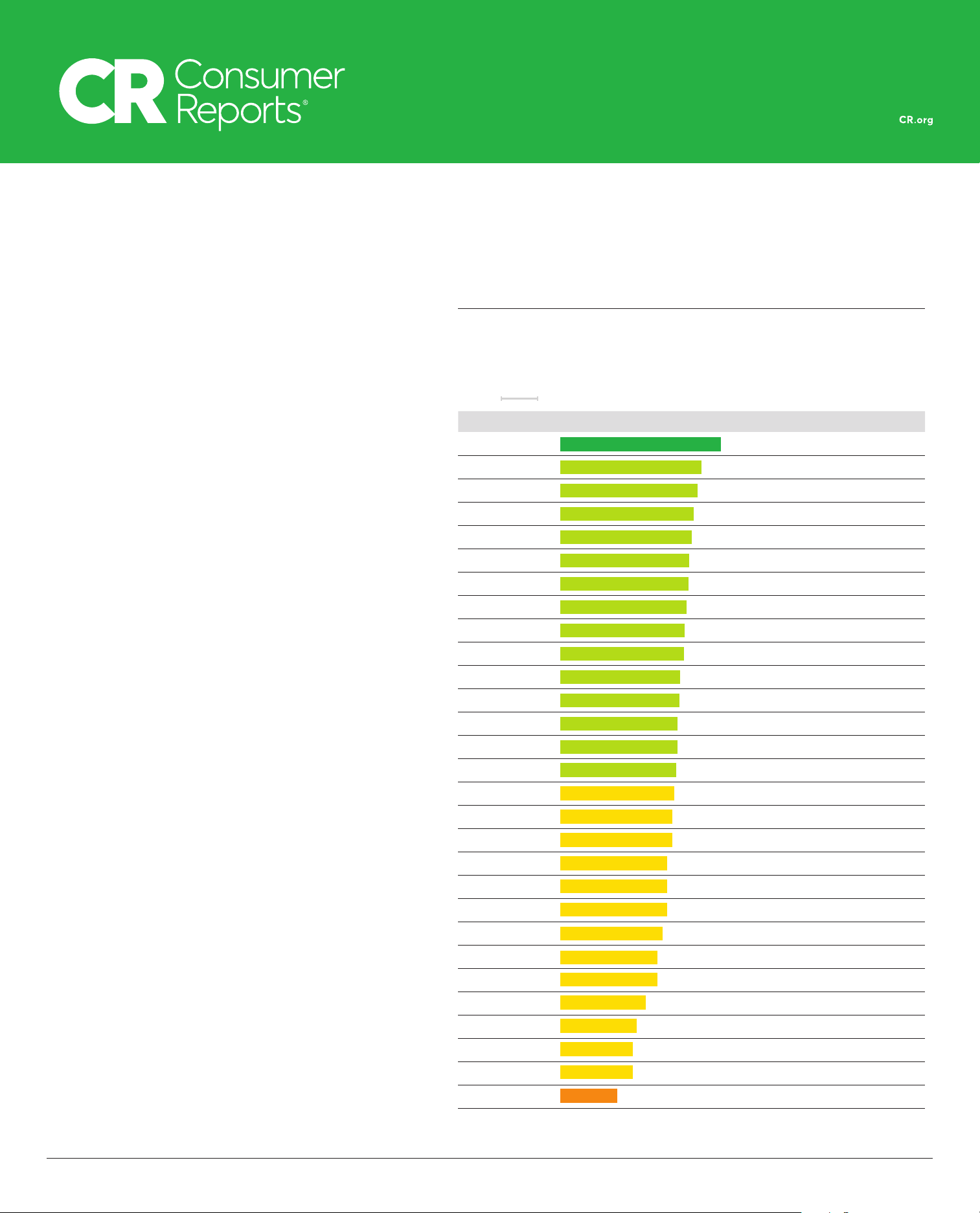
Sustainability rating of luxury watch and jewellery brands
Figure 1: Results of the sustainability rating
Latecomer,
Non-transparent LowerMideld Ambitious Frontrunner VisionaryUpperMideld
Pomellato (Kering)
Vacheron Constantin (Richemont)*
IWC (Richemont)*
TAG Heuer (LVMH)
Cartier (Richemont)*
Tissot (Swatch Group)
Bulgari (LVMH)
Swatch (Swatch Group)
Jaeger-LeCoultre (Richemont)*
Chopard
Tiany&Co.(LVMH)
Pandora Jewellery
Boucheron (Kering)
Omega (Swatch Group)
Panerai (Richemont)*
Breitling
A.Lange&Söhne(Richemont)*
Longines (Swatch Group)
Audemars Piguet
Patek Philippe*
Rolex
Among the 21 assessed brands, 14 took the opportunity to comment on and complete WWF’s pre-assessment while the remaining seven did not complete the initial assessment and therefore needed to be evaluated based
only on publicly available data. Brands that did not completed the pre-assessment and were only rated on publicly available data are marked with a * in the chart. If individual brands are part of a group, the group name is indicated
in brackets after the brand name.
WWF rated 21 of the most well-known luxury watch and
jewellery brands with regards to their sustainability
performance. The rating analyses brands’ performances in
the sector with regards to their sustainability strategy,
climate action, biodiversity and water stewardship, human
rights management, circularity approaches, traceability
and transparency in their supply chains, monitoring and
reporting of sustainability activities and stakeholder
engagement.
Theresultsshowthatbrandsaliatedwithlargergroups
such as Kering (relevant brands: Pomellato, Boucheron),
Richemont(relevantbrands:A.Lange&Söhne,Cartier,IWC,
Jaeger-LeCoultre, Vacheron Constantin, Panerai), and LVMH
(relevantbrands:Tiany&Co.,TAGHeuer,Bulgari)
havebenettedfromsustainabilityeortsatthegrouplevel.
Among these, seven brands demonstrate a commitment to
responsible business practices labelled as “ambitious” in this
rating.Thesustainabilityeortsofthemajorityofbrands
analysedinthisratingfallwithinthe“uppermideld”score
range.Threebrandsscoredinthe“lowermideld”.
Patek Philippe stands out as the only brand labelled as
“non-transparent”, implying a lack of available information
regarding its sustainability commitments. It is evident
that no brand was ranked in the two highest categories,
highlightingthesignicantroomforimprovementthat
remains in the industry.
7
The more detailed results illustrate that there has been
signicantprogressincertainareassince2018.Especiallyin
terms of materiality analysis and monitoring as well as
reporting and disclosure the industry has made substantial
advances. The importance of climate protection has also
been acknowledged. Some of the brands have already set
ambitious climate strategies and science-based greenhouse
gas (GHG) emission reduction targets.
However, there is still a great need for further development
towards more supply chain traceability and transparency in
the industry - two crucial prerequisites for meeting and
reporting on all other sustainability targets. The industry’s
performance regarding stakeholder engagement is currently
rather limited: Most companies are not yet engaging
their suppliers, employees, and consumers in a targeted and
comprehensivewayintheirsustainabilityeorts.Above,
many companies in the sector are still at the very beginning
in the areas of water, biodiversity, human rights stewardship,
as well as the implementation of circular approaches.

8
MOVING TOWARDS RESPONSIBLE BUSINESS
PRACTICES
While the overall sustainability performance of the watch and
jewellery sector leaves much to be desired, as the results of
the rating show, there are individual brands that are already
thoroughly engaged with sustainability issues and have
developed approaches and measures that can serve as examples
for other industry stakeholders. By adjusting their own
business practices and engagement with suppliers, each
brand
canhaveapositiveimpactandinuencetheindustry
as a whole. Accordingly, the report presents best practice
examples of start-ups and established industry players
that have developed innovative approaches to improve
sustainability, circularity, transparency, and traceability
withintheirvaluechain.Thesecanfocusonaspecictopic,
raw material or method, but also cover the entire business
model and therefore represent the diversity of possible
solutions that companies can apply to their own operations.
WWF is calling on brands in the watch and jewellery sector to:
●Increase traceability and transparency along supply chains.
●Conduct a materiality analysis for the development and
implementation of a comprehensive sustainability strategy.
●Integrate sustainability into business practices.
●Improve governance and management of climate,
biodiversity, water, and human rights impacts throughout
the value chain.
●Adopt circular approaches to reduce the use of
primary materials.
●Monitor impacts and publicly report on relevant
sustainability issues.
●Collaborate with industry peers and engage with
stakeholders.
POWERFUL CONSUMPTION DECISIONS
With their purchasing decisions, consumers can directly
inuencetheprioritiesofcompaniesandcontributeto
an improved sustainability performance. The report presents
various opportunities for consumers to exert a positive
inuence:
●
Demand higher levels of transparency. Buy from brands that
are committed to the highest levels of traceability and are
shouldering the responsibility of achieving transparency
along their entire supply chains. Ask about the origin,
workingconditions,environmentalimpact,certication,
and standards when buying watches or jewellery.
●
Practice responsible consumption. Aim at reducing the
consumption of new, resource-intensive products while
focusing on buying watches and jewellery from companies
committed to responsible, transparent sourcing and
production practices. Jewellery and watches can also be
shared, traded, or loaned for special occasions instead
of buying new pieces.
●Reuse and repurpose. When certain items are no longer
needed, consider extending their lifetime by reselling them
or giving them up for recycling. In recent years, the second-
hand market for watches and jewellery has experienced
signicantgrowth,creatingmanyopportunitiesforresale.
●Advocate for more sustainability. Support collective action
to advocate for responsibly sourced products. Whenever
possible, engage and vote for better policies and regulations
to protect nature and human rights.
This report is intended to make an encouraging and
constructive contribution to the industry’s shift towards
greater responsibility, transparency, and accountability.

© WWF / Nick Hawkins / naturepl.com

INTRODUCTION
The production and consumption of luxury goods comes at
ahighprice–notonlyinnancialterms,butalsoforthe
environment as well as the people involved in the supply
chains. The extraction and processing of raw materials,
transportation, and the operation of manufacturing sites are
allassociatedwithsignicantenvironmentalimpacts.These
include air and water pollution, soil degradation, landmass
movements and deforestation. Enormous chemical inputs and
land transformation are responsible for the fragmentation
and destruction of ecosystems and have considerable negative
eectsonfreshwater,forests,andwildlife.Moreover,the
mining and processing of raw materials can also be associated
with human rights violations, such as child and forced labour
or land grabbing (WWF 2018).
The negative impacts of climate change (IPCC 2021) and the
rapid loss of global biodiversity (SCBD 2020) are increasingly
evident. As a result, consumers are becoming more aware of
the negative impacts associated with production and
consumption and increasingly demand transparency from
companies when it comes to the environmental and social
impacts along their entire value chain. In addition, legislators
around the world are increasingly holding companies
accountable for the negative impacts of their production and
purchasing activities. At the European level in particular, a
wide range of regulations have been passed in recent years
to reduce the negative impacts on people and the environmen
t
in corporate value chains and to improve transparency and
traceability (Danish Institute for Human Rights 2023).
Analysing sustainability activities in the watch
and jewellery sector
Against this backdrop, the WWF Watch and Jewellery Report
2018 examined the 15 biggest Swiss industry players to assess
how well prepared luxury watch and jewellery manufacturers
were for the challenges ahead, how far they (could) trace their
supply chain and how they worked with their suppliers and
business partners to protect the environment and people. The
report came to the sobering conclusion that only a few brands
analysed were able to trace parts of their supply chain and
hadtakensucientmeasurestoprevent,reduceormitigate
risks of negative impacts on the environment (access the
full 2018 report here).
In light of this, the 2023 reissue and revision of the WWF
Watch and Jewellery Rating not only expands the geo-
graphical focus to include international players in addition
to Swiss ones (sees Figure 1), but also considers new
aspects of corporate responsibility. In the new report, brands
are expected to set targets and implement governance and
management approaches for their entire supply chain that
specicallyaddressbiodiversity,water,circularity,andhuman
rights. Human rights and environmental issues are often
inextricably linked, as the degradation of land, soil, and
biodiversity or rising air temperatures can often lead to
violations of human rights, such as the right to food or
access to clean drinking water. As a result, an integrative
understanding of environmental and human rights risks
must be applied (García et al. 2022). The rating was therefore
expanded to include assessment criteria for the corresponding
topics.
The intention is not only to examine how and whether the
15 brands analysed in 2018 have improved in terms of their
sustainability performance, but also whether the sector as
a whole is well prepared to tackle the environmental risks and
sustainability challenges along their value chains. The report
is in this way aimed at company representatives and should
serve as motivation to improve the sustainability performance
andeortstoprotectourenvironment.Additionally,the
report provides interested consumers and political decision-
makers with a basis for knowledge and decision-making.
While the results of the 2023 industry rating show that
more and more watch and jewellery manufacturers and
retailers are addressing sustainability issues in a structured
way, developing sustainability strategies, setting targets
for reducing greenhouse gas (GHG) emissions and reporting
publicly on sustainability issues, there is still a lot of potential
for improvement. When it comes to concrete measures to
reduce negative impacts on water, biodiversity, and human
rights along the supply chain, brands in the sector still have
a lot of work to do. Engagement with suppliers and other
stakeholders in the sector as well as the traceability of key
raw materials are still at an unsatisfactory level across
the sector. For a more detailed discussions of the results see
Chapter 2 and the dedicated section in the appendix.
This report
The report is structured as follows. Chapter 1 provides an
overview of key developments in the watch and jewellery
sector, the policy landscape, the technological environment
and the impact of the watch and jewellery sector on climate,
water, and biodiversity. Chapter 2 describes the results of the
sustainability rating of the 21 brands (described also in more
detail in the appendix). Chapter 3 provides insights into best
practices and current approaches to improving sustainability
practices along supply chains. Finally, Chapter 4 provides
recommendations to consumers, companies and policy makers
on what actions can be taken to further improve responsibility,
transparency and accountability in the watch and jewellery
sector.
10

11
WWF VISION
WWF remains committed to its vision of
engaging stakeholders from the watch
and jewellery industry (e.g. manufacturers,
retailers,consumers,renersandthe
government)inndinginnovativesolutions
to protect the environment, in particular
forests, fresh water and wildlife that are
currently threatened in several points of
the sector’s supply chain. Together, we
will transform international markets by
producing goods and services sustainably
and we will encourage others to become
sustainable consumers.
There is still a long way to go to make this
vision come true, but WWF believes it
to be possible if the industry and related
stakeholders continue to take bold,
ambitious steps towards transformation.
© iStock

© WWF / Martin Harvey
13
1 ENVIRONMENTAL AND SOCIAL
IMPACTS AND DEPENDENCIES IN THE
WATCH AND JEWELLERY SECTOR
FiveyearshavepassedsincethepublicationofWWF’srst
watch and jewellery industry rating, “A precious transition”.
The report highlighted the environmental issues connected
to the industry and urged brands to take responsibility
and address these problems. This new report reveals that,
since 2018, brands have indeed been putting transitionary
processes into practice. It is evident that in terms of
sustainabilityeorts,theindustryhasadvancednotably.
The global environmental degradation, however, has also
continued to progress and the sector faces a growing
number of sustainability risks and challenges.
The following chapters highlight the persisting need for
a “precious transition” of the watch and jewellery sector
towards improved sustainability performance, based on
current environmental and climatic developments. It also
provides exemplary insight into the prevalent negative
impacts of the industry on the environment and people.
THE CONTINUED NEED FOR A
“PRECIOUS TRANSITION”
The latest Assessment Report of the Intergovernmental
Panel on Climate Change (IPCC) shows that global average
temperatures are increasing worldwide, contributing to a
surge in weather and climate extremes, melting ice caps and
rapidly retreating glaciers (IPCC 2023).
These climatic changes, attributable to human-driven
greenhousegasemissions,alsohaveasignicantimpact
on the world’s water resources: While rising sea levels and
oodsaredestroyinglivelihoodsinsomeregions,water
scarcity is worsening in others. According to the Sustainable
Development Goals Report 2023 of the United Nations (UN),
2.4 billion people lived in countries with water scarcity in
2020, and 2.2 billion people had no access to clean drinking
water in 2022. At the same time, untreated wastewater,
among other things, threatens water quality worldwide (see
detailed information page 17) (UN 2023).
In addition to the persistently rising greenhouse gas
emissions and changes in the global water regime, human
activities such as agricultural expansion, deforestation,
mining, and urban sprawl are causing land and sea
degradation at a concerning high speed (IPBES 2019).
According to the majority of assessments, 20 to 40% of the
global land area is currently degraded or in the process of
degrading (UNCCD 2022). As a result, biodiversity loss and
extinction rates are rapidly increasing. The WWF Living
Planet Index illustrates how mammal, bird, amphibian,
reptile,andshpopulationshavedecreasedbyabout68%
onaveragebetweentheyears1970and2016(WWF2022a).
While land degradation is a global concern with troubling
long-termeectspertainingtobiodiversitylossandclimate
change,thedirecteectsoflanddegradationarefeltlocally
by the communities that live in the degrading areas (UNCCD
2022; see also WWF 2021).
THE WATCH AND JEWELLERY SECTOR’S
IMPACT AND DEPENDENCY ON NATURE
The watch and jewellery sector contributes to climate change,
environmental destruction, deterioration of water resources,
and biodiversity loss. The extraction of non-renewable
raw materials, like precious metals, involves deforestation,
emissions to air, soil and water, and bares a high number
of social risks (Dehoust et al. 2020). About 85% of GHG
emissions from the luxury industry are indirect emissions
thatoccuralongthevaluechain(Watch&Jewellery
Initiative 2030 2023). Figure 2 shows the large number of
dierentmaterialsthatareusedinawatch;theextraction,
preparation, and processing of all these materials can have a
signicantnegativeimpactontheenvironmentandpeople.
Companies in the sector therefore bear a particularly strong
responsibility to address these issues and reduce the negative
environmental and human rights impacts along their value
chains – especially at the stage of resource extraction.
While it is now well known that the economy often has a
negative impact on climate and biodiversity through its
activities, it is crucial to note that the stability of the economy
is heavily reliant on an intact environment, too. Businesses
have started to become aware of their dependencies on
climate and nature to secure future commodity supplies and
continue their operations.
SUSTAINABILITY RATING AND INDUSTRY REPORT 2023

14
GEMSTONES
(real diamonds, synthetic
gemstones etc.)
METALS
(Stainless steel, gold, aluminium,
titanium, platinum, etc.)
PLASTIC/WOOD
CERAMIC/METALS
(e.g. platinum, gold,
silver, stainless steel, etc.)
PLASTIC
METALS
(Stainless steel, gold, nickel,
titanium, platinum, etc.)
BATTERY
(Zinc, Lithium, etc.)
METALS
(Aluminium, stainless steel, etc.)
GLASS/PLASTIC
METAL/PLASTIC
LEATHER/RUBBER/PLASTIC/
METALS/NATURAL AND
SYNTHETIC FABRICS/ETC.
Raw materials used
in a watch
Figure 2: Exemplary illustration of most relevant raw materials in a watch
Source: (WWF 2018)
©GeneratedwithAdobeFirey

15
The extractive industries – being an important input sector
of the watch and jewellery sector for raw materials such as
gold, diamonds, or (stainless) steel – are, for example, highly
dependent on water availability. Important activities in
mining, including dust compression, cooling machines, and
ore processing, require large quantities of water. Against
the backdrop of increasing global water stress, governments
have begun to critically review mining licenses and operation
s
in terms of their water consumption. Without proactive
and preventive water management and reductions of water
consumption, some mining companies could lose their
miningpermitsorfaceheavynesinthefuture(WWF2022b).
Biodiversity loss and the progressive destruction of the natural
environment also pose risks to the global economic and
nancialsystemasawhole;accordingtotheWorldEconomic
Forum, over 50% of global gross domestic product (equivalent
to $44 trillion) is highly or moderately dependent on the
environment and its services (World Economic Forum 2020).
Furthermore, brands that remain inactive in the face of
growing environmental crises and fail to adapt their business
modelsalsofacesignicantregulatoryandreputational
risks. In recent years, the demands of policy makers and
consumers on the environmental performance of companies
have continued to increase (see more in Chapter “Changing
Demands and Regulations).
The gold supply chain: An example of the industry’s
environmental issues
Given that the watch and jewellery sector accounts for
the largest demand for gold, having a closer look at the
environmental issues along its supply chain is essential.
Thefollowingdeepdiveongoldexempliestheenormous
negative footprint of mining and highlights the importance
for the industry to rethink its approach to sustainability.
In 2021, the watch and jewellery sector consumed 50% of the
world’s annual gold production (PWC n.d.). The extraction
of 1 tonne of gold in mining requires the production of about
100,000 tonnes of waste rock1. This translates to 1000 kg
of soil having to be moved to produce a 10g gold ring (WWF
2021). Gold mining can be divided into two main groups:
large-scale industrial gold mining (LSGM) and artisanal and
small-scale gold mining (ASGM). Large-scale mining is
highly mechanised, involves the use of heavy machinery and
provides about 80% of the global primary gold production.
ASGM,ontheotherhand,isofteninformal,lessecient,and
eminently labour intensive. Small-scale and artisanal mining
employs about 90% of all the gold miners, this corresponds to
ca. 10 to 15 million miners globally.
ASGM, which is also an important income source for many
people in developing countries, is also often associated
with environmental and social issues such as child or forced
labour (World Gold Council, 2018).
Gold mining requires large amounts of water, and both
large-scale gold mining and artisanal and small-scale gold
miningcanaectsurfaceandgroundwatersupplies,aswell
as the water quality in the vicinity of the mining operations
(WWF 2021). In many ASGM operations, mercury – a
highly hazardous substance – is used to dissolve gold from
the rock, which can be detrimental to the health of the
miners.Mercurypoisonsnearbywaterbodies,sh,andsoil,
threatening biodiversity and the health of local communities
(Buderath et al. 2021). Gold is also often mined in forests,
including in places like the Amazon rainforest, where mining
greatlyincreasestheriskofnegativeimpactsonoraand
fauna (WWF 2021). Forest areas are also often home to
indigenous peoples, who are particularly prone to land rights
violations (Buderath et al. 2021; WWF 2021).
Tracingtheoriginsofgoldpresentsasignicantchallenge
in the industry. The gold value chain, marked by its
inherent complexity, involves a multitude of intermediaries
andstakeholders,rangingfromminerstorenersand
distributors. This intricate web of participants complicates
the tracking of the gold’s journey from its source to the
nalproduct.Consequently,determiningtheexactconditions
under which gold was extracted becomes a demanding
task, and environmental concerns and human rights
violations often remain concealed throughout the value
chain. Given the substantial presence of illegal and informal
artisanal and small-scale gold mines, certain actors within
the value chain may also have motivations to obscure
the true origin of the gold. Thus, the imperative to establish
transparency and enhance traceability emerges as a
pivotal step in the pursuit of responsible gold sourcing.
The subsequent steps in the value chain – the trading and
transportofrawmaterials,thereningandprocessing,the
production of inputs and intermediate products, the manu-
facturingofthenalproduct,andnally
the distribution of
the products, which is managed by the brands themselves –
can also be associated with negative environmental impacts.
Variousprocesses,suchasrening,theproductionof
intermediate products, manufacturing, the transport of raw
materials and intermediate products as
well as the operation
of stores and warehouses are in some
cases accompanied by
high energy consumption. This leads to
the emission of
greenhouse gases and, in some cases, other
air pollutants such
asparticulatematter.Bothminingandthereningofraw
materials generate waste, which can occupy land or pollute
soil and water if it is contaminated with heavy
metals (RJC
2023). Some further examples of possible environmental
impacts are listed in Figure 3. Additionally, the WWF study
‘Impact of Gold’ provides in depth information about the topic.
Goldsourcingneitheraectsallcompaniesnorisitconsidered
the only environmental and social challenge of the watch
and jewellery sectors. The use of other metals and materials
such as leather, gemstones and plastic often pose similar
threats to the environment. However, the gold value chain is
a highly relevant example.
SUSTAINABILITY RATING AND INDUSTRY REPORT 2023
1
Similarly, to extract one carat of diamond, about 250 tonnes of earth must be moved (BOF and McKinsey 2021).

The impact the watch
and jewellery sector on
biodiversity
In addition to the 2018 topics, the WWF Watch and Jewellery Rating
2023 examines the biodiversity-related governance and management
of brands in the sector.
Along the value chain of the watch and jewellery sector there are
numerousenvironmentalimpactsthatcanleadtoeectsonwildlife
and forests. In particular, the extraction and processing of mineral
raw materials has a high environmental footprint. For example,
gold mining often involves the destruction of large areas of land,
deforestation, and soil degradation to gain access to deposits. In
addition, the infrastructure (access roads, worker housing, etc.) built
around mines and processing plants contributes to the fragmentation
of the habitats, which can negatively impact the migration of species,
the access to food, shelter, and the search for mating partners and
thus the mixing of genetics. Gold is most often mined in forested
areas compared to other minerals, so large-scale deforestation is
associated with gold mining. Newly build roads into forests can also
enable the increase of illegal activities such as poaching, thereby
further exacerbating the situation (WWF 2021).
In addition, due to informality and the resulting often lower
enforcement of occupational health and safety standards in the
ASGM sector, mercury is often used to separate gold from other
materials. Mercury is a very toxic liquid heavy metal. When it
enters soils and waters, it can end up in the food chain, where it is
depositedinanimalsandhumansandcanaectreproduction,
survival, endocrine function, immune function, behaviour, and
metamorphosis. Amphibians in particular are highly susceptible to
mercury poisoning (WWF 2021).
While the impacts of gold mining are particularly high, the mining of
other raw materials that are used in the production of watches is also
associated with risks for biodiversity: The mining of bauxite and iron
ore – raw materials that are processed into aluminium and (stainless)
steel and used in the production of many watches – is associated
withsignicantdeforestation.Between2001and2019,forexample,
bauxite mining accounted for about 8% of direct mining-related
deforestation, and iron ore mining for about 7% (comparative value:
ASGMandLSGMgoldminingactivitiesaccountedforabout36%of
total mining-induced direct deforestation during the same period)
(WWF 2023).
Risks to biodiversity can also arise at further stages of the watch and
jewellery value chain: The discharge of wastewater and chemicals
into soils and waters during manufacturing, for example, or noise
emissions and the fragmentation of landscapes and marine habitats
during transport can degrade wildlife.
16
Figure 3: Exemplary illustration of most relevant impact hotspots along the gold supply chain. Source: WWF 2018 with additions from adelphi
EXTRACTION AND PROCESSING
OF RAW MATERIALS
– Deforestation and land degradation
– Pollution of soil and water
– Biodiversity and habitat loss
– Release of toxic tailings and waste waters
– Release of mercury or cyanide into water, soil and air
– Energy use and GHG emissions
– Destruction of land through infrastructure
– Soil movement and production of waste rock
– Acid mine drainage
– Air emissions (e.g. contaminated dust)
– Health and safety issues
–Dicultworkingconditions
– Human rights violations
– Migration
– Corruption and illegal trading
TRADE
– GHG and pollutant emissions from transportation
– Buidling of infrastructure: land and energy use
– Fragmentation of ecosystems due to infrastructure:
impacts on biodiversity and e.g. maritime habitats
–Dicultworkingconditions
REFINING
– High energy use and associated GHG emissions
– Poor waste management of toxic byproducts
like cyanide and mercury
– High water use
–Dicultworkingconditions
Impact hotspots along the gold supply chain

SUSTAINABILITY RATING AND INDUSTRY REPORT 2023
17
The impact of the watch
and
jewellery sector on water
In addition to the 2018 topics, the WWF Watch and Jewellery Rating
2023 examines the water-related governance and management of
brands in the sector.
Various water-related risks can occur along the value chain of the
watch and jewellery sector. Mining is often associated with the
risk of water pollution. Additionally, the mining and processing of
mineral resources
in high water stress areas can exacerbate water
scarcity and limit
residents’ access to freshwater. When extracting
gold from softer deposits
, for example, water is used for dredging or
removing sediments. This can limit the quality and availability of
nearby water resources if the water consumption leads to a drop in
the freshwater table or if mining releases pollutants into the
surrounding soils and bodies of water. This poses a high risk,
especially nearby large-scale mining sites. Smaller scale ASGM also
useshighvolumesofwater,andthereisoftennoecientwater
management in place to capture and recycle or purify water, for
example. The frequent use of mercury in ASGM increases the risk of
contaminating surrounding water sources, which are also used by
residents for cooking and drinking. The discharge of mercury into
water bodies also has a negative impact on local wildlife and
biodiversity. Similarly, mining waste containing sulphide minerals
entering natural water bodies can turn them acidic, also called acid
minedraining.Acidicwaterhasdevastatingeectsonhuman,
aquatic and soil health. Another major issue can stem from the
leakage from tailings storage facilities. For instance, the leakage of
very small amounts of cyanide, a chemical used in the leaching
process of gold extraction, can be lethal for vegetation, wildlife, and
humans. Furthermore, as ASGM mining often takes place in very
remote
areas, the transport of materials and machinery to and from
the site is
often done via waterways, which has a negative impact on
rivers and the
sh,smallanimals,etc.livinginthem(Buderathetal.
2021; WWF 2021).
PRODUCTION OF INPUTS
– High energy use and associated GHG
emissions (and potentially air pollutants
such as particulate matter)
–Wastegenerationthroughineciencies
– High water use
–Dicultworkingconditions
MANUFACTURING
– High energy use and associated GHG
emissions (and potentially air
pollutants such as particulate matter)
–Inecientwastemanagement
– High water use
–Dicultworkingconditions
DISTRIBUTION / MARKETING
– High energy use and associated
GHG emissions (and potentially
air pollutants such
as particulate matter)
– Business travel and associated
GHG emissions
– Logistics, shipping and associated
GHG emissions
– Misleading marketing campaigns
© iStock
18
CHANGING DEMAND AND REGULATIONS
In recent years, watch and jewellery brands have taken
increased action to identify, address, and report corporate
sustainability issues. According to McKinsey estimates,
theshareofsustainability-drivennejewellerypurchases
willincreasefrombetweenveandtenpercentin2019
to between 20 and 30% in 2025 (BOF and McKinsey 2021).
Industry experts label the phenomenon the “sustainability
surge,” attributing it largely to a change in consumer
behaviour, with millennials and Gen Z consumers increasingly
demanding that the products they purchase meet certain
sustainability criteria. Recent research suggests that 31% of
Gen Z consumers are willing to pay more for products
that are reliably sustainable, compared to only twelve percent
among Baby Boomers (BOF and McKinsey 2021).
Importantly, sustainability-driven consumers not only want
companies to commit to certain sustainability standards,
but they also want the respective companies to prove that
they meet the standards they claim to uphold. This will
require companies to engage with these issues in a serious
manner in the coming years and highlights the importance
oftraceabilityandcerticationschemes.Theconsumer
demand for evidence of sustainability practices comes amid
increasing awareness of past greenwashing and performative
social justice practices (BOF and McKinsey 2021).
At the same time, investors and policy makers are increasingly
demanding that companies operate sustainably and conduct
due diligence along their supply chains. Due diligence requires
companies to “identify, prevent, mitigate and account for
how they address [the] actual and potential adverse impacts
[on people, society or the environment] in their own
operations, their supply chain and other business relation-
ships” (OECD 2018b). This means that companies not only
needtoestablishaprocessforfulllingtheirduediligence
(asdened,forexample,intheDueDiligenceGuidancefor
Responsible Business Conduct of the Organisation for
Economic Co-operation and Development (OECD)), but
also to draw consequences for their strategic business
decisions when negative impacts are discovered. In this way,
eectiveduediligencedoesnotmerelyaimatcompliance
with existing regulations but serves as a strategic tool for
companies to make long-term sustainable decisions and
to reduce reputational and supply chain risks while minimising
negative impacts on the environment and people. To achieve
this,itisnecessarytoworkwithscienticallysoundmethods
andtoformulateclearlyveriabletargets.Variousregulations
around the world aim to promote due diligence as a concept
or make it mandatory. Among others, the French Corporate
Duty of Vigilance Law, the German Supply Chain Due Diligence
Act and the proposal for a European Directive on Corporate
Sustainability Due Diligence (CSDD) oblige companies to
implement due diligence processes. Other regulations take a
morespecicfocusintermsoftopicorproducts,suchasthe
USDodd-FrankAct,theEUConictMineralsRegulation
(bothrelatedtoconictminerals),theEUTimberRegulation,
the Japanese Clean Wood Act (forest products) or the
proposal for the EU Batteries Regulation (batteries) (García
et al. 2022; Danish Institute for Human Rights 2023).
In addition, several regulations in the EU, such as the
Sustainable Finance Disclosure Regulation (SFDR),
aimtoensurethatnancialmarketparticipantstakenegative
environmental or social impacts into account in their
investment decisions by requiring them to regularly disclose
their “principal adverse impacts” in statements. Similarly,
theEUTaxonomyRegulationaimstosteernancialows
towards more sustainable products by providing
clarity on which economic activities can be considered
“environmentally sustainable” (Danish Institute for
Human Rights 2023). These and similar regulations are
also increasing pressure from investors on companies
in the sector to operate sustainably and to communicate
eortsopenly.InMarch2023,theEuropeanCommission
proposed the Green Claims Directive to address corporate
greenwashing concerns. According to the proposed
regulations, the majority of EU companies must prove their
environmental statements using life-cycle assessments
conrmedbyexternalsources.Termslike“netzero,”“carbon
neutral,” and “eco-friendly” can no longer be used in
advertisements, social media, or packaging unless they have
beenproperlyveried(EuropeanCommission2023).
Overall,companiesarefacingsignicantlyhigherrequirements
with regards to their sustainability performance than in 2018.
CIRCULARITY IN THE WATCH AND
JEWELLERY SECTOR
In addition, both consumers and sustainability experts are
increasingly taking a holistic approach to sustainability, also
highlighting how environmental and social issues are linked.
For example, the livelihoods of many rural communities
depend on artisanal and small-scale mining, but miners also
facesignicanthealthrisksduetotheuseofmercuryand
dicultworkingconditions(seeBuderathetal.2021).
Nearbycommunitiesarehighlyaectedbytheenvironmental
degradation caused by mining activities, as outlined in
the previous chapter. This example highlights the multiple
connections between environmental degradation, health
and social harm.
One important step towards achieving more sustainable
business practices in the watch and jewellery sector is to
move towards a circular economy. Circularity does not only
help to reduce both the negative environmental footprint
and human rights issues in the supply chain, but also to
match current market trends. Circularity has emerged as a
prominent subject of discussion within the retail sector,
withasignicantproportionofconsumersdemonstrating
their engagement in circular approaches. Approximately
53% of consumers opt to repair their belongings rather than
replace them with new ones, while 40% actively participate
in the acquisition of second-hand or refurbished goods.
Furthermore, 38% of consumers are willing to pay a premium
for products that have a longer shelf life or durability

19
(Deloitte 2022). These advancements are evident in the
statistics of the rapidly expanding market for pre-owned
watches. Experiencing an annual growth rate of 8%, this
segment is outpacing the overall luxury industry’s growth,
showcasing its burgeoning popularity among consumers
seekingmoresustainableandcost-eectivechoices(BCG
2020). The surge in this trend is primarily propelled
by millennials, who place great emphasis on tangible
sustainability commitments and have now reached a stage
inlifewhereaconsiderablenumberofthemcanaord
luxury acquisitions (McKinsey 2021).
Using recycled inputs instead of virgin materials is often
viewedasaneectivewaytoimprovethecircularityofthe
watch and jewellery sector. Nevertheless, claims made
around recycled minerals must be viewed with high levels
of caution. First, there is currently no alignment of
industrystandardsonthedenitionofwhatrecycledgold
is, rendering it impossible for the public to understand
what lays behind the simple term recycled. In addition,
currently, gold is considered to be recycled if it has been
transformedonceafteritsprimaryreningfromvirgingold.
As the demand for recycled gold currently exceeds the
supply,somerenerieshavestartedtoextractvirgingold,
melt it down once, and sell it as recycled gold. This practice
contradicts the original idea that materials get recycled
from products that were already in use. Therefore, a clear
denitionandstrictcontrolsfortheterm“recycled”is
required to create more transparency for all stakeholders
and avoid false claims (see box “Recycled gold – it’s all
aboutthedetails”withreferencetothedenitionsuggested
by PMIF 2022).
SUSTAINABILITY RATING AND INDUSTRY REPORT 2023
Recycled gold – it’s all
about the details
Claims from watch and jewellery brands regarding recycled gold
in their products must be viewed with caution.
Under OECD and other standard setters such as the London Bullion
Market Association (LBMA), the Responsible Jewellery Council
(RJC) and the Responsible Minerals Initiative (RMI) (see the
appendix for an overview of some sustainability standards and
certications)goldcanbeclaimedtoberecycledifithasbeen
transformedatleastonceafteritsprimaryreningfromfreshly
minedgoldwithouteverhavingseenaconsumer.Thisdenition
currentlyrepresentsalmostallrenedgoldthatwouldundertake
morethanonereningprocessanddoesallowfreshlyminedgold
to be labelled as recycled gold (PMIF 2022). In contrast, the
Precious Metals Impact Forum (PMIF) has developed a more concise
denitionwiththeaimtoprovidemoretransparencyandclarity.
AccordingtoPMIF,thereisadierencebetweenreprocessedand
recycled gold. Gold may only be called “recycled” if it actually has
been a waste product. Accordingly, one can only speak of “recycled
gold” if it has been extracted from products with a gold content
of less than 2% by weight that are destined to be thrown away but
insteadwerereturnedtoarenerytostartanewlife.Itmeans
that especially gold recovered from old electronic equipment would
fallunderthedenition.Goldthatisreusedandproducedfrom
products that contain more than 2% of gold in weight with the
purpose of changing its state like old jewellery or coins should be
referred to as “reprocessed gold”. As gold is hardly ever a waste
product, most gold from secondary sources used in the watch and
jewellery industry should be referred to as “reprocessed” rather
than “recycled” (PMIF 2022).
As for freshly mined gold, traceability and transparency are key
for responsible sourcing of recycled and reprocessed gold: Identifying
the source and reviewing supplier claims through comprehensive
due diligence is utmost important to understand and reduce the
negative impact of secondary supply chains.
© unsplash

20
2 BRAND’S SUSTAINABILITY
RATING RESULTS
To promote the adoption of responsible business practices
within the luxury watch and jewellery sector, WWF has
undertaken an updated assessment of industry-leading
brands, focusing on the most relevant sustainability topics.
The evaluation criteria were adopted from the WWF Watch
andJewelleryReport2018andbasedonscientic,
regulatory,andindustry-specicdevelopments,updated
to
conform with current standards. The rating analyses brand
performance in the sector with regards to their materiality
analysis, sustainability strategy, climate action, biodiversity
stewardship, water stewardship, human rights management,
circularity approaches, traceability and transparency in
the supply chain, monitoring, reporting and disclosure of
sustainability activities, and stakeholder engagement.
The focus of this report lies on the luxury segment within the
watch and jewellery sector. While the 2018 rating prioritised
brands owned by Swiss companies, the 2023 rating assessed
additional international leading watch and jewellery brands,
namelyPomellato(Kering),A.Lange&Söhne(Richemont),
Panerai(Richemont),PandoraJewellery,Breitling,Tiany
&Co.(LVMH),andBulgari(LVMH).Thesebrandswere
selected based on revenue, industry relevance, and market
share, showcasing a diverse set of the most prominent brands
within the sector. As some of the individual brands assessed
in this rating belong to a larger group, the group name is
given in brackets after the brand name in this report where
applicable.
To implement and ensure the independence of the rating,
WWF commissioned adelphi, an environmental consultancy
with focus on climate, environment, and development.
Thenalratingscoresarebasedondataderivedfrompublicly
available sources as well as responses to a questionnaire
tailored for this report. Out of the 21 brands evaluated for
the rating, seven did not submit a response to this
questionnaire: Patek Philippe and the Richemont Group’s
brandsA.Lange&Söhne,Jaeger-LeCoultre,Panerai,
Vacheron Constantin, IWC, and Cartier. As a result, these
brands were evaluated based only on publicly available data.
© iStock

21
SUSTAINABILITY RATING AND INDUSTRY REPORT 2023
Geographical distribution
of the analysed brands
(location of headquarter)
SWITZERLAND
Rolex
Patek Philippe
Audemars Piguet
Chopard
TAG Heuer (LVMH)
IWC (Richemont)
Jaeger-LeCoultre (Richemont)
Vacheron Constantin (Richemont)
Omega (Swatch Group)
Swatch (Swatch Group)
Longines (Swatch Group)
Tissot (Swatch Group)
Breitling
FRANCE
Cartier (Richemont)
Boucheron (Kering)
USA
Tiany&Co.(LVMH)
DENMARK
Pandora Jewellery
ITALY
Pomellato (Kering)
Bulgari (LVMH)
Panerai (Richemont)
GERMANY
A.LangeundSöhne(Richemont)
Figure 4: Geographical distribution of the analysed brands (location of headquarter)
© iStock

22
Thenalratingresultsindicatethatbrandsaliatedwith
larger groups such as Kering, Richemont, and LVMH have
benettedfromsustainabilityeortsatthegrouplevel.
Among these, seven brands demonstrate a commitment to
responsible business practices labelled as “ambitious” in this
rating.Thesustainabilityeortsofthemajorityofbrands
fallwithinthe“uppermideld”scorerange.Threebrands
scoredinthe“lowermideld”.PatekPhilippestandsout
as the only brand labelled as “non-transparent”, implying
a lack of available information regarding its sustainability
commitments. It is evident that no brand was ranked in the
twohighestcategories,highlightingthesignicantroom
for improvement in the industry.
Comparing the overall rating results from 2023 and 2018,
it becomes evident that the sector has started its journey
towards responsible business practices. In 2018, over half
of the assessed brands were rated as “non-transparent”.
This year, only one brand falls into this category. This trend
ofgreatertransparencyincommunicationisalsoreected
in the increased number of detailed responses received
from brands to supplement the assessment of this report.
Nevertheless, there is still room for improvement among all
the brands. In the present rating no company has managed
to achieve a score in the upper two scales (“frontrunner” and
“visionary”).
One of the main reasons is the lack of traceability
and transparency
along supply chains. Most brands still
face challenges in tracing back raw materials to their origin
Results of the 2023 WWF Watch and Jewellery Rating
and obtaining a comprehensive overview of all stakeholders
involved. Traceable supply is key to understanding the impact
of raw materials. Only when a brand can understand and
measure the impact and environmental and social risks along
itssupplychains,itcandevelopeectiveprocessestoavoid
and reduce them. To demonstrate commitments and actions
to the broader public, it is necessary to enhance disclosure
in the future.
While the focus of this report is on the rating results, the
followingchapterswillalsooeradviceonhowcompanies
should enhance their engagement to better protect the
planet and respect human rights.
Figure 1: Results of the 2023 WWF Watch and Jewellery Rating
Among the 21 assessed brands, 14 took the opportunity to comment on and complete WWF’s pre-assessment while the remaining seven did not complete the initial assessment and therefore needed to be evaluated based only
on publicly available data. Brands that did not completed the pre-assessment and were only rated on publicly available data are marked with a * in the chart. If individual brands are part of a group, the group name is indicated in
brackets after the brand name.
Latecomer,
Non-transparent LowerMideld Ambitious Frontrunner VisionaryUpperMideld
Pomellato (Kering)
Vacheron Constantin (Richemont)*
IWC (Richemont)*
TAG Heuer (LVMH)
Cartier (Richemont)*
Tissot (Swatch Group)
Bulgari (LVMH)
Swatch (Swatch Group)
Jaeger-LeCoultre (Richemont)*
Chopard
Tiany&Co.(LVMH)
Pandora Jewellery
Boucheron (Kering)
Omega (Swatch Group)
Panerai (Richemont)*
Breitling
A.Lange&Söhne(Richemont)*
Longines (Swatch Group)
Audemars Piguet
Patek Philippe*
Rolex

23
SUSTAINABILITY RATING AND INDUSTRY REPORT 2023
Greenwashing
In today’s business world, some companies present themselves
as
environmentally friendly even though they do very little
to
reduce the negative the impacts of their business activities.
Those
companies often only fund or participate in projects
that are not
directly aligned with their core operations but
have a favourable
public perception. Trustworthy sustainability
engagement starts with a focus on reducing and mitigating
the negative environmental and social impacts of the own value
chain. Supporting projects and good causes beyond core
processes is important but should be supplementary to reducing
the own impact.
Some companies also resort to misleading claims, such as
“climate
neutrality” to create the impression that they are
deeply committed
to sustainability. These claims suggest no/
reduced climate impact of
a product while purchasing CO
2
certicateswhichpromise
emissions reduction measures
elsewhere, as a way to “compensate” for the emissions generated
by their own operations. This can serve as a smokescreen or
an excuse to continue emitting carbon emissions and does not
incentivize actual emission reduction within the company
and its value chains. Companies should always prioritise the
decarbonisation of their own operations and value
chains
(towardscorporatenetzero).Beyond,companiesshouldnance
climate action that supports global goals (towards global net
zero). More advice for comprehensive climate action can be
found in the next chapter.
RESULTS OF THE RATING
Materiality analysis and sustainability strategy
Basedontheassessment’sndings,aconsiderablenumber
of brands started to set up comprehensive environmental
strategies. The majority conducts double materiality
assessments to pinpoint the most pertinent sustainability
issues, forming the bedrock of their corporate sustainability
strategies. Moreover, some of the rated brands have
started to restructure their governance frameworks, placing
heightened focus on sustainability management. Leading
the way in this regard are the brands that belong to the
Kering Group, (Pomellato and Boucheron), and the Swatch
Group (Omega, Swatch, Longines and Tissot). These
brands have strategically aligned their corporate objectives
with insights derived from materiality assessments based
on environmental impact data. Nonetheless, there is
still improvement potential among all brands evaluated.
This involves establishing a dedicated position to report
sustainability issues directly to the executive board, dis-
closing transparently how all sustainability aspects are
fully integrated into decision-making processes, and
grounding materiality analyses on environmental impact
data. Enhancing the quality of materiality assessments
and elevating sustainability to a top priority within the
executive board’s agenda are areas that warrant attention.
Climate action
Consideringtheoverallgoodscoresinthiseld,itisclear
that climate measures are being adopted throughout the
industry. While companies emphasise GHG accounting and
target setting, the implementation of extensive measures
toreducethecarbonfootprintcanstillimprove.Tiany&
Co. (LVMH) stands out as an industry leader in science-
based target setting, displaying short-term, long-term, and
net-zero targets, all endorsed by the Science Based Targets
Initiative (SBTi). On the other hand, the Kering Group
brands Pomellato and Boucheron as well as independent
brand Pandora Jewellery have excelled in addressing
climatechange,showcasingsignicantprogressinreducing
GHG emissions in recent years. Businesses must prioritise
theimplementationofeectivemitigationandreduction
strategies, aligning their actions with the principles of the
Paris Agreement, and apply comprehensive corporate climate
strategies as proposed by WWF (see more in Chapter 3).
Biodiversity stewardship
Biodiversityreferstoallthedierentkindsoflifethatcan
be found in one area. Within this category the focus lies
on terrestrial biodiversity (aquatic biodiversity is covered
by the water section). The results of this rating show that
the watch and jewellery sector lags behind in measuring
and tackling biodiversity risks. Brands’ rather unstructured
approaches to this topic highlights the lack of clarity on
limiting negative impacts on ecosystems and restoring
damagedhabitats.Inuentialwatchandjewellerybrands
play an important role in shifting these industry standards
by transparently reporting on biodiversity risks in their
production sites and supply chains, setting and working
towards ambitious targets, and measuring the progress made.
In this regard, the recently launched science-based targets
for the environment developed by the Science Based Targets
Network (SBTN) will provide additional guidance to address
the complexities of impacts and dependencies on nature.
The LVMH Group and the Kering Group are in the process of
piloting SBTN. Brands must assess their entire value chain,
prioritise locations and hotspots at high biodiversity risks,
andimplementscienticallygroundedactions.Inparticular,
the transparent and science-based recording and reporting
of biodiversity hotspots and risks is key to creating a more
widely available database and, as a result, a positive feedback
loop in the process of promoting biodiversity risk assessment
in the industry and beyond.
Water stewardship
Up until now, brands assessed in this rating have taken
limited action in measuring their exposure to water risks and
eectivelyaddressingtheidentiedissues.Asaresult,itis
diculttopinpointaclear“frontrunner”inthiscategory.The
best-performing brands have taken the initiative to publish
quantieddataonwaterrisksandreporttheirprogressin
addressingtheseconcerns.However,sucheortsoftenfocus
on their own business sites, with only minimal consideration
24
of upstream business relationships. To improve, businesses
must adopt a holistic approach to address water stress
throughout their entire supply chain. This includes identifying
water risks along the entire value chain, setting ambitious
targets,andimplementinganeectivewaterstewardship
programme to mitigate water risks.
Human rights management
Even though the watch and jewellery sector harbours a
serious risk of human rights abuses and receives a lot of
public attention, the rating reveals that there is still a
lotofroomforimprovementineectivelyaddressingthese
risks. Interestingly, the majority of brands score highly
regarding their human rights frameworks, as most of them
have incorporated human rights policies that are aligned
with international policy frameworks such as the UN
Guiding Principles on Business and Human Rights (UNGPs).
However, when it comes to topics that require brands
to take more dedicated action, such as comprehensive and
systematic human rights risk assessments or addressing
eectivelyhumanrightsrisksandimpactsoftheirown
operations as well the entire value chain, all brands lag
behind. In this segment of the rating in particular, many of
the statements made by brands are rather generic and
lackfoundation,makingamoredetailedassessmentdicult.
To progress, brands must implement comprehensive
human rights due diligence processes that cover the entire
value chain. This is essential to identify and assess the
human rights risks of the own operations, suppliers, and
business partners and subsequently take action to address
these risks and impacts.
Circularity
Circularapproacheshaveundoubtedlygainedsignicant
attention in the watch and jewellery sector in recent years.
Nonetheless, the rating results reveal that there is still
considerable potential for improvement in this area. Among
the assessed brands, only two of Richemont’s brands,
Panerai and IWC, have achieved “frontrunner” status,
primarilyduetotheirwell-denedcircularitystrategies
grounded in relevant environmental impact data, including
life cycle assessments. Both brands demonstrate a strong
commitment to enhance recycling rates and incorporate
secondary materials into their production processes. It is
imperative that all businesses take concrete steps to limit
new resource extraction and drive the transition towards
circular value chains. Embracing circular practices will
minimize environmental impacts and lead to more sustainabl
e
operations. By leveraging the immense potential of rapidly
expanding second-hand markets, watch and jewellery
brands will not only extend the lifespan of their products,
but also align with the growing consumer demand for
more sustainable choices.
Traceability and transparency
Traceability and transparency along the supply chain form
the
basis of credible, well-informed engagement. To understand
the impact and sustainability risk, brands need to understand
where the raw materials come from and how they are
extracted or produced. The rating results show that brands
still face challenges in this regard. Only some brands are
able to ensure traceability beyond their tier 1 suppliers and
adoptmoresophisticatedmaterialcerticationstandards,
suchastheRJCChainofCustodyorFairminedcertication.
Until now, most brands have only limited understanding
of the origin of the used raw materials, under which
circumstances they were extracted or produced and what
impact they create on nature and local communities. Moving
forward, full traceability of supply chains should become
the highest priority of watch and jewellery brands to ensure
credible responsibility and risk management.
Monitoring, reporting and disclosure
One major positive development in the watch and jewellery
sector is the increasing public disclosure of sustainability
management data. Most companies have taken the initiative
to regularly publish externally audited sustainability reports,
adhering to the Global Reporting Initiative (GRI) reporting
standards. While the rating shows that environmental
topics receive substantial attention, reporting about human
rights topics remains limited. To progress further, brands
must place a stronger focus on monitoring and transparently
reporting both internal and external human rights per-
formance
, utilising both quantitative and qualitative data.
By enhancing reporting practices for activities that address
environmental and human rights concerns, brands can
strive to attain a “visionary” status within this segment
of the rating.
Stakeholder engagement
Theratinghighlightsthattherearesignicantdierences
instakeholderengagementbetweendierenttypesof
stakeholders such as employees, suppliers, customers, and
other businesses. On average, brands demonstrate strong
performance in engaging with business initiatives centred
around sustainability. Cartier’s (Richemont) high rating
score in this section results from an active participation
in numerous relevant alliances, showcasing exemplary
commitment. The decisive factor here is active participation
rather than mere membership. At Cartier, for example,
thisisreectedinthefactthattheyareafoundingmember
of the RJC, which was established in 2005. Brands generally
fare well in engaging with their employees on responsible
businesspractices,e.g.byoeringregulartrainingand
awareness activities. However, most brands do less to engage
with their suppliers or customers. Improvements can be
achieved by gaining a better understanding of relevant stake-
holdersandtheirspecicneedsandaddressingthose
needs with a thorough engagement plan. In summary, brands
should follow a strongly committed approach to addressing
sustainabilitythatisreectedinitsproactivestakeholder
management.

© WWF-US / J.J. Huckin

26
3 MOVING FORWARD:
RECOMMENDATIONS AND
BEST PRACTICES
While the overall sustainability performance of the global
watch and jewellery sector still leaves much to be desired,
as the results of the rating show, some brands are already
engaging with sustainability issues and have developed
approaches and measures that can serve as examples for
other industry stakeholders. By adjusting their business
practices and engagement with suppliers, each company can
have a positive impact on the sustainability of the industry
as a whole.
Accordingly, the following chapter presents best practice
examples and recommendations for businesses in the watch
and jewellery industry based on the results of this rating
and external research. The best practice examples were
selected according to their level of ambition in terms of scope,
relevance, feasibility, and scalability. It should be noted that
this compilation is not an exhaustive list; rather, it provides
insight into the diverse range of approaches adopted by brands
to enhance their sustainability performance. The
intention
is to showcase potential pathways that organisations are
exploring in their pursuit of greater sustainability and
recognise the multiplicity of strategies available to the industry.
It should be emphasised that none of the measures
mentionedbelowinaspecicsectionmakesoneofthose
brands an overall frontrunner. Instead, a comprehensive
sustainability strategy must cover all business areas and the
entire value chain of a company. Responsible business
practice must be included in all strategic decisions. Aspects
such as transparency and traceability in the supply chain,
communication and engagement with suppliers, and public
reportingformthebasisforenablingtheeective
implementation of a credible, responsible business practice
(Steele 2021).
The structure of the chapter follows the nine thematic
categories along which the rating results were presented
in Chapter 2. It can also be understood as a checklist of
issues that a company must address as part of its sustainability
transition.
© iStock

27
SUSTAINABILITY RATING AND INDUSTRY REPORT 2023
MATERIALITY ANALYSIS AND A
COMPREHENSIVE SUSTAINABILITY STRATEGY
Among the assessed brands there are several good examples
for implementing reliable materiality analyses, developing
clear sustainability strategies, and establishing suitable
governance structures. Overall, the rating results show the
industry has achieved a good level of formalised sustainability
governance compared to 2018. In particular, larger groups
with multiple brands were able to formalise their strategies
andeortsinaconcreteway.
Kering Group – materiality analysis & sustainability
strategy: The Kering Group has developed a methodology
focusing on measuring and quantifying the environmental
impact of its operations. Known as the Environmental
Prot&Loss(EP&L),itplaysakeyroleinguidingKering’s
corporate sustainability strategy, enhancing its operational
processes, and supporting the formulation of informed
decisions regarding its supply sources and technologies.
It converts environmental impact data such as carbon
emissions, water consumption, air and water pollution,
land use, and waste production along the supply chain
into monetary values that allow comparison between natural
resource use. All brands of the Kering Group, including
PomellatoandBoucheron,refertotheEP&Lwhen
formulating
sustainability strategies and approaches. To
encourage a general movement towards higher levels
ofsustainability,KeringhasmadetheEP&Lmethodology
accessible to its peers in the luxury industry (Kering n.d.a).
Richemont Group – governance structure: The Richemont
Group has recently established a governance structure
for environmental management that sets out clear
responsibilities and accountabilities for all of its brands,
includingA.Lange&Söhne,Cartier,IWC,Jaeger-LeCoultre,
Vacheron Constantin and Panerai, and makes sustainability
a top management issue. With the creation of the Chief
SustainabilityOcer(CSO)roleinFebruary2022,the
group has stepped up its sustainability focus. The CSO
works together with Richemont’s existing Corporate Social
Responsibility (CSR) department and the CSR Committee.
As of February 2023, the CSO is part of the Senior Executive
Committee, which is responsible for the management of
the company and reports to Richemont’s board (Richemont
2023). This way of rooting sustainability within the core
governance structure instead of viewing it as an isolated topic
is the right way forward.
Recommendations – materiality analysis and
sustainability strategy
To achieve signicant transformative change, sustainability
must become an intrinsic component of business operations,
embraced, and ingrained within the company’s culture and
strategic approach:
– Elevate sustainability to a key priority on the executive
agenda impacting all business activities – instead of
viewing it as an isolated issue.
– Establish a transparent governance framework
incorporating a dedicated role for environmental
sustainability that directly reports to the executive level.
– Incorporate environmental externalities into all strategic
decision-making processes (e.g. by integrating
sustainabilityinnancialaccountingandreporting).
– Base corporate strategy on a comprehensive double
materiality assessment of the company’s entire operations,
employing environmental impact data, and utilising
scienticprinciples(e.g.lifecycleanalysis).

28
INCREASE TRACEABILITY AND TRANSPARENCY
Establishing transparency throughout the value chain is a
fundamental requirement for identifying and addressing
certain sustainability issues. With highly internationalised
and complex supply chains, creating transparency is a major
challenge for every watch and jewellery brand.
Breitling – traceable watch: In 2022, the Swiss watchmaker
Breitlingreleasedtheproof-of-conceptofitsrsttraceable
watch called the “Super Chronomat Automatic 38 Origins”.
By collaborating with Sourcemap, a company specialising in
supply-chain visibility, Breitling can monitor the origin and
journey of the watch’s raw materials with all intermediaries
and producers. Breitling aims to apply this approach across
their entire watch collection and all related raw materials
such as gold, precious stones, stainless steel, leather, and
sapphire crystal by the end of 2025 (Breitling n.d.).
Tiany & Co. (LVMH) – traceability: By developing an
internalchainofcustodycontrol,thebrandbecametherst
global luxury jeweller to disclose the countries of its newly
sourced diamonds in 2020. With the goal of 100% diamond
traceabilityby2025,Tiany&Co.(LVMH)wasalready
able to trace approximately 97% of individually registered
diamonds to supplier-approved mines in 2021. With its
“DiamondSourceWarrantyProtocol”,Tiany&Co.(LVMH)
can provide detailed information for individually registered
diamonds which supposedly goes beyond the standards of the
Kimberly Process and the Diamond World Council System
ofWarranties(SoW)(Tiany&Co.n.d.a).Apartfrom
diamonds, the brand was able to trace 99% of gold, silver,
and platinum to either an approved mine or recycled origin
in2021.Theremaining1%waslinkedtorenersveried
bytheRJC(Tiany&Co.2022).
Recommendations – traceability and transparency
Supply chain traceability and transparency form the basis
for all other responsibility commitments. Only brands that
know their suppliers and the associated (potential) risks for
the environment and communities can take eective
measures to eliminate or minimise the risks. Brands can
take the following measures to increase traceability
and transparency:
– Map the origin of all critical raw materials, analyse the
social and environmental impact and risks of raw materials.
– Set (contextual) targets and develop a holistic strategy to
achieve full traceability of all raw materials.
– Develop a thorough due diligence process and improved
policies to verify the origin of raw materials.
–Engagewithsuppliersandoertrainingopportunitiesto
improve data quality received from suppliers.
–Workwithcrediblecerticationbodies,innovativesupply
chain mapping providers and explore modern technologies
and tracking systems to guarantee full supply chain
traceability.
CLIMATE ACTION
Even though climate action has become one of the most
prominent topics of corporate sustainability, the rating
showscleardierencesbetweenleadingplayersinthewatch
and jewellery sector regarding the reduction of their GHG
footprint.
Tiany & Co. (LVMH) – climate target setting: Among the
manybrandsinthewatchandjewellerysector,Tiany&Co.
(LVMH) is one of the few that has set ambitious climate
targets, which are already entirely validated by the SBTi.
BesidesTiany&Co.’s(LVMH)short-andlong-termtargets,
the SBTi approved the brand’s goal to achieve net-zero GHG
emissionsby2040inJune2023(Tiany&Co.n.d.b).
Recom
men
dations – climate action
Recognising the growing signicance of corporate climate
action, businesses in the watches and jewellery sector must
prioritise holistic, science-based target setting as well as the
implementation of reduction measures along the entire
supply chain. To this end, they should:
– Quantify their GHG emissions (covering scopes 1, 2 and 3)
utilisingasoundmethodologysubstantiatedbyascientic
standard such as the GHG Protocol.
– Set ambitious GHG emissions reduction targets for the
years 2025-2030 that are validated by the SBTi.
–Establishnetzerotargets,veriedbytheSBTi.
–Implementeectivereductionmeasuresalongthe
company’s entire supply chain and publicly disclose the
progress made, ensuring alignment with the targets
and reporting on the accomplishments.
– Apply the WWF Fit for Paris guidelines for GHG emission
measurement,climatetargetsetting,climatenance,and
climate advocacy.
© WWF-Malaysia / Mazidi Abd Ghani

29
SUSTAINABILITY RATING AND INDUSTRY REPORT 2023
BIODIVERSITY STEWARDSHIP
Biodiversity stewardship is currently hardly addressed by the
watch and jewellery brands assessed for this rating. For this
reason, it is even more important to highlight the
commitments and initial successes of “frontrunners” to lead
the way for brands that have not yet addressed the challenge.
LVMH Group – biodiversity impact assessment and
stewardship: The LVMH Group has started to assess the
environmental footprint of its entire value chain (covering
alsoitsbrandsTiany&Co.,TAGHeuerandBulgari).
To this end, the group is using the “Impact World+”
methodology
, a globally recognised method life cycle impact
assessment. It involves localising biodiversity impact
indicatorstoallowexaminationatanerscaleandthe
implementationofspecicstrategiesfortargetedregions.In
addition, the LVMH Group as well as the Kering Group are
bothpilotcompaniesworkingwiththerstScienceBased
Targets for Nature Framework, which aims to align business
actions with international biodiversity protection goals. In
line with certain requirements of the framework, LVMH has
strengthened its biodiversity commitments. The company
has committed to zero deforestation and conversion of natural
ecosystems in its operations and supply chains by 2025,
havingallstrategicrawmaterialscertiedby2025,and
conservingorrestoring5millionhectaresoforaandfauna
habitat by 2030 (LVMH 2023).
Recom
men
dations – biodiversity stewardship
Businesses in the watch and jewellery sector must
acknowledge the ecological impact of their activities on
biodiversity, understand their dependence on the
natural resources and proactively engage in biodiversity
stewardship to reduce risks:
– Conduct a thorough evaluation of biodiversity risks along
the value chain, including own production sites and the
supply chain, using relevant indicators to inform about the
state of nature (e.g. the WWF Biodiversity Risk Filter
indicators).
– Develop and implement water stewardship strategies.
– Follow the SBTN hierarchy (Avoid, Reduce, Regenerate,
Transform) when setting contextual targets.
– Collaborate with peers, governments, and communities.
Invest and participate in collective action platforms and
Nature-based Solutions.
–Useyourinuencetoadvocatefornature.
WATER STEWARDSHIP
Water risks are increasingly coming into focus as researchers,
media and non-governmental organisations warn more
frequently of a global water emergency. In particular,
companies should focus on assessing water risks and
managing them competently (UNESCO WWAP 2023). While
the overall performance of brands falls short in the rating,
there is one positive exception:
Kering Group – water governance and stewardship: The
Kering Group has adopted a more comprehensive water
governance and management strategy and has been rated
A-
by the Carbon Disclosure Project (CDP) in its water security
rating.Kering’sEP&Lstatement,whichisalsoappliedtothe
Pomellato and Boucheron brands, uses internal assessment
criteriatailoredtospecicwaterregionstomeasurewater
consumption and the impact of water pollution in monetary
terms. On a broader scale, Kering conducts a water risk
evaluation for primary activities and those of immediate
suppliers utilising relevant tools. The implementation
of water management and water conservation initiatives
throughout the organisation has helped Kering achieve a
reduction of -3.4% in its overall water usage between 2019
and 2021 (CDP 2022; Kering 2022).
Recommendations – water stewardship
Businesses need to recognise the environmental impact
of their operations on water, understand their reliance
on water resources, and proactively engage in water
stewardship to reduce risks:
– Assess and disclose water risks from scarcity, pollution, and
oodswithinoperationsandsupplychainsusingtoolslike
the WWF Water Risk Filter.
– Develop and implement water stewardship strategies.
– Follow the SBTN hierarchy (Avoid, Reduce, Regenerate,
Transform) when setting contextual targets.
– Collaborate with peers, governments, and communities.
Invest and participate in collective action platforms and
Nature-based Solutions.
–Useyourinuencetoadvocatefornature.

30
CIRCULARITY
Circularity is both a challenge and a key approach for
the watch and jewellery industry to reduce negative
environmental and societal impacts along the entire value
chain. While implementing circular practices can be complex
due to the intricate nature of materials and design processes,
embracing circularity is crucial to reduce environmental
impacts,promotingresourceeciency,andfosteringamore
sustainable future for the industry.
ID Genève – circular watch: The Swiss watchmaker ID
Genève was founded according to the principles of the
circular economy. ID promotes the use of repurposed and
recycled parts while focusing on the impact of materials
once their life cycle is over. The watches are made of 100%
recycled stainless steel, refurbished mechanical movements
and 100% green waste for the straps. The modular design
allows the watches to be easily dismantled, repaired, or
evolved without having to buy a new watch (ID Geneve n.d.).
Kering Group, Richemont Group, LVMH Group – second-
hand marketplaces: The pre-owned market for watches and
jewellery has been booming in recent years. It is predicted
that the used watch market will become the fastest growing
segment of the industry by 2025 (BOF and McKinsey
2021). Second-hand watches and jewellery contribute to
environmental sustainability by extending the lifespan of
products, reducing waste, and minimising the need for new
resource extraction and manufacturing processes (BCG
2023). In recent years, several groups owning watch and
jewellery brands have invested in this market. For instance,
the Kering Group invested in the second-hand platform
Vestiaire Collective in 2021. The Richemont Group acquired
amarketplaceforpre-ownedwatchescalledWatchnderin
2018 and the LVMH Group launched its own resale Platform
called Nona Source (Deloitte 2022; Kering 2021).
Recommendations – circularity
Businesses should begin reconsidering their traditional
business models and concentrate on fostering innovation
related to circularity. This entails emphasising strategies
that enhance product longevity, enable recyclability, and
reduce material inputs:
– Think about the end-of-life when designing the product and
work on solutions, e.g. for the reuse of materials.
– Enhance the longevity of products by improving their
durabilityandrepairability(e.g.oeringeasilyaccessible
repair services).
– Increase recycled content of raw materials.
– Collaborate with the second-hand industry to source pre-
owned product parts and invest in the pre-owned market
opportunities.
– Consider alternative materials, industry scraps, waste
materials from other industries or lower impact materials.
HUMAN RIGHTS MANAGEMENT
Given the complexity of its supply chains, the watch and
jewellery sector needs to ensure sound human rights
processes. Businesses across the industry recognise human
rights as a critical issue and are taking proactive steps to
address and improve their practices. To progress, brands
must implement comprehensive human rights due diligence
processes to identify and assess human rights risks of their
operations, suppliers, and business partners, and based upon
that, act rigorously to address human rights risks and impacts
eectively.
Pandora Jewellery – grievance mechanism
The Danish brand Pandora Jewellery has implemented
a grievance mechanism that meets many important
requirementsforaneectivecommunicationchannel.First
of all, it is managed externally and allows both employees
and external stakeholders to anonymously voice concerns in
their native language when they observe violations of laws
or the Pandora Code of Conduct (CoC). At supplier level,
Pandora Jewellery endorses workers’ committees and labour
organisations to help workers articulate their problems
andgrievances.Ontopofassessingtheeectivenessofits
whistle-blower hotline based on the UNGPs criteria for
grievance mechanisms, the independent brand developed an
extensive internal initiative to promote the hotline and foster
a culture of open communication in 2022 (Pandora 2023).
Recommendations – human rights management
Considering the sector’s high risks regarding human
rights violations, watch and jewellery brands should place
signicant importance on safeguarding them:
– Issuing a policy statement in which the company outlines
its commitments to human rights, which is aligned with
international policy frameworks (e.g. UNGPs, OECD Due
Diligence Guidance, Universal Declaration of Human
Rights, ILO Labour Standards).
– Integrate the human rights policy in the governance
structure and ensure that it covers the entire supply chain
(e.g. via a supplier CoC).
– Ensure compliance with the human rights policy by
conducting regular visits, audits, and training at suppliers
along the entire supply chain.
– Run regular human rights risk analyses of their operations,
suppliers, and business partners along the entire supply
chain to identify risks of violating human rights or labour
standards.
– Establish an externally managed, easily accessible, and
secure grievance mechanism that transparently reports
onthenumberandnatureofcomplaintsandeectively
handles all claims.

31
SUSTAINABILITY RATING AND INDUSTRY REPORT 2023
MONITORING, REPORTING AND DISCLOSURE
Transparent collection, monitoring and disclosure of
relevantsustainabilityperformanceguresiskeytomaking
sustainabilitymeaningful.Theeectivenessofsustainability
measures can only be assessed through consistent
monitoring. Likewise, the sustainability commitment can
onlybecondentlypresentedtoexternalstakeholders
throughtransparentreporting.Asthereareseveraldierent
approaches to this topic, it is necessary to pinpoint practices
that cover the most crucial parts.
Kering Group – reporting:TheEP&Lmethodology,which
Kering uses to measure, quantify and report its environ-
mental footprint, enables the Group to comprehensively
report on environmental impacts in its value chain. It is
done by mapping the supply chain, collecting primary and
secondary data, determining the monetary value of the data,
andanalysingtheresults(Keringn.d.b).TheEP&Lisalso
implemented by its brands Pomellato and Boucheron to track
and measure their environmental performance individually.
ThepubliclyavailableannualEP&Lreportsincludethe
EP&Lintensity(EP&Lcost/1kEURrevenues),thetotalcost
of environmental impact, material traceability, analysis of
impactacrossdierenttiersandareas,impactassessment
per material, mapping of impact and important locations, and
theEP&Limpactperbusinessunit.TheGroup-levelreport
includes an assessment of current compliance with Kering’s
targetstoreducetheEP&Lintensityby40%by2025,
drastically reduce carbon emissions, certify all suppliers and
achieving a net positive impact on biodiversity (Kering 2022).
Additionally, the Group responds to all CDP questionnaires
that are made publicly available (CDP 2022).
Recommendations – monitoring, reporting and
disclosure
Companies should adopt consistent and structured
internal quantitative monitoring and reporting mechanisms
for environmental matters, challenges, objectives, and
accomplishments. The following approaches can be useful
for this:
– Annual publication of a sustainability report with
quantitative reporting on all targets that enables
comparability in the achievement of goals, e.g. according
to the GRI standard that is assured by an independent
third party.
– Submit responses to all the CDP questionnaires
(climate change, forests, water security).
– Provide transparent communication regarding the annual
procurement volumes of essential raw materials.
STAKEHOLDER ENGAGEMENT
By involving key stakeholders such as suppliers, customers,
employees, and partners, watches and jewellery companies
can foster collaboration, gather diverse perspectives, and
establish a shared commitment towards sustainable practices,
leadingtomoreeectiveandholisticsustainabilitystrategies.
When it comes to stakeholder engagement, it is important
that quality trumps quantity. Membership in industry
initiatives, the distribution of sustainability-related information
to customers or the organisation of information events for
employeesorsuppliersisonlyeectiveiftheseactivitiesare
embedded in the overall sustainability strategy and their
actual impact on the achievement of sustainability goals is
assessed.
Kering Group – supplier engagement: In pursuit of the goal
to establish a “Supplier Sustainability Index” and ensure
universal compliance with its standards by 2025, the Kering
Group introduced a novel online supplier portal in 2020. This
platform functions as both a vendor rating system and a
space to exchange sustainability-related information and best
practices. Through the portal, suppliers undergo continuous
evaluation using detailed questionnaires comprising
a
pproximately 300 inquiries. The assessment covers adherence
to Kering standards throughout the supply chain,
environmental practices, and social performance. The data
obtained aids in computing CSR performance metrics for
suppliers and determining the focus of future initiatives.
Furthermore,theKeringGrouphasactivelytrained650
suppliers in 2021 and conducted 4118 supplier audits
regarding social, environmental, and sourcing matters in
2022 (Kering 2023).
Recommendations – stakeholder engagement
Sustainable business practice can only be achieved through
collective action requiring the active participation and the
engagement of customers, employees, suppliers and
industry peers. Given the interconnectedness of the various
stakeholders and their shared responsibilities, this collective
involvement is paramount to achieve meaningful and
impactful sustainable outcomes:
– Endorse and actively engage in business alliances or
multi-stakeholder initiatives promoting sustainability and
ethical business practices at sector level.
– Promote the establishment of genuine multi-stakeholder
initiatives to ensure the involvement of external partners,
particularly civil society organisations, across all levels of
the governance framework.
– Actively involve suppliers by providing them with
sustainability education and training opportunities.
– Inform and educate consumers and employees regarding
the companies’ sustainability pledges and encourage
sustainable behaviour.

32
4 RECOMMENDATIONS
FOR CONSUMERS
The watch and jewellery sector is in the midst of a
transformative movement as consumers increasingly take
the reins and push for more sustainability in the product
range. Estimates predict that, by 2025, approximately
20to30%ofworldwidejewellerysaleswillbeinuenced
by the buying behaviour of environmentally conscious
customers (BOF and McKinsey 2021). Consumers’ growing
awareness of sustainability is leading them to increasingly
DEMAND HIGHER LEVELS OF TRANSPARENCY.
Buy from brands that are committed to the highest levels
of traceability and are shouldering the responsibility of
achieving transparency along their entire supply chains. Ask
about the origin, working conditions, environmental impact,
certication,andstandardswhenbuyingwatches
or jewellery.
ADVOCATE FOR MORE SUSTAINABILITY
Support collective action to advocate for responsibly sourced
products. Whenever possible, engage and vote for better
policies and regulations to protect nature and human rights.
question
the practices of the brands they support and demand
more transparency in all areas of business operations.
Conventional marketing with unsubstantial claims fails to
meet their need for genuine insight into the inner workings of
these businesses (BOF and McKinsey 2021). Considering the
growingsignicanceandinuenceofconsumerbehaviour,
the following section lists options for consumers to improve
andinuencesustainabilityinwatchesandjewellery.
PRACTICE RESPONSIBLE CONSUMPTION.
Aim at reducing the consumption of new, resource-intensive
products while focusing on buying watches and jewellery from
companiescommitted to responsible, transparent sourcing
and production practices. Jewellery and watches can also be
shared, traded, or loaned for special occasions instead of
buying new pieces.
REUSE AND REPURPOSE.
When certain items are no longer needed, consider extending
their lifetime by reselling them or giving them up for recycling.
In recent years, the secondhand market for watches and
jewelleryhasexperiencedsignicantgrowth,creatingmany
opportunities for resale.

© iStock

34
APPENDIX
SELECTION OF CERTIFICATIONS AND GUIDELINES
Given the sustainability and ethical challenges faced by
the jewellery and watch industry, an increasing number of
certicationsandguidelineshavebeenestablishedto
enhanceindustrypractices.Thissummaryofcertications
and standards relevant to the watch and jewellery industry
is not exhaustive but serves as an overview of some of the key
standards.Thereareothercerticationsandindustrygroups
that focus on other materials used in watches and jewellery
such as leather and paper. However, as those materials only
play a secondary role in this study, the initiatives on this
matter will not be further described in the following
paragraphs.
While compliance or membership in many of the following
certicationsandguidelinescanbeanimportantstepfor
companies in the sector on the path to sustainability, they
also have their limitations, such as voluntary participation
and the potential for greenwashing. To further enhance
the sustainability performance of the watches and jewellery
sector, it is imperative to encourage wider adoption of
certications,strengthenregulatoryframeworks,promote
transparency, and foster collaboration among stakeholders.
Fairmined
Fairminedisagoldcerticationprogramemployedbyonly
5% of the companies reviewed in this report. Developed
by the Alliance for Responsible Mining (ARM) in 2007, the
certicationaaimstopromotefairandsustainablepractices
in artisanal and small-scale mining operations. Above, it
claims to ensure that the gold extraction process aligns with
principles of environmental preservation, respect for human
rights, and sustainable development, in this way fostering
positive transformations in the lives of mining communities.
MinerswhoholdtheFairminedcerticationreceivea
premiumbetween$2.2and$6USDpergramofgoldsold.
The additional income is intended to help miners enhance
their mining practices and undertake projects that promote
human rights, gender equality, and environmental initiatives.
The current version 2.0 of the Fairmined Standard for gold
and precious metals was launched in 2014 and is currently
under revision. It includes requirements for mining
organisations on social development, work conditions,
environmental protection, and organisational development.
Organisations that undergo a thorough due diligence by ARM
and are audited by independent auditors against the exigent
FairminedStandardcansellFairmined-certiedgoldtothe
market. Companies that aim to trade in Fairmined Gold and
make claims about it must comply with further requirements
related to traceability and claims. By mid-2023, a network of
465committedbusinessesin33countrieshaveworkedwith
Fairmined.Inthelasttenyears,over3,200certiedminers
fromvecountrieshavesoldover1.7Tofgold,generating
over 7 million USD for ESG investments in the mines and
communities (Fairmined n.d.).
Fairtrade Gold
FairtradeGoldisanindependentethicalcerticationsystem
forsmallscaleminedgold.Thecerticationisnotwidely
used by the brands in this report. The objective of Fairtrade
certicationistoprohibitanymanifestationsofconict
minerals within the gold supply chain to ensure that the
trading of gold does not contribute to the exacerbation of
instability and disputes in mining regions. Simultaneously,
Fairtrade helps small-scale mining cooperatives obtain legal
recognition for their activities and empowers miners to
collectively counteract instances of bias and unfair treatment.
It collaborates with mines to decrease their reliance on
chemicals during the process of gold extraction. The aim is
to enhance consciousness regarding potential hazards to
health and safety, while also guaranteeing the implementation
of suitable safety measures, equipment, and protocols.
Above, Fairtrade works towards supporting small scale mining
producers to improve their livelihoods (Fairtrade n.d.).
IRMA
The Initiative for Responsible Mining Assurance (IRMA),
launchedin2006,hasestablishedanindependentstandard
for responsible mining. The standard focuses on large-scale
industrial mining, covering a wide range of minerals and
metals. It provides assessments at mine sites producing all
mined materials (except energy fuels), including precious
minerals and gemstones, and thus is applicable for the watch
and jewellery industry. IRMA is recognized for its
comprehensive and rigorous standard, which encompasses
four fundamental principles: business integrity, social
responsibility, environmental responsibility, and planning
for enduring positive impacts. The principles form the
foundationforavoluntarysystemthatoersindependent
third-party assessment of environmental and social
performance at industrial-scale mine sites across the globe.
The standard has been collaboratively developed by a
diverse stakeholder group, including mining companies,
jewellers and other companies using mined materials,
non-governmentalorganizations,aectedcommunities,and
labourunions.Continuousrenementandtestingensure
the standard’s global applicability. A distinctive aspect of
IRMA’s approach is its assessment of individual mine sites,
emphasizing adherence to the comprehensive IRMA criteria.
Independent third-party auditors conduct rigorous
assessments, and mine sites can attain achievement levels
ranging from IRMA 50 to IRMA 100, signifying their
progress in responsible mining practices (IRMA 2018).
Kimberley Process
This joint governmental, industry, and civil society initiative
was established by the UN in 2003 and serves as an
internationalcerticationsystemdesignedtosafeguardthe
integrity of the diamond trade. 33% of the companies
reviewed in this report stated to be engaged with this
initiative. It is overseen by the World Diamond Council
(WDC), an industry association focusing on addressing
sustainability issues in the diamond industry. The core of the
initiativeistheKimberleyProcessCerticationScheme
(KPCS) under which states implement safeguards on
shipmentsofroughdiamondsandcertifythemas“conict
free”.AsasupportingbodyforthatcerticationtheWorld
Diamond Council established the System of Warranties
(SoW). This voluntary self-regulation program requires all
diamond shipments to include a written warranty on invoices
throughout the supply chain. The warranty is required each
time the diamonds change hands and extends to retail
jewellers, providing additional assurance but not covering
end-consumers. Companies can engage with the Kimberly
Process by ensuring compliance with the KPCS and SoW.
It involves implementing internal controls and traceability
mechanismstopreventconictdiamondsfromenteringtheir
supply chains (Kimberley Process n.d.).
OECD Due Diligence
OECD Due Diligence refers to a set of guidelines and
recommendations developed by the Organisation for Economic
Co-operation and Development (OECD) to promote
responsible business conduct in global supply chains. 90%
of the surveyed brands claimed to have used at least
one of the OECD Due Diligence guidelines to advance their
corporate policies and business practices. Two guidelines
are applicable for watch and jewellery brands. Firstly, the
OECD Due Diligence Guidance for Responsible Business
Conduct supports enterprises in implementing the OECD
Guidelines for Multinational Enterprises. It provides
explanations of due diligence recommendations and
associated provisions. By following these recommendations,
businesses can start to prevent and address adverse impacts
related to workers, human rights, the environment, bribery,
consumers, and corporate governance in their operations,
supply chains, and business relationships (OECD 2018a).
Secondly, the OECD Due Diligence Guidance for Responsible
SupplyChainsofMineralsfromConict-Aectedand
High-RiskAreasoersendorsedmanagementrecommendation
s
for global mineral supply chains. It helps companies
approach issues such as respecting human rights, preventing
conictcontribution,andpromotingtransparentand
sustainableengagement(OECD2016).
Responsible Jewellery Council (RJC)
To date, 90% of the companies featured in this report’s
sustainability rating have engaged with the RJC and
implementedatleastoneofitscertications.TheRJCisan
industry association that sets standard for responsible
practices in the jewellery supply chain. It comprises
companies involved in the supply chain of precious stones
and metals, including gold, diamonds and coloured
gemstones.TheRJCoerscerticationthroughtwo
standards: the RJC Code of Practices (COP) and the RJC
Chain-of-Custody Standard (COC). In 2024, members will
have a completely new standard for laboratory grown
diamonds (LGD) and laboratory grown coloured gemstones.
Upon joining the RJC, members must obtain a Code of
Practicescerticationwithintwoyears.Auditsareconducted
by independent authorised auditors; the RJC issues
certicationsonthebasisoftheindependentauditreports.
Aligned with the OECD Due Diligence Guidance and the
UNGPs, the Code of Practices ensures compliance with
international standards. The RJC goals are aligned with the
UN 2030 Agenda and the 17 Sustainable Development Goals.
ThevoluntaryRJCChainofCustodycerticationseeksto
providecondenceregardingthesourcing,tracing,and
processing of products and materials throughout the supply
chain. Both Standards function as a management system
rather than product standards as they evaluate a company’s
risk management. The COP includes a provenance claim
provision which allows members to make a published claim,
which must be independently audited as part of the
company’s compliance audit. The COC standard requires
detailed records to demonstrate compliance with the
standard, covering precious metals (RJC n.d.).
Swiss Better Gold
The Swiss Better Gold holds a prominent position in the gold
industry, as indicated by its engagement with 43% of the
brands included in this report’s rating. Launched in 2013, the
initiative aims to promote transparency, traceability, and
responsible business practices throughout the ASGM value
chain. To do so, Swiss Better Gold supports artisanal or
small-scale miners to improve their ESG practices and
provides access international markets. It includes assistance
on technical, organisational, social, and environmental
practices, support in establishing supply chains with
downstream members, the collection of a premium of USD 1
per gram from downstream members which will then be
reinvested in social and environmental projects on the
ground. Furthermore, the Initative engages in dialogues with
producing countries’ governments to promote the
formalisation of the ASGM sector and enhance the number of
mining operations compliant with the requirements of
international markets. The collaboration supports
establishing legal frameworks, regulations, and policies that
ensure responsible mining practices and environmental
sustainability, (Swiss Better Gold Association n.d.).
United Nations (UN Global Compact, UN Guiding
Principles, ILO Standards)
Movingfromcerticationstoguidelines,theUNisamongthe
signicantinstitutionsoeringadviceonresponsible
business operations for the watch and jewellery industry. The
UN Global Compact (UNGC) provides a principle-based
SUSTAINABILITY RATING AND INDUSTRY REPORT 2023
35
36
framework for businesses, stating ten principles in the areas
of human rights, labour, the environment, and anti-
corruption(UNGCn.d.).67%oftheinvestigatedwatchesand
jewellery brands in this paper are either members of the
UNGC network or based their responsible corporate policies
and practices on the organisation’s guidelines. Brands that
are part of the UNGC network are required to submit an
annual report that outlines the implementation activities of
theprinciples.Besidesthat,theUNHumanRightsOcehas
developed guiding principles on business and human rights
(UNGPs) which serve as a reference document for the human
rights policy of 52% of the reviewed brands. The guidelines
can help companies prevent, address and remedy human
rights abuses committed in business operations (UN Human
RightsOce2011).Likewise,theILO,alsogovernedbythe
UN, has set international labour standards to advance social
andeconomicjustice.62%ofthebrandsincludedinthis
report’s rating stated that they based their policies on the
ILO’s standards. They cover a wide range of issues, including
employment, occupational safety and health, social
protection, and freedom of association (ILO n.d.).
DISCUSSION OF RATING RESULTS
About the rating
The scope of the 2023 WWF Watch and Jewellery Rating has
been expanded in comparison to the previous one from
2018 to encompass a broader selection of brands. While the
2018 version focussed on 15 of the most prominent Swiss
watch and jewellery brands, the 2023 rating covers
21
consumer-facing watch and jewellery brands with high
internationalrecognition–includingthemostinuential
industry players.
The 2023 WWF Watch and Jewellery Rating aims to advance
the vision of a more sustainable industry. Building upon
the 2018 rating, the 2023 rating examines the industry’s
developments and actively seeks to motivate companies to
promote advancements in sustainability. The primary
objectives of the rating are to pinpoint areas that require
enhancement, to highlight best practices and to show the
overall progress of the industry.
The evaluation criteria and methodology were adopted from
thepreviousratingandbasedonscientic,regulatory,and
industry-specicdevelopments,wereexpanded,updated,
andmodiedtobringtheminlinewithcurrentstandards.
Thematically, additional aspects were also taken into
consideration: In the 2023 rating, companies are expected to
set targets and implement stewardship approaches for
theirentiresupplychainthatspecicallyaddressbiodiversity,
water, circularity, and human rights. Human rights and
environmental issues are often inextricably linked – the
degradation of land, deforestation, biodiversity loss or the
contamination of water harm the health of local communities
and workers, and often lead to human rights violations,
including the right to food or access to clean drinking water.
An integrative understanding of environmental and human
rights risks must be applied in this context (García et al.
2022). Therefore, the rating was expanded to include
assessment criteria for the corresponding issues. To ensure
the impartiality of the rating, WWF assigned adelphi, a
consultancy specialised in climate, environment, and
development, to conduct the rating. The data utilised for this
report were collected between March and June 2023.
Thenalratingdrawsoninformationfromtwoprimary
sources. Firstly, it incorporates publicly available data
gathered from the brand’s websites, sustainability reports,
press releases, articles, and industry reports. It is worth
mentioning that, for brands belonging to bigger groups, the
assessment also considers information available at the group
level, which subsequently impacts the brands. Secondly, the
rating includes the responses provided by the brands through
acomprehensivequestionnairespecicallydesignedforthis
report.Thequestionnaireoeredallassessedbrandsthe
opportunity to verify and complete the collected and publicly
available data. It encompassed 19 criteria, each containing
onetothreequestionsaboutbrandperformanceintheeld.
Out of the 21 brands that were rated, 14 brands submitted
additional responses through the questionnaire. Only the six
ratedbrandsoftheRichemontGroup(A.Lange&Söhne,
Jaeger-LeCoultre, Panerai, Vacheron Constantin, IWC,
Cartier), as well as the independent brand Patek Philippe
decided against submitting a response and were therefore
rated using publicly available information only.
WWFcarefullyassignedappropriateweightstodierent
criteria, employing a standardised and formalised approach
toensurenounduebiastowardsanyspecictopicor
thematicalarea.Theweightingisreectedintheaggregate
evaluation of the nine thematic categories presented in this
report (materiality analysis and sustainability strategy;
climate action; biodiversity stewardship; water stewardship;
human rights management; circularity; traceability and
transparency; monitoring, reporting and disclosure;
stakeholder engagement) and the rating of the overall
performance of all brands.

Results of the nine weighted rating categories
Brand
Pomellato (Kering)
Boucheron (Kering)
A.Lange&Söhne(Richemont)
Jaeger-LeCoultre (Richemont)
Panerai (Richemont)
Vacheron Constantin (Richemont)
IWC (Richemont)
Cartier (Richemont)
Pandora Jewellery
Patek Philippe
Breitling
Audemars Piguet
Chopard
Rolex
Tiany&Co(LVMH)
Tag Heuer (LVMH)
Bulgari (LVMH)
Omega (Swatch Group)
Swatch (Swatch Group)
Longines (Swatch Group)
Tissot (Swatch Group)
x
x
x
x
x
x
x
x
x
x
x
x
x
x
Overall score
environmental
rating
3.32 ambitious
3.19 ambitious
2.99 upper-mideld
2.99 upper-mideld
3.10 ambitious
2.99 upper-mideld
3.25 ambitious
3.13 ambitious
2.95 upper-mideld
1.11 latecomer
2.42 upper-mideld
1.87 lower-mideld
2.28 lower-mideld
1.82 lower-mideld
3.29 ambitious
2.83 upper-mideld
3.02 ambitious
2.55 upper-mideld
2.41 upper-mideld
2.41 upper-mideld
2.46 upper-mideld
Materiality analysis and
sustainability strategy
Participation in
Rating Process
Biodiversity
Human rights
management
Monitoring, reporting
and disclosure
Climate
action
Water
Traceability and
transparency
Circularity
Stakeholder
engagement
SUSTAINABILITY RATING AND INDUSTRY REPORT 2023
37
VISIONARY
FRONTRUNNER
AMBITIOUS
UPPER-MIDFIELD
LOWER-MIDFIELD
NON-TRANSPARENT
Figure6:Resultsofthenineweightedratingcategories

38
Materiality analysis and sustainability strategy
Brand
Pomellato (Kering)
Boucheron (Kering)
Omega (Swatch Group)
Tissot (Swatch Group)
A.Lange&Söhne(Richemont)
Jaeger-LeCoultre (Richemont)
Panerai (Richemont)
Vacheron Constantin (Richemont)
IWC (Richemont)
Cartier (Richemont)
Pandora Jewellery
Breitling
Swatch (Swatch Group)
Longines (Swatch Group)
Audemars Piguet
Tiany&Co(LVMH)
Tag Heuer (LVMH)
Bulgari (LVMH)
Chopard
Rolex
Patek Philippe
This section evaluates whether brands adopt a well-dened
sustainability strategy that is based on a comprehensive materiality
assessment. It considers several aspects, including governance
structures, policies, and the depth of the materiality assessment.
Discussion:Thendingsrevealthatamajorityofbrandsscorewellintermsoftheir
environmental sustainability strategies and materiality analyses. The leading
performers in this category are Pomellato and Boucheron (both: Kering) as well as
Omega and Tissot (both: Swatch Group). Their success can be attributed to their
environmental-impact-data-driven double materiality assessments as well as their
corporate strategies, where sustainability has become a top management concern.
Notably, Pomellato and Boucheron (both: Kering) exhibit a clear alignment
betweentheircorporatestrategiesandtheir‘EP&L’account,amethodologywhich
they use to quantify the environmental impact of their entire operations.
Conversely, lower performing brands do not base their materiality analysis on
scienticdataandproviderathergenericsustainabilitystrategies.Thelowest-
performing brands lack the systematic integration of sustainability into their
corporate decision-making processes. To attain the highest possible score, businesses
should fully integrate sustainability into their decision-making processes, make
sustainabilityatopmanagementpriority,andrunscienticmaterialityanalysis
endorsed by reputable external institutions, such as the SBTi or One Planet
Thinking.
Climate action
Brand
Pomellato (Kering)
Boucheron (Kering)
Pandora Jewellery
Tiany&Co(LVMH)
Tag Heuer (LVMH)
Bulgari (LVMH)
A.Lange&Söhne(Richemont)
Jaeger-LeCoultre (Richemont)
Panerai (Richemont)
Vacheron Constantin (Richemont)
IWC (Richemont)
Cartier (Richemont)
Breitling
Rolex
Omega (Swatch Group)
Swatch (Swatch Group)
Longines (Swatch Group)
Tissot (Swatch Group)
Audemars Piguet
Chopard
Patek Philippe
This section of the rating delves into the actions undertaken by brands
to measure, reduce, and mitigate GHG emission. Particular attention is
paid to the nature of science-based climate targets and progress made
in lowering carbon emissions in recent years.
Discussion: The highest-performing brands in this category share a notable
characteristic: They have set ambitious, science-based climate targets validated by
the SBTi and implement rigorous emission reduction strategies that encompass
theirentirevaluechainandarebackedbyrelevantcerticationschemes.While
some brands have published SBTi-approved short-term and long-term targets, only
Tiany&Co.(LVMH)hassetnetzerotargetsfor2040.Manyotherbrandslike
Breitling as well as the Swatch Group brands (Omega, Swatch, Longines and Tissot)
have set targets that are not (yet) externally validated. Other (independent) brands
like Audemars Piguet, Rolex, Patek Philippe and Chopard lack in comprehensibility
of their targets. In implementing emission reduction strategies, Pomellato and
Boucheron (both: Kering) and Pandora Jewellery performed best. The measures
they take cover their entire business activities, are backed up by relevant
certicationsystems,andarereportedinquantitativeform.Brandssuchas
Audemars Piguet, Chopard, Omega, Patek Philippe as well as the Swatch Group
brandsLongines,SwatchandTissothavesofarshownlittletonoeorttoreduce
their carbon emissions.
38

39
SUSTAINABILITY RATING AND INDUSTRY REPORT 2023
Biodiversity stewardship
Brand
Tiany&Co(LVMH)
Tag Heuer (LVMH)
Bulgari (LVMH)
Pomellato (Kering)
Boucheron (Kering)
A.Lange&Söhne(Richemont)
Jaeger-LeCoultre (Richemont)
Panerai (Richemont)
Vacheron Constantin (Richemont)
IWC (Richemont)
Cartier (Richemont)
Omega (Swatch Group)
Swatch (Swatch Group)
Longines (Swatch Group)
Tissot (Swatch Group)
Breitling
Rolex
Chopard
Pandora Jewellery
Patek Philippe
Audemars Piguet
This part of the rating evaluates how brands assess the impact of their
operations on biodiversity and report on biodiversity risks. It also
considers whether measures to protect, restore and regenerate
biodiversity along their value chain are being implemented. It is
essential that measures are not simply implemented in isolation
without any connection to their business activities, but are based on an
analysis of a brand’s relationship to biodiversity impacts.
Discussion: On average, this category emerged as one of the lowest-performing
areas in the rating. Only four brands, namely Pomellato (Kering) and the LVMH
brandsTiany&Co.,TAGHeuerandBulgari,managedtoachievethe“ambitious”
score. This is attributed to the adoption of a comprehensive approach to measuring
biodiversity risks, with the data made publicly available. The brands demonstrate
strong commitment to mitigating biodiversity risks and have diligently implemented
measures in recent years, showcasing an impact-driven approach to biodiversity
riskmanagement.Theremainingbrands,whichrankinthe“uppermideld”range,
measurebiodiversityrisksbutshowonlyconsiderableeortsinaddressingthe
identiedbiodiversityrisks,albeitmostlytoalimitedextentandpredominantly
focused on their own sites. The independent brands Pandora Jewellery, Patek
Philippe,AudemarsPiguet,andChoparddisplaynoorminimalevidenceofeorts
to address biodiversity risks at present. Businesses can elevate their ratings by
implementingrobustandscienticallygroundedbiodiversityprotectionand
regeneration projects that address risks along the entire supply chain. Setting
ambitious targets and transparently reporting their progress will further enhance
their performance in this crucial area of biodiversity conservation.
Water stewardship
Brand
Pomellato (Kering)
Boucheron (Kering)
A.Lange&Söhne(Richemont)
Jaeger-LeCoultre (Richemont)
Panerai (Richemont)
Vacheron Constantin (Richemont)
IWC (Richemont)
Cartier (Richemont)
Tiany&Co(LVMH)
Tag Heuer (LVMH)
Bulgari (LVMH)
Pandora Jewellery
Chopard
Omega (Swatch Group)
Swatch (Swatch Group)
Longines (Swatch Group)
Tissot (Swatch Group)
Patek Philippe
Breitling
Audemars Piguet
Rolex
This segment assesses whether brands carry out water risk analyses
and implement measures to mitigate physical, regulatory, and
reputational water risks across their value chain. The eectiveness and
scientic relevance of the measures taken over the past ve years are
carefully evaluated.
Discussion:Inthiscategory,themajorityofbrandsscoreinthe“uppermideld”,
indicatingtheirnotableeortsinidentifyingandaddressingwaterrisksalongtheir
supply chains. These brands demonstrate a commitment to improving their
performance in dealing with water stress. They have started to set voluntary water
risks reduction targets and report on their progress working towards them. Brands
likeSwatch(SwatchGroup)andBreitlingdisplayonlyminimaleortsinengaging
with upstream business relationships to address water risk exposure. They have
implemented only a few measures at their primary business sites. A considerable
number of brands receive the lowest possible grade as they either neglect water
risks along their value chain or address them in an inadequate manner. To make
progress,brandscanenhancetheirapproachbyadoptingrobustandscientically
currenteorts,veriedthroughreliablecertications,whichspantheentirevalue
chain. Furthermore, companies should transparently report their progress in
quantitative terms over the year.
39

40
Human rights management
Brand
Cartier (Richemont)
Pandora Jewellery
Tiany&Co(LVMH)
IWC (Richemont)
Pomellato (Kering)
Boucheron (Kering)
A.Lange&Söhne(Richemont)
Jaeger-LeCoultre (Richemont)
Panerai (Richemont)
Vacheron Constantin (Richemont)
Bulgari (LVMH)
Omega (Swatch Group)
Swatch (Swatch Group)
Longines (Swatch Group)
Tissot (Swatch Group)
Audemars Piguet
Breitling
Chopard
Tag Heuer (LVMH)
Rolex
Patek Philippe
This section examines the depth of brands’ human rights policy
statements, human rights risks assessments, and human rights due
diligence processes to identify, assess and address the human rights
risks of their operations, suppliers and business partners. Key criteria
include whether human rights are managed across the entire value
chain with reference to international policy frameworks.
Discussion: The results indicate that human rights management represents a
critical area where a majority of brands still have considerable room for
improvement. Notably, the Kering Group brands Pomellato and Boucheron take a
leading stance due to their robust human rights framework aligned with the RJC
Code of Practices and Chain of Custody standards. They conduct comprehensive
human rights risk analyses which cover a broader spectrum of their operational
activities and adhere to the UNGPs. Among the brands assessed Pandora Jewellery
implemented the strongest grievance mechanism. It is externally managed,
available for internal and external stakeholders, and aligned with UNGPs criteria
for grievance mechanisms. Pandora Jewellery initiated an extensive internal
program to promote the grievance service and aims to address incidents rightfully.
Chopard, Rolex, Patek Philippe and the two LVMWH brands (TAG Heuer and
Bulgari) achieved lower scores due to a combination of weak human rights risks
analyses, policy statements and grievance mechanisms. Patek Philippe, Rolex,
Chopard, Breitling and TAG Heuer (LVMH) achieved lower scores due to a
combination of weak human rights risks analyses, policy statements and grievance
mechanisms. To improve, brands must measure and manage human rights more
comprehensively along their entire supply chain with reference to international
policyframeworksandcertications.”
Circularity
Brand
Panerai (Richemont)
IWC (Richemont)
Pomellato (Kering)
Boucheron (Kering)
A.Lange&Söhne(Richemont)
Jaeger-LeCoultre (Richemont)
Vacheron Constantin (Richemont)
Cartier (Richemont)
Pandora Jewellery
Chopard
Tiany&Co(LVMH)
Tag Heuer (LVMH)
Bulgari (LVMH)
Patek Philippe
Breitling
Audemars Piguet
Rolex
Omega (Swatch Group)
Swatch (Swatch Group)
Longines (Swatch Group)
Tissot (Swatch Group)
This section analyses the application of specic strategies aimed at
enhancing circularity, such as improved repairability, longer product
life and the increased utilisation of secondary materials.
Discussion: Panerai and IWC (both: Richemont) emerge as the frontrunner brands
inthiscategory,mainlyowingtotheirclearlydenedcirculareconomytargets
based on relevant environmental data, such as life cycle analysis. These goals are
designed to improve material reuse and increase the use of secondary materials,
particularly for critical raw materials. Moreover, they position themselves as
pioneers by actively conceiving new initiatives to promote even higher levels of
circularity. Brands rated as “ambitious” in this segment like Pomellato and
Boucheron(both:Kering),havealreadyshowneortstoimprovecircularity.
However, they have not based these on environmental impact data, which makes
theircommitmentappearlesscomprehensive.Brandsinthe“lowermideld”,such
as Patek Philippe and Breitling, only provide general descriptions of a circular
economystrategywithoutshowinganyspeciccommitment.Toenhancetheir
engagement with circularity and achieve higher scores, these brands can make
further progress by implementing a robust strategy for recycling and the use of
secondary input materials as well as comprehensive processes to extend the
lifespan of their products.
40

41
SUSTAINABILITY RATING AND INDUSTRY REPORT 2023
Traceability and transparency
Brand
Pomellato (Kering)
Boucheron (Kering)
IWC (Richemont)
Breitling
Chopard
Tiany&Co(LVMH)
Tag Heuer (LVMH)
Bulgari (LVMH)
A.Lange&Söhne(Richemont)
Jaeger-LeCoultre (Richemont)
Panerai (Richemont)
Vacheron Constantin (Richemont)
Cartier (Richemont)
Pandora Jewellery
Audemars Piguet
Rolex
Omega (Swatch Group)
Swatch (Swatch Group)
Longines (Swatch Group)
Tissot (Swatch Group)
Patek Philippe
This section of the assessment examines the extent to which brands can
trace their critical raw materials to their origin, particularly precious
metals, such as gold and gemstones. It evaluates whether brands
actively engage with their suppliers or third parties to ensure
responsible sourcing practices.
Discussion: Traceability and transparency are crucial sustainability aspects of
the watch and jewellery sector, yet brands face challenges in making further
advancements in this area. Brands rated as ambitious in this category are Pomellato
and Boucheron (both: Kering), IWC (Richemont), Breitling, Chopard as well as the
LVMHgroupbrandsTiany&Co.,TAGHeuerandBulgari.Whatsetsthemapart
from other rated brands is that they have established traceability beyond their tier 1
suppliers for at least some key raw materials (e.g. gold). This is mostly achieved by
adoptingmoredemandingcerticationstandardsorworkingwithinitiativessuch
as RJC Chain of Custody or Fairmined. In contrast, all other brands have only
adheredtolowerengagementorcerticationnotguaranteeingtraceabilitytothe
origin. Patek Philippe, in particular, has shown no engagement with any relevant
certicationsorinitiatives.Despitetheseadvancements,thereremainmany
opportunities for enhancement within this category for all brands as no brand was
ratedas“visionary”or“frontrunner”.Tomakesignicantprogress,brandsneedto
ensure traceable supply chains for all raw materials sourced and improved
transparency.
Monitoring, reporting, and disclosure
Brand
Pandora Jewellery
Pomellato (Kering)
A.Lange&Söhne(Richemont)
Jaeger-LeCoultre (Richemont)
Panerai (Richemont)
Vacheron Constantin (Richemont)
IWC (Richemont)
Cartier (Richemont)
Tiany&Co(LVMH)
Boucheron (Kering)
Omega (Swatch Group)
Swatch (Swatch Group)
Longines (Swatch Group)
Tissot (Swatch Group)
Breitling
Tag Heuer (LVMH)
Bulgari (LVMH)
Chopard
Rolex
Patek Philippe
Audemars Piguet
The analysis for this section focuses on the monitoring, reporting and
disclosure of relevant environmental and human rights performance
gures. In this regard, the application of reporting standards and
presence of external audits plays a signicant role.
Discussion: The brands’ overall performance regarding monitoring, reporting and
disclosure was better for environmental sustainability performance indicators than
for human rights. Most of the brands regularly release sustainability reports,
adhering to the GRI standard and being validated by an independent auditor.
Pandora jewellery emerges as the only “frontrunner” in this category due to its
increasedeortsregardinghumanrightscomparedtotheotherbrands.Thebrand
consistentlyevaluatestheeectivenessofitspoliciesandprocessestomitigatethe
risks of forced labour and modern slavery across its operations. The majority of
companies included in this sustainability rating received a score one notch lower
than Pandora Jewellery. This discrepancy arises from their comparatively lesser
eortsincontinuouslystrivingtoimprovetheirapproachtohumanrights
monitoring. Nevertheless, these companies do have monitoring mechanisms in
placeandregularlydisclosetheirndings.Toachieve“visionary”status,brands
should proactively publish in-depth quantitative and qualitative data on their
internal and external human rights and environmental performance. This
information should be disseminated through various communication channels and
should involve all relevant stakeholders to ensure a robust and accountable
approach to monitoring.
41

42
Stakeholder engagement
Brand
Cartier (Richemont)
Pomellato (Kering)
A.Lange&Söhne(Richemont)
Jaeger-LeCoultre (Richemont)
Panerai (Richemont)
Vacheron Constantin (Richemont)
IWC (Richemont)
Boucheron (Kering)
Chopard
Pandora Jewellery
Breitling
Tiany&Co(LVMH)
Omega (Swatch Group)
Audemars Piguet
Bulgari (LVMH)
Swatch (Swatch Group)
Longines (Swatch Group)
Tissot (Swatch Group)
Rolex
Tag Heuer (LVMH)
Patek Philippe
This section assesses whether brands engage with key stakeholders on
sustainability issues. It considers whether or not brands help their
suppliers build capacity, raise awareness of sustainability issues with
their customers, train their employees in sustainability-related areas
and proactively support corporate initiatives.
Discussion: The overall performance of all brands within this category varies
betweenthedierentstakeholdergroups.Regardingsuppliermanagement,thetwo
Kering Group brands Pomellato and Boucheron are ranked as the top performers.
Theyoerstructuredsuppliertrainingandprovidesupporttotheirsuppliersin
setting science-based environmental targets. The average performance regarding
customer awareness and incentivisation among all of the brands is comparably
low. Only Pomellato (Kering), Pandora Jewellery and Chopard launch occasional
awarenesscampaignstargetingkeycustomers.Asignicantnumberofbrands
scorewellregardingengagementwithemployees.BrandslikeA.Lange&Söhne
(Richemont) or Omega (Swatch Group) belong to the leading group due to their
comprehensiveandregulartrainingoeredtokeystaonjob-relatedenvironmental
topics. The majority of brands are part of several sustainability business initiatives
and take a proactive role in some of them. Cartier (Richemont) takes a leading
position here, due to its founding role in several alliances and strong presence in
nearly most of the relevant initiatives. All brands can still improve in proactively
engaging with stakeholders. Guiding all stakeholders through the sustainability
transformation through collaboration, education and awareness campaigns and
must become an imperative.
42

5 PUBLICATION BIBLIOGRAPHY
BCG (2020): The Secondhand Opportunity in Hard Luxury. With assistance
of Bianchi, Flicker, Krueger, Schuler, Ricci, Seara, Willersdorf. Edited by
BCG - Boston Consulting Group. Available online at https://www.bcg.com/
publications/2020/secondhand-opportunity-hard-luxury, checked on
21.07.23.
BCG (2023): Luxury Preowned Watches, Your Time Has Come. With
assistance of Dupreelle, Willersdorf, Llinas, Schuler, Brennan. Edited by
BCG - Boston Consulting Group. Available online at https://www.bcg.com/
publications/2023/luxury-watch-market-trends, checked on 20.07.23.
Block; Mollod (2021): Mining’s Impact on Biodiversity: A Rising Risk? Edited
by MSCI. Available online at https://www.msci.com/www/blog-posts/
mining-s-impact-on-biodiversity/02547548673,checkedon07.08.23.
BOF;McKinsey(2021):TheStateofFashion.Watches&Jewellery.With
assistance of Imran Amed, Achim Berg, Alexander Thiel, Sabine Becker,
Tyler Harris, Mario Ortelli et al. Edited by BOF - The Business of Fashion,
McKinsey&Company.Availableonlineathttps://www.mckinsey.com/
industries/retail/our-insights/state-of-fashion-watches-and-jewellery,
checked on 7/18/2023.
Breitling (n.d.): SUPER CHRONOMAT AUTOMATIC 38 ORIGINS. Edited
by Breitling. Available online at https://www.breitling.com/gb-en/watches/
chronomat/super-chronomat-automatic-38/R17356531G1/#:~:text=The%20
Super%20Chronomat%2038%20Origins,in%20a%20
blockchain%2Dbacked%20NFT., checked on 21.07.23.
Buderath, Markus; Weiß, Daniel; van Ackern, Pia; Garcia, Bibiana (2021):
RohstoeimFokus.Menschenrechts-undUmweltrisikenintegrativ
betrachten. Edited by adelphi. Available online at https://adelphi.de/de/
publikationen/rohstoe-im-fokus,checkedon7/19/2023.
CDP (2022): Kering CDP Responses. Available online at https://www.cdp.
net/en/responses?queries%5Bname%5D=Kering,checkedon20.07.23.
DanishInstituteforHumanRights(2023):Howdothepiecestinthe
puzzle? Making sense of EU regulatory initiatives related to business and
human rights. With assistance of Gabrielle Holly, Signe Andreasen Lysgaard,
Cathrine Bloch Veiberg, Daniel Morris, Mathilde Dicalou, Leonard Feld,
FatmanurCaygın.EditedbyDanishInstituteforHumanRights.
Dehoust, Günter; Manhart, Andreas; Dolega, Peter; Vogt, Regine;
Auberger, Andreas; Kämper, Claudia et al. (2020): Weiterentwicklung
vonHandlungsoptioneneinerökologischenRohstopolitik.ÖkoRessII.
Abschlussbericht. Edited by Umweltbundesamt (Texte, 79/2020). Available
online at https://www.umweltbundesamt.de/publikationen/oekoress-ii,
checked on 7/19/2023.
Deloitte (2022): Global Powers of Luxury Goods 2022. A new wave of
enthusiasm in luxury. Available online at https://www.deloitte.com/global/
en/Industries/consumer/analysis/gx-cb-global-powers-of-luxury-goods.
html, checked on 7/18/2023.
EEB; Friends of the Earth Europe (2021): ‘Green mining’ is a myth. The case
for cutting EU resource consumption. With assistance of Meadhbh Bolger,
DiegoMarin,AdrienToghi-Niaki,LouelleSeelmann.EditedbyEEB-
European Environmental Bureau, Friends of the Earth Europe. Brussels.
Available online at https://eeb.org/wp-content/uploads/2021/10/Green-
mining-report_EEB-FoEE-2021.pdf, checked on 7/19/2023.
European Commission (2023): Proposal for a DIRECTIVE OF THE
EUROPEAN PARLIAMENT AND OF THE COUNCIL on substantiation and
communication of explicit environmental claims (Green Claims Directive).
Edited by EUR-Lex. Available online at https://eur-lex.europa.eu/legal-
content/EN/TXT/?uri=COM%3A2023%3A0166%3AFIN,checkedon
07.08.23.
Fairmined (n.d.): What is Fairmined. Edited by Fairmined. Available online
at https://fairmined.org/what-is-fairmined/, checked on 18.07.23.
Fairtrade (n.d.): Fairtrade-Gold. So funktioniert der faire Handel mit Gold.
Available online at https://www.fairtrade-deutschland.de/produkte/gold/
hintergrund-fairtrade-gold, checked on 24.08.23.
García, Bibiana; Grüning, Carolin; Weiss, Daniel; Kriege, Katja (2022):
Strengthening The “E” In HREDD. Why the environmental dimension of
sustainable supply chains matters. Available online at https://adelphi.de/de/
publikationen/strengthening-the-e-in-hredd, checked on 7/19/2023.
ID Geneve (n.d.): Corporate Website. Available online at https://www.
idwatch.ch/, checked on 20.07.23. IEA (2022): Global Energy Review: CO2
Emissions in 2021. Global emissions rebound sharply to highest ever level.
IEA - International Energy Agency. Available online at https://www.iea.
org/reports/global-energy-review-co2-emissions-in-2021-2, checked on
7/19/2023.
ILO (n.d.): About the ILO. Edited by International Labour Organization.
Available online at https://www.ilo.org/global/about-the-ilo/lang--en/index.
htm, checked on 19.07.23.
IPBES (2019): Summary for policymakers of the global assessment report on
biodiversity and ecosystem services. With assistance of S. Díaz, J. Settele,
E. S. Brondízio, H. T. Ngo, M. Guèze, J. Agard et al. Edited by IPBES -
Intergovernmental Platform on Biodiversity and Ecosystem Services.
IPCC (2021): Summary for Policymakers. In: Climate Change 2021: The
Physical Science Basis. Contribution of Working Group I to the Sixth
Assessment Report of the Intergovernmental Panel on Climate Change
[Masson-Delmotte, V., P. Zhai, A. Pirani, S.L. Connors, C. Péan, S. Berger,
N. Caud, Y. Chen, L. Goldfarb, M.I. Gomis, M. Huang, K. Leitzell, E. Lonnoy,
J.B.R.Matthews,T.K.Maycock,T.Watereld,O.Yelekçi,R.Yu,andB.Zhou
(eds.)]. Edited by Cambridge University Press. Available online at https://
www.ipcc.ch/report/ar6/wg1/downloads/report/IPCC_AR6_WGI_SPM.pdf,
checked on 28.08.23.
IPCC (2023): Climate Change 2023: Synthesis Report. A Report of the
Intergovernmental Panel on Climate Change. Contribution of Working
Groups I, II and III to the Sixth Assessment Report of the Intergovernmental
Panel on Climate Change. With assistance of Core Writing Team, H. Lee
and J. Romero (eds.). Edited by IPCC - Intergovernmental Panel on Climate
Change. Available online at https://www.ipcc.ch/report/sixth-assessment-
report-cycle/, checked on 7/19/2023.
IRMA (2018): IRMA Standard for Responsible Mining IRMA-STD-001.
Available online at https://responsiblemining.net/wp-content/
uploads/2018/07/IRMA_STANDARD_v.1.0_FINAL_2018-1.pdf, checked
on16.10.2023.Jungmichel,Norbert;Schampel,Christina;Weiss,Daniel
(2017): Umweltatlas Lieferketten. Umweltwirkungen und Hot-Spots in
der Lieferkette. Edited by adelphi/Systain Consulting. Available online at
https://adelphi.de/de/publikationen/umweltatlas-lieferketten, checked on
7/19/2023.
Kering(n.d.a):OurEP&L.EditedbyKering.Availableonlineathttps://www.
kering.com/en/sustainability/measuring-our-impact/our-ep-l/, checked on
20.07.23. Kering (n.d.b): Sustainability Methodology. Available online at
https://www.kering.com/en/sustainability/measuring-our-impact/our-ep-l/
methodology/, checked on 27.07.23.
Kering(2021):VestiaireCollectiveannouncesanew€178m(US$216m)
nancingroundbackedbyKeringandTigerGlobalManagementto
accelerate its growth in the second-hand market and drive change for a
more sustainable fashion industry. Kering. Available online at https://www.
kering.com/en/news/vestiaire-collective-announces-a-new-eur178m-us-
216m-nancing-round-backed-by-kering-and-tiger-global-management-to-
accelerate-its-growth-in-the-second-hand-market-and-drive-change-for-a-
more-sustainable-fashion-industry/, updated on 2021, checked on 20.07.23.
SUSTAINABILITY RATING AND INDUSTRY REPORT 2023
43
44
Kering(2022):EnvironmentalProt&Loss(EP&L)-2021Group
Results. Available online at https://keringcorporate.dam.kering.com/
m/5edba9133d460b06/original/Kering-Environmental-Prot-and-Loss-
Report-2021-EN-Only.pdf, checked on 20.07.23.
Kering (2023): Universal Regisgtration Document 2022. Available online at
https://www.kering.com/api/download-le/?path=KERING_DEU_2022_
US_ea8526ec48.pdf,checkedon17.08.23.KimberleyProcess(n.d.):What
is the Kimberley Process? Edited by Kimberley Process. Available online at
https://www.kimberleyprocess.com/en/what-kp, checked on 18.07.23.
LVMH (2023): Universal Registration Document 2022. Edited by LVMH.
Available online at https://r.lvmh-static.com/uploads/2023/03/deu-2022-
va_vdef.pdf, checked on 20.07.23.
McKinsey(2021):Innejewelryandwatches,sustainabilityshinesthrough.
WithassistanceofTylerHarris,AlexanderThiel.McKinsey&Company.
Available online at https://www.mckinsey.com/industries/retail/our-
insights/in-ne-jewelry-and-watches-sustainability-shines-through,checked
on 19.07.23.
OECD(2016):OECDDueDiligenceGuidanceforResponsibleSupplyChains
ofMineralsfromConict-AectedandHigh-RiskAreas.
Edited by OECD. Available online at https://www.oecd-ilibrary.org/
docserver/9789264252479-en.pdf?expires=1689755624&id=id&accname=
guest&checksum=9F306FCE5A0F01C53EBF7A607C064B02,
checked on 19.07.23.
OECD (2018a): OECD Due Diligence Guidance for Responsible Business
Conduct. Edited by OECD. Available online at http://mneguidelines.oecd.
org/OECD-Due-Diligence-Guidance-for-Responsible-Business-Conduct.pdf,
checked on 19.07.23.
OECD (2018b): OECD Due Diligence Guidance for Responsible Business
Conduct. Available online at https://www.oecd.org/investment/due-
diligence-guidance-for-responsible-business-conduct.htm, checked on
7/19/2023.
Pandora (2023): Transparency in Supply Chains Statement 2022. Available
online at https://www.pandoragroup.com/transparency-in-supply-chains-
statement, checked on 20.07.23.
PMIF(2022):Denitionofrecycledgoldandreprocessedgold.version1.
Edited by PMIF - Precious Metals Impact Forum. Available online at https://
pmimpactforum.com/projects/, checked on 7/19/2023.
PWC (n.d.): Kreislaufwirtschaft: Uhren- und Schmuckindustrie.
Available online at https://www.pwc.ch/de/insights/nachhaltigkeit/
kreislaufwirtschaft-uhren-und-schmuckindustrie.html#report,checkedon
19.07.23.
RJC (n.d.): Standards. Edited by RJC - Responsible Jewellery Council.
Available online at https://responsiblejewellery.com/, checked on 18.07.23.
RJC (2023): Roadmap to 2030 and beyond. Building trust in the jewellery
and watch industry. Version 2. Edited by RJC - Responsible Jewellery
Council. Available online at https://responsiblejewellery.com/wp-content/
uploads/RJC-2030-Roadmap.pdf, checked on 7/19/2023.
SCBD (2020): Global Biodiversity Outlook 5. Edited by SCBD - Secretariat of
the Convention on Biological Diversity. Available online at https://www.cbd.
int/gbo5, checked on 7/19/2023.
Steele, Gary (2021): Green Business Is Good Business: Why Transparency
Is Key For Corporate Sustainability. Edited by Forbes. Available online at
https://www.forbes.com/sites/forbesbusinesscouncil/2021/02/11/green-
business-is-good-business-why-transparency-is-key-for-corporate-sustainab
ility/?sh=3d04c01d4bb9,checkedon27.07.23.
Swiss Better Gold Association (n.d.): What is Swiss Better Gold. Edited
by Swiss Better Gold Association. Available online at https://www.
swissbettergoldassociation.ch/what-swiss-better-gold, checked on 19.07.23.
Tiany&Co.(n.d.a):TheLeaderinDiamondTraceability.Asapioneerin
responsible sourcing, we don’t just adhere to industry standards—we lead by
example.Availableonlineathttps://www.tiany.com/engagement/diamond-
provenance/, checked on 20.07.23.
Tiany&Co.(n.d.b):TianyLeadsLuxuryJewelersinNet-zeroTarget.Edited
byTiany&Co.Availableonlineathttps://www.tiany.com/sustainability/
net-zero-target/#:~:text=This%20validation%20conrms%20that%20
the,climate%20change%20within%20the%20luxury, checked on 20.07.23.
Tiany&Co.(2022):SustainabilityReport2021.Availableonlineathttps://
media.tiany.com/is/content/Tiany/2021_Sustainability_Report,checked
on 20.07.23.
UN (2023): The Sustainable Development Goals Report 2023. Special
edition: Towards a Rescue Plan for People and Planet. Edited by UN - United
Nations. Available online at https://unstats.un.org/sdgs/report/2023/,
checked on 7/19/2023.
UNHumanRightsOce(2011):GuidingPrinciplesonBusinessandHuman
Rights. Implementing the United Nations “Protect, Respoect and Remedy”
Framework.EditedbyUN-UnitedNationsHumanRightsOceoftheHigh
Commissioner.Availableonlineathttps://www.ohchr.org/sites/default/les/
documents/publications/guidingprinciplesbusinesshr_en.pdf, checked on
18.07.23.
UNCCD (2022): The Global Land Outlook. second edition. UNCCD - United
NationsConventiontoCombatDesertication.Availableonlineathttps://
www.unccd.int/sites/default/les/2022-04/UNCCD_GLO2_low-res_2.pdf,
checked on 7/19/2023.
UNESCO WWAP (2023): The United Nations World Water Development
Report 2023: partnerships and cooperation for water. Edited by UNESCO
WWAP - World Water Assessment Programme. Available online at https://
www.unesco.org/en/articles/imminent-risk-global-water-crisis-warns-un-
world-water-development-report-2023, checked on 20.07.23.
UNGC (n.d.): The Ten Principles of the UN Global Compact. Edited by
UNGC - United Nations Global Compact. Available online at https://
unglobalcompact.org/what-is-gc/mission/principles, checked on 18.07.23.
Watch&JewelleryInitiative2030(2023):Collaboratingtowards2030.
Stakeholder Report. Available online at https://www.wjinitiative2030.org/
stakeholder-report-2023-launch/, checked on 7/19/2023.
World Economic Forum (2020): Half of World’s GDP Moderately or Highly
Dependent on Nature, Says New Report. Available online at https://www.
weforum.org/press/2020/01/half-of-world-s-gdp-moderately-or-highly-
dependent-on-nature-says-new-report/, checked on 7/19/2023.
World Gold Council (2018): Artisanal and small-scale gold mining | World
Gold Council. Available online at https://www.gold.org/about-gold/
goldsupply/responsible-gold/artisanal-and-small-scale-gold-mining,
updatedon9/7/2018,checkedon16/10/2023.
WWF (2018): A precious transition. Demanding more transparency and
responsibility in the watch and jewellery sector. Environmental rating and
industry report 2018. With assistance of Dario Grünenfelder. Edited by
WWF Switzerland. Available online at https://www.wwf.ch/sites/default/
les/doc-2018-12/2018_12_07_WWF%20Watch%20and%20Jewellery%20
Report%202018_nal_e_0.pdf,checkedon7/19/2023.
WWF (2021): The impact of gold. Sustainability Aspects in the Gold Supply-
ChainsandSwitzerland’sRoleasaGoldHub.WithassistanceofNinoSchön-
Blume, Peter Dolega, Matthias Buchert, Bernadette Bodenmüller, Mariella
Meyer. Edited by WWF Switzerland. Available online at https://www.wwf.
ch/sites/default/les/doc-2021-11/2021-11-WWF-The-Impact-of-Gold.pdf,
checked on 7/19/2023.
WWF (2022a): Living Planet Report 2022. Building a naturepositive
society. With assistance of Rosamunde. Almond, Monique Grooten, Diego
JueBignoli,TanyaPetersen.EditedbyWWF.Availableonlineathttps://
livingplanet.panda.org/, checked on 8/2/2023.
SUSTAINABILITY RATING AND INDUSTRY REPORT 2023
WWF (2022b): A Biodiversity Guide for Business. With assistance
of Rebekah Church, Walsh, Maria, Engel, Katalina, Mario Vaupel.
Edited by WWF Germany. Available online at https://wwf.panda.org/
wwf_news/?5709966/New-biodiversity-report-paves-the-way-for-nature-
positive-business-models, checked on 8/4/2022.
WWF (2023): Extracted Forests. Unearthing the role of mining-related
deforestation as a driver of global deforestation. With assistance of Moritz
Kramer, Tobias Kind-Rieper, Raquel Munayer, Stefan Giljum, Rens
Masselink, Pia van Ackern et al. Edited by WWF Deutschland. Available
online at https://www.wwf.de/themen-projekte/waelder/mining/bergbau-
ist-treiber-der-weltweiten-entwaldung, checked on 7/19/2023.
45

Header
WWF Switzerland
Hohlstrasse 110
PO Box
8010 Zürich
Tel.: +41 (0) 44 297 21 21
wwf.ch/contact
Donations: PC 80-470-3
© 1986 Panda Symbol WWF ® «WWF» is a trademark registered by WWF