Artificial Intelligence in Action for Small and Medium-Sized Enterprises PDF Free Download
1 / 35/35
100%

Future
Skills
Centre
Centre des
Compétences
futures
Articial Intelligence
in Action for Small and
Medium-Sized Enterprises

The Diversity Institute conducts and coordinates multi-disciplinary,
multi-stakeholder research to address the needs of diverse
Canadians, the changing nature of skills and competencies, and
the policies, processes and tools that advance economic inclusion
and success. Our action-oriented, evidence-based approach is
advancing knowledge of the complex barriers faced by under-
represented groups, leading practices to eect change, and
producing concrete results. The Diversity Institute is a research
lead for the Future Skills Centre.
The Future Skills Centre (FSC) is a forward-thinking centre for
research and collaboration dedicated to driving innovation in
skills development so that everyone in Canada can be prepared
for the future of work. We partner with policymakers, researchers,
practitioners, employers and labour, and post-secondary
institutions to solve pressing labour market challenges and
ensure that everyone can benet from relevant lifelong learning
opportunities. We are founded by a consortium whose members
are Toronto Metropolitan University, Blueprint, and The Conference
Board of Canada, and are funded by the Government of Canada’s
Future Skills Program.
Future
Skills
Centre
Centre des
Compétences
futures
Partners
Funder
The Future Skills Centre – Centre des Compétences futures is funded by the Government of Canada’s
Future Skills Program. The opinions and interpretations in this publication are those of the authors and do
not necessarily reect those of the Government of Canada.
Funded by the
Government of Canada’s
Future Skills Program
Authors
Wendy Cukier
Founder and academic
director
Diversity Institute
Professor, Entrepreneurship and
Innovation
Toronto Metropolitan University
Simon Blanchette
Senior Research Associate
Diversity Institute
Visiting Scholar and Lecturer
McGill University
Publication Date: September 2025

Contents
Context 1
Articial Intelligence Across the
Value Chain: Primary Activities 3
Articial Intelligence Across the
Value Chain: Enhancing Support
Activities 20
The Way Forward 29
References 30

1
Context
Canada is recognized globally for its
leadership in articial intelligence (AI) research,
but many of its small and medium-sized
enterprises (SMEs) remain hesitant to adopt
these technologies. Yet SMEs stand to gain
the most, with generative AI alone projected
to add up to $100 billion in annual value by
2030. Articial intelligence is no longer just for
big tech rms: From maple syrup producers
in Quebec to logistics providers across the
country, SMEs are already putting AI to work
to streamline operations, cut costs, and
innovate.
The impacts are tangible, and they ow
directly from concrete applications of AI
across the business. In operations, AI
enhances quality control, guides equipment
maintenance, and provides digital work
instructions, which reduces rework,
improves consistency, and create safer and
more ecient production lines. In logistics
and supply chains, forecasting tools and
algorithmic inventory planning help SMEs
anticipate demand, cut stockouts and
excess inventory, and simplify coordination
with suppliers, turning hours of manual
work into automated insights. In HR
and workforce management, predictive
scheduling and AI-supported training shorten
onboarding, optimize stang levels, and
free managers from repetitive administrative
tasks. In marketing and customer service,
recommendation engines, chatbots, and
personalization tools allow even the smallest
teams to deliver faster responses, more
relevant oers, and a smoother customer
experience that builds trust and loyalty.
SMEs stand to gain the most,
with generative AI alone
projected to add up to $100
billion in annual value by 2030.
From maple syrup producers in
Quebec to logistics providers
across the country, SMEs are
already putting AI to work to
streamline operations, cut costs,
and innovate.

This bulletin highlights real-world success
stories across the value chain, from logistics
and operations to marketing, HR, and
customer service. Together, they show that
adoption is not only possible for SMEs, but
already driving measurable gains in eciency,
productivity, service quality, and cost savings.
2
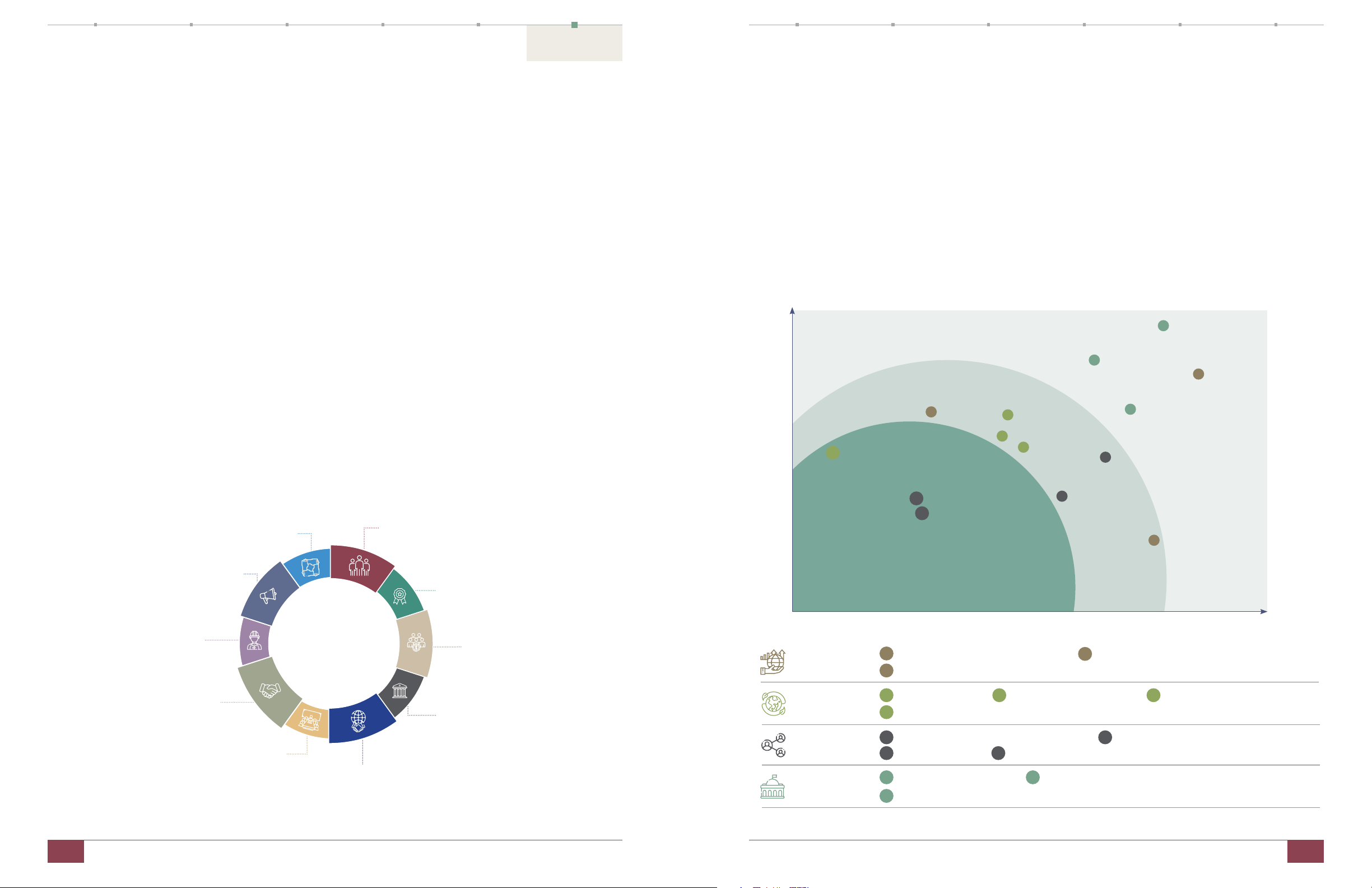
Figure 1
AI Across the Value Chain
Procurement
Technology Development
Human Resource Management
Firm Infrastructure
Value
Primary
Activities
Support
Activities
Operations Marketing
& Sales
Outbound
Logistics
Inbound
Logistics
Customer
Service
For a deeper look at barriers,
skills, and adoption strategies,
see the report: Bridging the AI
Gap in SMEs in Canada.

3 3
Artificial Intelligence Across the
Value Chain: Primary Activities
Inbound logistics: Smarter supply monitoring
AI is transforming how businesses manage the ow of inputs. From predictive demand planning
to sensor-based monitoring, it helps SMEs reduce waste, cut holding costs, and better coordinate
with suppliers. These case spotlights showcase challenges and solutions AI provides.
Operations Marketing
& Sales
Outbound
Logistics
Inbound
Logistics
Customer
Service
Maple Syrup Production1
Québec, Canada
A rural Quebec maple syrup producer turned to AI-enabled
sensors to modernize a centuries-old process. Partnering with
Cisco and IPConsul, the company installed 30 smart sensors
across 4 square miles of sugar bush. These sensors tracked sap
pressure and tank levels in real time, replacing the need for daily
manual checks.
Why it matters:
>Early problem detection:
Sensors flagged clogs before they disrupted production.
>Less manual labour:
Automated monitoring saved time and reduced the need for workers to travel long distances.
>Scalable growth:
Real-time visibility made it possible to expand operations without extra staffing.
3

4
This case shows how even traditional sectors like agriculture can benet from AI-enabled inbound
logistics. With real-time analytics and strong ecosystem partners, small producers can achieve
eciencies once reserved for large industrial rms.
SpecialKids: Adaptive apparel2
United Kingdom
SpecialKids, a retailer of adaptive clothing, had grown to
hundreds of stock keeping units across multiple channels, with
sales rising by more than 40 percent year over year. Running
replenishment from spreadsheets and a basic enterprise resource
planning system created errors, stockouts, and excess inventory.
The company adopted Inventory Planner by Sage to generate
demand forecasts that factor supplier lead times, seasonality,
and promotions, then turn those forecasts into automated buying
recommendations and purchase orders.
Why it matters:
>Efficiency:
Automating forecasting and purchasing now saves more than 20 hours each month that were
previously spent on spreadsheets.
>Productivity:
Reliable forecasting reduced stockouts by 77 percent, keeping high-demand sizes and colours
available.
>Cost savings:
Overstock was cut by about one-third, freeing thoU.S.nds of pounds to reinvest elsewhere
in the business.
>Service quality:
Better availability on core lines (for example, popular age-range variants) means fewer missed
orders and a smoother customer experience.
SpecialKids shows how moving from spreadsheets to algorithmic inventory planning can
strengthen inbound logistics, cutting stockouts, trimming excess stock, and returning team time to
higher-value work.
Once inputs are secured, the next challenge is production.
Here, AI is driving eciency on the shop oor, reducing waste,
and improving quality.

5
Operations: Safer, more ecient production
Within core operations, AI automates repetitive tasks, improves quality control, and predicts
equipment failures before they occur. This enables SMEs to boost eciency, reduce downtime,
and enhance workplace safety.
Operations Marketing
& Sales
Outbound
Logistics
Inbound
Logistics
Customer
Service
RoboFab (ONSITE3D)3
Pipe fabrication | Alberta, Canada
RoboFab, the fabrication division of ONSITE3D, adopted Novarc’s
Spool Welding Robot (SWR), a collaborative pipe-welding system
that uses AI-driven computer vision and adaptive controls to guide
the weld. The robot continuously monitors the weld pool and
adjusts parameters in real time, delivering consistency and quality
that rivals expert tradespeople. After validating results on its rst installation, RoboFab purchased
a second SWR to expand capacity.
Why it matters:
> Efficiency:
Achieved a 20% reduction in production costs on stainless steel pipe.
> Service quality:
Reduced failure and repair rates from the industry’s 3–5% norm to under 1%, producing
consistent x-ray-quality welds.
> Productivity:
The SWR enabled RoboFab to weld an average of about 250 inches of pipe diameter per shift,
with output sometimes reaching as high as 400 inches in a single day.
> Workforce resilience:
The AI-enabled SWR eases reliance on scarce expert welders.
RoboFab shows how SMEs can integrate AI-driven robotics into core operations, cutting costs,
increasing throughput, and reducing reliance on scarce skilled labour.

6
Pièces d’autos Fernand Bégin4
Auto recycling | Québec, Canada
Founded in 1978, Pièces d’autos Fernand Bégin has grown into
one of Quebec’s largest auto recycling companies, with more than
150 employees and multiple sites. The rm manages thoU.S.nds
of incoming vehicles and parts, a complex process that demands
accuracy, speed, and coordination. As operations expanded, traditional reporting systems and
manual data entry created bottlenecks, slowing decision-making, raising costs, and leaving room
for human error.
To tackle these challenges, the company partnered with Vooban, a Quebec-based leader in
applied AI and digital transformation known for helping traditional industries modernize through
data-driven solutions.
Vooban designed a digital analytics ecosystem that centralized data from across sites. Custom
web apps and advanced BI dashboards turned raw operational inputs into real-time, actionable
insights, making it easier for managers to track performance, identify problems early, and
coordinate resources eciently.
Why it matters:
>Efficiency:
Centralizing data and automating reporting delivered a 20% improvement in overall process
efficiency, removing hand-offs and waiting time between sites.
>Productivity (labour):
Workflow automation and role-specific dashboards reduced labour costs by 15% by freeing
staff from low-value data entry and reconciliation.
>Data quality (error reduction):
Replacing manual inputs with governed data capture cut manual-entry errors by 90%,
improving order accuracy and downstream coordination.
By digitizing and automating information ows, Fernand Bégin not only cut waste and improved
productivity but also laid the groundwork for a smarter, more sustainable recycling operation,
showing how AI can strengthen both competitiveness and circular-economy goals.

7
Bien Chez Soi5
Home care service | Québec, Canada
Bien Chez Soi, a Quebec-based home care agency, faced rapid
growth in client demand and increasing complexity in workforce
scheduling. Coordinating hundreds of caregivers across diverse
client needs led to frequent vacant visits, inecient shift
assignments, and administrative overload. To address these
challenges, Bien Chez Soi adopted AlayaCare’s AI-powered scheduling tool, the Visit Optimizer, to
improve workforce management and service reliability.
Why it matters:
>Efficiency:
Bien Chez Soi cut vacant visits by 42% and reduced scheduling time by 68%, lowering weekly
admin hours from 84 to 30.
>Productivity:
The agency achieved a 10% increase in total visit volume and a 25% increase in average
caregiver hours per workday, enabling it to serve more clients with the same workforce.
>Service quality:
Continuity of care improved by 6% for clients with shorter service hours, ensuring more
consistent caregiver assignments and stronger client relationships.
>Cost savings:
Automating shift assignment reduced administrative overhead, freeing staff resources for client-
facing work instead of manual scheduling.
By integrating AI-driven scheduling into its core operations, Bien Chez Soi demonstrated how even
a mid-sized service provider can capture signicant benets: lower administrative costs, more
ecient workforce use, and stronger service outcomes for clients. For SMEs in other sectors,
this shows that targeted AI adoption can unlock measurable improvements in productivity and
customer experience without requiring large-scale transformation.
Patates Dolbec67
Potato production | Québec, Canada
Patates Dolbec, the largest potato producer in Eastern Canada,
was struggling with a manual quality control process. The optical
sorter achieved only about 70% eciency, and defect detection
reliability remained low. To address this, they partnered with Vooban to integrate an AI-powered
sorting algorithm. This system was trained to detect multiple defects using data from cameras and
sensors installed on the production line. It increased sorting eciency to about 95%, signicantly
enhancing automation, precision, and workplace safety.
Why it matters:
>Efficiency gain:
Sorting accuracy improved from about 70% to about 95%, representing a substantial leap in
defect detection performance.

8
>Error reduction:
The overall sorting error rate dropped from 20% to 5%, meaning far fewer flawed or good
potatoes were being misclassified.
>Automation and safer jobs:
What once required manual visual inspection, with risks of repetitive strain and injury, is now
largely automated, freeing workers for more rewarding tasks.
This example shows how agricultural SMEs can achieve major gains in accuracy, safety, and labor
eciency by deploying AI-enhanced inspection systems, turning routine sorting challenges into
strategic automation advantages.
Rebecca Beach8
Digital-products microbusiness | Texas, U.S.
Rebecca Beach runs a solo digital-products business (printable
workbooks, journals, e-books, and lightweight apps). To speed
up production, she uses generative AI end-to-end: for creative
content (draft text and visuals) and for build steps via “vibe
coding,” where she describes what she wants, and the AI
generates working code she then tweaks. This lets her move from ideas to ready-to-sell les
quickly while keeping the entire production workow in-house across her Shopify store and Etsy.
Why it matters:
>Speed:
Production cycles collapsed, from weeks to under 20 minutes for a printable workbook; under
90 minutes for a course or simple app.
>Productivity:
AI-assisted creation enabled an expanded catalog of 1,500+ items, raising throughput without
adding staff.
>Revenue:
After adopting AI and vibe coding, she doubled income to as much as US$20,000 per month.
>Demand fit:
She tests ideas with a 170,000-person email list and niche groups before building, reducing
wasted effort and improving launch hit-rate.
By folding AI into the core operations of product creation, content and code, this microbusiness
turns ideas into sellable goods in minutes, scaling output and revenue while keeping production
one-person.
Producing more eciently is vital, but getting products to market is equally
critical. AI-enabled logistics tools are helping SMEs optimize delivery
routes, reduce fuel costs, and keep customers satised.

9
Outbound logistics: Faster, more accurate freight
AI optimizes the delivery of goods and services by streamlining documentation, coordinating
shipments, and planning routes. SMEs can reduce delays and improve transparency, even with
limited distribution infrastructure.
Operations Marketing
& Sales
Outbound
Logistics
Inbound
Logistics
Customer
Service
3 Men Movers9
Moving services | Texas, U.S.
In Houston, 3 Men Movers, a small business founded in 1985,
turned to AI to tackle two critical challenges: rising insurance
costs and accident rates. The company outtted its eet with
AI-powered in-cab cameras to detect distracted driving and
implemented smarter routing software to navigate away from
high-trac, high-crime, and risky zones, creating safer and more
ecient service.
Why it matters:
> Fewer accidents:
Accident rates dropped by 4.5% within just three months of using AI.
> Reliable detection:
The distracted-driving system achieved 91% accuracy and stopped 80% of dangerous
incidents.
> Risk-aware routing:
AI guides drivers around bottlenecks, dangerous areas, and hazards, reducing liability and
improving efficiency.
This example shows that even rural SMEs can harness AI to make everyday operations safer and
smarter. By testing tools carefully, keeping sta informed, and balancing innovation with human
oversight, 3 Men Movers turned small investments into measurable safety gains.

10
Metro Compactor Service10,11
Waste-equipment services | Brampton, Canada
As call volumes and equipment eets grew, Metro Compactor
Service embedded iSMART, a telemetry platform that connects
compactors and balers to a cloud dashboard. Sensors stream
fullness, cycle counts, and fault codes; technicians can diagnose
and often resolve issues remotely and only roll a truck when
it’s truly needed. The system also helps time hauls at 90–100%
capacity and supports predictive maintenance planning.
Why it matters:
>Fewer unnecessary hauls:
At some sites, iSMART has cut hauling trips by up to 50% by scheduling pickups closer to
90–100% full and avoiding half-empty pulls.
>Less onsite work, more uptime:
By eliminating unnecessary compaction cycles (up to 90% fewer at certain locations) and
resolving simple faults remotely (e.g., tripped emergency-stop), some customers reduced
service visits by 17%, faster fixes with fewer truck rolls.
>Cost & monetization:
The add-on hardware costs under $1,000 per machine. A service visit (a “truck roll”) typically
costs $250–$500, so avoiding just two visits usually pays back the hardware. After that,
iSMART supports a $50–$100 monthly monitoring fee per machine, creating steady recurring
revenue (in exchange for remote alerts and diagnostics).
By pairing equipment telemetry with remote diagnostics, Metro Compactor turned eld service into
a data-driven operation – fewer miles, faster xes, and clearer ROI – a practical template for any
dispatch-heavy SME.
American Tall12
Apparel | Mississauga, Canada
American Tall, a direct-to-consumer apparel brand for tall men,
modernized fulllment with ShipHero’s warehouse management
system plus process changes (multi-item batch picking, barcode
scanning, dynamic slotting). The upgrade enabled the team
to support a 400% increase in order volume while maintaining
speed and accuracy.
Why it matters:
>Scalability:
With the new system, American Tall handled 400 percent growth in orders in under two years
while maintaining control of in-house fulfillment.

11
>Efficiency:
The shift to multi-item batch picking and barcode validation cut mis-shipments by about 50
percent and removed manual double-handling.
>Productivity:
Two people now pick 300+ orders per day (vs. ~80 before), a step-change in throughput that
projects to roughly a 275 percent increase in efficiency.
By pairing process redesign with a modern warehouse management system, American Tall turned
fulllment into a growth engine, shipping more, with fewer errors, and headroom to scale as
demand surges.
With products in hand, the next hurdle is reaching customers. Marketing and
sales use cases show how AI helps SMEs personalize outreach, understand
consumer behavior, and scale campaigns that once seemed out of reach.

12
Marketing and sales: Personalizing at scale
AI personalizes marketing campaigns, identies customer preferences, and accelerates product
launches. With these tools, SMEs can engage customers more eectively and compete with larger
players.
Operations Marketing
& Sales
Outbound
Logistics
Inbound
Logistics
Customer
Service
Freedom Furniture13
Home-furnishings retailer | Australia & New Zealand
Freedom, a leading home-furnishings retailer in Australia
and New Zealand, worked with Coveo to modernize product
discovery as its online assortment expanded from roughly
ten thoU.S.nd to more than forty-ve thoU.S.nd items and
omnichannel expectations grew. Building on SAP Commerce,
the Freedom and Coveo teams implemented AI-driven search and autosuggest, behavioral
recommendations, and personalized merchandising through a phased rollout (≈ three months
for core integration; public launch in December 2024). Crucially, merchandising retained control,
category managers could pin, boost, and apply business rules while the system learned, so the
experience improved without sacricing brand or commercial priorities.
Why it matters:
>Discovery engagement:
After launch, customer sessions using on-site search grew by 15%, indicating more
shoppers are finding relevant products faster.
>Growth of revenue per order:
Among shoppers who use search, average order value rose 5.5% year over year, showing
higher-quality baskets from better discovery.
>Scaling of product offering:
Freedom’s online catalog expanded from ~10,000 to ~45,000 items; the AI search layer helps
maintain findability as assortment grows.
By upgrading search and recommendations with articial intelligence, Freedom turned a sprawling
catalog into a smoother shopping experience while keeping merchandisers in control. It’s a
practical example of improving the customer journey without rebuilding the entire site.

13
Otto’s Grotto14
Sticker microbusiness | Indiana, U.S.
Otto’s Grotto is a one-person sticker brand. To increase
publishing cadence and keep a professional storefront without
hiring external help, the owner tested several generative-AI tools
(including Jasper and ChatGPT) and now uses them in two ways.
First, for marketing production: AI drafts and renes product descriptions, keyword tags, and
social captions to match her brand voice. Second, for light website maintenance: through what she
calls “vibe coding,” she describes a desired change in plain language, and the AI returns step-by-
step instructions with a small Shopify theme code snippet to paste. This workow lets her update
Shopify and Etsy listings, add simple features (such as a wholesale page), and keep the site
polished in minutes rather than outsourcing.
Why it matters:
>Revenue:
The founder reported that the shop more than doubled revenue in 2024 after adopting AI for
marketing and storefront tweaks.
>Efficiency:
AI drafts listing copy and social posts faster, so more products get published without extra
hours.
Using AI for everyday copy and small site edits helped a solo seller publish more and sell more,
without adding sta.
Ad Hoc Atelier15
Fashion ecommerce | Italy
Ad Hoc Atelier, a ve-person fashion marketplace for Italian
artisan brands, struggled with very high cart abandonment
and slow, impersonal replies that turned shoppers away. The
founders worked with Tidio to add live chat with embedded
chatbots on product pages, welcoming visitors, answering sizing
and customization questions in real time, and triggering exit-
intent prompts to recover checkouts. The goal was to replicate
boutique-style assistance online without building a call center or
adding headcount.

14
Why it matters:
>Conversion:
Website conversion rate increased from 0.35% to 0.9% after adding chat.
>Cart recovery:
Abandonment fell from 83% to 73%, with chatbots nudging leavers back to checkout.
Real-time chat and simple automations let a tiny team deliver boutique-level help online, with fewer
abandoned carts, higher conversion, and a smoother path to purchase without adding sta.
Wood Wood Toys16
Independent toy retailer | Ontario, Canada
Wood Wood Toys, a small Canadian wooden-toy shop
(Montessori-inspired toys), needed a faster way to answer
shopper questions and remove friction at checkout without
adding headcount. They implemented Shopify Inbox (live chat
inside Shopify) and leaned on Shopify’s built-in marketing tools
(Forms, Email, segmentation) to personalize outreach and keep
all customer data in one place.
Why it matters:
>Conversion lift from chat:
When a conversation happens, they “win a sale eight out of 10 times,” directly tying live chat
to purchase decisions.
>Faster fulfillment & responsiveness:
Operational discipline around service helped them fulfil every order within 24 hours,
reinforcing trust for first-time buyers.
By embedding chat and lightweight automation into the store they already use, Wood Wood Toys
shows how a one-or-two-person retailer can boost conversion and service quality without adding
sta or tech sprawl.
Brava Fabrics17
Apparel e-commerce | Barcelona, Spain
Brava Fabrics rebuilt its email program on Klaviyo, moving from
one-o blasts to automated ows (welcome, abandoned cart/
browse, post-purchase, back-in-stock) and simple behaviour-
based segments. Using Klaviyo’s AI Benchmarks to compare
their performance with similar brands, the team adjusted send
frequency and timing, and improved subject lines, images, and
oers. The result: email became their best-performing revenue
channel with far less manual work.

15
Why it matters:
>Productivity:
60% of email revenue now comes from automations, so each new subscriber triggers
revenue without additional staff time.
>Revenue growth:
Email revenue grew 76% year over year, and overall online sales grew 101% year over year
after the overhaul.
By pairing automated ows with simple audience segments, and tuning cadence and content
using benchmarking, Brava turned email into a reliable growth engine: more revenue, less manual
sending, and a repeatable playbook for lean retail teams.
JENNY BIRD18
Jewelry e-commerce | Toronto, Canada
To increase revenue without adding friction at checkout, JENNY
BIRD replaced a manual, rules-based upsell app with Nosto’s
AI-powered Post-Purchase Upsell. Instead of hand-building
20 funnels, the team now serves personalized oers immediately after checkout (15% incentive,
1-minute window), with exclusion rules for gift cards and discounted orders so operations stay
smooth.
Why it matters:
>Revenue per order:
Among shoppers who accept an upsell, average order value rises by 58%, about $130 extra per
order on average.
>Offer performance:
Versus the previous upsell tool, JENNY BIRD achieved a 13% increase in accepted upsell
orders, a 9.3% increase in upsell value, and an 8.5% increase in net sales.
>Less manual work:
AI-driven recommendations eliminate the need to maintain 20 separate funnels and give full
control over when/where offers appear (e.g., excluding gift-card checkouts).
By pairing AI recommendations with clear merchant controls, JENNY BIRD turned post-purchase
into a reliable growth lever, more revenue from existing orders, less manual work, and no extra
checkout friction.
Three Ships Beauty19
Skincare e-commerce | Toronto, Canada
Toronto-based Three Ships Beauty integrated an AI-powered
skin analysis quiz into its Shopify store, developed with Tangent
AI. Customers upload a sele, and within a minute the system
analyzes over 150 skin attributes to recommend personalized
routines.

16
To safeguard trust, the company also published a Responsible AI Policy, outlining clear limits on
automation and retaining human oversight where needed.
Why it matters:
>Efficiency:
Customer onboarding shrank to a one-minute AI flow, eliminating the need for time-intensive
consultations.
>Service quality:
Quiz takers are 3.5× more likely to purchase, demonstrating that personalized
recommendations significantly boost conversion.
Three Ships illustrates how a SME can integrate customer-facing AI to drive measurable gains in
conversion, while transparently signaling responsible use of technology.
Mistplay20
Mobile gaming loyalty platform | Montréal, Canada.
Mistplay, a Montréal-based loyalty app for mobile gamers, uses
AI and machine learning to personalize recommendations and
safeguard growth. On the front end, its recommendation engine
analyzes player behavior to suggest games tailored to each
user’s interests. On the back end, Mistplay integrated AppsFlyer’s attribution and fraud-prevention
tools, which apply machine learning to detect fraudulent installs and clicks before they distort
performance data. This dual use of AI allowed Mistplay to scale user acquisition while protecting
its ecosystem for both players and publishers.
Why it matters:
>Efficiency:
Machine-learning fraud prevention saved over $470,000 in wasted ad spending, improving
return on ad-spend and freeing budget for growth.
>Productivity:
With clean attribution and faster partner testing, Mistplay’s active users grew 72% between
Q3 2021 and 2022
Mistplay illustrates how a digital SME can embed AI to cut waste, scale faster, and maintain trust in
a high-volume, global user acquisition market.
Winning customers is only the start. AI-powered service tools allow SMEs to
provide responsive, 24/7 support that builds trust and loyalty.

17
Customer service: Predictive and proactive support
AI-powered chatbots and predictive service tools enable businesses to respond quickly and
personalize customer interactions. These technologies free up sta for complex issues while
improving satisfaction and loyalty.
Operations Marketing
& Sales
Outbound
Logistics
Inbound
Logistics
Customer
Service
Simba Sleep21
Sleep technology retail | United Kingdom
Simba Sleep, a UK-based sleep technology brand, with over
150 employees, worked with Ada to scale customer service as
the company expanded into new markets. The team deployed a
generative AI agent (“Luna”) across chat, email, and social media
to handle routine questions and hand o sales opportunities to
people, while human agents focused on complex and high-value
conversations. Luna is coached on Simba’s knowledge base
and governed like a teammate through weekly quality checks,
keeping responses accurate, on-brand, and compliant as the
company grows.
Why it matters:
>Efficiency:
Luna resolves about 1,000 conversations per week, handling the workload equivalent of eight
full-time agents and reducing manual queues.
>Productivity:
By reallocating just three agents to revenue tasks (abandoned carts and sales callbacks), Simba
now generates ~£600,000 in additional monthly revenue (over $1,100,000 in Canadian dollars).
>Service quality:
The generative AI agent outperformed Simba’s previous scripted approach (and another
platform) on key measures like automated resolutions and customer satisfaction, while providing
round-the-clock support in existing and new markets.
Simba shows how a small support team can pair a generative AI agent with human oversight to
serve more customers, enter new markets, and grow revenue, without growing headcount.

18
Molly Mutt22
Pet products e-commerce | United States
Molly Mutt, a small U.S. pet brand specializing in dog beds
and accessories, integrated LimeSpot’s AI-driven product
recommendation engine into its ecommerce store. The tool
analyzes browsing and purchase behavior in real time to
personalize what products customers see across the site.
Why it matters:
>Revenue growth:
Overall, 13.9% of sitewide revenue is now directly attributed to LimeSpot’s AI engine.
>Productivity:
Customers exposed to AI recommendations delivered a 12% higher conversion rate compared
to the store average.
>Service quality:
Recommendations increased average order value by 6.2%, encouraging customers to bundle
and upgrade products.
Molly Mutt shows how even niche SMEs can unlock measurable revenue gains through AI-
powered personalization, competing with larger retailers by delivering smarter shopping
experiences.
Eye-oo23
Eyewear e-commerce | Italy
Eye-oo, a multi-brand eyewear retailer, implemented Tidio’s
AI-powered chat ows and live chat to improve customer
engagement and recover abandoned carts. By automating
responses to common questions and deploying cart recovery
prompts, eye-oo reduced wait times, captured more leads, and
increased sales without expanding its support team.
Why it matters:
> Sales increase:
Achieved a 25% lift in overall sales following implementation.
> Revenue growth:
Generated €177,000 in additional revenue directly attributed to Tidio’s AI chat features.
> Conversion lift:
Cart recovery automations increased conversion rates by 5× compared to the prior baseline.

19
> Lead generation:
Out of 2,233 total chat interactions, AI bots handled 1,825 successfully and collected 1,305
qualified leads.
> Service quality:
Average customer wait time dropped from 2–5 minutes to ~30 seconds, improving trust at the
point of purchase.
Eye-oo shows how small businesses in retail can leverage AI-driven chat automation to unlock
measurable revenue gains, raise conversion, and scale customer service, all without adding
headcount.
Suitor24
Suit rental | Australia
Suitor, a small suit and tuxedo rental business with ve
employees, needed to handle customer questions at all times
without hiring more sta. The founders worked with Tidio to
deploy Lyro, an AI customer-service agent that answers routine
questions in natural language, routes complex cases to people,
and keeps conversations in one place across channels (e.g., site chat, social). The setup integrated
with their ecommerce stack and let the owners stay hands-on without living in the inbox.
Why it matters:
> Efficiency:
Up to 85% of customer service conversations are handled automatically by the AI agent; only
about 24% need/request a human handoff.
> Responsiveness:
97% decrease in the average response time – dropped from ~3 minutes to ~6 seconds – giving
shoppers instant answers and true 24/7 coverage.
> Service quality:
Customers get clear, conversational answers even after hours, which is important because many
orders arrive after 8 p.m.; without adding headcount and cost.
With an AI agent handling most routine queries and escalating the rest, Suitor serves customers
instantly around the clock while keeping its team lean; an easy, low-overhead way to scale support
for a very small business.
While AI is already reshaping SMEs’ core activities, from production to sales
and customer service, its impact does not stop there. AI is also transforming
the supporting functions that keep businesses running behind the scenes. From
procurement and technology development to HR and rm infrastructure, these
applications may be less visible to customers but are essential for building long-
term resilience and competitiveness.

20 20
Beyond customer-facing functions, AI is also streamlining back-oce tasks like procurement,
helping SMEs negotiate better terms, manage supplier risk, and save costs.
Procurement: Faster supplier coordination
AI strengthens procurement by forecasting price uctuations, assessing supplier risks, and
automating workows. SMEs gain speed, reliability, and improved negotiation power
Materne (GoGo squeeZ)25
Food manufacturing | United States
Materne, the maker of GoGo squeeZ, was approaching the end
of a three-year agreement with incumbent packaging suppliers
and needed to rebid cartons while expanding its supplier base.
The team worked with Arkestro to run a structured RFP and
simulate likely market prices before inviting bids. Buyers stayed in
control of the event, while the platform widened qualied options
and streamlined comparisons, reducing manual spreadsheet
work and making negotiations more straightforward.
Why it matters:
>Cost savings:
The cartons RFP delivered US$1 million in savings at renewal.
>Efficiency:
A single, structured sourcing event replaced back-and-forth renegotiations and manual
comparisons, moving the team off spreadsheets and into a faster RFP flow.
>Service quality:
Materne strengthened supply assurance by adding two new qualified suppliers (from three to
five), ensuring backup coverage across all carton formats.
By using AI to broaden options and structure the RFP, Materne secured better pricing and a more
resilient supplier mix, clean improvements to procurement without adding headcount.
Artificial Intelligence Across the
Value Chain: Enhancing Support
Activities

21
First Learning26
Childcare operator | New York, U.S.
First Learning operates 16 childcare centers. As they grew, each
center ordered supplies from many dierent vendors, approvals
happened over email, and the accounting team had to reconcile
hundreds of separate invoices every month, creating delays,
late-fee risk, and lots of busy work. They adopted Order.co, a
purchasing and payments platform with AI-assisted sourcing and
AI order-tracking, to centralize buying, approvals, delivery status,
and month-end reconciliation in one place.
Why it matters:
>Time savings in finance:
The accounting team now saves 8–16 hours every week by replacing manual invoice work with
a single, consolidated process.
>Time savings in the centers:
Each location saves about 4 hours per week on ordering thanks to curated lists, guided
approvals, and one shared system.
>Fewer invoices to process:
Order.co rolls all purchases into one invoice per location (16 total), replacing thoU.S.nds of
individual invoices and reducing errors.
>Vendor consolidation:
The team onboarded 260+ vendors into one catalog, so staff can find approved items quickly
and buy consistently across centers.
By centralizing purchasing and invoices, and layering in AI for sourcing and delivery tracking, First
Learning turned procurement from a patchwork of emails and spreadsheets into a simple, reliable
workow. The result is less administrative work, fewer mistakes, and faster, on-time deliveries to
the classrooms that need them.
AI is not only a tool to cut costs; it’s also fueling innovation. Some SMEs are
leveraging AI to create new products, services, and business models altogether.

22
Technology development: Unlocking innovation
AI enhances innovation capacity by simplifying product design, enabling rapid prototyping, and
turning unstructured data into insights. This helps SMEs accelerate development cycles and
reduce costs.
AbCellera27
Biotech | Vancouver, Canada
When COVID-19 struck, Vancouver-based biotech SME
AbCellera used its AI-powered antibody discovery platform
to compress drug discovery timelines. By combining machine
learning, microuidics, single-cell analysis, and robotics, the
company analyzed immune responses at massive scale. Within
one week of receiving a sample from a recovered patient, AbCellera screened more than 5 million
antibody-producing cells and identied ~500 unique candidates against SARS-CoV-2. Their lead
antibody, bamlanivimab (LY-CoV555), advanced from screening to clinical trials in just 90 days and
went on to receive FDA Emergency Use Authorization in November 2020.
Why it matters:
>Unprecedented scale:
Screened 5M cells in a week and isolated ~500 antibodies, throughput impossible without AI.
>Faster to clinic:
Reduced the typical discovery-to-trial cycle from years to 90 days.
>Global impact:
Supported treatment that secured FDA EUA during the pandemic.
This case demonstrates how AI can transform technology development by enabling SMEs to
achieve industrial-scale speed and precision, showing that world-class breakthroughs are possible
far beyond big pharma.
Polykar28,29
Sustainable packaging | Montréal & Edmonton, Canada
Polykar, a Montréal-based manufacturer of sustainable exible
packaging (e.g., garbage bags, polyethylene lm) with a second
plant in Edmonton, modernized its end-of-line operations by
installing two collaborative-robot palletizers in each facility. Built
on Vention hardware with FANUC robots, the systems use vision-
guided automation and standardized software to stack nished
goods onto pallets with consistent patterns and spacing. This replaces repetitive manual lifting,
reduces ergonomic strain on sta, and creates a more predictable, high-throughput nish to every
production run, setting up higher daily output and smoother downstream logistics.

23
Why it matters:
>Efficiency:
After deployment, Polykar reports a 30% increase in production (productivity) on palletizing,
enabling the plants to meet rising demand with the same footprint.
>Productivity:
Deploying two robot palletizers per facility created a consistent, high-throughput end-of-line
flow that scales across both sites.
>Quality & predictability:
Automation improved production predictability and pallet consistency, key for reliable
downstream logistics.
By pairing vision-guided robots with standardized palletizing software, Polykar achieved about a
30 percent output increase while making end-of-line work safer and more predictable, an upgrade
path SMEs can replicate across multi-plant operations.
But tools alone are not enough, people matter most. AI is increasingly shaping
HR practices, from recruitment to retention, allowing SMEs to compete more
eectively for talent.

24
Human resources: Upskilling at scale
AI improves recruitment, workforce planning, and training. From bias-aware hiring to tailored
upskilling, these tools allow SMEs to manage talent more strategically and inclusively.
Promark Electronics30
Wire-harness manufacturing | Montréal, Canada
Promark, a Montreal-based maker of wiring harnesses for
electric vehicles, worked with VKS to turn training and shop-oor
know-how into digital work instructions: visual, step-by-step
guides with photos or short videos. The system adds interactive
checks and signos, captures in-process inspection data (who
performed checks and when), and keeps version control so
updates to methods are applied consistently across stations.
Promark combines classroom guidebooks with on-the-job
instructions, making onboarding part of daily work while keeping
procedures consistent across shifts.
Why it matters:
>Efficiency:
New-hire training time cut roughly in half by pairing classroom guidebooks with on-bench digital
guidance.
>Higher first-time quality:
First-pass yield is now over 95%, meaning less rework and fewer repeat inspections.
>Fewer defects:
Standardizing steps and capturing in-process data cut defects by about 10–15%.
In short, clear, visual, step-by-step guidance let Promark train faster without sacricing precision,
raising rst-time quality while keeping a lean team productive.
Fresh Restaurants31
Plant-based restaurant group | Toronto, Canada
Fresh Restaurants adopted 7shifts to replace manual scheduling
and projections across six locations and roughly 400 sta.
By integrating 7shifts with its Micros point-of-sale system,
Fresh generated highly accurate sales forecasts and labor
budgets, enforced schedules to prevent unbudgeted hours,
and centralized team communication (time-o, availability, shift
swaps, and event planning).

25
Why it matters:
> Cost savings:
Within the first eight months, Fresh reduced labor cost by 12 percent, a decline of 3.5
percentage points across all locations.
> Productivity:
More precise staffing increased labor productivity (sales per labor hour) by 13 percent.
> Planning accuracy:
Sales forecasts, and labor-budget targets reached about 95 percent accuracy, replacing time-
consuming manual projections.
> Operational discipline:
Schedule enforcement and integrated reporting eliminated unbudgeted hours and time theft,
while mobile workflows streamlined time-off, availability, and shift-swap approvals (which can be
several hundred a month).
By pairing 7shifts’ predictive scheduling with manager oversight and point-of-sale demand
forecasts, Fresh now stas each shift precisely and keeps labor costs in check, a practical way to
scale operations across locations without adding headcount.
Finally, AI is transforming the backbone of SME operations: nance,
cybersecurity, and strategic planning. These applications may be less visible,
but they are critical for scaling adoption responsibly.

26
Firm infrastructure: Automating core processes
AI supports the backbone of business operations through smarter nancial planning, automated
compliance, and stronger cybersecurity. This helps SMEs scale securely while reducing costs.
Loop Earplugs32
Hearing protection D2C | Belgium
Loop Earplugs, a Belgium-based hearing-protection brand, faced
rapid growth and surging customer-support demand across chat,
email, and social channels, creating long response times and
mounting backlogs during peak sales periods. To x this, Loop
worked with Ada to launch a generative-AI agent (“Aura”) that
handles routine requests (e.g., invoices, order info) and passes
complex issues to people, providing consistent, 24/7 support
across channels.
Why it matters:
>Efficiency:
First response time improved by 194.52%, cutting peak delays from 5–6 days to ≤2 hours; the
AI agent now manages the workload of 25 full-time employees.
>Productivity:
Even as sales increased 400% over two years, Loop reduced human-agent ticket volume by
33% by automating common requests (e.g., invoice retrieval, order edits, WISMO).
>Service quality:
Customer satisfaction reached 80%, with 24/7 support across chat, email, and social DMs.
>Cost savings:
Automation delivered a 357% ROI and reduced reliance on seasonal hiring to handle peak
volumes.
By pairing Ada’s AI agent with human oversight, Loop now gives customers fast, always-on help
while keeping headcount in check, a practical way to scale service as the business grows.
Image credit: loopearplugs.com

27
Nolinor Aviation33
Charter airline | Canada
Nolinor Aviation, a Canadian charter airline, faced the challenge
of processing time-intensive safety reports and incident
investigations. Each case could take up to 40 hours of sta time,
with manual parsing of free form reports, risk assessments, and
documentation. To address this, the airline partnered with Mila to
design an AI “assistant investigator” that supports compliance
and regulatory processes.
The system uses Large Language Models (LLMs) to structure safety reports into standardized
templates, conduct risk assessments based on internal methodologies, and prepare investigation
les. An agentic AI layer augments investigations by extracting sequences, recommending
corrective actions, and drawing from sources like manuals, weather data, and training records,
while human investigators retain oversight.
Why it matters:
> Faster compliance processes:
AI reduced investigation effort from about 40 hours to 5 hours, accelerating reporting cycles and
enabling more timely regulatory submissions.
> Risk management focus:
Investigators spend less time on manual transcription and more time on verification, validation,
and applying corrective measures.
This case shows how AI can reinforce rm infrastructure by streamlining compliance and safety
processes, ensuring stronger risk management while maintaining human oversight.
World Vision Canada34
Humanitarian non-prot | Mississauga, Canada.
World Vision Canada built a data and AI backbone to unify
program information and generate donor-ready impact reports.
The platform standardizes how results are captured, analyzed,
and presented, giving supporters clear, personalized snapshots
of outcomes while giving leaders a single source of truth for
decisions.
Why it matters:
>Fundraising outcomes:
The organization reported a record $503 million in FY2023 revenue, followed by $468.3 million
in FY2024 despite sector headwinds, evidence that better data and reporting support donor
confidence and grants.

28
>Trust & accountability:
Charity Intelligence Canada scored World Vision Canada 207 points (scale tops at 200), well
above the sector average of 111 and up from 87 several years earlier, an improvement linked to
stronger data and public reporting.
>Employee engagement:
Internal engagement rose to 77% (March 2025), up from 60% (2018) during the transformation
period, suggesting cultural and workflow gains alongside the tech change.
By pairing a robust AI/ML data platform with donor-facing reporting, World Vision Canada turned
transparency into a growth engine, strengthening revenue, trust, and sta engagement. It’s a
replicable pattern for nonprots that need to scale impact communications without ballooning
overhead.

29 29
The Way Forward
Across the value chain, AI adoption is not
a single leap but a series of small, practical
steps. By starting where the need is greatest,
SMEs can build condence and momentum,
setting the stage for broader transformation.
These use cases show that AI adoption is not
a distant prospect for Canadian SMEs, it is
already happening today in ways that improve
eciency, reduce costs, and strengthen
competitiveness. At the same time, adoption
remains uneven, and barriers such as skills,
trust, and infrastructure continue to hold many
rms back. Unlocking the full potential of AI
for SMEs will require condence, training, and
inclusive strategies that ensure no one is left
behind.
For a deeper look at barriers,
skills, and adoption strategies,
see the report: Bridging the AI
Gap in SMEs in Canada.

30 30
References
1 Chung-Tung, J. (2024, November 8). IPConsul automates operations with Cisco’s industrial IoT secure networking.
Cisco Blogs. https://blogs.cisco.com/industrial-iot/ipconsul-automates-operations-with-ciscos-industrial-iot-
secure-networking
2 Inventory Planner by Sage. (n.d.). SpecialKids slashes stockouts by 77% with Inventory Planner’s perfect-t solution.
Inventory Planner. https://www.inventory-planner.com/customer-stories/specialkids-slashes-stockouts-by-77-with-
inventory-planners-perfect-t-solution/
3 Novarc Technologies. (2022). Case study: RoboFab (ONSITE3D) adopts Novarc’s Spool Welding Robot. https://
www.novarctech.com/resources/case-studies/robofab/
4 Vooban. (n.d.). 20% More ecient: The impact of smart data at Piècesd’autos Fernand Bégin. https://vooban.com/
en/case-studies/pieces-d-autos-fernand-begin
5 AlayaCare. (2023). Case study: How Bien Chez Soi powered eciency with AlayaCare’s Visit Optimizer. AlayaCare.
https://alayacare.com/case-study/how-bien-chez-soi-powered-eciency-with-alayacares-visit-optimizer/
6 IVADO Labs. (n.d.). INVEST‑AI projects. ivadolabs.com/en/invest-ai-partners/
7 Vooban. (n.d.). Patates Dolbec. https://vooban.com/en/case-studies/patates-dolbec
8 Fazackarley, J. (2025, August 5). I earn up to $20,000 a month by vibe coding products to sell online. It’s saving
me weeks of time. Business Insider. https://www.businessinsider.com/make-20000-month-selling-vibe-coded-
products-etsy-2025-8
9 Hightower, S. S. (2025, February 24). How one Texas-based moving company is using AI to improve safety,
optimize routing, and reduce liability. Business Insider. https://www.businessinsider.com/texas-based-moving-
company-uses-ai-to-boost-safety-eciency-2025-2
10 Digi International. (n.d.). Leveraging iSMART IoT technology, Metro Compactor Service monitors and manages
waste equipment. https://www.digi.com/resources/customer-stories/metro-compactor-monitors-manages-waste-
equipment
11 Reevely, D. (2022, December 21). How an Ontario garbage compactor service tapped into the internet of trash. The
Logic. https://thelogic.co/news/how-an-ontario-garbage-compactor-service-tapped-into-the-internet-of-trash/
12 ShipHero. (n.d.). How American Tall catapulted orders by 400%. https://shiphero.com/case-studies/american-tall/
13 Coveo Solutions Inc. (2025, January 8). Leading Australian and New Zealand retailer Freedom Furniture chooses
Coveo after competitive RFP to transform product discovery and enhance customer buying experience with AI.
PR Newswire. https://www.newswire.ca/news-releases/leading-australian-and-new-zealand-retailer-freedom-
furniture-chooses-coveo-after-competitive-rfp-to-transform-product-discovery-and-enhance-customer-buying-
experience-with-ai-884788661.html
14 Phillis, J. (2025). I use vibe coding and AI to run my etsy and shopify store. it’s helped me more than double my
revenue in a year. Insider, Inc. https://www.businessinsider.com/vibe-coding-etsy-seller-ai-boost-revenue-2025-4

31
15 Stefanowicz, B. (2025, April 11). Ad Hoc Atelier boosts conversions using Tidio live chat. Tidio. https://www.tidio.
com/blog/ad-hoc-atelier-case-study/
16 Annie Berrones. (2021, July 8). How Wood Wood Toys uses Shopify Inbox to dierentiate and win sales. Shopify.
https://www.shopify.com/ca/blog/shopify-inbox-wood-wood-toys
17 Klaviyo. (n.d.). Brava Fabrics grows email revenue by 76% YoY. https://www.klaviyo.com/customers/case-studies/
brava-fabrics
18 Nosto. (n.d.). Fallstudie: +58 % AOV mit Post-Purchase Upsell – Die Erfolgsgeschichte von JENNY BIRD. https://
www.nosto.com/de/kundenstories/jenny-bird/
19 Authority Magazine Editorial Sta. (2025, September). Connie and Laura of Three Ships: How AI is disrupting our
industry, and what we can do about it. Authority Magazine. Medium.https://medium.com/authority-magazine/
connie-and-laura-of-three-ships-how-ai-is-disrupting-our-industry-and-what-we-can-do-about-it-6dec7cf5b21d
20 AppsFlyer. (n.d.). Fraud‑free attribution saves $470K: Mistplay customer story. https://www.appsyer.com/
customers/mistplay/
21 Ada Support. (n.d.). Simba Sleep unlocked £600K+ monthly revenue and scaled global CX using their AI agent. Ada.
https://www.ada.cx/case-study/simba-sleep/
22 LimeSpot. (n.d.). How Molly Mutt improved product discoverability on BigCommerce driving conversions up 12%.
https://limespot.com/case-study/how-molly-mutt-improved-product-discoverability-on-bigcommerce-driving-
conversions-up-12
23 Tidio. (2023, October 16). Eye-oo: How AI chatbots increased sales by 25%. Tidio. https://www.tidio.com/blog/eye-
oo-case-study/
24 Stefanowicz, B. (2025, April 11). Suitor hits 85% customer service automation with Lyro. Tidio. https://www.tidio.
com/blog/suitor-case-study/
25 Arkestro. (n.d.). Materne squeezes out savings and strengthens their supplier network by running an RFP on cartons
with Arkestro. https://arkestro.com/case-studies/materne-squeezes-out-savings-and-strengthens-their-supplier-
network-by-running-an-rfp-on-cartons-with-arkestro/
26 Order.co. (n.d.). First Learning reclaims 16 hours per week with AP automation and procurement AI. https://www.
order.co/customer-success-stories/rst-learning/#:~:text=First%20Learning%20reclaims%2016%20hours%20
per%20week%20with%20AP%20automation,center%20openings%20with%20Order.co.
27 AbCellera Biologics Inc. (2020, March 12). AbCellera and Lilly to co‑develop antibody therapies for the treatment
of COVID-19. AbCellera Investors. AbCellera and Lilly to Co-develop Antibody Therapies for the Treatment of
COVID-19
28 Vention. (n.d.). Increasing production by 30% with cobot palletizing. Vention. https://vention.io/customer-stories/
polykar-cobot-palletizing-171
29 FANUC America. (n.d.). How one manufacturer transformed its operations to handle surging sales. https://www.
fanucamerica.com/case-studies/vention-polykar
30 VKS (Visual Knowledge Share, Ltd.). (2025, February 11). Promark leverages interactive work instructions to boost
quality. https://vksapp.com/case-studies/promark-boosts-quality
31 Smith, D. (2024, December 7). How Fresh Restaurants reduced their labor cost by 12% in one year with 7shifts.
7shifts. https://www.7shifts.com/blog/fresh-restaurants-7shifts-case-study/
32 Ada Support. (n.d.). Loop Earplugs: scaling customer support and redening careers with AI Ada. https://www.ada.
cx/case-study/loop-earplugs/
33 Mila. (2023, November 7). Nolinor and Mila announce a partnership to promote innovation and safety in the aviation
industry. https://mila.quebec/en/news/nolinor-and-mila-announce-a-partnership-to-promote-innovation-and-safety-
in-the-aviation
34 Latimer, E. (2025, July 29). How World Vision Canada is using AI to drive donations and boost employee
engagement. The Globe and Mail. https://www.theglobeandmail.com/business/article-how-world-vision-canada-is-
using-ai-to-drive-donations-and-boost/

Future
Skills
Centre
Centre des
Compétences
futures