Board of Curators - Public Session University of Missouri System Havener Center, St. Pat's Ballroom A&B, Missouri University of Science and Technology, Rolla 2025-04-17 08:00 - 11:00 CDT PDF Free Download
1 / 495/495
100%

Board of Curators - Public Session
University of Missouri System
Havener Center, St. Pat’s Ballroom A&B, Missouri University of Science and
Technology, Rolla
2025-04-17 08:00 - 11:00 CDT
Table of Contents
I. CALL TO ORDER - 8:00 AM.................................................................................................6
April 2025 Cover.pdf...........................................................................................................6
Board Value Statement.pdf.................................................................................................7
About UM System.pdf.........................................................................................................8
II. GENERAL BUSINESS (8:00 AM – 9:00 AM)
A. Information
1. University of Missouri Board Chair's Report (15 Min) (8:00 AM – 8:15 AM)....9
GB II A INFO 1-1 UM Board Chair Report No Materials.docx.............................9
2. University of Missouri President's Report (15 Min) (8:15 AM – 8:30 AM)......10
2025 April President's Board Report.pdf.............................................................10
3. Missouri S&T Campus Highlights (20 Min) (8:30 AM – 8:50 AM)....................29
GB II A INFO 3-1 Missouri S&T Campus Highlights.pdf.....................................29
B. Action (5 Min) (8:50 AM – 8:55 AM)
1. 2026 Board of Curators Meeting Calendar.......................................................57
GB II B 1-1 Action Board of Curators Meeting Calendar 2026.docx...................57
GB II B 1-2 Board of Curators Meeting Calendar 2026.docx..............................58
2. Approve Amended Board of Curators Executive Committee and Standing
Committee Appointments, 2025............................................................................59
GB II B ACTION 2-1-2 Amended Exec and Standing Committees
Appointments.docx...................................................................................................59
C. Information (5 Min) (8:55 AM – 9:00 AM)
1. Review Consent Agenda....................................................................................61
GB II C INFO 1-1 Review Consent Agenda No Materials.docx.........................61
III. CONSENT AGENDA (9:00 – 9:05 AM).............................................................................62
Consent Agenda April 2025.docx......................................................................................62
A. Minutes, February 6, 2025 Board of Curators Meeting..........................................63
Consent A-1 Action for Approval of Board Meeting Minutes February 6.docx...........63

B. Minutes, March 5, 2025 Mizzou Intercollegiate Athletics Special Committee
Meeting...........................................................................................................................64
Consent B-1 Action for Approval of Board Meeting Minutes March 5 Mizzou
Intercollegiate Athletics Committee.docx.........................................................................64
C. Minutes, March 17, 2025 Board of Curators Special Meeting...............................65
Consent C-1 Action for Approval of Board Meeting Minutes March 17 Special
Meeting.docx....................................................................................................................65
D. Degrees, Spring Semester 2025 for all universities...............................................66
Consent D-1 Spring 2025 Degree Conferral UM Action.pdf......................................66
E. Annual Approval of Committee Charters................................................................67
Consent E-1 Annual Charter Approval.docx.............................................................67
F. Amendment, Collected Rules & Regulations 145.010, 145.015, 145.020, 145.030,
Debt & Derivatives Policies, UM...................................................................................85
CONSENT F - Debt Derivatives COMBINED.pdf......................................................85
G. Project Approval - School of Engineering – Science Complex Renovation,
UMSL.............................................................................................................................107
CONSENT G - SC008330 School of Engineering - Project Approval - UMSL
Summary.pdf..................................................................................................................107
H. Test Optional Admissions, MU, S&T, UMSL.........................................................109
Consent H-1-2 Test Optional COMBINED.docx......................................................109
I. Amendment, Collected Rules & Regulation 200.010, Standard of Conduct,
UM.................................................................................................................................112
Consent I-1-9 CRR 200.010 Standard of Conduct COMBINED.pdf........................112
IV. FINANCE COMMITTEE (Curators Krewson, Blitz, Fry, and Luetkemeyer) – (9:05 -
9:55 AM)...............................................................................................................................122
Committee Cover Finance 2025.docx.............................................................................122
A. Information
1. Fiscal Year 2026 Budget Update (9:05-9:25 AM)............................................124
INFO 1 - FY2026 Budget Update COMBINED.pdf...........................................124
2. Debt and Credit Update, UM (9:25-9:35 AM)...................................................189
Presenters: Kevin Hogg and Rob Kanzer
INFO 2 - Debt_Credit Update COMBINED.pdf.................................................189
3. Fiscal Year 2027 Preliminary State Operating and Capital Appropriation
Request, UM (9:35 - 9:45 AM)...............................................................................204
INFO 3 - Fiscal Year 2027 Prelim State Operating and Capital Appropriation
Request COMBINED.pdf........................................................................................204
B. Action
1. Five-Year Capital Plans for MU, MU Health Care, Missouri S&T, UMKC, and
UMSL (9:45-9:50 AM)............................................................................................215
ACTION 1 - FY 2026 Capital Plans COMBINED.pdf........................................215
2. Naming Opportunity, Dr. Dan Brown Building, MU (9:50 - 9:55 AM)............233
ACTION 2 - VMDL - Naming Opportunity - MU Summary.pdf..........................233
V. BREAK (9:55 - 10:05 AM)
VI. GOVERNANCE, COMPENSATION AND HUMAN RESOURCES COMMITTEE
(Curators Fry, Krewson, Layman) – (10:05 – 10:15 AM)..................................................235
Committee Cover Gov & HR 2025.docx..........................................................................235
A. Information
1. 2024 Annual Benefits Report, UM (10:05 - 10:15 AM)....................................238
GOVCHR.2024ANNUALBENEFITSREPORT.PP
PRESENTATION.1-1-9-1.pdf.................................................................................238
GOVCHR.UNIVOFMOSYSTEM.2024ANNUALBENEFITSREPORT.1-10-33.pdf
2. Annual Retirement Plan Actuarial Report & Required Contribution (written
report only)............................................................................................................271
GOVCHR.2024
VALUATION.UNIVOFMO.RDDPLAN.WRITTENREPORTONLY.2-1-54.pdf.........271
VII. ACADEMIC, STUDENT AFFAIRS, RESEARCH AND ECONOMIC DEVELOPMENT
(Curators Sinquefield, Blitz, Layman, and Williams) – (10:15 AM – 10:35 AM).............325
Committee Cover ASRED 2025.docx.............................................................................325
A. Information
1. Intercollegiate Athletics Annual Report - Missouri University of Science and
Technology (10:15 – 10:25 AM)...........................................................................326
Presenter: Melissa Ringhausen
ASARED INFO 1-1-13 Intercollegiate Athletics Report_S&T
COMBINED.pdf.......................................................................................................326
B. Action
1. New Degree - PhD Human Development and Family Science, MU (10:25 –
10:30 AM)...............................................................................................................340
Presenters: Sarah Diem and Brenda Lohman
ASARED 1-1-2 MU PhD Human Development and Family Science
COMBINED.docx....................................................................................................340
2. New Degree - MS Geospatial Engineering, S&T (10:30 – 10:35 AM)............343
Presenters: Colin Potts and Stephen Gao
ASARED 2-1-2 S&T MS Geospatial Engineering COMBINED.docx................343
VIII. HEALTH AFFAIRS COMMITTEE CHAIR REPORT (Curators Williams, Fry, Layman,
Raines and Mr. Ashworth, Mr. Burger, Mr. Devers and Dr. Whitaker) – (10:35 – 10:45
AM).......................................................................................................................................346
Committee Cover HA 2025.docx.....................................................................................346
A. Information
1. Executive Vice Chancellor and Dean Report (10:35 – 10:45 AM).................348
April 2025 HAC_Open Session_EVCHA_Final.pdf..........................................348
IX. AUDIT, COMPLIANCE AND ETHICS COMMITTEE (Curators Raines, Krewson,
Luetkemeyer, and Sinquefield) – (10:45 AM – 11:00 AM)................................................364
Committee Cover Audit 2025.docx..................................................................................364
A. Information
1. Internal Audit, Compliance and Ethics Quarterly Report, UM (10:45 AM –
10:55 AM)...............................................................................................................366
Audit_Compliance_Ethics Quarterly Report COMBINED.pdf...........................366
X. GENERAL BUSINESS CONTINUED (10:55 AM – 11:05 AM)
A. Information
1. Good and Welfare of the Board (10:55 – 11:00 AM).......................................402
GB X A Info 1-1 Good & Welfare June 2025 Draft Meeting Agenda.docx........402
B. Action
1. Resolution, Executive Session of the Board of Curators Meeting, April 17,
2025 (11:00 – 11:05 AM)........................................................................................403
GB X B 1-1 Resolution for BOC Executive Session.docx.................................403
XI. Press Conference with Board of Curators Chair and UM President (time is
approximate)
11:10 AM (or upon conclusion of public session) Location: Havener Center, Turner/Carver
Room Dial In Number: 848-999-1066
XII. LUNCHEON BY INVITATION FOR THE BOARD OF CURATORS, PRESIDENT,
UNIVERSITY OF MISSOURI SYSTEM LEADERS
Time: 11:30 AM, time is approximate Location: Havener Center, St. Pat’s Ballroom A&B
XIII. BOARD OF CURATORS MEETING - EXECUTIVE SESSION (11:30 AM, time is
approximate)
Location: Havener Center, Silver and Gold Room The Board of Curators will hold an
executive session of the April 17, 2025 meeting, pursuant to Sections 610.021(1), 610.021(2),
610.021(3), 610.021(12), 610.021(13) and 610.021(17) RSMo, for consideration of certain
confidential or privileged communications with university counsel, real estate, personnel,
litigation, contract items and confidential or privileged communications between a public
governmental body and its auditor, all as authorized by law and upon approval by resolution
of the Board of Curators.
XIV. APPENDIX....................................................................................................................404
Appendix April 2025.docx...............................................................................................404
A. CONSENT.................................................................................................................405
APPENDIX CONSENT I-10-16 CRR 200.010 Standard of Conduct
(Clean).docx...................................................................................................................405
B. FINANCE...................................................................................................................412
ACTION 1 - APPENDIX - FY26 Capital Plans UM - Action - Summary.docx..........412
C. ACADEMIC, STUDENT AFFAIRS, RESEARCH AND ECONOMIC
DEVELOPMENT............................................................................................................444
APPENDIX ASARED 1-3-29 MU PhD Human Development and Family Science
Proposal.pdf...................................................................................................................444
APPENDIX ASARED 2-3-27 S&T MS Geospatial Engineering Proposal.pdf..........472
D. HEALTH AFFAIRS
E. AUDIT, COMPLIANCE AND ETHICS

University of Missouri
Board of Curators Meeting
April 17, 2025 - Public Session

Board Value Statement
Board of Curators of the University of Missouri establish the following statement of values to
guide members in the governance of the University of Missouri pursuant to the Constitution and
the Revised Statues of the State of Missouri:
1. Trustworthy & Transparent Communication. We value an environment of openness,
collaboration and honesty with each other above all else, and support open
communication and the free expression of ideas. We will endeavor to communicate with
each other and with all University stakeholders with honesty and integrity. We will
perform our duties ethically and avoid conflicts of interest.
2. Respect. We are respectful of each other and all University stakeholders in our
interactions. We believe that civility, courtesy, decency and tolerance are critical when
engaging in discussions with others with whom we may not agree. We encourage
independent judgment and the sharing of a diversity of thoughts, and accept others’
unique perspectives as valuable contributions to governing discussions.
3. Healthy Board Governance. We are committed to a healthy culture of board governance,
one that is dedicated to sustaining the trust and support for the University of Missouri.
We will devote time and effort needed to responsibly and capably perform our duties.
We will exercise responsible stewardship and uphold our fiduciary duties as Curators. We
will fully prepare for, attend and participate in board meetings, and seek to continually
increase our understanding of, and adherence to, the standards for effective board
governance.
4. Support and Hold Accountable Leadership. We are committed to supporting the
leadership throughout the University of Missouri, while also holding that leadership
accountable for the effective management of the University. We will establish,
communicate and monitor clear performance expectations for leadership directly
reporting to the Board, and will hold such leadership accountable to maintain the highest
standard of ethical behavior. In supporting University leadership, we will endeavor to
avoid involvement in matters delegated to the Administration.
5. Strategic Vision. We are committed to fully understanding, supporting and, when
appropriate, challenging the short and long-term strategic priorities of the University of
Missouri’s constituents. We will challenge University leadership to continually develop
and assess strategic plans that will be effective in supporting the Missouri Compacts for
Achieving Excellence: Excellence in Student Success, Excellence in Research and Creative
Works, Excellence in Engagement and Outreach, Inclusive Excellence and Excellence in
Operations, Planning and Stewardship.

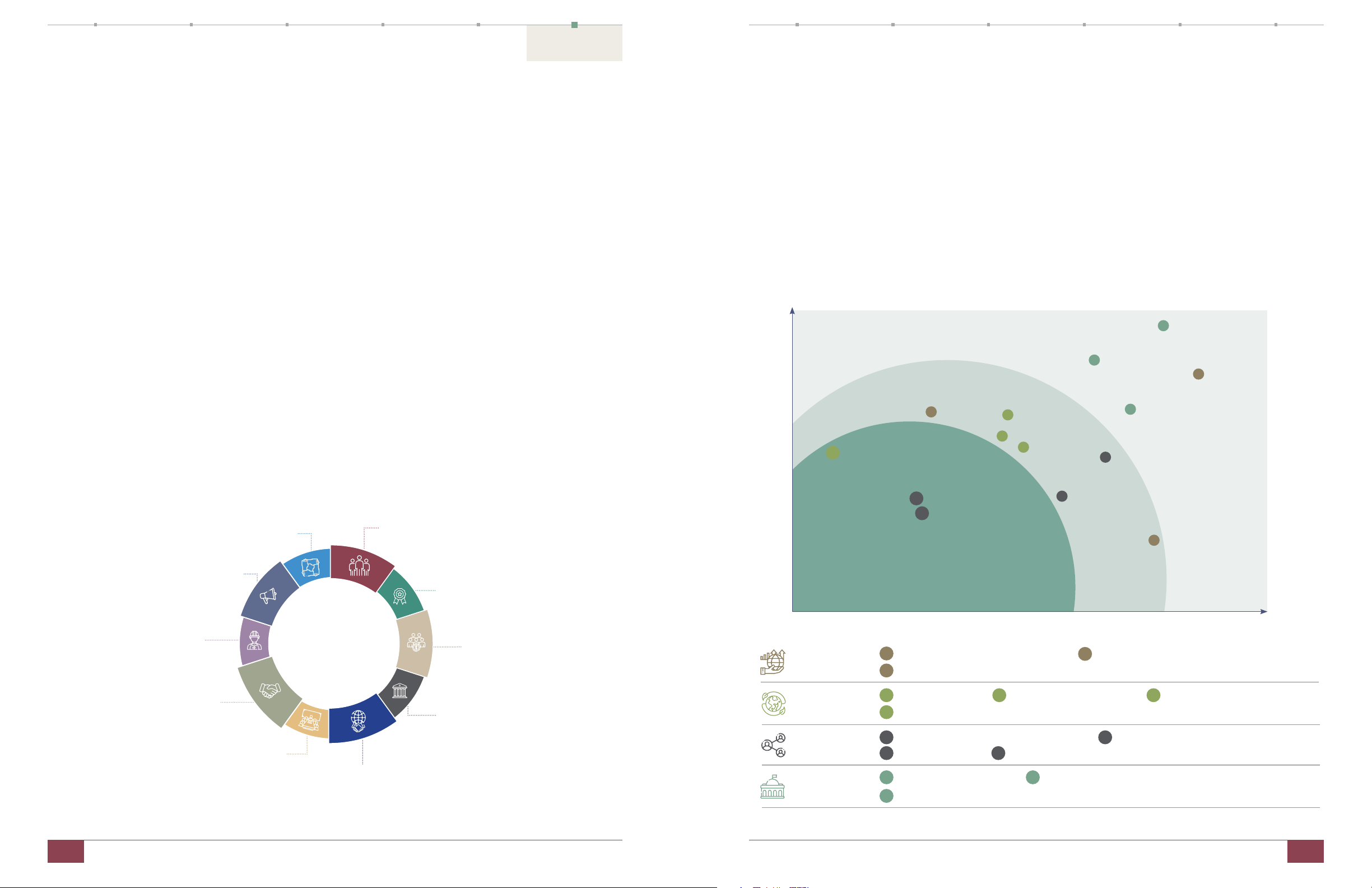
Excellence in
Student Success
Excellence in
Research and
Creative Works
Excellence in
Engagement and
Outreach
Excellence in
Planning, Operations
and Stewardship
Inclusive
Excellence
Vision
To advance the opportunities for success and well-being for Missouri, our nation and the world through transformative
teaching, research, innovation, engagement and inclusion.
Mission
To achieve excellence in the discovery, dissemination, preservation and application of knowledge. With an unwavering
commitment to academic freedom and freedom of expression, the university educates students to become leaders,
promotes lifelong learning by Missouri’s citizens, fosters meaningful research and creative works, and serves as a catalyst
for innovation, thereby advancing the educational, health, cultural, social and economic interests to benet the people of
Missouri, the nation, and the world.
Missouri Compacts for Achieving Excellence
The Missouri Compacts for Achieving Excellence provide unifying principles that inform and guide the four universities and
their strategic plans. Learn more about the compacts, below, at http://umurl.us/prespri.
Core Values
Our institution collectively embraces a series of core values that serve as the foundation upon which we build new knowledge
and provide outstanding programs for students and citizens of our state and beyond.
Guiding Principles
1. Support courageous and proactive leadership that is articulate, unied and committed to excellence in carrying
out our existing core missions of teaching, research, engagement and economic development and in meeting the
changing needs of the world and the state.
2. Establish a collaborative environment in which UM System universities work together to achieve collective results
that cannot be achieved individually and are committed to each other and our mutual success.
3. Exercise central authority that recognizes and respects institutional distinctiveness, appropriate deference and
accountability.
4. Enact informed decisions based on collaboratively developed strategic directions and planning.
5. Identify and promote systemwide core values, including respect for all people, transparency, accountability,
stewardship and purposeful self-assessment of performance.
• Academic freedom
• Access
• Accountability
• Civility
• Collaboration
• Creativity
• Discovery
• Engagement
• Excellence
• Freedom of expression
• Inclusion
• Innovation
• Integrity
• Respect
• Responsibility
• Transparency

April 17, 2025
OPEN – GB II A – INFO 1-1
UNIVERSITY OF MISSOURI
BOARD CHAIR REPORT
There are no materials for this information item.

PRESIDENT’S
REPORT
Mun Y. Choi
Board of Curators Meeting
April 17, 2025
OPEN - GB II A- INFO -2-1

Missouri S&T and
UMKC Earn Prestigious
Carnegie R1 Designation
The Carnegie Classification of Institutions
of Higher Education is the nation’s leading
framework for categorizing diverse U.S.
higher education institutions.
2
OPEN - GB II A- INFO -2-2

3
UM Leadership Appointments
James Grimes
Chief Audit
& Compliance Officer
Angela King Taylor
Vice Chancellor for
Student Affairs
Steve Robinson
Vice Provost for
Enrollment Management
Tony Bruun
Vice Chancellor of Finance
& Administration
& Chief Financial Officer
Tréon McClendon
Assistant Vice Provost
of Retention Initiatives
Debra Bourdeau
Vice Provost of Online
Learning & Education Innovation
Susan Murray
Associate Provost, Teaching
& Curricular Excellence
OPEN - GB II A- INFO -2-3

Admissions Update
3/31/25 2023 2024 2025
MU 20,994 23,779
26,711 (
12%
)
UMKC 5,740 6,032 6,912 (15%)
S&T 7,642 7,447 7,866 (6%)
UMSL 3,895 5,399 6,227 (15%)
FTC Applicants
3/31/25 2023 2024 2025
MU 5,290 5,847 6,528 (12%)
UMKC 866 890 1,077 (21%)
S&T 1,039 1,144 1,255 (10%)
UMSL 359 365 622 (70%)
FTC Accepted
4
OPEN - GB II A- INFO -2-4

Admissions Update
3/31/25 2023 2024 2025
MU 1,694 1,798 1,826 (2%)
UMKC 1,348 1,421 1,639 (15%)
S&T 559 1,121 841 (-25%)
UMSL 1,418 1,613 1,545 (-4%)
Transfer
Applicants
3/31/25 2023 2024 2025
MU 529 572 570 (-0.3%)
UMKC 456 527 533 (1%)
S&T 162 251 221 (-12%)
UMSL 428 441 465 (5%)
Transfer Accepted
5
OPEN - GB II A- INFO -2-5

Student Success Highlights
6
Tyler Brake, Ted Niemann
Senior business admin. majors
First place in the annual Career
Exploration Competition on the
Financial CoNEXTion Education Cruise
(L-R): Helene Slinker, Emma Piazza,
Sidney Bach-Norman
Third-year law students
UMKC School of Law’s Moot Court
Competition team was one of the top
eight teams in the country at the 2025
National Moot Court Competition
(L-R): Ahmed Al-Hlaichi, Abhinav
Medithi, Abdul Mujeeb,
Sulaiman Bah, Nikhil Chodipilli
S&T PetroBowl Team
Placed highest in the U.S. and
advanced to world championship
Mizzou Law students placed first at
the prestigious Global Antitrust
Institute annual moot court
competition in Washington D.C.
(L-R): Luke Nutwell,
Eric Siemens and Austin Seiner
Mizzou Law students
OPEN - GB II A- INFO -2-6

Faculty Success Highlights
7
Dr. Jerome Morris
E. Desmond Lee Endowed Professor,
Urban Education
Elected President of the American
Educational Research Association.
Carl Allen
William D. and Mary Grant/Missouri Endowed
Professor of Jazz Studies
Named 2025 Ellis Marsalis, Jr.
Educator of the Year by the Jazz
Education Network
Dr. Michael Moats
Professor of Metallurgical Engineering
Chair of Materials Science & Engineering
Elected to the Society for Mining,
Metallurgy and Exploration (SME)
2025 class of Fellows
Selected as a 2025 fellow of the
prestigious Andrew Carnegie
Fellowship.
Dr. Brian Kisida
Associate Professor, Truman School of
Government & Public Affairs
OPEN - GB II A- INFO -2-7

2024 American Association for the
Advancement of Science Fellows
8
Donald Burke-Agüero
School of Medicine,
College of Agriculture, Food
& Natural Resources
Felix Fritschi
College of Agriculture,
Food & Natural Resources
Scott Holan
College of Arts & Science
Gary Long
Professor Emeritus, Chemistry
Richard Sherwood
School of Medicine
OPEN - GB II A- INFO -2-8

$121M $137M $156M $173M $197M
$0
$80
$160
$240
2021 2022 2023 2024 2025
Millions
MU
$19M $22M $23M $28M $33M
$0
$15
$30
$45
2021 2022 2023 2024 2025
Millions
S&T
$5.4M $4.9M $4.8M $5.1M
$10.4M
$0
$4
$8
$12
2021 2022 2023 2024 2025
Millions
UMSL
$14M
$19M $20M $16M
$22M
$0
$9
$18
$27
2021 2022 2023 2024 2025
Millions
UMKC
FYTD Total R&D Expenditures
9
OPEN - GB II A- INFO -2-9

MU Major Grant
PI: Dr. James McClay, Professor, Biomedical Informatics, Biostatistics and Medical
Epidemiology
Co-I: Abu Saleh Mohammad Mosa, Associate Professor, Biomedical Informatics,
Biostatistics and Medical Epidemiology
Lisa Royse, Assistant Research Professor, Orthopaedic Surgery
Xing Song, Assistant Professor, Biomedical Informatics, Biostatistics and Medical
Epidemiology
$13.5M | Sponsor:Patient-Centered Outcomes Research Institute
Provides support for the Greater Plains Collaborative (GPC), a network of 13 leading
medical centers in eight states committed to improving health care delivery.
This project develops governance, regulatory processes, technical infrastructure and patient-
engagement strategies that can strengthen heath care delivery in Missouri and beyond.
Optimizing Infrastructure to Improve Patient Outcomes
10
OPEN - GB II A- INFO -2-10

MU Major Grant
PI: Dr. Marc Johnson, Professor Of Molecular Microbiology and Immunology
$10M | Sponsor: Inkfish, LLC, a marine research organization
This project will deploy air and wastewater pathogen testing
technologies locally and nationally, while also promoting their use
around the world.
Known as “Lungfish,” this project has wide application both for
researchers studying outbreaks and for responding health care systems.
Air and Wastewater Pathogen Tracking
11
OPEN - GB II A- INFO -2-11

MU Major Grant
PI: Dr. James Amos-Landgraf, Associate Professor, Veterinary Pathobiology
Co-I: Yuksel Agca, Associate Professor, Veterinary Pathobiology; Elizabeth Bryda, Curators’
Distinguished Professor, Veterinary Pathobiology, Director, Rat Resource and Research
Center and Animal Modeling Core; Lyndon Coghill, Assistant Research Professor, Veterinary
Pathobiology; Aaron Ericsson, Associate Professor, Veterinary Pathobiology; Craig Franklin,
Professor Emeritus, Veterinary Pathobiology; Hongsheng Men, Research Assistant
Professor, Veterinary Pathobiology; Bret Ulery, Associate Professor, Chemical Engineering
$7.9M | Sponsor: NIH Office of the Director
The primary goal of the center is to facilitate research by identifying,
acquiring, evaluating, characterizing, cryopreserving and distributing
mutant mouse strains to biomedical investigators.
The Mutant Mouse Resource and Research Center
(MMRRC) at Mizzou
12
OPEN - GB II A- INFO -2-12

S&T Major Grant
PI: Dr. Sajal Das, Daniel St. Clair Endowed Chair Professor, Computer Science
$1M | Sponsor: National Science Foundation
This project uses AI and internet-connected technologies to address global challenges of pest
and disease management in agriculture. The goal is innovative, automated monitoring for early
detection of pest activity that can be tailored for, but not limited to, underserved and small-to-
mid-sized rural growers.
The UN Food and Agriculture Organization showed that pests and diseases are severe
threats to food security and damage up to 40% of crops globally, causing an annual
economic loss of $290 billion.
Smart Connected Farms: Revolutionizing Pest Management in
Agriculture through AI and the Internet of Things (IoT)
13
OPEN - GB II A- INFO -2-13

PI: Dr. Xuemin (Sam) Wang, E. Desmond Lee Endowed Professor in Plant
Sciences
$2.2M | Sponsor: National Institutes of Health
Circadian clocks drive the 24-hour rhythms regulating many aspects of
metabolism, whereas metabolic activities modulate the clock function.
However, the molecular interplay between metabolism and this clock are
not well understood. This research aims to fill knowledge gaps and to
better understand how this interplay affects stress responses in
organisms.
The study has potential to improve plant resilience to environmental
stress. Because this clock function is shared between plants and humans,
findings also have relevance to human health.
UMSL Major Grant
Unraveling the Molecular Interconnections Between
Circadian Rhythms and Lipid Metabolism
14
OPEN - GB II A- INFO -2-14

PI: Dr. Robert H. Paul, Professor, Psychological Sciences, Director, Missouri
Institute of Mental Health
$1.4M | Sponsor: The Emmes Company
Supports a consortium project to understand brain health disorders (BHDs) in
people with HIV on suppressive antiviral therapy. The results will advance the
field, support development of personalized medicine and lead to
improvements in brain health outcomes in people with HIV.
Brain health disorders such as depression, anxiety and cognitive impairment
affect a substantial proportion of the 39 million people with HIV, even when
the virus is suppressed with antiretroviral therapy.
UMSL Major Grant
Multimodal Integrated Analysis and Assessment
Development for Neuro HIV Study
15
OPEN - GB II A- INFO -2-15

PI: Dr. Ahmed Hassan, Associate Professor, School of Science &
Engineering
$1.8M | Sponsor: Department of Defense/Defense Advanced
Research Projects Agency
This collaboration aims to improve the performance of current radars.
It explores a wide range of strategies to maximize the target's radar
cross section.
Project aims to improve the detection capabilities of radar.
UMKC Major Grant
Radar Advances with Spatio-temporally-variant waveform
Predictive planning (GRASP)
16
OPEN - GB II A- INFO -2-16

PI: Maria Altman, Managing Editor, Harvest Public Media
$1M | Sponsor: Corporation for Public Broadcasting
This grant supports the expansion of Harvest Public Media, a
journalism collaboration launched in 2010 that produces original
broadcast and multimedia content focused on agriculture, food
production, environmental news, energy, health, and rural issues for
regional and national audiences.
Project will add new partner stations and journalists to expand
storytelling and grow their audience, among other improvements.
UMKC Major Grant
Regional Journalism Collaboration – Harvest Public Expansion
17
OPEN - GB II A- INFO -2-17

FYTD Philanthropy
18
$32M$36M$33M$38M
$0
$10
$20
$30
$40
$50
2022 2023 2024 2025
Millions
S&T (Goal $49M)
$16M
$67M
$44M$36M
$0
$20
$40
$60
$80
2022 2023 2024 2025
Millions
UMKC (Goal $55M)
$86M
$129M
$90M
$157M
$0
$40
$80
$120
$160
2022 2023 2024 2025
Millions
MU (Goal $215M)
$17M$12M$11M
$20M
$0
$5
$10
$15
$20
$25
2022 2023 2024 2025
Millions
UMSL (Goal $25M)
OPEN - GB II A- INFO -2-18

19
OPEN - GB II A- INFO -2-19

SPACE HOLDER
SPIRIT VIDEO
OPEN - GB II A - INFO -3-1

April 17, 2025
Missouri S&T’s Path to
Excellence and Innovation
University of Missouri Board of Curators
OPEN - GB II A - INFO -3-2

Carnegie R-1
University
12,000 enrollment
Establish national
recognition
Strategic Plan Progress
North Star Goals
S&T will be a world-class science
and technology university for
workforce development, research
breakthroughs and economic
development
OPEN - GB II A - INFO -3-3

01 North Star Goal
Carnegie R-1
University
OPEN - GB II A - INFO -3-4

S&T earns R-1!
Growing Research
Surpassed the requirements to earn
highest research designation.
Other R1 institutions:
•Carnegie Mellon
•Georgia Tech
•Purdue University
•Virginia Tech
OPEN - GB II A - INFO -3-5

S&T’s commitment to groundbreaking research isn’t just
talk – it’s backed by hard data and global recognition
S&T Researchers: Tops in their fields
Growing Research
66 65
58
67
15 12
72
54
2020 2021 2022 2023
Stanford University Top 2% List
Career Year
0
OPEN - GB II A - INFO -3-6

$273k
Increase over
2019 in 2024
139%
Per T-TT faculty
in 2024
Growing Research
Research Awards
$114 $99
$141 $142
$206
$273
0%
20%
40%
60%
80%
100%
120%
$-
$50
$100
$150
$200
$250
$300
2019 2020 2021 2022 2023 2024
Thousands
Research Awards per T-TT Faculty by FY
OPEN - GB II A - INFO -3-7

$38
$32
$43 $41
$54
$74
$-
$10
$20
$30
$40
$50
$60
$70
$80
2019 2020 2021 2022 2023 2024
Millions
Total Research Awards by FY
$74M
Increase over
2019 in 2024
92%
In 2024
Growing Research
Research Awards
OPEN - GB II A - INFO -3-8

02 North Star Goal
Establish
National
Recognition
OPEN - GB II A - INFO -3-9

No. 2
High earnings + low
price + less selective
CUNY Baruch College
Missouri S&T
University of Florida
University of
Washington, Tacoma
CUNY Hunter College
CUNY City College
University of
Washington, Bothell
CUNY Brooklyn College
CUNY Queens College
Order Now
No. 8
High earnings +
low price
Princeton University
MIT
Stanford
CUNY Baruch College
Georgia Tech
Yale
Harvard
Missouri S&T
University of Florida
Cal Tech
Exceptional
Outcomes,
High ROI
•Average in-state student pays
less than $15,000 a year
•Ranked 8th for "High
earnings + low price"
•Ranked 2nd for "High
Earnings + Low Price + Less
Selective"
New York Times Recognition
OPEN - GB II A - INFO -3-10

No. 18
No. 1 in Missouri
Best Value
No. 9
1 of only 2 public
universities in the top 10
Best Salaries
MIT
Stanford
Princeton
Georgia Tech
University of Pennsylvania
Cal Tech
Harvey Mudd College
Babson College
Missouri S&T
Carnegie Mellon
Wall Street Journal Recognition
Exceptional
Outcomes,
High ROI
•Ranked 9th in the nation for
“Best Salaries”
•Ranked 18th in the nation for
“Best Value”
The ranking combines
the average net price
of attending and the
value added to
graduates’ median
salary.
OPEN - GB II A - INFO -3-11

Professional
Career
Placement
Among nation’s top
public universities
Second
consecutive year
No. 7
Internships
Among nation’s top
public universities
Second
consecutive year
No. 17
Best Value (ROI)
Princeton Review chose
390 colleges for its
2025 rankings.
Princeton Review Recognition
One of the Nation’s Best
No. 3
OPEN - GB II A - INFO -3-12

03 North Star Goal
12,000 Enrollment
OPEN - GB II A - INFO -3-13

Growing First-Year Enrollment
Upward trajectory
for the first time
since 2015
7,155
total enrollment
at census date
6.7%
increase in
first-year students
1147
1196
1276
1050
1100
1150
1200
1250
1300
Fall 2022 Fall 2023 Fall 2024
OPEN - GB II A - INFO -3-14

Academic Programming
14 New Degree Programs to Solve Critical Issues
Bachelor's
Biomedical Engineering
(Started Fall 2024)
Doctoral
Bioengineering
(Started Fall 2024)
Biological Sciences
(Started 2024)
Applied Psychology
Technical Communication *
Energy Economics and
Innovation
Geospatial Intelligence
Data Science *
Business Innovation *
Applied Artificial Intelligence *
Master's
Robotics and Automation *
Biochemistry *
* Programs in development
Data Science *
Semiconductor Engineering
OPEN - GB II A - INFO -3-15

S&T Makes
National Transfer
Honor Roll
“S&T recognizes the needs
and supports students who
are transferring from
community colleges to
bachelor’s
degree-granting institutions.”
Phi Theta Kappa
Recognition for Transfer Admissions
OPEN - GB II A - INFO -3-16

Academic Programming
S&T Extends
Beyond Campus
Borders
Quality graduate education
and flexible instruction
solutions for St. Louis
OPEN - GB II A - INFO -3-17

04 Miners of
Distinction
OPEN - GB II A - INFO -3-18

OPEN - GB II A - INFO -3-19

05 Building
the Future
OPEN - GB II A - INFO -3-20

Transforming
Campus
$500 million in facilities investments
•Applied Research Center
•Tim Bradley Way
•Protoplex
•Innovation Lab
•Underground Parking Garage
•Pedestrian Underpass
•Shrenk Hall
•Welcome Center
OPEN - GB II A - INFO -3-21

5 Years of Transformation
OPEN - GB II A - INFO -3-22

Project schedules
Welcome Center and Arrival District
Welcome Center
Aug./Sept. 2025
Welcome Center on target to
complete construction
October 2025
Open to the public
Havener Arrival
District
October 2025
Arrival Court East of former
State Street target
completion (excluding some
plantings)
Rolla Building renovation
and exterior improvements
scheduled completion
VIEW FROM SOUTH
A one-stop shop for
prospective students
and families, S&T’s
new front door
OPEN - GB II A - INFO -3-23

Missouri Protoplex Phase 2
Infrastructure Update
The first of six buildings for our Innovation Campus
OPEN - GB II A - INFO -3-24

Next: Missouri S&T’s Bioplex
OPEN - GB II A - INFO -3-25

Bioplex
Schematic design review
(in progress)
Design team: Christner/ZGF
Construction Manager (at risk): River City
Construction logistics plan in progress;
mobilization planned in July for utility work
Construction completion: March 2028
Biological Sciences was the third most popular major at S&T by applications in 2023, and the
most popular for female applicants.
Engaging engineering minds to
address human health care
OPEN - GB II A - INFO -3-26

SPACE HOLDER
CAPITAL
PROJECTS VIDEO
OPEN - GB II A - INFO -3-27

Thank you!
OPEN - GB II A - INFO -3-28

April 17, 2025
OPEN – GB II B – 1-1
No. 1
Recommended Action - 2026 Board of Curators Meeting Calendar
It was recommended by Chair Graves, endorsed by President Choi, moved by
Curator __________ and seconded by Curator __________, that the proposed 2026
Board of Curators meeting calendar be approved as follows:
PROPOSED 2026 BOARD OF CURATORS MEETING CALENDAR
DAY(S) DATE(S) LOCATION
Thursday February 5 UM – Kansas City
Thursday April 16 Missouri S&T
Thursday June 25 TBD
Thursday September 10 UM – Columbia
Thursday November 19 UM – St. Louis
Roll call vote: YES NO
Curator Blitz
Curator Fry
Curator Graves
Curator Krewson
Curator Layman
Curator Luetkemeyer
Curator Raines
Curator Sinquefield
Curator Williams
The motion __________________.

April 17, 2025
OPEN – GB II B – 1-2
Proposed 2026 Board of Curators Meeting Calendar
Last meeting: November 20, 2025 (UMSL)
Day
Date
Location
Host
Material Due
to BOC
Office
Material
Distribution
to the Board
Thursday
February 5
(Health Affairs
Jan 29)
Kansas City
UMKC
January 21
January 23
Thursday
April 16
(Health Affairs
April 9)
Rolla
Missouri S&T
April 1
April 3
Thursday
June 25
(Health Affairs
June 18)
TBD
Board of
Curators &
President
June 10
June 12
Thursday
September 10
(Health Affairs
Sept 3)
Columbia
MU
August 26
August 28
Thursday
November 19
(Health Affairs
Nov 12)
St. Louis
UMSL
November 4
November 5
Revised State Statutes
Regular meetings of board.
RSMo 172.110. There shall be two regular meetings of said board of curators in each year,
to be holden in the university edifice or in the town of Columbia. The annual meeting shall
be held on the third Tuesday in December and the semiannual meeting on the Tuesday
preceding the first Thursday in June, unless different days shall be fixed upon by said board.
University of Missouri Collected Rules and Regulations
UM CR&R 10.030 Board Bylaws
C. Article III The Board of Curators
1. Meetings
a. Annual meeting -- The regular meeting of the Board held during the month of
May or June, as scheduled by the Board of Curators of each year, shall be
deemed to be the annual meeting of the Board of Curators, and shall be held
on such date in May or June as is fixed by the Board.
b. Regular meetings -- The Board may hold regular meetings at a time and place
to be fixed by the Board. The time and place of a regular meeting may be
changed by order of the Board.

April 17, 2025
OPEN – GB II B – 2-1
No. 2
Recommended Action - Approval of Amended Board of Curators Executive
Committee and Standing Committee Appointments, 2025
It was recommended by Chair Graves, moved by Curator ___________ and
seconded by Curator ____________, that the following Board of Curators Executive
Committee, Standing Committees and Mizzou Intercollegiate Athletics Special Committee
appointments be approved for 2025:
Executive Committee
Todd P. Graves, Chair
Michael A. Williams, Vice-Chair
Jeff L. Layman
Academic, Student Affairs, Research and Economic Development Committee
Jeanne C. Sinquefield, Chair
Robert D. Blitz
Jeff L. Layman
Michael A. Williams
Audit, Compliance and Ethics Committee
John M. Raines, Chair
Lyda Krewson
Blaine Luetkemeyer
Jeanne C. Sinquefield
Finance Committee
Lyda Krewson, Chair
Robert D. Blitz
Robert W. Fry
Blaine Luetkemeyer
Governance, Compensation and Human Resources Committee
Robert W. Fry, Chair
Lyda Krewson
Jeff L. Layman
April 17, 2025
OPEN – GB II B – 2-2
Health Affairs Committee
Michael A. Williams, Chair
Ronald G. Ashworth (non-curator)
Phillip Burger (non-curator)
Dan P. Devers (non-curator)
Robert W. Fry
Jeff L. Layman
John M. Raines
Dr. James H. Whitaker (non-curator)
Mizzou Intercollegiate Athletics Special Committee
Robert D. Blitz, Chair
Todd P. Graves
Jeff L. Layman
Roll call vote: YES NO
Curator Blitz
Curator Fry
Curator Graves
Curator Krewson
Curator Layman
Curator Luetkemeyer
Curator Raines
Curator Sinquefield
Curator Williams
The motion ___________________.
April 17, 2025
OPEN – GB II C – INFO 1-1
REVIEW CONSENT AGENDA
There are no materials for this information item.

April 17, 2025
CONSENT AGENDA
CONSENT
Recommended Action - Consent Agenda
It was endorsed by President Choi, moved by Curator ___________ and seconded by
Curator ___________, that the following items be approved by consent agenda:
CONSENT AGENDA
Action
A. Minutes, February 6, 2025 Board of Curators Meeting
B. Minutes, March 5, 2025 Mizzou Intercollegiate Athletics Special Committee Meeting
C. Minutes, March 17, 2025 Board of Curators Special Meeting
D. Degrees, Spring Semester 2025 for all universities
E. Annual Approval of Committee Charters
F. Amendment, Collected Rules & Regulations 145.010, 145.015, 145.020, 145.030, Debt
& Derivatives Policies, UM
G. Project Approval - School of Engineering – Science Complex Renovation, UMSL
H. Test Optional Admissions, MU, S&T, UMSL
I. Amendment, Collected Rules & Regulation 200.010, Standard of Conduct, UM
Roll call vote of the Board: YES NO
Curator Blitz
Curator Fry
Curator Graves
Curator Krewson
Curator Layman
Curator Luetkemeyer
Curator Raines
Curator Sinquefield
Curator Williams
The motion __________________.
April 17, 2025
OPEN – CONSENT – A-1
Consent A
Recommended Action - Minutes, February 6, 2025 Board of Curators Meeting
It was moved by Curator _______________ and seconded by Curator
_______________, that the minutes of the February 6, 2025 Board of Curators meeting be
approved as presented.
Roll call vote: YES NO
Curator Blitz
Curator Fry
Curator Graves
Curator Krewson
Curator Layman
Curator Luetkemeyer
Curator Raines
Curator Sinquefield
Curator Williams
The motion ______________.
April 17, 2025
OPEN – CONSENT – B-1
Consent B
Recommended Action - Minutes, March 5, 2025 Board of Curators Mizzou
Intercollegiate Athletics Committee Meeting
It was moved by Curator _______________ and seconded by Curator
_______________, that the minutes of the March 5, 2025 Board of Curators Mizzou
Intercollegiate Athletics Special Committee meeting be approved as presented.
Roll call vote: YES NO
Curator Blitz
Curator Fry
Curator Graves
Curator Krewson
Curator Layman
Curator Luetkemeyer
Curator Raines
Curator Sinquefield
Curator Williams
The motion ______________.
April 17, 2025
OPEN – CONSENT – C-1
Consent C
Recommended Action - Minutes, March 17, 2025 Board of Curators Special
Meeting
It was moved by Curator _______________ and seconded by Curator
_______________, that the minutes of the March 17, 2025 Board of Curators Special
meeting be approved as presented.
Roll call vote: YES NO
Curator Blitz
Curator Fry
Curator Graves
Curator Krewson
Curator Layman
Curator Luetkemeyer
Curator Raines
Curator Sinquefield
Curator Williams
The motion ______________.

OPEN – CONSENT – D-1 April 17, 2025
Consent D
Recommended Action – Approval of Degrees, Spring Semester 2025, for all universities
It was recommended by the Chancellors, endorsed by President of the University
of Missouri Mun Y. Choi, recommended by the Academic, Student Affairs and Research
& Economic Development Committee, moved by Curator ________, seconded by
Curator ________that the following action be approved:
that the action of the President of the University of Missouri in awarding degrees
and certificates to candidates recommended by the various faculties and committees
of the four University of Missouri System campuses who fulfill the requirements
for such degrees and certificates at the end of the Spring Semester 2025, shall be
approved, and that the lists of said students who have been awarded degrees and
certificates be included in the records of the meeting.
YES NO Roll call vote of Board:
Curator Blitz
Curator Fry
Curator Graves
Curator Krewson
Curator Layman
Curator Luetkemeyer
Curator Raines
Curator Sinquefield
Curator Williams
The motion .
April 17, 2025
OPEN – CONSENT – E – 1-1
Annual Approval, Board Standing Committee Charters
Executive Summary
Pursuant to Collected Rule and Regulation 10.050, Board Standing Committees, individual
committee charters were developed that describe the following:
•The overall scope of the committee.
•Which University position serves as executive liaison to the committee.
•The responsibilities in reviewing and making recommendations on University
matters.
The charters are to be reviewed by the individual committees and executive liaisons
annually for any amendments and presented to the full Board for approval.
An annual review was conducted during January 2025, resulting in no recommended
changes to the following charters:
•Executive
•Academic, Student Affairs, Research and Economic Development
•Audit, Compliance and Ethics
•Finance
•Health Affairs
•Mizzou Intercollegiate Athletics Special Committee
Changes are recommended to the following charters:
•Governance, Compensation and Human Resources
The committee charters will be presented to the full Board for approval at their April 17,
2025 meeting.

April 17, 2025
OPEN – CONSENT – E – 1-2
Consent E
Recommended Action - Board Standing Committee Charters
It was recommended by the Governance, Compensation and Human Resources
Committee, endorsed by Chair Graves, moved by Curator and seconded by
Curator , that the following action be taken:
that the Board Standing Committee Charters, as reviewed by the Committee Chairs
and Executive liaisons, be approved as attached.
Roll Call vote of the Board: YES NO
Curator Blitz
Curator Fry
Curator Graves
Curator Krewson
Curator Layman
Curator Luetkemeyer
Curator Raines
Curator Sinquefield
Curator Williams
The motion .
April 17, 2025
OPEN – CONSENT – E – 1-3
CHARTER FOR EXECUTIVE COMMITTEE
The Executive Committee (“Executive Committee”) shall be comprised of three members
of the Board of Curators (the “Board”). Each calendar year, the Chair of the Board,
subject to approval of the Board, shall appoint from the Board an Executive Committee of
three members, and may fill vacancies at any time. The Chair of the Board shall serve as
one of the three Executive Committee members and as the Chair of the Executive
Committee. Such Executive Committee members shall hold office until their successors
have been duly appointed.
I. Scope & Powers
The Executive Committee, when the Board is not in session, shall have the powers
of the Board to take such action as the Executive Committee may deem to the best
interest of the University; provided, however, that such action shall be in accord
with the provisions of these bylaws, and not in conflict with the standing rules and
regulations of the Board.
The vote of any members on any question coming before the Executive Committee
may be taken in person, by telephone, telegraph, facsimile transmission, email or
letter. Concurrence of three members shall constitute action of the Executive
Committee. The Executive Committee shall be entitled to take such action as
deemed necessary under the provisions of Section 172.230 and other provisions of
the Revised Statutes of the State of Missouri, as amended.
II. Executive Liaison
The General Counsel, the Vice President and Chief Human Resources Officer and
the Secretary of the University or some other person(s) designated by the Chair of
the Board, shall be the executive liaisons to the committee.
III. Responsibilities
In addition to the overall “Scope & Powers” of the Committee described above and
in carrying out its responsibilities, the charge of the Committee shall also include:
A. Reviewing and making recommendations to the Board in the following matters:
1. University Marketing and Communications, as necessary; and
2. Performance and compensation of individuals reporting directly to
the Board:
a. President
b. General Counsel
c. Secretary of the Board of Curators
April 17, 2025
OPEN – CONSENT – E – 1-4
IV. Board Review & Approval/Ratification/Modification
A complete record of all actions of the Executive Committee shall be kept by the
Secretary of the Board, and a copy of such record shall be submitted to each
member of the Board monthly and in advance of the next regular meeting of the
Board. Actions of the Executive Committee may be ratified, approved, or modified
at the next regular meeting of the Board, but any modification thereof shall be
prospective only. If, at its next regular meeting, the Board takes no action on an
Executive Committee action, the record of which was submitted to the Board prior
to that regular meeting, such action shall be deemed ratified by the Board.
Approved by the Board of Curators: 4-17-25
April 17, 2025
OPEN – CONSENT – E – 1-5
CHARTER FOR ACADEMIC, STUDENT AFFAIRS, RESEARCH &
ECONOMIC DEVELOPMENT COMMITTEE
The Academic, Student Affairs, Research and Economic Development Committee
(“Committee”) will review and recommend polices to enhance quality and effectiveness of
academic, student affairs, research and economic development and align the available
resources with the University’s academic mission.
I. Scope
In carrying out its responsibilities, the Committee reviews and makes recommendations to
the Board of Curators on strategies and policies relating to student and faculty welfare,
academic standards, educational and instructional quality, intercollegiate athletics, degree
programs, economic development, research initiatives, and associated programs.
II. Executive Liaison
The Associate Vice President for Academic Affairs of the University, or some other
person(s) designated by the President of the University, with the concurrence of the Board
Chair and the Committee Chair, shall be the executive liaison to the committee and
responsible for transmitting committee recommendations.
III. Ex Officio Member
The Student Representative to the Board of Curators shall be an ex officio member of the
Committee.
IV. Responsibilities
In addition to the overall responsibilities of the Committee described above and in carrying
out its responsibilities, the charge of the Committee shall include reviewing and making
recommendations to the Board on the following matters:
A. Selection of Curators’ Distinguished Professors;
B. Approval and review of new degree programs;
C. Intercollegiate athletics, as specifically outlined in Section 270.060 of the
Collected Rules and Regulations with a commitment to the academic success,
and physical and social development of student-athletes;
D. Changes to university-level admissions requirements, academic standards,
student services, and graduation requirements;
April 17, 2025
OPEN – CONSENT – E – 1-6
E. Quarterly and annual reports providing information on academic programs that
have been added, deactivated, or deleted;
F. Provide oversight over the University of Missouri System’s diversity, equity and
inclusion programs;
G. Highlight successful research and economic development efforts and
partnerships; linking research and commercialization from the University with
business and industry across the state and around the world;
H. Additional matters customarily addressed by the academic, student affairs,
research & economic development committee of a governing board for an
institution of higher education.
Approved by the Board of Curators:
4-09-20; Amended 2-4-21; 2-3-22; Amended 2-9-23; 2-8-24; 4-17-25
April 17, 2025
OPEN – CONSENT – E – 1-7
CHARTER FOR AUDIT, COMPLIANCE AND ETHICS COMMITTEE
The Audit, Compliance and Ethics Committee (“Committee”) will review and recommend
policies to enhance the quality and effectiveness of the University’s financial reporting,
internal control structure and compliance and ethics programs.
I. Scope
In carrying out its responsibilities, the Committee monitors and assesses the
University’s financial reporting systems and controls, internal and external audit
functions, and compliance and ethics programs.
II. Executive Liaison
The Chief Audit and Compliance Officer of the University or some other person(s)
designated by the President of the University, with the concurrence of the Board
Chair and the Committee Chair, shall be the executive liaison to the committee and
responsible for transmitting committee recommendations.
III. Responsibilities
In addition to the overall responsibilities of the Committee described above and in
carrying out its responsibilities, the charge of the Committee shall include:
A. Reviewing and making recommendations to the Board in the following matters:
1. the University risk assessment, audit plan and compliance plan; and
2. the appointment, compensation, and termination of the university’s
external auditors.
B. Providing governance oversight regarding:
1. development and monitoring a University code of conduct;
2. effectiveness of the internal control framework;
3. ensuring that the significant findings and recommendations are
received, discussed and appropriately resolved;
4. procedures for reporting misconduct without the fear of retaliation;
5. university compliance with applicable laws, regulations, and policies
that govern all aspects of University operations including but not
limited to the following:
a. Administrative compliance risks
b. Healthcare compliance risks
c. Research compliance risks
April 17, 2025
OPEN – CONSENT – E – 1-8
d. Information security compliance risks
e. Privacy compliance risks
6. those additional matters customarily addressed by the audit,
compliance and ethics committee of a governing board for an
institution of higher education.
C. Reviewing periodic reports regarding:
1. the independence, performance, resources and structure of the
internal audit, compliance and ethics functions;
2. audit reports and open audit issue status updates;
3. management’s written responses to significant findings and
recommendations by the auditors;
4. the adequacy of the University’s information technology
methodology with regards to security, internal controls and data
integrity assurance;
5. annual external audit reports, including audited financial statements,
single audit and required procedures;
6. the effectiveness of the compliance and ethics program ensuring it
has appropriate standing and visibility across the system.
Approved by the Board of Curators:
4-09-20; 2-04-21; 2-3-22; 2-9-23; Amended 2-8-24; 4-17-25

April 17, 2025
OPEN – CONSENT – E – 1-9
CHARTER FOR GOVERNANCE AND HUMAN RESOURCES COMMITTEE
I. Governance and Human Resources Committee
The Governance and Human Resources Committee (“Committee”) will review and
recommend policies to enhance quality and effectiveness of the Board as well as
compensation, benefits and human resources functions of the University.
II. Governance
A. Scope
In carrying out its responsibilities regarding governance, the Committee has the
central authority of ensuring that board members are prepared to exercise their
fiduciary duties and assisting the Board to function effectively, efficiently and
with integrity.
B. Executive Liaison
The General Counsel of the University, or some other person(s) designated by
the President of the University with the concurrence of the Board Chair and the
Committee Chair, shall serve as executive liaison to the Committee on
governance matters and be responsible for transmitting Committee
recommendations related to governance.
C. Responsibilities
In addition to the overall responsibilities of the Committee described above,
and in carrying out its responsibilities regarding governance, the Committee
shall review and make recommendations on the following matters:
1. ensuring that Board members are prepared to carry out their fiduciary
duties to the University;
2. providing and monitoring a substantive orientation process for all new
Board members and a continuous board education program for existing
Board members;
3. periodic review and coordination, with timing and substance agreed upon
with the Board Chair, of appropriate Board self-assessments;
4. establishing expectations and monitoring compliance of individual Board
members, when made necessary by circumstances or requested by the
Board Chair;
5. periodic review of the Board’s adherence to its rules of conduct, including
conflict-of-interest and disclosure policies, and that it otherwise maintains
the highest levels of integrity in everything it does;

April 17, 2025
OPEN – CONSENT – E – 1-10
6. periodic review of the adequacy of the Board's bylaws and other Collected
Rules and Regulations adopted by the Board that pertain to its internal
operations (all recommendations for bylaws amendment shall first be
considered by this Committee);
7. periodic review and identification of best practices in institutional and
Board governance;
8. monitoring and assessing external influences and relationships with
affiliated entities; and
9. those additional matters customarily addressed by the governance
committee of a governing board for an institution of higher education.
III. Compensation and Human Resources
A. Scope
In carrying out its responsibilities regarding compensation and human
resources, the Committee reviews and makes recommendations to the Board of
Curators on strategies and policies relating to compensation, benefits and other
human resources functions and associated programs.
B. Executive Liaison
The Vice President and Chief Human Resources Officer of the University, or
some other person(s) designated by the President of the University, with the
concurrence of the Board Chair and the Committee Chair, shall serve as
executive liaison to the Committee on human resources and compensation
matters and be responsible for transmitting committee recommendations related
to human resources and compensation.
C. Responsibilities
In addition to the overall responsibilities of the Committee described above and
in carrying out its responsibilities regarding human resources and
compensation, the charge of the Committee shall include reviewing and making
recommendations to the Board on the following matters:
1. Pursuant to Section 320.020 of the Collected Rules and Regulations,
appointment or change of appointment of the following shall be reported to
and approved by the Board before the effective date:
a. Vice Presidents
b. Chancellors
April 17, 2025
OPEN – CONSENT – E – 1-11
2. Intercollegiate Athletics
Pursuant to Section 270.060 of the Collected Rules and Regulations,
contracts for Directors of Intercollegiate Athletics and Head Coaches may
not exceed five (5) years and shall not include buyout clauses calling for
the individual to receive more than the balance of the contractually
anticipated annual compensation (excluding incentives, allowances,
expense stipends, etc.) the individual would have earned under the
remaining terms of the contract, unless approved by the UM Board of
Curators upon the recommendation of the President.
3. Benefit, retirement, and post-retirement plans, including an annual benefits
report, as further defined in Section 520.010, Benefit Programs, of the
Collected Rules and Regulations.
4. Additional employee benefits including the Education Assistance Program
for University Employees, CRR 230.070, and Layoff and Transition
Assistance, CRR 350.051.
5. Labor Union Recognition and matters as further defined in Section
350.020, Labor Union Recognition, of the Collected Rules and
Regulations.
6. Employment related policies including those related to employee absences,
conduct and grievances.
7. Additional matters customarily addressed by the compensation and human
resources committee of a governing board for an institution of higher
education.
Approved by the Board of Curators:
4-09-20; Amended 2-04-21; 2-3-22; Amended 2-9-23; Amended 2-8-24; Amended 4-17-
25.
April 17, 2025
OPEN – CONSENT – E – 1-12
CHARTER FOR HEALTH AFFAIRS COMMITTEE
The Health Affairs Committee (“Committee”) assists the Board of Curators in overseeing
the clinical health care operations of the University and in coordinating those operations in
furtherance of the University’s teaching, research, and clinical missions.
I. Scope
The Committee provides oversight for the University’s clinical health care
operations in the areas of:
•Mission, vision, and strategy;
•Governance and operational oversight;
•Quality of care and patient safety;
•Regulatory compliance;
•Financial planning and performance;
•Coordination of the clinical, teaching, and research missions; and
•Specific projects that enable meaningful collaboration among UM
universities.
II. Executive Liaison
The Executive Vice Chancellor for Health Affairs of the University of Missouri-
Columbia or some other person(s) designated by the President of the University,
with the concurrence of the Board Chair and the Committee Chair, shall be the
executive liaison to the Committee and responsible for transmitting Committee
recommendations.
III. Responsibilities
In addition to the overall responsibilities of the Committee described above and in
carrying out its responsibilities regarding clinical health care operations, the charge
of the Committee shall include:
A. Reviewing and making recommendations to the Board regarding:
1. actions that are appropriate or necessary to assist the Board in
overseeing clinical health care operations or coordinating the teaching,
research, and clinical missions;
2. significant actions related to health care which should require advance
notice or approval by the Committee or Board; and
3. other matters referred to it by the Board and University officers.
April 17, 2025
OPEN – CONSENT – E – 1-13
B. Requesting, receiving, and reviewing reports and other information from
University officers and advisors regarding health care operations,
coordination of the teaching, research, and clinical missions, and related
matters, including meeting at least quarterly and receiving regular reports
from appropriate officers of University of Missouri Health Care, the MU
School of Medicine, and the MU Health Chief Compliance Officer.
C. Additional matters customarily addressed by the health affairs committee of
a governing board for an institution of higher education.
IV. Committee Membership and Quorum Requirements
The Committee’s membership may include non-Curator members in addition to
Curator members. Subject to approval of the Board, the Board Chair shall
determine the number of Curator and non-Curator members to appoint to the
Committee and shall select individuals to serve as members of the Committee;
provided that, the number of non-Curator members on the Committee shall not
exceed the number of Curator members on the Committee, unless the Committee
temporarily has more non-Curator members than Curator members because a
Curator member of the Committee has resigned from the Board or the
Committee. Non-Curator members may resign their Committee membership by
providing written notice to the Board Chair. Non-Curator members of the
Committee serve at the pleasure of the Board and may be removed by the Board
Chair at any time, subject to approval of the Board.
A quorum for the transaction of any and all business of the Committee shall exist
when:
B. Both a majority of all Curator members of the Committee and a majority of all
members of the Committee are participating for Committee meetings which are
held in conjunction with meetings of the Board; or
C. Both all Curator members of the Committee and a majority of all members of
the Committee are participating for Committee meetings which are not held in
conjunction with meetings of the Board; or
D. Both a majority of all Curator members of the Committee and a majority of all
members of the Committee are participating for Committee meetings which are
held solely for the purpose of reviewing and overseeing compliance matters.
Approved by the Board of Curators:
4-09-20; Amended 2-04-21; 2-3-22; 2-9-23; 2-8-24; 4-17-25.
April 17, 2025
OPEN – CONSENT – E – 1-14
MIZZOU INTERCOLLEGIATE ATHLETICS SPECIAL COMMITTEE
The University of Missouri Board of Curators has created a Mizzou Intercollegiate
Athletics Special Committee.
Through our Huron engagement, personal experiences, observation, and feedback, we are
aware that the fundamental aspects of Collegiate Athletics are undergoing significant and
ongoing changes. These include, but are not limited to, shifts in athlete acquisition and
retention methods and costs, the changing landscape of coach salaries and mobility, as well
as the rising expenses associated with maintaining, upgrading, and constructing facilities.
These changes bring about various challenges with broader implications.
Professional studies suggest, and other universities have mandated, that effective
leadership and active involvement of governing boards in decisions related to collegiate
athletics are considered best practices. Particularly at this critical moment in the evolution
of key programs and with major planned investments in MU Athletics imminent,
accountability to the Board and the State through this new committee is more important
than ever.
This special committee will be charged, but not limited to, the following:
A. To obtain, monitor, and gather all information the committee deems necessary
to assess progress of athletic funding, efforts and results of funding.
B. To obtain, monitor and gather all information regarding the progress of the
Memorial Stadium Project, any other athletic facilities or plans and the progress
of the Huron Roadmap.
C. To be advised of regularly or upon request of the committee on matters
concerning NCAA, SEC or any legal matters pending or on the horizon
regarding the foregoing and NIL, Title IX, taxable status of contributions or
other matters that may affect Athletics at MU.
D. To do whatever is necessary to aid the committee in measuring, understanding and
keeping current on any matters related to MU athletic activities that exist or what
is foreseeable when it becomes foreseeable.
The Board of Curators directs the following actions by the University of Missouri
administration: recognize and execute all things necessary to cooperate and adhere
to the requests and directives of this special committee in a timely manner so the
committee can accomplish its activities.
Approved by the Board of Curators: 2-08-24; 4-17-25

April 17, 2025
OPEN – CONSENT – E – 1-15
CHARTER FOR GOVERNANCE,
COMPENSATION AND HUMAN RESOURCES COMMITTEE
I. Governance, Compensation and Human Resources Committee
The Governance, Compensation and Human Resources Committee (“Committee”)
will review and recommend policies to enhance quality and effectiveness of the
Board as well as compensation, benefits and human resources functions of the
University.
II. Governance
A. Scope
In carrying out its responsibilities regarding governance, the Committee has the
central authority of ensuring that board members are prepared to exercise their
fiduciary duties and assisting the Board to function effectively, efficiently and
with integrity.
B. Executive Liaison
The General Counsel of the University, or some other person(s) designated by
the President of the University with the concurrence of the Board Chair and the
Committee Chair, shall serve as executive liaison to the Committee on
governance matters and be responsible for transmitting Committee
recommendations related to governance.
C. Responsibilities
In addition to the overall responsibilities of the Committee described above,
and in carrying out its responsibilities regarding governance, the Committee
shall review and make recommendations on the following matters:
1. ensuring that Board members are prepared to carry out their fiduciary
duties to the University;
2. providing and monitoring a substantive orientation process for all new
Board members and a continuous board education program for existing
Board members;
3. periodic review and coordination, with timing and substance agreed upon
with the Board Chair, of appropriate Board self-assessments;
4. establishing expectations and monitoring compliance of individual Board
members, when made necessary by circumstances or requested by the
Board Chair;

April 17, 2025
OPEN – CONSENT – E – 1-16
5. periodic review of the Board’s adherence to its rules of conduct, including
conflict-of-interest and disclosure policies, and that it otherwise maintains
the highest levels of integrity in everything it does;
6. periodic review of the adequacy of the Board's bylaws and other Collected
Rules and Regulations adopted by the Board that pertain to its internal
operations (all recommendations for bylaws amendment shall first be
considered by this Committee);
7. periodic review and identification of best practices in institutional and
Board governance;
8. monitoring and assessing external influences and relationships with
affiliated entities; and
9. those additional matters customarily addressed by the governance
committee of a governing board for an institution of higher education.
III. Compensation and Human Resources
C. Scope
In carrying out its responsibilities regarding compensation and human
resources, the Committee reviews and makes recommendations to the Board of
Curators on strategies and policies relating to compensation, benefits and other
human resources functions and associated programs.
D. Executive Liaison
The Vice President and Chief Human Resources Officer of the University, or
some other person(s) designated by the President of the University, with the
concurrence of the Board Chair and the Committee Chair, shall serve as
executive liaison to the Committee on human resources and compensation
matters and be responsible for transmitting committee recommendations related
to human resources and compensation.
C. Responsibilities
In addition to the overall responsibilities of the Committee described above and
in carrying out its responsibilities regarding human resources and
compensation, the charge of the Committee shall include reviewing and making
recommendations to the Board on the following matters:
1. Performance and compensation of individuals reporting directly to the
Board:

April 17, 2025
OPEN – CONSENT – E – 1-17
a. President
b. General Counsel
c. Secretary of the Board of Curators
2. Pursuant to Section 320.020 of the Collected Rules and Regulations,
appointment or change of appointment of the following shall be reported to
and approved by the Board before the effective date:
a. Vice Presidents
b. Chancellors
3. Intercollegiate Athletics
Pursuant to Section 270.060 of the Collected Rules and Regulations,
contracts for Directors of Intercollegiate Athletics and Head Coaches may
not exceed five (5) years and shall not include buyout clauses calling for
the individual to receive more than the balance of the contractually
anticipated annual compensation (excluding incentives, allowances,
expense stipends, etc.) the individual would have earned under the
remaining terms of the contract, unless approved by the UM Board of
Curators upon the recommendation of the President.
4. Benefit, retirement, and post-retirement plans, including an annual benefits
report, as further defined in Section 520.010, Benefit Programs, of the
Collected Rules and Regulations.
5. Additional employee benefits including the Education Assistance Program
for University Employees, CRR 230.070, and Layoff and Transition
Assistance, CRR 350.051.
6. Labor Union Recognition and matters as further defined in Section
350.020, Labor Union Recognition, of the Collected Rules and
Regulations.
7. Employment related policies including those related to employee absences,
conduct and grievances.
8. Periodic review of the University of Missouri System’s diversity, equity
and inclusion programs.
April 17, 2025
OPEN – CONSENT – E – 1-18
9. Additional matters customarily addressed by the compensation and human
resources committee of a governing board for an institution of higher
education.
Approved by the Board of Curators:
4-09-20; Amended 2-04-21; 2-3-22; Amended 2-9-23; Amended 2-8-24; Amended 4-17-
25.

Approval of Collected Rules & Regulations 145.010, 145.015, 145.020, 145.030
Debt & Derivatives Policies
UM
Management recommends for Board approval changes in Debt & Derivatives Policies
which are primarily administrative in nature. These changes have been reviewed by the
University’s Financial Adviser and have been recommended for approval by the
University’s Central Bank Committee.
The following outlines the proposed changes in detail:
145.010 – Policy for Management and Oversight of Debt and Derivatives
Establishes a $5,000,000 threshold for Board of Curators approval of new internal
debt financing for capital projects.
Requests for internal debt less than $5,000,000 will be approved by the Executive
Vice President of Finance & Operations, Chief Financial Officer and Treasurer.
All external debt issuances under the System Facilities Revenue Bond Program
continue to require Board of Curator approval.
145.015 – Debt Management Guidelines
Consolidates relevant debt policy language to streamline guidelines and reduce
redundancy.
145.020 – Derivatives Policy
Removes LIBOR references and replaces them with a more current and appropriate
benchmark.
Updates Missouri State Statute references to ensure citations are correct.
Adds Amortization Risk as a key risk consideration for potential future derivative
transactions.
Incorporates enhanced reporting requirements, including mandatory disclosures and
the role of a Qualified Independent Representative (QIR) in advising on derivative
transactions.
145.030 – Non-Debt Derivatives
Updates Missouri State Statute references to ensure citations are correct.
OPEN - CONSENT - F - 1
April 17, 2025

Consent F
Recommended Action - Approval of Collected Rules & Regulations 145.010,
145.015, 145.020, 145.030, Debt & Derivatives Policies,
UM
It was recommended by Executive Vice President Rapp and endorsed by President
Choi, moved by Curator ________ and seconded by Curator __________, that the
following action be approved:
Existing debt & derivatives policies, Sections 145.010, 145.015, 145.020, 145.030,
be amended, as noted in the attached documents:
YES NO Roll call vote:
Curator Blitz
Curator Fry
Curator Graves
Curator Krewson
Curator Layman
Curator Luetkemeyer
Curator Raines
Curator Sinquefield
Curator Williams
The motion ______________________________________.
OPEN - CONSENT - F - 2
April 17, 2025

Chapter 145: Debt and Derivatives
145.010 Policy for Management and Oversight of
Debt and Derivatives
Bd. Min. 1-31-13, Amended Bd. Min. 4-17-25
A.
Introduction – This policy establishes guidelines for the management and
oversight of
external debt and derivatives. The authorities, responsibilities and
reporting requirements
outlined in this section shall be informed by the
guidelines contained within the following
(collectively, “Debt and Derivative
Policies”):
1.
CRR 145.015 Debt Management Guidelines
2.
CRR 145.020 Derivatives Policy
B.
Overview of Borrowing Programs – The following provides a basic overview
of the two
primary external borrowing programs approved by the Board of
Curators. The detailed
applicable provisions of each program, including
applicable issue‐specific issuance, payment
and related logistical matters, are
contained within board resolutions approved by the
Board of Curators from
time to time authorizing issuances of debt under such programs, and
the associated
offering documents.
1.
System Facilities Revenue Bonds Program – Provides generally long‐term
financing for
acquisition, construction, renovation or expansion of various
University facilities. The
principal and interest of the bonds are payable from,
and secured by a first lien on and
pledge of, designated revenues of the
University’s revenue‐producing system facilities,
including campus
bookstore receipts, housing and dining charges, hospital and patient
services,
and parking collections, as well as certain assessed fees, such as recreational
facility fees, stadium surcharges, and student activity fees, and a portion of
tuition and
fees attributable to such facilities (collectively, “System Facilities
Revenues”).
The University must continuously operate and maintain the facilities financed by the
bonds and maintain sufficient rates and charges for use of such facilities as will allow the
University to meet annual debt service requirements. Additionally, System Facilities
Revenues, in aggregate, must at all times exceed 200% of the annual debt service
OPEN - CONSENT - F - 3
April 17, 2025

requirements for the bonds in any given fiscal year.
2.
Commercial Paper Program – Provides flexibility in managing the
University’s overall
debt program and may be utilized for various University
financing needs including, but not limited to: a) capital projects, including the
acquisition, construction, renovation or
expansion of various University
facilities, infrastructure or equipment, and b) providing a
readily accessible
source of funds for various working capital purposes.
Commercial Paper Notes (“CP Notes”) may be issued in taxable or tax‐exempt form
under the Commercial Paper program up to an aggregate amount authorized by the
Board of Curators. Only taxable CP Notes may be utilized for working capital purposes.
The maximum term of any CP Note is 270 days, and no more than $100 million in CP
Notes may mature within any seven calendar days.
CP Notes are limited obligations of the University payable solely out of and secured by a
pledge of the University’s unrestricted revenues, which generally include state
appropriations for general operations, student fee revenues, and all other operating
revenues of the University other than System Facilities Revenues.
C.
Authorities – The Board of Curators of the University of Missouri has the
ultimate authority
to determine the proper means for the management and
oversight of the University’s debt
and derivatives. Through this policy, the Board
delegates certain specific authorities and
responsibilities with respect to the
management and oversight of debt and derivatives,
which it has determined to
be appropriate as described herein.
1.
The following actions shall require Board of Curators approval after
consideration of
recommendations from University staff:
a.
Approval of debt financing for individual capital projects with a total cost
of $5,000,000 or more, including the acquisition,
construction,
renovation or expansion of University facilities, infrastructure or
equipment. In addition to specific System Facilities Revenues and
various other
sources of funding, Facilities and Administrative Cost
Recovery (“FACR”) may be used as an identified funding source for
OPEN - CONSENT - F - 4
April 17, 2025

internal debt service on debt issued to build
University research and
academic buildings, while not technically pledged to secure
external debt.
The total amount of FACR authorized for this purpose shall not
exceed
20% of the annual average total FACR generated by the University over
the
three most recent fiscal years; and, the total amount approved for a
campus’
projects shall not exceed 20% of the annual average total FACR
generated by the
respective campus over the three most recent fiscal
years. Exceptions to this policy
can be made at the discretion of and by a
vote of the Board of Curators.
b.
Issuance of debt, in any amount, under the System Facilities
Revenue Bond
Program.
c.
Determination of the maximum aggregate amount of CP Notes that
may be
outstanding at any one time under the Commercial Paper
Program (“authorized
amount”).
d.
Approval of to engage in Derivative Transactions as defined in CRR
145.020 “Derivatives Policy.”
The authorizing resolution should
clearly state the objective to be achieved by the
transaction and the
execution parameters should be consistent with the objective.
2.
The following authority is hereby delegated by the Board to the
Executive Vice President for
of
Finance and Administration or the&
Operations, Chief Financial Officer and Treasurer:
a.
Within the Commercial Paper Program, issuance of CP Notes within the
authorized
amount of aggregate principal amount outstanding.
D.
Responsibilities – The Executive Vice President for of Finance and
Administration & Operations, Chief Financial Officer and Treasurer or her/his
designees
are responsible for the following:
1.
Implement and monitor Debt and Derivative Policies.
2.
Review Debt and Derivative Policies on an annual basis, with policy
amendments
submitted to the Board of Curators as necessary.
3.
Maintain accurate records and monitor compliance with any requirements for
debt and
derivatives.
4.
Establish procedures to monitor the financial exposure and other risks
OPEN - CONSENT - F - 5
April 17, 2025

associated with
any Derivative Transaction as defined in CRR 145.020
“Derivatives Policy.”
5.
Periodic reporting to the Board as outlined in Section E of this policy.
E.
Reporting – At minimum, the following reporting to the Board shall be required:
1.
Quarterly: Summary of external debt and derivatives outstanding with
appropriate
metrics; listing of amount and general purpose of each CP Note
currently outstanding (if
any) under the Commercial Paper program.
2. Annually: Report of external debt authorized and outstanding by project;
updated projections with respect to the University’s estimated debt capacity; and,
current credit
ratings.
Formatted: Underline
Formatted: Underline
OPEN - CONSENT - F - 6
April 17, 2025

Chapter 145: Debt and Derivatives
145.015 Debt Management Guidelines
Bd. Min. 1-31-13, Amended Bd. Min. 4-17-25
A.
Introduction ‐ These debt management guidelines are designed to provide a
framework for
implementing the University’s debt issuances, to impose
discipline on capital financing and
operating budget decisions, to manage interest
rate risk and to assist in the continued
investment in the University’s facilities.
Further, these guidelines shall help ensure
adequate financial strength to service
existing and proposed debt, to maintain leverage
within an acceptable risk
tolerance while investing in strategic capital and other initiatives,
and to enhance
a strong financial profile to ensure continued access to the capital and
money
markets. Finally, this guidance will aid management in ensuring that an
appropriate
mix and type of funding resources are utilized and that the
University’s debt capacity
continues to be used strategically.
B.
Responsibilities and Authorities – See CRR 145.010 “Policy for Management
and Oversight
of Debt and Derivatives.”
C.
Approach to Debt Issuance
‐
While the University attempts to maximize the
use of
philanthropy, grants, internal funds and state and federal appropriations
to fund capital
projects, the strategic use of both taxable and tax‐exempt debt
can provide additional
support for mission‐critical investments and increase
financial flexibility.
The University recognizes that debt is a limited resource. Debt should be used
OPEN - CONSENT - F - 7
April 17, 2025

prudently
within the University’s constitutional and statutory authority for
capital projects that are
consistent with the mission and vision of the University.
To assure that this criteria is met,
an analysis of the ongoing impact of the
projects on the University’s finances must be
performed in connection with any
incurrence of debt.
Debt will be managed on a portfolio‐wide basis with the goal of achieving the
most
favorable cost of capital within acceptable risk parameters.
The University recognizes that there is a relationship between debt and overall
University
liquidity. The University needs appropriate liquidity for its operations
and debt and
investment obligations. In order to manage this relationship, regular
analysis of the on‐going
impact of debt on the University’s liquidity must be
performed.
The University will manage its exposure to lenders, debtholders and other similar
external parties by diversifying its financial service providers in the roles of bond
sales, variable rate
bond remarketing, commercial paper dealers, swap
counterparties, and providers of other
banking services or others forms of credit
enhancements.
D.
Debt Capacity and Debt Affordability ‐ The University intends to maintain a
debt rating that ensures adequate funding for University capital projects and
provides ready access to the capital markets at attractive rates relative to market
conditions then existing. It is understood that higher credit ratings provide market
access at lower interest rates but also limit the amount of debt that may be issued.
Debt capacity is a subjective measure, typically
associated with balance sheet
leverage. The University’s risk tolerance and capital needs
will inform how
much leverage can comfortably be assumed. Debt affordability is in part a
subjective measure, in this case associated with income statement leverage as well
as ability
to cover debt service from operations. Therefore the University’s
operating performance –
either on a University, campus or project basis, as
appropriate in the specific circumstance ‐
along with projections of new revenue
associated with debt‐financed projects, will determine the affordability of
additional debt.
The following ratios are intended to be guidelines for use in determining the
OPEN - CONSENT - F - 8
April 17, 2025

University’s
tolerance for additional debt and not to be an impediment to
achieving the University’s
strategic objectives.
These ratios are used to measure the amount of outstanding debt compared to
University’s
balance sheet resources (debt capacity) and the ability to service debt
annually from
operations (debt affordability). Such ratios shall be:
•
Derived from audited financial statements;
•
Calculated consistent with industry standards and peer institutions;
•
Monitored on an on‐going basis (annually and at the time of debt issuance);
•
Re‐evaluated as the University’s capital needs and strategic
initiatives evolve;
and
•
Compared with peer institutions.
1.
Expendable Resources to Debt (Debt Capacity)
Unrestricted Net Assets + Restricted Expendable Net Assets / Outstanding Debt
This ratio is considered one of the most basic determinants of financial health by
measuring coverage of direct debt by expendable financial resources. This ratio typically
corresponds strongly with credit rating categories for rated institutions, so it is
considered a good measure of debt capacity at a given rating level.
2.
Debt to Revenue (Debt Capacity)
Outstanding Debt / Operating Revenues
This ratio measures the University’s debt as a percent of total revenue and
provides an
overall measure of income statement leverage.
3.
Debt Service to Operations (Debt Affordability)
Annual Debt Service / Total Operating Expense
This ratio measures the burden of debt service on the University’s budget.
This ratio is
monitored to maintain the University’s long‐term operating
flexibility to fund existing
requirements and new initiatives.
4.
Debt Service Coverage (Debt Affordability)
OPEN - CONSENT - F - 9
April 17, 2025

Operating Surplus (Deficit) + Interest and Depreciation Expense/A nnual Debt Service
Debt service coverage measures the margin by which the University can repay
its
outstanding debt obligations. When assessing the potential incurrence of
new debt, the
additional revenues expected to be received by the University
as a result of a debt‐
financed project may be considered in calculating the
debt service coverage ratio if
appropriately stress‐tested.
E.
Debt Portfolio Risk Management ‐ Risk management is an enterprise‐wide
endeavour and
understanding the University’s exposure to various risks
requires an integrated view of
assets, liabilities and operations. Debt portfolio
risks exist within this wider context and
must inform and be informed by it.
Risks in the debt portfolio can broadly be categorized as interest rate risks or
liquidity risks.
The former impacts the budget and its ability to absorb volatility
in interest expense. The
latter impacts the balance sheet and its ability to absorb
unexpected calls on liquidity. The
following risks will be assessed at the time of
each debt or derivatives transaction and will
be routinely monitored and managed
on a portfolio‐wide basis.
The components of interest rate risk include the following:
1.
Market Rate Risk: The risk of rising interest rates on variable rate
exposure from bank
lines, bonds, commercial paper or Derivative
Transactions. Although not part of the then‐current debt portfolio at a
given point in time, the University recognizes that debt
yet to be issued for
future projects also represents interest rate exposure.
2.
Tax Risk: The risk that tax‐exempt bond rates may unexpectedly increase or
fluctuate
due to changes in the tax code.
3.
Bank Facility Re‐pricing Risk: The risk that the pricing for bank lines or letters
of credit (if
any) used to support variable rate bonds or commercial paper will
increase after
expiration.
4.
Credit Risk: The risk that the University’s underlying credit ratings and/or
the credit
ratings of a bank providing bank lines or letters of credit to support
variable rate bonds
or commercial paper are downgraded.
5.
Basis Risk (swap related): The risk that any swap receipts do not fully offset
Formatted: Underline
Formatted: Underline
Formatted: Underline
Formatted: No underline
Formatted: No underline, Underline color: Auto,
Condensed by 0.05 pt
OPEN - CONSENT - F - 10
April 17, 2025

borrowing
costs.
6.
Counterparty Performance Risk (swap related): The risk that a swap
counterparty fails
to perform under a swap agreement.
The components of liquidity risk include the following:
7.
Remarketing Risk: The risk that variable rate demand bonds, put bonds or
commercial
paper cannot be remarketed and the Remarketing Agent puts
the debt back to the
University or the bank providing a bank line or letter of
credit.
8.
Roll Risk: The risk that bullet maturities, commercial paper or other balloon
payments
cannot be refinanced at maturity.
9.
Bank Facility Renewal Risk: The risk of acceleration from the failure to renew
an existing
bank facility or to find a substitute facility.
10.
Liquidity Provider Performance Risk: The risk that a liquidity provider fails
to perform
under an applicable bank line, letter of credit, or other liquidity
agreement.
11.
Swap Collateralization Risk: the risk that the mark‐to‐market of a swap
declines and
triggers a collateral posting requirement.
12.
Swap Termination Risk: the risk that an automatic termination event from
a
counterparty results in a swap termination in which the University must
pay to settle
the swap.
The University will quantify its potential exposure to interest rate and liquidity
risks under
various risk scenarios. The University recognizes that risk can change
rapidly in response to
external and internal factors, and that adequate contingency
plans need to be in place to
address different environments.
The University recognizes that there is a trade‐off between pursuing the lowest
cost of
funds and assuming risk in the debt portfolio. The amount of risk that the
University will be
willing to assume within its debt portfolio will be evaluated
in the context of other risk
factors affecting the institution, including investment
risk, operational risk, and external economic factors.
F.
Structuring Guidelines ‐ The University will review all potential funding
Formatted: Underline
Formatted: Underline
Formatted: Underline
Formatted: Underline
Formatted: Underline
OPEN - CONSENT - F - 11
April 17, 2025

sources for its
projects, with the goal of achieving the lowest overall cost of
capital that is consistent with
the University’s risk profile. In determining the
structure for a specific financing, the
University will take into account a number
of factors, including prevailing market conditions
and its existing debt portfolio.
1.
Fixed / Variable Mix: In general, fixed rate financing is used in order to avoid
unexpected
increases in interest costs in the future. Variable rate debt may
be considered for
funding in anticipation of gifts or when
prepayment/restructuring flexibility is desired,
or when long‐term fixed
interest rates are considered undesirable for locking in long‐
term rates, or
for diversifying the University’s debt portfolio. Since the use of variable
rate
instruments may require liquidity, the University will take such requirements
into
consideration when using variable rate debt and will manage its liquidity
needs
considering the entire asset and debt portfolio as well as different
variable rate
instruments, which may or may not require liquidity support.
Exposure to and reliance
on external parties, such as remarketing agents,
commercial paper dealers and liquidity
providers, will be considered on a
comprehensive, University‐wide basis.
2.
Tax‐Exempt/Taxable Debt: The University will evaluate the use of tax‐
exempt versus
taxable debt based on market conditions at the time of
issuance, type of facility being
financed (as not all projects qualify for tax‐
exempt financing) and taking into account
other strategic considerations,
such as restrictions (or lack thereof) on the use of debt
proceeds.
3.
Refunding Criteria: The University will continuously monitor its outstanding
debt for
refunding and/or restructuring opportunities. For refundings, the
University will
consider transactions that produce appropriate present value
savings, taking into account the level of interest rates, the remaining time
before the call date and costs of
issuance. Additional factors to be considered
include negative arbitrage (if any) and the
use of derivatives or non‐traditional
bond structures.
4.
Other Financing Sources: Opportunities for alternative and non‐traditional
transaction
structures may be considered, including off‐balance sheet
financings. The University
recognizes that these types of transactions can
often be more expensive than traditional
University debt structures; therefore,
the benefits of any potential transaction must
outweigh any potential costs
Formatted: Underline
Formatted: Underline
Formatted: Underline
OPEN - CONSENT - F - 12
April 17, 2025

and risks. Non‐traditional structures should only be
considered once the
benefits have been identified and the likely impact on the
University’s debt
capacity and credit has been determined.
5.
Derivative Products: The University recognizes that derivative products
may enable
more opportunistic and flexible management of the debt
portfolio. The University will
consider the utilization of derivative products,
subject to the provisions of CRR 145.020
“Derivatives Policy.”
G.
Methods of Debt Issuance – The University will select the preferred method of
issuance for
each debt sale dependent upon the type of transaction, market
conditions, and the projects
to be financed. The most common types of sale are
negotiated, using one or more selected
underwriters; competitive; or via private
placements. When using a negotiated transaction,
the University may either select
one or more underwriters for an individual transaction or a
series of transactions,
or establish a pool of qualified underwriters from which the
University will
select one or more specific underwriter(s) for each transaction. In all cases,
underwriters shall be selected as part of a competitive process based on a variety
of factors,
including but not limited to, the execution capabilities of the firm,
service provided to the
University, fees, and other strategic considerations. If
utilized, an underwriting pool shall
last no longer than five (5) years before a new
competitive process establishes another pool.
H.
Rating Agency and Investor Relations ‐ The University recognizes that an active
program of
credit rating agency and investor relations is critical for maintaining
favorable capital market
access. While the University recognizes that changes
to its credit rating can affect its
borrowing costs, decisions related to borrowing
and structure will be driven first and
foremost by strategic issues, including the
University’s capital needs and its ability to afford
debt, and not governed by issues
relating to a specific credit rating.
I.
Compliance ‐ The University will comply with all legal and contractual
requirements for
ongoing continuing disclosure related to its debt portfolio,
including disclosure requirements under applicable SEC or MSRB rules and
regulations contained in applicable
continuing disclosure undertakings. The
University may employ one or more dissemination
agents to assist it in
compliance with such requirements.
Formatted: Underline
OPEN - CONSENT - F - 13
April 17, 2025

The University will comply with all applicable legal, contractual and other
requirements for
post‐issuance compliance related to tax‐exempt or other
debt, including any applicable
University policy and/or procedures
adopted from time to time in order to so comply.
Matters to be monitored
and complied with pursuant thereto may include the investment,
use and
expenditure of proceeds of such debt; restrictions on the use of projects
financed
thereby; record retention and maintenance; ongoing compliance
monitoring; interaction
with bond counsel and/or disclosure counsel;
monitoring of tax‐exempt bond expenditures;
arbitrage rebate monitoring,
compliance and filings, and private business use monitoring
and
compliance.
Chapter 145: Debt and Derivatives
145.020 Derivatives Policy
Bd. Min. 1-31-13, Amended Bd. Min. 4-17-25
A.
Introduction ‐ This policy is designed to provide a framework for the management of
risk
associated with derivative instruments and hedging activities in connection with debt
transactions. This policy is adopted pursuant to and is intended to be compliant with Section
OPEN - CONSENT - F - 14
April 17, 2025

108.170(87)(3) of the Revised Statutes of Missouri, as the same may be amended from
time
to time.
This policy shall be applicable to agreements providing for payments based upon levels of
or
changes in interest rates, including without limitation derivative agreements
commonly
referred to as interest rate swaps, hedges, caps, floors or collars, entered into in
connection
with bonds, notes or other obligations issued by or on behalf of the University,
which bonds,
notes or other obligations are either presently outstanding or expected to
be issued, and
bearing interest at fixed or variable rates of interest (individually a
“Contract”, “Agreement”
or “Derivative Transaction”, and collectively “Contracts”,
“Agreements” or “Derivative
Transactions”).
B.
Responsibilities and Authorities – See CRR 145.010 “Policy for Management and
Oversight
of Debt and Derivatives.”
C.
General Guidelines ‐ The following non‐exclusive list provides certain guidelines that
the
University will follow in the evaluation and recommendation of Derivative
Transactions as
defined in this policy:
1.
Legality ‐ Any proposed Contract must comply within the legal constraints imposed
by
state laws, University resolutions, and existing covenants, bond resolutions,
indentures
and other contracts.
2.
Permitted Purposes and Financial Strategy ‐ Derivative Transactions may be used to
manage the University’s risk profile, including but not limited to tax risk, liquidity
risk,
and interest rate risk. The University will evaluate Derivative Transactions on a
standalone basis, in the context of the debt portfolio, and in the context of the
University as a whole (e.g., institutional tax risk and interest rate risk).
3.
Mitigation of Risk Factors ‐ The University recognizes that certain risks will be assumed
if
it enters into a Derivative Transaction. In order to mitigate the associated risks,
the
University will follow the guidelines described below:
a. Counterparty Risk: Counterparty risk is the risk that a counterparty fails to meet
its
obligations as described in the Contract. The University will seek to mitigate
this risk
by (a) evaluating the credit quality of any counterparty, including, but not
limited to,
public credit ratings, preferring higher creditworthiness for transactions
Formatted: No underline
Formatted: No underline
Formatted: No underline
OPEN - CONSENT - F - 15
April 17, 2025

which may
have a significant financial impact, (b) diversifying its counterparty
exposure among
different financial institutions and (c) including, when
appropriate, swap
collateralization requirements which protect the University and
counterparty.
b. Termination Risk: Termination risk is the risk that an event of default or credit
rating
downgrade below a set threshold triggers a termination event. Except
for
extenuating circumstances, it is the intent of the University not to make a
termination payment to a counterparty that has failed to meet its contractual
obligations. At a minimum, prior to making any termination payment, the
University
will determine whether it is financially advantageous to obtain a
replacement
counterparty.
c. Collateralization Risk: Collateralization risk is the risk that the University must
post
collateral to secure a negative mark‐to‐market (or manage the receipt of
collateral from a counterparty). Collateral thresholds will be selected to avoid
significant
portfolio burden arising from posting of collateral.
d. Interest Rate Risk: Many Derivative Transactions involve the assumption or
removal
of interest rate risk. Portfolio impact must be evaluated as well as
institutional asset
positions (or other investments) which may be impacted by
changes in short or long
interest rate risks.
e. Basis Risk: Basis risk is the risk that the index chosen as the basis for floating
rate
payments in the Derivative Transaction does not match the floating rate of
the
underlying liability. The University will mitigate this risk by requiring that any
index
chosen as part of a Derivative Transaction must be a recognized market
index,
including but not limited to Securities Industry and Financial Markets
Association
(“SIFMA”) or Secured Overnight Financing Rate (“SOFR”)London
Interbank Offering Rate (“LIBOR”). The University will not enter into a Derivative
Transaction without considering the potential incremental cost and
risk to the
University of basis risk.
f. Tax Risk: Tax risk is the risk that tax‐exempt bond rates may unexpectedly
increase
or fluctuate due to changes in the tax code. Tax risk is present in all
tax‐exempt
debt issuances. When entering into Derivative Transactions
associated with tax‐
exempt bonds, tax risk involves tax‐exempt bond rates
OPEN - CONSENT - F - 16
April 17, 2025

consequently diverging from
the specified swap index (a form of basis risk),
resulting in a reduction in the
derivative’s effectiveness as a hedge or as a risk
management financial product. The
University will mitigate this risk by
managing the total tax risk that the University
assumes in its overall debt
portfolio.
g. Bankruptcy Risk: Bankruptcy risk is the risk that the University may fail to
recover
any amount due, potentially including collateral that has been posted, due
to
bankruptcy proceedings of a counterparty. The University will mitigate this
risk by:
(a)
evaluating the credit quality of any counterparty, including, but not limited to,
public credit ratings, preferring higher creditworthiness for transactions which
may
have a significant financial impact, (b) diversifying its counterparty
exposure among
different financial institutions and (c) including reasonable
swap collateralization
requirements.
h. Amortization Risk: Mismatched amortization schedules between the debt principal
and the associated swap notional can result in a less than satisfactory hedge and
create unnecessary risk by exposing the University to cash flows that do not offset.
To mitigate this risk, the notional amount of the swap and principal should be
aligned at inception and throughout the life of the instruments.
As part of its efforts to mitigate risk, the University will also require the counterparty
to
disclose in writing the potential costs and risks associated with any Derivative
Transaction.
In addition, in its consideration of whether or not to enter into a Derivative Transaction,
and in the actual entrance into such a Derivative Transaction if so determined, the
University shall consider recommended practices with respect to the use of debt‐related
derivative products published by the Government Finance Officers Association.
D.
Reporting – The Annual Financial Report prepared by the University and presented to the
Board of Curators will discuss the status of all swaps. The report shall include a list of all
swaps with notional value and interest rates, and other key terms.
E.
Qualified Independent Representative (QIR) – In connection with Futures Trading
Formatted: List Paragraph, Line spacing: single, No
bullets or numbering, Tab stops: Not at 1.06"
Formatted: Normal, Space Before: 0.4 pt, Line spacing:
single, Tab stops: Not at 1.06"
Formatted: Font: (Default) Times New Roman
Formatted: Indent: Left: 0.56", No bullets or
numbering
OPEN - CONSENT - F - 17
April 17, 2025

Commission Rules, a qualified independent representative (QIR) will be selected to advise
the University on derivative transactions, and staff will monitor the performance of such
QIR on an ongoing basis. The University will consult with the QIR prior to entering into
or modifying any derivative transaction.
D.F.
Market Disclosure ‐ The Treasurer will establish procedures to provide timely disclosure
of
material information related to executed Derivative Transactions to credit rating
agencies
and investors. Audited financial statements will include disclosure of any
Derivative
Transactions consistent with accounting practice. Any offering documents
used in
connection with new debt financings will include disclosure of any material
information related to Derivative Transactions expected or anticipated at the time of
issuance of the
obligations.
E.G.
Exclusions
‐
Nothing in this policy shall be applied or interpreted to diminish or alter
the
special or general power the University may otherwise have under any other
provisions of
law to use derivative instruments and engage in hedging activities other
than Derivative
Transactions covered by this Policy as defined in Section A.
Formatted: List Paragraph, Left, Space Before: 0 pt,
Line spacing: single, No bullets or numbering
Formatted: Indent: Left: 0.56", No bullets or
numbering
OPEN - CONSENT - F - 18
April 17, 2025

145.030 Non-Debt Derivatives Policy
Board Min. 4-12-13, Amended Bd. Min. 4-17-25
A. Introduction - This policy is designed to provide a framework for the management of risk
associated with non-debt derivative instruments and similar hedging activities utilized by
the University and its component units in connection with:
1. the purchase of fuel, electricity, natural gas, animal feed, livestock,
agricultural products or other commodities (“commodities”) used in
the ordinary course of the University’s lawful operations; and/or,
2. transactions in commodities for educational or research purposes or
programs and/or service activities of the University provided in the
ordinary course of its lawful operations.
This policy shall be applicable to option contracts, hedges, forward purchase
agreements and similar derivative agreements (individually a “Contract”,
“Agreement” or “Derivative Transaction”, and collectively “Contracts”,
“Agreements” or “Derivative Transactions”). This policy is intended to be
compliant with Section 108.170(87)(3) of the Revised Statutes of Missouri, as
amended from time to time, to the extent, if any, that such section is applicable to
the University.
B. Authorities - The Board of Curators of the University of Missouri has the ultimate
authority to determine the proper means for the management and oversight of the
University’s non-debt derivatives. Through this policy, the Board delegates certain
specific authorities and responsibilities with respect to the management and
oversight of non-debt derivatives, which it has determined to be appropriate as
described herein.
OPEN - CONSENT - F - 19
April 17, 2025

Subject to the Guidelines contained in Section D of this policy, the authority to
approve the usage of Derivative Transactions as defined in this policy is hereby
delegated by the Board to the Vice President for Finance and Administration or
her/his designee.
C. Responsibilities - The Vice President for Finance and Administration or her/his
designees are responsible for the following:
1. Implement and monitor the Non-Debt Derivative Policy.
2. Review the Non-Debt Derivative Policy on an annual basis, with
policy amendments submitted to the Board of Curators as necessary.
3. Maintain accurate records and monitor compliance with any
requirements for non-debt derivatives.
4. Establish procedures to monitor the financial exposure and other risks
associated with Derivative Transactions subject to this policy.
D. Guidelines - The following non-exclusive list provides certain guidelines that the
University will follow in the evaluation and approval of Derivative Transactions as
defined in this policy:
1. Legality - Any proposed Contract must comply within the legal
constraints imposed by state laws, University resolutions, and
existing covenants, board resolutions, indentures and other contracts.
2. Permitted Purposes and Corresponding Limitations
a. Derivative Transactions may be used to manage the
cost to the University and its component units of
purchasing commodities used in the ordinary course of
the University’s operations. Options, futures contracts
and similar Agreements entered into pursuant hereto
shall be limited in the financial risk to the University
to the amount paid or invested by the University.
The maximum aggregate notional amount (i.e., amount
OPEN - CONSENT - F - 20
April 17, 2025
at risk) of any outstanding Agreements entered into
pursuant to this purpose shall not exceed $500,000 at
any point in time, without Board approval.
b. Derivative Transactions may also be used as an
educational tool in connection with University course
offerings, research and/or University Extension
programs. Such Transactions shall be utilized for the
purpose of instructing students and program
participants in the use of such Transactions, and the
management and minimization of risk.
The maximum aggregate notional amount (i.e., amount
at risk) of Agreements entered into pursuant to this
authority shall not exceed: (i) as to Agreements which
the University has established a funded reserve
account related thereto funded from participant fees or
contributions, the amount of such reserves, or (ii) as to
Agreements without a funded reserve as set forth in
clause (i), the aggregate amount of any outstanding
Agreements entered into pursuant to this purpose shall
not exceed $100,000 at any point in time, without
Board approval.
3. Mitigation of Risk Factors - The University recognizes that certain
risks will be assumed if it enters into a Derivative Transaction.
Potential risks could include counterparty risk, termination risk,
collateralization risk, basis risk and bankruptcy risk. In its
consideration of whether or not to enter into a Derivative
Transaction, and in the actual entrance into such a Derivative
Transaction if so determined, the University shall consider
recommended practices with respect to the use of derivative products
similar to the relevant recommended practices published by the
Government Finance Officers Association, if any.
E. Exclusions - Nothing in this policy shall be applied or interpreted to diminish or
alter the special or general power the University may otherwise have under any
OPEN - CONSENT - F - 21
April 17, 2025
other provisions of law to use derivative instruments and engage in hedging
activities other than Derivative Transactions covered by this Policy as defined in
Section A. Furthermore, this policy shall not be interpreted to govern or limit
transactions and agreements governed by the University’s Debt and Derivatives
policies and/or Investment policies or, in the case of transactions not derivative in
nature between the University and supplier or purchaser of commodities, the
University’s general regulations applicable to the procurement or sale of goods and
services.
OPEN - CONSENT - F - 22
April 17, 2025

Project Approval
UMSL School of Engineering – Science Complex Renovation
UMSL
The University of Missouri – St. Louis requests Project Approval for the UMSL School of
Engineering – Science Complex Renovation project. The total project budget of $15,000,000
will be funded by the State.
The School of Engineering intends to enhance the engineering programs currently offered
through the university's 30-year joint undergraduate initiative with Washington University,
addressing the regional demand for engineering talent. UMSL’s Science Complex is
prominently located at the main entrance to UMSL’s North Campus and provides an excellent
opportunity to create a “front door” for the newly formed UMSL School of Engineering. This
project is aligned with UMSL’s ten-year Master Plan by focusing growth on the North Campus
and leveraging underutilized space. State funding will be utilized for dedicated lab spaces and
facilities to support the new on-campus engineering program. Local business leaders with
Greater St. Louis Inc., the Regional Business Council, and top employers such as Ameren,
Boeing, Emerson, Nidec, and Thermo Fisher Scientific advocated for the project funding.
This project will renovate underutilized space within UMSL’s science complex to support the
creation of a new on-campus UMSL School of Engineering. The project will convert aging lab
and classroom space to new engineering labs, classrooms, and support spaces to recruit and
retain engineering students in the region. Currently, there is limited natural lighting, ADA
challenges, and uninviting lab and classroom space in Stadler Hall. New collaborations zones
will be created to promote collaboration between researchers, students, and faculty and ADA
improvements will be made throughout the renovated spaces.
Patterhn Ives LLC, St. Louis, Missouri is the recommended architect for this project. The
Patterhn Ives team has completed multiple relevant projects of similar size. The design team
includes lab planner Perkins Eastman, New York, New York, and Mechanical, Electrical,
Plumbing and Fire Protection Engineer McClure Engineering, St. Louis, Missouri.
The fee for basic architectural and engineering services has been determined by referencing
the University of Missouri’s “Architectural and Engineering Basic Services Fee Estimating
Guidelines.” The project is considered a Type IV - Renovation (More Than Average
Complexity) and the calculated basic services fee is $920,974 based upon 8.6% of the
estimated $10,709,000 construction cost. Pre-approved additional services include existing
facility drawings & conditions analysis, strategic visioning & benchmarking, facility
programming & feasibility study, specialty laboratory consultant, specialty elevator
consultant, and owner AV consultant coordination. A total of $360,290 in pre-approved
additional services and $39,500 in reimbursables have been added to the basic services fee
amount to arrive at a total maximum fee of $1,320,764.
The project will be delivered traditional Design-Bid-Build and is expected to be complete by
August 2026.
OPEN - CONSENT - G - 1
April 17, 2025

Consent G
Recommended Action – Project Approval, UMSL School of Engineering – Science Complex
Renovation, UMSL
It was recommended by Chancellor Sobolik, endorsed by President Choi, recommended
by the Finance Committee, moved by Curator _________________ and seconded by Curator
________________, that the following action be approved:
the project approval for the School of Engineering – Science Complex Renovation,
UMSL
Funding of the project budget is from:
State $15,000,000
$15,000,000
YES NO
Total Funding
Roll call vote Full Board:
Curator Blitz
Curator Fry
Curator Graves
Curator Krewson
Curator Layman
Curator Luetkemeyer
Curator Raines
Curator Sinquefield
Curator Williams
The motion .
OPEN - CONSENT - G - 2
April 17, 2025

BOARD OF CURATORS
Cover Page
Meeting Date
April 17, 2025
Action Title
Test Optional Undergraduate Admissions Pilot 1-Year Extension
Action Type
Open Consent Item
Summary
This is a request to approve a 1-year extension to the Test Optional Undergraduate
Admissions Pilot at MU, S&T, and UMSL.
Table of Contents
1. Executive Summary [OPEN – CONSENT – H-1-1]
•Provides a high-level overview of the test optional admissions pilot.
2. Recommended Action & Roll Call Vote [OPEN – CONSENT – H-1-2]
•The formal approval of the recommendation to extend the test optional
admissions pilot for MU, S&T, and UMSL for one year.
Page 1 of 1
OPEN – CONSENT – H-1
April 17, 2025
EXECUTIVE SUMMARY
Test Optional Undergraduate Admissions Pilot 1-Year Extension
The University of Missouri – Columbia (MU), Missouri University of Science and
Technology (S&T), and University of Missouri – St. Louis (UMSL) request that the
existing test optional pilot be extended for an additional year to cover the Fall 2026
recruitment cycle. The test optional pilots were enacted in 2020 due to the COVID-19
pandemic. The University of Missouri – Kansas City (UMKC) announced an ongoing test
optional policy in early 2020.
The Board last extended the pilot in February 2024 and received information regarding
the status of test optional at a special meeting of the Academic, Student Affairs,
Research and Economic Development (ASARED) Committee in December 2024.
The purpose of the extension is to allow for continued assessment of the effects of test
optional admissions on student outcomes and to remain competitive with other
universities. Most UM System peers have decided to continue test optional admissions
on a permanent basis or have extended an existing pilot, including all Missouri public
four-year universities and the majority of AAU and SEC institutions.
The proposed extension through the Fall 2026 recruitment cycle has received the
approval of each institution’s Chancellor and Provost. The measure was approved by
the UMSL Faculty Senate on January 21, the MU Faculty Council on February 13, and
the S&T Faculty Senate on February 27.
OPEN – CONSENT – H-2
April 17, 2025
Consent H
Recommended Action – Test Optional Undergraduate Admissions Pilot 1-Year Extension
It was recommended and endorsed by President Mun Y. Choi, recommended by the
Academic, Student Affairs and Research & Economic Development Committee, moved by
Curator __________, seconded by Curator __________ that the following action be
approved:
that the University of Missouri – Columbia, Missouri University of Science and
Technology, and University of Missouri – St. Louis extend the test optional
undergraduate admissions pilot by one year to encompass the Fall 2026
admissions cycle.
Roll call vote: YES NO
Curator Blitz
Curator Fry
Curator Graves
Curator Krewson
Curator Layman
Curator Luetkemeyer
Curator Raines
Curator Sinquefield
Curator Williams
The motion __________________.

BOARD OF CURATORS
Cover Page
Meeting Date
April 17, 2025
Action Title CRR 200.010, Standard of Conduct Amendment
Action Type Open Consent Item
Summary
This is a request to approve amendments to CRR 200.010 to align the definition of “hazing”
with the federal “Stop Campus Hazing Act”.
Table of Contents
1. Executive Summary [OPEN – CONSENT – I-1]
•Provides a high-level overview of the revisions needed to ensure CRR 200.010
“Standard of Conduct” is in compliance with federal definitions in the “Stop
Campus Hazing Act” .
2. Recommended Action & Roll Call Vote [OPEN – CONSENT – I-2]
•The formal approval of revisions to CRR 200.010 “Standard of Conduct”.
3. Standard of Conduct Amendments _Redline [OPEN – CONSENT – I-3-9]
•Provides the redline version showing all revisions made to current CRR 200.010.
Appendix
1. Standard of Conduct Amendments _Final Version [OPEN – CONSENT – I-10-16]
•Provides the final version of the CRR after revisions are approved.
Page 1 of 1
OPEN – CONSENT – I-1 April 17, 2025
EXECUTIVE SUMMARY
AMENDMENT TO CRR 200.010, STANDARD OF CONDUCT
CRR 200.010, Standard of Conduct, establishes the standards of conduct for students and student
organizations, which includes language related to hazing.
This is a proposal that CRR 200.010 be slightly amended to align the definition of “hazing” with
the definition set forth in the recently enacted federal “Stop Campus Hazing Act” (the “Act”),
which requires the University to collect and disclose information about campus hazing incidents.
Our current CRR’s definition of “hazing” is substantially similar to the Act’s definition. Aligning
the two definitions will simplify compliance with the Act’s reporting requirement.
The proposed revisions adopt the Act’s definition of “hazing” and preserve the University’s policy
of holding group and organization leaders responsible for preventing, discouraging, and/or
reporting hazing of which they are or reasonably should be aware.
The proposed revisions were prepared by the Offices of the General Counsel and Ethics,
Compliance, and Audit Services, and they have been shared with multiple stakeholders, including
student affairs staff from the four universities.

OPEN – CONSENT – I-2 April 17, 2025
Consent I
Recommended Action – Amendment to Collected Rules and Regulations 200.010, Standard of
Conduct
It was recommended and endorsed by President of the University of Missouri Mun Y.
Choi, recommended by the Academic, Student Affairs and Research & Economic Development
Committee, moved by Curator ________, seconded by Curator ________that the following
action be approved:
that the amendment to Collected Rules and Regulations 200.010: Standard of Conduct as
presented, be approved.
YES NO Roll call vote of Board:
Curator Blitz
Curator Fry
Curator Graves
Curator Krewson
Curator Layman
Curator Luetkemeyer
Curator Raines
Curator Sinquefield
Curator Williams
The motion .

200.010 Standard of Conduct
Amended Bd. Min. 3-20-81; Bd. Min. 8-3-90, Bd. Min 5-19-94; Bd. Min. 5-24-01, Bd. Min.
7-27-12; Bd. Min. 12-7-12; Bd. Min. 6-19-14; Revised 9-22-14 by Executive Order 41; Revised
11-3-15 by Executive Order 41; Amended 2-9-17; Bd. Min. 9-24-20; Bd. Min. 11-19-20;
Amended 6-29-23; Amended 9-7-23.
The Standard of Conduct exists to support the mission of the University of Missouri as an
educational institution. The following expectations have been established in order to protect a
specialized educational environment conducive to learning which fosters integrity, academic
success, personal and professional growth, and responsible citizenship.
A student at the University assumes an obligation to behave in a manner compatible with the
University's function as an educational institution and voluntarily enters into a community of
high achieving scholars. A student organization recognized by the University of Missouri also
assumes an obligation to behave in a manner compatible with the University's function as an
educational institution. Consequently, students and student organizations must adhere to
community standards in accordance with the University’s mission and expectations. Students
and student organizations are expected to demonstrate responsibility for their actions; respect
the rights and property of others; and observe federal, state, and local laws, as well as
University rules and policies.
The Standard of Conduct is implemented through Section 200.020 Rules of Procedures in
Student or Student Organization Conduct Matters. It is to be implemented and interpreted in a
manner that supports the University’s mission as an educational institution and protects the
University’s educational environment.
A. Jurisdiction of the University of Missouri generally shall be limited to conduct which
occurs on the University of Missouri premises or at University-sponsored or University-
supervised functions. However, the University may take appropriate action, including, but not
limited to the imposition of sanctions under Section 200.020 and Chapter 600 of the Collected
Rules and Regulations against students and student organizations for conduct occurring in
other settings, including off campus, for the following purposes: (1) in order to protect the
health, safety, welfare, and well-being of students, employees, and other members of the
University community, or (2) if there are effects of the conduct that materially interfere with
or limit any person’s or entity’s ability to participate in or benefit from the University's
educational programs, activities, or employment. Jurisdiction of conduct occurring in other
settings, including off campus, may be exercised at the discretion of the University for these
stated purposes, but shall not be exercised in any way that would interfere with a student’s
protected constitutional rights.
B. A student organization is a recognized student organization which has received official
approval in accordance with Section 250.010 of the Collected Rules and Regulations. Action
against student organizations under the Standard of Conduct and Rules of Procedure may be
separate from action taken against individual members. A student organization will be
considered responsible for conduct outlined in Section
200.010.C only when there are circumstances indicating that the organization should bear
collective responsibility for the conduct, and not solely because its individual members
engaged in prohibited conduct. To determine whether a student organization is responsible
for conduct outlined in Section 200.010.C and the extent to which it should be sanctioned, all
relevant circumstances will be considered, including but not limited to
OPEN – CONSENT – I-3
April 17, 2025

the following:
1. Factors weighing in favor of organizational responsibility:
a. The student organization, through its officers or practices or
customs, by any means approved, condoned, allowed,
encouraged, assisted or promoted such prohibited conduct;
b. The prohibited conduct was committed, permitted,
encouraged, aided, or assisted by one or more student
organization executive officers or by one or more members
while acting with authority on behalf of the student
organization;
c. Student organization resources, such as funds, group
communications, information technology resources, or
organization property or venues, were used for the
prohibited conduct;
d. The student organization, through its officers or advisers,
materially interferes or interfered with any investigation or
conduct proceedings related to the prohibited conduct;
e. A policy, protocol, or official practice of the student
organization caused or materially contributed to the
prohibited conduct; and/or
f. In the absence of any evidence of the factors listed in
subdivisions a. – e. above, the prohibited conduct was
committed, participated in, encouraged, aided, or assisted by
twenty-five percent or more of the student organization’s
members;
2. Factors weighing against organizational responsibility:
a. The student organization had policies, protocols, or official
practices in place to prevent or deter the prohibited conduct;
b. The student organization had provided guidance, education,
or training to the individual members involved to prevent or
deter the prohibited conduct;
c. The student organization took prompt and effective action to
prevent or stop the prohibited conduct or mitigate its effects
once the organization or its officers became aware or
reasonably should have become aware of the prohibited
conduct;
d. The student organization or its officers promptly reported the
prohibited conduct to an appropriate University official and
any other appropriate authorities; and/or
e. The student organization addressed any prohibited conduct
of its members through an organizational sanction or
punishment.
C. Prohibited Conduct for which students and student organizations, when applicable, are
subject to sanctions falls into the following categories:
1. Academic dishonesty, including but not limited to cheating, plagiarism,
unauthorized use of artificially generated content, or sabotage. The Board
of Curators recognizes that academic honesty is essential for the
intellectual life of the University. Faculty members have a special
obligation to expect high standards of academic honesty in all student
OPEN – CONSENT – I-4
April 17, 2025

work. Students have a special obligation to adhere to such standards. In
all cases of academic dishonesty, the instructor shall make an academic
judgment about the student's grade on that work and in that course, which
shall not be considered a sanction for prohibited conduct under this rule.
The instructor shall, consistent with other policies, report the alleged
academic dishonesty to the Primary Administrative Officer.
a. The term cheating includes but is not limited to: (i) use of
any unauthorized assistance in taking quizzes, tests,
examinations or other assessments; (ii) dependence upon
the aid of sources beyond those authorized by the instructor
in writing papers, preparing reports, solving problems, or
carrying out other assignments; (iii) acquisition or
possession without permission of tests or other academic
material belonging to a member of the University faculty or
staff; or (iv) knowingly providing any unauthorized
assistance to another student on quizzes, tests,
examinations, or other assessments.
b. The term plagiarism includes, but is not limited to: (i) use
by paraphrase or direct quotation of the published work of
another source without properly crediting the author with
footnotes, citations or bibliographical reference; (ii)
unacknowledged use of materials prepared by another
person or agency engaged in the selling of term papers or
other academic materials; or (iii) unacknowledged use of
original work/material that has been produced through
collaboration with others without release in writing from
collaborators.
c. The term unauthorized use of artificially generated
content, includes, but is not limited to (i) use of artificial
intelligence tools or other tools that generate artificial
content in taking quizzes, tests, examinations, or other
assessments without permission from the instructor; (ii)
submitting work for evaluation as one’s own that was
produced in material or substantial part through use of
artificial intelligence tools or other tools that generate
artificial content without permission from the instructor; (iii)
using artificial intelligence tools or other tools that generate
artificial content in a manner contrary to instructions from
the instructor; or (iv) using artificial intelligence tools or
other tools that generate artificial content in a manner that
violates any other provision of these rules concerning
academic dishonesty. Use of commonly available tools such
as spelling or grammar checking software or features of
software that propose anticipated words or phrases while
text is being written will not be considered unauthorized use
of artificially generated content unless such use is contrary
to instructions from the instructor.
d. The term sabotage includes, but is not limited to, the
unauthorized interference with, modification of, or
destruction of the work or intellectual property of another
member of the University community.
OPEN – CONSENT – I-5
April 17, 2025

2. Forgery, alteration, or misuse of University documents, records or
identification, or furnishing information to the University that the
student or student organization knows or reasonably should know
is false.
3. Physical abuse or other physical conduct which threatens or
endangers the health or safety of any person.
4. Stalking another by engaging in a course of conduct directed at a specific
person knowing or consciously disregarding a substantial and unjustifiable
risk that the course of conduct would cause a reasonable person to —(A)
fear for their safety or the safety of others; or (B) suffer substantial
emotional distress.
5. Violation of the University’s Equal Employment/Education
Opportunity and Nondiscrimination Policy located at Section 600.010
of the Collected Rules and Regulations.
6. Violation of the University’s Sexual Harassment under Title IX
Policy located at Section 600.020 of the Collected Rules and
Regulations.
7. Threats, defined as communication of a serious expression of intent to
commit an act of unlawful violence against an individual or identifiable
group, such that the individual or group would reasonably fear violence,
regardless of whether the communicating individual actually intends to
carry out the threat, and in which the person engaging in the
communication knew or consciously disregarded a substantial and
unjustifiable risk that it would have such an effect on the individual or
identifiable group.
8. Participating in attempted or actual taking of, damage to, or
possession without permission of property of the University or of a
member of the University community or a campus visitor.
9. Unauthorized possession, duplication or use of keys or other
means of access to any University facilities or unauthorized entry
to or use of University facilities, property or resources.
10. Misuse of University or personal property in a manner that creates
a safety hazard or unauthorized use of safety equipment.
11. Deliberately setting off a fire or other emergency alarm without
justified reason or knowingly giving a false report of a crime or
emergency.
12. Violation of the available written policies, rules or regulations of
the University or any of its units applicable to the student under
the circumstances or of material conduct standards identified in
contracts or agreements the student has entered into with the
University, including, but not limited to, those governing residence in the
University-provided housing, or the use of University facilities, or student
organizations, or the time, place or manner of public expression.
13. Violation of applicable federal, state, foreign or local law or
ordinance, that directly impacts the University’s activities, programs,
property, students, employees, or volunteers or indicates that the
individual poses a risk to the safety, welfare, or well-being of the
University’s students, employees, or volunteers.
14. Manufacture, use, possession, sale or distribution of alcoholic
beverages or any controlled substance under state or federal law
without proper prescription or required license or as expressly
permitted by law or University regulations, including operating a
vehicle on University property, or on streets or roadways adjacent to and
OPEN – CONSENT – I-6
April 17, 2025

abutting a campus, under the influence of alcohol or a controlled
substance as prohibited by law of the state of Missouri. To the extent there
is any inconsistency between state and federal law as to circumstances in
which manufacture, use, possession, sale or distribution of a substance is
expressly permitted, federal law will govern to the extent appropriate to
facilitate the University’s compliance with the Drug Free Schools and
Communities Act and any other applicable federal law.
15. Substantially disrupting, or inciting others to substantially disrupt:
a. University operations, functions or activities including, but
not limited to classes or other teaching, research, study,
lectures, performances, meetings, interviews, living or
learning communities, administrative business, or
ceremonies or other public events, regardless of whether
such operations, functions or activities are conducted in-
person or through information technology resources; or
b. Authorized or permissible non-University activities that occur
at a location owned or controlled by the University or
through information technology resources provided by the
University.
16. Failure to comply with lawful directions of University officials
acting in the performance of their duties or failure to identify one’s
self to University officials acting in the performance of their duties
when reasonably requested to do so and upon reasonable
explanation of the reason for the request for identification.
17. Failure to comply with and complete all sanctions and remedial
actions applied under Section 200.020 or Chapter 600 within the
time frame specified.
18. The possession or use of firearms, explosives, other weapons, or
hazardous chemicals that violates federal or state law or applicable
foreign law or University rules.
19. Hazing, defined as an act that endangers the mental or physical health or
safety of a student, or an act that is likely to cause physical or
psychological harm to any person within the University community, or that
destroys or removes, damages, defaces, or tampers with public or private
property, for the purpose of initiation, admission into, affiliation with, or as
a condition for continued membership in a group or organization.
Participation or cooperation by the person(s) being hazed does not excuse
the violation. any intentional, knowing, or reckless act committed (whether
individually or in concert) against another person or persons regardless of
the willingness of such other person or persons to participate, that:
a. Is committed in the course of an initiation into, an affiliation
with, or the maintenance of membership in a group or
organization; and
b. Causes or creates a risk, above the reasonable risk
encountered in the course of participation in the University
or the organization (such as the physical preparation
necessary for participation in an athletic team), of physical or
psychological injury, including:
i. Whipping, beating, striking, electronic shocking,
placing of a harmful substance on someone’s body,
or similar activity;
OPEN – CONSENT – I-7
April 17, 2025

ii. Causing, coercing, or otherwise inducing sleep
deprivation, exposure to the elements, confinement
in a small space, extreme calisthenics, or other
similar activity;
iii. Causing, coercing, or otherwise inducing another
person to consume food, liquid, alcohol, drugs, or
other substances;
iv. Causing, coercing, or otherwise inducing another
person to perform sexual acts;
v. Any activity that places another person in reasonable
fear of bodily harm through the use of threatening
words or conduct;
vi. Any activity against another person that includes a
criminal violation of local, State, Tribal, or Federal
law; and
vii. Any activity that induces, causes, or requires another
person to perform a duty or task that involves a
criminal violation of local, State, Tribal, or Federal
law.
19. Failure by a group’s or organization’s executive officers to intervene to
prevent, discourage, and/or report hazing of which they are aware or
reasonably should be aware also will be deemed a violation of this policy.
20. Misuse of information technology resources in accordance with
University policy, including but not limited to:
a. Actual or attempted theft or other abuse;
b. Unauthorized entry into a file to use, read, or change the
contents, or for any other purpose;
c. Unauthorized transfer of a file;
d. Unauthorized use of another individual's identification and
password;
e. Use of information technology facilities to interfere with the
work of another student, faculty member, or University
official;
f. Use of information technology facilities to interfere with
normal operation of any University information technology
system;
g. Knowingly causing a virus, malware, or other means
designed to disrupt, damage or gain unauthorized access to
become installed in any information technology system or
file; or
h. Violation of Section 110.005 of the Collected Rules or
Regulations or other University policy governing use of
computing resources.
21. Retaliation, False Reporting, Witness Intimidation or Harassment,
and Interference.
a. Retaliation is any adverse action taken against a person
because of that person’s participation or refusal to
participate in the process set forth in CRR 200.020, provided
that the exercise of rights protected under the First
Amendment does not constitute retaliation prohibited under
this section. Any person who engages in such retaliation
OPEN – CONSENT – I-8
April 17, 2025
shall be subject to disciplinary action, up to and including
expulsion or termination, in accordance with applicable
procedures. Any person who believes they have been
subjected to retaliation is encouraged to notify the Primary
Administrative Officer. The University will promptly respond
to all claims of retaliation in accordance with this policy.
b. False reporting is making an intentional false report or
accusation in relation to this policy as opposed to a report or
accusation, which, even if erroneous, is made in good faith.
False reporting is prohibited.
c. No individual, directly or through others, may take any
action which attempts to or actually intimidates any potential
Party or witness in the student conduct process, or which
may interfere with the student conduct process.
d. All University employees and students must be truthful and
candid when making any statement or providing any
information or evidence to the University throughout the
student conduct process, and all documentary evidence must
be genuine and accurate. The fact that a determination has
been made that a student has or has not engaged in
prohibited conduct is not sufficient grounds, by itself, to
declare that a false statement or fraudulent evidence has
been provided by a Party or witness.
e. Charging an individual with a policy violation for making a
materially false statement in bad faith in the course of any
proceedings under this policy does not constitute retaliation
provided, however that a determination regarding
responsibility, alone, is not sufficient to conclude that any
Party made a materially false statement in bad faith.
22. Attempting to commit or intentionally and materially aiding or
inciting others to commit any of the forms of prohibited conduct
stated in this rule.
OPEN – CONSENT – I-9
April 17, 2025

FINANCE COMMITTEE
Lyda Krewson, Chair
Robert D. Blitz
Robert W. Fry
Blaine Luetkemeyer
The Finance Committee (“Committee”) oversees the fiscal stability and long-term economic health of the
University. The Committee will review and recommend policies to enhance quality and effectiveness of the
finance functions of the University.
I. Scope
In carrying out its responsibilities, the Committee monitors the University’s financial operations, fundraising
performance, debt level, capital priorities and investment performance; requires the maintenance of accurate
and complete financial records; and maintains open lines of communication with the Board about the
University’s financial condition.
II. Executive Liaison
The Vice President for Finance of the University or some other person(s) designated by the President of the
University, with the concurrence of the Board Chair and the Committee Chair, shall be the executive liaison to
the Committee and responsible for transmitting committee recommendations.
III. Responsibilities
In addition to the overall responsibilities of the Committee described above and in carrying out its
responsibilities, the charge of the Committee shall include
A. Reviewing and making recommendations to the Board on the following matters:
1. University operating budget and financial plan;
2. University capital budget and master facility plans;
3. capital projects;
4. tuition, fees and housing rates;
5. state appropriation requests;
6. pursuant to applicable Collected Rules and Regulations, contracts and reports;
7. insurance brokers and self-insurance programs;
8. pursuant to applicable Collected Rules and Regulations, real estate sales, purchases, leases,
easements and right-of-way agreements;
9. the issuance of debt;
10. asset allocation guidelines and other policies related to the University’s investment
management function; and
11. additional matters customarily addressed by the finance committee of a governing board for
an institution of higher education.
B. Providing governance oversight to:
1. long-range financial planning strategies;
2. fundraising and development strategies;
3. total indebtedness and debt capacity of the University;
4. the investment portfolio performance; and
5. the financial condition of the pension fund.
C. Reviewing periodic reports including:
1. quarterly and year-end financial reports that measure the University’s fiscal condition;
2. annual purchasing reports on bids and equipment leases;
3. quarterly debt-management reports;
4. quarterly and year-end investment performance reports;
5. semi-annual reports on development and fundraising activities; and
6. other financial reports as requested by the Committee.

Fiscal Year 2026 Budget Update
UM
At the April 2024 Board of Curator’s meeting, Executive Vice President for Finance and
Operations Ryan Rapp will provide an update on development of budgets for Fiscal Year (FY)
2026. The FY2026 operating budget will be presented for approval at the June meeting.
The FY2026 budget update will highlight:
1) FY2026 Budget Process Key Drivers
2) Key initiatives and results to address financial challenges over the past decade
3) Changes in the public higher education fiscal and economic landscape
4) Framework for leading in a changing fiscal environment
Executive Summary
The University remains well positioned financially, with a sound balance sheet, a good credit rating
and a history of positive operations. If financial performance continues the trend through the first
two quarters of FY2025, the University’s consolidated operating margin performance will remain
be positive and at or above target. However, in planning for FY2026 and beyond there is
uncertainty and challenges to key revenue streams that will require proactive action. In the near
term the University is focused on limiting hiring, restricting administrative units to improve
efficiency and effectiveness, and limiting capital outlays. For the FY2026 budget the University
is planning on the following:
•Moderate increases in tuition
•State appropriations in line with Governor’s budget recommendation
•Merit/Market salary pools will be determined within the financial capacity available to
support at each University
•Capital investments will slow to ensure certainty in funding streams
•Match spending reductions to known revenue losses
The primary revenue drivers for academic growth in the post-pandemic period include research
grants, state appropriations, and net tuition. Since the pandemic, research revenues have
experienced a twofold increase, while state support has kept pace with inflation. Although
enrollment trends vary by university, there has been an overall decline in total enrollment as well
as net tuition per student. MU Healthcare continues to improve its financial performance but could
face challenges related to potential policy changes at the national level. Evolving conditions in
the higher education and healthcare marketplace may disrupt these revenue streams.
The University is prepared to address these challenges, but it requires ongoing monitoring and
proactive measures. The University has a sound balance sheet, a good credit rating, and a track
record of positive operations. Since 2017, the University has been focused on continuous
improvement to support the pursuit of excellence in student outcomes, research and outreach and
engagement. The first challenge was a 18% decline in total enrollment Mizzou, which was then
followed by the onset of a global pandemic which challenged the budgets of all four Universities
and MU Healthcare.
OPEN - FIN - INFO - 1 - 1
April 17, 2025April 17, 2025

The University responded by acting, and reshaping operations to meet the challenge:
•Eliminated layers of leadership
•Centralized many administrative functions
•Demolished old buildings
•Changed tuition models
•Cut book costs for students
•Outsourced non-valued added services
•Closed 96 academic programs.
•Closed and merged colleges and departments
•Reshaped employee benefits
•Improved financial planning and accountability
Using MU as an example, the results of these decisions are summarized below:
•Reduced clerical headcount by 500+ positions.
•Saved $232 million in administrative salaries over the starting point, spending $707 million
less than the peer average
•Reduced benefit liabilities by over $700 million
•Improved revenues by $151 million from changes in tuition and investment management
•Reduced the cost per degree issued by 20% since 2017
The net result of these changes generated $222 million for reinvestment in key priorities at MU.
For example, by focusing on sustainable excellence, MU was able to achieve:
•74% growth in total federal research.
•44% growth in first-time college cohort size.
•20% drop in the amount spent per degree.
•10% improvement in 6-year graduation rate.
•27% improvement in 4-year graduation rate.
•7% improvement in retention.
The uncertainty facing key revenue streams will differ from past challenges but will provide a
framework to monitor and address proactively. The University is committed to making the
necessary decisions to achieve its financial goals and sustain investments in student outcomes,
research, and engagement and outreach.
Beyond the actions being taken in FY2025 and through the FY2026 budget process, the University
will continue to monitor and proactively prepare potential for revenue disruptions. To address the
longer-term challenges, the University will work on the continuous improvement initiatives to
achieve excellence in 2026 and beyond. The University’s financial strength, strong brands and
sound financial planning processes and policies position it to lead public higher education in the
state.
OPEN - FIN - INFO - 1 - 2
April 17, 2025April 17, 2025

University of Missouri System
Board of Curators
April 17, 2025
FY2026 Budget Update
OPEN - FIN - INFO - 1 - 3
April 17, 2025April 17, 2025

Summary
FY 2026 Budget Process and Key Drivers
Key initiatives and results to address financial
challenges over the past decade
Changes in the public higher education fiscal and
economic landscape
Framework for leading in a changing fiscal
environment
OPEN - FIN - NFO - 1 - 4
April 17, 2025April 17, 2025
FY2026 Budget Process
& Key Drivers
OPEN - FIN - INFO - 1 - 5
April 17, 2025April 17, 2025
Current economic uncertainty
University remains well positioned with strong balance sheet
Moody’s moved sector outlook negative in response to industry
and economic headwinds
University has taken immediate actions in FY25 to Respond:
oHiring restrictions
oPurchasing controls
oFreeze/deferral of capital spending and leases
OPEN - FIN - INFO - 1 - 6
April 17, 2025April 17, 2025

Colors of Money
$1.3 B (27%)
Net Tuition & Fees
State Appropriations
$0.8 B (16%)
Gifts & Sponsored
Funding
Least Externally Constrained Most Externally Constrained
$0.6 B (12%)
Auxiliary Service Charges
Operations Auxiliary
(self-funded)
Gifts, Grants
& Contracts
Teaching, Public Service,
Student and Academic
Support, and Overhead
D1 Athletics, Housing and
Dining, Bookstores,
Parking, Reactor, etc.
Restricted for Donor
Directed Purpose or
Research and Other
Sponsored Activity
$2.2 B (45%)
Net Patient Service
Charges
Healthcare
Operations
MU Healthcare, CRMC
,and School of Medicine
Clinical Services
OPEN - FIN - INFO - 1 - 7
April 17, 2025April 17, 2025

Governor’s Budget includes 1.5% increase
OPEN - FIN - INFO - 1 - 8
April 17, 2025April 17, 2025
Key planning assumptions
Enrollment will be budgeted based on key drivers and known
trends
Moderate increases in tuition
State Appropriations at 1.5%
Compensation budgets will reflect labor market and resource
availability
Capital budgets will reflect approved plans
OPEN - FIN - INFO - 1 - 9
April 17, 2025April 17, 2025
Key Initiatives & Results to
Address Financial
Challenges Over the Past
Decade
OPEN - FIN - INFO - 1 - 10
April 17, 2025April 17, 2025
Key Initiatives to Drive Financial
Sustainability
Administrative Efficiency
oShared and Centralized Services
oLeadership Restricting
oBenefit Plan Changes
Resource Utilization
oFinancial Planning &
Accountability
oDivestment of non-mission
critical assets
Revenue Enhancement
oTuition model changes
oStrategic Dividend
Academic Excellence
oFaculty Productivity
Improvements
oAcademic Consolidations
OPEN - FIN - INFO - 1 - 11
April 17, 2025April 17, 2025
Outcomes from Initiatives:
MU Taking a Closer Look
OPEN - FIN - INFO - 1 - 12
April 17, 2025April 17, 2025

Change in Full Time Staff Jobs at MU Fall 2016 -2023
Fall 2023
Change from
Fall 2016
Office & Admin Support 962 -594 -38.2%
Maintenance, Construction, Transportation 346 -108 -23.8%
Instructional Support 211 -66 -23.8%
Service 458 -54 -10.5%
Other 83 45.1%
Community Service & Arts 736 64 9.5%
Healthcare Practitioners & Technicians 636 146 29.8%
Business Ops & Management 1,432 199 16.1%
IT / Engineering / Science 1,416 440 45.1%
Total 6,280 31 0.5%
Reduction in clerical staffing
OPEN - FIN - INFO - 1 - 13
April 17, 2025April 17, 2025

MU 2nd lowest in SEC on admin as % total
MU spends $40M
less than the SEC
Average.
MU is the 2nd lowest
as a percent of total
spend.
Only 3 SEC
institutions spend
less in gross dollars
(all are smaller than
MU).
3.2%
0.0%
2.0%
4.0%
6.0%
8.0%
10.0%
12.0%
14.0%
16.0%
18.0%
20.0%
Institutional Support as a % of Total Spend
SEC Average: 7.0%
Note: Institutional support includes central administrative activities (Executives, Finance, HR, IT, procurement, legal, etc).
OPEN - FIN - INFO - 1 - 14
April 17, 2025April 17, 2025

MU spends less on admin, more on academics as %
of total with less resources per student.
56.8%
52.5%
0.0%
10.0%
20.0%
30.0%
40.0%
50.0%
60.0%
MU Benchmark
Average
Academic Spend as % of
Total Labor
25.8%
38.5%
0.0%
5.0%
10.0%
15.0%
20.0%
25.0%
30.0%
35.0%
40.0%
45.0%
MU Benchmark
Average
Admin Spend as a % of
Total Labor
$11,991 $16,364
$8,618
$12,011
$20,609
$28,374
$-
$5,000
$10,000
$15,000
$20,000
$25,000
$30,000
MU Benchmark
Average
Resources Generated per
Student
State Appropriations per FTE
Net Tuition per FTE
OPEN - FIN - INFO - 1 - 15
April 17, 2025April 17, 2025

MU educational expense per degree
awarded dropped by 20%
$79,319
$98,846
$60,000
$65,000
$70,000
$75,000
$80,000
$85,000
$90,000
$95,000
$100,000
$105,000
FY2017 FY2018 FY2019 FY2020 FY2021 FY2022 FY2023 FY2024
Operating Expense per Degree Granted Inflation
20%
OPEN - FIN - INFO - 1 - 16
April 17, 2025April 17, 2025

MU research revenue per faculty grew 26% over inflation
$142,472
$113,156
$80,000
$90,000
$100,000
$110,000
$120,000
$130,000
$140,000
$150,000
FY2017 FY2018 FY2019 FY2020 FY2021 FY2022 FY2023 FY2024
Research per Faculty Inflation
26%
OPEN - FIN - INFO - 1 - 17
April 17, 2025April 17, 2025
In Summary
MU addressed previous $373M in budget shortfalls with $443M
in cost reductions and $151M in revenue enhancements.
This $222M was reinvested to generate:
o74% growth in federal research
o44% growth in first time college enrollees
o20% drop in amount spent per degree granted
o10% improvement in 6-year graduation rate
o27% improvement in 4-year graduation rate
o7% improvement in retention rate
OPEN - FIN - NFO - 1 - 18
April 17, 2025April 17, 2025
Changes in the Public Higher
Education Fiscal and
Economic Landscape
OPEN - FIN - INFO - 1 - 19
April 17, 2025April 17, 2025

Federal research revenues will be challenged
2%
-10%
-15%
-6%
-16%
-14%
-12%
-10%
-8%
-6%
-4%
-2%
0%
2%
4%
US National Surplus (Deficit) to GDP
9%
6%
3%
11%
0%
2%
4%
6%
8%
10%
12%
14%
16%
2000
2002
2004
2006
2008
2010
2012
2014
2016
2018
2020
2022
Annual Growth R&D
Budget
Control
Act of
2011
Budget
Control
Act of
2011
OPEN - FIN - INFO - 1 - 20
April 17, 2025April 17, 2025

State Appropriations History
$-
$100
$200
$300
$400
$500
$600
$700
$800
$'s in Millions
Recurring Operating State Appropriaitons Received Inflation since 2000
OPEN - FIN - INFO - 1 - 21
April 17, 2025April 17, 2025

Looking back to previous state budget cuts
•In the absence of a recession, appropriations usually trail inflation
by about 2%.
•During a recession, a reduction of 10-15% is probable.
Cut Cut Fiscal Year
GR Cash Balance
Prior to Cut
2001 Recession -12.1% 2002 -$83.3M
2007-09 Great Recession -12.5% 2011-12 -$100.4M
2016-2017 Austerity -8.8% 2017-18 -$148.0M
2020 COVID Recession -11.1% 2020 $253.8M
Current General Revenue Fund Balance is $4.1 billion
OPEN - FIN - INFO - 1 - 22
April 17, 2025April 17, 2025

Medicaid spend as % of total state budgets
8%
13%
20%
26%
29% 30%
35%
38%
41%
0%
5%
10%
15%
20%
25%
30%
35%
40%
45%
1985 1990 2000 2014 2022 2023
National MO
OPEN - FIN - INFO - 1 - 23
April 17, 2025April 17, 2025

Historical UM Enrollment Trends
42,622 40,984
59,816
52,512
35,000
40,000
45,000
50,000
55,000
60,000
65,000
Recessions
12% enrollment
decline
46% enrollment
growth since 2000
OPEN - FIN - INFO - 1 - 24
April 17, 2025April 17, 2025

Projected High School Grads by Region
-20%
-15%
-10%
-5%
0%
5%
10%
2023
2024
2025
2026
2027
2028
2029
2030
2031
2032
2033
2034
2035
2036
2037
2038
2039
2040
2041
Missouri Midwest less MO South
OPEN - FIN - INFO - 1 - 25
April 17, 2025April 17, 2025

Net Tuition per FTE Student
$4,922
$13,064
$6,146
$13,834
$10,496
$4,604
$8,775
$4,000
$6,000
$8,000
$10,000
$12,000
$14,000
$16,000
MU UMKC Missouri S&T UMSL
OPEN - FIN - INFO - 1 - 26
April 17, 2025April 17, 2025
Framework for Leading in a
Changing Fiscal
Environment:
Continuous Improvement
OPEN - FIN - INFO - 1 - 27
April 17, 2025April 17, 2025

Key platforms for Continues Improvement
OPEN - FIN - INFO - 1 - 28
April 17, 2025April 17, 2025

Next Steps
Feb.
•Board Approves FY2025 Financial Performance Targets
•Presentation of Long-range Financial Plan
April
•Review of FY2026 Budget Assumptions
•Board Approves Five-year Capital Plan
•Reveiw of FY2027 State Appropriaiton Request
May •Board Approves Tuition and Fees for FY2026
June
•Board Approves FY2026 Operating Budgets
•Board Approves Appropriations Request for FY2027
Sept.
•Board Approves FY2026 Strategic Dividend Distribution
•Board Approves FY2026 Mid-Year Modifications to Capital Plan
Nov.
•Board Approves Housing and Dining Rates for FY2027
•FY2025 Financial Status Report
OPEN - FIN - INFO - 1 - 29
April 17, 2025April 17, 2025

OPEN - FIN - INFO - 1 - 30
April 17, 2025April 17, 2025

FY2026 Budget Process Key Drivers
Risks in the Higher Education sector are increasing as noted in the Moody’s Sector Outlook
downgrade. The key exposures will be monitored through the FY2026 budget process, with known
items incorporated into budgets. Each unit will identify and implement cost reductions in response
to known revenue declines through the budget process. The sizing of reductions will be primarily
dependent on known changes in Net Tuition, State Support, Grants & Contracts, and Auxiliary
Revenues.
Immediate Actions
In response to the federal policy changes and anticipated declines in state revenue growth, the
University leadership team has implemented the following measures.
•Hiring restrictions for new positions, budgeted positions and replacement positions may
continue
•Accelerating restructuring decisions
•Purchases between $10,000 and $100,000 require Dean/Director approval
•Purchases greater than $100,000 require CFO approval
•Freeze on new capital projects
•Freeze on new leases, unless lease generates revenue
These measures are meant to hold spending in place as the policy environment remains uncertain.
As more information becomes available, the University will leverage both the budget process and
new information on the size of disruption to inform permanent reductions and restructuring.
Key FY2026 Budget Drivers
The University benefits from a diverse revenue stream. The “Colors of Money” illustration in
Figure 1, presents the different types of revenue sources that support the University’s mission.
This graphic depicts the different types of funding sources for the University, color coded like a
stoplight to represent the level of spending restriction on the funding source. This is a useful way
to segment the University’s operation and move a layer beneath the consolidated performance.
OPEN - INFO - 1 - 31
April 17, 2025
OPEN - INFO - 1 - 31
April 17, 2025

Figure 1: Colors of Money - FY2025 Budget
The operations fund, shown in green on the chart, is where the bulk of the University’s teaching,
academic creative works, public service, and supporting service activities occur. Its primary
funding sources are tuition and fees and state appropriations, although it does receive some support
from unrestricted auxiliary operations in the form of overhead payments for services provided by
the operations fund (such as accounting, procurement, legal, grant management, facilities, etc.).
Operations fund revenues contribute 27% of total current fund revenues.
Auxiliary funds are shown in shades of yellow on the chart. The primary source of funding for
this group is fees for services provided. These operations are treated as separate enterprises and
are expected to set fees for their services to cover their current operating costs plus depreciation,
which is set aside for future capital and equipment replacement. These activities comprise 57% of
the current fund budget.
Third parties, primarily donors and granting agencies, restrict the remainder of the current funds
between Gifts and Grants & Contracts. These funds are shown in red on the chart because there is
very little flexibility in how the funds are spent. Gift funds must be spent within donor stipulations.
Grants and Contracts require delivery on a set scope of work. Restricted funds contribute to 16%
of the current funds budget.
Net Tuition & Fees are essential for maintaining a high-quality research university and securing a
strong market position. Combined with state support, tuition forms the foundation of funding for
academic operations as they are the primary sources of funding without restrictions related to the
core mission. The primary driver of net tuition revenue is enrollment. The state of Missouri
continues to see downward trends in four-year public higher education enrollment, on the higher
end of the trend in surrounding states.
$1.3 B (27%)
Net Tuition & Fees
State Appropriations
$0.8 B (16%)
Gifts & Sponsored
Funding
Least Externally Constrained Most Externally Constrained
$0.6 B (12%)
Auxiliary Service
Charges
Operations
Auxiliary
(self-
funded)
Gifts,
Grants &
Contracts
Teaching, Public
Service, Student and
Academic Support,
and Overhead
D1 Athletics, Housing
and Dining,
Bookstores, Parking,
Reactor, etc.
Restricted for Donor
Directed Purpose or
Research and Other
Sponsored Activity
$2.2 B (45%)
Net Patient Service
Charges
Healthcare
Operations
MU Healthcare,
CRMC ,and School of
Medicine Clinical
Services
OPEN - INFO - 1 - 32
April 17, 2025
OPEN - INFO - 1 - 32
April 17, 2025

Figure 2: Change FTE Enrollment Fall 2018 to 2024 for Missouri Public four-year Institutions.
Institution
Fall
2018
Fall
2024
Student
Change
Percent
Change
Total UM
53,503
52,512
(991)
-1.9%
Northwest Missouri State
5,594
5,929
335
6.0%
UCM
8,852
8,318
(534)
-6.0%
Missouri State
18,195
16,281
(1,914)
-10.5%
SEMO
8,519
7,304
(1,215)
-14.3%
Lincoln University
1,899
1,593
(306)
-16.1%
Missouri Southern State
4,682
3,015
(1,667)
-35.6%
Missouri Western State
4,154
2,540
(1,614)
-38.9%
Harris Stowe
1,523
883
(640)
-42.0%
Truman
5,098
2,818
(2,280)
-44.7%
Total Other 4 Years
58,516
48,681
(9,835)
-16.8%
Source: Missouri Coordinating Board for Higher Education
Figure 2 illustrates the total Full Time Equivalent (FTE) enrollment change over the same period
for Missouri's four-year public institutions. The decline is not consistent across all institutions.
Compared to pre-pandemic enrollment figures, only MU and Northwest Missouri State
experienced growth in enrollment. The remaining 11 institutions saw a decrease in enrollment,
with the majority of these experiencing a double-digit reduction. Institutions within the UM
System have shown less decline than the average for regional four-year institutions, indicating
relative brand strength.
For the FY2026 budget process, the University remains focused on the key leading indicators on
fall 2024 enrollment, including applications, acceptances and deposits.
Figure 3: First-time Freshman Cohort Trends (FTC) by University
MU
UMKC
S&T
UMSL
FTC Change from PY in
Applications
12.3%
14.7%
6.3%
15.3%
Admits
8.4%
13.3%
13.7%
46.5%
Deposits
12.8%
19.4%
5.5%
71.8%
FTC Active Accepts Fall 2025
6,386
963
1,178
589
As of March 2025, application, admission, and deposit trends continue to be favorable for
incoming first-time college students across the four universities. The number of current students
who have been admitted and paid their deposits has increased at all four institutions. Should these
positive trends persist through the spring, overall enrollment across the System will rise. Student
persistence is also a key driver of revenue. Fall 2024 reported a decade-high retention rate of 92%
for MU and 87% for the System. Enhanced retention contributes grows both enrollment and is a
OPEN - INFO - 1 - 33
April 17, 2025
OPEN - INFO - 1 - 33
April 17, 2025

leading indicator of improved graduation rates. The Universities are committed to achieving
positive outcomes for students, starting with admitting a high-caliber class, retaining them
throughout their academic career, graduating them on time, and ensuring they secure employment
with earnings sufficient to justify the cost of their education.
The University continues to receive inflationary increases in State Appropriations. For FY2025,
the Governor’s budget includes a 1.5% increase in recurring core appropriations. This stacks upon
multiple increases close to inflation since FY2020. The University represents a significant portion
of the state’s “Discretionary” general revenue.
Figure 4: Governor’s Operating Budget by Funding Restrictions
Higher education constitutes 31% of discretionary spending for the State. Discretionary budgets
tend to increase more in times of abundance but decrease more in times of scarcity. This is why
higher education is termed to be the “balance wheel” of state budgets. State revenue growth is
slowing and there is an unknown impact of potential changes in federal policy. Given potential
state constraints, it is advisable for universities to be prudent in growing recurring costs against
state revenues. If the State experiences economic downturns or revenue reductions, the University
will likely be one of the first state expenditures impacted.
Auxiliary Enterprises are self-supporting operations that must operate at a breakeven or better.
Many auxiliary revenues (student housing, dining, student unions, bookstores, etc.) have revenues
that trend with student enrollment. It is important for these operations to match pricing with both
volumes and the cost of services, including appropriate funding for capital. Auxiliary revenues for
the FY2026 budget will reflect appropriate revenues given enrollment and moderate price
increases necessary to maintain student services.
OPEN - INFO - 1 - 34
April 17, 2025
OPEN - INFO - 1 - 34
April 17, 2025

Grants & Contracts represent contractual revenues to perform activities related to the University’s
core mission, typically on a cost-reimbursement basis. These revenues account for 11% of the
University's total operating revenues and are a key risk in the FY2026 budget process. The
continuation of current grants and contract volumes will depend on the federal budget and
availability of funding to make new awards. Expenditures will be adjusted downwards as funded
awards expire. Faculty and administrators will shift funding requests to align with the priorities of
the funding agencies as new funding priorities are delineated.
Gifts and Endowment Distributions support 5% of the University’s total operating revenue and
does not include permanently endowed or capital philanthropy funds given to the University. The
budget process will look to ensure that gift funds remain in balance, spending only the available
revenues for FY2026 expenditures.
Given the changing conditions in the higher education marketplace, it is crucial to prioritize
resource allocation in an environment of constrained revenue growth, reallocate internal resources,
and/or identify reductions. Administrative units at MU and UM System have been requested to
identify 5% and 10% budget reduction scenarios. UMKC, UMSL and Missouri S&T are all also
working on their own budget scenarios that will identify and track necessary cuts. These cuts will
not be uniform across all units but will instead be based on institutional priorities, benchmarking
data, and an assessment of risk informed by ongoing monitoring. Each university and MU
Healthcare is expected to submit a balanced budget for approval at the June meeting. The budget
should generate operating cash flows to enable the unit to support capital investments and
initiatives outlined in the financial plan. The size of cuts implemented will depend on the risks
expected to be realized through the FY2026 budget. If actual revenues drop below the assumptions
in the budget, the University will take additional action to maintain balanced financial
performance.
Planning Assumptions
Each university and MU Healthcare is currently underway in building budgets, utilizing the
following key assumptions:
• Tuition and Fees rates will increase moderately. Price increases will reflect the services
and support necessary to attract each individual institution’s student population.
• State Appropriations will be budgeted at a 1.5% increase based on the level set within the
Governor’s recommended budget. Any increase received above the governor’s budget
would go towards one-time needs as a contingency towards future budgets.
• Compensation budgets will reflect labor market conditions and availability of resources.
Merit/market pools will be determined in accordance with the risks identified through the
budget process. Any pay increases will be performance and market based. Any staffing
reductions will reflect priorities and tracked to reflect where the university is making
decisions to reduce spending.
• Capital budgets will reflect the University’s approved capital plans. In areas of revenue
risk, planned capital investments will be deferred until revenue sources are certain.
OPEN - INFO - 1 - 35
April 17, 2025
OPEN - INFO - 1 - 35
April 17, 2025

•Universities will track cuts not taken during the budget cycle in case deeper cost
management action becomes necessary as additional information is known throughout
FY2026.
Budgets for the universities are built upon consideration of the following factors:
•Increasing competition for students will continue and budgets should consider the impact
of both enrollment and price on planned tuition.
•The State is entering a period of flat to declining revenue growth with fewer resources
available for capital projects. While this has not flowed into the operating budget yet,
Universities should be careful to keep recurring cost increases within long-term available
resources.
•Federal stimulus funding concluded and the continuation of current grants and contract
volumes will be contingent on the federal budget. Expenditures will be adjusted
downwards as funded awards expire. Faculty and administrators will be expected to adapt
to the priorities of the funding agencies as plans are published.
Given these limitations, it is crucial to prioritize resource allocation in an environment of
challenging revenue growth. This will require the reallocation internal resources and reductions
support student outcomes, research and outreach and engagement. Administrative units at MU and
UM System have been requested to identify 5% and 10% budget reduction scenarios. UMKC,
UMSL and Missouri S&T are all also working on similar budget scenarios that will identify and
track necessary cuts. These cuts will not be uniform across all units but will instead be based on
institutional priorities, benchmarking data, and an assessment of risk informed by ongoing
monitoring. Each university and MU Healthcare is expected to submit a balanced budget for
approval at the June meeting. The budget should generate operating cash flows to enable the unit
to support capital investments and initiatives outlined in the financial plan.
OPEN - INFO - 1 - 36
April 17, 2025
OPEN - INFO - 1 - 36
April 17, 2025

Key initiatives and results to address financial challenges over the past decade
The University has approached financial challenges with a framework to achieve sustainable
excellence, addressing each unique situation with consistent strategies.
•Academic Excellence reviews the productivity and demand of the academic enterprise,
connecting revenues and related costs to the prioritization of mission.
•Revenue Enhancement reviews new revenue streams or price increases on existing
revenue streams to generate resources for investment.
•Resource Utilization covers how the University utilizes assets and allocates resources in
line with mission. It also encompasses planning, budgeting, and accountability for delivery
of financial results.
•Administrative Efficiency encompasses a review of overhead areas and seeks to deliver
effective administrative functions at scale for the enterprise.
OPEN - INFO - 1 - 37
April 17, 2025
OPEN - INFO - 1 - 37
April 17, 2025

Administrative Efficiency
Centralized Functions
The University has centralized previously disparate functions to gain administrative scale and
efficiency.
Location
Key Administrative
Functions
Initiative
Campus to System:
Moved from the four
distinct campuses and
centralized at the
System
Procurement
Aims to maximize savings, cost avoidance,
and discounts/rebates.
Accounts Payable
Created electronic workflows, established
shared services, and defined payment
methods for the University.
Payroll Processing
Developed electronic workflows, resulting in
fewer errors, enhanced compliance, and
better fiscal oversight.
Decentralized to
Campus: Centralized
redundant functions
from colleges and
units into central
campus shared
services.
Technology Support
at MU
Improved management of software and
support at an enterprise level has enhanced
security, as colleges have moved away from
building their own infrastructure to support
their technology.
University Shared
Services (USS)
Finance and HR
Processing
Routine fiscal and human resources
transaction processing is centralized into a
high-volume center to provide timely,
efficient, and accurate services to each
department.
Leadership Restructuring
Significant restructuring of the President, Chancellor, Vice President and Vice Chancellor roles
have occurred since 2018. This has included the elimination of and combination of several roles
at this level. As part of this restructuring, performance incentives and automobile allowances for
senior leaders were eliminated in 2018. Additionally, the merger of the President and MU
Chancellor role in 2020 was accompanied by an increase in responsibility for the other three
Chancellor roles and a shift of System functions to providing administrative services at scale.
Pension Plan
The Pension Plan remains the University’s largest liability. Multiple actions have been taken to
reduce risk from the plan and manage plan costs while maintaining a competitive benefit. The
following changes have been made to the plan:
•Employee contributions were added to the plan (2009).
•A hybrid plan was created with a defined benefit that is 55% less than the original defined
benefit.
•The pension plan closed to new entrants, moving all University employees to defined
contribution. This closure did not allow for re-entry after separation. Approximately 50%
of public plans have modified defined benefit amounts. Only 2% of public plans that
modified only offered a defined contribution plan after the change.
OPEN - INFO - 1 - 38
April 17, 2025
OPEN - INFO - 1 - 38
April 17, 2025
• The University continues to run programs allowing employees to roll the current value of
their vested pension benefit into a retirement account. These programs reduce liability and
give participants the ability to manage their own money and control their own outcomes.
The University eliminates liability through these programs.
Retiree Medical
In 2017, the University cut retiree medical benefits for active employees. Employees with less than
five years of service became ineligible for retiree insurance. Those closer to retirement kept their
benefits, while others faced reductions with the implementation of a defined contribution type
plan. The University then switched retiree medical insurance to a lower cost Medicare Advantage
plan that transferred the actuarial risk to a third party. Without change, the OPEB plan was on pace
to surpass $1 billion in unfunded liability.
Medical Plan
The University developed the Custom Network Plan, which features a limited provider network
focused on the University's healthcare system. This plan incentivizes providers based on
improvements in quality and utilization rather than the quantity of services provided. The
partnership with MU Healthcare is designed to improve healthcare management for employees.
University employees benefit from reduced costs and increased access to care, while the health
system benefits from a higher patient volume. This plan decreases both out-of-pocket expenses for
employees and overall University costs compared to the traditional PPO option. By partnering
with MU Healthcare, it effectively manages healthcare costs and shares associated risks.
Elimination of Wellness Incentive and Service Awards
In 2020, the University discontinued the Wellness Incentive program. The program was a cost
component of the University's medical plans, affecting the premiums paid by both employees and
the institution. Additionally, the program did not result in a reduction of overall health care costs
for the University and its employees as originally intended. During this period, the University also
stopped monetary service award payments due to budget shortfall.
Outcomes from the above actions include:
• Administrative labor decreased from 30.7% to 25.8% of total spending, saving $232
million in salaries cumulatively. Meanwhile, peer1 labor increased from 37.5% to 38.5%.
• MU's administrative costs are 33% lower than the average university1 with over $1 billion
in revenue, being over $700 million more cost-efficient than the benchmark.
• Ninety units across the system have elected to use University Shared Services.
• The closure of the pension plan has decreased the overall pension liability by $250 million.
• Reduced the University's Other Post-Employment Benefits (OPEB) unfunded liability by
$466 million.
Note 1: Peer group includes Alabama, Arizona State, Tennessee, Buffalo, UC-Irvine, Cincinnati, University of
Connecticut, Houston, Utah, University of Pittsburg, Temple, University of New Mexico, University of Wisconsin-
Madison
OPEN - INFO - 1 - 39
April 17, 2025
OPEN - INFO - 1 - 39
April 17, 2025

Resource Utilization
Scaling Administrative Services
The following operations have leveraged shared resources across the System, resulting in cost
savings, administrative scale, and enhanced efficiency.
Operation
Action
Outcome
Libraries
Libraries within the system work to buy
collections together and reduce
duplication through interlibrary lending,
allowing each individual library to
provide faculty with access to a broader
array of materials on a smaller budget.
The UM libraries also lead the
MOBIUS consortium, which
shares library resources across
the state. Total library lending
and sharing exceeds 30,000
transactions annually.
MoreNet
Consolidated public broadband services
to reduce local administrative costs and
efficiently delivers value.
Manages a statewide fiber
network spanning over 3,600
miles, connecting more than
730 Missouri organizations,
including K-12 schools, higher
education institutions, public
libraries, health care facilities,
state agencies, and nonprofits.
Bookstores
The four universities jointly manage the
campus bookstores, allowing them to
scale efficiently and respond promptly to
potential market disruptions.
35% reduction of overhead
costs for all system stores.
Online
Offerings
Consolidated university contracts for
Canvas and Panopto into system-wide
agreements. Enhanced academic tech
services and support for online programs
while maintaining a stable staff-to-
student revenue ratio.
Allows for flexible staffing,
reallocating employees as
needed to different areas based
on the demands for the four
universities.
Divesting from Underutilized or Unprofitable Assets
MU's Space Consolidation aims reduced deficient facility space to reallocate savings for student
success, outreach, and research. MU removed over 730,000 gsf of space, saving $147 million in
deferred maintenance and capital renewal, and cutting annual operating costs by $5.1 million. The
initiative demolished 18 buildings, creating greenspace for future growth.
Both MU and UMSL have divested from residential life operations with low student demand. In
both instances, the buildings were decommissioned, resulting in savings on operational costs and
deferred maintenance. Besides offloading underperforming assets, the universities continue to
contract with existing third-party housing stock to provide flexibility during periods of high
demand. While the University will maintain ownership of its housing stock, contracting with
privately owned buildings offers flexibility and allows the university to allocate capital towards
other investments.
OPEN - INFO - 1 - 40
April 17, 2025
OPEN - INFO - 1 - 40
April 17, 2025

The Missouri Research Park in St. Charles underwent restructuring to ensure that tenants fully
funded the common areas. Additionally, the University sold unused land at the St. Charles location
to a developer, who is constructing high-end housing around a golf course on the park's property.
Furthermore, the University divested of the Research Park in Fort Leonard Wood, thereby
eliminating an operation was incurring annual losses.
In addition to the offloading of assets, the University has also outsourced previously insourced
functions where there is a difference in demand or better operations in the private market.
Examples include the outsourcing of previous in-house printing with multiple vendors who
specialized in the wide range of printing needs for the institution. Another key example includes
dining, where the University continues to bring in name brand operations to meet student and
employee needs for on-campus dining, rather than insourced operations.
Implemented Financial Planning and Improved Financial Accountability
Previous financial planning and budget processes focused on individual budget cycles rather than
a long-term framework linking financial outcomes to the strategic plan. CRR 140.025 Financial
Performance and Accountability, established a financial accountability framework for University
and Health System leaders' financial performance and planning. The plans connect strategic plans,
budget cycles, and capital plans, supporting each institution's priorities and mission. This multi-
year view allows the University to make tradeoffs and invest strategically over time, rather than
treating each budget cycle independently.
Changes in Resource Allocation with Creation of Council of Chancellors
Before the establishment of the Council of Chancellors, a portion of general pool investment was
used to support the operations of System Administration, and some was allocated to universities
under the direction of the President. Since the formation of the Council of Chancellors, the general
pool strategic dividend and general investment income is now distributed based on each
university's proportion of assets that generated the income. The Board retains approval rights over
the use of the general pool dividend by each University.
Additionally, the system administration budget turned into a cost center that is paid by the
campuses. The budget model includes a governor on the total cost of System Administration to
ensure that it grows at a slower pace than revenue. System Administration has fallen from 2.02%
of total expenditures in 2017 to 1.44% of total expenditures in the FY2025 budget (a 28% drop).
The model is built to ensure this percentage continues to decline over time, unless the chancellors
approve additional services to be offered at scale.
Revenue Enhancement
Tuition Model Changes - Differential Tuition
Through collaboration with the UM System Review Commission and the Legislature, the
University successfully advocated for the repeal of Senate Bill 389. Senate Bill 389 capped tuition
increases at inflation and was enacted following several years of double-digit percentage increases
in the early 2000’s to offset declines in state support. Following the repeal, the University
implemented differential tuition. Differential tuition offers students a more predictable pricing
structure by charging a standard rate based on their chosen major. The implementation eliminated
OPEN - INFO - 1 - 41
April 17, 2025
OPEN - INFO - 1 - 41
April 17, 2025

over 64 separate supplemental course fees. Since the implementation of differential tuition, first-
time college student enrollments have increased 19%.
Tuition Model Changes - Plateau Tuition
MU and Missouri S&T have implemented a plateaued tuition model where students are charged a
constant rate for 12 to 18 credit hours. This model aims to incentivize students to take a full course
load and graduate within four years, thereby potentially reducing the overall costs of obtaining a
degree.
Open Educational Resources
The Affordable & Open Educational Resources (AOER) initiative was established by the
University to reduce the cost of course materials. By approaching vendors and publishers as a
system of four universities with standard materials, the bookstore utilized its collective size and
purchasing power to negotiate significant discounts on course materials for students. The initiative
has decreased the average cost of materials per class by 22%, resulting in savings of over $2.3
million for students system-wide since its launch in 2017. The initiative provided seed funding for
faculty to rewrite course materials using open source or free texts, further reducing costs for
students. These savings are reflected in lower costs of degree completion.
Formation of the Central Bank
The University has developed a central bank management method that provides flexibility and
stability for campus working capital, investment returns, and capital project finance. This approach
manages both assets and liabilities to build institutional resources. On the asset side, it addresses
market risks and delivers steady returns on eligible working capital. On the liability side, it ensures
predictable and equitable capital costs for projects and enhances internal financing capacity. The
bank has distributed over $130 million in dividends and generated a stable cost of debt for units
since 2017.
Academic Excellence
Academic Program Review
Over the past eight years, each University utilized the program review process to reshape offerings
and structures to meet the needs of students. Academic Affairs provides the board with an annual
report detailing new and discontinued programs. New programs require Board approval. The
program review process encompasses all academic activities, including teaching, research and
service. The UM System discontinued 96 separate degree-level programs since 2012.
The closures by campus include:
•MU: 53 degree programs
•UMKC: 19 degree programs
•S&T: 6 degree programs
•UMSL: 18 degree programs
College Consolidations
MU and UMKC have closed colleges in the past decade due to financial challenges. MU closed
the College of Human Environmental Sciences (HES). The HES closure eliminated a dean position
OPEN - INFO - 1 - 42
April 17, 2025
OPEN - INFO - 1 - 42
April 17, 2025

and related administrative support and moved departments formerly within HES to the College of
Arts and Sciences, College of Education and Human Development, and College of Health
Sciences. UMKC went through a multi-year academic realignment process due to ongoing
financial challenges. The realignment closed one college, eliminated three dean positions,
eliminated six department chair positions, and closed 15 academic programs. The organizational
changes aimed to enhance student retention rates, graduation rates, and career outcomes. Further,
the restructuring generated funding to reinvest in faculty and research support.
Faculty Productivity
In Fall 2020, the MU Office of the Provost formed a task force to develop university-level guidance
on workload expectations. The recommendations from this University Workload Expectations
Task Force established guidelines for faculty workload in teaching, research, and service areas,
creating a university standard for all workload policies while accommodating the disciplinary
diversity reflected in unit-level policies. The Workload policy effective August 2023 includes an
annual review of faculty workload with improvement plans for unsatisfactory ratings that include
workload adjustments. Accountability to the standard is driven by institutional reporting to
benchmarks, reviewed by the Provost, with Deans conducting selective reviews of
underperforming faculty.
Research Productivity Growth
Extramural research funding per faculty has exceeded inflation by 26% since 2017 at MU. Both
existing faculty and new hires have contributed to this growth in productivity. Mizzou Forward
has resulted in the recruitment of 40 new faculty members and significant investments in key areas
aimed at improving research productivity. These faculty members have brought research awards
totaling more than $83 million to the university. Additionally, since joining the campus, Mizzou
Forward researchers have secured 120 competitive awards, generating an additional $82 million
in funding.
Furthermore, the Roy Blunt NextGen Precision Health building facilitates collaborative research
and education in precision medicine across various disciplines, enabling much of the more recent
growth. As a result of these efforts, MU has doubled its research expenditures, growing by $201
million from FY 2019 to 2024.
MU Taking a Closer Look: Results from Key Initiatives and Benchmarking
The preceding sections detailed the actions implemented under each key platform to address
financial challenges while continuing to invest in the overall mission of the University. The
following section highlights outcomes at MU by these actions including:
•Over 500 clerical positions eliminated.
•MU spends less than half the SEC Average on central administration.
•Only one quarter of MU’s labor is spent on administrative labor while the peer average is
over 38%.
•MU reduced the cost per degree issued by 19% since 2017.
•While increasing research per faculty by 26% over inflation.
OPEN - INFO - 1 - 43
April 17, 2025
OPEN - INFO - 1 - 43
April 17, 2025

• With the cost declines, MU has improved: graduation rates, retention rates, grew
enrollment, and improved research rankings.
Shift in Staff Workforce
The University has made progress in implementing technology to make processes easier and
reducing the amount of touch (e.g. creating electronic expense reports). The implementation of
shared services functions further reduced the need for individual units to carry clerical support.
The following change in full time staff demonstrates the administrative efficiency actions impact
on clerical staff from FY2017-2024.
Change in Full Time Staff Jobs at MU Fall 2016 -2023
Fall 2023
Change from
Fall 2016
Office & Admin Support
962
-594
-38.2%
Maintenance, Construction, Transportation
346
-108
-23.8%
Service
458
-54
-10.5%
Instructional Support
211
-66
-23.8%
Other
83
4
5.1%
Community Service & Arts
736
64
9.5%
Healthcare Practitioners & Technicians
636
146
29.8%
Business Ops & Management
1,432
199
16.1%
IT / Engineering / Science
1,416
440
45.1%
Total
6,280
31
0.5%
Source: IR Table 3.10
Staffing reductions were accomplished through Shared Services, organizational consolidations,
building demolition, and the use of technology for administrative processes. Staff areas which
expanded were in response to revenue growth. From FY2016-2024, MU’s clinical revenues rose
by 70%, research revenues increased by 74%, and revenues from the MU Research Reactor tripled.
OPEN - INFO - 1 - 44
April 17, 2025
OPEN - INFO - 1 - 44
April 17, 2025

Administrative Spend Low Amongst Peers
Institutional support is a functional expense category that encompasses general administration
including finance, HR, legal, and other central administration.
Figure 5: Institutional Support as a % of Total Spend for SEC Institutions
Source: Integrated Postsecondary Education Data System (IPEDS)
Figure 5 illustrates the proportion of institutional support relative to the total expenditure base for
SEC institutions. MU spends $40 million less on institutional support compared to the average
SEC institutions. This places MU as the second lowest in terms of spending as a percentage of
total expenses among its peers. Additionally, only three SEC institutions, all smaller than MU,
have lower gross expenditures. Kentucky is the only institution with lower spending on central
administration, and they are $2.6 billion larger than MU in terms of total revenues.
MU also subscribes to Helio Campus Administrative Benchmarking, which benchmarks all labor
spend in detail to a set of participating peers. The Helio Benchmarking assists in quantifying the
amount of decentralized administrative spend and benchmarking to similar institutions. When
compared to peers (institutions >$1 billion operating expense), MU's administrative spending in
relation to total labor is lower than the benchmark average. MU allocates 25.8% of its labor spend
towards administration, while the benchmark average is 38.5%. Conversely, MU's academic labor
spend is 56.8%, which is 4.3% higher than the benchmark average. Furthermore, the educational
resources (net tuition and appropriations) per student at peer institutions are 27% higher than those
at MU.
3.2%
0.0%
2.0%
4.0%
6.0%
8.0%
10.0%
12.0%
14.0%
16.0%
18.0%
20.0%
SEC Average: 7.0%
OPEN - INFO - 1 - 45
April 17, 2025
OPEN - INFO - 1 - 45
April 17, 2025

Figure 6: Helio Campus Administrative Benchmarking
Source: Helio Campus Administrative Benchmarking and Integrated Postsecondary Education Data System (IPEDS)
Admin Benchmark group includes Alabama, Arizona State, Tennessee, Buffalo, UC-Irvine, Cincinnati, University of
Connecticut, Houston, Utah, University of Pittsburg, Temple, University of New Mexico, University of Wisconsin-
Madison. At the time of pulling the information not all of the peer data for academic spend was available, the following
did not have information posted: Cincinnati, University of New Mexico, University of Wisconsin-Madison.
25.8%
38.5%
0.0%
10.0%
20.0%
30.0%
40.0%
50.0%
MU Benchmark
Average
Admin Spend as a % of Total
Labor
56.8% 52.5%
0.0%
10.0%
20.0%
30.0%
40.0%
50.0%
60.0%
MU Benchmark
Average
Academic Spend as % of Total
Labor
$11,991
$17,091
$8,618
$11,308
$20,609
$28,399
$-
$5,000
$10,000
$15,000
$20,000
$25,000
$30,000
MU Benchmark Average
Resources Generated per Student
Net Tuition per FTE State Appropriations per FTE
OPEN - INFO - 1 - 46
April 17, 2025
OPEN - INFO - 1 - 46
April 17, 2025

Results of Educational Expense Management
The focus on cost management also generates value for students. These changes reduced the cost
per unit of output (degrees granted).
Figure 7: Educational Expense per Degree Awarded
Source: Educational Expenses = operating expenses excluding grants and auxiliary operations. Financial information
sourced from detailed financial statements. Degree source – IR Table 2.10
Between FY2017-2024, the University’s educational cost per degree granted (spending on
instruction, public service, and administrative functions) declined by 20% when compared to
inflation. It is important to note the enrollment drop from the smaller freshman class in Fall 2017
takes four years to show up in the degrees granted, meaning the smaller class did not start to show
up as a degree reduction until 2020. Degrees produced fell by 16% to their low in FY2021, but
expense cutting still exceeded inflation resulting in a lower cost for students than the 2017 baseline.
Results from Improved Faculty Productivity
Research revenues have increased by 67% since FY2017. Mizzou Forward improved MU’s
research profile and led to significant productivity improvements. Figure 8 illustrates the increase
in research revenue per full-time faculty from FY2017 through FY2024 in comparison to inflation.
The 26% growth above inflation signifies that current and new faculty have become more
productive in generating extramural research at MU.
$79,319
$98,846
$60,000
$65,000
$70,000
$75,000
$80,000
$85,000
$90,000
$95,000
$100,000
$105,000
FY2017 FY2018 FY2019 FY2020 FY2021 FY2022 FY2023 FY2024
Operating Expense per Degree Granted Inflation
20%
OPEN - INFO - 1 - 47
April 17, 2025
OPEN - INFO - 1 - 47
April 17, 2025

Figure 8: Research per Faculty Growth to Inflation at MU
Source: Detailed financial statements grants and contract revenue, full-time faculty per IR table 3.10
University Maintained Excellent Outcomes while Managing Cost
The University proactively addressed a $373 million budget shortfall from the previous revenue
disruptions. These actions resulted in $443 million in cost reductions and $146 million in revenue
enhancement initiatives, generating $212 million in recurring resources for reinvestment. These
investments coupled with the federal and state capital funding resulted in the following outcomes
of excellence.
•74% growth in total federal research
•44% growth in first-time college cohort size
•20% drop in the amount spent per degree
•10% improvement in 6-year graduation rate
•27% improvement in 4-year graduation rate
•7% improvement in retention
$142,472
$113,156
$80,000
$90,000
$100,000
$110,000
$120,000
$130,000
$140,000
$150,000
FY2017 FY2018 FY2019 FY2020 FY2021 FY2022 FY2023 FY2024
Research per Faculty Inflation
26%
OPEN - INFO - 1 - 48
April 17, 2025
OPEN - INFO - 1 - 48
April 17, 2025

Changes in the public higher education fiscal and economic landscape
Early indicators show that several trends that enabled revenue growth over the past five years are
beginning to reverse. Key revenue drivers for academic growth post-pandemic included growth in
federal research grants, state appropriations, and net tuition with stable enrollment. Since the
pandemic, research revenues have doubled, and state support has kept pace with inflation.
Enrollment trends vary by university, but MU has been able to maintain enrollment and grow net
tuition with inflation over the past several years. However, conditions in the broader economic
environment appear to be tightening and this will flow through to higher education.
In March 2025, Moody's revised the outlook for the US higher education sector to negative, citing
federal policy changes that have resulted in a more challenging operating environment. Actions
and potential changes include research funding cuts, staff reductions at the Department of
Education, federal student aid uncertainty, potential for reductions or eliminations of visas for
international students, and possible expanded endowment taxes. Institutions are pausing
investments, freezing hiring, and reducing spending. Institutions with strong demand and ample
financial resources will be better positioned to handle these challenges than those with weaker
brands and limited reserves.
The University of Missouri’s research base will be impacted by potential reductions in federal
indirect cost reimbursement and research. grants Flow through impact on the state from federal
austerity measures could impact both academic and healthcare operations. Enrollments can remain
a stable source of income, but students have become more cost conscious, and institutions will
need to work to ensure pricing and scholarship strategies to remain successful in a competitive
market.
Federal Research Grants and Contracts
National support for research and development (R&D) grew by 11% in 2023, the highest growth
since 2003’s 14% increase. The difference between now and 2003 is that the federal budget had a
surplus prior to 2002, as presented in Figure 9. The ongoing substantial revenue growth in federal
R&D investment will be a target for cuts, as it is part of discretionary spending.
During the 2008-09 financial crisis, the federal deficit grew at a faster rate relative to the gross
domestic product (GDP), reaching a deficit of 10% above GDP. As the economy recovered,
elected officials responded. The Budget Control Act of 2011 reduced and capped discretionary
spending for a decade, thereby narrowing the deficit during economic recovery. During this time,
research spending growth fell to less than 1%. The current federal climate is more in-line with the
Budget Control act than the growth from the previous few years.
OPEN - INFO - 1 - 49
April 17, 2025
OPEN - INFO - 1 - 49
April 17, 2025

Figure 9: Federal Funding Key Indicators
Source: National Center for Science and Engineering Statistics and St. Louis FED
The current federal administration has initiated measures to reduce the federal deficit through cost
reductions. One direct impact of these measures on the University is the reduction of the National
Institutes of Health (NIH) indirect cost rate to 15% for all new grants issued, which could result in
2%
-10%
-15%
-6%
-16%
-14%
-12%
-10%
-8%
-6%
-4%
-2%
0%
2%
4%
2000
2001
2002
2003
2004
2005
2006
2007
2008
2009
2010
2011
2012
2013
2014
2015
2016
2017
2018
2019
2020
2021
2022
2023
Federal Deficit to GDP
US National Surplus (Deficit) to GDP
9%
6%
3%
11%
0%
2%
4%
6%
8%
10%
12%
14%
16%
2000
2001
2002
2003
2004
2005
2006
2007
2008
2009
2010
2011
2012
2013
2014
2015
2016
2017
2018
2019
2020
2021
2022
2023
Annual Growth
Annual Growth R&D
Budget
Control
Act of
2011,
deficit
improved
to 2%
above
GDP
Budget
Control Act
of 2011
annual
Research
growth 1%
OPEN - INFO - 1 - 50
April 17, 2025
OPEN - INFO - 1 - 50
April 17, 2025

loss up to $22 million across the four universities. Additional federal policy changes are anticipated
and may affect other areas of the University receiving federal funding, including:
• Federal Grants: The four universities reported federal grant and contract revenues
amounting to $262 million in FY2024. Overall research grant revenue has increased since
the pandemic as the University leveraged the increase in the federal R&D budget and
priorities set by federal legislators. However, current federal actions indicate that the
growth in the federal budget for R&D will be minimal or may decline, leading to
heightened competition among research universities.
• Federal Pell Grants: The University received $61 million to support access to higher
education for low-income students. The federal administration has indicated a desire to
maintain individual person benefit programs, which Pell has fit into. Any reduction in this
funding could hinder recruitment efforts and necessitate the allocation of additional
institutional resources to maintain current access awards.
• Federal Appropriations: The University receives cash subsidy payments from the US
Treasury totaling $9 million for designated Build America Bonds outstanding. Any
reduction in this support would impact central reserves or require a reset of loan interest
rates, which would be passed along through an increase in housing and other auxiliary rates.
The University will continue to evaluate the debt market and be ready to replace these
bonds, if economically feasible.
• Federal Land Grant Appropriations: As a land grant university, MU receives $20 million
in federal funding to support research, extension programs, and teaching focused on
agriculture. This funding is essential for extension centers and agricultural experiment
stations across the state of Missouri. Any reduction would necessitate the reallocation of
internal resources or the closure of centers and experiment stations.
State Funding to Higher Education
From the 1970s to the 1990s, appropriations increased above inflation. After brief declines in
funding from recessions, appropriations consistently recovered and exceeded previous levels even
adjusted for inflation. Since 2000, appropriation growth fell below inflation, marked by deeper
budget cuts in recessions followed by limited growth after recovery. The previous five consecutive
years of over $100 million in appropriation growth from 2021-2025 has not been observed since
the 1990’s.
OPEN - INFO - 1 - 51
April 17, 2025
OPEN - INFO - 1 - 51
April 17, 2025

Figure 10: Recurring Operating State Appropriations for the University of Missouri
Source: Internal Financial Records
Over the past two decades, financial commitments have shifted, with funding for Higher Education
decreasing from 12% to 8% of the State’s general revenue budget. The University’s appropriations
have fallen below inflation, as shown in Figure 10. When compared to the year 2000, recurring
operating appropriations are $269 million under inflation.
Factors supporting the State’s budget since 2020 are diminishing. The State’s general revenue is
projected to decline by 0.6% in 2025. Current trends in state revenues and rising costs of other
spending programs resemble the patterns seen from 2000 to 2020, rather than those from 2020 to
2024. The State enters this phase of slower growth with high fund balances, although these are
allocated for capital projects. Revenue projections suggest that increasing discretionary spending
beyond or even at the rate of inflation is improbable. Thus, the inflationary gap will likely continue
to widen without policy changes or reallocation of resources.
$-
$100
$200
$300
$400
$500
$600
$700
$800
1965
1968
1971
1974
1977
1980
1983
1986
1989
1992
1995
1998
2001
2004
2007
2010
2013
2016
2019
2022
Budget 2025
$'s in Millions
Recurring Operating State Appropriaitons Received Inflation since 2000
OPEN - INFO - 1 - 52
April 17, 2025
OPEN - INFO - 1 - 52
April 17, 2025

Figure 11: Missouri General Revenue Fund Balance Before Loan
Source: Missouri State Treasury website and month Office of Account General Revenue Fund Statements
At the close of the 2024 fiscal year, Missouri's General Revenue fund stood at $4.8 billion after
accounting for a drawdown of $960 million, representing the third highest balance recorded in the
state's history. This substantial fund balance affords the state a buffer period to effectively respond
to any potential revenue disruptions or growth in spending programs. In balancing its budgetary
obligations, Missouri must ensure that recurring revenues, primarily derived from taxes, align with
recurring expenditures, which encompass appropriations.
History suggests that cuts in appropriations will be preceded by a state withhold. State withholds
are generally enacted for austerity measures when cash balances are low or large known
disruptions are expected to consume cash. The current balance would indicate there is some
runway before these decisions may need to happen. However, significant policy changes could
draw this fund balance quickly. The proposed state Medicaid budget includes over $15.8 billion
in total spending for FY2026.
Cut Withhold Withhold
Withhold Withhold
Withhold
Withhold
($1)
$0
$1
$2
$3
$4
$5
$6
$7
Jul-06
Jul-07
Jul-08
Jul-09
Jul-10
Jul-11
Jul-12
Jul-13
Jul-14
Jul-15
Jul-16
Jul-17
Jul-18
Jul-19
Jul-20
Jul-21
Jul-22
Jul-23
Jul-24
Billions
Ending GR Cash Balance Before Loan
COVID
withholds
happened
before
approval and
receipt of
federal
stabilization
cash.
Withholds/cuts typically correlate with negative
GR Cash balance. History suggests governor
withholds generally trigger the cut.
OPEN - INFO - 1 - 53
April 17, 2025
OPEN - INFO - 1 - 53
April 17, 2025

Looking back to the previous two decades State budget cuts have ranged from 8.8% to 12.5% and
the cash balance prior to the cut was negative.
Cut
Cut Fiscal
Year
GR Cash Balance
Prior to Cut
2001 Recession -12.1% 2002 -$83.3M
2007-09 Great Recession -12.5% 2011-12 -$100.4M
2016-2017 Austerity -8.8% 2017-18 -$148.0M
2020 COVID Recession -11.1% 2020 $253.8M
Medicaid Spending in Missouri
The federal reconciliation process may reform Medicaid and impact state budgets. If approved by
Congress, changes could impact Medicaid financing and matching, potentially causing financial
strain on states and resulting in reductions in coverage, benefits, and payment rates for healthcare
providers. Any changes to Medicaid that impact state budgets have the potential to affect both
higher education appropriations and healthcare reimbursements from Medicaid.
Figure 12: Medicaid Portion of State’s Budget
Source: National Association of State Budget Officers, State Expenditure Report
Even without policy changes, Medicaid continues to put pressure on state budgets with cost
growth. The growth of Medicaid has continued to crowd out other areas of state spending,
including higher education.
8%
13%
20%
26%
29% 30%
35%
38%
41%
0%
5%
10%
15%
20%
25%
30%
35%
40%
45%
1985 1990 2000 2014 2022 2023
National MO
OPEN - INFO - 1 - 54
April 17, 2025
OPEN - INFO - 1 - 54
April 17, 2025

In 2020, Missouri voters approved a constitutional amendment to expand Medicaid to 138% of the
federal poverty level. The federal government currently funds 90% of the approximately $3 billion
cost to cover around 325,000 Missouri participants in the program. As Medicaid expansion is part
of the state constitution, Missouri lawmakers cannot reduce eligibility for the program. Any change
to federal matching dollars would create a general revenue funding gap that would need to be
addressed through cuts in the discretionary budget or an increase in State revenues.
State Revenues
Since a short recession in FY2020, state tax revenues have increased by over $4 billion over the
FY2020 baseline. Rapid growth in FY2021 and FY2022 beat expectations, and the previous
elected leadership was slow to increase recurring spending to make sure increases in revenue were
durable.
Figure 13: State Revenue Growth Since COVID Pandemic
Source: Missouri Office of Administration, Division of Accounting
Since 2022, revenues generated from income taxes have declined due to a leveling off income
growth and changes in tax policy. Collections in 2025 have slowed on declining sales tax revenue,
resulting in an overall revenue decrease. This downturn in revenue puts pressure on the state's
$2.08
$3.39 $3.30 $3.08 $3.09
$0.15
$0.47 $0.67 $0.91 $0.79
$0.20 $0.33 $0.27
$0.09
$0.09
$0.13 $0.18 $0.26
$0.00
$0.50
$1.00
$1.50
$2.00
$2.50
$3.00
$3.50
$4.00
$4.50
$5.00
2021 2022 2023 2024 Estimate 2025
Billions
All Other Items Interest Income
Sales & Use Taxes Income Taxes (Individual & Corp), Net Refunds
OPEN - INFO - 1 - 55
April 17, 2025
OPEN - INFO - 1 - 55
April 17, 2025

recurring financial commitments, as falling revenues will not support continued recurring
appropriation increases. Without reallocating resources or finding alternative revenue streams,
Missouri may face challenges in maintaining its current level of recurring public university
funding.
Enrollment Trends
Figure 14: Historical FTE Enrollment at the University of Missouri
Source: IR Table 1.21, full-time student enrollment data is available back to Fall 1974
While appropriations were exceeding inflation, the University’s enrollment remained relatively
stable from the 1970’s through the 1990’s, with periods of growth and contraction but generally
remaining between 40,000-45,000 FTE students. When the state cuts began, the Universities began
both increasing tuition and growing enrollment to cover the shortfall. From 2000 to 2016, the
University grew enrollment by 19,000 FTE, outpacing other 4-year public institutions in Missouri.
This growth was fueled by an increase in Missouri high school graduates and a significant rise in
non-Missouri enrollees from 2008 to 2015. Growth plans were supported by demographic trends
with broader growth in Midwest high school graduates. However, since 2016, enrollment has
become increasingly competitive, and Missouri public institutions have experienced enrollment
declines. Future projections show flat to declining high school graduates in the Midwest, which
will continue to drive competition for enrollments.
42,622
40,984
59,816
52,512
35,000
40,000
45,000
50,000
55,000
60,000
65,000
Fall 1974
Fall 1976
Fall 1978
Fall 1980
Fall 1982
Fall 1984
Fall 1986
Fall 1988
Fall 1990
Fall 1992
Fall 1994
Fall 1996
Fall 1998
Fall 2000
Fall 2002
Fall 2004
Fall 2006
Fall 2008
Fall 2010
Fall 2012
Fall 2014
Fall 2016
Fall 2018
Fall 2020
Fall 2022
Fall 2024
Recessions
12%
enrollment
decline
46% enrollment
growth since
2000
OPEN - INFO - 1 - 56
April 17, 2025
OPEN - INFO - 1 - 56
April 17, 2025

Figure 15: Enrollment by University of Missouri Institutions for FY2002 and FY2024
FY2024
FY2002
Enrollment
% of Total
Enrollment
% of Total
MU
21,894
47%
28,129
51%
Missouri S&T
4,763
10%
6,478
12%
UMKC
9,565
21%
11,540
21%
UMSL
10,060
22%
8,932
16%
Enrollment growth over the past two decades have varied across the four University of Missouri
institutions. Figure 15 shows how each student population has shifted among these institutions,
with the largest growth at MU and Missouri S&T and a drop at UMSL. The enrollment trend at
MU is comparable to the historical trend for the entire system, as MU's enrollment accounts for
half of the total student population.
Figure 16: Projected High School Graduates by Market
Source: Western Interstate Commission for Higher Education
As the number of high school graduates in Missouri and the Midwest plateau and subsequently
decline, enrollments are expected to become increasingly competitive. To effectively navigate this
challenging market, the University must seek growth opportunities within the southeastern market,
where an increase in high school graduates is projected to persist. Pricing and financial aid
strategies will be crucial for the University to make necessary investments.
Net Tuition Trends
Net tuition resources differ among universities within the system. Increased competition for
students will require institutions to maintain a link between price and quality. Institutions that can
successfully grow net tuition per full time equivalent (fte) student above the inflation rate without
negatively affecting enrollment are in a better position to invest in their growth. Conversely, those
-20%
-15%
-10%
-5%
0%
5%
10%
2023
2024
2025
2026
2027
2028
2029
2030
2031
2032
2033
2034
2035
2036
2037
2038
2039
2040
2041
Missouri Midwest less MO South
OPEN - INFO - 1 - 57
April 17, 2025
OPEN - INFO - 1 - 57
April 17, 2025

experiencing declining net tuition per fte student and enrollment face challenges and must
restructure operations to match their ability to generate revenue. Net tuition trends are a function
of enrollment and the average amount paid by students. Net tuition is net of any discounts funded
by the institution. It does not include any scholarships funded externally for students.
The trends in net tuition per student for MU and Missouri S&T are similar, as their undergraduate
student populations, both largely represent traditional residential students. At both institutions,
over 80% of the total student population consists of undergraduates. Moreover, their undergraduate
populations have a higher proportion of full-time and first-time college students compared to those
of urban institutions.
MU and Missouri S&T experienced net tuition increases before reaching enrollment peaks, due to
rising enrollment and program costs. Increases in net tuition at S&T were primarily driven by
price increases for engineering whereas increases at MU were largely driven by an increasing mix
of non-Missouri residents. MU’s non-resident undergraduates went from 13% of the total
population in 2002 to 23% of the total population in the fall of 2024.
Figure 17: MU Net Tuition Trend per Student
Source: Integrated Postsecondary Education Data System (IPEDS)
For a period after enrollment peak, MU maintained pricing but experienced large drops in first
time college enrollment. MU lowered price through increased use of scholarships to regain market
share before then increasing revenues. From FY2020 onwards, MU has shown consistent growth
after the enrollment dip. The recovery of MU since 2015 has been influenced by pricing and
financial aid. First, MU increased scholarships and dropped net price to regain enrollments. Then
with growing class sizes, MU was able to increase price at a faster rate than inflation, enabling
investment.
$4,922
$10,641
$13,064
$10,887
$14,209
$4,000
$6,000
$8,000
$10,000
$12,000
$14,000
FY2002
FY2003
FY2004
FY2005
FY2006
FY2007
FY2008
FY2009
FY2010
FY2011
FY2012
FY2013
FY2014
FY2015
FY2016
FY2017
FY2018
FY2019
FY2020
FY2021
FY2022
FY2023
FY2024
Inflation after Peak
OPEN - INFO - 1 - 58
April 17, 2025
OPEN - INFO - 1 - 58
April 17, 2025

Figure 18: Missouri S&T Net Tuition Trend per Student
Source: Integrated Postsecondary Education Data System (IPEDS)
Missouri S&T has seen a decrease in international student enrollment after the pandemic. In
FY2023, Missouri S&T discontinued the international undergraduate rate and charged
international students non-resident rates, which was a 4% reduction from the listed price. This
change aimed to encourage international enrollment growth. In December 2020, the Kummer
Foundation established the Kummer Vanguard Scholars Program to support student success at
Missouri S&T and promote thinking in five core areas: Entrepreneurship, Research, Design and
Build, Social Responsibility, and Leadership. Despite financial aid efforts and pricing adjustments,
net tuition per student remains 26% below inflation.
$4,433
$10,496
$10,983
$14,103
$4,000
$6,000
$8,000
$10,000
$12,000
$14,000
FY2002
FY2003
FY2004
FY2005
FY2006
FY2007
FY2008
FY2009
FY2010
FY2011
FY2012
FY2013
FY2014
FY2015
FY2016
FY2017
FY2018
FY2019
FY2020
FY2021
FY2022
FY2023
FY2024
Inflation after Peak
OPEN - INFO - 1 - 59
April 17, 2025
OPEN - INFO - 1 - 59
April 17, 2025

Figure 19: UMKC Net Tuition Trend per Student
Source: Integrated Postsecondary Education Data System (IPEDS)
At UMKC, more than 30% of the student body consists of graduate and professional students,
distinguishing it from other institutions. These programs have contributed to an increase in net
tuition revenue, even amidst periods of declining enrollment. UMKC has been able to maintain a
net price in line with inflation. Enrollment has fallen some more recently, but the declines are less
than those experienced at the other campuses.
Figure 20: UMSL Net Tuition Trend per Student
Source: Integrated Postsecondary Education Data System (IPEDS)
UMSL is the only institution within the system where net tuition resources have remained stable
while enrollment consistently declined since peak. The student population at UMSL differs from
$6,146
$13,834
$11,182
$14,359
$4,000
$6,000
$8,000
$10,000
$12,000
$14,000
FY2002
FY2003
FY2004
FY2005
FY2006
FY2007
FY2008
FY2009
FY2010
FY2011
FY2012
FY2013
FY2014
FY2015
FY2016
FY2017
FY2018
FY2019
FY2020
FY2021
FY2022
FY2023
FY2024
Inflation after FY2008
$4,604
$8,775
$7,968
$10,504
$4,000
$6,000
$8,000
$10,000
$12,000
$14,000
FY2002
FY2003
FY2004
FY2005
FY2006
FY2007
FY2008
FY2009
FY2010
FY2011
FY2012
FY2013
FY2014
FY2015
FY2016
FY2017
FY2018
FY2019
FY2020
FY2021
FY2022
FY2023
FY2024
Inflation after Peak
OPEN - INFO - 1 - 60
April 17, 2025
OPEN - INFO - 1 - 60
April 17, 2025

other institutions, with 66% of students attending part-time, compared to 39% at UMKC and 15%
at MU and Missouri S&T. During this period, UMSL's full-time student population decreased by
18%, while the part-time population increased by 15%. Even with the shift in part-time enrollment,
UMSL has not been able to grow net tuition revenues. Although recent financial aid strategies have
improved the situation, net tuition resources per student remain 16% below inflation.
Framework for leading in a changing fiscal environment
Beyond the actions being taken in FY2025 and through the FY2026 budget process, the University
will continue to monitor and proactively prepare potential for revenue disruptions. The
University’s financial strength, strong brands and sound financial planning processes and policies
position it to lead public higher education in the state.
Monitoring Key Process and Leading Indicators
The University continues to monitor federal actions, as federal funding flow through is a
significant source of direct and indirect funding for the higher education industry. The necessary
balancing exercises at the federal level will have a flow through impact on the industry. The federal
reconciliation process and annual appropriation bills play a crucial role in shaping policy and
funding streams that impact state government, healthcare, and student credit sectors. These
ultimate actions will help shape the size and scope of the revenue disruption that will occur to the
university, coupled with any changes in the broader economy. The outcomes of this process,
particularly the federal appropriations bills, will directly influence the size of the federal research
budget, determining the extent of support for academic and scientific endeavors.
The state budget process, along with revenues and cash balances, is pivotal to fiscal planning.
While the state remains in a healthy position overall, federal changes could impact state budgets
as well and those impacts are likely to affect the state budget in future cycles (FY2027 and beyond).
The high current State cash balance provides elected officials with more time to achieve a balanced
budget than in the 2010’s. Responsible budget management by the state over the past few years
has enabled flexibility in financial planning, unlike other states that are taking austerity measures
now. With the fiscal strains on the federal and state budgets, the enrollment market trend remains
a significant factor, driving decisions and resource allocation.
The University continues to monitor the following leading indicators of potential revenue
disruptions on a monthly basis:
• Research awards
• State general revenue collections and fund balances,
• Student-related metrics (applications, acceptances, and deposits)
These indicators provide important insights to guide actions necessary for ensuring the institution's
continued growth and stability. These leading indicators will help the University assess the size
and scope of necessary adjustments to operations.
OPEN - INFO - 1 - 61
April 17, 2025
OPEN - INFO - 1 - 61
April 17, 2025

Continuous Improvement Initiatives beyond the FY2026 Budget
The following key platforms will guide the University to sustainable excellence beyond the 2026
budget.
The larger changes necessary will involve changing long-held business practices and encompass
work over multiple budget cycles. The key streams of work include:
Academic Excellence
• Degree/Certificate Market Analysis: The University will refresh the program net revenue
analysis to evaluate how individual programs and departments generate resources. The net
revenue analysis looks through the lens of the academic department that provides the
degree and the academic department that teaches the student. These analysis help inform
how teaching and degree programs should be adjusted.
• Program/Department Review: Academic leadership will review productivity and overlap
in departments across colleges to identify opportunities for increased collaboration and
consolidation.
• Academic Productivity: The universities will continue to review productivity in line with
faculty productivity standards and policies. Changes in faculty will be allocated based on
student demand and research productivity. Teaching productivity will continue be reviewed
in depth to ensure faculty teach a full load, especially if extramural research revenue drops
are realized.
• Research funding adaptation: colleges and department chairs will be expected to manage
drops in extramural funding by cutting the spending currently receiving external funding.
This will impact the numbers of graduate students in programs and the number of bench
researchers employed by the University. Researchers and investments will be adapted to
the priorities of the funding agencies to secure as much available external funding as
possible.
OPEN - INFO - 1 - 62
April 17, 2025
OPEN - INFO - 1 - 62
April 17, 2025

Revenue Enhancement
• Pricing to Demand/Market for Auxiliaries: Key auxiliaries will be expected to evaluate
pricing to ensure services are priced to a market competitive rate and are operated
sustainably. This will include an evaluation of necessary capital investment and funding
plans for capital driven auxiliaries.
• Scholarship Strategy: Driving enrollment and net tuition revenue remains a key revenue
base for each institution. As prices continue to increase, discounting becomes a key
strategy in attracting students. Each institution will complete a review of institutional
scholarships, extramural scholarships, and other available funding to ensure all funding is
leveraged to attract students and that scholarships maximize net revenue and desired class
characteristics.
• Retail Operations Evaluation: The University operates several storefronts for branded
merchandise and sales to students and faculty across multiple organizational pillars. The
University will undertake a process to connect the different retail operations to identify
opportunities for cross selling and scale across operations to return on investment.
• Real Estate Monetization: The University will explore development opportunities of
existing owned land to improve space utilization and revenue generation.
• Tuition: As a part of the annual rate increase process, the Universities will evaluate whether
program demand allows for higher prices for in-demand degrees. The evaluation will also
include whether to charge more for valued student experiences as a part of tuition.
• Entrepreneurial & Industrial Partnerships: the University will continue to explore
opportunities with key vendors and service providers for expanded collaboration and
revenue generation. Past examples include Siemens, Cerner, and Thermo Fischer
Scientific.
Resource Utilization
• Space Utilization Study and Planning: The University continues to struggle to fund
deferred maintenance and manages over 16.1 million square feet of space. With further
revenue disruption, the availability of funding for capital will be stretched thinner and will
require more efficient space utilization. A deeper utilization study will help the university
identify better ways to increase throughput of higher quality space and divest from poorly
maintained space.
• Capital Planning Improvements: Capital planning will be better connected with the space
utilization planning. Through a centralized planning function, the University will be able
to better direct funding towards facility needs and combine funding pools to drive more
efficiency of space use and investment.
• Construction Delivery Review: the University will undertake a deeper review of
construction practices and standards. The review will focus on adapting standards and
delivery methods to project size and need, along with a review of building lifecycles.
• Utility Infrastructure Review: After the university finalizes the space utilization planning
and capital planning review, the results of those studies will be utilized in a review of utility
infrastructure cost and planning. The university realizes significant savings from heating,
cooling, and electricity from a single source of power. The planning will inform investment
and management needs for the utility, and revenue maximization opportunities.
OPEN - INFO - 1 - 63
April 17, 2025
OPEN - INFO - 1 - 63
April 17, 2025
Administrative Review
• Functional Effectiveness: While central administrative functions remain a small part of the
total enterprise, there are opportunities to generate resources through improved operations.
Key areas of investigation include: improved cash management through receivables and
payables, leveraging new technology to negotiate better contract terms, and maximization
of vendor discounts by broadening relationships.
• Artificial Intelligence Investment and Return Opportunities: new technology related to
artificial intelligence is rapidly changing the way work is done. The University will
continue to evaluate and implement AI in key business processes. Early adoption includes
the use of AI to process/review contracts and help intake support center calls. The
University is participating with state government to help AI adoption across the public
sector.
• Medical Plan Optimization: Medical and drug cost inflation remains a key challenge in the
benefits program. As a next step, the University is changing its relationships with the
medical insurance service providers and pharmacy benefit managers with a two-track
approach. The first track is to provide employees with more tools to manage cost, and
providing cheaper plan options with higher out of pocket costs for employees, giving
choice in exchange for higher out of pocket cost. The second track is a lower cost plan
with deeper management of medical and drug cost by MUHC providers. If successful, this
program will be converted into a product that MUHC can provide to local employers.
• Review of Recharge Operations: The University has numerous operations that provide
services to internal units for a fee. In some cases, units are required to utilize the internal
service. This review will encompass a look at the largest operations and their cost/rate
setting process to ensure appropriate cost and service delivery.
• Shared Services Study and Mandate: To date, college-level shared services participation
has been on a voluntary basis. Units have opted into the service to save money, and to date,
none have left even though the option exists. The University will undertake a study to
validate the cost savings of shared services, and then explore a subsequent mandate to save
costs in units not participating on a voluntary basis.
Final plans for this longer-term work will be developed between now and August. This work will
be supported by the Helio Campus benchmarking data and an external support as needed. The
final plans and timelines will be presented at the September 2025 Board of Curators meeting.
OPEN - INFO - 1 - 64
April 17, 2025
OPEN - INFO - 1 - 64
April 17, 2025

Next Steps
Between the April and June Board meetings, the University’s leadership team will take any
feedback from the Board and incorporate it into the current budget planning process underway.
As a reminder, the Budget is the next step in the financial performance process:
Feb.
•Board Approves FY2025 Financial Performance Targets
•Presentation of Long-range Financial Plan
April
•Review of FY2026 Budget Assumptions
•Board Approves Five-year Capital Plan
•Reveiw of FY2027 State Appropriaiton Request
May •Board Approves Tuition and Fees for FY2026
June
•Board Approves FY2026 Operating Budgets
•Board Approves Appropriations Request for FY2027
Sept.
•Board Approves FY2026 Strategic Dividend Distribution
•Board Approves FY2026 Mid-Year Modifications to Capital Plan
Nov.
•Board Approves Housing and Dining Rates for FY2027
•FY2025 Financial Status Report
OPEN - INFO - 1 - 65
April 17, 2025
OPEN - INFO - 1 - 65
April 17, 2025

BOARD OF CURATORS
Cover Page
Page 1 of 1
Meeting Date
April 17, 2025
Information
Title
University of Missouri System Debt & Credit Update
Information
Type
Finance Committee – Annual Update
Executive Summary
At the April 17, 2025, Board of Curators meeting, Rob Kanzer, Managing Director, Head of Higher
Education and Not-For-Profit Advisory Group with Janney and financial advisor to the university and
Kevin Hogg, Treasurer, UM System will provide an update on the university’s debt portfolio and credit
profile.
As of June 30, 2024, the university’s outstanding debt totaled approximately $1.5 billion. The University
is rated Aa1 and AA+ by Moody’s and Standard & Poor’s, respectively, and is amongst the highest of
rated public higher education institutions.
Table of Contents
• Debt and Credit Update [OPEN – INFO – 2 – 1-14]

© JANNEY MONTGOMERY SCOTT LLC | MEMBER: NYSE, FINRA, SIPC
DEBT PORTFOLIO &
CREDIT PROFILE UPDATE
UNIVERSITY OF MISSOURI SYSTEM
APRIL 17, 2025
1
OPEN - FIN - INFO - 2 - 1
April 17, 2025

© JANNEY MONTGOMERY SCOTT LLC | MEMBER: NYSE, FINRA, SIPC
DEBT PORTFOLIO UPDATE
2
OPEN - FIN - INFO - 2 - 2
April 17, 2025

Executive Summary
Debt & Credit Update (as of April 1, 2025)
Issued the Series 2024 bonds in September 2024 to fund the Children’s Hospital and refinance existing debt
•Total Debt Outstanding: $1.63 billion(1)
•Portfolio Debt Mix: 100% fixed rate debt
•Credit Ratings: Aa1/stable (Moody’s) and AA+/stable (S&P)
Outlook for Future Portfolio Management
Future activity will be driven by projected capital plans and available funding sources
•Potential capital needs for the Memorial Stadium Improvement project
Continue to monitor the portfolio for opportunities to reduce risk or cost
•May include redemption of Build America Bonds (Series 2009A and 2010A)
(1) Includes System Facilities Revenue Bonds and commercial paper. 3
OPEN - FIN - INFO - 2 - 3
April 17, 2025

1.50%
2.00%
2.50%
3.00%
3.50%
4.00%
4.50%
12345678910 11 12 13 14 15 16 17 18 19 20 21 22 23 24 25 26 27 28 29 30
Years to Maturity
12-Month Min/Max Range 9/4/2024 Current
UM Series 2024 Bond Issuance Overview
The University of Missouri System’s Series 2024 bonds were successfully priced September 4, 2024.
Total proceeds of $415 million ($362 million par amount plus $53 million in premium) were used to refinance outstanding
bonds as well as finance the MU Health Children’s Hospital project.
The bonds received strong reception with over $1.5 billion in orders for $362 million of bonds.
The University’s all-in cost of capital for the transaction was 2.90% with a weighted average maturity of 7.7 years.
Notable investors included Vanguard, Susquehanna, Goldman Sachs Asset Management, Nuveen and Blackrock.
The University’s decision to expedite the issuance in advance of the election proved beneficial with tax-exempt rates across
the curve moving higher since September 2024.
4
(1) Source: Refinitiv
2.61%
3.12%
4.20%
2.51%
2.70%
3.59%
OPEN - FIN - INFO - 2 - 4
April 17, 2025

-
500
1,000
1,500
2,000
2,500
FY16 FY17 FY18 FY19 FY20 FY21 FY22 FY23 FY24 FY25
Debt Portfolio Overview
Taxable
Fixed Rate
$1,077mm
66%
Tax-Exempt
Fixed Rate
$553mm
34%
The charts below reflect the University’s debt portfolio (System Facilities Revenue Bonds and commercial paper).
The Series 2024 bonds were used to refinance two series of bonds for savings and simplify the portfolio by
eliminating variable rate debt and derivatives.
Note that as of April 1, 2025, there is no commercial paper outstanding.
Debt Portfolio Breakdown Total Debt Outstanding ($mm)
5
OPEN - FIN - INFO - 2 - 5
April 17, 2025

Summary of Types of Debt
System Facilities Revenue Bonds (Aa1/AA+ ratings by Moody’s and S&P)
Provides long-term financing for the acquisition, construction, renovation or expansion of various facilities.
The bonds are secured by $2.3 billion (FY24) of pledged revenues.
Commercial Paper Program (P-1/A-1+ ratings by Moody’s and S&P)
Authorized up to $375 million; provides a flexible tool for interim financing of capital projects and working capital.
Secured by certain general revenue sources and supported by self-liquidity provided by the General Pool.
Other Obligations
Notes Payable: Loans from the State Dept. of Natural Resources Energy Efficiency Leveraged Loan Program.
Lease Obligations: The University finances various facilities and equipment under agreements recorded as
Financed Purchased Obligations or Right of Use (ROU) Lease Obligations.
6
OPEN - FIN - INFO - 2 - 6
April 17, 2025

Debt Portfolio Summary (as of 04/01/25)
SYSTEM FACILITIES REVENUE BONDS
Series Tax Status Coupon Next Call Date Final Maturity Outstanding Par
Series 2009A Taxable (BABs) Fixed Make-Whole 2039 224,890,000
Series 2010A Taxable (BABs) Fixed Make-Whole 2041 252,285,000
Series 2013B Taxable Fixed Make-Whole 2043 150,000,000
Series 2014B Taxable Fixed Make-Whole 2054 150,000,000
Series 2020A Taxable Fixed Make-Whole 2050 300,000,000
Series 2020B Tax-Exempt Fixed Non-Callable 2030 190,200,000
Series 2024 Tax-Exempt Fixed 11/01/2034 2035 362,640,000
Commercial Paper Tax-Exempt/Taxable Variable N/A N/A 0
Sub-Total 1,630,015,000
NOTES, LEASES, & OTHER OBLIGATIONS
Type of Obligation Tax Status Coupon Next Call Date Final Maturity Outstanding Par
Notes Payable Taxable Fixed N/A 2030 1,531,000
Financed Purchase Obligations Taxable Fixed N/A 2029 35,647,000
ROU Lease Obligations Taxable Fixed N/A 2048 59,105,000
Sub-Total 96,283,000
Total Debt & Other Obligations 1,726,298,000
7
OPEN - FIN - INFO - 2 - 7
April 17, 2025

Debt Service Profile(1)
(1) Includes System Facilities Revenue Bonds only.
-
50
100
150
200
250
300
2025 2028 2031 2034 2037 2040 2043 2046 2049 2052 2055 2058
$ millions
Principal Interest
8
OPEN - FIN - INFO - 2 - 8
April 17, 2025
© JANNEY MONTGOMERY SCOTT LLC | MEMBER: NYSE, FINRA, SIPC
CREDIT PROFILE UPDATE
9
OPEN - FIN - INFO - 2 - 9
April 17, 2025

Credit Profile
(Moody’s: Aa1/Stable; S&P: AA+/Stable)
Credit Strengths
Regionally important provider of public higher education and healthcare services with a very large operating base
Substantial total cash and investments providing for solid coverage of operating expenses and debt
Strong financial management contributing to consistently favorable operating performance
Credit Challenges
High reliance on patient care revenue, providing for elevated exposure to the evolving risks of the healthcare sector
Limited geographic diversity with about 76% of students enrolled from Missouri
Manageable financial leverage, but a considerable pension liability
10
OPEN - FIN - INFO - 2 - 10
April 17, 2025
Rating Agency Commentary
Rating Agency Commentary on risk factors positively impacting the System’s credit:
Position as Missouri's flagship and land-grant institution; close alignment with the Aaa-rated
State of Missouri
State financial support is solid relative to peer competitors
Good diversity across enrollment and healthcare operations supports substantial scale and
helps mitigate the challenges associated with weak regional demographics and heightened
competition
Closely integrated enrollment, financial and capital planning contribute to excellent financial
policy and strategy
11
OPEN - FIN - INFO - 2 - 11
April 17, 2025

Rating Agency Commentary (continued)
Rating Agency Commentary on risk factors that could lead to a downgrade. Over the last two reports, the themes have
been consistent and focused on operating performance with little mention of balance sheet leverage.
Moody’s S&P
2023 Report 2023 Report
Material downturn in demand leading to an erosion in
operating performance and a move to below 10% EBIDA
margins on a sustained basis
Significant weakening in financial leverage or a deterioration in
liquidity profile
If enrollment declined substantially, the university established
a trend of full-accrual deficits, or financial resource ratios
deteriorated substantially from current levels
2024 Report 2024 Report
Material downturn in demand leading to an erosion in
operating performance and a move to below 10% EBIDA
margins on a sustained basis
Significant weakening in financial leverage or a deterioration in
liquidity profile
If enrollment declined substantially, the university established
a trend of full-accrual deficits, or financial resource ratios
deteriorated substantially from current levels
12
OPEN - FIN - INFO - 2 - 12
April 17, 2025

7
15
26
49
33 32
16
8272
0
10
20
30
40
50
60
Aaa Aa1 Aa2 Aa3 A1 A2 A3 Baa1 Baa2 Baa3 SG
# of institutions
Credit Strength & Strategic Use of Debt
The System maintains strong credit ratings (see chart below) based on its essential role as a key provider of public
higher education and healthcare in the Aaa-rated State of Missouri.
Debt capacity is a limited resource, and the System seeks to make capital investments that align with mission.
The consolidated credit of the System provides low-cost capital for all campuses and constituents.
The rating impact of new debt will depend on the strategic nature of projects being financed.
The ability to afford additional debt will depend on UM’s future financial performance relative to credit peers.
Source: Moody’s Investors Service
Distribution of Moody’s Public University Ratings
13
OPEN - FIN - INFO - 2 - 13
April 17, 2025

Disclaimer
Janney Montgomery Scott LLC (“Janney”) has created this presentation in response to your request for information. The information
provided is only for discussion purposes as your Municipal Advisor. The information has been prepared and presented specifically for
the client named in the material and is Janney’s intellectual property. This presentation and the information contained therein may not be
reproduced, distributed, or published by any person for any purpose without Janney’s express prior written consent. This document and
any names, rates or data used has been prepared by Janney and is to be used for informational purposes only. The information
presented herein is taken from sources believed to be reliable, but is not guaranteed by Janney as to accuracy or completeness. Please
contact your Janney Banker for further information.
Member: NYSE, FINRA, SIPC
14
OPEN - FIN - INFO - 2 - 14
April 17, 2025

BOARD OF CURATORS
Cover Page
Page 1 of 1
Meeting Date
April 17, 2026
Information
Title
Fiscal Year 2027 State Appropriation Priorities, UM
Information
Type
FY2027 State Appropriation Priorities
Executive Summary
Each June, the Board authorizes the President to submit a request for state appropriations. This
includes seeking increased funding for core operations, submitting new requests for any higher
education directives identified prior to submission, and submitting requests for other programs and
legislative requirements. These requests are due to the Missouri Department of Higher Education
and Workforce Development (MDHEWD) by August 1.
In addition to operating appropriation request capital priorities will be identified and submitted
upon request. Each year the state requests a top capital priority project, which is submitted for
each university in the system.
For the FY2027 Budget, the University’s proposed priorities are:
1) Core appropriations (seek an inflationary increase)
2) Reappropriation of capital funding included in previous cycles that remains unspent as
capital projects progress
3) Maintenance of line items
4) Participation in MDHEWD funding requests
The following projects reflect each universities capital properties for the upcoming fiscal year.
•MU: MIZZOU Momentum Projects total state request of $150 million
•UMKC: School of Dentistry New Facility at St. Joseph total state request of $16 million
•Missouri S&T: Bioplex total state request of $75.9 million
•UMSL: Stadler Hall Renovation total state request of $60 million
Table of Contents
•UM FY 2027 State Appropriation Priorities Presentation Deck [OPEN – INFO – 3 - 1-4]
•Slides to be presented at the April Board of Curators Meeting
•Operating Appropriations Priorities [OPEN – INFO – 3 - 5-7]
•Provides an overview of the University’s priorities going forward into FY2027
•FY2026 appropriations in Governor’s Budget
•FY2027 appropriation priorities
•Capital Appropriation Priorities [OPEN – INFO – 3 - 7-10]
•Capital appropriation priorities for each university with expected economic impact
•Project descriptions for capital priorities

University of Missouri System
Fiscal Year 2027
State Appropriation Priorities
April 17th, 2025
OPEN – FIN - INFO – 3 - 1
April 17, 2025
Operating Priorities
1) Inflationary increase in Core
2) Reappropriation of all past capital priorities
3) Maintenance of line items
4) Equal participation in MDHEWD funding requests
OPEN – FIN - INFO – 3 - 2
April 17, 2025

Capital Project Name Amount
MU - MIZZOU Momentum Projects related to Master Plan $150,000,000
UMKC - School of Dentistry New Facility at St. Joseph $16,000,000
Missouri S&T - Bioplex $75,900,000
UMSL - Stadler Hall Renovation $60,000,000
Capital Priorities
OPEN – FIN - INFO – 3 - 3
April 17, 2025
Questions
OPEN – FIN - INFO – 3 - 4
April 17, 2025

Fiscal Year 2027 State Appropriation Priorities
UM
Each June, the Board authorizes the President to submit a request for state appropriations. This
includes seeking increased funding for core operations, submitting new requests for any higher
education directives identified prior to submission, and submitting requests for other programs and
legislative requirements. These requests are due to the Missouri Department of Higher Education
and Workforce Development (MDHEWD) by August 1.
In addition to operating appropriation request capital priorities will be identified and submitted
upon request. Each year the state requests a top capital priority project, which is submitted for
each university in the system.
For the FY2027 Budget, the University’s proposed priorities are:
1) Core appropriations (seek an inflationary increase)
2) Reappropriation of capital funding included in previous cycles that remains unspent as capital
projects progress
3) Maintenance of line items
4) Participation in MDHEWD funding requests
Operating Appropriations
State Appropriations represent a significant contribution to the University’s overall budget,
representing over $500 million in funding to support the University of Missouri’s core mission. In
January, the Governor released the State Budget kicking off the Fiscal Year (FY) 2026
appropriation process during legislative session. Included in the Governor’s Budget, Higher
Education (including the University of Missouri) received a 1.5% increase in core funding. The
legislature will continue making progress on the budget, first moving through the House, then on
to the Senate with the budget finalized by the Legislature in May.
For the FY2027 Appropriations Request, the University will employ a flexible strategy to try and
maximize the amount of funding from the state. For operating appropriations, the University will
seek to first protect the recurring funding, increase recurring funding to fund inflationary cost
pressures, continue to delineate the increased cost of the university’s research, extension, and
professional education programs and participate in any other increases or changes proposed by the
Missouri Department of Higher Education and Workforce Development (MDHEWD). Available
funding for the FY2027 budget is more uncertain at the moment, due to potential changes in the
federal budget. Any changes to programs or matching requirements at the federal level for states
could free or restrict funding.
The outline of the appropriations request will follow the format and request from MDHEWD. The
University does not have guidance from MDHEWD at this time. The priorities listed within this
request follow the initial instructions provided by MDHEWD and will be reviewed by the Council
of Chancellors.
OPEN – FIN - INFO – 3 - 5

OPEN – FIN - INFO – 3 - 6
FY2026 Appropriations in Governor’s Budget
For FY2026, the University of Missouri received 1.5% core increase over FY2025 in the
Governor’s Budget. The university’s core appropriations are separated by mission component to
reflect the state’s share of cost for the Agriculture Extension Service, Professional Doctoral
Degrees (MD, DDS, PharmD, etc.), and Research and Development. The separation of mission
components demonstrates the cost differential of running land-grant and research operations.
Table 1: Summary of Governor’s Budget Appropriations for FY2026
Item
Amount
UM Core Operations
Core for Educational Mission
$297.33
Agricultural Extension Services
24.80
First Professional Doctorate Degrees
104.37
Research and Development Operations
82.44
FY 2026 Total Core
$508.94
Core Program and One-time Line Items
MU Greenley Research Water Works
0.27
MU Fischer Delta Research Center
1.00
MU Veterans Law Clinic
0.33
MU Fischer Delta Research Center Rice Breeders Association
0.12
Missouri S&T Project Lead the Way
0.25
UMSL International Collaboration GR
1.55
UMSL Defense Medicine Technologies
0.60
UMSL Infectious Disease
0.25
Missouri Kidney Program Core
1.75
Missouri Telehealth Network
0.44
Show-Me Extension for Community Healthcare Outcomes
1.50
State Historical Society of Missouri Core
4.68
Total Other Programs
$12.74
Legislative Requirements
Debt Offset Tax Authority
$1.40
Spinal Cord Injury Research
1.50
Seminary Fund
0.28
Total Legislative Requirements
$3.18
Total FY 2026 Operating Appropriations
$524.86
Dollars in Millions

OPEN – FIN - INFO – 3 - 7
FY2027 Appropriation Priorities
The funding priorities for FY2027 will cover the following areas:
1) Core appropriations (seek an inflationary increase)
2) Reappropriation of capital funding included in previous cycles that remains unspent as capital
projects progress
3) Maintenance of line items
4) Participation in MDHEWD funding requests
Capital Appropriation Priorities
The following projects reflect each universities capital properties for the upcoming fiscal year.
•MU: MIZZOU Momentum Projects total state request of $150 million
•UMKC: School of Dentistry New Facility at St. Joseph total state request of $16 million
•Missouri S&T: Bioplex total state request of $75.9 million
•UMSL: Stadler Hall Renovation total state request of $60 million
These projects are expected to generate the following economic impact for the State of Missouri.
Facility Name
Impact on
Overall
Economy
Earnings
Generated
Jobs
Generated
MIZZOU Momentum Projects $337,500,000 $121,500,000 2,187
School of Dentistry New Facility at
St. Joseph
$36,000,000 $12,960,000 233
Bioplex $170,775,000 $61,479,000 1,107
Stadler Hall Renovation $135,000,000 $48,600,000 875
Total State Appropriations Projects
$679,275,000
$244,539,000
4,402
Next Steps
In June, the Board will consider action to authorize the President to submit a request for state
appropriations for FY2027. The University will proceed with submitting this state appropriation
request in August.

Summary of Projects included in Capital Request
MIZZOU Momentum Projects - $150 million
MU
Mizzou is the first public university west of the Mississippi River and has become Missouri’s
largest higher education institution, the state’s leader in public research, nationally ranked for
academic excellence and value, and competes at the highest levels of college athletics. An
investment of $150,000,000 allows this trajectory to continue and supports Mizzou’s
transformational mission for all Missourians.
Investments will target four key areas which are critical to continue progress as identified in the
master planning process. The plan identified opportunities to align the physical campus to
continue the mission with renewals of academic facilities, repairs to iconic buildings, and
continuing to maintain utility infrastructure. The proposal offers multiple projects in an attempt to
provide flexibility to meet the desires of elected officials.
Academic Facility Renewal: A major challenge identified in the MU Master Plan is the aging
facilities have inconsistent functional quality and experience for users across the campus. The
majority of classroom and teaching labs have not seen fundamental improvements for 20 or more
years. Incremental investments have been made through stewardship projects which propelled
better utilization and improved environments for learning, research, and engagement and reset the
building life. The smaller projects below continue the strategy to invest in renovations to provide
inspiring and adaptable spaces to accommodate ever evolving teaching methods and academic
department space.
1) Chemistry Teaching Lab Renewal ($17M)
2) McDavid Residence Hall: Convert to Academic Building ($20M)
3) Strickland Hall: Renewal & Addition ($86M).
Iconic Campus Repairs and Renovation: a key principle of the MU Master Plan is to “build upon
the campus legacy while meeting modern needs.” The building architecture provides a defining
character on the MU campus and as such, attention must be given to the building exterior to
continue to preserve the character and continued renewal of interior spaces is needed to meet
modern needs. The following buildings were all constructed 1892 – 1913 with unique needs and
opportunities for improvement.
1) Jesse Hall Exterior Repairs & Window Replacement ($20M)
2) Pickard Hall Mitigation ($10M+)
3) Lefevre Hall: Renovation & Addition and Waters Hall: Renovation & Addition ($112M)
Utility Capacity and Resiliency Improvements ($40M): Complex facilities require a robust, stable,
and resilient utility network including adequate chilled water capacity and below ground steam
piping networks to meet cooling and heating needs. The entire system heats and cools more than
12,000,000 gross square feet building space for academic, student life, health care, and athletic
functions. Current projects require expansion of satellite chilled water to provide needed cooling
OPEN – FIN - INFO – 3 - 8
capacity to the campus cooling system. Steam piping throughout campus is at various ages and
sizes and major utility corridors require renewal and repairs necessary for reliability.
NextGen MURR Phase II ($TBD) continues to provide funding to make Missouri a leader in
radiopharmaceuticals and nuclear research. For almost 60 years, the MU Research Reactor
(MURR) has been at the forefront of innovation in nuclear science, including critical cancer-
fighting research and medical isotope production. This funding will continue the progress towards
construction of a new, larger research reactor to expand that capacity and serve the next generation
of nuclear research with the potential to spur innovation to further economic development in the
state. Phase I of this project is currently underway, with programming and design work scheduled
to begin later this year. NextGen MURR will serve as an innovation and manufacturing hub for
nuclear medicine in the United States for generations to come.
School of Dentistry New Facility at St. Joseph - $16 million
UMKC
The proposed School of Dentistry (SOD) satellite program at Missouri Western State University
(MWSU) will address dentist and dental hygiene practitioner shortages in rural Missouri by
providing high-quality oral healthcare through its training clinic. The facility will occupy 14,500
GSF on the second floor of Eder Hall, featuring 40 dental chairs, a radiology suite, surgical suites,
and various support spaces. UMKC's School of Dentistry, which supplies 63% of Missouri's
dentists, aims to replicate its successful satellite campus model to meet rural healthcare needs. The
program will train students in Buchanan County, a designated Dental Health Professional Shortage
Area, with a 2+2 academic training model for DDS and DH programs. Renovation costs are
estimated at $12 million ($16 million with escalation), with a proposed start date in FY2027,
pending approvals and funding.
Bioplex - $75.9 million
Missouri S&T
The Bioplex will bring faculty together from a broad range of academic programs who are
currently engaged in medical or health-related research and allow for future research growth. This
124,000 gsf facility will be the final building project in S&T’s new arrival district and will anchor
the southern edge of the arrival court. The project cost includes research equipment required for
the program.
The facility will be located directly adjacent to Bertelsmeyer Hall and near Schrenk Hall which
together house S&T’s chemical and biochemical engineering, chemistry, biological sciences, and
environmental science programs. This adjacency will allow better collaboration between the
research faculty. With more than 20 faculty involved in medical or health-related research, S&T
is positioned to have a significant impact on the future of medical research in a wide range of areas,
including nano-delivery of medicines for cancer and other diseases, systems engineering
approaches to matching kidneys with transplant patients, biomaterials to speed the healing of open
wounds and bones, and neuroscientific research to help diagnose Alzheimer’s disease.
OPEN – FIN - INFO – 3 - 9
OPEN – FIN - INFO – 3 - 10
Stadler Hall Renovation - $60 million
University of Missouri - St. Louis
This project will renovate underutilized space in Stadler Hall and other areas within UMSL’s
science complex to create a new on-campus School of Engineering. It will include a new welcome
area, improved natural lighting, ADA enhancements, and modernized lab and classroom spaces.
The renovation will update mechanical, electrical, and plumbing systems, provide new technology
and lab equipment, and create collaboration zones. Aligned with UMSL’s ten-year Master Plan,
the project aims to recruit and retain engineering students and meet Missouri’s growing demand
for engineering talent. State funding and support from local business leaders have been secured
for planning, design, and construction.

BOARD OF CURATORS
Cover Page
Page 1 of 1
Meeting Date
April 17, 2024
Action Title
Fiscal Year 2026 Capital Plans
Action Type
Capital Plan Authorization
Executive Summary
The Board of Curators is being asked to approve the Capital Plans for each University and MU
Healthcare. The Board also approves mid-year changes to the Capital Plans at the September Meeting.
Capital projects exceeding $5 million for new construction and renovations over $8 million require
Board Approval. The Capital Plan shows the entire portfolio of upcoming projects for each unit. The
Plan includes both strategic projects that are further from board approval and projects included in the
capital plan with a defined plan of finance. Individual projects are presented to the Board as separate
action items for Architect/Engineer hire and project approval.
Table of Contents
1. Executive Summary
•Provides a high-level overview of the modifications and the capital planning process.
2. Recommended Action & Roll Call Vote [OPEN – FIN – 1 – 1-4]
•The formal resolution to be voted upon by the Board to approve the updated plan.
3. Capital Plan Project List [OPEN – FIN – 1 – 5-6]
•High-level summary of the plan of finance for the proposed projects.
4. Capital Plan Presentation [OPEN – FIN – 1 – 8-15]
•High-level summary of the plan of finance for the proposed projects.
Appendix
5. Capital Plan [APPENDIX – OPEN – FIN – 1 – 1-31]
•The Capital Plan contains a list of projects on the current capital plan and any changes over
the plan presented in April. Individual unit plans are as follows:
•MU: p. 1-8
•MUHC: p. 9-12
•UMKC: p. 13-17
•Missouri S&T: p. 19-22
•UMSL: p. 23-27
•CRR 110.015: Facilities Needs Report
April 17, 2025
OPEN - FIN – 1-1
Fiscal Year 2026 Five-year Capital Plans
for MU, MU Health Care, Missouri S&T, UMKC, and UMSL
The capital planning process includes development of a five-year capital plan that is reviewed
and approved annually by the Board of Curators. The process also provides for a mid-year
modification process for any changes to the capital plan. The capital plan shows major capital
projects, defined as any new construction over $5 million or any renovation/infrastructure
project over $8 million in total cost.
The capital plan contains two sections, the five-year capital plan included in the five-year
finance plan and strategic projects not currently included in the finance plan. The projects
included in the finance plan have been included in the annual financial planning process.
Strategic projects do not yet have a funded plan of finance, but the plan provides additional
time for fundraising, working with the state, and additional due diligence on strategic projects.
The capital plans assist in driving any official fundraising campaigns for capital projects. The
capital plan ensures the Board of Curators maintains oversight of capital planning in the early
part of project development.
The capital planning process and investment in existing facilities are two key components of
Facilities Stewardship. Facilities Stewardship is about taking a long and broad view of an
institution’s past and future. The University of Missouri System is comprised of over 1,350
buildings, four primary campuses and a health care system.
To be a good steward of available capital funding, the University must be deliberate in setting
capital priorities to uphold stewardship responsibility. The Facilities Condition Needs Index
(FCNI) has improved with space planning, prioritizing key buildings, and taking old and unused
space offline over the course of multiple years. The scale of capital is large, and deferrals of
maintenance cannot be solved quickly. MU, UMKC, and Missouri S&T remain above their
FCNI target of 0.30 and UMSL continues to make progress towards moving above target with
current investments towards deferred maintenance. The capital planning process is critical in
ensuring the university upholds responsibility for capital over the long run.
Included herein is the FY 2026 Capital Project Plan for review and approval. The projects
impacted are summarized in a table following the action with detail including project
descriptions in the appendix.
April 17, 2025
OPEN - FIN – 1-2
No. 1
Recommended Action - Approval, Fiscal Year 2026 Capital Plans for MU, MU
Health Care, Missouri S&T, UMKC and UMSL
It was recommended by President Choi, Chancellor Agrawal, Chancellor
Dehghani, and Chancellor Sobolik, recommended by the Finance Committee, moved
by Curator _______________ and seconded by Curator _______________, that the:
MU: Capital Plan included in Finance Plan:
•Energy Innovation Center
•NextGen MURR Phase One
•Jesse Hall Exterior Masonry/Metal Repairs & Window
Replacement
•Pickard Hall Mitigation
•Audrey J Walton Track and Field and Soccer Field Stadium
Improvements
Strategic Projects Development Plan:
•Animal Resource Center: Vivarium Facility
Expansion
•Middlebush Farm: Swine Collaboration Research
Facility
•Greenley Farm: New Learning Center
•Rollins Hall: Renovate Dining to Modernize Food
Offerings
•Virginia Ave Housing: Repair & Renovation
•Chemistry Teaching Lab Renewal
•McDavid Residence Hall: Convert to Academic
Building
•Strickland Hall: Renewal & Addition
•Lefevre Hall: Renovation & Addition
•Waters Hall: Renovation & Addition
•Utility Capacity & Resiliency Improvements
MUHC: Strategic Projects Development Plan:
•MUHC Campus Consolidation & Inpatient
Services Expansion
•Callaway County Rural Health Expansion

April 17, 2025
OPEN - FIN – 1-3
UMKC: Capital Plan modifications included in Finance Plan:
•Olson Performing Arts Center Addition & Renovations
Phase I
Strategic Projects Development Plan:
•School of Dentistry New Facility at St. Joseph
•New Brookside Arena
•New Science, Engineering, Education, and
Research Building
•Campuswide Classroom Improvements
•Olson Performing Arts Center Addition &
Renovations Phase II
Missouri S&T: Capital Plan modifications included in Finance Plan:
•Critical Minerals Scaling Facility
Strategic Projects Development Plan:
•Physics Building Renovation
•Innovation Campus Program Expansion
•Computer Science Building Renovation
UMSL: Capital Plan modifications included in Finance Plan:
•UMSL School of Engineering - Science Complex
Renovation
Strategic Projects Development Plan:
•Stadler Hall Renovation
be approved for further planning and development as described in the
following materials.
YES NO
Roll call vote of the Committee:
Curator Blitz
Curator Fry
Curator Krewson
Curator Luetkemeyer
The motion _________________________.
April 17, 2025
OPEN - FIN – 1-4
Yes No Roll call vote:
Curator Blitz
Curator Fry
Curator Graves
Curator Krewson
Curator Layman
Curator Luetkemeyer
Curator Raines
Curator Sinquefield
Curator Williams
The motion _________________________.

April 17, 2025
OPEN - FIN – 1-5
FY26 Capital Plan for University of Missouri-Columbia
Year
Project Title
Project Cost
2025
Energy Innovation Center
$120,000,000
Action: Modification, Budget Reduced by $40,000,000
2026
NextGen MURR Phase One
$130,000,000
Action: Modification, Budget Increased by $94 million to encompass larger phase I
2026
Jesse Hall Exterior Masonry/Metal Repairs & Window
Replacement
$20,000,000
2026
Pickard Hall Mitigation
$10,000,000
2026
Audrey J Walton Track and Field and Soccer Field Stadium
Improvements
$7,500,000
Action: New Project
Total
FY26 Capital Plan for University of Missouri-Columbia
$287,500,000
Items removed from the September Mid-Year Update:
2025
Radioisotope Facility at Discovery Ridge
Approved: Project approved in November 2024
2025
Memorial Stadium Improvements
Approved Project approved in September 2024
2025
MURR Production Support Facility
Project became part of the MURR Expansion Re-Approval in November 2024
2025
Electrical Interconnection and Substation
Project approved in November 2024
FY26 Strategic Development Plan for University of Missouri-Columbia
Year
Project Title
Project Cost
2028
Animal Resource Center: Vivarium Facility Expansion
$8,000,000
2026
Middlebush Farm: Swine Collaboration Research Facility
$13,100,000
Action: Modification, Project Title updated
TBD
Greenley Farm: New Learning Center
$15,000,000
Action: New Project
2027
Rollins Hall: Renovate Dining to Modernize Food Offerings
$10,000,000
Action: New Project
2027
Virginia Ave Housing: Repair & Renovation
$35,000,000
Action: New Project
2027
Chemistry Teaching Lab Renewal
$17,000,000
Action: New Project
2026
McDavid Residence Hall: Convert to Academic Building
$20,000,000
Action: New Project
2027
Strickland Hall: Renewal & Addition
$86,000,000
Action: New Project
2028
Lefevre Hall: Renovation & Addition
$53,000,000
Action: New Project
2029
Waters Hall: Renovation & Addition
$59,000,000
Action: New Project
2027
Utility Capacity & Resiliency Improvements
$40,000,000
Action: Modified, Project Title updated

April 17, 2025
OPEN - FIN – 1-6
Total
FY26 Strategic Development Plan for University of Missouri-
Columbia
$356,100,000
Items removed from the September Mid-Year Update:
Roy Blunt NextGen Precision Health Building - 4th Floor Innovation
Tower Fit-out
Removed from plan as project strategy changed
FY26 Capital Plan for MU Health Care
Year
Project Title
Project Cost
No Items
Total
FY26 Capital Plan for MU Health Care
$0
Items removed from the September Mid-Year Update:
Children's Hospital Facility - Third Floor Surgery Fit-Out
Project approved in September 2024
FY26 Strategic Development Plan for MU Health Care
Year
Project Title
Project Cost
2026
MUHC Campus Consolidation & Inpatient Services Expansion
$125,000,000
Action: Modification, Project scope updated
2026
Callaway County Rural Health Expansion
$23,800,000
Total
FY26 Strategic Development Plan for MU Health Care
$148,800,000
Items removed from the September Mid-Year Update:
MUHC Campus Consolidation & Inpatient Services Expansion
Removed from plan as project direction changed
FY26 Capital Plan for University of Missouri-Kansas City
Year
Project Tite
Project Cost
2025
Olson Performing Arts Center Addition & Renovations Phase I
$40,000,000
Action: Modification, Budget Reduced by $30,000,000
Total
FY26 Capital Plan for University of Missouri-Kansas City
$40,000,000
Items removed from the September Mid-Year Update:
KCUR Building
Removed from plan as project direction changed
FY26 Strategic Development Plan for University of Missouri-Kansas-City
Year
Project Tite
Project Cost
2028
School of Dentistry New Facility at St. Joseph
$16,000,000
Action: New Project
2027
New Brookside Arena
$60,000,000
2027
New Science, Engineering, Education, and Research Building
$125,000,000
2026
Campuswide Classroom Improvements
$20,000,000
Action: New Project
TBD
Olson Performing Arts Center Addition & Renovations Phase II
$20,000,000
Action: New Project
Total
FY26 Strategic Development Plan for University of Missouri-
Kansas-City
$241,000,000

April 17, 2025
OPEN - FIN – 1-7
FY26 Capital Plan for Missouri University of Science and Technology
Year
Project Tite
Project Cost
2025
Critical Minerals Scaling Facility
$25,000,000
Action: Modification, Project Title updated, shifted from strategic plan
Total
FY26 Capital Plan for Missouri University of Science and
Technology
$25,000,000
FY26 Strategic Development Plan for Missouri University of Science and Technology
Project Tite
Project Cost
2025
Physics Building Renovation
$19,705,751
Action, Modification, Budget Reduced by $7,400,000 with separate small project proceeding
2026
Innovation Campus Program Expansion
$95,000,000
2026
Computer Science Building Renovation
$20,616,123
Total
FY26 Strategic Development Plan for Missouri University of
Science and Technology
$135,321,874
Items removed from the September Mid-Year Update: Shown in Red
Bioplex
Approved: Project approved in November 2024
Partnership Research Facility
Removed from plan as project direction changed
University Center West
Removed from plan as project direction changed
Critical Minerals Scaling Facility
Project moved to Capital Plan
FY26 Capital Plan for University of Missouri-St. Louis
Year
Project Tite
Project Cost
2025
UMSL School of Engineering - Science Complex Renovation
$15,000,000
Total
FY26 Capital Plan for University of Missouri-St. Louis
$15,000,000
Items removed from the September Mid-Year Update: Shown in Red
Central Utility Plant – North Campus
Removed from Plan: Strategy is to consider smaller-phased projects as funding allows
FY26 Strategic Development Plan for University of Missouri-St. Louis
Year
Project Tite
Project Cost
Stadler Hall Renovation
$60,000,000
Total
FY26 Strategic Development Plan for University of Missouri-St.
Louis
$60,000,000

June 22-23, 2017
April 17, 2025
OPEN – FIN - 1 - 8
University of Missouri System
Board of Curators
April 17, 2025
Fiscal Year 2026 Capital Plans
for MU, MU Health Care, S&T, UMKC, and UMSL
UM

OPEN – FIN – 1 - 9
April 17, 2025
Capital Planning
Projects included in Plans:
oAll planned new construction projects greater than $5.0 million &
renovation and infrastructure projects greater than $8.0 million.
oAll planned debt funded projects regardless of size.
Capital Plan projects have been included in financial plans
and have a plan of finance. Projects closer to action.
Strategic Development projects are under development,
including determining a plan of finance.

OPEN – FIN – 1 - 10
April 17, 2025
Capital Planning Process
OPEN – FIN – 1 - 11
April 17, 2025
Capital Plan included in Finance Plan:
Energy Innovation Center
NextGen MURR Phase One
Jesse Hall Exterior Masonry/Metal Repairs & Window Replacement
Pickard Hall Mitigation
Audrey J Walton Track and Field and Soccer Field Stadium
Improvements
MU FY25 – FY30 CAPITAL PLAN
OPEN – FIN – 1 - 12
April 17, 2025
Strategic Project Development Plan:
Animal Resource Center: Vivarium Facility Expansion
Middlebush Farm: Swine Collaboration Research Facility
Greenley Farm: New Learning Center
Rollins Hall: Renovate Dining to Modernize Food Offerings
Virginia Ave Housing: Repair & Renovation
Chemistry Teaching Lab Renewal
McDavid Residence Hall: Convert to Academic Building
Strickland Hall: Renewal & Addition
Lefevre Hall: Renovation & Addition
Waters Hall: Renovation & Addition
Utility Capacity & Resiliency Improvements
MU FY25 – FY30 CAPITAL PLAN
OPEN – FIN – 1 - 13
April 17, 2025
MUHC FY25 – FY30 CAPITAL PLAN
Strategic Project Development Plan:
MUHC Campus Consolidation &Inpatient Services Expansion
Callaway County Rural Health Expansion
OPEN – FIN – 1 - 14
April 17, 2025
Capital Plan included in Finance Plan:
Olson Performing Arts Center Addition & Renovations Phase I
Strategic Project Development Plan:
School of Dentistry New Facility at St. Joseph
New Brookside Arena
New Science, Engineering, Education, and Research Building
Campuswide Classroom Improvements
Olson Performing Arts Center Addition & Renovations Phase II
UMKC FY25 – FY30 CAPITAL PLAN
OPEN – FIN – 1 - 15
April 17, 2025
S&T FY 24 – FY30 CAPITAL PLAN
Capital Plan included in Finance Plan:
Critical Minerals Scaling Facility
Strategic Project Development Plan:
Physics Building Renovation
Innovation Campus Program Expansion
Computer Science Building Renovation
OPEN – FIN – 1 - 16
April 17, 2025
Capital Plan included in Finance Plan:
UMSL School of Engineering - Science Complex Renovation
Strategic Project Development Plan:
Stadler Hall Renovation
UMSL FY25 – FY30 CAPITAL PLAN

April 17, 2025
OPEN – FIN – 2 - 1
Naming Opportunity
The Dr. Dan Brown Building
MU
Pursuant to CRR 110.080, naming and/or recognition for any Exterior Area, University
Landmark, Interior Spaces, unit, or program requires Board
approval. The University of
Missouri - Columbia requests approval to name the building that will house the Veterinary
Medical Diagnostic Laboratory, a new diagnostic laboratory on the campus of MU’s
College of Veterinary Medicine, the "
The Dr. Dan Brown Building
" in recognition of Dr.
Dan Brown.
Dr. Brown was a proud alumnus of the College of Veterinary Medicine and a respected
veterinarian who served the Rolla community for more than 30 years. His passion for the
profession extended beyond his practice, as he was an active participant in the Missouri
Veterinary Medical Association (VMA) and the West Central VMA. His leadership in the
Missouri Senate and House further underscored his unwavering commitment to agriculture
and veterinary medicine, where he championed legislation that strengthened both
industries. His legacy of service continues through his son, Senator Justin Brown, and his
grandson, Brody Brown, who is currently a 3
rd
year student at Mizzou’s College of
Veterinary Medicine.
The Veterinary Medical Diagnostic Laboratory plays a crucial role in protecting animal
and public health through cutting-edge diagnostics and research. Naming the building in
honor of Dr. Brown would recognize his lasting contributions to veterinary medicine and
agriculture while inspiring future generations of veterinarians and policymakers to follow
his example.
President Mun Y. Choi and Provost Matthew Martens are in support of this naming.

April 17, 2025
OPEN – FIN – 2 - 2
No. 2
Recommended Action - Naming of the Dr. Dan Brown Building, located at the
University of Missouri - Columbia
It was recommended and endorsed by President Mun Y. Choi and Provost Matthew
Martens, moved by Curator _________________ and seconded by Curator
________________, that the following action be approved:
To name the building housing the new diagnostic laboratory on the MU campus
the Dr. Dan Brown Building.
YES NO Roll call vote Finance Committee
Curator Blitz
Curator Fry
Curator Krewson
Curator Luetkemeyer
.
YES NO
The motion
Roll call vote Full Board:
Curator Blitz
Curator Fry
Curator Graves
Curator Krewson
Curator Layman
Curator Luetkemeyer
Curator Raines
Curator Sinquefield
Curator Williams
The motion ____________________.

GOVERNANCE, COMPENSATION AND HUMAN RESOURCES
COMMITTEE
Lyda Krewson, Chair
Robert W. Fry
Jeff L. Layman
I. Governance and Human Resources Committee
The Governance and Human Resources Committee (“Committee”) will review and recommend policies
to enhance quality and effectiveness of the Board as well as compensation, benefits and human
resources functions of the University.
II. Governance
A. Scope
In carrying out its responsibilities regarding governance, the Committee has the central
authority of ensuring that board members are prepared to exercise their fiduciary duties
and assisting the Board to function effectively, efficiently and with integrity.
B. Executive Liaison
The General Counsel of the University, or some other person(s) designated by the President of the
University with the concurrence of the Board Chair and the Committee Chair, shall serve as
executive liaison to the Committee on governance matters and be responsible for transmitting
Committee recommendations related to governance.
C. Responsibilities
In addition to the overall responsibilities of the Committee described above, and in carrying out its
responsibilities regarding governance, the Committee shall review and make recommendations on
the following matters:
1. ensuring that Board members are prepared to carry out their fiduciary duties to the
University;
2. providing and monitoring a substantive orientation process for all new Board members and
a continuous board education program for existing Board members;
3. periodic review and coordination, with timing and substance agreed upon with the Board
Chair, of appropriate Board self-assessments;
4. establishing expectations and monitoring compliance of individual Board members, when
made necessary by circumstances or requested by the Board Chair;

5. periodic review of the Board’s adherence to its rules of conduct, including conflict-of-
interest and disclosure policies, and that it otherwise maintains the highest levels of
integrity in everything it does;
6. periodic review of the adequacy of the Board's bylaws and other Collected Rules and
Regulations adopted by the Board that pertain to its internal operations (all
recommendations for bylaws amendment shall first be considered by this Committee);
7. periodic review and identification of best practices in institutional and Board governance;
8. monitoring and assessing external influences and relationships with affiliated entities; and
9. those additional matters customarily addressed by the governance committee of a
governing board for an institution of higher education.
III. Compensation and Human Resources
A. Scope
In carrying out its responsibilities regarding compensation and human resources, the Committee
reviews and makes recommendations to the Board of Curators on strategies and policies relating
to compensation, benefits and other human resources functions and associated programs.
B. Executive Liaison
The Vice President and Chief Human Resources Officer of the University, or some other person(s)
designated by the President of the University, with the concurrence of the Board Chair and the
Committee Chair, shall serve as executive liaison to the Committee on human resources and
compensation matters and be responsible for transmitting committee recommendations related
to human resources and compensation.
C. Responsibilities
In addition to the overall responsibilities of the Committee described above and in carrying out its
responsibilities regarding human resources and compensation, the charge of the Committee shall
include reviewing and making recommendations to the Board on the following matters:
1. Pursuant to Section 320.020 of the Collected Rules and Regulations, appointment or change
of appointment of the following shall be reported to and approved by the Board before the
effective date:
a. Vice Presidents
b. Chancellors
3. Intercollegiate Athletics
Pursuant to Section 270.060 of the Collected Rules and Regulations, contracts for Directors
of Intercollegiate Athletics and Head Coaches may not exceed five (5) years and shall not
include buyout clauses calling for the individual to receive more than the balance of the
contractually anticipated annual compensation (excluding incentives, allowances, expense
stipends, etc.) the individual would have earned under the remaining terms of the contract,
unless approved by the UM Board of Curators upon the recommendation of the President.
4. Benefit, retirement, and post-retirement plans, including an annual benefits report, as
further defined in Section 520.010, Benefit Programs, of the Collected Rules and Regulations.
5. Additional employee benefits including the Education Assistance Program for University
Employees, CRR 230.070, and Layoff and Transition Assistance, CRR 350.051.
6. Labor Union Recognition and matters as further defined in Section 350.020, Labor Union
Recognition, of the Collected Rules and Regulations.
7. Employment related policies including those related to employee absences, conduct and
grievances.
8. Additional matters customarily addressed by the compensation and human resources
committee of a governing board for an institution of higher education.

Annual Benefits Report
University of Missouri Board of Curators
April 17, 2025
OPEN - INFO - GOVCHR - 1.1
April 17, 2025

Overview of Benefits Plans
Medical Plans: Healthy Savings Plan, Custom Network Plans, and
PPO Plans
Retirement Plans: Based on date of hire
Ancillary Plans: Dental, Vision, Flex Spending, Life Insurance, and
Long-Term Disability
Voluntary Retirement Investment Plans
Additional Benefits: Paid time off (PTO), Employee Assistance
Program (EAP), Nurse Liaison, Short-term Disability, Parental leave,
Caregiver leave, and Tuition Assistance
OPEN - INFO - GOVCHR - 1.2
April 17, 2025

Medical and Pharmaceutical Trends
21,738 benefit eligible employees
o19,429 employees enrolled in medical plans
o39,526 total covered individuals in medical plans
Overall benefit spend is 27.42% of benefit eligible employee
salaries ($462M total)
oHealth and retirement benefits account for 89% of UM’s total benefit spend
oMedical plan cost per member increased by 10%
oCatastrophic claims increased by 18% (26% of total spend)
oPharmaceutical plan cost per member increased by 11.5%
OPEN - INFO - GOVCHR - 1.3
April 17, 2025
Medical and Pharmaceutical Cost Drivers
Medical –51% of medical spend driven by:
oneoplasms (cancer)
omusculoskeletal
ogeneral care
omaternity
onervous system
Pharmaceutical –50% of pharmaceutical spend driven by:
oinflammatory conditions
oneoplasms (cancer)
oGLP-1 drugs (diabetes and weight loss)
OPEN - INFO - GOVCHR - 1.4
April 17, 2025
Key Steps to Manage Plan Costs
Three-year Roadmap in Appendix
Medical Plan Programs
Request for Proposals
oMedical/Employee Assistance Program/Health Savings Account
oPharmacy Benefit Manager
Plan Design and Premium Setting for 2026
Partnerships with MU Health Care
Defined Contribution Opt-In Program
OPEN - INFO - GOVCHR - 1.5
April 17, 2025
Pension Plan
Total liability as of 10/1/2024 was $5.7B
Actuarial funding ratio increased from 77.12% in 2023 to 78.41% in
2024
The total unfunded liability reduced from $1.289B to $1.233B as of
10/1/2024 due to positive investment returns
oPer CRR 530.020, the required payment towards the unfunded liability
in 2024 was $125M
oThe University continues to make actuarially determined contributions
to the plan
OPEN - INFO - GOVCHR - 1.6
April 17, 2025
Defined Contribution Opt-In Program
Optional program
Requested by employees who prefer a defined contribution plan and
want more control over their benefit and investment decisions
Defined benefit would be converted to a lump sum and deposited into a
401(a) account
Going forward, employees who choose to participate would earn
benefits under a defined contribution plan during their employment
University will partner with Milliman and Fidelity for employee education
OPEN - INFO - GOVCHR - 1.7
April 17, 2025

Defined Contribution Opt-In Program
Proposed Timeline
2025
June BOC Action Items –Final
details, formal plan amendments
Calculation clean up and detailed
individual materials developed
Personalized statements to eligible
population
2026
•Employee education (webinars, 1-on-
1’s, Fidelity support, etc.)
•Election period – election packets
and reminder post card
•Election processing
•Transfer of elections by end of year
OPEN - INFO - GOVCHR - 1.8
April 17, 2025

OPEN - INFO - GOVCHR - 1.9
April 17, 2025

OPEN – INFO - GOVCHR – 1.10 April 17, 2025
University of Missouri System 2024 Annual Benefits Report
April 2025
Contents
I. INTRODUCTION ....................................................................................................... 12
II. OVERVIEW OF BENEFIT PLANS .............................................................................. 12
BENEFITS FOR ACTIVE EMPLOYEES ............................................................................................... 12
Medical Plans: ............................................................................................................................................. 12
Ancillary benefits:........................................................................................................................................ 13
Tuition Assistance: ...................................................................................................................................... 13
Retirement: ................................................................................................................................................. 13
LEAVE BENEFITS FOR ACTIVE STAFF EMPLOYEES ............................................................................. 13
BENEFITS PLANS FOR ELIGIBLE RETIREES ........................................................................................ 13
COST OF BENEFITS .................................................................................................................... 14
III. MEDICAL AND PHARMACEUTICAL TRENDS ........................................................... 15
HIGH-COST DRIVERS ................................................................................................................. 16
CATASTROPHIC CLAIMS .............................................................................................................. 17
MENTAL HEALTH ...................................................................................................................... 17
VIRTUAL VISITS ........................................................................................................................ 17
URGENT CARE ......................................................................................................................... 17
EMERGENCY ROOM CLAIMS ....................................................................................................... 17
OUTPATIENT SURGERIES ............................................................................................................ 17
INPATIENT ADMISSIONS ............................................................................................................. 18
IV. KEY STEPS TO MANAGE PLAN COSTS .................................................................... 18
MEDICAL PLAN PROGRAMS ........................................................................................................ 18
UM AND MUHC PARTNERSHIPS ................................................................................................ 19
Columbia Custom Network Plan Shared Savings Agreement ................................................................... 19
UM and MUHC Working Groups ................................................................................................................ 20
RETIREE MEDICAL COST CONTROL ............................................................................................... 20
V. RETIREMENT PLAN TRENDS & MANAGEMENT ...................................................... 21
RETIREMENT ELIGIBLE POPULATION ............................................................................................. 21
RETIREMENT PLAN MANAGEMENT .............................................................................................. 21
Defined Benefit Plan Closure...................................................................................................................... 22
Financial Management Policy .................................................................................................................... 23
ACTUARIAL REPORT: DEFINED BENEFIT PLAN ................................................................................. 23
VI. STRATEGIC DIRECTION ......................................................................................... 24
2024 IMPACT SUMMARY AND ROAD MAP .................................................................................... 24
IMPLEMENTATION OF A DEFINED CONTRIBUTION OPT-IN PROGRAM .................................................. 24
OPEN – INFO - GOVCHR – 1.11 April 17, 2025
VII. ACKNOWLEDGMENT OF TOTAL REWARDS ADVISORY COMMITTEE (TRAC) ............ 25
APPENDIX A – PREMIUM COMPARISON .......................................................................... 26
APPENDIX B – SUMMARY OF 2024 BENEFIT PLAN DESIGN CHANGES ............................... 27
ACTIVE MEDICAL AND PHARMACY PLANS ...................................................................................... 27
PPO, Tiered PPO, and Custom Network Plans: .......................................................................................... 27
Tiered PPO Plan: ......................................................................................................................................... 27
RETIREE MEDICAL AND PHARMACY PLANS ..................................................................................... 27
Pre-65 Retiree Plans (Retiree Health PPO & Healthy Savings Plans):....................................................... 27
Medicare Advantage Plans (Base and Enhanced): .................................................................................... 27
APPENDIX C– BENEFITS AND RETIREMENT ROADMAP ..................................................... 32
BENEFITS (HEALTH PLANS) ROADMAP .......................................................................................... 32
RETIREMENT & LEAVE ROADMAP ................................................................................................ 32
APPENDIX D – ANNUAL RETIREMENT, DISABILITY, AND DEATH BENEFIT PLAN ACTUARIAL
VALUATION (AS OF OCTOBER 1, 2024) ............................................................................ 33

OPEN – INFO - GOVCHR – 1.12 April 17, 2025
I. Introduction
This annual benefits report is provided to the University of Missouri Board of Curators
pursuant to Section 520.010 of the Collected Rules & Regulations. Highlights include trends,
costs and contributions, and an overview of the three-year roadmap to ensure UM’s ability
to be competitive in the recruitment and retention of top talent.
The University has taken measures to manage the total cost of benefits to control operating
budgets, while balancing competitiveness in the labor market. To ensure cost and market
competitiveness, the University periodically conducts competitive bids for employee benefit
products. The bidding process consists of a thorough review of providers, services, and fees
to ensure we offer an affordable and accessible benefit package. Annually, the University
conducts a benchmark analysis of our benefit plans to review cost efficiency, cost sharing
and plan design.
II. Overview of Benefit Plans
Benefits for Active Employees
The University offers a comprehensive set of benefit options with flexibility for employees
to choose plans that are right for them and their family. The University employs 21,738
benefit eligible employees. There are 19,429 employees enrolled in a medical plan covering
a total of 39,526 individuals. Summary of these plans include:
Medical Plans:
•The PPO Medical Plan is available to all employees and offers a broad network of
providers, which may be ideal for those who desire flexibility for medical services at
a higher cost. There are 2,548 employees enrolled in the PPO, covering 4,820
individuals.
•The Healthy Savings Plan is available to all employees and is coupled with a Health
Savings Account (HSA). The University makes an annual contribution to help increase
employee savings for qualified healthcare expenses. There are 6,519 employees
enrolled in the Healthy Savings Plan, covering 12,699 individuals.
•The Custom Network Plans are available to employees in the eligible regions around
Columbia and St. Louis and offers a focused network of providers, which improves
the quality of services and at a lower cost for those employees who are willing to
limit their provider choices. There are 8,862 employees enrolled in the Custom
Network Plans, covering 19,214 individuals.
•The Tiered PPO plan was featured in Kansas City starting in 2018 and in Rolla starting
in 2022. This plan utilizes the same broad network as the traditional PPO Plan,
however, is designed to provide additional cost savings to employees who use
providers who have been recognized as offering high-quality and cost-effective care.
In 2022, the Tiered PPO plan was expanded to include all counties outside of the
Columbia and St. Louis Custom Network plan areas. Employees living outside of a
Custom Network plan area are eligible to enroll in the Tiered PPO plan. There are
1,500 employees enrolled in the Tiered PPO plan covering 2,793 individuals.

OPEN – INFO - GOVCHR – 1.13 April 17, 2025
Ancillary benefits:
Dental, vision (employee paid), life insurance, long-term disability, and accidental death &
dismemberment (employee paid) are available for employees. In 2024, 85% percent of
benefit eligible employees were enrolled in dental coverage and 73% of benefit eligible
employees were enrolled in vision coverage. An employee paid dental buy-up plan for
orthodontics was added in 2023.
Tuition Assistance:
Faculty and staff who choose to pursue or continue their college education—as well as
eligible spouses and dependents—can receive assistance at any of the universities within
the UM System. Employees receive a 75% reduction and eligible dependents receive a 50%
reduction in tuition.
Retirement:
Employees are enrolled in a core retirement plan based on their benefit eligible hire date.
The following are the core retirement plans:
•Defined Benefit Plan – This is a typical pension plan.
oActive, benefit-eligible employees hired before 10/01/2012, or returning
employees hired on or after 10/01/2012 but before 10/01/2019 who were
previously vested and did not take a distribution of their benefit.
•Hybrid Plan – This is a mixed pension and defined contribution plan.
oActive, benefit-eligible employees first hired on or after 10/01/2012 but before
10/01/2019 or returning employees during this time who either did not vest
previously or who vested and took a distribution of their benefit.
•Defined Contribution Plan – This is an employer matching plan.
oActive, benefit-eligible employees hired or rehired on or after 10/01/2019.
The University also offers voluntary retirement plan options for both benefit-eligible and
non-benefit-eligible faculty and staff.
Leave Benefits for Active Staff Employees
A new leave program for staff was successfully implemented on January 1, 2024, with
ongoing process improvements. In 2024 there were 1,656 short-term disability claims
submitted with 1,230 claim approvals and 426 claim denials. Top diagnosis categories for
short-term disability were: 32% pregnancy, 18% musculoskeletal, 8% injury, 8% illness, 6%
cancer. There were 1,103 claims submitted for Caregiver Leave with 821 claim approvals
and 282 claim denials. There were 875 claims submitted for Parental Leave with 839 claim
approvals and 36 claim denials.
On January 1, 2024, all employees with accrued vacation time saw their existing balance
banked and then converted to PTO (paid time off) or a fixed portion paid out, depending on
their balances. Banked vacation balances are available to employees to use until they are
paid out or time is exhausted, as outlined in our vacation policy (HR-402).
Benefits Plans for Eligible Retirees
The University closed the retiree health and welfare plan for active employees in 2017 with
a phaseout of benefits based upon age and years of service. The plan closure eliminated the

OPEN – INFO - GOVCHR – 1.14 April 17, 2025
benefit for any employee with less than five years of service as of the closure date. The full
benefit was only maintained for employees who had age plus years of service greater than
80 on the date of closure (Categories A and B). Category C (employees who had age and
years of service less than 80, but had five or more years of creditable service, on the date of
closure) receive a flat subsidy of $100 per year of service up to 25 total years of service. If
employees separate after the plan closure or drop University-sponsored coverage upon
retirement, they would no longer be eligible for coverage in the plan. Retirees remain
eligible for these benefits depending on whether they vested in the plan prior to closure
and elimination. Surviving spouses remain eligible if the employee had attained at least 5
years of benefit eligible service immediately preceding their date of death. Eligible pre-65
retirees have a choice of two medical plans: the Retiree Health PPO Plan or the Retiree
Healthy Savings Plan. Eligible Medicare retirees have the option to enroll in the University
sponsored Medicare Advantage Plan. Summary of the plans include:
•The pre-65 retiree plans are available to employees who had at least five years of
service as of December 31, 2017, and are in Access Category A, B or C based on age
and years of service upon retirement. There are 437 retirees enrolled in the pre-65
retiree plans covering 742 individuals.
•The University sponsored Medicare Advantage Plan is available to retirees who are
eligible for traditional Medicare coverage (by age or disability) and meet the years of
service and age requirements at the time of retirement. There are 8,189 retirees
enrolled in the Medicare Advantages Plans.
•If certain eligibility requirements are met at the time of retirement, ancillary benefits
may also be available to retirees and surviving spouses such as dental, vision (retiree
paid), life insurance, and accidental death & dismemberment. For dental, 81% of
benefit eligible retirees elect coverage and 56% of benefit eligible retirees elect
vision coverage (retiree paid).
Cost of Benefits
On average, the University cost of benefits was 27.42% of salaries for benefit eligible
employees in FY24, an increase of 0.81% from FY23. Despite the increase, the cost as a
percentage of salaries in FY24 is lower than FY19 and FY20 levels, indicating overall cost
control while maintaining a competitive benefit package. The reduction as a percentage of
salaries between FY20 and FY22 was largely driven by the medical plan design changes
made during the pandemic, which are still in place today, and decreasing retiree benefits
cost. The increase in cost as a percentage of pay between FY22-FY24 was driven by
increases in the actuarial determined required contribution towards the $1.3B unfunded
pension liability and increasing medical and pharmaceutical trends as inflation moves
through the plans.

OPEN – INFO - GOVCHR – 1.15 April 17, 2025
The University’s cost of benefit plans, excluding FICA benefits, are broken down in the pie
chart. The University’s contributions towards medical premiums and retirement plans make
up the largest portion of UM’s benefit
investment, accounting for 89% of total
spend. In January of FY24, the new leave
benefits: short-term disability, caregiver,
and parental care leave were added to
the benefits package, which is 2% of total
spend. Total cost of benefits in dollars is
impacted by number of benefit eligible
employees and related salaries and
wages. Between FY23 and FY24, the total
number of benefit eligible employees
increased 10% from 19,273 to 21,259.
The increase in benefit eligible members
was mostly due to the addition of 1,087
Capital Region Medical Center employees
in January 2024.
III. Medical and Pharmaceutical Trends
As a self-insured plan, the University's medical fund includes the total cost of claims
incurred for employees and retirees. The total claims cost is covered by the employer and
employee premium contributions. By nature, medical and pharmaceutical claims can
fluctuate significantly from one year to the next depending on plan design changes and
catastrophic cases experienced by the plan.
In 2024, the medical plan saw a 10% increase in medical spend per member per month
compared to 9% for United HealthCare book-of-business. The increase was driven by
catastrophic claims up 18% over 2023. Non-Catastrophic medical spend saw an increase as
well, up 7% over 2023. Additionally, the medical specialty spend increased by 8%, driven by
Multiple Sclerosis.
In 2024, pharmaceutical claims per member per month increased 11.5% from $116.17 in
2023 to $129.56 in 2024 compared to $158.11 per member per month for Express Scripts
book-of-business in 2024. The overall medical and pharmacy trend is being driven primarily
through increases in large catastrophic claimants and increased pharmacy costs and

OPEN – INFO - GOVCHR – 1.16 April 17, 2025
utilization. Additionally, the FDA approval of gene therapy drugs is expected to increase
claims cost over time.
High-Cost Drivers
The high-cost pharmaceutical indications are inflammatory conditions, neoplasms (cancer)
and GLP-1 drugs. The top high-cost indications for Express Scripts book-of-business are
inflammatory conditions, diabetes, and neoplasms. For the University, GLP-1 drugs for
diabetics and weight loss were responsible for $8.5M in pharmacy costs which is 13.5% of
overall pharmacy costs. The pharmacy spend for diabetes indication is down 7.2% in 2024
compared to 2023. Increased trend growth is expected as more GLP-1 drugs come to
market. In 2024, weight loss drugs were covered with prior authorization verifying with the
physician that the patient is 18 or older, was engaged in a trial of behavioral modification
and dietary restriction for at least 3 months, had a BMI of 30 or more, and was engaged in a
reduced calorie diet. In March 2025, the Encircle Rx program through Express Scripts was
implemented which is designed to control spend on GLP-1 medications. Encircle Rx requires
a higher BMI and active engagement in a weight loss program, Omada, as a requirement for
coverage of weight loss GLP-1 medications.
In 2024, 51% of medical claims spend was driven by five high-cost drivers: neoplasms,
musculoskeletal system (orthopedics); general care such as wellness visits and checkups;
maternity; and nervous system. Neoplasms was the University’s top medical spend
diagnosis in 2024. Maternity saw the largest increase of around 45% due to an increase in
deliveries, and admissions to the NICU. In general, the top cost drivers align with United
HealthCare book of business. The top four categories are similar to other employers with
the fifth spot fluctuating between circulatory system, mental disorders or nervous system
depending on the catastrophic cases. In 2023 circulatory system was in the top five
compared to 2024 with nervous system in the top five for the University. Additional details
of each high-cost driver are highlighted in the chart below.

OPEN – INFO - GOVCHR – 1.17 April 17, 2025
Catastrophic Claims
Each year, catastrophic claims comprise a significant amount of medical spend. A
catastrophic claim is defined as $100k or more in medical costs. The number of catastrophic
cases increased 18% from 193 in 2023 to 227 in 2024. These claimants accounted for 26% of
medical spend. Cancer is the top contributor to catastrophic spend and
chemotherapy/radiotherapy is the top diagnosis by spend for those members. Circulatory
system is the second highest diagnosis chapter by catastrophic spend followed by
maternity.
Mental Health
The University experienced a 2.7% decrease in per member per month costs for behavioral
health services in 2024 of $15.77 compared to $16.20 per member per month costs in 2023.
The top conditions were anxiety, trauma and stressor related disorders, and depression for
2024.
Through United Healthcare Behavioral Health Services, the University offers a nationwide
provider network, virtual care options, as well as digital and online tools to help employees
and dependents with mental health care. The University’s employer-sponsored Employee
Assistance Program offers free, confidential services for employees, their dependents and
organizational work units.
Virtual Visits
In 2024 virtual visits were at 12.7 visits per 1,000 visits compared to 15.6 visits per 1,000
visits in 2023. Virtual visits continue to be a lower cost site of care with the average cost per
visit at $27 compared to physician visits at $109 per visit.
Urgent Care
Urgent care visits increased by 4.9% in 2024. The top three visit reasons by primary
diagnosis are upper respiratory infections, viral infections, and infection of the ear and other
related conditions. We saw the largest increase in superficial injuries and contusions, and
Skin and Tissue Infections each up about 10%.
Emergency Room Claims
The emergency room net cost per member per month increased by 4% in 2024 though visits
per 1,000 were down 2%. The top two diagnosis for emergency room visits were abdominal
pain and nonspecific chest pain. The largest increase by diagnosis was Headache including
Migraines, up 18%.
Outpatient Surgeries
Outpatient Surgeries saw a 1.5% increase in prevalence in 2024 from 2023, and a 3.4%
increase in net paid per member per month. The largest procedure by volume continues to
be colonoscopy screenings. Costs for that procedure were up 6.5% per event in this plan
year, and we saw a 1.6% increase in the number of colonoscopies. We also saw decreases in
musculoskeletal procedures and costs for hip and knee replacements.

OPEN – INFO - GOVCHR – 1.18 April 17, 2025
Inpatient Admissions
Inpatient Admissions increased 6.4%, and admissions paid per member per month increased
21%. In 2024, the plan saw an increase in the number of catastrophic cases which is closely
related to the increase in inpatient admissions. Among catastrophic case members there
was a 24% increase in admissions. The top reasons for inpatient admissions were related to
pregnancy/childbirth, Behavioral Health, and Circulatory System. Maternity drove the
highest increase in paid per member per month for inpatient admissions.
IV. Key Steps to Manage Plan Costs
Controlling benefit cost is an important aspect of plan management. The cost of benefits
directly impacts each units operating budgets but must be balanced with meeting the
expectations of faculty and staff and providing a competitive benefit package. The two
largest components of the benefit package are healthcare and retirement. The healthcare
industry continues to have cost of care and drug pricing trends that exceed inflation.
Medical Plan Programs
Reoccurring administrative and benefit design programs, which influence member behavior
and mitigate cost increases on an annual basis, include:
•SaveOnSP is a prescription copay savings program with Express Scripts that utilizes
Affordable Care Act state benchmarks to maximize the value of manufacturer copay
assistance programs for certain specialty prescriptions. The 2024 net savings were
$3.3M.
•Radiology/Cardiology Prior Authorization is a program to consistently manage imaging
and cardiac procedures through evidence-based medicine. The program helps promote
appropriate utilization of imaging and cardiac procedures and addresses variations in
the quality and safety of care provided to plan members. The University’s actual results
show net savings for 2024 of $0.85 per member per month or $620,554.
•Onsite Wellness Coordinator. The UnitedHealthcare onsite wellness coordinator
engages employees in making better healthcare decisions, provides health education to
groups and individuals through in-person and virtual classes, coordinates on-site events,
including health fairs, health screenings, weight loss and fitness challenges, and serves
as point of contact for programs. Better health is expected to reduce plan costs. The
program cost is included in the United Healthcare base administration fee.
•Mizzou Specialty Pharmacy as an in-network provider for the Columbia Custom
Network Plan. The annual savings to the benefit plan in 2024 was $2.4M.
•Real Appeal is an online weight loss program focused on members’ goals, nutrition, and
exercise. It offers resources, personalized tools, and support and weekly coaching. The
continued positive impact this program has on members with circulatory concerns,
diabetes, pre-diabetes, and weight management is estimated to reduce cost drivers by a
net savings of $2.1M over three years. From 2017 to 2024, 3,441 plan members have
enrolled in the program.
•Advanced Analytics and Recovery Services delivers a retrospective paid claim review
where claims will be re-examined monthly for up to 12 months utilizing expertise in data

OPEN – INFO - GOVCHR – 1.19 April 17, 2025
analysis, investigation, identification, and recovery. The estimated net savings for 2024
were $595,063.
•Onsite Nurse Program. The UHC onsite nurse is a resource for members to utilize for
various healthcare needs. The program helps increase preventative care visits, assists
members in utilizing appropriate care settings, and promotes the use of United
HealthCare and the University of Missouri tools and resources to reduce claim costs.
•Arthroscopy Medical Necessity Bundle. This is a process for determining whether
services, tests and procedures are cost-effective and identifying opportunities to move
from higher-cost hospital settings to an Ambulatory Surgical Center setting, when
applicable. No opportunities were identified to move these procedures to a lower cost
site of care.
•Medical Necessity Review for Genetic Testing, Inflammatory Medications, Functional
Endoscopic Sinus Surgery, Hysterectomy and Sinuplasty that created an estimated
savings through 2024 of $436,309.
•Enhanced billing audit is a pre and post payment review based on provider and facility-
based audits. The audit includes review of claims using algorithmic pattern
combinations, artificial health care intelligence and manual clinical review of medical
records. The 2024 savings were $2,081,405 versus a fee of $280,824.
•Focused claims review is designed to catch inaccuracies through targeted reviews by
UHC specialty aligned, board-certified physicians. The 2024 savings were $84,910.
•Credit balance recovery program is a retrospective recovery service that helps facilitate
research and resolve overpaid claims. The 2024 savings were $65,890.
A comparison of 2023 to 2024 active employee premiums by tier level is available in
Appendix A. See Appendix B for a detail of plan design changes effective 2024.
UM and MUHC Partnerships
Columbia Custom Network Plan Shared Savings Agreement
The Columbia Custom Network Plan (CNP) was created in 2015 and since then it has grown
from 30% of members to over 50% of eligible members enrolled in the plan in 2024. The
change redirected significant volume through the University’s healthcare (MUHC) in
exchange for reduced rates and closer management of medical expenses.
To manage the plan, UM benefits work collaboratively with health system leadership and
physicians to review CNP healthcare consumption, set up appropriate incentives for
providers and patients, and monitor the overall quality of care.
Components of the CNP shared savings program include:
•Methodology for cost targets that, if met, allow for shared savings between the
parties.
•Established quality metrics and targets for patient care.
•Established care management performance metrics and targets.
•Continued collaboration between MUHC and UM Benefits on the management of
the medical plan.

OPEN – INFO - GOVCHR – 1.20 April 17, 2025
•Ongoing work groups to review and reduce CNP out-of-network claims, lower
prescription costs, and establish reporting deliverables for the Joint Operating
Group.
UM and MUHC Working Groups
Partnering with MUHC, various work teams have been developed to address the increasing
trend of medical and pharmacy costs for all plans, which directly impacts benefit plan
members, and to act as a collaborative body to develop solutions that are in the best
interests of the university, the hospital, and plan members. The focus of these teams is to:
•Improve clinical quality and patient outcomes while managing medical cost growth
through benefit design, network management, and clinical care management of
patients.
•Improve the patient experience, improve the health of the overall employee
population, as well as create efficiencies and cost savings in the delivery of care.
•Increase transparency for pharmacy benefits to ensure a high performing benefit
program.
•Optimize in-house pharmacy collaboration to maximize outcomes for the University
and Health System.
Retiree Medical Cost Control
The University eliminated retiree health and welfare benefits for employees with less than
five years of service as of 2017 and limited the benefit to a flat subsidy amount for many
other existing University employees. This had an impact on the Other Post Employee
Benefit (OPEB) liability held by the University, reducing the unfunded liability from $601M
to $477M between FY16 and FY17. Since this change, the University has taken additional
cost-saving actions, which has reduced the unfunded liability further to $135M in FY24.
The University’s Medicare Advantage Plan and Part D prescription coverage are fully insured
products through United Healthcare. The University’s contribution for the Medicare
Advantage and Part D prescription coverage decreased by 60% from $5.8M in FY22 to

OPEN – INFO - GOVCHR – 1.21 April 17, 2025
$2.3M in FY23 and FY24 as a result of combining medical and pharmacy. These actions led
to financial impacts not only on the annual cash flow but also the OPEB liability valuation.
With the above cost savings measures and closing the OPEB plan, the liability has decreased
by 75% since FY16. Prior to the retiree medical cost control measures, this liability was
projected to be over $1B.
One key aspect of the changes and reduction in liability was converting the University's
post-65 medical insurance benefit to a Medicare Advantage Plan. At the time of the
conversion, Medicare Advantage was a better plan at a lower cost for the University. This
shift also allowed the University to offload the medical cost growth risk into the Medicare
Advantage marketplace, similar to other employers. This past year, Medicare Advantage
plan reimbursement was cut by the federal government, resulting in a reduction of benefits
to the retirees, similar to all other retirees in Medicare Advantage.
V. Retirement Plan Trends & Management
Retirement Eligible Population
As of 10/1/24, a total of 32.9% of the
University’s employees enrolled in a plan
with a pension benefit are currently
eligible for retirement. Of those eligible,
9.5% of the population (899 employees)
are at full retirement*, and 23.5% (2,234
employees) are eligible for early
retirement**). The majority of retirement
eligible employees are enrolled in the
Defined Benefit Plan (83.1%). In fact,
48.5% of members enrolled in the Defined
Benefit Plan are retirement-eligible
compared to only 12.8% of those enrolled
in the Hybrid Plan.
*Full retirement: age 65 with at least 5 years of service or age 62 with at least 25 years of service
**Early retirement: age 55-59 with at least 10 years or service or age 60 with at least 5 years of service
Retirement Plan Management
The University has been a leader in the public pension space, taking action to manage cost
and liability growth in ways that many other public pensions have not over the past decade.
These efforts have been ongoing since 2010:
•2010 - Added an employee contribution requirement; established a stabilization
reserve to control contribution volatility
•2012 – Transition to 50% defined benefit and 50% defined contribution benefit in
the Hybrid Plan for new employees
•2019 – Plan closure to new entrants, transitioning new employees to 100% Defined
Contribution Plan
•2022 – Implemented the Defined Benefit Plan Financial Management Policy

OPEN – INFO - GOVCHR – 1.22 April 17, 2025
•2023 – Terminated Vested Member Buyout Program
Defined Benefit Plan Closure
The University closed the defined benefit plan to new entrants and implemented a defined
contribution only retirement plan effective 10/1/2019. According to the most recent
department of labor survey, of the public pension plans that changed benefits, 98%
remained open for new employees to access a defined benefit. Said another way, only 2%
of public pension plans have closed to new entrants. The following chart shows that with
closing the defined benefit plan to new or rehired employees, enrollment in the defined
contribution plan will increase as the defined benefit population retires or separates
employment. By 2029, 70% of the benefit eligible population is expected to be in the
defined contribution plan, compared to the 54% in 2024.
Today, the pension plan total liability of $5.7B is $250M lower from the closure of the
pension plan. By 2040, that variance in liability without actions taken would be $2.6B. The
pension liability is a long-term obligation, with plan payments expecting to continue past
2090. While closed to new members since October 2019, annual benefit payments under
the pension plan are projected to continue growing until 2034. The total remaining benefit
payments over the life of the pension plan are projected to be more than $19B.

OPEN – INFO - GOVCHR – 1.23 April 17, 2025
Financial Management Policy
CRR 530.020 outlines principles for managing and improving the funding status of the
pension plan, while balancing short-term needs of the University with the long-term
obligations of the plan. The goal of the policy is to direct resources towards reducing risk
within the plan to ensure the contractual benefit is stable for all members.
Given the magnitude and longevity of the pension plan’s liabilities, the policy establishes
the following:
•Contributions: Plan contributions will seek to achieve full funding of the plan
utilizing actuarial assumptions and risk levels appropriate for a closed plan. The
volatility of plan contributions on the budgets should be managed to the extent
possible. The retirement stabilization fund, created in 2010 following the financial
crisis, will be utilized to control the volatility until exhausted.
•Investments: As a closed plan to new members, annual contributions going into the
plan will decline over time, leaving it increasingly reliant on investment income to
fund payments to beneficiaries. As the plan continues to mature, it will be
important for investment risk to match the risk of payments to beneficiaries.
Therefore, the policy directs management to continue to de-risk the plan over time.
•Plan benefits: Given the magnitude of the plan’s liabilities and the additional risks
inherent in managing a closed plan, benefit increases are prohibited. Any benefit
increases would increase the plan’s total and unfunded liability, which the policy
seeks to limit to the extent possible. A fully funded plan at market interest rates will
no longer incur cost for the University.
Actuarial Report: Defined Benefit Plan
Each year, the University completes an actuarial valuation for the University of Missouri's
Retirement, Disability and Death Benefit Plan, or pension plan, which provides information
about the funding status of the plan and the required contribution for the upcoming fiscal

OPEN – INFO - GOVCHR – 1.24 April 17, 2025
year. The University has always made the actuarially determined required contribution into
the plan.
As of the 10/1/2024 valuation, the investment actuarial rate return was 8.04%, above the
7% return assumption creating a $44M gain on the plan. The plan had $29M actuarial loss
from salary, retirement, and mortality where actual experience differed from assumptions.
The actuarial unfunded liability reduced from $1.289B to $1.233B due to positive
investment returns. The decrease in unfunded liability improved the plan’s actuarial funding
ratio from 77.12% to 78.41%. The actuarial funding ratio remains within the corridor of 75%
to 95% funded. Per policy, the unfunded liability contribution of $125M is equal to the
actuarially determined employer contribution (ADEC). The full actuarial report is attached at
the end of this report as an appendix.
VI. Strategic Direction
2024 Impact Summary and Road Map
The Office of Human Resources regularly updates a three-year road map to provide a line of
sight over multiple years, ensuring we support the strategic direction of the University.
Results of the 2024 roadmap priorities are summarized below.
2024 Action
Outcome
Extend or renegotiate Custom Network Plan
agreements based on 2024 action
Ongoing
Continue to evaluate and implement, as
appropriate, enhanced vendor solutions to
improve participant health and manage costs
Evaluated Encircle Rx to address GLP1 drugs to
implement March 2025; evaluated transparent
pharmacy administrative model and implemented
for 2025
Ensure compliance with required provider cost
transparency
Complete
Conduct creditable coverage analysis on Part D
portion of the retiree plans to ensure compliance
with Medicare changes
Complete, plans meet creditable coverage
Changes to FMLA / Life / Disability effective
January 2024; monitoring continues
Complete and ongoing process improvements
Implementation of new PTO program, including
parental, caregiver, and STD
Complete and ongoing process improvements
Annual plan benchmarking with recommendations
Complete annually
The detailed Roadmap for 2025-2027 is available in Appendix C.
Implementation of a Defined Contribution Opt-in Program
In 2023, the university successfully executed the Terminated Vested Buyout Program, a
one-time offer for individuals who had terminated their employment prior to April 1, 2023.
The offer was an option for eligible members to cash out their pension benefit as an
enhanced lump-sum. This program did not impact current employees or retirees. During the
election window, 18% of eligible participants took advantage of the enhanced lump-sum
OPEN – INFO - GOVCHR – 1.25 April 17, 2025
resulting in a reduction of the total liability by $62M and a reduction of the unfunded
liability by $10M.
Following this program, interest from some active employees emerged, as some desire an
opportunity to gain control of their benefit and related investment returns. As a result, a
one-time voluntary program is being developed that would allow a window for active
employees currently in the DB Plan (pension) or Hybrid Plan (mixed pension and matching)
to choose to move the lump sum value of their pension benefit from their current plan to a
defined contribution plan. Employees who choose this one-time voluntary program would
earn benefits under the defined contribution plan during their university employment going
forward.
This program would not impact retirees or terminated members who have not commenced
a deferred benefit. More information and program details will be presented to the Board
for approval in the June 2025 meeting.
VII. Acknowledgment of Total Rewards Advisory Committee (TRAC)
Thank you for the opportunity to provide this annual report. We look forward to continued
improvements to ensure competitive and financially sustainable benefit and retirement
programs for the University of Missouri System.
Input and feedback were received from the Total Rewards Advisory Committee (TRAC) on
the actions in this report. TRAC is comprised of a faculty and a staff member from each
campus, a hospital representative, and a retiree representative. Members continue to be
actively engaged in benefit, retirement, compensation, policy analysis, and related
discussions for the University of Missouri.

OPEN – INFO - GOVCHR – 1.26 April 17, 2025
APPENDIX A – PREMIUM COMPARISON
2023 Premiums
2024 Premiums
Cost Difference
EE Premium
ER
Contribution
Total
EE Premium
ER
Contribution
Total
EE Premium
ER
Contribution
Total
PPO
Self
$176
$589
$765
$187
$628
$815
$11
$39
$50
Self + Sp
$430
$1,253
$1,683
$457
$1,336
$1,793
$27
$83
$110
Self + Ch
$408
$1,256
$1,664
$435
$1,341
$1,776
$27
$85
$112
Family
$690
$2,016
$2,706
$735
$2,150
$2,885
$45
$134
$179
CNP
Self
$84
$461
$545
$92
$503
$595
$8
$42
$50
Self + Sp
$238
$961
$1,199
$259
$1,050
$1,309
$21
$89
$110
Self + Ch
$221
$965
$1,186
$242
$1,055
$1,297
$21
$90
$111
Family
$399
$1,529
$1,928
$437
$1,669
$2,106
$38
$140
$178
HSP
Self
$58
$385
$443
$62
$413
$475
$4
$28
$32
Self + Sp
$166
$809
$975
$177
$868
$1,045
$11
$59
$70
Self + Ch
$147
$817
$964
$156
$880
$1,036
$9
$63
$72
Family
$284
$1,283
$1,567
$303
$1,379
$1,682
$19
$96
$115
RHP
Self
Varies
Varies
$948
Varies
Varies
$1,007
Varies
Varies
$59
Self + Sp
Varies
Varies
$2,086
Varies
Varies
$2,215
Varies
Varies
$129
Self + Ch
Varies
Varies
$2,062
Varies
Varies
$2,191
Varies
Varies
$129
Family
Varies
Varies
$3,353
Varies
Varies
$3,562
Varies
Varies
$209
Retiree HSP
Self
Varies
Varies
$683
Varies
Varies
$780
Varies
Varies
$97
Self + Sp
Varies
Varies
$1,503
Varies
Varies
$1,717
Varies
Varies
$214
Self + Ch
Varies
Varies
$1,486
Varies
Varies
$1,698
Varies
Varies
$212
Family
Varies
Varies
$2,416
Varies
Varies
$2,760
Varies
Varies
$344
EE = Employee
ER = Employer

OPEN – INFO - GOVCHR – 1.27 April 17, 2025
APPENDIX B – SUMMARY OF 2024 BENEFIT PLAN DESIGN CHANGES
Active Medical and Pharmacy Plans
PPO, Tiered PPO, and Custom Network Plans:
•Increased out-of-network, out-of-pocket maximum (OOPM) to be 3x the in-network
values
oIndividual Out-of-Network OOPM – from $10,500 to $11,250
oFamily Out-of-Network OOPM – from $21,000 to $22,500
•Increased minimum dollar thresholds for prescription drugs
oGeneric Retail: Greater of $7 or $20% changed to $10 or 20%
oFormulary Brand Retail: Greater of $15 or 25% changed to $30 or 25%
oNon-Formulary Brand Retail: Greater of $30 or 50% changed to $50 or 50%
oMail-Order: Greater of $15 or 20% changed to $20 or 20%
Greater of $30 or 25% changed to $60 or 25%
Greater of $60 or 50% changed to $100 or 50%
Tiered PPO Plan:
•Increased non-preferred (Tier 2) copays
oPrimary – from $25 to $30
oSpecialist – from $40 to $45
Retiree Medical and Pharmacy Plans
Pre-65 Retiree Plans (Retiree Health PPO & Healthy Savings Plans):
•Increased out-of-network, out-of-pocket maximum (OOPM) to be 1.5x the in-
network values
oIndividual Out-of-Network OOPM – from $4,400 to $6,000
oFamily Out-of-Network OOPM – from $8,800 to $12,000
•Increased minimum dollar thresholds for prescription drugs
oGeneric Retail: Greater of $7 or $20% changed to $10 or 20%
oFormulary Brand Retail: Greater of $15 or 25% changed to $30 or 25%
oNon-Formulary Brand Retail: Greater of $30 or 50% changed to $50 or 50%
oMail-Order: Greater of $15 or 20% changed to $20 or 20%
Greater of $30 or 25% changed to $60 or 25%
Greater of $60 or 50% changed to $100 or 50%
Medicare Advantage Plans (Base and Enhanced):
The Centers for Medicare and Medicaid (CMS) made several significant changes to the
Medicare Advantage and Part D Plans beginning January 1, 2024. CMS reduced
reimbursement to Medicare Advantage plans for over 2,000 diagnosis codes. These
diagnosis codes would no longer receive additional funds from CMS towards member care,
ultimately increasing the cost of that care to the plans. Additionally, all Part D and Medicare
Advantage plans are required to provide a $0 cost share for members who enter the
Catastrophic Coverage phase of the Part D drug benefit. This was a significant change and
enriched the overall Part D drug plan benefit.

OPEN – INFO - GOVCHR – 1.28 April 17, 2025
The 2024 rate guarantee with United Healthcare was not applicable due to funding changes
implemented by CMS which caused an increase in premiums. Without plan design changes
to the Medicare Advantage Base Plan, retiree premiums would increase $22 per month, UM
annual cash flow would increase $1.5M and the OPEB Liability would increase by $22M.
The recommended changes to the Medicare Advantage Base Plan design maintain the
current monthly premium. In collaboration with TRAC, as well as feedback from retirees,
maintaining the Medicare Advantage Base Plan at current premium level is in alignment
with what retirees’ value in the Base Plan. Maintaining current plan design in the Medicare
Advantage Enhanced Plan and increasing premiums is in alignment with what retirees’ value
in the Enhanced Plan.
Retiree Medicare Advantage Plan Design Changes
•Changes to Base Plan to maintain current premiums:
oAdded annual deductible – from $0 to $300
oIncreased annual out-of-pocket maximum – from $2,000 to $3,400
No plan changes to the Enhanced Plan resulted in increased premiums.
Retiree Medicare Advantage Premium Changes
•Base Plan: premiums were maintained at $42 by implementing recommended plan
design changes.
•Enhanced Plan: premiums increased by $25 from $139 to $164 to maintain current
plan design of $0 annual deductible and $0 copays or coinsurance for services.

OPEN – INFO - GOVCHR – 1.29 April 17, 2025

OPEN – INFO - GOVCHR – 1.30 April 17, 2025

OPEN – INFO - GOVCHR – 1.31 April 17, 2025

OPEN – INFO - GOVCHR – 1.32 April 17, 2025
APPENDIX C– BENEFITS AND RETIREMENT ROADMAP
Benefits (Health Plans) Roadmap
Retirement & Leave Roadmap
OPEN – INFO - GOVCHR – 1.33 April 17, 2025
APPENDIX D – Annual Retirement, Disability, and Death Benefit Plan
Actuarial Valuation (as of October 1, 2024)

This valuation report should only be copied, reproduced, or shared with other parties in its entirety as necessary for the proper
administration of the Plan. © 2025 by The Segal Group, Inc.
University of Missouri Retirement,
Disability, and Death Benefit Plan
Actuarial Valuation and Review as
of October 1, 2024
OPEN - GOVCHR - 2.1

333 West 34th Street, 3rd Floor
New York, NY 10001-2402
segalco.com
T 212.251.5000
March 3, 2025
Board of Curators
University of Missouri
Columbia, MO 65211
Dear Board Members:
We are pleased to submit this Actuarial Valuation and Review as of October 1, 2024. It summarizes the actuarial data used in the
valuation, analyzes the preceding year's experience, and establishes the funding requirements for the University’s fiscal year July 1,
2025 – June 30, 2026.
This report has been prepared in accordance with generally accepted actuarial principles and practices for the exclusive use and
benefit of the Board of Curators, based upon information provided by the staff of the University.
Segal does not audit the data provided. The accuracy and comprehensiveness of the data is the responsibility of those supplying the
data. To the extent we can, however, Segal does review the data for reasonableness and consistency. Based on our review of the
data, we have no reason to doubt the substantial accuracy of the information on which we have based this report, and we have no
reason to believe there are facts or circumstances that would affect the validity of these results.
The measurements shown in this actuarial valuation may not be applicable for other purposes. Future actuarial measurements may
differ significantly from the current measurements presented in this report due to such factors as the following: plan experience
differing from that anticipated by the economic or demographic assumptions; changes in economic or demographic assumptions; and
changes in plan provisions or applicable law.
The actuarial calculations were directed under the supervision of Joshua Kaplan. I am a member of the American Academy of
Actuaries, and I meet the Qualification Standards of the American Academy of Actuaries to render the actuarial opinion herein. To
the best of my knowledge, the information supplied in this actuarial valuation is complete and accurate, except as noted in Section 4.
The assumptions used in this actuarial valuation were selected by the Board of Curators based upon my analysis and
recommendations. In my opinion, the assumptions are reasonable and take into account the experience of the Plan and reasonable
expectations. In addition, in my opinion, the combined effect of these assumptions is expected to have no significant bias.
OPEN - GOVCHR - 2.2

Segal makes no representation or warranty as to the future status of the Plan and does not guarantee any particular result. This
document does not constitute legal, tax, accounting or investment advice or create or imply a fiduciary relationship. The Board of
Curators are encouraged to discuss any issues raised in this report with the Plan’s legal, tax and other advisors before taking, or
refraining from taking, any action.
We look forward to reviewing this report with you and to answering any questions.
Sincerely,
Segal
Joshua Kaplan, FSA, FCA, MAAA, EA
Senior Vice President and Actuary
OPEN - GOVCHR - 2.3

Table of Contents
Section 1: Actuarial Valuation Summary ........................................................................................................................................... 5
Valuation highlights ....................................................................................................................................................................... 6
Summary of key valuation results ................................................................................................................................................. 8
Important information about actuarial valuations ........................................................................................................................ 10
Section 2: Actuarial Valuation Results ............................................................................................................................................ 12
Member information..................................................................................................................................................................... 12
Financial information ................................................................................................................................................................... 16
Actuarial experience .................................................................................................................................................................... 17
Actuarially determined contribution ............................................................................................................................................. 22
Schedule of funding progress through September 30, 2024...................................................................................................... 25
Low-Default-Risk Obligation Measure (LDROM)........................................................................................................................ 28
Risk .............................................................................................................................................................................................. 29
Section 3: Supplemental Information .............................................................................................................................................. 31
Exhibit A: Table of plan demographics ....................................................................................................................................... 31
Exhibit B: Members in active service as of September 30, 2024 ............................................................................................... 33
Exhibit C: Summary statement of income and expenses on a market value basis ................................................................... 37
Exhibit D: Table of amortization bases ....................................................................................................................................... 38
Exhibit E: Definition of pension terms ......................................................................................................................................... 39
Section 4: Actuarial Valuation Basis................................................................................................................................................ 43
Exhibit 1: Actuarial assumptions, methods and models ............................................................................................................. 43
Exhibit 2: Summary of plan provisions ........................................................................................................................................ 50
Exhibit 3: Contribution rates ........................................................................................................................................................ 54
OPEN - GOVCHR - 2.4

University of Missouri Retirement, Disability, and Death Benef it Plan Actuarial Valuation as of October 1, 2024
Section 1: Actuarial Valuation Summary
Purpose and basis
This report has been prepared by Segal to present a valuation of the Plan as of October 1, 2024. The valuation was performed to
determine whether the assets and contributions are sufficient to provide the prescribed benefits.
The contribution requirements presented in this report are based on:
•The benefit provisions of the Plan, as administered by the Board of Curators;
•The characteristics of covered active members, inactive vested members, and retired members and beneficiaries as of September
30, 2024, provided by the University;
•The assets of the Plan as of September 30, 2024, provided by the University;
•Economic assumptions regarding future salary increases and investment earnings;
•Other actuarial assumptions regarding employee terminations, retirement, death, etc. and
•The funding policy adopted by the University.
Certain disclosure information required by GASB Statements No. 67 and 68 as of June 30, 2025 for the Plan is provided in a
separate report.
OPEN - GOVCHR - 2.5

Section 1: Actuarial Valuation Summary
University of Missouri Retirement, Disability, and Death Benefit Plan Actuarial Valuation as of October 1, 2024
Valuation highlights
•Segal strongly recommends an actuarial funding method that targets 100% funding of the actuarial accrued liability. Generally, this
implies payments that are ultimately at least enough to cover normal cost, interest on the unfunded actuarial accrued liability and
the principal balance. The funding policy adopted by the University meets this standard.
•The actuarial gain of $15,209,802, or 0.3% of actuarial accrued liability, is due to an investment gain of $44,126,211, or 0.8% of
actuarial accrued liability, and a loss from sources other than investments of $28,916,409, or 0.5% of the actuarial accrued liability.
This non-investment loss was primarily due to higher salaries than projected.
•The rate of return on the market value of assets was 15.1% for the year ending September 30, 2024. The return on the actuarial
value of assets was 8.0% for the same period due to the recognition of prior years’ investment gains and losses. This resulted in
an actuarial gain when measured against the assumed rate of return of 7.0%. Given the target asset allocation and expectations of
future investment returns for various asset classes, we advise the Board to continue to monitor actual and anticipated investment
returns relative to the assumed long-term rate of return on investments of 7.0%.
•The actuarial value of assets is 97.3% of the market value of assets. The investment experience in the past years has only been
partially recognized in the actuarial value of assets. As the deferred net gain is recognized in future years, the cost of the Plan is
likely to decrease unless the net gain is offset by future experience. The recognition of the net deferred gains of $123.2 million will
also have an impact on the future funded ratio. If the net deferred gains were recognized immediately in the actuarial value of
assets, the ADEC would decrease from $161.8 million to $151.6 million, or 6.3%.
Changes from prior valuation
•The funded ratio (the ratio of the actuarial value of assets to actuarial accrued liability) is 78.4%, compared to the prior year funded
ratio of 77.1%. This ratio is one measure of funding status, and its history is a measure of funding progress. Using the market value
of assets, the funded ratio is 80.6%, compared to 74.4% as of the prior valuation date. These measurements are not necessarily
appropriate for assessing the sufficiency of the plan assets to cover the estimated cost of settling the Plan’s benefit obligation or
the need for or the amount of future contributions.
•The ADEC for the year beginning July 1, 2025 is $161.8 million, a decrease of $3.4 million from last year. As a percentage of
payroll of members in the defined benefit plan, the employer contribution rate is 19.47% for Level 1 members and 16.04% for Level
2 members (18.07% combined) and is based on the funding policy adopted by the University, which includes level amortizations of
the total plan liability in accordance with the amortization base schedule shown in Exhibit D. Section 2 of this report shows a
derivation of these results as well as the determination of the Minimum Actuarially Determined Contribution (MADC) set out in the
Plan’s Financial Management Policy, which this year equals the standard ADC amount.
OPEN - GOVCHR - 2.6
Section 1: Actuarial Valuation Summary
University of Missouri Retirement, Disability, and Death Benefit Plan Actuarial Valuation as of October 1, 2024
Risk
•It is important to note that this actuarial valuation is based on plan assets as of September 30, 2024. The Plan’s funded status
does not reflect short-term fluctuations of the market, but rather is based on the market values on the last day of the plan year.
Segal is available to prepare projections of potential outcomes of market conditions and other demographic experience upon
request.
•Since the actuarial valuation results are dependent on a given set of assumptions, there is a risk that emerging results may differ
significantly as actual experience proves to be different from the assumptions. We have not been engaged to perform a detailed
analysis of the potential range of the impact of risk relative to the Plan’s future financial condition, but have included a brief
discussion of some risks that may affect the Plan in Section 2. A more detailed assessment would provide the Board with a better
understanding of the inherent risks and could be important for the Plan because relatively small changes in investment
performance can produce large swings in the unfunded liabilities.
OPEN - GOVCHR - 2.7

Section 1: Actuarial Valuation Summary
University of Missouri Retirement, Disability, and Death Benefit Plan Actuarial Valuation as of October 1, 2024
Summary of key valuation results
Valuation Result Current Prior
Contributions for fiscal year beginning
July 1, 2025
July 1, 2024
•Actuarially determined employer contributions $161,835,086 $165,207,802
•Level 1 employer ADEC as a percent of payroll 19.47% 19.10%
•Level 2 employer ADEC as a percent of payroll 16.04% 15.64%
•Total blended employer ADEC as a percent of payroll 18.07% 17.68%
•Minimum actuarially determined employer contributions $161,835,086 $165,207,802
•Level 1 employer MADEC as a percent of payroll 19.47% 19.10%
•Level 2 employer MADEC as a percent of payroll 16.04% 15.64%
•Total blended employer MADEC as a percent of payroll 18.07% 17.68%
Actuarial accrued liability for plan year beginning October 1, 2024 October 1, 2023
•Retired members and benef iciaries $2,932,975,637 $2,828,814,720
•Inactive vested members 497,779,068 542,004,715
•Inactive members due a refund of employee contributions 14,648,110 14,163,926
•Active members 2,268,532,112 2,251,006,320
•Total $5,713,934,927 $5,635,989,681
•Normal cost f or plan year beginning October 1 49,380,145 51,836,103
Assets for plan year beginning October 1
•Market value of assets (MVA) $4,603,598,076 $4,193,500,773
•Actuarial value of assets (AVA) 4,480,388,890 4,346,731,457
•Actuarial value of assets as a percentage of market value of assets 97.32% 103.65%
OPEN - GOVCHR - 2.8

Section 1: Actuarial Valuation Summary
University of Missouri Retirement, Disability, and Death Benef it Plan Actuarial Valuation as of October 1, 2024
Valuation Result Current Prior
Funded status for plan year beginning October 1, 2024 October 1, 2023
•Unfunded actuarial accrued liability on market value of assets $1,110,336,851 $1,442,488,908
•Funded percentage on MVA basis 80.57% 74.41%
•Unfunded accrued liability on actuarial value of assets $1,233,546,037 $1,289,258,224
•Funded percentage on AVA basis 78.41% 77.12%
Key assumptions
•Net investment return 7.00% 7.00%
•Inf lation rate 2.20% 2.20%
Demographic data for plan year beginning October 1
•Number of retired members and benef iciaries 12,293 12,027
•Number of inactive vested members 15,799 6,671
•Number of inactive members due a refund of employee contributions 11,425 11,487
•Number of active Level 1 members 5,373 5,856
•Number of active Level 2 members 4,136 4,586
•Average salary for Level 1 members $98,672 $93,995
•Total payroll for Level 1 members $530,166,371 $550,433,113
•Average salary for Level 2 members $88,338 $83,741
•Total payroll for Level 2 members $365,366,476 $384,037,086
1 Includes participants on long term disability who are continuing to accrue service
OPEN - GOVCHR - 2.9

Section 1: Actuarial Valuation Summary
University of Missouri Retirement, Disability, and Death Benefit Plan Actuarial Valuation as of October 1, 2024
Important information about actuarial valuations
An actuarial valuation is a budgeting tool with respect to the financing of future projected obligations of a pension plan. It is an
estimated forecast – the actual long-term cost of the plan will be determined by the actual benefits and expenses paid and the actual
investment experience of the plan.
In order to prepare a valuation, Segal relies on a number of input items. These include:
Input Item Description
Plan provisions Plan provisions def ine the rules that will be used to determine benef it payments, and those rules, or the
interpretation of them, may change over time. Even where they appear precise, outside f actors may change how
they operate. It is important to keep Segal informed with respect to plan provisions and administrative procedures,
and to review the plan summary included in our report to conf irm that Segal has correctly interpreted the plan of
benef its.
Participant information An actuarial valuation f or a plan is based on data provided to the actuary by the System. Segal does not audit
such data f or completeness or accuracy, other than reviewing it f or obvious inconsistencies compared to prior
data and other inf ormation that appears unreasonable. It is important for Segal to receive the best possible data
and to be informed about any known incomplete or inaccurate data.
Financial information Part of the cost of a plan will be paid from existing assets — the balance will need to come f rom f uture
contributions and investment income. The valuation is based on the asset values as of the valuation date, typically
reported by the System. A snapshot as of a single date may not be an appropriate value f or determining a single
year’s contribution requirement, especially in volatile markets. Plan sponsors of ten use an “actuarial value of
assets” that diff ers from market value to gradually ref lect year-to-year changes in the market value of assets in
determining the contribution requirements.
Actuarial assumptions In preparing an actuarial valuation, Segal starts by developing a forecast of the benef its to be paid to existing plan
participants for the rest of their lives and the lives of their benef iciaries. This requires actuarial assumptions as to
the probability of death, disability, withdrawal, and retirement of participants in each year, as well as forecasts of
the plan’s benef its f or each of those events. In addition, the benefits forecasted f or each of those events in each
f uture year reflect actuarial assumptions as to salary increases and cost-of-living adjustments. The f orecasted
benef its are then discounted to a present value, typically based on an estimate of the rate of return that will be
achieved on the plan’s assets. All of these factors are uncertain and unknowable. Thus, there will be a range of
reasonable assumptions, and the results may vary materially based on which assumptions are selected within that
range. That is, there is no right answer (except with hindsight). It is important for any user of an actuarial valuation
to understand and accept this constraint. The actuarial model may use approximations and estimates that will
have an immaterial impact on our results. In addition, the actuarial assumptions may change over time, and while
this can have a signif icant impact on the reported results, it does not mean that the previous assumptions or
results were unreasonable or wrong.
OPEN - GOVCHR - 2.10
Section 1: Actuarial Valuation Summary
University of Missouri Retirement, Disability, and Death Benefit Plan Actuarial Valuation as of October 1, 2024
The user of Segal’s actuarial valuation (or other actuarial calculations) should keep the following in mind:
•The actuarial valuation is prepared at the request of the University. Segal is not responsible for the use or misuse of its report,
particularly by any other party.
•An actuarial valuation is a measurement at a specific date — it is not a prediction of a plan’s future financial condition. Accordingly,
Segal did not perform an analysis of the potential range of financial measurements, except where otherwise noted.
•If the University is aware of any event or trend that was not considered in this valuation that may materially change the results of
the valuation, Segal should be advised, so that we can evaluate it.
•Segal does not provide investment, legal, accounting, or tax advice and is not acting as a fiduciary to the University of Missouri
Retirement, Disability, and Death Benefit Plan. The valuation is based on Segal’s understanding of applicable guidance in these
areas and of the University of Missouri Retirement, Disability, and Death Benefit Plan’s provisions, but they may be subject to
alternative interpretations. The University should look to their other advisors for expertise in these areas.
•While Segal maintains extensive quality assurance procedures, an actuarial valuation involves complex computer models and
numerous inputs. In the event that an inaccuracy is discovered after presentation of Segal’s valuation, Segal may revise that
valuation or make an appropriate adjustment in the next valuation.
•Segal’s report shall be deemed to be final and accepted by the University upon delivery and review. Trustees should notify Segal
immediately of any questions or concerns about the final content.
OPEN - GOVCHR - 2.11

University of Missouri Retirement, Disability, and Death Benef it Plan Actuarial Valuation as of October 1, 2024
Section 2: Actuarial Valuation Results
Member information
Member Population as September 30
Legend
2015
2016
2017
2018
2019
2020
2021
2022
2023
2024
In Pay Status
8,790
9,242
9,763
10,316
10,836
11,015
11,479
11,746
12,027
12,293
Inactive Vested 1 4,126 4,215 4,659 4,817 5,046 5,417 6,098 6,513 6,671 5,799
Active
18,445
18,233
18,135
18,102
18,352
15,883
13,409
11,615
10,442
9,509
Ratio 0.70 0.74 0.80 0.84 0.87 1.03 1.31 1.57 1.79 1.90
1 Excluding terminated participants due a refund of employee contributions.
.20
.40
.60
.80
1.00
1.20
1.40
1.60
1.80
2.00
0
5,000
10,000
15,000
20,000
25,000
30,000
35,000
40,000
2015 2016 2017 2018 2019 2020 2021 2022 2023 2024
Ratio
Count
In Pay Status Inactive vested Active Non-Actives to Actives
OPEN - GOVCHR - 2.12

Section 2: Actuarial Valuation Results
University of Missouri Retirement, Disability, and Death Benefit Plan Actuarial Valuation as of October 1, 2024
Active members
As of September 30, 2024 2023 Change
Active participants 9,509 10,442 -8.9%
Average age 50.0 49.3 0.7
Average years of service 15.4 14.5 0.9
Average compensation $94,177 $89,491 5.2%
Academic & Administrative (A&A) percentage 72.2% 72.7% N/A
Clerical & Service (C&S) percentage 27.8% 27.3% N/A
Distribution of Active Members as of September 30, 2024
Actives by Age
Actives by Years of Service
0
200
400
600
800
1,000
1,200
1,400
1,600
A&A Level 1 C&S Level 1
A&A Level 2 C&S Level 2
0
500
1,000
1,500
2,000
2,500
3,000
3,500
A&A Level 1 C&S Level 1
A&A Level 2 C&S Level 2
OPEN - GOVCHR - 2.13
Section 2: Actuarial Valuation Results
University of Missouri Retirement, Disability, and Death Benef it Plan Actuarial Valuation as of October 1, 2024
Inactive members
•In this year’s valuation, there were 5,799 inactive members with a vested right to a deferred or immediate vested benefit. This
includes members who are inactive due to long-term disability but who continue to accrue service. Of the 5,799 inactive vested
members, 4,176 are Academic and Administrative and 1,623 are Clerical and Service.
•In addition, there were 11,425 inactive members entitled to a return of their employee contributions.
OPEN - GOVCHR - 2.14

Section 2: Actuarial Valuation Results
University of Missouri Retirement, Disability, and Death Benef it Plan Actuarial Valuation as of October 1, 2024
Retired members and beneficiaries
As of September 30, 2024 2023 Change
Retired participants 11,107 10,866 2.2%
Average age 73.8 73.5 0.3
Average amount f or A&A $2,674 $2,624 1.9%
Average amount f or C&S $1,107 $1,080 2.5%
Benef iciaries 1,186 1,161 2.2%
Total monthly amount $25,238,260 $24,198,990 4.3%
Distribution of Retired Members and Beneficiaries as of September 30, 2024
By Monthly Amount
By Age
0
500
1,000
1,500
2,000
2,500
Academic & Administrative Clerical & Service
0
500
1,000
1,500
2,000
2,500
3,000
3,500
Academic & Administrative Clerical & Service
OPEN - GOVCHR - 2.15

Section 2: Actuarial Valuation Results
Financial information
•It is desirable to have level and predictable plan costs from one year to the next. For this reason, the Board of Curators has
approved an asset valuation method that gradually adjusts to market value. Under this valuation method, the full value of market
fluctuations is not recognized in a single year and, as a result, the asset value and the plan costs are more stable. The amount of
the adjustment to recognize market value is treated as income, which may be positive or negative. Realized and unrealized gains
and losses are treated equally and, therefore, the sale of assets has no immediate effect on the actuarial value.
Determination of Actuarial Value of Assets for Year Ended September 30, 2024
Step
Original
Amount1
Percent
Deferred2
Unrecognized
Amount3 Amount
1. Market value of assets, September 30, 2024 $4,603,598,076
2. Calculation of unrecognized return
a. Year ended September 30, 2024
$331,292,229
80%
$265,033,783
b. Year ended September 30, 2023
-84,821,407
60%
-50,892,843
c. Year ended September 30, 2022
-553,527,683
40%
-221,411,074
d. Year ended September 30, 2021
652,396,599
20%
130,479,320
e. Year ended September 30, 2020
-71,077,937
0%
0
f. Total unrecognized return
$123,209,186
3. Preliminary actuarial value: (1) - (2f) 4,480,388,890
4. Adjustment to be within 20% corridor 0
5. Final actuarial value of assets as of September 30, 2024: (3) + (4) $4,480,388,890
6. Actuarial value as a percentage of market value: (5) ÷ (1) 97.3%
7. Amount def erred for future recognition: (1) - (5) $123,209,186
1 Total return minus expected return on a market value basis.
2 Percent deferred applies to the current valuation year.
3 Recognition at 20% per year over five years
University of Missouri Retirement, Disability, and Death Benefit Plan Actuarial Valuation as of October 1, 2024
OPEN - GOVCHR - 2.16

Section 2: Actuarial Valuation Results
University of Missouri Retirement, Disability, and Death Benefit Plan Actuarial Valuation as of October 1, 2024
Actuarial experience
•To calculate any actuarially determined contribution, assumptions are made about future events that affect the amount and timing
of benefits to be paid and assets to be accumulated. Each year actual experience is measured against the assumptions. If overall
experience is more favorable than anticipated (an actuarial gain), any contribution requirement will decrease from the previous
year. On the other hand, any contribution requirement will increase if overall actuarial experience is less favorable than expected
(an actuarial loss).
•Taking account of experience gains or losses in one year without making a change in assumptions reflects the belief that the single
year’s experience was a short-term development and that, over the long term, experience will return to the original assumptions.
For contribution requirements to remain stable, assumptions should approximate experience. If assumptions are changed, the
contribution requirement is adjusted to take into account a change in experience anticipated for all future years.
Actuarial Experience for Year Ended September 30, 2024
Assumption Amount
1. Net gain/(loss) from investments 1$44,126,211
2. Net gain/(loss) f rom salary -23,657,792
3. Net gain/(loss) f rom other experience -5,258,617
4. Net experience gain/(loss): 1 + 2 + 3
$15,209,802
1 Details on next page
OPEN - GOVCHR - 2.17

Section 2: Actuarial Valuation Results
University of Missouri Retirement, Disability, and Death Benef it Plan Actuarial Valuation as of October 1, 2024
Investment experience
•A major component of projected asset growth is the assumed rate of return. The assumed return should represent the expected
long-term rate of return, based on the Plan’s investment policy. The rate of return on the market value of assets was 15.10% for
the year ended September 30, 2024.
•For valuation purposes, the assumed rate of return on the actuarial value of assets for the year ended September 30, 2024 was
7.00%. The actual rate of return on an actuarial basis for the 2024 Plan Year was 8.04%. Since the actual return for the year was
greater than the assumed return, the Plan experienced an actuarial gain during the year ended September 30, 2024 with regard to
its investments.
Investment Experience
Year Ended September 30, 2024 vs. Year Ended September 30, 2023
Investment
YE 2024
Market Value
YE 2024
Actuarial Value
YE 2023
Market Value
YE 2023
Actuarial Value
1. Net investment income $617,575,545 $341,135,675 $200,235,471 $254,652,866
2. Average value of assets 4,089,761,652 4,242,992,336 4,072,241,120 4,171,054,408
3. Rate of return: 1
÷
2 15.10% 8.04% 4.92% 6.11%
4. Assumed rate of return 7.00% 7.00% 7.00% 7.00%
5. Expected investment income: 2 x 4 $286,283,316 $297,009,464 $285,056,878 $291,973,809
6. Net investment gain/(loss): 1 – 5 $331,292,229 $44,126,211 -$84,821,407 -$37,320,943
OPEN - GOVCHR - 2.18
Section 2: Actuarial Valuation Results
University of Missouri Retirement, Disability, and Death Benefit Plan Actuarial Valuation as of October 1, 2024
Non-investment experience
Retirement experience
•During the year ended September 30, 2023, the number of retirements closely matched the assumption in aggregate for academic
and administrative employees and the number of retirements was lower than projected for clerical and service employees.
Salary experience
•Between the 2023 and 2024 actuarial valuations, the average salary increased by 5.1% for academic and administrative
employees and increased by 5.2% for clerical and service employees. These patterns were greater than assumed producing an
actuarial loss of $23.7 million.
Other experience
•There are other differences between the expected and the actual experience that appear when the new valuation is compared with
the projections from the previous valuation. These include:
–Mortality experience (more or fewer than expected deaths)
–The extent of turnover among members
–The number of disability retirements (more or fewer than projected)
OPEN - GOVCHR - 2.19
Section 2: Actuarial Valuation Results
University of Missouri Retirement, Disability, and Death Benef it Plan Actuarial Valuation as of October 1, 2024
Actuarial assumptions
•There are no assumption changes since the prior valuation.
•Details on actuarial assumptions and methods are in Section 4, Exhibit I.
Plan provisions
•There were no changes in plan provisions since the prior valuation.
•In the prior plan year, a lump sum buy-out window was offered to inactive vested participants. Based on information reported by
the University, approximately 1,000 participants elected to receive the buy-out.
•A summary of plan provisions is in Section 4, Exhibit II.
OPEN - GOVCHR - 2.20

Section 2: Actuarial Valuation Results
University of Missouri Retirement, Disability, and Death Benefit Plan Actuarial Valuation as of October 1, 2024
Unfunded actuarial accrued liability
Development of Unfunded Actuarial Accrued Liability
for Year Ended September 30, 2024
Unfunded Actuarial Accrued Liability Amount
1. Unfunded actuarial accrued liability at beginning of year $1,289,258,224
2. Normal cost at beginning of year 49,980,246
3. Prior year’s actuarially determined contribution (ADC) at beginning of year -172,176,938
4. Interest on 1, 2 & 3 81,694,307
5. Expected unf unded actuarial accrued liability 1,248,755,839
6. Changes due to:
a. Actuarial investment gain
-$44,126,211
b. Salary increase greater than expected
23,657,792
c. Other (gain)/loss
5,258,617
d. Total changes
-15,209,802
7. Unfunded actuarial accrued liability at end of year $1,233,546,037
OPEN - GOVCHR - 2.21

Section 2: Actuarial Valuation Results
University of Missouri Retirement, Disability, and Death Benef it Plan Actuarial Valuation as of October 1, 2024
Actuarially determined contribution
The actuarially determined contribution is equal to the employer normal cost payment and a payment on the unfunded actuarial
accrued liability. As of October 1, 2024, the actuarially determined employer contribution is $161,835,086, or 18.07% of projected
plan-covered payroll in aggregate, or 19.47% for Level 1 members and 16.04% for Level 2 members.
The methodology used to calculate the actuarially determined contribution separately amortizes the initial unfunded liability as of
October 1, 2021 over 20 years, the impact of the assumption changes over 20 years, and future experience gains and losses over 25
and 15 years, respectively. See Section 3, Exhibit D for a schedule of amortization bases established under this methodology.
Note that the Plan uses a level dollar amortization schedule. Since the Plan is closed to new entrants and the active population and
payroll are declining, the percent of payroll contribution rates reported herein as of October 1, 2024 may amortize the unfunded
liability slower than the scheduled period when applied to the reduced payroll in the period July 1, 2025 – June 30, 2026. Note that
payroll only applies to those actives who are members in this Plan.
The contribution requirement as of October 1, 2024 is based on the data previously described, the actuarial assumptions and plan
provisions described in Section 4, including all changes affecting future costs adopted at the time of the actuarial valuation, actuarial
gains and losses, and changes in the actuarial assumptions.
Actuarially Determined Contribution for Year Beginning October 1
2024 Total
Plan
2024 Level
One % of
Projected
Payroll
2024 Level
Two % of
Projected
Payroll
2023 Total
Plan
2023 Level
One % of
Projected
Payroll
2023 Level
Two % of
Projected
Payroll
1. Normal cost $49,380,146 6.93% 3.46% $51,836,103 7.00% 3.47%
2. Amortization of unf unded liability 125,469,008 14.01% 14.01% 126,734,077 13.56% 13.56%
3. Actuarially determined contribution 1 + 2 174,849,154 20.94% 17.47% 178,570,180 20.56% 17.03%
4. Expected employee contribution -13,014,068 -1.48% -1.42% -13,362,378 -1.46% -1.39%
5. Actuarially determined employer contribution 3 + 4 $161,835,086 19.47% 16.04% $165,207,802 19.10% 15.64%
OPEN - GOVCHR - 2.22

Section 2: Actuarial Valuation Results
University of Missouri Retirement, Disability, and Death Benef it Plan Actuarial Valuation as of October 1, 2024
Reconciliation of actuarially determined contribution
The chart below details the changes in the actuarially determined contribution from the prior valuation to the current year’s valuation.
Reconciliation of Actuarially Determined Contribution
from October 1, 2023 to October 1, 2024
Step Amount
Percent of
Payroll
Actuarially determined contribution as of October 1, 2023 $178,570,180 19.11%
Changes in Actuarially Determined Contribution
•Effect of salary loss 1,967,727 0.21%
•Effect of investment (gain)/loss -3,670,180 -0.39%
•Net eff ect of other gains and losses on accrued liability 437,385 0.05%
•Net eff ect of other changes, including composition and number of members -2,455,958 -0.26%
•Total change -$3,721,026 -0.40%
To tal change in percentage due to payroll change N/A 0.81%
Actuarially determined contribution as of October 1, 2024 $174,849,154 19.52%
OPEN - GOVCHR - 2.23

Section 2: Actuarial Valuation Results
University of Missouri Retirement, Disability, and Death Benef it Plan Actuarial Valuation as of October 1, 2024
Minimum actuarially determined contribution
The Plan’s financial management policy has a provision for a Minimum Actuarially Determined Contribution (MADC) that states that
the amortization component of the ADC may not be lower than the amortization component of the ADC in the October 1, 2021
actuarial valuation until the plan is fully funded.
The amortization component of the ADC in the October 1, 2021 actuarial valuation is $94,838,104, including an adjustment for
monthly payments. The amortization component of the October 1, 2024 ADC is $125,469,008. Since this exceeds the October 1,
2021 value, as of October 1, 2024, the MADC is equal to the ADC.
Minimum Actuarially Determined Contribution for Year Beginning October 1
2024 Total
Plan
2024 Level
One % of
Projected
Payroll
2024 Level
Two % of
Projected
Payroll
2023 Total
Plan
2023 Level
One % of
Projected
Payroll
2023 Level
Two % of
Projected
Payroll
1. Normal cost $49,380,146 6.93% 3.46% $51,836,103 7.00% 3.47%
2. Amortization of unf unded liability 125,469,008 14.01% 14.01% 126,734,077 13.56% 13.56%
3. Minimum actuarially determined contribution 1 + 2 174,849,154 20.94% 17.47% 178,570,180 20.56% 17.03%
4. Expected employee contribution -13,014,068 -1.48% -1.42% -13,362,378 -1.46% -1.39%
5. Minimum actuarially determined
employer contribution 3 + 4 $161,835,086 19.47% 16.04% $165,207,802 19.10% 15.64%
OPEN - GOVCHR - 2.24

Section 2: Actuarial Valuation Results
University of Missouri Retirement, Disability, and Death Benefit Plan Actuarial Valuation as of October 1, 2024
Schedule of funding progress through September 30, 2024
Actuarial
Valuation Date
of October 1
Unfunded
AAL (UAAL)
Funded
Ratio
MVA
Funded
Ratio
AVA
UAAL as a
Percentage of
Covered Payroll
2015 $474,031,119 82.6% 87.4% 42.0%
2016 459,286,212 84.9% 88.2% 40.1%
2017 738,711,563 82.9% 82.9% 64.4%
2018 798,247,042 82.5% 82.1% 67.2%
2019 904,627,693 80.0% 80.6% 73.7%
2020 899,503,574 79.2% 81.2% 80.6%
2021 1,036,557,118 88.4% 79.9% 101.1%
2022 1,198,944,556 76.2% 78.0% 123.5%
2023 1,289,258,224 74.4% 77.1% 138.0%
2024 1,233,546,037 80.6% 78.4% 137.7%
OPEN - GOVCHR - 2.25

Section 2: Actuarial Valuation Results
University of Missouri Retirement, Disability, and Death Benefit Plan Actuarial Valuation as of October 1, 2024
History of ADC rates
History of Actuarially Determined Contributions: 2020 – 2024
Level One
Plan Year
Beginning
October 1
Normal Cost
Percentage
Amortization
Percentage
Total
Contribution
Rate
Employee
Contribution Rate
Net Contribution
Rate
Net Contribution
Rate Reflecting
MADC
2020 6.99% 7.04% 14.03% 1.37% 12.66% 12.66%
2021 7.08% 9.25% 16.33% 1.39% 14.93% 14.93%
2022 7.03% 11.70% 18.73% 1.43% 17.30% 17.30%
2023 7.00% 13.56% 20.56% 1.46% 19.10% 19.10%
2024 6.93% 14.01% 20.94% 1.48% 19.47% 19.47%
History of Actuarially Determined Contributions: 2020 – 2024
Level Two1
1 Does not include contributions to the defined contribution plan for Level Two employees.
Plan Year
Beginning
October 1
Normal Cost
Percentage
Amortization
Percentage
Total
Contribution
Rate
Employee
Contribution Rate
Net Contribution
Rate
Net Contribution
Rate Reflecting
MADC
2020 3.35% 7.04% 10.39% 1.28% 9.11% 9.11%
2021 3.47% 9.25% 12.71% 1.32% 11.40% 11.40%
2022 3.49% 11.70% 15.19% 1.36% 13.83% 13.83%
2023 3.47% 13.56% 17.03% 1.39% 15.64% 15.64%
2024 3.46% 14.01% 17.47% 1.42% 16.04% 16.04%
OPEN - GOVCHR - 2.26

Section 2: Actuarial Valuation Results
University of Missouri Retirement, Disability, and Death Benefit Plan Actuarial Valuation as of October 1, 2024
History of Actuarially Determined Contributions: 2020 – 2024
Blended Level One and Level Two1
1 Does not include contributions to the defined contribution plan for Level Two employees. The blended contribution rates shown are based on the total plan-covered employee
population and salaries as of the valuation date.
Plan Year
Beginning
October 1
Net
Contribution
Rate
1
Net
Contribution
Rate Reflecting
MADC
1
2020 11.03% 11.03%
2021 13.39% 13.39%
2022 15.85% 15.85%
2023 17.68% 17.68%
2024 18.07% 18.07%
OPEN - GOVCHR - 2.27
Section 2: Actuarial Valuation Results
University of Missouri Retirement, Disability, and Death Benefit Plan Actuarial Valuation as of October 1, 2024
Low-Default-Risk Obligation Measure (LDROM)
In December 2021, the Actuarial Standards Board issued a revision of Actuarial Standard of Practice No. 4 (ASOP 4) Measuring
Pension Obligations and Determining Pension Plan Costs or Contributions. One of the revisions to ASOP 4 requires the disclosure of
a Low-Default-Risk Obligation Measure (LDROM) when performing a funding valuation. The LDROM presented in this report is
calculated using the same methodology and assumptions used to determine the Actuarial Accrued Liability (AAL) used for funding,
except for the discount rate. The LDROM is required to be calculated using “a discount rate…derived from low-default-risk fixed
income securities whose cash flows are reasonably consistent with the pattern of benefits expected to be paid in the future.”
The LDROM is a calculation assuming a plan’s assets are invested in an all-bond portfolio, generally lowering expected long-term
investment returns. The discount rate selected and used for this purpose is the Bond Buyer General Obligation 20-year Municipal
Bond Index Rate, published at the end of each week. The last published rate in September of the measurement period, by The Bond
Buyer (www.bondbuyer.com), is 3.81% for use effective September 30, 2024. This is the rate used to determine the discount rate for
valuing reported public pension plan liabilities in accordance with Governmental Accounting Standards when plan assets are
projected to be insufficient to make projected benefit payments, and the 20-year period reasonably approximates the duration of plan
liabilities. The LDROM is not used to determine a plan’s funded status or Actuarially Determined Contribution. The plan’s expected
return on assets, currently 7.00%, is used for these calculations.
As of September 30, 2024, the LDROM for the system is $8,569,038,303. The difference between the plan’s AAL of $5,713,934,927
and the LDROM can be thought of as the increase in the AAL if the entire portfolio were invested in low-default-risk securities.
Alternatively, this difference could also be viewed as representing the expected savings from investing in the plan’s diversified
portfolio compared to investing only in low-default-risk securities.
ASOP 4 requires commentary to help the intended user understand the significance of the LDROM with respect to the funded status
of the plan, plan contributions, and the security of participant benefits. In general, if plan assets were invested exclusively in low-
default-risk securities, the funded status would be lower and the Actuarially Determined Contribution would be higher. While investing
in a portfolio with low-default-risk securities may be more likely to reduce investment volatility and the volatility of employer
contributions, it also may be more likely to result in higher employer contributions or lower benefits.
OPEN - GOVCHR - 2.28
Section 2: Actuarial Valuation Results
University of Missouri Retirement, Disability, and Death Benef it Plan Actuarial Valuation as of October 1, 2024
Risk
The actuarial valuation results are dependent on a single set of assumptions; however, there is a risk that emerging results may differ
significantly as actual experience proves to be different from the current assumptions.
We have not been engaged to perform a detailed analysis of the potential range of the impact of risk relative to the Plan’s future
financial condition but have included a brief discussion of some risks that may affect the Plan.
•Economic and Other Related Risks. Potential implications for the Plan due to the following economic effects (that were not
reflected as of the valuation date) include:
–Volatile financial markets and investment returns lower than assumed
–High inflationary environment impacting salary increases
•Investment Risk (the risk that returns will be different than expected)
Since the Plan’s assets are much larger than contributions, investment performance may create volatility in the actuarially
determined contribution requirements. For example, for the prior plan year, if the actual return on market value were 1% different,
the actuarially determined contribution would increase or decrease by $3.3 million (0.4% of payroll) once fully recognized in the
actuarial value of assets.
The market value rate of return over the last 10 years has ranged from a low of -5.4% to a high of 24.8%.
•Longevity Risk (the risk that mortality experience will be different than expected)
The actuarial valuation includes an expectation of future improvement in life expectancy. Emerging plan experience that does not
match these expectations will result in either an increase or decrease in the actuarially determined contribution.
•Contribution Risk (the risk that actual contributions will be different from actuarially determined contribution)
The Plan’s funding policy requires payment of the actuarially determined contribution. As long as this policy is adhered to,
contribution risk is negligible. Note, however, that the ADC as a percent of payroll shown in this report needs to be adjusted for the
declining payroll base due to the plan closure. Simply paying the ADC percentages shown in this report will create a small
contribution risk.
•Demographic Risk (the risk that participant experience will be different than assumed)
Examples of this risk include:
–Actual retirements occurring earlier or later than assumed. The value of retirement plan benefits is sensitive to the rate of benefit
accruals and any early retirement subsidies that apply.
OPEN - GOVCHR - 2.29
Section 2: Actuarial Valuation Results
University of Missouri Retirement, Disability, and Death Benefit Plan Actuarial Valuation as of October 1, 2024
–More or less active participant turnover than assumed.
–Salary increases more or less than expected
•There are external factors including legislative or financial reporting changes that could impact the Plan’s funding and disclosure
requirements. While we do not assume any changes in such external factors, it is important to understand that they could have
significant consequences for the Plan.
•Actual Experience Over the Last Ten Years
Past experience can help demonstrate the sensitivity of key results to the Plan’s actual experience. Over the past ten years:
–The funded percentage on the actuarial value of assets has ranged from a low of 77.1% to a high of 88.2% since 2015.
•Maturity Measures
As pension plans mature, the cash needed to fulfill benefit obligations will increase over time. Therefore, cash flow projections and
analysis should be performed to assure that the Plan’s asset allocation is aligned to meet emerging pension liabilities.
Currently the Plan has a non-active to active participant ratio of 1.90 as compared to 1.79 for the prior year.
For the prior year, benefits paid were $207.5 million more than contributions received. Plans with high levels of negative cash flows
may have a need for a larger allocation to income generating assets, which can create a drag on investment return.
•Detailed Risk Assessment
A more detailed assessment of the risks would provide the Board with a better understanding of the risks inherent in the Plan. This
assessment may include scenario testing, sensitivity testing, stress testing, and stochastic modeling.
OPEN - GOVCHR - 2.30

University of Missouri Retirement, Disability, and Death Benef it Plan Actuarial Valuation as of October 1, 2024
Section 3: Supplemental Information
Exhibit A: Table of plan demographics
Category
Year Ended
September 30, 2024
Year Ended
September 30, 2023
Change From
Prior Year
Level One Academic & Administrative Members:
•Number
3,938
4,314
-8.7%
•Average age
54.2
53.6
0.6
•Average years of service
21.1
20.3
0.8
•Average salary
$112,928
$108,526
4.1%
•
Total payroll
$444,709,621
$468,180,410
-5.0%
Level One Clerical & Service Members:
•Number
1,435
1,542
-6.9%
•Average age
54.0
54.0
0.0
•Average years of service
21.4
20.9
0.5
•Average salary
$59,552
$53,342
11.6%
•To tal payroll
$85,456,750
$82,252,703
3.9%
Level Two Academic & Administrative Members:
•
Number
2,930
3,280
-10.7%
•
Average age
44.6
43.6
1.0
•
Average years of service
8.0
6.9
1.1
•Average salary
$101,089
$97,180
4.0%
•To tal payroll
$296,191,289
$318,751,882
-7.1%
Level Two Clerical & Service Members:
•Number
1,206
1,306
-7.7%
•
Average age
44.4
43.8
0.6
•Average years of service
7.8
6.8
1.0
•
Average salary
$57,359
$49,989
14.7%
•To tal payroll
$69,175,187
$65,285,204
6.0%
OPEN - GOVCHR - 2.31

Section 3: Supplemental Information
University of Missouri Retirement, Disability, and Death Benef it Plan Actuarial Valuation as of October 1, 2024
Category
Year Ended
September 30, 2024
Year Ended
September 30, 2023
Change From
Prior Year
Inactive members
•
Inactive vested members
5,799
6,671
-13.1%
•Inactive members due a refund of employee contributions
11,425
11,487
-0.5%
Retired members:
•Number in pay status
11,107
10,866
2.2%
•Average age
73.8
73.5
0.3
•
Average monthly benefit
$2,114
$2,071
2.1%
Beneficiaries:
•
Number in pay status
1,186
1,161
2.2%
•
Average age
77.6
77.6
0.0
•Average monthly benefit
$1,478
$1,463
1.0%
OPEN - GOVCHR - 2.32

Section 3: Supplemental Information
University of Missouri Retirement, Disability, and Death Benef it Plan Actuarial Valuation as of October 1, 2024
Exhibit B: Members in active service as of September 30, 2024
by age and years of service
Academic & Administrative, Level One
Years of Service
Age
Total
0 - 4
5 - 9
10 - 14
15 - 19
20 - 24
25 - 29
30 - 34
35 - 39
40 & over
Under 25
- -
- -
- -
- -
- -
- -
- -
- -
- -
- -
25 - 29
- -
- -
- -
- -
- -
- -
- -
- -
- -
- -
30 - 34
12
- -
1
11
- -
- -
- -
- -
- -
- -
35 - 39
195
- -
1
147
46
1
- -
- -
- -
- -
40 - 44
443
- -
3
182
214
44
- -
- -
- -
- -
45 - 49
656
- -
1
170
273
169
42
1
- -
- -
50 - 54
739
- -
1
120
239
211
134
30
3
1
55 - 59
839
- -
3
95
203
216
200
77
43
2
60 - 64
658
- -
1
61
114
157
153
107
55
10
65 - 69
273
- -
- -
39
65
52
44
38
26
9
70 & over
123
- -
- -
11
18
22
14
11
21
26
Total
3,938
- -
11
836
1,172
872
587
264
148
48
OPEN - GOVCHR - 2.33

Section 3: Supplemental Information
University of Missouri Retirement, Disability, and Death Benef it Plan Actuarial Valuation as of October 1, 2024
Academic & Administrative, Level Two
Years of Service
Age
Total
0 - 4
5 - 9
10 - 14
15 - 19
20 - 24
25 - 29
30 - 34
35 - 39
40 & over
Under 25
- -
- -
- -
- -
- -
- -
- -
- -
- -
- -
25 - 29
115
9
105
1
- -
- -
- -
- -
- -
- -
30 - 34
419
8
369
42
- -
- -
- -
- -
- -
- -
35 - 39
604
8
474
122
- -
- -
- -
- -
- -
- -
40 - 44
555
6
427
122
- -
- -
- -
- -
- -
- -
45 - 49
405
3
290
112
- -
- -
- -
- -
- -
- -
50 - 54
318
1
238
79
- -
- -
- -
- -
- -
- -
55 - 59
212
- -
152
60
- -
- -
- -
- -
- -
- -
60 - 64
188
2
138
48
- -
- -
- -
- -
- -
- -
65 - 69
85
1
58
26
- -
- -
- -
- -
- -
- -
70 & over
29
- -
16
13
- -
- -
- -
- -
- -
- -
Total
2,930
38
2,267
625
- -
- -
- -
- -
- -
- -
OPEN - GOVCHR - 2.34

Section 3: Supplemental Information
University of Missouri Retirement, Disability, and Death Benef it Plan Actuarial Valuation as of October 1, 2024
Clerical & Service, Level One
Years of Service
Age
Total
0 - 4
5 - 9
10 - 14
15 - 19
20 - 24
25 - 29
30 - 34
35 - 39
40 & over
Under 25
- -
- -
- -
- -
- -
- -
- -
- -
- -
- -
25 - 29
- -
- -
- -
- -
- -
- -
- -
- -
- -
- -
30 - 34
15
- -
1
14
- -
- -
- -
- -
- -
- -
35 - 39
93
- -
- -
53
39
1
- -
- -
- -
- -
40 - 44
182
- -
2
59
82
37
2
- -
- -
- -
45 - 49
162
- -
3
36
61
43
18
1
- -
- -
50 - 54
266
- -
- -
37
67
66
61
33
2
- -
55 - 59
312
- -
2
41
72
70
53
36
32
6
60 - 64
289
- -
- -
39
66
66
54
37
19
8
65 - 69
97
- -
- -
19
25
23
8
8
6
8
70 & over
19
- -
- -
3
8
1
6
- -
1
- -
Total
1,435
- -
8
301
420
307
202
115
60
22
OPEN - GOVCHR - 2.35
Section 3: Supplemental Information
University of Missouri Retirement, Disability, and Death Benef it Plan Actuarial Valuation as of October 1, 2024
Clerical & Service, Level Two
Years of Service
Age
Total
0 - 4
5 - 9
10 - 14
15 - 19
20 - 24
25 - 29
30 - 34
35 - 39
40 & over
Under 25
9
- -
9
- -
- -
- -
- -
- -
- -
- -
25 - 29
90
5
85
- -
- -
- -
- -
- -
- -
- -
30 - 34
214
6
182
26
- -
- -
- -
- -
- -
- -
35 - 39
201
4
153
44
- -
- -
- -
- -
- -
- -
40 - 44
162
1
131
30
- -
- -
- -
- -
- -
- -
45 - 49
125
- -
100
25
- -
- -
- -
- -
- -
- -
50 - 54
134
2
99
33
- -
- -
- -
- -
- -
- -
55 - 59
121
- -
99
22
- -
- -
- -
- -
- -
- -
60 - 64
103
2
72
29
- -
- -
- -
- -
- -
- -
65 - 69
40
- -
35
5
- -
- -
- -
- -
- -
- -
70 & over
7
- -
4
3
- -
- -
- -
- -
- -
- -
Total
1,206
20
969
217
- -
- -
- -
- -
- -
- -
OPEN - GOVCHR - 2.36

Section 3: Supplemental Information
University of Missouri Retirement, Disability, and Death Benef it Plan Actuarial Valuation as of October 1, 2024
Exhibit C: Summary statement of income and expenses on a market value
basis
Year Ended September 30, 2024 versus Year Ended September 30, 2023
Item Year Ended 2024 Year Ended 2023
Net assets at market value at the beginning of the year $4,193,500,773 $4,151,216,937
Contribution and other income:
•Employer contributions $165,142,528 $137,742,403
•Employee contributions 14,063,169 13,900,130
•Total contribution income $179,205,697 $151,642,533
Investment income:
•Interest, dividends, and other income 49,492,389 $30,556,998
•Net gain/(loss) f rom sales of investments 343,823,200 127,844,371
•Unrealized appreciation/(depreciation) 231,572,068 55,896,047
•Expenses -7,312,111 -14,061,945
•Net investment income $617,575,545 $200,235,471
•Total income available for benefits $796,781,242 $351,878,004
Less disbursements:
•Benef it payments -386,683,939 -309,594,168
•Net benefit payments and administrative expenses -$386,683,939 -$309,594,168
Change in market value of assets $410,097,303 $42,283,836
Net assets at market value at the end of the year $4,603,598,076 $4,193,500,773
OPEN - GOVCHR - 2.37

Section 3: Supplemental Information
University of Missouri Retirement, Disability, and Death Benef it Plan Actuarial Valuation as of October 1, 2024
Exhibit D: Table of amortization bases
Type
Date
Established
Initial
Period
Initial
Amount
Annual
Payment1
Years
Remaining
Outstanding
Balance
Initial Liability 10/01/2021 20 $805,496,269 $73,697,568 17 $742,328,594
Change in Assumptions
10/01/2021
20
231,060,849
21,140,536
17
212,940,868
Change in Methodology 10/01/2022 19 97,072,052 9,103,511 17 91,696,324
Actuarial Loss
10/01/2022
15
90,600,047
9,641,835
13
83,136,879
Actuarial Loss
10/01/2023
15
123,570,620
13,150,628
14
118,653,174
Actuarial Gain
10/01/2024
25
-15,209,802
-1,265,070
25
-15,209,802
Total $125,469,008 $1,233,546,037
1 Reflects adjustment for monthly payments
OPEN - GOVCHR - 2.38

Section 3: Supplemental Information
University of Missouri Retirement, Disability, and Death Benef it Plan Actuarial Valuation as of October 1, 2024
Exhibit E: Definition of pension terms
The following list defines certain technical terms for the convenience of the reader:
Term Definition
Actuarial accrued liability f or
actives
The equivalent of the accumulated normal costs allocated to the years bef ore the valuation date.
Actuarial accrued liability f or
retirees and benef iciaries
Actuarial Present Value of lifetime benef its to existing retirees and beneficiaries. This sum takes account of life
expectancies appropriate to the ages of the annuitants and the interest that the sum is expected to earn bef ore
it is entirely paid out in benef its.
Actuarial cost method A procedure allocating the Actuarial Present Value of Future Benef its to various time periods; a method used
to determine the Normal Cost and the Actuarial Accrued Liability that are used to determine the actuarially
determined contribution.
Actuarial gain or loss A measure of the dif f erence between actual experience and that expected based upon a set of Actuarial
Assumptions, during the period between two Actuarial Valuation dates. To the extent that actual experience
diff ers from that assumed, Actuarial Accrued Liabilities emerge which may be the same as forecasted or may
be larger or smaller than projected. Actuarial gains are due to favorable experience, e.g., assets earn more
than projected, salary increases are less than assumed, members retire later than assumed, etc. Favorable
experience means actual results produce actuarial liabilities not as large as projected by the actuarial
assumptions. On the other hand, actuarial losses are the result of unf avorable experience, i.e., actual results
yield actuarial liabilities that are larger than projected.
Actuarially equivalent Of equal Actuarial Present Value, determined as of a given date and based on a given set of Actuarial
Assumptions.
Actuarial present value (APV) The value of an amount or series of amounts payable or receivable at various times, determined as of a given
date by the application of a particular set of Actuarial Assumptions. Each such amount or series of amounts is:
Adjusted for the probable f inancial ef f ect of certain intervening events (such as changes in compensation
levels, marital status, etc.)
Multiplied by the probability of the occurrence of an event (such as survival, death, disability, withdrawal, etc.)
on which the payment is conditioned, and
Discounted according to an assumed rate (or rates) of return to ref lect the time value of money.
OPEN - GOVCHR - 2.39

Section 3: Supplemental Information
University of Missouri Retirement, Disability, and Death Benef it Plan Actuarial Valuation as of October 1, 2024
Term Definition
Actuarial present value of
f uture benef its
The Actuarial Present Value of benef it amounts expected to be paid at various f uture times under a particular
set of Actuarial Assumptions, taking into account such items as the ef f ect of advancement in age, anticipated
f uture compensation, and f uture service credits. The Actuarial Present Value of Future Benef its includes the
liabilities for active members, retired members, benef iciaries receiving benef its, and inactive members entitled
to either a ref und of member contributions or a f uture retirement benef it. Expressed another way, it is the value
that would have to be invested on the valuation date so that the amount invested plus investment earnings
would provide suff icient assets to pay all projected benefits and expenses when due.
Actuarial valuation The determination, as of a valuation date, of the Normal Cost, Actuarial Accrued Liability, Actuarial Value of
Assets, and related Actuarial Present Values f or a plan, as well as Actuarially Determined Contributions.
Actuarial value of assets
(AVA)
The value of the Plan’s assets as of a given date, used by the actuary f or valuation purposes. This may be the
market or f air value of plan assets, but commonly plans use a smoothed value in order to reduce the year-to-
year volatility of calculated results, such as the funded ratio and the Actuarially Determined Contribution.
Actuarially determined Values that have been determined utilizing the principles of actuarial science. An actuarially determined value
is derived by application of the appropriate actuarial assumptions to specif ied values determined by provisions
of the Plan.
Actuarially determined
contribution (ADC)
The employer’s contributions, expressed as a dollar amount or a percentage of covered plan compensation,
determined under the Plan’s funding policy. The ADC consists of the Employer Normal Cost and the
Amortization Payment.
Amortization method A method f or determining the Amortization Payment. The most common methods used are level dollar and
level percentage of payroll. Under the Level Dollar method, the Amortization Payment is one of a stream of
payments, all equal, whose Actuarial Present Value is equal to the Unfunded Actuarial Accrued Liability.
Under the Level Percentage of Pay method, the Amortization Payment is one of a stream of increasing
payments, whose Actuarial Present Value is equal to the Unfunded Actuarial Accrued Liability. Under the
Level Percentage of Pay method, the stream of payments increases at the assumed rate at which total
covered payroll of all active members will increase.
Amortization payment The portion of the pension plan contribution, or ADC, that is intended to pay of f the Unfunded Actuarial
Accrued Liability.
OPEN - GOVCHR - 2.40

Section 3: Supplemental Information
University of Missouri Retirement, Disability, and Death Benef it Plan Actuarial Valuation as of October 1, 2024
Term Definition
Assumptions or actuarial
assumptions
The estimates upon which the cost of the Plan is calculated, including:
Investment return — the rate of investment yield that the Plan will earn over the long-term f uture;
Mortality rates — the rate or probability of death at a given age for employees and retirees;
Retirement rates — the rate or probability of retirement at a given age or service;
Disability rates — the rate or probability of disability retirement at a given age;
Withdrawal rates — the rate or probability at which employees of various ages are expected to leave
employment f or reasons other than death, disability, or retirement;
Salary increase rates — the rates of salary increase due to inf lation, real wage growth and merit and
promotion increases.
Closed amortization period A specific number of years that is counted down by one each year, and theref ore declines to zero with the
passage of time. For example, if the amortization period is initially set at 20 years, it is 19 years at the end of
one year, 18 years at the end of two years, etc. See Open Amortization Period.
Decrements Those causes/events due to which a member’s status (active-inactive-retiree-benef iciary) changes, that is:
death, retirement, disability, or withdrawal.
Defined benefit plan A retirement plan in which benef its are defined by a f ormula based on the member’s compensation, age
and/or years of service.
Defined contribution plan A retirement plan, such as a 401(k) plan, a 403(b) plan, or a 457 plan, in which the contributions to the plan
are assigned to an account for each member, the plan’s earnings are allocated to each account, and each
member’s benefits are a direct function of the account balance.
Employer normal cost The portion of the Normal Cost to be paid by the employer. This is equal to the Normal Cost less expected
member contributions.
Experience study A periodic review and analysis of the actual experience of the Plan that may lead to a revision of one or more
actuarial assumptions. Actual rates of decrement and salary increases are compared to the actuarially
assumed values and modif ied based on recommendations f rom the Actuary.
Funded ratio The ratio of the Actuarial Value of Assets (AVA) to the Actuarial Accrued Liability (AAL). Plans sometimes also
calculate a market funded ratio, using the Market Value of Assets (MVA), rather than the AVA.
Investment return The rate of earnings of the Plan f rom its investments, including interest, dividends and capital gain and loss
adjustments, computed as a percentage of the average value of the fund. For actuarial purposes, the
investment return of ten ref lects a smoothing of the capital gains and losses to avoid significant swings in the
value of assets f rom one year to the next.
OPEN - GOVCHR - 2.41

Section 3: Supplemental Information
University of Missouri Retirement, Disability, and Death Benef it Plan Actuarial Valuation as of October 1, 2024
Term Definition
Normal cost The portion of the Actuarial Present Value of Future Benef its and expenses, if applicable, allocated to a
valuation year by the Actuarial Cost Method. Any payment with respect to an Unf unded Actuarial Accrued
Liability is not part of the Normal Cost (see Amortization Payment). For pension plan benef its that are provided
in part by employee contributions, Normal Cost refers to the total of member contributions and employer
Normal Cost unless otherwise specifically stated.
Open amortization period An open amortization period is one which is used to determine the Amortization Payment but which does not
change over time. If the initial period is set as 30 years, the same 30-year period is used in each f uture year in
determining the Amortization Period.
Unfunded actuarial accrued
liability
The excess of the Actuarial Accrued Liability over the Valuation/Actuarial Value of Assets. This value may be
negative, in which case it may be expressed as a negative Unfunded Actuarial Accrued Liability, also called
the Funding Surplus or an Overf unded Actuarial Accrued Liability.
Valuation date or actuarial
valuation date
The date as of which the value of assets is determined and as of which the Actuarial Present Value of Future
Benef its is determined. The expected benef its to be paid in the future are discounted to this date.
OPEN - GOVCHR - 2.42

University of Missouri Retirement, Disability, and Death Benef it Plan Actuarial Valuation as of October 1, 2024
Section 4: Actuarial Valuation Basis
Exhibit 1: Actuarial assumptions, methods and models
Rationale for assumptions
The information and analysis used in selecting each assumption that has a significant effect on this actuarial valuation is shown in
the Actuarial Experience Study for 2016-2020. The recommended assumption changes detailed in the referenced study were
reviewed and adopted by the Board of Curators, in effect directing Segal to utilize those recommended assumptions to complete this
actuarial valuation. Current data is reviewed in conjunction with each annual valuation and we have no reason to doubt the
appropriateness of those mandated assumptions.
Net investment return
7.00%.
Salary increases
The salary increases shown below exclude assumed inflation of 2.20%
Age
Academic &
Administrative
Rate (%)
Clerical &
Service
Rate (%)
25 6.0 3.1
30 3.6 2.2
35 2.6 1.8
40 2.1 1.4
45 1.8 1.0
50 1.4 0.7
55 0.8 0.5
60 0.3 0.2
OPEN - GOVCHR - 2.43
Section 4: Actuarial Valuation Basis
University of Missouri Retirement, Disability, and Death Benef it Plan Actuarial Valuation as of October 1, 2024
Mortality rates
Academic & Administrative Members:
Healthy: Pub-2010 Teacher Healthy Annuitant Mortality Table, weighted 95% for males and 103% for females, with generational
projection using Scale MP-2020
Non-Annuitant: Pub-2010 Teacher Employee Mortality Table, weighted 95% for males and 103% for females, with generational
projection using Scale MP-2020
Clerical & Service Members:
Healthy: Pub-2010 General Healthy Annuitant Mortality Table, weighted 124% for males and 112% for females with generational
projection using Scale MP-2020
Non-Annuitant: Pub-2010 General Employee Mortality Table, weighted 124% for males and 112% for females, with generational
projection using Scale MP-2020
Academic & Administrative and Clerical & Service Members:
Disabled: Pub-2010 Non-Safety Disabled Annuitant Mortality Table, weighted 95% for males and females, with generational
projection using Scale MP-2020
Surviving Spouse: 80% of the Pub-2010 Teacher Contingent Survivor Amount-Weighted Tables and 20% of the Pub-2010 General
Contingent Survivor Amount-Weighted Tables projected generationally with Scale MP-2020
OPEN - GOVCHR - 2.44

Section 4: Actuarial Valuation Basis
University of Missouri Retirement, Disability, and Death Benefit Plan Actuarial Valuation as of October 1, 2024
Academic & Administrative Annuitant Mortality Rates Based on Age at Valuation
Date:
Age
Male
Mortality
Rates
Female
Mortality
Rates
Male
Expected
Years of Life
Remaining
Female
Expected
Years of Life
Remaining
60 0.35% 0.31% 28.2 29.8
70 0.94% 0.70% 18.9 20.2
80 3.26% 2.64% 10.8 11.8
90 11.75% 9.91% 5.3 5.8
Clerical & Service Annuitant Mortality Rates Based on Age at Valuation Date:
Age
Male
Mortality
Rates
Female
Mortality
Rates
Male
Expected
Years of Life
Remaining
Female
Expected
Years of Life
Remaining
60 0.78% 0.45% 24.2 27.7
70 1.75% 1.05% 15.6 18.5
80 5.28% 3.43% 8.6 10.6
90 16.97% 12.27% 4.0 5.1
OPEN - GOVCHR - 2.45

Section 4: Actuarial Valuation Basis
University of Missouri Retirement, Disability, and Death Benef it Plan Actuarial Valuation as of October 1, 2024
Termination rates before retirement
Years of
Service
Academic &
Administrative
Withdrawal
Rate1 (%)
Clerical &
Service
Withdrawal
Rate1 (%)
0 21.5 31.0
1 21.0 23.0
2 18.5 19.5
4 15.0 13.5
6 13.0 11.5
8 11.0 11.0
10 9.0 10.0
12 7.0 8.0
14 5.0 6.0
16 5.0 5.0
18 5.0 5.0
20 4.0 5.0
22 4.0 5.0
24 4.0 5.0
1 Withdrawal rates do not apply at or beyond early retirement or 25 years of service
Age Disability Rates (%)
40 0.04
45 0.10
50 0.19
55 0.37
60 0.61
OPEN - GOVCHR - 2.46

Section 4: Actuarial Valuation Basis
University of Missouri Retirement, Disability, and Death Benef it Plan Actuarial Valuation as of October 1, 2024
Retirement rates
Age
Academic &
Administrative
Under 25 Years
of Service
Academic &
Administrative
Over 25 Years
of Service
Clerical &
Service Under
25 Years of
Service
Clerical &
Service Over 25
Years of
Service
55 5% 8% 7% 12%
56 - 58 3 4 5 6
59 3 4 5 12
60 5 8 10 18
61 5 12 10 24
62 10 25 20 50
63 - 64 10 12 15 30
65 - 66 25 25 40 40
67 - 79 20 20 35 35
80 100 100 100 100
Weighted average retirement age
Age 65 for academic & administrative members and age 62 for clerical & service members, determined as follows: The weighted
average retirement age for each participant is calculated as the sum of the product of each potential current or future retirement age
times the probability of surviving from current age to that age and then retiring at that age, assuming no other decrements. The
overall weighted retirement age is the average of the individual retirement ages based on all the active members included in the
October 1, 2024 actuarial valuation.
Retirement rates for inactive vested participants
65
Unknown data for members
Same as those exhibited by members with similar known characteristics. If not specified, members are assumed to be male.
OPEN - GOVCHR - 2.47
Section 4: Actuarial Valuation Basis
University of Missouri Retirement, Disability, and Death Benef it Plan Actuarial Valuation as of October 1, 2024
Percent married
80%
Age of spouse
Spouses of male participants are female and three years younger and spouses of female participants are male and three years older.
Benefit election
All members are assumed to elect the single life form of payment.
Load for Summer Appointments
2.20% of Academic & Administrative active member liability and normal cost
Actuarial value of assets
Market value of assets less unrecognized returns in each of the last five years. Unrecognized return is equal to the difference
between the actual market return and the expected return on the actuarial value, and is recognized over a five-year period, further
adjusted, if necessary, to be within 20% of the market value.
Actuarial cost method
Entry Age Actuarial Cost Method. Entry Age is the age at date of employment or, if date is unknown, current age minus years of
service. Normal Cost and Actuarial Accrued Liability are calculated on an individual basis and are allocated by salary, with Normal
Cost determined using the plan of benefits applicable to each participant.
Models
Segal valuation results are based on proprietary actuarial modeling software. The actuarial valuation models generate a
comprehensive set of liability and cost calculations that are presented to meet regulatory, legislative and client requirements. Our
Actuarial Technology and Systems unit, comprised of both actuaries and programmers, is responsible for the initial development and
maintenance of these models. The models have a modular structure that allows for a high degree of accuracy, flexibility and user
control. The client team programs the assumptions and the plan provisions, validates the models, and reviews test lives and results,
under the supervision of the responsible actuary.
OPEN - GOVCHR - 2.48
Section 4: Actuarial Valuation Basis
University of Missouri Retirement, Disability, and Death Benefit Plan Actuarial Valuation as of October 1, 2024
Changes in actuarial assumptions
There have been no changes in actuarial assumptions since the last valuation
OPEN - GOVCHR - 2.49
Section 4: Actuarial Valuation Basis
University of Missouri Retirement, Disability, and Death Benef it Plan Actuarial Valuation as of October 1, 2024
Exhibit 2: Summary of plan provisions
This exhibit summarizes the major provisions of the Plan included in the valuation. It is not intended to be, nor should it be interpreted
as, a complete statement of all plan provisions.
Plan year
October 1 through September 30
Plan status
Closed effective October 1, 2019
Membership
Level One Member is one who was initially hired prior to October 1, 2012. Level Two Member is one who is hired or rehired on or
after October 1, 2012 (except that a Qualified Member who was initially hired prior to October 1, 2012, earned a vested benefit,
terminated service after earning such vested benefit, did not receive a lump sum payment, and is rehired by the University on or after
October 1, 2012 shall be a Level One Member).
Normal retirement
Age Requirement 65
Amount Level One Members: Total years of service multiplied by 2.2% of compensation base
Level Two Members: Total years of service multiplied by 1.0% of compensation base
Compensation Base Average regular annual salary, excluding any incentive compensation and including any shift differential
pay, of the member for the five consecutive highest salary years of employment. Salary year is
September 1 through August 31.
Minimum Value
Accumulation for Level Members shall receive an annual minimum benefit of the actuarial equivalent annuity of an account
One Members Only crediting 5% of each year's pay accumulated at 7.5% interest annually.
OPEN - GOVCHR - 2.50
Section 4: Actuarial Valuation Basis
University of Missouri Retirement, Disability, and Death Benef it Plan Actuarial Valuation as of October 1, 2024
Benefit for Summer Employment
Academic Members who receive a summer appointment designated as summer service earn a separate benefit added to normal
pension.
Amount Level One Members: Total number of summer appointments multiplied by 2.2% of compensation base
Level Two Members: Total number of summer appointments multiplied by 1.0% of compensation base
Compensation Base Average of the 5 consecutive highest summer salaries earned during the summers worked. Summer
salary may not exceed 3/9 of regular compensation (2/9 of regular compensation prior to May 1, 2011).
Early retirement
Age and Service 60 with 5 years of credited service, or 55 with 10 years of credited service, with one year of credit
Requirement earned after age 54
Amount Normal pension reduced 3-1/3% for each year younger than age 65, or younger than age 62 with 25
years of credited service
Disability
Benefit is deferred to Normal or Early retirement age and is equal to normal pension reflecting compensation base at time of disability
and years of service that member would have had if they remained in employment until actual retirement
Vesting
Age Requirement 55
Service Requirement 5 years of credited service
Amount Normal retirement pension reduced 6-2/3% for each of the first 5 years younger than age 65 and 3-
1/3% for each of the next 5 years
Normal Retirement Age 65
OPEN - GOVCHR - 2.51
Section 4: Actuarial Valuation Basis
University of Missouri Retirement, Disability, and Death Benef it Plan Actuarial Valuation as of October 1, 2024
Pre-retirement death benefit
Beneficiaries of members who die in active employment will receive the greater of the following:
•One times (Two times for Level One Member) base salary at time of death limited to 100 times the monthly normal retirement
benefit based on years of service that member would have had if they remained in employment until normal retirement date at time
of death
•Actuarial present value of benefit accrued as of date of death (reflecting minimum value accumulation for Level One members)
•Beneficiaries of terminated vested participants will receive the lump sum member was eligible to receive at date of death with
interest from date of termination to date of death.
Post-retirement death benefit
If married, pension benefits are paid in the form of a joint and survivor annuity unless this form is rejected by the participant and
spouse. If not rejected, the benefit amount otherwise payable is reduced to reflect the joint and survivor coverage. If not rejected, and
the spouse predeceases the employee, the employee’s benefit amount will subsequently be increased to the unreduced amount
payable had the joint and survivor coverage been rejected. If rejected, or if not married, benefits are payable for the life of the
employee or in any other available optional form elected by the employee in an actuarially equivalent amount.
Optional forms of benefits
Employee may elect any combination of 120-month certain and life annuity, 2 or 4% annual cost-of-living increases, or 50%, 75%, or
100% joint-and-survivor annuity with pop-up. Pension will be reduced accordingly for optional benefits added to form.
Employees who terminate employment prior to eligibility for normal or early pension may elect to receive actuarial equivalent value of
benefit as a lump sum payment.
Employees who terminate employment after eligibility for normal or early pension may elect to receive 10%, 20%, or 30% of actuarial
equivalent value of benefit as a lump sum payment.
Credited Service
Credited service is the number of continuous years and fractional parts thereof between date of employment and termination. A full
year's credit shall be granted for twelve months of service with proportional credit for shorter periods of service. Special provisions
are made for members on nine-month appointments.
OPEN - GOVCHR - 2.52
Section 4: Actuarial Valuation Basis
University of Missouri Retirement, Disability, and Death Benef it Plan Actuarial Valuation as of October 1, 2024
Changes in plan provisions
There have been no changes in plan provisions since the last valuation.
We have reflected the Plan’s actual experience for the lump sum buy-out window offered to inactive vested participants in the prior
plan year in this valuation.
OPEN - GOVCHR - 2.53
Section 4: Actuarial Valuation Basis
University of Missouri Retirement, Disability, and Death Benefit Plan Actuarial Valuation as of October 1, 2024
Exhibit 3: Contribution rates
Member
Effective July 1, 2009, members are required to contribute 1% of their salary up to $50,000 plus 2% of their salary in excess of
$50,000. Contribution account balances are refunded with interest at 4% per year if the member terminates prior to becoming a
Qualified Member. If the member terminates due to death prior to becoming a Qualified Member, the refund of the account balance is
paid to the member’s beneficiary.
Employer
Equal to actuarially determined employer contribution.
OPEN - GOVCHR - 2.54

ACADEMIC, STUDENT AFFAIRS,
RESEARCH AND ECONOMIC DEVELOPMENT COMMITTEE
Jeanne C. Sinquefield, Chair
Robert D. Blitz
Jeff Layman
Michael A. Williams
The Academic, Student Affairs, Research and Economic Development Committee (“Committee”) will review and
recommend polices to enhance quality and effectiveness of academic, student affairs, research and economic
development and align the available resources with the University’s academic mission.
I. Scope
In carrying out its responsibilities, the Committee reviews and makes recommendations to the Board of Curators
on strategies and policies relating to student and faculty welfare, academic standards, educational and
instructional quality, intercollegiate athletics, degree programs, economic development, research initiatives, and
associated programs.
II. Executive Liaison
The Associate Vice President for Academic Affairs of the University, or some other person(s) designated by the
President of the University, with the concurrence of the Board Chair and the Committee Chair, shall be the
executive liaison to the committee and responsible for transmitting committee recommendations.
III. Ex Officio Member
The Student Representative to the Board of Curators shall be an ex officio member of the Committee.
IV. Responsibilities
In addition to the overall responsibilities of the Committee described above and in carrying out its responsibilities,
the charge of the Committee shall include reviewing and making recommendations to the Board on the following
matters:
A. Selection of Curators’ Distinguished Professors;
B. Approval and review of new degree programs;
C. Intercollegiate athletics, as specifically outlined in Section 270.060 of the Collected Rules and
Regulations with a commitment to the academic success, and physical and social development of
student-athletes;
D. Changes to university-level admissions requirements, academic standards, student services, and
graduation requirements;
E. Quarterly and annual reports providing information on academic programs that have been added,
deactivated, or deleted;
F. Provide oversight over the University of Missouri System’s diversity, equity and inclusion programs;
G. Highlight successful research and economic development efforts and partnerships; linking research and
commercialization from the University with business and industry across the state and around the world.
H. Additional matters customarily addressed by the academic, student affairs, research & economic
development committee of a governing board for an institution of higher education.

BOARD OF CURATORS
Cover Page
Meeting Date
April 17, 2025
Action Title Intercollegiate Athletics Annual Report, S&T
Action Type Information Item
Summary
This is a routine update on athletics at S&T. This is not an action item for the Board.
Table of Contents
1. Executive Summary [OPEN – ASARED – INFO – 1-1]
•Provides background on S&T’s Intercollegiate Athletics for the 2023-2024 academic year.
Athletic Director Melissa Ringhausen will present S&T’s data.
2. Intercollegiate Athletics Report – S&T PowerPoint [OPEN – ASARED – INFO – 1-2-13]
Page 1 of 1

Executive Summary
Intercollegiate Athletics Annual Report, S&T
Annual athletic reports are required by the Collected Rules and Regulations (CRRs).
Pursuant to CRR 270.060 (Intercollegiate Athletics):
“The Chancellor of each respective campus shall provide the President no later than October
31 of each year an annual report of activities concerning the Department of Intercollegiate
Athletics […] The President will provide copies of these reports to the Board of Curators.”
The attached slides provide information on the 2023-2024 academic year for Missouri S&T.
In addition to the reporting requirements described above, each athletic director is invited
to the Board meeting held at their respective campus to provide an overall update on the
status of their athletic programs.
Dr. Brandon Martin, Vice Chancellor and Director of Athletics at UMKC, provided an update
at the Board meeting in September. Dr. Holly Sheilley, Executive Director of Athletics at
UMSL, provided an update at the Board meeting in November. Melissa Ringhausen, Director
of Athletics at S&T, will provide an update at the April 2025 Board meeting.
OPEN – ASARED – INFO – 1-1 April 17, 2025

Board of Curators Meeting
Melissa Ringhausen, Director of Athletics
2023-24
#MinerNation #MinerPride
OPEN – ASARED – INFO – 1-2 April 17, 2025

MINERATHLETICS.COM
S&T ATHLETIC OVERVIEW
FALL OF 2023
Women’s Sport
Basketball
Cross Country
Soccer
Softball
Track & Field
Volleyball
Men’s Sport
Baseball
Basketball
Cross Country
Football
Golf
Soccer
Swimming
Track & Field
Volleyball
17
Varsity Sports
GLVC Conference
Student-Athletes
DII
450
OPEN – ASARED – INFO – 1-3 April 17, 2025

MINERATHLETICS.COM
ACADEMIC PORTRAIT
Women’s Sports Men’s Sports All Sports
2023-24 3.58 3.47 3.53
2022-23 3.66 3.40 3.53
Grade Point Average (GPA)
*All teams had above a 3.00 GPA
Federal Graduation Rates (FGR)
Academic Success Rate (ASR)
All Students
(FGR)
Student
Athletes (FGR)
Student Athletes
(ASR)
2024 64% 73% 80%
2023 64% 72% 78%
OPEN – ASARED – INFO – 1-4 April 17, 2025

MINERATHLETICS.COM
ANNUAL GPA TREND
3.12 3.15 3.23 3.24
3.46 3.38 3.43 3.53
3.53
3.00
3.10
3.20
3.30
3.40
3.50
3.60
2015-16 2016-17 2017-18 2018-19 2019-20 2020-21 2021-22 2022-23 2023-24
GPA
Year
Department GPA 2015-24
COVID
OPEN – ASARED – INFO – 1-5 April 17, 2025

MINERATHLETICS.COM
ACADEMIC AWARDS
Great Lakes Valley Conference (GLVC) 2023-24 2022-23 2021-22
GLVC Academic All-Conference (GPA 3.3+) 294 269 269
GLVC Brother Gaffney Distinguished Scholar
Award (4.0 Yearly GPA) 76 72 69
GLVC COP Academic Excellence Award
(Exhaust Eligibility with GPA 3.5+) 45 48 32
GLVC Academic Team Award (Team GPA 3.3+) 15 13 9
Academic All-District Selection 45 38 9
CoSIDA Academic All-American 7 5 5
OPEN – ASARED – INFO – 1-6 April 17, 2025

MINERATHLETICS.COM
NCAA LEARFIELD STANDINGS
150
83 63
111
85
216 235
0
50
100
150
200
250
2015-16 2016-17 2017-18 2018-19 2021-22 2022-23 2023-24
Points
Academic Year
No data reported in 2019-20 and 2020-21 due to pandemic
Third highest finish
OPEN – ASARED – INFO – 1-7 April 17, 2025

MINERATHLETICS.COM
ATHLETIC AWARDS
GLVC Honors 2023-24 2022-23 2021-22
GLVC All-Conference Student-Athletes 69 72 50
GLVC Player of the Week Honors 35 23 18
GLVC Individual Championships 12 12 7
GLVC Team Championships 2 2 0
GLVC Freshman of the Year 1 3 1
GLVC Overall Team Sportsmanship Award 2 6 0
Regionals & NCAA Honors 2023-24 2022-23 2021-22
All-Region Selections 14 12 --
Individual NCAA Championship Appearances 12 18 16
NCAA All-America Honors 10 16 15
OPEN – ASARED – INFO – 1-8 April 17, 2025

GLVC Outdoor Track & Field Champions
GLVC HIGHLIGHTS FROM 2023-24
GLVC Softball Tournament Champions
OPEN – ASARED – INFO – 1-9 April 17, 2025

Men’s Golf
Women’s Volleyball
NATIONAL HIGHLIGHTS FROM 2023-24
NCAA Regional qualifier
NCAA Midwest Regional qualifier
Third time in history of the program
Swimming
NCAA Swimming Championships – 12th
First-Team All-America Honors - 6
OPEN – ASARED – INFO – 1-10 April 17, 2025

MINERATHLETICS.COM
STUDENT-ATHLETE EXPERIENCE
•Game day experience
•Engage student-athletes with
alumni
•Provide unique opportunities for
student-athletes to connect with
others
•Celebrate academic & athletic
successes
•Connect with the community
through partnerships and
community service
The Miner experience is more than just playing a sport
OPEN – ASARED – INFO – 1-11 April 17, 2025

MINERATHLETICS.COM
SUMMARY
Student-athletes excelled in their academic performance
Overall, teams vastly improved in their athletic performances
Built stronger relationships with alumni and in the community
Continued to enhance the student-athlete experience with
unique programs
OPEN – ASARED – INFO – 1-12 April 17, 2025

MINERATHLETICS.COM
QUESTIONS?
THANK YOU!
OPEN – ASARED – INFO – 1-13 April 17, 2025

BOARD OF CURATORS
Cover Page
Meeting Date
April 17, 2025
Action Title
New Degree Program, PhD Human Development and Family Science, MU
Action Type
Action Item
Summary
This is a request for the approval of a new Doctor of Philosophy degree in Human Development
and Family Science to be offered at the University of Missouri-Columbia.
Table of Contents
1. Executive Summary [OPEN – ASARED – 1-1]
• Provides a high-level overview of the University of Missouri-Columbia’s (MU)
proposed PhD in Human Development and Family Science.
2. Recommended Action & Roll Call Vote [OPEN – ASARED – 1-2]
• The formal approval of the recommendation for a new PhD in Human Development
and Family Science at the University of Missouri-Columbia.
Appendix
1. MU PhD Human Development and Family Science Proposal [OPEN – ASARED – 1-3-
29]
• Proposal contains specific details including:
• University Mission and Program Analysis
• Business Related Criteria and Justification
• Institutional Capacity
• Program Characteristics
• Appendices
Page 1 of 1
OPEN – ASARED – 1-1
April 17, 2025
Executive Summary
New Degree Program, Doctor of Philosophy in
Human Development and Family Science
University of Missouri-Columbia
The Department of Human Development and Family Science (HDFS) has accepted, trained,
graduated and placed doctoral students since the early 1970s. The program currently exists
– including all courses needed to offer the program – as one of three emphasis areas under
an existing Human Environmental Sciences (HES) PhD program. The current emphasis area
prepares students for careers in research, college or university teaching, or leadership
positions in public and private human service institutions.
With the dissolution of the College of Human Environmental Sciences, the Department of
Human Development and Family Science was moved to the College of Education and Human
Development (CEHD). The other two departments contributing to the HES PhD program –
Architectural Studies and Textile and Apparel Management – recently moved to the College
of Arts and Science, making this an ideal time to separate the proposed program for the HES
program into a standalone program more easily identified by prospective students as well
as peers from industry and other institutions of higher education.
The existing program has had a proven track record, spanning decades, of successfully
preparing students in this discipline, with 97% of graduates employed at the time of
graduation in academic, research, government, or related careers. Enabling the creation of a
standalone program will require minimal resources – the curriculum is already entirely in
place under the HES PhD program – while strengthening the program’s identify and reach.
OPEN – ASARED – 1-2
April 17, 2025
No. 1
Recommended Action – PhD in Human Development and Family Science, University of Missouri-
Columbia
It was recommended and endorsed by President of the University of Missouri Mun Y.
Choi, recommended by the Academic, Student Affairs and Research & Economic Development
Committee, moved by Curator ____________, seconded by Curator ________ that the following
action be approved:
that the University of Missouri-Columbia be authorized to submit the attached proposal for
a PhD in Human Development and Family Science to the Coordinating Board for Higher
Education for approval.
Roll call vote of the Committee: YES NO
Curator Blitz
Curator Layman
Curator Sinquefield
Curator Williams
The motion __________________.
Roll call vote of the Board: YES NO
Curator Blitz
Curator Fry
Curator Graves
Curator Krewson
Curator Layman
Curator Luetkemeyer
Curator Raines
Curator Sinquefield
Curator Williams
The motion __________________.

BOARD OF CURATORS
Cover Page
Meeting Date
April 17, 2025
Action Title
New Degree Program, MS Geospatial Engineering, S&T
Action Type
Action Item
Summary
This is a request for the approval of a new Master of Science in Geospatial Engineering to be
offered at the Missouri University of Science and Technology.
Table of Contents
1. Executive Summary [OPEN – ASARED – 2-1]
• Provides a high-level overview of the Missouri University of Science
and Technology’s (S&T) proposed MS in Geospatial Engineering.
2. Recommended Action & Roll Call Vote [OPEN – ASARED – 2-2]
• The formal approval of the recommendation for a new MS in
Geospatial Engineering at the Missouri University of Science and Technology.
Appendix
1. S&T MS Geospatial Engineering Proposal [OPEN – ASARED – 2-3-27]
• Proposal contains specific details including:
• University Mission and Program Analysis
• Business Related Criteria and Justification
• Institutional Capacity
• Program Characteristics
• Appendices
Page 1 of 1

OPEN – ASARED – 2-1
April 17, 2025
Executive Summary
New Degree Program, Master of Science in Geospatial Engineering
Missouri University of Science and Technology
The proposed Master of Science (MS) degree in Geospatial Engineering at Missouri S&T is designed
for students with bachelor’s degrees in various technical fields. The program aims to equip students
with knowledge and skills in geospatial technology, preparing them to apply these technologies in
their field of interest or work. By incorporating geospatial science into engineering and science
applications, the program will open new career pathways for students. The curriculum focuses on
fundamental geospatial technologies, including Positioning, Navigation, and Timing (PNT), geodesy,
remote sensing, and Global Navigation Satellite Systems (GNSS), emphasizing both foundational and
applied aspects of geospatial engineering.
Importance of the Program
The establishment of a Geospatial Engineering MS program aligns with Missouri S&T’s mission and
strategic goals, supporting the growth of critical technology sectors within the state of Missouri and
the nation. Geospatial technologies play a key role in diverse applications that are critical to
Missouri’s economy, such as sustainable agriculture, critical mineral identification, and
transportation. However, many geospatial technologies lag those of other countries, so advancing
geospatial education at Missouri S&T will set up Missouri as a national leader in this area and
strengthen the university’s reputation. The program positions Missouri S&T as a potential partner
for federal agencies and industry leaders, enhancing the university's impact at the state and national
levels.
Evidence of Employer and Student Demand
Demand for geospatial professionals is growing significantly. Key industry players and federal
agencies needing geospatial expertise in Missouri include the National Geospatial-Intelligence
Agency (NGA), the Missouri Department of Transportation and its partner, the National Geodetic
Survey (NGS), and the Department of Defense (DOD). Several of these agencies are seeking
partnerships with universities to address the shortage of geospatial engineers in the U.S. Market
analysis supports this demand, showing that the global geospatial analytics market was valued at
USD 85.77 billion in 2022, with an expected compound annual growth rate (CAGR) of 12.6% from
2023 to 2030. This growth, projected to accelerate post-2025, underscores the expanding role of
geospatial technologies across multiple industries, driven by policy reforms, digital innovation, and
increasing demands for location-based services. In Missouri, Leidos and Maxar have partnered with
St. Louis-based Gateway Global American Youth and Business Alliance Academies Inc. (GGAYBA) to
prepare students for entry-level positions in the geospatial industry through apprenticeships and
internship positions. NGA and other geospatial industries in St Louis alone have a total economic
impact of nearly $5 billion (Missouri Partnership, https://www.missouripartnership.com/major-
industries/geospatial/).
Economic Feasibility
The economic feasibility of the program is reinforced by forecasted student and employer demand in
the growing geospatial market, which is anticipated to reach USD 1.44 trillion by 2030. As industries
increasingly rely on geospatial data for strategic decisions, the need for trained professionals will
only grow, making the program a sound investment for Missouri S&T. The program's establishment
will also attract funding and partnerships, providing financial stability and growth opportunities.
Missouri S&T is well positioned to start the program with existing courses and faculty expertise, so
initial financial investment is modest. Expanding geospatial education now will capitalize on current
trends and position Missouri S&T and the UM system as a leader in geospatial research and workforce
development.

OPEN – ASARED – 2-2
April 17, 2025
No. 2
Recommended Action – MS in Geospatial Engineering, Missouri University of Science and Technology
It was recommended Chancellor Dehghani, endorsed by President Mun Y. Choi, recommended
by the Academic, Student Affairs and Research & Economic Development Committee, moved by
Curator ___________, seconded by Curator _____________ that the following action be approved:
that the Missouri University of Science and Technology be authorized to submit the attached
proposal for a MS in Geospatial Engineering to the Coordinating Board for Higher Education for
approval.
Roll call vote of the Committee: YES NO
Curator Blitz
Curator Layman
Curator Sinquefield
Curator Williams
The motion ___________.
Roll call vote of Board: YES NO
Curator Blitz
Curator Fry
Curator Graves
Curator Krewson
Curator Layman
Curator Luetkemeyer
Curator Raines
Curator Sinquefield
Curator Williams
The motion .

HEALTH AFFAIRS COMMITTEE
Michael A. Williams, Chair
Ronald G. Ashworth (non-curator)
Philip Burger (non-curator)
Daniel P. Devers (non-curator)
Robert W. Fry
Jeff L. Layman
John M. Raines
Dr. James Whitaker (non-curator)
The Health Affairs Committee (“Committee”) assists the Board of Curators in overseeing the clinical health care
operations of the University and in coordinating those operations in furtherance of the University’s teaching,
research, and clinical missions.
I. Scope
The Committee provides oversight for the University’s clinical health care operations in the areas of:
• Mission, vision, and strategy;
• Governance and operational oversight;
• Quality of care and patient safety;
• Regulatory compliance;
• Financial planning and performance; and
• Coordination of the clinical, teaching, and research missions.
• Specific projects that enable meaningful collaboration among UM universities.
II. Executive Liaison
The Executive Vice Chancellor for Health Affairs of the University of Missouri-Columbia or some other person(s)
designated by the President of the University, with the concurrence of the Board Chair and the Committee Chair,
shall be the executive liaison to the Committee and responsible for transmitting Committee recommendations.
III. Responsibilities
In addition to the overall responsibilities of the Committee described above and in carrying out its
responsibilities regarding clinical health care operations, the charge of the Committee shall include:
A. Reviewing and making recommendations to the Board regarding:
1. actions that are appropriate or necessary to assist the Board in overseeing clinical health care
operations or coordinating the teaching, research, and clinical missions;
2. significant actions related to health care which should require advance notice or approval by
the Committee or Board; and
3. other matters referred to it by the Board and University officers.
B. Requesting, receiving, and reviewing reports and other information from University officers and advisors
regarding health care operations, coordination of the teaching, research, and clinical missions, and
related matters, including meeting at least quarterly and receiving regular reports from appropriate
officers of University of Missouri Health Care, the MU School of Medicine, and the MU Health Chief
Compliance Officer.
C. Additional matters customarily addressed by the health affairs committee of a governing board for an
institution of higher education.
IV. Committee Membership and Quorum Requirements
The Committee’s membership may include non-Curator members in addition to Curator members. Subject to
approval of the Board, the Board Chair shall determine the number of Curator and non-Curator members to
appoint to the Committee and shall select individuals to serve as members of the Committee; provided that, the
number of non-Curator members on the Committee shall not exceed the number of Curator members on the
Committee, unless the Committee temporarily has more non-Curator members than Curator members because
a Curator member of the Committee has resigned from the Board or the Committee. Non-Curator members
may resign their Committee membership by providing written notice to the Board Chair. Non-Curator members
of the Committee serve at the pleasure of the Board and may be removed by the Board Chair at any time,
subject to approval of the Board.
A quorum for the transaction of any and all business of the Committee shall exist when:
1. Both a majority of all Curator members of the Committee and a majority of all members of the
Committee are participating for Committee meetings which are held in conjunction with meetings of the
Board; or
2. Both all Curator members of the Committee and a majority of all members of the Committee are
participating for Committee meetings which are not held in conjunction with meetings of the Board; or
3. Both a majority of all Curator members of the Committee and a majority of all members of the
Committee are participating for Committee meetings which are held solely for the purpose of reviewing
and overseeing compliance matters.

UM Board of Curators
April 17, 2025
Richard J. Barohn, MD
Executive Vice Chancellor for Health Affairs
Hugh E. and Sarah D. Stephenson Dean of the MU School of Medicine
OPEN - HEALTH AFF - INFO 1-1

Agenda
•School of Medicine Update
•NextGen Update
•MU Health Care Update
22
OPEN - HEALTH AFF - INFO 1-2

MU SCHOOL OF MEDICINE UPDATE
OPEN - HEALTH AFF - INFO 1-3

Celebrating the Class of 2025 at Match Day
4
99%
MATCH RATE!
46%will remain
in Missouri
selected
residencies in
primary care
fields
31%
will stay at MU
for their residency
32%
Video to be inserted following event (03/21/25)
OPEN - HEALTH AFF - INFO 1-4

Mizzou Alumni Association Award Recipient
5
Rebecka Ernst, M4
Rebecka Ernst, Mizzou 18 Award Winner
•Fourth year medical student
•Bryant Scholar
•Springfield Clinical Campus student
•From Savannah, MO
•Matching into OBGYN for residency
OPEN - HEALTH AFF - INFO 1-5

State Funding for Additional Residency Positions
6
Representative Kent Haden
District 43 (Audrain and Callaway Counties)
State Representative Kent Haden’s bill created
20 new Missouri primary care physician
residency slots.
New MU Residency positions:
•2 additional family medicine residents in
2024, 2025, 2026
•1 additional pediatrics resident in 2025,
2026, 2027
•1 additional OBGYN resident in 2025, 2026,
2027, 2028
OPEN - HEALTH AFF - INFO 1-6

Greater Plains Collaborative Coordinating Center
7
MU is the coordinating center for the Greater Plains
Collaborative, now under the direction of Dr. Jim
McClay.
•Links the electronic medical record from 13 leading
medical centers in eight states to enable
researchers to perform leading edge research and
improve healthcare delivery to patients
•Funded by a four-year, $13.5 million Patient-
Centered Outcomes Research Institute (PCORI)
Program Award
Dr. Jim McClay
Chief Research Informatics
Officer
OPEN - HEALTH AFF - INFO 1-7

Study: Heart Disease During Pregnancy
8
MU Health Care initiated the nationwide Heart
Outcomes in Pregnancy Expectations (HOPE)
study of pregnant women with heart disease.
Goal is to better understand how preventative care
influences outcomes of mothers and babies
•More than 30 institutions will track 1,000
pregnant women with heart disease over 4
years
•$8.3 million grant from National Heart, Lung and
Blood Institute
• Collaboration with UMKC’s Dr. John Spertus Dr. Karen Florio, principal
investigator
OPEN - HEALTH AFF - INFO 1-8

Physician and Employee Well-being Survey
9
•Job satisfaction
•Values alignment with leadership
•Team efficiency
Celebrations
•Practice efficiencies
•Work stress & frustrations
•Burnout
•Work atmosphere
•Mental health resources
Opportunities
Oct. 7 – Nov. 8, 2024
✓Completions: 3,804 (47%)
•Exceeded American
Medical Association goal
by 17%
✓Scored higher than national
average in all key metrics
OPEN - HEALTH AFF - INFO 1-9

NEXTGEN PRECISION HEALTH UPDATE
OPEN - HEALTH AFF - INFO 1-10

7T MRI Accreditation
11
American College of Radiology
“Gold standard in medical imaging”
•Fewer than 10 7T MRI scanners in
North America are used in clinical
practice
•Accreditation ensures we are
meeting and maintaining quality
and safety standards for patient
care
•Partnership with Siemens
Healthineers
7T
3T
Brain glioma image comparison
OPEN - HEALTH AFF - INFO 1-11
MU HEALTH CARE UPDATE
OPEN - HEALTH AFF - INFO 1-12

New Clinical Communication Tools
13
Tiger Connect
•Designed to make staying connected easier and more efficient
•Same features as miSecure plus additional capabilities to enhance communication
Nuance DAX Copilot
•AI-powered, voice-enabled solution that automatically generates a note for provider
review immediately after a patient visit
Oracle Clinical Digital Assistant
•AI-powered, voice recognition solution that records key elements of the provider-
patient encounter, interprets information and accurately inputs a draft note into the
EHR OPEN - HEALTH AFF - INFO 1-13

FYTD 25 (February) Financials - Consolidated
Note: Beginning FY25, interest expense is being reported as operating expense, which impacts total expense and operating gain/(loss) reported in prior periods. 14
In Millions
FY25 Actual
Jul-Feb
FY25 Budget
Jul-Feb
Var
FY24
Jul-Feb
FY24 Actual
Full Year
Gross Revenue $4,528.8 $4,332.8 $196.0 $3,961.2 $6,211.3
Collection Rate 24.3% 25.1% 25.6% 24.9%
NET REVENUE $1,272.8 $1,232.1 $40.7 $1,163.2 $1,774.1
Salaries & Benefits $515.0 $513.5 ($1.6) $512.2 $779.4
Supplies (less Hospital Drugs) $245.5 $243.1 ($2.3) $227.5 $348.7
Hospital Drugs $102.5 $97.4 ($5.1) $96.9 $141.4
Other Expenses $360.6 $347.9 ($12.7) $326.6 $489.5
TOTAL EXPENSE $1,223.6 $1,201.9 ($21.7) $1,163.3 $1,759.0
Operating Gain/(Loss) $49.2 $30.1 $19.1 ($0.1) $15.1
Financial Metrics:
Operating Margin 3.9% 2.4% 0.0% 0.9%
EBIDA Margin 10.4% 9.3% 6.8% 7.7%
Days Cash on Hand 127 120 121 120
Cash to Total Debt 104.8% 100.0% 93.1% 92.8%
Debt Service Ratio 4.6 4.6 2.1 4.3
OPEN - HEALTH AFF - INFO 1-14

AUDIT, COMPLIANCE AND ETHICS COMMITTEE
John M. Raines, Chair
Lyda Krewson
Blaine Luetkemeyer
Jeanne C. Sinquefield
The Audit, Compliance and Ethics Committee (“Committee”) will review and recommend policies to
enhance the quality and effectiveness of the University’s financial reporting, internal control structure
and compliance and ethics programs.
I. Scope
In carrying out its responsibilities, the Committee monitors and assesses the University’s
financial reporting systems and controls, internal and external audit functions, and
compliance and ethics programs.
II. Executive Liaison
The Chief Audit and Compliance Officer of the University or some other person(s) designated
by the President of the University, with the concurrence of the Board Chair and the
Committee Chair, shall be the executive liaison to the committee and responsible for
transmitting committee recommendations.
III. Responsibilities
In addition to the overall responsibilities of the Committee described above and in carrying
out its responsibilities, the charge of the Committee shall include:
A. Reviewing and making recommendations to the Board in the following matters:
1. the University risk assessment, audit plan and compliance plan; and
2. the appointment, compensation, and termination of the university’s external
auditors.
B. Providing governance oversight regarding:
1. development and monitoring a University code of conduct;
2. effectiveness of the internal control framework;
3. ensuring that the significant findings and recommendations are received,
discussed and appropriately resolved;
4. procedures for reporting misconduct without the fear of retaliation;
5. university compliance with applicable laws, regulations, and policies that
govern all aspects of University operations including but not limited to the
following:
a. Administrative compliance risks
b. Healthcare compliance risks
c. Research compliance risks
d. Information security compliance risks
e. Privacy compliance risks

6. those additional matters customarily addressed by the audit, compliance and
ethics committee of a governing board for an institution of higher education.
C. Reviewing periodic reports regarding:
1. the independence, performance, resources and structure of the internal
audit, compliance and ethics functions;
2. audit reports and open audit issue status updates;
3. management’s written responses to significant findings and
recommendations by the auditors;
4. the adequacy of the University’s information technology methodology with
regards to security, internal controls and data integrity assurance;
5. annual external audit reports, including audited financial statements, single
audit and required procedures;
6. the effectiveness of the compliance and ethics program ensuring it has
appropriate standing and visibility across the system.

BOARD OF CURATORS
Cover Page
Meeting Date
April 17, 2025
Information
Title
Ethics, Compliance, and Audit Services April 2025 Status Report, UM
Information
Type
Review of FY2025 Ethics, Compliance, and Audit Services Annual
Plans
Executive Summary
Progress is being made in all aspects of the scope and responsibilities of Ethics, Compliance,
and Audit Services (ECAS). Internal Audit has completed eight projects so far in FY25. In
addition, since February, eight investigations have been completed and six are currently in
progress. Compliance completed five FY25 projects. Privacy has completed 24 in FY25.
Research Security and Compliance (Export Controls and Sanctions) was moved into ECAS.
Most management actions related to the reorganization are complete; the remainder will be
completed by July 2025. A new Director of Research Compliance starts at the end of April
2025.
Table of Contents
1. Executive Summary
• Provides a high-level overview of the status of the ECAS annual plan (p. 1).
2. Ethics and Compliance Presentation [OPEN – ACE – INFO – 1 – 1-19]
3. Internal Audit Narrative [OPEN – ACE – INFO – 1 – 20-26]
• Annual Plan Status (p.20-21)
• Audits in Progress (p. 22)
• Executive Summaries of Completed Audits (p. 23-24)
• Management Action Plan Summary (p. 25-26)
4. Ethics and Compliance Narrative [OPEN – ACE – INFO – 1 - 27-30]
• Compliance Foundations (p. 27-28)
• Compliance High-Risk Area Support (p. 29-30)
5. Research Security Narrative [OPEN – ACE – INFO – 1- 31]
• Research Security and Compliance Focus Areas (p.31)
6. Privacy Narrative [OPEN – ACE – INFO – 1 - 32]
• Preventive Privacy Work, HIPAA Update, and Consent Management (p. 32)

University of Missouri System
Board of Curators
April 17, 2025
Audit, Compliance and Ethics Committee
Ethics, Audit, and Compliance (ECAS)
Quarterly Report
UM System
OPEN – ACE – INFO – 1 - 1
April 17, 2025
Internal Audit
OPEN – ACE – INFO – 1 - 2

Summary of Internal Audit Activity
Since February 2025 Status
Internal Audits 2 completed;
8 in progress;
11 not started
Audit Investigations 8 completed;
6in progress
Bi-annual Follow-up See attached
OPEN – ACE – INFO – 1 - 3
Executive Summaries
Completed Audits
OPEN – ACE – INFO – 1 - 4

MUHC, Price Transparency & No
Surprises Act Audits
Issue
Enhancement to the overall effective Good Faith Estimates (GFEs) process will strengthen
compliance with CMS regulations
Summary Observation
•No exceptions were noted for Price Transparency requirements
•Opportunities to improve assigning ownership of GFEs for ambulatory clinics
•Need for re-education on GFE guidelines for some staff involved in generating GFEs
Management Action
•Management will provide re-education for staff preparing GFEs, and update and
implement a periodic review process for the unit directory list to ensure all locations are
assigned to an owner. Due Date: July 1, 2025
12345
OPEN – ACE – INFO – 1 - 5
Audit Follow-up
Management Action Plan Status Report
OPEN – ACE – INFO – 1 - 6

Management Action Plan: Items Due
Process
Follow-up procedures are performed twice a year to verify the status of actions
management committed to take in previously issued audit reports*
*Full Management Action Plan Summary table can be found in the accompanying written report
July 1, 2024 – February 28, 2025 #
Action Items Due 56
Interim Progress Updates Due 1
Action Items Completed 49
Action Items Extended 7
Audits Closed 4
OPEN – ACE – INFO – 1 - 7

Management Action Plan: Items Due
Interim Progress Update
MUHC Organized Health Care Arrangement OHCA – Medium Risk
•UM Compliance has been consulting with a broad group of operational stakeholders to
address underlying decentralized process issues, evaluate departmental impacts of
proposed changes, and determine the actions necessary to ensure the successful
completion of this item. Due to the complexity of implementing changes to core
processes, additional time is needed to complete this work. All operational components
are anticipated to be complete and in place by January 31, 2025, followed by approval
and publication of a formal policy.
•Anticipated Due Date: January 31, 2025.
OPEN – ACE – INFO – 1 - 8

Management Action Plan: Items Due
Action Items Extended
UMKC Export Controls & Sanctions – Medium Risk
•One action item was extended to allow time for implementation of a new procedure. New due date
July 1, 2025.
S&T Export Controls & Sanctions – High Risk
•Five action items were extended to allow time for policy and procedure updates. All action items
will be completed by December 31, 2025
MUHC Controlled Substances – High Risk
•One action item was extended to allow time for multiple stakeholders to address process changes.
New due date September 15, 2025.
OPEN – ACE – INFO – 1 - 9
Ethics and Compliance
OPEN – ACE – INFO – 1 - 10

Youth Protection Program
•Participant registry deployed
•Documentation reviews
initiated in calendar year
2024
•All policy elements have
surpassed a 90% compliance
rate
OPEN – ACE – INFO – 1 - 11

•Coordinating campus-wide efforts to ensure
compliance with the Stop Campus Hazing Act
•Integrating hazing prevention content into annual
training for faculty, staff and Campus Security
Authorities
Stop
Campus
Hazing Act
OPEN – ACE – INFO – 1 - 12
Research Security and
Compliance
OPEN – ACE – INFO – 1 - 13
•A Export Controls Analyst was recently hired at MU,
putting them at full staff.
•Candidates have been identified to fill both the Director
position at System and the Research Security Officer
position at Missouri S&T.
Staffing
OPEN – ACE – INFO – 1 - 14
•CHIPS and Science Act required training on track for May
deployment
•Most management actions related to the reorganization
are complete; the remainder will be completed by July
2025
•Director of Research Security and Compliance (System)
and Research Security Officer (Missouri S&T) are in final
stages of interviews
Focus Areas
OPEN – ACE – INFO – 1 - 15
Privacy
OPEN – ACE – INFO – 1 - 16

Privacy Preventative Work
Privacy Consulting Engagements FY25
Type Engagements
New Venture 6
Software 15
Process/Policy 8
Prevention/Remediation 4
Total 33
38% Increase over FY24
OPEN – ACE – INFO – 1 - 17
Privacy Initiative Updates
•Consent Management Pilot in progress with S&T and Mizzou
websites
•Full implementation projected for early FY26
•Spring semester campus visits completed
•Continue identifying campus privacy principals
•Assess training needs
•Privacy awareness & training presentations
•UMSL’s All-Staff Meeting
•S&T’s March Staff Council
OPEN – ACE – INFO – 1 - 18

OPEN – ACE – INFO – 1 - 19

April 17, 2025
OPEN - ACE – INFO - 1-20
Ethics, Compliance, and Audit Services (ECAS) Quarterly Report
UM System
April 17, 2025
INTERNAL AUDIT
Status of the FY2025 Rolling Audit Plan:
Audit/Consulting:
Projects completed
8
In process
8
Not started
11
The following graph represents the status of the FY2025 Audit Plan:

April 17, 2025
OPEN - ACE – INFO - 1-21
Internal Audit Work Completed Since February 2025
Audit/Project
Risk Rating
MUHC, No Surprises Billing Act
4
MUHC, Price Transparency
Final verification of FY25 action plan
implementation
n/a
Risk Assessment for FY26 underway
n/a
Investigations completed since last board meeting: 8
Open Investigations: 6

April 18, 2024
OPEN - ACE – INFO - 1-22
Internal Audits and Consulting Engagements Currently in Process
Audit Area
Overall Objective
Status
Risk Area(s)
1. MU – Institutional
Review Board –
Clinical Trials
Assess processes/controls in place
specifically for clinical trials. -
Assurance
Fieldwork Compliance
2. Missouri S&T –
Information Security
Assessment
Co-sourced information security
assessments, in collaboration with the
information security officers, for
critical systems, excluding Microsoft,
Outlook, PeopleSoft, and Active
Directory. - Assurance
Reporting Information
Technology
3. UMKC –
Scholarships
Assessment of scholarship awards to
donor restrictions and/or established
criteria. - Assurance
Fieldwork Operations
4. UMKC –
Information Security
Assessment
Co-sourced information security
assessments, in collaboration with the
information security officers, for
critical systems, excluding Microsoft,
Outlook, PeopleSoft, and Active
Directory. - Assurance
Reporting Information
Technology
5. UMSL –
Information
Security Assessment
Co-sourced information security
assessments, in collaboration with the
information security officers, for
critical systems, excluding Microsoft,
Outlook, PeopleSoft, and Active
Directory. - Assurance
Reporting Information
Technology
6. UMSL – Export
Controls & Sanctions
Assessment of export controls and
sanctions processes - Assurance Reporting Compliance
7. UM System – New
Leave Programs
Post-implementation review to assess
the implementation, administration,
and management of the qualifying
leave programs (short-term disability;
parental leave; caregiver leave). –
Advisory/Consulting
Reporting Operations

April 18, 2024
OPEN - ACE – INFO - 1-23
Internal Audit Summary Report
MUHC, Price Transparency Audit;
No Surprises Act Audit
December 2024
Background
The Price Transparency Final Rule (PT) became effective January 1, 2021. Under the PT,
standard charges must be posted in two ways: 1. Single machine-readable digital file (MRF)
containing the standard charges for all items and services provided by the hospital and 2.
Display of at least 300 “shoppable services” in a consumer-friendly format.
The 2024 Price Transparency guidelines focus on standardizing the price information and
making the information more accessible to consumers. Under these updated regulations,
hospitals must provide MRFs that follow specific Centers for Medicare and Medicaid Services
(CMS) templates and data specifications in addition to displaying links to the hospital's MRF
within the organization's homepage. Noncompliance with CMS PT regulations may lead to
penalties based on the number of beds at a hospital.
The No Surprises Act (NSA) protects patients covered under group and individual health
insurance plans from receiving surprise medical bills when they obtain emergency services
from out-of-network (OON) facilities. The NSA also applies to non-emergency services
furnished by OON providers at in- network facilities and services from OON air ambulance
service providers. Additionally, uninsured patients or patients who do not plan to use insurance
to cover their bill are eligible to receive a Good Faith Estimate (GFE), describing what they
may be charged, before they receive hospital services. Penalties for non-compliance with NSA
requirements can be $10,000 per instance.
Issues Summary
While the internal audit found effective processes and a high level of compliance with PT and
for generating and reviewing GFEs, Kodiak identified minor opportunities for improvement
assigning ownership of GFEs for some ambulatory clinics. Some focused re-educations on GFE
guidelines for some locations involved in generating GFEs will enhance an already effective
process. Additionally, Kodiak tested the University of Missouri Health System publicly
available price transparency files against the 2024 Price Transparency requirements without
exception.
Management Action Plan Summary
No exceptions were noted for Price Transparency requirements. Management will provide re-
education for staff preparing GFEs, and update and implement a periodic review process for
the unit directory list to ensure all locations are assigned to an owner.
Report Risk Rating:

April 18, 2024
OPEN - ACE – INFO - 1-24
Risk Summary
Failure to provide accurate and timely GFEs to patients risks non-compliance with federal No
Surprises Act requirements and can result in substantial fines.
Due Date: July 1, 2025

April 18, 2024
OPEN - ACE – INFO - 1-25
Management Action Plan Status Report: Items Due
Follow-up procedures are performed twice a year to verify the implementation status of
management actions for previously issued audit reports.
July 1, 2024 – February 28, 2025
#
Action Items Due
56
Interim Progress Update Due
1
Action Items Completed
49
Action Items Extended
7
Audits “Closed”
4
Action Items Extended:
UMKC Export Controls and Sanctions – Medium Risk
One action item was extended to allow time for implementation of a new procedure. New due
date July 1, 2025.
S&T Export Controls and Sanctions – High Risk
Five action items were extended to allow time for policy and procedure updates. All action
items will be completed by December 31, 2025.
MUHC Controlled Substances – High Risk
One action item was extended to allow time for multiple stakeholders to address process
changes. New due date is September 15, 2025.
Interim Progress Update:
MUHC Organized Health Care Arrangement (OHCA) – Medium Risk
Audit Reported January 2022
One action item remains open. UM Compliance is working with stakeholders to address
process issues and evaluate impacts by January 31, 2025, with policy and procedure
development to follow.

April 17, 2025
OPEN - ACE – INFO - 1-26
Management Action Plan Summary as of February 28, 2025
Entity
Report Name
Risk
Rating
Total # of
Action
Plans in
Report
Complete
Not
Due
Past
Due
Revised
Due Date
Will Not Be
Implemented
MU
Athletics Standard Financial Controls
High
6
5
1
MSEP (Medical Student Education Project)
Grant
Low
2
2
Scholarships
Medium
12
12
CAFNR Standard Financial Controls
Low
4
1
3
Export Controls and Sanctions
Medium
16
1
14
1
UMKC
Export Controls and Sanctions
Medium
17
16
1
MUHC
Organized Health Care Arrangement
Medium
3
2
1
Price Transparency & No Surprises Act
High
3
3
Provider Based Clinic Billing
Medium
4
4
Network Segregation Phase 2
High
5
5
OR Charge Capture
Medium
7
7
Controlled Substances
High
25
24
1
S&T
Lab Safety
Medium
7
7
Export Controls and Sanctions
High
7
2
5
Construction Activities
Low
17
17
Totals
135
72
55
0
8
0
KEY: Audits with action plans due between July 1, 2024, and Feb. 28, 2025, are
highlighted in GOLD. Audits in BOLD font have revised due dates; RED are past
due; GREEN are closed.

April 17, 2025
OPEN - ACE – INFO - 1-27
ETHICS AND COMPLIANCE
Compliance Foundations
The table below summarizes accomplishments since June 2024 related to building out the
elements of effective compliance programs, including work in high-risk areas related to the
above compliance model.
Leadership and Ethical Culture
Socialize compliance program model to leadership at all levels; get
buy-in
In Process
Identify Requirements and Assess Risk
Pilot testing nine element compliance model in export controls
Completed
Conduct GAP analysis of Clery programs at all four campuses
In Process
Develop and implement sanctions risk assessment
In Process
Conduct compliance risk assessment supplement
In Process
Establish Compliance Organization
Develop and implement a compliance program CRR
In Process
Compliance program governance and/or oversight structure
In Process
Standards, Policies, and Procedures
1
Foreign Gift and Contract Reporting Policy
Completed
CHIPS and Science Act and Section 117 Foreign Income Reporting
Procedures
In Process
Unpaid Appointments Policy and Procedures, formerly known as
Courtesy Appointments (to include research security concerns)
In Process
Assist with the Covered Component Designation
Completed
Assist with the development of Clery Policy and associated
procedures
In Process
Fraud Policy
Not Started
Non-retaliation Policy
Not Started
Any other policy/procedure gaps or revisions required because of
gap analysis work and/or work with the General Counsel in
establishing a compliance policy framework
Ongoing
Communicate, Promote, and Train
Assist in the development of materials for export controls and
researcher specific trainings
In Process
FY 25 Newly Developed Electronic Data Protection Training
In Process
Code of Conduct annual training
Ongoing
Visiting scholars and disclosure requirements awareness and
training
Not Started

April 17, 2025
OPEN - ACE – INFO - 1-28
Monitor, Audit, and Report
Assist with the implementation of the Research Security Program
Ongoing
Monitor training completion for Sanctions Compliance
Not Started
Investigate and Report
As errors are detected, compliance will continue to work
collaboratively with other subject matter experts to investigate,
address, conduct a root cause analysis, and determine how best to
reduce the possibility of future occurrences.
Ongoing
Enforce and Remediate
As errors are detected, compliance will continue to work
collaboratively with other subject matter experts to investigate,
address, conduct a root cause analysis, and determine how best to
reduce the possibility of future occurrences.
Ongoing
Evaluate and Continuously Improve
Evaluate compliance program framework and align to Federal
Sentencing Guidelines, DOJ guidance, and other best practice
frameworks
Ongoing

April 17, 2025
OPEN - ACE – INFO - 1-29
Compliance High-Risk Area Support
One of the important roles of compliance is assisting and facilitating when new laws or
regulations are put into effect, especially in high-risk areas. Compliance also helps stand up
new programs and helps programs continuously improve. The table below summarizes areas
where compliance has focused its efforts to support or continue to support high-risk areas
since June 2024.
UM System Compliance Plan Focus Areas
Compliance Area
FY2025
Status
Research
Security and
Compliance
(Export Controls
and Sanctions)
Complete compliance program
review of export controls and
sanctions (started in FY2024).
Completed. Based on results,
management chose to reorganize
this function. Most management
actions related to the
reorganization are complete; the
remainder will be completed by
July 2025.
Clery Act
- Clery Act GAP analysis
- Identify and address gaps in
identification, notification,
and training of Campus
Security Authorities
- Clery gap analysis completed
for UMKC, UMSL, and
Missouri S&T and ready for
campus reviews.
- Identified GAPs within
identify, notify, and train
Campus Security Authorities
developing new system to be
deployed in PeopleSoft Fall
of 2025.
Youth Protection
Program (YPP)
- Complete calendar year
2024 reports
- Update and enhance the
program
Youth participant registry
launched with wide adoption
across the system. Calendar year
2024 reports included in April
2025 Board packet.
Covered
Component
(HIPAA)
- Draft and finalize covered
component designation
- Assist in development of
compliance lifecycle for
covered component
security and privacy
program between MUHC
and UM.
Completed.

April 17, 2025
OPEN - ACE – INFO - 1-30
Code of Conduct
- Annual training with
attestation (ongoing)
- Awareness campaign
Annual training changes in
progress. Awareness campaign
launched February 10th with
general awareness and reporting
concerns materials disbursed
across the system via digital
boards, newsletters, and
trainings.
Section 117 and
CHIPS
- Publish Section 117 Foreign
Income Reporting Policy
- Implement relevant policies
- Finalized policy updates and
initiated socialization efforts
across the System.
- Collaborating with each
campus to identify areas for
improvement and
implementing necessary
changes
Stop Campus
Hazing Act
- Coordinate campus plans to
comply
- Develop and deploy staff
and faculty hazing training
- Develop and deploy hazing
training for Campus
Security Authorities
- Campus plans have been
reviewed to ensure
appropriate coverage, campus
owners are being identified
- Content is being added to the
annual Code of Conduct
training to address hazing
with faculty and staff
- Content is being added to the
annual Campus Security
Authority training, this will be
deployed in April 2025

April 17, 2025
OPEN - ACE – INFO - 1-31
Research Security and Compliance
Progress has been made in two parts of this program—staffing and high-risk focus areas.
Staffing Almost Complete
Last fall there were four vacant positions in this important area. Since that time, an analyst has
been hired at University of Missouri – Columbia. This completes their staffing goal. Two
additional searches are nearing completion. Candidates has been hired to fill both the Director
position at System and a strong candidate has been identified for the Research Security
Officer position at Missouri S&T. The final vacancy, a Research Security Analyst at System,
will be undertaken once the new director is in place.
UM System Research Security and Compliance Focus Areas
Compliance Area
FY2025
Status
CHIPS and
Science Act
Research Security
Training –
required May
2025
- Deploy research security
trainings for Department of
Energy grants and contracts
- MU and UMKC on track to
implement through their
Research Security Officers by
May 2025
- Acting Director of Research
Security and Compliance
working to deploy training to
UMSL and Missouri S&T,
anticipated launch May 2025
Hire subject
matter experts
- Director of Research Security
and Compliance (System)
- Research Security Officer
(Missouri S&T)
- Both positions are in the final
stages of interviews to fill
vacancies

April 17, 2025
OPEN - ACE – INFO - 1-32
PRIVACY
Preventive Privacy Work
Ad hoc consultations on various engagements are one of the major services offered by the
Privacy team. This support has been invaluable in ensuring that new contracts, software
acquisitions, policies, and emerging areas like AI governance are thoroughly evaluated from a
privacy standpoint. In FY24, the Privacy team successfully completed 24 engagements. In the
February board update, we projected a 28% increase over the previous year. We've already
surpassed that target, achieving a 38% increase, with a full quarter remaining in the year.
Engagements Summary FY25
Type
Engagements
New Venture
6
Software
15
Process/Policy
8
Prevention/Remediation
4
Total
33
Privacy initiatives are progressing, with key efforts such as consent management currently
underway through our pilot project with the Missouri S&T Kummer STEM Center website. A
second pilot, for the Mizzou Summer Camps, will be launching soon. In addition, we are
continuing to identify campus principals and assess training needs, with campus visits to
Missouri S&T, UMKC, and UMSL completed this quarter. The Privacy team has also delivered
privacy awareness and training through presentations at UMSL’s All Staff Meeting and S&T’s
March Staff Council Meeting.

This report outlines the University of Missouri’s compliance with Executive Order 210.020,
the Youth Protection Policy (YPP), and provides an update on progress toward meeting the
policy’s prevention requirements.
Youth Protection
Annual Report 2024
CHALLENGES
Development and soft launch of a
Participant Registry system available to
Program Directors.
Development of Program Director reports
within the compliance registry.
Expansion of Compliance Registry to
manage partner youth programs.
2025 FOCUS
Expand communications for monitoring
and compliance efforts.
Utilize the Compliance Registry system
features in collaboration with Program
Directors to increase compliance.
Expand the use of Participant Registration
tool for youth to increase compliance and
engagement.
Systemwide, the policy compliance score has risen from 3.37 to 3.80 on a 4.0 scale,
reflecting significant improvements in adherence. Key prevention measures—including
background checks, annual youth protection training, and supervision ratio compliance—
have all surpassed a 90% completion rate. Each campus has made substantial progress
toward achieving the 100% compliance goal.
Below is a year over year score comparison for each campus. Detail about the score
calculation is included in the appendix.
Year over Year Comparison
OPEN - ACE - INFO - 1 - 33
April 17, 2025

0.0% 10.0% 20.0% 30.0% 40.0% 50.0% 60.0% 70.0%
30 or More Days Prior
16-29 Days
0-15 Days
After Start Date
96%
97% 91%
Youth Protection Program Compliance
by the Numbers CY2024
Number of Youth Engaged
1,421
1,421
235
235
Registration Timeframes
Background Check
Completed Prior to
Program Start Date
Training Completed Prior
to Program Start Date
Supervision Ratio
Number of Designated Adults
12,086
12,086
Number of Registered
Youth Programs
OPEN - ACE - INFO - 1 - 34
April 17, 2025

The actual number of youth updated after program is completed.
Number of Youth
CORE REQUIREMENT COMPONENTS EXPLAINED:
Appendix:
This information only includes programs required to register as defined Youth
Programs under the Youth Protection Policy (YPP), and is not representative of all
youth activity on campus.
YPP tracks the completion of background check screening, including drivers license
checks, if applicable, and youth protection training as pre-service requirements. The
registration and pre-service requirements must be met prior to interacting with youth.
All personnel (faculty, staff and volunteers) associated with a Youth Program, as
defined by policy, must have completed all requirements in advance and meet
supervision guidelines for a program to be considered compliant.
The number of unique Designated Individuals working with youth programs.
Number of Adults
The number of days between a program being registered and its start date.
Registration Timelines
The number of Designated Individuals (supervising adults) to youth based on the youngest age
group and program type. Ratio requirement detail is available on the Youth Protection website.
Supervision Ratio*
Background check completed in advance of the program start date.
Background Checks
The percentage of those who completed the Youth Protection training course prior to the program
start date.
Training
The calculations are on a 4-point scale using the following calculation, each a max of 100%, for a
total of 400 or 4.0:
Percentage of people that completed the background check prior to the start date;
Percentage of people that completed the annual YPP training prior to the start date;
Percentage of programs that met the supervision ratio requirements using the youngest
registered age group (number of adults to youth) as published on the YPP website, based on
youth age grouping and day or overnight program; and
Percentage of programs registered before the start date.
Compliance Score
An academic, athletic, or recreational activity or program offered to a minor by the University, or
by a non-university group using University facilities, or in partnership during which youth are the
primary audience. Refer to the policy for exceptions or exemptions such as individuals enrolled at
the university or employed by the university.
Youth Programs
*Note: The estimated number of attendees is used for the supervision ratio IF the actual attendance is 0 but the number of youth
engaged is actual attendance. For example, a program may have 0 in the actual attendance field but has an adequate supervision ratio
because it was based on the estimated attendance.
OPEN - ACE - INFO - 1 - 35
April 17, 2025
April 17, 2025
OPEN – GB X A – INFO 1-1
GOOD AND WELFARE
OF THE BOARD
There are no materials for this information item.
No. 1
Recommended Action – Resolution for Executive Session of the Board of Curators
Meeting April 17, 2025
It was moved by Curator _________ and seconded by Curator __________, that
there shall be an executive session with a closed record and closed vote of the Board of
Curators meeting April 17, 2025 for consideration of:
• Section 610.021(1), RSMo, relating to matters identified in that provision, which
include legal actions, causes of action or litigation, and confidential or privileged
communications with counsel; and
• Section 610.021(2), RSMo, relating to matters identified in that provision, which
include leasing, purchase, or sale of real estate; and
• Section 610.021(3), RSMo, relating to matters identified in that provision, which
include hiring, firing, disciplining, or promoting of particular employees; and
• Section 610.021(12), RSMo, relating to matters identified in that provision, which
include sealed bids and related documents and sealed proposals and related documents
or documents related to a negotiated contract; and
• Section 610.021 (13), RSMo, relating to matters identified in that provision, which
include individually identifiable personnel records, performance ratings, or records
pertaining to employees or applicants for employment; and
• Section 610.021(17), RSMo, relating to matters identified in that provision, which
include confidential or privileged communications between a public governmental
body and its auditor.
Roll call vote of the Board: YES NO
Curator Blitz
Curator Fry
Curator Graves
Curator Krewson
Curator Layman
Curator Luetkemeyer
Curator Raines
Curator Sinquefield
Curator Williams
The motion _________________.
April 17, 2025
OPEN – GB X B 1-1
April 17, 2025
APPENDIX
BOARD OF CURATORS
APPENDIX
APRIL 17, 2025

OPEN – CONSENT – I-10 April 17, 2025
200.010 Standard of Conduct
Amended Bd. Min. 3-20-81; Bd. Min. 8-3-90, Bd. Min 5-19-94; Bd. Min. 5-24-01, Bd. Min.
7-27-12; Bd. Min. 12-7-12; Bd. Min. 6-19-14; Revised 9-22-14 by Executive Order 41;
Revised 11-3-15 by Executive Order 41; Amended 2-9-17; Bd. Min. 9-24-20; Bd. Min. 11-
19-20; Amended 6-29-23; Amended 9-7-23.
The Standard of Conduct exists to support the mission of the University of Missouri as an
educational institution. The following expectations have been established in order to protect
a specialized educational environment conducive to learning which fosters integrity,
academic success, personal and professional growth, and responsible citizenship.
A student at the University assumes an obligation to behave in a manner compatible with
the University's function as an educational institution and voluntarily enters into a
community of high achieving scholars. A student organization recognized by the University
of Missouri also assumes an obligation to behave in a manner compatible with the
University's function as an educational institution. Consequently, students and student
organizations must adhere to community standards in accordance with the University’s
mission and expectations. Students and student organizations are expected to demonstrate
responsibility for their actions; respect the rights and property of others; and observe
federal, state, and local laws, as well as University rules and policies.
The Standard of Conduct is implemented through Section 200.020 Rules of Procedures in
Student or Student Organization Conduct Matters. It is to be implemented and interpreted
in a manner that supports the University’s mission as an educational institution and protects
the University’s educational environment.
A. Jurisdiction of the University of Missouri generally shall be limited to conduct which
occurs on the University of Missouri premises or at University-sponsored or University-
supervised functions. However, the University may take appropriate action, including,
but not limited to the imposition of sanctions under Section 200.020 and Chapter 600 of
the Collected Rules and Regulations against students and student organizations for
conduct occurring in other settings, including off campus, for the following purposes: (1)
in order to protect the health, safety, welfare, and well-being of students, employees,
and other members of the University community, or (2) if there are effects of the
conduct that materially interfere with or limit any person’s or entity’s ability to
participate in or benefit from the University's educational programs, activities, or
employment. Jurisdiction of conduct occurring in other settings, including off campus,
may be exercised at the discretion of the University for these stated purposes, but shall
not be exercised in any way that would interfere with a student’s protected
constitutional rights.
B. A student organization is a recognized student organization which has received official
approval in accordance with Section 250.010 of the Collected Rules and Regulations.
Action against student organizations under the Standard of Conduct and Rules of
Procedure may be separate from action taken against individual members. A student
organization will be considered responsible for conduct outlined in Section
200.010.C only when there are circumstances indicating that the organization should
bear collective responsibility for the conduct, and not solely because its individual
members engaged in prohibited conduct. To determine whether a student organization is
responsible for conduct outlined in Section 200.010.C and the extent to which it should
be sanctioned, all relevant circumstances will be considered, including but not limited to
OPEN – CONSENT – I-11 April 17, 2025
the following:
1. Factors weighing in favor of organizational responsibility:
a. The student organization, through its officers or practices or
customs, by any means approved, condoned, allowed,
encouraged, assisted or promoted such prohibited conduct;
b. The prohibited conduct was committed, permitted,
encouraged, aided, or assisted by one or more student
organization executive officers or by one or more members
while acting with authority on behalf of the student
organization;
c. Student organization resources, such as funds, group
communications, information technology resources, or
organization property or venues, were used for the
prohibited conduct;
d. The student organization, through its officers or advisers,
materially interferes or interfered with any investigation or
conduct proceedings related to the prohibited conduct;
e. A policy, protocol, or official practice of the student
organization caused or materially contributed to the
prohibited conduct; and/or
f. In the absence of any evidence of the factors listed in
subdivisions a. – e. above, the prohibited conduct was
committed, participated in, encouraged, aided, or assisted by
twenty-five percent or more of the student organization’s
members;
2. Factors weighing against organizational responsibility:
a. The student organization had policies, protocols, or official
practices in place to prevent or deter the prohibited conduct;
b. The student organization had provided guidance, education,
or training to the individual members involved to prevent or
deter the prohibited conduct;
c. The student organization took prompt and effective action to
prevent or stop the prohibited conduct or mitigate its effects
once the organization or its officers became aware or
reasonably should have become aware of the prohibited
conduct;
d. The student organization or its officers promptly reported the
prohibited conduct to an appropriate University official and
any other appropriate authorities; and/or
e. The student organization addressed any prohibited conduct
of its members through an organizational sanction or
punishment.
C. Prohibited Conduct for which students and student organizations, when applicable, are
subject to sanctions falls into the following categories:
1. Academic dishonesty, including but not limited to cheating, plagiarism,
unauthorized use of artificially generated content, or sabotage. The Board
of Curators recognizes that academic honesty is essential for the
intellectual life of the University. Faculty members have a special
obligation to expect high standards of academic honesty in all student
OPEN – CONSENT – I-12 April 17, 2025
work. Students have a special obligation to adhere to such standards. In
all cases of academic dishonesty, the instructor shall make an academic
judgment about the student's grade on that work and in that course, which
shall not be considered a sanction for prohibited conduct under this rule.
The instructor shall, consistent with other policies, report the alleged
academic dishonesty to the Primary Administrative Officer.
a. The term cheating includes but is not limited to: (i) use of
any unauthorized assistance in taking quizzes, tests,
examinations or other assessments; (ii) dependence upon
the aid of sources beyond those authorized by the instructor
in writing papers, preparing reports, solving problems, or
carrying out other assignments; (iii) acquisition or
possession without permission of tests or other academic
material belonging to a member of the University faculty or
staff; or (iv) knowingly providing any unauthorized
assistance to another student on quizzes, tests,
examinations, or other assessments.
b. The term plagiarism includes, but is not limited to: (i) use
by paraphrase or direct quotation of the published work of
another source without properly crediting the author with
footnotes, citations or bibliographical reference; (ii)
unacknowledged use of materials prepared by another
person or agency engaged in the selling of term papers or
other academic materials; or (iii) unacknowledged use of
original work/material that has been produced through
collaboration with others without release in writing from
collaborators.
c. The term unauthorized use of artificially generated
content, includes, but is not limited to (i) use of artificial
intelligence tools or other tools that generate artificial
content in taking quizzes, tests, examinations, or other
assessments without permission from the instructor; (ii)
submitting work for evaluation as one’s own that was
produced in material or substantial part through use of
artificial intelligence tools or other tools that generate
artificial content without permission from the instructor; (iii)
using artificial intelligence tools or other tools that generate
artificial content in a manner contrary to instructions from
the instructor; or (iv) using artificial intelligence tools or
other tools that generate artificial content in a manner that
violates any other provision of these rules concerning
academic dishonesty. Use of commonly available tools such
as spelling or grammar checking software or features of
software that propose anticipated words or phrases while
text is being written will not be considered unauthorized use
of artificially generated content unless such use is contrary
to instructions from the instructor.
d. The term sabotage includes, but is not limited to, the
unauthorized interference with, modification of, or
destruction of the work or intellectual property of another
member of the University community.
OPEN – CONSENT – I-13 April 17, 2025
2. Forgery, alteration, or misuse of University documents, records or
identification, or furnishing information to the University that the
student or student organization knows or reasonably should know
is false.
3. Physical abuse or other physical conduct which threatens or
endangers the health or safety of any person.
4. Stalking another by engaging in a course of conduct directed at a specific
person knowing or consciously disregarding a substantial and unjustifiable
risk that the course of conduct would cause a reasonable person to —(A)
fear for their safety or the safety of others; or (B) suffer substantial
emotional distress.
5. Violation of the University’s Equal Employment/Education
Opportunity and Nondiscrimination Policy located at Section 600.010
of the Collected Rules and Regulations.
6. Violation of the University’s Sexual Harassment under Title IX
Policy located at Section 600.020 of the Collected Rules and
Regulations.
7. Threats, defined as communication of a serious expression of intent to
commit an act of unlawful violence against an individual or identifiable
group, such that the individual or group would reasonably fear violence,
regardless of whether the communicating individual actually intends to
carry out the threat, and in which the person engaging in the
communication knew or consciously disregarded a substantial and
unjustifiable risk that it would have such an effect on the individual or
identifiable group.
8. Participating in attempted or actual taking of, damage to, or
possession without permission of property of the University or of a
member of the University community or a campus visitor.
9. Unauthorized possession, duplication or use of keys or other
means of access to any University facilities or unauthorized entry
to or use of University facilities, property or resources.
10. Misuse of University or personal property in a manner that creates
a safety hazard or unauthorized use of safety equipment.
11. Deliberately setting off a fire or other emergency alarm without
justified reason or knowingly giving a false report of a crime or
emergency.
12. Violation of the available written policies, rules or regulations of
the University or any of its units applicable to the student under
the circumstances or of material conduct standards identified in
contracts or agreements the student has entered into with the
University, including, but not limited to, those governing residence in the
University-provided housing, or the use of University facilities, or student
organizations, or the time, place or manner of public expression.
13. Violation of applicable federal, state, foreign or local law or
ordinance, that directly impacts the University’s activities, programs,
property, students, employees, or volunteers or indicates that the
individual poses a risk to the safety, welfare, or well-being of the
University’s students, employees, or volunteers.
14. Manufacture, use, possession, sale or distribution of alcoholic
beverages or any controlled substance under state or federal law
without proper prescription or required license or as expressly
permitted by law or University regulations, including operating a
vehicle on University property, or on streets or roadways adjacent to and
OPEN – CONSENT – I-14 April 17, 2025
abutting a campus, under the influence of alcohol or a controlled
substance as prohibited by law of the state of Missouri. To the extent there
is any inconsistency between state and federal law as to circumstances in
which manufacture, use, possession, sale or distribution of a substance is
expressly permitted, federal law will govern to the extent appropriate to
facilitate the University’s compliance with the Drug Free Schools and
Communities Act and any other applicable federal law.
15. Substantially disrupting, or inciting others to substantially disrupt:
a. University operations, functions or activities including, but
not limited to classes or other teaching, research, study,
lectures, performances, meetings, interviews, living or
learning communities, administrative business, or
ceremonies or other public events, regardless of whether
such operations, functions or activities are conducted in-
person or through information technology resources; or
b. Authorized or permissible non-University activities that occur
at a location owned or controlled by the University or
through information technology resources provided by the
University.
16. Failure to comply with lawful directions of University officials
acting in the performance of their duties or failure to identify one’s
self to University officials acting in the performance of their duties
when reasonably requested to do so and upon reasonable
explanation of the reason for the request for identification.
17. Failure to comply with and complete all sanctions and remedial
actions applied under Section 200.020 or Chapter 600 within the
time frame specified.
18. The possession or use of firearms, explosives, other weapons, or
hazardous chemicals that violates federal or state law or applicable
foreign law or University rules.
19. Hazing, defined as any intentional, knowing, or reckless act committed
(whether individually or in concert) against another person or persons
regardless of the willingness of such other person or persons to
participate, that:
a. Is committed in the course of an initiation into, an affiliation
with, or the maintenance of membership in a group or
organization; and
b. Causes or creates a risk, above the reasonable risk
encountered in the course of participation in the University
or the organization (such as the physical preparation
necessary for participation in an athletic team), of physical or
psychological injury, including:
i. Whipping, beating, striking, electronic shocking,
placing of a harmful substance on someone’s body,
or similar activity;
ii. Causing, coercing, or otherwise inducing sleep
deprivation, exposure to the elements, confinement
in a small space, extreme calisthenics, or other
similar activity;
iii. Causing, coercing, or otherwise inducing another
person to consume food, liquid, alcohol, drugs, or
other substances;
OPEN – CONSENT – I-15 April 17, 2025
iv. Causing, coercing, or otherwise inducing another
person to perform sexual acts;
v. Any activity that places another person in reasonable
fear of bodily harm through the use of threatening
words or conduct;
vi. Any activity against another person that includes a
criminal violation of local, State, Tribal, or Federal
law; and
vii. Any activity that induces, causes, or requires another
person to perform a duty or task that involves a
criminal violation of local, State, Tribal, or Federal
law.
Failure by a group’s or organization’s executive officers to intervene to
prevent, discourage, and/or report hazing of which they are aware or
reasonably should be aware also will be deemed a violation of this policy.
20. Misuse of information technology resources in accordance with
University policy, including but not limited to:
a. Actual or attempted theft or other abuse;
b. Unauthorized entry into a file to use, read, or change the
contents, or for any other purpose;
c. Unauthorized transfer of a file;
d. Unauthorized use of another individual's identification and
password;
e. Use of information technology facilities to interfere with the
work of another student, faculty member, or University
official;
f. Use of information technology facilities to interfere with
normal operation of any University information technology
system;
g. Knowingly causing a virus, malware, or other means
designed to disrupt, damage or gain unauthorized access to
become installed in any information technology system or
file; or
h. Violation of Section 110.005 of the Collected Rules or
Regulations or other University policy governing use of
computing resources.
21. Retaliation, False Reporting, Witness Intimidation or Harassment,
and Interference.
a. Retaliation is any adverse action taken against a person
because of that person’s participation or refusal to
participate in the process set forth in CRR 200.020, provided
that the exercise of rights protected under the First
Amendment does not constitute retaliation prohibited under
this section. Any person who engages in such retaliation
shall be subject to disciplinary action, up to and including
expulsion or termination, in accordance with applicable
procedures. Any person who believes they have been
subjected to retaliation is encouraged to notify the Primary
Administrative Officer. The University will promptly respond
to all claims of retaliation in accordance with this policy.
OPEN – CONSENT – I-16 April 17, 2025
b. False reporting is making an intentional false report or
accusation in relation to this policy as opposed to a report or
accusation, which, even if erroneous, is made in good faith.
False reporting is prohibited.
c. No individual, directly or through others, may take any
action which attempts to or actually intimidates any potential
Party or witness in the student conduct process, or which
may interfere with the student conduct process.
d. All University employees and students must be truthful and
candid when making any statement or providing any
information or evidence to the University throughout the
student conduct process, and all documentary evidence must
be genuine and accurate. The fact that a determination has
been made that a student has or has not engaged in
prohibited conduct is not sufficient grounds, by itself, to
declare that a false statement or fraudulent evidence has
been provided by a Party or witness.
e. Charging an individual with a policy violation for making a
materially false statement in bad faith in the course of any
proceedings under this policy does not constitute retaliation
provided, however that a determination regarding
responsibility, alone, is not sufficient to conclude that any
Party made a materially false statement in bad faith.
22. Attempting to commit or intentionally and materially aiding or
inciting others to commit any of the forms of prohibited conduct
stated in this rule.

April 17, 2025
APPENDIX - OPEN- FIN – 1-1
Appendix
University of Missouri–Columbia
Fiscal Year 2026 Capital Plan

April 17, 2025
APPENDIX - OPEN- FIN – 1-2
University of Missouri-Columbia: Fiscal Years 2026 - 2030 Capital Plan included in Finance Plan
Project
Funding Strategy
#
Approval
Year
Title
Type
Facility
Needs
FCNI
Total
Cost
Debt
Gifts
Internal
Federal
State
1
2025
Energy Innovation Center
NC
$0.0
0.00
$120.0
$0.0
$30.0
$90.0
$0.0
$0.0
2
2026
NextGen MURR Phase One
NC
$0.0
0.00
$130.0
$0.0
$0.0
$60.0
$20.0
$50.0
3
2026
Jesse Hall Exterior Masonry/Metal Repairs
& Window Replacement
RE
$28.3
0.30
$20.0
$0.0
$0.0
$0.0
$0.0
$20.0
4
2026
Pickard Hall Mitigation
Demo
$6.5
0.47
$10.0
$0.0
$0.0
$10.0
$0.0
$0.0
5
2026
Audrey J Walton Track and Field and
Soccer Field Stadium Improvements
RE
N/A
N/A
$7.5
$0.0
$7.5
$0.0
$0.0
$0.0
Total
$34.8
$287.5
$0.0
$37.5
$160.0
$20.0
$70.0
Dollars are shown in millions

April 17, 2025
APPENDIX - OPEN- FIN – 1-3
University of Missouri-Columbia Capital Plan
1. Energy Innovation Center
The Energy Innovation Center (EIC) at MU will be a 116,000 square foot facility featuring wet
and dry labs, support services, offices, and collaboration spaces across four levels. The first two
levels will be operational from day one, while the top two will be reserved for future
development. Located north of Lafferre Hall, CEI aims to address energy challenges and the
integration of AI in optimizing energy systems. It will unite experts from various fields to
develop sustainable energy solutions, focusing on nuclear energy, renewables, energy storage,
and grid security. Funded by $30 million in gifts and $90 million from reserves, the project
budget was adjusted from $160 million to $120 million and the scope was adjusted to fit within
the new budget.
2. NextGen MURR Phase One
The University of Missouri (MU) plans to build a new, larger research reactor, NextGen
MURR, at Discovery Ridge in Columbia. This project aims to expand cancer-fighting research
and medical isotope production, leveraging the excellence of the existing MU Research Reactor
(MURR). MURR is the highest-powered university research reactor in the U.S. and the sole
producer of critical medical isotopes like yttrium-90, molybdenum-99, iodine-131, and
lutetium-177, used in various cancer treatments. Operating year-round, MURR supports over
1.6 million patient diagnoses and treatments annually. The new reactor will enhance MU's
capacity to serve patients, healthcare providers, researchers, and industry partners globally. The
first phase will deliver a workable design for a new reactor and begin initial licensing steps.
The project budget was increased to $130,000,000 to make further progress on the first phase.
3. Jesse Hall Exterior Masonry/Metal Repairs & Window Replacement
The project will repair the deteriorating brick and stone masonry, ornamental and structural
painted metal, and replace the original wood windows of Jesse Hall. As the heart of MU's
campus for over a century, Jesse Hall's architecture is a defining feature. The 2024 MU Master
Plan highlights its significance, making it a prime candidate for investment. With a size of
180,285 GSF and an FCNI of 0.30, the building requires $20 million in repairs to preserve its
historic character for future generations.
4. Pickard Hall Mitigation
Pickard Hall, located on the east side of Francis Quadrangle, is currently idle due to regulatory
issues stemming from nearly century-old radium contamination. This project aims to complete
the decommissioning process required by the Nuclear Regulatory Commission (NRC). The
unknown extent of contamination complicates rehabilitation efforts, potentially requiring
extensive removal of basement slabs, masonry, and wood structures. Pickard Hall is significant
to the campus's physical and emotional fabric, and long-term collaboration with the NRC is
ongoing to fully understand and mitigate the contamination, enabling the building's return to
service.
5. Audrey J Walton Track and Field and Soccer Field Stadium Improvements
The Audrey J. Walton Track and Field and Soccer Stadium will undergo significant
renovations, including the removal and replacement of competition surfaces, regrading, and
improving field subsurface drainage. The natural turf soccer field will be replaced, and the
April 17, 2025
APPENDIX - OPEN- FIN – 1-4
track will be entirely rebuilt with new subsoil drainage and a new competition surface.
Additional improvements include upgrades to the throws area and new perimeter fencing.
Funded by a generous gift from Audrey J. Walton, these enhancements will transform the
stadium, enabling Mizzou Athletics to host SEC outdoor track and field competitions and
women's soccer meets, furthering Walton's legacy of support for student-athletes and women's
sports.

April 17, 2025
APPENDIX - OPEN- FIN – 1-5
University of Missouri–Columbia: FY 2026 Strategic Development Projects Plan
Project
#
Planned
Year
Title
Type
Facility Needs
FCNI
Total Cost
1
2028
Animal Resource Center - Vivarium Facility Expansion
NC
NA
NA
$8.0
2
2026
Middlebush Farm: Swine Collaboration Research Facility
NC
$0.0
0.00
$13.1
3
2027
Greenley Farm: New Learning Center
NC
$0.0
0.00
$15.0
4
2027
Rollins Hall: Renovate Dining to Modernize Food Offerings
RE
N/A
N/A
$10.0
5
2027
Virginia Ave Housing: Repair & Renovation
RE
$34.0
0.38
$35.0
6
2027
Chemistry Teaching Lab Renewal
RE
$4.0
0.17
$17.0
7
2026
McDavid Residence Hall: Convert to Academic Building
RE
$4.8
0.21
$20.0
8
2027
Strickland Hall: Renewal & Addition
RE
$16.9
0.46
$86.0
9
2028
Lefevre Hall: Renovation & Addition
RE
$13.6
0.52
$53.0
10
2029
Waters Hall: Renovation & Addition
RE
$21.5
0.56
$59.0
11
2027
Utility Capacity & Resiliency Improvements
INFR
N/A
N/A
$40.0
Total
$94.8
$356.1
Dollars are shown in millions

April 17, 2025
APPENDIX - OPEN- FIN – 1-6
University of Missouri-Columbia Strategic Development Projects Plan
1. Animal Resource Center - Vivarium Facility Expansion
The Animal Resource Center (ARC), a 20,000 gross square foot (GSF) facility constructed with
American Recovery and Reinvestment Act (ARRA) funds post-recession, has been operational
since 2013. It supports faculty research in cardiovascular, orthopedic, neural regeneration, and
muscular dystrophy. To accommodate current and future faculty needs, an expansion of
approximately 10,000-12,000 GSF is planned, enhancing efficiency through the Division of
Research, Innovation, Impact – Office of Animal Resources. Given the increasing importance
of animal models in research, particularly with faculty investments in the School of Medicine,
College of Veterinary Medicine, College of Engineering, and College of Health Sciences, this
expansion will bolster grant opportunities and diverse research projects. The ARC, along with
the NextGen Precision Health Building, currently houses various animal models. Following the
completion of the National Swine Resource & Research Center (NSSRC) expansion in Spring
2026, a Federal CO6 grant submission for the ARC expansion is anticipated in early 2027.
2. Middlebush Farm: Swine Collaboration Research Facility
This project involves constructing a new one-story, 18,000 gross square foot swine research
facility at Middlebush Farm, south of Columbia, Missouri, along Highway 63. The facility will
include program space for housing swine, imaging, surgery, and procedure rooms, as well as
common lab and office areas. Designed for future expansion, it will accommodate additional
holding and operational growth. The site has access to essential utilities, including electrical,
natural gas, domestic water, and lagoon sanitary sewer, and is adjacent to an existing facility,
facilitating short-distance animal transfers. This project aims to expand the swine biomedical
research model program, supporting the new Institute for Innovative Animal Research.
3. Greenley Farm: New Learning Center
The University of Missouri NM-REEC Headquarters & Land Grant Center is proposed as a
23,700 gross square foot, single-story, slab-on-grade structure on the Grace Greenley Farm near
Novelty, Missouri. It will feature Agricultural Education Space and Agricultural Multipurpose
High Bay Space, supporting agricultural innovations and preserving rural America's heritage.
The NM-REEC oversees several research farms totaling approximately 4,190 acres but lacks a
centralized facility for the College of Agriculture, Food and Natural Resources (CAFNR) and
MU Extension programs. This new facility will host agricultural field days, expositions, and
community engagement events, demonstrating the practical applications of NM-REEC
research.
4. Rollins Hall: Renovate Dining to Modernize Food Offerings
Rollins Hall, a 42,000 gross square foot building at the corner of Virginia Avenue and Rollins
Street, is a key intersection for student life and academic programming. This project aims to
update the second-floor, 16,000 square foot dining venue to enhance food offerings, addressing
changing student needs and equipment replacement requirements. Located in the campus's
central zone, dense with student life amenities, this area houses nearly 50% of the student beds
and requires robust food availability. Rollins is one of three dedicated food service venues in
the area. Updating this venue, which has not been refreshed in over a decade, can serve as a
positive recruitment tool for undergraduates. The MU Master Plan highlights the challenge of

April 17, 2025
APPENDIX - OPEN- FIN – 1-7
food availability across campus, especially at peak times. Additionally, its proximity to
academic buildings provides convenient food options for faculty, staff, and students.
5. Virginia Ave Housing: Repair & Renovation
Virginia Avenue Housing consists of four suite-style residence halls—Respect, Responsibility,
Discovery, and Excellence Halls—totaling 221,000 gross square feet and over 700 beds. This
project will undertake essential exterior repairs and interior refreshes to enhance building
usability and aesthetics, supporting recruitment and student satisfaction. Given the buildings'
25-year age and heavy use, such efforts are warranted. Located in the campus's central zone,
dense with student amenities, this area provides nearly 50% of the student beds. Constructed in
2003, the complex requires significant maintenance and replacement of its wood frame
structure and mixed exterior materials. Maintaining the building envelope and updating interior
finishes will extend the facility's lifespan, avoiding the higher costs of new construction.
6. Chemistry Teaching Lab Renewal
Science education is fundamental to academic progression in higher education, with chemistry
education driving advancements in energy production, medical breakthroughs, and materials
science. The Chemistry Teaching Addition, a 33,865 gross square foot facility with over 20,000
square feet of teaching space and nearly 100 chemical-rated fume hoods, was constructed nearly
30 years ago and now requires renovation and equipment replacement to engage new
generations of students. The MU Master Plan highlights the challenge of aging facilities with
inconsistent functional quality. Most classroom and teaching labs have not seen significant
improvements for 20-30 years. Incremental investments have improved utilization and learning
environments, and this renovation effort aims to continue providing safe, inspiring spaces for
students.
7. McDavid Residence Hall: Convert to Academic Building
McDavid Residence Hall, a 36,278 gross square foot building near the intersection of Elm Street
and 6th Street, is under consideration for conversion to an academic building. The renovation
strategy will be based on the building's construction type, informing potential academic unit
opportunities. The Mizzou campus aims to improve its building portfolio and eliminate
financial liabilities from poor-condition buildings. The MU Master Plan emphasizes promoting
community through programming and campus organization. McDavid Hall's remote location
from other student living developments isolates students from key resources. Surrounded by
academic and research spaces, converting McDavid Hall aligns it with its community, allowing
relocation of academic functions from poor-condition buildings and reducing financial
liabilities.
8. Strickland Hall: Renewal & Addition
Strickland Hall, a 69,000 gross square foot building at the intersection of Rollins Street and the
Arts and Science pedestrian mall, is the largest centrally scheduled classroom building at
Mizzou, with 40 classrooms and over 1,500 seats serving 5,000-7,000 students daily. This
renovation project aims to create adaptable and uplifting spaces for teaching, with a 45,000
gross square foot addition to the west, providing new teaching space and a new face to the
Carnahan Quadrangle. This will enhance the outdoor space as a key academic hub, similar to
the Francis Quadrangle. The project will create a premier zone of academic and student spaces

April 17, 2025
APPENDIX - OPEN- FIN – 1-8
along Rollins Street, inspiring visiting families and improving the learning environment for
current students. Despite being renamed in 2007, the interior teaching spaces remain largely
unchanged since 1969. The MU Master Plan highlights the need to improve classroom
environments, and this investment will optimize the prime location and potentially repurpose
remote classroom spaces for other academic needs.
9. Lefevre Hall: Renovation & Addition
Lefevre Hall, a 54,800 gross square foot building near College Avenue along University
Avenue, is identified in the MU Master Plan for renovation and a 6,200 GSF addition as part
of the long-term campus development vision. Lefevre Hall and nearby Waters Hall form an
important architectural edge to the historic white limestone campus with its collegiate gothic
style. These buildings house crucial programs in biological and plant sciences but lack
modernization to support future innovation. Both have significant deferred maintenance and
space adaptation needs, with repair costs exceeding 50% of the building value, making full
renewal the best course of action. Renovation and new construction will improve space
utilization and create innovation hubs, aligning with the MU Master Plan's vision for future
generations of learners and innovators.
10. Waters Hall: Renovation & Addition
Waters Hall, a 49,000 gross square foot building near College Avenue along University
Avenue, is slated for renovation and a 26,000 GSF addition as part of the MU Master Plan's
long-term vision. Together with Lefevre Hall, Waters Hall forms an important architectural
edge to the historic white limestone campus with its collegiate gothic style. These buildings
house crucial programs in biological and plant sciences but require modernization to support
future innovation. Both have significant deferred maintenance and space adaptation needs, with
repair costs exceeding 50% of the building value, making full renewal the best course of action.
Renovation and new construction will enhance space utilization and create innovation hubs,
aligning with the MU Master Plan's vision for future generations of learners and innovators.
11. Utility Capacity & Resiliency Improvements
The campus district cooling system, with 12 chiller plants and 23 miles of underground piping,
serves nearly 12 million gross square feet of building space. Centrally controlled, the system
optimizes energy use by operating the most efficient chillers first. The steam production
infrastructure generates steam for power, heating, and cooling, distributing it through 26 miles
of underground piping. Continuous evaluation and investment are needed to support campus
growth and maintain reliability. Initiatives like NextGen Precision Health and the Children's
Hospital Facility require robust utility networks. Expansion of chilled water plants and renewal
of steam piping are underway to meet increasing demands.
April 17, 2025
APPENDIX - OPEN- FIN – 1-9
MU Health Care
Fiscal Year 2026 Capital Plan

April 17, 2025
APPENDIX - OPEN- FIN – 1-10
MU Health Care: Fiscal Years 2026 - 2030 Capital Plan included in Finance Plan
Project
Funding Strategy
#
Approval
Year
Title
Type
Facility
Needs
FCNI
Total
Cost
Debt
Gifts
Internal
Federal
State
No projects listed
$0.0
$0.0
$0.0
$0.0
$0.0
$0.0
Total
$0.0
$0.0
$0.0
$0.0
$0.0
$0.0
Dollars are shown in millions

April 17, 2025
APPENDIX - OPEN- FIN – 1-11
MU Health Care: FY 2026 Strategic Development Projects Plan
Project
#
Planned
Year
Title
Type
Facility Needs
FCNI
Total Cost
1
2026
MUHC Campus Consolidation & Inpatient Services Expansion
NC
NA
NA
$125.0
2
2026
Callaway County Rural Health Expansion
NC
$0.0
0.00
$23.8
Total
$0.0
$148.8
Dollars are shown in millions

April 17, 2025
APPENDIX - OPEN- FIN – 1-12
MU Health Care Strategic Development Projects Plan
1. MUHC Campus Consolidation & Inpatient Services Expansion
MU Health Care is undertaking a comprehensive building plan to address projected growth and
unmet needs within the Columbia community. The expansion will be off the main campus to
efficiently manage lower acuity procedures. A study by Cannon Design shows multiple specialty
clinics are nearing or exceeding target utilization, limiting growth and necessitating additional
leased space for physician recruitment. Ambulatory clinic visits are expected to exceed 1.1 million
by FY29, with 18 of 40 clinics needing additional space by 2031. Current market demand indicates
a growing number of referrals from surrounding hospitals, with 40% being surgical, particularly
in cardiology, urology, neuroscience, and orthopedics. Surgical volume is projected to increase
from 30,587 in FY25 to 34,988 in FY29, necessitating 55 ORs. MU Health Care currently has 43
ORs, and without expansion, will exceed capacity by FY28. The Ellis Fischel ambulatory infusion
unit is at capacity, deferring patients to other services. The ability to expand infusion services and
capture increased market share is projected to add $19 million in net revenue in the first year. A
programmatic study is underway to expand capacity in infusion, surgery, and related clinical
operations, with a $125 million budget over five years.
2. Callaway County Rural Health Expansion
Establishing a consolidated facility for urgent and primary care services will address the growing
healthcare needs of Callaway County. MU Health Care currently operates two primary care clinics
in Fulton, both at full capacity, following the closure of the community hospital in 2022. The
proposed 24K GSF building will expand services through a phased approach, modeled after the
successful Urgent Care Plus in Boonville. Callaway County, with 45K residents, requires more
primary care clinicians and has seen increased referrals to MU Health Care facilities. The new
facility will reduce outmigration and meet the community's healthcare demands. Phase 1 will
establish urgent care and a retail pharmacy, while Phase 2 will complete the building, housing
primary care, x-ray, and lab services. The total project cost is $23.8M, and upon completion, MU
Health Care will consolidate clinic locations and release existing leases.
April 17, 2025
APPENDIX - OPEN- FIN – 1-13
University of Missouri-Kansas City
Fiscal Year 2026 Capital Plan

April 17, 2025
APPENDIX - OPEN- FIN – 1-14
University of Missouri-Kansas City: Fiscal Years 2026 - 2030 Capital Plan included in Finance Plan
Project
Funding Strategy
#
Approval
Year
Title
Type
Facility
Needs
FCNI
Total
Cost
Debt
Gifts
Internal
Federal
State
1
2026
Olson Performing Arts Center Addition &
Renovations Phase I
RE/NC
$10.3
0.41
$40.0
$0.0
$40.0
$0.0
$0.0
$0.0
Total
$10.3
$40.0
$0.0
$40.0
$0.0
$0.0
$0.0
Dollars are shown in millions

April 17, 2025
APPENDIX - OPEN- FIN – 1-15
University of Missouri-Kansas City Capital Plan
1. Olson Performing Arts Center Addition & Renovations Phase I
Phase I involves constructing a 49,800-square-foot addition on the east side of the Olson
Performing Arts Center, addressing educational and community needs with state-of-the-art
dance and rehearsal studios, new student areas, and a black box theatre. Phase II focuses on
renovating 35,500 square feet of existing space, enhancing White Recital Hall, and
consolidating administrative offices. These improvements will help attract and retain top talent,
essential for maintaining NASD accreditation and meeting student recruitment targets. The
investments will increase undergraduate enrollment by 30-40%, generating additional tuition
revenue and strengthening the Conservatory's financial stability.

April 17, 2025
APPENDIX - OPEN- FIN – 1-16
University of Missouri–Kansas City: FY 2026 Strategic Development Projects Plan
Project
#
Planned
Year
Title
Type
Facility Needs
FCNI
Total Cost
1
2028
School of Dentistry New Facility at St. Joseph
RE
$0.0
0.00
$16.0
2
2027
New Brookside Arena
NC
$0.0
0.00
$60.0
3
2027
New Science, Engineering, Education, and Research Building
NC
$0.0
0.00
$125.0
4
2026
Campuswide Classroom Improvements
RE
Varies
Varies
$20.0
5
2028
Olson Performing Arts Center Addition & Renovations Phase II
RE/NC
$2.6
0.38
$20.0
Total
$2.6
$241.0
Dollars are shown in millions

April 17, 2025
APPENDIX - OPEN- FIN – 1-17
University of Missouri-Kansas City Strategic Development Projects Plan
1. School of Dentistry New Facility at St. Joseph
The proposed School of Dentistry (SOD) satellite program at Missouri Western State University
(MWSU) will address dentist and dental hygiene practitioner shortages in rural Missouri by
providing high-quality oral healthcare through its training clinic. The facility will occupy
14,500 GSF on the second floor of Eder Hall, featuring 40 dental chairs, a radiology suite,
surgical suites, and various support spaces. UMKC's School of Dentistry, which supplies 63%
of Missouri's dentists, aims to replicate its successful satellite campus model to meet rural
healthcare needs. The program will train students in Buchanan County, a designated Dental
Health Professional Shortage Area, with a 2+2 academic training model for DDS and DH
programs. Renovation costs are estimated at $12M ($16M with escalation), with a proposed
start date in FY27, pending approvals and funding.
2. New Brookside Arena
This project will construct a new 4,000-seat arena for Kansas City Athletics on the UMKC
campus, bordered by Oak Street, Brookside Boulevard, and 51st Street, adjacent to the new
Streetcar terminus. The arena will feature locker facilities, sports medicine, strength and
conditioning areas for men's and women's basketball, and women's volleyball, as well as
coaches' offices. Designed for athletic and campus events, it will offer a modern atmosphere
with upgraded concessions and hospitality areas. This facility will enhance the student
experience, support university goals of increasing enrollment and retention, and strengthen
community engagement, alumni connections, and UMKC's reputation.
3. New Science, Engineering, Education, and Research Building
The new Science, Engineering, Education, and Research Building will provide essential
research and program space for the School of Science and Engineering, addressing the growing
demand in computer science and reinforcing UMKC's R1 status for top-tier research. This state-
of-the-art facility will offer a dynamic environment for faculty and students, fostering
collaboration, driving research, sparking innovation, and enhancing education, particularly in
STEM fields.
4. Campuswide Classroom Improvements
The Campus-Wide Classroom and Research Space Improvement Initiative aims to transform
learning and research environments by upgrading instructional spaces, research facilities, and
teaching laboratories. The initiative will create flexible, state-of-the-art environments that
promote innovative teaching, collaborative research, and hands-on learning. It will prioritize
renovating outdated classrooms, seminar rooms, lecture halls, research areas, and laboratories,
many of which have not been substantially updated in over fifty years. Improvements will be
tailored to each space's specific needs, focusing on infrastructure, technology integration,
finishes, furnishings, accessibility, and environmental systems.
5. Olson Performing Arts Center Addition & Renovations Phase II
Phase II focuses on renovating approximately 35,500 GSF of existing buildings, including an
enhanced White Recital Hall and reconfigured administrative offices to consolidate the
Conservatory’s leadership team. Despite benefiting from rich performance opportunities in
Kansas City, the UMKC Conservatory faces challenges in attracting top talent due to outdated
April 17, 2025
APPENDIX - OPEN- FIN – 1-18
facilities. The proposed PAC investments aim to improve functionality and aesthetics,
potentially increasing undergraduate enrollment in dance and theatre by 30-40%. This growth
will generate additional tuition revenue, ensuring the Conservatory's long-term financial
stability.
April 17, 2025
APPENDIX - OPEN- FIN – 1-19
Missouri University of Science and Technology
Fiscal Year 2026 Capital Plan

April 17, 2025
APPENDIX - OPEN- FIN – 1-20
Missouri University of Science and Technology: Fiscal Years 2026 - 2030 Capital Plan included in Finance Plan
Project
Funding Strategy
#
Approval
Year
Title
Type
Facility
Needs
FCNI
Total
Cost
Debt
Gifts
Internal
Federal
State
1
2025
Critical Minerals Scaling
Facility
NC
$0.0
0.00
$25.0
$0.0
$0.0
$0.0
$25.0
$0.0
Total
$0.0
$25.0
$0.0
$0.0
$0.0
$25.0
$0.0
Dollars are shown in millions

April 17, 2025
APPENDIX - OPEN- FIN – 1-21
Missouri University of Science and Technology Capital Plan
1. Critical Minerals Scaling Facility
The proposed 18,700 GSF facility will be a stand-alone building for critical mineral and
material processing, including hydrometallurgy and extraction of Complex Amorphous
Materials (CAM). Its main goals are to build a skilled workforce, advance hydrometallurgical
and separation techniques, and enhance manufacturing technologies. The facility will feature a
12,000 SF mineral processing high bay, a 4,750 SF entry-office-laboratory area, and a 1,950
SF observation and supply storage mezzanine. Construction will include a pre-engineered metal
structure with an insulated metal wall panel façade and roof system, durable interior finishes,
and a slab-on-grade floor with integral curbs and drains for liquid waste containment.

April 17, 2025
APPENDIX - OPEN- FIN – 1-22
Missouri University of Science and Technology: FY 2026 Strategic Development Projects Plan
Project
#
Planned
Year
Title
Type
Facility Needs
FCNI
Total Cost
1
2025
Physics Building Renovation
RE
$16.2
0.44
$19.7
2
2026
Innovation Campus Program Expansion
NC
$0.0
0.00
$95.0
3
2026
Computer Science Building Renovation
RE
$11.4
0.52
$20.6
Total
$27.6
$135.3
Dollars are shown in millions

April 17, 2025
APPENDIX - OPEN- FIN – 1-23
Missouri University of Science and Technology Strategic Development Projects Plan
1. Physics Building Renovation
The Physics Building, constructed in 1963, is undergoing a full renovation to replace
mechanical, electrical, and plumbing systems, renovate interiors, install a fire suppression
system and backup generator, and improve accessibility. This project addresses deferred
maintenance, and 10-year renewal needs, with phased exterior improvements starting in FY26.
The physics department, crucial for its teaching and research missions, serves nearly 2,000
students annually and houses advanced laboratories. The building's poor condition hampers its
functionality, with $16.2M in facility needs and an FCNI of 0.44. System replacements are
expected to reduce operating expenses.
2. Innovation Campus Program Expansion
The Innovation Campus Expansion proposes additional program space in three buildings
adjacent to the Missouri Protoplex, providing research, laboratory, meeting, and classroom
space. Following the Missouri Protoplex construction, the expansion will support diverse
research programs, including pre-production, testing, business incubation, cyber-security,
materials, manufacturing, semiconductor, nuclear power, supersonic conditions, and critical
minerals research. Focused on advanced manufacturing and additive manufacturing, the
research aims to reduce production costs, lead time, and improve product quality, reliability,
and safety. The facilities will also support high-skilled worker education, collaboration among
manufacturers and entrepreneurs, and innovation-focused education.
3. Computer Science Building Renovation
The Computer Science Building, constructed in 1971, has not undergone major renovation since
its inception. The 2020 campus master plan prioritizes this building for extensive renovation
due to its below-average condition. The project will transform the original east portion of the
building, addressing $11.4 million in deferred maintenance needs and an FCNI of 0.52.
Renovations will include exterior repairs, accessibility improvements, mechanical and
electrical system replacements, and site improvements. Missouri S&T’s computer science
program has seen significant growth, with undergraduate enrollment reaching 670 and MS-
degree students increasing by over 200% in recent years. The building also houses critical
infrastructure, including a data center and a high-performance computing data center.
April 17, 2025
APPENDIX - OPEN- FIN – 1-24
University of Missouri-St. Louis
Fiscal Year 2026 Capital Plan

April 17, 2025
APPENDIX - OPEN- FIN – 1-25
University of Missouri-St. Louis: Fiscal Years 2026 - 2030 Capital Plan included in Finance Plan
Project
Funding Strategy
#
Approval
Year
Title
Type
Facility
Needs
FCNI
Total
Cost
Debt
Gifts
Internal
Federal
State
1
2025
UMSL School of
Engineering - Science
Complex Renovation
RE
$30.0
0.57
$15.0
$0.0
$0.0
$0.0
$0.0
$15.0
Total
$30.0
$15.0
$0.0
$0.0
$0.0
$0.0
$15.0
Dollars are shown in millions

April 17, 2025
APPENDIX - OPEN- FIN – 1-26
University of Missouri-St. Louis Technology Capital Plan
1. UMSL School of Engineering – Stadler Renovation
This project will renovate underutilized space in Stadler Hall and other areas within UMSL’s
science complex to create a new on-campus School of Engineering. It will include a new
welcome area, improved natural lighting, ADA enhancements, and modernized lab and
classroom spaces. The renovation will update mechanical, electrical, and plumbing systems,
provide new technology and lab equipment, and create collaboration zones. Aligned with
UMSL’s ten-year Master Plan, the project aims to recruit and retain engineering students and
meet Missouri’s growing demand for engineering talent. State funding and support from local
business leaders have been secured for planning, design, and construction.

April 17, 2025
APPENDIX - OPEN- FIN – 1-27
University of Missouri-St. Louis: FY 2026 Strategic Development Projects Plan
Project
#
Planned
Year
Title
Type
Facility Needs
FCNI
Total Cost
1
TBD
Stadler Hall Renovation
RE
$30.0
0.57
$60.0
Total
$30.0
$60.0
Dollars are shown in millions

April 17, 2025
APPENDIX - OPEN- FIN – 1-28
University of Missouri-St. Louis Strategic Development Projects Plan
1. Stadler Hall Renovation
The renovation of Stadler Hall will update research laboratories, offices, classrooms, restrooms,
and common areas, providing new infrastructure such as HVAC, electrical systems, and
building envelope improvements. The project will also enhance common areas for student
collaboration, address life safety and ADA deficiencies, and include exterior upgrades like
signage, sidewalks, accessible routes, doors, and steps. This renovation aligns with UMSL’s
ten-year Master Plan, Space Survey, and ISES Report, addressing technology, life-safety,
building code, and accessibility deficiencies.

April 17, 2025
APPENDIX - OPEN- FIN – 1-29
University of Missouri-Columbia Facilities Stewardship
CRR 110.015 was established to maintain the facilities of the University of Missouri System in adequate condition to meet the needs of the
University’s education and research missions. A Facilities Condition Needs Index (FCNI) of 0.30 or lower was established as the goal for
the Education and General (E&G) facility portfolio. CRR 110.015 also requires each campus to annually establish its facilities needs funding
(target spend) by calculating the investment required to achieve and maintain the campus FCNI goal of 0.30 or lower for its E&G facilities
over the next ten years.
MU currently has a campus FCNI of 0.26 and a projected $1 billion in facilities condition needs. Currently, forty (40) facilities need
major renovations, and ten (10) facilities need total renovations or replacements.
E&G Facilities
(Dollars shown in Millions)
2020
2021
2022
2023
2024
Target Spend
$59.0
$60.2
$60.9
$68.4
$72.9
Actual Spend
$28.5
$13.9
$23.9
$29.4
$62.8
Recurring
$12.7
$8.1
$6.4
$11.9
$15.5
One-Time
$15.8
$5.8
$17.5
$17.5
$47.3
Difference in Target
and Actual
($30.5)
($46.3)
($37.0)
($39.0)
($10.1)
Facilities Critical
Needs
$867.8
$881.6
$958.4
$941.8
$1,005.0
Needs within 1 Year
$111.1
$110.4
$108.6
$103.2
$238.2
Two to Five Years
$523.7
$530.6
$593.4
$591.0
$551.4
Ten Years
$233
$240.7
$256.5
$247.6
$215.4
Recommended Target
for next year
$60.2
$61.0
$68.4
$72.9
$78.2
Campus FCNI
0.31
0.30
0.31
0.26
0.26
Facility Condition Needs Index
Excellent Condition, typically new construction (0.000 - 0.100)
Good Condition, renovations occur on schedule (0.101 - 0.200)
Fair Condition, in need of normal renovation (0.201 - 0.300)
Below Average Condition, major renovation required (0.301 - 0.500)
Poor Condition, total renovation indicated (0.501 - 0.600)
Replacement Recommended (0.600 and Higher)
24%
18%
12%
38%
8%
0%
MU FCNI Rating of E&G
Buildings
Over 7.0 Million GSF

April 17, 2025
APPENDIX - OPEN- FIN – 1-30
University of Missouri-Kansas City Facilities Stewardship
CRR 110.015 was established to maintain the facilities of the University of Missouri System in adequate condition to meet the needs of the
University’s education and research missions. A Facilities Condition Needs Index (FCNI) of 0.30 or lower was established as the goal for
the Education and General (E&G) facility portfolio. CRR 110.015 also requires each campus to annually establish its facilities needs funding
(target spend) by calculating the investment required to achieve and maintain the campus FCNI goal of 0.30 or lower for its E&G facilities
over the next ten years.
UMKC currently has a FCNI of 0.28, and a projected $528.9 million facilities condition needs, including $321.4 million of deferred
needs. Currently, thirty-six (36) facilities need major renovations, and six (6) facilities need total renovations or replacements.
E&G Facilities
(Dollars shown in Millions)
2020
2021
2022
2023
2024
Target Spend
$23.3
$25.3
$26.0
$31.3
$33.4
Actual Spend
$13.3
$16.3
$23.8
$15.5
$18.5
Recurring
$6.5
$5.2
$2.0
$1.2
$17.0
One-Time
$6.8
$11.1
$21.8
$14.3
$1.5
Difference in Target
and Actual
($10.0)
($9.0)
($2.2)
($15.8)
($14.9)
Facilities Critical
Needs
$417.2
$433.2
$508.5
$499.1
$528.9
Needs within 1 Year
$50.5
$43.4
$44.2
$49.9
$64.3
Two to Five Years
$107.5
$111.2
$149.7
$137.5
$135.9
Ten Years
$259.2
$278.6
$314.6
$311.7
$328.7
Recommended Target
for next year
$25.3
$26.0
$31.3
$33.4
$38.6
Campus FCNI
0.30
0.31
0.27
0.27
0.28
Facility Condition Needs Index
Excellent Condition, typically new construction (0.000 - 0.100)
Good Condition, renovations occur on schedule (0.101 - 0.200)
Fair Condition, in need of normal renovation (0.201 - 0.300)
Below Average Condition, major renovation required (0.301 - 0.500)
Poor Condition, total renovation indicated (0.501 - 0.600)
Replacement Recommended (0.600 and Higher)
21%
19%
17%
38%
4%
1%
UMKC FNCI Rating of E&G
Buildings
Over 4.1 Million GSF

April 17, 2025
APPENDIX - OPEN- FIN – 1-31
Missouri University of Science and Technology Facilities Stewardship
CRR 110.015 was established to maintain the facilities of the University of Missouri System in adequate condition to meet the needs of
the University’s education and research missions. A Facilities Condition Needs Index (FCNI) of 0.30 or lower was established as the goal
for the Education and General (E&G) facility portfolio. CRR 110.015 also requires each campus to annually establish its facilities needs
funding (target spend) by calculating the investment required to achieve and maintain the campus FCNI goal of 0.30 or lower for its E&G
facilities over the next ten years.
S&T currently has a campus FCNI of 0.26 which is below the CRR 110.015 allows, and a projected $267.2 million facilities needs,
with a current deferred needs of $129 million. Currently, ten (10) facilities need major renovations, and six (6) facilities need total
renovations or replacements.
E&G Facilities
(Dollars shown in Millions)
2020
2021
2022
2023
2024
Target Spend
$17.9
$21.9
$18.8
$20.0
$20.8
Actual Spend
$13.0
$14.1
$16.6
$21.1
$24.5
Recurring
$8.5
$8.1
$7.4
$8.3
$10.0
One-Time
$4.5
$6.0
$9.2
$12.8
$14.5
Difference in Target
and Actual
($4.9)
($7.8)
($2.2)
$1.1
$3.7
Facilities Critical
Needs
$182.1
$185.1
$214.9
$252.8
$267.2
Needs within 1 Year
$22.9
$18.8
$23.9
$27.2
$29.1
Two to Five Years
$51.2
$49.9
$60.5
$74.6
$74.9
Ten Years
$108.0
$116.4
$130.5
$151.0
$163.2
Recommended Target
for next year
$21.9
$18.8
$20.0
$20.8
$21.6
Campus FCNI
0.21
0.21
0.23
0.25
0.26
Facility Condition Needs Index
Excellent Condition, typically new construction (0.000 - 0.100)
Good Condition, renovations occur on schedule (0.101 - 0.200)
Fair Condition, in need of normal renovation (0.201 - 0.300)
Below Average Condition, major renovation required (0.301 - 0.500)
Poor Condition, total renovation indicated (0.501 - 0.600)
Replacement Recommended (0.600 and Higher)
7%
49%
11%
19%
10%
3%
S&T FCNI Rating of E&G
Buildings
Over 1.8 Million GSF

April 17, 2025
APPENDIX - OPEN- FIN – 1-32
University of Missouri-St. Louis Facilities Stewardship
CRR 110.015 was established to maintain the facilities of the University of Missouri System in adequate condition to meet the needs of the
University’s education and research missions. A Facilities Condition Needs Index (FCNI) of 0.30 or lower was established as the goal for
the Education and General (E&G) facility portfolio. CRR 110.015 also requires each campus to annually establish its facilities needs funding
(target spend) by calculating the investment required to achieve and maintain the campus FCNI goal of 0.30 or lower for its E&G facilities
over the next ten years.
UMSL currently has a campus FCNI of 0.32 which is higher than CRR 110.015 allows and projected $482.7 million of facilities critical
needs. Currently, twenty-three (23) facilities need major renovations, and thirteen (13) facilities need total renovations or replacements.
E&G Facilities
(Dollars shown in Millions)
2020
2021
2022
2023
2024
Target Spend
$31.0
$31.9
$30.5
$26.3
$30.9
Actual Spend
$10.6
$18.1
$9.4
$17.5
$23.0
Recurring
$6.2
$9.9
$5.0
$4.6
$8.6
One-Time
$4.4
$8.1
$4.4
$12.9
$14.4
Difference in Target
and Actual
($20.4)
($13.8)
($21.1)
($8.8)
($7.9)
Facilities Critical
Needs
$441.8
$449.2
$384.2
$420.5
$482.7
Needs within 1 Year
$42.3
$43.0
$42.2
$46.2
$58.1
Two to Five Years
$324.2
$329.6
$218.3
$238.8
$273.0
Ten Years
$75.3
$76.6
$123.8
$135.6
$151.6
Recommended Target
for next year
$31.9
$30.5
$26.3
$30.9
$30.9
Campus FCNI
0.33
0.33
0.34
0.34
0.32
Facility Condition Needs Index
Excellent Condition, typically new construction (0.000 - 0.100)
Good Condition, renovations occur on schedule (0.101 - 0.200)
Fair Condition, in need of normal renovation (0.201 - 0.300)
Below Average Condition, major renovation required (0.301 - 0.500)
Poor Condition, total renovation indicated (0.501 - 0.600)
Replacement Recommended (0.600 and Higher)
13%
32%
8%
32%
12%
2%
UMSL FCNI Rating of E&G
Buildings
Over 3.1 Million GSF

New Degree Program Proposal:
Doctor of Philosophy in
Human Development and Family Science
University of Missouri-Columbia
April 2025 Board of Curators Meeting

OPEN – ASARED – 1-3 April 17, 2025
New Degree Proposal
FULL PROPOSAL
Basic Program Information
Sponsoring University: University of Missouri - Columbia
College or School: Education and Human Development
Department: Human Development and Family Science
Proposed Program Title: PhD in Human Development and Family Science
Degree Level/Type: Doctorate
Emphasis Areas: n/a
Program Modality: Traditional Program
If online component: n/a
Program CIP Code1: 19.0701
Implementation: Fall 2025
Expected Date of First Graduation: Spring 2028
Proposal Author(s): Ashlie Lester, Primary; Brenda Lohman, Collaborator
Name, phone, and email of person primarily responsible for the proposal:
Ashlie Lester; 573-882-1301; lestera@missouri.edu
Individual(s) Responsible for Success of the Program:
Ashlie Lester, Director of Graduate Studies, Human Development and Family Science
1 A selection of CIP codes can be viewed on the National Center for Education Statistics website:
https://nces.ed.gov/ipeds/cipcode/browse.aspx?y=55

OPEN – ASARED – 1-4 April 17, 2025
Table of Contents
Basic Program Information .............................................................................................. 3
Executive Summary ........................................................................................................ 5
1. Introduction ................................................................................................................. 5
2. University Mission & Program Analysis ....................................................................... 6
2.A. Alignment with University Mission & Goals .......................................................... 6
2.B. Duplication & Collaboration within Campus, Across System ................................ 8
3. Business-Related Criteria & Justification ..................................................................... 8
3.A. Market Analysis .................................................................................................... 8
3.B. Financial Projections .......................................................................................... 10
3.C. Business Plan: Marketing, Student Success, Transition & Exit Strategies ......... 12
4. Institutional Capacity ................................................................................................. 14
5. Program Characteristics ............................................................................................ 14
5.A. Program Outcomes ............................................................................................ 14
5.B. Program Design & Content ................................................................................ 15
5.C. Program Structure .............................................................................................. 17
5.D. Program Goals and Assessment ........................................................................ 18
5.E. Student Preparation ........................................................................................... 19
5.F. Faculty and Administration ................................................................................. 19
5.G. Alumni and Employer Survey ............................................................................. 21
5.H. Program Accreditation ........................................................................................ 21
6. Appendices ............................................................................................................... 21
(Note: Additional appendices will be made available upon request.)

OPEN – ASARED – 1-5 April 17, 2025
Executive Summary
The Department of Human Development and Family Science (HDFS) has accepted, trained,
graduated and placed doctoral students since the early 1970s. The program currently exists
– including all courses needed to offer the program – as one of three emphasis areas under
an existing Human Environmental Sciences (HES) PhD program. The current emphasis area
prepares students for careers in research, college or university teaching, or leadership
positions in public and private human service institutions.
With the dissolution of the College of Human Environmental Sciences, the Department of
Human Development and Family Science was moved to the College of Education and Human
Development (CEHD). The other two departments contributing to the HES PhD program –
Architectural Studies and Textile and Apparel Management – recently moved to the College
of Arts and Science, making this an ideal time to separate the proposed program for the HES
program into a standalone program more easily identified by prospective students as well
as peers from industry and other institutions of higher education.
The existing program has had a proven track record, spanning decades, of successfully
preparing students in this discipline, with 97% of graduates employed at the time of
graduation in academic, research, government, or related careers. Enabling the creation of a
standalone program will require minimal resources – the curriculum is already entirely in
place under the HES PhD program – while strengthening the program’s identify and reach.
1. Introduction
Academic Components and Career Paths:
The PhD in HDFS requires students to take a minimum of 72 post-baccalaureate credit hours
in the following content areas:
Content Courses (minimum 21 hours): These are the courses that will not only provide
students with a strong foundation in HDFS theory and concepts, but also support their line
of research.
Research Methods/Statistics (minimum 21 hours): These courses will help students learn to
understand and conduct research well.
Collateral (9-15 hours): Students are required to take at least nine credit hours in a focused
area of study (e.g., gerontology, women’s and gender studies, quantitative statistics). These
courses are listed separately on the plan of study and may be from HDFS or from an outside
department.

OPEN – ASARED – 1-6 April 17, 2025
Research and Practica (minimum 21 hours): Students must build into their plan of study the
professional development seminar (HDFS 8087), 6 credit hours of research practica (HDFS
9210), 3 credit hours of teaching practicum (HDFS 9100), and 12 dissertation hours (HDFS
9090). The purpose of the research practica is to provide students with experiences that
broaden their research expertise and prepare them to successfully plan and execute
dissertation research. These practica are not meant to be independent student projects but
rather an apprentice relationship on faculty member’s research for the purpose of learning
research skills (e.g., a particular method, analyses, manuscript preparation). The teaching
practicum will involve a three-credit-hour supervised teaching experience in collaboration
with a faculty member. The practicum will include exposure to direct teaching, curriculum
development, teaching strategies, and evaluation of student learning.
This program has successfully prepared graduates for careers in academia, research firms,
government, consulting, and program evaluation.
Evolution of Concept:
This degree program has existed as an emphasis area of the PhD in Human Environmental
Sciences for decades. With the dissolution of the College of Human Environmental Sciences
in Summer 2021, the graduate faculty voted to turn the emphasis area into its own PhD.
There are no changes to curriculum and no interruption of our ability to admit and train
students. Additionally, the remaining programs of the PhD in Human Environmental
Sciences are looking to alter the degree program in manner that would not be helpful for our
students. Thus, we want to be a stand-along degree program so we can continue to train our
students in the field of Human Development and Family Science, and with curriculum and
training that is suited for our field of study.
Preliminary Steps:
We have already been offering this program, just with a different title (as an emphasis area,
rather than as a stand-alone PhD program), with great success. The rest of our graduate
programs will be unaffected by this change.
Ashlie Lester, Director of Graduate Studies, Human Development and Family Science, will be
responsible for the program.
2. University Mission & Program Analysis
2.A. Alignment with University Mission & Goals
Our program is a shining example of MU's mission. Our graduate faculty and students are
actively producing and disseminating knowledge about the development of individuals, their
families, and their other intimate relationships, and how that may vary by context. It is a very
direct and clear link to quality of life. The faculty in our program are nationally recognized
for their scholarship, including Dr. Brenda Lohman being conferred Fellow status by the

OPEN – ASARED – 1-7 April 17, 2025
National Council of Family Relations. Our students, too, are recognized for their scholarship.
Our program not only produces scholarship, but also engages directly with the citizens of
our state through Extension and relationship-education programming (e.g., Focus on Kids,
the court-mandated co-parenting program for divorcing couples with minor children; Show
Me Healthy Relationships, a federally funded grant program that provides free relationship
education throughout the state). Faculty and students affiliated with the program also
support the teaching of undergraduate and graduate students. In the last year alone, our
HDFS program has produced approximately 12,000 student credit hours. Further, our
instructors are formally recognized. In 2021, Dr. Antoinette Landor was awarded a highly
prestigious Kemper Fellowship for Teaching Excellence. Without doubt, our program is
aligned with and has made significant contributions toward MU's mission.
Alignment with Campus Strategic Plan:
Our doctorate program has existed for decades as an emphasis area in the PhD in Human
Environmental Sciences program; with the dissolution of the College of Human
Environmental Sciences, we are proposing to have a stand-alone Doctor of Philosophy in
Human Development and Family Science. Our goals and objectives of the program remain
the same: briefly, to educate the next generation of HDFS researchers and leaders.
We are a research-intensive department, producing on average $4.2 million in research
expenditures per year (5-year average) with a mission to produce scholarship to understand
growth and relationships in diverse contexts, and our doctorate program is designed to
prepare future scholars. The courses, assistantships, and co-curricular experiences (e.g.,
HDFS lecture series) allow students to develop and master research-based skills, such as
designing and executing research studies, analyzing quantitative and qualitative data,
evaluating programs, writing grants, and collaborating on research teams. The program’s
focus on preparing scholars aligns with the mission of the department and with the strategic
goals of the University (especially student success, research and creative works, and
inclusive excellence).
Program Priority:
The PhD in HDFS has the highest possible priority for our department. Our nationally
recognized graduate program allows us to recruit strong students, who in turn help faculty
fulfill their research, teaching, and engagement missions. This program is a priority for our
college and campus, as well, as it contributes significantly to the following: 1. Campus Writing
Program. Our graduate students are an integral part of teaching (or assisting) writing
intensive courses in which undergraduates from across campus enroll; 2. Retention of
Faculty: Mentoring students is rewarding to our faculty, and without a doctorate program,
many faculty members would move to other institutions; 3. AAU standing: Our faculty and
their scholarship support MU's membership in the AAU, as does our students' employment
post-degree. 97% of our PhD students are employed at the time of graduation in academic,
research, government, or related careers; 4. Extension and engagement: Eight of our ranked
faculty members are also State Extension specialists (through 4-H and Health and Human
Sciences Extension).

OPEN – ASARED – 1-8 April 17, 2025
The ability of the program to continue to make the above contributions is contingent on
offering a standalone program. As noted, changes to the umbrella PhD program make it such
that HDFS is no longer a good fit. A stand-alone program will recognize the name used
nationally in our discipline Human Development and Family Science; give us more visibility
when students are searching for graduate programs since our program is "hidden" under an
emphasis area; and recruit students who want a PhD in Human Development and Family
Science, rather than a degree name historically attached to family and consumer sciences.
2.B. Duplication & Collaboration within Campus, Across System
Potential Duplication at MU or within UM: no
Potential Duplication within the state of MO, outside UM system: no
Because this program already exists as an emphasis area and because we have been
successful, we are not proposing collaborations with other entities.
3. Business-Related Criteria & Justification
3.A. Market Analysis
3.A.1. Rationale & Workforce Demand for the Program
Our doctorate program has been successful for decades, and it is evident there is a demand
for students trained in our department. A 2024 Lightcast review of regional employment
landscape demonstrates existing unmet demand for graduates from family science doctoral
programs, with an estimated 515 annual job openings in the region for which graduates of
this program are competitive for. This includes jobs like Social and Community Service
Managers; Child, Family, and School Social Workers; Social and Human Service Assistants;
and others. These occupations are projected to grow by 9.6% over the next decade.
In the last eight years, we have admitted an average of 5.6 PhD students and graduated an
average of 5.13 students per year. With the end of the pandemic, the hiring of vacated faculty
lines, and the improved marketing resources afforded by the College of Education and
Human Development, we are confident that we will be able to maintain our incoming cohorts
to at least 5 PhD students each year, with a goal of 8-10 per year. Our post-graduation
employment rate for the last 10 years is 100%, and our alumni go on to academic positions
(e.g., faculty, postdocs) around the country and research and leadership positions in
government, research firms, and non-profit sectors.

OPEN – ASARED – 1-9 April 17, 2025
The high employment rate and the varied sectors in which our students find employment
indicates that 1) our program prepares students well for the job market, and 2) the skills
students developed in our program are in demand and transferable.
Meeting Missouri’s Needs:
100% of PhD graduates are employed within 6 months of graduation. Alumni work both
within and outside of higher education; graduates have worked in Extension, federal and
state government agencies, research institutions, and health and human services agencies in
Missouri, in the US, and across the world. In addition to the impact graduates have in their
employment after graduation, students have a tremendous impact on our community while
they are on-campus. Doctoral students are teaching assistants, research assistants, and
graduate instructors, and they help us fulfill the research, teaching, and Extension missions
of the University for MU students and citizens. Our students help teach and mentor
undergraduate students; they live and buy things in this community, and they have
opportunities for outreach and engagement activities (like community teaching).
Summary of Support:
The letters provide unequivocal support for the PhD in Human Development and Family
Science. One quote nicely summarizes the sentiments of the others: "We attest that the PhD
program at Missouri has been nationally recognized as one of the top leaders in the HDFS
field for many years. Your HDFS program has a long history of producing outstanding
doctoral students and is known for its nationally recognized faculty." Recognition of a name
change to Human Development and Family Science would align us with the discipline name
used nationally.
3.A.2. Student Demand for the Program
Table 1a. Student Enrollment Projections (anticipated total number of students enrolled
in the program during the first five fall semesters following implementation.)
Year:
1
2
3
4
5
Full-time
30
32
35
37
37
Part-time
0
0
0
0
0
Total
30
32
35
37
37
Our program is designed for full-time, on-campus students, so we have historically had 0-1
part-time doctoral students at any given time. In Fall 2023, we have enrolled an incoming
PhD cohort of 9 (with an additional student needing to defer because of COVID and embassy
closures in her home country); in Fall 2024, we are enrolling a cohort of 8. Because our
department has hired additional faculty members able to advise graduate students, we are
anticipating another cohort of 8-13 doctorate students in Fall 2025 with greater capacity in
future years as grant expenditures grow in the department.

OPEN – ASARED – 1-10 April 17, 2025
Table 1b. New Student Enrollment Projections (anticipated number of students enrolled
in the program during the first five fall semesters following implementation that are new to
the University.)
Fiscal Year:
1
2
3
4
5
Full-time
6
7
8
8
8
Part-time
Total
6
7
8
8
8
In the past five years, 90% of our doctoral student body has come from outside institutions.
We anticipate that will continue in the future.
Table 1c. Projected Number of Degrees Awarded
Year:
1
2
3
4
5
6
7
8
9
10
# of Degrees
Awarded
4
5
5
6
6
7
7
7
7
7
3.B. Financial Projections
There are no new expenses associated with the proposed program. Currently, our graduate
student stipends are paid through external fellowships (two current students have been
awarded the prestigious National Science Foundation Graduate Research Fellowship),
research assistantships (using funds from faculty members’ start-up or grant funds) and
teaching assistantships (using revenue from tuition and supplemental fees). Our faculty are
actively working to increase the proportion of assistantships funded in the department from
external grants.
3.B.1. Additional Resources Needed
The cost of rebranding this program will be the only cost. We estimate this to cost $5,000 or
less.
3.B.2. Revenue
We anticipate no large sums of additional revenue by moving our doctoral program from an
emphasis area in HES to a stand-alone PhD. We will see modest gains in revenue as our
student numbers begin to rise to pre-pandemic levels and with the hiring of a replacement
faculty member in the Endowed Milsap Professor position and the hiring of a faculty member
in the new Endowed Coleman-Ganong Professor position.
Revenues from tuition are listed in the provided tables.

OPEN – ASARED – 1-11 April 17, 2025
3.B.3. Net Revenue
The costs of the program are off-set by the large undergraduate student credit hours that
HDFS produces every year, approximately 15,000 SCH. The estimated 15,000 UG SCH
generate approximately $6.5 million in tuition revenue per year for the university. Our rate
allocation is less than 50% of this tuition revenue per year. This does not include our
additional revenue from graduate credits, online graduate MA tuition, and state and federal
contracts and grants. In the past five years, our faculty have been awarded over $23 million
in grant dollars. When comparing FY22 HDFS data, Instructional Costs ($/SCH) and
Instructional Productivity (SCH/FTE), compared to our peer institutions, HDFS is considered
an outlier for cost, showing that we are extremely inexpensive to run. Despite this we are
extremely productive and are above the median and closer to the 75 percentile in
productivity costs of SCH per FT faculty member. Overall HDFS Direct Instructional Cost is
typically an outlier as well with the direct instructional expense per SCH ranging from about
$385 in 2020 to as low as about $160 per SCH in 2022. Over the past four years, SCH per full-
time faculty member has gone from a below-the-median outlier to an above-the-median
outlier with HDFS currently producing more SCH per FT faculty member than our peer
institutions. Despite a projected deficit per year when the PhD program is looked at solely
by itself and not in the context of our department (please note which almost all PhD
programs have), our PHD program has been in existence for years under an emphasis area
and we have already been financially responsible for it. With our large UG SCH and our grant
expenditures, we have clearly shown when assessing the full contextual financial revenue of
our department, that we are able to pay for the PhD program in an efficient manner that does
not lead to a deficit for our department or college.
Table 2. Financial Projections for Proposed Program for Years 1 Through 5.
Year 1
Year 2
Year 3
Year 4
Year 5
1. Expenses per year
A. One-time
New/Renovated Space
Equipment
Library
Consultants
Other
5,000
0
0
0
0
Total one-time
5,000
0
0
0
0
B. Recurring
Faculty
395,200
403,104
411,166
419,389
427,777
Staff
Benefits
140,770
143,586
146,457
149,387
152,374
Equipment
Library
Other
Total recurring
535,970
546,690
557,623
568,776
580,151
Total expenses
(A+B)
540,970
546,690
557,623
568,776
580,151

OPEN – ASARED – 1-12 April 17, 2025
2. Revenue
per year
Tuition/Fees
330,630
363,252
409,226
445,589
458,957
Institutional Resources
-205,315
-210,274
-215,383
-220,644
-226,063
State Aid -- CBHE
State Aid -- Other
Total revenue
70,210
96,220
135,383
140,644
146,063
3. Net revenue (loss)
per year
-415,655
-393,712
-363,780
-343,831
-347,258
4. Cumulative
revenue (loss)
-415,655
-809,367
-1,173,147
-1,516,978
-1,864,236
3.B.4. Academic and Financial Viability
We asked, Fiscal Officer, Kristen Hudson at the College of Education and Human
Development to figure the viability projections. Kristen, working with Todd Mackley, focused
on overall enrollment and the actual costs of running the current PHD program, as if it were
a new program, the focus would be more about new to MU students and new faculty and
resources needed to support the new program. Data was gathered on number of students
enrolled, projected students enrolled in coming years, costs of doctoral faculty associated
with the program by their salaries and FTE associated with the program, and revenue
generated from the graduate PhD SCH and fees. In addition, scholarships were also added to
the calculations. Per the request, we also calculated a 10% sensitivity test.
Table 3. Enrollment for Academic and Financial Viability
Viability
Minimum Enrollment
Academic
30
Financial
30
Overall
60
3.C. Business Plan: Marketing, Student Success, Transition & Exit
Strategies
3.C.1. Marketing Plan
Because we already have a doctoral program (it currently exists as an emphasis area in the
PhD in Human Environmental Sciences), our marketing work has been ongoing. We are
continuing to market our program to future researchers with our department’s Marketing
and Recruitment Committee and with the resources available to us by the College of
Education and Human Development’s Strategic Communication’s office. Our website,
marketing materials, program video (new as of Fall 2024), and social media presence are
continually updated and congruent with the University of Missouri’s branding requirements.

OPEN – ASARED – 1-13 April 17, 2025
The Director of Graduate Studies holds in-person and virtual information sessions to market
the department’s graduate programs.
Person Responsible for Marketing: Ashlie Lester, Director of Graduate Studies, Human
Development and Family Science
Projected Growth:
We already have a strong program and an excellent national reputation, so we anticipate
moderate growth in the PhD program to 8-10 incoming PhD students each year (our 5-year
average cohort size is 5.6 per year and is lower than the previous 5 year average with COVID
and loss of faculty).
Marketing Costs:
$5,000. This covers costs such as print materials (e.g., flyers and brochures), promotional
items (e.g., pens), time paid for administrative assistant who helps design and order such
items, and campus visits for prospective students. The department has sufficient funds to
cover these costs.
3.C.2. Student Success Plan
Retaining Students:
Our program has an excellent retention rate of 97% over 5 years. We have many strategies
to retain students, including a comprehensive handbook, an in-person student orientation,
professional development seminars for incoming students and for advanced PhD students,
regular feedback on student progress, established support networks (e.g., peer mentorship
program, engaged student organizations), fiscal support (e.g., assistantships, professional
development funds, fellowship and scholarship opportunities), and varied opportunities for
professional experience (e.g., teaching and research assistantships, community teaching
opportunities).
Achieving Enrollment Outcomes:
Our program is already strong. We have increased communications to relevant populations
and are offering more regular, virtual information sessions about HDFS graduate programs;
we anticipate that will yield the one or three additional students needed to meet our goal of
an incoming cohort of 5-10 students.
3.C.3. Transition Plan
Person responsible for the Program:
Ashlie Lester, Director of Graduate Studies, Human Development and Family Science
The Director of Graduate Studies is an important role in the department, and if the current
DGS leaves, a plan will be made to transition in another faculty member into that role.

OPEN – ASARED – 1-14 April 17, 2025
3.C.4. Exit Strategy
If the 5-year average incoming cohort is 3 or under and the 5-year average of graduating
students is 3 or under, I would expect needing additional resources from the university to
jumpstart our marketing. If those numbers decline to 2 or under (5-year average), I expect
the program to be put on hiatus.
4. Institutional Capacity
This program already exists, so we have resources already in place to continue it.
5. Program Characteristics
5.A. Program Outcomes
Our doctorate program has existed for decades as an emphasis area in the PhD in Human
Environmental Sciences program; with the dissolution of the College of Human
Environmental Sciences, we are proposing to have a stand-alone Doctor of Philosophy in
Human Development and Family Science. Our goals and objectives of the program remain
the same: to educate the next generation of HDFS researchers and leaders.
Learning Objectives:
Students will be able to demonstrate mastery in five content areas: 1) human development
and family science theory, 2) research methods), 3) major research findings in HDFS, 4)
diversity in human development and families, 5) professional standards and ethics.
1. Identify, describe, and distinguish key HDFS theories using appropriate terminology and
proper citations
2. Apply theoretical concepts accurately in course and capstone writing
3. Select and apply an appropriate theory to formulate research questions and hypotheses
4. Critically evaluate methods, results, and conclusions of published research
5. Interpret results from a published table or graph
6. Propose empirically informed research questions and/or testable hypotheses
7. Design an appropriate study to test hypotheses or answer research questions
8. Collect, analyze, and interpret data
9. Understand grant-writing process and complete specific aims for a grant
10. Actively participate in the creation of manuscripts submitted for publication
11. Clearly articulate, orally and in writing, the central constructs and dominant criticisms in
HDFS
12. Identify, describe, and explain developmental change and consistency in individuals, close
relationships, and families within diverse contexts and changing environments
13. Synthesize and critique a body of literature on a specific area of research
14. Apply evidence-based principles and practices to endeavors (e.g., internship, research,
presentations, journal articles) inside and outside the classroom

OPEN – ASARED – 1-15 April 17, 2025
15. Understand both contemporary findings and landmark studies in one’s area of research
16.
Identify aspects of individual and family diversity and social justice relevant to human
development and family processes
17.
Critically analyze personal and societal biases and assumptions relevant to individual and
family diversity
18.
Demonstrate professional, ethical, and culturally sensitive standards of conduct in the
classroom
19.
Communicate research and theory in HDFS to professional and lay audiences through a
variety of platforms (e.g., conference presentations, in-
seat and online undergraduate
courses, research seminars)
20.
Demonstrate professional, ethical, and culturally sensitive standards of conduct in
professional settings
5.B. Program Design & Content
Curriculum Design:
Our curriculum for the PhD already exists in its entirety. We review courses and how well
they meet program outcomes periodically. In 2020-2021, we underwent a rigorous
curriculum review and revised courses to better prepare students for the job market (e.g.,
greater focus on grant-writing, application of statistics, program evaluation, developmental
courses by developmental period rather than developmental domain). This process is
complete, although with the influx of new faculty in Fall 2023 we are re-evaluating course
rotations and content.
Sequence of Courses:
The sequence below is just an example; the courses and their sequence are variable based
on the students' educational background, career objectives, and pace, and the year the
student entered the program (courses in the doctorate program are offered every two
years). The example below assumes students enter without a relevant Master's degree and
that no Master's-level courses will be applied to the doctoral plan of study.
Year One: To provide a foundation of research methods, theory, and introduction into
content
Fall:
HDFS 8087 Professional Seminar I (1)
HDFS 8200 Research Methods (3)
HDFS 8220 Family Theories (3)
HDFS 8450 Adolescence & Young Adulthood (3)
Spring:
HDFS 7001 Contemporary Issues in Family Science (3)
HDFS 8770 Poverty (3)
Outside statistics course (3)

OPEN – ASARED – 1-16 April 17, 2025
Summer:
HDFS 7001 Rotating topics (1), and/or
Outside statistics course (3)
Year Two:
Fall:
HDFS 8210 Theories of Human Development (3)
HDFS 9210 Research Practicum (3)
HDFS 8640 Family Interaction (3)
Spring:
Outside statistics or qualitative methods course (3)
HDFS 8300 Advanced Seminar on Multicultural Families (3)
HDFS 7640 Interpersonal Relationships (3)
Summer:
HDFS 7001 Rotating Topics (1)
Year Three:
Fall:
HDFS 9200 Advanced Research Methods & Grant-Writing (3) *Must be taken after HDFS
9300 Research Methods
HDFS 8087 Professional Seminar II (1)
HDFS 9100 Teaching Practicum (3)
HDFS 7300 Black Families (3)
Spring:
HDFS 7001 Contemporary Issues in Human Development (3)
HDFS 9300 Advanced Statistics in HDFS (3) *Must be taken after HDFS 9200 Advanced
Research Methods
Outside statistics, methods, or collateral area course (3)
Summer:
HDFS 7001 Rotating topics (1)
Year Four:
Fall:
Outside statistics, methods, or collateral area course (3)
HDFS 9100 Research Practicum (3)
HDFS 9090 Dissertation credits for comps (3)
Spring:
HDFS 9090: Dissertation credits (3)

OPEN – ASARED – 1-17 April 17, 2025
Summer:
HDFS 9090: Dissertation credits (2)
Year Five:
Fall:
HDFS 9090: Dissertation credits (2)
Spring:
HDFS 9090: Dissertation credits (2)
Total credits: 80
5.C. Program Structure
All PhD students must have at least 72 post-Baccalaureate credit hours in the following
areas: (1) HDFS content, (2) research methods/statistics, (3) collateral area of study, and (4)
research/practica. Following coursework, students complete a comprehensive exam (either
a take-home written exam or a systematic literature review eligible for publication), and a
dissertation. After the successful defense of the dissertation, the student has completed the
doctoral program.
This is an on-campus-only degree program. Planned academic activities include classwork,
assistantships, research labs, and lecture and professional development series offered by the
Department and University.
Content Courses (minimum 21 hours): These are the courses that will not only provide
students with a strong foundation in HDFS theory and concepts, but also support their line
of research.
Research Methods/Statistics (minimum 21 hours): These courses will help students learn to
understand and conduct research well.
Collateral (9-15 hours): The collateral area represents a focused area of study (e.g.,
gerontology, women’s and gender studies, quantitative statistics) that you choose.
Research and Practica (minimum 21 hours): Built into the plan of study is 2 credit hours of
professional development seminars (HDFS 8087), 6 credit hours of research practica (HDFS
9210), 3 credit hours of teaching practicum (HDFS 9100), and 12 dissertation hours (HDFS
9090).

OPEN – ASARED – 1-18 April 17, 2025
Comprehensive Exam: Students are eligible to take comprehensive exams once they have
completed courses. Students may choose a take-home exam option, or a critical literature
review option. Both options require an oral defense with the committee and will be
evaluated on students' mastery of theory, HDFS content, research methods, and collateral
area.
Dissertation: Following the successful completion of the comprehensive exam, students are
considered doctoral candidates and will begin the dissertation process. First, students will
propose their dissertation research to the committee. The proposal should include a well-
developed literature review, carefully thought-out hypotheses or research questions, and a
detailed plan for the research methods to be used. Second, students will complete the
research needed for the dissertation and defend the dissertation to the committee. Once
successfully defended, the student has completed the doctoral program.
Requirement for thesis, internship or other capstone experience: Dissertation. Per the
Graduate Faculty Senate, "The dissertation must: (1) Be written on a subject approved by the
candidate’s doctoral program committee. (2) Embody the results of original and significant
investigation. (3) Be the candidate’s own work and cannot be coauthored. The departmental-
specific dissertation process, style, and formatting can be found in the Graduate Handbook.
Any unique features such as interdepartmental cooperation: None
5.D. Program Goals and Assessment
Assessment Learning Outcomes
Outcomes are assessed individually for each student throughout their program, through
course grades, contribution to research teams, performance in assistantships, and
performance in the comprehensive exam and dissertation processes. Only those students
who have mastered the learning outcomes graduate.
Curriculum mapping is a valuable tool in assessing our doctoral program in Human
Development and Family Scienced (HDFS). It helps ensure that the program's learning
objectives, course content, and assessment methods align with the desired outcomes for
students. We have historically had all the HDFS graduate programs mapped and have used
it to identify our learning objectives, map courses to learning outcomes, identify gaps and
redundancies, align our assessments with outcomes, and monitor progress of our students.
The use of MU Educational Assessment app as part of the HLC Accreditation process will
make it easier to make data-driven decisions about our curriculum. For example, as part of
the HLC accreditation requirement, HDFS faculty reviewed the PhD program and course
objectives while they mapped the course objectives to the program objectives. Following the
mapping process, HDFS will continue to review how well the current courses are covering
the program objectives. If we see that there is a program objective that is underrepresented,
we will discuss the program outcome and review our courses to see how we can fill that gap.
The MU Educational Assessment app allows us to visually represent our curriculum to
facilitate ongoing communication and continuous improvement of our PhD program. By

OPEN – ASARED – 1-19 April 17, 2025
using curriculum mapping, our doctoral program in HDFS can maintain a cohesive and
aligned curriculum that effectively supports students' academic and professional growth,
ensuring that they achieve the desired competencies and skills by graduation.
Standardized Assessment
Not applicable
Retention and Graduation Goals
We have a retention and graduation goal of 95%. This is still very high while also accounting
for the possibility that some students will alter their career goals while in graduate school.
Licensure
Licensure is not needed for this profession.
Estimated placement rates:
Placement area:
Percent:
In related fields
90%
In other fields
10%
Unemployed
0%
Other Measures of Success
Employment in the desired field is a measure of success.
5.E. Student Preparation
(1) A Master's Degree in Human Development and Family Science or related discipline
(2) Familiarity with the research process (ideally, students also have experience in a
research lab, with working with data, and with disseminating results through
manuscripts or presentations, but these are not requirements)
(3) Demonstrated success in working well with others
Specific Population to be served:
Not applicable.
5.F. Faculty and Administration
Person Responsible for the Success of the Program:
Ashlie Lester, Director of Graduate Studies, Human Development and Family Science
10% of time dedicated to program

OPEN – ASARED – 1-20 April 17, 2025
Instructional Needs:
We already teach courses in the curriculum. Once we hire to expand our program (i.e., the
Coleman-Ganong Endowed Professor) and replace faculty members who left or retired (e.g.,
the Milsap Endowed Professorship), all courses will be covered easily.
1. Aileen Garcia, Assistant Professor, Advisor: 20%
2. Chelsea Garneau-Rosner, Asst Research Professor, Committee Member, Advisor: 10%
3. Megan Gilligan, Associate Professor, 1 Grad Course, Advisor, Member of Graduate
Education Committee, Committee Member: 25%
4. Nora Hager, Assistant Teaching Professor, Director of Undergraduate Education and
Child Life Major, Blumenthal Fellow Supervisor: 10%
5. Melissa Herzog, Associate Teaching Professor, Committee Member, RA Supervisor,
TA Supervisor, M&R Co-Chair: 25%
6. Clay Hurdle, Assistant Professor, 1 Grad Course, Advisor, RA Supervisor, Committee
Member: 20%
7. Shinyoung Jeon, Assistant Professor, 1 Grad Course, Advisor, Member of Graduate
Education Committee, RA Supervisor, Committee Member: 20%
8. Sarah Killoren, Director of Graduate Studies, Associate Professor, Director of
Graduate Studies – Doctoral Program, Service to GEC, CEHD, Grad School, 2 Grad
Courses, Advisor+, RA/GI Supervisor, Committee Member: 50%
9. Steven Krauss, Associate Professor, Advisor, RA Supervisor, Committee Member:
20%
10. Ashlie Lester, NTT Associate Teaching Professor, TA Supervisor, 1 Grad Course,
Committee Member, GI Supervisor: 20%
11. Antoinette Landor, Associate Professor, 1 Grad Course, Advisor, GI Supervisor,
Committee Member: 20%
12. Brenda Lohman, Associate Professor, Advisor, HDFS Chair, GI Supervisor, Committee
Member: 20%
13. Louis Manfra, Associate Professor, 2 Grad Courses, Advisor, Committee Member: 25%
14. Naomi Meinertz, Assistant Professor, 1 Grad Course, Advisor, RA/TA Supervisor,
Committee Member: 15%
15. Kale Monk, Associate Professor, 1 Grad Course, Advisor+, RA/TA Supervisor, M&R Co-
Chair, Committee Member: 25%
16. Francisco Palermo, Associate Professor, 1 Grad Course, Advisor, RA Supervisor, GI
Supervisor, Committee Member: 20%
17. Russell Ravert, Associate Professor, Advisor, TA Supervisor, Committee Member:
10%
18. Duane Rudy, Associate Professor, 1 Grad Course, Advisor, TA Supervisor, Scholarship
and Awards Chair, Committee Member: 25%
19. Rachel Thibodeau-Nielsen, Associate Professor, 1 Grad Course, Advisor, RA/TA/GI
Supervisor, Committee Member: 20%
20. Eunjin Tracy, Assistant Professor, Advisor, RA Supervisor, Committee Member: 10%

OPEN – ASARED – 1-21 April 17, 2025
Credentials for Teaching:
All faculty who teach in the doctorate program are on graduate faculty.
Assignment to Full-time Faculty:
95%
Faculty Involvement:
It is expected that faculty will remain actively engaged in professional activities and in a
manner that is commensurate with their academic appointment and consistent with our
department’s promotion and tenure guidelines. Being thus engaged will benefit their
instruction, research, service, and engagement. Further, all faculty at present have completed
the CIMER Mentorship training.
5.G. Alumni and Employer Survey
Graduates will be surveyed at one month and one-year post-degree completion for program
satisfaction and for suggestions to improve the program. Further, we will maintain an email
list of all alumni who have graduated from the program. This list will be kept up to date
through email or phone contact with alumni as well as social media sources such as LinkedIn.
We will coordinate our tracking efforts with the Graduate School to minimize duplication of
effort. Periodically, we will send a short survey to all alumni on the list, asking for updated
information on their career path and their level of satisfaction with their PhD training. We
anticipate a response rate of 80% and a satisfaction rate of 90% or greater.
5.H. Program Accreditation
Plans to apply for accreditation:
No, not applicable
6. Appendices
1. Letters of Support

NATIONAL COUNCIL ON FAMILY RELATIONS
661 LaSalle Street, Suite 200 | Saint Paul, Minnesota 55114 | 888-781-9331 | 763-781-9331 | info@ncfr.org | www.ncfr.org
Brenda Lohman
Chair, Human Development and Family Science
102 Gwynn Hall
University of Missouri-Columbia
Feb. 15, 2024
Dear Dr. Brenda Lohman and the University of Missouri Committee for New Degree Programs:
We are pleased to write in strong support of the Department of Human Development and Family Science application for
an independent Ph.D. program in Human Development and Family Science at the University of Missouri-Columbia.
As leaders of the National Council on Family Relations (NCFR) — the premier professional association supporting the
discipline of Family Science and academic programs in Human Development and Family Science (HDFS) — we can
confirm that the HDFS Ph.D. program at Mizzou has consistently been recognized as a national leader in HDFS, across
the program’s decades of history in the field and in its longstanding relationship with NCFR. Mizzou has produced an
abundance of outstanding HDFS doctoral graduates who have gone on to create lasting impact. Numerous Mizzou HDFS
faculty have been recognized as some of the most distinguished scholars in the HDFS field nationally and internationally.
Within NCFR alone, five Mizzou HDFS faculty have attained our organization’s most prestigious and exclusive honor for
outstanding contributions to the field — NCFR Fellow Status — since the first class of Fellows was named in 1998. The
number of students, graduates, and faculty in Mizzou’s HDFS Ph.D. program who have earned additional NCFR
accolades and awards; presented cutting-edge, impactful research at NCFR’s academic conferences; provided expert
leadership within the organization; and published top-tier scholarship in NCFR’s leading journals is too great to count.
Moving the Mizzou HDFS Ph.D. from an emphasis area in the combined Ph.D. of the former College of Human
Environmental Sciences to an independent degree program with a degree title that matches the standards for program
names in the field — Human Development and Family Science — will further augment the Ph.D. program’s national
reputation, visibility, and impact. The program remains among the most significant Ph.D. programs in HDFS, and its
exemplary scholars and graduates will no doubt continue to lead the way for the HDFS field.
Thank you for your support of this new degree program request. Please let us know if NCFR can be of further assistance.
Sincerely,
Bethany L. Letiecq, Ph.D. Diane L. Cushman
Board President, National Council on Family Relations Executive Director, National Council on Family Relations
--
About NCFR: Since 1938, the nonprofit, nonpartisan National Council on Family Relations has been the premier
professional association for understanding and strengthening families through interdisciplinary research, theory, and
practice. NCFR publishes three leading Family Science research journals, hosts an annual conference, certifies Family
Life Education professionals, and provides numerous other professional resources to its members. NCFR represents
Family Science scholars and professionals by establishing standards and advocating for the Family Science discipline
and for academic programs in Human Development and Family Science.
OPEN – ASARED – 1-22
April 17, 2025

OPEN – ASARED – 1-23
April 17, 2025

IOWA STATE UNIVERSITY College of Human Sciences
OF SCIENCE AND TECHNOLOGY Office of the Dean
2155 Lagomarcino Hall
Ames, Iowa 50011-3190
(515) 294-7800
FAX (515) 294-7802
Dr. Brenda Lohman
Chair, Human Development and Family Science
102 Gwynn Hall
University of Missouri-Columbia
Friday, February 9, 2024
Dear Dr. Lohman and the University of Missouri Committee for New Degree Programs:
I enthusiastically support the Department of Human Development and Family Science application
for an independent PhD program in Human Development and Family Science at the University of
Missouri - Columbia. As an administrative leader in the field, I can attest that the PhD program at
Mizzou is one of the top in the HDFS field with a long history of producing outstanding doctoral
students and is known for its nationally recognized faculty. This new program application is simply
a “name change” request for an independent PhD in Human Development and Family Science. This
moves the program from an emphasis area in the combined PhD of the former college of Human
Environmental Sciences to an independent degree program with a degree title that matches our
field and discipline - Human Development and Family Science. This will only enhance the national
reputation and visibility of this program.
Our own PhD students have been hired as faculty in the program and we have a long history of
working together in the Great Plains Distance Education Alliance so we are well aware of the
benefits and excellent training students in this program have.
Thank you for your support of this new degree program request.
Sincerely,
Laura D. Jolly
Dean
Dean’s Chair, College of Human Sciences
OPEN – ASARED – 1-24
April 17, 2025

College of Education and Human Ecology
Department of Human Sciences
Office of the Chair
150 PAES Building
305 Annie and John Glenn Avenue
Columbus, OH 43210-1220
614-688-1444 Phone
614-292-7229 Fax
ehe.osu.edu/human-sciences
February 7, 2024
Brenda Lohman
Chair, Human Development and Family Science
102 Gwynn Hall
University of Missouri-Columbia
Dear Dr. Brenda Lohman and the University of Missouri Committee for New Degree
Programs:
I enthusiastically support the Department of Human Development and Family
Science application for an independent PhD program in Human Development and
Family Science at the University of Missouri - Columbia. As an administrative head
from the field of HDFS, I can attest that the PhD program at Mizzou has been one of
the top nationally-recognized programs in the HDFS field for many years. The HDFS
faculty and graduate at Mizzou have a long history of demonstrating excellence in
teaching, research, and service and graduates of this program have becoming leading
scholars in peer programs around the country. This program application is seeking a
“name change” to an independent PhD in Human Development and Family Science
that is consistent with the name used at leading peer programs. I believe this name
change will be in better keeping with the field and continue to help this program
receive the recognition it has earned. I believe this change will enhance the national
reputation and visibility of this program.
Thank you for your support of this new degree program request.
Sincerely,
Erik J. Porfeli, PhD
Professor and Department Chair, Human Sciences
The Ohio State University
DocuSign Envelope ID: C522549E-ED97-4888-A07F-7E8AECBC1F4F
OPEN – ASARED – 1-25
April 17, 2025

OPEN – ASARED – 1-26
April 17, 2025

SCHOOL OF HUMAN ECOLOGY
COLLEGE OF NATURAL SCIENCES
108 E. Dean Keaton • Stop A2702 • Austin, TX 78712-1249 • 512-475-7540• FAX 512-475-8662
February 5, 2024
Brenda Lohman
Chair, Human Development and Family Science
102 Gwynn Hall
University of Missouri-Columbia
Dear Dr. Lohman and the University of Missouri Committee for New Degree Programs:
I am writing with my strong support of the Department of Human Development and Family Science and
their application for an independent PhD program in Human Development and Family Science
(HDFS) at the University of Missouri - Columbia.
I have been an administrative leader in the field for several decades, having served as Director of the
Norton School of Family and Consumer Sciences at the University of Arizona, and now as the Director of
the School of Human Ecology here at UT, where I was also the Chair of our Department of HDFS. I have
also served on the governing boards of the National Council on Family Relations, the Society for
Research in Child Development, and was President of the Society for Research on Adoelscence. As an
administrative leader in the field of HDFS, I can attest that the PhD program at Mizzou has been
nationally recognized as a top program for many years. HDFS at Mizzou has a long history of faculty
who are field leaders, and a reputation for training outstanding doctoral students. Truly outstanding field
leaders have been faculty, or have been trained in your program – including, for example, our colleague
Dr. Adriana Umaña-Taylor, Sara Lawrence-Lightfoot Professor of Education at Harvard University, who
completed the PhD in your program.
My understanding is that the new program application represents an administrative and name change in
light of the recent organizational changes at Mizzou. A move from an emphasis area in the combined PhD
in the former college of Human Environmental Sciences to an independent degree program with a degree
title that matches our field and discipline – Human Development and Family Science – will further
enhance the national reputation and visibility of this program.
Thank you for your support of this new degree program request.
Very sincerely,
Stephen T. Russell
Priscilla Pond Flawn Regents Professor in Child Development
Former Chair, Department of Human Development & Family Sciences
Amy Johnson McLaughlin Director, School of Human Ecology
OPEN – ASARED – 1-27
April 17, 2025

Office of the Dean, College of Education and Human Sciences
840 N 14th St, 135 CPEH | Lincoln, NE 68588-0234 | 402.472.2913
cehs.unl.edu
Brenda Lohman
Chair, Human Development and Family Science
102 Gwynn Hall
University of Missouri-Columbia
February 8, 2024
Dear Dr. Brenda Lohman and the University of Missouri Committee for New Degree Programs:
We enthusiastically support the Department of Human Development and Family Science application for an
independent PhD program in Human Development and Family Science at the University of Missouri - Columbia.
As an administrative head from the field of HDFS, I (Dr. Merten) can attest that the PhD program at Mizzou has
been nationally recognized as one of the top leaders in the HDFS field for many years. HDFS at Mizzou has a long
history of producing outstanding doctoral students and is known for its nationally recognized faculty. This new
program application is simply an ask for a “name change” to an independent PhD in Human Development and
Family Science. Simply put, moving it from an emphasis area in the combined PhD from the former college of
Human Environmental Sciences to an independent degree program with a degree title that matches our field and
discipline - Human Development and Family Science --- will only enhance the national reputation and visibility of
this program.
As administrators at the University of Nebraska-Lincoln, we have the opportunity to be collaborators with faculty
and administrators in the Department of Human Development and Family Science at the University of Missouri via
the Great Plains Interactive Distance Education Alliance, where several institutions work together to deliver a
variety of educational programming options to a diverse range of students. Additionally, the University of
Missouri’s Human Development and Family Science program is well-respected in the prominent family science
association, National Council on Family Relations (NCFR), an association committed to advancing the study of
family science. The proposed application for an independent PhD program in human development and family
science would illustrate alignment with NCFR and promote greater visibility for their program. We support the
effort and look forward to continued collaboration and contributions to the field from our Mizzou colleagues.
Thank you for your support of this new degree program request.
Sincerely,
Nicholas J. Pace, EdD
Acting Dean
Michael Merten, PhD
Department Chair and G.A. Newkirk Professor of Leadership
Department of Child Youth and Family Studies
OPEN – ASARED – 1-28
April 17, 2025

COLLEGE OF HEALTH AND HUMAN SCIENCES
COLORADO STATE UNIVERSITY
217 L.L. Gibbons Building
1501 Campus Delivery
Fort Collins, Colorado 80523-1501
www.chhs.colostate.edu
February 9, 2024
Brenda Lohman
Chair, Human Development and Family Science
102 Gwynn Hall
University of Missouri-Columbia
Dear Dr. Brenda Lohman and the University of Missouri Committee for New Degree Programs:
I enthusiastically support the Department of Human Development and Family Science application for an
independent PhD program in Human Development and Family Science at the University of Missouri -
Columbia. As a current dean of the College of Health and Human Sciences and a former department head of
Human Development and Family Studies at Colorado State University, I can attest that the PhD program at
Mizzou has been nationally recognized as one of the top leaders in the HDFS field for many years. HDFS at
Mizzou has a long history of producing outstanding doctoral students and is known for its nationally
recognized faculty. This new program application is simply an ask for a “name change” to an independent
PhD in Human Development and Family Science. Simply put, moving it from an emphasis area in the
combined PhD from the former college of Human Environmental Sciences to an independent degree program
with a degree title that matches our field and discipline - Human Development and Family Science - will only
enhance the national reputation and visibility of this program.
I received a PhD in Human Development and Family Studies from Penn State in 1990 and have been active in
the field since then. Administratively, I served as department head of our Department of Human
Development and Family Studies at CSU for 13 years (2006-2019) and have been dean of the College of
Health and Human Sciences since 2019. As both a faculty member and an administrator at multiple levels, I
am keenly aware of the numerous contributions to the field that the Department of Human Development
and Family Science at Mizzou has made. I have regularly cited work from faculty in this unit; have had several
professional relationships and collaborations with faculty in this department; and have a former postdoc who
worked with me who is now an Associate Professor in the department. As department head and dean, I have
looked to Mizzou as a valued and aspirational peer institution, and we have used HDFS as a top-tier peer in
benchmarking activities. I have had the opportunity to work with Dr. Lohman on two national boards and her
leadership in this space only amplifies the impact that the department has. This is an outstanding program,
and it is known as a leader in the field. An independent degree program is an essential next step toward
enhancing its excellence, visibility, and impact.
Thank you for your support of this new degree program request.
Sincerely,
Lise M. Youngblade, PhD
Dean and Professor
College of Health and Human Sciences
OPEN – ASARED – 1-29
April 17, 2025

New Degree Program Proposal:
Master of Science in
Geospatial Engineering
Missouri University of Science and Technology
April 2025 Board of Curators Meeting

OPEN – ASARED – 2-3 April 17, 2025
New Degree Proposal
FULL PROPOSAL
Basic Program Information
Sponsoring University: Missouri University of Science and Technology
College or School: College of Engineering and Computing
Department: Earth Sciences and Engineering
Proposed Program Title: Geospatial Engineering
Degree Level/Type: Non-thesis Master’s Degree
Emphasis Areas: Remote Sensing and Earth Observation,
Navigation and Autonomous Systems,
Geodetic Systems
Program Modality: Fully in-person, fully online, and/or hybrid
If online component: Asynchronous and synchronous
Program CIP Code1: 14.3801 - Surveying Engineering
Implementation: August 2025
Expected Date of First
Graduation: Spring 2027
Proposal Author(s): Jeremy Maurer, Stephen Gao
Name, phone, and email of
person primarily responsible
for the proposal: Jeremy Maurer, 573-341-4852, jmaurer@mst.edu
Individual(s) Responsible for Success of the Program:
Stephen Gao, Chair, Earth Sciences and Engineering
1 A selection of CIP codes can be viewed on the National Center for Education Statistics website:
https://nces.ed.gov/ipeds/cipcode/browse.aspx?y=55

OPEN – ASARED – 2-4 April 17, 2025
Table of Contents
Basic Program Information .............................................................................................. 3
Executive Summary ........................................................................................................ 5
1. Introduction ................................................................................................................. 6
2. University Mission & Program Analysis ....................................................................... 8
2.B. Duplication & Collaboration within Campus, Across System ................................ 9
3. Business-Related Criteria & Justification ................................................................... 10
3.A. Market Analysis .................................................................................................. 10
3.B. Financial Projections .......................................................................................... 12
3.C. Business Plan: Marketing, Student Success, Transition & Exit Strategies ......... 15
4. Institutional Capacity ................................................................................................. 18
5. Program Characteristics ............................................................................................ 18
5.A. Program Outcomes ............................................................................................ 18
5.B. Program Design & Content ................................................................................ 19
5.C. Program Structure .............................................................................................. 20
5.D. Program Goals and Assessment ........................................................................ 22
5.E. Student Preparation ........................................................................................... 22
5.F. Faculty and Administration ................................................................................. 22
5.G. Alumni and Employer Survey ............................................................................. 23
5.H. Program Accreditation ........................................................................................ 23
6. Appendices ............................................................................................................... 23
(Note: Additional appendices will be made available upon request.)

OPEN – ASARED – 2-5 April 17, 2025
Executive Summary
The proposed Master of Science (MS) degree in Geospatial Engineering at Missouri S&T is
designed for students with bachelor’s degrees in various technical fields. The program aims
to equip students with knowledge and skills in geospatial technology, preparing them to
apply these technologies in their field of interest or work. By incorporating geospatial
science into engineering and science applications, the program will open new career
pathways for students. The curriculum focuses on fundamental geospatial technologies,
including Positioning, Navigation, and Timing (PNT), geodesy, remote sensing, and Global
Navigation Satellite Systems (GNSS), emphasizing both foundational and applied aspects of
geospatial engineering.
Importance of the Program
The establishment of a Geospatial Engineering MS program aligns with Missouri S&T’s
mission and strategic goals, supporting the growth of critical technology sectors within the
state of Missouri and the nation. Geospatial technologies play a key role in diverse
applications that are critical to Missouri’s economy, such as sustainable agriculture, critical
mineral identification, and transportation. However, many geospatial technologies lag those
of other countries, so advancing geospatial education at Missouri S&T will set up Missouri as
a national leader in this area and strengthen the university’s reputation. The program
positions Missouri S&T as a potential partner for federal agencies and industry leaders,
enhancing the university's impact at the state and national levels.
Evidence of Employer and Student Demand
Demand for geospatial professionals is growing significantly. Key industry players and
federal agencies needing geospatial expertise in Missouri include the National Geospatial-
Intelligence Agency (NGA), the Missouri Department of Transportation and its partner, the
National Geodetic Survey (NGS), and the Department of Defense (DOD). Several of these
agencies are seeking partnerships with universities to address the shortage of geospatial
engineers in the U.S. Market analysis supports this demand, showing that the global
geospatial analytics market was valued at USD 85.77 billion in 2022, with an expected
compound annual growth rate (CAGR) of 12.6% from 2023 to 2030. This growth, projected
to accelerate post-2025, underscores the expanding role of geospatial technologies
across multiple industries, driven by policy reforms, digital innovation, and increasing
demands for location-based services. In Missouri, Leidos and Maxar have partnered with St.
Louis-based Gateway Global American Youth and Business Alliance Academies Inc.
(GGAYBA) to prepare students for entry-level positions in the geospatial industry through
apprenticeships and internship positions. NGA and other geospatial industries in St Louis
alone have a total economic impact of nearly $5 billion (Missouri Partnership,
https://www.missouripartnership.com/major-industries/geospatial/).

OPEN – ASARED – 2-6 April 17, 2025
Economic Feasibility
The economic feasibility of the program is reinforced by forecasted student and employer
demand in the growing geospatial market, which is anticipated to reach USD 1.44 trillion by
2030. As industries increasingly rely on geospatial data for strategic decisions, the need for
trained professionals will only grow, making the program a sound investment for Missouri
S&T. The program's establishment will also attract funding and partnerships, providing
financial stability and growth opportunities. Missouri S&T is well positioned to start the
program with existing courses and faculty expertise, so initial financial investment is modest.
Expanding geospatial education now will capitalize on current trends and position Missouri
S&T and the UM system as a leader in geospatial research and workforce development.
1. Introduction
The Geospatial Engineering Master’s program at Missouri S&T is designed for students with
undergraduate degrees from a wide range of technical backgrounds, including disciplines
such as geological, civil, and environmental engineering, geological and environmental
sciences, and computer science. Students with these STEM degrees should have the baseline
computational and mathematic requirements necessary for the required coursework. The
program provides an advanced education in geospatial technologies, preparing graduates to
address complex problems across multiple sectors. Ideal candidates for this program will
have foundational knowledge in calculus, linear algebra, basic physics, computer
programming, and introductory Geographic Information Systems (GIS). This degree will
appeal to students looking for further credentialing after completing their undergraduate
degrees as well as working professionals looking to get into the geospatial from related
industry backgrounds.
Academic Components and Career Pathways
The MS program in Geospatial Engineering offers an in-depth curriculum that covers
essential geospatial technologies, including:
1. Global Navigation Satellite Systems (GNSS) and geodesy: Understanding satellite-based
systems for positioning, timing, and navigation, as well as non-satellite-based positioning
methods.
2. Remote Sensing and Synthetic Aperture Radar (SAR): Learning to interpret and analyze
data from various imaging technologies.
3. Geographic Information Systems (GIS): Managing, analyzing, and visualizing spatial data.
4. Geomatics: Developing precision in mapping, surveying, and spatial data applications.
These core academic components are supplemented by hands-on training in industry-
standard software and data analysis, allowing students to apply their skills in real-world
scenarios. Through interdisciplinary courses, students gain collaborative experience,
equipping them to work effectively with professionals from diverse fields.

OPEN – ASARED – 2-7 April 17, 2025
Graduates of this program will be prepared for high-demand roles in several fields. Potential
career paths include, but are not limited to the following:
• Geospatial Engineer: Working in government agencies, tech firms, or private industry
to design and manage spatial data solutions.
• Remote Sensing Analyst: Using satellite and aerial imagery for applications in
agriculture, defense, or urban planning.
• GIS Specialist: Supporting city planning, environmental protection, and infrastructure
development with spatial data insights.
• Geospatial Intelligence Analyst: Working in defense or intelligence sectors to analyze
spatial data for security and operational planning.
Evolution of the Program Concept
The concept for the MS in Geospatial Engineering builds on Missouri S&T’s success in
geospatial education and research in several departments, including Earth Sciences and
Engineering, Computer Science, Environmental Science, Electrical and Computer
Engineering, Civil Architecture and Environmental Engineering, and Engineering
Management. These programs have demonstrated strong student interest and alignment
with industry needs, providing a solid foundation for expanding into a full master’s program.
We have received positive feedback from industry partners and prospective students,
reinforcing the demand for advanced training in geospatial technologies. This new degree
leverages Missouri S&T’s established strengths in geospatial applications, positioning the
university as a leader in this rapidly growing field at a time when demand for geospatial
expertise is accelerating nationwide.
Integration of Existing Courses
The MS program will benefit from Missouri S&T’s existing courses across various
departments. Core courses such as Introduction to GIS, Advanced Remote Sensing, Mapping
with Drones, Potential Field Geophysics, Computational Geophysics, and Data Analytics for
Geospatial Applications provide foundational and advanced training directly relevant to
geospatial engineering. Supplementary courses in Computer Science, Electrical Engineering,
and Environmental Engineering offer valuable interdisciplinary perspectives, enabling
students to customize their learning to meet specific career goals. This collaborative
approach enriches the program by leveraging Missouri S&T’s multidisciplinary strengths,
allowing students to develop a broad skill set highly sought after by employers.
Program Leadership and Contact Information
The program will be administered by the Department of Earth Sciences and Engineering at
Missouri S&T. The individuals responsible for the program’s success will be:
Program Director: Dr. Jeremy Maurer, Assistant Professor
Individual for the Success of the Program: Dr. Stephen Gao, Professor and Department Chair
Department: Earth Sciences and Engineering
Contact Information: jmaurer@mst.edu | (573)-341-4852
sgao@mst.edu | (573)-341-6676

OPEN – ASARED – 2-8 April 17, 2025
If additional program oversight is needed, the university may appoint an advisory board with
expertise in geospatial technology, program management, and industry collaboration.
2. University Mission & Program Analysis
2A. Alignment with University Mission & Goals
Missouri S&T’s mission is to integrate education, research, and practical application to create
and convey knowledge that serves the state and addresses global challenges. The mission is
central to the proposed Geospatial Engineering MS degree program. This new program
directly supports several key areas of the university’s strategic plan:
Enrollment Growth (Master’s, On-Campus and Online): The Geospatial Engineering
program targets a critical area of engineering currently underserved at Missouri S&T,
attracting a new cohort of MS students interested in geospatial technology applications
across industries. By offering both on-campus and online pathways, the program increases
accessibility, reaching a broader audience and potentially boosting enrollment among
professionals who might otherwise not pursue an MS degree.
Academic Excellence (Strategy Group 5 - Evaluate and Evolve Non-Thesis MS Program
Offerings): Geospatial technology has become increasingly vital for addressing
environmental change and enhancing national security, as recognized by the National
Academies of Science and the U.S. Department of Defense. Through this program, Missouri
S&T will cultivate expertise in key areas such as Positioning, Navigation, and Timing (PNT);
autonomous systems; and smart infrastructure. By advancing knowledge and application in
these high-demand fields, the program strengthens Missouri S&T’s competitiveness for
research funding and domain-specific projects. This program aligns with the university’s
commitment to academic excellence, offering students the opportunity to engage with
cutting-edge research and technology.
Outreach and Engagement: The Geospatial Engineering MS program prepares students for
diverse career paths, including entrepreneurial ventures that contribute to economic growth
in fields such as transportation, Earth observation, and localization. As geospatial technology
becomes integral to societal solutions, Missouri S&T graduates will be well-positioned to
lead initiatives that drive positive global impact. Additionally, the program fosters
collaboration with national and international agencies, enhancing the university’s outreach
and engagement efforts while preparing students to become leaders in addressing global
environmental and social challenges.
2B. Alignment with Department and College Priorities
The proposed Geospatial Engineering program aligns closely with the strategic priorities of
the Department of Earth Sciences and Engineering (ESE) and the College of Engineering and
Computing (CEC):

OPEN – ASARED – 2-9 April 17, 2025
Alignment with ESE priorities: The program supports ESE’s mission to offer innovative
educational pathways within geospatial science and engineering. As a natural extension of
ESE’s existing courses in geospatial subjects, the MS program leverages Missouri S&T’s
partnerships with organizations like the NGA, Missouri Geological Survey, U.S. Geological
Survey, Taylor Geospatial Institute, and industry collaborators. This network provides a
strong foundation for the program, offering students unparalleled access to industry
expertise and enhancing ESE’s offerings. This program also attracts students interested in
geospatial sciences who may not align with traditional categories of existing degree paths,
thus broadening the department’s appeal and impact.
Alignment with CEC priorities: CEC’s mission to provide transformative education that
prepares students for leadership aligns perfectly with the goals of the Geospatial
Engineering program. The knowledge and skills gained through this program will empower
graduates to be more effective and creative as they contribute to technology-driven
industries. By integrating geospatial science into students’ educational experiences, the
program ensures that Missouri S&T graduates are equipped to shape the future of geospatial
technology and applications. CEC’s support for this program reflects a genuine commitment
to expanding the college’s focus on interdisciplinary, impactful engineering education,
meeting the growing demand for geospatial expertise in the workforce.
2.C. Duplication & Collaboration within Campus, Across System
Currently, Missouri S&T and the University of Missouri System do not have any stand-alone
graduate degree programs in Geospatial Engineering. The closest program within the
University of Missouri System is the Data Science & Analytics MS Program (DSA) at the
University of Missouri, Columbia, which provides education on advanced big data and
analytics tools and techniques, and has a geospatial analytics emphasis area that consists of
three courses. The program focuses on traditional data analysis tools with big data analysis
and visualization, which is relatively distinct from the engineering focus of our proposed
program. UMKC has a graduate certificate in Geographic Information Systems (GIS)
available, which focuses on GIS and mapping, and both UMKC and UMSL have undergraduate
certificates in GIS. These complement our proposed degree program very well, as students
who have taken these certificate programs will have much of the necessary background
required by this proposed MS program, and being able to complete the degree online will
add flexibility.
In addition to these programs, the University of Missouri, Columbia Center for Geospatial
Intelligence has undergraduate and graduate certificates in Geospatial Intelligence. These
can have a similar thrust to our proposed program, but are specifically focused on the
defense sector and do not provide a full degree program. Our proposed program has a more
general focus on all aspects of geospatial engineering, and not just those aspects that are
specific to the geointelligence community. We do plan to collaborate with MU, making
several of their geospatial courses available to our students and vice-versa, to enhance
course offerings at both institutions and build connections.

OPEN – ASARED – 2-10 April 17, 2025
3. Business-Related Criteria & Justification
3.A. Market Analysis
3.A.1. Rationale & Workforce Demand for the Program
There are no other Geospatial Engineering MS degrees currently being offered in the United
States. Similar degree programs are Geospatial Intelligence, focused on the intelligence and
defense industries, Geomatics/Surveying Engineering, and Geographic Information Systems
(GIS). Appendix 3-5 show Lightcast analyses for degree programs in these three areas. The
analyses suggest that a non-thesis or professional MS degree could be very successful, as
non-degree certificate programs and MS degrees combined accounted for 60%, 85%, and
70% of all awards in these three fields in the last 3 years. Having an online option for the MS
would is also likely to be very successful, as evidenced by 500% growth in online Surveying
Engineering awards since 2012, (total of 30 completions) and 886% growth in online GIS
awards (total of 848 completions). While online geospatial intelligence programs were
steady over the same time period, this suggests that a degree program having a broader focus
within geospatial would perform better compared to highly niche programs. We have
adopted the “Surveying Engineering” CIP code for this proposal, as one of the emphasis areas
we propose is geodesy, but our proposed degree program will focus more broadly on a range
of geospatial engineering topics and include development of new positioning technology as
a core focus area.
Demand for this degree program is likely to grow. Job growth in target occupations grew
10% in the last three years for GIS, 8.5% for surveying engineering, and was about the same
for Geospatial Intelligence (see attached Lightcast analysis for details). Industries mentioned
in the analysis include Surveying and Mapping Technicians, Military, Criminal Investigators,
Intelligence Analysts, Geographers, Cartographers and Photogrammetrists, Surveyors,
Urban and Regional Planners, Physical Scientists, Architectural and Civil Engineering, and
Postsecondary teachers. Skills mentioned in the analysis include Automation, Software
Development, Python, SQL, Java, Project Management, Amazon Web Services, and Computer
Science. Geospatial World projects the total geospatial industry to grow at a rate above 10%
(Figure 1). Key industries that will grow include automation and robotics, AR/VR technology,
Digital Twins, smart sensors, and mapping and UAVs. That same Geospatial World report
notes that “GNSS and Positioning is forecasted to be the largest and growing geospatial
technology segment with approx. 45 percent of the total market share.” Markets and Markets
projects more than 12% annual growth of the geospatial analytics market, and the GPS/GNSS
industry specifically is projected to grow more than 13% annually, (Figure 1). Much of this
growth will come autonomous vehicles and fleet management, as well as tracking and
navigation applications.

OPEN – ASARED – 2-11 April 17, 2025
Figure 1 Past and projected growth of the GPS industry to 2030. Source: Grand View
Research.
We held conversations with industry representatives in these areas, including Garmin, Ursa
Space, Inc., as well as local engineering firms, government agencies including the USGS and
representatives of Fort Leonard Wood. Outcomes from these conversations include letters
of support for the degree program (see Appendix 2) as well as specific suggestions that
shaped the courses we’ve included in the program. For example, industry feedback led to the
introduction of a second course on positioning, navigation, and timing. Furthermore, S&T’s
existing relationship with Fort Leonard Wood can be leveraged, as the Fort provides
geospatial training to officers, including an annual GIS day that S&T participates in, that
would benefit from a new MS-level program.
3.A.2. Student Demand for the Program
Undergraduates from a variety of science and engineering disciplines can feed directly into
this degree program. Missouri S&T’s historical student participation in existing courses
related to the program is high, including Mapping with Drones, and Remote Sensing. These
courses have in particular proven popular with graduate students across a range of existing
majors, including geology, geological engineering, civil engineering, physics, mining
engineering, mechanical engineering, environmental science, and computer science.
Student projections below are based on looking at the number of annual MS completions
in Geomatics/Surveying Engineering from the Lightcast analysis of other programs
in the nation (Appendix 4) both on-campus and distance students, assuming that we will
reach those numbers within a few years, as well as based on the number of students
that currently take advanced remote sensing classes at S&T and assuming that ~10%
of those students would continue on to an MS degree in Geospatial Engineering.

OPEN – ASARED – 2-12 April 17, 2025
Based on these numbers, an annual new-student enrollment of 19 full-time students/year
and 11 part-time students/year is anticipated once the program is in full swing. Part-time
student enrollment is based on the number of students completing post-baccalaureate
certificates. Total enrollments are based on assuming that full-time students finish the MS in
two years and part-time students finish in four years. Degrees awarded is based on an 80%
completion of students that begin the program, used for the Missouri S&T campus.
Table 1a. Student Enrollment Projections (anticipated total number of students enrolled
in the program during the first five fall semesters following implementation.)
Year:
1
2
3
4
5
Full-time
6
14
19
26
34
Part-time
3
7
13
21
29
Total
9
21
32
47
63
Table 1a. New Student Enrollment Projections (anticipated number of students enrolled
in the program during the first five fall semesters following implementation that are new to
the University.)
Fiscal Year:
1
2
3
4
5
Full-time
6
8
11
15
19
Part-time
3
4
6
8
11
Total
9
12
17
23
30
Table 1c. Projected Number of Degrees Awarded
Year:
1
2
3
4
5
6
7
8
9
10
# of Degrees
Awarded
0
5
7
13
17
22
24
27
27
27
3.B. Financial Projections
Appendix 6 presents the financial pro forma analysis for the program, assuming one NTT
hire in Year 2, one TT hire in Year 4, and assuming that a GTA will be required beginning in
Year 3. Summary of the pro forma is given in Table 2. Because this is a non-thesis MS program
only, no funds for space or equipment are considered necessary at this point. Existing library
resources are also adequate for the program. The pro forma does not consider part-time
students, so an approximation is made using half the number of part-time students and
assuming they are full-time for revenue estimation purposes.

OPEN – ASARED – 2-13 April 17, 2025
3.B.1. Additional Resources Needed
We propose to hire one NTT faculty to teach courses and facilitate the online component of
the degree program if and when this degree proposal is approved, with an additional hire in
Year 4 (see Table 2). We have furthermore structured the program to leverage existing
courses, faculty, and infrastructure currently available at Missouri S&T as much as possible.
The host Earth Sciences and Engineering department and the College of Engineering and
Computing are committed to providing needed support to start the program and get it
running. As the program grows we will need to add another faculty member to ensure we
can run offerings with the necessary frequency and concurrency to ensure a streamlined
pathway to graduation that includes a variety of elective choices. We will continue to invest
in new faculty as enrollment increases and new partnerships are developed with industry,
which we anticipate being a secondary result of develping this new program.
3.B.2. Revenue
The new MS program is expected to grow rapidly due to the increasing demands and benefits
of geospatial technologies. Within 5 years, we anticipate having ~63 MS students enrolled in
the program. The associated revenue generation associated with this growth is outlined in
our pro forma in Appendix 5.
We will conduct an annual evaluation of the program to track costs and revenue while
acknowledging the efforts and contributions of all participating faculty members and their
affiliates. This approach will enable us to make prompt adjustments to marketing and
recruitment strategies. Additionally, these annual analyses will inform the allocation of
internal resources and provide a basis for justifying student support, as well as the need for
additional faculty and staff positions.
3.B.3. Net Revenue
Annual revenue is expected to exceed annual expenses by the third year, and cumulative
revenue is expected to exceed cumulative expenses by Year 5. This includes hiring two NTT
faculty in Year 1 and Year 4 to cover classes for the program. Financial projections for a 50%
enrollment scenario have also been provided (Appendix 5). In this situation, the program
will reduce the faculty hiring positions and additional operating expenses based on the
number of enrolled students.

OPEN – ASARED – 2-14 April 17, 2025
Table 2. Financial Projections for Proposed Program for Years 1 Through 5.
Year 1
Year 2
Year 3
Year 4
Year 5
1. Expenses per year
A. One-time
New/Renovated Space
0
0
0
0
0
Equipment
0
0
0
0
0
Library
0
0
0
0
0
Consultants
0
0
0
0
0
Others
10,000
0
0
10,000
0
Total one-time
10,000
0
0
10,000
0
B. Recurring
Faculty
80,000
81,600
83,232
169,897
173,295
Staff
6,917
7,055
7,196
7,340
7,487
Other Salaries
0
0
15,000
18,300
18,666
Benefits
33,346
33,805
44,673
67,590
68,526
Marketing
50,000
50,000
50,000
50,000
0
Computing Expenses (NTT
computer)
1500
0
0
1500
0
GTA Tuition
0
0
7,381
7,602
7,830
Total recurring
171,763
172,460
207,482
322,229
275,804
Total expenses (A+B)
181,763
172,460
207,482
332,229
275,804
2. Revenue per year
Tuition/Fees
111,276
245,973
366,510
542,19
741,134
Scholarship Allowances
(6,677)
(14,758)
(21,991)
(32,531)
(44,468)
State Aid – CBHE
0
0
0
0
0
State Aid – Other
0
0
0
0
0
Total revenue
104,599
231,215
344,520
509,660
696,666
Campus Overhead Margin
31,380
69,364
103,356
152,898
209,000
3. Net revenue (loss) per
year
(108,543)
(10,610)
33,682
24,533
211,862
4. Cumulative revenue (loss)
(108,543)
(119,153)
(85,471)
(60,938)
150,924
3.B.4. Academic and Financial Viability
Due to the demands from academia, government, and industry, there are no financial
concerns associated with the proposed geospatial engineering program. Academically, the
program requires a minimum enrollment of 4 students to maintain a vibrant and active
learning environment. Financially, based on the financial projections in Table 2 and

OPEN – ASARED – 2-15 April 17, 2025
Appendix 6, and assuming hiring one NTT faculty in Year 1 and one in Year 4, the program
will hit the “break-even” point financially at around 36 full-time equivalent students (taking
the student numbers from Year 4 in Table 1a and assuming 1 part-time student = ½ full-time
student).
Table 3. Enrollment for Academic and Financial Viability
Viability
Minimum Enrollment
Academic
4
Financial
36
Overall
36
3.C. Business Plan: Marketing, Student Success, Transition & Exit
Strategies
3.C.1. Marketing Plan
The Geospatial Engineering program will recruit students from different sources:
(1) current S&T BS students nearing graduation who are interested in geospatial
technologies.
(2) graduates with an S&T BS degree who are working professionals.
(3) STEM graduates from other universities, including international students and
working professionals who are interested in developing new skills in this area.
(4) Students who are interested in furthering their education through online degree
programs.
Key components of our marketing plan include:
(1) Online Marketing
• Website Development: Create a dedicated webpage for the Geospatial Engineering
Master's program on the university's website, highlighting program benefits,
curriculum, faculty expertise, and career outcomes. Include testimonials from faculty,
students, and industry partners.
• Social Media Campaigns: Launch targeted social media campaigns across platforms
like LinkedIn, Facebook, Twitter, and Instagram to engage prospective students. Use
a mix of organic and paid content, including program highlights, success stories, and
faculty research.
• Email Marketing: Develop a segmented email campaign targeting prospective
students, industry partners, and academic collaborators, providing program updates,
application deadlines, webinars, and events.

OPEN – ASARED – 2-16 April 17, 2025
(2) Recruitment Events
• Target Fort Leonard Wood students through direct marketing to the existing contacts
the Earth Sciences and Engineering department has with the Fort.
• Virtual Open Houses: Host virtual open houses and webinars to provide detailed
information about the program, answer questions, and engage with prospective
students globally. Include presentations from faculty and current students.
• Campus Visits and Info Sessions: Organize campus visits and in-person information
sessions for local and regional prospective students to learn more about the program
and facilities.
• Participation in Education Fairs: Represent the program at national and international
education fairs, both virtually and in-person, to reach a broader audience.
• Industry-Specific Recruitment Events: Host recruitment events tailored to
professionals in tech and related fields, emphasizing the program's potential for
career advancement and specialization in geospatial technologies.
(3) Collaboration with External Academic and Industry Partners
• Academic Partnerships: Form partnerships with other academic institutions to
promote the program through their networks and offer joint events, research
collaborations, and faculty exchanges.
• Industry Partnerships: Collaborate with Garmin, Ursa Space, startups, and tech
organizations to offer exclusive webinars, internships, co-op opportunities, and
industry-sponsored projects. Use these partnerships to demonstrate the practical,
hands-on nature of the program.
• Corporate Sponsorships: Secure corporate sponsorships with IT related industries
for scholarships, events, and research initiatives to attract top-tier students and
enhance program credibility.
(4) Alumni Engagement
• Alumni Networking Events: Host alumni networking events and reunions focused on
geospatial engineering, allowing graduates to connect with current students, faculty,
and industry partners.
• Alumni Testimonials and Spotlights: Feature alumni testimonials and career
spotlights on the program website and social media channels to showcase the
program's impact and outcomes.
(5) Press Releases and Announcements
• Official Program Launch Announcement: Issue a press release announcing the launch
of the new Geospatial Engineering Master's program, highlighting its objectives,
unique features, and potential impact on the tech industry. Distribute the release
through major news outlets, industry publications, and educational platforms.
OPEN – ASARED – 2-17 April 17, 2025
• Media Engagement: Engage with local and national media to secure coverage in
newspapers, magazines, and tech blogs. Offer interviews with program directors,
faculty, and students to discuss the program's significance.
• Success Stories and Milestones: Regularly publish press releases and updates on
significant milestones, such as high enrollment rates, partnerships, research
breakthroughs, and notable alumni achievements.
We will closely monitor enrollment trends and marketing analytics and gather feedback
from enrolled students to gain insights into their decision-making processes, allowing us to
refine our marketing strategies effectively. The program will undergo an annual evaluation
to assess costs and revenue, with adjustments to marketing and recruitment efforts made as
necessary. By collaborating with the University's marketing team, we anticipate no
additional costs for marketing activities.
3.C.2. Student Success Plan
To ensure the success of our students in the new Geospatial Engineering Master's degree
program, we will focus on professional development and industrial partnerships. This plan
is designed to equip our students with the necessary skills, knowledge, and networks to
thrive in the field of geospatial engineering and other geospatial and engineering fields.
(1) Professional Development:
• We will require a capstone course for the degree program that will provide
information on professional development opportunities (seminars, workshops, etc.)
to the students.
(2) Industrial Partnerships:
• We will establish partnerships with leading companies (Garmin, Ursa Space, others)
and organizations in the geospatial sector. These collaborations will include guest
lectures, sponsored projects, and real-world case studies that bring industry insights
into the classroom.
• We will establish an Industry Advisory Board, which will provide strategic guidance
on the program curriculum, ensuring alignment with industry needs and emerging
trends.
3.C.3. Transition Plan
If the Department Chair who is primarily responsible for the program leaves the institution
or assumes other responsibilities, a transition plan will be in place to ensure program
continuity and quality. The plan includes the appointment of an interim department chair by
the vice-provost and dean of the College of Engineering and Computing. This will be followed
by a national search to identify and hire a new department chair. If the director of
professional graduate programs leaves or assumes other responsibilities, the department

OPEN – ASARED – 2-18 April 17, 2025
chair will appoint a new member of the faculty as the director of professional graduate
programs.
3.C.4. Exit Strategy
If the new program underperforms or fails to meet minimum enrollment criteria for financial
viability continuously for several years after the initial period, the following exit strategy will
be implemented:
1. A thorough program evaluation will be conducted by the Office of the Provost to
identify any areas in need of improvement or adjustment.
2. Marketing and recruitment efforts will be reassessed and adjusted as needed to
attract more students.
3. If the program continues to underperform after implementing these changes, the
University will place the program on hiatus to re-evaluate its offerings and strategies.
4. If the program must be discontinued, the department will develop a teach-out plan to
ensure that currently enrolled students can complete their degree requirements in a
timely manner. This may include offering necessary courses until all enrolled
students graduate, or assisting students in transferring to comparable programs
including the Geology & Geophysics, Geological Engineering, Civil Engineering, or
Mechanical Engineering master’s program at Missouri S&T.
4. Institutional Capacity
This new program leverages the existing curriculum, infrastructure, faculty, and staff. In
addition, the Office of Graduate Education at Missouri S&T offers a comprehensive range of
services to support current and prospective graduate students. The courses involved in the
program are already taught on campus and many are already available as distance or online
courses. In order to initiate the proposed program, we have identified courses that will be
created, including two courses on positioning, navigation, and timing, and a capstone course.
We have already identified industry partners with teaching experience that are interested to
serve as adjunct faculty for these courses and we intend to hire an additional faculty member
to further support these efforts in the first year.
5. Program Characteristics
5.A. Program Outcomes
The learning objectives of the proposed MS degree program are:
1. Achieve an advanced understanding of the foundational principles, theories, and
applications of several key geospatial technologies, including Global Navigation
Satellite Systems (GNSS), remote sensing, GIS, and Geomatics.

OPEN – ASARED – 2-19 April 17, 2025
2. Develop practical application skills through hands-on experiences with mainline
software and data used in the field, such as GIS, satellite optical and Synthetic
Aperture Radar (SAR) data, and Autonomous Vehicle Systems, which will empower
students to design, implement, and evaluate geospatial solutions for real-world
problems.
3. Develop an interdisciplinary understanding and problem-solving framework by
taking courses from multiple departments for their degree, fostering innovation to
address complex engineering challenges that require geospatial solutions.
Minimum requirements for students coming into the program will be Calculus 1 + one
additional math class in statistics, linear algebra, or calculus, one class on programming
and/or computational data analysis, one course in physics, and one course in GIS. Students
that have taken additional courses that are equivalent to the core courses required by this
degree program may replace those, with advisor approval, with additional electives from the
list in Appendix 1 to reach 30 credit hours.
5.B. Program Design & Content
In this proposed program, students will graduate with 10 lecture courses (totaling to 30
credits), with at least 3 lecture courses at the 6000 level. Consistent with the graduate
catalog, the program requires a minimum of thirty hours of graduate credit. The plan of study
(Form 1/1-A) must include a minimum of twenty-four credit hours of 4000-. 5000-, and
6000-level lecture courses (1000/2000-level courses cannot be included). A minimum of
nine credit hours of the required coursework must come from the group of 6000-level
lecture courses. Additionally, no credit hours of graduate research may be applied toward
the plan of study. Furthermore, to align with the listed program outcomes in Section 5.A, the
curriculum is organized into three major parts: (i) program core courses (15 credit hours),
(ii) specialty elective courses (6 credit hours), and (iii) discipline-specific elective courses (9
credit hours).
Program-Core Courses: Five courses (totaling to 15 credit hours) are chosen in order to
accomplish the desired Program Outcomes 1 and 2, listed in Section 5.A. Specifically, GEO
ENG 5146: Applications of GIS offers training in advanced GIS. GEO ENG 5144 and GEOPHYS
6401: Introduction to Positioning, Navigation, and Timing offers introductions to remote
sensing and GPS/GNSS technology. GEOPHYS 6403: Advanced Positioning, Navigation, and
Timing provides an advanced course on GPS and other related topics. Finally, GEO ENG 6150:
Capstone Project in Geospatial Engineering will provide a capstone experience for students
where they can work on projects of interest and interact with experts from both academia
and industry to learn real-world applications in various domains.

OPEN – ASARED – 2-20 April 17, 2025
GEO ENG 5146: Applications of GIS 3
GEO ENG 5144: Remote Sensing Technology 3
GEOPHYS 6401*: Introduction to Positioning, Navigation, and Timing 3
GEOPHYS 6403*: Advanced Positioning, Navigation, and Timing 3
GEO ENG 6150: Capstone Project in Geospatial Engineering 3
*To be co-listed with Electrical Engineering and Aerospace Engineering
Specialty Elective Courses: In consultation with their advisor(s), students take 6 credit
hours (choose two courses out of three) for their specialty area of interest. To begin with
three areas of interest will be given, with other options to be added in the future pending
interest and sufficient enrollment.
Area of Interest: Navigation and Autonomous Systems Hrs
ELEC ENG 5680: Introduction to Radar Systems 3
GEO ENG 6321: Mapping with Drones 3
COMP ENG 5880 Introduction to Robotics 3
Area of Interest: Remote Sensing and Earth Observation Hrs
GEO ENG 6146: Advanced Remote Sensing and Image Processing 3
GEO ENG 6321: Mapping with Drones 3
GEOPHYS 6232: Introduction to Satellite Geodesy 3
Area of Interest: Geodetic Systems
Hrs
GEO ENG 6432: Introduction to Remote Sensing Systems 3
GEOLOGY 6211 Geodynamics 3
GEOPHYS 5432 Potential Field Theory 3
Emphasis Area-Specific Elective Courses: In consultation with their advisor(s), students
should select 9 credit hours of electives from the list of courses included in Appendix 1. The
courses should be relevant to the student’s background, interests, and program of study and
approved by the advisor.
5.C. Program Structure
A total of 30 credit hours will be required beyond the B.S. degree. This non-thesis degree
option provides a unique depth of understanding in geospatial technology that is not
currently available in our other degree programs and is well suited for non-traditional
professional students coming from industry who are looking to get into geospatial
technology. Research opportunities for thesis MS students interested in geospatial already

OPEN – ASARED – 2-21 April 17, 2025
exist, so this degree provides a coursework-focused option for those students, largely
professional, that are looking to advance within the geospatial industry. The breakdown of
course requirements is as follows:
Program Core
Courses
15 hrs
Students must take 15 credit hours (five 3-credit hour
courses) from the Program Core Course List of courses.
Specialty
Core
Courses
6 hrs
Students take two courses that are required for their
specialty area.
Discipline-
Specific Elective
Courses
9 hrs
Students should take three additional courses from the list
of courses given in Appendix 1. These courses must be
approved by the program advisor and will be chosen based
on their specific career goals, interests, and background.
Total
30 hrs
The curriculum consists of three major parts: program core required courses, specialty core
courses, and elective courses. Courses must be approved by the students’ academic advisor.
5.C.1. Program Structure Form
1. Total Credits Required for Graduation: 30
2. Residence requirements, if any: None
3. General education
a. Total general education credits: None
4. Major Requirements
a. Total credits specific to degree: 15
5. Free elective credits
a. Total emphasis area elective credits: 9
6. Requirement for thesis, internship or other capstone experience:
Project-based capstone course
7. Any unique features such as interdepartmental cooperation:
Supporting faculty in 6 different departments

OPEN – ASARED – 2-22 April 17, 2025
5.D. Program Goals and Assessment
Learning outcomes will be assessed through ordinary course assessments as well as through
the project-based capstone course. A retention rate of 80% was assumed based on averages
used by the campus. Based on meetings with industry representatives, we anticipate high
placement rate of graduates into industry and/or research-related positions.
5.E. Student Preparation
The program will be designed for students from a broad range of backgrounds. Prerequisites
for the program will include introductory / basic Geographic Information Systems (GIS),
Calculus 1, Physics 1, a programming class in any language, and at least one additional course
in math or physics.
5.F. Faculty and Administration
The Geospatial Engineering MS program will leverage the expertise of over 10 existing
faculty members from various departments who are slated to offer courses listed in the
curriculum. Dr. Stephen Gao, Department Chair in Earth Sciences and Engineering, will be
the primary point person for the program, while Dr. Jeremy Maurer will serve as a program
coordinator for this new program and help track activities, students, and advising.
This program requires interdepartmental cooperation. A key component of the proposed MS
program is to welcome researchers, students, and ideas from all relevant backgrounds.
Students in the program will have the opportunity to work across disciplines and develop
their own individualized plans of study. While the proposed curriculum includes the
important element of flexibility, it also includes a powerful set of core courses that will be
important for all students in this discipline.
A steering committee will be formed to make curriculum decisions and to administer the
program. The steering committee will be composed of four faculty representatives: the
program coordinator and department chair from Earth Sciences and Engineering, one
graduate faculty representative from CEC, and one graduate faculty representative from the
Kummer College.
Name
Department, College
Expertise
% commitment
Stephen Gao
ESE, CEC
Gravity, magnetics, geophysics
10%
Kelly Liu
ESE, CEC
Gravity, magnetics, geophysics
5%
Jeremy Maurer
ESE, CEC
Geodesy, GNSS, gravity, lidar,
InSAR
20%
Weibing Gong
ESE, CEC
UAVs, photogrammetry
10%

OPEN – ASARED – 2-23 April 17, 2025
Joel Burken
CArEE, CEC
Environmental monitoring
5%
Genda Chen
CArEE, CEC
Digital twins, transportation
5%
Satish Puri
Computer Science,
CEC
Geospatial Big Data
5%
Steven Corns
EMSE, KC
Remote Sensing, AI/ML
5%
Kristen
Donnell
ECE, CEC
Applied electromagnetics,
Antenna/microwave component
design
5%
Ahmad
Alsharoa
ECE, CEC
Lidar, smart cities, geospatial Big
Data
5%
Smriti Nandan
Paul
MAE, CEC
Orbits
5%
5.G. Alumni and Employer Survey
Starting from the 4th year from the initiation of the program, we will conduct mailed and
electronic surveys every year to employers and alumni who graduated in previous years to
get feedback about their satisfaction with the program and receive suggestions about its
improvements.
5.H. Program Accreditation
The program requires no accreditation initially but we will assess accreditation needs in the
3rd year of the program.
6. Appendices
Appendix 1. A list of course descriptions in the Geospatial Engineering program
Appendix 2. Letters of support (Included)
Appendix 3. Lightcast dataset for Geographic Information Science and Cartography
Appendix 4. Lightcast dataset for Surveying Engineering
Appendix 5. Lightcast dataset for Geospatial Intelligence
Appendix 6. New Program Pro Forma

OPEN – ASARED – 2-24
April 17, 2025

305 McNutt Hall | 1400 Bishop Avenue | Rolla, MO 65409 | 573-341-4153 | borrokd@mst.edu | cec.mst.edu
January 8, 2025
To: Dr. Colin Potts, Provost and Executive Vice Chancellor for Academic Affairs
From: Dr. David Borrok, Vice-Provost and Dean, College of Engineering and Computing
Subject: Support for the creation of a MS-degree in Geospatial Engineering
The College of Engineering and Computing at Missouri S&T strongly supports the creation of a new MS-
degree in Geospatial Engineering. Our reliance on geospatial technologies is rapidly expanding and includes
areas as diverse as the spatial organization of large data sets to surveying, autonomous navigation, precision
agriculture, and urban planning. The broad area of Geographic Information Systems represents a $17.5
billion global market. Geospatial jobs are expected to increase by around 7% by 2030 and professionals with
a MS-degree in this area typically earn 20% higher starting salaries than those with just a bachelor’s degree.
We are taking a unique approach to the geospatial marketplace by focusing on the technical/engineering
aspects as opposed to the more common or general focus areas of geography, GIS, and geointelligence.
Specifically, the Geospatial Engineering degree is designed for students with BS degrees from a variety of
technical fields who are interested in building, developing, or applying geospatial technology in their field of
interest or work. Thus, the program will be designed for students from a broad range of backgrounds, but
with strong STEM foundations.
The proposed MS program in Geospatial Engineering will be housed within and administered by the
Department of Earth Sciences and Engineering (ESE) at Missouri S&T. The curriculum will leverage
existing expertise and coursework within the ESE Department as well as important courses in Civil and
Environmental Engineering, Electrical Engineering, Aerospace Engineering, and Computer Science. The
courses are packages into three specialty areas, (1) Remote Sensing and Earth Observation, (2) Navigation
and Autonomous Systems, and (3) Geodetic Systems. The flexible course work packaged into specialty areas
will allow students to chose among many different career pathways.
A core part of the mission of the College of Engineering and Computing (CEC) is to provide students with a
transformative education that prepares and inspires them to shape the future. The Geospatial Engineering
program fits perfectly with this mission, as knowledge and skills related to geospatial technology will
transform our student’s effectiveness, productivity, and creativity in creating value throughout their careers.
Finally, the proposed degree program will directly benefit the state of Missouri and the Midwest, where there
is both a need within startups and tech companies currently in the state and the potential for drawing more
companies and industries to the state. The program also addresses workforce needs for state and federal
government agencies, including the National Geospatial-Intelligence Agency with over 3000 employees in
St. Louis.
OPEN – ASARED – 2-25
April 17, 2025

OPEN – ASARED – 2-26
April 17, 2025

130 E. Seneca St, Suite 520 Ithaca, NY 14850 ursaspace.com | +1 607.216.6234 X701 | julie@ursaspace.com
December 6, 2024
To whom it may concern,
Ursa Space is pleased to express our strong support for the establishment of a new Master of Science degree
program in Geospatial Engineering at Missouri S&T. We believe that this program will significantly contribute to
the advancement of geospatial technology and the development of skilled professionals in this critical field.
As a leading provider of satellite data analytics services, Ursa Space relies heavily on skilled professionals with
expertise in geospatial engineering, including remote sensing systems, geospatial programming, application of
data science and AI to geospatial problems, and sensor technologies, including synthetic aperture radar (SAR),
electro-optical (EO), radio frequency (RF), etc. The demand for such talent continues to grow as the applications
of geospatial technology expand across various industries, including civil infrastructure monitoring,
environmental monitoring, and disaster response.
We strongly support the new MS program at Missouri S&T. We are committed to supporting the program through
guest lectures and potential research collaborations. In addition, we eagerly anticipate graduates of the program
responding to our job postings.
Thank you for your time and consideration. We look forward to the successful launch of the program.
Sincerely,
Julie Baker, COO and Co-founder
Ursa Space Systems Inc.
OPEN – ASARED – 2-27
April 17, 2025