Deuteronomy 17 PDF Free Download
1 / 270
/270
100%

Deuteronomy 17
written and compiled by Gary Kukis
Deuteronomy 17:1–20 Laws for Idolatry, the Death Penalty, a Higher Court, a King
These studies are designed for believers in Jesus Christ only. If you have exercised faith in Christ, then you are
in the right place. If you have not, then you need to heed the words of our Lord, Who said, “For God so loved the
world that He gave His only-begotten [or, uniquely-born] Son, so that every [one] believing [or, trusting] in Him shall
not perish, but shall be have eternal life! For God did not send His Son into the world so that He should judge the
world, but so that the world shall be saved through Him. The one believing [or, trusting] in Him is not judged, but
the one not believing has already been judged, because he has not believed in the Name of the only-begotten [or,
uniquely-born] Son of God.” (John 3:16–18). “I am the Way and the Truth and the Life! No one comes to the
Father except through [or, by means of] Me!” (John 14:6).
Every study of the Word of God ought to be preceded by a naming of your sins to God. This restores you to
fellowship with God (1John 1:8–10). If there are people around, you would name these sins silently. If there is
no one around, then it does not matter if you name them silently or whether you speak aloud.
Document Navigation
Preface Quotations Outline of Chapter
Charts, Graphics, Short Doctrines Doctrines Alluded to Chapters Alluded to
Dictionary of Terms Introduction First Verse
Addendum A Complete Translation Chapter Word Clouds
Links to the completed chapters of Deuteronomy are found here (HTML) (PDF) (WPD). This chapter is a part
of that study. Sometime ago, I did a verse-by-verse exegesis of the books of the Pentateuch, and, in my opinion,
did not really give these books the full treatment that they deserved. Here, I am going back and redoing the book
of Deuteronomy. All of the information from that previous study will be included in here and this study will
eventually supplant the shorter study of the book of Deuteronomy (HTML) (PDF) (WPD). From time to time,
there will be concepts and exegetical material which will be repeated.
These exegetical studies are not designed for you to read each and every word. For instance, the Hebrew
exegesis is put into greyish tables, so that if you want to skip over them, that is fine. If you question a translation,
you can always refer back to the appropriate Hebrew tables to sort it all out.
The intent is to make this particular study the most complete and most accurate examination of Deuteronomy 17
which is available in writing. The idea is to make every phrase, verse and passage understandable; and to make
correct application of all that is studied.
Besides teaching you the doctrinal principles related to this chapter, this commentary is also to help bring this
narrative to life, so that you can understand the various characters, their motivations, and the choices that they
make. Ideally, you will be able to visualize the peoples and armies as they move across the landscape of the Land
of Promise.

Deuteronomy Chapter 17 2
It should be pointed out that I quote a vast number of commentators. I am not implicitly supporting their ministry
by quoting them. Sometimes I use a quotation in order to illustrate a mistaken notion; and sometimes I use a
quotation to illustrate an excellent observation (in my opinion, of course). The surrounding text (or lack thereof)
should clearly indicate which is being done. The person being quoted may have a great many accurate
observations; but it is also possible that their accurate observations do not extend much further than the quotations
found herein.
Similarly, observations made about particular political candidates, parties or issues should not be understood as
a blanket endorsement or rejection of any particular party or candidate or politician. These are simply used as
illustrations, which should be updated by whomever might teach this same material years in the future.
So that there is no misunderstanding, the doctrines, pronouncements and actions in this book all take place during
the Age of Israel. For that reason, not everything that we study herein has direct application to our lives today
during the Church Age. For instance, the Sabbath Day (Saturday) was observed during the Jewish Age; but it is
not a part of religious observance today (although we can make application of various principles based upon the
teaching of the Sabbath Day). An understanding of dispensations is imperative when studying the Word of God
from a different era. See the Doctrine of Dispensations (HTML) (PDF) (WPD).
Preface: Moses continues giving laws and applications of the Law. In this chapter, Moses deals with the problem
of idolatry, the function of higher courts, the evidence of two or more witnesses, and how a future king over Israel
must behave.
There are many chapter commentaries on the book of Deuteronomy. This will be the most extensive
examination of Deuteronomy 17 available, where you will be able to examine in depth every word of the original
text. Every attempt has been made to make this both a complete and self-contained study. Therefore, all
references, vocabulary, and related concepts should be found within this extensive study. Easy access links to
more in-depth studies of some vocabulary words, concepts and doctrines are also provided.
Quotations:
Richard M. Nixon: When the President does it, that means that it's not
illegal.1
Gary North: A rule of bureaucracy is this: the thicker the law book, the
more arbitrary the decisions.2
Deuteronomy 17:18 (a graphic).
Psalm 119:97–100 Oh how I love Your law! It is my meditation all the day.
Your commandment makes me wiser than my enemies, for it is ever with
me. I have more understanding than all my teachers, for Your testimonies
are my meditation. I understand more than the aged, for I keep Your
precepts. (ESV; capitalized)
John 5:39–40 “You search the Scriptures because you think that in them
you have eternal life; and it is they that bear witness about Me, yet you
refuse to come to Me that you may have life.” (ESV; capitalized)
1 From http://www.brainyquote.com/quotes/authors/r/richard_m_nixon_2.html accessed May 1, 2016.
2 From http://www.garynorth.com/Deuteronomy2.pdf (p. 665); accessed May 15, 2016.

3 The Book of Deuteronomy
Outline of Chapter 17:
Preface
Introduction
vv. 1 Animal Sacrifices Should be Without Defect
vv. 2–7 Evidence Against and Execution of an Idolater
vv. 8–13 Laws of Higher Courts
vv. 14–20 Laws for a Future King
Addendum
Charts, Graphics and Short Doctrines:
Preface Quotations
Preface Deuteronomy 17:18 (a graphic)
Introduction Deuteronomy 17 Graphic
Introduction Moses’ train of thought
Introduction Deuteronomy 17 from the 1611 King James Bible (a graphic)
Introduction The Prequel of Deuteronomy 17
Introduction The Principals of Deuteronomy 17
Introduction The Places of Deuteronomy 17
Introduction Paragraph Divisions of Modern Translations
Introduction Matthew Henry’s Outline of Deuteronomy 17
Introduction A Synopsis of Deuteronomy 17 by The College Press Bible Study
Introduction Deuteronomy 17 Lessons for Today (an Outline of Deuteronomy 17)
Introduction Expositor’s Bible Commentary on the Confusing Organization of Deuteronomy
Introduction The Summarized Bible on Deuteronomy 17
v. 1 The Unblemished Sacrifice Refers to our Lord (Commentators on Deut. 17:1)
v. 1 Deut. 17:1 in Context
v. 1 The Civil and Spiritual Spheres of Israel in Deuteronomy 16–17
v. 1 Commentators on the Chapter Division and Misplacement of Deuteronomy 17:1
v. 1 Logically tying Deut. 17:1 to its context (Peter Pett)
v. 3 Global Warming as a Religion by W. A. Beatty
v. 3 Photo of the Aftermath of the Earth Day Celebration in San Francisco 2014
v. 3 Forbidding the Worship of the Sun, Moon and Stars (Several Commentators)
v. 4 Idolatry and False Worship (Commentators on Deuteronomy 17:2–4)
v. 4 Idolatry (Ancient, Modern, and Tribulational)
v. 5 The Execution of Idolaters (Commentators on Deuteronomy 17:2–5)
v. 6 According to 2 or 3 witnesses (Commentators on Deuteronomy 17:6)
v. 6 The Death Penalty in the Mosaic Economy (The Apologetics Press)
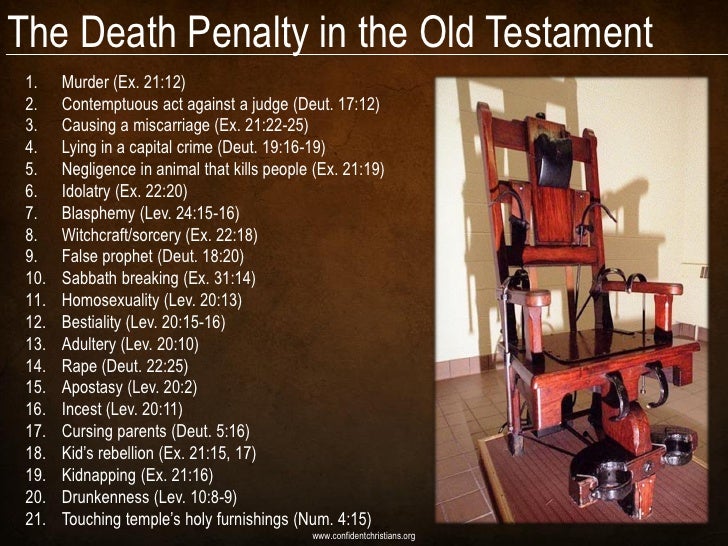
v. 6 Death Penalty in the Old Testament (a graphic)
v. 6 The Death Penalty in the New Testament (from Gotquestions.org)
v. 6 How some judges are confused about the death penalty and the Bible (Ron Daniel)
v. 7 He who casts the first stone (commentators on Deuteronomy 17:7)
v. 7 Robby Dean’s Appended Doctrine of Separation
v. 7 Purging evil from your midst
v. 8 Peter Pett’s Chiasmos for Deuteronomy 17:8–13
v. 8 Translating “Between ___ to [for] ___.”
v. 8 Interpreting “Between blood to blood”
v. 8 No pope required
v. 8 Steve Rudd: Why Peter was not a good choice for the first pope
Deuteronomy Chapter 17 4
v. 8 Links to Further Study on the Pope
v. 8 Higher Courts in the Land of Israel (Deuteronomy 17:8)
v. 9 King, Prophet, Priest (a graphic)
v. 9 Doctrine of the Priesthood (Ballinger, Thieme)
v. 9 Keil and Delitzsch why it is the Levitical Priesthood rather than the Aaronic Priests
v. 9 Commentators on the term Levitical Priests
v. 9 Several Commentators on the Appellant Courts of Moses
v. 12 Respecting the Authority of the Higher Court (Commentators on Deut. 17:12)
v. 12 Grace Bible Church’s “Doctrine of Authority”
v. 12 Links to Doctrines of Authority
v. 14 Functions of Government (a graphic)
v. 14 Dr. Peter Pett’s Chiasmos of Deuteronomy 17:14–20
v. 14 Commentators Regarding a Future King; Introducing Deuteronomy 17:14–20
v. 14 The Book of Deuteronomy was NOT written during the time of Samuel
v. 14 Moses, by the power of God, perceived that the people would want a king
v. 14 Applying the Torah to a Modern Nation
v. 15 Deuteronomy 17:15 (a graphic)
v. 15 Moses predicts that Israel will desire a king
v. 15 1Samuel 8:7–22 Samuel, the people and their desire for a king
v. 16 Commentators Who Think Moses is Restricting the Build-up of Israel’s Army
v. 16 Warfare Horses (a graphic)
v. 16 Interpreting Multiplying Horses and Returning to Egypt (Deuteronomy 17:16)
v. 16 Keil and Delitzsch on a More Timeless Understanding of Deuteronomy 17:16
v. 16 Adam Clarke Explains Deuteronomy 17:16
v. 16 Deuteronomy 17:16 Israel, Its King, and Its Military (and Its Horses)
v. 17 Wealth and the King
v. 17 Rich Cathers—The Warnings of Moses and the Acts of Solomon
v. 17 God’s Restrictions Upon a King of Israel
v. 17 The College Press Bible Study on a Summary of Transgressions
v. 17 David Guzik: “It is a Matter of Balance”
v. 17 God Made One VERY Conditional Promise to Solomon
v. 17 Solomon’s Wisdom Versus Solomon’s Failings
v. 18 Lessons for Today (Deut. 17:18–20 —a graphic)
v. 18 The Title of Deuteronomy (Several Commentators)
v. 18 Scrolls Copied by the King—Deuteronomy 17:18 (a graphic)
v. 18 What we know about the Old Testament canon
v. 18 What we can guess about the Old Testament canon
v. 19 Recovering the Law of Moses—2Chronicles 34
v. 19 Deuteronomy 17:19 (a graphic)
v. 19 Moses advances the concept of canonization
v. 19 New Testament Canonization
v. 19 New Testament Canon Charts
v. 19 Dr. Thomas Constable on the Limitations Placed on a King
v. 20 Deuteronomy 17:19–20a (from the CEV; a graphic)
v. 20 Do Not Turn Aside to the Left or to the Right (Scriptures)
v. 20 Neither to the Left or the Right (graphic)
v. 20 An Overview of an Israelite King from the Perspective of Moses (Peter Pett)
v. 20 Dr. Peter Pett: No King Matched the Mosaic Ideal
v. 20 J. Orr on the Limited Monarchy in Israel
v. 20 Utley on the King of Israel
v. 20 The Preacher’s Complete Homiletical Commentary Limitations of a King
v. 20 Observations on the King of Israel by the Expositor’s Bible Commentary

5 The Book of Deuteronomy
v. 20 Why did God wait to allow Israel to have a king?
v. 20 Dr. Bob Utley: Moses' Authorship of the Pentateuch
Addendum Why Deuteronomy 17 is in the Word of God
Addendum What We Learn from Deuteronomy 17
Addendum A Complete Translation of Deuteronomy 17
Addendum Word Cloud from a Reasonably Literal Paraphrase of Deuteronomy 17
Addendum Word Cloud from Exegesis of Deuteronomy 17
Chapter Outline Charts, Graphics and Short
Doctrines
Beginning of Document Doctrines Alluded to Chapters of the Bible Alluded to
Definition of Terms Introduction Addendum
www.kukis.org Exegetical Studies in
Deuteronomy
Doctrines Alluded To
Laws of Divine
Establishment
Polygamy
Chapters of the Bible Alluded To or Appropriately Exegeted with this Chapter
Genesis 14 Deuteronomy 1 Deuteronomy 16 Deuteronomy 22
2Samuel 24 1Kings 3 1Kings 4 1Chron. 6
Proverbs 1
Many who read and study this chapter are 1st or 2nd generation students of R. B. Thieme, Jr., so that much of
this vocabulary is second nature. One of Bob’s contributions to theology is a fresh vocabulary along with a
number of concepts which are theologically new or reworked, yet still orthodox. Therefore, if you are unfamiliar
with his work, the definitions below will help you to fully understand all that is being said. Also, I have developed
a few new terms and concepts which require definition as well.
In addition, there are other more traditional yet technical theological terms which will be used and therefore
defined as well.
Sometimes the terms in the exegesis of this chapter are simply alluded to, without any in-depth explanation of
them. Sometimes, these terms are explained in detail and illustrated. A collection of all these terms is found
here: (HTML) (PDF) (WPD).

Deuteronomy Chapter 17 6
Definition of Terms
Chiasmos
A chiasmos (also spelled chiasmus) is the way that some portions of the Bible are
organized. It takes its name from the Greek letter chi (÷). The first section matches with
the last, the second with the second-to-the-last, etc. It is called a chiasmos, because the
inverted parallelism looks like a chi (actually, half a chi) when one looks at it from its
organizational standpoint. When there is a center element, that is what is often
emphasized and what is the most important part of the passage. (Chiasmos example)
(Thomas B. Clarke) (Brad McCoy)
Client Nation
Client-Nation, is a national entity in which a certain number of spiritually mature Christians
(the salt of the earth) have formed a pivot sufficient to sustain the nation and through
which God specifically protects this nation so that believers can fulfill the divine mandates
of evangelism, communication and custodianship of Bible doctrine, providing a haven for
Jews, and sending missionaries abroad. The United States is a client-nation to God. A
client nation must have freedom: Freedom to seek God, freedom to use one’s own volition
and self-determination to succeed or fail, freedom from anarchy and tyranny, freedom for
evangelism, freedom for believers to hear Bible teaching without government interference
and, therefore, to grow spiritually, and freedom to send missionaries to other nations.
Doctrine of the Client Nation (HTML) (PDF) (WPD).
Divine Good
This is good which is completely in accordance with the plan of God. In order for a person
to do acts of divine good, they must be in fellowship and be thinking Bible doctrine. As
a result, that which they do is divine good and moves the plan of God forward. See also
the Doctrine of Divine Good (Bible Doctrine Resource) (L.G. Merritt); The Production
of Divine Good (Bible Doctrine Resource).
The 5th stage of
national
discipline
The 5th stage of national discipline involves complete loss of personal and national
sovereignty, the destruction of the family and the nation. Offerings to God are
unacceptable. Nations which have undergone this destruction have experienced slavery,
cannibalism, and the assimilation of its surviving citizens into other cultures. The Five
Cycles of Discipline (BDR—probably Thieme) (Mark Perkins) (L. G. Merritt).
Gen X
This is a short and clever reference to the generation of the Exodus. I was going to try
to represent this as Gen Ex, but that looked too much like I was just naming the first two
books of the Bible. At least with Gen X, most understand that we are speaking of a
specific generation. Gen X stands for generation exodus; the generation of adults who
left Egypt. Their children with them and the children born in the wilderness will be called
the generation of promise.
Fear of the Lord
Fear of the Lord connotes both awe and respect of our Creator. In the Old Testament,
this was one way to designate a mature or maturing believer. See the doctrine of the
Fear of the Lord (HTML) (PDF) (WPD).
Laws of Divine
Establishment
These are the laws, principles and morality which God has designed to perpetuate every
society or government in such a way that freedom to evangelize, freedom to teach
doctrine and the freedom to send out missionaries are maximized. See the Laws of
Divine Establishment (HTML) (PDF) (WPD).
Rebound
(Restoration to
fellowship with
God)
In the New Testament, this is naming your sins to God, so that you are both restored to
temporal fellowship with God and are then filled with the Spirit of God. In the Old
Testament, naming your sins to God would result in a restoration of fellowship and, in
some cases, the empowerment of the Holy Spirit once again (the Holy Spirit was not given
to all Old Testament believers). See the Doctrine of Rebound (HTML) (PDF) (WPD).

7 The Book of Deuteronomy
Definition of Terms
The Revealed
God (or, the
Revealed Lord)
We all come to a time of God-consciousness where we understand the concept and
possibility of the existence of God. At that point, we face 2 great questions: (1) do we
want to know this God and (2) are will willing to believe in God as He has revealed Himself
or do we make a god in our own image and worship that? In both the Old and New
Testaments, God will make Himself known (He reveals Himself) to those who will believe
in Him and to others as well. We know Him firmly and concretely as Jesus Christ; and in
the Old Testament, He is known as the God of the Jews, the Creator of the Universe, the
God of Moses (or of Abraham), etc.
Sin unto Death
The phrase "sin unto death" describes the final stage of divine discipline in which God
removes from the earth the person who is totally alienated from God. The "sin unto
death" is not a particular sin; but it is, rather, a mental attitude of total indifference to and
rebellion against the will and purpose of God. For more information, see the Doctrine of
the Sin unto Death (HTML) (PDF) (WPD).
Type, Antitype,
Typical
A type is a preordained representation wherein certain persons, events, and institutions
of the O.T. stand for corresponding persons, events, and institutions of the N.T. Types are
pictures or object lessons by which God has taught His redemptive plan. They are a
shadow of things to come, not the image of those things (Col. 2:17 Heb. 8:5 10:1).3 See
the Doctrine of Typology (HTML) (PDF) (WPD).
Verbal plenary
inspiration
God the Holy Spirit so supernaturally directed the human writers of Scripture, that without
waving their human intelligence, individuality, literary style, personal feelings or any other
human factor, His own complete and coherent message to man was recorded in perfect
accuracy in the original languages of Scripture, the very words bearing the authority of
divine authorship.4 The literary style of the human author would include a variety of
literary devices and figures of speech. Furthermore, there is nothing in the definition of
inspiration which precludes the human authors or even God the Holy Spirit from making
use of literary devices. See the Basic Doctrine of Inspiration (HTML) (PDF) (WPD);
the Doctrine of Inspiration (HTML) (PDF) (WPD); and the Study of Inspiration
(HTML) (PDF) (WPD).
Some of these definitions are taken from
http://gracebiblechurchwichita.org/
http://rickhughesministries.org/content/Biblical-Terms.pdf
http://www.gbible.org/index.php?proc=d4d
http://www.wordoftruthministries.org/terms-and-definitions/
http://www.theopedia.com/
——————————
An Introduction to Deuteronomy 17
Introduction: Deut. 17 is a continuation of the end of Deut. 16; Deut. 16 ended with the choosing of judges and
a prohibition against idolatry. This chapter continues with what animals would be acceptable for sacrifice and
some specific prohibitions against idolatry. Then Moses covers some specifics concerning the judicial system
of Israel and suddenly, seemingly out of the blue, mentions a behavior code for a king, even though there is no
provision up until this time for the choosing of a king. This is not a mistake nor was this added years later. Moses
prefaces this by informing the Israelites that they would desire a king in the future. And there is a train of thought
3 From http://www.dake.com/dake/types.html accessed July 30, 2013.
4 Quoted and paraphrased from R. B. Thieme, Jr., Canonicity; ©1973 by R. B. Thieme, Jr.; p. 5, who in turn took this from
Lewis Sperry Chafer, Systematic Theology; Abridged Edition; Victor Books, ©1984, Vol. Two, p. 71.

Deuteronomy Chapter 17 8
here—Moses was speaking about the judges and the priests—those with great authority in the land—and then
begins discussing the highest human authority in most countries, a king.
Deuteronomy 17 Graphic; from Hope, Help,
Healing; accessed May 13, 2016.
Deut. 17 is simply a continuation of Deut. 16, with
a somewhat arbitrary division between the two
chapters. In fact, the first two-thirds of Deut. 16 is
about the various feasts. Those 17 verses form a
single unit. Then, beginning with v. 18, that
should have all been placed with Deut. 17. Deut
16:18–22 "You shall appoint judges and officers
in all your towns that the LORD your God is giving
you, according to your tribes, and they shall judge
the people with righteous judgment. You shall not
pervert justice. You shall not show partiality, and
you shall not accept a bribe, for a bribe blinds the eyes of the wise and subverts the cause of the righteous.
Justice, and only justice, you shall follow, that you may live and inherit the land that the LORD your God is giving
you. "You shall not plant any tree as an Asherah beside the altar of the LORD your God that you shall make. And
you shall not set up a pillar, which the LORD your God hates.” (ESV) See Deuteronomy 16 (HTML) (PDF)
(WPD) for the exegesis of these verses.
In Deut. 17, Moses continues his second dissertation before the people of Israel. This dissertation began in
Deut. 5 with the Ten Commandments, and Moses has now been speaking of a variety of laws and customs which
would be for the Israelite people. This chapter will cover a number of different topics, most of which at first appear
to be unrelated. Any animal offered up must be with without defect; those who are engaged in idolatry must be
executed—however, 2 or 3 witnesses are required in order to condemn such a one to death. Then Moses
suggests that, for some judges, there might be a particular case which they cannot render a verdict on. Perhaps
they do not feel they have enough perception; perhaps they recognize a bias in their own judgement. Whatever
it is, they take the case to another court (it might be about murder, injury or a simple civil case). Then it will be
tried before Levitical priests or another judge. It appears as if the original judge himself will give testimony, and
a decision will be rendered. The original judge must carry out that sentence; and if he does not, he is subject to
execution himself.
Then, in the final section of this chapter, Moses discusses the possibility of a king. He pretty much acknowledges
that this will occur in the future, and he sets up some standards that the king must adhere to. Furthermore, the
king must make a copy of the Law for himself and to study and obey that Law (which will prolong his life in the
land).

9 The Book of Deuteronomy
Deuteronomy 17 from the 1611
King James Bible (a graphic);
from King James Bible Online;
accessed May 13, 2016.
Moses’ train of thought: One
commentator (Peake) said that this
section (Deut. 16:21–17:7)
appears to have been misplaced
and ought to be between Deut. 12
and 13.5 It’s an interesting thought
but lacking in merit. There is an
organization of thought or thought
progression for Moses, even
though you or I might have
organized things differently.
Even though this passage appears
to be miscellaneous topics thrown
together, there is a logical
progression of thought which
explains how Moses moves from
one topic to the next. So, an
overall organization is somewhat
difficult to ascertain in the book of
Deuteronomy, yet one is often able
to understand how Moses goes
from one subject to the next. His
train of thought can be followed.
Moses continues speaking to a
number of mostly unrelated issues
(although one can sense a train of
thought): Moses speaks of the sort
of sacrifice which is unacceptable,
and, having spoken about the right
way to worship God, he then
speaks of those who are idolaters,
who are subject to penalty of death
for their idolatry. One must be
careful here—Israel was not to
execute someone merely on the
testimony of a single person. That
leads, logically, to the courts, and
how sometimes and issue might come before the court that was impossible for a judge to decide. He was given
the option to take this case to a higher court, with the understanding that he must obey and enforce the decision
of the higher court. That is essentially the exercise of executive power, which brings to mind the idea of a
king—the next topic that Moses explores in this chapter.
As we have seen throughout much of Deuteronomy, Moses will speak to the people in the 2nd person masculine
singular, as if he is speaking to the people of Israel individually. Even in this chapter, when Moses predicts that
5 From http://www.studylight.org/commentaries/pfc/deuteronomy-17.html accessed May 11, 2016.

Deuteronomy Chapter 17 10
the people will want a king—which is quite obviously a national dialogue and decision—he will speak to the people
about it as if he is speaking to each person individually. However, there will be one short section where Moses
addresses the people as a group.
We have no idea how Moses presented this. Did he have notes, did he speak extemporaneously, did he
essentially write the book of Deuteronomy and then read from it? Did someone else write down what he said,
either during or after the fact (like Joshua)? He had a great many topics to deal with. Moses began with their
shared history (Deut. 1–4), but he eventually began giving principles and correct application of the Law of God.
It is important to understand what has gone before. This prequel came word-for-word from Deuteronomy 1
(HTML) (PDF) (WPD).
The Prequel of Deuteronomy 17
Yehowah God originally brought the children of Israel out of Egypt, where they had been slaves for several
centuries. He worked through Moses, who became their spiritual and national leader. The designation people
of Israel refers not to Israel the nation—which does not exist yet—but to their patriarch Israel, originally named
Jacob, but renamed Israel by God. The people standing before Moses are descended from Israel (Jacob). God
brought them out of Egypt with great signs and wonders.
These people, once free of Egypt, first crossed over the Sea of Reeds and went to Mount Sinai, also known as
Mount Horeb. There, God gave them the Law. God first spoke to the children of Israel audibly, giving them
the Ten Commandments, and they requested that God speak only to Moses, and that Moses would speak to
them.
After receiving the Law of God, which was more than simply the Ten Commandments, God led them northward
into what would become southern Judah, and told them to take the land that He promised them. First they sent
12 spies into the land, and they confirmed that the land was everything that God said it was—a land flowing with
milk and honey. However, they also brought back stories of the fortified cities and the size and power of their
adversaries in the land. Ten of the spies actively lobbied the people to not go into the land, and that night after
the spies returned, the people cried and accused God of bringing them there to kill them and they did not want
to go into this good land. Two spies, Caleb and Joshua, were ready to lead the people into the land to take it.
They believed God’s promises and the rest of the people did not.
God was quite disgusted with them; and then, suddenly, after God told them to turn around and go back into
the desert, many of them decided that they had changed their minds and they would attack the Amorites in the
land. God told Moses to tell them not to do this, because He would not be with their whiney, sorry butts if they
tried to attack the Amorites. They still went and attacked and they were soundly defeated, and chased all over,
until they finally came back to Kadesh, where all the people had been camped out.
They lived there for awhile. They moved around to different parts of the desert. During this time, God killed
off all the older generation—Gen X as I have designated them (the generation of the exodus)—all those who
were 20 and older when they left Egypt. They dropped like flies in the desert, dying the sin unto death, yet
while God preserved their children and their children’s children.
So now it is 38 or so years after their failure at Kadesh-barnea and God is leading this new generation of
Israelites—I will call them the generation of promise—back to take the land. These are the people who were
20 or younger when they left Egypt, who are now between the ages of 40 and 60, and who have their own
children now. As adults, all they have known is God taking care of them in the desert-wilderness.
There is also a set of young adults, aged 20–40, who were born in the desert (all those between ages 1 and
40 were born in the desert-wilderness). The young adults will be considered a part of the generation of promise;
they will not be distinguished from those between the ages of 40 and 60.

11 The Book of Deuteronomy
The Prequel of Deuteronomy 17
In the final few chapters of Numbers, God brings this new generation up along the east side of the Dead Sea,
to Mountains overlooking the Jordan River to the west of them. God will bring them across this river in the book
of Joshua to take the land He has promised them.
However, there is a problem, and that is that Moses will not go with them. He will die east of the Dead Sea.
God will not allow Moses to lead them into the land. Here’s what happened:
Near the beginning of this trek from Egypt to the land, there was no water, and the people complained, and God
provided water for them through Moses. Moses was to strike this huge rock (which represents the judgment
of Jesus on the cross) and from that rock would flow a river of living waters (just as Jesus, by His sacrifice,
would provide us with the living water of salvation). This water gushed out and gave the people the water they
needed; without which, they would have died in that dry, desolate place.
This same no-water test occurred again near the end of this 40 years in the desert. The people were again
thirsty—there was no water. This time, God told Moses to speak to the rock. Jesus, their Savior, represented
by the rock, would again give them all the water that they needed. Moses was not to strike the rock, because
Jesus died for our sins one time—He is never judged again for our sins. That had already been represented
when Moses struck the rock previously. Therefore, the proper way to represent this is by speaking to the rock.
Moses was upset with the people, and he yelled at them, and he hit that rock hard, twice, with his walking stick.
God still provided the people water, but He could not allow Moses to lead them into the Land of Promise, as he
had failed to continue the type which God was setting up. Since Jesus was not judged twice for our sins, the
rock was only to be struck one time, which occurred during the first no-water test.
For Moses and for many centuries of Jews, this is seen as simply an act of disobedience. However, since Jesus
died on the cross, we understand that there was more to the provision of water than just obedience or lack
thereof. God wanted the striking of the rock to represent Jesus dying on the cross for our sins and from Him
would flow a river of living waters. When one wished to be refreshed by those waters after the crucifixion, he
mere speaks to the rock (for the believer, this is rebound; for the unbeliever, this is expressing saving faith in
Jesus Christ). God wanted Moses to establish that as a type; Moses did not; and so Moses was not allowed
to cross over the Jordan.
So, here Israel stands, east of the Jordan River, about to cross over and take the land. Moses is going to speak
a few words to them—which words will fill up the book of Deuteronomy.
Deut. 17 will continue with Moses speaking to the people. This is Moses 2nd address to the people, which goes
from Deut. 5:1–26:19.
Chapter Outline Charts, Graphics and Short Doctrines
We need to know who the people are who populate this chapter. Primarily, we have Moses and his audience,
who do not really play an active roll in this chapter.
The Principals of Deuteronomy 17
Characters Commentary
Moses
Moses is the leader of the children of Israel, those he led out of Egypt with great signs
and wonders done by God—signs and wonders which were seen both by the Egyptians
and the Israelites.

Deuteronomy Chapter 17 12
The Principals of Deuteronomy 17
Characters Commentary
The children of
Israel
This is a general term applied to the people who left with Moses out of Egypt. One
could include the children who were born to them when in the desert in this category.
This is Moses’ audience.
Gen X
There are actually two distinct generations to which Moses will only occasionally refer.
Gen X are those who are 20 and older when they begin to consider taking the Land of
Promise, which lies before them. These would be those considered adult enough to go
to war. God would wipe out this generation of Jews because of their cowardice and
unbelief. Gen X is a term I came up with; it is not found in the Bible.
The Generation of
Promise
Those who are children when the Israelites come to the southern border of Judah (what
would soon become Judah), who were not old enough to fight when God told them to
take the land, they are the generation of promise. Them and those born to them in the
desert over the next 40 years.
Generation of
Promise A
If you wanted to be complete accurate, there are actually two generations which make
up the generation of promise: the GOP A and the GOP B. The GOP A are those who
were between the ages of 1 and 20 and they came into the land with their parents,
following Moses. After 40 years in the desert, they are now between the ages of 40 and
60.
Generation of
Promise B
GOP B are those who were born in the desert wilderness to any of the generations
named above. They would be between the ages of 1 and 40, and they had never
known slavery or Egypt. This does not mean that they do not suffer from the bad
influence of their parents. That is, these same people, having never been under
slavery, may express a desire to return to their true homeland, which is Egypt (to their
way of thinking).
Because of the overlapping and fluid nature of generations, these distinctions are only occasionally made. Most
of the time that these distinctions are made, I will be making them as a part of the exegesis. Moses is speaking
to the children of Israelites, he is actually speaking to the generation of promise about their parents, Gen X.
Chapter Outline Charts, Graphics and Short Doctrines
This way you can understand the places which are named in this chapter.
The Places of Deuteronomy 17
Places Description
Chapter Outline Charts, Graphics and Short Doctrines

13 The Book of Deuteronomy
Paragraph Divisions of Modern Translations
NKJV NRSV TEV NJB
Justice Must be
Administered
Laws Dealing with Justice
and Religion
The Administration of
Justice Abuses in Worship
(Deut. 16:18 to Deut. 17:13) (Deut. 16:18 to Deut. 17:20) (Deut. 16:18 to Deut. 17:13) (Deut. 16:21 to Deut. 17:7)
Deut. 16:21 to Deut. 17:1 Deut. 16:21 to Deut. 17:1 Deut. 16:21 to Deut. 17:1 Deut. 16:21 to Deut. 17:1
Deut. 17:2-7 Deut. 17:2-7 Deut. 17:2-7 Deut. 17:2-7
Levitical Judges
Deut. 17:8-13 Deut. 17:8-13 Deut. 17:8-13 Deut. 17:8-13
Principles Governing Kings Instructions Concerning a
King Kings
Deut. 17:14-17 Deut. 17:14-20 Deut. 17:14-20 Deut. 17:14-15
Deut. 17:18-20 Deut. 17:16-20
From Dr. Bob Utley; © 2014 Bible Lessons International. From E-sword; Utley’s website: freebiblecommentary.org
Chapter Outline Charts, Graphics and Short Doctrines
This is pretty much exactly what my outline is. There is very little disagreement on organizing this chapter.
Matthew Henry’s Outline of Deuteronomy 17
The charge of this chapter is,
I. Concerning the purity and perfection of all those animals that were offered in sacrifice (Deut. 17:1).
II. Concerning the punishment of those that worshipped idols (Deut. 17:2–7).
III. Concerning appeals from the inferior courts to the great sanhedrim (Deut. 17:8–13).
IV. Concerning the choice and duty of a king (Deut. 17:14, etc.).
Matthew Henry, Matthew Henry’s Commentary on the Whole Bible; from e-Sword, Deut. 17 chapter commentary.
Chapter Outline Charts, Graphics and Short Doctrines
Hawker summarizes this chapter: The subject of the divine laws is continued through this Chapter.
Moses under GOD’S authority, points out the unblemished state required of the animals to be offered
in sacrifice; of the punishment of idolaters: of controversies in judgment: of the election of a king; and
of special duties required of him.6
Here is what to expect in Deuteronomy 17:
A Synopsis of Deuteronomy 17 by The College Press Bible Study
All sacrifices to be without blemish, 1.
Of persons convicted of idolatry and their punishment, 2–7.
Difficult matters in judgment to be laid before the priests and judges, and to be determined by them; and all to
submit to their decision, 8–13.
The king that may be chosen to be one of their brethren; no stranger to be appointed to that office, 14, 15. He
shall not multiply horses to himself, nor cause the people to return unto Egypt, 16. Nor multiply wives, money,
&c., 17. He shall write a copy of the law for his own use, and read and study it all his days, that his heart be not
lifted up above his brethren, 18–20.
6 Robert Hawker The Poor Man’s Commentary; h1805; from e-sword, Deut. 17:1.

Deuteronomy Chapter 17 14
Like all chapters of the Word of God, you need more than just the simple plot outline to understand what God
wants us to know.
The College Press Bible Study Textbook Series; (a compilation of many commentaries); from e-sword; Deut. 17 chapter
comments.
Chapter Outline Charts, Graphics and Short Doctrines
Deuteronomy 17 Lessons for Today (an
Outline of Deuteronomy 17); from Slide
Player; accessed May 13, 2016.
F. Delitzsch: Just as in its
r eli g ious w o r ship t he
Israelitish nation was to show
itself to be the holy nation of
Jehovah, so was it in its
political relations also. This
thought forms the link
between the laws already
given and those which follow.
Civil order, that indispensable
condition of the stability and
prosperity of nations and
stat es, rests upon a
conscientious maintenance of
right, by means of a well-
ordered judicial constitution
a n d a n i m p a r t i a l
administration of justice.7
Arno Gaebelein continues: Judges and officials were to be appointed and a higher judicial court for
more difficult cases to be established, the latter at the place of the sanctuary. Idolatry is prominently
mentioned again because it is the most serious matter, both individually and nationally, to forsake the
one Jehovah. Apostasy from Jehovah and His covenant is wickedness. Chapter 16:21–22 also has
reference to idolatry. The idolatrous altars and images were set up under, or, beside green trees.
See 1Kings 14:23; 2Kings 17:10; Jer. 17:2. Then there is provision made for the choice of a king. The
Lord foresaw Samuel’s time, when the people would reject Him as their King and desire to be like
other nations; and foreseeing their failures He made provision for this emergency. Gaebelein’s
mention of Deut. 16:21–22 is common, the separation between these chapters being oh-so arbitrary.
Gaebelein continues: A comparison of verse 16 and 17 with 1 Kings 9-11 is most interesting. What
failure man is in himself. And Solomon was the wisest and most influential of all the kings. This fact
that Solomon did the very opposite from what the king should do has led the critics to say that this
passage was written after Solomon. As if God did not know all this beforehand! But there is not
allusion to Solomon’s kingdom at all in the words Moses spoke.8
It is, in fact, the exegetical study of 1Kings 4 (HTML) (PDF) (WPD) which pushed me towards the examination
of this chapter in Deuteronomy; because the commentators were so quick to point to a verse in this chapter to
condemn Solomon on the matter of horses (he had a cavalry), a condemnation which did not strike me as being
completely legitimate. Solomon has failings—there is no doubt about that—failings worth studying and taking note
7 Arno Clement Gaebelein, The Annotated Bible; 1919; from e-Sword, Deut. 17:1.
8 Arno Clement Gaebelein, The Annotated Bible; 1919; from e-Sword, Deut. 17:1.

15 The Book of Deuteronomy
of—but, rightly dividing the Word of Truth means that we need to condemn Solomon only when he is worthy of
such condemnation. Therefore, we will spend a great deal of time discussing Moses’ warnings from this chapter
and Solomon’s actions and failings in his life.
I need to edit this down.
Expositor’s Bible Commentary on the Confusing Organization of Deuteronomy
WITH this section (chapters 12-26) we have at length reached the legislation to which all that has gone before
is, in form at least, a prelude. But in its general outline this code, if it can be so called, has a very unexpected
character. When we speak of a code of laws in modern days, what we mean is a series of statutes, carefully
arranged under suitable heads, dealing with the rights and duties of the people, and providing remedies for all
possible wrongs, then behind these laws there is the executive power of the Government, pledged to enforce
them, and ready to punish any breaches of them which may be committed. In most cases, too, definite penalties
are appointed for any disregard or transgression of them. Each word has been carefully selected, and it is
understood that the very letter of the laws is to be binding. Every one tried by them knows that the exact terms
of the laws are to be pressed against him, and that the thing aimed at is a rigorous, literal enforcement of every
detail. Tried by such a conception, this Deuteronomic legislation looks very extraordinary and unintelligible.
In the first place, there is very little of orderly sequence in it. Some large sections of it have a consecutive
character; but there is no perceptible order in the succession of these sections, and there has been very little
attempt to group the individual precepts under related heads. Moreover in many sections there is no mention
of a penalty for disobedience, nor is there any machinery for enforcing the prescriptions of the code. There is,
too, much in it that seems rather to be good advice, or direction for leading a righteous life, a life becoming an
Israelite and a servant of Yahweh, than law. For instance, such a prescription as this, "If there be with thee a
poor man, one of thy brethren, within any of thy gates, in thy land which Yahweh thy God giveth thee, thou shalt
not harden thine heart nor shut thine hand from thy poor brother," can in no sense be treated as a law, in the
hard technical sense of that word. It stands exactly on a level with the exhortations of the New Testament, e.g.,
"Be not wise in your own conceits," "Render to no man evil for evil," and rather sets up an ideal of conduct which
is to be striven after than establishes a law which must be complied with. There is no punishment prescribed
for disobedience. All that follows if a man do harden his heart against his poor brother is the sting of conscience,
which brings home to him that he is not living according to the will of God.
In almost every respect, therefore, this Deuteronomic code differs from a modern code, and in dealing with it
we must largely dismiss the ideas which naturally occur to us when we speak of a code of laws. Our conception
of that is, clearly, not valid for these ancient codes; and we need not be surprised if we find that they will not
bear being pressed home in all their details, as modern codes must be, and are meant to be. Great practical
difficulties have arisen in India, Sir Henry Maine assures us, from applying the ideas of Western lawyers to the
ancient and sacred codes of the East. He says that the effect of a procedure under which all the disputes of a
community must be referred to regular law-courts is to stereotype ascertained usages, and to treat the oracular
precepts of a sacred book as texts and precedents that must be enforced. The consequence is that vague and
elastic social ordinances, which have hitherto varied according to the needs of the people, become fixed and
immutable, and an Asiatic society finds itself arrested and, so to speak, imprisoned unexpectedly within its own
formulas. Inconsistencies and contradictions, which were never perceived when these laws were worked by
Easterns, who had a kind of instinctive perception of their true nature, became glaring and troublesome under
Western rule, and much unintentional wrong has resulted. May it not be that the same thing has happened in
the domain of literature in connection with these ancient Hebrew laws? Discrepancies, small and great, have
been the commonplace of Pentateuch criticism for many years past, and on them very far-reaching theories
have been built. It may easily be that some of these are the result rather of our failure to take into account the
elastic nature of Asiatic law, and that a less strained application of modern notions would have led to a more
reasonable interpretation.
But granting that ordinary ancient law is not to be taken in our rigorous modern sense, yet the fact that what
we are dealing with here is Divine law may seem to some to imply that in all its details it was meant to be fulfilled
to the letter. If not, then in what sense is it inspired, and how can we be justified in regarding it as Divinely

Deuteronomy Chapter 17 16
Expositor’s Bible Commentary on the Confusing Organization of Deuteronomy
given? The reply to that is, of course, simply this, that inspiration makes free use of all forms of expression
which are common and permissible at the time and place at which it utters itself. From all we know of the Divine
methods of acting in the world, we have no right to suppose that in giving inspired laws God would create
entirely new and different forms for Himself. On the contrary, legislation in ancient Israel, though Divine in its
source, would naturally take the ordinary forms of ancient law. Moreover in this case it could hardly have been
otherwise. As has already been pointed out, a large part of the Mosaic legislation must have been adopted from
the customs of the various tribes who were welded into one by Moses. It cannot be conceived that the laws
against stealing, for example, the penalties for murder, or the prescriptions for sacrifice, can have been first
introduced by the great Lawgiver. He made much ancient customary law to be part and parcel of the Yahwistic
legislation by simply taking it over. If so, then all that he added would naturally, as to form, be molded on what
he found pre-existing. Consequently we may apply to this law, whether Divinely revealed or adopted, the same
tests and methods of interpretation as we should apply to any other body of ancient Eastern law.
Now of ancient Eastern codes the laws of Manu are the nearest approach to the Mosaic codes, and their
character is thus stated by themselves (chapter 1., ver. 107): "In this work the sacred law has been fully stated,
as well as the good and bad qualities of human actions and the immemorial rule of conduct to be followed by
all." That means that in the code are to be found ritual laws, general moral precepts, and a large infusion of
immemorial customs. And its history, as elicited by criticism, has very interesting hints to give us as to the
probable course of legal development in primitive nations. It is sometimes said that the results of the criticism
of the Old Testament, if true, present us with a literature which has gone through vicissitudes and editorial
processes for which literary history elsewhere affords absolutely no parallel. However that may be as regards
the historical and prophetical books, it is not true with regard to the legal portions of the Pentateuch. The very
same processes are followed in Professor Buhler’s Introduction to his translation of the "Laws of Manu," forming
Vol. 25. of "The Sacred Books of the East." as are followed, in the critical commentaries on the Old Testament
law codes. Pages 67, seq. of Buhler’s Introduction read exactly like an extract from Kuenen or Dillmann: and
the analysis of the text, with its resultant list of interpolations, runs as much into detail as any similar analysis
in the Old Testament can do. Moreover the conjectures as to the growth of Manu’s code are, in many places,
parallel to the critical theories of the growth of the Mosaic codes. The foundation of Manu is, in the last resort,
threefold - the teaching of the Vedas, the decisions of those acquainted with the law, and the customs of
virtuous Aryas. At a later time the teachers of the Vedic schools gathered up the more important of these
precepts, decisions, and customs into manuals for the use of their pupils, written at first in aphoristic prose, and
later in verse. These, however, were not systematic codes at all. As the name given them implies, they were
strings of maxims or aphorisms. Later, these were set forth as binding upon all, and were revised into the form
of which the "Laws of Manu" is the finest specimen.
In Israel the process would appear to have been similar, though much simpler. It was similar; for though there
are radical differences between the Aryan and the Semitic mind which must not be overlooked, the former being
more systematic and fond of logical arrangement than the latter, a great many of the things which are common
to Moses and Manu are quite independent of race, and are due to the fact that both legislations were to regulate
the lives of men at the same stage of social advancement. But Manu was much later than Moses. Indeed, as
we now have them, the laws of Manu are as late as the post-Ezraite Judaic code, and in temper and tone these
two codes very nearly resemble each other. Consequently the earlier codes of the Pentateuch are simpler than
Manu. When Israel left Egypt, custom must have been almost alone the guide of life. Moses’ task was to
promulgate and force home his fundamental truths; in this view he must adopt and remodel the customary law
so as to make it innocuous to the higher principles he introduced, or even to make it a vehicle for the
popularizing of them. So far as he made codes, he would make them with that end. Consequently he would take
up mainly such prominent points as were most capable of being, or which most urgently needed to be,
moralized, leaving all the rest to custom where it was harmless. This is the reason, too, most probably, why the
earlier codes are so short and so unsystematic. They are selections which needed special attention, not
complete codes covering the whole of life. In fact the form and contents of all the Old Testament codes can be
accounted for only on this supposition. As the codes lengthen, they do so simply by taking up, in a modified or
unmodified form, so much more of the custom; and under the pressure of Yahwistic ideas these selected codes

17 The Book of Deuteronomy
Expositor’s Bible Commentary on the Confusing Organization of Deuteronomy
became more and more weighted with spiritual significance and power.
That would seem to have been the process by which the inspired legislators of Israel did their work; and if it be
so, some of the variations which are now taken to be certain indications of different ages and circumstances
may simply represent local varieties of the same custom. Custom tends always to vary with the locality within
certain narrow limits. It would be quite in accord with the general character of ancient customary law to believe
that, provided the law was on the whole observed, there would be no inclination to insist upon excluding small
local variations; and equally so that in a collection like the Pentateuch the custom of one locality should appear
in one place, that of another in another. In that case, to insist that a certain sacrifice, for example, shall always
consist of the same number of animals, and that any variation means a new and later legislation on the subject,
is only to make a mistake. The discrepancy is made important only by applying modern English views of law
to ancient law. Professor A. B. Davidson has shown in the Introduction to his "Ezekiel" (p. 53.) that this latter
was probably Ezekiel’s view. "On any hypothesis of priority," he says, "the differences in details between him
(i.e., Ezekiel) and the law (i.e., P) may be easiest explained by supposing that, while the sacrifices in general
and the ideas which they expressed were fixed and current, the particulars, such as the kind of victims and the
number of them, the precise quantity of meal, oil, and the like, were held non-essential and alterable when a
change would better express the idea." The same principle would apply to the differences between Ezekiel and
Deuteronomy, e.g., the omission of the feast of weeks and of the law of the offering of the firstlings of the flock.
If so, then obviously Ezekiel must have thought that the previous ritual law was not meant to be as binding as
we make it.
But, as has already been remarked, this law was elastic in more important matters; often, even when it seems
to legislate, it is only setting up ideals of conduct. Before we leave this subject an example should be given, and
the law of war may serve, especially if we compare it with the corresponding section of Manu. The provisions
in Deuteronomy, chapter 20, according to which on the eve of a battle the officers should proclaim to the army
that any man who had built a new house and had not dedicated it, or who had planted a vineyard and had not
yet used the fruit of it, or who had betrothed a wife and not yet taken her, or who was afraid, should retire from
the danger, as also the provisions that forbid the destruction of fruit-trees belonging to a besieged city, cannot
have been meant as absolute laws. Yet that is no ground for supposing that they could have been introduced
only after Israel, having ceased to be a sovereign state, waged no war, and that consequently they are
interpolations in the original Deuteronomy. For the similar provisions of the laws of Manu were given while kings
reigned, and were addressed to men constantly engaged in war. Yet this is what we find: "When he (the king)
fights with his foes in battle, let him not strike with weapons concealed (in wood), nor with (such as are) barbed,
poisoned, or the points of which are blowing with fire. Let him not strike one who (in flight) has climbed on an
eminence, nor a eunuch, nor one who joins the palms of his hands (in supplication), nor one (who flees) with
flying hair, nor one who sits down, nor one who says ‘I am thine,’ nor one who sleeps, nor one who has lost his
coat of mail, nor one who is naked, nor one who is disarmed, nor one who looks on without taking part in the
fight, nor one who is fighting with another foe, nor one whose weapons are broken, nor one afflicted (with
sorrow), nor one who has been grievously wounded, nor one who is in fear, nor one who has turned to flight;
but in all these cases let him remember the duty (of honorable warriors)." With an exact and unremitting
obligation to observe these precepts war would be impossible, and we may be sure that in neither case were
they meant in that sense. They simply set forth the conduct which a chivalrous soldier would desire to follow,
and would on fitting occasions actually follow; but by no means what he must do, or else break with his religion.
Only by hypotheses like these can the form and the character of such laws be properly explained, and if we
keep them constantly in mind, some at least of the difficulties which result from a comparison of the law and
the histories may be mitigated.
Such being the character of the Deuteronomic code, the question has been raised whether its introduction and
acceptance by Josiah was not a falling away from the spirituality of ancient religion. Many modern writers,
supported by St. Paul’s dicta concerning the law, say that it was. Indeed the very mention of law seems to
depress writers on religion in these days, and Deuteronomy appears to be to them a name of fear. But whatever
tendencies of modern thinking may have brought this about, it is nevertheless true that experience embodied
in custom and law is the kindly nurse, not the deadly enemy, of moral and spiritual life. Without law a nation

Deuteronomy Chapter 17 18
Expositor’s Bible Commentary on the Confusing Organization of Deuteronomy
would be absolutely helpless; and it is inconceivable that at any stage of Israel’s history they were without this
guide and support. As we have seen, they never were. First they had customary law; then along with that short
special codes, e.g., the Book of the Covenant and the Deuteronomic code; and even when the whole
Pentateuchal law as we have it had been elaborated, a good deal must still have been left to custom.
Consequently there was nothing so startling and revolutionary in the introduction of Deuteronomy as many have
combined to represent. Indeed it is difficult to see how it altered anything in this respect. Of all forms of law,
customary law is perhaps that which demands and receives most unswerving obedience. Under it, therefore,
the pressure of law was heavier than it could be in any other form. It does not appear how the fact that those
observing it did not think of that which they obeyed as law, but simply custom, altered the essential nature of
their relation to it. They were guided by ordinances which did not express their own inward conviction, and were
not a product of their own thought. They obeyed ordinances from without, and these ought therefore to have
had the same effect upon the moral and spiritual life as written laws. For they cannot be said to have regulated
only civil life. Religious life (even if the Book of the Covenant be Mosaic or sub-Mosaic, as I believe; much more
if it be post-Davidic, as many say) must have been largely regulated by the customs of Israel. If law then be in
its own nature, as the antinomians tell us, destructive of spontaneity and progress, if it necessarily externalizes
religion, then there would have been as little room for the religion of the prophets before Deuteronomy as after
it.
But, as a matter of fact, no falling off in spirituality took place after Deuteronomy. Wellhausen says that with law
freedom came to an end, and this was the death of prophecy. But he can support his thesis only by denying
the name of prophet to all the prophets after Jeremiah. It is difficult to see the basis of such a distinction. It is
judged by this, if by nothing else-that it compels Wellhausen to deny that the author of Second Isaiah is a
prophet. That he wrote anonymously is held to prove that he felt this himself. Now a view so extraordinarily
superficial has no root, and every reader of that most touching and sublime of all the Old Testament books will
simply stand amazed at the depth of the critical prejudice which could dictate such a judgment. If the post-
Deuteronomic prophets are not prophets, then there are no prophets at all, and the whole discussion becomes
a useless logomachy. But even if Ezekiel and Second Isaiah and the rest are not prophets, they are at least full
of spiritual life and power, so that the decay of spiritual religion which the adoption of Deuteronomy is supposed
to have brought about must be considered purely imaginary on that ground also. And this contention is
strengthened by the theories of the critical school themselves. If the bulk of the Psalms, as all critics incline to
believe, or all of them, as some say, are post-exilic, then the first centuries of the post-exilic period must have
been the most spiritually minded epoch in Israelite history. The depth of religious feeling exhibited in the Psalms,
and the comprehension of the inwardness of man’s true relation to God by which they are penetrated, are the
exact contrary of the externality and superficiality which the introduction of written law is said to have produced.
So long as the Psalms were being written religious life must have been vigorous and healthy, and to date the
beginnings of Pharisaic externalism from Josiah’s day must consequently be an error.
After what has been said it is scarcely necessary to discuss Duhm’s views of the opposition between prophecy
and Deuteronomy, It will be sufficient to ask how the latter can have turned against prophecy, when it is in its
essence an embodiment of prophetic principles in law, and was introduced and supported by prophets. But, it
may be said, after all prophecy did decay, and ultimately die, and that too during the period after Deuteronomy.
Is there not in that admitted fact a presumption that this law did work against prophecy? If so, then it is more
than met by the fact that the decay of spiritual religion became noticeable only some centuries after this, and
that the immediate effect of Deuteronomy was rather to deepen and intensify religion, and to keep it alive amid
all the vicissitudes of the Captivity and Return. Moreover the break-up of the national life was sufficient to
account for the slow decay and final cessation of prophecy. From the first, prophecy had been concerned with
the building up of a nation which should be faithful to Yahweh. Its main function had been to interpret and to
foretell the great movements and crises of national life-to read God’s purpose in the great world movements
and to proclaim it. With Israel’s death as a nation the field of prophecy became gradually circumscribed, and
ultimately its voice ceased. Consequently, though in the main the final cessation of prophecy was connected
with the rise of externalism in religion and with the great decay of spiritual life in the two or three centuries
before Christ, the destruction of the nation would account for the feebleness of prophecy during a period when

19 The Book of Deuteronomy
Expositor’s Bible Commentary on the Confusing Organization of Deuteronomy
the inner spiritual life was flourishing as it flourished after Deuteronomy. Moreover, as religion became more
inward and personal, prophecy, in the Old Testament sense, had less place. Though in New Testament times
spiritual life and spiritual originality and power were more present than at any time in the world’s history,
prophecy did not revive. In the whole New Testament there is not one purely prophetic book save the
Revelation, and that is apocalyptic more than simply prophetic; and though there was an order of prophets in
the early Church, if they had any special function other than that of preachers their office soon died out. If then
the denationalizing of religion and its growth in individualism and inwardness in New Testament times prevented
the revival of prophecy, we may surely gather that the same things, and not the introduction of written law,
brought it to an end in the Old Testament.
Nor does St. Paul’s judgment as to the meaning and use of law, in Galatians, when rightly understood,
contradict this. No doubt he seems to say that the Mosaic law by its very nature as law is incompatible with
grace, that it necessarily stands out of relation to faith, and that its principle is a purely external one, so much
wages for so much work: Further, he clearly regards it as having been interpolated into the history of Israel
between the promises given to Abraham and the fulfillment of them in the redemption by Christ, and as having
served only to increase sin and to drive men thus to Christ. But when he says this he is replying mainly to the
Pharisaic view of the law which was represented by the Judaizers, and finds himself all the more at home in
refuting it that it was his own view before he became a Christian. According to that view, the whole law, both
the moral and ceremonial provisions of it, was necessary to obtain moral righteousness, and the mere doing
of the legally prescribed things gave a claim to the promised reward. So interpreted, law had all the evil qualities
he states, and stood in absolute hostility to grace and faith, the great Christian principles. The only difficulty is
that St. Paul does not say, as we should expect him to do, that originally the law was not meant to be so
regarded. He seems to admit by his silence that the Pharisaic view of the law was the right one. But if he does,
he cannot have meant to include Deuteronomy. For there law is made to have its root and ground in grace. It
is given to Israel as a token of the free love of God, and it is a law of life which, if kept, would make them a
peculiar people unto God. Further, love to God is to be the motive from which all obedience springs, so that this
law is bound up with both grace and faith. But the probability is that St. Paul admits the Pharisaic view only
because it is that view with which alone he has to contend in the case in hand. For in Rom_7:1-25 he gives us
quite another conception of the Mosaic law. There he is thinking of it mainly from an ethical point of view, and
he regards it as full of the Spirit of God, as a norm of moral life which not only continues to be valid in
Christianity, but which finds in the Christian life the very fulfillment which it was intended to have. It presses
home too the moral ideal upon the man with extraordinary power, and marks and emphasizes the terrible
divergence between his aspirations and his actual performance. This is a much higher office than that which
he assigns to law in Galatians; and hence one gathers that he is not speaking in Galatians exhaustively and
conclusively, but is condemning rather a way of regarding the Mosaic law with which he had once sympathized
than that law in its own essential character. In its moral aspects, as represented by the Decalogue, the law is
of eternal obligation. From it comes the light which brings to the Christian that moral unrest and dissatisfaction
which is one of God’s Divinest gifts to His people. In this aspect, the law is holy and just and good: instead of
favoring the critical view St. Paul leaves it without any fragment of real support.
Our conclusion is, therefore, that the anti-nomianism, which makes the acknowledgment of Deuteronomy by
Josiah and his people the turning-point for the worse in the religious history of Israel, is unfounded. The nation
had always been under law, and previous to Deuteronomy under even written law. This code was not in any
previously unheard-of way made the law of the kingdom. Its very contents are conclusive against that view, for
it contains much that could not be enforced by the State. Instead of trying to do by external means that which
the persuasions of the prophets had failed to do, Josiah and his people did just what they would have had to
do, when they became convinced that the prophetic principles ought to be carried out. They made an agreement
to follow these Divine commands, these God-given principles, in actual life. But there is no hint that they
regarded Deuteronomy as the sum of the Divine ordinances for the life of men. Indeed there are many
references to other Divine laws; and the priestly oracle remained, after Deuteronomy as before it, a source of
Divine guidance. Deuteronomy therefore did not destroy prophecy; the post-exilic Psalms are proof that it did
not destroy spiritual life: and the Pauline view of the law, in at least one series of passages, coincides entirely

Deuteronomy Chapter 17 20
Expositor’s Bible Commentary on the Confusing Organization of Deuteronomy
with the view that law stated as it is stated in Deuteronomy may be one of the mightiest influences to mould,
and enrich, and deepen, moral and spiritual life.
Expositor’s Bible Commentary; Edited by the Rev. W. Robertson Nicoll; h1887-1896; public domain; from e-sword, Deut. 17
chapter commentary.
Chapter Outline Charts, Graphics and Short Doctrines
Their summaries are just so-so. I should probably edit these summaries to improve them.
The Summarized Bible on Deuteronomy 17
Contents: Laws concerning idolaters and obedience to authority and kings.
Characters: God, Moses.
Conclusion: God would possess men with a dread of that sin—worshipping false gods—which is a sin in
itself exceedingly heinous and the highest affront that can be offered to Almighty God.
Key Word: Transgressing, Deut. 17:2.
Strong Verses: Deut. 17:18, Deut. 17:19, Deut. 17:20.
Striking Facts: Deut. 17:1. Old testaments sacrifices were required to be perfect because types of Christ,
1Peter 1:19, who was perfectly pure from all sin and all appearances of it.
Keith L. Brooks, Summarized Bible; Complete Summary of the Bible; ©1919; from e-Sword, Deut. 17 chapter commentary.
Chapter Outline Charts, Graphics and Short Doctrines
J. Vernon McGee sums up this and the next chapter: In chapters 17 and 18 we come to a section
which deals with the regulations that would control a king, a priest, and a prophet. These were the
three main offices in the nation Israel, in the theocracy which God had set up for these people. God
laid down rules for each of these offices.9
The end of Deut. 16 really should have been placed with Deut. 17 (the chapter and verse divisions in the Bible are
not inspired). Deut 16:18–22 "You shall appoint judges and officers in all your towns that the LORD your God
is giving you, according to your tribes, and they shall judge the people with righteous judgment. You shall not
pervert justice. You shall not show partiality, and you shall not accept a bribe, for a bribe blinds the eyes of the
wise and subverts the cause of the righteous. Justice, and only justice, you shall follow, that you may live and
inherit the land that the LORD your God is giving you. You shall not plant any tree as an Asherah beside the altar
of the LORD your God that you shall make. And you shall not set up a pillar, which the LORD your God hates.”
(ESV) You see that the Israelites are commanded to appoint judges and other officials over them; and, in
Deut. 17, Moses will talk about the idea of a king of Israel. At the very end of Deut. 16, there are things which are
forbidden to Israel, which prohibitions continue and conclude with Deut. 17:1.
——————————
Chapter Outline Charts, Graphics and Short Doctrines
Animal Sacrifices Should be Without Defect
It amazes me no end as to how much material is related to this simple verse. Why is it found here? What about
the chapter divisions? How does this fit with the text that follows? And, most fundamentally, what does this verse
mean (which is the most basic question and the easiest to answer)?
9 From http://archive.org/stream/05_Deuteronomy/05-DEUTERONOMY_djvu.txt (Chapter 17); accessed May 10, 2016.

21 The Book of Deuteronomy
This verse does not seem to fit in with any of what follows. Many translations associate it with previous verses
(which are noted below in the translations).
Deut. 16:21–22 and 17:1 (You shall not set up for yourself pillars of any trees, which you make for yourself near
the altar of Jehovah your God. And you shall not raise up for yourself any standing image, which Jehovah your
God detests. You shall not sacrifice to Jehovah your God an ox or sheep in which there is a blemish, any evil
thing, for it is a hateful thing to Jehovah your God.—ESV) should be grouped together under “Unacceptable
Religious Practices.”
As always, 3 separate translations will be produced for each verse. The slavishly literal translation attempts to
preserve word order and number, making it more literal than Young’s translation (however, I do not preserve the
consistency of the translation that Young does). The moderately literal translation may add or delete a definite
article, change the number of a noun to correspond with the English sense of thinking, and the order is often
changed in order to better represent our English sentence structure. The paraphrase is an attempt to give a
thought-for-thought interpretation of what each verse tells us.
Also, as I have done throughout Deuteronomy, I will begin and end this chapter with quotation marks, indicating
that Moses is speaking all that we read here. I will not begin new paragraphs with quotation marks.
Kukis slavishly literal: Kukis moderately literal:
“You will not sacrifice to Yehowah your
Elohim an ox and a lamb which is in him a
blemish—any word evil—for an abomination
of Yehowah your Elohim that.
Deuteronomy
17:1
“You will not sacrifice to Yehowah your Elohim
an ox or a lamb on which [there] is a
blemish—[or] any injury [imperfection or
defect]—for that [is] an abomination [to]
Yehowah your Elohim.
Kukis not so literal:
“You will not offer up to Jehovah your God any ox or lamb on which there is a blemish or defect of any
kind, for that would be an abomination to Jehovah your God.
Here is how others have translated this verse:
Ancient texts: Note: I compare the Hebrew text to English translations of the Latin, Syriac
(= Aramaic) and Greek texts, using the Douay-Rheims translation10; George
Lamsa’s translation, and Sir Lancelot Charles Lee Brenton’s translation as revised
and edited by Paul W. Esposito, respectively. I often update these texts with non-
substantive changes (e.g., you for thou, etc.). I often use the text of the Complete
Apostles’ Bible instead of Brenton’s translation, because it updates the English text.
The Septuagint was the earliest known translation of a book (circa 200 B.C.). Since
this translation was made before the textual criticism had been developed into a
science and because different books appear to be translated by different men, the
Greek translation can sometimes be very uneven.
When there are serious disparities between my translation and Brenton’s (or the
text of the Complete Apostles’ Bible), I look at the Greek text of the Septuagint (the
LXX) to see if a substantive difference actually exists (and I reflect these changes
in the English rendering of the Greek text). I use the Greek LXX with Strong’s
numbers and morphology available for e-sword. The only problem with this
10 I have begun to doubt my e-sword Douay-Rheims version, so I now use www.latinvulgate.com.

Deuteronomy Chapter 17 22
resource (which is a problem for similar resources) is, there is no way to further
explore Greek verbs which are not found in the New Testament. Although I usually
quote the Complete Apostles’ Bible here, I have begun to make changes in the
translation when their translation conflicts with the Greek and note what those
changes are.
The Masoretic text is the Hebrew text with all of the vowels (vowel points) inserted
(the original Hebrew text lacked vowels). We take the Masoretic text to be the text
closest to the original. However, differences between the Masoretic text and the
Greek, Latin and Syriac are worth noting and, once in a great while, represent a
more accurate text possessed by those other ancient translators.
In general, the Latin text is an outstanding translation from the Hebrew text into
Latin and very trustworthy (I say this as a non-Catholic). Unfortunately, I do not
read Latin—apart from some very obvious words—so I am dependent upon the
English translation of the Latin (principally, the Douay-Rheims translation).
Underlined words indicate differences in the text.
Bracketed portions of the Dead Sea Scrolls are words, letters and phrases lost in
the scroll due to various types of damage. Underlined words or phrases are those
in the Dead Sea Scrolls but not in the Masoretic text.
I will only list the translation from the Dead Sea Scrolls if it exists and if it is different
from the Masoretic text.
These Bibles often fall into more than one category; I placed them where I believed
them to have the best fit.
Ancient texts:
Masoretic Text (Hebrew) “You will not sacrifice to Yehowah your Elohim an ox and a lamb which is in him a
blemish—any word evil—for an abomination of Yehowah your Elohim that.
Targum of Onkelos You shall not sacrifice before the. Lord your God a bullock or lamb which hath any
blemish or evil in it, or which is torn or rent; for that is abominable before the Lord
your God.
Latin Vulgate You shall not sacrifice to the Lord your God a sheep, or an ox, wherein there is
blemish, or any fault: for that is an abomination to the Lord your God.
Peshitta (Syriac) YOU shall not sacrifice to the LORD your God an ox or a lamb wherein is blemish,
or anything impious; for that is an abomination in the sight of the LORD your God.
Septuagint (Greek) You shall no sacrifice to the Lord your God a calf or a sheep, in which there is a
blemish, or any evil thing; for it is an abomination to the Lord your God.
Significant differences: The Syriac adds in the sight of.
Limited Vocabulary Bibles:
Bible in Basic English No ox or sheep which has a mark on it or is damaged in any way may be offered to
the Lord your God: for that is disgusting to the Lord your God.
Easy English A list of other rules and rules for a king
You must bring good gifts to the LORD your God. Do not bring any sheep or cow
whose body is not completely right. The LORD hates this.
Easy-to-Read Version(2002) "You must not sacrifice to the Lord your God a cow or sheep if there is anything
wrong with it. Why? Because the Lord your God hates it!
23 The Book of Deuteronomy
The Message And don’t sacrifice to GOD, your God, an ox or sheep that is defective or has
anything at all wrong with it. That’s an abomination, an insult to GOD, your God.
Names of God Bible Never offer an ox or a sheep that has a defect or anything seriously wrong with it
as a sacrifice to Yahweh your Elohim. That would be disgusting to Yahweh your
Elohim.
NIRV Suppose an ox or sheep has anything at all wrong with it. Then don’t sacrifice it to
the Lord your God. He hates it.
Thought-for-thought translations; paraphrases:
Common English Bible Don’t sacrifice to the LORD your God any oxen or sheep that have defects of any
kind, because that is detestable to the LORD your God.
Contemporary English V. If an ox or a sheep has something wrong with it, don't offer it as a sacrifice to the
LORD your God--he will be disgusted!
The Living Bible “Never sacrifice a sick or defective ox or sheep to the Lord your God. He doesn’t
feel honored by such gifts!
New Berkeley Version “Sacrifices to the LORD your God must never include a member of your herd or flock
in which there is a blemish or defect; for such a sacrifice would be abhorrent to th3e
LORD your God.
New Century Version If an ox or sheep has something wrong with it, do not offer it as a sacrifice to the
Lord your God. He would hate that.
New Life Bible "Do not give to the Lord your God a bull or a sheep which is not perfect. For that is
a hated thing to the Lord your God.
New Living Translation “Never sacrifice sick or defective cattle, sheep, or goats to the Lord your God, for
he detests such gifts.
Partially literal and partially paraphrased translations:
American English Bible 'You must not sacrifice a calf or a sheep to Jehovah your God that is scarred or
deformed in any way, for that would be disgusting to Jehovah your God.
International Standard V You are not to sacrifice to the LORD your God an ox or a sheep that has a defect
or any flaw it, because that is detestable to the LORD your God."
New Advent (Knox) Bible Never shalt thou offer in sacrifice sheep or ox that has any blemish or defect; such
impiety is hateful to the Lord thy God.
Translation for Translators Warning against sacrificing defective animals
“Do not sacrifice to Yahweh our God any cattle or sheep or goats that have any
defects, because Yahweh hates that kind of gift.”
Mostly literal renderings (with some occasional paraphrasing):
Ferrar-Fenton Bible 16:18 You shall appoint judges and Recorders for yourselves in every village which
your EVER-LIVING GOD gives to you, to control you, and to govern the People with
honest government. 19 You shall not distort justice. You shall not regard stations.
You shall not take bribes ; — for bribes blind the eyes of the intelligent, and pervert
the decrees of justice. 20 You shall follow perfect justice, so that you may live and
possess the country that your Ever-living God has given to you. 21 You shall not
plant shrines, or any trees, at the side of the altar you make to your Ever-living God;
22 nor shall you erect for yourselves columns, as standards, to your Ever-living God.
17:1 You shall not sacrifice to your Ever-living God an ox or a sheep in which there
is any defect, — any thing bad, — for that would be an insult to your Ever-living
God. The Ferrar-Fenton Bible begins speech V with Deut. 16:18 (included above).
Lexham English Bible “You shall not sacrifice to Yahweh your God an ox or sheep that has a physical
defect of anything seriously wrong, for that is a detestable thing to Yahweh your
God.

Deuteronomy Chapter 17 24
NIV – UK Do not sacrifice to the Lord your God an ox or a sheep that has any defect or flaw
in it, for that would be detestable to him.
Catholic Bibles (those having the imprimatur):
Christian Community (1988) You shall not sacrifice to Yahweh, your God, an ox or a sheep that has any blemish
or defect because Yah weh abhors this.
The Heritage Bible You shall not sacrifice to Jehovah, your God, bullock or sheep in which is a blemish,
or any evil word, for that is an abomination to Jehovah, your God.
New American Bible (2002) "You shall not sacrifice to the LORD, your God, from the herd or from the flock an
animal with any serious defect; that would be an abomination to the LORD, your
God.
New American Bible (2011)11 You shall not sacrifice to the LORD, your God, an ox or a sheep with any
serious defect [Lev 22:20.]; that would be an abomination to the LORD, your
God.
New Jerusalem Bible 'To Yahweh your God you must sacrifice nothing from herd or flock that has any
blemish or defect whatsoever, for Yahweh your God holds this detestable.
New RSV You must not sacrifice to the Lord your God an ox or a sheep that has a defect,
anything seriously wrong; for that is abhorrent to the LORD your God.
Revised English Bible You must not sacrifice to the LORD your God a bull or sheep that has any defect
or serious blemish, for that would be abominable to the LORD your God.
Jewish/Hebrew Names Bibles:
Complete Jewish Bible “You are not to sacrifice to ADONAI your God a cow or sheep that has a defect or
anything wrong with it; that would be an abomination to ADONAI your God.
exeGeses companion Bible THE TORAH ON SACRIFICES
Thou shalt not sacrifice
unto the LORD Yah Veh thy God Elohim
any bullock ox , or sheep lamb ,
wherein is blemish, or any evilfavouredness evil word :
for that is an abomination abhorrence
unto the LORD Yah Veh thy God Elohim.
JPS (Tanakh—1985) You shall not sacrifice to the Lord your God an ox or a sheep that has any defect
of a serious kind, for that is abhorrent to the Lord your God.
Kaplan Translation Blemished Sacrifice
Do not sacrifice to God your Lord any ox, sheep or goat that has a serious blemish,
since to do so before God your Lord is considered revolting.
Orthodox Jewish Bible Thou shalt not sacrifice unto Hashem Eloheicha any ox, or sheep, wherein is mum
(blemish), or any evil thing, any defect: for that is a to’avat (abomination) unto
Hashem Eloheicha.
The Scriptures 1998 “Do not slaughter to éäåä your Elohim a bull or sheep which has any blemish, any
evil matter, for that is an abomination to éäåä your Elohim.
Expanded/Embellished Bibles:
The Amplified Bible Administration of Justice
“You shall not sacrifice to the Lord your God an ox or sheep with a blemish or any
defect, for that is a detestable thing to the Lord your God.
The Expanded Bible If an ox or sheep has ·something wrong with it [La blemish/defect, anything wrong
with it; Lev. 22:17–25], do not offer it as a sacrifice to the Lord your God. He would
·hate [detest] that.
11 Also called the revised edition.
25 The Book of Deuteronomy
Kretzmann’s Commentary Verses 1-7
Punishment of Idolatry
Thou shalt not sacrifice unto the Lord, thy God, any bullock or sheep wherein is
blemish, or any evil-favoredness; for that is an abomination unto the Lord, thy God.
The offering of an imperfect animal as sacrifice, one infected with any of the evils
mentioned Lev. 22:20-24, is just as much an insult to Jehovah as the erecting of
pillars to Asherah and Baal; hence the authorities were to watch carefully over these
matters.
NET Bible® Examples of Legal Cases
You must not plant any kind of tree as a sacred Asherah pole near the altar of the
Lord your God which you build for yourself. You must not erect a sacred pillar, a
thing the Lord your God detests. You must not sacrifice to him [Heb “to the Lord
your God.”] a bull or sheep that has a blemish or any other defect, because that is
considered offensive to the Lord your God. When it comes to making an actual
material change to the text, the NET Bible® is pretty good about indicating this.
Since most of these corrections will be clear in the more literal translations below
and within the Hebrew exegesis itself, I will not continue to list every NET Bible®
footnote. Language footnotes will be placed in the Hebrew exegesis. Some
footnotes will quoted elsewhere in this document. The NET Bible places vv. 21–22
from the previous chapter with this section.
The Voice Don’t sacrifice an ox or a sheep to the Eternal your God if it has any defect or
problem. He would be deeply offended by such an offering!
Literal, almost word-for-word, renderings:
Concordant Literal Version You shall not sacrifice to Yahweh your Elohim a bull or a flockling in which there is
a blemish, any bad thing, for it is an abhorrence to Yahweh your Elohim.
Context Group Version You shall not sacrifice to YHWH your God an ox, or a sheep, in which is a blemish,
[ or ] anything evil; for that is disgusting to YHWH your God.
God’s Truth (Tyndale) You shall offer unto the Lord your God no ox or sheep wherein is any deformity,
whatsoever evil favoredness it be: for that is an abomination unto the Lord your
God.
Green’s Literal Translation You shall not sacrifice to Jehovah your God an ox or sheep in which there is a
blemish, any evil thing, for it is a hateful thing to Jehovah your God.
NASB Administration of Justice
“You shall not sacrifice to the LORD your God an ox or a sheep which has a blemish
or any defect, for that is a detestable thing to the LORD your God.
New European Version You must not sacrifice to Yahweh your God an ox or a sheep in which is a blemish
or anything imperfect, for that is an abomination to Yahweh your God.
Webster’s Bible Translation Thou shalt not sacrifice to the LORD thy God any bullock, or sheep, in which is
blemish, or any evil favoredness: for that is an abomination to the LORD thy God.
World English Bible You shall not sacrifice to Yahweh your God an ox, or a sheep, in which is a defect,
or anything evil; for that is an abomination to Yahweh your God.
Young’s Updated LT “You will not sacrifice to Jehovah your God ox or sheep in which there is a
blemish—any evil thing; for it is the abomination of Jehovah your God.
The gist of this passage: Animals with blemishes or defects are not to be sacrificed to God.

Deuteronomy Chapter 17 26
Deuteronomy 17:1a
Hebrew/Pronunciation Common English Meanings Notes/Morphology BDB and Strong’s
Numbers
lô( (ìÉà or ìåÉà)
[pronounced low]not, no
negates the word or
action that follows; the
absolute negation
Strong’s #3808
BDB #518
zâbach (æÈáÇç)
[pronounced zawb-
VAHKH]
to slaughter [usually an animal
for sacrifice]; to sacrifice [an
animal]; to slay, to immolate [an
animal sacrifice]
2nd person masculine
singular, Qal imperfect
Strong’s #2076
BDB #256
lâmed (ìÀ) [pronounced le]to, for, towards, in regards to directional/relational
preposition
No Strong’s #
BDB #510
YHWH (éäåä)
[pronunciation is possibly
yhoh-WAH]
transliterated variously as
Jehovah, Yahweh, Yehowah proper noun Strong’s #3068
BDB #217
(Ìlôhîym (àìÉäÄéí)
[pronounced el-o-HEEM]
God; gods, foreign gods, god;
rulers, judges; superhuman
ones, angels; transliterated
Elohim
masculine plural noun
with the 2nd person
masculine singular
Strong's #430
BDB #43
shôwr (ùåÉø) [pronounced
shohr]
an ox, a bull, a head of cattle,
oxen masculine singular noun Strong’s #7794
BDB #1004
we (or ve) (åÀ or åÌ)
[pronounced weh]
and, even, then; namely; when;
since, that; though simple wâw conjunction No Strong’s #
BDB #251
The wâw conjunction can connect alternative cases or contrasting ideas and be properly rendered or, but, yet.
The wâw conjunction can also be rendered for.
seh (ùÒÆä) [pronounced
seh]
one of a flock, a lamb, a sheep,
a goat; young sheep, young
goats; collectively for a flock
masculine singular noun Strong’s #7716
BDB #961
(ãsher (àÂÉùÆø)
[pronounced uh-SHER]
that, which, when, who, whom;
where; in that, in which, in what
relative pronoun;
sometimes the verb to
be is implied
Strong's #834
BDB #81
hâyâh (äÈéÈä) [pronounced
haw-YAW]
to be, is, was, are; to become, to
come into being; to come to
pass
3rd person masculine
singular, Qal imperfect
Strong's #1961
BDB #224
be (áÌÀ) [pronounced beh]
in, into, through; at, by, near, on,
upon; with, before, against; by
means of; among; within
a preposition of proximity
with the 3rd person
masculine singular suffix
No Strong’s #
BDB #88
môm (îåÉí) [pronounced
moom
a blemish, corruption, a
[physical] defect, disfigurement;
a moral stain [defect]
masculine singular noun Strong’s #3971
BDB #548
Translation: “You will not sacrifice to Yehowah your Elohim an ox or a lamb on which [there] is a blemish... When
an animal is offered up as a blood sacrifice, that animal cannot have any sort of a blemish because the animal
represents Jesus Christ, a man without sin. One has to be willfully blind to read the animal sacrifices in the Old

27 The Book of Deuteronomy
Testament and not recognize how they foretell the offering of Jesus Christ on the cross for our sins, our sacrificial
Lamb without spot or blemish (1Peter 1:9).
Jamieson, Fausset and Brown indicates that this does not refer to two particular animals, but to two
categories of animals: Under the name of bullock were comprehended bulls, cows, and calves; under
that of sheep, rams, lambs, kids, he- and she-goats.12
Deuteronomy 17:1b
Hebrew/Pronunciation Common English Meanings Notes/Morphology BDB and Strong’s
Numbers
kôl (ëÌÉì) [pronounced
kohl]
every, each, all of, all; any of,
any
masculine singular
construct not followed by
a definite article
Strong’s #3605
BDB #481
dâbâr (ãÌÈáÈø) [pronounced
dawb-VAWR]
word, saying, doctrine, thing,
matter, command; business,
occupation; case; something;
manner
masculine singular noun Strong's #1697
BDB #182
ra) (øÇò) [pronounced
rahì]
evil, bad, wicked; evil in
appearance, deformed; misery,
distress, injury; that which is
displeasing [disagreeable,
unhappy, unfortunate, sad]
masculine singular
adjective/noun
Strong’s #7451
BDB #948
Translation: ...—[or] any injury [imperfection or defect]—... There cannot be anything wrong with the animals
offered up to God. Again, this is all about the animal representing Jesus Christ as perfect. The animal sacrifice
is typical of Jesus offering Himself on the cross on our behalf.
The reference to the lack of defect is interesting. The phrase is translated by the NASB as any defect; Owen
reads: any defect whatsoever; NIV: any flaw. The first word is the construct of kôl (ëÌÉì) [pronounced kohl] and this
word means the whole, all of, the entirety of, all, every or any. Strong's #3605 BDB #481. It is followed by the
construct of dâbâr (ãÌÈáÈø) [pronounced dawb-VAWR], which means word, saying, doctrine, command. It is
something which proceeds from the mouth and the context determines its exact parameters. Strong's #1697
BDB #182. The adjective which describes dâbâr is ra) (øÇò) [pronounced rahì] and it means evil, bad.
Strong’s #7451 BDB #948. This therefore literally reads any evil word. We could render this any evil thing.
However, during the time of Moses, this was possibly an unusual phrase to apply to an animal. At best, we can
translate this any evil thing; a reference to all of the defects enumerated in Lev. 22:22–24.
Today we know that the sacrificed animals all point forward to Jesus Christ, and in Him was no evil word or deed.
The call for virtual perfection of the animal sacrifice is spoken of often in the Torah: “Your kid will be an
unblemished male a year old; you may take it from the sheep or from the goats.” (Ex. 12:5). “Whatever has a
defect, you will not offer, for it will not be acceptable with respect to you.” (Lev. 22:20). “But if it has any blemish,
lameness, or blindness, any or all evil, you will not sacrifice it to Yehowah your God.” (Deut. 15:21). The sacrifice
of same is one of the man signs of spiritual adultery in the nation Israel. “But cursed be the swindler who has a
male in his flock and vows it to Yehowah, for I am a great King,” says Yehowah of the armies; “And My name is
feared and reverenced among the Gentiles.” (Malachi 1:14).
12 Robert Jamieson, A. R. Fausset and David Brown; Commentary Critical and Explanatory on the Whole Bible; 1871; from
e-sword, Deut. 17:1.

Deuteronomy Chapter 17 28
Deuteronomy 17:1c
Hebrew/Pronunciation Common English Meanings Notes/Morphology BDB and Strong’s
Numbers
kîy (ëÌÄé) [pronounced kee]for, that, because; when, at that
time, which, what time
explanatory or temporal
conjunction; preposition
Strong's #3588
BDB #471
tôw)êvâh (úÌåÉòÅåÈä)
[pronounced to-ìay-
VAWH]
disgusting act, an abomination,
abhorrent, abhorrence, an
abhorrent act
feminine singular
construct
Strong’s #8441
BDB #1072
Originally, this word was used to describe how the Egyptians felt about the Jews (Gen. 43:32 46:34 Ex. 8:26).
This same word was often used for the abominations committed by the heathen of the land which God told the
Jews to destroy (Deut. 18:9, 12 20:18 2Kings 21:2 2Chron. 28:3 2Kings 21:11 2Chron. 28:3). Jews who did
such an abhorrent act were to be cut off from their people (Lev. 18:29). People who committed abhorrent acts
often stirred God up to anger (Deut. 32:16). This particular word was often associated with sexual degeneracy
(Lev. 18:22 1Kings 14:24), with child sacrifice (Deut. 12:31 2Kings 16:3) and with the Jews going after other
gods (Deut. 32:16).
The NET Bible: The Hebrew word úÌåÉòÅáÈä (to’evah, “an abomination”; cf. NAB) describes persons, things, or
practices offensive to ritual or moral order.13
YHWH (éäåä)
[pronunciation is possibly
yhoh-WAH]
transliterated variously as
Jehovah, Yahweh, Yehowah proper noun Strong’s #3068
BDB #217
(Ìlôhîym (àìÉäÄéí)
[pronounced el-o-HEEM]
God; gods, foreign gods, god;
rulers, judges; superhuman
ones, angels; transliterated
Elohim
masculine plural noun
with the 2nd person
masculine singular
Strong's #430
BDB #43
hûw( (äåÌà) [pronounced
hoo]
he, it; him, himself as a
demonstrative pronoun: that, this
(one); same
3rd person masculine
singular, personal
pronoun; sometimes the
verb to be, is implied
Strong’s #1931
BDB #214
Translation: ...for that [is] an abomination [to] Yehowah your Elohim. The word abomination is a strong word.
It is how the Egyptians spoke of the Jews in their land. The Hebrew word is tôw)êvâh (úÌåÉòÅåÈä) [pronounced to-ìay-
VAWH] and it means, disgusting act, an abomination, abhorrent, abhorrence, an abhorrent act. Strong’s #8441
BDB #1072. In other words, offering an animal with some sort of defect is not simply problematic or not
recommended; it is an abomination; it is abhorrent to God.
Deut. 17:1 “You will not offer up to Jehovah your God any ox or lamb on which there is a blemish or defect of any
kind, for that would be an abomination to Jehovah your God. The idea behind this is fairly simple. Animal
sacrifices represent Jesus Christ to come; they represent His death on the cross. Therefore, they animals must
be perfect in appearance to be a proper representation (type) of Christ.
Note in this verse that God does not want our leftovers, our castoffs, our excess. God required from Israel their
firstborn and He required it to be perfect. If a farmer/rancher in Israel had anything at all, they had a firstborn—so
all Israel was able to give to God.
J. Vernon McGee: When you come to the last book of the Old Testament, you will find that Malachi
lists the charges which God brought against His people — the sins that brought His judgment down
13 From https://bible.org/netbible/index.htm?deu17.htm (footnote); accessed April 21, 2016.

29 The Book of Deuteronomy
upon them. The number one charge was that they were offering sick animals to God. Suppose a
farmer had a very fine bullock which he had decided to keep. One morning he goes out to his barn
lot and finds that this animal is sick. He would say to his boys, "Hustle up, boys; we'll put this bullock
in the cart and rush it over to the temple and we'll offer this prize bullock to the Lord." The neighbors
would say, "My, my, look at Mr. So-and-So. Isn't he generous! He's giving God that prize bullock." But
God, who knows the heart, says, "I will not accept it. Such an offering is absolutely meaningless." 14
Many of us have savings accounts—the money which we give to God is a divine savings account. Have you ever
had the dream where you amass wealth or certain possessions and when you wake up, they are all gone (you may
even experience a tinge of sadness). There are many of us who will gather considerable wealth here on earth,
but will not give to the poor or to evangelists or missionaries or to their local church. When they die, they will wake
up to see that they no longer have all of these possessions which they collected here on earth. However, for those
who have given to support God’s work, they will have amassed riches which will remain with them after they have
died. Giving when filled with the Holy Spirit is one act of divine good which follows us into heaven.
So that there is no misunderstanding, as believers, we are to provide for our own. You do not deprive your
children so that you can give; on the other hand, there are many things that we give to our children that they really
do not need.
Deut. 17:1 “You will not offer up to Jehovah your God any ox or lamb on which there is a blemish or defect of
any kind, for that would be an abomination to Jehovah your God.
There is no argument as to the meaning of these animal sacrifices.
The Unblemished Sacrifice Refers to our Lord (Commentators on Deut. 17:1)
D. Davies: When piety declines, a man becomes the slave of his senses. He is moved or terrified only by what
is visible. He is afraid of a human frown; he is impervious to the Divine displeasure. The lamb which is unfit for
barter, and which is scarce fit for food, will be deemed good enough for sacrifice.15
Gill: No sacrifice of any sort, whether burnt offering, sin offering, or peace offering, was to have any blemish
in it; typical of the unblemished and immaculate Lamb of God, who, being without sin, offered himself without
spot to God, and so could take away the sins of others by the sacrifice of himself.16
Guzik makes the additional note: God did not recognize the giving of cast-off, worthless items, as a true sacrifice
unto Him. We have a tendency to always want to give God second best - if not third or fourth best. But God will
not receive such a sacrifice. The Guzik adds: David powerfully illustrated the idea behind this commandment
went he refused to accept the threshing floor of Araunah as a gift, which David was going to give to the LORD
as the place to build the temple. David said, nor will I offer burnt offerings to the LORD my God with that which
costs me nothing (2Sam. 24:24). David understood that if it didn’t cost something, it wasn’t a sacrifice.17
Hawker: I hope the Reader will not overlook, in the frequent notice which he must have made in the several
parts of Moses’ writings, concerning the unblemished state of the animals to be offered in sacrifice, how
exceedingly concerned the Holy Spirit was, to direct the view of Israel to JESUS, the Lamb without blemish and
without spot. For as all the sacrifices of the Jews were types of him, nothing can be more pointed than this one
feature.18
14 From http://archive.org/stream/05_Deuteronomy/05-DEUTERONOMY_djvu.txt (Chapter 17); accessed May 10, 2016.
15 The Pulpit Commentary; 1880-1919; by Joseph S. Exell, Henry Donald Maurice Spence-Jones, from e-sword, Deut. 17:1.
16 Dr. John Gill, John Gill’s Exposition of the Entire Bible; from e-Sword, Deut. 17:1.
17 David Guzik’s Commentary on the Old Testament; courtesy of e-sword; ©2006; Deut. 17:1–5.
18 Robert Hawker The Poor Man’s Commentary; h1805; from e-sword, Deut. 17:1 (slightly edited).

Deuteronomy Chapter 17 30
The Unblemished Sacrifice Refers to our Lord (Commentators on Deut. 17:1)
Matthew Henry: No creature which had any blemish was to be offered in sacrifice to God. We are thus called
to remember the perfect, pure, and spotless sacrifice of Christ.19
Ron Daniel: Defective offerings would not be accepted because they were detestable to the Lord. This was to
demonstrate His absolute holiness and standard of perfection. When Jesus Christ was crucified, He was the
only One who could die for our sins, because He was the only one without the defect of sin. Peter said that we
were redeemed with... 1Pet. 1:19 ...precious blood, as of a lamb unblemished and spotless, the blood of Christ.
This means that He... Heb. 9:14 ...offered Himself without blemish to God....20
Even to the end, the Jewish people sometimes disregarded this mandate. Mal 1:8 When you offer blind
animals in sacrifice, is that not evil? And when you offer those that are lame or sick, is that not evil? Present
that to your governor; will he accept you or show you favor? says the LORD of hosts. (ESV)
The New Testament testifies to this typology:
Heb. 9:13–14 For if the blood of goats and bulls, and the sprinkling of defiled persons with the ashes of a
heifer, sanctify for the purification of the flesh, how much more will the blood of Christ, who through the eternal
Spirit offered himself without blemish to God, purify our conscience from dead works to serve the living God.
1Peter 1:18b–19 [You know] that you were ransomed from the futile ways inherited from your forefathers, not
with perishable things such as silver or gold, but with the precious blood of Christ, like that of a lamb without
blemish or spot. (ESV)
Chapter Outline Charts, Graphics and Short Doctrines
Moses, in v. 1, is essentially summarizing Lev. 22:22–24 Animals blind or disabled or mutilated or having a
discharge or an itch or scabs you shall not offer to the LORD or give them to the LORD as a food offering on the
altar. You may present a bull or a lamb that has a part too long or too short for a freewill offering, but for a vow
offering it cannot be accepted. Any animal that has its testicles bruised or crushed or torn or cut you shall not offer
to the LORD; you shall not do it within your land,... (ESV) Similar passages include Ex. 12:5 Lev. 1:3 22:20–25
Deut. 15:21 Mal. 1:8, 13–14.
Deut. 17:1 in Context:
When we place this verse in its context, it does not stand out as much as we might think that it would:
Deut. 16:21–22 "You shall not plant any tree as an Asherah beside the altar of the LORD your God that you shall
make. And you shall not set up a pillar, which the LORD your God hates.
Deut. 17:1 "You shall not sacrifice to the LORD your God an ox or a sheep in which is a blemish, any defect
whatever, for that is an abomination to the LORD your God. Perhaps the implication is, the heathen did not care
what sort of animal they sacrificed to their gods. That would lead Moses to the next topic...
Deut. 17:2–5 "If there is found among you, within any of your towns that the LORD your God is giving you, a man
or woman who does what is evil in the sight of the LORD your God, in transgressing his covenant, and has gone
and served other gods and worshiped them, or the sun or the moon or any of the host of heaven, which I have
forbidden, and it is told you and you hear of it, then you shall inquire diligently, and if it is true and certain that such
an abomination has been done in Israel, then you shall bring out to your gates that man or woman who has done
this evil thing, and you shall stone that man or woman to death with stones.’ (ESV)
19 Matthew Henry, Matthew Henry’s Concise Commentary on the Whole Bible; from e-Sword, Deut. 17:1–7.
20 From http://rondaniel.com/library/05-Deuteronomy/Deuteronomy1618.php accessed May 10, 2016.

31 The Book of Deuteronomy
The division into chapters of the Bible occurred long after the inspired text had been written. Sometimes the
division of chapters seems inspired and, at other time (as in this case), mis-divided. Many Bible commentators21
associated these verses together, ignoring the division between chapters 16 and 17.
In both chapters, there is an interplay between the religious and civil life of the citizens of future Israel. One
reason for this overview is to simply look at the division of topics, to see if we can find a pattern of any sort.
The Civil and Spiritual Spheres of Israel in Deuteronomy 16–17
Scripture Commentary
Deut. 16:1–8 "Observe the month of Abib and keep the Passover to the LORD your
God, for in the month of Abib the LORD your God brought you out of Egypt by night.
And you shall offer the Passover sacrifice to the LORD your God, from the flock or
the herd, at the place that the LORD will choose, to make his name dwell there.
You shall eat no leavened bread with it. Seven days you shall eat it with unleavened
bread, the bread of affliction—for you came out of the land of Egypt in haste—that
all the days of your life you may remember the day when you came out of the land
of Egypt. No leaven shall be seen with you in all your territory for seven days, nor
shall any of the flesh that you sacrifice on the evening of the first day remain all
night until morning. You may not offer the Passover sacrifice within any of your
towns that the LORD your God is giving you, but at the place that the LORD your
God will choose, to make his name dwell in it, there you shall offer the Passover
sacrifice, in the evening at sunset, at the time you came out of Egypt. And you shall
cook it and eat it at the place that the LORD your God will choose. And in the
morning you shall turn and go to your tents. For six days you shall eat unleavened
bread, and on the seventh day there shall be a solemn assembly to the LORD your
God. You shall do no work on it.
Keeping the Passover;
a religious ceremony
that represents our
Lord’s sacrifice on the
cross (He is our
Passover).
Deut. 16:9–12 "You shall count seven weeks. Begin to count the seven weeks from
the time the sickle is first put to the standing grain. Then you shall keep the Feast
of Weeks to the LORD your God with the tribute of a freewill offering from your
hand, which you shall give as the LORD your God blesses you. And you shall
rejoice before the LORD your God, you and your son and your daughter, your male
servant and your female servant, the Levite who is within your towns, the sojourner,
the fatherless, and the widow who are among you, at the place that the LORD your
God will choose, to make his name dwell there. You shall remember that you were
a slave in Egypt; and you shall be careful to observe these statutes.
The Feast of Weeks,
another religious
ceremony with historical
and future significance.
Deut. 16:13–17 "You shall keep the Feast of Booths seven days, when you have
gathered in the produce from your threshing floor and your winepress. You shall
rejoice in your feast, you and your son and your daughter, your male servant and
your female servant, the Levite, the sojourner, the fatherless, and the widow who
are within your towns. For seven days you shall keep the feast to the LORD your
God at the place that the LORD will choose, because the LORD your God will bless
you in all your produce and in all the work of your hands, so that you will be
altogether joyful. "Three times a year all your males shall appear before the LORD
your God at the place that he will choose: at the Feast of Unleavened Bread, at the
Feast of Weeks, and at the Feast of Booths. They shall not appear before the LORD
empty-handed. Every man shall give as he is able, according to the blessing of the
LORD your God that he has given you.
The Feast of Booths,
another religious
ceremony with historical
and future significance.
At this point, Deut. 16 should end, and Deut. 17 ought to begin.
21 For example, Arno Clement Gaebelein, The College Press Bible Study.

Deuteronomy Chapter 17 32
The Civil and Spiritual Spheres of Israel in Deuteronomy 16–17
Scripture Commentary
Deut. 16:18–20 "You shall appoint judges and officers in all your towns that the
LORD your God is giving you, according to your tribes, and they shall judge the
people with righteous judgment. You shall not pervert justice. You shall not show
partiality, and you shall not accept a bribe, for a bribe blinds the eyes of the wise
and subverts the cause of the righteous. Justice, and only justice, you shall follow,
that you may live and inherit the land that the LORD your God is giving you.
Appointment of judges
and mayors and other
public servants. Civil
organization and civil
morality.
Deut. 16:21–22 "You shall not plant any tree as an Asherah beside the altar of the
LORD your God that you shall make. And you shall not set up a pillar, which the
LORD your God hates.
Religious restrictions;
the people were not to
follow or combine with
heathen worship.
Deu t.17:1 "You shall not sacrifice to the LORD your God an ox or a sheep in which
is a blemish, any defect whatever, for that is an abomination to the LORD your God.
Religious restrictions
continued.
Deut. 17:2–5 "If there is found among you, within any of your towns that the LORD
your God is giving you, a man or woman who does what is evil in the sight of the
LORD your God, in transgressing his covenant, and has gone and served other
gods and worshiped them, or the sun or the moon or any of the host of heaven,
which I have forbidden, and it is told you and you hear of it, then you shall inquire
diligently, and if it is true and certain that such an abomination has been done in
Israel, then you shall bring out to your gates that man or woman who has done this
evil thing, and you shall stone that man or woman to death with stones.
Idolatry is outlawed and
idolaters were to be
executed (combining
religious and civil
spheres).
Deut. 17:6–7 On the evidence of two witnesses or of three witnesses the one who
is to die shall be put to death; a person shall not be put to death on the evidence of
one witness. The hand of the witnesses shall be first against him to put him to
death, and afterward the hand of all the people. So you shall purge the evil from
your midst.
Death penalty evidence
requires 2 or more
witness (although this
follows from above; it
stands on its own).
Deut. 17:8–13 "If any case arises requiring decision between one kind of homicide
and another, one kind of legal right and another, or one kind of assault and another,
any case within your towns that is too difficult for you, then you shall arise and go
up to the place that the LORD your God will choose. And you shall come to the
Levitical priests and to the judge who is in office in those days, and you shall consult
them, and they shall declare to you the decision. Then you shall do according to
what they declare to you from that place that the LORD will choose. And you shall
be careful to do according to all that they direct you. According to the instructions
that they give you, and according to the decision which they pronounce to you, you
shall do. You shall not turn aside from the verdict that they declare to you, either to
the right hand or to the left. The man who acts presumptuously by not obeying the
priest who stands to minister there before the LORD your God, or the judge, that
man shall die. So you shall purge the evil from Israel. And all the people shall hear
and fear and not act presumptuously again.
Judges looking to a
higher court for
guidance. A civil or
governmental matter.

33 The Book of Deuteronomy
The Civil and Spiritual Spheres of Israel in Deuteronomy 16–17
Scripture Commentary
Deut. 17:14–17 "When you come to the land that the LORD your God is giving you,
and you possess it and dwell in it and then say, 'I will set a king over me, like all the
nations that are around me,' you may indeed set a king over you whom the LORD
your God will choose. One from among your brothers you shall set as king over you.
You may not put a foreigner over you, who is not your brother. Only he must not
acquire many horses for himself or cause the people to return to Egypt in order to
acquire many horses, since the LORD has said to you, 'You shall never return that
way again.' And he shall not acquire many wives for himself, lest his heart turn
away, nor shall he acquire for himself excessive silver and gold.
Choosing a king;
restrictions made upon
a king, combining the
civil and spiritual
spheres.
Deut. 17:18–20 "And when he sits on the throne of his kingdom, he shall write for
himself in a book a copy of this law, approved by the Levitical priests. And it shall
be with him, and he shall read in it all the days of his life, that he may learn to fear
the LORD his God by keeping all the words of this law and these statutes, and doing
them, that his heart may not be lifted up above his brothers, and that he may not
turn aside from the commandment, either to the right hand or to the left, so that he
may continue long in his kingdom, he and his children, in Israel.
Divine guidance to a
king through the Word
of God; combining the
civil and spiritual
spheres.
The ESV; capitalized is used throughout.
As you can observe, there is no clear-cut division between the spiritual and civil spheres in nation Israel. This
is because they were a nation founded on faith in God, founded by the mighty hand of God, and directed by the
very words of God.
If we separate these two chapters, then Deut. 17:1 seems to be in a very odd place and unrelated to the rest
of the chapter. However, it fits will enough between the two chapters, and suggests that perhaps there should
not have been a chapter division here.
The Cambridge Bible observes: This group of laws against heathen symbols and blemished sacrifices and the
worship of other gods—all of them abominations to, or hated by, Jehovah—is quite isolated, between two sets
of laws on judicial procedure, Deut. 16:18–20 and Deut. 17:8.22
Chapter Outline Charts, Graphics and Short Doctrines
I am not the only person who struggled with the location of v. 1.
Commentators on the Chapter Division and Misplacement of Deuteronomy 17:1
Barnes: This verse belongs in subject to the last chapter.23
The College Press Bible Study includes v. 1 with the final section of Deut. 16. They remark: It seems probable
that this exhortation was given in connection with the sacrifices to be offered at the three major festivals just
mentioned.24
Peter Pett lumps v. 1 with Deut. 16:21–22, and titles this section: A Ban On All Religious Objects And Behaviour
Which Would Dishonour Yahweh And Make Them Unfit As Judges.25
22 The Cambridge Bible for Schools and Colleges; 1882-1921; by Cambridge University Press; General Editor J. J. S. Perowne,
from e-sword, Deut. 17:1.
23 Albert Barnes, Barnes’ Notes on the Old Testament; from e-Sword, Deut. 17:1.
24 The College Press Bible Study Textbook Series; (a compilation of many commentaries); from e-sword; Deut. 16:16–17:1.
25 Dr. Peter Pett; Commentary Series on the Bible; from e-sword, Deut. 16:21–17:1.

Deuteronomy Chapter 17 34
Chapter Outline Charts, Graphics and Short Doctrines
Logically tying Deut. 17:1 to its context (Peter Pett): Again, let’s read Deut. 16:21–17:1 "You shall not plant
any tree as an Asherah beside the altar of the LORD your God that you shall make. And you shall not set up a
pillar, which the LORD your God hates. You shall not sacrifice to the LORD your God an ox or a sheep in which
is a blemish, any defect whatever, for that is an abomination to the LORD your God.
Peter Pett logically ties together this section with what follows: It is quite possible that certain matters
of justice among the Canaanites (both in Canaan, and in Egypt where Canaanites settled) were
decided at Canaanite sanctuaries, with pillars and Asherah involved in the procedures. If so such a
procedure was not to be followed by Israel. It would reveal the judges as unfit to judge. So would the
offering of blemished sacrifices. All would demonstrate an attitude of mind that was contrary to
Yahweh. For where God was to be involved Israel must rather come to the priests and the supreme
judge (Deut. 17:9), in the courtyard of the tabernacle, in the place where Yahweh would choose to
dwell (Deut. 17:8; Deut. 17:10), where any difficult case could be settled before Yahweh
(Deut. 17:12).26
Pett’s theory here allows us to follow Moses’ train of thought, which is somewhat obscure. It is reasonable to think
that Moses, as a genius, has a progression of thought which is not always obvious to us.
Pett continues: The emphasis on right justice and right behaviour towards Yahweh has led on to the
banning of wooden Asherim and stone Pillars as an approach to God. The mention of the Asherim
and the Pillars leads on to other questions concerning their approach to God and their attitude towards
other gods, blemished offerings and outright idolatry. That verse 1 connects with Deut. 16:21–22 is
suggested by the three fold, ‘you shall not plant yourself an Asherah ––– nor shall you set up to
yourself a pillar ––– you shall not sacrifice to Yahweh your God an ox or a sheep in which is a
blemish’. These are three angles of one fact, that such behaviour invalidates those who judge. In
order to serve Yahweh it was necessary to be true within.27
——————————
Chapter Outline Charts, Graphics and Short Doctrines
Evidence Against and Execution of an Idolater
Vv. 2–13 sets up case law precedence. We will find out how idolatry is to be dealt with (vv. 2–5); what evidence
is sufficient for conviction (vv. 6–7) (which is applicable elsewhere, even though, in context, it is related to
executing idolaters); and what a judge should do if a case comes before him and he cannot come to a just verdict.
Most Bibles split this passage up into 2 or 3 sections (or paragraphs).
That the Israelites would appoint judges was presented in the previous chapter. Deut. 16:18–19 "You shall
appoint judges and officers in all your towns that the LORD your God is giving you, according to your tribes, and
they shall judge the people with righteous judgment. You shall not pervert justice. You shall not show partiality,
and you shall not accept a bribe, for a bribe blinds the eyes of the wise and subverts the cause of the righteous.
(ESV) In this section, we deal with the idea that, maybe these judges have a case that they are unable to render
a judgment on.
26 Dr. Peter Pett; Commentary Series on the Bible; from e-sword, Deut. 16:21–17:1.
27 Dr. Peter Pett; Commentary Series on the Bible; from e-sword, Deut. 16:21–17:1.

35 The Book of Deuteronomy
What follows in vv. 2–5 is a very long and complex thought. Moses often thought in very complex sentences. The
summation of all this is, if anyone is found to be openly worshiping other gods, then they are to be executed.
Moses uses about 90 words (in the Hebrew, including prepositions) to describe this situation; which then requires
over 150 English words to translate.
For if he is found in your midst in one of your
gates who Yehowah your Elohim is giving to
you, a man or a woman who is doing the evil
in eyes of Yehowah your Elohim, to pass over
His covenant, and so he goes and so he
serves gods [elohim] others and so he bows
down to them and to the sun or to the moon
or to all a host of the [two] heavens, which I
have not mandated; and he has made known
to you and you have heard and you have
investigated [this] rightly; and behold, true is
established the word, has done the
abomination the this in Israel; and you have
brought forth the man the this or the woman
the this who have done the word the evil the
this unto your gates—the man or the
woman—and you have stoned them with
stones and they have died.
Deuteronomy
17:2–5
When [one] is found in your midst, in one of
your cities [lit., gates] that Yehowah your
Elohim will give to you, a man or a woman who
is doing evil in the sight of Yehowah your
Elohim, to violate His covenant; and he has
gone and served other gods [lit., elohim] and
he bows down to them (or to the sun or to the
moon or to the host of the heavens), which I
have instructed [you] not [to do]; and [this
idolatry] has been made known to you and you
have heard [a credible report about it] and you
have diligently investigated [this matter]; and
if [lit., behold] the thing is established [as]
true, [that] this abomination has been done in
Israel; then you will bring [out] this man or this
woman, who has done this evil thing, to your
gates—the man or the woman—and you will
stone them with stones until [lit., and] they die.
If it is discovered that a man or a woman in your midst is doing evil in the sight of Jehovah your God in
one of the cities that your God will give to you—which act violates His covenant—and this person is
serving other gods so that he bows down to them (or worships the sun, the moon or all the stars)—which
I have instructed should not be done—and this has been made known to you—you have heard about it
and then you diligently investigated the matter—and if this thing turns out to be true, that this abomination
has been done in Israel; then you will bring this man or this woman to the gates of your city and you will
stone them to death.
Here is how others have translated this verse:
Ancient texts:
Masoretic Text (Hebrew) For if he is found in your midst in one of your gates who Yehowah your Elohim is
giving to you, a man or a woman who is doing the evil in eyes of Yehowah your
Elohim, to pass over His covenant, and so he goes and so he serves gods [elohim]
others and so he bows down to them and to the sun or to the moon or to all a host
of the [two] heavens, which I have not mandated; and he has made known to you
and you have heard and you have investigated [this] rightly; and behold, true is
established the word, has done the abomination the this in Israel; and you have
brought forth the man the this or the woman the this who have done the word the
evil the this unto your gates—the man or the woman—and you have stoned them
with stones and they have died.
Targum of Onkelos If there be found among you in one of your cities that the Lord your God will give
you a man or woman who does what is evil before the Lord your God in
transgressing His covenant, and, following after evil desire, shall serve the idols of
the Gentiles, and worship them, or the sun, or the moon, or all the host of the
heavens, which I have not commanded; and it be told you, and you hear and make
inquiry by witnesses fairly; and, behold, if this word be true and certain, that such
abomination is wrought among you, then you shall bring forth that man or woman

Deuteronomy Chapter 17 36
who hath done this evil thing, [p. 611] unto the gate of your house of judgment, the
man or the woman, and you shall stone them that they die.
Latin Vulgate When there shall be found among you within any of your gates, which the Lord your
God shall give you, man or woman that do evil in the sight of the Lord your God,
and transgress his covenant, So as to go and serve strange gods, and adore them,
the sun and the moon. and all the host of heaven, which I have not commanded:
And this is told you, and hearing it you have inquired diligently, and found it to be
true, and that the abomination is committed in Israel: You shall bring forth the man
or the woman, who have committed that most wicked thing, to the gates of your city,
and they shall be stoned.
Peshitta (Syriac) If there is found among you, within any of your towns which the LORD your God
gives you, a man or a woman who shall do evil in the sight of the LORD your God
and transgress his covenant, And shall go and serve other gods and worship them,
either the sun, or the moon, or any of the host of heaven, which I have not
commanded; And it is told you, and you shall hear of it, you shall inquire diligently,
and if it is true that such an abomination has been committed in Israel; Then you
shall bring forth that man or that woman who has committed that wicked thing within
your towns, whether he is a man or a woman; and you shall stone him with stones,
till he die.
Septuagint (Greek) And if there should be found in any one of your cities, which the Lord your God
gives you, a man or a woman who shall do that which is evil before the Lord your
God, so as to transgress his covenant, and they should go and serve other gods,
and worship them, the sun, or the moon, or any of the host of heaven, which He
commanded you not to do, and it be told you, and you shall have enquired diligently,
and, behold, the thing really took place, this abomination has been done in Israel;
then shall you bring out that man, or that woman, and you shall stone them with
stones, and they shall die.
Significant differences: The Syriac has towns and the Greek has cities rather than gates; but gates can be
a metonym for either of those words. The Latin adds the word strange before gods;
and has adore rather than bow down (which is a reasonable substitute). The Greek
has serve rather than bow down, also a reasonable substitute.
The Hebrew has which I have not commanded; the Greek has He instead (I
capitalized it, assuming their reference is to God). The Syriac adds an if before it
is true (not found in the Hebrew).
In the final few phrases, man and woman is repeated in the Hebrew, but not in the
Greek, Latin or Syriac.
As is to be expected, the targum adds some verbiage, but not as much as it does
in other books.
Limited Vocabulary Translations:
Bible in Basic English If there is any man or woman among you, in any of the towns which the Lord your
God gives you, who does evil in the eyes of the Lord your God, sinning against his
agreement, By becoming a servant of other gods and worshipping them or the sun
or the moon or all the stars of heaven, against my orders; If word of this comes to
your ears, then let this thing be looked into with care, and if there is no doubt that
it is true, and such evil has been done in Israel; Then you are to take the man or
woman who has done the evil to the public place of your town, and they are to be
stoned with stones till they are dead.
37 The Book of Deuteronomy
Easy English Perhaps a person living in one of your towns may do something bad against the
LORD your God. He has not done what he promised to do. He has not obeyed my
words, because he has followed other gods. He has obeyed these gods, or he has
prayed to the sun, moon or stars. If you hear about this, you must check the report.
If this bad thing has happened in Israel, you must take the bad man or woman to
the gate of the town. Then you must throw stones at that person until he or she
dies.
Easy-to-Read Version–2001 "You might hear about an evil thing that happens in one of the cities that the Lord
your God is giving you. You might hear that a man or woman in your group has
sinned against the Lord. You might hear that they have broken the Agreement of
the Lord--that they have worshiped other gods. Or maybe that they have worshiped
the sun, the moon or the stars. That is against the Lord's command that I gave you.
If you hear bad news like this, then you must check it carefully. You must learn if it
is true that this terrible thing has really happened in Israel. If you prove that it is true,
then you must punish the person that did that evil thing. You must take that man or
woman out to a public place near the city gates and kill them with stones.
Easy-to-Read Version–2008 "You might hear about an evil thing that happens in one of the cities that the LORD
your God is giving you. You might hear that a man or woman in your group has
sinned against the LORD your God. You might hear that they have broken his
agreement or that they have worshiped other gods or maybe the sun, the moon or
the stars. I never told you to do that! If you hear bad news like this, you must check
it carefully. You must learn if it is true that this terrible thing has really happened in
Israel. If you prove that it is true, you must punish the person who did this evil thing.
You must take that man or woman out to a public place near the city gates and kill
them with stones.
Good News Bible (TEV) "Suppose you hear that in one of your towns some men or women have sinned
against the LORD and broken his covenant by worshiping and serving other gods
or the sun or the moon or the stars, contrary to the LORD's command. If you hear
such a report, then investigate it thoroughly. If it is true that this evil thing has
happened in Israel, then take them outside the town and stone them to death.
The Message If you find anyone within the towns that God, your God, is giving you doing what is
wrong in God’s eyes, breaking his covenant by going off to worship other gods,
bowing down to them—the sun, say, or the moon, or any rebel sky-gods—look at
the evidence and investigate carefully. If you find that it is true, that, in fact, an
abomination has been committed in Israel, then you are to take the man or woman
who did this evil thing outside your city gates and stone the man or the woman. Hurl
stones at the person until dead.
Names of God Bible In one of the cities Yahweh your Elohim is giving you, there may be a man or
woman among you who is doing what Yahweh your Elohim considers evil. This
person may be disregarding the conditions of Yahweh’s promise by worshiping and
bowing down to other gods, the sun, the moon, or the whole army of heaven. I have
forbidden this. When you are told about it, investigate it thoroughly. If it’s true and
it can be proven that this disgusting thing has been done in Israel, then bring the
man or woman who did this evil thing to the gates of your city, and stone that
person to death.
NIRV Someone living among you might do what is evil in the sight of the LORD your God.
It might happen in one of the towns the Lord is giving you. That person is breaking
the Lord’s covenant. The person might have worshiped or bowed down to other
gods. That person might have bowed down to the sun or moon or stars in the sky.
I have commanded you not to do these things. When you hear that people have
done something like that, check the matter out carefully. If it’s true, an evil thing has
been done in Israel. The LORD hates that.
Deuteronomy Chapter 17 38
New Simplified Bible »In one of the cities Jehovah your God is giving you, there may be a man or woman
among you who is doing what Jehovah considers evil. This person may be
disregarding the conditions of Jehovah’s covenant.
»Some worship and bow down to other gods, the sun, the moon, or the whole army
of heaven. I have forbidden this.
»If it is told you and you have heard of it, then you shall inquire thoroughly. If it is
true and the thing certain that this detestable thing has been done in Israel,
»Bring that man or woman who has done this evil deed out to your gates. Stone the
man or the woman to death.
Thought-for-thought translations; paraphrases:
Common English Bible Capital punishment
If someone, whether male or female, is found in your community—in one of the
cities the Lord your God is giving you—who does evil in the Lord your God’s eyes,
by breaking God’s covenant, by following and serving other gods, and by bowing
down to them, to the sun or the moon or any of the heavenly bodies that I haven’t
permitted—and you hear news about it, then you must look into this situation very
carefully. And if it’s definitely true that this detestable thing was done in Israel, then
you must bring out the man or woman who has done this evil thing to the gates of
the city. Stone that person until he or she is dead.
Contemporary English V. The LORD your God is giving you towns to live in. But later, a man or a woman in
your town may start worshiping other gods, or even the sun, moon, or stars. I have
warned you not to worship other gods, because whoever worships them is
disobeying the LORD and breaking the agreement he made with you. So when you
hear that someone in your town is committing this disgusting sin, you must carefully
find out if that person really is guilty. But you will need two or three witnesses--one
witness isn't enough to prove a person guilty. Get rid of those who are guilty of such
evil. Take them outside your town gates and have everyone stone them to death.
But the witnesses must be the first to throw stones. Vv. 6–7 are included for
context.
The Living Bible “If anyone, whether man or woman, in any village throughout your land violates your
covenant with God by worshiping other gods, the sun, moon, or stars—which I have
strictly forbidden—first check the rumor very carefully; if there is no doubt it is true,
then that man or woman shall be taken outside the city and shall be stoned to
death.
New Berkeley Version “If there is found among you in one of the towns which the LORD your God is
granting you, a man or a woman who is doing evil in the sight of the LORD your God,
transgressing His covenant — one who has sought out the served other gods
[Israel’s worship of false gods was the major trouble through much of her history.]
and bowed down to them, the sun, the moon or any of the host of heaven, which I
have forbidden you, and it is reported to you, then you must make searching inquiry.
If the report is true and it is established that this abominable thing has been done
in Israel, then you shall bring that man or that woman out to your gates and there
stone that man or that woman to death.
New Century Version A man or woman in one of the towns the LORD gave you might be found doing
something evil and breaking the Agreement. That person may have served other
gods and bowed down to them or to the sun or moon or stars of the sky, which I
have commanded should not be done. If someone has told you about it, you must
look into the matter carefully. If it is true that such a hateful thing has happened in
Israel, take the man or woman who has done the evil thing to the city gates and
throw stones at that person until he dies.
New Life Version "You may find among you, within any of your towns the Lord your God gives you,
a man or a woman who does what is sinful in the eyes of the Lord your God by
39 The Book of Deuteronomy
sinning against the Lord's agreement. If he has served other gods and worshiped
them, or the sun, or the moon or the stars, which I have told him not to worship, and
if someone told you about this, then you should do your best to find out if it is true.
If it is true that this hated thing has been done in Israel, then bring that man or
woman who has done this sinful act to your gates, and kill the man or woman with
stones.
New Living Translation “When you begin living in the towns the Lord your God is giving you, a man or
woman among you might do evil in the sight of the Lord your God and violate the
covenant. For instance, they might serve other gods or worship the sun, the moon,
or any of the stars—the forces of heaven—which I have strictly forbidden. When
you hear about it, investigate the matter thoroughly. If it is true that this detestable
thing has been done in Israel, then the man or woman who has committed such an
evil act must be taken to the gates of the town and stoned to death.
Partially literal and partially paraphrased translations:
American English Bible 'And if a man or a woman should ever be found among you (in any of the cities that
Jehovah your God is giving to you) who chooses to do what is evil before Jehovah
and sins against His Sacred Agreement by going and serving other gods, or by
worshiping the sun, moon, or any of the stars in the skies (something that He has
commanded you not to do), and someone tells you about it; you must inquire about
it and investigate to see if this disgusting thing has really happened in IsraEl. [And
if so], you must bring that man or woman outside [the city] and stone him/her to
death with rocks.
International Standard V Death to the Idolater
“You may discover that a man or woman living in one of your cities that the LORD
your God is about to give you has done evil in the eyes of the LORD your God by
transgressing his covenant. He may be following and serving other gods by bowing
down to them—that is, to the sun, the moon, or to any of the heavenly host
(something I did not command). When it is reported to you or you hear of it, then
investigate it thoroughly. When the truth has been established that this detestable
thing has been done in Israel, summon the man or the woman who did this evil thing
to your city gates. Then stone the man or the woman to death.
New Advent (Knox) Bible It may be that, in one of the cities the Lord thy God gives thee, men and women of
thy race will be found so defiant, so false to his covenant, that they will forsake him,
and enslave themselves to the worship of other gods, the sun and the moon and all
the host of heaven, in contempt of my commandment. If this news is brought to
thee, make careful enquiry into what thou hast heard; and if it proves that the report
was true, and the foul deed was done among thy fellow-Israelites, away with such
recreant men or women to the city gate; there let them be killed by stoning.
Today’s NIV If a man or woman living among you in one of the towns the LORD gives you is
found doing evil in the eyes of the LORD your God in violation of his covenant, and
contrary to my command has worshiped other gods, bowing down to them or to the
sun or the moon or the stars in the sky, and this has been brought to your attention,
then you must investigate it thoroughly. If it is true and it has been proved that this
detestable thing has been done in Israel, 5take the man or woman who has done
this evil deed to your city gate and stone that person to death.
Translation for Translators Punishment for idolatry
“When you are living in any of the towns in the land that Yahweh our God is giving
to you, suppose there is some man or woman who sins by disobeying the
agreement that Yahweh has made with you. Suppose that person has worshiped
and served other gods, or the sun, or the moon, or the stars. If someone tells you
that some person has been doing that, you must investigate it thoroughly. If you find
out that it is true that this detestable thing has happened in Israel, you must take
Deuteronomy Chapter 17 40
outside the town the man or woman who has done it. Then you must kill that person
by throwing stones at him or her.
Mostly literal renderings (with some occasional paraphrasing):
Ferrar-Fenton Bible If there should come out from any of your villages which your Ever- living God gives
you, a man or a woman who does wrong in the sight of the Ever-living by slighting
His Covenant, and going and serving other gods, and worshipping them, — or the
sun, or the moon, or any of the hosts of the skies contrary to my command, — and
it is reported to you ; when you hear it, then you should enquire carefully, and if the
truth of the thing is confirmed, that such an outrage has been done in Israel, you
shall bring out that man or that woman, who have done that wicked thing, in the
village of the man or woman, and stone them to death with stones.
God’s Truth (Tyndale) If there be found among you in any of your cities which the Lord your God gives you
man or woman that has wrought wickedness in the sight of the Lord your God, that
they have gone beyond his appointment, so that they have gone and served strange
gods and worshiped them, whether it be the son or moon or anything contained in
heaven which I forbade, and it was told you and you have heard of it: Then you shall
enquire diligently. And if it be true and the thing of a surety that such abomination
is wrought in Israel, then you shall bring forth that man or that woman which have
committed that wicked thing, unto your gates and shall stone them with stones and
they shall die. At the mouth of two or three witnesses shall he that is worthy of
death, die: but at the mouth of one witness he shall not die. And the hands of the
witnesses shall be first upon him to kill him, and afterward the hands of all the
people: so shall you put wickedness away from you.
Lexham English Bible If there is found in one of your towns that Yahweh your God is giving to you a man
or a woman that does evil in the eyes of Yahweh your God to transgress his
covenant and by going and serving other gods and so he bows down to them and
to the sun or to the moon or to any of the host of heaven which I have forbidden,
and it is reported to you or you hear about it and you enquire about it thoroughly
and, indeed, the trustworthiness of the deed has been established, it has occurred,
this detestable thing, in Israel, then you shall bring out that man or that woman who
has done this evil thing to your gates; that is, the man or the woman, and you shall
stone them with stones to death.
NIV, ©2011 If a man or woman living among you in one of the towns the Lord gives you is found
doing evil in the eyes of the Lord your God in violation of his covenant, and contrary
to my command has worshiped other gods, bowing down to them or to the sun or
the moon or the stars in the sky, and this has been brought to your attention, then
you must investigate it thoroughly. If it is true and it has been proved that this
detestable thing has been done in Israel, take the man or woman who has done this
evil deed to your city gate and stone that person to death.
Catholic Bibles (those having the imprimatur):
Christian Community (1988) If there is among you, in any of the cities which Yahweh will give you, a man or a
woman who does what is evil in the sight of Yahweh to the point of breaking his
covenant, if they go to serve other gods and bow before them¡ªto the sun, or the
moon, or the stars of heaven¡ªwhich I have forbidden, and this has been reported
to you or you learn of it, you shall begin to investigate the matter well. If you have
proved that this abomination has indeed been committed in Israel, you shall bring
to the gates of the city that man or woman who committed the misdeed, and you
shall stone him or her to death.
The Heritage Bible If there comes to be in your midst, within any of your gates which Jehovah, your
God, gives you, man or woman who has done evil in the eyes of Jehovah, your
41 The Book of Deuteronomy
God, in crossing over against his covenant, And has walked and served other gods,
and has prostrated himself to them, the sun, or moon, or any of the host of the
heavens, which I have not commanded, And it stands out boldly to you, and you
have attentively heard, and treaded seeking well, and behold, it is true, and the
word is set up, this abomination is done in Israel, Then you shall bring out that man
or that woman who has done that evil word to your gates, that man or that woman,
and you shall stone them with stones, and they shall die.
New American Bible—2001 "If there is found among you, in any one of the communities which the LORD, your
God, gives you, a man or a woman who does evil in the sight of the LORD, your
God, and transgresses his covenant, by serving other gods, or by worshiping the
sun or the moon or any of the host of the sky, against my command; and if, on
being informed of it, you find by careful investigation that it is true and an
established fact that this abomination has been committed in Israel: you shall bring
the man (or woman) who has done the evil deed out to your city gates and stone
him to death. Out to your city gates: outside the gates in an unclean place; cf Y Lev
24:14; Y Numbers 15:36; Y Acts 7:58; Y Hebrews 13:12.
New American Bible (2011) If there is found in your midst [Dt 13:2–19.], in any one of the communities which the
LORD, your God, gives you, a man or a woman who does evil in the sight of the
LORD, your God, and transgresses his covenant [Jos 7:11, 15; 23:16; Jgs 2:20; 2
Kgs 18:12; Jer 34:18; Hos 6:7; 8:1.], by going to serve other gods, by bowing down
to them, to the sun or the moon or any of the host of heaven, contrary to my
command [Dt 4:19; 2 Kgs 17:16; 21:3; 23:5; Jer 8:2; Ez 8:16.]; and if you are told
or hear of it, you must investigate it thoroughly. If the truth of the matter is
established that this abomination has been committed in Israel, you shall bring the
man or the woman who has done this evil deed out to your gates and stone the man
or the woman to death. Out to your gates: outside the gates, so as not to defile
the city; cf. Lv 24:14; Nm 15:36; Acts 7:58; Heb 13:12.
New Jerusalem Bible 'If there is anyone, man or woman, among you in any of the towns given you by
Yahweh your God, who does what is wrong in the eyes of Yahweh your God by
violating his covenant, who goes and serves other gods and worships them, or the
sun or the moon or any of heaven's array -- a thing I have forbidden- and this
person is denounced to you: if after careful enquiry it is found true and confirmed
that this hateful thing has been done in Israel, you must take the man or woman
guilty of this evil deed outside your city gates, and there you must stone that man
or woman to death.
Revised English Bible Should there be found among you, in any of the settlements which the LORD your
God is giving you, a man or woman who does what is wrong in the eyes of the
LORD your God, by violating his covenant and going to serve other gods,
prostrating himself before them or before the sun and moon and all the host of
heaven -- a thing that I have forbidden -- then, if it is reported to you or you hear of
it, make careful enquiry. If the report proves to be true, and it is confirmed that this
abominable thing has been done in Israel, then bring the man or woman who has
done this wicked deed to the gate of the town to be stoned to death.
Jewish/Hebrew Names Bibles:
Complete Jewish Bible “If there is found among you, within any of your gates [in any city] that ADONAI your
God gives you, a man or woman who does what ADONAI your God sees as wicked,
transgressing his covenant by going and serving other gods and worshipping them,
the sun, the moon, or anything in the sky — something I have forbidden — and it
is told to you, or you hear about it; then you are to investigate the matter diligently.
If it is true, if it is confirmed that such detestable things are being done in Isra’el;
then you are to bring the man or woman who has done this wicked thing to your city
gates, and stone that man or woman to death.

Deuteronomy Chapter 17 42
exeGeses companion Bible THE TORAH ON APOSTATES
If there be found among you,
within any one of thy gates portals
which the LORD Yah Veh thy God Elohim giveth thee,
man or woman,
that hath wrought wickedness worked evil
in the sight eyes of the LORD Yah Veh thy God Elohim ,
in transgressing trespassing his covenant,
And hath gone and served other gods elohim ,
and worshipped prostrated to them,
either the sun, or moon,
or any of the host of heaven the heavens ,
which I have not commanded misvahed ;
And it be told thee, and thou hast heard of it,
and enquired diligently well , and, behold,
it be true truth , and the thing certain word established ,
that such abomination abhorrence
is wrought worked in Israel Yisra El :
Then shalt thou bring forth that man or that woman,
which have committed worked
that wicked thing evil word ,
unto thy gates portals ,
even that man or that woman,
and shalt stone them with stones, till they die.
JPS (Tanakh—1985) If there is found among you, in one of the settlements that the Lord your God is
giving you, a man or woman who has affronted the Lord your God and transgressed
His covenant— turning to the worship of other gods and bowing down to them, to
the sun or the moon or any of the heavenly host, something I never commanded—
and you have been informed or have learned of it, then you shall make a thorough
inquiry. If it is true, the fact is established, that abhorrent thing was perpetrated in
Israel, you shall take the man or the woman who did that wicked thing out to the
public place, and you shall stone them, man or woman, to death.
Kaplan Translation Penalties for Idolatry
[This is what you must do] when you discover a man or woman doing evil in the
eyes of God your Lord in one of the settlements that God your Lord is giving you.
[That person] will have violated [God's] covenant
by going and worshiping or bowing down to the sun, moon or other heavenly
bodies, whose [worship] I prohibited [Literally, 'which I did not command.'].
When it is told to you, you must listen and carefully interrogate [the witnesses]. If
the accusation is established [Nakhon in Hebrew; see Deuteronomy 13:15. Or, 'if
the testimony [of the two witnesses] matches' (Rashi; HaKethav VeHaKabbalah).]
to be true, and this revolting practice has been done in Israel,
you shall take that man or woman who did the wicked act out to your gates [That
is, the gate of the city where the sin was committed. However, if the majority of the
city's population were gentile idolators, the penalty would be carried out within the
confines of the court (Kethuvoth 45b; Yad, Sanhedrin 15:2; cf. Targum; Rashi; Sifri;
HaKethav VeHaKabbalah).]. You shall then pelt the man or woman to death with
stones.
Orthodox Jewish Bible If there be found among you, within any of thy she’arim which Hashem Eloheicha
giveth thee, ish or isha, that hath wrought wickedness in the sight of Hashem
Eloheicha, in transgressing His Brit,
And hath gone and served elohim acherim, and worshiped them, either the
shemesh, or yarei’ach, or any of the tz’vah HaShomayim, which I have not
commanded;
43 The Book of Deuteronomy
And it be told thee, and thou hast heard of it, and inquired diligently, and, hinei, it
be emes, and the thing nakhon (certain, correct), that such to’evah (abomination)
is wrought in Yisrael,
Then shalt thou bring forth that ish or that isha, which have committed that wicked
thing, unto thy she’arim, even that ish or that isha, and shalt stone them with
avanim, till they die.
The Scriptures 1998 “When there is found in your midst, in any of your cities which éäåä your Elohim is
giving you, a man or a woman who does what is evil in the eyes of éäåä your Elohim,
in transgressing His covenant, and has gone and served other mighty ones and
bowed down to them, or to the sun or to the moon or to any of the host of the
heavens, which I have not commanded, and it has been made known to you and
you have heard, and has searched diligently. Then see, if true: the matter is
confirmed that such an abomination has been done in Yisra’.l, then you shall bring
out to your gates that man or woman who has done this evil matter, and you shall
stone to death that man or woman with stones.
Expanded/Embellished Bibles:
The Amplified Bible “If there is discovered among you, within any of your cities, which the Lord your God
is giving you, a man or a woman who does evil in the sight of the Lord your God, by
transgressing (violating) His covenant, and has gone and served other gods and
worshiped them, or the sun or the moon or any of the heavenly host, [doing these
things] which I have commanded not to do, and if it is told to you and you hear
about it, then you shall investigate thoroughly [all the charges]. If it is confirmed
beyond doubt that this detestable thing has been done in Israel, then you shall bring
that man or that woman who has done this evil thing to the gates [of your city] and
you shall stone the man or the woman to death.
The Expanded Bible A man or woman in one of the ·towns [Lgates] the Lord gave you might be found
doing something evil in the ·sight [Leyes] of the Lord your God and ·breaking
[transgressing] the ·Agreement [Covenant; Treaty]. That person may have served
other gods and bowed down to them or to the sun or moon or ·stars of the sky [any
of the host of heaven], which I have commanded should not be done [4:19]. If
someone has told you about it, you must look into the matter carefully. If it is true
that such a ·hateful [detestable; abhorrent; abominable] thing has happened in
Israel, take the man or woman who has done the evil thing to the city gates and
·throw stones at [stone] that person until he dies.
Kretzmann’s Commentary If there be found among you, within any of thy gates, in any city, that is, anywhere
in the entire country, which the Lord, thy God, giveth thee, man or woman that hath
wrought wickedness in the sight of the Lord, thy God, in transgressing His covenant,
in setting aside any of the fundamental terms of the alliance which was in force
between Jehovah and His people,
and hath gone and served other gods, and worshiped them, thus overthrowing the
basic precept of the covenant Law, either the sun, or moon, or any of the host of
heaven, the worship which was the curse of the heathen nations, Deut. 4:19, which
I have not commanded;
and it be told thee, announcement being made to the proper authorities, and thou
hast heard of it, and enquired diligently, made a most careful investigation, and,
behold, it be true, and the thing certain, that such abomination is wrought in Israel,
Deut. 13:12-14,
then shalt thou bring forth that man or that woman which have committed that
wicked thing unto thy gates, to the open space within the city gates where court was
held, even that man or that woman, and shalt stone them with stones till they die.
The execution was made outside the gates of the city, Lev. 24:14; Num. 15:36;
Acts 7:58; Heb. 13:12.
Deuteronomy Chapter 17 44
NET Bible® Suppose a man or woman is discovered among you – in one of your villages [Heb
“gates.”] that the Lord your God is giving you – who sins before the Lord your God
[Heb “does the evil in the eyes of the Lord your God.”] and breaks his covenant by
serving other gods and worshiping them – the sun, moon, or any other heavenly
bodies which I have not permitted you to worship [“which I have not commanded
you.” The words “to worship” are supplied in the translation for clarification.]. When
it is reported to you and you hear about it, you must investigate carefully. If it is
indeed true that such a disgraceful thing9 is being done in Israel, you must bring to
your city gates [Heb “gates.”] that man or woman who has done this wicked thing
– that very man or woman – and you must stone that person to death [Heb “stone
them with stones so that they die” (KJV similar); NCV “throw stones at that person
until he dies.”].
The Voice What if, in one of the towns the Eternal your God is giving you, a man or a woman
does what He considers wrong and breaks His covenant by going and worshiping
other gods, bowing down to them or the sun or moon or stars (which I’ve never
commanded you to do)? If you discover this, if someone tells you about it, or if you
hear about it; then conduct a careful investigation. If you establish conclusively that
the report is true, that such a horrible thing has been done within Israel, then bring
the man or woman who has done this evil thing out to the gates of your town, and
stone that man or woman to death.
Literal, almost word-for-word, renderings:
Concordant Literal Version In case there should be found among you, within one of your gates which Yahweh
your Elohim is giving to you, a man or a woman who does evil in the eyes of
Yahweh your Elohim so as to trespass against His covenant, and he goes and
serves other elohim and bows himself down to them or to the sun or to the moon
or to any of the host of the heavens, something that I have instructed not to do, and
it has been told to you and you have heard it, then you will inquire diligently. And
behold, if the truth of the matter is established that this abhorrence was done in
Israel, then you must bring forth that man or that woman who did this evil thing to
your gates, the man or the woman, and you will stone them with stones so that they
die.
Context Group Version If there is found in the midst of you, inside any of your gates which YHWH your God
gives you, man or woman, that does that which is evil in the sight of YHWH your
God, in transgressing his covenant, and has gone and served other gods, and
bowed down in deference to them, or the sun, or the moon, or any of the army of
the skies { or heavens }, which I haven't commanded; and it is told to you, and you
have heard of it, then you shall inquire diligently; and see if it is true, and the thing
certain, that such a disgusting thing is produced in Israel, then you shall bring out
that man or that woman, who has done this evil thing, to your gates, even the man
or the woman; and you shall stone them to death with stones.
NASB “If there is found in your midst, in any of your towns, which the Lord your God is
giving you, a man or a woman who does what is evil in the sight of the Lord your
God, by transgressing His covenant, and has gone and served other gods and
worshiped them, or the sun or the moon or any of the heavenly host, which I have
not commanded, and if it is told you and you have heard of it, then you shall inquire
thoroughly. Behold, if it is true and the thing certain that this detestable thing has
been done in Israel, then you shall bring out that man or that woman who has done
this evil deed to your gates, that is, the man or the woman, and you shall stone
them to death.
New King James Version “If there is found among you, within any of your gates which the Lord your God
gives you, a man or a woman who has been wicked in the sight of the Lord your
God, in transgressing His covenant, who has gone and served other gods and

45 The Book of Deuteronomy
worshiped them, either the sun or moon or any of the host of heaven, which I have
not commanded, and it is told you, and you hear of it, then you shall inquire
diligently. And if it is indeed true and certain that such an abomination has been
committed in Israel, then you shall bring out to your gates that man or woman who
has committed that wicked thing, and shall stone to death that man or woman with
stones.
Young’s Updated LT “When there is found in your midst, in one of your cities which Jehovah your God
is giving to you, a man or a woman who does the evil thing in the eyes of Jehovah
your God by transgressing His covenant, and he does go and serve other gods, and
does bow himself to them, and to the sun, or to the moon, or to any of the host of
the heavens, which I have not commanded—and it has been declared to you, and
you have heard, and have searched diligently, and lo, truth; the thing is established;
this abomination has been done in Israel—Then you have brought out that man, or
that woman, who has done this evil thing, unto your gates—the man or the
woman—and you have stoned them with stones, and they have died.
The gist of this passage: If anyone is discovered to be worshiping false gods, then they must be put to death.
Deuteronomy 17:2a
Hebrew/Pronunciation Common English Meanings Notes/Morphology BDB and Strong’s
Numbers
kîy (ëÌÄé) [pronounced kee]for, that, because; when, at that
time, which, what time
explanatory or temporal
conjunction; preposition
Strong's #3588
BDB #471
mâtsâ( (îÈöÈà)
[pronounced maw-
TSAW]
to acquire, to be found, to be
detected, to be discovered, to be
present, to exist
3rd person masculine
singular, Niphal
imperfect
Strong’s #4672
BDB #592
be (áÌÀ) [pronounced beh]
in, into, at, by, near, on, with,
before, upon, against, by means
of, among, within
a preposition of proximity Strong’s #none
BDB #88
qereb (÷ÆøÆá) [pronounced
KEH-rebv]
midst, among, from among [a
group of people]; an [actual,
physical] inward part; the inner
person with respect to thinking
and emotion; as a faculty of
thinking or emotion; heart, mind,
inner being; entrails [of sacrificial
animals]
masculine singular noun
with the 2nd person
masculine singular suffix
Strong’s #7130
BDB #899
With the bêyth preposition, it means in the midst of, among, into the midst of (after a verb of motion).
be (áÌÀ) [pronounced beh]
in, into, at, by, near, on, with,
before, upon, against, by means
of, among, within
a preposition of proximity Strong’s #none
BDB #88
(echâd (àÆçÈã)
[pronounced eh-
KHAWD]
one, first, certain, only; each,
every; but it can also mean a
composite unity; possibly
particular; anyone; same
numeral adjective;
construct form
Strong's #259
BDB #25

Deuteronomy Chapter 17 46
Deuteronomy 17:2a
Hebrew/Pronunciation Common English Meanings Notes/Morphology BDB and Strong’s
Numbers
sha)ar (ùÇòÇø)
[pronounced SHAH-
ìahr]
gates [control of city can be
implied]; entrance [through the
gates]
masculine plural noun
with the 2nd person
masculine singular suffix
Strong’s #8179
BDB #1044
(ãsher (àÂÉùÆø)
[pronounced uh-SHER]
that, which, when, who, whom;
where; in that, in which, in what
relative pronoun;
sometimes the verb to
be is implied
Strong's #834
BDB #81
YHWH (éäåä)
[pronunciation is possibly
yhoh-WAH]
transliterated variously as
Jehovah, Yahweh, Yehowah proper noun Strong’s #3068
BDB #217
(Ìlôhîym (àìÉäÄéí)
[pronounced el-o-HEEM]
God; gods, foreign gods, god;
rulers, judges; superhuman
ones, angels; transliterated
Elohim
masculine plural noun
with the 2nd person
masculine singular
Strong's #430
BDB #43
nâthan (ðÈúÇï) [pronounced
naw-THAHN]
is giving, granting, is placing,
putting, setting; is making Qal active participle Strong's #5414
BDB #678
lâmed (ìÀ) [pronounced le]to, for, towards, in regards to
directional/relational
preposition with the 2nd
person masculine
singular suffix
No Strong’s #
BDB #510
Translation: When [one] is found in your midst, in one of your cities [lit., gates] that Yehowah your Elohim will give
to you,... This can be understood in two ways—gates is a metonym for cities; or this could be simply translated
within your gates. That would mean, in the city proper.
At this point in time, the Israelites do not have any cities yet. The people of Israel are east of the Jordan listening
to Moses teach them. So, these are cities that God would give to them when they go into the land to take it, which
invasion is but weeks into the future.
Deuteronomy 17:2b
Hebrew/Pronunciation Common English Meanings Notes/Morphology BDB and Strong’s
Numbers
(îysh (àÄéù) [pronounced
eesh]
a man, a husband; anyone; a
certain one; each, each one,
everyone
masculine singular noun
(sometimes found where
we would use a plural)
Strong's #376
BDB #35
(ôw (àåÉ) [pronounced oh]
or, or rather, otherwise, also,
and; if, perchance; except, or
else; whether, not the least
disjunctive conjunction Strong's #176
BDB #14
(îshshâh (àÄùÌÈä)
[pronounced eesh-
SHAW]
woman, wife feminine singular noun Strong's #802
BDB #61

47 The Book of Deuteronomy
Deuteronomy 17:2b
Hebrew/Pronunciation Common English Meanings Notes/Morphology BDB and Strong’s
Numbers
(ãsher (àÂÉùÆø)
[pronounced uh-SHER]
that, which, when, who, whom;
where; in that, in which, in what
relative pronoun;
sometimes the verb to
be is implied
Strong's #834
BDB #81
)âsâh (òÈùÉÈä) [pronounced
ìaw-SAWH]
to do, to make, to construct, to
fashion, to form, to prepare, to
manufacture; accomplish
3rd person masculine
singular, Qal imperfect
Strong's #6213
BDB #793
(êth (àÆç) [pronounced
ayth]
untranslated generally;
occasionally to, toward
indicates that the
following substantive is a
direct object
Strong's #853
BDB #84
ra) (øÇò) [pronounced
rahì]
evil, bad, wicked; evil in
appearance, deformed; misery,
distress, injury; that which is
displeasing [disagreeable,
unhappy, unfortunate, sad]
masculine singular
adjective/noun; with the
definite article
Strong’s #7451
BDB #948
be (áÌÀ) [pronounced beh]
in, into, at, by, near, on, with,
before, against, by means of,
among, within
a preposition of proximity No Strong’s #
BDB #88
)îynêy (éA
ðéò
.) [pronounced
ìee-NAY]
eyes, two eyes, literal eye(s),
spiritual eyes; face, appearance,
form; surface
feminine dual construct
Strong’s #5869
(and #5871)
BDB #744
Together, the bêyth preposition and the construct form )îynêy (éA
ðéò
.) [pronounced ìee-NAY], literally mean in the
eyes of; it can be understood to mean in the opinion of, in the thinking of, in the estimation of; as ____ sees
things to be, in the sight of.
YHWH (éäåä)
[pronunciation is possibly
yhoh-WAH]
transliterated variously as
Jehovah, Yahweh, Yehowah proper noun Strong’s #3068
BDB #217
(Ìlôhîym (àìÉäÄéí)
[pronounced el-o-HEEM]
God; gods, foreign gods, god;
rulers, judges; superhuman
ones, angels; transliterated
Elohim
masculine plural noun
with the 2nd person
masculine singular
Strong's #430
BDB #43
Translation: ...a man or a woman who is doing evil in the sight of Yehowah your Elohim,... The concern is over
a man or a woman who might be doing evil in the sight of Jehovah. Moses will then define exactly what this evil
is that they are doing.
Matthew Poole: [T]he weakness and tenderness of that sex shall not excuse her sin, nor prevent her
punishment.28
28 Matthew Poole, English Annotations on the Holy Bible; h1685; from e-Sword, Deut. 17:2.

Deuteronomy Chapter 17 48
Deuteronomy 17:2c
Hebrew/Pronunciation Common English Meanings Notes/Morphology BDB and Strong’s
Numbers
lâmed (ìÀ) [pronounced le]to, for, towards, in regards to directional/relational
preposition
No Strong’s #
BDB #510
)âbar (òÈáÇø) [pronounced
ìawb-VAHR]
to pass over, to pass through, to
pass on, to pass, to go over
[beyond], to cross, to cross over;
to go away, to depart; to violate
[a law]
Qal infinitive construct Strong’s #5674
BDB #716
berîyth (áÌÀøÄéú)
[pronounced bereeth]
covenant; pact, alliance, treaty,
alliance, contract
feminine singular noun
with the 3rd person
masculine singular suffix
Strong’s #1285
BDB #136
Translation: ...to violate His covenant;... God has a covenant with the people of Israel: “They will be My people
and I will be their God.” This is a two-way relationship that God establishes out of grace.
The specific evil deed which is referred to in this passage is to go against the Law of God. Like many if-
then verses in the Bible, the protasis and the apodosis are split up.
Deuteronomy 17:3a
Hebrew/Pronunciation Common English Meanings Notes/Morphology BDB and Strong’s
Numbers
wa (or va) (åÇ)
[pronounced wah]
and so, and then, then, and; so,
that, yet, therefore,
consequently; because
wâw consecutive No Strong’s #
BDB #253
hâlake (äÈìÇêÀ) [pronounced
haw-LAHKe]
to go, to come, to depart, to
walk; to advance
3rd person masculine
singular, Qal imperfect
Strong’s #1980
(and #3212)
BDB #229
wa (or va) (åÇ)
[pronounced wah]
and so, and then, then, and; so,
that, yet, therefore,
consequently; because
wâw consecutive No Strong’s #
BDB #253
)âbad (òÈáÇã) [pronounced
ìawb-VAHD]
to work, to serve, to labor; to be
a slave to
3rd person masculine
singular, Qal imperfect
Strong's #5647
BDB #712
(ìlôhîym (àìÉäÄéí)
[pronounced el-o-HEEM]
gods, foreign gods, god; God;
rulers, judges; superhuman
ones, angels; transliterated
elohim, Elohim
masculine plural noun Strong's #430
BDB #43
(achêr (àÇçÅø)
[pronounced ah-KHEHR]
another, following, next; other as
well as foreign, alien, strange
masculine plural,
adjective/substantive
Strong’s #312
BDB #29
Translation: ...and he has gone and served other gods [lit., elohim]... In the Hebrew, the word gods is exactly
the same as the word God. It is context which determines which is meant. Previously, we have the phrase, the
Lord your God; and here we have, other gods. Same exact word (with the addition of the word another), but it is
clear which is meant.

49 The Book of Deuteronomy
Furthermore, when Elohim refers to God (or, more properly, the Godhead), it is accompanied by singular verbs
(as we see in Gen. 1:1). Here, even though this is the exact same word, it is found with a plural descriptor.
This is the transgression, that this person has served other gods, other than Yehowah.
Deuteronomy 17:3b
Hebrew/Pronunciation Common English Meanings Notes/Morphology BDB and Strong’s
Numbers
wa (or va) (åÇ)
[pronounced wah]
and so, and then, then, and; so,
that, yet, therefore,
consequently; because
wâw consecutive No Strong’s #
BDB #253
shâchah (ùÈçÇä)
[pronounced shaw-
KHAW]
to bow down, to prostrate
oneself, to do obeisance to; to
honor [with prayers]; to do
homage to, to submit to
3rd person masculine
singular, Hithpael
imperfect
Strong’s #7812
BDB #1005
lâmed (ìÀ) [pronounced le]
to, for, towards, in regards to,
with reference to, as to, with
regards to; belonging to; by
directional/relational
preposition with the 3rd
person masculine plural
suffix
No Strong’s #
BDB #510
The meanings of the lâmed preposition broken down into groups: ì to, towards, unto; it is used both to turn
one’s heart toward someone as well as to sin against someone; í to, even to; in this sense, it can be used with
a number to indicate the upper limit which a multitude might approach (nearly). î Lâmed can be equivalent
to the Greek preposition eis (åÆò), meaning into, as in transforming into something else, changing into something
else (Gen. 2:7). This use of lâmed after the verb hâyâh (äÈéÈä) [pronounced haw-YAW] (Strong’s #1961
BDB #224) is one thing becoming another (Gen. 2:7). ï Its fourth use is the mark of a dative, after verbs of
giving, granting, delivering, pardoning, consulting, sending, etc. This type of dative is broken down into several
categories, but one includes the translation by, which would be apropos here. ð With regards to, as to. Similar
to the Greek preposition eis (åÆò) plus the dative. [Numbering from Gesenius]. ñ On account of, because,
propter, used of cause and reason (propter means because; Gesenius used it). ò Concerning, about, used of
a person or thing made the object of discourse, after verbs of saying. ó On behalf of anyone, for anyone. ô As
applied to a rule or standard, according to, according as, as though, as if. õ When associated with time, it
refers to the point of time at which or in which anything is done; or it can refer to the space of time during which
something is done (or occurs); at the time of.
Translation: ...and he bows down to them... This person bows down before other gods, rather than to Yehowah.
There was a great deal of idolatry in the land of Israel and in the surrounding lands at various time in their history.
There was always an intense spiritual battle to change the spiritual focus of the children of Israel.
Application: We have similar worship today, but with very different expressions of faith, and whole different sets
of inconsistencies. The green movement has essentially made a religion out of global warming/climate
change/climate disruption. However, when there is a gathering of these folks, the rich ones gather by means of
jets (many of them private) flying from all parts of the globe to some destination where there are meetings and
activities (burning up gobs and gobs of fossil fuel); and the poor climate enthusiasts often leave behind a great
mess, devastating the environment where they gather—at least for a time. In an era where they could have a very
green sort of gathering (via computers), they insist on doing it the old fashioned way—flying by personal or
national jets to popular international destinations.
Application: Many people are devoted to the earth, sustaining the planet, evolution, and to natural processes (in
people, animals, and food); and yet, quite often, it is these same people who tout, support and extol the most
unnatural activities of homosexuals and transgendered types.

Deuteronomy Chapter 17 50
Even if you have a natural appreciation of the earth, without irony or contradiction, it is God Who is to be admired,
respected, and worshiped, not His creation.
Deuteronomy 17:3c
Hebrew/Pronunciation Common English Meanings Notes/Morphology BDB and Strong’s
Numbers
we (or ve) (åÀ or åÌ)
[pronounced weh]
and, even, then; namely; when;
since, that; though; as well as simple wâw conjunction No Strong’s #
BDB #251
lâmed (ìÀ) [pronounced le]
to, for, towards, in regards to,
with reference to, as to, with
regards to; belonging to; by
directional/relational
preposition
No Strong’s #
BDB #510
shemesh (ùÆîÆù)
[pronounced SHEH-
mesh]
sun; sunrise, sun-rising, east,
sun-setting, west (of direction);
openly, publically
feminine singular noun
with the definite article
Strong’s #8121
BDB #1039
The NET Bible: The MT reads “and to the sun,” thus including the sun, the moon, and other heavenly spheres
among the gods. However, Theodotion and Lucian read “or to the sun,” suggesting perhaps that the sun and
the other heavenly bodies are not in the category of actual deities.29
Translation: ...(or to the sun... Some people of that era worshiped the sun, and they bowed down before it. Now,
with the way the universe is designed, and barring God stepping in as a substitute, the sun provides us with our
life—it heats us, it grows our food. We have no life apart from the sun. But, the sun is an object—it is a creation
of God. It certainly has a purpose and a very specific design, but so does my air compressor, and I do not worship
it.
Peter Pett: The worship of the sun was unquestionably practised in Canaan, for at least one city was
named ‘the house of Shemesh’ (Bethshemesh), while in Egypt Ra or Aten were sun gods who were
seen as profoundly affecting things day by day (and in unseen battles at night).30
Deuteronomy 17:3d
Hebrew/Pronunciation Common English Meanings Notes/Morphology BDB and Strong’s
Numbers
(ôw (àåÉ) [pronounced oh]
or, or rather, otherwise, also,
and; if, perchance; except, or
else; whether, not the least
disjunctive conjunction Strong's #176
BDB #14
lâmed (ìÀ) [pronounced le]
to, for, towards, in regards to,
with reference to, as to, with
regards to; belonging to; by
directional/relational
preposition
No Strong’s #
BDB #510
yârêach (éÈøÅçÇ)
[pronounced yaw-RAY-
ahkh]
moon masculine singular noun
with the definite article
Strong’s #3394
BDB #437
Translation: ...or to the moon... People would see the moon every night, and some chose to worship it.
29 From https://bible.org/netbible/index.htm?deu17.htm (footnote); accessed April 21, 2016.
30 Dr. Peter Pett; Commentary Series on the Bible; from e-sword, Deut. 17:2–3.

51 The Book of Deuteronomy
Peter Pett: Haran was a centre of moon-worship, and in Egypt Thoth was at one time a moon god.
In Canaan Yerah was the moon god, possibly worshipped at ‘Yeri-cho’ (Jericho).31
Again, we do not have many people today who worship the sun or the moon (or the heavenly bodies) but there
are a surfeit of them who worship Mother Gaia (= earth).
Many have observed the many parallels between the Global warming/green movement and religion.
Global Warming as a Religion by W. A. Beatty
!Original sin: Mankind is responsible for the prophesied disasters, especially those of us who live in
suburbs and drive our SUVs to strip malls and chain restaurants.
!The need for atonement and repentance: We must impose a carbon tax or cap-and-trade system, which
will raise the cost of everything and stunt economic growth.
!Rituals: We must observe Earth Day, and we
must recycle.
!Indulgences: Private jet-fliers like Al Gore and
sitcom heiress Laurie David can buy carbon
offsets to compensate for their carbon-emitting
sins.
!Prophecy and faith in things unseen:
Advocates say we must act now before it is
too late.
!Hypocrisy—the private jets and crass indulgences by those who warn us about the crisis of global
warming.
Photo of the Aftermath of the Earth Day Celebration in San Francisco 2014; originally at Dignitas News
Service, but no longer available apparently. Accessed May 14, 2016. This is typical, by the way. Go to a TEA
party rally, where they are vilified by the Greenies, and they will leave the place better than when they found
it. Go to any sort of a green celebration/demonstration/whatever and it will be a mess afterwards.
For the rest of this article, see the American Thinker; accessed May 14, 2016 (appended).
Chapter Outline Charts, Graphics and Short Doctrines
Deuteronomy 17:3e
Hebrew/Pronunciation Common English Meanings Notes/Morphology BDB and Strong’s
Numbers
(ôw (àåÉ) [pronounced oh]
or, or rather, otherwise, also,
and; if, perchance; except, or
else; whether, not the least
disjunctive conjunction Strong's #176
BDB #14
lâmed (ìÀ) [pronounced le]
to, for, towards, in regards to,
with reference to, as to, with
regards to; belonging to; by
directional/relational
preposition
No Strong’s #
BDB #510
31 Dr. Peter Pett; Commentary Series on the Bible; from e-sword, Deut. 17:2–3.

Deuteronomy Chapter 17 52
Deuteronomy 17:3e
Hebrew/Pronunciation Common English Meanings Notes/Morphology BDB and Strong’s
Numbers
kôl (ëÌÉì) [pronounced
kohl]
every, each, all of, all; any of,
any
masculine singular
construct not followed by
a definite article
Strong’s #3605
BDB #481
tsâbâ( (öÈáÈà) [pronounced
tsawb-VAW]
that which goes forth, army, war,
warfare, host; army, host; host
(of organized army); host (of
angels); of sun, moon, and stars;
of whole creation; war, warfare,
service, go out to war; service
masculine singular
construct
Strong's #6635
BDB #838
shâmayîm (ùÈîÇéÄí)
[pronounced shaw-MAH-
yim]
heaven, heavens, skies; the
visible heavens, as in as abode
of the stars or as the visible
universe, the sky, atmosphere,
etc.; Heaven (as the abode of
God)
masculine dual noun
with the definite article
Strong’s #8064
BDB #1029
Translation: ...or to the host of the heavens),... The host of the heavens refers to the stars in the skies. For
some, it is only natural to look up, see the stars, the sun and the moon, and to worship those things. But the God
of Israel created them all. You do not worship the creation; you worship only the Creator.
Peter Pett: The term ‘host of heaven’ was well known in Israel (see 1Kings 22:19; compare Deut. 33:2)
and the concept as old as, and older than, Gen. 32:2. It originally referred to heavenly beings. But
every night men around the world would look up and see the stars, and various aspects of them would
be worshipped, which was why in some places learned men tracked their movements. So recognition
of them as Yahweh’s hosts, an easy step to make, could easily turn to worship of them as the host
of heaven. Gen. 1:16 with its ‘and made the stars also’ would appear to have been a deliberate
attempt to play the stars down. Worship of sun, moon and stars goes back into the mists of time.
They had a fascination for men and were mysteries that drew men’s veneration.32
Matthew Poole: Those glorious creatures, which are to be admired as the wonderful works of God,
but not to be set up in God’s stead, nor worshipped as gods: see Job. 31:26. By condemning the
most specious and reasonable of all idolaters, he intimates how absurd a thing it is to worship stocks
and stones, the works of men’s hands.33
We find the worship of the sun, moon and stars mentioned in Deut. 4:19 17:3 Jer. 8:2.
Israel fell into the sort of worship from time to time. 2Kings 21:3 [Manasseh] rebuilt the high places that Hezekiah
his father had destroyed, and he erected altars for Baal and made an Asherah, as Ahab king of Israel had done,
and worshiped all the host of heaven and served them.
By the way, when I made the connection between false worship and homosexuality, you may have thought that
I might be stretching things to suit my own personal preferences. I was not. Paul made a similar connection in
Romans 1:18–32 For the wrath of God is revealed from heaven against all ungodliness and unrighteousness of
men, who by their unrighteousness suppress the truth. For what can be known about God is plain to them,
because God has shown it to them. For His invisible attributes, namely, His eternal power and divine nature, have
32 Dr. Peter Pett; Commentary Series on the Bible; from e-sword, Deut. 17:2–3.
33 Matthew Poole, English Annotations on the Holy Bible; h1685; from e-Sword, Deut. 17:3.

53 The Book of Deuteronomy
been clearly perceived, ever since the creation of the world, in the things that have been made. So they are without
excuse. For although they knew God, they did not honor Him as God or give thanks to Him, but they became futile
in their thinking, and their foolish hearts were darkened. Claiming to be wise, they became fools, and exchanged
the glory of the immortal God for images resembling mortal man and birds and animals and creeping things.
Therefore God gave them up in the lusts of their hearts to impurity, to the dishonoring of their bodies among
themselves, because they exchanged the truth about God for a lie and worshiped and served the creature rather
than the Creator, who is blessed forever! Amen. For this reason God gave them up to dishonorable passions. For
their women exchanged natural relations for those that are contrary to nature; and the men likewise gave up
natural relations with women and were consumed with passion for one another, men committing shameless acts
with men and receiving in themselves the due penalty for their error. And since they did not see fit to acknowledge
God, God gave them up to a debased mind to do what ought not to be done. They were filled with all manner of
unrighteousness, evil, covetousness, malice. They are full of envy, murder, strife, deceit, maliciousness. They are
gossips, slanderers, haters of God, insolent, haughty, boastful, inventors of evil, disobedient to parents, foolish,
faithless, heartless, ruthless. Though they know God's righteous decree that those who practice such things
deserve to die, they not only do them but give approval to those who practice them. (ESV; capitalized)
Deuteronomy 17:3f
Hebrew/Pronunciation Common English Meanings Notes/Morphology BDB and Strong’s
Numbers
(ãsher (àÂÉùÆø)
[pronounced uh-SHER]
that, which, when, who, whom;
where; in that, in which, in what
relative pronoun;
sometimes the verb to
be is implied
Strong's #834
BDB #81
lô( (ìÉà or ìåÉà)
[pronounced low]not, no
negates the word or
action that follows; the
absolute negation
Strong’s #3808
BDB #518
tsâvâh (öÈåÈä) [pronounced
tsaw-VAW]
to commission, to mandate, to
appoint; to ordain; to lay charge
upon, to give charge to, charge
[command, order[; to instruct [as
in, giving an order]
1st person singular, Piel
perfect
Strong's #6680
BDB #845
Translation: ...which I have instructed [you] not [to do];... It is Moses who is speaking, and Moses has instructed
this people not to engage in idolatry.
God has made it very clear that the sons of Israel were not to worship any other god. There is one God, Yehowah,
and He created all that we see. What God created is not to be worshiped. God revealed to them everything that
was necessary for them to know to believe in and then to worship God. I often refer to Him as the Revealed God,
as He did not come out of anyone’s imagination, but as God chose to reveal Himself to mankind (and principally
to and through the Jewish people).
This particular sentence was broken down into four different verses. Vv. 2–4 form the protasis and v. 5 is the
apodosis. The person named in this verse bows himself down to other gods or worships nature. God created the
sun and the moon—they are not even living creatures. And God made the two great lights, the greater light to
rule over the day and the lesser light to rule over the night; the stars as well (Gen. 1:16). As far back as the time
of Job, this type of idolatry was understood to be wrong. “If I have looked at the sun when it shone or the moon
going in splendor, and my heart became secretly enticed and my hand a kiss of homage from my mouth—that
too would have been an iniquity [requiring] judgment.” (Job 31:27–28). In our time, this is the evolutionist. He may
not go through any sort of a religious practice concerning mother nature, but he ascribes essentially supernatural
powers as the forces of nature and worships, so to speak, at the gates of natural selection, the favorable mutation
and the hopeful monster.

Deuteronomy Chapter 17 54
At its very worst, idolatry involved child sacrifice: “And they have built the high places of Topheth, which is in the
valley of the son of Hinnom, to burn their sons and their daughters in the fire, which I did not command, and it did
not come into My mind.” (Jer. 7:31). In any case, it was a clear departure from the God of Israel (see
2Kings 17:14–18 21:3–9 23:4–10).
Deut. 17:2–3 When [one] is found in your midst, in one of your cities [lit., gates] that Yehowah your Elohim will
give to you, a man or a woman who is doing evil in the sight of Yehowah your Elohim, to violate His covenant;
and he has gone and served other gods [lit., elohim] and he bows down to them (or to the sun or to the moon
or to the host of the heavens), which I have instructed [you] not [to do];...
Forbidding the Worship of the Sun, Moon and Stars (Several Commentators)
Joseph Parker: Only two parties are named in the covenant—God and the sinner himself. Observe the
definiteness of God's command. There is to be no counterfeit; there is to be no pretence. Even the sun is not
to be worshipped, nor the fair moon, nor any of the stars that make night rich. The temptation is very strong.
If anything visible might be worshipped, surely it would be the sun, at any point of what we call his career—in
the whitening east, in the dazzling noontide, in the solemn westering of that day-making glory. God foresaw this.
It was dangerous to make a sun: it looks so like a God. Other spirits might find in the soft moon somewhat of
motherliness and gentleness, and condescending interest in the affairs of men—a sweet, sweet light that has
come out in the darkness, that is never seen in the mid-day glory; a seeking mother, a solicitous sister, a gentle
friend that may and dare come out in the night;—who could fail to fall down and say,—Bless thee, thou spirit
of light, thou art at least a symbol of the living God? And some of the stars seem to speak: they glitter so; their
sparkling is so vivid; their appeal so direct, as if we must answer such voices. God has said,—Sun, moon, and
the host of heaven are not to be worshipped. So much for nature-homage; so much for the altar of the universe,
as represented by things bright and beautiful and most alluring in their tenderness. All altars, but one, are
thrown down. Those who believe the Bible have, therefore, no alternative. They hear poems about nature, about
sunlight and moon-light, and babbling brooks, and sparkling dew, and bending corn, and birds trilling out their
very throats in song; and they say,—If the Bible had not spoken so definitely, we might have been persuaded
to halt and build a tabernacle and worship the host of heaven and the singing tenants of the air and all the
beauty of the bespangled carpet under our feet; but the Bible is emphatic and definite: we are not to stop at the
creature, but to go up to the Creator.34
Peter Pett: [Idolatrous worship] would have broken the covenant and done what Yahweh had not commanded.
Indeed He had commanded that they should not do it. They must therefore face the judgment of His justices
and officials.35
J. Orr: The crime here ordained to be punished by death was sabaeism, or the worship of the heavenly bodies.
Though this was in some respects the noblest, as it seems to have been the most ancient, form of idolatry—the
purest in its ritual, the most elevating in its influence, the least associated with vice, it was not to be tolerated
in Israel. Its apparent sublimity made it only the more seductive and dangerous. It was a departure, though at
first a very subtle and scarcely recognizable one, from pure monotheism—the beginning of a course of
declension which speedily led in Egypt, Phoenicia, Babylonia, India, and most other nations to the grossest
abominations. That the seductive influence of sun and star worship was powerfully felt by the ancients appears
from Job 31:26–27. In Egypt, according to M. de Rouge (quoted by Renouf, ’Hibbert Lecture’), "the pure
monotheistic religion passed through the phase of sabseism; the sun, instead of being considered as the symbol
of life, was taken as the manifestation of God himself." Max Muller tells us that the "oldest prayer in the world"
(?) is one in the Rig-Veda, addressed to the sun. The term for God, which is common to the Indo-Germanic
races (deva, daeva, theos, deus, etc.), proves that the conception of the Divine among them was formed from
that of light, and that the objects of their religious worship were the effects and appearances of light. All ancient
mythologies turn, as their principal subject, on the sunrise and sunset, the battle between light and darkness,
etc.36
34 From http://biblehub.com/commentaries/parker/deuteronomy/17.htm accessed May 11, 2016.
35 Dr. Peter Pett; Commentary Series on the Bible; from e-sword, Deut. 17:2–3.
36 The Pulpit Commentary; 1880-1919; by Joseph S. Exell, Henry Donald Maurice Spence-Jones, from e-sword, Deut. 17:3.

55 The Book of Deuteronomy
Chapter Outline Charts, Graphics and Short Doctrines
The Bible—particularly the Law of Moses—is very specific when it comes to the kind of worship prescribed for the
children of Israel. Primarily, every religious symbol, act, and all things connected to the worship mandated for the
Jews, all looked forward either to Jesus Christ and His death on the cross, or to their future history. When man
would deviate from that, then that parallels between what would happen in the future were no longer. Every
religious act is related to the future; they are typical of future events or future doctrines which would be made
known. The Jews participated in the worship which were shadows of things to come. Heb. 10:1–2 For since the
law has but a shadow of the good things to come instead of the true form of these realities, it can never, by the
same sacrifices that are continually offered every year, make perfect those who draw near. Otherwise, would they
not have ceased to be offered, since the worshipers, having once been cleansed, would no longer have any
consciousness of sins? Col. 2:16–17 Therefore let no one pass judgment on you in questions of food and drink,
or with regard to a festival or a new moon or a Sabbath. These are a shadow of the things to come, but the
substance belongs to Christ. Because we now know the reality, there is no reason to follow the old systems of
worship from the Mosaic Law. We no longer haul in a lamb from our flock and slaughter it in front of the
congregation; we no longer participate in the festivals of the Mosaic Law; we no longer observe the Sabbath
(which is Saturday); we are no longer restricted with regards to food and drink.
In any case, when it came to worship, there was such a plethora of activities prescribed in Scripture that the Jews
did not need new activities; they did not need new gods or new ceremonies—they had quite a few which took up
all of their religious life.
When the Jews went outside the realm of the Mosaic Law, there was a problem with that. This was treated like
any serious breech of the law in our society today.
Deuteronomy 17:4a
Hebrew/Pronunciation Common English Meanings Notes/Morphology BDB and Strong’s
Numbers
we (or ve) (åÀ or åÌ)
[pronounced weh]
and, even, then; namely; when;
since, that; though; as well as simple wâw conjunction No Strong’s #
BDB #251
nâgad (ðÈâÇã) [pronounced
naw-GAHD]
to be made conspicuous, to be
made known, to be expounded,
to be explained, to be declared,
to be informed
3rd person masculine
singular, Hophal perfect
Strong's #5046
BDB #616
The Hophal is the passive of the Hiphil (causative stem) and the rarest of the seven stems. There is never a
hint of reflexive in this stem and the agent of the verb is often not given in the immediate context. Most
grammar books call it simply the causative passive stem.
lâmed (ìÀ) [pronounced le]to, for, towards, in regards to
directional/relational
preposition with the 2nd
person masculine
singular suffix
No Strong’s #
BDB #510
Translation: ...and [this idolatry] has been made known to you... At this point, we are back considering the person
who is worshiping a false god. It has been found out that Charlie Brown is worshiping the sun; this is made known
to those in authority in the city.

Deuteronomy Chapter 17 56
Deuteronomy 17:4b
Hebrew/Pronunciation Common English Meanings Notes/Morphology BDB and Strong’s
Numbers
we (or ve) (åÀ or åÌ)
[pronounced weh]
and, even, then; namely; when;
since, that; though; as well as simple wâw conjunction No Strong’s #
BDB #251
shâma) (ùÈîÇò)
[pronounced shaw-
MAHÌ]
to listen [intently], to hear, to
listen and obey, [or, and act
upon, give heed to, take note of],
to hearken to, to be attentive to,
to listen and be cognizant of
2nd person masculine
singular, Qal perfect;
pausal form
Strong's #8085
BDB #1033
Translation: ...and you have heard [a credible report about it]... And/or, the person to whom Moses is speaking
(he is just speaking generally to the 2nd person masculine singular), that person has heard about this idolatry.
Deuteronomy 17:4c
Hebrew/Pronunciation Common English Meanings Notes/Morphology BDB and Strong’s
Numbers
we (or ve) (åÀ or åÌ)
[pronounced weh]
and, even, then; namely; when;
since, that; though; as well as simple wâw conjunction No Strong’s #
BDB #251
dârash (ãÌÈøÇù)
[pronounced daw-RASH]
to seek, to make inquiries
concerning, to consult, to
investigate, to study, to follow, to
inquire; to require
2nd person masculine
singular, Qal perfect
Strong’s #1875
BDB #205
yâþab (éÈèÇá) [pronounced
yaw-TABV]
in doing well, rightly; well,
accurately; fitly; acting [or, living]
well [honestly, rightly]; honestly,
rightly
Hiphil infinitive absolute Strong’s #3190
BDB #405
In Deut. 17:4, Owen translates this diligently. In this case, properly might be a good translation.
Translation: ...and you have diligently investigated [this matter];... However, this accusation cannot simply stand.
You might hear that Charley Brown worships the sun, but you cannot just take him out and stone him because
Lucy Van Pelt told you about it. You have to properly investigate these claims. Those in charge of the public trust
must be careful not to execute people simply as examples, apart from their actual guilt.
Today, such investigations (often made by prosecutors and defendants) are standard operating procedure. We
take it for granted that, when an alleged criminal has been arrested, that investigations prior to and subsequent
to the arrest take place. No one wants an innocent man to be convicted of a crime; and no one wants a criminal
to go free; so investigations must take place. This is what Moses tells us here, 3500 years ago (here and
Deut. 13:12–14 19:18).

57 The Book of Deuteronomy
Deuteronomy 17:4d
Hebrew/Pronunciation Common English Meanings Notes/Morphology BDB and Strong’s
Numbers
we (or ve) (åÀ or åÌ)
[pronounced weh]
and, even, then; namely; when;
since, that; though; as well as simple wâw conjunction No Strong’s #
BDB #251
hinnêh (äÄðÌÅä)
[pronounced hin-NAY]
lo, behold, or more freely,
observe, look here, look, listen,
note, take note; pay attention,
get this, check this out
interjection, exclamatory
particle, demonstrative
particle
Strong’s #2009
(and #518, 2006)
BDB #243
An argument could be made that this wâw conjunction plus the demonstrative could be translated and
suddenly...; or, and he saw that..., or, he observed [that]..., or, he realized [that]... In Gen. 40:16, Owens
translates this, there were.
(ìmeth (àÁîÆú)
[pronounced EH-meth]
firmness, faithfulness, truth,
certainty, stability, perpetuity,
fidelity, reliable, stable,
dependable
feminine singular noun Strong’s #571
BDB #54
kûwn (ëÌåÌï) [pronounced
koon]
is firmly established, is being set
up, being established, is being
prepared, is being made ready;
confirming, setting up,
maintaining, founding [a city]
Niphal participle Strong’s #3559
BDB #465
With verbs of perception and knowledge, we may translate this to know with certainty, to confirm. See points
on 1Sam. 26:4.
dâbâr (ãÌÈáÈø) [pronounced
dawb-VAWR]
word, saying, doctrine, thing,
matter, command; business,
occupation; case; something;
manner
masculine singular noun
with the definite article
Strong's #1697
BDB #182
Translation: ...and if [lit., behold] the thing is established [as] true,... So, the claims are investigated and it turns
out that there is an idolater among the people of Israel. Then Moses requires very strict action.
Deuteronomy 17:4e
Hebrew/Pronunciation Common English Meanings Notes/Morphology BDB and Strong’s
Numbers
)âsâh (òÈùÉÈä) [pronounced
ìaw-SAWH]
to be done [made, produced]; to
be offered, to be observed, to be
used; was made [constructed,
fashioned], to be formed, to be
prepared
3rd person feminine
singular, Niphal perfect
Strong's #6213
BDB #793
tôw)êvâh (úÌåÉòÅåÈä)
[pronounced to-ìay-
VAWH]
disgusting act, an abomination,
abhorrent, abhorrence, an
abhorrent act
feminine singular noun
with the definite article
Strong’s #8441
BDB #1072

Deuteronomy Chapter 17 58
Deuteronomy 17:4e
Hebrew/Pronunciation Common English Meanings Notes/Morphology BDB and Strong’s
Numbers
The NET Bible: The Hebrew word úÌåÉòÅáÈä (to’evah, “an abomination”; cf. NAB) describes persons, things, or
practices offensive to ritual or moral order.37
zeh (æÆä) [pronounced
zeh]
here, this, this one; thus;
possibly another
masculine singular
demonstrative adjective
with a definite article
Strong’s #2088,
2090 (& 2063)
BDB #260
be (áÌÀ) [pronounced beh]
in, into, at, by, near, on, with,
before, against, by means of,
among, within
a preposition of proximity No Strong’s #
BDB #88
Yiserâ(êl (éÄùÒÀøÇàÅì)
[pronounced yis-raw-
ALE]
God prevails; contender; soldier
of God; transliterated Israel
masculine proper noun;
God-given name to
Jacob; and national
name for the Jewish
people
Strong’s #3478 &
#3479 BDB #975
Translation: ...[that] this abomination has been done in Israel;... Someone has been accused of committing
idolatry, and it turns that is true, that it has been done in Israel.
V. 4 is extremely important. The activity is not just told to you by someone that you generally trust so now the
suspect is remanded into custody and dealt with. V. 4 indicates that a careful and thorough investigation of the
matter takes place. In any capital crime—and, in the dispensation of Israel in the land of Israel, idolatry was a
capital crime—all investigations were to be thorough (see Deut. 13:14). There must be more than simple alleged
idolatry.
Since vv. 2–5 all are the same sentence: vv. 2–3, the idolatry crime is stated; v. 4 it is investigated carefully and
it turns out to be true; and, finally, v. 5 gives the resultant penalty.
Deut. 17:2–5 If it is discovered that a man or a woman in your midst is doing evil in the sight of Jehovah your
God in one of the cities that your God will give to you—which act violates His covenant—and this person is
serving other gods so that he bows down to them (or worships the sun, the moon or all the stars)—which I have
instructed should not be done—and this has been made known to you—you have heard about it and then you
diligently investigated the matter—and if this thing turns out to be true, that this abomination has been done in
Israel; then you will bring this man or this woman to the gates of your city and you will stone them to death.
Idolatry and False Worship (Commentators on Deuteronomy 17:2–4)
Gill: [Idolatry] in any country was abominable, but much more so in the land of Israel, among the professing
people of God, who had the knowledge of the true God, and had had so many proofs of his deity, his power and
providence, as well as received so many favours and blessings from him, and had such laws and statutes given
them as no other people had.38
Peter Pett: False worship struck at the very root of the covenant. It replaced Yahweh as Supreme. It was totally
unacceptable. It was something that Yahweh was against with all His being. It was ‘abominable’. And yet even
that must be subject to fair trial.39
37 From https://bible.org/netbible/index.htm?deu17.htm (footnote); accessed April 21, 2016.
38 Dr. John Gill, John Gill’s Exposition of the Entire Bible; from e-Sword, Deut. 17:4.
39 Dr. Peter Pett; Commentary Series on the Bible; from e-sword, Deut. 17:4–5.

59 The Book of Deuteronomy
Idolatry and False Worship (Commentators on Deuteronomy 17:2–4)
John Wesley: Those glorious creatures, which are to be admired as the wonderful works of God, but not to be
set up in God's stead. By condemning the most specious of all idolaters, he intimates, how absurd a thing it is
to worship stocks and stones, the works of men's hands. I have not commanded - That is, I have forbidden.
Such negative expressions are emphatical.40
Chapter Outline Charts, Graphics and Short Doctrines
This doctrine is culled from several sources and a portion of it is original as well.
Idolatry (Ancient, Modern, and Tribulational)
1. Idolatry defined: American College dictionary: “An image or other material object representing a deity to
which religious worship is addressed.” “A false god”
2. Idolatry is forbidden in the Bible. Exodus 23:24, Deut 4:28, Deut 5:7-8; 6:14; 7:16; 8:19. In the Ten
Commandments, the first commandment prohibits mental idolatry and the second prohibits overt idolatry.
3. Principles of Idolatry:
1) Idolatry is a satanic attempt to substitute false gods and concepts for God’s Person and plan. His
purpose is to blind mankind with respect to God’s plan. He does this by setting up a series of
counterfeits. 2Cor.4:3,4 cp.11:14
2) Idolatry results in negative volition to the gospel. Rom.1:18-25
(1) This produces false concepts introducing soul idolatry. Rom.1:18-21
(2) This leads to overt idolatry. Rom.1:22-23
4. Ancient Idolatry:
1) Whatever form of idolatry that pre-existed the Noahic flood was wiped out leaving only believers in
Noah and his family.
2) The first recorded clear example of idolatry is found in Gen.11:1-9
3) The time: immediately after the flood.
4) The place: historical Babylon. Gen.10:8-10; 11:9
5) The human instigators: Cush, Nimrod and Samerimus and the Samarians (Shinar). Gen.10:8-12;
Gen.11:1-9
6) The images of idolatry: the city and the tower. Gen.11:4
7) The city = political idolatry; the tower = religious idolatry.
8) The concept: One world order and a one-world religion.
9) The one world political order is further depicted in Jer.51:7 and Rev.18 under the code name
Babylon.
10) The one world religion is further depicted in Rev.17 esp. vss.1,4,5 under the code name Babylon.
11) The distinctive characteristics of the cult: mother son. She was known as the goddess of love
(Ashtarti, Isis, Diana, Venus, Mary, the queen of heaven). Nimrod (Baal, Brahma, Osirus, Jupiter,
Bacchus). Salvation by works, many holidays, prayers for the dead and purgatory, false
priesthoods; this organization sponsored the phallic cult.
5. Idolatry currently in the United States:
1) We do not have the same sort of idolatry in the United States today as Israel faced 2000–3000
years ago.
2) There is the great worship of money in the United States, and people will steal it, act dishonestly
to get it, or spend most of their lives with money accumulation as their goal. This does not mean
that they will dump $100,000 in hundred dollar bills onto their bed and roll around in it. Nor does
this mean that any person would typically be involved an ancient worship practices but have them
directed toward currency, silver or gold. One has to be careful here, because the accumulation of
40 John Wesley; Explanatory Notes on the Whole Bible; courtesy of e-sword, Deut. 17:3.

Deuteronomy Chapter 17 60
Idolatry (Ancient, Modern, and Tribulational)
money (or precious metals) is not, in itself, sinful; nor is it sinful to work long hours. The key to
whether someone is idolatrous or not is based upon what is in the soul of the person making (or
taking) the money.
3) Much of what could be seen as idolatry in the 20th and 21st centuries can merely be a removal of
the controls of the lust pattern of the soul. Some lust have money and wealth; others might lust
after sex (of various kinds) or fame or power. When these things are seen as first and foremost
in a person’s life, then idolatry is the condition of the soul.
4) There is Gaia (earth) worship today; as well as a religion of climate change/global warming/climate
disruption.
(1) People who would reject the worship of God and all organized Christian worship might
engage in the worship of the earth, often in somewhat of a pagan celebration.
(2) People do have a fairly complex system of worship associated with climate change. Their
religion has unbelievers (called climate change deniers); there is a religious hierarchy, with
climate scientists and political leaders at the very top; there is a system of penance (buying
indulgences, known as carbon credits); and pretty much everything is seen to be
associated with climate change, from floods, to hurricanes, to diseases, to revolutions.
5) When Christians desire to find happiness apart from God’s plan, which is consistent, daily, prayer
and Bible study they will become saturated with the cheap substitutes of life. Eph 4:17-19; 5:1-5;
Gal 5:16-23 Unhappy, miserable, frustrated Christians will, apart from God’s plan, search for
satisfaction either in lasciviousness or asceticism. Lasciviousness: involvement in overt, corporeal
tangible lustful activities. Lust for approval; lust for material possessions, lust for power, lust for
fornication, lust for uncleanness (lewdness); lust for rivalries, strife, seditions and heresies.
Asceticism: one who practices religious austerities; strict in religious practices. One who either
emphasizes the things he doesn’t do (self-denial and pride) or emphasizes what he does (religious
virtues and pride) Often there is the worship of religious experiences or the worship of important
personalities.
6. Idolatry will continue to exist in the last half of the Tribulation. Rev.13
1) It centers on the unholy trinity of Satan, the beast and false prophet.
2) It promotes a system of economic coercion.
3) Will include mass murder of many.
4) It is inclusive of miracles as deluding influences. Rev.13:13,14; 2The.2:9-12
Portions of this were taken from:
Ken Reed pastor of the Lake Erie Bible Church (I no longer have the link to this; and he may have revised the doctrine since
I saved this from the church website). Idolatry from the Grace Bible Church
http://www.gracebiblechurchbaytown.org/uploads/1/0/1/6/10165395/idolatry.pdf accessed April 2, 2015. From
http://lakeeriebiblechurch.org/doctrine/word/IDOLATRY.doc accessed April 24, 2016.
Chapter Outline Charts, Graphics and Short Doctrines
Deuteronomy 17:5a
Hebrew/Pronunciation Common English Meanings Notes/Morphology BDB and Strong’s
Numbers
we (or ve) (åÀ or åÌ)
[pronounced weh]
and, even, then; namely; when;
since, that; though; as well as simple wâw conjunction No Strong’s #
BDB #251
yâtsâ( (éÈöÈà) [pronounced
yaw-TZAWH]
to cause to go out, to lead out, to
bring out, to carry out, to draw
out, to take out [of money]; to
put forth, to lay out, to exact; to
promulgate; to produce
2nd person masculine
singular, Hiphil perfect
Strong's #3318
BDB #422

61 The Book of Deuteronomy
Deuteronomy 17:5a
Hebrew/Pronunciation Common English Meanings Notes/Morphology BDB and Strong’s
Numbers
(êth (àÆç) [pronounced
ayth]
untranslated generally;
occasionally to, toward
indicates that the
following substantive is a
direct object
Strong's #853
BDB #84
(îysh (àÄéù) [pronounced
eesh]
a man, a husband; anyone; a
certain one; each, each one,
everyone
masculine singular noun
(sometimes found where
we would use a plural);
with the definite article
Strong's #376
BDB #35
hûw( (äåÌà) [pronounced
hoo]that; this; same
masculine singular,
demonstrative pronoun
with a definite article
Strong’s #1931
BDB #214
Although the KJV renders this word as this most of the time, BDB gives this usage with the definite article as
properly that.
You will note that this is identical to the 3rd person masculine singular, personal pronoun.
(ôw (àåÉ) [pronounced oh]
or, or rather, otherwise, also,
and; if, perchance; except, or
else; whether, not the least
disjunctive conjunction Strong's #176
BDB #14
(êth (àÆç) [pronounced
ayth]
untranslated generally;
occasionally to, toward
indicates that the
following substantive is a
direct object
Strong's #853
BDB #84
(îshshâh (àÄùÌÈä)
[pronounced eesh-
SHAW]
woman, wife feminine singular noun
with the definite article
Strong's #802
BDB #61
hîy( (äÄéà) [pronounced
hee]
she, it; also used as a
demonstrative pronoun: that, this
(one)
3rd person feminine
singular, personal
pronoun; sometimes the
verb is, is implied; with
the definite article
Strong’s #1931
BDB #214
(ãsher (àÂÉùÆø)
[pronounced uh-SHER]
that, which, when, who, whom;
where; in that, in which, in what
relative pronoun;
sometimes the verb to
be is implied
Strong's #834
BDB #81
)âsâh (òÈùÉÈä) [pronounced
ìaw-SAWH]
to do, to make, to construct, to
fashion, to form, to prepare, to
manufacture; accomplish
3rd person plural, Qal
perfect
Strong's #6213
BDB #793
(êth (àÆç) [pronounced
ayth]
untranslated generally;
occasionally to, toward
indicates that the
following substantive is a
direct object
Strong's #853
BDB #84
dâbâr (ãÌÈáÈø) [pronounced
dawb-VAWR]
word, saying, doctrine, thing,
matter, command; business,
occupation; case; something;
manner
masculine singular noun
with the definite article
Strong's #1697
BDB #182

Deuteronomy Chapter 17 62
Deuteronomy 17:5a
Hebrew/Pronunciation Common English Meanings Notes/Morphology BDB and Strong’s
Numbers
ra) (øÇò) [pronounced
rahì]
evil, bad, wicked; evil in
appearance, deformed; misery,
distress, injury; that which is
displeasing [disagreeable,
unhappy, unfortunate, sad]
masculine singular
adjective/noun; with the
definite article
Strong’s #7451
BDB #948
zeh (æÆä) [pronounced
zeh]
here, this, this one; thus;
possibly another
masculine singular
demonstrative adjective
with a definite article
Strong’s #2088,
2090 (& 2063)
BDB #260
(el (àÆì) [pronounced ehl]
unto; into, among, in; toward, to;
against; concerning, regarding;
besides, together with; as to
directional preposition
(respect or deference
may be implied)
Strong's #413
BDB #39
sha)ar (ùÇòÇø)
[pronounced SHAH-
ìahr]
gates [control of city can be
implied]; entrance [through the
gates]
masculine plural noun
with the 2nd person
masculine singular suffix
Strong’s #8179
BDB #1044
Translation: ...then you will bring [out] this man or this woman, who has done this evil thing, to your gates... The
person who has committed idolatry will be brought to the gates of the city. This is where all legal business was
transacted, and this would include transgressions of the law and the punish for these transgressions.
The Cambridge Bible: the usual place for stoning was outside the gate, so that the city might not be
polluted (cp. Lev. 24:14, Num. 15:36); where also Stephen was stoned (Acts 7:58) under this law.41
Deuteronomy 17:5b
Hebrew/Pronunciation Common English Meanings Notes/Morphology BDB and Strong’s
Numbers
(êth (àÆç) [pronounced
ayth]
untranslated generally;
occasionally to, toward
indicates that the
following substantive is a
direct object
Strong's #853
BDB #84
(îysh (àÄéù) [pronounced
eesh]
a man, a husband; anyone; a
certain one; each, each one,
everyone
masculine singular noun
(sometimes found where
we would use a plural);
with the definite article
Strong's #376
BDB #35
(ôw (àåÉ) [pronounced oh]
or, or rather, otherwise, also,
and; if, perchance; except, or
else; whether, not the least
disjunctive conjunction Strong's #176
BDB #14
(êth (àÆç) [pronounced
ayth]
untranslated generally;
occasionally to, toward
indicates that the
following substantive is a
direct object
Strong's #853
BDB #84
41 The Cambridge Bible for Schools and Colleges; 1882-1921; by Cambridge University Press; General Editor J. J. S. Perowne,
from e-sword, Deut. 17:5 (slightly edited).

63 The Book of Deuteronomy
Deuteronomy 17:5b
Hebrew/Pronunciation Common English Meanings Notes/Morphology BDB and Strong’s
Numbers
(îshshâh (àÄùÌÈä)
[pronounced eesh-
SHAW]
woman, wife feminine singular noun
with the definite article
Strong's #802
BDB #61
Translation: ...—the man or the woman—... Properly speaking, because of the sign of the direct object, these
would be on the receiving end of the punishment in the final portion of v. 5.
Deuteronomy 17:5c
Hebrew/Pronunciation Common English Meanings Notes/Morphology BDB and Strong’s
Numbers
we (or ve) (åÀ or åÌ)
[pronounced weh]
and, even, then; namely; when;
since, that; though; as well as simple wâw conjunction No Strong’s #
BDB #251
çâqal (ñÈ÷Çì) [pronounced
saw-KAHL]
to throw stones, to stone, to
overwhelm with stones; possibly
to heap stones on the dead [as a
disgrace]
2nd person masculine
singular, Qal perfect with
the 3rd person masculine
plural suffix
Strong’s #5619
BDB #709
be (áÌÀ) [pronounced beh]
in, into, at, by, near, on, with,
before, against, by means of,
among, within
a preposition of proximity No Strong’s #
BDB #88
(eben (àÆáÆï) [pronounced
EHB-ven]
a stone [large or small] [in its
natural state, as a building
material]; stone ore; used of
tablets, marble, cut stone; used
of a tool or weapon; a precious
stone, gem; rock; a weight of the
balance
feminine plural noun with
the definite article
Strong's #68
BDB #6
we (or ve) (åÀ or åÌ)
[pronounced weh]
and, even, then; namely; when;
since, that; though; as well as simple wâw conjunction No Strong’s #
BDB #251
mûwth (îåÌú)
[pronounced mooth]
to die; to perish, to be destroyed;
to be put to death; to die
prematurely [by neglect of wise
moral conduct]
3rd person plural, Qal
perfect
Strong's #4191
BDB #559
Translation: ...and you will stone them with stones until [lit., and] they die. The man or the woman who is guilty
of idolatry will be executed for idolatry.
An execution was more than just public in the times of Israel—it involved public participation. In order for this to
take place, a large area was required, so first the accused was tried. Although one source claimed that he would
be taken to a large open area near the gates (substantiating this with Neh. 8:1 Job 29:7), where his trial was held,
these passages are not enough reason to assume this was always done this way nor was this recommended by
the Law. However, then the criminal would be taken outside the gates of the city to be stoned (we find this in
Acts 7:58 when Stephen was stoned). It became customary for all executions to be held outside the city gates
(Deut. 22:24 Heb. 13:12).

Deuteronomy Chapter 17 64
“He who sacrifices to the gods other than to Yehowah alone will be placed under the ban (i.e., utterly destroyed).”
(Ex. 22:20). As we have seen, the preferred method of execution was stoning, as we have seen in Lev. 24:14,
16 Deut. 13:10 Joshua 7:25. This is because, for an early Israel, stones were readily available. This does not
mean that stoning is God’s preferred method of execution for all time.
In a land ruled directly by Yehowah God, the God of the Universe, idolatry is absolutely forbidden. In our time,
when no nation is under the direct rulership of God, this type of crime and punishment cannot to take place. It
does not matter if you can prove beyond the shadow of a doubt that someone is a nature worshiper—we do not,
under our economy, have the right or the duty to execute idolaters. When you have large groups of people who
are loyal to the church, as it were, but who have little or no correct training in God’s Word, they inevitably
persecute those who should not be persecuted. We have hundreds of years where Bible believing Christians were
persecuted by unbelievers in the name of Christianity. This is not God’s plan for our life nor it is God’s plan for
our nation, no matter what percentage of Christians our nation has. This is not a matter of the changing influence
of the world, this is a matter of clear Bible doctrine and the change of dispensations from Israel, a nation ruled
directly by God, and the church, a body of believers who may or may not have any political power.
A similar passage, also found in this discourse by Moses, reads: “If your brother, your mother’s son, or your son
or daughter, or the wife of your heart, or your friend who is in your soul, entice you secretly, saying, ‘Let us go and
serve other gods’ (whom neither you nor your fathers have known, of the gods of the peoples who are around you,
near you or far from you, from one end of the earth to the other end). But you will certainly kill him; you hand will
be first against him to put him to death, and afterwards the hand of the people. So you will stone him with stones
because he has sought to seduce you from Yehowah your God Who brought you out from the land of Egypt, out
of the house of slaves.” (Deut. 13:6–11). This first passage in Deuteronomy emphasizes that even when this is
the closest of relative or friend, that if they try to seduce you away from Jesus Christ, the God of Israel, they are
to be stoned. This latter passage deals with anyone who is purported to steal the heart of Israel from God.
Now, this is clearly an area where things have changed. In a theocracy, where God was over Israel, there was
no idolatry that was tolerated. However, in a nation today, there is not a similar requirement. No one in the state
has the responsibility of determining who is guilty of idolatry and then executing same.
Deut. 17:2–5 If it is discovered that a man or a woman in your midst is doing evil in the sight of Jehovah your
God in one of the cities that your God will give to you—which act violates His covenant—and this person is
serving other gods so that he bows down to them (or worships the sun, the moon or all the stars)—which I have
instructed should not be done—and this has been made known to you—you have heard about it and then you
diligently investigated the matter—and if this thing turns out to be true, that this abomination has been done in
Israel; then you will bring this man or this woman to the gates of your city and you will stone them to death.
The Execution of Idolaters (Commentators on Deuteronomy 17:2–5)
Dr. Thomas Constable: God specified the method of execution as stoning for idolaters as well as other capital
offenders. Rocks were, and still are, present everywhere in Canaan.42
D. Davies: In proportion to the greatness of the crime must be the carefulness of investigation, No punishment
is to be inflicted on the ground of suspicion or prejudice. Human life is to be accounted precious, but the
interests of righteousness are more precious still. On both these grounds, the scrutiny must be thorough. To
prevent any injury to the sacred cause of justice, through error, or incompetence, or malice, one witness must
be incompetent to obtain a verdict. Security against injustice comes from corroborated testimony and from
independent witnesses. While every man is bound, in his sphere, to think and act righteously towards his
neighbors, he must safeguard himself against hasty judgments and against the whispers of slanderers. In many
positions in life we are called to act in the place of God.
42 Dr. John Constable The Expository Notes of Dr. Constable; ©2012; from e-sword, Deut. 17:1–7.

65 The Book of Deuteronomy
The Execution of Idolaters (Commentators on Deuteronomy 17:2–5)
Davies continues: It was death by stoning. In that early age, and especially in the desert, there were no
mechanical contrivances for suddenly extinguishing life. They were largely the children of nature, and
possessed but few inventions of civilized life. The sagacity of Supreme Wisdom had placed frail man among
natural forces, which might easily be employed in terminating bodily life. This arrangement impresses men with
a sense of dependence. His bodily life succumbs to a stone. The unit must be sacrificed to the well-being of the
community.43
Jamieson, Fausset and Brown: No rank or sex could palliate this crime. Every reported case, even a flying
rumor of the perpetration of so heinous an offense, was to be judicially examined; and if proved by the testimony
of competent witnesses, the offender was to be taken without the gates and stoned to death, the witnesses
casting the first stone at him. The object of this special arrangement was partly to deter the witnesses from
making a rash accusation by the prominent part they had to act as executioners, and partly to give a public
assurance that the crime had met its due punishment.44
Keil and Delitzsch: “Bring him out to thy gates,” i.e., to one of the gates of the town in which the crime was
committed. By the gates we are to understand the open space near the gates, where the judicial proceedings
took place (cf. Neh. 8:1, Neh. 8:3; Job. Deut. 29:7), the sentence itself being executed outside the town (cf.
Deut. 22:24; Acts 7:58; Heb. 13:12), just as it had been outside the camp during the journey through the
wilderness (Lev. 24:14; Num. 15:36), to indicate the exclusion of the criminal from the congregation, and from
fellowship with God.45
Whedon: The punishment was to be in public before the whole people. By the gate is to be understood the
open space near the gate, where in Eastern cities judicial proceedings take place. Comp. Neh. 8:1; Neh. 8:3;
Job. 29:7. The sentence was to be carried into execution outside of the city, as in Acts 7:58; Heb. 13:12, as
in the wilderness it had been outside of the camp: to denote that the criminal was excluded from the
congregation.46
Peter Pett: On the case being proved, the man or woman who had done this evil was to be brought forth to the
gates, to the place of justice, and once the case was satisfactorily proved, the man or woman was to be stoned
to death with stones, the first stones being thrown by the witnesses. Stoning was always the penalty for this
crime in Israel, for it prevented anyone having to touch those who had been defiled.47
Chapter Outline Charts, Graphics and Short Doctrines
Capitol punishment will be discussed in greater detail in v. 6.
——————————
What follows are good laws for all crimes. They particularly apply in context to spiritual adultery; but are
reasonably applied to the determination of guilt in all crimes.
43 The Pulpit Commentary; 1880-1919; by Joseph S. Exell, Henry Donald Maurice Spence-Jones, from e-sword, Deut. 17:2–7.
44 Robert Jamieson, A. R. Fausset and David Brown; Commentary Critical and Explanatory on the Whole Bible; 1871; from
e-sword, Deut. 17:2–7.
45 Keil and Delitzsch, Commentary on the Old Testament; from e-Sword; Deut. 17:2–7.
46 Whedon’s Commentary on the Old and New Testaments; Editor: Daniel D. Whedon, D.D. L.L.D.; h1874–1909; from E-sword;
Deut. 17:5.
47 Dr. Peter Pett; Commentary Series on the Bible; from e-sword, Deut. 17:4–5.

Deuteronomy Chapter 17 66
Upon a mouth of two witnesses or three
witnesses has been put to death the dying
one; he will not be put to death upon a
mouth of a witness, one.
Deuteronomy
17:6
The criminal [lit., the dying one] will be put to
death on the basis of two or three witnesses;
he will not be executed on the basis of one
witness.
Criminals are to be executed on the basis of two or three witnesses; you will not execute someone based
upon the testimony of one person.
Here is how others have translated this verse:
Ancient texts:
Masoretic Text (Hebrew) Upon a mouth of two witnesses or three witnesses has been put to death the dying
one; he will not be put to death upon a mouth of a witness, one.
Targum of Onkelos Upon the word of two witnesses or of three he shall die who is guilty of death ; they
shall not be put to death on the word of one witness.
Revised Douay-Rheims By the mouth of two or three witnesses shall he die that is to be slain. Let no man
be put to death, when only one bears witness against him.
Peshitta (Syriac) On the testimony of two witnesses or three witnesses shall he that is worthy of
death be put to death; but on the testimony of one witness he shall not be put to
death.
Septuagint (Greek) He shall die on the testimony of two or three witnesses; a man who is put to death
shall not be put to death for one witness.
Significant differences: The Hebrew has something like, the dying one will be put to death; the Greek
leaves out the dying one; the Syriac calls this one who is worthy of being slain.
Limited Vocabulary Translations:
Bible in Basic English On the word of two or three witnesses, a man may be given the punishment of
death; but he is not to be put to death on the word of one witness.
Easy English But two or three people must agree that he has done the bad thing. You must never
kill anyone because of the words of only one person.
Easy-to-Read Version–2001 But a person should not be punished with death if only one witness says that person
did the evil thing. But if two or three witnesses say it is true, then the person must
be killed.
God’s Word™The person can only be sentenced to death on the testimony of two or three
witnesses, but no one should ever be sentenced to death on the testimony of only
one witness.
NIRV Two or three witnesses are required to put someone to death. No one can be put
to death because of what only one witness says. Two or three witnesses are
required.
Thought-for-thought translations; paraphrases:
Common English Bible Capital punishment must be decided by two or three witnesses. No one may be
executed on the basis of only one testimony.
The Living Bible However, never put a man to death on the testimony of only one witness; there
must be at least two or three.
New Berkeley Version It must be on the testimony of two or more witnesses that the one condemned is
executed; no one shall die on the testimony of but a single witness.
New Life Version If two or three people tell what they know against this person, he who is to die must
be put to death. But he should not be put to death if only one person speaks against
him.
67 The Book of Deuteronomy
Partially literal and partially paraphrased translations:
American English Bible 'The person must be put to death if there are two or three witnesses to testify
against him. But, no one should be put to death on the testimony of just one
witness.
Beck’s American Translation He should be killed on the statement of two or three witnesses but not on the
statement of one witness.
International Standard V Based on the testimony [Lit. mouth] of two or three witnesses, they must surely die.
But they are not to die based on the testimony of one person.
New Advent (Knox) Bible But there must be two witnesses or more if the death penalty is inflicted; one
witness will not suffice when a man’s life is in question.
Translation for Translators But you are allowed to execute such people only if at least two witnesses testify that
they saw them doing that. They must not be executed if there is only one witness.
Mostly literal renderings (with some occasional paraphrasing):
Lexham English Bible On the evidence of two or three witnesses the person shall be put to death. The
person shall not be put to death by the mouth of one witness.
Catholic Bibles (those having the imprimatur):
Christian Community (1988) But you will need the testimony of two or three witnesses to condemn a person to
death. No one will be condemned by the accusation of only one witness.
New American Bible (2002) The testimony of two or three witnesses is required for putting a person to death;
no one shall be put to death on the testimony of only one witness.
New American Bible (2011) Only on the testimony of two or three witnesses shall a person be put to death; no
one shall be put to death on the testimony of only one witness. Dt 19:15; Nm 35:30;
Jn 8:17; 2 Cor 13:1.
New Jerusalem Bible A death sentence may be passed only on the word of two witnesses or three; and
no one must be put to death on the word of one witness alone.
Revised English Bible Sentence of death is to be carried out on the testimony of two or of three witnesses:
no one must be put to death on the testimony of a single witness.
Jewish/Hebrew Names Bibles:
exeGeses companion Bible At the mouth of two witnesses, or three witnesses,
shall he that is worthy of death to be deathified
be put to death deathified ;
but at the mouth of one witness
he shall not be put to death deathified.
JPS (Tanakh—1985) A person shall be put to death only on the testimony of two or more witnesses; he
must not be put to death on the testimony of a single witness.—
Kaplan Translation The accused shall be put to death only through the testimony of two or three
witnesses. He shall not be put to death through the testimony of one witness. This
indicates that if there are three witnesses they must be interrogated the same as
two (Ralbag). Moreover, if the testimony of the third witness does not agree with the
two, the entire testimony must be rejected (Makkoth 5b; Rashi).
Orthodox Jewish Bible At the mouth of shneym edim, or shloshah edim, shall he that is worthy of death be
put to death; but at the mouth of ed echad (one witness) he shall not be put to
death.
Expanded/Embellished Bibles:

Deuteronomy Chapter 17 68
The Amplified Bible On the evidence of two or three witnesses, he who is to die shall be put to death;
he shall not be put to death on the evidence of [only] one witness.
The Expanded Bible There must be two or three witnesses that it is true before the person is put to
death; if there is only one witness, the person should not be put to death
[Num. 35:30].
Kretzmann’s Commentary At the mouth of two witnesses or three witnesses, that is, on the basis of their
testimony, shall he that is worthy of death be put to death; but at the mouth of one
witness he shall not be put to death, Num. 35:30. Cf Matt. 18:16; 2Cor. 13:1;
1Tim. 5:19.
The Voice But for someone to be executed on a charge such as this, there must be testimony
from at least two or three witnesses. No one is to be executed on the testimony of
just one witness.
Literal, almost word-for-word, renderings:
English Standard Version On the evidence of two witnesses or of three witnesses the one who is to die shall
be put to death; a person shall not be put to death on the evidence of one witness.
Green’s Literal Translation At the mouth of two witnesses or three witnesses shall he that is to die be put to
death. He shall not be put to death at the mouth of one witness.
New King James Version Whoever is deserving of death shall be put to death on the testimony of two or three
witnesses; he shall not be put to death on the testimony of one witness.
Third Millennium Bible At the mouth of two witnesses or three witnesses shall he that is worthy of death be
put to death, but at the mouth of one witness he shall not be put to death.
Webster’s Bible Translation At the mouth of two witnesses, or three witnesses, shall he that is worthy of death
be put to death; but at the mouth of one witness he shall not be put to death.
Young’s Updated LT On the evidence of two witnesses or of three witnesses the one who is to die shall
be put to death; a person shall not be put to death on the evidence of one witness.
The gist of this passage: The death penalty cannot be applied if there is but one witness.
Deuteronomy 17:6a
Hebrew/Pronunciation Common English Meanings Notes/Morphology BDB and Strong’s
Numbers
)al (òÇì) [pronounced
ìahl]
upon, beyond, on, against,
above, over, by, beside
preposition of relative
proximity
Strong’s #5921
BDB #752
peh (ôÌÆä) [pronounced
peh]
mouth [of man, animal; as an
organ of speech]; opening,
orifice [of a river, well, etc.];
edge; extremity, end
masculine singular
construct
Strong’s #6310
BDB #804
This combination of words literally means upon the mouth of, on the mouth of. These words are translated: at
the bidding of, at the commandment of, according to the word of, according to the mouth of, according to the
command of; upon the testimony of; on the basis of; as had said.
shenayîm (ùÀðÇéÄí)
[pronounced shen-AH-
yim]
two, a pair; a second [time];
again; a repetition, a repeating;
cognate of a verb which means
to repeat
dual numeral substantive Strong’s #8147
BDB #1040

69 The Book of Deuteronomy
Deuteronomy 17:6a
Hebrew/Pronunciation Common English Meanings Notes/Morphology BDB and Strong’s
Numbers
)êd (òÅã) [pronounced
ìayde]
witness, testimony, solemn
testimony, evidence; a statement
of truth, something which stands
as a testimony or memorial to a
fact (e.g., Gen. 31:48
Deut. 31:19)
masculine plural noun Strong's #5707
BDB #729
(ôw (àåÉ) [pronounced oh]
or, or rather, otherwise, also,
and; if, perchance; except, or
else; whether, not the least
disjunctive conjunction Strong's #176
BDB #14
shelôwshâh (ùÀìåÉùÈä)
[pronounced shiloh-
SHAW]
a three, a trio, a triad, a
threesome
feminine numeral
construct
Strong’s #7969
BDB #1025
)êd (òÅã) [pronounced
ìayde]
witness, testimony, solemn
testimony, evidence; a statement
of truth, something which stands
as a testimony or memorial to a
fact (e.g., Gen. 31:48
Deut. 31:19)
masculine plural noun Strong's #5707
BDB #729
mûwth (îåÌú)
[pronounced mooth]
to be executed, to be killed, to
be assassinated
3rd person masculine
singular, Hophal perfect
Strong's #4191
BDB #559
mûwth (îåÌú)
[pronounced mooth]
dying, perishing; one who is
dying [perishing]
masculine singular, Qal
active participle with the
definite article
Strong's #4191
BDB #559
The Pulpit Commentary: Worthy of death be put to death; i.e. adjudged or appointed to death; literally, the dead
man shall die. îÅú, the part. of îåÌú, to die, is here equivalent to áÆÌï îÈåÆú, son of death (1Sam. 20:31), or àÄéù îÈåÆú,
a man of death (1Kings 2:26), i.e. one assigned to death, already the property of death, and so as good as
dead.48
Translation: The criminal [lit., the dying one] will be put to death on the basis of two or three witnesses;... Moses
emphasizes that you can only put people to death on the basis of 2 or 3 witnesses, which confirms what we have
read back in Num. 35:30.
Deut. 17:6 Criminals are to be executed on the basis of two or three witnesses; you will not execute someone
based upon the testimony of one person.
According to 2 or 3 witnesses (Commentators on Deuteronomy 17:6)
Clarke: One might be deceived, or be prejudiced or malicious; therefore God required two substantial witnesses
for the support of the charge.49
48 The Pulpit Commentary; 1880-1919; by Joseph S. Exell, Henry Donald Maurice Spence-Jones, from e-sword, Deut. 17:6–7.
49 Adam Clarke, Adam Clarke’s Commentary on the Bible; from e-Sword, Deut. 17:6.

Deuteronomy Chapter 17 70
According to 2 or 3 witnesses (Commentators on Deuteronomy 17:6)
David Guzik: There was never to be capital punishment unless there was evidence from at least two
independent, unimpeachable sources.50
Matthew Henry: How [ever] heinous and dangerous soever the crime is, yet they must not punish any for it,
unless there were good proof against them, by two witnesses at least. They must not, under pretence of
honouring God, wrong an innocent man.51
Matthew Poole: [T]o wit, credible and competent witnesses. The Jews rejected the testimonies of madmen.
children, women, servants, familiar friends, or enemies, persons of dissolute lives and evil fame.52
Ron Daniel: Knowing how fallible man is, one witness was not sufficient to put someone to death. It is always
possible that one witness is mistaken, has a grudge, or is being partial. It greatly increases the odds of accuracy
when you hear from two or three witnesses.53
See also Num. 35:30 Deut. 19:15 Matt. 18:16 2Cor. 13:1 1Tim. 5:19 Heb. 10:28.
Chapter Outline Charts, Graphics and Short Doctrines
In Deut. 19:15–21, the quality of the witness would be an issue. That is, one needed to take into account whether
a particular witness had an ax to grind (see also 1Kings 21:10, 13). In our modern court system, we hear from
a witness, and both sides are able to question the witness, to determine if he appears to have a bias and to
determine just how credible he is.
Deuteronomy 17:6b
Hebrew/Pronunciation Common English Meanings Notes/Morphology BDB and Strong’s
Numbers
lô( (ìÉà or ìåÉà)
[pronounced low]not, no
negates the word or
action that follows; the
absolute negation
Strong’s #3808
BDB #518
mûwth (îåÌú)
[pronounced mooth]
to be executed, to be killed, to
be assassinated
3rd person masculine
singular, Hophal
imperfect
Strong's #4191
BDB #559
)al (òÇì) [pronounced
ìahl]
upon, beyond, on, against,
above, over, by, beside
preposition of relative
proximity
Strong’s #5921
BDB #752
peh (ôÌÆä) [pronounced
peh]
mouth [of man, animal; as an
organ of speech]; opening,
orifice [of a river, well, etc.];
edge; extremity, end
masculine singular
construct
Strong’s #6310
BDB #804
This combination of words literally means upon the mouth of, on the mouth of. These words are translated: at
the bidding of, at the commandment of, according to the word of, according to the mouth of, according to the
command of; upon the testimony of; on the basis of; as had said.
50 David Guzik’s Commentary on the Old Testament; courtesy of e-sword; ©2006; Deut. 17:6–7.
51 Matthew Henry, Matthew Henry’s Commentary on the Whole Bible; from e-Sword, Deut. 17:1–7.
52 Matthew Poole, English Annotations on the Holy Bible; h1685; from e-Sword, Deut. 17:6.
53 From http://rondaniel.com/library/05-Deuteronomy/Deuteronomy1618.php accessed May 10, 2016.

71 The Book of Deuteronomy
Deuteronomy 17:6b
Hebrew/Pronunciation Common English Meanings Notes/Morphology BDB and Strong’s
Numbers
)êd (òÅã) [pronounced
ìayde]
witness, testimony, solemn
testimony, evidence; a statement
of truth, something which stands
as a testimony or memorial to a
fact (e.g., Gen. 31:48
Deut. 31:19)
masculine singular noun Strong's #5707
BDB #729
(echâd (àÆçÈã)
[pronounced eh-
KHAWD]
one, first, certain, only; each,
every; but it can also mean a
composite unity; possibly
particular; anyone; same
numeral adjective Strong's #259
BDB #25
Translation: ...he will not be executed on the basis of one witness. You cannot execute someone based upon
the testimony of one witness. Although the context of this statement is the idolater of the previous verses, this
is a general principle which is true, regardless of the charge.
At this point, Moses begins to discuss more general judicial procedures. Vv. 2–5 dealt specifically with the crime
of idolatry; however, although this is still in the context of the punishment of the crime of idolatry, the requirement
of two or three witnesses, as found in this verse, is a general requirement for all criminal cases. The verses to
follow will also have more general application.
By the mouth could be rendered more accurately as upon the mouth; it means, upon the testimony or based upon
the testimony. It is essential to a just system to require corroborating evidence. “If anyone kills a person, the
murdered will be put to death at the mouth of witness; but no person will be put to death on the testimony of one
witness.” (Num. 35:30; see also Deut. 19:15). This does not mean that when a murder takes place, if only one
person witnesses the murder, the killer goes free. Witness does not mean that they are necessarily eyewitnesses
to the actual crime, although that is, of course, the best of all worlds. If, for instance, stealing was the motivation,
a witness that the defendant was selling the victim’s property would be a witness against the defendant.
Almost all of you have enemies and there may even be some who would lie in order to see you executed (or
harmed in some way). However, such a false charge would be difficult to corroborate independently. Important
details would be obscure or contradictory. A good newspaper person looks to have independent corroboration
for a story to avoid printing that which is false. A criminal trial looks to have the evidence stack up incontrovertibly
against the defendant in order to convict him; without this, without a preponderance of evidence crying out that
the defendant is guilty, he is proclaimed innocent. The best part of our justice system has its origins in God’s
Word.
This particular verse has a world of applications, one of which is found in Matt. 18:16. Here, a fellow believer has
sinned and you confront him with it. This does not mean that you follow believers around looking for them to screw
up, but this is a pretty obvious sin. If he does not believe you, you bring the witness of two or three others; then
the witness of the local church. If he persists in whatever sin this is, then he is to be ostracized. Our Lord applied
this same verse in another way, claiming that He bore witness of Himself and His Father, God the Father, bore
witness of Him as well—confirming that he is the Son of God, the light of the world (John 8:17). Again, it is not
your business to follow other Christians around, catch them in a sin, and then band a group together to follow them
around.
Let me give a concrete example. In any church over 100 people, there are going to be males with some attraction
to other males. Maybe they have given into this lust or not; we don’t know. However, as long as this is not
apparent, it is not up to us to follow members of a congregation around to determine what their lusts and failures
Deuteronomy Chapter 17 72
are. On the other hand, if such a person brings his boyfriend to church and they hold hands or demonstrate
personal affection in some other overt way, they would be warned, and then removed from the church if they do
not heed the warning (or, if while being warned, they become argumentative).
Similarly, a prostitute may attend your church. As long as you do not know that she is a prostitute, there is no
problem. Furthermore, it is not up to you to follow her around if you suspect what she is. But, if she plies her trade
in the parking lot, then, by the witness of 2 or 3, she might be purged from the church.
A person might look to find marks in a church to work; to steal money from—perhaps they offer up some phoney,
can’t fail, business scheme. It’s one thing if they do that on their own—it’s not right, but it is not up to you to follow
them around and figure out what they are doing (unless, of course, you’re a cop). But, if they begin to fleece
people in the congregation, and lure them into various monetary schemes, that would be a call to dis-fellowship
such a one (and, if they are involved in illegal activity, they might be turned over to the law).
Every person in a church has a sin nature and has sinned and continues to sin. If we eliminated all sinners from
a church, then no one would be there. On the other hand, where there are clear mandates from Scripture, a
church should not tolerate those who blatantly, before 2 or more witnesses, commit overt sins; they might be
purged from the church.
Paul also applied this verse to his several visits to the Corinthians, claiming that his three visits—two prior and one
to come—were equivalent to the testimony of two or three witnesses (2Cor. 13:1). This indicates that we can get
a lot of mileage out of this verse. That is, there are several applications (1Tim. 5:19 Heb. 10:28).
For instance, when it comes to Bible verses and certain doctrines, the major doctrines can be confirmed in a dozen
to several dozen passages. However, when it comes down to the nitty gritty, then any doctrine of secondary
importance should be confirmed with two or three other passages. If this cannot be so confirmed, then I would
not personally put a lot of weight in it. A passage which comes to mind immediately is: There remains a Sabbath
for the people of God (Heb. 4:9). I recall one leader of a cult quoting that passage, reading it with great vigor and
imploring his listeners to read it for themselves in their own Bibles. His point was that we should be keeping the
Sabbath today as the Jews kept it two thousand years ago. Whereas, he was right that the Sabbath is Saturday
and not Sunday—he was completely off-base with his application. Not only do we not have a supporting passage
in the New Testament epistles, but a careful reading of the context reveals that this does not mean what it is taken
to mean by the superficial. By itself, Heb. 4:9 seems to mean one thing; but in context, it means something
entirely different.
This particular verse and its multifarious applications helps us understand the reason for Deuteronomy. There
is a fair amount of repetition found in Deuteronomy, as we have noticed. However, this helps us to (1) recognize
the importance of repetition in teaching and, (2) this allows certain doctrines of the Law to find their confirmation
by a second and third witness.
Application: Personally, I have to deal with applications for rent houses. I do not simply take all of the information
provided on their applications as gospel; I confirm this information through other sources (for instance, I might
confirm the names of the applicants with their driver’s licenses; I might check the tax records to confirm the name
of their previous landlords; etc.). The preponderance of evidence must agree with their application in order to be
considered. The witness of the applicant is not enough; but if I find another witness that corroborates the claims
of the applicant, then I am more inclined to believe them.
J. Vernon McGee: Notice how carefully God protects the innocent. A man couldn't rush to the
authorities because he didn't like one of his neighbors and accuse his neighbor of worshiping the sun
god or Ashtaroth, the Babylonian god, or Baal or Aphrodite or any of the false gods. There had to be
two or more witnesses to condemn a man. In our society, one witness could send a man to the gas

73 The Book of Deuteronomy
chamber or the electric chair. I personally think this should not be permitted. God always required two
or more witnesses. God is very fair in His dealings.54
The death penalty was applied much more liberally in the Scriptures than it is in our society. A man can murder
another man and not be executed in today’s society. In fact, in some states, a person can do nearly anything,
and, even if his guilt is not in question, he will not be executed. The Bible is a bit more severe in the Mosaic
economy.
The Death Penalty in the Mosaic Economy (The Apologetics Press)
Crimes Against Fellow Man
1. Under the law of Moses, the death penalty was required in cases of premeditated murder
(Exodus 21:12-14,22-23; Leviticus 24:17, 21; Numbers 35:16-21). This regulation even included the
situation in which two men might be fighting and, in the process, cause the death of an innocent bystander
or her unborn infant. It did not include accidental homicide, which we call “manslaughter.”
2. Kidnapping was a capital crime under the Old Testament (Exodus 21:16; Deuteronomy 24:7). One movie,
which was based on an actual incident, depicted the kidnapping of a seven-year-old boy as he was
walking home from school. The man who stole him kept him for some seven years, putting the child
through emotional and sexual abuse, before the boy, at age fifteen, was finally returned to his parents.
He was a different child, and never again would be the same. God would not tolerate such a thing in the
Old Testament, and much of the same would be stopped in America if such crimes were taken more
seriously.
3. A person could be put to death for striking or cursing his parents (Exodus 21:15,17; Leviticus 20:9). Jesus
alluded to this point in Matthew 15:4 and Mark 7:10.
4. Incorrigible rebelliousness was punishable by death (Deuteronomy 17:12). For example, a stubborn,
disobedient, rebellious son who would not submit to parents or civil authorities was to be stoned to death
(Deuteronomy 21:18-21).
Death Penalty for Spiritual Crimes/Crimes Against God
5. Sacrificing to false gods was a capital crime in the Old Testament (Exodus 22:20).
6. Violating the Sabbath brought the death penalty (Exodus 35:2; Numbers 15:32-36).
7. Blasphemy, or cursing God, warranted the death penalty (Leviticus 24:10-16,23).
8. The false prophet, specifically one who tried to entice the people to idolatry, was to be executed
(Deuteronomy 13:1-11), as were the people who were so influenced (Deuteronomy 13:12-18). Also
Deuteronomy 18:20.
9. Human sacrifice was a capital crime (Leviticus 20:2). The Israelites were tempted to offer their children
to false pagan deities, like Molech. But such was despicable to God.
10. Divination, or the dabbling in the magical arts, was a capital crime. Consequently, under Mosaic law,
witches, sorcerers, wizards, mediums, charmers, soothsayers, diviners, spiritists, and enchanters were
to be put to death (Exodus 22:18; Leviticus 19:26,31; 20:27; Deuteronomy 18:9-14 1Samuel 28:9).
11.
Crimes of a Sexual Nature:
12. Adultery was punishable by death under the Old Testament (Leviticus 20:10-21; Deuteronomy 22:22).
Can you imagine what would happen in our own country if adultery brought the death penalty? Most of
Hollywood would be wiped out, as well as a sizeable portion of the rest of our population!
13. Bestiality, i.e., having sexual relations with an animal, was punishable by death (Exodus 22:19; Leviticus
14. Incest was a capital offense in the Old Testament (Leviticus 18:6-17; 20:11-12,14,17,19-21).
15. Homosexuality was a capital crime (Leviticus 18:22; 20:13).
16. Premarital sex brought the death penalty (Leviticus 21:9; Deuteronomy 13:5 22:20-21).
17. Rape of an engaged or married woman was a capital crime in the Old Testament (Deuteronomy
22:25-27). Again, imagine what would happen in this country if rape brought the death penalty! Much of
the unconscionable treatment of women now taking place would be terminated.
54 From http://archive.org/stream/05_Deuteronomy/05-DEUTERONOMY_djvu.txt (Chapter 17); accessed May 10, 2016.

Deuteronomy Chapter 17 74
The Death Penalty in the Mosaic Economy (The Apologetics Press)
18. Prostitution by a priest's daughter (Leviticus 21:9).
19. False claim of a woman's virginity at time of marriage (Deuteronomy 22:13-21)
Legal Process Crimes:
20. A judge who disobeys the ruling of a higher court would be put to death. Deut. 17:8–13
21. Perjury in capital cases (Deuteronomy 19:16-19)
Various other crimes:
22. Failure to confine a dangerous animal, resulting in death (Exodus 21:28-29)
Death Penalty in the
Old Testament (a
graphic); from Slide
Share; accessed May
13, 2016.
In Deut. 17, the death
penalty is given to the
idolater—even a
female idolater— and
later, to a judge who
rejects the authority of
the court which is over
him.
The list to the right is
not a complete list of
all the crimes which
result in the death
penalty; however, it a
reasonably good list
of most of them.
Chapter Outline Charts, Graphics and Short Doctrines
The Death Penalty in the New Testament (from Gotquestions.org)
From Got Questions? When the Pharisees brought a woman who was caught in the act of adultery to Jesus
and asked Him if she should be stoned, Jesus replied, “If any one of you is without sin, let him be the first to
throw a stone at her” (John 8:7). This should not be used to indicate that Jesus rejected capital punishment in
all instances. Jesus was simply exposing the hypocrisy of the Pharisees. The Pharisees wanted to trick Jesus
into breaking the Old Testament law; they did not truly care about the woman being stoned (where was the man
who was caught in adultery?) God is the One who instituted capital punishment: “Whoever sheds man's blood,
by man his blood shall be shed, for in the image of God He made man” (Genesis 9:6). Jesus would support
capital punishment in some instances. Jesus also demonstrated grace when capital punishment was due (John
8:1-11). The apostle Paul definitely recognized the power of the government to institute capital punishment
where appropriate (Romans 13:1-7).
How should a Christian view the death penalty? First, we must remember that God has instituted capital

75 The Book of Deuteronomy
The Death Penalty in the New Testament (from Gotquestions.org)
punishment in His Word; therefore, it would be presumptuous of us to think that we could institute a higher
standard. God has the highest standard of any being; He is perfect. This standard applies not only to us but to
Himself. Therefore, He loves to an infinite degree, and He has mercy to an infinite degree. We also see that He
has wrath to an infinite degree, and it is all maintained in a perfect balance.
Second, we must recognize that God has given government the authority to determine when capital punishment
is due (Genesis 9:6; Romans 13:1-7). It is unbiblical to claim that God opposes the death penalty in all
instances. Christians should never rejoice when the death penalty is employed, but at the same time, Christians
should not fight against the government’s right to execute the perpetrators of the most evil of crimes.
It should be noted that the woman caught in adultery is a disputed passage.
There are others. I found many in Wikipedia and on another website, but the way that the crimes were
described indicated a definite bias towards the criminal in question.
Bear in mind that when Paul writes, An officer does not bear his sword in vain; he is speaking of an executioner.
Sources:
From https://apologeticspress.org/apcontent.aspx?category=7&article=683 accessed April 22, 2016.
From http://www.christianbiblereference.org/faq_CapitalPunishment.htm accessed April 22, 2016.
From http://www.gotquestions.org/death-penalty.html accessed April 22, 2016.
Chapter Outline Charts, Graphics and Short Doctrines
This is an example of just how far gone some judges are today.
How some judges are confused about the death penalty and the Bible (Ron Daniel)
Just south of us, down in Brighton, Colorado, this was proven this May. A man named Robert Harlan forced a
woman off the road, murdered her, and then shot and paralyzed a woman who came to her aid. He was found
guilty, and the jury gave him the death penalty. Unfortunately, in deciding this, it was reported that the consulted
a Bible passage in Leviticus:
Lev. 24:20-21 fracture for fracture, eye for eye, tooth for tooth; just as he has injured a man, so it
shall be inflicted on him. Thus the one who kills an animal shall make it good, but the one who kills
a man shall be put to death.
When Judge John J. Vigil discovered this, he threw out the death sentence, saying that using the Bible meant
that the death penalty was imposed in an unconstitutional manner. He said, "Jury resort to biblical code has no
place in a constitutional death penalty proceeding."
Not Listening To The Priest
Interestingly, the Law says that to be so presumptuous as to not listen to the priest meant the death penalty for
that judge as well. Judge John J. Vigil will one day stand before the Judge of the Universe and have to answer
for his presumption.
From http://rondaniel.com/library/05-Deuteronomy/Deuteronomy1618.php accessed May 10, 2016.
Chapter Outline Charts, Graphics and Short Doctrines
——————————

Deuteronomy Chapter 17 76
A hand of the witnesses will be against him
in the first to put him to death; and a hand of
all the people in the afterward and you have
purged the evil from your midst.
Deuteronomy
17:7
The hand of the witnesses will be against him;
[they will be] the first to put him to death; and
the hand of all the people [will be against the
criminal] afterward. [By this,] you have purged
[this] evil from your midst.
The ones who cast the first stones will be the witnesses against the idolater. Then the rest of the people
will join in on the execution afterward. By doing this, you will be purging evil from your midst.
Here is how others have translated this verse:
Ancient texts:
Masoretic Text (Hebrew) A hand of the witnesses will be against him in the first to put him to death; and a
hand of all the people in the afterward and you have purged the evil from your
midst.
Targum of Onkelos The bands of the witnesses shall be first upon him to kill him, and afterward the
hands of all (any of) the people; and so shall you bring down the evil doer among
you.
Revised Douay-Rheims The hands of the witnesses shall be first upon him to kill him, and afterwards the
hands of the rest of the people: that you may take away the evil out of the midst of
you.
Peshitta (Syriac) And the hand of the witnesses shall be the first against him to put him to death, and
afterward the hands of all the people. So you shall destroy the evildoers from
among you.
Septuagint (Greek) And the hand of the witnesses shall be upon him among the first to put him to
death, and the hand of the people at the last; so shall you remove the evil one from
among yourselves.
Significant differences: The targum, the Syriac and the Greek all add doer(s) to the end of evil.
Limited Vocabulary Translations:
Easy English These people must throw the first stones at the bad person. Then everyone else
must throw stones. You must completely remove this very bad thing from among
you.
Easy-to-Read Version–2001 The witnesses must throw the first stones to kill that person. Then the other people
should throw stones to finish killing him. In this way, you will remove that evil from
your group.
Easy-to-Read Version–2008 The witnesses must throw the first stones to kill that person. Then the other people
should throw stones to finish killing that person. In this way you will remove this evil
from your group.
God’s Word™The witnesses must start the execution, then all the other people will join them in
putting the person to death. You must get rid of this evil.
Good News Bible (TEV) The witnesses are to throw the first stones, and then the rest of the people are to
stone them; in this way you will get rid of this evil.
The Message The witnesses must throw the first stones in the execution, then the rest of the
community joins in. You have to purge the evil from your community.
NIRV The witnesses must throw the first stones. Then the rest of the people must also
throw stones. Get rid of that evil person.
Thought-for-thought translations; paraphrases:
77 The Book of Deuteronomy
Common English Bible In the execution, the hands of the witnesses must be against the guilty person from
the start; the hand of all the people will be involved at the end. Remove such evil
from your community!
New Berkeley Version The hand of the witnesses shall cast the first stone, and after them the hands of all
the people. So you shall root out the evil from among you.
New Century Version The witnesses must be the first to throw stones at the person, and then everyone
else will follow. You must get rid of the evil among you.
New Living Translation The witnesses must throw the first stones, and then all the people may join in. In
this way, you will purge the evil from among you.
Partially literal and partially paraphrased translations:
American English Bible And then those who testify against him must be the first to put him/her to death…
they must [throw their rocks] in front of the rest, and you must remove the evil
person from among yourselves.
International Standard V Let the witnesses [Lit. the hands of the witnesses] be the first to begin executing
them, then the rest of [Lit. the hand of all] the people shall follow. By doing this you
will purge evil from among you.”.
New Advent (Knox) Bible First the witnesses, then the rest of the people must put a hand to the deed, and so
thou wilt rid thyself of the plague that infects thy company.
Translation for Translators The witnesses/ones who saw them doing it must be the first ones to throw stones
at them. Then the other people [MTY] should throw stones at them. By doing that,
you will get rid of this evil practice from among you.”.
Mostly literal renderings (with some occasional paraphrasing):
Ferrar-Fenton Bible The hands of the witnesses shall be first upon them, to kill them ; — then the hands
of all the People afterwards. You shall thus burn that wickedness from among you.
Lexham English Bible The hand of the witnesses shall be first against the person to kill the person, and
afterward the hands of all the people, and so you shall purge the evil from your
midst.
NIV – UK The hands of the witnesses must be the first in putting that person to death, and
then the hands of all the people. You must purge the evil from among you.
Catholic Bibles (those having the imprimatur):
Christian Community (1988) The hands of the witnesses shall throw the first stones to kill the accused.
Afterwards all the people shall stone him. In this way, you will make the evil
disappear from your midst.
The Heritage Bible The hands of the witnesses shall be first on him to put him to death, and all the
hands of all the people afterward. And you shall consume evil from your midst.
New American Bible (2002) At the execution, the witnesses are to be the first to raise their hands against him;
afterward all the people are to join in. Thus shall you purge the evil from your midst.
New American Bible (2011) The hands of the witnesses shall be the first raised to put the person to death, and
afterward the hands of all the people. Thus shall you purge the evil from your midst.
Dt 13:6, 10.
New Jerusalem Bible The witnesses' hands must strike the first blow in putting the condemned to death,
the rest of the people following. You must banish this evil from among you.
New RSV The hands of the witnesses shall be the first raised against the person to execute
the death penalty, and afterwards the hands of all the people. So you shall purge
the evil from your midst.
Revised English Bible The first stones are to be thrown by the witnesses and then all the people must
follow; so you will get rid of the wickedness in your midst.
Deuteronomy Chapter 17 78
Jewish/Hebrew Names Bibles:
Complete Jewish Bible The witnesses are to be the first to stone him to death; afterwards, all the people
are to stone him. Thus you will put an end to this wickedness among you.
exeGeses companion Bible The hands of the witnesses shall be first upon him
to put him to death deathify him ,
and afterward the hands of all the people.
So thou shalt put burn the evil away from among you.
JPS (Tanakh—1985) Let the hands of the witnesses be the first against him to put him to death, and the
hands of the rest of the people thereafter. Thus you will sweep out evil from your
midst.
Kaplan Translation The hand of the witness shall be against him first to put him to death, and only then
shall the hand of all the other people [be set against him]. You shall thus rid
yourselves of evil.
Orthodox Jewish Bible The hands of the edim shall be first upon him to put him to death, and afterward the
hands of kol haAm. So thou shalt put harah (the evil) away from among you.
Expanded/Embellished Bibles:
The Expanded Bible The hands of the witnesses must be the first to ·throw stones at [stone] the person,
and then everyone else will follow. You must get rid of the evil among you.
Kretzmann’s Commentary The hands of the witnesses shall be first upon him to put him to death, Deut. 13:9,
in order thus openly to manifest their firm conviction of the guilt of the accused, and
afterward the hands of all the people, for the transgression was one affecting the
entire nation. So thou shalt put the evil away from among you, Deut. 13:5. The
same holy zeal should be found in every Christian congregation in putting flagrant
sinners out of their midst.
NET Bible® The witnesses [Heb “the hand of the witnesses.” This means the two or three
witnesses are to throw the first stones (cf. NCV, TEV, CEV, NLT).] must be first to
begin the execution, and then all the people [Heb “the hand of all the people.”] are
to join in afterward. In this way you will purge evil from among you.
The Voice The witnesses must throw the first deadly stones, and then everyone else must join
in. Expel the wicked from your own community.
Literal, almost word-for-word, renderings:
Concordant Literal Version The hands of the witnesses shall come to be the first against him to put him to
death and then the hands of all the people afterward. Thus you will eradicate the
evil from among you.
English Standard Version The hand of the witnesses shall be first against him to put him to death, and
afterward the hand of all the people. So you shall purge the evil from your midst.
Green’s Literal Translation The hand of the witnesses shall be first on him, to put him to death; and the hand
of all the people last. And you shall put away the evil from among you.
World English Bible The hand of the witnesses shall be first on him to put him to death, and afterward
the hand of all the people. So you shall remove the evil from among you.
Young’s Updated LT The hand of the witnesses is on him, in the first place, to put him to death, and the
hand of all the people last; and you have put away the evil thing out of your midst.
The gist of this passage: Those who were witnesses against the idolater are to throw the first stones; then
the rest of the people join in. This removes that evil from their midst.

79 The Book of Deuteronomy
Deuteronomy 17:7a
Hebrew/Pronunciation Common English Meanings Notes/Morphology BDB and Strong’s
Numbers
yâd (éÈã) [pronounced
yawd]
hand; figuratively for strength,
power, control
feminine singular
construct
Strong's #3027
BDB #388
)êd (òÅã) [pronounced
ìayde]
witness, testimony, solemn
testimony, evidence; a statement
of truth, something which stands
as a testimony or memorial to a
fact (e.g., Gen. 31:48
Deut. 31:19)
masculine plural noun
with the definite article
Strong's #5707
BDB #729
hâyâh (äÈéÈä) [pronounced
haw-YAW]
to be, is, was, are; to become, to
come into being; to come to
pass
3rd person feminine
singular, Qal imperfect
Strong's #1961
BDB #224
be (áÌÀ) [pronounced beh]
in, into, through; at, by, near, on,
upon; with, before, against; by
means of; among; within
a preposition of proximity
with the 3rd person
masculine singular suffix
No Strong’s #
BDB #88
Translation: The hand of the witnesses will be against him;... This means that those who testified against the
idolater will be the first to cast stones against them. Recall that there had to be 2 or 3 witnesses whose testimony
needed to agree; and then they would be the first to cast stones against the guilty person. Quite obviously, even
if people dislike you, it would be quite unlikely to find 2 or 3 of them willing to testify falsely against you and then
throw the first stones to kill you.
Deuteronomy 17:7b
Hebrew/Pronunciation Common English Meanings Notes/Morphology BDB and Strong’s
Numbers
be (áÌÀ) [pronounced beh]
in, into, through; at, by, near, on,
upon; with, before, against; by
means of; among; within
a preposition of proximity No Strong’s #
BDB #88
rî(shônâh (øÄàùÉðÈä)
[pronounced ree-show-
NAW]
first [in time, in degree, chief,
former [in time], ancestors,
former things; foremost;
beginning
feminine singular
adjective with the
definite article
Strong’s #7223
BDB #911
With the bêyth preposition, rîshôwnâh means first, in front, in the first rank; before, formerly, previously,
aforetime.
lâmed (ìÀ) [pronounced le]
to, for, towards, in regards to,
with reference to, as to, with
regards to; belonging to; by
directional/relational
preposition
No Strong’s #
BDB #510
mûwth (îåÌú)
[pronounced mooth]
to kill, to cause to die, to put to
death, to execute
Hiphil infinitive construct
with the 3rd person
masculine singular suffix
Strong's #4191
BDB #559
Translation: ...[they will be] the first to put him to death;... These are the ones who cast the first stones. This is
a further protection for the criminal. Moses does not want some witnesses to give testimony that may not be true.

Deuteronomy Chapter 17 80
They must participate in the execution. Now, your friend might convince you to bear false witness against another
person; but this would be much more difficult, if you know that you will begin the execution process. What is clear
to most people is, lying and then throwing the first stones against an innocent person—that is murder.
Ron Daniel: Someone who has no problem repeating a lie when there are no consequences would
have to think twice when they were called on the carpet to deal the death blow.55
Deut. 17:6–7 Criminals are to be executed on the basis of two or three witnesses; you will not execute someone
based upon the testimony of one person. The ones who cast the first stones will be the witnesses against the
idolater. Then the rest of the people will join in on the execution afterward. By doing this, you will be purging
evil from your midst.
He who casts the first stone (commentators on Deuteronomy 17:7)
Matthew Henry: The place of execution must be the gate of the city, that the shame might be the greater to the
criminal and the warning the more public to all others. The hands of the witnesses, in this as in other cases,
must be first upon him, that is, they must cast the first stone at him, thereby avowing their testimony, and
solemnly imprecating the guilt of his blood upon themselves if their evidence were false. This custom might be
of use to deter men from false-witness bearing. The witnesses are really, and therefore it was required that they
should be actually, the death of the malefactor.56
Jamieson, Fausset and Brown: Every reported case, even a flying rumor of the perpetration of so heinous an
offense, was to be judicially examined; and if proved by the testimony of competent witnesses, the offender was
to be taken without the gates and stoned to death, the witnesses casting the first stone at him. The object of
this special arrangement was partly to deter the witnesses from making a rash accusation by the prominent part
they had to act as executioners, and partly to give a public assurance that the crime had met its due
punishment.57
Calvin: He assigned this part to the witnesses, chiefly because there are so many whose tongue is so slippery,
not to say good for nothing, that they would boldly strangle a man with their words, when they would not dare
to touch him with one of their fingers. It was the best remedy, therefore, that could be tried for restraining such
levity, to refuse to admit the testimony of any man who was not ready to execute judgment with his own hand.58
Peter Pett: There must be at least two or three witnesses. Then the hand of the witnesses were to throw the
first stones, something which if they had spoken truly they would not hesitate to do, after which all the people
were to take part. As all would have been affected by it so must all be involved in the punishment. So care was
taken against false accusations, and against mob rule. But the finally important thing was that the evil would
be put away from among them.59
The Pulpit Commentary: [T]he hand of the witnesses was to be first against him to put him to death—a rule
which would tend to prevent accusations being lightly adduced, as none would venture to witness against any
one unless so deeply convinced of his guilt that they were willing to assume the responsibility of inflicting on him
the last penalty with their own hands.60
Payne: The evidence must be adequate and credible; and anyone ready to make a serious accusation must
be prepared to be executioner as well as witness.61
55 From http://rondaniel.com/library/05-Deuteronomy/Deuteronomy1618.php accessed May 10, 2016.
56 Matthew Henry, Matthew Henry’s Commentary on the Whole Bible; from e-Sword, Deut. 17:1–7.
57 Robert Jamieson, A. R. Fausset and David Brown; Commentary Critical and Explanatory on the Whole Bible; 1871; from
e-sword, Deut. 17:2–7.
58 Keil and Delitzsch, Commentary on the Old Testament; from e-Sword; Deut. 17:2–7.
59 Dr. Peter Pett; Commentary Series on the Bible; from e-sword, Deut. 17:6–7.
60 The Pulpit Commentary; 1880-1919; by Joseph S. Exell, Henry Donald Maurice Spence-Jones, from e-sword, Deut. 17:6–7.
61 Dr. John Constable The Expository Notes of Dr. Constable; ©2012; from e-sword, Deut. 17:1–7.

81 The Book of Deuteronomy
People can lie in court, and separate themselves from the actual execution. People can execute a criminal,
assuming that everything was properly done in court. However, if the witness against the suspect is also the
person who throws the first stone, he knows that he is a murderer himself if he testimony was false in the first
place.
Justice was of the utmost importance to God; and therefore, a system was put into place where there would
be the least chance for a miscarriage of justice.
Chapter Outline Charts, Graphics and Short Doctrines
Deuteronomy 17:7c
Hebrew/Pronunciation Common English Meanings Notes/Morphology BDB and Strong’s
Numbers
we (or ve) (åÀ or åÌ)
[pronounced weh]
and, even, then; namely; when;
since, that; though; as well as simple wâw conjunction No Strong’s #
BDB #251
yâd (éÈã) [pronounced
yawd]
hand; figuratively for strength,
power, control
feminine singular
construct
Strong's #3027
BDB #388
kôl (ëÌÉì) [pronounced
kohl]
the whole, all of, the entirety of,
all; can also be rendered any of
masculine singular
construct followed by a
definite article
Strong’s #3605
BDB #481
)am (òÇí) [pronounced
ìahm]
people; race, tribe; family,
relatives; citizens, common
people; companions, servants;
entire human race; herd [of
animals]
masculine singular
collective noun with the
definite article
Strong’s #5971
BDB #766
be (áÌÀ) [pronounced beh]
in, into, through; at, by, near, on,
upon; with, before, against; by
means of; among; within
a preposition of proximity No Strong’s #
BDB #88
(achãrôwn (àÇçÂøåÉï)
[pronounced ah-kha-
ROHN]
coming after, behind, later,
following, last; end
feminine singular
adjective (or substantive)
with the definite article
Strong’s #314
BDB #30
This is translated variously as: afterward (Owens);
Translation: ...and the hand of all the people [will be against the criminal] afterward. After the witnesses begin
stoning the idolater, Then the rest of the people will join in with them.
This would also have the effect of, if someone has exculpatory evidence, it would be very difficult for them to stone
this person, as that would be murder.
R. M. Edgar: Directions are given for the solemn execution. The witnesses, of whom there must be
a plurality at least, are first to lay their hands upon the head of the idolater, then the whole people,
doubtless through their representative elders, showing their acquiescence in the severe sentence; and
then he is to be stoned to death.62
62 The Pulpit Commentary; 1880-1919; by Joseph S. Exell, Henry Donald Maurice Spence-Jones, from e-sword, 17:1–7.

Deuteronomy Chapter 17 82
L. M. Grant: [T]he witness [testifying against the accused] would be required to be first in putting the
offender to death...This would make people slow to witness if they were not persuaded fully of the guilt
of the accused.63
Deuteronomy 17:7d
Hebrew/Pronunciation Common English Meanings Notes/Morphology BDB and Strong’s
Numbers
we (or ve) (åÀ or åÌ)
[pronounced weh]
and, even, then; namely; when;
since, that; though; as well as simple wâw conjunction No Strong’s #
BDB #251
bâ)ar (áÌÈòÇø) [pronounced
baw-ÌAHR]
to burn; to completely consume;
to de-pasture; to take away, to
[utterly] remove, to purge; to
devour, to devastate
2nd person masculine
singular, Piel perfect
Strong’s #1197
BDB #128
ra) (øÇò) [pronounced
rahì]
evil, bad, wicked; evil in
appearance, deformed; misery,
distress, injury; that which is
displeasing [disagreeable,
unhappy, unfortunate, sad]
masculine singular
adjective/noun; with the
definite article
Strong’s #7451
BDB #948
min (îÄï) [pronounced
min]
from, off, out from, of, out of,
away from, on account of, since,
than, more than
preposition of separation Strong's #4480
BDB #577
qereb (÷ÆøÆá) [pronounced
KEH-rebv]
midst, among, from among [a
group of people]; an [actual,
physical] inward part; the inner
person with respect to thinking
and emotion; as a faculty of
thinking or emotion; heart, mind,
inner being; entrails [of sacrificial
animals]
masculine singular noun
with the 2nd person
masculine singular suffix
Strong’s #7130
BDB #899
This appears to mean, from among you, from your midst.
Translation: [By this,] you have purged [this] evil from your midst. By following this lawful process, evil is removed
from the Land of Promise.
Many translations spoke of purging the evil one or evil person from Israel’s midst. The true evil here is idolatry;
and it is idolatry that Moses wants removed. There are many forms of evil, and God gave the death penalty to
remove people and their evil sins from society.
Not only do those who witness against the idolater have to have corroborating testimony, but they must be the
ones who begin the execution process—this is after a fair trial the rendering of an impartial verdict. In a capital
murder trial, the witnesses against the defendant must be so convinced of what they have seen that they will
execute the criminal themselves. A witness who came forward in a capital trial must either have the greatest
certainty or the greatest depravity.64 Therefore, it was a commanded for those who witnessed a serious
transgression of the Law to also participate in the execution of the convicted person (Lev. 24:14 Deut. 13:9).
63 From http://www.studylight.org/commentaries/lmg/deuteronomy-17.html accessed May 9, 2016.
64 Paraphrased from Keil & Delitzsch’s Commentary on the Old Testament; h1966 Hendrickson Publishers, Inc.; Vol. I, p. 925.
They were quoting a source (I think), Schnell, das isr. Recht.

83 The Book of Deuteronomy
One of the important aspects of this verse is the purging evil from your midst. Whereas there is no separating
from the world, per se, as every person sins and we are witnesses to them. There is a true Doctrine of
Separation:
Christians are easily confused about the concept of separation, who want to apply this doctrine to unbelievers
whose sins shock them. Cult leaders use separation in order to isolate their members from family and former
friends. Too often, separation is used in order to separate the Christian from everything that is non-Christian.
Robby Dean’s Appended Doctrine of Separation
1. What separation is not:
1) First of all, we are not examining the doctrine of separation for Israel, which is expressed several
times with the phrase “You be holy [= set apart, separate] for I am holy” (where God is
speaking—Lev. 11:44–45 19:2 20:7, 25). This is a related but different topic.
2) Nor are we speaking of a function of self-righteousness, where you are, quite frankly, just too good
to be hanging out with Charlie Brown.
3) Separation is not the means of taking a new believer and pulling him away from his family or
friends. Although this is often a sign of a cult, some regular churches do this as well.
2. The concept of separation is based upon the fact that we are in this world, but not of this world. In
John 17:15–17, Jesus prayed: “I have given them Your Word, and the world has hated them because they
are not of the world, even as I am not of the world. I do not pray for You to take them out of the world,
but for You to keep them from the evil. They are not of the world, even as I am not of the world. Sanctify
them through Your truth. Your Word is truth.” We are positionally separate from this world because we
are in Christ, and He is separate from this world. Being taken out of the world is death or complete
isolationism—Jesus prayed for this not to happen. Jesus prayed for us to be separated from evil (which
is different than sin; evil is the thinking and philosophy of Satan, which can include human good).
3. Separation begins with a mental attitude that results in removing from our lives things and people that are
either distractions, or may become distractions, in our own spiritual advance.
1) When Peter brings “You be holy because I am holy” into the New Testament (1Peter 1:16, taking
this from Lev. 11:44), he is speaking of a mental attitude based upon Bible doctrine (Therefore,
getting your minds ready for action and being self-disciplined, place your confidence completely on
the grace to be brought to you at the revelation of Jesus Christ—1Peter 1:13).
2) So, although the passages in Leviticus speak of an actual separation between Israel and her
heathen neighbors, the context of the passage in 1Peter says nothing about physical separation
from believers or unbelievers. All that we are to think, according to Peter, is based upon
understanding that we were not ransomed from [our former] empty manner of life inherited from our
forefathers with perishable things such as silver or gold, but we were purchased with the precious
blood of Christ, like that of a lamb without blemish or spot (1Peter 1:18–19).
3) Separation, in the context of this passage where this phrase is brought into the New Testament,
is based upon spiritual growth which is a result of thinking divine viewpoint which has its foundation
in the revelation of Jesus Christ (i.e., learning Bible doctrine).
4) In other words, the separation that Peter speaks about is in your thinking, which is based upon Bible
doctrine. You separate yourself by thinking divine viewpoint.
5) The believer becoming entangled in human viewpoint is involvement with evil, which Jesus prayed
that we not fall into.
6) Let me remind you of Satan’s 2 fundamental strategies: (1) keep the unbeliever from the gospel and
(2) keep the believer thinking human viewpoint.
4. Separation, then, begins in the believer's personal life as he learns and applies doctrine. The Bible says
that separation starts in relation to the sin nature. Romans 6:11 So you also must consider yourselves
dead to sin and alive to God in Christ Jesus. Remember that death is Scripture doesn't always mean
cessation of existence, in Romans, it means separation from. Romans 8:13 If you live according to flesh
[according to the sin nature], you are going to die [temporal spiritual death]. But if you put to death, by
means of the Spirit, the practices of the body, then you will live.
1) This is all about spiritually versus carnality.

Deuteronomy Chapter 17 84
Robby Dean’s Appended Doctrine of Separation
2) Prior to salvation, we are all under spiritual death. We have no innate ability to make contact with
God.
3) At the moment of salvation, we are both baptized and filled with the Holy Spirit.
4) However, after salvation, we fall into carnality, which means, we sin and lose the filling of the Holy
Spirit.
5) This verse is talking about the fact that, if you are a believer and operating in carnality, then all of
the blessings of the abundant Christian life are not yours. Even though you have eternal life you
might as well be dead since you are no longer living the Christian life because you are living in
carnality (carnal death).
6) After salvation, it is an either-or situation: we are either filled with the Holy Spirit and separated from
sin or we are carnal and associated with sin. This is a status, not some emotional high of some
sort.
7) But if by the Spirit you put to death the practices of the body, then you will live. We are to put to
death the deeds of the body, which represent sin. That is a calling for separation in the believer's
life from sin.
8) This separation is caused by naming one’s sins to God (1John 1:9). That restores our fellowship
with God and temporally separates us from sin.
5. Separation involves separation from human viewpoint thinking.
1) It is not just the sin nature that is influencing the life but also all that human viewpoint garbage that
is floating around in the soul. All of the ideas we have grown up with need to be excised by the
scalpel of the Word of God. We need to have that stuff flushed out of our system.
2) When you are saved by believing in Jesus Christ, this does not mean that your thinking has
changed. The potential for a real change in thinking is there, but the actuality is not.
3) This is what Paul is talking about in Romans 12:1–2 Therefore, I call upon you, [my] brothers, by
the mercies of God, to present your bodies [as] a living sacrifice, holy [set apart, separated],
pleasing to God, which is your reasonable service. And do not be conformed to this world [cosmic
thinking], but be transformed by the renovation of your thinking, in order to prove [demonstrate]
by (means of) you what is that good and pleasing and perfect will of God. This is what happens as
we advance spiritually: we renovate our own thinking, learning Bible doctrine, and the Holy Spirit
changes us from the inside out.
4) In this way, the Holy Spirit produces the fruit of the Spirit, the character of Christ in our lives.
Furthermore, this change of thinking demonstrates that the will of God is good and acceptable and
perfect. We become a living, walking testimony of the grace of God in the angelic conflict.
5) Therefore, this calls for separation from human viewpoint thinking. So the first two categories of
separation has to do with what is going on in the believer's soul and the believer’s thinking. They
don't have to do with what is going on necessarily in the world around him. In other words, the
thinking of the believer is to be renovated so that the believer no longer thinks in human viewpoint.
They separate their thinking from human viewpoint.
6. If the world around the believer is producing temptations where he easily succumbs to sin, then that
means he has to make some choices about where he goes, whom he associates with, or the things he
does. Therefore, the believer needs to recognize that if he is in an environment that easily leads him to
sin then he needs to change this environment. That is, there are times for us to physically separate from
certain people and situations.
7. We are commanded to separate from certain kinds of carnal believers, such as backslidden, reversionistic
believers. This is because there are certain types of carnality that are contagious to certain believers.
1) However, as a corollary to this, we do not invade the privacy of various believers, to determine what
evil things it is that they do, so that we separate from them.
2) If we separated from all believers who sin, that would mean that we would be separating from all
believers on this planet.
3) Bear in mind that self-righteousness can be very contagious.
8. We are to separate from believers who reject sound doctrine.
1) If there is anything that can destroy our own spiritual life, it is when we closely associate with people

85 The Book of Deuteronomy
Robby Dean’s Appended Doctrine of Separation
who do not hold to sound doctrine. They say, "Well you know, there are a lot of different views in
evangelicalism. There are folks who believe this and there are folks who believe that, but we can
all just get along and we don't have to draw these doctrinal distinctions." There is an embedded
blasphemy there, and that is the idea that God does not communicate clearly enough for us to take
strong positions on doctrine. Wishy-washy people don't really think God communicated things
clearly, so you can think it means this and I can think it means that, and somebody else thinks it
means something else, so we can all just put our arms together and emote on our common
experience that Jesus loves us. Then we'll all go home and be happy that we went to church this
morning!
2) This is not the biblical view. 2Thessalonians 3:6 Now we command you, brothers, in the name of
our Lord Jesus Christ, that you withdraw yourselves from every brother who walks disorderly, and
not after the teaching which he received from us. This isn't tradition for tradition's sake, this is the
apostolic doctrine contained in the Scripture. This is a mandate. Vv. 14–15 And if anyone does
not obey our word by this letter, mark that one and have no company with him, that he may be
ashamed. Yet do not count him as an enemy, but admonish him as a brother. Notice that we are
speaking of a believer who has clearly rejected legitimate authority (Paul’s authority in the teaching
of Bible doctrine).
3) The goal is restoration, not exclusion; but if there is no response then there is no option other than
to go separate ways.
4) Let me give you an example: homosexuality, which is clearly identified as a sin in the Bible
(Rom. 1:24–27 1Cor. 6:9 1Tim. 1:10). Certain believers may struggle with homosexuality as a sin
and, at times, give in to this lust. It is not our business to follow such believers around to determine
whether or not we ought to separate from them. However, when a believer touts his homosexuality
as normal and acceptable, that calls for separation from such a one.
5) From time to time, a church has to remove a troublemaker (or a small group of troublemakers) who
have rejected the authority of the pastor-teacher. Quite obviously, if you are in a church where you
cannot accept the authority of your pastor, then you should quietly remove yourself—you do not
owe anyone an explanation, nor should you stand out in the parking lot and tell everyone else why
they should leave the church. You simply leave and find a pastor whose authority you can accept.
More often than not, your inability to accept a pastor’s authority is a problem in your soul, not in his.
6) By accepting the authority of a pastor, this does not mean this pastor follows you around and tells
you what to do.
7) As an aside, this is not a call to self-righteousness, nor is this a call to separate from family
members simply because they do not think like you think.
8) Cults often twist the doctrine of separation into removing you from your friends and family to your
real family. If you find yourself in a church, and they encourage you to cut off your friends and
family, it is time to separate from that church.
9) Jesus said, “"Do not think that I have come to bring peace to the earth. I have not come to bring
peace, but a sword. For I have come to set a man against his father, and a daughter against her
mother, and a daughter-in-law against her mother-in-law. And a person's enemies will be those of
his own household.” (Matt. 10:34–36). There will be some natural separation which occurs, but not
because the believer has initiated it. Throughout the ages, there have been some Jewish Christians
who have been virtually disowned from their families because they believe in Jesus. We know just
how much hate can exist between Arabs and Jews; there have been times in history that this has
existed between Christians and Jews as well (even though, we ought to be natural political allies).
10) However, without going too far afield, the point here is, there are times when a believer will separate
from his family—but that is a rare exception and not the rule. Jesus is not calling upon us to raise
a sword against family members; nor is He requiring us to separate from family members because
of different beliefs. Again, that is characteristic of a cult, but not of the Christian faith.
11) Although Wikipedia represents a bastion of human viewpoint, there is an article here on the cult
checklist. Although every list is not completely accurate, there are enough trends which these
various lists point to in order to keep you out of a cult.

Deuteronomy Chapter 17 86
Robby Dean’s Appended Doctrine of Separation
9. We are to separate from believers who make their own internal lust patterns the motivation for their lives.
Romans 16:17–18 And I summon you, brothers, to take note of those making divisions and offenses
contrary to the doctrine which you have learned, and avoid them. For they who are such do not serve our
Lord Jesus Christ, but they serve their own belly [lust patterns]; and by good words and fair speeches,
they deceive the hearts of the gullible.
10. Separation from the immoral social scene where one's norms and standards are gradually eroded through
peer pressure. 1Peter 4:4 In these things they are surprised, that you are not running with them into the
same excess of riot, blaspheming. Proverbs 1:10-19 My son, if sinners lure you, do not be willing. If they
say, “Come with us, let us lie in wait for blood, we will watch secretly for the innocent without cause; let
us swallow them up alive as the grave, and whole, as those who go down into the pit; we shall find all
precious goods; we shall fill our houses with plunder; cast in your lot among us, and let us have one
purse.” My son, do not walk in the way with them! Keep back your foot from their path, for their feet run
to evil and make haste to shed blood. Surely in vain the net is spread in the sight of any bird, and they
lie in wait for their own blood; they watch secretly for their own lives. So are the ways of everyone who
gains unjust gain; it takes away its owners' life. As an aside, communism and socialism are a national
codification of this attitude.
11. 1Corinthians 15:33 Do not be deceived; evil companionships corrupt good habits. The idea here is,
believers can be corrupted by certain other believers and unbelievers with regards to certain activities.
This is an individual decision to be made relative to the strengths and weaknesses of the individual
believer. As believers, we need to develop good positive habits in our spiritual lives If we find certain
associations compromising these habits, then that is an association which must be broken off or dialed
back.
12. However, we simply do not separate from gross sin and gross immorality because we are offended. We
should be able to witness to people of all different stripes of sinfulness. 1Cor. 5:9–11 I wrote to you in
my letter not to associate with sexually immoral people--not at all meaning the sexually immoral of this
world, or the greedy and swindlers, or idolaters, since then you would need to go out of the world. But
now I am writing to you not to associate with anyone who bears the name of brother if he is guilty of
sexual immorality or greed, or is an idolater, reviler, drunkard, or swindler--not even to eat with such a
one. Paul is talking about separation from a believer, at the end, who knows the truth, and yet is clearly
and observably out of line with his actions.
13. We need to exercise a form of separation from unbelievers to avoid having our doctrine compromised.
2 Corinthians 6:14 Do not be unequally yoked together with unbelievers; for what fellowship does
righteousness have with lawlessness? And what partnership does light have with darkness? This involves
some types of business partnerships, not necessarily all. It involves marriage, dating, intimate social life.
We are to separate from unbelievers where their influence can affect our own doctrine decisions. This
is not a call for the believer to avoid unbelievers altogether or whenever possible.
14. We need to separate from believers who are enmeshed in religious modes of operation and apostasy.
See 2Corinthians 6:14–17 2Timothy 3:2–6.
I should add that there is much more to the doctrine of separation than this. Although we began this New
Testament doctrine above, there is a great deal of separation described in the New Testament which has
absolutely nothing to do with the relative geography of you and anyone that you are to separate from (for
example: John 5:24 8:12 2Cor. 6:17–18 1Thess. 4:7 1Peter 2:24). We will cover this at another time.
The basic points are taken from http://phrasearch.com/Trans/DBM/setup/Genesis/Gen068.htm , which is Lesson #68
of Robby Dean’s study of Genesis. This study was extensively edited and appended.
For additional study see:
http://www.versebyverse.org/doctrine/separation.html (Maranatha Church)
http://www.realtime.net/~wdoud/topics/separation.html (Grace Notes)
http://www.westbankbiblechurch.com/LGMerrittBooks/Doctrine%20of%20Separation0112.pdf (L.G. Merritt)
http://lakeeriebiblechurch.org/doctrine/pdf/DOCTRINE%20OF%20SEPARATION.pdf (Lake Erie Bible Church)

87 The Book of Deuteronomy
Chapter Outline Charts, Graphics and Short Doctrines
Purging evil from a particular region is very similar to separation.
Deut. 17:7 The hand of the witnesses will be against him; [they will be] the first to put him to death; and the
hand of all the people [will be against the criminal] afterward. [By this,] you have purged [this] evil from your
midst. (Kukis mostly literal); the ESV (capitalized) is used below:
Purging evil from your midst
Scripture Text/Commentary
Deut. 13:5 But that prophet or that dreamer of dreams
shall be put to death, because he has taught rebellion
against the LORD your God, Who brought you out of
the land of Egypt and redeemed you out of the house
of slavery, to make you leave the way in which the
LORD your God commanded you to walk. So you shall
purge the evil from your midst.
False prophets were to be removed from Israel. They
were executed. A prophet had to be accurate 100% of
the time; and he had to adhere to the know Word of
God up to that point in time.
Deut. 17:7 The hand of the witnesses shall be first
against him to put him to death, and afterward the
hand of all the people. So you shall purge the evil from
your midst.
The evil being purged here is an idolater in the land of
Israel. Israel, as a theocracy, was to have Yehowah
only as its God.
Deut. 17:12 The man who acts presumptuously by not
obeying the priest who stands to minister there before
the LORD your God, or the judge, that man shall die.
So you shall purge the evil from Israel.
When a judge takes a case to a higher court because
he cannot make a just decision, he must abide by that
decision and carry it out. If he does not, the judge
himself is subject to execution. He is the evil being
purged from Israel.
Deut. 19:16–20 If a malicious witness arises to
accuse a person of wrongdoing, then both parties to
the dispute shall appear before the LORD, before the
priests and the judges who are in office in those days.
The judges shall inquire diligently, and if the witness is
a false witness and has accused his brother falsely,
then you shall do to him as he had meant to do to his
brother. So you shall purge the evil from your midst.
And the rest shall hear and fear, and shall never again
commit any such evil among you.
False witnesses were to be executed in Israel (or
subject to the same penalty a defendant would have
been subjected to). Many times, this purging was a
warning to others; he was an example to others
(Deut. 17:13 19:20).
Deut. 24:7 "If a man is found stealing one of his
brothers of the people of Israel, and if he treats him as
a slave or sells him, then that thief shall die. So you
shall purge the evil from your midst.”
An Israelite was not to treat a fellow Israelite
shamefully. He could not sell a fellow citizen into
slavery. An Israelite is not to steal from a fellow
Israelite. If they do, they will be executed.
Judges 20:13–14 Now therefore give up the men, the
worthless fellows in Gibeah, that we may put them to
death and purge evil from Israel." But the Benjaminites
would not listen to the voice of their brothers, the
people of Israel. Then the people of Benjamin came
together out of the cities to Gibeah to go out to battle
against the people of Israel.
What had happened was a Levite had gotten his
mistress, and they were in Gibeah in transit, and she
was raped until she died (there is more to the narrative
than just this in Judges 19). The people of Israel
gathered against Gibeah to demand that these rapists
be put to death (to purge this evil from Israel); and if
not handed over, there would be war against Gibeah.

Deuteronomy Chapter 17 88
Purging evil from your midst
Scripture Text/Commentary
1Cor. 5:11–13 But now I am writing to you not to
associate with anyone who bears the name of brother
if he is guilty of sexual immorality or greed, or is an
idolater, reviler, drunkard, or swindler—not even to eat
with such a one. For what have I to do with judging
outsiders? Is it not those inside the church whom you
are to judge? God judges those outside. "Purge the
evil person from among you." (Deut. 17:7)
Even in the New Testament, there were to be purges
within the local church. We have to be careful here,
as every person has a sin nature. However, when a
person’s actions become known to the church as a
whole (by his actions, not through gossip), then that
person must be purged from the church.
In all of these cases, the idea of purging evil is removing it so that it does not continue to infect the entire nation
(or city or region). This is under the principle that a little leaven leavens the whole lump.
Chapter Outline Charts, Graphics and Short Doctrines
The Catholic Church does something which is called excommunication. This does have a Biblical basis (unlike
many of the things the Catholic Church does). Certain sins when practiced regularly by those in your periphery
can have a detrimental effect upon the local church. A simple example which we have seen in our lifetimes is the
effect which gangs have had upon their members. A person may enter a gang for a lot of various psychological
reasons, but not necessarily because he is a criminal. However, criminal activity and immoral behavior soon
become a way of life for a new gang member because they are constantly in his environment.
When persons attending a church commit overt sins in full view of the congregation, they must be removed;
otherwise, it appears as if the church accepts and condones their behavior.
——————————
Chapter Outline Charts, Graphics and Short Doctrines
Laws of Higher Courts
A chiasmos organizes a passage, so that there is a parallel with the beginning of the chiasmos with the end
of it; the second portion of the passage finds its match in the second to the last portion of the passage; etc.
(Chiasmos example) (Thomas B. Clarke) (Brad McCoy)
Peter Pett’s Chiasmos for Deuteronomy 17:8–13
a If there arise a matter too hard for you in judgment, between blood and blood, between plea and plea, and
between stroke and stroke, being matters of controversy within your gates (Deut. 17:8 a).
b Then shall you arise, and get yourself up to the place which Yahweh your God shall choose
(Deut. 17:8 b).
c And you shall come to the priests the Levites, and to the judge that shall be in those days,
and you shall enquire, and they will show you the sentence of judgment, and you shall do
according to the tenor of the sentence which they shall show you from that place which
Yahweh shall choose (Deut. 17:9–10 a).
c And you shall observe to do according to all that they shall teach you, according to the tenor
of the law which they shall teach you, and according to the judgment which they shall tell you,
you shall do. You shall not turn aside from the sentence which they shall show you, to the
right hand, nor to the left (Deut. 17:10–11).
b And the man who does presumptuously, in not listening to the priest who stands to minister there

89 The Book of Deuteronomy
Peter Pett’s Chiasmos for Deuteronomy 17:8–13
before Yahweh your God, or to the judge (Deut. 17:12 a).
a Even that man shall die, and you shall put away the evil from Israel, and all the people shall hear, and
fear, and no more act presumptuously (Deut. 17:12–13).
This is more progressive than chiasmus. But in ‘a’ the method of judgment for difficult cases is laid out, and in
the parallel the warning given that not to accept the verdict of that court (the court being seen to be fair) will
mean being put to death so that all may fear and give due respect to the court which meets before Yahweh.
For to dispute the sacred court is doing evil in Israel by encouraging anarchy. In ‘b’ they arise and go to the
place which Yahweh their God chooses and in the parallel they are to heed the ones who minister there before
Yahweh their God. In ‘c’ they enquire and receive the verdict and are to do according to the tenor of the
sentence, and in the parallel they must receive the sentence which has been according to the tenor of Yahweh’s
Instruction and not divert from it.
Dr. Peter Pett; Commentary Series on the Bible; from e-sword, Deut. 17:8–13.
Chapter Outline Charts, Graphics and Short Doctrines
When is extraordinary from you a word to the
verdict between blood to blood, between
dispute to dispute, and between injury to
injury, words of disputations in your gates,
and you have risen up and you have
ascended unto the place chooses Yehowah
your Elohim in him; and you have come unto
the priests the Levites and unto a judge who
is in the days the those and you have made
inquiries and they have made known to you
a word of the verdict, and you have done
upon a mouth of the word which they have
made known to you from the place the that
which chooses Yehowah. And you have
guarded to do as all which they instructed
you. Upon a mouth of the torah which they
instructed you and upon the verdict which
they say to you, you will do; you will not turn
aside from the word which they declare to
you, to the right and to the left.
Deuteronomy
17:8–11
When a case [requiring] a verdict is more
extraordinary than you—whether two sides of
a murder, whether two sides of a legal dispute,
or two sides of an injury case—disputed words
within your city—then you will rise up and you
will go to a place chosen by Yehowah your
Elohim in it. And you will go to the Levitical
priests, or to a judge who is [in office] in those
days, and you will inquire [as to their opinion
on this case]. Then they will make known the
judicial verdict, then you will do according to
the word that they have made known to you
from that place which was chosen by
Yehowah. Then you will be careful to do all
that they instructed you [to do]. According to
the word of the law which they instruct [or,
direct] you and based upon the verdict that
they tell you, [that] you will do, [and] you will
not deviate either to the left or to the right of
the word that they declare to you.
Now and again, there will be a verdict which you are unable to determine, whether this is a murder or a
legal dispute or an injury case—whatever might be disputed within your city—then you will rise up with
the witnesses and go to the place chosen by Jehovah your God. You will present this case before the
Levitical priests or before the presiding judge, and they will determine the outcome of the case. When
you have heard the verdict, you will do exactly as they have instructed you, exactly according to the law
which they have spoken to you, and you will not veer from the decision to modify it in any way.
Here is how others have translated this verse:
Ancient texts:
Masoretic Text (Hebrew) When is extraordinary from you a word to the verdict between blood to blood,
between dispute to dispute, and between injury to injury, words of disputations in
your gates, and you have risen up and you have ascended unto the place chooses

Deuteronomy Chapter 17 90
Yehowah your Elohim in him; and you have come unto the priests the Levites and
unto a judge who is in the days the those and you have made inquiries and they
have made known to you a word of the verdict, and you have done upon a mouth
of the word which they have made known to you from the place the that which
chooses Yehowah. And you have guarded to do as all which they instructed you.
Upon a mouth of the torah which they instructed you and upon the verdict which
they say to you, you will do; you will not turn aside from the word which they declare
to you, to the right and to the left.
Targum of Onkelos If there be with you an extraordinary matter for judgment between unclean and
clean blood, cases of life or of money, or between a plague of leprosy or of the
scall, with words of controversy in your beth din, then you shall arise and go up to
the place which the Lord your God will choose; and you shall come to the priests of
the tribe of Levi, and to the judge who will be in those days, and inquire of them,
and they will show you the process of judgment. Then shall you do according to the
word of the custom of the law that they will show you at the place the Lord will
choose, and observe to do whatsoever they teach you. [JERUSALEM. When a
matter is too occult for you, in setting judgment in order between the blood of
murder and innocent blood, between leprosy and the scall, with words of contention
in your cities, then shall you arise and go up to the place which the Lord your God
will choose.] According to the word of the law that they will teach you, and the
manner of judgment they pronounce, you shall do. You shall not turn aside from the
sentence they will show you, to the right or to the left.
Revised Douay-Rheims If you perceive that there be among you a hard and doubtful matter in judgment
between blood and blood, cause and cause, leprosy and leprosy: and you see that
the words of the judges within your gates do vary: arise, and go up to the place,
which the Lord your God shall choose. And you shall come to the priests of the
Levitical race, and to the judge, that shall be at that time: and you shall ask of them,
and they shall shew you the truth of the judgment. And you shall do whatsoever
they shall say, that preside in the place, which the Lord shall choose, and what they
shall teach you, According to his law; and you shall follow their sentence: neither
shall you decline to the right hand nor to the left hand.
Peshitta (Syriac) If there arise a matter which is too difficult for you to judge, between murder and
murder, between lawsuit and lawsuit, and between a sore of leprosy and a sore of
leprosy, any matters of controversy within your towns; then you shall arise and go
to the place which the LORD your God shall choose for himself; And you shall come
to the priest, or the Levite, or to the judge who shall be in those days, and inquire;
and they shall show you the sentence of judgment; And you shall do according to
the decision which they of that place shall show you, as the LORD has commanded;
and you shall observe to do according to all that they teach you; According to the
sentence of the law which they shall declare to you, and according to the judgment
which they shall tell you, you shall do; you shall not swerve from the sentence which
they shall show you, neither to the right hand nor to the left.
Septuagint (Greek) And if a matter shall be too hard for you in judgment, between blood and blood, and
between cause and cause, and between stroke and stroke, and between
contradiction and contradiction, matters of judgment in your cities; then you shall
arise and go up to the place which the Lord your God shall choose, and you shall
come to the priests the Levites, and to the judge who shall be in those days, and
they shall search out the matter and report the judgment to you. And you shall act
according to the thing which they shall report to you out of the place which the Lord
your God shall choose, and you shall observe to do all whatsoever shall have been
by law appointed to you. You shall do according to the law and to the judgment
which they shall declare to you: you shall not swerve to the right hand or to the left
from any sentence which they shall report to you.

91 The Book of Deuteronomy
Significant differences: In the very first phrase, the Latin adds you perceive. In the first phrase, the targum
adds clean and unclean to blood. For the second and third type of case, the targum
gets pretty imaginative. The second kind of case in the Greek is between
contradiction and contradiction; and the Greek adds a 4th set of cases to consider.
For the third type of case, the Syriac, Latin and targum all speak of leprosy. Gill
comments on this: Jewish writers generally interpret it of the plague, or stroke of
leprosy; so the Targums of Jonathan and Jerusalem; but the examination of such
a case did not belong to the civil magistrate, but to a priest; nor was such a person
had up to Jerusalem to be searched, but was shut up in a house until further
evidence could be got; and, besides, the signs of the leprosy are so distinctly given,
that at waiting a proper time, there was seldom or ever any difficulty about
determining it.65 Matthew Poole goes into great detail on this point; but let me
present his point of view briefly: when it comes to leprosy, a priest can look at it and
recognize it; he does not need to appeal to a higher court; and those with leprosy
were not to be sent wandering all over Israel. They were to be quarantined.66
For Himself is missing from the targum and the Latin. The remainder is reasonably
close.
Limited Vocabulary Translations:
Bible in Basic English If you are not able to give a decision as to who is responsible for a death, or who
is right in a cause, or who gave the first blow in a fight, and there is a division of
opinion about it in your town: then go to the place marked out by the Lord your God;
And come before the priests, the Levites, or before him who is judge at the time:
and they will go into the question and give you a decision: And you are to be guided
by the decision they give in the place named by the Lord, and do whatever they say:
Acting in agreement with their teaching and the decision they give: not turning to
one side or the other from the word they have given you.
Easy English It may be difficult for the judges in your towns to decide between good things and
bad things. This may happen when one person has attacked another person. It may
happen when people cannot agree about a house or some fields. You must bring
those people to the place that the LORD your God will choose. You must go to the
priests from the tribe of Levi and to the judge that you have chosen. Ask them to
decide for you. Then you must obey them, in the place that the LORD will choose.
Be careful to obey all their words. You must do the things that they teach you. You
must agree to what they decide. Obey their words completely.
Easy-to-Read Version–2001 "There might be some problems that are too hard for your courts to judge. It might
be a murder case or an argument between two people. Or it might be a fight in
which someone was hurt. When these cases are argued in your towns, your judges
there might not be able to decide what is right. Then you must go to the special
place that the Lord your God will choose. The priests are from the Levi family
group. You must go to those priests and to the judge on duty at that time. Those
men will decide what to do about that problem. There at the Lord's special place
they will tell you their decision. You must do whatever they say. Be sure to do all the
things they tell you to do. You must accept their decision and follow their
instructions exactly. You must do exactly what they tell you to do--don't change
anything!
Easy-to-Read Version–2008 "There might be some problems that are too hard for your courts to judge. It might
be a murder case or an argument between two people. Or it might be a fight in
65 Dr. John Gill, John Gill’s Exposition of the Entire Bible; from e-Sword, Deut. 17:8.
66 Paraphrased from Matthew Poole, English Annotations on the Holy Bible; h1685; from e-Sword, Deut. 17:8.
Deuteronomy Chapter 17 92
which someone was hurt. When these cases are argued in your towns, your judges
there might not be able to decide what is right. Then you must go to the special
place that the LORD your God will choose. You must go to the priests who are
Levites and to the judge on duty at that time. They will decide what to do about that
problem. There at the LORD'S special place they will tell you their decision. You
must do whatever they say. Be sure to do everything they tell you to do. You must
accept their decision and follow their instructions exactly--don't change anything!
Good News Bible (TEV) "It may be that some cases will be too difficult for the local judges to decide, such
as certain cases of property rights or of bodily injury or those cases that involve a
distinction between murder and manslaughter. When this happens, go to the one
place of worship chosen by the LORD your God, and present your case to the
levitical priests and to the judge who is in office at that time, and let them decide the
case. They will give their decision, and you are to do exactly as they tell you.
Accept their verdict and follow their instructions in every detail.
The Message When matters of justice come up that are too much for you—hard cases regarding
homicides, legal disputes, fights—take them up to the central place of worship that
God, your God, has designated. Bring them to the Levitical priests and the judge
who is in office at the time. Consult them and they will hand down the decision for
you.
Then carry out their verdict at the place designated by God, your God. Do what they
tell you, in exactly the way they tell you. Follow their instructions precisely: Don’t
leave out anything; don’t add anything. Anyone who presumes to override or twist
the decision handed down by the priest or judge who was acting in the Presence of
God, your God, is as good as dead—root him out, rid Israel of the evil. Everyone will
take notice and be impressed. That will put an end to presumptuous behavior.
Vv. 12–13 are included for context.
Names of God Bible There may be a case that is too hard for you to decide. It may involve murder,
assault, or a dispute—any case which may be brought to court in your cities. Take
this case to the place that Yahweh your Elohim will choose. Go to the Levitical
priests and the judge who is serving at that time. Ask for their opinion, and they will
give you their verdict at the place that Yahweh will choose. Do what they tell you.
Follow all their instructions carefully, and do what they tell you to do in their verdict.
Do exactly what they tell you to do in their decision.
NIRV Law Courts
People will bring their cases to your courts. But some cases will be too hard for you
to judge. They might be about murders, attacks or other crimes. Then take those
hard cases to the place the Lord your God will choose. Go to a priest, who is a
Levite. And go to the judge who is in office at that time. Ask them for their decision.
They will give it to you. They’ll hand down their decisions at the place the Lord will
choose. You must do what they decide. Be careful to do everything they tell you to
do. Act according to whatever they teach you. Accept the decisions they give you.
Don’t turn away from what they tell you. Don’t turn to the right or the left.
Thought-for-thought translations; paraphrases:
Common English Bible Legal disputes
If some legal dispute in your cities is too difficult for you to decide—say, between
different kinds of bloodshed, different kinds of legal ruling, or different kinds of
injury—then take it to the location the Lord your God selects. Go to the levitical
priests and to the head judge in office at that time and look into things there. They
will announce to you the correct ruling. You must then act according to the ruling
they announced to you from that location, the one the Lord selects. You must follow
very carefully everything they instruct you to do. Act precisely according to the
93 The Book of Deuteronomy
instruction they give you and the ruling they announce to you. Don’t deviate even
a bit from the word they announce.
Contemporary English V. It may be difficult to find out the truth in some legal cases in your town. You may not
be able to decide if someone was killed accidentally or murdered. Or you may not
be able to tell whether an injury or some property damage was done by accident or
on purpose. If the case is too difficult, take it to the court at the place where the
LORD your God chooses to be worshiped. This court will be made up of one judge
and several priests who serve at the LORD's altar. They will explain the law to you
and give you their decision about the case. Do exactly what they tell you, or you will
be put to death. V. 12 is included for context.
The Living Bible “If a case arises that is too hard for you to decide—for instance, whether someone
is guilty of murder when there is insufficient evidence, or whether someone’s rights
have been violated—you shall take the case to the sanctuary of the Lord your God,
to the priests and Levites, and the chief judge on duty at the time will make the
decision. His decision is without appeal and is to be followed to the letter. The
sentence he imposes is to be fully executed.
New Berkeley Version “When a case at law arises too difficult for you to decide between one degree of
bloodshed and another; one plea for right and another — one type of bodily injury
and another, matters of disagreement in your town — then you must go to the place
which the LORD your God shall choose and there seek out the Levitical priests and
the judge [The passing on of difficult cases began with Moses at Jethro’s
suggestion. Ex. 18:13–36. From early times administration of justice by both
priestly and civil heads of the community seems to have prevailed.
2Chron. 19:8–11 tells of the setting up of a double court by king Jehoshaphat.] who
shall be in office in those days, and you shall inquire of them, and they will tell you
of their decision, you must act according to the decision they announce at that place
which the LORD shall choose, and you must be careful to follow their instructions to
the letter. Carry out their decision, and be sure not to depart from their verdict in
any way.
New Century Version Courts of Law
Some cases that come before you, such as murder, quarreling, or attack, may be
too difficult to judge. Take these cases to the place the Lord your God will choose.
Go to the priests who are Levites and to the judge who is on duty at that time. Ask
them about the case, and they will decide. You must follow the decision they give
you at the place the Lord your God will choose. Be careful to do everything they tell
you. Follow the teachings they give you, and do whatever they decide, exactly as
they tell you.
New Life Version "There may be a problem too hard for you to decide, between two kinds of killing,
between two kinds of questions about the law, between two kinds of hurting,
problems argued about in your courts. Then get up and go to the place which the
Lord your God chooses. Go to the Levite religious leader or the judge who is at
work at that time. Ask them, and they will tell you what they decide. Then do what
should be done by what they tell you they have decided at that place which the Lord
chooses. Be careful to do all they tell you. Do what they teach you about the Law
and about what they decide. Do not turn aside from what they tell you to do, to the
right or to the left.
New Living Translation “Suppose a case arises in a local court that is too hard for you to decide—for
instance, whether someone is guilty of murder or only of manslaughter, or a difficult
lawsuit, or a case involving different kinds of assault. Take such legal cases to the
place the Lord your God will choose, and present them to the Levitical priests or the
judge on duty at that time. They will hear the case and declare the verdict. You
must carry out the verdict they announce and the sentence they prescribe at the
place the Lord chooses. You must do exactly what they say. After they have
Deuteronomy Chapter 17 94
interpreted the law and declared their verdict, the sentence they impose must be
fully executed; do not modify it in any way.
Partially literal and partially paraphrased translations:
American English Bible 'Now, whenever a matter is too difficult for you to judge in your cities (as between
blood and blood, cause and cause, stroke and stroke, and contradiction and
contradiction); you must take the matter before the Levite priests who will then be
at the place which Jehovah your God will choose, and have them judge the case.
They must perform their own investigation and report their findings to you, and you
must do whatever they have decided in the place that Jehovah your God will
choose. You must be sure to do whatever the Law tells you to do.
'You must always follow the Law and abide by any judgments that are handed
down! Don't deviate to the right or the left from any decisions that are reached.
Beck’s American Translation Priest, Judge, King
“If there is a case too hard for you to decide, whether it involve murder, legal rights,
assault, or any matters you disagree on in your town, then go up to the place the
LORD your God chooses. When you come to the priests descended from Levi and
the man who is judge at that time, ask them, and they will tell you what is right. Be
guided by the decision of those who are at the place the LORD chooses, and
carefully do just as they teach you. Do what they teach you and tell you is right, and
don’t turn right or left from what they tell you.
International Standard V Deciding Difficult Cases
“If a case is too difficult for you to decide with respect to bloodshed, [Lit. blood
versus blood] civil claims, [Lit. justice versus justice] assault and battery, [Lit. wound
versus wound] or other matters of dispute within your courts, [Lit. gates] bring [Lit.
stand and go up] it to the place that the Lord your God will choose. Present the
case [The Heb. lacks Present the case] to the Levitical priest or the judge at that
time. When you have inquired and they have announced the verdict, carry out the
verdict that was declared to you at the place that the Lord will choose. Carefully
observe all of their instructions to you in accordance with what the Law says, and
in accordance with the verdict that will be handed to you. You must not deviate from
the verdict that they declare to you either to the right or to the left.
New Advent (Knox) Bible It may be that some matter of law will be too hard for thy unravelling; was it killing
or murder? Is this claim just or that? Was the infection leprous or not? There is no
agreement between the judges at thy own city gate. Up, then, make thy way to the
place the Lord thy God has chosen, and have recourse to the priests of Levi’s race,
to the judge who then holds office; thou hast but to ask them, and they will make the
right decision known to thee. Thou must needs give effect to the sentence they
pronounce, these officers of the Lord’s chosen sanctuary; when they have told thee
what the divine law prescribes, thou shalt abide by their award, without swerving to
right or left.
Today’s NIV Law Courts
If cases come before your courts that are too difficult for you to judge—whether
bloodshed, lawsuits or assaults—take them to the place the LORD your God will
choose. Go to the Levitical priests and to the judge who is in office at that time.
Inquire of them and they will give you the verdict. You must act according to the
decisions they give you at the place the LORD will choose. Be careful to do
everything they instruct you to do. Act according to whatever they teach you and the
decisions they give you. Do not turn aside from what they tell you, to the right or to
the left.
Translation for Translators Judging difficult cases
“Sometimes it will be very difficult for the judges to decide what really happened. He
might be trying to decide whether, when someone injured or killed another person,
95 The Book of Deuteronomy
he did it accidentally or deliberately. Or he might be trying to decide if some person
is sueing another person unfairly. If in some town it is very difficult to know what
really happened, with the result that the judge cannot decide it, you should go to the
place that Yahweh our God has chosen for you to worship him . There you should
present the case to the descendants of Levi who are the priests, and to the judge
who is serving at that time, and they should decide what should be done. After they
make their decision, you must do what they tell you to do. Accept what they have
decided, and do what they say that you should do. Do not try to change in any way
what they have decided [IDI].
Mostly literal renderings (with some occasional paraphrasing):
Ferrar-Fenton Bible If a case should occur among you difficult to decide between blood and blood,
between right and right, and between stroke and stroke, — an affair of a contention
in your gates, — you shall remove it, and take it up to the place which your
Ever-living God has chosen for Himself, and go to the priests, to the Levites, and
to the Judge who may be in your times, and appeal and report the matter to the
Chief Judge, and act upon the decision which he pronounces. You shall not turn
from the order that he communicates to you, to the right or to the left.
God’s Truth (Tyndale) If a matter be too hard for you in judgement between blood and blood, plea and
plea, *plage and plage in matters of strife within your cities. Then arise and get you
up unto the place which the Lord your God has chosen, and go unto the priests the
Levites, and unto the judge that shall be in those days, and ask, and they shall show
you how to judge. And see that you do according to that which they of that place
(which the Lord has chosen) show you, and see that you observe to do according
to all that they inform you.
HCSB Difficult Cases
“If a case is too difficult for you—concerning bloodshed, lawsuits, or
assaults—cases disputed at your gates, you must go up to the place the Lord your
God chooses. You are to go to the Levitical priests and to the judge who presides
at that time. Ask, and they will give you a verdict in the case. You must abide by the
verdict they give you at the place the Lord chooses. Be careful to do exactly as they
instruct you. You must abide by the instruction they give you and the verdict they
announce to you. Do not turn to the right or the left from the decision they declare
to you.
Lexham English Bible “If a matter is too difficult for you, for example disputes between blood and blood,
between legal claim and legal claim and between assault and assault and between
matters of discernment in your towns, then you shall get up and you shall go to the
place that Yahweh your God will choose; then you shall go to the priests and the
Levites and to the judge who will be in office in those days, and you shall enquire,
and they shall announce to you the verdict.
“And you shall carry out exactly the decision that they announced to you from that
place that Yahweh will choose, and you shall diligently observe according to all that
they instruct you. And so according to the instruction of the law that they teach you
and according to the decisions that they say to you, you shall do; you shall not turn
from the word that they tell you to the right or to the left.
NIV – UK Law courts
If cases come before your courts that are too difficult for you to judge – whether
bloodshed, lawsuits or assaults – take them to the place the Lord your God will
choose. Go to the Levitical priests and to the judge who is in office at that time.
Enquire of them and they will give you the verdict. You must act according to the
decisions they give you at the place the Lord will choose. Be careful to do
everything they instruct you to do. Act according to whatever they teach you and
Deuteronomy Chapter 17 96
the decisions they give you. Do not turn aside from what they tell you, to the right
or to the left.
Tree of Life Version “Suppose a matter arises that is too hard for you to judge—over bloodshed, legal
claims or assault—matters of controversy within your gates. Then you should go up
to the place Adonai your God chooses, and come to the Levitical kohanim and the
judge in charge at that time. And you will inquire, and they will tell you the sentence
of judgment. You are to act according to the sentence they tell you from that place
Adonai chooses, and take care to do all that they instruct you. You are to act
according to the instruction they teach you and the judgment they tell you—you
must not turn aside from the sentence they tell you, to the right or to the left.
Catholic Bibles (those having the imprimatur):
Christian Community (1988) If a very difficult case is presented to you which you cannot resolve in the city
tribunal, either about murder, a legal dispute or a quarrel because of injuries, you
shall go up to the place chosen by Yah weh, your God; you shall approach the
Levite priests and the judge in office at that time. You shall consult them and they
will point out to you the decision on the case. You shall carry out the decision that
they have made for you in that place chosen by Yahweh, and you shall act in
accordance with what they have instructed you. You shall follow the instructions
or the verdict they have given you without turning aside either to the right or to the
left from the decision they made for you.
The Heritage Bible If there is a word too difficult for you in judgment, between blood and blood,
between plea and plea, and between stroke and stroke, being words of a
controversy within your gates, then you shall call aloud, and go up into the place
which Jehovah, your God, shall choose, And you shall come to the Levitical priests
and to those judging that shall be in those days, and tread seeking; and they shall
cause the word of judgment to stand out boldly to you; And you shall do according
to the word, which they of that place which Jehovah shall choose shall cause to
stand out boldly to you, and you shall hedge about to do according to all that they
cause to flow to you. You shall do according to the mouth of the law which they
shall cause to flow to you and according to the judgment which they shall say to
you; you shall not turn away from the word which they shall cause to stand out
boldly to you, to the right hand, nor to the left.
New American Bible (2002) "If in your own community there is a case at issue which proves too complicated for
you to decide, in a matter of bloodshed or of civil rights or of personal injury, you
shall then go up to the place which the LORD, your God, chooses, to the levitical
priests or to the judge who is in office at that time. They shall study the case and
then hand down to you their decision. According to this decision that they give you
in the place which the LORD chooses, you shall act, being careful to do exactly as
they direct. You shall carry out the directions they give you and the verdict they
pronounce for you, without turning aside to the right or to the left from the decision
they hand down to you.
New American Bible (2011) Judges.
If there is a case for judgment which proves too baffling for you to decide, in a
matter of bloodshed or of law or of injury, matters of dispute within your gates, you
shall then go up to the place which the LORD, your God, will choose, to the levitical
priests or to the judge who is in office at that time [Ex 18:13–26.]. They shall
investigate the case and then announce to you the decision [Dt 21:5; 2 Chr 19:8;
Ezr 7:25.]. You shall act according to the decision they announce to you in the
place which the LORD will choose, carefully observing everything as they instruct
you. You shall carry out the instruction they give you and the judgment they
pronounce, without turning aside either to the right or left from the decision they
announce to you.

97 The Book of Deuteronomy
New Jerusalem Bible 'If a case comes before you which is too difficult for you, a case of murder,
conflicting claims, damage to property -- any kind of dispute -- in your towns, you
must make your way to the place chosen by Yahweh your God, and approach the
levitical priests and the judge then in office. They will hold an enquiry and let you
know their sentence. You must abide by the verdict which they give you in this
place chosen by Yahweh, and you will take care to carry out all their instructions.
You will abide by the decision which they give you and by the sentence which they
pronounce, not deviating to right or to left from the verdict which they have given
you.
New RSV If a judicial decision is too difficult for you to make between one kind of bloodshed
and another, one kind of legal right and another, or one kind of assault and
another—any such matters of dispute in your towns—then you shall immediately go
up to the place that the Lord your God will choose, where you shall consult with the
levitical priests and the judge who is in office in those days; they shall announce to
you the decision in the case. Carry out exactly the decision that they announce to
you from the place that the Lord will choose, diligently observing everything they
instruct you. You must carry out fully the law that they interpret for you or the ruling
that they announce to you; do not turn aside from the decision that they announce
to you, either to the right or to the left.
Revised English Bible When the issue in any lawsuit that is disputed in your courts is beyond your
competence, whether it be a case of accidental or premeditated homicide, civil
rights, or personal injury, then resort without delay to the place which the LORD
your God will choose. Appear before the levitical priests or the judge then in office
and seek guidance; they will give you the verdict. Act on the pronouncement which
they make from the place chosen by the LORD, and see that you carry out all their
instructions. Act on the instruction they give you, or on the precedent they cite; do
not deviate from the decision they hand down to you, either to right or to left.
Jewish/Hebrew Names Bibles:
Complete Jewish Bible “If a case comes before you at your city gate which is too difficult for you to judge,
concerning bloodshed, civil suit, personal injury or any other controversial issue; you
are to get up, go to the place which Adonai your God will choose, and appear before
the cohanim, who are L’vi’im, and the judge in office at the time. Seek their opinion,
and they will render a verdict for you. You will then act according to what they have
told you there in that place which Adonai will choose; you are to take care to act
according to all their instructions. In accordance with the Torah they teach you, you
are to carry out the judgment they render, not turning aside to the right or the left
from the verdict they declare to you.
exeGeses companion Bible THE TORAH ON JUDGMENT
If there arise a matter word
too hard for that marveleth thee in judgment,
between blood and blood, between plea and plea,
and between stroke plague and stroke plague ,
being matters words of controversy dispute
within thy gates portals :
then shalt thou arise,
and get thee up ascend into the place
which the LORD Yah Veh thy God Elohim shall choose;
And thou shalt come unto the priests the Levites Leviym ,
and unto the judge that shall be in those days,
and enquire;
and they shall shew tell thee
the sentence word of the mouth judgment :
Deuteronomy Chapter 17 98
And thou shalt do work
according to the sentence word of judgment his mouth ,
which they of that place
which the LORD Yah Veh shall choose
shall shew tell thee;
and thou shalt observe guard to do work
according to all that they inform point out to thee:
According to the sentence mouth of the law torah
which they shall teach point out to thee,
and according to the judgment which they shall tell thee,
thou shalt do work :
thou shalt not decline turn aside
from the sentence word which they shall shew tell thee,
to the right hand , nor to the left.
JPS (Tanakh—1985) If a case is too baffling for you to decide, be it a controversy over homicide, civil law,
or assault—matters of dispute in your courts—you shall promptly repair to the place
that the Lord your God will have chosen, and appear before the levitical priests, or
the magistrate in charge at the time, and present your problem. When they have
announced to you the verdict in the case, you shall carry out the verdict that is
announced to you from that place that the Lord chose, observing scrupulously all
their instructions to you. You shall act in accordance with the instructions given you
and the ruling handed down to you; you must not deviate from the verdict that they
announce to you either to the right or to the left.
Kaplan Translation The Supreme Court
If you are unable to reach a decision [Pala in Hebrew. Or, 'if it is concealed'
(Targum; Rashi), 'separated' (Targum Yonathan), 'with a hidden answer' (Saadia),
or, 'too difficult' (Septuagint)] in a case involving capital punishment [Literally,
'blood.' Or, '[clean and unclean] blood' (Sanhedrin 87a; Niddah 19a; Targum
Yonathan; Ramban); cf. Leviticus 15:19, 25.], litigation, leprous marks [Nega in
Hebrew. Or, 'damages for injury' (Ibn Ezra; Septuagint).], [or any other case] where
there is a dispute [Or, 'or any other dispute in your settlements' (Ramban;
Septuagint).] in your territorial courts, then you must set out and go up to the place
that God your Lord shall choose. You must approach the Levitical priests [Or,
'Levites [and] priests,' indicating that both should preferably be members of the
supreme court (Sifri; Yad, Sanhedrin 2:2). Cf. 2 Chronicles 19:8. Or, 'the supreme
court [associated with] the Levitical priests,' indicating that for the court to have full
authority, the priesthood must also be functioning (Sanhedrin 52b; Yad, Sanhedrin
14:11). The priests were associated with the court because they were supported by
the community (see Deuteronomy 18:1), and could therefore devote their entire time
to Torah study (Abarbanel).] [and other members of] the supreme court [Or, literally,
'judge.' However, by tradition, this is speaking of the council of 70 elders, the first
of which was appointed by Moses; cf. Numbers 11:16, 24 (Yad, Sanhedrin 1:3).
Also see Exodus 24:1. In Talmudical times, this supreme court was known as the
Sanhedrin. Besides being a court, this body also had legislative powers, see
Deuteronomy 17:11.] that exists at the time. When you make inquiry, they will
declare to you a legal decision. Since this decision comes from the place that God
shall choose, you must do as they tell you, carefully following their every decision.
[Besides this, in general,] you must keep the Torah as they interpret it for you, and
follow the laws that they legislate for you. Do not stray [This is a negative
commandment, that also includes legislation (Berakhoth 19b; Shabbath 23a; Sefer
HaMitzvoth, Negative 312; Chinukh 496). However, some say that these
commandments apply only to decisions and not to legislation (Ramban on Sefer
HaMitzvoth, Shoresh 1, 4a ff.)] to the right or left from the word that they declare to
you.
99 The Book of Deuteronomy
Orthodox Jewish Bible If there arise a matter too hard for thee in mishpat, between dahm and dahm,
between din and din, and between nega and nega, being matters of controversy
within thy she’arim, then shalt thou arise, and get thee up into the place which
Hashem Eloheicha shall choose;
And thou shalt come unto the kohanim, who are the Levi’im, and unto the Shofet
that shall be in those days, and inquire; and they shall show thee the devar
hamishpat (word of judgment);
And thou shalt do according to the devar, which they of that place which Hashem
shall choose shall show thee; and thou shalt be shomer to do according to all that
they teach thee;
According to the pi hatorah which they shall teach thee, and according to the
mishpat which they shall tell thee, thou shalt do; thou shalt not turn aside from the
devar which they shall show thee, to the right hand, nor to the left.
The Scriptures 1998 “When any matter arises which is too hard for you to judge, between blood and
blood, between plea and plea, or between stroke and stroke – matters of strife
within your gates – then you shall rise and go up to the place which éäåä your Elohim
chooses, and shall come to the priests, the L.wites, and to the judge who is in
those days, and shall inquire. And they shall declare to you the word of right-ruling,
and you shall do according to the word which they declare to you from that place
which éäåä chooses. And you shall guard to do according to all that they instruct you.
“Do according to the Torah in which they teach you, according to the right-ruling
which they say to you. You do not turn to the right or to the left from the word which
they declare to you.
Expanded/Embellished Bibles:
The Amplified Bible “If any case is too difficult for you to judge—between one kind of homicide and
another, between one kind of lawsuit and another, between one kind of assault and
another, being controversial issues in your courts—then you shall arise and go to
the place which the Lord your God chooses. So you shall come to the Levitical
priests or to the judge who is in office at that time, and you shall consult them and
they will declare to you the verdict in the case. You shall act in accordance with the
terms of the verdict which they declare to you from that place which the Lord
chooses. You shall be careful to act in accordance with all of their instructions.
“You shall act in accordance with the law which they teach you and the judgment
which they tell you. You shall not turn aside from their verdict, to the right or to the
left.
The Expanded Bible Courts of Law
Some cases that come before you, ·such as murder [between one kind of
bloodshed and another; Cintentional or unintentional], ·quarreling [between one kind
of right and another], or ·attack [Lbetween one kind of assault and another;
Ex. 21:18–21], may be too difficult to judge. Take these cases to the place the Lord
your God will choose [12:4–7]. Go to the priests who are Levites and to the judge
who is ·on duty at that time [in office in those days]. ·Ask them about the case
[Make inquiry], and they will decide. You must follow the decision they give you at
the place the Lord your God will choose. Be careful to do everything they ·tell
[Lteach] you. Follow the ·teachings [laws; instructions] they give you, and do
whatever they decide, ·exactly as they tell you [Lyou must not turn aside from the
thing they tell you to the right or to the left].
Kretzmann’s Commentary Verses 8-13
Difficult Questions to be Decided by the Priest
If there arise a matter too hard for thee in judgment, one beyond the ability of the
ordinary judge or officer to decide, between blood and blood, between plea and
plea, and between stroke and stroke, where the legal enactments concerning a
Deuteronomy Chapter 17 100
bodily injury, Ex. 21:12 ff. concerning civil cases, and concerning quarrels are not
clear enough for the officers before whom the matter is brought, being matters of
controversy within thy gates, then shalt thou arise, namely, the men in authority in
the individual cities or towns, and get thee up into the place which the Lord, thy
God, shall choose, for there would always be priests on duty at the central
Sanctuary;
and thou shalt come unto the priests, the Levites, the children of Levi, and unto the
judge that shall be in those days, a sort of chief justice by the side of the high priest,
and enquire; and they shall show thee the sentence of judgment, interpret the law
which would find its application in that case, if necessary, after consulting the Lord
directly, 1Sam. 28:6;
and thou shalt do according to the sentence which they of that place which the Lord
shall choose shall show thee; and thou shalt observe to do according to all that they
inform thee, the priests here corning into consideration as teachers of the Law;
according to the sentence of the Law which they shall teach thee, and according to
the judgment which they shall tell thee, thou shalt do, conform exactly to the
decision of the supreme court; thou shalt not decline from the sentence which they
shall show thee, to the right hand nor to the left, since the decision would rest upon
the Law of Jehovah, with which the priests were to have a perfect acquaintance.
NET Bible® Appeal to a Higher Court
If a matter is too difficult for you to judge – bloodshed [Heb “between blood and
blood.”], legal claim [Heb “between claim and claim.”], or assault [Heb “between
blow and blow.”] – matters of controversy in your villages [Heb “gates.”] – you must
leave there and go up to the place the Lord your God chooses [Several Greek
recensions add “to place his name there,” thus completing the usual formula to
describe the central sanctuary (cf. Deut 12:5, 11, 14, 18; 16:6). However, the
context suggests that the local Levitical towns, and not the central sanctuary, are
in mind.]. You will go to the Levitical priests and the judge in office in those days
and seek a solution; they will render a verdict. You must then do as they have
determined at that place the Lord chooses. Be careful to do just as you are taught.
You must do what you are instructed, and the verdict they pronounce to you, without
fail. Do not deviate right or left from what they tell you.
The Voice If one person in your town brings a complaint against another to be judged at the
city gate, and it’s just too difficult for you to decide what a fair resolution would
be—if you can’t determine whether a killing was premeditated, or if you can’t decide
who in a dispute makes the best argument, or if you can’t tell whether someone was
injured accidentally or intentionally—then adjourn your proceedings and go to the
place the Eternal your God will choose. Bring your case to the Levitical priests and
to the judge who is serving at the time, and they will give you a verdict. You must
carry out their verdict exactly as they stated it because it was delivered in the place
the Eternal chose, and it has His authority behind it. Follow each word of the law
as they interpret it for you; do everything they’ve told you to do, as they’ve explained
it, without deviating from it at all.
Literal, almost word-for-word, renderings:
Concordant Literal Version In case a matter for judgment should be too difficult for you, between blood and
blood, between adjudication and adjudication and between assault and assault, any
matters of contentions in your gates, then you will arise and ascend to the place
which Yahweh your Elohim shall choose. And you will come to the priests, the
Levites, and to the judge who shall come to be in those days; they will inquire and
tell you the word of judgment. Then you must act in accordance with the word that
they shall tell you from that place that Yahweh your Elohim shall choose. You must
observe to act according to all that they shall direct you. In accordance with the law
101 The Book of Deuteronomy
by which they shall direct you and according to the judgment that they shall deliver
to you, you shall act. You shall not withdraw from the word that they shall tell you,
neither to the right nor left.
Context Group Version If there arises a matter too hard for you in judgment, between blood and blood,
between plea and plea, and between stroke and stroke, being matters of
controversy inside your gates; then you shall arise, and go up to the place which
YHWH your God shall choose; and you shall come to the priests the Levites, and
to the judge that shall be in those days: and you shall inquire; and they shall show
you the sentence of judgment. And you shall do according to the tenor of the
sentence which they shall show you from that place which YHWH shall choose; and
you shall observe to do according to all that they shall teach you: according to the
tenor of the law which they shall teach you, and according to the judgment which
they shall tell you, you shall do; you shall not turn aside from the sentence which
they shall show you, to the right hand, nor to the left.
English Standard V. – UK Legal Decisions by Priests and Judges
“If any case arises requiring decision between one kind of homicide and another,
one kind of legal right and another, or one kind of assault and another, any case
within your towns that is too difficult for you, then you shall arise and go up to the
place that the Lord your God will choose. And you shall come to the Levitical
priests and to the judge who is in office in those days, and you shall consult them,
and they shall declare to you the decision. Then you shall do according to what
they declare to you from that place that the Lord will choose. And you shall be
careful to do according to all that they direct you. According to the instructions that
they give you, and according to the decision which they pronounce to you, you shall
do. You shall not turn aside from the verdict that they declare to you, either to the
right hand or to the left.
Modern English Version Courts of Law
If there arises a matter too difficult for you in judgment, between one kind of
bloodshed and another, between one kind of lawsuit and another, and between one
kind of assault and another, matters of controversy within your gates, then you must
arise and go up to the place where the Lord your God shall choose. You must go
to the Levitical priests or to the judge in office those days, and inquire, and they will
show you the verdict of judgment. You shall do according to the verdict which they
declare to you from the place where the Lord will choose to show you, and you must
be careful to do all that they instruct you to do. You must do according to the terms
of the law which they instruct you and according to the verdict which they tell you.
You must not deviate from the sentence which they show you, to the right or to the
left.
NASB “If any case is too difficult for you to decide, between one kind of homicide or
another, between one kind of lawsuit or another, and between one kind of assault
or another, being cases of dispute in your courts, then you shall arise and go up to
the place which the Lord your God chooses. So you shall come to the Levitical
priest or the judge who is in office in those days, and you shall inquire of them and
they will declare to you the verdict in the case. You shall do according to the terms
of the verdict which they declare to you from that place which the Lord chooses; and
you shall be careful to observe according to all that they teach you. According to
the terms of the law which they teach you, and according to the verdict which they
tell you, you shall do; you shall not turn aside from the word which they declare to
you, to the right or the left.
New European Version Judging
If there arises a matter too hard for you in judgment, between blood and blood,
between plea and plea and between stroke and stroke, being matters of controversy
within your gates, then go up to the place which Yahweh your God shall choose,
and come to the priests the Levites and to the judge who shall be in those days and

Deuteronomy Chapter 17 102
ask. They shall show you the sentence of judgment. You must do according to the
sentence which they shall show you from that place which Yahweh shall choose,
and you must observe to do according to all that they shall teach you; according to
the law which they shall teach you and according to the judgment which they shall
tell you, that you shall do. You must not turn aside from the sentence which they
shall show you, to the right hand or to the left.
New King James Version “If a matter arises which is too hard for you to judge, between degrees of guilt for
bloodshed, between one judgment or another, or between one punishment or
another, matters of controversy within your gates, then you shall arise and go up to
the place which the Lord your God chooses. 9 And you shall come to the priests,
the Levites, and to the judge there in those days, and inquire of them; they shall
pronounce upon you the sentence of judgment. 10 You shall do according to the
sentence which they pronounce upon you in that place which the Lord chooses. And
you shall be careful to do according to all that they order you. 11 According to the
sentence of the law in which they instruct you, according to the judgment which they
tell you, you shall do; you shall not turn aside to the right hand or to the left from the
sentence which they pronounce upon you.
Young’s Updated LT “When anything is too hard for you for judgment, between blood and blood, between
plea and plea, and between stroke and stroke—matters of strife within your
gates—then you have risen, and gone up unto the place on which Jehovah your
God does fix, and have come in unto the priests, the Levites, and unto the judge
who is in those days, and have inquired, and they have declared to you the word of
judgment, and you have done according to the tenor of the word which they declare
to you (they of that place which Jehovah does choose); and you have observed to
do according to all that they direct you. According to the tenor of the law which they
direct you, and according to the judgment which they say to you, [that] you will do;
you will not turn aside from the word which they declare to you, right or left.
The gist of this passage: If a case comes up which is too difficult for the judge to render a decision, there will
be higher courts that he can go to. He will allow them to pronounce a verdict and
then he must adhere to that verdict exactly.
Vv. 8–13 discuss the provision that Moses made for higher courts following his demise.
The Pulpit Commentary: So long as Moses was with the people, they had in him one to whom, in the
last resort, eases might be brought for decision which were found too difficult for the ordinary judges
(Ex. 18:19–26). But, as he was not to be always with them, it was needful to provide a supreme court,
to which such cases might be carried when they could no longer be decided by him; and such a court
is here appointed to be held at the sanctuary.67
Deuteronomy 17:8a
Hebrew/Pronunciation Common English Meanings Notes/Morphology BDB and Strong’s
Numbers
kîy (ëÌÄé) [pronounced kee]for, that, because; when, at that
time, which, what time
explanatory or temporal
conjunction; preposition
Strong's #3588
BDB #471
67 The Pulpit Commentary; 1880-1919; by Joseph S. Exell, Henry Donald Maurice Spence-Jones, from e-sword, Deut. 17:8–13.

103 The Book of Deuteronomy
Deuteronomy 17:8a
Hebrew/Pronunciation Common English Meanings Notes/Morphology BDB and Strong’s
Numbers
pâlâ( (ôÌÈìÈà) [pronounced
paw-LAW]
to do that which is extraordinary
[marvelous, incredible], to do
that which is unusually difficult
[which may or may not be a
miracle], to do an extraordinary
thing
3rd person masculine
singular, Niphal
imperfect
Strong's #6381
BDB #810
The Niphal also includes the following meanings, if the context does not point to a particular action: to be
beyond one’s power, be difficult [nearly impossible] to do; to be difficult to understand; to be wonderful, be
extraordinary.
min (îÄï) [pronounced
min]
from, off, out from, of, out of,
away from, on account of, since,
than, more than
preposition of separation
with the 2nd person
masculine singular suffix
Strong's #4480
BDB #577
dâbâr (ãÌÈáÈø) [pronounced
dawb-VAWR]
word, saying, doctrine, thing,
matter, command; business,
occupation; case; something;
manner
masculine singular noun Strong's #1697
BDB #182
lâmed (ìÀ) [pronounced le]
to, for, towards, in regards to,
with reference to, as to, with
regards to; belonging to; by
directional/relational
preposition
No Strong’s #
BDB #510
mîshepâþ (îÄùÀôÌÈè)
[pronounced mishe-
PAWT]
judgement, justice, a verdict
rendered by a judge, a judicial
decision, a judicial sentence, a
verdict, a judgement of the court
masculine singular noun
with the definite article
Strong's #4941
BDB #1048
Translation: When a case [requiring] a verdict is more extraordinary than you... Moses does not say, “Give me
a moment to speak to the judges right now...” and then launch into this section of Deuteronomy. He simply refers
to those listening to him using the 2nd person masculine singular suffix. Some of these men sitting (or standing)
before him are not judges now, but would be judges. Furthermore, all the people present needed to be aware of
the existence of a higher court.
D. Davies: When piety declines, a man becomes the slave of his senses. He is moved or terrified only
by what is visible. He is afraid of a human frown; he is impervious to the Divine displeasure. The lamb
which is unfit for barter, and which is scarce fit for food, will be deemed good enough for sacrifice.68
Now and again, a case will arise that is too difficult for a local judge. Perhaps he is too close to one of the
participants; perhaps he is unable to make a judgment between the two parties. Whatever, a judge has come to
a point where he does not feel that he can render and fair and just verdict.
The word found here, pâlâ( (ôÌÈìÈà) [pronounced paw-LAW], is often associated with amazing things, things often
done by God. However, the Niphal also includes the following meanings, if the context does not point to a
particular action: to be beyond one’s power, be difficult [nearly impossible] to do; to be difficult to understand; to
be wonderful, be extraordinary.
68 The Pulpit Commentary; 1880-1919; by Joseph S. Exell, Henry Donald Maurice Spence-Jones, from e-sword, Deut. 17:2–7.

Deuteronomy Chapter 17 104
Matthew Poole: [Moses] speaks to the inferior magistrates, who were erected in several cities, as
appears by the opposition of these to them at Jerusalem. If, says he, you have not skill or confidence
to determine so weighty and difficult a cause.69
The Preacher’s Complete Homiletical Commentary: Cases were often complicated and obscure, too
hard for inferior judges to decide.70
Deuteronomy 17:8b
Hebrew/Pronunciation Common English Meanings Notes/Morphology BDB and Strong’s
Numbers
bêyn (áÌÅéï) [pronounced
bane]
in the midst of, between, among;
when found twice, it means
between
preposition Strong's #996
BDB #107
dâm (ãÌÈí) [pronounced
dawm]
blood, often visible blood;
bloodshed, slaughter; bloodguilt;
blood of the grape [wine]
masculine singular noun Strong's #1818
BDB #196
lâmed (ìÀ) [pronounced le]to, for, towards, in regards to directional/relational
preposition
No Strong’s #
BDB #510
Bêyn (áÌÅéï) [pronounced bane] followed by lâmed (ìÀ) [pronounced le] can mean between, an interval...unto, a
difference between. Used disjunctively to mean whether...or. This is often used with verbs of dividing, judging,
knowing, teaching, etc. where distinguishing between two things is required.
dâm (ãÌÈí) [pronounced
dawm]
blood, often visible blood;
bloodshed, slaughter; bloodguilt;
blood of the grape [wine]
masculine singular noun Strong's #1818
BDB #196
Translation: ...—whether two sides of a murder,... I have taken a great deal of liberty here with the text, and am
anxious to see what other translators did with this text. The first case suggested is a murder. Literally, this reads:
...between a murder to a murder... Obviously, this does not make much sense, but this had to make sense to the
people hearing Moses. I think what is being emphasized here is, there are two sides to this murder, innocent or
guilty, premeditated or accidental; and the judge is unable to render a verdict.
In this verse, we have bêyn (áÌÅéï) [pronounced bane] followed by a word, followed by a lâmed (ìÀ) [pronounced
le] followed by the repetition of that word. Here is how several very literal translations dealt with that. The
passage in question reads, literally, between a blood to [for] a blood.
Translating “Between ___ to [for] ___.”
The Expanded Bible Some cases that come before you, ·such as murder [between one kind of
bloodshed and another; Cintentional or unintentional], ·quarreling [between one
kind of right and another], or ·attack [Lbetween one kind of assault and another;
Ex. 21:18–21], may be too difficult to judge.
The Voice If one person in your town brings a complaint against another to be judged at the
city gate, and it’s just too difficult for you to decide what a fair resolution would
be—if you can’t determine whether a killing was premeditated, or if you can’t
decide who in a dispute makes the best argument, or if you can’t tell whether
someone was injured accidentally or intentionally—then adjourn your proceedings
69 Matthew Poole, English Annotations on the Holy Bible; h1685; from e-Sword, Deut. 17:8 (slightly edited).
70 The Preacher’s Complete Homiletical Commentary; edited by Joseph S. Exell, 1892; from e-sword, Deut. 17:8–13.

105 The Book of Deuteronomy
Translating “Between ___ to [for] ___.”
and go to the place the Eternal your God will choose.
Context Group Version If there arises a matter too hard for you in judgment, between blood and blood,...
English Standard V. – UK “If any case arises requiring decision between one kind of homicide and
another,...
Modern English Version If there arises a matter too difficult for you in judgment, between one kind of
bloodshed and another,...
New King James Version “If a matter arises which is too hard for you to judge, between degrees of guilt for
bloodshed,...
Basically, the translator either makes an attempt to give this a literal translation; or they interpret what Moses
is saying here, ignoring the actual words which are found here.
Chapter Outline Charts, Graphics and Short Doctrines
Nearly every translation I can think of understands blood to refer to a homicide. Either a translation or the
interpretation provided by the translator will be found below:
Interpreting “Between blood to blood”
First of all, this was difficult even from the beginning. The targum of Onkelos renders this: judgment between
unclean and clean blood... So they give a translation which does not deal with homicide, per slightly edited.
Most literal translations have rendered this between blood and blood (the Revised Douay-Rheims, Greek LXX,
AEB).
Some translations which give us an interpretation rather than a translation:
Bible in Basic English If you are not able to give a decision as to who is responsible for a death,...
Easy English It may be difficult for the judges in your towns to decide between good things and
bad things.
Easy-to-Read Version–2001 "There might be some problems that are too hard for your courts to judge. It
might be a murder case or an argument between two people.
Easy-to-Read Version–2008 "There might be some problems that are too hard for your courts to judge. It
might be a murder case...
The Message When matters of justice come up that are too much for you—hard cases
regarding homicides,...
Quite a number of translations were very similar to the Message and the Easy-to-Read—2008; where
essentially, there is just a murder case of some sort before the judge that he cannot determine a judgment for.
God’s Word™, NIRV, NCV, ISV, HCSB , etc.
Some translations simply present this as a matter of guilt versus innocence:
The Living Bible “If a case arises that is too hard for you to decide—for instance, whether
someone is guilty of murder when there is insufficient evidence,...
Some translations suggest that we are making a judgment between types of homicides (basically, between
voluntary and involuntary manslaughter):
Common English Bible If some legal dispute in your cities is too difficult for you to decide—say, between
different kinds of bloodshed,...
Contemporary English V. It may be difficult to find out the truth in some legal cases in your town. You may
not be able to decide if someone was killed accidentally or murdered.
New Life Version "There may be a problem too hard for you to decide, between two kinds of
killing,...
New Living Translation “Suppose a case arises in a local court that is too hard for you to decide—for
instance, whether someone is guilty of murder or only of manslaughter,...

Deuteronomy Chapter 17 106
Interpreting “Between blood to blood”
Translation for Translators “Sometimes it will be very difficult for the judges to decide what really happened.
He might be trying to decide whether, when someone injured or killed another
person, he did it accidentally or deliberately.
New RSV If a judicial decision is too difficult for you to make between one kind of bloodshed
and another,...
Other translations which agree here: the Knox Bible, the REB, the Amplified Bible, the Expanded Bible, and the
ESV.
I would think that all of these opinions are in view. A Bible translation cannot spend a lot of time interpreting
every single phrase, or Bibles would be 2x or even 5x their size today. One Bible translation which attempts
to do this is the NET Bible (more or less); and it is about 3x the size of a simple translation (the Expanded Bible
Translation is another).
What Moses is doing is just giving some general examples of cases which there is a case too difficult for the
judge to make a determination. Did Charley Brown commit a murder? If Charley Brown killed Linus, was it
intentional or was this involuntary manslaughter? In other words, what we find here does not limit the cases
which might be taken to a higher court; they are simply examples of such cases that may confound a good
judge.
Chapter Outline Charts, Graphics and Short Doctrines
Matthew Poole: [This refers to] capital causes in matter of bloodshed, whether it be wilful or casual
murder, whether punishable or pardonable by those laws, Ex. 21:13,20,22,28 22:2 Num. 35:11,16,19
Deu 19:4,10.71 So Poole allows for the two primary interpretations.
This list of citations above by Poole gives us most of the times that murder and/or manslaughter are discussed,
as this was a very important consideration. We understand murder, today, to include intent. There are, of course,
exceptions to intent. For instance, if you recklessly endanger the lives of others (drive a vehicle under the
influence of an intoxicant; or you engage in a robbery with a gun), then you will generally receive a harsher
sentence from a person who kills purely by accident with no intent whatsoever (such a person might even receive
no sentence).
There are certain natural exceptions to intent. If you are protecting your home or family, many times killing a thief
or someone who breaks into your home is allowed (depending upon the state in which you live, of course).
However, this was certainly allowed in the Mosaic economy. Killing someone as a member of the military was also
exempt from charges of murder.
Deuteronomy 17:8c
Hebrew/Pronunciation Common English Meanings Notes/Morphology BDB and Strong’s
Numbers
bêyn (áÌÅéï) [pronounced
bane]
in the midst of, between, among;
when found twice, it means
between
preposition Strong's #996
BDB #107
dîyn (ãÌÄéï) [pronounced
deen]
judgment; cause, plea;
condemnation, judgment;
dispute, legal suit, strife;
government
masculine singular noun Strong’s #1779
BDB #192
71 Matthew Poole, English Annotations on the Holy Bible; h1685; from e-Sword, Deut. 17:8.

107 The Book of Deuteronomy
Deuteronomy 17:8c
Hebrew/Pronunciation Common English Meanings Notes/Morphology BDB and Strong’s
Numbers
lâmed (ìÀ) [pronounced le]to, for, towards, in regards to directional/relational
preposition
No Strong’s #
BDB #510
Bêyn (áÌÅéï) [pronounced bane] followed by lâmed (ìÀ) [pronounced le] can mean between, an interval...unto, a
difference between. Used disjunctively to mean whether...or. This is often used with verbs of dividing, judging,
knowing, teaching, etc. where distinguishing between two things is required.
dîyn (ãÌÄéï) [pronounced
deen]
judgment; cause, plea;
condemnation, judgment;
dispute, legal suit, strife;
government
masculine singular noun Strong’s #1779
BDB #192
This is also spelled dûwn (ãÌåÌï) [pronounced doon]. The noun and verb are spelled the same.
NRSV, “one kind of legal right and another”; TEV, “certain cases of property rights”; NJB, “conflicting claims”;
REB, “civil rights”; JPSOA, “civil law”; NET Bible, “legal claim”; NIV, “lawsuits” 72
Translation: ...whether two sides of a legal dispute,... The case at hand might be a simple legal dispute or a civil
action of one person against another.
The Cambridge Bible73 suggests that these are questions of property.
Gill: ...between plea and plea; of the plaintiff on one side and of the defendant on the other, and both
have so much to say in their own cause, that it is hard to decide which is in the right and which is in
the wrong, whether in capital or pecuniary cases.74
Matthew Poole: [This would be a reference to] civil causes or suits between plaintiffs and defendants
about words or estates.75
Deuteronomy 17:8d
Hebrew/Pronunciation Common English Meanings Notes/Morphology BDB and Strong’s
Numbers
we (or ve) (åÀ or åÌ)
[pronounced weh]
and, even, then; namely; when;
since, that; though; as well as simple wâw conjunction No Strong’s #
BDB #251
bêyn (áÌÅéï) [pronounced
bane]
in the midst of, between, among;
when found twice, it means
between
preposition Strong's #996
BDB #107
nega) (ðÆòÇò) [pronounced
NEH-gahì]
bruise, injury, wound; swelling,
eruption [on the skin]; mark [from
a plague]; stripes [from beating]
masculine singular noun Strong's #5061
BDB #619
72 Dr. Bob Utley, Copyright © 2014 Bible Lessons International; www.freebiblecommentary.org; from e-sword; Deut. 17:8–13.
73 The Cambridge Bible for Schools and Colleges; 1882-1921; by Cambridge University Press; General Editor J. J. S. Perowne,
from e-sword, Deut. 17:8.
74 Dr. John Gill, John Gill’s Exposition of the Entire Bible; from e-Sword, Deut. 17:8.
75 Matthew Poole, English Annotations on the Holy Bible; h1685; from e-Sword, Deut. 17:8.

Deuteronomy Chapter 17 108
Deuteronomy 17:8d
Hebrew/Pronunciation Common English Meanings Notes/Morphology BDB and Strong’s
Numbers
lâmed (ìÀ) [pronounced le]to, for, towards, in regards to directional/relational
preposition
No Strong’s #
BDB #510
Bêyn (áÌÅéï) [pronounced bane] followed by lâmed (ìÀ) [pronounced le] can mean between, an interval...unto, a
difference between. Used disjunctively to mean whether...or. This is often used with verbs of dividing, judging,
knowing, teaching, etc. where distinguishing between two things is required.
nega) (ðÆòÇò) [pronounced
NEH-gahì]
bruise, injury, wound; swelling,
eruption [on the skin]; mark [from
a plague]; stripes [from beating]
masculine singular noun Strong's #5061
BDB #619
Some believe that this refers to leprosy; and this is discussed at the beginning of the translations. This
interpretation will not be discussed below.
Translation: ...or two sides of an injury case... Someone might be injured—whether this is intentional or
accidental might be what is being discussed. Guilt or innocence may be in play as well.
The Cambridge Bible76 suggests that this is determining the proper compensation for physical injury.
Gill: ...and between stroke and stroke; blow or wound which one man received from another, and for
which he commences a suit of law upon it, Ex. 21:18 or for assault and battery.77
As before, these are examples that came to Moses’s mind. He has settled a number of disputes, but he was not
giving a number of limiting examples.
Keil and Delitzsch give this looser translation: [If there is to you a matter] too hard for you to decide
according to what legal provisions a fatal blow, or dispute on some civil matter, or a bodily injury, is
to be settled.78
Deuteronomy 17:8e
Hebrew/Pronunciation Common English Meanings Notes/Morphology BDB and Strong’s
Numbers
debârîym (ãÌÀáÈøÄéí)
[pronounced dawb-vawr-
EEM]
words, sayings, doctrines,
commands; things, matters,
affairs; reports
masculine plural
construct
Strong's #1697
BDB #182
rîyb (øÄéá) [pronounced
reebv]
strife, dispute, controversy, legal
contention, forensic cause; an
argument used in a public
discussion or debate
masculine plural noun Strong's #7379
BDB #936
76 The Cambridge Bible for Schools and Colleges; 1882-1921; by Cambridge University Press; General Editor J. J. S. Perowne,
from e-sword, Deut. 17:8.
77 Dr. John Gill, John Gill’s Exposition of the Entire Bible; from e-Sword, Deut. 17:8.
78 Keil and Delitzsch, Commentary on the Old Testament; from e-Sword; Deut. 17:8–9.

109 The Book of Deuteronomy
Deuteronomy 17:8e
Hebrew/Pronunciation Common English Meanings Notes/Morphology BDB and Strong’s
Numbers
Rîyb can also mean, litigation, lawsuits.79
be (áÌÀ) [pronounced beh]
in, into, at, by, near, on, with,
before, upon, against, by means
of, among, within
a preposition of proximity Strong’s #none
BDB #88
sha)ar (ùÇòÇø)
[pronounced SHAH-
ìahr]
gates [control of city can be
implied]; entrance [through the
gates]
masculine plural noun
with the 2nd person
masculine singular suffix
Strong’s #8179
BDB #1044
Translation: ...—disputed words within your city—... Whatever disputation is in court in your city, in the city gates
(literally). Our court cases are tried in courtrooms; their court cases were tried in the open air by the gates of the
city.
This is simply a general catch-all phrase, to take in any sort of dispute which is brought before the court.
Gill: [This] phrase is general, as Aben Ezra observes, and takes in everything in which anything
difficult might occur.80
Gary North: The settlement of disputes between men is supposed to reflect the final settlement of
disputes between God and man. In God’s court, there will be a final settlement. Every case will be
brought to a conclusion. There will be either reconciliation or permanent separation between the Judge
and the judged.81
North then brings up the matter of settling disputes today within the church. In individual local churches,
sometimes disputes between members or between fellow Christians can be resolved by the hierarchy of that
church. Ideally speaking, believers ought to try to work out things together. I recall working out a dispute with a
neighbor of mine—a dispute which involved money—not very much today, but a lot to either of us then. We were
both Christians and his son claimed to work about twice the hours than he really worked (from my point of view);
and the father believed that the kid actually worked those hours. The father relinquished the $35 in dispute (which
was significant to both of us at that time); and I donated that amount to a Christian organization.
Next step would have been to try to settle this matter in a local church. This should be the way that believers
interact with one another, recognizing that, even when dealing with money, that agreements can be reached. We
ought not spend our time in civil courts suing other believers.
Some people have an almost innate ability to read others when they are speaking. They can look at them and
make reasonably good judgments as to their speaking the truth or not. Some people are very attuned to what a
person says, and are able to hear each word and each phrase, and recognize when something is being said that
clearly contradicts the basic story. Some know how to take two people in a trial and cause them to interact in such
a way as to be able to see who is lying and who is telling the truth. Solomon did this with the two women, each
of whom claimed to be the mother of the disputed child in 1Kings 3 (HTML) (PDF) (WPD). However, despite
having such acute observational skills along with the understanding of human behavior, there will be times when
a judge recognizes that he cannot decide a case justly. That is the purpose of the section of Deut. 17.
79 The Pulpit Commentary; 1880-1919; by Joseph S. Exell, Henry Donald Maurice Spence-Jones, courtesy of e-sword,
Deut. 1:12.
80 Dr. John Gill, John Gill’s Exposition of the Entire Bible; from e-Sword, Deut. 17:8.
81 From http://www.garynorth.com/Deuteronomy2.pdf (p. 629); accessed May 15, 2016.

Deuteronomy Chapter 17 110
No pope required: Although this never occurred to me, the Preacher’s Complete Homiletical Commentary says
that this is not about matters of doctrine.82 Although I think that the context and the verbiage used is clear about
that, I add this just in case someone is reading this and somehow comes to that conclusion. This passage is all
about court cases and nothing more. Apparently there is a good reason to make this distinction:
Dr. Cumming: [W]hen there is a controversy, it is not the high priest that is to decide it; but it is the
priest or the Levite—a layman—or the judge—a layman also. Therefore if they will quote this passage
as a precedent for Papal infallibility, deciding doctrinal discussions and expelling them that will not
submit to it, they ought to quote fully; and if they quote fully, they will see it is not controversy about
doctrine, but about civil matters; and next, that the controversy is to be appealed not to an ecclesiastic
only, but to a layman as well.83
There is absolutely no justification anywhere in Scripture for papal infallibility (including this passage). In fact,
there is no justification whatsoever in Scripture for a pope. The New Testament allows for the pastor of a local
church to be the authority in that local church (and he is subject to the Scriptures). And, if the congregation do
not like what he is teaching, be it right or wrong, they can walk right out that door and never come back. There
is no justification for the psychological tactics of some cults, which separate their members from family and friends,
and require them (physically or psychologically) to remain a part of their group.
There is one true church today, and that is the body of believers. Some of them may actually be Catholic; some
may be Baptists; some may have renounced their faith. The body of Christ, the Living Church, is simply made
up of all those who have believed in Jesus Christ at some point in their lives.
Now, there are local churches, which is a subgroup of believers in a similar geographical area who gather to
receive the teaching of the Word of God. The teaching might be outstanding and it might be lousy; the
congregation might be large, medium or very small.
As you can see, none of this requires a pope to function. None of this requires an amazing-looking church building
to attend. Like many others, I enjoy great architecture, and this is certainly found in many religious buildings.
When I visited Thailand, I enjoyed the variety of architecture, including that of the religious buildings there. I can
even understand how a person entering into a beautifully designed church might be cowed by the atmosphere,
or might feel just a little more holy. However, you can have the most beautiful building ever with a marvelous choir,
and yet, there is little by way of good teaching in that beautiful building. Similarly, you might have a typical tract
house, 5 blocks away, tucked into a quiet neighborhood, and excellent teaching might be provided there for a
small group of 5 or 10 (either in person, by FX hookup or by use of MP3 files or the internet). Spiritual growth
occurs in that quiet, unassuming house (assuming that the teaching is good); and no spiritual growth occurs in
amazingly designed and built church 5 blocks away (if the teaching there is inaccurate).
Apparently, this passage is misapplied to suggest papal infallibility; so let’s explore the pope question further:
Steve Rudd: Why Peter was not a good choice for the first pope
20 reasons why Peter Not A Good Choice For The First Pope
1. Peter was just one of the 12 apostles (Mt.10:1-2; Mk. 3:13-19; Lk. 6:13-16).
2. Peter was just one of the three close friends of Jesus (Mt. 17:1; 26:36-37).
3. Peter denied the Lord Jesus three times (Mt. 26:69-75; Lk
4. Peter was a married man: 1 Cor. 9:5; Matthew 8:14
5. Peter was rebuked by the Lord (Mt. 16:23; Jn. 21:20-22).
82 The Preacher’s Complete Homiletical Commentary; edited by Joseph S. Exell, 1892; from e-sword, Deut. 17:8–13.
83 The Preacher’s Complete Homiletical Commentary; edited by Joseph S. Exell, 1892; from e-sword, Deut. 17:8–13.

111 The Book of Deuteronomy
Steve Rudd: Why Peter was not a good choice for the first pope
6. Peter was rebuked by Paul (Gal. 2:11).
7. Peter never accepted reverence (Acts 10:25-26); (No man should, Rev. 19:10; 22:9).
8. Peter was not superior to the other apostles (Mt. 18:18; 2 Cor.11:5;12:11).
9. Peter and the other apostles, in consideration of their demise, wrote letters preserving their combined
God-given revelations for all time (2 Pet. 1:12-15; 3:1-2; Eph. 3:3-5.).
10. Peter along with the other apostles were to "sit on twelve thrones, judging the twelve tribes of Israel" (Mt.
19:28).
11. Peter was not the head of the church - Jesus is the only head of His church (Eph. 1:22-23;Col.1:19)
12. Peter was not selected to be the Vicar of Christ on earth (no references in the Bible).
13. Peter never talked about any "successors" to him.
14. Peter and Paul never wore any of the many titles of the modern Popes (2 Pet. 3:15).
15. Peter and no other disciple(s) were to be "the greatest in the kingdom" (Mt. 18:1-4; 20:20-28); rather, they
were to be equal.
16. Peter's name in the Greek is Petros (a detached stone, Jn. 1:42) but Jesus said the church would be built
upon the "rock" or Petra (a mass of rock) - Mt. 16:18.
17. Matthew 16:18 Peter is masculine gender and rock in femine gender; in context they cannot refer to the
same thing.
18. Peter and Paul declared that Jesus was "the chief cornerstone" (Acts 4:12; Eph. 2:20).
19. Peter and the other apostles were merely the layers of the foundation Stone - Jesus (Acts 4:11-12; Eph.
2:19-20).
20. Finally, Jesus Himself said that "all authority" was given to Him both "in heaven and on earth (Mt.
28:18-20).
From http://www.bible.ca/catholic-infallibility.htm accessed April 29, 2016.
Chapter Outline Charts, Graphics and Short Doctrines
For further study.
Links to Further Study on the Pope
The false doctrine of Roman Catholic papal infallibility by Steve Rudd.
http://www.bible.ca/catholic-infallibility.htm Rudd examines this question from a doctrinal perspective.
Was Saint Peter the first pope? From gotquestions.org (which is generally a pretty good website).
http://www.gotquestions.org/Peter-first-pope.html Basic question; good answer.
Did Jesus really make Peter pope? William Saunders examines exactly the claims made about Peter being
pope. https://www.ewtn.com/library/ANSWERS/PETPOPE.HTM
The “Pope Peter” Fraud from Ex-Catholics for Christ.
http://www.excatholicsforchrist.com/articles.php?PageURL=Peter.htm This looks at the question from
an historical perspective.
Was Peter the First Pope? by Moisés Pinedo
https://www.apologeticspress.org/apcontent.aspx?category=11&article=2561 This approach seems to
be centered on logic and the application of Scriptures.
Changing one’s mind of a deeply held religious belief is quite difficult. One has to make the decision on whether
to accept the authority of Scripture over what one deeply already believes.
Chapter Outline Charts, Graphics and Short Doctrines

Deuteronomy Chapter 17 112
Continuing on this series of tangents: I made the decision quite early in my Christian life as to what would be my
authority. My best friend and my ex-wife’s best friend were both charismatics; two of my brothers where in the
charismatic movement. I realized that I need to be able to make a determination here about my own spiritual
future; and that it required me to firmly establish the authority for my life, which I decided would have to be the
Word of God. Given that, I spent a great deal of time studying the gift of tongues and the charismatic movement,
resulting in one of the more thorough early studies.
So that there is no misunderstanding, I did not become a perfect believer after making this decision (the decision
that the Bible would be my highest authority)—anything but—however, this at least pointed me in the right direction
as a believer.
Deuteronomy 17:8f
Hebrew/Pronunciation Common English Meanings Notes/Morphology BDB and Strong’s
Numbers
we (or ve) (åÀ or åÌ)
[pronounced weh]
and, even, then; namely; when;
since, that; though; as well as simple wâw conjunction No Strong’s #
BDB #251
qûwm (÷åÌí) [pronounced
koom]
to stand, to rise up, to get up; to
establish, to establish a vow, to
cause a vow to stand, to confirm
or to fulfill a vow
2nd person masculine
singular, Qal perfect
Strong’s #6965
BDB #877
we (or ve) (åÀ or åÌ)
[pronounced weh]
and, even, then; namely; when;
since, that; though; as well as simple wâw conjunction No Strong’s #
BDB #251
)âlâh (òÈìÈä) [pronounced
ìaw-LAWH]
to go up, to ascend, to come up,
to rise, to climb
2nd person masculine
singular, Qal perfect
Strong's #5927
BDB #748
(el (àÆì) [pronounced ehl]
unto; into, among, in; toward, to;
against; concerning, regarding;
besides, together with; as to
directional preposition
(respect or deference
may be implied)
Strong's #413
BDB #39
mâqôwm (îÈ÷åÉí)
[pronounced maw-
KOHM]
place, situated; for a soldier, it
may mean where he is stationed;
for people in general, it would be
their place of abode (which could
be their house or their town)
masculine singular noun
with the definite article
Strong’s #4725
BDB #879
bâchar (áÌÈçÇø)
[pronounced baw-
KHAHR]
to choose; Gesenius also lists to
prove, to try, to examine, to
approve, to choose, to select; to
love, to delight in [something], to
desire
3rd person masculine
singular, Qal imperfect
Strong's #977
BDB #103
YHWH (éäåä)
[pronunciation is possibly
yhoh-WAH]
transliterated variously as
Jehovah, Yahweh, Yehowah proper noun Strong’s #3068
BDB #217
(Ìlôhîym (àìÉäÄéí)
[pronounced el-o-HEEM]
God; gods, foreign gods, god;
rulers, judges; superhuman
ones, angels; transliterated
Elohim
masculine plural noun
with the 2nd person
masculine singular
Strong's #430
BDB #43

113 The Book of Deuteronomy
Deuteronomy 17:8f
Hebrew/Pronunciation Common English Meanings Notes/Morphology BDB and Strong’s
Numbers
be (áÌÀ) [pronounced beh]
in, into, through; among, in the
midst of; at, by, near, on, before,
in the presence of, upon; with;
to, unto, upon, up to; in respect
to, on account of; by means of,
about, concerning
primarily a preposition of
proximity; however, it
has a multitude of
functions; with the 3rd
person masculine
singular suffix
No Strong’s #
BDB #88
Translation: ...then you will rise up and you will go to a place chosen by Yehowah your Elohim in it. God will have
set up appellant courts, but they do not work quite like our appellant courts. That is, one party does not appeal
the case, and it goes up to the next court. The judge himself has determined that he cannot render a fair and just
verdict, so the case goes to a higher court. Essentially, the judge recuses himself, but not necessarily for the
same reasons a judge would recuse himself today.
Gill: [This would be] to Jerusalem, to the great sanhedrim or court of judicature, to which the inferior
judges were to apply themselves, in matters of moment and difficulty, for instruction, information, and
direction; it being supposed that in such a court such like cases may have been brought before them,
and they were expert and understanding in them.84
V. 8 reads: When a case [requiring] a verdict is more extraordinary than you—whether two sides of a murder,
whether two sides of a legal dispute, or two sides of an injury case—disputed words within your city—then you
will rise up and you will go to a place chosen by Yehowah your Elohim in it. Back in Deut. 16:18, Moses
provided for judges and other officials to be set up in each city, and they were empowered to hear and
determine causes according to law.85 However, if, for any reason, a case came before them that they were
unable to make, in their own opinion, a just decision, then they could take this case to a higher court. There
is no dishonored attached to making such a decision to defer to a higher court.
Higher Courts in the Land of Israel (Deuteronomy 17:8)
Pâlâ( (ôÌÈìÈà) [pronounced paw-LAW] is a verb which means to do that which is extraordinary, to do that which
is unusually difficult. This is often used to describe God’s most unusual works (Ex. 3:20 34:10 Joshua 3:5).
Strong's #6381 BDB #810. There are several reasons which would cause a case to be taken to a higher court.
The judge may not feel qualified to render a verdict so that it is in keeping with the Law of Moses. That is, there
is a point of law in God’s Word which the judge does not feel entirely comfortable with—he does not fully
understand it. Therefore, this case would go to a priest to interpret God’s Word. A second reason is that the
judge, having heard all of the facts of the case, may not feel qualified to render a verdict. When there is a
strong disagreement between two parties and the testimony of the witnesses is contradictory, a local judge may
not feel competent to determine who is lying or mistaken in their testimony. A third reason to send a case to
a higher court would be local prejudice. Certain people are well-known and popular in a local area; they are
often given preferential treatment in the court system over a stranger. If the local judge feels he cannot render
an impartial verdict, again he make excuse himself and allow a higher court to make the decision.
There will be court cases which are difficult to determine. We have already covered in several passages what
is to be done in the case of involuntary manslaughter. God would set apart several cities of refuge throughout
the kingdom of Israel and the person who has accidentally killed another is to flee to one of these cities
(Num. 35:11–28). We have three matters mentioned here, which are not necessarily exhaustive, but the bulk
of the reasons to go to a higher court. Whether an assault is completely attributable to one person or another
84 Dr. John Gill, John Gill’s Exposition of the Entire Bible; from e-Sword, Deut. 17:8.
85 Matthew Henry, Matthew Henry’s Commentary on the Whole Bible; from e-Sword, Deut. 17:8–13.

Deuteronomy Chapter 17 114
Higher Courts in the Land of Israel (Deuteronomy 17:8)
(between stroke and stroke), whether a homicide is the result of premeditation (between blood and blood) or
whether it was accidental, whether one person’s legal right supercedes another’s (between plea and plea).
These are all difficult matters and there will always be cases which are not clear-cut. A precedent had already
been set for going to a higher court.
Jethro (Moses’ very influential father-in-law) suggested to Moses to set up a court system which he, Moses,
would oversee and be the final word of appeal. The lower judges took the bulk of the cases and the difficult
ones would be brought to Moses (Ex. 18:17–23). Moses, when a case or a question was beyond his ability to
render a decision, he would take the case to the supreme court of heaven (Lev. 27:5).
Note that this is quite different from our appellant court system. If a convicted criminal wants another shot, he
can often take his case to an appellant court. Unfortunately, often new evidence is not the criterion, but some
legal mistake is often the reason a case is allowed to be appealed. In God’s system designed for Israel, the
local court itself could opt out of the proceedings if they did not feel as though they could render a just verdict.
Therefore, strictly speaking, these were not appellant courts as we understand them to be.
Sometimes the problem is simply the fact that a crime or event has taken place within a city’s gates. If such
an altercation takes place between one who is well-known and a stranger, it is difficult to render a fair and
impartial decision. What is important is not who your friends are, but what the law is and whether or not it has
been transgressed. For those who belong to gangs or organizations or families where you stick by someone
from your group no matter what they have done, to the point of lying and covering up or withholding evidence,
then your thinking is in direct opposition to God’s Word.
Chapter Outline Charts, Graphics and Short Doctrines
Deuteronomy 17:9a
Hebrew/Pronunciation Common English Meanings Notes/Morphology BDB and Strong’s
Numbers
we (or ve) (åÀ or åÌ)
[pronounced weh]
and, even, then; namely; when;
since, that; though; as well as simple wâw conjunction No Strong’s #
BDB #251
bôw( (áÌåÉà) [pronounced
boh]
to come in, to come, to go in, to
go, to enter, to advance; to attain
2nd person masculine
singular, Qal perfect
Strong’s #935
BDB #97
(el (àÆì) [pronounced ehl]
unto; into, among, in; toward, to;
against; concerning, regarding;
besides, together with; as to
directional preposition
(respect or deference
may be implied)
Strong's #413
BDB #39
kôhên (ëÌÉäÅï) [pronounced
koh-HANE]
priest; principal officer or chief
ruler
masculine plural noun
with the definite article
Strong's #3548
BDB #463
Levîyyim (ìÀåÄéÌíÄ)
[pronounced le-vee-YIM]
joined to, attached; garland,
crown; and is transliterated
Levites
plural gentilic adjective
with the definite article
Strong’s #3881
BDB #532
Translation: And you will go to the Levitical priests,... The appellant court might be staffed by those of the Levite
tribe. Not all of the Levites were priests; but most of the Levites had a job related to the spiritual aspects of Israel.

115 The Book of Deuteronomy
This is the first time in Scripture where the priests and the Levites are possibly spoken of as being one and the
same. They are not, but that impression can be given here. Let’s cover the language first. This reads, literally,
and coming unto the priests the Levites and unto the judge who is in those days... The words the Levites can be
taken in two ways: (1) this is a list of different people who can be appealed to. As the times change for Israel, the
system of government will change somewhat; and those who are spiritually discerning will change from time to
time. This allows us three possible places to go to appeal court cases. (2) The other interpretation is that the
Levites is modifying priests. Judge is in the singular, but priests and Levites are both plural; and only priests and
judge are preceded by a preposition and a conjunction. This linguistic construction would tend to indicate that
Levites modifies priests. Furthermore, priests and Levites are both preceded by a definite article. This is the
common way, in the Hebrew, of modifying a noun (the adjective usually comes second86). This is why some
translations render this unto the Levitical priest (s) and unto the judge (The Amplified Bible, the NASB and the RSV
are similar here). The NIV renders this the priests who are Levites. The KJV, Young’s Translation and The
Emphasized Bible all translate this quite literally (as I have), inserting commas which are not a part of the Hebrew
or Greek languages. However, that does not mean that priests and Levites are synonymous terms. All priests
are Levites, as all priests are descended from Aaron and Aaron is a Levite. However, not all Levites are priests.
Levites were given by God to assist the Aaronic priesthood. We will see a similar construction in Deut. 17:18 and
24:8, indicating that the two would be grouped together. Still, this does not mean that there is any mixture or
confusion of duties nor does this mean that every Levite is a priest.
The Amplified Bible has this to say: The Levites were divided into three groups, the descendants of
Levi’s three sons, Gershon, Kohath, and Merari. But only those Israelites could be priests who were
descendants of Levi through Kohath’s grandson Aaron. The priesthood was made hereditary in the
family of Aaron and restricted to it; however, even some of these were debarred by legal disabilities
(Lev. 21:16ff). The other families of Levi’s descendants, the Gershonites and Meraites and those
Kohathites who were not descended from Aaron were charged with the care of the sanctuary. The
priests ministered at the altar.87
Ideally speaking, the priests would be the ones who best know the Word of God.88
J. Orr: The duty of the priest was not to invent laws, but to interpret the existing Law of God.89
Clarke: These directions are given to the common magistrates, who might not be able to judge of or
apply the law in all cases that might be brought before them. The priests and Levites, who were
lawyers by birth and continual practice, were reasonably considered as the best qualified to decide
on difficult points.90
This is a topic discussed in the staffing of Solomon’s cabinet in 1Kings 4 (HTML) (PDF) (WPD) and I think that
the word priest ought to always be associated with a spiritual position, and that it does not mean simply officer or
something along those lines. This is an assertion made by several commentators because they were confused
by the number of men called priests in Solomon’s cabinet. However, that should not be seen as a problem; nor
should it cause any confusion.
Because Israel was a theocracy, it is reasonable for there to be an overlap between spiritual and political positions.
These Levitical priests apparently have, to some degree, an office which involves them making judgments in court
cases.
The Levites who are priests actually come from a particular family of the priests; they are those descended from
Aaron (the priesthood is based upon a family line, something which does not quite fit with the present-day Catholic
86 I cannot recall a single exception to this.
87 The Amplified Bible, The Lockman Foundation; ©1965 by Zondervan Publishing House; p. 282.
88 By the time of the incarnation, these people became the greatest distorters of the Law.
89 The Pulpit Commentary; 1880-1919; by Joseph S. Exell, Henry Donald Maurice Spence-Jones, from e-sword, Deut. 17:8–13.
90 Adam Clarke, Adam Clarke’s Commentary on the Bible; from e-Sword, Deut. 17:8.

Deuteronomy Chapter 17 116
priest). Aaron is in the line of Levi (as is, obviously, his brother Moses). I am not sure if there are any priests
outside of the Aaronic line; however, the sons of Levi did have positions in Israel which were related to Israel’s
relationship with God. It is unclear whether the word priest would have been applied to these other positions.
Aaron had 4 sons, Nadab, Abihu, Eleazar, and Ithamar (Ex. 6:23). The first two died the sin unto death
(Lev. 10:12 Num. 3:4 1Chron. 24:2); and the priests (including the High Priest) came from the latter two lines,
as per Ex. 28:1 ("Then bring near to you Aaron your brother, and his sons with him, from among the people of
Israel, to serve me as priests—Aaron and Aaron's sons, Nadab and Abihu, Eleazar and Ithamar.”). See The
Kings, Prophets and Priests of Judah (chart) in 1Chron. 6 (HTML) (PDF) (WPD). Most of the priests in Israel
were known to come from Eleazar or Ithamar.
King, Prophet, Priest (a graphic); from Windows
in the Word; accessed May 13, 2016.
Speaking of kings, prophets and priests; these are
3 offices with the Lord Jesus Christ holds
simultaneously and uniquely.
Although we have the words Levite and priest(s)
associated together in many Scriptures
(Joshua 3:31 8:33. 2Chron. 30:27 Neh. 11:20
Isa. 66:21 Jer. 33:21 Ezek. 44:15); this does not
contradict any of what is written above, as Aaron
(and therefore, his sons) is from the tribe of Levi.
Far more important than exactly which line the
priests are descended from is that their primary
purpose was to teach the people: Deut. 33:10
Lev. 10:11 (“[Y]ou [Levites] are to teach the people of Israel all the statutes that the LORD has spoken to them
by Moses.") Ezra 7:10 Jer. 18:18 Hag. 2:11–12 Mal. 2:7 (For the lips of a priest should guard knowledge, and
people should seek instruction from his mouth, for he is the messenger of the LORD of hosts.).91 (ESV)
The priesthood is important to us in the Church Age for two primary reasons: (1) the High Priest represented Jesus
Christ; they were a type of Christ, and their ceremonies were related to the work of Jesus; (2) we are priests in
the Church Age. That is, all believers in the Church Age are priests. What does that mean? In the Old
Testament, a believer had to go to a priest to offer up sacrifices and to obtain forgiveness from God (at least
ceremonially). We represent ourselves to God directly in the Church Age, acting as our own priests.
Ultimately, the work for this doctrine probably came from R. B. Thieme, Jr. Unfortunately, Bible Doctrine
Resource has not yet credited the authors with the doctrines that they have collected. This particular
examination of the priesthood appears to be the work of Pastor Jack M. Ballinger of Maranatha Church in
Oklahoma (I originally found it at Bible Doctrine Resources, but then traced it back to Ballinger). I am assuming
that Ballinger received a great deal of his training from R. B. Thieme, Jr.
Doctrine of the Priesthood (Ballinger, Thieme)
I. Preliminary considerations and terminology.
A. Definition: a priest is one who is authorized to perform the sacred rites of a religion, whether
heathen (Gen.41:45; Acts.14:13) or Biblical (Mt.8:4; 1Pet.2:5,9).
B. The basic Hebrew word is !heko, cohen; the Greek term is i`ereu,j, hiereus; also avrciereu.j, archiereus:
high priest.
C. Essential features of a Biblical priesthood include:
91 Scriptures from E. W. Bullinger, Companion Bible Notes; 1909 in the Public Domain; from e-Sword, Deut. 17:11.

117 The Book of Deuteronomy
Doctrine of the Priesthood (Ballinger, Thieme)
1. Membership in the human race (Heb.5:1 “For every high priest taken from men”; Heb.2:17
“Therefore, He had to be made like His brethren in all things”).
2. Divine appointment (Heb.5:4 “And no one takes the honor to himself, but receives it when He
is called by God, even as Aaron was”).
3. Representation (Heb.5:1 “appointed on behalf of men”). The stones on Aaron’s shoulders
were inscribed with the names of the 12 tribes.
4. Sacrifice (Heb.5:1; 8:3).
5. Compassion for those he represents (Heb.5:2; cp. 2:18; 4:15).
D. Categories of priesthood authorized by God include:
1. Individual priesthood – the only recorded example is that of one Melchizedek, King of ancient
Salem (Heb.7:1-3; Gen.14:18-20).
2. Levitical priesthood, which involved a regular priestly succession within the tribe of Levi and
was authorized by the Mosaic Covenant (Ex.28:1; 32:25-29; Num.8:5-22).
3. The High Priesthood of Jesus Christ, which superseded the Levitical priesthood and is
patterned after the order of Melchizedek (Ps.110:4; Heb.5:10).
4. Royal and universal priesthood of believers of the Church Age, which partakes of the
priesthood of Christ (1Pet.2:9; Rev.1:6).
5. The nation of Israel as a whole, which acted as the representative of God to the Gentile
nations until temporarily replaced by the Church (Ex.19:6; Mt.21:33-46).
II. The Levitical priesthood.
A. Some essential features of the Levitical priesthood include:
1. They administered the ceremonial code of the Mosaic Covenant (Heb.8:4,5; 9:1-6).
2. They taught the people the Law (Heb.7:11; Neh.8:7-9; 2Chr.17:8,9;
3. They had to be without physical defect to serve (Lev.21:17-21), and their office ended with
death (Heb.7:16,23).
4. The family of Aaron supplied the nation with the high priest based on hereditary succession
(Ex.28:1; 40:15).
5. They had no allotted territory, but were given 48 cities within Israel (Num.35:1-8).
a. This fulfilled Jacob’s dying prophecy that Levi would be “scattered” (Gen.49:7).
b. Thus “scattered”, they could carry out their teaching ministry more effectively
(Deut.33:10).
c. Included were 6 cities of refuge, accessible to those seeking legal protection
(Num.35:6).
B. Some factors in the selection of Levi’s descendants for their special role in Israel.
1. The selection of Moses and Aaron, who were descendants of Kohath, one of Levi’s 3 sons
(Ex.2:1-10; 6:14-27; Num.26:59), conferred on Levi an honor that was recognized by the
other tribes.
2. An event of transcending importance at Mt. Sinai (Ex.32:25-29) gave to the Levites as a tribe
their place of privilege and responsibility in God’s plan. This event transmuted the curse of
Jacob’s prophecy (Gen.49:5-7) into the blessing of Moses’ prophecy (Deut.33:8-11).
3. This choice was confirmed by a very similar event when an individual Levite, one Phinehas,
stayed the plague of Num.25:1-13 that was about to decimate the nation.
C. Some of the purposes which served the divine plan in their selection.
1. Their selection was a reward for their faithfulness and zeal during operation “golden calf”
(Ex.32:25-29).
2. The doctrine of substitution was illustrated, for although God claimed the firstborn males of
all the tribes on the basis of the law of the firstborn, God graciously allowed the Levites to be
substitutes for their brethren (Num.3:9,11-l4,40-51; 8:14-19).
3. Israel’s separation and selection from all the nations was further intensified and illustrated by
the separation of one tribe from the rest (Num.8:5-22).
4. Life without an inheritance for Levi, making the Lord their inheritance, illustrates that no
matter what our condition in the cosmos, the Lord is our inheritance (Num.18:20-24; 26:62;
Deuteronomy Chapter 17 118
Doctrine of the Priesthood (Ballinger, Thieme)
Deut.10:9; 12:12; 14:27).
D. A three-fold organization is discernible.
1. Aaron and his sons occupied the top echelon; these alone were priests in the restricted
sense. These priests belonged to the family of Kohath.
2. The middle echelon included all other Kohathites who were not of Aaron’s family; to them
were given certain privileges in bearing the most sacred parts of the Tabernacle
(Num.3:27-32; 4:4-15; 7:9).
3. The bottom echelon comprised all members of the families of Gershon and Merari; to them
lesser duties were prescribed (Num.3:21-26,33-37).
E. Priests and Levites.
1. The priests must come from Aaron’s family; the Levites came from the larger family of Levi.
A priest was a Levite, but a Levite was not necessarily a priest.
2. Priests were consecrated (Ex.29:1-37); Levites were purified (Num.8:5-22).
3. Levites were considered a gift to Aaron and his sons (Num.3:5-13; 8:19; 18:1-7).
4. A fundamental difference was that only a priest had the right to minister at the altar and to
enter the Most Holy Place (Ex.28:1; 29:9; Num.3:10,38; 4:15,19ff; 18:1-7; 25:10-13).
F. The rebellion of Korah, a Kohathite (Num.16:1), against the uniqueness of Aaron’s priesthood
illustrated, in the manner in which it was subdued, the heinous nature of attempting to enter the
priesthood without the necessary prerequisites (Num.16). The choice of Aaron was further
confirmed by the budding of his rod (Num.17:1-11; Heb.9:4). Other attempted intrusions included
King Saul (1Sam.13:9,13,14) and King Uzziah (2Chr.26:16-21).
1. The settlement in Canaan necessarily curtailed some of the Levites’ duties, as the Tabernacle
no longer needed transportation.
2. David introduced innovations in the service of the Levites (1Chr.23-26). Certain Levites
became musicians and, like Asaph, wrote some of the Psalms (1Chr.6:39,43; 15:16ff; 16:4ff;
25:1-9; Ps.50,73-83).
3. In the disruption of the United Kingdom, many Levites from the North sought refuge in Judah
(2Chr.11:13-16; 13:9-12; 15:9), but some were involved in the apostasy of the Northern
Kingdom (Ezek.44:10-15).
4. In the post-exilic period, Levites did not return from Babylon in the same proportion as the
priests (Ezra.2:36-42; Neh.7:39-45). Later a special effort was required to get the Levites to
return (Ezra.8:15-19). They were still considered teachers and musicians (Ezra.8:15ff; 2:40ff;
3:10ff; Neh.7:43ff).
5. Only a few Levites are mentioned in the New Testament (Lk.10:32; Jn.1:19; Acts.4:36).
G. Since the Levitical priesthood could not bring in perfection, it was required that another priest arise,
from a different tribe and in a different order (Heb.7:11-17; Ps.110:4).
III. The High Priesthood of Jesus Christ.
A. It is the subject of Messianic prophecy, establishing Christ’s priesthood in the divine decrees
(Ps.110:4; Zech.6:13).
B. It is the principal theme of the book of Hebrews, especially chapters 5-10.
C. It is after the order of Melchizedek, the priest-king of Salem (Ps.110:4; Heb.5:5,6,10; 6:20;
7:11,15,17,21).
D. It is superior to the order of Aaron, as the patriarch Levi was seminally in Abraham when Abraham
paid tithes to Melchizedek (Heb.7:4-10).
E. It is superior to Aaronic and Levitical orders for these reasons:
1. It is based on a divine oath, whereas Aaron’s was based on law (Heb.7:20-22,28).
2. It is permanent because it is centered in the eternal resurrected Son of God, whereas Old
Testament priests’ offices ended with their death (Heb.7:23-25).
3. It partakes of the perfection of Christ who had no need to be purged of sin, as did the sons
of Aaron (Heb.7:26-28).
4. It continues in heaven where God Himself has erected the true sanctuary, of which Moses’
tent was but “a copy and a shadow” (Heb.8:1-7).

119 The Book of Deuteronomy
Doctrine of the Priesthood (Ballinger, Thieme)
5. It is the fulfillment of a superior and New Covenant (Heb.8:8-13).
6. Its sacrifice needs no repeating, but was rendered “once for all” (Heb.7:29; 9:12).
7. Its offering was not “the blood of bulls and goats”, unable to take away sins, but “the body of
Jesus Christ”, through which believers are sanctified (Heb.10:4,10).
8. Its result is full and regular access to God for all Christians, not just a priestly order
(Heb.10:11-22).
F. It is the source of the highest motivation to hold fast to Bible Doctrine, produce divine good, and to
have faithfulness under face-to-face teaching in light of the return of Christ (Heb.9:28; 10:23-25).
G. Its effectiveness in our lives is guaranteed by Christ’s constant intercession for us (Heb.7:25).
IV. The universal priesthood of believers.
A. The Scriptures documenting it are 1Pet.2:9 and Rev.1:6.
B. The extent of it is that every believer in the Church Age is a priest, so it is wrong to designate only
certain persons as “priest”.
C. Its nature is that it is a royal priesthood partaking of Christ’s high priesthood, which is patterned
after Melchizedek’s (Ps.110:4).
D. The offerings of our priesthood are those things we are commanded to offer up to God (1Pet.2:5;
cp. Rom.12:1; Heb.13:15,16).
E. The duration of our priesthood is forever, as we partake of Christ (Heb.3:14), who exists as high
priest forever (Heb.7:17).
From http://gracebiblechurchwichita.org/?page_id=444 accessed March 22, 2016.
From http://www.versebyverse.org/doctrine/priesthood.pdf accessed March 22, 2016.
Chapter Outline Charts, Graphics and Short Doctrines
Apparently, the use of the term Levitical priests is claimed by some to indicate that Moses did not write
Deuteronomy (he did). I have yet to see any strong proof to suggest that anyone other than Moses wrote Exodus,
Leviticus, Numbers and Deuteronomy.
This was a little dense to me, and I did not fully understand their reasoning. It seems to be that, when Aaron
was alive, it was reasonable to call his sons and grandsons priests of Aaron; but when he died, they reverted
to calling them Levitical Priests (Aaron formed a subgroup of Levites).
Keil and Delitzsch why it is the Levitical Priesthood rather than the Aaronic Priests
The expression “the priests the Levites” (Levitical priests), which also occurs in Deut. 17:18; Deut. 18:1;
Deut. 21:5; Deut. 24:8; Deut. 27:9; Deut. 31:9, instead of “sons of Aaron,” which we find in the middle books,
is quite in harmony with the time and character of the book before us. As long as Aaron was living with his
sons, the priesthood consisted only of himself and his sons, that is to say, of one family. Hence all the
instructions in the middle books are addressed to them, and for the most part to Aaron personally (vid., Ex 28
and 29; Lev 8–10; Num. 18:1, etc.). This as all changed when Aaron died; henceforth the priesthood consisted
simply of the descendants of Aaron and his sons, who were no longer one family, but formed a distinct class
in the nation, the legitimacy of which arose from its connection with the tribe of Levi, to which Aaron himself had
belonged. It was evidently more appropriate, therefore, to describe them as sons of Levi than as sons of Aaron,
which had been the title formerly given to the priests, with the exception of the high priest, viz., Aaron himself.
– In connection with the superior court, however, the priests are introduced rather as knowing and teaching the
law (Lev. 10:11), than as actual judges.
Keil and Delitzsch, Commentary on the Old Testament; from e-Sword; Deut. 17:8–9.
Chapter Outline Charts, Graphics and Short Doctrines

Deuteronomy Chapter 17 120
Deut. 17:8–9a When a case [requiring] a verdict is more extraordinary than you—whether two sides of a
murder, whether two sides of a legal dispute, or two sides of an injury case—disputed words within your
city—then you will rise up and you will go to a place chosen by Yehowah your Elohim in it. And you will go to
the Levitical priests,...
Commentators on the term Levitical Priests
Wordsworth suggested this: Moses, now about to depart, should desire to appease all jealousies between
priests and Levites; and for this purpose he could not use a more healing phrase than that now before us, the
priests the Levites.92 I do not know if such a jealousy existed or if this would have been a healing phrase, but
it is an interesting theory.
Peter Pett: This is the first mention in Deuteronomy of the levitical priests (‘the priests the Levites’) under that
title. The phrase is found regularly in Deuteronomy (Deut. 17:9, 18 18:1 24:8 27:9) in contrast with ‘the
Levite(s)’ (Deut. 12:12, 18–19 14:27, 14:29 16:11, 14 18:7 26:11–13 27:14 Deut. 31:25) and is used
regularly by others who certainly separate between priests and Levites (2Chron. 23:18 30:27 Ezek. 43:19
44:15 48:13). It is also found in Jer. 33:18 Joshua 3:3 8:33.93
I think that Lange gave a better explanation: The lapse of time, and the events which had occurred between
the earlier books and Deuteronomy, afford an easy and natural explanation of the difference. The position of
the priests was now established. No Levite would question the fact that the priesthood attached to the family
of Aaron. It was more important now, and more in accordance with the popular character of Deuteronomy, to
bring out their popular tribal relations. The Levites, too, were in a sense a priestly tribe. They had in important
respects a priestly position, and had priestly functions. They stood between the people and God.94
Chapter Outline Charts, Graphics and Short Doctrines
John Wesley points out that the priests had the advantage of turning to Urim and Thummim in order to make
decisions.95 It is not clear that this was used a lot nor is there an instance that I can think of when this was used
for a court case.
Deuteronomy 17:9b
Hebrew/Pronunciation Common English Meanings Notes/Morphology BDB and Strong’s
Numbers
we (or ve) (åÀ or åÌ)
[pronounced weh]
and, even, then; namely; when;
since, that; though; as well as simple wâw conjunction No Strong’s #
BDB #251
(el (àÆì) [pronounced ehl]
unto; into, among, in; toward, to;
against; concerning, regarding;
besides, together with; as to
directional preposition
(respect or deference
may be implied)
Strong's #413
BDB #39
shâphaþ (ùÈôÇè)
[pronounced shaw-
FAHT]
judging, governing; a judge,
governor
Qal active participle with
the definite article
Strong’s #8199
BDB #1047
92 Whedon’s Commentary on the Old and New Testaments; Editor: Daniel D. Whedon, D.D. L.L.D.; h1874–1909; from E-sword;
Deut. 17:9.
93 Dr. Peter Pett; Commentary Series on the Bible; from e-sword, Deut. 17:8–11.
94 The Rev. Dr. John P. Lange, Lange’s Commentary; 1857–1864; in the Public Domain; from E-sword; Deut. 17:8–13.
95 John Wesley; Explanatory Notes on the Whole Bible; courtesy of e-sword, Deut. 17:9.

121 The Book of Deuteronomy
Deuteronomy 17:9b
Hebrew/Pronunciation Common English Meanings Notes/Morphology BDB and Strong’s
Numbers
(ãsher (àÂÉùÆø)
[pronounced uh-SHER]
that, which, when, who, whom;
where; in that, in which, in what
relative pronoun;
sometimes the verb to
be is implied
Strong's #834
BDB #81
hâyâh (äÈéÈä) [pronounced
haw-YAW]
to be, is, was, are; to become, to
come into being; to come to
pass
3rd person masculine
singular, Qal imperfect
Strong's #1961
BDB #224
be (áÌÀ) [pronounced beh]
in, into, at, by, near, on, with,
before, upon, against, by means
of, among, within
a preposition of proximity No Strong’s #
BDB #88
yâmîym (éÈîÄéí)
[pronounced yaw-
MEEM]
days, a set of days; time of life,
lifetime; a specific time period, a
year
masculine plural noun
with the definite article
Strong’s #3117
BDB #398
hêm (äÅí) [pronounced
haym]
those, these [with the definite
article]
masculine plural
demonstrative adjective
Strong’s #1992
BDB #241
These 3 words simply mean in those days.
Translation: ...or to a judge who is [in office] in those days,... The person might be a judge who is in this higher
court. Perhaps he has more experience; perhaps he is better at reading people. This could refer to someone like
Samuel, Gideon or Othniel.
In those days could refer to a judge with a specific term of office; and it could simply refer to someone other than
a Levite who is in charge of the court, depending upon what is going on at the time.
D. Davies on the position of judge: To be the administrator of justice, to adjudicate between right and
wrong, is the highest office which men can fill. No position is more responsible; none more honorable.
For all practical purposes, his decision must be regarded as the decision of God. Otherwise, there will
be no termination to litigation and strife. From the verdict of the highest human judge, there is but one
court of appeal, viz. the court of heaven. Without doubt, many judicial decisions on earth will be
reversed by the Great Judge of all. This is sweet solace to the injured now.96
There is a discussion by some commentators that the judge might be seen as over the priests, but that is the
wrong way to look at this. These higher courts were not yet set up (apart from Moses having the last say for
difficult controversies); and, just like any kind of case might be brought to a higher court for further adjudication;
there might be a variety of higher courts in the future, some of them staffed by Aaronic priests and some of them
headed up by a judge. Moses is not indicating that there is some kind of priority here, but just allowing for different
sorts of higher courts.
Matthew Poole, who is normally an excellent commentator, attempted to nail down exactly the structure here.
However, Moses is not defining structures, he is giving principles. He is not saying what the higher courts look
like specifically; he understands the concept of the higher court (as he himself was the higher court), but he is not
saying what exactly these higher courts would look like. Just as Moses did not define specifically the cases which
could be taken to a higher court, similarly he is not defining a specific structure for the higher courts. They might
be staffed by Levites; they might be headed over by a single judge. It all depends upon where you live, where the
incident took place, and which court ends up being defined as the next higher court.
96 The Pulpit Commentary; 1880-1919; by Joseph S. Exell, Henry Donald Maurice Spence-Jones, from e-sword, Deut. 17:8–13.

Deuteronomy Chapter 17 122
Deuteronomy 17:9c
Hebrew/Pronunciation Common English Meanings Notes/Morphology BDB and Strong’s
Numbers
we (or ve) (åÀ or åÌ)
[pronounced weh]
and, even, then; namely; when;
since, that; though; as well as simple wâw conjunction No Strong’s #
BDB #251
dârash (ãÌÈøÇù)
[pronounced daw-RASH]
to seek, to make inquiries
concerning, to consult, to
investigate, to study, to follow, to
inquire; to require
2nd person masculine
singular, Qal perfect
Strong’s #1875
BDB #205
The NET Bible writes: The verb ãÌÈøÇù (darash) means “to seek, inquire,” and “to address someone, be concerned
about something” (cf. Deut 11:12; Jer 30:14,17). Job wants the day to perish from the mind of God.97 The
problem is that, this understanding is reasonable in Deut. 11:12; but it is harder to make that case for the
Jeremiah passages.
Translation: ...and you will inquire [as to their opinion on this case]. The judge appears to play a part in the
proceedings. He inquires directly. It would seem likely that both side of the dispute would put on their cases as
well, but that is not spoken of here.
Deut. 17:8–9 When a case [requiring] a verdict is more extraordinary than you—whether two sides of a murder,
whether two sides of a legal dispute, or two sides of an injury case—disputed words within your city—then you
will rise up and you will go to a place chosen by Yehowah your Elohim in it. And you will go to the Levitical
priests, or to a judge who is [in office] in those days, and you will inquire [as to their opinion on this case].
Several Commentators on the Appellant Courts of Moses
Matthew Henry: These difficult cases, which hitherto had been brought to Moses, according to Jethro's advice,
were, after his death, to be brought to the supreme power, wherever it was lodged, whether in a judge (when
there was such an extraordinary person raised up and qualified for that great service, as Othniel, Deborah,
Gideon, etc.) or in the high-priest (when he was by the eminency of his gifts called of God to preside in public
affairs, as Eli).98 Henry is making a reference back to Ex. 8:25–26 (which will be quoted later on in this
exegesis). With 2 million people, Moses could not be their only judge; so he set up other judges below him; and
they could bring the more difficult cases before him.
Keil and Delitzsch point out: Moses did not directly institute a superior tribunal at the place of the sanctuary on
this occasion, but rather assumed...its establishment and existence in the future.
Keil and Delitzsch continue: [Moses] gives no minute directions concerning the organization of the different local
courts, but leaves this to the natural development of the judicial institutions already in existence, so he also
restricts himself, so far as the higher court is concerned, to general allusions, which might serve as a guide to
the national rulers of a future day, to organize it according to the existing models.
Then Keil and Delitzsch make an interesting observation: The simple fact, that the judicial court at the place of
the national sanctuary is described in such general terms, furnishes a convincing proof that we have here the
words of Moses, and not those of some later prophetic writer who had copied the superior court at Jerusalem
of the times of the kings, as Riehm and the critics assume.99
97 From: http://bible.org/netbible/index.htm?job3.htm (footnote); accessed June 6, 2013.
98 Matthew Henry, Matthew Henry’s Commentary on the Whole Bible; from e-Sword, Deut. 17:8–13.
99 Keil and Delitzsch, Commentary on the Old Testament; from e-Sword; Deut. 17:8–9.

123 The Book of Deuteronomy
In other words, Moses is not describing a system which is in place, or about to be set up; but one that will
eventually arise out of necessity—a network of courts, headed by various and sundry men, with a clear
hierarchy which would allow for these mandates to take place. Jehoshaphat, for instance, set up higher courts
with this in mind (2Chron. 19:8–10).
Chapter Outline Charts, Graphics and Short Doctrines
There already was an organization for each family, an organization which has allowed for the people to number
those of a military age for each tribe. These tribes had elders; Moses had already organized some courts among
the people (Deut. 1:17 Ex. 18:26); and the Levites had various religious tasks which they had been sorting out.
In other words, before Moses was not some disorganized mob,100 wandering about with no concept of authority
or institutions. There were problems among his people; but from these people would come great organization.
Moses was their leader at present, but he would be replaced by Joshua; and provision had been made for that.
They will all enter the land (sans Moses) and take the land from the heathen Canaanites who lived there. Then
they will look forward into time, organizing armies with which to conquer the land, and developing an
understanding of authority and it importance.
Deuteronomy 17:9d
Hebrew/Pronunciation Common English Meanings Notes/Morphology BDB and Strong’s
Numbers
we (or ve) (åÀ or åÌ)
[pronounced weh]
and, even, then; namely; when;
since, that; though; as well as simple wâw conjunction No Strong’s #
BDB #251
nâgad (ðÈâÇã) [pronounced
naw-GAHD]
to make conspicuous, to make
known, to expound, to explain, to
declare, to inform, to confess, to
make it pitifully obvious that
3rd person masculine
plural, Hiphil perfect
Strong's #5046
BDB #616
lâmed (ìÀ) [pronounced le]to, for, towards, in regards to
directional/relational
preposition with the 2nd
person masculine
singular suffix
No Strong’s #
BDB #510
(êth (àÆç) [pronounced
ayth]
untranslated generally;
occasionally to, toward
indicates that the
following substantive is a
direct object
Strong's #853
BDB #84
dîyn (ãÌÄéï) [pronounced
deen]
judgment; cause, plea;
condemnation, judgment;
dispute, legal suit, strife;
government
masculine singular
construct
Strong’s #1779
BDB #192
mîshepâþ (îÄùÀôÌÈè)
[pronounced mishe-
PAWT]
judgement, justice, a verdict
rendered by a judge, a judicial
decision, a judicial sentence, a
verdict, a judgement of the court
masculine singular noun
with the definite article
Strong's #4941
BDB #1048
Translation: Then they will make known the judicial verdict,... This new court will render a verdict. They will
determine guilt or innocence, intentional or accidental, etc.
100 Partially taken from Keil and Delitzsch, Commentary on the Old Testament; from e-Sword; Deut. 17:8–9.

Deuteronomy Chapter 17 124
What may be of some limited interest: v. 10 in the middle verse of Deuteronomy.101
So, what is happening is, a judge is not comfortable with rendering a verdict over any sort of case, be it civil,
murder or mayhem; the judge is flummoxed. So, he takes this case to a higher court. This is not an appellant
court as we understand them to be. There are no appellant courts in the Mosaic Law, to the best of my
recollection. But there are higher courts, and cases which cannot be decided by a lower court are taken to these
higher courts.
This is a sign of spiritual maturity, when you recognize a matter cannot be resolved by yourself, that you do not
have the facts or you are not unbiased enough to render a decision—you take the matter to someone who can.
Deuteronomy 17:10a
Hebrew/Pronunciation Common English Meanings Notes/Morphology BDB and Strong’s
Numbers
we (or ve) (åÀ or åÌ)
[pronounced weh]
and, even, then; namely; when;
since, that; though; as well as simple wâw conjunction No Strong’s #
BDB #251
)âsâh (òÈùÉÈä) [pronounced
ìaw-SAWH]
to do, to make, to construct, to
fashion, to form, to prepare, to
manufacture; accomplish
2nd person masculine
singular, Qal perfect
Strong's #6213
BDB #793
)al (òÇì) [pronounced
ìahl]
upon, beyond, on, against,
above, over, by, beside
preposition of relative
proximity
Strong’s #5921
BDB #752
peh (ôÌÆä) [pronounced
peh]
mouth [of man, animal; as an
organ of speech]; opening,
orifice [of a river, well, etc.];
edge; extremity, end
masculine singular
construct
Strong’s #6310
BDB #804
This combination of words literally means upon the mouth of, on the mouth of. These words are translated: at
the bidding of, at the commandment of, according to the word of, according to the mouth of, according to the
command of; upon the testimony of; on the basis of; as had said.
dâbâr (ãÌÈáÈø) [pronounced
dawb-VAWR]
word, saying, doctrine, thing,
matter, command; business,
occupation; case; something;
manner
masculine singular noun
with the definite article
Strong's #1697
BDB #182
(ãsher (àÂÉùÆø)
[pronounced uh-SHER]
that, which, when, who, whom;
where; in that, in which, in what
relative pronoun;
sometimes the verb to
be is implied
Strong's #834
BDB #81
nâgad (ðÈâÇã) [pronounced
naw-GAHD]
to make conspicuous, to make
known, to expound, to explain, to
declare, to inform, to confess, to
make it pitifully obvious that
3rd person masculine
plural, Hiphil imperfect
Strong's #5046
BDB #616
lâmed (ìÀ) [pronounced le]to, for, towards, in regards to
directional/relational
preposition with the 2nd
person masculine
singular suffix
No Strong’s #
BDB #510
101 E. W. Bullinger, Companion Bible Notes; 1909 in the Public Domain; from e-Sword, Deut. 17:10.

125 The Book of Deuteronomy
Deuteronomy 17:10a
Hebrew/Pronunciation Common English Meanings Notes/Morphology BDB and Strong’s
Numbers
min (îÄï) [pronounced
min]
from, off, out from, of, out of,
away from, on account of, since,
than, more than
preposition of separation
with the 2nd person
masculine singular suffix
Strong's #4480
BDB #577
mâqôwm (îÈ÷åÉí)
[pronounced maw-
KOHM]
place, situated; for a soldier, it
may mean where he is stationed;
for people in general, it would be
their place of abode (which could
be their house or their town)
masculine singular noun
with the definite article
Strong’s #4725
BDB #879
hûw( (äåÌà) [pronounced
hoo]that; this; same
masculine singular,
demonstrative pronoun
with a definite article
Strong’s #1931
BDB #214
(ãsher (àÂÉùÆø)
[pronounced uh-SHER]
that, which, when, who, whom;
where; in that, in which, in what
relative pronoun;
sometimes the verb to
be is implied
Strong's #834
BDB #81
bâchar (áÌÈçÇø)
[pronounced baw-
KHAHR]
to choose; Gesenius also lists to
prove, to try, to examine, to
approve, to choose, to select; to
love, to delight in [something], to
desire
3rd person masculine
singular, Qal imperfect
Strong's #977
BDB #103
YHWH (éäåä)
[pronunciation is possibly
yhoh-WAH]
transliterated variously as
Jehovah, Yahweh, Yehowah proper noun Strong’s #3068
BDB #217
Translation: ...then you will do according to the word that they have made known to you from that place which
was chosen by Yehowah. This verse begins literally with And you [singular] will do... This is followed by the
preposition )al (òÇì) [pronounced ìahl], which means upon, beyond, in accordance with, because of, on account
of. Strong’s #5920-5921 BDB #752. This is followed by peh (ôÌÆä) [pronounced peh], which means mouth
(referring to that which is spoken); perhaps a reference to a general pronouncement or decision rather than to one
which comes out of God’s Word. Strong’s #6310 BDB #804. Mouth is in the construct and it is followed by the
oft-used Hebrew word, word. This is followed by the relative pronoun (referring back to the mouth of the word)
and the Hiphil imperfect of a verb which means to publish, to [publicly] proclaim (among other things). So this now
reads: and you will do according to the mouth of the word which they cause to be proclaimed... It might be
reasonable to translate mouth of the word by rendered verdict. The middle portion of the verse is fairly
straightforward: from that place which Yehowah will choose.
The person from the lower court (here, just referred to mostly by the 2nd person masculine singular verbs), will do
what he is instructed to do. He will be given a verdict, he will be told what to do (incarcerate the criminal, let the
innocent person go, collect a fine, execute a criminal, etc.). It is up to that person to make sure that the sentence
is carried out; or the person is let go and determined to be innocent.
Gill: The judges of the inferior courts were to return and proceed on the difficult case according to the
judgment of the great court at Jerusalem, and follow the directions and instructions they should give
them.102 Let me add that, the higher court is not necessarily the court at Jerusalem.
102 Dr. John Gill, John Gill’s Exposition of the Entire Bible; from e-Sword, Deut. 17:10.

Deuteronomy Chapter 17 126
We have (or used to have) in the United States a very well-defined set of functions for our judicial and executive
branches (which are generally defined by the Constitution of the United States and then mirrored by state, city and
county governments). So, when a judge makes a ruling, then it is up to the executive branch to uphold that ruling;
the judge himself does not go out and enforce his rulings in court. However, this distinction was not as clear in
Israel. So the judge who brought a case to a higher court would also be the one who enforced the ruling of the
higher court. He would be the one who would enforce his own ruling, had he made one.
Deuteronomy 17:10b
Hebrew/Pronunciation Common English Meanings Notes/Morphology BDB and Strong’s
Numbers
we (or ve) (åÀ or åÌ)
[pronounced weh]
and, even, then; namely; when;
since, that; though; as well as simple wâw conjunction No Strong’s #
BDB #251
shâmar (ùÈîÇø)
[pronounced shaw-MAR]
to keep, to guard, to protect, to
watch, to preserve
2nd person masculine
singular, Qal perfect
Strong's #8104
BDB #1036
All of the BDB Qal definitions: to keep, have charge of; to keep, guard, keep watch and ward, protect, save life;
watch, watchman (participle); to watch for, wait for; to watch, observe; to keep, retain, treasure up (in memory);
to keep (within bounds), restrain; to observe, celebrate, keep (sabbath or covenant or commands), perform
(vow); to keep, preserve, protect; to keep, reserve.
lâmed (ìÀ) [pronounced le]to, for, towards, in regards to directional/relational
preposition
No Strong’s #
BDB #510
)âsâh (òÈùÉÈä) [pronounced
ìaw-SAWH]
to do, to make, to construct, to
fashion, to form, to prepare, to
manufacture; accomplish
Qal infinitive construct Strong's #6213
BDB #793
kaph or ke (ëÌÀ)
[pronounced ke]
like, as, according to; about,
approximately preposition No Strong’s #
BDB #453
kôl (ëÌÉì) [pronounced
kohl]; also kol (ëÇÌì)
[pronounced kol]
all, all things, the whole, totality,
the entirety, everything
masculine singular noun
without the definite
article
Strong’s #3605
BDB #481
(ãsher (àÂÉùÆø)
[pronounced ash-ER]
that, which, when, who, whom;
where relative pronoun Strong's #834
BDB #81
Ke kôl asher (ëÌÀëÉì) appears to mean as all, according to all that, just as all that, just as, exactly as, exactly as all
which.
yârâh (éÈøÈä) [pronounced
yaw-RAWH]
to cast, to shoot; to sprinkle, to
water, to send out the hand, to
teach, to instruct
3rd person masculine
plural, Hiphil imperfect
with the 2nd person
masculine singular suffix
Strong's #3384
BDB #434
The alternate spelling appears to be yârâ) (éÈøÈà) [pronounced yaw-RAW].
Translation: Then you will be careful to do all that they instructed you [to do]. Then we have the 2nd person
masculine singular, Qal perfect of shâmar (ùÈîÇø) [pronounced shaw-MAR] which I often translate as take
responsibility. This is followed by the prefixed lâmed preposition and the Qal infinitive construct of to do. Then
we have all which and the 3rd person masculine plural, Hiphil imperfect of yârâh (éÈøÈä) [pronounced yaw-RAWH],
which means to throw, to shoot. I would think that to throw down (Gen. 31:51 Joshua 18:6) or to throw out
(Ex. 15:4) would better suit this verb. In the Hiphil, this is almost a different word. It is generally translated teach,
instruct, enumerate (Ex. 24:12 Deut. 33:10 Judges 13:8); or inform might be a good translation. Strong's #3384

127 The Book of Deuteronomy
BDB #434. Yârâh carries with it a 2nd person, masculine suffix. This leaves us with: And you will do according
to the rendered verdict [or, mouth of the word] which they cause to be [publicly] proclaimed from that place which
Yehowah will choose and you will take the responsibility to do according to all which they have informed you. The
interpretation is easy enough. The verdict is placed in the hands of an appellant court (actually, just a higher court
and not strictly an appellant court as we know them); that court makes a decision and the listener is implored to
take the responsibility to carry out the sentencing requirements or to do whatever the rendered verdict specifies.
The judge of the lower court must be careful to follow all of the instructions; to do exactly as he has been
instructed. When the lower court judge gives up his sovereignty over a case, then he cannot come back and
modify the sentence of the higher court judge.
Gill further suggests that whatever the higher court rules sets precedence: [They will] not only observe
and take notice of what they say, but put it in practice, and not in some things and some
circumstances only, but in all and everything they should give them information about relating to the
case in question.103
Although Gill’s viewpoint seems reasonable, I don’t know that this is what the passage is instructing the lower
court. It appears that this is more about obedience in this particular case, rather than about setting precedence.
Jamieson, Fausset and Brown: In all civil or criminal cases, where there was any doubt or difficulty
in giving a decision, the local magistrates were to submit them by reference to the tribunal of the
Sanhedrim – the supreme council, which was composed partly of civil and partly of ecclesiastical
persons. “The priests and Levites,” should rather be “the priests – the Levites”; that is, the Levitical
priests, including the high priest, who were members of the legislative assembly; and who, as forming
one body, are called “the judge.” Their sittings were held in the neighborhood of the sanctuary
because in great emergencies the high priest had to consult God by Urim (Num. 27:21). From their
judgment there was no appeal.104 I am not certain that this is exactly how the higher court was
composed for each and every subsequent generation; but, no doubt, it matched this description fairly
closely on many occasions.
Not only must be able to recognize when you cannot render a correct decision yourself, but you must be willing
to accept the ruling of the court which is higher up than you. You must abide by that decision. You may be
thinking, Duh! Let me explain; the purpose of sending this case to another court is that the court at hand is unable
to render a verdict which they are comfortable with. They simply cannot determine guilt or innocence for whatever
the reason. So the case is kicked upstairs to a higher court. However, you must bear in mind that men with old
sin natures will be under this law and they will always be looking for some way to corrupt God’s Law. A judge may
not want to render a particular verdict because he is concerned that it will make him unpopular or cause a public
uprising against him. So, instead of rendering a verdict which he knows is correct, he sends the case upstairs so
that they can take the heat for making the decision. We have seen throughout the last dozen decades hundreds
of cases which were determined by a judge on the basis of political expediency—the verdict was rendered in order
to keep one group from rioting. Or a punishment was given which did not fit the crime, either being too strict or
too lenient, all given more for the purposes of political expediency as opposed to justice. There are certainly some
difficult judicial decisions which could be accurate but are not—one way to deal with this is have someone else
make the decision. However, this context tells us that once the case is sent to a higher court, then, except for
executing the punishment or upholding the decision, it is completely out of the hands of the lower court and the
lower court cannot under any circumstances reverse the judgment of the higher court.
Let me try to explain this in another way. Judge Joe Bob of the lower court knows that verdict A is the correct
verdict, but he may lose his judgship over rendering that verdict. However, he cannot, for whatever reason, render
verdict B; his soul will just not allow that. So he tells High Priest Billy Bob to render a verdict, expecting Billy Bob
to render verdict A. For Joe Bob, this is the best of all worlds—he gets the verdict he wants and Billy Bob takes
103 Dr. John Gill, John Gill’s Exposition of the Entire Bible; from e-Sword, Deut. 17:10.
104 Robert Jamieson, A. R. Fausset and David Brown; Commentary Critical and Explanatory on the Whole Bible; 1871; from
e-sword, Deut. 17:8–13.

Deuteronomy Chapter 17 128
all the heat for the decision. However, let’s say that High Priest Billy Bob is under similar constraints and renders
verdict B—Joe Bob cannot now change his mind and revise Billy Bob’s verdict. My point here, is that on the
surface, this passage seems rather straightforward and in fact redundant—however, it is a guard against political
expediency and passing the buck.
Deuteronomy 17:11a
Hebrew/Pronunciation Common English Meanings Notes/Morphology BDB and Strong’s
Numbers
)al (òÇì) [pronounced
ìahl]
upon, beyond, on, against,
above, over, by, beside
preposition of relative
proximity
Strong’s #5921
BDB #752
peh (ôÌÆä) [pronounced
peh]
mouth [of man, animal; as an
organ of speech]; opening,
orifice [of a river, well, etc.];
edge; extremity, end
masculine singular
construct
Strong’s #6310
BDB #804
This combination of words literally means upon the mouth of, on the mouth of. These words are translated: at
the bidding of, at the commandment of, according to the word of, according to the mouth of, according to the
command of; upon the testimony of; on the basis of; as had said.
tôwrah (èåÉøÇä or èÉøÇä)
[pronounced TOH-rah]
instruction, doctrine; [human and
divine] law, direction,
regulations, protocol; custom;
transliterated Torah
feminine singular noun
with the definite article
Strong’s #8451 and
#8452 BDB #435
(ãsher (àÂÉùÆø)
[pronounced ash-ER]
that, which, when, who, whom;
where relative pronoun Strong's #834
BDB #81
yârâh (éÈøÈä) [pronounced
yaw-RAWH]
to cast, to shoot; to sprinkle, to
water, to send out the hand, to
teach, to instruct
3rd person masculine
plural, Hiphil imperfect
with the 2nd person
masculine singular suffix
Strong's #3384
BDB #434
The Cambridge Bible suggests that this be translated direct, pointing out that this is the verb from which Torah
is derived.105
Translation: According to the word of the law which they instruct [or, direct] you... There is a verdict, and this
verdict must be adhered to. The lower court judge has deferred to the higher court; and so, he no longer has a
say in the decision.
Deuteronomy 17:11b
Hebrew/Pronunciation Common English Meanings Notes/Morphology BDB and Strong’s
Numbers
we (or ve) (åÀ or åÌ)
[pronounced weh]
and, even, then; namely; when;
since, that; though; as well as simple wâw conjunction No Strong’s #
BDB #251
105 The Cambridge Bible for Schools and Colleges; 1882-1921; by Cambridge University Press; General Editor J. J. S.
Perowne, from e-sword, Deut. 17:11.

129 The Book of Deuteronomy
Deuteronomy 17:11b
Hebrew/Pronunciation Common English Meanings Notes/Morphology BDB and Strong’s
Numbers
)al (òÇì) [pronounced
ìahl]
upon, beyond, on, against,
above, over; on the ground of,
because of, according to, on
account of, on behalf of, with, by,
besides, in addition to, to,
toward, together with, in the
matter of, concerning, as
regards to
preposition of relative
proximity
Strong’s #5921
BDB #752
mîshepâþ (îÄùÀôÌÈè)
[pronounced mishe-
PAWT]
judgement, justice, a verdict
rendered by a judge, a judicial
decision, a judicial sentence, a
verdict, a judgement of the court
masculine singular noun
with the definite article
Strong's #4941
BDB #1048
(ãsher (àÂÉùÆø)
[pronounced ash-ER]
that, which, when, who, whom;
where relative pronoun Strong's #834
BDB #81
(âmar (àÈîÇø) [pronounced
aw-MAHR]
to say, to speak, to utter; to say
[to oneself], to think; to
command; to promise; to
explain; to intend; to decide; to
answer
3rd person masculine
plural, Qal imperfect
Strong’s #559
BDB #55
lâmed (ìÀ) [pronounced le]to, for, towards, in regards to
directional/relational
preposition with the 2nd
person masculine
singular suffix
No Strong’s #
BDB #510
)âsâh (òÈùÉÈä) [pronounced
ìaw-SAWH]
to do, to make, to construct, to
fashion, to form, to prepare, to
manufacture; accomplish
2nd person masculine
singular, Qal imperfect
Strong's #6213
BDB #793
Translation: ...and based upon the verdict that they tell you, [that] you will do,... He is instructed to do exactly
what the higher court tells him to do.
Our system in the United States is somewhat different. The courts can order that things be done, but it is the
executive branch of a city, state, country or of the federal government that enforces these orders. In ancient
Israel, there was not a distinction between these branches of government; so the very court that gives the order
would also be in charge of carrying out those orders.
Deuteronomy 17:11c
Hebrew/Pronunciation Common English Meanings Notes/Morphology BDB and Strong’s
Numbers
lô( (ìÉà or ìåÉà)
[pronounced low]not, no
negates the word or
action that follows; the
absolute negation
Strong’s #3808
BDB #518

Deuteronomy Chapter 17 130
Deuteronomy 17:11c
Hebrew/Pronunciation Common English Meanings Notes/Morphology BDB and Strong’s
Numbers
çûwr (ñåÌø) [pronounced
soor]
to turn aside, to depart, to go
away; deviate
2nd person masculine
singular, Qal imperfect
Strong's #5493
(and #5494)
BDB #693
min (îÄï) [pronounced
min]
from, off, out from, of, out of,
away from, on account of, since,
than, more than
preposition of separation
with the 2nd person
masculine singular suffix
Strong's #4480
BDB #577
dâbâr (ãÌÈáÈø) [pronounced
dawb-VAWR]
word, saying, doctrine, thing,
matter, command; business,
occupation; case; something;
manner
masculine singular noun
with the definite article
Strong's #1697
BDB #182
(ãsher (àÂÉùÆø)
[pronounced ash-ER]
that, which, when, who, whom;
where relative pronoun Strong's #834
BDB #81
nâgad (ðÈâÇã) [pronounced
naw-GAHD]
to make conspicuous, to make
known, to expound, to explain, to
declare, to inform, to confess, to
make it pitifully obvious that
3rd person masculine
plural, Hiphil imperfect
Strong's #5046
BDB #616
lâmed (ìÀ) [pronounced le]to, for, towards, in regards to
directional/relational
preposition with the 2nd
person masculine
singular suffix
No Strong’s #
BDB #510
yâmîyn (éÈîÄéï)
[pronounced yaw-MEEN]
[to] the right hand, the right side,
on the right, at the right; the
south
feminine singular noun Strong’s #3225
BDB #411
we (or ve) (åÀ or åÌ)
[pronounced weh]
and, even, then; namely; when;
since, that; though; as well as simple wâw conjunction No Strong’s #
BDB #251
semô(l (ùÒÀîÉàì)
[pronounced seMOHL]
[to] the left, the left hand, the left
side; north [when facing east] masculine singular noun Strong’s #8040
BDB #969
There is an alternate spelling of this word: semô(wl (ùÒÀîÉàåì) [pronounced seMOHL].
Translation: ...[and] you will not deviate either to the left or to the right of the word that they declare to you. There
is no latitude. The lower court judge cannot listen to the verdict and decide that there is some merit in the
decision, and he agrees with it mostly, but he will modify the verdict here and there. Can’t do that. He has taken
himself off the case. At this point, he acts only to execute whatever sentence or verdict is rendered by the higher
court.
We are supposed to have a similar relationship between the executive and the other two branches of our
government. The Congress writes laws, which the executive branch is supposed to execute; the judicial branch
renders verdict, which the executive branch is supposed to uphold. The problem in our most recent administration
is, our current president has decided that he will enforce the laws that he likes and not enforce those with which
he disagrees. By doing this, the president has become both the legislative branch and the executive branch all
rolled into one. By stacking the court with enough liberal judges, whatever he does can get the a-okay from his
appointed liberal judges.
131 The Book of Deuteronomy
In our example given by Moses, the higher court dictates the final result and the lower court is to enforce all
aspects of their decision.
V. 11 reads: According to the word of the law which they instruct [or, direct] you and based upon the verdict that
they tell you, [that] you will do, [and] you will not deviate either to the left or to the right of the word that they
declare to you. Sometimes ancient Jewish writings can illuminate a passage; but often, they get goofy about a
passage.
From Gill: [The lower court is to] embrace things the most absurd and unreasonable, as Jarchi
suggests; who says, that their sense was to be abided by, even if they should say that the right hand
is the left, and the left hand the right.106
Even though the sense is, the lower court is to obey the higher court exactly; the problem is not about a final
decision seeming absurd. That is not what is being taught here. It is simply that the higher court has accepted
the case, given a ruling, and that ends the matter. What they rule stands, regardless of any second thoughts of
the judge of the lower court.
In a situation such as this, you must follow the directions of your superior to the letter. They are to give this
pronouncement the same regard that they would for instructions from God. “So you will take the responsibility to
do just as Yehowah your God has commanded you; you will not turn aside to the right or to the left.” (Deut. 3:32).
No matter how you feel about the decision, you were unable to render a decision, therefore it is placed in another’s
hands and you must carry out the punishment or you must release the defendant. Or you must make a ruling in
favor of whichever person was chosen by the appellant court.
In vv. 10–11 (And you shall do according to the word which they declare to you from that place which Jehovah
shall choose. And you shall be careful to do according to all that they direct you. You shall do according to the
mouth of the law which they direct you, and according to the judgment which they deliver to you. You shall not turn
aside from the word which they declare to you, right or left.—ESV), we have four verbs of communication and just
as many nouns and substantive phrases referring to information which has been communicated. This would be
a good pair of verses to examine all of these words together.
Here is a less literal, more colloquial version of vv. 8–11: Now and again, there will be a verdict which you are
unable to determine, whether this is a murder or a legal dispute or an injury case—whatever might be disputed
within your city—then you will rise up with the witnesses and go to the place chosen by Jehovah your God. You
will present this case before the Levitical priests or before the presiding judge, and they will determine the outcome
of the case. When you have heard the verdict, you will do exactly as they have instructed you, exactly according
to the law which they have spoken to you, and you will not veer from the decision to modify it in any way.
Peter Pett summarizes: If any case proved too hard for the local elders to judge, whether it be a
question of differentiation between murder and other forms of manslaughter, or between the approach
to be taken on one type of plea as against another, or between grievous bodily harm and lesser
violence, with the case producing differing views among the elders as they judged the matter within
the gate. Then they must rise up and take the details of the case to the Central Sanctuary, to the place
where Yahweh was pleased to dwell. They must come to the levitical priests and the judge of that day,
and enquire there as to what to do...Whatever decision or sentence was passed by this body at the
place where Yahweh had chosen to dwell they must observe to do. This would be the place of final
appeal. This would apply whether the matter was one of interpreting teaching or of passing judgment.
Once decided there was to be no avoiding it, and no seeking to give it different meanings. It was in
fact important that once a final decision had been reached the matter was seen as closed.107
106 Dr. John Gill, John Gill’s Exposition of the Entire Bible; from e-Sword, Deut. 17:11.
107 Dr. Peter Pett; Commentary Series on the Bible; from e-sword, Deut. 17:8–11.

Deuteronomy Chapter 17 132
Moses had a similar system in place as per Ex. 8:25–26 (Moses chose able men out of all Israel and made them
heads over the people, chiefs of thousands, of hundreds, of fifties, and of tens. And they judged the people at
all times. Any hard case they brought to Moses, but any small matter they decided themselves.); as did
Jehoshaphat many years later in 2Chron. 19:5–11 ([Jehoshaphat] appointed judges in the land in all the fortified
cities of Judah, city by city, and said to the judges, "Consider what you do, for you judge not for man but for the
LORD. He is with you in giving judgment. Now then, let the fear of the LORD be upon you. Be careful what you
do, for there is no injustice with the LORD our God, or partiality or taking bribes." Moreover, in Jerusalem
Jehoshaphat appointed certain Levites and priests and heads of families of Israel, to give judgment for the LORD
and to decide disputed cases. They had their seat at Jerusalem. And he charged them: "Thus you shall do in the
fear of the LORD, in faithfulness, and with your whole heart: whenever a case comes to you from your brothers
who live in their cities, concerning bloodshed, law or commandment, statutes or rules, then you shall warn them,
that they may not incur guilt before the LORD and wrath may not come upon you and your brothers. Thus you
shall do, and you will not incur guilt. And behold, Amariah the chief priest is over you in all matters of the LORD;
and Zebadiah the son of Ishmael, the governor of the house of Judah, in all the king's matters, and the Levites
will serve you as officers. Deal courageously, and may the LORD be with the upright!"). (ESV; capitalized)
The Law is not cited in the 2Chronicles passage; however, because this is Jehoshaphat, seen as a good king, it
seems most reasonable that he set up a court system similar to what he read in Scripture.
——————————
And the man who does in insolence, to not
listen unto the priest, the one taking a stand
to serve with Yehowah your Elohim, or unto
the judge; and dies the man the this. And
you have purged the evil from Israel.
Deuteronomy
17:12
But, the man who acts arrogantly, to not listen
to the priest (the one who stands up to serve
before [lit., with] Yehowah your Elohim), [or
who does not listen] to the judge—that man
will die. Thus, you will purge [this] evil from
Israel.
However, if the judge from the lower court acts arrogantly and ignores the ruling of the priest (the man
who stands before Jehovah your God) or ignores the judge from the higher court, then you will execute
the lower court judge and thus purge this evil from Israel.
Here is how others have translated this verse:
Ancient texts:
Masoretic Text (Hebrew) And the man who does in insolence, to not listen unto the priest, the one taking a
stand to serve with Yehowah your Elohim, or unto the judge; and dies the man the
this. And you have purged the evil from Israel.
Targum of Onkelos And the man who will act with presumption, and not obey the judge or the priest
who standeth there to minister before the Lord your God, that man shall be put to
death; so shalt you put down the doer of evil from Israel,...
Revised Douay-Rheims But he that will be proud, and refuse to obey the commandment of the priest, who
ministers at that time to the Lord your God, and the decree of the judge, that man
shall die, and you shall take away the evil from Israel:...
Peshitta (Syriac) And the man who will do presumptuously, and will not hearken to the priest who
stands to minister there before the LORD your God, or to the judge, that man shall
be put to death; you shall destroy the evildoers from Israel.
Septuagint (Greek) And the man whoever shall act in haughtiness, so as no to listen to the priest who
stands to minister in the name of the Lord your God, or the judge who shall preside
in those days, that man shall die, and you shall remove the evil one out of Israel.
Significant differences: The targum has some of the phrases in a different order. The Latin is will not obey
to commandment of; and the Hebrew has only, will not listen to.
133 The Book of Deuteronomy
Limited Vocabulary Translations:
Bible in Basic English And any man who, in his pride, will not give ear to the priest whose place is there
before the Lord your God, or to the judge, is to be put to death: you are to put away
the evil from Israel.
Easy English You must kill any man who will not obey the judge or the priest. The judge and the
priest stand near the LORD your God and do what he says. So you will completely
remove bad things from Israel.
Easy-to-Read Version–2001 "You must punish any person that refuses to obey the judge or the priest that is
there at that time serving the Lord your God. That person must die. You must
remove that evil person from Israel.
Easy-to-Read Version–2008 "You must punish anyone who refuses to obey the judge or the priest who is there
at that time serving the LORD your God. That person must die. You must remove
this evil person from Israel.
God’s Word™If anyone deliberately disobeys the priest (who serves Yahweh your Elohim) or the
judge, that person must die. You must get rid of this evil in Israel.
Good News Bible (TEV) Anyone who dares to disobey either the judge or the priest on duty is to be put to
death; in this way you will remove this evil from Israel.
The Message Anyone who presumes to override or twist the decision handed down by the priest
or judge who was acting in the Presence of God, your God, is as good as
dead—root him out, rid Israel of the evil.
NIRV Someone might show that they don’t respect the judge. Or they will show that they
don’t respect the priest. The priest will serve the Lord your God at the place God will
choose. If anyone doesn’t show respect for these people, that person must be put
to death. Remove that evil person from Israel.
Thought-for-thought translations; paraphrases:
Common English Bible And whoever acts rashly by not listening to the priest who is in office serving the
Lord your God or to the head judge will die. Remove such evil from Israel!
The Living Bible If the defendant refuses to accept the decision of the priest or judge appointed by
God for this purpose, the penalty is death. Such sinners must be purged from Israel.
New Berkeley Version The man who shall act presumptuously in such cases and declines to listen to the
priest ministering there before the LORD your God, or to the judge, that man shall
die, and you shall clear Israel of such evil.
New Century Version The person who does not show respect for the judge or priest who is there serving
the Lord your God must be put to death. You must get rid of that evil from Israel.
New Life Version The man must die who does foolish things and will not listen to the judge or the
religious leader who serves the Lord your God. You must get rid of sin from Israel.
New Living Translation Anyone arrogant enough to reject the verdict of the judge or of the priest who
represents the Lord your God must die. In this way you will purge the evil from
Israel.
Partially literal and partially paraphrased translations:
New Advent (Knox) Bible If anyone is contumacious, rejecting the authority of the priest who then ministers
to the Lord thy God, and the judge’s sentence, his life must pay for it. Rid Israel of
this plague.
Translation for Translators You must execute anyone who proudly/arrogantly disobeys the judge or the priest
who stands there in the presence of Yahweh and decides what should be done . By
doing that, you will get rid of this evil practice from among you.
Mostly literal renderings (with some occasional paraphrasing):
Deuteronomy Chapter 17 134
Ferrar-Fenton Bible And the person who acts insolently against the decree of the priest appointed to
serve your EVER-LIVING God there, and the Chief Judge, — that man shall die !.
God’s Truth (Tyndale) According to the law which they teach you and manner of judgement which they tell
you, see that you do and that you bow not from that which they show you, neither
to the right hand nor to the left.
HCSB The person who acts arrogantly, refusing to listen either to the priest who stands
there serving the Lord your God or to the judge, must die.
Lexham English Bible And the man who treats with contempt so as not to listen to the priest who is
standing to minister on behalf of Yahweh your God or to the judge, that man shall
die; so you shall purge the evil from Israel.
NIV – UK Anyone who shows contempt for the judge or for the priest who stands ministering
there to the Lord your God is to be put to death. You must purge the evil from Israel.
Tree of Life Version The man who acts presumptuously by not listening to the kohen who stands to
serve there before Adonai your God, or to the judge, that man must die. So you are
to purge the evil from Israel.
Catholic Bibles (those having the imprimatur):
Christian Community (1988) He who dares to act in another way and does not listen to the priest who stands
there in the service of Yahweh, or to the judge, that man will die. You shall banish
evil from Israel.
The Heritage Bible And the man who will do arrogantly, and fails to attentively hear the priest who
stands to minister there to Jehovah, your God, or to the one who judges, even that
man shall be put to death, and you shall consume the evil from Israel.
New American Bible (2002) Any man who has the insolence to refuse to listen to the priest who officiates there
in the ministry of the LORD, your God, or to the judge, shall die. Thus shall you
purge the evil from your midst. The priest: the high priest; the judge: a layman. The
former presided over the court in cases which directly concerned religion, the latter
in cases of a more secular nature; cf Y 2 Chron 19:8-11.
New American Bible (2011) Anyone who acts presumptuously and does not obey the priest [The priest: the
high priest; the judge: a layman. The court system here, involving lay and priestly
officials, resembles the one whose establishment is attributed to King Jehoshaphat
in 2 Chr 19:8–11 (cf. Ex 18:17–23 and Dt 1:17).] who officiates there in the ministry
of the LORD, your God, or the judge, shall die. Thus shall you purge the evil from
Israel.
New Jerusalem Bible If anyone presumes to disobey either the priest who is there in the service of
Yahweh your God, or the judge, that person must die. You must banish this evil
from Israel.
Revised English Bible Anyone who presumes to reject the decision either of the priest ministering there
to the LORD your God, or of the judge, is to be put to death; thus you will purge
Israel of wickedness.
Jewish/Hebrew Names Bibles:
exeGeses companion Bible And the man
that will do presumptuously shall work arrogance ,
and will shall not hearken unto the priest
that standeth to minister there
before the LORD at the face of Yah Veh thy God Elohim ,
or unto the judge, even that man shall die:
and thou shalt put burn away the evil from Israel Yisra El.
JPS (Tanakh—1985) Should a man act presumptuously and disregard the priest charged with serving
there the Lord your God, or the magistrate, that man shall die. Thus you will sweep
135 The Book of Deuteronomy
out evil from Israel: all the people will hear and be afraid and will not act
presumptuously again. V. 13 is included for context.
Kaplan Translation If there is any man [Actually, only a man who is duly ordained and fit to sit on the
supreme court, and is thus normally able to reach a decision as in Deuteronomy
17:8 (Sanhedrin 87a). Such a person is known as a 'rebellious elder' (zaken
mamre).] who rebels [Zyd in Hebrew. Or, 'acts wickedly' (Targum), 'acts purposely'
(Targum Yonathan); or, 'acts in haughtiness' (Septuagint).] and refuses to listen to
the priest or other judge who is in charge of serving God your Lord there [as leader
of the supreme court], then that man must be put to death, thus ridding yourselves
of evil in Israel.
Orthodox Jewish Bible And the ish that will do presumptuously, and will not give heed unto the kohen that
standeth to minister there before Hashem Eloheicha, or unto the Shofet, even that
ish shall die; and thou shalt put away harah from Yisroel.
Expanded/Embellished Bibles:
The Amplified Bible The man who acts presumptuously and insolently by not listening to the priest who
stands there to serve the Lord your God, nor to the judge, that man shall die; so you
shall remove the evil from Israel.
The Expanded Bible The person who ·does not show respect for [presumes not to listen to] the judge or
priest who is there serving the Lord your God must be put to death. You must ·get
rid of [banish; purge] that evil from Israel.
Kretzmann’s Commentary And the man that will do presumptuously, act with haughty insolence, and will not
hearken unto the priest that standeth to minister there before the Lord, thy God,
acting as mediator between Jehovah and His worshipers whenever a sacrifice was
made, or unto the judge, even that man shall die, for the rebellious behavior was in
reality an offense against God, in whose name judgment had been given; and thou
shalt put away the evil from Israel.
NET Bible® The person who pays no attention [Heb “who acts presumptuously not to listen” (cf.
NASB).] to the priest currently serving the Lord your God there, or to the verdict –
that person must die, so that you may purge evil from Israel.
The Voice If anyone is so arrogant that he won’t listen to the priest who serves right there in
the presence of the Eternal your God or to the judge of the tribunal, that person
must be executed to expel this kind of wickedness from Israel.
Literal, almost word-for-word, renderings:
Concordant Literal Version Yet the man who acts with arrogance by not hearkening at all to the priest (who is
standing to minister in the name of Yahweh your Elohim) or to the judge, that man
must die. Thus you will eradicate the evil from Israel,...
English Standard Version The man who acts presumptuously by not obeying the priest who stands to minister
there before the LORD your God, or the judge, that man shall die. So you shall
purge the evil from Israel.
Green’s Literal Translation And the man who acts with pride so as not to listen to the priest who is standing to
serve Jehovah your God there, or to the judge, even that man shall die; and you
shall put away evil from Israel.
New King James Version Now the man who acts presumptuously and will not heed the priest who stands to
minister there before the Lord your God, or the judge, that man shall die. So you
shall put away the evil from Israel.
World English Bible The man who does presumptuously, in not listening to the priest who stands to
minister there before Yahweh your God, or to the judge, even that man shall die.
You shall put away the evil from Israel.

Deuteronomy Chapter 17 136
Young’s Updated LT And the man who acts with presumption, so as not to hearken unto the priest (who
is standing to serve there Jehovah your God), or unto the judge, even that man has
died, and you have put away the evil thing from Israel.
The gist of this passage: A judge who refuses to carry out the directives of a higher judge or priest will
himself be executed.
Deuteronomy 17:12a
Hebrew/Pronunciation Common English Meanings Notes/Morphology BDB and Strong’s
Numbers
we (or ve) (åÀ or åÌ)
[pronounced weh]
and, even, then; namely; when;
since, that; though; as well as simple wâw conjunction No Strong’s #
BDB #251
(îysh (àÄéù) [pronounced
eesh]
a man, a husband; anyone; a
certain one; each, each one,
everyone
masculine singular noun
(sometimes found where
we would use a plural);
with the definite article
Strong's #376
BDB #35
(ãsher (àÂÉùÆø)
[pronounced ash-ER]
that, which, when, who, whom;
where relative pronoun Strong's #834
BDB #81
)âsâh (òÈùÉÈä) [pronounced
ìaw-SAWH]
to do, to make, to construct, to
fashion, to form, to prepare, to
manufacture; accomplish
3rd person masculine
singular, Qal imperfect
Strong's #6213
BDB #793
The full set of Qal meanings from BDB: to do, work, make, produce; to do; to work; to deal (with); to act, act
with effect, effect; to produce; to prepare; to make (an offering); to attend to, put in order; to observe, celebrate;
to acquire (property); to appoint, ordain, institute; to bring about; to use; to spend, pass. It is possible that this
ought to be to provide for.
be (áÌÀ) [pronounced beh]
in, into, at, by, near, on, with,
before, upon, against, by means
of, among, within
a preposition of proximity No Strong’s #
BDB #88
zâdôwn (æÈãåÉï)
[pronounced zaw-DOHN]
insolence, arrogance, swelling,
pride; presumptuousness masculine singular noun Strong’s #2087
BDB #268
lâmed (ìÀ) [pronounced le]
to, for, towards, in regards to,
with reference to, as to, with
regards to, belonging to
preposition No Strong’s #
BDB #510
biletîy (áÌÄìÀúÌÄé) pronounced
bille-TEE]not adverb/particle of
negation
Strong’s #1115
BDB #116
This combination means in that not, so that this [will not happen], so as not.
shâma) (ùÈîÇò)
[pronounced shaw-
MAHÌ]
to listen [intently], to hear, to
listen and obey, [or, and act
upon, give heed to, take note of],
to hearken to, to be attentive to,
to listen and be cognizant of
Qal infinitive construct Strong's #8085
BDB #1033
(el (àÆì) [pronounced ehl]
unto; into, among, in; toward, to;
against; concerning, regarding;
besides, together with; as to
directional preposition
(respect or deference
may be implied)
Strong's #413
BDB #39

137 The Book of Deuteronomy
Deuteronomy 17:12a
Hebrew/Pronunciation Common English Meanings Notes/Morphology BDB and Strong’s
Numbers
kôhên (ëÌÉäÅï) [pronounced
koh-HANE]
priest; principal officer or chief
ruler
masculine singular noun
with the definite article
Strong's #3548
BDB #463
Translation: But, the man who acts arrogantly, to not listen to the priest... The lower court judge has decided,
on his own volition, to bring this case to a higher court judge—in this case, to a priest. So he is willingly submitting
to the higher court. However, perhaps the higher court—the priest—gives a ruling with which the lower court judge
disagrees. To do anything other than to carry out the instructions of the higher court is arrogance. To choose to
disobey the priest (to not listen to him), that is arrogant and evil.
In this circumstance, the priest has a higher position of authority than the judge in the lower court. The Bible is
very attuned to the concept of authority throughout.
Deuteronomy 17:12b
Hebrew/Pronunciation Common English Meanings Notes/Morphology BDB and Strong’s
Numbers
)âmad (òÈîÇã) [pronounced
ìaw-MAHD]
the one taking a stand, him
standing [nearby]; the enduring
one; the one waiting, the one
remaining
Qal active participle with
the definite article
Strong's #5975
BDB #763
lâmed (ìÀ) [pronounced le]to, for, towards, in regards to directional/relational
preposition
No Strong’s #
BDB #510
shârath ( ÒùÈøÇú)
[pronounced shaw-
RAHTH]
to serve, to minister; to attend Piel infinitive construct Strong’s #8334
BDB #1058
shâm (ùÈí) [pronounced
shawm]
there; at that time, then; therein,
in that thing adverb of place Strong’s #8033
BDB #1027
(êth (àÆç) [pronounced
ayth]
untranslated generally;
occasionally to, toward
indicates that the
following substantive is a
direct object
Strong's #853
BDB #84
Could this be the preposition instead?
(êth (àÆç) [pronounced
ayth]
with, at, near, by, among,
directly from
preposition (which is
identical to the sign of
the direct object)
Strong's #854
BDB #85
This preposition can also refer to being in one’s possession or in one’s keeping. This can also mean to proceed
from someone. The key to this word is close association with, close proximity to beyond simple geographical
proximity.
YHWH (éäåä)
[pronunciation is possibly
yhoh-WAH]
transliterated variously as
Jehovah, Yahweh, Yehowah proper noun Strong’s #3068
BDB #217

Deuteronomy Chapter 17 138
Deuteronomy 17:12b
Hebrew/Pronunciation Common English Meanings Notes/Morphology BDB and Strong’s
Numbers
(Ìlôhîym (àìÉäÄéí)
[pronounced el-o-HEEM]
God; gods, foreign gods, god;
rulers, judges; superhuman
ones, angels; transliterated
Elohim
masculine plural noun
with the 2nd person
masculine singular
Strong's #430
BDB #43
Translation: ...(the one who stands up to serve before [lit., with] Yehowah your Elohim),... The priest is there to
serve God. He stands before God serving Him. So, where does the lower court judge get off not listening to the
priest?
Also, bear in mind, the lower court judge brought the matter before the higher court in the first case.
Deuteronomy 17:12c
Hebrew/Pronunciation Common English Meanings Notes/Morphology BDB and Strong’s
Numbers
(ôw (àåÉ) [pronounced oh]
or, or rather, otherwise, also,
and; if, perchance; except, or
else; whether, not the least
disjunctive conjunction Strong's #176
BDB #14
(el (àÆì) [pronounced ehl]
unto; into, among, in; toward, to;
against; concerning, regarding;
besides, together with; as to
directional preposition
(respect or deference
may be implied)
Strong's #413
BDB #39
shâphaþ (ùÈôÇè)
[pronounced shaw-
FAHT]
judging, governing; a judge,
governor
Qal active participle with
the definite article
Strong’s #8199
BDB #1047
Translation: ...[or who does not listen] to the judge—... Or, the court he takes the case to might be headed by
a judge, and the arrogant lower court judge does not listen to that higher judge.
Now, this may confuse you. You may ask, how could a judge kick a case up to a higher court, and then disobey
their decision? Does that not imply that the judge had already decided on the way to rule? There are times when
Charley Brown may not want to rule this or that way on a case, for fear that it may make him unpopular or cause
a rift between himself and someone else of his village. So, instead, he puts the responsibility on someone else,
even though he knows how he himself would rule. Now, if the higher court decides the other direction, that would
cause the judge in the lower court to not want to go along with the new ruling.
Surely, you have known someone in authority, but has a difficult exercising that authority; and looks for someone
else on which to hang the decision on? That is what is happening here; but this can occur with any authority.
I found this sort of thing in the classroom all the time. The student would say, “Well, Mrs. Morgan down the hall
let’s us....” The teacher able to exercise his own authority would say, “I’m not Mrs. Morgan.” The teacher who
was unable to exercise authority would then want to standardize the way teachers act on this or that matter.

139 The Book of Deuteronomy
Deuteronomy 17:12d
Hebrew/Pronunciation Common English Meanings Notes/Morphology BDB and Strong’s
Numbers
we (or ve) (åÀ or åÌ)
[pronounced weh]
and, even, then; namely; when;
since, that; though; as well as simple wâw conjunction No Strong’s #
BDB #251
mûwth (îåÌú)
[pronounced mooth]
to die; to perish, to be destroyed;
to be put to death; to die
prematurely [by neglect of wise
moral conduct]
3rd person masculine
singular, Qal perfect
Strong's #4191
BDB #559
(îysh (àÄéù) [pronounced
eesh]
a man, a husband; anyone; a
certain one; each, each one,
everyone
masculine singular noun
(sometimes found where
we would use a plural);
with the definite article
Strong's #376
BDB #35
hûw( (äåÌà) [pronounced
hoo]that; this; same
masculine singular,
demonstrative pronoun
with a definite article
Strong’s #1931
BDB #214
Translation: ...that man will die. The judge, the one not listening to the higher court (that is, disobeying the higher
court); he is to be executed. He has disobeyed God’s servants, and for that, he has become the criminal.
This is completely apart from the guilt or innocence of the original person (or persons) brought before the court.
That is an unrelated issue.
Deuteronomy 17:12e
Hebrew/Pronunciation Common English Meanings Notes/Morphology BDB and Strong’s
Numbers
we (or ve) (åÀ or åÌ)
[pronounced weh]
and, even, then; namely; when;
since, that; though; as well as simple wâw conjunction No Strong’s #
BDB #251
bâ)ar (áÌÈòÇø) [pronounced
baw-ÌAHR]
to burn; to completely consume;
to de-pasture; to take away, to
[utterly] remove, to purge; to
devour, to devastate
2nd person masculine
singular, Piel perfect
Strong’s #1197
BDB #128
ra) (øÇò) [pronounced
rahì]
evil, bad, wicked; evil in
appearance, deformed; misery,
distress, injury; that which is
displeasing [disagreeable,
unhappy, unfortunate, sad]
masculine singular
adjective/noun; with the
definite article
Strong’s #7451
BDB #948
min (îÄï) [pronounced
min]
from, off, out from, of, out of,
away from, on account of, since,
than, more than
preposition of separation Strong's #4480
BDB #577
Yiserâ(êl (éÄùÒÀøÇàÅì)
[pronounced yis-raw-
ALE]
God prevails; contender; soldier
of God; transliterated Israel
masculine proper noun;
God-given name to
Jacob; and national
name for the Jewish
people
Strong’s #3478 &
#3479 BDB #975

Deuteronomy Chapter 17 140
Translation: Thus, you will purge [this] evil from Israel. Ignoring the system of authority in Israel is evil; disobeying
God’s instituted authority is evil. God removes this evil from Israel by requiring the execution of the lower court
judge. The lower court judge disobeys authority; he disregards the Law. One of the tenets of law in the United
States came from the Bible: no one is above the law.
God set up systems of authority and He allowed for man to set up systems of authority. Disobeying an authority
is tantamount to disobeying God.
When a verdict is read, and consequences are placed upon those involved, then these instructions are to be
followed to the letter. The interpretation of the law by a priest or the determination of a verdict by a higher judge
was final. The appeal to the higher judge or to a priest is analogous to appealing to the supreme court of heaven.
As was mentioned in the previous verse, the rendered verdict and its related instructions are to be followed as
though spoken by God. This is authority orientation. A person who has listened to what the priest has to say or
the judge, both of whom are acting in place of God in their positions of authority, and then does not do what they
have directed him to do or he does not abstain from doing that which they forbid has committed a very criminal
act. This is a person who is anti-authority and who is rightly called the evil in this context.
Deut. 17:12 However, if the judge from the lower court acts arrogantly and ignores the ruling of the priest (the
man who stands before Jehovah your God) or ignores the judge from the higher court, then you will execute
the lower court judge and thus purge this evil from Israel.
Respecting the Authority of the Higher Court (Commentators on Deut. 17:12)
Adam Clarke: The man who refused to abide by this final determination forfeited his life, as being then in a state
of rebellion against the highest authority, and consequently the public could have no pledge for his conduct.108
Guzik: The authority of the judges had to be respected, therefore contempt of court was a capital crime. God
thought it essential that the courts and the judges be respected by the people of Israel.109
D. Davies: To despise the verdict of the judge is to weaken the authority of the State—is to sow the seeds of
anarchy and ruin. Defective administration of law is better than none. "Rebellion is as the sin of witchcraft, and
stubbornness is as idolatry." Yet, if contempt of human authority be accounted a capital crime, how much more
criminal must be contumacy against God! 110
Jamieson, Fausset and Brown: if a person were so perverse and refractory as to refuse obedience to their
sentences, his conduct, as inconsistent with the maintenance of order and good government, was then to be
regarded and punished as a capital crime.111
Keil and Delitzsch: No one was to resist in pride, to refuse to listen to the priest or to the judge. Resistance to
the priest took place when any one was dissatisfied with his interpretation of the law; to the judge, when any
one was discontented with the sentence that was passed on the basis of the law. Such refractory conduct was
to be punished with death, as rebellion against God, in whose name the right had been spoken (Deut. 1:17).112
108 Adam Clarke, Adam Clarke’s Commentary on the Bible; from e-Sword, Deut. 17:12.
109 David Guzik’s Commentary on the Old Testament; courtesy of e-sword; ©2006; Deut. 17:8–13.
110 The Pulpit Commentary; 1880-1919; by Joseph S. Exell, Henry Donald Maurice Spence-Jones, from e-sword,
Deut. 17:8–13.
111 Robert Jamieson, A. R. Fausset and David Brown; Commentary Critical and Explanatory on the Whole Bible; 1871; from
e-sword, Deut. 17:8–13.
112 Keil and Delitzsch, Commentary on the Old Testament; from e-Sword; Deut. 17:12–13.

141 The Book of Deuteronomy
Respecting the Authority of the Higher Court (Commentators on Deut. 17:12)
Peter Pett: Anyone who openly rejected the final verdict of the court pronounced by the Judge and ‘the Priest’,
the court having consisted of ‘the judge’ and the priests, whether it be the accused or the justices, was to be
put to death, for it would be to attack the very authority on which justice was based. It would be to act evilly
against the highest religious and civil authorities acting together. For the point was that ‘the Priest’ ministered
before Yahweh, and was therefore appointed to act in His name, while the Judge was appointed over the
people. But there would be no distinction between cases. All would be seen as covenant law.113
Joe Guglielmo: If the case was too tough then the judges could bring it before the priest and they could decide.
You see, they had a better understanding of God’s Word. Now here’s the thing. When the priest gave his verdict
that was it. There was not a second hearing. The case was closed. Contempt of court you might say was a
capital crime. If there is no respect for the court or the judges then there will be anarchy and that is what we are
seeing happening in our country today. We see unrighteous judges and those who disrespect the court system
and thus, people try to get away with murder! 114
The act of disobeying the higher court was every bit as evil as whatever person was being tried in the first place.
Chapter Outline Charts, Graphics and Short Doctrines
Deut. 17:12 However, if the judge from the lower court acts arrogantly and ignores the ruling of the priest (the
man who stands before Jehovah your God) or ignores the judge from the higher court, then you will execute
the lower court judge and thus purge this evil from Israel. The concept of authority is taught throughout
Scripture.
This doctrine is found in 2Samuel 24 (HTML) (PDF) (WPD) and in Proverbs 1 (HTML) (PDF) (WPD). (along
with the links which follow).
Grace Bible Church’s “Doctrine of Authority”
1. Definition: The right to command or act. The power to enforce obedience. A person in control.
2. Biblically: Authority is the legal power delegated by God under the laws of His Will where people have
responsibility and obligation of submissiveness. The Greek noun is kuriotes (kurio,thj) which means
Authority. It is God’s plan that there be Authority in the Universe. Col. 3:18; I Tim.6:1-2; Eph. 5:22.
3. Important words describing Authority: hupotasso (u`pota,ssw) and hupakouo (u`pako,uw).
1) Hupotasso (to stand under authority) is used in Eph.5:21,22; Col.3:18; James 4:17; Rom.8:7,20;
Rom.13:5; I Cor.14:32-34; I Cor.15:27 and used for the pastor in I Pet.5:5.
2) Hupakouo (to hear under authority) is used in Matt.8:27; Luke 8:25; Rom.6:16; Eph.6:1; Col.3:20,22
and I Pet.3:6.
4. There are areas in which Authority must exist and which authority must be fulfilled.
1) The word Kuriotes (kurio,thj) in Jude 8 means Authority and not domination.
2) The Word of God is constituted Authority.
3) In the Local Church the communicator has Authority.
4) The Husband is the Authority in Marriage.
5) Parents are the Authority in the Family.
6) Local laws and leadership is the Authority under the Laws of Divine Institution.
7) In the Academic World there is Authority. In the classroom at school or college one is to submit to
the Authority of leadership.
8) In Athletics the Coach is the Authority and the student submits.
9) In the business World there must be Authority: President, executive, boss. etc.
10) In the Armed services there must be a commanding officer.
113 Dr. Peter Pett; Commentary Series on the Bible; from e-sword, Deut. 17:12.
114 From http://www.ccmanitowoc.org/index.php/media1/messages/message/deuteronomy-17-18 accessed May 11,
2016.

Deuteronomy Chapter 17 142
Grace Bible Church’s “Doctrine of Authority”
5. Rejection of Authority is always a sign of Apostasy. Eve rejected Authority of God’s Word and accepted
Satanic influence. She also failed to listen to the authority of her husband, 1Tim. 2:11,12. When Eve
began to have social communication with Satan, she was refusing the authority of her companion and
committing spiritual, mental and social unfaithfulness.
6. Rejection of the Word of God and the proclamation of the Word is also an attack upon Biblically designed
Authority. 1Thess. 5:12,13 Heb.13:7,17 When a person is not willing to listen to and learn from God’s
communicator he does not really have awe and respect for the Lord Jesus Christ.
7. The necessity of obedience to Authority is emphasized by the many imperatives of the Bible: Deut 11:27
1Sam 15:22 Jer. 7:23 Jer 11:4,7 Zech 6:15 1Cor 16:16 2Cor 10:8.
8. Authority of God over nature is revealed in Matt 8:23-27 Mark 4:35-41 Luke 8:22-25.
9. Parental Authority is established by the Word of God – Eph 6:1 Col 3:20. Disobedience to parents is
named among the dark sins of the unsaved of reprobate minds. Rom 1:23-32 This sin is also listed as
extremely evil and is a picture of last days in 2Tim 3:2
10. The Bible presents the necessity of Authority in the business world. Col.3:22 Eph.6:5 1Tim.6:1-8.
11. In Marriage, the Word of God emphasizes the man as the one with Authority. Eph.5:22 Col.3:18.
12. In the example of this chapter (2Sam. 24), even though David’s authority in the land is nearly absolute
(he is, quite obviously subject to the Mosaic Law), it is not absolute with regards to God. God gave
prophets to Israel in order to guide His rulers and His people. David had to be submissive to the words
of the prophets.
13. Jesus Christ the God-man, in His Humanity was totally submissive to His Heavenly Father. Phil.2:5-11.
In the dateless past God made a proclamation that Jesus Christ in His humanity would be under
subjection to the Father. Deity agreed to that! Therefore, the happiness and security of Christ in humanity
was related to submission. It was not bad but good; not degrading but elevating. An all-wise, sovereign,
omnipotent God has not set up a degrading system. When children are submissive to parents it is not
degrading but elevating. When a woman is submissive to her husband it is not degrading but elevating.
When students respect the authority of their professor it is not degrading but elevating. When a body of
believers respect the authority of the communicator of God’s message, it is not degrading but elevating.
GOD HAS A MAGNIFICENT PLAN OF AUTHORITY!!
From http://www.gracebiblechurchbaytown.org/uploads/1/0/1/6/10165395/authority.pdf accessed May 18, 2014.
Chapter Outline Charts, Graphics and Short Doctrines
Although I did not study these extensively, there did not appear to be repeats from the list below.
Links to Doctrines of Authority
Doctrine of Authority from Maranatha Church
This has all the related Greek words and a lot more sub-points.
Authority, God’s Chain of Command from Grace Notes (probably originally from R. B. Thieme, Jr.).
Word document which will open up in Word on your computer.
The Authority of God from Cherreguine Bible Doctrine Ministries.
Fairly short; not many passages quoted from Scripture.
Doctrine of Authority and Leadership Principles (HTML) (PDF) (Doc) from Lake Erie Bible Church.
This is a rather extensive doctrine, with all the Greek and Hebrew words; 8 pages.
Related to this are the Laws of Divine Establishment (HTML) (PDF) (WPD).
Chapter Outline Charts, Graphics and Short Doctrines
Let me give the exception to the authority from above: if you are prevented from sharing the gospel of Jesus Christ
or if you are prevented from assembling to hear the Word of God, that authority can be ignored. Bear in mind,

143 The Book of Deuteronomy
you do not have this ability to disregard just any authority with regards to these issues. When you are at work,
although you may share the gospel on occasion, it should not be that, everyone who comes to your cash register
hears the gospel of Jesus Christ first, and then, “May I take your order?” When you are working for someone, they
are not paying you to evangelize. On occasion, during working hours, you may find yourself in a one-on-one
conversation where presenting the sacrifice of Jesus Christ is appropriate—but you must use your careful
discretion when you make such a decision.
Similarly, with an assembled Bible study. In most workplaces, you are not going to assemble a Bible study.
However, there are some jobs where you might be there 24 or 48 hours at a time. Then you might organize a
Bible study, but with the allowance of those in charge.
Another exception is, when a higher authority requires you to sin. You may disobey that order.
Obedience to authority is the order of the day about 99% (or more) of the time. The more doctrine that you know,
the better you are able to judge when that 1% exception is before you.
One of those interesting cases is when a young female soldier put up a little portion of paper near her desk that
read, “No weapon formed against me will prosper.” She did not even reference where this came from (it is from
the Bible). It is very likely that, if she had put up a small, inspiration quotation from someone outside of the Bible,
it would have never been an issue. She was given a bad conduct discharge for this. This illustrates just how
much the world hates God’s Holy Word (and, unfortunately, how negative our military has become towards the
Word of God). .
Our military has been turning against the Bible more and more. At the end of WWII, General Douglas MacArthur
called for missionaries and Bibles to be sent to Japan, where he was their interim ruler. As a result of the
honorable actions of the United States and the spiritual impact of the Word of God, Japan has become a solid ally
of the United States. This does not mean that Japan responded as enthusiastically as South Korea, but enough
people in Japan became believers in Jesus Christ as to form a pivot, which has been the basis of their prosperity.
However, in this era, the military has turned against the Bible. There have been Bibles produced particularly
for the military, which military approval has been revoked. President Obama has been particularly negative
towards the Word of God; but such negativity against evangelization by soldiers occurred under the Bush
administration as well.
I write this in 2016 in the midst of a presidential election unlike any one that I have ever seen before. One
candidate has touted that he will make great deals and that we will receive compensation for all that we do around
the world. However, this is not as important as our military ending its hostility toward the Bible; and allowing our
soldiers to evangelize on their own time. Our relationship with Japan, with the administration of General Douglas
MacArthur, was not a relationship where we got our fair share out of the deal; but a relationship which turned a
bitter enemy into a close ally. What we did in Japan could not be quantified originally as a good deal. However,
the end results for both Japan and the United States have been spectacular.
——————————
And all the people will hear and fear and they
will not act presumptuously again.
Deuteronomy
17:13
Consequently, all the people will hear [about
this] and they will fear [the consequences of
the law] and they will not act presumptuously
again.
Consequently, the people will hear about what has happened, and they will properly fear to break the law,
and they will not act with such arrogance again.
Here is how others have translated this verse:

Deuteronomy Chapter 17 144
Ancient texts:
Masoretic Text (Hebrew) And all the people will hear and fear and they will not act presumptuously again.
Targum of Onkelos ...and all the people will hear, and be afraid, and not do wickedly again.
Revised Douay-Rheims And all the people hearing it shall fear, that no one afterwards swell with pride.
Peshitta (Syriac) And all the people shall hear, and fear, and do no more presumptuously.
Septuagint (Greek) And all the people shall hear and fear, and shall no more commit impiety.
Significant differences: The Hebrew has act presumptuously; the Latin has swell with pride.
Limited Vocabulary Translations:
Bible in Basic English And all the people, hearing of it, will be full of fear and put away their pride.
Easy English Then all the people will hear about it and they will be afraid. They will not refuse to
listen to the judge or priest again.
Easy-to-Read Version–2001 All the people will hear about this punishment and be afraid. And they will not be
stubborn any more.
Good News Bible (TEV) Then everyone will hear of it and be afraid, and no one else will dare to act in such
a way.
The Message Everyone will take notice and be impressed. That will put an end to presumptuous
behavior.
Names of God Bible When all the people hear about it, they will be afraid and will never defy God’s law
again.
NIRV All the Israelites will hear about it. And they will be afraid to disrespect a judge or
priest again.
Thought-for-thought translations; paraphrases:
Contemporary English V. When other Israelites hear about it, they will be afraid and obey the decisions of the
court.
The Living Bible Then everyone will hear about what happened to the man who refused God’s
verdict, and they will be afraid to defy a court’s judgment.
New Berkeley Version All the people shall hear of it and fear, and never again act so recklessly.
New Century Version Then everyone will hear about this and will be afraid, and they will not show
disrespect anymore.
New Life Version Then all the people will hear and be afraid. They will not act in a foolish way again.
Partially literal and partially paraphrased translations:
American English Bible For, any man who acts so haughtily that he won't listen to the priests who stand and
serve in the Name of your God Jehovah, or to a presiding judge, must be put to
death. You must remove that evil person from IsraEl; then everyone will hear about
it and be afraid to show so little respect in the future! V. 12 is included for context.
Beck’s American Translation When all the people hear about it, they will be afraid and not show such rebellion
again.
New Advent (Knox) Bible ...so that all the people may take warning when they hear it, and there may be no
contumacy thenceforward.
Translation for Translators Then/Because after that person is executed , all the people will hear about it, and
they will be afraid, and none of them will act that way anymore.”
Mostly literal renderings (with some occasional paraphrasing):
Ferrar-Fenton Bible Thus you shall burn that evil out of Israel, and all the People will hear, and fear, and
no longer be contumacious. A portion of v. 12 is included for context.
145 The Book of Deuteronomy
HCSB You must purge the evil from Israel. Then all the people will hear about it, be afraid,
and no longer behave arrogantly. A portion of v. 12 is included for context.
NIV – UK All the people will hear and be afraid, and will not be contemptuous again.
Catholic Bibles (those having the imprimatur):
Christian Community (1988) So all the people upon knowing this shall fear and not make decisions without the
right to do so.
The Heritage Bible And all the people shall attentively hear and fear, and not boil over any more.
New American Bible (2002) And all the people, on hearing of it, shall fear, and never again be so insolent.
New American Bible (2011) And all the people, on hearing of it, shall fear, and will never again act
presumptuously. Dt 13:12.
Revised English Bible Then all the people when they hear of it will be afraid, and never again show such
presumption.
Jewish/Hebrew Names Bibles:
Complete Jewish Bible Anyone presumptuous enough not to pay attention to the cohen appointed there to
serve Adonai your God or to the judge — that person must die. Thus you will
exterminate such wickedness from Isra’el —all the people will hear about it and be
afraid to continue acting presumptuously. V. 12 is included for context.
exeGeses companion Bible And all the people shall hear, and fear awe ,
and do no more presumptuously not seethe.
Kaplan Translation When all the people hear about it, they will fear and will not rebel again.
Orthodox Jewish Bible And kol haAm shall hear, and fear, and do no more presumptuously.
The Scriptures 1998 “And let all the people hear and fear, and no longer do arrogantly.
Expanded/Embellished Bibles:
The Expanded Bible Then everyone will hear about this and will be afraid, and they will not ·show
disrespect [be presumptuous] anymore.
Kretzmann’s Commentary And all the people shall hear, and fear, and do no more presumptuously, be
deterred from choosing a similar insolent course. Christian pastors should
remember that it is their duty to teach their congregation the Word of God, to make
Holy Writ both the norm of doctrine and the rule of life.
The Voice Everyone will hear about it, and no one will dare to be so arrogant, for they will be
afraid.
Literal, almost word-for-word, renderings:
Concordant Literal Version ...and all the people shall hear and fear, and not act arrogantly again.
English Standard Version And all the people shall hear and fear and not act presumptuously again.
NASB Then all the people will hear and be afraid, and will not act presumptuously again.
Young's Literal Translation And all the people do hear and fear, and do not presume any more.”
The gist of this passage: The people will hear of a judge being put to death, and this will cause them to
respect the law even more.

Deuteronomy Chapter 17 146
Deuteronomy 17:13a
Hebrew/Pronunciation Common English Meanings Notes/Morphology BDB and Strong’s
Numbers
we (or ve) (åÀ or åÌ)
[pronounced weh]
and, even, then; namely; when;
since, that; though; as well as simple wâw conjunction No Strong’s #
BDB #251
kôl (ëÌÉì) [pronounced
kohl]
the whole, all of, the entirety of,
all; can also be rendered any of
masculine singular
construct followed by a
definite article
Strong’s #3605
BDB #481
)am (òÇí) [pronounced
ìahm]
people; race, tribe; family,
relatives; citizens, common
people; companions, servants;
entire human race; herd [of
animals]
masculine singular
collective noun with the
definite article
Strong’s #5971
BDB #766
shâma) (ùÈîÇò)
[pronounced shaw-
MAHÌ]
to listen [intently], to hear, to
listen and obey, [or, and act
upon, give heed to, take note of],
to hearken to, to be attentive to,
to listen and be cognizant of
3rd person masculine
plural, Qal imperfect
Strong's #8085
BDB #1033
Translation: Consequently, all the people will hear [about this]... Everyone is subject to the law, even the judges.
The people of Israel, and the judges of Israel, will hear and know about this.
Obviously, if today you heard of a judge who was summarily given the death penalty for improperly using his
authority, you would know about it.
Deuteronomy 17:13b
Hebrew/Pronunciation Common English Meanings Notes/Morphology BDB and Strong’s
Numbers
we (or ve) (åÀ or åÌ)
[pronounced weh]
and, even, then; namely; when;
since, that; though; as well as simple wâw conjunction No Strong’s #
BDB #251
yârê( (éÈøÀà) [pronounced
yaw-RAY]
to fear, to be afraid; to fear-
respect, to reverence, to have a
reverential respect
3rd person masculine
plural, Qal imperfect
Strong’s #3372
BDB #431
Translation: ...and they will fear [the consequences of the law]... One of the aspects of the correct application
of the law is fear of punishment; fear of consequences. How many of us have been angry, even to the point of
thinking, “If so-and-so was dead, that would solve many of my problems.” Well, you have never had that thought,
I am sure; but many people do. However, they are stopped by two things: (1) their own conscience and (2) by a
fear of lawful retribution. Who does not fear an execution today or being put in jail today? This is designed to
make us to act in accordance with the law. We hear the consequences of the law and we fear.
John Gill: [You will execute] the evil man that is rebellious against the supreme legislature of the
nation, and the evil of contumacy he is guilty of, deterring others from it by his death.115
115 Dr. John Gill, John Gill’s Exposition of the Entire Bible; from e-Sword, Deut. 17:12.

147 The Book of Deuteronomy
God’s Word clearly teaches that capital punishment has the influence of dissuading others from a life of evil—in
this context, acting against the established authorities. If capital punishment is administered justly and fairly, then
it will act as a deterrent. We do not need case study statistics to tell us that. I used to experience this on a daily
basis: for several years, I substitute taught in California when the discipline was quite poor and I had to come down
hard on those children in order ot teach anything. One of my ploys, a common behavior management tool of many
teachers, is in first period, during the first twenty minutes, I would take the least respectful, loudest mouth, and
send him out to the principal’s office (this was back in the day when sending a kid to the principal’s had effective
consequences). This approach, 95% of the time, would curtail the majority of my discipline problems for the rest
of the day. Once and awhile, in extreme cases of malcontent, I would have to send two or three children out of
a classroom. This immediate administration of justice acted as a deterrent to other children. If there were no
consequences, they would continue being belligerent and disrespectful—however, when certain and just
consequences became a part of the picture, proper order and discipline was achieved.
Moses was personally a big fan of the fact that properly applied capital punishment acts as a deterrent. We have
already seen this mentioned in Deut. 13:11 and we will see it again in Deut. 19:20. Now, I realize that there are
statistical studies which show that capital punishment does not act as a deterrent (not all studies are honest).
However, these studies do not take all the other contributing factors into consideration. Furthermore, when capital
punishment is re-instated and then only applied to a half a dozen people when there are several thousand
convicted murderers in the system and several hundred murders a year in that state, then this is not capital
punishment. This is merely a ploy to placate the overwhelming public majority which supports capital punishment.
A person who commits a capital offense under these circumstances has an even chance of either winning the
lottery or being executed.116
People are often foolish in the crusades which they represent. They suffer a personal injustice and then go on
some crusade intending to wipe out that injustice, often when that injustice affects less than one-thousandth of
one percent of the court cases or criminal matters. The system laid out by Moses was not designed to eliminate
crime. As long as man possesses an old sin nature, there will be crime. Nor would this eliminate inequities or
incorrect verdicts. Given the fact that everyone has an old sin nature, that there will always be criminal activity
and that some judicial decisions will be wrong, this is the best system of justice for Israel for that period of time.
This would keep criminal behavior to a minimum and it would ensure that the vast majority of the verdicts rendered
by the courts would be just and fair.
When making laws and applying them, those in authority need to realize that, people have sin natures, and what
they are doing is not going to end this or that crime, but add a level of stability and lawfulness to society. If these
laws do not do this, then they should be repealed.
Deuteronomy 17:13c
Hebrew/Pronunciation Common English Meanings Notes/Morphology BDB and Strong’s
Numbers
we (or ve) (åÀ or åÌ)
[pronounced weh]
and, even, then; namely; when;
since, that; though; as well as simple wâw conjunction No Strong’s #
BDB #251
lô( (ìÉà or ìåÉà)
[pronounced low]not, no
negates the word or
action that follows; the
absolute negation
Strong’s #3808
BDB #518
zûd (æËã) [pronounced
zood]
to cook; to seethe, to act
proudly, to act presumptuously,
to act with insolence [or,
arrogantly]
3rd person masculine
plural, Hiphil imperfect
Strong’s #2102
BDB #267
116 Yes, I fully realize that statement is statistically unsound; I said it for effect.

Deuteronomy Chapter 17 148
Deuteronomy 17:13c
Hebrew/Pronunciation Common English Meanings Notes/Morphology BDB and Strong’s
Numbers
)ôwd (òåÉã) [pronounced
ìohd]
a going around; a continuing, a
continuance; a repeating adverb/substantive Strong’s #5750
BDB #728
Translation: ...and they will not act presumptuously again. Obviously, the executed judge will not act arrogantly,
because he has been executed; but other judges will also fear to act outside of the guidelines given them by the
Law.
Gary North: An execution or two every few years would have sent a very clear message to
allIsraelregarding the costs of resistance to the law. This wasthe intent of thislaw: “And all the people
shall hear, and fear, and do no more presumptuously”
North continues: When large numbers of people fear the civil law, their actions become more
predictable whenever the courts are predictable. The law becomes more predictable when the courts
become more predictable. An increase in the predictability of the law reduces the costs of
decision-making. People know generally what the law requires. They also know that the judges will
impose the specified sanctions attached to the law.117
The North makes the point: With greater legal predictability, society reduces its costs of production.
When men know what the law requires, and when they know that convicted law-breakers in the
society have a great incentive to comply, they can more easily predict the actions of others. This
increases the predictability of other decision-makers in society. This in turn decreases the cost of
cooperation.118 It is simply cheaper for a society to have a predictable court system. Therefore, such
a system should have reasonably simple laws with outcomes that conform to the law and not to
political influence. Or, in other words, justice is less costly than injustice.
What has been done is, preeminence has been given to the Law over man. This is revolutionary. In pretty much
every kingdom, if a person was related to the king in some way or a part of his cabinet, or acting on behalf of the
king, then he could not be harmed for most of his actions (apart from rebelling against the king, of course). So
he might do things which are outside the law, but they would be ignored because of his relationship to the king.
Application: We have a similar situation playing out in the 2016 election, and no one has any idea what will
happen (I write this in 2016). The leading Democrat candidate (Hillary Clinton) improperly set up her own
computers servers as Secretary of State, and used them to communicate by email as a normal part of her office
rather than use the prescribed government servers. This exposed everything that she wrote to outside cyber
attacks and it is very likely that everything that she wrote was known to the Russians, the Chinese and to anyone
else who hacked into her servers. This showed a flagrant disregard for the protocol established in order to protect
our national secrets, which actions were illegal. We had a top general prosecuted and removed from office for
a similar but much less important security breech. So, at least half of America is watching, wondering whether
the law or her position in government will prevail here. She and her husband are also involved in an income
scheme, which is shady at best. She gives 20–45 minutes speeches and collects a quarter million for each speech
(and she is not that good as a speaker). Also, she and her husband have established a charity fund which
governments and ruling powers all over the world have contributed to; which fund actually distributes perhaps
4–10% of its revenue to charitable causes (this is very difficult to determine, I understand, because of the way that
the finances are constructed for this “charity”). Much of this is the fault of the American people, many of whom
know about 1 or more of these things, yet still vote for her in the primary and will vote for her in the general election
117 From http://www.garynorth.com/Deuteronomy2.pdf (p. 633); accessed May 15, 2016.
118 From http://www.garynorth.com/Deuteronomy2.pdf (p. 634); accessed May 15, 2016.
149 The Book of Deuteronomy
(if she is the candidate; the FBI investigation is the only thing which might stand in her way—and I don’t think that
it will—I write this in April/May 2016).
As an aside on the previous paragraph, what happens and how the government reacts is often a result of the
outrage of the people, which is often ginned up by our 4th estate. However, most news sources seem to be quite
uninterested in Hillary Clinton’s flagrant disregard for the law. As a result, and the way that this news is covered,
many people simply think that this is a Republican attack on the former Secretary of State.
Application: This past administration has shown the most flagrant disregard for the law, where the president
executes the laws with which he agrees, and does not execute those with which he disagrees. His staff has lied
innumerable occasions to the public; and they have found that, slow-walking scandals has worked well for them,
because the press will not pursue over even report on most of the scandals (except to call them tactics of the other
party). Now, whereas many people would like to see both Clinton and Obama put in jail, I personally disagree.
Clinton does belong in jail, but Obama ought to receive a pardon from the next president, just as Ford gave a
pardon to Nixon (this set the precedent). However, all of Obama’s underlings should be investigated and sent to
prison for any clear crimes that they have committed (but not for process crimes or crimes which require the law
be convoluted in order to convict them). Then the people would hear and they will fear [the consequences of the
law] and not act with such arrogance again. Do you see how much meaning this verse has now? We used to be
a nation where the law was the standard and not a person’s relationship to government. What happens with this
illustration will inform us as to which is more preeminent.
God uses harsh examples sometimes to guide us. We have seen many examples of those who have died the
sin unto death: the two sons of Judah; first two sons of Aaron, Annanias and Saphira. These may have struck
us as being unduly harsh (particularly in light of the awful things which we ourselves have done). This is
something which I have observed in my study of Scripture, and have wondered about. However, God does this,
so that we will observe and fear, and, hopefully, not commit the same sorts of sins. Many times, these sins are
committed at the beginning of something quite important. For Judah, it was the line of Judah which would lead
to the Lord Jesus Christ; and it was all about Judah acting with integrity as the son who would inherit the authority
which did not go to his 3 older brothers.119 With Aaron, the priesthood of God was being established, and his sons
took it lightly...so they died. Finally, with Annanias and Saphira, the church was being established, the principles
of grace and giving were being established, and they acted like the pharisees before them—it was all for show.
In the Church Age, the believers walk is not simply for show. There has to be a reality to it; and claiming that you
did something when you did not is just a show, a false front; it is only acting.
When we are told to work out your own salvation with fear and trembling; this does not mean that we could
stumble and lose our salvation at any time. This means, we are saved, we are always saved, but God may
remove us from this life for misbehavior. Your gossip, your adultery, your head being filled with mental attitude
sins—or even your life of crime (criminals have believed in Jesus Christ), could result in your life being cut short.
All of v. 13 reads: Consequently, the people will hear about what has happened, and they will properly fear to
break the law, and they will not act with such arrogance again.
Peter Pett: The result of the death sentence on anyone who openly attacked the decision of the final
court of appeal, whether the accused or the justices, would be that all Israel would hear about it, and
fear, and not act presumptuously in the same way. The purpose of the death sentence was, of
course, to dissuade anyone from taking up such a position, thus establishing the final authority of the
court. The hope was that it would never need to be carried out.120
As a final note, the court system herein is described in general terms; this would be more likely the words of Moses
than those of a later writer. A later writer would have gone into much more detail, describing with more precision
the court system of his own day.
119 Judah was anything but a great man; but, when it came to protecting his younger half-brother Benjamin, Judah finally
showed the protection that an older brother should show, which is a great moment in the arc of the life of Judah.
120 Dr. Peter Pett; Commentary Series on the Bible; from e-sword, Deut. 17:13.

Deuteronomy Chapter 17 150
Similar passages: Deut. 13:11 19:20.
——————————
Chapter Outline Charts, Graphics and Short Doctrines
Laws for a Future King
We have a seemingly abrupt change of topic here, moving away from the courts and suddenly looking at the idea
of Israel having a king. However, the common
thread is the requirement for a judge to carry out
the sentence imposed by a higher court; which is
the executive action. This leads Moses to think
about kings. He goes from one authority, which
will be established by his word, to another
authority, which the people will demand.
Functions of Government (a graphic); from
Slide Player; accessed May 13, 2016.
Chapter Outline
Charts, Graphics and Short Doctrines
Pett presents this final section as a chiasmos.
Dr. Peter Pett’s Chiasmos of Deuteronomy 17:14–20
aWhen you are come to the land which Yahweh your God gives you, and shall possess it, and shall dwell
in it, and shall say, “I will set a king over me, like all the nations that are round about me (Deut. 17:14).
bYou shall surely set him king over you, whom Yahweh your God shall choose, one from among your
brethren shall you set king over you. You may not put a foreigner over you, who is not your brother
(Deut. 17:15).
cOnly he shall not multiply horses to himself, nor cause the people to return to Egypt, to the
end that he may multiply horses, forasmuch as Yahweh has said to you, “You shall
henceforth return no more that way” (Deut. 17:16).
cNor shall he multiply wives to himself, that his heart turn not away, nor shall he greatly
multiply to himself silver and gold (Deut. 17:17).
bAnd it shall be, when he sits on the throne of his kingdom, that he shall write him a copy of this law
in a book, out of that which is before the priests the Levites, and it shall be with him, and he shall
read in it all the days of his life, that he may learn to fear Yahweh his God, to keep all the words of
this law and these statutes, to do them (Deut. 17:18–19).
aThat his heart be not lifted up above his brethren, and that he turn not aside from the commandment, to
the right hand, or to the left, to the end that he may prolong his days in his kingdom, he and his children,
in the midst of Israel (Deut. 17:20).
Note in ‘a’ his expectation and foreboding that when they are established in the land they will want a king over
them, thus in the parallel he warns against appointing someone whose heart will be lifted up above his fellow-
citizens, who may then not walk within Yahweh’s covenant requirements (‘the commandment’) and may then
not prolong his days in the kingdom. In ‘b’ he commands them to set over them only one whom Yahweh will
choose, a true worshipper of Yahweh circumcised within the covenant, and in the parallel he declares that once
such a one takes up his position he must be totally guided by God’s word and covenant (law), and rule by the
law provided for him in the ‘book’ which was in the hands of the priests and Levites, the scrolls or tablets of the

189 The Book of Deuteronomy
Keil and Delitzsch on a More Timeless Understanding of Deuteronomy 17:16
condemned every alliance with foreign kings, and were not silent with regard to Manasseh's idolatry, would not
have passed over such an abomination as this without remark or without reproof.
I realize that Keil and Delitzsch are sometimes rather difficult to plow through and understand. So, I will provide
a full explanation below.
Chapter Outline Charts, Graphics and Short Doctrines
Deut. 17:16 Only he should not multiply horses to himself and he should not cause the people to return to Egypt
in order to multiply the calvary [lit., horse], for Yehowah has said to [all of] you, ‘You [all] will not return along that
way ever again.’
Adam Clarke Explains Deuteronomy 17:16
As horses appear to have been generally furnished by Egypt, God prohibits these,
1. Lest there should be such commerce with Egypt as might lead to idolatry.
2. Lest the people might depend on a well-appointed cavalry as a means of security, and so cease from
trusting in the strength and protection of God. And,
3. That they might not be tempted to extend their dominion by means of cavalry, and so get scattered
among the surrounding idolatrous nations, and thus cease, in process of time, to be that distinct and
separate people which God intended they should be, and without which the prophecies relative to the
Messiah could not be known to have their due and full accomplishment.
Adam Clarke, Adam Clarke’s Commentary on the Bible; from e-Sword, Deut. 17:16.
Chapter Outline Charts, Graphics and Short Doctrines
Lange’s explanation: The king is the natural manifestation of the perfectly free and independent man.
Is there a true king in Israel, then Israel must be perfectly free and independent; for it lies in the very
nature of the king that his perfection is not for himself; he must permit his whole fulness to flow out
over his people.162
King Solomon was somewhat of an anomaly. He came from great stock and wrote marvelous portions of God’s
Word. However, he did not always follow God’s Word himself. And Solomon has 40,000 [possibly 4000 or 1400]
stalls of horse for his chariots and 12,000 horsemen (1Kings 4:26; see also 1Kings 9:19 10:26–29 2Chron. 2:14).
The latter portion of this verse was a prophetic warning against an alliance with Egypt. Woe to those who go down
to Egypt for help—to rely on horses and trust in chariots because they are many; and in horsemen, because they
are very strong. But they do not look to the Holy One of Israel, nor seek Yehowah...now the Egyptians are men
and not God, and their horses are flesh and not spirit; so Yehowah will stretch out His hand and he who helps will
stumble and he who is helped will fall and all of them will come to an end together (Isaiah 31:1, 3; see also
Jer. 42:13–43:7 Ezek. 17:15). For we know: The king is not delivered by a mighty army and a warrior is not
delivered by great strength. A horse is a false hope for victory; nor does it deliver anyone by its great strength
(Psalm 33:16–17; see Psalm 147:10 as well). Psalm 20:7 gives the alternative: For the king trusts in Yehowah
and through the grace of the Most High, he will not be shaken. So the problem is with trust and focus.
Deut. 17:16 Only he should not multiply horses to himself and he should not cause the people to return to Egypt
in order to multiply the calvary [lit., horse], for Yehowah has said to [all of] you, ‘You [all] will not return along that
way ever again.’ Within the doctrine, the ESV; capitalized is used.
162 The Rev. Dr. John P. Lange, Lange’s Commentary; 1857–1864; in the Public Domain; from E-sword; Deut. 16_18–18:22.

Deuteronomy Chapter 17 190
Some translators confuse the issue here:
Bible in Basic English And he is not to get together a great army of horses for himself, or make the
people go back to Egypt to get horses for him: because the Lord has said, You
will never again go back that way.
The Message And make sure he doesn’t build up a war machine, amassing military horses and
chariots. He must not send people to Egypt to get more horses, because God
told you, “You’ll never go back there again!”
There are two things which must be explained: (1) Moses warns about a return to Egypt in order to get horses.
Even though there are those who would like to return to Egypt standing before him, Moses himself must realize
that, a few hundred years in the future, that will not be a serious temptation. (2) Is God specifically limiting the
army of Israel.
Deuteronomy 17:16 Israel, Its King, and Its Military (and Its Horses)
1. Because Israel is a true theocracy, God wanted Israel to depend upon Him rather than upon a great army.
Psalm 20:7 (Some trust in chariots and some in horses, but we trust in the name of the LORD our God.)
Psalm 33:16–17 Psalm 147:10 Job. 39:19 Hosea 1:7 (But I will have mercy on the house of Judah, and
I will save them by the LORD their God. I will not save them by bow or by sword or by war or by horses
or by horsemen.")
2. This does not mean that God wanted Israel to disband their army. It would be a mistake to think that God
is anti-military or anti-standing army.
3. God worked through the people of Israel when they invaded the Land of Promise. Many heathen were
killed by the people of Israel.
4. At no time, after taking the land, did God require Israel to disband its army after taking the land of
Canaan. In fact, God specifically left enemies within their borders to use against Israel when they got out
of line. This also meant that Israel needed to be ready militarily to deal with these enemies. In fact, God
often used the horrors and reality of war to bring His people back to himself (something that we ought to
be aware of in 21st century America). Judges 2:11–23
5. Both Saul and David maintained strong armies. Although Saul eventually used his military improperly,
David primarily used his army to provide protection for Israel (it was at war nearly all of the time). At no
time did God speak to Saul (through Samuel) or to David (through Nathan) to say, “Your military is just
too doggoned large and you use it too much. Make it a lot smaller and keep them at home.” God could
have communicated this to Saul or David if it were a problem, but He did not because it was not a
problem.
1) Bear in mind that Saul misused his army to go after David. 1Sam. 22 (for instance)
2) Bear in mind that David, when his army was off at war, and the men were gone, he used this
opportunity to have sex with a soldier’s wife. 2Sam. 11
3) So, even though these kings abused their army, God never said, “You need to disband your army.”
6. Therefore, we have what seem to be competing mandates from God: (1) Israel is to maintain an army,
primarily for defense; (2) Israel is to depend upon God for deliverance in war.
7. Maintaining these two concepts in one’s head at the same time may be difficult. However, look at it this
way. We are, as believers, to be good stewards of God’s money, with regards to giving, our family, and
preparing for the future. At the same time, we are not to place all of our hope and trust in the money that
we have earned or set aside. However, this does not mean that we do not try to earn money or that we
have no savings or that we spend money like there is no tomorrow because God will take care of us. The
key is, where do we place our trust? If things happen and all of our savings is gone, are we suddenly
without hope?
8. Deut. 17:16 Only he should not multiply horses to himself and he should not cause the people to return
to Egypt in order to multiply the calvary [lit., horse], for Yehowah has said to [all of] you, ‘You [all] will not
return along that way ever again.’ Horses are mentioned twice in this verse, so we need to understand
what is meant.
9. The first mention is about the king having a lot of horses for himself. Today, this would be akin to a leader
collecting cars or jets (or whatever). A leader of a country is not to use his position in order to build up

191 The Book of Deuteronomy
Deuteronomy 17:16 Israel, Its King, and Its Military (and Its Horses)
great wealth for himself. Now, obviously, this is going to happen with unbelieving leaders of mostly
unbelieving countries. In our recent history, Carter, both Bush’s and Reagan did not use the office to
amass a great deal of wealth. The Clinton’s have used the office and their charity to go from being “dead
broke” (Mrs. Clinton’s words) to having a net worth of over $140 million. Al Gore has parlayed the
global warming movement into a whopping $200 million net worth. A king of Israel who believes in the
God of Israel is not to behave like other kings (which is what the Deut. 17:14–20 is all about).
10. The second mention appears to be related to the military, but in the sense of depending upon Egypt and
depending upon their horses.
11. Egypt was undoubtedly known for its horses. Ex. 14:23 1Kings 10:26, 28 2Chron. 1:16 9:28 Isa. 31:1,3
Ezek. 17:15
12. At various times in her History, Israel was warned not to depend upon Egypt as an ally. Isa. 31:1–2 36:6
(Behold, you are trusting in Egypt, that broken reed of a staff, which will pierce the hand of any man who
leans on it. Such is Pharaoh king of Egypt to all who trust in him.) Ezek. 29:16
13. Matthew Poole suggests that Israel was to remain separate from Egypt’s gods and their idolatry. Their
confederacies with the Egyptians, their trusting to them for aid, which they were very prone to, and their
infection by the idolatry and other manifold wickednesses for which Egypt was infamous.
14. Whedon gives a second reasonable reason here: Egypt was the principal source of supply for horses to
the nations of western Asia. The gathering of large supplies of horses would necessitate great commercial
intercourse with Egypt. Moses saw in the corruptions of Egyptian life the danger there was to the people
in a close connexion with that country. It is likely that Egypt continued to have faith in false gods
throughout the ages.
15. Whedon also suggests that a king must be careful not to become an aggressive warrior, conquering lands
simply to gain more territory. Horses were chiefly used in the East in ancient times for military purposes.
In many passages the horse is mentioned in connexion with warlike operations. The reasons for the
prohibition are apparent. Their king should not make those preparations for war and conquest which were
so generally made by Eastern despots.
16. It is in this sense that Israel had a unique place in human history. All of the other nations were to know
that Israel was protected by her God. Therefore, Israel could not be running about depending upon other
nations for her safety. Isa. 31:3 (The Egyptians are man, and not God, and their horses are flesh, and
not spirit. When the LORD stretches out His hand, the helper will stumble, and he who is helped will fall,
and they will all perish together.) Hosea 1:7 14:3 Amos 5:4
17. What sense would it make for the nation of the Living God to spend all of its time allied with degenerate
countries in order to be protected?
1) As an aside, this does not mean that the United States or modern Israel should not maintain state-
of-the-art armies today.
2) Even though the United States is a client nation to God and even though God will preserve the
Jewish people, we do not follow the same exact Old Testament rules as God set up for ancient
Israel. Ancient Israel was known to all of the nations around her as a nation of the Living God.
Israel was a testimony to that fact. Therefore, Israel was to behave differently and her king needed
to behave differently.
18. Interestingly enough, there appear to have been times in Israel’s history when some of the population
actually did want to return to Egypt. Isa. 30:1–3 Jer. 42:13–16 (But if you say, 'We will not remain in this
land,' disobeying the voice of the LORD your God and saying, 'No, we will go to the land of Egypt, where
we shall not see war or hear the sound of the trumpet or be hungry for bread, and we will dwell there,'
then hear the word of the LORD, O remnant of Judah. Thus says the LORD of hosts, the God of Israel:
If you set your faces to enter Egypt and go to live there, then the sword that you fear shall overtake you
there in the land of Egypt, and the famine of which you are afraid shall follow close after you to Egypt, and
there you shall die.)
19. In any case, it appears that Egypt became a major exporter of horses and chariots (which would be
weapons of war). 1Kings 10:28–29
20. When Israel depends upon Egypt for its military, this could backfire in several ways. Israel could need
military equipment and be denied at an important time; and when buying such equipment, Israel was

Deuteronomy Chapter 17 192
Deuteronomy 17:16 Israel, Its King, and Its Military (and Its Horses)
supporting Egypt and helping them to prosper.
21. Let me draw an analogous situation—let’s say that we in the United States depend upon China to build
some of the important parts of our weapon systems or for our military planes. This would be a very
bad idea.
22. God wanted the king of Israel to stand out from all the other kings; to appear to be different from all the
other kings.
Commentators were not too bad in this regard. Jamieson, Fausset and Brown: The use of these animals was
not absolutely prohibited, nor is there any reason to conclude that they might not be employed as part of the
state equipage. But the multiplication of horses would inevitably lead to many evils, to increased intercourse
with foreign nations, especially with Egypt, to the importation of an animal to which the character of the country
was not suited, to the establishment of an Oriental military despotism, to proud and pompous parade in peace,
to a dependence upon Egypt in time of war, and a consequent withdrawal of trust and confidence in God.
(2Sam. 8:4; 1Kings 10:26; 2Chron. 1:16; 2Chron. 9:28; Isa. 31:3).163 A couple translations messed this verse
up, however.
Treasury of Scriptural Knowledge: Multiplying horses for chariots of war and cavalry, or for luxury, would
increase the splendour of a monarch, and form a ground of confidence distinct from a proper confidence in God,
and inconsistent with it, and with considering him as the glory of Israel. Egypt abounded in horses; and the
desire of multiplying these would induce the prince to encourage a trade with that kingdom; and this might make
way for the Israelites being again subjugated by the Egyptians, or at least corrupted by their idolatries and vices.
Whereas, it was the command of God that they should no more return thither, but be totally detached from
them. Besides, they might be tempted to extend their dominion by means of cavalry, and so get scattered
among the surrounding idolatrous nations, and thus cease to be that distinct, separate people, which God
intended they should be. 1Sam. 8:11, 2Sam. 8:4, 1Kings 1:5, 1Kings 4:26, 1Kings 10:26–28, 2Chron. 9:25,
Psalm 20:7, Isa. 36:8, Isa. 36:9, Hos. 14:3.164
In any case, this is probably the best overall explanation for the second half of this verse.
Poole’s quote from Matthew Poole, English Annotations on the Holy Bible; h1685; from e-Sword, Deut. 17:16.
Whedon’s quote is from Whedon’s Commentary on the Old and New Testaments; Editor: Daniel D. Whedon, D.D. L.L.D.;
h1874–1909; from E-sword; Deut. 17:16.
Chapter Outline Charts, Graphics and Short Doctrines
Egypt was a temporary place in Israel’s history. The people of Israel were placed there by God in order to protect
them from the awful degenerate culture of Canaan, but once God gave the land to Israel, they were not to return
to Egypt nor to depend upon Egypt. Isa. 31:1 Woe to those who go down to Egypt for help, who rely on horses,
who trust in the multitude of their chariots and in the great strength of their horsemen, but do not look to the Holy
One of Israel, or seek help from the LORD. (NIV) Isa. 36:6 Look, I know you are depending on Egypt, that
splintered reed of a staff, which pierces the hand of anyone who leans on it! Such is Pharaoh king of Egypt to all
who depend on him. (NIV)
——————————
We continue with a theme: if Israel is to have a king, then he ought to be set apart from all other kings and not
do as they.
163 Robert Jamieson, A. R. Fausset and David Brown; Commentary Critical and Explanatory on the Whole Bible; 1871; from
e-sword, Deut. 17:16.
164 Treasury of Scriptural Knowledge; by Canne, Browne, Blayney, Scott, and others about 1880; from E-sword, Geut. 17:16.

193 The Book of Deuteronomy
And he will not multiply to himself women
and he will not turn away his heart and silver
and sold he will not multiply to himself
greatly.
Deuteronomy
17:17
He should not multiply to himself wives; so
that he will not turn his heart away [from God];
nor should he greatly multiply silver and gold
to himself.
He should not have a collection of wives; nor should he allow his heart to be turned away from God; nor
should he multiply great quantities of gold and silver to himself.
Here is how others have translated this verse:
Ancient texts:
Masoretic Text (Hebrew) And he will not multiply to himself women and he will not turn away his heart and
silver and sold he will not multiply to himself greatly.
Targum of Onkelos Neither shall he multiply to him wives above eighteen, lest they pervert his heart; nor
shall he increase to him silver or gold, lest his heart be greatly lifted up, and he
rebel against the God of heaven.
Revised Douay-Rheims He shall not have many wives, that may allure his mind, nor immense sums of silver
and gold.
Peshitta (Syriac) Neither shall he multiply wives to himself, that they may not cause his heart to turn
away; neither shall he greatly multiply to himself silver and gold.
Septuagint (Greek) And he shall not multiply to himself wives, lest his heart turn away; and he shall not
greatly multiply to himself silver and gold.
Significant differences: The targum has a lot of additional text.
Limited Vocabulary Translations:
Bible in Basic English And he is not to have a great number of wives, for fear that his heart may be turned
away; or great wealth of silver and gold.
Easy English The king must not marry many wives. They will stop him from thinking about the
LORD. He must not store a lot of silver and gold for himself.
Easy-to-Read Version–2001 Also, the king must not have too many wives. Why? Because that will make him
turn away from the Lord. And the king must not make himself rich with silver and
gold.
God’s Word™The king must never have a large number of wives, or he will turn away from God.
And he must never own a lot of gold and silver.
The Message And make sure he doesn’t build up a harem, collecting wives who will divert him
from the straight and narrow. And make sure he doesn’t pile up a lot of silver and
gold.
NIRV The king must not have many wives. If he does, they will lead him astray. He must
not store up large amounts of silver and gold.
Thought-for-thought translations; paraphrases:
Contemporary English V. And the king must not have a lot of wives--they might tempt him to be unfaithful to
the LORD. Finally, the king must not try to get huge amounts of silver and gold.
The Living Bible He must not have too many wives, lest his heart be turned away from the Lord,
neither shall he be excessively rich.
New Century Version The king must not have many wives, or his heart will be led away from God. He
must not have too much silver and gold.
New Living Translation The king must not take many wives for himself, because they will turn his heart
away from the Lord. And he must not accumulate large amounts of wealth in silver
and gold for himself.
Deuteronomy Chapter 17 194
Partially literal and partially paraphrased translations:
American English Bible Nor may he start accumulating many women for himself, for they will change his
heart… and he shouldn't collect a lot of silver and gold for himself.
Beck’s American Translation Nor should he have many wives to turn his heart away, or get a lot of gold and silver
for himself.
International Standard V Also, he must not accumulate wives for himself (otherwise, his affection will become
diverted), nor accumulate for himself excessive quantities of [The Heb. lacks
quantities of] silver and gold.
New Advent (Knox) Bible He is not to wed a multitude of wives, that will seduce his heart from its loyalty; he
is not to amass great treasures of silver and gold. Cf. III Kg. 11.1-8.
Translation for Translators And he must not have a lot of wives, because if he did that, they would turn him
[SYN] away from worshiping only Yahweh. And he must not acquire a lot of silver
and gold.
Mostly literal renderings (with some occasional paraphrasing):
Ferrar-Fenton Bible He shall not collect wives about himself, nor turn his heart to silver and gold, to
accumulate them excessively.
God’s Truth (Tyndale) Also he shall not have too many wives, least his heart turn away, neither shall he
gather him silver and gold too much.
Lexham English Bible And he must not acquire many wives for himself, so that his heart would turn aside;
and he must not accumulate silver and gold for himself excessively.
Catholic Bibles (those having the imprimatur):
Christian Community (1988) Neither shall he have many women lest they pervert his heart. And neither let him
pile up gold and silver.
New American Bible (2002) Neither shall he have a great number of wives, lest his heart be estranged, nor shall
he accumulate a vast amount of silver and gold.
New American Bible (2011) Neither shall he have a great number of wives, lest his heart turn away, nor shall he
accumulate a vast amount of silver and gold. 1 Kgs 10:10–25; 11:1–8; Neh 13:26;
Is 2:7.
New Jerusalem Bible Nor must he keep on acquiring more and more wives, for that could lead his heart
astray. Nor must he acquire vast quantities of silver and gold.
New RSV And he must not acquire many wives for himself, or else his heart will turn away;
also silver and gold he must not acquire in great quantity for himself.
Revised English Bible Your king must not acquire numerous wives and so be led astray, or amass for
himself silver and gold in great quantities.
Jewish/Hebrew Names Bibles:
Complete Jewish Bible Likewise, he is not to acquire many wives for himself, so that his heart will not turn
away; and he is not to acquire excessive quantities of silver and gold.
exeGeses companion Bible Neither shall he
multiply wives abound women to himself,
that his heart turn not away:
neither shall he greatly multiply mightily abound
to himself silver and gold.
JPS (Tanakh—1985) And he shall not have many wives, lest his heart go astray; nor shall he amass silver
and gold to excess.
Kaplan Translation He [also] must not have many wives [Although polygamy was permitted, and was
common for kings, an Israelite king was forbidden to have more than eighteen wives
(Sanhedrin 21b; Yad, Melakhim 3:2).], so that they not make his heart go astray. He
195 The Book of Deuteronomy
shall likewise not accumulate very much [That is, the king is forbidden to build up
a personal fortune (Yad, Melakhim 3:4).] silver and gold.
Orthodox Jewish Bible Neither shall he multiply nashim to himself, that his lev turn not away; neither shall
he greatly multiply to himself kesef and zahav.
Expanded/Embellished Bibles:
The Amplified Bible He shall not acquire multiple wives for himself, or else his heart will turn away [from
God]; nor [for the same reason] shall he acquire great amounts of silver and gold.
The Expanded Bible The king must not ·have many [multiply for himself] wives, or his heart will ·be led
away [turn aside] from God [1 Kin. 11:1–13]. He must not have too much silver and
gold.
Kretzmann’s Commentary Neither shall he (the king) multiply wives to himself, after the manner of the
luxury-loving, voluptuous Oriental monarchs, that his heart turn not away, as that
of Solomon in after-years, when his wives seduced him to idolatry, 1Kings 11:3-4;
neither shall he greatly multiply to himself silver and gold, another dangerous
practice of the Oriental kings.
NET Bible® Furthermore, he must not marry many [Heb “must not multiply” (cf. KJV, NASB);
NLT “must not take many.”] wives lest his affections turn aside, and he must not
accumulate much silver and gold.
Syndein/Thieme {1st Requirement of the King - Not to be Polygamist}
Neither shall he {from verse 15: king in view - the future king appointed by God}
multiply wives to himself {no polygamy for the future king}, that his 'right
lobe'/heart/'right lobe' turn not away [from God].
[Note: A king is required by God's Word to only have one wife. Solomon is a good
example of what happens when a king has more than one wife. He had a thousand
women in his harem and he was always searching for how to find happiness. Later
in life, he returned to God and His Word and re-discovered happiness. A side note
is that after the cross, there is no difference between male and female believers in
Christ. We are all royalty. The Higher Walk (optimum relationship in phase II) as
revealed in the New Testament appears to be one man with his one right woman.]
{Note: In I Samuel 25:43, David becomes a polygamist. He knows he is to be the
next king of Israel so he should know he has violated God's law for him by taking
a second and third wife etc. Click here to see more on sex and marriage.}.
The Voice This king must not have many wives. If he takes foreign wives in marriage alliances,
they could turn his heart away from the Lord and lead him to worship foreign gods.
And the king must not accumulate great quantities of silver and gold for himself.
Literal, almost word-for-word, renderings:
Concordant Literal Version He shall neither increase wives for himself, that his heart may not withdraw, nor
increase silver and gold for himself to excess.
Context Group Version Neither shall he multiply women { or wives } to himself, that his heart shall not turn
away: neither shall he greatly multiply to himself silver and gold.
English Standard Version And he shall not acquire many wives for himself, lest his heart turn away, nor shall
he acquire for himself excessive silver and gold.
Green’s Literal Translation And he shall not multiply wives to himself, and his heart shall not turn aside. And he
shall not greatly multiply to himself silver and gold.
Webster’s Bible Translation Neither shall he multiply wives to himself, that his heart may turn not away: neither
shall he greatly accumulate to himself silver and gold.
Young’s Updated LT And he does not multiply to himself wives, and his heart does not turn aside, and
silver and gold he does not multiply to himself—exceedingly.
The gist of this passage: A king should not marry a lot of women nor should he build up an excess of wealth.

Deuteronomy Chapter 17 196
Deuteronomy 17:17a
Hebrew/Pronunciation Common English Meanings Notes/Morphology BDB and Strong’s
Numbers
we (or ve) (åÀ or åÌ)
[pronounced weh]
and, even, then; namely; when;
since, that; though; as well as simple wâw conjunction No Strong’s #
BDB #251
lô( (ìÉà or ìåÉà)
[pronounced low]not, no
negates the word or
action that follows; the
absolute negation
Strong’s #3808
BDB #518
râbâh (øÈáÈä) [pronounced
rawb-VAWH]
to make [do] much; to multiply,
to increase; to give much; to lay
much; to have much; to make
great; many [as a Hiphil infinitive
construct]
3rd person masculine
singular, Hiphil imperfect
Strong’s #7235
BDB #915
lâmed (ìÀ) [pronounced le]to, for, towards, in regards to
directional/relational
preposition with the 3rd
person masculine
singular suffix
No Strong’s #
BDB #510
nâshîym (ðÈùÄéí)
[pronounced naw-
SHEEM]
women, wives
feminine plural noun;
irregular plural of
Strong’s #802
Strong’s #802
BDB #61
Translation: He should not multiply to himself wives;... At this point, it ought to be clear that these are mandates
for a future king; and it would be legitimate to translate this, he should not multiply wives to himself. A king is in
the unique position to do pretty much anything that he wants to do and what normal man is not attracted to
women? How much more so when you have the ability and wherewithal to bring them to yourself (as King
Solomon would do; and King David to a lesser extent).
One of the perks of being a king is the ability to have as many wives as one chooses. There are several problems
which go hand-in-hand with several wives. There is the problem of space and having too many of these wives
close at hand and underfoot, involved in jealousy and arguments. A king had a large enough palace where he
could avoid the personal involvement here, if he so chose to. He had the room to entertain one or two wives
without having the others so close at hand. Another problem was one of finances—it is expensive to support
several wives and one’s children. A king can afford this sort of luxury. So, throughout the ancient world, poligamy
was the norm for a king. However, God, here in the Law of Moses, held the kings of Israel to a higher standard.
They were not to have many wives.
The theological problems with have more than one wife can be enumerated as follows: Marriage illustrates the
union between Jesus Christ and the nation Israel. God did not choose several nations from the earth and flit from
nation to nation—He chose Israel and has always been faithful to Israel. Right man right woman can only be
found in a marriage of one man and one woman. Other partners confuse the issue and destroy the rapport. This
is why having several sexual partners or having been married more than once confuses the soul and makes both
identifying and relating to one’s right person difficult if not impossible. Multiplying the number of sin natures
makes life more difficult, not easier. What about family? When kids come along, there is a clear line of authority.
Husband over the wife over the firstborn over the rest of the children.
Furthermore, wives of other cultures would serve other gods and cause the believer to either back pedal on the
exclusivity of Jesus Christ, or to abandon Him entirely (Ex. 34:16 1Kings 11:4–9 Prov. 31:3).

197 The Book of Deuteronomy
We find that David succumbed to temptation and took several wives to himself (2Sam. 5:13), as did Solomon
(1Kings 11:3). These wives turned Solomon’s heart away from God: For it came about when Solomon was old,
his wives turned his heart away after other gods; and his heart was not wholly devoted to Yehowah his God, as
had been the heart of David his father (1Kings 11:4). Solomon further deepened his inroads to reversionism with
the abuse of wealth, which he stole from the people in taxes (1Kings 10:14 Eccles. 2:8–10).
Kings, in particular, were mandated not to have many wives because their successor was then a difficult choice.
David had several children by a variety of wives. Therefore, both during and after his life, there was civil unrest
because there were so many young men who believed that they had claim to his throne. The events of Judges 9
in themselves are a good argument against a king/judge/leader having many wives. If a king has one wife, then
the kingly succession simply goes by birth order.
On the other hand, we need to be aware that a king with one wife is not necessarily a great or even good king (we
have the examples of Saul and Ahab—1Kings 14:50).
Gary North: The prohibition on polygamy applied in the Old Covenant only to kings. The most likely
reason why the king was singled out in this regard was his access to foreign wives. These marital
alliances were not merely biological; they were covenantal. They were therefore political. These wives
would likely be part of military alliances with foreign kings. David’s wife Maacah was the daughter of
a king (2Sam. 3:3). The multiplication of foreign wives was a lure into polytheism, for with foreign
wives might come foreign gods. A king’s polygamy could easily lead to polytheism. Polytheism was
the obvious way for a king to reconcile in his competitive household the imported gods of his wives
and their sons. Foreign wives could accept this solution, for the gods of the ancient Near East were
polytheistic. This is what happened to Solomon.165
We do learn something from the life of both David and Solomon. Neither man was perfect and they both turned
against God’s Word in this respect. This tells us that it is possible to enjoy right man right woman (David and
Bathsheba) under these circumstances, just as it is possible to be a great king. However, the more likely scenario
is never finding one’s right man or right woman (the Song of Solomon illustrates this) and falling prey to false gods
and the doctrine of demons, as Solomon did for much of his life. I have to be careful here. We note that despite
his failures, David was a man of greatness, the one great king of Israel. More typical would be the illustration of
Rehoboam, who was generally a failure (2Chron. 10:8) and caused the division of the Land of Promise into Judah
and Israel (2Chron. 10:14–19); who was a man of many wives (2Chron. 11:21).166 These examples would, by
application, indicate that it would be possible for a pastor, for instance, to be divorced and remarried and still do
a competent job. However, this is not very likely, which is why we have a New Testament prohibition of a pastor
being a husband to more than one wife. However, the general result of sexual promiscuity or being married and
divorced once or twice is a destruction of the Christian life and a ruination of the possibility of right man right
woman.
There are patterns of behavior which are true of kings all over the known world. Moses is telling his people that
their king should not be like other kings.
Also see the Doctrine of Polygamy (HTML) (PDF) (WPD).
Deuteronomy 17:17b
Hebrew/Pronunciation Common English Meanings Notes/Morphology BDB and Strong’s
Numbers
we (or ve) (åÀ or åÌ)
[pronounced weh]
and, even, then; namely; when;
since, that; though; as well as simple wâw conjunction No Strong’s #
BDB #251
165 From http://www.garynorth.com/Deuteronomy2.pdf (p. 660); accessed May 15, 2016.
166 Incidentally, you will notice in this verse that God graced Rehoboam out and gave him his right woman, Maacah.

Deuteronomy Chapter 17 198
Deuteronomy 17:17b
Hebrew/Pronunciation Common English Meanings Notes/Morphology BDB and Strong’s
Numbers
lô( (ìÉà or ìåÉà)
[pronounced low]not, no
negates the word or
action that follows; the
absolute negation
Strong’s #3808
BDB #518
çûwr (ñåÌø) [pronounced
soor]
to turn aside, to depart, to go
away
3rd person masculine
singular, Qal imperfect
Strong's #5493
(and #5494)
BDB #693
lêbab (ìÅáÇá) [pronounced
lay-BAHBV]
mind, inner man, inner being,
heart
masculine singular noun
with a 3rd person
masculine singular suffix
Strong’s #3824
BDB #523
Translation: ...so that he will not turn his heart away [from God];... One of the reasons that we know that these
are not simply predictions about King Saul in the future is, he did turn his heart against God. In fact, this would
seem to be the foremost mandate; and it is surprising that we do not have the words from God or from the Law.
Thomas Coke: He shall not indulge himself in a vast number of wives and concubines, especially
women of different nations and religions, after the manner of the eastern monarchs. The reason is
added, that his heart turn not away; i.e. lest his thoughts be diverted from minding the good of his
people; and lest he be seduced from the true religion by marrying the worshippers of strange gods,
as was the case with Solomon.167
Guzik: Each of these issues is a matter of balance. The king had to have some military power, but not
too much; one wife and certain comforts, but not too much; some personal wealth, but not too much.
Such balances are often the hardest to keep.168
Deuteronomy 17:17c
Hebrew/Pronunciation Common English Meanings Notes/Morphology BDB and Strong’s
Numbers
we (or ve) (åÀ or åÌ)
[pronounced weh]
and, even, then; namely; when;
since, that; though; as well as simple wâw conjunction No Strong’s #
BDB #251
keçeph (ëÌÆñÆó)
[pronounced KEH-sef]
silver, money; silver [as a metal,
ornament, color]; shekels,
talents
masculine singular noun Strong’s #3701
BDB #494
we (or ve) (åÀ or åÌ)
[pronounced weh]
and, even, then; namely; when;
since, that; though; as well as simple wâw conjunction No Strong’s #
BDB #251
zâhâb (æÈäÈá) [pronounced
zaw-HAWBV]
gold; a measure of weight
[related to gold]; [figuratively
used for] brilliance, splendor
masculine singular noun Strong’s #2091
BDB #262
167 From http://www.studylight.org/commentaries/tcc/deuteronomy-17.html accessed May 9, 2016.
168 David Guzik’s Commentary on the Old Testament; courtesy of e-sword; ©2006; Deut. 17:16–17.

199 The Book of Deuteronomy
Deuteronomy 17:17c
Hebrew/Pronunciation Common English Meanings Notes/Morphology BDB and Strong’s
Numbers
lô( (ìÉà or ìåÉà)
[pronounced low]not, no
negates the word or
action that follows; the
absolute negation
Strong’s #3808
BDB #518
râbâh (øÈáÈä) [pronounced
rawb-VAWH]
to make [do] much; to multiply,
to increase; to give much; to lay
much; to have much; to make
great; many [as a Hiphil infinitive
construct]
3rd person masculine
singular, Hiphil imperfect
Strong’s #7235
BDB #915
lâmed (ìÀ) [pronounced le]to, for, towards, in regards to
directional/relational
preposition with the 3rd
person masculine
singular suffix
No Strong’s #
BDB #510
me(ôd (îÀàÉã) [pronounced
me-ODE]
exceedingly, extremely, greatly,
very adverb Strong’s #3966
BDB #547
Translation: ...nor should he greatly multiply silver and gold to himself. We do not know about Saul or David, but
Solomon clearly spent time multiplying silver and gold to himself.
The second prohibition of v. 17 is against using the office of king to become wealthy. It is easy to tax the people
without regard to their ability to pay. It is easy to frivolously spend money which you taxed and did not earn
yourself. This is what our government has done for years. As we fall further and further into nation debt we get
into, the politician simply borrows more money or taxes more heavily. There is no personal accounting for the
squandering of money. If a politician’s salary or retirement was tied to fiscal responsibility, he would be more
parsimonious, but it is not. One of the reasons Israel was warned by Samuel not to choose a king is that the king
would just tax and tax them. This is above and beyond the spiritually-related tithes and offerings.
J. Vernon McGee: God warned against trying to corner the silver and gold market of that day. Yet that
is exactly what Solomon did. David had begun it — but David was collecting silver and gold to build
the temple, but Solomon continued collecting silver and gold for himself. This was the undoing of
Solomon, and the grievous taxation was the direct cause of the division of Israel as a nation into the
northern and southern kingdoms after Solomon's death.169
This passage sounds as though we are speaking of King Solomon, who was David’s son and had the potential
of being one of the greatest kings of Israel, had he continued to pursue God’s truth (2Chron. 1:8–13). Instead,
he broke the mandates herein laid down by Moses (1Kings 10:27–11:5) and this led him from the truth. For it
came to pass when Solomon was old, his wives turned his heart away after other gods; and his heart was not
wholly devoted to Yehowah his God, as the heart of David, his father. For Solomon went after Ashtoreth, the
goddess of the Sidonians, and after Milcom, the detestable idol of the Ammonites. And Solomon did what was
evil in the sight of Yehowah and...built a high place for Chemosh, the detestable idol of Moab, on the mountain
which is east of Jerusalem, and for Molech, the detestable idol of the sons of Ammon. Thus also he did for all his
foreign wives, who burned incense and sacrificed to their gods (1Kings 11:4–6a, 7–8).
This passage in general points toward a Mosaic authorship, rather than an author from the time of Solomon, as
has been alleged. Think about it: would it make sense to record in what would be called Holy Scripture several
quotes which are in direct opposition to the king in power? This clearly tells Solomon to not do what you are doing.
169 From http://archive.org/stream/05_Deuteronomy/05-DEUTERONOMY_djvu.txt (Chapter 17); accessed May 10, 2016.

Deuteronomy Chapter 17 200
Whereas, prophets were never shy about telling it like it is directly to the face of a king, this would have been
different. This would have been a man or a group of men who write something which was supposedly written four
hundred years previous and then to somehow, slip this in as Scripture past a king who read and wrote Scripture.
It would be one thing for a prophet to show up at Solomon’s front door and speak to him about his mistakes;
another to try to fake that this was God’s Word written four hundred years ago. The author herein is concerned
about an alliance with Egypt; during the time of Solomon, when this was supposed to have been written, this was
not a serious concern. However, during the time of Moses and much later, during the time of Isaiah, this was a
real fear.
For the present day application: although the number of people today who are involved in polygamy is relatively
small, we have a huge number of people involved in adulterous relationships. You cannot serve God and allow
yourself to fall into a relationship of this sort outside of marriage. Such a relationship requires you to spend a great
deal of your waking hours outside of fellowship due to lying, deception and adultery. Furthermore, such activity
is extremely hurtful to the other person and has caused the ruin of many a child’s life, causing them to be
disoriented and therefore off-balance for most of their lives.
The second application is you do not allow yourself to marry someone who is not a believer in Jesus Christ or
someone who really has no interest in God’s Word. It does not matter at this point how much you think you love
this person, your relationship is doomed if you are both pulling in two different directions. This does not mean a
Catholic cannot marry a Jew, as a for instance, as both might be unbelievers. The application given here applies
to believers.
Thomas Coke: He shall not set himself to heap up treasure in his own coffers for his private interest,
which could not be done without great oppression of his subjects. Add to this, that luxury, and
dissolution of manners, are the common effects of exorbitant wealth; vices most destructive to the
people in general, who are too apt to imitate the example of their prince. Of this we have many
instances in history, particularly in the kings of Persia, who, by their overgrown wealth, entailed ruin
both on themselves and their whole people. Another fatal effect of immoderate wealth is, that it begets
pride and tyranny; it being the epidemic folly of mankind to trust in their riches, and upon account
thereof to form an over-weening opinion of themselves, and to behave with insolence and cruelty
towards others.170
This certainly appears to be something ignored by Solomon. 1Kings 10:21 All King Solomon's drinking vessels
were of gold, and all the vessels of the House of the Forest of Lebanon were of pure gold. None were of silver;
silver was not considered as anything in the days of Solomon. (ESV) Before being too quick to condemn Solomon
here, bear in mind that at least some of these riches were a result of his relationships with other countries.
1Kings 10:22–25 For the king had a fleet of ships of Tarshish at sea with the fleet of Hiram. Once every three
years the fleet of ships of Tarshish used to come bringing gold, silver, ivory, apes, and peacocks. Thus King
Solomon excelled all the kings of the earth in riches and in wisdom. And the whole earth sought the presence of
Solomon to hear his wisdom, which God had put into his mind. Every one of them brought his present, articles
of silver and gold, garments, myrrh, spices, horses, and mules, so much year by year.
Before condemning Solomon too harshly (and, he was certainly not perfect), we ought to recognize what Solomon
did do that was amazing. He may have single-handedly changed human history. Usually when a nation grew
large and powerful, one of the things that it did to increase its wealth was to plunder other nations. Solomon did
not do this. He had a great army; he had the power, but he did not try to destroy other nations in order to seize
their wealth. This was revolutionary for that era of human history; and no doubt, many kings and their
representatives visited Solomon in appreciation for the peace which he maintained over a very large landscape.
Having a very powerful army, yet not using it except to deter other nations, is exactly the approach God would
approve of. The first thing a powerful nation with a large army is going to do is to attack many of its neighbors.
Israel under Solomon did not do that, which was revolutionary.
170 From http://www.studylight.org/commentaries/tcc/deuteronomy-17.html accessed May 9, 2016.

201 The Book of Deuteronomy
Wealth and the King: Here, we need to be careful. Can a king multiply gold and silver to his kingdom, which
might be prudent; and not multiply it to himself? In the United States, we are familiar with presidents, and they
leave office after 4 or 8 years. At that point, it is clear whether they have lined their pockets with gold and silver
or not. With our last two presidents (I write this in 2016), they both left office increasing the national debt
dramatically, yet neither one of them is under any personal financial worry.
On the other hand, kings usually remained in office until they died (naturally or in a revolution). So they might
increase the national treasure, but there is not as clear a separation between the funds belonging to a king and
the build up of wealth that belongs to the kingdom. There were few things to prevent the king from using the
national treasury as his own personal slush fund (which is the direction that Solomon eventually took).
We have added to this phrase the word greatly. Therefore, it would seem to me that some accumulation of gold
and silver is not necessarily a bad thing provided that: (1) this is not a chief focus of the king; and (2) he does not
allow the gold and silver to turn his heart away from God; (3) he is not motivated by greed; and (4) he does not
depend upon the gold and silver for deliverance. In fact, these 4 points would be reasonably applicable to
whatever a king might want to multiply to himself, be it horses, women or precious metals.
Again, there is a tricky middle ground for the king. To build up the national treasury is a patriotic thing for the king
to do. To use some of this money for various national projects is also a patriotic thing to do. Solomon did these
things. The problem is, is he went overboard. He did these things to excess. Where he should have exercised
some restraint, he went big.
The problem is, during peacetime, where does a king get wealth from? He takes it from the people by means of
taxation. He might build up wealth for himself and the government of the country, but, at the same time, drain the
country of its private resources. Since making the central government rich occurs at the expense of the public
during peacetime, the king is warned not to multiply silver and gold to himself.
Application: So that there is no confusion, none of what we are studying prevents you, the individual, from making
wise investments (there are several verses in Proverbs which encourage that); as long as (1) you are not
motivated by greed; (2) that this accumulation of wealth does not turn your heart away from God; (3) that these
things are not the primary focus of your life; and (4) that you do not primarily depend upon these things. I should
add a fifth point: (5) the believer has a financial responsibility to the Lord (but, to make it clear, that responsibility
is between himself and God; it is none of your business).
Deut. 17:16–17 Only he [the king] will not multiply horses to himself and he should not cause the people to
return to Egypt in order to multiply the calvary [lit., horse], for Yehowah has said to [all of] you, ‘You [all] will not
return along that way ever again.’ He should not multiply to himself wives; so that he will not turn his heart away
[from God]; nor should he greatly multiply silver and gold to himself.
Rich Cathers—The Warnings of Moses and the Acts of Solomon
The king who ruled during the height of the kingdom of Israel was also the one who started the downhill slide.
He didn’t pay attention to the four rules that God had for kings.
1) Wealth
(1Kings 10:23-25 KJV) So king Solomon exceeded all the kings of the earth for riches and for wisdom.
And all the earth sought to Solomon, to hear his wisdom, which God had put in his heart. And they
brought every man his present, vessels of silver, and vessels of gold, and garments, and armour, and
spices, horses, and mules, a rate year by year.
2) Horses
(1Kings 10:26 KJV) And Solomon gathered together chariots and horsemen: and he had a thousand and

Deuteronomy Chapter 17 202
Rich Cathers—The Warnings of Moses and the Acts of Solomon
four hundred chariots, and twelve thousand horsemen, whom he bestowed in the cities for chariots, and
with the king at Jerusalem.
King David understood this: (Psalm 20:7 KJV) Some trust in chariots, and some in horses: but we will
remember the name of the LORD our God.
3) Egypt
(1Kings 10:28-29 KJV) And Solomon had horses brought out of Egypt, and linen yarn: the king's
merchants received the linen yarn at a price. And a chariot came up and went out of Egypt for six
hundred shekels of silver, and an horse for an hundred and fifty: and so for all the kings of the Hittites,
and for the kings of Syria, did they bring them out by their means.
This is in addition to the fact that he married the daughter of the Pharaoh of Egypt!
4) Wives
(1Kings 11:1-4 KJV) But king Solomon loved many strange women, together with the daughter of
Pharaoh, women of the Moabites, Ammonites, Edomites, Zidonians, and Hittites; Of the nations
concerning which the LORD said unto the children of Israel, Ye shall not go in to them, neither shall they
come in unto you: for surely they will turn away your heart after their gods: Solomon clave unto these in
love. And he had seven hundred wives, princesses, and three hundred concubines: and his wives turned
away his heart. For it came to pass, when Solomon was old, that his wives turned away his heart after
other gods: and his heart was not perfect with the LORD his God, as was the heart of David his father.
We ought to learn from Solomon that you can’t think that you are above God’s principles. Take God’s Word
seriously.
Listen carefully to what Solomon wrote at the end of life:
(Eccles. 12:8 KJV) Vanity of vanities, saith the preacher; all is vanity.
(Eccles. 12:13 KJV) Let us hear the conclusion of the whole matter: Fear God, and keep his commandments:
for this is the whole duty of man.
He finally came to the conclusion that you can’t get around God’s ways. God’s ways are best.
In another study, Rich Cathers writes: Billy Graham used to say that the three things that will bring a man down
are: Sex, money, and power.171 Basically, this conforms to the lust patterns of the soul. Every person suffers
from different lusts in different proportions.
From http://www.calvaryfullerton.org/Bstudy/05%20Deu/1998/05Deu17.htm accessed May 11, 2016.
Also from Calvary Fullerton; accessed May 12, 2016.
Chapter Outline Charts, Graphics and Short Doctrines
Even though this is Moses who is saying this, because Scripture is inspired, this has the same force as if God
had spoken from Mount Sinai.
Deut. 17:16–17 Only he should not multiply horses to himself and he should not cause the people to return to
Egypt in order to multiply the calvary [lit., horse], for Yehowah has said to [all of] you, ‘You [all] will not return
along that way ever again.’ He should not multiply to himself wives; so that he will not turn his heart away [from
God]; nor should he greatly multiply silver and gold to himself.
171 From Calvary Fullerton; accessed May 11, 2016.

203 The Book of Deuteronomy
God’s Restrictions Upon a King of Israel
1. The general principle is this: Israel is a nation set apart to God; therefore, if they have a king, he should
be set apart to God. He should be different from all other earthly kings.
2. Kings will typically build up their wealth in a variety of ways. A typical heathen king will look to increase
his holdings in silver and gold. He will want his own private stable of horses and he will want a large
military (that military might be offensive or defensive). And, because the king is a man, he may want to
be surrounded by a bevy of lovely women, whom he takes as wives and mistresses.
3. Moses is saying that, when Israel demands a king, he cannot be just like all the other kings of the world.
4. Wealth comes to a king in 3 different ways:
1) He can gain this wealth through military actions. Some kings did nothing more than build up a large
and vicious army in order to plunder other countries and to exact tribute from them. We studied this
in Genesis 14 (HTML) (PDF) (WPD). However, David’s military was primarily a defensive army.
Many countries attempted to take land from Israel, and David’s military (mostly under Joab) would
thwart the plans of evil foreign kings. In this latter mode, the wealth build-up would have been
natural and essentially initiated by the kings of other countries.
2) The king can gain wealth by taxation. There was a specific amount of taxation for Israel’s
government (23a%) but that included support for the tribe of Levi. In today’s world, that would
translate to 13a% total tax (which includes federal, state and local) with no property taxes charged
to churches and synagogues (the reason that church property is not taxed is, that prevents the
government from shutting down churches due to high taxation). Some kings, unsatisfied with the
amount of taxation in Israel, required more (1Kings 12:4).
3) A king can set up a national business for profit. This is more of a hypothetical than anything else.
The United States has attempted several business takeovers (of the home mortgage market and
of the student loan market) and has bungled both.
4) Application: A country is better off if it is not a predatory nation; if it does not tax too much; and if
it does not attempt to compete with the free market. Many times, this means that the grand plans
of some politicians must be dialed back considerably.
5. God does not want a king of Israel to increase his wealth by raiding nearby nations for their wealth.
However, taking wealth from a nation which attacks Israel was legitimate.
6. God does not want a nation to build up government wealth through excessive taxation.
7. These things are curbed by requiring that a king not build up a military for the purpose of plundering and
that a king not multiply wives or gold or silver to himself.
8. Wealth buildup, for a nation and for the people of a nation, is a long, normal process.
9. A king which gets a limited amount of taxes from his people during peacetime allows the wealth of his
people to grow, which, in turn, increases his wealth as well.
10. It does not appear that Solomon used his army to plunder; and that a great deal of his wealth was
probably the result of what David and Joab had done in defending Israel from an onslaught of aggressive
and angry countries.
11. Solomon also apparently taxed his people a great deal. 1Kings 12:4
12. Given the nature of Israel’s perennial enemies, we ought not understand this as a call for Israel to disband
its army during peacetime.
13. We should not understand this as a call for the government of Israel under a king to abandon all of its
wealth.
14. In other words, there needs to be a balance established.
1) Although the Bible clearly speaks of the superiority of a marriage between one man and one
woman, there does not appear to be an unequivocal ban of polygamy. In the instance of a levirate
marriage or a king marrying in order to establish an alliance, the man may end up having more than
one wife. The Bible does not encourage this; the Old Testament simply recognizes it. However,
two of the great polygamists—David and Solomon—write only to praise the marriage of one man
and one woman; neither man exalts polygamy.
2) It would make no sense for a king to allow his nation’s treasury to be reduced to 0. However, on
the other hand, this should not be the focus of the king to build up this wealth as much as possible.
3) It would be irrational for a king to disband the military of Israel; but, at the same time, God ordered

Deuteronomy Chapter 17 204
God’s Restrictions Upon a King of Israel
a limited war against specific groups of people (the Canaanites). Once they were defeated and the
land was Israel’s, there is no call for Israel to conquer other nearby lands. So Israel ought to have
a strong military, but not one that (1) over-burdened the country or (2) placed the country at risk
because it is too weak. So many times, the Christian life is all about balance.
15. King David appears to have achieved this balance, except for the multiplication of wives; Solomon
appears to have begun with a balance, but he spun out of control regarding wives and a buildup of wealth
for himself. Solomon had the wisdom to keep it under control, but his marriages to so many women
caused him to spiral out of control. Israel remained strong as a nation; but Solomon’s focus and balance
were lacking—at least for a portion of his reign. Also, based upon what we read in Kings, Solomon could
have lived much longer and been king much longer, had he continued to take in doctrine and obey the
Word of God.
16. One of the amazing things that occurred under Solomon is, peace was established over a very large area,
in part because David beat back all of Israel’s enemies and in part because Solomon did not raise up a
predatory army. This virtually transformed this area, to where many nations peacefully interacted; and
many kings and their representatives came to Solomon’s kingdom to check out his wisdom. This, in many
ways, parallels the United States today and its relationship with many nations throughout the world.
17. At first, Solomon seemed to have a balance, but this spun out of control as he continued to add wives and
mistresses to his harem.
There is no doubt that Solomon eventually violated this balance.
Chapter Outline Charts, Graphics and Short Doctrines
Deut. 17:14–17 When you enter into the land that Jehovah your God has given you, and you have taken
possession of it and lived there for awhile, you might say, ‘Let us place a king over us so that Israel will be like
the other nations round about.’ There is no doubt that you will place a king over yourselves—a man from your
brothers that Jehovah your God will choose for you—that man you will place over you as king. However, you
are not allowed to place a person of foreign descent over you. When in power, the king should not multiply
horses to himself and he should not cause the people to return to Egypt in order to make his calvary great, for
Jehovah has already told all of you, ‘You will never return to Egypt ever again.’ He should not have a collection
of wives; nor should he allow his heart to be turned away from God; nor should he multiply great quantities of
gold and silver to himself.
The College Press Bible Study on a Summary of Transgressions
King Solomon probably represents the most flagrant transgressor of these prohibitions. He at first obeyed the
Lord, and riches (which he had not asked for) were added to his request for wisdom (1Ki_3:9-14). But he was
soon sidetracked from wholehearted service to Jehovah. Exactly as these verses specify he was not to do, he
multiplied
(1) Horses—1Kings 4:26 (Cf. 2Chron. 9:25) 1Kings 10:26; 1Kings 10:28–29. Note also that his horses “were
brought out of Egypt”—again breaking the command of God as we have it here (Deut. 17:16). A king
would not “multiply” horses normally, unless preparing for war or building up military might. See
Psalm 20:7; Psalm 33:16–19; Psalm 147:10–11; Prov. 21:31; Isa. 2:5–8. “Woe to them that go down to
Egypt for help, and rely on horses, and trust in chariots because they are many, and in horsemen
because they are very strong, but they look not unto the Holy One of Israel, neither seek Jehovah!”
(Isa. 31:1).
(2) Riches—1Kings 10:27, 2Chron. 1:15. At first given by God, money apparently became an obsession with
him. This meant heavy, excessive taxes, plus a system of forced labor, 1Kings 5:13–17. Compare
Israel’s complaint to Rehoboam, 1Kings 12:4.
(3) Wives—1Kings 11:1–10. These turned Solomon’s heart away from God.

205 The Book of Deuteronomy
The College Press Bible Study Textbook Series; (a compilation of many commentaries); from e-sword; Deut. 17:14–20
(commentary).
Chapter Outline Charts, Graphics and Short Doctrines
Guzik summed up the previous verses quite well:
David Guzik: “It is a Matter of Balance”
1. The king will not multiply horses for himself: The future king of Israel must not put undue trust in military
2. Neither shall he multiply wives for himself: The future king of Israel must not put undue emphasis on
physical indulgence and personal status.
3. Nor shall he greatly multiply silver and gold for himself: The future king of Israel must not put undue
emphasis on personal wealth.
4. Lest His heart turn away: Each of these issues is a matter of balance. The king had to have some military
power, but not too much; one wife and certain comforts, but not too much; some personal wealth, but not
too much. Such balances are often the hardest to keep.
Then Guzik adds:
Solomon was a notorious breaker of these commands. He had forty thousand stalls of horses for his chariots
(1Kings 4:26), and Solomon had horses imported from Egypt (1Kings 10:28). He had seven hundred wives,
princesses, and three hundred concubines; and his wives turned away his heart (1Kings 11:3). He surpassed
all the kings of the earth in riches (1Kings 10:23).
Each of these three areas reflects the places where many modern Christian leaders fall: In regard to power,
pleasure, or money. God’s commands for leaders have not changed; and neither has the need to be on guard
against the self-deception in these things which felled Solomon.
From David Guzik’s Commentary on the Old Testament; courtesy of e-sword; ©2006; Deut. 17:16–17.
Chapter Outline Charts, Graphics and Short Doctrines
D. Davies: To him [the king] does not belong the privilege to gratify every taste and temper. The very
contrary. He is under greater obligations than any other man to restrain himself. Temptation will
surround him on every side; but he must meet temptation with vigilance, patience, firmness. To be a
true king, he must first conquer himself. He must restrain carnal ambition. He must restrain love of
display. He must restrain the passion for conquest. He must restrain sensual pleasure. He must
restrain his avarice. His real distinction is not to have many horses, many wives, or great riches. His
distinction is to be wise administrator of righteousness, the protector of public liberty and peace. To
fulfill faithfully the functions of a king, he must walk circumspectly in the narrow way—be a loyal
subject to the King of heaven.172
Do you see just how different God’s requirements for a king were? A king was not to focus on the accumulation
of wealth, or upon developing an aggressive army to use to plunder nearby countries, or upon collecting dozens
of wives—just the very things that people with power do. The king of Israel was to be different, and this
accomplished two things in the plan of God: (1) people of other nations could observe the wisdom and restrain
of Israel’s king and associate that with the God of Israel; and (2) the God of Israel was an illustration of the King
of Kings, Lord of Lords, Jesus Christ, Who will rule in Israel over the world.
172 The Pulpit Commentary; 1880-1919; by Joseph S. Exell, Henry Donald Maurice Spence-Jones, from e-sword,
Deut. 17:14–20 (Davies).

Deuteronomy Chapter 17 206
Deut. 17:16–17 Only he [the king] must not acquire many horses for himself or cause the people to return to
Egypt in order to acquire many horses, since the LORD has said to you, 'You shall never return that way again.'
And he shall not acquire many wives for himself, lest his heart turn away, nor shall he acquire for himself
excessive silver and gold. (ESV; capitalized; and throughout)
God Made One VERY Conditional Promise to Solomon
God made promises to Solomon which were very specific. 1Kings 3:11–14 And God said to him, "Because
you have asked this, and have not asked for yourself long life or riches or the life of your enemies, but have
asked for yourself understanding to discern what is right, behold, I now do according to your word. Behold, I
give you a wise and discerning mind, so that none like you has been before you and none like you shall arise
after you. I give you also what you have not asked, both riches and honor, so that no other king shall compare
with you, all your days. And if you will walk in my ways, keeping my statutes and my commandments, as your
father David walked, then I will lengthen your days."
Even our passage makes a similar promise to any king of Israel. Deut. 17:18–20 "And when he sits on the
throne of his kingdom, he shall write for himself in a book a copy of this law, approved by the Levitical priests.
And it shall be with him, and he shall read in it all the days of his life, that he may learn to fear the LORD his
God by keeping all the words of this law and these statutes, and doing them, that his heart may not be lifted up
above his brothers, and that he may not turn aside from the commandment, either to the right hand or to the
left, so that he may continue long in his kingdom, he and his children, in Israel.
However, Solomon allowed his lusts to get in the way. 1Kings 11:1–11 Now King Solomon loved many foreign
women, along with the daughter of Pharaoh: Moabite, Ammonite, Edomite, Sidonian, and Hittite women, from
the nations concerning which the LORD had said to the people of Israel, "You shall not enter into marriage with
them, neither shall they with you, for surely they will turn away your heart after their gods." Solomon clung to
these in love. He had 700 wives, who were princesses, and 300 concubines. And his wives turned away his
heart. For when Solomon was old his wives turned away his heart after other gods, and his heart was not
wholly true to the LORD his God, as was the heart of David his father. For Solomon went after Ashtoreth the
goddess of the Sidonians, and after Milcom the abomination of the Ammonites. So Solomon did what was evil
in the sight of the LORD and did not wholly follow the LORD, as David his father had done. Then Solomon built
a high place for Chemosh the abomination of Moab, and for Molech the abomination of the Ammonites, on the
mountain east of Jerusalem. And so he did for all his foreign wives, who made offerings and sacrificed to their
gods. And the LORD was angry with Solomon, because his heart had turned away from the LORD, the God
of Israel, who had appeared to him twice and had commanded him concerning this thing, that he should not go
after other gods. But he did not keep what the LORD commanded. Therefore the LORD said to Solomon,
"Since this has been your practice and you have not kept my covenant and my statutes that I have commanded
you, I will surely tear the kingdom from you and will give it to your servant.
Solomon’s loss of his kingdom was premature. My guess is that he became king at a very young age (between
10 and 15), and died at a very young age as well (50–55 years of age). 1Kiings 11:29–39 And at that time,
when Jeroboam went out of Jerusalem, the prophet Ahijah the Shilonite found him on the road. Now Ahijah had
dressed himself in a new garment, and the two of them were alone in the open country. Then Ahijah laid hold
of the new garment that was on him, and tore it into twelve pieces. And he said to Jeroboam, "Take for yourself
ten pieces, for thus says the LORD, the God of Israel, 'Behold, I am about to tear the kingdom from the hand
of Solomon and will give you ten tribes (but he shall have one tribe, for the sake of my servant David and for
the sake of Jerusalem, the city that I have chosen out of all the tribes of Israel), because they have forsaken
me and worshiped Ashtoreth the goddess of the Sidonians, Chemosh the god of Moab, and Milcom the god
of the Ammonites, and they have not walked in my ways, doing what is right in my sight and keeping my
statutes and my rules, as David his father did. Nevertheless, I will not take the whole kingdom out of his hand,
but I will make him ruler all the days of his life, for the sake of David my servant whom I chose, who kept my
commandments and my statutes. But I will take the kingdom out of his son's hand and will give it to you, ten
tribes. Yet to his son I will give one tribe, that David my servant may always have a lamp before me in
Jerusalem, the city where I have chosen to put my name. And I will take you, and you shall reign over all that

207 The Book of Deuteronomy
God Made One VERY Conditional Promise to Solomon
your soul desires, and you shall be king over Israel. And if you will listen to all that I command you, and will walk
in my ways, and do what is right in my eyes by keeping my statutes and my commandments, as David my
servant did, I will be with you and will build you a sure house, as I built for David, and I will give Israel to you.
And I will afflict the offspring of David because of this, but not forever.'"
1Kings 11:40–43 Solomon sought therefore to kill Jeroboam. But Jeroboam arose and fled into Egypt, to
Shishak king of Egypt, and was in Egypt until the death of Solomon. Now the rest of the acts of Solomon, and
all that he did, and his wisdom, are they not written in the Book of the Acts of Solomon? And the time that
Solomon reigned in Jerusalem over all Israel was forty years. And Solomon slept with his fathers and was
buried in the city of David his father. And Rehoboam his son reigned in his place.
Nehemiah writes the postscript: I told them, "It was foreign women that made King Solomon sin. Here was a
man who was greater than any of the kings of other nations. God loved him and made him king over all of Israel,
and yet he fell into this sin. Are we then to follow your example and disobey our God by marrying foreign
women?" (Neh 13:26–27) The key is not foreign women, per se, but those who did not believe in the God of
Israel.
Solomon grew old before his time. Eccles. 12:1–7 So remember your Creator while you are still young, before
those dismal days and years come when you will say, "I don't enjoy life." That is when the light of the sun, the
moon, and the stars will grow dim for you, and the rain clouds will never pass away. Then your arms, that have
protected you, will tremble, and your legs, now strong, will grow weak. Your teeth will be too few to chew your
food, and your eyes too dim to see clearly. Your ears will be deaf to the noise of the street. You will barely be
able to hear the mill as it grinds or music as it plays, but even the song of a bird will wake you from sleep. You
will be afraid of high places, and walking will be dangerous. Your hair will turn white; you will hardly be able to
drag yourself along, and all desire will be gone. We are going to our final resting place, and then there will be
mourning in the streets. The silver chain will snap, and the golden lamp will fall and break; the rope at the well
will break, and the water jar will be shattered. Our bodies will return to the dust of the earth, and the breath of
life will go back to God, who gave it to us. (GNB)
Chapter Outline Charts, Graphics and Short Doctrines
Arno Gaebelein: A comparison of verse 16 and 17 with 1 Kings 9-11 [which is about the great failures
of Solomon] is most interesting. What failure man is in himself. And Solomon was the wisest and most
influential of all the kings. This fact that Solomon did the very opposite from what the king should do
has led the critics to say that this passage was written after Solomon. As if God did not know all this
beforehand.173
The Modern Language Bible: Solomon should have been the pattern for the king described here, but
in time he multiplied wives, introduced cavalry, and even accompanied his wives to their pagan
temples.174
Solomon was given great wisdom by God. Why does he appear to be the most flagrantly disobedient to these
guidelines laid out by Moses?
Solomon’s Wisdom Versus Solomon’s Failings
1. Solomon, as a very young man, asked God for wisdom. He was given wisdom supernaturally.
173 Arno Clement Gaebelein, The Annotated Bible; 1919; from e-Sword, Deut. 16:18–17:20.
174 The Modern Language Bible (The New Berkeley Version); Gerrit Verkuyl, Ph.D., Editor-in-chief; revised edition; Hendrickson
Publishers, © 1969, p. 200 (footnote).

Deuteronomy Chapter 17 208
Solomon’s Wisdom Versus Solomon’s Failings
2. Solomon continued to have a sin nature and a lust pattern despite the great wisdom.
3. Knowing what is right and doing just the opposite is not uncommon among Christians. Solomon had the
wisdom to know what was right; that does not mean that he always did what was right.
4. Furthermore, to maintain one’s wisdom, one needs to continue to breathe in divine viewpoint (that is, to
learn from the Scriptures). We don’t start out the day with 4 or 5 really good breathes of air, and then
coast on that for the rest of the day. We have to continue breathing in and out to preserve our physical
well-being. The same thing is true when it comes to breathing the Word of God in and out.
5. A believer who is mature and who is therefore wise can fall from grace. All he has to do is to know what
is wrong, and then to do that.
6. A believer can fall from grace if he stops taking in Bible doctrine. So even though such a believer has
moved to the high ground; he then loses it, ceding control to his sin nature.
7. Throughout the believer’s life, he does good, he does bad and he does evil.
8. The believer who develops spiritual maturity and then holds that through regular intake of the Word of
God, will finish the race honoring God.
9. However, it is clear that both David and Solomon stumbled late in their lives (it also appears that they
recovered as well).
Throughout Scripture, most believers have terrific failings.
Chapter Outline Charts, Graphics and Short Doctrines
Application: The United States has been a unique nation in the history of mankind. Most nations, when they
defeat another nation, take over its land and assets. The United States has not done that, but has made allies
out of its two greatest enemies from WWII, Germany and Japan. Most kings (prime ministers, presidents) would
have exploited this victory and required reparations, taking as much from the defeated countries as possible.
Instead, the United States helped to built up these nations and then, having established ties with them, granted
them their complete and total independence. In the Korean War, we did the same thing with South Korea.
Application: Just being a do-gooder is not enough. We also brought the gospel of Jesus Christ into these
nations. When Great Britain conquered much of the world, they brought law and order and the gospel of Jesus
Christ to the various countries that they conquered. This was what great about the British Empire.
Application: The great mistake of Iraq was not that George Bush went into Iraq, but that he did not also
encourage the Word of God to follow after the military. He believed that the key was a western-style democracy,
when the key was actually the gospel of Jesus Christ. What we did (or attempted to do) in Iraq was admirable;
and clearly botched by the next president. However, regardless of the good intended by President George Bush,
this was a mission destined to fail because he did not bring the people the gospel of Jesus Christ. What George
Bush did was a whole lot of human good.
——————————
Throughout most of man’s history, the king’s word is law. However, even before Israel chose her first king, it was
made clear to all that a king over Israel would be subject to God and to the constitution of Israel (which was the
Torah). Deut. 17:18–20 "And when the king sits on the throne of his kingdom, he shall write for himself in a book
a copy of this law, approved by the Levitical priests. And it shall be with him, and he shall read in it all the days
of his life, that he may learn to fear the LORD his God by keeping all the words of this law and these statutes, and
doing them, that his heart may not be lifted up above his brothers, and that he may not turn aside from the
commandment, either to the right hand or to the left, so that he may continue long in his kingdom, he and his
children, in Israel.” Limiting the actions of the ruler of a country by a document was unique to Israel in her time;
and the limitations on the power of the president by our constitution when our country was founded is based upon
these same Biblical principles.

209 The Book of Deuteronomy
Speed’s History: [T]hat
peerless princess, Queen
Elizabeth, as she passed in
triumphal state through the
streets of London after her
coronation, when the Bible
was presented to her at the
little conduit in Cheapside,
received the same with
both her hands, and kissing
it, laid it to her breasts,
saying, that the same had
ever been her chiefest
delight, and should be the
rule whereby she meant to
frame her government.175
Lessons for Today (Deut. 17:18–20
—a graphic); from Slide Player;
accessed May 13, 2016.
These final 3 verses provide us with the positive requirements of a king of Israel.
And he was as his sitting on a throne of his
kingdom and he has written for himself a
copy of the Torah the this upon a scroll from
to faces of the priests, the Levites. And she
was with him and he has read in him all days
of his life in order that he will learn to fear
Yehowah his Elohim to keep all words of the
Torah the this and the statutes to do them,
so to not lift up his heart more than his
brothers and to not turn aside from the
commandment, to the right and to the left, in
order that he will prolong days over the
kingdom, he and his sons in a midst of
Israel.”
Deuteronomy
17:18–20
And it will be, while he sits on the throne of his
kingdom, that he will write for himself a copy
of this Torah upon a scroll provided by the
Levitical priests. And it will be with him and
he will read in it all the days of his life so that
he will learn to fear Yehowah his Elohim, [and]
to keep all the words of the Torah, and to obey
[lit., do] the statutes so as to not lift up his
heart over his brothers and so as not to turn
aside from the commandments, [not] to the
right or to the left, so that he will prolong his
days over the kingdom [for] himself and his
sons, in the midst of Israel.”
When the king sits on the throne, he should write out his own copy of the Law onto a scroll provided by
the Levitical priests. He will keep this scroll with him and read it throughout his life so that he will learn
to fear Jehovah his God and to keep all the words of the Law, and to obey the statutes contained therein,
so as not to become arrogant because of his position, and so that he does not turn to the left or the right
from the commandments. As a result, he will prolong his days as king over Israel, and prolong the days
of his sons as well.”
Here is how others have translated this verse:
Ancient texts:
Masoretic Text (Hebrew) And he was as his sitting on a throne of his kingdom and he has written for himself
a copy of the Torah the this upon a scroll from to faces of the priests, the Levites.
And she was with him and he has read in him all days of his life in order that he will
175 John Trapp A Commentary on the Old and New Testaments; Edited by W. Webster and Hugh Martin; e-sword, Deut. 17:18.

Deuteronomy Chapter 17 210
learn to fear Yehowah his Elohim to keep all words of the Torah the this and the
statutes to do them, so to not lift up his heart more than his brothers and to not turn
aside from the commandment, to the right and to the left, in order that he will
prolong days over the kingdom, he and his sons in a midst of Israel.
Targum of Onkelos And it shall be that if he be steadfast in the commandments of the law he shall sit
upon the throne of his kingdom in security. And let the elders write for him the
section (pharasha) of this law in a book before the priests of the tribe of Levi ; and
let it be at his side, and he shall read it all the days of his life, that he may learn to
fear the Lord his God, to keep all the words of this law, and all these statutes to
perform them: that his heart may not be arrogant toward his brethren, nor decline
from the precepts to the right or the left, and that his days may be prolonged over
his kingdom, his and his sons' among Israel.
Revised Douay-Rheims But after he is raised to the throne of his kingdom, he shall copy out to himself the
Deuteronomy of this law in a volume, taking the copy of the priests of the Levitical
tribe, And he shall have it with him, and shall read it all the days of his life, that he
may learn to fear the Lord his God, and keep his words and ceremonies, that are
commanded in the law; And that his heart be not lifted up with pride over his
brethren, nor decline to the right or to the left, that he and his sons may reign a long
time over Israel.
Peshitta (Syriac) And when he sits upon the throne of his kingdom, he shall write for himself a copy
of this law in a book out of that which is before the priests and the Levites; And it
shall be with him, and he shall read therein all the days of his life; that he may learn
to fear the LORD his God, to keep all the words of this law, and these
commandments, to do them; That his heart may not be lifted up above his brethren,
and that he may not turn aside from the commandments, neither to the right hand
nor to the left; so that he may prolong his days in his kingdom, he and his children,
in the midst of Israel.
Septuagint (Greek) And when he shall be established in his government, then shall he write for himself
this repetition of the law into a book by the hands of the priests the Levites; and it
shall be with him, and he shall read in it all the days of his life, that he may learn to
fear the Lord your God, and to keep all these commandments, and to observe these
ordinances: that his heart be not lifted up above his brethren, that he depart not
from the commandments on the right hand or on the left; that he and his sons may
reign long in his dominion among the children of Israel.
Significant differences: The targum adds additional text. The Greek appears to interpret sitting on the
throne to mean to be established in his government. The Latin does the same
thing.
The targum sounds as if the king does not write out a copy of the Law, but that
someone does it for him. It appears that the Levites prepare the scroll for this to be
written upon, which is not what we find in the Syriac or targum.
The Latin leaves out the second mention of the commandments.
Limited Vocabulary Translations:
Bible in Basic English And when he has taken his place on the seat of his kingdom, he is to make in a
book a copy of this law, from that which the priests, the Levites, have in their care:
And it is to be with him for his reading all the days of his life, so that he may be
trained in the fear of the Lord his God to keep and do all the words of this teaching
and these laws: So that his heart may not be lifted up over his countrymen, and he
may not be turned away from the orders, to one side or the other: but that his life
and the lives of his children may be long in his kingdom in Israel.
211 The Book of Deuteronomy
Easy English The Law of God
When he becomes king, he must copy the Law of God on a scroll. This scroll will
be a copy of the one that belongs to the priests. They belong to the tribe of Levi.
He must keep this scroll near him always and he must read it every day. If you do
that, he will learn to love the LORD his God. And he will learn to obey him. He must
be careful to read all the words of this Law. He must obey the words and these
decrees also. He must not think that he is better than other Israelites. He must not
stop thinking about the Law. If he does that, he, his sons and his grandsons will be
kings in Israel for many years.
Easy-to-Read Version–2001 "And when the king begins to rule, he must write a copy of the law for himself in a
book. He must make that copy from the books that the priests and Levites[1737]
keep. The king must keep that book with him. He must read from that book all his
life. Why? Because the king must learn to respect the Lord his God. And the king
must learn to completely obey everything the law commands. Then the king will
not think that he is better than any of his own people. And he will not turn away from
the law, but he will follow it exactly. Then that king and his descendants[1738] will
rule the kingdom of Israel a long time.
Good News Bible (TEV) When he becomes king, he is to have a copy of the book of God's laws and
teachings made from the original copy kept by the levitical priests. He is to keep
this book near him and read from it all his life, so that he will learn to honor the
LORD and to obey faithfully everything that is commanded in it. This will keep him
from thinking that he is better than other Israelites and from disobeying the LORD's
commands in any way. Then he will reign for many years, and his descendants will
rule Israel for many generations.
The Message This is what must be done: When he sits down on the throne of his kingdom, the
first thing he must do is make himself a copy of this Revelation on a scroll, copied
under the supervision of the Levitical priests. That scroll is to remain at his side at
all times; he is to study it every day so that he may learn what it means to fear his
God, living in reverent obedience before these rules and regulations by following
them. He must not become proud and arrogant, changing the commands at whim
to suit himself or making up his own versions. If he reads and learns, he will have
a long reign as king in Israel, he and his sons.
Names of God Bible When he becomes king, he should have the Levitical priests make him a copy of
these teachings on a scroll. He must keep it with him and read it his entire life. He
will learn to fear Yahweh his Elohim and faithfully obey everything found in these
teachings and laws. Then he won’t think he’s better than the rest of his people, and
he won’t disobey these commands in any way. So he and his sons will rule for a
long time in Israel.
NIRV When he sits on the throne of his kingdom, he must make for himself a copy of the
law. He must write on a scroll the law that I am teaching you. He must copy it from
the scroll of a priest, who is a Levite. The king must keep the scroll close to him at
all times. He must read it all the days of his life. Then he can learn to have respect
for the LORD his God. He can carefully obey all the words of this law and these
rules. He won’t think of himself as being better than his people are. He won’t turn
away from the law. He won’t turn to the right or the left. Then he and his sons after
him will rule over his kingdom in Israel for a long time.
Thought-for-thought translations; paraphrases:
Common English Bible Instead, when he sits on his royal throne, he himself must write a copy of this
Instruction on a scroll in the presence of the levitical priests. That Instruction must
remain with him, and he must read in it every day of his life so that he learns to
revere the Lord his God by keeping all the words of this Instruction and these
regulations, by doing them, by not being overbearing toward his fellow Israelites,
Deuteronomy Chapter 17 212
and by not deviating even a bit from the commandment. If the king does all that, he
will ensure lasting rule in Israel for himself and for his successors.
Contemporary English V. The official copy of God's laws will be kept by the priests of the Levi tribe. So, as
soon as anyone becomes king, he must go to the priests and write out a copy of
these laws while they watch. Each day the king must read and obey these laws, so
that he will learn to worship the LORD with fear and trembling and not think that he's
better than everyone else. If the king completely obeys the LORD's commands, he
and his descendants will rule Israel for many years.
The Living Bible “And when he has been crowned and sits upon his throne as king, then he must
copy these laws from the book kept by the Levite-priests. That copy of the laws
shall be his constant companion. He must read from it every day of his life so that
he will learn to respect the Lord his God by obeying all of his commands. This
regular reading of God’s laws will prevent him from feeling that he is better than his
fellow citizens. It will also prevent him from turning away from God’s laws in the
slightest respect and will ensure his having a long, good reign. His sons will then
follow him upon the throne.
New Berkeley Version When he is established upon his throne in his kingdom, he shall write for himself in
a book a copy of this law, from (the scroll kept by) the priestly Levites; he shall keep
it near him and read in it all the days of his life, that he may learn to revere the LORD
his God by observing all the words of this law and these statutes and practicing
them. Thus his heart will not be exalted above his brothers, nor will he turn aside
from any commandments of the Book to right or left; so that he and his sons will
long remain upon the throne in Israel.
New Century Version When he becomes king, he should write a copy of the teachings on a scroll for
himself, a copy taken from the priests and Levites. He should keep it with him all
the time and read from it every day of his life. Then he will learn to respect the Lord
his God, and he will obey all the teachings and commands. He should not think he
is better than his fellow Israelites, and he must not stop obeying the law in any way
so that he and his descendants may rule the kingdom for a long time.
New Living Translation “When he sits on the throne as king, he must copy for himself this body of
instruction on a scroll in the presence of the Levitical priests. He must always keep
that copy with him and read it daily as long as he lives. That way he will learn to fear
the Lord his God by obeying all the terms of these instructions and decrees. This
regular reading will prevent him from becoming proud and acting as if he is above
his fellow citizens. It will also prevent him from turning away from these commands
in the smallest way. And it will ensure that he and his descendants will reign for
many generations in Israel.
Partially literal and partially paraphrased translations:
American English Bible 'And when [these kingships] are established and start to rule, the [kings] must each
write their own copy of these Laws in a scroll, with the help of the Levite priests.
Then they must keep it and read from it all the days of their lives, so they will learn
to fear Jehovah their God and keep and observe all these Commandments and
rules. Then they won't consider themselves more important than their brothers in
their hearts, nor will they swerve to the right or to the left of the Commandments, so
they and their sons will reign a long time in their land among the children of IsraEl.'
Beck’s American Translation “When he sits on the throne of his kingdom, he should make himself a copy of this
teaching on a scroll, from the one kept by the priests descended from Levi. He
must keep it with him and read it all his life to learn to fear the LORD his God and
carefully do everything this teaching and these laws tell him; then he will not think
he’s above the rest of his people or turn away from the commandments to the right
or the left; then he and his sons will continue long on the throne in Israel.”
213 The Book of Deuteronomy
International Standard V When he occupies his royal throne, he must make a copy of this Law for himself
from a scroll used by the Levitical priests. It is to remain with him the rest of his life
so he may learn to fear the LORD his God and observe all the words of this Law
and these statutes, in order to fulfill them. He is not to exalt himself over his
relatives, nor turn aside from the commandment—neither to the right nor to the
left—so that he and his sons may reign long in Israel.”
New Advent (Knox) Bible And now he sits enthroned in his kingdom; let his first act be to borrow this schedule
of the law from the priests of Levi’s race, and have a second copy made of it [Cf.
II Par. 34.18-31.]. And that scroll he will keep by him, studying it all his life long, so
that he may learn to serve the Lord his God, and follow all the rules and
observances which the law enjoins. Never let his heart, puffed up with pride,
disdain his brethren; never let him swerve from these commandments to right or
left, if he and his sons are to enjoy long dominion over the race of Israel.
Translation for Translators When he becomes your king, he must appoint someone to copy these laws. He
must copy them from the scroll that is kept by the priests who are descended from
Levi. He must keep this new scroll near him and read from it every day of his life,
in order that he may learn to revere Yahweh, and to faithfully obey [DOU] all the
rules and regulations that are written in these laws. If he does that, he [SYN] will
not think that he is better/more important than [IDI] his fellow Israelis, and he will
completely obey [LIT] Yahweh's commands. As a result, he and his descendants
will rule as kings in Israel for many years.”
Mostly literal renderings (with some occasional paraphrasing):
Ferrar-Fenton Bible When he is set upon the throne for his kingship, there shall be written out for him
a Duplicate of the Law, from the book in the custody of the Levitical priests, and he
shall keep it with him, and read in it every day of his life, so that he may learn to fear
the Ever-living his God, — to guard the whole of the commandments of the Law,
and to administer these Institutions ; so that his heart may not rise above his
brothers, and that he may not turn from its commands to the right or to the left ; so
that he may extend his days in his kingship, he and his sons in the circuit of Israel.
God’s Truth (Tyndale) And when he is sitten upon the seat of his kingdom, he shall write him out this
second law in a book taking a copy of the priests the Levites. And it shall be with
him and he shall read there in all days of his life that he may learn to fear the Lord
his God for to keep all the words of this law and these ordinances for to do them:
that his heart arise not above his brethren and that he turn not from the
commandment: either to the right hand or to the left: that both he and his children
may prolong their days in his kingdom in Israel.
Jubilee Bible 2000 And it shall be when he sits upon the throne of his kingdom that he shall cause a
copy of this second law to be written in a book in the presence of the priests the
Levites; and it shall be near unto him, and he shall read in it all the days of his life
that he may learn to fear the LORD his God, to keep all the words of this law and
these statutes, to do them, that his heart be not lifted up above his brethren and that
he turn not aside from the commandment, to the right hand or to the left, to the end
that he may prolong his days in his kingdom, he and his sons, in the midst of Israel.
Lexham English Bible “And then when he is sitting on the throne of his kingdom, then he shall write for
himself a copy of this law on a scroll before the Levitical priests. And it shall be with
him, and he shall read it all the days of his life, so that he may learn to revere
Yahweh your God by diligently observing all the word of this law and these rules, so
as not to exalt his heart above his countrymen and not to turn aside from the
commandment to the right or to the left, so that he may reign long over his kingdom,
he and his children in the midst of Israel.”
NIV – UK When he takes the throne of his kingdom, he is to write for himself on a scroll a
copy of this law, taken from that of the Levitical priests. It is to be with him, and he
Deuteronomy Chapter 17 214
is to read it all the days of his life so that he may learn to revere the Lord his God
and follow carefully all the words of this law and these decrees and not consider
himself better than his fellow Israelites and turn from the law to the right or to the
left. Then he and his descendants will reign a long time over his kingdom in Israel.
Tree of Life Version “Now when he sits on the throne of his kingdom, he is to write for himself a copy of
this Torah on a scroll, from what is before the Levitical kohanim. It will remain with
him, and he will read in it all the days of his life, in order to learn to fear Adonai his
God and keep all the words of this Torah and these statutes. Then his heart will not
be exalted above his brothers, and he will not turn from the commandment to the
right or to the left—so that he may prolong his days in his kingship, he and his sons,
in the midst of Israel.
Catholic Bibles (those having the imprimatur):
Christian Community (1988) When he ascends the throne, let him copy for his use this Law from the book of the
Levite priests. He shall bring it with him and read it every day of his life, that he may
learn to fear Yahweh, keeping all the sayings of the Law and putting his precepts
into practice. So let him not become conceited nor look down on his brothers, nor
turn aside from this commandment either to the right or to the left, so that he and
his children may lengthen the days of their reign in the midst of Israel.
The Heritage Bible And it shall be, when he sits down on the throne of his kingdom, he shall write him
a copy of this law in a book from before the face of the Levitical priests, And it shall
be with him, and he shall call out from1 9 there all the days of his life that he may
learn to fear Jehovah, his God, to hedge about all the words of this law and these
enactments to do them; So that his heart is not exalted above his brothers, and he
does not turn aside from the commandment, to the right hand, or to the left, so that
he may prolong his days in his kingdom, he and his children, in the midst of Israel.
Deut. 17:18-20 call out from, qara, is the same word used when Adam called the
animals by name. It means to call out what is written in the character of the thing
seen. When you see words, you call them out, that is, you recognize the character
and meaning of the words, and call them out. In other words, you read words by
perceiving their true character, and you call them into yourself. This is what God
commands us in this passage. We are to have our copy of the words of God, the
Bible, and we are to call those words out of God’s book into ourselves. We are to
perceive their true character and meaning by the revelation of the Holy Spirit, and
call those words out with our mouth into our hearts. It is by confessing with your
mouth and believing God in your heart that delivers us, Rom 10:9.
New American Bible (2002) When he is enthroned in his kingdom, he shall have a copy of this law made from
the scroll that is in the custody of the levitical priests. He shall keep it with him and
read it all the days of his life that he may learn to fear the LORD, his God, and to
heed and fulfill all the words of this law and these statutes. Let him not become
estranged from his countrymen through pride, nor turn aside to the right or to the
left from these commandments. Then he and his descendants will enjoy a long
reign in Israel.
New American Bible (2011) When he is sitting upon his royal throne, he shall write a copy of this law [A copy of
this law: the source of the name Deuteronomy, which in Hebrew is literally “double”
or “copy”; in the Septuagint translated as deuteronomion, literally “a second law.”
In Jerome’s Latin Vulgate as deuteronium.] upon a scroll from the one that is in the
custody of the levitical priests [Dt 31:9, 24–26; Jos 8:32.]. It shall remain with him
and he shall read it as long as he lives, so that he may learn to fear the LORD, his
God, and to observe carefully all the words of this law and these statutes [The only
positive requirement imposed upon the king is strict adherence to the Mosaic or
Deuteronomic law. In that respect, the king’s primary task was to be a model
Israelite.], so that he does not exalt himself over his kindred or turn aside from this
215 The Book of Deuteronomy
commandment to the right or to the left, and so that he and his descendants may
reign long in Israel. [17:19–20] Dt 5:32–6:3; 2 Sm 7:12–16; 1 Kgs 2:4; Ps
132:11–18.
New Jerusalem Bible Once seated on his royal throne, and for his own use, he must write a copy of this
Law on a scroll, at the dictation of the levitical priests. It must never leave him, and
he must read it every day of his life and learn to fear Yahweh his God by keeping
all the words of this Law and observing these rules, so that he will not think himself
superior to his brothers, and not deviate from these commandments either to right
or to left. So doing, long will he occupy his throne, he and his sons, in Israel.'
New RSV When he has taken the throne of his kingdom, he shall have a copy of this law
written for him in the presence of the levitical priests. It shall remain with him and
he shall read in it all the days of his life, so that he may learn to fear the Lord his
God, diligently observing all the words of this law and these statutes, neither
exalting himself above other members of the community nor turning aside from the
commandment, either to the right or to the left, so that he and his descendants may
reign long over his kingdom in Israel.
Revised English Bible When he has ascended the throne of the kingdom, he is to make a copy of this law
in a book at the dictation of the levitical priests. He is to have it by him and read
from it all his life, so that he may learn to fear the LORD his God and keep all the
words of this law and observe these statutes. Thus he will avoid alienation from his
fellow-countrymen through pride, and not deviate from these commandments to
right or to left; then he and his sons will reign long in Israel.
Jewish/Hebrew Names Bibles:
Complete Jewish Bible “When he has come to occupy the throne of his kingdom, he is to write a copy of
this Torah for himself in a scroll, from the one the cohanim and L’vi’im use. It is to
remain with him, and he is to read in it every day, as long as he lives; so that he will
learn to fear Adonai his God and keep all the words of this Torah and these laws
and obey them; so that he will not think he is better than his kinsmen; and so that
he will not turn aside either to the right or to the left from the mitzvah. In this way he
will prolong his own reign and that of his children in Isra’el.
exeGeses companion Bible And it shall be,
when he sitteth upon the throne
of his kingdom sovereigndom ,
that he shall write inscribe him
a copy duplicate of this law torah in a book scroll
out of that
which is before at the face of the priests the Levites Leviym :
And it shall be with him,
and he shall read recall therein all the days of his life:
that he may learn
to fear the LORD awe Yah Veh his God Elohim ,
to keep guard all the words
of this law torah and these statutes,
to do work them:
That his heart be not lifted up above his brethren,
and that he turn not aside from the commandment misvah ,
to the right hand , or to the left:
to the end that he may prolong his days
in his kingdom sovereigndom ,
he, and his children sons , in the midst of Israel Yisra El.
JPS (Tanakh—1985) When he is seated on his royal throne, he shall have a copy of this Teaching written
for him on a scroll by the levitical priests. Let it remain with him and let him read in
Deuteronomy Chapter 17 216
it all his life, so that he may learn to revere the Lord his God, to observe faithfully
every word of this Teaching as well as these laws. Thus he will not act haughtily
toward his fellows or deviate from the Instruction to the right or to the left, to the end
that he and his descendants may reign long in the midst of Israel.
Kaplan Translation When [the king] is established on his royal throne, he must write a copy of this
Torah as a scroll [Literally, 'book,' but all books were then written as scrolls.] edited
by the Levitical priests [That is, by the Sanhedrin (Tosefta, Sanhedrin 4:4; Yad,
Melakhim 3:1).]. [This scroll] must always be with him, and he shall read from it all
the days of his life. He will then learn to be in awe of God his Lord, and carefully
keep every word of this Torah and these rules. He will then [also] not begin to feel
superior to his brethren, and he will not stray from the mandate to the right or the
left. He and his descendants will thus have a long reign in the midst of Israe.
Orthodox Jewish Bible And it shall be, when he sitteth upon the kisei mamlakhto (throne of his kingdom),
that he shall write him a mishneh hatorah hazot (copy of this torah) in a sefer out
of that which is before the kohanim, the Levi’im; And it shall be with him, and he
shall read therein all the days of his life; that he may learn to fear Hashem Elohav,
to be shomer over kol divrei hatorah hazot and these chukkim, to do them; That his
lev be not lifted up in pride above his brethren, and that he turn not aside from the
mitzvah, to the right hand, or to the left; to the end that he may prolong his days in
his mamlachah, he, and his banim, in the midst of Yisroel.
The Scriptures 1998 “And it shall be, when he sits on the throne of his reign, that he shall write for
himself a copy of this Torah in a book, from the one before the priests, the L.wites.
“And it shall be with him, and he shall read it all the days of his life, so that he learns
to fear éäåä his Elohim and guard all the Words of this Torah and these laws, to do
them, so that his heart is not lifted up above his brothers, and so as not to turn aside
from the command, right or left, so that he prolongs his days in his reign, he and his
children, in the midst of Yisra’.l.
Expanded/Embellished Bibles:
The Amplified Bible “Now it shall come about when he sits on the throne of his kingdom, he shall write
for himself a copy of this law on a scroll in the presence of the Levitical priests. And
it shall be with him and he shall read it all the days of his life, so that he may learn
to fear [and worship] the Lord his God [with awe-filled reverence and profound
respect], by carefully obeying (keeping foremost in his thoughts and actively doing)
all the words of this law and these statutes, so that his heart will not be lifted up
above his countrymen [by a false sense of self-importance and self-reliance] and
that he will not turn away (deviate) from the commandment, to the right or to the left,
so that he and his sons may continue [to reign] for a long time in his kingdom in
Israel.
The Expanded Bible When he ·becomes king [Lsits on the throne of his kingdom], he should write a copy
of ·the teachings [these laws/instructions] on a scroll for himself, a copy taken from
the priests and Levites. He should keep it with him all the time and read from it
every day of his life. Then he will learn to ·respect [fear] the Lord his God, and he
will obey all ·the teachings [these laws/instructions] and ·commands [statutes;
ordinances; requirements]. He should not ·think he is better than his fellow
Israelites [Lexalt his heart above his relatives/brothers], and he must not ·stop
obeying [turn aside from] the law ·in any way [Lto the right or the left] so that he and
his ·descendants [sons] may rule the kingdom for a long time [2 Sam. 7:16].
Kretzmann’s Commentary And it shall be, when he sitteth upon the throne of his kingdom, having reached the
summit of human greatness, where everything would be moving according to his
will, that he shall write him a copy of this Law in a book out of that which is before
the priests, the Levites, made for him by the priests of the tribe of Levi;
217 The Book of Deuteronomy
and it shall be with him, and he shall read therein all the days of his life, thus
keeping the will of the Most High before him, as his aim and standard, that he may
learn to fear the Lord, his God, to keep all the words of this Law and these statutes,
to do them, bound by the laws and institutions of the Lord and of the nation which
was God's covenant people;
that his heart be not lifted up above his brethren, in unwarranted pride and
haughtiness, and that he turn not aside from the commandment to the right hand
or to the left, making it his aim at all times to adhere to the Law of God, a copy of
which was in his possession, with the utmost strictness; to the end that he may
prolong his days in his kingdom, he and his children, in the midst of Israel; for the
Lord rewards obedience to His Law with earthly blessings. We Christians pray for
our government and for all those that are in authority, that we may lead a quiet and
peaceable life in all godliness and honesty, 1Tim. 2:2.
NET Bible® When he sits on his royal throne he must make a copy of this law25 on a scroll26
given to him by the Levitical priests. It must be with him constantly and he must
read it as long as he lives, so that he may learn to revere the Lord his God and
observe all the words of this law and these statutes and carry them out. Then he
will not exalt himself above his fellow citizens or turn from the commandments to the
right or left, and he and his descendants will enjoy many years ruling over his
kingdom [Heb “upon his kingship.” Smr supplies ëÌÄñÅà (kise’, “throne”) so as to read
“upon the throne of his kingship.” This overliteralizes what is a clearly understood
figure of speech.] in Israel.
The Voice As soon as this king takes the royal throne, he must write out a copy of this law for
himself on a scroll with the Levitical priests looking on. He must keep this copy with
him and read it every day, so that he will learn to fear the Eternal his God and to
obey everything in the law and remember all these regulations very carefully in
order to do them. That way he won’t think he’s privileged and oppress and exploit
his fellow Israelites. He won’t deviate at all from what the Eternal has commanded,
and he and his descendants will rule over Israel in a long dynasty.
Literal, almost word-for-word, renderings:
Context Group Version And it shall be, when he sits on the throne of his kingdom, that he shall write himself
a copy of this law in a book, out of [ that which is ] before the priests the Levites:
and it shall be with him, and he shall read in it all the days of his life; that he may
learn to fear YHWH his God, to keep all the words of this law and these statutes,
to do them; that his heart is not lifted up above his brothers, and that he does not
turn aside from the commandment, to the right hand, or to the left: to the end that
he may prolong his days in his kingdom, he and his sons, in the midst of Israel.
Modern English Version It must be, when he sits on the throne of his kingdom, that he shall write a copy of
this law for himself on a scroll before the priests, the Levites. It must be with him,
and he must read it all the days of his life so that he may learn to fear the Lord his
God, and carefully observe all the words of this law and these statutes, and do
them, that his heart will not be lifted up above his brothers and so that he may not
turn aside from the commandment, to the right or to the left, to the end, so that he
may prolong his days in his kingdom, he and his children, in the midst of Israel.
NASB “Now it shall come about when he sits on the throne of his kingdom, he shall write
for himself a copy of this law on a scroll in the presence of the Levitical priests. It
shall be with him and he shall read it all the days of his life, that he may learn to fear
the Lord his God, by carefully observing all the words of this law and these statutes,
that his heart may not be lifted up above his countrymen and that he may not turn
aside from the commandment, to the right or the left, so that he and his sons may
continue long in his kingdom in the midst of Israel.

Deuteronomy Chapter 17 218
Third Millennium Bible "And it shall be, when he sitteth upon the throne of his kingdom, that he shall write
him a copy of this law in a book from that which is before the priests the Levites.
And it shall be with him, and he shall read therein all the days of his life, that he may
learn to fear the LORD his God, to keep all the words of this law and these statutes,
to do them, that his heart be not lifted up above his brethren, and that he turn not
aside from the commandment to the right hand or to the left, to the end that he may
prolong his days in his kingdom, he and his children, in the midst of Israel.
Young’s Updated LT And it has been, when he sits on the throne of his kingdom, that he has written for
himself the copy of this law, on a book, from that before the priests the Levites, and
it has been with him, and he has read in it all days of his life, so that he does learn
to fear Jehovah his God, to keep all the words of this law, and these statutes, to do
them; so that his heart is not high above his brothers, and so as not to turn aside
from the command, right or left, so that he prolongs days over his kingdom, he and
his sons, in the midst of Israel.
The gist of this passage: The king should make a copy of the Law—the words of God to Moses—and keep
it and study it so that he does not think of himself in terms of arrogance and so that
his life as king will be prolonged.
Deuteronomy 17:18a
Hebrew/Pronunciation Common English Meanings Notes/Morphology BDB and Strong’s
Numbers
we (or ve) (åÀ or åÌ)
[pronounced weh]
and, even, then; namely; when;
since, that; though; as well as simple wâw conjunction No Strong’s #
BDB #251
hâyâh (äÈéÈä) [pronounced
haw-YAW]
to be, is, was, are; to become, to
come into being; to come to
pass
3rd person masculine
singular, Qal perfect
Strong's #1961
BDB #224
kaph or ke (ëÌÀ)
[pronounced ke]
like, as, according to; about,
approximately preposition No Strong’s #
BDB #453
yâshab (éÈùÇá)
[pronounced yaw-
SHAHBV]
to remain, to stay; to dwell, to
live, to inhabit, to reside; to sit
Qal infinitive construct
with the 3rd person
masculine singular suffix
Strong's #3427
BDB #442
)al (òÇì) [pronounced
ìahl]
upon, beyond, on, against,
above, over, by, beside
preposition of relative
proximity
Strong’s #5921
BDB #752
kiççê( (ëÌÄñÌÅà) [pronounced
kis-SAY]
throne, seat of honor; seat of
judgment; royal dignity,
authority, kingdom, power
masculine singular
construct
Strong’s #3678
BDB #490
mamelâkâh (îÇîÀìÈëÈä)
[pronounced mahme-law-
kaw]
kingdom, national government;
sovereignty, dominion, reign,
dynasty; used to refer to both the
royal dignity and to the country
of a king
feminine singular noun
with the definite article
Strong’s #4467
BDB #575
Translation: And it will be, while he sits on the throne of his kingdom,... Moses now says what the king ought to
do when he has power over Israel. He will be sitting on the throne of his kingdom, a position that all kings assume.

219 The Book of Deuteronomy
Also, I think that the language here is more than just a reference to the king having power. I think that this refers
to the king physically sitting upon the throne (which obviously means that he has power). He is recognized as king
by all Israel.
Deuteronomy 17:18b
Hebrew/Pronunciation Common English Meanings Notes/Morphology BDB and Strong’s
Numbers
we (or ve) (åÀ or åÌ)
[pronounced weh]
and, even, then; namely; when;
since, that; though; as well as simple wâw conjunction No Strong’s #
BDB #251
kâthab (ëÌÈúÇá)
[pronounced kaw-
THAHBV]
to write, to write down, to record
[chronicle, document], to direct
or decree in writing, to proscribe;
to describe, to inscribe
3rd person masculine
singular, Qal perfect
Strong's #3789
BDB #507
lâmed (ìÀ) [pronounced le]to, for, towards, in regards to
directional/relational
preposition with the 3rd
person masculine
singular suffix
No Strong’s #
BDB #510
(êth (àÆç) [pronounced
ayth]
untranslated generally;
occasionally to, toward
indicates that the
following substantive is a
direct object
Strong's #853
BDB #84
misheneh (îÄùÀðÆä)
[pronounced mishe-NEH]double, copy, second masculine singular
construct
Strong’s #4932
BDB #1041
tôwrah (èåÉøÇä or èÉøÇä)
[pronounced TOH-rah]
instruction, doctrine; [human and
divine] law, direction,
regulations, protocol; custom;
transliterated Torah
feminine singular noun
with the definite article
Strong’s #8451 and
#8452 BDB #435
The NET Bible: Or “instruction.” The LXX reads here ôÎ äåõôåñïíüìéïí ôï ôï (to deuteronomion touto, “this
second law”). From this Greek phrase the present name of the book, “Deuteronomy” or “second law” (i.e., the
second giving of the law), is derived. However, the MT’s expression îÄùÀðÆä äÇúÌåÉøÈä äÇæÌÉàú (mishneh hattorah
hazzo’t) is better rendered “copy of this law.” Here the term úÌåÉøÈä (torah) probably refers only to the book of
Deuteronomy and not to the whole Pentateuch..176
In the Greek, this is...
tô (ôè) [pronounced toh]
in the; by the; by means of the;
for the benefit [advantage] of; for
the disadvantage of
masculine singular
definite article; locative,
dative, or instrumental
case
Strong’s #3588
deuteronomion
(äåõôåñïíüìéïí)
a copy of the law; a second law;
Brenton: a repetition of the law
neuter singular noun;
accusative case No Strong’s #
This appears to be made up of the following two words:
176 From https://bible.org/netbible/index.htm?deu17.htm (footnote); accessed April 23, 2016.

Deuteronomy Chapter 17 220
Deuteronomy 17:18b
Hebrew/Pronunciation Common English Meanings Notes/Morphology BDB and Strong’s
Numbers
deuteros (äåýôåñïò)
[pronounced DYOO-ter-
oss]
the second, the other of two;
(ordinal) second (in time, place
or rank; also adverbially): -
afterward, again, second (-arily,
time)
adjective Strong’s #1208
nomos (íüìïò)
[pronounced NOHM-oss]
1) anything established, anything
received by usage, a custom, a
law, a command; 1a) of any law
whatsoever; 1a1) a law or rule
producing a state approved of
God; 1a1a) by the observance of
which is approved of God;
1a2) a precept or injunction;
1a3) the rule of action prescribed
by reason; 1b) of the Mosaic
law, and referring, acc. to the
context. either to the volume of
the law or to its contents; 1c) the
Christian religion: the law
demanding faith, the moral
instruction given by Christ,
especially the precept
concerning love; 1d) the name of
the more important part (the
Pentateuch), is put for the entire
collection of the sacred books of
the OT
masculine singular noun Strong’s #3551
The intention here is probably to mean, a copy of the law; but this could mean, a second law, which is an
excellent name for the book of Deuteronomy.
touto (ôïØôï)
[pronounced TOO-toh]this, this one, this thing
intermediate
demonstrative pronoun;
accusative singular
neuter form
Strong's #3778
(also known as
Strong's #5124)
This should be rendered: this second law; this copy [double, duplicate] of the law. There is probably a nuance
here that I am missing.
zô(th (æÉàú) [pronounced
zoth]
here, this, this one; thus;
possibly another
feminine of singular zeh;
demonstrative pronoun,
adverb; with the definite
article
Strong’s #2063
(& 2088, 2090)
BDB #260

221 The Book of Deuteronomy
Deuteronomy 17:18b
Hebrew/Pronunciation Common English Meanings Notes/Morphology BDB and Strong’s
Numbers
)al (òÇì) [pronounced
ìahl]
upon, beyond, on, against,
above, over; on the ground of,
because of, according to, on
account of, on behalf of, with, by,
besides, in addition to, to,
toward, together with, in the
matter of, concerning, as
regards to
preposition of relative
proximity
Strong’s #5921
BDB #752
çêpher (ñÅôÆø)
[pronounced SAY-fur]
letter, missive, book, document,
writing, scroll, tablet, register masculine singular noun Strong’s #5612
BDB #706
The NET Bible: The Hebrew term ñÅôÆø (sefer) means a “writing” or “document” and could be translated “book”
(so KJV, ASV, TEV). However, since “book” carries the connotation of a modern bound book with pages (an
obvious anachronism) it is preferable to render the Hebrew term “scroll” here and elsewhere..177
Translation: ...that he will write for himself a copy of this Torah upon a scroll... He will spend some time writing
a copy of the Torah on a scroll. In Moses’ mind, he was probably thinking of the words that specifically were
spoken by God. However, God the Holy Spirit probably is thinking Genesis through Deuteronomy. For all intents
and purposes, this is the constitution for Israel.
Although some commentators178 suggest that this means the king will have someone write a copy of the Torah
for him, the language here seems to be very specific. The king is the one who is supposed to make a copy of the
Law. In this way, the king has become familiar with the law at least on one reading.
V. 18 so far: And it will be, while he sits on the throne of his kingdom, that he will write for himself a copy of this
Torah upon a scroll... There are two opinions here: that the king is to write this himself and that he is to have the
book of the Law written for him.179 The verb is kâthab (ëÌÈúÇá) [pronounced kaw-THAHBV] and means to write, to
write down, to chronicle, to record, to document. Surprisingly enough, this is never found in the Old Testament
in the Hiphil (causative) stem (which here, it would suggest that the king would cause someone to write this down.
The Qal stem is simple action; there are no accompanying verbs nor are there any qualifying words to indicate
that the king has assigned this project to someone else. If that was what God required, then this would simply
be stated that the king would obtain for himself a copy of the Law. Strong's #3789 BDB #507. Therefore, I
believe that the king, with his own hand, is to record the Law of Moses.
That the king should write out this copy of the law himself is quite important. I found out very early on, when
listening to R. B. Thieme, Jr., that I concentrated better when I took notes; and I had something to refer back to
later if I had a question or wanted to explore this or that topic. For many people, who walk into Berachah for the
first time, they are struck by how many people are taking notes, and if they are critical of Berachah, this is one of
the first things they will talk about (always with some disparagement). I started out as a taper, so I began taking
notes without thinking too much about it. I was college age and I took a great many notes in school; so that
seemed to be the way to go when listening to Bob. I can understand in many churches, if there is not much
teaching that occurs, why someone would not take notes; but the Bible is a massive book and requires a great
deal of thought and concentration. My point in all of this is, a king would understand and remember more from
177 From https://bible.org/netbible/index.htm?deu17.htm (footnote); accessed April 23, 2016.
178 Utley among others. Dr. Bob Utley, Copyright © 2014 Bible Lessons International; www.freebiblecommentary.org; from
e-sword; Deut. 17:18.
179 This is the position taken in Keil & Delitzsch’s Commentary on the Old Testament; h1966 Hendrickson Publishers, Inc.; Vol.
1, p. 929.

Deuteronomy Chapter 17 222
the Law if he wrote it out in his own hand. Someone could simply hand him a copy of the Law, but there is no
expectation that he would even read all of it. When the king copies out the Law himself, then, he has gone
through the entire Law at least once.
Of utmost importance, the king is to have a personal copy of the Law which he will write himself before the face
of the priests. This is a solemn occasion; one that will require a great deal of time each morning or afternoon
when this is done; and it seems to indicate that the king is to do his own writing. This will cause the king to actually
read what it is that he is writing. This is to be done in the presence of the priests—the Levites. “This book of the
law will not depart from your mouth, but you will study it day and night. So that you may be responsible to do
according to all that is written in it; for then you will make your way prosperous and then you will have success.”
(Joshua 1:8). So in Joshua’s last message to his people, he said, “Be stablized and keep and do all that is written
in the book of the Law of Moses, so that you may not turn aside from it to the right hand or to the left.”
(Joshua 11:6).
We do not know how many kings followed this requirement. It would seem likely that both David and Solomon
did, but this is not recorded in Scripture for us.
Although there is quite a bit of discussion of this in the exegesis, let me provide some more information on that:
The Title of Deuteronomy (Several Commentators)
In the Greek, copy of the law is actually the single word deuteronomion (äåõôåñïíüìéïí); from whence we get
the word Deuteronomy. This word either has a double meaning (copy of the law; a second law), or it is used
correctly in this verse in the LXX, but modified for the title of this book. In the Greek, it reads
ÄÅÕÔÅÑÏÍÏÌÉÏÍ (these are simply capital letters; there is no change from the word we find in this verse).
According to Treasury of Scriptural Knowledge, the Jews called Deuteronomy the Mishna.180 However, at
becoming Jewish.org, Deuteronomy has the name Deuteronomy; and two Jewish Bibles (the ORT and the OJB)
title this book Devarim, which simply means words. Ha devarim are the second and third words of the book of
Deuteronomy (actually, the second word with the definite article181).
Clarke reasonably supposes: [T]he copy which the king was to write out was to be taken from the autograph
kept in the tabernacle before the Lord, from which, as a standard, every copy was taken and with which
doubtless every copy was compared; and it is probable that the priests and Levites had the revising of every
copy that was taken off, in order to prevent errors from creeping into the sacred text.182
Kline perhaps provides the best understanding of what is going on here: A duplicate copy of the suzerainty
treaty was provided for each vassal king.183 God is the Suzerain and whatever king is in Israel is God’s vassal
king (“You may indeed set a king over you whom the LORD your God will choose.”—Deut. 17:15a—ESV); and
the book of Deuteronomy (in addition to whatever additional books would be copied) represent the conditions
and provisions designated by the Suzerain (the superior king, the superior state to whom the vassal state is
subject to). God lays out the conditions and provisions to which the vassal king is subject.
Peake makes an important point: The LXX translates wrongly by "this repetition of the law," thus originating and
confirming the common mistake that Deuteronomy is essentially a later edition of the laws in the previous books
of the Pentateuch. This is contrary to the sense of the Hebrew. and to the contents of Deuteronomy, which
omits most of the laws in Exodus, Leviticus, and Numbers and contains laws absent from these books
(Deuteronomy 17:14-20, etc.).184
180 Treasury of Scriptural Knowledge; by Canne, Browne, Blayney, Scott, and others about 1880; from E-sword, Deut. 17:18.
181 The Hebrew does not treat the definite article as a word; it is simply a prefix to a word.
182 Adam Clarke, Adam Clarke’s Commentary on the Bible; from e-Sword, Deut. 17:18.
183 From http://www.studylight.org/commentaries/bcc/deuteronomy-17.html accessed May 8, 2016.
184 From http://www.studylight.org/commentaries/pfc/deuteronomy-17.html accessed May 11, 2016 (slightly edited).

223 The Book of Deuteronomy
The Title of Deuteronomy (Several Commentators)
Ian Mackervoy (Easy English Commentary): The name ‘Deuteronomy’ for this book means ‘second law’. But
this book is not a second or distinct law. The book was not always called Deuteronomy. The name comes from
the time when people translated the *Old-Testament into the Greek language. That was in about 200 *BC.185
It strikes me that the use of this word for the title is a play on words.
Chapter Outline Charts, Graphics and Short Doctrines
There is a great deal of disagreement as to what portion of the Law (Torah) was to be copied by the king. Were
these only the words of God (found in Exodus and elsewhere); was this the entire book of Deuteronomy (which
appears to be the bare minimum to me); was this just the few passages which are applicable to the king?
Although this was surely clear to the original hearers, this is not clear to me (and no commentator made a strong
enough argument to me to sway me one way or the other). However, because we have the word this and because
there was a complete version of Deuteronomy delivered to the priests (Deut. 31:9); it is reasonable to assume that
the book of Deuteronomy is the bare minimum that the king had to copy. Or, perhaps Moses essentially left this
up to the king, having in his own mind what this ought to be, but not knowing what would be in the hands of the
priests a few hundred years hence. Perhaps he simply assumed that the priests would make the determination.
In any case, I saw no reason to hash over the different options any further, or to discuss who suggested what, and
which argument was best. It did not seem to require discussion. If you have some interest, James Burton
Coffman probably devotes the most discussion to this topic.
In any case, I do not recall a passage where this is actually done by a king. It is possible that this is inferred by
2Kings 11:12 Then he brought out the king's son and put the crown on him and gave him the testimony. And they
proclaimed him king and anointed him, and they clapped their hands and said, "Long live the king!" (ESV) Maybe
the testimony is the hand-written law of God as possessed by the previous king. Even though the king was
supposed to write this out himself, it would not be surprising that one king’s copy is judged to be good, and the
next king just appropriated it for himself (and some of them, no doubt, had relatively little interest in the Word of
God).
This requirement parallels those things required of a vassal king under the suzerainty treaties during that time
period. There would be an agreement and/or contract which has been drawn up; the vassal king who is subject
to this treaty was to copy it down and study it and live by it. A king over the Israelites is similar to a vassal king,
having been given rulership over the people of the land. He is given temporary custodianship over these people.
Their true ruler is Jesus Christ.
Deuteronomy 17:18c
Hebrew/Pronunciation Common English Meanings Notes/Morphology BDB and Strong’s
Numbers
min (îÄï) [pronounced
mihn]
from, away from, out from, out of
from, off, on account of, since,
above, than, so that not, beyond,
more than
preposition of separation Strong's #4480
BDB #577
lâmed (ìÀ) [pronounced le]
to, for, towards, in regards to,
with reference to, as to, with
regards to, belonging to
directional/relational
preposition
No Strong’s #
BDB #510
185 From http://www.easyenglish.info/bible-commentary/deuteronomy-im-lbw.htm (Chapter 17) accessed May 11, 2016.

Deuteronomy Chapter 17 224
Deuteronomy 17:18c
Hebrew/Pronunciation Common English Meanings Notes/Morphology BDB and Strong’s
Numbers
pânîym (ôÌÈðÄéí)
[pronounced paw-
NEEM]
face, faces, countenance;
presence
masculine plural
construct (plural acts like
English singular)
Strong’s #6440
BDB #815
Together, the two prepositions and pânîym mean from before, from the presence of, from a position before a
person or object, from before a place. However, this also expresses source or cause, and is also rendered
because of, on account of.
kôhên (ëÌÉäÅï) [pronounced
koh-HANE]
priest; principal officer or chief
ruler
masculine plural noun
with the definite article
Strong's #3548
BDB #463
Levîyyim (ìÀåÄéÌíÄ)
[pronounced le-vee-YIM]
joined to, attached; garland,
crown; and is transliterated
Levites
plural gentilic adjective
with the definite article
Strong’s #3881
BDB #532
Translation: ...provided by the Levitical priests. The Levites were in charge of all things spiritual; and they would
prepare scrolls for the words of the Law, which they would preserve. They would provide the king a scroll and the
necessary writing utensils.
The scribes were probably mostly Levites and this would have been one of their spiritual services.
Deut. 17:18 reads: nd it will be, while he sits on the throne of his kingdom, that he will write for himself a copy of
this Torah upon a scroll provided by the Levitical priests. It appears that the king receives the proper scroll from
the Levitical priests. It is suggested by some that they receive the Law that they will copy from the Levites as well.
The text here is not quite that clear, as far as I can tell.
Scro l ls Co p ied by th e K i ng
—Deuteronomy 17:18 (a graphic); from
Hope, Help, Healing; accessed May 13,
2016.
Chapter Outline
Charts, Graphics and Short Doctrines
Deut. 17:18 And it shall be, when he [the
king] sits on the throne of his kingdom, he
shall write for himself a copy of this Law in
a book, from before the priests, the Levites.
(ESV) Although the Levites were
essentially in charge of the copies of
Scripture, the king himself needed to make
a copy of the Torah for himself, which copy he was to keep near and study.

225 The Book of Deuteronomy
We know that later in Israel’s history, there were many copies of the books of the Bible spread throughout the
land of Israel and elsewhere. The Dead Sea Scrolls is a library collection of books (scrolls), with several copies
of some books. Whereas, I did come across one commentator (Gary North186) who claimed that there was a
primary copy of the Law held by the Levites and a secondary copy held by the king (so that he would not alter
it), we really do not know how many copies of the Law (and of the various books which became the Bible)
existed at any given time. The Old Testament Bible as a complete book is not clearly known until circa 200 B.C.
when the Greek translation of the Bible was made (the Septuagint or the LXX). So there are gaps—great gaps
where we do not know exactly how many copies of each book there were and where they were kept.
Here are things that we do know
What we know about the Old Testament canon
1. By the time of the translation of the Old Testament into Greek, there appears to be some reasonable
agreement on what the Old Testament consisted of.
2. Unlike the New Testament, where we know individuals, groups, translations and canons that were
developed over the first few hundred years, we do not have all of that information from the Old Testament.
3. By the time of the Dead Sea Scrolls (circa 100 B.C.) we know that there were many copies of some books
in at least this one library. There would suggest that there were many, many copies of the individual
books scattered elsewhere in many different libraries.
4. We know that, in the time of Jesus, synagogues throughout Judæa had copies of the Old Testament (how
complete is unknown). Due to the size of the individual books, the Jews never had a single scroll which
was their Bible in ancient times. It just would not fit on a scroll.
5. We also know that, in the time of Jesus, there was a regular occupation known as scribe, a person who
copied books word-for-word for a living. There seemed to be great importance attached to the copying
of the Old Testament canon at that time, where the middle letter and word of each book was known in
order to cross-check the accuracy of a copy.
What we know for certain is, there was a point at which the canon of Scripture for the Old Testament was
identified and recognized throughout the people of Israel; and that there were many copies of the individual
books in personal and public libraries and in the synagogues.
Chapter Outline Charts, Graphics and Short Doctrines
Based upon what we know, we can make some reasonable guesses about the Old Testament canon.
What we can guess about the Old Testament canon
1. We know that the development of the New Testament canon was a fairly organic process; there is no
reason to think that the development of the Old Testament canon was any different.
2. By the time of the book of Deuteronomy, Moses had clearly assumed great authority, which he had not
done before. He began to make pronouncements, near the end of his life, of the Law and the application
of the Law, that he had not done before (which was the book of Deuteronomy). He taught these things
with great authority.
3. It appears that Joshua picked up on this, that he seemed to confirm that Deuteronomy is God’s Word,
even though these are words spoken by Moses to the people, and that he himself completed that book.
4. The requirement that the future king make a copy of the Torah for himself suggests, at the very least, that
the books Exodus, Leviticus, Numbers and Deuteronomy were considered from/of God.
5. Each book, having been written, seemed to be eventually accepted into the canon of Scripture. How long
this took and exactly what it meant to them is unknown to us.
6. We have developed a very precise definition in inspiration, which includes both the Old and New
Testaments. What the ancient Jews thought is less clear; but by the time of the pharisees, the Old
Testament canon appeared to have great authority. These would have been known as the Holy Books
186 From http://www.garynorth.com/Deuteronomy2.pdf (p. 663); accessed May 15, 2016.

Deuteronomy Chapter 17 226
What we can guess about the Old Testament canon
of the Jews. What exactly that meant to each person from these different eras (from Joshua to Samuel
to David to Josiah) is unknown to us.
7. What appears to be the case is, there was a canon of Scripture before we understood fully what the
canon of Scripture was. That this canon was inspired of God was known by various people at various
levels, but was not really laid out until the definition of inspiration was developed.
8. I would guess that, copies of various books of Scripture were passed around—particularly to the Levites,
who lived throughout the land of Israel, among all the tribes. Since Levites were related particularly to
God’s spiritual directions for the nation, it would make sense for them to have, at the very least, a copy
of the Torah at each Levite city.
9. At some point, libraries and synagogues were established, and these books found their way into these
places. What would be the point of a synagogue without the Scriptures to read?
10. Based upon Jesus reading the passage of Isaiah, where he stops and everyone is looking at Him—there
were periods of time when many people knew the books of the Bible, some of them knew some books
word-for-word (much the way we know the words to certain songs).
11. When Jesus later would quote from this book and that book, the idea was, that would shut down
discussion, as He had just explained or applied divine information for His hearers; that there was some
understanding and knowledge of the passages which He quoted. His quoting from the existing Old
Testament and explanation of this or that passage was very much seen as dealing with God’s Word.
Nowhere do we find groups of pharisees who say, “Come on, that is just a bunch of words written by
shepherds and the like from a long time ago.”
My point here is, there were probably multiple copies of each book from a very early time; and that the
recognition of each book as part of God’s Word would have been an organic process, which did not include a
full understanding of what that even meant.
Chapter Outline Charts, Graphics and Short Doctrines
Deuteronomy 17:19a
Hebrew/Pronunciation Common English Meanings Notes/Morphology BDB and Strong’s
Numbers
we (or ve) (åÀ or åÌ)
[pronounced weh]
and, even, then; namely; when;
since, that; though; as well as simple wâw conjunction No Strong’s #
BDB #251
hâyâh (äÈéÈä) [pronounced
haw-YAW]
to be, is, was, are; to become, to
come into being; to come to
pass
3rd person feminine
singular, Qal perfect
Strong's #1961
BDB #224
)îm (òÄí) [pronounced
ìeem]with, at, by, near; like; from
preposition of nearness
and vicinity; with the 3rd
person masculine
singular suffix
Strong’s #5973
BDB #767
Translation: And it will be with him... We have the feminine singular verb here, referring to the Torah which would
be copied by the king. There should never be an excuse; the Law of God should be within his reach at all times.
The Pulpit Commentary: It was to be carefully kept by him, but not as a mere sacred deposit or
palladium; it was to be constantly with him wherever he was, was to be the object of his continual
study, and was to be the directory and guide of his daily life (cf. Joshua 1:8 Psalm 1:2 119:15–16,
24, 97–99, etc.).187
187 The Pulpit Commentary; 1880-1919; by Joseph S. Exell, Henry Donald Maurice Spence-Jones, from e-sword, Deut. 17:19.

227 The Book of Deuteronomy
Application: Would that our current president respect the Constitution of the United States and have a copy
nearby as well to read and study. It appears that the only purpose of his knowledge of the Constitution is figuring
out ways to subvert it.
Deuteronomy 17:19b
Hebrew/Pronunciation Common English Meanings Notes/Morphology BDB and Strong’s
Numbers
we (or ve) (åÀ or åÌ)
[pronounced weh]
and, even, then; namely; when;
since, that; though; as well as simple wâw conjunction No Strong’s #
BDB #251
qârâ( (÷ÈøÈà) [pronounced
kaw-RAW]
to call, to proclaim, to read, to
call to, to call out to, to
assemble, to summon; to call, to
name [when followed by a
lâmed]
3rd person masculine
singular, Qal imperfect
Strong's #7121
BDB #894
be (áÌÀ) [pronounced beh]
in, into, at, by, near, on, with,
before, upon, against, by means
of, among, within
a preposition of proximity
with the 3rd person
masculine singular suffix
No Strong’s #
BDB #88
kôl (ëÌÉì) [pronounced
kohl]
with a plural noun, it is rendered
all of; any of
masculine singular
construct with a
masculine plural noun
Strong’s #3605
BDB #481
yâmîym (éÈîÄéí)
[pronounced yaw-
MEEM]
days, time of life, lifetime; a
specific time period, a year
masculine plural
construct
Strong’s #3117
BDB #398
chayyîym (çÇéÌÄéí)
[pronounced khay-
YEEM]
life, lives, living, being alive,
having life, immortality, a long
life, sustenance, sustaining life;
refreshment; being vigorous;
prosperity, welfare, happiness,
living prosperously
masculine plural
substantive; masculine
plural adjective with the
3rd person masculine
singular suffix
Strong's #2416
BDB #313
Literally, this is all days of his life; and this could be translated for the rest of his life, all his days, all the days
of his life.
Translation: ...and he will read in it all the days of his life... Here, we have the masculine singular suffix, which
refers back to the scroll. The Law would be written onto this scroll, and the king was to read and study this scroll
for the rest of his life.
The king needs to refer to it and to read it regularly.
The College Press Bible Study: The book was to be constantly studied and meditated upon by the king
(Deut. 17:19–20)—and be his directory and guide in daily life. Joshua was not a king, but was God’s
leader of Israel, note Joshua 1:7–8. David, of course, is the king who truly held God’s law in its proper
esteem (Psalms 119, etc.).188
188 The College Press Bible Study Textbook Series; (a compilation of many commentaries); from e-sword; Deut. 17:14–20
(commentary).

Deuteronomy Chapter 17 228
Interestingly enough, there was a time when the Law had been so neglected, that the people appeared to forget
that they had the Law. The ESV; capitalized is used below.
God had warned the northern kingdom (Israel), and the northern kingdom had been taken into captivity. Now
God was warning the southern kingdom (Judah). Josiah comes to power in 639 B.C. and Judah would be taken
into captivity in 586 B.C.; so the time was near. Zephaniah the prophet’s ministry took place somewhere
between 635–625 B.C.189
Recovering the Law of Moses—2Chronicles 34
Scripture Text/Commentary
2Chron. 34:1–2 Josiah was eight years old when he
began to reign, and he reigned thirty-one years in
Jerusalem. And he did what was right in the eyes of
the LORD, and walked in the ways of David his father;
and he did not turn aside to the right hand or to the
left.
Josiah became king because his father had been
assassinated.
This description of Josiah is not him at 8 years of age,
but of his entire reign as king.
Josiah would be king from 640–608 B.C. and Judah
would undergo the 5th Stage of National Discipline in
586 B.C.
2Chron. 34:3–5 For in the eighth year of his reign,
while he was yet a boy, he began to seek the God of
David his father, and in the twelfth year he began to
purge Judah and Jerusalem of the high places, the
Asherim, and the carved and the metal images. And
they chopped down the altars of the Baals in his
presence, and he cut down the incense altars that
stood above them. And he broke in pieces the
Asherim and the carved and the metal images, and he
made dust of them and scattered it over the graves of
those who had sacrificed to them. He also burned the
bones of the priests on their altars and cleansed
Judah and Jerusalem.
Josiah, at age 16, began to seek for the Lord; and, as
we know, God reveals Himself objectively. Since
Josiah sought the God of David, we might reasonably
assume that he was reading the history of David,
probably as found in the book of Samuel.
Idolatry was extensive and could even be found in the
Temple of God (2Kings 23:4–5). Josiah destroyed the
idols and the priests who promoted them as well.
Josiah may have had good reason to seek the Lord. Around this time, there would have been an invasion from
the north of barbaric, nomadic horsemen known as the Scythians (628-626 B.C.).
Josiah was able to distinguish between the God of David and the false religions that he removed from the land.
There were prophets throughout much of the reigns of these kings; particularly as time drew near for the
destruction of the southern kingdom.
We know that the prophet Zephaniah rises up during Josiah’s reign as per Zeph. 1:1. The reason that this is
important is, the Torah (the first 5 books of the Bible) appears to have fallen out of use for a time. I mention
this because Josiah needs some sort of norm or standard by which to act—which were probably the other
sacred writings along with the guidance of God’s prophets.
189 I am taking these dates from The Narrated Bible In Chronological Order; narrated by F. LaGard Smith;©1984 by Harvest
House Publishers; Eugene, Oregon; (NIV ©1984 by the International Bible Society); pp. 934–935 (and following).

229 The Book of Deuteronomy
Recovering the Law of Moses—2Chronicles 34
Scripture Text/Commentary
2Chron. 34:6–7 And in the cities of Manasseh,
Ephraim, and Simeon, and as far as Naphtali, in their
ruins all around, he broke down the altars and beat the
Asherim and the images into powder and cut down all
the incense altars throughout all the land of Israel.
Then he returned to Jerusalem.
Josiah even went north into Israel, to their ruins, and
destroyed whatever idolatry existed up there as well.
He was going to cleanse the entire land of idolatry.
Hezekiah had done the same thing during his reign, perhaps 80 years earlier (2Chron. 29). This suggests that
the people of Israel would return to the Lord, but that there was no commitment by them.
2Chron. 34:8 Now in the eighteenth year of his reign,
when he had cleansed the land and the house, he
sent Shaphan the son of Azaliah, and Maaseiah the
governor of the city, and Joah the son of Joahaz, the
recorder, to repair the house of the LORD his God.
Josiah would be 26 years of age at this time, and he is
organizing the repairs to be done to house of
Yehowah—this would be the Temple built by Solomon,
which had fallen into disrepair. This would suggest
that it was not being used.
We do not know exactly how Josiah came to make all of these decisions. Perhaps he knew enough national
history to recognize that, when Israel had a close relationship to their God, they were a great nation.
2Chron. 34:9–11 They came to Hilkiah the high priest
and gave him the money that had been brought into
the house of God, which the Levites, the keepers of
the threshold, had collected from Manasseh and
Ephraim and from all the remnant of Israel and from all
Judah and Benjamin and from the inhabitants of
Jerusalem. And they gave it to the workmen who
were working in the house of the LORD. And the
workmen who were working in the house of the LORD
gave it for repairing and restoring the house. They
gave it to the carpenters and the builders to buy
quarried stone, and timber for binders and beams for
the buildings that the kings of Judah had let go to ruin.
Collections were taken up from Judah and from the
remnant that still lived in the northern kingdom
(principally from Manasseh, Ephraim, Judah and
Benjamin). This suggests (1) that remnants from the
original tribes still lived up north and (2) they
themselves recognized a need for the restoration of
the Temple.
This sounds like an extensive project, as new timber
and large stones are being brought in.
2Chron. 34:12–13 And the men did the work faithfully.
Over them were set Jahath and Obadiah the Levites,
of the sons of Merari, and Zechariah and Meshullam,
of the sons of the Kohathites, to have oversight. The
Levites, all who were skillful with instruments of music,
were over the burden-bearers and directed all who did
work in every kind of service, and some of the Levites
were scribes and officials and gatekeepers.
The Levites in particular appeared to be the most
involved. From the Levites, there were contractors,
project managers, musicians, team leaders (who were
over the slaves); scribes, officials and gatekeepers.
The Levites did not have land which belonged to them
exclusively; they lived in cities within land that
belonged to other tribes.
2Chron. 34:14–15 While they were bringing out the
money that had been brought into the house of the
LORD, Hilkiah the priest found the Book of the Law of
the LORD given through Moses. Then Hilkiah
answered and said to Shaphan the secretary, "I have
found the Book of the Law in the house of the LORD."
And Hilkiah gave the book to Shaphan.
While the money was being collected, others were
going into the Temple to determine what sort of
restoration needed to be done. It sounds very much
like the temple was not being used.
When in the Temple, the book of the Law (the Torah)
was found. Further, the authorship is ascribed to
Moses. This suggests that these are the books
Exodus through Deuteronomy. There is a possibility
that this might be Deuteronomy alone.

Deuteronomy Chapter 17 230
Recovering the Law of Moses—2Chronicles 34
Scripture Text/Commentary
Guzik: According to Deut. 31:24–27, there was to be a copy of this Book of the Law beside the ark of the
covenant, beginning in the days of Moses. The word of God was with Israel, but it was greatly neglected in
those days.
Payne: ‘The Book,’ however, seems to have become misplaced during the apostate administrations of the
previous kings, Manasseh and Amon, under whom the ark had been moved about (2Chron. 35:3).
2Chron. 34:16–17 Shaphan brought the book to the
king, and further reported to the king, "All that was
committed to your servants they are doing. They have
emptied out the money that was found in the house of
the LORD and have given it into the hand of the
overseers and the workmen."
Shaphan, Hilkiah’s secretary, brings the book to
Josiah. He also tells him that any of the cash
remaining in the Temple was used to pay the
overseers and the workmen.
Guzik: Here the word of God spreads. It had been forgotten and regarded as nothing more than an old, dusty
book. Now it was found, read, and spread. We should expect some measure of spiritual revival and renewal
to follow. Throughout the history of the God’s people, when the word of God is recovered and spread, then
spiritual revival follows. It can begin as simply as it did in the days of Josiah, with one man find and reading and
believing and spreading the Book.
Guzik gives the example of Peter Waldo (c. 1140 – c. 1205) as one who had discovered the Word of God and
lived by it. Guzik: Another example of this in history is the story of Peter Waldo and his followers, sometimes
known as Waldenses. Waldo was a rich merchant who gave up his business to radically follow Jesus. He hired
two priests to translate the New Testament into the common language and using this, he began to teach others.
He taught in the streets or wherever he could find someone to listen. Many common people came to hear him
and started to radically follow Jesus Christ. He taught them the text of the New Testament in the common
language and was rebuked by church officials for doing so. He ignored the rebuke and continued to teach,
eventually sending his followers out two by two into villages and market places, to teach and explain the
scriptures. The scriptures were memorized by the Waldenses, and it was not unusual for their ministers to
memorize the entire New Testament and large sections of the Old Testament. The word of God - when found,
read, believed, and spread - has this kind of transforming power.
2Chron. 34:18–19 Then Shaphan the secretary told
the king, "Hilkiah the priest has given me a book." And
Shaphan read from it before the king. And when the
king heard the words of the Law, he tore his clothes.
Shaphan reads this book before Josiah and Josiah is
so moved by the words of the Lord that he tears his
clothes. This is likely from the realization that Israel,
the nation, is founded upon God; and they had left
God to pursue false gods.
It is likely that the world appeared to be falling apart all around Israel; and that Israel was clearly in danger.
Josiah would have recognized why Israel was in such danger.
Application: A person who knows doctrine can look at the landscape of the United States, a nation blessed
beyond belief; and see that we are in a very precarious place, and that our nation could, at any point, spiral into
self-destruction. The very fact that a significant portion of Americans would vote for a socialist to be president
(I write this in 2016) is quite amazing as well as disturbing.

231 The Book of Deuteronomy
Recovering the Law of Moses—2Chronicles 34
Scripture Text/Commentary
2Chron. 34:20–21 And the king commanded Hilkiah,
Ahikam the son of Shaphan, Abdon the son of Micah,
Shaphan the secretary, and Asaiah the king's servant,
saying, "Go, inquire of the LORD for me and for those
who are left in Israel and in Judah, concerning the
words of the book that has been found. For great is
the wrath of the LORD that is poured out on us,
because our fathers have not kept the word of the
LORD, to do according to all that is written in this
book."
Josiah recognizes God’s wrath that had been poured
out upon all Israel and Judah because the words of
the Law were not being kept.
This does not mean that Josiah lacked all forms of
revealed truth. Because he is seeking for the God of
his father David, it is reasonable to assume that he
had access to the book of Samuel (and perhaps other
books).
Josiah understood the spiritual hierarchy in place, that he did not go to God directly but that he went to God
through his priests or prophets.
The concept of inspired writings was in its infancy in that era. In the book of Samuel, there are times when God
is quoted specifically; but most of that book is narrative. However, God’s exact words are found throughout the
writings of Moses. In my estimation, they did not view the writings of Samuel (and David and Nathan) as
inspired as those words coming directly from God. In our era, we see the entire Bible as the inspired Word of
God.
What this narrative indicates is, some very important portions of the Bible had fallen into disuse. They were not
being read, and therefore, they were not being followed.
The specificity of the description of the book that is found does not mean that the other books of the Bible were
lost as well. The official Torah of the Temple had fallen into disuse and recovered in the Temple. Could other
copies have existed at this time? We do not know. Were the other books of Scripture available at this time?
Probably, but we do not know where they would be—we don’t know what sort of libraries existed in that time.
2Chron. 34:22–25 So Hilkiah and those whom the
king had sent went to Huldah the prophetess, the wife
of Shallum the son of Tokhath, son of Hasrah, keeper
of the wardrobe (now she lived in Jerusalem in the
Second Quarter) and spoke to her to that effect. And
she said to them, "Thus says the LORD, the God of
Israel: 'Tell the man who sent you to Me, Thus says
the LORD, Behold, I will bring disaster upon this place
and upon its inhabitants, all the curses that are written
in the book that was read before the king of Judah.
Because they have forsaken Me and have made
offerings to other gods, that they might provoke Me to
anger with all the works of their hands, therefore My
wrath will be poured out on this place and will not be
quenched.
There is a prophetess at this time living in Jerusalem.
What God says through her is quite disheartening,
because God makes it clear that they are past the
point of recovery.
Because of various people in Scripture, like Nathan or
Gad or Huldah, God spoke through prophets to Israel
throughout Israel’s history (which seemed to increase
around the time of Samuel). Those prophets have not
written books that we have today (insofar as we
know); yet they played a very important part in the
history of Israel.

Deuteronomy Chapter 17 232
Recovering the Law of Moses—2Chronicles 34
Scripture Text/Commentary
2Chron. 34:26–28 But to the king of Judah, who sent
you to inquire of the LORD, thus shall you say to him,
Thus says the LORD, the God of Israel: Regarding the
words that you have heard, because your heart was
tender and you humbled yourself before God when
you heard His words against this place and its
inhabitants, and you have humbled yourself before Me
and have torn your clothes and wept before Me, I also
have heard you, declares the LORD. Behold, I will
gather you to your fathers, and you shall be gathered
to your grave in peace, and your eyes shall not see all
the disaster that I will bring upon this place and its
inhabitants.'" And they brought back word to the king.
All we know about Huldah is found in this and its
parallel passage (2Kings 22:13–20).
Clarke: We find from this, and we have many facts in
all ages to corroborate it, that a pontiff, a pope, a
bishop, or a priest, may, in some cases, not possess
the true knowledge of God; and that a simple woman,
possessing the life of God in her soul, may have more
knowledge of the divine testimonies than many of
those whose office it is to explain and enforce them.
Because of Josiah’s reverence for God, God tells him
that he will die before he sees the destruction of Judah
and Jerusalem.
Morgan: Josiah went on with the work of reformation, even when he knew that nationally it was foredoomed
to failure. . . . She distinctly told him that there would be no true repentance on the part of the people, and
therefore that judgment was inevitable. It was then that the heroic strength of Josiah manifested itself, in that
he went on with his work. . . . No pathway of service is more difficult than that of bearing witness to God, in word
and in work, in the midst of conditions which are unresponsive.
What is most sobering is, there is a point at which there is no return with God. For all men, this is, of course,
the point of death; but for nations and individuals in life, they sometimes tread to close to the edge, and God’s
removes them from history. Despite Josiah’s reforms, God would subject Israel to the 5th Stage of National
Disciple. This nation was too far gone to come back. Something every believer in America should ponder.
Israel would never return to the glory of Solomon’s day.
2Chron. 34:29–30 Then the king sent and gathered
together all the elders of Judah and Jerusalem. And
the king went up to the house of the LORD, with all the
men of Judah and the inhabitants of Jerusalem and
the priests and the Levites, all the people both great
and small. And he read in their hearing all the words of
the Book of the Covenant that had been found in the
house of the LORD.
The words of Moses were read aloud to the people in
the Temple. It is unclear as to how much of the
remaining population was there. The people who were
there appear to be quite interested in the words of
God as read.
Guzik: The king did this himself. He was so concerned
that the nation would hear the word of God that he
read it to them himself.
2Chron. 34:31 And the king stood in his place and
made a covenant before the LORD, to walk after the
LORD and to keep His commandments and His
testimonies and His statutes, with all his heart and all
his soul, to perform the words of the covenant that
were written in this book.
Josiah makes a solemn promise aloud that he will
keep all of the commandments of the Lord as found in
this book that has just been read aloud.
2Chron. 34:32 Then he made all who were present in
Jerusalem and in Benjamin join in it. And the
inhabitants of Jerusalem did according to the covenant
of God, the God of their fathers.
All of the people there were told to enter into this
covenant that Josiah made.

233 The Book of Deuteronomy
Recovering the Law of Moses—2Chronicles 34
Scripture Text/Commentary
2Chron. 34:33 And Josiah took away all the
abominations from all the territory that belonged to the
people of Israel and made all who were present in
Israel serve the LORD their God. All his days they did
not turn away from following the LORD, the God of
their fathers.
There was a period of time, before the destruction of
Judah, that the people faithfully listened to and
followed and feared the LORD.
Having not exegeted this passage before, I referred several times to David Guzik’s Commentary on the Old Testament;
courtesy of e-sword; ©2006; 2Chron. 34. Unless otherwise noted, any quotation within this doctrine has come from Guzik
(including Morgan’s, Clarke’s and Payne’s).
Chapter Outline Charts, Graphics and Short Doctrines
Deuteronomy 17:19c
Hebrew/Pronunciation Common English Meanings Notes/Morphology BDB and Strong’s
Numbers
lema)an (ìÀîÇòÇï)
[pronounced le-MAH-
ìahn]
for the sake of, on account of, to
the intent of, to the intent that, to
the purpose that, in order that, in
view of, to the end that; so that
compound preposition
and substantive which
acts like a preposition
Strong’s #4616
BDB #775
This is the substantive ma)an (îÇòÇï) [pronounced MAH-ìahn], which means purpose, intent, combined with the
lâmed preposition (which is the only way that it is found in Scripture).
From the NET Bible footnote for Psalm 51:4: The Hebrew term lema)an (ìÀîÇòÇï) [pronounced le-MAH-ìahn]
normally indicates purpose ("in order that"), but here it introduces a logical consequence of the preceding
statement. (Taking the clause as indicating purpose here would yield a theologically preposterous idea - the
psalmist purposely sinned so that God's justice might be vindicated!) For other examples of lema)an (ìÀîÇòÇï)
[pronounced le-MAH-ìahn] indicating result, see 2 Kings 22:17 Jer 27:15 Amos 2:7.
lâmad (ìÈîÇã) [pronounced
law-MAHD]
to learn [by discipline], to train
[by discipline and repetition]; to
accustom oneself
3rd person masculine
singular, Qal imperfect
Strong’s #3925
BDB #540
lâmed (ìÀ) [pronounced le]to, for, towards, in regards to directional/relational
preposition
No Strong’s #
BDB #510
yârê( (éÈøÀà) [pronounced
yaw-RAY]
to fear, to be afraid; to fear-
respect, to reverence, to have a
reverential respect
Qal infinitive construct Strong’s #3372
BDB #431
(êth (àÆç) [pronounced
ayth]
untranslated generally;
occasionally to, toward
indicates that the
following substantive is a
direct object
Strong's #853
BDB #84
YHWH (éäåä)
[pronunciation is possibly
yhoh-WAH]
transliterated variously as
Jehovah, Yahweh, Yehowah proper noun Strong’s #3068
BDB #217

Deuteronomy Chapter 17 234
Deuteronomy 17:19c
Hebrew/Pronunciation Common English Meanings Notes/Morphology BDB and Strong’s
Numbers
(Ìlôhîym (àìÉäÄéí)
[pronounced el-o-HEEM]
God; gods, foreign gods, god;
rulers, judges; superhuman
ones, angels; transliterated
Elohim
masculine plural noun
with the 3rd person
masculine singular
Strong's #430
BDB #43
Translation: ...so that he will learn to fear Yehowah his Elohim,... Here we find out that fear/respect of God is
learned, and it is learned through the study of God’s Word.
There is great importance attached to the attitude and thinking of the king. In our era, because of movies and
television, we have a whole different set of celebrities; however, in this age of kings, the king and his family would
be the celebrities of the nation. His relationship to God was quite important to the nation and would influence the
nation.
Deuteronomy 17:19d
Hebrew/Pronunciation Common English Meanings Notes/Morphology BDB and Strong’s
Numbers
lâmed (ìÀ) [pronounced le]to, for, towards, in regards to directional/relational
preposition
No Strong’s #
BDB #510
shâmar (ùÈîÇø)
[pronounced shaw-MAR]
to keep, to guard, to protect, to
watch, to preserve Qal infinitive construct Strong's #8104
BDB #1036
(êth (àÆç) [pronounced
ayth]
untranslated generally;
occasionally to, toward
indicates that the
following substantive is a
direct object
Strong's #853
BDB #84
kôl (ëÌÉì) [pronounced
kohl]
with a plural noun, it is rendered
all of; any of
masculine singular
construct with a
masculine plural noun
Strong’s #3605
BDB #481
debârîym (ãÌÀáÈøÄéí)
[pronounced dawb-vawr-
EEM]
words, sayings, doctrines,
commands; things, matters,
affairs; reports
masculine plural
construct
Strong's #1697
BDB #182
tôwrah (èåÉøÇä or èÉøÇä)
[pronounced TOH-rah]
instruction, doctrine; [human and
divine] law, direction,
regulations, protocol; custom;
transliterated Torah
feminine singular noun
with the definite article
Strong’s #8451 and
#8452 BDB #435
zô(th (æÉàú) [pronounced
zoth]
here, this, this one; thus;
possibly another
feminine of singular zeh;
demonstrative pronoun,
adverb; with the definite
article
Strong’s #2063
(& 2088, 2090)
BDB #260
Translation: ...[and] to keep all the words of the Torah,... The king is enjoined to keep (preserve, protect) the
words of the Torah. The more copies of the Law, the better protected the Law is.

235 The Book of Deuteronomy
There are many critics of the Word of God. They seem to think that the Old Testament was flimsily cobbled
together, changes were made, text was taken from here and there and all over; with multiple authors writing the
same book. This is all poppycock and fanciful thinking. You cannot suddenly bring out a book and say, “Hey,
Moses wrote this and it is the Word of God. So now, we all need to study and obey it.” So many of the critics act
as if the books of Moses were written hundreds of years later. There is no reason to think that these words would
have engendered so much reverence if they suddenly popped up hundreds of years after they had been written.
Moses teaching these things to the people of Israel, having these things recorded, and then these words become
a sacred part of Israel—that makes sense. The idea that a group of priest hundreds of years later develop a book
from all kinds of writings (which, apparently no one else knows about), and then suddenly says, “Hey, we have
this book that is from God!” It just does not make any sense.
Furthermore, Scripture tells us that Moses himself wrote Deuteronomy and gave it to the priests, those sons of
Levi who carried the Ark of God. Deut. 31:9, 24–26 Then Moses wrote this law and gave it to the priests, the sons
of Levi, who carried the ark of the covenant of the LORD, and to all the elders of Israel. When Moses had finished
writing the words of this law in a book to the very end, Moses commanded the Levites who carried the ark of the
covenant of the LORD, "Take this Book of the Law and put it by the side of the ark of the covenant of the LORD
your God, that it may be there for a witness against you.” (ESV)
Peter Pett: [The] king must rather be one who submits himself to Yahweh’s instruction. When he sits
on his throne his consideration should not to be on how to build up his power base and his wealth, and
how to please his wives, but on how to please Yahweh, the One Who had given them everything that
they had, and how to build up the wealth of the nation. Thus he should ensure that he had his own
copy of the record of Yahweh’s doings and of His Law as contained in the books which were in the
levitical priests’ care.190
L. M. Grant: Whether Solomon obeyed verse 18 and 19 may be a question, but it would seem that if
he had written a copy of the law and had read it every day of his life, this might have preserved him
from the sad failure and disobedience that caused him such grief in his later years.
Then Grant concludes with: In beautiful contrast to Solomon, the Lord Jesus, in all His life on earth,
has shown perfect subjection to God. Though He is God's appointed King, yet in all His wondrous life
of sorrow and love, He took no place of prominence, but displayed rather a perfect spirit of subjection
as a Servant, not taking authority, but obeying the authority of God. This lowly subjection has qualified
Him to eventually take the throne as King of kings and Lord of lords. What confidence too believers
can have in Him, having seen Him tested in His lowly life of sorrow and obedience. He is the only One
worthy to be given the place of supreme honor and dignity, for He has proven Himself in humiliation.191
“So you will take responsibility to do just as Yehowah your God has commanded you; you will not turn aside to the
right or to the left.” (Deut. 5:32). The authority of God’s Word was instituted from the top down. If the king was
spiritually growing and functioning under God’s directives, then it was very likely that Israel as a whole would be
experiencing spiritual growth. God spoke to Solomon, saying, “Then it will come to pass that if you listen to all that
I command you an walk in My ways, and do what is right in My sight by observing My statutes and My
commandments, as My servant David did, then I will be with you and build you an enduring house as I built for
David, and I will give Israel to you.” (1Kings 11:38).
As we have examined many times, there is nothing more important than God’s Word in our lives, perceived by
means of the Holy Spirit: “My foot has held fast to His path; I have kept His way and I have not turned aside. I
have not departed from the command of His lips; I have treasured the words of His mouth more than my
necessary food.” (Job 23:11–12). O, how I love Your Law! It is my study all the day. Your commandments make
me wiser than my enemies, for they are forever with me. I have more insight than all my teachers, for Your
190 Dr. Peter Pett; Commentary Series on the Bible; from e-sword, Deut. 17:18–19.
191 From http://www.studylight.org/commentaries/lmg/deuteronomy-17.html accessed May 9, 2016.

Deuteronomy Chapter 17 236
testimonies are my study. I understand more than the aged, because I have observed You precepts. I have
restrained my feet from every evil way, that I may keep Your word (Psalm 119:97–100). And David’s charge to
Solomon: “And keep the charge of Yehowah your God, to walk in His ways, to keep His statutes, His
commandments, His ordinances, and His testimonies, according to what is written in the Law of Moses, that you
may succeed in all that you do and wherever you turn, so that Yehowah may carry out His promise which He spoke
concerning me, saying, ‘If your sons are careful of their way, to walk before Me in truth with all their heart and with
all their soul, you will not lack a man on the throne of Israel.’ “ (1Kings 2:3–4). And note how often the king was
to study God’s Word: All the days of his life. There is no precedent in the Bible for examining God’s Word but
once a week; there is no precedent in the Bible for going to God’s Word only when you are in a jam. You don’t
deal with trouble in your life by opening up the Bible and dropping your finger on some random verse and reading
it and practicing it. God’s Word is designed to be studied every day of your life—it is more necessary to your life
than the food you eat.
In fact, taking in Bible doctrine is often compared to eating or to breathing. How often do you do that?
Deuteronomy 17:19e
Hebrew/Pronunciation Common English Meanings Notes/Morphology BDB and Strong’s
Numbers
we (or ve) (åÀ or åÌ)
[pronounced weh]
and, even, then; namely; when;
since, that; though; as well as simple wâw conjunction No Strong’s #
BDB #251
(êth (àÆç) [pronounced
ayth]
untranslated generally;
occasionally to, toward
indicates that the
following substantive is a
direct object
Strong's #853
BDB #84
kôl (ëÌÉì) [pronounced
kohl]
with a plural noun, it is rendered
all of; any of
masculine singular
construct with a
masculine plural noun
Strong’s #3605
BDB #481
chuqqîym (çË÷ÌÄéí)
[pronounced khook-
KEEM]
decrees, those things which are
decreed; statutes; boundaries,
defined limitations; appointed
portions of labor, tasks
masculine plural noun
with the definite article
Strong's #2706
BDB #349
The key concept here is the setting of a boundary or a limit.
(êlleh (àÅìÌÆä) [pronounced
ALE-leh]these, these things; they
demonstrative plural
adjective with the
definite article (often the
verb to be is implied)
Strong's #428
BDB #41
lâmed (ìÀ) [pronounced le]to, for, towards, in regards to directional/relational
preposition
No Strong’s #
BDB #510
)âsâh (òÈùÉÈä) [pronounced
ìaw-SAWH]
to do, to make, to construct, to
fashion, to form, to prepare, to
manufacture; accomplish
Qal infinitive construct;
with the 3rd person
masculine plural suffix
Strong's #6213
BDB #793
Translation: ...and to obey [lit., do] all the statutes... The king is to obey all the statutes, which are the limitations
placed on human behavior.
In nearly every kingdom, the king was the absolute law; his decrees were final. Not so with Israel. The king was
subject to the Law of God.

237 The Book of Deuteronomy
Application: In the same way, our president ought to be subject to the constitution, as should our courts. The
founding fathers never envisioned the courts as writing or appending law; they never saw the president as one
who could make a decree about the bathrooms of all public schools. There were no public schools then; but it
would be like the president giving the capitols of each state direction as to how to use their bathrooms there. Such
an act would have seemed absurd to our founders.
Application: According to our Constitution, the Supreme Court members are to act like referees, calling balls and
strikes. They are not rule-makers, changing rules in the middle of a game. It is to this constitution that they are
supposed to subject themselves, and yet, in
power lust and arrogance, they do not.
Deuteronomy 17:19 (a graphic) from
GoodMorningGirls.org; accessed May 13,
2016.
God spoke truth to Moses and Moses, with
a soul filled with doctrine, spoke truth to the
people. All of these things guided Israel, a
nascent nation, to become a great and
powerful nation in their time. It is because
they followed the laws and statutes found in
their Scriptures.
Deut. 17:18–19 And it will be, while he sits
on the throne of his kingdom, that he will
write for himself a copy of this Torah upon
a scroll provided by the Levitical priests.
And it will be with him and he will read in it
all the days of his life so that he will learn to
fear Yehowah his Elohim, [and] to keep all
the words of the Torah, and to obey [lit., do]
the statutes...
Clarke: [This] was the surest way to bring the king to an acquaintance with the Divine law to oblige
him to write out a fair copy of it with his own hand, in which he was to read daily. This was essentially
necessary, as these laws of God were all permanent, and no Israelitish king could make any new law,
the kings of this people being ever considered as only the vice-gerents of Jehovah.192
D. Davies: [The king’s] first duty is to obtain completest acquaintance with the will of God. To this end
he must possess a copy of God’s written Law, and in this Law he must meditate day and night. The
spirit of this Law must animate his being and breathe in all his speech. God’s Word must be his vade
mecum, his daily compass and chart. He must move among his courtiers and governors as a visible
embodiment of truth and purity, a living transcript of the Divine will. This is a true pattern of a king—a
man who excels in wisdom, having learnt of God; a man who is eminent for pious obedience, and
writes in largest characters the model of a noble life. Such a man shall live.193
As God told Joshua: “This Book of the Law shall not depart from your mouth, but you shall meditate on it day and
night, so that you may be careful to do according to all that is written in it. For then you will make your way
prosperous, and then you will have good success.” (Joshua 1:8; ESV)
192 Adam Clarke, Adam Clarke’s Commentary on the Bible; from e-Sword, Deut. 17:19.
193 The Pulpit Commentary; 1880-1919; by Joseph S. Exell, Henry Donald Maurice Spence-Jones, from e-sword,
Deut. 17:14–20 (the Davies section).

Deuteronomy Chapter 17 238
Peter Pett says that whatever the king copied, it could not be Deuteronomy, as it had not been written yet.194 This
whole king thing was off in the future; and Moses referring to this copy of the Law very much suggests that it is
the book of Deuteronomy that he is speaking of (at bare minimum). As has been discussed, we do not know what
Moses did to prepare to teach Deuteronomy. Was it all written down? Did he have notes? How extensive were
they? In any case, either he or Joshua wrote down the contents of the book. By this time in his presentation,
Moses would have been aware that this was all being written down. His speaking with authority suggests that
Moses understands that he is speaking divine truth.
McGarvey suggests that this was not the entire Law, but the parts that refer to the king and his judgments. As
he put it: it included only such portions as related to the king’s personal and official duties. It was not, therefore,
a very long document.195 However, note what our text says: And it will be, while he [the king] sits on the throne
of his kingdom, that he will write for himself a copy of this Torah upon a scroll provided by the Levitical priests.
And it will be with him and he will read in it all the days of his life so that he will learn to fear Yehowah his Elohim,
[and] to keep all the words of the Torah, and to obey [lit., do] the statutes... (Deut. 17:18–19). If the king is to fear
God and [and] to keep all the words of the Torah,, he must have the entire Torah in order to do this (or, a
considerable portion of it). Therefore, the plain text suggests that the king has before him the entire Law of God.
Now, whether this includes Genesis or Numbers, it is hard to say; but I would lean more towards their being a part
of the Law than not.
What sense would it make to exclude the very text which deals directly with a future king?
It would make little sense for the king to be limited on the Torah. After all, there is just this short section about the
future king; the rest of the Law was written or spoken without necessarily considering a king. However, all of the
laws, even the ceremonial ones, apply to Israel. It would seem logical that a king ought to know these laws as
well.
In some commentaries, there is a lot of discussion about which copies were kept where; but all this passage tells
us is, the king was to keep his own personal copy of the Law. Exactly what portion of the Law is intended here
is more difficult to ascertain. From my point of view, this would be all or most of Exodus, Leviticus, Numbers and
Deuteronomy.
Moses advances the concept of canonization: We do not know how many copies of the Divine Word were
spread around and who had them, as we have very little by way of history of the earliest era of the scribal process.
I have suggested that, based upon the canonization of the New Testament, that the canonization of the Old
Testament was also a very organic process. Someone did not simply write a book on one day, and the next day,
everyone proclaimed that it was the Word of God. In fact, it is only recently (in the past couple hundred years)
that we have become quite categorical in what the inspiration of Scripture does and does not mean. We have
books of the Bible clearly being recognized as having Divine Authority long before we know what all of the
implications of what that means.
This passage gives us somewhat of a clue. Moses here is requiring the king to make a copy of Deuteronomy (at
the very least), and there is no distinction being made by Moses between these words of Deuteronomy and the
rest of the Law (which may or may not be required of the king to copy).
Moses, when recording the latter 4 books of the Torah (particularly in Exodus) was very careful to distinguish
between what God said and the rest of the text of the book (which is mostly narrative). In his mind, early on,
Moses saw a clear distinction between the words of God and the narrative that he recorded (but not one that we
recognize today). However, at this point in time, Moses is saying, “The king needs to make himself a copy of
Deuteronomy (at the very least), so that he will learn to fear Jehovah his God and to keep all the words of the Law,
and to obey the statutes contained therein, so as not to become arrogant because of his position, and so that he
194 Dr. Peter Pett; Commentary Series on the Bible; from e-sword, Deut. 17:18–19.
195 The College Press Bible Study Textbook Series; (a compilation of many commentaries); from e-sword; Deut. 17:14–20
(commentary).

239 The Book of Deuteronomy
does not turn to the left or the right from the commandments.” With this, Moses has placed his own words, his
own teachings of Deuteronomy, on the same level as the words of God.
Whereas, we might have a disagreement about exactly what Moses said the king had to make a copy of; Moses
does not give any restrictions like, “Make sure you only copy the sections where it is God speaking.” So, without
coming right out and saying it, Moses has placed his words equally with those spoken by God, which clearly
advances the concept of divine inspiration which takes place just in the life of Moses.
Does Moses have a full understanding the verbal plenary inspiration? It is highly unlikely that he did. But he
did come to a point in his life where he recognized and treated his own words as if they are the words of God—and
this point in his life may have been as recent as within a month of him speaking these things to the sons of Israel.
As an aside, verbal plenary inspiration means: God the Holy Spirit so supernaturally directed the human writers
of Scripture, that, without waving their human intelligence, individuality, literary style, personal feelings or any other
human factor, His own complete and coherent message to man was recorded in perfect accuracy in the original
languages of Scripture, the very words bearing the authority of divine authorship.196
New Testament Canonization: We have a much better understanding of New Testament canonization, which
is intentionally distorted by some. The Catholic church did not decide, on some whim, that the following books
are inspired by God, end of discussion. Nor did the Catholic church gather a bunch of books together, choose
their favorites, and then edit the books to their satisfaction before releasing them to the public. The Catholic
Church did some evil things during its history—and they did try to distort and restrict the Word of God; but, early
on, they were only trying to identify the canon.
When Paul wrote an epistle, for instance, to the church at Corinth, and this epistle was copied and taken over to
the church at Ephesus, both churches recognized the spiritual authority of Paul; and so, this epistle had inherent
authority (since Paul wrote it). Because Paul was an Apostle (the highest rank in the Church Age; and no one is
an Apostle today), what he wrote and distributed was the Word of God. Therefore, whatever churches had a copy
of 1Corinthians, for instance, recognized it as authoritative. This does not mean that they fully understand what
that means. It would take time before a book like 1Corinthians passes from the authoritative stage to the
recognition that, this is the Word of God.
The early church expected Jesus to return soon; and it is very likely that, despite these writings being done and
passed around, that many did not even think about a New Testament canon. Paul’s authority was recognized,
as a for instance, his writing was recognized as authoritative, and as these new churches are established here
and there, they read and study the writings of Paul to understand the new age that they are in.
In the very early first century church, who recognized the Old Testament canon; it is very unlikely that anyone,
while being taught an epistle written by Paul said, “We are studying the Word of God.” It is highly unlikely that
anyone in the 1st century said, “We need to develop a New Testament canon. We need a New Testament.”
Time passes. There are all of these writings which are in various churches and libraries. There is an
understanding of the fixed canon of the Old Testament. So, very early on—probably as early as the 1st or 2nd
century—people began to determine, what writings are authoritative? Later, this question became, what writings
belong in the Word of God? Individuals weighed in; church councils weighed in; translators, which began work
almost immediately, weighed in; and larger organizations, like the nascent Catholic Church, weighed in. Today,
we know of perhaps 20 or 30 groups, individuals and translators who were a part of this discussion.
196 Quoted and paraphrased from R. B. Thieme, Jr., Canonicity; ©1973 by R. B. Thieme, Jr.; p. 5, who in turn took this from
Lewis Sperry Chafer, Systematic Theology; Abridged Edition; Victor Books, ©1984, Vol. Two, p. 71.

Deuteronomy Chapter 17 240
For instance, Clement of Rome lived at the end of the 1st century A.D., and is said to have known Peter. He wrote
and taught; and based upon the way that he treated certain books of that era in his writings, we know which books
he considered authoritative. This does not mean that he made a list of books that he thought should be in the
canon of Scripture; it simply means that wrote various things (like a letter to the Corinthians), and he would quote
from this or that book as authoritative. There are 17 early church fathers named below, all of whom lived during
the first 4 centuries of the Church Era; and by their writings, we have been able to deduce which books they
believed to be authoritative.
There were also individuals and groups who thought, we need to determine which books are inspired writings.
The early church understood that there was an Old Testament canon; they used it all of the time. It came to many
of them as a single book (in the form of the Greek Septuagint), and they realized that such a collection should be
determined for the Church Age.
Then books begin to be copied and distributed and evangelists went out to other countries; and times and nations
changed; and it became clear that a New Testament was needed in Aramaic or in Latin. But a translator must
have some idea as to what to translate. As you can see below, the Old Latin and the Old Syriac were not
complete; but they did contain most of the books of the New Testament.
To us, the Bible is just one big book; and we have accepted it as such. If we begin to study the background of
the Bible, we might become intrigued by the concept of canonization, and why books are in or out of the canon.
However, back then, this was very organic. What I mean is, first the people of the early church might determine,

241 The Book of Deuteronomy
yes, this is an epistle written by Paul or by one of the other Apostles. Later, they would understand these writings
to be authoritative, and profitable for doctrine. After that, they might understand that, there is an Old Testament
canon; shouldn’t there be a New Testament canon? And, after awhile, after the input of many, this canon is
determined, and determined again, and determined again after that. And then, many centuries later, we actually
categorically determine, what does a canon of Scripture means? How are we to understand the inspiration of the
Scriptures?
Do you see what I mean by an organic process? The canonization was not some high up church official or group
declaring, “This is the canon. I have spoken. No discussion. Time for lunch.” In our day, we have the canon of
Scripture and the doctrine of Inspiration as one big package—it is right here already done. But it took 3 centuries
to come to a point where the canon was fully recognized.
Various people would teach from the literature they had on hand. Some of the writings available to them were
clearly written by an Apostle or someone closely associated with an Apostle; and other writings were not
(regardless of the name on this or that book).
Eventually, as churches became established, it seemed reasonable to many of them that a canon ought to be
established—especially as the 1st century faded further and further into the rearview mirror. In the 4th century, at
least 4 church councils met and determined what the canon of Scripture is for the New Testament. 3 of them
agreed completely.

Deuteronomy Chapter 17 242
What we find in these charts is not an exhaustive listing of all individuals, groups, translations and councils; these
are simply the ones that we know about. This was 2000 years ago! The list of all those who weighed in on this
matter probably is several hundred long.
New Testament Canon Charts are from Norman Geisler and William Nix; A General Introduction to the Bible;
Chicago; Moody Press, ©1968, p. 193 (reproduced with WordPerfect).
Interestingly enough, the works which were clearly excluded throughout the first few centuries of the Church Age
were never, by any serious reputable group, ever thought to be in the Word of God. That is, no one, in those early
centuries, said, “Hey, I think the Gospel of Saint Thomas ought to be included.” And many friends agreed, but
the Catholic church overruled them. That never happened. In fact, the vast majority of written material was never
seriously considered for the canon simply because it was written in the wrong century. Everything written in the
2nd century and forward was simply outright rejected. No Apostle could have written it.
Pretty much, about the only books ever in question were the general epistles (for various reasons) and the book
of Revelation (it was too doggone weird). There was serious debate on these books. No one seriously fought for
the inclusion of the Acts of Peter. You do not have to worry that somewhere, out there, are books that should have
been in the Bible, but someone high up in some church did not like them and therefore excluded them.
Again, all of this came about as the result of natural, organic processes. What it actually meant for these writings
to be inspired by God came along much later in the Church Age.
Everyone from the king on down to the people of Israel were responsible to read and study the Word of God.
Deut. 17:18–19 When the king sits on the throne, he should write out his own copy of the Law onto a scroll
provided by the Levitical priests. He will keep this scroll with him and read it throughout his life so that he will learn
to fear Jehovah his God and to keep all the words of the Law, and to obey the statutes contained therein, so as
not to become arrogant because of his position, and so that he does not turn to the left or the right from the
commandments. (Kukis paraphrase) Deut. 6:6–9 “And these words that I command you today shall be on your
heart. You shall teach them diligently to your children, and shall talk of them when you sit in your house, and when
you walk by the way, and when you lie down, and when you rise. You shall bind them as a sign on your hand, and
they shall be as frontlets between your eyes. You shall write them on the doorposts of your house and on your
gates.” (ESV)
Deut. 17:14–17 When you enter into the land that Jehovah your God has given you, and you have taken
possession of it and lived there for awhile, you might say, ‘Let us place a king over us so that Israel will be like
the other nations round about.’ There is no doubt that you will place a king over yourselves—a man from your
brothers that Jehovah your God will choose for you—that man you will place over you as king. However, you
are not allowed to place a person of foreign descent over you. When in power, the king should not multiply
horses to himself and he should not cause the people to return to Egypt in order to make his calvary great, for
Jehovah has already told all of you, ‘You will never return to Egypt ever again.’ He should not have a collection
of wives; nor should he allow his heart to be turned away from God; nor should he multiply great quantities of
gold and silver to himself. When the king sits on the throne, he should write out his own copy of the Law onto
a scroll provided by the Levitical priests. He will keep this scroll with him and read it throughout his life so that
he will learn to fear Jehovah his God and to keep all the words of the Law, and to obey the statutes contained
therein, so as not to become arrogant because of his position, and so that he does not turn to the left or the right
from the commandments.
Dr. Thomas Constable on the Limitations Placed on a King
"With the regency of Yahweh and the proper protocol by which He had to be approached having been
established, the covenant text then addresses the human leaders who serve Him and exercise authority over

243 The Book of Deuteronomy
Dr. Thomas Constable on the Limitations Placed on a King
the nation at large." [Note: Merrill, "A Theology . . .," p. 80.]
"Just as in its religious worship the Israelitish nation was to show itself to be the holy nation of Jehovah, so was
it in its political relations also. This thought forms the link between the laws already given and those which
follow." [Note: Keil and Delitzsch, 3:378.]
Moses recognized that when Israel settled in Canaan and took on the characteristics of other nations (e.g., a
homeland, political organization, etc.) her people would desire a king. As he revealed the mind of God here, a
king was permissible, but he had to qualify in certain respects. [Note: See John E. Johnson, "The Old
Testament Offices as Paradigm for Pastoral Identity," Bibliotheca Sacra 152:606 (April-June 1995):182-200.]
1. He had to be an Israelite (Deut. 17:15). This was essential since Israel's king would be the vice–regent
of Yahweh. The king therefore had to be a member of the covenant community.
2. He must not build up a large military organization by multiplying horses (Deut. 17:16). This would lead
to a false sense of security and power. Egypt was a major horse market in the ancient Near East, and
horses were military machines. [Note: For a helpful discussion of horses in the ancient Near East, see
D. R. Ap–Thomas, "All the King's Horses," in Proclamation and Presence, pp. 135–51.]
3. He was not to multiply wives (Deut. 17:17) since these women would tend to turn his heart away from
devotion to, and concentration on, Yahweh. Furthermore God's standard for marriage has always been
monogamy (cf. 1Kings 11:1–13).
4. He was not to amass a large personal fortune (Deut. 17:17). This too would lead to a false sense of
security and a divided allegiance (cf. Luke 16:13).
"A richly furnished harem, and the accumulation of silver and gold, were inseparably connected with
the luxury of Oriental monarchs generally; so that the fear was a very natural one, that the future
king of Israel might follow the general customs of the heathen in these respects." [Note: Keil and
Delitzsch, 3:386.]
5. He was to transcribe a copy of the law of God (the covenant text of Deuteronomy [cf. Deut. 1:5;
Deut. 4:44; Deut. 27:3; Deut. 27:8; Deut. 27:26; Deut. 29:21; Deut. 29:29; Deut. 30:10] [Note: Thompson,
p. 206; Merrill, Deuteronomy, p. 266.] ) personally (Deut. 17:18). This would encourage his thoughtful
mental interaction with God's revealed will for Israel.
6. He was to read this law throughout his lifetime. Note that this and the preceding command assume that
the king could read and write. This would normally produce two conditions. First, he would get to know
God personally and thus fear Him. Second, he would be able to obey God's will (Deut. 17:19–20).
"Three conclusions may be drawn from these admonitions. There is, first, a clear limitation on power, to avoid
tyranny and the danger of the king's assuming the Lord's rule of the people. . . .
"Second, these restrictions and injunctions serve the main purpose of Deuteronomy, to enjoin a full and
undivided allegiance to the Lord. . . .
"Finally, the law of the king places upon that figure the obligations incumbent upon every Israelite. In that sense,
Deuteronomy's primary concern was that the king be the model Israelite." [Note: Miller, pp. 148-49.]
"It is a remarkable fact that nowhere in the Old Testament is the king represented as having anything to do with
the making of laws." [Note: Whybray, p. 108.]
Yahweh, Israel's true King, made Israel's laws and was to make the choice of Israel's kings. The people were
not to select a monarch without God's approval. He would be Yahweh's vice-regent. In some of Israel's neighbor
nations, the king was regarded as a god, but in Israel, God was the true King.

Deuteronomy Chapter 17 244
Dr. Thomas Constable on the Limitations Placed on a King
"It is noteworthy that in the secular suzerainty treaties, a similar oversight of the vassal's choice of king is
exercised." [Note: Kline, "Deuteronomy," p. 179.]
When Israel entered the land and requested a king, Samuel the prophet became greatly distressed (1Sam. 8:6).
His reaction was evidently not due to the request itself but to the motive behind the request. The people were
turning away from their real King to a human king (1Sam. 8:7–8). God granted the people's request even
though it sprang from the wrong motive, but He disciplined them in the years following through the king they
requested, Saul. Similarly, God conceded to the Israelites’ request for meat in the wilderness, but He
disciplined them for their choice by allowing them to get sick from it (Numbers 11; Psalm 106:15).
This pericope makes very clear that in civil life God wants justice for all (Deut. 16:18–20) and His people's
wholehearted devotion to Himself (Deut. 16:21 to Deut. 17:7; cf. Php. 3:20). Submission to civil authority
(Deut. 17:8–13; cf. Rom. 13:1–7; 1Peter 2:13–15) and leaders who follow Him (Deut. 17:4–20; cf. 1Tim. 2:1–7)
are also important to God. [Note: For an exposition of this pericope with excellent applications for leadership,
see Daniel I. Block, "The Burden of Leadership: The Mosaic Paradigm of Kingship (Deuteronomy 17:14–20),"
Bibliotheca Sacra 162:647 (July–September 2005):259–78.]
Dr. John Constable The Expository Notes of Dr. Constable; ©2012; from e-sword, Deut. 17:14–20.
Chapter Outline Charts, Graphics and Short Doctrines
Deuteronomy 17:20a
Hebrew/Pronunciation Common English Meanings Notes/Morphology BDB and Strong’s
Numbers
wa (or va) (åÇ)
[pronounced wah]
and so, and then, then, and; so,
that, yet, therefore,
consequently; because
wâw consecutive No Strong’s #
BDB #253
lâmed (ìÀ) [pronounced le]to, for, towards, in regards to directional/relational
preposition
No Strong’s #
BDB #510
biletîy (áÌÄìÀúÌÄé) pronounced
bille-TEE]not adverb/particle of
negation
Strong’s #1115
BDB #116
This combination means in that not, so that this [will not happen], so as not.
rûwm (øåÌí) [pronounced
room]
to lift up, to rise, to arise, to raise
up, to grow; to be exalted, to
become high, to become
powerful; to be high and lofty; to
be remote, to be in the far
distance
Qal infinitive construct Strong's #7311
BDB #926
lêbab (ìÅáÇá) [pronounced
lay-BAHBV]
mind, inner man, inner being,
heart
masculine singular noun
with a 3rd person
masculine singular suffix
Strong’s #3824
BDB #523
min (îÄï) [pronounced
mihn]
from, away from, out from, out of
from, off, on account of, since,
above, than, so that not, beyond,
more than
preposition of separation Strong's #4480
BDB #577

245 The Book of Deuteronomy
Deuteronomy 17:20a
Hebrew/Pronunciation Common English Meanings Notes/Morphology BDB and Strong’s
Numbers
(achîym (àÇçÄéí)
[pronounced awhk-EEM]
brothers, kinsmen, close
relatives; tribesmen; fellow-
countrymen
masculine plural noun
with the 3rd person
masculine singular suffix
Strong's #251
BDB #26
Translation: ...so as to not lift up his heart over his brothers... It is the Bible which keeps our heads on straight.
It is easy to think of oneself as superior and better than this or that person, particularly if you are king. But
understanding the Scripture tells us that we all stand equal before God.
Application: In life, this is the same today. You might be the CEO of a massive company; and you might be the
janitor sweeping out the place after hours. Before God, there is no distinction. God does not look at the CEO and
deem him as better because of his position. Nor does God think any less of the janitor cleaning that building.
Now, we might do that, but God does not. As men, we have all kinds of hierarchies that we ascribe to, but God
does not ascribe to any of them. Faith in Christ is fundamental, and then spiritual growth comes after that.
Application: The kings has a great position of authority, but he is no greater than the least in his kingdom. One
of the great arrogant gestures of several bureaucracies in Washington and the United States Congress is that they
would routinely exempt themselves from legislation which they pass. Having great authority does not place you
above or outside of the laws of the land in any way. The writing down of the Law of God and the studying of the
same is a clear indication that the kings over Israel were subject to the Laws of God as much if not more so than
the general populace.
Furthermore, the king is not to look upon his position of authority as one of superiority. This is too often the case
today: a person in authority is perceived as being superior
to a person who is under him. People in authority and
people under authority just have different well-defined
roles. Having authority does not mean that a person is
smarter than any of those below him. It is just where God
has placed him. If you are placed in a position of
authority, it is not a time for you to flaunt your authority or
to abuse your authority, but you are to have respect for
those under your authority and to take responsibility for
those under your authority. A good leader guides his
people and sets an example for his people; and he will do
what is right by his people. General George Patton and
General Douglas MacArthur were great men of great
authority, whose every decision impacted the life and
death of hundreds and thousands of men. This was
delicately balanced against the freedom of the United
States which they fought for. They were men to emulate
when it comes to the concept of leadership.
Deuteronomy 17:19–20a (from the CEV; a graphic);
from ; accessed May 13, 2016.
Chapter Outline Charts, Graphics and Short Doctrines
Over and over again, the Bible teaches concern and provision for the widows and the orphans. Why? Because
they are people who stand before God with the same status as the king. They are saved or unsaved; they are

Deuteronomy Chapter 17 246
spiritual or carnal; they are growing or not growing as believers. Those of substance must be aware of and
sensitive to those who lack substance. God did not make you wealthy just so that you could go crazy buying cool
things. When God blesses you, then recognize that you have responsibilities when it comes to the management
of your wealth. The same is true of a nation. The United States is very blessed by God; this means, that we have
responsibility in the world toward others who lack our great wealth.
Deuteronomy 17:20b
Hebrew/Pronunciation Common English Meanings Notes/Morphology BDB and Strong’s
Numbers
we (or ve) (åÀ or åÌ)
[pronounced weh]
and, even, then; namely; when;
since, that; though; as well as simple wâw conjunction No Strong’s #
BDB #251
lâmed (ìÀ) [pronounced le]to, for, towards, in regards to directional/relational
preposition
No Strong’s #
BDB #510
biletîy (áÌÄìÀúÌÄé) pronounced
bille-TEE]not adverb/particle of
negation
Strong’s #1115
BDB #116
This combination means in that not, so that this [will not happen], so as not.
çûwr (ñåÌø) [pronounced
soor]
to turn aside, to depart, to go
away Qal infinitive construct
Strong's #5493
(and #5494)
BDB #693
min (îÄï) [pronounced
mihn]
from, away from, out from, out of
from, off, on account of, since,
above, than, so that not, beyond,
more than
preposition of separation Strong's #4480
BDB #577
mitsevâh (îÄöåÈä)
[pronounced mitse-VAH]
prohibition, precept, that which is
forbidden, constraint,
proscription, countermand;
commandment
feminine singular noun
with the definite article
Strong’s #4687
BDB #846
yâmîyn (éÈîÄéï)
[pronounced yaw-MEEN]
[to] the right hand, the right side,
on the right, at the right; the
south
feminine singular noun Strong’s #3225
BDB #411
we (or ve) (åÀ or åÌ)
[pronounced weh]
and, even, then; namely; when;
since, that; though; as well as simple wâw conjunction No Strong’s #
BDB #251
semô(l (ùÒÀîÉàì)
[pronounced seMOHL]
[to] the left, the left hand, the left
side; north [when facing east] masculine singular noun Strong’s #8040
BDB #969
Translation: ...and so as not to turn aside from the commandments, [not] to the right or to the left,... The king
is not to turn aside from the commandments or to modify them in any way.
Commandment is actually in the singular. I am not sure I fully understand the significance of that; but I have seen
this before.
We have similar verbiage in Deut. 28:14 2Kings 22:2 Joshua 1:7 Joshua 23:6. The ESV; capitalized is used
below.

247 The Book of Deuteronomy
Do Not Turn Aside to the Left or to the Right (Scriptures)
Scripture Text/Commentary
Deut. 5:32–33 You shall be careful therefore to do as the LORD your
God has commanded you. You shall not turn aside to the right hand or to
the left. You shall walk in all the way that the LORD your God has
commanded you, that you may live, and that it may go well with you, and
that you may live long in the land that you shall possess.
God’s commandments were very
specific. This mandate was given
to Israel after Moses reiterated the
Ten Commandments from God.
Deut. 28:13–14 And the LORD will make you the head and not the tail,
and you shall only go up and not down, if you obey the commandments
of the LORD your God, which I command you today, being careful to do
them, and if you do not turn aside from any of the words that I command
you today, to the right hand or to the left, to go after other gods to serve
them.
Moses continues speaking to the
children of Israel.
2Kings 22:1–2 Josiah was eight years old when he began to reign, and
he reigned thirty-one years in Jerusalem. His mother's name was Jedidah
the daughter of Adaiah of Bozkath. And he did what was right in the eyes
of the LORD and walked in all the way of David his father, and he did not
turn aside to the right or to the left.
This is an overall observation made
about Josiah and his reign as king.
Joshua 1:1–4 After the death of Moses the servant of the LORD, the
LORD said to Joshua the son of Nun, Moses' assistant, "Moses my
servant is dead. Now therefore arise, go over this Jordan, you and all this
people, into the land that I am giving to them, to the people of Israel.
Every place that the sole of your foot will tread upon I have given to you,
just as I promised to Moses. From the wilderness and this Lebanon as
far as the great river, the river Euphrates, all the land of the Hittites to the
Great Sea toward the going down of the sun shall be your territory.
God is speaking to Joshua, getting
him started on the right foot.
Joshua 1:5–7 No man shall be able to stand before you all the days of
your life. Just as I was with Moses, so I will be with you. I will not leave
you or forsake you. Be strong and courageous, for you shall cause this
people to inherit the land that I swore to their fathers to give them. Only
be strong and very courageous, being careful to do according to all the
law that Moses my servant commanded you. Do not turn from it to the
right hand or to the left, that you may have good success wherever you
go.”
God would always be with Joshua
(a promise that we can apply to
ourselves); and Joshua was to
follow the Law of Moses exactly,
without turning to the left or the
right.
Joshua 23:4–10 Behold, I have allotted to you as an inheritance for your
tribes those nations that remain, along with all the nations that I have
already cut off, from the Jordan to the Great Sea in the west. The LORD
your God will push them back before you and drive them out of your sight.
And you shall possess their land, just as the LORD your God promised
you. Therefore, be very strong to keep and to do all that is written in the
Book of the Law of Moses, turning aside from it neither to the right hand
nor to the left, that you may not mix with these nations remaining among
you or make mention of the names of their gods or swear by them or
serve them or bow down to them, but you shall cling to the LORD your
God just as you have done to this day. For the LORD has driven out
before you great and strong nations. And as for you, no man has been
able to stand before you to this day. One man of you puts to flight a
thousand, since it is the LORD your God who fights for you, just as he
promised you.
Joshua is speaking to the people
when he is near death. He is
telling them not to turn from the
Mosaic Law, not to the left or to the
right. God can be trusted to keep
His promises.

Deuteronomy Chapter 17 248
Do Not Turn Aside to the Left or to the Right (Scriptures)
Scripture Text/Commentary
Joshua 23:11–13 Be very careful, therefore, to love the LORD your God.
For if you turn back and cling to the remnant of these nations remaining
among you and make marriages with them, so that you associate with
them and they with you, know for certain that the LORD your God will no
longer drive out these nations before you, but they shall be a snare and
a trap for you, a whip on your sides and thorns in your eyes, until you
perish from off this good ground that the LORD your God has given you.”
God would allow some Canaanites
to remain in the land to test the
Israelites.
Chapter Outline Charts, Graphics and Short Doctrines
Neither to the Left or the Right (graphic); from
Slide Player; accessed May 13, 2016.
Chapter Outline
Charts, Graphics and Short Doctrines
The Law of Moses was precise and represents the
mind of Christ. The people of God were not to go
freestyle with God’s laws; they were not to later
decide that this or that law is out of date; or would be
better revised to read something else.
As believers in Jesus Christ living in client nation U.S.A., we need to carefully apply the information found in the
Old Testament. We do not take everything that was for Israel (a theocracy) and apply it to the United States. For
instance, we do not outlaw some cults and execute those who belong to these cults. We might limit Islam in the
United States, but purely for precautionary reasons. Obviously, we do not round up Muslims and execute them
for being Muslims.
Deuteronomy 17:20c
Hebrew/Pronunciation Common English Meanings Notes/Morphology BDB and Strong’s
Numbers
lema)an (ìÀîÇòÇï)
[pronounced le-MAH-
ìahn]
for the sake of, on account of, to
the intent of, to the intent that, to
the purpose that, in order that, in
view of, to the end that; so that
compound preposition
and substantive which
acts like a preposition
Strong’s #4616
BDB #775
This is the substantive ma)an (îÇòÇï) [pronounced MAH-ìahn], which means purpose, intent, combined with the
lâmed preposition (which is the only way that it is found in Scripture).
From the NET Bible footnote for Psalm 51:4: The Hebrew term lema)an (ìÀîÇòÇï) [pronounced le-MAH-ìahn]
normally indicates purpose ("in order that"), but here it introduces a logical consequence of the preceding
statement. (Taking the clause as indicating purpose here would yield a theologically preposterous idea - the
psalmist purposely sinned so that God's justice might be vindicated!) For other examples of lema)an (ìÀîÇòÇï)
[pronounced le-MAH-ìahn] indicating result, see 2 Kings 22:17 Jer 27:15 Amos 2:7.

249 The Book of Deuteronomy
Deuteronomy 17:20c
Hebrew/Pronunciation Common English Meanings Notes/Morphology BDB and Strong’s
Numbers
(ârake (àÈøÇ) [pronounced
aw-RAHK]
to prolong [days]; to make [tent
cords] long; to grow long, to
continue long, to live long
3rd person masculine
singular, Hiphil imperfect
Strong’s #748
BDB #73
yâmîym (éÈîÄéí)
[pronounced yaw-
MEEM]
days, time of life, lifetime; a
specific time period, a year masculine plural noun Strong’s #3117
BDB #398
)al (òÇì) [pronounced
ìahl]
upon, beyond, on, against,
above, over; on the ground of,
because of, according to, on
account of, on behalf of, with, by,
besides, in addition to, to,
toward, together with, in the
matter of, concerning, as
regards to
preposition of relative
proximity
Strong’s #5921
BDB #752
mamelâkâh (îÇîÀìÈëÈä)
[pronounced mahme-law-
kaw]
kingdom, national government;
sovereignty, dominion, reign,
dynasty; used to refer to both the
royal dignity and to the country
of a king
feminine singular noun
with the 3rd person
masculine singular suffix
Strong’s #4467
BDB #575
hûw( (äåÌà) [pronounced
hoo]
he, it; him, himself as a
demonstrative pronoun: that, this
(one); same
3rd person masculine
singular, personal
pronoun; sometimes the
verb to be, is implied
Strong’s #1931
BDB #214
This pronoun can be used in the emphatic sense. Sometimes, the verb to be is implied when this pronoun is
used.
we (or ve) (åÀ or åÌ)
[pronounced weh]
and, even, then; namely; when;
since, that; though; as well as simple wâw conjunction No Strong’s #
BDB #251
bânîym (áÌÈðÄéí)
[pronounced baw-
NEEM]
sons, descendants; children;
people; sometimes rendered
men; young men, youths
masculine plural noun
with the 3rd person
masculine singular suffix
Strong’s #1121
BDB #119
be (áÌÀ) [pronounced beh]
in, into, at, by, near, on, with,
before, upon, against, by means
of, among, within
a preposition of proximity Strong’s #none
BDB #88
qereb (÷ÆøÆá) [pronounced
KEH-rebv]
midst, among, from among [a
group of people]; an [actual,
physical] inward part; the inner
person with respect to thinking
and emotion; as a faculty of
thinking or emotion; heart, mind,
inner being; entrails [of sacrificial
animals]
masculine singular noun
with the 2nd person
masculine singular suffix
Strong’s #7130
BDB #899
With the bêyth preposition, it means in the midst of, among, into the midst of (after a verb of motion).

Deuteronomy Chapter 17 250
Deuteronomy 17:20c
Hebrew/Pronunciation Common English Meanings Notes/Morphology BDB and Strong’s
Numbers
Yiserâ(êl (éÄùÒÀøÇàÅì)
[pronounced yis-raw-
ALE]
God prevails; contender; soldier
of God; transliterated Israel
masculine proper noun;
God-given name to
Jacob; and national
name for the Jewish
people
Strong’s #3478 &
#3479 BDB #975
Translation: ...so that he will prolong his days over the kingdom [for] himself and his sons, in the midst of Israel.”
By reading and studying the Word of God, and by obeying the mandates of God’s Word, a king will continue his
time over Israel; and not just for himself, but for his children as well.
Although there is the implication earlier that the Israelites will choose a king (in accordance with God’s will), with
the king comes rule by progeny (common to nearly all nations).
Clarke writes: From this verse it has been inferred that the crown of Israel was designed to be
hereditary, and this is very probable; for long experience has proved to almost all the nations of the
world that hereditary succession in the regal government is, on the whole, the safest, and best
calculated to secure the public tranquillity.197
Life is prolonged by obedience to the Word of God. Prov. 10:27–30 The fear of the LORD prolongs life, but the
years of the wicked will be short. The hope of the righteous brings joy, but the expectation of the wicked will
perish. The way of the LORD is a stronghold to the blameless, but destruction to evildoers. The righteous will
never be removed, but the wicked will not dwell in the land. (ESV; capitalized)
The Word of God is beneficial to all mankind. Psalm 119:9–12 How can a young man keep his way pure? By
guarding it according to your word. With my whole heart I seek you; let me not wander from your commandments!
I have stored up your word in my heart, that I might not sin against you. Blessed are you, O LORD; teach me your
statutes!
A more relaxed translation of vv. 18–20: When the king sits on the throne, he should write out his own copy of the
Law onto a scroll provided by the Levitical priests. He will keep this scroll with him and read it throughout his life
so that he will learn to fear Jehovah his God and to keep all the words of the Law, and to obey the statutes
contained therein, so as not to become arrogant because of his position, and so that he does not turn to the left
or the right from the commandments. As a result, he will prolong his days as king over Israel, and prolong the
days of his sons as well.”
I should probably edit this down.
An Overview of an Israelite King from the Perspective of Moses (Peter Pett)
At the time Moses was Israel’s ‘Judge’ (Deut. 1:17 b) with full powers of ‘kingship’ under Yahweh, and he knew
that he would shortly be appointing Joshua to have similar supreme authority. He had lived in the light of the
revelations of Yahweh and the records of the fathers of old, and he expected Joshua to do the same. And he
knew that always over Israel was Yahweh as Great King and Overlord Who had proved His supremity even over
the Pharaoh.
But once established in the land he must have recognised that it was very likely that, once Joshua had died and
time had passed, the people would want to appoint a king. At present Yahweh was their King with Moses as
197 Adam Clarke, Adam Clarke’s Commentary on the Bible; from e-Sword, Deut. 17:20.
251 The Book of Deuteronomy
An Overview of an Israelite King from the Perspective of Moses (Peter Pett)
His deputy. The same would apply with Joshua. But what about those who followed? Moses knew men’s
weaknesses. They would want to fall into line, and they would want to be looked after. And as Scripture
confirmed that kingship was to happen, that made it obvious. But that made it necessary that getting the wrong
kind of king was guarded against. When they did seek a king he was concerned that that king should recognise
his true position under Yahweh, and be the kind of king that Yahweh approved of. And he knew that the only
difference between Joshua and a king would be that Joshua had more authority because Yahweh was supreme
king and he was His voice, but had less pretensions. The king, if a bad one, might act on his own authority and
in his own name.
So Moses’ concern about kingship was fully understandable. He had especially seen what it was like in Egypt.
He had seen the frantic efforts to build up the numbers of horses for military purposes, especially for the
drawing of the chariots which were so vital a weapon in warfare, so that pre-eminence might be gained. He had
himself been involved in the harems of Pharaoh, and experienced the intrigues that were constantly going on.
He had noted the great efforts that kings and nobles put into gaining great wealth. And as he considered his
people he was afraid lest they find themselves under someone like that. And he was concerned lest such a king
might make treaties with Egypt, becoming their vassal in order to obtain horses.
He had also no doubt experienced petty ‘kings’ while son-in-law to the priest of Midian, and had noted that
although their ambitions were on a smaller scale, they were still there. He had recently had dealings with the
kings of Edom, Moab and Ammon who would all have treated him as a king, to say nothing of the kings of the
Amorites. He would have noted the harem and wealth of Sihon, king of the Amorites, laid bare in Heshbon. He
knew especially of Og, foreign king in Bashan, descended from a ‘super-race’ whose very bedstead (or
sarcophagus) was the talk of all the nations around. Furthermore Israel were about to invade a country of
nations who all had kings. Kingship was very much a current issue. And once they were settled in the land they
would constantly be surrounded by kings. But he wanted to save his people from kings like that. It would be
better for them to stick with Judges who had no such expectations. But if they would not do that, and he
suspected that they would not, for they would soon begin to see them as the equivalent of kings, then let them
consider what a king under Yahweh must be like if they were not to regret the move.
So we may take it for granted that an astute leader like Moses would recognise the very good likelihood, indeed
certainty, that one day the people would seek to make their Judge a king following a similar pattern to the
nations round about. How else could the prophecies be fulfilled? And it was after all only one step on from the
overall ‘Judge’. The only difference that there would be between Joshua and a king would be that Joshua would
not seek to behave with the bad habits of a king. He thus now gave strict instructions of what any king they
considered appointing must be like.
Moses’ stress, then, was on the fact that he must not be like the kings round about. Rather he was to be and
‘ideal’, one of themselves, chosen by Yahweh, a native of Israel, and a student of Yahweh’s Instruction. He was
to be a disclaimer of foreign military power and foreign marriage treaties, and spurn the accumulation of
treasure for himself. He was to that end to write for himself a book based on the records which were under the
oversight of the levitical priests and kept in the Tabernacle, the book which Moses himself had brought together
from ancient covenant and other records (Genesis) and from the details of the Instruction (Torah) as directly
revealed to him by God (the main basis of Exodus, Leviticus and Numbers). And he was to live by them.
Indeed this picture of an ‘ideal’ king was so unlike any king that Israel ever knew or would know that it could only
have been a theoretical one posited before the reality ruined the whole picture. Once kingship was established
no one would ever have dreamed of suggesting a king like this. For it was actually the very opposite of what
kings were. Instead they would have turned back to arguing for judges or chieftains or councils of elders. Moses’
words would also act as a warning to future judges. But until the coming of Jesus no such king ever lived.
We can consider in this respect how at least one such Judge, Gideon, was pressed to become Israel’s king and
his refusal may well have been a polite acceptance (Judges 8:22–23). He certainly behaved like a king of the

Deuteronomy Chapter 17 252
An Overview of an Israelite King from the Perspective of Moses (Peter Pett)
wrong kind (Judges 8:30), and one of his sons was expected to follow after him (Judges 9:2). Indeed he lost
the position for his family precisely because he ignored Moses’ words here. He incidentally proved the wisdom
of Moses’ instructions in his ignoring of them, for his family suffered the consequences.
One remarkable thing about this idea of kingship here was that there was no thought within it of the king making
the laws. This king was rather to be like his fellow countrymen, he was to be subject to Yahweh’s Instruction.
He was to be totally unlike other kings. He was to act as a judge under Yahweh. Indeed as he will shortly reveal,
there would be priests chosen by Yahweh and prophets raised up by Yahweh to keep him in the right way.
We may note in passing that he expected that the king would write himself a copy of the Law. It is hardly
therefore likely that he himself would have failed to ensure that such a book was available for Joshua.
Dr. Peter Pett; Commentary Series on the Bible; from e-sword, Deut. 17:14–20.
Chapter Outline Charts, Graphics and Short Doctrines
Moses know that the people would eventually demand a king. He has set up some high standards for a king
which would not be met.
Dr. Peter Pett: No King Matched the Mosaic Ideal
We must repeat that no king appointed in Israel (and then Judah) was ever like the ideal that Moses describes
here. It was purely theoretical and ideal, demonstrating that it was certainly written before kingship arose, for
once that happened it shattered into smithereens the ideal once and for all. This comes out especially in the
fact that even from the beginning of the concept of kingship the people rejected this type of king altogether and
never even considered it. It was not at all what they wanted. They wanted one who was like other kings, and
they shrugged off the consequences (1Sam. 8:10–21). They did not want a man who was involved in God’s
Law and would thus disapprove of how they continually disobeyed it, they wanted a shoulder to cry on.
It is probable indeed that Moses’ sketch of a suitable king made them shudder. It described the last kind of king
that they would want. By the time that the possibility of kingship arose they had long since laid much of that Law
aside in their behaviour with the Canaanites, and they would not want one therefore who would pull them up
short over the way that they lived. What they wanted was a king like other peoples had who would fight their
battles, and they were ready to meet the consequences.
How they had described what they wanted to Samuel comes out in the way that Samuel gave his warning to
them (1Sam. 8:11–21). Had they opted for a king like Moses described Yahweh would not have been
displeased, and Samuel would not have said what he did. But they had made plain what they wanted, and it
was inevitably not in accordance with the Mosaic ideal. For by the time of Saul they had long since gone past
any such dedication the Law. It would have been cynical in the extreme, no we must say utterly foolish, for a
later writer to even have suggested such a kingship as a possibility once kingship was established in the way
it was. By then the ways and ideas of kingship was firmly established.
So the thought that anyone would later write like this when there was not even the slightest chance that such
a kingship could possibly arise is ludicrous. Such a concept would not even have been considered, even by a
religious fanatic. Any later writer would rather have allowed the king more in the way of prestige so as hopefully
to win his argument and make his idea attractive. And an extremist would have wanted rid of kingship
altogether. The description here is the ideal of the wilderness when no Israelite king had yet been known. Then
only could it have been put forward. And then only it might have had a chance. This picture did not even have
a remote chance once kingship had been established and enjoyed. Thus it must have been written by someone
who was looking forward to a theoretical situation.

253 The Book of Deuteronomy
Dr. Peter Pett; Commentary Series on the Bible; from e-sword, Deut. 17:14–20.
Chapter Outline Charts, Graphics and Short Doctrines
What Orr had to say about the limitations on the king were, for the most part, quite perceptive. In most nations,
the king is the law. One of our former presidents said, “When the President does it, that means that it's not
illegal.” (Richard M. Nixon)198 Some believe for the highest authority in the land to be above the law. That was
never to be the case for a king of Israel.
J. Orr on the Limited Monarchy in Israel
The position of king in Israel was essentially different from that of the monarch of any other nation. While
discharging the same general functions as other kings (ruling, judging, leading in battle), his authority was
checked and limited in ways that theirs was not. He was no irresponsible despot, whose will was law and who
governed as he listed. He filled the throne, not as absolute and independent sovereign, but only as the deputy
of Jehovah, and ruled simply in the name and in subordination to the will of God—in this respect affording
another marked type of God’s true king, whom he has set on his holy hill of Zion (Psalm it.). This fact gave rise
to a second peculiarity, that he had no authority to make laws, but only to administer the Law already given. The
manner of his election corresponded to these peculiarities of his position.
1. He was chosen under Divine guidance (cf. i Samuel Deut. 10:20, Deut. 10:21).
2. The Divine choice was ratified by the free election of the people (1Sam. 10:24). From which we
learn
(1) that the throne is strong only when it rests on the free choice, and on the loyal affection of the
body of the people
(2) That kingly like all other authority, is derived from God. This is a truth of general application,
though it was in a peculiar sense true of Israel. The Scripture gives no sanction to the "right Divine
of kings to govern wrong." But popular sentiment has always recognized that a certain "divinity doth
hedge a king." Ancient nations (Egypt, etc.) held him to be the representative of God on earth. The
state and style with which a monarch is surrounded, and the homage paid to him, are expressions
of the same idea. He embodies the functions of government, and has honor, majesty, and high-
sounding titles bestowed on him on that ground. But this is simply to say that in certain respects he
represents Deity. To constitute perfect "Divine right," it would be necessary:
(a) That a monarch should occupy the throne with perfect Divine sanction. Most rulers, on
ascending the throne, try to make out, however weakly, some shadow of right to it.
(b) That he should govern in perfect accordance with the Divine will. The only perfect case
of ruling by Divine fight is the reign of Christ.
Orr had a great deal more to say on this topic, but much of it was incorrect or slightly misunderstood.
The Pulpit Commentary; 1880-1919; by Joseph S. Exell, Henry Donald Maurice Spence-Jones, from e-sword,
Deut. 17:15.
Chapter Outline Charts, Graphics and Short Doctrines
Bob Utley gives a simple overview.
Utley on the King of Israel
These restrictions upon the king is unique in ancient Near Eastern law. The king of Israel has limited powers
and is subject to God. This passage...
1. ...sets the place and procedures of justice
2. ...sets the pattern of worship
198 From http://www.brainyquote.com/quotes/authors/r/richard_m_nixon_2.html accessed May 1, 2016.

Deuteronomy Chapter 17 254
Utley on the King of Israel
3. ...sets limits on kingly power, succession, and wealth.
Therefore,...
4. ...the king is one among many covenant partners (cf. Deut. 17:20)
5. ...the king must study regularly and implement (personally and officially) God's laws (cf. Deut. 17:18–19)
Dr. Bob Utley, Copyright © 2014 Bible Lessons International; www.freebiblecommentary.org; from e-sword;
Deut. 17:15 (edited).
Chapter Outline Charts, Graphics and Short Doctrines
The Preacher’s Complete Homiletical Commentary Limitations of a King
I. The choice of a king. Moses foresaw the nation’s wish to have a king, and is taught to legislate for his
choice and conduct (cf. 1Sam. 8:10–12).
1. According to Divine arrangement. “Set him king over thee, whom the Lord thy God shall choose.”
The people might select, but subject somehow to Divine approval. Kings are God’s vice–regents,
and He nominates when nations elect them. God’s will should direct and determine our choice.
The people are reproved for acting in forgetfulness. “They have set up kings, but not by me”
(Hos. 8:4).
2. Not from a strange nation. “Not a stranger over thee which is not thy brother.” Kings must own their
kinship to the people and act as brothers, not as Eastern despots nor royal castes. A gentile head
for a Jewish nation would be strange, might defeat the end in view in separating that nation from
others, and introduce strange customs and foreign alliances.
II. The duties of the king. These are specified.
1. Negatively. (a) He is not to depend upon horses. “Not multiply horses” (Deut. 17:16). His trust
must not be in “horses and chariots” and warlike preparations, but in the living God. Egypt
furnished Canaan with horses (1Kings 10:28–29), and they might be endangered by alliance, and
tainted by idolatry. “Woe to them that go down to Egypt for help, and stay on horses “etc.
(Isa. 31:1). (b) Not to be seduced by many wives. “Neither shall he multiply wives to himself.” No
harem must be kept to gratify the love of pleasure. His heart must not be turned away from
business and works of piety. “When Solomon was old his wives turned away his heart after other
gods” (1Kings 11:1–4). (c) Not to accumulate riches. “Neither shall he greatly mulitiply to himself
silver and gold.” Desire for wealth might lead to oppression and injustice. Riches produce pride,
and we are not “to trust in uncertain riches.”
2. Positively. (a) He must copy the law, or some qualified scribe must copy it for him. This would inure
himself to labour and study, enlighten and impress his mind. The Word of God must not only be
written on parchment, but imprinted on the mind and heart. (b) He must read it when copied. “He
shall read therein.” It is not enough to have the Bible in the cabinet, or in the drawer; we must read
it. Read it daily, read it all through life as our guide and companion. Alexander valued Homer most
highly and Scipio Africanus would scarcely allow Xenophon’s Cyclopedia to be put out of sight. The
king of Israel was to study God’s word, and meditate therein day and night.
EARTHLY KINGS UNDER THE POWER OF THE HEAVENLY KING
I. In the method of their election. None chosen without God’s permission, or if chosen, elected without His
providence. “The Most High ruleth in the kingdom of men, and giveth it to whomsoever He will”
(Dan. 4:32; Dan. 5:21).
II. In the laws by which they govern. Good laws are made by good men, and good men are the gift of God.
Bad laws are often overruled for the good of men. “Of law,” says Hooker, “these can be no less
acknowledged than that her seat is the bosom of God—her voice the harmony of the world.”
III. In the duration of their reign—God can lengthen or shorten their days. He puts down one and sets up

255 The Book of Deuteronomy
The Preacher’s Complete Homiletical Commentary Limitations of a King
another. “He changes the times and the seasons: He removes kings and sets up kings” (Dan. 2:21).
The Preacher’s Complete Homiletical Commentary; edited by Joseph S. Exell, 1892; from e-sword,
Deut. 17:14–20 (slightly edited).
Chapter Outline Charts, Graphics and Short Doctrines
I need to seriously edit this down.
Observations on the King of Israel by the Expositor’s Bible Commentary
It is a striking instance of the accuracy of the national memory that there is a clear and conscious testimony to
the fact that for long there was no king in Israel. Had the later historians been at the mercy of a tradition so
deeply influenced by later times as it pleases some critics to suppose, it would seem inexplicable that Moses
should not have been represented as a king, and especially that the conquest should not have been
represented as a kings work
Evidently there was a perfectly clear national consciousness of the earlier circumstances of the nation, and it
presents us with an outline of the original constitution which is very simple and credible. According to this the
tribes whom Moses led were ruled in the main by their own sheikhs or elders. Under these again were the clans
or fathers’ houses similarly governed; and lastly, there were the families in the wider sense, made up of the
individual households and governed by their heads. So far as can be gathered, Moses did not interfere with this
fundamental organization at all.
He added to it only his own supremacy, as the mediator and means of communication between Yahweh and
His people. As such, his decision was final in all matters too difficult for the sheikhs and judges. But the
fundamental point never lost sight of was that Yahweh alone was their ruler, their legislator, their leader in war,
and the doer of justice among His people. From the very first moment of Israel’s national existence therefore,
from the moment that it passed the Red Sea, Yahweh was acknowledged as King, and Moses was simply His
representative. That is the cardinal fact in this nation’s life, and amid all the difficulties and changes of its later
history that was always held to. Even when kings were appointed, they were regarded only as the viceroys of
Yahweh. In this way the whole of the national affairs received a religious color; and those who look at them from
a religious standpoint have a justification which would have been less manifest under other circumstances.
It is, therefore, no delusion of later times which finds in Israelite institutions a deep religious meaning. Nor is the
persistence with which the Scriptural historians regard only the religious aspects of national life to be laid as a
fault to their charge. It is nothing to the purpose to say that the bulk of the people had no thoughts of that kind,
that the whole fabric of the national institutions appeared to them in a different light. We have no right to lower
the meaning of things to the gross materialism of the populace. One would almost think, to hear some Old
Testament critics speak, that in this most ideal realm of religion we can be safe from illusion only when ideal
points of view are abandoned, that only in the commonest light of common day have we any security that we
are not deceiving ourselves. But most of these same men would resent it bitterly if that standard were applied
to the history of the lands they themselves love. What Englishman would think that Great Britain’s career and
destiny were rightly estimated if imperial sentiment and humanitarian aims were thrust aside in favor of purely
material considerations? Why then should it be supposed that the views and opinions of the multitude are the
only safe criterion to be applied to the institutions of God’s ancient people?
In truth, there is no reason why we should think so. The Divine kingship made it impossible that the higher
minds should be content with the low aims of the opportunists of their day, whether these were of the multitude
or not. Even the entrance into Canaan, which to the mass of the people was, in the first place, a mere
acquisition of territory and wealth, was idealized for the leaders of the people by the thought that it was the land
promised by Yahweh to their fathers, the land in which they should live in communion with Him. Generally, it
may be said that the desire for communion with God was the impelling and formative power in Israel. The

Deuteronomy Chapter 17 256
Observations on the King of Israel by the Expositor’s Bible Commentary
thoughts of even the dullest and most earthly were touched by that ideal at times; and no leader, whether royal,
or priestly, or prophetic, ever really succeeded among this people who did not keep that persistently in view as
the true goal of his efforts. Moreover this gave its depth of meaning to the whole movement of history in Israel.
Every triumph and defeat, every lapse and every reform had, owing to this direction of the people’s efforts, as
significance far beyond itself. These were not merely incidents in the history of an obscure people; they were
the pulsations and movements of the world’s advance to the full revelation of God. All that would have been
wholly national or tribal in the institutions and arrangements of an ordinary people was in Israel lifted up into the
religious sphere; and the orders of men who spoke for the invisible King-the earthly king, the priest, and the
prophet-became naturally the organs of the national life.
The king’s position was entirely dependent upon Yahweh. He was to be chosen by Yahweh, he was to act for
Yahweh, and no king could rightly fill his place in Israel who was not loyal to that conception. It is in this sense
that David was the man after God’s own heart. He, in contrast to Saul and to many of the later kings, accepted
with entire loyalty, notwithstanding his great natural powers, the position of viceroy for Yahweh. It is, therefore,
an essential truth which underlies the Scriptural judgment that the kings who made themselves, or attempted
to make themselves, independent of Yahweh, were false to Israel and to their true calling. And this is why
Samuel, when the people demanded a king, regarded the movement with stern disapproval, and why he
received an oracle denouncing the movement as a falling away from Yahweh. For, in the first place, the motive
for the people’s request, their desire to be like other nations, was in itself a rejection of their God. It repudiated,
in part at least, the position of Israel as His peculiar people, and implied that an earthly king would do more for
them than Yahweh had done; whereas if they had been faithful and united enough in spirit they would have
found victory easy. In the second, the request in itself was a confession of unfitness for their high national
calling; it was a confession of failure under the conditions which had been Divinely appointed for them. Not only
in the eyes of the Biblical historian therefore, but as a plain matter of fact, the demand was an expression of
dissatisfaction on the people’s part with their invisible King. They needed something less spiritual than Yahweh’s
invisible presence and the prophetic word to guide them. But since they had declared themselves thus
unfaithful, Yahweh had to deal with them at that level, and granted their request as a concession to their
unbelief and hardness of heart.
That is the representation of the Books of Samuel; and the absence of any similar law from the codes before
Deuteronomy confirms the view that the earthly kingship was not an essential part of the polity of Israel, but a
mere episode. Nowhere in legislation save here in Deuteronomy is the king ever mentioned, and nowhere, not
even here, is any provision made for his maintenance. No civil taxes are appointed by any law, while the most
ample provision is made for the presentation direct to Yahweh, as Lord paramount, of tithes and first fruits.
The history and the law alike agree therefore in regarding the kingship as somewhat of an excrescence upon
the national polity; and this law, where alone the king’s existence is recognized, confines itself strictly to securing
the theocratic character of the constitution. He must be chosen by Yahweh; he must be a born worshipper of
Yahweh, not a foreigner; and he must rule in accordance with the law given by Yahweh. Further, the ideal
Israelite king must be on his guard against the grossly voluptuous luxury which Oriental sovereigns have never
been able to resist, either in ancient or modern times; and also against the lust for war and conquest which was
the ruling passion of Assyrian and Egyptian kings. Evidently too the ideal king of Israel was, like Bedouin
sheikhs now, expected to be rich, able to maintain his state out of his own revenues. The tribute paid by subject
peoples, together with the booty taken in war and the profits of trade, were his only legitimate sources of income
beyond his own wealth.
Every other exaction was more or less of an oppression. He had no right to make any claims upon the land,
for that was held direct of Yahweh. Nor were there any regular taxes, so far as the Old Testament informs us.
The only approach to that would appear to be that the presents with which his subjects voluntarily approached
the king were sometimes and by some rulers made permanent demands; at least that would seem to be the
meaning of the somewhat obscure statement in 1Sam. 17:25 that King Saul would reward the slayer of Goliath
by making "his father’s house free in Israel." Some kind of regular exaction from which the victorious champion’s
family should be free must here be referred to; but it would not be safe, in the absence of all other evidence,
to suppose that regular taxes in the modern sense are referred to. More probably something of the nature of

257 The Book of Deuteronomy
Observations on the King of Israel by the Expositor’s Bible Commentary
the "benevolences" which Edward IV introduced into England as a source of revenue is; meant. If a popular
and powerful king of Israel was in want of money, he could always secure it by ordering those able to afford
handsome presents to appear yearly before him with such gifts as a loyal subject should offer. For the
convenience of all parties an indication of how much would be expected might be made, and then he would
have what to all intents and purposes would be a tax. Along with this he might also enforce the corvee; but such
things were always regarded as excesses of despotic power. That Samuel in his mishpat hammelekh
(1Sam. 8:15) warns the people that the king would demand of them a tithe of their cereal crops and of the fruit
of their vineyards and of their sheep, does not contradict this reading of the passage in 1Sam. 17:1–58. For
though chapter 8 belongs to the later portion of 1 Samuel and may therefore represent what the kings had
actually claimed, yet it in no way endorses such demands. On the contrary, it indicates that such exactions
would bring the people into slavery to the king by the phrase "And ye shall be to him for slaves." All that is
mentioned there, consequently, is part of the evil the kingship would bring with it, and cannot in any way be
regarded as a legal provision for the maintenance of royalty.
It is not probable, therefore, that in these prescriptions the author of Deuteronomy is repeating a more ancient
law. No such law has come down to us. Dillmann supposes the provision that the king should always be an
Israelite to be ancient; and indeed at first sight it is difficult to see why such a provision should be introduced
for the first time in the last days of the Southern Kingdom, where the kingship had so long been confined, not
only to Israelites, but to the Davidic line. But Jer. 30:21 –"Their potentate shall be of themselves, and their
governor shall proceed from the midst of them"–shows that, whatever the cause might be, there was in the first
years of the sixth century a longing for a native king similar to that here expressed. In any case, as the obvious
intention here is to make entire submission to Yahweh the condition of any legitimate kingship, it was only
consistent to require expressly that the king should be one of Yahweh’s people. That motive would be quite
sufficient to account for raising what had been the invariable practice into a formulated law; and no other of the
prescriptions need have been ancient. On the other hand, the curious phrase "Only he shall not multiply horses
to himself, nor cause the people to return to Egypt to the end that he should multiply horses; forasmuch as
Yahweh hath said unto you, Ye shall henceforth return no more that way," can hardly belong to the Mosaic time.
There was no doubt then much danger that the people should wish to return to Egypt; but that a king should
cause them to return for horses, is too much of a subordinate detail to have been portion of a Mosaic prophecy.
If, as is most probable, the phrase condemns the sending of Israelites into Egypt to buy horses and chariots,
it can have been written only after Solomon’s days. Before that time Israel, as an almost exclusively mountain
people, regarded horses and chariots with dislike, and usually destroyed them when they fell into their hands.
With the extension of their power over the plains and the growth of a lust for conquest, they sought after
chariots eagerly. To procure them they entered into alliances with Egypt which the prophets denounced, and
which brought to the nation nothing but evil. It was natural, therefore, that the Deuteronomist should specially
mention this detail, and should support it by reference to a Divine promise, which does not appear in our Bible,
but which probably was found in either the Yahwistic or the Elohistic narrative.
But whether the whole is Deuteronomic or not, there can be no question that the command that the king shall
have "a copy of this law" prepared for him and shall read constantly therein is so; and perhaps of all the
prescriptions this is the most important. In purely Eastern states there is no legislature at all, and the greater
part of the criminal jurisdiction especially is carried on without any reference to fixed law save in cases affecting
religion. This was the case in the Mahratta states in India so long as they were independent. The ruler and the
officers he appointed administered justice, solely according to custom and their own notions of rectitude,
"without advertence to any law except the popular notions of customary law." Now in Israel the state of things
was entirely similar, save in so far as the fundamental principles of Yahwistic religion had been formulated. In
all other respects customary law ruled everything. But it was the religious influence that gave its highest and
best developments to the life of Israel. It was this, too, which brought to such early maturity in Israel the
principles of justice, mercy, and freedom. Elsewhere these were of exceedingly slow growth. In Israel, the
influence of the lofty religious ideas implanted in the nation by Moses did for them what the influence of the
higher political and social ideas of the governing Englishmen are said to do, under favorable circumstances,
for the Indian peoples. Without disturbing the general harmony which must subsist between all parts of the

Deuteronomy Chapter 17 258
Observations on the King of Israel by the Expositor’s Bible Commentary
organism of the State if the nation’s life is to be healthy, and without putting it out of relation with its
surroundings, that influence has been, and is still, moving the more backward Indian societies along the natural
paths of human progress at a greatly accelerated speed. In a similar way the Israelite people was moved by
the Mosaic influence, in its aspirations at least, with an elsewhere unexampled speed and certainty, towards
an ideal of national life which no nation since has even endeavored to realize. But whenever the kings threw
off the yoke of Yahweh and plunged into idolatry, then the evils of despotic Oriental rule made their appearance
unchecked. These evils have been enumerated in the following words by one well acquainted with Oriental
states: "Cruelty, superstition, callous indifference to the security of the weaker and poorer classes, avarice,
corruption, disorder in all public affairs, and open brigandage." With the exception perhaps of the last, these
are precisely the sins which the prophets are continually denouncing. Long before Hezekiah they were rampant,
especially in the Northern Kingdom, and in the evil days between Hezekiah and Josiah, when we suppose
Deuteronomy to have been written, they were indulged in without shame or compunction.
The result was that an inarticulate cry, like that we hear today from Persia in the articulate form of newspaper
articles, must have filled the hearts of all righteous men and the multitude of the oppressed. What it would be
we may learn from the following extract from a letter written from Persia to the Kamin, i.e., "Law," a Persian
newspaper published in London, and translated by Arminius Vambery in the Deutsche Rundschau for October,
1893: "Oh, brothers, behold how deeply we have sunk into the sea of ignominy and shame. Tyranny, famine,
disease, poverty, calamity, decay of character, and all the misery in the world has overflowed our country. The
cause of all this misfortune lies in this, that we have no laws; only in this, that our conscienceless and foolish
great ones have willfully and purposely rejected, trodden under foot, and destroyed the laws of the sacred
code…We are men, and would have laws! It is not new laws we ask for, but we desire that our secular and
spiritual heads should assemble and press for the enforcement of the holy laws of the sacred code. Therefore
we ask of you this one thing, that you should proclaim: ‘We are men, and would have laws.’" The East is so
perennially the same, that the two thousand five hundred years which separate that pathetic cry from the
prayers of the true Israel in Manasseh’s and Amon’s days make no radical difference. The situation was the
same, and the need was the same. Hence came this prophetic and priestly redaction of the Law of the
Covenant. "They were men, and would have laws." They sought to be freed from the greed, the cruelty, and
the lawlessness of their rulers; and having produced their revised code, they wished to secure that it should not
disappear from memory, as the more ancient law had been suffered to do. It must be kept continually before
the king’s mind. "It shall be with him, and he shall read therein all the days of his life; that he may learn to fear
Yahweh his God, to keep all the words of this law and these statutes to do them." In this way it was thought that
future "great ones" would be prevented from "rejecting, treading under foot, and destroying the laws of the
sacred code."
But the king of Israel was not only to be a law-abiding and a law-enforcing king. He was to learn from this new
law even a deeper lesson. He was to read daily in the law, "that his heart might not be lifted up above his
brethren." Oriental despots either openly claim that they are of higher and purer blood than their subjects, or
they deal with these latter as if they had nothing in common with them. In the laws of Manu it is said, "Even an
infant king must not be despised (from an idea) that he is a (mere) mortal; for he is a great deity in human form."
It was not to be so in Israel. His subjects were the Israelite king’s "brethren." They all stood in the same relation
to their God. All equally had shared Yahweh’s favor in being delivered from the bondage of Egypt. Each had
the same rights, the same privileges, the same claims to justice and consideration as the king himself had. That,
this law was to teach the king; and when he had learned the lesson, it is taken for granted that the root from
which the other evils spring would be destroyed.
Such, then, the ruler of Israel was to be. He was to feel, first of all his responsibility to God. Then he was to deny
himself to the lust of conquest, to the voluptuous pleasures of the flesh, to the most devouring lust of all, the
love of money. Last of all, and above all, he was to acknowledge his equality with the poorest of the people in
the sight of God. Could there be even yet a nobler ideal set before the kings of the world than this? The reign
of only one king of Israel, Josiah, promised its realization. That seemed, indeed, to be "the fair beginning of a
time." But it was not so; it proved to be only an afterglow, a mere prelude to the night. None of his successors
made even an attempt to imitate him, and the destruction of the Jewish State put an end to all hope of the

259 The Book of Deuteronomy
Observations on the King of Israel by the Expositor’s Bible Commentary
appearance of the Yahwistic king in Israel. Elsewhere, before the coming of Christ, he did not appear. Since
Christ’s coming, here and there, at rare intervals, such rulers have been found. But in the East perhaps the only
rulers who can be said to have made any attempt in this direction are the best of the great uncrowned kings of
India, the British viceroys.
Such, for example, was Lord Lawrence’s aim, and his reward. From the beginning to the end of his Indian
career he lived a pure and simple life, labored with untiring energy for the good of the people, and kept in his
mind, as his aspirations for his Punjaub peasantry show, the Old Testament ideal of both ruler and ruled. He
was, too, entirely free from the lust of conquest, as some Indian viceroys have not perhaps been; and he did
all his work under a solemn sense of responsibility to God. To a large extent, the Biblical ideal made him what
he was as a ruler, and the life and power of that ideal now, in such men, sufficiently show the truth of the
prophetic and priestly insight which is embodied here. Many who have disregarded these rules have done great
things for the world; but we are only the more sure, after two thousand five hundred years, that on these lines
alone can the ruler attain his highest and purest eminence. All the aspirations of men today are towards a state
of things in which rulers, whether they be any longer kings or no, shall stand on a level of brotherhood with their
subjects, and shall set the good of the ruled before them as their sole aim. All men are dreaming now of a future
in which personal ambition shall have little scope, in which none will be for himself or for a party, but "all will be
for the State." If ever that good dream be realized, rulers of the Deuteronomic type will be universal; and the
depth of wisdom embodied in the laws of this small and obscure Oriental people, so many ages ago, will be
manifested in a general political and social happiness such as has never yet been seen, on any large scale at
least, in the history of men.
Expositor’s Bible Commentary; Edited by the Rev. W. Robertson Nicoll; h1887-1896; public domain; from e-
sword, Deut. 17:14–20.
Chapter Outline Charts, Graphics and Short Doctrines
The great problem with an Israelite king is that he would have a sin nature. Many of us have certain aspects of
our sin nature under control because (1) we are in the midst of a family and a society where strong disapproval
would result from giving full reign to our individual lusts; and (2) we do not have the means to satisfy our lusts.
The king, unless under constant attack from an outside power, has a great deal of freedom. He is the law (in
Israel, he is not supposed to be, but...); he sets the standards; he can satisfy his every desire (as was true with
Solomon). A king can pursue any weird thing and, as king, he is the boss. Here we have King Saul, who pursued
after David, who was clearly innocent of all that Saul accused him of; and yet, his soldiers and underlings took their
orders from Saul and pursued David with the intention of harming him. And when Saul was frustrated, he ordered
the deaths of every priest in Nob.
Even King David, a man after God’s Own heart, when he saw a married woman that he desired, he simply took
her.
Having complete and total freedom can be problematic for any believer; having the power and fortune to do
whatever is in one’s heart can also be problematic.
Application: We have recently seen this with the United States Congress (I write this in 2016). Because of the
failed policies of President Barack Obama, Republicans were elected in historic numbers to the House and
Senate. So, as his political rivals, we would assume that they would flex their muscles and slow his roll, so to
speak. But they did not. Most of the Republicans did not run on a clearly defined conservative platform. Many
of them voted a few dozen times to repeal Obamacare, conveniently forgetting the fact that Congress controls the
purse strings, and that they could defund any program that they did not like (in a tug-of-war battle over the budget,
the government would have shut down and there would have been concessions made on both sides). But they
did not do this. They acted as if the greatest sin in human history was to shut down the government. They had
power; they were not going to be thrown out of office, as the people rejected President Obama. So they used this

Deuteronomy Chapter 17 260
new-found power to simply coast along without principles. And their most basic function—to write a full and
complete budget and to organize the revenue for that through appropriations bills—Congress did none of that.
They passed resolution after resolution which kept the government spending money, without passing a true budget
(a true budget would result in a real battle). My point is, they gained power, they were probably not going to lose
their power, and so they acted in such a way as to preserve their power. So, at this point in time, the United States
has a $19 trillion debt with no end in sight when it comes to federal spending.
Why did God wait to allow Israel to have a king? All this being said, God did allow Israel to have a king over
them in the person of King Saul. Why did God wait so long? Why didn’t Moses make himself king? Why didn’t
Moses say, “Let Joshua become your king”? Human nature being what it is, why didn’t Moses give in to this
natural desire for leadership from the beginning? For one very important reason: the Word of God was to be seen
as paramount; the Word of God would become their constitution. They would first follow the Torah of Moses, and
when a king deviated from God’s Word, the people who knew Scripture, knew of the deviation.
This is what was so amazing in our own government. George Washington, who did not run for president, but
stood for president, after 8 years as president, stepped down. He could have been elected and reelected; he
could have suspended the constitution, had he chosen to, and there would have been little opposition, because
he was so well-respected and beloved. But President Washington did the unthinkable—he willingly relinquished
his power and position, and stood to the side as an election for the next president took place.
The people who wrote the Constitution of the United States saw this as the result of divine guidance; they saw the
Constitution as a document inspired or guided by the hand of God. Therefore, they set this document above
human power, which was one of the greatest things to ever occur in human history.
This, in a very small way, helps us to understand the importance of the Word of God, which was established first
before any king took power, so that Its preeminence might be known throughout all Israel. We all know that Moses
was a great genius, but Scripture is more than the writings of a great genius; it is inspired by God the Holy Spirit.
It is alive and powerful. It was to guide Israel for 1400 years (bear in mind, our Constitution is not yet 250 years
old and is threatened in every way). This firmly sets in the minds and culture of Israel is that they are ruled by
God; He has made His will known through His Word; and this is over and above all earthly power.
God is the highest authority in Israel and in the church. He has delineated His mandates in His Word.
R. M. Edgar: The church officers required implicit obedience from the people to their interpretation
of God’s will. In a rude age this was needful, implicit obedience such as we require from children. But
when we reach the corresponding part of the New Testament economy, the exhortation is, "Prove all
things, hold fast that which is good" (1Thess. 5:21). The right of private judgment is admitted, and
regulates the obedience. Just as when children grow to manhood, the implicit obedience demanded
gives place to persuasion and the appeal to conscience.199
I quote Edgar here, not because he is entirely right, but because he makes an excellent point. God has always
had those who are experts in His Word to teach the public, be it priests or pastor-teachers. We know that the
scribes and priests, during the time of the incarnation of our Lord, went very far afield from the truth. Today, it
ought to be obvious that there are many who teach the Word of God who do it poorly (and whether they have a
small or large number of people listening to them is not the measure of the accuracy of their teaching). We, as
believers, have the ability to choose our church and our pastor-teacher. When you are trying on a new church,
it is okay to quietly hold the pastor up to the teaching of the Word of God, and then decide what you are going to
do next. If you are going to leave that church, then leave it quietly, without expressing your mind.
199 The Pulpit Commentary; 1880-1919; by Joseph S. Exell, Henry Donald Maurice Spence-Jones, from e-sword,
Deut. 17:8–13.

261 The Book of Deuteronomy
My own personal experience is hearing R. B. Thieme, Jr. teach from a tape recorder. I did not really like the guy.
I was a former hippie, recently saved, living in California—very nearly a pacifist—and Bob is talking about stacking
the bodies of your enemies to the heavens. How is a former hippie supposed to process that kind of information?
But, what Bob did is, he carefully exegeted the Word of God. When he taught a passage, when all was said and
done, you generally understood what he had taught; and you could compare his teaching to the text, and it
compared favorably. Eventually choosing Bob to be my pastor-teacher did not come easily, but the more I leaned
toward the authority of the Word of God, the more I was drawn to his ministry (and I listened to a lot of pastors,
live and on the radio). In fact, at first, I figured I would simply find the Bob Thieme-type church in Sacramento,
because we had a lot of churches there. Figured that would be easy to do. So I saw one nearly charismatic type
playing on his guitar throughout his sermon, and talking about the old standards (with a break given for people
to speak in tongues); I went to a Baptist church where I made a run for the door at the end of the service, just so
I would not have to shake the hands of 10 guys there again. I went to another Baptist church that was not bad,
but, it just was not the same level of teaching. I ended up at a Bible institute for a short time, simply because they
made an attempt to teach the Word of God word-by-word (they weren’t too bad). Luckily, a taper’s group (we
listened to Bob Thieme on a tape recorder) was established in Sacramento for several years, and that became
my home church until I left Sacramento. Without realizing it, I was doing exactly as Paul exhorted me to do: Prove
all things; hold fast to that which is good.
Despite the prophetic nature of this passage, there is no reason to assume that someone other than Moses
wrote this.
Dr. Bob Utley concerning the final verses of Deut. 17: These are some of the most controversial verses in the
OT, especially the Pentateuch. These verses speak about a coming king. Many OT scholars of our day say
that Deuteronomy is the book that was found during Josiah's reform hundreds of years later during the
monarchial period, and that it was written by the priests then to centralize worship at Jerusalem (cf.
2Kings 22:8; 2Chron. 34:14–15). They assert that this is evidence that it was not written by Moses because
nowhere else in the Pentateuch is there mention of a king. It is an anachronism referring to Solomon, so
obviously it must have been written later. I do not believe any of this! Some verses which show that
Deut. 17:14–20 are not unique in the Pentateuch are Gen. 17:6; Gen. 35:11; Gen. 36:31; Num. 24:7;
Judges 8:22–23; Judges 9:6.200
Dr. Bob Utley: Moses' Authorship of the Pentateuch
1. The Bible itself does not name the author (as is true of many OT books). Genesis has no "I" sections like
Ezra, Nehemiah, or "we" sections like Acts.
2. Jewish tradition
1) Ancient Jewish writers say Moses wrote it
(1) Ben Sirah's Ecclesiasticus, 24:23, written about 185 b.c.
(2) The Baba Bathra 14b, a part of the Talmud which gives traditional authorship of OT books
(3) Philo of Alexandria, Egypt, a Jewish philosopher, living about 20 b.c. to a.d. 42
(4) Flavius Josephus, a Jewish historian, living about a.d. 37-70
2) YHWH reveals truth to Moses
(1) Moses is said to have written for the people
i Exodus 17:14
ii Exodus 24:4, 7
iii Exodus 34:27, 28
iv Numbers 33:2
v Deuteronomy 31:9, 22, 24-26
(2) God is said to have spoken through Moses to the people
i Deuteronomy 5:4-5, 22
ii Deuteronomy 6:1
iii Deuteronomy 10:1
200 Dr. Bob Utley, Copyright © 2014 Bible Lessons International; www.freebiblecommentary.org; from e-sword;
Deut. 17:14–20.

Deuteronomy Chapter 17 262
Dr. Bob Utley: Moses' Authorship of the Pentateuch
(3) Moses is said to have spoken the words of the Torah to the people
i Deuteronomy 1:1, 3
ii Deuteronomy 5:1
iii Deuteronomy 27:1
iv Deuteronomy 29:2
v Deuteronomy 31:1, 30
vi Deuteronomy 32:44
vii Deuteronomy 33:1
3) OT authors attribute it to Moses
(1) Joshua 8:31
(2) 2 Kings 14:6
(3) Ezra 6:18
(4) Nehemiah 8:1; 13:1-2
(5) 2 Chronicles 25:4; 34:12; 35:12
(6) Daniel 9:11
(7) Malachi 4:4
3. Christian tradition
1) Jesus attributes quotes from the Torah to Moses
(1) Matthew 8:4; 19:8
(2) Mark 1:44; 7:10; 10:5; 12:26
(3) Luke 5:14; 16:31; 20:37; 24:27, 44
(4) John 5:46-47; 7:19, 23
2) Other N.T. authors attribute quotes from the Torah to Moses
(1) Luke 2:22
(2) Acts 3:22; 13:39; 15:1, 15-21; 26:22; 28:23
(3) Romans 10:5, 19
(4) 1 Corinthians 9:9
(5) 2 Corinthians 3:15
(6) Hebrews 10:28
(7) Revelation 15:3
3) Most early Church Fathers accepted Mosaic authorship. However, Ireneaus, Clement of
Alexandria, Origen, and Tertullian all had questions about Moses' relationship to the current
canonical form of Genesis (cf. D. 2. on page 3). You can add Kukis to that list. :)
4. Modern Scholarship
1) There have obviously been some editorial additions to the Torah (seemingly to make the ancient
work more understandable to contemporary readers, which was a characteristic of Egyptian scribes.
(1) Genesis 12:6; 13:7; 14:14; 21:34; 32:32; 36:31; 47:11
(2) Exodus 11:3; 16:36
(3) Numbers 12:3; 13:22; 15:22-23; 21:14-15; 32:33ff
(4) Deuteronomy 3:14; 34:6
2) Ancient scribes were highly trained and educated. Their techniques, however, differed from country
to country:
(1) In Mesopotamia, they were careful not to change anything, and even checked their works for
accuracy. Here is an ancient Sumerian scribal footnote from about 1400 b.c.: "the work is
complete from beginning to end, has been copied, revised, compared, and verified sign by
(2) In Egypt they freely revised ancient texts to update them for contemporary readers. The
scribes at Qumran (i.e., Dead Sea Scrolls) followed this approach.
3) Scholars of the 19th century theorized that the Torah is a composite document from many sources
over an extended period of time (Graff-Wellhausen). This theory was based on:
(1) the different names for God
(2) apparent doublets in the text
(3) the literary form of the accounts

263 The Book of Deuteronomy
Dr. Bob Utley: Moses' Authorship of the Pentateuch
(4) the theology of the accounts
4) Supposed sources and dates
(1) J source (use of YHWH from southern Israel) – 950 B.C.
(2) E source (use of Elohim from northern Israel) – 850 B.C.
(3) JE combined – 750 B.C.
(4) D source – 621 B.C. (The Book of the Law, 2 Kgs. 22:8, discovered during Josiah's reform
while remodeling the Temple was supposedly the book of Deuteronomy, written by an
unknown priest of Josiah's time to support his reform.).
(5) P source (priestly rewrite of OT, especially ritual and procedure) – 400 B.C.
(6) So there is no misunderstanding, I view these various sources as horse spit.
5) There have obviously been editorial additions to the Torah. The Jews assert that it was
(1) The High Priest (or another of his family) at the time of the writing
(2) Jeremiah the Prophet
(3) Ezra the Scribe – IV Esdras says he rewrote it because the originals were destroyed in the
fall of Jerusalem in 586 B.C.
6) However, the J. E. D. P. theory says more about our modern literary theories and categories than
evidence from the Torah (R. K. Harrison, Introduction to the Old Testament, pp. 495-541 and
Tyndale's Commentaries, "Leviticus," pp. 15-25).
7) Characteristics of Hebrew Literature
(1) Doublets, like Genesis 1 & 2, are common in Hebrew. Usually a general description is given,
followed by a specific account. This may have been a way to accent truths or help oral
(2) The ancient rabbis said the two most common names for God have theological significance:
i YHWH – the Covenant name for deity as He relates to Israel as Savior and Redeemer
(cf. Ps. 19:7-14; 103).
ii Elohim – deity as Creator, Provider, and Sustainer of all life on earth (cf. Ps. 19:1-6;
(3) It is common in non-biblical near eastern literature for a variety of styles and vocabulary to
occur in unified literary works (cf. R. K. Harrison, pp. 522-526).
8) There is an emerging theory that there were scribes (in different parts of Israel) working on different
parts of the Pentateuch at the same time under the direction of Samuel (cf. 1 Sam. 10:25). This
theory was first proposed by E. Robertson's The Old Testament Problem.
5. The evidence from Ancient Near Eastern literature implies that Moses used written cuneiform documents
or Mesopotamian style (patriarchal) oral traditions to write Genesis. This in no way means to imply a
lessening of inspiration, but is an attempt to explain the literary phenomenon of the book of Genesis (cf.
P. J. Wiseman's New Discoveries in Babylonia about Genesis). Beginning in Genesis 37, a marked
Egyptian influence of style, form, and vocabulary seems to indicate Moses used either literary productions
or oral traditions from the Israelites' days in both Egypt and Mesopotamia. Moses' formal education was
entirely Egyptian! The exact literary formation of the Pentateuch is uncertain. I believe that Moses is the
compiler and author of the vast majority of the Pentateuch, though he may have used scribes and/or
written and oral (patriarchal) traditions. His writings have been updated by later scribes. The historicity
and trustworthiness of these first few books of the OT have been illustrated by modern archaeology.
The Jews had a tradition of reading these passages aloud in their synagogues; there was also a history of
teaching the Word of God among the Jews. There were hundreds (if not thousands) of copies of various books
scattered throughout the Jewish world and beyond that (we know this because of what books were found
among the Dead Sea Scrolls). Some higher ups in the religious community could not simply add a few verses
here or there without this being noticed by others. Furthermore, even if there were some dishonest scribes or
priests, there is no indication that every scribe and priest would be willing to just sign on to an obvious addition.
Furthermore, bear in mind that adding a king to the conversation and embedding it in the Mosaic writings takes
away from the power of the scribes and priests. These men numbered in the thousands.

Deuteronomy Chapter 17 264
Let’s say that you wanted to add 7 verses to the Bible—do you think that you could, and that, 100 years from
now, everyone will think that those 7 verses were always there? Of course not! Why? Because there are
millions of copies of the Bible out there right now. Changing the reading of a passage by adding material will
gain nothing but a boatload of criticism for doing so. The Bible would be just as difficult to change in the Old
Testament period of time as well. There was not just one copy of the Bible floating around, where people just
added to or took from at will. In fact, until around 200 B.C., the Bible was not even viewed as a single book; nor
was the concept of inspiration as clearly understood then as it is now. But, what the priests and scribes knew
for a fact: they were not to add or subtract from the Word of God (Deut. 4:2 12:32).
How could a critic, on the one hand, think that adding a few verses here and there would be an easy thing to
do, and then criticize ancient man for being so superstitious about the divine nature of the Bible on the other
hand? People either developed a tradition that this was the Word of God; or that is was just some flexible set
of writings that, if you wanted to add something to it, then go ahead, and append to your heart’s content.
Some scholars make such insane assertions (1) to take away from the authority of Scripture; and (2) to make
it seem as if there is no such thing as prophecy. The Old Testament is filled with prophecy—long term and
short term. I have heard one estimate placed at one-fifth of the Bible is prophetic. How silly it is to assert that
a fifth of the Bible was added later, and nobody noticed or complained.
Again, prophecies abound in the Word of God. Yet critics think that, throughout a period of a thousand years,
people willy nilly added passes to the Word of God; subtracted passages from the Word of God; and yet no one
noticed.
Let me see if I can offer you some proof of how difficult it would be to add or subtract from the Bible. Jesus
Christ stood in a synagogue, spoke a few verses from Isaiah (Isa. 61:1–2a) and then sat down. Everyone was
looking at him—why? He did not read the entire passage. He stopped halfway through the passage and sat
down. Then, with every eye upon Him in the synagogue, he said, “And today, this Scripture is fulfilled in your
ears.” (see Luke 4:18–21) That was an amazing moment in the History of God and Man. Jesus did not read
an entire passage (on purpose), and then sat down, but everyone was looking at Him because they KNEW He
had not read the entire passage. Every man in that synagogue looked at Him, thinking, what the hell? That
is because they knew the Word of God, even in the generation which, for the most part rejected their Savior.
How much more did the Jews know the Word of God during times of positive volition?
From http://www.freebiblecommentary.org/special_topics/moses_authorship_pentateuch.html accessed May 1, 2016
(some editing and many additions were made to this doctrine).
Chapter Outline Charts, Graphics and Short Doctrines
Whitecross: The Bible is the foundation of all good government, as it instructs rulers and subjects in
their respective duties. A French lady once said to Lord Chesterfield that she thought the Parliament
of England consisted of five or six hundred of the best informed and most sensible men in the
kingdom. ‘True, madam, they are generally supposed to be so. ‘What then, my lord, can be the reason
that they tolerate so great an absurdity as the Christian religion?’ ‘I suppose, madam,’ replied his
lordship, ‘it is because they have not been able to substitute anything better in its stead; when they
can, I do not doubt but in their wisdom they will readily adopt it.’ 201
Chapter Outline Charts, Graphics and Short
Doctrines
Beginning of Document Doctrines Alluded to Chapters of the Bible Alluded to
Definition of Terms Introduction Addendum
201 The Preacher’s Complete Homiletical Commentary; edited by Joseph S. Exell, 1892; from e-sword, Deut. 17:18–20. This
was a nice little story; and they placed it here, so I place it at the end of Deut. 17 as well.

265 The Book of Deuteronomy
www.kukis.org Exegetical Studies in
Deuteronomy
——————————
Addendum
When I study a chapter of the Bible, one of the questions which I nearly always have is, why is this chapter in
the Word of God?
Why Deuteronomy 17 is in the Word of God
1. This chapter taken with the previous chapter (or with the next chapter) deals with the king, the priest and
the prophet, the 3 most important offices to nation Israel and the 3 offices occupied by the Lord Jesus
Christ.
2. There is a direct tie in with 1Kings 4 that we are able to explore more fully.
3. This chapter gave us the opportunity to discuss public execution as well as rules of evidence for a capital
case.
4. This chapter gave us two other examples of crimes which require the death penalty to be applied.
5. There is a verse here misapplied to give the pope infallibility; and he does not have that (which is
discussed in the proper context).
6. We got a better idea as to the duties of judges (they had some executive duties).
7. We see the importance of the structure of authority in Israel and how disobeying this could result in the
execution of a judge.
8. We study the very important qualifications of a king for Israel.
9. We were led to examine wealth and the king.
10. The title of Deuteronomy comes from this chapter.
11. There is a parallel between God requiring the king of Israel to make a copy of the Law; and a vassal ruler
keeping a copy of the agreement made with the more powerful king, whom the vassal king serves.
Chapter Outline Charts, Graphics and Short Doctrines
There are a great many things to be studied in the book of Deuteronomy; here are a few of the studies that we
embarked on and learned from.
What We Learn from Deuteronomy 17
1. We got to see the thinking process of Moses, as we go from one subject to the next.
2. We have the opportunity to study the current green movement and the global warming crowd as modern
religion and modern idolatry.
3. We had the opportunity to look at the death penalty more closely because of this chapter.
4. We examined the priesthood and the concept of the priesthood in the Church Age.
5. This chapter gave us the opportunity to discuss the separation of power clauses in the U.S. constitution
and how they are presently violated.
6. We study the doctrine of authority.
7. There is some excellent commentary by Gary North on law abiding and the predictability of law
enforcement.
8. We cover a very important doctrine: how do we apply to Torah to a client nation today.
9. We studied how the United States is rushing headlong into socialism; and why Americans are slowly
losing their freedoms in the United States.
10. We see how Moses speaking with authority leads us towards the concept of inspiration and the canon

Deuteronomy Chapter 17 266
What We Learn from Deuteronomy 17
of Scripture.
11. We study the assembly of both the Old and New Testament canons of Scripture.
12. Although God sets up standards for a king of Israel different from all other kings, there are reasons for
that, and we study those reasons.
13. We study the silly notion of someone writing Scripture several hundred years later and planting it into a
passage.
14. We get several points of view on the king of Israel.
Chapter Outline Charts, Graphics and Short Doctrines
It may be helpful to see this chapter as a contiguous whole:
A Complete Translation of Deuteronomy 17
A Reasonably Literal Translation A Reasonably Literal Paraphrase
Proper sacrifices to Yehowah
“You will not sacrifice to Yehowah your Elohim an ox or
a lamb on which [there] is a blemish—[or] any injury
[imperfection or defect]—for that [is] an abomination
[to] Yehowah your Elohim.
“You will not offer up to Jehovah your God any ox or
lamb on which there is a blemish or defect of any kind,
for that would be an abomination to Jehovah your
God.
The penalty for worshiping false gods in Israel
When [one] is found in your midst, in one of your cities
[lit., gates] that Yehowah your Elohim will give to you,
a man or a woman who is doing evil in the sight of
Yehowah your Elohim, to violate His covenant; and he
has gone and served other gods [lit., elohim] and he
bows down to them (or to the sun or to the moon or to
the host of the heavens), which I have instructed [you]
not [to do]; and [this idolatry] has been made known to
you and you have heard [a credible report about it]
and you have diligently investigated [this matter]; and
if [lit., behold] the thing is established [as] true, [that]
this abomination has been done in Israel; then you will
bring [out] this man or this woman, who has done this
evil thing, to your gates—the man or the woman—and
you will stone them with stones until [lit., and] they die.
If it is discovered that a man or a woman in your midst
is doing evil in the sight of Jehovah your God in one of
the cities that your God will give to you—which act
violates His covenant—and this person is serving
other gods so that he bows down to them (or worships
the sun, the moon or all the stars)—which I have
instructed should not be done—and this has been
made known to you—you have heard about it and then
you diligently investigated the matter—and if this thing
turns out to be true, that this abomination has been
done in Israel; then you will bring this man or this
woman to the gates of your city and you will stone
them to death.
The criminal [lit., the dying one] will be put to death on
the basis of two or three witnesses; he will not be
executed on the basis of one witness.
Criminals are to be executed on the basis of two or
three witnesses; you will not execute someone based
upon the testimony of one person.
The hand of the witnesses will be against him; [they
will be] the first to put him to death; and the hand of all
the people [will be against the criminal] afterward.
The ones who cast the first stones will be the
witnesses against the idolater. Then the rest of the
people will join in on the execution afterward.
[By this,] you have purged [this] evil from your midst. By doing this, you will be purging evil from your midst.
Regulations on higher courts

267 The Book of Deuteronomy
A Complete Translation of Deuteronomy 17
A Reasonably Literal Translation A Reasonably Literal Paraphrase
When a case [requiring] a verdict is more
extraordinary than you—whether two sides of a
murder, whether two sides of a legal dispute, or two
sides of an injury case—disputed words within your
city—then you will rise up and you will go to a place
chosen by Yehowah your Elohim in it.
Now and again, there will be a verdict which you are
unable to determine, whether this is a murder or a
legal dispute or an injury case—whatever might be
disputed within your city—then you will rise up with the
witnesses and go to the place chosen by Jehovah your
God.
And you will go to the Levitical priests, or to a judge
who is [in office] in those days, and you will inquire [as
to their opinion on this case]. Then they will make
known the judicial verdict, then you will do according
to the word that they have made known to you from
that place which was chosen by Yehowah.
You will present this case before the Levitical priests
or before the presiding judge, and they will determine
the outcome of the case.
Then you will be careful to do all that they instructed
you [to do]. According to the word of the law which
they instruct [or, direct] you and based upon the
verdict that they tell you, [that] you will do, [and] you
will not deviate either to the left or to the right of the
word that they declare to you.
When you have heard the verdict, you will do exactly
as they have instructed you, exactly according to the
law which they have spoken to you, and you will not
veer from the decision to modify it in any way.
But, the man who acts arrogantly, to not listen to the
priest (the one who stands up to serve before [lit.,
with] Yehowah your Elohim), [or who does not listen] to
the judge—that man will die.
However, if the judge from the lower court acts
arrogantly and ignores the ruling of the priest (the man
who stands before Jehovah your God) or ignores the
judge from the higher court, then you will execute the
lower court judge and thus purge this evil from Israel.
Thus, you will purge [this] evil from Israel.
Consequently, all the people will hear [about this] and
they will fear [the consequences of the law] and they
will not act presumptuously again.
Consequently, the people will hear about what has
happened, and they will properly fear to break the law,
and they will not act with such arrogance again.
Regulations for a king
When you enter into the land which Yehowah your
Elohim has given you and you have taken possession
of it and you have lived in it, you will say, ‘I will place a
king over me like all the other nations round about.’
When you enter into the land that Jehovah your God
has given you, and you have taken possession of it
and lived there for awhile, you might say, ‘Let us place
a king over us so that Israel will be like the other
nations round about.’
You will definitely place a king over you, [a king] that
Yehowah your Elohim will choose from among your
brothers—[him] you will set over you [as] king; [but]
you are not allowed to place over you a foreigner who
[is] not your brother.
There is no doubt that you will place a king over
yourselves—a man from your brothers that Jehovah
your God will choose for you—that man you will place
over you as king. However, you are not allowed to
place a person of foreign descent over you.
Only he should not multiply horses to himself and he
should not cause the people to return to Egypt in order
to multiply the calvary [lit., horse], for Yehowah has
said to [all of] you, ‘You [all] will not return along that
way ever again.’
When in power, the king should not multiply horses to
himself and he should not cause the people to return
to Egypt in order to make his calvary great, for
Jehovah has already told all of you, ‘You will never
return to Egypt ever again.’

Deuteronomy Chapter 17 268
A Complete Translation of Deuteronomy 17
A Reasonably Literal Translation A Reasonably Literal Paraphrase
He should not multiply to himself wives; so that he will
not turn his heart away [from God]; nor should he
greatly multiply silver and gold to himself.
He should not have a collection of wives; nor should
he allow his heart to be turned away from God; nor
should he multiply great quantities of gold and silver to
himself.
And it will be, while he sits on the throne of his
kingdom, that he will write for himself a copy of this
Torah upon a scroll provided by the Levitical priests.
When the king sits on the throne, he should write out
his own copy of the Law onto a scroll provided by the
Levitical priests.
And it will be with him and he will read in it all the days
of his life so that he will learn to fear Yehowah his
Elohim, [and] to keep all the words of the Torah, and
to obey [lit., do] the statutes so as to not lift up his
heart over his brothers and so as not to turn aside
from the commandments, [not] to the right or to the
left, so that he will prolong his days over the kingdom
[for] himself and his sons, in the midst of Israel.”
He will keep this scroll with him and read it throughout
his life so that he will learn to fear Jehovah his God
and to keep all the words of the Law, and to obey the
statutes contained therein, so as not to become
arrogant because of his position, and so that he does
not turn to the left or the right from the
commandments. As a result, he will prolong his days
as king over Israel, and prolong the days of his sons
as well.”
Chapter Outline Charts, Graphics and Short Doctrines
The following Psalms would be appropriately studied at this time:
I found nowhere that R. B. Thieme, Jr. covered Deut. 17 in his available lessons. There is some translation
material on the Syndein page that suggests that Bob covered some of these verses, but I could not find that in
the master list of Bob’s studies.

269 The Book of Deuteronomy
Word Cloud from a Reasonably Literal Paraphrase of Deuteronomy 17
Word Cloud from Exegesis of
Deuteronomy 17
These two graphics should be very similar; this means
that the exegesis of Deuteronomy 17 has stayed on
topic and has covered the information found in this
chapter of the Word of God.