HAIGHT-ASHBURY AND ITS CONTRIBUTION TO THE COUNTERCULTURE MOVEMENT PDF Free Download
1 / 236/236
100%

i
HAIGHT-ASHBURY AND ITS CONTRIBUTION TO THE COUNTERCULTURE
MOVEMENT
A Thesis
Presented to the Faculty of the Graduate School
of Cornell University
In Partial Fulfillment of the Requirements for the Degree of
Master of Arts in Historic Preservation and Planning
by
Ethan James Potter
August 2020
i
© 2020 Ethan James Potter
ii
ABSTRACT
The City of San Francisco, specifically the Haight-Ashbury neighborhood, was
the epicenter of the American Counterculture Movement in the mid to late sixties. The
social, cultural, and political impact of this movement is vast and widely known. This
thesis provides a themed historical narrative of the Haight-Ashbury, specifically about
its role in the Counterculture Movement. There are three major themes that explore the
history of both the Counterculture Movement and Haight-Ashbury. Significant
planning and preservation efforts for Haight-Ashbury, since the sixties, are also
surveyed. Subjects such as intangible culture, history, city planning, and architecture
are examined as they pertain to Haight-Ashbury and the Counterculture Movement.
iii
BIOGRAPHICAL SKETCH
Ethan Potter is, above all, passionate for history. He grew up in Sammamish
Washington, playing baseball and football. He studied history, English, and
anthropology at Washington State University graduating with a Bachelor of Arts in
History. He then worked in education as a tutor and a docent. Ethan decided to pursue
a degree in Historic Preservation for its ability to educate the public about history.
Ethan was inspired to pursue history after reading Carl L. Becker’s 1930 speech,
“Every Man A Historian,” which demonstrates how historical research is conducted
by nearly everyone, every day. Historic Preservation proved to be a great medium to
pursue both of his interests. More specific research interests include vernacular
cultural landscapes, American sports and music history, rural communities,
architectural history, castrametation, and geography of the American West. Ethan
enjoys reading, cycling, and golf.
iv
ACKNOWLEDGMENTS
First and foremost, I thank Professor Michael A. Tomlan for his constant
support and guidance throughout my two years at Cornell University. In his role as
Committee Chair, Professor Tomlan assisted me at all stages on this thesis and
provided invaluable advice. Our weekly discussions about topics of all sorts helped to
guide, inspire, and satiate my increasing interest in all things historic preservation.
Professor Tomlan’s breadth and depth of knowledge is second to none, and I am
grateful for the opportunity to learn from him.
Professor Jeff Chusid, my second committee member, has helped my growth
as a student of historic preservation substantially. Professor Chusid imparted his
knowledge of California history, cultural landscapes, architecture, and materials to me.
His passion for preservation emanates and inspires. It has been a true honor to study
under both of these scholars.
I also wish to thank Donna Graves, Pilar LaValley from San Francisco
Planning, William Beutner from San Francisco Heritage and Brian Turner from the
National Trust for Historic Preservation for giving their generous help to my research.
Lastly, I thank my family, specifically, my parents, Ted and Adriana. Without
their unconditional and constant love and support, none of what I have accomplished
would have been possible.
v
TABLE OF CONTENTS
ABSTRACT ................................................................................................................... ii
BIOGRAPHICAL SKETCH ......................................................................................... iii
ACKNOWLEDGMENTS ............................................................................................. iv
LIST OF FIGURES ....................................................................................................... vi
INTRODUCTION .......................................................................................................... 1
CHAPTER 1: ARCHITECTURAL AND SOCIAL BACKGROUND ...................... 10
CHAPTER 2: HEALTH AND WELLNESS ............................................................... 46
CHAPTER 3: POLITICS THROUGH ART ................................................................ 73
CHAPTER 4: ARTS, ENTERTAINMENT, COMMERCE ...................................... 104
CHAPTER 5: HAIGHT-ASHBURY’S CONTINUED EVOLUTION ..................... 155
CHAPTER 6: PRESERVATION IN THE HAIGHT-ASHBURY ............................ 173
CONCLUSION .......................................................................................................... 200
BIBLIOGRAPHY ...................................................................................................... 206
APPENDIX ................................................................................................................ 215

vi
LIST OF FIGURES
1.1: The Cole Valley Lange Dairy, Ca. 1870.
http://www.outsidelands.org/almshouse-road.php
1.2: Stanyan Park Hotel after rehabilitation.
https://noehill.com/sf/landmarks/nat1983001235.asp
1.3: View from the top of the Chutes.
http://www.foundsf.org/index.php?title=The_Chutes
1.4: Real Estate Map Ca. 1880.
http://www.outsidelands.org/podcast/WNP291_Baird_Estate
1.5: The Dudley Stone School.
https://opensfhistory.org/Download/wnp37.01893.jpg
1.6: 1779 Haight, Oldest building on Haight Street in Upper Haight.
https://goo.gl/maps/oiTxmGo7eAgy6qVAA
1.7 Building Density in the Haight 1919-1970.
https://ia801306.us.archive.org/14/items/haightashburybri00sanf/haightashburybri
00sanf.pdf.
1.8 SF Heritage 1987 Haight-Ashbury Tour Map
Scanned by Author in The Haight: History and Architecture, Heritage Newsletter
Vol. XV No. I, April 1987, I-VIII.
1.9 1937 San Francisco Residential Security Map
https://storymaps.arcgis.com/stories/7b1886a2c3594db9b4076f1a063cb49f
1.10: Coexistence Bagel Shop in North Beach.
https://ids.si.edu/ids/deliveryService?max=800&id=AAA-AAA_greemark_28241

vii
1.11: Map of North Beach in a café located in the Tea Room and Coffee Gallery.
https://ids.si.edu/ids/deliveryService?max=800&id=AAA-AAA_greemark_29350
1.12: Muir Beach Acid Test Poster.
https://woodstockwhisperer.info/page/201/
2.1: Timothy Leary at the Human Be-In.
https://americanhistory.si.edu/lisalaw/photoind.htm
2.2: 558 Clayton, Haight-Ashbury Free Medical Clinic.
https://goo.gl/maps/HUEYsbMdngWJ6jBf6
2.3: 1915 Page, formerly Far-Fetched Foods.
https://goo.gl/maps/VPn2Uz6JuJBPhFCm8
3.1: 924 Howard, Calliope Warehouse Loft.
https://goo.gl/maps/MDTsEWNb37ui9EXT8
3.2: ALF Meeting.
https://americanhistory.si.edu/lisalaw/photoind.htm
3.3: Dutch Provos with their famous White Bicycle.
https://bicycletrax.wordpress.com/2014/04/03/provoking-the-birth-of-bike-
sharing/
3.4: 50 Green Street, former KMPX studios.
Taken by author
3.5: 211 Sutter, former KSAN studios.
Taken by author
3.6: 1350 Waller, All Saints Episcopal, date unknown.
http://sflib1.sfpl.org:82/search/?searchtype=X&searcharg=%221350%22+waller&

viii
sortdropdown=-
&SORT=D&extended=0&SUBMIT=Search&searchlimits=&searchorigarg=X%2
2Haight%22+Ashbury%26SORT%3DD
3.7: 1321 Oak, Howard Presbyterian Church.
https://calisphere.org/item/33b0f7e75937bfce23f281a7bc8a6739/
3.8: 330 Ellis, Glide Memorial Church.
Taken by author
3.9: 42 Belvedere Street.
https://goo.gl/maps/WsY9mzoETmJ5bMWp6
4.1. 1806 Geary, The Fillmore.
https://goo.gl/maps/fLtneUZaYNGGntj8A
4.2. 710 Ashbury, home of the Grateful Dead, with several other bands.
https://warwick.ac.uk/fac/arts/scapvc/theatre/research/current/culturesoftheleft/dis
patches/leftinsanfrancisco/
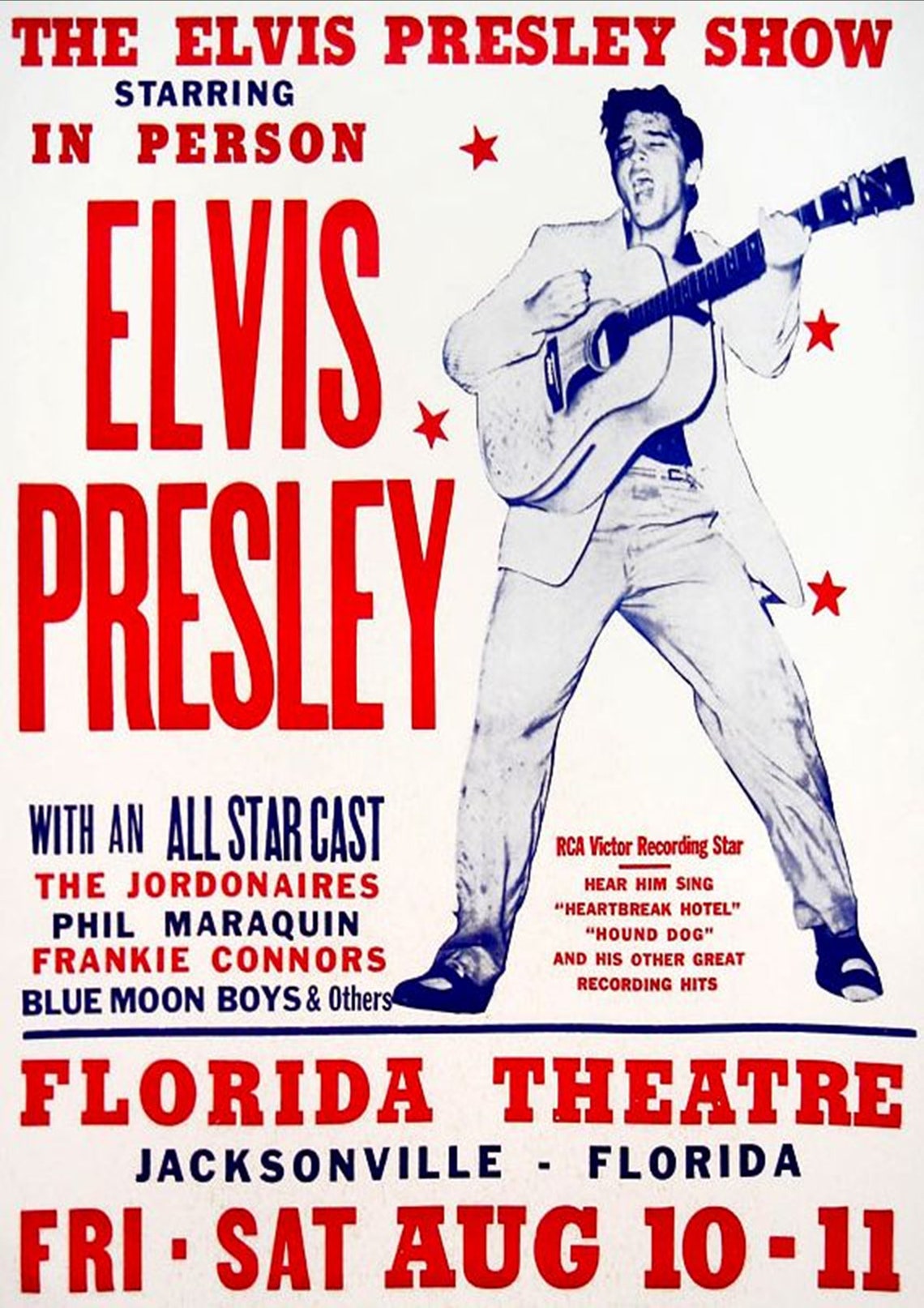
4.3. Typical Elvis concert poster.
https://i.etsystatic.com/19389619/r/il/fe1dc4/1889428590/il_1140xN.1889428590
_3k0z.jpg
4.4. The Red Dog Saloon pre-renovation.
https://flashbak.com/charlatans-hippies-guns-lsd-san-francisco-rock-band-wild-
sixties-387027/red-dog-saloon-virginia/
4.5. 1268 Sutter, Avalon Ballroom.
Taken by author
4.6. How ‘Fillmore’ font differs from typical poster font.

ix
Scanned by author from Harrah-Conforth, Bruce M. “The Rise and Fall of a
Modern Folk Community: Haight-Ashbury, 1965-1967,” 1990
4.7. Alton Kelly and Stanley Mouse Poster for a Grateful Dead concert.
http://www.artnet.com/artists/stanley-mouse/
4.8. Death Skeleton Roses Wreath by Edmund J Sullivan
https://www.si.edu/object/voice-music-bo-diddley-quicksilver-messenger-
serviceavalon-ballroom-san-francisco-california-72867:saam_2007.27.23
4.9 Rick Griffin’s Flying Eyeball BG-105.
https://www.wolfgangs.com/posters/jimi-hendrix-experience/poster/BG105.html
4.10. A Victor Moscoso poster for The Family Dog.
https://www.si.edu/object/finger-electric-flag-mad-riveravalon-ballroom-san-
francisco-california-2268-2468:saam_2007.27.20
4.11. A woman selling copies of the San Francisco Oracle.
http://sflib1.sfpl.org:82/search~/a?searchtype=X&searcharg=%22Haight%22+A
shbury&x=0&y=0&SORT=D&stype=X
4.12 Robert Crumb’s “Keep on Truckin’”
https://today.uconn.edu/2020/02/keep-truckin-art-r-crumb-contemporary-art-
galleries/
4.13. Ron and Jay Thelin outside the Psychedelic Shop.
https://www.mocp.org/detail.php?t=objects&type=browse&f=maker&s=Greene%
2C+Herb&record=89
4.14. 1568 Haight, former location of Love Burgers.
https://goo.gl/maps/DETDgiCtJFGg3rg49

x
4.15. Black Panthers at a protest in Kezar Stadium.
https://americanhistory.si.edu/lisalaw/photoind.htm
4.16: The Grateful Dead standing in front of Mnasidika.
https://www.kqed.org/news/11748384/corner-of-haight-and-ashbury-in-san-
francisco-declared-national-treasure
4.17 451 Pacific Ave. Old Firehouse #1
https://noehill.com/sf/landmarks/poi_engine_company_01.asp
4.18. Contemporary map showing some significant Haight locations, ca. 1967.
http://www.prabhupadaconnect.com/Radha-Krishna-Temple-Haight-Ashbury-
1967.html
4.19. Allen Ginsberg, dancing the Grateful Dead during the Human Be-In.
https://americanhistory.si.edu/lisalaw/photoind.htm
5.1: 1899 Waller, Park Police Station.
https://sfgov.org/policecommission/park-station
5.2: 1398 Haight, The Drogstore then the Psalms Café.
http://sflib1.sfpl.org:82/search~/a?searchtype=X&searcharg=%22Haight%22+Ash
bury&x=0&y=0&SORT=D&stype=X
5.3: Present day shot of Page and Ashbury
https://goo.gl/maps
5.4: Historic shot of Page and Ashbury
http://opensfhistory.org/moreNeighborhoodPhotos.php?n=Haight_Ashbury&bn=1
&bn=1
5.5: Present day shot of Waller and Cole

xi
https://goo.gl/maps
5.6: Historic Shot of Waller and Cole
http://opensfhistory.org/moreNeighborhoodPhotos.php?n=Haight_Ashbury&bn=1
&bn=1
5.7: Modern Day Haight, 2020.
https://www.bloomberg.com/news/articles/2020-03-17/san-francisco-s-shelter-in-
place-order-shows-u-s-what-s-to-come)
6.1: 557 Ashbury. The Doolan-Larson Building.
https://goo.gl/maps/6MM6EZi7cKKtivwe8
6.2: 1198 Fulton, Westerfield House.
Taken by author
6.3: 568 Sacramento, PG & E Substation J, or Whisky a Go-Go.
https://goo.gl/maps/K7NXNAR7dmpi9vHH7
6.4: 261 Columbus, City Lights Bookstore.
Taken by author
6.5: 1702 Haight, the Straight Theater.
http://opensfhistory.org/moreNeighborhoodPhotos.php?n=Haight_Ashbury&bn=1
&bn=1
6.6: 1725 Steiner, Winterland Ballroom.
https://www.sfchronicle.com/oursf/article/Our-SF-Rare-photos-of-the-demolition-
of-12529182.php

xii
6.7: View from Buena Vista Park 1886.
http://sflib1.sfpl.org:82/search~/a?searchtype=X&searcharg=%22Haight%22+Ash
bury&x=0&y=0&SORT=D&stype=X
6.8: Amoeba Records.
https://goo.gl/maps/giF351Yewv9672eL9
6.9: Rolling Stone Haight Map, 1976.
https://www.raremaps.com/gallery/detail/55154/stations-of-the-gods-eye-
pilgrimage-places-in-the-haight-rolling-stone-magazine
6.10: Weekend at the Panhandle, 1967.
https://americanhistory.si.edu/lisalaw/photoind.htm

1
INTRODUCTION
“The Haight-Ashbury is . . . the purest reflection of what is happening in
consciousness at the leading edge of our society,” – Richard Alpert (Ram Dass)
1
The Counterculture Movement of the late 1960’s was a widespread
phenomenon, occurring in the cities and countryside of several countries, but it
had the strongest presence in western countries such as the USA and the UK.
Within the USA, San Francisco had the strongest cohort, followed by Los Angeles
and New York City. Within the city of San Francisco, neighborhoods such as
North Beach, Fillmore, and the Mission District played important roles, but
Haight-Ashbury became known as the epicenter of the Hippie Counterculture
Movement. It was estimated that 100,000 young people flocked to the
neighborhood in the Summer of 1967, and somewhere between 7,000-15,000 were
permanent residents between 1966-1968. Haight-Ashbury (or “The Haight”) was
largely populated by white, middle-class American youth who challenged social
norms and ideals held by their parents’ generation. Many social and cultural issues
and subjects still relevant today have their origins in this Counterculture
Movement, including the acceptability of drug use and treatment, LGBT
acceptance, community policing, organic food, environmentalism, certain music
genres and outlets, pop art and other novel forms of cultural expression,
underground news media, political action through art, and the popularity of
“Eastern” practices, cultures and religions (yoga, Buddhism, etc.). Perhaps the
1
Ken Wachsberger, Voices from the Underground (East Lansing, MI: Michigan State University Press,
2011).
2
most significant achievement of this Counterculture is how tolerable and accepted
many of these ideas have become in the American mainstream culture. The hippies
did not reinvent how humanity lives, but they certainly pulled the mainstream
culture in their direction. The Haight-Ashbury is not the only place where this
movement occurred, but the neighborhood now serves as the primary pilgrimage
site for the Counterculture Movement across the world and deserves to be
recognized as such.
The overarching theme of this thesis is the development of the
Counterculture Movement in the Haight-Ashbury district of San Francisco and its
effects on the social and cultural development of San Francisco and the entire
country. The contributions are divided into three themes: Health and Wellness,
Politics through the Arts, and Arts, Entertainment, and Commerce. This document
seeks to identify the most significant patterns, events, influences, individuals, and
groups that played a role in these aspects of history.
The most recent work on the preservation of Countercultural history comes
from San Francisco Heritage, which published an article in their spring 2017
Newsletter The Landmarks and Legacies of Haight-Ashbury detailing the next
steps that Heritage and the City and County of San Francisco will take. The
proposed Haight-Ashbury Landmark District was added to the Landmark
Designation Work Program, and Heritage also received a grant from the San
Francisco Historic Preservation Fund Committee to document the neighborhood
Counterculture history, create a short interpretive video, and commence
community engagement. The Haight Street Neighborhood Commercial District

3
(the commercial row that terminates in Golden Gate Park) was documented as part
of the Draft Neighborhood Commercial Buildings Historic Resources Survey and
the Neighborhood Commercial Buildings Historic Context Statement 1865–1965
found the Haight Street Commercial District to have individual and district
potential.
2
This thesis benefits from a staggering amount of scholarship about the
Counterculture written both during and after the era. There are several sources in
which the author combined first-hand experience, extensive interviews, and
primary sources to craft narratives that are both contemporary and scholarly. These
sources are the foundation for this thesis because of their focus on individuals and
organizations as the agents. There are also numerous books and articles that speak
generally about all aspects of the Counterculture, from its inception to its legacy in
present day.
3
2
“Neighborhood Commercial Buildings Historic Resources Survey,” Neighborhood Commercial
Buildings Historic Resources Survey | SF Planning, accessed May 29, 2020,
https://sfplanning.org/project/neighborhood-commercial-buildings-historic-resources-survey)
3
Cavan, Sherri. Hippies of the Haight. St. Louis: New Critics Press, 1972.
Cohen, Allen. “The San Francisco Oracle: A Brief History.” Serials Review 16, no. 1 (1990): 13–46.
https://doi.org/10.1080/00987913.1990.10763930.
Doyle, Michael William. “The Haight-Ashbury Diggers and the Cultural Politics of Utopia, 1965-
1968,” 1997.
Harrah-Conforth, Bruce M. “The Rise and Fall of a Modern Folk Community: Haight-Ashbury, 1965-
1967,” 1990
Perry, Charles. The Haight-Ashbury: A History. New York, NY: Wenner Books, 2005.
Perry, Helen Swick. The Human Be-In. New York: Basic Books, 1970.
Wolfe, Tom. Electric Kool-Aid Acid Test. New York: Bantam, 1999. (originally published 1968)
Michael Doyle explains at length the historiography of scholarship that was available in the 80s and 90s
on the Counterculture in his Dissertation: “The Haight-Ashbury Diggers and the Cultural Politics of
Utopia, 1965-1968.”

4
There are four planning documents of note from San Francisco’s Planning
Department that were particularly helpful. Each document provides a snapshot of
the city’s priorities and plans at critical points after the Counterculture Era.
4
Starting in the Summer of 2019 continuing through the next year, The author
accessed several primary sources including Sanborn Maps, the Smithsonian
Photograph Collection, documents in the San Francisco Public Library History
Center and their digitized collection of the San Francisco Chronicle and City
Directories accessed via Archive.org.
Groups contacted for input, advice, and information included San Francisco
Heritage, The National Trust for Historic Preservation, The City of San Francisco
Planning Department, the San Francisco Mime Troupe, The Haight-Ashbury Free
Clinic, Donna Graves (co-author of the LGBT Historic Context Statement) and
others.
It is important to keep in mind while reading this thesis that there are many
aspects of both San Francisco’s history and its historic preservation resources that
go unmentioned. Given that a majority of the structures, sites, neighborhoods,
landscapes, and other parts of the built environment that are mentioned here
4
“Planning Department.” Neighborhood Commercial Buildings Historic Resource Survey | Planning
Department. Accessed May 16, 2020. https://sfgov.org/sfplanningarchive/neighborhood-commercial-
buildings-historic-resource-survey.
San Francisco Planning Dept. Greater Haight-Ashbury Cumulative Assessment Report, § (1984).
https://archive.org/details/greaterhaightash2819sanf/mode/2up
San Francisco Planning Dept. The Haight-Ashbury: A Brief Description of the Past, § (1972).
https://ia801306.us.archive.org/14/items/haightashburybri00sanf/haightashburybri00sanf.pdf.
San Francisco Planning Dept. Haight-Ashbury public realm plan: draft report, § (2015).
https://sfplanning.org/haight-ashbury-public-realm-plan#timeline
San Francisco Planning Dept. Upper Ashbury Rehabilitation Assistance Program: Environmental
Impact Statement. § (1976)

5
contain a rich history that predates the 1960s. The focus is on San Francisco’s –
more specifically, Haight-Ashbury’s – role as the epicenter of the Counterculture
Movement in the late sixties.
One important question needs to be answered before continuing: What is a
counterculture? The word originally appears hyphenated (counter-culture) in
sociological research papers. In 1960, J. Milton Yinger wrote about the extensive
use of the term “subculture” in sociological circles, citing over a hundred
publications that use the term, but explained how there was no official definition.
5
Yinger found that a subculture could refer to “certain universal tendencies that
seem to occur in all societies,” “the normative systems of groups smaller than a
society,” or the development of norms and mores that “arise specifically from a
frustrating situation or from conflict between a group and the larger society.”
6
Yinger uses “Contraculture” to refer to this third definition of subculture. Previous
works used “counter-culture” or “counter-ideology” to refer to the same
phenomenon.
7
Thus, the concept of a “counter-culture” was relatively new even in
sociological circles into the late 1960s and suffered from a lack of consensus of its
definition. Still, the working definition of counter-culture was a subculture created
within a larger culture through conflict that was expressed through contradictory
norms and mores.
5
J. Milton Yinger, “Contraculture and Subculture,” American Sociological Review 25, no. 5 (1960),
625.
6
J. Milton Yinger, “Contraculture and Subculture,” 626-627.
7
J. Milton Yinger, “Contraculture and Subculture,” 629.
6
Counterculture (with the hyphen now removed) has been used as a collective
term for the vast array of social movements that reached their peak in the mid to
late 1960s. The word has become a catch-all, similar to the word “hippie.”
Although the author employs these terms extensively, an important caveat must be
made, the ‘Counterculture,’ used as a proper noun, combines such a diverse set of
groups and individuals that it is inherently inaccurate. This ‘movement’ has no
defined leader, no requirements to join, no agreed upon definition, and no singular
experience. Hundreds of books and articles have attempted to explain what the
Counterculture Movement was and its significance, and, in my opinion, all have
failed, not because of a lack of understanding or research, but because it is a near-
impossible task. The author has made a concerted effort to go one level deeper in
this thesis, to avoid assigning a collective significance to this nebulous movement,
and, instead, to identify groups and individuals that are commonly categorized as
part of the Counterculture Movement and speak to their own specific
accomplishments.
Chapter One introduces the story of The Haight-Ashbury neighborhood from
its original development in the 1870s until the mid-1960s and the social
movements that would form the Counterculture Era. This section sets up the
following three thematic chapters with the history and information needed to help
understand why Haight-Ashbury was the epicenter of the Counterculture
Movement.
Chapter Two examines Haight-Ashbury’s contribution to expanding the
availability of healthcare and alternative lifestyles for the benefit of the mind and
7
body. Recreational drug use and its consequences in the Haight led to the founding
of the Haight-Ashbury Free Clinic, the first and best example of a free clinic and
the neighborhood greatest contribution to healthcare. Because of the recent
criminalization of many drugs, the free clinic was one of the few institutions
developing drug-abuse treatments and producing valuable drug research during
this time. The organic food movement in America can trace some of its origins
back to Haight-Ashbury, in which two of the earliest health food stores were
founded. The Back-To-The-Land movement found new participants within the
Counterculture. The many publications created during this period expanded upon
Bolton Hall’s and Ralph Borsodi’s ideas and incorporated concepts from the
Counterculture into this movement, such as spirituality and environmentalism.
Chapter Three delves into how certain groups associated with the
Counterculture in Haight-Ashbury pushed a form of political engagement based in
the arts, which differed from other contemporary political movements. This
chapter delves deeper into the inspirations of the Counterculture and the
development of a group that came to define the ‘soul’ of Haight-Ashbury’s
hippies, the Diggers. This organization actively worked to better the lives of the of
the community’s residents. Their approach arose from their connection to avant-
garde theater groups that practiced what came to be known as “Street Theater.”
The Diggers offered free food, had a free store, free concerts, and free beds.
Through this grand social experiment, the Diggers were able to convince many
‘straight’ institutions to help Haight-Ashbury and help realize their concept of
“free.”
8
Chapter Four is the last thematic chapter, and focuses more directly on The
Haight’s contributions to the arts. In popular music, for example, the San
Francisco Sound was hugely significant and many of the bands lived in Haight-
Ashbury. The associated psychedelic poster art scene was also centered around
Haight-Ashbury. It in turn played a role in the growth of underground comics.
These were featured in underground newspapers, and Haight-Ashbury is home to
one of the most famous underground papers, The San Francisco Oracle. The
chapter ends with a discussion of the ‘gathering,’ the event that is most readily
identifiable as representing the Counterculture and that helped propel hippies and
Counterculture ideas into the mainstream consciousness.
Chapter Five continues the story of Haight-Ashbury beyond the Counterculture
Era and into the present day, specifically focusing on city politics and the Haight’s
role in the neighborhood movements. Members of the Counterculture who stayed
in the Haight helped wider neighborhood improvement efforts. The leader of these
efforts, the Haight-Ashbury Neighborhood Council, then joined other
neighborhoods in a powerful political movement to make the city government
more representative, instead of just favoring the downtown political agenda. There
are other examples of Counterculture ideals continuing to affect the Haight well
after the 1960s.
Chapter Six establishes the current state of preservation in Haight-Ashbury.
This includes a definition of Intangible Culture Heritage (ICH) and Integrity, and
the challenges it brings to the neighborhood’s preservation. Then, the existing and
future preservation efforts, along with resources currently available for the Haight-
9
Ashbury are described. Some examples of successful preservation in other cities
provide a good template for any efforts in San Francisco. Lastly, the Haight’s
parks, shops, existing landmarks are all discussed, as well as tours, literature, and
plans by the city to help provide a comprehensive account of all preservation
efforts.

10
CHAPTER 1: ARCHITECTURAL AND SOCIAL BACKGROUND
This chapter provides a brief history of the physical and social
developments that led to Haight-Ashbury holding a singular role in the creation of
the nationwide movements collectively known as the Sixties Counterculture. The
physical developmental history of the Haight ends around 1950, as there is
minimal new construction from that point until the period of significance for the
events discussed in this thesis, which is roughly from 1965-1970. This five-year
date was chosen to include all of the events, people, and movements that make up
the Counterculture Era. The year with the highest number of significant topics is
1967, with the well documented and fabled Summer of Love.
The history of Haight-Ashbury created a very particular set of
circumstances that made it a perfect place for this new, bohemian population,
colloquially known as hippies, to descend upon the area in the mid-60’s. Haight-
Ashbury began as an affluent cable-car suburb with a glut of recreational activities.
Then, the Great Depression and redlining of Haight-Ashbury by real estate
companies in the 1930’s caused the Haight to decline until war industries brought
new residents and life. Next, the commercialization of the North Beach
neighborhood drove the Beats
8
out and into Haight-Ashbury. Finally, the efforts of
a few individuals took these circumstances and formed a cultural-political
movement now known as the Counterculture.
8
The Beats or Beatniks are explained later in this chapter.

11
PHYSICAL DEVELOPMENT OF HAIGHT-ASHBURY
What is now the geographic center of San Francisco was not settled until the
1870s. The land that comprises the neighborhood of Haight-Ashbury was granted
to Jose de Jesus by the Mexican government in 1845. F. M. Lange first settled the
land, creating a nine-acre ranch in 1870.
910
That same year, Governor Henry Hunt Haight named the members of the
first San Francisco Park Commission: Charles Stanyan, Monroe Ashbury, A.I.
Shrader, R. Beverly Cole, and Charles Clayton. They made plans for several San
Francisco Parks, most notably, Golden Gate Park. Commercial structures lined the
eastern terminus of the Park on Stanyan Street, which formed the beginning of the
9
San Francisco Planning Dept., “The Haight-Ashbury: A Brief Description of the Past,” § (1972), 1.
10
See Fig. 1.1.
1.1 Cole Valley Lange Dairy
12
neighborhood. The Haight Street Cable Railroad connected the area to the rest of
the city in 1883.
11
Cable car lines along McAllister, Hayes and Oak opened soon
after, all terminating at Stanyan Street to service the park.
12
Neighborhood associations often lobbied for cable car lines. The first
neighborhood associations in San Francisco were founded in the 1850s, designed
as exclusive developments modeled after private residential parks in London. The
next phase of neighborhood associations proved to be more enduring. Around the
1880’s, when streetcar lines were being developed, neighborhood associations
would lobby the city government for lines to enter their areas and provide access
to other city services. These were also known as improvement clubs.
13
The first
organization founded within present day Haight-Ashbury neighborhood was the
Panhandle Improvement Club, which lobbied and raised money for improved
streets and streetlights. In the 20th century, developers were creating entire
neighborhoods with restrictive rules and comprehensive amenities, allowing the
members to avoid dealing with the city and the less desirable residents. By the
1920s, nearly every neighborhood had an association, which were unified by the
Central Council of Civic Clubs. These associations often argued over decisions by
the city, typically regarding zoning, infrastructure, racial issues, and business. The
city was founded with a large Jewish and Catholic population, and the black
population was small and dispersed and often overshadowed by the Chinese
11
The Haight: History and Architecture, Heritage Newsletter Vol. XV No. I, April 1987, I-VIII.
12
San Francisco Planning Dept., “The Haight-Ashbury: A Brief Description of the Past,” § (1972), 2.
13
Stephen E. Barton, “The Neighborhood Movement in San Francisco,” Berkeley Planning Journal 2,
no. 1 (2012), https://doi.org/10.5070/bp32113201).

13
population. “No other non-white group (except Chinese) composed more than one
percent of the city’s population until the second world war. Haight-Ashbury, being
far removed from the center of the city, did not employ restrictive rules to the
extent other neighborhood associations did.”
14
This trend of neighborhood
associations led to the formation of the Haight-Ashbury Neighborhood Council,
which played a pivotal role for the Counterculture.
By 1890, only a dozen residences had been constructed in the Haight, six
of which survive.
15
The recreational facilities in the neighborhood helped to define
its early development and history. The California League Baseball grounds were
laid out on the current site of the Stanyan Park Hotel (built 1907) in 1887.
16
As
14
Stephen Barton, The Neighborhood Movement.
15
503-525 Cole Street.
16
See Fig 1.2.
1.2 Stanyan Park Hotel

14
cycling eclipsed baseball as the preferred sport in the area, the grounds were
moved north out of the Haight in 1897.
17
In 1895, Paul Boynton Chute created an
amusement park along Haight Street colloquially known as The Chutes, located on
the south side between Cole and Clayton.
18
The amusement park was by far the
largest and most popular recreational facility in the neighborhood. The main
attraction was a three-hundred-foot-long, seventy feet high, inclined plane that
allowed guests to plunge gondolas into a man-made lake. Other features included
an elevated railroad, merry-go-rounds, caged animals, various galleries, a theater,
an alligator house, refreshments, and a “Darwinian Temple,” which added an
educational element to the revelry.
19
17
The Haight: History and Architecture.
18
See Fig. 1.3.
19
The Haight: History and Architecture.
1.3 The Chutes

15
Just after the turn of the century, about half the blocks in the Haight were
developed, The Chutes was moved to Fulton Street, and Belvedere Street was
extended to Haight street. The 1900 census shows 450 households in the
neighborhood, primarily of northern European origin. German, Irish, Swedish, and
Scottish were the most predominant, but some Swiss, Australians and French
could be counted. Non-white residents include two Black women, twelve
Japanese, and fourteen Chinese men. The majority of households were married
with children and sixty percent were renters.
20
Haight Street properties remained mostly in the Baird Estate well after the
neighborhood began to develop.
21
On the other streets, many houses were built by
contractors including the Hinkel family, Robert Pieper, and Cranston & Keenan.
20
The Haight: History and Architecture.
21
See Fig. 1.4.
1.4 Late 19th C. Real Estate Map
16
The row houses typically followed similar floor plans: high basements, a staircase
to first floor, parlors, and dining rooms opposite, bedrooms and bathrooms on the
second floor with attics above.
22
As the density increased in the neighborhood, single family, two story
homes were no longer preferred, giving way to three- or four-story flats and
apartments. These structures typically contained four to five different dwellings
and reflected the growth of the middle-class suburban population of the
neighborhood. Through this transition from single-family homes to flats, the
buildings maintained similar exterior features, such as bays, either rounded,
hexagonal, or square. Because of the swift development of the neighborhood,
nearly all residences were built between 1890-1910. The Queen Anne style
dominates the neighborhood. According to SF Heritage, there is no better
neighborhood to study the Queen Anne phase of Victorian architecture in the
city.
23
This is due to the relatively small group of contractors and architects that
developed the Haight with such rapidity. Most residences cost between $6,500 and
$8,500 each and could be rented for $40 a month. Hybrid flat apartments were
built when housing demand increased. These structures resemble flats and houses
in style but operated like apartments. Additionally, the earthquake and fire of 1906
also caused an increase in development and interest in the Haight-Ashbury, along
with other neighborhoods unaffected by the disaster.
22
The Haight: History and Architecture.
23
The Haight: History and Architecture.

17
By 1915, the neighborhood was 90% developed and largely resembled its
current makeup. Haight Street contained commercial fronts that supported the
neighborhood, as schools and churches also started serving the population. Notable
extant examples include the Dudley Stone Grammar School, built in 1896, which
is a now a Chinese Immersion School (1250 Waller).
2425
St. Agnes, Hamilton
Methodist Episcopal Church, and All Saints Episcopal served the religious within
the Haight. Other significant, extant, non-residential structures include 1779-1783
Haight,
26
(built in 1892, it is the oldest structure on Haight Street), 1660 Haight, an
old Nickelodeon built in 1911, 1701-1705 Haight, 1600-1624 Haight, 1724
Waller, 1749 Waller, 1757 Waller, which is a fire house for the San Francisco Fire
24
San Francisco Chronicle (San Francisco, California), January 8, 1898: 11. NewsBank: America's
News.
25
See Fig. 1.5.
26
See Fig. 1.6.
1.5 Haight Street Entrance to Dudley Stone School

18
Engine Company #30. A few
apartments were built in the 1920’s,
such as 130 Frederick. The attached
map displays just how dense the
neighborhood was by 1919 compared
to 1970.
27
Haight-Ashbury is closely
tied with the creation of Golden Gate
Park and the growth of the city’s
transportation network. Haight
continually prospered by having the
public transportation routes to the
entrance of the Park. Haight Street is also a relatively isolated commercial district,
so no rival centers could draw business away from the merchants.
By the 1920s, the neighborhood became home to many important
institutions, which was a point of pride for residents. Grattan and Dudley Stone
elementary schools, Poly High and Lowell High, and University of San Francisco
provided education. This was supplemented by three hospitals (U.C. Medical
Center, St. Mary’s, and Harkness) and recreation by the Haight (Straight) Theater,
and Kezar Stadium (1925).
The next major change to the area occurred in the
27
See Fig. 1.7
1.6 1779 Haight, Oldest structure on Haight Street.

19
1.7 Building Density Map 1919-1970
20
1930’s as the Great Depression led to increased rental vacancies, and absentee
landlords allowed many structures to go into disrepair. By 1939, fifteen percent of
houses were in a substandard condition according to City Planning records. Many
houses were stuccoed during this period as Victorian architecture was out of style.
World War Two caused a massive influx of workers into San Francisco and
Haight-Ashbury was altered to accommodate this new population. Although few
new structures were completed during the war years, the number of dwelling units
increased 85%, from 4,750 to 8,770.
28
After the War, the Haight had more
dwelling units, but the population that occupied them was quickly leaving. The
new middle class of the post-war years did not flock into the Haight, but a racially
diverse, working-class population slowly populated the neighborhood in the
1950’s. The expansion of automobile use also caused Haight Street to dwindle in
citywide importance. Other commercial areas became easier to access, and more
residents used vehicular entrances to Golden Gate Park.
29
Haight-Ashbury was no
longer a focal point in the city for leisure and business. The merchants on Haight
Street started to serve just the nearby community.
The Haight’s built environment and surrounding features are quite unique
compared to the rest of the city,
“Haight-Ashbury’s unique landscape and features also led it to feel like a small
western town with a tight knit community. Looking south from Haight Street,
one can view Twin Peaks and the foothills below, speckled with houses but the
28
San Francisco Planning Dept., “The Haight-Ashbury: A Brief Description of the Past,” § (1972), 8.
29
San Francisco Planning Dept., “The Haight-Ashbury: A Brief Description of the Past,” § (1972), 8

21
peaks remain forested. This quality of the West, the emptiness and loneliness
in a grand spectacle of nature was transported into the heart of a bustling
city.”
30
Figure 1.8 is a map from the Spring 1987 SF Heritage Newsletter, which
featured a walking tour of the Haight. This is not a comprehensive list of all
historic (by age) structures in the Haight. It is simply the ones featured in the
newsletter plus a few more structures. Note the construction dates are typically
older at the edges of the neighborhood. The closer to the center, the newer the
structures. This is because the Baird Estate took up most of the land around Haight
street during the initial construction phase.
31
The ’skinny’ blocks bounded by
Waller, Cole, Frederick, and Masonic are evidence of the effort to densify the
neighborhood.
3233
30
Helen Swick Perry. The Human Be-In. (New York: Basic Books, 1970), 32.
31
The Haight: History and Architecture.
32
The Haight: History and Architecture.
1.8 SF Heritage 1987 Map

22
THE OLD COMMUNITY
While Haight-Ashbury’s physical development was mostly complete by
1930, the neighborhood continued to change. After Haight-Ashbury lost its status
as a desirable suburb, the neighborhood evolved into a multi-racial, working-class,
socially progressive community that the hippies would refer to as the “Old
Community.” Without this precursor community, Haight-Ashbury’s singular role
as the epicenter of the Counterculture may not have occurred here, mostly due to
their social progressiveness and acceptance.
The Great Depression caused vacancies to rise in the neighborhood and
residents began to move to other areas of the city. A 1937 Residential Security
Map of San Francisco shows the area north of Haight Street is graded the lowest
and the area south of Haight Street is the second lowest grade.
34
During World
34
See Fig. 1.9
1.9 Residential Security Map 1937

23
War Two, Blacks from the South came to work in the war industries and settled in
neighborhoods such as the Fillmore, located next to Haight-Ashbury. After the
war, Asian immigration laws were dropped, and Hispanic immigration also
increased. In the span of less than two decades, three distinct minority groups
changed the fabric of many areas of the city. In 1949, the city had reached its full
physical extent, and had with a population of 635,000, 95% being white. By 1970,
the population of the city had grown slightly to 670,000, but about 300,000 people
were members of a minority group.
35
Areas of the Filmore underwent urban renewal, which caused displacement
and further encouraged more Blacks to move into the Haight. In 1950, the Haight
was two percent Black, by 1960, that figure rose to sixteen.
36
The White and Black
working-class population was nearly equal in number, each consisting of about
40% of the total just a few years later. Asian and Hispanic groups made up the
remaining 20%. This “Old Community,” as it would soon be known as, saw itself
as a “Working Class residential district with a liberal and progressive
atmosphere.”
37
The institution that best represents the ideals of this Old Community is the
Haight-Ashbury Neighborhood Council (HANC), which formed in 1959 and still
exists to this day, actively serving the needs of the community.
The “Old Community” felt that the current neighborhood association was
not representing the community effectively. The Haight-Ashbury Merchants and
35
Stephen Barton, The Neighborhood Movement.
36
San Francisco Planning Dept., “The Haight-Ashbury: A Brief Description of the Past,” § (1972), 8
37
Stephen Barton, The Neighborhood Movement

24
Improvement Association (HAMIA), founded in 1906, restricted membership to
landowners and merchants. These two organizations differed in their plans for the
neighborhood. HANC wanted improved social services and to preserve housing
while HAMIA wanted to limit new housing for financial interests of landowners
and merchants.
38
Most notably, HANC led the fight against the Panhandle
Parkway, which would have converted part of the Panhandle Park into a highway.
The fight for the Park grew into a citywide movement which eventually saw the
plan canceled due to immense community opposition.
39
Helen Swick Perry
interviewed a senior federal highway engineer who stated that the freeway fight
for the Panhandle was one of the few successful stands by a group of residents in
any large city in America against the combined recommendations of all three
jurisdictions, local, state, federal.
40
Haight-Ashbury went through two major changes during this period. Urban
renewal pushed out the Black population in the Western Addition and many
moved to the Haight. Later, the Beats of North Beach were priced out and many
also settled in the Haight. Additionally, several gay bars opened up in the Haight
and the city’s growing gay population found another neighborhood accepting of
them. In addition to its working-class population, the Haight had a significant
population of college students. San Francisco State College’s campus was in lower
Haight before it moved to the southern outskirts of the city.
41
In the fall of 1965,
38
Stephen Barton, The Neighborhood Movement.
39
Sherri Cavan, Hippies of the Haight (St. Louis: New Critics Press, 1972, 5-10.
40
Helen Swick Perry. The Human Be-In, 14.
41
Allen Cohen “The San Francisco Oracle: A Brief History.” (Serials Review 16, no. 1 (1990): 13–46.),
35.
25
Richard Buckminster Fuller started an Experimental College within the SFS
campus.
42
The diverse groups that populated the neighborhood were united in their
desire to make The Haight a better place to live. “In 1963 HANC may have been
the only neighborhood association in the nation to send its own delegation – a
white man and a black woman – to the March on Washington.”
43
The
neighborhood rejected the proposition that home sellers could discriminate based
on race, while every other area of the city voted in favor. The Haight-Ashbury was
called “a model for the nation of good race relations”
44
THE DOORS OF PERCEPTION AND OTHER INSPIRATIONAL WORKS
Unlike marijuana, LSD was completely legal until October 6th, 1966,
extremely cheap for how long the high lasted (up to 12 hours). Aldous Huxley
published an account of his experience taking LSD in 1954 called The Doors of
Perception, which contains many of the ideas and experiences that would help
influence the ideals of the hippie population. The 80-page account of his
experience was the first exposure to this drug to thousands of Americans. Copies
of the book could be found in the many coffee houses and bookstores in the North
Beach area, and eventually Haight-Ashbury itself. The account proposes the
legalization of all drugs, chastises western society for only permitting two
chemicals to enjoy (alcohol and nicotine) and explains the lack of side effects of
42
Fuller helped create the commune of Drop City, which is known for their geodesic dome housing
made with automobile body panels.
43
Christopher Lowen Agee, The Streets of San Francisco, 217.
44
Christopher Lowen Agee, The Streets of San Francisco, 217.
26
LSD and other Hallucinogens (mescaline, psilocybin, peyote). The book explains
how common taking mind-altering drugs is for several religions. In this account,
one can see the seeds of the Counterculture’s attempt to completely rethink how
society functions. Huxley, a well-known author, published this book with no
ostensible ulterior motive, other than to recommend that everyone “with a sound
liver and an untroubled mind”
45
take this drug to experience its effects.
The idea of ‘being’-- as in, one does not need to find meaning in worldly
things, one can simply be -- is enhanced after consumption of psychedelics. “The
mind was concerned, not with measures and locations, but with being and
meaning.”
46
When asked about time, Huxley responded, “There seems to be plenty
of it.”
47
Huxley then goes on to describe the natural state of mind is the Mind at
Large, “out brain is the eliminative part of consciousness, filtering out
overwhelming amounts of useless facts so our body can be focused on survival.”
48
LSD, or mescaline in Huxley’s case, removes the Mind at Large and allows
for the brain to view the world without its restrictive filter. Huxley goes on to
describe the effects and impressions of his trip with four key points:
(1) “The ability to remember and to “think straight” is little, if at all, reduced.”
(2) “Visual impressions are greatly intensified and the eye recovers some of the
perceptual innocence of childhood, when the sensum was not immediately and
45
Aldous Huxley, The Doors of Perception. (New York: Harper Perennial, 2009), 21.
46
Aldous Huxley. The Doors of Perception, 20.
47
Aldous Huxley. The Doors of Perception, 21.
48
Aldous Huxley. The Doors of Perception, 20.
27
automatically subordinated to the concept. Interest in space is diminished and
interest in time falls almost to a zero.”
(3) “Though the intellect remains unimpaired and though the perception is enormously
improved, the will suffers a profound change for the worse. The mescaline taker
sees no reason for doing anything in particular and finds most of the causes for
which, at ordinary time, he was prepared to act and suffer, profoundly
uninteresting. He can’t be bothered with them, for the good reason that he has
better things to think about.”
(4) “These better things may be experienced (as I experienced them) “out there,” or
“in here,” or in both worlds, the inner and the outer, simultaneously, or
successively. That they are better seems to be self-evident to all the mescaline
takers who come to the drug with a sound liver and an untroubled mind.
49
”
Within these four points, one can see the key tenets of the Counterculture
expressed by Huxley. Under LSD, no longer is the brain there to help a person
understand “out there” because there is now a whole other world – “in here” – to
focus on. The survival instincts that humans have developed are apparently
reduced and the mind becomes more introspective. Psychedelics also reduce the
amount of filtering that occurs in the brain, allowing one to experience common
phenomena as if it were the first time.
The far-reaching implication of psychedelic drugs was not lost on Huxley. He
goes on to state that all drugs should be allowed for consumption in the hopes that
49
Aldous Huxley. The Doors of Perception, 22.
28
those who consume harmful drugs will change to ones that harm less. All drugs
were “Doors in the Wall,” and that they should all be allowed to open.
50
Huxley
then promotes the Native American Church, and he denounces Western religion in
that it does not incorporate ‘toxic’ substances into the church, as this practice is
widespread in other religions. The West, according to Huxley, suffers from this
lack of experimentation, noting that all sorts of professionals could use and study
psychedelics, and how that lack of experimentation leads to a narrow view of how
one learns about the world:
“To be enlightened is to be aware, always, of total reality in its immanent
otherness—to be aware of it and yet to remain in a condition to survive as an
animal, to think and feel as a human being, to resort whenever expedient to
systematic reasoning. Our goal is to discover that we have always been where
we ought to be. Unhappily, we make the task exceedingly difficult for
ourselves.”
51
The access to certain books helped illuminate and expand the minds of
many soon to be hippies. The power of literature has already been shown to help
create alternative communities with the Beatniks of North Beach. City Lights
Bookstore, founded by Lawrence Ferlingetti in 1953, served the hipster and the
hippie in their quest for alternative literature and banned books.
52
One particular
book helped galvanize this new community into action: The Love Book, by Lenore
Kandel. It was banned by the city for being offensive and obscene, which led to
50
Aldous Huxley. The Doors of Perception, 64.
51
Aldous Huxley. The Doors of Perception, 78.
52
See Fig. 4.1.
29
several arrests in many bookstores such as City Lights. That in turn brought to the
fore the role of the state in censorship, with court cases being fought over the
constitutionality of the book ban. Mike Muldoon Elder, who was arrested for
selling The Love Book, received a not guilty verdict in November of 1966.
5354
This
experience was in no way limited to The Love Book or San Francisco, this was a
nationwide phenomenon.
Other works of the Beat generation and those who came before that influenced
the worldviews of this new counterculture. The Doors of Perception, On the Road,
and One Flew Over the Cuckoo’s Nest, are just a small sample. Indeed, this
generation read a lot more in general than their predecessors. The post-scarcity,
post-war era allowed for an explosion of youth attending college. The percentage
of youth going straight to college after high school increased from 13% to 30%.
This generation was called the most educated in history and this robust education
is a key figure in the Counterculture’s formation. Helen Perry discusses this in her
book, The Hippies of the Haight. Perry’s first inclination that there was more to
this new community than just being a temporary Bohemia rests on the education
and literary knowledge of the population. She names specifically the works of
J.R.R. Tolkien, The Hobbit, and The Lord of the Rings, and claimed that the
hippies viewed themselves as the hobbits of the Shire. There were large, great,
ominous, machinations being conducted by powers and entities of immense power,
but the hobbits wanted nothing more than to live peacefully in their holes in the
53
Hank Harrison. The Dead. (San Francisco: Archives, 1991.), 60.
54
San Francisco Chronicle (San Francisco, California), November 27, 1966: 147. NewsBank:
America's News
30
ground. A common piece of advice found on signs posted in the windows of
homes around the Haight read: “Do not add to the street confusion this weekend.
There may be busts. Be good little Hobbits and stay home.”
55
The 1966 book It’s Happening (the title uses a pun from the new and old
definition of happening)
56
is a visionary work, which noticed the changing trends
in the younger generation before the Counterculture was at its height. The title is
the answer to their own question “What’s Happening?” and it is the most concrete
answer to be made in the work, because there is no simple answer to the
question.
57
The authors knew there was an internal, psychological, cultural change
going on in the youth. The dominant culture beforehand was heavily influenced by
the original Europeans who inhabited this country, the fabled Protestant Work
Ethic accompanied with judicious moderation. What replaced this paradigm is
called the Social Ethic, which the authors define as an irreverent humanism
preoccupied with experience, or living within the now, spontaneity, and tolerance.
Some of their idols, some of who have already been mentioned, were Aldous
Huxley, Allen Ginsberg, Gandhi, JFK, Castro, Richard Alpert, Timothy Leary, and
Bob Dylan.
58
The book was written so early in the movement that Berkeley, not
Haight-Ashbury, is said to be the center for the Counterculture in the Bay Area,
and NYC is called the best place to acquire LSD, (Augustus Owsley Stanley had
not yet become the Godfather of LSD). This book taps into the underlying causes
55
Helen Swick Perry. The Human Be-In, 20.
56
The new use of the word happening is typically a semi-organized event..
57
J. L. Simmons and Barry Winograd, Its Happening: A Portrait of the Youth Scene Today (Santa
Barbara, Cal.: Marc-Laird publication, 1968), 5.
58
J. L. Simmons and Barry Winograd, Its Happening, 17.
31
of the Counterculture so well because it had not yet occurred. Education,
Urbanization, and Mutually Assured Destruction, all led to a “spontaneous
groundswell” of counterculture, instead of an organized revolt, which is how it
was perceived by mainstream America.
59
THE BEATNIKS AND THE NORTH BEACH SCENE
One cannot explain the history of the Counterculture, hippies, or the Haight-
Ashbury without mentioning the Beatniks of North Beach. This bohemian group
captured many of the social tendencies that had always been present in San
Francisco. The relative isolation, congenial climate, and proximity to nature are all
given as reasons why people who are looking for an alternative lifestyle flock to
San Francisco, or why those born there become amenable to such ideas.
The Hipsters, Beatniks, or just Beats (all terms being generally
interchangeable) of North Beach popularized the consumption of cannabis, which
continued into the Hippie Counterculture Movement, but the drug that best
represents this newer Hippie movement is lysergic acid diethylamide, also known
as LSD or “Acid”
Bohemian-minded kids were interested in these mind drugs. They were
also interested in traditional bohemian subjects such as art, psychology, pacifism,
and exotic religions. The Beats derisively called some of them hippies (junior
grade hipsters) and this name stuck. The Beats looked down on hippies as
imitation bohemians who were only interested in getting stoned and having a good
59
J. L. Simmons and Barry Winograd, Its Happening, 57, 63.
32
time rather than doing something serious.
60
Folkies were a younger subset of the
Beats who idolized the power of folk music as a political tool. A lot of hippies
were folkies who had followed Bob Dylan in his switch to electrified rock.
61
In 1957, two books were published which identified North Beach as the
epicenter the Beat movement. Allen Ginsberg’s Howl and Other Poems and Jack
Kerouac’s On the Road challenged the norms and mores of mainstream American
culture, specifically regarding race, sex, and gender. Within a year, young people
were flocking to North Beach to experience the scene and challenge society’s
norms themselves. Similar bohemian enclaves were seen in Venice Beach, Los
Angeles and Greenwich Village, New York City, which gathered people who
wanted to live an alternative lifestyle and focus on art, such as painting, theater,
60
Charles Perry. The Haight-Ashbury: A History. (New York, NY: Wenner Books, 2005), 5.
61
Charles Perry. The Haight-Ashbury: A History, 6.

33
music, poetry, fiction, and spoken word. North Beach, at the start of its fame, was
the most densely populated area of San Francisco, known for its bars, cafes,
nightlife, low rent, and ethnically diverse population.
6263
This neighborhood
makeup drew artists from around the world, and stayed under the radar before,
during, and after World War II. Efforts to commercialize and expand the
neighborhood were blocked in the mid-fifties, but the influx of young, white
professionals continued to change the neighborhood. Certain sections of North
62
Christopher Lowen Agee, The Streets of San Francisco: Policing and the Creation of a Cosmopolitan
Liberal Politics, 1950-1972 (Chicago: The University of Chicago Press, 2016), 41.
63
See Fig. 1.10 & 1.11.
1.10 Co-Existence Bagel Shop, North Beach

34
Beach saw rents rise by 92% during the 1950s. Investigative reporters soon took to
the streets of North Beach and began to document how this enclave of bohemia
1.11 A North Beach Map with popular Beatnik stores
35
functioned. Most of their reports were negative, calling North Beach “an
embarrassing underworld of drugs, sex, and fake bohemianism.”
64
The press soon
looked for stories to justify these characterizations.
The deaths of Connie and Albert Sublette proved to be the perfect
justification that the lifestyle of the Beats caused violence and unrest. Connie was
a resident of North Beach and part of the Beat culture. She was murdered in an
alley in the Haight-Ashbury neighborhood on her way to visit her ex-husband. The
press did not focus on the typical, racially charged angle of an innocent white
woman being raped by a violent Black man. Instead, the press focused on Connie’s
lifestyle and alleged promiscuous behavior, implying her lifestyle choices caused
her death.
65
On the other hand, the increase in tourists visiting these bohemian enclaves
shows that a large portion of white, middle class America saw the Beats as an
entertaining playground. Gray Line bus tours added a route into North Beach to
satisfy the demand to view the Beats in their natural habitat.
66
Distinctions were
made between the “weekend beats” and the “hardcore beats” where someone could
be in the scene without being of it.
Another non-fiction work came out in 1957 and identified what a hipster is
and why they act. The White Negro by Norman Mailer explains:
The American existentialist – the hipster, the man who knows that if our
collective condition is to live with instant death by atomic war… then the only
64
Christopher Lowen Agee, The Streets of San Francisco, 46.
65
Christopher Lowen Agee, The Dangerous Beat
66
Christopher Lowen Agee, The Streets of San Francisco, 50.
36
life-giving answer is to accept the terms of death, to live with death as
immediate danger, to divorce oneself from society, to exist without roots, to set
out on that uncharted journey into the rebellious imperatives of the self.
67
The existence of Beats in several cities around the nation sparked a debate
on vagrancy laws. These were often used as catch-all charges, whereby simply
existing on the street was enough for a policeman to arrest someone. A policeman
on his beat had absolute discretion as to how he would treat citizens on the street.
The San Francisco Police Department (SFPD) cracked down on the Beats with an
iron fist. In 1958, several Democrats won elections in the city and state, and this
spawned a desire for oversight of the SFPD and how they conducted themselves.
The San Francisco Chronicle also changed its tune and started advocating that the
Beats’ Constitutional rights were being infringed upon by SFPD officers.
68
Another set of marching orders for the SFPD that came under scrutiny was its
interference with any interracial activities. Sections of North Beach were either
becoming blighted or gentrified, and this increased the Black population in the
neighborhood. The role of Black people in the Beat movement was often
downplayed and not mentioned in the mainstream press, even though they often
sought out Black cultural activities such as blues and jazz. Also, inviting a “Spade”
to dinner was a common way to show solidarity with the Black community.
69
67
Bruce M. Harrah-Conforth, “The Rise and Fall of a Modern Folk Community: Haight-Ashbury,
1965-1967,” (1990).
68
Christopher Lowen Agee, The Streets of San Francisco, 57.
69
Christopher Lowen Agee, The Streets of San Francisco, 57.
37
By 1960, increasing tourism inflated land values in the area and soon an
exodus of Beats occurred. In a matter of a few years, little of the original Beat
scene would remain, but folks still flocked to the neighborhood, helping to
eliminate the experience they sought. A journalist at the Chronicle, Ron Fimrite
wrote in the fall of 1963 that North Beach was “about as Italianesque as Oslo, as
Bohemian as Las Vegas.”
70
With North Beach a shadow of its former bohemian
self, the beats dispersed to other areas of the city.
The Beats were overrun in North Beach; the bohemian enclave transformed
into an expensive tourist trap full of strip clubs. Focus shifted from North Beach to
Berkeley, where the Free Speech Movement and the Students for a Democratic
Society (SDS) garnered national attention.
71
It took the efforts of significant
individuals to realize a new alternative community. Although unintentional, both
Ken Kesey and August Owsley Stanley III, along with several others, contributed
significantly to the early formation of the Counterculture Movement that made
Haight-Ashbury their home.
KEN KESEY AND HIS MERRY PRANKSTERS
Ken Kesey and His Merry Pranksters helped form this new Counterculture in
its nascent state. Ken Kesey is the author of One Flew Over the Cuckoo’s Nest, a
best-selling novel, and an eventual film. He formed a small bohemian enclave in
Palo Alto, near Stanford, at 52 Perry Lane. Intellectuals from the area would visit,
drink wine, and smoke marijuana. A young Jerry Garcia even tried to enter one of
70
Christopher Lowen Agee, The Streets of San Francisco, 60.
71
Chapter Three discusses the SDS at more length.

38
these get-togethers and play his banjo. Soon, Kesey started trying psychedelics and
other drugs, he became turned on and his interest in writing took a back seat to his
desire to ‘turn’
72
on others. Perry Lane was purchased by developers and all the
houses on the street were demolished in July of 1963.
73
Kesey did not move to another house. Instead, he purchased a 1939
International Harvester Bus and invited some of his friends from the Perry Lane
days to go out on the road and turn on other people.
74
Kesey and Co. painted the
bus in wild Day-Glo colors with a sign on the front that says “Futhur [sic]” and on
the back, “Caution: Weird Load.” His band was called the Merry Pranksters for the
pranks they would pull on unsuspecting people. Kesey differed from Timothy
Leary, ex-Harvard professor who edited the magazine Psychedelic Review,
75
in
how to best turn someone on with LSD. The pranks usually involved dosing
someone with LSD unknowingly, then thrusting them into strange and unexpected
situations. Conversely, Leary believed in the importance of set and setting,
whereby choosing who, where, and what you would experience while tripping
76
on
LSD, one could reduce the chance of a bad trip and expand one’s mind in a healthy
way. They both agreed that LSD should only be used by one of sound mind and
body. The Pranksters toured the nation, traveling to the 1964 New York World’s
Fair, and frequently spent time in San Francisco and Los Angeles. Kesey then
72
This phrase appears frequently and is typically associated with trying LSD for the first time, but not
exclusively. To turn someone on is to introduce them to Counterculture ideals. This phrase comes from
Timothy Leary, who implored the youth of America to “Turn On, Tune In and Drop Out.”
73
Tom Wolf. Electric Kool-Aid Acid Test. (New York: Bantam, 1999), 12.
74
Tom Wolf. Electric Kool-Aid Acid Test, 71.
75
Charles Perry. The Haight-Ashbury: A History, 7
76
Tripping is actively experience the effects of LSD and other Hallucinogens
39
started filming their travels and trip, in full color, to turn on the masses through
film. He founded Intrepid Trips Inc, producing over 45 hours of film. The self-
funded movie cost nearly $70,000 (chiefly from developing the color film) along
with another $30,000 for food, gas, maintenance, and other expenses. This was
offset by royalties from his book and an advance from his publisher for another
book.
77
Kesey paid for everything his Pranksters needed, who typically numbered
between ten to fourteen people. The film was never produced fully but did inspire
others to follow a similar form.
78
Kesey then purchased a house, 7940 La Honda Road, in an extremely rural
area south of San Francisco. Kesey and his Pranksters became semi-settled,
hosting parties on the bus and at his new home. On April 23, 1965 at 10:50 pm the
police raided his La Honda home during a party. The police opened a bathroom
door to find Kesey flushing several pounds of marijuana down a toilet.
79
He posted
bail and awaited his trial date but did not stop his current lifestyle. Indeed, he
expanded it.
As Kesey became more known, he met journalist Hunter S. Thompson who
expressed his need to go to the Box Shop to meet with some Hell’s Angels, and
Kesey tagged along. The Angels were attracted to Kesey, not because he was a
famous author or a friendly guy, but because he had just been arrested for
marijuana. The Hell’s Angels were California celebrities, known infamously for
their crass, criminal, and aggressive behavior. Kesey invited them back to La
77
Tom Wolf. Electric Kool-Aid Acid Test, 137.
78
The film was sold decades later and eventually made into a movie in 2011.
79
Tom Wolf. Electric Kool-Aid Acid Test, 151.
40
Honda for a three-day party and made a sign for them: “The Merry Pranksters
Welcome the Hell’s Angels. Saturday August 7, 1965.”
80
The party was a massive
success, reportedly because many Angels tried LSD for the first time. This party
gave Kesey the original idea for his now-famous Acid-Tests. One of the most
significant members of the Merry Pranksters was Neal Cassady, who inspired the
character Japhy Rider in Jack Kerouac’s On the Road.
8182
Kesey’s house is still a
private residence today, most recently purchased in 2011.
AUGUSTUS OWSLEY STANLEY III
Another key player in the development of the Counterculture and the success
of the Acid Tests was Augustus Owsley Stanley III, also known as Bear. He can
best be described as a psychedelic chemist and audio engineer. His first lab was set
up at 1647 Virginia Street, Berkeley. A dropout of UC Berkeley, he and another
chemistry major, Melissa, started making LSD and other drugs. His lab was raided
on February 21, 1965, but all charges were dropped because it was still legal to
create LSD. He moved to Los Angeles at 2205 Lafler Road, spent $20,000 to set
up another lab and created 1.5 million hits of LSD over the next few months. His
name was known wherever in the world people were taking acid. “Owsley acid”
became synonymous with high quality. Through his success, he bankrolled the
first acid rock band, The Grateful Dead. This sound and the drug made its way to
England and clearly influenced the Beatles musical career. Indeed, the Beatles
80
Tom Wolf. Electric Kool-Aid Acid Test, 168.
81
Charles Perry. The Haight-Ashbury: A History, 13.
82
Neal is referenced in the Grateful Dead song, “That’s It For The Other One”, “The bus came by and I
got on, that's when it all began, There was Cowboy Neal at the wheel of the bus to never ever land.”
41
also took the idea of buying a bus, dropping acid, and filming it from the Merry
Pranksters to create the Magical Mystery Tour.
83
Hippies throughout the Bay Area
would eagerly await Owsley’s next batch of LSD. A hit cost $1-$2 and the high
lasted far longer than other drug options.
Owsley did not just play a financial role in the Grateful Dead, he helped
pioneer a litany of technological innovations for the band. This will be discussed
more fully in Chapter 4, when describing the San Francisco Sound.
THE PUBLIC ACID TESTS
The first public Acid Test was on December 4, 1965 after a Rolling Stones
concert at the Cow Palace. Kesey hosted a private acid test at his home a few
weeks earlier. A local Boehme, called “Big Nig”
84
, who knew some Pranksters,
allowed them to host a concert in his spacious house in San Jose. No one seems to
know or have written down the address. It is just listed as Big Nig’s House. The
third test (second public) was set at Muir Beach on December 11, 1965. Posters
from this event still exist because of the forethought of Bill Kreutzman, drummer
for the Grateful Dead, who preserved his copy.
85
Kesey had already met Jerry
Garcia at his Perry Lane house and asked Jerry if his new band, The Warlocks
(another band had already chose this name, so they soon changed to The Grateful
Dead), wanted to play at his Acid Test. A strobe light was used and the effects
83
Tom Wolf. Electric Kool-Aid Acid Test, 211.
84
The author cannot find another name for this individual.
85
See Fig. 1.12.

42
were notably spectacular, as it was a new feature for most concert goers. The
strobe was thought to mimic the effects of LSD without taking the drug.
86
The Dead then hopped on the bus (this phrase is found in one of their songs –
That’s It for The Other One) and played at several more Acid Tests up and down
86
Tom Wole. Electric Kool-Aid Acid Test, 237.
1.12 Muir Beach Acid Test Poster
43
the west coast. Owsley continued to support the tests with his acid and money.
Roy Seburn created lightshows to accompany the Dead’s playing.
The next major set of events is known as the Trips Festivals. Stewart Brand is
a biologist who quit his job to learn and study from the peyote cults of the Indian
tribes in Arizona and New Mexico. He then founded an organization called
America Needs Indians. The struggle with the government by Native Americans to
perform their traditional practices with peyote resonated with the Pranksters and
the new Counterculture as a whole, as they too were struggling with drug
enforcement laws.
87
The Trips Festival was imagined as being a much larger acid
test, not set in a house or a park, far away from civilization, or performed on a
bus, but set in a proper venue with a higher level of production value. This was all
with the same intent of turning people on or inviting them to hop on the now
proverbial bus. Brand, the Pranksters and others made plans to hire Bill Graham,
who was currently managing the San Francisco Mime Troupe, to set up the show.
The show was slated for January 21-23, 1966 at the Longshoremen’s Hall, this
was a much larger gathering in the middle of the city compared to previous shows.
On paper, the concert was meant to simulate the LSD experience, without the
LSD. Ken Kesey and his Merry Pranksters were scheduled to appear on Saturday,
the second day of the festival. Unfortunately, Kesey’s original drug charge at La
Honda had made its way through the system and he was sentenced to six months
of labor on January 17, 1966. Two days later, he was caught with 3.54 grams of
marijuana, and a second drug offense meant five years in jail with no parole. Thus,
87
Tom Wolf. Electric Kool-Aid Acid Test, 250.
44
Kesey began his flight to Mexico and became a fugitive of the law. The publicity
from his sentencing likely had a positive effect on the attractiveness of the Trips
Festival.
88
The Trips Festival grossed $12,500 and Bill Graham started hosting
Trips Festivals weekly at the Fillmore. The biggest effect the festival had was to
bring out all the people that were already turned on. The fractured groups of
people who collected were impressed by their own numbers.
89
The Trips Festival
was a seminal event in the formation of the Counterculture in San Francisco
because it demonstrated how many former beats, folkies, hippies, artists, freaks,
heads, and all other sorts of “turned on” people there were in the city. A new
chapter of the Counterculture in San Francisco had begun.
Now the neighborhood was primed to become a new bohemia, maybe even
greater than North Beach, and other individuals and groups were slowly coalescing
around Haight-Ashbury. Two men, and their joint creation, energized and united
this new movement which found its home in Haight-Ashbury, Kesey, Owsley, and
the Acid Tests/Trips Festival
This chapter detailed the most critical factors that led to Haight-Ashbury’s role
as the epicenter of the Counterculture Movement. The physical and social
developments of Haight-Ashbury created an environment that helped form an
historically significant alternative community. Although the community had
started to form slowly, the large gatherings such as the Acid Tests and Trips
Festival revealed how widespread and popular the movement was. This brought
88
Tom Wolf. Electric Kool-Aid Acid Test, 260.
89
Tom Wolf. Electric Kool-Aid Acid Test, 263.
45
recognition by the media and those within the Counterculture that this movement
was no fleeting thing. For the next few years, the Hippies of the Haight would
capture the nation’s attention and attempt one of the most significant socio-
political movements of the twentieth century.

46
CHAPTER 2: HEALTH AND WELLNESS
As the Summer of Love approached and more youth flooded into San
Francisco, the city tried to justify their fears of being overrun by using public
health. On March 24, 1967, Good Friday, a massive health inspection was ordered
for the Haight.
9091
On the first day, 691 buildings were inspected, 5-day warnings
were issued to thirty-nine and only six were hippie pads.
9293
At the end of the
inspection period, 1,400 buildings were inspected. Notices were handed out to
sixty-five. Sixteen of the buildings housed hippies. The health director, Ellis D.
Sox, had to admit that the situation was not as bad as previously thought.
94
This
fear over public health would prove unfounded again after the Summer of Love
ended. Another measure of public health germane to San Francisco was the suicide
rate, which was much higher that other cities in America. Even though thousands
of people flocked to the city for the summer, the suicide rate stayed the exact same
as it did the year before. The young people journeying to San Francisco did not
measurably contribute to the already high suicide rate that SF had. (This rate had
been predicted to increase with this new population.)
95
Conversely, several
significant contributions to healthcare and alternative lifestyles would happen in
and around Haight-Ashbury.
96
90
Charles Perry. The Haight-Ashbury: A History, 164.
91
“The health director with the amazing first name and middle initial was Ellis D. Sox.” – Perry, 164.
92
Charles Perry. The Haight-Ashbury: A History, 165.
93
The most egregious health violation found in a hippie pad was a Digger butchering a deer at 848
Clayton.
94
Charles Perry. The Haight-Ashbury: A History, 166.
95
Helen Swick Perry. The Human Be-In, 176.
96
I think the health inspection story is important to tell but does it belong in the introduction? If not
where do you think?

47
Haight-Ashbury’s efforts were part of a nationwide movement to improve
physical and spiritual health. Several significant institutions, individuals and
movements established themselves in the Counterculture community in Haight-
Ashbury before expanding across the nation. The Haight-Ashbury was home to
novel drug treatments and research, the first free clinic, the first health food store,
and a renewed interest in the back-to-the-land movement. All of these
contributions were part of a nationwide cultural shift, which brought a renewed
emphasis on physical and spiritual health.
DRUG USE, ABUSE, AND ACCEPTANCE
As noted in Chapter 1, the use of LSD was akin to a rite of passage for the
Counterculture. The earliest proponents of the drug, Ken Kesey and Timothy
2.1 Timothy Leary at the Human Be-In, with flowers in his hair.
48
Leary, both promoted the use of the drug, albeit, in different ways.
97
The
popularization of LSD also led to the grouping of similar drugs called
Psychedelics, such as LSD, Psilocybin (Magic Mushrooms), DMT, and MDMA.
Lysergic Acid Diethylamide (LSD) was “initially formulated by Dr. Albert
Hofmann, a Swiss chemist, in 1938, LSD’s consciousness-altering properties were
discovered inadvertently by Dr. Hofmann five years later.”
98
The government was
interested in weaponizing certain drugs such as LSD, to be used as a non-lethal
weapon to incapacitate armies en masse. The testing took place at the Edgewood
Arsenal in San Francisco during the fifties. The research, conducted by James
Ketchum, reached the conclusion that LSD was too unpredictable for use as a
weapon.
99
The CIA used this research to begin their own experiment to see if LSD
could be used as an interrogation enhancer, known as MK-ULTRA. Ketchum
notes that the CIA’s work was “shady and nefarious” which produced no
significant findings.
100
At the same time as MK-ULTRA, non-government
researchers were producing reports on medical uses of LSD and thousands of
youth were taking the drug recreationally.
Humphry Osmond, the man who coined the termed ‘psychedelic’, was one of
the early doctors to begin LSD research in the fifties. He believed LSD to be
therapeutic and could help cure alcoholism. Around half of participants found it
97
See Fig. 2.1.
98
David E. Smith, Glenn E. Raswyck, and Leigh Dickerson Davidson. “From Hofmann to the Haight-
Ashbury, and into the Future: The Past and Potential of Lysergic Acid Diethlyamide.” (Journal of
Psychoactive Drugs 46, no. 1 (2014): 3–10.), 3.
99
David E. Smith, Glenn E. Raswyck, and Leigh Dickerson Davidson. “From Hofmann to the Haight-
Ashbury,” 6.
100
Ibid, 6.

49
easier to quit drinking after taking LSD but relapsed soon after if no follow-up was
made by the researches. Sidney Cohen conducted studies at UCLA to determine if
LSD created an enhanced therapeutic benefit. By using a controlled clinical
setting, the adverse drug reaction rate was less than 1% in a cohort of several
hundred participants.
101
The research on LSD was promising: “A summary
document by the US Drug Enforcement Administration (DEA) reported that from
about 1950 to 1965 ‘research on LSD and other hallucinogens generated over 1000
scientific papers, several dozen books, and 6 international conferences, and LSD
was prescribed as treatment to over 40,000 patients’”
102
The initial research was
primarily used to “gain insights into the world of mental patients and to assist in
psychotherapy.”
103
Unfortunately, LSD was made a Schedule 1 drug in 1970,
ending all clinical research on LSD for the next thirty-five years.
The recreational use of LSD remained high after the research stopped. “In
2010, 32 million US residents reported lifetime use of LSD”
104
This has led to
research on LSD in healthy subjects, which have already yielded novel results.
One study found “LSD increased feelings of well-being, happiness, closeness to
others, openness, and trust”
105
The illegalization of LSD on 10/06/1966 did not
stop the denizens of the Haight from taking LSD.
101
Ibid, 4.
102
Sean J. Belouin, and Jack E. Henningfield. “Psychedelics: Where We Are Now, Why We Got Here,
What We Must Do.” (Neuropharmacology 142 (2018): 7–19.),9.
https://doi.org/10.1016/j.neuropharm.2018.02.018.
103
Matthias E. Liechti, “Modern Clinical Research on LSD.” (Neuropsychopharmacology 42, no. 11
(2017): 2114–27.)
104
Matthias E. Liechti, “Modern Clinical Research on LSD.”
105
Matthias E. Liechti, “Modern Clinical Research on LSD.”
50
There is no doubt that the Counterculture played a significant role in the
current perception of LSD and the state of research. The drug was used as a rite of
passage into the Counterculture, and the recreational use of the drug developed
new directions for academic research.
106
The Counterculture may also be partially
responsible for the harsh criminalization of the drug because of its associations
with a group that much of the country viewed unfavorably. While legally LSD and
other Schedule 1 drugs could not be given to patients for clinical trials, Haight-
Ashbury’s recreational drug use provided plenty of subjects for medical staff to
observe, treat, and document the use of several drugs. The Haight-Ashbury Free
Clinic, located at 558 Clayton Street, was critically important for this medical
research and treatment.
106
The recreational use of LSD remains a rite of passage today for fans of Jam bands such as Phish,
taking inspiration from the Grateful Dead and their role in the Acid Tests.

51
THE HAIGHT-ASHBURY FREE MEDICAL CLINIC
The Haight-Ashbury Free Clinic was initially formed to address the specific
needs of the hippie community, but the scope of the clinic increased to address
nearly all basic healthcare needs.
107
Still, the doctors documented the state of
recreational drugs in the Haight meticulously, particularly in the first five years of
the clinic, when the drug problem in the Haight was at high tide. The free clinic
was and is a critical support system to the Haight-Ashbury neighborhood and its
107
See Fig. 2.2.
2.2. The Haight-Ashbury Free Medical Clinic, 558 Clayton.
52
Counterculture residents. At the same time, the free clinic made significant
contributions to drug addiction treatment research which led to national acclaim.
The drug problem in Haight-Ashbury was at dangerous levels in the months
leading up to the Summer of Love, as a Park Police Station Lieutenant describes:
“It’s hopeless. There are too many kids, too many ineffective laws and
too much dope for us to control. The Haight-Ashbury is now recognized as the
spawning ground for multiple and habitual drug abuse for the entire nation…
They have created the toughest law-enforcement problem we have ever
known.”
108
The idea that access to healthcare is a right, not a privilege was fundamental to
David E. Smith, M.D. He opened up the Haight-Ashbury Free Medical Clinic in
the early summer of 1967, the Summer of Love. His first patients were admitted
on June 7th, on the second floor of the building at the corner of Haight and
Clayton.
109110
Over 100,000 young people were expected to arrive in San
Francisco over the summer. The city hoped that if no services were provided to
this population, they simply would not arrive in the numbers predicted. The board
of supervisors approved the mayor’s resolution that hippies were unwelcome in
San Francisco, insofar that the city would not provide any amenities for the
incoming population.
111
108
David E. Smith, and John Luce. Love Needs Care: A History of San Francisco’s Haight-Ashbury
Free Medical Clinic and Its Pioneer Role in Treating Drug-Abuse Problems. (Little, Brown, and Co.,
1971), 23.
109
Richard B. Seymour, “The Haight-Ashbury Free Medical Clinic” (Journal of Substance Abuse
Treatment 1, no. 2 (1984): 131-135), 131.
110
San Francisco Chronicle (San Francisco, California), June 17, 1967: 1. NewsBank: America's News.
111
Charles Perry. The Haight-Ashbury: A History, 191.
53
Although alcoholism and drug addiction were treated as separate issues, the
growth of federal, state, and local institutions to treat both illnesses are closely
intertwined. The Cooperative Commission on the Study of Alcoholism was
formed in 1961 by the North American Association of Alcoholics Programs. The
report by the commission was released in 1967, which described problems with
alcohol the country faced and offered recommendations. The report was bleak,
noting that forty states had already created some sort of alcohol treatment program
but were woefully ineffective. A key recommendation in the report is to shift to the
“medicalization of drug addiction via the expansion of drug-treatment services.”
112
In 1966, the Narcotic Addict Rehabilitation Act (NARA) was passed, allowing
certain addict offenders to opt for treatment instead of legal punishment. Two
years later the Alcoholic and Narcotic Addict Rehabilitation Act was passed,
which provided funds for community-based treatment facilities. Indeed, thirteen
pieces of legislation between 1963-1974 were passed which addressed alcohol and
drug addiction. Federal funds for drug addiction treatment went from $28 million
in 1969 to $386 million in 1973. The Comprehensive Alcoholism Prevention and
Treatment Act of 1970 (also known as the Hughes Act) is, as its name suggests,
the most comprehensive piece of legislation for addiction treatment and is the
foundation for the present-day federal drug addiction treatment system. The act
created a National Institute on Alcohol Abuse and Alcoholism, as per the
recommendation of the Cooperative Commission. Nixon would bolster the federal
112
William L. White, Slaying the Dragon: The History of Addiction Treatment and Recovery in
America. (Bloomington, IL: Chestnut Health Systems/Lighthouse Institute, 2014.), 264.
54
treatment programs by focusing on drug use, which he termed “America’s Public
Enemy Number One.” The Drug Abuse and Treatment Act of 1972 created Special
Action Office for Drug Abuse Prevention (SAODAP) and the National Institute on
Drug Abuse (NIDA). The Haight-Ashbury Free Medical Clinic was the first to
receive a long-term grant by SAODAP, which allowed the clinic to become a
model for others.
113
The creation of such a massive federal network, which established treatment
centers in every state and territory, was a response to a real and perceived problem
in the country. The Free Clinic was created outside of these systems, in a messy
patchwork of local institutions attempting to address the drug and alcohol
addiction problems in their own communities. Most of these institutions did not
survive, even with state and federal programs, the local services often were under-
funded, under-staffed, and poorly organized. Free clinics throughout the country
were modeled after the Haight-Ashbury progenitor, which gave fledgling clinics a
successful model.
114
Aside from providing medical care, the HAFC also allowed scores of
researchers to visit the Haight and help the HAFC while producing dozens of
reports. “The Amphetamine Research Project is in a unique position in San
Francisco’s Haight-Ashbury community, however. Since its inception, in June of
113
William L. White, Slaying the Dragon: The History of Addiction Treatment and Recovery in
America. (Bloomington, IL: Chestnut Health Systems/Lighthouse Institute, 2014.), 264-267.
114
William L. White, Slaying the Dragon: The History of Addiction Treatment and Recovery in
America. (Bloomington, IL: Chestnut Health Systems/Lighthouse Institute, 2014.), 267.

55
1968, the project has served dual roles of treatment and research.”
115
Researchers
from all over flocked to Haight-Ashbury and its free clinic to document the
massive drug problems and develop solutions. The amount of drug addiction
research published by Smith and the other free clinic doctors is vast and continues
to receive attention today.
116
115
Roger C. Smith D. CRIM. “The World of the Haight-Ashbury Speed
Freak” (Journal of Psychedelic Drugs, 2:2, (1969), 77-83), 77.
116
Sheppard, Charles W., George R. Gay & David E. Smith. “The Changing
Patterns of Heroin Addiction in the Haight-Ashbury Subculture”, Journal of Psychedelic Drugs, 3:2,
(1971): 22-30, DOI: 10.1080/02791072.1971.10471373
Sheppard, Charles W., David E. Smith & George R. Gay “The Changing
Face of Heroin Addiction in the Haight-Ashbury,” International Journal of the Addictions, 7:1, (1972):
109-122, DOI: 10.3109/10826087209026765
Silverstein, S J, and I S Handlesman. “A Retrospective Analysis of the Haight-Ashbury Free Dental
Clinic.” American Journal of Public Health 63, no. 1 (1973): 75–78.
https://doi.org/10.2105/ajph.63.1.75.
Freudenberger, Herbert J. “The Free Clinic Concept.” International Journal of Offender Therapy 15, no.
2 (1971): 121–33. https://doi.org/10.1177/0306624x7101500203.
Gay, Anne C., and George R. Gay. “Haight-Ashbury: Evolution of a Drug Culture in a Decade of
Mendacity.” Journal of Psychedelic Drugs 4, no. 1 (1971): 81–90.
https://doi.org/10.1080/02791072.1971.10471790.
Gay, George R., and David E. Smith. “Development of Drug Patterns and Treatment Techniques in a
Free Clinic.” Journal of Social Issues 30, no. 1 (1974): 127–42. https://doi.org/10.1111/j.1540-
4560.1974.tb00703.x.
Smith, David E., Lauren Kabat Linda, and Stuart Loomis. “Experiences of the Haight-Ashbury Free
Medical Clinics Community Based Drug Rehabilitation Program.” Journal of Psychedelic Drugs 6, no.
2 (1974): 243–51. https://doi.org/10.1080/02791072.1974.10471834.
Smith, David E., and Alan J. Rose. “The Use and Abuse of LSD in Haight-Ashbury.” Clinical
Pediatrics 7, no. 6 (1968): 317–22. https://doi.org/10.1177/000992286800700605.
Smith, David E., and Alan J. Rose. “Observations in the Haight-Ashbury Medical Clinic of San
Francisco.” Clinical Pediatrics 7, no. 6 (1968): 313–16. https://doi.org/10.1177/000992286800700604
Meyers, Frederick H. M.D., Alan J. Rose & David E. Smith M.D. “Incidents Involving the Haight-
Ashbury Population and Some Uncommonly Used Drugs,” Journal of Psychedelic Drugs, 1:2,
(1968):139-146, DOI: 10.1080/02791072.1968.10524531

56
Newmeyer, John A. “Five Years After: Drug Use and Exposure to Heroin Among the Haight-Ashbury
Free Medical Clinic Clientele.” Journal of Psychedelic Drugs 6, no. 1 (1974): 61–65.
https://doi.org/10.1080/02791072.1974.10471506.
Smith, David E., and Charles M. Fischer. “An Analysis of 310 Cases of Acute High-Dose
Methamphetamine Toxicity in Haight-Ashbury.” Clinical Toxicology 3, no. 1 (1970): 117–24.
https://doi.org/10.3109/15563657008990106.
Meyers, Frederick H., Alan J. Rose, and David E. Smith. “Incidents Involving the Haight-Ashbury
Population and Some Uncommonly Used Drugs.” Journal of Psychedelic Drugs 1, no. 2 (1968): 139–
46. https://doi.org/10.1080/02791072.1968.10524531.
Shick, J. Fred E. M.D., David E. Smith M.D. & Frederick H. Meyers M.D.
“The Use of Amphetamine in the Haight-Ashbury Subculture,” Journal of Psychedelic Drugs, 2:2,
(1969): 63-76, DOI: 10.1080/02791072.1969.10524417
Shick, J. Fred E., David E. Smith M.D. & Frederick H. Meyers M.D.
“Use of Marijuana in the Haight-Ashbury Subculture,” Journal of Psychedelic Drugs, 2:1, (1968): 49-
66, DOI: 10.1080/02791072.1968.10524400
Smith, D E. “Runaways and Their Health Problems in Haight-Ashbury during the Summer of 1967.”
American Journal of Public Health and the Nations Health 59, no. 11 (1969): 2046–50.
https://doi.org/10.2105/ajph.59.11.2046.
Smith, Roger C. D. CRIM. “The World of the Haight-Ashbury Speed
Freak,” Journal of Psychedelic Drugs, 2:2, (1969): 77-83, DOI: 10.1080/02791072.1969.10524418
Judd, Lewis J. and Arnold J, Mandell M.D. “A “Free Clinic” Patient Population and Drug Use Patterns”
The American Journal of Psychiatry, 128:10, (1972): 118-122.
Lerner, Steven E. & Donald R. Wesson “The Haight-Ashbury Drug-Using
Subculture and the MMPI Psychopathic Scale,” International Journal of the Addictions, 8:2, (1973)
401-402, DOI: 10.3109/10826087309057484
Schubart, Peter, David E. Smith M.D. & Robert Conrich “The Concept
and Design of a Regionalized Health Facility for the Haight-Ashbury Subculture,” Journal of
Psychedelic Drugs, 1:1, (1967) 113-116, DOI: 10.1080/02791072.1967.10524342
Polcin, Douglas L. “Reflections on Lost Opportunities at the Haight-Ashbury Free Clinic: Lessons for
Progressive Non-Profit Organizations.” Journal for Social Action in Counseling and Psychology 1, no.
1 (2007): 29–39.
Smith, David E., Glenn E. Raswyck, and Leigh Dickerson Davidson. “From Hofmann to the Haight-
Ashbury, and into the Future: The Past and Potential of Lysergic Acid Diethlyamide.” Journal of
Psychoactive Drugs 46, no. 1 (2014): 3–10. https://doi.org/10.1080/02791072.2014.873684.
Smith, David E., and Richard B. Seymour. “Addiction Medicine and the Free Clinic Movement.”
Journal of Psychoactive Drugs 29, no. 2 (1997): 155–60.
https://doi.org/10.1080/02791072.1997.10400183.
Smith, David E. “The Evolution of Addiction Medicine as a Medical Specialty.” AMA Journal of
Ethics 13, no. 12 (January 2011): 900–905. https://doi.org/10.1001/virtualmentor.2011.13.12.mhst1-
1112.

57
The clinic treated the typical ailments of a poor, cramped city dwelling
population, but the extensive hallucinogenic propensity of the patients also brought
its own unique problems to the clinic. Bad trips from drugs such as LSD created a
need for a large volunteer staff to help treat these cases. Instead of using drugs to
sedate the bad trippers these volunteers, often personally experienced with
hallucinogens, used techniques that required no other drugs. The simplest solution
to a bad trip is to wait it out, so the clinic had a room just for people to come down
from trips.
117
As the Summer of Love ended, most of the flower children left
Haight-Ashbury, and those who remained switched to methamphetamines or
barbiturates.
118
The clinic hosted a standard medical section, a drug detoxification rehab and
after-care section, a women’s needs section, a training and education section, a
rock concert emergency medical service section (starting at a Grateful Dead
concert at Kezar Stadium in 1973), and an alcohol treatment services section. After
providing 17 years of service (1967-1984), the 558 Clayton location served over
Wesson, Donald R. “Psychedelic Drugs, Hippie Counterculture, Speed and Phenobarbital Treatment of
Sedative-Hypnotic Dependence: A Journey to the Haight-Ashbury in the Sixties.” Journal of
Psychoactive Drugs 43, no. 2 (2011): 153–64. https://doi.org/10.1080/02791072.2011.587708.
Gay, George R., John A. Newmeyer, Michael Perry, Gregory Johnson, and Mark Kurland. “Love and
Haight: The Sensuous Hippie Revisited. Drug/Sex Practices in San Francisco, 1980–81.” Journal of
Psychoactive Drugs 14, no. 1-2 (1982): 111–23. https://doi.org/10.1080/02791072.1982.10471918.
117
Inspiration for this technique may have come from the Psychedelic Shop, which had a ‘bad trip’
room in the back of the store.
118
Charles W. Sheppard, David E. Smith & George R. Gay “The Changing
Face of Heroin Addiction in the Haight-Ashbury,” (International Journal of the Addictions, 7:1,
(1972)): 109-122, DOI: 10.3109/10826087209026765.
58
600,000 people, a vast majority of whom would not have received any attention at
all without the free clinic.
119
In 1970, David Smith founded the National Free Clinic Council (NFCC) which
provided a network for clinics to communicate develop programs. Treatment plans
that were developed for each drug were adopted by hospitals all over the country.
The Haight-Ashbury Free Medical Clinic was the first to receive a long-term grant
by the SAODAP. The Haight-Ashbury Free Medical Clinic was the template for
every other free clinic in the country, and hundreds of free medical clinics have
opened since the first in Haight-Ashbury.
120
In 1995, David E. Smith lectured on his career and the free clinic. He said the
founding of the free medical clinic had its origins in the Civil Rights movement.
Smith states, “The flower children cried “Make love not war” and we
121
responded
“Love needs care.”” The need for a free clinic in Haight-Ashbury was sorely
needed. Addiction as a medical issue has become one of the largest growing fields
in medicine, and the Free Clinic was one of the most successful local, grassroots
institutions to address this problem. A free clinic is a philosophical concept as well
as an economic one. Dozens of diseases can be linked to abuse of licit and illicit
drugs. By treating the source of these diseases instead of the symptoms, Dr. Smith
119
Richard B. Seymour, “The Haight-Ashbury Free Medical Clinic”, 133.
120
Richard B. Seymour, “The Haight-Ashbury Free Medical Clinic”, 132.
121
“we” in this case, is Smith and the other founding doctors of the Haight-Ashbury Free Medical
Clinic.

59
found for every dollar spent on drug addiction treatment, $12 was saved in other
medical costs.
122
In 1973, Bill Graham asked the Free Clinic to provide medical care at a large
outdoor concert featuring the Grateful Dead and Led Zeppelin. This gave Dr.
George Gay, one of the Free Clinic doctors, the idea to create Rock Medicine the
following year. Rock Medicine provides medical coverage at the largest venues in
northern California, such as Levi’s Stadium, Shoreline Amphitheater, and the Bill
Graham Civic Auditorium. “More than 40 years later, Rock Med is still providing
free, non-judgmental care and setting the standard in event medicine.”
123
The Haight-Ashbury Medical Clinic joined the Walden House, another free
medical clinic, and is now called Health RIGHT 360. Presently, the organization
covers thirteen California counties with a series of health programs that serve
38,000 people annually. Recently, the Haight-Ashbury location has intermittently
closed down due to lack of funding, but its legacy is far reaching. The National
Association of Free & Charitable Clinics has over 1,400 clinics in their
database.
124
The Haight-Ashbury Free Clinic is one of the most significant
Counterculture properties. The clinic is still in its original location, and it
continues to service the neighborhood in the way it was originally conceived.
Additionally, the clinic was successful, so much so that it became the model for all
122
Smith, David E. “The 1995 Distinguished Lecturer in Substance Abuse.” (Journal of Substance
Abuse Treatment 13, no. 4 (1996): 289–94.), 290.
123
“Rock Medicine: Non-Judgmental Event Medicine and EMS since 1973,” Rock Medicine | Non-
Judgmental Event Medicine and EMS since 1973, accessed May 1, 2020,
http://www.rockmed.org/about)
124
https://www.nafcclinics.org/.
60
subsequent free clinics in the country. Finally, its role as a pioneer in drug
addiction treatments ensures HAFC’s legacy extends beyond the Counterculture
and into the greater medical field.
NATURAL FOODS MOVEMENT
In modern American history, there were three distinct food reform movements.
The first, called the Health Reform Movement, lasted from the 1820s to the 1890s.
Focused in Boston and led by Sylvester Graham, the movement focused on good
diet (whole-wheat bread, less meat and less alcohol), water, exercise, and fresh air.
Next, the Health Foods Movement lasted from the 1890s to 1960s. Dr. John
Harvey Kellogg coined the term “health foods” in 1892 and founded Sanitarium
Health Food Co., the first health food company. The movement focused on the
importance of vitamins and minerals. Hundreds of small mom-and-pop health food
stores opened, starting in the 1930s selling various health foods as well as a host of
vitamins and minerals in pill and powder form. In 1942, J. I. Rodale published
Organic Farm and Gardening, which helped define the term organic as any crop
grown without pesticide. By the 1950s, foods labeled “organically grown” could
be found in American grocery stores. By the 1960s, the movement was split
between the pills, powders, vitamins, and minerals group and the natural or
organic food group. The third movement would expand upon the ideas of the latter
group and reject the former. Starting in the sixties, it was called the Natural Foods
Movement. The movement was characterized by the eschewing of products that
used pesticides, insecticides, fertilizers, preservatives, stabilizers, white sugar,

61
processed grains, and other chemicals deemed unnatural. In addition to removing
unnatural substances, the Natural Foods Movement introduced a bevy of new
foods unfamiliar to the American diet, such as brown rice, soy sauce, sesame,
various types of noodles, rice cakes, etc. The first major wholesaler of natural
foods was Erewhon, based in Boston.
125
Natural food stores predate the first
natural food wholesalers, though, and two of the earliest, most prominent natural
food stores were located in or nearby Haight-Ashbury.
One of the first health food shops in the Haight was Far-Fetched Foods,
opened in 1966. Jerry Sealund operated the store at 1915 Page (Extant) and
quickly became well-known as an ethical, hip proprietor of healthy food.
126
125
William Shurtleff and Akiko Aoyagi. (History of The Natural and Organic Foods Movement (1942-
2020): Extensively Annotated Bibliography and Sourcebook. Soyinfo Center, 2020.), 1-5.
126
See Fig. 2.3.
2.3 Formerly Far-Fetched Foods, 1915 Page

62
Organic Gardening praised Sealund for operating the store as a commune, only
taking $20 a week for his own expenses and stocking wholesome food. Before
stores like Jerry’s, a health food store typically sold vitamins, minerals, and other
highly processed foods used for unusual diets.
127
In 1965, Fred Rohe purchased Sunset Health Foods and renamed it to New
Age Natural Foods at 1326 9th Ave (Extant). In his book, The Complete Book of
Natural Foods (1983), Rohe claims that his store “served as a model for … ‘hippie
food stores.’ It [Rohe’s store] is credited as being the prototype natural foods
store.”
128
and became the precursor to the first natural food supermarket, which he
opened in Palo Alto in 1970. He opened other locations in Santa Cruz and San
Anselmo.
129
He teamed up with other health food merchants to create the Organic
Merchants collective, to increase bulk purchases and lower costs.
130
Sealund and Rohe founded their stores in a community that reflected the
coming change to American palettes, thus allowing both of them to open their
natural food stores before the Natural Foods Movement spread across the country.
Haight-Ashbury was home to the first two health food stores in the nation, but the
interest in eating whole, organic foods was not confined to just health food stores
in cities. Indeed, the back-to-the-land movement would incorporate parts of natural
foods movement and move it to the countryside.
127
Warren James. Belasco, Appetite for Change: How the Counterculture Took on the Food Industry
(Ithaca: Cornell University Press, 2007), 96.
128
Roh Fred. The Complete Book of Natural Foods. (Boulder: Shambhala, 1983), Preface.
129
Warren James. Belasco, Appetite for Change, 97.
130
San Francisco Chronicle (San Francisco, California), December 31, 1971: 16. NewsBank:
America’s.
63
BACK TO THE LAND
The back-to-the-land movement was not a product of the Counterculture; it is
an earlier movement that found like minds within the Counterculture. The origins
of back-to-the-land in America is linked to agrarianism – “the celebration of
agriculture and rural life for the positive impact thereof on the individual and
society.”
131
Drawing ideas from Thomas Jefferson and Henry David Thoreau, the
movement gained momentum at the turn of the century because of the increased
industrialization of society, organized labor, decreased individual efficacy,
factories, and “the deterioration of the authority of traditional social
institutions.”
132
The back-to-the-land movement started as an effort to provide the
average American a rationale to live an agrarian lifestyle again. The industrial,
urban settings Americans lived in were detrimental to both mental and physical
health, and the back-to-the-land movement was a superior economic, moral, and
spiritual option for the American way of life. Bolton Hall is credited with starting
the back-to-the-land movement in America.
133
Hall achieved prominence after
publishing Three Acres and Liberty in 1907, he states “We want to check …
needless want and misery in the cities, and this can be done by restoring the
natural condition of living.”
134
In 1910, he founded the unincorporated community
of Free Acres in New Jersey. Similar to modern day community land trusts,
131
David B. Danbom. “Romantic Agrarianism in Twentieth-Century America.” (Agricultural History
65, no. 4 (1991): 1–12. https://www.jstor.org/stable/3743942.), 1.
132
David B. Danbom. “Romantic Agrarianism in Twentieth-Century America.” (Agricultural History
65, no. 4 (1991): 1–12. https://www.jstor.org/stable/3743942.), 2.
133
https://earthsharing.org/library/leubuscher-frederic_a-remembrance-of-bolton-hall-1939/
134
Bolton Hall. Three Acres and Liberty. (Norwood, MA: The MacMillan Company, 1918.), 2.

64
inhabitants own their homes but lease the land to the Free Acres Association who
then pay tax to the local municipality. The community still exists today.
135
Even
though Free Acres was a success and Bolton Hall was highly respected,
136
the
back-to-the-land movement struggled to gain mass appeal. Hall expected the
movement to catch on,
137
but if one was not independently wealthy and had an
agrarian background, going back-to-the-land was a difficult task.
Born in 1887, Ralph Borsodi grew up in New York City and started working
as an economist in 1908. Ralph Borsodi’s father, William, was involved in the
Single Tax movement
138
and a contemporary of Bolton Hall, so Borsodi was
exposed to these ideas early on in his life. From 1920-1927, he lived on a small,
seven-acre farm, called Dogwoods, in Rockland County, NY with his family. He
wrote This Ugly Civilization in 1929 and Flight From The City in 1933, which
expressed his anti-industrial, decentralist views and promoted an agrarian lifestyle
while describing his experience living the rural life at Dogwoods.
139
Before The
Great Depression, the back-to-the-land movement was mostly of interest to the
intellectual elite, who sought to escape the drudgery of modern life, not leave it
135
Actor James Cagney lived in Free Acres.
136
Bolton Hall was offered the opportunity to run for Governor of New York late in his life, but he
declined.
137
Bolton Hall. Three Acres and Liberty. (Norwood, MA: The MacMillan Company, 1918.), 200
138
The Single Tax movement, or Georgism is an economic ideology that views economic value derived
from land should be equally distributed, while individuals own the value they produce themselves.
Named after Henry George, this ideology sought to increase economic efficiency while incorporating
social justice.
139
David B. Danbom. “Romantic Agrarianism in Twentieth-Century America.” (Agricultural History
65, no. 4 (1991): 1–12. https://www.jstor.org/stable/3743942.), 4.
65
completely.
140
The Great Depression caused a dramatic increase of interest in the
back-to-the-land movement by the masses, and Borsodi was the most prominent
proponent of it. Indeed, in 1929, there was an annual net-migration of half a
million people from rural areas to cities. By 1933, the annual net-migration was
still half a million but reversed direction. Borsodi gained a following of working-
class Americans that Hall hoped for. For the next four decades, Borsodi would
become the movement’s most ardent supporter.
The Council of Social Agencies in Dayton, Ohio provided funds to create the
Dayton Liberty Homestead in 1931, using This Ugly Civilization as a guide. The
Dayton homesteaders invited Borsodi to advise them in 1932. Borsodi was
adamant that homesteading should be self-sufficient, and any outside aid would
undermine his ideals. Unfortunately, the Dayton homesteaders were in dire
financial straits and beseeched Borsodi for help. Using his connections to the FDR
Administration, Borsodi acquired $50,000 in New Deal funds for the Liberty
Homestead.
141142
Borsodi came to regret this decision, because the project was
federalized in 1934 and “was agony trying to accomplish anything.”
143
In 1934,
Borsodi moved to Suffern, New York to found a new homesteading community.
144
Borsodi founded the School of Living on a forty-acre plot on Bayard Lane in north
140
William H. Issel; “Ralph Borsodi and the Agrarian Response to Modern America.” (Agricultural
History 41, no. 2 (April 1967): 155–66. https://www.jstor.org/stable/3739870), 159.
141
Section 208 of the National Industrial Recovery Act Title II had allocated $25 million to the
President "for making loans for and otherwise aiding in the purchase subsistence homesteads.”
142
William H. Issel; “Ralph Borsodi and the Agrarian Response to Modern America.” (Agricultural
History 41, no. 2 (April 1967): 155–66. https://www.jstor.org/stable/3739870), 161.
143
The Plowboy Interview - Dr. Ralph Borsodi. Accessed May 7, 2020. https://soilandhealth.org/wp-
content/uploads/0303critic/Brsdi.intrvw/The Plowboy-Borsodi Interview.htm
144
Borsodi’s definition of homesteading differed from the Homestead Act’s definition. To him,
successful homesteads must form a community, instead of isolated 160-acre plots.
66
Suffern (now the Village of Montebello). The plot of land was split into two-acre
plots for twenty families. The School of Living still continues to promote
Borsodi’s teachings, such as organic agriculture, community land trusts,
cooperatives, and self-reliance.. In 1935, he founded the non-profit, Independence
Foundation, which provided capital for land purchases.
When America became involved in the second world war, the back-to-the-land
movement lost popularity. Borsodi continued to champion the homesteading
movement and critique the centralized, industrial aspects of society. He published
Inflation is Coming in 1943, criticizing the economic practices of the US wartime
economy. Borsodi helped start Free Acres magazine, which ran from 1937-1947,
and focused on integrating the many rural, agrarian, co-op, and Single Tax
movements popular at the time. In 1968, he finished one of his final works,
Seventeen Problems of Man and Society, which demonstrates Borsodi’s transition
into a more philosophical style of writing. His early works expressed the idea that
civilization’s physical development is flawed, and he extended that to Man’s
philosophy by which he lives. Borsodi’s experience with the federal government
caused him to be pessimistic of any large-scale government-run implementation of
the back-to-the-land movement.
145
Of the seventeen problems in his book, “the
most important problem in the world is the education problem.”
146
Essentially, a
lack of education prevents most Americans from going back to the land. This
sentiment aligns with the back-to-the-land movement of the sixties and seventies,
145
William H. Issel; “Ralph Borsodi and the Agrarian Response to Modern America.” (Agricultural
History 41, no. 2 (April 1967): 155–66. https://www.jstor.org/stable/3739870), 164.
146
Borsodi, Ralph. Seventeen Problems of Man and Society. (Anand: Charotar Book Stall, 1968), 1.
67
whose reasons for going back to the land were more philosophical than practical or
economic.
147
In 1974, Mother Earth News interviewed Borsodi in the final years of
his life. The strong language used in the article demonstrates how influential
Borsodi was within the back-to-the-land movement:
“Dr. Ralph Borsodi is such a legendary figure in the back-to-the-land and
self-sufficiency movement that many of today's "homesteaders" think he must
have lived generations ago.”
148
“…it's a pretty safe bet that Dr. Borsodi's name will be ranked with those
of Plato, John Locke and Thomas Jefferson. For, if the earth is to endure
another four centuries, it will only do so because whole societies embrace the
less energy-intensive, less urbanized, less industrialized life to which Ralph
Borsodi has dedicated every fiber of his being.”
149
The back-to-the-land movement found a new group of adherents in the
Counterculture Movement. Moving to the more rural areas of Northern California
was popular for many hippies who thought that their movement was unsustainable
within the city. Other groups did not wholesale abandon the city but saw the
benefits of incorporating rural areas into their sphere of influence, such as the
Diggers with Morningstar Ranch. Borsodi’s work gained many more readers
during this time. In 1967, William H. Issel wrote an article in the Agricultural
History Society about Borsodi’s role in the movement. Issel earned his Master of
147
Rebecca Kneale Gould. “Modern Homesteading in America: Negotiating Religion, Nature, and
Modernity.” (Worldviews: Global Religions, Culture, and Ecology 3, no. 3 (1999): 183–212). 189.
148
The Plowboy Interview - Dr. Ralph Borsodi. Accessed May 7, 2020. https://soilandhealth.org/wp-
content/uploads/0303critic/Brsdi.intrvw/The Plowboy-Borsodi Interview.htm
149
The Plowboy Interview - Dr. Ralph Borsodi.
68
History at San Francisco State College, which was then located in the Lower
Haight neighborhood. Borsodi never achieved the mass reconfiguration of society
that he deemed necessary “if mankind is to achieve an adequate destiny,”
150
but,
despite practical failings, Borsodi never relented on his ideals.
The revival of the back-to-the-land movement during the sixties and seventies
is typically represented by the numerous rural communes dotted across the
country. Morningstar Ranch is a well-known example of a rural homestead
community in the Bay Area, Lou Gottlieb allowed the Diggers to live and work the
land. Buckminster Fuller and the commune in Colorado, Drop City, has
connections to San Francisco via Fuller and is architecturally significant for its use
of vernacular geodesic domes. Most communes failed, with a few notable
exceptions, such as Twin Oaks in Virginia and The Farm in Tennessee.
151
The more significant contribution from this era is the bevy of publications to
help educate and expand the movement. Obviously, there are several publications
that deal with gardening, rural life, and other aspects of the back-to-the-land
movement that predate the Counterculture Era, such as Organic Gardening and
Farming, founded by Jerome I. Rodale in 1942. The publication has changed its
name nine times, but it is still being published today, now called Rodale’s Organic
Life. Another notable example is Helen and Scott Nearing’s Living the Good Life,
published in 1953. In 1932, the Nearings ‘dropped out’ of society and moved to
150
Borsodi, Ralph. This Ugly Civilization. New York: Simon & Schuster, 1929, 6.
151
Stephen Gaskin, founder of The Farm, was a confidant of Jerry Sealund, founder of Far Fetched
Foods, and Gaskin even used the rear of Far Fetched Foods to hold night classes for the Experimental
College, part of San Francisco State College.
69
farm in Vermont’s Green Mountains. For twenty years, they rebuilt the soil,
constructed buildings from native stone, grew their own food, cut their own wood,
and wrote a book about it.
152
In 1949, Aldo Leopold wrote an article called “Land
Ethic,” which called for a moral responsibility to the natural world.
153
From Hall to
Borsodi to Nearing,
154
the back-to-the-land movement had built a strong literary
tradition, and this would be continued into the next decade with several more
publications.
In 1970, Mother Earth News, was founded by John and Jane Shuttlesworth in
Topeka, Kansas, which still publishes bimonthly issues today. The magazine calls
itself “The Original Guide to Living Wisely”, and with a circulation of over half a
million, it is one of the most successful publications related to the back-to-the-land
movement of the 1960s and 1970s. A notable publication from the Bay Area is Bill
Kaysing’s The Ex-urbanites Complete & Illustrated Easy-Does-It First Time
Farmer’s Guide: A Useful Book. The book is as comprehensive as its title is long.
The book was published by Straight Arrow Books, the book division of Rolling
Stone in 1971. Kaysing intertwined philosophy, poetry, history, and practical
farming advice in his book, making it one of the most comprehensive resources to
start homesteading. The book also includes an extensive bibliography of related
sources.
152
Ogden Publications, Inc. “Living the Good Life.” Mother Earth News. Accessed May 29, 2020.
https://www.motherearthnews.com/homesteading-and-livestock/living-the-good-life-zmaz77mazbon.
153
“The Land Ethic.” The Aldo Leopold Foundation, May 14, 2020.
https://www.aldoleopold.org/about/the-land-ethic/.
154
This is by no way a comprehensive account of all back-to-the-land works.

70
The Whole Earth Catalog was founded by Steward Brand in 1968. It was “a
compendium of product listings, how-to diagrams, and educational ephemera.”
155
Brand, a former biologist and Native American aficionado, helped organize the
first Trips Festival, but his back-to-the-land publication would be his greatest
contribution to the Counterculture. The need arose to provide a resource to help
these new back-to-the-landers, and Brand’s publication helped to fill this need.
156
The Whole Earth Catalog did not sell anything itself but gave product reviews and
information about different items that might be useful to those pursuing an
alternative lifestyle. The catalog also included essays and articles about this type of
living. “Over the next four years, in a series of bi- annual issues, the Catalog
ballooned to more than four hundred pages, sold more than a million-and-a-half
copies, won a National Book Award, and spawned dozens of imitators.”
157
The
Whole Earth Catalog as it was originally produced, no longer exists, but that
publication spawned the creation of many more contemporary publications and
was one of the first proponents of the World Wide Web. “Among them were
CoEvolution Quarterly, a journal focused on environmentalism; the “Whole Earth
Software Catalog,” a digitally oriented update to the original; the Hackers
155
Anna Wiener, “The Complicated Legacy of Stewart Brand's ‘Whole Earth Catalog,’” The New
Yorker (The New Yorker, November 24, 2018), https://www.newyorker.com/news/letter-from-silicon-
valley/the-complicated-legacy-of-stewart-brands-whole-earth-catalog).
156
Fred Turner. “Where the Counterculture Met the New Economy: The WELL and the Origins of
Virtual Community.” (Technology and Culture 46, no. 3 (2005): 485–512.
https://doi.org/10.1353/tech.2005.0154.), 487.
157
Fred Turner. “Where the Counterculture Met the New Economy: The WELL and the Origins of
Virtual Community.”, 488.
71
Conference; the WELL (the Whole Earth ‘Lectric Link), one of the earliest online
communities; and a corporate-consulting outfit, the Global Business Network.”
158
The back-to-the-land movement hearkens back to a bygone past of American
ideals. What separates and elevates the back-to-the-land movement of the sixties
and seventies compared to its previous iterations is the enhanced importance of the
moral and spiritual aspects of the movement. The wealthy elite that first
championed back-to-the-land saw it as a personal rejuvenation, rather than a moral
obligation to humanity. Even during the Great Depression, the choice to go back to
the land was personal, for economic or spiritual reasons (the city is draining and
unnatural for human life). It is only forty years later that the movement was used
for holistic betterment of humanity and the environment. Additionally, the
resurgent movement was not predicated by an economic collapse, suggesting that
the choice to go back to the land was not decided because of financial dire straits.
The 1980s saw the movement start to fade again, but the movement survived and
started gaining momentum in the 1990s. “It [the back-to-the-land movement] may
never be relevant to American society. It will always be relevant to the American
mind.”
159
It is important to make a note at the end of this chapter on the importance of
intangible culture when considering the significance of Haight-Ashbury’s
contribution to alternative healthcare and lifestyle. This chapter identified only a
handful of properties within Haight-Ashbury that have any connection to the topics
158
Anna Wiener, “The Complicated Legacy of Stewart Brand's ‘Whole Earth Catalog,’”
159
David B. Danbom. “Romantic Agrarianism in Twentieth-Century America.” (Agricultural History
65, no. 4 (1991): 1–12. https://www.jstor.org/stable/3743942.), 12.
72
in this chapter and only one still operates as it did.
160
Far-Fetched Foods (1915
Page) is now a tattoo shop, and New Age Natural Foods (1326 9th Ave) is a brew-
pub. Although there is a Whole Foods Market on Haight Street today, it is hardly
indicative of the experience of shopping at one of these earlier natural foods store.
Incorporating these important social movements with little historic fabric or
integrity into a preservation plan for the Haight will prove difficult.
160
Haight-Ashbury Free Clinic, 558 Clayton.
73
CHAPTER 3: POLITICS THROUGH ART
The Haight-Ashbury was home to a nontraditional political movement that
sought change via the arts. By consciously choosing to behave differently against
the mainstream cultural norms and mores, the Counterculture has subsumed many
of its ideals into the mainstream American culture. Attitudes about drug use,
gender roles, and sexual orientation manifested themselves in political discussions,
where previously they were unheard of in the political landscape. The Haight-
Ashbury acted as either a birthplace or a foster home for radical ideas that have
now become mainstream topics of political debate.
Helen Swick Perry succinctly describes the kind of new cultural values
professed by the Counterculture:
“But they have a clear compass for their main journey… to find a way for
mankind, all of it, to survive by directly reforming the ethical values of the
society at a personal, family, and neighborhood level.”
161
What sets the Haight-Ashbury apart from other contemporary political
movements was its emphasis on using the arts to change politics. The other
movements promoted engagement into the current political system, while groups,
such as the Diggers, attempted to change the system by changing one’s culture.
This is arguably the most significant contribution the Counterculture has made on
mainstream America culture, but it can be overshadowed compared to the more
tangible aspects of the Counterculture. This chapter explains the origins of the
Diggers, the beginnings of “Street Theater”, comparisons to contemporary political
161
Helen Swick Perry. The Human Be-In, 41.
74
movements, and the Diggers’ impact on Haight-Ashbury, San Francisco, and the
entire country.
STUDENTS FOR A DEMOCRATIC SOCIETY (SDS) AND THE NEW LEFT
Students for a Democratic Society (SDS) formed from other socialist student
groups in 1960. In 1962, the group officially adopted the Port Huron Statement as
their founding document. The statement points out social and economic injustices
in America and calls for a “new left” to form and seek political change. The
statement specifically identifies universities as ideal institutions to implement
political revolution.
162
Two years later, the Free Speech Movement at the University of California
Berkeley made the campus home to one of the first attempts at actualizing the
ideals set forth the Port Huron Statement. Sit-ins and protests disrupted campus
activities, most notably in Sproul Plaza, which essentially shut down the campus.
The flurry of media attention Berkeley received from these demonstrations
encouraged universities to redress student grievances in order to avoid becoming
another ‘Berkeley.’
163
In 1965, President Johnson massively increased US military
presence in Vietnam and implemented the draft. Soon, New Left organizations
across the country focused their attention to protesting the war. Johnson’s decision
to escalate the war made him become one of the biggest recruiters to the SDS. By
the summer of 1967, SDS membership exceeded 30,000 with formal presences on
162
Port Huron Statement, accessed June 3, 2020,
http://www2.iath.virginia.edu/sixties/HTML_docs/Resources/Primary/Manifestos/SDS_Port_Huron.ht
ml)
163
Kirkpatrick Sale, Students for a Democratic Society (New York: Random House, 1973), 172.
75
250 college campuses.
164
Kirkpatrick Sale claims in his comprehensive history of
the group, “[By 1967], SDS was without question the largest, best known, and
most influential student political group in the country.”
165
The SDS and other New Left organizations attempts to recruit hippies in the
Haight had middling success. A group called the Diggers, which operated in
Haight-Ashbury, pursued the same “general goal of freedom” as other political
movements, but the Diggers’ approach to implementing their vision differed
greatly. The Diggers’ “theatrical community-based innovations” to effect political
change have their origins in avant-garde theater troupes earlier in the century.
166
These troupes incorporated political messages in their plays and often performed
for free in public spaces. These “street theater” or “guerilla theater” tactics would
separate the Diggers from other political groups in the Bay Area and have a
significant impact on Haight-Ashbury and its Counterculture population.
THE SAN FRANCISCO MIME TROUPE
The Living Theater, founded by Julian Beck and Judith Malina, did not start as
a political theater troupe, instead they focused on subverting theatrical convention.
Located in Manhattan, the husband and wife duo disliked the pricy Broadway
theaters and hosted their first play in a West End apartment in 1951. The intimate
setting allowed for audience participation and attempted to alter their idea of what
theater is. The Living Theater attracted leading figures in other arts, such as
164
Kirkpatrick Sale, Students for a Democratic Society, 234.
165
Kirkpatrick Sale, Students for a Democratic Society, 236.
166
Bradford D. Martin, The Theater Is in the Street: Politics and Performance in Sixties America
(Amherst: University of Massachusetts Press, 2004)), 88.
76
Jackson Pollock, Allen Ginsberg, and Lawrence Ferlinghetti. The first political
production by the troupe was The Connection (1959). This highly improvised play
focused on several heroin junkies waiting to get their fix in real time, the
accompanying jazz ensemble would improvise along with the actors. Their next
play, The Brig (1963) focused on military cruelty and continued the improvised,
political direction of the troupe. The Living Theater’s Paradise Now (1968) “laid
the foundation for The Living Theatre’s growing involvement with street
theater.”
167
The final act of the four and a half hour play began with the company
leading the audience out onto the street – chanting “the theatre is in the street.”
168
The Diggers, like The Living Theater, attempted to combine “counterculture
lifestyles to a more transformative and oppositional political vision.”
169
San
Francisco’s foremost political theater troupe continued to innovate on The Living
Theater’s political, improvisational, interactive methods.
In 1959, R. G. Davis founded the San Francisco Mime Troupe (SFMT).
170
The first meeting was at a church on Capp street in the Mission District. Davis was
a professional actor first and foremost, but he quickly began incorporating more
politically charged plays into their repertoire. By the time the Free Speech
Movement began, Davis and his troupe were well on their way towards political
activism.
171
By 1962, the SFMT started playing outdoors in Golden Gate Park and
167
Bradford D. Martin, The Theater Is in the Street, 72.
168
Bradford D. Martin, The Theater Is in the Street, 72.
169
Bradford D. Martin, The Theater Is in the Street, 86.
170
The SFMT practiced the ancient Greek and Roman mime acting, which includes song and spoken
word. This is different from the modern, more common definition of mime, which is pantomime.
Miming typically includes a farce and humor within the play, making it stand out from other types of
theater.
171
Michael William Doyle, The Haight-Ashbury Diggers, 51.
77
North Beach’s Washington Square Park among other public venues.
172
The
outdoor performances used “commedia dell’arte, the theatrical style of sixteenth-
and seventeenth-century Italian pantomime, to create highly original
spectacles.”
173
Davis allowed the New School, supported by UC Berkeley, to host
classes in the summer of 1964. The SFMT then moved to a Loft at 924 Howard
(Extant). They allowed the Students for a Democratic Society (SDS) to use their
space as an office, as well as San Francisco Newsreel, a radical filmmaking
collective.
174
R.G. Davis began developing ‘guerilla theater’ which, “was not intended to be
a call to arms, but to a cultural revolt aimed at replacing discredited American
values and norms” Guerilla theater was meant to shock audiences with topical
social commentary through free plays given in public parks. Entertainment was no
longer the primary concern. The plays often depicted lewd and inappropriate
behavior, which soon attracted the attention of city officials. When the parks
commission denied their park permit applications for being “obscene, indecent,
and offensive”, Davis responded with “We’ll see you in the park and we’ll see you
in court.” Davis believed that artists play a vital role in political movements, “The
Job of the artist in politicos is to take leaps the politicos never take.”
175
Davis wanted a variety of artistic talents in his troupe, allowing people to join
with little theater experience. The troupe had in its membership writers and poets
172
Bradford D. Martin, The Theater Is in the Street, 90.
173
Bradford D. Martin, The Theater Is in the Street, 90.
174
Michael William Doyle, The Haight-Ashbury Diggers, 59.
175
Michael William Doyle, The Haight-Ashbury Diggers, 49.
78
(Berg, Coyote, Grogan, Lenore Kandel, Bill Fritsch, Kent Minaut, Billy Murcott),
dancers (Judy Goldhaft, Jane Lapiner), painters (Billy Jahrmarkt, Bryden
Bullington), sculptors (Roberto La Morticella) printmakers (Karl Rosenburg),
filmmakers, musicians, and others.
176
The Lafayette Park Bust in August of 1965 is the most famous of these arrests
and created, in Davis’ words, “all sorts of mutants” which include,
“the fostering of a countercultural group identity that would soon be
centered in the Haight-Ashbury; the commercialization of acid rock dance
concerts; the formation of the Diggers as an attempt to take the guerilla theater
idea out of the domain of theater and use it to envision and construct an
alternative society.”
177
Bill Graham had recently just become the manager of SFMT and saw the
opportunity for increased publicity if they were to stage unsanctioned plays and
become political actors as well as traditional ones. Graham used this free publicity
and groundswell of support to host a benefit concert at 924 Howard to afford bail
176
Michael William Doyle, The Haight-Ashbury Diggers, 126.
177
Michael William Doyle, The Haight-Ashbury Diggers, 66.

79
for several arrests of SFMT members.
178
By far the largest bohemian gathering up
to then, the support the SFMT showed to leftist groups paid dividends as they
returned the favor. Estimates range between 1-2 thousand people showed up, much
to the fire marshals’ chagrin. Jefferson Airplane was using the Howard street loft
as a practice space and played for free. The loft hosted the benefit concert, or
variety show and brought together many of the key features of what would form
the incipient Counterculture. The New Left, represented by the SDS had an office
in the loft, acid rock bands practiced and played there. Bill Graham transitioned
178
See Fig 3.1.
3.1 924 Howard Street
80
from the manager of the SFMT to one of the largest rock promoters in the country,
light shows and experimental films were shown during the concert, Allen Ginsberg
read poetry, even The Family Dog (the only other major acid rock concert
promoter) showed up. The wide array of acts performed also led to the variety
style acid-rock concerts that were popular in the coming months. Over $2,000 was
raised, and most of the money went to the legal defense fees for the SFMT and
Davis.
179
There was further pushback by the city, and it came in the form of annual
allocation of funds to local arts groups, which the SFMT were denied their $1,000
they typically received.
180181
The SFMT continued to operate, but Davis separated
himself from all the offshoot groups he created, never deviating from his original
vision of the troupe.
182
THE ARTISTS’ LIBERATION FRONT
In the summer of 1966, Davis helped to form another group called the Artists’
Liberation Front (ALF). The SFMT hosted ALF’s inaugural meeting in the
Howard Street loft on May 10, 1966. Future Mayor Willie L. Brown and 85 other
artists and supporters joined. Many troupe members and future Diggers were in
attendance, along with a cadre of actors, writers, musicians, and artists, who were
“avant-garde, more-or-less politically active.”
183
Ralph Gleason from the
179
Michael William Doyle, The Haight-Ashbury Diggers, 68.
180
Michael William Doyle, The Haight-Ashbury Diggers, 81.
181
San Francisco Chronicle (San Francisco, California), May 5, 1966: 1. NewsBank: America's News
182
The SFMT is still around today and enacting change is one of the few things that has not changed in
its 60-year history. “They are the oldest radical repertory theater in the nation and an enduring example
of how Sixties’ activists improvised a counterculture by combining art and politics” – Michael William
Doyle, The Haight-Ashbury Diggers.
183
Bradford D. Martin, The Theater Is in the Street, 90.
81
Chronicle also joined. Their initial statement, agreed upon by all attendees and
formally adopted, states,
“Centralization of culture dilutes artistic impact, separates the populace
from their vital expressions and invites remote control and censorship. Funding
of cultural activities should rest with the people rather than with oligarchic
patrons.”
184
The ALF created a model that the Diggers and other groups would expand
upon: “cultural activism aimed at redistributing public resources for decentralized,
egalitarian purposes.”
185
The first major accomplishment the ALF had was the
creation of the Haight-Ashbury Settlement House (1004 Cole Street) in the fall of
1966.
186
Modeled after Progressive era institutions for assimilating urban
immigrants, the HA Settlement House aimed to provide free arts education to all
who desired.
187
The ALF then set up four community arts fairs in four
neighborhoods in each weekend of October, 1966: The Mission District, Haight-
Ashbury, Hunter’s Point, and the Tenderloin district.
188
184
Michael William Doyle, The Haight-Ashbury Diggers, 82.
185
Michael William Doyle, The Haight-Ashbury Diggers, 84.
186
See Fig. 3.2.
187
Michael William Doyle, The Haight-Ashbury Diggers, 85.
188
Michael William Doyle, The Haight-Ashbury Diggers, 86.

82
Ralph Gleason. from the San Francisco Chronicle, would note that these fairs
established the concept of ‘free fairs’ which would be copied in other cities, as
well as adapted into future free festivals and gatherings that would come to define
this era. These fairs also helped further the ALF’s primary goal, to “offset the
myth that the standard city art commission really represented where artists were
at.” Rock bands frequently played at these free fairs and Eric Noble asserts that the
first fair, October 1, 1966 was the first free outdoor rock concert in the Bay Area,
which became a quintessential part of the Counterculture Era in the Bay Area and
Haight-Ashbury in particular.
189
Ralph Gleason’s positive words in the Chronicle
and other writings were indispensable and the true value he provided to the
189
Michael William Doyle, The Haight-Ashbury Diggers, 87.
3.2 An ALF Meeting in 1967
83
Counterculture is almost incalculable. He predated the hippie era in SF, and
through his legitimacy, he brought legitimacy to the Counterculture.
190
His words
about the Diggers in his book The Jefferson Airplane and the San Francisco Sound
(which is about much more than music and Jefferson Airplane) show his amenable
attitude to all things hip: “The Diggers, a group of Haight/Ashbury residents who
have their free food available for one and all daily at 4 p.m., represent the
idealized, Tolstoian attitudes of this new generation, a true peace corps.”
191
OTHER DIGGER INSPIRATIONS
The formation of the Counterculture was not solely the work of groups in
America. A Dutch group called the Provos, named after the Dutch word for
Provocateurs, gave further inspiration for Counterculture groups, specifically the
Diggers, to form. A week before the Diggers’ founding, the first issue of the San
Francisco Oracle, the preeminent and most influential paper of the underground
press, copied an article from a London paper detailing the activities of the Provos.
They were one of the first organized groups to protest against the ills of modern-
day industrialization of their cities (chiefly Amsterdam) and populace. Their first
protest took place during the marriage of Crown Princess Beatrix and the German,
Claus von Amsberg, particularly for his association with the Hitler Youth program
and his service in Wehrmacht. The group then went on to denounce the country’s
over reliance on automotive transport, attacking the congestion and air pollution
190
Michael William Doyle, The Haight-Ashbury Diggers, 88.
191
Ralph J. Gleason, The Jefferson Airplane, and the San Francisco Sound (New York: Ballantine
Books, 1969), 37.

84
caused by said reliance. The connection to the Diggers lies in their next step,
instead of just protesting for action by the state, they instituted the “White Plan”,
which advocated for more mass transit and placing bicycles, painted white, around
Amsterdam for free public use.
192
The ultimate goal was to make Amsterdam automobile free. The Provos also
staged ‘cough-ins’ to highlight the power and influence tobacco companies had
192
See Fig. 3.3
3.3 A Provo promotes their White Bike Plan
85
over public policy. They started wearing all white to promote their environmental
causes. The group split up when one of their leaders was elected to the Amsterdam
Municipal Council, where factions formed over whether the group should strive to
seek reform either within or outwith the standard political institutions.
193
The
Oracle called for an equivalent group in the USA to form, and several future
Diggers took notice.
Further developments in San Francisco provided more fodder for the Diggers
to form. In late September 1966, a young black boy was shot and killed by police
who suspected him of stealing a car (only after the shooting, did they confirm he
did steal the vehicle) in the Hunters Point neighborhood. The previous summer,
the Watts Riots shook the west coast and this incident seemed primed to spark
more riots in other areas. Riots and looting soon spread to the Fillmore District,
adjacent to Haight-Ashbury. Emmett Grogan and Billy Murcott, two future
Diggers, pondered what to do while sitting atop their flat in the Fillmore. They at
first saw two options, either join the riots or join the protests in Berkeley with the
New Left. The men rejected both ideas, and they instead opted for a tertiary
option: the gratuitous act. Through equal parts beg, borrow, and steal they would
serve up free meals in the Golden Gate Panhandle Park.
194
The act of sharing food
is a cornerstone in forming a community. The theatrical foundation of the Diggers
come out in this act, to answer an outrageous act of violence with an outrageous
act of kindness. This event occurred before the Diggers officially formed, but the
193
Michael William Doyle, The Haight-Ashbury Diggers, 95-98.
194
Michael William Doyle, The Haight-Ashbury Diggers, 103.
86
free food at the Panhandle would soon become one of the most recognizable
gratuitous acts for the Diggers.
Another key reason for the Diggers to form as a group was the idea of
prefigurative politics. Coined by historian Wini Breines, simply put, those who
wish to enact social change should order their own lives in accordance with the
values and conditions they hope to propagate to a larger community. One must
“create the condition you described.” Prefigurative politics was a way to infuse the
ostensibly impressionable hip community in the Haight with a sense of purpose.
195
The nontraditional approach would hopefully turn on the nonpolitical population
in a way that did appear to be traditional political action. This soon transformed
into a much more familiar phrase of “Do your own thing”, this phrase first appears
around November 1966 from Emmett Grogan, he explains, “It urged one to
activate instead of vegetate.”
196
THE DIGGERS AND THE FREE CITY COLLECTIVE
“In the fall of 1966, Berg, Emmett Grogan, Peter Coyote, Judy Goldhaft” and
several others SFMT members, “broke away from the company to found a free-
wheeling anarchist collective they called the Diggers.” Davis was sharply critical
of the potential success the Diggers would have. Davis and troupe were, at its core,
a group of theatrical professionals.
197
195
Michael William Doyle, The Haight-Ashbury Diggers, 105.
196
Michael William Doyle, The Haight-Ashbury Diggers, 106.
197
Michael William Doyle, The Haight-Ashbury Diggers, 71.

87
The role of the hippies in San Francisco in inspiring the sixties Counterculture
is well documented. Entire forests have been felled by authors trying to explain the
social movements of the sixties. However, the critical importance of the Diggers
and their unique role in the movement has often been forgotten, misinterpreted, or
combined with other groups.
198
The Diggers believed they were not hippies or part
of the New Left but shared the most in common with the Beats. The hippies were a
larger population that the Diggers could guide into their improvised cultural revolt.
The Diggers attempted to politicize personal behavior into what Michael Doyle
calls, “acid anarchism.”
199
The Diggers chose their name after the 16th century
English group.
200
The Diggers’ goal was political in nature, but they were different in their
approach to effecting change compared to groups in the New Left. Instead of
staging protests and working within the already established political system, the
Diggers attacked the cultural foundation of the state, for they believed the state
was so corrupt that change through traditional political means would always be
198
Michael William Doyle, The Haight-Ashbury Diggers, 1.
199
Michael William Doyle, The Haight-Ashbury Diggers, 112.
200
“DIGGERS, a small group of extreme radicals founded by Winstanley, who began digging the
common at St. George’s Hill, Surrey (1649).” “Opposed to physical force, they were easily suppressed
by the army leaders. They held that the political revolution must be based on a social revolution, and
wished to restore the land to the people” -- From A New Dictionary of British History
“And thus in love we have declared the purpose of our hearts plainly, without flatterie, expecting love,
and the same sincerity from you, without grumbling, or quarreling, being Creatures of your own Image
and mould, intending no other matter herein, but to observe the Law of righteous action, endeavoring to
shut out of the Creation, the cursed thing, called Particular Propriety, which is the cause of all wars,
bloud-shed, theft, and enslaving Laws, that hold the people under miserie.”
“Signed for and in behalf of all the poor oppressed people of England and the whole world.”
Gerrard Winstanley, (et al) June 1, 1649”
Another similarity between both Digger groups is their literature, they both attempted to persuade larger
groups to join their cause by publishing and propagating their written word.
88
ineffectual. They believed that, “Power need only be assumed by acting it.” Their
political tools were wholly anti-political.
201
Doyle asserts that the Digger phrase,
““Do your own thing” meant that self-activating individuals, in fulfilling
their own ends, would inexorably work on behalf of the community. The
Diggers put themselves as role models of how this could be done.”
202
The Diggers copied the old Diggers by trying to be ‘Levelers.’ They tried to
supplant the rigid stratified hierarchy of modern society with a simpler, flexible,
decentralized, horizontal set of social relations. They practiced this by trying to be
as anonymous as possible within their group, never appointing a leader.
203
A central tenet of the Diggers is the concept of ‘Free’.
204
Free, to Diggers, was
an adjective to put before a noun that represented a fundamental need, service, or
institution. The Diggers’ task was then to find a way make it so.
205
“Free”
contained a double meaning for the Diggers, “implying not just a lack of economic
motive, but that people acted through their own conscious volition, or “freely.””
206
The Diggers were most visibly recognizable by their free food handouts at the
intersection of Oak and Ashbury at 4pm every day. The only indoctrination
required to receive free food at their daily handouts in the Panhandle was to walk
through a large square of yellow painted 2x4’s. This was the Free Frame of
201
Michael William Doyle, The Haight-Ashbury Diggers, 2.
202
Michael William Doyle, The Haight-Ashbury Diggers, 250.
203
Michael William Doyle, The Haight-Ashbury Diggers, 137.
204
Michael William Doyle, The Haight-Ashbury Diggers, 3.
205
Michael William Doyle, The Haight-Ashbury Diggers, 4.
206
Bradford D. Martin, The Theater Is in the Street, 90.
89
Reference, a symbolic threshold to invite anyone to see the world stripped of all
preconceived notions.
“Passing through the Frame of Reference symbolized abandoning
conventional consumer-based society and fundamentally reconfiguring one’s
priorities, and it dramatized the countercultural notion of personal liberation as
a prerequisite to transforming society.”
207
Around six hundred people were fed per day. Along with the free food, there
was also a Free Store at several locations, most notably at 520 Frederick (extant),
and 901 Cole (extant).
208
Also called, the Trip Without a Ticket, these stores
offered goods and services at no cost. The Free Store is the only institutionally
unaffiliated and non-commercial gathering place indoors for people to meet and
exchange goods, ideas, and services. Doyle asserts that it constituted the nucleus of
the alternative society the Diggers aspired to create out of the teeming Haight-
Ashbury scene. They even contacted sympathetic physicians from UCSF Medical
Center to provide free medical care.
209
Chester Anderson, a Digger, hosted a
survival school in the store to inform new pilgrims on how to survive the
Haight.
210
In April of 1967, The Diggers started ramping up their free vision.
They wrote a letter to the Mayor, demanding that they start using the several
empty warehouses owned by the city. The Diggers wanted the warehouses to be
207
Bradford D. Martin, The Theater Is in the Street, 99.
208
The building has a corner storefront with plate-glass windows on two sides and a mezzanine
balcony.
209
Michael William Doyle, The Haight-Ashbury Diggers, 149.
210
Michael William Doyle, The Haight-Ashbury Diggers, 150.
90
stocked with food and for the people to take what they need. They cited that there
were several adequate state-owned structures throughout the city, and a massive
food surplus. The Diggers then cite their own free store and its success, and that
the city has the means to bring this idea to scale. Of note, not too long after this
request, the USDA soon allocated federal warehouses to stock dairy products to
distribute to low-income citizens for the Food Stamp program.
211
On July 5, The Diggers rename themselves the Free City Collective (FCC).
212
The FCC added home deliveries to their free food program. This change was
meant to encourage hippies to live collectively. This would also remove criticism
by not giving food to people who are hungry voluntarily. This shows the change in
the group’s mission by their name change, the FCC was interested in spreading
their values throughout the city and the world. The FCC also attempted to create a
Free Bank, funded by 1% of proceeds from rock bands, dance halls, HIP (Haight
Independent Proprietors), hippie friendly lawyers, industrialists, music companies,
and anyone else willing to donate.
213
On March 18, 1968, The FCC helped plan a conference at the Community
Design Center at 215 Haight (Extant) and host the Free City Planning Conference.
Brochures for the event said, “Invitation to Share a Vision /Bring an item of food
for the buffet and any props you need to illustrate your vision of a Free City.” Over
200 prominent people were invited to the conference.
214
Two weeks later, the FCC
211
Michael William Doyle, The Haight-Ashbury Diggers, 195.
212
Michael William Doyle, The Haight-Ashbury Diggers, 235.
213
Michael William Doyle, The Haight-Ashbury Diggers, 295.
214
Michael William Doyle, The Haight-Ashbury Diggers, 297.

91
hosted the Runaway Emergency Convention which attempted to address the issue
of the overwhelming amount of youth runaways in the Haight. Glide Memorial
joined and already tried to address the issue by opening the Huckleberry House for
Runaways (42 Broderick, Extant) in the Haight.
215
One of the last major events to send out the Haight spirit to the rest of the city
was a summer solstice event on June 21, 1968, with five locations in San
Francisco. The Panhandle, Washington Square Park, Port Smith Square, Turk
Park, and Mission Dolores Park.
216
KSAN, KMPX, KPFA, and KQED all
broadcast announcements about the event.
217
Peter Berg remarked the event was
215
Michael William Doyle, The Haight-Ashbury Diggers, 267.
216
Michael William Doyle, The Haight-Ashbury Diggers, 334.
217
See Fig. 4.4 & 4.5.
3.4 50 Green Street, former KMPX studio

92
trying to “spread Haightness around the city.” Efforts to gather more than groups
surrounding the Haight was made, including Black Panthers, Chinese youth gangs,
and the Mission Rebels.
218
3.5 211 Sutter, former KSAN studio
93
The FCC decided to split up when they noticed they were the leaders of the
Haight and people looked to them for answers. They were not done with their jobs
but were looking for new options separately.
219
Despite splitting up in mid-1968
the Diggers individually continued to further their efforts to counter American
culture. The Diggers were responsible for developing two rural communes in early
1967. Both were located in Sonoma County.
220
The Diggers secured land to farm
from Lou Gottleib, who owned the communal Morning Star Ranch.
221
Many Diggers started forays into social ecology which came to be called
bioregionalism to help extend their place-based cultural politics into a world-wide
social movement.
222
Proponents of bioregionalism suggested the ideal human
relationship with nature was to live consciously inside it – as a part of it, not apart
from it.
223
This then evolved into a phrase called Life-place politics, which
promoted the bioregion, or biome, as an alternative to the state as a source of an
individual’s identity. The Diggers that stayed in Northern California formed
Planet/Drum and Planet Drum Foundation which helped with the Green City
Initiative. Food Not Bombs continues the Diggers’ legacy of free food distribution.
Founded in 1980, the group has over a hundred chapters in North America and
Europe. The San Francisco Chapter distributes food at the Stanyan Street entrance
to Golden Gate Park, just a few blocks from the Diggers’ free food location at Oak
218
Michael William Doyle, The Haight-Ashbury Diggers, 337.
219
Michael William Doyle, The Haight-Ashbury Diggers, 341.
220
Michael William Doyle, The Haight-Ashbury Diggers, 423.
221
Bradford D. Martin, The Theater Is in the Street, 89
222
Michael William Doyle, The Haight-Ashbury Diggers, 425.
223
Michael William Doyle, The Haight-Ashbury Diggers, 428.
94
and Ashbury.
224
While the individual accomplishments of the former members of
the Diggers are noteworthy, the true significance of the Diggers is its contribution
to the betterment of the Haight-Ashbury Counterculture community through
direct-action and political theater tactics.
Charles Perry asserts that the Diggers were “the epitome of the avant-garde”
and “has the most thoroughly worked out, conscious ideology of any group in the
Haight.”
225
The Diggers represent the greatest “synthesis of Davis’ political art and
avant-garde politics” and “played an essential role in the invention and
dissemination of the Sixties counterculture.”
226
The Diggers’ success addressing
the issues facing Haight-Ashbury relied on the “turning on” of several “straight”
institutions to provide resources, which allowed the Diggers to expand and extend
their free services to Haight-Ashbury.
TURNING ON THE STRAIGHTS
At every stage of the Counterculture Movement in Haight-Ashbury, ‘Straights’
– as in, non-hippies – and their institutions helped the hippies survive in the city.
Helen Perry observed that the farther removed institutions were, the more
intolerant they were of the hippies. Over time, the nearby institutions embraced the
Counterculture more, while more removed entities started exacting punitive
measures as their fear grew. The churches provided physical help by housing and
feeding this quickly growing population. The Haight-Ashbury Neighborhood
Council (HANC) defended the Counterculture by speaking up for them as a
224
Bradford D. Martin, The Theater Is in the Street: Politics and Performance in Sixties America, 102
225
Charles Perry. The Haight-Ashbury: A History, 259.
226
Michael William Doyle, The Haight-Ashbury Diggers, 51.

95
positive influence in the city. The San Francisco Chronicle and other newspapers
also played a critical role, exposing the Counterculture to a wider audience. The
hippies were converting far more than the wayward, runaway son or daughter. The
local institutions that upheld the neighborhood were the first to turn towards the
hippies. Churches, HANC, and the Chronicle were convinced to aid the youth.
Several churches gave aid to the Counterculture. Father Leon Harris of All
Saints Episcopal allowed the Diggers to use space in the basement for an office
and access to their kitchen.
227
Members of All Saints left the church, blaming the
hippies. Father Harris replied
that a congregation of God’s
church “is not a private club
that exists to make its
members comfortable.”
228
On
September 3, 1966, All Saints
hosted a concert and applied
for a permit for weekly dance
parties.
229
After the Diggers
lost access to their Free Store
locations, the basement of All
Saints acted as an office for
the Diggers who remained in the neighborhood. The church kitchen also allowed
227
See Fig. 3.6.
228
Charles Perry. The Haight-Ashbury: A History, 169.
229
Charles Perry. The Haight-Ashbury: A History, 234.
3.6 1350 Waller, All Saints Episcopal Church.

96
Diggers to bake hundreds of loaves of bread per day to help with their daily feeds.
Father Harris remained a staunch advocate for the hippies long after the Diggers
ceased operation. Harris called the Diggers the “executive branch of the hippie
movement.”
230
Howard Presbyterian Church at 1321 Oak
231
(Extant) put up homeless hippies
in their basement.
232
Howard A. Rochford, sexton of Howard Street Methodist
Episcopal Church (now a Baptist church) proposed a hip Christmas eve
230
Jonathan Kauffman. “Diggers Fed the Masses with 'Free' as Their Mantra.” (SFChronicle.com. San
Francisco Chronicle, March 10, 2017.) https://www.sfchronicle.com/entertainment/article/Diggers-fed-
the-masses-with-free-as-their-10987583.php.
231
See Fig. 3.7.
232
Charles Perry. The Haight-Ashbury: A History, 196.
3.7 1321 Oak Street, Howard Presbyterian Church

97
celebration. 200 guests attended and the pastor gave a sermon on Jesus “the
outcast beatnik.”
233
A “Liturgical Jazz Worship Happening” At Glide Memorial
Church brought over 850 participants, many of them hippies from Haight-
Ashbury. A Jazz ensemble played between sermons from Cecil Williams, and
Lawrence Ferlingetti, the famous Beat poet, performed his poetry.
234
235
The biggest collaboration between the Diggers and a church was the Invisible
Circus. The event was slated to take place at Glide Memorial Church on February
24-25, 1967.
236
The ALF and Diggers teamed up with Glide to create a 36-hour
233
Michael William Doyle, The Haight-Ashbury Diggers, 279.
234
San Francisco Chronicle (San Francisco, California), December 26, 1966: 2. NewsBank: America’s
News.
235
See Fig. 3.8.
236
San Francisco Chronicle (San Francisco, California), February 25, 1967: 2. NewsBank: America's
News
3.8 330 Ellis, Glide Memorial Church
98
Dionysian experience, with seven different rooms and activities. This would be the
final event where the ALF would make any significant contribution. Richard
Brautigan, Lenore Kandel, and Chester Anderson also helped organize.
237
With
Glide Memorial’s permission, the Diggers organized the circus, Stanley Mouse
made posters for it, and Big Brother and the Holding company would perform
Amazing Grace. Ron ‘Pig Pen’ McKernan, keyboardist and vocalist for the
Grateful Dead, played the organ for the 11am Sunday Service. The circus started
on February 24th at 9pm. After only 8 hours, 5,000 people showed up and the event
turned into chaos. The event was canceled at four a.m. the following day. Drugs
were banned but found their way inside the church. Then, reports of fornication on
the altar steps proved to be too much for the church. A list of objections was
published by the Communication Company
238
the following day: 1. Too many
people 2. Pornographic films in the dining room 3. Burns and candle wax on the
sanctuary rug, and 4. Beings being nude.
239
As the Summer of Love approached, the new community implored city
officials to prepare for the massive influx of people predicted to show up. The city
believed that any official measure to aid this population would condone and
encourage the behavior which they scorned. The city made an official stance that
no preparation in any way would be made for the summer.
240
The city turned its
back to the hippies by officially declaring that no aid would be given to people
237
Michael William Doyle, The Haight-Ashbury Diggers, 167.
238
This vernacular, rapid delivered publication is explained in Chapter 4.
239
Charles Perry. The Haight-Ashbury: A History, 146.
240
Helen Swick Perry. The Human Be-In, 23.
99
flocking to San Francisco for the Summer of Love. The Haight-Ashbury
Neighborhood Council (HANC), which formed in 1960 and helped stop the
Panhandle Parkway project, announced in April of 1967, a statement in defense of
the hippies:
“Haight-Ashbury is a state of mind as well as a geographic area. Almost
accidentally, the area itself has become a focus of international attention … We
think it irresponsible of local officials to raise the specter of bubonic plague or
other pestilence on the strength of rumor alone…. Hippy culture is a native
development, a product in part of the alienation that the young feel when the
society has not made sufficient efforts to accommodate them.”
241242
“I Was A Hippie”, a weeklong series of front-page feature stories on the
Haight, began running in the San Francisco Chronicle in February of 1967.
243244
Features like these helped humanize the hippies that were often vilified by nation-
wide press. Herb Caen attended a concert at the Fillmore on New Year’s Eve and
listened to Jefferson Airplane to welcome in 1967. The Chronicle’s tolerant tone
played a crucial role in shaping the Bay Area’s attitudes toward the hippies.
Sometimes, the Chronicle’s adamant reporting about all hip activities ended up
hurting efforts. The Diggers were about to open a free hotel at 272 6th (Not
Extant) The Reno Hotel. The owner of the hotel was willing to lease the space rent
free if the FCC performed necessary repairs totaling $30,000. The city saw the
241
Helen Swick Perry. The Human Be-In, 23.
242
San Francisco Chronicle (San Francisco, California), February 9, 1967: 5. NewsBank: America's
News
243
Charles Perry. The Haight-Ashbury: A History, 216.
244
San Francisco Chronicle (San Francisco, California), May 15, 1967: 1. NewsBank: America's News
100
large article in the Chronicle and blocked the sale.
245
The hotel had 482 rooms and
could support many more amenities. Chester Anderson called it “fatal media-
poisoning.”
246
One cannot ignore the positive role that the media played in
fostering the Counterculture community and helped further these ideals into the
mainstream American culture. It is hard to say what the significance of the
Counterculture would be if it had just remained in the Haight with a small, local
population, but the present reality shows a clear, significant influence on so many
aspects of American culture today.
247
Tourism to the Haight-Ashbury, for the straights to gawk at the hippies, began
quickly as the hippie population increased. The Gray Line Bus Company created a
“San Francisco Haight-Ashbury District ‘Hippie Hop’ Tour”, which was called
“the only foreign tour within the continental limits of the United States.” The two
hour tour of ‘Hashberry’ included a glossary of hippie terms.
248
The Hippie Hop
tour was eventually canceled due to overcrowding, not from negative reactions to
hippies or lack of interest on May 15, 1967.
249
The city stepped in to close streets
and reroute bus routes from the horrific traffic Haight-Ashbury could experience at
the peak of the Counterculture. Occasionally, the Haight attracted attention from
celebrities visiting, or getting arrested. On July 11, 1967, famous ballet dancer,
Rudolf Nureyev and partner Dame Margot Fonteyn were caught at 42 Belvedere
245
San Francisco Chronicle (San Francisco, California), July 26, 1967: 1. NewsBank: America's News
246
Michael William Doyle, The Haight-Ashbury Diggers, 242.
247
Michael William Doyle, The Haight-Ashbury Diggers, 251.
248
Charles Perry. The Haight-Ashbury: A History, 171.
249
Charles Perry. The Haight-Ashbury: A History, 193.

101
(extant) with marijuana, pornographic film, and an unknown substance.
250251
Ads
appeared in underground newspapers for The Hip Tourist Agency, which acted as
travel agents for straights who wished to visit the Haight.
252
The Diggers impact
on the Counterculture Community in Haight-Ashbury is hard to quantify, but the
assistance offered by ‘straight’ institutions was absolutely critical in supporting the
neighborhood and the Diggers’ actions helped to encourage that assistance, long
after the Diggers officially broke up.
250
Charles Perry. The Haight-Ashbury: A History, 217.
251
See Fig. 3.9.
252
Charles Perry. The Haight-Ashbury: A History, 202.
3.9 42 Belvedere, center
102
The Diggers’ relative obscurity to the nation compared to other pillars of the
Counterculture stems from their emphasis to act as arbiters of the Counterculture.
The leaderless, action-oriented group helped the Counterculture to function in a
cohesive fashion. They attempted to gather the disparate groups in and around
Haight-Ashbury and enact socio-political change on a large scale. The Diggers,
like all utopian groups, failed. San Francisco did not turn into a Free City, the
movement did not spread throughout the country, but their legacy is more of a
ripple, instead of the tsunami they imagined. Their legacy is not to be found in the
Diggers themselves, but the dozens of groups that were founded by former
Diggers, or the dozens of groups that persisted beyond the Counterculture Era with
the help of the Diggers. It is without a doubt that the political change through art
employed by the Diggers did change American culture in myriad ways. They were
the heart and soul of the Counterculture. They tried to solve all the problems ailing
the hippies in Haight-Ashbury, especially housing and hunger. They opened free
stores and facilitated communication and interaction with groups outside the
Counterculture. By focusing their efforts on improving the Counterculture
community in Haight-Ashbury, the Diggers created a legacy that reaches far
beyond the corner of Oak and Ashbury. They pioneered a new form of political
activism while making tangible, concrete contributions to the health and welfare of
the Haight-Ashbury neighborhood.
Doyle asserts,
“I maintain that the counterculture succeeded in articulating an alternative
vision for American society and in mobilizing the resources necessary for
103
realizing that vision in certain congenial niches throughout the country. What I
find particularly fascinating is that this amorphous movement was able to
survive – if not exactly thrive – by pursuing issues more related to social and
cultural change rather than to political change as it is conventionally
understood. The legacy of this accomplishment is especially worth scrutinizing
further if we are to understand the prominent, contentious place that cultural
politics has assumed in our contemporary public discourse.”
253
Michael William Doyle, The Haight-Ashbury Diggers, 386.
104
CHAPTER 4: ARTS, ENTERTAINMENT, COMMERCE
The previous chapters discussed aspects of the Counterculture Movement that
sought to either grow, maintain, protect, or guide the Hippie community in and
around Haight-Ashbury. Through these inward efforts, groups, such as the Diggers
and the Haight-Ashbury Free Clinic, helped foster a community that would
contribute significantly to myriad aspects of popular culture. This chapter
describes some of the more significant outward contributions made by groups and
individuals associated with Haight-Ashbury and the Counterculture, but it is in no
way a comprehensive account of all cultural contributions within this time and
place.
First and foremost, the San Francisco Sound is one of the most recognizable
and significant aspects of the Counterculture, and American music was forever
changed because of it. Next, the poster art created for the rock concerts in and
around San Francisco revolutionized the field, elevating the rock poster from
simply information to a work of art. Additionally, the Counterculture was home to
alternative forms of media and entertainment, such as newspapers and comics.
Even though the Counterculture maintained a decidedly anti-consumerism, anti-
capitalism slant, Counterculture ideas affected several aspects of business.
Examples include, new types of stores to cater to the needs of the Counterculture,
new products created by Counterculture businesses, and the contributions of
Howard Luck Gossage to the field of advertising. Finally, the Counterculture was
responsible for pioneering a novel form of gathering, the “Be-In”, which
105
represented the ideals of the Counterculture and helped propagate their message to
a larger audience.
THE SAN FRANCISCO SOUND
“Rock is a way of life—international and universal. Not even the deaf are
completely immune. (In the land of the dark / the ship of the sun / is driven by the
grateful dead)”
254
The San Francisco Sound was a response, or by-product, of the synesthetic
experiences that helped form the music. The significance of the Sound is that it
cannot be separated from the other performance/ritual aspects of the rest of the
Counterculture. The music was not alongside or accompanying the Counterculture.
It was integral to it. Common trends within the San Francisco Sound that set it
apart from rock and roll music from previous eras are a greater emphasis on
instruments rather than vocals, pioneering technical innovations, an overall larger
size of band, and a larger role for instruments that were either sparsely featured, or
not featured at all. It was not uncommon for many of these bands to play songs
that lasted more than twenty minutes with the same amount of lyrics as a three-
minute song. The Grateful Dead’s “Dark Star” runs just over two minutes on its
studio version, but live versions of “Dark Star” typically last well over twenty
minutes. There are live versions of “Dark Star,” “Turn on Your Lovelight,” and
“Playing in The Band” that go beyond the forty-minute mark.
254
Chester Anderson, Oracle #6.
106
The most important musical characteristic that distinguish the San Francisco
Sound from other subgenres of rock and roll is the emphasis on improvisation with
a wide array of instruments. The San Francisco Sound was more egalitarian.
Drums, bass guitar, and keyboards did not play in prescribed rolls, but operated on
a more jazz-like quality where each musician could experiment and explore
different techniques and sounds. The keyboard was a rare instrument in rock
groups before the San Francisco Sound, and drums and bass began acting as the
drivers of the song instead of the lyrics. The guitar became the star role as the
importance of the lyrics subsided.
255256
The Grateful Dead, Jefferson Airplane, Big
Brother and The Holding Company, Quicksilver Messenger Service, Great
Society, Country Joe and the Fish, and the Charlatans all featured two guitarists in
their band. The Grateful Dead were by far the most tech-savvy band and their
innovations in sound technology are legendary.
The San Francisco Sound does not originate in Haight-Ashbury or even San
Francisco, but a small Nevada mining town called Virginia City. Founded during
the Comstock Lode silver rush, the community, already had a population of exotic,
“psychedelic” individuals. Members of the Native American Church, whose
religious practices involves ingesting peyote, had collected there. Folkies and other
like-minded individuals congregated and decided to start a saloon. Don Works,
Chan Laughlin, and Mark Unobsky came up with the idea when they were
stranded by a blizzard and spent several days getting stoned and playing Risk.
255
Bruce M. Harrah-Conforth, “The Rise and Fall of a Modern Folk Community: Haight-Ashbury,
1965-1967,” (1990).
256
Haight-Ashbury: The Beat of a Generation. Ytinifni, 2014.
107
There was no other nightlife in town, and folk musicians often came through
during the summer on their way to West Coast cities.
257
The Red Dog Saloon opened on July 29, 1965. A major quasi-restoration
project took place beforehand to bring the building back to its 1860s glory. A
plank sidewalk, period-correct roof, and the quintessential swinging saloon doors
were all installed before the opening. Antique shops in San Francisco were pilfered
to enhance the interior of this new, Wild West saloon.
258
Even the bartenders and
waitresses wore striped shirts with sleeve garters and bodices and net stockings,
respectively. When the sheriff arrived on opening night to check it out, the
doorman checked his pistol at the front desk. This saloon hosted a new band called
the Charlatans, which never had much commercial success, but are now credited
as being the first band to play what is now known as the San Francisco Sound.
259
In February of 1966, Bill Graham quits as manager of the SFMT, noting
differences in their approaches in philosophy and financial interests. Graham was
an entrepreneur first and foremost, and he found it hard to be a manager for a
group that was too principled to make money. Graham saw the new culture and the
politics of the SFMT as separate and ultimately counter-productive when
combined. According to Peter Berg (SFMT member and future Digger), Graham
wanted to ‘present a new culture as a venue,” and “as an entrepreneur he could
purvey more new culture than we as political activists could conceive or
257
Charles Perry. The Haight-Ashbury: A History, 8.
258
Charles Perry. The Haight-Ashbury: A History, 10.
259
Charles Perry. The Haight-Ashbury: A History, 11.

108
commit.”
260
Graham saw the potential of “over-the-counter-culture” while Berg
and other soon to be Diggers saw the potential of this new group of “non-political
defectors from mainstream society” to form no-stage, participative theater, also
known as the “benefit crowd.” This is because most of these performances
promoted a cause to raise money.
Chet Helms at 1090 Page (extant) sponsored cheap concerts and began
gathering bands who wanted to play for this new community, including Big
Brother and the Holding Company, and The Warlocks (Grateful Dead).
261
Helms
continued to hold concerts and another promoter, one more focused on profit
entered the scene. Bill Graham saw the economic potential of this new music
scene in San Francisco. Graham hosted concerts and other events at the Fillmore
(1806 Geary
262
, extant) then the Fillmore West (10 S Van Ness, extant), while
260
Michael William Doyle, The Haight-Ashbury Diggers, 70.
261
Charles Perry. The Haight-Ashbury: A History, 36.
262
See Fig. 4.1.
4.1 The Fillmore, 1806 Geary
109
Chet Helms hosted similar ones at the Avalon Ballroom (1268 Sutter, extant).
263264
In the 1960s, 70s, 80s and early 90s, no band from the San Francisco Sound
had a more devoted following than The Grateful Dead. The 6-piece band played
over 2,000 shows in that time frame, and a dedicated fan base that traveled almost
continuously to see their ever-changing show. It is not uncommon to find a
“Deadhead” that has been to over 1000 shows. The followers were considered by
some a direct descendant of the Counterculture community formed in the Haight-
Ashbury, where the band lived in its formative years. In Jack McDonough’s, San
Francisco Rock: The Illustrated History of San Francisco Rock Music, he asserts
that “People believed that if you understood the Dead and its notions of
randomness, abandonment, group mind, mathematics, and sounds, then you could
understand the gestalt of the entire San Francisco scene [the Counterculture].”
265
The Grateful Dead appealed to the masses of the Hippie culture like few others
had. The experience that was a Grateful Dead show embodied everything about the
movement, from free love and music, to a bartering system for all goods and
services. The fan base “literally” became a working, moving community that was
by and large self-sufficient.
266
The community of Deadheads is one of the most obvious and concrete
contemporary connections from the Counterculture to the present day. The
263
Charles Perry. The Haight-Ashbury: A History, 61.
264
The Fillmore and Avalon were both mentioned in The Grateful Dead song “Alligator”, “Burn down
the Fillmore, torch the Avalon.”
265
Jack McDonough. San Francisco Rock: The Illustrated History of San Francisco Rock Music. (San
Francisco: Chronicle Books, 1985), 134.
266
Richard Bret Campbell, A Sense of Place: Examining Music-Based Tourism, 23.
110
Grateful Dead’s thirty-year touring career is infused with many of the same ideas
and practices found in Haight-Ashbury during the peak of the Counterculture.
Their accomplishments range from the creation of a genre of music (the jam band),
concert sound quality, live recording, and alternative business practices. These
three significant contributions either occurred in San Francisco during the peak of
the Counterculture or were influenced by the Counterculture. Furthermore, the
Dead and other bands performed live FM/AM simulcasting, sometimes
broadcasted on television with quadraphonic broadcasting. Their innovations in
recording live music led to the Dead filing for patents as well as developing the
fabled Wall of Sound. The Grateful Dead and the other SF bands have always been
charity bands, performing more benefits and free concerts than any other in
history.
267
When The Grateful Dead, The Allman Brothers, and The Band played
in 1973 at Watkins Glen, NY, over 600,000 fans showed up for one of the largest
rock concerts in history, the Summer Jam. This equals to one in every 400
Americans at the time.
268
The Grateful Dead are hugely significant for their contributions to concert
sound and recording technology. With help from their LSD-dealing scientist and
friend, Augustus Owsley Stanley, the Dead were on the cutting edge of sound
technology. The Dead were more concerned with their live concert sound than
their studio sound, and the Dead allowed audience members to tape their shows.
These two qualities made it possible for the Dead to greatly advance these two
267
Hank Harrison. The Dead, 8.
268
Richard Bret Campbell, A Sense of Place: Examining Music-Based Tourism, 24.
111
technologies. Their quest to be the loudest rock band came to fruition in 1973
when Owsley helped build the Wall of Sound, the single largest home-made sound
system ever built and the largest sound system ever at the time it was built.
Weighing 75 tons, with a crew of twenty-four to operate and move the system, the
Grateful Dead were the best sounding live band, in terms of sound quality, in the
world. There are a bevy of technical innovations that allowed for such a huge
system to have such high quality, such as each amp only transmitting one
instrument, local sound adjustments, speakers set behind the musicians, and
multiple microphones per musician. This allowed the system to operate on “26,400
Watts of continuous (RMS) power, producing in the open air quite an acceptable
sound at a quarter of a mile and a fine sound up to five or six hundred feet, where
it begins to be distorted by wind. A sound system could get the same volume from
half as much power, but it wouldn't have the quality.”
269
Now to record the high-
quality sound that the Grateful Dead had produced, a woman of unquestionable
talent arose. Betty Cantor grew up with a particular talent to math and science, she
wrote a paper about LSD in her junior year of college and then decided to travel to
San Francisco to try it out. She ended up at 710 Ashbury and was immediately
welcomed by the Dead. She also spent time with other bands and groups in the
Haight, but by 1968 she was dating Bob Matthews who was the current recording
technician. She ended up working as an engineer and producer of Dead studio and
269
Light into Ashes, “1974: Wall of Sound Technical Specs,” 1974: Wall of Sound Technical Specs,
January 1, 1970, http://deadsources.blogspot.com/2012/12/1974-wall-of-sound-technical-specs.html).
112
live recordings until 1981. Her soundboard
270
recordings became famous for their
quality, and to the multitudes of Deadheads trading tapes with each other, a ‘Betty
Board’ was the best you could acquire. May 8th, 1977 was a blustery, cold night in
Ithaca, New York. Inside Barton Hall, on the campus of Cornell University, The
Grateful Dead played an excellent show. The Betty Board for that show was
selected to be part of the National Recording Registry by the Library of Congress.
Twenty-five recordings are added every year to be permanently preserved for their
contribution to “the richness of the nation’s audio legacy.”
271
The accompanying
essay to the recordings nomination continues, “May 8 is among the most collected,
traded and downloaded concerts by any band ever.” This is according to Grateful
Dead historian Blair Jackson. “That's not hyperbole, either. The original, pristine
recordings of this show started circulating among tape collectors shortly after the
concert and quickly became a favorite of everyone.”
272
The money made from this music was reinvested into the community
because the bands were so involved with community within the Haight. Jefferson
Airplane (130 Delmar then 2400 Fulton, extant), The Grateful Dead (710 Ashbury,
extant), Janis Joplin (112 Lyon, extant) with Big Brother and the Holding
Company (625 Polk, extant), Graham Nash (737 Buena Vista West), Jimi Hendrix
270
Where the recording device is plugged into the sound system instead of recording with a
microphone.
271
“About This Program: National Recording Preservation Board: Programs at the Library of
Congress: Library of Congress,” The Library of Congress, accessed March 18, 2020,
https://www.loc.gov/programs/national-recording-preservation-board/about-this-program/?dates=2002-
2099)
272
“2011: View Registry by Induction Years: Recording Registry: National Recording Preservation
Board: Programs at the Library of Congress: Library of Congress,” The Library of Congress, accessed
March 18, 2020, https://www.loc.gov/programs/national-recording-preservation-board/recording-
registry/registry-by-induction-years/2011/)

113
(1524 Haight), and others all lived in or near the Haight.
273
The Haight Theater
(1702 Haight, not extant) was a failed movie theater. It was the first homosexual
theater in the city and then became an Assembly of God Church. Three partners
purchased the theater and planned to turn it into a dance hall. The legal capacity of
273
See Fig. 4.2.
4.2 Several SF rock bands outside 710 Ashbury
114
the hall was greater than both the Avalon and Fillmore. Quicksilver Messenger
Service, Big Brother and the Holding Company, and Augustus Owsley Stanley III
all donated funds for this conversion. The San Francisco Central Building Permit
Bureau had never approved a conversion from a theater to a dance hall before,
although the reverse was common. Other permits and inspections came few and far
between.
274
So, the bands that formed the San Francisco Sound gathered together
to create a music venue at the heart of Haight-Ashbury. The music venue is the
only building type that is no longer found in the Haight. The Straight Theater is
one of the most significant losses to Counterculture associated structures within
the Neighborhood.
The San Francisco Sound was largely created by bands that lived inside, or
spent substantial time in, the Haight-Ashbury. They performed in venues scattered
all across the city, but their homes were in or near the Haight. The San Francisco
Sound put simply, prefers the moment to the artifact.
275
The success of the San
Francisco Sound bands was explicitly tied to the Counterculture, and as the social
movement fragmented in the late sixties and early seventies, so did the music
scene. Bands disbanded, such as Jefferson Airplane, the Beatles, and Creedence
Clearwater Revival. The deaths of Janis Joplin, Jimi Hendrix, and Ron “Pig Pen”
McKernan further affected the music scene. Additionally, the scene suffered the
same fate as the greater Counterculture because of the city’s resistance to its
growth. Compared to Nashville’s embrace of country-western music, San
274
Sherri Cavan, Hippies of the Haight, 83.
275
Bruce M. Harrah-Conforth, “The Rise and Fall of a Modern Folk Community: Haight-Ashbury,
1965-1967,” (1990).
115
Francisco made no major efforts to maintain and promote their native music scene,
allowing it to slowly degenerate. The San Francisco Sound’s significance in the
history of rock and roll is often downplayed because of its brevity, which shows a
failure to recognize the major contributions the scene made to myriad aspects of
American culture. Arts and music often reflect society, but the San Francisco
Sound was a crucial part of the Counterculture and helped effect social and
cultural change, making it an arbiter of social change, rather than a reflection.
276
THE ART OF ROCK
Rock and Roll posters are extremely popular souvenirs for concert goers today.
The poster was often a disposable piece of paper used for advertising purposes.
The illustrated poster as we know began in the 1860’s. Posters were
distinguishable from artists prints by two characteristics: the combination of a
large image or images and words that served to provide basic information, and the
need to be suitable for mass reproduction.
277
The poster remained relatively
276
In McDonough’s comprehensive account of the scene, San Francisco Rock, the author admits that he
was unable to document and write about every significant individual and group. The wealth of musical
talent that coalesced in the city was simply too extensive. The San Francisco Sound is deserving of its
own Historic Context Statement.
277
Peter Golding, and Barry Miles. Rock Graphic Originals: Revolutions in Sonic Art from Plate to
Print 55-88. (London: Thames and Hudson, 2018.), 20.

116
unchanged through the twentieth century.
Artists such as Elvis or the Beatles or had
posters with large, block lettering and a
picture of the artist(s).
278279
The psychedelic poster was an attempt to
convey the experience and hallucinations that
accompanied psychoactive drugs. The Seed
Poster is regarded as the first psychedelic
poster, which publicized the first concert at
the Red Dog Saloon with the Charlatans
playing.
280281
There were two primary patrons for
psychedelic posters, The Family Dog
Collective (which sponsored the concert and
poster for the first concert at Red Dog
Saloon), which hosted concerts at the Avalon
Ballroom
282
, and Bill Graham, who set his
concerts at the Fillmore. They sponsored
posters for each concert they held. The first
Peter Golding, and Barry Miles. Rock Graphic Originals: 22.
279
See Fig. 4.3.
280
Peter Golding, and Barry Miles. Rock Graphic Originals, 20.
281
See Fig. 4.4.
282
See Fig. 4.5.
4.3 A typical Elvis poster
4.4 The Red Dog Saloon

117
hippie concerts, such as the SFMT benefit concert at 924 Howard (Extant), the
third acid test at Muir Beach, and the first Trips Festival all had posters. They soon
became regarded as art. Typically, a San Francisco rock poster could include
cartoon drawings, blob lettering, decorative borders, dingbats, vivid coloring.
283284
The words also became art as they changed shape, size, and orientation, so
fascinated crowds would sit and stare at the posters for a long time to decipher
their meaning.
285
The posters became so popular as art pieces that they were
constantly being removed from public places by admiring fans. As the rock music
283
Peter Golding, and Barry Miles. Rock Graphic Originals, 21.
284
See Fig. 4.6.
285
Peter Golding, and Barry Miles. Rock Graphic Originals, 25.
4.5 The Avalon Ballroom, 1268 Sutter
4.6 Readability was not the primary goal.
118
scene continued to grow in San Francisco, the poster artists became Counterculture
celebrities in their own right.
There were several artists that made posters for concerts and other happenings
in the city, but the most famous were the San Francisco Five: Stanley Mouse,
Alton Kelley, Rick Griffin, Victor Moscoso, and Wes Wilson.
286
The San
Francisco Five were also known as the Berkeley Bonaparte.
Stanley Mouse was born in Fresno, CA in 1940. He grew up in Detroit and
began his art career by spray painting cars. In 1965, he moved to San Francisco
and met his future collaborator, Alton Kelley. Mouse created artwork for Janis
Joplin, Steve Miller, Jimi Hendrix, The Rolling Stones, and the Beatles.
287
Mouse
is most well-known for his work with the Grateful Dead, specifically the Skeleton
and Roses poster for the Grateful Dead/Oxford Circle concert, September 16-17,
1966. Searching for inspiration, Mouse perused a 1913 translation of the Rubaiyat
of Omar Khayyam by Edward Fitzgerald, illustrated by Edmund Sullivan.
Sullivan’s illustration of Quatrain #26 inspired Mouse and Kelley to create their
poster.
288
The Skeleton/Skull and Roses symbol is one of the most recognizable
symbols for the Grateful Dead, along with the skull and thirteen pointed lightning
286
Peter Golding, and Barry Miles. Rock Graphic Originals, 28.
287
“Stanley Mouse,” artnet, accessed June 14, 2020, http://www.artnet.com/artists/stanley-mouse/.
288
“Roots of the Grateful Dead,” | Dead Roots, accessed June 14, 2020, http://deadroots.net/.

119
bolt symbol, known as a “Stealie.”
289
Mouse’s artwork has been featured in the
San Francisco Museum of Modern Art, the Boston Museum, the Louvre, the
Victoria and Albert Museum, and the Rock and Roll Hall of Fame. Mouse still
creates artwork today; his work can be viewed at www.mousestudios.com. Stanley
Mouse and Alton Kelley moved in to 715 Ashbury (Extant) to work on their poster
art, soon forming a partnership called Kelley-Mouse Studios. With continued
success, they moved to a larger location at 74 Henry (Extant).
290
Mouse and
289
See Fig. 4.7 & 4.8
290
Peter Golding, and Barry Miles. Rock Graphic Originals, 24.
4.7 & 4.8 Mouse and Kelly’s famous poster on the left, and Sullivan's original on the right.

120
Kelley made 150 artworks between 1966-69.
291
Later, Mouse and Kelly designed a
series of T-shirts, called Monster Company.
292
Rick Griffin was born in 1944 in Los Angeles. After graduating high school in
1962, he left home for San Francisco. On his way, he flipped his truck and
severely damaged his eye. This served as inspiration for his most famous symbol,
the flying eyeball. His first job was as an illustrator for Surfer Magazine, but he
soon went back to school, at the Chouinard Art Institute (now Cal Arts). Griffin
was first introduced into the Counterculture by attending the Watts Acid Test in
Los Angeles on February 12th, 1966.
Griffin’s early work used a slab serif style
font, now colloquially known as Wild West
font.
293
His first two posters, an art show at
the Psychedelic Shop and the Human Be-In,
featured this font. Griffin’s “Flying Eyeball”
BG-105 poster for a 1968 Jimi Hendrix
concert is his most sought-after work,
incorporating vivid colors, Wild West font,
and his flying eyeball.
294
Griffin, like other
poster artists, became great friends with
several San Francisco bands, such as the
291
Peter Golding, and Barry Miles. Rock Graphic Originals, 49.
292
Charles Perry. The Haight-Ashbury: A History, 290.
293
“Biography,” Rick Griffin Designs, accessed June 14, 2020,
https://www.rickgriffindesigns.com/biography.
294
See Fig. 4.9.
4.9 The "Flying Eyeball" BG-105 poster

121
Grateful Dead. Griffin designed a poster that was so loved it became the cover art
for their third album, Aoxomoxoa (Ox-Oh-Mox-Oh-Ah).
295
The album title is a
palindrome, and the artwork is symmetrical. Griffin began his career writing
comics for Surfer Magazine, and he returned to this art form when he joined
Robert Crumb’s Zap Comix. Griffin continued to create art for bands into the
eighties, such as The Cult. Griffin died in an auto accident in 1991, his last work
was for “The City” a San Francisco based magazine.
296
Victor Moscoso was born in Spain in 1936. His family emigrated a few years
later to avoid the Spanish Civil War. His family settled in Brooklyn, and Moscoso
attended Yale under the tutelage of
Joseph Albers. He moved to San
Francisco in 1959. Moscoso
eventually got a teaching position at
the Institute of Art, which plugged
him into the burgeoning psychedelic
art scene.
297
Moscoso also became
involved with Zap Comix along with
Griffin. After the sixties, he moved
on to album covers, notably for
295
“Biography,” Rick Griffin Designs.
296
“Biography,” Rick Griffin Designs.
297
See Fig. 4.10
4.10 A Family Dog poster by Moscoso
122
Herbie Handcock, Jerry Garcia, Bob Weir, and the Steve Miller Band.
298
The Print Mint was both the most popular rock poster store and the first
publisher and distributor of underground comics in the Bay Area. In December of
1965, Don and Alice Schenker founded The Print Mint on Telegraph Avenue in
Berkeley. Initially, the shop framed pictures, sold posters and art reproductions,
but the store began publishing and distributing rock posters for the Avalon and The
Fillmore venues. In December of 1966, The Print Mint opened a second location at
1542 Haight (extant). The store was so successful it became a center for
Countercultural information and activities. A year later, the building was sold, and
The Print Mint would not return to San Francisco. The Print Mint was center of the
poster scene in San Francisco, but after its San Francisco store closed, it played an
important role in the burgeoning underground comics market.
The appreciation of the posters continued to grow as they were being shown in
galleries as art in their own right. The Joint Show premiered at the Moore Gallery,
in which poster artists participated and created work specifically for the gallery.
Kelly, Mouse, Moscoso, Griffin and Wilson all created oil paintings for sale as
well as copies of their concert posters. High-society folks enjoyed viewing the art
and smoking joints on the balcony, knowing that the police would not hassle this
upper-crust assembly.
299
Joint Shows became a frequent attraction for the upper
298
Grafik, “Victor Moscoso,” Grafik, accessed June 14, 2020,
https://www.grafik.net/category/archive/victor-moscoso
299
Charles Perry. The Haight-Ashbury: A History, 218.
123
class to view the Counterculture from a safe distance. The Joint Show helped
propel the poster artists to celebrity status in their own right.
300
“What we came up with out of the rubble was 20th Century teenage hip
Americana. It’s electrical folk art” – Stanley “Mouse” Miller.
301
The legacy of the
rock posters, just like that of the San Francisco Sound cannot be removed from the
community and culture that created it. From the beginning to end the posters were
a product of a conversational process of different members of the same
community. The posters brought artist and audience together. The posters created
communal sentiments and experience. The act of interpreting and reading a poster
was a common act throughout the Counterculture. Today, the posters continue to
sell on auction websites and poster stores. Founded over 20 years ago, SF Rock
Posters & Collectibles is located in the heart of San Francisco at 1851 Powell
Street. The store includes posters from all different types of music and genres. The
two highest priced posters are both from San Francisco and were made by
members of the San Francisco Five. The first poster is for a Jefferson Airplane
concert at the Fillmore, signed by the artist, Wes Wilson, listed at $18,000. The
second poster is for a Grateful Dead concert at the Avalon, made by Mouse and
Kelly and listed at $17,000. The highest-priced non-San Francisco Sound poster is
for a Pearl Jam concert and is listed at $6,000. According to an employee, about
2/3rds of the store’s business is related to the psychedelic poster era, and previous
auctions have had individual posters go for $50,000-$60,000. A major reason that
300
Grafik, “Victor Moscoso,” Grafik.
301
Bruce M. Harrah-Conforth, “The Rise and Fall of a Modern Folk Community: Haight-Ashbury,
1965-1967,” (1990).
124
these posters sell for so much is that they designed to be disposable. They were
printed on paper and posted to bulletin boards and light poles. It is because of the
psychedelic poster’s popularity that concert posters today act as souvenirs instead
of advertisements.
THE SAN FRANCISCO ORACLE AND OTHER UNDERGROUND MEDIA
One of the most significant contributions of the Counterculture was the impact
it had on creating small-scale, independent newspapers, often referred to as
underground press. Haight-Ashbury was home to the founding of the underground
press which spread to hundreds of other American cities. The San Francisco
Oracle is by far the most famous and significant publication in the region. “There
were two visible handles on the symbolic kettle of the Haight as it boiled its way
into history. They were held by the Diggers and by the Oracle. But the Diggers and
the Oracle represented different philosophies and lifestyles.”
302
In early 1966, Allen Cohen imagined a magical newspaper with rainbows
bouncing on and off the page. This dream would eventually manifest in the San
Francisco Oracle.
“I wanted the content of the Oracle to cover two aspects of our new
culture: to provide guidance and archetypes for the journey through the states
of mind that the LSD experience had opened up, and to invent and examine the
new social and cultural forms and institutions that we needed to make the
world align with our vision. No small order!”
303
302
Allen Cohen “The San Francisco Oracle: A Brief History,” 43.
303
Allen Cohen “The San Francisco Oracle: A Brief History,” 40.
125
The Oracle was founded with an initial loan from the Thelin Bros. This
eventually led to other donations and loans from several other hip institutions,
individuals, and rock bands. Even Bill Graham contributed $1,000. The paper
helped organize and inform the incipient hippie population with notices for
gatherings and concerts: “The back page of Oracle #1 had the announcement for
the first public outdoor rock concert. The concert, which was called the Love
Pageant Rally, was performed on October 6, 1966.”
304
The Oracle also followed the same trend as the ‘poster as art’ movement and
often included beautiful artworks by local artists: “A large, detailed pen-and-ink
drawing by Bruce Conner occupied the entire centerfold of Oracle #2. This is the
first use of the whole centerfold for a work of art.”
305
As the Counterculture and
the Haight continued to grow so did the Oracle: “by the time of seventh Oracle, it
had become a worldwide newspaper, with letters from around the world, even
Turkey. It was no longer a local paper with a need to post local events.
306
”
With the increase in popularity came a concurrent increase in size and
profitability. Starting with only 3,000 copies for the first issue, the paper grew by
issue #4 to 15,000. Issue #5 more than doubled to 50,000, and by #7 it was over
125,000 copies. Each copy of the Oracle was typically read several times, making
readership well over half a million. Copies of the Oracle were sent to New
Zealand, Vietnam, India, Prague, and Moscow, just to name a few locations. On
304
Allen Cohen “The San Francisco Oracle: A Brief History, 39.
305
Allen Cohen “The San Francisco Oracle: A Brief History, 40.
306
Charles Perry. The Haight-Ashbury: A History, 160.

126
the streets of San Francisco and Berkeley, copies would be given to beggars to sell
for their own benefit.
307308
At their office in 1371 Haight
(extant), the employees of the Oracle
adopted a new printing technique, either
called flow-color or split fountain inking.
This allowed the paper to be colored in
rainbow. Allen Cohen’s dream of a
newspaper filled with rainbows came
true.
309
Many already existing
underground papers started including
more cultural and aesthetic features.”
310
Within five years after the Oracle was founded, “Every major city, most
universities or university towns (at least five hundred in all), and about five
hundred high schools would have underground or alternative papers…”
311
By the
end of the sixties, San Francisco had nineteen underground papers. These
included, The Black Panther, Deserted Times, Eyes Left, Good Times, Haight-
Ashbury Free Press, Haight-Ashbury Movement, Haight-Ashbury Love Street,
Haight-Ashbury Tribune, Leviathan, The Movement, New SOS News, Open
Process, The San Francisco Oracle, People’s World, Planet People, San
307
Allen Cohen “The San Francisco Oracle: A Brief History,” 45.
308
See Fig. 4.11
309
Charles Perry. The Haight-Ashbury: A History, 141.
310
Allen Cohen “The San Francisco Oracle: A Brief History,” 61.
311
Allen Cohen “The San Francisco Oracle: A Brief History,” 61.
4.11 A woman selling issues of the Oracle
127
Francisco Dock of the Bay, San Francisco Express Times, VDRSVP,
Vanguard/The Needle, Free City Press, Mojo Navigator.
312
The many publications eventually gathered together to form the Underground
Press Syndicate (UPS). Their statement of purpose was “to warn the “civilized
world”” of its impending collapse, through “communications among aware
communities outside the establishment” and by attracting the attention of the mass
media.
313
UPS attempted to recognize and record the activities, and to critique in
fashion that would allow for a transition, and save “dying cities.”
The first UPS conference was held on Easter 1967, in Michael Bohen’s boat.
“Some of the participants included Art Kunkin of the Los Angeles Free Press,
Allan Katzman and Walter Bowart of EVO, Max Scherr of the Berkeley Barb, and
representatives of Detroit’s Fifth Estate, Chicago’s Seed, Mendocino’s Illustrated
Paper, Austin’s Rag, and a few other papers.”
314
Underground newspapers published many underground comics through the
sixties, but none of them became popular outside of their local area. The
Underground Press Syndicate allowed for comics to appear in several underground
newspaper across the country. Patrick Rosenkranz asserts in his comprehensive
work, Rebel Visions: The Underground Comix Revolution 1963-1975, that
312
Bruce M. Harrah-Conforth, “The Rise and Fall of a Modern Folk Community: Haight-Ashbury,
1965-1967,” (1990).
313
Allen Cohen “The San Francisco Oracle: A Brief History,” 62.
314
Allen Cohen “The San Francisco Oracle: A Brief History,” 62.
128
Crumb’s creation would “set everything in motion” and “became the prototype and
inspiration for the dozens of underground comic books that quickly followed.”
315
On February 25, 1968, Haight-Ashbury residents Robert and Dana Crumb,
published the first edition of Zap Comix and delivered it to stores along Haight
Street in a baby stroller. Robert had been working on the comic book for over a
year, and word quickly got around about its subversive subject matter and graphic
imagery. The word “Comix” has a disputed origin, but the first issue of Zap Comix
popularized it as a term for underground comics. Rick Griffin and Victor Moscoso
saw the first issue and were impressed enough to accept Crumb’s invitation to
contribute to the second issue. The first run of Zap Comix #1 was published in the
Crumbs’ apartment at 1555 Oak. By the third printing, The Print Mint took over
publishing and distribution. The Print Mint published comics previously, but after
Zap Comics, it became their main business venture. The first six issues were
constantly reprinted, and, by 1972, total sales reached a million units.
316
The Print
Mint went out of business in 1978, but Zap Comix endures. The most recent issue
was published in 2014, totaling seventeen. Victor Moscoso and Rick Griffin
contributed to every issue (Griffin died in 1991).
317
The most famous comic strip
315
Patrick Rosenkranz, Rebel Visions: The Underground Comix Revolution, 1963-1975 (Seattle, WA:
Fantagraphics Books, 2008), 65.
316
Patrick Rosenkranz, Rebel Visions: The Underground Comix Revolution, 1963-1975, 123.
317
https://comixjoint.com/zapcomix.html

129
is in the first issue. The “Keep on Truckin’”
318
comic shows off Crumb’s unique
“big foot” style and optimism, which has been copied and plagiarized into
products such as bumper stickers.
319
“Mr. Natural had a bunch of sayings. One of
them was ‘Keep on Truckin’,’ which was the spirit of our song.”
320
Says Bob Weir
about the Grateful Dead song, “Truckin’.” An important factor for underground
comix’s growth is the stifling atmosphere of the larger comic publishers. The
Comic Code Authority was created by these publishers to self-censor content on
comics, similar to the Hays Code for films. Crumb’s earlier work with New York
publishers was edited without his consent, which made him choose to only print
underground comics from then on.
321
Comics were typically viewed as a product
for youth, underground comics opened up an adult market for comics that would
318
See Fig. 4.12.
319
Zap Comix at Comixjoint.com, accessed June 14, 2020, https://comixjoint.com/zapcomix.htm.
320
“Bob Weir Gives Fascinating Backstory on How ‘Truckin'" Came to Be Thanks to the Dead's
Travels,” Relix Media, July 26, 2018,
https://relix.com/blogs/detail/bob_weir_gives_fascinating_backstory_on_how_truckin_came_to_be_tha
nks_to_the_deads_travels/.
321
Patrick Rosenkranz, Rebel Visions: The Underground Comix Revolution, 1963-1975, 72.
4.12 Robert Crumb's "Keep on Truckin'"
130
go on to shape the future of comic books. Crumb comics are some of the most
prized in the world. In 2017, his cover art for the first issue of his comic Fritz the
Cat sold for $717,000, the highest amount ever paid in America for a piece of
comic art.
322
Chester Anderson visited San Francisco for the New Year celebration of 1967
and ended up moving to the city ten days later. He moved to 406 Duboce (extant)
after initially staying with the Family Dog and founded the Communication
Company to provide a “quick & inexpensive printing service for the hip
community.” Anderson also promised to print whatever the Diggers desired in an
up-to-the-second and immediately disposable form of newspaper, the opposite of
the Oracle. He obtained a Gestetner 366 silk screen stencil duplicator, a Gestefax
justified electronic stencil cutter, paper, colored ink, and an IBM typewriter.
323
The second founding member of the company was Claude Hayward.
324
The
Communication Company, or Com/co. was first formed during an event at Glide
Memorial Church called The Invisible Circus, in which messages were sent out to
every house updating people on activities within the church. The Diggers obtained
two Gestetner copy machines and started publishing photos and text collages. The
Gestetner company was so impressed with the collages that the Diggers were
allowed to keep the machines. Word got out about Com/co. and Huey Newton, one
322
“New Record Price for American Comic Art,” ICv2, accessed June 14, 2020,
https://icv2.com/articles/news/view/37554/new-record-price-american-comic-art.
323
Charles Perry. The Haight-Ashbury: A History, 128.
324
Charles Perry. The Haight-Ashbury: A History, 128.
131
of the founders of the Black Panther Party, approached the Diggers and Com/co. to
produce the first three issues of the Black Panther Party newspaper.
325
Com/co. lasted about six months. The flat at Duboce Ave. was expensive, so
the machines were moved around to several locations, but production never
reached the high seen in the opening months. Up to ten publications were created
per day. Typically, each publication had 1,500 copies, but some runs reached
10,000.
326
Com/co. ended by being subsumed by the Diggers, who used the rapid-fire
communication system. The FCC (Free City Collective) officially acquired the
Com/co. equipment and created the Free City News. The first issue featured poets
David Meltzer, Michael McClure and Richard Brautigan.
327
The connections of
Com/co. with modern social media communication is clear, but there was one
difference: “ the powers that be own the pipe through which the digital heirs of our
papers communicate.”
328
Two major publications started in the Haight managed to last beyond the era.
Stewart Brand’s Whole Earth Catalog, Co-Evolution Quarterly, and Rolling Stone,
formed October 18, 1967, with an initial investment of $7,500. Ten years later,
Rolling Stone was the 27th biggest magazine in the nation.
329
Charles Perry was
one of the initial writers for the now famous magazine.
325
McKenna, Kristine, and David Hollander. Notes from a Revolution, 14.
326
McKenna, Kristine, and David Hollander. Notes from a Revolution, 53.
327
Michael William Doyle, The Haight-Ashbury Diggers, 260.
328
McKenna, Kristine, and David Hollander. Notes from a Revolution, 16.
329
Charles Perry. The Haight-Ashbury: A History, 291.
132
In short, Haight-Ashbury hosted several significant alternative publications
that soon attracted nationwide audiences. Communication was essential for the
Haight to maintain and direct the Counterculture. The Oracle spread
Counterculture ideas across the world and helped influence the creation of
hundreds of other underground newspapers around the country, and Com/co.
facilitated effective, rapid communication within the Counterculture community.
Additionally, prominent artists contributed to many publications, permitting their
work to be seen by a much wider audience, allowing for the proliferation of other
art forms, such as “comix” and poster art.
THE HIP AND THE BUSINESS OF BEING HIP
On September 7, 1965, the San Francisco Examiner published an article, “A
New Haven for Beatniks,” in which people are referred to as hippies. The Blue
Unicorn coffee house (1927 Hayes, extant), one of the first ‘hip’ establishments in
the area, was the focus of the article. The Blue Unicorn acted as the first
headquarters for this growing hippie movement in the Haight. The business was
originally on the 500 block of Frederick Street, but moved to its Hayes Street
location by 1964. The coffee was cheap, and used books, art, music, chess, sewing
kits, and free secondhand clothing were all available. The “Legalize Marijuana”
(LEMAR) movement held meetings in the Unicorn. It was a place to hang out
even if one had no money. One could wash dishes for a cup of coffee and mail was
held for those who had no home address. On September 21, 1965, two weeks after
the article appeared, health inspectors visited the Unicorn. They ordered the shop
133
to be more sanitary, and all nonfood prep objects were removed. The Unicorn
opened up soon after, and The Haight gained some positive press to the Beat
population in the city.
330
Another club, Haight Levels, opened on Haight Street
during this month and brought more ‘hip’ people to the neighborhood.
331
Ron and Jay Thelin, locals of Haight-Ashbury, took over the local
Woolworth’s from their father. After trying LSD, they began to mingle with the
incoming hip crowd. Still entrepreneurs at heart, they found products that
enhanced the psychedelic lifestyle for their store, which would become the first
modern head shop, The Psychedelic Shop at 1535 Haight (extant). Drug
paraphernalia, meditation aids, and home furnishings were all sold here. The
modern term, head shop, comes from the slang definition of “head” that was
popular during this time: if one is a “head” of something (acidhead, deadhead, etc.)
they are particularly passionate about whatever word is put in front of head. This
was a shop for heads of all types. Timothy Leary’s book, The Psychedelic
Experience, based on the Tibetan Book of the Dead, promoted ‘set and setting’ as
an important factor when taking LSD. Thus, a place to create your perfect set and
setting became a perfect store for many in the hip community.
332
The Psychedelic
Shop installed bulletin boards for the community to post events and happenings. A
publicly accessible room offered a quiet space to come down from a “trip.” The
shop quickly became a nexus for hip activities and served as a common meeting
330
San Francisco Chronicle (San Francisco, California), September 25, 1965: 3. NewsBank: America's
News
331
Charles Perry. The Haight-Ashbury: A History, 19.
332
Michael William Doyle, The Haight-Ashbury Diggers, 162.

134
spot for the neighborhood. The Thelin brothers represent the many hip
entrepreneurs that typically structured their businesses to benefit the local
community over personal profits.
333
They initially planned to sell stock at fifty
cents a share so the community could have an ownership in the store.
334
More new shops began to open up on Haight: The Hobbit Hole, The Bead
Freak, New Reflections, Xanadu Clothes (1764 Haight, extant), Garuda Coffee
Shop. At 1837 Oak (extant), the Shire School opened, a Summerhill type school
with a democratic structure. The Shire school would soon move out of the
Haight.
335
Another shop was opened by an Iranian redhead, who called herself Love. She
acquired a six-stool diner bar. Called Love Burgers (1568 Haight, extant), the
333
See Fig. 4.13.
334
Bruce M. Harrah-Conforth, “The Rise and Fall of a Modern Folk Community: Haight-Ashbury,
1965-1967,” (1990).
335
Charles Perry. The Haight-Ashbury: A History, 191.
4.13 The Thelin Brothers outside their shop.

135
diner offered burgers at any price you could afford, even free.
336
During holidays
the line would stretch three blocks.
337
With the number of people being arrested, the need for legal assistance became
obvious. Both California Hall (extant) and the Winterland Ballroom held benefit
concerts for HALO, or the Haight-Ashbury Legalization Organization, led by
Brian Rohan and Michael Stepanian.
338
Located at 719 Ashbury (extant), this
group of lawyers provided free legal advice to anyone who needed it. Additionally,
free legal assistance was given to several hip groups by Neighborhood Legal
Assistance. The Diggers, Job Co-Op, H-A Settlement House, Krishna Temple (518
Frederick, extant), The Psychedelic Shop, and HIP all registered as nonprofit
charitable organizations, many assisted by these legal organizations.
339
336
See Fig. 4.14.
337
Charles Perry. The Haight-Ashbury: A History, 154.
338
Charles Perry. The Haight-Ashbury: A History, 195.
339
Charles Perry. The Haight-Ashbury: A History, 132.
4.14 1568 Haight, formerly Love Burgers, now an Irish pub.

136
Roy Ballard opened the Black Man’s Free Store (likely not extant) at the
corner of McAllister and Webster streets in the Fillmore District. Ballard was part
of the San Francisco Congress of Racial Equality and helped found the San
Francisco chapter of the Black Panthers. He observed the Diggers and saw their
philosophy as a force for good in the city.
340341
Many of the hip merchants in Haight-Ashbury attempted to join the local
merchant association, Haight-Ashbury Merchants and Improvement Association
(HAMIA), in order to further integrate themselves in the neighborhood, but they
were summarily rejected. The “straight” merchants were one of the most vocal
groups that opposed the incoming hippie population, and they saw the hip
merchants as competition. In response, the Thelin Brothers, In Gear (1580 Haight,
340
Michael William Doyle, The Haight-Ashbury Diggers, 198.
341
See Fig. 4.15.
4.15 Panthers at an anti-war rally at Kezar Stadium
137
extant), and Far Fetched Foods announced the formation of a new merchant
association, Haight Independent Proprietors (HIP).
342
They scheduled a press
conference at 1575 Waller (extant) to officially announce HIP’s formation. HANC
worked with the hippies and invited them to many council meetings to work out
issues. The Print Mint (1542 Haight, extant) moved to the former Woolworth’s the
Thelin Bros father used to operate. Travis Rivers ran the store, who brought light
shows to Texas and Janis Joplin to SF.
343
The growing presence of both hippies and hip stores in the Haight caused local
police to harass these groups on a near daily basis. On February 8, 1967, Howard
Presbyterian Church hosted a meeting between the Diggers and the HIP regarding
the latter’s attempt to “level with” the local police precinct about harassment. The
Diggers firmly believed there should be no compromise or debate with Police.
This was the first major argument between hip groups in the Haight, and the
Diggers saw themselves as Haight’s soul and were often unyielding to
compromises of any sort. The Digger’s concept of ‘free’ conflicted with HIP, even
though the stores made most of their money from tourists and already shared a
large portion of their profits, which never amounted to much.
344
Despite the
Diggers’ reservations about HIP, their agenda was focused on aiding the Haight
community. For example, their meeting after the Human Be-In was chiefly
concerned with protecting hippies from police abuse. They planned to hand out
police whistles to attract witnesses to police abuse. HALO lawyer, Michael
342
Charles Perry. The Haight-Ashbury: A History, 108.
343
Charles Perry. The Haight-Ashbury: A History, 112.
344
Michael William Doyle, The Haight-Ashbury Diggers, 178.
138
Stepanian, requested jury trials for all forty-five arrested on the night of the
Human Be-In for “clearly illegal” arrests. They planned to collect money for false-
arrest suits to discourage such actions by police and generally make the Haight
community cleaner and nicer.
345
Haight-Ashbury Switchboard (1830 Fell, extant and 426 Schrader, extant)
opened in June of 1967. Receiving over a hundred calls a day, the operators
directed callers to the available amenities and services. The Switchboard was
funded entirely by donations and helped link all the programs set up in the Haight
and the rest of the city.
346
In the middle of the Summer of Love, the phones at the
Switchboard rang 100 times per day.
347
The Switchboard lasted more than a
decade after its founding, which makes it one of the longest lasting Counterculture
institutions, outlasted only by the Free Clinic.
348
Before the Castro neighborhood became the center for the LGBT community,
Haight-Ashbury and its community welcomed this group. Donna Graves explains
further in the LBGT Context Statement:
345
Michael Mahoney, “A Hippie Plan to Foil the Fuzz” San Francisco Chronicle (San Francisco,
California), January 17, 1967: 3. NewsBank: America's News
346
Michael William Doyle, The Haight-Ashbury Diggers, 243.
347
San Francisco Chronicle (San Francisco, California), July 10, 1967: 1. NewsBank: America's News.
348
Charles Perry. The Haight-Ashbury: A History, 289.

139
“The Haight-Ashbury in the 1970s and 1980s also had numerous gay-
owned retail businesses and restaurants that advertised in the gay press and
were listed in gay directories. Those establishments also marked the
neighborhood as a very gay-friendly area and helped attract gay residents. One
example of an important LGBTQ business in the Haight-Ashbury area is
Mnasidika clothing boutique, which was housed in the storefront at 1510
Haight Street
349
(extant) from 1965 to 1968.”
350
Located at 1510 Haight, in the historic Doolan-Larsen building, Peggy Caserta
opened the hippie boutique Mnasidika in 1965. This store joined other hip
businesses to form an important social network and information distribution
center. Caserta also founded the store to attract ‘gay girls’ and is one of stores that
made Haight a very welcoming neighborhood to the gay community. She was
349
See Fig. 4.16.
350
Donna Graves. (2016), 167.
4.16 The Grateful Dead outside Mnasidika, located in the Doolan-Larson building, taken by Herb Greene in 1967
140
romantically involved with Janis Joplin, and Janis was one of her first customers.
Caserta would also be responsible for convincing Levi Strauss to start creating
bell-bottomed jeans. Flared pants originated as a technical innovation to help
British sailors keep their pant legs away from their shoes. Caserta noticed a hippie
girl wearing jeans with a split in the side seam and paisley pattern triangle sewed
into the fabric. She commissioned this hippie girl to create a dozen pairs. They
sold out almost immediately. She approached Levi Strauss, and, with the help of a
single employee, she ordered thirty jeans on credit. Bell bottom jeans were sold
exclusively at Mnasidika through 1968. In 1969, Levi created the 646-bell bottom
jean, and later versions of the design still remain in production today.
351
Once the Counterculture grew to a critical mass, corporations began to change
their advertising strategies to appeal to this new group of consumers.
Paradoxically, the advertisements co-opted the anti-consumer attitude in order to
promote consumption. Ralph Gleason called this Co-optation, which, he claims,
stems from society’s fear of young people so much so that it “does all that it can to
train those it can control in its own image.”
352
This theory asserts that the radical
commercialization of hip-culture was not proof that the hippies were consumer and
corporation friendly. Instead, it represents the “corporate state’s” hostile action to
control and subsume the Counterculture.
353
Myriad corporations used co-optation
351
Tracey Panek, “Peace, Love & Bell Bottoms: Celebrating 50 Years of an Iconic Style,” Levi Strauss
& Co, October 3, 2019, https://www.levistrauss.com/2019/08/08/peace-love-bell-bottoms-celebrating-
50-years-of-an-iconic-style/).
352
Thomas Frank, The Conquest of Cool: Business Culture, Counterculture, and the Rise of Hip
Consumerism (Chicago, IL: Univ. of Chicago Press, 2006), 16.
353
Thomas Frank, The Conquest of Cool, 16.
141
of the Counterculture in their ad campaigns. AT&T ads quoted Bob Dylan lyrics,
and Columbia Records used this rebellious catch phrase: “If you won’t listen to
your parents, The Man, or the Establishment, why should you listen to us.”
354
Dodge started the “Dodge Rebellion” ad campaign with sex symbol Pamela Austin
enticing prospective buyers to “break the sedan buying” to “eliminate
Dullsville.”
355
This phenomenon was noted by those within the Counterculture.
Warren Hinckle, wrote in the underground newspaper, Ramparts,
“In this commercial sense, the hippies have not only accepted
assimilation…, they have swallowed it whole… if the people looking in from
the suburbs want change, clothes, fun, and some lightheadedness from the new
gypsies, the hippies are delivering – and some of them are becoming rich
hippies because of it.”
356
Even if Co-optation’s nefarious nature is overstated, the shift in
advertising to incorporate Counterculture ideas clearly demonstrates that this
movement significantly penetrated society’s consciousness.
There was one notable outlier of corporate ad men that chose not to exploit the
Counterculture’s ideals, but to champion them and harness the power of
advertising to further these lofty goals: Howard Luck Gossage. Gossage is called
the Socrates of San Francisco, and he saw the same flaws in the cold, calculated,
354
Thomas Frank, The Conquest of Cool: Business Culture, Counterculture, and the Rise of Hip
Consumerism (Chicago, IL: Univ. of Chicago Press, 2006), 16.
355
“Dodge Rebellion,” Dodge Promotional Brochure, accessed May 3, 2020,
http://www.secondchancegarage.com/public4/rebellion.cfm)
356
Thomas Frank, The Conquest of Cool, 16.
142
soulless style of advertising that the hippies saw in mainstream culture.
357
He
created massively successful ad campaigns for a diverse array of organizations
using unconventional methods that revolutionized the ad industry. He coined the
term “interactive advertising,” and used it to build communities around products
and brands. With the advent of the internet, interactive advertising is more relevant
than ever. According to Gossage’s biographer, Steve Harrison, the most successful
interactive advertising today comes from agencies that use Gossage as an
inspiration.
358
He integrated multiple ad mediums to amplify his message. Gossage
also criticized his field for lacking morals or ethics. He believed advertising should
have a higher social purpose. His most famous advertisement was not selling a
product but rallying support for a cause. The Sierra Club approached Gossage to
create an ad campaign to block the damming of the Grand Canyon. The ads
contained a holistic message about the environment and the destruction humans
were responsible for. Officially called the Bridge Canyon Dam, this project was
discussed for over fifty years. Starting in the twenties, various proposals were
dismissed over the years, and in 1984 the plan was officially stalled. The proposal
in 1968 was stalled due to overwhelming opposition by environmental groups and
the general public. After this successful mission, the Sierra Club gained a bevy of
new members and would become the foremost conservation organization in the
nation.
359
While other ad men were eagerly trying to exploit the values of the
357
“Howard Luck Gossage: ‘The Socrates of San Francisco,’” The Beat Museum, October 28, 2014,
https://www.kerouac.com/beat_event/howard-luck-gossage-socrates/.
358
“SOFII · Howard Luck Gossage – the 'mad man' who changed the world”, accessed June 14, 2020,
https://sofii.org/article/howard-luck-gossage-the-mad-man-who-changed-the-world-1.
359
“SOFII · Howard Luck Gossage – the 'mad man' who changed the world.”

143
Counterculture, Gossage shared those values through his ads. The connection to
the Counterculture and Haight-Ashbury is explained by Jeff Goodby, another
biographer of Gossage, “Howard never seemed to judge or even acknowledge [the
hippies.] Yet looking back, he seems more like them that unlike them, a tiny,
laughing, downtown outpost of it all.”
360
Although it is unknown if Gossage ever
walked down Haight Street and commiserated with hippies, he did host some of
the most prominent Counterculture figures in his own house. In 1958, Gossage
purchased at auction the SFFD Firehouse #1 at 451 Pacific Avenue in the old
Barbary Coast neighborhood.
361
Until his death in 1969, Gossage
lived in the Old Firehouse and
hosted John Steinbeck, John Huston,
Joan Rivers, Jonathan Winters,
David Brower, Buckminster Fuller,
Marshall McLuhan, Tom Wolfe,
Jerry Mander, Enrico Banducci,
Herb Caen, Robert Scheer, Warren
Hinckle, Neal Cassady and many
others.
362
Gossage even hosted Ken
Kesey for a few nights after his
return from Mexico as an outlaw.
360
“SOFII · Howard Luck Gossage – the 'mad man' who changed the world.”
361
See Fig. 4.17
362
“Howard Luck Gossage: ‘The Socrates of San Francisco,’” The Beat Museum
4.17 451 Pacific Ave. Old Firehouse #1 and Gossage's home.

144
Gossage used his incredible talent to co-opt the power of advertising to advance
Counterculture ideas, while his contemporaries pursued the opposite.
The Counterculture community in Haight-Ashbury tried to reinvent society
through cultural revolution. They did this in part by patronizing local business that
shared their beliefs.
363
No original hip businesses still exist inside the
neighborhood, but the makeup of shops and enterprises today suggest the influence
they had. Additionally, there are clear contributions from the Counterculture
community to advertising and mainstream American fashion, showing that their
legacy both made an impact at the local and national level.
363
See Fig. 4.18.
4.18 Contemporary map with prominent hip addresses
145
THE IMPORTANCE OF GATHERING
Chapter 3 explained how institutions within Haight-Ashbury and San
Francisco aided the Hippie community, and that institutions in close contact with
the Counterculture we more likely to help. These institutions and individuals
consistently interacted with Hippies because of their proximity to each other, but
the Counterculture clearly made an impact on the social consciousness of the
entire country. So, how was the rest of the country exposed to the Counterculture
Movement? The media, including newspapers, magazines, radio, and television,
was the primary vehicle for the dissemination of the Counterculture to a wider
audience, albeit, with their own spin and interpretation. The actions that garnered
the most attention and scrutiny by the media were the mass gatherings organized
by prominent individuals within the community. Some of the most famous
gatherings were focused on music: The Acid Tests, The Trips Festivals, Family
Dog or Bill Graham productions at the Avalon and Fillmore respectively,
Monterey Pop Festival, Altamont, and Woodstock are all significant events in the
Counterculture. Almost all large gatherings in the Haight included music, but the
bands joined other events because they were part of the Counterculture, not
contracted to provide entertainment. Indeed, the most significant of these
gatherings were those that had no specific purpose other than to “revel in each
other’s company in public.”
364
What follows are summaries of several of the most
significant gatherings that helped expose the significant contributions by the
364
Michael William Doyle, The Haight-Ashbury Diggers, 202.
146
Counterculture in the preceding chapters and how the media, specifically the
Chronicle, publicized them.
To begin, the entire Summer of Love was a gathering on a monumental scale
with the same ethos as other, smaller gatherings. The Diggers, the Kiva, the
Straight Theatre, the Church of One, the Family Dog, and the San Francisco
Oracle formed the Council for the Summer of Love, which was to act as “a central
clearing house for theatrical, musical and artistic events, dances concerts and
happenings in the Haight-Ashbury district.”
365366
The most visible call to journey
to San Francisco for the Summer of Love was Scott McKenzie’s version of “San
Francisco (Be Sure to Wear Flowers in Your Hair)”, released May 13, 1967. The
song reached the number four spot on the US Billboard 100 for four straight
weeks.
The Love Pageant rally took place on October 6th, 1966, coincidentally the
same day LSD was criminalized. The day was essentially a protest, but operated as
a festival or gathering.
367
This rally was formed by the founders of the Oracle,
Allen Cohen and Michael Bowen, and was protesting both the criminalization of
LSD and the city itself for allowing police to crack down on the hippies and
establish curfews. Thousands showed up in the Panhandle including Ken Kesey’s
entourage, The Grateful Dead and Janis Joplin provided entertainment, and a New
365
Michael William Doyle, The Haight-Ashbury Diggers, 213.
366
Here are some estimates of the Hippie population: Dr. David Smith of the Haight-Ashbury Free
Medical Clinic estimated between 10,000-20,000 Hippies were living in the Haight in July 1967 with
700 arriving and leaving per day in the Summer of Love. In October of 1966, The New York Times
estimated 4,000-5,000 hippies in the Haight. Charles Perry estimates at least 75,000 people passed
through the Haight during the Summer of Love, based on Dr. Stephen Pittel who led the Haight-
Ashbury Research Project.
367
Michael William Doyle, The Haight-Ashbury Diggers, 121.
147
Declaration of Independence was read aloud, written by Allen Cohen: “We hold
these experiences to be self-evident . . . that the creation endows us with certain
inalienable rights that among them are: the freedom of body, the pursuit of joy and
the expansion of consciousness.”
368
The pageant was joined by a contingent of the SDS, led by Jerry Rubin and a
group of Black Panthers after their protest at city hall. These two groups decided to
join the new anti-LSD law protest in order to raise awareness of their causes
among the hippies.
369
Other events in October of 1966 included the Acid Test Graduation by Ken
Kesey and his Merry Pranksters, The Dance of Death at California Hall (625 Polk
extant) by Quicksilver Messenger Service, and a Digger promoted event called
“Full Moon Public Celebration of Halloween,” which took place at the corner of
Haight and Ashbury.
370
The Full Moon celebration was an attempt to take the
public streets for the public. It resulted in the arrests of five Diggers, but over 600
people showed up and stopped traffic on Haight the entire night.
371
On December 17, 1966, “The Death of Money/Birth of the Haight” event was
that the first time the Hell’s Angels worked with the Diggers. The San Francisco
chapter of the Angels had already been mingling with Ken Kesey and his
Pranksters. Many had tried LSD, and they were much more amenable to attending
an event than their Oakland counterparts. Since they had been ‘turned on’ and
368
Allen Cohen “The San Francisco Oracle: A Brief History, 39.
369
Michael Grieg, “The Scene at City Hall” San Francisco Chronicle (San Francisco, California),
October 7, 1966: 1, 14. NewsBank: America's News
370
Michael William Doyle, The Haight-Ashbury Diggers, 124.
371
Michael William Doyle, The Haight-Ashbury Diggers, 132.
148
“rendered harmless,” the Diggers saw an opportunity to form a partnership,
especially because of the similarities the groups shared. The Angels were dropouts
of mainstream society, loyal, not adverse to outrageous behavior, and refused to be
intimidated. The parade was peaceful for several blocks, then two officers
approached and remonstrated an Angel, Henry Kot, for allowing a woman to stand
atop his motorcycle. “Chocolate George” Hendricks, was also arrested for trying to
stop Kot’s arrest by trying “to pull an officer out of the [paddy] wagon.”
372
Within
an hour of being booked, bail was paid for both Angels from donations facilitated
by the Diggers.
In response, the Angels organized a free party for the Haight in the Panhandle.
They chose the corner of Oak and Ashbury specifically because it is the same
location the Diggers had been serving free food for months. They called it the New
Year’s Wail (also Whale, as whale steaks were served for food). Big Brother, The
Dead, and others played for free. The Angels provided free beer, so nearly three
thousand people showed up. Hippies with shoulder length hair and civil rights
buttons mingled among Angels with Confederate flag patches and swastikas. The
Chronicle captioned their picture of the crowd, “wild attire, loud music, and no
trouble.”
373
It was at the Wail where Chester Anderson, founder of
Communication Company, decided to move to San Francisco. Two weeks later,
the largest hip gathering in San Francisco took place.
374
372
“Haight Angels Jailed” San Francisco Chronicle (San Francisco, California), December 18, 1966: 1,
10. NewsBank: America's News
373
David Swanston, “Angels Join the Hippies” San Francisco Chronicle (San Francisco, California),
January 2, 1967: 1, 8. NewsBank: America's News.
374
Michael William Doyle, The Haight-Ashbury Diggers, 156.

149
The Human Be-In, or The Gathering of the Tribes for a Human Be-In took
place on January 14, 1967. The goal, as stated by the Oracle was to bring together
the entire spectrum of the Counterculture. From the Berkeley college students of
the New Left, wearing the clothes of the proletariat, to the hip community in the
Haight, wearing cloth and colors of all types, and everyone in between, were all
welcome. In attendance was a veritable
“who’s who” of the hip world: Allen
Ginsberg, Timothy Leary, Lenore
Kandel, Jerry Rubin, The Dead,
Jefferson Airplane, Big Brother, Allen
Cohen (editor of the Oracle), the
Thelin Brothers and
many more.
375
Kesey also went to
the Human Be-In as the crowds were
so massive he was relatively safe. He
was interviewed by the San Francisco
Chronicle saying, “I intend to stay in
this country as a fugitive, and as salt in J. Edgar Hoover’s wounds.”
376
Estimates
of total attendance are around 20,000 but could be upwards of 30,000. The
375
See Fig. 4.19.
376
Tom Wolf. Electric Kool-Aid Acid Test, 366.
4.19 Allen Ginsberg dancing to the Grateful Dead during
the Human Be-In.
150
expected high attendance caused the promoters to shift the venue from Kezar
Stadium to the Polo Grounds further west in Golden Gate Park.
377
“The scene that greeted new arrivals as they crested the last rise and looked
down on the sunken field was mind boggling. A seemingly endless sea of
people, tens of thousands. And all were present for a purpose too important for
words..”
378
The Chronicle published near daily articles about the Human Be-In until the
end of January. The arrests of forty-five hippies on Haight Street, after the Be-In
ended, made the frontpage, while a positive description of the event with a large
picture of Lenore Kandel was on page three. The following day, another article on
the same page included police and hippie reactions. Aside from the arrests for
failure to disperse on Haight Street and sixty-nine parking tickets, the massive
event was peaceful according to all accounts in the Chronicle. This amiable
coverage by the Chronicle did upset some of its readers, as Merla Zellerbach
learned:
““I protest your using your newspaper privilege to condone filthy,
immoral dope users, degenerates of various kinds, rapists, thugs, criminals. In
your article you seem to imply all these rats are living innocent people ‘just
having a good time.’…
Please print this --- I’ll bet you don’t.”
377
Michael William Doyle, The Haight-Ashbury Diggers, 159.
378
Charles Perry. The Haight-Ashbury: A History, 125.
151
Hobart Wilsen. S.F.”
379
Events and happenings started expanding beyond San Francisco as well. On
the weekend of Easter Sunday in 1967, LA staged their first be-in, called a “love-
in” and NYC hosted a be-in in the Sheep Meadow of Central Park. The
Counterculture was spreading.
380
The First London psychedelic night club opened,
called the Roundhouse. Chet Helms of the Family Dog was invited, and the SF
liquid projection technique was introduced.
381
The Summer Solstice Festival of 1967 officially began the Summer of Love.
Around 1,000 hippies intermittently arrived at Twin Peaks before sunrise then
proceeded through Haight Street to a field east of Polo Field at Golden Gate Park,
joined by thousands more for a “giant psychedelic picnic.”
382
Then a portion of the
group walked east to the sea “to watch the sun set and moon rise.” This gathering
was front-page news for the Chronicle with not a single negative word.
On October 5, 1967, the “Death of Hippy [sic]/ Birth of the Free Man”
procession started. It began at All Saints Episcopal (1350 Waller, extant) with a
“Wake for Hippie”. The event was set up by the Committee for Community, a
collection of hip organizations, including the FCC, the Oracle, the Free Medical
Clinic, Switchboard, All Saints, Housing Services, and other services. It had been
exactly a year since the first Digger feeds. The next day, at dawn, they met at the
379
“Merla Zellerbach,” San Francisco Chronicle (San Francisco, California), January 25, 1967: 43.
NewsBank: America's News.
380
Michael William Doyle, The Haight-Ashbury Diggers, 201.
381
Charles Perry. The Haight-Ashbury: A History, 139.
382
Jack Viels, “Hippies Begin Their Summer of Love” San Francisco Chronicle (San Francisco,
California), June 22, 1967: 1, 14. NewsBank: America's News
152
top of Buena Vista Hill and intoned the sacred Hindu symbol “OM” then carried a
coffin, with the proverbial Hippie inside, down in front of the Psychedelic Shop.
Offerings were made into the casket, the shops of HIP shut down for the day. The
Birth of the Haight and the Death of Hippie events mark the high point of the
Hippies in the Haight. Blame for the Death of Hippie was partially set upon the
media. Their manic coverage, claimed the Committee, caused the explosion of the
population in the Haight and also brought along bad actors that caused an increase
in violent crime, hard(er) drugs, venereal disease, and the overall population of
folks who were not fully committed to ‘dropping out’. This also served as the time
where the Free City vision was meant to be spread far and wide, no longer would
the Counterculture be constrained by the Haight.
383
Ron and Jay Thelin closed the Psychedelic Shop on October 6, with a sign
saying, “Be Free” “Don’t Mourn Me, Organize”, “Nebraska Needs You More”
384
The final day of the event was meant to replicate the larger spreading out of the
movement, where the hippies would range through the rest of the city and give
their impression of what “Free Men” are supposed to be. By ranging outside the
Haight this would represent the massive dispersal of hip people throughout the
country that would occur in the coming years.
385
“The Haight-Ashbury may stand
alone as one of the only examples of a group which consciously planned and
executed its own cultural death and funeral.”
386
The self-contained community was
383
Michael William Doyle, The Haight-Ashbury Diggers, 245.
384
Charles Perry. The Haight-Ashbury: A History, 244.
385
Michael William Doyle, The Haight-Ashbury Diggers, 255.
386
Bruce M. Harrah-Conforth, “The Rise and Fall of a Modern Folk Community: Haight-Ashbury,
1965-1967,” (1990).
153
being swayed by the whims of outsiders. The population sought to reject factors it
had no control over. Articles about the Death of Hippy ceremony were
accompanied with more negative hip news.
387
The Grateful Dead were busted with
drugs at 710 Ashbury, and Danny Rifkin, their manager, gave an impassioned
speech at a press conference on the same day the ceremony started. Lou Gottlieb
was found in contempt of court and fined for failing to bring Morning Star Ranch
up to code. The ranch played a critical role in providing food for Digger handouts
early on. The Grateful Dead would leave their Ashbury home early the following
year.
Organized and unorganized gatherings were the most visible and important
events in the Counterculture. They are used as bookends to the Counterculture Era,
in Haight-Ashbury, San Francisco, and the United States. These gatherings
attracted the attention of national media and the general public and acted as the
face of the Counterculture. For millions of Americans, their first exposure to the
Counterculture came from an account of these events by their respective
newspapers and other media. The San Francisco Chronicle and the San Francisco
Examiner, being the two largest papers for San Francisco, played an especially
important role, not only in documenting these events, but doing so with little
ostensible bias.
Indeed, this woefully inadequate account of the significant contributions to
American history by the Counterculture community in Haight-Ashbury establishes
387
Michael Grieg, “Death of Hippies” and Santa Rosa, “A Costly Ruling for Gottlieb’s Hippie Ranch”
San Francisco Chronicle (San Francisco, California), October 7, 1967: 2. NewsBank: America's News.
154
clear connections to numerous social, political, and cultural movements present
today. The next chapter explores the development of Haight-Ashbury after the
peak of the Counterculture Movement up to the present day and describes what
aspects of the current neighborhood still retain either physical or social similarities
to the Counterculture Era.
155
CHAPTER 5: HAIGHT-ASHBURY’S CONTINUED EVOLUTION
As Chapter 1 made clear, Haight-Ashbury is one of the best-preserved
cable car suburbs in San Francisco and contains some of the best Queen Anne
style architecture in the city. Much of this is due to the fact that the Haight has
remained a working/middle class neighborhood with a commercial district
(Haight Street) that primarily serves the residents of the neighborhood. Haight
has maintained this status through conscious actions by its residents, who
wanted the neighborhood to remain as such. The Hippies and Straights that
remained in the neighborhood worked together to achieve this goal, primarily
through the leadership of the Haight-Ashbury Neighborhood Council (HANC).
HANC was formed to prevent the Panhandle Parkway project in 1960, as
previously discussed, and their work continued beyond the Counterculture Era.
Additionally, HANC joined a number of neighborhood groups in the city to
address political issues. The neighborhood movement called attention to the
perceived inequities of the city’s political representation. So, not only did
HANC and other groups fight to improve the quality of life in the Haight, they
also greatly influenced the politics of the entire city.
Generally speaking, by 1970, the neighborhood was much quieter, the
bulk of the hippies had been gone for a while, and with them, the criminal
element that followed and exploited them. For more information on the interim
period between the Summer of Love and the end of the decade, see Chapter 2.
What follows is a mostly chronological account of the most significant efforts
156
made by HANC and other groups towards Haight-Ashbury’s development
after the Counterculture Era.
HELPING THE HAIGHT
HANC was well aware that its historic housing stock was a useful asset early
on. In the same year HANC was founded, a historic house tour was created. The
funds generated from these tours would go straight back into the community,
funding projects and local schools.
388
HANC’s first major achievement, which
would directly protect its Victorian homes, was the successful downzoning of the
entire district. In 1970, HANC joined other neighborhood groups and formed San
Francisco Tomorrow, which sought “to save San Francisco from
Manhattanization.” The group wanted new development to be more scrutinized,
especially by residents of the city. Individually, these groups could not convince
the city to abandon all development plans, but together they had enough clout to
temper the most ambitious development plans.
389
Much of Haight-Ashbury was zoned R-4 or R-5, which allowed for apartments
and taller structures. In order to discourage real estate development and absentee
landlords, HANC gathered signatures and lobbied the city to rezone the
neighborhood. The city agreed to rezone the neighborhood, citing the massive
public outreach conducted by HANC and other groups as the primary reason for
388
“Tour of The Haight’s Old Homes” San Francisco Chronicle (San Francisco, California), June 4,
1970: 46. NewsBank: America’s News.
389
Scott Blakey, “A New Group ‘To Save the City’” San Francisco Chronicle (San Francisco,
California), March 19, 1970: 4. NewsBank: America’s News.
157
the action. HANC gathered 1,800 signatures and had the approval of seventy-four
percent of the property owners in the affected area.
390
Out of forty-six total blocks,
only seven remained unchanged. All of the R-5 blocks were rezoned, and only
twelve blocks were zoned for R-4 (many on Haight Street), while the rest were set
to R-3 or R-3.5 (R-3.5 effectively grandfathers structures that would not be R-3
compliant, such as the few apartments built in the twenties). This was the largest
down-zoning effort in city history. The true impact of this effort is difficult to
understand, but it likely saved dozens of the Haight’s iconic Queen Anne style
homes and encouraged residents to improve their existing housing stock. One
Haight resident in support of the down-zoning said, “A neighborhood can’t
rehabilitate itself if property is being held and allowed to deteriorate as a tax write-
off…”
391
The actions of HANC mirror the actions taken by modern-day
preservation commissions and council in cities and towns across America.
HANC sought to preserve the neighborhood characteristics of Haight-Ashbury
through political and social action, and in so doing, they also preserved the historic
fabric of the neighborhood. Both hippies and straights were behind the
downzoning for financial reasons as well, they figured that maintaining the
existing homes would be one tenth the cost of demolishing and replacing the
homes.
392
390
Gloria Vollmayer, “Trying to Save The Haight” San Francisco Chronicle (San Francisco,
California), May 21, 1972: 200. NewsBank: America’s News.
391
“The City” San Francisco Chronicle (San Francisco, California), May 21, 1972: 202. NewsBank:
America’s News.
392
“Dexter Waugh “The Haight Battles for It’s Identity” San Francisco Chronicle (San Francisco,
California), February 27, 1972: 4. NewsBank: America’s News.
158
In 1972, HANC joined dozens of other groups to pass Proposition K, which
would reopen two closed police stations, one of them being Park Station, Haight’s
local precinct. A full page ad ran every day for a week leading up to the vote.
393
Although the transient population in the Haight was leaving in droves, the Old
Community, along with the more dedicated members of the Counterculture, stayed
and fought against the growing problems facing the neighborhood. Similar to the
fight against the Panhandle Parkway, the neighborhood was faced with the closing
of the Park Police Station, which serviced Haight-Ashbury.
“Hippies from the Church of Good Earth, young white professionals and
middle-class blacks representing the HANC, and a new generation of white
officers speaking for the Police Officers’ Association all took to the stage to
protest Mayor Joseph Alito’s decision to close Park Station”.
394
The station, along with a few others, closed in April of 1972.
395
This prompted
a fierce response by those remaining in Haight-Ashbury, who formed an unlikely
communion of disparate groups to form a force for the benefit of their community.
This group was responsible for promoting community policing, fighting city-wide
agendas that hurt their neighborhood, treating drug addiction as a disease, and
decentralized neighborhood governments. In short, this effort showed that Haight-
Ashbury is a bastion of cosmopolitan localist liberalism that opposed cosmopolitan
393
San Francisco Chronicle (San Francisco, California), November 7, 1972: 12. NewsBank: America’s
News.
394
Christopher Lowen Agee, The Streets of San Francisco, 213.
395
San Francisco Chronicle (San Francisco, California), April 21, 1972: 2. NewsBank: America’s
News.

159
growth liberalism.
396
Proposition K won in a landslide. On July 8, 1973, just
fifteen months since its closing, the Park Police Station, at 1899 Waller
397
(extant)
in Golden Gate Park, reopened to serve the citizens of Haight-Ashbury.
398
At the end of 1972, HANC joined 16 other neighborhood groups, which
“urged more public hearings on revenue sharing and on the annual budget requests
from city departments.”
399
This trend continued throughout the 1970’s, where
HANC and other groups joined forces to push back against city policies they
believed to be detrimental to their neighborhoods. By 1980, the power of the
neighborhoods on city planning and permits was immense:
396
Christopher Lowen Agee, The Streets of San Francisco, 214.
397
See Fig. 5.1.
398
San Francisco Chronicle (San Francisco, California), June 26, 1973: 2. NewsBank: America’s News.
399
“Neighborhoods Demand a Voice” San Francisco Chronicle (San Francisco, California), November
28, 1972: 39. NewsBank: America’s News.
5.1 Park Police Station, 1899 Waller
160
“It’s possible to plan the building of a new building… which meets all the laws
of the city and state and find yourself prevented by the neighborhood organization.
It’s even possible to be forbidden… because someone thinks the neighborhood
organization will object.”
400
During this time, the largest group that could readily be identified as ‘hip’ in
the Haight was the Good Earth Commune. In 1972, the commune was spread
through 21 flats with 200 adults and forty children but would eventually grow to
over 2,000 members and spread far beyond the Haight. The commune was
adamant about maintaining the quality of life found in the Haight and worked with
HANC on a number of issues to ensure this goal.
401
Not all their efforts were successful though. In 1973, HANC attempted to fight
the expansion of the UCSF dental school, citing increased traffic for the
neighborhood. UCSF chose to ignore HANC’s grievances and pushed forward
with the project.
402
HANC also fought against the McDonald’s restaurant at 730
Stanyan, right across the street from Golden Gate Park. Complaints about litter and
incompatibility with the surrounding area fell on deaf ears. The structure is now
slated for demolition in 2022 to make way for affordable housing, something
HANC would have likely approved of in 1974.
403
400
San Francisco Chronicle (San Francisco, California), June 8, 1980: 262. NewsBank: America’s
News.
401
Dexter Waugh, “Inside the Good Earth Commune” San Francisco Chronicle (San Francisco,
California), September 17, 1972: 3. NewsBank: America’s News.
402
“UC Regents Bar Haight Residents” San Francisco Chronicle (San Francisco, California), March
16, 1973: 4. NewsBank: America’s News.
403
“A Future for Shipyard Here” San Francisco Chronicle (San Francisco, California), November 1,
1974: 3. NewsBank: America’s News.
161
As early as 1970, efforts were made to revitalize the Haight. Acknowledging
HANC’s role as a representative group in the city, Mayor Alioto invited HANC to
sit on the Fair Housing Planning Committee to help solve housing segregation
problems in the city.
404
Additionally, Mayor Alioto formed the Mayor’s
Committee to Restore Haight-Ashbury. By 1974, HANC grew wary of downtown
politicians interfering with Haight-Ashbury, so HANC sought Mayor Alioto’s
removal from office because he “repeatedly interfered in the internal affairs of this
community by appointing friends and political allies of his – none of whom were
residents of this neighborhood.”
405
This trend would continue through the decade
as the Haight’s revival continued to draw attention from city politicians. For
example, in 1977, the city planned to rehabilitate Upper Ashbury area dwellings,
and HANC sued the City board for failure to file the proper environmental impact
reports in order to protect lower-income residents and the character of the
neighborhood.
406
City documents suggest that the influx of a wealthier population into San
Francisco allowed Haight Street merchants to sell to a larger clientele throughout
the city. This unintended positive change in the neighborhood was joined by a city
funded Rehabilitation Assistance Program (RAP) which was similar to Federally
Assisted Code Enforcement (FACE). RAP was intended to preserve and maintain
404
Fair Housing Committee’s First Meeting” San Francisco Chronicle (San Francisco, California),
April 17, 1973: 31. NewsBank: America’s News.
405
“Haight Group Seeks Ouster of Alioto” San Francisco Chronicle (San Francisco, California),
October 1, 1974: 3. NewsBank: America’s News.
406
“Upper Ashbury Rehabilitation” San Francisco Chronicle (San Francisco, California), April 23,
1977: 9. NewsBank: America’s News.
162
existing housing and a large swath of the Haight-Ashbury district was covered
under RAP in 1974. With more money in the neighborhood and municipal dollars
helping to repair Haight’s housing stock, the old hippie haven was recovering from
its hangover.
407
HANC feared receiving Rehabilitation Assistance Program funds
because it may lead to rising rents which would price out its working class
population.
408
By 1975, the Haight, now distanced from the Counterculture Era for several
years, had evolved into a similar neighborhood that preceded the invasion of the
hippies. The streets were safer, the neighborhood remained racially and
economically diverse. Houses were being purchased by middle-class families
instead of real-estate speculators. The remaining hippies became yet another layer
in the neighborhood makeup. The hippie institutions that remained, like the Free
Medical Clinic and The Church of Good Earth Commune were concerned with the
neighborhood as a whole instead of just the Counterculture element.
409
HANC
involved itself in local politics by helping to organize a voter drive that planned to
register 100,000 new voters in the city. The groups cited a disconnect between
downtown politicians’ agendas and those of the neighborhood residents.
410
In 1977, wary of changes to the commercial district on Union street, Haight-
Ashbury residents and HANC joined other neighborhood groups to discourage
407
San Francisco Planning Dept. Greater Haight-Ashbury Cumulative Assessment Report, § (1984).
408
Larry Liebert, “Haight Bickering Perils Housing Program” San Francisco Chronicle (San Francisco,
California), April 16, 1974: 14. NewsBank: America’s News.
409
Beverly Stephen, “New Look in The Haight” San Francisco Chronicle (San Francisco, California),
June 26, 1975: 20. NewsBank: America’s News.
410
“100,000 Goal in S.F. Voter Drive” San Francisco Chronicle (San Francisco, California), June 10,
1975: 16. NewsBank: America’s News.
163
“overcommercialization” through zoning changes and limitations on liquor and
restaurant licenses.
411
HANC’s ability to gather grassroots support for their agenda proved to be
phenomenally successful, given that these neighborhood groups do not hold any
actual political power. Indeed, HANC efforts did not simply focus on the
betterment of Haight-Ashbury, the group also effected change at the citywide
level.
THE FIGHT FOR THE CITY
HANC was “one of the major organizations in the district election movement.”
Starting in 1972, HANC fought for the first ballot measure to change the Board of
Supervisors to be elected by district elections instead of a citywide vote.
Traditionally, the board was elected by a city-wide vote, which in turn meant that
the board was mostly made up of people from two wealthy neighborhoods and
typically helped out business interests disproportionally. Proposition T was voted
on in early November 1976. Prop T changed the election to a district-based
system, where each Supervisor would be elected in eleven districts of equal
population. Prop T passed with 115,192 “yes” votes to 104,524 “no” votes. A
fuming Diane Feinstein, whose board seat was now in jeopardy, said many voters
did not know what they were voting for, and “I believe it will be the end of
411
Marshall Kilduff, “Shop Talk Stirs Neighborhoods” San Francisco Chronicle (San Francisco,
California), December 14, 1977: 5. NewsBank: America’s News.
164
mainstream government in San Francisco.”
412
Feinstein would win the subsequent
election, representing District #2. Indeed, all six incumbent Board members who
ran in the first district election won. The first district election allowed the first gay
man, black woman, single mother, and a left-liberal minority to be on the board.
Harvey Milk was elected to District #5, which covers Haight-Ashbury down to
Upper Market, as the first openly gay supervisor of the city and the third openly
gay politician elected to any office in the United States. District #6, which includes
most of the Mission District, elected Carol Ruth Silver, who aligned with Milk’s
progressive agenda. District #8 elected Dan White, who orchestrated the Moscone-
Milk Murders on November 27, 1978. Dan White was described as a “fireman
who ran on a strongly anti-crime platford [sic].”
413
White resigned his post the
following year, citing the low pay for Supervisors ($9,600, annually), but he then
unsuccessfully attempted to gain back his seat for the Eighth District. Additionally,
White, being one of the more conservative supervisors, felt stifled by the growing
progressive nature of San Francisco politics, specifically the implementation of
racial quotas to the SFPD.
414
Harry Britt, another openly gay politician, was
appointed to Milk’s seat and won the following year’s election for the Fifth
District.
415
In the same election, the Board of Supervisors elected five women out
of eleven total seats, the most in the history of San Francisco. Six months later, a
412
Jerry Carroll and Dale Champion, “Prop T – It’s a Whole New Ball Game” San Francisco Chronicle
(San Francisco, California), November 24, 1976: 4. NewsBank: America’s News.
413
Jerry Burns “New S.F. District Supervisors – Six Incumbents Are Elected” San Francisco Chronicle
(San Francisco, California), November 9, 1977: 1. NewsBank: America’s News.
414
“Dan White: A young man under pressure” San Francisco Chronicle (San Francisco, California),
December 3, 1978: 12. NewsBank: America’s News.
415
“Feinstein Wins; Six Incumbents Lose” San Francisco Chronicle (San Francisco, California),
December 16, 1979: 142. NewsBank: America’s News.

165
single-issue election was held to repeal the district elections and resort back to
citywide votes, called Prop A. Prop A passed by a razor thin margin of 1,600 votes
(50.6% to 49.4%). Even with the return to citywide elections for the Board of
Supervisors, the 1980 Board remained politically similar to the previous year, and
the Board gained another woman member, making it a women majority board for
the first time.
416
For the next two decades, San Francisco was the largest city in
America to use citywide votes for their Board of Supervisors, instead of districts or
wards. In 2000, the city voted for district elections again. The district elections,
supported by the neighborhood movement, may not have revolutionized San
Francisco politics, but it indelibly left a significant mark, particularly with the
election of Harvey Milk and his subsequent assassination.
417
THE EIGHTIES AND BEYOND
416
Marshall Kilduff, “Women Now a Majority of the S.F. Supervisors” San Francisco Chronicle (San
Francisco, California), November 7, 1980: 4. NewsBank: America’s News.
417
Christopher Lowen Agee, The Streets of San Francisco, 213.
5.2 The Drogstore/Psalms Cafe, 1398 Haight
166
The Psalms Café (1398 Haight, same location as the Drogstore)
418
closed at the
end of 1979 and left a short note as to why: “It’s no particular reason, but an entire
situation. Smyle on.”
419
The café was located at the northeast corner of Haight and
Masonic. The last remaining ‘hip’ store that had direct ties to the Counterculture
Era was now gone.
Haight’s role as the epicenter for culturally focused politics continued well
after the Diggers disbanded. The 1984 Democratic National Convention was to be
held in San Francisco. In response, the San Francisco Hospitality Coalition, the
Free Clinic, and HANC supported an “Unconvention” to be held at Golden Gate
Park in protest against the DNC.
420
The request was denied, and protesters instead
marched from the Moscone Center to the Hall of Justice, resulting in over 200
arrests. Many of the protestors came from a Dead Kennedy’s concert which ended
earlier in the day. Protestors spoke out against Democrats’ links to big business,
Reagan’s proclivity for nuclear arms, and the Ku Klux Klan.
421
In 1985, Haight-Ashbury was featured in a series called “Changing
Neighborhoods” in the Examiner, which highlighted just how far the neighborhood
had come from its low point in 1969. Property values consistently increased and
new, wealthier clientele frequently shopped on Haight Street. To the residents of
Haight, the “yuppies” entering Haight are just another group in a long list that have
418
See Fig. 5.2.
419
Charles Perry, The Haight-Ashbury, 299.
420
“Hearing Today on S.F. Park ‘Unconvention’” San Francisco Chronicle (San Francisco, California),
May 15, 1984: 3. NewsBank: America’s News.
421
1984 Democratic Convention Protests, San Francisco- newsreel
https://www.youtube.com/watch?v=3ZPSkQfzlqY
167
journeyed to the Haight, adding another layer to the social milieu of the
neighborhood.
422
HANC continued to consistently fight any plan that would result
in increased traffic within the Haight, such as the Kezar Stadium renovation in
1986 which planned to add parking for the local hospitals, while increasing the
resident parking rates from $180 to $500 annually.
423
On the former site of the Straight Theater, three storefronts and apartments
above were built. In 1987, Thrifty Corp. obtained permission from the planning
commission to take up all three store fronts for a Thrifty Jr. drug store. HANC
fought against this decision, citing the chain’s impact on local businesses.
424
Next
year, the city and mayor ordered over forty ‘homeless’ people living in their
vehicles to move from the streets surrounding the Panhandle. HANC pleaded with
the city to construct more public restrooms and allow overnight parking to
continue, mentioning that these people are solving the homeless problem by not
sleeping in the streets and parks of the city. The mayor did order a temporary halt
to police action after HANC’s plea.
425
Well into the twenty-first century, Haight-Ashbury retains its tolerant and
progressive image, and the city as a whole has begun to embrace its Haightness.
On August 1, 2002, Jerry Garcia Day was celebrated for the first time, hosted at
the amphitheater in McLaren Park named after Garcia, the San Francisco Parks
422
Mildred Hamilton, “From Hippie to Yuppie” San Francisco Chronicle (San Francisco, California),
February 10, 1985: 115. NewsBank: America’s News.
423
Evelyn Hsu, “Big Plans for Face-Lift at Kezar” San Francisco Chronicle (San Francisco,
California), June 6, 1986: 5. NewsBank: America’s News.
424
J.H. Doyle, “Thrifty Gets Approval for a Location” San Francisco Chronicle (San Francisco,
California), August 21, 1987: 39. NewsBank: America’s News.
425
Daren Garcia, “Haight Homeless Get Mayoral Reprieve” San Francisco Chronicle (San Francisco,
California), January 14, 1988: 3. NewsBank: America’s News.
168
Trust and the Excelsior Cultural Group stage events annually.
426
The entire city
experienced an increase in the homeless population, and Haight-Ashbury was not
immune. Even so, residents resisted efforts for harsher policing, such as enacting
sit/lie laws that would give police permission to clear the sidewalks of the
homeless. Instead, the community supported the very same tactic that HIP and
other Counterculture groups (besides the Diggers) pushed for, community policing
and foot patrols.
427
The Haight-Ashbury neighborhood continues to emphasize its Counterculture
history to the present day. Many community members tried to sustain Haight’s
hipness. In 2012, a documentary called Haight-Ashbury: The Beat of a
Generation, includes interviews with many prominent people from all three
themes of the Counterculture. Dr. Smith, Peter Coyote, Stanley Mouse, and dozens
of musicians all participated. Also, business owners that are in the Haight as well
as residents defended that there is still plenty of ‘Haightness’ in the neighborhood
today. The people have changed, but the spirit remains. The Haight maintains a
high level of historic fabric within its neighborhood. Compare old pictures with
screenshots taken from Google Maps for an example of how intact many parts of
426
Robert Selna, “Jerry Garcia Day – fans rock on” San Francisco Chronicle (San Francisco,
California), August 3, 2009: 3. NewsBank: America’s News.
427
C.W. Nevius “It’s time to get tough on toughs in Haight” San Francisco Chronicle (San Francisco,
California), December 19, 2009: 3. NewsBank: America’s News.

169
the neighborhood are.
428
Peter Coyote, a former Digger, opines on the legacy of
Haight-Ashbury in the aforementioned film, “One of the fundamental
misconceptions of the Haight-Ashbury was how serious people were, spiritually
428
See Fig. 5.3 - 5.6.
5.3 & 5.4 Page and Ashbury

170
and politically, that the quest may have had a lot of wrong turns in it and a lot of
mistakes but the quest itself was absolutely sincere.”
429
According to the 2018 American Community Survey, The Haight has more
White people than the average in San Francisco. San Francisco is around 46%
429
Peter Coyote, Haight Film
5.5 & 5.6 Waller and Cole
171
White while the Haight, along with the Marina District and Noe Valley, are closer
to the national average of 73%. The Haight does match the North and East parts of
the city with its low owner-occupied rate of around 20-25%. The only place in the
city with high owner-occupied rates is the Sunset District and the southern portion
of the city. The Median Household Income remains on par with the rest of the city
at around $140,000. The Median Gross Rent is around $2,000, which is higher
than the cheapest parts of San Francisco, but much lower than some tracts that run
upwards of $3,000. There is no Black household ownership in the Haight.
Hispanic citizens are the only minorities performing better than the average in
terms of home ownership in the Haight. The Poverty Status of the census tracts
above and below the Panhandle is 10%. Family Households are just under 50% for
the city, while 1/3 of the Haight’s households have families. Over half the
households in the Haight have non-family related roommates.
Perhaps one of the best examples of the Haight staying hip into the present day
is from the on-going COVID-19 pandemic. Two members of the Board of
Supervisors considered opening up Golden Gate Park for camping, to help the
homeless population practice social distancing. This mirrors the largely
unsuccessful efforts to open the park for camping during the Summer of Love –
due to resistance from the same institution that is now promoting this practice.
430
Just as the Diggers set up in the basement of All Saints Episcopal and used their
kitchen for their daily feeds, Food Runners, a non-profit focused on alleviating
430
Trisha Thadani and Kevin Fagan, “Plan could put tents for homeless in parks” San Francisco
Chronicle (San Francisco, California), April 30, 2020: A1. NewsBank: America’s News.

172
hunger, has recently set up a kitchen at the Waller Center (1525 Waller) to bolster
their operation, which mostly rely on food donations.
431
Finally, one picture
captures all three themes existing on Haight street in 2020. A doctor from the Free
Clinic walks to work past a psychedelic head shop, Love On Haight. The shop has
responded to the city order of a partial lockdown by boarding up its shop windows
with plywood. On the boards, the owner wrote some lyrics from the Grateful
Dead’s hit song “Touch of Grey”. The lyrics were especially poignant considering
the reason for the shutdown – “We will get by, We will survive.”
432
Healthcare,
the music, and community all together.
433
431
Justin Phillips, “Food Runners begins cooking meals” San Francisco Chronicle (San Francisco,
California), April 21, 2020: A9. NewsBank: America’s News.
432
Bloomberg.com (Bloomberg), accessed March 22, 2020,
https://www.bloomberg.com/news/articles/2020-03-17/san-francisco-s-shelter-in-place-order-shows-u-
s-what-s-to-come)
433
See Fig. 5.7.
5.7 Love on Haight, The Grateful Dead, and a Free Clinic doctor
173
CHAPTER 6: PRESERVATION IN THE HAIGHT-ASHBURY
This final chapter establishes the current state of preservation in Haight-
Ashbury. Preservation topics, such as Intangible Cultural Heritage and Integrity,
play a significant role in recent preservation efforts in San Francisco, and any
preservation effort for the Haight-Ashbury should take these into due
consideration. Next, Haight-Ashbury properties already listed on the National
Register of Historic Places (NRHP) and demolished properties that have a direct
link to the Counterculture are important foundations to conduct large scale
preservation projects. Furthermore, other features beyond just physical buildings,
such as parks and legacy businesses, play an equally important role and illustrate
that citywide preservation efforts can help Haight-Ashbury. Finally, the vernacular
and official preservation assets already present in the Haight-Ashbury, most
notably, the tours, neighborhood plans, and literature that specifically address
Haight-Ashbury’s role in the Counterculture Movement will be critical for any
future efforts.
INTANGIBLE CULTURAL HERITAGE
UNESCO sets forth the most clear definition of Intangible Cultural Heritage
(ICH) in the 2003 Convention: “the practices, representations, expressions,
knowledge, skills –as well as instruments, objects, artifacts and cultural spaces
associated therewith—that communities, groups, and in some cases, individuals
recognize as part of their cultural heritage.”
174
There are certainly many aspects of UNESCO’s definition of ICH that apply to
the Haight and the Counterculture. Music, fashion, language, diet, and cultural
spaces that define this group are relatively well known, or at least can be identified
without too much previous knowledge. There are difficulties, though, applying
ICH or TCP (Traditional Cultural Properties) to this group. The population that
resided in the Haight is, for the most part, not currently living there. One of the key
reasons why San Francisco has implemented (and proposed several more) cultural
districts is in an effort to maintain the existing populations of cultural groups they
deem at risk yet significant culturally. The hippies did not hang around long
enough in the Haight to even be displaced. Haight-Ashbury provided a place for
the Counterculture to grow, until it became large and mature enough to flourish
beyond the neighborhood. Additionally, the cultural practices that define this
movement are not in any great threat of disappearing. The San Francisco Sound
has permanently left its mark on music. Universities are still the site of protests
and activist groups. Health food stores seem to outnumber traditional grocers in
certain parts of the country. Traditionally, cultural heritage assets are preserved
because it allows for the continued practice associated with that asset and allow for
people outside of that culture to be exposed to it. Instead, preserving assets in the
Haight will not allow for the Summer of Love to repeat itself, but it will enhance
this neighborhood’s ability to act as a sort of pilgrimage site. Even during the
Summer of Love, the Haight was still a functioning neighborhood with non-hip
residents going about their day. People will not flock to the Haight to learn about

175
and experience a new culture, but to learn about the history of the aspects of the
mainstream culture that found its origins in the Counterculture.
Intangible culture is relatively new to historic preservation and can be quite
difficult to define, identify, and preserve. Fortunately, San Francisco already has
established strategies to incorporate intangible culture with great success. One can
draw from cultural districts in San Francisco and other efforts to preserve
intangible culture around the country to look for guidance. Including intangible
culture within the framework of any large-scale preservation project in Haight-
Ashbury is of paramount importance for its ability to generate enthusiasm and
allow for the greatest number of preservation tools possible for the city and
neighborhood.
INTEGRITY
San Francisco Heritage notes that “the most controversial preservation
standard is the ‘integrity’ requirement”, in Sustaining San Francisco’s Living
History. Applying the integrity standard to places with social or cultural
significance can be difficult, especially if the area has undergone great change.
434
The Haight provides a unique situation in applying association with a culture, or in
this case, a counterculture, significant enough to be eligible for landmark
protection. Most of the Cultural Heritage strategies such as the “Calle 24 SF”
Latino Cultural District or “SoMa Pilipinas” Social Heritage District were built to
434
Sustaining San Francisco's Living History: Strategies for Conserving Cultural Heritage Assets,”
(San Francisco Heritage, San Francisco. (2014)), 9.
176
preserve and protect an existing community from threats to physical buildings
through landmark status and cultural activities.
435
The population that made the
Haight the epicenter of the Counterculture Movement is no longer present. Indeed,
the neighborhood is culturally significant because the population spread their ideas
into the mainstream culture. Hence, the Haight’s ability to grow beyond its borders
caused the exodus of their population, and the cultural change to the wider
population that happened after the exodus is what makes the Haight culturally
significant. The Haight does not face the same kind of threat of demolition that
other parts of San Francisco do, as there is no population to protect within the
neighborhood. Those who view Haight-Ashbury as significant do so as a
pilgrimage site. With this in mind, assessing the Haight’s ability to convey its
significance is not as simple as other cases. For example, none of the original hip
stores along Haight street are still in business, but many of the same types of
businesses exist as they did fifty years ago, especially head shops, a type of shop
invented in the Haight. Rock and roll bands and poster artists no longer live here,
but many of the places in which they lived and performed still exist. Despite the
uniqueness of this situation, The author maintains that the Haight-Ashbury
District, along with many individual structures within and outwith the district,
retain enough integrity to convey their significance.
The City of San Francisco already has a Social Heritage Inventory Record
which can be used to assess individual properties for their significance. This record
435
Sustaining San Francisco's Living History, 10.

177
was used extensively for the Japantown Social Heritage Program and can easily be
modified for a survey of Counterculture properties.
Nashville’s Music Row is an excellent example of intangible culture in historic
preservation. The buildings and recording studios along Music Row are chiefly
recognized for their cultural production, and when certain sites were threatened
with demolition, such as Studio A, a large, nationwide cohort helped to save the
structure. Music is a clear similarity between San Francisco and Nashville in their
cultural legacy. Music Row’s preservation was helped by philanthropic efforts
from individuals that had ties to the industry, not to mention the millions of
country music fans across the country that helped direct media attention when
demolition was threatened.
436
The threat of demolition is a common event that
sparks a preservation effort. The Haight-Ashbury is relatively safe from
demolition, for now. If any threats do arise, Nashville provides an excellent
success story for preservation of intangible culture.
437
The major difference between Nashville and San Francisco is that Nashville
has made a concerted effort to retain its spot as the center of Country-Western
music. A better example of historic designation for a defunct musical legacy is
New York City’s Tin Pan Alley. Five buildings were recently landmarked by
NYC’s Landmark Preservation Commission for their contribution to American
music. The name refers to the constant sounds of pianos being made and played
436
John Southern and Michael Andrew Tomlan. Beyond Bricks and Mortar: Music, Memory, and
Preservation on Nashville’s Music Row. (Cornell University Press, 2017.)
437
John Southern’s Master’s Thesis, Beyond Bricks and Mortar: Music, Memory, and Preservation on
Nashville’s Music Row, discusses this more thoroughly.
178
which could be heard by anyone walking down the street. This is no longer the
case, but Tin Pan Alley’s contribution to popular American music, “often cited as
the birthplace of American popular music for making sheet music available to
countless American households,” was so significant that the LPC still landmarked
the properties for their association.
438
NRHP NOMINATIONS/CITY LANDMARKS
The list of structures that are already either NRHP nominated properties or San
Francisco City Landmarks, that have a direct relation to the Counterculture
Movement is small. Updating nominations to include the relation to the
Counterculture is a relatively straight forward process that can help expand the
presence of the Counterculture in preservation. History does not stop, it is
constantly being made, especially in structures that are already viewed as historic.
DOOLAN-LARSON BUILDING 557 ASHBURY:
439
The Doolan-Larson Building is hugely significant to the Counterculture for
both its location, at the intersection of Haight Street and Ashbury Street, and its
association with hip-businesses during the period of significance, such as
Mnasidika. The NRHP nomination notes this association but does not include as
part of the criterion for nomination.
440441
As previously mentioned, this building is
the literal and figurative keystone for SF Heritage’s future preservation efforts in
Haight-Ashbury and will play an important role in the formation of any significant
preservation project.
438
“Press Release,” LPC Designates Five Historic Buildings Associated with Tin Pan Alley, accessed
July 1, 2020, https://www1.nyc.gov/site/lpc/about/pr2019/lpc-designates-five-historic-buildings-
associated-with-tin-pan-alley.page.
439
See Fig. 6.1
440
Vincent Marsh, National Register of Historic Places nomination: Doolan, Larson Residence and
Storefronts, San Francisco County, California: Marsh and Associates.
441
“San Francisco's Doolan-Larson Building.” San Francisco Heritage. (Accessed March 22, 2020.
https://www.sfheritage.org/doolan-larson-building/).

179
6.1 Doolan-Larson Building, 557 Ashbury

180
WESTERFIELD HOUSE 1198 FULTON:
442
The Westerfield House is already worthy of nomination for its pre-
Counterculture history and architecture. The Eastlake style building was occupied
by the Calliope Company in 1965, an underground movie, Invocation of My
Demon Brother, was filmed in the house, and the Family Dog moved there in
1968, with the Grateful Dead and Big Brother visiting frequently.
443
442
See Fig. 6.2
443
Anne Bloomfield, National Register of Historic Places nomination: The William Westerfield House,
San Francisco County, California.
6.2 The Westerfield House, 1198 Fulton

181
PG & E SUB STATION J (WHISKY A GO GO) 568 SACRAMENTO:
444
PG&E Substation J (568 Sacramento) is listed for its architectural features, but
it was also turned into a music venue which hosted concerts for local rock bands,
called Whisky A Go Go (not to be confused with the more famous LA locale).
This fact is only mentioned as a brief line in the nomination but can easily be
expanded to be included in the myriad venues in San Francisco that hosted rock
concerts.
445
444
See Fig. 8.8
445
Frederic C. Divine Assoc. Architects, National Register of Historic Places nomination: PG&E
Substation J, San Francisco County, California.
6.3 PG & E Sub Station J (Whisky A Go Go), 568 Sacramento

182
CITY LIGHTS BOOK STORE, 261 COLUMBUS:
446
City Lights Bookstore, founded by Lawrence Ferlingetti in 1953, served the
hipster and the hippie in their quest for alternative literature and banned books.
447
The nation's first all-paperback bookstore, the store features an extensive and in-
depth selection of poetry, fiction, translations, politics, history, philosophy, music,
spirituality, and more, with a highly knowledgeable staff whose special book
interests in many fields contribute to the hand-picked quality of what one sees on
the shelves. "It is as if," says Ferlinghetti, "the public were being invited, in person
and in books, to participate in that 'great conversation' between authors of all ages,
ancient and modern.” Recently, City Lights was in danger of closing down
permanently because of the COVID-19 outbreak, but, through a grassroots funding
446
See Fig. 8.9 & 8.10.
447
San Francisco Landmark #228: City Lights Bookstore, accessed March 19, 2020,
https://noehill.com/sf/landmarks/sf228.asp)
6.4 City Lights Book Store, 261 Columbus

183
campaign, City Lights raised a half million dollars and has already reopened for
business.
448
SIGNIFICANT LOSSES
By far the most significant loss during this period was the Straight Theater
(1702 Haight).
449
A former movie theater, then the first gay movie theater in the
city was then turned into a dance/concert hall, funded by groups living right in the
Haight. The Straight Theater was the only brick and mortar concert venue inside
the Haight-Ashbury neighborhood during the sixties. There were plans to turn the
Straight into a community center in the mid-seventies, but the plans were foiled by
448
Mike Buhler "Learning from the San Francisco Legacy Business Program" Webinar, July 1, 2020.
449
See Fig. 6.2.
6.5 The Straight Theater, 1702 Haight

184
a lack of funding and assistance from the city.
450
The Straight Theater was
demolished in 1979.
The Winterland Ballroom, or just Winterland, lies outside of Haight-Ashbury,
on Post and Steiner, but it was one of the largest rock venues in the city and
became the regular venue for Bill Graham after the Fillmore West closed in
1971.
451
Before that, Winterland was used for the occasional concert that grew too
large for the Fillmore West. The Grateful Dead performed dozens of times and
recorded a video concert there in 1974. Martin Scorsese’s, The Last Waltz,
chronicled the final concert by The Band held at Winterland in 1976. The list of
acts that performed at Winterland is innumerous and legendary.
450
San Francisco Chronicle (San Francisco, California), May 18, 1979: 6. NewsBank: America’s
News.
451
See Fig. 6.6.
6.6 The Winterland Ballroom, 2101 Sutter
185
THE PARKS
One important feature that led to Haight-Ashbury’s role in the
Counterculture Movement was its close proximity to several parks. Parks allowed
for large gatherings, privacy, free events, and green space within the
neighborhood. They are also mostly unaltered from the Counterculture Era. The
sheer amount of park space that is considered part of the Haight allows it to easily
be viewed as a cultural landscape, the physical features of the neighborhoods and
parks have a direct connection to the neighborhood’s role as the epicenter for the
Counterculture Movement.
Buena Vista Park, officially San Francisco’s oldest park, was founded in
1867.
452
The park boasts “one of the most expansive coast like oak forests
remaining in San Francisco.”
453
Indeed the abundant foliage was a key factor that
made the park a popular ‘cruising’ spot for the LGBT population in San Francisco,
Donna Graves explains further,
452
See Fig. 6.7.
453
“Buena Vista Park - Grassy Slope Views & Oldest Park in San Francisco,” Golden Gate Park,
January 7, 2017, https://goldengatepark.com/buena-vista-park.html.

186
“Cruising in Buena Vista Park in San Francisco’s Haight-Ashbury
neighborhood started as early as the 1960s and reached a peak in the 1980s.
The activity became so popular in the early 1960s that the Haight-Ashbury
Improvement Club convinced the city’s Park and Recreation Department to cut
down the shrubs.”
454
The NRHP nomination for Golden Gate Park has many resources significant to
the Counterculture listed within. Kezar Stadium, home to many gatherings and
concerts, is included, but Hippie Hill, a gathering place for many events is
unlisted. Notably, the Council for the Summer of Love met on the hill as well as
its successor group, The Flame.
455
The Polo Grounds and the Panhandle section of
the park hosted several official and unofficial Counterculture events mentioned in
earlier chapters. The next update to the nomination should undoubtedly include the
park’s role in the Counterculture Movement.
454
Donna Graves. (2016), 99.
455
Douglas Nelson, National Register of Historic Places nomination: Golden Gate Park Historic
District, San Francisco County, California: Royston Hanamoto Alley & Abey.
6.7 View from Buena Vista Park, 1886
187
THE SHOPS
While no Hip shops or the HIP still exist in their current form, the present-day
commercial corridor of Upper Haight Street reflects the types of shops that were
common in the sixties more than it has at any other time between. There are head
shops, cafes and coffee houses, libraries, bookstores, record stores, and restaurants
with a focus on healthy food. One can even make a tangential connection with the
Ben & Jerry’s Ice Cream store at the corner of Haight and Ashbury, opened in
1990. This Vermont based ice cream company incorporates many of the ethical
business practices championed by the HIP stores on Haight. The company also has
an ice cream flavor called Cherry Garcia, a pun based on the lead guitarist and
vocalist of the Grateful Dead, Jerry Garcia. This fact is especially relevant when
trying to place Haight-Ashbury and the Counterculture within the context of ICH.
There is no way to recreate the exact conditions of Haight-Ashbury between 1965-
1968; it was a specific socio-economic-political situation. Efforts should be
focused on recapturing the feeling of the neighborhood without needing to
maintain the population that defined this era. Cicely Hansen, proprietor of Decades
of Fashion at 1653 Haight, carries on the tradition of alternative and period fashion
in the Haight.
456
The Legacy Business Program was created “to recognize that longstanding,
community-serving businesses can be valuable cultural assets of the City and to be
a tool for providing educational and promotional assistance to Legacy Businesses
456
Summer of Love, 55.
188
to encourage their continued viability and success.”
457
All businesses that are thirty
years old and have never been closed for more than two consecutive years can
apply. Approved applications allow access to grants from the Legacy Business
Historic Preservation Fund. From 2017-2018, The Legacy Business Program
awarded seventy-two Business Assistance Grants for more than $600,000 total
($8,000 on average). Additionally, fourteen Rent Stabilization Grants were
awarded for more than $160,000 total ($12,000 on average).
458
There are six
legacy businesses in the Upper Haight Street Commercial District: Zam Zam
(restaurant), Distractions (alternative fashion), Elite Sports Soccer, Escape from
New York Pizza, FTC Skateboarding, and The Booksmith.
459
Distractions, at 1552
Haight, was founded in 1976 and sells Neo-Victorian/Steampunk wear and
accoutrements. The Hippies of the Haight, especially early on, loved to wear
Edwardian and Victorian clothes that they raided from thrift stores.
460
The
Booksmith, founded in 1976, moved from 1746 Haight to 1644 Haight in 1985.
The role of bookstores in the Counterculture is hugely significant, especially City
Lights Bookstore and the Love Book controversy with the city. Bookstores acted as
the battleground for First Amendment rights court cases. The Booksmith has been
visited by many significant Counterculture icons, such as Hunter S Thompson,
Allen Ginsberg, Timothy Leary, Peter Berg (Coyote), Grateful Dead members Phil
457
“Office of Small Business,” Legacy Business Registry | Office of Small Business, November 12,
2019, https://sfosb.org/legacy-business/registry)
458
Mike Buhler "Learning from the San Francisco Legacy Business Program" Webinar, July 1, 2020
459
“Office of Small Business,” Legacy Business Registry | Office of Small Business, November 12,
2019, https://sfosb.org/legacy-business/registry)
460
Barry Miles. Hippie. (London: Bounty Books, 2013), 30.
189
Lesh and Mickey Hart, and Lawrence Ferlinghetti.
461
The bookstore helps
maintain the literary roots that helped form both the Beats of North Beach and the
Hippies of the Haight.
462
The Legacy Business Registry can help the businesses
along Haight Street, and there are several potential business that meet the thirty
year requirement (or are very close to meeting) and maintain Counterculture
characteristics that were prominent in the Haight in the late 1960s. Love On
Haight (1400 Haight) is an artisan psychedelic fashion clothing store. They work
with over 150 independent artists and are “dedicated to the revitalization of Haight
Street by bringing back the color, creativity & consciousness that Haight street is
historically known for.”
463
The store donates part of its profits to fighting the
homeless youth crisis, which was a major task for the hip institutions in the Haight
during the end of the Counterculture Era (1968). The store specializes in tie-dye
clothing, which was popularized by many groups within the Counterculture, such
as the Grateful Dead, Janis Joplin, and Ken Kesey.
Another potential legacy business is Amoeba Records, founded in 1990, with
the Haight location opening in 1997. Amoeba records is the largest independently
owned record store chain in the nation. The 1855 Haight location is a converted
bowling alley and has an absolutely staggering physical collection.
464
Many of the
461
San Francisco Chronicle (San Francisco, California), May 16, 1988: 25. NewsBank: America's
News.
462
San Francisco Chronicle (San Francisco, California), December 11, 1985: 70. NewsBank: America's
News.
463
“About,” Love on Haight, accessed March 21, 2020, https://loveonhaightsf.com/pages/about-1).
464
See Fig. 6.8.

190
bands that formed the San Francisco Sound lived in the Haight and record stores
help display the popularity of the music from this era.
Land of the Sun (1715 Haight) is a self-described 60s store and has been at the
same location on Haight Street for 36 years.
465
Equal parts gift, clothing, and head
shop, Land of the Sun is a jack of all hip trades and helps keep the sixties vibe
alive. These homegrown souvenir shops harken back to many hip stores that
opened up on Haight street.
Tibet Stars (1707 Haight) is an Asian fashion accessories store that has been
open for over 30 years. This store helps to represent the role eastern religions and
culture affected in the formation of the Counterculture and how it influenced
Hippie Fashion.
The Psychedelic Shop was the first head shop of its kind in the country. The
Thelin brothers closed their shop in late 1967, but that first store helped inspire
465
Land of The Sun, “60's Store, Variety Gift Shop, Family Owned,” Land of The Sun, accessed March
21, 2020, https://landofthesun.com/).
6.8 Amoeba Music, 1855 Haight
191
hundreds of similar stores across the country. Many of the stores along Haight are
at least partial headshops, typically with other Counterculture themed products as
well. In just six blocks, there are at least ten head/smoke shops along Haight
street.
466
The Haight-Ashbury Street Fair, which occurs on the second Sunday of June
every year, was founded by famous politician Harvey Milk. This event is the best
contemporary re-creation of what Haight street was like during the Summer of
Love, because it was common for Haight street traffic to come to a complete stop,
due to a massive pedestrian presence. Today, the streets are closed during the
street fair which somewhat resembles the anarchy of blocking traffic while still
obeying city ordinances.
TOURS
There are several existing tours available in the Haight and surrounding
areas. Some cover its architectural history, some cover its hip history, while some
cover a mix of both. There is one paid tour with a guide that has been around since
1990 and covers a wide array of the neighborhood history and significance. The
Flower Power Walking Tour is the oldest Haight-Ashbury walking tour and is run
by Pam Brennan, a native of Haight-Ashbury and part of the Counterculture Era.
The other guides of the Flower Power Tour all have first-hand Counterculture
466
Sunshine Coast Smoke shop, 1312 Haight; Pipe Dreams, 1376 Haight; Goodfellas Gifts, 1432
Haight; Head Rush, 1448 Haight; Puff Puff Pass, 1467 Haight; Ashbury Tobacco Center, 1524 Haight;
Distractions, 1552 Haight; Day Dreamz Smoke Shop, 1589 Haight; Cole Street Smoke Shop, 610 Cole;
Haight Street Tobacco, 1827 Haight.

192
experience as well. SF City Guides offers free tours with three different guides.
467
Additionally, there have been several self-guided tours published in newspapers,
newsletters, and books, where a proposed route is provided throughout the
neighborhood with designated stops along the way.
468469470
Indeed, this tradition
dates back to the Counterculture itself, when a tour was published in the Chronicle
through western Golden Gate Park called the “hippie hill tour.” The Chronicle
reporter was guided through the park by writer Richard Brautigan, who did not
self-identify as a hippie, but walked in the same circles.
471
Rolling Stone published
another map of the Haight in 1976 as a way to identify significant hippie locations,
a pilgrimage of sorts.
472
Then, in 1987, SF Heritage published a walking tour of
Haight-Ashbury architectural history, with only a few paragraphs dedicated to hip
sites.
467
“Haight-Ashbury Tour Brings 1960s Feel,” Our National Parks, January 2, 2015,
http://www.ournationalparks.us/west/san-francisco-bay-
area/haight_ashbury_tour_brings_1960s_feel_to_visitors/)
468
Rand Richards. Historic Walks in San Francisco: 18 Trails through the City’s Past. (San Francisco:
Heritage House Publishers, 2014.), 138.
469
“Pocket Guide to the Haight-Ashbury Summer of Love Walking Tour,” Pocket Guide to the Haight-
Ashbury Summer of Love Walking Tour (San Francisco, CA: Speedway Digital Printing, 2017))
470
“Haight-Ashbury Map and Guide,” Haight-Ashbury Map and Guide (San Francisco, CA: Rufus
Guides, 2014).
471
San Francisco Chronicle (San Francisco, California), June 4, 1967: 128. NewsBank: America's
News.
472
See Fig. 6.9.

193
LITERATURE
Another common technique that typically accompanies walking tours and
is quite popular in preservation include signage and literature. Signage is typically
a permanent physical plaque located near sites of historic importance. Many of the
locations in and outside the Haight may not be suitable for signage for a number of
reasons. Many locations are in suburban neighborhoods where there simply is not
space for permanent signs. Other locations are not significant enough to warrant an
entire sign, and the cost of installing and maintaining such signs would be a
challenge.
There are a few locations that may benefit from permanent signage: The
Panhandle at Oak and Ashbury, as already mentioned, is a significant location in
the Haight for its relation to the Diggers, Hell’s Angels, and the many other events
6.9 Rolling Stone Haight Map, 1976

194
that have occurred on or near that spot.
473
There is enough history to justify a sign,
it would be on public property, and the sign would not violate any rights of way.
Golden Gate Park proper also has several locations where a sign could conceivably
be a public good. The Haight street entrance to the park is the primary location
where one would enter the park from the neighborhood today and in the 60s. A
general information sign would fit best at this location as the foot traffic is high
and no event occurred at this location of particular significance. Alvord Lake
would also serve this purpose well, not known for anything in particular except as
a popular hangout spot during the era, information for both the Haight and Golden
Gate Park could be placed here. Hippie Hill (or a location with a view of said hill,
473
See Fig. 6.10.
6.10 A typical weekend at the Panhandle in 1967
195
perhaps on Robin Williams Meadow) served as the ad hoc meeting spot for many
events and also for the hippies who just wanted to ‘be’. There is no paved path
toward the hill but there are tell-tale signs of walking traffic on and around the hill.
Kezar Stadium hosted myriad meetings for all things hip, it has undergone
renovations since the Counterculture Era, but the overall aesthetic of the stadium is
relatively similar, and its close location to the Haight makes it an easy spot to visit.
The Haight street entrance to Buena Vista Park can serve as another general-
purpose information sign. The most significant event at Buena Vista was the Death
of Hippy [sic] event, which started at the top of the park. The entrance is quite
open compared to the rest of the park with its century old oak trees creating a
dense forest-like atmosphere. Between the Haight Street entrance to Buena Vista
and the Haight Street entrance to Golden Gate Park is the backbone of the
neighborhood, the Haight Street commercial corridor. Attaching signs at either end
will be easily accessible to tourists and passersby and maximize the effectiveness
of the signage. Lastly, the Polo Grounds, which served as the meeting point of the
Human Be-In – quite possibly the greatest hip event organized in the era -- easily
deserves individual recognition, for both its association with famous people in
American history and for significant events in the course of American history. The
polo grounds are massive and could easily support the installation of a sign as well
as having enough historical information to display.
Literature, acting as supplementary information for guided and self-guided
tours, as an accompaniment to signage, or as a singular product, is another option
to help expand the current preservation tools for the Haight. Every existing self-
196
guided tour available already includes a modicum of additional information about
the neighborhood and locations. This can be expanded and standardized as there is
great variability among the tours. Information on the era in general, its
significance, and building/site specific information is all useful and desired
information. One of the most substantial pieces of literature for the entire history
of the Haight and the Counterculture was created during the 50th anniversary of the
Summer of Love by SF Free City Guides.
474
This brochure highlights both the
architectural and cultural significance of the Haight, with a map of significant
properties and detailed explanations of each of the structure’s roles in the Haight’s
history. Another wonderful examples is the Haight-Ashbury Map and Guide made
by Rufus Guides and authored by Katherine Powell Cohen, a city historian.
475
This strategy, combining maps and tours with accompanying literature, appears to
be the best way to help continue to expand the interest in the Counterculture and
the Haight. The information in this thesis, with maps and building descriptions can
be used to create a master map of the Haight and the rest of San Francisco. The
tours and guides are all created by private individuals. Efforts by the city or other
preservation groups can lend an air of legitimacy and standardization to maps and
tours of Haight-Ashbury.
Between 2011 and 2015, San Francisco Planning, San Francisco Municipal
Transportation Agency, and the San Francisco Department of Public Works
474
“Pocket Guide to the Haight-Ashbury Summer of Love Walking Tour,” Pocket Guide to the Haight-
Ashbury Summer of Love Walking Tour (San Francisco, CA: Speedway Digital Printing, 2017))
475
“Haight-Ashbury Map and Guide,” Haight-Ashbury Map and Guide (San Francisco, CA: Rufus
Guides, 2014).
197
created the Haight-Ashbury Public Realm Plan Report. The report details efforts to
improve key intersections and streetscape elements. The original list of
improvements, made by the Haight-Ashbury Merchants Association (HAMA), that
started the report included the creation of historic markers and pathways.
476
The
report notes that the neighborhood still retains a bohemian ambiance, noting the
unique character of the businesses and the ample vegetation. One of the five
concepts discussed at community engagement meetings was the identity of the
neighborhood. Emphasizing the history and the unique culture of the neighborhood
was important to many residents.
477
Notably, the residents typically favored
emphasizing all of Haight-Ashbury’s history, not just what happened in the
sixties.
478
The Counterculture history should be celebrated, not caricatured –
“Artistic expressions of this culture hold special appeal.”
479
Other ideas to
celebrate Haight Street’s identity include sidewalk history, wayfinding tourist
signs, and a gateway arch. The intersections of Haight and Stanyan and Haight and
Ashbury both had preservation treatments as high priorities. For Stanyan, a
gateway arch into the park and public art were second and third in importance,
respectively. For Ashbury, an intersection marker was the second most important
element to improve the space.
480
For the creation of new signage, residents
responded equally favorable to transit and points of interest signs. For expressions
476
San Francisco Planning Dept., “Haight-Ashbury Public Realm Plan: Draft Report,” § (2015), 2.
477
San Francisco Planning Dept., “Haight-Ashbury Public Realm Plan: Draft Report,” § (2015), 13.
478
San Francisco Planning Dept., “Haight-Ashbury Public Realm Plan: Draft Report,” § (2015), 18.
479
San Francisco Planning Dept., “Haight-Ashbury Public Realm Plan: Draft Report,” § (2015), 22.
480
San Francisco Planning Dept., “Haight-Ashbury Public Realm Plan: Draft Report,” § (2015), 28.
198
of identity, residents favored artistic elements and crosswalks equally, with
sidewalk plaques coming in third and banners a distant fourth.
481
In the finished
report, neighborhood identity markers are listed among the confirmed treatments
for Haight Street. The intersection with Ashbury also has proposed bulb-outs to
create a more pedestrian space with room to include “etched history fact band
showcasing words, people, phrases unique to Haight, bronze history plaques
showcasing moments throughout the neighborhood’s history.”
482
The report calls
for a history plaque band at the Stanyan and Masonic intersections as well. HAMA
and DPW are the lead agencies for the History Plaques along Haight Street.
Additionally, The Neighborhood Commercial Buildings Historic Resource
Survey, conducted in the summers of 2014 and 2015, states:
“This NCD zoning district [Along Haight Street, from Central Street to
Stanyan Street] displays many high-style Victorian-era residences,
residences-turned-commercial properties, mixed-use and commercial
properties with largely intact storefronts that are associated with the
LGBTQ history and counter-culture movement.”
483
The survey identified three different types of structures: The individual historic
properties, properties that contributed to a “cluster” of buildings related by style or
property type, and properties that did not appear historic at the time of the survey. Of
all the commercial districts surveyed, Haight Street has the highest concentration of
481
San Francisco Planning Dept., “Haight-Ashbury Public Realm Plan: Draft Report,” § (2015), 30.
482
San Francisco Planning Dept., “Haight-Ashbury Public Realm Plan: Draft Report,” § (2015), 56.
483
Haight Street Neighborhood Commercial District (NCD), San Francisco Planning Department §
(n.d.), 1.
199
individual and “cluster” structures, with zero structures deemed to be non-historic. In
the seven city blocks from Stanyan to Central, the only non-listed structure is the
Chinese Immersion School, which is historic in its own right, but not a commercial
property. The next best performing commercial corridor is on Fillmore Street from
Bush Street to Jackson Street, with six contiguous blocks of individual or “cluster”
structures. The other commercial corridors featured many non-historic properties
interspersed throughout. Other neighborhoods surveyed include Pacific Heights,
Richmond District, Sunset District, Noe Valley, Portola (Ulloa Street to 15th Ave),
Balboa Park, and The Mission District (from Cesar Chavez Street to Randall
Street).
484
This survey establishes the Haight Street Neighborhood Commercial
District as one of the best-preserved commercial districts outside of the city’s historic
center. The existing documentation of Haight-Ashbury provides a robust foundation
for future preservation efforts in the district that this thesis seeks to expand.
484
“Planning Department,” Neighborhood Commercial Buildings Historic Resource Survey | Planning
Department, accessed May 16, 2020, https://sfgov.org/sfplanningarchive/neighborhood-commercial-
buildings-historic-resource-survey)
200
CONCLUSION
“What remains inspiring about the hippies, for all their foolishness and
narcissism, is that they tried to find out the answer. They pursued intense
experiences for their own sake. As much as Cabrillo and Portola, they were
explorers, but the terra incognita they ventured into was inside them. Forests have
been sacrificed by people pondering the legacy of the sixties. What is the legacy of
an epiphany? The societal impact of a vision? “How do I know if it will last? And
if it doesn’t turn out, who cares? The true motto for the sixties was Nietzsche’s
aphorism, “Not the intensity but the duration of high feelings makes high
men.””
485
The Counterculture and its most popular pilgrimage site, the Haight-Ashbury,
provides a challenging and unique set of circumstances in which to assess
historical significance. Similar to other areas of intangible social heritage, some
preservation tools do not always work in an efficient manner. Forming any
cohesive Social Heritage District, or a traditional NRHP District is difficult and
may not be necessary. There is no great danger to either the culture, or the
neighborhood it is associated with. ‘Soft’ preservation tools, which already exist in
some form, can effectively maintain Haight-Ashbury as the pilgrimage site for
those who wish to visit. The existing resources of walking tours and maps should
be expanded and approved by a large official body, such as the National Trust or
SF Heritage.
485
Gary Kamiya. Cool Gray City of Love: 49 Views of San Francisco, 316.
201
This thesis is not comprehensive. There is still much to discover about the
Counterculture, and, being just over fifty years old, it is still unclear how
influential this cable car suburb was for the Counterculture Movement. One thing
is clear, though, the hippies and their ideas are still ever-present. The Citywide
Historic Context Statement for LGBTQ History in San Francisco took over five
years to complete, while this master’s thesis is limited to a little more than a year.
Additionally, the author was only able to visit San Francisco for a total of eight
non-consecutive days. So, between time and location, there is much more research
to be conducted on this subject. The author relied on works that used extensive
interviews as primary sources to make up for the lack of time afforded, but a true
comprehensive effort should include first-hand interviews with the many surviving
individuals and groups that feature so prominently in this thesis.
Additionally, choosing Haight-Ashbury as a geographic area of focus proved
difficult. It is evident that many significant properties lie far outside even the most
generous neighborhood borders. This remains true when one expands beyond the
City and County of San Francisco. Significant sites of the Counterculture
Movement are spread across the country, in cities and rural areas. Places in the
Bay Area, Los Angeles, New York City, and other locales need research of their
own in order to help form a comprehensive preservation effort.
Even still, the amount of information left out of this thesis that resides within
the geographic boundary is staggering, leaving much more to do for future
preservation plans. Regarding Chapter 1, the history of North Beach and the Beats
deserves greater attention than this thesis provided, deserving of an equally
202
substantive treatment. The architectural history of Haight-Ashbury, although
partially covered herein, is also worthy of a more thorough investigation. The
author was unable to obtain an architectural survey conducted on Haight-Ashbury
in 1975, which formed the basis of the San Francisco Heritage Spring 1984
Newsletter. Chapter 2 is lacking in its coverage of the religious aspects of the
Counterculture, namely Eastern religions such as Hinduism and Buddhism.
Additionally, Eastern cultural influences are markedly absent from this text and
require due consideration and research in future endeavors. For Chapter 3, the
influence of Berkeley, The New Left, and the SDS is not as complete as it
deserves, given its wide-reaching impact on U.S. politics. Chapter 4, being the
most expansive chapter in terms of scope, is lacking in several areas. Most
significantly, the San Francisco Oracle takes center stage in the Underground
Newspaper movement, when there are dozens of others that were skimmed over
due to limitations. Furthermore, several different types of art were passed over in
order to focus on Rock Poster Art, and only a few examples of the
Counterculture’s impact on business and commerce are explained. Finally, the San
Francisco Sound only received a cursory treatment, given it is one of the most
significant contributions made by the Counterculture. The Grateful Dead acted as
my primary example of these contributions, but there are many more groups and
individuals that were instrumental in the formation and promulgation of the San
Francisco Sound. Several universities in California have extensive archives of
Counterculture materials that the author was unable to access as well as the San
Francisco Public Library archives. Since Chapter 5 essentially focuses on city and
203
neighborhood politics from 1970 to the present-day, this narrative should be
extended further into the past to explain its development more fully. Chapter 6
should be expanded to include more property descriptions and possible treatments,
more examples of preserving cultural heritage in other cities, and a more detailed
description of the preservation and planning climate in San Francisco.
This thesis established the causes of the Counterculture Movement and the
Haight-Ashbury’s role in it, from city history to the foundational events and
individuals that helped make Haight synonymous with Hippies. Next, three clear,
distinct themes were used to organize the significant contributions made during the
period. Finally, the planning and preservation efforts that occurred after 1970 are
documented to establish the current preservation climate of the neighborhood
along with any pending or proposed preservation efforts.
When conducting research for his dissertation, Bruce Harrah-Conforth feared
that he would not be able to find the original members of the Haight-Ashbury
community. Instead, he found the opposite, the community never died. The media
focused its attention elsewhere, the physical remains of the Counterculture were
scattered, “but physical proximity does not a community make.”
486
A commitment
to a shared belief system where a group can play out its “situational context” is the
defining feature of a folk community. The folks of Haight-Ashbury created a
community to order itself and find its destiny. This is a basic, fundamental human
behavior, and that is why the spirit of Haight-Ashbury lives on far past the
486
Bruce M. Harrah-Conforth, “The Rise and Fall of a Modern Folk Community: Haight-Ashbury,
1965-1967,” (1990).
204
Summer of Love. Haight-Ashbury “was the dream of self, shared by a community,
magnified by traditional resources, and focused through the temper of the
moment.”
487
The Counterculture is sometimes viewed as a flash-in-the-pan event, fizzling
out quickly and relegated to some back-corner of American history. This thesis,
the author hopes, dispels such ideas, and establishes significant, concrete,
contributions to American culture, history, politics, and even economics made by
groups and individuals belonging to the Counterculture within Haight-Ashbury.
The author maintains that Haight-Ashbury’s contribution to the Counterculture
Movement is massively significant, and its use as a pilgrimage site of the
Counterculture Movement is clear proof that even today, a significant population
of Americans (and beyond) hold Haight-Ashbury as a culturally significant
geographic area. Because of this, national, state, and local historic preservation
institutions should pursue any and all efforts that seek to maintain Haight-Ashbury
as a culturally significant location for the Counterculture Movement.
“The spirit of the sixties, which is really just another way of saying the free
spirit, lives on in the enriched lives of a million normal people. The site that
epitomizes the hippie movement cannot be urban.” The ultimate goal of the
movement, purported by several members, was to leave Haight and San Francisco
and become universal. So, picking a building, or structure, to represent the
movement is folly. “Instead, walk through the Haight Street entrance to Golden
487
Bruce M. Harrah-Conforth, “The Rise and Fall of a Modern Folk Community: Haight-Ashbury,
1965-1967,” (1990).
205
Gate Park, pass by Alvord Lake, go under the roadway and sit upon Hippie Hill,
gaze out over the meadow. Walk by the Children’s playground, take a lap around
Kezar Stadium, feel the open sky.”
488
488
Gary Kamiya. Cool Gray City of Love: 49 Views of San Francisco, 317.
206
BIBLIOGRAPHY
BOOKS
Agee, Christopher Lowen. The Streets of San Francisco: Policing and the
Creation of a Cosmopolitan Liberal Politics, 1950-1972. Chicago: The
University of Chicago Press, 2016.
Anderson, Terry H. The Movement and the Sixties. New York: Oxford University
Press, 1996.
Belasco, Warren James. Appetite for Change: How the Counterculture Took on the
Food Industry. Ithaca: Cornell University Press, 2007.
Borsodi, Ralph. Seventeen Problems of Man and Society. Anand: Charotar Book
Stall, 1968.
Borsodi, Ralph. This Ugly Civilization. New York: Simon & Schuster, 1929.
Cavan, Sherri. Hippies of the Haight. St. Louis: New Critics Press, 1972.
Cohen, Katherine Powell. San Francisco’s Haight-Ashbury. Charleston, SC:
Arcadia Pub., 2008.
DAlessandro, Jill, Colleen Terry, Victoria Binder, Dennis McNally, Joel Selvin,
and Ben van Meter. Summer of Love: Art, Fashion, and Rock and Roll. San
Francisco: Fine Arts Museums of San Francisco, de Young, 2017.
Frank, Thomas. The Conquest of Cool: Business Culture, Counterculture, and the
Rise of Hip Consumerism. Chicago, IL: Univ. of Chicago Press, 2006.
Gleason, Ralph J. The Jefferson Airplane and the San Francisco Sound. New
York: Ballantine Books, 1969.
Golding, Peter, and Barry Miles. Rock Graphic Originals: Revolutions in Sonic
Art from Plate to Print 55-88. London: Thames and Hudson, 2018.
Grushkin, Paul. The Art of Rock. Artabras, 2015.
Hall, Bolton. Three Acres and Liberty. Norwood, MA: The MacMillan Company,
1918.
Harrison, Hank. The Dead. San Francisco: Archives, 1991.
Huxley, Aldous. The Doors of Perception. New York: Harper Perennial, 2009.
207
Kamiya, Gary. Cool Gray City of Love: 49 Views of San Francisco. New York,
NY: Bloomsbury USA, an imprint of Bloomsbury Publishing Plc, 2014.
Martin, Bradford D. The Theater Is in the Street: Politics and Performance in
Sixties America. Amherst: University of Massachusetts Press, 2004.
McDonough, Jack. San Francisco Rock: The Illustrated History of San Francisco
Rock Music. San Francisco: Chronicle Books, 1985.
McKenna, Kristine, and David Hollander. Notes from a Revolution: Com/Co, the
Diggers & the Haight. Santa Monica (Calif.): Foggy Notion Books, 2012.
Miles, Barry. Hippie. London: Bounty Books, 2013
Miller, Timothy. The 60s Communes: Hippies and Beyond. Syracuse, NY: Univ.
Press, 2002.
Miller, Timothy S. The Hippies and American Values. University of Tennessee
Press, 2012.
Perry, Charles. The Haight-Ashbury: A History. New York, NY: Wenner Books,
2005.
Perry, Helen Swick. The Human Be-In. New York: Basic Books, 1970.
Roh Fred. The Complete Book of Natural Foods. Boulder: Shambhala, 1983.
Rosenkranz, Patrick. Rebel Visions: The Underground Comix Revolution, 1963-
1975. Seattle, WA: Fantagraphics Books, 2008.
Sale, Kirkpatrick. Students for a Democratic Society. New York: Random House,
1973.
Simmons, J. L., and Barry Winograd. Its Happening: A Portrait of the Youth Scene
Today. Santa Barbara, Cal.: Marc-Laird publication, 1968.
Shurtleff, William, and Akiko Aoyagi. History of The Natural and Organic Foods
Movement (1942-2020): Extensively Annotated Bibliography and
Sourcebook. Soyinfo Center, 2020.
Smith, David E., and John Luce. Love Needs Care: A History of San Francisco’s
Haight-Ashbury Free Medical Clinic and Its Pioneer Role in Treating
Drug-Abuse Problems. Little, Brown, and Co., 1971.
208
Wachsberger, Ken. Voices from the Underground. East Lansing, MI: Michigan State
University Press, 2011.
White, William L. Slaying the Dragon: The History of Addiction Treatment and
Recovery in America. Bloomington, IL: Chestnut Health
Systems/Lighthouse Institute, 2014.
Wolfe, Tom. Electric Kool-Aid Acid Test. New York: Bantam, 1999.
THESES/DISSERTATIONS
Campbell, Richard Bret, “A Sense of place: Examining music-based tourism
and its implications in destination venue placement,” 2011.
Doyle, Michael William. “The Haight-Ashbury Diggers and the Cultural Politics
of Utopia, 1965-1968,” 1997.
Harrah-Conforth, Bruce M. “The Rise and Fall of a Modern Folk Community:
Haight-Ashbury, 1965-1967,” 1990.
Southern, John, and Michael Andrew Tomlan. “Beyond Bricks and Mortar: Music,
Memory, and Preservation on Nashville’s Music Row.” Cornell University
Press, 2017.
Standish, Robert O., “A Reality Trip on The Freaks: A Historiography of The
Counterculture of the 1960s.” Humboldt State University, 2006.
PLANNING DOCUMENTS
Bloomfield, Anne, National Register of Historic Places nomination: The William
Westerfield House, San Francisco County, California.
Frederic C. Divine Assoc. Architects, National Register of Historic Places
nomination: PG&E Substation J, San Francisco County, California.
Graves, Donna. Citywide historic context statement for LGBTQ history in San
Francisco, § (2016).
Marsh, Vincent, National Register of Historic Places nomination: Doolan, Larson
Residence and Storefronts, San Francisco County, California: Marsh and
Associates.
San Francisco Planning Dept. Greater Haight-Ashbury Cumulative Assessment
Report, § (1984).

209
https://archive.org/details/greaterhaightash2819sanf/mode/2up
San Francisco Planning Dept. The Haight-Ashbury: A Brief Description of the
Past, § (1972).
https://ia801306.us.archive.org/14/items/haightashburybri00sanf/haightash
burybri00sanf.pdf.
San Francisco Planning Dept. Haight-Ashbury public realm plan: draft report, §
(2015).
https://sfplanning.org/haight-ashbury-public-realm-plan#timeline
San Francisco Planning Dept. Upper Ashbury Rehabilitation Assistance Program:
Environmental Impact Statement. § (1976)
Sustaining San Francisco's Living History: Strategies for Conserving Cultural
Heritage Assets,” San Francisco Heritage (2014)
WEBSITES
“2011: View Registry by Induction Years: Recording Registry: National
Recording Preservation Board: Programs at the Library of
Congress: Library of Congress.” The Library of Congress. Accessed
March 18, 2020. https://www.loc.gov/programs/national-recording-
preservation-board/recording-registry/registry-by-induction-years/2011/.
“About This Program: National Recording Preservation Board: Programs at the
Library of Congress: Library of Congress.” The Library of Congress.
Accessed March 18, 2020. https://www.loc.gov/programs/national-
recording-preservation-board/about-this-program/?dates=2002-2099.
Ashes, Light Into. “1974: Wall of Sound Technical Specs.” 1974: Wall of Sound
Technical Specs, January 1, 1970.
http://deadsources.blogspot.com/2012/12/1974-wall-of-sound-technical-
specs.html.
Baker, David R. Alexander, Sophie. “San Francisco’s Shelter-in-Place Order
Shows U.S. What’s to Come” Bloomberg.com. Bloomberg. Accessed
March 22, 2020. https://www.bloomberg.com/news/articles/2020-03-
17/san-francisco-s-shelter-in-place-order-shows-u-s-what-s-to-come.
“Biography.” Rick Griffin Designs. Accessed June 14, 2020.
https://www.rickgriffindesigns.com/biography.
“Bob Weir Gives Fascinating Backstory on How ‘Truckin'" Came to Be Thanks to
the Dead's Travels.” Relix Media, July 26, 2018.

210
https://relix.com/blogs/detail/bob_weir_gives_fascinating_backstory_on_h
ow_truckin_came_to_be_thanks_to_the_deads_travels/.
“Buena Vista Park - Grassy Slope Views & Oldest Park in San Francisco.” Golden
Gate Park, January 7, 2017. https://goldengatepark.com/buena-vista-park.html.
“Dodge Rebellion,” Dodge Promotional Brochure, accessed May 3, 2020,
http://www.secondchancegarage.com/public4/rebellion.cfm)
Haight-Ashbury. Accessed February 27, 2020.
http://www.edstephan.org/Brushes/drl.Stephan.Haight.html.
Haight-Ashbury: The Spare Change Tour! Accessed February 27, 2020.
http://www.fringeunderground.com/haightashbury.html.
“Haight-Ashbury Tour Brings 1960s Feel.” Our National Parks, January 2, 2015.
http://www.ournationalparks.us/west/san-francisco-bay-
area/haight_ashbury_tour_brings_1960s_feel_to_visitors/.
Harrington, Michael. “We Few, We Happy Few, We Bohemians: Esquire:
AUGUST 1972.” Esquire. Accessed May 3, 2020.
https://classic.esquire.com/article/1972/8/1/we-few-we-happy-few-we-
bohemians.
“Howard Luck Gossage: ‘The Socrates of San Francisco.’” The Beat Museum,
October 28, 2014. https://www.kerouac.com/beat_event/howard-luck-
gossage-socrates/.
Grafik. “Victor Moscoso.” Grafik. Accessed June 14, 2020.
https://www.grafik.net/category/archive/victor-moscoso.
“Mayor's Office of Housing and Community Development.” Preservation of
Historic Residential Building in Haight-Ashbury Prevents Eviction |
Mayor's Office of Housing and Community Development. Accessed
February 27, 2020. https://sfmohcd.org/article/preservation-historic-
residential-building-haight-ashbury-prevents-eviction.
“Neighborhood Commercial Buildings Historic Resources Survey.” Neighborhood
Commercial Buildings Historic Resources Survey | SF Planning. Accessed
May 29, 2020. https://sfplanning.org/project/neighborhood-commercial-
buildings-historic-resources-survey.
“New Record Price for American Comic Art.” ICv2. Accessed June 14, 2020.
https://icv2.com/articles/news/view/37554/new-record-price-american-
comic-art.

211
Ogden Publications, Inc. “Living the Good Life.” Mother Earth News. Accessed
May 29, 2020. https://www.motherearthnews.com/homesteading-and-
livestock/living-the-good-life-zmaz77mazbon.
Panek, Tracey. “Peace, Love & Bell Bottoms: Celebrating 50 Years of an Iconic
Style.” Levi Strauss & Co, October 3, 2019.
https://www.levistrauss.com/2019/08/08/peace-love-bell-bottoms-
celebrating-50-years-of-an-iconic-style/.
The Plowboy Interview - Dr. Ralph Borsodi. Accessed May 7, 2020.
https://soilandhealth.org/wp-content/uploads/0303critic/Brsdi.intrvw/The
Plowboy-Borsodi Interview.htm.
Port Huron Statement. Accessed June 3, 2020.
http://www2.iath.virginia.edu/sixties/HTML_docs/Resources/Primary/Man
ifestos/SDS_Port_Huron.html.
“Press Release.” LPC Designates Five Historic Buildings Associated with Tin Pan
Alley. Accessed July 1, 2020.
https://www1.nyc.gov/site/lpc/about/pr2019/lpc-designates-five-historic-
buildings-associated-with-tin-pan-alley.page.
“Rock Medicine: Non-Judgmental Event Medicine and EMS since 1973.” Rock
Medicine | Non-Judgmental Event Medicine and EMS since 1973.
Accessed May 1, 2020. http://www.rockmed.org/about.
“Roots of the Grateful Dead” | Dead Roots. Accessed June 14, 2020.
http://deadroots.net/.
Rosen, Laurel, and Sally McGrane. “The Revolution Will Not Be Catered / How
Bay Area Food Collectives of the `60s Set the Stage for Today's
Sophisticated Tastes.” SFGate. San Francisco Chronicle, August 6, 2012.
https://www.sfgate.com/news/article/THE-REVOLUTION-WILL-NOT-
BE-CATERED-How-Bay-Area-3304646.php.
“San Francisco's Doolan-Larson Building.” San Francisco Heritage. Accessed
March 22, 2020. https://www.sfheritage.org/doolan-larson-building/
San Francisco - Haight-Ashbury - Golden Gate Park. Accessed February 27, 2020.
http://www.geocities.ws/judcomp/sf3.htm.
San Francisco Landmark #228: City Lights Bookstore. Accessed March 19, 2020.
https://noehill.com/sf/landmarks/sf228.asp.

212
“SOFII.” Howard Luck Gossage – the 'mad man' who changed the world.
Accessed June 14, 2020. https://sofii.org/article/howard-luck-gossage-the-
mad-man-who-changed-the-world-1.
“Stanley Mouse.” artnet. Accessed June 14, 2020.
http://www.artnet.com/artists/stanley-mouse/.
“The Land Ethic.” The Aldo Leopold Foundation, May 14, 2020.
https://www.aldoleopold.org/about/the-land-ethic/
“Union Street in San Francisco: History.” Union Street in San Francisco | History.
Accessed February 27, 2020. https://www.unionstreet.com/history.htm.
Welcome to National Association of Free and Charitable Clinics | National
Association of Free and Charitable Clinics. Accessed March 17, 2020.
https://www.nafcclinics.org/
Western Front. Accessed February 27, 2020.
http://www.chickenonaunicycle.com/Western Front.htm.
Wiener, Anna. “The Complicated Legacy of Stewart Brand's ‘Whole Earth
Catalog.’” The New Yorker. The New Yorker, November 24, 2018.
https://www.newyorker.com/news/letter-from-silicon-valley/the-
complicated-legacy-of-stewart-brands-whole-earth-catalog.
Zap Comix at Comixjoint.com. Accessed June 14, 2020.
https://comixjoint.com/zapcomix.html.
JOURNAL ARTICLES
Barton, Stephen E. “The Neighborhood Movement in San Francisco.” Berkeley
Planning Journal 2, no. 1 (2012). https://doi.org/10.5070/bp32113201.
Belouin, Sean J., and Jack E. Henningfield. “Psychedelics: Where We Are Now,
Why We Got Here, What We Must Do.” Neuropharmacology 142 (2018):
7–19. https://doi.org/10.1016/j.neuropharm.2018.02.018
Buckley, James Michael, and Donna Graves. “Tangible Benefits from Intangible
Resources: Using Social and Cultural History to Plan Neighborhood
Futures.” Journal of the American Planning Association 82, no. 2 (2016):
152–66. https://doi.org/10.1080/01944363.2016.1141663.
Cohen, Allen. “The San Francisco Oracle: A Brief History.” Serials Review 16, no.
1 (1990): 13–46. https://doi.org/10.1080/00987913.1990.10763930.

213
Danbom, David B. “Romantic Agrarianism in Twentieth-Century America.”
Agricultural History 65, no. 4 (1991): 1–12.
https://www.jstor.org/stable/3743942.
Godfrey, Brian J. “Inner-City Revitalization and Cultural Succession: The
Evolution of San Francisco’s Haight-Ashbury District.” Yearbook of the
Association of Pacific Coast Geographers 46, no. 1 (1984): 79–91.
https://doi.org/10.1353/pcg.1984.0004.
Gould, Rebecca Kneale. “Modern Homesteading in America: Negotiating
Religion, Nature, and Modernity.” Worldviews: Global Religions, Culture,
and Ecology 3, no. 3 (1999): 183–212.
https://doi.org/10.1163/156853599x00162
Issel, William H.; “Ralph Borsodi and the Agrarian Response to Modern
America.” Agricultural History 41, no. 2 (April 1967): 155–66.
https://www.jstor.org/stable/3739870.
Kaufman, Maynard. “The New Homesteading Movement: From Utopia to
Eutopia.” Soundings: An Interdisciplinary Journal 55, no. 1 (1972): 63–82.
https://www.jstor.org/stable/41177836.
Liechti, Matthias E. “Modern Clinical Research on LSD.”
Neuropsychopharmacology 42, no. 11 (2017): 2114–27.
https://doi.org/10.1038/npp.2017.86.
Meyers, Frederick H. M.D., Alan J. Rose & David E. Smith M.D. (1968) Incidents
Involving the Haight-Ashbury Population and Some Uncommonly Used
Drugs, Journal of Psychedelic Drugs, 1:2, 139-146, DOI:
10.1080/02791072.1968.10524531
Schoenthal, Rebecca Kelley Young. “North Beach to Haight-Ashbury:
Underground Artists and Community in 1950s San Francisco,” 2005.
Seymour, Richard B. “The Haight-Ashbury Free Medical Clinic.” Journal of
Substance Abuse Treatment 1, no. 2 (1984): 131–35.
https://doi.org/10.1016/0740-5472(84)90038-2.
Smith, David E. “The 1995 Distinguished Lecturer in Substance Abuse.” Journal
of Substance Abuse Treatment 13, no. 4 (1996): 289–94.
https://doi.org/10.1016/s0740-5472(96)00069-4.
Turner, Fred. “Where the Counterculture Met the New Economy: The WELL and
the Origins of Virtual Community.” Technology and Culture 46, no. 3
(2005): 485–512. https://doi.org/10.1353/tech.2005.0154.

214
Yinger, J. Milton. “Contraculture and Subculture.” American Sociological Review
25, no. 5 (1960): 625. https://doi.org/10.2307/2090136.
FILMS
Haight-Ashbury: The Beat of a Generation. Ytinifni, 2014.
https://www.amazon.com/gp/video/detail/B07FPZ7HDM/ref=atv_hm_hom
_1_c_iEgOEZ_2_5.
NEWSLETTERS/GUIDES
“Haight-Ashbury Map and Guide.” Haight-Ashbury Map and Guide. San
Francisco, CA: Rufus Guides, 2014.
“Pocket Guide to the Haight-Ashbury Summer of Love Walking Tour.” Pocket
Guide to the Haight-Ashbury Summer of Love Walking Tour. San
Francisco, CA: Speedway Digital Printing, 2017.
Richards, Rand. Historic Walks in San Francisco: 18 Trails through the City’s
Past. San Francisco: Heritage House Publishers, 2014.
The Haight: History and Architecture, Heritage Newsletter Vol. XV No. I, April
1987, I-VIII.
NEWSPAPERS
San Francisco Chronicle (San Francisco, California). NewsBank: America's
News.https://infoweb-newsbank-com.ezproxy.sfpl.org/apps/news/browse-
multi?p=AMNEWS&t=favorite%3ASANFRANCHRONCURRENTHA%
21San%2520Francisco%2520Chronicle%2520Current%2520and%2520Hi
storical&action=browse
San Francisco Oracle Vol. 1 No. 10 Oct. D.D. Teoli Jr. A.C.: Daniel D. Teoli Jr.
Archival Collection: Free Download, Borrow, and Streaming.” Internet
Archive. Accessed March 17, 2020.
https://archive.org/details/SanFranciscoOracleVol.1No.10Oct.D.D.TeoliJr.
A.C.1/mode/2up.

215
APPENDIX
A complete list of Counterculture related properties in San Francisco
Address
Name
Type
Extant?
Theme
715 Ashbury
HALO Law Office
House
1
Misc.
558 Clayton
Free Medical Clinic
Amenity
1
Health
42 Belvedere
Drug Bust
House
1
Misc.
474 Frederick
37 Squatters found
House
1
Misc.
409 Clayton
Happening House
House
1
Culture
1020 Page
Orange Man story489
House
0
Misc.
1806 Geary
Old Fillmore
Theater
1
Culture
1535 Haight
Psychedelic Shop
Shop
1
Culture
1541 Haight
House of Richard
Shop
1
Culture
1510 Haight
Mnasidika
Shop
1
Culture
1452 Haight
The Blushing Pony
Shop
1
Culture
1377 Haight
Phoenix Art Imports
Shop
1
Culture
1542 Haight
Print Mint/Woolworths
Shop
1
Culture
1568 Haight
Love Burgers
Shop
1
Culture
1569 Haight
Tracy's Donuts
Shop
1
Culture
1736 Haight
I/Thou Coffee and Mouse Studios
Shop
1
Culture
1398 Haight
Drogstore Cafe
Shop
1
Culture
924 Howard
Digger spot
House
1
Politics
1927 Hayes
Blue Unicorn
Shop
1
Culture
1090 Page
Family Dog/Chet Helms house490
House
1
Culture
710 Ashbury
Grateful Dead House
House
1
Culture
Panhandle Oak/Ashbury
First Digger Handout
Park
1
Health
1575 Waller
HIP Press Conference
House
1
Culture
69 Carl
Society kids busted491
House
1
Misc.
520 Frederick
Digger place/Frame of Reference
Amenity
1
Politics
406 Duboce
Chester Anderson and Com/Co.
House
1
Politics
518 Frederick
Radha-Krishna Temple
Amenity
1
Health
639-645 Gough
Family Dog Houses
House
0
Culture
1350 Waller
All Saints Episcopal
Church
1
Misc.
1775 Haight
Tobacco's Digger House492
Shop
1
Politics
330 Ellis
Glide Memorial Church
Church
1
Politics
489
A Resident at 1020 Page Street decided he was an orange, and bitterly resented it when people cast
doubt on his orangeness—for instance, by asking him why an orange ate hamburgers. Perry, 278
490
1090 Page, Also a jam area and home to Quicksilver Messenger Service.
491
Society kids busted, 50lbs of weed. Melinda Moffett and Stuart Erskine.
492
Digger named Tobacco uses 1775 Haight to house homeless.
492

216
848 Clayton
Digger Place
House
1
Politics
50 Green
KMPX studio493
Radio
1
Culture
728-732 Ashbury
Condemned after Health Inspection
House
1
Misc.
1773-1777 Haight
Condemned after Health Inspection
House
1
Misc.
609 Ashbury
Rainy Day Concert494
House
1
Culture
1830 Fell
H-A Switchboard
Amenity
1
Politics
842 Cole
HIP Job Co-op
Amenity
1
Culture
901 Cole
Trip without a Ticket/Free Shop
Shop
1
Politics
1418 Haight
Raff's Cafe
Shop
1
Culture
Frederick/Stanyan
House of Do-nuts
Shop
1
Culture
1580 Haight
In Gear (clothing)
Shop
1
Culture
1418 Haight
Wild Colors
Shop
1
Culture
408 Ashbury
24 people busted
House
1
Misc.
1702 Haight
The Straight Theater
Theater
0
Culture
409 Clayton
Happening House Diggers
House
1
Politics
625 Polk
California Hall
Theater
1
Culture
660 Great Highway
Great Highway
House
0
Misc.
1572 California
Light Sound Dimension
Shop
1
Culture
3138 Fillmore
The Matrix
Theater
1
Culture
1600 Holloway
SF State College
School
0
Politics
1725 Steiner
Winterland Ballroom
Theater
0
Culture
625 Polk
Big Brother and the Holding Company
House
Shop
1
Culture
1836 Pine
Family Dog House
House
1
Culture
2125 Pine
The Family Dog Commune
House
0
Politics
719 Ashbury
Hell's Angels Headquarters
House
1
Misc.
2400 Fulton
Airplane House
House
1
Culture
2111 Pine
Pine Commune
House
0
Politics
1198 Fulton
William Westerfield House
House
1
Misc.
335 5th Ave
California Litho. Plate Co
House
0
Culture
523 Clay
Contact Printing
Shop
0
Culture
1790 Haight
Double-H Press
Shop
1
Culture
643 Merchant
East Wind Printers
Shop
0
Culture
74 Henry
Mouse Studios
Shop
1
Culture
1025 Sansome
Neal, Stratford, and Kerr
Shop
1
Culture
3159 16th Ave
Rapid Reproductions
Shop
1
Culture
41 Sheridan
Tea Lautrec Lithography
Shop
1
Culture
493
Ralph Gleason mentioned listening to KMPX a lot in article about the Mime Troupe. 50 Green St
added to Grey City Bus tour. Perry, 179
494
Rainy Day Concert 609 Ashbury, 400 people, 50 arrests. 6-man phalanx used to clear streets. Perry,
184

217
523 Clay
West Coast Lithography Co
Shop
0
Culture
631 Clay
Anastasia's
Shop
0
Culture
417 Castro
The Bead Store
Shop
1
Culture
1671-1673 Haight
The Blushing Peony
Shop
1
Culture
1398 Grant
Changing Faces
Shop
1
Culture
261 Columbus
City Lights Bookstore
Shop
1
Politics
1175 Folsom
East West Musical Instruments Co
Shop
1
Culture
1300 Grant
Friedman Enterprises
Shop
1
Culture
1435 Grant
House of Nile
Shop
1
Culture
1452 Haight
Middle Earth
Shop
1
Culture
1315 Grant
Miki
Shop
1
Culture
1332 Grant
Passion Flower
Shop
1
Culture
1839 Divisadero
Third Hand Store
Shop
1
Culture
1318 Polk
The Town Squire
Shop
1
Culture
1764 Haight
Xanadu
Shop
1
Culture
478 Union
Yone
Shop
1
Culture
211 Sutter
KSAN studios
Radio
1
Culture
1371 Haight
Oracle Offices
House
1
Politics
321 Divisadero
SF Tape Music Center
Shop
1
Culture
Golden Gate Park
Alvord Lake
Park
1
Misc.
Golden Gate Park
Hippie Hill
Park
1
Misc.
141 Noe
Bindweed Press
Shop
1
Culture
3159 16th
Rapid Reproductions
Shop
1
Culture
10 S Van Ness
Fillmore West
Theater
1
Culture
335 5th
California Litho Plate Co.
Shop
0
Culture
1268 Sutter
Avalon Ballroom
Theater
1
Culture
42 Broderick
Clearing House
Shop
1
Culture
1994 Fell
Free Food Warehouse
Shop
1
Health
1899 Waller
Park Police Station
Amenity
1
Misc.
557 Ashbury
Doolan House
Shop
1
Culture
1524 Haight
Jimi Hendrix Red House
House
1
Culture
272 Sixth
Free Digger Reno Hotel
House
0
Politics
639 Santa Cruz Ave
Magoo's Pizza Parlor
Theater
0
Culture
924 Howard
Digger Spot/Calliope/SDS
H/T/A
1
Misc.
400 N. Point
Longshoreman's Hall
Theater
1
Culture
3767 Sacramento
The Firehouse
Theater
0
Culture
1111 California
The Masonic Auditorium
Theater
1
Culture
1898 Union
The Drinking Gourd
Theater
1
Culture
Golden Gate Park
The Bandshell
Theater
1
Culture
750 Vallejo
Keystone Korner
Theater
1
Culture
2600 Geneva
The Cow Palace
Theater
1
Culture
218
859 O'Farrell
The Great American Music Hall
Theater
1
Culture
430 Broadway
Mother's Nightclub
Theater
1
Culture
Buena Vista Park
Buena Vista Park
Park
1
Misc.
742 Arguello
Com/co. Second Location
Amenity
1
Politics
1321 Oak
Howard Presbyterian Church
Church
1
Misc.
895 O'Farrell
The Western Front
Theater
0
Culture
739 Page
Sokol Hall
Theater
1
Culture
501 Stanyan
McLaren Lodge
Amenity
1
Misc.
1837 Oak
The Shire School - Haight Location
School
1
Health
112 Lyon
Janis Joplin's Apt
House
1
Culture
1915 Page
Far-Fetched Foods
Shop
1
Health
815 Cole
Quasar's Ice Cream
Shop
1
Culture
1360 Fell
Allen Ginsberg's Part-Time Address
House
1
Culture
311 Divisadero
Magic Theater for Madmen Only
Shop
0
Culture
1849 Page
First Commune in Haight
House
1
Politics
730 Stanyan
Bob's Drive-In
Shop
1
Misc.
625 Shrader
Anne Rice O'Brien's Haight Home
House
0
Culture
Golden Gate Polo Fields
The Human Be-In
Park
1
Culture
Kezar Stadium
Concert Venue
Park
1
Culture
215 Haight
Haight Street Art Center
Amenity
1
Culture
254 Scott
Jack's Record Cellar (1951)
Shop
1
Culture
1855 Haight
Amoeba Records
Shop
1
Culture
616 Page
Charles Manson House
House
1
Misc.
1608 Haight
UFO Art Gallery
Shop
1
Culture
1629 Haight
Robert's Hardware
Shop
1
Misc.
858 Stanyan
House of Do-nuts
Shop
1
Culture
1004 Cole
Haight-Ashbury Settlement House
Amenity
1
Politics
1762 Page
First Free Store
Amenity
1
Politics
1525 Waller
Hamilton Methodist Church
Church
1
Culture
City Hall
Poetry Siege of City Hall
Park
1
Politics
15 Lafayette
Free Food Warehouse
Amenity
1
Politics
142 Central
Recording Studio
Amenity
1
Culture
635 Ashbury
Robert Cranston's Home
House
1
Misc.
737 Buena Vista West
Graham Nash House
House
1
Culture
130 Delmar
First Jefferson Airplane House
House
1
Culture
636 Cole
Charles Manson Residence
House
1
Culture
215 Haight
Community Design Center
Amenity
1
Politics
568 Sacramento
Whisky a Go Go/Old Sub Station J
Theater
1
Culture
426 Shrader
H-A Switchboard First Location
Amenity
1
Politics
855 Treat
SMFT Current Address
Amenity
1
Politics
1458 Haight
Haight Levels
Theater
1
Culture
219

220

221
# Address Name Extant?
1 1725 Steiner Winterland Ballroom No
2 1268 Sutter The Avalon Ballroom Yes
3 625 Polk California Hall Yes
4 3138 Fillmore The Matrix Yes
5 1806 Geary Old Fillmore Yes
6 1702 Haight The Straight Theater No
7 430 Broadway Mother's Nightclub Yes
8 895 O'Farrell The Western Front Yes
9 639 Santa Cruz Ave Magoo's Pizza Parlor (not pictured) No
10 859 O'Farrell The Great American Music Hall Yes
11 1898 Union The Drinking Gourd Yes
12 750 Vallejo Keystone Korner Yes
13 400 N. Point St Longshoreman's Hall Yes
14 3767 Sacramento The Firehouse No
15 Kezar Stadium Kezar Stadium Yes
16 10 South Van Ness The Fillmore West Yes
17 739 Page Sokol Hall Yes
18 568 Sacramento Whisky a Go Go/Old Sub Station J Yes
19 2600 Geneva The Cow Palace (Not Pictured) Yes
20 924 Howard Calliope Warehouse Loft Yes

222

223