Interview with Will Self PDF Free Download
1 / 11/11
100%

Interview with Will Self. Arup K. Chatterjee.
Writers in Conversation
Vol. 5 no. 1, February 2018.
journals.flinders.edu.au
Interview with Will Self
Arup K. Chatterjee
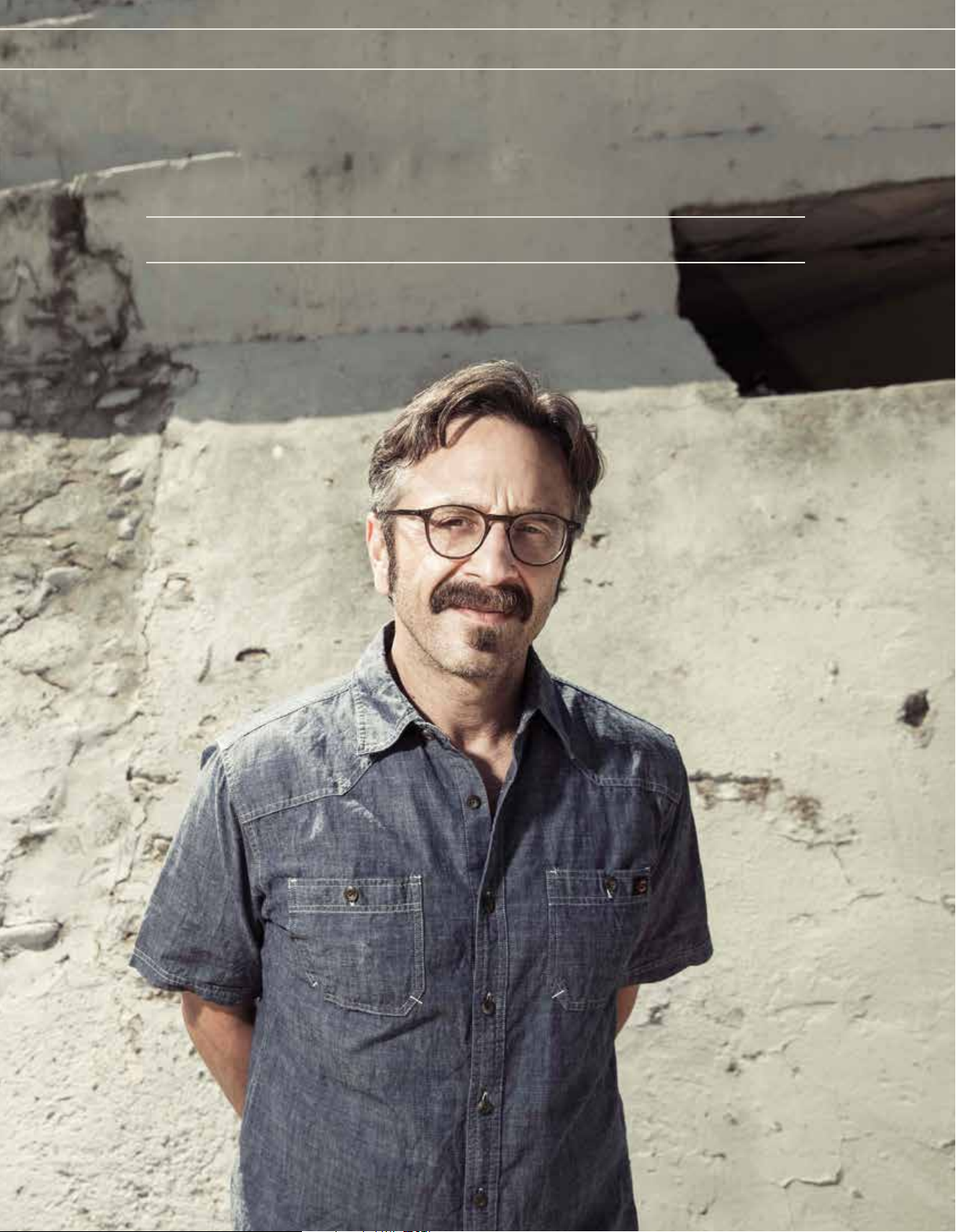
Will Self at Texas A & M University
(photo: Texas A&M University Commerce Marketing &
Communications)
Will Self is a renowned British author, cultural thinker, journalist, broadcaster, and
psychogeographer. He has authored ten novels, most recently Shark (2014) and Phone (2017);
five collections of shorter fiction, and several volumes of nonfiction, most recently The
Unbearable Lightness of Being a Prawn Cracker (2012). Self has been translated into over
twenty languages. His novel Umbrella (2012) was shortlisted for the Man Booker Prize. He has
frequently published in many periodicals including the Guardian, Harper's, the New York Times,
the New Statesman, and London Review of Books. He is a regular presenter or panelist on BBC
television shows and BBC Radio 4. His first book of short fiction, The Quantity Theory of Insanity
(1991) won the Geoffrey Faber Memorial Prize. He won the Agha Khan Prize for Fiction for
Tough, Tough Toys for Tough, Tough Boys (1998), and the Bollinger Everyman Wodehouse Prize
for Comic Fiction for The Butt (2008). In 2007, M. Hunter Hayes published Understanding Will
Self on the subject of his life and work. Self is Professor of Contemporary Thought at Brunel
University, London.
This interview was conducted at the bar of the India Club Restaurant, Strand Continental
Hotel, London in January 2018.
Arup K Chatterjee: You have been often described as a practising Londoner. I believe I would
like to describe you as a professional and performing Londoner. At times even a conscious and

Self – 2 – Chatterjee
Interview with Will Self. Arup K. Chatterjee.
Writers in Conversation
Vol. 5 no. 1, February 2018.
journals.flinders.edu.au
ARCHIVED AT FLINDERS UNIVERSITY: DSPACE.FLINDERS.EDU.AU
conscientious objector to the perils of cosmopolitan capitalism – the privatisation and
corporatisation of London’s public spaces for instance, against which you joined the people’s
movement in early 2016, stating: ‘The kind of ludic, playful potential of living in a city is being
significantly impoverished.’ What is it you think about London that enables so many authors
and their characters to come, to wield this playful potential, and personify the city in such
myriad ways?
WS: Well, good question! It’s an OLD city. It’s largely of course the built environment –
largely a Victorian city – that London signifies. It’s a sort of omphalos – the navel of the
English literary world. The city itself is encoded with a deeply metropolitan culture. All roads
lead to London, and it is the centre of the English-speaking world in that way. London been a
concentration for writers and thinkers about the city, for an extremely long time. It’s
overwritten – the city itself is a palimpsest that has been written over and walked over and
written over, time and time again.
I believe London is the imaginative cradle of psychogeography, in a way, more than
Paris. It seems to me that Thomas de Quincy is a flâneur avant la lettre, for he absolutely
fulfils all of the main criteria and has an evolved theory of himself – of a profound wandering
– and there are other figures who are similar to him, from that early English literary history.
Consider the fact that London had a population of a million by 1840. Apart from Beijing, it
was the only city with a million inhabitants.
At the same time, England and Britain were generally urbanising, much before other
societies. This sharp contrast between the urban fabric and the rural intellect is more evolved
in London, and so there are more opportunities – over a longer period – for these sorts of
transitions between ambiences. The city both transitions between ambiences and the impact
of a million-inhabited city that has anonymised and imbibed several acts of wandering and
reclaiming the city. This has also characterised its economic and social fabric.
I think those are the ingredients of London, which is why it’s no accident to situate the
man of the crowd in London. Because it’s a city that is already marked by transcriptions of
anonymous social relations. All of those factors have made London a fount of writing,
thinking about writing, thinking about the city and of the anonymity it affords.
AKC: I did observe that you were placing London, or the history of London, mostly in the early
nineteenth century and onwards. Do you think London writes itself in any way? (And you have
hinted at the palimpsestic aspect of London, just then). Can a city also be seen as a
performance. If so, at what cost does this performance come? You have spoken about the
spiritual well-being of cities. in what way has London influenced your work and your spiritual
well-being?
WS: The idea of the performative city is very well explored by Peter Ackroyd in his London:
The Biography. In fact, that’s his uniting conception of what the city is; a continual re-
enactment of itself through the performative, whether related to executions, crowds going to
Self – 3 – Chatterjee
Interview with Will Self. Arup K. Chatterjee.
Writers in Conversation
Vol. 5 no. 1, February 2018.
journals.flinders.edu.au
ARCHIVED AT FLINDERS UNIVERSITY: DSPACE.FLINDERS.EDU.AU
Tyburn to witness public hangings, whether we are thinking of phenomena such as the
Gordon riots, or in the contemporary period like the Poll-tax riots of the early 90s, or the
recent riots of 2011. You might say the London stage is in the streets. In the past, especially,
the London mob specifically, was a kind of multi-headed performer, whose actions
personified the city under its own eyes.
Is that still the case today in the contemporary period? I think less and less. The reason
for that is, of course, the virtualisation that’s affecting almost all large cities in the world,
today. In other words, I think people look for enactment and performances in the virtual
sphere rather than the actual sphere. However, we still seem to have an enormous
concentration on events – we still have a culture of demonstration, say, if you’re particularly
around Westminster, there are certain very carefully choreographed ways, either of
expressing dissent or of the state managing the presentation of itself.
But I think that the interpenetration of the virtual and the actual – the effective class-
cleansing of the centre of the city – has made it impossible for poorer people to live here. All
of which, means that the audience for London’s own self-enactment has become either too
homogenous or too divided for the performance to go on in the same old arenas. I think you
still witness events that strongly remind one of that performative soul of London. But they
are infrequent now, whereas I think what Ackroyd refers to most is the kind of thinking
about the eighteenth- or the nineteenth-century. You can even go back to the seventeenth-
century, to an event for example, like the execution of Charles I, which is absolutely a work of
theatre. There isn’t that consistency, you know, for the performances aren’t going on every
day anymore. As a personal example, for years I haven’t visited the Speaker’s Corner, to see
what it is like anymore. Whereas as a child, of course, I remember it being the centre of an
extremely lively and vibrant theatrical experience.
As to my own kind of engagement with the city, I have to say, I probably would’ve
answered that differently, a decade ago. I think like a lot of other people I’m being affected
by the turning of central London into a rich ghetto, essentially; the loss of this performative
side of the city, the virtualisation, the homogenisation, and the increased commoditisation of
place and space in the centre. All of it seems to me to be attenuating what was once thought
of as the soul of London. I have no doubt that the city itself will carry, for I have a great belief
that London’s soul is inherently anarchic, and untameable, and I have my own reasons for
believing that it’s encrypted in the shape of the city. So I think it will resurge. This dialectic is
usually unfortunately dependent upon a powerful recession and a kind of clearing out.
People will suffer for the soul of London.
But on a personal level, I am a staunch Londoner. I was born about 500 yards from
where we are sitting now. So I’m here … still very much HERE. I think that for a long time, two
things made me cleave to the city very strongly. One was that as a writer, I think there are
writers of place and writers not of place. I am definitely the first. What impresses me most
about narrative fiction is its ability to convey place, perhaps even better than visual media,
for reasons that are linked to recent discoveries in the cognitive sciences. I think there is a
real reason for that literary narrative, and mine I have always written from London.
Self – 4 – Chatterjee
Interview with Will Self. Arup K. Chatterjee.
Writers in Conversation
Vol. 5 no. 1, February 2018.
journals.flinders.edu.au
ARCHIVED AT FLINDERS UNIVERSITY: DSPACE.FLINDERS.EDU.AU
So it has a lot to do with being a writer and also just really making – as we say in English
– a virtue out of necessity. I’ve had to live in London because of family circumstances. I have,
in a sense, been trapped here most of my adult life. Of this, I made a virtue, and made that
identity important to myself. But I have to say now, my children are grown up and I’m freer
to go elsewhere. I’d quite like to, actually.
AKC: The Situationists tried to define psychogeography in a certain way. Later, British authors,
Ian Sinclair, Peter Ackroyd, Robert McFarlane, the ‘deep topographer,’ Nick Papadimitriou,
have also described psychogeography, each in their own ways. What would be your definition
or description of psychogeography? Do you see the evolution of psychogeography as a
discipline? Do you believe history now has a more crucial role to play in this discipline as well as
geography?
WS: For me, psychogeography is the practice that detaches the physical from human
geography and makes you understand the two are not coextensive. We can go back to Alfred
Korzybski – the idea that the map is not the territory – and we can see in it the spatial
equivalent of the linguistic turn in early twentieth-century philosophy. Psychogeography is a
practice that attempts to define the meaning of place by not accepting the semiotics of
human geography in that way.
One way of understanding my own practices in psychogeography is by means of an
anecdote – to the manner born. My father was an academic, interested in urban and regional
development. I was surrounded by a lot those discourses, and there was a lot of moving
around the city when I was a kid, as well as a lot of thinking about it.
But in my mid-twenties, I was struck by an epiphany, while standing in Mayfair one
afternoon. I had gone in to the office job I had at the time, and I found the office was shut.
With a free day I thought to myself, I had never seen the mouth of the Thames. I was thinking
about the city, about the river, on the banks of which I was born, which flows through the
city of my birth, and reaches the sea about thirty miles to the east. I’d never seen the mouth
of the river, not even seen the representation of it. I immediately thought, if you went thirty
miles from the mouth of the Amazon and you found a tilling peasant, and you said to him,
‘What’s it like at the mouth of the great river,’ and what if he said ‘I’ve never been there and
I don’t know what it looks like’? You would think that he was benighted, blinkered, a
peasant, after all! And I realised, that’s who we all are really. That’s who we are, those of us
who live on the map and not the territory.
I got in my car that day, and I drove to the mouth of the Thames. I must’ve been
twenty-five, and that was the beginning of my serious practice of psychogeography. The
human geography that I had been living in was detached from the physical reality of the
place I was in, in that pure moment and I have never stopped carrying on doing it ever since.
How do I think it will develop? The practice is allied to movements that the Situationists
very much desired. One is the destruction of the spectacular city – the city conceived of as an
instantiation of metrics of time and money or of a commoditisation of place and space. They
Self – 5 – Chatterjee
Interview with Will Self. Arup K. Chatterjee.
Writers in Conversation
Vol. 5 no. 1, February 2018.
journals.flinders.edu.au
ARCHIVED AT FLINDERS UNIVERSITY: DSPACE.FLINDERS.EDU.AU
look to the dérive and the psychogeographical practices in a way both psychologically and
collectively destroying the grip of that spectacular city which I would view as bodying forth
from our living in human, rather than physical, geography.
On the other hand, the Situationists also looked for practical proposals about what a
city of the future, that in some sense would be the city of the utopian communist period,
would be like. They were very influential with groups like Archigram, the utopian and
futuristic urban planners of the 1960s. Of course they were still hymning off earlier theorists,
whether on the English side with Ebenezer Howard and the garden city movement, or Le
Corbusier and the French modernist tradition of the city of ideas. The Situationists were
definitely feeding off all of those early to mid-twentieth-century ideals of massive civic
renewal and the city as a site of utopian possibilities.
Do I believe that psychogeography is anything beyond a method for the individual to
ameliorate their sense of being trapped in the commoditised place and space of the city?
Under conditions of late capitalism – no, I don’t really. I think we are in a tremendously
difficult position, with regard to any kind of planning or envisioning of place and space that is
decoupled from its commoditisation. I am pessimistic. People criticise particularly British
psychogeographers for just this tendency. I am sorry, my hands are up. I accept the
accusation, and we are guilty as charged. It’s not exactly a nostalgie de la boue which is what
we are accused of, not that our wanderings have taken us into the dark gutters.
I think if everybody did psychogeography, the city would necessarily be a better place.
But it would be a better place because it would be adapted psychically to be a better place.
I’m not so sure the physical fabric will change in any particularly dramatic way. I am afraid I
view the psychogeographical techniques as a toolkit for the individual to maintain autonomy
under conditions of commoditisation of place and space, so I see it as quite individualist – not
in any collective terms or capacity beyond that.
AKC: You have often spoken about J.G. Ballard’s writing. Tell us something about the early and
late influences on your work and what may be the divergences between these influences. One
surmises, they must not all have been literary influences alone.
WS: I knew J.G. Ballard, but it was an odd relationship. I met him once in the early 1990s. I
interviewed him at length, and we got on very well. I told him I would like to see him again,
and he must have said ‘Well, that’s very sweet of you. But we read each other’s books, and
we have this sort of … it’s enough.’ Being a much younger man at the time, and him being a
much older and much more respected writer, I kept my distance. We corresponded for some
years. But in the last few years of his life, we saw each other socially quite a bit. I was close to
his partner, Claire Walsh, who died a few years after Jim.
He did have very different and very many literary influences on me, I suppose. I am a
teaching a course at the university on literary influences, at the moment. It’s a tricky thing,
really, these influences. I did read a great deal of his work when I was very young. Even while
Self – 6 – Chatterjee
Interview with Will Self. Arup K. Chatterjee.
Writers in Conversation
Vol. 5 no. 1, February 2018.
journals.flinders.edu.au
ARCHIVED AT FLINDERS UNIVERSITY: DSPACE.FLINDERS.EDU.AU
I was probably in my early teens, I had read quite a lot of his books. They formed a lot of the
environment within which I came to write, his influences were that pervasive.
But then when I reacquainted myself with Ballard – because earlier I’d read him
indiscriminately with other science fiction writers in my teens, along with Robert Heinlein or
Isaac Asimov, and even then I had smelled something different in his writing – it was much
more of a revelation. Particularly in that time, when I returned to reading his works, I was
quite seriously thinking about writing. I didn’t feel any kinship with a lot of the writers that I
was reading – a lot of the contemporary English writers. They weren’t philosophical enough
for me. With my natural inclinations as a philosophic writer – I studied philosophy in the
university – for me fiction – serious fiction – is primarily a philosophic media. I think Ballard’s
work was the only contemporary English literature I was reading at that time and it seemed
to me profoundly about what was happening right then. It seemed to unite a philosophic
enquiry into a strong narrative vision. It seemed to create the conceptual space which I could
move into. It seemed to carve out this new territory where I could begin and I think – I fear
on my bad days as I look back at my own work – that’s pretty much all I did do.
In a way, Ballard indicated where other works could be written, and he broke and
expanded that territory massively. Sometimes I feel like I’ve just done a bit of gardening.
With his key understandings of philosophy, it seems to me that he is very close to Guy
Debord and Jean Baudrillard, that he’s very close to the other theorists of the late seventies
and early eighties, who grasped that the imminent age of virtuality would represent another
point of recalibration of what it meant to have a secret knowledge – a new relationship
between the map and the territory. Whether you called it the simulacrum or the spectacle, or
what Ballard refers to as the ‘death of affect’ – a phrase I have always loved – the
overwhelming mediatisation of sex and death.
I think all of these thinkers were prescient in a way that the other writers around
seemed to me as heritage writers, and still do actually. I think that Ballard’s refusal to believe
in the importance of characterisation in the way that the traditional bourgeois novel does
was very important. And, of course, the way he deals with place and space in creating a place
that is both real and denatured, seemed to me very suggestive of the emerging urban
character of the late twentieth- and now the twenty-first century.
AKC: Your deep interest in, if I may put it this way, written and solivagant performances of
psychogeography, frequently brings you face to face with the innermost secrets of the city, as
you’ve mentioned in one of your previous answers, as well. That you don’t really perceive the
built or the physical space of the city transforming in any substantial way but perhaps the
autonomy of the individual ameliorated. Being at the helm of so much of the clandestine
geography of the city, have you ever felt like altering it? Perhaps from your experiences of
walking in New York or Prague or elsewhere, have you ever wondered if a part of those cities
could have been in London instead? Or have you come across landmarks at corners that felt
like they were just wrong in those places?
Self – 7 – Chatterjee
Interview with Will Self. Arup K. Chatterjee.
Writers in Conversation
Vol. 5 no. 1, February 2018.
journals.flinders.edu.au
ARCHIVED AT FLINDERS UNIVERSITY: DSPACE.FLINDERS.EDU.AU
WS: I find this very interesting for it indicates to me what a prosaic person I am. My practice
of psychogeography is exactly the opposite of that. I’m concerned to be where I am, in its
entirety. For me psychogeography is also a physical enactment of the phenomenological
epoché, its total experience and interrogating it on its own terms. In fact, in some of the
psychogeographic practices, that I have found least interesting or appealing, are things like
navigating a map of another city or creating these chimerical urban ideas. They never
appealed to me at all, actually, and even in my writing I think – though the city becomes
rendered fantastically – I never do that particularly.
AKC: Do you consider it a distortion of the creative potential of psychogeography in the first
place, this overlapping of maps?
WS: I think it is a misreading, really. I do not remember the Situationists – the original
Situationist exercises – ever doing that. I think it really takes off from some of the Gil
Wolman and Debord graphics for the early issues of Potlach, in specific things like the north-
west passage and some of those urban maps which gave people the idea of these
transpositions. But I think these were misread, for they were really about distorting maps to
create experiential ideograms, if you could call them that. In order to detach the map from
the territory and reapply it – as in going around Delhi with a map of Florence or something
like that – you must really be misreading the proposed techniques. If you think of another
early psychogeographic technique which is putting a glass on the map and then revolving
around the territory along the perimeter of the glass, as represented in the map – now that’s
a very different thing that’s much more …
AKC: Much more organic … ?
WS: Indeed. And accepting where you are – you’re HERE. I think again Debord’s intuition
about spectacular society was that it detached the individual from the lived and felt
experience of being in place. So my kind of practices, the airport walks for example, are much
more clearly to do with very much trying to détourne the way in which – what I call – the
man-machine matrix and the complex of high speed communications and travel
deterritorialises the individual. By walking to the London airport, which nobody does, you
cannot be in any doubt you’re in London. You couldn’t possibly be anywhere else. If you then
fly to Toronto, and walk from the Pearson Airport into central Toronto – another full day’s
walk – you can’t be in any doubt that you’re in Toronto. It directly assaults the capacity of
late capitalism to commoditise place and space and of making it interchangeable.
AKC: You were among the first ones to foresee the fall of the new labour under Tony Blair, even
before he was elected. An acumen of taking stock of deep seated political conditions which you
may have running in your family. What do you make of the current political climate of London,
how much of that influences your writing?
Self – 8 – Chatterjee
Interview with Will Self. Arup K. Chatterjee.
Writers in Conversation
Vol. 5 no. 1, February 2018.
journals.flinders.edu.au
ARCHIVED AT FLINDERS UNIVERSITY: DSPACE.FLINDERS.EDU.AU
WS: Our mayor is Sadiq Khan, a British Muslim of South Asian heritage. I think he’s a very
well-meaning and decent man, who represents – in a way, more significantly than his father
who was a bus conductor and worked for Transport for London – the British Muslim identity
and its importance to Britain. You could almost say that his identity is Transport for London.
The mayoralty is essentially a glorified transport manager; the bulk of the mayoralty’s
important responsibility is running the Transport for London. The hypothecation of what’s
called the mayoral precept goes to transport. Local taxes go directly into subsidising local
transport. In a city like London, transport is enormously important, for it spreads over a vast
area, and it’s accessed by a large number of people covering long distances every day.
I think Khan, from what I know of him, has got the London Municipality in his sinews.
He understands its history. How we think of the municipal and the social, much of that, really
arises in the late nineteenth century – a knitting together of local services and governments
to create a kind of local, quasi-socialistic service, through a combination of subsidised public
services and housing, amelioration of income and other economic inequalities. It began here
and because it was practised at least in the war period, and then very strongly in the post-
war period with some kind of integrity, a lot of that fabric remains.
What I want to say about contemporary politics in London is to really ask, how can
Sadiq Khan maintain those elements of municipal socialism, subsidised transport system, and
housing in this day and age? Since we already have had a lot of utilities privatised, nobody is
building genuinely new housing for people on lower incomes. Transport for London itself is
sliding into being a proper profit business.
Also the actual fabric of the city – what’s determining London’s built environment – at
the moment is flying capital. Money seeking an investment return finds it very easily in
London property. This tendency for London to be used as a physical bank is really what’s
exacting the strongest effect on politics at the moment. I don’t quite know what’s going to
happen in future, but I would say if these tendencies continue, what you will see is increasing
polarisation of one form or another.
AKC: Which is beginning to happen in the Labour party, isn’t it?
WS: Labour is completely divided internally, there’s a complete disjunction between its
representatives and its new membership base, who are really clicktivists. They have joined
for £5, are largely based in the southeast, or largely from affluent backgrounds. The younger
are more affluent, so they don’t represent the traditional Labour base. It’s a very confused
pitch.
AKC: A bit like the overlapping of maps of two cities?
WS: That might be one way of looking at it, but I think the most powerful determinant of
London politics is going to be the property price.
AKC: The irony that we are sitting here today!

Self – 9 – Chatterjee
Interview with Will Self. Arup K. Chatterjee.
Writers in Conversation
Vol. 5 no. 1, February 2018.
journals.flinders.edu.au
ARCHIVED AT FLINDERS UNIVERSITY: DSPACE.FLINDERS.EDU.AU
WS: That’s right, we are sitting in a building that’s not economically viable, and is therefore
under threat.1
AKC: In 2012, you took to task George Orwell over his post-war essay, ‘Politics and the English
Language’, which I have been teaching to hundreds of students by now. I have always enjoyed
the essay and found it uncannily suited to the political climate where I belong. Where
languages have indeed undergone a massive sea-change in the last ten years, I think. Especially
the Hindi language has suffered a lot, thickly encrusted with the calciferous ignorance of
decaffeinated masses. Despite all its political, scientific merit, there are very few lines in the
essay to go to bed with. You on the other hand believe in a self-avowed sesquipedalianism, the
total antithesis of the little deludables of Animal Farm. What makes you take this stance? I
happen to think that London’s architecture is sesquipedalian. Is your language mimetic of this
in any way, you think?
WS: I’m not sure about your point about London’s architecture being sesquipedalian. It has a
typology of its own, and a category of its own, quite a rich one, in fact. I’ve always slightly
bridled being called a sesquipedalian – it’s not self-avowed as you think – for it implies that I
use recondite or unusual words simply for the sake of them. This isn’t the case. I use them
because English has a very broad vocabulary. It’s an interesting language, and I like words.
My quibble with Orwell was twofold, one being his was a mistaken causality. You may
feel that India at the moment is impoverished in any of its languages, but natural languages
just carry on mutating and growing, and shifting all the time. Governments can’t really
control and canalise them. Look at the impossibility the Académie Française had, trying to
keep loan-words out of French. Spoken French is full of them, now. This kind of arbitrary
canalisation of languages just creates a distinction such as you would get between high and
low German, in the nineteenth century. So I’m never impressed by them. Orwell seemed to
think that it would be really possible if you could legislate the language to change the way
people think. It’s not possible, as language is an emanation, and it’s immanent in human
beings. I just disagree with his argument.
AKC: But wasn’t he too talking about the mediatisation of language?
1 The India Club restaurant, at the Strand Continental Hotel, London, has come under threat from developers, since
the current freeholder of the site intends to redevelop the property, comprising the lounge, bar and restaurant
building, into luxury hotel rooms. It was built in the 1960s, by the India League, as a monument to the postcolonial
alliance between Britain and India. Since then, it has been frequented by officials of the Indian High Commission,
and many Indian and British intellectuals, including Will Self. Most recently, the restaurant has been described as a
‘little slice of the subcontinent in the heart of the capital.’ See Martin Evans, ‘Future of India Club on London's
Strand under threat from developers,’ The Telegraph, December 1, 2017
<http://www.telegraph.co.uk/news/2017/12/02/future-india-club-londons-strand-threat-developers/> Accessed:
15/01/2018.

Self – 10 – Chatterjee
Interview with Will Self. Arup K. Chatterjee.
Writers in Conversation
Vol. 5 no. 1, February 2018.
journals.flinders.edu.au
ARCHIVED AT FLINDERS UNIVERSITY: DSPACE.FLINDERS.EDU.AU
WS: It’s just not true. We can go around to East London now and find a working-class kid.
There are loads of what we would regard as common English words that he doesn’t
understand anymore, while there are loads of his words that we won’t understand. For
example, in the nineteen-sixties or seventies, you couldn’t have known the standard London
working class accent would become so inflected by West Indian voices, what we call Jafaican
now. If you listen to the young – and it happens to me the whole time when you hear two
young people talking behind you – you can’t really tell what colour they are. You think are
they black, or are they white, but when you turn around it doesn’t quite matter whether they
are black or white. They speak in the same accent – a bit of West Indian and a little bit
Cockney. Who could have seen that coming, including a lot of African Caribbean, or a lot of
South Asians?
The other aspect of the Orwell episode that follows me around, is that I never criticised
Orwell himself, but that’s how it appeared. Orwell was a huge admirer of James Joyce. What I
criticised was the way a certain kind of English person regards Orwell, often not familiar with
his work. It’s the same George that I don’t like, in the way in which a particularly English
people don’t understand literary style, have no feeling or grasp for the way in which literary
style can reflect natural language, cleaved to Orwell in his simplicity and clarity because it
speaks to their own kind of – or their own inability to grasp – literary style, they’re fetishists
of an anti-stylist. Which is far from what Orwell intended, actually.
AKC: London has been depicted in much of its literature as a city of clairvoyance and hauntings.
One of the great national phenomenon, the London fog – that dearly departed companion –
definitely added to its mystique. You too came quite close to a different sort of haunting in
your description of crossing the Battersea Power Station, in your book Psychogeography. It was
a passage that, to my mind, is a literary alchemy of Charles Dickens’ scintillating fog-dimmed
London by the Courts of Chancery Lane, in Bleak House. National phenomena have a way of
giving into the gothic and the haunted. This seems to happen a lot in London. Why is it so
according to you? Do you happen to communicate with London’s departed spirits as well?
WS: London is a gothic city. Many of the main buildings here were built in near-gothic styles.
During the gothic revival of the nineteenth century, people were still writing gothic novels
and building gothic buildings, at the same time. Besides, it’s cold and damp and dark, in this
very old city, with lots of dark places like Blackheath, Castle Rise, Highgate, and the plague
pits. There is a big plague pit up by St. Etheldreda’s Church, at the end of Chancery Lane, not
far from here.
So there’s definitely a sense of people being entombed as if in a necropolis. There are
cities of the dead within the city, which are also built in gothic styles. There is plenty of
reasons for the haunting, therefore. Do I feel directly in touch with any revenant? One of my
favourite lines is by John Gray, the philosopher writing about psychogeography: ‘In the city
the individual may feel himself to be but a shadow cast by the buildings.’

Self – 11 – Chatterjee
Interview with Will Self. Arup K. Chatterjee.
Writers in Conversation
Vol. 5 no. 1, February 2018.
journals.flinders.edu.au
ARCHIVED AT FLINDERS UNIVERSITY: DSPACE.FLINDERS.EDU.AU
It isn’t so much that I am in touch with the spirits of the departed, as that I feel the
ephemerality of my own being in relation to the built environment which makes me in turn
view these buildings as a kind of psychic repository. They have the ability to bring the
individual to feel their own ephemerality. You think of them as possibly projecting other
ephemeral beings from their entrails. And you realise, you’re not the only shadow of that
building, that you’re coalesced with lots of other shadows. Do I actually think of them as
sentient, in that way? No, I don’t. I think consciousness is a collective phenomenon that
relates to those who are alive.
Arup K Chatterjee is Assistant Professor of English at the
Jindal Global Law School.
At the time of this interview, he was a visiting fellow
at the Brunel University, London. In 2014, he was a
recipient of the Charles Wallace fellowship to United
Kingdom.
He received his doctorate from the Center for English
Studies, Jawaharlal Nehru University, New Delhi, for his
dissertation titled: ‘Hillmaking: Architecture and Literature
from the Doon Valley.’
He is the Founder Chief Editor of Coldnoon:
International Journal of Travel Writing & Travelling
Cultures, and author of the widely reviewed The Purveyors
of Destiny: A Cultural Biography of the Indian Railways
(Bloomsbury, 2017). He has contributed numerous articles
on history, literature, culture and politics, to magazines
such as The Conversation, Scroll, The Wire, DailyO and
Huffington Post, The Caravan, as well as Coldnoon.