NETFLIX INC (NFLX) PDF Free Download
1 / 32/32
100%

Important disclosures appear on the last page of this report.
The Henry Fund
Henry B. Tippie College of Business
Charlie Pattinson [charlie-pattinson@uiowa.edu]
NETFLIX INC (NFLX)
April 10, 2024
Communication Services – Media & Entertainment
Stock Rating
BUY
Investment Thesis
Target Price
$667
Netflix established its first-mover advantage early in the streaming space and
has not looked back. The firm experienced a big bounce in subscriber growth
in 2023 due to its introduction of an advertising tier and a crackdown on
passwords. We believe Netflix will grow its advantage in the streaming space
through the introduction of advertising, live sports, and growth in emerging
markets. For this reason, we recommend a buy rating on Netflix with a target
price of $667, representing a 7.4% return from its current price.
Drivers of Thesis
• Netflix is experimenting with live sports and would see higher subscriber
numbers and lower churn if they were to buy media rights to a major
league(s)
• We expect the firm to grow revenues through 2028 at a CAGR of 10%, built
off a bounce in subscribers from its introduction of an advertising tier, as
well as high growth in Asia amongst other emerging markets
• Netflix’s subscriber churn rate of 2% is significantly lower than its peers,
which will allow the firm to weather an economic downturn better than
competitors
Risks to Thesis
• Netflix chooses to not spend on live sports rights, which would only increase
customer retention and grow subscribers
• International conflict or recessions may risk Netflix’s growth in emerging
markets as it may slow or decline subscriber acquisition rates
• The cost of originally produced content remains high over the forecasted
period, making the firm rely on licensed content and not build strong Netflix
original brands
Henry Fund DCF
$667
Henry Fund DDM
$629
Relative Multiple
$387
Price Data
Current Price
$618
52wk Range
$316 – 639
Consensus 1yr Target
$621
Key Statistics
Market Cap (B)
$272.0
Shares Outstanding (M)
432.8
Institutional Ownership
82.6%
Beta
1.30
Dividend Yield
0.0%
Est. 5yr EPS Growth
84.8%
Price/Earnings (TTM)
40.5
Price/Earnings (24E)
33.6
Price/Sales (TTM)
6.5
Price/Sales (24E)
7.0
Profitability
Operating Margin
20.6%
Profit Margin
41.5%
Return on Assets (TTM)
11.0%
Return on Equity (TTM)
26.2%
Earnings Estimates
Year
2021
2022
2023
2024E
2025E
2026E
EPS
HF est.
$11.55
$10.10
$12.25
$17.19
$18.23
$21.24
$23.15
$25.39
$27.61
Growth
84.5%
-12.6%
21.3%
40.3%
23.6%
19.5%
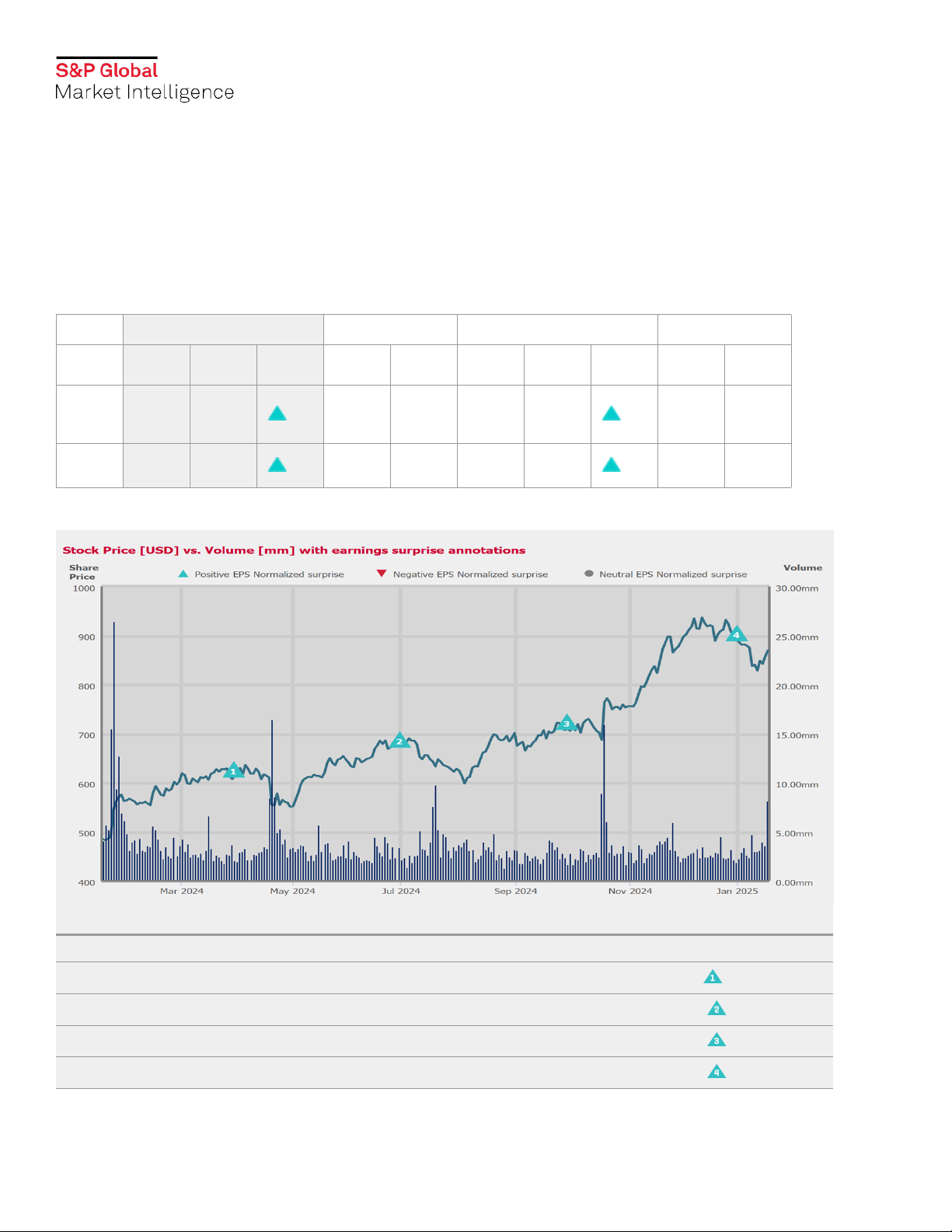
12 Month Performance1
Company Description
Netflix is a leading media and entertainment
company and was the first mover in the streaming
service industry. The company operates its service
in four main segments: United States and Canada
(UCAN), Europe, Middle East, and Africa (EMEA),
Latin America (LATAM), and Asia Pacific (APAC).
The firm offers different tiers of subscription, and
leverages algorithms to suggest content to users
and keep them from canceling their subscription.
Netflix’s platform is built on both licensed and
Netflix-produced content.
40.5
26.2
10.3
21.5
17.9
13.4
21.5
7.7 8.0
0
10
20
30
40
50
P/E ROE EV/EBITDA
NFLX S&P500 Sector
-10%
10%
30%
50%
70%
A M J J A S O N D J F M
NFLX S&P 500

!
Page!2!
!
!
!
COMPANY DESCRIPTION
Netflix is an industry leader in the media and
entertainment space. Netflix’s only revenue stream comes
from its streaming service. The firm has different
subscription plans based on location, including an ad-
supported plan, standard plan, and premium plan. In FY23,
Netflix generated $33.7B in revenue, with $14.9B coming
from the United States and Canada (UCAN), $10.6B from
Europe, Middle East, and Africa (EMEA), $4.4B from Latin
America (LATAM), and $3.8B coming from APAC.
Source: Netflix 10k
Netflix’s content is in one of two categories: Netflix-
produced or licensed. The firm built its service on the back
of licensed content. As other players entered the
streaming service industry they pivoted to making their
own content. As of July 2023, approximately 55% of its US
library are Netflix Originals22. In the past year or so, the
pendulum has swung away from produced content and
back to licensed content. This is for a couple reasons:
legacy media companies have struggled to compete in the
streaming industry and the costs of producing content
have gone up due to COVID-19 and the Hollywood
strikes15. Netflix has served as a hit-maker for otherwise
idle-shows such as Suits (licensed from Comcast) and has
licensed premier Warner Brothers Discovery content such
as the DC Cinematic Universe and old HBO shows.
In January, co-founder and co-CEO Reed Hastings stepped
down from his position19. Co-CEO Ted Sarandos and
former chief content officer Greg Peters took the helm as
co-CEOs. Although unconventional, the two have unique
expertise that allow them to mesh well together. Sarandos
is deeply entrenched in the mechanics of Hollywood and
relationship management with talent, while Peters has a
background in technology and is focused on the product
side. In their first year of leadership, Netflix saw an
approximate 13% growth in subscribers, and its customer
churn rates remain low despite a crackdown on password-
sharing.
The firm has an international focus, with 69% of its
subscriber base coming internationally. In 2022, Netflix’s
EMEA segment passed its UCAN segment for total
subscribers. However, UCAN’s average revenue per user
(ARPU) remains 50% higher than EMEA’s due to lower
subscription costs for customer acquisition tactics.
Source: Netflix 10k
Netflix is the only streaming service in the industry to turn
a profit, and as a result has much stronger streaming
margins than competitors. We expect those to grow in
future years through its password-sharing crackdown and
subscriber growth in emerging markets. We expect
Netflix’s overall gross margin to grow by a CAGR of 2.98%
through 2028.
United States and Canada (UCAN)
In 2023, Netflix’s UCAN segment clawed its way out from
negative subscriber growth in 2022 to its largest net
subscriber add since 2020. This was due to Netflix’s
password-sharing crackdown churning less users than
expected16, and Netflix weathering the storm of the
Hollywood strikes by creating hits out of licensed shows.
The introduction of an advertising plan and Hollywood
strikes are both unique events, so we anticipate 2023’s
growth to be a peak in subscriber growth for the coming
future. We forecast 2024-2025 subscriber growth to be
approximately 4%, which is above 2021-2022 levels as we
anticipate the bump in subscribers due to the new
UCAN: 44%, 14.9B
EMEA: 31%,
10.6B
LATAM:
13%, 4.4B
APAC: 11%, 3.8B
Netflix Revenue by Segment, 2023
UCAN, 31%
EMEA, 34%
LATAM, 18%
APAC, 17%
Netflix Subscribers by Segment, 2023

!
Page!3!
!
!
!
advertising tier to continue into the near future. We
believe Netflix’s initiative to retire their basic-ad free plan,
starting with Canada and the UK later this year, will
increase the number of subscribers in these markets.
However, near 2026 we anticipate subscriber growth to
slow down to about 1% a year, because Netflix will reach
near market saturation. As of 2023, the firm has nearly a
62% penetration rate in UCAN households (approximately
145 million). We believe the cap on Netflix’s penetration
rate in the United States is in the 80% range, as traditional
pay-TV reached its peak penetration rate around 88% in
20104. In a couple years, we believe the UCAN market will
turn into a cash cow with a goal of preventing churn, while
Netflix utilizes international markets for growth.
Source: Netflix 10k & HF Estimates
Europe, Middle East, and Africa (EMEA)
Netflix’s EMEA segment has seen significant growth in
recent years. In 2022, it passed UCAN for the highest
segment subscriber total. We expect Netflix’s strong
subscriber growth to continue in EMEA. The firm’s 2023
penetration rate in EMEA households (18%) is much lower
than its rate in UCAN (62%). We forecast EMEA subscriber
growth to remain above 6% in 2024 and 2025 as the
password-sharing crackdown plays out in the EMEA
region. From 2026-2028, we project the EMEA to grow
steadily at approximately 4.5% per year. Netflix’s growth
plan in EMEA causes its ARPU to be lower than UCAN as it
uses lower prices in emerging markets to entice potential
subscribers and account for lower household income. We
believe this approach is important as other countries’
economies do not have the strength of the United States’
economy, and Netflix does not have the cultural grasp
abroad that it does in the U.S. yet.
Source: Netflix 10k & HF Estimates
Latin America (LATAM)
The LATAM segment boasts Netflix’s third highest
subscriber count and revenue totals. We expect the
sgement to post subscriber growth near 8% in 2024 and
2025, ahead of 2021-2022 levels. This is due to the
introduction of ad-supported plans and Netflix’s lower
prices to entice subscribers. We project ARPU growth to
fluctuate but remain positive over the course of the
forecast. The firm’s household penetration rate in the
LATAM segment is approximately 25%, which gives the
company a lot of room to run. Netflix’s overseas content
spend is set to surpass U.S. spend for the first time, as the
firm loads up on local language content for international
viewers23.
Source: Netflix 10k & HF Estimates
-2%
0%
2%
4%
6%
8%
10%
0
5,000
10,000
15,000
20,000
25,000
2021
2022
2023
2024E
2025E
2026E
2027E
2028E
UCAN Revenue & Subscriber
Growth Forecasts
Revenues (M) Paid Subscriber Growth
0%
5%
10%
15%
20%
0
5,000
10,000
15,000
20,000
2021
2022
2023
2024E
2025E
2026E
2027E
2028E
EMEA Revenue & Subscriber
Growth Forecasts
Revenues (M) Paid Subscriber Growth
0%
2%
4%
6%
8%
10%
12%
0
1,000
2,000
3,000
4,000
5,000
6,000
7,000
8,000
2021 2022 2023 2024E2025E2026E2027E2028E
LATAM Revenue & Subscriber
Growth Forecasts
Revenues (M) Paid Subscriber Growth

!
Page!4!
!
!
!
Asia Pacific (APAC)
The Asia Pacific region is Netflix’s biggest growth area. The
company has seen massive growth in the region, and we
expect this trend to continue. Many of Netflix’s most
watched shows from January-June 2023 were Asian titles,
and Squid Game became a worldwide phenomenon. We
forecast double digit growth for Netflix over the next four
years for a multitude of reasons. The first is the company-
wide advertising tier initiative, but the main driver is the
amount of success Netflix is seeing in Asia. The firm is
establishing a larger cultural footprint in Asia than many
other regions, so we anticipate the firm pursuing
subscribers in a significant way. Netflix is banned in China,
part of the government’s efforts to limit foreign influence
and its citizens’ access to information about their own
country. Netflix’s penetration rate in Asian households (ex-
China) is 6.89%. This leaves a lot of room to grow. We
estimate APAC to gain a larger subscriber base than
LATAM in 2024, and out-earn LATAM by 2028.
Source: Netflix 10k & HF Estimates
Revenue Analysis
Netflix has a relatively simple business model. Its revenues
are based off the number of subscribers it has, and the
amount of revenue it earns per each subscriber. Each
country has a unique set of plans, but the typical three
levels are ad-supported, standard, and premium.
Source: Netflix 10k & HF Estimates
We project Netflix to continue hiking prices in its UCAN
segment, where it has seen sticky subscriber retention
after introducing the password-sharing crackdown. We
believe UCAN subscribers see Netflix as an entertainment
necessity, which gives the firm strong pricing power. The
other region we project to have strong ARPU growth in is
EMEA. Netflix’s foothold in the market is becoming strong
enough that they can start hiking prices after utilizing low-
priced plans to acquire customers. We believe the LATAM
and APAC segments will have ARPUs that remain lower as
they are still in subscriber-acquisition mode. Over the
forecasted period, we project Netflix’s overall ARPU to
grow by a CAGR of 3.32% to $13.70, a $2.06 rise from its
2023 level. The introduction of an advertising tier will slow
ARPU growth, particularly in the UCAN segment, due to
customers flipping subscriptions or new subscribers
signing up for the ad-tier. However, we believe that
Netflix’s first-mover advantage in streaming has built a
strong consumer habit for the premium tier.
Netflix ARPU Forecast
Year
UCAN
EMEA
LATAM
APAC
NFLX
2021
14.56
11.63
7.73
9.56
11.67
2022
15.86
10.99
8.48
8.50
11.76
2023
16.28
10.87
8.66
7.64
11.64
2024E
17.24
11.19
8.71
7.59
11.94
2025E
18.11
11.80
9.15
7.80
12.43
2026E
18.83
12.40
9.33
7.97
12.81
2027E
20.11
13.03
9.70
7.94
13.32
2028E
20.91
13.68
9.89
8.14
13.70
Source: Netflix 10k & HF Estimates
0%
5%
10%
15%
20%
25%
30%
0
1,000
2,000
3,000
4,000
5,000
6,000
7,000
8,000
2021
2022
2023
2024E
2025E
2026E
2027E
2028E
APAC Revenue & Subscriber
Growth Forecasts
Revenues (M) Paid Subscriber Growth
0
100
200
300
400
2021 2022 2023 2024E 2025E 2026E 2027E 2028E
Netflix Global Subscribers Forecast
(in millions)

!
Page!5!
!
!
!
Cost Structure Analysis
Netflix’s costs of revenues have trended up in recent years.
This is due to the rising rates in content amortization, as
Netflix has grown content spending and amortizes its titles
over a short period. We project Netflix’s amortization of
content assets as a percentage of content assets to rise by
an average of 1% a year. This represents the growing need
of Netflix to increase amortization to keep up with their
content spend, which is growing at a higher level. We
project Netflix to spend north of $16b on content in 2024.
This is due to the need for fresh content to prevent churn
in UCAN and develop hit local language shows and movies
in international markets. This amount of content spend is
sustainable until emerging markets reach a similar
saturation level to the UCAN segment. Once that begins,
spending less on content will likely need to happen to keep
profit margins stable. We also anticipate Netflix’s
marketing, technology & development, and general and
administrative expenses to decrease over the next five
years. Netflix’s cost categories have been dropping in
recent years, and we believe this trend will continue as
Netflix matures as a business and becomes more of a
utility than an add-on service. Through Netflix’s rapid
growth in foreign markets and lowered cost structure, we
project Netflix’s gross margin and operating margin to
improve significantly.
Target Market
Netflix’s target market is incredibly diverse and spans
different generations. The streamer develops content of
all kinds, including kids’ entertainment, documentaries,
scripted and reality television, etc. The typical Netflix user
likely falls in a younger age bracket, as many older
consumers are less likely to ditch cable for a streaming
alternative. Consumers aged 18-54 likely make up the bulk
of Netflix’s userbase.
Firm Differentiation
Netflix is unique compared to most Hollywood
competitors due to its tech focus and lack of historical
library. Netflix’s large initiative to produce its own content
over the last decade created a more even playing field for
its content library. This happened as it lost licensed
content to other studios when they started streaming
services, as they needed content for their own platforms
and Netflix was too successful. Netflix is also a pure media
and entertainment company compared to other tech
players in the space, such as Google, Amazon, and Apple.
Netflix’s first-mover advantage gives the company
leverage over competitors who were late to the streaming
space and have yet to turn a profit. The firm has 260m
subscribers, which is 73% higher than the next highest
media-focused streamer, Disney+ (150m). Netflix also
upended the model of Hollywood, by paying larger fees
upfront to creators and talent, instead of paying through
residuals on the back end. We anticipate this model will
change slightly due to changes made after the 2023
Hollywood strikes, but this played a key role in helping
Netflix build its library. Netflix is also the only media-
focused streamer that does not utilize movie theaters for
new releases. We believe this strategy helps build the
power of Netflix but is not replicable by other firms who
have weaker streaming subscribers and profitability.
Business Model Viability
Netflix’s business model is possible due to its first-mover
advantage. The word Netflix is synonymous with
streaming, and this allows them to be on the cutting edge
of Hollywood and entertainment. Their international
approach in emerging markets positions them well to
continue growth as their UCAN segment matures. We
believe Netflix is not just competing with other streaming
services, but also YouTube, Tik Tok, and video games. As
Netflix matures in certain regions, the focus will shift away
from subscriber growth to time spent on the platform,
which will increase advertising dollars and prevent
customer churn. We believe investing in live sports rights
with a consistent audience and time-consuming content
such as reality TV will provide Netflix with the content base
it needs to prevent subscription cancellations.
Debt Maturity Analysis
Netflix currently has $14.6b in long-term debt outstanding
with a weighted average coupon of 4.72%. The firm has a
credit rating of BBB+ from S&P. This trails Disney and
Comcast who have more diver revenue streams but beats
out Warner Bros. Discovery and Paramount.
Firm
S&P Debt Rating
Netflix
BBB+
Disney
A-
Warner Bros. Discovery
BBB-
Comcast
A-
Paramount
BB+

!
Page!6!
!
!
!
Netflix maintains a strong track record of paying off its
debts. We forecast a large rise in cash flow over the next
five years and anticipate the company will spread the cash
across paying debt, share buybacks, and increasing its
content spend. We do not expect Netflix will need to push
out the maturity of its debt. The company has also stated
it is not in the market for acquiring companies with
declining linear assets such as Paramount or Warner Bros.
Discovery. This contributes to our belief that Netflix will
start to pay down its long-term debt over the coming
years. The firm also has some around $7b of licensed
content obligations that are recorded on the balance sheet
as “Current content liabilities.” Again, we expect Netflix
will have the requisite cash it needs to pay down content
obligations as part of its operating business flow.
Five-Year Debt Maturity Schedule
Fiscal Year
Coupon (%)
Payment ($mil)
2024
5.75
$400
2025
4.44
1,819
2026
4.38
1,000
2027
3.63
1,436
2028
5.42
3,500
Thereafter
4.64
6,456
Total
4.72
$14,611
Source: FactSet & Netflix 10k
ESG Analysis
Firm
Sustainalytics ESG Rating
Netflix
16.0 (low risk)
Disney
15.7 (low risk)
Warner Bros. Discovery
19.9 (low risk)
Comcast
21.8 (medium risk)
Paramount
15.0 (low risk)
Source: Sustainalytics
Governance is the ESG category to keep an eye on, as
Netflix deploys a co-CEO model. Performance was very
strong in the first year of the Greg Peters and Ted Serandos
era. The two complement each other well and round out
Netflix’s approach to tech and Hollywood. We believe in
the two as leaders but will monitor how the two deal with
struggles if performance was able to dip. The co-CEO
model lends itself to difficulties during stressful times, and
leaders can become territorial or stubborn about their
beliefs which hurts the overall company. However, Netflix
has implemented multiple CEOs for years now and has
seen success with this model. Netflix and Disney both
implemented succession plans in recent years, and
Netflix’s has gone much better than Disney’s, who had Bob
Iger return to his seat as CEO.
RECENT DEVELOPMENTS
Recent Earnings Announcement
Netflix reported Q4 earnings for FY23 on January 23, 2024.
Shares jumped nearly 11% after the company reported
strong data for the quarter. The firm added nearly 13.1
million subscribers during Q4, which beat Wall Street
consensus by around five million subscribers. The growth
in subscribers was due to strong customer retention as
Netflix builds its ad-support service and continues to
crackdown on password-sharing. The firm posted EPS for
Q4 slightly below consensus ($2.11 vs. $2.22), while
revenue for the quarter slightly beat consensus ($8.83b vs.
$8.72b). Q4 revenue grew 12% YoY due to the strong
subscriber growth and favorable exchange rates.
On the day of its earnings call, Netflix also announced a
major new deal to partner with the WWE to air “Monday
Night Raw.”4 Beginning in 2025, the deal will pay TKO
Group $500 million a year for media rights to air the
WWE’s flagship weekly wrestling program in the U.S.,
Canada, UK, and Latin America, with more countries and
regions over time. The deal is Netflix’s first major play into
live sports. The deal pays about twice what Comcast
currently pays to air the show on the USA Channel. The
premium is likely due to the ability to control the
international rights. We believe the deal is a strong one for
Netflix, as it will add a consistent weekly audience to
Netflix’s platform. WWE is an international brand with a
very committed fanbase and gives Netflix the potential to
make ancillary content about it. Management said that the
WWE deal fits into their anticipated content spend for the
year, and it does not change their strategy with sports. The
Henry Fund believes the WWE deal will test Netflix’s ability
to host live sports and if it is successful will change Netflix’s
sports plan. If the firm were to say they were all-in on
sports, they would lose negotiation power with leagues
such as the NBA whose media rights are up for sale
currently.
Management also shifted its Q1 FY24 EPS projection to
$4.49, which was higher than the initial consensus
projection of $4.10. We forecast Netflix to beat these
projections, as our average FY24 quarterly EPS is $4.61,
and Q1 is historically a stronger quarter for Netflix. We
believe this will be due to continued growth from its

!
Page!7!
!
!
!
advertising tier and the introduction of a foreign exchange
hedging program.
COVID-19 & Movie Theaters
The Covid-19 pandemic had a profound impact on the
entertainment business, and streaming services are still
dealing with the fallout to this day. The lockdowns led to a
substantial increase in streaming subscriptions, which led
some stocks to all-time highs. The growth was so rapid that
Disney beat their five-year growth goal in a matter of a
couple months. Disney and Warner Brothers Discovery
also started to implement straight-to-streaming movie
releases. Although this was convenient for consumers, it
was highly costly to the studios. In the past year or so,
there has been a shift back to theatrical releases, with all
streamers besides Netflix utilizing them. Despite theaters
growing out of favor with consumers and becoming
increasingly tough to run, they are beneficial to streamers
on multiple fronts. They allow the initial rush of fans to pay
for the individual title and serve as an advertising and
marketing play for when the titles drop on streaming. It
will be important for streamers to decipher which movies
are theater plays versus straight to streaming. The recent
“Barbenheimer” and “Gentleminions” phenomena display
that there is still a desire for theatrical events. Theaters
may never fully recover from the pandemic, but still play
an important role in entertainment distribution. However,
Netflix has proven that they do not need theatrical
releases to create hit movies. We believe the firm is
uniquely positioned compared to legacy Hollywood
studios to not utilize movie theaters, which helps them
prevent subscription churn. Netflix’s streaming
profitability allows them this advantage, while other
studios need theaters to earn some revenue as its
streaming endeavors struggle.
Source: Statista
M&A Activity
Recent Media M&A Activity
Deal:
Date:
Size:
Disney, Fox, WBD to create
sports streaming service JV
2/6/24
N/A
Disney to purchase stake in
Epic Games
2/7/24
$1.5b
Disney to merge Indian
operations with Reliance
Industries18
2/28/24
$8.5b
Paramount enters exclusive
merger talks with Skydance
Media1
4/4/24
N/A
WBD allowed to engage in
M&A after two-year lockup
period1
4/8/24
N/A
Source: Bloomberg
M&A is one of the key areas to monitor in the streaming
space. The industry is ripe for movement, and we
anticipate there to be many moves towards a consolidated
industry. Most of the M&A activity moving forward will be
focused on creating platforms with the requisite amount
of content and subscribers to be sustainable. We do not
believe Netflix will get involved with any traditional media
companies that own declining linear assets. However, we
will monitor if Netflix pursues activity within the gaming
space, as it attempts to diversify the offerings of its
platform. The two deals that affect Netflix the most are
discussed below:
1. Disney, Warner Brothers Discovery, and Fox to create
sports streaming service5
Disney, Warner Bros. Discovery, and Fox are joining forces
to create a comprehensive sports streaming service, which
is a significant shift in the sports media landscape. The yet-
to-be-named service will be launched in the fall and offer
content from all major leagues. Each company will have
one-third ownership of the new service, a model like the
original Hulu. The new service is expected to encompass
55% of US sports rights and will be available as a
standalone app or as part of bundles for Max, Hulu, and
Disney+ subscribers. The new service will not include
content from Comcast’s NBCUniversal or Paramount, who
both hold major sports rights. Consumers will likely win
from this deal, but there are still question marks for the
0
500
1,000
1,500
2013
2014
2015
2016
2017
2018
2019
2020
2021
2022
2023
Tickets Sold at Box Office in US and
Canada
Tickets sold at box office in US and Canada (in millions)

!
Page!8!
!
!
!
companies. Despite the new service being targeted
towards people who are cord-nevers (young people who
have never subscribed to a traditional TV bundle), if the
platform is successful, it will accelerate the decline of
linear television. As these companies are still earning profit
from traditional pay-TV, they may contribute to the
downfall of that business segment. The companies have
also been fierce competitors in the market for live-sports
rights and their own streaming services. It remains to be
seen if they will be able to set their individual motivations
aside to work together on this project. The platform is
expected to cost between $40-50/month and exemplifies
the shift back to a cable-like model where you can get all
your channels in one place. This deal would be beneficial
to consumers who are sports-focused and looking for the
cheapest and most convenient place to watch. If the sports
streaming service makes it past regulatory concerns and
launches, Netflix should not have high churn because they
do not have live sports as is. We expect the largest
customer churn to come from YouTube TV and traditional
cable. We believe Netflix would see massive success from
strategically adding live sports right as it sees fit. We do
not believe a sports streaming conglomerate will wipe out
Netflix’s chances at gaining sports rights. Leagues would
likely be eager to access Netflix’s user data for insights and
global reach. Even if the firm did not control weekly rights
for a major league, Netflix would remain a player for
smaller scale sports rights, such as the NBA in-season-
tournament, tennis, or a European soccer tournament.
2. Disney to buy a $1.5 billion stake in Epic Games14
On February 7, Disney announced a deal to buy a $1.5
billion equity stake in Epic Games, the gaming company
behind Fortnite. The two companies have collaborated in
the past, bringing Disney characters to the Fortnite
Universe. The deal exemplifies a growing relationship
between media and gaming. Disney will be able integrate
and advertise its content through Fortnite and other Epic
Games properties. There is also potential for Disney to
produce Fortnite movies, TV shows, and parks
experiences. Video game adaptations are growing in
popularity, as The Last of Us was a hit HBO show in 2023
and The Super Mario Bros. Movie was the second highest
earner at the box office17. Gaming offers streaming
companies a different source of revenue while providing
vertical integration to promote their brand. All the details
have not released yet but moves like this will keep media
brands competitive in the long-term. Netflix has slowly
started to build up its gaming area and we believe that
moves like Disney’s Epic Games stake would benefit
Netflix. The ability to incorporate Netflix franchises in
video games and create television and movies based off
games offers high growth opportunity to the firm. Unlike
Disney, Netflix is adding games to its platform. We believe
this could contribute to Netflix being a one-stop-shop for
entertainment down the road.
The M&A Activity in streaming is important to track as the
next iteration of companies takes place. The industry is at
an inflection point, and firms with declining linear assets
are at risk of being left behind by competitors. We believe
Netflix and Disney are suited well to survive M&A Activity
in their current states, while Comcast, Warner Bros.
Discovery, and Paramount are all ripe for mergers and
acquisitions. The primary reason is that these firms do not
have the content library or tech they need to turn their
streaming services into profitable standalone ventures.
INDUSTRY TRENDS
The Suits Phenomenon
While original content slowed during the strikes over the
past year, Suits dominated streaming as the number one
television show. The power of Netflix was on full display,
as an old show (originally aired in 2011) from the USA
network became the number one hit in America in 2023.
Because Netflix has such a large user base, their platform
is a machine for creating hits6. The success of Suits on
Netflix has led other streamers to license their old hits to
Netflix, such as Ballers and Six Feet Under from Warner
Bros. Discovery. This establishes Netflix as a clear leader in
the streaming space. After the rush to compete with
Netflix, traditional media companies are crawling back
asking for help. Netflix is positioned extremely well given
the viral nature of their platform. Despite other
competitors having older TV content, Netflix is uniquely
positioned to utilize old content. The firm’s top ten lists,
and algorithmic recommendations serve as a hit-making
machine that other firms do not have. Many consumers
log on to Netflix without an idea of they watch, while they
go to other platforms for specific titles only.
Global Growth
The global expansion of streaming services, exemplified by
the success of shows like “Squid Game,” shows a shift in
consumer preference and allows US services to grow
worldwide. “Squid Game” also showed how US consumers

!
Page!9!
!
!
!
are interested in foreign content. This opens synergies
across Netflix’s four segments as the firm is producing
large amounts of international content. By 2028, the
worldwide penetration rate of over-the-top video is
projected to grow to approximately 55%, which is about
10% higher than current levels. With most growth for
streaming subscriptions coming internationally, there is a
huge opportunity to make diverse content that will garner
foreign customers. Services with global audiences and
brands such as Netflix and Disney are positioned best to
distribute streaming globally.
Gaming
Netflix and Disney are at the forefront of incorporating
video games into their streaming offerings. Netflix has
added many popular games to their mobile app, indicating
that they are serious about making their platform a hub for
all-things entertainment. Disney has also pursued gaming
with their recent equity purchase in Epic Games. Both
developments are positive outcomes for each company as
they diversify their offerings and add new sources of
income with high growth potential. Netflix’s gaming
efforts are not enough to change its financial outlook yet,
but we believe their initiative shows strong forward
outlook from management20. The firm has yet to report
any substantial data on its gaming data.
Short-Form Video
Eyeballs may be taken away from highly produced content
on streaming services as younger generations flock to
social media to spend their time. In particular, the growth
of Tik Tok and Instagram Reels is concerning for media
companies who are competing for attention. In 2019, Tik
Tok had approximately 650 million subscribers, which has
grown to around two billion in five years. Given the
addictive nature of short-form video, consumers may be
quicker to ditch streaming services in favor of social media
if disposable income levels lower. We hold the opinion
that short-form video can play well with streaming
services, however. Apps like Tik Tok can generate buzz for
titles coming from streamers and be used as a promotional
tool. Due to Netflix’s maturity in its UCAN segment, Tik Tok
is a competitor of the firm for attention. We believe Netflix
has a very strong grasp on the streaming market, which
should prevent Tik Tok from contributing to Netflix churn.
Minutes Watched
In an industry driven by attention, minutes watched play a
crucial role in subscriber retention. The longer a service
can hold a subscriber’s attention, the less likely that
customer is to churn. According to Nielsen, streaming
takes up approximately 37.7% of TV viewing. Cable and
broadcast TV take up a little over 50% of minutes watched,
showing they still have some economic value despite being
in decline. The larger trends at hand are streaming’s share
increasing while linear declines, but the chart below shows
there is some seasonality to TV viewing. Cable and
broadcast took a dip in the summer months, when there
are less live sports, while streaming hit its peak for 2023 in
July. Netflix pursuing live sports will help round out the
edges to its programming schedule.
Source: Nielsen
MARKETS AND COMPETITION
Streaming Subscriptions
Netflix is a leader in this category. It displays the
company’s dominance. Not only are they the largest
streaming service, but they are also the only company to
see a dime of profit on one. This gives them massive scale
and the ability to dictate market outcomes. Netflix’s ad tier
generated one of their best quarters of growth ever in 4Q,
2023, and Paramount+ and Peacock both appear to lack
the growth prospects to catch up to the pack.
0%
10%
20%
30%
40%
50%
Feb. 2023
Mar. 2023
Apr. 2023
May. 2023
Jun. 2023
Jul. 2023
Aug. 2023
Sep. 2023
Oct. 2023
Nov. 2023
Dec. 2023
Jan. 2024
Feb. 2024
% Share of TV Minutes Watched
Broadcast Cable Streaming Other

!
Page!10!
!
!
!
Streaming Service
FY23 Total Subscribers
(M)
Netflix
260
Prime Video (Amazon)
230*
Disney+
150
Max
98
Paramount+
67.5
Hulu (Disney)
48.5
Peacock (Comcast)
31
Apple TV+
25*
YouTube TV
8
Source: Company Financial Statements; estimation*
Major Players
To examine the companies that make up the streaming
industry, they easily divide into three major categories:
large tech firms who are in streaming as a side hustle,
leading streamers, and lagging streamers. Each firm has
varying pricing plans and motivations to be in the industry.
Streaming Service
U.S. Standard Plan Monthly
Cost (ex-ads)
Netflix
$15.49
Prime Video (Amazon)
$12
Disney+
$13.99
Max
$15.99
Paramount+
$11.99
Hulu (Disney)
$17.99
Peacock (Comcast)
$11.99
Apple TV+
$9.99
YouTube TV
$72.99
Source: Company Websites
Large Tech Firms:
Free Cash Flow (in $ billions)
Apple
106.87
Google
69.50
Amazon
32.22
Source: FactSet
All three of the major tech firms that are involved in
streaming are positioned well to be leaders in the
consolidation of the streaming industry. The future of each
company is not reliant on streaming which adds an
interesting element to the industry since they are the most
equipped with cash.
Apple (AAPL):
Apple, one of the largest companies in the world,
introduced their streaming service in late 2019, and it has
mostly been for high-end content and promoting the
Apple brand. In an ideal world, Apple’s goal would likely be
to replicate the business they had with the iTunes store
with streaming. Given their penetration of the US
smartphone and device market, they are a very strong
candidate to seamlessly integrate a hub for streaming.
Google (GOOGL):
Google is a unique case given their business with YouTube.
They created the most popular streaming broadcast TV
platform in YouTube TV1 and have a constant pipeline of
advertisable content on YouTube. In the past year, they
acquired the rights to Sunday Ticket, which proved to be a
boon for the company. Google, like Apple, has a large user
base and would be able to host a central streaming bundle
under the YouTube umbrella. Google’s streaming ventures
are set up well through YouTube alone, as its customers
generate its monetized content.
Amazon (AMZN):
Prime Video has a large subscription base through Amazon
Prime subscribers. Most subscribers to Prime Video are
focused on free shipping and buying household goods.
Amazon pivoted to have all subscribers receive ads and
made a premium tier worth an extra three dollars. We
anticipate the ad revenue to generate more cash for
Amazon since a low percentage of customers are
projected to pay up for the more expensive tier1. Amazon
has also dipped into live sports with Thursday Night
Football and is a strong contender to be the originator of a
future streaming bundle. They already offer some other
services such as Max and Paramount+ as add-ons to Prime
Video, which is a sign that they hope to bundle streaming
subscriptions.
Leading Streamers
Disney (DIS):
Disney is the most notorious and well-known media
company. Their entertainment, sports, and experiences
create a well-rounded brand that is hard for consumers to

!
Page!11!
!
!
!
avoid. After mismanagement under Bob Chapek, Bob Iger
returned as CEO to get things in order. We are just now
seeing developments of his second tenure as CEO come
through. We expect subscriber growth to stop stagnating
and to increase due to new projects spearheaded from
Iger. Disney’s strong brand and large streaming footprint
through Disney+ and Hulu set the firm up better than other
competitors who also have declining linear assets.
Source: Statista
Lagging Streamers
Comcast (CMCSA):
Comcast has utilized Peacock to stream its content library
but has not been able to turn a profit on it yet despite
subscriber growth. The company recently aired the first
ever exclusively streamed NFL playoff game, which set
streaming records but still lagged linear TV the prior year
in the same window7. Peacock struggles with churn, as
consumers come in for sports and then leave when
seasons end. Their content library leaves a little to be
desired, and they seem to typically be a step behind. For
example, they licensed out Suits to Netflix last year which
was a huge success for their competitor. Comcast has
spent large amounts on Peacock, and despite growth in
subscribers, they lost more money in 2023 than 2022. It
appears unlikely they will be able to garner they scale they
need to make the service profitable. For Comcast to
become an appealing investment, the Peacock experiment
would need to end.
Source: Statista
Warner Bros. Discovery (WBD):
Warner Bros. Discovery has undergone major change in
the past year. They rebranded their streaming service from
HBO Max to Max and have taken aggressive tactics to get
rid of their large debt amount. These include cutting
already finished new movies for tax rebates and licensing
content to Netflix1. The company seemingly will struggle to
pay for expensive NBA rights coming out in the next year,
but their new sports streaming service with Fox and Disney
has the potential to remedy that. In upcoming months,
WBD will be allowed to merge or acquire again, which is
where we anticipate the company is headed. It is hard to
envision an outcome where they become the destination
streaming service for general content. Netflix beat them to
the punch there.
Source: Statista
0
20
40
60
80
100
120
140
160
180
Q4 2020
Q1 2021
Q2 2021
Q3 2021
Q4 2021
Q1 2022
Q2 2022
Q3 2022
Q4 2022
Q1 2023
Q2 2023
Q3 2023
Q4 2023
Q1 2024
Disney+ Subscribers (in millions)
0
5
10
15
20
25
30
35
Q2
2021
Q4
2021
Q1
2022
Q2
2022
Q3
2022
Q4
2022
Q1
2023
Q2
2023
Q3
2023
Q4
2023
Peacock Subscribers (in millions)
0
20
40
60
80
100
120
Q2
2021
Q3
2021
Q4
2021
Q1
2022
Q2
2022
Q3
2022
Q4
2022
Q1
2023
Q2
2023
Q3
2023
Q4
2023
WBD Subscribers (in millions)

!
Page!12!
!
!
!
Paramount (PARA):
Paramount has lost a considerable amount of market cap
over the past year. With the company up for sale, it may
be the first domino in several M&A moves to reconstruct
the streaming industry. They are skating by on the NFL and
college football and are too weak to support their own
streaming service. The firm has struggled to adapt to the
streaming landscape and has taken large losses on its
streaming service. The combination of personal dynamics
with the Redstone family, a shift away from legacy media,
and a risk of bankruptcy has put a major dent into the
prospects of Paramount as a standalone company. What
happens with the sale and how many parties are involved
will be something to watch over the coming months. We
believe the deal with David Ellison and Skydance Media is
the odds-on favorite, however, we would not be surprised
if shareholders make a push for a large private equity firm.
Source: Statista
Structure and Stability
The streaming industry is hyper-competitive and shaped
by consumer preferences and the evolving maturity of
media companies shifting from traditional TV to
streaming. The firms are nowhere near an equilibrium
state, as they are all adapting to the marketplace and
figuring out whether they will be able to compete or not.
A main issue is many services try to be a one-stop-shop and
general content hub but don’t have the audience to
compete with Netflix and Disney. In the next couple of
years, it is highly likely that there will be movement to
create a more sustainable sector and traditional media
companies are likely to lose out and sell their parts to
Disney, a tech company, or merge together. Firms that are
a most likely to see M&A activity are Warner Bros.
Discovery and Paramount.
Risk of Substitution
The risk of substitution in the streaming industry revolves
around the potential for customers to switch services or to
shift to alternative forms of entertainment such as short-
form video or gaming. Because the market is too saturated
with streaming services, subscriber churn is high. This
heightens the competition between competitors and
ultimately has created a clear hierarchy of who the best
companies are moving forward. Netflix is at the top of that
list, who has a 2% monthly churn rate, which is much lower
than competitors. We believe the primary reason for this
is due to its first-mover advantage.
Source: Antenna
Threat of New Entrants
There are significant barriers to entry to get into the
streaming industry. You either need a ton of cash and a
high amount of consumers (see tech companies) or have
massive amounts of content. All the potential players in
the streaming industry have entered the arena, and now
we are approaching the point where only the top
companies will survive.
0
10
20
30
40
50
60
70
80
Q1
2021
Q2
2021
Q3
2021
Q4
2021
Q1
2022
Q2
2022
Q3
2022
Q4
2022
Q1
2023
Q2
2023
Q3
2023
Q4
2023
Paramount+ Subscribers (in millions)

!
Page!13!
!
!
!
Peer Comparisons
Titles per Streamer
Source: Statista
Each streaming service has a unique makeup of movies
and TV series on its platform. Netflix has an almost even
split, with 51% of their content in movies. Amazon Prime
Video has the highest percentage of movies with 69%
invested, compared to 31% in TV series on their platform.
The only two services with more television than movies are
Hulu and Peacock. Hulu was built up as a television service,
and Peacock has a stable of content from NBC. We believe
Netflix’s near even split contributes to its generalist
nature. Consumers utilize Netflix for all things
entertainment.
Advertising Share of Subscribers
Source: Antenna
Netflix’s ad-supported tier takes up a much lower
percentage of its subscriber base than its competitors. The
main reason for that is because its ad-supported tier is
relatively new. We believe that the share of subscribers
purchasing Netflix’s ad-supported tier will rise but remain
below most competitors. This is due to consumer
preference, and subscribers being trained to the idea of
having Netflix without ads. Netflix’s share of advertising
subscribers should rise to a level between where it is now
and where Max and Disney+ currently stand. On the other
end of the spectrum, Peacock and Hulu have more ad-
supported subscribers than ad-free. We believe Hulu will
shift to have more ad-free than not once it is merged on to
Disney+, but Peacock’s ad-supported rate should remain
high due to many subscribers buying the cheaper tier as it
is a secondary service to most consumers.
Minutes Spent Watching
The power of Netflix is on full display in the chart below. It
was easily the best performing streaming service in 2023.
Netflix’s domination of streaming bodes well for its future,
as it has captured mainstream notoriety, while historic
Hollywood studios are fighting at the bottom for attention.
In the chart below, the market share of each streaming
service is on display. Streaming makes up 37.7% of TV
market share.
Source: Nielsen
ECONOMIC OUTLOOK
Interest Rates
Interest rates are a significant factor for streaming
services, particularly in terms of content production. In
previous years, zero-interest-rate policy allowed for a
0
2,000
4,000
6,000
8,000
Prime Video
Disney+
HBO Max
Hulu
Netflix
Paramount+
Peacock
Movies and TV Series per Streaming
Service, Jan. 2023
Movies TV Series
0%
20%
40%
60%
80%
100%
Peacock
Hulu
Discovery+
Paramount_
Max
Disney+
Netlfix
Share of Subscribers by Plan Tier,
Oct. 23
Ad-Supported Ad-Free
0.00%
5.00%
10.00%
15.00%
20.00%
25.00%
30.00%
YouTube
Netflix
Other Streaming
Prime Video
Hulu
Disney+
Tubi
Peacock
Max
Roku Channel
Paramount+
Pluto TV
% of Streaming Minutes Watched,
Feb. 24

!
Page!14!
!
!
!
boom in original programming. As streaming services were
building out, it was easier for companies to get projects off
the ground while cash was cheap. With the recent rise in
interest rates, and Fed Chairman Jerome Powell saying he
expects rates to stay higher for longer13, original content is
bound to slow down in the short-term for firms like Netflix
who fund content production with debt. We believe this
will expand upon the trend of licensing content between
streamers. This gets fresh content onto platforms while
not having the high costs of producing new content. This is
beneficial to Netflix in particular, who has seen licensed
old content from other studios become viral on its
platform. In the long-term however, we expect the yield
curve to normalize and for content to become cheaper to
produce.
Source: Federal Reserve Economic Data (FRED)
CPI Inflation
Inflation impacts streamers from multiple perspectives. As
living expenses rise, streamers face increased costs of
production and licensing content, and may have to hike
the subscription price of their service. That in turn affects
consumers, who may be quicker to cancel their
subscriptions with higher costs. Inflation may lower
discretionary spending as consumers pivot to spend more
on important goods than luxury media and entertainment.
For firms besides Netflix, inflationary pressures have likely
contributed to high churn rates in recent years. The firm
has seen the cost of original content production rise
through inflation, so it has leaned on old content. We
believe inflation will slow, which should create a better
environment for producing content and retaining
subscribers for Netflix.
Source: Federal Reserve Economic Data (FRED)
Consumer Confidence
Consumer Confidence plays a crucial role in shaping the
landscape for firms with streaming services. High levels of
consumer confidence correlate with high levels of
disposable income. As a non-essential good, streaming
services rely on a consumer-friendly economy to perform
well. Consumer confidence is still attempting to reach pre-
pandemic highs but has grown 17% over the past year. If
the Fed pulls off a soft-landing, it is our belief that Netflix
will be set up well to continue growth with consumer
confidence on the rise.
Source: OECD
Real GDP
Real GDP is an important economic component for
streaming services. As a key indicator of economic health,
changes in real GDP can influence consumer spending
habits. When Real GDP continues to grow, consumers are
more likely to spend disposable income on experiences
and entertainment, including streaming services. Aside
from a dip due to Covid-19 in the spring of 2020, Real GDP
has grown consistently over the past five years. Our team
expects this level of growth to continue, which would be a
0.00
1.00
2.00
3.00
4.00
5.00
6.00
Mar-19
Sep-19
Mar-20
Sep-20
Mar-21
Sep-21
Mar-22
Sep-22
Mar-23
Sep-23
Mar-24
10Y Treasury Yield
0.00%
2.00%
4.00%
6.00%
8.00%
10.00%
3/20 3/21 3/22 3/23 3/24
YoY CPI Growth
92
94
96
98
100
102
2019 2020 2021 2022 2023
CCI Index

!
Page!15!
!
!
!
beneficial development for Netflix as the industry heads
towards consolidation and competition heats up.
Source: Federal Reserve Economic Data (FRED)
VALUATION
Revenue Growth:
We project revenue to grow 14.57% in 2024, which is the
highest projected growth of the forecasted period. We
forecasted revenues to be consistent with consensus. This
is due to fallout from Netflix’s introduction of an
advertising plan, and the crackdown on passwords
continuing. We project overall revenue growth to slow but
remain high through its terminal year of 2028 (7.68%) due
to multiple factors. Netflix’s growth will come from
emerging markets such as Asia and Latin America. We
believe the firm’s subscription total in its UCAN segment
will reach maturity, but the other three segments will still
be growing significantly in 2028.
Operating Expenses:
Netflix is unique in that most of their cost of revenues
comes from rapid content amortization. The firm
amortizes titles for a useful life somewhere between three
to five years. We project the firm to amortize its content
as a percentage of its content assets at an increasing rate.
We also project the operating expense categories of
marketing, technology & development, and general &
administrative stay on trend and decrease over the
forecasted period. We believe Netflix will spend less in
these categories as they become more established in new
markets and the costs of production drop from current
inflated levels.
Profit Margin Forecasts:
We forecast Netflix to improve their profit margins over
the next five years. This is primarily due to operating
expenses dropping at the same time they will be seeing
massive growth in emerging markets and a bounce in its
subscribers in its UCAN segment due to new plans.
Source: Netflix Financial Statements, HF Estimates
Earnings Estimates Relative to Consensus:
We expect Netflix to out earn its consensus EPS estimates.
The largest reason for this is due to lower cost projections
than Wall Street estimates. We believe Netflix’s costs will
follow a slower growth rate than estimates due to less
money being spent on customer acquisition in the UCAN
segment and less originally produced content in the short-
term.
Year
2021
2022
2023
2024E
2025E
2026E
EPS
HF est.
$11.55
$10.10
$12.25
$17.19
$18.23
$21.24
$23.15
$25.39
$27.61
Growth
84.5%
-12.6%
21.3%
40.3%
23.6%
19.5%
Content CapEx Assumptions:
We believe Netflix’s will increases its content assets
significantly, as it puts cash to work from its strong FY23
earnings. Over the course of the forecasted period, we
anticipate Netflix growing its content spend from $16.6b
in 2024 to $23b in 2028. Netflix’s high projected cash flows
will give the firm more money to spend on content. We
believe this will provide strong opportunity for the firm to
chase live sports media rights, which typically are sold at a
premium.
Capital Structure:
We anticipate Netflix to utilize its high free cash flow
projections to repurchase shares. The firm completed $6b
-1%
0%
1%
2%
3%
4%
Apr-21 Oct-21 Apr-22 Oct-22 Apr-23 Oct-23
Quarterly Real GDP Growth
41.64%
48.12%
20.86%
31.95%
0%
10%
20%
30%
40%
50%
60%
2021 2022 2023 2024E 2025E 2026E 2027E 2028E
Netflix Forecasted Margins
Gross Margin Operating Margin

!
Page!16!
!
!
!
in buybacks in 2024, and we anticipate this trend to
continue. We project the firm’s share repurchase to grow
at a CAGR of 15.3%, as it will position the firm to have
strong EPS and they do not have M&A activity or massive
new business lines on the horizon.
Payout Policy Forecasts
The firm does not pay out dividends and we believe
management’s guidance that they will not begin soon.
Valuation Models:
DCF/EP:
Our DCF and Economic profit model yielded a value of
$699 per share, the highest of our three models. Key
drivers of our DCF projection include a 7.5% CV Growth of
NOPLAT, our estimated WACC of 10.45%, and our
Bloomberg Raw Beta 5Y average of 1.30. We believe the
7.5% growth in the terminal year is justified because
Netflix will still be seeing significant subscriber growth in
emerging markets, and this number is in line with nominal
GDP growth in many of these markets. We believe the DCF
is a better suited match for Netflix than other models
because it has never paid a dividend and relative valuation
models don’t give an accurate picture of Netflix’s true
value given poor performance of competitors.
DDM:
We do not place much weight on this model due to
Netflix’s lack of a dividend. However, we project Netflix to
have a price of $629 through our DDM model. Key drivers
include a 7.5% growth rate and a 50.5% ROE in the CV year.
Relative Valuation:
Our P/E relative value based on EPS24 projects a price of
$387. This is due to low P/E ratios from traditional media
competitors who have lower stock valuations due to the
unsure future of each company. We believe Netflix is
deserving of a higher multiple relative to competitors due
to its unmatched success in streaming and growth
internationally.
Sensitivity Analysis:
The CV Growth of NOPLAT has the largest effect on our
DCF’s share value. We believe that the rate is justified due
to emerging market growth. We strongly believe in our
WACC of 10.54%, as just a 25bps dip would have a
projected stock price that is too far ahead of where we
anticipate Netflix growing to.
KEYS TO MONITOR
As Netflix enters 2024, we will keep our eyes on subscriber
growth, the performance of its new advertising tier, and
its experimentation with sports.
Key Drivers:
We believe an important next step for Netflix is
establishing consistent audiences through live sports. The
firm’s airing of the Jake Paul vs. Mike Tyson fight will be an
important step for Netflix to learn more about managing
streaming technology for live events. We also anticipate
the firm to continue high subscriber growth in Asia and
other emerging markets. If Netflix can create a worldwide
hit like Squid Game again, we believe subscriber growth
will beat consensus.
Key Risks:
The main risk with Netflix is the lack of diverse revenue
streams. Unlike Disney, Netflix does not have theme parks
or major merchandise lines to lean on if streaming
struggles. Despite this, Netflix boasts the best churn rates
in the streaming industry and is likely seen as more of a
necessity to consumers than discretionary spending. For
this reason, our team is bullish on Netflix’s ability to
weather a recession. An economic slowdown would hurt
growth, but we anticipate Netflix to perform well. If Netflix
did not enter the live sports space within the forecasted
period, we would reconsider our buy rating due to a lack
of aspiration to become the number one stop in daily
entertainment.

!
Page!17!
!
!
!
Conclusion:
In conclusion, we utilized our DCF model to arrive at our
target price of $667. We believe strong growth in new
markets, as well as lower costs will contribute to Netflix
having high revenue gains in our forecasted period. Our
earnings estimates beat consensus due to these factors.
We believe the stock has high upside and give it a buy
rating.
REFERENCES
1. Bloomberg
2. FactSet
3. Federal Reserve Economic Data (FRED)
4. Statista
5. WSJ
6. Puck
7. Nielsen
8. Netflix 10-K
9. Disney 10-Q
10. Warner Bros. Discovery 10-K
11. Comcast 10-K
12. Paramount 10-Q
13. Jerome Powell 60 Minutes Interview (2/4/2024)
14. CNBC
15. The Hollywood Reporter
16. Business Insider
17. Box Office Mojo
18. New York Times
19. Variety
20. The Verge
21. Antenna
22. Economic Times
23. Variety
DISCLAIMER
Henry Fund reports are created by graduate students in
the Applied Securities Management program at the
University of Iowa’s Tippie College of Business. These
reports provide potential employers and other interested
parties an example of the analytical skills, investment
knowledge, and communication abilities of our students.
Henry Fund analysts are not registered investment
advisors, brokers or licensed financial professionals. The
investment opinion contained in this report does not
represent an offer or solicitation to buy or sell any of the
aforementioned securities. Unless otherwise noted, facts
and figures included in this report are from publicly
available sources. This report is not a complete
compilation of data, and its accuracy is not guaranteed.
From time to time, the University of Iowa, its faculty, staff,
students, or the Henry Fund may hold an investment
position in the companies mentioned in this report.

Netflix
Revenue Decomposition
in millions, aside from ARPU
Fiscal Years Ending Dec. 31 2021 2022 2023 2024E 2025E 2026E 2027E 2028E
United States and Canada (UCAN)
Revenues 12,97 2 14,085 14,874 16,916 18,464 19,725 21,332 22,390
growth 13.24% 8.58% 5.60% 13.73% 9.15% 6.83% 8.15% 4.96%
Paid net membership additions 1.28 (0.9 2) 5 .83 3 .24 3 .21 1 .45 0 .75 0 .89
growth -79.61% -171.85% 734.60% -44.44% -1.02% -54.87% -48.52% 19.12%
Paid memberships at end of period 75.22 74.30 8 0.1 3 83.37 86.58 8 8.0 2 88.77 89.66
growth 1.73% -1.2 2% 7.85% 4.04% 3.85% 1.67% 0.85% 1.00%
Average paying memberships 74.23 74.00 7 6.1 3 81.75 84.97 8 7.3 0 88.40 89.21
growth 3.55% -0.3 1% 2.87% 7.39% 3.94% 2.74% 1.26% 0.92%
UCAN Monthly ARPU 14.56 15.86 1 6.2 8 17.24 18.11 1 8.8 3 20.11 20.91
growth 9.31% 8.93% 2.65% 5.92% 5.01% 3.98% 6.80% 4.00%
Europe, Middle East, and Africa (EMEA)
Revenues 9,700 9,74 5 10,556 12,355 13,907 15,410 16,878 18,498
growth 24.80% 0.47% 8.33% 17.04% 12.56% 10.81% 9.52% 9.60%
Paid net membership additions 7.34 2.69 12.08 6.38 6.03 4.72 3.96 5.49
growth -50.82% -63.30% 348.72% -47.19% -5.48% -21.80% -16.15% 38.94%
Paid memberships at end of period 74.04 76.73 8 8.8 1 95.19 101.23 105 .94 1 09.90 115.39
growth 11.00% 3.64% 15.75% 7.19% 6.34% 4.66% 3.73% 5.00%
Average paying memberships 69.52 73.90 8 0.9 3 92.00 98.21 1 03.59 107.92 112 .65
growth 15.05% 6.31% 9.50% 13.69% 6.75% 5.47% 4.19% 4.38%
EMEA Monthl y ARPU 11.63 10.99 1 0.8 7 11.19 11.80 1 2.4 0 13.03 13.68
growth 8.49% -5.5 0% -1.09% 2.95% 5.44% 5.06% 5.12% 5.00%
Latin America (LATAM)
Revenues 3,577 4,07 0 4,4 46 4,979 5,623 6,103 6,610 7,017
growth 13.31% 13.78% 9.25% 11.97% 12.95% 8.53% 8.30% 6.16%
Paid net membership additions 2.42 1.75 4.30 3.31 3.76 2 .84 1 .75 2 .88
growth -60.39% -27.89% 145.88% -22.92% 13.49% -24.47% -38.49% 65.04%
Paid memberships at end of period 39.96 41.70 4 6.0 0 49.31 53.07 5 5.9 1 57.66 60.54
growth 6.46% 4.35% 10.31% 7.20% 7.63% 5.35% 3.12% 5.00%
Average paying memberships 38.57 40.00 4 2.8 0 47.65 51.19 5 4.4 9 56.78 59.10
growth 9.28% 3.70% 7.01% 11.33% 7.42% 6.45% 4.21% 4.08%
LATAM Monthly ARPU 7.73 8.48 8.66 8.71 9.15 9 .33 9 .70 9 .89
growth 3.76% 9.70% 2.12% 0.53% 5.15% 1.96% 3.92% 2.00%
Asia Pacific (APAC)
Revenues 3,267 3,57 0 3,7 64 4,387 5,079 5,797 6,455 7,311
growth 37.70% 9.29% 5.42% 16.56% 15.78% 14.14% 11.35% 13.25%
Paid net membership additions 7.14 5.39 7.32 5.63 6.66 5 .92 8 .45 5 .76
growth -22.89% -24.50% 35.69% -23.07% 18.42% -11.17% 42.79% -31.85%
Paid memberships at end of period 32.63 38.02 4 5.3 4 50.97 57.63 6 3.5 5 72.00 77.76
growth 28.01% 16.52% 19.24% 12.41% 13.07% 10.27% 13.30% 8.00%
Average paying memberships 28.46 35.02 4 1.0 3 48.15 54.30 6 0.5 9 67.77 74.88
growth 31.31% 23.04% 17.17% 17.35% 12.76% 11.59% 11.86% 10.48%
APAC Monthly ARPU 9.56 8.50 7.64 7.59 7.80 7 .97 7 .94 8 .14
growth 4.82% -11.09% -10.12% -0.6 2% 2.68% 2.29% -0.45% 2.50%
ALL REGIONS (TOTAL)
DVD Revenue 182 146 83 - - - - -
growth -23.83% -20.10% -43.14% -100.00% - - - -
Streaming Revenue 29,515 31,470 33,640 38,637 43,074 47,036 51,275 55,215
growth 19.22% 6.62% 6.90% 14.85% 11.48% 9.20% 9.01% 7.68%
Total Reve nue 29,698 31,616 3 3,7 23 38,637 4 3,074 4 7,0 36 51,275 5 5,2 15
growth 18.81% 6.46% 6.67% 14.57% 11.48% 9.20% 9.01% 7.68%
Paid net membership additions 18.18 8.91 29.53 1 8.5 6 19.66 14.92 1 4.9 0 15.03
growth -50.29% -50.98% 231.30% -37.14% 5.93% -24.10% -0.17% 0.85%
Paid memberships at end of period 221 .8 230.7 2 60.3 278.8 298.5 3 13.4 328.3 343.4
growth 8.93% 4.01% 12.80% 7.13% 7.05% 5.00% 4.75% 4.58%
Average paying memberships 210 .8 222.9 2 40.9 269.6 288.7 3 06.0 320.9 335.8
growth 11.48% 5.76% 8.06% 11.90% 7.09% 5.99% 4.87% 4.66%
Netflix Monthly ARPU 11.67 11.76 1 1.6 4 11.94 12.43 1 2.8 1 13.32 13.70
growth 6.95% 0.82% -1.07% 2.64% 4.10% 3.03% 3.95% 2.89%

Netflix
Income Statement
Fiscal Years Ending Dec. 31 2021 2022 2023 2024E 2025E 2026E 2027E 2028E
Revenues 29,698 31,616 33,723
38,637 43,074 47,036 51,275 55,215
Costs:
Amortization of content assets 12,230 14,026 14,197
14,831 15,991 17,279 18,710 20,302
Other cost of revenues 5,102 5,142 5,518
6,225 6,833 7,343 7,877 8,344
Cost of revenues 17,333 19,168 19,715
21,056 22,824 24,623 26,587 28,646
Marketing 2,545 2,531 2,658
2,949 3,179 3,354 3,528 3,662
Technology & development 2,274 2,711 2,676
2,872 2,987 3,027 3,043 3,001
General & administrative 1,352 1,573 1,720 1,894 2,025 2,117 2,205 2,264
Operating income (loss) 6,195 5,633 6,954 9,866 12,059 13,915 15,911 17,642
Other income (expense):
Interest expense 766 706 700 752 714 683 649 650
Interest & other income (expense) 411 337 (49) 22 22 23 24 26
Income (loss) before income taxes 5,840 5,264 6,205 9,136 11,367 13,256 15,286 17,017
Provision for (benefit from) income taxes (724) (772) (797) (1,320) (1,642) (1,915) (2,208) (2,458)
Net income (loss) 5,116 4,492 5,408 7,816 9,725 11,341 13,078 14,559
Weighted average shares outstanding - basic 443 445 442 429 420 411 401 391
Year end shares outstanding 444 445 433 425 415 406 396 386
Net earnings (loss) per share - basic 11.55 10.10 12.25 18.23 23.15 27.61 32.61 37.21

Netflix
Balance Sheet
Fiscal Years Ending Dec. 31 2021 2022 2023 2024E 2025E 2026E 2027E 2028E
ASSETS
Current Assets:
Cash & cash equivalents 6,028 5,147 7,117
6,420 6,054 5,658 6,1 86 6,231
Short-term investments - 911 21
22 23 24 26 27
Current content assets, net - - - - - - - -
Other current assets 2,042 3,208 2,780 2,921 3,069 3,224 3,387 3,559
Total current assets 8,070 9,266 9,918 9,363 9,146 8,907 9,599 9,816
Content assets, net 30,920 32,737 31,658 33,598 35,740 38,109 40,730 43,633
Property & equipment, net 1,323 1,398 1,491 1,540 1,597 1,661 1,732 1,809
Other non-current assets 4,272 5,193 5,664 5,951 6,252 6,568 6,901 7,250
Total assets 44,585 48,595 48,732 50,452 52,736 55,245 58,961 62,508
LIABILITIES AND EQUITY
Current liabilities:
Current content liabilities 4,293 4,480 4,466 4,656 4,864 5,091 5,339 5,610
Accounts payable 837 672 747 856 955 1,042 1,136 1,224
Accrued expenses & other liabilities 1,449 1,515 1,804 2,067 2,304 2,516 2,743 2,954
Deferred revenue 1,209 1,265 1,443
1,653 1,843 2,013 2,1 94 2,363
Short-term debt 700 - 400
- - - - -
Total current liabilities 8,489 7,931 8,861
9,232 9,966 10,662 11,412 12 ,150
Non-current content liabilities 3,094 3,081 2,578 2,652 2,732 2,818 2,910 3,008
Long-term debt 14,693 14,353 14,143 13,800 13,201 12,553 12,569 12,069
Other non-current liabilities 2,459 2,452 2,561 2,691 2,827 2,970 3,121 3,278
Total liabilities 28,735 27,817 28,144 28,376 28,726 29,003 30,011 30,506
Stockholders' equity:
Common stock 4,025 4,638 5,145 6,135 7,125 8,114 9,104 10,094
Treasury stock at cost (824) (824) (6,922) (14,240) (23,021) (33,119) (44,480) (56,976)
Accumulated other comprehensive income (loss) (40) (217) (224) (224) (224) (224) (224) (224)
Retained earnings (accumulated deficit) 12,689 17,181 22,589 30,405 40,130 51,471 64,549 79,108
Total stockholders' equity (deficiency) 15,849 20,777 20,588 22,077 24,010 26,243 28,950 32,002
Total liabilities and stockholders' equity 44,585 48,595 48,732 50,452 52,736 55,245 58,961 62,508

Netflix
Historical Cash Flow Statement
Fiscal Years Ending Dec. 31 2021 2022 2023
Cash flows from operating activities:
Net income (loss) 5,116 4,492 5,408
Adjustments to reconcile net income to net cash provided by operating activities:
Additions to content assets (17,702) (16,839) (12,555)
Change in streaming content liabilities 233 179 (586)
Amortization of content assets 12,230 14,026 14,197
Amortization of DVD content library - - -
Amortization of DVD content assets - - -
Depreciation & amortization of property, equipment & intangibles 208 337 357
Stock-based compensation expense 403 575 339
Excess tax benefits from stock-based compensation - - -
Other non-cash items 377 534 512
Foreign currency remeasurement loss (gain) on debt (431) (353) 176
Deferred income taxes 200 (167) (459)
Other current assets (370) (354) (181)
Accounts payable 145 (159) 94
Accrued expenses 180 (56) 104
Deferred revenue 91 27 179
Other non-current assets & liabilities (289) (218) (311)
Net cash flows from operating activities 393 2,026 7,274
Cash flows from investing activities:
Purchases of property & equipment (525) (408) (349)
Acquisition of DVD content library - - -
Acquisition of DVD content assets - - -
Change in other assets (27) - -
Acquisitions (788) (757) -
Purchases of short-term investments - (911) (505)
Proceeds from sale of short-term investments - - -
Proceeds from maturities of short-term investments - - 1,395
Net cash flows from investing activities (1,340) (2,076) 542
Proceeds from issuance of debt - - -
Debt issuance costs - - -
Repayments of debt (500) (700) -
Proceeds from issuance of common stock 174 36 170
Repurchases of common stock (600) - (6,045)
Taxes paid related to net share settlement of equity awards (224) - -
Excess tax benefits from stock-based compensation - - -
Principal payments of lease financing obligations - - -
Other financing activities - - (75)
Net cash flows from financing activities (1,150) (664) (5,951)
Net increase (decrease) in cash, cash equivalents & restricted cash (2,184) (885) 1,948
Cash & cash equivalents, beginning of year - - -
Cash, cash equivalents & restricted cash, beginning of year 8,239 6,055 5,171
Cash, cash equivalents & restricted cash, end of year 6,055 5,171 7,119
Income taxes paid 509 812 1,155
Interest paid 763 702 685

Netflix
Forecasted Cash Flow Statement
Fiscal Years Ending Dec. 31 2024E 2025E 2026E 2027E 2028E
Operating Cash Flows
Net Income
7,816 9,725 11,341 13,078 14,559
Depreciation + Amortization
14,831 15,991 17,279 18,710 20,302
Change in Other current assets
(141) (148) (155) (163) (171)
Change in Current content liabilities
190 208 227 248 271
Change in Accounts payable 109 98 88 94 87
Change in Accrued expenses & other liabilities 263 237 212 227 211
Change in Deferred revenue 210 190 170 181 169
Net cash flows from operating activities 23,278 26,301 29,161 32,375 35,428
Investing Cash Flows:
Content Spend
(16,770) (18,134) (19,648) (21,331) (23,205)
Change in Short-term investments (1) (1) (1) (1) (1)
Change in Other non-current assets (287) (301) (316) (332) (349)
Property & equipment, net (49) (57) (64) (71) (77)
Net cash flows from investing activities (17,107) (18,493) (20,029) (21,735) (23,632)
Financing Cash Flows:
Change in Non-current content liabilities 74 80 86 92 98
Change in Other non-current liabilities 130 136 143 150 158
Change in Short-term debt (400) - - - -
Change in Long-term debt (343) (599) (648) 16 (500)
Change in Common stock 990 990 990 990 990
Change in Treasury stock at cost (7,318) (8,781) (10,098) (11,361) (12,497)
Net cash flows from financing activities (6,868) (8,174) (9,528) (10,113) (11,751)
Change in Cash (697) (366) (396) 528 45
Beginning of Year Cash 7,117 6,420 6,054 5,658 6,186
End of Year Cash 6,420 6,054 5,658 6,186 6,231

Netflix
Common Size Income Statement
Fiscal Years Ending Dec. 31 2021 2022 2023 2024E 2025E 2026E 2027E 2028E
Revenues
100.00% 100.00% 100.00% 100.00% 100.00% 100.00% 100.00% 100.00%
Costs:
Content cost of revenues
41.18% 44.36% 42.10% 38.38% 37.13% 36.74% 36.49% 36.77%
Other cost of revenues
17.18% 16.26% 16.36% 16.11% 15.86% 15.61% 15.36% 15.11%
Cost of revenues
58.36% 60.63% 58.46% 54.50% 52.99% 52.35% 51.85% 51.88%
Marketing
8.57% 8.00% 7.88% 7.63% 7.38% 7.13% 6.88% 6.63%
Technology & development
7.66% 8.58% 7.93% 7.43% 6.93% 6.43% 5.93% 5.43%
General & administrative
4.55% 4.98% 5.10% 4.90% 4.70% 4.50% 4.30% 4.10%
Operating income (loss) 20.86% 17.82% 20.62% 25.54% 28.00% 29.58% 31.03% 31.95%
Other income (expense):
Interest expense 2.58% 2.23% 2.08% 1.95% 1.66% 1.45% 1.27% 1.18%
Interest & other income (expense) 1.38% 1.07% -0.14% 0.06% 0.05% 0.05% 0.05% 0.05%
Income (loss) before income taxes 19.67% 16.65% 18.40% 23.65% 26.39% 28.18% 29.81% 30.82%
Provision for (benefit from) income taxes -2.44 % -2.44% -2 .3 6% -3.42 % -3.81% -4 .0 7% -4.31 % -4.45%
Net income (loss) 17.23% 14.21% 16.04% 20.23% 22.58% 24.11% 25.51% 26.37%
Weighted average shares outstanding - basic 1.49% 1.41% 1.31% 1.11% 0.98% 0.87% 0.78% 0.71%
Year end shares outstanding 1.49% 1.41% 1.28% 1.10% 0.96% 0.86% 0.77% 0.70%
Net earnings (loss) per share - basic 0.04% 0.03% 0.04% 0.05% 0.05% 0.06% 0.06% 0.07%

Netflix
Common Size Balance Sheet (as a % of sales)
Fiscal Years Ending Dec. 31 2021 2022 2023 2024E 2025E 2026E 2027E 2028E
ASSETS
Current Assets:
Cash & cash equivalents
20.30% 16.28% 21.10% 16.62% 14.06% 12.03% 12.06% 11.29%
Short-term investments
0.00% 2.88% 0.06% 0.06% 0.05% 0.05% 0.05% 0.05%
Current content assets, net
0.00% 0.00% 0.00% 0.00% 0.00% 0.00% 0.00% 0.00%
Other current assets
6.88% 10.15% 8.24% 7.56% 7.12% 6.85% 6.61% 6.44%
Total current assets 27.17% 29.31% 29.41% 24.23% 21.23% 18.94% 18.72% 17.78%
Content assets, net 104.11% 103.55% 93.88% 86.96% 82.97% 81.02% 79.43% 79.02%
Property & equipment, net 4.46% 4.42% 4.42% 3.99% 3.71% 3.53% 3.38% 3.28%
Other non-current assets 14.38% 16.43% 16.80% 15.40% 14.51% 13.96% 13.46% 13.13%
Total assets 150.13% 153.71% 144.51% 130.58% 122.43% 117.45% 114.99% 113.21%
LIABILITIES AND EQUITY
Current liabilities:
Current content liabilities 14.46% 14.17% 13.24% 12.05% 11.29% 10.82% 10.41% 10.16%
Accounts payable 2.82% 2.12% 2.22% 2.22% 2.22% 2.22% 2.22% 2.22%
Accrued expenses & other liabilities 4.88% 4.79% 5.35% 5.35% 5.35% 5.35% 5.35% 5.35%
Deferred revenue 4.07% 4.00% 4.28% 4.28% 4.28% 4.28% 4.28% 4.28%
Short-term debt 2.36% 0.00% 1.19% 0.00% 0.00% 0.00% 0.00% 0.00%
Total current liabilities 28.58% 25.09% 26.27% 23.90% 23.14% 22.67% 22.26% 22.01%
Non-current content liabilities 10.42% 9.75% 7.65% 6.86% 6.34% 5.99% 5.67% 5.45%
Long-term debt 49.48% 45.40% 41.94% 35.72% 30.65% 26.69% 24.51% 21.86%
Other non-current liabilities 8.28% 7.76% 7.60% 6.97% 6.56% 6.31% 6.09% 5.94%
Total liabilities 96.76% 87.99% 83.45% 73.44% 66.69% 61.66% 58.53% 55.25%
Stockholders' equity:
Common stock 13.55% 14.67% 15.26% 15.88% 16.54% 17.25% 17.76% 18.28%
Treasury stock at cost -2.78% -2.61% -20.53% -36.86% -53.45% -70.41% -86.75% -103.19%
Accumulated other comprehensive income (loss) -0.14% -0 .69% -0.66 % -0.58% -0 .5 2% -0.48 % -0.44% -0.4 1%
Retained earnings (accumulated deficit) 42.73% 54.34% 66.98% 78.70% 93.17% 109.43% 125.89% 143.27%
Total stockholders' equity (deficiency) 53.37% 65.72% 61.05% 57.14% 55.74% 55.79% 56.46% 57.96%
Total liabilities and stockholders' equity 150.13% 153.71% 144.51% 130.58% 122.43% 117.45% 114.99% 113.21%

Netflix
Value Dri ver Estimation
Fiscal Years Ending Dec. 31 2021 2022 2023 2024E 2025E 2026E 2027E 2028E
NOPLAT:
EBITA:
Revenues 29,698 3 1 ,616 33,723 3 8,637 43,07 4 4 7,036 5 1 ,275 55,215
Operating Costs:
Cost of revenues
17,333 19,1 68 19,7 1 5 21,05 6 2 2,824 24,62 3 2 6,587 2 8 ,646
Marketing
2,545 2,53 1 2 ,658 2,949 3,179 3 ,354 3 ,528 3,662
Technology & development
2,274 2,71 1 2 ,676 2,872 2,987 3 ,027 3 ,043 3,001
General & administrative
1,352 1,57 3 1 ,720 1,894 2,025 2 ,117 2 ,205 2,264
Operating income 6,195 5,633 6,954 9,866 12,059 13,915 15,911 17,642
Depreciation 208 337 357 317 327 339 353 368
Stock-based compensation expense 403 575 339 386 431 470 513 552
EBITA: 6,806 6,545 7,650 10,569 12,817 14,725 16,777 18,562
Less: Adjusted taxes
Total income tax provision (income tax expense) 724 772 797 1,320 1,642 1,915 2,208 2,458
Add: tax shield on interest expense 111 102 101 109 103 99 94 94
Minus: tax on interest or investment income 59 49 (7) 3 3 3 4 4
Total adjusted taxes 775 825 906 1,425 1,742 2,010 2,298 2,548
Change in deferred taxes 129 (334) (408) - - - - -
NOPLAT 6,161 5,386 6,336 9,144 11,075 12,715 14,479 16,014
Invested Capital (IC):
Operating Current Assets (CA):
Normal cash 4,835 5,147 5,490 6,290 7,013 7,658 8,348 8,989
Other current assets 2,042 3,208 2,780 2,921 3,069 3,224 3,387 3,559
Current content assets, net - - - - - - - -
Total ope rating current assets 6,877 8,355 8,271 9,211 10,081 10,882 11,735 12,548
Non Interest-Bearing Current Liabilities (CL):
Current content liabilities 4,293 4,480 4,466 4,656 4,864 5,091 5,339 5,610
Accounts payable 837 672 747 856 955 1,042 1,136 1,224
Accrued expenses 1,449 1,515 1,804 2,067 2,304 2,516 2,743 2,954
Deferred revenue 1,209 1,265 1,443 1,653 1,843 2,013 2,194 2,363
Total non interest-bearing ope rating current liabilities 7,789 7,931 8,461 9,232 9,966 10,662 11,412 12,150
Net operating working capital (912) 424 (190) (21) 116 220 323 397
Property & equipment, net 1,323 1,398 1,491 1,540 1,597 1,661 1,732 1,809
Net Other Operating Assets:
Content assets, net 30,920 32,737 31,658 33,598 35,740 38,109 40,730 43,633
Other non-current assets 4,272 5,193 5,664 5,951 6,252 6,568 6,901 7,250
Net other operating assets: 35,191 37,930 37,322 39,549 41,992 44,677 47,630 50,883
Other Operating Liabilities:
Non-current content liabilities 3,094 3,081 2,578 2,652 2,732 2,818 2,910 3,008
Other Operating Liabilities: 3,094 3,081 2,578 2,652 2,732 2,818 2,910 3,008
INVESTED CAPITAL (IC) 32,508 36,671 36,045 38,416 40,974 43,741 46,775 50,081
Free Cash Flow (FCF):
NOPLAT 6,161 5,386 6,336 9,144 11,075 12,715 14,479 16,014
Change in IC 7,288 4,163 (626) 2,370 2,558 2,767 3,035 3,305
FCF (1,128) 1,223 6,962 6,774 8,517 9,948 11,444 12,708
Return on Invested Capital (ROIC):
NOPLAT 6,161 5,386 6,336 9,144 11,075 12,715 14,479 16,014
Beginning IC 25,220 32,508 36,671 36,045 38,416 40,974 43,741 46,775
ROIC 24.43% 16.57% 17.28% 25.37% 28.83% 31.03% 33.10% 34.24%
Economic Profit (EP):
Beginning IC 25,220 32,5 08 36,6 7 1 36,045 3 8,416 40,97 4 4 3,741 4 6 ,775
x (ROIC - WACC) 13.89% 6.03% 6.74% 14.83% 18.29% 20.49% 22.56% 23.70%
EP 3,502 1,95 9 2 ,471 5,345 7,026 8 ,397 9 ,868 11,084

Netflix
Weighted Average Cost of Capital (WACC) Estimation
Cost of Equity: ASSUMPTIONS:
Risk-Free Rate 4.42% 10-year Treasury Bond
Beta 1.30 Average Raw Beta, 5Y
Equity Risk Premium 5.00% Henry Fund Estimate
Cost of Equity 10.92%
Cost of Debt:
Risk-Free Rate 4.42% 7-year Treasury Bond
Implied Default Premium 0.75%
Pre-Tax Cost of Debt 5.17% Netflix 7Y Bond
Marginal Tax Rate 14%
After-Tax Cost of Debt 4.43%
Market Value of Common Equity: MV Weights
Total Shares Outstanding 432.8
Current Stock Price $618.58
MV of Equity 267,721.42 94.16%
Market Value of Debt:
Short-Term Debt 400
Current Portion of LTD 0
Long-Term Debt 14,143
PV of Operating Leases 2,047
MV of Total Debt 16,590.06 5.84%
Market Value of the Firm 284,311.49 100.00%
Estimated WACC 10.54%

Netflix
Discounted Cash Flow (DCF) and Economic Profit (EP) Valuation Models
Key Inputs:
CV Growth of NOPLAT 7.50%
CV Year ROIC 34.24%
WACC 10.54%
Cost of Equity 10.92%
Fiscal Years Ending Dec. 31 2024E 2025E 2026E 2027E 2028E
DCF Model:
Free Cash Flow (FCF)
6774.0 8517.1 9948.2 11443.9 12708.5
Continuing Value (CV)
411352.1
PV of FCF
6128.1 6970.3 7365.2 7664.7 275507.9
Value of Operating Assets: 303636.2
Non-Operating Adjustments
Excess Cash 1626.6
Short-term Investments 21.0
Less: Total Debt -16590.1
Less: ESOP -8240.3
Value of Equity 280453.4
Shares Outstanding 432.8
Intrinsic Value of Last FYE 648.00$
Implied Price as of Today 666.80$
EP Model:
Economic Profit (EP)
5345.1 7025.9 8396.6 9868.2 11083.5
Continuing Value (CV)
364576.7
PV of EP
4835.4 5749.9 6216.5 6609.3 244179.6
Total PV of EP
267590.7
Invested Capital (last FYE)
36045.5
Value of Operating Assets: 303636.2
Non-Operating Adjustments
Excess Cash 1626.6
Short-term Investments 21.0
Less: Total Debt -16590.1
Less: ESOP -8240.3
Value of Equity 280453.4
Shares Outstanding 432.8
Intrinsic Value of Last FYE 648.00$
Implied Price as of Today 666.80$

Netflix
Dividend Discount Model (DDM) or Fundamental P/E Valuation Model
Fiscal Years Ending 2024E 2025E 2026E 2027E 2028E
EPS 18.23$ 23.15$ 27.61$ 32.61$ 37.21$
Key Assumptions
CV growth of EPS 7.50%
CV Year ROE 50.29%
Cost of Equity 10.92%
Future Cash Flows
P/E Multiple (CV Year) 24.89
EPS (CV Year) 37.21$
Future Stock Price 925.95$
Dividends Per Share 0000 0
Discounted Cash Flows 0000611.738$
Intrinsic Value as of Last FYE 611.74$
Implied Price as of Today 629.48$

Netflix
Relative Valuation Models
EPS EPS Sales Sales
Ticker Company Price 2024E 2025E P/E 24 P/E 25 Market Cap (M) 2024E 2025E P/S 24 P/S 25
DIS Walt Disney Company $122.82 $4.04 $5.05 30.40 24.32 $215,255 $91,921 $96,630 2.34 2.23
CMCSA Comcast $50.69 $3.97 $4.32 12.77 11.73 $161,310 $124,264 $124,018 1.30 1.30
FOX Fox Corporation $28.42 $2.86 $3.58 9.94 7.94 $14,213 $14,059 $15,134 1.01 0.94
PARA Paramount $13.02 $0.41 $1.38 31.76 9.43 $7,870 $30,817 $31,091 0.26 0.25
WBD Warner Bros. Discovery $13.21 ($0.32) $1.20 (0.01) 11.01 $20,786 $41,563 $42,275 0.50 0.49
Average 21.22 13.36 Average 1.08 1.04
NFLX Netflix $618.58 $18.23 $23.15 33.9 26.7 $271,950 38,637 43,074 7.04 6.31
Implied Relative Value:
P/E (EPS24)
$ 386.82
P/E (EPS25) 309.23$
P/S (Market Cap 24) 97.45$
P/S (Market Cap 25) 106.90$

Netflix
Key Management Ratios
Fiscal Years Ending Dec. 31 2021 2022 2023 2024E 2025E 2026E 2027E 2028E
Liquidity Ratios:
Current Ratio (current assets / current liabilities) 0.95 1.17 1.12 1.01 0.92 0.84 0.84 0.81
Net Working Capital % of Revenue -3.07% 1.34% -0.56% -0.06% 0.27% 0.47% 0.63% 0.72%
Cash Ratio (cash / current liabilities) 0.71 0.65 0.80 0.70 0.61 0.53 0.54 0.51
Asset-Management Ratios:
Cash Turnover Ratio (Revenue / Cash) 4.93 6.14 4.74 6.02 7.11 8.31 8.29 8.86
Asset turnover ratio (Revenue / average total assets) 0.71 0.68 0.69 0.78 0.83 0.87 0.90 0.91
Working capital turnover ratio (revenue/(current assets - current liabilities) (70.85) 23.67 31.89 295.75 (52.56) (26.80) (28.27) (23.66)
Financial Leverage Ratios:
LT Debt/Total Equity 0.93 0.69 0.69 0.63 0.55 0.48 0.43 0.38
LT Debt/Total Assets 0.33 0.30 0.29 0.27 0.25 0.23 0.21 0.19
Total Debt/Total Assets 0.35 0.30 0.30 0.27 0.25 0.23 0.21 0.19
Profitability Ratios:
Return on Equity (NI/Beg TSE) 46.24% 28.34% 26.03% 37.96% 44.05% 47.23% 49.83% 50.29%
Gross Margin 41.64% 39.37% 41.54% 45.50% 47.01% 47.65% 48.15% 48.12%
Return on Assets (NI/Avg Total Assets) 12.20% 9.64% 11.11% 15.76% 18.85% 21.01% 22.90% 23.97%
Operating Margin 20.86% 17.82% 20.62% 25.54% 28.00% 29.58% 31.03% 31.95%
Payout Policy Ratios:
Total Payout Ratio (Dividends + Stock Buybacks)/ Earnings 0.12 - 1.12 0.94 0.90 0.89 0.87 0.86
Dividend Payout Ratio (Dividends per share / EPS) - - - - - - - -

Netflix
Effects of ESOP Exercise and Share Repurchases on Common Stock Account and Number of Shares Outstanding
Number of Options Outstanding (shares): 20
Average Time to Maturity (years): 5.35
Expected Annual Number of Options Exercised: 3.68
Current Average Strike Price: 268.86$
Cost of Equity: 10.92%
Current Stock Price: $618.58
Fiscal Years Ending Dec. 31
2024E 2025E 2026E 2027E 2028E
Increase in Shares Outstanding: 3.68 3.68 3.68 3.68 3.68
Average Strike Price: 268.86$ 268.86$ 268.86$ 268.86$ 268.86$
Increase in Common Stock Account: 990 990 990 990 990
Share Repurchases ($) 7,318 8,781 10,098 11,361 12,497
Expected Price of Repurchased Shares: 618.58$ 686.12$ 761.04$ 844.14$ 936.31$
Number of Shares Repurchased: 12 13 13 13 13
Shares Outstanding (beginning of the year) 433 425 415 406 396
Plus: Shares Issued Through ESOP 44444
Less: Shares Repurchased in Treasury 12 13 13 13 13
Shares Outstanding (end of the year) 425 415 406 396 386

Netflix
Valuation of Options Granted under ESOP
Current Stock Price $618.58
Risk Free Rate 4.42%
Current Dividend Yield 0.00%
Annualized St. Dev. of Stock Returns 35.00%
Average Average B-S Value
Range of Number Exercise Remaining Option of Options
Outstanding Options of Shares Price Life (yrs) Price Granted
Range 1 19,695,109 268.86 5.35 418.39$ 8,240,327,080$
Total 19,695,109 268.86$ 5.35 418.39$ 8,240,327,080$