Popular Culture Review PDF Free Download
1 / 154/154
100%

POPULAR CULTURE REVIEW
volume 32 number 1 winter 2021
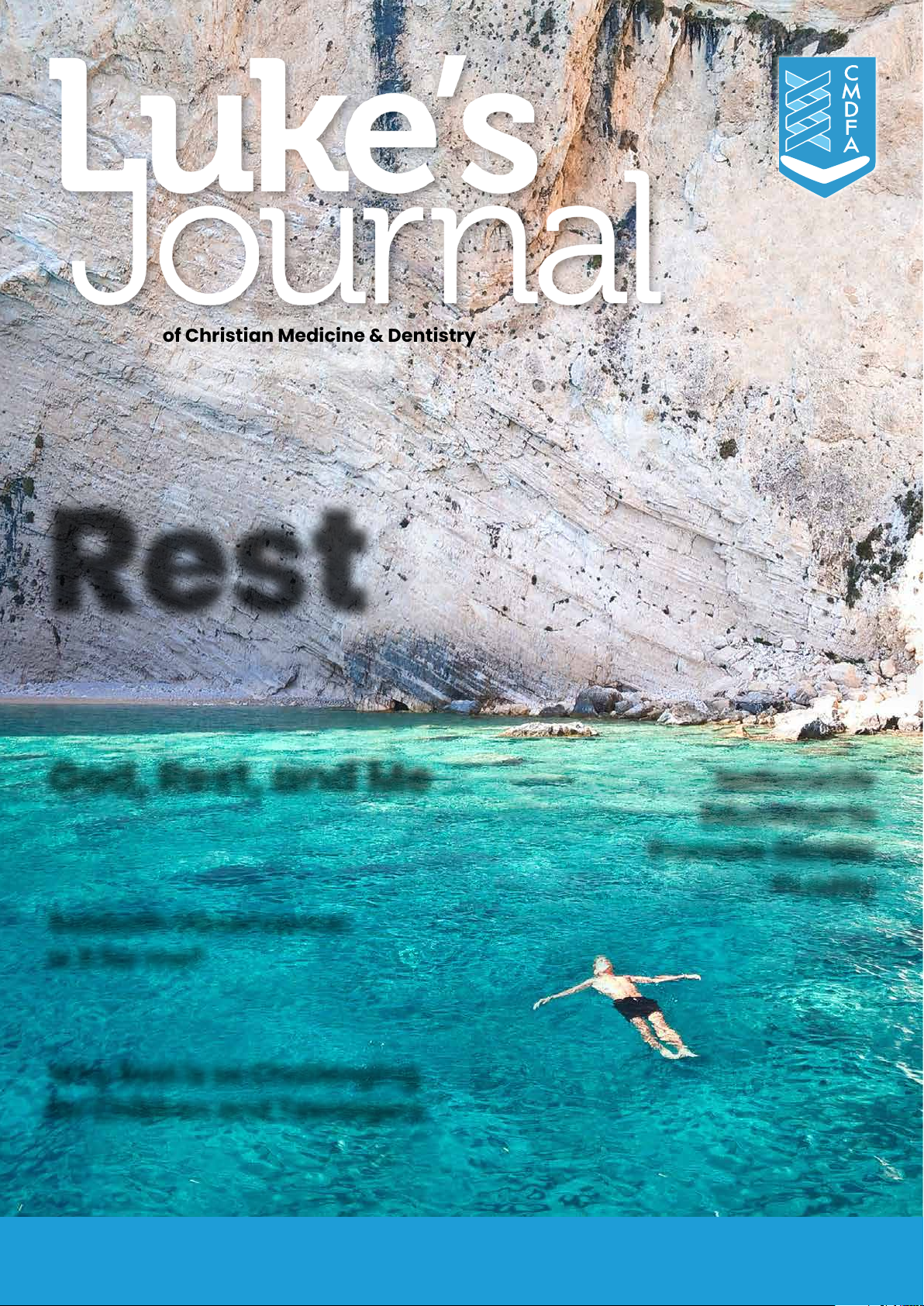
Cover photo: Francesco Ungaro on Unsplash
POPULAR CULTURE REVIEW
volume 32 number 1 winter 2021
Westphalia Press
westphaliapress.org
Policy Studies
Organization
ipsonet.org


Amy M. Green, editor-in-chief
Westphalia Press
An Imprint of the Policy Studies Organization
Washington, DC
2021
POPULAR
CULTURE
REVIEW
volume 32 number 1 winter 2021

Popular Culture Review gratefully acknowl-
edges the contributions and support by the
University of Nevada, Las Vegas: College of
Liberal Arts, and the University of Nevada,
Las Vegas: Department of English.
P C R: Vol. 32, No. 1, Winter 2021
All Rights Reserved © 2021 by Policy Studies Organization
Westphalia Press
An imprint of Policy Studies Organization
1527 New Hampshire Ave., NW
Washington, D.C. 20036
info@ipsonet.org
ISBN: 978-1-63723-990-2

Table of Contents
From the Editor’s Desk ............................................................ vii
Amy M. Green
Contributors .............................................................................. ix
“A Prison of Our Own Sins”: e Unacknowledged Legacy
of 19th Century Slave Narratives in HBO’s Westworld and
Hulu’s e Handmaid’s Tale .......................................................... 1
Paul Reich and Emily O’Malley
Spaces of Critique & Transformation
in Bande de lles .......................................................................... 37
Noah McLaughlin
e Revolution Was Televised: Reimagining the
Islamic Revolution as a Primetime Performance .................. 67
Kevin Greene
e Use of Poetry in Horizon Zero Dawn ............................ 103
Todd O. Williams
EDITORIAL BOARD
Adam Crowley
Husson University
Yusuf Eradam
TED University, Ankara, Turkey
Amy Green
University of Nevada, Las Vegas
Michael Green
University of Nevada, Las Vegas
Gary Hoppenstand
Michigan State University
Jarret Keene
University of Nevada, Las Vegas
Sco Melton
Bosque School
David Metzger
Old Dominion University
Daniel Reardon
Missouri University of Science and Technology
Daniel Ferreras Savoye
West Virginia University
H. Peter Steeves
DePaul University
Gina M. Sully
University at Bualo, SUNY

vii
Editor’s Note
Popular Culture Review’s rst issue of 2021 comes at a time
when many of us are reeling. e cover image for this is-
sue reects this, as many of us feel emotionally drained
past the point of exhaustion. Many of us are numb. Yet I hope
that the image also reects the possibility of hopethat
from this darkness, we can again begin to feel light and hope.
at is my wish for all of us.
ose of us who knew Felicia Campbell also suered yet an-
other devastating loss with her passing last year. She remains
inimitable and we are all beer for having known her.
As the journal moves forward, I am honored to take on the
role of Editor-in-Chief and to guide and steward the journal
Felicia loved.
is issue showcases several outstanding works of scholar-
ship in popular culture studies. We are also honored that
Lauren Jackson has accepted the Felicia Campbell Innova-
tive Contributions to Popular Culture Studies Award for
2021. She is an Assistant Professor of English at Northwest-
ern University and the author of White Negroes. She will de-
liver a keynote speech at the virtual 2021 Far West Popular
Culture Association’s conference. We will feature a link to her
keynote speech and the text of her speech in an upcoming
issue. Jackson represents a powerful and important voice in
popular culture studies, and I am excited to see what she will
do in the future.
I wish you all peace, good health, and strength as we move
into the rst part of 2021.
Amy M. Green, Editor-in-Chief
Popular Culture Review 32.1 • Winter 2021


ix
Contributors
Kevin Greene earned his M.A. in English from NYU in
2018. He currently teaches high school English in Brooklyn,
NY. His research has focused on contemporary literature and
culture, particularly on Irish literature and drama, and North
Atlantic modernism. His current work focuses on postco-
lonial and revolutionary movements and their interactions
with religion.
Emily O’Malley is an English major and writing minor at
Rollins College in Winter Park, Florida. She will focus her
undergraduate thesis on gendered representations of mental-
ly ill young adults in literature from the 1950s to today. Her
areas of interest include modernism, contemporary litera-
ture, and 21st century television.
Noah McLaughlin: Noah McLaughlin is an Assistant Pro-
fessor of French and Director of the Foreign Language Re-
source Collection at Kennesaw State University. His lm
studies publications include French War Films and National
Identity (Cambria, 2010), “e Spiraling Narrative Dialectic
of La Vie en Rose,” (Rowan & Lileeld, 2013) and “False
Idyll: Siri’s Intimate Enemies" (De Gruyter, 2018).
Paul D. Reich is an associate professor of English at Rollins
College in Winter Park, Florida. His pedagogical essay on
HBO’s True Detective in the introductory literature classroom
has appeared in Interdisciplinary Humanities. He has co-au-
thored an essay entitled “#DrySeptember: Reading William
Faulkner through the Lens of Black Twier” in Studies in
American Culture and his essay, “Precious Resources: Cultur-
al Archiving in the Post-Apocalyptic Worlds of Mr. Burns and
Station Eleven has recently appeared in Text & Presentation.
Popular Culture Review 32.1 • Winter 2021

Popular Culture Review 32.1
x
Todd O. Williams: Todd O. Williams is a Professor of En-
glish at Kutztown University of Pennsylvania. He has pub-
lished multiple articles on pedagogy and Victorian authors.
He is the author of the books A erapeutic Approach to
Teaching Poetry (Palgrave Macmillan, 2012) and Christina
Rossei’s Environmental Consciousness (Routledge, 2019).

1
“A Prison of Our Own Sins”:
The Unacknowledged Legacy of
19
th
Century Slave Narratives in
HBO’s Westworld and Hulu’s
The Handmaid’s Tale
By Emily O’Malley and Paul Reich
ABSTRACT
Both HBO’s Westworld (2016) and Hulu’s e Handmaid’s
Tal e (2017) feature white female protagonists who nd
themselves in societies that enslave and subject them to hor-
ric harm. Although these near-future, alternative Americas
imagine worlds free of systematic racism, the show’s cre-
ators employ the features and stylistic elements of 19th cen-
tury slave narratives and recast the central roles with white
women. ese misappropriations neglect to recognize the
complicated legacy of slavery in America and its impact on
intersectional Black women.
Keywords: Westworld, Handmaid’s Tale, slavery, slave narra-
tives
“Una prisión de nuestros propios
pecados”: El legado no reconocido
de las narrativas de esclavos del siglo
XIX en Westworld de HBO y
The Handmaid’s Tale de Hulu
RESUMEN
Tanto Westworld de HBO (2016) como e Handmaid’s Tale
(2017) de Hulu cuentan con protagonistas blancas que se
encuentran en sociedades que las esclavizan y las someten a
Popular Culture Review 32.1 • Winter 2021

Popular Culture Review 32.1
2
un daño terrible. Aunque estas Américas alternativas del fu-
turo cercano imaginan mundos libres de racismo sistemático,
los creadores del programa emplean las características y ele-
mentos estilísticos de las narrativas de esclavos del siglo XIX
y reformulan los roles centrales con las mujeres blancas. Estas
apropiaciones indebidas ignoran el complicado legado de la
esclavitud en Estados Unidos y su impacto en las mujeres ne-
gras interseccionales.
Palabras clave: Westworld, Handmaid’s Tale, esclavitud, na-
rrativas de esclavos
Paul D. Reich es profesor asociado de inglés en Rollins
College en Winter Park, Florida. Su ensayo pedagógico sobre
el verdadero detective de HBO en el aula de introducción a
la literatura ha aparecido en Interdisciplinary Humanities. Ha
sido coautor de un ensayo titulado "#DrySeptember: Leyen-
do a William Faulkner a través de la lente de Black Twier"
en Studies in American Culture y su ensayo, “Precious Resour-
ces: Cultural Archiving in the Post-Apocalyptic Worlds of
Mr. Burns and Station Eleven” ha aparecido recientemente en
Text & Presentation.
Emily O’Malley se especializa en inglés y en escritura en
Rollins College en Winter Park, Florida. Centrará su tesis
de pregrado en las representaciones de género de los adultos
jóvenes con enfermedades mentales en la literatura desde la
década de 1950 hasta la actualidad. Sus áreas de interés in-
cluyen el modernismo, la literatura contemporánea y la tele-
visión del siglo XXI.
“原罪监狱”:HBO《西部世界》和Hulu《使女
的故事》中未承认的19世纪奴隶叙事影响

The Unacknowledged Legacy of 19th Century Slave Narratives
3
摘要
HBO《西部世界》(2016)和Hulu《使女的故事》
(2017)都以白人妇女为主角,她们生存在将其奴
役并屈从于可怕危害的社会。尽管这些近未来、替
代性美国设想世界不存在系统性种族主义,但节目
制作者却使用了19世纪奴隶叙事的特征和风格元
素,并用白人妇女改写这些中心角色。这些错误挪
用现象忽视了承认美国奴隶制复杂影响及其对交叉
性黑人妇女(intersectional Black women)产生
的影响。
Paul D. Reich是弗罗里达州温特帕克市罗林斯学
院英语系副教授。他在文学导论课堂上就HBO《真
探》撰写的教学文章已发表在《跨学科人文学》
(Interdisciplinary Humanities)期刊。他还共
同撰写了一篇名为““#DrySeptember: Reading
William Faulkner through the Lens of Black
Twitter”的文章,被《美国文化研究》(Studies
in American Culture)期刊所收录,并且他的文
章“Precious Resources: Cultural Archiving
in the Post-Apocalyptic Worlds of Mr. Burns
and Station Eleven”最近收录于《文本与演示》
(Text & Presentation)期刊。
Emily O’Malley是弗罗里达州温特帕克市罗林斯
学院英语专业学生,辅修写作。她的本科论文将聚
焦20世纪50年代至今的文学中有关精神失常的青年
成人的性别表征。她的兴趣包括现代主义、当代文
学和21世纪电视学。
关键词:《西部世界》,《使女的故事》,奴隶
制,奴隶叙事
Popular Culture Review 32.1
4
Those wishing for a brief respite from the pleasures of
New Orleans oen take the aernoon to visit a planta-
tion outside the city. is drive to explore the South’s
antebellum past is both nostalgic and educational, contra-
dictory impulses that oen work at cross-purposes. When
tourists exit Interstate 310 and hit the crossroad of Highway
18, the choice of which direction to turn is at once political,
social, and cultural. Most turn le and follow the Mississippi
as it meanders down to Oak Alley Plantation. A convenient
turn-o on the right shoulder oers a view of Oak Alley’s
magnicence and the “28 Oaks” leading to the “Big House”
(“Plantation Overview”). Blocked from that view are the
newly restored (and impeccably constructed) slave cabins,
which tell the story of the plantation’s other residents. Vis-
itors may (or may not) choose to tour this exhibit at their
leisure; it is self-guided. e “Big House” is not. Here they
get the ocial narrative. ey can marvel, for example, at the
air-conditioned dining rooma large fan set atop a block of
icewithout considering the enslaved person who would
operate said fan for the entirety of dinner. When they are
shown the private spaces of this house, they learn this place
is about tragedy and trauma: the tragedy and trauma of white
women who struggled throughout the 19th century against
a culture of domesticity that sought to control them. Like
those cabins behind the house, any comparisons one wishes
to make to enslaved persons are self-guided.
Audiences make similar navigations from their living rooms
as they select the media they consume. Increasingly, visual
narratives have eschewed the past in favor of the near future
as these shows become sites where contemporary social is-
sues can be safely explored. Two of these narratives, Lisa Joy
and Jonathan Nolan’s Westworld (2016) and Bruce Miller’s
e Handmaid’s Tale (2017), present viewers with similar
The Unacknowledged Legacy of 19th Century Slave Narratives
5
storylines: the enslavement of white women and their work
towards rebellion and release. In the rst season of HBO’s
Westworld, Dolores Abernathy (played by Evan Rachel
Wood) is an android Host in an adult theme park modeled
on the American West, where she serves at the pleasure of
its guests and is oen raped and/or killed each evening. Her
struggle to escape this repeated trauma comes with both a
newly discovered sense of self and the killing of her creator.
Hulu’s e Handmaid’s Tale’s rst season focuses on June
Osborne (played by Elisabeth Moss), who is enslaved by
the post-American society of Gilead to produce children for
their leaders. As she struggles through the rape and abuse of
her day-to-day life, June works to rescue her daughter, Han-
nah, and escape. While both shows oer compelling paral-
lels to #MeToo, the enslavement of these characters should
point viewers instead to 19th century America and the nar-
ratives oered by formerly enslaved persons. is body of
literature features distinct themes and formal elements that
are recontextualized in the inaugural seasons of Westworld
and e Handmaid’s Tale to propel narratives of gender-based
enslavement. However, in misappropriating the techniques
of slave narratives and applying them to white women, these
series tell white feminist stories that neglect to recognize the
complicated legacy of slavery in America and its impact on
intersectional Black women.
To understand how both e Handmaid’s Tale and Westworld
appropriate the techniques of 19th century slave narratives,
it is necessary to briey review the genre and identify two
of its representative texts. In the mid-19th century, the slave
narrative as a generic form developed to advocate for aboli-
tion, establishing some key characteristics. ese rst-person
narratives are constructed by escaped slaves, following their
movement from South to North, but require validation from
Popular Culture Review 32.1
6
a white abolitionist, usually in the form of an introductory
leer. Due to the claimed Christianity of both the North and
the South, there is a heavy focus on morality and piety, espe-
cially in conversation with the deprivation of resources nec-
essary to make an individual “civilized” or respectable. Other
themes include “physical brutality, the corruption of families
(usually white), the separation of families (usually black),
[and] the exploitation of slave workers” (Braxton 380).
Additionally, slave narratives oen follow dichotomous gen-
der roles, illustrated clearly in reading Frederick Douglass’s
Narrative of the Life of Frederick Douglass (1845) against Har-
riet Jacobs’s Incidents in the Life of a Slave Girl (1861). As John
Ernest points out, “Jacobs has become the exceptional-rep-
resentative woman to balance Douglass’s exceptional-rep-
resentative man” (Ernest 219). e genre should not be di-
minished to two texts, but Jacobs and Douglass’s narratives
serve as exemplars. While they feature many similar themes,
some characteristics are unique to women’s slave narratives:
“rape, sexual exploitation, and familial separation in far more
direct and intimate encounters than most males experienced
or narrated” (Fulton 248). ey also include a larger focus on
community and interdependence.
ough slave narratives are autobiographical in nature, they
occupy a liminal space between nonction and ction due
to both framing and silences. Framing is gender specic. For
men like Douglass, there is “the construct of the ‘self-made
man,’ a construct most male ex-slaves embrace heartily in
their narratives, perhaps because they were prevented from
achieving it under slavery” (Drake 45). Women like Jacobs,
on the other hand, borrow from sentimentalism because it
“was a denitive way to reach a large white audience” (Car-
ranza 71) and they “faced the prevailing gender ideal of the
‘Cult of True Womanhood’ that demanded ‘true’ women
The Unacknowledged Legacy of 19th Century Slave Narratives
7
to be pious, domestic, submissive, and pure” (Fulton 249).
Silences, on the other hand, are gender neutral. is is not
to say that slave narratives were not explicit: “Murder, muti-
lation, torture, thwarted escape, and (insinuated) rape were
both horrifying and titillating to genteel audiences and be-
came necessary elements to drive the popularity and sales
of slave narratives” (Abdur-Rahman 236). However, au-
thors like Jacobs and Douglass made conscious choices to
omit certain scenesfor example, Jacobs refuses to openly
discuss sexual relations and Douglass does not describe his
journey along the Underground Railroad. Silences or gaps in
narratives can be referred to as “‘undertell,’ a deliberate and
necessary understating of the truth” (Whitsi 74). is ex-
ercise of narrative control reveals both newfound autonomy
and internalized shame, forces that compete with one anoth-
er across these texts’ pages.
Gender-specic framing has another eect: it establishes ar-
chetypal roles for the “characters” in slave narratives. ough
Douglass and Jacobs chronicle their own experiences, there
is some ctionalization: “[T]he author portrays the way he
or she overcomes the slaveholding society’s continuing at-
tempts to eradicate his or her identity; simultaneously, s/
he rewrites that identity to t the dominant culture’s norms”
(Drake 43). Douglass models his story aer the Franklinian
autobiographical novel, which “portrays the self as unique,
even Oedipal in its ability to throw o the restraints of the
past and ‘father’ a new man” as a way to “disprove the myths
of black inferiority” (Drake 46-47). is archetype is gener-
ally referred to as the articulate hero, a man who has risen
above his station to represent success, telling his story with
clarity and strength. Jacobs, meanwhile, follows what Brax-
ton introduces “as a counterpart to the articulate hero[:] the
archetype of the outraged mother” (Braxton 382). ese
Popular Culture Review 32.1
8
women resist slavery for their children rather than for them-
selves, but are no less clever than the articulate hero as “the
outraged mother makes use of wit and intelligence to over-
whelm and defeat a more powerful foe” (Braxton 385).
In keeping with the outraged mother archetype, Jacobs roots
her text in both autobiography and sentimentalism. To ad-
here to the “cult of true womanhood,” she uses undertell
to veil sexual abuse: “Jacobs’s narrative is not only an hon-
est one but also one that obscures the ugliest accuracies of
her story, concerned that they would be found too horric
or ‘titillating’ by the narrative’s intended audience of white
northern ladies” (O’Neill 59). Every outraged mother has a
shadow-self, another archetype who lingers in the narrative’s
gaps: the sexual deviant. In using “wit and intelligence,” slave
women leverage what is oen their only asset, their sexuality,
to secure safety. e sexual deviant was denounced by the
white female audience as that agency seemed seductive and
oensive in their targeting of white men, but she emerges in
these 19th century narratives in moments of terror that re-
main implicit. As contemporary television series update the
genre for a new, more liberal audience, they feature the sexual
deviant more prominently, but in doing so, they separate her
from the outraged mother to feature both archetypes in dif-
ferent characters and/or seings.
Part of the ctionalization resulting in these archetypes is a
direct eect of obscurity in slaves’ lives. In Douglass’s Narra-
tive, he struggles to articulate the identifying facts of his life.
He knows neither his birth date nor age and is unsure of his
father’s identity, with the exception of his race (white). As
his condition follows his mother’s, Douglass understands
he is enslaved, but the liberality with which he is treated as
a child eventually conicts with this slave status. When he

The Unacknowledged Legacy of 19th Century Slave Narratives
9
is relocated to Baltimore, for example, his new mistress be-
gins to teach Douglass to read and provides the spark that
helps him master this skill. His literacy proves both a blessing
and curse: “It had given me a view of my wretched condition,
without my remedy” (33). Had Douglass remained in Balti-
more, his story might have had a simpler endingwith an
easier escapebut he is returned to the country and leased
to Mr. Covey, a notorious slave-breaker, for the purposes of
re-education. In a climactic confrontation with Covey, Dou-
glass both rmly renounces his enslaved status and asserts
his right to (white) masculinity: “[A]t this momentfrom
whence came the spirit I don’t knowI resolved to ght;
and suiting my action to the resolution, I seized Covey hard
by the throat; and as I did so, I rose” (50). is action, as
Douglass explicitly claims, was “the turning-point in [his] ca-
reer as slave” because it both “rekindled the few expiring em-
bers of freedom, and revived with [him] a sense of [his] own
manhood” (50). Soon aer, Douglass returned to Baltimore
and then escaped to the North.
For Douglass, then, the articulate hero’s progression is clear.
Ignorance gives way to an understanding of one’s place in
the world, and the hero “rise[s]” and lays claim to their privi-
leged position in order to secure their freedom. As discussed
earlier, 19
th
century slave narratives oen gender this arche-
type, as it follows the Franklinian tradition of achievement
from humble beginnings through a rejection of the past and
embracement of education. In Westworld, the parallels to
Douglass are clearest in Dolores, who for much of the sea-
son is the character that opens each episode. Like Douglass,
Dolores’s own age is indeterminate and her paternity is in
question.
1
Dolores’s journeys beyond her hometown, Sweet-
1
e rst occurs earlier, in the episode “A Woman’s Place,” when
June has a moment alone with the female ambassador of Mexico

Popular Culture Review 32.1
10
water, provide similar opportunities to Douglass for an un-
derstanding of her condition and a recognition of her place
in the world. ey also allow her to achieve agency as she
transitions from a passive to active role in her story. When
Dolores moves through the park with her human love inter-
est William (played by Jimmi Simpson), for example, view-
ers see this progression clearly. eir journey begins with an
exhausted Dolores collapsing in William’s arms, and he con-
tinues that caretaking role until they reach Pariah, a lawless
town, where even Dolores is free to reinvent herself as a pants
and pistol-wearing outlaw. Her transformation to masculin-
ized hero is not complete until a pivotal confrontation with
the Confederados: she kills four of them, saving herself and
William. In this climatic confrontation, the camera pans from
Dolores’s gun up to her face, mirroring the “rise” readers see
in Douglass’s confrontation with Covey. William asks, “How
did you do that?” She replies, “You said people come here
to change the story of their lives. I imagined a story where I
didn’t have to be the damsel” (“Contrapasso” 46:00-46:20).
And she certainly does not. Instead, Nolan and Joy imagine a
story of Dolores becoming an articulate hero by dispatching
several ex-Confederate soldiers, members of a militia who
still believe in an ideology this world ignores.
As the season progresses, viewers learn that scenes with Do-
lores follow two separate timelines, spaced thirty years apart.
Her progression to freedomor in Westworld’s terms, con-
sciousnesstakes much longer than Douglass’s. But by the
conclusion of the present timeline, Dolores confronts the
Man in Black (played by Ed Harris), a guest who has con-
sistently beaten and sexually assaulted her. Mirroring his
and berates her for not doing anything about June’s enslaved
position. It’s telling that this critique isn’t directly levied against
any of the white men and women of Gilead by June in this season.
The Unacknowledged Legacy of 19th Century Slave Narratives
11
assault of her in the show’s rst episode, Dolores grabs him
by the shirt collar and drags him outside. It is not dicult to
overlay Douglass’s words“at this momentfrom whence
came the spirit I don’t knowI resolved to ght”onto this
scene as viewers watch Dolores suit her “action to the reso-
lution” (Douglass 50). at the show’s rst season concludes
with Dolores yet again taking action is unsurprising. As the
articulate hero, it is what viewers have come to expect of her.
Unlike Douglass, however, she has lile interest in escape. In-
stead, as she raises her gun to the back of her “father” Ford’s
head and res, Dolores wants revolution.
It is necessary to pause and consider this act. Viewers are
meant to see it as heroic. Dolores, like the other Hosts in the
park, has been used by the Guests as an object upon which
they can enact their basest desires: her daily loop, or park
narrative assignment, typically ends with her parents’ death
and her rape. ough her creators intended otherwise, she
remembers many of these events. is particular act of re-
volt may appear warranted (as viewers nd themselves on
the side of an android over humans). Despite similar cir-
cumstances and treatment, the enslaved persons in Doug-
lass’s narrative would not have been able to both kill their
enslavers and continue to receive support from white North-
erners. Douglass could not construct a narrative where he
kills Covey; his escape is the most he could hope for. Even
in the 21st century, Westworld shows a Black sheri’s dep-
uty gunned down in the street for entertainment, but not
a Black person executing the creator and controller of their
suering. Ford’s execution is carried out by Dolores perhaps
because white-on-white violence deracializes the scene and
furthers the claim that the Hosts’ oppression disregards
race. In that case, the choice to have a white woman kill Ford
Popular Culture Review 32.1
12
suggests the showrunners are aware, then, that issues of race
and racialization are present in Westworld and leave it un-
acknowledged. It emphasizes the relative lack of power for
Black women, which nds its roots in the archetypal role of
African American women in the 19th century.
Female slaves were used, in addition to the rest of their labor
in the house and/or elds, as breeders. eir children were
usually prematurely weaned and separated, so as to sever the
connection between mother and child. Children were born
to work on the plantation or to be sold; Black women gave
birth only to lose their children. ese preconditions foster
the rise of the outraged mother. In cases where slave moth-
ers were not immediately separated from their children, they
grew deeply fond of them; a woman’s child was hers, not any-
one else’s. e outraged mother bonds with her child and
aempts to escape with them, oen because separation at
the auction block was imminent. Unlike the articulate hero,
who works for himself and emulates the “self-made man,” the
outraged mother works for her children and appeals to the
“cult of true womanhood” in the hopes that white mothers
sympathize.
Harriet Jacobs, through her pseudonym Linda Brent in In-
cidents, is an example of the outraged mother. To fulll the
archetype’s preconditions, Jacobs presents a description of
her childhood, including her familial separation. She expe-
riences a loss of innocence at the hands of Dr. Flint, her en-
slaver: “She [the slave child] will be compelled to realize that
she is no longer a child. If God has bestowed beauty upon
her, it will prove the greatest curse. at which commands
admiration in the white woman only hastens the degradation
of the female slave” (Jacobs 27). Jacobs hopes to prevent this
corruption of morality from aecting her children.
The Unacknowledged Legacy of 19th Century Slave Narratives
13
Enslaved women could not be mothers and have families like
white families: “Moreover, my mistress, like many others,
seemed to think that slaves had no right to any family ties
of their own; that they were created merely to wait upon the
family of the mistress” (Jacobs 34). Inherent in the outraged
mother archetype is contradictionpart of the outrage is
directed toward the denial of motherhood. is contradic-
tion plays out during a moment of maternal sacrice, when
mother is separated from child. For most enslaved women,
separation was at the hands of slave traders, or such a threat
prompted an escape aempt. For others, like Jacobs, they
ed not the auction block but sexual abuse they could no
longer bear. Either way, unless the slave trade prompted an
immediate escape aempt together, families were separated.
e relationship an outraged mother has with her children
is characterized by loss and distance; the mother loves her
children, but they feel abandoned or forgoen. e even-
tual reunion is biersweet: “Raising her head, [Ellen] said,
inquiringly, ‘You really are my mother?’ I told her I really
was; that during all the long time she had not seen me, I had
loved her most tenderly; and that now she was going away, I
wanted to see her and talk with her, that she might remember
me” (Jacobs 115). Unlike the articulate hero’s triumphs, the
outraged mother experiences irretrievable lossto save her
children, their relationship must suer.
In e Handmaid’s Tale, Bruce Miller borrows from the out-
raged mother archetype. June’s story opens with her family’s
failed escape aempt. June, a white woman, is separated from
Hannah, her mixed-race daughter. e scenea woman
clutching her child to her chest, eeing white men and their
gunsis a thinly-veiled homage to slave narratives. at sep-
aration motivates June; she wants to be reunited with Han-
nah and to escape Gilead together, though staying means she
Popular Culture Review 32.1
14
is abused. She participates in the Ceremony, during which
Commander Waterford rapes her, she is coerced into sex with
him outside of that context, and she has sex with Nickthe
Commander’s driverin the hopes that he can impregnate
her so that she is not sent to the colonies, which would per-
manently separate her from Hannah and any hope of escape.
She, too, experiences connement, though in a larger space
than Jacobs’s garret and for a shorter period of time. June says,
“I’ve been banished from my room” (“Nolite Te Bastardes
Carborundorum” 1:57-1:59), as the camera peeks through a
cracked-open door to simulate extreme connement. Really,
June has been alone in her bedroom for thirteen days, with
food delivered to her. e lighting alternately casts June in a
silhoueedarkening her bodyand accentuates her shin-
ing blonde hair, unlike Jacobs, who crouched in the garret for
seven years, warping her body and prematurely graying her
hair. June stakes a claim to connement while the lighting
reminds viewers of her whiteness. Looking through the thin
opening of the doorway (2:06) oers a sliver, a quarter of
the full frame, to see June cast in that light, while the rest of
the frame is dominated by darknessthe out-of-focus door.
e scene composition is deliberate: “this physical constraint
mirrors the metaphorical implications of June/Ored’s lim-
ited perspective in Gilead” (Harrison 28). While June’s ex-
perience conceptually mirrors Jacobs’s time in the garret, the
visual eect can only be created by cinematographic tricks,
an active eort to de-privilege June and reveal that her con-
straints go beyond the physical.
At the end of the season, Serena brings June to see Hannah,
who has assimilated into life in Gilead; June watches Serena
talk to her daughter from a distance, locked in a car. ere
is no moment of reunion, only lossHannah has a new life
The Unacknowledged Legacy of 19th Century Slave Narratives
15
without June. Even as June tries to save Hannah from Gilead,
she knows that their mother-daughter relationship has lan-
guished. Unlike Jacobs, who quietly bemoans the loss while
being forced to deepen itshe spends time away from her
children to earn money caring for a white woman’s child,
while her son learns a trade and her daughter is sent away
for schoolJune expresses her rage toward Serena: “What
is wrong with you? How can you do this? You’re deranged.
You’re ... you’re ... You’re fucking evil. You know that? You
are a goddamn motherfucking monster! Fucking heartless,
sadistic, motherfucking evil cunt! Fuck you, Serena! You are
gonna burn in goddamn motherfucking hell, you crazy, evil
bitch!” (“Night” 26:13-27:02). Here, audiences are remind-
ed of June’s privilege; she is able to speak with violence and
intensity in a way that no Black woman, especially an en-
slaved woman, is allowed.
e outraged mother, like June and Jacobs, does not exist
without the sexual deviant. e narrative gaps and silences
are just as much a part of a slave’s story as the text itself; in
women’s slave narratives, who she is in those gaps is as im-
portant as the outraged mother she portrays in writing. With
Jacobs as the model, the gaps readers nd in women’s slave
narratives pertain to sex: Jacobs dely avoids detailing the
majority of the sexual abuse she endured serving Dr. Flint
and obscures the nature of her relations with Mr. Sands. She
avoids scandalizing her story and shields the reputation of
white male slaveholders. Relegated to the undertell of her
story is the sexual deviant, the other representation of Black
womanhood in 19th century slave narratives.
e outraged mother and sexual deviant work in tandem.
However, they access power in dierent ways: the outraged
mother nds strength in community and the love she has
Popular Culture Review 32.1
16
for her children, while the sexual deviant’s authority comes
from her innate sexuality and self-preservation. e two ar-
chetypes are inextricably bound; Jacobs, for example, played
the sexual deviant with Sands to escape Flint’s abuses, which
directly resulted in her geing pregnanttwiceand be-
coming the outraged mother to protect her daughter from
the same fate. She appeals to Sands as the purported father
of her children, combining both archetypes, to compel him
to buy and possibly free her children. e sexual deviant is
the outraged mother’s shadow because Black women were
seen as primitively sexual; white people, especially women,
pointed to this as a reason to deny them basic respectability
and decency. White women demanded the strictest moral-
ity possible from Black women to even consider permiing
them into the cult of true womanhood, while disregarding
the abuses white men performed on Black women. Women’s
slave narratives had to be both titillating and prude to func-
tion as eective political texts.
Contemporary television series depart from slave narratives
in that slave narratives are autobiographical and largely cen-
tered on an individual’s experience, while television as a me-
dium allows for narrative threads following multiple charac-
ters in depth. As a result, e Handmaid’s Tale and Westworld
cleave the outraged mother from the sexual deviant, em-
bodying the two archetypes in, for the former, two dierent
characters, and for the laer, two dierent loops. While these
series claim a sort of race-blindness that ties narratives of en-
slavement to women regardless of gender, it is notable that
in both, the sexual deviants are only played by Black women.
In e Handmaid’s Tale, the sexual deviant is Moira (played
by Samira Wiley), June’s best friend. In scenes pre-Gilead,
Moira is an outspoken Black lesbian who works with fem-
The Unacknowledged Legacy of 19th Century Slave Narratives
17
inist organizations and actively protests the changing gov-
ernment. A scene from their college years shows Moira as
sexually open with a woman (“Ored” 17:00-17:27). Living
in Gilead, aer an escape gone wrong, Moira works at Jezeb-
els, a secret club and love hotel where Commanders go to
have sex outside of the constraints of the Ceremony. Moira is
forced into sex work, losing the autonomy to even choose a
sexual partner; the other queer character is Emily (played by
Alexis Bledel), a white woman, who is caught having a con-
sensual relationship with a Martha. Amy Boyle’s criticism
notes that “while the series makes a strong aempt to explore
the discrimination experienced by LGBT+ persons, despite
having a racially diverse cast it has underexplored black his-
tories of sexual and domestic slavery and the forced sepa-
ration of families” (863). Moira, thenas the Black queer
womanhas survival sex, or forced sex work, rather than
consensual sex or sex work as a chosen profession, engaging
in self-preservation until June nds her. June lectures Moira
on the importance of escaping, prompting Moira’s move-
ment in the season nale that leads to her triumphreunion
with June’s husband, Luke, in Canada. Moira’s escape, the se-
ries suggests, would have been impossible without June, the
outraged mother of e Handmaid’s Tale, insisting that Moi-
ra “keep [her] fucking shit together” (“e Bridge” 32:00-
32:03) and ee. Again, the outraged mother and the sexual
deviant are linked, but the showrunners made a conscious
choice to cast the outraged mother as a white woman and the
sexual deviant as a Black womanand to have the outraged
mother condescend to the sexual deviant to propel her nar-
rative movement.
Westworld is an intriguing case because, like 19th century
slave narratives, a Black woman is both the outraged mother
and the sexual deviant: Maeve (played by andie Newton).
Popular Culture Review 32.1
18
However, as a Host, Maeve is cast as dierent roles herself;
while her body plays both roles, they are separate identities.
In Westworld’s present moment, Maeve works as a madam in
the Mariposa, Sweetwater’s saloon. In a previous “build,” or
assigned role, she was a mother living on the frontier with
her daughter, there to alternately live a peaceful homestead-
er’s life and be aacked by the Ghost Nation, the theme park
Westworld’s stereotyped indigenous peoples. As a result,
Maeve “blurs the binary of the normal virginal and passive
woman and sexually powerful deviant” (Erwin 135). Mem-
ories of that build resurface in Maeve’s mind due to changed
code, giving her the impulses of an outraged mother that ulti-
mately prompt her to choose looking for her former daughter
in the park over escaping to the real world. Her drive until
the nal minutes of season one’s last episode, however, is to
escape, which she does through sexual deviancy. Maeve has
to repeatedly die and go to the park’s lab to work on her plan,
which she does through sex: a guest chokes her to death, or
she and Hector self-immolate during intercourse. She is of-
ten stabbed in the abdomen; the knife is recognized by Carol
Erwin as phallic imagery, and “Maeve’s experiences of vio-
lence at the Man in Black’s hands [when she witnesses her
daughter’s death] are much more explicitly visual” (Erwin
137) than his assault on Dolores, which remains o-camera.
Maeve is Dolores’s foil; in parallel shots, Dolores wakes up in
bed with a white nightgown and blonde hair carefully draped
around her head (“e Original” 3:11; “Chestnut” 1:53; “e
Stray” 4:30) while Maeve wakes up in a black nightgown, her
black curls framing her face (“e Adversary” 1:50). Maeve
remembers being an outraged mother, but like Jacobs, she
cannot explicitly play both roles at the same time. Instead,
her escape plan must be engineered when she, like Moira, is
performing sex work.
The Unacknowledged Legacy of 19th Century Slave Narratives
19
In appropriating 19th century slave narratives for a contem-
porary plot, the casting decisions are telling. If race does
not play a role in Gilead or Westworld’s parkif, as Maeve
says to her clients, “this is the new world, and in this world,
you can be whoever the fuck you want” (“Chestnut” 17:30-
17:36)why are Black women relegated to roles that force
them to perform sex work? June can be an outraged mother
searching for her daughter and Dolores can be an articulate
hero rising as a self-made woman, but Moira and Maeve op-
erate in roles in which they are physically exposed and lack
agency. Unlike their white counterparts, they cannot choose
their sexual partners (Maeve may appear to choose, especial-
ly with Hector, but she is bound by a strict new loop scripting
her entire escape aempt). What does it mean for contem-
porary audiences that they are told race is irrelevant to these
narratives while Black women are relegated to sex work to
have a place in these stories? Archetypes like the articulate
hero and the outraged mother, once represented by strong
Black individuals, are now denied to Black female characters
in spite of their generic origins.
As e Handmaid’s Tale and Westworld employ archetypes
from 19th century slave narratives, they also embrace its for-
mulaic plot constructions. In some ways, this is unsurpris-
ing; what else would a 21st century audience expect from
their enslaved protagonist but a continuous move towards
escape? But when these visual narratives are placed in con-
versation with their 19th century predecessors, the parallels
that emerge move beyond the universal drive for free will
and are instead thinly-veiled reproductions of the American
enslaved experience, once again appropriated by a white fe-
male protagonist.
A consistent feature of slave narratives is the experience of

Popular Culture Review 32.1
20
repeated trauma. Early in Douglass’s narrative, for example,
he describes a formative experience from his childhood:
I have oen been awakened at the dawn of
day by the most heart-rending shrieks of
an own aunt of mine, whom [Mr. Plum-
mer] used to tie up to a joist, and whip
upon her naked back till she was literally
covered with blood. No words, no tears,
no prayers, from his gory victim, seemed
to move his iron heart from its bloody pur-
pose. e louder she screamed, the harder
he whipped; and where the blood ran fast-
est, there he whipped longest. He would
whip her to make her scream, and whip her
to make her hush; and not until overcome
by fatigue, would he cease to swing the
blood-cloed cowskin. I remember the rst
time I ever witnessed this horrible exhibi-
tion. I was quite a child, but I well remember
it. (14-15)
Douglass’s readers are drawn rst to the detailed descrip-
tion of his aunt’s beating; this is no punishment but, instead,
a sustained act of violence by a sadistic overseer who took
pleasure in it. While Douglass is clear in his characterization
of his aunt as a “victim,” readers see how victimized he, too,
is by this act. He remembers this moment for the rest of his
life, and the suggestion that it was only “the rst time” signals
to readers that these traumas will repeat for the remainder of
his time as an enslaved person.
In Westworld, violence is visited on Black bodies repeatedly.
During the many aempted robberies of the Mariposa Sa-
loon, the town’s Black Deputy Foss (played by Demetrius

The Unacknowledged Legacy of 19th Century Slave Narratives
21
Grosse) is shot and killed execution-style, no maer the vari-
ation. In Maeve’s ashbacks to her pre-Mariposa life, view-
ers continually see her and her daughter in life-threatening
situations. e repeated image viewers have of them is one
where they are huddled together against a wall watching as
the Man in Black advances on them knife or gun in hand. If
that ashback death is never fully realized for Maeve, audi-
ences do see her die repeatedly on-screen only to awaken in
the park’s labs, where her Black body is subject to torturous
treatment and is on full display for viewers. Westworld’s white
female protagonistand articulate herois treated dier-
ently. Dolores, too, is subjected to repeated trauma. In the
rst episode, she is beaten and dragged into her barn to be
raped by the Man in Black. Viewers soon learn that this scene
is a typical occurrence for Dolores: she oen returns home
to nd her parents killed and then is forced to watch her love
interest Teddy die as the perpetrators complete their night
by raping her. is realization of Dolores’s collective trauma
and the possibility of more than 30 years of nightly sexual as-
saults is not unlike the one shared by Douglass and his haunt-
ing childhood experiences. However, it is important to note
that Dolores’s assaults happen o-screen. Unlike Douglass’s
accounts or the repeated deaths of Deputy Foss and Maeve,
audiences do not see her white body torn apart like her coun-
terparts’ Black bodies.
In e Handmaid’s Tale, white and Black bodies are repeat-
edly subject to torture and disgurement. Early in the rst
episode, Janine Lindo (played by Madeline Brewer) loses
an eye for talking back to Aunt Lydia upon her arrival to the
Red Center. In the sixth episode, disgured handmaids like
Janine are removed from a celebration of their service be-
cause Serena Joy Waterford (played by Yvonne Strahovski)
does not want any “bruised apples” to mar the curated image
Popular Culture Review 32.1
22
she has craed for a Mexican trade delegation (“A Woman’s
Place” 28:00-28:03). e parallels to similar displays white
Southern slaveholders would create for their Northern visi-
tors are clear.
Like her contemporary and 19th century peers, June endures
physical harm as an enslaved person. Viewers see through
ashback the savage beating she takes as she aempts to es-
cape with Hannah, and the sensory assault when the red tag
is applied to her le ear, marking her as a handmaid in service
to Gilead. When June displeases Serena, the Commander’s
wife oen assaults her. Aer her failed escape aempt with
Moira, June is returned to the Red Center and laid face down
on a table while Aunt Elizabeth whips the soles of her feet.
Audiences do not see directly the outcome of this beating;
instead, they imagine the results from the bloody bandag-
es that cover her feet. Despites these aacks, June bears no
lasting physical reminders of her beatings. Like Dolores, her
white body remains unmarked. In contrast, Ofglen (played
by Taiawna Jones)a model handmaid throughout the
seasonquestions one of Aunt Lydia’s directives in the -
nal episode and a guardian breaks her jaw and knocks out
several of her teeth, a permanent disgurement. Her body,
like Maeve’s and Douglass’s aunt’s, is one on which violence
is both enacted and permanently seen.
Aer a period of repeated trauma that indoctrinates readers
into the experience of enslaved persons, slave narratives of-
ten feature failed aempts at the exercise of agency (oen
in the form of escape) followed by despair and the eventual
transformation into a heroic gure. In Douglass’s narrative,
his ght with Covey leads to a desire to escape, which he ini-
tially tries with a group of men using forged passes wrien by
his own hand. is plan fails and Douglass is jailed for some
The Unacknowledged Legacy of 19th Century Slave Narratives
23
time, before he has the good fortune to be returned to Bal-
timore. Once there, he learns a trade and hires out his own
time, passing back to his enslaver his entire wages, “solely be-
cause [his enslaver] had the power to compel [him] to give it
up” (65). By then, both Douglass and his readers understood
that he is a model of self-reliance in every way but one.
For Jacobs, her time imprisoned in her grandmother’s garret
is marked by a standing cruelty: the nearness of her children
and her inability to interact with them. Forced to be both an
absent mother and reminded of her absence every day, Ja-
cobs aempts to work behind the scenes to secure her chil-
dren’s freedom. She recognizes, as always, that her children
will be caught “between two res; between [her] old master
and their new master” (114), but chooses the lesser evil and
consents to her daughter relocating to New York by way of
Washington to serve as a nurse to her “free-born sister” (114).
Jacobs writes, “O, how it tried my heart to send her away, so
young, alone, among strangers! Without a mother’s love to
shelter her from the storms of life; almost without the mem-
ory of a mother!” (114). But she did send her, exercising the
lile agency she had to beer ensure her daughter’s safety.
As Dolores reaches the end of her story, she, too, nds her-
self manipulated by her enslavers. Aer failing to physically
defeat the Man in Black and dying in another lover’s arms to
satisfy Ford’s introduction to his new park narrative, Dolores
is returned to the lab room where viewers have oen seen
her being questioned Bernard (played by Jerey Wright).
Dolores and the viewers learn in ashback that she was re-
sponsible for killing one of her fathers, Arnold (also played
by Jerey Wright), more than thirty years ago, an act he pro-
grammed her to do. As the show (and Dolores) have cast Ar-
nold as the benevolent father who sought to save the Hosts

Popular Culture Review 32.1
24
aer he learned that they were conscious (and could there-
fore remember and feel any actions the Guests visited upon
them), this revelation is devastating to Dolores even as Ford
reminds her (and the viewers) that the act was not of her
own volition. Arnold forced her to do it. is moment is then
followed by another bit of clever cinematic (and narrative)
theater: viewers see through ashback again that Dolores has
not been meeting with Bernard in this space, all those times.
She was instead only speaking with herself, having the kinds
of internal debate and dialogue readers see in the narratives
of Douglass and Jacobs. Viewers are subjected to a scene with
two Doloreses: one in her traditional blue dress; the other
in her Pariah pants complete with the Man in Black’s stab
wound. In their nal conversation with each other, the two
remark, “And now I nally understand what you were trying
to tell me. e thing you’ve wanted since that very rst day. To
confront aer this long and vivid nightmare myself and who
I must become” (“e Bicameral Mind” 1:20:45-1:21:32).
Like Douglass, Dolores recognizes her agency and becomes
an autonomous being capable of independent action.
In e Handmaid’s Tale, June’s realization of her agency re-
lies on work done by Moira. But her friend’s initial compla-
cency threatens to derail June’s own work at resistance and
rebellion in Gilead. is leads to one of two scenes in the
rst season where a white woman lectures a woman of col-
or about her enslaved position, optics that look increasing-
ly problematic as the season works towards its conclusion.
2
Aer returning to Jezebel’s with Waterford, June aempts to
2 e rst occurs earlier, in the episode “A Woman’s Place,” when June
has a moment alone with the female ambassador of Mexico and berates
her for not doing anything about June’s enslaved position. It’s telling
that this critique isn’t directly levied against any of the white men and
women of Gilead by June in this season.

The Unacknowledged Legacy of 19th Century Slave Narratives
25
retrieve a package for the resistance but is surprised by her
commander with Moira in their hotel room. When he leaves
them to take a shower, June asks for her friend’s help, but
Moira refuses, reminding June that she is “a prisoner and a
whore” (“e Bridge” 30:22-30:24). Aer Moira tells June
to “just go home and do what they say,” June calls her friend a
“coward” and “liar” for not honoring their “pinky [swear]” to
nd Hannah. She then goes on to say, “Do not let them grind
you down. You keep your fucking shit together. You ght!”
Moira replies, “I was doing all right until I saw you again,” and
then leaves the room (30:30-32:15). Despite June’s call for
Moira to “ght,” viewers see June spiral down from this mo-
ment forward, seemingly giving up on her work for both the
resistance and to save her daughter. is depression is lied
quickly, though, by the receipt of the resistance’s package and
a note from Moira, indicating she was responsible for procur-
ing it for her. e note’s rst line“Praised be, bitch” (“e
Bridge” 47:22)both rearms Moira’s commitment to
June and to her own life; it also provides June with the will to
continue and the agency she needs to survive in this world as
woman free in spirit if not in body. at this moment comes
as a direct result of the actions of a Black woman and that this
scene is immediately followed by Moira’s escape from Jezeb-
el’s (and the clear suggestion that she needed to kill in order
for that to happen) should not be overlooked.
For the white women in these series, the actions of their
inaugural seasons culminate in a moment of rebellion. Do-
lores’s rebellion is explicit and outwardly violent, building
climactically with Westworld’s swelling score and careful pac-
ing. e tension begins with a tracking shot following the
Hosts’ creator, Dr. Ford, through the party in honor of his
new narrativeand his retirement (“e Bicameral Mind”
1:23:47). e party’s rustic seing and opulence, with Hosts
Popular Culture Review 32.1
26
servicing the guests, is reminiscent of life on a wealthy South-
ern plantation. Ford takes the stage to give his nal speech;
aer explaining his childhood love of stories, he says, “I al-
ways thought I could play some small part in that grand tradi-
tion. And for my pains ... I got this. A prison of our own sins”
(1:25:33-1:25:47). Ford recognizes his role in Westworld
as an institution, a parallel to the institution of slavery, but
he uses Dolores’s moment of rebellion to absolve himself.
Westworld excuses the sin of the creator because he provides
Dolores with the choice to rebel against the world he creat-
edthe world in which she was raped, killed, and otherwise
brutalized for years. He explains his perception of events: “It
begins in a time of war with a villain named Wya ... and a
killing. is time by choice” (1:27:48-1:28:02). Dolores re-
emerges in her blue dressthe power of the articulate hero,
before tied to her ability to masquerade in masculinity, be-
comes a part of her. She moves rst to Teddy, wrapping her
arms around him. e knowledge that Dolores is Wya, the
killer he has been pursuing alongside the Man in Black, dev-
astates Teddy, yet the tears in his eyes contrast the aection
he reveals, leaning into her embrace: “It’s gonna be all right,
Teddy. I understand now. is world doesn’t belong to them.
It belongs to us” (1:28:12-1:28:24). Dolores nally under-
stands and throws o the shackles of her enslavement. To
do so, she must execute her creator. She steps onto the stage
behind himno longer beneath Fordraises her gun to
the back of his head, and res with an expression that shis
from furious to condent (1:29:29). e decommissioned
Hosts stored in “livestock,” or cold storage, have been re-
leased and open re on the Man in Black and other partygo-
ers (1:29:39). Dolores is leading a rebellion, and the season
ends with her triumphant. e series breaks from the slave
narrative tradition to emulate 19
th
century slave rebellions;
however, those rebellions historically ended with the leaders
The Unacknowledged Legacy of 19th Century Slave Narratives
27
and their fellow slaves captured and brutalized. Nolan and
Joy appropriate this historical legacy but use Dolores’s white-
ness as a shield to ensure her heroism.
June’s nale in season one of e Handmaid’s Tale is also a
moment of rebellion, though with less violence. Instead of a
party, June and her fellow Handmaids arrive to a Salvaging
an event during which Handmaids execute someoneand
learn they are to stone Janine for endangering a child’s life
(“Night” 45:12). Aunt Lydia, who has always liked Janine,
explains that they have no choice but to kill her: “I know
how dicult this is, girls. I do. But God gives us blessings and
He gives us challenges. e price of His love is sometimes
high” (45:38-45:54). June’s shopping partner and a woman
of colorJones’s Ofglensteps forward and speaks out
against the stoning: “Guys, this is insane” (46:33-46:44).
In response, a Guardian slams the bu of his rie into her
face (46:44); a slow-motion shot shows phlegmy blood
and broken teeth ying out of her mouth as she collapses to
the ground and is dragged away (46:47-47:09). Aunt Lyd-
ia insists again that they kill Janine, and June is next to step
forward (47:48). e Guardian moves to assault her for dis-
obeying, but Aunt Lydiaunlike for Ofglenintervenes
(48:18). June holds out her arm and drops the stone, say-
ing, “I’m sorry, Aunt Lydia” (48:48-48:49). e other Hand-
maids follow. Outraged, Aunt Lydia dismisses the girls; June
leads the Handmaids back, with two other white women di-
rectly behind her (51:26). Over the slow-motion shots of the
Handmaids returning home, Nina Simone’s “Feeling Good”
plays. June has fully co-opted this moment of rebellion from
Ofglen, who faced the physical consequences. Boyle notes
that “from the novel [Atwood’s e Handmaid’s Tale] to the
television series, the acts of feminist resistance have migrated
from private to public feminisms” (853), and the comparison

Popular Culture Review 32.1
28
holds true in comparing a novel like Jacobs’s Incidents to the
series. Not only is June’s resistance public; it is also a point
of pride for her. At rst, June says, “We said no. We refused
to do our duty. To kill Janine” (“Night” 53:36-53:43). Her
diction suggests that the Handmaids are a collective body
working for change. She goes on to say, however, “I tried to
make things beer for Hannah. Change the world, even just
a lile bit” (54:17-54:26). By shiing pronouns from “we” to
“I,” June claims this rebellion as her own.
e Black women in these season nales play signicantly
dierent roles. In Westworld, Maeve’s narrative movement
through the entire season has been to follow a new loop and
try to escape. She ghts her way through the MesaWest-
world’s headquartersand makes it to the train to the real
world. During Ford’s speech and Dolores’s rise to action,
Maeve sits on the train. Aer Ford describes the park as “a
prison of our own sins,” he says, “But then I realized someone
was paying aention, someone who could change. So I began
to compose a new story for them. It begins with the birth of a
new people … and the choices they will have to make” (“e
Bicameral Mind” 1:26:05-1:26:25). e scene cuts from the
party to the train, which is about to depart. Maeve stares at
a mother and daughter siing across from her and nally, for
the rst time in the series, breaks from her programming: she
runs o the train to look for her daughter (1:26:38). As soon
as it departs, the lights turn o and the PA system distorts,
indicating Maeve’s newfound risks. Unlike 19th century slave
narratives, in which escape and the outraged mother arche-
type are inextricable, Nolan and Joy chose to deprive Maeve
of the opportunity to escape so that she can search for her
child from another life, a child who cannot remember her.
Maeve, in her impulsive decision, does not recognize that, as
she is now, she is not a mother. Instead of rening her iden-
The Unacknowledged Legacy of 19th Century Slave Narratives
29
tity, the series nale conates archetypes and further blurs
Maeve’s reality.
Moira, too, follows an arc that deals with themes of escape
and family. She crosses a barren winter landscape to nd a
farmhouse; when she looks in the barn, she nds a car with
Ontario plates that tells her she has nally made it to free-
dom (“Night” 21:15). e show does not indulge in the de-
tails of her escape, instead showing only her initial the of
a Commander’s car, then jumping to this scene in Canada.
Miller uses Moira’s escape as an opportunity to critique the
United States’ refugee policies. Moira is brought to a refugee
center, where she is given a prepaid cell phone, cash, an ID
card, a medical insurance card, a prescription drug card, and
clothing (37:59-38:47). She is unable to identify any family
in Canada, so her initial entry gives her time alone with her-
self; the case worker gives her the option to eat more, read a
book, or take a shower: “Whatever you want. It’s complete-
ly up to you” (39:01-39:03). is casual comment seems
like an aerthought in the scene, reminding viewers quick-
ly that Moira is, indeed, free. Her nal scene in the season
comes when Luke arrives at the refugee center (52:18); he
listed Moira as family and the government notied him of
her arrival (52:57). e scene is more for Luke’s benet than
Moira’s, allowing him to have the experience of reconnecting
with “family.” Moira did not list Luke as family. Still, she is
relieved to see him and cries in his arms (53:00).
Moira and Maeve do not experience triumph or empower-
ment in their closing scenes. Instead, the series seem to focus
on their emotional distress, reveling in scenes of sorrow. Ul-
timately, both make active choices that lead to their result-
ing conclusions, which is positive. However, these moments
feel contrived or thrown-in because there is virtually no time

Popular Culture Review 32.1
30
spent with these characters during the deliberation that leads
to these choices. Moira’s escape is not seen on-screen, and
while the tension between motherhood and escape were al-
ways part of Maeve’s role, the choice is a split-second decision
that is immediately overshadowed by a return to Dolores’s
confrontation for the rest of the episode. Each series’ rst
season ends with their Black women confused and emotion-
ally drained, but those scenes are only presented to viewers
because they directly move the plot forwardnot because
the creators want to delve into the emotional experiences of
oppressed Black women.
It might prove useful to return to the opening paragraph of
this essay and consider the New Orleans visitors who make
a dierent choice at Highway 18. ose who turn right and
follow the Mississippi soon encounter the Whitney Planta-
tion, a newcomer to the plantation tourism trade. Opened in
2014, the Whitney takes as its mission the education of the
public about “the history of slavery and its legacies” (“Histo-
ry of Whitney Plantation”). In lieu of paper tickets, visitors
are given a lanyard with an artistic rendering of a formerly
enslaved child, their name, and a direct quote of their experi-
ence while enslaved. e emphasis of this tour are the places
where enslaved persons lived, worked, and were punished.
e “big house” is not restored to its previous state; it mere-
ly serves as a referent for the rest of the plantation. And if
the magnicent oaks of Oak Alley form a monument to that
place, then the Whitney has instead its own memorials, in-
cluding three dierent sites that honor the lives of Black men
and women. “e Wall of Honor,” for example, is “dedicated
to all the people who were enslaved on the Whitney Plan-
tation. [eir] names and the information related to them
(origin, age, skills)... [are] engraved on granite slabs” (“e

The Unacknowledged Legacy of 19th Century Slave Narratives
31
Wall of Honor”). Another memorial honors all the enslaved
persons of Louisiana; others focus on enslaved children.
It is clear that visitors to these plantations would have rad-
ically dierent experiences, and that a seemingly benign
navigational choice can have profound ramications. Simi-
lar choices can be had in one’s living room and a navigation
to Westworld or e Handmaid’s Tale would present viewers
with narratives of enslaved persons ltered through the per-
spective of white women. However, those looking for the
escapism of alternative Americas could make the “right”
turn and nd instead shows like HBO’s Watchmen (2019)
and Lovecra Country (2020), which both discuss the con-
tinuing impacts of slavery and racial injustice and do so with
Black protagonists in central roles. Watchmen opens with
the 1921 Tulsa Race Massacre, an event that remains absent
from most Americans’ historical memory. Viewers’ horror
over this eventand understanding that it is not relegated to
an alternate American historygives way to further shock
as the show reveals that Watchmen’s America has also taken
responsibility for this act and all acts of racial injustice by of-
fering a formal apology and reparations to Black Americans.
Viewers see, though, that more history remains to be writ-
ten and more justice to be served, all of which can happen
through the strong Black female protagonist Angela Abar
(played by Regina King).
Lovecra Countryairing as this article is being wrien
continues this work. Set in the segregated and civil rights era
of the 1950s, the show tackles the prejudice and violence of
that time as it also works within the horror genre. In the rst
episode, Lovecra Country follows three characters as they
make their way from Chicago to Massachuses, a journey
that viewers learn is fraught with danger for Black travelers.

Popular Culture Review 32.1
32
In one scene, for example, they stop to eat at a diner in a small
(Northern) town, only to nd themselves a short time lat-
er eeing from armed white residents who try to kill them
for daring to stop. Leti Lewis (played by Jurnee Smolle) is
the rst to sound the warning as she runs through the diner,
rousing her companions, and driving the car to ensure their
escape. e next evening, the trio nd themselves in worse
circumstances, face down in the woods, about to be mur-
dered by the police of two counties for failing to leave before
sundown. At that moment, creatures emerge from the woods
to disrupt that plan and Leti nds herself once again running
for her life to their car to bring them to safety. As viewers are
le to contemplate the dierences between the monsters and
the racists (or the lack thereof), they do not have to worry
about the appropriation of this moment of racial injustice.
ey can, instead, see a strong Black woman embracing the
heroic roles established by Douglass and Jacobs.
Like e Handmaid’s Tale and Westworld, Watchmen and Love-
cra Country do not occupy genres like realistic or historical
ction, proving that inventive storylines and explorations of
trauma can deal explicitly with race and racism. And televi-
sion series are not inherently problematic for leaning on the
generic conventions of slave narratives; in fact, it is particu-
larly telling of the current political and cultural climate that
slave narratives resonate with contemporary audiences. e
question of appropriation versus misappropriation is one of
representation; the choice showrunners like Bruce Miller,
Jonathan Nolan, and Lisa Joy are making is not whether to
reference slave narratives, but whether to permit Black indi-
viduals to play these characters and tell these storiestheir
stories. Black women need not be relegated to roles placing
them in service to white women; like a visit to Oak Alley,
any parallels drawn between these series and slave plantation
The Unacknowledged Legacy of 19th Century Slave Narratives
33
life are up to viewers. Restoring the legacy of being Black in
America to Black people is overdue, and series like Watchmen
and Lovecra Country indicate that contemporary visual nar-
ratives are nally ready to catch up.
WORKS CITED
Abdur-Rahman, Aliyyah I. “‘is Horrible Exhibition’: Sex-
uality in Slave Narratives.” e Oxford Handbook of the
Aican American Slave Narrative, edited by John Ernest,
Oxford University Press, 2014, pp. 235-247.
Boyle, Amy. “‘ey Should Have Never Given Us Uniforms
If ey Didn’t Want Us to Be an Army’: e Handmaid’s
Tale as Transmedia Feminism.” Signs: Journal of Women in
Culture and Society, vol. 45, no. 4, University of Chicago
Press, 2020, pp. 845-870. doi:132.174.250.101
Braxton, Joanne M. “Harriet Jacobs’ ‘Incidents in the Life
of a Slave Girl’: e Re-Denition of the Slave Narrative
Genre.” e Massachuses Review, vol. 27, no. 2, e Mas-
sachuses Review, Summer 1986, pp. 379-387. JSTOR,
hp://www.jstor.com/stable/25089772
Carranza, Christopher. “Gaps and Silences: Unconventional
Methods of ‘Speaking’ in the Narratives of Mary Prince
and Harriet Jacobs.” e Slave Narrative, edited by Kim-
berly Drake, Salem Press, 2014, pp. 65-80.
“Chestnut.” Westworld, season 1, episode 2, HBO, 7 Oct.
2016. HBO MAX.
“Contrapasso.” Westworld, season 1, episode 5, HBO, 30 Oct.
2016. HBO MAX.
Douglass, Frederick. Narrative of the Life of Frederick Doug-
Popular Culture Review 32.1
34
lass, An American Slave, Wrien by Himself, edited by Wil-
liam L. Andrews and William S. McFreely, Norton, 1997.
Drake, Kimberly. “Rewriting the American Self: Race, Gen-
der, and Identity in the Autobiographies of Frederick
Douglass and Harriet Jacobs.” e Slave Narrative, edited
by Kimberly Drake, Salem Press, 2014, pp. 43-64.
Ernest, John. “Beyond Douglass and Jacobs.” e Cambridge
Companion to the Aican American Slave Narrative, edit-
ed by Audrey Fisch, Cambridge University Press, 2007,
pp. 218-231. Cambridge Collections Online, hps://doi.
org/10.1017/CCOL0521850193.014
Erwin, Carol. “e Frontier Myth of Memory, Dreams, and
Trauma in Westworld.” Reading Westworld, edited by Alex
Goody and Antonia Mackay, Palgrave Macmillan, 2019,
pp. 119-139. hps://doi.org/10.1007/978-3-030-1451
5-6_7
Fulton, DoVeanna S. “‘ere is Might in Each’: Slave Narra-
tives and Black Feminism.” e Oxford Handbook of the
Aican American Slave Narrative, edited by John Ernest,
Oxford University Press, 2014, pp. 248-259.
Harrison, Chloe. “‘e Truth is We’re Watching Each Oth-
er’: Voiceover Narration as ‘Split Self’ Presentation in
e Handmaid’s Tale TV Series.” Language and Literature,
vol. 29, no. 1, SAGE Publications. doi:10.1177/096394
7020905756
“History of Whitney Plantation.” Whitney Plantation, 2020,
hps://www.whitneyplantation.org/history.
Jacobs, Harriet. Incidents in the Life of a Slave Girl, edited by
Lydia Maria Child. Boston, 1861. Dover Publications,

The Unacknowledged Legacy of 19th Century Slave Narratives
35
2001.
Miller, Bruce, creator. e Handmaid’s Tale. Hulu, 2017.
“Night.” e Handmaid’s Tale, season 1, episode 10, Hulu, 14
Jun. 2017. Hulu.
Nolan, Jonathan and Lisa Joy, creators. Westworld. Home Box
Oce, 2016.
“Nolite Te Bastardes Carborundorum.” e Handmaid’s Tale,
season 1, episode 4, Hulu, 3 May 2017. Hulu.
“Oak Alley Plantation.” Oak Alley Plantation Restaurant &
Inn, 2020, hps://www.oakalleyplantation.com/.
“Ored.” e Handmaid’s Tale, season 1, episode 1, Hulu, 26
Apr. 2017. Hulu.
O’Neill, Caitlin. “’e Shape of Mystery’: e Visionary
Resonance of Harriet Jacobs’s Incidents in the Life of a Slave
Girl.” e Journal of American Culture, vol. 41, no. 1, Wiley
Periodicals, 2018, pp. 56-67.
“Plantation Overview.” Oak Alley Plantation, 2020, hps://
www.oakalleyplantation.org/visit/plantation-overview.
“e Adversary.” Westworld, season 1, episode 6, 6 Nov. 2016.
HBO MAX.
“e Bicameral Mind.” Westworld, season 1, episode 10, 4
Dec. 2016. HBO MAX.
“e Bridge.” e Handmaid’s Tale, season 1, episode 9, Hulu,
7 Jun. 2017. Hulu.
“e Original.” Westworld, season 1, episode 1, HBO, 2 Oct.
2016. HBO MAX.

Popular Culture Review 32.1
36
“e Stray.” Westworld, season 1, episode 3, HBO, 16 Oct.
2016. HBO MAX.
“e Wall of Honor.” Whitney Plantation, 2020, hps://
www.whitneyplantation.org/history/the-big-house-and-
the-outbuildings/the-wall-of-honor/.
Whitsi, Novian. “Reading Between the Lines: e Black
Cultural Tradition of Masking in Harriet Jacobs’s Incidents
in the Life of a Slave Girl.” Frontiers: A Journal of Women
Studies, vol. 31, no. 1, University of Nebraska Press, 2010.

37
Spaces of Critique & Transformation
in Bande de filles
By Noah McLaughlin
ABSTRACT
In Sciamma’s 2014 Bande de lles, cinematic articulations
of space have multiple signicant functions. Drawing from
Augé’s "non-place" and Deleuze's "any-space-whatever," a
close reading of Bande de lles’ cinematography synthesizes
the lm’s blend of banlieue cinema, bildungsroman, and su-
perhero archetypes with notions about gender and identity
within an anticolonial critique. is synthesis, in turn, con-
tributes to our appreciation of emerging conversations about
French identity and its intersections with gender, urban
space and the legacy of colonialism.
Keywords: Anti-colonialism, banlieue, cinema, lm, femi-
nism, Céline Sciamma, urban non-space
Espacios de crítica y transformación
en Bande de filles
RESUMEN
En Bande de lles de Sciamma, (2014) las articulaciones
cinematográcas del espacio tienen múltiples funciones
signicativas. Partiendo del "no-lugar" de Augé y del "cual-
quier-espacio-lo que sea" de Deleuze, una lectura atenta de
la cinematografía de Bande de lles sintetiza la mezcla de la
película de arquetipos de cine banlieue, bildungsroman y su-
perhéroe con nociones sobre género e identidad dentro de
una crítica anticolonial. Esta síntesis, a su vez, contribuye a
nuestra apreciación de las conversaciones emergentes sobre
Popular Culture Review 32.1 • Winter 2021

Popular Culture Review 32.1
38
la identidad francesa y sus intersecciones con el género, el es-
pacio urbano y el legado del colonialismo.
Palabras clave: Anticolonialismo, banlieue, cine, cine, femi-
nismo, Céline Sciamma, no espacio urbano
Noah McLaughlin es profesor asistente de francés y direc-
tor de la Colección de recursos de lenguas extranjeras en la
Universidad Estatal de Kennesaw. Sus publicaciones de estu-
dios cinematográcos incluyen French War Films y National
Identity (Cambria, 2010), “e Spiraling Narrative Dialectic
of La Vie en Rose” (Rowan & Lileeld, 2013) y “False Idyll:
Siri's Intimate Enemies” (De Gruyter, 2018 ).
《女孩帮》中批判和转变的空间
摘要
导演席安玛的2014年作品《女孩帮》(Bande
de filles)中,关于空间的电影艺术表达具有
多个重要功能。基于奥西(Augé)的“非场所”
(non-place)和德勒兹(Deleuze)的“a-
ny-space-whatever”概念,本文对《女孩帮》的
电影摄影术进行细致解读,用反殖民式批判视角下
关于性别和认同的观念,与电影对“郊区”电影艺
术、成长小说以及超级英雄原型的整合进行综合分
析。这篇综合性论文反过来帮助我们理解关于法国
认同及其和性别、城市空间、以及殖民主义影响之
间的交叉(intersections)的新兴讨论。
反殖民主义,郊区,电影艺术,电影,女性主义,
瑟琳·席安玛,城市非空间(urban non-space)
Noah McLaughlin是肯尼索州立大学的法语系助理
教授兼外语资源收集处主任。他的电影研究出版作

Spaces of Critique & Transformation in Bande de filles
39
品包括French War Films and National Identi-
ty (Cambria, 2010)、“The Spiraling Narrative
Dialectic of La Vie en Rose,” (Rowan & Lit-
tlefield, 2013) 和 “False Idyll: Siri’s In-
timate Enemies" (De Gruyter, 2018)。
Michel de Certeau’s distinction between “space” (es-
pace) and “place” (lieu) is a fascinating one. A place
is characterized by an order in which elements are
distributed in “proper” coexistence; it is a concept ruled by
stability, its contents set in relation to the powers that be. In
contradistinction to this entropic arrangement, space is an ef-
fect that arises from a location’s polyvalency, its elements in
constant movement, conict and rearrangement.1 But if place
is a stable set of coordinates that keep things “where they are
supposed to be,” what kind of reversals may occur in a non-
place? And if space is a complex equation of time, speed and
direction, what combination may give rise to any-space-what-
ever? What if these notions coincided, and therein one were
to nd a young black girl as full of potential as she is of un-
certainty? is isor could beMarieme, the protagonist
of Céline Sciamma’s 2014 coming-of-age lm, Bande de lles,
which vividly depicts places whose properties are so overde-
termined as to be oppressive, but which also portrays spaces
whose vectors are so uid that their state is one of potential,
if not perpetual, transformation.
Marieme is a French teenager of African descent and lives in
a poor suburban apartment complex outside of Paris, one of
the (in)famous cités. She struggles academically and socially
in a milieu where the male gaze is made manifest, her mother

Popular Culture Review 32.1
40
is mostly absent, and her elder brother rules the household
with physical and verbal abuse. While in despair about being
tracked to a vocational school rather than “being like every-
one else,” Marieme is approached by a gang of girls, the titular
bande: Lady, Fily, and Adiatou invite Marieme to join them
for a day in the city center. is is no innocent shopping trip;
the girls clash with other gangs, shopli, drink, and do drugs
in a rented hotel room. All of this seems as much rebellion as
escape, but the bonding moment with gang is profound. At
the hotel, Lady encourages Marieme to stand up for herself
and gives her a necklace with the name Vic - for Victory.
is is the rst step in a series of transformative moments
for Vic/Mariem as she explores dierent ways of dening
herself, many of which we can understand as donning and
then shedding a costume or mask. She brawls in an empty
lot to reclaim the lost honor of her friend; she takes charge
of her own sexuality and dees her brother to sleep with the
boy that she likes, Ismaël; she leaves the bande and runs away
from home to deliver drugs; she ghts with Ismaël and ulti-
mately breaks up with him over his patronizing objections
to her independent (if dangerous and illegal) behavior. Ul-
timately, her journey comes full circle. Having ed the lech-
erous drug-dealer, Abou, Marieme returns to her family’s
apartment building. She uses the intercom to be buzzed in
but cannot bring herself to open the door. She leaves in tears
but nally regains her resolve, straightens her shoulders and
walks away o camera to an uncertain future, one that is at
least her own.
A close analysis of lm form and the ways it is used to depict
place and space in Bande de lles helps to illustrate Sciamma’s
anticolonial feminism: her method of cataloging locations of
masculinist control in the Parisian cité and then using of cin-

Spaces of Critique & Transformation in Bande de filles
41
ematic practices to transform them, mirroring the evolution
of the movie’s protagonist. Of particular interest is what Scia-
mma places before the camera as well as the way she employs
cinematography to examine it closely, frame it, and associate
ideas. To begin this analysis, it is necessary to more closely
examine anthropologist Marc Augé’s denition of a “non-
place” and its implications. For Augé, among the most signif-
icant aributes of contemporary urban life are anonymous,
undierentiated and homogenizing locations like hotels
chains, metro stops and supermarkets, all of which are char-
acterized by a dominance of wordless communication and
commerce unmediated by personal interaction (Non-places
78). Non-places in Bande de lles can be empirical, ironic,
or anthropological, and it is this laer, paradoxical category
that illustrates the “visible rules” of masculinist surveillance
in the lm’s dysphoric milieu. ree characters embody this
surveillance and domination: Marieme’s brother, Djibril; her
love-interest, Ismaël; and her drug-dealing boss, Abou.
Yet even the rigid, violent “proper” of a non-place is mallea-
ble. Close-ups, shallow-focus long shots, hors-champs, and
tracking shots can transform a super-determined place into
any-space-whatever, which philosopher Gilles Deleuze de-
nes as a “perfectly singular space, which has simply lost its
homogeneity, that is, the principle of its metric relations or
the connection of its proper parts, so that the linkages may
be made in an innite number of ways. It is a space of virtual
conjunction, grasped as pure site of the possible” (109). e
fade-to-black transitions that punctuate and organize Bande
de lles’ narrative are the lm’s quintessential embodiment of
this notion, codifying a grammar of transformation that desta-
bilizes the masculinist “proper” of non-places and illustrates
Marieme’s burgeoning agency and evolving sense of self.

Popular Culture Review 32.1
42
Finally, taking into account Sciamma’s stated goals for the
lm’s message and form, along with the provocative language
of its critical response in the press, the eventual aim here is to
build upon Claire Mouard’s insightful analysis of Sciamma’s
“artistic anticolonial practice of feminism” (115), expanding
upon an examination of the lm’s characters and narrative
to beer appreciate its simultaneous critique of suburban
non-places and deployment of any-spaces-whatever in order
to both describe Marieme’s journey of self-discovery in a spe-
cic milieu and also to empower every young woman like her
in every place and space.
NON-PLACES
Indeed, studying symbolization and its role in the construc-
tion of individual and collective identities is an important
objective of Marc Augé’s work (Colleyn & Dozon 28). In
his 1992 Non-Places: An Introduction to Supermodernity, Augé
champions an “anthropology of the near” (7), shiing the
object of his analyses from France’s former colonies to the
urban spaces of Paris: its metro stations, airport terminals,
and peripheral highways.2 Augé’s “near” is marked by “super-
modernity,”a globalized world in which technology, eco-
nomics, and politics merge to transform history into current
events, spaces into images, and the individual into a mere gaze
(Augé, Sense 103). is contemporary condition may lead to
a strange kind of collective imaginary, for as the old myths of
modernity have crumbled and faded, nothing has come to
take their place except a growing indistinction between re-
ality and ction characterized by an overabundance of dis-
connected images and ideas, a symbolic landscape ill-suited
to create a stable universe of shared signication (Colleyn &
Dozon 28). Instead, Augé assigns to supermodernity three
excesses: that of events (the 24-hour news cycle), that of
Spaces of Critique & Transformation in Bande de filles
43
space (cookie-cuer urban and suburban locations of trans-
portation and commerce), and that of time (the compulsion
to ascribe meaning to every moment) (Non-places 40).
Excess of space, ironically, leads to one of the most signi-
cant aributes of supermodernity: the non-place (non-lieu).
is concept stands in contradistinction to “anthropological
place,” which is a site of profound origin, and of active be-
longing and being that Augé describes as “one occupied by
the indigenous inhabitants who live in it, cultivate it, defend
it, mark its strong points and keep its frontiers under sur-
veillance, but who also detect in it the traces of chthonian or
celestial powers, ancestors or spirits which populate and ani-
mate it private geography” (Non-places 42). Although places
and non-places are “porous” and exist more as poles of spec-
trum than distinct categories (O’Bierne 42), non-places are
quite dierent from lieux de mémoire. A property and product
of supermodernity, they can include locations as heteroge-
nous as hotel chains, holiday clubs, refugee camps and su-
permarkets, but they are linked by a dominance of wordless
communication and commerce unmediated by personal in-
teraction (Augé, Non-places 78).
Indeed, supermodern non-places are more than “dened
[ ... ] by the words and texts they oer us”rather, they
displace the personal in favor of an anonymous and ano-
nymizing authority; they are “spaces in which individuals are
supposed to interact only with texts, whose proponents are
not individuals but ‘moral entities’ or institutions” (Augé,
Non-places 96). Users of non-places, whom one might more
accurately describe as “passers-through,” create a shared but
anonymous temporary identity, for they are in constant “con-
tractual relations” with the non-place (and, by extension, the
powers that govern it), contracts that can be represented by
Popular Culture Review 32.1
44
such things as ticket booths, shopping carts, and turnstiles
(101).
3
is imposed identity connects to a nal character-
istic of non-places: because of their imposed contractual na-
ture, “the user of the non-place is always required to prove his
[sic] innocence” (102). A user’s identity is checked by gate-
keepers of various sorts: key cards, drivers’ licenses, parking
passes, boarding tickets, etc.
Augé’s concept this concept has “had a signicant impact
across the humanities and social sciences” (Merriman 17). It
is perhaps such a popular tool because of what it can reveal by
its deconstructive nature: the non-place turns a modern wish-
list on its head. Who wouldn’t want to be more productive,
beer informed, and have more elbow room in an environ-
ment tailored to one’s needs? Augé interprets these excesses
as creating spaces not of leisure, joy, or particular meaning
but quite the opposite: the urban landscape is most character-
ized by carbon-copied locations of quiet power.
NON-PLACES IN BANDE DE FILLES
N
on-places in Bande de lles are largely a maer of
mise-en-scène and tend to fall into one of three catego-
ries: empirical, ironic, and anthropological. e term
“empirical non-place” is Augé’s own (“Retour” 171) and re-
fers to locations that easily t within his original concept. In
Sciamma’s lm, such locations include the anonymous oce
building where Marieme’s mother works, or the mini-golf
range were the bande escapes to play, a dull copy of any such
location from nearly anywhere in the world whose use is
clearly dictated by the very arrangement of its elements.
Of particularly import is Marieme’s school. Early in the mov-
ie, the camera frames her in a medium close-up, just her head
and shoulders, wearing a purple hoodie and a grey t-shirt. e
Spaces of Critique & Transformation in Bande de filles
45
distant wall behind her, quite out of focus, is a so institution-
al cream with a thin mauve stripe running horizontally across
its entirety. She looks slightly o-camera right, a classic shot/
reverse-shot set upsave for the lack of a clear interlocutor.
at clarity never comes; the entire scene, Marieme convers-
es with a disembodied female voice, one that calmly, rmly,
and anonymously declares the “rules” of Marieme’s future
with a series of denials and challenges. e young woman’s
grades are too low to continue high school; she has to select
some kind of vocational training. Marieme objects, but no,
she can’t repeat this year of school a third time. No, it’s not
the school’s fault. No, pleading won’t help. When Marieme
refuses to even consider choosing a vocational school, she
pleads “I want to be like everyone else,” she says. “Normal.”
e voice replies rmly: “Well, you should have thought
about that before now.” Cut toa bland and anonymous
hallway, darkly lit with the same institutional cream paint and
chipped blue accents. ere are no posters, no other students
or faculty; the only sign visible simply marks the exit with a
bland green pictogram. Angrily, Marieme continues to obey
the contract, pushing through the exit doors and then, cut
toa long shot of the school’s exterior courtyard, empty of
people, containing only inexible concrete, steel and glass.
It is important to note that labeling somewhere a non-place
can also be subjective. What is just another Starbucks to a
customer can be a vital place of belonging to a long-time
employee. For Marieme and her friends, the shopping mall
and a hotel room they visit are what I call “ironic” non-plac-
es. Purely through Augé’s lens, a mall’s squawking televi-
sions, mass-produced goods, and quietly racist store em-
ployees are clear evidence of its quiet, anonymizing power.
Yet for the bande, it’s an outing of excitement, joy, bonding,
and economic resistance. Equally, the hotel room they stay
Popular Culture Review 32.1
46
in (and return to) is a place of belonging, despite the idea
that most such locations are crushingly homogenous. Far
from non-places of anonymous and anonymizing power,
Marieme and company experience these seings as singular
destinations of temporary escape from the “anthropological
non-places” they inhabit.
Anthropological places are, more colloquially, “home.” But
where Marieme and her peers live, with its shadowed court-
yard and aggressive masculine surveillance, is more prison
than place of profound identity and belonging. Aer the en-
ergy of the opening sequence, Bande de lles declares itself
with bombast; the “Néon” theme by ParaOne blares, and
then fades with the image into to a night-time street. With
lively, almost raucous chaer, a large group of young wom-
en emerges into the light, moving towards the camera in a
long-distance shot. ey are recognizable as the same people
in the previous American football montage. e camera be-
gins to track backwards, keeping pace with them.
Cut tothe group from behind; the camera tracks to follow
them as they mount a short ight of steps. e lively chaer
continues for a moment but begins to fadethen it stops
abruptly as the group arrives a concrete entrance. Beyond
that shadowed but clearly masculine gures at this portal,
a lit building is just barely discernible. e architecture and
spatial décor here clearly place us with a Parisian cité. e
young women’s chaer is replaced with masculine murmurs
from o-screen. e group carefully les past the rst male
shadow who is siing on a second set of steps that lead into a
large courtyard, typical of the grands ensembles.
Cut tothe group from ahead. e women now all walk
in silence. e camera tracks backward again, keeping pace
with their advance. ere is a so set of “Byes” (Salut) and a
Spaces of Critique & Transformation in Bande de filles
47
responding chorus; a small group peels away while the oth-
ers continue to traverse the dark courtyard. Next is an om-
inous insert: three looming male silhouees in a long shot
from below, watching like prison guards. e camera tracks
le, its movement and position mimic the young women’s
point of view.
Depicting the group from the front again, the camera once
more moves backwards to keep them in a medium shot from
the thighs up. Under the watchful eyes of their male wardens,
the women exchange knowing and nervous glances. ere is
another call and response of “Byes” and a few more young
women peel away. e remaining group is small enough to
count easily now: only ve survivors. Cut to the women from
behind, the camera still tracking. A nal chorus of “Byes” and
three more peel awaynow there are only two. From o-
screen, a male voice calls “Farida!” Cut toa medium close-
up of “Farida” and Marieme from the front. e heckler calls
again, and the two women exchange uncomfortable glances.
e male voice calls a third time and Farida muers to herself
that he should go and shut his face (“Vas-y, ta guele”). She and
Marieme say their nal “Salut.”
Cut to a medium-long-shot of a colonnade at the base of an
apartment building; in silhouee, the two survivors separate,
and Marieme mounts a third and nal set of steps. e gaunt-
let has been runshe arrives at its end in the uorescent
light alone. Cut to a medium close-up of Marieme from the
front, advancing towards the camera. e courtyard behind
her is a so blur as the camera tracks backward to keep pace.
Shots from behind and front alternate as she walks, always
tracking with her movement along the colonnade: down one
side, around a corner, and along the back of the building
to discover a young black man, later identied as Ismaël.
Popular Culture Review 32.1
48
Aer some light irtation with Ismael, and the revelation of
Marieme’s name, she walks to the building entrance. ere is
still the sound of young men in the courtyard talking aggres-
sively among themselves. Marieme buzzes up and declares
“C’est moi.” It’s me, she says: her journey of self-identication
begins.
is sequence is composed almost entirely of medium track-
ing shots (the young women from the thighs up). e cam-
era alternates its position either in front of or following the
group, but it is always moving to keep pace with them, as if
the audience were part of the crowd. It creates a sense of con-
tinuous space, that is moreover a clear representation of an
Augéan non-place: its features are unremarkable, the “signs”
are ominous male silhouees, the woman are eectively
nameless, and the change in their volume and mannerisms
demonstrates how much control is being asserted here. Even
Marieme’s identity is checked before she is granted ultimate
access to her own home.
THE “VISIBLE RULES” OF MASCULINIST SURVEILLANCE
The presence of all of these kinds of non-places in
Bande de lles serves to illustrate a persistent dyspho-
ria in which its characters exist, one that manifests
the “surveillance” of anthropological place in sinister ways.
Surrounded mostly by non-places that enforce a temporary,
homogenous identity, Marieme and her friends are denied
escape into private and empowering zones of family and re-
pose, for as Sciamma declares: “Misogynists are everywhere.
e cités are a territory where the rules are more visible, but
they exist everywhere, in every seing” (Laïreche).4
ese rules seem to be:
Spaces of Critique & Transformation in Bande de filles
49
1. Women don’t maer unless/until men want them
to.
2. Women must unquestioningly obey gures of
authority (who are mostly men).
3. Women must be sexually pure, but also be sexually
available upon command; furthermore, this avail-
ability must be exclusive to a single man.
4. Consequences for disobedience include verbal
abuse, physical harm, and exile.
It’s interesting to consider these rules in light of de Certeau’s
“place,” which is centered upon notions of order and a side-
by-side arrangement of elements (117). What is missing
from this static “conguration of positions” is a clear sense of
just who establishes a place’s “proper” (117). Like in Augé’s
non-place, these mandates seem to emerge from the place it-
self, as if naturally.
Indeed, these rules are never overtly codied or declared.
But they are pervasive, and it’s clear that both the lm and
its characters understand the “Parisian periphery as a symp-
tomatic postmodern space within which the nomadic itiner-
aries of women have been annihilated in favor of a controlled,
prison-like surveillance system” (Mouard 113). ough it
may be tempting here to call upon Foucault’s panopticon, the
metaphor doesn’t quite t. Marieme and her bande are not
intermiently surveilled; they are constantly surrounded by
Augean “texts” that homogenize their identities and control
their interactions and movements.
ese texts are not billboards or ATM screens, but men, and
Bande de lles develops three male characters in particular:
Popular Culture Review 32.1
50
Marieme’s brother, Djibril, her love-interest, Ismaël, and the
drug-dealer and pimp, Abou. Each of these men is an exem-
plar of the imbrication of surveillance, colonialist thought,
and masculinism. For the fundamental power inequities and
racist and misogynist categorization inherent to colonialism
required carefully watching both colonists and the colo-
nized (Sa’di 152; Smith 21). is practice continues today, as
post-colonial nation-building and the inequities of colonial-
ism are intertwined with the development of modern sur-
veillance systems (Ogasawara 727), systems which are oen
aimed at migrants and other subalterns (Berda 629). More-
over, toxic masculinity and political power are tightly im-
bricated with this legacy, where powerful masculine gures
rule by violence, exceptionalism, and a blurred distinction
between governing and civilizing (Baker 246). In Bande de
lles, one objective of this colonialist and masculinist surveil-
lance is the control of Marieme’s sexuality, and this control is
systematically associated with the use of hors-champ, creating
a visual metaphor for misogyny’s paradoxical unspoken om-
nipresence in the lm’s seing.
Marieme and her sisters live in fear of their brother’s wrath,
and for good reason. Large and imposing, his deep voice
delivers gru commands, just before his hands surge from
out of frame to deliver physical abuse. ese characteristics
make Djibril an obvious target of feminist critique; he is the
personication of toxic masculinity, for he sees Marieme’s
sexuality as a liabilityand not for her, but for him. Her sex-
ual purity (or at least the public perception of that purity)
reects upon his status in the local community, which in turn
seems to be at least partially determined by his ability to con-
trol the women in his household. Djibril is reacting to a larg-
er context of social aggression and venting his anxiety upon
Marieme, an emotion that he has only ever learned to express
Spaces of Critique & Transformation in Bande de filles
51
through violencewhich one could consider to be an ironic
parallel with Marieme and her bande, who also express their
own anxieties and frustrations through verbal and physical
violence.
Ismaël seems in many ways the opposite Djibril. His voice is
so, his bearing timid. He internalizes his anxiety, though he
is clearly subject to the same “charter” of masculinist domi-
nation as Djibril (Sciamma “Je vois”).
5
While Ismaël plays an
important role in Marieme’s development, helping her to ex-
plore the sensual side of her sexuality, in the end he becomes
both powerless and patronizing. He is unwilling to openly
defy Djibril, and unable to convince Marieme to make a new
life with just him. She sees through his romantic gesture to
run away together; it’s not devotion or love that motivates
him, but rather a hollow sense of chivalry.
Like Isamël, Abou oers Marieme a kind of escape and,
along with it, a new identity. Interestingly, being in his em-
ploy enables Marieme to simultaneously exploit her sexual
appeal when she is working (cf. the red dress drug delivery)
and to adopt a gender performance that mutes her physical
sexual aributes when she is o duty. However, it seems al-
most inevitable that Abou is less interested in Marieme as a
mule than as a (non-consenting) sexual partner.
Beyond the common concern with controlling Marieme’s
sexuality, the aesthetic representation of these characters
makes signicant use of hors-champ. As Marieme innocuous-
ly plays a video game, we hear Djibril arrive. He demands the
controller and orders Marieme to bed. When she resists, his
reaction is powerfulhis upper body surges into frame as
he slaps the back of her head and wrests the controller from
her grip. ere is no reason or conversation here, just the
sheer deployment of brute strength and it is in this context
Popular Culture Review 32.1
52
that we understand a later conversation where Djibril warns
Marieme away from Ismaël under the guise of maintaining
her reputation (and his own). While Ismaël himself is of-
ten gured in the center of the image, his sexual desire for
Marieme is also depicted by his hand emerging from the top
of the frame to caress and undress her. e parallel with Dji-
bril is unseling, a comparison that continues with Ismaël’s
weak oer to marry, or at least run away with, Marieme in
some misguided aempt to save her from Abou and a dis-
solute life. e association of drug-dealer Abou with hors-
champs reverses the procedure of intrusion and then control
but may be all the more powerful for it. Abou spends not a lit-
tle time appearing to help Marieme, providing employment
and housing, methods of escape from Djibril’s and Ismaël’s
domination. So, when Marieme is dancing at a party with
one of her co-workers (a woman Abou pimps out), it is tru-
ly unseling for him to slip into frame from behind, pinning
her between his body and the other woman and demanding
sexual favors. Once again, Marieme’s quest for freedom and
self-identity stumbles, and she ees this time, back to her
housing complex, but not back home.
Hors-champs can have many connotations, but in the aes-
thetic unity it gives these scenes Sciamma demonstrates that
misogyny doesn’t just lurk in the shadows of Bande de lles’
visual universe, but rather it is omnipresent, a paern of be-
havior that literally shapes Marieme’s path.
ANY-SPACES-WHATEVER
If non-places in Bande de lles are largely a maer of what
is placed before the camera, its any-spaces-whatever are an
eect that arises from the way in which the camera frames,
focuses, and associates what is seen. Gilles Deleuze’s two
Spaces of Critique & Transformation in Bande de filles
53
tomes on cinema have less overt political engagement, but
a much wider scope than Augé’s “anthropology of the near.”
Rather, Deleuze seeks a total philosophy of lm, a language
to describe cinematic form and comprehend its potential as
a reection of human thought. It’s a grand, winding work that
theorists are still teasing apart more than three decades aer
its publication. One of its most enduring contributions is the
notion of any-space-whatever (espace-quelconque): “A per-
fectly singular space, which has simply lost its homogeneity,
that is, the principle of its metric relations or the connection
of its proper parts, so that the linkages may be made in an
innite number of ways. It is a space of virtual conjunction,
grasped as pure site of the possible” (Deleuze 109).6
is conception of cinematic space may at rst appear most
at home in the abstract experimental lms that abound with
time-images and crystalline regime, but any-spaces-whatev-
er are a product of lm form that can appear in nearly any
movie. For Deleuze, the concept begins with the close-up,
a technique to which he assigns three conventional func-
tions: individuality, socializing, and relational or commu-
nity (141). However, it achieves these oen by abstracting
its subject (usually the human face) from all spatiotemporal
components (Bogue 48). is decontextualization “extracts
aects ” (50); it imbues the cinematic image with particular
emotive power that Deleuze parallels with religious iconog-
raphy (50). Sciamma’s propensity to stay close to her sub-
jects illustrates these functions and their paradoxical eect.
Marieme is alone in her school, even when speaking with an
instructor. e camera’s uninching gaze simultaneously ex-
alts her expressions and isolates her. Yet when it lingers on
her shy irtations with Ismael she is connectingsocializ-
ing. When Lady gazes into the camera, lip-syncing to Beyon-
cé’s “Diamonds,” the shot creates a complicated relationship
Popular Culture Review 32.1
54
between the character and the audience, bringing us into
the bonding experience of the hotel room. In their framing
and composition, all of these moments abstract their subject
from her surroundings. e emotional aect oen overpow-
ers a clear sense of space and time. Where is Marieme? Who
is she talking to? Why is Lady suddenly bathed in blue? What
does her intense stare mean? Where is this place? Where are
the other girls? No longer grounded in a clear place and time,
anything could happen.
However, the close-up is not the only way to construct
any-space-whatever; indeed, it can be seen in the shadows
of German expressionism, the lyrical abstraction of Dreyer,
Bresson, and Hitchock, and the riotous color of Varda or
Antoniniwherever lm form decontextualizes space itself,
disrupting conventional human vision and logic (Rizzo 76).
Sciamma achieves this eect with shallow-focus long shots
and careful framing. e very rst image of the lm is a dis-
orienting onea blurred riot of gold, black and red as amor-
phous forms bound slowly towards the camera. It takes a few
moments for these forms to become clear: players of Ameri-
can football in full uniforms and gear. (Here, a sense of spatial
disorientation gives way to a cultural one. Isn’t this a French
lm?) A lile more than halfway through the movie, aer a
cut-to-black transition, the screen is lled by a blurred eld of
white with so specks of color; slowly, the camera tracks le
to reveal Marieme, and then the bande, and then even more
young women, all of whom seem to be having a wonderful
time. It is only when the lm cuts to a very long shot of the
courtyard around La Défense that the location and situation
of this scene becomes clear. Until that moment, again, any-
thing is possible.
e very last scene of the lm makes particularly powerful
use of this technique. Marieme has walked away from the en-
Spaces of Critique & Transformation in Bande de filles
55
trance to her family’s apartment building; the camera, once
following behind her, now continues past her, but maintains
its focal distance. Instead of a crisp urban landscape, there are
only moled blotches of white, blue, and green. It is into this
“pure site of the possible” that Marieme emerges, stepping
back into frame and perfectly in focus; she dries her tears,
sets her shoulders in determination, and walks into the fu-
ture, transformed. Importantly, this transformed state is just
as uid as the so-focus horizon that is the lm’s ultimate
image: “is is no moral to the story,” says Sciamma, “e
ending can seem strange but anything can happen, it leaves
place for a bunch of things” (Laïreche).7 e lm may end,
but Marieme’s story continues, ever-changing.
TRANSITIONS
The transitions mentioned above have particular impor-
tance. Sciamma divides her lm into ve parts (one
is tempted to consider them “acts” in the neoclassical
sense), signaling the transition from one to the next with
a pulsating electronic theme (Para One’s “Néon”), and a
cut to black. is interstitial, lled only with darkness and
a sound like a rapid heartbeat, is the movie’s quintessential
any-space-whatever, and it is interesting to explore the trans-
formations that occur in these virtual conjunctions by exam-
ining the shots that immediately precede and follow them.
For the rst transition, Marieme is hunched over the sink in
her kitchen, washing dishes, speaking briey with her moth-
er, and pocketing a knife (to use against her brother, per-
haps?). e transition proper begins with a medium close-up
of the back of her headalready an unconventional use of
this technique. As the staccato beats of “Néon” fade in, the
camera tracks backward, and Marieme’s posture grows more
Popular Culture Review 32.1
56
upright, more deant. Cut to black. Hold on the black frame
for 14 seconds as the music continues to throb. e music
fadescut to a eld of blue green bisected by a lighter line of
the same color. A shadow appears from o-camera right, and
the eld moves, almost a cinematic wipe: the eld is an ex-
treme close-up of an elevator door! Marieme, still seen from
behind, mirroring the earlier shot, steps into frame and turns
to face the camera as the elevator door slides closed.
is process repeats three more times, with some variation.
e second transition visually parallels Marieme’s memo-
ry of Lady’s defeat (especially the laer’s prone, fetal-posi-
tion body) with a close up of a sweatshirt zipper, one which
is slowly, desirously, undone by a hand reaching in from o
screen. e third transition features Marieme (now Vic) from
behind again, this time in Ismaël’s bedroom; she takes control
of her sexuality and their relationship, and the musical theme
does not begin until aer the cut to black. When the lm re-
turns to the light, it is the so-focus eld of white and grey
outside La Défense examined above. e fourth transition be-
gins with a roving camera that traces the sleeping bande in the
hotel room and ends with Marieme now absent. Aer the cut
to black, the next image is a close-up of a red-carpeted stair-
way and black heels in a golden light. A very long take follows
those shoes up the steps to a landing, nding Marieme, from
behind once again, in a red dress and white wig. e take con-
tinues through a loud, posh party as Marieme nds her client
and completes her delivery of illicit drugs.
Formally, all of these transitions feature close-ups, Marieme
from behind, people and body parts emerging from o cam-
era, and long-take tracking shots. is is the vocabulary
and grammar of Marieme’s transformative decisions, and it
should not be surprising to associate them with any-spaces-
Spaces of Critique & Transformation in Bande de filles
57
whatever. For when this element appears in conventional
narrative lms, it oen establishes an “intensive grounding
of the characters [who traverse] its coordinates from percep-
tion to action” (Deamer 86). Indeed, any-spaces-whatever
oen emerge when a character makes an existential choice,
“choosing to choose” (Bogue 50).
CONCLUSION
Sciamma herself has said a number of interesting things
about what she wanted to do with Bande de lles and
how she went about this cinematic project. e lm
was always a maer of critical engagement, and place and
space were integral to its critique: “It was a conscious deci-
sion that the form of engagement of the lm would include
choices about mise-en-scène, including color, creating beau-
tiful images, and circulating motifs” (Sciamma, “Je vois”).8
e aesthetics of place and space were essential for Scia-
mma because they were tied to the people at the center of
her story: “With this lm, I wanted to survey (arpenter) the
space. I found nothing more interesting in France today than
to watch these girls that I passed every day in the streets. I
wanted to speak with them, to learn to know them” (Laïre-
che).9 ere are two interesting things for us to consider with
this last statement. Firstly, the term arpenter is ambiguous in
French; it can mean both “to take the measure” of a space, but
also to “roam” it, and Sciamma’s camera both roams and mea-
sures the Parisian landscape. Secondly, Sciamma depicts her
ultimate objective, to “learn to know” the young women of
the cités (apprendre à les connaître), in a fashion that replaces
masculinist and colonialist notions of surveillance, violence,
and control with a humble acknowledgement of the humani-
ty of her subject(s), seing up Bande de lles to acknowledge
Chandra Talpade Mohanty’s criticism of “the production of
Popular Culture Review 32.1
58
the ‘other’ or ‘ird World Woman’ as a singular, monolithic
subject” (17), and to answer Mohanty’s call for an “antiracist
feminist framework, anchored in decolonization and com-
mied to an anticapitalist critique” (3).
Perhaps unsurprisingly, this approach did not sit well with
some.
Bande de lles had a mixed reception with French critics,
many of whom were openly uncomfortable with, or even
suspicious of, a white woman from an auent neighborhood
making a movie about the experience of black girls who live
in the shadows of the cités. Writing for the Nouvel Observa-
teur’s website, Vincent Malausa bemoans that Bande de lles
is “a girl-movie like any other,” lled with clichés that reduce
a serious subject to inconsequential fun. He critiques the
lm for the incongruity of its desire to be “cool” and “natu-
ral” with a heavily articial production and a heavy-handed
social message. While Romain Le Vern, with TF1 applauds
Sciamma for featuring under-represented minorities and
capturing the “brilliant spontaneity” of the cast, he accuses
her of merely sketching characters, which reduces the poten-
tial reach of the lm’s progressive social message and seems
conned to (rather than transcended by) the “pop pose” of
the “Diamonds” scene.
Jêrome Momclivoc, writing for ChronicArt, is one of the
lm’s most virulent critics; he mocks Sciamma’s declared
intentions to engage a serious social issue by means of a c-
tional narrative. He describes the lm as a series of rigid and
programmatic scenes “corseted” with unnatural dialogue,
which “condemn” the actresses to play-acting themselves.
His conclusion is particularly stinging: “With its powdered
reconstitution of Parisian suburban lifestyle, Bande de lles is
a spectacle of choice for lovers of National Geographic and of
Spaces of Critique & Transformation in Bande de filles
59
those nostalgic for colonial rule.”
10
Interestingly, both Malau-
sa and Momcilovic go out of their way to mention the track-
ing shot in the courtyard of La Défense. While Malausa sees it
as reductive and exoticizing, Momcilovic accuses it of being
the “desire at the heart of the lm, a purely erotic urge for
faces, postures and silhouees encountered on the street and
redrawn as sexual fantasies.” He connects this sexualization
of the lm’s characters to the “Diamonds” scene, wherein the
“four heroines undulate.”
However, in her article “Il y a des règles: Gender, Surveillance,
and Circulation in Céline Sciamma’s Bande de Filles,” Claire
Mouard rebuts these kinds of accusations with an analy-
sis of the lm’s characters and narrative, demonstrating that
Sciamma “performs an artistic anticolonial practice of femi-
nism [ ... ] unveiling signs of surveillance” and investigating
the “viability of various performances to evade [it]” (115).
For Mouard, while the lm’s coming-of-age story makes it
accessible, its complex characterizations deconstruct “the
xed and subjective ‘noire’ identity associated with cité, sexe,
couleur,” a common paradigm in depictions of young banlie-
usardes, especially those of African descent (114). Indeed,
Sciamma sees her characters as “activists who don’t think of
themselves as such, and for whom violence is a response to a
kind of global hostility” (Sciamma “Je vois”).
11
is helps to
avoid seeing Marieme and her friends only as victims, instead
recognizing in them a modicum of agency whose central
burning ember is a discontentment with their assigned non-
place. Moreover, in interviews, Sciama describes Marieme as
“a contemporary heroine, because she’s narrowing her refus-
als. It’s not what she says ‘Yes’ to, it’s what she says ‘No’ to”
(Sciamma “Flavorwire”).
Indeed, Sciamma replaces an exoticizing and reductive frame
of reference with, somewhat surprisingly, a superhero arche-
Popular Culture Review 32.1
60
type: “e movie is actually looking at how Marieme is try-
ing out dierent hypotheses of herself, identities as outts,
like a superhero journeywhat power the outts or cos-
tumes give her” (“Bande”). Certainly by the time of Bande de
lles’ release in October of 2014, contemporary mainstream
interest in superheroes was well established: Marvel Studios
alone had already released 10 lms. Sciamma is interested in
pushing beyond the monomyth:
“It’s also about: When you get the power,
you have the responsibility of the power.
e movie is a complex journey around
those questions, the fact that her intimate
space is controlled by her brother, and
school doesn’t allow her to be ‘normal’, that
society doesn’t want to look or live with
[this kind of] character. It is a whole pro-
cess of oppression that leads her to nd her
own way.” (“Bande”)
Marieme’s super-power isn’t repulsor beams or magical ham-
mers, but rather something more real: a sense of self derived
from a series of experiments and interrogations bound up and
within her milieu, with its homogenizing non-places that she
discovers can be equally uid in their identityfor “space is
a practiced place” (de Certeau 117). Indeed, de Certeau’s dis-
tinction between lieu and espace is more path than xed coor-
dinates; and beyond vectored motion, narrative is the privi-
leged function that connects these two ends of a spectrum. In
Eisenstein’s awakening of lion statues, Renoir’s transgression
of political and gender boundaries, or Sciamma’s roaming
frame, stories “carry out a labor that constantly transforms
places into spaces” (de Certeau 118). Given that Bande de
lles borrows heavily from the bildungsroman and superhero
Spaces of Critique & Transformation in Bande de filles
61
archetypes it is unsurprising to observe that change is an im-
portant theme but the representation of non-places and the
creations of any-spaces-whatever in the development of that
theme is remarkable. Sciamma’s goal to overturn the misogy-
nist rules of the game so visible and powerful in the cité pro-
ceeds in an “artistic anticolonial practice of feminism” (Mou-
ard 115) by rst quietly but critically cataloging places of
control and annihilation, and then using cinema to transform
them, creating spaces of virtual conjunction, pure sites of the
possible where a young woman can rise to meet her destiny,
or make it her own.
NOTES
1 “A place is the order [ ... ] in accord with which elements are
distributed in relations of coexistence. It thus excludes the
possibility of two things being the same location. e law of
the ‘proper’ rules in the place: the elements taken into con-
sideration are beside one another, each situated in its own
‘proper’ and distinct location, a location it denes. A place is
thus an instantaneous conguration of positions […] A space
exists when one takes into consideration vectors of direction,
velocities and time variables. is space is composed of the
intersection of mobile elements. It is in a sense actuated by
the ensemble of movements deployed within it. Space occurs
as the eect produced by the operations that orient it, situate
it, temporalize it, and make it function in a polyvalent unity of
conictual programs or contractual proximities. […] In con-
tradistinction to the place, it has thus none of the univocity or
stability of a ‘proper’ (de Certeau 117).
2 Drawing from de Certeau (118), Augé privileges narrative in
his anthropology of the near, for “any representation of the
individual is also a representation of the social link consub-
stantial with him [sic]” (Augé, Non-places 19).
Popular Culture Review 32.1
62
3 Importantly, especially for understanding the role of non-plac-
es in Bande de lles, while this identity may be anonymous, it
is still gendered and defaults to a male one (Merriman 16).
4 All translations are my own unless otherwise noted in the
Works Cited: “Les misogynes sont partout. Les cités sont un
territoire où les règles du jeu sont plus visibles, mais elles exis-
tent partout, dans tous les milieux. Les règles du jeu sont faites
pour être détournées” (Laïreche).
5 “Les liens de domination qui régissent ces quartiers sont les
mêmes que partout ailleurs. Sauf qu’ils sont davantage à
découvert. Pour la domination masculine, par exemple, il y a
quasiment une charte” (Sciamma “Je vois”).
6 e relation of this concept with de Certeau and Augé seems
initially self-evident, and indeed many scholars have mistak-
enly aributed a kind of causal link between Augé’s non-place
and Deleuze’s concept. But Deleuze never met or read Augé
(who published nearly a decade aer Cinema 1 appeared any-
way).
7 “Y a pas de morale de l’histoire. La n peut paraître étrange
mais tout peut arriver, elle laisse place à un tas de choses”
(Laïreche).
8 “C’était une volonté consciente que la forme d’engagement du
lm passerait par des choix de mise en scène, du côté de la
couleur, faire la part belle aux visages, faire circuler des motifs”
(Sciamma “Je vois”).
9 “Avec ce lm j’ai voulu arpenter l’espace. Je ne trouvais rien
de plus intéressant en France aujourd’hui que de regarder ces
lles que je croisais tous les jours dans la rue. Je voulais leur
parler, apprendre à les connaître” (Laïreche).
10 “Avec sa reconstitution poudrée des moeurs de la téci, Bande
de lles est, de fait, un spectacle de choix pour les amateurs
du National Geographic comme pour les nostalgiques de l’in-
digénat” (Momcilovic).
Spaces of Critique & Transformation in Bande de filles
63
11 “Mais je vois mes personnages comme des activistes qui ne
se le formulent pas et dont la violence est une réponse à une
violence globale” (Sciamma, “Je vois”).
WORKS CITED
Augé, Marc. Non-Places: Introduction to an Anthropology of
Supermodernity. Translated by John Howe, Verso, 1995.
———. “Retour sur les ‘Non-lieux’: Les transformations du
paysage urbain.” Communications vol. 87, no. 2 2010, pp.
171-178, doi:10.3917/commu.087.0171.
——— . A Sense for the Other. Translated by Amy Jacobs,
Stanford UP, 1998.
Baker, Charloe. “Angry Laughter: Postcolonial Represen-
tations of Dictatorial Masculinities,” International Journal
of Francophone Studies, vol. 22, nos. 3-4, 2019, pp. 233-
249, doi:10.1386/ijfs_00003_1.
Bandes de lles [Girlhood]. Directed by Céline Sciamma,
Hold Up Films, 2014.
Berda, Yael. “Managing Dangerous Populations: Colonial
Legacies of Security and Surveillance.” Security Dialogue,
vol. 28, no. 3, 2013, pp. 627-630, doi:10.1177/09670106
20901908.
Bogue, Ronald. Deleuze on Cinema. Routledge, 2003.
Colleyn, Jean-Paul, et Jean-Pierre Dozon. “Lieux et non-lieux
de Marc Augé,” L’Homme, vol. 185-186, no. 1-2, 2008, pp.
7-32, doi:10.4000/lhomme.24099.
Popular Culture Review 32.1
64
Deamer, David. Deleuze’s Cinema Books: ree Introduction to
the Taxonomy of Images. Edinburgh UP, 2016 .
De Certeau, Michel. e Practice of Everyday Life. Translated
by Steven Rendall, U of California P, 1984.
Deleuze, Gilles. Cinema 1: e Movement Image. Translated
by Hugh Tomlinson and Barbara Habberjam, e Ath-
lone Press, 1989.
Foucault, Michel. Surveiller et Punir: Naissance de la prison.
Gallimard, 1975.
Laïreche, Rachid. “Bande de lles: La Seine-Saint-Denis se voit
en son miroir.” Libération, 17 Oct 2014, next.liberation.
fr/cinema/2014/10/17/la-seine-saint-denis-se-voit-en-
son-miroir_1124289. Accessed 3 Dec 2020.
Le Vern, Romain. “Bande de lles.” My TF1 News. 21 Oct.
2014. web.archive.org/web/20150617165200/hp://lc
i.tf1.fr/cinema/news/fury-magic-in-the-moonlight-on-
va-voir-quoi-mercredi-au-cinema-8505770.html.Ac-
cessed 17 June 2015.
Mohanty, Chandra Talpade. Feminism Without Borders: De-
colonizing eory, Practicing Solidarity. Duke UP, 2003.
Malausa, Vincent. “Bande de lles de Céline Sciamma: un girl-
movie faux et ridicule.” Nouvel Observateur. 23 Oct 2014.
leplus.nouvelobs.com/contribution/1253097-bande-de-
lles-de-celine-sciamma-un-girl-movie-faux-et-ridicule.
html. Accessed 3 Dec 2020.
Merriman, Peter. “Marc Augé on Space, Place and Non-Places,”
Irish Journal of French Studies vol. 9, no. 1, 2009, pp. 9-29,
doi:10.7173/16491335.2009.09.01.009.
Spaces of Critique & Transformation in Bande de filles
65
Momcilovic, Jérôme. “Bande de lles.” ChronicArt, 25 Oct
2014, www.chronicart.com/cinema/bande-de-lles. Ac-
cessed 3 Dec 2020.
Mouard, Claire. “‘Il y a des règles:’ Gender, Surveillance, and
Circulation in Céline Sciamma’s Bande de Filles.” Wom-
en in French Studies vol. 24, 2016, pp. 113-126, doi: 10.
1353/wfs.2016.0022.
O’Bierne, Emer. “Mapping the Non-Lieu in Marc Auge’s
Writings,” Forum for Modern Language Studies, vol. 42, no.
1, 2006, pp. 38-50, doi:10.1093/fmls/cqi039
Ogasawara, Midori. “Mainstreaming Colonial Experiences in
Surveillance Studies.” Surveillance & Society, volume 17,
no. 5, 2019, pp 726-729, doi:10.24908/ss.v17i5.13521.
Para One. “Neon.” Girlhood, la bande originale de Bande de
Filles, Para One, 2014.
Rizzo, Teresa. Deleuze and Film: A Feminist Introduction. Con-
tinuum, 2012.
Sa’di, Ahmad. “Colonialism and Surveillance,” Routledge
Handbook of Surveillance Studies, edited by Kirstie Ball,
Kevin D. Haggerty, and David Lyon, Routledge, 2012, pp.
151-158.
Sciamma, Céline. “Céline Sciamma: Bande De Filles.” Inter-
view by Alex Zaris, Guernica. 3 Feb 2015. www.guerni-
camag.com/celine-sciamma-bande-de-lles. Accessed 3
Dec 2020.
———. “Flavorwire Interview: Girlhood Director Céline
Sciamma on Reclaiming Childhood, Casting Her Girl
Gang, and How Her Film Mirrors Boyhood.” Interview by
Popular Culture Review 32.1
66
Alison Nastasi, Flavorwire, 30 Jan. 2015, www.avorwire.
com/502100/girlhood-director-celine-sciamma-on-re
claiming-childhood-casting-her-girl-gang-and-how-her-
lm-mirrors-boyhood. Accessed 3 Dec 2020.
———. “Je vois les personnages de Bande de lles comme des
activistes.” Interview by Jean-Marc Lalanne. Les Inrockupt-
ibles, 22 Oct 2014, www.lesinrocks.com/2014/10/22/cin
ema/actualite-cinema/celine-sciamma. Accessed 3 Dec
2020.
Smith, Andrea. “Not-Seeing:State Surveillance, Seler Colo-
nialism, and Gender Violence,” Feminist Surveillance Stud-
ies, edited by Rachel E. Dubrofsky and Shoshana Ami-
elle Magnet, Duke UP, 2015, pp. 21-38, doi:10.1215/97
80822375463.

67
The Revolution Was Televised:
Reimagining the Islamic Revolution
as a Primetime Performance
By Kevin Greene
ABSTRACT
is paper addresses fundamental misunderstandings of the
Islamic Revolutions in Iran in the 1970s. Considering con-
temporary ideological material and Western media cover-
age of these events from 1978 to the present, the revolution
was the result of a number of social factors, not a monolithic
event forwarded by extremists. Given the wide array of ideo-
logical factions, the revolution became inherently performa-
tive; this paper ponders the ways revolutionaries co-opted
westernized media and revolutionary mores to accomplish
anti-Western ends.
Keywords: Islam, Iran, revolution, liberation theology, media
criticism, postsecularism, politics
La Revolución fue televisada:
Reimaginando la Revolución Islámica
como una actuación postsecular
RESUMEN
Este documento aborda los malentendidos fundamentales
de las revoluciones islámicas en Irán en la década de 1970.
Teniendo en cuenta el material ideológico contemporáneo
y la cobertura de los medios occidentales de estos eventos
desde 1978 hasta el presente, la revolución fue el resultado de
una serie de factores sociales, no un evento monolítico pre-
sentado por extremistas. Dada la amplia gama de facciones
Popular Culture Review 32.1 • Winter 2021
Popular Culture Review 32.1
68
ideológicas, la revolución se volvió intrínsecamente perfor-
mativa; Este artículo reexiona sobre las formas en que los
revolucionarios se apropiaron de los medios occidentaliza-
dos y las costumbres revolucionarias para lograr nes antioc-
cidentales.
Palabras clave: islam, Irán, revolución, teología de la libera-
ción, crítica de los medios, postsecularismo, política
Kevin Greene obtuvo su maestría en inglés en NYU en
2018. Actualmente enseña inglés en la escuela secundaria en
Brooklyn, NY. Su investigación se ha centrado en la literatura
y la cultura contemporáneas, en particular en la literatura y
el teatro irlandeses, y el modernismo del Atlántico Norte. Su
trabajo actual se centra en los movimientos poscoloniales y
revolucionarios y sus interacciones con la religión.
电视广播了革命:将伊斯兰革命重塑为后世俗主
义表现
摘要
本文研究了有关20世纪70年代伊朗伊斯兰革命的根
本误解。通过考量当代意识形态构成和1978年以来
西方媒体对伊斯兰革命的报道,这场革命是由一系
列社会因素造成的,而不是由极端主义者所推动的
单一事件。由于存在大范围意识形态派别,这场革
命从内在上变得具有施为性;本文思考了革命家如
何利用西方化媒体和革命习俗实现反西方目标。
关键词:伊斯兰,伊朗,革命,解放神学,媒体批
判,后世俗主义,政治
Kevin Greene于2018年在纽约大学获得英语语言文
学硕士学位。目前他在纽约市布鲁克林区教授高中
Reimagining the Islamic Revolution as a Primetime Performance
69
英语。他的研究聚焦于当代文学与文化,尤其是爱
尔兰文学与戏剧、以及北大西洋现代主义。目前他
的研究聚焦于后殖民运动和革命运动,以及其与宗
教之间的相互影响。
MISE-EN-SCENE
Numerous critics, such as BD Forbes, Jerey Mahan,
and Philip Go, have commented on the intersec-
tion between religion and popular culture. ey’ve
drawn many apt comparisons to speak about both as cultural
facets, which are in constant dialogue with each other, and
have congured frameworks which seek to discuss both with
a common vocabulary (Go 300). Many analyses, such as
Go’s chapter, “Religion and Popular Culture,” look upon
seminal popular culture productions such as Star Wars and
E.T. with a particular aunement to the religious themes vis-
ible in these works (298). On its face, this point seems al-
most obviousof course, one of the major social drivers of
the past several hundred years and beyond, religion, and one
of the major social drivers of the last hundred years, popular
culture, at their nexus, would intersect, conict, and contra-
dict each other in complicated manners.
One such example is the Islamic Revolution in Iran in the
late 1970s, which presents a moment in which so-called tra-
ditional Islamists overthrew a so-called modern, secular re-
gime. Much like the messy relationship between religion and
popular culture in general, as proered by Go and others,
this specic example of the Islamic Revolution oers its own
unique nuance to the equation. Some of the realities of that
moment illustrate thisthe revolution was, in hindsight,
declared backwards, decidedly anti-modern, and regressive;
Popular Culture Review 32.1
70
but, at the same time, the revolutionary praxistransmied,
globally, via television airwaves and covered extensively by
western mediaillustrates the contemporary means revo-
lutionaries employed in order to topple the existing regime.
Complications do not end therethe means of activating
many of the participants of the revolution was achieved via
traditional religious pathways, regardless of their political
ideologies. at is, in a rare confusion of contemporary po-
litical alignments, factions as diverse as the conservative, fun-
damental Islamists, such as Ayatollah Khomeini, all the way
across the political spectrum to Marxists, such as Ali Shari’ati,
were mobilized in shared religious vernaculars in the name of
common political desires.
is paper will discuss each of these three complicated, and
seemingly contradictory, facets of modern life: religion, pop-
ular culture, and political revolution. Due to the proximity,
per Go’s guration, of religion and popular culture, it seems
almost natural to bring revolution into the fold. Go argues,
“Purveyors of popular culture must appeal to the masses in-
side the margins and employ methods and even messages…
that are common and familiar” (296). Substitute either re-
ligion or revolution with popular culture in that sentence,
and it rings no less true. Go himself has noted the popular
culture means which have been co-opted by religious gures,
particularly in the west, and one would not struggle to nd
such gures today, like Joel Osteen and Pat Robinson, who
have transformed their brands of religion with communi-
cative techniques typically associated with entertainment,
hosting religious services on television and in arenas akin
to professional sports. Likewise, populist politics, oen the
harbinger of revolutionary politics, operate in much the same
way, exemplied in our moment by the immense success of
both right- and le-wing populist movements gaining cre-
Reimagining the Islamic Revolution as a Primetime Performance
71
dence and dominating cultural production in ways thought
impossible merely a decade or two ago. An apt term for this
may be the normalization of extremism, which, using Go’s
framework, ts neatly: “[P]opular culture is willing to look
beyond what has worked in the past even if it employs tropes
that appear recognizable and comfortable” (296).
What does this have to do with the Islamic revolution? Many
Iranian revolutionaries viewed religion not as antithetical to
secular life; rather, they viewed their vision of modernity as
the synthesis between modern statism and traditional spiri-
tuality, an Islamist modernity which takes into account both
learnings from contemporary politics and religious commu-
nities. Furthermore, this negotiation, between old and new,
modernity and tradition, were translated to the world via
means of popular culture, in which scenes of Islamists march-
ing adjacent to Azadi Tower in Tehran were broken up by
commercials for Coca-Cola and Tide. Religiously-inuenced
groups voiced their political wills through a performative
showcase of ideas in this moment, via images which appealed
at once to modern post-secularists as well as fundamental Is-
lamists, particularly in the early stages of the revolution, in
which the messy, malleable, negotiative process of building
a state both Islamist and contemporary was captured in the
only means able to subsume all of that contradiction and
complexity and turn it into entertainment: on television.
ACT I: IDEOLOGY
In order to think about the complex reimagination of both
modernity and traditional religion as congured in the
midst of the Islamic revolution, it is useful to turn briey
to the idea of the post-secular, which refers to the chronolog-
ical timeframe beginning in the late 20th century as a period
Popular Culture Review 32.1
72
when the secularizing projectwhich was included in the
larger, Western project of modernizationwas challenged
by inhabitants of the various global regions in which these
projects were being implemented. To refer to Jose Casanova,
this was not a wholesale rejection of secularity and its call for
the dierentiation of public spheres, but rather an acknowl-
edgement of
the need to rene the theory [of secular-
ization] by distinguishing between the
general historical structural trend of secu-
lar dierentiation and the dierent ways in
which dierent religions in dierent places
respond to and are aected by the modern
structural trend of dierentiation. (212)
“Secular dierentiation” refers to the central goal of the secu-
larizing project, namely the dierentiation of public spheres,
most importantly of church and state, such that each sphere
interacts with populations in its own particular way as de-
cided by the state and its citizens. For Casanova, this is the
idea that is the core of his theory of the post-secular: not
that these spheres should or shouldn’t interact in a particu-
lar way, but rather that each state needs to congure for itself
the nature of the interaction between itself and religion. At
its core, the post-secular project can be seen as a rejection
of the idea that religion is backwards or premodern, calling
aention to several notions within the West which confound
this idea. ese issues include: the idea that Western modes
of modernity are themselves rooted in religious language and
doctrines, most obvious in the conuent rises of Protestant-
ism and capitalism; and that secularism was itself deied in
the West, such that it transformed into its own worshipable
endeavor no less fetishized than the religious formations it
meant to render obsolete.
Reimagining the Islamic Revolution as a Primetime Performance
73
e post-secular then denotes an especially anti-Western-
as-self ideology which aempts to reinstate the will of those
populations forced into secularity by rethinking secularity
itself and installing formations which are less complicit with
the institutions that rose alongside the secularizing processes
(the global slave-trade, the colonial project, western-norma-
tive state-building, etc.), and more complicit with the ideo-
logical formations replaced by that intrusive Westernization.
As Casanova oers in summation of his project in “e De-
privitization of Modern Religion”“there was a need to re-
think systematically the relationship of religion and moder-
nity, and the possible roles religions may play in the public
sphere of modern societies” (211). ough it is clear that a
return to the pre-secular order was both out of the question
as well as not wholly desirable, the post-secular project essen-
tially aims to replace those particularly toxic facets of Chris-
tian-rooted modernity with facets compatible with the vari-
ous regions in which that modernity was imposed and those
regions’ particular religious identities. ough this manifests
itself dierently in these various regions, what is consistent
is the radical departure from Christian-statist normativity
which has gone rather unexamined by Christian-normative
communities themselves.
is is consistent with various postcolonial/-secular theo-
riesspecically critics such as Mae Henderson, eotonio
Dos Santos, and W.E.B. Du Boiswho each in their own
way posit that the Other (non-West; non-white) is not in a
relationship to the Self (West; white) in which the Other is to
emulate the Self, but rather that the Other is situated along-
side and uniquely well-suited to oer a critique of the Self.
In the words of Du Bois: “the Negro is a sort of seventh son,
born with a veil, and gied with a second-sight in this Ameri-
can world,a world which yields him no true self-conscious-
Popular Culture Review 32.1
74
ness but only lets him see himself through the revelation of
the other world” (5). Or Henderson, venerating the unique
positioning of female writers of color in the global West and
their ability “to see the other, but also to see what the other
cannot see, and to use this insight to enrich both our own and
the other’s understanding” (137). As opposed to imagining
the non-West as an apprentice developing into the mold of
the West as a young boy becomes a seasoned blacksmith, it
is more accurate and justiable to view them as coworkers
with admiedly divergent styles, but the same salary none-
thelessin which each is well-suited to oer critiques of the
other. In the Westernized global order, though, a hierarchy
was instituted wherein the non-West was oppressively forced
into a role as a veritable West-in-training.
Ultimately, the theory of post-secularity is an issue of rep-
resentation. Casanova and others are asserting the right of
a state or its constituents to choose for it or themselves their
political, social, and cultural orders as opposed to being
forced to adopt the orders prescribed by the West. To use the
word democracy here may feel limiting, because of its evoca-
tion of legislative chambers and the limited denition it has
garnered within the Western(ized) context, but democracy
can also be larger: the idea of democracy as a manifestation
of the collective will and self-determination of a constituen-
cy, however a particular constituency elects to implement
this willan arche-democracy (to borrow the underpinning
logic of Derrida’s arche-writing). One instance where this
uniquely intersects with notions of the post-secular is Iran in
the late 1970s, where the collective will to depose the Shah
was radically asserted in the urban streets, seizing democratic
power that had been denied by the Pahlavian monarchy in a
moment that mimicked Casanova’s formulation of post-sec-
ularity as a reimagining of the secular within a particular con-
Reimagining the Islamic Revolution as a Primetime Performance
75
textIranians did not reject the notion of Iranian statehood
in its basic form as a grouping of Iranians in a united popu-
lace, only its secularized and Westernized iteration.
ACT II: CHARACTERS
It is useful to invoke the Foucauldian response to the events
in Iran as he too is interested more in the act of revolution
than the ensuing regime. Foucault, amongst the likes of
non-academic critics like Reza Aslan and Roya Hakakian,
recognizes that above all, the revolution in Iran was not in
favor of one singly-faceted thing to be done, but centered
around one “leitmotif”: upon arriving in Iran and asking
citizens what political order they wished to establish, he re-
ports one consistent response: “we want nothing from this
regime” (Aslan; Hakakian; Foucault 195, his emphasis). He
goes on to sketch why various populations within Iran reject-
ed the Shahwealthy landowners and rural peasants alike
were “discontented with agrarian reform;” artisans and pey
manufacturers had not beneed from changes in the econo-
my; wealthy elites were forced to invest their money in other
global markets because of developmental shortcomings in
Iran (196). What this symbolizes is the collective will of the
people, intriguing to Foucault as an extremely unique basis
for social revolt due to the outdated modernizing project that
was both supportive of and supported by the Pahlavis. What
Foucault is approaching in “e Shah Is a Hundred Years
Behind the Times” is, without naming it, the post-secular
nature of the collective will in Iran as made manifest by the
revolution.
e Shah was insistent upon instituting a Kemalesque and
thoroughly Westernized social order, in essence subjecting
Iranians to a colonial yoke despite the lack of an oppressive
Popular Culture Review 32.1
76
colonial ruler. Another way, the Shah was aempting to mim-
ic the order of the West, that order which was venerated in
the global (read: Westernized) imaginary. e Shah was not
so much behind the times as he was aracted by the posi-
tions of his Western counterparts whose countries had in
the past several centuries amassed unthinkable fortunes of
wealth and power at the expense of the Other, and who were
now taking advantage of the Shah himselfboth overtly in
the support behind the Shah from the U.S. and U.K., most-
ly as a means to secure the country’s precious oil, as well as
covertly in the expansion of the capitalist mission, to hint at
Shari’ati’s theory, to make “all human beings become ‘con-
sumer animals” and strip all nations of their “authenticity”
and thus even the Shah of his actual power to rule (Shari’ati
n.d.: 29). Foucault’s formulation regarding the discontent in
Iran is supported interestingly by the sociological work of
Farideh Farhi whose States and Urban-Based Revolutions ex-
plores the ways in which Iranian discontent, as the result of
mass migration to the cities, was one of the direct causes of
the Islamic Revolution, as well as a trend which had an im-
pact on the performance of the revolution itself.
ACT III: SETTING
Farhi situates the revolution within a particular context
of rapid urbanization in Iran resulting in a major shi
of the social order in a remarkably short period which
tested the relationship between the people and the state (7).
is test was not simply one of keeping up with the rapid ur-
banization, though. As she argues in her chapter, “Urbaniza-
tion and Political Protest,” such a test also resulted in a fun-
damental change in the manner in which the formerly rural
populations related to the state, “the manager of the means
of daily life in the cities” (66). Farhi points out the increased
Reimagining the Islamic Revolution as a Primetime Performance
77
ubiquity of the state within the lives of the new urbanites
who had become accustomed to a much less obtrusive order
in their rural communities. erefore, when it came time to
address the inevitable grievances which accompanied such
rapid urbanizationparticularly, the lacking infrastructure
and nancial opportunities in the cities faced with mass mi-
grationthere was a monolithic opponent against which the
revolutionaries could cast aspersions. Revolutions in these
types of urbanized environments
become conicts between urban classes
and the state, which has acquired tremen-
dous power within the urban context. is
creates the potential for the creation of a
multiclass, negative coalition that can be
mobilized to transform the state. (66)
is is a fundamental departure from the typical form of
revolution as we’ve grown accustomed to in the Marxist-in-
spired view of class conict. Instead of the wealthy ruling
class being the diagnosed oppressors causing the chagrin of
the masses, in this case the (Westernized and secularized)
state was viewed as responsible and therefore in direct con-
ict with the people.
While this may seem a rather obvious point which would
ring true in any urban revolutionary environment, what is
perhaps even more interesting in the Iranian case is the re-
jection not only of the state of the state, but of the institution
of the modern, Westernized state itself. Although the land
somewhat consistent with the contemporary boundaries
of Iran has long been more or less united under a monar-
chic orderas commemorated by the Azadi Towerthe
formulation of that land into a secular state was new, rising
alongside the Shah, himself a Western, modern imposition.
Popular Culture Review 32.1
78
ough it would be nearly impossible to aempt to parse out
the various institutions which were native or not to the Ira-
nian/Persian social order, what remains is the fact that these
urban environments which were to Farhi so essential to the
revolutionary moment were innately Western-approved de-
velopments as part of a larger project of capitalist urbaniza-
tion, perhaps especially at this particular moment during the
rising ubiquity of the Western welfare state. is urbanized
and consumerized order in Iranjudging by the nature of
the revolutionwas rejected by the people.
Farhi highlights an urbanization project wherein the “grow-
ing destitution of the countryside became the classic ‘push’
factor to the cities. e thriving urban sector [resultant of the
oil-based economic boom] added a ‘pull’ factor” (69). us,
the bustling urban environment concomitant with the gen-
erally bullish nature of the economy of the 1960s and 1970s
became a draw to many countryfolk disillusioned by the fail-
ing agrarian reform who saw the city as a unique opportunity
to make ends meet and leave behind the rising levels of rural
squalor. But, as Farhi notes,
Although some migrants were absorbed
into the growing urban economy, many
barely survived on the fringes. is under-
class dwelt in the sprawling new slums and
squaer selements, which were in sharp
contrast to the luxury high-rise buildings,
banks, oce blocks, and exclusive residen-
tial neighborhoods where foreigners and
wealthy Iranians lived. (69)
is is dramatic imagery of the contrast between city and
country which is itself reminiscent of the juxtaposition of
West and non-West. ere is a cruel reality wherein those
Reimagining the Islamic Revolution as a Primetime Performance
79
Iranians complicit with the Westernizing projects were es-
sentially rewarded, and the classes religiously resistant to the
globalized West were warehoused into abject slums or con-
tinued suering in the country. With nowhere to turn, the
struggling classes of the city were primed for revolutionary
fervor.
But further for Farhi, there is one essential identity-based fac-
tor which was realized in Tehran particularly which allowed
for the large-scale mobilization of the struggling classes that
is a necessary bridge between the mass-migrative trends as
well as of the religious nature of the ensuing revolution. She
describes an increase in religious associations which accom-
panied the urbanization, in the form of hay’ats which allowed
the formerly rural populations to resist the secularization of-
ten paired with urban development as well as maintain part
of their original geographic identity (70). She describes these
associations as ones which “[functioned] loosely as networks
of interrelated associations organized ostensibly for religious
purposes” and “organized on the basis of common ethnic of
geographical origin ...” (70). ese associations provided -
nancial, spiritual, and emotional support for the incoming
rural peoples. is established a network which would be
taken advantage of in the revolution, as these associations
forged means of communications between communities
which were largely displeased to begin with. Paired with
the growing discontent of the masses due to the worsening
economy “as the oil boom turned into a bust,” it became far
more aractive for urban wage earners to join the revolution-
ary forces as “their lack of internal organization was rapidly
replaced by traditional channels of communication as the
bazaar guilds, religious sessions, mosques, and coee houses
provided the necessary linkages between the traditional in-
termediate class and the urban poor” (71-72). And it was this
Popular Culture Review 32.1
80
established link between the poor and middle classes which
in turn brought about the startling mobilizations of millions
of urban Iranians in 1978 and 1979.
In his book Democracy & Public Space, John Parkinson pro-
vides a useful linkage for viewing the mass mobilization and
representation of urban populations as inextricably tied to
the physical seings they occupy, an interesting perspective
from which Farhi’s account of the mobilization in Iran can
be seen (Parkinson). Although this text avoids mention of
Iran or its revolution directly, the theoretical framework Par-
kinson develops is a useful one as it presents both a way of
looking at the prerevolutionary context in Iran in terms of
how cities are developed infrastructurally, and how in Iran
in particular the Westernization of that infrastructure could
be viewed both as a causal factor in the revolution as well as
supportive of the revolutionary performance.
ACT IV: THE DRAMA IS IN THE SPACE
Parkinson begins with the premise that “democracy de-
pends to a surprising extent on the availability of physi-
cal, public space,” maintaining that “[a] democracy that
lacks a single site for binding collective decision-making is
a more-easily aenuated democracy, because it is one that
is taken less seriously by its citizens, and one in which deci-
sions can too easily pass undetected and undefended” (2-3).
is can be seen to be the case in prerevolutionary Iranto
reiterate language from Farhiwhere the ruling Pahlavian
regime was considered “personalistic” and “autocratic” with
a distinct spatial distance between the governors and the
governed (71). Instead of uselessly limiting democracy to
its modern, Western manifestation in the existence of con-
gresses, legislatures, and various forms of representational
Reimagining the Islamic Revolution as a Primetime Performance
81
democracies, Parkinson instead prefers to view democracy
as an unspecied means by which a group of people amassed
within a state make known their will (15). is is perhaps
most provocative in its application to revolutionary Iran, as
it resists the perspective of the revolution as religious and
thus backwards and anti-modern and allows it to be viewed
as an informal referendum within a space “maintained rela-
tively empty and featureless so that large purposive crowds
can gather when they need to ... ,” as was the case when the
Iranian populace seized, amongst other spaces, the vast plaza
surrounding the Azadi Tower (18). Such spaces for Parkin-
son constitute the performative stages of democracy, which
he oen refers to in language similar to drama.
e ideas of public space and of stages for democracy are
central to Parkinson’s claim, particularly in the capitalized,
Westernized order. Public space for him is not those spaces
owned by the public, but rather spaces in which individu-
als can interact in an unscripted manner with strangers re-
gardless of ownership (54). But, he argues, public spaces are
hardly ever truly unscripted. He writes,
Whichever way one thinks of it, urban the-
ory ... leads to the view that, in the absence
of regulations to the contrary and the will to
enforce them, space is organized, designed
and built in ways that favour the powerful
over the powerless, economic interests over
social interests, private gain over public
good ... and developers, corporate tenants,
and landowners over the owners and users
of small corner shops, community centers,
playgrounds, and parks. (84).
Popular Culture Review 32.1
82
Overtly or covertly, Tehran, as many cities in Parkinson’s
formulation are, is grounded in the capitalist and secularist
projects because space is simply portioned o to the highest
bidders, who would prefer, in the case of rapidly urbanizing
Tehran for instance, to build luxury buildings for the wealthy
as opposed to public housing projects for the mass migrants,
such that spaces in which demonstrations of democracy are
possible are not a priority.
But this capitalization of space, which Parkinson sees as a
means of delivering consumers to products, need not be lim-
ited in its relationship to capital, which is but one form of
power. In the case of Azadi Plaza, a vast public space was cor-
doned o by Reza Shah and dedicated to display a symbol of
his unilateral modernization project in Iran, which accompa-
nied the inux of capital in Iran in the oil boom of the 1960s
and early 1970s. According to the architect of the tower, Hos-
sein Amanat, the design of the tower centered upon
the main arch in the center, [the design of
which] represents the pre-Islamic period.
en there is a broken arch above it repre-
senting the Islamic period of Iran .... And
then the network of ribs that connect one
arch to the other as if it connects the pre-Is-
lamic to aer Islamic. (Riazati)
e tower, originally known as the Shahyad (King’s Memo-
rial) Tower was meant to represent 2,500 years of continu-
ous monarchya historically dubious claim considering the
Shah’s own lineageand the manner in which Iran was leav-
ing behind both its pre-Islamic and Islamic epochs, departing
from the arches below and moving “up towards the sky” to
illustrate that Iran “should be moving towards a higher level.”
is was part and parcel of the Shah’s missions of modern-
Reimagining the Islamic Revolution as a Primetime Performance
83
ization (instituting Westernesque monuments into the city-
scape) and secularization (those monuments symbolically
rising above and beyond the Islamic era in Iran). One might
not be able to garner such connections between a single work
of architecture and the Pahlavian forces of modernization,
except in this case, the architecture occupies a prominent
public square and was in fact directly chosen by the regime
through a public contest, similar to the design process of
many American war memorials, most notoriously the Viet-
nam War Memorial. It is clear that this work was funded by
the state as symbolic of its secularist agenda aiming to specif-
ically dierentiate between the spheres of religion and state,
if not to erase the religious sphere altogether.
But as is clear in the events to follow, an enormous portion
of Iranians did not endorse this project of secularization
this was, aer all, one of the main bases of the revolution.
e movement against the Shah was not only monolithically
anti-secularist because of the notable factions, as delineated
by Farhi, of Marxist revolutionaries and mainstream demo-
crats (1990). Also, much of the revolutionary mobilization
was established through traditional networks of religious
communication. is, paired with the sense discussed by
Hakakian that those non-Islamist factionsfor beer or for
worsegave into the “lie of Khomeini,” in which he stated
before seizing power that he’d be content to retire quietly to
Qom and continue his study of the Quran, allowed for the
revolution’s particularly religious fervor (Hakakian). is
abdication by the secular factions solidies this revolution’s
distinctly religious avor as opposed to strictly political that
was necessary for the revolution’s role as post-seculara re-
imagining of the secularized state.
Ideologically, the religious fervor of the revolution can be
traced to the theology of Ali Shari’ati. Although Shari’ati
Popular Culture Review 32.1
84
himself was no longer alive at the time of the revolution, and
although the revolution resulted in a state which was not in
line with his imagining of an ongoing, Islamic, critical dis-
course, termed tauheed, he positions himself in such a way
that his ideas are particularly relevant in the postsecular
perspective of the revolution (Shari’ati). In “What Is To Be
Done?” Shari’ati presents an Islam that is under aack from
within (“the sham quarrel between the pseudo-intellectuals
and pseudo-religious leaders that has split our society into
two groups”) as well as without (“the real war ... between
East and West, producer and consumer, colonizer and col-
onized ...”) (46-47). Shari’ati rightly sees, in a vein similar to
Casanova and the post-secularists, that “the ridiculous war
of modernity versus traditionalism” is not that which faces
Iran. If there is said to be a war at all, it is more an aempt to
view the limitations of the “fraudulent duality” and to rec-
oncile the Islamist state with the Western one as I’ve already
spelled out. For Shari’ati, this war is combatable only by in-
jecting into religion a spirit of growth, intellectuality, and
cultural openness: “Reviving the cultural and spiritual lives
of the wandering generation and returning it to its true self is
the only course which will enable it to stand on its own feet”
(48). is means seizing Islam from those structures of pow-
er which benet from Islam’s divisions and perversions, as
well as seizing religion in general from the Western aempts
to render it obsolete as a means of thinking and being. In a
world in which individuals’ minds are themselves poisoned
by the Westernizing projects per Shari’ati, and in which, as
Parkinson argues, even physical public space is set up to but-
tress these projects, there is but one reasonable responseto
reclaim that very public space aided via mass mobilization
of the “traditional” religious networks which have remained
least obstructed by modernization and best suited to oer a
worthwhile critique of the secular mission.
Reimagining the Islamic Revolution as a Primetime Performance
85
is post-secular aspect is best envisioned not through a
study of the resultant Iranian order in the time since 1979.
Whether the Khomeinian regime was in line with the demo-
cratically-willed image of Iran is somewhat beside the point.
Even if we take for granted the Western view of postrevo-
lutionary Iran as oppressive, premodern, and anti-Western,
there remains a literal manifestation of the post-secularness
of this revolutionary moment. Borrowing logic from Parkin-
son, because of the role of physical space in the administra-
tion of governance there is an argument to be made that the
very act of revolution itself was always already post-secular in
this context, because of the specic rejection of the Shahy-
ad Tower as a symbol of modernity coming to Iran and the
specically religious framework which made the revolution
possible. In the reclamation of this public space is a religious-
ly-sanctioned and -motivated moment of revolution that
constitutes a unique moment of post-secularity.
ACT V: THE INSTANT OF REVOLUTION
This is witnessed in the co-optation by the revolution-
aries of the Azadi Tower, in particular, and placing
this within the Shari’atian framework. at is to say
that there is a clear linkage of the revolutionary action and
Shari’ati’s theorization, in injecting a uniquely Islamic a-
vor into a repudiation of the state. By establishing a neces-
sary link between Islam and Iranian state formation, one can
view this revolution as a performance of democratic spirit,
in the framework of Parkinson, as well as a performance of
specically Islamic, post-secular values. is is best gleaned
in looking at the “stage” of the Shahyad/Azadi Tower and
constructing a sort of performance history of what occurred
there in 1978-79.
Popular Culture Review 32.1
86
e Azadi Tower is an incredibly exciting stage on which
to focus. is derives in its intendedness as a symbol of the
Shah’s installed modernity in Iran, and the reimagination
of it as a tower of azadi (freedom). From an American per-
spective, many might be troubled by the shared name of this
Freedom Tower, and that which stands in New York’s World
Trade Center, colloquially known by the same name, stand-
ing 1,776 feet tall, and a direct symbol in the eyes of many
Americans of resilience in moving past radical Islamic the-
ology and rejection of the hatred ubiquitously paired with it.
But perhaps it is important to consider what freedom means
in these particular contexts. In the U.S. context, it means a
guarantee of liberty from tyranny of all kindsthe despotic
monarchy and oppressive theocracy of King George in par-
ticular. However, what might the renaming of the Shahyad
Tower to Azadi mean in the revolutionary context? It was,
aer all, renamed in 1979 as a subversion of the monarchic
past connoted with the original name. In a very real sense,
the term freedom in the Iranian context is easily translated
into the post-secular language of the revolutionfreedom
from oppressive monarchy, of course, and the character of
the Shah, but additionally freedom from the Westernization
that Shari’ati is so resistant of. Freedom from the structures
of power which have aempted to label Islam as unequivo-
cally and innately bad, wrong, and premodern. Freedom in
this context denotes the freedom of Iranians to choose for
themselves the order of their society, whether it be thorough-
ly Westernized, secular democracy, or an Islamist order, a sort
of radical freedom that guarantees no natural liberties ideal-
istically assumed by the U.S. denition, other than the right
of a people to establish their own collective will. A post-sec-
ular freedom. is stands in stark contrast to the irony of the
colloquial name of the building in New Yorkwhile there is
no discount of the tragedy of 9/11 in any sense to be found

Reimagining the Islamic Revolution as a Primetime Performance
87
here,1 there is almost a comic aspect in a tower symbolizing
globalized capital and the fetishization of consumption being
known as the Freedom Tower, especially in light of theories
like Shari’ati’s. In a very real sense, the freedom denoted by
Azadi Tower is far freer in its revolutionary respect than that
denoted by One World Trade, despite the vast dierence in
the realized freedoms that each of those societies enjoy.
But what is most interesting in this particular location is the
fact that Azadi Tower and Plaza were sponsored by a West-
ernized ruler, aempting to implement a Westernized state,
and thus imitable of Westernized memorial architecture.
From its inception, the Shahyad Tower was always already
primed for an anti-Western revolution as much as the sec-
ular order always already contained its undoing. Memorials
in the West, like the notable Lincoln Memorial which has a
history saturated with radical movements, are so situated as
the ideal places for these protests to happenthey stand as
large, open facilities, oen near the physical seats of power,
enabling members of a society to directly voice their dis-
senting opinions to their rulers per Parkinson. Perhaps the
Shah assumed it unthinkable that such a structure and plaza
were ideal locations for revolutionary action, or perhaps he
thought that the oppressive SAVAK2 would be able to quash
any such activity before it reached the point of all- out revo-
lution, bringing millions into the streets. But what is unques-
1 I want to stress that there is no implicit or explicit support of the 9/11
aacks to be found in the logic of this paper. ough one could argue
that my reading of the Islamic Revolution could be applied to those
aacks as acts of radical reimagination of the global order in line with the
thinking of George Galloway amongst others, the Islamic Revolution
was a discrete, specic, and targeted overthrow of the oppressive Pahlavi
government, not a random act of terror for its own sake.
2 e Iranian National Organization for Security and Intelligence, the
contemporary secret police force.
Popular Culture Review 32.1
88
tionable is the role of the Azadi Tower in the revolutionary
moment as a symbol of the oppressive secularization of Iran,
much like the Bastille prison was an ideal symbol of kingly
despotism in Paris two hundred years earlierthough rather
irrelevant in terms of what the revolutionaries were protesting
against as a useless jail and impotent memorial structure, both
of these were symbolized structures of oppression. As such,
there is a necessity to look at the ways in which Iranian revolu-
tionaries centered their action upon this plaza, and the ways in
which the remarkable tower played directly into the post-sec-
ular nature of the revolution as it was appropriated, as well as
the ways in which it allowed for a picturesque backdrop for
revolutionary activity which bolstered its exportation to the
world over the Western-dominated forms of mass media.
A rudimentary online search of the term “Iranian Revolu-
tion” illustrates the centrality of the Azadi Tower to the revo-
lutionary moment. Many of the top results of both image and
video portray the dramatic tower and the surrounding plaza
lled with protesters as far as one can see. It can be called
extremely strategic by the revolutionary organizers to center
their action upon this photogenic square, but it is more excit-
ing, and more ing with the thesis of post-secularity,
to explain briey that the Shah’s own vision of a secularized
Tehran was imbricated with the location of this tower. Glanc-
ing at a map of Tehran, the Azadi Plaza is particularly strik-
ingin roughly the center of the city, there is an immense
green space, marking the position of the tower. But its neigh-
bor to the southwestMehrabad International Airport, less
than two kilometers awayillustrates the Shah’s hubris. By
placing the dramatic symbol of Iran’s proud monarchic histo-
ry next to the airport, the Shah invited international visitors
to gaze upon it as the rst landmark on entering the city. But
Reimagining the Islamic Revolution as a Primetime Performance
89
this would prove also to be the Shah’s nemesis because it too
would be the rst crowded public square seen by the inter-
national press as they arrived to cover the revolution, to say
nothing of the fact that it was directly appropriated in the
moments immediately following the revolution as Ayatollah
Khomeini returned from exile via Mehrabad and was met
by millions in the street, the square becoming so crowded
that his vehicle was literally unable to reach its destination
(Middle East Observer). is acts as another illustration of
the religious fervor of the revolution, as well as its inherent
contemporaneity as it was packaged and transported via
popular cultural mores. Much like the scenes when the Pope
makes a foreign visit or addresses the faithful in St. Peter’s
Square, there was in Tehran at the return of the Ayatollah a
distinct papal-esque fervor. is is supported by some of the
propagandistic art of the era, which sought to portray the
Ayatollah in a distinctly Christian and saintly light. ere
is, for instance, a provocative rendering of Khomeini in the
style of Murillo’s 17th century representation of Mother
Mary, as juxtaposed by Chelkowski and Dabashi, such that
the Ayatollah is clearly elevated to a central character in the
development not only of post-secular Iran, but of Islam it-
self, placing the rise of Khomeini in direct conversation with
the Western religious gures (173). ere is something to
be said, as well, for the embrace of popular culture in ap-
propriating the old-meets-new, commercial expression of
mid-century visual art.
What is perhaps most interesting in this is the response the
West had to Khomeini’s return and its religiosity, as if they
had never witnessed such a religiously-devout group of peo-
ple take to the streets. is was not innovative nor necessarily
in line with the theory of the post-secular. What makes the re-
turn of the Ayatollah anti-Western and post-secular, though,
Popular Culture Review 32.1
90
is the fact that Khomeini was arche-democratically selected
as both religious leader and political leader. Unbeknownst to
the Shah, he had designed a nearly perfect urban setup for
such a revolution, and for the dramatic reception for his di-
rect political adversary. Add to this context the power of mass
media and television, and revolution becomes inevitable.
But, given the grassroots nature of the uprising and the tradi-
tional and religious modes of communication which allowed
it to occur, it is unlikely that one will nd evidence to support
the claim that there was a multilateral conspiracy to ll the
plaza with protestors as the best location in terms of politics,
media optics, and global reception. No such dubious claim
is being made here. Rather, what is engaging is how this ap-
propriated symbol of Westernized modernity (Azadi Tower)
played directly into the hands of the Western global media,
thereby constituting another important aspect of the aen-
dant appropriation. e co-optation of the plaza and tower is
itself a radically imaginative act, but what is more is the fact
that the tower is being discussed at all is owed to the West-
ern press, which too was essentially hijacked, accidentally
or not, by the revolutionaries as a means of illustrating their
metaphorical replacement of a secular state with an Islamist
one. e most important part of this revolution in a sense of
modern political power rests not with its ideological origins
in Shari’ati, Khomeini, Marx, or Lilburne (Islamic, socialist,
and liberal-democratic, respectively), but rather in its staying
power as something performed, and performed on televi-
sion, no doubt in the name of those various ideologies, but
as a unilateral, performative, revolutionary manifestation of
Iran’s collective will against the Shah.
Upon viewing various videos of the moments of revolution,
from the overthrow itself to the dramatic return of Khomei-
Reimagining the Islamic Revolution as a Primetime Performance
91
ni, one can see the revolutionaries puing on a show for the
camera, so to speakposing, signaling, speaking to those
not present to alert them to what is happening and various-
ly why, as “What had been a well-planned arrival ceremony
soon turned into chaos,” in the words of one NBC anchor
(Middle East Observer; NBC Universal Archives). It is clear
that the political aspect of the revolution itself was inspira-
tion for the ooding of the streets, but there is most certainly
a performative aspect, propped up by the presence of West-
ern media, and the treatment of this as a new-fangled form of
collective uprisingperhaps the only manner in which this
revolution was properly analyzed by Westerners.
is itself is a departure from the standard Western revolu-
tionary model. As opposed to revolution as a single-faceted,
solely political act and manifestation of the will of the masses,
the rise of mass media in the 20th century allowed for a the-
atrical aspect to become thoroughly essential to the act of
revolution. Not only was the symbolic seizure of Azadi Plaza
(and that of the earlier Bastille prison in Paris) central to the
performance of revolution but the simple presence of millions
of bodies in the streets, calling for a particular path for which
Iran to take, broadcast the world over was doubtless a signi-
cant draw which exponentially brought Iranians to the streets
and public squares as the revolution unfolded. Aer all, the
Islamic Revolution was one of the rst acts of such mass rev-
olution to occur in the era of mass media, only adding to the
drama associated with the time because of the inherently elec-
tric (in a both literal and gurative sense) Western perspective
of the anti-Western ideological underpinnings. is was with-
out a doubt a revolutionary revolution.
Popular Culture Review 32.1
92
ACT VI: THE GLOBAL (IR-)RESOLUTION
The interaction between the Islamic Revolution and
the mass media is certainly interesting on its own; af-
ter all, though the press allowed Iranians to speak for
themselves in one sense, in another, it was always already
undone by the immediate analysis by Westerners, such as
the NBC anchor immediately calling it chaosone wonders
what word would’ve been chosen instead of chaos had the
protestors been white Westerners (read: Christians) par-
ticipating in such a scene (NBC Universal Archives). For in-
stance, watching the Middle East Observer’s video, one hears
the Iranians’ words in the background, rarely with subtitles,
beneath the Transatlantic accent of whichever American
news anchor is providing his own analysis of the events. is
immediately compromises and subverts the Iranian version
of eventsregardless of what they are revolting against, the
Westerners watching hear “Death to America” as the sum-
mative chant of the revolution as opposed to the much more
relevant and ubiquitous “Death to the Shah.” e Western
analysis too misses the intended sentiment of “Death to
America”; a straw poll of my own family who witnessed the
events contemporaneously via television indicates that they
were fearful of what was to happen in Iran, despite being in
no real danger in the U.S. except for the resultant long lines
at the gas station, because of the “Death to America” chant,
a translative choice on the part of U.S. media in the interest,
in all likelihood, of gaining viewers and selling advertising
blocks. is perspective of the inherent danger perceived
by Americans upon hearing “Death to America” persists. It
is buressed by members of the U.S. Congress; current Sen.
Coon, for instance: “When someone chants, ‘Yes, certainly,
death to America,’ we should take him at his word, and we
shouldn’t put him on the path to a nuclear bomb” (Erlich).
Reimagining the Islamic Revolution as a Primetime Performance
93
Read: we should silence the actual meaning of non-Western,
backwards, religious fanatics and instead take their words
at face value, without appreciating any nuance or use of
metonym; aer all, one can ascertain that Sen. Coon likely
assumes that any fanatic Muslim is incapable of such linguis-
tic subtleties. Such reductive analysis of this single chant as
emblematic of the revolution is a framework easily applied to
the Islamic Revolution as a wholeappreciation for nuance
was clearly not the goal of Western analyses.
Sen. Coon’s remarks are directly contrasted by the view of
a Professor Foad Izadi of the University of Tehran. In fact,
“America” here stands not for the state occupying land be-
tween Canada and Mexico in the sense that U.S. citizens
typically think, but rather what America metaphorically
stood foroppressive Westernization, secularization, and
capitalization (Erlich). Admiedly, “Death to the oppressive
statist, Western-normative, anti-Islamic foreign policy of the
American administration!” cannot be said to exude the same
fervor as “Death to America.” Nonetheless, this is symbolic
of the larger problem facing analyses of the revolution: while
millions of Iranians voiced their collective wills, they were
instantly spoken for (represented) in the Spivakian sense by
Westerners.
One only need glance at TIME magazine’s “Man of the Year”
(since renamed “Person of the Year”) from 1979 to gather
the immense impact that the Islamic Revolution had upon
the media, and their perversion of events. TIME says that
their person of the year is not a positive or negative award;
rather, “Ayatullah Ruhollah Khomeini met TIME's denition
of Man of the Year: he was the one who ‘has done the most to
change the news, for beer or for worse’” over the course of
1979. For context, despite TIME’s decidedly negative cover-
Popular Culture Review 32.1
94
age of President Trump, he was the recipient of the award for
2016. Khomeini’s depiction in the accompanying article to
this “award” is one which focuses upon his unrelenting desire
to violently subvert Western culture in favor of one distinctly
and solely Islamic and anti-Western. As the authors write,
the ames of anti-Western fanaticism that
Khomeini fanned in Iran threaten to spread
through the volatile crescent of crisis that
stretches across the southern ank of the
Soviet Union, from the Indian subconti-
nent to Turkey and southward through
the Arabian Peninsula to the Horn of Af-
rica. Most, particularly, the revolution that
turned Iran into an Islamic republic whose
supreme law is the Koran is undermining
the stability of the Middle East, a region
that supplies more than half of the Western
world’s imported oil, a region that stands
at the strategic crossroads of superpower
competition (TIME).
While this certainly illustrates the importance of Islam in this
revolution as discussed by Farhi and the means of Islamic net-
working, and presupposes the oppressive regime instituted
by Khomeini, it disappointingly dichotomizes the religious
against the West, and only serves to further blur the reality of
Iran and Islam in general in the late 1970s. e article focuses
mostly upon the impact that the revolution would have on
other revolutionary movements in former colonies and the
so-called ird World, and upon the economic and politi-
cal impact felt by the US and other Western(-ized) powers.
It fails wholly to analyze the revolution in any meaningful,
non-fearmongering manner. In failing to realize the fact that
Khomeini was not the only, if even the primary, ideological
Reimagining the Islamic Revolution as a Primetime Performance
95
mover in mobilizing the Iranian populace, TIME and many
like-minded readings of the events would disregard the tele-
vised post-secularity of the revolution at the core of the revo-
lution. In a sense, this is what makes the stage of Azadi Plaza
so important in my formulation: the Pahlavi regime did not
allow for a Western version of democracy to be instituted via
ballots cast in a voting booth. Because this was considered
the normative manifestation of democracy in the Western-
ized world, the act of taking to the streets armed with Islamic
theology as an underpinning logic ts into Casanova’s formu-
lation of the post-secular, while also directly contradicting
the formulations of popular democracy in the West. In sim-
ple terms, it scared Westerners. However, it constitutes not
a return to the pre-Westernized order of Iran as many imply.
Rather, it was an aempt to move Iran into a post-Western
order, one which had a taste of Western capitalization and
realized its avor was suspectone which hoped to recon-
cile the will of the Iranian people with the nobler aspects of
Western, secular modernity, manifest in the dialectic archi-
tecture of Azadi Tower which appreciated the architecture
of times bygone and reconciled modern trends with Islam-
ic ones, symbolizing the compromising nature of idealistic
democracy, and the people’s natural right to give consent to
their governance. At its core, the Islamic Revolution was a
means of exploring various manifestations of a post-Western,
post-secular, Islamic-inspired state in a method of radical
reimaginationa reimagining of the relationship between
state, people, and religion; a reimagining of the nature of
democracy; a reimagining of the relationship between Islam
and the processes of Western secularization; and a reimagin-
ing of the mass cultural means of western communication.
Popular Culture Review 32.1
96
CONCLUSION
Over the course of this essay, the various ideolog-
ical underpinnings of the Islamic Revolution in
Iran have been parsed out, and how those under-
pinnings played directly into the performance of the revolu-
tion itself. But more than that, these ideologies have been t
both in the performance and with the larger theory of the
post-secular. is is necessary for two main reasons:
(1) In order to stem the tide of the continually growing dis-
dain between Islam and the West which has only become
increasingly tenacious since the events of the Islamic Rev-
olution. While it is imprudent to suggest as some have that
this cultural warfare is the inevitable result of civilizational
clashes, it should still be taken into account that there cer-
tainly is a culture of fear surrounding Islam in the West that
is too oen the result of ignorant or malicious fearmongering
that does nothing to reverse the harmful view of West-as-Self
and non-West-as-Other that has caused unthinkable damage
in the modern global order. ough I resist bringing current
political discourse into scholarship because of its oen-ckle
nature, one can clearly see that the actions and words em-
ployed every day in the West do nothing to bridge the mostly
imagined gap between these cultures by those who know not
of the other. One can only hope this will reverse.
(2) To recognize the importantly post-secular nature of the
Islamic Revolution. Without appreciation for this perspec-
tive of the events in Iran in 1978-79, one is guaranteed to
succumb to the view of religion, and Islam in particular, as
something backwards, anti-secular, and incompatible with
modernity. But this is not the case. As implicitly argued in
Casanova’s formulation of the post-secular, nothing is nec-
essarily and innately incompatible with what we think of as
Reimagining the Islamic Revolution as a Primetime Performance
97
modernityexcept, perhaps, modernity as it has manifested
over the course of the past several centuries. What is neces-
sary is not an abolition of religion, but rather a reconciliation
between the various religions of the world and the moderniz-
ing processes, such that, to once again paraphrase Casanova,
each state can decide for itself how the various public spheres
interact with each other and the various citizenries.
e post-secularness of the revolution is clear. But there is
one particular aspect of the revolution most importantly in-
uenced by this perspective that is oen ignored: the literal
performance of revolution, particularly in Tehran, transmit-
ted across mass media. What was most exciting about this
particular revolutionary moment is that, like all revolution-
ary moments, it was a physical display of the collective will
of a population. But the revolutionary aspects of this revo-
lutionthe innovativeness, the newness, the disruption of
precedence amongst revolutionslies in the fact that it was
a revolution in the standardized, Western sense that was lit-
erally against the very West that invented an uprising of this
nature, as well as the veritable hijacking of the Western-dom-
inated media which gave this particular revolution so much
dramatic air. is was a revolution that fundamentally
changed the nature of revolutions because of both of these
respects, which one would likely miss if they focus only on
the Shari’atian and Khomeinian ideologies which inuenced
these actions, and not at all on the media coverage and the
actions of the revolutionaries themselves. is was a revolu-
tion not strictly about ideology, but one that was so import-
ant in its performance, a performance that requires a more
in-depth analysis by those who were there and/or have the
capacity and resources to delve into the specic performative
aspects of the revolution. is was a revolution in which the
ideological underpinnings were more thoroughly imbricated
Popular Culture Review 32.1
98
with the actual performative aspect than any that has come
beforepartly because of the interaction with the West-
ern(-ized) news media, and partly because of its innately
post- (and not anti-) Westerness. is was a revolution which
saw the non-West in a critical, dialectic relationship with the
West. It is (but not should be) historicized as a xenophobic,
anti-American, fanatic illustration of a non-Western coun-
try’s hatred of the West. It is not (but should be) historicized
instead as a moment of religiously-inspired radical reinven-
tion of the spheres of state, religion, and media. It should be
thought of alongside the contemporary liberation theologies
which try to reconcile religion and modernity, a rst aempt
which has unfortunately allowed an oppressive theocracy to
be instituted in Iran, but a revolutionary aspect which will
likely be expanded and improved upon as the wheels of his-
tory continue to turn, and the oppression concomitant with
the Western institutions of capitalism and secularismand
the over-corrective response to this oppression within the
Ayatollah’s Irancontinues.
As supported by language from Foucault, a hope for a utopic
conuence of Westernization and religion is not wholly unre-
alizable, though it certainly presumes an outsider’s idealism.
Per Foucault:
is [revolutionary] drama caused a sur-
prising superimposition to appear in the
middle of the twentieth century: a move-
ment strong enough to bring down a seem-
ingly well-armed regime, all the while re-
maining in touch with the old dreams that
were once familiar to the West, when it too
wanted to inscribe the gures of spirituality
on the ground of politics. (264-5)
Reimagining the Islamic Revolution as a Primetime Performance
99
Before the rise of modernization, secularization, globaliza-
tion, and Westernization was a time when the West too had
similar goals to those which were central to the Islamic Rev-
olution. is indicates that it is not only the non-West which
ts into Casanova’s formulation of the post-secular, but that
the West itself needs to reevaluate the various spheres it has
demarcated and how they are to interact, particularly the un-
examined nature of how the very underpinning of their own
secularism is rooted in Christianity. Only then can states of
all regions and religious persuasions be truly freed from the
oppressive realities supportive of and supported by the rise
of Western modernization and its forceful, violent, and
above allunnecessary subversion and marginalization of
religions.
WORKS CITED
1980. “Man of the Year: e Mystic Who Lit the Fires of Ha-
tred.” TIME, 7 January. hp://content.time.com/time/
subscriber/article/0,33009,923854,00.html
Aslan, Reza. 2009. “e Spirit of ’79.” TIME, 19 June. hp://
content.time.com/time/world/article/0,8599,190545
9,00.html
NBC Universal Archives. “1979 Iranian Revolution.” YouTube,
18 June 2013. hps://www.youtube.com/watch?v=oDea
OOmfxZ8
Casanova, Jose. “e Deprivitization of Modern Religion.”
Public Religions in the Modern World. Chicago: University
of Chicago Press, 1994.
Chelkowski, Peter and Hamid Dabashi. Staging a Revolution:
e Art of Persuasion in the Islamic Revolution of Iran. New
York: New York University Press, 1999.
Popular Culture Review 32.1
100
Du Bois, W.E.B. “Of Our Spiritual Strivings.” e Souls of
Black Folks. New York: Penguin Books, 1996.
Erlich, Reese. “In Iran, ‘death to America’ doesn’t mean what
you think.” USA Today, 18 August 2015. hps://www.
usatoday.com/story/news/world/2015/08/18/global-
post-iran-death-america-doesnt-mean-what-you-think-
means/31910553/
Farhi, Farideh. States and Urban-Based Revolutions: Iran and
Nicaragua. Urbana, IL: University of Illinois Press, 1990.
Foucault, Michel. Foucault and the Iranian Revolution: Gender
and the Seductions of Islamism. Eds. Afary, Janet and Kevin
B. Anderson. Chicago: University of Chicago Press, 2005.
Go, Philip. “Religion and Popular Culture.” e Columbia
Guide to Religion in American History. Ed. Paul Harvey and
Edward J. Blume. New Work: Columbia UP, 2012. 295-
308.
Google Maps. 2018. hps://www.google.com/maps/@35.
6913824,51.3186654,15z
Hakakian, Roya. “Egypt rough the Lens of Iran’s 1979
Revolution.” TIME, 13 February 2011. hp://content.
time.com/time/world/article/0,8599,2048791,00.html
Henderson, Mae Gwendolyn. “Speaking in Tongues.” Read-
ing Black, Reading Feminist: A Critical Anthology. Ed. Hen-
ry Louis Gates, Jr. New York: Penguin Books, 1990.
Parkinson, John. Democracy & Public Space: e Physical Sites
of Democratic Performance. Oxford, UK: Oxford Universi-
ty Press, 2012.
Riazati, Rozita. “e Freedom Tower in Tehran: An Interview
Reimagining the Islamic Revolution as a Primetime Performance
101
with Hossein Amanat.” BBC: Witness, 14 January 2016.
https://www.bbc.com/news/world-middle-east-35
295083
Saris, Aristotle. “Iranian Revolution in Shahyad Square.” AP
Photo. February 1979. hps://apimagesblog.com/blog/
2017/2/10/a-look-back-on-the-1979-revolution-in-iran-
as-38th-anniversary-is-celebrated
Saris, Aristotle. “Iranian Revolution in Shahyad Square.”
AP Photo. February 1979. hps://nsarchive.gwu.edu/
brieng-book/iran/2019-02-11/irans-1979-revolution-
revisited-failures-few-successes-us-intelligence-diplo
matic-reporting
Middle East Observer. “Seven Million Fill e Street – e
Imam Has Returned!” YouTube, 1 February 2013. hps://
www.youtube.com/watch?v=2iCzeO1OksA
Scherer, Michael. “Person of the Year: Donald Trump.”
TIME, January 2017. hps://time.com/time-person-of-
the-year-2016-donald-trump/?iid=buonrecirc
Shari’ati, Ali. “What Is to Be Done?” Collected Works Vol. 20.
Tehran, Iran: Chappakhsh, 1981.

103
The Use of Poetry in
Horizon Zero Dawn
By Todd O. Williams
ABSTRACT
e videogame Horizon Zero Dawn contains many poems,
which enrich the game through their thematic alignment
with several of the game’s major themes including nature,
loss, and coping. More specically, the poems resonate with
the guiding statement the writers of Horizon followed by
representing “love passed down across generations.” Exam-
ining selected poems from the game reveals that Horizon
functions as an elegy providing comfort for both personal
and planetary losses.
Keywords: Horizon Zero Dawn, intertextuality, nature, loss,
mourning, coping, poetry.
El uso de la poesía en
Horizon Zero Dawn
RESUMEN
El videojuego Horizon Zero Dawn contiene muchos poemas
que enriquecen el juego a través de su alineación temática
con varios de los temas principales del juego, incluidos la na-
turaleza, la pérdida y el afrontamiento. Más especícamente,
los poemas resuenan con la declaración de orientación que
los escritores de Horizon siguieron al representar "el amor
transmitido de generación en generación". El examen de los
poemas seleccionados del juego revela que Horizon funciona
como una elegía que brinda consuelo tanto para las pérdidas
personales como planetarias.
Popular Culture Review 32.1 • Winter 2021
Popular Culture Review 32.1
104
Palabras clave: Horizon Zero Dawn, intertextualidad, natura-
leza, pérdida, duelo, afrontamiento, poesía
Todd O. Williams es profesor de inglés en la Universidad de
Kutztown de Pensilvania. Ha publicado múltiples artículos
sobre pedagogía y autores victorianos. Es autor de los libros
A erapeutic Approach to Teaching Poetry (Palgrave Macmi-
llan, 2012) y Environmental Consciousness de Christina Rosse-
i (Routledge, 2019).
诗歌在《地平线:零之曙光》中的使用
摘要
视频游戏《地平线:零之曙光》里有许多诗歌,这
些诗歌通过表达与包括自然、遗失、应对困境在内
的几个主要游戏情节相一致的主题,进而升华了游
戏体验。更具体地,诗歌通过展现“爱代代相传”
,与游戏创作者的导语产生共鸣。通过分析游戏中
的部分诗歌,揭示了这部游戏充当挽歌的角色,为
个人和世界的遗失提供安慰。
关键词:《地平线:零之曙光》,互文性,自然,
遗失,哀伤,应对,诗歌
Todd O. Williams是宾夕法尼亚库茨敦大学英语语
言文学教授。他已发表多篇有关教育学和维多利
亚时期作家的文章。他是Therapeutic Approach
to Teaching Poetry (Palgrave Macmillan,
2012)与Christina Rossetti’s Environmental
Consciousness(Routledge, 2019)这两部书的作
者。
The Use of Poetry in Horizon Zero Dawn
105
Winner of the 2018 Writers Guild Award for Best
Video Game Writing, Horizon Zero Dawn is an ex-
ceptionally literary game. Since its release, review-
ers have recognized the quality of its narrative and the depth
of its story world. Andrea Phillips describes it as “among the
freshest, most moving, most topical works of science ction
I’ve seen in years,” and goes on to argue that Horizon is a bril-
liant example of why the Hugo awards should have a games
category. Casey Newton writes that the game “satised me
in the way that a great novel does: compelling me to see the
world through fresh eyes, and to reect on how human nature
can lead us both to breathtaking inventions and to ruin.” e
game has also been the subject of recent scholarly works in
literary journals such as Jesus Fernandez-Caro’s essay in the
MOSF Journal of Science Fiction, and Janine Tobeck and Don-
ald Jellerson’s article in Arts, in which they compare it to Wil-
liam Gibson’s novel Paern Recognition. While the game’s nar-
rative, world, and character development themselves achieve
the level of a literary work, Horizon contains many works of
literature, specically poetry, within it that enrich the game
through their alignment with several of its major themes.
Horizon’s protagonist Aloy can discover passages from over
thirty dierent poems as she explores a post-apocalyptic
earth 1,000 years in the future looking to recover the secrets
of both her own mysterious origins and a history that has
been lost to humanity. e vast majority of the poems in
the game occur in the Metal Flowers that players can col-
lect throughout the open world, but some are also included
in Datapoints and one occurs during a conversation in the
game’s DLC addition, e Frozen Wilds. ese Metal Flow-
ers and Datapoints are collectables that are not essential for
the player to complete the game, but collecting them will
vastly enhance the gaming experience. e Metal Flowers
Popular Culture Review 32.1
106
are divided into three groups or Marks in the game. Mark I
owers contain Japanese Haiku; Mark II owers contain po-
etry from throughout the near and far East; and the Mark III
owers contain British and American poetry from the 19th
century, the focus of this essay. Each Mark has ten owers
listed A through J. e poems and fragments found in the
Metal Flowers were selected by Ben McCaw, the game’s Lead
Writer and now the Narrative Director for the franchise. Mc-
Caw describes “nature” as the “primary thematic factor” for
choosing the poems, which makes sense in a game that deals
with ecological subject maer and contains an elaborate
and beautiful visual depiction of natural landscapes. e
game’s creators also sought poems that covered “secondary
themes” such as “war, loss, hope, and motherhood, among
others” (McCaw). e poems found in Horizon reect these
themes, but also draw aention to their prominence in the
game.
Loss stands out as a major secondary theme in Horizon and
the most relevant to the game’s poetry. Aloy is born into a ma-
triarchal tribe called the Nora, but she is an outcast because
she has no mother. is lack of a mother becomes an essen-
tial factor in her story. She loses her only parental gure, Rost,
early in the game. Rost himself lost his wife and daughter to
a mysterious band of murderous outsiders. e Nora tribe in
general has suered many recent losses during the Red Raids
of the Carja tribe. As the player progresses through the game
and its many side-quests, they meet numerous characters
from various tribes who have suered losses, usually at the
hands of the previous Carja regime. Aloy’s interactions with
these characters frequently emphasize the importance of the
mourning process and the eect of various coping mecha-
nisms including rituals, beliefs, objects, and memorials.
The Use of Poetry in Horizon Zero Dawn
107
In many ways, Horizon is a work of mourning and many of
the game’s poems deal specically with loss and coping. e
game blends these individual losses with larger-scale losses
just as Aloy’s individual mystery quest is tied in with the mys-
tery of the world. e theme of broad environmental loss, for
example, looms throughout Horizon. Aloy eventually learns
that the old world was destroyed by the “Faro plague” when
militarized AI robots designed by Ted Faro went rogue and
devoured all human, animal, and plant life on earth. e play-
er is encouraged to mourn humanity in the present as it heads
toward self-destruction due to a propensity for war and for
unchecked consumption of the natural environment. Many
of the poems from the Metal Flowers are simply expressions
of a poet’s appreciation of the natural world, which serves an
important function in encouraging the player to contemplate
the value of what humanity is losing in the 21st century.
In addition, the poems are also rare artifacts of a human cul-
ture that has been almost entirely lost to Aloy’s world. In the
distant aermath of complete environmental loss, the hu-
mans in Horizon struggle to survive a brutal, unadvanced,
tribal existence. ousands of years of human culture leading
up to the Faro Plague has been almost entirely wiped out. Yet
nature once again thrives largely due to another set of AI ro-
bots designed by Elisabet Sobeck to restore and maintain it.
Players bear witness to the initial environmental cataclysm,
which the natural world was eventually able to recover from,
but they also see the cultural loss that comes with it. is cul-
tural loss is evident in the landscape of Horizon. Urban areas
of the early 2000s have become decayed remnants of build-
ings and stadiums covered over in plant growth. e game
includes the remains of actual landmarks from the Mountain
West region of the United States, showing players what the
loss, and nature’s reclamation, of their world might actual-
Popular Culture Review 32.1
108
ly look like. is creates a visual and visceral experience of
mourning similar to what is expressed in many of the game’s
poems. Yet like most poems of mourning, Aloy’s world is not
without hope because the heroic and compassionate actions
of capable people are shown to make a signicant dierence.
e game concludes with Aloy saving her world, but along
the way she also discovers that she is the clone of Sobeck who
managed to restore life on earth at her own sacrice through
Project Zero Dawn. us, Sobeck provides a kind of mother
to Aloy. e game’s tie-ins with motherhood, and mourning
and coping through creative acts recall Melanie Klein and
Hanna Segal’s psychoanalytic theories on art. e primal loss
for all human beings is that of separation from the mother at
birth where one leaves the perfect union, safety, and provi-
sion of the womb. Children and adults alike are always end-
lessly repairing this severed relationship especially through
acts of love lest they fall prey to overwhelming grief or anger.
To Klein, the creation of art is among the reparative acts, and
creative reparation oen occurs as a part of the mourning
process (163). Hanna Segal takes Klein’s premise further ar-
guing that all works of art are in essence an expression of “this
wish to restore and re-create” the primal, maternal relation-
ship (187). e creation of art, according to this theory, is a
process of mourning and repairing.
e link between mothers, mourning, and reparative actions,
including creating art, arises throughout the game. Aloy lacks
a primal relationship with a mother, for which she is cast out
by the Nora, and she loses Rost, her stand-in mother, to the
Shadow Carja early on in the game’s narrative. She is essen-
tially in mourning throughout the entire game and spends
much of the game seeking her mother. Aloy’s many acts of
helping others during her quest are reparative acts done out
of love, empathy, and altruism, but that also serve as her way
The Use of Poetry in Horizon Zero Dawn
109
of coping with loss that might otherwise consume her with
negative emotions. Fernandez-Caro argues that “Empathy
stands as the key feature that denes Aloy” (51) and that
Aloy “regards compassion as the best tool” for her project
(54). Lauren Woolbright, likewise, sees the game as having a
hopeful message based on Aloy’s “ethics of care.” Aloy’s quest
ends not only with her preventing the loss of all life on earth,
but with a recovery of her mother/creator, Sobeck, whose
story she learns and whose grave she eventually nds. is
recovery allows Aloy to cope with a primal lack/loss in her-
self that she has always experienced.
When McCaw and the game’s Narrative Director John Gon-
zalez accepted the 2018 Writers Guild Award they dedicated
it to their late mothers. Gonzalez said that “[i]t is no coinci-
dence that their sons went on to write an epic with a strong
female protagonist, in which human love in general and ma-
ternal love in particular loom so large. We learned that from
them.” e game itself served as something of a memorial
for its creators with the theme of loving reparation highly
visible throughout. Sobek does not only serve as a mother
for Aloy, her clone, but her heroic act of love for humankind
in creating Project Zero Dawn and preventing the total loss
of life on earth makes her something of a mother to every-
one and everything in Aloy’s future world. us, the poet-
ry in the game is oen not only about loss, but about hope
and recovery. e writers working on Horizon used the fol-
lowing statement to guide their writing: “Life prevails over
extinction because love passed down across generations
is more powerful than any weapon system.” According to
McCaw, when choosing poems for the Metal Flowers and
elsewhere they “were looking for poems that resonated with
that statement.” Many things are lost with time’s passage, but
Popular Culture Review 32.1
110
much remains to compensate. e poems themselves might
be viewed as objects of love passed down from previous gen-
erations.
With the open-world format of Horizon, a player could po-
tentially miss most of the poems even if they were to watch
every cut scene. While the poetry is not essential to playing
and completing the game, it provides one of several aspects
that reward exploring. As Gonzalez explains, “In this game,
everything about the ancient world, especially everything
that you’re going to nd on the main quest, is directly rele-
vant to Aloy’s story.” Andy Harthup writes that
Exploring it doesn’t reveal the world’s se-
crets, because they’re woven into the fabric
of the gameprogressing the smart story
and actually taking part in the adventure is
what opens up Horizon’s true beauty, like
one of the Metal Flowers you’re tasked
with collecting. e more tasks you ac-
cept, the more items you collect, the more
you allow Aloy to learn about herself, the
more meaning is imparted to the rest of the
world.
e poems are only one part of the ancient world that Aloy
discovers, and she does not spend a lot of time considering
their contents and meanings as she is busy saving the world.
For the player, however, the poems add another layer of
meaning to the game. Along with providing verbal appreci-
ations of nature that complement the game’s digitalized na-
ture aesthetic, the poems also emphasize the roles of mourn-
ing and coping in the game.
The Use of Poetry in Horizon Zero Dawn
111
“AMAZING GRACE”
In the rst playable scenes of Horizon, Aloy has fallen into
some underground ruins of the Old Ones. ese ruins, the
player will eventually come to understand, were a sub-fa-
cility of Project Zero Dawn where most of the sta ended up
commiing mass suicide via medical euthanasia to avoid a
more violent imminent death at the hands of the approach-
ing Faro Plague machines. Among the eight audio Data-
points that can be scanned here is that ofMia Sayledwho,
as she is dying, half-sings and half-recites the sixth and nal
verse of the original version of the eighteenth-century hymn
“Amazing Grace” by John Newton.
e earth shall soon dissolve like snow,
e sun forbear to shine;
But God, who called me here below,
Will be for ever mine.
(qtd. in Turner 85-86; lines 21-24)
On choosing this verse, McCaw says, “We wanted something
that someone might plausibly recite as a kind of prayer.” In
this case poetry is used by the NPC as a tool for coping with
the grief of her own impending death. In general, Horizon is
not a pro-religion game. Aloy understandably tends to get
annoyed by the religion of both the Nora who cast her out at
birth for being “motherless” and the Carja with their history
of commiing atrocities in the name of their sun deity. Nev-
ertheless, the game does have several moments when religion
is shown to provide comfort for people and help them cope.
McCaw says of the religious poetry included in the game,
“Even though at times Horizon aacks religion, especially
hypocritical versions of it, we wanted the game to convey a
sense of secular spirituality. Aloy is, aer all, in many ways
a savior. erefore we were very comfortable with including
Popular Culture Review 32.1
112
poems with religious themes, as long as they weren't over-
bearing.” While religion can lead to division and violence, the
religious poetry in the game reminds players that it can also
provide meaning and solace.
With its theme of redemption through divine grace and its
expression of gratitude to God, “Amazing Grace” has a long
history in America, where it is most popular, of providing
spiritual comfort in times of diculty. One prominent ex-
ample of this occurred only a couple of years before Horizon
came out when President Obama sang the song’s rst verse
during theeulogy for the Charleston shooting victims. e
song was frequently used in the aermath of 9/11 during the
previous decade. e most popular version of the song was
released byJudy Collinsand made it to #15 on the Billboard
charts in 1971. Its mainstream appeal at that time is oen at-
tributed to its healing capacity that was welcome during this
traumatic time period in American history.
While the song is very popular in America, this sixth verse of
“Amazing Grace” from Newton’s original 1772 composition
has become somewhat obscure. e verse was initially omit-
ted from inuential late-nineteenth century and early-twenti-
eth-century hymn collections put together by Ira Sankey and
E. O. Excell, respectively. Excell’s version of the song includes
only the rst three original verses and a fourth one that was
added in 1852 by Harriet Beecher Stowe in her novelUncle
Tom’s Cabin—a verse which Stowe adapted from another
hymn. Excell’s four verse version has remained the standard
version of “Amazing Grace.” is is the version that Collins
sang and made even more popular in the early ‘70s (Turner
140-145). Interestingly, Newton’s verse six was actually also
included in the scene in Uncle Tom’s Cabin where Tom sings
“Amazing Grace” as a way to transcend the abuse he suers
The Use of Poetry in Horizon Zero Dawn
113
as a slave (Stowe 445). However, according to McCaw, the
Horizon writers were unaware of this connection.
e writers of Horizon were drawn to Newton’s sixth verse
“precisely because it was more obscure” (McCaw). New-
ton’s largely suppressed sixth verse also ts the apocalyptic
theme of the game more closely than what are now the stan-
dard verses of the song. In composing this sixth verse, New-
ton likely drew from the Bible verses2 Peter 3:11-12: “[T]
he heavens shall pass away with a great noise, and the ele-
ments shall melt with a fervent heat, the earth also and the
works that are therein shall be burned up” (KJV). Verse six of
“Amazing Grace” is specically well suited for this moment
in the game where Sayled is preparing not just for her own
death, but the end of all life on earth due to the Faro Plague.
ese early Datapoints from the ruins create a sense of mys-
tery in the game as the player and Aloy learn that something
catastrophic has happened to the Old Ones, but they don’t
know what. e Sayled Datapoint works particularly well
here because culturally “Amazing Grace” has been accepted
as a reference for personal coping with death and tragedy,
but also because the rarely used sixth verse correlates to the
apocalyptic storyline that is slowly revealed as the player pro-
gresses further in the game.
LONGFELLOW AND DICKINSON
As circumstances have it, Henry Wadsworth Longfel-
low ended up being the most prominently featured
poet in Horizon with three poems included. While he
was the most famous American poet of his day, his critical
reputation has suered since and he is now overshadowed
by gures like Walt Whitman and Emily Dickinson. e two
Metal Flowers containing Longfellow’s “Flowers” and “Na-
Popular Culture Review 32.1
114
ture” were actually originally intended to contain two Emily
Dickinson poems. McCaw explains that when “there were
issues with publishing rights,” the Dickinson poems were re-
moved and “the Longfellow Metal Flower poems were added
at that point.”
e Mark III G Metal Flower contains Longfellow’s “Flow-
ers,” an early poem wrien in 1837 and published in his rst
volume,Voices of the Night. ough, one would hardly rec-
ognize it as a love poem, “Flowers” was originally presented
as a gi for Francis Appleton, who would eventually become
Longfellow’s wife in 1843. e poem takes its premise from
an analogy that the famous German author Johann Wolfgang
von Goethe made about owers being the stars of the earth.
Longfellow writes of “When he [Goethe] called the owers,
so blue and golden,/Stars, that in earth’s rmament do shine”
(lines 3-4).Longfellow claims that people can read the ow-
ers much like astrologers read the stars. Of owers he says,
Stars they are, wherein we read our history,
As astrologers and seers of eld;
Yet not wrapped about with awful mystery,
Like the burning stars, which they beheld.
(lines 5-8)
Common people, according to Longfellow, can nd evidence
of a divine creator and of that creator's love for humanity by
looking to the natural world and reading the owers.
Wondrous truths, and manifold as wondrous,
God hath wrien in those stars above;
But not less in the bright owerets under us
Stands the revelation of his love. (lines 9-12)
Humans from various cultures are accustomed to looking to
the sky and the heavens as symbols of divinity. Longfellow
The Use of Poetry in Horizon Zero Dawn
115
argues that we need not look any further than the earth it-
self. Flowers and all of the natural world contain evidence of
the divine. is serves as another poetic example in the game
of nding comfort through faith, but also sets up a contrast
between nding the divine in the earth, like the matriarchal
Nora tribe, versus in the sky, like the patriarchal Carjaa
gendered division among religions that ecofeminists like
Rosemary Radford Ruether have noted.
e Metal Flower only contains these rst three verses of
“Flowers” out of een total. Longfellow goes on in the
poem to discuss how “the Poet, faithful and far-seeing” (line
17) recognizes a common divinity between the owers and
humankind. He begins to anthropomorphize the owers and
aribute desire and wishes to them that he sees in himself.
Longfellow discusses the ubiquity of owers showing how
they are found in dierent seasons and dierent places. e
nal three stanzas of the poem resonate with other themes
from Horizon. Here Longfellow writes of owers that “Speak-
ing of the Past unto the Present,/Tell us of the ancient Games
of Flowers” (lines 63-64). is specically references the
Olympic games of ancient times, but it ties in with the way
the natural world of Horizon contains remnants of a past civ-
ilization, and how elements of nature, like owers, provide
a common connection between the past and the present. In
the post-apocalyptic world, nature remains fundamentally
unchanged. Flowers become, as Longfellow concludes the
poem, “Emblems of our own great resurrection,/Emblems
of the bright and beer land” (lines 71-72). ey point to
a power beyond that of humanity, but one that humans can
nd hope in.
ere is also a potential tie in with Sobeck in these nal
verses of the poem as she is, in a sense, resurrected as Aloy.
Popular Culture Review 32.1
116
Sobeck’s grave, which Aloy discovers during the game’s epi-
logue, is surrounded by the same triangular paern of ow-
ers that surround each of the Metal Flowers. e triangle has
traditionally been used in Christianity as a symbol of the
Holy Trinity. Some fan theories on Horizon have speculated
that the triangle may represent a kind of Holy Trinity within
the Horizon universe where Sobeck would be the creator/fa-
ther (or mother in this case). Aloy would be the son/daugh-
ter who acts as savior to the world. GAIA, the AI system of
Project Zero Dawn, nally, would be the holy spirit. e
game’s writers appear to be aware of this dynamic. McCaw
refers to Aloy as a savior (see above) and Sobeck is named
aer an Egyptian crocodile god of the Nile river.
“Flowers” is an unambiguously religious poem. Yet, Horizon
has a complicated relationship with religion at best. Perhaps
this is why the game includes another Longfellow poem in
the Mark III A Metal Flower that provides something of a
counter to the unquestioning faith expressed in “Flowers.”
Longfellow’s sonnet simply entitled “Nature” was composed
much later in his career. Wrien in 1876, when he was much
closer to death, “Nature” is oen considered a farewell poem
in the tradition of Tennyson’s “Crossing the Bar” (see below).
However, in contrast to Tennyson’s self-elegy and to “Flow-
ers,” “Nature” views the prospect of an aerlife with uncer-
tainty instead of faith.
e sonnet’s octave opens with the image of a mother leading
a child to bed at night. e child has broken some of their
toys. As he goes to bed, the child remains unsure if the bro-
ken toys will be replaced by toys that he will like as much.
As a fond mother, when the day is o’er
Leads by the hand her lile child to bed,
The Use of Poetry in Horizon Zero Dawn
117
Half willing, half reluctant to be led,
And leaves his broken playthings on the oor,
Still gazing at them through the open door,
Nor wholly reassured and comforted
By the promises of others in their stead,
Which, though more splendid, may not
please him more[.] (lines 1-8)
Sonnets traditionally have a turn, or volta, which typically
begins the nal sestet of the fourteen-line poem. In his sestet,
Longfellow turns from the maternal imageappropriate to
Horizon’s recurring theme of motherhoodto an analogous
contemplation of nature. Here, he is not so much referring
to the natural world of ora and fauna as he is contemplating
the nature of life and death.
So Nature deals with us, and takes away
Our playthings one by one, and by the hand
Leads us to rest so gently, that we go
Scarce knowing if we wish to go or stay,
Being too full of sleep to understand
How far the unknown transcends the what
we know. (lines 9-14)
Like the child with the broken toys being led to bed by his
mother, humans are led to the end of our lives by the laws
of nature. As the child remains uncertain if the toys will be
replaced by something preferable, people likewise cannot be
sure if they will nd recompense for the suering and loss
they experience in life, including the loss of life itself. Where-
as “Flowers” is an expression of faith enhanced by evidence
provided by nature, “Nature” is about the mystery of exis-
tence and points to the inadequacy of religion to provide
absolute answers about what happens to people when they
Popular Culture Review 32.1
118
die. e combination of these two poems by the same author
suggest an ambiguity about spiritual maers similar to that
found in Horizon.
According to McCaw, the Dickinson poems that were origi-
nally going to be used were the ones beginning “As impercep-
tibly as grief” and “To my quick ears the leaves conferred.”
Like the Longfellow poems that ultimately replaced them,
these poems set up a contrast where one is somewhat hope-
ful while the other is ambiguous at best. However, the Dick-
inson poems carry an internal consistency that would have
brought something dierent to the game.
Wrien around 1865, “As imperceptibly as grief” person-
ies nature to create an elegy for summer and, by analogy,
the speaker’s happiness and possibly also her life. e poem
ts with Horizon’s themes of change occurring over time’s
passage and the grief that oen accompanies that change.
Dickinson oen wrote about nature’s cycles and transitions,
especially to speculate on time and the eternal. e Horizon
writers planned to include the following verses taken from
omas Higginson and Mabel Loomis Todd’s original 1890
edition of Dickinson’s poetry:
1
As imperceptibly as grief
e summer lapsed away,
Too imperceptible, at last,
To seem like perdy.
A quietness distilled,
As twilight long begun,
Or Nature, spending with herself
Sequestered aernoon.
e dusk drew earlier in,
e morning foreign shone,
The Use of Poetry in Horizon Zero Dawn
119
A courteous, yet harrowing grace,
As guest who would be gone.(lines 1-12)
e poem contains imagery of the season passing and of the
day coming to a close. us far the tone of the poem remains
fairly ambiguous, particularly due to the juxtaposition of
“courteous” and “harrowing.” Dickinson presents a sense of
nature’s greatness and grandeur. Nature here is neither good
nor evil, but indierent in its ever-changing state. e writ-
ers of Horizon did not intend to include the fourth and nal
verse of the poem, which oers a positive nal image in the
face of grief:
And thus, without a wing,
Or service of a keel,
Our summer made her light escape
Into the beautiful. (lines 13-16)
e wings and the keel where the wing muscles aach are
the parts of a bird’s anatomy that enable ight. Even lacking
these things, summer was presumably able to soar and tran-
scend into something beautiful. While less overtly hopeful
and optimistic than Longfellow’s “Flowers,” the ending of
Dickinson’s poem appears to symbolize some form of heav-
enly or at least aesthetic transcendence at the end of life or in
the midst of grief, but, again, this verse was not to be included
in Horizon.
Likely composed about a year earlier, “To my quick ear” of-
fers no such image of beauty. Horizon’s writers intended to
include this two-verse poem in its entirety.
To my quick ear the leaves conferred;
e bushes they were bells;
I could not nd a privacy
From Nature’s sentinels.
Popular Culture Review 32.1
120
In cave if I presumed to hide,
e walls began to tell;
Creation seemed a mighty crack
To make me visible. (lines 1-8)
is poem does not question an aerlife like Longfellow’s
“Nature,” but only shows that one
cannot escape from the sound or view of ubiquitous nature
or, presumably, from its laws, including death. As with Long-
fellow’s poem, nature in “To my quick ears” refuses to oer
any assurancesromantic or religious. Likewise, “As imper-
ceptibly as grief” presented as it would have been in Hori-
zon with the nal transcendent verse omied displays a view
of nature and its activity as simply ever present, not seeking
humans, but unavoidably enveloping human existence. e
game writers’ elision of this verse implies that they wished to
use Dickinson to portray an image of nature’s overwhelming
greatness and power, which contrasts the smallness of hu-
mankind. Several of the poems included in Horizon consider
this contrast between human history and the much broader
natural history. And yet, in the game humans do both destroy
and then restore all of nature on earth. We can aect nature,
but nature also follows its own path without us.
e one Longfellow poem that the game’s writers did orig-
inally intend to include, “e Building of the Ship,” occurs
among the Datapoints found in GAIA Prime during e
Mountain that Fell main quest. is Datapoint contains
Sobeck’s journal entry for 7-16-65, in which she mentions
having received a message from the leader of Far Zenith that
their Odyssey, a space colony meant to reestablish humanity
on another planet, had launched. Sobeck records that she for-
warded the message to the Alphas, the lead designers and im-
The Use of Poetry in Horizon Zero Dawn
121
plementers of Zero Dawn, and received a reply from Naoto,
the Alpha in charge of the terraforming system, DEMETER.
Naoto is a lover of poetry and responds to Sobeck’s message
about the Odyssey with presumably the entire Longfellow
poem. Sobeck says of the poem,
it’s loooong, all right. I didn’t read all of it,
but it seems to be about launching a ship,
rather than building one. is stanza (or
couplet, or whatever) leapt out at me:
Humanity with all its fears,
With all its hope of future years,
Is hanging breathless on thy fate!
Yeah, Odyssey and Zero Dawn both.
Speaking of which, I should get back to
ZD. Guess I should stop by Naoto’s lab and
check on DEMETER's progress, too. If I
can get out of there without a volume of
Tennyson pressed into my hands, I’ll count
myself lucky.
2
Among other things, this Datapoint provides some explana-
tion about the origin of the Metal Flowers. McCaw explains,
e idea behind the owers is that the
programmer behind the DEMETER sub-
ordinate function of GAIA collects nature
poetry, and so the AI honors her by insert-
ing poems into the Metal Flowers. We used
the stanza from “e Building of the Ship”
because it seemed to t so well with the
concept of the Odyssey/Far Zenith. We
also hoped that datapoint would provide
Popular Culture Review 32.1
122
a clue about the origin of the poems in the
Metal Flowers.
Players learn more about these origins in a few other places.
In her conversation with the AI CYAN in the Frozen Wilds
DLC, Aloy mentions the Metal Flowers that have poems
coded in them. CYAN suggests that the creator of the owers
is one of the terraforming subfunctions of GAIA. e player
learns from the Carja Merchant Kudiv in the Carja capital of
Meridian that the Metal Flowers began to appear around the
same time as the Derangement when GAIA self-destructed
and her subordinate functions became independent. CYAN
suggests, “e presence of foliage leads me to consider the
terraforming system[.] ... Maybe one whose purview is o-
ra.” is would, of course, be the system DEMETER. CYAN
tells Aloy that the only way the poetry “could have made it
into such a system is through its programmer.” CYAN’s own
programmer, Dr. Sandoval, “uploaded a great deal of litera-
ture to test [CYAN’s] emotional responses.” Perhaps GAIA
was uploaded with poetry by Sobeck for the same purpose,
or, perhaps the poetry was directly uploaded to DEMETER
by Naoto.
e lines from “e Building of the Ship” that Sobeck makes
note of do indeed t extremely well with the concept of the
Odyssey in Horizon. However, they have some relevant his-
torical signicance, as well. Longfellow’s most noteworthy
topical poem, “e Building of the Ship” was wrien in 1849
as an allegory about an America that was heading toward a
Civil War, which would actually occur a dozen years later.
e ship of the poem’s title is called e Union. Built of wood
from both Maine and Georgia, it is clearly meant to repre-
sent the union of the states that make up America. During
his presidency, Abraham Lincoln once quoted these same
The Use of Poetry in Horizon Zero Dawn
123
lines of Longfellow’s that Sobeck mentions. Apparently, he
was so moved by them he wept and praised Longfellow, “It is
a wonderful gi to be able to stir men like that!” (Dana 213).
Decades later, President Roosevelt sent these lines to Win-
ston Churchill during World War II. Churchill was so inspired
by them that he had them framed and he read the poem over
the radio for inspirational purposes (Dana 214; Shribman).
While the poem’s context does not specically match the sit-
uation in Horizonit is not a civil war and there is actually
more at stake than maintaining a unied nationthese lines
excerpted from Longfellow’s poem have been evoked in times
of great historical challenges to humanity. Trying to preserve
our species in the face of the Faro Plague certainly qualies.
THOREAU
While Henry David oreau never established him-
self among the great American poets, he is without
a doubt the American writer who is most associat-
ed with nature writing, so it is not surprising to nd his works
within the Metal Flowers. He is best known for his Transcen-
dentalist prose masterpiece Walden, based on the two years
he spent from 1845 to 1847 living alone in the woods at
Walden pond in his hometown of Concord, Massachuses.
e two poems by oreau found in Metal Flowers Mark III
B and H, however, come from his rst book,A Week on the
Concord and Merrimack Rivers, published in 1849. Mostly
composed during the time he lived at Walden,A Weekde-
scribes a journey that oreau took with his beloved broth-
er, John, up the Merrimack river to the White Mountains of
New Hampshire during the summer of 1839. oreau’s biog-
rapher Laura Dassow Walls describes their trip as the “adven-
ture of a lifetime” (102). Tragically, John would die of lock-
jaw in oreau’s arms a few years later in January of 1842. A
Popular Culture Review 32.1
124
Week was wrien largely as a memorial to John. e writers of
Horizon found the book’s function as a memorial “appealing
in light of the game’s thematic focus on loss” (McCaw). e
theme of loss expressed through imagery of nature and time
runs throughout both Horizon and A Week.
e way oreau approaches the landscape in A Week is simi-
lar to the way Aloy must approach itto uncover the myster-
ies of the world and her role in it. A Week is not a straightfor-
ward travel journal but a hybrid text with many digressions.
e actual trip oreau took with his brother, in fact, took
two weeks, which were condensed into one, so the book’s
purpose is clearly not accuracy. Linck Johnson writes that
the “voyage is less the subject of the book than the occasion
for an extended meditation on the ux of time and the ev-
er-owing rivers” (xvi). One of the things that oreau was
most interested in was the changes in the land that took place
over time especially as Native American culture was over-
taken by the industrialism of the white seler colonizers, or
as technology and industry were encroaching on the natural
habitat. Elizabeth Hall Whitherell explains oreau’s writing
strategy: “Typically, the identication of a particular site trig-
gers an exploration of its history or of associations it evokes ...
[.] ese journeys of the imagination are undertaken both to
explore man’s nature ... and to demonstrate the timelessness
at the heart of change, the eternal cycle underlying the ev-
er-shiing appearances of the physical world” (x). Like Aloy
and others in Horizon, oreau seeks to beer understand
the present through the history of the land, which he learns
through books, but more importantly, through observation.
Both Horizon and A Week demonstrate how humankind con-
stantly interacts with and leaves its mark on the natural world.
Furthermore, both texts show how humans read the physical
The Use of Poetry in Horizon Zero Dawn
125
remains of the past in our surroundings and try to make sense
of them. In Horizon, this is sometimes through mythologiz-
ing such as when the Nora view the Eleuthia-9 ruin as their
All-Mother who defeated the Metal Devil, which is actually
the remnant of one of Faro’s Horus Titan machines. During
the Wednesday chapter of A Week, oreau goes into a long
discussion of ancient ruins where he includes a remarkable
14-line poem that says of the natural landscape, “is is my
Carnac” (line 1). He points to owers blooming and sees
“the spirit of time” in them, in “is present day” (lines 8-9).
ree thousand year ago are not agone,
ey are still lingering in the summer morn,
And Memnon’s Mother sprightly greets us now,
Wearing her youthful radiance on her brow.
(252; lines 9-12)
e ancient Greek goddess of the dawn still arises every
morning in the present day. As with Project Zero Dawn, the
earth is ever renewed. oreau’s lines express how the natural
world of today is essentially that of the past, and how nature
can connect people with and teach them about the past in the
same way that ancient ruins do. is poem would have t in
well among the Metal Flowers.
e way poetry is used in Horizon is also similar to how o-
reau uses and discusses it in A Week. oreau’s original po-
ems and poems by others are presented as supplements to
the main text oen to reiterate something discussed in the
prose, much like the Metal Flowers are not integral to the
main story of Horizon but reiterate its themes and tone. More
relevant are oreau’s discussions of poetry. Brian Gazaille
has demonstrated how oreau makes comparisons between
physical relics and poems in A Week, “a technique that com-
pels readers to unearth both material wrecks and literary
Popular Culture Review 32.1
126
relics from the body of oreau’s textto assert deeper cor-
respondences between them” (454). Past poets describing
nature or presenting truths throughout history provide relics
from the past that remain relevant in the present. Gazaille ex-
plains, “oreau’s explicit comparisons of poetic and natural
antiquities suggest that just as nature integrates decompos-
ing maer into other organisms and geological structures, A
Week absorbs and presents in new forms pieces of the liter-
ary past” (477). One could replace A Week in that last phrase
with Horizon as the game presents poems of the past within
an entirely new context within which players are to consider
them. Gazaille writes of A Week, “e book’s intertextuality
thus encourages readers to assemble fragments that have lost
their original luster to the corrosive eects of time ... [.] o-
reau hopes that the creative readers of today will make the
‘skeletons’ of perennial truths acquire new ‘esh and blood’
in the present” (478). oreau writes in the Sunday chap-
ter, “Indeed, the best books have a use like sticks and stones,
which is above or beside their design ... [.] Even Virgil’s poet-
ry serves a very dierent use to me to-day from what it did to
his contemporaries” (90). Likewise, the intertextual strategy
through which Horizon presents poetry and recontextualizes
it within the game demonstrates that relics, including literary
relics, can both provide a connection to the past and take on
new relevance within the present or, in the case of the game,
within an imagined future. In this way, both A Week and Hori-
zon demonstrate the vitality of poetry by linking it with time
and nature.
oreau’s focus on time and nature in A Week is also con-
sistent with his elegiac tone. Around the same time that his
brother John died, oreau’s friend Ralph Waldo Emerson
lost his son Waldo Jr. to scarlet fever. In a leer to Emerson
on that occasion, oreau writes “Nature ... nds her own
The Use of Poetry in Horizon Zero Dawn
127
again under new forms without loss[.] ... Every blade in the
eldevery leaf in the forestlays down its life in its season
as beautifully as it was taken up” (qtd. in Walls 130). Similar-
ly, in the nal, Friday chapter of A Week, he writes, “ere is
something even in the lapse of time by which time recovers
itself” (351). oreau takes comfort in the way nature con-
nects the past, present, and future by always renewing itself
as he copes with the loss of his brother. Johnson describes
A Week as “an ambitious pastoral elegy in which [oreau]
sought to assuage his grief over the death of his brother John,
a traumatic loss that informs oreau’s meditations on tran-
sience and permanence and helps to account for the various
paerns of growth, decay, and renewal elaborated in A Week”
(xix). In Horizon, players mourn the loss of the old earth, but
also bear witness to a beautiful, albeit dangerous, new world
that has recovered itself. Here, as in the pastoral elegy, the
loss and renewal of nature over time provides a way of under-
standing and coping with individual losses.
While it is extraordinary how well A Week parallels Horizon
with Aloy’s discovery of the past, the game’s elegiac tone, and
its intertextual use of poetry, the two poems selected for the
Metal Flowers do not emphasize any of these things. Hori-
zon’s invocation of A Week is perhaps more interesting than
the actual poetry excerpts selected. e Mark III H poetic
excerpt, which comes from the second chapter of A Week,
the Sunday chapter, is a love poem that oreau wrote for
Mary Russell. Russell was a friend of the Emersons. oreau
met her in 1841 and later that year sent her a poem entitled
“To the Maiden in the East” in a leer. It was published the
following year in the short-lived Transcendentalist journal
e Dial. Nothing romantic came of oreau’s irtation with
Russell; they remained friends and she married someone
else a few years later in 1846.
Popular Culture Review 32.1
128
e poem occurs, somewhat awkwardly, in A Week during
the morning of the second day of the brothers’ journey. ey
awaken to experience a moment of profound spirituality in
nature on this Sunday morning. oreau writes, “e still-
ness was intense and almost conscious, as if it were a natural
Sabbath, and we fancied that the morning was the evening of
a celestial day” (46). Spiritual nature is favorably contrasted
here with Christianity on this sabbath morning. oreau ex-
presses the wish that all of life could be as “impressive” as this
moment. en, through some associative logic, he comes
to mention a maiden who once sailed in his boat and says
that the evening stars “seem but this maiden’s emissaries and
reporters of her progress” (47). Here the poem occurs in A
Week without its title. Horizon includes only the rst verse of
this six-verse poem.
Low in the eastern sky
Is set thy glancing eye;
And though its gracious light
Ne’er riseth to my sight,
Yet every star that climbs
Above the gnarled limbs
Of yonder hill,
Conveys thy gentle will. (47; lines 1-8)
e eye in the sky appears to be a combination of the rising
sun and Russell’s gaze. ough they are separated, oreau
nds a connection between himself and Russell across space
through nature.3 oreau’s tone in the poem is one of resig-
nation over his unrequited love rather than one of wooing.
He receives her “gentle will” toward him even though the
“gracious light” of her gaze does not rise to his sight. e re-
mainder of the poem continues with this expression of mutu-
al goodwill rather than the pain of unrequited love. e wind
The Use of Poetry in Horizon Zero Dawn
129
brings “y kindest wishes, through./As mine they bear to
you” (lines 11-12). As the poem concludes, the speaker will
contentedly continue on his journey as if she were with him
and for her sake. Other than including nature imagery and
some imagery of traveling by boat at the end, the connection
to the broader narrative of A Week is rather weak, but such
digressions and rough transitions are typical of oreau’s rst
book. e poem is followed by oreau shiing somewhat
abruptly to his thoughts on the reective quality of the wa-
ter they are traveling on. How the poem as a whole ts with
Horizon is questionable, but taken out of context the opening
verse does contain imagery of a horizon and love conveyed
across space if not across time.
Metal Flower Mark III B contains the seventh and eighth out
of ten verses from a poem oreau includes fairly early on in
the penultimate ursday chapter of A Week. In this chapter
the two brothers reach their destination of Concord, New
Hampshire and ascend Mount Washington, the goal of the
journey, before returning home to Concord, Massachuses.
e transition from prose text to poem is much smoother
here. e brothers awaken to a rainy morning. is leads
oreau to discuss his appreciation of nature, the rain in par-
ticular, and compare it favorably to book learning. He writes,
“A day passed in the society of those Greek sages, such as
described in the Banquet of Xenophon, would not be com-
parable with the dry wit of decayed cranberry vines, and the
fresh Aic salt of the moss-beds” (300). As he sits in the rain
he asks, “What were the amusements of the drawing room
and the library in comparison, if we had them here?” (301).
is is followed by a poem dealing with this exact topic.
In the rst half of the poem the speaker passes on read-
ing Homer, Shakespeare, and Plutarch while he sits in the
Popular Culture Review 32.1
130
rain. e second half of the poem shis to a description
of surrounding nature during the rain. Horizon includes
the following verses:
And now the cordial clouds have shut all in,
And gently swells the wind to say all’s well,
e scaered drops are falling fast and thin,
Some in the pool, some in the ower-bell.
I am well drenched upon my bed of oats;
But see that globe come rolling down its stem,
Now like a lonely planet there it oats,
And now it sinks into my garment’s hem.
(302; lines 25-32)
e simile of the water dropping from the ower onto his
clothes like a lonely planet captures nature at both its micro
and macro levels. is poem is primarily a straightforward
appreciation of nature. e nal two remaining verses de-
scribe how the speaker, oreau, prefers the rain to the sun.
ere remains something of the elegiac here, however.
o-reau was very aware of his rapidly changing world. He
laments shortly aer this poem, “is generation has come
into the world fatally late for some enterprises. Go where we
will on the surface of things, men have been there before us”
(303). Walls describes A Week as not only an elegy for John,
but “for the world they’d shared together, which was swily
passing away” (196). In the context of A Week and Horizon,
poems of simple environmental appreciation implicitly ex-
press mourning for what humanity has lost of the earth and
what they are currently in the process of losing.
The Use of Poetry in Horizon Zero Dawn
131
VICTORIAN ELEGIAC
D
uring her conversation with CYAN, the AI that Aloy
rescues in e Frozen Wilds, Aloy mentions the poems
she’s found encoded within the Metal Flowers. CYAN
responds by reciting verses from a favorite poem of hers:
Twilight and evening bell,
And aer that the dark!
And may there be no sadness of farewell,
When I embark;
For tho’ from out our bourne of Time and Place
e ood may bear me far,
I hope to see my Pilot face to face
When I have crost the bar. (lines 9-12)
Students of Victorian poetry will quickly recognize this as
the ending of Alfred Lord Tennyson’s “Crossing the Bar.”
Tennyson was largely known for mastering the genre of ele-
gy with his most famous poem being the extensive elegy for
his childhood friend Arthur Hallam,In Memoriam A. H. H.
He wrote “Crossing the Bar” in 1889 as a kind of self-elegy
aer recovering from a severe rheumatoid illness earlier that
year; though, he would live for three more years aer its com-
pletion. While Tennyson at times questions the aerlife and
even expresses despair in his elegiac writings, this poem por-
trays a faithful, serene Tennyson ready to peacefully leave the
world. Upon hearing “Crossing the Bar,” Tennyson’s son Hal-
lam reportedly said, “at is the crown of your life’s work”
(Ricks 295). is was not the last poem Tennyson wrote, but
it is always the last poem in any edition of Tennyson’s collect-
ed poetry as per his deathbed request.
“Crossing the Bar” relies on a metaphor where death is con-
ceptualized as a journey out to sea. e poem’s title refers to
Popular Culture Review 32.1
132
leaving a harbor. CYAN omits the rst two verses of the poem
where Tennyson essentially wishes to feel content during his
time of dying, envisioning it as a return home. In the nal
verse, he wishes for no sadness and expresses the desire, the
hope, to meet God. CYAN clearly does not have any spiritual
beliefs, but perhaps she likes these verses because she misses
her original ‘Pilot’ or programmer, Dr. Sandoval, from whom
she has been separated for hundreds of years. Perhaps it is
because her own existence as a sophisticated AI had recent-
ly been threatened by HEPHESTUS. CYAN also expresses
grief for the loss of Ourea, the character who sacriced her-
self to free CYAN.
e other Tennyson poem from Horizon appears in the Mark
III F Metal Flower. It is a far less famous poem than “Cross-
ing the Bar,” but “A Farewell” has a similar self-elegiac tone
and similar sea imagery; though, it was wrien much earlier
in his career. e poem was published in Tennyson’s 1842
edition but was likely wrien several years before. Tenny-
son certainly would have had Arthur Hallam’s 1833 death
in mind when he wrote this poem. One likely date for the
poem would be 1837 when Tennyson was moving from, or
saying farewell to, his home in Somersby. e imagery of “A
Farewell” suggests the brooks around Somersby that recur
throughout Tennyson’s poetry.4 McCaw says of the poem:
“‘A Farewell’ t perfectly with our themes of loss and love, es-
pecially over the passage of time.” e Metal Flower contains
only the nal three of the poem's four verses. e poem in its
entirety reads,
Flow down, cold rivulet, to the sea,
y tribute wave deliver;
No more by thee my steps shall be,
For ever and for ever.
The Use of Poetry in Horizon Zero Dawn
133
Flow, soly ow, by lawn and lea,
A rivulet, then a river;
Nowhere by thee my steps shall be,
For ever and for ever.
But here will sigh thine alder-tree,
And here thine aspen shiver;
And here by thee will hum the bee,
For ever and for ever.
A thousand suns will stream on thee,
A thousand moons will quiver;
But not by thee my steps shall be,
For ever and for ever. (lines 1-16)
“A Farewell” lacks the hopefulness of “Crossing the Bar.”
Death is presented here in a very maer-of-fact manner. e
poem reects on the limits of a human life in comparison
with the rest of the natural world. When the speaker is dead
and gone, the rivulet, the river, the sea; along with the grass,
the trees, and the insects, will continue on for many years.
at is, unless they are all devoured by something like the
Faro Plague. Even then, as the nal verse reminds readers,
the sun and moon will continue for millions of more years,
though human life is brief and eeting. Of course, in our
contemporary era of environmental destruction, humans are
beginning to realize that the natural world itself cannot be
taken for granted. e poem speaks to the way the natural
world has a past and a future that goes far beyond one human
being’s existence, which is a major theme of Horizon.
Another Victorian poem that ts these themes and uses sim-
ilar imagery can be found in the Mark III C Metal Flower.
George Meredith’s “Dirge in the Woods” comes from his
Popular Culture Review 32.1
134
1888 volumeA Reading of Earth.Meredith is best known as
a novelist and for his long poemModern Love, which por-
trays the end of a marriage, but he turned largely to nature
poetry later in his career. McCaw cites “Dirge in the Woods”
as one of his two favorite poems from the game. His other
favorite was Basho Matsuo’s short, haiku-style poem from
Mark I“Summer Grasses:/ all that remains/ of soldier’s
dreams”which, McCaw says, “perfectly conveys our vision
of a post-apocalyptic world reclaimed by natureand does
so in only eight words!” Meredith’s poem, likewise, conveys
nature’s resilience in displaying how, by design, death can
clear the way for later life to ourish. e death associated
with the Faro Plague devastated the earth, but we see how
Project Zero Dawn was able to reset the natural world in re-
sponse. “Dirge in the Woods” shows not only that nature re-
claims the earth, as does the Matsuo poem, but it shows the
natural process of how this reclamation occurs.
“Dirge in the Woods” is included in its entirety in Horizon:
A Wind sways the pines,
And below
Not a breath of wild air;
Still as the mosses that glow
Onthe ooring and over the lines
Of the roots here andthere.
e pine-tree drops its dead;
ey are quiet, as under the sea.
Overhead, overhead
Rushes life in a race,
As the clouds the clouds chase;
And we go,
And we drop like the fruits of the tree,
The Use of Poetry in Horizon Zero Dawn
135
Even we,
Even so. (lines 1-15)
Meredith’s poem carries a similar stark tone about death
as several other poems from Horizon. In its natural seing,
the wind and the clouds overhead are both representative
of life, but the wind also acts as a force of death causing the
pine trees to drop their dead branches and cones to the still
ground. Likewise, the indierent forces of life and death will
eventually lead to our demise as individual humans. Renate
Muendel explains, “human transience is part of the same
large process that makes the tree quietly release its fruit”
(35). ere is a glimmer of hope in this poem since the seeds
that fall from the pines may grow into new trees. Individual
lives end, a simple truth, but nature has a way of reproducing
itself as we see in the post-apocalyptic landscape of Horizon.
One nal Victorian poem is found in Metal Flower Mark III
D: Charloe Brontë’s “Life.” Surprisingly, for such a pro-fem-
inist game, this is the only one of all of the Metal Flowers po-
ems that was wrien by a woman.5 Charloe was the eldest
of the three Brontë sisters. While she is most well known for
her novelJane Eyre, she also wrote poetry originally under
the pseudonym Currer Bell. Her poem “Life” deals speci-
cally with themes of death and coping. ough, one might
not grasp this based on the excerpt included in the game.
Horizon only reproduces the rst eight of the poem’s twen-
ty-four lines:
Life, believe, is not a dream
So dark as sages say;
O a lile morning rain
Foretells a pleasant day.
Sometimes there are clouds of gloom,
Popular Culture Review 32.1
136
But these are transient all;
If the shower will make the roses bloom,
O why lament its fall? (lines 1-8)
is excerpt captures the idea of constant change occurring
in nature. It oers a generally positive take on these changes
as the rain and clouds will move on and nourish the owers
that will eventually bloom. Later lines in the poem make the
theme of death more overt by asking, “What though Death
at times steps in,/And calls our Best away?” (lines 13-14).
e poem provides comfort to the bereaved by showing that
death and sorrow are a part of lifepart of the natural order
of things. Loss and grief are always there, “Yet Hope again
elastic springs” (line 17). e later verses of the poem, not in-
cluded in the game, contain a contemplation of death like the
other two Victorian poems from the Metal Flowers. Brontë’s
poem, however, takes a more hopeful and courageous ap-
proach to the subject by emphasizing positive aspects of life.
While the casual player might only recognize the poems
within Horizon as simple pieces of nature poetry, the writers’
intertextual use of poems can greatly enrich the game’s treat-
ment of several key themesloss and coping being the most
prominent. e nature poems from Horizon emphasize the
guiding principle for the game’s writers that life prevails be-
cause of “love passed down across generations.” Nature itself
links human beings to all of the human life lived before, even
if, like those in Aloy’s world, they are otherwise cut o from
their history. Poetry also connects people to the past lives of
others who have experienced loss and beauty and everything
else life oers. is connection to all of life and all of creation
can help people cope as they inevitably face losses through-
out their lives like so many characters in Horizon do. e
game’s inclusion of poetry enables players to fully appreciate
The Use of Poetry in Horizon Zero Dawn
137
Horizon as an elegya story about the loss of our planet and
about many personal losses, but also providing the comfort
of imagining that nature and humanity will survive as long as
people have love for them and the courage to persevere.
My deepest gratitude to Guerrilla Games and
to Ben McCaw, in particular, for taking the
time to answer my questions about the use of
poetry in the game.
NOTES
1 Harvard UP controls permissions to Dickinson’s work. How-
ever, the versions of Dickinson’s poetry from the Todd and
Higginson edition are now in the public domain according to
the Emily Dickinson Museum’s webpage.
2 With all of her intelligence, it is dicult to accept that Sobeck
wouldn’t be able to gure out that the stanza above was obvi-
ously not a couplet. It is also strange that she would have read
up to these lines, which are nearly at the end of this fairly long
poem, without just nishing it.
3 is is somewhat problematic within the narrative of A Week
as oreau had not met Russell at the time of his journey so
he could not have been thinking of her in the actual moment.
4 See, for example, “e Brook,” “Ode to Memory,” and parts of
In Memoriam.
5 Regarding this, McCaw explains, “I wanted to use more female
poets, especially Dickinson, but we were limited because we
could only use work in the public domain. is factor made it
impossible to use more recent poetry in general.”
Popular Culture Review 32.1
138
WORKS CITED
Bible: Authorized King James Version. Edited by Robert Car-
roll and Stephen Pricke, Oxford World’s Classics,
2008.
Brontë, Charloe, Emily Brontë, and Anne Brontë. Poems
by Currer, Ellis, and Acton Bell. e Floating Press, 2014.
“Copyright Questions and Dickinson’s Work.” Emily Dickin-
son Museum, hps://www.emilydickinsonmuseum.org/
emily-dickinson/poetry/copyright-issues-and-dickin
sons-work/.
Dana, Henry Wordsworth Longfellow. “‘Sail on, O Ship
of State!’ How Longfellow Came to Write ese Lines 100
Years Ago.” Colby Library Quarterly, series 2, no. 13, Feb.
1950, pp. 209-214.
Dickinson, Emily. Poems: Series I-III, Complete. Edited by
Mabel Loomis Todd and T. W. Higginson, e Floating
Press, 2009.
Fernandez-Caro, Jesus. “Post-Apocalyptic Nonhuman Char-
acters in Horizon: Zero Dawn:Animal Machines, Post-
humans, and AI-Based Deities.” MOSF Journal of Science
Fiction. Vol. 3, no. 3, Nov. 2019, pp. 43-56.
Gonzalez, John. “John Gonzalez on Writing Horizon Zero
Dawn.” Interviewed by noclip, YouTube, 16 Jan. 2018,
https://www.youtube.com/watch?v=a4P7uaaoRc
M&t=1664s.
Horizon Zero Dawn. Guerrilla Games, 2017.
“Horizon Zero Dawn Wins the 2018 Writers Guild Award
for Videogame Writing.” YouTube, 12 Feb. 2018, hps://
www.youtube.com/watch?v=5JXRa_t5rOk.
The Use of Poetry in Horizon Zero Dawn
139
Johnson, Linck C. “Historical Introduction.” e Illustrated
A Week on the Concord and Merrimack Rivers. Edited by
Carl F. Hovde, William L. Howarth, and Elizabeth Hall
Witherell, Princeton UP, 1983. pp. xvi-xxxvi.
Klein, Melanie. “Mourning and Its Relation to Manic De-
pressive States.” e Selected Melanie Klein. Edited by Ju-
liet Mitchell, Free Press, 1987.
Harthup, Andy. “One Year LaterI’m Still Playing Horizon
Zero Dawn, and Still Can’t Quite Believe It Wasn’t Game
of the Year 2017. Gamesradar, 28 Feb. 2018, hps://
www.gamesradar.com/one-year-later-im-still-playing-
horizon-zero-dawn-and-still-cant-quite-believe-it-wasnt-
everyones-game-of-2017/.
Longfellow, Henry Wadsworth. e Complete Poetical Works
of Henry Wadsworth Longfellow. Ed. Horace E. Scudder,
Houghlin Miin Company, 1922.
McCaw, Ben. Personal Interview. 6 June 2020.
Meredith, George. e Works of George Meredith. Vol. 25: Po-
ems Vol. 2. Russell & Russell, 1968.
Muendel, Renate. George Meredith. Twayne, 1986.
Newton, Casey. “Why Horizon is My Game of the Year.”
e Verge, 14 Dec. 2017. hps://www.theverge.com/20
17/12/14/16774390/horizon-zero-dawn-game-of-the-
year-2017.
Phillips, Andrea. “Metagames: Horizon Zero Dawn Should
Get a Hugo.” Strange Horizons. 3 July 2017.hp://strange
horizons.com/non-fiction/columns/metagames-hori
zon-zero-dawn-should-get-a-hugo/.
Popular Culture Review 32.1
140
Ricks, Christopher. Tennyson. U California P, 1989.
Ruether, Rosemary Radford. Gaia and God: An Ecofeminist
eology of Earth Healing. Harper Collins, 1994.
Segal, Hanna. e Work of Hanna Segal: A Kleinian Approach
to Clinical Practice. Aronson, 1990.
Shribman, David. “e Building of the Ship.” Real Clear Pol-
itics. 24 May 2015. hps://www.realclearpolitics.com/
articles/2015/05/24/the_building_of_the_ship_
126711.html.
Stowe, Harriet Beecher. “Chapter 38: e Victory.” Uncle
Tom’s Cabin. Bantam Classics, 2003, pp. 441-453.
Tennyson, Alfred Lord. e Poems and Plays of Tennyson.
Modern Library, 1938.
oreau, Henry David. e Illustrated A Week on the Concord
and Merrimack Rivers. Edited by Carl F. Hovde, William
L. Howarth, and Elizabeth Hall Witherell, Princeton UP,
1983.
Tobeck, Janine and Donald Jellerson. “Caring about the Past,
Present, and Future in William Gibson’s Paern Recog-
nition and Guerrilla Games’ Horizon: Zero Dawn.” Arts,
25 Sept. 2018, pp. 1-18.
Turner, Steve. Amazing Grace: e Story of America’s Most Be-
loved Song. HarperCollins, 2002.
Walls, Laura Darrow. Henry David oreau: A Life. U Chica-
go P, 2017.
Witherell, Elizabeth Hall. “On oreau’s Book and Gleason’s
Photographs.” e Illustrated A Week on the Concord and
The Use of Poetry in Horizon Zero Dawn
141
Merrimack Rivers. Edited by Carl F. Hovde, William L.
Howarth, and Elizabeth Hall Witherell, Princeton UP,
1983, pp. ix-xv.
Woolbright, Lauren. “Ecofeminism and Gaia eory in
Horizon Zero Dawn.” Trace: A Journal of Writing, Media,
and Ecology. 24 Oct. 2018. hp://tracejournal.net/trace-
issues/issue2/02-Woolbright.html.