The Future of Luxury Retail: Ultra-connected experiences with Natalie Berg PDF Free Download
1 / 6/6
100%

Ultra-connected
experiences.
with Natalie Berg
The Future of
Luxury Retail

“Everyone is recognising
the power of technology
to elevate the customer
experience.
1. Dscout. (2023, April 13). Putting a finger on our phone obsession. dscout.com. https://dscout.com/
people-nerds/mobile-touches
2. Marhamat, B. (2022, March 15). State of Consumer Behavior 2022. Raydiant. https://www.raydiant.
com/blog/state-of-consumer-behavior-2022
With online shopping
meaning we can now buy
practically anything from
anywhere, why do we still
need physical shops?
How can technology help to clarify their purpose and increase sales?
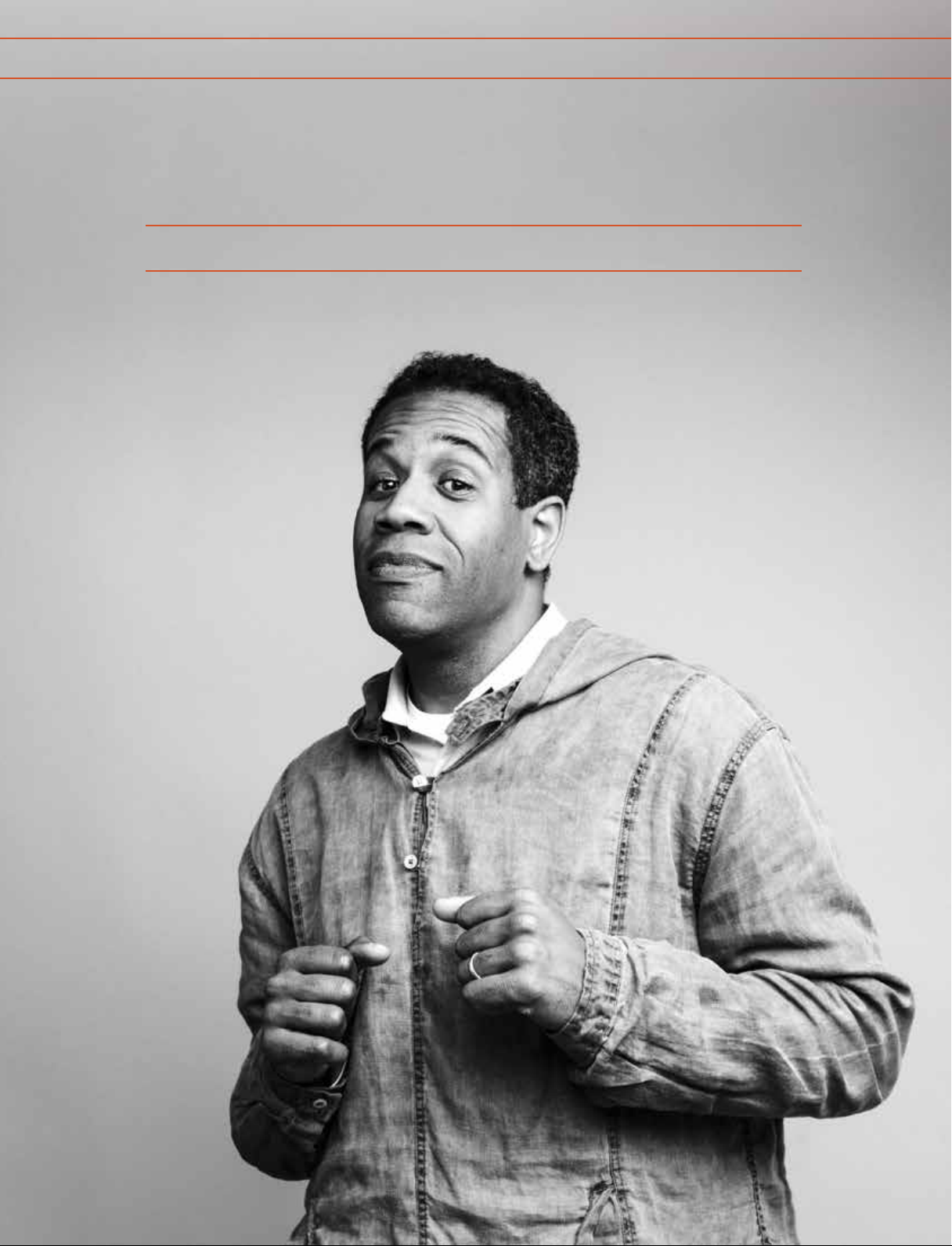
As part of our Future of Retail series, we spoke to Natalie Berg,
a retail expert, author, and media analyst, to answer these
questions, and to find out how ultra-connected shoppers
are changing luxury storefronts.
The average person touches
their smartphone more than
2,000 times1 every single day.
This devotion to technology, and the new digital habits it has
created, has completely transformed the retail landscape, as we
increasingly prefer to shop online. In the US, for example, 56.6%
of consumers preferred shopping online2 than in person in 2022.
Natalie Berg is a retail analyst who hosts the Retail Disrupted
podcast. She’s a regular contributor to the BBC, The New York
Times and Forbes, among others. And she’s been paying close
attention to our online shopping appetites.
“We’re seeing an acceleration in the convergence of physical
and digital commerce, and that’s creating so many opportunities
for innovation and complete reinvention,” she says.
The Future of Luxury Retail
with Natalie Berg
2
For retailers, and especially luxury retailers,
Natalie says the best approach is to embrace
what she sees as a twin shift:
1 Digital spaces are becoming more physical.
Through technologies such as augmented reality
(AR), digital spaces are becoming more real –
more lifelike.
2 Physical spaces are becoming more digital.
At the same time, physical spaces like high
street storefronts are incorporating technology
in engaging new ways.
“Everyone is recognising the power of technology to elevate
the customer experience,” says Natalie. “As consumers today,
we are incredibly spoilt and our expectations around digital,
our expectations around personalisation, have just gone
through the roof. And you can imagine that in a luxury setting,
those expectations are magnified.”
Technology can enhance the retail experience by giving
consumers the same tools they enjoy on smartphones instore.
Or make them even better. So called magic mirrors, for example,
use augmented reality, to overlay changes onto your reflection.
With AR, you can see yourself in dierent clothes, in dierent
colours or styles, without changing anything – by just tapping
the mirror, which doubles as a touchscreen.
These magic mirrors are often also equipped with radio frequency
identification (RFID), a method of automatically identifying and
tracking tags attached to objects using electromagnetic fields.
It means the mirror in the changing room knows exactly which
garments you’ve brought in with you.

The democratisation of
white-glove service.
So-called white-glove service was once exclusively
for high-value customers and transactions. Now,
according to McKinsey3, we all expect the ease,
speed, attention to detail, and personal touches that
this term suggests. The next generation of customer
service will be “built on individual customer profiles”,
as advanced analytics and customer data will allow
retailers to tailor their products and service to meet
each person’s unique needs.
Increased customer
expectations
One of the advantages of digital technology is that it allows you
to scale services that would previously have been too expensive
or time-consuming to oer widely.
“What we’re seeing is this democratisation of white glove service,”
says Natalie. “As consumers today, we’ve got everything at our
disposal. We can order groceries and they turn up on our
doorsteps in 15 minutes.”
As consumers, our expectations have never been higher.
We expect a white-glove level of service, insofar as we
expect a personalised experience.
Now a personal shopper is something you can scale.
In the past, personalised recommendations were not something a
luxury retailer could have oered to everyone who walked in o the
street. It was the preserve of the wealthy alone. Today, however, we
can sync the same technology that enhances our online shopping
experience in-store, so that we’re greeted by people who already
know our preferences, and who can order anything we might want
in a few taps – and tell us when we’ll get it.
“Consumers today are ubiquitously connected,” says Natalie.
“They’re always switched on [and] hyper informed, and they also
want to shop on their terms, not the terms dictated to them by
the retailer.”
Natalie says retailers need to move fast to adapt. In 2021, fashion
companies invested between 1.6 and 1.8 percent of their revenue
on technology, on average4. By 2030, that figure is expected to
triple5, reaching between 3 and 3.5 percent.
“Retailers have had to scramble to adapt to these heightened digital
expectations,” adds Natalie. “At the same time, there is a race on to
oer the most frictionless experience, and that’s happening both in
stores and online. We want instant value, instant rewards.”
Advanced inventory tracking allows retailers to oer the service
customers expect. As a retailer, by enjoying a full view of your stock,
you can send products wherever they’re needed – and track them
along the way.
Natalie says that consumers now expect this sort of ease,
especially in a luxury setting.
3
The Future of Luxury Retail
with Natalie Berg
3. Agarwal, R., Jacobson, R., Kline, P., & Obeid, M. (2020, June 22). The future of customer experience:
Personalized, white-glove service for all. McKinsey & Company. https://www.mckinsey.com/
capabilities/operations/our-insights/the-future-of-customer-experience-personalized-white-glove-
service-for-all
4. The State of Fashion: Special Edition. (2022). Retrieved January 23, 2024, from https://cdn.
businessoashion.com/reports/The_State_of_Fashion_Special_Edition_Technology_2022.pdf
5. The State of Fashion: Special Edition. (2022). Retrieved January 23, 2024, from https://cdn.
businessoashion.com/reports/The_State_of_Fashion_Special_Edition_Technology_2022.pdf

6. Sustainable consumer behaviour and lifestyle 2023. (n.d.). Deloitte United Kingdom. https://www2.
deloitte.com/uk/en/pages/consumer-business/articles/sustainable-consumer.html
7. The State of Fashion: Special Edition. (2022). Retrieved January 23, 2024, from https://cdn.
businessoashion.com/reports/The_State_of_Fashion_Special_Edition_Technology_2022.pdf
The Future of Luxury Retail
with Natalie Berg
4
Tech to track every thread.
For retailers, one of the best uses of digital technology is tracking
their stock. They can use Internet of Things (IoT) smart sensors to
track goods from the moment crafting them begins. Not only does
this increased supply chain visibility help them keep track of goods,
but it can also oer extra assurance about product provenance,
helping retailers meet sustainability goals.
Consumers, of course, want further transparency in this area,
too. According to a report from Deloitte6, “more consumers are
taking into consideration durability and repairability when making
a purchase in 2023, and whether products are labelled as
responsibly sourced or manufactured, or support biodiversity.”
Garments can also come packed with additional packets of digital
information. Natalie says this digital layer is increasingly what
consumers expect.
Personalisation in style.
According to The Business of Fashion and McKinsey & Company,
71 percent of customers expect personalised interactions with
companies7. In their report called The State of Fashion, the subject
of personalisation is a key talking point.
“Shoppers have learned to expect curated, personalised service
in other industries thanks to players like Netflix and Spotify, which
harness AI to provide experiences specific to individual customer
tastes and needs,” it says.
Natalie agrees. “That’s been a real shift in recent years where loyalty
schemes are moving into the digital space and the opportunity for
real time personalisation is huge there.”
Soon, you can imagine that, when you’re browsing in a high street
store, every product you pick up or engage with is tracked. You might
get a notification if the things that catch your eye come in dierent
colours, or if there’s a special oer. And your real-life browsing
history can inform your rewards and recommendations.
According to The State of Fashion report: “The fashion industry
has been largely ill-equipped to move beyond basic customer
segmentation owing to technology and talent restrictions.”
The same report goes on to say that this presents an opportunity
for brands ready to dive in.
“Brands that invest in AI modelling and Big Data to create one-
to-one, personalised shopping experiences may see customer
acquisition rates and sales increase as a result.”

Learn more about how Verizon can help you explore
and adopt the technology that’s reinventing retail at
verizon.com/gb/retail
Phygital, defined.
‘Phygital’ is a mashup of the words ‘physical’ and
‘digital.’ It’s the intentional blending of immersive in-
store experiences with a digital layer, introducing the
eciency, personalisation, and shareability of online
shopping to physical storefronts.
8. Alsop, T. (2023, July 3). Consumer and enterprise virtual reality (VR) market revenue worldwide
from 2021 to 2026. Statista. https://www.statista.com/statistics/1221522/virtual-reality-market-size-
worldwide/
The Future of Luxury Retail
with Natalie Berg
5
What Natalie is describing has elsewhere been dubbed as ‘phygital’.
This word describes where our experience is both physical and
digital at the same time. To meet consumers’ expectations, and to
oer the sort of surprise and delight that drives footfall, the physical
and digital realms should no longer be separate in retail. Rather,
both worlds need to be completely connected – because
consumers already are.
By recognising consumers’ evolving expectations and investing
in an omnichannel strategy that seamlessly integrates technology
advances in both realms, retailers can meet current consumer
demands and position themselves for success in the continually
evolving retail landscape.
Luxury fashion goes ‘phygital’.
While some technologies, such as touchscreens, are already a
regular fixture in luxury stores, the potential of some tech is yet to be
realised. AR and virtual reality (VR) fall into this category. But both
are poised to skyrocket in popularity over the next few years, and
the VR market alone is expected to reach $15bn by 20248.
While strapping on goggles might be considered a point of friction
in some settings, in the retail space, it can merge with some of
the other technologies on oer, helping to create fully immersive
experiences instore.
In addition, Natalie says that our online shopping experience is
also likely to change as these technologies (VR, AR) improve.
“In the future, or the near future, we won’t necessarily be wandering
around virtual showrooms, but will be online shopping in a way that’s
still very immersive,” says Natalie. “You might have a floating website
window and you can pull the product out of that screen right into
your home and get a really immersive experience without even
leaving your home.”

© 2024 Verizon. All rights reserved. The Verizon Business name and logo and all other names, logos and slogans identifying Verizon’s products and services are trademarks and service marks or registered trademarks and service marks of
Verizon Trademark Services LLC or its affiliates in the United States and/or other countries. All other trademarks and service marks are the property of their respective owners.