Water-Energy Nexus Survey Summary Report PDF Free Download
1 / 20/20
100%

Pilot Project March 2012
The Illinois Section American Water Works Association (ISAWWA)
Water Efciency Committee
Water-Energy Nexus
Survey Summary Report

WATER-ENERGY NEXUS SURVEY SUMMARY REPORT2
1 Kilowatt hours per million gallons of water.
About the Water-Energy
Nexus Survey
The Water-Energy Nexus Survey is a pilot project undertaken by the
Illinois Section AWWA Water Efciency Committee to better understand
the energy intensity (kWh/MG)1 and energy cost of Illinois’ water supply.
For this purpose, energy intensity is best explained through the concept of
the water-energy nexus, a term used to describe the dynamic relationship
between water and energy (Figure 1). One example of this relationship is the
interdependence of energy to produce water and water to produce energy.
This survey was developed and distributed statewide to begin gathering data
that quanties the rst part of this relationship — how much energy is used
to produce the State’s water supply. As utilities work towards higher system
efciency, understanding the role and cost of energy from pump to faucet can
be useful in short and long-term planning, assessing infrastructure needs, and
projecting future revenue requirements.
The focus of this survey is solely on water supply and the energy consumption
and cost from withdrawal, conveyance, treatment, and distribution;
wastewater was not considered at this time. The goal of the survey is to use
the results as an educational tool for utilities interested in increasing their
system’s overall efciency, recognizing that saving energy saves water and
vice versa. Additionally, the survey heightens awareness about the water-
energy nexus with the purpose of moving toward better integration of these
resources in the communities and counties throughout the State of Illinois.

3
• This survey is one of the only statewide initiatives in the United States to gather
water utility level energy use and cost data.
• Survey respondents spent $29.7 million and 388 million kilowatts to pump 398
trillion gallons of water. That’s enough energy to provide 101,570 Illinois residents
with electricity for a year!3
• Among survey respondents, energy costs on average ranged between 8-15 percent
of a water utility’s operating budget, with the maximum reported at 38 percent.4
Water and energy efciency measures can save money over time.
• In a 2008 regional survey of public water suppliers, funding, aging infrastructure,
and energy costs ranked as the top three out of 12 possible challenges currently
facing public water suppliers.5
Why You Should Be Interested
Figure 1: Water-Energy Nexus2
2 Adapted from Mike Hightower, Completing the energy sustainability Puzzle, Energy
and Water, Energy-Water Science & Technology Research Roadmap, Sandia National
Laboratories, presentation 2005-2006. http://www.sandia.gov/energy-water/docs/EW_
RoadmapSum_Solar8-06.pdf Full Report approved by U.S. Department of Energy January 12,
2007. For more information: http://www.sandia.gov/energy-water/.
3 U.S. Department of Energy, Energy Efciency & Renewable Energy, Energy Consumption in
Illinois Homes, 2005. http://apps1.eere.energy.gov/states/residential.cfm/state=IL.
4 See Table 9.
5 Chicago Metropolitan Agency for Planning (CMAP), Water Utility Survey Results, collected
2008. Survey area was the 11 counties of northeastern Illinois: Boone, Cook, DeKalb, DuPage,
Grundy, Kane, Kankakee, Kendall, Lake, McHenry, and Will. Survey received 203 responses
representing 89% of the population served in the survey area. http://www.cmap.illinois.gov/
water-2050.
Energy for Water Water for Energy
Energy and power production
requires water:
• Thermoelectric cooling
• Hydropower
• Energy minerals extraction/mining
• Fuel production (fossil fuels, H2,
biofuels/ethanol)
• Emission controls
Water production, processing,
distribution, and end-use
requires energy:
• Pumping
• Conveyance and Transport
• Treatment
• Use conditioning
• Surface and Ground water

WATER-ENERGY NEXUS SURVEY SUMMARY REPORT4
6 Kenny, J.F., Barber, N.L., Hutson, S.S., Linsey, K.S., Lovelace, J.K., and Maupin, M.A., 2009,
Estimated use of water in the United States in 2005: U.S. Geological Survey Circular 1344, 52
p. http://pubs.usgs.gov/circ/1344/
7 Bevan Grifths-Sattenspiel and Wendy Wilson, 2009. The Carbon Footprint of Water.
River Network. http://www.rivernetwork.org/resource-library/carbon-footprint-water.
8 California Energy Commission, Integrated Energy Policy Report, 2005. http://www.energy.
ca.gov/2005publications/CEC-100-2005-007/CEC-100-2005-007-CMF.PDF.
9 PSC is an independent regulatory agency responsible for the regulation of Wisconsin public
utilities including electric, natural gas, water, combined water and sewer utilities and certain
aspects of local telephone service. Utilities under this agency’s jurisdiction must obtain PSC
approval for setting new rates, issuing stocks or bonds, and understanding major construction
projects such as power plants, water wells, and transmission lines. For more information:
http://psc.wi.gov/aboutUs/organization/PSCoverview.htm.
10 Public Service Commission of Wisconsin, Water Statewide Statistical Benchmarks, 2010.
http://psc.wi.gov/apps40/Benchmarks/statewide.aspx.
Related Research, Data Collection,
and Program Integration
At the national level, the water-energy nexus is gaining attention by a number of entities,
non-prot and government alike. This attention is well deserved considering the U.S.
Geological Survey estimates that energy production in the United States requires more
water than any other sector, nearly 49 percent (201,000 million gallons a day) of total
withdrawals is used for thermoelectric power. Although the large majority of this use is
non-consumptive, approximately 23 gallons per kilowatt-hour on average is thought to
be consumed.6 On the other hand the River Network’s 2009 report, The Carbon Footprint
of Water, estimates that water-related energy use accounts for 13 percent of the United
States’ total electricity consumption, nearly 520 million megawatt-hours annually.7 In
their report, the River Network takes a step beyond quantifying water related energy use
to encompass the carbon footprint of water by calculating associated CO2 emissions,
estimating the energy intensity of varying water sources and wastewater treatments, and
identifying and estimating the energy intensity of water end-uses such as heating water
for household uses.
At the state level, the California Energy Commission concluded that as of 2005 California’s
water cycle from source to disposal uses 19 percent of the state’s electricity and 32 percent
of the state’s natural gas energy.8 Closer to home, the Public Service Commission of
Wisconsin (PSC)9 collects energy intensity data (total kWh/MG pumped) from water
utilities and calculates annual statistical benchmarks. This data is then used to estimate
future revenue requirements for rate cases. Table 1 displays the energy intensity data for
2010, organized by customers served.10
Table 1. Wisconsin water utilities’ total kilowatt hours of electricity per million
gallons (kWh/MG) pumped, 2010
CUSTOMERS
SERVED
# OF
UTILITIES MINIMUM MAXIMUM AVERAGE MEDIAN
Over 4,000 98 21.30 6,502.72 1,809.54 1,820.43
1,000-4,000 145 184.73 6,401.20 2,036.11 1,877.66
Fewer than 1,000 317 0.79 15,560.16 2,157.01 2,334.13

5
Lastly, the U.S. Environmental Protection Agency (U.S. EPA) Region 5, in
partnership with the Indiana Department of Environmental Management
(IDEM), is working on a pilot program that involves an in-depth look at energy
data within a select group of water utilities. Table 2 shows preliminary results
of energy intensity (kWh/MG) data for three selected water utilities. The
pilot program will conclude with a summary report, success stories from
the 10 participants, and relevant tools to assist water utilities with energy
management.11
Table 2. Preliminary energy intensity data for select Indiana water
supply utilities, 2010
INDIANA UTILITY MGD KWH/MG IN 2010
City of Bloomington Utilities 14 2,198
Mishawaka City Utilities 8 1,653
Valparaiso City Utilities 4 1,981
kWh/MGD=kilowatts per million gallons per day
At the county level, the Santa Clara Valley Water District in California saved an
estimated 159 billion gallons of water from 1992-2008 as a result of conservation
and recycling. An additional energy savings of 1.82 billion kilowatts of energy
was also realized yielding a reduction of 429 million kg of CO2. This reduction
represents the equivalent of providing electricity to 265,000 households and
removing 78,000 passenger cars for one year.12 From national to local levels, the
water-energy nexus is being incorporated into water-related research as well as
being utilized in water conservation and efciency programs as an additional
resource savings.
This survey differs from the above examples because it focuses not only on the
energy intensity (kWh/MG) but also the direct and relative cost of that energy.
In addition, the data collected from the survey allows the committee to estimate
water loss and its associated energy cost.
11 For more information: contact Louann Unger, Sustainable Water Infrastructure Coordinator, EPA Region 5, Water
Division, Unger.Louann@epamail.epa.gov or 312.353. 5089.
12 Personal communication with Santa Clara Valley Water District staff, May 13, 2009. Figures represent Fiscal Year
1992-1993 to Fiscal Year 2007-2008. Originally sourced from Water 2050. www.cmap.illinois.gov/water-2050.

WATER-ENERGY NEXUS SURVEY SUMMARY REPORT6
13 A full copy of the survey instrument can be found on the ISAWWA Water Efciency Committee website.
http://www.isawwa.org/?page=WaterEfciency.
All survey respondents were requested to provide data for calendar year 2010 to allow for
a more accurate comparative analysis. The survey requested the following information
from water utilities :
• Number of service connections (total and residential)
• Population served
• Water Source
o Total annual production
o Total annual billed/metered/accounted for (authorized consumption)
• Energy
o Total annual energy consumption (electricity and gas)
o Total annual energy cost (electricity and gas)
• Total operating expenses (not including capital or depreciation expenses)
• Treatment Type
All data is self-reported and was collected either through an online or paper survey
instrument. The committee recognizes the limitations and the potential for unavoidable
errors associated with using self-reported data. Follow up contact was made where
possible to conrm data sets and to ll in omissions. It should be noted that data collected
through this survey will remain anonymous and will not be publicly attached to any
particular utility but rather consolidated by water source and utility size.
In the absence of a statewide entity or structure that collects and analyzes water utility
energy data, the committee used existing channels to distribute the survey. From May to
December 2011, the committee reached out through the Illinois Section AWWA member
lists, committee member contacts, water-related professional organizations, and local
government organizations. On August 5, 2011 the committee also hosted a webinar
to assist water utility personnel with the completion of the survey. As an incentive to
participate, respondents were offered a customized report outlining their utility’s analysis
based on their submitted data. Additionally for each completed survey, the committee
made a donation in the name of the participant to Water for People
(www.waterforpeople.org) totaling $440.
Data Collection and Outreach

7
In December 2011, the committee began to analyze the data.
In total, 52 surveys were received of which 44 had usable data.
Several respondents exited the survey before completing the
energy usage questions making analysis of the data impossible
for all respondents.
The 44 respondents:
• Represent 5.378 million people, about 42 percent of Illinois’ total
population. Chicago accounts for 2.7 million of the population in
this statistic.
• Derive from 17 of the Illinois’ 102 counties
• Cover a variety of utility sizes14
o Small (n=18)
o Medium (n=15)
o Large (n=7)
o Wholesaler (n=4)
Survey Respondent Summary
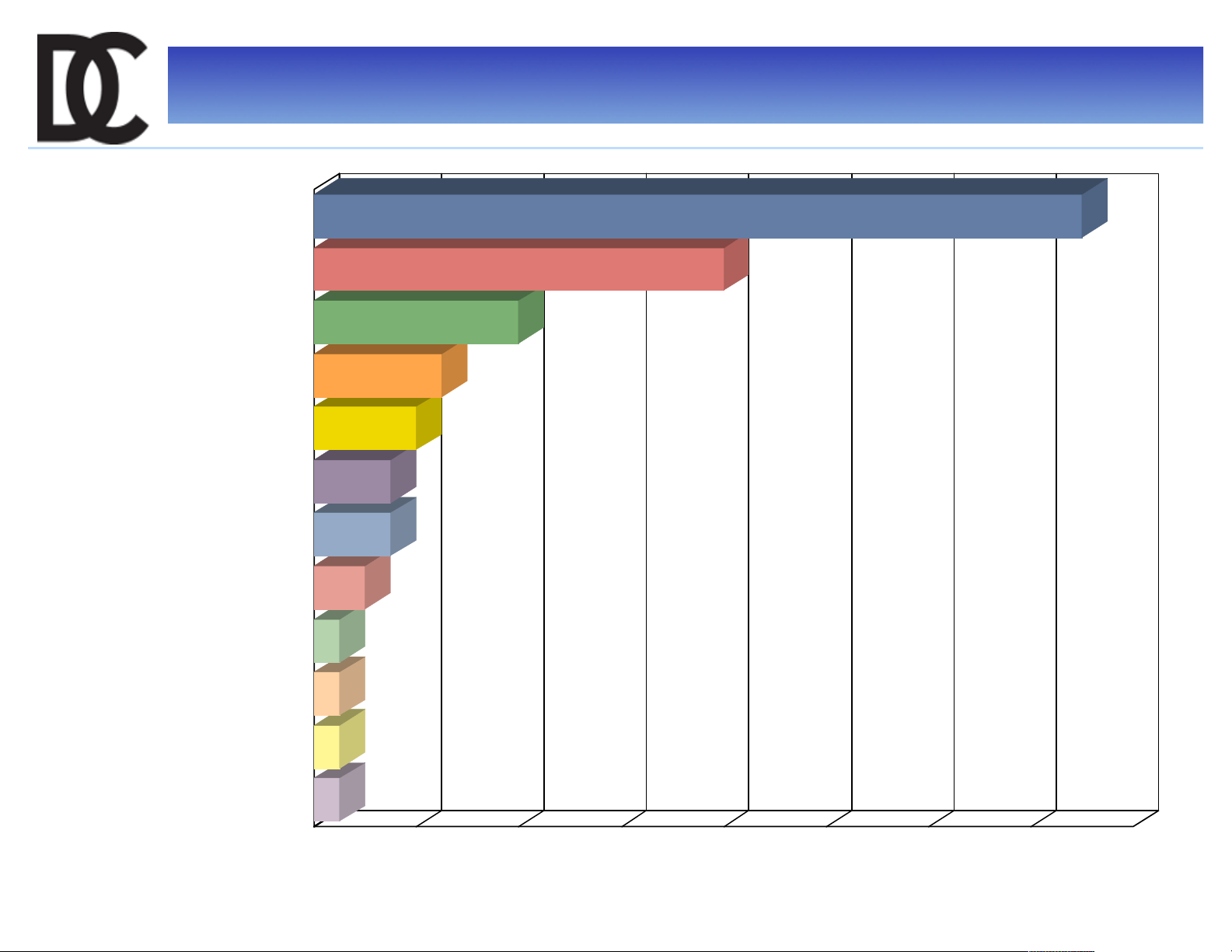
Figure 2: County Representation from Respondents
14 Size differentiation dened in Survey Metrics section.
Chicago
MCHENRY
WHITESIDE
ROCK ISLAND
SANGAMON
MACON
EFFINGHAM
WINNEBAGO
FRANKLIN
JACKSON
COOK
FORD
WILL
KANE
LAKE
KENDALL
DEKALB DUPAGE

WATER-ENERGY NEXUS SURVEY SUMMARY REPORT8
15 Direct survey question, no calculation.
16 Calculated by dividing total annual electricity cost by total annual operating expenses (does
not include capital or depreciation expenses).
17 Calculated by dividing total annual electricity consumption (kWh) by total annual water
production in million gallons/ year.
18 Calculated by dividing total annual electricity cost by total annual water production in million
gallons/ year.
19 Calculated by dividing total annual electricity cost by total annual energy consumption
(kWh).
20 Does not include Lake Michigan utility data.
After data collection, the data were then analyzed using several metrics to assess a few,
simple hypotheses concerning water-related energy use among water supply utilities in
Illinois. The metrics include:
• Total annual cost of electricity (in dollars)15
• Electricity costs as a portion of total annual operating expenses (as a percent)16
• Energy intensity of water production, electricity only (kWh/MG)17
• Energy costs for water production (electricity and gas, dollars/MG)18
• Per unit cost of electricity (in dollars).19
The resulting analysis was then organized according to two utility characteristics:
relative size and water source. For size, large (>15,000 service connections), medium
(5,000 to 15,000 service connections), small (<5,000 service connections) and wholesaler
classes were used. For water source, surface water,20 groundwater and Lake Michigan
classes were used. For each subset, the mean, minimum and maximum were determined
independently and are displayed in Tables 3 through 12 below followed by an analysis
summary. In an effort to produce a higher quality data set, outliers were calculated for
each individual table. A data point was deemed an outlier if the numerical value was
greater or less than 3 standard deviations from the mean. Additional data points were
taken out at the discretion of the committee based on best professional judgment.
Survey Metrics

9
Table 3. Total annual cost of electricity ($)
UTILITY SIZE 1 NUMBER OF
RESPONDENTS*2 MEAN MINIMUM MAXIMUM
Large 7 $983,510 $133,015 $1,793,293
Medium 15 $247,732 $1,455 $829,181
Small 17 $37,633 $1,335 $262,156
Wholesaler 3 $1,647,705 $190,922 $3,262,345
Table 4. Electricity cost percent of annual total operating expenses (%)
UTILITY SIZE NUMBER OF
RESPONDENTS* MEAN MINIMUM3 MAXIMUM
Large 7 8.0% 1.9% 15.7%
Medium 10 9.0% 1.9% 18.3%
Small 16 7.5% 1.0% 23.7%
Wholesaler 3 13.2% 3.9% 25.0%
Table 5. Energy intensity of water production, electricity only (kWh/MG)
UTILITY SIZE NUMBER OF
RESPONDENTS* MEAN MINIMUM MAXIMUM
Large 7 1,621 218 3,171
Medium 15 1,560 75 6,361
Small 17 2,912 110 12,890
Wholesaler 3 1,946 1,308 2,554
Table 6. Water production cost from energy, total cost = gas+electricity ($/MG)
UTILITY SIZE NUMBER OF
RESPONDENTS* MEAN MINIMUM MAXIMUM
Large 7 $178 $84 $285
Medium 15 $140 $6 $462
Small 17 $314 $44 $1,272
Wholesaler 3 $174 $114 $218
Table 7. Utility unit electricity cost ($/kWh)
UTILITY SIZE NUMBER OF
RESPONDENTS* MEAN MINIMUM MAXIMUM
Large 6 $0.09 $0.05 $0.13
Medium 14 $0.09 $0.06 $0.15
Small 17 $0.10 $0.01 $0.16
Wholesaler 3 $0.09 $0.08 $0.10
kWh=kilowatt hours; MG=million gallons
1 For size, large (>15,000 service connections), medium (5,000-15,000 service connections), small (<5,000 service
connections) and wholesaler classes were used.
2 *Number of respondents after outliers removed.
3 Percentage may be articially low due to electric utility subsidy (not fully billed or metered for energy use) or other
unreported/unforeseen factors.
Utility Size

WATER-ENERGY NEXUS SURVEY SUMMARY REPORT10
Table 8. Total annual cost of electricity ($)
UTILITY WATER
SOURCE4
NUMBER OF
RESPONDENTS*5 MEAN MINIMUM MAXIMUM
Groundwater 17 $92,037 $1,335 $430,435
Lake Michigan 16 $254,421 $1,455 $1,489,847
Surface 8 $845,405 $183,040 $1,622,072
Table 9. Electricity cost percent of annual total operating expenses (%)
UTILITY WATER
SOURCE
NUMBER OF
RESPONDENTS* MEAN MINIMUM6 MAXIMUM
Groundwater 17 7.6% 3.3% 14.8%
Lake Michigan 12 8.2% 1.0% 25.0%
Surface 8 14.6% 2.6% 38.0%
Table 10. Energy intensity of water production, electricity only (kWh/MG)
UTILITY WATER
SOURCE
NUMBER OF
RESPONDENTS* MEAN MINIMUM MAXIMUM
Groundwater 17 2,844 1,014 6,361
Lake Michigan 17 866 75 2,554
Surface 7 2,019 218 3,538
Table 11. Water production cost from energy, total cost = gas+electricity ($/MG)
UTILITY WATER
SOURCE
NUMBER OF
RESPONDENTS* MEAN MINIMUM MAXIMUM
Groundwater 17 $293 $105 $725
Lake Michigan 17 $94 $6 $218
Surface 8 $586 $151 $3,336
Table 12. Utility unit electricity cost ($/kWh)
UTILITY WATER
SOURCE
NUMBER OF
RESPONDENTS* MEAN MINIMUM MAXIMUM
Groundwater 18 $0.10 $0.06 $0.16
Lake Michigan 16 $0.12 $0.07 $0.40
Surface 7 $0.07 $0.01 $0.13
kWh=kilowatt hours; MG=million gallons
4 For water source, surface water (does not include Lake Michigan utilities), groundwater and Lake Michigan classes
were used.
5 *Number of respondents after outliers removed.
6 Percentage may be articially low due to electric utility subsidy (not fully billed or metered for energy use) or other
unreported/unforeseen factors.
Water Source

11
Analysis Summary by Utility Size
Variations in the metrics according to size show some
meaningful trends. As expected, total annual cost of
electricity is directly related to utility size, with wholesalers
paying the most and small utilities paying the least. The mean
electricity portion of annual total operating expenses for
all sizes is relatively within the same range: 7 percent to 13
percent, with the maximum at 25 percent. The mean energy
intensity of water production and mean water production
cost from energy both show that smaller utilities use more
electricity per unit and pay more per unit of water produced
than do large, medium or wholesaler utilities, perhaps a
result of economy of scale. Finally, for the per unit electricity
cost, we might assume that all utilities would pay about the
same amount per kWh. However, it is likely that individual
contracts, varying energy providers, and municipal
partnerships can account for the variance in prices.
Analysis Summary by Water Source
In analyzing data by water source, there are also some
potentially meaningful trends. For example, the data suggest
higher water production cost from energy per unit of water
for surface water utilities, followed by groundwater and
Lake Michigan utilities respectively. This could be a result
of the varying infrastructure or pumping and treatment
requirements for each water source. For example, it is
estimated that the energy required for treatment and
distribution of potable water for the majority of utilities
ranges between 250 kWh/MG to 3,500 kWh/MG.21 This wide
range appears to take into account such variations like water
quality conditions that may require more energy intensive
treatment methods such as ion exchange.
Furthermore different water sources dictate different
pumping needs. For example, groundwater requires energy
to be pumped to the surface and can range between 40 and
80 kWh to lift one million gallons of water 10 feet, depending
on pump efciency.22 Pumping water to the surface is
an additional energy requirement (beyond pumping for
distribution) that does not apply in surface water and Lake
Michigan communities. To this point, the energy intensity
of water production is the highest for groundwater utilities
followed by surface water and Lake Michigan utilities
respectively.
Correlations in the remaining metrics are not as strong.
For instance, the total annual cost of electricity seems
much higher for surface water and Lake Michigan than
groundwater. A similar situation likely exists for the
electricity cost portion of the total annual operating
expenses. However, these metrics are more likely a function
of both utility size and water source rather than solely water
source. Finally, for the per unit electricity cost, the conclusion
is the same as in the Analysis Summary by Utility Size in the
previous section.
Some utilities, including many whose water source is
Lake Michigan, purchase nished water from a wholesale
provider. In these cases, the data does not include the
energy embedded in that purchased water. Furthermore,
some communities pump and treat raw water while others
purchase already treated water. These treatment variations
affect a utility’s energy consumption. Additionally, it should
be noted that a small number of these communities rely
on multiple sources for their water supply. For the sake of
simplicity, the analysis was calculated using only the primary
water source. Statistics for surface water are based on the
fewest respondents, thus the apparent trend might be a result
of too small a sample size rather than a real trend observed in
the data.
21 Carlson, Steven W. and Adam Walburger. Energy Index Development for Benchmarking
Water and Wastewater Utilities.United States: AWWA Research Foundation; New York
State Energy Research and Development Authority; California Energy Commission, 2007.
(Pg. 14)
22 Assumes optimum pumping efciency at 75% (4.2 kWh/MG/1 ft lift) and low efciency
at 40% (7.9 kWh/MG/1 ft lift). Bevan Grifths-Sattenspiel and Wendy Wilson, 2009.
The Carbon Footprint of Water. River Network. http://www.rivernetwork.org/resource-
library/carbon-footprint-water Originally sourced from the University of California
Cooperative Extension, Tulare County.

WATER-ENERGY NEXUS SURVEY SUMMARY REPORT12
Aside from utility size and water source, water loss may be another contributing
factor to higher energy intensity and energy-related water production costs for some
Illinois’ utilities. For the purpose of this survey, we dened water loss as the difference
between annual water production and annual billed/metered/accounted for water
(authorized consumption). Utilities spend money and resources to pump and treat
water that is essentially “lost” in the distribution system. This can be the result of leaking
infrastructure often referred to as “real losses” or a result of meter inaccuracies, data
handling errors, and unauthorized consumption often referred to as “apparent losses.”
Both real and apparent losses contribute to what is known as “non-revenue water.”23
This is water that a utility is paying to produce that is not producing revenue. While
accounting for every drop of water is difcult if not impossible, decreasing the amount of
water loss in a utility’s distribution system can help limit revenue loss and also decrease
the associated embedded energy consumption and cost. Water efciency strategies such
as leak detection and repair, advanced metering, timely meter replacement and repair,
billing system maintenance, and regular water audit practices can help reduce water and
energy loss.
For these reasons, the committee decided to add two additional metrics: water loss as
percent of total annual water production24 and energy cost associated with that water
loss.25 The data is displayed by utility size in Tables 13 and 14 and water source in Tables 15
and 16.
Water Loss and Associated
Energy Costs
23 Terminology references the American Water Works Association (AWWA) Water Audit
Method. Free water audit software is available for utilities. For more information: http://
www.awwa.org/Resources/WaterLossControl.cfm?ItemNumber=48055&navItemNum
ber=48162.
24 Calculated by subtracting “total annual billed/metered/accounted for” from “total annual
water production” and converting to a percentage.
25 Calculated using water loss in million gallons multiplied by the utility’s water production cost
from energy (electricity and gas, dollars/MG).

13
Utility Size
Table 13. Water loss
(gallons billed/metered/accounted for per gallons produced)
UTILITY
SIZE26
NUMBER OF
RESPONDENTS*27 MEAN MINIMUM MAXIMUM
Large 7 17.3% 3.9% 29.4%
Medium 15 11.4% 2.4% 20.9%
Small 18 7.6% 1.7% 17.7%
Wholesaler 3 3.1% 1.9% 5.5%
Table 14. Total annual energy
(gas and electricity) cost of water loss ($)
UTILITY
SIZE
NUMBER OF
RESPONDENTS* MEAN MINIMUM MAXIMUM
Large 7 $192,786 $5,589 $358,042
Medium 15 $28,518 $233 $73,534
Small 17 $3,668 $91 $30,099
Wholesaler 3 $36,086 $10,471 $68,879
Analysis Summary for Water Loss by Utility Size
As expected, water loss and total annual energy cost of water
loss is greatest for large utilities, followed by medium and small
respectively. One reason for this could be varying miles of pipe,
with large utilities having the most miles of pipes and associated
potential for leaks and small utilities having the least miles of pipes
and associated potential for leaks. Wholesalers show the least
amount of water loss on average; however, this could be due to
the low number of respondents. It should be noted that age and
composition of pipes was not collected with this dataset but would
also contribute to water loss, among other factors.
Water Source
Table 15. Water loss
(gallons billed/metered/accounted for per gallons produced)
UTILITY WATER
SOURCE28
NUMBER OF
RESPONDENTS* MEAN MINIMUM MAXIMUM
Groundwater 18 9.6% 1.7% 19.8%
Lake Michigan 17 8.2% 1.9% 20.9%
Surface 8 16.5% 3.8% 29.4%
Table 16. Total annual energy
(gas and electricity) cost of water loss ($)
UTILITY WATER
SOURCE
NUMBER OF
RESPONDENTS* MEAN MINIMUM MAXIMUM
Groundwater 17 $9,861 $91 $67,290
Lake Michigan 17 $21,808 $226 $73,534
Surface 8 $141,351 $30,099 $358,042
Analysis Summary for Water Loss by Water Source
Although water loss is more likely a factor of pipe age and
composition, mileage of pipes, utility size and billing and metering
practices than water source, the survey data shows that on average
surface water utilities’ water loss percentages are almost double
groundwater and Lake Michigan utilities. Additionally, the total
average energy cost of water loss for surface water utilities is much
greater than other water source utilities in all three calculations
of mean, minimum, and maximum. This is likely a result of overall
higher percentages of water loss (Table 15) and higher overall water
production cost from energy among water sources (Table 11). It
should also be noted that surface water utilities had the lowest
respondent rate of all water sources which could contribute to the
potential trend in the data.
26 For size, large (>15,000 service connections), medium (5,000-15,000 service connections),
small (<5,000 service connections) and wholesaler classes were used.
27 *Number of respondents after outliers removed.
28 For water source, surface water (does not include Lake Michigan utilities), groundwater and
Lake Michigan classes were used.

WATER-ENERGY NEXUS SURVEY SUMMARY REPORT14
Summary of Findings29 City of Chicago
• On average, the energy cost percent of a utility’s total annual
operating expenses is generally consistent regardless of
utility size.
• Small utilities tend to use more and pay more for energy per unit
of water when compared to larger sized utilities.
• Surface water utilities tend to dedicate a higher percentage of
their annual operating budget to energy cost and tend to have
higher water production cost per unit of water than groundwater
and Lake Michigan utilities respectively.30
• Survey respondents reported 22,501 million gallons of water loss
in 2010, equating to a loss of $2 million in energy costs alone.
• On average, large utilities tend to have higher percentages of water
loss and have the highest associated energy costs of water loss.31
The City of Chicago’s data was separated for analysis due to the
relative size of the system compared to other respondents. Chicago
provides Lake Michigan water to approximately 5.3 million people:
2.7 million in the city and 2.6 million in 125 suburban communities
covering a total of 806 square miles.32 The City produces 773 million
gallons a day: 289 million gallons a day for the city and 484 million
gallons a day for suburban communities. The water system contains
4,200 miles of water mains and over 600 miles of water mains 16 to
60 inches in diameter.33 Data presented here give an overview of the
system’s energy and water use. More detailed analysis is needed to
fully understand energy use in a complex system of this size. Table 17
shows the survey metrics for the City of Chicago.
Table 17. Metrics
Total Cost of electricity ($) $12,220,909
Electricity cost percentage of annual total
operating expenses* 3.9%
Energy intensity of water production, electricity only
(kwh/MG) 573
Water production cost from energy
(gas and electricity, $/MG) $92
Utility unit electricity cost ($/kwh) $0.08
* Chicago also relies on natural gas for pumping. Natural gas is not inlcuded in this calculation.
29 Consultant relevant report section for full description of ndings.
30 Surface water does not include Lake Michigan utilities.
31 Higher percent losses may be due to higher miles of pipe in system comparatively, pipe
material, age of pipes/system, or billing inaccuracies. Additionally larger systems often
serve well-established, older communities with older water supply systems and therefore
increased potential for water loss. It should be noted that pipe age or material was not
collected in this survey.
32 For more information: http://www.cityofchicago.org/content/city/en/depts/water/
provdrs/supply.html.
33 Michael Sturtevant, Presentation to the Metropolitan Planning Council and Openlands,
City of Chicago Water Resource Managagement, presentation March 31, 2011.
http://metroplanning.org/uploads/cms/documents/sturtevantwiserwater.pdf.
34 For example a municipality could appoint one staff member to be responsible for collecting,
analyzing, and reporting data on an annual basis to a utility manager, mayor’s ofce or other
budget authority.

15
City of Chicago Recommendations for Future
Water-Energy Nexus Study
This project not only provided the committee with a rst round of energy intensity and
cost data but also provided a valuable learning experience about data-related utility and
municipal billing practices. Many local variables such as the placement and number of
electricity meters affect how this data can be reported and managed. Additionally nearly a
third of the respondents that began the survey online stopped at the energy portion. Many
of the utilities had to coordinate with their nance department for energy usage and cost
numbers to complete the survey. A few utilities are subsidized by electricity companies
meaning some of their energy use is neither metered nor billed at the local level. Some
utilities use natural gas in addition to electricity but did not know how many units or the
associated cost. Finally for some respondents, it was challenging to calculate data for
the calendar year due to staggered billing cycles and frequency. For these reasons, the
committee has concluded:
• A consistent and comparable data collection methodology is needed across Illinois
and nationally to gather and track water and energy data at the utility level and also to
establish benchmarks.
• Greater collaboration is needed between energy and water utilities and within
municipal departments in terms of data sharing, tracking, and auditing.34
• More integrated research is needed on water and energy operations at the
utility level.
• More education and outreach to utilities, public ofcials, and the general public
is needed on the water-energy nexus and how it can improve efciency at the
utility level.
• Energy data could be provided to customers via a utility’s annual water quality report
(consumer condence report).
• More detailed breakdowns of energy use data throughout each step of the water
supply process is needed.

WATER-ENERGY NEXUS SURVEY SUMMARY REPORT16
Next Steps for a Water Utility
For a water utility, continuing to track water and energy data can be a benet for short
and long-term planning, assessing infrastructure needs, and projecting future revenue
requirements. This survey is only the beginning of what a water utility staff member,
manager, or team could do to better understand the relationship between their energy
and water use. To further explore this connection, the committee recommends interested
water utility personnel:
• Contact the Finance Department to gather monthly electric bills and match the bills
with pump stations, motors, and other water facilities using electricity. Make sure
the electric bills are accurate based on estimated electric usage. Occasionally, electric
meters are not properly addressed for the intended facility, or they may have electric
usage readings that are not properly calculated.
• Review the pump curves and motor efciencies with a qualied engineer, or pump
manufacturer especially in those utilities with energy intensive appurtenances
(motors and pumps). Many utilities make system improvements without adjusting
the pumping equipment. Perhaps there are new overhead tanks or transmission
mains that require more efcient pumping equipment. Many utilities have older
motors and perhaps an upgrade to the motor would make it more efcient.
• Talk to neighboring utilities, if practical, to discuss annual energy costs and electric
suppliers. Perhaps they have resources to guide your decision in purchasing
electricity, or can assist with pumping practices, i.e. time of day, type of motors used
(Variable Frequency Drive (VFD), etc.).
• Discuss the option of off-peak pumping with your utility engineer. Perhaps your
electric supplier has reduced rates available. Even curtailing your electric usage for a
few hours could make a difference in energy costs.
• Perform leak detection and repair practices on a regular basis to identify and reduce
water loss.

17
As stated above, the purpose of this survey was to begin looking into the
energy intensity and cost of Illinois’ water supply. Continued data collection
and research is necessary to fully understand this issue in Illinois. This pilot
project is the rst attempt to analyze the data received throughout this process.
The committee will present these ndings at the WaterCon 2012 Conference
in Springeld, Illinois Thursday, March 22nd at 9:30 a.m. The committee is
seeking additional participation from Illinois’ water supply utilities to increase
the number of survey respondents and cover a larger portion of the state’s
population.
The survey can be found online:
https://www.surveymonkey.com/s/isawwa-water-energy-nexus.
All surveys must be completed by June 1, 2012.
In future iterations of this survey, the committee may wish to explore additional
metrics such as calculating the associated greenhouse gas emissions of energy
use or focusing on how treatment type can affect energy use.
Have questions? Interested in participating?
Contact:
Amy Talbot, Chair
atalbot@cmap.illinois.gov
312.386.8646
www.isawwa.org
Next Steps for the
Water Efciency Committee

WATER-ENERGY NEXUS SURVEY SUMMARY REPORT18
For Continued Learning
Water-Energy Nexus
Alliance for Water Efciency (AWE) and American Council for an Energy-Efcient
Economy (ACEEE). Accessing the Energy-Water Nexus: A Blueprint for Action and
Policy Agenda, May 2011.
http://allianceforwaterefciency.org/blueprint.
aspx?terms=water+energy+nexus
California Energy Commission, Integrated Energy Policy Report, 2005.
http://www.energy.ca.gov/2005publications/CEC-100-2005-007/CEC-100-2005-
007-CMF.PDF
Circle of Blue, infographic: Coal and Water- A Resource Mismatch, August 16, 2010.
http://www.circleofblue.org/waternews/2010/world/infographic-coal-and-
water-%E2%80%93-a-resource-mismatch/
IDModeling, Inc. SmartPumping for Energy Savings:
Energy Management and Operational Modeling, webcast, August 30, 2011.
http://idmodeling.com/pumpenergysavings/
Macknick, Jordan, Robin Newmark, Garvin Heath, and KC Hallett, National Renewable
Energy Laboratory. A Review of Operational Water Consumption and Withdrawal
Factors for Electricity Generating Technologies, March 2011.
http://www.nrel.gov/docs/fy11osti/50900.pdf
National Conference of State Legislatures, Overview of the Water-Energy Nexus in the
U.S., 2009. Link cannot be provided at this time.
Public Service Commission of Wisconsin, 2010. Statistical Benchmark (total kWh/
MGD).http://psc.wi.gov/apps40/Benchmarks/statewide.aspx
River Network, The Carbon Footprint of Water, May 2009.
http://www.rivernetwork.org/resource-library/carbon-footprint-water
River Network, The Water Energy Nexus, 2008-2011
http://www.rivernetwork.org/water-energy-nexus
U.S. Department of Energy, Energy Demands on Water Resources-Report to Congress
on the Interdependency of Energy and Water, December 2006.
http://www.sandia.gov/energy-water/docs/121-RptToCongress-
EWwEIAcomments-FINAL.pdf
U.S. Environmental Protection Agency, Energy Efciency for Water and Wastewater
Utilities. September 29, 2011.
http://water.epa.gov/infrastructure/sustain/energyefciency.cfm

19
U.S. Government Accountability Ofce, Energy-Water Nexus: Amount of Energy
Needed to Supply, Use, and Treat Water is Location-Specic and Can Be Reduced by
Certain Technologies and Approaches, March 23, 2011.
http://www.gao.gov/products/GAO-11-225
Water-Energy Sustainability Perspectives and Policy Approaches, August 2010.
http://www.gwpc.org/meetings/forum/2009/documents/Water-Energy%20
Summary%202009.pdf
Water Loss
American Water Works Association, Water Audits and Loss Control, 2012.
http://www.awwa.org/Resources/WaterLossControl.cfm?ItemNumber=47866
&navItemNumber=48159
American Water Works Association, Free Water Audit Software, version 4.2, 2012.
http://www.awwa.org/Resources/WaterLossControl.cfm?ItemNumber=48511
&navItemNumber=48158
U.S. Environmental Protection Agency, Ofce of Water.
Control and Mitigation of Drinking Water Loses in Distribution Systems, November
2010.
http://water.epa.gov/type/drink/pws/smallsystems/upload/Water_Loss_
Control_508_FINALDEc.pdf

This document was designed by the Chicago Metropolitan
Agency for Planning on behalf of the Illinois Section American
Water Works Assocation Water Efciency Committee.
The Chicago Metropolitan Agency for Planning (CMAP) is the
region’s ofcial comprehensive planning organization. Its
GO TO 2040 planning campaign is helping the region’s seven
counties and 284 communities to implement strategies that
address transportation, housing, economic development,
open space, the environment, and other quality of life issues.
See www.cmap.illinois.gov for more information.
FY12-0077
Amy Talbot, CMAP, Chair*
Darrell Blenniss, CLCJAWA, Co-Chair*
Bill Christiansen, Alliance for Water Efciency*
Bill Davis, CDM
Caitlin Feehan, MWH*
Cary McElhinney, U.S. EPA Region 5*
Cassandra McKinney, McHenry County*
Catherine Hurley, City of Evanston
Danielle Gallet, Center for Neighborhood Technology*
Dennis Ross, Otter Lake*
Edward Glatfelter*
Ermin Arslanagic, Johnson Controls Inc.*
Howard Heil, Heil2o
Ian Hughes, Goose Island
Jeffrey Edstrom, Environmental Consulting & Technology
Jenessa Nesbitt, DuPage Water Commission*
John Dillon, City of Batavia*
John Van Arsdel, M.E. Simpson*
Ken Molli, Veolia*
Kevin Wong, City of Elgin*
Kyla Jacobson, Elgin Water Department*
Lin Goetz, City Water, Light & Power*
Margaret Schneemann, Illinois Indiana Sea Grant (IISG)
Mary Ann Dickinson, Alliance for Water Efciency*
Michael Ramsey, Village of Westmont*
Michele Piotrowski, Engineering Enterprises, Inc.
Mike Sturtevant, Chicago Dept. of Water Management
Paul May, Village of Burr Ridge
Pete Wallers, Engineering Enterprises, Inc.
Regi Paul, Chicago Department of Water Management
Robert Halm
Sharon Waller, Sustainable Systems LLC*
Terry McGhee, DuPage Water Commission*
Thomas Pape, Best Management Partners*
Todd Drefcinski, Kendall County*
William Davis, CDM
ISAWWA Water Efciency Committee Members
*Designates Water-Energy Nexus Survey Task Force