White Paper | Performance Report PRIMERGY RX2540 M5 PDF Free Download
1 / 80


/80
100%

White Paper Performance Report PRIMERGY RX2540 M5
http://ts.fujitsu.com/primergy Page 1 (80)
White Paper
FUJITSU Server PRIMERGY
Performance Report PRIMERGY RX2540 M5
This document contains a summary of the benchmarks executed for the FUJITSU Server
PRIMERGY RX2540 M5.
The PRIMERGY RX2540 M5 performance data are compared with the data of other
PRIMERGY models and discussed. In addition to the benchmark results, an explanation
has been included for each benchmark and for the benchmark environment.
Version
1.3
2020/05/29

White Paper Performance Report PRIMERGY RX2540 M5 Version: 1.32020/05/29
http://ts.fujitsu.com/primergy Page 2 (80)
Contents
Document history
Version 1.0 (2019/04/30)
New:
◼ Technical data
◼ SPECcpu2017
Measurements with 2nd Generation Intel® Xeon® Processor Scalable Family
◼ SPECpower_ssj2008
Measurement with Intel® Xeon® Platinum 8276L and Intel® Xeon® Platinum 8280L
◼ SPECjbb2015
Measurement with Intel® Xeon® Platinum 8280M
◼ SAP SD
◼ Certification number 2019010
◼ OLTP-2
Calculated with 2nd Generation Intel® Xeon® Processor Scalable Family
◼ VMmark V3
“Performance Only” measurement with Intel® Xeon® Platinum 8280
“Performance with Server Power” measurement Intel® Xeon® Platinum 8280
“Performance with Server and Storage Power” measurement Intel® Xeon® Platinum 8280
◼ vServCon
Measurements with 2nd Generation Intel® Xeon® Processor Scalable Family
Version 1.1 (2019/10/04)
New:
◼ Disk I/O: Performance of storage media
Results for 2.5" and 3.5" storage media
◼ STREAM, LINPACK
Measured with 2nd Generation Intel® Xeon® Processor Scalable Family
Updated:
◼ SPECcpu2017
Measured additionally with 2nd Generation Intel® Xeon® Processor Scalable Family
Document history ................................................................................................................................................ 2
Technical data .................................................................................................................................................... 4
SPECcpu2017 .................................................................................................................................................... 9
SPECpower_ssj2008 ........................................................................................................................................ 16
SPECjbb2015 ................................................................................................................................................... 24
SAP SD ............................................................................................................................................................. 29
Disk I/O: Performance of storage media .......................................................................................................... 32
OLTP-2 ............................................................................................................................................................. 44
TPC-E ............................................................................................................................................................... 51
vServCon .......................................................................................................................................................... 55
VMmark V3 ....................................................................................................................................................... 64
STREAM ........................................................................................................................................................... 68
LINPACK .......................................................................................................................................................... 74
Literature ........................................................................................................................................................... 78
Contact ............................................................................................................................................................. 80
White Paper Performance Report PRIMERGY RX2540 M5 Version: 1.32020/05/29
http://ts.fujitsu.com/primergy Page 3 (80)
Version 1.2 (2020/04/24)
New:
◼ TPC-E
Measurement with Intel® Xeon® Platinum 8280
Updated:
◼ Technical data
Added 2nd Generation Intel® Xeon® Processor Scalable Family
◼ SPECcpu2017, OLTP-2 , vServCon, STREAM, LINPACK
Measured or calculated additionally with 2nd Generation Intel® Xeon® Processor Scalable Family
Version 1.3 (2020/05/29)
Updated:
◼ Technical data, LINPAC
Fixed typo in processor specifications
◼ STREAM
Fixed typo in processor specifications and updated measurements

White Paper Performance Report PRIMERGY RX2540 M5 Version: 1.32020/05/29
http://ts.fujitsu.com/primergy Page 4 (80)
Technical data
Decimal prefixes according to the SI standard are used for measurement units in this white paper (e.g. 1 GB
= 109 bytes). In contrast, these prefixes should be interpreted as binary prefixes (e.g. 1 GB = 230 bytes) for
the capacities of caches and memory modules. Separate reference will be made to any further exceptions
where applicable.
Model
PRIMERGY RX2540 M5
Model versions
PY RX2540 M5 4 x 3.5'
PY RX2540 M5 12 x 3.5'
PY RX2540 M5 8 x 2.5'
PY RX2540 M5 16 x 2.5'
PY RX2540 M5 24 x 2.5'
Form factor
Rack server
Chipset
Intel® C624
Number of sockets
2
Number of processors orderable
1 or 2
Processor type
2nd Generation Intel® Xeon® Scalable Processors Family
Number of memory slots
24 (12 per processor)
Maximum memory configuration
3,072 GB
Onboard HDD controller
Controller with RAID 0, RAID 1 or RAID 10 for up to 8 SATA HDDs
PCI slots
3 × PCI-Express 3.0 x8
3 × PCI-Express 3.0 x16
Max. number of internal hard disks
PY RX2540 M5 4x 3.5': 8 × 3.5"
PY RX2540 M5 12x 3.5': 12 × 3.5" + 4 × 2.5"
PY RX2540 M5 8x 2.5' : 16 × 2.5"
PY RX2540 M5 16x 2.5' :16 × 2.5"
PY RX2540 M5 24x 2.5': 24 × 2.5" + 4 × 2.5"
PRIMERGY RX2540 M5 3.5'
PRIMERGY RX2540 M5 2.5'

White Paper Performance Report PRIMERGY RX2540 M5 Version: 1.32020/05/29
http://ts.fujitsu.com/primergy Page 5 (80)
Processors (since system release)
Processor
Cores
Threads
Cache
UPI
Speed
Rated
Frequency
Max.
Turbo
Frequency
Max.
Memory
Frequency
TDP
[MB]
[GT/s]
[Ghz]
[Ghz]
[MHz]
[Watt]
April 2019 released
Xeon Platinum 8280L
28
56
38.5
10.4
2.7
4.0
2933
205
Xeon Platinum 8280M
28
56
38.5
10.4
2.7
4.0
2933
205
Xeon Platinum 8280
28
56
38.5
10.4
2.7
4.0
2933
205
Xeon Platinum 8276L
28
56
38.5
10.4
2.2
4.0
2933
165
Xeon Platinum 8276M
28
56
38.5
10.4
2.2
4.0
2933
165
Xeon Platinum 8276
28
56
38.5
10.4
2.2
4.0
2933
165
Xeon Platinum 8270
26
52
35.8
10.4
2.7
4.0
2933
205
Xeon Platinum 8268
24
48
35.8
10.4
2.9
3.9
2933
205
Xeon Platinum 8260L
24
48
35.8
10.4
2.4
3.9
2933
165
Xeon Platinum 8260M
24
48
35.8
10.4
2.4
3.9
2933
165
Xeon Platinum 8260Y
24
48
35.8
10.4
2.4
3.9
2933
165
20
40
16
32
Xeon Platinum 8260
24
48
35.8
10.4
2.4
3.9
2933
165
Xeon Gold 6262V
24
48
33.0
10.4
1.9
3.6
2933
135
Xeon Gold 6254
18
36
24.8
10.4
3.1
4.0
2933
200
Xeon Gold 6252
24
48
35.8
10.4
2.1
3.7
2933
150
Xeon Gold 6248
20
40
27.5
10.4
2.5
3.9
2933
150
Xeon Gold 6246
12
24
24.8
10.4
3.3
4.2
2933
165
Xeon Gold 6244
8
16
24.8
10.4
3.6
4.4
2933
150
Xeon Gold 6242
16
32
22.0
10.4
2.8
3.9
2933
150
Xeon Gold 6240L
18
36
24.8
10.4
2.6
3.9
2933
150
Xeon Gold 6240M
18
36
24.8
10.4
2.6
3.9
2933
150
Xeon Gold 6240Y
18
36
24.8
10.4
2.6
3.9
2933
150
14
28
8
16
Xeon Gold 6240
18
36
24.8
10.4
2.6
3.9
2933
150
Xeon Gold 6238M
22
44
30.3
10.4
2.1
3.7
2933
140
Xeon Gold 6238L
22
44
30.3
10.4
2.1
3.7
2933
140
Xeon Gold 6238
22
44
30.3
10.4
2.1
3.7
2933
140
Xeon Gold 6234
8
16
24.8
10.4
3.3
4.0
2933
130
Xeon Gold 6230
20
40
27.5
10.4
2.1
3.9
2933
125
Xeon Gold 6226
12
24
19.3
10.4
2.7
3.7
2933
125
Xeon Gold 6222V
20
40
27.5
10.4
1.8
3.6
2400
115
Xeon Gold 6212U
24
48
33.0
10.4
2.4
3.9
2933
165
Xeon Gold 6210U
20
40
27.5
10.4
2.5
3.9
2933
150
Xeon Gold 6209U
20
40
27.5
10.4
2.1
3.9
2933
125
Xeon Gold 5222
4
8
16.5
10.4
3.8
3.9
2933
105
Xeon Gold 5220S
18
36
24.8
10.4
2.7
3.9
2666
125

White Paper Performance Report PRIMERGY RX2540 M5 Version: 1.32020/05/29
http://ts.fujitsu.com/primergy Page 6 (80)
Xeon Gold 5220
18
36
24.8
10.4
2.2
3.9
2666
125
Xeon Gold 5218B
16
32
22.0
10.4
2.3
3.9
2666
125
Xeon Gold 5218
16
32
22.0
10.4
2.3
3.9
2666
125
Xeon Gold 5217
8
16
11.0
10.4
3.0
3.7
2666
115
Xeon Gold 5215L
10
20
13.8
10.4
2.5
3.4
2666
85
Xeon Gold 5215M
10
20
13.8
10.4
2.5
3.4
2666
85
Xeon Gold 5215
10
20
13.8
10.4
2.5
3.4
2666
85
Xeon Silver 4216
16
32
22.0
9.6
2.1
3.2
2400
100
Xeon Silver 4215
8
16
11.0
9.6
2.5
3.5
2400
85
Xeon Silver 4214Y
12
24
16.5
9.6
2.2
3.2
2400
85
10
20
8
16
Xeon Silver 4214
12
24
16.5
9.6
2.2
3.2
2400
85
Xeon Silver 4210
10
20
13.8
9.6
2.2
3.2
2400
85
Xeon Silver 4208
8
16
11.0
9.6
2.1
3.2
2400
85
Xeon Bronze 3204
6
6
8.3
9.6
1.9
2133
85
March 2020 released
Xeon Gold 6258R
28
56
38.5
10.4
2.7
4.0
2933
205
Xeon Gold 6256
12
24
33.0
10.4
3.6
4.5
2933
205
Xeon Gold 6250
8
16
35.8
10.4
3.9
4.5
2933
185
Xeon Gold 6248R
24
48
35.8
10.4
3.0
4.0
2933
205
Xeon Gold 6246R
16
32
35.8
10.4
3.4
4.1
2933
205
Xeon Gold 6242R
20
40
35.8
10.4
3.1
4.1
2933
205
Xeon Gold 6240R
24
48
35.8
10.4
2.4
4.0
2933
165
Xeon Gold 6238R
28
56
38.5
10.4
2.2
4.0
2933
165
Xeon Gold 6230R
26
52
35.8
10.4
2.1
4.0
2933
150
Xeon Gold 6226R
16
32
22.0
10.4
2.9
3.9
2933
150
Xeon Gold 6208U
16
32
22.0
10.4
2.9
3.9
2933
150
Xeon Gold 5220R
24
48
35.8
10.4
2.2
4.0
2666
150
Xeon Gold 5218R
20
40
27.5
10.4
2.1
4.0
2666
125
Xeon Silver 4215R
8
16
11.0
9.6
3.2
4.0
2400
130
Xeon Silver 4214R
12
24
16.5
9.6
2.4
3.5
2400
100
Xeon Silver 4210R
10
20
13.8
9.6
2.4
3.2
2400
100
Xeon Bronze 3206R
8
8
11.0
9.6
1.9
2133
85
All the processors that can be ordered with the PRIMERGY RX2540 M5, apart from Xeon Bronze 3204 and
Xeon Bronze 3206R, support Intel® Turbo Boost Technology 2.0. This technology allows you to operate the
processor with higher frequencies than the nominal frequency. Listed in the processor table is "Max. Turbo
Frequency" for the theoretical maximum frequency with only one active core per processor. The maximum
frequency that can actually be achieved depends on the number of active cores, the current consumption,
electrical power consumption, and the temperature of the processor.
As a matter of principle, Intel does not guarantee that the maximum turbo frequency can be reached. This is
related to manufacturing tolerances, which result in a variance regarding the performance of various
examples of a processor model. The range of the variance covers the entire scope between the nominal
frequency and the maximum turbo frequency.
The turbo functionality can be set via BIOS option. Fujitsu generally recommends leaving the "Turbo Mode"
option set at the standard setting of "Enabled", as performance is substantially increased by the higher
frequencies. However, since the higher frequencies depend on general conditions and are not always

White Paper Performance Report PRIMERGY RX2540 M5 Version: 1.32020/05/29
http://ts.fujitsu.com/primergy Page 7 (80)
guaranteed, it can be advantageous to disable the "Turbo Mode" option for application scenarios with
intensive use of AVX instructions and a high number of instructions per clock unit, as well as for those that
require constant performance or lower electrical power consumption.

White Paper Performance Report PRIMERGY RX2540 M5 Version: 1.32020/05/29
http://ts.fujitsu.com/primergy Page 8 (80)
Suffix of Processor number shows additional feature of Xeon Processor.
The processors with M/L suffix support larger memory capacity of 2TB/socket(M-suffix) or 4.5TB/socket(L-
suffix) whereas normal processors support 1TB/socket memory capacity.
The processors with S suffix are specifically designed to offer consistent performance for search workloads.
The processors with U suffix are only capable of single socket but the prices are lower than comparable
normal processors with the same core count and frequency.
The processors with V suffix are specifically designed to help maximize $/VM
The processors with Y suffix support Intel Speed Select Technology. It enables to provide 3 distinct
configurations( number of active cores and frequencies) which customer can choose in BIOS option.
Specifications of Xeon Gold 5218B and Xeon Gold 5218 including core count and frequencies are the same.
The difference is minor electrical specifications only.
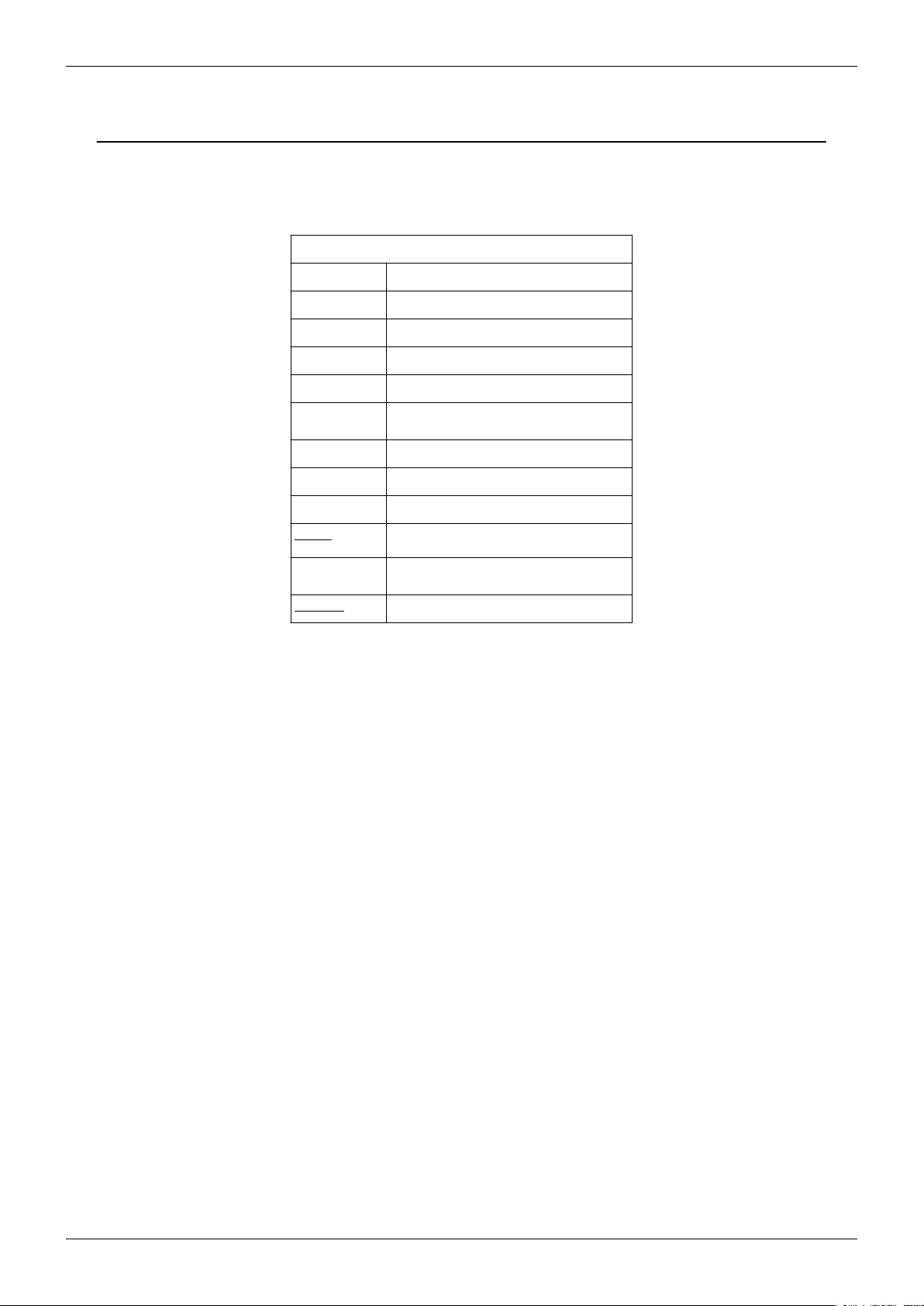
Suffix
Additional feature
M
Support up to 2TB/socket memory
L
Support up to 4.5TB/socket memory
S
Search Optimized
U
Single Socket
V
VM Density Optimized
Y
Speed Select
Memory modules (since system release)
Memory module
Capacity [GB]
Ranks
Bit width of the
memory chips
Frequency [MHz]
Load Reduced
Registered
NVDIMM
ECC
8 GB (1x8 GB) 1Rx8 DDR4-2933 R ECC
8
1
8
2933
✓
✓
16 GB (1x16 GB) 2Rx8 DDR4-2933 R ECC
16
2
8
2933
✓
✓
16 GB (1x16 GB) 1Rx4 DDR4-2933 R ECC
16
1
4
2933
✓
✓
32 GB (1x32 GB) 2Rx4 DDR4-2933 R ECC
32
2
4
2933
✓
✓
64 GB (1x64 GB) 2Rx4 DDR4-2933 R ECC
64
2
4
2933
✓
✓
64 GB (1x64 GB) 4Rx4 DDR4-2933 LR ECC
64
4
4
2933
✓
✓
✓
128 GB (1x128 GB) 4Rx4 DDR4-2933 LR ECC
128
4
4
2933
✓
✓
✓
128GB (1x128GB) DCPMM-2666
128
2666
✓
✓
256GB (1x256GB) DCPMM-2666
256
2666
✓
✓
512GB (1x512GB) DCPMM-2666
512
2666
✓
✓
Power supplies (since system release)
Max. number
Modular PSU 450 W platinum hp
2
Modular PSU 800 W platinum hp
2
Modular PSU 800 W titanium hp
2
Modular PSU 1200 W platinum hp
2
Some components may not be available in all countries or sales regions.
Detailed technical information is available in the data sheet PRIMERGY RX2540 M5.

White Paper Performance Report PRIMERGY RX2540 M5 Version: 1.32020/05/29
http://ts.fujitsu.com/primergy Page 9 (80)
SPECcpu2017
Benchmark description
SPECcpu2017 is a benchmark which measures the system efficiency with integer and floating-point operations.
It consists of an integer test suite (SPECrate 2017 Integer, SPECspeed 2017 Integer) containing 10
applications and a floating-point test suite (SPECrate 2017 Floating Point, SPECspeed 2017 Floating Point)
containing 14 applications. Both test suites are extremely computing-intensive and concentrate on the CPU
and the memory. Other components, such as Disk I/O and network, are not measured by this benchmark.
SPECcpu2017 is not tied to a special operating system. The benchmark is available as source code and is
compiled before the actual measurement. The used compiler version and their optimization settings also affect
the measurement result.
SPECcpu2017 contains two different performance measurement methods: The first method (SPECspeed
2017 Integer or SPECspeed 2017 Floating Point) determines the time which is required to process a single
task. The second method (SPECrate 2017 Integer or SPECrate 2017 Floating Point) determines the
throughput, i.e. the number of tasks that can be handled in parallel. Both methods are also divided into two
measurement runs, “base” and “peak”, which differ in the use of compiler optimization. When publishing the
results, the base values are always used and the peak values are optional.
Benchmark
Number of single
benchmarks
Arithmetics
Type
Compiler optimization
Measurement
result
SPECspeed2017_int_peak
10
integer
peak
aggressive
Speed
SPECspeed2017_int_base
10
integer
base
conservative
SPECrate2017_int_peak
10
integer
peak
aggressive
Throughput
SPECrate2017_int_ base
10
integer
base
conservative
SPECspeed2017_fp_peak
10
floating point
peak
aggressive
Speed
SPECspeed2017_fp_base
10
floating point
base
conservative
SPECrate2017_fp_peak
13
floating point
peak
aggressive
Throughput
SPECrate2017_fp_base
13
floating point
base
conservative
The measurement results are the geometric average from normalized ratio values which have been
determined for individual benchmarks. The geometric average - in contrast to the arithmetic average - means
that there is a weighting in favor of the lower individual results. Normalized means that the measurement is
how fast is the test system compared to a reference system. Value “1” was defined for the
SPECspeed2017_int_base, SPECrate2017_int_base, SPECspeed2017_fp_base, and
SPECrate2017_fp_base results of the reference system. For example, a SPECspeed2017_int_base value of
2 means that the measuring system has handled this benchmark twice as fast as the reference system. A
SPECrate2017_fp_base value of 4 means that the measuring system has handled this benchmark some 4/[#
base copies] times faster than the reference system. “# base copies” specifies how many parallel instances of
the benchmark have been executed.
Not every SPECcpu2017 measurement is submitted by us for publication at SPEC. This is why the SPEC web
pages do not have every result. As we archive the log files for all measurements, we can prove the correct
implementation of the measurements at any time.

White Paper Performance Report PRIMERGY RX2540 M5 Version: 1.32020/05/29
http://ts.fujitsu.com/primergy Page 10 (80)
Benchmark environment
System Under Test (SUT)
Hardware
Model
PRIMERGY RX2540 M5
Processor
2nd Generation Intel® Xeon® Scalable Processors Family
Memory
24 × 32GB (1x32GB) 2Rx4 PC4-2933Y-R
Software
BIOS settings
SPECspeed2017_int:
Patrol Scrub = Disabled
Override OS Energy Performance = Enabled
Energy Performance = Performance
Fan Control = Full
Sub NUMA Clustering = Disabled
WR CRC feature Control = Disabled
Hyper-Threading = Disabled
SPECspeed2017_fp
Hyper-Threading = Disabled
Adjacent Cache Line Prefetch = Disabled
Override OS Energy Performance = Enabled
Energy Performance = Performance
Patrol Scrub = Disabled
Sub NUMA Clustering = Disabled
WR CRC feature Control = Disabled
Fan Control = Full
UPI Link L0p Enable = Disable
UPI Link L1 Enable = Disable
Max Page Table Size Select = 2M
IO Directory Cashe (IODC) = Disable
SPECrate2017_int:
Patrol Scrub = Disabled
DCU Ip Prefetcher = Disabled*1
DCU Streamer Prefetcher = Disabled*1
Fan Control = Full
Stale AtoS = Enable
WR CRC feature Control = Disabled
Sub NUMA Clustering = Disabled*2
Hyper-Threading = Disabled*3
SPECrate2017_fp
Patrol Scrub = Disabled
WR CRC feature Control = Disabled
Fan Control = Full
Sub NUMA Clustering = Disabled *2
Hyper-Threading = Disabled*3
*1: Except Xeon Bronze 3206R, Xeon Silver 4210R, Xeon Silver 4214R, Xeon Silver
4215R, Xeon Gold 6226R, Xeon Gold 6246R, Xeon Gold 6250, Xeon Gold 6256,
Xeon Gold 6208U
*2: Xeon Gold 5217, Xeon Gold 5215, Xeon Silver 4215, Xeon Silver 4210,
Xeon Silver 4208, Xeon Bronze 3204, Xeon Bronze 3206R, Xeon Silver 4210R,
Xeon Silver 4215R
*3: Xeon Bronze 3204, Xeon Bronze 3206R
Operating system
SUSE Linux Enterprise Server 15 4.12.14-25.28-default
Operating system settings
Stack size set to unlimited using "ulimit -s unlimited"
SPECrate2017:
Kernel Boot Parameter set with : nohz_full=1-X
(X: logical core number -1)
echo 10000000 > /proc/sys/kernel/sched_min_granularity_ns

White Paper Performance Report PRIMERGY RX2540 M5 Version: 1.32020/05/29
http://ts.fujitsu.com/primergy Page 11 (80)
Compiler
SPECspeed2017_int, SPECrate2017_int:
CPU released in April 2019
C/C++: Version 19.0.1.144 of Intel C/C++ Compiler for Linux
Fortran: Version 19.0.1.144 of Intel Fortran Compiler for Linux
CPU released in March 2020
C/C++: Version 19.0.4.227 of Intel C/C++ Compiler for Linux
Fortran: Version 19.0.4.227 of Intel Fortran Compiler for Linux
SPECspeed2017_fp
C/C++: Version 19.0.2.187 of Intel C/C++ Compiler Build 20190117 for Linux
Fortran: Version 19.0.2.187 of Intel Fortran Compiler Build 20190117 for Linux
SPECrate2017_fp:
CPU released in April 2019
C/C++: Version 19.0.0.117 of Intel C/C++ Compiler for Linux
Fortran: Version 19.0.0.117 of Intel Fortran Compiler for Linux
CPU released in March 2020
C/C++: Version 19.0.4.227 of Intel C/C++ Compiler for Linux
Fortran: Version 19.0.4.227 of Intel Fortran Compiler for Linux
Some components may not be available in all countries or sales regions.

White Paper Performance Report PRIMERGY RX2540 M5 Version: 1.32020/05/29
http://ts.fujitsu.com/primergy Page 12 (80)
Benchmark results
In terms of processors, the benchmark result depends primarily on the size of the processor cache, the support
for Hyper-Threading, the number of processor cores, and the processor frequency. In the case of processors
with Turbo mode, the number of cores, which are loaded by the benchmark, determines the maximum
processor frequency that can be achieved. In the case of single-threaded benchmarks, which largely load one
core only, the maximum processor frequency that can be achieved is higher than with multi-threaded
benchmarks.
The result with "est." are the estimated values.
SPECrate2017
Processor
Cores
Number of
Processors
SPECrate2017
int_base
SPECrate2017
fp_base
April 2019 released
Xeon Platinum 8280L
28
2
342(est.)
283(est.)
Xeon Platinum 8280M
28
2
342(est.)
283(est.)
Xeon Platinum 8280
28
2
342
283
Xeon Platinum 8276L
28
2
304
262
Xeon Platinum 8276M
28
2
304(est.)
262(est.)
Xeon Platinum 8276
28
2
304(est.)
262(est.)
Xeon Platinum 8270
26
2
319
270
Xeon Platinum 8268
24
2
304
265
Xeon Platinum 8260L
24
2
276(est.)
249(est.)
Xeon Platinum 8260M
24
2
276(est.)
249(est.)
Xeon Platinum 8260Y
24
2
285
251
20
2
248(est.)
232(est.)
16
2
215(est.)
214(est.)
Xeon Platinum 8260
24
2
276(est.)
249(est.)
Xeon Gold 6262V
24
2
237
208
Xeon Gold 6254
18
2
251
230
Xeon Gold 6252
24
2
268
245
Xeon Gold 6248
20
2
249
229
Xeon Gold 6246
12
2
182
192
Xeon Gold 6244
8
2
131
150
Xeon Gold 6242
16
2
214
208
Xeon Gold 6240L
18
2
224(est.)
212(est.)
Xeon Gold 6240M
18
2
224(est.)
212(est.)
Xeon Gold 6240Y
18
2
225
214
14
2
184(est.)
190(est.)
8
2
115(est.)
137(est.)
Xeon Gold 6240
18
2
224
212
Xeon Gold 6238L
22
2
248(est.)
230(est.)
Xeon Gold 6238M
22
2
248(est.)
230(est.)
Xeon Gold 6238
18
2
248
230
Xeon Gold 6234
22
2
125
140
Xeon Gold 6230
20
2
220
211
Xeon Gold 6226
12
2
164
174

White Paper Performance Report PRIMERGY RX2540 M5 Version: 1.32020/05/29
http://ts.fujitsu.com/primergy Page 13 (80)
Xeon Gold 6222V
20
2
199
188
Xeon Gold 6212U
24
1
143
127
Xeon Gold 6210U
20
1
124(est.)
116(est.)
Xeon Gold 6209U
20
1
113
109
Xeon Gold 5222
4
2
62.8
77.5
Xeon Gold 5220S
18
2
199
195
Xeon Gold 5220
18
2
197
193
Xeon Gold 5218B
16
2
180(est.)
181(est.)
Xeon Gold 5218
16
2
180
181
Xeon Gold 5217
8
2
106
118
Xeon Gold 5215L
10
2
119(est.)
128(est.)
Xeon Gold 5215M
10
2
119(est.)
128(est.)
Xeon Gold 5215
10
2
119
128
Xeon Silver 4216
16
2
174
171
Xeon Silver 4215
8
2
95.6
108
Xeon Silver 4214Y
12
2
132(est.)
140(est.)
10
2
110(est.)
124(est.)
8
2
94.9(est.)
113(est.)
Xeon Silver 4214
12
2
132
139
Xeon Silver 4210
10
2
108
119
Xeon Silver 4208
8
2
81.5
93.3
Xeon Bronze 3204
6
2
38.9
55.0
March 2020 released
Xeon Gold 6258R
28
2
330
274
Xeon Gold 6256
12
2
193
200
Xeon Gold 6250
8
2
136
155
Xeon Gold 6248R
24
2
303
261
Xeon Gold 6246R
16
2
236
229
Xeon Gold 6242R
20
2
273
247
Xeon Gold 6240R
24
2
274
242
Xeon Gold 6238R
28
2
294
253
Xeon Gold 6230R
26
2
273
239
Xeon Gold 6226R
16
2
206
201
Xeon Gold 6208U
16
1
108
105
Xeon Gold 5220R
24
2
257
227
Xeon Gold 5218R
20
2
217
200
Xeon Silver 4215R
8
2
100
109
Xeon Silver 4214R
12
2
133
145
Xeon Silver 4210R
10
2
108
121
Xeon Bronze 3206R
8
2
50.4
72.8

White Paper Performance Report PRIMERGY RX2540 M5 Version: 1.32020/05/29
http://ts.fujitsu.com/primergy Page 14 (80)
SPECspeed2017
Processor
Cores
Number of
Processors
SPECspeed2017
int_base
SPECspeed2017
fp_base
April 2019 released
Xeon Platinum 8280
28
2
157(est.)
Xeon Gold 6244
28
2
10.8(est.)

White Paper Performance Report PRIMERGY RX2540 M5 Version: 1.32020/05/29
http://ts.fujitsu.com/primergy Page 15 (80)
The following two diagrams illustrate the throughput of the PRIMERGY RX2540 M5 in comparison to its
predecessor PRIMERGY RX2540 M4, in their respective most performant configuration.
SPECrate2017_int_base
PRIMERGY RX2540 M5 vs. PRIMERGYRX2540 M4
SPECrate2017_fp_base
PRIMERGY RX2540 M5 vs. PRIMERGY RX2540 M4

White Paper Performance Report PRIMERGY RX2540 M5 Version: 1.32020/05/29
http://ts.fujitsu.com/primergy Page 16 (80)
SPECpower_ssj2008
Benchmark description
SPECpower_ssj2008 is the first industry-standard SPEC benchmark that evaluates the power and
performance characteristics of a server. With SPECpower_ssj2008 SPEC has defined standards for server
power measurements in the same way they have done for performance.
The benchmark workload represents typical server-side Java business applications. The workload is scalable,
multi-threaded, portable across a wide range of platforms, and easy to run. The benchmark tests CPUs, caches,
the memory hierarchy, and scalability of symmetric multiprocessor systems (SMPs), as well as the
implementation of Java Virtual Machine (JVM), Just In Time (JIT) compilers, garbage collection, threads, and
some aspects of the operating system.
SPECpower_ssj2008 reports power consumption for
servers at different performance levels — from 100% to
“active idle” in 10% segments — over a set period of time.
The graduated workload recognizes the fact that
processing loads and power consumption on servers vary
substantially over the course of days or weeks. To
compute a power-performance metric across all levels,
measured transaction throughputs for each segment are
added together and then divided by the sum of the
average power consumed for each segment. The result
is a figure of merit called “overall ssj_ops/watt”. This ratio
provides information about the energy efficiency of the
measured server. The defined measurement standard
enables customers to compare it with other configurations
and servers measured with SPECpower_ssj2008. The
diagram shows a typical graph of a SPECpower_ssj2008
result.
The benchmark runs on a wide variety of
operating systems and hardware
architectures, and does not require extensive
client or storage infrastructure. The minimum
equipment for SPEC-compliant testing is two
networked computers, plus a power analyzer
and a temperature sensor. One computer is
the System Under Test (SUT) which runs one
of the supported operating systems and the
JVM. The JVM provides the environment
required to run the SPECpower_ssj2008
workload which is implemented in Java. The
other computer is a “Control & Collection
System” (CCS) which controls the operation
of the benchmark and captures the power,
performance, and temperature readings for
reporting. The diagram provides an overview
of the basic structure of the benchmark
configuration and the various components.

White Paper Performance Report PRIMERGY RX2540 M5 Version: 1.32020/05/29
http://ts.fujitsu.com/primergy Page 17 (80)
Benchmark environment
System Under Test (SUT)
For Windows OS measurement
Hardware
Model
PRIMERGY RX2540 M5
Processor
Intel® Xeon® Platinum 8276L
Memory
12 ×16 GB (1x16 GB) 2Rx8 PC4-2933Y-R
Network interface
2 x Intel® I350 Gigabit Network Connection (onboard)
Disk subsystem
1 x SSD M.2 240GB, S26361-F5706-E240
Power Supply Unit
1 × Fujitsu Technology Solutions S26113-F615-E10
Software
BIOS
R1.8.0
BIOS settings
SATA Controller = Disabled.
Serial Port = Disabled.
Hardware Prefetcher = Disabled.
Adjacent Cache Line Prefetch = Disabled.
DCU Streamer Prefetcher = Disabled.
Intel Virtualization Technology = Disabled.
Turbo Mode = Disabled.
Override OS Energy Performance = Enabled.
Energy Performance = Energy Efficient.
DDR Performance = Power balanced.(effective memory frequency = 2400 MHz)
Autonomous C-state Support = Enabled.
ASPM Support = Auto.
UPI Link Frequency Select = 9.6GT/s.
Uncore Frequency Override = Power balanced.
IMC Interleaving = 1-way.
Package C State limit = C6(Retention).
HWPM = Disabled.
USB Port Control = Enable internal ports only.
Network Stack = Disabled.
LAN Controller = LAN1.
Firmware
2.00c
Operating system
Microsoft Windows Server 2016 Standard
Operating system
settings
Turn off hard disk after = 1 Minute.
Turn off display after = 1 Minute.
Minimum processor state = 0%.
Maximum processor state = 100%.
Using the local security settings console, "lock pages in memory" was enabled for the user
running the benchmark.
Benchmark was started via Windows Remote Desktop Connection.
<N/A>: The test sponsor attests, as of date of publication, that CVE-2017-5754 (Meltdown)
is mitigated in the system as tested and documented.
<Yes>: The test sponsor attests, as of date of publication, that CVE-2017-5753 (Spectre
variant 1) is mitigated in the system as tested and documented.
<Yes>: The test sponsor attests, as of date of publication, that CVE-2017-5715 (Spectre
variant 2) is mitigated in the system as tested and documented.
JVM
Oracle Java HotSpot(TM) 64-Bit Server VM 18.9(build 11+28, mixed mode), version 11
JVM settings
-server -Xmn1700m -Xms1950m -Xmx1950m -XX:SurvivorRatio=1
-XX:TargetSurvivorRatio=99 -XX:AllocatePrefetchDistance=256 -XX:AllocatePrefetchLines=4
-XX:ParallelGCThreads=2 -XX:InlineSmallCode=3900 -XX:MaxInlineSize=270
-XX:FreqInlineSize=2500 -XX:+UseLargePages -XX:+UseParallelOldGC
-XX:AllocatePrefetchInstr=0 -XX:MinJumpTableSize=18 -XX:UseAVX=0

White Paper Performance Report PRIMERGY RX2540 M5 Version: 1.32020/05/29
http://ts.fujitsu.com/primergy Page 18 (80)
For Linux OS measurement
Hardware
Model
PRIMERGY RX2540 M5
Processor
Intel® Xeon® Platinum 8280L
Memory
12 ×16 GB (1x16 GB) 2Rx8 PC4-2933Y-R
Network interface
2 x Intel® I350 Gigabit Network Connection (onboard)
Disk subsystem
1 x SSD M.2 240GB, S26361-F5706-E240
Power Supply Unit
1 × Fujitsu Technology Solutions S26113-F615-E10
Software
BIOS
R1.8.0
BIOS settings
SATA Controller = Disabled.
Serial Port = Disabled.
Hardware Prefetcher = Disabled.
Adjacent Cache Line Prefetch = Disabled.
DCU Streamer Prefetcher = Disabled.
Intel Virtualization Technology = Disabled.
Turbo Mode = Disabled.
Override OS Energy Performance = Enabled.
Energy Performance = Energy Efficient.
DDR Performance = Power balanced.(effective memory frequency = 2400 MHz)
Autonomous C-state Support = Enabled.
ASPM Support = Auto.
UPI Link Frequency Select = 9.6GT/s.
Uncore Frequency Override = Power balanced.
IMC Interleaving = 1-way.
Package C State limit = C6(Retention).
HWPM = Disabled.
USB Port Control = Enable internal ports only.
Network Stack = Disabled.
LAN Controller = LAN1.
Firmware
2.00c
Operating system
SUSE Linux Enterprise Server 12 SP4 4.12.14-94.41-default

White Paper Performance Report PRIMERGY RX2540 M5 Version: 1.32020/05/29
http://ts.fujitsu.com/primergy Page 19 (80)
Operating system
settings
kernal parameter:pcie_aspm=force pcie_aspm.policy=powersave intel_pstate=disable
rcu_nocbs=1-111 nohz_full=1-111 isolcpus=1-111
modprobe cpufreq_conservative
cpupower frequency-set --governor conservative
echo -n 98 > /sys/devices/system/cpu/cpufreq/conservative/up_threshold
echo -n 1 > /sys/devices/system/cpu/cpufreq/conservative/freq_step
echo -n 1000000 > /sys/devices/system/cpu/cpufreq/conservative/sampling_rate
echo -n 0 > /sys/devices/system/cpu/cpufreq/conservative/ignore_nice_load
sysctl -w kernel.sched_migration_cost_ns=6000
echo -n 97 > /sys/devices/system/cpu/cpufreq/conservative/down_threshold
echo -n 1 > /sys/devices/system/cpu/cpufreq/conservative/sampling_down_factor
sysctl -w kernel.sched_min_granularity_ns=10000000
echo always > /sys/kernel/mm/transparent_hugepage/enabled
powertop --auto-tune
echo 0 > /proc/sys/kernel/nmi_watchdog
cpupower frequency-set -u 2500MHz
sysctl -w vm.swappiness=50
sysctl -w vm.laptop_mode=5
<Yes>: The test sponsor attests, as of date of publication, that CVE-2017-5754 (Meltdown) is
mitigated in the system as tested and documented.
<Yes>: The test sponsor attests, as of date of publication, that CVE-2017-5753 (Spectre
variant 1) is mitigated in the system as tested and documented.
<Yes>: The test sponsor attests, as of date of publication, that CVE-2017-5715 (Spectre
variant 2) is mitigated in the system as tested and documented.
JVM
Oracle Java HotSpot(TM) 64-Bit Server VM (build 24.80-b11, mixed mode), version 1.7.0_80
JVM settings
-server -Xmn1700m -Xms1950m -Xmx1950m -XX:SurvivorRatio=1
-XX:TargetSurvivorRatio=99 -XX:AllocatePrefetchDistance=256 -XX:AllocatePrefetchLines=4
-XX:LoopUnrollLimit=45 -XX:InitialTenuringThreshold=12 -XX:MaxTenuringThreshold=15
-XX:ParallelGCThreads=8 -XX:InlineSmallCode=3900 -XX:MaxInlineSize=270
-XX:FreqInlineSize=2500 -XX:+AggressiveOpts -XX:+UseLargePages
-XX:+UseParallelOldGC -XX:+UseHugeTLBFS -XX:+UseTransparentHugePages
Some components may not be available in all countries or sales regions.

White Paper Performance Report PRIMERGY RX2540 M5 Version: 1.32020/05/29
http://ts.fujitsu.com/primergy Page 20 (80)
Benchmark results(Windows)
The PRIMERGY RX2540 M5 in Microsoft Windows Server 2016 Standard achieved the following result:
SPECpower_ssj2008 = 11,991 overall ssj_ops/watt
The adjoining diagram shows the result of
the configuration described above. The
red horizontal bars show the performance
to power ratio in ssj_ops/watt (upper x-
axis) for each target load level tagged on
the y-axis of the diagram. The blue line
shows the run of the curve for the average
power consumption (bottom x-axis) at
each target load level marked with a small
rhomb. The black vertical line shows the
benchmark result of 11,991 overall
ssj_ops/watt for the PRIMERGYRX2540
M5. This is the quotient of the sum of the
transaction throughputs for each load
level and the sum of the average power
consumed for each measurement interval.
The following table shows the benchmark
results for the throughput in ssj_ops, the power consumption in watts and the resulting energy efficiency for
each load level.
Performance
Power
Energy
Efficiency
Target Load
ssj_ops
Average Power
(W)
ssj_ops/watt
100%
4,657,126
332
14,023
90%
4,195,308
303
13,849
80%
3,736,211
269
13,905
70%
3,265,708
235
13,907
60%
2,799,049
208
13,487
50%
2,327,926
183
12,701
40%
1,864,928
163
11,414
30%
1,398,828
146
9,563
20%
930,994
129
7,196
10%
465,123
112
4,164
Active Idle
0
58.2
0
∑ssj_ops / ∑power = 11,991

White Paper Performance Report PRIMERGY RX2540 M5 Version: 1.32020/05/29
http://ts.fujitsu.com/primergy Page 21 (80)
Benchmark results(Linux)
The PRIMERGY RX2540 M5 in SUSE Linux Enterprise Server 12 SP4 achieved the following result:
SPECpower_ssj2008 = 13,502 overall ssj_ops/watt
The adjoining diagram shows the result of
the configuration described above. The
red horizontal bars show the performance
to power ratio in ssj_ops/watt (upper x-
axis) for each target load level tagged on
the y-axis of the diagram. The blue line
shows the run of the curve for the average
power consumption (bottom x-axis) at
each target load level marked with a small
rhomb. The black vertical line shows the
benchmark result of 13,502 overall
ssj_ops/watt for the PRIMERGYRX2540
M5. This is the quotient of the sum of the
transaction throughputs for each load
level and the sum of the average power
consumed for each measurement interval.
The following table shows the benchmark
results for the throughput in ssj_ops, the power consumption in watts and the resulting energy efficiency for
each load level.
Performance
Power
Energy
Efficiency
Target Load
ssj_ops
Average Power
(W)
ssj_ops/watt
100%
5,514,468
388
14,201
90%
4,979,547
322
15,442
80%
4,421,965
276
16,034
70%
3,873,008
242
16,028
60%
3,321,077
213
15,576
50%
2,759,717
189
14,620
40%
2,211,380
169
13,091
30%
1,660,248
150
11,037
20%
1,109,117
132
8,407
10%
555,330
112
4,955
Active Idle
0
58.3
0
∑ssj_ops / ∑power = 13,502

White Paper Performance Report PRIMERGY RX2540 M5 Version: 1.32020/05/29
http://ts.fujitsu.com/primergy Page 22 (80)
The following diagram shows for each load level the power consumption (on the right y-axis) and the
throughput (on the left y-axis) of the PRIMERGY RX2540 M5 compared to the predecessor PRIMERGY
RX2540 M4.
Thanks to the latest Scalable Family
processors, the PRIMERGY RX2540 M5
has a higher throughput. This results in an
overall 5.3% increase in energy efficiency
in the PRIMERGY RX2540 M5.
SPECpower_ssj2008: PRIMERGY RX2540 M5 vs. PRIMERGY RX2540 M4
SPECpower_ssj2008 overall ssj_ops/watt:
PRIMERGY RX2540 M5 vs. PRIMERGY RX2540 M4

White Paper Performance Report PRIMERGY RX2540 M5 Version: 1.32020/05/29
http://ts.fujitsu.com/primergy Page 23 (80)
Difference of score by OS&JVM version
A score of SPECpower_ssj2008 differs about 10% in maximum caused by OS used in the system. OS has
performance influence in itself. Thus depending on OS type, usable JVM versin is different. Currently
combinations of Windows Server2012 R2&JVM7, Windows Server2016&JVM11 and Linux&JVM11 are used
in Fujitsu and other vendor’s submission results.
Under appropriate OS settings and JVM options, the score becomes high in order as Linux&JVM7≧
Windows Server2012 R2&JVM7>Windows Server2016&JVM11.
There is so few difference between Linux&JVM7 and Windows Server2012. On the other hand, a
combination of Windows Server2016&JVM11’s score is about 10% lower than the other two combination’s
score.
Under the rule of SPECpower_ssj2008, Windows Server2016, relatively new OS, is not allowed to measure
with JVM7. Therefore it needs to use later JVM version. Alt-rt.jar , a module including in JVM7, is related to
accelerate collection type HashMap. However, the module is deleted in JVM11. This is the main reason of
SPECpower_ssj2008 score measured with JVM11 gets lower.

White Paper Performance Report PRIMERGY RX2540 M5 Version: 1.32020/05/29
http://ts.fujitsu.com/primergy Page 24 (80)
SPECjbb2015
Benchmark description
The SPECjbb2015 benchmark is the latest version of a series of Java benchmark following SPECjbb2000,
SPECjbb2005 and SPECjbb2013. “jbb” stands for Java Business Benchmark. It evaluates the performance
and the scalability of the Java business application environment.
The SPECjbb2015 is a benchmark modeled on the business activity of a world-wide supermarket company IT
infrastructure. The company has some supermarket stores, headquarters which manage them and suppliers
who replenishes the inventory. The following processing is exercised based on the requests from customers
and company inside.
⚫ POS (Point Of Sales) processing in supermarkets and online purchases
⚫ Issuing and managing coupons and discounts and customer payments management
⚫ Managing receipts, invoices and customer databases
⚫ Interaction with suppliers for the replenishment of the inventory
⚫ Data mining operations to identify sale patterns and to generate quarterly business reports
The SPECjbb2015 benchmark has a two performance metrics:
⚫ max-jOPS : This is the maximum transaction rate that can be achieved while the system under test
meets the benchmark constraints. That is, it is a metric of the maximum processing throughput of the
system.
⚫ critical-jOPS : This is the geometric mean of the maximum transaction rates that can be achieved
while meeting the constraint on the response time of 10, 25, 50, 75 and 100 milliseconds. In other
words, it is a metric of the maximum processing throughput of the system under response time
constraint.
The SPECjbb2015 benchmark consists of the three components, Backends (BE) which contains the business logic
and data, Transaction Injector (TxI) which issues transaction requests, and Controller (Ctr) which directs them. With
the configuration of these components, the benchmark is divided into the following three categories:
⚫ SPECjbb2015 Composite
All components run on one JVM running on one host.
⚫ SPECjbb2015 MultiJVM
All components are existed on one host, but each runs on a separate JVM.
⚫ SPECjbb2015 Distributed
Back-ends are existed on hosts separated from hosts on which the other components are running. Back-
ends and the other components are connected by networks.
Results are not comparable to those in other categories.
Host
(SUT)
JVM
Ctr
BE
TxI
JVM
TxI
Host (SUT)
JVM
Ctr
JVM
JVM
JVM
TxI
JVM
BE
TxI
BE
Host
JVM
Ctr
JVM
JVM
TxI
TxI
Host
(SUT)
JVM
JVM
BE
BE
(a) example of SPECjbb2015 Composite configuration
(b) example of SPECjbb2015 MultiJVM configuration
(c) example of SPECjbb2015 Distributed configuration

White Paper Performance Report PRIMERGY RX2540 M5 Version: 1.32020/05/29
http://ts.fujitsu.com/primergy Page 25 (80)
The result of the SPECjbb2015 benchmark reflects not only the performance of Java runtime environment
(JRE) but the performance of the operating system and the hardware underneath it. For JRE, the factors like
Java Virtual Machine (JVM), Just-in-time Compiler (JIT), garbage collection, user thread affect a performance
score, and for hardware, the performance of processors, memory subsystem, and network has an impact on
it. The SPECjbb2015 benchmark does not cover disk I/O performance.
The detailed specification of the benchmark can be found at https://www.spec.org/jbb2015/ .
Benchmark environment
PRIMERGY RX2540 M5 was configured for the SPECjbb2015 Composite & MultiJVM benchmark
measurement.
System Under Test (SUT)
Hardware
Model
PRIMERGY RX2540 M5
Processor
2 × Intel® Xeon® Platinum 8280M
Memory
24 × 32 GB (1x32 GB) 2Rx4 PC4-2933Y-R
Network interface
1 Gbit/s LAN
Disk subsystem
Disk : 1 × SSD SAS 12 Gb/s 2.5” 1.6TB
Software
For measurement result (1)
BIOS settings
Hyper-Threading set to Disabled
Hardware Prefetcher set to Disabled
Adjacent Cache Line Prefetch set to Disabled
DCU Streamer Prefetcher set to Disabled
Intel Virtualization Technology set to Disabled
VT-d set to Disabled
Override OS Energy Performance set to Enabled
Energy Performance set to Performance
Link Frequency Select set to 10.4GT/s
Patrol Scrub set to Disable
SNC set to Disabled
Write CRC set to Disabled
Operating system
Windows Server 2016 Standard
Operating system
settings
Power Options is set to High performance
Processor scheduling is set to Programs
Lock Pages in Memory is Enabled
Performance Options is set to Adjust for best performance
Total paging file size for all drives is set to 28,672 MB
JVM
Oracle Java SE 11.0.2
JVM settings
-server -Xms670g -Xmx670g -Xmn625g -XX:SurvivorRatio=100 -XX:MaxTenuringThreshold=15
-XX:+UseLargePages -XX:LargePageSizeInBytes=2m -XX:+UseParallelOldGC -Xnoclassgc
-XX:+UseNUMA -XX:-UseBiasedLocking -XX:+AlwaysPreTouch -XX:-UseAdaptiveSizePolicy
-XX:-UsePerfData -XX:TargetSurvivorRatio=95 -XX:ParallelGCThreads=56 -verbose:gc
-XX:+AggressiveHeap
SPECjbb2015
settings
specjbb.comm.connect.timeouts.connect = 600000
specjbb.comm.connect.timeouts.read = 600000
specjbb.comm.connect.timeouts.write = 600000
specjbb.comm.connect.worker.pool.max = 64
specjbb.comm.connect.worker.pool.min = 64
specjbb.customerDriver.threads = {saturate=96}
specjbb.forkjoin.workers = {Tier1=180, Tier2=28, Tier3=20}
specjbb.mapreducer.pool.size = 4

White Paper Performance Report PRIMERGY RX2540 M5 Version: 1.32020/05/29
http://ts.fujitsu.com/primergy Page 26 (80)
For measurement result (2)
BIOS settings
Hyper-Threading set to Disabled
Hardware Prefetcher set to Disabled
Adjacent Cache Line Prefetch set to Disabled
DCU Streamer Prefetcher set to Disabled
Intel Virtualization Technology set to Disabled
VT-d set to Disabled
Override OS Energy Performance set to Enabled
Energy Performance set to Performance
Link Frequency Select set to 10.4GT/s
Patrol Scrub set to Disable
SNC set to Disabled
Write CRC set to Disabled
Operating system
Windows Server 2016 Standard
Operating system
settings
Power Options is set to High performance
Processor scheduling is set to Programs
Lock Pages in Memory is Enabled
Performance Options is set to Adjust for best performance
Total paging file size for all drives is set to 28,672 MB
JVM
Oracle Java SE 11.0.2
JVM settings
-server -Xms670g -Xmx670g -Xmn625g -XX:SurvivorRatio=100 -XX:MaxTenuringThreshold=15
-XX:+UseLargePages -XX:LargePageSizeInBytes=2m -XX:+UseParallelOldGC -Xnoclassgc
-XX:+UseNUMA -XX:-UseBiasedLocking -XX:+AlwaysPreTouch -XX:-UseAdaptiveSizePolicy
-XX:-UsePerfData -XX:TargetSurvivorRatio=95 -XX:ParallelGCThreads=56 -verbose:gc
-XX:+AggressiveHeap
SPECjbb2015
settings
specjbb.comm.connect.timeouts.connect = 600000
specjbb.comm.connect.timeouts.read = 600000
specjbb.comm.connect.timeouts.write = 600000
specjbb.comm.connect.worker.pool.max = 64
specjbb.comm.connect.worker.pool.min = 64
specjbb.customerDriver.threads = {saturate=96}
specjbb.forkjoin.workers = {Tier1=180, Tier2=28, Tier3=20}
specjbb.mapreducer.pool.size = 4
For measurement result (3)
BIOS settings
Hardware Prefetcher set to Disabled
Adjacent Cache Line Prefetch set to Disabled
DCU Streamer Prefetcher set to Disabled
Intel Virtualization Technology set to Disabled
VT-d set to Disabled
Override OS Energy Performance set to Enabled
Energy Performance set to Performance
Link Frequency Select set to 10.4GT/s
Patrol Scrub set to Disable
SNC set to Disabled
Write CRC set to Disabled
Operating system
Windows Server 2016 Standard
Operating system
settings
Power Options is set to High performance
Processor scheduling is set to Programs
Lock Pages in Memory is Enabled
Performance Options is set to Adjust for best performance
Total paging file size for all drives is set to 28,672 MB

White Paper Performance Report PRIMERGY RX2540 M5 Version: 1.32020/05/29
http://ts.fujitsu.com/primergy Page 27 (80)
JVM
Oracle Java SE 11.0.2
JVM settings
Controller (Ctr)
-server -Xms2g -Xmx2g -Xmn1536m -XX:+UseParallelOldGC
JVM settings
Backends (BE)
-server -Xms350g -Xmx350g -Xmn340g -XX:SurvivorRatio=50 -XX:+UseLargePages
-XX:LargePageSizeInBytes=2m -XX:+UseParallelOldGC -XX:+AggressiveOpts
-XX:+AlwaysPreTouch -XX:-UseAdaptiveSizePolicy -XX:-UsePerfData
-XX:TargetSurvivorRatio=98 -XX:ParallelGCThreads=56 -XX:MaxTenuringThreshold=15
JVM settings
Transaction Injector
(TxI)
-server -Xms2g -Xmx2g -Xmn1536m -XX:+UseParallelOldGC -XX:+AlwaysPreTouch
-XX:ParallelGCThreads=56
SPECjbb2015
settings
specjbb. specjbb.comm.connect.selector.runner.count = 4
specjbb.comm.connect.timeouts.connect = 600000
specjbb.comm.connect.timeouts.read = 600000
specjbb.comm.connect.timeouts.write = 600000
specjbb.comm.connect.worker.pool.max = 64
specjbb.comm.connect.worker.pool.min = 64
specjbb.forkjoin.workers = {Tier1=180, Tier2=1, Tier3=25}
specjbb.group.count = 2
specjbb.txi.pergroup.count = 1
Some components may not be available in all countries or sales regions.

White Paper Performance Report PRIMERGY RX2540 M5 Version: 1.32020/05/29
http://ts.fujitsu.com/primergy Page 28 (80)
Benchmark results
Measurement result (1) : “SPECjbb2015 Composite” (April 12, 2019)
101,742 SPECjbb2015-Composite max-jOPS
67,948 SPECjbb2015-Composite critical-jOPS
On April 12, 2019 PRIMERGY RX2540 M5 with two Intel® Xeon® Platinum 8280M processor
achieved the scores of 101,742 SPECjbb2015-Composite max-jOPS in Windows Server 2016
Standard. With the result, it ranked first in the 2-socket Windows server category for
SPECjbb2015-Composite max-jOPS.
Measurement result (2) : “SPECjbb2015 Composite” (April 12, 2019)
98,065 SPECjbb2015-Composite max-jOPS
71,031 SPECjbb2015-Composite critical-jOPS
On April 12, 2019 PRIMERGY RX2540 M5 with two Intel® Xeon® Platinum 8280M processor
achieved the scores of 71,031 SPECjbb2015-Composite critical-jOPS in Windows Server 2016
Standard. With the result, it ranked first in the 2-socket Windows server category for
SPECjbb2015-Composite critical-jOPS.
Measurement result (3) : “SPECjbb2015 MultiJVM” (April 2, 2019)
155,295 SPECjbb2015-MultiJVM max-jOPS
81,233 SPECjbb2015-MultiJVM critical-jOPS
The latest results of the SPECjbb2015 benchmark can be found at https://www.spec.org/jbb2015/results/ .

White Paper Performance Report PRIMERGY RX2540 M5 Version: 1.32020/05/29
http://ts.fujitsu.com/primergy Page 29 (80)
SAP SD
Benchmark description
The SAP application software consists of modules used to manage all standard business processes. These
include modules for ERP (Enterprise Resource Planning), such as Assemble-to-Order (ATO), Financial
Accounting (FI), Human Resources (HR), Materials Management (MM), Production Planning (PP), and Sales
and Distribution (SD), as well as modules for SCM (Supply Chain Management), Retail, Banking, Utilities, BI
(Business Intelligence), CRM (Customer Relation Management) or PLM (Product Lifecycle Management).
The application software is always based on a database so that a SAP configuration consists of the hardware,
the software components operating system, the database, and the SAP software itself.
SAP AG has developed SAP Standard Application Benchmarks in order to verify the performance, stability
and scaling of a SAP application system. The benchmarks, of which SD Benchmark is the most commonly
used and most important, analyze the performance of the entire system and thus measure the quality of the
integrated individual components.
The benchmark differentiates between a two-tier and a three-tier configuration. The two-tier configuration has
the SAP application and database installed on one server. With a three-tier configuration the individual
components of the SAP application can be distributed via several servers and an additional server handles the
database.
The entire specification of the benchmark developed by SAP AG, Walldorf, Germany, can be found at:
http://www.sap.com/benchmark.
Benchmark environment
The typical measurement set-up is illustrated below:
Two-tier environment
Benchmark
driver
Server
Disk subsystem
System Under Test (SUT)
Network

White Paper Performance Report PRIMERGY RX2540 M5 Version: 1.32020/05/29
http://ts.fujitsu.com/primergy Page 30 (80)
System Under Test (SUT)
Hardware
Model
PRIMERGY RX2540 M5
Processor
2 × Xeon Platinum 8280
Memory
24 × 32 GB (1x32 GB) 2Rx4 DDR4-2933 R ECC
Network interface
1 Gbit/s LAN
Disk subsystem
PRIMERGY RX2540 M5:
1 × HDD SAS 12 Gb/s 2.5” 15K 600 GB
1 × PCIe-SSD 750 GB
Software
BIOS settings
Enable SNC
Operating system
Windows Server 2016 Standard
Database
Microsoft SQL Server 2012 (64-bit)
SAP Business Suite
Software
SAP enhancement package 5 for SAP ERP 6.0
Benchmark driver
Hardware
Model
PRIMERGY RX2540 M2
Processor
2 × Xeon E5-2637 v4
Memory
256 GB
Network interface
1 Gbit/s LAN
Software
Operating system
SUSE Linux Enterprise Server 12 SP2
Some components may not be available in all countries or sales regions.
Benchmark results
Certification number 2019010
Number of SAP SD benchmark users
30,500
Average dialog response time
0.99 seconds
Throughput
Fully processed order line items/hour
Dialog steps/hour
SAPS
3,330,330
9,991,000
166,520
Average database request time (dialog/update)
0.012 sec / 0.027 sec
CPU utilization of central server
99%
Operating system, central server
Windows Server 2016
RDBMS
Microsoft SQL Server 2012
SAP Business Suite software
SAP enhancement package 5 for SAP ERP 6.0
Configuration
Central Server
Fujitsu Server PRIMERGY RX2540 M5,
2 processors / 56 cores / 112 threads,
Intel Xeon Platinum 8280 Processor, 2.70 GHz, 64 KB L1 cache
per core and 1,024 KB L2 cache per core, 38.5 MB L3 cache per
processor, 768 GB main memory

White Paper Performance Report PRIMERGY RX2540 M5 Version: 1.32020/05/29
http://ts.fujitsu.com/primergy Page 31 (80)
The following chart shows a comparison of two-tier SAP SD Standard Application Benchmark results for 2-way
Xeon Processor Scalable Family based servers with Windows OS and SQL Server database (as of April 2,
2019). The PRIMERGY RX2540 M5 outperforms the comparably configured servers from HPE. The latest
SAP SD 2-tier results can be found at https://www.sap.com/dmc/exp/2018-benchmark-directory/#/sd
2-way Xeon Processor Scalable Family based Two-Tier SAP SD results with Windows OS and SQL Server RDBMS

White Paper Performance Report PRIMERGY RX2540 M5 Version: 1.32020/05/29
http://ts.fujitsu.com/primergy Page 32 (80)
Disk I/O: Performance of storage media
Benchmark description
Performance measurements of disk subsystems for PRIMERGY servers are used to assess their performance
and enable a comparison of the different storage connections for PRIMERGY servers. As standard, these
performance measurements are carried out with a defined measurement method, which models the accesses
of real application scenarios on the basis of specifications.
The essential specifications are:
◼ Share of random accesses / sequential accesses
◼ Share of read / write access types
◼ Block size (kB)
◼ Number of parallel accesses (# of outstanding I/Os)
A given value combination of these specifications is known as “load profile”. The following five standard load
profiles can be allocated to typical application scenarios:
In order to model applications that access in parallel with a different load intensity the "# of Outstanding I/Os"
is increased from 1 to 512 (in steps to the power of two).
The measurements of this document are based on these standard load profiles.
The main results of a measurement are:
◼ Throughput [MB/s] Throughput in megabytes per second
◼ Transactions [IO/s] Transaction rate in I/O operations per second
◼ Latency [ms] Average response time in ms
The data throughput has established itself as the normal measurement variable for sequential load profiles,
whereas the measurement variable “transaction rate” is mostly used for random load profiles with their small
block sizes. Data throughput and transaction rate are directly proportional to each other and can be transferred
to each other according to the formula
Data throughput [MB/s]
= Transaction rate [IO/s] × Block size [MB]
Transaction rate [IO/s]
= Data throughput [MB/s] / Block size [MB]
This section specifies capacities of storage media on a basis of 10 (1 TB = 1012 bytes) while all other capacities,
file sizes, block sizes and throughputs are specified on a basis of 2 (1 MB/s = 220 bytes/s).
All the details of the measurement method and the basics of disk I/O performance are described in the white
paper “Basics of Disk I/O Performance”.
Standard load
profile
Access
Type of access
Block size
[kB]
Application
read
write
File copy
random
50%
50%
64
Copying of files
File server
random
67%
33%
64
File server
Database
random
67%
33%
8
Database (data transfer)
Mail server
Streaming
sequential
100%
0%
64
Database (log file),
Data backup;
Video streaming (partial)
Restore
sequential
0%
100%
64
Restoring of files

White Paper Performance Report PRIMERGY RX2540 M5 Version: 1.32020/05/29
http://ts.fujitsu.com/primergy Page 33 (80)
Benchmark environment
All the measurement results discussed in this section apply for the hardware and software components listed
below:
System Under Test (SUT)
Hardware
3.5 inch Model:
Controller: 1x PRAID CP400i
Storage media
Category
Drive Name
HDD
SAS HDD(SAS 12Gbps, 10krpm)[512e]
AL15SEB18EQ *2 *3
SAS HDD(SAS 12Gbps, 10krpm)[512n]
AL15SEB030N *2 *3
SAS HDD(SAS 12Gbps, 15krpm)[512n]
ST300MP0006 *1 *3
NL-SAS HDD(SAS 12Gbps, 7.2krpm)[512e]
HUH721212AL5204 *2 *3
NL-SAS HDD(SAS 12Gbps, 7.2krpm)[512n]
ST2000NM0045 *1 *3
BC-SATA HDD(SATA 6Gbps, 7.2krpm)[512e]
ST6000NM0115 *1 *3
HUH721212ALE604 *2 *3
BC-SATA HDD(SATA 6Gbps, 7.2krpm)[512n]
HUS722T1TALA604 *2 *3
ST2000NM0055 *1 *3
SSD
SAS SSD(SAS 12Gbps, Write Intensive)
KPM51MUG400G *2 *3
KPM51MUG800G *2 *3
KPM51MUG1T60 *2 *3
SAS SSD(SAS 12Gbps, Mixed Use)
WUSTR6440ASS204 *2 *3
WUSTR6480ASS204 *2 *3
WUSTR6416ASS204 *2 *3
WUSTR6432ASS204 *2 *3
SAS SSD(SAS 12Gbps, Read Intensive)
WUSTR1548ASS204 *2 *3
WUSTR1596ASS204 *2 *3
WUSTR1519ASS204 *2 *3
WUSTR1538ASS204 *2 *3
WUSTR1576ASS204 *2 *3
SATA SSD(SATA 6Gbps, Mixed Use)
MZ7KH240HAHQ *2 *3
MZ7KH480HAHQ *2 *3
MZ7KH960HAJR *2 *3
MZ7KH1T9HAJR *2 *3
MZ7KH3T8HALS *2 *3
SATA SSD(SATA 6Gbps, Read Intensive)
MTFDDAK240TCB *2 *3
MTFDDAK480TDC *2 *3
MTFDDAK960TDC *2 *3
MTFDDAK1T9TDC *2 *3
MTFDDAK3T8TDC *2 *3
MTFDDAK7T6TDC *2 *3
Controller: Integrated PCI Express controller
CPU: 2x Intel(R) Xeon(R) Gold 5222 (3.80GHz)
Storage media
Category
Drive Name
SSD
PCIe SSD AIC(Write Intensive)
SSDPED1K375GA *2 *4
SSDPED1K750GA *2 *4

White Paper Performance Report PRIMERGY RX2540 M5 Version: 1.32020/05/29
http://ts.fujitsu.com/primergy Page 34 (80)
Controller: Intel(R) C620 Standard SATA AHCI controller
Storage media
Category
Drive Name
SSD
M.2 Flash Module
MTFDDAV240TCB *2 *4
MTFDDAV480TCB *2 *4
2.5 inch Model:
Controller: 1x PRAID CP400i
Storage media
Category
Drive Name
HDD
SAS HDD(SAS 12Gbps, 10krpm)[512e]
AL15SEB06EQ *2 *3
SAS HDD(SAS 12Gbps, 10krpm)[512n]
AL15SEB030N *2 *3
SAS HDD(SAS 12Gbps, 15krpm)[512n]
ST300MP0006 *1 *3
NL-SAS HDD (SAS 12Gbps, 7.2krpm)[512n]
ST1000NX0453 *1 *3
BC-SATA HDD(SATA 6Gbps, 7.2krpm)[512e]
ST1000NX0313 *1 *3
BC-SATA HDD(SATA 6Gbps, 7.2krpm)[512n]
ST2000NX0403 *1 *3
SSD
SAS SSD(SAS 12Gbps, Write Intensive)
KPM51MUG400G *2 *3
KPM51MUG800G *2 *3
KPM51MUG1T60 *2 *3
SAS SSD(SAS 12Gbps, Mixed Use)
WUSTR6440ASS204 *2 *3
WUSTR6480ASS204 *2 *3
WUSTR6416ASS204 *2 *3
WUSTR6432ASS204 *2 *3
WUSTR6464ASS204 *2 *3
SAS SSD(SAS 12Gbps, Read Intensive)
WUSTR1548ASS204 *2 *3
WUSTR1596ASS204 *2 *3
WUSTR1519ASS204 *2 *3
WUSTR1538ASS204 *2 *3
WUSTR1576ASS204 *2 *3
WUSTR1515ASS204 *2 *3
SATA SSD(SATA 6Gbps, Mixed Use)
MZ7KH240HAHQ *2 *3
MZ7KH480HAHQ *2 *3
MZ7KH960HAJR *2 *3
MZ7KH1T9HAJR *2 *3
MZ7KH3T8HALS *2 *3
SATA SSD(SATA 6Gbps, Read Intensive)
MTFDDAK240TCB *2 *3
MTFDDAK480TDC *2 *3
MTFDDAK960TDC *2 *3
MTFDDAK1T9TDC *2 *3
MTFDDAK3T8TDC *2 *3
MTFDDAK7T6TDC *2 *3

White Paper Performance Report PRIMERGY RX2540 M5 Version: 1.32020/05/29
http://ts.fujitsu.com/primergy Page 35 (80)
Controller: Integrated PCI Express controller
CPU: 2x Intel(R) Xeon(R) Gold 5222 (3.80GHz)
Storage media
Category
Drive Name
SSD
2.5 inch PCIe SSD(Write Intensive)
SSDPE21K750GA *2 *4
2.5 inch PCIe SSD(Mixed Use)
SSDPE2KE016T8 *2 *4
SSDPE2KE032T8 *2 *4
SSDPE2KE064T8 *2 *4
SSD
PCIe SSD (Write Intensive)
SSDPED1K375GA *2 *4
SSDPED1K750GA *2 *4
Controller: Intel(R) C620 Standard SATA AHCI controller
Storage media
Category
Drive Name
SSD
M.2 Flash Module
MTFDDAV240TCB *2 *4
MTFDDAV480TCB *2 *4
*1 ) The operating system uses Microsoft Windows Server 2012 Standard R2.
*2 ) The operating system uses Microsoft Windows Server 2016 Standard.
*3 ) Measurement area is type 1.
*4 ) Measurement area is type 2.
Software
Operating system
Microsoft Windows Server 2012 Standard R2
Microsoft Windows Server 2016 Standard
Benchmark version
3.0
RAID type
Logical drive of type RAID 0 consisting of 1 hard disk
Stripe size
Controller default (here 64 kB)
Measuring tool
Iometer 1.1.0
Measurement area
Type1
RAW file system is used. The first 10% of the usable LBA area is used
for sequential accesses; the next 25% for random accesses.
Type2
NTFS file system is used. The 32GB area is secured for the first of the
target drive, and is used for sequential access and random access.
Total number of Iometer workers
1
Alignment of Iometer accesses
Aligned to whole multiples of 4096 bytes
Some components may not be available in all countries / sales regions.

White Paper Performance Report PRIMERGY RX2540 M5 Version: 1.32020/05/29
http://ts.fujitsu.com/primergy Page 36 (80)
Benchmark results
The results shown here are intended to help you select the appropriate storage media under the aspect of
disk-I/O performance. For this purpose, a single storage medium was measured in the configuration specified
in the subsection Benchmark environment.
Controller
The measurements were made using controllers in the table below.
Storage medium
Storage medium
Cache
Supported interfaces
RAID levels
host
drive
SSD/HDD
PRAID CP400i
-
PCIe 3.0 x8
SATA 6G
SAS 12G
0, 1, 1E, 10, 5, 50
PCIe SSD
Integrated PCI Express
controller
-
PCIe 3.0 x4
-
M.2 Flash
C620 Standard SATA
AHCI controller
-
DMI 3.0 x4
SATA 6G
-
Storage media
When selecting the type and number of storage media you can move the weighting in the direction of storage
capacity, performance, security or price. The following types of HDD and SSD storage media can be
PRIMERGY servers:
Model type
Storage medium type
Interface
Form factor
3.5 inch Model
HDD
SAS 12G
3.5 inch, or 2.5 inch 1)
SATA 6G
3.5 inch
SSD
SAS 12G
2.5 inch 1)
SATA 6G
2.5 inch 1), or M.2
PCIe 3.0
Add in card
2.5 inch Model
HDD
SAS 12G
2.5 inch
SATA 6G
2.5 inch
SSD
SAS 12G
2.5 inch
SATA 6G
2.5 inch, or M.2
PCIe 3.0
2.5 inch, or Add in card
1) It is available with a 3.5 inch cage.
HDDs and SSDs are operated via host bus adapters, usually RAID controllers, with a SATA or SAS interface.
The interface of the RAID controller to the chipset of the systemboard is typically PCIe or, in the case of the
integrated onboard controllers, an internal bus interface of the systemboard.
Of all the storage medium types SSDs offer by far the highest transaction rates for random load profiles as
well as the shortest access times. In return, however, the price per gigabyte of storage capacity is substantially
higher.
Cache settings
In most cases, the cache of HDDs has a great influence on disk-I/O performance. It is frequently regarded as
a security problem in case of power failure and is thus switched off. On the other hand, it was integrated by
hard disk manufacturers for the good reason of increasing the write performance. For performance reasons it
is therefore advisable to enable the hard disk cache. To prevent data loss in case of power failure you are
recommended to equip the system with a UPS.
For the purpose of easy and reliable handling of the settings for RAID controllers and hard disks it is advisable
to use the RAID-Manager software “ServerView RAID” that is supplied for PRIMERGY servers. All the cache

White Paper Performance Report PRIMERGY RX2540 M5 Version: 1.32020/05/29
http://ts.fujitsu.com/primergy Page 37 (80)
settings for controllers and hard disks can usually be made en bloc – specifically for the application – by using
the pre-defined modi “Performance” or “Data Protection”. The “Performance” mode ensures the best possible
performance settings for the majority of the application scenarios.
Performance values
The performance values are summarized in the following tables, in each case specifically for a single storage
medium and with various access types and block sizes. The established measurement variables, as already
mentioned in the subsection Benchmark description, are used here. Thus, transaction rate is specified for
random accesses and data throughput for sequential accesses. To avoid any confusion among the
measurement units the tables have been separated for the two access types.
The table cells contain the maximum achievable values. This means that each value is the maximum
achievable value of the whole range of load intensities (# of Outstanding I/Os). In order to also visualize the
numerical values each table cell is highlighted with a horizontal bar, the length of which is proportional to the
numerical value in the table cell. All bars shown in the same scale of length have the same color. In other
words, a visual comparison only makes sense for table cells with the same colored bars. Since the horizontal
bars in the table cells depict the maximum achievable performance values, they are shown by the color getting
lighter as you move from left to right. The light shade of color at the right end of the bar tells you that the value
is a maximum value and can only be achieved under optimal prerequisites. The darker the shade becomes as
you move to the left, the more frequently it will be possible to achieve the corresponding value in practice.

White Paper Performance Report PRIMERGY RX2540 M5 Version: 1.32020/05/29
http://ts.fujitsu.com/primergy Page 38 (80)
3.5 inch model storage media
HDDs
Random accesses (units: IO/s):
Capacity
Storage device
Inter face
Transactions [IO/s]
[GB]
Database
Fileserver
filecopy
1,800
AL15SEB18EQ
SAS 12G
600
512
547
300
AL15SEB030N
SAS 12G
645
546
568
300
ST300MP0006
SAS 12G
768
662
472
12,000
HUH721212AL5204
SAS 12G
396
339
364
2,000
ST2000NM0045
SAS 12G
376
336
343
6,000
ST6000NM0115
SATA 6G
392
362
371
12,000
HUH721212ALE604
SATA 6G
350
313
341
1,000
HUS722T1TALA604
SATA 6G
287
264
269
2,000
ST2000NM0055
SATA 6G
339
301
314
Sequential accesses (units: MB/s):
Capacity
Storage device
Inter face
Throughput [MB/s]
[GB]
Streaming
Restore
1,800
AL15SEB18EQ
SAS 12G
258
255
300
AL15SEB030N
SAS 12G
231
230
300
ST300MP0006
SAS 12G
304
304
12,000
HUH721212AL5204
SAS 12G
245
244
2,000
ST2000NM0045
SAS 12G
206
206
6,000
ST6000NM0115
SATA 6G
213
208
12,000
HUH721212ALE604
SATA 6G
246
246
1,000
HUS722T1TALA604
SATA 6G
201
201
2,000
ST2000NM0055
SATA 6G
196
195

White Paper Performance Report PRIMERGY RX2540 M5 Version: 1.32020/05/29
http://ts.fujitsu.com/primergy Page 39 (80)
SSDs
Random accesses (units: IO/s):
Capacity
Storage device
Inter face
Transactions [IO/s]
[GB]
Database
Fileserver
Filecopy
400
KPM51MUG400G
SAS 12G
84,469
13,329
13,677
800
KPM51MUG800G
SAS 12G
99,728
14,549
18,049
1,600
KPM51MUG1T60
SAS 12G
108,428
17,243
19,634
400
WUSTR6440ASS204
SAS 12G
83,427
14,459
13,924
800
WUSTR6480ASS204
SAS 12G
94,899
22,414
21,187
1,600
WUSTR6416ASS204
SAS 12G
97,107
24,053
22,802
3,200
WUSTR6432ASS204
SAS 12G
106,745
23,975
22,793
480
WUSTR1548ASS204
SAS 12G
77,846
11,663
9,904
960
WUSTR1596ASS204
SAS 12G
88,384
18,834
16,636
1,920
WUSTR1519ASS204
SAS 12G
89,397
21,635
21,597
3,840
WUSTR1538ASS204
SAS 12G
99,644
23,727
22,831
7,680
WUSTR1576ASS204
SAS 12G
106,933
23,688
22,644
240
MZ7KH240HAHQ
SATA 6G
49,159
7,313
7,431
480
MZ7KH480HAHQ
SATA 6G
50,558
7,774
7,810
960
MZ7KH960HAJR
SATA 6G
50,647
7,793
7,916
1,920
MZ7KH1T9HAJR
SATA 6G
50,702
8,040
7,960
3,840
MZ7KH3T8HALS
SATA 6G
50,766
8,039
7,936
240
MTFDDAK240TCB
SATA 6G
18,959
3,367
4,516
480
MTFDDAK480TDC
SATA 6G
24,710
3,799
5,006
960
MTFDDAK960TDC
SATA 6G
30,152
4,625
5,553
1,920
MTFDDAK1T9TDC
SATA 6G
37,234
5,606
5,566
3,840
MTFDDAK3T8TDC
SATA 6G
41,711
6,429
6,133
7,680
MTFDDAK7T6TDC
SATA 6G
40,683
6,874
6,672
375
SSDPED1K375GA
PCIe3 x4
212,118
37,121
36,123
750
SSDPED1K750GA
PCIe3 x4
209,628
37,592
36,941
240
MTFDDAV240TCB
SATA 6G
19,773
3,844
4,968
480
MTFDDAV480TCB
SATA 6G
22,258
4,935
6,294

White Paper Performance Report PRIMERGY RX2540 M5 Version: 1.32020/05/29
http://ts.fujitsu.com/primergy Page 40 (80)
Sequential accesses (units: MB/s):
Capacity
Storage device
Inter face
Throughput [MB/s]
[GB]
Streaming
Restore
400
KPM51MUG400G
SAS 12G
1,056
1,041
800
KPM51MUG800G
SAS 12G
1,056
1,042
1,600
KPM51MUG1T60
SAS 12G
1,057
1,042
400
WUSTR6440ASS204
SAS 12G
1,073
626
800
WUSTR6480ASS204
SAS 12G
1,073
1,008
1,600
WUSTR6416ASS204
SAS 12G
1,073
1,029
3,200
WUSTR6432ASS204
SAS 12G
1,073
1,030
480
WUSTR1548ASS204
SAS 12G
1,055
554
960
WUSTR1596ASS204
SAS 12G
1,067
965
1,920
WUSTR1519ASS204
SAS 12G
1,073
1,030
3,840
WUSTR1538ASS204
SAS 12G
1,073
1,030
7,680
WUSTR1576ASS204
SAS 12G
1,073
1,030
240
MZ7KH240HAHQ
SATA 6G
526
486
480
MZ7KH480HAHQ
SATA 6G
526
485
960
MZ7KH960HAJR
SATA 6G
525
485
1,920
MZ7KH1T9HAJR
SATA 6G
526
485
3,840
MZ7KH3T8HALS
SATA 6G
526
485
240
MTFDDAK240TCB
SATA 6G
487
258
480
MTFDDAK480TDC
SATA 6G
507
362
960
MTFDDAK960TDC
SATA 6G
507
440
1,920
MTFDDAK1T9TDC
SATA 6G
507
483
3,840
MTFDDAK3T8TDC
SATA 6G
504
481
7,680
MTFDDAK7T6TDC
SATA 6G
469
482
375
SSDPED1K375GA
PCIe3 x4
2,460
2,197
750
SSDPED1K750GA
PCIe3 x4
2,546
2,296
240
MTFDDAV240TCB
SATA 6G
487
258
480
MTFDDAV480TCB
SATA 6G
509
403

White Paper Performance Report PRIMERGY RX2540 M5 Version: 1.32020/05/29
http://ts.fujitsu.com/primergy Page 41 (80)
2.5 inch model storage media
HDDs
Random accesses (units: IO/s):
Capacity
Storage device
Inter face
Transactions [IO/s]
[GB]
Database
Fileserver
filecopy
600
AL15SEB06EQ
SAS 12G
592
516
544
300
AL15SEB030N
SAS 12G
645
546
568
300
ST300MP0006
SAS 12G
768
662
472
1,000
ST1000NX0453
SAS 12G
371
321
306
1,000
ST1000NX0313
SATA 6G
324
281
288
2,000
ST2000NX0403
SATA 6G
326
286
294
Sequential accesses (units: MB/s):
Capacity
Storage device
Inter face
Throughput [MB/s]
[GB]
Streaming
Restore
600
AL15SEB06EQ
SAS 12G
260
260
300
AL15SEB030N
SAS 12G
231
230
300
ST300MP0006
SAS 12G
304
304
1,000
ST1000NX0453
SAS 12G
137
137
1,000
ST1000NX0313
SATA 6G
131
131
2,000
ST2000NX0403
SATA 6G
133
133

White Paper Performance Report PRIMERGY RX2540 M5 Version: 1.32020/05/29
http://ts.fujitsu.com/primergy Page 42 (80)
SSDs
Random accesses (units: IO/s):
Capacity
Storage device
Inter face
Transactions [IO/s]
[GB]
Database
Fileserver
filecopy
400
KPM51MUG400G
SAS 12G
84,469
13,329
13,677
800
KPM51MUG800G
SAS 12G
99,728
14,549
18,049
1,600
KPM51MUG1T60
SAS 12G
108,428
17,243
19,634
400
WUSTR6440ASS204
SAS 12G
83,427
14,459
13,924
800
WUSTR6480ASS204
SAS 12G
94,899
22,414
21,187
1,600
WUSTR6416ASS204
SAS 12G
97,107
24,053
22,802
3,200
WUSTR6432ASS204
SAS 12G
106,745
23,975
22,793
6,400
WUSTR6464ASS204
SAS 12G
111,695
23,911
22,639
480
WUSTR1548ASS204
SAS 12G
77,846
11,663
9,904
960
WUSTR1596ASS204
SAS 12G
88,384
18,834
16,636
1,920
WUSTR1519ASS204
SAS 12G
89,397
21,635
21,597
3,840
WUSTR1538ASS204
SAS 12G
99,644
23,727
22,831
7,680
WUSTR1576ASS204
SAS 12G
106,933
23,688
22,644
15,360
WUSTR1515ASS204
SAS 12G
107,687
23,590
22,686
240
MZ7KH240HAHQ
SATA 6G
49,159
7,313
7,431
480
MZ7KH480HAHQ
SATA 6G
50,558
7,774
7,810
960
MZ7KH960HAJR
SATA 6G
50,647
7,793
7,916
1,920
MZ7KH1T9HAJR
SATA 6G
50,702
8,040
7,960
3,840
MZ7KH3T8HALS
SATA 6G
50,766
8,039
7,936
240
MTFDDAK240TCB
SATA 6G
18,959
3,367
4,516
480
MTFDDAK480TDC
SATA 6G
24,710
3,799
5,006
960
MTFDDAK960TDC
SATA 6G
30,152
4,625
5,553
1,920
MTFDDAK1T9TDC
SATA 6G
37,234
5,606
5,566
3,840
MTFDDAK3T8TDC
SATA 6G
41,711
6,429
6,133
7,680
MTFDDAK7T6TDC
SATA 6G
40,683
6,874
6,672
750
SSDPE21K750GA
PCIe3 x4
214,231
37,611
36,957
1,600
SSDPE2KE016T8
PCIe3 x4
135,500
41,066
37,080
3,200
SSDPE2KE032T8
PCIe3 x4
136,782
48,210
45,348
6,400
SSDPE2KE064T8
PCIe3 x4
192,245
51,767
51,438
375
SSDPED1K375GA
PCIe3 x4
212,118
37,121
36,123
750
SSDPED1K750GA
PCIe3 x4
209,628
37,592
36,941
240
MTFDDAV240TCB
SATA 6G
19,773
3,844
4,968
480
MTFDDAV480TCB
SATA 6G
22,258
4,935
6,294

White Paper Performance Report PRIMERGY RX2540 M5 Version: 1.32020/05/29
http://ts.fujitsu.com/primergy Page 43 (80)
Sequential accesses (units: MB/s):
Capacity
Storage device
Inter face
Throughput [MB/s]
[GB]
Streaming
Restore
400
KPM51MUG400G
SAS 12G
1,056
1,041
800
KPM51MUG800G
SAS 12G
1,056
1,042
1,600
KPM51MUG1T60
SAS 12G
1,057
1,042
400
WUSTR6440ASS204
SAS 12G
1,073
626
800
WUSTR6480ASS204
SAS 12G
1,073
1,008
1,600
WUSTR6416ASS204
SAS 12G
1,073
1,029
3,200
WUSTR6432ASS204
SAS 12G
1,073
1,030
6,400
WUSTR6464ASS204
SAS 12G
1,073
1,030
480
WUSTR1548ASS204
SAS 12G
1,055
554
960
WUSTR1596ASS204
SAS 12G
1,067
965
1,920
WUSTR1519ASS204
SAS 12G
1,073
1,030
3,840
WUSTR1538ASS204
SAS 12G
1,073
1,030
7,680
WUSTR1576ASS204
SAS 12G
1,073
1,030
15,360
WUSTR1515ASS204
SAS 12G
1,073
1,029
240
MZ7KH240HAHQ
SATA 6G
526
486
480
MZ7KH480HAHQ
SATA 6G
526
485
960
MZ7KH960HAJR
SATA 6G
525
485
1,920
MZ7KH1T9HAJR
SATA 6G
526
485
3,840
MZ7KH3T8HALS
SATA 6G
526
485
240
MTFDDAK240TCB
SATA 6G
487
258
480
MTFDDAK480TDC
SATA 6G
507
362
960
MTFDDAK960TDC
SATA 6G
507
440
1,920
MTFDDAK1T9TDC
SATA 6G
507
483
3,840
MTFDDAK3T8TDC
SATA 6G
504
481
7,680
MTFDDAK7T6TDC
SATA 6G
469
482
750
SSDPE21K750GA
PCIe3 x4
2,546
2,295
1,600
SSDPE2KE016T8
PCIe3 x4
3,213
1,917
3,200
SSDPE2KE032T8
PCIe3 x4
3,209
2,800
6,400
SSDPE2KE064T8
PCIe3 x4
3,205
3,048
375
SSDPED1K375GA
PCIe3 x4
2,460
2,197
750
SSDPED1K750GA
PCIe3 x4
2,546
2,296
240
MTFDDAV240TCB
SATA 6G
487
258
480
MTFDDAV480TCB
SATA 6G
509
403

White Paper Performance Report PRIMERGY RX2540 M5 Version: 1.32020/05/29
http://ts.fujitsu.com/primergy Page 44 (80)
OLTP-2
Benchmark description
OLTP stands for Online Transaction Processing. The OLTP-2 benchmark is based on the typical application
scenario of a database solution. In OLTP-2 database access is simulated and the number of transactions
achieved per second (tps) determined as the unit of measurement for the system.
In contrast to benchmarks such as SPECint and TPC-E, which were standardized by independent bodies and
for which adherence to the respective rules and regulations are monitored, OLTP-2 is an internal benchmark
of Fujitsu. OLTP-2 is based on the well-known database benchmark TPC-E. OLTP-2 was designed in such a
way that a wide range of configurations can be measured to present the scaling of a system with regard to the
CPU and memory configuration.
Even if the two benchmarks OLTP-2 and TPC-E simulate similar application scenarios using the same load
profiles, the results cannot be compared or even treated as equal, as the two benchmarks use different
methods to simulate user load. OLTP-2 values are typically similar to TPC-E values. A direct comparison, or
even referring to the OLTP-2 result as TPC-E, is not permitted, especially because there is no price-
performance calculation.
Further information can be found in the document Benchmark Overview OLTP-2.
Benchmark environment
The typical measurement set-up is illustrated below:
All OLTP-2 results were Calculated based on the configuration of the next following pages of PRIMERGY
RX2540 M5
Application Server
Tier A
Tier B
Clients
Database Server
Disk
subsystem
System Under Test (SUT)
Driver
Network
Network

White Paper Performance Report PRIMERGY RX2540 M5 Version: 1.32020/05/29
http://ts.fujitsu.com/primergy Page 45 (80)
Database Server (Tier B)
Hardware
Model
PRIMERGY RX2540 M5
Processor
2nd Generation Intel® Xeon® Scalable Processors Family
Memory
1 processor: 12 ×64 GB (1x64 GB) 2Rx4 DDR4-2933 ECC
2 processors:24 ×64 GB (1x64 GB) 2Rx4 DDR4-2933 ECC
Network interface
1 × Dual Port onboard LAN 10 Gb/s
Disk subsystem
RX2540 M5: Onboard RAID controller PRAID EP420i
2 × 300 GB 10k rpm SAS Drive, RAID 1 (OS),
6 × 1.6 TB SSD, RAID 10 (LOG)
4 × 1.6 TB SSD, RAID 10 (temp)
5 × PRAID EP540e
5 × JX40 S2: 9 × 1.6 TB SSD Drive each, RAID5 (data)
Software
BIOS
Version R1.2.0
Operating system
Microsoft Windows Server 2016 Standard + KB4462928
Database
Microsoft SQL Server 2017 Enterprise + KB4341265
Application Server (Tier A)
Hardware
Model
1 × PRIMERGY RX2530 M4
Processor
2 × Xeon Platinum 8180
Memory
192 GB, 2666 MHz Registered ECC DDR4
Network interface
1 × Dual Port onboard LAN 10 Gb/s
1 × Dual Port LAN 1 Gb/s
Disk subsystem
2 × 300 GB 10k rpm SAS Drive
Software
Operating system
Microsoft Windows Server 2016 Standard
Client
Hardware
Model
1 × PRIMERGY RX2530 M2
Processor
2 × Xeon E5-2667 v4
Memory
128 GB, 2400 MHz registered ECC DDR4
Network interface
1 × onboard Quad Port LAN 1 Gb/s
Disk subsystem
1 × 300 GB 10k rpm SAS Drive
Software
Operating system
Microsoft Windows Server 2012 R2 Standard
Benchmark
OLTP-2 Software EGen version 1.14.0
Some components may not be available in all countries / sales regions.

White Paper Performance Report PRIMERGY RX2540 M5 Version: 1.32020/05/29
http://ts.fujitsu.com/primergy Page 46 (80)
Benchmark results
Database performance greatly depends on the configuration options with CPU, memory and on the
connectivity of an adequate disk subsystem for the database. In the following scaling considerations for the
processors we assume that both the memory and the disk subsystem has been adequately chosen and is not
a bottleneck.
A guideline in the database environment for selecting main memory is that sufficient quantity is more important
than the speed of the memory accesses. This why a configuration with a total memory of 1536 GB was
considered for the measurements with two processors and a configuration with a total memory of 768 GB for
the measurements with one processor. Both memory configurations have memory access of 2933 MHz.
The result with "est." are the estimated values.
Processor
Cores
Threads
2CPU
1CPU
Score
Score
April 2019 released
Xeon Platinum 8280L
28
56
6,732 (est.)
3,699 (est.)
Xeon Platinum 8280M
28
56
6,732 (est.)
3,699 (est.)
Xeon Platinum 8280
28
56
6,732 (est.)
3,699 (est.)
Xeon Platinum 8276L
28
56
5,848 (est.)
3,213 (est.)
Xeon Platinum 8276M
28
56
5,848 (est.)
3,213 (est.)
Xeon Platinum 8276
28
56
5,848 (est.)
3,213 (est.)
Xeon Platinum 8270
26
52
6,233 (est.)
3,425 (est.)
Xeon Platinum 8268
24
48
5,984 (est.)
3,288 (est.)
Xeon Platinum 8260L
24
48
5,440 (est.)
2,989 (est.)
Xeon Platinum 8260M
24
48
5,440 (est.)
2,989 (est.)
Xeon Platinum 8260Y
24
48
5,440 (est.)
2,989 (est.)
20
40
4,734 (est.)
2,601 (est.)
16
32
4,104 (est.)
2,255 (est.)
Xeon Platinum 8260
24
48
5,440 (est.)
2,989 (est.)
Xeon Gold 6262V
24
48
4,805 (est.)
2,640 (est.)
Xeon Gold 6254
18
36
4,987 (est.)
2,740 (est.)
Xeon Gold 6252
24
48
5,191 (est.)
2,852 (est.)
Xeon Gold 6248
20
40
4,760 (est.)
2,615 (est.)
Xeon Gold 6246
12
24
3,547 (est.)
1,949 (est.)
Xeon Gold 6244
8
16
2,697 (est.)
1,482 (est.)
Xeon Gold 6242
16
32
4,148 (est.)
2,279 (est.)
Xeon Gold 6240L
18
36
4,352 (est.)
2,391 (est.)
Xeon Gold 6240M
18
36
4,352 (est.)
2,391 (est.)
Xeon Gold 6240Y
18
36
4,352 (est.)
2,391 (est.)
14
28
3,559 (est.)
1,955 (est.)
8
16
2,224 (est.)
1,222 (est.)
Xeon Gold 6240
18
36
4,352 (est.)
2,391 (est.)
Xeon Gold 6238L
22
44
4,533 (est.)
2,491 (est.)
Xeon Gold 6238M
22
44
4,533 (est.)
2,491 (est.)
Xeon Gold 6238
22
44
4,533 (est.)
2,491 (est.)
Xeon Gold 6234
8
16
2,516 (est.)
1,382 (est.)
Xeon Gold 6230
20
40
4,284 (est.)
2,354 (est.)
Xeon Gold 6226
12
24
3,196 (est.)
1,756 (est.)
Xeon Gold 6222V
20
40
3,876 (est.)
2,130 (est.)
Xeon Gold 6212U
24
48
2,765 (est.)

White Paper Performance Report PRIMERGY RX2540 M5 Version: 1.32020/05/29
http://ts.fujitsu.com/primergy Page 47 (80)
Xeon Gold 6210U
20
40
2,448 (est.)
Xeon Gold 6209U
20
40
2,132 (est.)
Xeon Gold 5222
4
8
1,321 (est.)
726 (est.)
Xeon Gold 5220S
18
36
4,035 (est.)
2,217 (est.)
Xeon Gold 5220
18
36
4,035 (est.)
2,217 (est.)
Xeon Gold 5218B
16
32
3,672 (est.)
2,018 (est.)
Xeon Gold 5218
16
32
3,672 (est.)
2,018 (est.)
Xeon Gold 5217
8
16
2,171 (est.)
1,193 (est.)
Xeon Gold 5215L
10
20
2,403 (est.)
1,320 (est.)
Xeon Gold 5215M
10
20
2,403 (est.)
1,320 (est.)
Xeon Gold 5215
10
20
2,403 (est.)
1,320 (est.)
Xeon Silver 4216
16
32
3,332 (est.)
1,831 (est.)
Xeon Silver 4215
8
16
1,952 (est.)
1,072 (est.)
Xeon Silver 4214Y
12
24
2,607 (est.)
1,432 (est.)
10
20
2,172 (est.)
1,194 (est.)
8
16
1,876 (est.)
1,031 (est.)
Xeon Silver 4214
12
24
2,607 (est.)
1,432 (est.)
Xeon Silver 4210
10
20
2,221 (est.)
1,221 (est.)
Xeon Silver 4208
8
16
1,675 (est.)
920 (est.)
Xeon Bronze 3204
6
6
811 (est.)
446 (est.)
March 2020 released
Xeon Gold 6258R
28
56
6,499 (est.)
3,571 (est.)
Xeon Gold 6256
12
24
3,767 (est.)
2,070 (est.)
Xeon Gold 6250
8
16
2,804 (est.)
1,541 (est.)
Xeon Gold 6248R
24
48
5,957 (est.)
3,273 (est.)
Xeon Gold 6246R
16
32
4,572 (est.)
2,512 (est.)
Xeon Gold 6242R
20
40
5,217 (est.)
2,867 (est.)
Xeon Gold 6240R
24
48
5,239 (est.)
2,878 (est.)
Xeon Gold 6238R
28
56
5,656 (est.)
3,108 (est.)
Xeon Gold 6230R
26
52
5,336 (est.)
2,932 (est.)
Xeon Gold 6226R
16
32
4,001 (est.)
2,198 (est.)
Xeon Gold 6208U
16
32
1,153 (est.)
Xeon Gold 5220R
24
48
4,987 (est.)
2,740 (est.)
Xeon Gold 5218R
20
40
4,203 (est.)
2,309 (est.)
Xeon Silver 4215R
8
16
2,043 (est.)
1,122 (est.)
Xeon Silver 4214R
12
24
2,622 (est.)
1,441 (est.)
Xeon Silver 4210R
10
20
2,225 (est.)
1,223 (est.)
Xeon Bronze 3206R
8
8
1,052 (est.)
578 (est.)

White Paper Performance Report PRIMERGY RX2540 M5 Version: 1.32020/05/29
http://ts.fujitsu.com/primergy Page 49 (80)
It is evident that a wide performance range is covered by the variety of released processors. If you compare
the OLTP-2 value of the processor with the lowest performance (Xeon Bronze 3204) with the value of the
processor with the highest performance (Xeon Platinum 8280), the result is an 8-fold increase in performance.
The features of the processors are summarized in the section “Technical data”.
The relatively large performance differences between the processors can be explained by their features. The
values scale on the basis of the number of cores, the size of the L3 cache and the CPU clock frequency and
as a result of the features of Hyper-Threading and turbo mode, which are available in most processor types.
Furthermore, the data transfer rate between processors (“UPI Speed”) also determines the performance.
Within a group of processors with the same number of cores, scaling can be seen via the CPU clock frequency.

White Paper Performance Report PRIMERGY RX2540 M5 Version: 1.32020/05/29
http://ts.fujitsu.com/primergy Page 50 (80)
If you compare the maximum achievable OLTP-2 values of the current system generation with the values that
were achieved on the predecessor systems, the result is an increase of about 2%.

White Paper Performance Report PRIMERGY RX2540 M5 Version: 1.32020/05/29
http://ts.fujitsu.com/primergy Page 51 (80)
TPC-E
Benchmark description
The TPC-E benchmark measures the performance of online transaction processing systems (OLTP) and is
based on a complex database and a number of different transaction types that are carried out on it. TPC-E is
not only a hardware-independent but also a software-independent benchmark and can thus be run on every
test platform, i.e. proprietary or open. In addition to the results of the measurement, all the details of the
systems measured and the measuring method must also be explained in a measurement report (Full
Disclosure Report or FDR). Consequently, this ensures that the measurement meets all benchmark
requirements and is reproducible. TPC-E does not just measure an individual server, but a rather extensive
system configuration. Keys to performance in this respect are the database server, disk I/O and network
communication.
The performance metric is tpsE, where tps means transactions per second. tpsE is the average number of
Trade-Result-Transactions that are performed within a second. The TPC-E standard defines a result as the
tpsE rate, the price per performance value (e.g. $/tpsE) and the availability date of the measured configuration.
Further information about TPC-E can be found in the overview document Benchmark Overview TPC-E.
Benchmark results
In October 2019 Fujitsu submitted a TPC-E benchmark result for the PRIMERGY RX2540 M5 with the 28-core
processor Intel Xeon Platinum 8280 and 1536 GB memory.
The results show an increase in performance compared with the PRIMERGY RX2540 M4 with a simultaneous
reduction in price per performance ratio.

White Paper Performance Report PRIMERGY RX2540 M5 Version: 1.32020/05/29
http://ts.fujitsu.com/primergy Page 52 (80)
Some components may not be available in all countries / sales regions.
More details about this TPC-E result, in particular the Full Disclosure Report, can be found via the TPC web
page http://www.tpc.org/tpce/results/tpce_result_detail5.asp?id=119102301.
FUJITSU Server
PRIMERGY RX2540 M5
TPC-E™ 1.14.0
TPC Pricing 2.4.0
Report Date: Oct 24, 2019
Revision Date: Oct 24, 2019
TPC-E Throughput
6,844.20 tpsE
Price/Performance
$ 85.13 USD per tpsE
Availability Date
Oct 24, 2019
Total System Cost
$ 582,623 USD
Database Server Configuration
Operating System
Microsoft Windows
Server 2016 Standard
Edition
Database Manager
Microsoft SQL Server 2017
Enterprise Edition
Processors/Cores/Threads
2/56/112
Memory
1,536 GB
SUT
Tier A
PRIMERGY RX2530 M5
2x Intel Xeon Platinum 8280 2.70 GHz
192 GB Memory
2x 300 GB 10k rpm SAS Drive
1x onboard dual port LAN 10 Gb/s
1x onboard dual port LAN 1 Gb/s
1x SAS RAID controller
Tier B
PRIMERGY RX2540 M5
2x Intel Xeon Platinum 8280 2.70 GHz
1,536 GB Memory
2x 300 GB 15k rpm SAS Drives
6x 1.6 TB SAS SSD
1x onboard dual port LAN 10 Gb/s
1x onboard dual port LAN 1 Gb/s
6x SAS RAID Controller
Storage
1x PRIMECENTER Rack
5x ETERNUS JX40 S2
49x 1.6 TB SSD Drives
Initial Database Size
33,336 GB
Redundancy Level 1
RAID-5 for data
RAID-10 for tempDB and log
Storage
55 x 1.6 TB SSD

White Paper Performance Report PRIMERGY RX2540 M5 Version: 1.32020/05/29
http://ts.fujitsu.com/primergy Page 53 (80)
In October 2019, Fujitsu is represented with two results in the TPC-E list (without historical results).
System and Processors
Throughput
Price /
Performance
Availability Date
PRIMERGY RX2540 M4 with 2 × Xeon Platinum 8180
6606.75 tpsE
$92.85 per tpsE
March 31, 2018
PRIMERGY RX2540 M5 with 2 × Xeon Platinum 8280
6844.20 tpsE
$85.13 per tpsE
October 24, 2019
See the TPC web site for more information and all the TPC-E results (including historical results)
(http://www.tpc.org/tpce).
The following diagram for two-socket PRIMERGY systems with different processor types shows the good
performance of the two-socket system PRIMERGY RX2540 M5 .
Performance of the PRIMERGY RX2540 M5 is 6844.20 tpsE and improves by 3.6% in comparison with the
PRIMERGY RX2540 M4. The price per performance is $85.13 per tpsE and is reduced to 92% compared with
the PRIMERGY RX2540 M4, making it a more cost-effective system.

White Paper Performance Report PRIMERGY RX2540 M5 Version: 1.32020/05/29
http://ts.fujitsu.com/primergy Page 54 (80)
The following overview, sorted according to price/performance, shows the best TPC-E price per
performance ratios (as of January 31, 2020, without historical results) and the corresponding
TPC-E throughputs. PRIMERGY RX2540 M5 with a price per performance ratio of $85.13 per
tpsE achieved the best cost-effectiveness.
See the TPC web site for more information and all the TPC-E results (including historical results)
(http://www.tpc.org/tpce).
Processor Type
/Number of processors
tpsE
(higher is
better)
$/tpsE
(lower is
better)
Availability
date
Fujitsu PRIMERGY RX2540 M5 2 x Intel Xeon Platinum 8280 6,844.20 85.13 2019-10-24
Lenovo Thnk System SR650 2 x Intel Xeon Platinum 8280 7,012.53 90.99 2019-04-17
Lenovo Thnk System SR650 2 x Intel Xeon Platinum 8180 6,779.53 92.49 2018-09-10
Fujitsu PRIMERGY RX2540 M4 2 x Intel Xeon Platinum 8180 6,606.75 92.85 2018-03-31
Lenovo Thnk System SR650 2 x Intel Xeon Platinum 8180 6,598.36 93.48 2017-10-19
Lenovo Thnk System SR950 4 x Intel Xeon Platinum 8180 11,357.28 98.83 2017-11-01
Lenovo Thnk System SR655 1 x AMD EPYC 7742 6,716.88 99.99 2019-12-31
System

White Paper Performance Report PRIMERGY RX2540 M5 Version: 1.32020/05/29
http://ts.fujitsu.com/primergy Page 55 (80)
vServCon
Benchmark description
vServCon is a benchmark used by Fujitsu to compare server configurations with hypervisor with regard to their
suitability for server consolidation. This allows both the comparison of systems, processors and I/O
technologies as well as the comparison of hypervisors, virtualization forms, and additional drivers for virtual
machines.
vServCon is not a new benchmark in the true sense of the word. It is more a framework that combines already
established benchmarks (or in modified form) as workloads in order to reproduce the load of a consolidated
and virtualized server environment. Three proven benchmarks are used which cover the application scenarios
database, application server, and web server.
Each of the three application scenarios is allocated to a dedicated virtual machine (VM). A fourth machine, the
so-called idle VM, is added to these. These four VMs make up a “tile”. Depending on the performance capability
of the underlying server hardware, you may as part of a measurement also have to start several identical tiles
in parallel in order to achieve a maximum performance score.
Each of the three vServCon application scenarios provides a specific benchmark result in the form of
application-specific transaction rates for the respective VM. In order to derive a normalized score, the individual
benchmark result for one tile is put in relation to the respective result of a reference system. The resulting
relative performance value is then suitably weighted and finally added up for all VMs and tiles. The outcome
is a score for this tile number.
As a general rule, start with one tile, and this procedure is performed for an increasing number of tiles until no
further significant increase in this vServCon score occurs. The final vServCon score is then the maximum of
the vServCon scores for all tile numbers. This score thus reflects the maximum total throughput that can be
achieved by running the mix defined in vServCon that consists of numerous VMs up to the possible full
utilization of CPU resources. This is why the measurement environment for vServCon measurements is
designed in such a way that only the CPU is the limiting factor and that no limitations occur as a result of other
resources.
The progression of the vServCon scores for the tile numbers provides useful information about the scaling
behavior of the “System under Test”.
A detailed description of vServCon is in the document: Benchmark Overview vServCon.
Application scenario
Benchmark
No. of logical CPU cores
Memory
Database
Sysbench (adapted)
2
1.5 GB
Java application server
SPECjbb (adapted, with 50% - 60% load)
2
2 GB
Web server
WebBench
1
1.5 GB
System Under Test
…
…
Tile n
Tile 3
Tile 2
Tile 1
Database
VM
Web
VM
Idle
VM
Java
VM
Database
VM
Web
VM
Idle
VM
Java
VM
Database
VM
Web
VM
Idle
VM
Java
VM
Database
VM
Web
VM
Idle
VM
Java
VM

White Paper Performance Report PRIMERGY RX2540 M5 Version: 1.32020/05/29
http://ts.fujitsu.com/primergy Page 56 (80)
Benchmark environment
The typical measurement set-up is illustrated below:
System Under Test (SUT)
Hardware
Processor
2nd Generation Intel® Xeon® Scalable Processors Family
Memory
24 × 32 GB (1x32 GB) 2Rx4 PC4-2933Y-R
Network interface
2 × Intel® Ethernet Controller X710 for 10GbE SFP+
Disk subsystem
1 × dual-channel FC controller Emulex LPe160021
LINUX/LIO based flash storage system
Software
Operating system
VMware ESXi 6.7 EP06 Build 11675023
Load generator (incl. Framework controller)
Hardware (Shared)
Enclosure
5 × PRIMERGY RX2530 M2
Hardware
Processor
2 × XeonE5-2683 v4
Memory
128 GB
Network interface
3 × 1 Gbit LAN
Software
Operating system
VMware ESXi 6.0.0 U2 Build 3620759
Multiple
1 Gb or 10 Gb
networks
Load generators
Server
Disk subsystem
System Under Test (SUT)
Framework
controller

White Paper Performance Report PRIMERGY RX2540 M5 Version: 1.32020/05/29
http://ts.fujitsu.com/primergy Page 57 (80)
Load generator VM (on various servers)
Hardware
Processor
1 × logical CPU
Memory
4048 MB
Network interface
2 × 1 Gbit/s LAN
Software
Operating system
Microsoft Windows Server 2008 Standard Edition 32 bit
Some components may not be available in all countries or sales regions.
Benchmark results
The PRIMERGY dual-socket rack and tower systems dealt with here are based on processors of the Intel®
Xeon® Processor Scalable Family. The features of the processors are summarized in the section “Technical
data”.
The available processors of these systems with their results can be seen in the following table.
The result with "est." are the estimated values.
Processor
Cores
Threads
Number of
Processors
#Tiles
Score
April 2019 released
Xeon Platinum 8280L
28
56
2
35 (est.)
61.7 (est.)
Xeon Platinum 8280M
28
56
2
35 (est.)
61.7 (est.)
Xeon Platinum 8280
28
56
2
35
61.7
Xeon Platinum 8276L
28
56
2
34 (est.)
53.1 (est.)
Xeon Platinum 8276M
28
56
2
34 (est.)
53.1 (est.)
Xeon Platinum 8276
28
56
2
34 (est.)
53.1 (est.)
Xeon Platinum 8270
26
52
2
33
57.3
Xeon Platinum 8268
24
48
2
33
55.6
Xeon Platinum 8260L
24
48
2
31 (est.)
49.9 (est.)
Xeon Platinum 8260M
24
48
2
31 (est.)
49.9 (est.)
Xeon Platinum 8260Y
24
48
2
31 (est.)
49.9 (est.)
20
40
2
28 (est.)
43.4 (est.)
16
32
2
26 (est.)
37.6 (est.)
Xeon Platinum 8260
24
48
2
31 (est.)
49.9 (est.)
Xeon Gold 6262V
24
48
2
28 (est.)
44.0 (est.)
Xeon Gold 6254
18
36
2
26 (est.)
44.0 (est.)
Xeon Gold 6252
24
48
2
29 (est.)
49.6 (est.)
Xeon Gold 6248
20
40
2
28
43.7
Xeon Gold 6246
12
24
2
20
32.4
Xeon Gold 6244
8
16
2
15 (est.)
24.4 (est.)
Xeon Gold 6242
16
32
2
26 (est.)
38.0 (est.)
Xeon Gold 6240L
18
36
2
27 (est.)
39.9 (est.)
Xeon Gold 6240M
18
36
2
27 (est.)
39.9 (est.)
Xeon Gold 6240Y
18
36
2
27 (est.)
39.9 (est.)
14
28
2
23 (est.)
29.5 (est.)
8
16
2
13 (est.)
19.9 (est.)

White Paper Performance Report PRIMERGY RX2540 M5 Version: 1.32020/05/29
http://ts.fujitsu.com/primergy Page 58 (80)
Xeon Gold 6240
18
36
2
27 (est.)
39.9 (est.)
Xeon Gold 6238L
22
44
2
29 (est.)
45.8 (est.)
Xeon Gold 6238M
22
44
2
29 (est.)
45.8 (est.)
Xeon Gold 6238
22
44
2
29
45.8
Xeon Gold 6234
8
16
2
15 (est.)
23.1 (est.)
Xeon Gold 6230
20
40
2
26 (est.)
39.3 (est.)
Xeon Gold 6226
12
24
2
21 (est.)
29.3 (est.)
Xeon Gold 6222V
20
40
2
25 (est.)
35.5 (est.)
Xeon Gold 6212U
24
48
1
29 (est.)
25.1 (est.)
Xeon Gold 6210U
20
40
1
20 (est.)
22.2 (est.)
Xeon Gold 6209U
20
40
1
17 (est.)
19.5 (est.)
Xeon Gold 5222
4
8
2
8 (est.)
11.3 (est.)
Xeon Gold 5220S
18
36
2
26 (est.)
37.0 (est.)
Xeon Gold 5220
18
36
2
26 (est.)
37.0 (est.)
Xeon Gold 5218B
16
32
2
23 (est.)
33.6 (est.)
Xeon Gold 5218
16
32
2
23 (est.)
33.6 (est.)
Xeon Gold 5217
8
16
2
14 (est.)
19.9 (est.)
Xeon Gold 5215L
10
20
2
18 (est.)
20.9 (est.)
Xeon Gold 5215M
10
20
2
18 (est.)
20.9 (est.)
Xeon Gold 5215
10
20
2
18 (est.)
20.9 (est.)
Xeon Silver 4216
16
32
2
25 (est.)
30.5 (est.)
Xeon Silver 4215
8
16
2
14 (est.)
17.9 (est.)
Xeon Silver 4214Y
12
24
2
19 (est.)
24.3 (est.)
10
20
2
16 (est.)
20.9 (est.)
8
16
2
12 (est.)
18.3 (est.)
Xeon Silver 4214
12
24
2
20 (est.)
23.9 (est.)
Xeon Silver 4210
10
20
2
18 (est.)
20.4 (est.)
Xeon Silver 4208
8
16
2
13 (est.)
15.4 (est.)
Xeon Bronze 3204
6
6
2
10 (est.)
7.4 (est.)
March 2020 released
Xeon Gold 6258R
28
56
2
34 (est.)
59.6 (est.)
Xeon Gold 6256
12
24
2
25 (est.)
34.5 (est.)
Xeon Gold 6250
8
16
2
16 (est.)
25.7 (est.)
Xeon Gold 6248R
24
48
2
32 (est.)
54.6 (est.)
Xeon Gold 6246R
16
32
2
29 (est.)
41.9 (est.)
Xeon Gold 6242R
20
40
2
31 (est.)
47.8 (est.)
Xeon Gold 6240R
24
48
2
30 (est.)
48.0 (est.)
Xeon Gold 6238R
28
56
2
33 (est.)
51.8 (est.)
Xeon Gold 6230R
26
52
2
28 (est.)
48.9 (est.)
Xeon Gold 6226R
16
32
2
25 (est.)
36.7 (est.)
Xeon Gold 6208U
16
32
1
18 (est.)
19.6 (est.)
Xeon Gold 5220R
24
48
2
27 (est.)
45.7 (est.)
Xeon Gold 5218R
20
40
2
25 (est.)
38.5 (est.)
Xeon Silver 4215R
8
16
2
15 (est.)
18.7 (est.)
Xeon Silver 4214R
12
24
2
20 (est.)
24.0 (est.)
Xeon Silver 4210R
10
20
2
18 (est.)
20.4 (est.)
Xeon Bronze 3206R
8
8
2
13 (est.)
9.6 (est.)

White Paper Performance Report PRIMERGY RX2540 M5 Version: 1.32020/05/29
http://ts.fujitsu.com/primergy Page 59 (80)
These PRIMERGY dual-socket rack and tower systems are very suitable for application virtualization owing to
the progress made in processor technology. Compared with a system based on the previous processor
generation, approximately 2.9% higher virtualization performance can be achieved (measured in vServCon
score in their maximum configuration).

White Paper Performance Report PRIMERGY RX2540 M5 Version: 1.32020/05/29
http://ts.fujitsu.com/primergy Page 62 (80)
The relatively large performance differences between the processors can be explained by their features. The
values scale on the basis of the number of cores, the size of the L3 cache and the CPU clock frequency and
as a result of the features of Hyper-Threading and turbo mode, which are available in most processor types.
Furthermore, the data transfer rate between processors (“UPI Speed”) also determines performance.
A low performance can be seen in the Xeon Bronze 3204 processor, as they have to manage without Hyper-
Threading (HT) and turbo mode (TM). In principle, these weakest processors are only to a limited extent
suitable for the virtualization environment.
Within a group of processors with the same number of cores scaling can be seen via the CPU clock frequency.
As a matter of principle, the memory access speed also influences performance. A guideline in the
virtualization environment for selecting main memory is that sufficient quantity is more important than the
speed of the memory accesses. The vServCon scaling measurements presented here were all performed
with a memory access speed – depending on the processor type – of at most 2933 MHz.
Until now, we have looked at the virtualization performance of a
fully configured system. However, with a server with four sockets,
the question also arises as to how good performance scaling is
from one to two processors. The better the scaling, the lower the
overhead usually caused by the shared use of resources within
a server. The scaling factor also depends on the application. If
the server is used as a virtualization platform for server
consolidation, the system scales with a factor of 1.98. When
operated with two processors, the system thus achieves twice
the performance as with one processor, as is illustrated in this
diagram using the processor version Xeon Platinum 8280 as an
example.
The next diagram illustrates the virtualization performance for increasing numbers of VMs based on the Xeon
Gold 6244 (20-Core) processors.
In addition to the increased number of physical cores, Hyper-Threading, which is supported by almost all
processors of the 2nd Generation Intel® Xeon® Processor Scalable Product Family, is an additional reason for
the high number of VMs that can be operated. As is known, a physical processor core is consequently divided
into two logical cores so that the number of cores available for the hypervisor is doubled. This standard feature
thus generally increases the virtualization performance of a system.
#Tiles

White Paper Performance Report PRIMERGY RX2540 M5 Version: 1.32020/05/29
http://ts.fujitsu.com/primergy Page 63 (80)
The previous diagram examined the total performance of all application VMs of a host. However, studying the
performance from an individual application VM viewpoint is also interesting. This information is in the previous
diagram. For example, the total optimum is reached in the above Xeon Gold 6248 situation with 84 application
VMs (28 tiles, not including the idle VMs) The low load case is represented by three application VMs (one tile,
not including the idle VM). Remember, the vServCon score for one tile is an average value across the three
application scenarios in vServCon. This average performance of one tile drops when changing from the low
load case to the total optimum of the vServCon score – from 2.5 to 43.7/28=1.5, i.e. to 67%. The individual
types of application VMs can react very differently in the high load situation. It is thus clear that in a specific
situation the performance requirements of an individual application must be balanced against the overall
requirements regarding the numbers of VMs on a virtualization host.
The performance for an individual VM in low-load situations has only slightly increased for the processors
compared here with the highest clock frequency per core. We must explicitly point out that the increased
virtualization performance as seen in the score cannot be completely deemed as an improvement for one
individual VM.
Performance increases in the virtualization environment since 2010 are mainly achieved by increases in the
maximum number of VMs that can be operated.
Best
Maximum Performance
CPU
vServCon
Score
max.
2008
X5460
2.94@2 Tile
2009
X5570
6.08@ 6 Tile
2011
X5690
9.61@ 9 Tile
2012
E5-2690
13.5@ 8 Tile
2013
E5-2697 v2
17.1@11 Tile
2014
E5-2699 v3
30.3@18 Tile
2016
E5-2699 v4
38.7@22 Tile
2017
Platinum 8180
59.4@34 Tile
2019
Platinum 8280
61.7@35 Tile
Virtualization relevant improvements
Score at optimum Tile count

White Paper Performance Report PRIMERGY RX2540 M5 Version: 1.32020/05/29
http://ts.fujitsu.com/primergy Page 64 (80)
VMmark V3
Benchmark description
VMmark V3 is a benchmark developed by VMware to compare server configurations with hypervisor solutions
from VMware regarding their suitability for server consolidation. In addition to the software for load generation,
the benchmark consists of a defined load profile and binding regulations. The benchmark results can be
submitted to VMware and are published on their Internet site after a successful review process. After the
discontinuation of the proven benchmark “VMmark V2” in September 2017, it has been succeeded by “VMmark
V3”. VMmark V2 required a cluster of at least two servers and covers data center functions, like Cloning and
Deployment of virtual machines (VMs), Load Balancing, as well as the moving of VMs with vMotion and also
Storage vMotion. VMmark V3 covers the moving of VMs with XvMotion in addition to VMmark V2 and changes
application architecture to more scalable workloads.
In addition to the “Performance Only” result, alternatively measure the electrical power consumption and
publish it as a “Performance with Server Power” result (power consumption of server systems only) and/or
“Performance with Server and Storage Power” result (power consumption of server systems and all storage
components).
VMmark V3 is not a new benchmark in the actual sense.
It is in fact a framework that consolidates already
established benchmarks, as workloads in order to
simulate the load of a virtualized consolidated server
environment. Two proven benchmarks, which cover the
application scenarios Scalable web system and
E-commerce system were integrated in VMmark V3.
Each of the three application scenarios is assigned to a total of 18 dedicated virtual machines. Then add to
these an 19th VM called the “standby server”. These 19 VMs form a “tile”. Because of the performance
capability of the underlying server hardware, it is usually necessary to have started several identical tiles in
parallel as part of a measurement in order to achieve a maximum overall performance.
A new feature of VMmark V3 is an infrastructure component, which is present once for every two hosts. It
measures the efficiency levels of data center consolidation through VM Cloning and Deployment, vMotion,
XvMotion and Storage vMotion. The Load Balancing capacity of the data center is also used (DRS, Distributed
Resource Scheduler).
The result of VMmark V3 for test type “Performance Only” is a number, known as a “score”, which provides
information about the performance of the measured virtualization solution. The score reflects the maximum
total consolidation benefit of all VMs for a server configuration with hypervisor and is used as a comparison
criterion of various hardware platforms.
This score is determined from the individual results of the VMs and an infrastructure result. Each of the five
VMmark V3 application or front-end VMs provides a specific benchmark result in the form of application-
specific transaction rates for each VM. In order to derive a normalized score, the individual benchmark result
for each tile is put in relation to the respective results of a reference system. The resulting dimensionless
performance values are then averaged geometrically and finally added up for all VMs. This value is included
in the overall score with a weighting of 80%. The infrastructure workload is only present in the benchmark once
for every two hosts; it determines 20% of the result. The number of transactions per hour and the average
duration in seconds respectively are determined for the score of the infrastructure workload components.
In addition to the actual score, the number of VMmark V3 tiles is always specified with each VMmark V3 score.
The result is thus as follows: “Score@Number of Tiles”, for example “8.11@8 tiles”.
In the case of the two test types “Performance with Server Power” and “Performance with Server and Storage
Power”, a so-called “Server PPKW Score” and “Server and Storage PPKW Score” are determined, which are
the performance scores divided by the average power consumption in kilowatts (PPKW = performance per
kilowatt (KW)).
The results of the three test types should not be compared with each other.
A detailed description of VMmark V3 is available in the document Benchmark Overview VMmark V3.
Application scenario
Load tool
# VMs
Scalable web system
Weathervane
14
E-commerce system
DVD Store 3 client
4
Standby system
1

White Paper Performance Report PRIMERGY RX2540 M5 Version: 1.32020/05/29
http://ts.fujitsu.com/primergy Page 65 (80)
Benchmark environment
The typical measurement set-up is illustrated below:
System Under Test (SUT)
Hardware
Number of servers
2
Model
PRIMERGY RX2540 M5
Processor
2 × Intel® Xeon® Platinum 8280
Memory
768 GB: 24 × 32 GB (1x32 GB) 2Rx4 DDR4-2933 R ECC
Network interface
2 × Intel ® Ethernet Controller X710 for 10GbE SFP+
1 × Intel I350 Dual Port 1 GbE Adapter
Disk subsystem
2 × Dual port PFC EP LPe31002
4 × PRIMERGY RX2540 M4 configured as Fibre Channel target:
8 × Micron MTFDDAK480 TDC SATA-SSD (480 GB)
8 × Intel P4800X 750GB PCIe SSD (750 GB)
4 × Intel P4600 2TB PCIe SSD (2TB)
4 × Intel P4600 4TB PCIe SSD (4TB)
RAID 0 with several LUNs
Software
BIOS
R1.2.0
BIOS settings
See details
Operating system
VMware ESXi 6.7 EP 06, Build 11675023
Operating system
settings
ESX settings: see details
Details
See disclosure
https://www.vmware.com/content/dam/digitalmarketing/vmware/en/pdf/vmmark/2019-04-02-Fujitsu-
RX2540M5.pdf
https://www.vmware.com/content/dam/digitalmarketing/vmware/en/pdf/vmmark/2019-04-02-Fujitsu-
RX2540M5-serverPPKW.pdf
https://www.vmware.com/content/dam/digitalmarketing/vmware/en/pdf/vmmark/2019-04-02-Fujitsu-
RX2540M5-serverstoragePPKW.pdf

White Paper Performance Report PRIMERGY RX2540 M5 Version: 1.32020/05/29
http://ts.fujitsu.com/primergy Page 66 (80)
Datacenter Management Server (DMS)
Hardware
Model
1 × PRIMERGY RX2530 M2
Processor
2 × Intel Xeon E5-2698 v4
Memory
64 GB
Network interface
1 × Emulex One Connect Oce14000 1 GbE Dual Port Adapter
Software
Operating system
VMware ESXi 6.7 EP 02a Build 9214924
Datacenter Management Server (DMS) VM
Hardware
Processor
4 × logical CPU
Memory
16 GB
Network interface
1 × 1 Gbit/s LAN
Software
Operating system
VMware vCenter Server Appliance 6.7.0d Build 9451876
Load generator
Hardware
Model
3 × PRIMERGY RX2530 M2
Processor
2 × Xeon E5-2699 v4
Memory
258 GB
Network interface
1 × Emulex One Connect Oce14000 1GbE Dual Port Adapter
1 × Emulex One Connect Oce14000 10GbE Dual Port Adapter
Software
Operating system
VMware ESXi 6.7 U1 Build 10302608
Some components may not be available in all countries or sales regions.

White Paper Performance Report PRIMERGY RX2540 M5 Version: 1.32020/05/29
http://ts.fujitsu.com/primergy Page 67 (80)
Benchmark results
“Performance Only” measurement result (April 2 2019)
On April 2, 2019 Fujitsu achieved with a PRIMERGY RX2540 M5 with Xeon Platinum 8280
processors and VMware VMware ESXi 6.7 EP 06 a VMmark V3 score of “9.02@9 tiles” in a
system configuration with a total of 2 × 56 processor cores and when using two identical servers
in the “System under Test” (SUT). With this result the PRIMERGY RX2540 M5 is in the official
VMmark V3 “Performance Only” ranking the most powerful two-socket server in a “matched pair” configuration
consisting of two identical hosts (valid as of benchmark results publication date).
All comparisons for the competitor products reflect the status of April 2, 2019. The current VMmark V3
“Performance Only” results as well as the detailed results and configuration data are available at
https://www.vmware.com/products/vmmark/results3x.html .
The processors used, which with a good hypervisor setting could make optimal use of their processor features,
were the essential prerequisites for achieving the PRIMERGY RX2540 M5 result. These features include
Hyper-Threading. All this has a particularly positive effect during virtualization.
All VMs, their application data, the host operating system as well as additionally required data were on a
powerful Fibre Channel disk subsystem. As far as possible, the configuration of the disk subsystem takes the
specific requirements of the benchmark into account. The use of flash technology in the form of SAS SSDs
and PCIe-SSDs in the powerful Fibre Channel disk subsystem resulted in further advantages in response
times of the storage medium used.
The network connection to the load generators and the infrastructure-workload connection between the hosts
were implemented via 10GbE LAN ports.
All the components used were optimally attuned to each other.
“Performance with Server Power” measurement result (April 2 2019)
On April 2, 2019 Fujitsu achieved with a PRIMERGY RX2540 M5 with Xeon Platinum 8280
processors and VMware ESXi 6.7 EP 06 a VMmark V3 “Server PPKW Score” of “6.3290@9 tiles”
in a system configuration with a total of 2 × 56 processor cores and when using two identical
servers in the “System under Test” (SUT). With this result the PRIMERGY RX2540 M5 is in the
official VMmark V3 “Performance with Server Power” ranking the most energy-efficient virtualization server
worldwide (valid as of benchmark results publication date).
The current VMmark V3 “Performance with Server Power” results as well as the detailed results and
configuration data are available at https://www.vmware.com/products/vmmark/results3x.html .
“Performance with Server and Storage Power” measurement result (April 2 2019)
On April 2, 2019 Fujitsu achieved with a PRIMERGY RX2540 M5 with Xeon Platinum 8280 processors and
VMware ESXi 6.7 EP 06 a VMmark V3 “Server and Storage PPKW Score” of “3.5013 @9 tiles” in a system
configuration with a total of 2 × 56 processor cores and when using two identical servers in the “System under
Test” (SUT).
The current VMmark V3 “Performance with Server and Storage Power” results as well as the detailed results
and configuration data are available at https://www.vmware.com/products/vmmark/results3x.html .
VMmark® is a product of VMware, Inc.

White Paper Performance Report PRIMERGY RX2540 M5 Version: 1.32020/05/29
http://ts.fujitsu.com/primergy Page 68 (80)
STREAM
Benchmark description
STREAM is a synthetic benchmark that has been used for many years to determine memory throughput and
was developed by John McCalpin during his professorship at the University of Delaware. Today STREAM is
supported at the University of Virginia, where the source code can be downloaded in either Fortran or C.
STREAM continues to play an important role in the HPC environment in particular. It is for example an integral
part of the HPC Challenge benchmark suite.
The benchmark is designed in such a way that it can be used both on PCs and on server systems. The unit of
measurement of the benchmark is GB/s, i.e. the number of gigabytes that can be read and written per second.
STREAM measures the memory throughput for sequential accesses. These can generally be performed more
efficiently than accesses that are randomly distributed on the memory, because the processor caches are used
for sequential access.
Before execution the source code is adapted to the environment to be measured. Therefore, the size of the
data area must be at least 12 times larger than the total of all last-level processor caches so that these have
as little influence as possible on the result. The OpenMP program library is used to enable selected parts of
the program to be executed in parallel during the runtime of the benchmark, consequently achieving optimal
load distribution to the available processor cores.
During implementation the defined data area, consisting of 8 byte elements, it is successively copied to four
types, and arithmetic calculations are also performed to some extent.
Type
Execution
Bytes per step
Floating-point calculation per step
COPY
a(i) = b(i)
16
0
SCALE
a(i) = q × b(i)
16
1
SUM
a(i) = b(i) + c(i)
24
1
TRIAD
a(i) = b(i) + q × c(i)
24
2
The throughput is output in GB/s for each type of calculation. The differences between the various values are
usually only minor on modern systems. In general, only the determined TRIAD value is used as a comparison.
The measured results primarily depend on the clock frequency of the memory modules; the processors
influence the arithmetic calculations.
This chapter specifies throughputs on a basis of 10 (1 GB/s = 109 Byte/s).

White Paper Performance Report PRIMERGY RX2540 M5 Version: 1.32020/05/29
http://ts.fujitsu.com/primergy Page 69 (80)
Benchmark environment
System Under Test (SUT)
Hardware
Model
PRIMERGY RX2540 M5
Processor
2nd Generation Intel® Xeon® Scalable Processors Family
Memory
24 × 32GB (1x32GB) 2Rx4 PC4-2933Y-R
Software
BIOS settings
IMC Interleaving = 1-way
Override OS Energy Performance = Enabled
HWPM Support = Disable
Intel Virtualization Technology = Disabled
Energy Performance = Performance
LLC Dead Line Alloc = Disabled
Stale AtoS = Enabled
Sub NUMA Clustering = Disabled*1
WR CRC feature Control = Disabled
*1: Xeon Gold 5217, Xeon Gold 5215, Xeon Silver 4215, Xeon Silver 4210,
Xeon Silver 4208, Xeon Bronze 3204, Xeon Bronze 3206R, Xeon Silver 4210R,
Xeon Silver 4215R
Operating system
SUSE Linux Enterprise Server 15
Operating system settings
Kernel Boot Parameter set with : nohz_full=1-X
(X: logical core number -1)
echo never > /sys/kernel/mm/transparent_hugepage/enabled
run with avx512 or avx2*1
*1: Xeon Gold 5220R, Xeon Gold 5218R, Xeon Silver 4215R, Xeon Silver 4214R,
Xeon Silver 4210R, Xeon Bronze 3206R
Compiler
CPU released in April 2019
C/C++: Version 2019.3.0.591499 of Intel C/C++ Compiler for Linux
CPU released in March 2020
C/C++: Version 19.0.4.227 of Intel C/C++ Compiler for Linux
Benchmark
STREAM Version 5.10
Some components may not be available in all countries or sales regions.

White Paper Performance Report PRIMERGY RX2540 M5 Version: 1.32020/05/29
http://ts.fujitsu.com/primergy Page 70 (80)
Benchmark results
The result with "est." are the estimated values.
Processor
Memory
Frequency
Max.
Memory
Bandwidth
*1
Cores
Processor
Frequency
Number of
Processors
TRIAD
[MHz]
[GB/s]
[GHz]
[GB/s]
April 2019 released
Xeon Platinum 8280L
2933
140.8
28
2.7
2
242(est.)
Xeon Platinum 8280M
2933
140.8
28
2.7
2
242(est.)
Xeon Platinum 8280
2933
140.8
28
2.7
2
242
Xeon Platinum 8276L
2933
140.8
28
2.2
2
242
Xeon Platinum 8276M
2933
140.8
28
2.2
2
242(est.)
Xeon Platinum 8276
2933
140.8
28
2.2
2
242(est.)
Xeon Platinum 8270
2933
140.8
26
2.7
2
241
Xeon Platinum 8268
2933
140.8
24
2.9
2
243
Xeon Platinum 8260L
2933
140.8
24
2.4
2
243(est.)
Xeon Platinum 8260M
2933
140.8
24
2.4
2
243(est.)
Xeon Platinum 8260Y
2933
140.8
24
2.4
2
243
2933
140.8
20
2.4
2
245
2933
140.8
16
2.4
2
245
Xeon Platinum 8260
2933
140.8
24
2.4
2
243(est.)
Xeon Gold 6262V
2933
140.8
24
1.9
2
201
Xeon Gold 6254
2933
140.8
18
3.1
2
227
Xeon Gold 6252
2933
140.8
24
2.1
2
242
Xeon Gold 6248
2933
140.8
20
2.5
2
235
Xeon Gold 6246
2933
140.8
12
3.3
2
228
Xeon Gold 6244
2933
140.8
8
3.6
2
203
Xeon Gold 6242
2933
140.8
16
2.8
2
223
Xeon Gold 6240L
2933
140.8
18
2.6
2
228(est.)
Xeon Gold 6240M
2933
140.8
18
2.6
2
228(est.)
Xeon Gold 6240Y
2933
140.8
18
2.6
2
227
2933
140.8
14
2.6
2
229
2933
140.8
8
2.6
2
192
Xeon Gold 6240
2933
140.8
18
2.6
2
228
Xeon Gold 6238M
2933
140.8
22
2.1
2
237(est.)
Xeon Gold 6238L
2933
140.8
22
2.1
2
237(est.)
Xeon Gold 6238
2933
140.8
22
2.1
2
237
Xeon Gold 6234
2933
140.8
8
3.3
2
161
Xeon Gold 6230
2933
140.8
20
2.1
2
235
Xeon Gold 6226
2933
140.8
12
2.7
2
213
Xeon Gold 6222V
2400
140.8
20
1.8
2
198
Xeon Gold 6212U
2933
140.8
24
2.4
1
124
Xeon Gold 6210U
2933
140.8
20
2.5
1
119(est.)
Xeon Gold 6209U
2933
140.8
20
2.1
1
122

White Paper Performance Report PRIMERGY RX2540 M5 Version: 1.32020/05/29
http://ts.fujitsu.com/primergy Page 71 (80)
Xeon Gold 5222
2933
140.8
4
3.8
2
103
Xeon Gold 5220S
2666
128.0
18
2.7
2
209
Xeon Gold 5220
2666
128.0
18
2.2
2
212
Xeon Gold 5218B
2666
128.0
16
2.3
2
209(est.)
Xeon Gold 5218
2666
128.0
16
2.3
2
209
Xeon Gold 5217
2666
128.0
8
3.0
2
139
Xeon Gold 5215L
2666
128.0
10
2.5
2
160(est.)
Xeon Gold 5215M
2666
128.0
10
2.5
2
160(est.)
Xeon Gold 5215
2666
128.0
10
2.5
2
160
Xeon Silver 4216
2400
115.2
16
2.1
2
194
Xeon Silver 4215
2400
115.2
8
2.5
2
97.5
Xeon Silver 4214Y
2400
115.2
12
2.2
2
174
2400
115.2
10
2.2
2
175
2400
115.2
8
2.2
2
165
Xeon Silver 4214
2400
115.2
12
2.2
2
174
Xeon Silver 4210
2400
115.2
10
2.2
2
98.5
Xeon Silver 4208
2400
115.2
8
2.1
2
95.3
Xeon Bronze 3204
2133
102.4
6
1.9
2
76.9
March 2020 released
Xeon Gold 6258R
2933
140.8
28
2.7
2
243
Xeon Gold 6256
2933
140.8
12
3.6
2
232
Xeon Gold 6250
2933
140.8
8
3.9
2
185
Xeon Gold 6248R
2933
140.8
24
3.0
2
243
Xeon Gold 6246R
2933
140.8
16
3.4
2
247
Xeon Gold 6242R
2933
140.8
20
3.1
2
247
Xeon Gold 6240R
2933
140.8
24
2.4
2
244
Xeon Gold 6238R
2933
140.8
28
2.2
2
242
Xeon Gold 6230R
2933
140.8
26
2.1
2
241
Xeon Gold 6226R
2933
140.8
16
2.9
2
222
Xeon Gold 6208U
2933
140.8
16
2.9
1
121
Xeon Gold 5220R
2666
128.0
24
2.2
2
223
Xeon Gold 5218R
2666
128.0
20
2.1
2
217
Xeon Silver 4215R
2400
115.2
8
3.2
2
119
Xeon Silver 4214R
2400
115.2
12
2.4
2
167
Xeon Silver 4210R
2400
115.2
10
2.4
2
95.1
Xeon Bronze 3206R
2133
102.4
8
1.9
2
82.8
*1: Value per Processor
The following diagram illustrates the throughput of the PRIMERGY RX2540 M5 in comparison to its
predecessor, the PRIMERGY RX2540 M4.

White Paper Performance Report PRIMERGY RX2540 M5 Version: 1.32020/05/29
http://ts.fujitsu.com/primergy Page 72 (80)
050 100 150 200 250 300
Xeon Bronze 3206R
Xeon Silver 4210R
Xeon Silver 4214R
Xeon Silver 4215R
Xeon Gold 5218R
Xeon Gold 5220R
Xeon Gold 6208U
Xeon Gold 6226R
Xeon Gold 6230R
Xeon Gold 6238R
Xeon Gold 6240R
Xeon Gold 6242R
Xeon Gold 6246R
Xeon Gold 6248R
Xeon Gold 6250
Xeon Gold 6256
Xeon Gold 6258R
Xeon Bronze 3204
Xeon Silver 4208
Xeon Silver 4210
Xeon Silver 4214
Xeon Silver 4214Y
Xeon Silver 4215
Xeon Silver 4216
Xeon Gold 5215
Xeon Gold 5215M
Xeon Gold 5215L
Xeon Gold 5217
Xeon Gold 5218
Xeon Gold 5218B
Xeon Gold 5220
Xeon Gold 5220S
Xeon Gold 5222
Xeon Gold 6209U
Xeon Gold 6210U
Xeon Gold 6212U
Xeon Gold 6222V
Xeon Gold 6226
Xeon Gold 6230
Xeon Gold 6234
Xeon Gold 6238
Xeon Gold 6238L
Xeon Gold 6238M
Xeon Gold 6240
Xeon Gold 6240Y
Xeon Gold 6240M
Xeon Gold 6240L
Xeon Gold 6242
Xeon Gold 6244
Xeon Gold 6246
Xeon Gold 6248
Xeon Gold 6252
Xeon Gold 6254
Xeon Gold 6262V
Xeon Platinum 8260
Xeon Platinum 8260Y
Xeon Platinum 8260M
Xeon Platinum 8260L
Xeon Platinum 8268
Xeon Platinum 8270
Xeon Platinum 8276
Xeon Platinum 8276M
Xeon Platinum 8276L
Xeon Platinum 8280
Xeon Platinum 8280M
Xeon Platinum 8280L
GB/s
PRIMERGY RX2540 M5

White Paper Performance Report PRIMERGY RX2540 M5 Version: 1.32020/05/29
http://ts.fujitsu.com/primergy Page 73 (80)
050 100 150 200 250 300
Xeon Bronze 3104
Xeon Bronze 3106
Xeon Silver 4108
Xeon Silver 4110
Xeon Silver 4112
Xeon Silver 4114
Xeon Silver 4114T
Xeon Silver 4116
Xeon Gold 5115
Xeon Gold 5118
Xeon Gold 5119T
Xeon Gold 5120
Xeon Gold 5122
Xeon Gold 6126
Xeon Gold 6128
Xeon Gold 6130
Xeon Gold 6132
Xeon Gold 6134
Xeon Gold 6134M
Xeon Gold 6136
Xeon Gold 6138
Xeon Gold 6140
Xeon Gold 6140M
Xeon Gold 6142
Xeon Gold 6142M
Xeon Gold 6144
Xeon Gold 6146
Xeon Gold 6148
Xeon Gold 6150
Xeon Gold 6152
Xeon Gold 6154
Xeon Platinum 8153
Xeon Platinum 8160
Xeon Platinum 8160M
Xeon Platinum 8164
Xeon Platinum 8168
Xeon Platinum 8170
Xeon Platinum 8170M
Xeon Platinum 8176
Xeon Platinum 8176M
Xeon Platinum 8180
Xeon Platinum 8180M
GB/s
PRIMERGY RX2540 M4

White Paper Performance Report PRIMERGY RX2540 M5 Version: 1.32020/05/29
http://ts.fujitsu.com/primergy Page 74 (80)
LINPACK
Benchmark description
LINPACK was developed in the 1970s by Jack Dongarra and some other people to show the performance of
supercomputers. The benchmark consists of a collection of library functions for the analysis and solution of
linear system of equations. A description can be found in the document
http://www.netlib.org/utk/people/JackDongarra/PAPERS/hplpaper.pdf.
LINPACK can be used to measure the speed of computers when solving a linear equation system. For this
purpose, an n × n matrix is set up and filled with random numbers between -2 and +2. The calculation is then
performed via LU decomposition with partial pivoting.
A memory of 8n² bytes is required for the matrix. In case of an n × n matrix the number of arithmetic operations
required for the solution is 2/3n3 + 2n2. Thus, the choice of n determines the duration of the measurement: a
doubling of n results in an approximately eight-fold increase in the duration of the measurement. The size of n
also has an influence on the measurement result itself. As n increases, the measured value asymptotically
approaches a limit. The size of the matrix is therefore usually adapted to the amount of memory available.
Furthermore, the memory bandwidth of the system only plays a minor role for the measurement result, but a
role that cannot be fully ignored. The processor performance is the decisive factor for the measurement result.
Since the algorithm used permits parallel processing, in particular the number of processors used and their
processor cores are - in addition to the clock rate - of outstanding significance.
LINPACK is used to measure how many floating point operations were carried out per second. The result is
referred to as Rmax and specified in GFlops (Giga Floating Point Operations per Second).
An upper limit, referred to as Rpeak, for the speed of a computer can be calculated from the maximum number
of floating point operations that its processor cores could theoretically carry out in one clock cycle.
Rpeak = Maximum number of floating point operations per clock cycle
× Number of processor cores of the computer
× Rated processor frequency [GHz]
LINPACK is classed as one of the leading benchmarks in the field of high performance computing (HPC).
LINPACK is one of the seven benchmarks currently included in the HPC Challenge benchmark suite, which
takes other performance aspects in the HPC environment into account.
Manufacturer-independent publication of LINPACK results is possible at http://www.top500.org/. The use of a
LINPACK version based on HPL is prerequisite for this (see http://www.netlib.org/benchmark/hpl/).
Intel offers a highly optimized LINPACK version (shared memory version) for individual systems with Intel
processors. Parallel processes communicate here via "shared memory", i.e. jointly used memory. Another
version provided by Intel is based on HPL (High Performance Linpack). Intercommunication of the LINPACK
processes here takes place via OpenMP and MPI (Message Passing Interface). This enables communication
between the parallel processes - also from one computer to another. Both versions can be downloaded from
http://software.intel.com/en-us/articles/intel-math-kernel-library-linpack-download/.
Manufacturer-specific LINPACK versions also come into play when graphics cards for General Purpose
Computation on Graphics Processing Unit (GPGPU) are used. These are based on HPL and include
extensions which are needed for communication with the graphics cards.

White Paper Performance Report PRIMERGY RX2540 M5 Version: 1.32020/05/29
http://ts.fujitsu.com/primergy Page 75 (80)
Benchmark environment
System Under Test (SUT)
Hardware
Model
PRIMERGY RX2540 M5
Processor
2nd Generation Intel® Xeon® Scalable Processors Family
Memory
24 × 32GB (1x32GB) 2Rx4 PC4-2933Y-R
Software
BIOS settings
HyperThreading = Disabled
HWPM Support = Disabled
Link Frequency Select = 10.4 GT/s
Intel Virtualization Technology = Disabled
Sub NUMA Clustering = Disabled
LLC Dead Line Alloc = Disabled
Stale AtoS = Enabled
WR CRC feature Control = Disabled
Fan Control = Full
Operating system
SUSE Linux Enterprise Server 15
Operating system
settings
Kernel Boot Parameter set with : nohz_full=1-X
(X: logical core number -1)
cpupower -c all frequency-set -g performance
echo 50000 > /proc/sys/kernel/sched_cfs_bandwidth_slice_us
echo 240000000 > /proc/sys/kernel/sched_latency_ns
echo 5000000 > /proc/sys/kernel/sched_migration_cost_ns
echo 100000000 > /proc/sys/kernel/sched_min_granularity_ns
echo 150000000 > /proc/sys/kernel/sched_wakeup_granularity_ns
echo always > /sys/kernel/mm/transparent_hugepage/enabled
echo 1048576 > /proc/sys/fs/aio-max-nr
run with avx512 or avx2*1
*1: Xeon Gold 5220R, Xeon Gold 5218R, Xeon Silver 4215R, Xeon Silver 4214R,
Xeon Silver 4210R, Xeon Bronze 3206R
Compiler
CPU released in April 2019
C/C++: Version 2019.3.0.591499 of Intel C/C++ Compiler for Linux
CPU released in March 2020
C/C++: Version 19.0.4.227 of Intel C/C++ Compiler for Linux
Benchmark
Intel® Optimized MP LINPACK Benchmark for Clusters
Some components may not be available in all countries or sales regions.

White Paper Performance Report PRIMERGY RX2540 M5 Version: 1.32020/05/29
http://ts.fujitsu.com/primergy Page 76 (80)
Benchmark results
The result with "est." are the estimated values.
Processor
Cores
Processor
Frequency
Number of
Processors
Rpeak
Rmax
Efficiency
[GHz]
[GFlops]
[GFlops]
April 2019 released
Xeon Platinum 8280L
28
2.7
2
4,838
3,522
73%
Xeon Platinum 8280M
28
2.7
2
4,838
3,522(est.)
73%
Xeon Platinum 8280
28
2.7
2
4,838
3,522(est.)
73%
Xeon Platinum 8276L
28
2.2
2
3,942
2,768
70%
Xeon Platinum 8276M
28
2.2
2
3,942
2,768(est.)
70%
Xeon Platinum 8276
28
2.2
2
3,942
2,768(est.)
70%
Xeon Platinum 8270
26
2.7
2
4,493
3,200
71%
Xeon Platinum 8268
24
2.9
2
4,454
3,096
70%
Xeon Platinum 8260L
24
2.4
2
3,686
2,735(est.)
74%
Xeon Platinum 8260M
24
2.4
2
3,686
2,735(est.)
74%
Xeon Platinum 8260Y
24
2.4
2
3,686
2,735
74%
20
2.4
2
3,072
2,423
79%
16
2.4
2
2,458
2,149
87%
Xeon Platinum 8260
24
2.4
2
3,686
2,735(est.)
74%
Xeon Gold 6262V
24
1.9
2
2,918
2,061
71%
Xeon Gold 6254
18
3.1
2
3,571
2,705
76%
Xeon Gold 6252
24
2.1
2
3,226
2,674
83%
Xeon Gold 6248
20
2.5
2
3,200
2,375
74%
Xeon Gold 6246
12
3.3
2
2,534
1,915
76%
Xeon Gold 6244
8
3.6
2
1,843
1,460
79%
Xeon Gold 6242
16
2.8
2
2,867
2,253
79%
Xeon Gold 6240L
18
2.6
2
2,995
2,169(est.)
72%
Xeon Gold 6240M
18
2.6
2
2,995
2,169(est.)
72%
Xeon Gold 6240Y
18
2.6
2
2,995
2,210
74%
14
2.6
2
2,330
1,894
81%
8
2.6
2
1,331
1,401
105%
Xeon Gold 6240
18
2.6
2
2,995
2,169
72%
Xeon Gold 6238M
22
2.1
2
2,957
2,334(est.)
79%
Xeon Gold 6238L
22
2.1
2
2,957
2,334(est.)
79%
Xeon Gold 6238
22
2.1
2
2,957
2,334
79%
Xeon Gold 6234
8
3.3
2
1,690
1,325
78%
Xeon Gold 6230
20
2.1
2
2,688
1,976
74%
Xeon Gold 6226
12
2.7
2
2,074
1,732
84%
Xeon Gold 6222V
20
1.8
2
2,304
1,885
82%
Xeon Gold 6212U
24
2.4
1
1,843
1,387
76%
Xeon Gold 6210U
20
2.5
1
1,600
tbd.
Xeon Gold 6209U
20
2.1
1
1,344
tbd.
Xeon Gold 5222
4
3.8
2
973
775
80%
Xeon Gold 5220S
18
2.7
2
1,555
1,259
81%

White Paper Performance Report PRIMERGY RX2540 M5 Version: 1.32020/05/29
http://ts.fujitsu.com/primergy Page 77 (80)
Xeon Gold 5220
18
2.2
2
1,267
1,234
97%
Xeon Gold 5218B
16
2.3
2
1,178
1,113(est.)
94%
Xeon Gold 5218
16
2.3
2
1,178
1,113
94%
Xeon Gold 5217
8
3
2
768
714
93%
Xeon Gold 5215L
10
2.5
2
800
766(est.)
96%
Xeon Gold 5215M
10
2.5
2
800
766(est.)
96%
Xeon Gold 5215
10
2.5
2
800
766
96%
Xeon Silver 4216
16
2.1
2
1,075
1,066
99%
Xeon Silver 4215
8
2.5
2
640
626
98%
Xeon Silver 4214Y
12
2.2
2
845
798
95%
10
2.2
2
704
724
103%
8
2.2
2
563
654
116%
Xeon Silver 4214
12
2.2
2
845
805
95%
Xeon Silver 4210
10
2.2
2
704
698
99%
Xeon Silver 4208
8
2.1
2
538
488
91%
Xeon Bronze 3204
6
1.9
2
365
275
75%
March 2020 released
Xeon Gold 6258R
28
2.7
2
4,838
3,333
69%
Xeon Gold 6256
12
3.6
2
2,765
2,136
77%
Xeon Gold 6250
8
3.9
2
1,997
1,559
78%
Xeon Gold 6248R
24
3.0
2
4,608
3,124
68%
Xeon Gold 6246R
16
3.4
2
3,482
2,538
73%
Xeon Gold 6242R
20
3.1
2
3,968
2,876
72%
Xeon Gold 6240R
24
2.4
2
3,686
2,574
70%
Xeon Gold 6238R
28
2.2
2
3,942
2,696
68%
Xeon Gold 6230R
26
2.1
2
3,494
2,465
71%
Xeon Gold 6226R
16
2.9
2
2,970
2,120
71%
Xeon Gold 6208U
16
2.9
1
1,485
1,129
76%
Xeon Gold 5220R
24
2.2
2
1,690
1,494
88%
Xeon Gold 5218R
20
2.1
2
1,344
1,210
90%
Xeon Silver 4215R
8
3.2
2
819
621
76%
Xeon Silver 4214R
12
2.4
2
922
877
95%
Xeon Silver 4210R
10
2.4
2
768
748
97%
Xeon Bronze 3206R
8
1.9
2
486
439
90%
Rpeak values in the table above were calculated by the base frequency of each processor. Since we
enabled Turbo mode in measurements of Rmax, the average Turbo frequency exceeded the base frequency
for some processors. That is the reason why Efficiency of some processors exceeds 100%.
As explained in the section "Technical Data", Intel generally does not guarantee that the maximum turbo
frequency can be reached in the processor models due to manufacturing tolerances. A further restriction
applies for workloads, such as those generated by LINPACK, with intensive use of AVX instructions and a high
number of instructions per clock unit. Here the frequency of a core can also be limited if the upper limits of the
processor for power consumption and temperature are reached before the upper limit for the current
consumption. This can result in the achievement of a lower performance with turbo mode than without turbo
mode. In such cases, you should disable the turbo functionality via BIOS option.

White Paper Performance Report PRIMERGY RX2540 M5 Version: 1.32020/05/29
http://ts.fujitsu.com/primergy Page 78 (80)
Literature
PRIMERGY Servers
http://primergy.com/
PRIMERGY RX2540 M5
This White Paper:
http://docs.ts.fujitsu.com/dl.aspx?id=9667bde2-ed29-42be-b718-1273d8422b22
http://docs.ts.fujitsu.com/dl.aspx?id=62e48ebf-b2e4-435b-863e-abfe978a79f2
Data sheet
http://docs.ts.fujitsu.com/dl.aspx?id=3ac53e9b-a567-4c9b-8bc1-be7f5e186e0b
PRIMERGY Performance
http://www.fujitsu.com/fts/x86-server-benchmarks
SPECcpu2017
http://www.spec.org/osg/cpu2017
Benchmark Overview SPECcpu2017
http://docs.ts.fujitsu.com/dl.aspx?id=20f1f4e2-5b3c-454a-947f-c169fca51eb1
SPECpower_ssj2008
http://www.spec.org/power_ssj2008
Benchmark Overview SPECpower_ssj2008
http://docs.ts.fujitsu.com/dl.aspx?id=166f8497-4bf0-4190-91a1-884b90850ee0
SPECjbb2015
https://www.spec.org/jbb2015/
SAP SD
http://www.sap.com/benchmark
Benchmark overview SAP SD
http://docs.ts.fujitsu.com/dl.aspx?id=0a1e69a6-e366-4fd1-a1a6-0dd93148ea10
OLTP-2
Benchmark Overview OLTP-2
http://docs.ts.fujitsu.com/dl.aspx?id=e6f7a4c9-aff6-4598-b199-836053214d3f
vServCon
Benchmark Overview vServCon
http://docs.ts.fujitsu.com/dl.aspx?id=b953d1f3-6f98-4b93-95f5-8c8ba3db4e59
VMmark V3
VMmark 3
http://www.vmmark.com

White Paper Performance Report PRIMERGY RX2540 M5 Version: 1.32020/05/29
http://ts.fujitsu.com/primergy Page 79 (80)
STREAM
http://www.cs.virginia.edu/stream/
LINPACK
The LINPACK Benchmark: Past, Present, and Future
http://www.netlib.org/utk/people/JackDongarra/PAPERS/hplpaper.pdf
TOP500
http://www.top500.org/
HPL - A Portable Implementation of the High-Performance Linpack Benchmark for Distributed-
Memory Computers
http://www.netlib.org/benchmark/hpl/
Intel Math Kernel Library – LINPACK Download
http://software.intel.com/en-us/articles/intel-math-kernel-library-linpack-download/

White Paper Performance Report PRIMERGY RX2540 M5 Version: 1.32020/05/29
http://ts.fujitsu.com/primergy Page 80 (80)
Contact
FUJITSU
Website: http://www.fujitsu.com/
PRIMERGY Product Marketing
mailto:Primergy-PM@ts.fujitsu.com
PRIMERGY Performance and Benchmarks
mailto:primergy.benchmark@ts.fujitsu.com
© Copyright 2020 Fujitsu Technology Solutions. Fujitsu and the Fujitsu logo are trademarks or registered trademarks of Fujitsu Limited in Japan and other
countries. Other company, product and service names may be trademarks or registered trademarks of their respective owners. Technical data subject to
modification and delivery subject to availability. Any liability that the data and illustrations are complete, actual or correct is excluded. Designations may be
trademarks and/or copyrights of the respective manufacturer, the use of which by third parties for their own purposes may infringe the rights of such owner.
For further information see http://www.fujitsu.com/fts/resources/navigation/terms-of-use.html
2020/05/29 WW EN