According to Jack Kirby, by Michael Hill PDF Free Download
1 / 3/3
100%

48 • SFRA Review 53.4 • Fall 2023 SFRA Review 53.4 • Fall 2023 • 49
NONFICTION REVIEWSNONFICTION REVIEWS
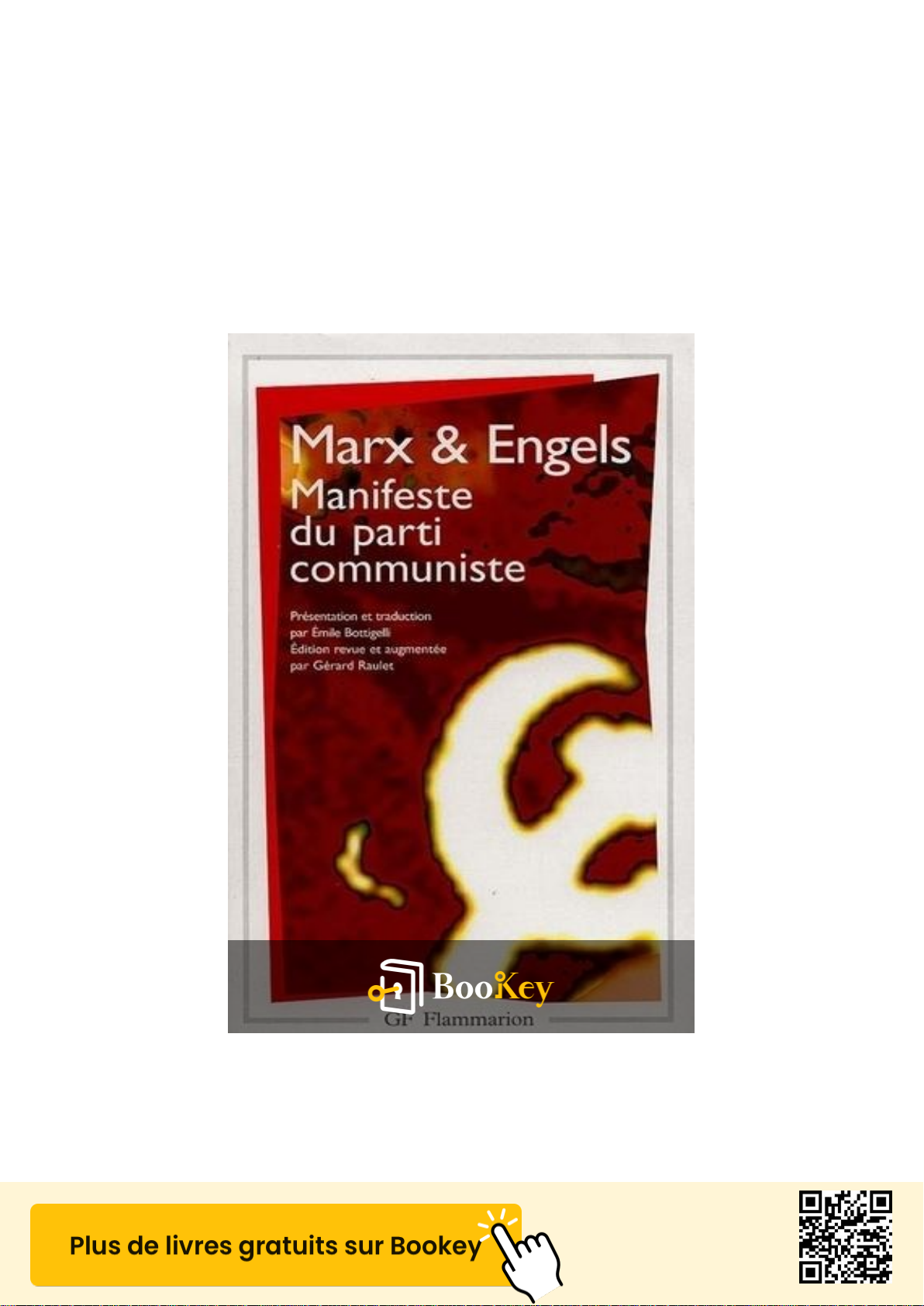
According to Jack Kirby, by Michael Hill
Dominick Grace
Michael Hill. According to Jack Kirby: Insights Drawn from Interviews with
Comics’ Greatest Creator. Lulu Publishing, 2021. Paperback. 348 pg.
$19.95. ISBN 9781667133072.
Michael Hill’s title here—the subtitle especially—tells you much of
what you need to know about this book. is self-published study is
evidently a labor of love by a self-identied Kirby fan, and it wears its
admiration of Kirby on its sleeve. Hill’s contention is straightforward
and clear: the history of Marvel Comics, certainly the ocial Marvel
history, exaggerates Stan Lee’s role and criminally downplays Kirby’s
in the creative explosion of the early 1960s from which most of
Marvel’s major characters emerged. I think it is fair to say that Hill’s is
an uncontroversial position; certainly, I have believed Kirby was the
primary architect of Marvel’s early superhero line for decades—and
indeed, Hill relies on interviews that are decades old as the basis of
much of his argument. Two features make this book stand out. First,
it takes a fairly absolutist view of the question, essentially accepting both Kirby’s claims to have
created almost everything and Kirby’s dismissals of Stan Lee. Second, it oers a comprehensive
tour through an enormous number of interviews with Kirby and others to make its case. One
key point Hill makes, and demonstrates, is that Kirby’s story remained consistent across decades,
whereas Stan Lee’s did not, which one can easily see as damaging Lee’s credibility. Hill also
lands hard on two nancial arguments. First, he argues, persuasively, that the so-called “Marvel
Method,” whereby artists produced pages from plot summaries rather than from full scripts, really
meant that the artists actually did most of the heavy liing on the books. Hill cites artists other
than Kirby who assert that Lee oen provided no actual plot at all, leaving the artist to create the
story; Lee then took the writing credit, leaving the art credit only for the artist. Hill’s argument is
that this practice allowed Lee to exploit the artists by claiming not only the writing credit but also
the payment for writing. Second, he argues, perhaps somewhat less persuasively, that Lee’s shi to
asserting that he was the creator of all the early Marvel superheroes coincided with the takeover
of the company so was part of a scheme to conrm company ownership of all of its lucrative
characters. ese are arguably the book’s core points, and they are good and important ones. ey
are not, however, news to those already well-versed in this long-standing controversy. Many other
commentators have largely accepted Kirby’s claims, though not as thoroughly as Hill does, as is
evident from Hill’s critiques of earlier researchers in this area.

50 • SFRA Review 53.4 • Fall 2023 SFRA Review 53.4 • Fall 2023 • 51
Furthermore, the book suers from limitations. First of all, Hill’s criticisms of the hagiographic
way Lee has been viewed may sound valid given that Kirby has been so overlooked, but they also
seem ironic, as Hill is engaged in his own hagiographic depiction of Kirby. is is not an academic
study, so its fannish style is to be expected, but Hill’s strongly anti-Lee perspective, understandable
(and valid, in my opinion) as it may be, means that he is unlikely to win over anyone not already
on his side of the debate. His decision to give Kirby the same benet of the doubt that he argues
has always been given to Lee’s claims leads him not to question Kirby’s own claims, thereby
correcting (from his point of view) the dierent standards of credibility Lee and Kirby have
received in the past, but also thereby letting all of Kirby’s claims go essentially unchallenged. e
critical consensus is that Kirby did indeed play a far greater role than the partisan ocial history
grants him, but it also and legitimately recognizes that Kirby’s own claims need to be evaluated
rather than simply accepted. Interestingly, Abraham Josephine Reisman’s biography of Stan Lee,
True Believer: e Rise and Fall of Stan Lee, also published in 2021, essentially supports Kirby’s
claims over Lee’s, without Hill’s propensity for partisanship in Kirby’s favor.
Second, and more problematically, the book’s structure is confused and repetitive. e book
consists of two sections. Part one is derived from Hill’s chronological examination of the Lee-
Kirby controversy for the Jack Kirby Museum and Research Center’s web page in 2015, produced
because a promised treatment of the same subject in the magazine e Jack Kirby Collector had
been cancelled. As Hill reports, that special issue “was quietly added back to the schedule” (x) for
the magazine aer his piece appeared. Part two of this book comprises Hill’s point by point and
exhaustive response to that special issue. Consequently, part one and part two cover much of the
same territory, and in a great many instances say essentially the same thing, even using the same
quotations. Multiple quotations appear twice (or more) in the book, and many repeat the same
information. While documenting dierent occasions on which Kirby said essentially the same
thing does support Hill’s argument that Kirby’s story stayed consistent, the extensive repetition
of information, whether verbatim or in multiple similar quotations, unnecessarily pads the book
and weakens its coherence. Hill could have combined his two separate accounts into one linear
narrative, though doing so would have required considerably more reshaping of the material than
has evidently been done.
ose unfamiliar with the Kirby side of the story, and even Kirby enthusiasts, might nd
value here, the uninitiated simply because the book provides a corrective to the Marvel version,
and enthusiasts because Hill’s thoroughness means that many dicult-to-nd interviews are
referenced and cited, and because other rare documents are also reproduced. However, this book
does need to be read with a critical lens, and those interested in the long history of the Lee vs
Kirby argument would do well to consult other sources, perhaps especially those Hill cites and
criticizes. Unfortunately, though, Hill does not provide a bibliography of works consulted, only an
index of the interviews referenced. Comprehensive comics libraries might want to add this book,
but more selective collections can pass it by.
NON-FICTION REVIEWS
Jack Kirby

50 • SFRA Review 53.4 • Fall 2023 SFRA Review 53.4 • Fall 2023 • 51
Dominick Grace is the author of e Science Fiction of Phyllis Gotlieb: A Critical Reading and
of numerous articles. He has co-edited several books covering topics such as comics, television,
and Canadian speculative ction.
NON-FICTION REVIEWS
Jack Kirby