Allen Guelzo, Henry R. Luce Professor of the Civil War Era and Director of Civil War Era Studies PDF Free Download
1 / 5/5
100%

$51 &$ 200$*+ ,(!/ /6
Allen Guelzo, Henry R. Luce Professor of the Civil
War Era and Director of Civil War Era Studies
Musselman Library
30*,) '$$
Allen C. Guelzo
30*,) '$$
-**-41'(0 ,# ##(1(-, *4-/)0 1 ':.0"2.-* &$:60!2/&$#2,$51. &$
/1-%1'$ ,&*(0' ,&2 &$ ,#(1$/ 12/$-++-,0 ,#1'$ (!/ /6 ,#,%-/+ 1(-,"($,"$
-++-,0
Share feedback about the accessibility of this item.
9(0(01'$.2!*(0'$/03$/0(-,-%1'$4-/)9(0.2!*(" 1(-, ..$ /0(,$:60!2/&-**$&$0(,01(121(-, */$.-0(1-/6!6.$/+(00(-,-%
1'$"-.6/(&'1-4,$/%-/.$/0-, *20$,-1%-//$#(01/(!21(-,2.-* .$/+ ,$,1*(,)':.0"2.-* &$:60!2/&$#2,$51. &$
9(0-.$, ""$00!*-&.-01(0!/-2&'11-6-2!69$2.-* "'-* /0'(. 1$:60!2/&-**$&$1' 0!$$, ""$.1$#%-/(,"*20(-,!6
, 21'-/(7$# #+(,(01/ 1-/-%9$2.-* -/+-/$(,%-/+ 1(-,.*$ 0$"-,1 "1 "2.-* &$:60!2/&$#2
200$*+ ,(!/ /6 ,#2$*7-**$,**$,2$*7-$,/62"$/-%$00-/-%1'$(3(* // ,#(/$"1-/-%(3(* //
12#($0 /+
':.0"2.-* &$:60!2/&$#2,$51. &$

Allen Guelzo, Henry R. Luce Professor of the Civil War Era and Director
of Civil War Era Studies
Abstract
&+!"*2)*+ $51 &$ '$,%&'+!%"0)$$&,$1'+!&)0,)'**')'+!"-"$
))&")+')'"-"$))+,"**!)*."+!,*.!+!.',$*#"#&*+,$'$*+'0&
"&'$&"!!+!!&.!"!+/+*"&*(")!"%+'*+,0!"*+')0&.!"!+"+$!.',$)'%%&"0',
.&++'$$"&$'-."+!+!"-"$)
Keywords
200$*+ ,(!/ /6$:60!2/&-**$&$/$ #(,&!--)0(,1$/3($4
Disciplines
,&*(0' ,&2 &$ ,#(1$/ 12/$8(!/ /6 ,#,%-/+ 1(-,"($,"$
9(0!*-&.-01(0 3 (* !*$ 19$2.-* "'-* /0'(. 1$:60!2/&-**$&$ ':.0"2.-* &$:60!2/&$#2,$51. &$

Allen Guelzo, Henry R. Luce Professor of the
Civil War Era and Director of Civil War Era
Studies
September 12, 2014
In this first Next Page column of the 2014-15 academic year, Allen
Guelzo, the Henry R. Luce Professor of the Civil War Era and
Director of Civil War Era Studies, shares with us what he would ask
Dickens, St. Paul, Tolstoy, and Lincoln if he had the chance; which
texts inspired him to study history; and which title he would
recommend if you want to "fall in love with the Civil War."
**********
What are you reading now (or have read recently)
that you would recommend and why?
A great deal of my reading (and I average between 40 and 70
books a year) is professional - things I am reading for class, for review in various journals, materials for
projects I'm working on. For that reason, much of what I've been reading in 2014 centers around three
projects:
• Books on the Popular Front of the 1930s and '40s (since I've toyed for a while with the idea of writing about
left-wing intellectuals in America in the Depression and World War II, and how they attempted to create a
'Popular Front' alliance of artists, composer and writers which would serve as what they called a
"transmission belt" to the Communist Party)
• Books on the era of the Founders and the Constitution (since I'm under contract with The Teaching
Company to record another lecture series for them next year on the Founders); and
• Books on Robert E. Lee (since the next big Civil War project I have in view is a biography of Lee)
The items which stand out for me from this reading are Michael Denning's The Cultural Front: The Laboring
of American Culture in the Twentieth Century, Howard Pollack's Marc Blitzstein: His Life, His Work, His
World, Gordon S. Wood's Empire of Liberty: A History of the Early Republic,1789-1815, Stanley Elkins and
Eric McKitrick's The Age of Federalism, Elizabeth Varon's Appomattox: Victory, Defeat and Freedom at the
End of the Civil War and Caroline E. Janney's Remembering the Civil War: Reunion and the Limits of
Reconciliation.
If you could only recommend one book on the Civil War to a friend or colleague
(tough question, I know!), which book would you select?
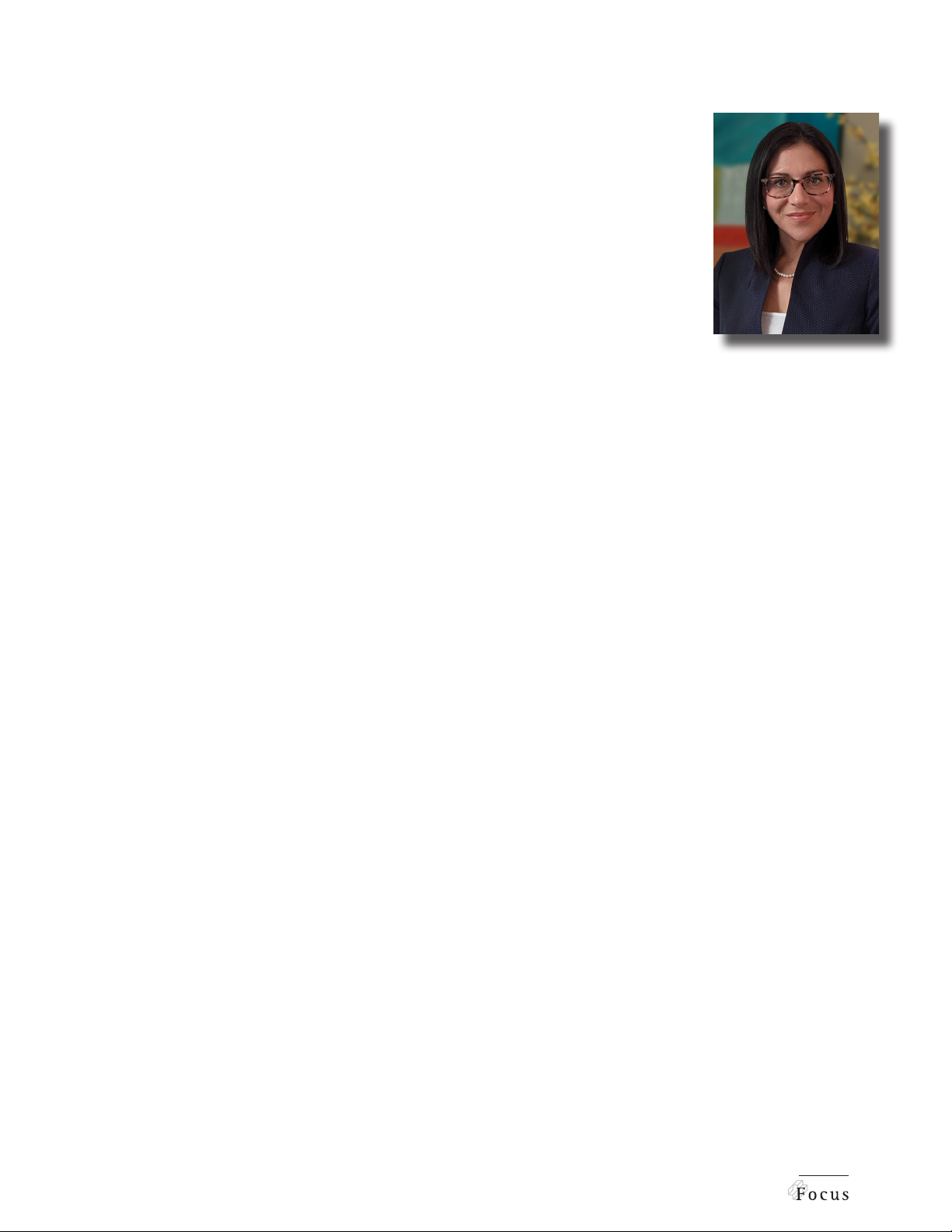
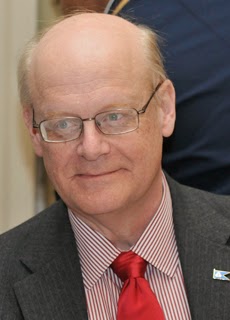
Allen Guelzo, the Henry R. Luce Professor of the
Civil War Era and Director of Civil War Era Studies,
shares with us which texts inspired him to study
history.

This will sound schmaltzy, but for a friend looking for general reading about the Civil War, I would suggest
Bruce Catton's This Hallowed Ground. It's half-a-century old, and written by a journalist rather than a
scholar, but if you want someone to fall in love with the Civil War, this is the book to do it. For the battle of
Gettysburg in particular, the never-fail love potion is Michael Shaara's novel, The Killer Angels.
What book/article/blog have you recently recommended to a student to read? Why?
I think blogs are a form in intellectual self-indulgence, so I don't spend much time reading them. The books I
recommend to students are generally related to class, so anything of that sort will sound like excerpts from
my syllabi. But in terms of articles, I send people to a wide variety of topics and writers, a number of which I
post on Facebook. Among the more recent, I have people look at:
• Sam Kean's "Phineas Gage, Neuroscience's Most Famous Patient," Slate, May 2014 (Yes, I know, this
sounds as clinical as carbolic acid, but it's definitely a riot)
• Nicholas Eberstadt's "The Great Society at Fifty: What LBJ Wrought," The Weekly Standard (May 19, 2014)
• Don Peck's "How a New Jobless Era Will Transform America," Atlantic Monthly (March 2010)
How do you keep track of what you have already read, are reading currently, or want
to read in the future? Do you prefer print or ebooks?
I don't use e-books. I love the tactile quality of hardcover printed books - the ink, the paper, the smell of glue,
the jacket art. The new-book smell is for me what new-car smell is for many drivers. I actually keep a listing
of every book I've read, something I started in 7th grade as what will doubtless be diagnosed as early-onset
OCD. I originally adopted the list as a discipline, to force me away from re-reading the same things and
toward literally finishing a book down to the last page.
What book or article has inspired you to take action? (i.e., books/articles that might
have inspired change in career path, travel to a new place, activism, etc.)
I read Perry Miller's great 1949 biography of Jonathan Edwards when I was in college, and followed that with
Miller's The New England Mind: The Seventeenth Century. They convinced me that not only should I be a
history person, but that nothing was more exciting than the history of ideas.
What do you read for fun?
Books about music, mainly (finished Annegret Fauser's Sounds of War: Music in the United States during
World War II this spring); but also the Titanic (I am an unabashed Titanic nerd, and have been since my
grandfather told me his memories of the disaster as a child), baseball (which I have not done in a while) and
19th and 20th-century British history (William Dalrymple's Return of a King: The Battle for Afghanistan,
1839-42, Rosemary Ashton's Victorian Bloomsbury, and Richard Toye's The Roar of the Lion: The Untold
Story of Churchill's World War II Speeches are some recent examples).
If you could meet any writer, dead or alive, who would it be? What would you want to know?
St. Paul, Dickens, Lincoln and Tolstoy. I want to know what their regimen for writing looked like, and whether
they heard a narrative voice, speaking in their heads, as they wrote.
What is your favorite book to give as a gift?
The Story of Babar.
Who is your favorite writer of all time?

Depends on the genre. I love poetry, and go for Edwin Arlington Robinson, Kipling, Shakespeare, and
Yeats. The non-fiction palm goes equally to Catton and C.S. Lewis. I read too little fiction to really have a
'favorite,' but I would never turn down a romp with Walker Percy or Anthony Trollope.
Do you have a favorite book or literary character from your childhood?
Horatio Hornblower. I can still tell you every part of the running and standing rigging of ship-rigged vessel of
the Napoleonic wars.
What are you planning to read next?
I have been nibbling at Jonathan Israel's Democratic Enlightenment for almost a year now. Time to get it
done. But I also have Joyce Appleby's history of capitalism and Stephen Neff's Justice Among Nations: A
History of International Law winking at me.
Posted 12th September 2014 by Musselman Library, Gettysburg College
http://nextpagegettysburg.blogspot.com/2014/09/allen-guelzo-henry-r-luce-professor-of.html