Fashion and Postcolonial Critique: An Introduction PDF Free Download
1 / 17/17
100%

11
At present we are witnessing an epistemological turn in fashion research.
Fashion theory is increasingly concerned with the project of a critical global
fashion and design history that takes into account a postcolonial fashion
perspective.1 This paradigmatic shift is part of an ongoing process that, over
the past two decades, has initiated complex interdisciplinary debates within
disciplines such as fashion history, anthropology, sociology, art history, and
cultural studies that aim to establish a postcolonial perspective for fashion
research. Since the works of key postcolonial thinkers like Edward Said, Homi K.
Bhabha, and Gayatri Chakravorti Spivak have to a large extent not yet been
adequately received in fashion theory, there is still a lot of conceptual and
theoretical work to be done. Postcolonial theory is a critique of European
knowledge and predominantly employs post-structuralist discourse and literary
analysis.2 When this heterogeneous, theoretical apparatus—characterized by
an intellectual history with a dialectic between Marxism and post-structuralism/
postmodernism3—is applied to the equally heterogeneous ield of fashion
research—a discipline that largely focuses on material, bodily, economic, social,
and cultural practices—postcolonial theory itself is challenged and eventually
even revised. Although decolonization is, in the words of James Cliord, “an
uninished, excessive historical process,”4 the main corpus of postcolonial theory,
which emerged in the 1980s and ’90s, has seen many paradigmatic shifts and
transformations of its scope and reach. Consequently Gayatri Chakravorty Spivak
opens her book Critique of Postcolonial Reason (1999) with the declaration
that postcolonial/colonial discourse studies are becoming “a substantial sub-
disciplinary ghetto.”5 Also Stuart Hall has asserted that “the post-colonial” as
a decisive, hyphenated temporal marker within the general process of decolo-
nization is highly problematic, yet he still saw it as a useful concept “to describe
or characterize the shift in global relations which marks the (necessarily uneven)
transition from the age of Empires to the post-independence or post-decolo-
nization movement,” and as a frame of mind “to identify what are the new rela-
tions and dispositions of power which are emerging in the new conjuncture.”6
And even though the growing “postcolonial theory industry” has enforced the
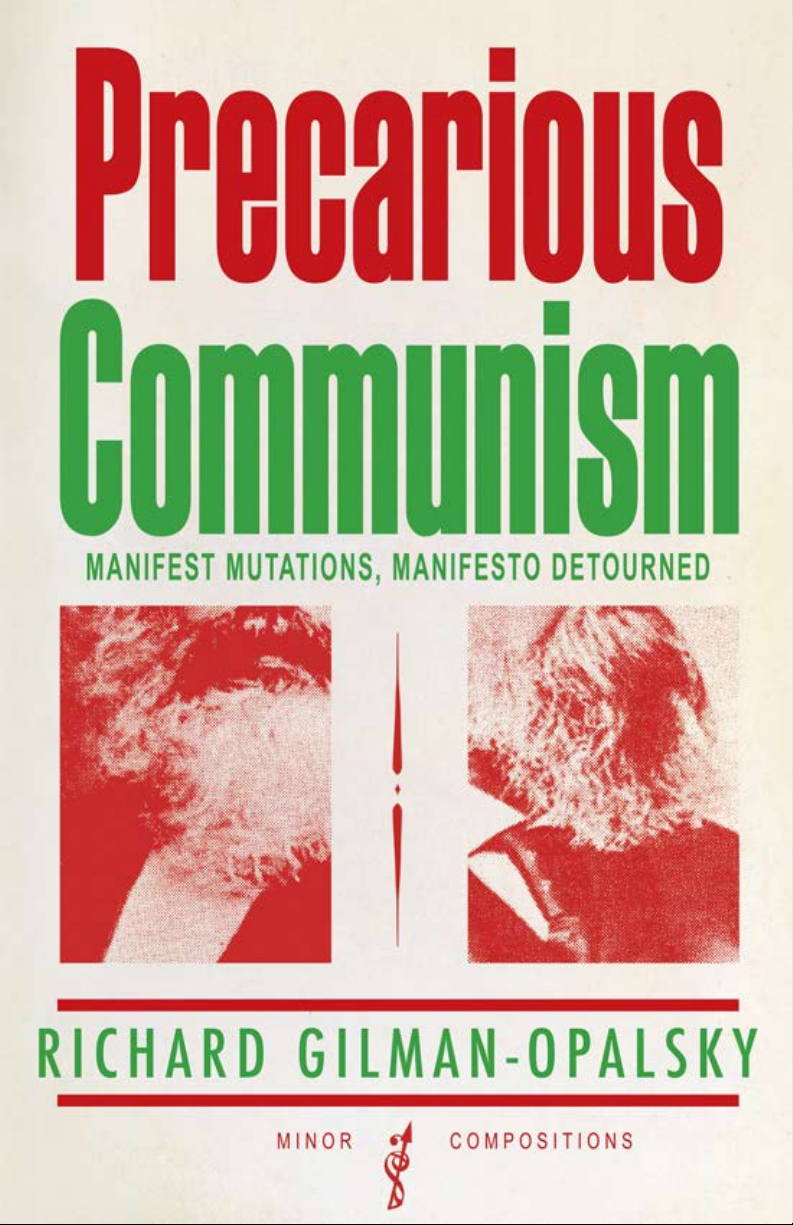
Fashion and
Postcolonial
Critique
An Introduction
Elke Gaugele and Monica Titton
Elke Gaugele, Monica Titton
1 The idea for this book goes back to a
symposium organized by Elke Gaugele,
Monica Titton, and Birgit Haehnel entitled
“Re-visioning Fashion Theories: Post co lo nial
and Critical Transcultural Perspec tives”
(symposium, Academy of Fine Arts Vienna,
December 1112, 2015). The sym posium
was organized in cooperation with the
research group Art Production and Art
Theory in the Age of Global Migration,
Verein für Kunst und Kulturwissenschaften,
Ulm.
2 Leela Gandhi, Postcolonial Theory: A
Critical Introduction (Crows Nest: Allen &
Unwin, 1998), 44.
3 Gandhi, viii.
4 James Clifford, Returns: Becoming
Indigenous in the Twenty-First Century
(Cambridge, MA: Harvard University
Press, 2013), 6.
5 Gayatri Chakravorty Spivak, A Critique of
Postcolonial Reason: Toward a History of
the Vanishing Present (Cambridge, MA:
Harvard University Press, 1999), 1.
6 Stuart Hall, “When Was ‘the Post-colonial’?
Thinking at the Limit,” in The Post-colonial
Question: Common Skies, Divided Horizons,
ed. Iain Chambers and Lidia Curti (London:
Routledge 1996), 246.

12 13Fashion and Postcolonial Critique: An Introduction
project of revisioning fashion histories has taken on a momentum of its own,
and since the 2010s, a number of systematic, encyclopedic historical works
have been published.17 Among others, the impressive ten-volume Encyclopedia
of World Dress and Fashion testiies to the academic importance accorded to
the revision of global fashion and dress histories.18
Third, the establishment of a postcolonial perspective for fashion research.
This modus of critique operates with a wider understanding of fashion, dress,
and style and engages in empirical research and the analytic scopes of post-
coloniality, decolonization, and globalization.19 By arguing for the term “style”
culturalization of these issues in the past two decades, the urgency for the
analyses of imperial power structures, neocolonialism, and global migration has
been stressed by the anti-globalization movement in the twenty-irst century.7
As Robert J. C. Young summarizes, “Above all, the assumption guiding post-
colonial critique is that it is possible to make effective political interventions
within and beyond its own disciplinary ield by developing signiicant connec-
tions between the different forms of intellectual engagement and activism in
the world today.”8 It is via this form of theory as the basis for political and social
activism that postcolonial theory has reached fashion studies and comes into
fruition. Postcolonial studies, a transversal ield of research characterized by
constant negotiations about its terminology and, as Leela Gandhi argues, about
“the relationship between [its] material and analytic cognates,”9 was developed
at the same time as fashion studies, a transdisciplinary research platform since
the 1980s and 1990s. Following the main strains of postcolonial theory since
then, we observe three dierent modi of postcolonial fashion critique.
First, a revision of fashion based on the unraveling of imperialist and colonialist
premises woven into historical and contemporary theories and deinitions of
fashion, comparable to those found in the history of science.10 This fundamen tal
episte mological critique was initiated by Jennifer Craik who questions the
distinction between Western and non-Western fashion systems and uncovered
how “consumer fashion simultaneously draws on discourses of exoticism, the
primitive, orientalism and authenticity.”11 As Victoria Rovine observes, the schism
between fashion and traditional dress is comparable to the separation between
“art” and “artifact”: artifacts stand for non-Western visual and material artworks
prior to their recognition by the Western art system.12 Rovine argues that in
this hierar chical division “fashion serves as a measure of cultural attainment,”
and, we might add, cultural superiority: “Who has, and who does not have
fashion is politically determined, a function of power relations.”13
Second, a revision of fashion history and globalization of fashion and dress
histories, inspired by postcolonialism and world history. Throughout the past
three decades, fashion and costume historians have attempted to rewrite the
histories of fashion from a critical perspective by producing new knowledge
for a global historical narrative. As a methodology for the investigation of the
“multi-sited and various nature of design practices,” global design history has
been conceptualized by Sarah Teasley, Glenn Adamson, and Giorgio Riello to
shed light on the topos of global interconnectedness as well as on situations
within networks that are “often of asymmetrical power and exchange.”14 Leslie W.
Rabine’s multi-sited approach in The Global Circulation of African Fashion
(2002) has set a core example in connecting the study of fashion’s material
culture to the workings of the global capital.15 Building on the important and
pioneering work of authors such as Joanne B. Eicher and Lou Taylor,16 the
Elke Gaugele, Monica Titton
7 María do Mar Castro Varela and Nikita
Dhawan, Postkoloniale Theorie: Eine
kritische Einführung (Bielefeld: transcript,
2015), 12, 286. Unless otherwise noted,
all translations are our own.
8 Robert J. C. Young, Postcolonialism:
An Historical Introduction (Malden,
MA: Wiley Blackwell, 2016), 11.
9 Leela Gandhi, Postcolonial Theory:
A Critical Introduction (Sydney: Allen &
Unwin, 1998), 3.
10 Jennifer Craik, The Face of Fashion:
Cultural Studies in Fashion (London:
Routledge, 1993); Yuniya Kawamura, “The
Japanese Revolution in Paris Fashion,”
Fashion Theory 8, no. 2 (2004): 195224;
Yuniya Kawamura, Fashioning Japanese
Subcultures (Oxford: Berg, 2012); Gudrun
M. König, Gabriele Mentges, and Michael R.
Müller, eds., Die Wissenschaften der Mode
(Bielefeld: transcript, 2015); and Elke
Gaugele, “Kostümgeschichten und frühe
Modetheorien als Wissensord nungen der
Moderne,” in Mentges, König, and Müller,
Die Wissenschaften der Mode, 4980.
11 Craik, Face of Fashion, 41.
12 Victoria L. Rovine, “Colonialism’s Clothing:
Africa, France, and the Deployment of
Fashion,” Design Issues 25, no. 3 (2009): 46.
13 Rovine, “Colonialism’s Clothing,” 46.
See also Sandra Niessen, “Afterword:
Re-orienting Fashion Theory,” in Re-orienting
Fashion: The Globalization of Asian Dress,
ed. Sandra Niessen, Ann Marie Leshkowich,
and Carla Jones (Oxford: Berg, 2003), 245.
14 Sarah Teasley, Giorgio Riello, and Glenn
Adamson, “Introduction: Towards Global
Design History,” in Global Design History,
ed. Glenn Adamson, Giorgio Riello, and
Sarah Teasley (London: Routledge, 2011),
3. See also Giorgio Riello, Cotton: The Fabric
That Made the Modern World (Cambridge:
Cambridge University Press 2013).
15 Leslie W. Rabine, The Global Circulation
of African Fashion (Oxford: Berg, 2002).
For critical investigations on the global
economies of fashion and art, see Elke
Gaugele, ed. Aesthetic Politics in Fashion
(Berlin: Sternberg Press, 2014).
16 Joanne B. Eicher, Dress and Ethnicity:
Change across Space and Time (New York:
Bloomsbury, 1995); Lou Taylor, The Study
of Dress History (Manchester: Manchester
University Press, 2002); and Lou Taylor,
Establishing Dress History (Manchester:
Manchester University Press, 2004).
17 Margaret Maynard, Dress and Globalization
(Manchester: Manchester University
Press, 2004); and Joanne B. Eicher, Hazel
A. Lutz, and Sandra Lee Evenson, The
Visible Self: Global Perspectives on Dress,
Culture and Society (New York: Fairchild,
2014).
18 Joanne B. Eicher, ed., Encyclopedia of
World Dress and Fashion (Oxford: Berg,
2010).
19 Jean Allman, ed., Fashioning Africa: Power
and the Politics of Dress (Bloomington:
Indiana University Press, 2004); Jennifer
Craik and M. Angela Jansen, eds., Modern
Fashion Traditions: Negotiating Tradition
and Modernity through Fashion (New York:
Bloomsbury, 2016); Victoria L. Rovine,
African Fashion Global Style: Histories,
Innovations, and Ideas You Can Wear
(Bloomington: Indiana University Press,
2015); Simona Segre Reinach, “China and
Italy: Fast Fashion versus Prêt à Porter:
Towards a New Culture of Fashion,” Fashion
Theory 9, no. 1 (2005): 4356; and Simona
Segre Reinach, “The Identity of Fashion in
Contemporary China and the New Relation-
ships with the West,” Fashion Practice 4,
no. 1 (2012): 5770.
1514
of historical fashion narratives; decolonizing concepts of fashion research;
the expansion of decolonizing fashion archives, imaginaries, and media; a
critical revision of key postcolonial theories; and critical global fashion histories
and the analysis of global migration.
Decolonizing Historical Fashion Narratives: Fashion Critique
in La Revue du Monde Noir: The Review of the Black World
(1931/32)
At the beginning of the 1930s, the Paris-based voice of the Pan-African movement
was La Revue du Monde Noir: The Review of the Black World (193132), the bi-
lingual literary journal that introduced modern decolonizing fashion critique.27
Following pioneers of later postcolonial theory, such as the sociologist and civil-
rights activist W. E. B. Du Bois, members of the Harlem Renaissance movement
(191728), and the philosopher Alain Locke who called on “the new Negro” (1925)
to write him- and herself, La Revue du Monde Noir aimed to bring a contemporary
Afro-Latin self-consciousness into existence.28 The agenda of the journal, described
used instead of “fashion,” cultural studies scholars synthesized postcolonial
with post-structuralist perspectives. Style should accordingly be decoded as
“a phantom history of race relations since the War” and has been conceptualized
as a semiology that narrates the historical sequence of migration routes and
highlights dierent waves of immigration and their changes in dress cultures.20
Within this strand of research, scholars examine a wide variety of objects of
investigation ranging from micro-histories in regional or national identities,21
to the study of migrant and diasporic “style-fashion-dress” cultures, and the
intersection of religion and fashion in urban immigrant communities.22 Building
on the theoretical legacy of cultural studies, their aim is to “re-orient fashion,”23
and to create new terms and concepts when studying fashion and style in a
global, postcolonial, transnational, post-black, and post-migratory society.24
The contributions in this book build on the theoretical legacy of the three strands
of postcolonial fashion critique mentioned above. Coming from a diverse range
of disciplines including textile studies, art history, anthropology, history, literary
studies, gender studies, cultural studies, and fashion theory, the essays in this
book relect on the multidisciplinary nature and diverse scope of contemporary
fashion studies. Each of the authors addresses a form of postcolonial critique under-
stood as a “theoretical attempt to engage with a particular historical condition.”25
With an academic background rooted in cultural anthropology and sociology,
we, as editors, have a speciic, empirically trained perspective on the project
of postcolonial fashion critique. We are indebted to an understanding of post-
colonial critique that, as Young programmatically posited, “focuses on forces
of oppression and coercive domination that operate in the contemporary
world,” and “constitutes a directed intellectual production that seeks to articulate
itself with different forms of emancipatory politics.”26 As a cultural anthropol-
ogist and sociologist respectively, we are obliged to analyze cultural phenomena
in a larger context and to take into account micro and macro levels of social
reality, such as colonization, globalization, decolonization, postcoloniality,
and neocolonialism.
Apart from Spivak, thinkers such as W. E. B. Du Bois, Frantz Fanon, Stuart Hall,
and James Cliord have informed our research of postcolonial fashion in their
writing. While compiling our research, we observed how essential fashion
critique had been for the work of the predecessors of the “post-colonial” and
their decolonizing concepts of the modern era, as practices of fashioning,
styling, and their visual representation had been considered as having a funda-
mental role in the production of emancipatory identity politics, countercultural
resistance, and the foundation of corresponding image archives.
This book proposes ive subjects of postcolonial fashion critique exemplarily
carved out from historical as well as contemporary positions: the decolonizing
Elke Gaugele, Monica Titton
20 Dick Hebidge, Subculture: The Meaning of
Style (London: Routledge, 1979), 41.
21 Emma Tarlo, Clothing Matters: Dress and
Identity in India (London: Hurst & Company,
1996); M. Angela Jansen, Moroccan Fashion:
Design, Culture, and Tradition (London:
Bloomsbury, 2014); and Masafumi Monden,
Japanese Fashion Cultures: Dress and
Gender in Contemporary Japan (London:
Bloomsbury, 2014).
22 Carol Tulloch, The Birth of Cool: Style
Narratives of the African Diaspora (London:
Bloomsbury, 2016); Carol Tulloch, “Style –
Fashion – Dress: From Black to Post-Black,”
Fashion Theory 14, no. 3 (2010): 273303;
Reina Lewis, “Veils and Sales: Muslims and
the Spaces of Postcolonial Fashion Retail,”
in “African Diaspora,” special issue, ed.
Valerie Steele, Fashion Theory 11, no. 4
(December 2007): 42341; Annelies Moors,
“Fashionable Muslims: Notions of Self,
Religion, and Society in Sanà,” in Fashion
Theory 11, no. 4 (December 2007): 31946;
Heather Marie Akou, “Building a New
‘World Fashion’: Islamic Dress in the Twenty-
First Century,” Fashion Theory 11, no. 4
(2007): 40321; Emma Tarlo and Annelies
Moors, eds., Islamic Fashion and Anti-fashion:
New Perspectives from Europe and North
America (London: Bloomsbury, 2005); and
Emma Tarlo, Visibly Muslim: Fashion,
Politics, Faith (Oxford: Berg, 2010).
23 Carla Jones and Ann Marie Leshkowich,
“Introduction: Globalization of Asian
Dress,” in Niessen, Leshkowich, and Jones,
Re-orienting Fashion, 37.
24 Yuniya Kawamura, “The Japanese Revolution
in Paris Fashion,” Fashion Theory 8, no. 2
(2004): 195224; Yuniya Kawamura,
Fashioning Japanese Subcultures (Oxford:
Berg, 2012); and Gertrud Lehnert and
Gabriele Mentges, eds., Fusion Fashion
Culture beyond Orientalism and Occiden ta-
lism (Frankfurt am Main: Peter Lang, 2013).
25 Gandhi, Postcolonial Theory, 4.
26 Young, Postcolonialism, 11.
27 Thanks to Christian Kravagna for bringing
La Revue du Monde Noir, nos. 16 (November
1931April 1932) to our attention. See his
essay on pp. 4053.
28 See T. Denean Sharpley-Whiting, Negritude
Women (Minneapolis: University of
Minnesota Press, 2002), 40; and Alain
Locke, “Enter the New Negro,” in “Harlem
Mecca of the New Negro,” special issue,
Survey Graphic, no. 6 (March 1925):
62934.
Fashion and Postcolonial Critique: An Introduction
16 17
life!”38 In the following two issues of the Revue, ive authors contributed to
this discourse: Magd Raney, the alias of the Parisian Afro-Martiniquais writer
Marie-Magdeleine Carbet, the Parisian-Antillean intellectual Louis Thomas
Achille, the American educator and translator Clara W. Shephard, Jean Baldoui,
and a white subscriber to the journal under the pseudonym “Rosario.”
Reversing Bergson’s interpellation that “the sight of a Negro dressed in European
Fashion always provokes the laughter of the white man,” Raney opens the
discourse with a sarcastic speech act and further brings racial and colonial
injurious stereotypes into ridicule.39 She also interviewed a tailor and a milliner
atelier, both well known among the Caribbean community for their sympathy.
“Good taste” is the overarching benchmark of all contributors to the inquiry,
and all authors consider it part of the human condition that transcends all
cultures as an expression of intellectual, aesthetic, and social ability. Everybody
should pay attention to his or her complexion as to “other conditioning factors
of smartness (size, corpulency, age, social standing, type, etc.) which every
person of taste white, yellow, or black must consider,” as Achille summed up.40
While he and Raney deine the limits of “good taste” by warning of the ridiculous-
ness of overdressing and of “certain shortcoming in their style,”
41 Shephard
was “very seriously concerned with the choice of tints and shade,” and to get to
know “which would bring out the light and the latent beauty of our com plexion.”
42
Thereby Shephard refers to dressmaking classes in the American “Negro
schools” at that time, where students were taught how to igure out their styles
and “the particular colors that are most becoming.”43 In 1931 La Revue du
Monde Noir inally inished its explorations on how Negroes living in Europe
should dress by teaching Bergson a last lesson. Baldoui concludes “that colored
people can perhaps give more lessons than they have need to take from people
who think that in all civilization they alone are privileged.”44
as “a query on European Fashions as followed by colored people,”29 had been
programmatically announced in the irst issue, which was founded by the
Parisian Afro-Martiniquan intellectual Paulette Nardal.30 Although the neologism
négritude as an expression for the Francophone “new Negro” and its
inauguration of black humanist thought had been coined later in the years
1936 to 1937 by the Martiniquan poet Aimé Césare, it was Jane Nardal who,
as a vanguard of the movement, had introduced the term “Afro-Latin” in her
essay “Internationalisme noir” (1928) long before Césare.31 As progressive
thinkers of the Négritude movement, hosts of the Clamart Salon, and editorial
managers of the Revue, the Sorbonne University–educated sisters Andrée,
Jane, and Paulette Nardal—known as “les soeurs Nardal”—broached a provo cative
fashion debate in the journal’s “Question Corner” in the fall issue of 1931.32
The journal espouses the triple aim “to create among the Negroes of the entire
world, regardless of nationality, an intellectual and moral tie, which will
permit them to better know each other, to love one another, to defend more
eectively their collective interests, and to glorify their race.”33
By raising a survey on the question “How should negroes living in Europe dress?”
the Revue mirrored European colonialism and racism in a double entendre.34
At irst sight it points the inger at the French philosopher Henri Bergson, who
asked in his book Laughter (1911), “Why does the sight of a Negro dressed in
European Fashion provoke the laugh of the white man?” He answered his own
query with the words: “Because the white man thinks the negro is disguised.”35
From an epistemological perspective, the Revue’s inquiry unmasks Bergson’s
inept example that aimed to explain masquerade as a deeper philosophical
principle of identity and society. Historically, fashion has been set up as a dis-
course in the cultural sciences with an expelling demarcation line that distin-
guished the “West and the rest” and substantiated the expansion of the European
empires during the nineteenth century.36 The premise that fashion is a phe-
nomenon that could only emerge in the “civilized” West is the epistemological
basis of modern (sociological) fashion theories from Christian Garve, Thorstein
Veblen, and Werner Sombart to Georg Simmel. In this volume, Christian Kravagna
discusses Adolf Loos’s writings on fashion. Pervaded with concepts of the
“primitive” and a belief in the superiority of Western culture borrowed from
orientalist and colonial discourse, Loos’s essays on fashion aimed at western-
izing his home country of Austria via an internationalism based on the univer-
salized model of British colonial modernity. In France in the early twentieth
century, at a time when its colonies were at their most expansive, the con-
struction of non-European cultures as “traditional” was an important element
of the colonial enterprise and its support at home.37 With its sarcastic critique
of Bergson’s epistemic racism and colonialism, the Revue opened up an actual
question corner on the fashioning of contemporary emancipatory Négritude
identities, with the clariication that “the natural reply to such a question”
should be “just like everybody else, according to the climate and the social
Elke Gaugele, Monica TittonFashion and Postcolonial Critique: An Introduction
29 La Revue du Monde Noir 1 (1931): 4.
30 With the help of Haitian Dr. Leo Sajous,
see Sharpley-Whiting, Negritude Women, 17.
31 T. Denean Sharpley-Whiting, “Femme négri-
tude: Jane Nardal, La Dèpêche africaine,
and the francophone New Negro,” Black
Feminist Research (Fall 2000): 817; 1012;
and Jane Nardal, “Internationalisme noir,”
La Dèpêche africaine, June 15, 1928, 4.
32 “Nos enquêtes/Question Corner,” La Revue
du Monde Noir 2 (1931): 60.
33 La direction, “Ce que nous voulons faire,”
La Revue du Monde Noir 1 (1931): 4.
34 Sharpley-Whiting, Negritude Women, 56.
35 Henri Bergson, Laughter: An Essay on the
Meaning of the Comic, trans. Cloudesley
Brereton and Fred Rothwell (New York:
Macmillan, 1914), 55.
36 Stuart Hall, “The West and the Rest. Dis-
course and Power,” in Modernity: An Intro-
duction to the Modern Societies ed. Stuart
Hall (Malden, MA: Blackwell, 1996), 185227.
37 Rovine, “Colonialism’s Clothing,” 44.
38 Magd Raney, “Nos Enquêtes/Question Corner,”
interview by Louis Thomas Achille, La
Revue du Monde Noir 3 (1932): 50. Also
see ig. 17.
39 Raney, 50.
40 Achille, “Nos Enquêtes,” 53, see ig. 20.
41 Raney, “Nos Enquêtes,” 51; see ig. 18.
42 Clara W. Shephard, “En Marge de Notre
Enquête,” La Revue du Monde Noir 3
(1932): 54; see igs. 1, 21.
43 Shephard, 54; see ig. 21.
44 Jean Baldoui, “Comment les Noirs vivent
en Europe dovent-ils s’habiller,” La Revue
du Monde Noir 4 (1932): 52; see ig. 24.

18 19
threatened French body politics and inaugurated the historical processes of
decolonization.50
Decolonizing Concepts for Fashion Research:
W. E. B. Du Bois’s Visual Sociology and the De/Postcolonial
Counter-archive
As discussed in the Revue in relation to fashion, the issue of always being
looked at in a preposterous way follows both Jane Nardal’s concept of an
Afro-Latin double-belonging and the legacy of W. E. B. Du Bois. His seminal
work The Souls of Black Folk (1903) diagnoses a “two-ness,” “two unrecon-
ciled strivings,” and the “double consciousness” within African American
identities.45 Du Bois deines this double consciousness as a “peculiar sensation”
and the “sense of always looking at one’s self through the eyes of others,
of measuring one’s soul by the tape of a world that looks on in amused con-
tempt and pity.”
46 His concept of double consciousness as identity formation
is based on a visual paradigm and on the textile metaphor of the veil. Ac-
cording to Du Bois it is the “Veil of Race” and respectively the “Veil of Color”47
that socially constitute double consciousness in “a world which yields him
no true self-consciousness, but only lets him see himself through the reve-
lation of the other world.”48 Following Du Bois, in 1928 Jane Nardal had
already given voice to a “double appartenance,” a double belonging between
Frenchness/Latiness and Africaness/blackness and had formulated a new
self-consciousness of an Afro-Latin identity that embraces cultural métissage
to return en soi, to the self.49 Politically, these ideas of difference, symbiosis,
hyphenations, and the nascent self-consciousness of black Francophones
Elke Gaugele, Monica Titton
45 The concept of the “double
consciousness” appears in the irst
chapter of W. E. B. Du Bois, The Souls of
Black Folk: Essay and Sketches (Chicago:
A. C. McClurg, 1903). Reprint of the text of
the irst edition: W.E.B. Du Bois, The Souls
of Black Folks (Oxford: Oxford University
Press 2007). Du Bois irst uses the term in
his article “The Strivings of the Negro
People,” Atlantic Monthly, August 1897.
See also John P. Pittman, “Double Conscious-
ness,” Stanford Encyclopedia of Philosophy
Archive, ed. Edward N. Zalta, Summer
2016, https://plato.stanford.edu/archives
/sum2016/entries/double-consciousness/.
Further reading on Du Bois’s discussion of
double consciousness and visual culture,
see Shawn Michelle Smith, Photography
on the Color Line: W. E. B. Du Bois, Race,
and Visual Culture (Durham, NC: Duke
University Press, 2004), 2635.
46 Du Bois, Souls of Black Folk, 8.
47 Du Bois, 55, 123.
48 Du Bois, 8.
49 Sharpley-Whiting, “Femme Négritude,” 14.
50 Sharpley-Whiting, 16.
Fashion and Postcolonial Critique: An Introduction
Fig. 1
Young women cutting and itting clothing in class at Agricultural
and Mechanical College, displayed at the “American Negro” exhibit
at the Paris International Exposition of 1900
Fig. 2
Display of W. E. B. Du Bois’s “American
Negro” exhibition at the Paris International
Exposition of 1900

20 21
The reexamination of Du Bois is important for postcolonial fashion research
as he can arguably be considered a visual theorist of race and racism as well
as a visual sociologist who actively refuted racist images and systematically
worked on the transformation of the white gaze and against the scientiic legi-
timization of white supremacy. His exhibition “The American Negro,”51 co curated
with the American “Negro special agent” Thomas J. Calloway, was held at the
Palace of Social Economy at the Paris World’s Fair in 1900 (ig. 2). The exhibition
produced a counter-discourse to contradict racist images of late nineteenth-
century anthropology, to challenge the usual colonial displays of exotic other-
ness at the World’s Fair, and to disprove Western visual and popular culture of
the 1890s in which black people were represented as “deracinated ‘sambos’
and lascivious ‘coons.’”52 Du Bois’s counter-archive relects his trust in the power
of empirical and visual sociology to bring about social change.53
Du Bois positions the exhibition as “explicitly sociological in the larger sense
of the term—that is an attempt to give, in as systematic and compact a form
as possible, the history and present conditions of a large group of human
beings.”54 His methodological approach to visualize his empirical and theoretical
work by producing thirty-two modernist-style charts and maps related to his
study on the Georgia Negro, to show ive hundred photographs of contemporary
African American life, and to present two hundred books as well as nearly
150 weekly periodicals authored by African Americans aimed to decolonize the
Western order of knowledge of his time (ig. 3). Du Bois’s insight on the agency
and the afterlife of pictures, his dedication to the systematic collection and
the arrangement of panels resemble Aby Warburg’s later work Mnemosyne
(1924), a picture atlas.55 But beyond that, Du Bois devoted his work to changing
the regimes of representation by compiling and exhibiting a decolononizing
counter-archive showcased using magazine racks, picture frames, and book-
shelves. From a fashion studies point of view, it is highly interesting that in
Du Bois’s collection of photographs showing modern African American life he
includes a documentary image of young women cutting and itting clothing
in a class of Greensboro Agricultural and Mechanical College during the
Elke Gaugele, Monica TittonFashion and Postcolonial Critique: An Introduction
51 Du Bois and Calloway’s work for the
“American Negro” exhibition was highly
awarded by the Paris exhibition judges
and other institutions: Grand Prix for the
exhibition as a whole as well as gold,
silver, and bronze medals and honorary
mentions. See W. E. B. Du Bois, “The
American Negro at Paris,” American
Monthly Review of Reviews (November
1900): 577, http://credo.library.umass
.edu/view/pageturn/mums312-b215
-i231/#page/1/mode/1up.
52 Henry Louis Gates, Jr., “W. E. B. Du Bois’
Talented Tenth in Pictures,” The Root,
February 12, 2010, http://www.theroot
.com/w-e-b-du-bois-talented-tenth-in
-pictures-1790881827.
53 Smith, Photography on the Color Line, 14.
54 Du Bois, “American Negro at Paris,” 576.
55 Aby Warburg, Der Bilderatlas: Mnemosyne,
ed. Martin Warnke (Berlin: Akademie
Verlag, 2008).
Fig. 3
“The problem of the 20th century is the problem of the color-line,”
chart prepared by Du Bois for the “American Negro” exhibition at
the Paris World Exposition of 1900 to show the routes of the African
slave trade and the economic and social progress of African
Americans since emancipation

22 23
1890s56—the class had been described as an emancipatory self-fashioning
strategy by Clara W. Shephard in La Revue du Monde Noir. Furthermore, many
of the portrait photographs show African American women posing in fashion-
able styles of the time, such as fur collars or ruched blouses with high-itting
collars (igs. 47). With their dandy-esque looks, some even seemed to trans cend
the “gender” categories of that time in their clothing, wearing men’s jackets,
shirts, or coats in the styles of soldiers’ uniforms. The hope for radical cultural
change is embodied in Du Bois’s igure of the dandy, an “odd or queer Race
Man with revolutionary ideas about race, gender, sex, and nation.”57
For the Paris World’s Fair, Du Bois had also styled himself as an elegant African
American gentleman with a black tailcoat and top hat so as to represent
himself as a man educated at an elite university, as man of science and culture.
The “Race Man’s uniform,” suggested by Du Bois at that time, adopts the well-
itting Victorian three-piece suit and thus appropriates a highly symbolic piece
of normative masculinity and authority.58 This style appropriation of black
dandies was metaphorically regarded as a modern outit that expressed freedom,
opposition, and power within the racist environment of American society.59
Du Bois points out that the attention to beauty and art as well their cultural
production should be part of emancipatory eorts.60
Elke Gaugele, Monica TittonFashion and Postcolonial Critique: An Introduction
56 Most of the pictures exhibited were taken
by photographer Thomas Askew from
Atlanta, and those of the South were shot
by Harry Shepherd, the irst African
American photography studio owner in
St. Paul, Minnesota. Images of the Hampton
Institute were taken by Frances Benjamin
Johnston, one of the irst female photo
journalists. See Elisabetta Bini, “Drawing a
Global Color Line: ‘The American Negro
Exhibit’ at the 1900 Paris Exposition,” in
Moving Bodies, Displaying Nations: National
Cultures, Race, Ethnicities, Gender in
World Exhibitions, 1873–1939, ed. Guido
Abbattista (Trieste: Edizioni Università di
Trieste, 2014), 2552.
57 Monica L. Miller, Slaves to Fashion: Black
Dandyism and the Styling of Black
Diasporic Identity (Durham, NC: Duke
University Press, 2009), 145.
58 Miller, 139.
59 Richard J. Powel, “Sartor Africanus,” in
Dandies: Fashion and Finesse in Art and
Culture, ed. Susan Fillin-Yeh (New York:
New York University Press, 2001), 226.
60 Miller, Slaves to Fashion, 153; See also
W. E. B. Du Bois, “The Criteria of Negro Art,”
The Crisis (October 1926): 29097; and
W. E. B. Du Bois, “The Negro in Literature
and Art,” Annals of the American Academy
of Political and Social Science 49
(September 1913): 23337.
Figs. 46
Portrait 1899 displayed at the “American Negro” exhibit at the
Paris International Exposition of 1900
Fig. 7
Portrait 1899/1900 displayed at the
“American Negro” exhibit at the Paris
International Exposition of 1900

24 25
Fashion Media, Imaginaries, and the Global Postcolonial
Counter-archive: Representing Alternative Fashion
Imaginaries
Photography has been, and is central to that aspect of decolonization
that calls us back to the past and offers a way to reclaim and to renew
life-afirming bonds.
—bell hooks, Art on My Mind: Visual Politics
Fashion media—from fashion magazines to blogs—are important hubs for the
dissemination of representations and collective narratives on gender, race, class,
body, identity, and sexuality; therefore they carry the potential for a decolo-
nizing transformation from within the fashion system. In the past ifteen years,
the emergence of digital fashion media has put long-standing hierarchies of
power into question, and while to a large extent the established orders were
largely reafirmed after all,61 the so-called digital revolution also gave rise to
a plethora of independent, globally connected blogs, online platforms, and
most recently a renaissance of print magazines that eschew the received
categories and orders of fashion. These new fashion media represent archives
of counter-cultural imaginaries and visual discourses that challenge, disrupt,
and renew the hegemonic order of fashion. Following the footsteps of Du Bois’s
tradition of visual sociology as a critical intervention, we curated the exhibi-
tion “The Hidden Fashion Library” in April 2017 to research and present the ways
in which images can contribute to a change in regimes of seeing and how
fashion imaginaries partake in the formation of collective visual memories.62
The exhibition explored the global landscape of independent magazines that
have been founded in recent years as both a reaction to the digital-media
boom of fashion and street-style blogs and as a second wave of the 1980s and
early ’90s alternative and avant-garde magazine production. Our spatial and
curatorial concept of creating a hidden fashion library was indebted to Michel
Foucault’s programmatic epistemological critique in his book The Order of
Things, originally published in 1966.63 We selected magazines that to us repre-
sent new forms of counter-archives of fashions, styles, knowledge, and iden-
tities. Therefore the exhibition as a whole can be seen as a repository (or: library)
for counter-archives of the global, critical, and post-colonial fashion media
Elke Gaugele, Monica TittonFashion and Postcolonial Critique: An Introduction
61 Monica Titton, “Fashion Criticism Unravelled:
A Sociological Critique of Criticism in
Fashion Media,” International Journal of
Fashion Studies 3, no 2 (2016): 20923.
62 The exhibition “The Hidden Fashion
Library” (April 2629, 2017, Alte Post,
Vienna) was curated by Elke Gaugele and
Monica Titton. The exhibition space was
designed by gangart | Simonetta Ferfoglia
and Heinrich Pichler. For detailed
information, catalogue, and exhibition
views, see http://hiddenfashionlibrary.net/.
63 Michel Foucault, The Order of Things: An
Archaeology of the Human Sciences,
trans. Alan Sheridan (New York: Vintage
Books, 1994), xix–xx.
Fig. 8
“The Hidden Fashion Library,” exhibition photo,
state rooms Alte Post, Vienna, April 2629, 2017
26 27
production and as a tool for postcolonial visual fashion research (ig. 8). The
names of the magazines unfold a narrative of global politics: migration,
decolonization, casualization, diaspora, and hybrid identities are relected in
mastheads such as: Diaspora Drama, Boat Magazine, Born ’n’ Bread, Migrant
Journal, and White Lies.
Some of the visual material from the exhibition found its way into this book
because we wanted to give space to these instances of inherent postcolonial
critique and therefore included the work of journalists, fashion photographers,
stylists, and designers who contribute to a critical expansion and postcolonial
revision of fashion imaginaries. The timeless portrait of Grace Bol on the
cover of this book was taken by the revered fashion photographer Sølve
Sundsbø.64 With its classic composition and coloration, the image recalls Re-
naissance portrait paintings, yet with Bol’s minimalist wardrobe and the
whimsical set design of a fast-food nature morte, the photograph conveys a
clever, glorious representation of contemporary fashion in a postcolonial
context. “Re-mastering the Old World” is the title of a series of printed silk
tapestries designed by Walé Oyéjidé Esq. for the fashion label Ikiré Jones. In
this book we showcase a selection of these prints based on historical paintings
that pay “homage to the work of time-honored artists, while celebrating the
perspectives of unheralded people of color.”65 Heval Okçuoğlu is the editor in
chief of 212 Magazine, a biannual magazine launched in 2016 that is based in
Istanbul and distributed internationally.66 From its irst three issues, we chose
seven images that represent the magazine’s unique aesthetic and that testify to its
mission to unveil and create alternative visual archives. Helen Jennings is the
editorial director and cofounder of Nataal, “a global media brand celebrating
contemporary African fashion, visual arts, music, travel and society.”67 As a
journalist, writer, and consultant, she has been at the forefront of African
fashion media production and we invited her to write about contemporary
African fashion. “Last Stop Palenque” is a fashion editorial published on Nataal
in March 2016. We spoke to photo g rapher Hana Knížová and stylist Sabrina
Henry about the fascinating history of San Basilio de Palenque, the Afro-
Caribbean village in northern Colombia in which they produced the editorial.
A Critical Revision of Key Postcolonial Theories through the
Lens of Fashion Research
Despite the heterogeneity in terms of their disciplinary background, their
methodological and theoretical approaches, the contributors of this volume
all read fashion as a cultural text and analyze it as a historical, social, and
political phenomenon involved in and aected by histories of colonial domi-
nation, anti-colonial resistance, and processes of decolonization and
Elke Gaugele, Monica TittonFashion and Postcolonial Critique: An Introduction
globalization. In this book, postcolonial theory is one of the main frames of
references for the development of concepts and theses, but it also serves
as a theoretical lens through which speciic historical and cultural constella-
tions can be analyzed and understood. Some essays are a rereading of a
key text that is used to analyze speciic sociopolitical and historical constella-
tions—this is the case for Gabriele Mentges’s “Reviewing Orientalism and
Re-orienting Fashion beyond Europe.”
The title, Fashion and Postcolonial Critique, however, speaks of our commitment
to go beyond just theorizing: one aim of this volume is to showcase practices
of postcolonial and transnational resistance and forms of postcolonial critique
along with academic analyses and concepts. Thereby, this volume covers
not only academic endeavors in postcolonial theorizing but also practical modes
of decolonization through representation and insights about the condition
of postcoloniality. In this vein, we also invited practitioners from the ield of
fashion media to contribute their journalistic and photographic work to this book.
References to Fanon’s seminal work on the psychology of colonial oppression
and on the process of decolonization serve as a theoretical lens through
which the decolonization of imaginaries, historical examples of psychological
resistance to colonialism, and anti-colonial political activism can be analyzed.
In The Wretched of the Earth (1961),68 a book that became a manifesto for armed,
anti-colonial liberation movements throughout the world, Fanon analyzes the
economic and social exploitation of the colonized subject as an eect of racial
inequalities and weaves together tricontinental Marxism with his previous
work, Black Skin, White Masks (1954), on the psychology of racial power
dynamics.69 Here Fanon rearticulated the Du Boisian concept of double con-
sciousness, a concept that was later taken up in postcolonial theory by
Paul Gilroy in The Black Atlantic: Modernity and Double Consciousness (1993).70
Gilroy extended the idea to black diasporic cultures beyond the American
context and argued against an essentialist understanding of race.71
64 Many thanks to Sølve Sundsbø for letting
us use his photograph on the cover of the
book and many thanks to Grace Bol for
agreeing as well. The image is part of the
fashion editorial “Sunrise Market” that was
published in Luncheon Magazine, no. 3
(Spring 2017). The white cape worn by Bol
is by Duro Olowu, and the styling is by
Mattias Karlsson.
65 “The Archives, Ikiré Jones, https://ikirejones
.com/archive/.
66 “About,” 212 Magazine, https://212-magazine
.com/about/.
67 “About,” Nataal, http://nataal.com/about/.
68 Frantz Fanon, The Wretched of the Earth
(1961; repr. London: Penguin, 2001).
69 Young, Postcolonialism, 27879. See also
Frantz Fanon, Black Skin, White Masks
(1952; repr. New York: Grove Press, 2008).
70 Paul Gilroy, The Black Atlantic: Modernity
and Double Consciousness (London: Verso,
1993).
71 Pittman, “Double Consciousness.”
28 Fashion and Postcolonial Critique: An Introduction
For Spivak, fashion (and the neocolonialism in the fashion world) is a core
example of the “implicit working of the axiomatics of imperialism in the
vocabulary of radical critique.”72 She harshly criticizes that “the ‘alternative’
discourse of fashion remains as asymptotic to radical theory as is the gar-
ment industry to fashion.”73 Spivak’s work challenges Western critical theory
by pointing out that the reality of so-called Third World women relects the
inadequacy of critical theory to grasp the intersections of multiple forms of
female oppression under colonialism, decolonization, and globalization.74
She argues that the female subaltern subject “disappears […] into a violent
shutting that is the displaced iguration of the ‘third-world-woman’ caught
between tradition and modernization, culturalism and development.”75 In her
essay on Indian nationalism and dress, Ruby Sircar critically discusses
Indian president Narendra Modi’s political use of dress with regard to Spivak’s
thoughts on postcolonial, subaltern resistance to neo-imperialism and neo-
colonialism through fashion.
More than any other, two igures of postcolonial theorizing in particular run
through the book like a red thread and are employed by several authors for
their theoretical and analytic versatility: Said’s concept of Orientalism and
Bhabha’s concept of hybridity.76
Said famously developed the concept of Orientalism as “a form of thought for
dealing with the foreign,”77 and showed how the Orient has been constructed
as the dark, uncivilized, exotic, and fascinating “other” of the Occident through
literature, academic ields such as philosophy, geography, literary studies,
and philology, and through what he calls “European imaginative geography.”78
Although it has been criticized and modiied in many ways, Orientalism still
constitutes a paradigmatic conceptual model for postcolonial theory and there-
fore its meaning has been revised in many contributions to this book.79 In their
essay “Textiles Designing Another History,” Gabriele Genge and Angela Stercken
argue that if fashion and textiles are conceptualized as moving actors and signi-
iers of entangled histories it is possible to overcome the binary view on cultural
processes inherent in Orientalism and its critique. Drawing on ieldwork con-
ducted in Uzbekistan, Gabriele Mentges critically examines the theoretical legacy
of Orientalism in fashion studies, and in particular how recent discussions on
“re-orienting fashion” can be used to analyze emerging fashion discourses in
transnational contexts and processes of nation building through fashion in relation
to postcoloniality.80 In her text on exoticism and tropicalism in Brazil, Alexandra
Karentzos employs the concept of “tropicality” with regard to Said’s Orientalism
and explores the discursive production of Brazilian fashion and art through
processes of transcultural exchanges. Christine Delhaye, on the other hand,
problematizes processes of economic exchanges within the neoliberal global
market through the lens of cultural appropriation with her analysis of the
production of African wax cloth by the Dutch company Vlisco.
In contrast to Said, whose work focuses on discourses and collective narra-
tives, the writings of Bhabha revolve around questions of identity and culture.
Bhabha set out to revisit the concept of Orientalism and criticized Said’s
implicit assumption “that colonial power and discourse is possessed entirely
by the colonizer,” which he calls “a historical and theoretical simpliication.”81
Bhabha emphasizes the hybridity of culture and rejects the notion of a pure,
essential identity—both for the colonizer and the colonized, and by doing so
he opens up a space for what he calls “strategies of subversion that turn the
gaze of the discriminated back upon the eye of power.”82 He positions his
concepts of “hybridity” and “third spaces,” which he elaborated in The Location
of Culture (1994) in the tradition of Du Bois and Fanon.83 But in contrast to
Bhabha, Du Bois referred to the transnational interdependence of liberation
struggles and pointed out that the civil rights movements in the global north
will not succeed in gaining freedom as long as colonial serfdom exists and
colonial power structures in the global south won’t be eliminated.84 Further-
more, Du Bois relected on his conceptualization of the “color line” from a
Marxist point of view and bought to the fore the “question of labor” as its
inherent predominant concern.85
In her essay on African diasporic masculinities, Christine Checinska looks into
the various strands of criticism aimed at the concept of hybridity in postcolonial
studies, cultural theory, and race studies. With recourse to these critical aca-
demic debates about hybridity and to the concept of creolization, Chechinska
carves out her own theoretical approach to analyze African diasporic male
attire. Also Birgit Mersmann takes up Bhabha’s concept of diasporic double-
ness, which has been advanced as “strategy of mimicry as double articula-
tion” by the postcolonial media theorist Niti Patel to enable both “power and
signals a loss of agency by simultaneously stabilizing and destabilizing the
Elke Gaugele, Monica Titton
72 Spivak, Critique of Post-colonial Reason, 400.
73 Spivak, 341.
74 Stephen Morton, Gayatri Chakravorty
Spivak (London: Routledge, 2003), 7.
75 Spivak, Critique of Post-colonial Reason,
304.
76 Edward Said, Orientalism (London:
Penguin, 2003); and Homi K. Bhabha, The
Location of Culture (London: Routledge,
1994).
77 Said, 46.
78 Said, 57.
79 Said, 384.
80 Niessen, Leshkowich, and Jones,
Re-orienting Fashion.
81 Homi K. Bhabha, “The Other Question ...
Homi K Bhabha Reconsiders the Stereotype
and Colonial Discourse,” Screen 24, no. 6
(1983): 25.
82 Bhabha, “The Other Question,” 112.
83 Castro de Varela and Dhawan,
Postkolonialismus, 220.
84 De Varela and Dhawan, 310.
85 W. E. B. Du Bois, “To the Nations of the World”
(lecture, First Pan-African Conference,
London, July 2325, 1900). A transcript of
the talk is available in Great Speeches by
African Americans: Frederick Douglass,
Sojourner Truth, Dr. Martin Luther King,
Jr., Barack Obama, Jr., and Others, ed.
James Daley (Mineola, NY: Dover Publications,
2006), 8587; and Castro de Varela and
Dhawan, Postkolonialismus, 310.
29

30 Fashion and Postcolonial Critique: An Introduction
position of power.”86 Investigating the transcultural strategies of historical
fashion appropriation through multilayered identity enactments in the work
of artists Yinka Shonibare and Mary Sibande, Mersmann examines how these
two artists deploy fashion and dress in the construction of a postcolonial
subjectivity that subverts historical memories of colonial and diasporic embodi-
ment and proposes new, emancipatory identity politics.Also Birgit Haehnel
refers to Bhabha in her text about the white gaze in fashion. Following the work
of Arjun Appadurai, Haehnel employs the notion of “fashionscapes” as a theo-
retical concept with which the multisited circulation of fashion in the global
economy can be analyzed. Haehnel expands Appadurai’s model with Bhabha
and identiies hybrid spaces within fashionscapes as sites of negotiation and
the revision of heterogenous cultural products such as fashion.
Critical Global Fashion Histories and the Analysis of Flight
and Global Migration
Highlighting forced migration as one of the deining characteristics of the current
phase of globalization, Burcu Dogramaci’s essay underlines the necessity to
outline an approach to study fashion and migration. Consequently, Dogramaci
suggests building upon already-existing research on exile that focuses on the experi-
ences of strangeness, speechlessness, violence, trauma, and fear caused by light
and forced migration. She also refers to the de-/postcolonial concept of double
consciousness when she identiies the exiled person and his or her material and
metaphorical translation of the language and syntax of fashion as a “double bottom.”87
As suggested by both the studies of forced migration and the study of global design,88
this volume also pursues a multi-sited approach by focusing on breaches and divi-
sions within the current globalization process in which “lows of people, information,
capital and goods across national and geographical borders accelerate” while at
the same time movements are blocked “through immigration controls, taris and
other trade barriers.”89 In her text, Leslie W. Rabine examines T-shirt designers and
artists in Senegal and in the United States by means of a multi-sited ieldwork approach.
Thereby she highlights incommensurable gaps as well as interconnections of creative
labor between the Senegalese informal economy (l’informel), on the one side, and
the globalized model of “platform capitalism” in the United States, on the other.
The large-scale refugee movement between 2015 and 2016 saw the forced
migration of 65.3 million people worldwide90—this global social change calls
for a paradigmatic shift in fashion research and requires fashion theory to
engage in deeper conversations with global and forced migration studies.91
Forced displacement continuously gives rise not only to a new source of inex-
pensive labor for the global fashion industry (as, for example, is happening
in Turkey today), but also to the “ethnicization” of the garment sector.92
Elke Gaugele, Monica Titton
86 Niti Patel, Postcolonial Masquerades: Culture
and Politics in Literature, Film, Video and
Photography (New York: Garland, 2001), xviii.
87 Tim Trzaskalik, Gegensprachen: Das Gedächt-
nis der Texte: Georges-Arthur Goldschmidt
(Frankfurt am Main: Stroemfeld, 2007), 24755.
88 Finn Stepputat and Ninna Nyberg Sørensen,
“Sociology and Forced Migration,” in The
Oxford Handbook of Refugee and Forced
Migration Studies, ed. Elena Fiddian-Qasmiyeh
et al. (Oxford: Oxford University Press,
2014), 95.
89 Adamson, Riello, and Teasly, “Global
Design,” 3.
90 United Nations High Commissioner for
Refugees (UNHCR), Global Trends: Forced
Displacement in 2015 (Geneva: UNHCR,
2016), 2.
91 Elke Gaugele, “Entangled Histories: Fashion
and the Politics of Migration,” in Fashion and
Materiality: Cultural Practices, Global Contexts,
ed. Heike Jenss and Viola Hofmann (London:
Bloomsbury, forthcoming).
92 Emre Eren Korkmaz “Syrian Refugees and
the Ethnicization of Turkey’s Informal
Garment Sector,” Ethical Trading Initiative,
October 21, 2016, http://www.ethicaltrade
.org/blog/syrian-refugees-and-ethnicization
-turkeys-informal-garment-sector.
Fig. 9
Walé Oyéjidé, “After migration,”
Ikeré Jones Lookbook
(Fall/Winter 2016/17)
31
32 33Elke Gaugele, Monica TittonFashion and Postcolonial Critique: An Introduction
In 2016 the topic of light and migration inluenced the cultural performances
of the fashion industry for the irst time. The showcasing of the Fall/Winter
201617 collections by Generation Africa designers and the deployment of three
asylum seekers on the runway, as orchestrated by the World Trade Center’s
Ethical Fashion Initiative (EFI) at Pitti Immagine Uomo 89 indicated fashion’s
approximation to the global governance of the “refugee regime complex.”93
Walé Oyéjidé’s collection “After Migration” presented at Pitti Immagine Uomo
aestheticized the precarious status of asylum seekers by drawing on the
persona of the suit-wearing Pan-African dandy and the mingling of tourists,
pilgrims, and migrants (ig. 9).
New Perspectives for Contemporary Postcolonial Fashion
Research
Under three sections, “Decolonizing Global Fashion Archives,” “Conditions of
Postcoloniality,” and “Entangling Critical Global Fashion Histories,” ive pro-
grammatic subjects for the revisioning of fashion studies and the emergence
of a contemporary postcolonial global fashion theory are presented in this
book: the decolonizing of fashion narratives in the wide range of historical and
contemporary colonialisms; the work on decolonizing concepts for fashion
research; the expansion of decolonizing fashion archives, imaginaries, and media;
a critical revision of key postcolonial theories through site-speciic in-depth
analyses; and the connection between critical global fashion histories and the
study of global migration.
In all contributions presented in this volume, fashion is understood as a term
in the space of a “contact zone” that refers to a score of colonialisms and is
until today generally used for comparison in a strategic and contingent way—
but that “at the same time gets us some distance to fall apart.”94
93 Alexander Betts, “International Relations
and Forced Migration,” in Fiddian-Qasmiyeh
et al., 68.
94 Clifford, Returns, 110.
35Elke Gaugele, Monica Titton34 Fashion and Postcolonial Critique: An Introduction
Fanon, Frantz. The Wretched of the Earth.
London: Penguin, 2001.
Foucault, Michel. The Order of Things: An
Archaeology of the Human Sciences.
Translated by Alan Sheridan. New York:
Vintage Books, 1994.
Gandhi, Leela. Postcolonial Theory: A
Critical Introduction. Sydney: Allen &
Unwin, 1998.
Gates, Henry Louis Jr. “W. E. B. Du Bois’
Talented Tenth in Pictures.” The Root,
February 12, 2010. http://www.theroot
.com/w-e-b-du-bois-talented-tenth-in
-pictures-1790881827.
Gaugele, Elke. “Entangled Histories:
Fashion and the Politics of Migration.” In
Fashion and Materiality: Cultural Practices,
Global Contexts, edited by Heike Jenss
and Viola Hofmann. London: Bloomsbury,
forthcoming.
———. “Kostümgeschichten und frühe
Modetheorien als Wissensord nungen der
Moderne.” In Die Wissenschaf ten der Mode,
edited by Gabriele Mentges, Gudrun
König, and Michael R. Müller, 4980.
Bielefeld: transcript, 2015.
———. ed. Aesthetic Politics in Fashion.
Berlin: Sternberg Press, 2014.
Gilroy, Paul. The Black Atlantic: Modernity
and Double Consciousness. London:
Verso, 1993.
Hall, Stuart. “The West and the Rest.
Discourse and Power.” In Modernity:
Introduction to the Modern Societies,
edited by Stuart Hall, 185227. Malden,
MA: Blackwell, 1992.
———. “When Was ‘the Post-colonial’?”
Thinking at the Limit.” In The Post-colonial
Question: Common Skies, Divided
Horizons, edited by Iain Chambers and
Lidia Curtei, 24261. London: Routledge,
1996.
Hebdige, Dick. Subculture: The Meaning
of Style. London: Routledge, 1979.
hooks, bell. Art on My Mind: Visual
Politics. New York: New Press, 1995.
Jansen, M. Angela. Moroccan Fashion:
Design, Culture, and Tradition. London:
Bloomsbury, 2014.
Jones, Carla, and Ann Marie Leshkowich.
“Introduction: Globalization of Asian
Dress.” In Re-orienting Fashion: The
Globalization of Asian Dress, edited by
Sandra Niessen, Ann Marie Leshkowich,
and Carla Jones, 148. Oxford: Berg,
2003.
Kawamura, Yuniya. Fashioning Japanese
Subcultures. Oxford: Berg, 2012.
———. “The Japanese Revolution in Paris
Fashion.” Fashion Theory 8, no. 2 (2004):
195224.
König, Gudrun M., Gabriele Mentges and
Michael R. Müller, eds. Die Wissenschaften
der Mode: Bielefeld: transcript, 2015.
Korkmaz, Emre Eren. “Syrian Refugees
and the Ethnicization of Turkey’s Informal
Garment Sector.” Ethical Trading Initiative,
October 21, 2016. http://www.ethicaltrade
.org/blog/syrian-refugees-and-ethnicization
-turkeys-informal-garment-sector.
La Revue du Monde Noir: The Review of
the Black World, 1931–1932: Collection
complète no. 1 à 6. Edited by Jean-Michel
Place. Paris: Jean-Michel Place, 1992.
Lehnert, Gertrud, and Gabriele Mentges,
eds. Fusion Fashion Culture beyond
Orientalism and Occidentalism. Frankfurt
am Main: Peter Lang, 2013.
Lewis, Reina. “Veils and Sales: Muslims
and the Spaces of Postcolonial Fashion
Retail.” In Valerie Steele, ed. “African
Diaspora.” Special issue, Fashion Theory 11,
no. 4 (December 2007): 42341.
Locke, Alain. “Enter the New Negro.” In
“Harlem Mecca of the New Negro.”
Special issue, Survey Graphic 6 (March
1925): 62934.
Adamson, Glenn, Giorgio Riello, and Sarah
Teasley, eds. Global Design History.
London: Routledge, 2011.
Akou, Heather Marie. “‘Building a New
‘World Fashion’: Islamic Dress in the
Twenty-First Century.” Fashion Theory 11,
no. 4 (2007): 40321.
Allman, Jean, ed. Fashioning Africa: Power
and the Politics of Dress. Bloomington:
Indiana University Press, 2004.
Appadurai, Arjun. Modernity at Large:
Cultural Dimensions of Globalization.
Minneapolis: University of Minnesota
Press, 1996.
Barthes, Roland. The Fashion System.
Berkeley: University of California Press,
1990.
Bergson, Henri. Laughter: An Essay on the
Meaning of the Comic. Translated by
Cloudesley Brereton and Fred Rothwell.
New York: Macmillan, 1990.
Betts, Alexander. “International Relations
and Forced Migration.” In The Oxford
Handbook of Refugee and Forced
Migration Studies, edited by Elena
Fiddian-Qasmiyeh, Gil Loescher, Katy
Long, and Nando Sigona, 6073. Oxford:
Oxford University Press, 2014.
Bhabha, Homi K. The Location of Culture.
London: Routledge, 1994.
———. “The Other Question ... Homi K
Bhabha Reconsiders the Stereotype and
Colonial Discourse.” Screen 24, no. 6
(1983): 1836.
Bini, Elisabetha. “Drawing a Global Color
Line: ‘The American Negro Exhibit’ at the
1900 Paris Exposition.” In Moving Bodies,
Displaying Nations: National Cultures,
Race, Ethnicities, Gender in World
Exhibitions, 1873–1939, edited by Guido
Abbattista, 2552. Trieste: Edizioni
Università di Trieste, 2014.
Castro Varela, María do Mar, and Nikita
Dhawan, Postkoloniale Theorie: Eine kritische
Einführung. Bielefeld: transcript, 2015.
Clifford, James. Returns: Becoming
Indigenous in the Twenty-First Century.
Cambridge, MA: Harvard University Press,
2013.
———. Routes: Travel and Translation in the
Late Twentieth Century. Cambridge, MA:
Harvard University Press 1997.
Craik, Jennifer, and M. Angela Jansen, eds.
Modern Fashion Traditions: Negotiating
Tradition and Modernity through Fashion.
London: Bloomsbury, 2016.
Craik, Jennifer. The Face of Fashion:
Cultural Studies in Fashion. London:
Routledge, 1993.
Du Bois, W. E. B. “The American Negro at
Paris.” American Monthly Review of
Reviews (November 1900): 57577.
———. “The Criteria of Negro Art.” The
Crisis (October 1926): 29097.
———. “The Negro in Literature and Art.”
The Annals of the American Academy of
Political and Social Science 49
(September 1913): 23337.
———. “The Strivings of the Negro People.”
Atlantic Monthly, August 1897.
———. “To the Nations of the World.” In
Great Speeches by African Americans:
Frederick Douglass, Sojourner Truth, Dr.
Martin Luther King, Jr., Barack Obama, Jr.,
and Others, edited by James Daley, 8587.
Mineola, NY: Dover Publications, 2006.
———. The Souls of Black Folk: Essays and
Sketches. Oxford: Oxford University Press,
2007.
Eicher, Joanne B. Dress and Ethnicity:
Change across Space and Time. New York:
Bloomsbury, 1995.
———. ed. Encyclopedia of World Dress and
Fashion. Oxford: Berg, 2010.
Eicher, Joanne B., Hazel A. Lutz, and
Sandra Lee Evenson. The Visible Self:
Global Perspectives on Dress, Culture and
Society. New York: Fairchild Books, 2014.
Literature
36 37Elke Gaugele, Monica TittonFashion and Postcolonial Critique: An Introduction
Tarlo, Emma, and Annelies Moors, eds.
Islamic Fashion and Anti-fashion: New
Perspectives from Europe and North
America. London: Bloomsbury, 2005.
Tarlo, Emma. Clothing Matters: Dress and
Identity in India. London: Hurst &
Company, 1996.
———. Visibly Muslim: Fashion, Politics,
Faith. Oxford: Berg, 2010.
Taylor, Lou. Establishing Dress History.
Manchester: Manchester University Press,
2004.
———. The Study of Dress History.
Manchester: Manchester University Press,
2002.
Titton, Monica. “Fashion Criticism
Unravelled: A Sociological Critique of
Criticism in Fashion Media.“ International
Journal of Fashion Studies 3, no. 2 (2016):
20923.
Trzaskalik, Tim. Gegensprachen: Das
Gedächtnis der Texte. Georges-Arthur
Goldschmidt. Frankfurt am Main:
Stroemfeld, 2007.
Tulloch, Carol. The Birth of Cool: Style
Narratives of the African Diaspora.
London: Bloomsbury, 2016.
———. “Style—Fashion—Dress: From Black
to Post-Black.” Special issue, Fashion
Theory 14, no. 3 (2010).
———. ed. “African Diaspora.” Special
issue, Fashion Theory 14, no. 3 (2010).
United Nations High Commissioner for
Refugees (UNHCR). Global Trends: Forced
Displacement in 2015. Geneva: UNHCR,
2016.
Warburg, Aby. Der Bilderatlas:
Mnemosyne. Edited by Martin Warnke.
Berlin: Akademie Verlag, 2008.
Young, Robert J. C. Postcolonialism: An
Historical Introduction. Malden, MA: Wiley
Blackwell, 2016.
Maynard, Margaret. Dress and Globalization.
Manchester: Manchester University Press,
2004.
Miller, Monica L. Slaves to Fashion: Black
Dandyism and the Styling of Black
Diasporic Identity. Durham, NC: Duke
University Press, 2009.
Monden, Masafumi. Japanese Fashion
Cultures: Dress and Gender in Contemporary
Japan. London: Bloomsbury, 2014.
Moors, Annelies. “Fashionable Muslims:
Notions of Self, Religion, and Society in
Sanà.” Fashion Theory 11, nos. 23 (2007):
31946.
Morton, Stephen. Gayatri Chakravorty
Spivak. London: Routledge, 2003.
Nardal, Jane. “Internationalisme noir.” La
Dèpêche africaine, June 15, 1928.
Niessen, Sandra, Ann Marie Leshkowich,
and Carla Jones, eds. Re-orienting
Fashion: The Globalization of Asian Dress.
Oxford: Berg, 2003.
Niessen, Sandra. “Afterword: Re-orienting
Fashion Theory.” In Niessen, Leshkowich,
and Jones, Re-orienting Fashion, 24366.
Patel, Niti. Postcolonial Masquerades:
Culture and Politics in Literature, Film,
Video and Photography. New York:
Garland, 2001.
Pittman, John P. “Double Consciousness.”
In The Stanford Encyclopedia of
Philosophy, edited by Edward N. Zalta.
Stanford Encyclopedia of Philosophy
Archive, Summer 2016. https://plato
.stanford.edu/archives/sum2016/entries
/double-consciousness/.
Powel, Richard J. “Sartor Africanus.” In
Dandies: Fashion and Finesse in Art and
Culture, edited by Susan Fillin-Yeh, 217–
42. New York: New York University Press,
2001.
Rabine, Leslie W. The Global Circulation of
African Fashion. Oxford: Berg, 2002.
Riello, Giorgio. Cotton: The Fabric That
Made the Modern World. Cambridge:
Cambridge University Press 2013.
Rovine, Victoria L. African Fashion Global
Style: Histories, Innovations, and Ideas
You Can Wear. Bloomington: Indiana
University Press, 2015.
———. “Colonialism’s Clothing: Africa,
France, and the Deployment of Fashion.”
Design Issues 25, no. 3 (Summer 2009):
4461.
Said, Edward. Orientalism. London:
Penguin, 2003.
Segre Reinach, Simona. “China and Italy:
Fast Fashion versus Prêt à Porter. Towards
a New Culture of Fashion.” Fashion Theory 9,
no. 1 (2005): 4356.
———. “The Identity of Fashion in
Contemporary China and the New
Relationships with the West.” Fashion
Practice 4, no. 1 (2012): 5770.
Sharpley-Whiting, T. Denean. “Femme
négritude: Jane Nardal, La Dèpêche
africaine, and the Francophone New
Negro.” Black Feminist Research (Fall
2000): 817.
———. Negritude Women. Minneapolis:
University of Minnesota Press, 2002.
Smith, Shawn Michelle. Photography on
the Color Line: W. E. B. Du Bois, Race, and
Visual Culture. Durham, NC: Duke
University Press, 2004.
Spivak, Gayatri C. A Critique of Post-
colonial Reason: Toward a History of the
Vanishing Present. Cambridge, MA:
Harvard University Press, 1999.
Stepputat, Finn, and Ninna Nyberg
Sørensen. “Sociology and Forced
Migration.” In The Oxford Handbook of
Refugee and Forced Migration Studies,
edited by Elena Fiddian-Qasmiyeh, Gil
Loescher, Katy Long, and Nando Sigona,
8995. Oxford: Oxford University Press,
2014.

Image Credits 277
Fashion and Postcolonial Critique:
An Introduction
Elke Gaugele and Monica Titton
Fig. 1
Young women cutting and itting clothing
in class at Agricultural and Mechanical
College, Greensboro, NC, 1899. Library of
Congress Prints and Photographs Division
Washington, DC; b/w ilm copy neg
reproduction number: LCUSZ62118917,
http://www.loc.gov/pictures/item/97510089/.
Courtesy of the Library of Congress Prints
and Photographs Division, Washington, DC.
Fig. 2
Photograph of exhibit of the American
Negroes at the Paris exposition, 1900.
Taken from the American Monthly Review
of Reviews 22, no. 130 (November 1900):
576. Library of Congress Washington, DC,
reproduction numberLCDIG-ppmsc-04826
(digital ile from original), LCUSZ62132752
(b&w ilm copy neg.) http://www.loc.gov
/pictures/item/2001697152. Courtesy of
the Library of Congress Prints and
Photographs Division, Washington, DC.
Fig. 3
“The problem of the 20th century is the
problem of the color-line,” chart prepared
by Du Bois for the “American Negro” exhibit
at the 1900 Paris World Exposition to show
the routes of the African slave trade and
the economic and social progress of African
Americans since emancipation. Drawing,
ink, and watercolor on board, 710 x 560 mm.
Library of Congress Prints and Photographs
Division Washington, DC; Digital ID:
ppmsca 33863, http://hdl.loc.gov/loc.pnp
/ppmsca.33863. Courtesy of the Library of
Congress Prints and Photographs Division,
Washington, DC.
Fig. 4
Portrait 1899, displayed at the “American
Negro” exhibit at the Paris International
Exposition, 1900 [African American
woman, half-length portrait, seated, facing
right], Library of Congress Prints and
Photographs Division Washington, DC,
Digital ID: (b&w ilm copy neg.) cph
3c24691, http://hdl.loc.gov/loc.pnp
/cph.3c24691. Courtesy of the Library of
Congress Prints and Photographs Division,
Washington, DC.
Fig. 5
Portrait 1899 displayed at the “American
Negro” exhibit at the Paris International
Exposition, 1900 [African American
woman, three-quarter length portrait,
seated with left arm over back of chair,
facing front]. Gelatin silver photograph.
Library of Congress Prints and Photographs
Division Washington DC; Digital ID: (b/w
ilm copy neg.) cph 3c24687, http://hdl
.loc.gov/loc.pnp/cph.3c24687. Courtesy
of the Library of Congress Prints and
Photographs Division, Washington, DC.
Fig. 6
Portrait 1899 displayed at the “American
Negro” exhibit at the Paris International
Exposition, 1900 [African American woman,
half-length portrait, facing slightly right
1899/1900]. Gelatin silver photograph.
Library of Congress Prints and Photographs
Division Washington, D.C.; Digital ID: (b/w
ilm copy neg.) cph 3c24796 http://hdl.loc.
gov/loc.pnp/cph.3c24796. Courtesy of the
Library of Congress Prints and Photographs
Division, Washington, DC.
Fig. 7
Portrait 1899/1900 displayed at the “American
Negro” exhibit at the Paris International
Exposition, 1900 [African American woman,
head-and-shoulders portrait, facing slightly
right 1899/1900], photographic print: gelatin
silver. Library of Congress Prints and Photo-
graphs Division Washington, D.C.; Reproduction
Number: LCUSZ62124722 (b/w ilm copy
neg.) http://cdn.loc.gov/service/pnp/cph/3
c20000/3c24000/3c24700/3c24722v.jpg.
Courtesy of the Library of Congress Prints
and Photographs Division, Washington, DC.
Fig. 8
The Hidden Fashion Library, exhibition
photo, staterooms Alte Post, Vienna, April
2629, 2017. Gangart/Heinrich Pichler 2017.
Courtesy of Gangart/Heinrich Pichler.
Fig. 9
Walé Oyéjidé, “After Migration,” Ikeré Jones
lookbook (Fall/Winter 2016/17). Walé Oyéjidé/
Ikeré Jones 2016. Courtesy of Walé Oyéjidé.
The Implementation of Western Culture in
Austria: Colonial Concepts in Adolf Loos’s
Fashion Theory
Christian Kravagna
Figs. 1013
Heinz Frank, performance as a commentary to
Adolf Loos’s “Zur Herrenmode” (1898), 1970.
Photo: Gabriela Brandenstein. Courtesy of
Gabriela Brandenstein.
Fig. 14
Adolf Loos, Das Andere, no. 1, 1903
Fig. 15
Adolf Loos, Advertisement for Das Andere
no. 2, 1903
Image Credits

Image Credits 279
Golden Lining by Servet Koçyiğit, 2016.
All images courtesy of 212 Magazine.
Fig. 46
Murat Palta, Modern Miniature, 2016. Taken
from 212 Magazine Issue II, Locality –
Modern Miniature, exclusive artwork by
Murat Palta.
Fashionscapes, Hybridity, and the White Gaze
Birgit Haehnel
Fig. 47
Stella Jean, Pre-Fall Collection, 2017. http://
www.vogue.com/fashion-shows/pre
-fall-2017/stella-jean/slideshow/collection.
Courtesy of Condé Nast.
Remodeling the Past, Cross-dressing the
Future: Postcolonial Self-Fashioning for the
Global Art Market
Birgit Mersmann
Fig. 48
Yinka Shonibare, Diary of a Victorian
Dandy, 11 hours, 1998. Courtesy of the
artist.
Re-mastering the Old World: Picture Spread
from the Ikiré Jones Archive
Ikiré Jones/Walé Oyéjidé Esq.
Figs. 4953
Walé Oyéjidé,Re-mastering the Old World,
201617. The Ikiré Jones Archive. Courtesy
of Walé Oyéjidé Esq.
Textiles Designing Another History: Wael
Shawky’s Cabaret Crusades
Gabriele Genge and Angela Stercken
Fig. 54
Wael Shawky, Cabaret Crusades: The
Secrets of Karbalaa, 2014, ilm stills, 54a |
On-screen billing, 54b | Film scene Mecca
681, 54c | Film scene Ramla 1192; igs. a–c:
courtesy of Wael Shawky and Sfeir-Semler
Gallery, Beirut/ Hamburg; 54d | Perpetual
Calendar, Tab. II from “Catalan Atlas” by
Abraham Creques, 1375 ©Bibliothèque
National, Paris (http://expositions.bnf.fr
/ciel/catalan/index.htm, 2017/05/12).
Fig. 55
Ebstorf Map, ca. 1290, reconstruction, ill.
quoted from Ute Schneider, Die Macht der
Karten: Eine Geschichte der Kartographie
vom Mittelalter bis heute (Darmstadt:
Primus 2004), 3. extended and updated
ed. 2012), 160.
Fig. 56
World map from the Apocalypse
commentary by Beatus von Liébana, 1086,
Burgo de Osma, fol.: 34v–35r, ill. quoted
from John Williams, ed., The Illustrated
Beatus: A Corpus of the Illustrations of the
Commentary on the Apocalypse, vol. 1
(London 1994), 51, ill. 21. (DadaWeb,
Universität zu Köln, Kunsthistorisches
Institut)
Fig. 57
Wael Shawky, glass igures from Cabaret
Crusades: The Secrets of Karbalaa, 2014,
57a | Eleonore of Aquitaine, 57b | Ludwig
VII of France, 57c | German King Conrad III;
ills. a–c: installation view, MoMA PS1, New
York, 2015, photo: Nick Waldhör, 57d |
Muzalfat ad-Din Kawkaboori, 57e | Fatimid
caliph Al Adid li-Din Allah, 57f |Yusuf (Salah
ad-Din); ills. d–f: quoted from Wael Shawky:
Cabaret Crusades, exh. cat., ed.
Kunstsammlung Nordrhein-Westfalen,
Düsseldorf (Bielefeld: Kerber Verlag, 2015).
All illustrations courtesy of Wael Shawky
and Sfeir-Semler Gallery, Beirut/Hamburg.
Fig. 58
Relics textiles, 9th/10th century, poly chromed
silk samite, Ev. Church Community Bad
Gandersheim, Inv-No. 396; ill. quoted from
Christian Popp, “Reliquien im hochmittel-
alter lichen Weiheritus,” in Seide im früh-
und hochmittelalterlichen Frauenstift:
Besitz – Bedeutung – Umnutzung, ed.
Thomas Schilp and Annemarie Stauer,
Essener Forschungen zum Frauenstift,
vol. 11 (Essen: Klartext, 2013), 160, ills. 34.
Figs. 59a + b
Cathedral Treasury of Essen, textile relic
cover, 10th to 11th century. Fig. 59a Silk
textiles, 59b | Textile relic cover, 10th to 11th
century, Cathedral Treasury of Essen; can
r1 and r2, Inv.-Nr. E/r1 and E/r2-a1; ill.
quoted from: Annemarie Stauer, “Seide
aus dem Frauenstift Essen: Befunde,
Herkunft und Kontexte,” in Seide im früh-
und hochmittelalterlichen Frauenstift:
Besitz – Bedeutung – Umnutzung, ed.
Thomas Schilp and Annemarie Stauer,
Essener Forschungen zum Frauenstift, vol.
11 (Essen: Klartext, 2013), 105, ills. 2 and
106, ill. 3.
Fig. 60
Cross of Otto and Mathilde, or: Cross of
Abbess Mathilde, before 982, Cathedral
Treasury of Essen, overall view and detail;
ill. quoted from Klaus Beuckers, Die
Ottonen (Petersberg: M. Imhof, 2002), 94.
Fig. 61
Theophanu Cross, 10391058, Cathedral
Treasury of Essen, overall view and detail;
La Revue du Monde Noir: Nos Enquêtes
Louis Thomas Achille, Jean Baldoui,
Marie-Magdeleine Carbet, Paulette Nardal,
Rosario, and Clara W. Shepard
Fig. 16
Revue du Monde Noir/Review of the Black
World, no. 2 (1931): 60.
Figs. 1721
Revue du Monde Noir/Review of the Black
World, no. 3 (1932): 5054.
Figs. 2224
Revue du Monde Noir/Review of the Black
World, no. 4 (1932): 5052.
Source: Bibliothèque nationale de France.
(Re-)fashioning African Diasporic
Masculinities
Christine Checinska
Fig. 25
Bust of Jean-Jacques Dessalines.
© National Maritime Museum, Greenwich,
London, Michael Graham-Stewart Slavery
Collection. Acquired with the assistance of
the Heritage Lottery Fund.
Fig. 26
Portrait of General Jean-Jacques Dessalines.
[Jean-Jacques Dessalines (Jacques 1er),
fondateur de l’Indépendance d’Haïti] Rouzier,
Sémexan. Dictionnaire géographique et
adminis tratif universel d’Haïti illustré ... ou
Guide général en Haïti: avec gravures,
illustrations, plans, cartes et vues dans le
texte, et une carte coloriée de l’île d’Haïti.
Paris: Imprimerie brevetée Charles Blot, 1891,
p. 89. Manioc, Bibliothèque numérique Caraïbe,
Amazonie, Plateau des Guyanes. http://
www.manioc.org/images/SCH130090113i1.
Courtesy of Manioc, Bibliothèque numérique
Caraïbe, Amazonie, Plateau des Guyanes.
Last Stop Palenque: Fashion Editorial
Hana Knížová and Sabrina Henry
Figs. 2735
Hana Knížová, Last Stop Palenque, 2016.
Fashion editorial for Nataal.com, styled by
Sabrina Henry. Photo: Hana Knížová.
© Hana Knížová and Sabrina Henry.
A Brief History of Postcolonial African
Fashion
Helen Jennings
Fig. 36
Designer: Wanda Lephoto – AW17 lookbook,
Photo: Andile Buka, Models (left to right):
Tebogo Gondo and Raymond Sibeko, Creative
Direction and styling: The Sartists. Courtesy
of Wanda Lephoto.
Fresh Off the Boat: A Relection on Fleeing,
Migration, and Fashion (Theory)
Burcu Dogramaci
Fig. 37
Alice M. Huynh, Fresh O the Boat, 2015.
Six looks from the collection. Courtesy of
Alice M. Huynh.
Fig. 38
Hussein Chalayan, “After Words,” Fall/
Winter 2000. Photo: Chris Moore. [Robert
Violette, Hussein Chalayan (New York: Rizzoli,
2011), 24243] Courtesy of Hussein Chalayan.
Reviewing Orientalism and Re-orienting
Fashion beyond Europe
Gabriele Mentges
Fig. 39
Women’s coat “Munisak” (minsak, mursak,
also called “Kaltacha”),silk ikat, lining,
printed cotton from Russia, Uzbekistan,
1900.
212 Magazine: Picture Spread
Heval Okçuoğlu
Fig. 40
212 Magazine 1, “Strange Days” (2016).
AES+F Group, Allegoria Sacra, 2011. Taken
from 212 Magazine, no. 1, “Strange Days.”
Fig. 41
Sandrine Dulermo and Michael Labica,
Strange Days—Visions of Futures Past,
2016. Taken from 212 Magazine, no. 1,
“Strange Days.” Photography by Sandrine
Dulermo and Michael Labica. Styling by
Laurent Dombrowicz.
Fig. 42
Ekin Ozbicer, Strange Days—The Bravest
Tailor in the East, 2016. Taken from 212
Magazine, no. 1, Strange Days—The Bravest
Tailor in the East, photography by Ekin
Ozbicer, styling by Handan Yilmaz.
Fig. 43
Hellen Van Meene, Romance Is the Glamour
Which Turns the Dust of Everyday Life Into
a Golden Haze, 2016. Taken from 212
Magazine Issue I, Strange Days – Romance
Is the Glamour Which Turns the Dust of
Everyday Life into a Golden Haze, photo-
graphy and styling by Hellen Van Meene.
Fig. 44
Emre Dogru, Local Fantasy Global Reality,
2016. Taken from 212 Magazine Issue II,
Locality – Local Fantasy Global Reality,
photography by Emre Dogru.
Fig. 45
Servet Koçyiğit, Golden Lining, 2016. Taken
from 212 Magazine Issue II, Locality –
278
ill. quoted from Anne Kurtze, Durchsichtig
oder durchlässig. Zur Sichtbarkeit der
Reliquien und Reliquiare des Essener Stifts-
schatzes im Mittelalter, Studien zur inter-
nationalen Architektur- und Kunstge schichte,
148 (Petersberg: Michael Imhof, 2017) 142,
ill. II.3.3.
Fig. 62
Wael Shawky, Cabaret Crusades: The
Secrets of Karbalaa, 2014. Four ilm stills
from the “Battle of Hattin” scene. Courtesy
of Wael Shawky and Sfeir-Semler Gallery,
Beirut/Hamburg.
Traveling Fashion: Exoticism and Tropicalism
Alexandra Karentzos
Fig. 63
Aldemir Martins, ”Brazilian Look,” collection
for Rhodia, collection Brazilian Look, 1963.
Dress above: print with abstract loral
pattern design by Aldemir Martins. In
Manchete 1963 (595): 4445.
Fig. 64
Izabel Pons, “Brazilian Primitive,” collection
for Rhodia, collection Brazilian Primitive,
1965. Left: dress by Izabel Pons, bird-
patterned print; right: dress with symbols
of the Afro-Brazilian religion Candomblé by
Aldemir Martin. In Jóia magazine, 1965.
Fig. 65
Hélio Oiticica, Nildo of Mangueira with
Parangolé P4 Cape 1, 1967. Courtesy of
Projeto Helio Oiticica, Rio de Janeiro. In
Tropicália: Die 60s in Brasilien. Edited by
Gerald Matt, Vienna: Kunsthalle Wien, with
Verlag für moderne Kunst, Nürnberg, 2010.
Exhibition catalogue, p. 41.
Fig. 66
Singer and composer Caetano Veloso
wearing the Parangolé P4 Cape 1, 1968,
Hélio Oiticica: P 04 Parangolé Cape 01
1964. Photo: Andreas Valentim. Courtesy
of Projeto Hélio Oiticica. In Hélio Oiticica.
Das große Labyrinth. Edited by Susanne
Gaensheimer, Frankfurt am Main: Museum
für Moderne Kunst, with Hatje Cantz, 2013.
Exhibition catalogue, p. 99.
The Production of African Wax Cloth in a
Neoliberal Global Market: Vlisco and the
Processes of Imitation and Appropriation
Christine Delhaye
Fig. 67
Vlisco, collection “Splendeur”, 2014,
Photo: Vlisco. Photo: Frtiz Kok. Courtesy of
Vlisco.
Fig. 68
Vlisco, collection “Celebrate with Style”,
2017. Photo: Vlisco, Photography: Floor
Knapen.Courtesy of Vlisco.
Fig. 69
Design13/0036, Vlisco (Ankersmit), 1912.
Photo: Vlisco. Courtesy of Vlisco.
Fig. 70
Design Lino, ABC1906 (after Indonesian
design “Tambal Miring”). Archive ABC
(ARVB1102) Photo: Helen Elands.
Courtesy of Helen Elands and ABC, Hyde.
Incommensurate T-shirts: Art/Economy from
Senegal to the United States
Leslie Rabine
Fig. 71
Streetwear designer Poulo (Mohamadou El
Amine Diallo) sets up his heat-ilm laser
printer in Dakar, Senegal, April 2015.
Photo: Leslie Rabine.
Fig. 72
Graiti artist Kemp Ndao prepares a T-shirt
for heat-ilm transfer on the press in
Poulo’s irst atelier in Dakar, Senegal.
February 2012. Photo: Leslie Rabine.
Fig. 73
Graiti artist Nourou (Mohamadou Nouroul
Anwar Ndiaye) at a graiti festival in Saint-
Louis du Sénégal, December 2015. Photo:
Leslie Rabine.
Fig. 74
Nourou, working at the atelier, has
designed a T-shirt inscribed with “RSPCT
EVRYBDY / TRST NBDY/ Build’Other,” Dakar,
Senegal, February 2017. Photo: Leslie
Rabine.
Fig. 75
Nourou, at the atelier in Dakar, separates
the laser-cut design element from the
sheet of heat-ilm, March 2017. Photo:
Leslie Rabine.
Fig. 76
Nourou places a piece of heat-ilm design
element on a T-shirt before pressing it,
March 2017. Photo: Leslie Rabine.
280