NABMSA Reviews PDF Free Download
1 / 5/5
100%

NABMSA Reviews
A Publication of the North American British Music Studies Association
Vol. 8, No. 2 (Fall 2021) Michelle Meinhart, Editor
In this issue:
Amanda Eubanks Winkler. Music, Dance, and Drama in Early Modern English Schools • Oskar
Cox Jensen, The Ballad-Singer in Georgian and Victorian London
Amanda Eubanks Winkler. Music, Dance, and Drama in Early Modern English Schools.
Cambridge: Cambridge University Press, 2020. xviii, 242 pp. ISBN: 9781108858984 (hardback).
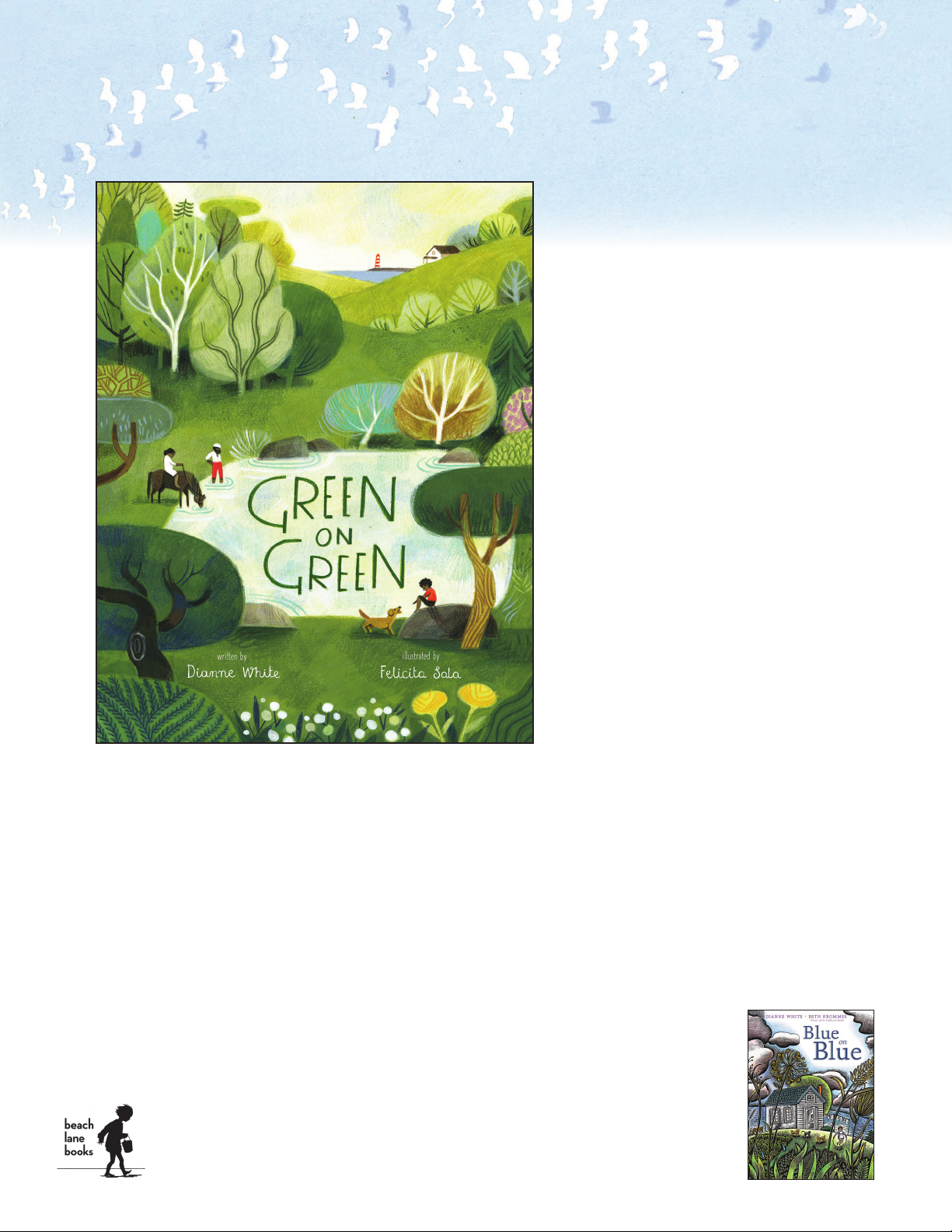
Amanda Eubank Winkler’s study of pedagogical performances in and
relating to early modern English schools is both fascinating and
methodologically groundbreaking. On the first page she mentions a
wholesome experience of her own, a production of Singing in the Rain she
saw through the “rosy lens of parental devotion.” It stands in contrast to the
sixteenth-century image displayed on the book’s cover, which features a
boy getting thrashed as others sing together and attend, somewhat
distractedly, to their lessons. Neither is misleading about this book’s
contents. It is a testament to the wide scope of this study that Eubanks
Winkler tackles both sides of the equation, paying careful attention to
issues surrounding student accomplishments and pedagogical
advancements as well as transgressive behaviors in performance spaces and pedagogical
failures.
After an introduction that sets out this book’s novel agenda, in the first chapter Eubanks Winkler
“situates” the topic historically and conceptually. In addition to providing practical information
about the who, what, where, and when of school performances, she explains the gender norms
of the time for boys and girls, who were usually educated separately, as well as the educational
practices that could lead children along paths the era deemed as proper as well as improper.
Students were taught via the process of imitatio, where the idea was to emulate laudable and
proper achievements. But the same classic rhetorical manuals that championed learning by
example also encouraged students to absorb themselves fully in performance roles—to be more
accomplished as persuasive orators—which could lead, as further chapters show, into
transgressive situations when they were asked to “play” parts that confronted, confounded, or
confused the very ideas of propriety that emulation might instill.
On the surface, at least, Eubanks Winkler puts the “good” before the “bad.” In Chapter 2,
“Performing Piety,” she discusses specialized children’s performances of the psalms set to
music, shedding new light on what Hannibal Hamlin dubbed “psalm culture” in describing the
extraordinary extent to which these biblical songs were inculcated into English life at this time.
The point of these performances was to “mold … students into good Protestants,” as Eubanks
Winkler establishes, but these lofty purposes, she also shows, were surely thwarted in

NABMSA Reviews
Fall 2021
2
documented cases when children became so rebellious as to disrupt services and “resist … the
cultural script that had been given them to perform.”
In Chapter 3, “Performing Prestige,” the author discusses pedagogical performances for English
kings, queens, and nobles that were meant to display student talents. Much of this was meant to
showcase the harmonious relationship of rulers and subjects, but there were also ways that
“demonstrating proficient singing and dancing might have facilitated upward social mobility.”
Here, again, the author finds instances of subversion as well as instances where children might
only have learned to be subservient. But this chapter ends on a rather more empowering note
than others, by suggesting that some children reversed the power dynamic so that these
performances would work in their favor.
Before turning to “vice” itself, Eubanks Winkler provides an extensive chapter on “Performing
Accomplishment.” This chapter seemed to me to be the one that goes directly to issues many
parents even to this day concern themselves with as they watch and evaluate their children in
pedagogical performances. No doubt there is a “rosy lens” aspect to any display of a child’s
accomplishment, but it seems too that a parent might be anxious as well, wondering if the result
will ultimately be a triumph for their child to cherish or the source of a traumatic memory. In this
impressively documented chapter, along with other “celebrity teachers,” the author discusses at
length the example set by the musician Susanna Perwich, who died young and was billed as a
“pattern” in instruction books. Having such models to emulate surely advanced English
performance skills. But the prohibitive cost of the books also made musical accomplishment
more and more a privileged experience for the upper classes.
In the “Performing Vice” section, Chapter 7, while examining a particularly violent English
translation/adaption of the Senecan tragedy, Oedipus, Eubanks Winkler discusses a song that
has special gender content as well as a prominent role in pedagogical performance, “Be Babie
Be, My Sweet Little Darling.” In the play a new verse was added so that it would be sung by a
boy playing the part of a male character who discovers an abandoned and viciously treated
child. Eubanks Winkler notes that the lullaby was a “genre associated with women,” which is
true in the ballad tradition. But she might also have noted that the musical addition, the “Be
Babie” burden, links the work formally to the famous Coventry Carol and William Byrd’s “Lulla
Lullabye,” both of which concern the Massacre of the Innocents and were likely sung by men on
stage, although in those cases, by men impersonating women. Thus, there may at times have
been more the author might have added to the story. But throughout she richly considers
questions of gender, deftly analyzing moments, for example, when Judith Butler’s notion of
“gender trouble” comes into play. The last chapter is a tour de force girl-centered reading of a
modern production of the Tate/Purcell Dido and Aeneas that shows how even “hyperreal”
recordings only capture part of what happens in terms of identity in pedagogical performances.
Overall, based on meticulous archival work of an interdisciplinary nature and incisive
applications of Carolyn Abbate’s notions of “drastic” and Elizabeth Le Guin’s “carnal
musicology”—both of which relate to embodied, physical experience but are here applied on a
much broader scale—this study brings out the special nature of pedagogical performances
themselves. From this perspective what we tend often to view today as stable and even stale
productions of “art” become active, unstable entities involving students, parents, and teachers,
particular learning spaces, explorations of gender and identity, all of which involve acts of
transgression as well as emulation and conformity. Simply put, this study effectively and
productively treats pedagogical performances on their own terms. The author humbly uses the
phrase “Minding the Gap” twice in discussing the evidence she has marshaled and analyzed
(and also to show how her phenomenological approach fills in certain gaps). I was struck,

NABMSA Reviews
Fall 2021
3
however, by the fecundity of material explored here and how asking new questions from
different perspectives brings forth a wealth of new information and insights surrounding, in this
case, the enterprise of teaching as it relates to the upbringing and education of children in the
post-Reformation era.
JEREMY L. SMITH
University of Colorado Boulder
Oskar Cox Jensen, The Ballad-Singer in Georgian and Victorian London. Cambridge:
Cambridge University Press, 2021. xvii, 280 pp. ISBN: 9781108830560 (hardback).
Cutting through—and contributing to—the noisy hustle and bustle of the
streets in the late eighteenth and early nineteenth centuries were the voices
of ballad singers. These street performers staked out their corners and
hawked their wares: songs of all types, which could be consumed aurally by
passers-by, or purchased in sheet form from the singer him- or herself for
future performances off the streets. Past studies have taken little notice of
this group of people; unlike the star singers who graced the stages of the
theaters and opera houses, ballad singers have traditionally occupied a
peripheral space in scholarship because of their lowly status on the
hierarchy of musical performance. Yet, as Oskar Cox Jensen argues in his
new book, The Ballad-Singer in Georgian and Victorian London, the ballad singer became a
“central agent in numerous cultural, social, and political processes of continuity, contestation,
and change across Western Europe” (2) in the eighteenth and nineteenth centuries. The singers
themselves, and the songs they performed, became an important locus of cultural and social
transformation as Britain hurtled towards a modern, industrial future.
As he writes in his introduction, Jensen’s goal is to tunnel underneath scholarship’s monolithic
definition of the ballad singer as a lower-class street person out to make a buck. Instead, he
balances generalizations about this group of people with the need to understand their individual
motivations and connections to their repertoire: “It is by appreciating singers as relatively
autonomous individuals, rather than as uniform and unthinking mouthpieces for the songs they
sold, that we come to grips with how culture and society operated through their mediation” (3).
Throughout four chapters, four “interludes,” and a conclusion, Jensen unpacks who these ballad
singers were through multiple methodological approaches. This is an especially difficult and
admirable task because of the scattered primary source evidence, which Jensen skillfully pieces
together in order to tell as complete a story as possible.
Chapter One begins with ballad singers in image. Jensen’s primary goal is to uncover the
individual stories of these “subaltern voices” (3) by articulating the means by which historical
generalizations about ballad singers emerged—in part through portraiture. Instead of being
depicted on the streets, surrounded by crowds, in the act of singing, artists preserved ballad
singers without their audiences or even their voices; as Jensen observes throughout the
chapter, ballad singers are “denied articulacy” in order to make the ballad singer less offensive,
more civilized, more sexualized, or socially delegitimized depending on the agenda of the
artists: “Thus safely contained, the singer could signify notional dangers in order to warn,
instruct, or thrill viewers, without possessing the agency actually to trouble them” (59). One
NABMSA Reviews
Fall 2021
4
question, however, emerges from this analysis: what is the benefit of controlling the image of
the ballad singer in this period?
Jensen explores the answer to this question in Chapter Two by focusing on the ways in which
the ballad singer influenced both society and politics. By interrogating the ballad singer in his or
her place of performance—on the streets—Jensen argues convincingly that “by creating crowds
[ballad singers] endangered […] the progress of capital through the modern city” (85). This
ambitious chapter examines not only the physical places in which ballad singers performed, but
also the spaces that they occupied in literature, political discourse, and social criticism
throughout this period. Personally, I found this chapter the most successful and interesting;
Jensen weaves together an historiographical reconsideration of the ballad singer through a wide
variety of primary sources that show how ballad singers became scapegoats for the uncivilized
past as modernization became the zeitgeist.
Jensen’s third and fourth chapters focus in on the ballad singer’s performances and may be
most useful to musicologists. In Chapter Three, he digs further into the idea of place, uncovering
the actual spaces in which ballad singers performed throughout the city of London. Ballad
singers strategically used their urban environments to craft vocal performances that could cut
through the din of the busy streets: “loudness for the sake of inclusivity, and clarity for the better
communication of the text” (151). Yet Jensen makes it clear that ballad singers were not
necessarily bad singers, but rather were “operat[ing] within a vernacular musical idiom based
upon different vocal conventions” (149). Ultimately, the ballad singer’s main goal was to sell
songs, and this Jensen explores in Chapter Four. He establishes a stemma for ballads
themselves—how previously written songs became standard in the ballad singer’s repertoire,
becoming “mainstream” culture. As Jensen meticulously traces the history of these songs, he
determines that the ballad singer’s “stripped away” version “enabled the existence of a shared,
mainstream, musical culture, in a world lacking widespread access to the technologies that
would enable the mobility of more complex forms of music” (223).
It is this final argument that Jensen explores in his conclusion—that the ballad singer faded into
obscurity as a cultural presence because “the singer [stood] for a particular conception of the
early modern English past, a quieter, slower place, more localised and knowable” (235)—in the
mid-nineteenth century, music moved out of communal spaces like the streets and into music
halls and onto concert stages. He argues that the ballad singer disappeared as musical culture
became more focused on harmony rather than melody, on complexity rather than accessibility,
and on instrumental forces rather than texted music that provided not only lyrics but information.
While this argument intrigues me, it seems oversimplified—which, of course, is one risk of
writing a book in which a single form of culture embodies an entire paradigm shift.
As a cultural historian, Jensen weaves together a complex narrative of political, social, cultural,
and economic history of which the ballad singer was an essential part. Overall, I find this book
an interesting read and a successful contribution to William Weber’s idea of the “great
transformation of musical taste.” I especially admire this book for tackling music and musicians
at the periphery of history. However, I found Jensen’s tone somewhat pretentious, especially in
the introduction. While he professes an interdisciplinary impulse, bringing together history and
musicology, he states that “the history of musicalised performance […] desperately requires the
rigour and expertise that historians are accustomed to apply to sources” (13). Does he mean to
imply that musicologists do not already do this? Perhaps not, and yet Jensen’s bibliography is
missing a number of rigorous musicological studies by Vanessa Rogers, Berta Joncus, Michael
Burden, and others that I would expect him to have cited and considered. I wonder if this book
would have benefitted from a more serious consideration of music history as a discipline.

NABMSA Reviews
Fall 2021
5
A few more minor critiques of this book: the title suggests that Jensen considers the entirety of
the Georgian era, and yet the earliest examples he mentions are from the 1770s and 80s, with
most of the book concentrating on the early nineteenth century. Jensen only includes a small
handful of musical examples, and almost all of them occur in the book’s interludes. The
interludes are microhistories of specific ballads, but they seem disjointed from the rest of the
text, and I found myself wanting to skip over them because of their brevity and lack of
connection to the main arguments of the book (with the exception of Interlude III, “The Storm,”
which could have been a standalone article rather than a chapter in this book). There were other
places, especially in Chapter Four, where musical examples would have helped to make
Jensen’s points clearer. Finally, Jensen’s prose, while well crafted, is incredibly dense. In terms
of readability, this book seems accessible only to real specialists of the time period, which is a
shame in light of Jensen’s call for a “happy, productive vision of (inter)collegiality” (12).
ALISON C. DESIMONE
University of Missouri – Kansas City
NABMSA Reviews (ISSN 2377-2573) is published twice yearly by the North American British
Music Studies Association (www.nabmsa.org). Individuals interested in reviewing or having their
books reviewed should contact the chair of the reviews committee, Michelle Meinhart, at
M.Meinhart@trinitylaban.ac.uk.
NABMSA Officers and Board of Directors:
Christina Bashford, President
Christopher Scheer, Vice-President
Therese Ellsworth, Treasurer
Amanda Eubanks Winkler, Secretary
Rachel Cowgill
Ashley A. Greathouse
Kate Guthrie
Emily Hoyler
Stacey Jocoy
Roberta Montemorra Marvin