NCBJ Conference News: A Quarterly Publication of the National Conference of Bankruptcy Judges SUMMER 2025 PDF Free Download
1 / 40/40
100%

Greetings, everyone! On behalf of my colleagues in Chicago, welcome
to our hometown. We are so excited to host you for the NCBJ Annual
Meeting. We love this city, as do most people who visit. I could write an
entire book on what there is to do while you are here. But, in deference
to the Conference News Committee who has many other wonderful arti-
cles planned for this edition, I will just hit the highlights of things you may want to do in addition to attend-
ing the amazing educational programs Greg Schaaf (E.D. Ky.) and his Education Committee have planned.
Arts and Culture
Chicago is home to many wonderful museums. A few stand out that must be mentioned.
The Art Institute of Chicago
The crown jewel of Chicago’s museums and internationally known. It is home to Grant Wood’s “Amer-
ican Gothic,” Edward Hopper’s “Nighthawks,” and many world-famous impressionist paintings by Monet,
Manet, Seurat, Van Gogh, Cassatt, and more. The Art Institute is located on the south end of Millennium
Park so you can couple it with a visit to the park and the mandatory picture of yourself with Anish Kapoor’s
Cloud Gate, also known as “The Bean.” The Art Institute/Millennium Park is a regular stop on the free trol-
ley from the Marriott.
Field Museum of National History
The Field Museum opened in 1921, but grew out of items on dis-
play in the 1893 World’s Columbian Exposition. This is the place to see
dinosaurs such as Sue, the largest and best-preserved Tyrannosaurus
rex in the world. It is a short cab ride from the hotel or a nice three-mile
walk for those of you looking for some exercise. You can also register
for a behind-the-scenes tour as one of the events we have arranged.
Conference News
A Quarterly Publication of the National Conference of Bankruptcy Judges SUMMER 2025
Check out Greg Schaaf’s article
highlighting the educational pro-
gramming on tap for Chicago. See
page 8 for the coastal throwdown.
Minneapolis
Bill Fisher gives us a guide to the City of Lakes for FJC workshop
participants covering art, music, theatre, outdoor activities, sports,
and (perhaps most importantly) dining and breweries. See page 9.
Cathy McEwen recounts the seven
times the Annual Conference has
been in Chicago over the years to
get us ready for our eighth visit! See
page 33.
East Coast versus West Coast?
What’s Inside This Issue
Welcome to Chicago!. . . . . . . 1, 4-5
President’s Message . . . . . . . . . . 2
Chicago Outreach Projects . . . . . . 7
Chicago Educational Program. . . . 8
FJC in Minneapolis . . . . . . . . . . .9
JTB Internship Experience . . . . . 11
Honors Your Honor. . . . . . . . . . 13
Liability Insurance for Judges . . . 14
Early Neutral Evaluation . . . . . .16
Ask Carol . . . . . . . . . . . . . . . .19
NCBJ 100th Aniversary . . . . . . .21
Security Update. . . . . . . . . . . . 24
Ethics Update . . . . . . . . . . . . .26
Legislative Update . . . . . . . . . .29
Marginalia . . . . . . . . . . . . . . .31
Silver Whistle. . . . . . . . . . . . . . 33
Meet These Bankruptcy Judges . . 37
After the Robe . . . . . . . . . . . . . 38
Note from the Editor-in-Chief . . .40
Welcome to Chicago, Where The Sky Is The Limit!

C N,
President’s Message
President
Janet Baer
President-Elect
Paul Black
Secretary
Sheri Bluebond
Treasurer
Catherine Furay
Immediate
Past President
Cynthia Norton
Board of Governors
At-Large Governors
Jeffrey Norman (2025)
Christopher Alston (2026)
Scott Clarkson (2027)
Elizabeth Gunn (2027)
Circuit Governors
1st Edward Godoy (2027)
2nd Elizabeth Stong (2025)
3rd Laurie Silverstein (2025)
4th David Bissett (2026)
5th Mark Mullin (2026)
6th Charles Merrill (2026)
7th Thomas Lynch (2027)
8th Shon Hastings (2026)
9th Elaine Hammond (2025)
10th Mitchell Herren (2025)
11th Jennifer Henderson (2025)
Retired Judges’
Representative
Robert Nugent (2027)
ABLJ Editor-in-Chief
Michelle Harner
Executive Director
Betsy Strickler
NCBJ Website
www.ncbj.org
Greetings, everyone. Happy Summer! As I write
this letter, it is late April. I will just say, it has been an
interesting few months for federal employees and it is
anyone’s guess what will happen from day to day. As you all are aware,
the NCBJ’s main missions are to: (1) promote the interests of bankrupt-
cy judges; (2) utilize our expertise on issues of bankruptcy law and
procedure to improve the administration of the bankruptcy system;
(3) foster scholarship and collegiality among members of the bench
and bar; and (4) provide opportunities for education and networking
among bankruptcy judges and the bankruptcy community at large.
That said, since late January of this year when the new administra-
tion took office, the leaders of the NCBJ, and especially its Legislative
Committee, have been spending a great majority of their time monitor-
ing the actions of the executive branch and responding to inquiries from
NCBJ members about the effect those actions may have on our judges
and the bankruptcy system. To be as vigilant and as responsive as pos-
sible to all our members, in February I formed an ad hoc task force to
stay on top of all that has been coming out of the executive branch and
the legislature that could affect us. That task force consists of myself
plus the other members of our Executive Committee: Paul Black (W.D.
Va.), Cate Furay (W.D. Wis.), Cynthia Norton (W.D. Mo.), and Sheri Blue-
bond (C.D. Ca.), and the co-chairs of our Legislative Committee: Greg
Taddonio (W.D. Pa.) and Debbie Thorne (N.D. Ill.). The Task Force, and
especially Paul, Greg, and Debbie, have been in constant contact with
their connections on Capitol Hill and at the AO, looking out for the in-
terests of our members and the bankruptcy system.
In addition, as you may recall, at the end of 2023, then-NCBJ Presi-
dent Dan Collins (D. Ariz.) formed an ad hoc committee chaired by Bob
Nugent (D. Kan., Ret.) to examine and address the various proposals
that were being discussed on court consolidation. As that issue evolved,
the committee, now chaired by Dan, refocused its attention on the var-
ious strategic budget initiatives being discussed by JCUS committees.
However, in light of the numerous executive orders and various ini-
tiatives emerging from the new administration, the focus of the com-
mittee, now called the Committee on Fiscal Improvement, has shifted
again. We suspect that many of the budgetary initiatives pursued by the
current administration could help shape the future of the judiciary. As
a result, the committee is resetting its mission slightly to now focus on

C N,
what is coming out of the executive branch which will affect our budget and operations.
We realize that the rapid and unpredictable activity of the new administration has caused our members
a great deal of concern and confusion. As the bankruptcy judges’ representatives and advocates, the NCBJ
is focusing a great deal of its effort in trying to provide information to our members about what is going
on and how it may affect them. We also are attempting to educate our elected officials on matters that may
affect our members and the bankruptcy system and are considering how we might have to respond in the
event more action is necessary.
On a separate note, I wanted to thank everyone who attended the Mid-Year Meeting in St. Petersburg,
Florida, in early April. It was so great to see everyone in person and enjoy some typical Chicago snacks as
an appetizer for our Annual Meeting in Chicago from September 17-20, 2025.
Speaking of the Annual Meeting, I look forward to welcoming you all to my hometown. Chicago was
recently ranked the best big city to visit in the United States for the eighth year in a row by Condé Nast Trav-
eler magazine in its Readers’ Choice Awards!. As outlined in this Conference News, Education Chair Greg
Schaaf (E.D. Ky.) and his committee are planning some great programming. Plus, we promise lots of fun. We
are planning “back of the operations” tours of Soldier Field and the Field Museum of Natural History; an
outing to the Second City; an architectural river boat tour; a true Chicago-style opening reception; another
wild closing night party; dine-arounds; and judge gatherings each night in the Presidential Suite. Plus, look
for potential pop-up events for lunch; a walk through the Prairie Avenue district or the Chicago Lakefront
Trail, and who knows what else. . . .
I hope everyone has a wonderful summer and I very much look forward to seeing you all in Chicago!
NCBJ Officers and Governors Elected for 2025-2026 Year
The Elections Committee, chaired by current
NCBJ President-Elect Paul M. Black, completed this
year’s Board election process in March 2025. Fol-
lowing the nomination process and the transmit-
tal, receipt, and tabulation of ballots, the Elections
Committee certified and announced the results of
the election processes for NCBJ executive officers
and the at-large governor for the 2025-2026 year.
The serving Circuit Governors for the 1st, 4th,
5th, 6th, 7th, and 8th Circuits will remain in their
positions until the end of their current terms, as
well as the At-Large Governors who have terms
ending in 2026 or 2027. Janet S. Baer (N.D. Ill.) will
continue to provide valuable leadership to the NCBJ
in the 2025-2026 year as Immediate Past President.
The new board will commence its service at the
formative board meeting on Saturday, September
20, 2025, at this year’s Annual Meeting in Chicago,
Illinois.
Board of Governors
At-Large: Jacob A. Brown (M.D. Fla.)
2nd Circuit: Elizabeth S. Stong (E.D.N.Y.)
3rd Circuit: Jeffery A. Deller (W.D. Pa.)
9th Circuit: Madeleine C. Wanslee (D. Ariz.)
10th Circuit: Peggy Hunt (D. Utah)
11th Circuit: Jeffery W. Cavender (N.D. Ga.)
President-Elect
Sheri Bluebond (C.D. Cal.)
Secretary
Mina Nami Khorrami (S.D. Ohio)
Treasurer
David M. Warren (E.D.N.C.)

Shedd Aquarium
Want to see dolphins, whales, and penguins in
a beautiful setting right on Lake Michigan? This is
the place to go. Located on the Chicago Museum
Campus close to the Field Museum and the Adler
Planetarium.
Adler Planetarium
A world-class place for studying the stars.
Griffin Museum of Science and Industry
This museum was originally designed and built
to serve as the Palace of Fine Arts for the World’s
Columbian Exposition of 1893. The museum is
a wonderland of fun with a World War II German
U–505 submarine, the Henry Crown Space Center, a
Pioneer Zephyr diesel train, a replica coal mine, and
the miniature Colleen Moore’s Fairy Castle.
Museum of Contemporary Art Chicago
The art of our time in every possible medium by
artists of local and international renown.
Chicago Children’s Museum
If you are bringing your children to Chicago,
thisNavy Pier mainstay is a must. Dig for bones on
a dinosaur expedition, scale a three-story schooner,
make a big splash in a squirting, pumping water
playground (raincoats provided!), and enjoy many
more fun attractions.
Outdoor Activities
September is a perfect time to visit Chicago.
The weather should be warm but not hot and very
pleasant. So get out your walking shoes or bicycle.
Architectural Walking and Boat Tours
It is not a coincidence that the tagline for this
Conference is “The Sky’s the Limit.” Chicago is the
home of the skyscraper and world class architec-
ture. There is no better way to see Chicago than to
take a tour sponsored by the Chicago Architecture
Center. They feature dozens of inexpensive walking
tours of the city and wonderful Chicago River and
Lake Michigan boat tours. Go to architecture.org
and check out their many tours and book yours to-
day.
There are also many other cruise lines offering
architectural and history tours. The NCBJ will be
offering an architectural Chicago River boat cruise
on Friday night with ChicagoLine Cruises. Sign up
early if you want to join us for this tour as it is likely
to sell out quickly. If you cannot take this tour, go to
chicagoline.com to book one of their other cruises.
Lakefront Trail
Chicago is located on the shores of Lake Mich-
igan. You will get great views from the Marriott.
However, to really appreciate the lakefront, you
have to take a walk, bike ride, or even a Segway tour
along the Lakefront Trail. It is truly spectacular. It
is an easy walk from the Marriott to the Lakefront
Trail. There are also many options to rent bikes or
arrange a Segway tour at Navy Pier.
Riverwalk
The Chicago River is home to a beautiful River-
walk full of fun and casual outdoor restaurants and
bars. Urban Kay-
aks is also locat-
ed on the River-
walk, where you
can rent your
own kayak and
explore the river
or take a guided
tour. The free
trolley from the Marriott will take you right to the
river where you can pick up the Riverwalk.
Pickleball
There are several different public outdoor pick-
leball court areas downtown in the vicinity of the
Marriott. The biggest and best are 16 lighted courts
located at 820 S. Columbus Drive in Grant Park.
C N,

C N,
Garfield Park Conservatory
Beautiful botanical gardens and conservatories.
A 15 to 20 minute taxi ride from the Marriott.
Navy Pier
Chicago’s most
well-known tourist at-
traction/destination.
Home to the Centenni-
al Wheel, the Chicago
Children’s Museum,
many boating companies, the Chicago Shakespeare
Theater, and the one of the coolest bars in Chicago
— Offshore Rooftop. The walk down the mile long
pier and the views of the city are almost worth bat-
tling the tourists. An easy and nice walk from the
northernmost free trolley stop.
Music, Theater and Entertainment
Chicago is known for its blues and jazz music
as well as its bustling theater scene. Here are just a
few options to consider. See the schedule of “What
is going on in Chicago” which will be published by
the NCBJ at a later date.
Music
Blues: Blue Chicago;
Buddy Guy’s Legends;
Kingston Mines; The
Green Mill; City Winery
Chicago
Jazz: Winter’s Jazz
Club; Jazz Showcase; Andy’s Jazz Club
Other: Chicago Symphony Orchestra; The Chi-
cago Theater; Harris Theater for music and dance;
Thalia Hall; Redhead Piano Bar
Theater
Broadway In Chicago Theatres: James M. Neder-
lander Theatre, Cadillac Palace Theatre; CIBC The-
atre; Goodman Theatre
Others: The Chicago Shakespeare Theater at
Navy Pier; Steppenwolf Theatre; Lookingglass The-
atre (located in the historic Chicago Water Tower)
Sports
Chicago is home to many professional sports
teams. During the week of the Annual Conference,
only a few teams are in town.
Baseball
The Cubs are away, but if you want to see base-
ball, the White Sox are in town, playing Baltimore
on September 15 and 17 and San Diego on Septem-
ber 20.
Soccer
The Chicago Fire FC men’s soccer
team has a game against New York on
September 13 and against Minnesota
on September 20. The Chicago Stars
FC women’s soccer team has a game
against Portland on September 14.
Football
The Chicago Bears host the Dallas Cowboys at
Soldier Field on Sunday, Septem-
ber 21, if you want to stay in town
after the Conference.
Basketball
The Bulls’ season will not have started. WNBA
Sky’s regular season will be over. Playoffs maybe?
Unique Chicago Experiences
Skydeck Chicago in the Willis Tower (f/k/a the
Sears Tower)
360 Chicago Observation Deck at 875 N. Michi-
gan Avenue (f/k/a the John Hancock Center)
Museum of Ice Cream (pictured at
right)
Navy Pier Ferris Wheel (See Navy
Pier description above.)
Urban Kayak (See Riverwalk de-
scription above.)
Rent a speedboat or a bicycle paddle boat on the
Riverwalk.
Shopping: North Michigan Avenue; Oak Street;
State Street
Coming in the
Fall Issue:
“Where to Eat
in Chicago”

C N,
2024-2025 NCBJ Leadership
Standing Committees and Chairs
Elections Paul Black (ex officio)
Finance Elaine Hammond, Mark Houle
Legislative Greg Taddonio, Deborah Thorne
Special Committees and Chairs
Academic Recognition Peter Cary
Am. Bankruptcy Law Journal Michelle Harner
Behind the Bench Lisa Beckerman
Blackshear Program Erithe Smith,
Kathy Surratt-States
Bylaws Joe Callaway
Annual Meeting E. Lee Morris,
Madeleine Wanslee
Conference News Bonnie Clair
Diversity Equity Cynthia Norton,
& Inclusion Peter Russin
Education Greg Schaaf
Ethics Diane Finkle
Federal Rules Advisory Paul Baisier
International Judicial Relations Mary Jo Heston
Liaison Various
Membership Services Elizabeth Gunn
New Member Subcommittee Heather Cooper
NextGen Program Jason Burgess,
Scott Grossman
Policies and Procedures Paul Baisier
Public Outreach Barbara Ellis-Monro,
Selene Maddox
Retired Judges Robert Nugent
Schwartz Roundtable Teresa Pearson
Security Maria Chavez-Ruark
Ad Hoc Committees and Chairs
Fiscal Improvement Dan Collins
Engaging Young Professionals E. Gasparini
100th Year Anniversary Laurel Isicoff
Cynthia Norton
See the NCBJ website for a list of committee members.
Registration is Open for
the NCBJ Annual Conference —
The Sky’s The Limit
Calendar the Dates: September 17-20, 2025.
The NCBJ Annual Conference is back to the two and
one-half day model. I plan to arrive Tuesday, Sep-
tember 16, to enjoy the IWIRC reception and go to
dinner with my baby judge class. Suzanne Bauknight
(E.D. Tenn.) will reprise her litigation skills class for
20 practitioners on Wednesday. Meetings take up
Wednesday for some until the opening reception
kicks off the Conference Wednesday evening. My
committee and I have identified 15 education ses-
sions, including programs on circuit splits, artificial
intelligence, commercial lease issues, and a couple
of pure consumer programs. Our affiliates — ABA,
ABI, CLLA, and AIRA — will host 12 additional ses-
sions. By the time you read this, we should have the
full slate of sessions and speakers available on the
NCBJ website.
A Tip and a Request. Register early so you can
book your room; the Conference hotel will fill up
if our projected numbers hold up. And I ask every
judge to attend. Attendees come because they have
the chance to rub elbows with judges, so your pres-
ence at the Conference is very important.

C N,
Two Public Outreach Projects to Support for Chicago
The Public Outreach Committee is hard at work
on our two outreach projects for Chicago and the
sky is indeed the limit!
The Committee is partnering with Communities
in Schools of Chicago (“CIS”) to provide two pro-
grams for the Chicago Public Schools (“CPS”). The
CPS serve 325,305 students, 71.6 percent of whom
are economically disadvantaged. There are 634
schools in the Chicago Public Schools made up of
pre-school, kindergarten, elementary (grades 1-8),
and high schools (grades 9-12). The CPS are focused
on better learning environments that support stu-
dent growth through access to resources and assist
with closing opportunity gaps. This is where CIS
comes in. CIS’s mission statement is “To surround
students with a community of support, empower-
ing them to stay in school and achieve in life.” CIS
partners with other organizations to provide pro-
grams that support students and has connected
over 74,300 students in 239 schools with programs
addressing student and school needs.
CIS programming through its partners fits into
six main categories: academic support, arts and
culture, college and career readiness, counseling
and supportive guidance, health and wellness, and
parent and family engagement. All programs are
provided at no cost to the schools or students. More
information on CIS’s amazing work is located at
https://www.cisofchicago.org.
Now for our projects! In partnership with CIS,
the Committee selected two projects. The first is
buying and filling backpacks for elementary school
students (the “Backpack Project”) and the second is
presenting a Civics/How I Became
a Judge program (the “Civics Proj-
ect”) for high school students. The
Backpack Project is in full swing and through a huge
assist from Millie Cabán and her loom group, we
have a commitment for 200 hand-knitted hats and
free shipping from Puerto Rico to Chicago. Millie’s
donation is huge and very much appreciated! So, you
may ask, what can I do? Well, YOU can donate some
of your hard-earned dollars to the Backpack Project
so the Committee can buy backpacks, school sup-
plies, hygiene products, socks, gloves, and scarves
for distribution to elementary students in need.
YOU can also help high school students at CPS by
volunteering to participate in the Civics classroom
presentations. The Public Outreach Committee will
provide all volunteers with civics materials for use
in your presentation.
Donating to the Backpack Project and volun-
teering for the Civics Project is easy — just check
the appropriate box on the registration page for
the NCBJ’s Chicago Annual Meeting. Please note,
by participating in the Civics Program, you may
receive attendance credit for one of the two board
meetings required for hotel credit/reimbursement.
For those not registering for the Chicago Meeting or
those who did not donate when registering, here is
a link to donate on the NCBJ website: https://ncbj.
org/public-outreach-project-donation.
The Committee is excited to help facilitate these
programs on behalf of NCBJ members to benefit
students in need. We encourage each of you to join
us in these worthy causes by donating to and par-
ticipating in these two Public Outreach projects.

C N,
The Annual Conference Continues to
Encourage an Educated Judiciary and Bar
The Annual Conference educational programs
are set! NCBJ has 15 educational programs, ABA has
five, ABI has four, CLLA has two, including the Koger
Memorial Program, and AIRA sponsors a lunch pre-
sentation. The Education Committee did a fantas-
tic job selecting programs to educate and entertain
our varied constituencies during each session. The
Education Committee also met its goal of selecting
dynamic speakers and inviting new and distinctive
speakers to participate.
Thursday morning kicks off with the Judges’
Feud, an East Coast versus West Coast Battle to In-
terpret Circuit Splits. Brendan Shannon (D. Del.)
and his trusty expert, Professor Douglas C. Baird,
from the University of Chicago, will test the East
Coast judges (Patton, Brown, and Hage) and West
Coast judges (Romero, Clair, and Barnes) on their
knowledge of the various ways courts have decided
important issues. Audience polling is anticipated,
and Brendan will assess (and deduct) points in his
sole discretion.
A few programs that will become even more
important in our current political and economic
climate are also on the slate. Thursday afternoon
features Professor Erwin Chemerinsky discussing
All Things Supreme Court with Chief District Judge
Pamela Pepper (E.D. Wis.). The Friday lunch pre-
sentation features Scott Horsley, Chief Economics
Correspondent for NPR. He will discuss the current
economy and may offer suggestions on the best way
to present economic
information to an audience.
After the opening plenary, Professor Ralph Bru-
baker, the James H.M. Sprayregen Professor of Law
at the University of Illinois, will debate current
topics with his endowed chair sponsor, James H.M.
Sprayregen. They do not agree on much, so expect
some fireworks! The first morning also will include
a session on legal and business solutions for the dif-
ficult commercial real estate market and an interac-
tive discussion of strategies that have and have not
worked in subchapter V cases.
Many sessions have both business and con-
sumer appeal, but two sessions are devoted solely
to consumer practitioners. Thursday morning fea-
tures a program examining insolvency issues facing
our elder community, which Bill Rule (AOUSC) sug-
gests is a growing problem. On Saturday, a panel in-
cluding a judge, lawyers, and a banker will consider
various issues affecting consumer lending.
Our final day opening plenary is Name that Tune
— Ethics Edition presented by Texas judges Mark
Mullin (N.D. Tex.),
Stacey Jernigan (N.D.
Tex.), and Christopher
Mott (W.D. Tex.). Sure-
ly, this is a “don’t leave
early” event. Also on
Saturday morning, Lisa Beckerman (S.D.N.Y.) leads
a discussion on cryptocurrencies/UCC Article 12
and the Conference closes with the popular Judges’
Roundtable.
There is more, including collecting assets in a
foreign jurisdiction, and evidence training when
Ferris Bueller has his day in court. The full slate of
education sessions is found at https://ncbj.org/an-
nual-meeting. If you have not registered, click on
the “REGISTER HERE” button on that page. This is
not a Conference you should miss. The education is
exceptional, and President Baer has made sure you
will leave loving Chicago.

C N,
Welcome to the FJC in Beautiful Minneapolis
The bankruptcy judges of the District of Minne-
sota cannot wait to welcome you to the FJC’s July
2025 National Workshop in Minneapolis, Minneso-
ta!
Contrary to popular belief, Minneapolis has
four seasons — not just winter. Fortunately, sum-
mer lasts from July 25 through August 5, so you will
be here for summer in Minneapolis. (Warning: It
might be hot!) There are many exciting things to do
in Minneapolis.
Art
The Minneapolis Institute of Art (2400 3rd Ave-
nue South, a short drive from downtown) (pictured
below) is free and has a great collection of art fea-
turing many of the greatest artists — Rembrandt,
Goya, Van Gogh, Picasso, and nearly all the famous
impressionists, among many others. It also has a
world-renowned collection of Asian art. The Walk-
er Art Center (725 Vineland Place) (walkable from
downtown) has a more contemporary art collection
(not free) and a beautiful sculpture garden (free).
Breweries
Minneapolis has many great breweries. I will
focus on the breweries located downtown. Fulton
Beer Taproom (414 North 6th Avenue), Inbound
BrewCo (701 North 5th Street), and Modist Brew-
ing Company (505 North 3rd Street) are all within
walking distance of Target Field, where the Twins
play. A quick drive or train ride away is Surly Brew-
ing Company (520 Malcolm Avenue SE) (very big
beer garden) and nearby is The
Market at Malcolm Yards (501
30th Avenue, SE), a great food hall.
Dining
There are many great restaurants in Minneap-
olis ranging from dives to fancy gourmet trendy
places. Matt’s Bar and Grill (3500 Cedar Avenue) is
a 1954 landmark known for the “Juicy Lucy” burger
(hamburger with cheese in the middle) and is locat-
ed an easy car or Uber trip from downtown. Hell’s
Kitchen (80 South 9th Street) is a fun place down-
town known for its breakfast. Murray’s (26 South
6th Street) and Manny’s (825 South Marquette
Avenue) are the two best steak places downtown.
Owamni by the Sioux Chef (420 South 1st Street) is
a Native American restaurant located on the Missis-
sippi River and winner of many awards. Oro by Nix-
ta (1222 Northeast 2nd Street) is a Mexican restau-
rant a short car ride away that makes its own masa
in-house.
The North Loop neighborhood of Minneapolis
also has many excellent restaurants — Bar La Gras-
sa’s Italian fare (800 North Washington Avenue) is
among the best. If you are craving French fare in-
stead, Maison Margaux (224 North 1st Street) is the
way to go.
Music
First Avenue night-
club (701 North 1st Street)
(where Prince filmed the
movie Purple Rain) is also
downtown. The Fine Line
(318 North 1st Street), also
downtown, has live jazz and
other types of music and
serves dinner. There is also
the Berlin (204 North 1st
Street) live music bar if you
are feeling jazzy but want to stay in the North Loop.
Outdoor Activities
Minneapolis is a city of lakes and parks. There
are lakes near downtown (Lake of the Isles and

Lake Bde Maka Ska) and you can walk around them,
rent a bike, or paddleboard. You can also easily ac-
cess the Mississippi River from the hotel and walk
or bike on trails alongside it.
Sports
The Minnesota Twins, an up-and-down baseball
team (13-20 to start the season, then 13 straight
wins), will be home playing some team from Boston
while you are here. Tickets are cheap on third-party
seller websites. Target Field is great. I will be going
to the game Monday so feel free to contact me if you
are interested and do not mind listening to me com-
plain. Close by at the Target Center, the Minnesota
Lynx WNBA team will play at home July 27 and 30.
They are very good and would have won the 2024
championship . . . but the refs made a bad call at the
end of Game 7 to hand the championship to New
York.
Theatre
The Guthrie Theater (818 South 2nd Street) is a
nationally recognized theater near your hotel, and
Cabaret will be playing there Tuesday and Wednes-
day. It should be an excellent production. You can
get tickets in advance at guthrietheater.org. The
theater itself is beautiful and on the river with sen-
sational views.
Feel free to contact the Minnesota judges [Wil-
liam Fisher (
and Katherine Constantine (katherine_constantine
with any questions!
C N,
Future NCBJ Conferences
Boston
2027
New Orleans
2028
San Diego
2026
NextGen Committee Update
The NCBJ NextGen Committee is hard at work plan-
ning its 16th Next Generation Program at the Annual
Meeting in Chicago. The program will host up to 40
up-and-coming bankruptcy practitioners for exclusive
NextGen events including:
• A judicial roundtable event featuring bankruptcy
judges from across the nation;
• A small-group lunch with experienced bankruptcy
practitioners;
• A networking reception and dinner to build con-
tacts and relationships with NextGen alumni;
• A social outing to discover Chicago with other Next-
Gen’rs and judges; and
• Future opportunities to participate as panelists
with judges and other practitioners in educational of-
ferings, inlcuding during NCBJ Annual Meetings.

I am a law student at the University of Florida
Fredric G. Levin College of Law. Coming from a dis-
advantaged background, as a recent immigrant and
the first in my family to pursue law, my road to law
school has been unique. After achieving a top one
percent LSAT score, I entered law school with high
expectations. But just three weeks into my studies,
I suffered a stroke that forced me to relearn many
basic skills, including speech and writing. Yet this
challenge made me more determined than ever to
become a lawyer dedicated to helping others. I re-
assessed my goals, which led me to develop an in-
terest in interning for a judge. But I did not think I
had the resources to make that happen.
Through Just the Beginning — A Pipeline Or-
ganization’s Summer Judicial Internship Diversity
Program (JTB-SJID), I secured an internship with
Judge Peter D. Russin (S.D. Fla.). JTB’s partnership
with the American College of Bankruptcy (ACB)
and the National Conference of Bankruptcy Judges
(NCBJ) provided me with a scholarship that made
my internship feasible. And this internship ulti-
mately became one of the most meaningful experi-
ences of my life.
JTB facilitates judicial internships with state
appellate judges, and federal district, bankruptcy,
and magistrate judges nationwide. And JTB offers
exceptional opportunities to learn firsthand about
the judicial process. These opportunities teach
participants to draft bench memos, judicial orders,
and opinions, providing invaluable insight into the
judicial system. The experience in chambers and
the courtroom goes beyond practical skills, foster-
ing mentorship, meaningful professional relation-
ships, and a deeper understanding of legal practice.
Through this program, my initial interest turned
into a career-shaping experience.
The application process is clear yet thorough.
First, candidates submit a cover letter, resume,
transcripts, writing sample, references, and a Mem-
orandum of Understanding for review. If these
items are satisfactory, candidates are selected for
a phone interview focusing on professionalism and
legal knowledge. Last, judges interview candidates
and make a final decision. I did not expect to go
through all rounds success-
fully. But the experience
was straightforward, and
the interviews were very
pleasant. I had two final
interviews, one with Judge Scott M. Grossman (S.D.
Fla.) and one with Judge Russin, and both were ex-
ceptionally warm. The judges were undaunted by
my nervousness and by my admission that I knew
nothing about bankruptcy. Judge Russin offered me
the internship, which I immediately accepted.
JTB also partners with organizations offering
scholarships to participants, and those applications
also are straightforward. JTB also provides two
seminars explaining what would be useful in the
upcoming internship. After the application process,
JTB connects the intern to a lawyer who helps with
writing skills. Then, during the summer, JTB pro-
vides a “toolkit” that helps with completing assign-
ments and hosts biweekly support sessions.
My internship experience was extraordinary.
Judge Russin, an outstanding mentor and teacher,
gave me valuable advice and explained anything my
fellow interns and I had questions about. His clerks
and the courtroom deputy created a warm, welcom-
ing, and supportive environment that made learn-
ing engaging and accessible. Everyone was incredi-
bly accommodating, and I never felt overwhelmed.
Unexpectedly, my experience extended far be-
yond bankruptcy law — encompassing diverse is-
sues such as social media, cryptocurrency, real es-
tate, and family law. My responsibilities included
preparing for hearings, conducting research, draft-
ing legal documents, and writing a bench memoran-
dum, which became an excellent writing sample. I
learned much more than expected, including bank-
ruptcy practice, judicial expectations, clear writing,
and effective oral advocacy. Attending hearings and
receiving feedback enhanced my understanding
and appreciation of the judicial process.
The program also allowed me to attend the
Southern District of Florida Judicial Intern Acad-
emy, run by District Judge Beth Bloom (S.D. Fla.),
offering incredible networking opportunities. This
experience allowed me to meet Circuit Judge Adal-
C N,
My JTB Judicial Internship Experience

berto Jordan (11th Cir.), numerous District Judges,
and observe a wide variety of court proceedings.
The program’s support continued beyond the
internship. ACB provided me with another schol-
arship to attend the NCBJ’s Annual Conference in
Austin, Texas. There, I had an amazing opportuni-
ty to network, meeting distinguished judges such
as Erithe Smith (C.D. Cal.), Deborah L. Thorne (N.D.
Ill.), and Laurel M. Isicoff (S.D. Fla.), along with many
other judges, attorneys, and professors.
Reflecting on my experience, the JTB-SJID in-
ternship was life-changing. I gained critical insights
into court operations, developed a deeper under-
standing of judicial responsibilities, and strength-
ened my professional network. Motivated by this
experience, I pursued additional bankruptcy cours-
es, courses led by judges, and judicial internships,
including working with Magistrate Judge William
Matthewman (S.D. Fla.). I also interned at the Office
of the U.S. Trustee and at the local public defender’s
office to gain exposure to the law in a government
agency and criminal law.
I gained an invaluable mentor in Judge Rus-
sin, who continues to offer me guidance and sup-
port. He told me that I should strive to become a
complete lawyer, which is extremely valuable. He
explained that becoming a complete lawyer goes
beyond mastering legal skills and knowledge. Be-
ing a complete lawyer involves a dedication to
professional excellence, ethical responsibility, and
meaningful contributions to society. A complete
lawyer not only understands and navigates com-
plex legal issues effectively but also appreciates the
impact the practice of law can have on individuals
and communities. Complete lawyers actively seek
to improve access to justice, uphold the integrity of
the legal system, and serve as role models and lead-
ers who inspire positive change. Ultimately, being a
complete lawyer means embracing the responsibil-
ity to use one’s professional expertise to enhance
the community’s well-being and advance the public
good.
The program set me on the path to becoming
a complete lawyer. It gave me an insight into judi-
cial officers’ work and an appreciation of judges’
commitment to public service. Although I am still
undecided about what area of law I will pursue, I
know that in the short term, I would like to clerk
for a judge after law school. Clerking would not only
solidify my experience and teach invaluable skills
but also provide an opportunity to contribute to the
public. After that, I aim to practice law. Iit is ulti-
mately my dream to be on the bench one day and
serve and support people just as the distinguished
judges I met have continued to support me. It is un-
surprising that this program is called “Just the Be-
ginning — A Pipeline Organization.” I came to the
program after suffering a significant setback and
wondering if I would ever have the opportunity to
advance my legal career. Because JTB-SJID consid-
ered me, when likely many others would not, I am
now in the pipeline to achieve all my abilities will
allow.
I encourage all judges to participate in JTB-SJID
so that law students seeking practical judicial expe-
rience and mentorship, including those from chal-
lenging backgrounds, can reach their dreams. The
JTB-SJID Program offers valuable opportunities,
lifelong relationships, and real professional growth.
The experience is priceless, and it could shape lives.
It has shaped mine.
C N,
Response To Vasily Levin’s JTB
Judicial Internship Experience
Reading Vas’s reflections on his JTB internship
experience is genuinely moving. While Vas gener-
ously credits me as his mentor, it is important to
recognize that mentorship runs in more than one
direction. In truth, I learned as much from Vas as
he might have learned from me — perhaps even
more. Vas, having faced a stroke at a remarkably
young age, exemplifies extraordinary perseverance
and resilience. Undaunted by significant challeng-
es, including a profound speech impediment, Vas
demonstrated determination that deeply inspired
me.
Unfortunately, societal misconceptions often
wrongly suggest that such health challenges might
limit one’s ability to achieve their dreams. JTB di-
rectly challenges these harmful notions. The pro-
gram’s mission is clear and powerful: to ensure
that talented individuals like Vas, who might other-
wise face barriers due to their circumstances, have
meaningful opportunities to achieve their profes-

C N,
sional aspirations.
JTB’s SJID Program uniquely equips interns with
practical experiences and essential mentorship.
Through SJID, students from diverse backgrounds
gain valuable exposure, legal education, and pro-
fessional connections. Seminars, mentorship, and
networking events actively enhance interns’ pro-
fessional growth, as evidenced by Vas’s exceptional
journey and accomplishments.
For judges, especially bankruptcy judges who
are uniquely positioned to impact the legal profes-
sion, involvement with JTB offers a deeply fulfilling
way to contribute positively to society. Through
JTB, we actively ensure adversity does not define
anyone’s potential or limit their dreams. Indeed,
my experience with Vas reaffirmed a fundamental
lesson — that our world is full of individuals fac-
ing various difficulties, yet these challenges define
them only if society allows. JTB empowers judges to
actively reject such limitations, helping deserving
individuals reach their goals.
Over the last several years, many bankruptcy
judges have participated in the JTB-SJID Program.
Interns participating have gone on to become judi-
cial law clerks. I have hired several SJID interns, and
I have followed their progress with great interest. I
love hearing from them and sharing in their pride
over their successes. This year, the JTB-SJID Pro-
gram has 22 bankruptcy judges participating who
have hired 28 law student interns for the summer.
I encourage my fellow bankruptcy judges and col-
leagues in the judiciary to participate in and sup-
port the JTB-SJID Program. It is more than a profes-
sional opportunity; it is a profound and rewarding
human experience. By welcoming interns into our
chambers, we enrich the judiciary, inspire the next
generation, and affirm our commitment to justice
and inclusivity — one life at a time.
(l to r) Vas Levin, Judge Russin, and law clerks
Yayuan Wang and Janeal Fordham
On May 8, 2025, Deborah Thorne
(N.D. Ill.) received the Hon. Ilana
Diamond Rovner Lifetime Achieve-
ment Award from the Illinois Jewish
Judges Association at its gala 20th anniversary event
in Skokie, Illinois. Debbie also received the Elkhart
Community Schools Alumni Award in March 2025.
The Indiana School District’s award recognizes her
embodiment of leadership, service, and innovation
and the impact she has had in her community.
The University of Idaho College of Law bestowed
its Award of Legal Merit on Jim D. Pappas (D. Idaho,
Ret.). The Award recognizes a College of Law graduate
whose career reflects the best of the legal profession
and demonstrates outstanding contributions to the
legal community.
On March 21, 2025, the American College of Bank-
ruptcy inducted its 36th class of Fellows in a cere-
mony at the Smithsonian Donald W. Reynolds Center
for American Art and Portraiture Museum in Wash-
ington, D.C. This year’s bankruptcy judge inductees
were Martin Barash (C.D. Cal.), Daniel Opperman (E.D.
Mich.), and Alan Trust (E.D.N.Y.). Congratulations to
our colleagues on this well-deserved honor!
C B L. C,
E D M
The Barash family at the ACB Induction Ceremony.

C N,
Purchasing Liability Insurance
for Bankruptcy Judges: Why Do I Need It?
Introduction
Bankruptcy judges play a crucial role in oversee-
ing complex financial disputes, managing creditor
claims, and ensuring fair proceedings in bankruptcy
cases. Given the high-stakes nature of their decisions,
they may face legal challenges, including lawsuits al-
leging misconduct, conflicts of interest, or errors in
judgment. Liability insurance can offer financial pro-
tection, covering legal defense costs and potential
settlements. This article explores the importance of
liability insurance for bankruptcy judges, the types
of coverage available, key considerations when pur-
chasing a policy, and the federal reimbursement pro-
gram that helps offset the cost.
Judicial Immunity and the Need for Liability In-
surance
Bankruptcy judges, like other federal judges, gen-
erally enjoy judicial immunity, which protects them
from lawsuits seeking monetary damages for actions
taken in their official capacity. This doctrine is essen-
tial to ensuring judicial independence, allowing judg-
es to make decisions without fear of personal liability.
However, judicial immunity is not absolute, and liabil-
ity insurance remains necessary for several reasons:
• Defense Costs: Even frivolous lawsuits can be
costly to defend, and liability insurance helps cover
legal fees.
• Administrative and Employment-Related
Claims: Immunity does not always extend to admin-
istrative decisions, particularly those related to court
personnel and workplace management.
• Ethics Complaints and Investigations: Allega-
tions of judicial misconduct can lead to disciplinary
proceedings that require legal representation.
• Claims Outside Judicial Acts: In rare instances,
claims may arise that fall outside the scope of judicial
immunity, such as those involving non-adjudicative
conduct.
Liability insurance serves as an important safe-
guard for bankruptcy judges for these reasons. It
complements judicial immunity by covering legal ex-
penses and provides financial security in situations
where immunity may not apply.
Types of Liability Insurance Available
Judicial Professional Liability Insurance
Designed specifically for judges, covering claims
related to judicial decisions and ethical complaints,
often offered through professional organizations or
specialty insurers.
Errors and Omissions (E&O) Insurance
Covers alleged mistakes or omissions in judicial
duties; helps protect against claims of negligence.
Directors and Officers (D&O) Insurance
Useful for judges serving on bankruptcy court
panels or related boards; protects against misman-
agement claims.
Employment Practices Liability Insurance (EPLI)
Covers claims of discrimination, harassment, or
wrongful termination involving court staff.
Umbrella Liability Insurance
Provides additional coverage beyond standard
policy limits.
Coverage for Administrative Decisions of Chief Judges
Chief bankruptcy judges often make administra-
tive decisions related to court operations, personnel
management, and resource allocation. These deci-
sions can sometimes lead to legal disputes, particu-
larly in areas involving employment decisions, such
as hiring, firing, promotions, or disciplinary actions;
courtroom management policies, including sched-
uling, case assignments, and procedural rules; and
budgetary and financial oversight that may result in
disputes with staff or external entities.
Liability Coverage for Administrative Decisions
Many judicial professional liability insurance
and employment practices liability insurance (EPLI)
policies cover claims arising from administrative de-
cisions made by chief judges. Coverage typically in-
cludes defense costs for lawsuits alleging wrongful

C N,
termination, discrimination, or retaliation; indem-
nification for settlements if the judge is found liable
for administrative actions; and coverage for policy
enforcement disputes related to internal court op-
erations. Chief judges should carefully review policy
terms to ensure adequate protection for administra-
tive decision-making risks.
Reimbursement for Liability Insurance
Federal bankruptcy judges may be eligible for par-
tial reimbursement of liability insurance premiums
under federal law. This reimbursement is authorized
under the Omnibus Consolidated Appropriations Act
of 1997, Pub L. No. 104-208, §636 (1996); as amend-
ed by Pub. L. No. 105-277, §644 (1998); as amended
by Pub. L. No. 106-58, §642(1999); Proceedings of the
Judicial Conference of the United States (JCUS-SEP 99,
pp. 66-67), which grants the Director of the Admin-
istrative Office of the U.S. Courts the authority to pay
necessary expenses of the judiciary, including liabili-
ty insurance for judges. This provision allows federal
judges, including bankruptcy and magistrate judges,
to receive reimbursement for professional liability
insurance.
Eligibility and Coverage
To qualify for reimbursement, the purchased pol-
icy must cover legal defense costs related to judicial
actions; claims of misconduct, negligence, or errors
in official duties; and employment practices liability,
such as wrongful termination claims involving court
staff.
Reimbursement Amount
The federal government reimburses up to 50%
percent of the premium cost. The maximum reim-
bursement amount is subject to an annual cap, which
may vary based on available funding and judiciary
policies. Check with your Clerk’s office before pur-
chasing a policy to determine the eligible amount.
How to Apply for Reimbursement
First, purchase a qualifying liability insurance
policy from a recognized insurer. Then submit a reim-
bursement request through your Clerk’s office, which
typically handles this process within the federal judi-
ciary. Provide proof of payment and coverage details
as required. By taking advantage of this reimburse-
ment program, bankruptcy judges can secure essen-
tial liability protection at a reduced personal cost.
Factors to Consider When Purchasing a Policy
• Policy Limits: Ensure coverage limits are suffi-
cient for potential claims.
• Exclusions: Understand what is not covered,
such as intentional misconduct or criminal acts.
• Defense Costs: Determine if legal defense is
covered within or outside the policy limits.
• Premium Costs: Compare different insurers
for competitive pricing.
• Reputation of Insurer: Choose a provider with
experience in judicial liability coverage.
Where to Purchase Liability Insurance
• Judicial Associations: Groups like the Federal
Judges Association or American Bar Association may
offer plans.
• Specialty Insurance Providers: Companies fo-
cusing on professional liability coverage for govern-
ment officials. Insurance companies offering judicial
liability coverage include:
Chubb: Provides professional liability insurance
tailored for legal professionals and government offi-
cials.
Marsh McLennan: Specializes in professional lia-
bility policies for public officials, including judges.
The Hartford: Provides errors and omissions
(E&O) coverage suitable for judiciary professionals.
AIG (American International Group): Offers liabili-
ty insurance options for government officials and the
judiciary.
Starr Wright USA: A well-known provider of pro-
fessional liability insurance for federal employees,
including judges, offering comprehensive coverage
options tailored to the judiciary.
FEDS Protection: Focuses on providing profes-
sional liability insurance to federal employees and
contractors.
Conclusion
Although bankruptcy judges enjoy certain legal
protections, liability insurance is a wise investment
to safeguard against unforeseen legal challenges.
Understanding the types of coverage available, the
federal reimburse-
ment program, and
carefully selecting a
policy can provide
essential financial
security and peace of
mind.

C N,
Early Neutral Evaluation: A Strategic
Tool for Alternative Dispute Resolution
When it comes to settling matters outside the
courtroom, arbitration and mediation have long
been regarded as useful forms of alternative dispute
resolution (ADR). There are several well-known
national and international ADR forums — many of
which have created their own model laws and rules
of application — that provide arbitration and me-
proven to be effective in large cross-border insol-
vency matters as well as other types of cases. [n.
District of New York have prescribed procedures
for referring adversary proceedings to mediation,
voluntary arbitration, and early neutral evaluation
is a newer tool in the ADR toolbelt — one that, in
certain cases, has proven to be more cost-effective
than the alternatives.
What is ENE?
The International Judicial Dispute Resolution
Network describes ENE as “a process by which a
judge or another neutral third party (Evaluator)
provides an early and non-binding assessment of
the strengths and weaknesses of each party’s case,
and gives a considered view on the likely outcome
in the pre-trial case management stage of litigation,
ENE is meant to facilitate swifter, more cost-effec-
tive resolution of disputes through an evaluation
session that is typically less formal than a trial. Eval-
uators base their assessments on the arguments
and supporting evidence provided by the parties,
usually submitted first in writing and then present-
ed at a session attended by the evaluator, counsel,
and all parties. Unless the parties agree otherwise,
ENE sessions are kept confidential, allowing each
side to speak frankly without damaging their re-
spective positions in court should the matter pro-
ceed to trial.
ENE was first developed and tested through an
initial pilot program in the early 1980s in the U.S.
District Court for the Northern District of California
in response to concerns about high litigation costs
-
al different procedures and nonjudicial dispute res-
olution techniques, the pilot program presented a
hybrid solution focused on identifying the core legal
and factual issues in dispute, assessing the strength
of key evidence and arguments, and managing un-
realistic expectations parties may have — all before
going through the most expensive and time-con-
suming stages of litigation including formal discov-
ery and pretrial motions. After studies of the pilot
Justice Reform Act of 1990 (CJRA) was passed, re-
quiring each federal district court to implement “a
Under the CJRA, one of the litigation management
techniques that federal district courts may include
in their civil justice expense and delay reduction
plans is “a neutral evaluation program for the pre-
sentation of the legal and factual basis of a case to
a neutral court representative selected by the court
at a nonbinding conference conducted early in the
-
pute Resolution Act of 1998 (ADRA) authorized
federal district courts to require mediation or ENE
CJRA and the ADRA, ENE has been recognized as a
viable alternative to mediation and arbitration by a
number of state courts, countries, and international
Aspects of the ENE process and its administra-
tion can vary by case or jurisdiction. For example,
while several federal and state courts have adopted
-
vate dispute resolution services in countries like
New Zealand and England offer parties the option
to conduct ENE sessions without court supervision.
-
tral third party may or may not be a judge, and in
any event cannot be the same judge presiding over
the main litigation. For example, in the Eastern Dis-

C N,
trict of Pennsylvania’s ENE program, court-appoint-
ed evaluators “are required to have been practicing
law for a minimum of 15 years and have substan-
tial experience with civil litigation in federal court,
together with substantial expertise in the subject
matter of the cases for which they are chosen.”
conducted, they do not require strict adherence to
formal rules of evidence and trial procedure.
Comparing ENE with Other Dispute Resolutions
To better gauge whether ENE may be useful in
a particular case, attorneys and judges interested
in ENE must understand its relative advantages
and limitations compared to other ADR options.
The chart below highlights the similarities and dif-
ferences between various dispute resolution tools
with which lawyers and judges need to be familiar.
In the best-case scenario, ENE, like other forms
of ADR, can prompt early settlement of a case, sav-
ing both the court and litigants from the expense
of a lengthy trial. Whereas arbitration and often
mediation lead to binding results, parties have
more flexibility with choosing how to proceed after
completing an ENE session. Immediately following
ENE, litigants might use the evaluator’s feedback
to engage in settlement negotiations with a more
informed perspective and more realistic goals. Par-
ties often choose to engage in mediation after fin-
ishing ENE. Even if they do proceed with litigation,
the ENE session can still benefit parties in the long
run by streamlining the issues to be decided at tri-
al and providing a preview of an opponent’s case.
Additionally, an evaluator may be able to help the
parties prepare stipulations and discovery plans to
make trial preparation more efficient.
The unique role of the neutral evaluator pro-
vides certain benefits beyond the capabilities of
arbitrators and mediators. With the focus of ENE
being on the legal merits of a case, the neutral host
of the process must have subject matter expertise
— knowledge that lends greater credibility to the
evaluative feedback given. While mediators and
arbitrators might be process experts, they are less
likely to have expertise in the subject matter of a
given case, thus limiting their ability to fully assess
the legal issues involved. Unlike in mediation that
features private caucusing, evaluators in ENE, like
C N,
judges and arbitrators, are prohibited from ex par-
te communication with parties. Private caucusing
where a mediator meets with parties separately
and off the record allows mediators to control the
flow of information between parties to guide them
towards reaching an agreement that may not com-
port with an outcome based entirely on the merits.
Because evaluators are focused on providing a neu-
tral assessment of the merits, they may ask clari-
fication questions or request further information
during an ENE session, but they let the parties de-
termine what information is shared.
Nevertheless, the nature of the ENE process lim-
its its efficacy in some circumstances. Because of the
“early” aspect of “early neutral evaluation,” the facts
and evidence in a case will necessarily be less de-
veloped when the evaluative feedback is prepared
before conducting formal discovery. Thus, there is
a risk that the evaluator’s assessment of the issues
will be limited if key information that would ma-
terially affect the analysis has yet to surface. Addi-
tionally, while it is essential that participants be as
frank and communicative as possible, a party that
reveals its hand only to receive less than favorable
feedback may be left in a weaker negotiation posi-
tion than it had before starting ENE. On the flip side,
the party that has a stronger case in the eyes of the
evaluator could become inflexible or demand more
out of any subsequent settlement talks. Litigants
must weigh the potential benefits and drawbacks of
ENE to determine if it is worth choosing over judi-
cial proceedings or other types of ADR.
Conclusion
In recent years, ENE has continued to gain mo-
mentum overseas and in the international business
community. One example is SCC Express, a consen-
sual and private form of ENE offered by the Arbi-
tration Institute of the Stockholm Chamber of Com-
merce, tailored to provide international merchants
with speedy and confidential resolution of disputes.
-
tial to replace mediation and arbitration as the go-
to ADR mechanism in cross-border insolvency and
multicreditor workouts. While not a novel concept,
ENE has not yet been widely adopted by bankrupt-
cy courts in their local rules. However, the poten-
tial time and cost savings for parties, as well as the
judicial economy it provides, suggest that ENE is a
beneficial option to offer in bankruptcy cases and
adversary proceedings, particularly where estate
funds are limited and legal issues can be amicably
resolved on the merits.
1. Examples include the American Arbitration Association,
the International Centre for Dispute Resolution, the Interna-
tional Chamber of Commerce, the United Nations Commission
on International Trade Law, the Singapore International Arbi-
tration Centre, and the Arbitration Institute of the Stockholm
Chamber of Commerce.
2. See, e.g., In re China Fishery Grp. Ltd. (Cayman) et al., No.
16-11895-JLG, and In re CFG Peru Invs. Pte. Ltd. (Sing.), No.
16-11914-JLG (jointly administered) (Bankr. S.D.N.Y. Jan.
29, 2020); In re MF Glob. Inc., No. 11-2790-MG-SIPA (Bankr.
S.D.N.Y. Oct. 10, 2013); In re Lehman Bros. Holdings Inc., No.
08-13555-JMP (Bankr. S.D.N.Y. Sept. 17, 2009).
3. U.S. Bankruptcy Court for the Southern District of New
York, “Procedures Governing Mediation of Matters and the
Use of Early Neutral Evaluation and Mediation/Voluntary Ar-
bitration in Bankruptcy Cases and Adversary Proceedings”
(June 27, 2013), https://www.nysb.uscourts.gov/sites/de-
.
4. International Judicial Dispute Resolution Network, “Prac-
tice Guide on Early Neutral Evaluation (ENE)” (June 1, 2024),
https://www.int-jdrn.org/resources/permalink/.
5. Wayne D. Brazil, “Early Neutral Evaluation or Mediation?
When Might ENE Deliver More Value?”, Fall
2007, at 10; see also Wayne D. Brazil, Michael A. Kahn, Jeffrey
P. Newman & Judith Z. Gold, “Early Neutral Evaluation: An
Experimental Effort to Expedite Dispute Resolution,” 69 -
279 (1986) (describing the pilot program’s develop-
ment in more detail).
6. David I. Levine, “Early Neutral Evaluation: A Follow-up
Report,” 70 236 (1987).
7. Pub. L. 101-650, Title I, § 103(a), 104 Stat. 5089, 5091-96
(1990) (codified as amended at 28 U.S.C. § 473). As section
473(a) of Title 28 provides:
In formulating the provisions of its civil justice expense
and delay reduction plan, each United States district
court, in consultation with an advisory group appointed
under section 478 of this title, shall consider and may
include the following principles and guidelines of litiga-
tion management and cost and delay reduction: . . .
(6) authorization to refer appropriate cases to alterna-
tive dispute resolution programs that —
(A) have been designated for use in a district court; or
(B) the court may make available, including media-
tion, minitrial, and summary jury trial.
8. 28 U.S.C. § 473(b)(4).

C N,
9. Pub. L. 105–315, §4, 112 Stat. 2993, 2994-95 (1998) (cod-
ified as amended at 28 U.S.C. § 652). Section 652(a) of Title 28
of the U.S. Code more fully provides as follows:
(a) Consideration of alternative dispute resolution in ap-
propriate cases. Notwithstanding any provision of law to
the contrary and except as provided in subsections (b)
and (c), each district court shall, by local rule adopted
under section 2071(a), require that litigants in all civil
cases consider the use of an alternative dispute reso-
lution process at an appropriate stage in the litigation.
Each district court shall provide litigants in all civil cases
with at least one alternative dispute resolution process,
including, but not limited to, mediation, early neutral
evaluation, minitrial, and arbitration as authorized in
sections 654 through 658. Any district court that elects
to require the use of alternative dispute resolution in
certain cases may do so only with respect to mediation,
early neutral evaluation, and, if the parties consent, ar-
bitration.
10. For a good overview of the adoption and expansion of
ENE in various jurisdictions, see Joanne J. Paetsch and John-
Paul E. Boyd, “An International Review of Early Neutral Eval-
uation Programs and Their Use in Family Law Disputes in
Alberta,” Canadian Research Institute for Law and the Family
(Oct. 2016), https://canlii.ca/t/286f. Other countries where
ENE is currently utilized include Canada, the United Kingdom,
Australia, New Zealand, and Singapore.
11. See, e.g., U.S. Department of Justice Archives, “Compendi-
um of Federal District Courts’ Local ADR Rules,” (last updat-
ed Mar. 11, 2020), https://www.justice.gov/archives/olp/
compendium-federal-district-courts-local-adr-rules; Minne-
sota Judicial Branch, “Early Case Management/Early Neutral
Evaluation,” https://mncourts.gov/Help-Topics/ENE-ECM.
aspx (last visited Feb. 18, 2025); Colorado Judicial Branch,
“Early Neutral Assessment,” https://www.coloradojudicial.
-
ty%20Assessment%20Info%20Sheet.pdf (last visited Feb.
18, 2025).
12. See, e.g., New Zealand Dispute Resolution Centre, “Ear-
ly Neutral Evaluation process” (2024), https://www.nzdrc.
co.nz/early-neutral-evaluation; Harper James, “Early neu-
tral evaluation: what is it and how does it work?” (last up-
dated Mar. 10, 2025), https://harperjames.co.uk/article/
guide-to-early-neutral-evaluation/#section-16.
13. Karen Engro and Hon. Lisa Pupo Lenihan, “Early Neutral
Evaluation in the Western District of Pennsylvania: What and
When???”, U.S. District Court for the Western District of Penn-
sylvania,
ENE_what_and_when.pdf (last visited Feb. 10, 2025).
14. Arbitration Institute of the Stockholm Chamber of Com-
merce, “Guidelines to the SCC Rules for Express Dispute As-
sessment” (May 2021), chrome-extension://efaidnbmnnnib-
pdf/rule/en-scc-stockholm-chamber-of-commerce-guide-
lines-to-the-scc-rules-for-express-dispute-assessment-2021-
scc-guidelines-to-the-scc-rules-for-express-dispute-assess-
ment-2021-saturday-1st-may-2021.
Ask Carol
What happens to the government’s contributions to my thrift sav-
ings plan account after I switch to the Judicial Retirement System?
The Federal Employees Retirement System
(FERS) provides government contributions to your
Thrift Savings Plan (TSP) account. However, the Ju-
dicial Retirement System (JRS) does not allow gov-
ernment TSP contributions. The process of paying
back these contributions made by the government
while you are a judge is what my office refers to as
the “TSP Recovery.”
What is it? For bankruptcy judges covered by
FERS, the government automatically contributes up
to five percent of your salary. Accordingly, a bank-
ruptcy judge under FERS who contributes at least
five percent of salary to the TSP will receive the
maximum government contribution amount of five
percent. The principal government matching con-
tributions received while under FERS need to be
recovered in the future if a judge retires under JRS.
Only government contributions received for judi-
cial service need to be recovered, not government
contributions received from prior federal service.
When does it happen? The recovery starts once
a bankruptcy judge is retired and has taken a with-
drawal from their TSP account. Both a distribution
and a rollover of funds to an IRA account is a with-
drawal for this purpose. At retirement, you will re-
ceive an Election to Defer Offset of Section 377 An-
nuity to Recover Government Contributions to the
Thrift Savings Plan (Form PER 76). If the Form PER

C N,
76 is completed, you are letting my office know that
you will wait to take a distribution until reaching
your Required Minimum Distribution (RMD) age,
between ages 73 and 75, depending on your year of
birth. If you decide to receive a distribution prior to
your RMD age, you will need to notify my office and
the TSP Recovery will begin at that time.
How does it happen? The judge’s JRS annuity
will be reduced by the principal amount of con-
tributions made by the government to the judge’s
TSP account during the years of judge service while
covered under FERS. Note that only the principal
amount of government contributions is recovered,
you get to keep all of investment returns on that
money. Think about it like receiving an interest free
investment loan that you do not have to pay back
for many years. This is one of the advantages of
staying in FERS until close to your retirement date,
then switching to JRS at that point.
How long is the recovery? The principal
amount of the government’s contributions will be
recovered by deducting the amount owed in 12
equal monthly installments from the judge’s JRS an-
nuity if the total recovery is less than one-half of the
judge’s annual JRS annuity. If the total recovery is
more than one-half of the judge’s annual JRS annu-
ity, the amount is deducted over 24 equal monthly
installments.
How does this impact my taxes? The TSP re-
covery deduction reduces your gross taxable annui-
ty over the recovery period. Our office will withhold
the TSP recovery on a pre-tax basis, which will in
turn reduce your taxable income. So, you will re-
ceive less money during the recovery period, but
you will also pay less taxes.
What happens in the event of my death? Any
remaining TSP recovery balance is eliminated at
the time of a judge’s death. Since the statue only al-
lows the TSP recovery to be withheld from your JRS
annuity, and your JRS annuity stops at the time of
your death, this is not a debt that would have to be
paid by your estate or a next of kin.
How will I be notified? If you elect to defer the
TSP recovery by completing the Form PER 76, my
office will send you a letter the year that your recov-
ery is scheduled to begin detailing your TSP recov-
ery monthly deduction and effective date.
What is the amount of my TSP Recovery? For
most judges, you can find the amount listed towards
the bottom of your most recent earning statement
in the “Cumulative TSP Employer Contributions”
box by adding the two amounts together. In the
sample case below, the current TSP recovery would
be $18,770.13 + $13,687.17 = $32,457.30.
However, please note:
• The amounts on your earning statement DO
NOT include government TSP contributions prior to
September 30, 2002, which are stored in our Lega-
cy Human Resource system. If this impacts you, the
amount on your earning statement will be too low.
• The amounts on your earning statement DO
include any government TSP contributions from
nonjudicial service in the Judiciary, even though
they are not subject to the TSP recovery. If this im-
pacts you, the amount on your earning statement
will be too high.
My office will confirm the amount of your TSP
recovery when helping you prepare for retirement.
You are also welcome to reach out to us to confirm
the current amount of your recovery, paticularly
if you are impacted by one of the situations men-
tioned above.
Who to call with questions? Judges Compen-
sation and Retirement Division (JCRD) is your best
point of contact regarding questions about your
TSP recovery. You can reach out to JCRD by phone
at 202.502.1880 or by email at
gov. Please note TSP representatives are not well
versed on the TSP recovery and will not be able to
assist you with questions specific to it. Since our
office withholds the recovery from your JRS annu-
ity, your TSP funds are not affected by the recovery
process, which is why TSP representatives are not
aware of these rules. For this reason, please reach
out to my office to verify your TSP recovery amount.

C N,
The NCBJ’s 100th Anniversary Roll-Out:
A Recap of the Judges’ Dinner in Seattle
As those of you who were able to attend the NC-
BJ’s 2024 Annual Meeting in Seattle last fall know, I
chose to do something a little different for the pro-
gram for the Judges’ Dinner. In anticipation of our
centennial celebration to be held in San Diego in
October 2026, we elected to tell the story of bank-
ruptcy in our country, illustrating how it led to the
creation of the NCBJ’s forerunner, the National As-
sociation of Bankruptcy Referees (NARB) in July
1926.
To the sounds of a string quartet and with a
background of historical photos, our five narrators,
all from the 100th Year Anniversary Committee, hit
the highlights, starting with Joan Feeney (D. Mass.,
Ret.). Joan traced the development of bankruptcy
laws in the 19th century, after the adoption of the
U.S. Constitution in 1787 and through the Bank-
ruptcy Act of 1898, when the office of the “bank-
ruptcy referee” was created.
Chris Alston (W.D. Wash.) followed with a nar-
ration of the dramatic social, economic, and politi-
cal changes of the early 20th century, leading to the
creation of NARB in 1926. Debbie Thorne (N.D. Ill.)
then took us through the notable developments of
the 1930s and 1940s, representing a watershed in
bankruptcy legislation and the creation of the Na-
tional Bankruptcy Conference to study bankruptcy
reform.
Kathy Surratt-States (E.D. Mo.) led us through
more societal and cultural changes in the 1950s and
1960s, including the important
fact that referees began to wear
robes in the early 1960s. In 1965, NARB changed
its name to the National Conference of Referees in
Bankruptcy, a precursor to our organization’s name
today. Kathy also reported on the celebration of
our golden anniversary at the Mayflower Hotel in
Washington, D.C. in 1976, noting that the bankrupt-
cy judges in attendance were keenly aware they
were on the threshold of a new order in the admin-
istration of the bankruptcy system.
The evening’s presentation concluded with
100th Anniversary Committee Chair Laurel Isicoff
(S.D. Fla.) guiding us through the rapid-fire changes
wrought by the 1978 Code and the numerous nota-
ble bankruptcy cases that followed. Laurel outlined
the many firsts that have occurred since — our first
African American, female, LGBTQ, Asian American
and Hispanic and Latino bankruptcy judges.
Our program concluded with Laurel’s invoca-
tion for the NCBJ to be proud of what we have ac-
complished as an organization over the last 98
years and the hope that we may continue to work
together to leave a legacy of accomplishment for
our future NCBJ members. Laurel invited everyone
to join us in Chicago this September (99 years!) and
in San Diego in 2026.
We have recreated the presentation from the
dinner; please be looking for a link to the video in
an upcoming Judges’ Java. And if you have ideas,
memorabilia, or time to contribute to our prepara-
tions for the 100th Anniversary, please let Laurel or
me know.

C N,
Across
1. Billionaire charged with securities
fraud in Ponzi scheme
bankruptcy in U.S. history
7. Paris annuls 213-year-old law ban-
ning women from wearing this
8. Mae and Freddie Mac seized by U.S.
government in 2008
10. Service discontinued by Western
Union in 2006 after 155 years in use
Down
2. Marvel team superhero movie premieres
-
counterclaims
for $7.4 billion
9. Abbreviation for saving-and-loan company sold to
J.P. Morgan in 2008
NARB’s first meet-
ing occurred in this
Detroit hotel in
1926, then known
as the Book-Cadillac
Hotel. A few NCBJ
fans recently made
a pilgrimage to this
shrine.
(right) The pilgrims even tried to
emulate the somber first dinner
crowd in one of the hotel’s ballrooms.
The pilgrims are (l to r): Shad Robin-
son (W.D. Tex.), Shad’s wife, Brooke,
Dan Collins (D. Ariz.), Cathy McEwen
(M.D. Fla.), Greg Schaaf (E.D. Ky.),
NCBJ President Jan Baer (N.D. Ill.),
and Mike Romero (D. Colo.).
C N,
C N,
Security Update: A Primer on Cybersecurity
Cybersecurity is critical to the operation of our
courts, as well as to our personal finances and our
families’ safety. There is a lot of guidance out there,
but it can be a challenge to keep up.
This is the first of two updates from members
of the Security Committee about cybersecurity is-
sues. This article presents basic information about
cybersecurity — much of which you probably have
heard at one time or another — in an easy-to-digest
format. Also, look for an article on cybersecurity
resources from Rachel Blise (E.D. Wis.) in the next
issue of Conference News.
Glossary
To begin, we should review some cybersecurity
terminology.
• Multi-factor authentication: a security meth-
od that requires two or more forms of identification
before a user can access an account or a resource.
Many systems require a combination of something
the user knows, such as a password, and something
the user has, such as an access card.
• Phishing: an effort to acquire sensitive infor-
mation that appears to come from a trusted source.
Phishing often involves malware attached to an
email message or directs the victim to provide in-
formation on a fraudulent website. There are sever-
al variations and related concepts:
• Catfishing: the creation of a fictitious online
persona with the goal of deceiving a victim. Catfish-
ing is not exactly a subset of phishing, because it re-
quires the victim to trust a new acquaintance, but it
can be used for the same purposes.
• Smishing: a phishing attack that uses a text
message (SMS) or an instant message. When you
get a text from someone you don’t know asking you
to click on a link because you drove on a toll road
without paying, that’s smishing.
• Spear phishing: a targeted phishing attempt,
often involving information specific to the target
that the scammer has obtained from public sources.
• Vishing: a phishing attack using a voice call,
which often appears to be from a trusted number.
A common example is a call from “credit services”
that claims to have information about your credit
card, even though the caller does
not identify the brand or the issuer
of the card.
• PIV-I: the swipe card that permits judges
and employees to access secure locations in the
courthouse and can be used for computer security.
Its full name is Personal Identity Verification – In-
teroperable Card.
• Social engineering: the use of a personal in-
teraction, such as a phone call or an email, to gain
unauthorized access. For example, a hacker might
call an IT staffer and impersonate a judge in an at-
tempt to have a password reset.
• VPN: virtual private network, an encrypted
connection over the Internet between a device and
a network.
Avoiding Phishing Attacks
Two general courses of action can help to pro-
tect you, your court, and your family against phish-
ing and related efforts. First, it is much easier to
identify and deflect a broad and clumsy phishing
campaign than it is to deal with a carefully craft-
ed spear phishing attack that targets you directly.
So make it as difficult as possible for someone to
spear phish by minimizing the amount of personal
information you disclose to strangers. There is no
disguising where you work or what your job title
is but consider what else someone might be able to
find out about you on social media or elsewhere on
the Internet. You would never tweet your Social Se-
curity number, but could a fraudster discover from
a Facebook group where you went to elementary
school or the name of a childhood pet? This infor-
mation might be useful in an attempt to reset your
password, but it also could help a malicious actor
pose as an old friend who needs your help, and your
credit card, to get home from a disastrous vacation.
Second, when an attack comes, look for prob-
lems and make use of the skepticism you developed
in law school and have sharpened since. Here are
some telltale signs of a phishing attack.
• Urgency. All varieties of phishing are most
effective if the attacker can get you to act before you
C N,
think carefully about what you are being asked to
do and why.
• Typographical and grammatical errors. Pay
attention to errors, particularly if they are inconsis-
tent with the sophistication of the supposed sender.
• Misleading links in emails. Hover your cur-
sor over the link to see if it is designed to direct you
somewhere other than where it suggests it will.
• Inconsistent email addresses. Look closely
at the sender’s information. If a message that seems
to be from AT&T customer service does not come
from an att.com address, it probably is a scam.
• Fake contact information. You can easily find
the website and phone number of any reputable
business. Do not rely on a link — even if it is not
misleading on its face — or a phone number that
you receive in an email.
More generally, ask yourself whether it makes
sense for this person or business or government
agency to be contacting you at this email address
or phone number about this topic at this time. If
not, or if anything seems off, do not engage, and
do not click on anything. Instead, use unrelated re-
sources to find contact information for the person
or business, and reach out to confirm whether the
approach is legitimate. Also, be sure to report any
scam directed to your government email address or
phone number to your court’s IT staff.
Cybersecurity Tips More Generally
Phishing is a problem, but it is not the only risk
you face when using modern computer technology.
Here are several tips to help you maintain security
in other contexts.
• Activate multifactor authentication on all
your financial, social media, and other important
accounts. Even if a troublemaker obtains your pass-
word, they will need more to steal your assets or
disrupt your life.
• Do not use the same password for JENIE that
• At work, use your PIV-I, if your court is
equipped with card readers, or enter a Duo code to
log in to your computer. Push alerts from Duo and
codes texted to you by SMS are less secure in gen-
eral, and recent activity by the Chinese government
may have increased the risks of these authentica-
• Always use a VPN to connect to the DCN
when you are working outside the courthouse.
The Administrative Office recommends using your
home Wi-Fi network, a government-issued hot spot,
or public Wi-Fi, in that order of preference, but in
each case with a VPN. For more tips, see the Judge’s
Checklist for Secure Teleworking on the JNet.
• Conduct judicial business over encrypted
services such as Webex and Teams, not over the
• When traveling internationally, leave your
government and personal devices at home. If you
need to work while you are abroad, ask your IT
team for a loaner device that is been secured for in-
ternational travel.
• Do not respond to text messages that ap-
pear to be sent to you by mistake and report them
as junk. A text that says, “Hey, are you almost ready
to go?” probably is from a scammer who wants to
determine whether your mobile number is active
and to see what information you will provide if you
respond and engage.
• Watch out for low-tech snooping, such as a
person looking over your shoulder.
• Keep up with new developments and be sure
that court employees are trained as well.
1. The same principles apply to your court. If a crook wants
to pressure a court employee into paying a fraudulent in-
voice, can the crook look on the court’s website to find the
names and contact information needed to make a convinc-
ing pitch? (“I talked with Fred in accounts payable yester-
day morning and exchanged emails with Doris yesterday
afternoon, and they both said I should be sure to call you
directly this morning if we had not received the payment.”)
2. A cybersecurity expert might tell you that every account
should have unique login credentials. This advice is not re-
alistic for many people, but in any event, do not reuse pass-
words across accounts that would cause you the most trou-
ble if they were compromised, including JENIE, banks and
other financial institutions, social media, and e-commerce
sites that store details of your credit cards or bank accounts.
Alternatively, consider using a password manager. Your local
IT staff can help you get access to Keeper, which is autho-
rized for use with both court-related and personal accounts.
3. For more details, see the November 22, 2024, memo
to all judges from Jeffrey Li of the Administrative Office.
4. For more details, see the January 10, 2025, memo to
all judges from Brett Moseley of the Administrative Office.

C N,
Ethics Update: To Participate or Not to Participate
Ethical Guidance for Judges Volunteering or
Appointment to the federal judiciary carries
-
es “maintain and enforce high standards of conduct
and should personally observe those standards, so
that the integrity and independence of the judicia-
directive are clear. While judges may check their
robes at the door, they cannot so easily shed their
professional identity and the related consequences
of judicial appointment regardless of whether they
are in chambers or engaging in an extrajudicial ac-
-
ties,” obligating judges to “act at all times in a man-
ner that promotes public confidence in the integrity
Although judges may sit behind a bench, the
Code makes clear that they are not entirely side-
Specifically, Canon 4 of the Code permits judges to
“engage in extrajudicial activities, including law-re-
lated pursuits and civic, charitable, educational, re-
ligious, social, financial, fiduciary, and governmen-
not participate in extrajudicial activities that de-
tract from the dignity of the judge’s office, interfere
with the performance of the judge’s official duties,
reflect adversely on the judge’s impartiality, lead to
frequent disqualification, or violate [Canon 4’s enu-
a “judge may participate in and serve as an officer,
director, trustee or nonlegal advisor of a nonprofit
-
ipation would become problematic if the organiza-
tion was likely to either appear before the judge or
“be regularly engaged in adversary proceedings in
-
-
“participate in fund-raising activities, solicit funds
for any organization, or use or permit the use of the
Consequently, while Canon 4 permits judges to par-
ticipate in nonlegal charitable and civic activities,
their ability to do so is qualified in part by wheth-
er involvement with such activities would call into
question their impartiality or otherwise undermine
the public’s confidence in the integrity of the judi-
Whether a judge should participate or refrain
from engaging in extrajudicial activities is further
informed by Canon 5 of the Code, which prohibits
hold any office in a political organization; (2) make
speeches for a political organization or candidate,
or publicly endorse or oppose a candidate for pub-
lic office; or (3) solicit funds for, pay an assessment
to, or make a contribution to a political organiza-
tion or candidate, or attend or purchase a ticket for
a dinner or other event sponsored by a political or-
this restriction “does not prevent a judge from en-
-
es to be involved in extrajudicial activities that are
consistent with their role but precludes overly po-
But what qualifies as “any other political activi-
ty,” and what are the “clear lines”? Would a judge’s
otherwise permissible involvement with a charita-
C N,
ble, civic, or nonprofit organization contemplated
by Canon 4 become “political” and thus prohibited
by Canon 5 due to direct or indirect lobbying activ-
ity by the organization? Although the Judicial Con-
ference’s Committee on Codes of Conduct (Com-
mittee) has not addressed this exact question, its
Lobbying: Direct and Indirect Involvement
The Committee has clarified that a judge may
“appear before a legislative or executive body or
official, at a public hearing or in private consulta-
tion, with respect to matters concerning the admin-
the propriety of a judge appearing on behalf of, or
against, particular proposed legislation that relates
to subject matter other than the administration of
justice. Advocacy for or against legislation aimed at
vital political issues or policy may well raise ques-
tions of propriety despite the fact that the judge,
too, is a citizen and may be affected by the legisla-
with one exception, “a judge may appear at a public
hearing before or consult with an executive or leg-
islative body or official relative to matters not con-
cerning judicial administration only ‘to the extent
that it would generally be perceived that a judge’s
judicial experience provides special experience in
The Committee also addressed the “propriety of
judges serving as officers or trustees of profession-
-
mental or private grants or operating funds” from
-
mittee considered “whether the judge’s prestige is
an important factor in obtaining such financing,
possibly to the detriment of similar organizations
The Com-
with the prospect that an organization with which
a judge may otherwise be properly associated may
nevertheless be in a unique position because of the
fact that the judge’s organization seeks and obtains
4B, the Committee concluded that a judge’s “mere
service on the board of” a law-related, civic, or char-
itable “organization is not inappropriate by reason
of the fact that the organization utilizes funds re-
ceived from federal, state, or local governments.”
that “a judge should continually re-evaluate the or-
ganization to ensure that continued involvement is
consistent with the judge’s ethical obligations un-
Fundraising and Solicitation Materials
-
ten involved with their communities through non-
profit organizations, which are frequently engaged
judge may serve on a governing board or a nonprof-
it organization or be a member of such an organiza-
tion subject to the restrictions outlined in Canon 4C.
of an organization, soliciting funds for an organiza-
tion risks the appearance of impropriety and mis-
use of the prestige of the judicial office. Accordingly,
a judge’s involvement with a fundraising activity for
any type of organization — nonprofit law-related,
civic, charitable, educational, religious, or social —
should be limited to soliciting funds “from judges
over whom the judge does not exercise superviso-
ry or appellate authority and from members of the
judge’s family,” or brainstorming fundraising ideas
of a judge’s name, position in the organization, and
judicial designation on an organization’s letterhead,
including when used for fund-raising or soliciting
members, does not violate Canon 4C if comparable
information and designations are listed for others.’”
office may not be selectively emphasized by the
attend fundraising events for law-related or other
organizations, the judge may not speak at the event,
C N,
Closing Thoughts
As is the case with many ethical questions, the
ethical issues arising from a judge’s participation
in nonprofit law-related, civic, or charitable organi-
zations are not straightforward. The Code and the
Committee’s Advisory Opinions, viewed together,
clarify that a judge’s mere involvement with a char-
itable or nonprofit organization that engages in
lobbying is not by itself problematic. Rather, judges
must determine whether and to what extent their
involvement or continued involvement with such
organizations would otherwise be impermissible
under the Code. If there is a risk that the prestige
of the judicial office is being used, either directly or
indirectly, to solicit funds or for political influence,
a judge should err on the side of caution to preserve
the public’s confidence in the integrity of the judi-
ciary. By doing so, “judges should distance them-
selves from politics and related activity sufficiently
-
1. 2A Guide to Judiciary Policy, ch. 2, Code of Conduct for U.S.
Judges (the “Code”), Canon 1 (U.S. Jud. Conf. 2019).
2. Id.
3. See id
4. Id. at Canon 2A.
5. Id. at Canon 4.
6. Id.
7. Id.
8. Id. at Canon 4B(1).
9. Id. at Canon 4C. See also 2B Guide to Judiciary Policy, ch.
2, § 220, Committee on Codes of Conduct Advisory Opin-
ions (“Advisory Opinions”) No. 2 (explaining that judges may
serve without compensation on governing boards of non-
profit or civic organizations provided the judge does not so-
licit funds for the organization); No. 32 (stating that a judge
chairing the finance committee for an area council of the Boy
Scouts may not solicit financial support from board members
or trust funds).
10. See Code at Canon 4B (discussing limitations on permit-
ted civic and charitable activities) and Canon 1 (stating that
-
plied to further” the preservation of the judiciary’s integrity
and independence).
11. Id. at Canon 5A-C.
12. Id. at Canon 5A. See also Canon 5, Commentary (defining
the term “political organization” as “a political party, a group
affiliated with a political party or a candidate for public of-
fice, or an entity whose principal purpose is to advocate for
or against political candidates or parties in connection with
elections for public office”).
13. Id. at Canon 5C.
14. Bruce A. Green & Rebecca Roiphe, Public Confidence,
Judges, and Politics On and Off the Bench, 87
. 183, 199 (2024).
15. See generally Guide to Judiciary Policy, ch. 2, § 220, Com-
mittee on Codes of Conduct Advisory Opinions (“Advisory
Opinions”) Nos. 2, 19, 28, 32, 35, 37, 40, 42, 44, 50, 55, 82, 93,
114.
16. See Guide to Judiciary Policy, Vol. 2B, ch. 2, § 220, Advisory
Opinions No. 50.
17. See Code at Canon 4.
18. Id. (quoting Canon 4A(2)).
19. Advisory Opinions No. 37.
20. Id.
21. Id.
22. Id. (citing Advisory Opinions No. 28 (“Service as Officer or
Trustee of Hospital or Hospital Association”)).
23. Advisory Opinions No. 28.
24. Advisory Opinions No. 35.
25. See id. Nos. 2, 35, 82.
26. Code at Canon 4C. See also Advisory Opinions No. 35.
27. See Advisory Opinions No. 35 (quoting Code at Canon 4C,
Commentary).
28. Id.
29. Id.
30. Green & Roiphe, supra note 14, at 192.
C N,
Legislative Update: Expanding Capitol Hill Relationships
The NCBJ Legislative Committee is charged with
addressing legislative and regulatory activities that
impact the federal judiciary and, most important,
bankruptcy courts and judges. While the mem-
bers of the Committee advise the organization on
pending issues and meet with members and staff
on Capitol Hill, the organization can be even more
influential if we work to develop broader contacts
with all members and staff in both the House and
the Senate.
While federal judges are not to be political and
may not engage in legislative advocacy, we serve
as an important educational resource for staff and
members on the Hill. Regardless of whether each of
our personal experiences involved politics or leg-
islative advocacy prior to taking the bench, estab-
lishing a meaningful relationship with members of
Congress and their staff is not difficult and may tru-
ly help the NCBJ when important legislation is — or
might be — proposed. In fact, congressional offices
are often more receptive to outreach efforts when
initiated by judges who work or reside within their
districts. Your participation could therefore open
doors and allow us to establish relationships with
key members.
How to Get Started
The Legislative Committee stands ready to
coach and mentor NCBJ members who are willing
to provide a helping hand. The following are some
insights and suggestions of ways to develop a mean-
ingful relationship on the Hill:
• Most staff on the Hill are young and very ed-
ucated. Some are lawyers, although they most like-
ly have never taken a class on bankruptcy law. As a
result, these staffers appreciate the ability to call on
our expertise when bankruptcy issues arise in their
work.
• Check the member’s website to see the list
of committees and subcommittees on which they
serve. While serving on judiciary committees is
important, developing the relationship with offic-
es whose members are not currently on a judiciary
committee remains very important. Members are
often reassigned to new commit-
tees, and their colleagues sit on
those committees.
• If you plan to meet with a staff member, you
can search them online or review their LinkedIn
profile to learn more about their background, edu-
cation, and interests. You can also ask a staff mem-
ber whom you know to make an introduction to an
office where you would like to meet someone.
• Reach out to the local district or Washington,
D.C., office and introduce yourself. Find out who
takes care of legislative or judicial issues and see
if they would meet. Perhaps your law clerks have
a friend or classmate on a congressional staff. If so,
ask for an introduction. Meetings can be by video-
conference. Do not be shy! Several of our Legislative
Committee members have served as legislative staff
to members of Congress in their past lives, and they
can attest to the fact that it is always a thrill to make
the introduction to judges and other public figures.
They understand that they can learn so much from
such visits.
• Offer to be a resource on bankruptcy or oth-
er judicial issues. Remind them that you are not a
lobbyist but are available for educational purposes.
• If you are planning on such a meeting, re-
view the latest Legislative Committee Report from
the Mid-Year or Annual Meeting. Reach out to one of
the Committee’s chairs to see if there are some hot
issues that you should address.
• Invite the member and staff to visit your
courtroom or attend other events at the courthouse,
including a naturalization ceremony.
• If you are in D.C. for other events, suggest
that you would like to stop by and meet. Meeting
with the actual member can be difficult, but meet-
ing with a staff member is usually easy, and devel-
oping these relationships is very important.
• After a meeting, follow up with materials or
information that you believe would be helpful based
upon your conversation. Information might include
the latest statistics on number of filings, types of fil-
ings, the NCBJ White Paper on venue, or an article
from the ABI, ABLJ, or other publication.

C N,
Committees with Jurisdiction over Bankruptcy
Matters and their Members
The following are members of the House Judiciary
Subcommittee on the Administrative State, Regulato-
ry Reform and Antitrust, which has jurisdiction over
bankruptcy matters. If one of these members is your
representative, it is important that you and the NCBJ
establish a relationship with a staff member. All the
issues that we are currently working on (see below)
will come before these subcommittees.
Scott Fitzgerald (Chair) Wisconsin 5
Darrell Issa California 48
Ben Cline Virginia 6
Lance Gooden Texas 5
Harriet Hageman Wyoming
Mark Harris N. Carolina 8
Derek Schmidt Kansas 2
Michael Baumgartner Washington 5
Jerry Nadler (Ranking Member) New York 12
J. Luis “Lou” Correa California 46
Becca Balint Vermont
Jesus G. “Chuy” Garcia Illinois 4
Zoe Lofgren California 18
Hency C. “Hank” Johnson Georgia 4
The Senate Judiciary Subcommittee on Federal
Courts, Oversight, Agency Action and Federal Rights
has jurisdiction over bankruptcy issues.
Ted Cruz (Chair) Texas
Lindsey Graham S. Carolina
Thom Tillis N. Carolina
Mike Lee Utah
John Kennedy Louisiana
Eric Schmitt Missouri
Sheldon Whitehouse (Ranking Member) Rhode Island
Richard Blumenthal Connecticut
Mazie Hirono Hawaii
Alex Padilla California
Peter Welch Vermont
The NCBJ’s Current Issues
Threshold for Subchapter V and Chapter 13 Debtors
The reinstatement of the 2020-era debt limits is
important to middle-market companies and is gener-
ally a nonpartisan issue. Legislation to reinstate the
higher debt limit has not been reintroduced, but NCBJ
hopes that it will be. The latest statistics on filings are
available on the ABI website and easy to print out.
The Mid-Year Legislative Committee report has much
more information and can be obtained from either the
NCBJ website or from the Legislative Committee.
Restoring Chapter 7 Trustee Fee Increase and Extend-
ing Temporary Bankruptcy Judgeships
In the last Congress, Rep. Glenn Ivey (D-MD-4) in-
troduced H.R. 9154, the Bankruptcy Administration
Improvement Act of 2024 (BAIA) to provide chapter
7 trustees with a more dependable source of funding
for the supplemental $60 in base compensation they
are entitled to receive for each assigned case. Detailed
information on the background and policy consid-
erations for this legislation is also in the Legislative
Committee Mid-Year Report.
The bill also sought to extend the current lapse
date for 26 temporary bankruptcy judgeships by
five years in the following districts: District of Dela-
ware (7); District of Maryland (3); Eastern District of
Michigan (2); Southern District of Florida (2); Middle
District of Florida (1); District of Puerto Rico (2); Dis-
trict of Nevada (1); Eastern District of North Caroli-
na (1); Middle District of North Carolina (1); Eastern
District of Tennessee (1); Eastern District of Virginia
(1); Southern District of Georgia (1); District of New
Jersey (1); Northern District of New York (1); and the
District of South Carolina (1).
A new version of the bill has yet to be introduced
in the current Congress as of this writing, but we ex-
pect it may happen by the time you read this. It is im-
portant that Congress focus on the temporary judge-
ships soon because the first few are set to expire in
January 2026.
Bifurcation of Chapter 7 Attorneys’ Fees
The Committee continues to educate congressio-
nal staff about the growing issues related to the bifur-
cation of attorneys’ fees in chapter 7 cases. The JCUS
previously requested that Congress adopt legislation
to address the issue, and the National Bankruptcy
Conference offered two different statutory amend-
ments to remedy the situation. As of this date, howev-
er, no bill has yet to materialize.
There are many other issues that are discussed
in more detail in the Mid-Year Report. Greg Taddo-
nio (W.D. Pa.) and I are more than happy to provide
more detail or suggestions. Many thanks to the valu-
able input from Legislative Committee members Mike
Romero (D. Colo.), Scott Clarkson (C.D. Cal.), Joseph
Callaway (E.D.N.C.), and Greg Taddonio on this article.

World’s Largest Catsup Bottle
(Collinsville, Illinois)
Built in 1949 by the W.E. Caldwell Com-
pany for a bottling facility for Brooks
Rich & Tangy Catsup, this 170-foot-tall
water tower is on the National Register
of Historic Places and proudly represents
America’s favorite nonfruit fruit.
C N,
mar•gi•na•li•a (mär´ j� nā´lē �), n.pl. scribbles, comments, glosses,
annotations, critiques, doodles, or illuminations made in the margin of a book [1825-
35; < New Latin, noun, use of neuter plural of Middle Latin marginālis]
America’s Best (Worst?) Roadside Attractions
World’s Largest Caterpillar (Italy, Texas)
The World’s Largest Caterpillar is not a real caterpillar —in-
stead, it is a monolithic dome structure nicknamed “Bruco.” Bruco
is 60 feet wide and 250 feet long and gets a fresh coat of paint
nearly every year!
Largest Ball of Sisal Twine Built by a Community
(Cawker City, Kansas)
Apparently, several different balls of twine claim to be
the largest. This one grows larger every year during the
“Twine-a-Thon” when residents add more twine to the
ball. As of March 2025, the twine ball is over 46 feet in
circumference and weighs over 27,000 pounds.
Summer — the season of longer days, warmer temperatures, smaller dockets (fingers crossed),
and VACATIONS! While past issues of the Conference News have highlighted our colleagues’ trips
down rapids, hiking in the mountains, and observing the wonders of the world, here at Marginalia
we have much more mundane goals … ROAD TRIPS across our country to see the world’s largest
and tallest attractions. Here is a taste of whatis out there! (The QR code shows you a map of the attractions.)
World’s Largest Beagle (Cottonwood, Idaho)
Not only is this a 30-foot-tall roadside attraction — named Sweet Willy — it is also a bed and
breakfast where you can lay your head on your roadside adventures. Sporting a single room,
hydrant, walk-in coffee pot, and giant toaster with removable toast.
World’s Largest Gavel
(Marshall, Illinois)
Standing at 5 feet, 1 inch
high, 16 feet, 6 inches long, and
36 inches wide and made of red
oak, the world’s largest gavel
stands in front of the court-
house in Marshall, Illinois. No
clue if it has ever actually been
utilized, but imagine how it might work on an unruly pro se party.
Carhenge
(Alliance, Nebraska)
Take that Stonehenge!
Carhenge is a scale
replica of Stonehenge
by artist Jim Reinders-
built entirely out of (you
guessed it!) cars.

C N,
World’s Largest Peanut (Ashburn, Georgia)
Composed of fiberglass, the over 40-foot-
tall peanut is an homage to Georgia’s pea-
nut farming history. While the original pea-
nut was destroyed by a hurricane in 2018,
the new and improved bulletproof peanut
is on display and ready for visitors.
World’s Largest Buffalo (Jamestown, North Dakota)
Visible from I-94 in North Dakota and weighing in at a mere
60 tons, this male buffalo is midstride and anatomically cor-
rect. Originally standing alone
in 1969, the town of Jamestown
has since built an expanding
site around him called Frontier
Village that recreates a small
1800s midwestern town.
World’s Largest Cowboy Boots (San Antonio, Texas)
Created in 1979, the 35-foot-tall boots “made their walk”
from an original location in Washington,
D.C., to San Antonio after only four months.
Like any good pair of boots, one has a slight
crease from its travels as a result of an
event with an overpass. But after renova-
tions in 2012, they look almost brand new!
World’s Largest Teapot
(Chester, West Virginia)
This pot of tea began its life
as an unassuming 12 foot high,
44-foot-wide Hires Root Beer
keg. It spent some time as a con-
cession stand at a miniature golf
course until being purchased in 1938 when it earned its spout,
lid, handle, and title as the world’s largest teapot.
World’s Largest Cuckoo Clock
(Sugarcreek, Ohio)
Featured on the cover of the
1977 Guinness Book of World
Records, this 23-foot-tall and
24-foot-wide functioning clock
proudly displays a cuckoo bird
and dancers to Swiss polka mu-
sic every half hour. But do not try and visit between December
and March — the bird flies south for the winter. A. World’s Tallest Barber Pole (Forest Grove, Oregon)
Topping (pun intended) the previous record holder at 40
feet tall, this 73-foot-tall barber pole sports the traditional
red, white, and blue stripes and was christened with a bottle
of hair tonic.
B. World’s Tallest Filing Cabinet (Burlington, Vermont)
Featuring 38 drawers, each representing one of the years of
paperwork the artist accumulated on a street project, it stands
over 40 feet high and is supported by an internal steel rod.
More importantly, it is functional, as birds have been known
to nest in its upper drawers.
C. World’s Tallest Thermometer (Baker, California)
Built in 1991, this 134-foot-tall steel thermometer memo-
rializes the weather record of 134 degrees in Death Valley in
1913. Dormant for many years due to operating costs, it was
renovated and relit in 2014.
Tree in the Middle of the Road
(Brayton, Iowa)
Also known as the Iowan Round-
about, the 100-foot-tall cottonwood
is located directly in the intersection
of two roads. Legend has it that the
tree was planted accidentally by sur-
veyors in the 1840s who used the limb of a cottonwood tree as
a marker for the new county line.
UFO Watchtower (Hooper, Colorado)
Come stand on the platform and try to
sight a UFO! When you are done, make your way
down below to the rock garden where visitors can
leave objects in the hopes of receiving healing ener-
gy from the three vortexes that inhabit the garden.
ABC

C N,
Chicago is NCBJ’s Kind of Town
and Has Been Since 1928!
[Editor’s Note: “The Silver Whistle,” an occasional column, is drawn from past issues of Confer-
ence News
created as the National Association of Referees in Bankruptcy. The earliest “newsletters” were
the quarterly issues of the
(JNARB). In 1970, the newsletter became its own publication called The Silver Whistle. (Refer-
ees, get it?) That somewhat irreverent publication lasted just three issues before yielding to a more traditional newsletter, what
we now know as Conference News
Chicago really is our kind of town, as demon-
strated by a record seven times — soon to be eight
— that the Windy City has played host to the Na-
tional Conference of Bankruptcy Judges nee Nation-
al Association of Referees in Bankruptcy. The next
most frequented venues for us have been Washing-
ton, D.C, and San Diego, tied at six visits. As we ap-
proach our next stop in Chicago in September, “The
Silver Whistle” recaps some of the highlights of past
gatherings here. Part I of this walk down the mem-
ory lane of Chicago’s hospitality covers 1928, 1930,
1940, and 1962. Part II will cover 1990, 2002, and
2014 in the next issue of the Conference News.
1928, 3rd Annual Conference
September 3-4 at Edgewater Beach Hotel
Watson B. Adair (W.D. Pa.) presiding
During NARB’s very first trip to Chicago, the
referees were showered with superlatives about
this “youngest large city in the world” and its many
convention destination, Chicago boasted the most
conventions of anywhere in the world! Certainly, it
can boast the most for the NCBJ’s judges and their
predecessor referees.
The host hotel this year was a 1,000-room re-
sort on Lake Michigan, with each room having “out-
side exposure” (a balcony?) overlooking the lake.
The cost was just $5 a
day for a single, $7 for
a double. The amenities
included lawns and gar-
dens, a private beach,
tennis, miniature golf,
and private motor coaches (hotel shuttle buses?).
This Conference was the first that needed to be
funded from NARB coffers. The first two conferences
were financed through fundraising by the host ref-
erees and local bar or directly from the American
Bar Association. As of the end of August 1928, a few
days before the Conference began, NARB’s bank
balance stood at $226.19. And dues were but $10 a
year. After the fact, a few directors and another gen-
erous referee kicked in a total of $250 to help cover
the expense of the Conference.
There were approximately 50 NARB members
who attended the Conference out of a total member-
ship of 220. But there were 521 referees in service
at the time, excluding (why?) Alaska, Hawaii, and
“Porto Rico,” meaning more than half of the nation’s
referees declined to join NARB. NARB’s secretary’s
explanation for why more referees were not mem-
bers was that some did not think an organization as
befitting a judicial office (yet the ABA had a judicial
section), and others did not have enough bankrupt-
cy business to warrant the expense of membership.
Neither excuse would fly these days.
Maximizing the utility of the JNARB was suggest-
ed, such as increasing the twice-a-year publication
to four quarterly issues on a schedule of September,
December, March, and June (perpetuated by today’s
Conference News) and charging a subscription fee.
That suggestion ultimately prevailed.
The business sessions mostly centered on re-
ports of the Committee on Uniformity of Practice
and the Committee on Legislation, with the goal to
create a guide toward achieving more uniformity
nationwide. The legislative committee announced
The referee is signalling too
many players on the field.
There is no such penalty
when it comes to our Annual
Conference. The more the
merrier!

C N,
that its role was “not aggressively to espouse fa-
vored legislation, but to act in an advisory capacity
for those who may seek changes in the bankruptcy
laws.” Among other business, the ethics committee
entertained a brief debate about the propriety of
referees selling “blanks” (forms to fill in).
One of the dinner speakers, a referee, spoke on
the evils of the bankruptcy system. He spoke of two
“evils which you might call nominal: ‘evils in name
only.’” He went on identify the two evils:
The name of the court should be changed. The
words Bankrupt and Bankruptcy immediately to
the minds of the unthinking . . . provokes thoughts
of dishonesty, trickery and fraud. . . . I have no par-
ticular name to suggest, possibly it could be called
the Court of Claims or the Court of Liquidation. In
any event, it seems the Bankruptcy Court has a bad
name because it is a bad name. Almost any change
— one word — will be for the better.
Then there is the title of the official charged
with its administration: Referee. An evil in name
only. In prior Bankruptcy Acts he was called a “com-
missioner” and later a “registrar”. I don’t know why,
in the present Act, the title was changed to “Ref-
eree” rather than to “umpire”, unless possibly the
football enthusiasts or the prize fight fanatics want-
ed to score one on the baseball fans.
Perhaps the legislative committee should have
added these two suggestions to its wish list. Who
knows, perhaps we would all be United States Court
of Claims judges now!
1930, 8th Annual Conference
August 18-19 at the Congress Hotel
Charles T. Greve (S.D. Ohio) unable to preside due to
illness
Just two years later at the second Conference
held in Chicago, the glowing superlatives of the past
seemed to have been replaced with an about-face.
city, the opening greeting from the representative
of the Chicago Bar Association included the follow-
ing: “Chicago, in my opinion, has a habit of putting
its worst foot forward.” And this,
Please do not go away with the idea that we are
as wicked as the papers make us out. As a matter
of fact, it has only recently been announced that
Chicago’s homicide rate is lower than that of thir-
ty-nine other leading American cities. The difficulty
is that we get wide publicity every time one gang-
ster kills another.
The return to Chicago so shortly after the 1928
Conference, notwithstanding the gangster issues,
was desirable because of the ABA’s selection of
Chicago for its own 1930
convention at the same time
— meaning the two organi-
zations could mingle. For the
first time in NARB history,
the president of the ABA was
NARB’s guest and annual dinner speaker.
At the time, NARB had 248 members out of 512
referees in the contiguous United States., so increas-
ing membership remained a challenge. And so did
the finances. As of mid-August, the bank account
balance was $286.52.
Much of the opening day buzz was about the
recently released “Donovan Report” on a New York
bar investigation into abuses, “chicanery,” and
fraud in the administration of bankruptcy law in
the Southern District of New York and the report’s
recommendations to curb corruption and delays.
One “radical” proposal would move the adminis-
tration of bankruptcy to the executive branch. One
referee (not from New York) posited that it is “not a
mal-administration in one particular section of the
country to stampede us into a radical revision which
would probably result in a situation worse than the
present.” That said, the speaker warned that the
referees must be prepared to address “legitimate
criticism.” The Department of Justice had decided
to undertake its own investigation throughout the
United States, and NARB offered to assist (good
move).
Reports of the Committee on Uniformity of Prac-
tice and Committee on Ethics were also presented.
The uniformity committee presented a presenta-
tion with substantial details on a tentative draft of
district rules (presumably what we call local rules).
The second night’s entertainment, courtesy of
the Chicago Bar Association, was a
theater party to watch Love’s Tech-
nique with Lou Tellegen and Eve Ca-
sanova (pictured at right), probably

C N,
1940, 14th Annual Conference
July 25-27 at The Drake
Samuel W. McNabb (C.D. Cal.) presiding
This Conference featured, for the first time, a
the CLLA and American Bar Association and NARB
had met at the same time and city before, there had
not been a joint session of NARB and another or-
ganization until now. The joint session had a nice
twist, focusing on what the CLLA lawyers thought
of the referees and vice versa; the presentation ti-
tles were “As the Lawyer Looks at the Referee” and
“As the Referee Looks at the Lawyer.”
Subsequent sessions of NARB alone mostly
featured discussion of the amendatory Bankrupt-
cy Act of 1938 — known as the Chandler Act after
main congressional sponsor Representative Walter
Chandler — which primarily improved the Bank-
ruptcy Act of 1898’s relief for debtors.
Social events included “the customary fellow-
ship luncheon” in “an air conditioned private dining
room,” and — thanks in part to the CLLA — a late-
night cruise (starting at 9:30 p.m.!) aboard the S.S.
Roosevelt on
Lake Michi-
gan to view
the Chica-
go skyline.
(“The Silver
Whistle” ob-
serves that
the referees’
social cul-
ture is admirably similar to that we enjoy today.)
For the NARB’s business meeting, there was
consternation about the need to collect dues and
increase membership, with circuit governors then,
as now, reaching out to solicit new referees. NARB’s
membership numbered 297 out of 453 exclud-
ing (again, why?) Alaska, Hawaii, and “Porto Rico.”
NARB’s finances reflected these concerns: As of July
15th, 1940, one month shy of the fiscal year-end,
the bank account held $193.60.
But the highlight of the NARB’s meeting and “the
most important matter on this whole program,” was
a speaker whose attendance was hailed as eclips-
conferences of this Association, there is no event of
greater significance . . .,” (DRUM ROLL) than the pre-
sentation by the very first Director of the Adminis-
trative Office of the U.S. Courts, “who, from now on .
. . is going to be in charge of the ad-
ministrative features of the bank-
ruptcy act.” Henry P. Chandler, a
Chicago lawyer who had been the
president of the American Bar As-
sociation (no relation to Repre-
sentative Chandler of Chandler Act
fame) had been appointed in December.
A little background about the significance of this
guest: What we know as the AO was created by an
act that became effective in November 1939. Prior
to that time, the courts’ administration operations
were run by the Department of Justice, which fre-
quently represented the government before the
courts. So, it was unseemly that the courts should
be dependent on their needs to be met by the attor-
ney general.
Director Chandler detailed the vast duties of the
AO and how they complemented the policy making
of the Judicial Conference of the U.S. Courts. The Ju-
dicial Conference had recently adopted a resolution
recognizing that it was charged with supervising
the administration of the Bankruptcy Act. Thus, he
explained, the AO now issueed directives and re-
quests for information as would have come from
the DOJ in the past. He concluded his remarks by
reminding the referees of the importance of their
work and saying,
which animates so many of them. I appeal to the
referees here assembled and all others, not to grow
weary in well-doing; to place the emphasis as time
passes even more strongly upon public service;
to make of the bankruptcy procedure an efficient
means for minimizing the loss incident to business
misfortune, and strengthening among the people
affection for their government as their protector.
NARB’s president closed out the meeting by also
praising the work of the referees. “It is a work of the
Good Samaritan character,” he said, “and I know of
no other branch of judicial service where more abil-
ity is required than in the administration of justice
and equity to all parties concerned in determining
issues arising in the bankruptcy court.”
Amen to that!
C N,
1962, 36th Annual Conference
October 21-24 at the Sherman House
Theodore W. Bates (W.D. Ky.) presiding
Chief Justice Earl Warren was the featured
speaker at this Conference, which was perhaps
the cause of an uptick in attendance — “the larg-
est number of referees to assemble at least in re-
how NARB pulled off getting the Chief Justice there,
but upon reading his remarks, it seems he was on a
mission. Read on!) There were 78 NARB members
from 29 states registered. “Also a large number of
lawyers from many parts of the country who are en-
gaged in the practice of Bankruptcy law attended.”
Some 500 referees and guests were present at the
annual dinner to hear the Chief Justice.
The meeting offered attendees a “helpful edu-
cational program of seminars laced with abundant
hospitality,” arranged by the NARB planning com-
mittee and the Illinois referees. Social events in-
cluded a piano duet at the opening reception and
a puppet opera performance of Madame Butterfly
after the first night dinner. The referees’ ladies en-
joyed a bus tour of the city and a visit to the Mer-
chandise Mart.
For the business meeting, the AO’s Chief of
the Bankruptcy Division gave a detailed statisti-
cal report, including a record number of filings at
147,780. By type, the largest increase was in XIII
filings. The total number of full-time referees at the
end of fiscal 1962 was 136, and there were 60 part-
time positions authorized.
The Chief Justice’s remarks as the dinner speak-
er probably got a mixed review. He hammered the
referees for the expenses of administration, mainly
the salaries and expenses of referees and trustees,
that ate into the return to creditors to the tune of
about 25 percent. He reminded the referees that
Congress had repealed the bankruptcy law in the
past because of “dissatisfaction with its administra-
tion.” He warned that Congress might do that again
or move the administration to the executive branch.
The Chief Justice cited the need to move cases
with more speed and efficiency. He cited the need
for a study of and improvements in the bankruptcy
rules through the Advisory Committee on Bankrupt-
cy Rules. And he cited the work of the Bankruptcy
Committee (the Committee on the Administration
of the Bankruptcy System or CABS) in gaining re-
spect for the bankruptcy system and the referees.
The Chief Justice’s parting message was a call to
action, one we should all be mindful of even today:
While the activities of our two Judicial Con-
ference Committees - the one on Bankruptcy Ad-
ministration and the other on Bankruptcy Rules
- are promising, our efforts, if we are to meet the
challenge, must go farther. We need a new energy
and a new spirit of ingenuity and innovation in the
courts themselves. Would it not be feasible for ref-
erees to adapt to bankruptcy as far as practical, the
techniques of pretrial and judicial control of the
proceedings as they are being tried out and prov-
en in the district courts? Cannot our referees, who
know the procedures and the problems better than
anyone else, devise simpler, time-saving, less ex-
pensive methods of administration for bankruptcy
estates? I believe they can and that this is the area
of greatest opportunity for this association.
The referees should speak out — in terms of
indignation about delay and expense — and with
vigor about administrative improvements.
In the bankruptcy courts of today we face the
same test that every other court, State and Federal,
is facing. We must develop and develop soon new
ways of dispatching legal business with less waste
of time and money. In judicial administration we
must achieve the degree of efficiency and fairness
that is required by the age in which we live.
In closing, may I say to you that this is not in-
tended as a sermon. It is a confession. The Judicial
process is on trial, not as to its integrity, but as to
its efficiency. All of us must assume a share of the
responsibility for its shortcomings. All of us can
help to make it better. I know that you are trying to
do so, and you are entitled to our encouragement.
Amen to that, too!
1. 2 J. ., no. 2, June 1928, and 3 J.
nos. 1-2, Oct. 1928, Jan. 1929.
2. 5 J. ., no. 1, Oct. 1930.
3. Love Technique: A New Modern Comedy by Lester Cole
(1930). Cole was an actor as well as a playwright and screen-
writer. His lasting fame arose from founding the Screen Writ-
ers Guild in 1933 and his blacklisting as a member of the Hol-
lywood Ten. The play was produced by Murray Phillips at the
Studebaker Theatre in Chicago, starring Lou Tellegen, Clyde
Dilson, Eve Casanova, Betty Linley, Brenda Lane, etc.
4. 15 J. , no. 1, Oct. 1940.
5. 37 J. ., no. 1, Jan. 1963.

C N,
Meet These Bankruptcy Judges
Honorable Derek J. Baker
Eastern District of Pennsylvania
Derek Baker was appointed as a bankruptcy judge for the U.S. Bankruptcy Court for the
Eastern District of Pennsylvania on February 19, 2025, in the Philadelphia Division.
Prior to his appointment, Derek maintained a private practice with Reed Smith LLP in the
firm’s Philadelphia and Princeton, New Jersey, offices. Derek’s practice focused on commercial
restructuring and bankruptcy issues throughout the country, representing all major players in workouts, re-
structurings, foreclosures and bankruptcies. His primary practice involved first chair trial and appellate work in
state and federal courts, including bankruptcy courts, and arbitration panels, addressing varying issues ranging
from enforcement of creditor remedies to contested confirmation hearings on plans of reorganization.
Derek is a former chair of the Eastern District of Pennsylvania Bankruptcy Conference. He served on various
local rules committees and is a certified mediator, participating on the mediation panel for the U.S. Bankruptcy
Court for the Eastern District of Pennsylvania. In March 2025, Derek was inducted as a Fellow of the American
College of Bankruptcy. He has also served as a director, president and immediate past president of the Pennsyl-
vania Assistive Technology Foundation, a statewide nonprofit whose mission is focused on financial education
and providing credit access for people with disabilities to acquire assistive technology. Derek obtained his B.A.
with University Honors (magna cum laude) from Lock Haven University of Pennsylvania and a J.D. (summa cum
laude) from the University of Dayton School of Law, where he was a member of the law review.
Derek lives in a suburb of Philadelphia. Although he left Philadelphia for college and law school, Philadel-
phia has always been home. He is an avid Philadelphia sports fan, especially of the Super Bowl Champion EA-
GLES. Derek enjoys spending time with his family visiting our national parks and supporting his daughters in
their performance endeavors. He and his wife Meghan have three daughters, Maggie (19), Catie (18), and Ellie
(14), who are all competitive dancers and avid stage performers.
Honorable Brad W. Odell
Northern District of Texas
Brad W. Odell was appointed on April 10, 2025, to be the newest U.S. bankruptcy judge for
the Middle District of Texas. Brad was a partner with the law firm of Mullin Hoard & Brown,
LLP. He focused his practice on financial restructurings and bankruptcy, representing debtors,
creditors, committees, and trustees. Brad represented business debtors in chapter 7, chapter
11, subchapter V, and chapter 12 bankruptcy cases. He also represented creditors in all chapters under the
Bankruptcy Code. Brad sat as a member of the pool of subchapter V trustees for the Eastern, Northern, and
Western Districts of Texas.
Prior to taking the bench, Brad was a member of the National Association of Bankruptcy Trustees, the Amer-
ican Bankruptcy Institute, the West Texas Bankruptcy Bar Association, and the Lubbock Area Bar Association.
He served as the president and vice president of the West Texas Bankruptcy Bar Association on multiple occa-
sions and a committee member of the Lubbock Area Bar Association. Brad likewise served as a committee mem-
ber for the Audit and Investment Committee with the City of Lubbock, most recently in the capacity as vice chair.
Brad has been a frequent speaker at local, state, and national continuing legal education seminars, speaking
on bankruptcy-related topics ranging from subchapter V to chapter 12 to general bankruptcy principles. Prior
to entering private practice, he clerked for the Honorable Robert L. Jones of the U.S. Bankruptcy Court for the
Northern District of Texas, Lubbock Division.
Brad and his wife, Kaci, have two children, Claire (20) and Wesley (15). He enjoys traveling with his family,
reading, and participating in amateur triathlon events.

C N,
Retiring Minds Want to Know
After The Robe
After The Robe is a periodic column that highlights the post-retirement activities of our bankruptcy colleagues.
It was last spring, when Bob Nugent asked me
to write this article. I retired in March 2024 and
had just returned from a pilgrimage up the Portu-
gal/Spain coast on the Camino de Santiago (more
on that later). Deadlines got pushed; life moved
on. I then decided I would write on customer (dis)
service challenges (more on that later, too). Dead-
lines moved again and again I decided to change the
article’s substance to losing your skills, processes,
and judicial mindset (and still more on that later).
Now that I am finally writing, here is my first-year
retirement stream of consciousness. (Spoiler alert:
Retirement is wonderful!)
The Pilgrimage
To initiate my retirement, I wanted to do some-
thing different and outside my comfort zone. I had
not been to Europe in 50 years (I raised four chil-
dren) and became interested in a European walk-
ing adventure — to hike along a European coast to
a beautiful destina-
tion. I had read about
the pilgrimages on
the Camino — many
routes across Europe,
all ending up at the
beautiful cathedral,
Santiago de Compos-
tela. Film buffs may
recall a Martin Sheen
movie entitled The
Way — this is the
Camino. Eleven “pil-
grims” — six Australians (thank goodness I had
watched Fisk), four Americans, one Canadian, and
a wonderful guide departed from Porto and began
the 98 mile, eight-day trek.
Words cannot describe the experience — all our
pilgrims were in their mid-50s to mid-60s. Day One,
12 miles, the conversation was continual among us
and addressed primarily whether we had packed
and prepared adequately for the
trek. The scenery was gorgeous,
but the pilgrims’ nerves were pal-
pable. Day Two, 15.6 miles, the conversation shifted
to soreness, blisters, and general relief that we had
survived Day One. I had “trained” throughout the
spring (including bribing my husband with tacos if
he would go on an eight mile walk with me), so I
was never too sore.
Days Three to Nine, something amazing hap-
pened. The chatter stopped, the focus on the walk
stopped, and thoughts
of to-do lists, bank-
ruptcy, work, etc. left
my head — all replaced
with the awe and beau-
ty of my surroundings.
A calm and peace set-
tled over me. My type
A personality was
tamed. The arrival at
the cathedral was emo-
tional, both spiritually
and with an exhausted
sense of accomplishment. I returned home con-
vinced I was ready to embrace retirement.
Customer (Dis)Service
Having previously cleaned out all my closets
during COVID-19, I decided to streamline my home
management processes. I had no idea what we paid
for phones, internet, streaming, etc., so I took inven-
tory. I quickly realized that we were paying way too
much for many services, so I embarked on a period
of trying to sign up for cheaper products and cancel
services we had had for decades. Soooo many calls
to 1-800. Soooo many hours on hold. Sooo much
dissatisfaction. As of March 2025, nine months af-
ter I started this project, I finally got our internet
provider to honor its advertised offer (who knew
there was a “Loyalty and Retention” department?),

C N,
canceled our prior service provider, and cancelled
all the 30-day “free” streaming service trials that
had morphed into costly subscriptions.
In addition, as an active judge, I was fairly profi-
cient in a number of areas — I rarely missed dead-
lines, I filed emails, could access information time-
ly, and communicated efficiently. Suddenly, I was
committing to things that did not make the calen-
dar, read emails to which I forgot to reply, missed
attachments on emails, and was otherwise an un-
organized mess. An involuntary retirement of my
skills if you will — what was I doing?
These experiences were such a time grab that I
decided to make one hour every Monday morning
a “miserable Monday” hour and just do the chores.
Otherwise, I envisioned my retirement would be
spent either on hold for customer disservice rep-
resentatives in foreign countries or apologizing for
missing lunches and appointments. Perhaps I need-
ed a different sense of purpose.
Judge Not Thyself
My next challenge was how to respond to what
I call “the retirement inquiries”; e.g., how do you
like retirement? how are you spending your time?
(Future retirees seem to want to know how you fill
your time.) I felt there was a certain expectation for
my responses — that I should be reading enrich-
ing educational nonfiction, traveling to third-world
countries, have a bucket list that I was marching
through, and doing volunteer work that was sav-
ing the world. What I was really doing was linger-
ing over morning coffee, sewing, making pillows,
knitting, reading trash (or at least fiction), napping,
playing bridge, exercising during the day, and vis-
iting with former (read lawyer) friends. Hence, my
general response was that I was still “finding my-
self.”
One of the gems of retirement is my small group
of retired colleagues that have committed to staying
in touch, visiting, and doing some traveling together.
They solved the “response” dilemma for me. Under
a cone of silence, I learned that each of them was
napping (the job took more of a toll than we knew),
reading trash (the brain needs some rest and varia-
tion), knitting or crafting (good to use another part
of the brain), and enjoying activities during the day
that we used to only be able to fit in on evenings and
weekends. Not one retired colleague was saving the
world (yet).
At retirement, I had made a promise to myself
to say “no” to any professional requests for the first
year of retirement. I am glad I did this. The timing
of my retirement was all about my husband, chil-
dren, grandchildren, and doing different things. If
not now, when? I am in the fourth quarter of the
game. Life is short.
Now, a year later, I have balance. I have said
“yes” to a few professional endeavors (speaking to
high school students, mentoring an occasional fe-
male intern, doing Greg Schaaf’s (E.D. Ky.) bidding
behind the scenes for the NCBJ). I visit my children
regularly and
plan “outings”
with my hus-
band (for better
or worse, but
not for lunch).
We toured a Toy-
ota factory, went to the Reds opening day parade,
and will see Andrea Bocelli in concert.
In October we are taking a Mediterranean cruise
and then spending four days in the Azores where
my father’s family is from. We will host our children
and long-distance grandchildren at the beach this
summer. I still sew. Playing bridge remains a pas-
sion. I occasionally read something intelligent.
I am grateful to my retired judge friends for val-
idating my first-year activities. I am grateful that
Bob Nugent changed my article deadline a few
times. My retirement conclusion is that, like other
life events, retirement is a transition. The hardest
judging to leave behind is judging yourself.

C N,
Note from the Editor-in-Chief
To paraphrase Velma Kelly, we promise to tell the truth, the
whole truth, and nothing but the truth . . . and then some: No ques-
tion, this is the best (and biggest) Conference News of the year so
far! Our Middle District of Florida team, Lori Vaughan and Tiffany Geyer, put togeth-
er an issue that any reporter would envy.
This issue kicks off with a terrific cover story from our tireless president, Jan
Baer (N.D. Ill.). Jan’s article describes all the best Chicago has to offer, from museums,
to outdoor activities, to entertainment. If the Annual Meeting program alone has not
motivated you to register for this September’s Conference in Chicago, this article
certainly will! When you do register, consider volunteering time or funds to support
the Public Outreach Committee’s projects as described in Barbara Ellis-Monro’s (N.D.
Ga.) article!
Speaking of the Annual Meeting, Greg Schaaf (E.D. Ky.) previews the excellent
educational programs offered this year in this issue. And for a blast from the past,
“The Silver Whistle” from Cathy McEwen (M.D. Fla.) recounts some of the times the
NCBJ and its predecessor enjoyed Chicago’s hospitality.
Before we head to the “City of the Big Shoulders,” some of us will visit Minneapolis
for the second FJC National Workshop for Bankruptcy Judges. Be sure to read Bill
Fisher’s (D. Minn.) story to help you choose sights to see, hash houses to hang out in,
and swanky speakeasies to survey up in the “City of Lakes.”
This issue also highlights member activities in their home districts. Peter Russin
(S.D. Fla.), and his former intern, Vasily Levin, provide insight hosting a JTB intern in
chambers. Debbie Thorne (N.D. Ill.) offers tips on how to expand relationships with
your legislators. And Tracey Wise (E.D. Ky., Ret.) gives us a peek at her transition to
life after the bench.
Part of the reason this issue is so large is that we could not turn down terrific
pieces on timely topics. Diane Finkle (D.R.I.) and law clerk Natalie Medved give us a
primer on ethical issues related to judges’ involvement with nonprofits and charities.
Elisabetta Gasparini (D.S.C.) and law clerk Diane Fairweather explain early neutral
evaluation. Brian Walsh (E.D. Mo.) provides pointers to protect against cybersecuri-
ty risks and David Bissett (N.D.W. Va.) explains the reasons and options for bankrupt-
cy judges to obtain liability insurance. We truly received an abundance of excellent
articles!
As always, this Conference News includes many reader favorites. Carol Sefren
(AOUSC) shares her wisdom on TSP recovery, Cynthia Norton (W.D. Mo.) recounts
the NCBJ’s 100th anniversary roll-out in Seattle, and Elizabeth Gunn (D.D.C.) outdoes
herself with “Marginalia” this time. Add in photos, a NextGen update, and more, and
you have a Conference News Summer Issue that cannot be beat!
It is going to be a hot summer! Stay cool by thinking of fall in Chicago, the breeze
off Lake Michigan, and the sun setting over the Willis Tower!
Conference News
Committee
2024-25
Bonnie Clair
Editor-in-Chief
Lori Vaughan
Past Editor-in-Chief
Meeting Reporter
Elizabeth Gunn
Managing Editor
Bob Jacobvitz
Official Photographer
Mary Jo Heston
Official Photographer
Glen Vey
Layout Editor
Issue Editors
Winter 2024
Elizabeth Gunn
Tiffany Geyer
Spring 2025
Bill Fisher
Elizabeth Gunn
Kimberley Tyson
Summer 2025
Lori Vaughan
Tiffany Geyer
Fall 2025
Ruthie Hagan
Mina Nami Khorrami
Winter 2025
Paul Singleton
Denise Barnett
Lori Vaughan (M.D. Fla.) and Tiffany
Geyer (M.D. Fla.) served as co-editors
for this issue of the Conference News.







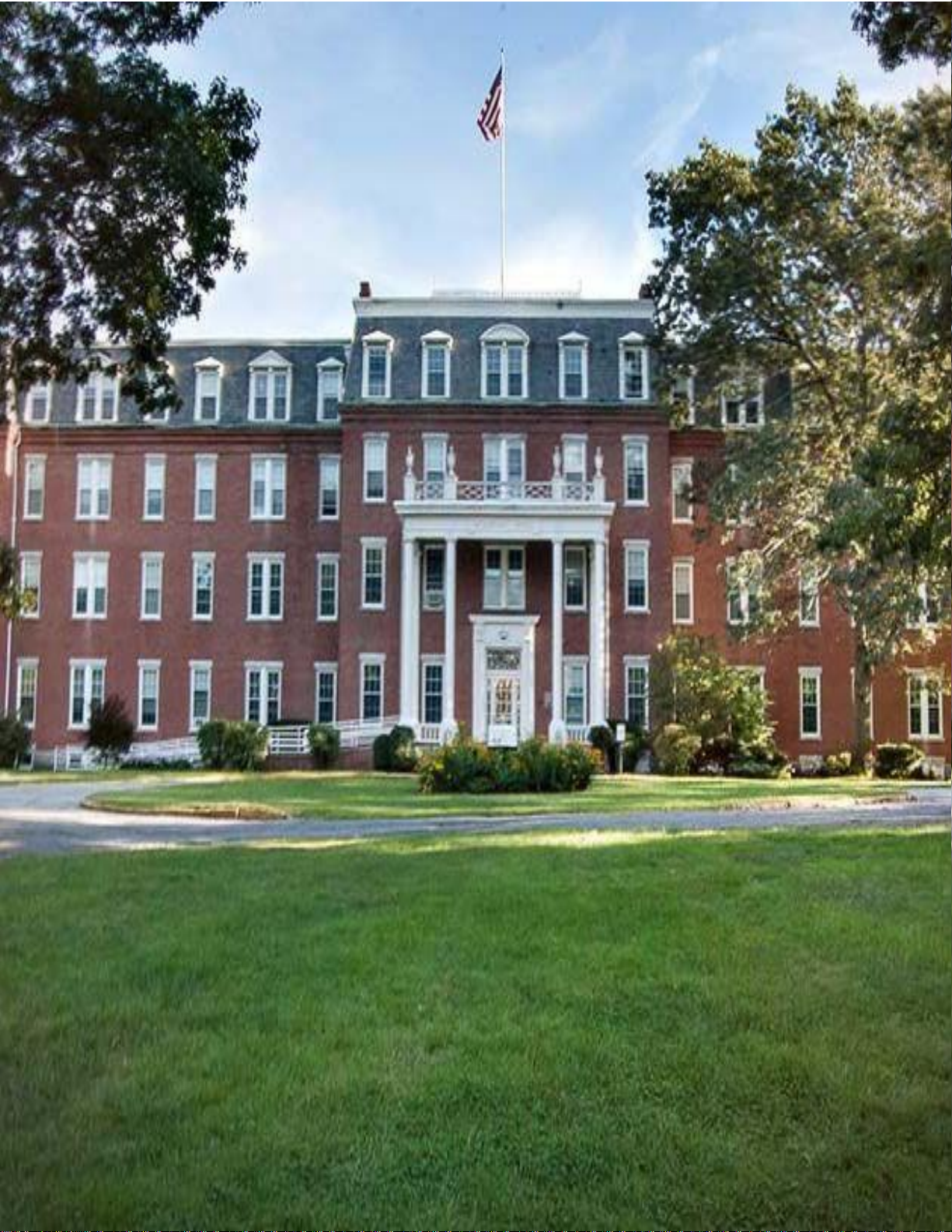



![[“Anything Was Possible”: Gaps, Hypotheses, and Multiple Meanings in Alice Munro’s “The Bear Came Over the Mountain”]](https://s3.us-east-1.amazonaws.com/outstation.idea/pdf-mt/2043600363819532288/pdf/04406e6d-7416-41d3-8220-f76d19a3e47e/imgs/page1.png)