QUEEN'S ALUMNI REVIEW PDF Free Download
1 / 48/48
100%

BEYOND
THE BLUR
How the Class
of 2020 found
focus after
COVID-19.
THE MAGAZINE OF QUEEN’S UNIVERSITY SINCE 1927
ISSUE 2, 2025
THE LONG GAME Meet the Gaels’ biggest fan. She’s 96.
SWEET AS HONEY A tour of the Queen’s apiary. / INK VS. IMAGE What your tattoos say about you.

CONTENTS
STUDENT SUPPORT
REPORT
2025
IMPACT
IMPACT BY THE NUMBERS
STUDENTS SUPPORTED
BY DONORS
3,977
DONOR-FUNDED SCHOLARSHIPS,
AWARDS AND BURSARIES
1,960
AMOUNT DISTRIBUTED TO STUDENTS
THROUGH DONOR FUNDS
$18,800,000
Every year, with support from generous
donors like you, top students from around
the world come to Queen’s to prepare
themselves with the knowledge, skills,
and experiences they need to lead and
make an impact.
SEE HOW YOUR
SUPPORT IS MAKING
A DIFFERENCE FOR
STUDENTS.

1 QUEENSU.CA/ALUMNIREVIEW
Into the Unknown
The pandemic upended the
lives of the Class of 2020.
Where are they now?
BY TONY ATHERTON
18
Features
The Gaels’ Biggest Fan
At 96, Lois Hazlett is the
most loyal fan a team could
hope to have.
BY TONY ATHERTON
24
CONTENTS
Issue 2, 2025
COVER PHOTOGRAPH EXCLUSIVELY FOR QUEEN’S ALUMNI REVIEW BY KYLA ZANARDI; (RIGHT) JOHNNY C.Y. LAM; SPOT ILLUSTRATION BY SOL COTTI
STUDENT SUPPORT
REPORT
2025
IMPACT
IMPACT BY THE NUMBERS
STUDENTS SUPPORTED
BY DONORS
3,977
DONOR-FUNDED SCHOLARSHIPS,
AWARDS AND BURSARIES
1,960
AMOUNT DISTRIBUTED TO STUDENTS
THROUGH DONOR FUNDS
$18,800,000
Every year, with support from generous
donors like you, top students from around
the world come to Queen’s to prepare
themselves with the knowledge, skills,
and experiences they need to lead and
make an impact.
SEE HOW YOUR
SUPPORT IS MAKING
A DIFFERENCE FOR
STUDENTS.
This August will mark
Lois Hazlett’s 69th
year as a season-
ticket holder for Gaels
football. She shared
all her incredible
scrapbooks with us,
and also told us why
she loves football –
including the only thing
that will ever keep her
away from a game.

2
CONTENTSCONTENTS
32 The Backstory
A new memoir looks at fear, love,
and facing the wilderness within.
33 Bookmarks
New content from faculty
and alumni.
34 If These Walls Could Talk
A former rector recalls his time in
a house on Victoria Street.
35 From the QUAA
Help us find the next honorary
degree recipients.
PHOTOGRAPHY BY (CLOCKWISE FROM TOP) JENNIFER GAUTHIER; JENNIFER GAUTHIER; JACKIE HALL; JOHNNY C.Y. LAM
31
36
First Up
Entrepreneur Aisha
Yang takes us back
to her first job.
“ I developed a
global mindset
through
[being a flight
attendant]
and that really
helped me as
I shaped and
managed the
company.”
— AISHA YANG,
P. 31
38
Class Notes
Where are your classmates
and housemates now?
42 Legacy
Queen’s mourns the
loss of Judith Brown,
educator, advocate,
and trustee.
44 One Last Thing
A closer look at the
“invisible forest” at
Nixon Field.
How I Got Here
David Nesbitt’s efforts in
inclusion are reshaping
lives across Hong Kong.
Harneet Kang,
MIR’20,
photographed by
Kyla Zanardi,
Artsci’09, on
July 3, 2025, in
her Toronto
studio.
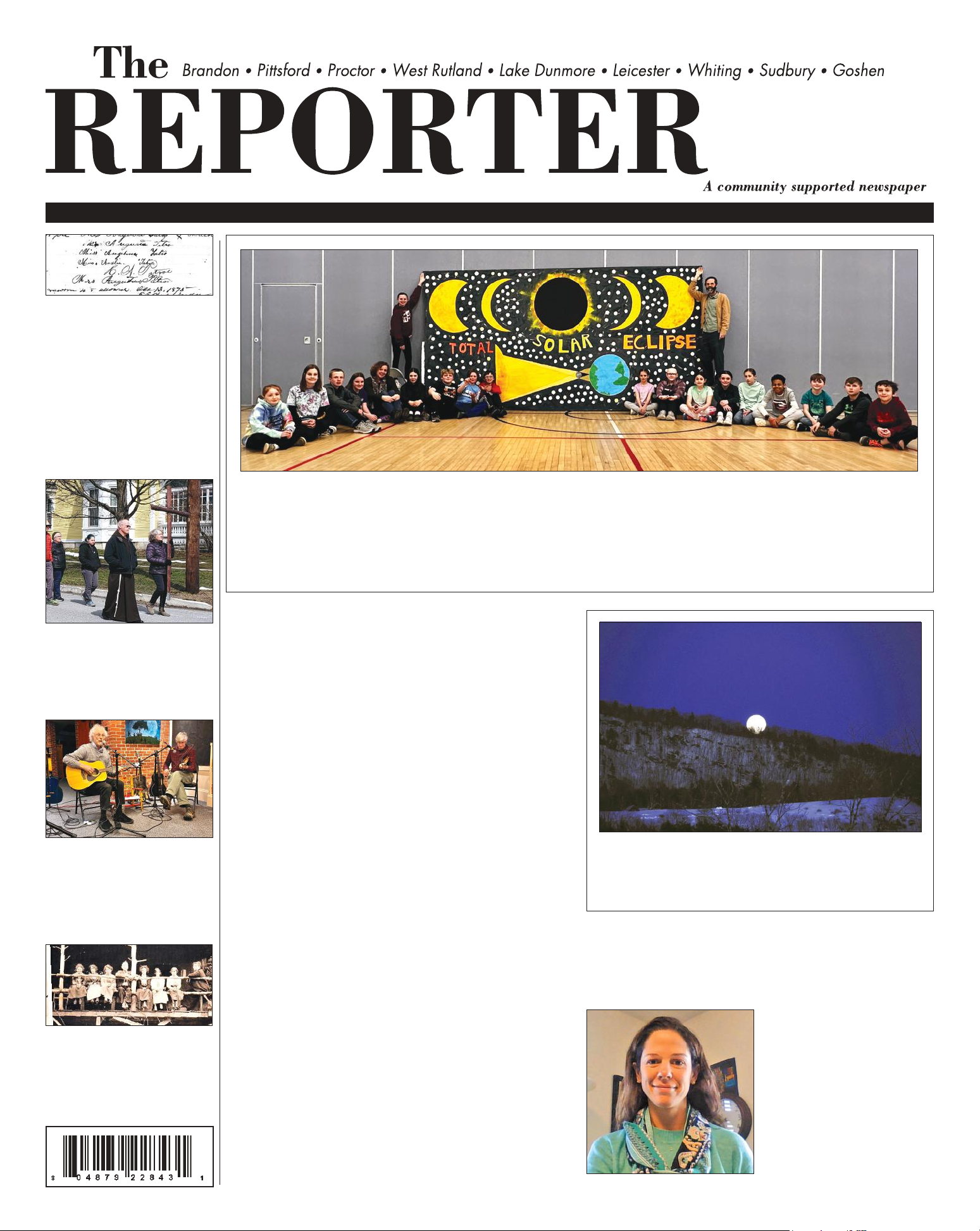
The stark,
blurred portrait
on the cover
symbolizes the
uncertainty
faced by the
Class of 2020
during the
isolation of
the COVID-19
pandemic. Inside,
Ms. Kang’s image
is brought into
focus, an
indication of the
new directions
and clarity that
these resilient
graduates had
found in the five
years since. “The
white background
makes the image
feel like it’s
suspended in
time, just like
when we all
stopped in 2020,”
says Ms. Zanardi.
“That same white
space allows us
to fill in the
blanks, just as
we all had to
navigate a new
future for
ourselves, and
this was
especially true
for Harneet and
all her
c l a s s m a t e s.”
10
12
The Big Picture
Visit a sweet oasis of
science on campus:
the apiary.
07 Campus News
A compendium of the latest
Queen’s news – and the people
and things that are making it.
For the Record
A groundbreaking cancer
study makes headlines
around the world.
16 Work in Progress
Is that tattoo holding you
back? Doctoral studies
on ink in the workplace.
On Campus Off Campus

3 QUEENSU.CA/ALUMNIREVIEW
PHOTOGRAPHY BY BERNARD CLARK
FROM THE PRINCIPAL
H
aving focused in the last issue on current political challenges
to universities and their mission, it is refreshing for me this
time to be able to point to evidence that, at our university, the
commitment to that mission is unabated and continuing to
have a positive impact in the world at large. I am writing this on
June 17, hours after it was announced in Istanbul that for the fifth
straight year Queen’s has placed in the top 10 in the Times Higher
Education (THE) Impact Rankings, rising from eighth last year to
sixth place overall and tied as the top North American institution
in a pool of more than 2,500 institutions in 130 countries.
Since Shanghai Jiao Tong University issued the first Academic
Ranking of World Universities in 2003, university league tables
have increasingly become a fixture across the globe, notwith-
standing concerns about their effect on the academic enterprise
and their tendency to reinforce a conception of institutionalized
higher learning that favours wealthier nations. The THE Impact
Rankings, which began in 2018–19, adopted a different method-
ology that was calculated to level the playing field: universities’
societal impact would be assessed using the 17 United Nations
Sustainable Development Goals (SDGs) as a framework.
It was a welcome initiative, shifting emphasis from what univer-
sities simply do to what they are for and providing opportunities
not only for comparison but co-operation between institutions in
service to a broader cause. The Impact Rankings recognized that
the UN SDGs had the potential to be a kind
of lingua franca for measuring the impact of
universities worldwide and they built upon
that insight. And in parallel, the Interna-
tional Association of Universities launched in
2018 its Global Cluster on Higher Education
and Research for Sustainable Development
(HESD), again using the SDGs as an organizing
taxonomy. Queen’s is now part of that Global
Cluster, focusing on “Zero Hunger,” the second
of the SDGs, and working in partnership with
institutions around the world. In the recent
round of the Impact Rankings, we have placed
first in the world for that goal.
The point of all this is that, for Queen’s, the
decision to participate in the THE Impact
Rankings has brought many benefits, the
most obvious, though not necessarily most
important, being heightened profile and rep-
utational gain. Perhaps more significantly,
though, it has also given us a framework for
both assessing and strategically directing our
efforts to address global challenges. It has
enabled us to become more intentional and
therefore more effective in our engagement
with the world. And perhaps most critically, it
has demanded and facilitated active collabo-
ration with institutions and agencies far afield
as well as closer to home.
The 17th SDG focuses on implementing
and revitalizing the Global Partnership for
Sustainable Development, and every insti-
tution participating in the Impact Rankings
must report on their co-operative efforts. This
is as it should be. While one aspect of the uni-
versity mission focuses on the actions and
aspirations of individuals, there is a greater,
communal cause that must be served: social
justice, human well-being, and a vibrant
future for the planet and all the life it sustains.
SERVING A GREATER,
COMMUNAL CAUSE
PRINCIPAL PATRICK DEANE

4
PHOTOGRAPHY BY JANA CHYTILOVA
UP FRONT
4
Queen’s University has once again earned a
place among the world’s top universities for its
contributions to advancing the United Nations’
Sustainable Development Goals (SDGs). This
marks the fifth consecutive year that Queen’s
has placed in the global top 10, a milestone
unmatched by any other Canadian institution
since the rankings began in 2019. The THE
Impact Rankings evaluate how universities
perform across the UN’s 17 SDGs, which call
for global action to end poverty, protect the
planet, and ensure peace and prosperity for all.
QUEEN’S
BY THE
NUMBERS
Picture this: A new
Homecoming tradition
Homecoming is, at its heart, all about the memories – the ones
we make in the moment, and the ones we revisit from years
past. For many, a trip to the Alumni Review’s Homecoming
photo booth is now part of that tradition.
Introduced in 2023, it has quickly become a place for alumni
to connect and capture the day. With professional photographer
and Queen’s alumna Jana Chytilova, Sc’89, behind the lens,
alumni step into the frame and receive a special keepsake a
short time later: their photo on a custom cover of the Alumni
Review, delivered right to their inbox.
Some of our alumni models wear tams. Some wear well-worn
jackets. Some arrive for their close-ups in paint-splattered
coveralls. The photo booth brings everyone together: long-lost
housemates, couples, grandparents, babies, and dogs (and, if
you’re lucky, you might even catch Boo Hoo striking a pose).
For those on the sidelines, it’s just as entertaining to watch the
fun unfold. Everyone’s there to capture a moment in time
– and they do it in tricolour style.
But for one alumna, capturing that moment took on even
greater significance after Homecoming.
Jennifer Stroebe, Sc’98, was happy to pose with her father,
Rick Sterne, Sc’68, in 2023 (above) – she in her Engineering
jacket and he in a Queen’s tartan scarf, embracing.
“Thank you so much for sending this photo cover! It turned
out so great,” she wrote to us after receiving her Alumni Review
cover. “Not only did I love my time at Queen’s, it was super
special for me to share Homecoming weekend with my dad,
who graduated from the same Queen’s program exactly 30
years earlier than me.”
Now, nearly two years later, she treasures the photo even more.
“This photo is extra special to me,” she explains. “Sadly, my
dad passed away unexpectedly a few weeks after it was taken.”
Each photo tells a story – and for Jennifer, that story was
about her dad, and the connection they shared with Queen’s,
and each other.
“I am so grateful that we were able to travel and spend
Homecoming together.”
6th
in the world
out of 2,500+
participating
universities
6th
globally
for SDG 15:
Life on Land
4th
globally
in SDG 11:
Sustainable
Cities and
Communities
5 years for Queen’s in
THE’s global top 10
130 countries are
reflected in the ranking
1st
in Canada
out of 24
participating
universities
1st
globally
for SDG 2:
Zero Hunger
2nd
globally
for SDG 14:
Life Below
Water and
SDG 16:
Peace, Justice,
and Strong
Institutions
WHAT:
Homecoming
photo booth
WHEN:
Oct. 17
(1 to 6 p.m.)
and Oct. 18
(8:30 a.m. to
12:30 p.m.)
WHERE:
Grant Hall
WHO:
All Queen’s
alumni are
invited
COST:
None – it’s on us
as a thank you
to our alumni
readers

5 QUEENSU.CAALUMNIREVIEW
CONTRIBUTORS
The Queen’s Alumni Review welcomes
comments at review@queensu.ca.
Allcomments may be edited for
clarity, civility, and length.
review@queensu.ca
WRITE
TO US
QUEEN’S ALUMNI REVIEW
VOLUME 99, NO. 2, 2025
QUEEN’S UNIVERSITY PRINCIPAL
AND VICE-CHANCELLOR
Patrick Deane
CHIEF ADVANCEMENT OFFICER
Michelle Fuko
ASSOCIATE VICE-PRINCIPAL
(STRATEGIC ENGAGEMENT)
Leigh Kalin, Artsci’92
EXECUTIVE DIRECTOR, COMMUNICATIONS
Sophia Bouris
DIRECTOR, MARKETING AND PUBLICATIONS
Alex Beshara
ASSOCIATE DIRECTOR, EDITORIAL STRATEGY
EDITOR, QUEEN’S ALUMNI REVIEW
Ruth Dunley
COPY EDITING AND PROOFING
Matt Harrison, Cat London (Artsci’03),
Anita Murray (Three C Communications),
Wendy Treverton
GRAPHIC DESIGNER
Wendy Treverton
WRITERS
Tony Atherton, Ty Burke, Vanessa Chiasson
(Artsci’02), Robert Gerlsbeck, Matt Harrison,
Tara Jackson (Artsci’96), Jeff Pappone,
Jordan Whitehouse (Artsci’07)
PHOTOGRAPHERS AND ILLUSTRATORS
Bernard Clark, Sol Cotti, Patrick Doyle,
Jennifer Gauthier, Jackie Hall, Leah Hennel,
John Kenney, Johnny C.Y. Lam, Dax Melmer,
Chris Tanouye, Wendy Treverton,
Kyla Zanardi (Artsci’09)
CONTACT US
ONLINE queensu.ca/alumnireview
EMAIL review@queensu.ca
X @queensureview
PHONE 1.800.267.7837
ADVERTISE review@queensu.ca
The Queen’s Alumni Review is published by the
Queen’s Office of Advancement. Queen’s is a
member of the Council for Advancement and
Support of Education and the Canadian Council
for the Advancement of Education. Subscriptions
are free to alumni, $25 Cdn/year for others.
Opinions expressed in the Review are not
necessarily those of Queen’s University.
Queen’s Alumni Review (circ. 109,000)
ISSN #0843-8048
TO UPDATE YOUR ADDRESS
email: review@queensu.ca or call 1.800.267.7837
Canada Post publications mail permit #41089017
Queen’s Alumni Review
Queen’s University, Summerhill
55 Stuart Street, Kingston ON K7L 3N6
Queen’s University is situated on traditional
Anishinaabe and Haudenosaunee Territory
In 2012, Kyla Zanardi,
Artsci’09, left behind a
career in international
public health to pursue
her creative side behind
the camera. She has
produced several
cookbooks and opened
the digital production
house Benson & Oak,
where she has had the
opportunity to produce,
shoot, and direct for
Food Network, SLICE.ca
HGTV, and brands such
as Bertolli, Empress Gin,
Nature Valley, Chevrolet,
and many more. See
cover and “The Long
Goodbye,” on page 18.
Leah Hennel is an
award- winning Calgary-
based photojournalist.
A graduate of the
Southern Alberta
Institute of Technology’s
photojournalism
program, her work
has appeared in the
Globe and Mail, The
Guardian, Maclean’s,
Canadian Geographic,
The Narwhal, and
major wire services
around the world. She
has also published two
photography books:
Along the Western Front
and Alone Together:
A Pandemic Photo
Essay. See “Her Body
of Work,” on page 16.
Johnn C.Y. Lam
is a commercial
and editorial
photographer based
in Newfoundland. He
is a regular contributor
to the Globe and Mail
and Maclean’s and
is best known for his
portraiture work. In
2023, Mr. Lam received
the silver award in
the Best Photograph
category at the
National Magazine
Awards B2B contest
for a photo he shot for
the Alumni Review.
See “The Queen’s
Bees” on page 10 and
“Keeper of the Faith”
on page 24.
Tony Atherton is not a Queen’s grad
but proudly wears a hand-me-down
Q ball cap from his son (Artsci’03).
Mr. Atherton’s 44-year career as
writer and editor has taken him
around the world, including 17 years
as the Ottawa Citizen’s television
critic. Mr. Atherton was the winner
of the National Magazine Awards
B2B Gold prize for the Best Column
or Regularly Featured Department
category for “If These Walls Could
Talk.” See, “The Long Goodbye” on
page 18, “Keeper of the Faith” on
page 24, and “If These Walls Could
Talk,” on page 34.

6
Last year alone, our team sold over
20,000 household items for our real
estate clients.
Downsizing and estate settlement isn’t just
something we do...
it’s ALL we do.
gogordons.com 1-833-709-1916 Scan to contact us!
TOP-TIER STUDY LEADERS | SMALL GROUP SIZE | NATURE & CULTURE
QUICK LINK
Let’s continue
exploring the world
WORLDWIDEQUEST.COM 1-800-387-1483 TRAVEL@WORLDWIDEQUEST.COM
Queen’s alumni and friends have
travelled on our expert-led small group
tours
since 2013! Scan the QR code to
access an exclusive offer for your next trip.

7 QUEENSU.CAALUMNIREVIEW
PHOTOGRAPHY COURTESY OF OTTAWA REDBLACKS
7 QUEENSU.CAALUMNIREVIEW
NEWS — ANNOUNCEMENTS — RESEARCH AND MORE
7 QUEENSU.CAALUMNIREVIEW
For the first time in the team’s history, the Ottawa REDBLACKS
held their training camp outside the capital, landing at
Richardson Stadium for their 2025 pre-season prep. It’s a fitting
choice: with its recent upgrades and the addition of the state-of-
the-art Lang Pavilion, Richardson has become one of the premier
high-performance facilities in Canadian university sports.
ON CAMPUS
What: Ottawa REDBLACKS Training Camp When: Pre-season 2025 Where: Richardson Stadium
How: Facilities funded by 300+ alumni donors through the Richardson Stadium revitalization project

8
PHOTOGRAPHY COURTESY OF SMITH ENGINEERING
Q u ee n’s
researcher
Rachel Baker
is the winner
of the Polanyi
Prize in
C h e m i s t r y.
The Milestone
Queen’s is 6th in the
world, 1st in Canada
in global rankings
Queen’s University has once again
earned a place among the world’s
top universities for its contribu-
tions to advancing the United
Nations’ Sustainable Development
Goals (SDGs). In the 2025 Times
Higher Education (THE) Impact
Rankings, Queen’s was ranked
sixth globally out of more than
2,500 institutions across 130
countries, and has reclaimed
its position as the top-ranked
Canadian university. This year’s
rankings were announced during
the THE Global Sustainable
Development Congress in
Istanbul. This marks the fifth
consecutive year that Queen’s has
placed in the global top 10, a
mile stone unmatched by any
other Canadian institution since
the rankings began in 2019. The
rankings evaluate how universities
perform across the UN’s 17 SDGs,
which call for global action to end
poverty, protect the planet, and
ensure peace and prosperity for all.
The Accolade
Queen’s improves
its global standing
Queen’s has improved its standing
in the QS World University Rank-
ings. The university is now ranked
191st out of 1,501 post-secondary
institutions across 106 locations,
rising two places from last year
and maintaining its place in the
top 200 universities worldwide.
Within Canada, Queen’s has also
advanced one place, now sitting
9th among the 29 Canadian
schools evaluated. The QS World
University Rankings evaluate
universities across several broad
performance indicators, spanning
research, university partnerships,
student learning experience and
outcomes, and academic and
employer reputation. Within
Canada, Queen’s stood out in
employability, ranking in the top
five nationally for employment
outcomes for graduates, and for its
reputation with global employers
for producing the most job-ready
graduates. Queen’s has steadily
improved its global standing in
the QS rankings, gaining 55
positions in the last three years.
The Honour
Distinguished University
Professor receives one
of the highest honours
for scientists
Dr. John Smol, Distinguished
University Professor in Queen’s
department of biology, has been
elected as an international
member of the U.S. National
Academy of Sciences (NAS).
The organization is responsible
for overseeing the U.S. National
Research Council and fostering
the broad understanding of
science. Each year, a maximum of
120 members are elected. Dr. Smol
is one of only 30 international
scientists and five Canadians
elected to the NAS in 2025. As a
leading scientist in the field of
paleolimnology, Dr. Smol conducts
research focusing on studying
freshwater systems to track their
long-term changes, specifically
relating to climate change and
other human impacts. His research
on the effects of warming on High
Arctic lake ecosystems identified
the critical impact of greenhouse-
gas-induced warming in the
region years before most people
recognized climate change as an
environmental issue. His work has
informed public policy, provided
methods to track historical
environmental conditions, guided
future environmental action, and
raised awareness of evidence-
based climate-change research.
The Prize
Early-career researcher
wins prestigious Polanyi
Prize for work developing
cleaner chemical processes
Queen’s researcher Rachel Baker
(chemical engineering) has been
awarded the prestigious Polanyi
Prize in Chemistry for pioneering
greener approaches in chemical
manufacturing. Modelled after the
CAMPUS NEWS

9 QUEENSU.CAALUMNIREVIEW
PHOTOGRAPHY BY CHRISTIAN FLORES; CALLUM LINDEN
The Follow– @alyssagrocutt / Curious about ink in the workplace? Alyssa Grocutt shares ideas and research. Learn more on page 16.
Mark your
calendars —
Homecoming is
set for October
17–19! Scan to
register now.
Lucas Coster,
Dax Miller,
an d Tyler
Gunasekera
earn medals
at the World
U24 Ultimate
Championships
in Spain.
The Athletes
Ultimate players
represent Canada at
world championships
A student, Dax Miller, Artsci’26,
and two alumni, Tyler Gunase-
kera, Artsci’25, and Lucas Coster,
Sc’24, were among 1,250 athletes
from more than 25 countries who
competed in the World Under-24
Ultimate Championships held in
Logroño, Spain, in June. Miller
and Gunasekera both played on
the men’s (open) team, returning
to Canada with the bronze medal.
Coster played on the mixed team
and came home with a silver
medal. The trio are no strangers to
success – they had already helped
the Gaels win a Canadian Univer-
sity National Ultimate Champion-
ship in fall 2023 and helped the
team to a bronze in fall 2024.
Materials Engineering and Smith
Engineering’s inaugural Chair for
Women in Engineering, has been
named one of Canada’s top 100
most powerful women for 2024
by WXN, the Women’s Executive
Network. Dr. Ploeg was recognized
in the BMO STEM category. Her
visionary leadership and dedica-
tion to advancing gender equity in
science, technology, engineering,
and math (STEM) has brought
national attention to the impactful
work underway within Smith
Engineering. The awards site
notes that Dr. Ploeg is “recognized
internationally as a leader in
orthopedic biomechanics. Her
testing and modelling of live bone
in culture is unique, made possible
through a bioreactor and loading
system. Through her industrial
and clinical partners, Dr. Ploeg’s
research impacts product design,
orthopedic surgery, and therapy.”
The Homecoming
Preparations underway
to welcome alumni back
to campus
The countdown is on for Home-
coming 2025, set for the weekend
of Oct. 17–19. This year marks the
99th annual reunion, when
alumni return to campus for three
days of reconnecting, discovering
what’s new at Queen’s, and
meeting future grads. This year,
milestone reunions are being
celebrated for alumni who
graduated in years ending in five
or zero, along with the Tricolour
Guard (those celebrating 50 years
or more since graduation).
Registration is open and you can
start planning now. Register online
(queensu.ca/alumni/homecoming)
and be sure to see the Plan Your
Visit page (queensu.ca/alumni/
homecoming/plan-your-visit) for
info on accommodation options,
getting around town, and more.
five Nobel Prize categories, the
Polanyi Prize recognizes outstand-
ing early-career researchers whose
innovations drive progress in
fields vital to Ontario’s economic
growth. Dr. Baker’s vision is to
reduce the chemical industry’s
reliance on fossil fuels with a
two-pronged approach that uses
electrolysis reactions to repurpose
biomass and carbon dioxide (CO2)
emissions. This cuts down on
greenhouse gas production by
utilizing clean electricity to power
chemical reactions, while simulta-
neously using pollutants like CO2
as a feedstock. Dr. Baker, Sc’17,
is the Robins Family Professor of
Engineering Chemistry, a profes-
sorship endowed by the late
DavosPharma founder and
Kingston native Barry Robins,
BSc’64, and family.
The Powerful
Smith Engineering’s
Heidi Ploeg recognized
for visionary leadership
Heidi Ploeg, Sc’88, MEng’91,
PhD’00, a professor in the
Department of Mechanical and

10 Photography by Johnny C.Y. Lam
THE BIG PICTURE
Q
ueen’s is sometimes called a city
within a city – a humming hub
of student life tucked into the
heart of Kingston. But hidden
inside this city is another bustling
metropolis most people pass with-
out noticing.
Too bad. It’s got a lot of buzz.
Welcome to the West Campus
Apiary, a pocket of wildlife wedged
between Richardson Stadium and
Sir John A. Macdonald Boulevard.
It’s home to 10 honeybee colonies
and hosts upwards of half a million
bees at the height of summer.
Launched in 2022, the apiary
helps restore urban pollinators
and supports the UN’s Sustainable
Development Goals, says Theresa
Couto, registered dietitian and well-
ness and sustainability manager at
Queen’s Hospitality Services. But
it’s more than a sanctuary for bees.
It’s a living, buzzing classroom.
“There’s so much we can learn
from bees about our environment
and our ecosystem,” Ms. Couto says.
Then there’s the honey, harvested
from August through September.
About half of the sweet stuff goes
into the kitchens of Queen’s eater-
ies and coffee shops. For example,
Café Union in Goodes Hall serves a
delicious peanut butter and honey
sandwich. The rest is bottled and sold
under the Queen’s Bee’s Honey label
at campus favourites like the Lazy
Scholar and Mac-Corry dining hall.
Honeybees are remarkable crea-
tures – hardy but fragile. They can
The
Queen’s
bees
Over at West Campus,
you will find the sweetest
spot at the university –
an apiary that’s all about
sustainability and science.
BY ROBERT GERLSBECK
Bees collect nectar from small flowers
within a few kilometres of their hive, and the
honey they produce from these blossoms
has a different colour and taste depending
on the season.

11
incredibly complex interactions,”
says Andrew McCann, the apiary’s
beekeeper. “In some ways they are
the most human-like of species.”
Having grown up with bees (his
father was also a beekeeper), Mr.
McCann remains deeply impressed
by them. For thousands of years,
humans have taken bees wherever
they’ve migrated. Perhaps we need
them more than they need us.
“Sometimes I wonder who’s domes-
ticated whom,” Mr. McCann says.
operate in the hottest summers and
coldest winters. Yet they remain oh
so vulnerable to climate change,
parasites, and pesticides.
A bee can’t survive by itself. It
de pends on the colony, which is
surprisingly democratic. Decisions,
like how much honey to produce or
when to relocate, are made through
a sophisticated system of collective
communication.
“Bees operate in massive societ-
ies the way we do and have these
BY THE NUMBERS
50,000 to
80,000
Number of bees in each
one of the 10 colonies at
the West Campus Apiary
during summer
3,500 lbs.
Total amount of honey
harvested at the apiary
since 2022
556
How many worker bees it
takes to gather one pound
of honey
(opposite page and above)
Beekeeper Andrew McCann
inspects one of the colonies
at the West Campus Apiary. A
box like this can weigh more
than 100 pounds when its
hive frames are honey-laden.
(left) When working around
the hive, beekeepers use
smokers. Some believe smoke
confuses bees while others
say it mimics a forest fire,
causing them to go into the
hive and fill up on honey
for a potential escape.

12
FOR THE RECORD
In a groundbreaking study that made head-
lines around the world, researchers working
with the Sinclair Cancer Research Institute
and Kingston Health Sciences Centre demon-
strated that a three-year program of structured
exercise significantly improves survival for
patients with colon cancer by reducing the
risk of disease recurrence and new primary
cancers. The study was led by the Canadian
Cancer Trials Group at Queen’s and funded
by the Canadian Cancer Society. We asked
Dr. Christopher Booth, co-chair of the CHAL-
LENGE trial and a professor in the Depart-
ments of Oncology and Public Health Sciences,
what this means for patients, the health-care
system, and the future of cancer research.
This research resulted in a global first. Can you
explain what makes it so groundbreaking?
This is the first clinical trial in the world
designed specifically to ask whether exer-
cise can improve cancer survival. As oncolo-
gists, one of the most common questions we
get asked by our patients when they finish
chemotherapy is, “Doc, what else can I do to
improve my outcomes?” We now have strong
evidence that a structured exercise program
delivered after surgery and chemotherapy for
colon cancer improves survival. This finding
has changed standard care overnight and has
generated tremendous interest in studying
the effects of exercise in other cancers.
This study received tremendous media atten-
tion. In one interview, you said researchers were
“astounded when we saw the magnitude of bene-
fit of exercise.” Explain a bit about why everyone
was taken aback by the findings – the coverage
suggests this is really a seismic shift in what we
know about cancer.
We launched this study in 2009 based on early
data from other studies suggesting a poten-
tial association between exercise and cancer
outcomes. However, until now, we did not
have proof that exercise can improve survival.
What was so astounding was the magnitude
of benefit. For every 14 patients who went on
Dr. Christopher Booth, Artsci’97,
Meds’01, shares details on the
breakthrough study that will
change cancer care and save
lives – one step at a time.
the exercise program, exercise prevented one
person from dying. This magnitude of effect is
comparable (and in some cases exceeds) the
benefits of many of our standard chemother-
apy treatments. The CHALLENGE trial has
clearly demonstrated that surgery, chemo-
therapy, and an exercise program are together
the new standard treatment for patients with
Stage 2 and 3 colon cancer.
The study does not reveal exactly how exercise
reduces the new onset or recurrence of cancer.
What are some of the theories about why exercise
had such a powerful impact?
Prior laboratory studies have suggested a
number of different anti-cancer effects of
exercise. Exercise has known beneficial
effects on the immune system, inflammation,
metabolic health, and cardiovascular circu-
lation. It is plausible that several factors are
driving the results we saw in the CHALLENGE
trial. We collected blood specimens on all 889
patients who participated in this global trial
at multiple points during the three-year study
period. In the next one to two years, we will be
doing detailed analyses of these specimens to
try to better understand the effects of exercise
on cancer.
For patients currently going through cancer treat
-
ment or recovery, what kind of exercise are we
talking about? In the study, patients could decide
what kind of exercise they wanted to do – was any
one kind of exercise better than another? And how
intense did exercise have to be?
Our study tested the role of aerobic exercise.
Patients had a target level of exercise that
could be met using any form of cardiovascular
physical activity. A physical activity consul-
tant worked with patients every two weeks
for Year 1 and then monthly during Years 2
and 3. They played a crucial role as a motiva-
tional coach and designed an “exercise pre-
scription” that would allow the patient to hit
their physical activity target doing activities
they enjoyed. This included everything from
swimming to cross-country skiing to biking to
Photography by Jackie Hall

13 QUEENSU.CA/ALUMNIREVIEW

14
PHOTOGRAPHY BY JACKIE HALL
“This is the first clinical trial in the
world designed specifically to ask
whether exercise can improve
cancer survival.”
accountable to their trainer and
highly motivated to work on the
goals they designed together.
The New York Times noted that, after
eight years, the exercise program had
prevented one death for every 14 people
who participated in the exercise arm of
the study. So many people have been
touched by cancer – can this give us
all hope that we can improve cancer
survival rates in the future, or are we
getting ahead of ourselves?
This is the first study to demonstrate
that exercise can improve cancer
survival, and it is specific to colon
cancer. Our data provided a hint
that exercise can also prevent new
cases of breast cancer and prostate
cancer, but more work is needed to
better understand this. In fact, there
are ongoing trials in breast cancer
and ovarian cancer exploring the
extent to which diet, nutrition, and
exercise can improve survival.
For people who want to act now – whether
they’ve had cancer or not – what advice
would you give about exercise and can-
cer prevention?
Exercise is good for the mental
health, emotional well-being, and
physical health of all of us. For
patients currently being treated
for cancer – it will be important for
them to speak with their oncolo-
gist about what program might be
appropriate for them.
kayaking and jogging. Most people,
however, started a walking program
and could hit their target if they
walked at a brisk pace for 45-60 min-
utes three to four times per week.
Many people think of cancer recovery
as a time to rest. How can patients know
when it’s safe to start exercising?
An exercise program is likely a good
idea for everyone. However, for
someone being treated for cancer,
this needs to be done in conjunction
with the treating oncologist. The
amount of exercise that is appro-
priate will vary based on how sick
the patient is and what other forms
of treatment they are receiving. The
patients in our study had completed
surgery and chemotherapy and
recovered from the treatment side
effects before they started this pro-
gram. Patients should speak with
their oncologist before they start a
new exercise program.
One of the key components of the study
was a physiotherapist or a personal
trainer for the patients to check in with
on a regular basis. How did those factors
make a difference?
My patients who participated in
this study were emphatic that it was
the human connection with their
trainer that made a huge difference
in their ability to start and maintain
an exercise program. Patients felt
Dr. Christopher
Booth, Artsci’97,
Meds ‘01, is a
medical oncologist
at KHSC and
professor of
oncology at
Queen’s. He ran
Varsity cross-
country and
track during his
undergraduate
studies and
medical school.

15 QUEENSU.CA/ALUMNIREVIEW
CHOOSE YOUR LIFESTYLE.
INDEPENDENT LIVING, SUPPORTIVE LIVING
AND SHORT TERM STAYS
Book your tour today!
DELMANOR.COM
ETOBICOKE
(Prince Edward & Dundas)
416-233-0725
DON MILLS
416-331-9797
NORTH YORK
416-225-9146
OAKVILLE
905-469-3232
RICHMOND HILL
905-770-7963
AURORA
905-503-9505
WEST ETOBICOKE
(Bloor & Dundas)
416-777-2911
Krishan Nathan, Broker & Team Leader
ArtSci '00
SERVING KINGSTON, ON &
THE SURROUNDING AREA FOR
NEARLY TWO DECADES

16 Photography by Leah Hennel
WORK IN PROGRESS
Her body
of work
Alyssa Grocutt’s doctoral research
explores how tattoos shape – and
shift – professional identity.
BY TARA JACKSON
R
esearch by Alyssa Grocutt, MSc’21, is
infused in the personal. Her award-win-
ning master’s in management organiza-
tional behaviour, examining the impact
of parental work injuries on children and how
those experiences affect leadership develop-
ment in young adulthood, was rooted in the
familiar – her father died in an on-the-job
incident when she was a child.
For her PhD, Grocutt again opted to pursue
a topic with a meaningful connection: Her
own self-described tattoo hobby and what
was a “fun, personal side project” on tattoos
in the workplace grew into a dissertation and
direction for academic inquiry.
“Tattoos are a niche area, but they’re a
huge passion of mine,” explains Grocutt,
whose body is more than half covered in ink.
“Thinking about tattoos is such a source of
joy to me, so I decided to explore how they’re
treated in professional settings.”
Grocutt is interested in perceptions of visi-
ble tattoos and the realities of being a tattooed
employee or leader. Via extensive online sur-
veys, she examined both the perceptions of
and behaviours toward tattooed individuals
in the workplace.
Using written descriptions and images of a
worker with either no tattoos, a friendly tat-
too, or an intimidating tattoo, Grocutt asked
respondents to imagine the
worker as their colleague,
and then asked for their
perceptions of the worker’s
competence, trustworthi-
ness, “artistic-ness,” and
riskiness. Additional ques-
tions sought information on
how the respondent would
act towards the tattooed worker in terms of
discriminatory and respectful behaviours.
She found that workers with intimidating
tattoos are more likely to be discriminated
against through perceptions that they are
riskier. “At the same time, workers with
intimidating tattoos are also less likely to be
discriminated against through perceptions
that they are more artistic,” she says.
Each of these different perceptions affects
behaviours toward the person sporting the
intimidating tattoos, Grocutt says, highlight-
ing a need for awareness around conscious
and unconscious attitudes toward tattooed
employees in the workplace.
This could mean rethinking ingrained
approaches found in some professional envi-
ronments. “Organizations shouldn’t require
employees to cover their tattoos in the work-
place,” says Grocutt, by way of an example,
“but rather they should aim to enhance pos-
itive perceptions of tattooed workers.”
In September, Grocutt will begin a post-doc-
toral fellowship at the University of Calgary,
under the supervision of Nick Turner, Com’96,
Artsci’97, MSc’98, researching knowledge
translation and dissemination of research
insights. She will also continue to work on
completing her own full-body suit of tattoos.
Grocutt’s passion for tattoos shows no signs
of fading, and she hopes workplaces will come
to recognize the hidden advantages of their
visibility.
“For many tattooed people, especially
heavily tattooed people – myself included –
having their tattoos showing increases their
feelings of authenticity. We know from other
workplace research that when people feel
more authentic at work, their mental health
is better and their performance improves.
I’d like to see workplace appearance norms
change to be more accepting of employees’
self-expression, so they can show up as their
true selves, which benefits both employees
and organizations.”
“I’d like to see workplace appearance norms
change to be more accepting of employees’
self-expression, so they can show up as their
true selves, which benefits both employees
and organizations.”

17 QUEENSU.CA/ALUMNIREVIEW
TAT STAT S
A recent national
survey asked
Canadians about
their tattoos.
How many?
1 in 3 Canadians
have tattoos.
Who’s inked?
Prairie residents
are most likely to
have tattoos.
Most likely:
Millennials (51%)
and Gen Xers (43%).
Least likely:
Gen Z (35%) and
Boomers (17%).
How visible?
70% say their
tattoos can be
hidden under long
sleeves and pants.
Most visible:
Quebeckers
are slightly more
likely to show
their tattoos.
Most covered:
Ontarians and
Atlantic Canadians
tend to keep
tattoos hidden.
Source: Narrative
Research

The last time
we spoke to
these members
of the Class of
2020, Canada
was in some
of the darkest
days of the
COVID-19
pandemic –
it was a time
of anxiety and
isolation. Now,
five years later,
these alumni
tell us how their
stories ended.
For some, the
story is just
beginning.
BY TONY ATHERTON
T
H
E
L
O
N
G
G
O
O
D
B
Y
E
18

Harneet Kang was one of the
members of the Class of 2020
whose final year at Queen's
was disrupted by COVID-19.
Harneet Kang was one of the
members of the Class of 2020
whose final year at Queen's
was disrupted by COVID-19.
19 QUEENSU.CA/ALUMNIREVIEW

Take Ms. Baker, who majored in global studies. “Orig-
inally, when I first graduated from Queen’s, I thought
maybe I’d end up in the government, do something
along the lines of international affairs and policy work.”
Ms. Baker’s career has been undoubtedly interna-
tional, but not at all bureaucratic. A COVID pivot to
teaching, inspired by the first job she could get after
Queen’s – education co-ordinator for a tutoring service
– has enriched her life dramatically, she says. “It was
honestly the best stepping stone I could have had.”
After a year at Oxford Learning, Ms. Baker was
accepted in the education program at the University of
Ottawa, closer than Queen’s to her family’s Carleton
Place, Ont., home. When she started, her course work
was still all online, but eventually segued into hands-on
classroom experience. Still feeling the pull of her global
studies at Queen’s, Ms. Baker’s first job after the two-
year teaching program was at an international school
in South Korea. She taught social studies at Branksome
Hall Asia, a centre associated with a Toronto private
school and located on the remote volcanic island of Jeju.
“It was just a one-year contract; it was kind of like to
see if I enjoy international teaching,” she says.
After Korea, she landed a dream job teaching art to
Grades 9 to 12 at Notre Dame Catholic High School in
her hometown. Art has long been a passion; she had
toyed with taking a BFA at Queen’s before settling on
global studies.
But the wider world still beckons. Her school in Car-
leton Place has given her a two-year leave to take another
international posting, this time with a U.S.-affiliated
school in Kathmandu, Nepal, beginning this summer.
“I measure my life to be quite successful,” says
Ms. Baker. “I’ve experienced lots of cool things, and I’m
happy with how my life has turned out five years later.…
COVID sucked, but it gave me a different opportunity
that brought me to where I am now.”
Ellen Barss, Com’20, Comp’21, also opted to continue
her education in the ominous void that followed the
pandemic outbreak. She had been considering taking a
There were no teary farewell parties, no special awards
ceremonies, no faculty formals. The grads might have
been able to eventually walk across the stage at Leon’s
Centre (now Slush Puppie Place) and bump elbows with
the chancellor, but that would have been years later,
when the Queen’s campus was no longer the essential
fact of their lives, instead more of a warm memory.
Just after the COVID-19 pandemic brought the world
to a standstill, when no one was yet certain what the
future held, Gillian Baker, Artsci’20, articulated a com-
mon lament of her class: “I had the best four years at
Queen’s and just thought it would finish with a big hur-
rah. And you didn’t get that. You just trickled home;
there was no cut-off or ending ... and we were left to
scramble and ask, ‘OK, what now?’”
Ms. Baker, 26, was one of several 2020 grads the
Alumni Review interviewed that fall for a special cover
story, “The Class of 2020: Heartbreak and Hope.” Five
years later, we thought it was time to catch up. As it
turns out, the repeated theme among these alumni
about their grad year – “It wasn’t what we imagined” –
could easily apply to their lives in the five years since.
And not necessarily in a bad way.
The
graduating
class of
2020…
didn't.
Graduate,
that is.
Well, they
did, but
not so you'd
notice.
(PREVIOUS PAGE) PHOTOGRAPHY BY KYLA ZANARDI
20

second degree in computer science anyway, and “when
the world shut down, it seemed like the right time to
keep going.”
Her decision, she admits, might have been influenced
by “a little bit of fear because things were changing so
rapidly.” But it was also “not feeling that my time was
done yet … at Queen’s. The chapter didn’t feel closed
and what could be better … than finding a different
way to close it?”
Launching into online courses in the summer of 2020,
and fast-tracking some of her requirements, Ms. Barss
was able to finish the course in less than a year and a
half, choosing to return to Kingston from her home in
Calgary even though classes were still all online. By the
spring of 2021, she says, restrictions were beginning to
ease. “Finishing off my commerce degree at home [in
Calgary] was a bit sad,” she says. Back on campus, “it
felt like there was a bit of community.”
She landed a job with a national accounting and
consulting firm even before wrapping up her second
degree. It entails “technology consulting and strategy,
so it is pretty relevant to both my degrees.”
The job brought her back to Calgary, but the
COVID-induced shift to remote work meant that she
was able to work with clients on both coasts and get “a
lot of exposure to industry opportunities that would
have [previously] required physical travel.”
This spring, looking for a new adventure, she was
able to relocate within her firm to Montreal. The move
was made possible by the pandemic, she says, and the
broader professional experience it allowed her.
Hamza Rizwan, MEng’20, now calls Windsor, Ont.,
home, and has forged a new life in Canada. None of
that was on the 28-year-old’s radar when COVID hit
five years ago.
Mr. Rizwan’s pandemic limbo was more dire than
most. An international student from Dubai, he was
cut off from his homeland and his family because of
COVID restrictions. When his uncle in Lucknow, India,
was hospitalized with the virus that spring, Mr. Rizwan
could do no more than comfort his mother over the
phone. Alone in Kingston after his housemates had left
the city, life “was a struggle,” he admits.
His post-grad plans had been to return to Dubai,
where his father is a civil engineer. He wanted to forge
a career close to family. But with no idea when he might
be able to go home, he decided to look for work in Can-
ada “and see where that takes me.”
It took him to Windsor, a city he’d never heard of, and
to one of the highest-profile engineering projects in the
country, a $6 billion international bridge named after
someone called Gordie Howe, apparently a hockey player.
Mr. Rizwan almost didn’t take the job as a construc-
tion co-ordinator. It was early 2021 and he had only
recently started working at a Toronto-based construc-
tion research lab, a position that had taken him months
to find. “I thought … it’s been so uncertain and so chal-
lenging finding this [job], I don’t know if I should make
the move.”
A discussion with his father convinced him that
hands-on construction work might better serve his
career, and he hasn’t regretted the decision. Desig-
nated an essential worker,
Mr. Rizwan was soon inter-
acting daily with people in
the company office and on
site, though masked and
observing social distancing.
He stayed with the project
until late 2023, when he was
hired by a Toronto-based
firm working on highway
projects in southwestern
Ontario. “This company has
been amazing,” he says.
He finally got back to Dubai
in early 2022 to visit his par-
ents, and continued to India,
where his extended family
lives. “My uncle was doing
fine, and I was so happy.” His
family has since visited him
in Canada and together they
explored his new home.
“I’m so rooted in the sys-
tem [here],” he says. “I can’t
really think of going back [to
Dubai] at this time.” Five years ago, Mr. Rizwan says, “I
wouldn’t have anticipated any of this.”
Before the pandemic, Harneet Kang, MIR’20, had
a clear idea how her career in human resources was
going to unfold: “I wanted to make a name for myself,
I wanted to have my own personal professional brand,”
AS IT TURNS OUT,
THE REPEATED THEME
AMONG THESE ALUMNI
ABOUT THEIR GRAD
YEAR – “IT WASN’T
WHAT WE IMAGINED”
– COULD EASILY
APPLY TO THEIR
LIVES IN THE FIVE
YEARS SINCE. AND
NOT NECESSARILY
IN A BAD WAY.
(above, left to right) Gillian Baker, Ellen Barss,
Hamza Rizwan, Harneet Kang, Rebecca Maciver, and
Chauntae De Gannes in 2020.
(above, left to right) Gillian Baker, Ellen Barss,
Hamza Rizwan, Harneet Kang, Rebecca Maciver, and
Chauntae De Gannes in 2020.
21 QUEENSU.CA/ALUMNIREVIEW

she says. “These things were really important to me.
One day, I wanted to have a manager title and a director
title and just kind of climb up the [corporate] ladder.”
She’s done some climbing since graduation and an
equal amount of leaping from ladder to ladder, but only
after a slow start, thanks to the pandemic.
When she did land a junior-level HR job with an orga-
nization that manages health services in Hamilton, it
was remote work and not exactly on a career fast-track.
“I was hearing about these [tech] startups … popping
off. I wanted something that was going to push me to
grow in a different way.”
After eight months, she switched to a financial
technology startup in Toronto. A lot of her work was
recruiting staff during the tech bubble that peaked
with the pandemic. She
was still working remotely
but had moved to Toronto
and was able to go into the
office occasionally. Less
than two years later, she
was offered a job as a con-
sultant with an “employer
brand firm,” an agency that
helps clients define and
enhance their reputation as
employers. Her career was
progressing, but it began to
feel a little hollow.
“It’s not that I didn’t like
HR,” Ms. Kang says, “it’s
just that I wanted some-
thing that felt like I was
making a little bit more of
a difference.”
When the COVID tech bubble burst and she, like so
many others, was laid off, she knew it was time for a
change. Her undergrad degree had been in psychol-
ogy. “I’ve always been super interested in advocating
for mental health,” she says, particularly in her own
South Asian community, where she knows the subject
can be taboo. She is now finishing a master’s degree
in counselling psychology from Yorkville University.
“I think one of the things that came out of COVID
for most people is just realizing how important human
connection is,” she says. “After COVID, I just want to
cherish every moment I have with my people and make
the most of it.”
Dr. Rebecca Maciver works at a job she didn’t even
know existed when she was finishing her PhD in pharma-
cology during that first COVID spring. But that may have
less to do with the pandemic than with Dr. Maciver’s
serendipitous approach to her academic pursuits.
“The way I got here was that I’d find something I enjoy
and keep pursuing it,” she says. She had no fixed career
path, except for ruling out academia even before the
pandemic. “I was always planning on looking at indus-
try or government [but] I wasn’t super familiar with
what was available.”
She did some course development at Queen’s while
looking for a permanent position, and within six months
she was hired as a medical writer for a Toronto-based
company providing clinical research services. She had
MR. RIZWAN’S PANDEMIC
LIMBO WAS MORE DIRE
THAN MOST. AN INTERNA-
TIONAL STUDENT FROM
DUBAI, HE WAS CUT OFF
FROM HIS HOMELAND AND
HIS FAMILY BECAUSE OF
COVID RESTRICTIONS …
ALONE IN KINGSTON
AFTER HIS HOUSEMATES
HAD LEFT THE CITY,
LIFE “WAS A STRUGGLE.”
(below) Ellen Barss, Rebecca Maciver,
and Chauntae De Gannes, and (above,
opposite) Gillian Baker, and Hamza
Rizwan, today.
PHOTOGRAPHY BY JOHN KENNEY; CHRIS TANOUYE
(below) Ellen Barss, Rebecca Maciver,
and Chauntae De Gannes, and (above,
opposite) Gillian Baker, and Hamza
Rizwan, today.
22

actually applied for another job with the company
and, during the interview, it was suggested she might
be more interested in the medical writing position.
She agreed.
Now she provides writing and editing support for
the regulatory documents required in the clinical trials
contracted by her firm’s clients. The work is good, but
the real bonus is the working environment, she says.
At grad school, “you kind of develop this feeling
where you have to be working all the time … it’s very
hard to take yourself out of grad school on the weekends
or in the evenings.”
During COVID, she realized she didn’t want to rec-
reate that kind of lifestyle in her career. “I think I’m
much more confident … because I’ve had to spend so
much time with myself over COVID. I learned what I
like, what I dislike, what I’m willing to put up with …
priorities, I guess.”
Her new employer is “really amazing at promoting a
good work/life balance,” she says. “I have free time to
explore activities that are not related to work or the lab.
I can leave work when I leave work.”
Chauntae De Gannes, Artsci’20, enjoys a career that
panned out pretty much as she had hoped, though not
necessarily in the way she had expected. What saved
her from the COVID doldrums, she says, was starting
at the University of Ottawa law school five months after
the lockdown.
“I didn’t have the same [sense of] limbo because I was
starting a new chapter anyway. Starting law school kind
of trumps the pandemic.”
COVID-era law school, of course, was not what she
had imagined it to be when she first applied. The expe-
rience was entirely virtual until the second half of her
second year, by which time she had moved to Ottawa
from her family home in Ajax, Ont. For her, there would
be no first-year moot court (mock appellate case), no
drinks with new classmates at the end of the day. “I
think that in-person element was something very much
missed out on,” she says, “really maximizing that oppor-
tunity to meet lots of people who would cross paths in
my career.”
There was good news at the end of first year – a rare
student position at a big law firm – that again buoyed
her spirits. She knew then, she says, “everything is going
to work out.”
She articled at the same Toronto corporate law firm
after graduation and now works there full time, prac-
tising corporate and regulatory law, including commu-
nications law. It’s an interest rooted in the sociology of
technology courses she had
taken at Queen’s. Her Queen’s
diploma, she notes, is proudly
hung on her office wall.
Queen’s, it seems, still
looms large in the minds of
many of the graduating class
of 2020. This fall marks the
five-year homecoming for
the class. Jessie Mercer,
Student and Young Alumni
Officer with the Queen’s
Office of Advancement,
notices a keener interest in
the fifth-year anniversary
than has been typical in the
past. Particularly, she says,
the alumni are interested
in events that allow them to
casually mingle with other
members of the class of 2020.
Ellen Barss would under-
stand that need to reconnect.
“It does feel like that chap-
ter has never fully been closed. It wasn’t really a great
send-off with my peers and my program. There are still
some people that I haven’t seen from March of 2020.”
Gillian Baker no longer dwells on what she missed in
her COVID-stunted grad year, but some regret lingers,
she says: “I enjoyed my four years at Queen’s so much
and it felt like I didn’t get to celebrate that.”
She does keep in touch, however, and for good reason:
“Still the finest friendships that I have, I made there
at Queen’s.”
“I THINK ONE OF THE
THINGS THAT CAME OUT
OF COVID FOR MOST
PEOPLE IS JUST REAL-
IZING HOW IMPORTANT
HUMAN CONNECTION IS …
AFTER COVID, I JUST
WANT TO CHERISH EVERY
MOMENT I HAVE WITH
MY PEOPLE AND MAKE
THE MOST OF IT.”
Harneet Kang
PHOTOGRAPHY BY PATRICK DOYLE; DAX MELMER
23 QUEENSU.CA/ALUMNIREVIEW

24

25 QUEENSU.CA/ALUMNIREVIEW
KEEPER OF
THE FAITH
She’s weathered cold snaps, coaching changes,
and generational shifts. For Lois Hazlett, Queen’s
football is forever.
BY TONY ATHERTON
PHOTOGRAPHY BY JOHNNY C.Y. LAM
October 6, 1956. The thermometer topped 16 C at Richardson Memorial
Stadium in the heart of Queen’s campus for the Golden Gaels’ home opener
against their archrival, the University of Toronto’s Varsity Blues – not an
ideal temperature, perhaps, if you’re wearing a helmet and shoulder pads
and slamming into bodies as pliant as sides of beef, but glorious if you’re
sitting in the stands.
And the stands were pretty full. Students, alumni, faculty, and locals had
come to watch the reigning Ontario University Athletics football champs
begin their quest to win the Yates Cup for a second straight year. Gaels
head coach Frank Tindall, a brilliant tactician beloved by his players, had
seven losing seasons before 1955, but now there was a sense the tide was
turning. Before he retired in 1975, Coach Tindall would lead the Gaels to
eight Yates Cups and a national championship.
On one side of the field, students sang the Oil Thigh, the Queen’s Bands
played, the Varsity cheer squad performed acrobatics. On the other side, at
the highest point in the covered grandstand, were a pair of new season-ticket
holders who might have gone unnoticed except for one thing: Queen’s new-
est associate professor of surgery, Dr. John Hazlett, an orthopedic surgeon
who had recently spent a year in New York City studying cutting-edge
treatments for scoliosis, stood six-foot-seven, which, in 1956, singled him
out in any crowd.
Arrested by the imposing pres-
ence of Dr. Hazlett, one might have
overlooked his wife sitting next to
him. Lois Hazlett,a former nurse at
Toronto Western Hospital, wouldn't
have cared; she was intent on the
game. You might say that theirs
was a match made on the gridiron
— their first date, a few years before,
had been to an Argos game at Varsity
Stadium.
If Frank Tindall was starting on the
road to a Queen’s football dynasty
that day in 1956, it was nowhere near
as enduring as the tradition Lois
Hazlett launched that same year,
one that continues to this day. This
football season, opening Aug. 23 at
the latest incarnation of Richardson
Stadium, marks Mrs. Hazlett’s 69th
year as a season-ticket holder. Four
coaches and two stadiums have
come and gone since 1956, but Lois
Hazlett, now 96, hasn’t broken faith
with her beloved Gaels. She still goes
to every home game, “as long as it
doesn’t rain.”
Cold doesn’t faze her; she’ll bring
along the same heavy lap rug she and
her husband used to share during
late-season games. Hardship does
not unnerve her; when her husband
had a stroke in 1995 and needed a
wheelchair, she got a van with a
lift and drove him to every game
O

26
for 11 years. “They let me park just
outside of the gate so I could easily
get him out of the van,” she recalls.
Inconvenience is a mere piffle; she
uses a walker now and has switched
her seats to the east side, closer to
the entrance where she is dropped
off, even though it means looking
into the sun. “It’s pretty hard some-
times,” she says with a shrug.
She doesn’t think of it as main-
taining a tradition or upholding a
streak. “I just go. I enjoy it … It’s very
nice to sit out in the fall weather in
the fresh air and watch something
interesting.”
Sports have been in Mrs. Hazlett’s
blood since she was a kid in the
1930s, growing up near Baby Point
in Toronto’s west end.The streets
around her home served served as
the neighbourhood ball diamond,
road hockey arena, and football
field, depending on the mood of the
children who played there, oblivi
-
ous to gender.
Her father, one leg shortened
by tuberculosis, didn’t really play
sports, she says, but he coached
baseball, hockey, and lacrosse, and
he would take her to practices and
games. “That’s probably why I got
interested in sports,” she says.
She credits her love of football to
a sacrosanct tradition at her high
school in the 1940s. Every Friday
afternoon in the fall, she says, Hum-
berside Collegiate Institute would
cancel classes so students could
take the streetcar to the stadium at
Oakwood and St. Clair avenues and
watch high school football.
Her familiarity with the game must
have eased her introduction to her
future in-laws, Queen’s alumni Dr.
Jack Hazlett (BA'15, MD'19) and Flora
Fair Hazlett BA'16), both thorough
football fans who bled tricolour.
Jack Hazlett was a bona fide
Queen’s football hero, a centre half
and kicker who had single-handedly
scored 43 points in back-to-back
games in one of his seasons, years
before the original Richardson Sta-
dium was even dreamed of. He was
inducted into the Queen’s Football
Hall of Fame in the 1980s.
Lois Hazlett figures her husband,
Jack’s son, might have played as well
were it not for the fact he was at uni-
versity during the Second World War
when sports were curtailed. Since
he was attending the University of
Toronto, it would have meant play-
ing for the cursed Varsity Blues, so
maybe it’s all for the best.
When John Hazlett moved with
his wife to Kingston in the 1950s,
he became more than a mere fan of
Gaels football. Merv Daub, Com’66,
author of Gael Force: A History
of Football at Queen’s, 1882–2016,
remembers his presence in the
Gaels’ locker room as one of the team
doctors in the 1960s.
A decade later, there was another
Hazlett in the locker room, Lois’s son
Paul, Artsci’80, MSc’82, the second of
her four boys. Paul Hazlett, an end,
was a member of the 1978 national
championship team — the first
Vanier Cup for Queen’s since Frank
Tindall’s boys had taken it in 1968.
“When Paul was playing, we went
to all of the out-of-town games as
well,” says Mrs. Hazlett.
Paul’s son, Ian, PHE’07, contin-
ued the Hazlett tradition – and
embellished it. Ian Hazlett was a
linebacker for the Gaels in the mid-
2000s and was selected as an OUA
first-team all-star in 2005. His 61
tackles that year ranked first in the
OUA and third in the country.
When he was drafted by the Cal-
gary Stampeders in 2007, one sports
commentator called him “a tackling
machine.” Injuries would keep him
from playing in the Canadian Foot-
ball League, his grandmother says,
but his time with the Gaels is still
recalled with pride. Mrs. Hazlett says
Ian’s eight-year-old son, Aiden, has
already decided he’ll be a Golden
Gael when he gets big enough.
The Hazlett sports dynasty at
Queen’s isn’t restricted to football,
however. Emily Hazlett, Artsci’17,
daughter of Lois’s third son, Mark,
was a starting point guard in all five
of her basketball seasons with the
Gaels, and captain of the team in
her final two years. Her teams won
two OUA silver medals and made
two appearances at the national
championship tournament.
For those five years, Lois Hazlett
was a regular at the ARC varsity gym
as well as Richardson Stadium.
“I had never been to basketball,
but I went to all her games,” says
Mrs. Hazlett.
But football remains her endur-
ing love, and she’s got high hopes
for the team in the coming season.
“From what Mr. [head coach Steve]
Snyder says, they’re supposed to be
pretty good, so we’ll hope so.”
Last year’s team, she says, “was
good. They didn’t quite have
enough to pull them through, but
it was good.”
Mrs. Hazlett has certainly earned
the right to comment on the team.
This year will mark 143 seasons in
Queen’s football history, making
the team one of the three oldest in
Canada. Remarkably, Mrs. Hazlett
has been on the sidelines for almost
half of the Golden Gaels’ epic saga.
Merv Daub, Queen's football
historian, former player, and pro-
fessor emeritus at Smith School of
Business, is in awe of Lois Hazlett’s
She doesn’t
think of it as
maintaining
a tradition
or upholding
a streak.
“I just go.
I enjoy it.”

27 QUEENSU.CA/ALUMNIREVIEW

achievement. “I know there are a lot
of loyal old Kingstonians who go to
Queen’s football games, but I don’t
think I’ve ever heard of a longevity
record like that,” says Prof. Daub.
“She would have seen a massive
evolution [in the game] from a
small-scale intimate university of
maybe 4,000 people, all the way up
to now, when there are 20,000-plus
students, and there’s a big stadium
with digital scoreboards.”
A page from one of the albums
curated by the late Dr. Hazlett.
In June, Coach Snyder presented
Mrs. Hazlett with a Gaels game ball and
shared the news that she would receive
the inaugural Fan of Distinction award
at this year's Football Hall of Fame
ceremony in late September.
Mrs. Hazlett proudly displays the
Gaels game jersey that was gifted to
her granddaughter, Emily, in honour
of her final season of basketball. And,
above, the heavy blanket Mrs. Hazlett
often takes to games.
28

29 QUEENSU.CA/ALUMNIREVIEW
The original Richardson Stadium
was a modest affair near where Tin-
dall Field now sits, northeast of Vic-
toria Hall. The stadium was already
36 years old when Mrs. Hazlett first
sat in its stands. The newest version
of Richardson Stadium on West
Campus is modern, well equipped,
and, with its recently opened pavil-
ion, “probably the best small sta-
dium in Canada,” says Prof. Daub.
While her surroundings might
have improved over the decades,
Mrs. Hazlett is adamant that her best
experience of football at Queen’s
was at that original stadium in the
1960s, when the team was playing
well and the tradition of Saturday
afternoon football was at its peak.
“The students all went … I remem-
ber the noise,” she says.
But football, in general, has lost
its place in our culture, figures
Mrs. Hazlett, thinking back to her
days at Humberside Collegiate. “If
you don’t grow up in high school
[attending football games], you
don’t do it later. You have to have an
idea about football, and what it is.”
Still, she says, football is a big part
of Queen’s heritage “and always has
been, and I think there’s still a lot of
the diehards that are [at the games]
all the time. And,” she adds hope-
fully, “some students now.”
There are a lot of mementos from
Lois Hazlett’s long and eventful life
scattered around her apartment:
dollhouses furnished with the del-
icate miniatures she used to craft;
a collection of teddy bears frolick-
ing on her sofa, bed, and bureaus
(“My great-granddaughter says she
counted 109”); her tapestry rendi-
tion of an historic view of Kingston
Harbour; and a poster-sized photo
of her late husband towering over
Pierre Trudeau during Dr. Hazlett’s
run for a seat for the federal Liberals
in 1972 (he lost to Flora MacDonald).
But there is also a framed game
jersey given to her granddaughter
Emily after her last season with the
Gaels, and two fat albums bulging
with clippings once curated by
her husband. She returns to these
albums often, she says. They tell in
detail the remarkable story of the
Hazlett family at Queen’s, but there
is nothing in them to commemo-
rate Lois’s achievement as a fan of
unparalleled dedication.
That’s about to change. Coach
Snyder recently visited Mrs. Hazlett
to present her with a Gaels game ball
and tell her she would be honoured
with a Fan of Distinction award at
this year’s Football Hall of Fame
ceremony. He said she would also
be recognized at the Homecoming
Game on Oct. 18, which, given her
record, he was sure she’d attend.
“Well,” Mrs. Hazlett replied, un-
fazed, “as long as it’s not raining.”
… Football
is a big part
of Queen’s …
“and always
has been, and
I think there’s
still a lot of
the diehards.”

30

31 QUEENSU.CA/ALUMNIREVIEWPhotography by Jennifer Gauthier
OFF CAMPUS
CAREER — BOOKS — CLASS NOTES AND MORE
Born and raised in Taiwan, Aisha
Yang, EMBA’24, immigrated to
Canada nearly 25 years ago, inspired
by her early experiences as a flight
attendant. Travelling extensively in
her early 20s profoundly shaped her
world view and was foundational in
preparing her for leadership. That
first job not only influenced how
she approaches life and business
but also led her to discover the kind
of society she wanted to be part of.
It was ultimately what drew her to
Canada. In 2009, Aisha and her hus-
band founded Herbaland Naturals
Inc. at their kitchen table. Today,
the company exports its products to
more than 45 countries.
My first job after university was
with an international airline; I was
very lucky to be able to travel to
more than 30 countries in my early
20s. Being a flight attendant really
opened my mind to different cul-
tures and to learning and respecting
perspectives different from my own
– it’s something that stayed with me
as an entrepreneur. I developed a
global mindset through this expe-
rience and that really helped me as I
shaped and managed the company.
When you work as a flight atten-
dant, you serve passengers who
Aisha Yang
Entrepreneur,
CEO
First Up

PHOTOGRAPH BY XXXXXXXXXX
32
PHOTOGRAPHY BY TRISH MENNELL
kind of demonstrate their coun-
try and culture through how they
react and how they treat people. It’s
sometimes positive, sometimes not,
but every interaction was meaning-
ful and an opportunity to learn.
The decision to immigrate to
Canada came directly from this
exposure. Through my first job, my
husband and I were able to see what
kind of environment we wanted for
our family. We knew we wanted to
raise our children in a place that
embraced cultural diversity and
provided a global perspective.
Canada was that place.
As Herbaland grew, that interna-
tional outlook became a cornerstone
of the company’s growth mission.
To succeed globally, we knew we
had to build a team and a network
that understood the world from
multiple perspectives – not just one.
Sometimes I reflect on how I han-
dled chaotic situations with 200- or
300-plus passengers and thousands
of different demands, while still
ensuring we had a safe and suc-
cessful flight. You feel good about
yourself and about being part of a
team, because you can’t do it alone.
That gave me flexibility as a team
player and then once I became the
leader, I tried to be thoughtful about
creating a positive and inclusive
working environment for everyone
in the company.
Even though we have received
many kinds of recognition and
awards, I’m most proud of the diver-
sity we built in our company. As an
immigrant, I truly believe that cre-
ating a Canadian brand that exports
to more than 45 countries only hap-
pens through respecting different
cultures and creating a positive
environment for everyone. We’ve
hired talent from different back-
grounds and more than 20 coun-
tries, but we all call Canada home,
and that’s something I cherish. It
makes me really proud to see our
team reflecting the very same multi-
culturalism that first attracted me
to Canada years ago as a young
flight attendant discovering the
world and, later, as an entrepreneur
building a life here.
– As told to Jeff Pappone
Author
Claire Cameron,
A r t s c i’ 9 5
I
n October 1991, Claire Cameron, Artsci’95, was barely a month into her
first year at Queen’s when she picked up a copy of the Globe and Mail. On
the cover was a story about a black bear that had killed a couple camping
on an island in Ontario’s Algonquin Park.
Ms. Cameron can still remember how the bear was described: “308
pounds of black fury.”
The 19-year-old history major was both riveted and haunted by what she
read. After her dad died of cancer when she was 10, Ms. Cameron found
comfort in the outdoors, spending time in places like Algonquin Park. She
sometimes crossed paths with black bears out there and rarely felt afraid
– they always seemed timid, “almost like overgrown raccoons,” she says.
And for the most part, she wasn’t wrong. Over the last 20 years, there have
been just 24 fatal black bear attacks in North America.
Into the wild and
back again
Claire Cameron’s bestselling new memoir tracks a lifelong
obsession with a deadly bear attack and the personal
reckoning that followed her own brush with mortality.
FIRST UP THE BACKSTORY

33 QUEENSU.CA/ALUMNIREVIEW
“So, when I read that story, a
gap opened up between those two
things,” remembers Ms. Cameron.
“There was what I knew had hap-
pened on that island and what I knew
of reality – and my imagination went
wild in between those two.”
Flash forward 30 years and three
novels to her name – including
one loosely based on that bear
attack – and Ms. Cameron was still
fascinated and frightened by what
exactly had happened on that cool
fall evening in Algonquin in 1991.
She was also facing a perplexing
battle of her own: the same type of
cancer that had taken her dad.
And so, she took to the page to
try to unpack it all. The result is
Ms. Cameron’s debut memoir, How
to Survive a Bear Attack. Combining
nature writing, true-crime investiga-
tion, and a deeply personal story of
recovery, it dives into themes of fear,
love, and facing the wildness within.
Back in 2018, when Ms. Cameron
first started working on the book,
she wasn’t sure what connections
she’d find between her two big
questions – why such an ugly event
happened in such a beautiful place,
and why she was stricken by cancer
at just 45 years old. “But I knew I
needed to to find answers,” she says.
Getting them took her from doc-
tors’ offices to interviews with wild-
life experts to trips to Algonquin –
including to the site of the attack
– and beyond.
Now, at the end of that journey,
Ms. Cameron says the big lesson to
take from it all is right in front of her
— and us.
“There are so many big worries in
the world right now, so this brought
home for me to focus on what you
can control rather than what you
can’t, to focus on the day-to-day
experience of life, of the people you
love and doing what you love.”
In short, as she writes in the book,
“Don’t let a fear of death eclipse
your life. Run toward love, fight for
it, and die for it.”
How to Survive a Bear Attack is
available from Penguin Random
House Canada.
— By Jordan Whitehouse
Given the climate
between Canada
and the United
States, insight
into navigating
that relationship
is vital. Trading
on Art examines
how visual art
and exhibitions
have played a
key role in North
American free
trade relation-
ships in the past,
and how artists
and cultural
institutions have
been central to
constructing
this understand-
ing. Authored
by Sarah E.K.
Smith, BFA’06,
MA’08, PhD’13,
it explores how
Canadian artists
engaged with,
contested, and
reflected on free
trade to create a
continental unity,
and yet were
paradoxically left
out of this vision.
Published by
UBC Press.
Ever since she
was young,
Melodie
Campbell,
Com’78, wanted
to be either
Carolyn Keene
(the pen name
used by authors
of the Nancy
Drew series) or
Agatha Christie,
and she’s well
on her way to
achieving that,
having authored
19 novels, many
of them myster-
ies. Her latest
whodunnit, The
Silent Film Star
Murders, involves
former mob god-
daughter Lucy
Revelstoke (from
her Merry Widow
series) confront-
ing another mur-
der. This one is
set on an ocean
liner during the
roaring ’20s.
Published by
Cormorant
Books.
Take two music
lovers and add a
desire for North
American travel
and you get a
guidebook for
the musically
obsessed.
Co-authored
by Craig Jones,
MA’87, PhD’97,
and his wife,
Josephine
Matyas, The
Music Lover’s
Guide to North
America explores
the familiar
(think Nashville)
to the less well
known: includ-
ing the Celtic
Interpretive
Centre in Cape
Breton, N.S.,
featuring Ashley
MacIsaac’s
and Natalie
MacMaster’s
fiddles, to the
Hank Snow
Home Town
Museum in
Liverpool, N.S.
Available from
Bloomsbury
Publishing
October 2025.
Learning to
understand “who
you are talking
to, what the situ-
ation is, and how
to filter yourself
accordingly” are
fundamental to
building stronger
relationships,
according to
Ami Trivedi,
Artsci’19, MIB’21.
This aptitude
helped inform
the entrepre-
neur’s philosophy
behind her pod-
cast, Ask For It, in
which she shares
sales strategies,
mindset shifts,
and real-world
lessons to help
people elevate
their perfor-
mance. Her epi-
sodes address
how to nail an
interview, ask for
a raise, and take
control of one’s
career. It’s found
on most plat-
forms offering
podcasts.
01 0302 04
BOOKMARKS
New content from faculty
and alumni

34 Illustration by Wendy Treverton Architectural research by Jennifer McKendry
IF THESE WALLS COULD TALK
university’s third-highest-ranking officer –
kicked his Queen’s experience into high gear.
Mr. Crawford-Lem makes clear that the
four housemates with whom he shared 250
Victoria in 2021–22 – and a frame house on
Johnson Street the year before that – were
good friends. But when they all drifted to
other living arrangements in the spring of
2022, Mr. Crawford-Lem saw an opportunity
he had been waiting for since the second week
of first year.
You see, there are good friends and then
there are best friends, brothers from another
mother. It was just such a coterie of confreres
Through
thick and
thin
BY TONY ATHERTON
When Owen Crawford-Lem, Artsci’23, moved
into 250 Victoria Street in the fall of 2021,
he knew he’d lucked into a great house: it
was away from the hustle and bustle of the
university district’s centre but still only a
seven-minute walk to class; it had a great
backyard, shared with the other half of the
2½-storey semi; and it backed onto a school
with a massive playing field, perfect for
impromptu football scrimmages.
But it wasn’t until the fall of 2022 that this
great house became an even better home, Mr.
Crawford-Lem says. A wholesale change of
housemates – and his new gig as rector, the
BUILDING
2½-storey brick
veneer, built
about 1911 in a
new subdivision
with grand
pretensions, the
“Westmount of
Kingston.”
STYLE
Built for the
middle class,
it’s plain and
functional with
hints of
modern style.
250
VICTORIA
STREET

35 QUEENSU.CA/ALUMNIREVIEW
FROM THE QUAA
whom Mr. Crawford-Lem gathered to the
bosom of 250 Victoria for one momentous
year in the fall of 2022, the beginning of his
two-year stint as Queen’s rector.
“These are the people you go through thick
and thin with, you know. The people you’re
in the library until 2 a.m. with and next day
at the Hub, at Stages or Trinity [Social]; the
people you’re playing intramurals with, going
to the grocery store with, going on adventures
with … These are the guys I continue to stay
in touch with, and think that they’ll be life-
long friends, in a friendship that really started
in the second week of university,” says Mr.
Crawford-Lem.
Research by Kingston architectural histo-
rian Jennifer McKendry suggests “80 Victoria
Street,” as it was known before street renum-
bering, was built in 1911 with the rental mar-
ket in mind. Even the earliest rental ads for
the property heralded its proximity to cam-
pus, so it’s a safe bet that Queen’s students
and faculty have a long history at this address.
Mr. Crawford-Lem knows that student
rental houses like 250 Victoria are a bless-
ing, and he knows from his time as rector,
representing the student body at the highest
levels of Queen’s administration, that not all
students are equally blessed.
As rector, he says, “almost weekly I would
hear horror stories of students showing up to
a house showing and there’s 20 other groups
all vying for the same five-person [house]. It’s
a stressful experience: no longer are you look
-
ing for the house that best suits your need, it
turns into whatever house you can get.”
Spotlighting the need for more and better
student housing became a theme of his tenure
as rector, says Mr. Crawford-Lem. It made him
appreciate 250 Victoria all the more.
Being rector “is a really big role, there’s a lot
of responsibility,” he says. “Your days are long
and they can be stressful … but [250 Victoria]
was not only a space where I was able to share
some of the weight that was on my shoulders
but at the same time … [where] I could just be
a university student again.”
“It was an experience so many Queen’s
students have, and one of the reasons why
living in a town like Kingston in the university
district is so special,” says Mr. Crawford-Lem.
“So many of us have these really fond mem-
ories [of student digs]. It’s because you’re liv-
ing with your best friends.”
Who deserves
our highest
honour?
You can contribute by recommending
our next honorary degree recipients.
A
t the time of writing, I am just back from attending convocation
in Kingston, where I had the pleasure of pinning approxi-
mately 600 new graduates, welcoming them into the Queen’s
University Alumni Association.
When I convocated at Grant Hall more than 15 years ago in
2009, it was during the period after Jock Harty Arena closed and
before spring convocation moved to what is now Slush Puppie
Place in downtown Kingston. I admit I was more than a little
skeptical that convocation at Slush Puppie Place could feel every
bit as magical as I remembered my own at Grant Hall. But I was
pleasantly surprised at the joy I felt watching the newest crop
of Queen’s graduates proudly and triumphantly cross the stage
surrounded by their loved ones.
The students at the ceremony I participated in were also treated
to a very special convocation address by honorary degree recipi-
ent Cheryl L’Hirondelle. Ms. L’Hirondelle is a mixed-blood, multi-
and interdisciplinary artist, singer/songwriter, and critical thinker
and, as her website notes, her “family roots are from Papaschase
First Nation, Amiskwaciy Waskahikan (Edmonton, Alberta) and
Kikino Métis Settlement, Alberta.” Those roots informed her
convocation address, which was full of valuable insight, wisdom,
and humour. While her life experiences and artistic contributions
make her a very deserving recipient of the highest honour the
university can bestow, she was also a joy to listen to and incredibly
inspiring to the next generation.
It made me think about who else might be deserving of the uni-
versity’s highest honour, awarded to individuals who have made
an outstanding contribution to society or to the university. This
is not the first time I have thought about this, as I also currently
sit on the Honorary Degrees Committee, the group tasked with
receiving and considering nominations and making recommen-
dations to the Senate for the awarding of honorary degrees.
On the University Secretariat’s website, they describe the
conferring of honorary degrees as “a collaborative and com-
munity-based activity. Anyone – faculty, students, alumni, and
community members – can nominate a deserving individual for
this honour.” Having just sat through a beautiful convocation
ceremony, so enriched by the celebration of Cheryl L’Hirondelle’s
achievements, I hope that our alumni are aware that yet another
way they can contribute to Queen’s is by identifying and nomi-
nating exceptional people for these degrees, to bring them to the
committee’s, and subsequently the community’s, attention. Note
that nominations for the next cycle of honorary degree recipients
are due in February. Who do you think Queen’s should honour?
Tell us about the University District
house you lived in and the memories you
made: review@queensu.ca
Sincerely,
ALLISON WILLIAMS,
PRESIDENT, QUAA

36
HOW I GOT HERE
H
ong Kong may be the embodiment of
big-city spirit, but for David Nesbitt,
MBA’70, one of the most exciting spots
is a minuscule café named The Nest.
Tucked beside a leafy courtyard by St John’s
Cathedral, The Nest may be tiny, but it’s part
of a huge endeavour from the Nesbitt Centre
and its six social enterprises, which include
cafés, coffee shops, and a bakery.
Established by David and Wendy Nesbitt as
the Hong Kong Vocational Centre in 1993, the
Nesbitt Centre utilizes vocational education
and social enterprises to empower
individuals with disabilities to live
independently, care for themselves,
and advocate for their needs. The
Nest is one of the crown jewels in a
program that includes several cafés,
a bakery, and a variety of programs.
Currently, the centre and its social
enterprises employ eight full-time
and 35 part-time persons with
disabilities (as well as 25 full- and
part-time staff without disabilities).
Since its inception, more than 350
people have participated in its pro-
gramming and it’s one of the most
significant organizations of its kind
in Hong Kong.
Gabriel Hok Hang Lai, the Nesbitt
Centre’s Head of Special Education
Needs, has seen firsthand the differ-
ence the organization makes. “The
Nesbitt Centre stands as a pillar of
our community, providing much-
needed services through individ-
ualized, strength-based programs
that holistically empower learners,
foster their independence, and cre-
ate opportunities for a stronger, more inclu-
sive Hong Kong.”
Before there was the Nesbitt Centre and its
social enterprises, the Nesbitts were a busy
The business
of belonging
David Nesbitt turned his Queen’s
education into a powerful mission:
redefining possibility for people
with disabilities across Hong Kong.
BY VANESSA CHIASSON
Photography by Jennifer Gauthier
The Nest is a not-for-
profit social enterprise
in Hong Kong that aims
to empower people with
learning disabilities.
Nest photos by Vanessa Chiasson

37 QUEENSU.CA/ALUMNIREVIEW
family, raising their three children
in Hong Kong. However, they soon
realized that while there were
services for schoolchildren with
disabilities, there was virtually no
support for them as adults. They
knew things had to change, not least
of which because their daughter was
one of those children.
“Because there were a number of
parents in that situation, including
our own special-needs daughter, we
set up a centre … and the govern-
ment and Social Welfare Depart-
ment said they would fund it on
a specific formula basis, and they
gave us space for free,” says Mr.
Nesbitt, whose business skills were
essential to their operations.
He likes to joke that he “went
to Queen’s when the Earth was
cooling,” but many of the skills
he started honing through his
MBA have come in handy. “The
marketing courses allowed me to
understand a little personal sales
and service,” he reflects, adding, “I
was lucky enough to have an intro-
duction to the world of computer
skills and a little bit in the world
of marketing skills.” (In fact, he
was an early adviser at the Queen’s
computer centre.)
After studying psychology and
economics at the University of Mani-
toba, Mr. Nesbitt came to Queen’s for
an MBA, following in the footsteps of
his brother, Dr. Bruce Nesbitt, MA’65.
(Continuing the tradition, Mr. Nes
-
bitt’s son, James, Artsci’96, is also
an alumnus). After graduation, he
was working for Richardson Secu-
rities in Winnipeg when an oppor-
tunity arose in Hong Kong. The
family (and their golden retriever)
made the move. While they called
Hong Kong their home for decades,
Canadian connections remained
tight, including Mr. Nesbitt’s links
with many Queen’s classmates. The
Nesbitt Centre’s rooftop café at Hong
Kong’s Maritime Museum, Cafe8,
has even hosted a Queen’s Alumni
Association event.
Today, the family has returned to
Canada, but the organization remains
a significant part of their lives, and
Mr. Nesbitt continues to serve on the
board as chairman emeritus.
David Nesbitt and his daughter,
Laurie, at their home in Richmond,
B.C. Although his initial goal
was to help Laurie, Mr. Nesbitt’s
work with the Nesbitt Centre has
assisted many more adults with
disabilities, empowering them to
live independently and care and
advocate for themselves.

38
CLASS
NOTES
PHOTOGRAPH COURTESY OF QUEEN’S UNIVERSITY ARCHIVES
1960s
Greg Duncan
Arts’68
Greg recently published a Second
World War novel, Champagne in
a Broken Teacup, into which is
woven detailed historical reality.
The novel was inspired by the
activities of his aunt, who was
an art teacher in France and a
member of the French Resistance
during the war. The aunt referred
to in the novel was the sister of
Greg’s mother, Françoise Duncan,
formerly of the Queen’s French
department and the sister-in-
law of his father, Prof. A.R.C.
Duncan, who was former head
of philosophy and dean of arts at
Queen’s. The book is published
by Kennebec Media via Amazon
Kindle Direct Publishing.
Dorris Heffron
Arts’67, MA’69
Dorris’s sixth novel, Bear With
Me, was launched October 2024
in Toronto and Thornbury, Ont. –
the latter where about 150 people
squeezed into L.E. Shore Library
to celebrate the publication as
well as her 80th birthday. The
novel is not about bears, rather
it’s about an adventurous wildlife
photographer in a marriage that
has become dangerous. It portrays
some Queen’s grads and uniquely
Canadian scenes with universal
connectivity. It’s published by
Rock’s Mills Press.
Nancy Quattrocchi Salvador
Arts’68
Nancy fondly remembers her
days at Queen’s, especially
studying in the Students’ Union
and frequenting Newman House,
as well as the friends she made
there. Her son, John Salvador
(Sc’93, MSc’97), also attended
Queen’s. Nancy has a blog site
▲
This haunting
l a t e-1 8 9 0 s
image is part
of the Vosper
Collection, a
trove of glass
negatives
discovered
decades ago in a
William Street
building. The
photographer
and location
are unknown.
Q u ee n’s
University
Archives
safeguards many
such mysteries.
Discover their
stories – and
how you can help
preserve them.
WRITE TO US
If you have memories
of friends, faculty,
and colleagues you
would like to share,
email us: review@
queensu.ca.
All comments may be
edited for clarity,
civility, and length.
@queensureview

39 QUEENSU.CA/ALUMNIREVIEW
at Jesusthebridge.info, where
she posts blog entries and
introduces her book set, Jesus the
Bridge, published by HigherLife
Publishing & Marketing.
John Weaver
Arts’69
McGill-Queen’s University
recently published John’s sixth
book, Adam Smith’s Islands:
New Zealand’s Incomparable
Restructuring, 1980–1995. It is
the first comprehensive inside
account of the turning point in
global history when numerous
states embarked on free-market
economic restructuring, led by
New Zealand. Through the lens of
New Zealand, the book examines
larger questions about policy
dilemmas, the global flow of
capital, and the sustainability of
social adjustments in economic
restructuring. In so doing, it casts
new light on the formation and
history of what is casually labelled
today as the neoliberal state.
coins, missing sisters, Hollywood,
baseball, HUAC, shady nightclubs,
and a myriad of nefarious
characters. Bill can be contacted
at billkitcher3000@outlook.com.
Reverend Susan (Bennett/
Moreland) McAllister
Artsci’77, MDiv’00
Susan retired on Aug. 31, 2024,
after 25 years of ministry with
the United Church of Canada.
She moved to Fredericton, where
she’s enjoying East Coast life
and travelling to visit family
and friends. Susan continues to
teach fitness as a volunteer at the
YMCA and is delighted to have
more time to read and to sort
through a lifetime of accumulated
household “treasures.” She and
her husband, Rev. Dr. Stephen
McAllister (MDiv’00), welcome
Queen’s friends and alumni to
visit their beautiful city and
province.
Diana (Royal) Schaffter
and Tim Schaffter
Artsci’79 and Com’79
Diana and Tim recently moved
back to Canada after being away
in Asia and Eastern Europe for 42
years, where Tim worked with the
UN (UNICEF), and Diana worked
in international education. They
have now settled in Sidney on
Vancouver Island and welcome
visitors. Diana and Tim will now
focus on promoting Diana’s newly
released middle-grade eco-
adventure novel, Armando and the
Amazing Animal Race, in Canada
and internationally. It is available
on Amazon.
Timothy Zahavich
Com’75
Timothy and Joy Baird are
celebrating their 50th wedding
anniversary! Joy was part of
the last graduating class from
Kingston General Hospital School
of Nursing in 1974. They were
married on June 7, 1975, at the
RMC Officers’ Mess, as Joy’s father
was a major, and his military
sword was used to cut the cake.
They are both retired and living
1970s
Dr. Michael Brennagh
Meds’71
Michael was recently honoured
by Southlake Regional Health
Centre in Newmarket, Ont. He was
a physician at Southlake for 45
years and has been honoured with
a clinic in his name.
Rosemary Doyle
MA’ 74
After working in France and
studying in Spain, Rosemary
spent almost 30 years as chief
of correspondence and protocol
adviser at Rideau Hall. Her latest
book, The Spanish Note, is a
full-length novel whose themes
of love, family, and friendship are
interwoven into a story blending
history, travel, medicine, and
different cultures. The novel
involves the passionate journey
of several generations of two
families, one Canadian and one
Spanish. Rosemary lives in Ottawa
with her husband, where they
enjoy the company of their four
children and five grandchildren.
She has published three children’s
books: Les voyages de Caroline
(2016), Le monde de Rosemarie
(2017), and Aloha, hola et salut de
Caroline (2020). The Spanish Note
is published by FriesenPress.
Bill Kitcher
Artsci’79
Bill’s comic noir novel, Farewell
and Goodbye, My Maltese Sleep,
was published in October 2023
by Close to the Bone Publishing
and is available on Amazon. In
the “second funniest novel ever
written,” a mysterious woman
hires L.A. private dick Dave
Wyznicki. She’s not who she says
she is and, as it turns out, she
doesn’t even look like herself.
Her story is probably a lie, but
that doesn’t deter Wyznicki from
entering a world of valuable

40
in Oakville, Ont. They have two
daughters, Laura and Kelly, along
with five grandchildren: Anna,
Olivia, Noah, Theo, and Gavin.
They also have many other family
members who graduated from
Queen’s, including Tim’s father,
Joy’s brother and sister, their
daughter Laura (Artsci’06), as well
as her husband.
1980s
Stephen Douglas
Artsci’84
Stephen is in the process of
writing a book about his great-
aunt, Dr. Allie Vibert Douglas
(LLD’75). He’s interested in
getting in touch with alumni
(especially alumnae) who may
have known her, as he would love
to receive any memories, stories,
or thoughts about Allie and her
time at Queen’s (1939–1988), either
as dean of women, professor of
astronomy, and/or during her
retirement years in Kingston as
professor emerita. In particular,
he’s interested in her role as
mentor, guide, and helping
hand. Stephen is asking that
alumni/alumnae contact him at
bellecote240@gmail.com.
Jodie Schnurr
ConEd’89
In November 2024, Jodie was
honoured to receive the King
Charles III Coronation Medal,
largely undocumented historical
event to reflect on the author’s
personal journey to making a
new rural home in Prince Edward
County, as well as current political
developments like the election
of Donald Trump. The book is
available on Amazon and through
IngramSpark at independent
bookstores and libraries.
Matt Hodgson and Dave Sinnett
Law’96 and Law’96
Matt and Dave are celebrating 25
years in practice together at the
corner of Princess and Bagot in
downtown Kingston. Hodgson
Sinnett Law Firm first opened its
doors in June 2000 and primarily
assists those caught up in the
criminal justice system.
Mahesh Uttamchandani
Artsci’96
Mahesh has been appointed as
the World Bank’s regional director
of digital transformation for East
Asia and the Pacific and South
Asia. In this role, Mahesh will
oversee large teams delivering a
multi-billion-dollar portfolio of
lending and advisory projects that
assist countries in Asia with their
adoption of digital technologies.
Scott Woodland
Sc’98
In the spring, Scott attended
the iron ring ceremony for his
nephew, Samuel (Sc’24). Scott,
along with his father, Keith (Sc’68),
and Samuel had a picture taken
presented by Burlington MP
Karina Gould. Nominated
by a community member for
completing 35 years as a dedicated
educator, and in appreciation for
12 years as an auxiliary officer
with the Halton Regional Police
Service, she was incredibly
humbled to be recognized for
service to the community in this
way. She retired from the Halton
District School Board in June
2024 and has taken on a new
role as an education liaison with
the Halton Industry Education
Council–Career Centre to launch
the Ontario Career Lab Career
Coach program for Grades 9 and
10 students in Ontario.
1990s
Thomas Stuart Harrison
Artsci’89, Ed’92, Law’01, PhD’16
Thomas has written a book about
his investigation of Richard
Nixon’s secret 1957 trip to Eastern
Ontario, the Bay of Quinte,
and the author’s hometown of
Picton. Framed by the former
U.S. vice-president’s visit, the
book – Searching for Richard
Nixon: Finding Refuge and
Making a Home in Prince Edward
County – uses this remarkable and

41 QUEENSU.CA/ALUMNIREVIEW
of themselves with their leather
jackets on (his father’s was more
nylon) – three generations of
Queen’s engineers!
2000s
Holly Blair
Sc’07
Holly’s latest book, Lean
Transformation for Small and
Mid-Size Manufacturers: A
Practical Guide to Efficiency,
Profitability, and Sustainable
Growth, was published in
October 2024. This, her second
book, is a comprehensive
guide that demystifies lean
principles and tailors them to
the unique challenges of smaller
manufacturing enterprises. It is
independently published and is
available from Amazon.
Michael Johnston
Artsci’04
Michael is pleased to announce
that his book, The People’s
Champion: Trial by Jury, has been
published. It provides information
about all aspects of trial by jury,
including a brief history, elections,
eligibility, pre-trial motions, jury
selection issues, constitutional
considerations, opening and
closing addresses, deliberations,
jury nullification, mistrials, and
even sentencing following a
jury’s verdict. It is published by
LexisNexis Canada.
Kristine Beese Lowas
Sc’03
Kristine, founder and CEO of
Untangle Money, is excited to
share with Queen’s alumni the
launch of the company’s digital
tool, MINI Self-Serve, which helps
women understand where they
stand financially and where they
can go for help. The MINI Self-
Serve tool is aimed at the 90 per
cent of women who want financial
help but haven’t liked what
IN MEMORIAM
George Campbell Becking
BSc’58, MSc’60, PhD’62
Gervis Beecher Black
BA’53, MDiv’56
Ann Blomberg
BNSc’82
Earle Leslie Covert
MD’63
W.R. “Bob” Dengler
BSc’65, DSc’88
Scott Gammon
BA’00
Norman Donald Garbutt
BSc’52, MSc’53
Jutta Hinrichs
BSc’78
Arthur Joynt
BA’72
Jean M. Lund
BA’51
Ian Ross MacFarquhar
BSc’71
Lino John Marcon
BSc’52
Peter A. Masson
BCom’60
Michael Neill
BA’66
Gary Ralph Peck
BEd’72
Clive David Pickles
BA’88
Ngũgĩ wa Thiong’o
LLD’24
The Honourable Justice
Kevin Whitaker
BA/PHE’79
they’ve been offered so far. She’s
encouraging alumni to email her
for more information (kristine@
untangle.money) or to check
out the website (www.untangle.
money), especially if they know
someone feeling overwhelmed by
their finances.
2010s
Alexus White and Eric Cheng
Artsci’19 and Artsci’19
Alexus and Eric are thrilled to
announce their engagement!
The couple first met on their
very first day at Queen’s in 2015
and have since grown together,
building a life full of joy and love.
They got engaged on March 22 and
are excited for this next chapter.
NOTE
Full obituaries
submitted by
family members
and friends can
be found on the
Queen’s Alumni
Review website.

42
LEGACY
PHOTOGRAPHY COURTESY OF THE BROWN FAMILY
I
n 2020, a few months after Amer-
ican civil rights leader and con-
gressman John Lewis died, Judith
Brown, Queen’s University Council
member and Kingston school board
trustee, gave a speech titled “Trustee
Talk on Anti-Black Racism.” In it, she
channelled Mr. Lewis, who had been
beaten by police during a 1965 march
in Selma, Ala.
“Never ever be afraid to make
some noise and get in good trouble,
necessary trouble,” she said, quot-
ing Mr. Lewis.
Over more than 50 years in Kings-
ton, Mrs. Brown, BA’69, was always
willing to make some “good trouble”
to help those around her.
As an elementary school teacher,
she raised awareness among col-
leagues about anti-Black bias in the
classroom. As a Kingstonian, she
championed the often-overlooked
stories of Black Canadians. As a
Queen’s alumna, she fought dis-
crimination and built community.
“She was instrumental in making
sure that Black students at Queen’s
had their dignity recognized and
their ambitions realized,” says her
niece, Deanna Heron, ConEd’92.
“She would meet with Queen’s
principals, whether they wanted to
or not. She did not shy away from
difficult conversations. But she
would help you find solutions, too.”
Mrs. Brown’s combination of
energy, intellect, experience, and
a vibrant personality with a warm
smile made her a mentor to gener-
ations at Queen’s.
“She was really everybody’s Aunt
Judi,” Ms. Heron says.
Mrs. Brown passed away at Prov-
idence Care Hospital in Kingston
on Oct. 11, 2024. She was 81. She
is survived by her three sons, her
1943–2024
Judith Brown
Teacher, advocate,
community builder, ‘Aunt Judi’
spoke up for generations of
Black students at Queen’s.
daughter, and her five grandchil-
dren. Her husband, John Brown,
died in 2019.
Mrs. Brown’s involvement with
Queen’s took many forms. She
served on University Council from
2019 to 2023 and taught in the Fac-
ulty of Education. She co-organized
the university’s Black History Month
opening ceremony and was a Queen’s
Black Alumni Chapter member.
But her greatest impact may have
been with students, whether it was
connecting Black students on cam-
pus or supporting their ideas.
Stephanie Simpson, Artsci’95,
Ed’97, MEd’11, LLM’19, met Mrs.
Brown as an undergraduate in the
mid-1990s. Ms. Simpson, then pres-
ident of the Queen’s Black History
Collective, wanted to nurture links
between the new student group and
Kingston’s wider community. Mrs.
Brown, a strong advocate of Black
Canadian history, played an import-
ant role in helping.
For years, “Black history in Can-
ada was understood through the lens
of African-American history,” Ms.
Simpson says. “But Judi focused on
▲
Judith Brown
served on
University
Council and
taught in the
Faculty of
Education. She
co-organized
the university’s
Black History
Month opening
ceremony and
was a Queen’s
Black Alumni
Chapter member.

43 QUEENSU.CA/ALUMNIREVIEW
Canadian Black history and, more
specifically, Kingston Black history.”
Mrs. Brown spoke frequently on
this topic – at libraries, Black His-
tory Month events, and anywhere
people would listen. She highlighted
figures such as Canadian civil rights
pioneer Viola Desmond and Queen’s
alumnus Robert Sutherland.
Sutherland (1830–1878), the first
person of colour to graduate from
Queen’s in 1852 and British North
America’s first known Black univer-
sity graduate, left his $12,700 estate
to the university. That bequest
allowed Queen’s to avoid annex-
ation by the University of Toronto
during a financial crisis in the 1870s.
For years, his legacy was forgotten.
Mrs. Brown was among a vocal and
passionate group of students, staff,
faculty, and alumni who sought to
change that. In 2001, the Afro-Ca-
ribe Community Foundation of
Kingston, which she helped found,
established the Robert Sutherland
Memorial Admission Award for
first-year undergraduate students.
“Judi had such a generous and
vibrant spirit about her,” recalls Ms.
Simpson, now Queen’s vice-princi-
pal (culture, equity, and inclusion).
“She was an adviser and guide to a
lot of people.”
Mrs. Brown was born Judith
Elaine Wellman in Pembroke Par-
ish, Bermuda, on Feb. 15, 1943.
Her father was a mason while her
mother stayed home with Judi and
her siblings.
Bermuda in the 1940s and ’50s
was a segregated society where a
small white population controlled
the British Overseas Territory.
Hotels, restaurants, and cinemas
openly discriminated. Later in life,
Mrs. Brown recalled attending seg-
regated schools, sitting in the Black
section at church, and not being
allowed upstairs in movie theatres
to watch from the good seats.
A Bermuda government scholar-
ship brought her to Canada in the
1960s, where she attended Ottawa
Teachers’ College. She returned
home to teach, then enrolled in
Queen’s courses offered in Bermuda.
There, she met John Brown, a Jamai-
can studying to become a teacher.
They lost touch when John moved
to Kingston. Later, Mrs. Brown
arrived to pursue her degree at
Queen’s. She asked other Caribbean
students if they knew a John Brown.
Soon the pair reunited, and, in 1969,
married.
Kingston became their home. John
was hired by the Limestone District
School Board. Mrs. Brown began
teaching in local prisons, then joined
the board herself, teaching Grades 7,
8, and kindergarten.
“She loved children and she loved
teach ing,” says her son Andrew
Brown, Artsci’94. “She saw how
important education was as a foun-
dation for success.”
He also remembers how quickly
she embraced life in Canada. When
Andrew and his brothers asked to
play hockey (“My mom and dad
didn’t grow up with hockey,” he says),
she instantly became a fan, cheering
from the stands in freezing rinks.
Having experienced discrimina-
tion, Mrs. Brown didn’t hesitate to
advocate when others were mis-
treated, including her children.
Whether dealing with playground
name-calling or unequal treatment in
the classroom, she was quick to act.
Andrew recalls: “My mom had a
big personality and so she would
march right down the next day to
the teacher or vice-principal and
ask them what they were going to
do about it.” But she wasn’t confron-
tational, he adds. “Her style was to
encourage people to do better.”
Retirement didn’t slow her.
Instead, she launched a second
act abroad, teaching in elementary
schools in Cairo and Shanghai.
Next came public service. In 2018,
at age 75, she ran for school board
trustee in Kingston – and won. Four
years later, she was re-elected with
45 per cent of the vote.
Krishna Burra, ConEd’96, Lime-
stone’s director of education,
worked with her in those years.
“She had so much lived experi-
ence, wisdom, and kindness. When
she spoke, you couldn’t help being
moved by her words.”
In 2019, the Kingston branch of
the Queen’s Alumni Association
presented her with the prestigious
Jim Bennett Award for her efforts to
advance racial inclusion on campus.
Three years later, the Ontario Public
School Board Association gave her the
Dr. Harry Paikin Award of Merit for
her outstanding service as a trustee.
She took such recognition in stride,
always focused on the work ahead.
“Every little change can lead to a
big difference,” she once said. Mrs.
Brown’s life was proof of that.
By Robert Gerlsbeck
Judith Brown,
centre, with
three of her
four children
in 2021: from
left, Michelle,
Andrew, and
Jero m e.
▼
“She was instrumental in making
sure that Black students at Queen’s
had their dignity recognized and
their ambitions realized.”
– DEANNA HERON, ConEd’92

ONE LAST THING
44
PHOTOGRAPHY BY JENNIFER TRYON
weathering. Carbon in the air chemically
bonds to it and attaches permanently
to the wollastonite. Over its 10-year
lifespan, Nixon Field’s new surface will
absorb about as much carbon as 12 acres
of forest.
“Wollastonite naturally absorbs car-
bon dioxide, and when you pulverize it,
more of the mineral is exposed to the air,
and it absorbs dramatically more carbon
dioxide,” says Warren Mabee, Director
of the Queen’s Institute for Energy and
Environmental Policy.
To maximize Nixon Field’s carbon
sequestration potential, a thin
layer of wollastonite dust was
included in the field’s infill
layer — the materials below the
turf that act as a cushion for
the field above. At a glance, the
new Nixon Field looks no differ-
ent than any other but, below
the surface, the wollastonite
gradually draws carbon out of
the atmosphere – a bit like an
invisible forest.
“You need an open area to do
this, and wollastonite is some-
times spread on large ware-
house roofs to absorb carbon,” says Dr. Mabee.
“When it is spread thin, more of the mineral is
exposed to the air, so there are more chemical
bond sites for carbon to attach to. Nixon Field
is a great place for this because it is right in
the middle of the city. So, it absorbs carbon
emissions essentially at their point of origin.”
Over the coming decade, it’s estimated the
new Nixon Field will absorb about as much
carbon as 165 trees. But this partnership
between Queen’s, FieldTurf, and Canadian
Wollastonite will put more concrete numbers
to the design’s capabilities. Queen’s research-
ers will undertake a long-term study to quan-
tify how much carbon is sequestered.
“This is a great opportunity to put this tech-
nology to work and see if it can deliver what it
promises,” says Dr. Mabee. “Wollastonite is not a
super expensive material, and it doesn’t require
a lot of engineering to do this. It’s a great oppor-
tunity to demonstrate a new technology.”
A forest in the
heart of campus
Nixon Field gets a striking new look
with an environmentally friendly makeover.
BY TY BURKE
On any given evening, Nixon Field hums with the shouts of rugby
players practising a lineout or the sounds of intramural athletes’
laughter echoing through the night air. The patch of green beside
Kingston Hall is the home turf of the multi-championship-win-
ning Gaels rugby teams, and of intramural flag football and ulti-
mate frisbee leagues. Nixon Field has been a gathering place for
the Queen’s community since the earliest days of the university.
And this green space at the heart of campus recently got a
climate- friendly makeover.
The new Nixon Field has an innovative Field Turf surface that
removes carbon dioxide from the atmosphere. The design uses a
mineral called wollastonite, mined at the Canadian Wollastonite
mine about 35 kilometres northeast of Kingston. Wollastonite nat-
urally absorbs carbon through a process known as enhanced rock
Over the coming decade,
it’s estimated the new
Nixon Field will absorb
about as much carbon as
165 trees.


RETURN UNDELIVERABLE CANADIAN ADDRESSES TO:
Queen’s Alumni Review Magazine
Queen’s University
99 University Avenue
Kingston, ON K7L 3N6
review@queensu.ca
PM41089017
NOT YOU?
Getting multiple copies?
Let us know.
Planning a gift with us
ensures your loved ones are
cared for while supporting
initiatives at Queen’s you
care about – knowing your
legacy and the causes you
value will be sustained by
the impact of your gift.
LET US HELP YOU
PLAN YOUR GIFT
1.800.267.7837
gift.planning@queensu.ca
Your generosity
will light the way for
generations to come.
LEGACY
LIVES HERE.