Troublemakers PDF Free Download
1 / 31/31
100%

Troublemakers
Trends & advice from nexxworks & friends about
surviving and thriving in turbulent times

Peter Hinssen
Dave Snowden
Frederik Anseel
Steven Van Belleghem
Céline Schillinger
Hans Diels
Geertrui Mieke De Ketelaere
Ken Hughes
Rik Vera
Pascal Coppens
Aragorn Meulendijks
Jennifer Sertl
Julie Vens – De Vos
Laurence Van Elegem
With contributions by:
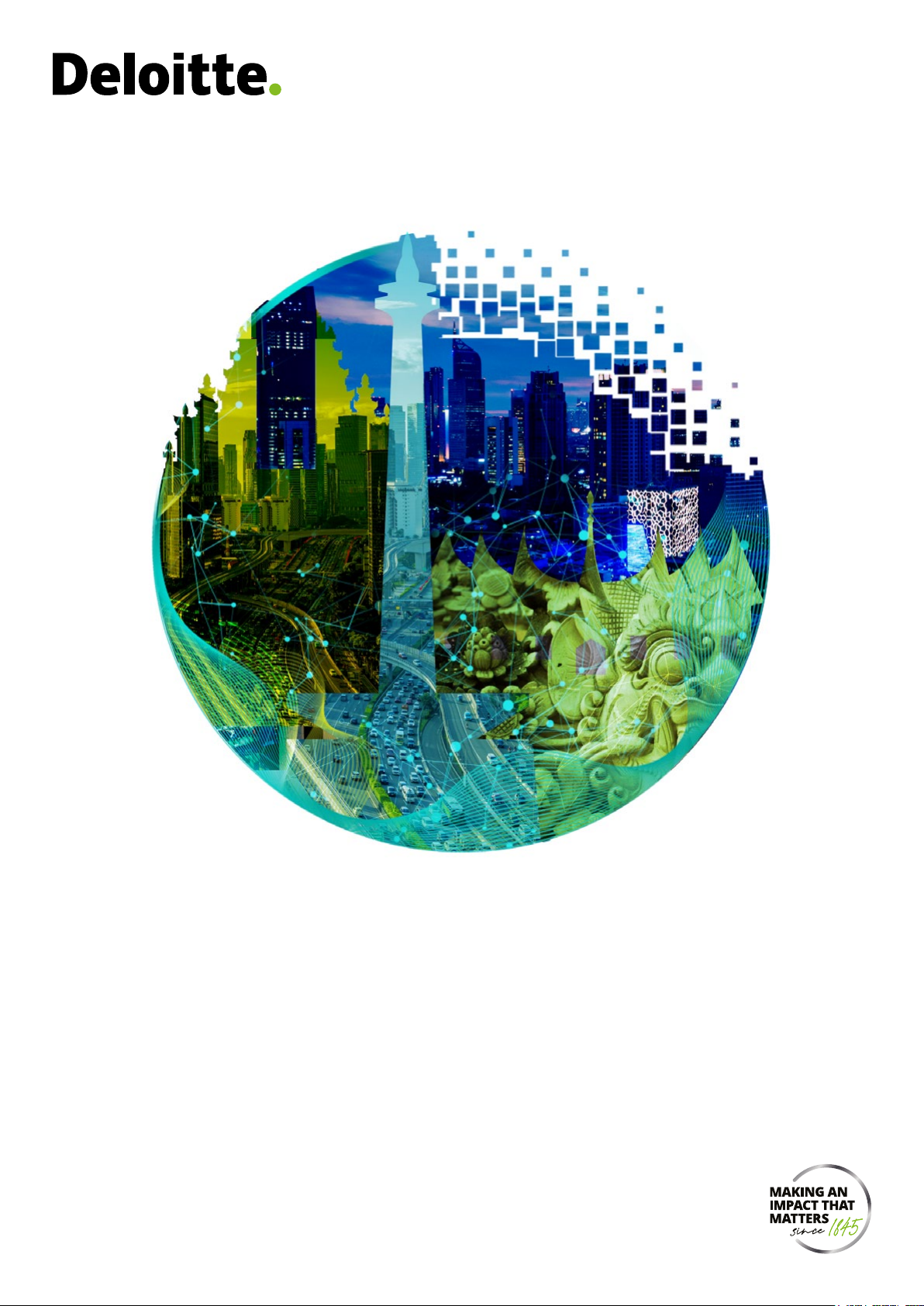
And a special thanks to Stable Diffusion AI,
for generating the cover image of this ebook.
The prompt for this image was:
"Troublemakers Surviving and Thriving
in Turbulent Times."

Here comes trouble - an introduction
Laurence Van Elegem
4
Chronocentrism - don't let your brain fool you
We're not unique
Frederik Anseel
6
6
Battling both the cause and the consequences
Political disruption in a globalized world
How to build useful AI in a complex and uncertain world
Create positivity with impact
Get ready for the rain
"Houston, we have a problem"
Outside in
Laurence Van Elegem
Hans Diels
Geertrui Mieke De Ketelaere
Steven Van Belleghem
Ken Hughes
Rik Vera
8
8
10
11
13
15
16
Build resilience into your culture and governance structures
How to create an ecology that can handle uncertainty and unknowability
The whole, rather than the core
Relational leadership for surviving turbulent & uncertain times
The usefulness of being human or intuition is our killer app
The road ahead
Dreams have no title
Inside out
Peter Hinssen
Dave Snowden
Pascal Coppens
Céline Schillinger
Jennifer Sertl
Aragorn Meulendijks
Julie Vens - De Vos
18
18
19
22
24
25
26
28
Parting Words
Eline Lostrie
31

Troublemakers. I chose that title because of its ambiguity, because I like
words that have more than one meaning and evoke different feelings in
different people.
It was published at a time when tech entrepreneurs were still pretty much
revered like demi-Gods, about a year before our beliefs came crashing
down after the Cambridge Analytica scandal (uncovered in March 2018).
Berlin called these innovators and entrepreneurs troublemakers because
they were willing to challenge the status quo and take risks in pursuit of their
ideas. They were the pirates, while the others were the navy.
If you’ve been working in business
and/or technology like I have, it will
probably make you think of Leslie
Berlin's book “Troublemakers: Silicon
Valley's Coming of Age” which tells the
history from the 7 exceptional men and
women - Silicon Valley pioneers from the
1970s and early 1980s behind the
companies like Apple, Atari, Genentech,
Xerox PARC, ROLM, ASK, Sequoia
Capital and Kleiner Perkins Caufield &
Byers – “who chased innovation, and
ended up changing the world”.
Here comes trouble
- an introduction
Laurence Van Elegem
Content Director at nexxworks
WRITTEN BY
"They were the pirates, while
the others were the navy."
Laurence Van Elegem
Obviously, we cannot blame the technology industry alone for these
troubles that lie at the heart of the turbulence of our current times. Let’s not
forget about geopolitics, the giants of the energy industry or just the short-
term myopia of most local and national governments.
But what I really want to say is that we all participated in “making” the
trouble that fuels our current societal, political, economic and environmental
uncertainty. And that we need new kinds of troublemakers to get us through
this hardship. Those who challenge the status quo of our almost religious
belief in unending growth and evolution, those who connect, who
collaborate, who revisit, rethink and understand the power of humility.
Those who understand that economics are not the foundation of humanity.
And that humanity is not the foundation of the planet, but that it works the
other way around.
And so, I invited some of the troublemakers in the nexxworks network to
offer advice about how they believe that organizations could better navigate
these turbulent times. And boy did they deliver, each in their own unique
voice and with their own vision. Sometimes even disagreeing on some
points, which is exactly how life works and actually makes this whole
document all the richer.
Finding balance
As is the case every year, some patterns emerge in their often very different
stories and this time they are centered around balance. Balance between
extremes, like:

Acceptance and control: do we accept turbulence and uncertainty, or
do we try to control it? Or do we do both, in different situations?
Technology and humans: when is technology good for humans, and
when is it bad? When does it replace us, augment us or degrade us?
Connecting and decoupling: when should we decouple unhealthy
economic dependencies and localize. And when shouldn’t we? Is it
realistic to deglobalize everything?
Leading and following: how can leaders become more humble, more
accepting of all types of diversity, more honest about not knowing the
solution but willing to find out together
Progress and regression: can we still call it progress when it
stimulates the regression of environment and the living situation of other
people?
The whole and the parts: should we examine the parts and refocus, or
should we look at the whole when we’re trying to cope with turbulence?
Inside or outside: in a difficult situation, you have to work from both
fronts: reorganize, restructure, re-culture your organization on the
inside to better cope with sudden and impactful events but you also
always need to mind what’s happening outside of your organization:
how are customers changing, how is the climate changing, how are
supply chains impacted by geopolitics etc. and what can you do adapt to
that.
And it’s that last category that I used as a red thread throughout the book:
some of our e-book troublemakers focused on the changes from the inside
out and others from the outside in. And so, I bundled those together, to
create some coherence in an e-book full of diverging voices and topics.
Only Frederik Anseel got his very own chapter because the humility he asks
from us is the perfect introduction for the rest of the e-book.
Our time is definitely not the most difficult of times. We are not unique in
that way, as we like to believe. (Though I would like to add one exception,
that the disturbance we have created and are still creating in the climate will
be more disrupting than ever if we do not decide to change our ways. We
have known changes in climate (with ice ages for instance), but this is the
first time that we humans have upended the frail balance in that system in
ways that cannot be turned back.) Just imagine living in a city in the Middle
Ages with no sewer systems, no windows, no central heating, no electricity
and very little medical experts with very limited knowledge of the human
body.
So that’s it. Enjoy the e-book and have a great 2023!
And don’t forget to make (good) trouble!
Yours truly,
Laurence

Do we really live in turbulent and uncertain times? At first glance, there
appears to be little doubt: A pandemic, war in Ukraine, rising energy prices,
a US-China decoupling with risk of a Third World War, floods, a burnout
epidemic, migration, extreme drought, inflation, social polarization and
erosion of democracy. But what if our brain is deceiving us into thinking we
are living in the worst of times?
Adam Tooze, a historian at Columbia University claims we are
currently living through a polycrisis. A polycrisis can be described as a
series of shocks that, on the surface, appear independent of each other, but
in reality, are interconnected and closely intertwined. The aggregation of
those crises then becomes more than the sum of its parts. In the polycrisis,
each crisis reinforces, complicates, distorts or hides another crisis.
If we are unlucky, the confluence of crises means the end of the world for all
of us. I try to write that last sentence with as little drama as possible but that
would be the implication. And surely, newspaper headlines don’t hold back
in such apocalyptic predictions: 'What If Everything Goes Wrong At the
Same Time?'
Adherents of the polycrisis stance draw sophisticated diagrams, in
which all causes, problems and consequences are connected by
arrows. Here’s one of Adam Tooze himself.
We're not unique
Chronocentrism – don’t let your brain fool you into thinking
that we live in the worst of times.
Frederik Anseel
Professor of Management UNSW Sydney
WRITTEN BY
Mapping all the feedback loops seems a daunting but important challenge.
Or perhaps it isn’t. Paul Krugman compares the undertaking to business
consultants who throw their typical box-and-arrow model on a slide. By
connecting all the boxes with each other, they adopt an aura of a deep
strategic analysis. But maybe lumping everything together is mere
intellectual laziness and creates an illusion of knowledge rather than a
genuine appreciation of the problems we are confronted with.
In any case, the term polycrisis creates the impression that we live in unique
times. Veteran White House economist Larry Summers refers to this one-of-
a-kind feel of polycrisis in a recent interview with the Financial Times: "I
remember previous moments with equally serious consequences for the
global economy, but I can't remember a time when so many different
aspects came together at the same time as now.'
And thus, assumes our brain, unique times require unique measures. When
our brain feels threatened by apocalyptic forecasts and raging uncertainty,
we call for radical policy changes, tabula rasa interventions and strong hero-
type leaders that come with enticing stories of new beginnings or back-to-
the past policies ‘making things great again’. People become nostalgic for a
time that never was. Things were never great in the first place.

Suppose you were there when the Bastille was stormed, could you have
appreciated its historical value? I certainly wouldn’t have. It is often only ten,
fifty or a hundred years later that we can form an idea of the impact of such
an event. Is the current energy crisis historic? The war in Ukraine? I don't
know. The German philosopher Georg Hegel famously wrote that the owl of
Minerva spreads its wings only with the falling of dusk. Insight into an era
only comes when that era comes to an end.
Don’t let your brain fool you. It is unproductive to label every problem as
a historic crisis or to think that this is the first time in history that every crisis
is connected to another crisis. Previous generations of historical
doomsayers have been proven wrong. The risk of believing this polycrisis
narrative is that we think corresponding gigantic human interventions are
needed to solve all the problems at once. But calls for radical interventions
have seldomly brought us in a better place (and more often, have
undermined humanity). If we look at history, we see time and time again
that problems get solved by gradual progress.
And such progress is – annoyingly – often the result of improvisation,
bricolage, slow democratic decision making and incremental innovation, not
big bang scale interventions.
"Insight into an era only comes when
that era comes to an end"
Frederik Anseel
Don’t let your brain fool you. The human brain is in such need of feeling
self-important that it constantly convinces itself that it is experiencing
something unique. Every generation thinks it lives in an unprecedented time
when history takes a turn and “extraordinary” events are changing the
course of humanity. It’s quite incredible that this is all happening exactly
during the - give or take 90 - years that we are alive on this planet. What a
coincidence, right? If only it were true. This mistaken and pervasive human
bias is called chronocentrism. Chronocentrism is the assumption that the
present is a culmination point in history and is more significant than any
other time period in history, either past or future. If someone ever
compellingly captured the chronocentrism idea in a catchy book title, look
no further than Francis Fukuyama and his “The end of history”.
It is unproductive to label every problem a historic crisis. We, humans, are
simply very bad at recognizing historical moments and turning points in
history. Don’t ever fall for someone claiming that someone will find
themselves on the wrong side of history. There is empirical research that
shows how our brains are deceiving us. An ingenious study from a few
years ago, 'Predicting History', studied two million cables (messages) from
diplomats. Diplomats are expected to analyze and assess geopolitical and
big societal events in their messages to the home front. Analyses of those
two million messages show that even experienced diplomats grossly
overestimate the importance of some events and, conversely, have
completely missed revolutions that later turned out to be historical.
Storming of the Bastille
by French artist Jean-Pierre Houël
We're going on the "Art of Talent Tour" to Copenhagen
with Frederik Anseel in June of 2023.
Find out how you build a strong company culture
that helps to find and retain talent.

In a highly globalized world, leaders need an outside in lens to better
understand and navigate a company in turbulent times. They need to be
aware of the societal, geopolitical, environmental and economic changes
around them. It’s about having empathy for customers or trying to
understand the ethical consequences of technology with a multidisciplinary
approach, (economic) relations with other nations and what rules need to be
set for companies to have a better impact on their context. It's about
everything to do with the trouble on the outside world that organizations can
avoid (and vice versa).
Battling both the cause and the consequences
The impact of unpredictable events on companies: this can indeed
be met with agility, flexibility, anti-fragility or however you wish to call it.
When it comes to the theme of this e-book - how to deal with turbulence,
volatility and uncertainty - I suspect that a lot of people will be thinking in
terms of response. When you cannot predict what will happen next, what
should you do? Well, you need structures, processes, the type of leadership
and organizational forms that will allow you to respond intelligently,
efficiently and quickly to sudden disruptions of all kinds. And that’s great.
And smart.
But uncertainty needs to be approached from 2 angles, not just this one:
Outside in The causes of the unpredictable events: the recent droughts, floods,
pandemic did not originate in a void. They were - and keep being -
caused by commercial and political decisions made by mankind.
Sometimes directly. Sometimes indirectly. And this is something we
have to tackle just as much, if not more, than the first point.
Laurence Van Elegem
Content Director at nexxworks
WRITTEN BY
But let’s take a slight detour first. American
geographer, historian, ornithologist, and popular
science author Jared Diamond is a true
polymath, drawing from a variety of fields,
including anthropology, ecology, geography,
and evolutionary biology. He has written many
bestsellers, among which “Collapse: How
Societies Choose to Fail or Succeed” (2005).
In that book, he offers a 5-point framework with
common threads for why societies - like the
Maya, the Anasazi or the indigenous people of
Rapa Nui (Easter Island) – collapsed:
Environmental problems: like mine waste, nuclear waste,
deforestation, soil degradation, evasive species, etc.
Climate change: temperature going up or down, as was the case in the
ice ages or now with global warming.
Hostile neighbours: hostile relationships that affect oil supplies, gas
supplies, cause terrorist attacks or even war etc.
Collapse of essential trading partners: when friendly regions or
nations stop supporting others which has a severe impact on trading.
The response to the foregoing four factors: the political, economic,
social and cultural factors in a society that will make it more or less likely
that a society will perceive and solve its problems: long held values or
even devotion to mining, agriculture, capitalism, regulations etc.

I’m sure that all of the points above will sound familiar. The environmental
and climate problems are pretty self-explanatory. Except maybe for the fact
that this may very well be the first time that mankind has caused (rather
than undergo) such severe climate change problems. It’s not the first time,
of course, if you remember how the elimination of nearly 55 million of
Indigenous people (90 %) in the Americas during European colonization led
to global climate change and the “Little Ice Age” of the 17th century. But
it still is probably the most radical man-made climate change.
There is a conflict between the short-term interest of the decision-
making elites and the long-term interest of the society as a whole,
especially if the elite can insulate themselves from the consequences of
their actions.
Some the most important factors that obstruct companies from acting on the
above-described problems are these, also described by Diamond:
We don’t have to look far for “hostile neighbors”, either, with Russia, its war
with the Ukraine and its natural gas coercion being the most obvious one.
And the “collapse of essential trading partners”, probably has you thinking
about our chilling relations with China, where a lot of the raw materials
needed for computers, smartphones and EVs come from. As to point nr. 5 -
current society’s response to climate change, severe environmental
problems, hostile relations and cooling of friendly relations - it has been
disappointing at best. Just think about the results of the latest COP: an
intention of compensating the developing world for impacts like droughts
and flooding through a "loss and damage fund" (no concrete decisions, no
numbers, only a “we will one day do this”) and a severe lack of progress in
cutting fossil fuels.
Not wanting to alarm you (well, maybe a bit), but all the signs above are
pointing towards a societal collapse. And so, rather than only preparing
companies to better react to the consequences of climate change, growing
geopolitical instability and environmental problems, we need to try to find
and solve the root causes of all these problems. And with “we”, I do not just
mean governments. Companies have just as big of a role to play here.
Source:
Little Ice Age on Wikipedia
"We need to try to find and solve the root
causes of all these problems"
Laurence Van Elegem
Source: 5-point framework

It’s not just the richest people that can shield themselves (they can pay
for insulation, air conditioning, solar panels etc.) but the richest countries
as well (hence the "loss and damage fund"). Although the most powerful
companies like Amazon and Meta are starting to suffer too (with many
layoffs and cost cutting). Or older companies like German chemicals
major BASF because of a drying up Rhine. So, this might be the burning
platform that companies need.
It is very hard to make good decisions when there is a conflict
involving strongly held values that are good in many
circumstances but poor in others. I think our almost religious belief in
the power of technology – like climate tech – to solve our current
problems is a very important value that is blocking us. Tech can help,
but (certainly for now) it is not the be-all and end-all.
It is we, humans, who have created our current turbulence and uncertainty.
And rather than just learning to deal with the consequences of uncertain
and turbulent events, we need to make decisions that will keep them from
happening.
Political disruption in a globalized world
When New York Times columnist Thomas Friedman wrote in 2005 that “The
World is Flat, After All” he perfectly described the prevailing feeling of the
global business and political elite. It seemed as if political boundaries didn’t
matter anymore. Depending on where production was cheapest, companies
could spread their supply chains around the globe. It was believed that
economic logic prevailed after years of geopolitical tension during the Cold
War. Technological advances in transport and telecommunications made
globalization technically possible, but political openness made it a reality.
There seemed to be no turning back from globalization. Economic
globalization was widely believed to lead to political liberalization, and
economic links between countries would make geopolitical conflict too
costly to occur.
However, this illusion of political convergence began to crack a few years
after Friedman's book was published. In 2008 Russia invaded Georgia, and
in 2014 it did the same in Ukraine. China has become much more assertive
in setting out its claims to the South China Sea. During the nineties, when
China was quietly growing, and Russia was licking its wounds after losing
the Cold War, geopolitical tensions might have been dormant. However,
neither Russia, flush with money from oil and gas exports, nor China, rising
in power, plan to play second fiddle to a US-led global order forever.
There will be a continuation of this trend of renewed geopolitical
tensions for the foreseeable future. Rather than a brand-new era, the
'happy 90s' with its geopolitical rest now seem more like a temporary
anomaly.
Hans Diels
Futurist & Geopolitical Expert at Etion
WRITTEN BY
Source: NYTimes

There is a peculiarity to the current international system in that extensive
global networks connect states that have geopolitical conflicts with each
other. Two of the biggest geopolitical competitors, the US and China, have
very intertwined supply chains. So has the rest of the world. That's why
we're entering an era of political disruption. When states are in a political
fight with another state, they will take advantage of the connections
between them to punish the other state. As the 21st century progresses,
geopolitical conflict will be fought by sanctions, manipulation of resource
flows and supply chains, and financing. Global businesses will be both
weapons and victims on the battlefield.
How to build useful AI in a complex and
uncertain world
There is a lot of talk about deglobalization and a decoupling between the
US and China. We would return to a Cold War-like environment if we
disconnected their economies, where economic ties and geopolitical
tensions could no longer coexist. The next decades will not see such a
clear-cut world with separate geo-economic spheres. Instead, we will
operate in a world of messy political disruption. The reason for this is that
decoupling is an expensive and complicated process. Decoupling would be
prohibitively expensive for most supply chains. As well, the unraveling of
global supply chains will take decades when decoupling occurs, such as in
high-tech sectors crucial to national security.
In the near term, globalized businesses will be disrupted by a lot of
political unrest. And in our world, almost any business is globalized in
some way.
"The next decades will not see such a clear-cut world
with separate geo-economic spheres. Instead, we will
operate in a world of messy political disruption."
Hans Diels
Over the past decade, AI technology has truly progressed by leaps and
bounds and has become an important part of our daily lives in a knowledge-
based economy.
On the one hand, the scientific insights provided by AI continue to grow
enormously, and at an accelerated pace. But on the other hand, we are
confronted with an increased number of unanswered challenges and
misunderstandings: privacy concerns, ethical risks, inefficient energy
consumption within our current AI solutions, etc.
What causes this tension? Is it the result of a Babylonian confusion of
tongues, a deep misunderstanding between conversation partners who are
simply too different in nature? A confusion, which causes people to work on
AI solutions, side by side, but in parallel silos. Or is there more to it?
Let’s go back in time for a bit. According to biblical mythology, the people of
Babylon were building a tower in order to reach the heavens, just like God.
But he punished their pride with a great confusion of tongues so that they
no longer understood each other and were no longer able to collaborate.
The deep tech industry today bears a similar pride. They may not want to
reach heaven, but they dream of achieving Artificial General Intelligence
(AGI). AGI is the hypothetical intelligence of a machine that can understand
or learn any human intellectual task. It is a primary goal of AI research and
a common topic in science fiction and futures studies. In that way,
technology replaced religion and the engineer God.
Geertrui Mieke De Ketelaere
Adj. Professor Vlerick & Strategic Advisor AI Imec (IDLab)
WRITTEN BY

But after centuries of technological advances and the almost exponential
increase in computing resources, data, knowledge and capabilities, we still
haven't achieved our vision of AGI. In fact, we're not even close. We
have devices that we can talk to that don't really understand what we're
saying. Machines can detect images, but don't really understand what they
are. And we have fantastic machines that can beat world champions at
specialized games, but aren’t even able to answer some banal questions?
In Babel they may have had a plan for what the tower should look like, but
we don't actually agree about what that AGI should look like. We do not
have a plan to achieve that dream.
That's why it's important to understand that AI is no longer just a
technology today. It’s a lot like the Space Race, in fact. That was not a
technology either. Indeed, many great technological developments originate
from our quest to conquer space, but the true goal was putting humans in
space. The developments triggered by the search for that purpose have
been able to help society. What comes out of the race is all of these
separate technologies that - all of them together as a whole - achieve that
goal together.
Creating intelligent machines is the goal of AI. And at the same time, it is
the underlying science behind understanding what it takes to make a
machine intelligent. AI represents our desired outcome. And many of the
developments towards that concept, such as self-driving vehicles, image
recognition technology or natural language processing and generation, are
separate steps towards AGI. That is already where part of the confusion (of
tongues) lies.
The current mismatch between what developers or researchers create,
what customers buy, and what governments want, has increased due to the
hidden nature of the technology and the current siloed development. If we
consider AI more from a perspective of a dream or a higher goal in our
interdisciplinary discussions, this is the question we need to ask ourselves:
which transformation and which actions are needed to build transparent and
secure AI solutions in a world where AI is becoming more complex and
emerging in more and more domains.
Could the hubris of a few tech companies in that area cause a societal rift?
Is it the cause of the current tension around the theme?
Not a technology, but a purpose
We tend to think of AI as a technology, rather than a journey to a higher
end. But perhaps we should take a different approach. All the technologies
we've developed along the way in our quest are useful in their own right, of
course, but - adding them all together - we haven't reached our ultimate
goal yet. If AI is considered a collection of technologies, then you can spend
all day arguing about what AI is, and what isn't. Are software robots AI? Are
self-driving cars AI? Is computer vision AI? Is character recognition AI? If
you think of it as technology, it will always be subject to disagreement and
interpretation. However, if you think of it as a purpose or even a quest, then
it will be something we're always striving for, even if we're not quite there
yet.
"We do not have a plan to
achieve that dream"
Geertrui M. De Ketelaere
Join Geertrui Mieke De Ketelaere on the "AI Tour"
to London in April of 2023
The next wave of Artificial Intelligence is coming fast.
Let's learn what it has in store for your industry.

A collaborative and multi-disciplinary setup
Today, there are a number of players worldwide who act on the principle of
technocracy, placing all ethical decisions in the hands of engineers. Others
hold a separatist view: they claim that technology is not neutral, so that any
mistakes of the systems they develop cannot be their own responsibility.
Still others opt for the “AI for Good” method. Just think of the use of AI in the
search for new medicines, which tends to be the flagship example of that
approach. However, research is not immune to abuse either. Researchers
recently showed that AI models designed for therapeutic use can be easily
reused to generate biochemical weapons.
I believe the only right way forward is a collaborative and multi-disciplinary
setup during the design phase of our future AI systems. We need to look -
together - for the benefits of machines that can think and act like humans.
We need to ask ourselves which opportunities AI offers to dramatically
increase efficiency, reduce costs, increase customer satisfaction, improve
existing products and services, and create new business opportunities.
Because ultimately, an organization is not about its technology. It’s about a
general mission and objective. Just like those organizations, AI is not
defined by technology, but by the overall purpose.
It is clear that the design phase of
these future AI solutions will look
different in our knowledge
economy. The Quintuple Helix
innovation model could prove to
be extremely useful here.
The Quintuple Helix model
strengthens the multidisciplinary
collaboration between the 5 main
AI stakeholders: research teams,
companies, governments, citizens
and ... our planet.
This integrated approach focuses on the necessary transition needed to
address potential privacy concerns, ethical risks and obscure obligations as
well as the inefficient energy consumption within our current AI solutions.
Human-AI translators
However, the historical challenge in this setup is that all 5 parties involved
speak a different language, hugely increasing the possibility of a Babylonian
confusion of tongues. Research speaks in formulas, business speaks in
KPIs, citizens speak the language of their human rights, the government
speaks the jargon of rules and our planet speaks about carbon dioxide
removal and material consumption.
So we need human-AI translators to demystify the current confusion. They
are first and foremost generalists, with enough knowledge of each domain.
On top of that, they must use their empathic and social skills to conduct the
multi-disciplinary debate between all parties involved to ensure that our AI
systems are fully are in line with the sustainable development goals. And
they need to do that at the start of the project, in the design phase. As we
are building our new and powerful AI “towers”, it is these AI translators who
will ensure the stability of their construction.
Create positivity with impact
Steven Van Belleghem
Customer Experience Expert, co-founder nexxworks
WRITTEN BY
When it’s clouded, people long for a blue sky and a bright sun. That goes
for your customers too. Yes, companies are facing hard times, but it is not
up to your customers to care and forgive you for any suboptimal CX
experience.

To be blunt, it is certainly not their problem that you had to cut costs
because your energy bill is 5 times as high as last year’s. Their energy bill is
5 times as high too. You are not unique in that matter. In fact, I really
believe that it is up to you to help them feel better. That will be a Big
differentiator in these coming months and years, as long as this economic
downturn lasts: CX that puts a smile on people’s faces and makes them feel
good. CX that has a true emotional impact.
And I think that what I call the “Top Gun effect” falls beautifully in that last
category: creating a no nonsense, simple but really enjoyable and pure
100% feel good experience for customers. Now more than ever, having all
experienced pretty challenging times since the pandemic, people are really
craving this type of positiveness. Apart from other obvious strategic reasons
(like diversifying and membership models), this possibility to offer feel good
and fun to customers is probably why we see an increased number of
serious or commodity companies like Walmart, AT&T, T-Mobile or Verizon
experimenting with streaming services, for instance.
It’s about creating the perfect conditions to empower your customers. And
about being fully transparent and open about that. That is how you build a
long term and positive relationship with customers.
A perfect example of this empowerment is Everytable, which wants “to
make sure that every American citizen has access to a healthy meal at a
low cost.” In the US, lower income neighborhoods are usually teeming with
really cheap but unhealthy fast-food places and Everytable wants to offer a
healthy and just as affordable alternative to that: the price of their lunch
meal is always lower than the price of a Big Mac menu. And I think that
that’s brilliant: they are empowering customers to become healthier by
making that affordable, instead of investing all of their budget in marketing
to manipulate them.
Visiting Everytable during
the LA CX Tour in 2022.
"But it’s not just about making your customers feel
good, they want brands to empower them to do
what they want when they want it."
Steven Van Belleghem
But it’s not just about making your customers feel good, the days that
manipulation of customers was acceptable are coming to an end as well.
People are increasingly aware of how they are being nudged and pushed in
certain directions that may not exactly be in their best interest. And they
don’t like it. More and more, they expect brands to trust them to make their
own decisions. They want brands to empower them to do what they want
when they want it, not tell them what to do. We'll be revisiting Everytable on the "CX More than Ever
Tour" back to Los Angeles with Steven Van Belleghem.
How can you create a winning CX in uncertain times?

But it is not enough and will certainly not carry you through the storms that
are coming.
The added value of yesterday becomes the expected hygiene-factor of
tomorrow. All those CX attributes are no longer exciting or impactful for the
average customer. In a world where I can track something as simple as a
take-away pizza delivery on an app, see its every stage from order, prep,
dispatch and track the delivery driver in real time, customer expectations
have ratcheted up for more complex brand interactions.
Which brings us back to the expectations for 2023. Cost of living crises,
inflation, recession, war, political instability, and growing climate issues are
just some of the forces pressing down on societies as we enter 2023.
Customers are yearning safety, security and belonging, core human need
states as Maslow taught us.
You need to see the opportunity here. In whatever product or service you
sell, whether B2B or B2C, your target audience seeks security. They seek a
brand partner that has their back, which inspires them, that delights them,
that puts back some joy and laughter into their lives.
You can put the head down and ‘get through’ the rain, drive carefully and
steadily and come out the other side (safely and in 8th place) or you can
see the opportunity that adversity always presents and emerge in pole
position. The companies that are building a culture of agility, thriving on
adversity are going to win this race.
Try something different. Engage emotionally. Engage with humor.
Challenge the existing T&Cs you offer and be more empathetic. Leverage
CX to overtake your competitors.
Get ready for the rain
Ken Hughes
CX strategist and international keynote speaker
WRITTEN BY
The famous F1 driver Ayrton Senna had a beautiful quote about adversity.
"You cannot overtake 15 cars in sunny weather... but you can when it's
raining”. Turbulent times bring as much opportunity as they do challenge,
and it is up to each of us to choose which we want to see.
Yes, 2023 brings customer experience challenges. Customers will want
more for less, they will be more stressed in their everyday lives and
therefore less tolerant of any friction along a customer journey. But times of
adversity also present us with an emotive space for customer lifetime value
bonds to be formed.
Since the pandemic (and a little before) I have become obsessed with
‘connection’. How, as humans, we connect with one another, with meaning,
with depth, with empathy and emotion to the point of that connection
surviving any short-term stress. Most brand connections are transactional in
nature, and even CX connections are simply another ‘point’ along a
customer journey. We need to do better.
What if we viewed every CX interaction as a moment of pure potential, a
moment where we could make a difference in a customer’s life, a moment
we could excite or delight, a moment we could make them feel seen, heard
and most importantly, valued?
For the past 10 years, as the Digital Transformation journey most
businesses set out upon became the corporate hot topic, Digital
Convenience was mistaken for being what CX was all about. Delivering on
Instant, Easy, Frictionless, Personal. These were paramount for most
brands and are still the pillars of many CX mantras.
"The rain is coming, make sure you have
swapped out your tires."
Ken Hughes

It would create a better society. I am afraid it has only resulted in a ruthless
mobocracy that brings out the most primitive human instincts like greed,
selfishness, lust and aggression. Nobody seems to be able to turn the tide
as there is no center of command anymore. We can’t call Houston. It’s
gone. In 2022 we realize that because of this distributed philosophy we
don't trust anything that looks like the one-to-many center of authority
anymore: governments, mainstream media, science… No wonder that the
tribes that live in the digital echo chambers have created their own Angry
Gods, something to blame for all that evil stuff they can't explain. They have
become like those schoolboys in William Golding's novel: stranded on an
island after a plane crash has killed all adults and revering the Lord of The
Flies of their own creation. The ancient Greek philosophers warned us that
mobocracy would be the end of civilization. Is the internet going to be our
last invention after all?
It is not the internet that we have to blame, but it is what the Tech
Nerds have been doing with it. We admired them like they were
superheroes and we funded them with the money that we took from the old-
world business models, and it was being used to actually disrupt those
businesses. The power of the web made the Nerds look like they had
superpowers: they could build stuff we had never even dreamt of, and they
had discovered the magic of endless exponential growth. We all loved to
believe there was a huge pot of gold at the end of their rainbow. So, we
worshipped them as the Good Gods of Tech that would create Heaven.
The Nerds had this magical toolkit that only they could understand and use.
And out there were old business models that hadn't changed for decades
and were extremely vulnerable and had never paid attention to those Nerds.
Nerds weren’t supposed to hold the key to The Kingdom, but all of a sudden
they did. The internet could make everything so much Faster, Easier, more
Accessible, Simpler and Tempting and at the same time so much cheaper
that they had no reason to create new business models. It was way easier
to disrupt existing ones. As a result, they started the wrong way. Their 'why'
was nothing else but disruption, nicely packaged as a contribution to a
better world. We were too blinded by greed to see that disrupting society
was an inevitable side effect of their disruption of business models.
"Houston, we have a problem"
Rik Vera
International keynote speaker and author
WRITTEN BY
“At some point, everything’s going to go south on you. You’re going to say,
‘This is it. This is how I end.’ Now you can either accept that, or you can get
to work. You solve one problem, and then you solve the next problem, and
the next, and if you solve enough problems, you get to go home.” Mark
Watney, Space Pirate, in ‘The Martian’
What about 2023? My short version is this: almost everything is going to
stay the same and what is going to change is not to be predicted unless we
act upon it and make those changes ourselves. If not, we are going to get
more of the same, only worse. And there is a lot we need to change for the
better.
Let me start by looking back at the first 22 years of this century. Not in
anger, but in disappointment. The Era of Digitization - floating on the All-
Mighty www and driven by the Tech Nerds - promised us heaven but gave
us a dangerously unbalanced world. I am perfectly serious when I suggest
that something very evil is growing beneath the surface that will reveal itself
any minute. It is the Upside Down in Stranger Things, a parallel world that is
hostile in a dehumanizing way, cold and feeds on people.
We finally live in the distributed world that was promised by the people that
"invented" the web. It would bring equality, fairness and balance.
Source: 20th Century Studios

Another side effect is that the Tech Nerds have stolen our dreams. As
a kid, I spent a million hours reading books about the Magical Year 2000.
Self-driving cars, flying taxi's, robots, colonies on Mars … The year 2000
was nothing like that, but the Tech Nerds promised that all of this and so
much more would happen before 2020. The Good Gods of Tech promised
us True Heaven and we gave them our money and the keys to the
Kingdom. Twenty years later none of these is even close to being realized.
We still see no pot of gold and the rainbow seems to be fake as well. What
we see is a society that is polarized, chaotic and unbalanced and is running
in all directions. We have all stopped believing in the Gods of Tech, we
have stopped dreaming and we have stopped funding those wild dreams. It
was money down the drain. No value was created, a lot of value was being
destroyed and one cannot calculate the gigantic cost of the side effects. The
Tech bubble will be deflating slowly in 2023 like an ugly wrinkled 7 weeks
old balloon.
We are like that scene from of the 1940 Disney cartoon 'Fantasia', in which
The Sorcerer's Apprentice, Mickey Mouse, is tired of carrying buckets of
water and uses magic to bring a broomstick to life, but when the apprentice
falls asleep and dreams about all the exciting magic he has in his power
now he wakes up in a world that has turned into pure chaos, out of control.
Humans got access to Godlike powers and humans have lost control.
Houston, yes indeed, we have a serious problem: the problem is that
there is no Houston to come up with the solution anymore. Or maybe we
have to look at it this way: Houston is all of us.
And we will need the Nerds to help us out. Let’s face it, we can’t really
blame them. We would have done the same and we shouldn’t have given
them the keys to the Kingdom. The Nerds are the wizards of our times.
They can turn metal into gold. They have not only caused a lot of collateral
damage, but they have also created amazing stuff. Look at how they turned
the whole wide world into one point where we no longer need to travel to
meet, work and play and have everybody and everything at our fingertips,
and just need to communicate. Look at how they have given our world an
extra dimension at the same time, so we can escape all things linear and
move into the power of the hyperconnected 3 dimensional networks we call
ecosystems. The Tech Nerds have given us these Godlike forces and now it
is up to us to define what we actually want to create with it. Before we leave
the gigantic power of big data, AI, blockchain, all things crypto, NFT’s, web3
and The Metaverse in the hands of the Nerds once again, that are just
going to play with it like it was their new toy. Let them play but let us define
the playground and do good for people and planet.
So, when do we start? Let’s start at the first day of 2023, which is the
official 40th birthday of the internet. Where do we start? With ourselves.
Charles Darwin was wrong. Humans don’t just survive because they adapt
to the environment, humans adapt their environment in order to survive.
"We can't go back and change the beginning,
but we can start where we are and change
the ending."
Rik Vera
Source: Disney

The “outside in” dynamic is not the only one, of course. Companies also
need to rethink the inside of their organization in order to better thrive in
uncertain and difficult times: changing their mindset, their goals, the models
they use, their impact on the world, how they lead, how they relate to
others, how they are structured and how they deploy (disruptive)
technology. And these are the troublemakers who wrote about that aspect:
Build resilience into your culture and
governance structures
To absorb the energy of the Never Normal, and use that to your advantage
in an increasingly fluid and volatile world.
Large organizations typically demonstrate remarkable robustness. They can
take quite a big beating before they crumble or fall. But they typically do
NOT demonstrate exceptional resilience. That, in my opinion, will be the
biggest re-learning companies will have to master.
Resilience is typically something that one associates with culture. True, a
significant element of resilience will lie in the capability of individuals to rise
to the occasion, showcase agility and flexibility, and demonstrate a mindset
that will foster and develop that resilience. Absolutely.
But that resilience should not just be reflected in the cultural aspects of
organizations. For years I have been an advocate of building resilience and
balance into the governance structures and mechanisms of organizations.
The larger companies become, the more they tend to build guard-rails
and mechanisms of 'control'. In many markets, certainly regulated
markets like healthcare and finance, those are crucial, and companies must
develop these control mechanisms to ensure that the company acts in the
right, proper and legal manner. But a significant part of these large
organizations then becomes dominated by control structures, and therefore
loses a consequential capacity for innovation. Dangerous in general, lethal
in volatile times.
In the past I was so naive to propose a 'disruption committee' as a
counterbalance to the typical 'risk committee' found in many boards of large
One of the most extraordinary, and gut wrenching stories I heard this year
came from a journalist from the New York Times. He described a scene in a
Ukrainian hospital, where the entire power of the facility was blown out
because of the Russian precision bombing of the electricity infrastructure
A surgeon who was at that time performing an open heart surgery on a
young child, was able to continue working on the patient, with 6 assistants
lighting the operating table with flashlights. The patient lived, and for me this
was one of the truly heroic stories of robustness. How individuals, but also
organizations can continue to work under extreme pressure, extra-ordinary
circumstances, in a world that seems to have gone completely bonkers.
Many companies have shown extreme robustness during the pandemic,
and even more so in the Never Normal aftermath that followed. But
Robustness is not enough. Now, more than ever, organizations will have to
show maximum Resilience: the ability to absorb, to bounce back or rather
take the energy of the obstacle and 'bounce forward'.
Inside Out
Peter Hinssen
Innovation keynote speaker, author and founder of nexxworks
WRITTEN BY
"Absorb the energy of the Never Normal,
and use that to your advantage."
Peter Hinssen

(publicly traded) organizations. Having served for two years on the board of
a European commercial bank, I now understand that this was probably a
bridge too far. But that bank has developed a new 'technology & innovation
committee', where not only non-financial risk is discussed, but primarily the
innovation opportunities that lie ahead, the cost and consequences of NOT
innovating, and the true possible rewards of the Day After Tomorrow.
2023 will be a challenging year, in many regions of the world, and
Robustness will prove to be an absolute must here, but it will certainly not
be enough. The key differentiator will be Resilience, and I think it is
imperative that companies go beyond its cultural dimension, and also truly
embed it into their governance structures. That is what will separate the
Phoenixes from the Dinosaurs.
Read more about The Day After Tomorrow.
How to create an ecology that can handle
uncertainty and unknowability
Many years ago, in a conversation with Charles Handy, expert in
organizational behavior and management in Dublin, the subject of Johari
windows (or four rooms in his language) came up. I took a position then that
I was very dubious about shifting psychological techniques for individuals to
the organization. I also added that anything based on Jung was, in a
modern age, to be treated with deep suspicion. I’ve been beating that
particular drum ever since with increasing acceptance, but that is for
another day. The discussion was stimulating and I started to play with two
matrices relating to known and unknown, from the perspective of the nature
of the system itself, and the nature of the decision maker’s perception or
knowledge. All of this was a long time before I started to pick up on
complexity theory. But I was heavily involved in knowledge management,
data warehousing, decision support and other fields where I was drawing
more and more on my Philosophy degree, to my surprise and delight.
The net result of that - following a year of playing around with versions of
the frame with clients and in articles - was a couple of overlapping two by
twos which contrasted ontology (Using the word as ‘the nature of the
system’ from Philosophy rather than the use in Information Science) and
epistemology (the decision makers knowledge or possibly perception of the
system). I also added unknowable to known and unknown, and in respect of
perception that ended up as unimaginable. All of that was a forerunner of
the Cynefin framework which also picked up on Boisot’s I Space and
Juarrero, Cilliers and Axelrod’s early work on complexity. The language
spilled over into the HBR article on Cynefin and many a presentation, but I
did neglect the original. I’ve recently started to update it, and this brief article
is a small part of that incomplete journey.
Prof. Dave Snowden
Director Cynefin Centre
WRITTEN BY
Join Peter Hinssen on the "Youth Tour" to London
with your child(ren).
Is the next generation ready to create better futures?

Red, well that means danger and you need to evade or embrace
rather than passively accept or ignore the consequences.
So now we can start to look at the framework and what guidance it gives us.
To be clear this is a typology, a multi-perspective framing rather than a rigid
taxonomy. Few situations will be in one box and you may also be moving
between the boxes, sometimes with awareness, maybe even with intent.
Also, I’m speculating about its use with the various tools and techniques I
have developed over the years, hopefully others will populate it with their
own material.
The left-hand column needs little explanation in terms of what needs to be
done, but it may be less obvious that when you move to the right such
practices are to be deprecated. They can too easily create a false level of
certainty and may well blind you to weak signals indicated a possible
unexpected shift. Companies and organizations, as Clayton Christianson
points out, don’t fail due to incompetence, but rather because they were too
competent and dominant in an older paradigm or set of practices. As a
result of which they don’t see the pending signs of doom, Kodak after all
invented digital photography but ignored it for too long and there are many
other examples.
The main danger in the shift to the right are the unknown knowns -where an
organization has knowledge and capability but that is not known by, or is
ignored by senior management. That is an area where our practice includes
identifying outliers, or what we call finding the 17%; a reference to the
experiments where - asked to identify anomalies in a batch of X Rays - 83%
of experienced radiologists fail to spot a picture of a gorilla on the final X-RY
which was 48 times the size of a cancer nodule. By presenting the whole of
a situation to the workforce and getting them to interpret it in real time, we
can show both dominant, and critically minority perspectives before decision
makers engage in the content. Humans are good at responding to
anomalies when they are brought to our attention, but poor at spotting them
and even less capable of accepting something if it contradicts received
wisdom. This is the MassSense capability described in the Field Guide.
Blue is business as usual, anything there should be a part and parcel
of strategic and operational management.
Green represents domains where strategic and highly
consequential decision making is the order of the day.
Given the overall theme of this book I am focusing not on desirable
behavioral characteristics or expert analysis of a particular situation. Instead
I am trying to focus on how you create an ecology that can handle
uncertainty and unknowability. As such this relies on, and expands the EU
Field Guide to managing in Complexity (and Crisis) which will flesh out
some of the terms and concepts, as will our open source Wiki which is a
fertile source of methods, tools, concepts and practices all based on the
principles of naturalizing sense-making, The color coding is relatively simple

Stimulate and monitor the formation of informal networks between
silos of all types, not just functional but also age and other diversity.
Entangling people in small groups of three around small current issues
is one established way to do this and can ensure that everyone is within
three degrees of separation of everyone else in less than a year.
Knowledge flows faster in informal networks and trust is a natural
feature of them, it doesn’t have to be manufactured. That method is
called Entangled Trios and is well documented and easy to adopt. As a
metaphor think about the dependency on entangled mushroom roots for
a healthy soil - without them there is inadequate nutrition for the more
visible trees.Without healthy informal networks the organization,
whatever its formal design, will not work well and you can’t just leave it
to accident without a high risk of perversion.
Use your workforce - and anyone else you can get - as a human
sensor network with real time feedback loops. Situational
assessment, mass micro-scenario creation all reveal patterns and make
people aware of differences and opportunities.
Most of time, while we might be able to image a future catastrophic event,
our ability to pay attention to it or prepare for it is a different matter; in the
main because there are so many things that can be imagined we simply
can’t possibly plan for all of them. Covid is a good example of this which is
not to say we could not have done a lot better in the early days. Given this
reality we need to focus on building a fast responsive capability without the
ability to specify exactly what threats or opportunities we will face in
advance. To do that effectively involves three elements, more fully descried
in the Field Guide.
"While we might be able to image a future
catastrophic event, our ability to pay attention
to it or prepare for it is a different matter."
Dave Snowden
In a crisis we don’t have time to invent things from scratch, instead we
have to radically repurpose things we are already good at for novel
purposes. We do that naturally, but it is often dependent on luck and
getting agreement can be difficult. This has much precedent - IBM
repurposed their decade old knowledge of punch card machines to give
them early dominance of computer programming, microwave ovens are
the result of placing a metal box around the magneto of a radar machine
and so on. In biology the process is called exaptation, the process by
which a trait which evolves for one function, under conditions of stress
exacts for something completely different. To do this deliberately and
reduce the dependence on luck involves managing for serendipitous
encounter between what you know and what issues you face. And the
best way to achieve that involves mapping your knowledge and
capabilities at a fine level of granularity and a high level of abstraction
so you can discover the opportunities by design rather than by accident.
In a real crisis the ability to test ideas and get feedback within minutes is
key, but you have to build and habituate people to the process in
advance; create networks for ordinary needs that you can activate for
extraordinary needs. We now use a Genba version of our SenseMaker®
software to replace bureaucratic tasks such as monthly reporting or form
filling with real time direct capture of experience. That has more utility
anyway, but it also creates a human sensor network that can be pulsed
in real time as needed.
Now all of those should also be a part and parcel of ordinary operations
within an organization. By creating such capability you reduce costs and
increase adaptability; but they are really needed when the unexpected
happens.
Where your decision makers can’t even imagine what might happen there
are two options - in the Unknown space, some people will be aware and
simulation games and disruptive perspective maps are ways to shake
people out of complacency. A shift to the left is achievable. Where it is
unknowable then the position is existential in nature, but also game-able.

In that situation you are talking about radical disruption to the environment
and you may emerge as the new apex predator, or have the maturity to die
gracefully.
The whole, rather than the core
As soon as we think one crisis is over, another one seems to be hitting us.
That is no different in China. As long as I recall, every year, Western media
has predicted that the Chinese bubble would burst any moment. But it
never did. China has been navigating from one crisis to another. So, what
are their secrets? And what can we learn from them?
Reductionism versus holism
The difference between Chinese and Western leaders in navigating a crisis
lies in the way that they approach change. In China, change is seen as a
natural continuum, while in the West it is seen as an unnatural disruption.
Western leaders often resist change by reverting to a reductionist form of
thinking. Chinese leaders accept change more holistically as part of the
cycle of life. The Chinese expression for it is “mei banfa” or translated as
“it is what it is”. Together with my family we left China in 2016 after 20
years, but still say ‘mei banfa’ whenever we feel we have to ‘let go’ and
‘accept’ a constraint.
In the West, we tend to simplify psychological shocks by first looking
at the smallest elements. We feel an urge to ‘refocus’ as the best solution
to deal with change. We ask ourselves what our core business and values
are; what we should protect; what we could cut, etc. This makes new and
complex uncertainties easier to accept, less intimidating and gives us a
sense of control. This mindset can help us survive, but could also be
conductive to new discoveries, champions or expertise. The drawback of a
more reductionist mindset is that we put things in boxes. We neglect the
trends, variables and patterns that connect the dots.
At the center of all of this is the space of unknown unknowns, the true
nature of complexity. Here we have a process which the Field Guide calls
the aporetic turn. The idea of aporia is that they represent questions to
which there is no answer until you think or act differently. As methods they
make people step back and think/act again and I different ways. They can
be linguistic, aesthetic or physical in nature and we have listed a whole set
of these in the open-source wiki. It is also the area where we try to
understand the current dispositional state of the system, what is modulating
change and what propensities exists in its parts.
To do this, we need to map the territory by understanding the existing
constraints, their nature and mutability. In our more recent work (Estuarine
Mapping) we generate those from the workforce then map them onto a grid
between energy cost and time to change. That allows us to identify where
change is unlikely (the counter factual) and we can ignore it for the
moment, while monitoring it for change. It also allows us to look at the
territory in different ways, instead of defining outcomes we focus on what
we can change in the present so the energy cost of sin is higher than that of
virtue. This really is the new dynamic of strategy and focused on creating
resilience at a collective level to manage heightened levels of uncertainty.
"At the center of all of this is the space of unknown
unknowns, the true nature of complexity."
Dave Snowden
Pascal Coppens
China keynote speaker and author
WRITTEN BY

When Chinese leaders are faced with turbulent times, they first want to
find out how all moving parts work as a whole and how they relate to each
other. They look outside the organization for answers. Uncertainty is the
most natural part of business. They go on a journey to find new trends,
relationships and low-hanging fruits. This makes turbulent change more
forward-looking to deal with. This mindset opens up a mental space for
experimentation, new markets and partnerships. The drawback of a holistic
mindset is that they could easily become erratic and to neglect protecting
against external and internal destructive forces. To counter such risks,
Chinese companies tend to accumulate their strategies instead of reducing
them back to the essentials.
Three strategies to thrive in uncertain times
Today, Chinese business leaders appreciate Beijing’s support towards a
greater China: “dual circulation and common prosperity”. The former is all
about enhancing self-reliance amid the uncertain US-China relations.
Companies focus on innovation: chips, new materials, new medicines, new
energy, ESG, and more. The latter wants to improve China’s income and
wealth distributions to ensure long-term growth. Opportunities are found in
the financial inclusivity, matters of public good, smart logistics and cities,
affordable consumption and more. This quite obedient attitude harvests all
low-hanging fruit by using the power of the universe (or the Communist
Party).
Chinese founders are now doubling down to build the infrastructure of
tomorrow. There is a Chinese saying that to become rich, you have to build
a road. But today, this is all about digital and sustainability. This is about
reshaping the power of digital technologies to create smart, efficient,
automated, connected, safe and trusted networks by deploying AI, IoT, Big
Data, Robots, Blockchain and cybersecurity to become ubiquitous in the 6G
cities of 2030. As no company can build such a network alone, new
alliances are forged for strength and durability. This maker attitude of
Chinese ecosystems is connecting the dots to make their future more
sustainable.
Chinese firms currently enter new markets where the winners are still to be
defined, in sectors where China is already the global leader or biggest
market. Europe is top of list for Chinese smart and green high-tech
products. Not USA, which is geopolitically too risky. South-East Asia and
‘Belt and Road’ countries are attractive targets as well. The Metaverse is
the other big bet Chinese are placing today as this new world is still being
discovered and built. This pragmatic attitude shows the new bridges
Chinese brands are building to jump into the most volatile of red oceans.
The Chinese secret for thriving in uncertain times is by leaning into the
‘known knowns’ such as the guidance from Beijing; it is to build further on
the ‘known unknowns’ such as existing technologies that will in some
fashion disrupt future markets; and to leap ahead into the ‘unknown
unknowns’ such as the most turbulent European market or the still
developing Southern hemisphere. The trick to accept change in a more
holistic Chinese way is to equally embrace all the ‘knowns’ and ‘unknowns’.
"The Chinese secret for thriving in uncertain
times is by leaning into the known knowns."
Pascal Coppens
Join Pascal Coppens on the "Solving Radical
Change Tour" to India.
What impact will emerging markets have
on the western world?

Relational leadership for surviving turbulent
& uncertain times
In a world of radical uncertainty, it is critical to develop worker agency at
scale: the ability, capacity and willingness to act, of as many people as
possible. Yet how organizations usually function tends to limit agency. They
stifle action-taking in all sorts of ways, which is problematic in our uncertain
times.
Action is so standardized, framed and codified – especially in risk-averse
work cultures – that a good part of the workforce finds it better to follow
standard guidelines or wait for instructions, instead of taking on the novel
issues and opportunities they come across. Also, too many responsibilities
are concentrated on too few people, creating bottlenecks and burnout.
Glassdoor recently calculated that in reviews from US-based employees,
since 2019, mentions of “burnout” went up 42%. Unsurprisingly, after
exceptional efforts by workers throughout the pandemic, productivity is now
declining sharply. And engagement at work globally is stagnating at a mere
21%, Gallup reports.
No matter how talented and hard-working organizations' leadership teams
are, they just cannot pull their whole workforce through the multiple ongoing
(and future) crises in a fully satisfactory manner. Even the most determined
senior executives find themselves limited or slowed down by the
expectations, interpretations and sometimes conflicting priorities of those
sitting deeper in the organization. Not everyone can afford, like the new
Twitter chief, to fire half of their staff and mandate the rest to work like
slaves. While now is certainly not the time to waste human capacity for
innovation, engagement and performance, what can be done?
Informed by anti-fragility and the science of complex and living systems, we
now know that responsibility should be expanded, distributed and
interconnected. But this cannot be decreed. Such changes are not (just) a
matter of organizational design, performance management or
communications. They can only happen by introducing new, sometimes
counter-intuitive ways of leading and working together. These new ways
pertain to networked collaboration and community engagement; they bring
in and require an evolution of leadership behaviors, and even a quite radical
shift of what we understand to be “leadership”.
It is time to make space for relational leadership i.e., leadership
approached as a collective capacity rather than as an individual skillset.
More leadership, from more people, informed by a greater diversity of
perspectives. Instead of systems where decision making is concentrated,
siloed and even discouraged for the most part, it is about creating the
conditions for voluntary accountability at all levels. This is what allows
organizations to settle problems previously considered unsolvable; or to
seize opportunities in a really agile manner, as they for once make use of all
of their available intelligence, not just a fraction of it. Such capacity grows
on networks and communities, on the intentional development of
organizations’ internal social capital.
These changes meet the expectations of today's workers, in a post-Covid
world, with perhaps even more intensity among the younger generation.
They are accessible to any organization that really values its human capital.
Even the global ones, operating in constrained sectors, can open up to
these new ways of work. Or, they can stick to old recipes and sink.
Céline Schillinger
Author, keynote speaker & CEO at We Need Social
WRITTEN BY
"Now is certainly not the time to waste human
capacity for innovation, engagement and
performance."
Céline Schillinger

The usefulness of being human or intuition is
our killer app
Courage to name and claim the demons that you struggle with and the
habits that you know you must break to stop the sabotage causing you
to work harder than you need to.
Courage to surround yourself with people you don't understand that
make you feel inferior and ask questions you have never heard asked.
We speak about our digital devices as if they are just tools, when in fact the
impact that they have on our lives is much greater. They have a profound
impact on our identity (sense of self), our relationship within our community
and our presence in the world at large. As our daily lives get more complex
our desire to control our environment gets more urgent. We are currently
using technology in the form of AI and machine learning in some ways to
deflect actually having to make decisions. The time is now to pause and
codify our decision-making criteria.
It is not an era of information overload; it is an era for strengthening
our personal filters and creating space for our own internal navigation
system to support our presence and sense of being.
We don’t need more intelligence; we need more heart, more courage (which
in fact comes from the root word “cor” which means heart). We don’t need
QR codes, we need to become more humble:
Courage to be the dumbest person in the room to feel the pressure of
not knowing and wondering if you belong.
Courage to interrogate reality and say, "I am limited by my awareness
as my awareness is incomplete."
Courage to admit you are lost or do not understand.
Courage to realize the world around you is too homogenous for you to
gain proper perspective.
Courage to endure FOMO when we know we really don’t want to go to
that conference or attend that webinar.
We live in a time where it is possible to create a homogenous perception of
reality. Yes, another paradox. In an era of complexity, it has never been
easier to create false illusions of familiarity and homogeneity. Familiarity
can be dangerous. In a world where you can download "the world
according to you" we have lost our tolerance and patience for things we
don't like, don't understand, or feel like we are wasting our time. In our
addiction to personal customization we are increasingly self-absorbed and
aware in a myopic framework. We are losing our ability to engage with
foreign external forces. There is value in friction and perhaps the greatest
friction of all is our humanity.
In the midst of the gadgets, there is a value to being human. I want to
amplify and invite conversations around the usefulness of being human:
Jennifer Sertl
Co-author Strategy Leadership & the Soul, Adjunct
Professor, Rochester Institute of Technology &
Director of Marketing, Circle Optics & MicroEra
Power
WRITTEN BY
"We have lost our tolerance and patience for things
we don't like, don't understand, or feel like we are
wasting our time."
Jennifer Sertl

our ability to have empathy, our ability to have foresight and plan scenarios,
our capacity to gain insight in the form of intuition - these are all
intelligences of the heart - the essence of being human.
Back in 2011, my then four-year-old son asked me a question that got me
thinking deeply about this. In the most innocent of voices he wanted to know
this: “Mommy, does your heart remote control people?”I will never know
what he was really asking. I can only tell you that in an instant I realized my
son would never know the difference between physical reality and virtual
reality. If we live on the moon, have an avatar in the metaverse, or are
simply having coffee at our favorite cafe - our physiology experiences a
perception of reality. It is our perception we should be focusing on much
more than our environment. Being perceptive, having attention,
understanding our bias and experiencing all the levels in which our senses
are making sense of all of the various inputs inundating us is where I want
our focus.
To that end I want individuals to be as connected to themselves as they to
the rest of the world. The “heart” I am talking about is self-possession.
There is a big difference between self-possession and narcissism. One is
about self-abortion. What I am talking about is owning the unique way in
which your own part of the collective intelligence offers a sliver of a sliver of
the whole we are all trying to figure out.
Introspection is the sword you have to fight this battle with. You must, by
design, get to know yourself to strengthen your perception. There are many
ways to practice and explore self-knowledge. The practice that has offered
me the most personal insight has been codifying a lens in which to practice
awareness.
I have found that naming and structure have allowed me to sharpen my
perception and contribute in much greater ways. The model is simple.
Choose three core themes, select images that support the themes and
define observable behaviors associated so that you can practice fine tuning.
Here is the model I created for myself:
As an Adjunct Professor at Rochester Institute of Technology, I have
required my students to create innovation filters using this design and was
told that they are better able to navigate information overload and identify
their unique contribution.
In this era of information overload and complexity -- the one thing that will
stay constant is who you are at your core, what you value, and your own
discernment. Please take the time, by design, to strengthen your own voice
so that you can hear the wisdom of the heart - your intuition, which will
serve you well beyond any emergent technology.
The road ahead
Aragorn Meulendijks
Metaverse critic, believer & speaker
WRITTEN BY
When we look back at 2022, a decade or so from now, we might tell
ourselves, 'boy oh boy, little did they know what was coming.' There’s no
denying we’re headed into rougher waters, but the real question is “how
rough will it get?”

As I am most known for peddling a future where we are all perpetually
partaking in an augmented or virtual reality, and usually quite optimistic
about it, most people might not be aware of the other thing I foresee.
Technology is a real force of nature. But instead of being powered by
temperature difference and ocean currents, like hurricanes, technology is
powered by our incurable curiosity and the consequential research and
investment. This century will be the stage of major upheavals and incredible
changes for our species. I foresee that our economy will be changed
forever, from capitalism and its obsession with infinite growth into something
more benign and sustainable. This by extension will add to great change in
the structure of society, of which we can already see the early changes
starting today, through Gen Z and Gen Alpha. Into this mix we can add now,
with pretty high certainty, a whole range of incredible new technologies, that
like any force of nature, will act as a catalyst for change.
The lockdown years might well turn out to be only the starting point of a
decade or more of challenges ahead, at the end of which I foresee a new
golden age for humanity, powered by technology we cannot even fully
comprehend yet right now. But before we get there, let’s take a moment to
consider what we’ll need to make it through.
Find your Faith
First of all, Faith is a powerful motivator for human beings, it has been the
driving force behind the achievements of the brightest of minds, which were
once considered impossible. So, if there is anything I’d like to say to you, it
is “keep the faith”. Go and find your faith, your reason for living, go and find
your passion and set yourself targets that are closely related to those. It
took me nearly 39 years to find my faith, but when I found it, it changed
everything. Ask yourself, ‘Do I have something to believe in?’ if the answer
is “yes”, good for you! If the answer is “no”, don’t worry. All you need to do is
try to do the things that feel good, and don’t do anything that feels bad.
Worrying won’t help you.
Like Seneca the great Stoic once said: ”They lose the day in expectation
of the night, and the night in fear of the dawn.”
For me the Metaverse represents my faith. For my entire life I had been
looking for something to dedicate myself to, something that aligned with all
my interests and passions and a way to contribute to it. When it finally came
to me it was through an unexpected event, but I knew it instantly. I had been
looking for it so long, subconsciously. The best part is that one day the
Metaverse will allow us to meet Seneca, and the other great Stoics, which
have given me so much to hold on to throughout my life, to be able to deal
with anything and everything.
Be a Leader
Leadership is not reserved to managers, politicians or generals. Anyone can
show leadership at any time. You can lead by example, you can do the right
thing, be strong when others cannot, show them that there is always a way
forward. As part of my research into the role and value of avatars in the
Metaverse, I found lots of research about the importance of body language.
For example, it has been proven that people that remain calm and unfazed
in the face of challenge radiate their confidence to others.
Fun fact, asymmetry was directly related to the perception that someone
was in control and knew what they were doing or saying (Pyschology of
Persuasion by Pacelle van Goethem).
"I foresee that our economy will be changed forever,
from capitalism and its obsession with infinite growth
into something more benign and sustainable."
Aragorn Meulendijks

My passion for the Metaverse - as a tool that will help humanity
overcome many of the biggest obstacles we currently face, as a tool
that can unite us again - is what keeps my spirits up and my energy
high as we enter onward into a future, that currently seems bent on
giving us all a hard time. I hope that you will see the same or find
your own bright future to work towards and hopefully I’ve given you
at least one idea to help you on your journey.
If you want to know how the Metaverse will impact your life or business and
how you might prepare to benefit from it, keep your eyes peeled in 2023.
Me and my team will be releasing a string of easy to digest books full of
practical tips and tricks on how surf the waves of change!
www.itsmrmetaverse.com/ebook
Dreams have no title
This is true leadership, and you can
apply it at any time. Another thing to
note is that, how we hold ourselves, also
impacts our own mindset. If you feel
down, lift your chin and straighten your
spine, breath in deeply and look up, this
will trigger an immediate response of
your nervous system to release
endorphins and calm you down.
The Obstacle is the way
Stoicism also teaches us that hardship
is something to be grateful for. It grows
our resilience, makes us stronger and
actually improves our outlook on life.
With every challenge we overcome, we become more assured of our ability
and are better able to see the bigger picture, as well as the wonderful things
in life. Ultimately Agent Smith in the Matrix was kind of right, humans define
their existence through suffering, it is through suffering that we find meaning
and purpose and ultimately are able to recognize happiness and fulfillment.
The Promised land
Finally, I leave you with this. It is my strong belief that our move to the
metaverse is inevitable. In fact, it is embraced already by the first fully digital
-virtual even - generations in human history and built on a set of paradigm
technologies. It will be a force of nature, leaving much destruction (of
traditional businesses and industries) in its wake. It will also bring new life
and nutrients to other, fresh and young industries.
I see a future where the Metaverse will bring people closer together. A
world where we can meet anyone from history and virtually walk in the
shoes of anyone else, even if it’s only for a mile, so we might see the world
through their eyes and be more closely connected.
Julie Vens - De Vos
CEO at nexxworks
WRITTEN BY
The 59th International Art Exhibition of ‘La Biennale di Venezia’ was titled
‘The Milk of Dreams’. I was so lucky to attend a masterclass in Venice - on
the very last weekend of the Biennale – that was initiated by Wim Wuyts,
CEO of WTS Global, together with a group of 30 highly inspiring young
people.
Here's me with the group.

Go out there and build your dreams
Find a way to cope with the bad things in life
Don’t live someone else’s life
Dreams have no title
A first story we discovered was the one of Tore Denys, of Dionysos Now.
He’s a tenor who connected the leadership of Adriaan Willaert (who was
Chapel Master of the Venice San Marco Basilic in the years 1500) to
today’s reality by bringing Adriaan’s music back alive. ‘I need others to help
me to make that happen’, was the straightforward first leadership lesson
that Tore offered, without realizing it. Vulnerability is a prerequisite for
collaboration. From the entrepreneurship of a student who took pictures of
the manuscripts of Adriaan Willaert in Bologna, to Wim Wuyts, connecting
this music initiative back to the topic of leadership.
A second experience was brought by Chantal Pattyn. She led our group
through the exposition of Marlene Dumas (open-end) in the Pallazo Grassi.
Her moderation was brilliant. The lessons she instilled with this group were
effortless, and showed her mastery, her leadership in bridging Marlene
Dumas’ story to the one of this group through the following messages:
After the workshops, I was really surprised to hear both Torre & Chantal,
who showed absolute mastery in their contribution, uncomfortably tell Wim: I
still don’t get what this has to do with leadership.
It had everything to do with it. We tend to forget that leadership is not about
labels, not about being the CEO, not about titles, not about positions. It’s
simply put, about leading your story, and bringing it to others.
Your story matters.
Look for those stories if you feel like leading, especially today in these
turbulent times. Look for the context that others bring to yours. Look at your
own story and believe in the strength of it. It does not make you arrogant, it
makes you authentic and inspiring to others.
Dreams come with uncertainty
How can we accelerate our dreams as a team? As a society? As a family?
In turbulent times, the dark seems to become darker. The unknown tends to
paralyze us. The acceptance of the fact that control really is an illusion,
does not imply any action. It often leads to immense insecurity. Older
generations are insecure because they feel the pressure to unlearn. To
abandon best practices that haven’t failed them yet. To consider other,
dangerous alternatives. Younger generations are insecure because they
just don’t know yet. They are mostly blank canvasses They don’t stand on
the shoulders of lived stories and moments. They are not familiar with the
worlds of C-level leaders. They are seeking how to connect their bubble to
theirs. It paralyses their ambition, and sometimes their hope.
I love how Jules Goddard, faculty at London Business School, frames the
wicked problem of climate change. He called it the most universal problem
we’ve ever had, yet more surprisingly: we should treasure it as a unique
opportunity to bring us together and reinforce everything that is positive
about humans.
So instead of striving for the perfect solutions, instead of blaming what’s
right or wrong, let’s ask why somebody does not believe in your dream.
Seek to understand what the other’s reality looks like and we might start
there together.
Dream with open eyes - as Peter Hinssen often puts it. Dreams come with
uncertainty, but once embraced, reality might emerge.
Dreams are yours
We tend to spend a lot of time debating points of view and trying to agree. I
experienced it’s a lot easier when we just accept and appreciate
disagreement. As Christophe Gillet points out: ‘I want you to disagree. It’s a
sign of intelligence. It’s your opinion and that’s fine. Even more: it’s full of
opportunity’.

For me, that’s truly what diversity and inclusion is about. Not about having
enough people with label x or y in your team but being able to seek different
dreams and bring them together in their own differences. The fact that we
see people chasing the safety of small social groups, both online as in real
life, only confirms that we might not need the big alignment after all. Let
leadership today make a lot of dreams come true, rather than trying to
convince everybody of one point of view. What a loss that would be.
The answer to uncertainty and turbulence? Embrace it and use it to bring as
many dreams as possible to life. The gold is in the grey.
Dreams need a context to emerge
At nexxworks, we believe in experience. Going places. Seeing the
world. The energy shift you get from being IN the world.
From the crazy overnight experiments at SpaceX in Los Angeles to the UK,
mother with 4 kids, 3 start-ups, explaining blockchain. From how Walmart in
Bentonville is trying to do enough in ESG, to John Fullerton in New York
advocating a new growth model from within the HQ of one of the largest
banks in the US. We need these human change and pioneer stories even
more in turbulent times. These leaders may try to change the world
gradually often, step by step, but they are always trying and hence
succeeding.
It’s not only the stories, but it’s also the context of discovering them. Not at
your daily desk. Not in your home. But out there. Allowing yourself and
yours teams the time to think, accept, disagree, and dream, is not optional.
It’s essential. Always, but even more so in turbulent times.
The most powerful thing we can do? Allow ourselves some exploration
and dream time, some playfulness. Lead by allowing your teams the same.
Just do something radically different, yet only if you feel like it.
Inspired by many brilliant dreamers and leaders, as well as the French
Pavillion, curated by Zineb Sedira during the Biennale 2022.
"Inclusion for me is being able to seek different
dreams and bring them together in their
own differences."
Julie Vens - De Vos
We're traveling the world again in 2023, going on various
tours to find the future of CX, AI, Talent, ESG, and more!
Get a front-row seat to the future.
Join us!

About nexxworks
We believe each organization should invest at least
10% of its time and resources to prepare for the
day after tomorrow. By bringing the right stories,
inspiration and interactions we guide to find
direction, to create enthusiasm and to kickstart the
action and mindset for the day after tomorrow.
www.nexxworks.com
Want to find out how our programs can help you
kickstart our innovation?
Contact eline@nexxworks.com!
Thank you so much for making it to the end of this e-book. I know there was
a lot of information to take in, but that’s also the exciting part, right?
Above all, I hope that our e-book was able to inspire you in many new ways,
maybe even planting an idea in your head that might help you better
navigate these turbulent times.
If there is any way that I can help you, even if it was just as a sparring
partner for some of the insights that “Troublemakers” triggered,
contact me at eline@nexxworks.com
May the network be with you!
Warm regards, and happy 2023!
Parting words
Eline Lostrie
CCO & Partner at nexxworks
WRITTEN BY