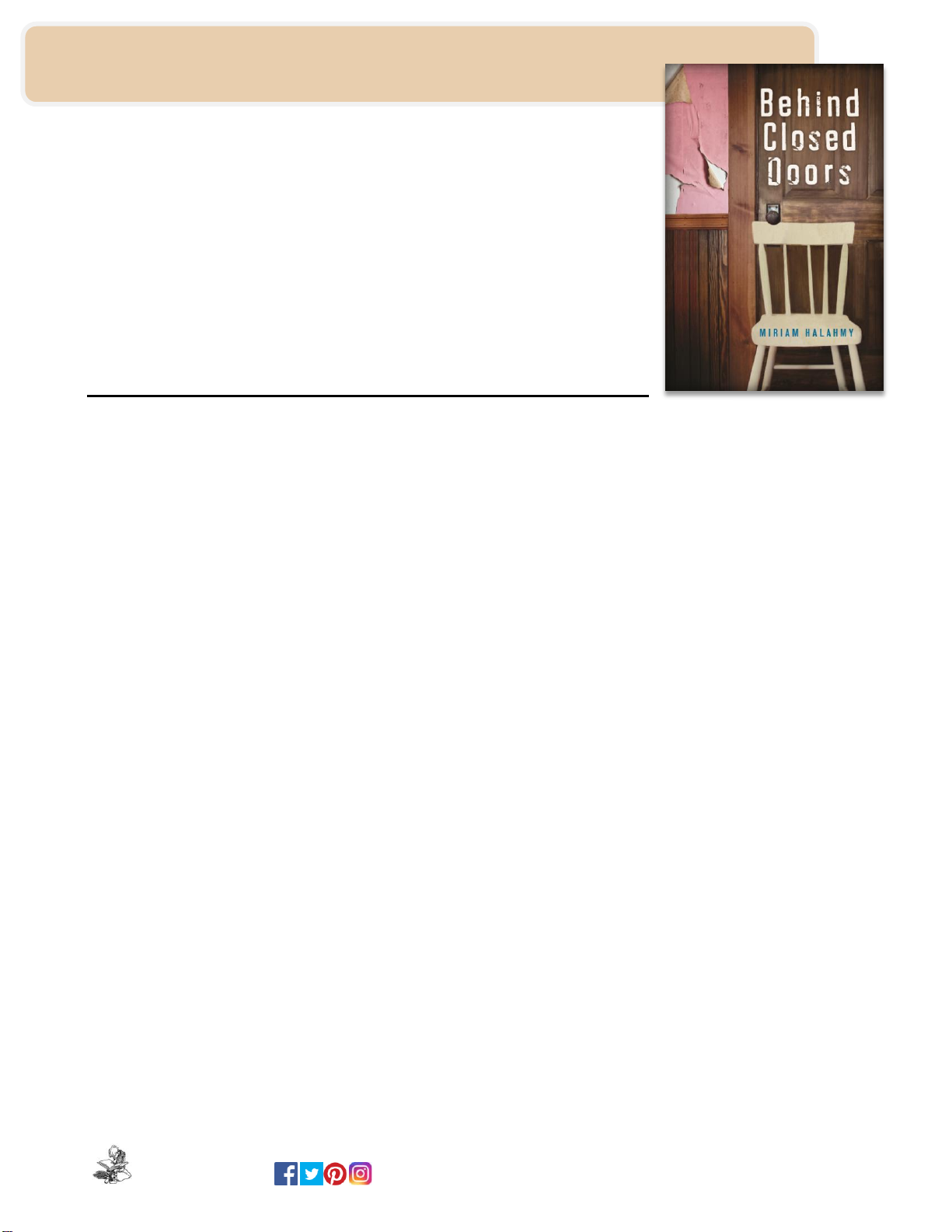
Essentials of Elementary Social Studies PDF Free Download
1 / 33/33
100%


Essentials of
Elementary Social
Studies
Essentials of Elementary Social Studies is a teacher-friendly text that provides
comprehensive treatment of classroom planning, instruction, and strategies. Praised
for its dynamic approaches and a writing style that is conversational yet professional,
this book enables and encourages educators to eectively teach elementary social
studies using creative and active learning strategies. This seventh edition has been
rened with new and relevant topics and strategies needed for eectively teaching
elementary social studies. Updates include:
• A refreshed chapter on technology designed to better prepare elementary teachers
to eectively incorporate technology, including articial intelligence, into social
studies instruction while understanding the benets and dangers.
• New classroom-tested, elementary-appropriate lesson plans for each grade level
(K-6), in keeping with the book’s emphasis on planning and teaching.
• New discussions on promoting inclusive practices in the classroom and
supporting neurodiverse students and students with learning disabilities.
• Additional attention to discussions around citizenship for younger grades.
• New and revised case studies.
• New “Checking for Understanding” sections at the end of each chapter that
oer comprehension, application, and reection on key concepts throughout the
chapters.
• Supplemental digital and video sources related to various topics throughout the
chapter.
Full of practical guidance for K-6 teaching, Essentials of Elementary Social Studies is
essential reading for pre-service teachers in Social Studies Education and Elementary
Education as well as in-service elementary social studies teachers.
William B. Russell III is Professor of Social Science Education at the University of
Central Florida, USA.
Stewart Waters is Professor of Social Science Education at the University of
Tennessee, Knoxville, USA.
“Russell and Waters successfully capture current thinking, content, and skills vital for
empowering children in their journeys to understand and participate as active citizens
in the world. The energetic and conversational style invites interaction. Essentials
of Elementary Social Studies 7th Edition oers a fresh and contemporary collection
of research-based strategies, topics, resources, instructional technologies, and
theory-to-practice connections . . . all of which are needed and wanted by elementary
educators.”
Janie Hubbard, Associate Professor of Elementary Social Studies Education,
The University of Alabama, USA
“As a true methods book, Russell and Waters focus on an array of approaches to
teaching elementary social studies that would be benecial to both beginning and
experienced educators. Essentials of Elementary Social Studies 7th Edition is a
thorough and thoughtful introduction to the practice of teaching elementary social
studies. For anyone interested in a book that is built around the practical aspects of
elementary social studies, this book is a must read.”
Bonnie Bittman, Associate Professor of Teacher Education,
The University of Hawaii, USA
“Essentials of Elementary Social Studies 7th Edition is well organized, easy to read,
and is certain to be a useful resource for anyone interested in methods for teaching
elementary social studies. Russell and Waters have written a very teacher friendly
text that oers practical and engaging strategies for elementary classrooms. The text
includes useful lesson plans as well as innovative and diverse teaching ideas that
are sure to be helpful for any current or future elementary social studies teacher.
Additionally, the authors provide activities for each chapter that can be utilized in
elementary social studies methods courses for teacher preparation programs.”
Irenea Walker, Assistant Professor of Elementary Education,
Illinois State University, USA
“Essentials of Elementary Social Studies 7th Ed speaks to the current issues in the
eld of social studies education such as teaching economic and geographic thinking
skills outlined in the C3 Framework by the National Council for the Social Studies.
Additionally, the authors share classroom activities for the pivotal topics discussed.
The examples throughout provide the support many novice teachers need, along with
new classroom strategies that many experienced educators can integrate into their
teaching practices.”
Jeremiah Clabough, Associate Professor of Curriculum & Instruction,
The University of Alabama, Birmingham, USA

Essentials of
Elementary
Social Studies
7th Edition
William B. Russell III
and Stewart Waters
Designed cover image: Getty Images
Seventh edition published 2026
by Routledge
605 Third Avenue, New York, NY 10158
and by Routledge
4 Park Square, Milton Park, Abingdon, Oxon, OX14 4RN
Routledge is an imprint of the Taylor & Francis Group, an informa business
© 2026 William B. Russell III and Stewart Waters
The right of William B. Russell III and Stewart Waters to be identied as
authors of this work has been asserted in accordance with sections 77 and
78 of the Copyright, Designs and Patents Act 1988.
All rights reserved. No part of this book may be reprinted or reproduced or
utilised in any form or by any electronic, mechanical, or other means, now
known or hereafter invented, including photocopying and recording, or in
any information storage or retrieval system, without permission in writing
from the publishers.
Trademark notice: Product or corporate names may be trademarks or
registered trademarks and are used only for identication and explanation
without intent to infringe.
First edition published by Pearson Education, Inc 1994
Sixth edition published by Routledge 2022
ISBN: 978-1-032-96491-1 (hbk)
ISBN: 978-1-032-96490-4 (pbk)
ISBN: 978-1-003-58968-6 (ebk)
DOI: 10.4324/9781003589686
Typeset in Times New Roman
by Apex CoVantage, LLC
v
List of Figures x
List of Tables xi
Preface to the Seventh Edition xii
X Contemporary Elementary Social Studies 1
Looking Ahead 1
The Goals of Social Studies 2
Role of Citizenship Education in Elementary Social Studies 5
Current State of Social Studies 7
A Problems Approach to Social Studies 8
Problems Approach: K–Third Grade Classroom 9
Problems Approach: Fourth–Sixth Grade Classroom 10
Looking Back 12
Helpful Resources 13
Further Reading 13
References 14
X Social Studies Curriculum 16
Looking Ahead 16
Why is There Controversy in Social Studies? 17
Incorporating Themes from the Standards 20
Social Studies and Common Core Standards 26
College, Career, and Civic Life Framework and Social Studies 26
Constructivism and Social Studies 27
What is the Place of the Social Science Disciplines? 28
Looking Back 33
Helpful Resources 34
Further Reading 35
References 35
X Decision Making in Social Studies 37
Looking Ahead 37
Character Education and Citizenship 39
Character Education, Values, and Decision Making 39
Decision Making and Values 40
What Values Do You Teach? 43
Multicultural Education, Decision Making, and Values 44
Developing Values 45
Contents
vi Contents
Social Justice Issues, Decision Making, and Values 50
Looking Back 51
Helpful Resources 52
Further Reading 52
References 53
X Planning Social Studies Instruction 54
Looking Ahead 54
Why is Planning Important? 55
Setting the Stage: Creating the Environment 56
Why Don’t Teachers Plan? 57
Long-Range Planning 58
Textbook-Centered Units 58
Types of Planning for Social Studies Units 62
Deciding on Unit Topics 64
Developing the Unit Plan 66
Instructional Objectives 67
Content Outlines and Flowcharts 68
Concept Webs 69
Moving Toward the Development of Activities 69
Finding and Using Prepared Units 78
Planning for Shorter Instructional Sequences 79
Looking Back 84
Helpful Resources 86
Further Reading 86
References 86
X Assessment and Evaluation 87
Looking Ahead 87
The Role of Assessment in Social Studies 88
Principles of Assessment 89
Guidelines for Assessment 91
Authentic Assessment and Portfolios 93
Assessment Through Tests 94
Assessing Projects and Reports 97
Subjective Assessment 98
Peer Assessment and Self-Assessment 98
Checklist and Rubric Assessment 99
Analytical Assessment 99
Teacher Observations and Anecdotal Records 101
Looking Back 102
Helpful Resources 104
Further Reading 104
References 105
Contents vii
X Reading and Writing in Social Studies 106
Looking Ahead 106
Reading and Writing Assignments in Social Studies 107
Reading Skills Needed in Social Studies 107
Disciplinary Literacy 108
Helping Students Read Social Studies Materials 110
Less Can Be More: Quality Reading in Social Studies 117
Reading Textbooks 120
Reading Questions and Task Statements 123
Reading Social Studies-Themed Trade Books 124
Connecting Reading and Writing in Social Studies 127
Organizing to Write 128
Developing Research and Reporting Skills 130
Writing Creatively 132
Looking Back 134
Helpful Resources 135
Further Reading 136
References 136
X Social Studies and Diverse Learners 137
Looking Ahead 137
Multiple Intelligences 138
Multicultural Directions in Social Studies 138
Multicultural Education and Culturally Responsive Teaching 140
Social Studies and English Language Learners (ELLs) 141
Social Studies and Exceptional Education Students 143
Autism Spectrum Disorder (ASD) and Neurodiversity in
the Social Studies Classroom 144
Looking Back 149
Helpful Resources 150
Further Reading 150
References 151
X Social Studies and the Acquisition of Skills 153
Looking Ahead 153
Building the Desire to Master Study Skills 154
Finding Information 154
Historical Thinking 156
Thinking Like a Geographer 158
Using Maps 161
Charts, Graphs, and Maps 164
Time Concepts 165
Economic Skills 167
viii Contents
Looking Back 169
Helpful Resources 170
Further Reading 170
References 171
X Critical Thinking and Problem Solving 172
Looking Ahead 172
Thinking Skills 173
Logical Thinking and Analyzing Skills 174
Types of Problem-Solving Tasks 178
Promoting Critical Thinking with Modules 181
Promoting Inquiry with Case Studies 182
Incorporating Thinking and Learning Skills in Social Studies 183
Looking Back 183
Helpful Resources 184
Further Reading 185
References 186
X Experiencing Social Studies 187
Looking Ahead 187
The Importance of Drama in Social Studies 188
Drama through Reading 190
Dramatic Reading 194
Role Plays and Other Structured Drama Techniques 197
Art- and Story-Related Dramatic Techniques 198
Reenactment 200
Interactional Drama 200
Drama Units 202
Storytelling in Social Studies 202
Process Drama in Social Studies 203
Eective Use of Drama in Social Studies 203
Simulation Games 204
Mock Trials 212
Field Trips 214
Service Learning Experiences 217
Looking Back 218
Helpful Resources 219
Further Reading 219
References 220
X Technology and Media in Social Studies 222
Looking Ahead 222
Getting Started: Technology as a Productive Tool 223
Contents ix
Technology and Standards 224
Online and Virtual Teaching 225
Enhancing Instruction with the Internet 226
Articial Intelligence in Elementary Social Studies 228
Media Literacy 231
Visual Literacy 231
Digital History 233
Teaching with Film 235
Social Media 238
Challenges to Technology Integration 239
Looking Back 240
Helpful Resources 242
Further Reading 242
References 243
X Lesson Plans for Elementary Social Studies 245
Looking Ahead 245
Kindergarten 246
First Grade 254
Second Grade 262
Third Grade 268
Fourth Grade 274
Fifth Grade 284
Sixth Grade 289
Looking Back 295
Helpful Resources 297
Index 299
About the Authors 308
x
Figures
3.1 Moral Dilemma Example 49
4.1 Example of a Social Studies Curriculum Map for Kindergarten
(1st Nine Weeks) 59
4.2 Example of a Content Flowchart 68
4.3 Concept Web for a Unit on Native Americans 69
4.4 Russell’s Basic Components of a Lesson Plan 79
6.1 Example of a Diamonte 117
6.2 Example of a Student Summary 118
6.3 Example of a Teacher Summary 119
10.1 What Do We Need in the Neighborhood? 209
xi
Tables
2.1 Curricula for Grades Five through Eight 18
2.2 Expanding Environments Model and Contemporary Curricula 19
2.3 Descriptions of NCSS’s Ten Themes for Social Studies 21
2.4 Examples of Thematic Units for Each Grade Level 22
2.5 C3 Framework Organization 27
4.1 Examples of Behavioral and Non-Behavioral Objectives 67
5.1 The Extent to Which the Tool is Used in Student Assessment 90
5.2 Example of Third Grade Checklist 99
5.3 Example of a Rubric 100
5.4 Example of an Observational Checklist 102
6.1 Frayer Model Version A 112
6.2 Frayer Model Version B 113
6.3 Frayer Model – Example of Version A Completed 113
6.4 Frayer Model – Example of Version B Completed 114
6.5 Classifying Chart – Example 1 for Bayou and Canal 114
6.6 Classifying Chart – Example 2 for Bayou and Canal 115
6.7 Examples of Trade Books: Biography 125
6.8 Types of Fictional and Poetry Books Related to Social Studies 126
6.9 Examples of Trade Books: Fiction 127
7.1 Gardner’s Multiple Intelligences 139
8.1 A Student’s Understanding of Time 166
9.1 Thinking Skills and Activities 175
9.2 Functions of the Mind 175
9.3 Successful Strategies for Approaching Dicult Problems 177
9.4 Sample Guidelines for Problem-Solving Activities 177
10.1 Types of Interactional Drama 201
10.2 Possible Field Trip Ideas 214
10.3 Possible Service Learning Ideas 217
12.1 Rubric for Passport Assignment 256
12.2 Rubric for Individual Passports 257
12.3 Rubric for Performing the Skit 272
xii
Preface to the Seventh Edition
Welcome to the seventh edition of Essentials of Elementary Social Studies. This book
is intended for pre-service and in-service social studies teachers and for social studies
teacher educators. The book is designed to accomplish one primary goal. We seek to
help elementary teachers develop the knowledge and skills necessary to eectively
teach elementary students to become eective problem-solving citizens. This text
oers a problem-solving approach to elementary social studies. Included in the text
are various examples of lesson plans and eective teaching methodologies.
The text includes 12 chapters, and each chapter includes a focus activity to prepare
readers for the chapter content; questions for checking understanding, which can be used
to assess the reader’s understanding of the chapter content; an extension activity for
extending the learning experience beyond the reading of the text; and “helpful resources”
and “further readings” at the end of each chapter provide readers with additional read-
ings and information for individuals interested in furthering their knowledge base.
This seventh edition has been rened with new and relevant topics and strategies
needed for eectively teaching elementary social studies. A few of the new features
include:
• An expanded discussion on the current state of elementary social studies and
its connection to civic education in today’s increasingly diverse and politically
polarizing world. This chapter focuses on the realities of teaching social studies
in contemporary elementary classrooms, as well as thoughtful approaches
for teachers to consider when implementing socially and politically charged
concepts and material.
• An updated chapter on technology designed to oer pragmatic approaches to
understanding and implementing the use of technology in elementary social
studies. New sections have been added to discuss the roles, implications, and
dangers of Articial Intelligence (AI) in elementary social studies.
• An updated chapter on teaching diverse learners with new sections on teaching
students with autism spectrum disorder (ASD) and Neurodiversity in elementary
social studies classrooms. Additionally, we added sections on multicultural
education and culturally responsive teaching, providing guiding denitions of
terms and practical social studies examples for elementary teachers to implement
at all levels.
• Added a new section focusing specically on disciplinary literacy in elementary
social studies.
Many thanks to the countless students, teachers, and professors who have used the
previous editions and who have provided valuable feedback which has allowed us to
improve the text. Additionally, the authors would like to thank our respective families
and friends for support and encouragement.
William B. Russell III
University of Central Florida
Stewart Waters
University of Tennessee

1
C
t
a
p
e
r
h
1
DOI: 10.4324/9781003589686-1
Contemporary
Elementary Social
Studies
X LOOKINGAHEAD
The aim of this chapter is twofold: (1) to help you see why social studies is needed
in the elementary school and (2) to suggest an overall approach to elementary social
studies curriculum and teaching of the curriculum. To achieve these goals, you need to
understand what social studies is and how it springs out of a need in society.
To understand social studies, you must rst understand the purpose that it serves
in the total school curriculum. That purpose, stated in simple form, is to develop good
citizens for the democratic society in which we live. Becoming a good citizen is some-
times referred to as developing civic virtue, and there is, of course, a wide interpre-
tation of exactly what either term really means. Even so, we can say that we want
students to feel positive about themselves and have a desire to be positively contribut-
ing members of the various communities of which they are a part. It also means that
students will develop the desire and the ability to be economically independent, to be
informed about and involved in the decision making that goes on in their communities,
and to be aware of and knowledgeable about the world around them. We want students
to be free from prejudice and to be fair-minded in dealing with others, to believe in a
system of justice and law, to take leadership roles, and to give reasoned and fair sup-
port for legitimately appointed or elected leaders.
Because society is changing rapidly, teaching social studies is even more of a
challenge today than it was in the past. Teachers really need to think about dier-
ent approaches to teaching social studies. They need to work more eectively with
students who have dierent cultural backgrounds. They need to teach in ways that
involve active learning, and to nd approaches that focus on solving problems. The
nal section of this chapter addresses the goals of social studies as perceived by dif-
ferent groups. Social studies itself is a product of the changing society, prevailing
approaches to its teaching, and the varying conception that social studies teachers have
of its goals.

2 Essentials of Elementary Social Studies
CANYOU?DOYOU?
Can you ...
• describe how the field of social studies has changed since you were in elementary
school?
• explain how social studies has remained the same?
• explain the goals of social studies?
Do you ...
• have an understanding of a problems approach to teaching social studies?
• have an idea of what a teacher needs to know about social studies?
• think of social studies simply as history and/or geography?
FOCUSACTIVITY
Before reading this chapter, try the following focus activity.
Take a scrap piece of paper and draw a picture of social studies. Be sure to use images and
not words. Share drawings with others. Discuss the details of the drawings. Compare draw-
ings for substance with others. Does your drawing share common themes/elements with
others’? If so, what are the themes/elements?
X THEGOALSOFSOCIALSTUDIES
What do you need to know about social studies? The answer probably seems to be
more than you do know or can learn. It is certainly more than you will be able to get
from any textbook. As a teacher, you owe it to the generations of students that you
teach to become mindfully, curiously, purposefully alive to them, to their world, to
social studies as a thick endless blanket of stories about people and events, and to the
values and rules needed for people to live together.
Social studies in the elementary school has most often been regarded as a subject
that should be taught – but only if time allows. Priority time in the school day, of
course, is given to the basic skill areas of reading, mathematics, and language. It has
not been that social studies is considered unimportant, but that the basic skill areas are
seen by society, by administrators, and by elementary teachers as “fundamentals” that
have to be learned rst. Important as language and mathematics skills may be, they are
taught only because the students will need them to live in the social world.
The “back to basics” years of the 1970s and early 1980s had a strong adverse
inuence on elementary social studies. Separate studies by Gross (1977) and Hahn
(1977) armed that social studies was disappearing in the early grades. According
to research, this trend continues in today’s twenty-rst–century classrooms (Barton,
2011; Bisland, 2011; Heafner & Fitchett, 2012; Russell, 2009). Some researchers sug-
gest that social studies is embedded in curriculum and is taught as frequently now as
in the past (Anderson, 2009; Holloway & Chiodo, 2009). This curriculum involves
an emphasis on reading stories, poems, and plays, all of which have extensive social
studies content. Then, too, the school day itself consists of a rich and complex series of
social situations and problems, ranging from recess to lunch to the school bus.

Contemporary Elementary Social Studies 3
Educators and politicians may soon have to wake up to the fact that eective
social studies curriculum is basic and fundamental in the earliest schooling. Educa-
tional reform has not had any real impact on achievement in the basic skills areas,
and schools have about run out of time to take from other content areas or activities
during the school day. There simply should be more attention given to help students
learn about themselves and their place in and responsibility to society. The National
Council for the Social Studies Task Force on Early Childhood/Elementary Social Stud-
ies (2009) stated:
The purpose of elementary school social studies is to enable students to under-
stand, participate in, and make informed decisions about their world. Social stud-
ies content allows young learners to explain relationships with other people, to
institutions, and to the environment, and equips them with knowledge and under-
standing of the past. It provides them with skills for productive problem solving
and decision making as well as for assessing issues and making thoughtful value
judgments. Above all, it integrates these skills and understandings into a frame-
work for responsible citizen participation locally, nationally, and globally. The
teaching and learning processes within social studies are uniquely organized to
develop these capacities, beginning with the youngest learners in our schools.
The Task Force goes on to say that the teaching and learning of
social studies “in the elementary classroom should be meaningful,
integrative, value-based, challenging, and active. These qualities of
powerful social studies learning are foundational to the develop-
ment of students’ knowledge, skills, and dispositions as participat-
ing citizens.”
Barth (1993) has said that one of our most basic beliefs is that “Social Studies is citi-
zenship education.” Hartoonan (1993) adds that “our work should be to illuminate the
essential connection between social studies learning and democratic values” and thus be
a “liberating force in the lives of citizens” (p. 59). Put another way, the two primary jobs
of schools are to help society by producing eective, contributing citizens and to help the
students lead happy lives in which they are enabled to achieve their potential. That is what
social studies is all about, and why social studies is so needed in the elementary school.
Though social studies educators disagree as to priorities, the following list identi-
es those aims that are most often associated with social studies programs:
• Preparing responsible citizens for the nation, the state, and the
local area.
• Preparing students who have the knowledge and skills in
social studies needed for college.
• Developing awareness and understanding of contemporary
social issues.
• Developing healthy self-concepts.
• Teaching the methods of social scientists.
• Motivating students to want to learn about social studies.
• Developing the ability to solve problems and make decisions.
• Developing culturally responsive “global” citizens.
Whatever we do as teachers is certainly done for the present, but it has to be done
with an eye to the future.
FYI: “Decision making is the
heart of social studies instruc-
tion” (Shirley Engle, 1960).
FYI: Democratic decision
making is considered a foun-
dation of the C3 Framework.
4 Essentials of Elementary Social Studies
In trying to help you become good elementary social studies teachers, or good
teachers of anything for that matter, it is important to get you to look at what happens
if you succeed as teachers. The students you teach will, in due course, become adults
themselves. They will obviously be living in a dierent kind of society, one that teach-
ers must try to anticipate and prepare them for. However, beyond that, the kind of
impact that teachers will have on students and the kind of people they become are criti-
cal outcomes of education. The following are just a few of the areas where teachers of
elementary social studies will have had an impact when your students become adults:
• the jobs they have and the way they do their jobs;
• the way they feel about themselves;
• the way they handle responsibility;
• the way they treat other people;
• how they meet and resolve problems and diculties;
• their motivation and overall attitudes;
• what they value and how they treat the things they value;
• how they relate to their heritage;
• how they relate to their environment;
• how they relate to and deal with people of other cultures, nationalities, and
ethnic groups.
In each of these and in other areas where teachers inuence students, it is safe to say
that most of us would happily accept a broad variety of outcomes and still feel that we
had made a positive impact in a student’s life. The question is, “Just how much in each
area can we expect of ourselves?”
That is not a question that can be left unanswered. A good analogy is putting
together a jigsaw puzzle. It is always easier to do a puzzle with a picture of what it is
going to look like when complete. The same holds true for teaching. From an attitudi-
nal standpoint, it is useful to envision students ten or fteen years into the future and
imagine them in the most positive light.
Goals and objectives should be the rst and most important concerns of any teacher,
especially any elementary social studies teacher. They complement one another. Goals
are distant, immeasurable, and even unattainable. They give direction to our eorts
and, if we are goal-oriented and goal-driven, we constantly work toward them, yet
never reach a point when they are achieved. How can one reach the goal of becoming
an eective problem solver, for example, or the even broader goal of being a good
citizen? The essence of goals is that they describe the person we are constantly in the
process of becoming (Moore et al., 1989).
Objectives, on the other hand, are short-term, attainable, often measurable, and
very specic. We can know when we achieve them, so they become for us milestones
and markers of our progress. Goals determine the directions we want to go, but the
accomplishment of objectives lets us know that we are getting there.
In education, we generally begin planning by dening our goals. Once goals are set,
we try to describe the specic teaching and learning outcomes (objectives) for short
periods of instruction that will move students toward the goals. Goals without objec-
tives remain as only dreams. Objectives without relationship to goals are purposeless.
Objectives for social studies tend to be decided based on the specic content being
taught and the group to which it is being taught. The broadest goals for the eld have
been centrally determined and dened in the United States by various groups, given
Contemporary Elementary Social Studies 5
authority by still larger organizations. Regardless of the group, throughout this century
and the next, social studies has been and will be invariably linked to goals of citizen-
ship education. The frameworks developed in the reports of the various commissions,
task forces, and committees have served as models for textbook curricula and for those
developed for state and local school districts. Reports impacting elementary school
social studies in the twenty-rst century include the National Council for the Social
Studies Task Force Creating Eective Citizens (2001), the National Council for the
Social Studies Task Force on Early Childhood/Elementary Social Studies (2009), and
the Task Force of the National Commission on the Social Studies (1989).
The introductory statement of the goals section of the report of the National Council
for the Social Studies (NCSS) Task Force on Creating Eective Citizens (2001) set a
problem-solving focus for the social studies and emphasized thinking skills. The Task
Force stated the students should have the skills necessary to “solve real problems in
their school, the community, our nation, and the world.” Additionally, eective citi-
zens should use “eective decision-making and problem-solving skills in public and
private life.” The responsibility of social studies is to prepare young people to identify,
understand, and work to solve problems of an interdependent world.
The NCSS Task Force on Early Childhood/Elementary Social Studies (2009)
echoed that teaching and learning elementary social studies should be “meaningful,
integrative, value-based, challenging, and active.” Additionally, critical thinking,
problem solving, and the development of learning skills and positive attitudes toward
self and others were given priority.
The Task Force of the National Commission on the Social Studies was funded
by the Carnegie Foundation, the Rockefeller Foundation, the MacArthur Foundation,
and the National Geographic Society. It enjoyed the sponsorship of the National Coun-
cil for the Social Studies and the American Historical Association. Over two years in
preparation, the Task Force’s report, entitled Charting a Course: Social Studies for the
21st Century (1989), formulated the following goals that the social studies curriculum
should enable students to develop:
1 civic responsibility and active civic participation;
2 perspectives on their own life experiences so they see themselves as part of the
larger human adventure in time and place;
3 a critical understanding of the history, geography, economic, political, social
institutions, traditions, and values of the United States, as expressed in both their
unity and diversity;
4 an understanding of other peoples and of the unity and diversity of world history,
geography, traditions, and values;
5 critical attitudes and analytical perspectives appropriate to analysis of the human
condition.
X ROLEOFCITIZENSHIPEDUCATIONINELEMENTARYSOCIAL
STUDIES
Citizenship education in elementary social studies plays a crucial role in laying the
groundwork for democratic engagement and civic responsibility from a young age.
Scholars have long argued that the early introduction of civic concepts not only
promotes academic learning but also cultivates the social and moral dispositions
6 Essentials of Elementary Social Studies
necessary for eective participation in a democratic society (Westheimer & Kahne,
2004; Torney-Purta & Amadeo, 2009).
At its core, citizenship education is concerned with instilling values such as respect,
fairness, and a sense of community. In elementary classrooms, these values are intro-
duced through age-appropriate discussions and activities that help students understand
their roles within their families, schools, and local communities. This early exposure
is instrumental in forming a civic identity, where children begin to see themselves as
active, responsible members of a larger society (Banks, 2006). Research suggests that
nurturing this identity during the formative years is essential for the development of
engaged citizens who appreciate the principles of democracy and social justice (Gut-
mann, 1999).
Developing Critical Civic Literacy
Elementary social studies provides a context for developing what some researchers
refer to as “civic literacy” – the ability to critically analyze social and political issues,
understand historical contexts, and appreciate the complex nature of civic life. Educa-
tors integrate citizenship education with lessons on history, geography, and culture
to help students draw connections between past events and current civic challenges
(O’Sullivan & Maves, 2018). This interdisciplinary approach enables young learners
to grasp how civic processes work and why they are important. For instance, classroom
simulations of democratic decision-making or community projects oer tangible expe-
riences that make abstract civic principles accessible and meaningful (Westheimer &
Kahne, 2004).
Additionally, a vital aspect of citizenship education in the elementary years is the
emphasis on active participation. Many scholars argue that when children are given
opportunities to engage in classroom governance – such as class meetings or student
councils – they learn essential democratic skills like compromise, negotiation, and col-
lective problem-solving (Torney-Purta & Amadeo, 2009). These experiences not only
reinforce the academic content of social studies but also foster a practical understand-
ing of civic engagement. By participating in structured yet student-centered activities,
learners begin to appreciate the importance of each voice in a democratic process, lay-
ing the foundation for lifelong participation in civic life (Kahne & Westheimer, 2006).
Challenges and Considerations in Implementation
While the benets of integrating citizenship education into elementary social studies
are widely acknowledged, challenges certainly remain. One primary concern is ensur-
ing that the curriculum is developmentally appropriate. Young children have varying
levels of cognitive and emotional maturity, so educators must carefully design activi-
ties that are both engaging and comprehensible (O’Sullivan & Maves, 2018). Further-
more, there is an ongoing scholarly debate regarding the balance between imparting
civic values and exposing students to the complexities of political ideology. Some
caution against an overly politicized curriculum that might overwhelm young learners,
while others advocate for early exposure to diverse perspectives to foster critical think-
ing and empathy (Banks, 2006).
The evolving landscape of global citizenship and digital engagement has expanded
the scope of what citizenship education might entail. Future research is likely to explore
Contemporary Elementary Social Studies 7
how elementary social studies can adapt to these changes while continuing to promote
core democratic values. There is a growing recognition that citizenship education must
focus not only on local and national contexts but also on global interdependence and
digital literacy. Such considerations underscore the importance of continually updating
curricular practices and teacher training programs to meet the demands of a rapidly
changing world (Gutmann, 1999).
Citizenship education will always be a foundational component to the elementary
social studies curriculum, as preparing young learners for the challenges and responsi-
bilities of civic life continues to be a priority in today’s schools. By fostering an early
appreciation for democratic values, critical civic literacy, and active participation, edu-
cators can help shape a generation of informed and engaged citizens. As scholarly
discussions on this topic evolve, they underscore the importance of aligning curricular
practices with both developmental needs and the broader imperatives of sustaining
democratic societies (Westheimer & Kahne, 2004).
X CURRENTSTATEOFSOCIALSTUDIES
The current state of social studies education in U.S. elementary schools is character-
ized by a decline in instructional time, inconsistent state policies, and a lack of com-
prehensive support for teachers. Over the past few decades, social studies has been
deprioritized in favor of subjects like English Language Arts (ELA) and mathematics,
which are more frequently assessed in standardized testing. This shift has led to a
signicant reduction in the time and resources allocated to social studies instruction,
despite its essential role in fostering civic engagement and critical thinking skills.
Key Issues in Elementary Social Studies Education
1. Reduced Instructional Time
Elementary teachers are dedicating less time to social studies than they did in
previous decades due to the emphasis on standardized testing in ELA and math.
As a result, students receive less exposure to civics, history, geography, and
economics, which are essential for informed citizenship (New America, 2023).
2. Lack of State-Level Infrastructure and Support
Many states have inadequate standards, accountability measures, and assess-
ment programs for social studies. While some states follow frameworks such as
the College, Career, and Civic Life (C3) Framework or the Roadmap to Educat-
ing for American Democracy, there is no national consensus on what should be
taught at each grade level. This results in wide disparities in curriculum quality
across states.
3. Limited Teacher Support and Professional Development
Teachers receive less guidance, evaluation, and professional development in
social studies compared to ELA and math. Many elementary school teachers
create their own lesson plans due to the lack of a standardized curriculum, and
principals are less likely to evaluate social studies instruction than other core
subjects (RAND Corporation, 2023).
4. Curricular Gaps and Resource Constraints
A signicant number of schools lack a required or recommended curriculum for
social studies. In a 2021-22 survey, only 16% of elementary teachers reported
8 Essentials of Elementary Social Studies
using a mandated textbook, while many relied on self-created materials. Addi-
tionally, about 29% of elementary principals reported that their schools had no
ocially adopted social studies curriculum (RAND Corporation, 2023; New
America, 2023).
5. Political Inuence and Controversies
Political debates over topics such as race, gender, and historical narratives have
made social studies curriculum a contentious issue. At least 17 states have passed
laws restricting how teachers address these topics, which has further compli-
cated curriculum development and teacher instruction (New America, 2023).
The Need for Change
Experts argue that reducing social studies instruction could have long-term conse-
quences for civic engagement and democracy. Organizations like the National Council
for the Social Studies emphasize that social studies education is essential for teaching
students how to think critically, participate in democracy, and understand historical
and social complexities (New America, 2023).
Addressing these issues would require state- and district-level investments in social
studies infrastructure, including improved standards, better instructional materials, and
more professional development opportunities for teachers. Without such eorts, the
current gaps in social studies education are likely to persist, potentially weakening
students’ understanding of civic responsibilities and historical context.
X APROBLEMSAPPROACHTOSOCIALSTUDIES
There is no doubt about it: elementary social studies must be dierent in today’s soci-
ety from what it was before. Society has changed. Schools have changed. Students’
lives keep changing. Even the problems that students face are dierent. For example,
there has been a constant increase in the number of students involved in child abuse,
divorce, domestic violence, cyberbullying, gangs, substance abuse, single-parent
homes, and crime. Schools are preparing students for an ever- and rapidly changing
world with new and unique demands for citizens. There have also been changes that
inuence students’ present and future lives in other ways. There has been a dynamic,
complex revolution in technology, information, and communication. There have been
major shifts in society, including sweeping changes related to gender roles and ethnic
and cultural relationships. There have also been major changes in the governmental
and economic make-up of the United States and the world.
In a world in which change has become the norm and we have to constantly face
dilemmas for which there is no precedent, social studies is needed more than ever to
help students learn to deal with problems. Teachers need to take a problems approach.
Though the word “problem” may be dened in many ways, we are going to dene it as
“any task or situation for which a solution is required or desired and for which a method
of solution is not provided or immediately apparent.” Problem solving is more than
the situation itself. Often problems involve moral dilemmas; persisting issues; and/or
diculties, dangers, or curiosities for which there is no veriable solution. Problems
require that existing knowledge be retrieved and used to resolve new or dierent di-
culties. Most importantly, intrinsic to problem solving is the ability to deal with failure
and with the inability to identify easy or quick solutions in constructive ways.

Contemporary Elementary Social Studies 9
Problem solving is the most pervasive of skills from a curricular standpoint. It is
the one skill that is most needed throughout life. Almost all the situations we face
as a society and nearly all of the personal events demanding decisions may be best
described as problems. If students (and teachers) can develop the requisite mindset,
attitudes, and skills of problem solvers, they will be equipped to meet the needs of the
future. If they do not, their education becomes obsolete almost before it is complete.
Problem solving is the essential skill for each of the disciplines. That is, a person
with a problem-solving mindset will be a more successful student. This is an ability
that teachers need to emphasize if every student is to become an independent learner.
Problem solving is also the essential survival skill for school. Each teacher, each class,
each student, each school day, each assignment presents a unique intricacy of circum-
stances and demands. It would not be an overstatement to say that the essential life role
is problem solving.
X PROBLEMSAPPROACHKTHIRDGRADECLASSROOM
A teacher who uses the problems approach is going to be constantly asking questions,
trying to arouse curiosity, and having the students make decisions. The teacher will be
encouraging students’ questions and helping them to nd ways of seeking answers.
The entire environment of the classroom becomes xed on learning how to learn.
Students’ awareness of problems and their ability to generate alternative solutions are
heightened in this kind of environment. Perhaps the best way to look at how the prob-
lems approach works is to look at how one teacher used this approach as she entered
a study of community.
CLASSROOMEPISODE
The teacher started her first graders on their study of the community by reading Dr. Seuss’s
Horton Hears a Who (Geisel, 1954). She soon had them thinking and talking about the perils
and dangers faced by the people of the tiny world in the story. The point of the story, of
course, is that everybody in a community needs to work together to solve the problems, and
these students thought themselves very clever when they figured it out.
The teacher would not let them rest on that, though. Soon she had them talking about
how to recognize problems and different ways that the “Whos” could have solved their
problem. One of the questions that she asked was how different television characters might
have solved the problem (both cartoon characters and prime-time heroes were suggested).
She also got them thinking about how important they were in their own community and how
they could not help unless they knew more about their community and its own particular
dangers and problems.
The next day, the teacher took the students on a walking field trip of their community.
They went only a few blocks, but as they went they began looking for different problems
in their own community. Sometimes the teacher had to make suggestions and probe with
questions, but always, she let the students decide if something was a problem. When they
got back to the classroom, they began making a list of the problems they had seen. The list
included some things that were dangers and some others that just seemed to give people dif-
ficulties. Different types of garbage and litter were among the most common things that the
students noticed, but the teacher tried to shift their attention to other kinds of problems. This

10 Essentials of Elementary Social Studies
all started to sound somewhat negative, so they also started making a list of the good things
they knew about or had seen in their community.
That day, the students went home with the assignment of asking their parents and others
about problems in their community as well as what the adults liked about the community.
The next day, in school, the students added to their lists, taking a little time to talk about the
ideas that had been brought in. The teacher put all the ideas on large pieces of paper, but she
had left lots of room. When the list was finished, she passed out scissors and old magazines
and newspapers. The students worked in pairs, each pair trying to find a picture that showed
one of the ideas: If they could not find a magazine picture that they thought was appropri-
ate, the teacher encouraged the students to draw a picture. The pictures later helped serve as
reminders to these mostly non-reading students of what each sentence said.
Later, the students built a box community on a large table. They got to decide what went
into a community and to design their own buildings. The teacher and a parent volunteer
helped them label buildings. One of the questions they had been asking was, “Why was
there so much litter in the community?” To help them understand, the teacher covered the
completed scene with a tablecloth. Each day for a week, every child put a single small piece
of scrap paper under the tablecloth. When they removed the cover, everyone was surprised
at how much trash had accumulated on the streets of their community.
The box community was used to study other community problems as well. The students
had tried to follow the layout of their own community in designing it. Therefore, they were able
to look at such problems as traffic congestion and sidewalk hazards through their own model.
Soon the students decided that they needed a map of the community, and they began
making one. The teacher started them thinking about the problems of making a map; for
example, things like accuracy, relative size, symbols, and orientation.
There was a natural flow in every transition. Each situation led to a new set of questions
and curiosities. Though there were some places where some students seemed to be lost for a
few minutes, most often due to a lack of verbal memory, the presence of the problems was
so pervasive that attention was never lost for long.
X PROBLEMSAPPROACHFOURTHSIXTHGRADECLASSROOM
In grades four through six, the focus is shifting toward independence. Students can
deal with problems and content that are much more distant and removed from their
own experience. These students need to be more involved in the systematic develop-
ment of questions and problems. Since fourth–sixth grade students have more skills,
knowledge, and experience, they can be involved in a greater variety of research activ-
ities. They are more peer-oriented and less teacher-oriented, so group problem solving
can be structured into the activities. The emphasis remains on an environment where
curiosity is encouraged and stimulated. The teacher in such an environment is going
to be constantly leading students to events and ideas that will set them thinking. The
students in this setting are going to be “on the learn.”
CLASSROOMEPISODE
Looking again at a particular classroom, this time we will focus on a fifth grade teacher who
has launched into a study of the medieval period in European history. The teacher began by
trying to get the students to systematically examine their existing concepts of the period.

Contemporary Elementary Social Studies 11
They talked about movies and television programs that they had seen, as well as some things
that had been picked up from cartoons, comic books, and games. Some of the students also
had knowledge that came from children’s literature. There was as much, if not more, fantasy
as reality in what they thought they knew about the period.
At about this time, the class was surprised by a visit from two people in medieval cloth-
ing. One of these men told the students that he was an architect and that he was involved in
designing and building castles. The other man said that he was a knight. The men described a
situation they were involved in on the coast of England near the Welsh border. King Edward
had sent them there to build a castle. Now they had to decide exactly where to build it, but it
was not very easy. While the men were in the classroom, they talked with the students about
the reasons for castle building, about all the problems that might be involved, and about the
rudiments of castle defense.
By the time the men left, an idea had evolved. Soon the students had developed a hypo-
thetical map of what the region would be like. At the teacher’s insistence, the map was quite
large. In addition, the students were urged to orient their map to some real area on the Eng-
lish coast. The map itself was not altogether fiction because the students did some reading
about the geography of the area. The completed map showed a seacoast, the Welsh border,
three villages for which the students made up names, and a monastery. It also showed a river,
some fens or swampy land, a forest area, and a few roads. Other features were added as
the students continued to read and discuss. They learned something about feudal land divi-
sion and tried to reflect it in the map. Other landmarks, including a ruined castle and some
churches, were added. The villages themselves began to take on detail and show differences
in size and complexity. As the students researched, they decided that there had to be a feudal
manor or two in the area with fortifications; these were added.
The people came last. The students’ research began to reveal the different roles and social
statuses that the various people at the monastery and in the villages would have had in all
likelihood. The class developed a set of characters, each of whom they tried to describe in
some detail. They gave them names and described where they lived, what they did and how
they did it, how they dressed, and what their lives were like. They were particularly fascinated
by the diet of the common people during this period. The study of daily life, clothing, and
customs evolved through group work over about a week.
The students then drew names so that each could “become” one of the characters.
Once more in groups, this time according to where they “lived,” they continued researching
their characters. The groups also began talking about where they wanted the king’s castle
to be built. They considered the dangers and fears that faced the lives of the people of this
period.
Nearly three weeks after their first visit, the two medieval men returned. For this visit,
the students had planned and worn costumes of their own and the questions were almost
unstoppable. The students eagerly told the visitors what they had been doing. Then each
group made a presentation in which they introduced themselves in their medieval roles. The
groups each made a case for one site for the king’s castle. Some of the groups, especially the
one representing the monastery, did not want the castle built right in their area. Others had
noticed not only the protection that the castle offered, but also the commercial possibilities
that a garrison of soldiers would have for the nearest town. When the groups were finished,
the architect and the knight explained where they thought the king’s castle should be built.
Most importantly, they showed that they had listened to the students’ reasoning as they
presented their case.
This was the beginning rather than the end. The study went on into the actual building of
the castle and to several follow-up activities. However, this beginning had laid a foundation
of interest and reason for research, on which the teacher could continue to build. The stu-
dents were exploring nearly every major theme and concept of medieval life as they created
scenarios and solved problems as they arose.

12 Essentials of Elementary Social Studies
X LOOKINGBACK
Social studies throughout the last half of the twentieth century was reformist in nature
and will continue to be throughout the twenty-rst century; that is, the curriculum has
been and will be in ux. This is due, in part, to the constant changes in the social world.
The one educational need that remains constant in a world of change is that stu-
dents need to learn how to solve problems. When teachers take a problems approach
in social studies, they work at enabling students to deal with situations where their
experience and knowledge oer no ready answers. Problem solving is, perhaps, the
most pervasive of all skills.
Despite growing concern that social studies may be disappearing from elementary
classrooms, two main jobs of the school continue. Those jobs are producing eective,
contributing citizens and helping students lead fullling lives. Social studies has a
variety of purposes that relate to these two jobs, which include preparing students to be
responsible, to be aware of contemporary issues, and to have a world vision. In some
cases, elementary social studies teachers should be concerned about preparing students
for college and even for careers in the social sciences. If students are to be successful,
teachers must help students develop both the love of learning and the ability to solve
problems.
Goals and objectives should be major concerns of teachers of social studies. Goals
are distant and unattainable, but they give direction to teaching. Objectives, on the
other hand, are short-term and obtainable. Objectives are the building blocks toward
goals.
The National Council for the Social Studies, as the organization of teachers most
concerned with social education, has constantly examined and reexamined the goals of
the social studies. Recent task forces of that organization have particularly emphasized
problem solving and thinking skills.
EXTENSIONACTIVITY
SCENARIO
You are searching for an elementary teaching position in your hometown school
district, which is a very difficult district to “get your foot in the door.” Just as you
are losing hope, you receive a phone call from Dr. Russell, the principal of Your-
town Elementary School (YES). Dr. Russell invites you for an interview. During your
interview, an enthusiastic committee member asks you, “What do you believe to
be the goals and purpose of social studies?” Your response could be the difference
between being offered the elementary teaching position and not being offered it.
TASK
For this activity, write down how you would answer the enthusiastic committee
member. Be sure to clearly discuss the goals and purpose of social studies.

Contemporary Elementary Social Studies 13
CHECKINGFORUNDERSTANDING
1 How would you characterize the problems approach to social studies?
2 Why was the map-creation exercise so critical in the class where they were studying
medieval history?
3 In what areas are elementary social studies teachers going to have an impact?
4 In what ways did the NCSS Task Force groups referred to in the chapter stress the role of
thinking skills in social studies?
X HELPFULRESOURCES
Watch the rst half of the following video to see an overview of why social studies is
important in elementary schools:
www.teachingchannel.org/videos/tch-presents-social-studies-essentials
Watch this video of NCSS executive director Susan Grin dening social studies and the
connection with the C3 Framework:
https://youtu.be/3HD9apVNq0I
With limited time to teach social studies in elementary schools, teachers must consider col-
laborative planning and integrative learning. See the following video on the importance
of collaborative teaching and integrative learning:
www.teachingchannel.org/videos/collaborative-teaching-ntn
Many teachers struggle with ideas for how to cover or discuss dicult social issues. See
the following video as an example of a way to share content about 9/11 with elementary
students:
www.ocabulary.com/unit/week-in-rap-extra-9–11/
Watch the following video for an example of a kindergarten teacher engaging students in
an “antiques roadshow” to help them better understand time and place:
www.teachingchannel.org/videos/show-and-tell-themes
Visit the following website below (Video #5: Leaders, Community, and Citizens) to see an
example of a rst grade teacher engaging students in problem solving about community
issues:
www.learner.org/resources/series166.html#
Visit the following website (Video #13: Making a Dierence through Giving) to see an
example of a fourth grade classroom engaged in a service learning project to help solve
an issue important to their local community and the world:
www.learner.org/resources/series166.html#
X FURTHERREADING
Barr, R., Barth, J., & Shermis, S. (1977). Dening social studies. National Council for the
Social Studies.
This book discusses the various perspectives and issues surrounding social studies and its
identity. This book includes ve chapters analyzing the nature of social studies, its goals
and objectives, and the issues surrounding the lack of a constant denition.
Engle, S. (1960). Decision making: The heart of social studies instruction. Social Educa-
tion, 24(7), 301–306.
14 Essentials of Elementary Social Studies
This article discusses the role of decision making in the social studies and emphasizes its
purposes as the central and vital aspect of social studies instruction. This seminal article
outlines decision making as an approach to social studies and played a signicant role
in the way social studies was viewed.
Ochoa-Becker, A. (2006). Democratic education for social studies: An issues-centered
decision making curriculum. Information Age Publishing.
This inuential book was originally published in 1988, written by the iconic social stud-
ies educator Shirley Engle. This volume includes a rationale for an issues-centered,
decision-making curriculum for the social studies classroom.
Russell, W. (Ed.). (2011). Contemporary social studies: An essential reader. Information
Age Publishing.
The eld of social studies is unique and complex. It is challenged by the diering perspec-
tives related to the denition, goals, content, and purpose of social studies. This book
discusses the contemporary issues surrounding social studies education today. This
book encourages and inspires readers to think. The 28 chapters included in this volume
are written by prominent scholars in the eld of social studies. The collection inspires
and provokes readers to reconsider and reexamine social studies and its contemporary
state. Readers will explore the various critical topics that encompass contemporary
social studies.
X REFERENCES
Anderson, L. W. (2009). Upper elementary grades bear the brunt of accountability. Phi
Kappa Delta, 90(6), 414–418.
Banks, J. A. (2006). Cultural diversity and education: Foundations, curriculum, and
teaching (5th ed.). Pearson.
Barth, J. L. (1993). Social studies: There is a history, there is a body, but is it worth saving?
Social Education, 57(2), 56–57.
Barton, K. C. (2011). Wars and rumors of war: Making sense of history education in the
United States. In T. Taylor & R. Guyver (Eds.), History wars and the classroom: Global
perspective (pp. 189–204). Information Age Publishing.
Bisland, B. L. (2011). The marginalization of social studies in the elementary grades: An
Overview. In W. Russell (Ed.), Contemporary social studies: An essential reader (pp.
173–191). Information Age Publishing.
Geisel, T. (1954). Horton hears a who. Putnam.
Gross, R. E. (1977, November/December). The status of the social studies in the public
schools of the United States. Social Education, 41, 194–200, 205.
Gutmann, A. (1999). Democratic education. Princeton University Press.
Hahn, C. W. (1977). Research in the diusion of social studies innovations. In F. P. Hunkins
(Ed.), Review of research in social studies education: 1970–75 (pp. 137–177). National
Council for the Social Studies, ERIC Clearing House for Social Studies/Social Science
Education Consortium.
Hartoonan, M. (1993). A guide for redening the social studies. Social Education, 57(2),
59–60.
Heafner, T., & Fitchett, P. (2012). Tipping the scales: National trends of declining social
studies instructional time in elementary schools. The Journal of Social Studies Research,
36(2), 188–213.
Holloway, J., & Chiodo, J. (2009). Social studies IS being taught in the elementary school:
A contrarian view. The Journal of Social Studies Research, 33(2), 235–261.
Contemporary Elementary Social Studies 15
Kahne, J., & Westheimer, J. (2006). The limits of political ecacy: How exposure to poli-
tics shapes the political perspectives of young people. Social Science Quarterly, 87(2),
398–414.
Moore, C., Bryant, D., & Furrow, D. (1989). Mental terms and the development of cer-
tainty. Child Development, 60, 167–171.
NCSS Task Force on Creating Eective Citizens. (2001). Creating eective citizens. http://
www.ncss.org/positions/eectivecitizens
NCSS Task Force on Early Childhood/Elementary Social Studies. (2009). Powerful and
purposeful teaching and learning in elementary school social studies. http://www.ncss.
org/positions/powerfulandpurposeful
New America. (2023). Elementary social studies practice has a problem. https://www.
newamerica.org
O’Sullivan, L., & Maves, T. (2018). Citizenship education in primary schools: Challenges
and strategies. Journal of Social Studies Education, 47(3), 45–63.
RAND Corporation. (2023). Teacher supports, guidance for elementary social studies edu-
cation vary widely across United States. https://www.rand.org
Russell, W. B. III. (2009). Social studies, the lost curriculum: A research study of elemen-
tary teachers and the forces impacting the teaching of social studies. Curriculum and
Teaching, 24(2), 75–86.
Task Force of the National Commission on the Social Studies in the Schools. (1989).
Charting a course: Social studies for the 21st century. The National Commission on the
Social Studies in the Schools.
Torney-Purta, J., & Amadeo, S. (2009). The development of civic education research:
A global perspective. In J. Torney-Purta, R. Lehmann, H. Oswald, & W. Schulz (Eds.),
Citizenship and education in twenty‐eight countries (pp. 1–15). SUNY Press.
Westheimer, J., & Kahne, J. (2004). What kind of citizen? The politics of educating for
democracy. American Educational Research Journal, 41(2), 237–269.

t
a
p
e
r
h
C
2
16 DOI: 10.4324/9781003589686-2
X LOOKINGAHEAD
What social studies topics and themes are to be taught in elementary schools? What
is to be taught about these topics and themes? Questions such as these are constant
and troubling for social studies educators. Though there is little disagreement that
the selection ought to be related to carefully selected goals and that the teaching
itself should be done in a purposeful way, what is taught and what materials are used
continue to be ongoing problems in the social studies. In this chapter, we will look
at some of the forces inuencing social studies and how these forces have changed
the eld. You need to be aware of how these developments aect how and what you
will teach. This awareness will help you understand that social studies curriculum is
evolving.
Recognizing that social studies has a strong knowledge base, we will also want
to look at the social science disciplines. These disciplines all examine the world
from a dierent perspective, with dierent emphases and foci, often using dier-
ent scholarly tools. The social scientists working in these disciplines provide the
scholarship, methods, concepts, and information that are the basis for social stud-
ies curriculum in the elementary schools. The better we understand them and their
relationships to one another, the better we can utilize and select from what they
have to oer.
Social Studies
Curriculum
CANYOU?DOYOU?
Can you ...
• identify reasons why there is controversy in social studies?
• describe the Expanding Environments curriculum?
• identify and explain the various social science disciplines?
• explain how the social sciences relate to what students learn in social studies?

Social Studies Curriculum 17
Do you ...
• know all the social science fields that are included in social studies?
• know how the social studies curriculum is organized?
• know what an instructional theme is?
• know the history of the term “social studies”?
X WHYISTHERECONTROVERSYINSOCIALSTUDIES?
Social studies has been, and will continue to be, constantly under attack by critics. The
content taught in social studies is constantly being examined. The root reason for this
is that learning social studies is a lot more complex than developing an ability or skill
such as reading and mathematics. It is almost without boundary or borders.
There are, arguably, ve overlapping social studies curricula existing in most ele-
mentary schools. First, there is the formal curriculum that is the basis of social stud-
ies classes. It usually is prescribed for, or determined by, the teachers and has clearly
dened goals and parameters and is embodied in a course of study, standards, or a
required textbook. Second, there is a curriculum that is very pronounced in the primary
grades and has to do with events and with the calendar itself. Holidays, birthdays,
seasons, weather, and current events all conspire to form this curriculum which is, by
its very nature, more uid and exible than the formal curriculum. This second cur-
riculum may be reasoned out by the teacher to relate to the formal curriculum and have
corresponding goals. The third curriculum is really embedded in the materials used to
teach other subjects, especially reading and language arts. The stories in readers and
the literature program deal with people, places, and events, and readers have tradi-
tionally paralleled social studies content. Through ctional and nonctional literature,
students are made aware of how people live, think, and get along with others. Science
and arithmetic similarly present social studies content, particularly regarding the sto-
ries behind discoveries, inventions, and theories. The fourth curriculum has to do with
the organizational functions of the school and the classroom and is embodied in what
is taught about the ways to work together and independently, the development and fol-
lowing of class and school rules, and the way that students are taught to act throughout
the school day. This curriculum is very closely tied to the fth curriculum, which is
becoming increasingly more manifest in schools, the program specically to develop
values and/or character.
FOCUSACTIVITY
Before reading this chapter, try the following focus activity.
Think back about your elementary experience. What did social studies mean to you as
an elementary student? What curriculum was included in social studies? Share experiences
with classmates. Discuss the details of experiences and compare. Do your elementary social
studies experiences share common attributes with others? If so, what attributes? What does
social studies mean to you now?

18 Essentials of Elementary Social Studies
With this richly varied array of curricula, which may at times be contradictory, there
are factors that contribute to the controversial nature of social studies. Those factors
include:
• Anything that human eort produces is, by denition, imperfect. Before we even
get a curriculum together, we and others begin to see the aws and problems.
When we put something into use, those aws become glaringly apparent to us.
• Cultural change is constant. We live in an era of immense societal complexity
and rapid change. As rapidly as we develop a program, changes occur that require
adjustments. Social studies curricula are responsive to changes in the social
climate. Changes in emphasis are likely to reect the times. Wars, depressions,
periods of prosperity, international relationships, and a host of other things that
inuence the public climate can impact what and how things are taught in social
studies classrooms.
• People have diering values, priorities, and viewpoints. Social studies is not just
a skills subject. In a democratic society, there is little likelihood of long-term
consensus and none of universal agreement on what ought to be taught and from
what viewpoint.
• Special-interest groups inuence curriculum. In our society, there are pressure
groups with their own agendas and expectations. They want to inuence or even
control what is being taught in the schools.
• Social studies represents an enormous and changing body of knowledge. Social
studies curriculum simply dees coverage or even adequate sampling. We can
never have enough depth or breadth.
The term “social studies” is a product of the twentieth century. It was ocially adopted
as the name for the curricular area in 1916 by the Committee on Social Studies, a
subgroup of the Commission to Reorganize Secondary Education, which had been set
up by the National Education Association. The committee reported the conclusions in
the 1916 Report, which outlined the good citizenship concept and also recommended
the curricula for grades ve through eight (see Table 2.1), which were traditionally
considered part of elementary or grammar school.
In the late 1930s, Paul Hanna proposed a sequence of instructional topics that
was to revolutionize elementary school social studies. This framework, known as the
Expanding Communities Model or Expanding Environments curriculum, was based
on a theory that students’ ability to understand their world progresses through a series
of developmental stages and that social studies programs should be structured to coin-
cide with those stages (Hanna, 1957, 1963). The progression was from a study of the
Table2.1 Curricula for Grades Five through Eight
Grade Subject
Fih Grade American History
Sixth Grade World History (Western Civilization)
Seventh Grade Geography
Eighth Grade American History

Social Studies Curriculum 19
students themselves and their homes and families through increasingly larger commu-
nities which were more remote and abstract to students’ thinking.
Despite all the pressure for change, the Expanding Environments concept has been
the major inuence on social studies curriculum for over fty years. The rst eight
grades of the twelve-grade Hanna model are shown in Table 2.2. Alongside it, the
dominant pattern of curriculum organization currently used in textbook and school
curricula is shown.
The beauty of the Expanding Environments model was its logic. It made sense to
a lot of people, both from the standpoint of its reection of a reasonable pattern of
child development and as a logical way to organize social studies curriculum. Hanna’s
model was developed at a fortunate time in many ways. The social climate of the
nation was ideal, with America coming through a depression and a world war from
which it emerged as the leading power in the free world. Technology and communi-
cation as well as the economic conditions were also right. Hanna’s model was soon
adopted by many school systems and by textbook publishers. It is, to this day, the most
common model used in elementary schools in the United States.
From the 1960s to the 1970s, a spirit of reform that gripped the social studies was
known as The New Social Studies (Byford & Russell, 2007; Fitchett & Russell, 2011). It
manifested itself in a series of well-warranted criticisms of the expanding environment
curriculum as it was by then represented in textbook series and school curricula across
the country and in the development of new curricula, many of which were closely tied
to the various social science disciplines. Critics pointed out that social studies teachers
relied too heavily on textbooks and that there was too much memorization of facts.
Table2.2 Expanding Environments Model and Contemporary Curricula
Grade Expanding Environments Model Contemporary Curricula
Kindergarten Kindergartens were not
mandatory at this time. Self, School, Home, Families,
Community
First The Child, the Home, the Family,
the School Families
Community
Second The Neighborhood Neighborhoods
Neighborhood Helpers
Third The Larger Community Cities Communities
Fourth The State State History
The Region Geographic Regions
Fih The United States and its
Neighbors American History
Sixth The World (Western Civilization) World Cultures
The Western Hemisphere
Seventh World Geography World Geography
Eighth History of the United States American History
20 Essentials of Elementary Social Studies
But there was major curricular criticism as well. Critics charged that social studies
lacked sucient substantive content; that African Americans, Hispanic Americans,
women, and other groups were insuciently represented, stereotypically represented,
or misrepresented; and that signicant issues and content topics of controversy were
avoided. The New Social Studies movement was spurred in part by federal funding
and in part by the social consciousness and concern of the period. The lasting changes
injected into social studies by these reform eorts during this era included:
• a greater sensitivity to the representation of various ethnic groups and women in
social studies material;
• focus on inquiry and values;
• greater global consciousness;
• focus on social sciences other than history and geography as sources of insight
and methods of inquiry about the world;
• greater awareness of and ability to deal with controversy in the social studies
classroom;
• an emphasis on learning concepts and generalizations rather than isolated facts.
More recent eorts to set the direction for social studies have rearmed the impor-
tance of history and geography while at the same time accepting a less structured and
more incidental social studies content for elementary grades. Perhaps the most presti-
gious of the recent groups to examine the future of social studies have been two cur-
riculum task forces. The rst of these was the Curriculum Task Force of the National
Commission on the Social Studies in the Schools, which published a report, Charting
a Course: Social Studies for the 21st Century (1989). In it, the Task Force advocated
a curriculum of stories about people accompanied by holiday study and following up
time and location information in reading stories, mathematics, and other materials. The
Task Force suggested that such a program was sucient to ensure elementary under-
standing of world geography, the civic and political traditions of the United States, and
human life in dierent continents and at dierent times in the past (1989, p. 9). The
Task Force envisioned three courses being taught in grades four, ve, and six, which
would include (in no specied order) (1) United States History, (2) World History, and
(3) Geography.
The second group, set up by the National Council for the Social Studies, was called
the Task Force on Standards for the Social Studies. It worked over a period of three
years before coming out with its original report in 1994, Expectations of Excellence:
Curriculum Standards for Social Studies. This report established ten themes for social
studies and was intended to inuence and guide curriculum design and overall student
expectations for grades K–12. In 2010, the Task Force released a revised and updated
report National Curriculum Standards for Social Studies: A Framework for Teaching,
Learning, and Assessment. The updated report provides a description of the ten basic
themes for social studies (see Table 2.3).
X INCORPORATINGTHEMESFROMTHESTANDARDS
The focus themes identied by the Standards Task Force are, to some extent, taken
from the social science disciplines and represent their essential lines of inquiry. Fol-
lowing a kind of candlewick principle, these themes can run through topics of study
and across grade levels, drawing essential content and skill development to themselves.