Evolution and Future of Glucose Monitoring: From Blood Glucose Meters to Continuous Systems and Their Projected Impact in the Middle East and North Africa (MENA) Region PDF Free Download
1 / 7/7
100%

Review began 11/30/2025
Review ended 12/28/2025
Published 12/28/2025
© Copyright 2025
Darkhabani et al. This is an open access
article distributed under the terms of the
Creative Commons Attribution License CC-
BY 4.0., which permits unrestricted use,
distribution, and reproduction in any
medium, provided the original author and
source are credited.
DOI: 10.7759/cureus.100272
Evolution and Future of Glucose Monitoring:
From Blood Glucose Meters to Continuous
Systems and Their Projected Impact in the Middle
East and North Africa (MENA) Region
Omar Darkhabani , Abdalla Ahmed
1. Import Management, Nahdi Medical Company, Jeddah, SAU 2. Medical Microbiology, Noor Biotech, Al Qadarif, SDN
Corresponding author: Abdalla Ahmed, aoahmed@gmail.com
Abstract
The management of diabetes mellitus is fundamentally reliant on the accurate measurement of glycemic
levels. For decades, self-monitoring of blood glucose (SMBG) via finger-stick blood glucose meters (BGMs)
has been the cornerstone of daily diabetes care. However, the advent of continuous glucose monitoring
(CGM) systems represents a paradigm shift, offering real-time interstitial fluid glucose readings, trend data,
and hypoglycemic alerts. This review delineates the fundamental principles, developmental history, and
comparative advantages and disadvantages of BGM and CGM technologies. We explore the technical
evolution from first-generation reflectance meters to modern, connected BGMs and from retrospective
professional CGMs to minimally invasive, real-time personal and factory-calibrated systems. Furthermore,
we project the future trajectory of these technologies, including non-invasive methods and algorithmic
integration. A specific focus is placed on the Middle East and North Africa (MENA) region, which bears one
of the world's highest diabetes prevalence rates. We analyze the current market dynamics and project a
significant growth in CGM adoption from 2025 to 2035, driven by increasing awareness, competitive pricing,
and crucial expansions in healthcare reimbursement, even as BGM remains a vital tool for large segments of
the population.
Categories: Internal Medicine, Endocrinology/Diabetes/Metabolism
Keywords: continuous glucose monitoring, diabetes, flash glucose monitoring, mena region, self-monitoring of blood
glucose, technology adoption
Introduction And Background
Diabetes mellitus is a global pandemic, with the International Diabetes Federation estimating a prevalence
of 537 million adults in 2021, a number projected to rise to 643 million by 2030 and 783 million by 2045 [1].
The Middle East and North Africa (MENA) region is disproportionately affected, with some Gulf Cooperation
Council (GCC) countries reporting prevalence rates exceeding 20% of the adult population [1,2]. Effective
management to maintain glycemic control is critical to preventing devastating micro- and macrovascular
complications.
The ability to measure blood glucose is the linchpin of effective diabetes self-management. For over four
decades, this was exclusively achieved through self-monitoring of blood glucose (SMBG) using blood glucose
meters (BGMs) [3]. While revolutionary in its time, SMBG provides only a snapshot of glucose levels, offering
limited insight into glycemic variability, nocturnal hypoglycemia, or post-prandial excursions. The
development of continuous glucose monitoring (CGM) systems has addressed these limitations by providing
a near-continuous stream of glucose data, trend arrows, and alerts, fundamentally changing the landscape
of diabetes care [4].
This review aims to compare and contrast BGM and CGM technologies comprehensively. It will detail their
operational principles and technological evolution, systematically evaluate their clinical and practical
strengths and weaknesses, and forecast future technological directions. Given the acute public health
challenge diabetes poses in the MENA region, a dedicated analysis of the expected adoption and market
share dynamics of these technologies in this specific context will be provided.
Review
Principles and technological evolution
Blood Glucose Meters (BGMs): Principle of Operation
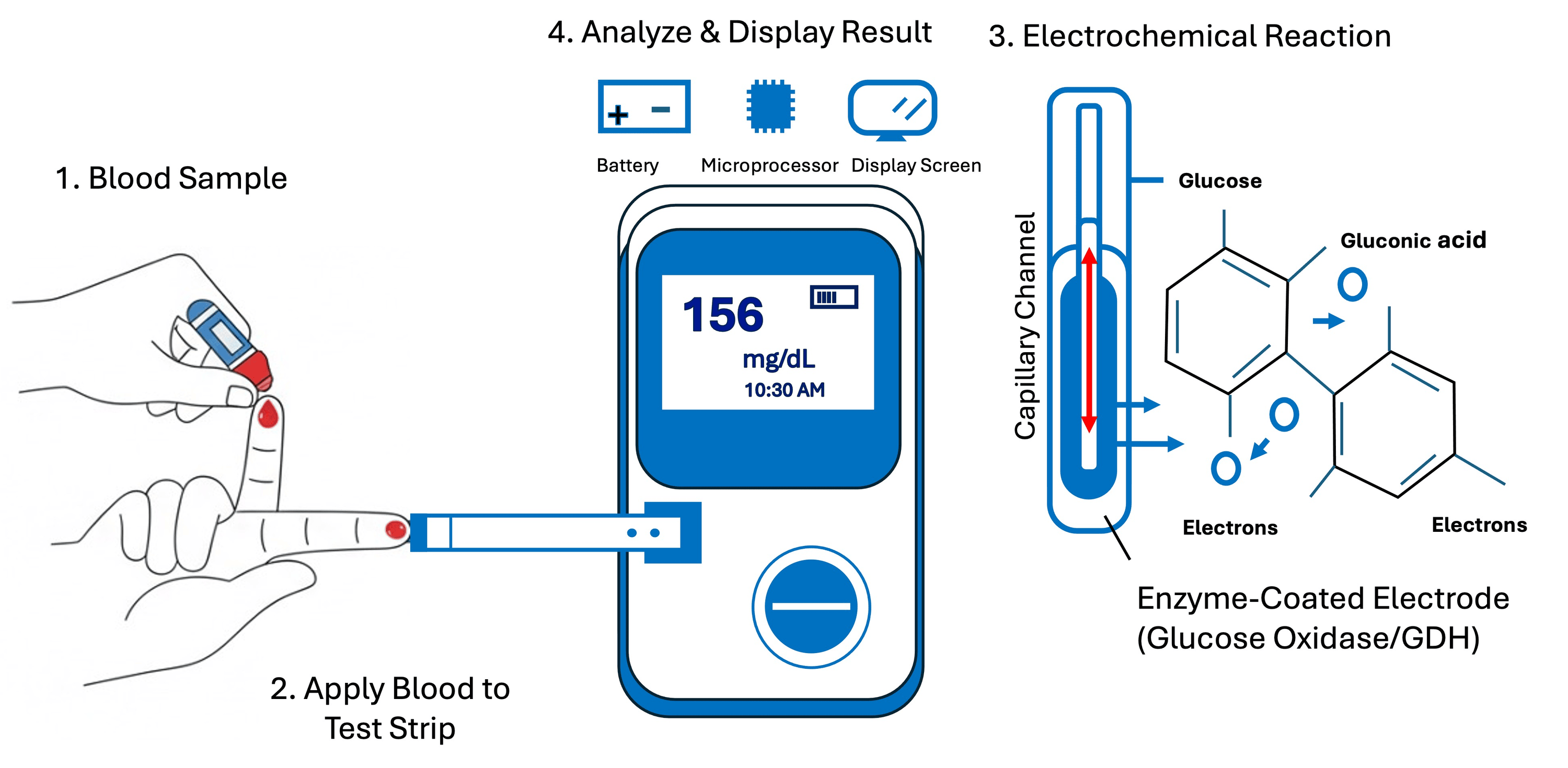
The fundamental principle of most modern BGMs is amperometric electrochemical detection [5]. The
process involves a disposable test strip containing a capillary channel and an enzyme-coated working
electrode. The primary enzymes used are glucose oxidase (GOD) or glucose dehydrogenase (GDH). When a
1 2
Open Access Review Article
How to cite this article
Darkhabani O, Ahmed A (December 28, 2025) Evolution and Future of Glucose Monitoring: From Blood Glucose Meters to Continuous Systems
and Their Projected Impact in the Middle East and North Africa (MENA) Region. Cureus 17(12): e100272. DOI 10.7759/cureus.100272

small drop of capillary blood (typically 0.3 to 1 µL) is applied, it is drawn into the strip. The enzyme
catalyzes the oxidation of glucose, generating an electrical current that is proportional to the glucose
concentration in the blood sample. The meter measures this current, applies an algorithm, and displays the
result in units of mg/dL or mmol/L on a digital screen. A simplified schematic of this process is shown in
Figure 1.
FIGURE 1: Principle of operation of a blood glucose meter.
GDH, glucose dehydrogenase.
The development of BGMs can be categorized into distinct generations.
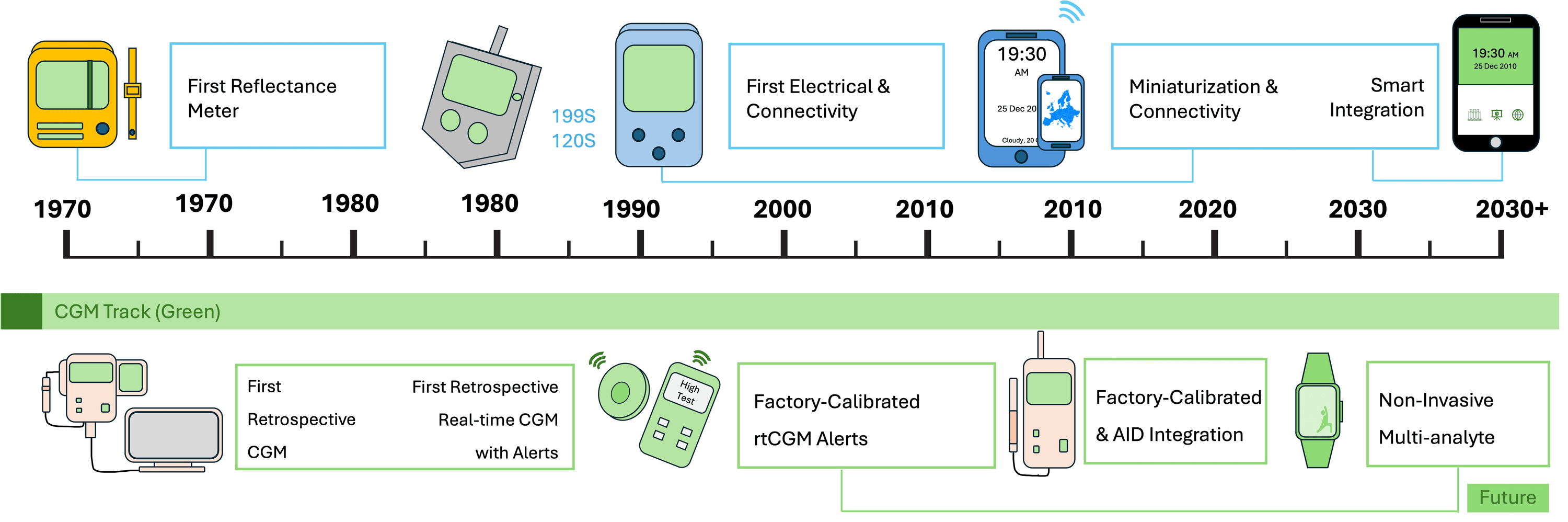
First generation (1970s-80s): The first commercial device, the Ames Reflectance Meter (Dexterity, 1970), was
large, expensive, and used reflectance photometry. It required users to time the reaction, wipe the blood off
the strip, and then insert it into the meter for a reading [3].
Second generation (1990s-2000s): This era saw the shift to electrochemical strips, enabling "no-wipe"
testing. This led to rapid miniaturization, faster results (5-30 seconds), reduced blood volume requirements,
and a significant drop in cost, making SMBG accessible to most patients [6,7].
Modern connected generation (2010s-present): Current BGMs focus on connectivity and data management.
They feature Bluetooth to sync with smartphone apps for trend analysis, bolus calculators, cloud storage,
and easy data sharing with healthcare providers. Alternate-site testing (e.g., forearm) also became available
[6]. While alternate-site testing is convenient, the blood from the alternate sites does not always reflect the
current glucose level in the central circulatory system (like the blood from the fingertips) [8].
Continuous Glucose Monitors (CGMs): Principle of Operation
CGMs measure glucose concentration in the interstitial fluid (ISF) of the subcutaneous tissue, not in the
blood [9]. A small, flexible sensor (containing a glucose-oxidase-coated electrode) is inserted under the skin.
As with BGMs, the enzyme reaction generates an electrical signal. This signal is sent wirelessly via a
transmitter to a dedicated receiver or a smartphone app. A key physiological consideration is the time lag
(typically 5-15 minutes) between blood glucose and ISF glucose levels, particularly during periods of rapid
change [10]. Sophisticated algorithms are employed to smooth data, compensate for this lag, and, in many
modern systems, calibrate the sensor signal to provide accurate real-time glucose values.
The evolution of CGM has been marked by rapid innovation and can be categorized into distinct
generations.
First generation (professional/retrospective): Early systems (e.g., Medtronic MiniMed CGMS, Medtronic,
Minneapolis, MN, USA) were used by clinicians to retrospectively download and analyze 72-hour glucose
profiles to uncover patterns invisible with SMBG [11].
Real-time CGM (rtCGM): Systems like the Dexcom G4 (Dexcom, San Diego, CA, USA) and Medtronic
Guardian introduced real-time glucose display, and customizable alerts and alarms for hypoglycemia and
hyperglycemia. These systems typically require periodic calibration with finger-stick BGMs. In addition, the
displayed number is accompanied by a directional arrow (trend arrows). These arrows indicate the speed and
direction of the glucose change. An arrow pointing straight across (→) means your glucose is relatively
stable. An arrow pointing double-up (↑↑) means your glucose is rising rapidly (e.g., 3 mg/dL per minute or
2025 Darkhabani et al. Cureus 17(12): e100272. DOI 10.7759/cureus.100272 2 of 7

more).
Flash glucose monitoring (FGM) and factory-calibrated rtCGM: A major advancement came with Abbott's
FreeStyle Libre (FGM) (Abbott, Alameda, CA, USA), which eliminated finger-stick calibration by using a
factory-calibrated sensor [12]. The user obtains glucose data and a historical trend graph by scanning the
sensor with a reader or smartphone. The latest rtCGM systems (Dexcom G7, Medtronic Guardian 4, FreeStyle
Libre 3) are now also factory-calibrated, offering high accuracy, miniaturized designs, longer wear durations
(10-14 days), and direct integration with automated insulin delivery systems.
A timeline illustrating this concurrent evolution is presented in Figure 2.
FIGURE 2: Timeline of development of glucose monitoring device
generations.
CGM, continuous glucose monitoring; rtCGM: real-time CGM; AID, automated insulin delivery.
Comparative Analysis: Advantages and Disadvantages
A systematic comparison of BGM and CGM technologies is critical for understanding their appropriate
clinical application. Table 1 provides a detailed overview.
2025 Darkhabani et al. Cureus 17(12): e100272. DOI 10.7759/cureus.100272 3 of 7

Feature Blood glucose meters (BGM) Continuous glucose monitors (CGM)
Biological sample Capillary blood Interstitial fluid
Measurement type Invasive, intermittent snapshot Minimally invasive, continuous (e.g., every 1-5 minutes)
Key metrics
provided Single glucose value Real-time value, trend arrows, historical graphs, time in range (TIR),
glucose management indicator (GMI)
Accuracy (MARD) Typically <5-10% Modern systems: <10% (Many <8%); MARD improves with each
generation (21)
Calibration Required for every test (via strip) Factory-calibrated (modern systems) or requires finger-stick
calibration (older rtCGM)
Hypo/hyperglycemia
alerts No Yes, customizable visual and vibratory alarms
Usability &
convenience
Requires carrying meter, strips, and lancing
device; painful finger-sticks
Sensor worn for 7-14 days; scanning (FGM) or automatic data
transmission (rtCGM)
Data for clinical
decisions
Essential for calibration and point-in-time
insulin dosing
Superior for pattern recognition, adjusting basal insulin, and
mealtime dosing with trend data
Cost Low upfront cost, recurring cost of strips and
lancets
High upfront/recurring cost for sensors/transmitters; cost-
effectiveness is proven in reducing complications
Primary limitation No trend data, painful, misses nocturnal
events
Physiological lag, sensor insertion, potential skin irritation, higher
cost
TABLE 1: Comparative analysis of blood glucose meters (BGM) and continuous glucose monitors
(CGM).
MARD, mean absolute relative difference.
Future of glucose monitoring and the MENA market: technological
directions
The trajectory of glucose monitoring points towards greater integration, intelligence, and minimal
invasiveness. The goal is to evolve from a device that simply reports a number into a comprehensive,
proactive metabolic health system.
Extended Sensor Longevity: The Quest for Low Maintenance
The current standard of care requires sensor replacement every seven to 14 days, a factor that contributes to
cost, inconvenience, and sensor site irritation. Research is heavily focused on developing more stable
enzymes and significantly improved biocompatible materials for the sensor components. The aim is to
achieve sensors lasting 30 days or longer, which would dramatically reduce the yearly cost of consumables
and patient hassle. Longer wear-time also provides a more uninterrupted view of glucose trends, making
treatment decisions more informed. This move is essential for boosting patient adherence and the overall
cost-effectiveness of CGM technology for healthcare systems [13-15].
Non-invasive and Minimally Invasive Technologies: The Ultimate Goal
The biggest barrier to adherence for people with diabetes remains the need for skin penetration [14-16].
Significant investment is being made in technologies that eliminate or drastically reduce the need for
lancing or subdermal insertion. This area is exploring several physics- and chemistry-based approaches.
Optical sensors: Devices using light, such as Raman spectroscopy or near-infrared (NIR) light, attempt to
measure glucose concentration based on how light interacts with the molecules in the skin. The main
challenge here is overcoming signal interference from other skin components, temperature, and movement.
Transdermal extraction: This involves drawing tiny, painless samples of interstitial fluid through the skin,
often using low-level electric currents (reverse iontophoresis).
Biofluids: Research continues into the feasibility of accurately correlating glucose levels in easily accessible
2025 Darkhabani et al. Cureus 17(12): e100272. DOI 10.7759/cureus.100272 4 of 7

biofluids like tears or saliva [17] to the blood glucose concentration. Smart contact lenses are a well-
publicized example of tear-based monitoring. While technical challenges remain in ensuring accuracy,
consistency, and calibration, a truly non-invasive device is universally recognized as the ultimate
technological goal that could revolutionize diabetes screening and management globally.
Multi-Analyte Sensing: The Next Frontier in Metabolic Health
The ability to simultaneously monitor multiple biomarkers offers a more holistic view of metabolic status
than glucose alone.
The next generation of implanted or wearable sensors will measure glucose alongside other critical analytes
such as ketones and lactate [18]. Simultaneous measurement of blood ketones is vital for patients with type
1 diabetes, providing an early warning system for diabetic ketoacidosis, which is a life-threatening
complication. On the other hand, tracking lactate levels is crucial for athletes and can also indicate tissue
perfusion issues or severe illness.
Future iterations may include measuring additional biomarkers, such as insulin and C-peptide (to assess
insulin production) or cortisol (a stress hormone), allowing for truly comprehensive metabolic tracking and
diagnostics beyond diabetes management [19-21].
Market share projection in the MENA region (2025-2035)
The Middle East and North Africa (MENA) region, particularly the Gulf Cooperation Council (GCC) nations,
presents a critical and rapidly growing market for diabetes technologies due to a confluence of wealth, high
diabetes prevalence, and advanced healthcare infrastructure in many areas.
The current market is dominated by BGM due to its low initial cost, familiarity, and established
reimbursement pathways. However, this dynamic is shifting rapidly as awareness and technology
accessibility improve. There are several drivers for CGM Growth in the MENA region, including the
following.
High diabetes prevalence: The sheer number of people with diabetes, particularly in countries like Saudi
Arabia and the UAE, creates a substantial and concentrated addressable market. The high rates of obesity
and type 2 diabetes necessitate effective, scalable management tools [22].
Growing awareness: increased patient and physician education about the clinical benefits of “Time in
Range” (the percentage of time a patient spends in the target glucose range, typically 70−180 mg/dL) is the
key metric driving demand. Since BGM only provides snapshots, it is insufficient for calculating and
improving “Time in Range”, thus accelerating the shift to continuous monitoring [23].
Government initiatives and health economics: as evidence of CGM's superior cost-effectiveness in reducing
acute complications (like ketoacidosis) and long-term microvascular and macrovascular complications
grows globally, significant pressure will mount on public and private insurers across the MENA region to
provide reimbursement. Reimbursement is the single most critical factor for widespread adoption.
Government mandates and large-scale public health programs promoting modern diabetes care will unlock
mass market potential [22].
Competitive pricing and localization: The entry of multiple domestic and international CGM manufacturers
and the eventual introduction of highly competitive, potentially generic sensors will inevitably drive down
prices. Furthermore, companies are prioritizing localization by providing Arabic-language marketing,
clinical support, and device interfaces, making the technology more accessible and user-friendly to the local
population [24,25].
Market share projection: the convergence point
While BGM will remain the most accessible and primary tool for the vast population of non-insulin-treated
type 2 diabetics and those in lower-resource settings, the market share dynamics for intensive management
are changing fundamentally.
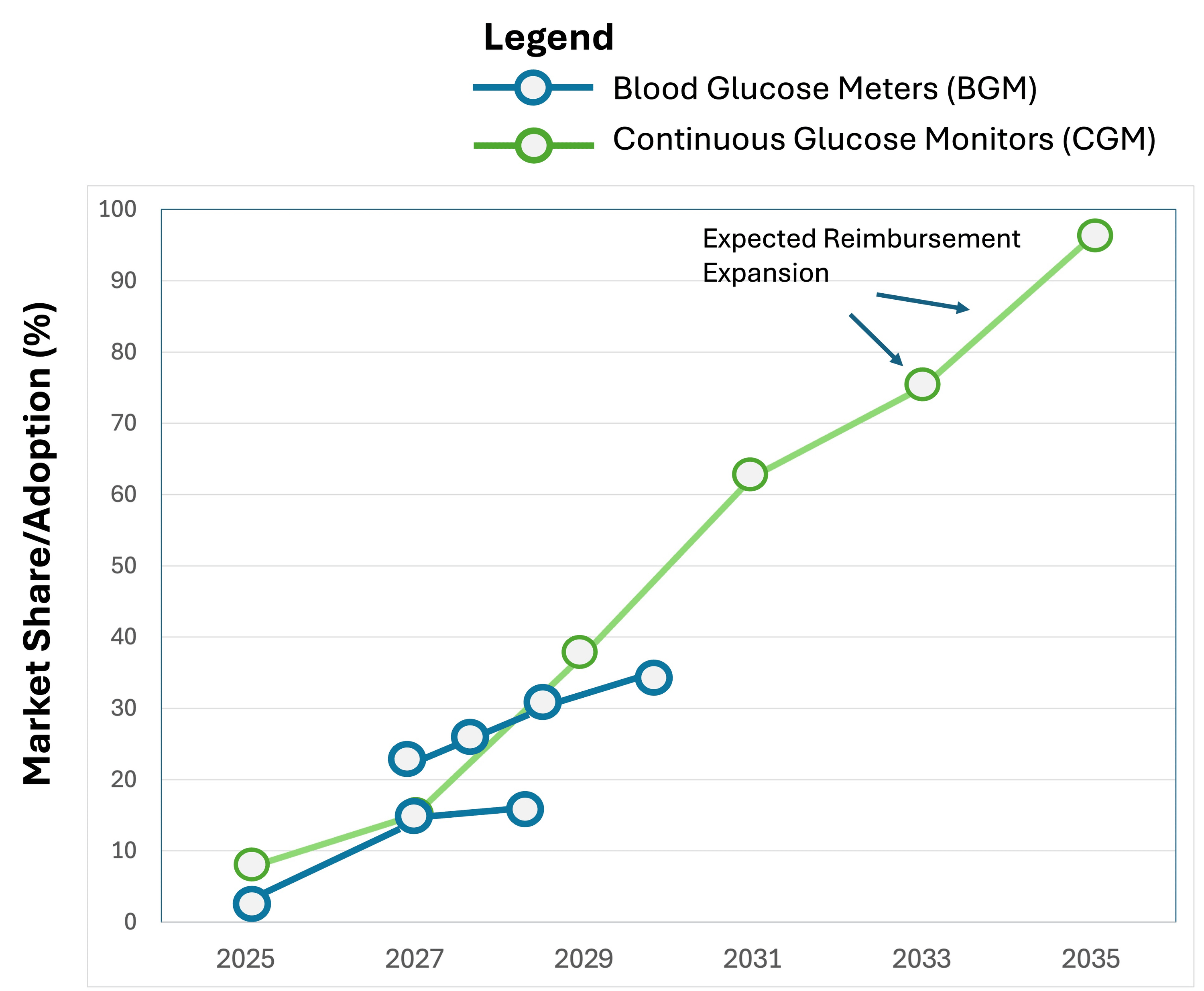
CGM is projected to capture a rapidly increasing share of the type 1 and insulin-dependent type 2 diabetes
markets. Figure 3 illustrates the projected market growth and the converging shares of BGM and CGM in the
MENA region from 2025 to 2035. We anticipate that by 2035, CGM will become the undisputed standard of
care for all Type 1 diabetes patients in the GCC and a significant portion of complex Type 2 patients
managed with multiple daily injections or insulin pumps. BGM will continue to serve as a vital backup tool
(for sensor failure or calibration needs) and remain the primary monitoring tool for budget-conscious and
less complex type 2 cases where insulin use is minimal or absent [26,27].
2025 Darkhabani et al. Cureus 17(12): e100272. DOI 10.7759/cureus.100272 5 of 7

FIGURE 3: Projected MENA market growth for BGM and CGM (2025–
2035), based on current adoption trends and market analysis.
MENA, Middle East and North Africa; BGM, blood glucose meter; CGM, continuous glucose monitoring.
Conclusions
The journey from the first reflectance meter to modern, connected biosensors exemplifies the profound
impact of technology on chronic disease management. Blood glucose meters democratized day-to-day
glucose monitoring and will remain an essential, cost-effective tool for millions. However, continuous
glucose monitoring systems represent a superior technological paradigm, providing the dynamic data
necessary for personalized, proactive diabetes care. For the MENA region, confronting a severe and growing
diabetes epidemic, the strategic and accelerated adoption of CGM is not merely a technological upgrade but
a public health imperative. Overcoming the barrier of cost through expanded reimbursement will be pivotal
in ensuring that these transformative technologies fulfill their potential to improve the quality of life and
long-term health outcomes for the millions living with diabetes in the region.
Additional Information
Author Contributions
All authors have reviewed the final version to be published and agreed to be accountable for all aspects of the
work.
Concept and design: Abdalla Ahmed, Omar Darkhabani
Acquisition, analysis, or interpretation of data: Abdalla Ahmed
Drafting of the manuscript: Abdalla Ahmed
Critical review of the manuscript for important intellectual content: Abdalla Ahmed, Omar
Darkhabani
Disclosures
Conflicts of interest: In compliance with the ICMJE uniform disclosure form, all authors declare the
following: Payment/services info: All authors have declared that no financial support was received from
any organization for the submitted work. Financial relationships: All authors have declared that they have
2025 Darkhabani et al. Cureus 17(12): e100272. DOI 10.7759/cureus.100272 6 of 7
no financial relationships at present or within the previous three years with any organizations that might
have an interest in the submitted work. Other relationships: All authors have declared that there are no
other relationships or activities that could appear to have influenced the submitted work.
References
1. IDF Diabetes Atlas . (2024). Accessed: October 1, 2025: https://diabetesatlas.org/.
2. Alhyas L, McKay A, Balasanthiran A, Majeed A: Prevalences of overweight, obesity, hyperglycaemia,
hypertension and dyslipidaemia in the Gulf: systematic review. JRSM Short Rep. 2011, 2:55.
10.1258/shorts.2011.011019
3. Clarke SF, Foster JR: A history of blood glucose meters and their role in self-monitoring of diabetes mellitus .
Br J Biomed Sci. 2012, 69:83-93.
4. Rodbard D: Continuous glucose monitoring: a review of recent studies demonstrating improved glycemic
outcomes. Diabetes Technol Ther. 2017, 19:S25-37. 10.1089/dia.2017.0035
5. Heller A, Feldman B: Electrochemical glucose sensors and their applications in diabetes management . Chem
Rev. 2008, 108:2482-505. 10.1021/cr068069y
6. Hughes MD: The business of self-monitoring of blood glucose: a market profile . J Diabetes Sci Technol.
2009, 3:1219-23. 10.1177/193229680900300530
7. Yamada S: Historical achievements of self-monitoring of blood glucose technology development in Japan . J
Diabetes Sci Technol. 2011, 5:1300-6. 10.1177/193229681100500541
8. Sly B, Taylor J: Blood glucose monitoring devices: current considerations. Aust Prescr. 2023, 46:54-9.
10.18773/austprescr.2023.013
9. Damiano ER, El-Khatib FH, Zheng H, Nathan DM, Russell SJ: A comparative effectiveness analysis of three
continuous glucose monitors. Diabetes Care. 2013, 36:251-9. 10.2337/dc12-0070
10. Boyne MS, Silver DM, Kaplan J, Saudek CD: Timing of changes in interstitial and venous blood glucose
measured with a continuous subcutaneous glucose sensor. Diabetes. 2003, 52:2790-4.
10.2337/diabetes.52.11.2790
11. Metzger M, Leibowitz G, Wainstein J, Glaser B, Raz I: Reproducibility of glucose measurements using the
glucose sensor. Diabetes Care. 2002, 25:1185-91. 10.2337/diacare.25.7.1185
12. Bailey T, Bode BW, Christiansen MP, Klaff LJ, Alva S: The Performance and Usability of a Factory-Calibrated
Flash Glucose Monitoring System. Diabetes Technol Ther. 2015, 17:787-94. 10.1089/dia.2014.0378
13. Didyuk O, Econom N, Guardia A, Livingston K, Klueh U: Continuous glucose monitoring devices: past,
present, and future focus on the history and evolution of technological innovation. J Diabetes Sci Technol.
2021, 15:676-83. 10.1177/1932296819899394
14. Engler R, Routh TL, Lucisano JY: Adoption barriers for continuous glucose monitoring and their potential
reduction with a fully implanted system: results from patient preference surveys. Clin Diabetes. 2018, 36:50-
8. 10.2337/cd17-0053
15. Kwon SY, Moon JS: Advances in continuous glucose monitoring: clinical applications . Endocrinol Metab
(Seoul). 2025, 40:161-73. 10.3803/EnM.2025.2370
16. Min S, Geng H, He Y, Xu T, Liu Q, Zhang X: Minimally and non-invasive glucose monitoring: the road
toward commercialization. Sens Diagn. 2025, 4:370-96. 10.1039/D4SD00360H
17. Villena Gonzales W, Mobashsher AT, Abbosh A: The progress of glucose monitoring-a review of invasive to
minimally and non-invasive techniques, devices and sensors. Sensors (Basel). 2019, 19: 10.3390/s19040800
18. Zhou K, James S, Gaca M, et al.: Beyond glucose monitoring: multianalyte sensor use in diabetes . Diabetes
Technol Ther. 2024, 26:885-96. 10.1089/dia.2024.0250
19. Wolkowicz KL, Aiello EM, Vargas E, et al.: A review of biomarkers in the context of type 1 diabetes:
biological sensing for enhanced glucose control. Bioeng Transl Med. 2021, 6:e10201. 10.1002/btm2.10201
20. Ward WK, House JL, Birck J, Anderson EM, Jansen LB: A wire-based dual-analyte sensor for glucose and
lactate: in vitro and in vivo evaluation. Diabetes Technol Ther. 2004, 6:389-401.
10.1089/152091504774198106
21. Kulkarni AS, Khandelwal S, Manekar K, Assudani PJ, Girhe R, Kulkarni MB, Bhaiyya M: Portable 3D-printed
electrochemiluminescence sensor for simultaneous glucose and lactate monitoring. Sci Rep. 2025, 15:34592.
10.1038/s41598-025-18109-4
22. Alshaikh A, Bakhsh A, Al-Sagheir A, et al.: Expert opinion statement on continuous glucose monitoring in
type 2 diabetes in the Arab Gulf region. J Diabetes Sci Technol. 2025, 19322968251393740.
10.1177/19322968251393740
23. Choudhary P, Kao K, Quadri F, Balogh E, Foster J: Contributions of intermittently scanned continuous
glucose monitoring frequency and bolus insulin dosing on time in range: analysis of data from CGM and
connected insulin pens. Diabetes Obes Metab. 2025, 27:7570-7. 10.1111/dom.70165
24. Middle East & Africa continuous glucose monitoring devices market size, share & trends analysis report by
type (appliers, accessories), by connectivity, by indication, by end use, by region, and segment forecasts,
2025 - 2033. (2025). Accessed: October 1, 2025: https://www.marketresearch.com/Grand-View-Research-
v4060/Middle-East-Africa-Continuous-Glucose-41603591/.
25. Al-Sofiani ME, Al-Murashi AM, Al-Agil NA, Al-Othman AO, Al-Faris SY, Al-Enzi AM: Diabetes technology in
Saudi Arabia: current status and future directions. J Diabetes Sci Technol. 2025, 19322968251370756.
10.1177/19322968251370756
26. BGM and CGM market size, share, growth, and industry analysis, by type (continuous glucose monitoring
(CGM) and blood glucose meter (BGM)), by application (household and hospital), regional insights and
forecast from 2026 To 2035. (2025). Accessed: October 1, 2025:
https://www.businessresearchinsights.com/market-reports/bgm-and-cgm-market-109075.
27. Continuous glucose monitoring (CGM) market size & share analysis - growth trends and forecast (2025 -
2030). (2025). Accessed: October 1, 2025: https://www.mordorintelligence.com/industry-
reports/continuous-glucose-monitoring-market?network=g&source_campaign=&m....
2025 Darkhabani et al. Cureus 17(12): e100272. DOI 10.7759/cureus.100272 7 of 7