Most Noteworthy Cyber Attacks of 2025 (so far) PDF Free Download
1 / 10/10
100%

Most Noteworthy
Cyber Attacks of
2025 (so far)
Santosh Pandit
20 July 2025
Important Disclaimer: All views in this paper are entirely my own and may not be necessarily
shared by my employer or other cyber experts. Cyber risk is a complex beast, and no single
person or organisation knows everything. Research on previous cyber incidents is extremely
difficult, and you should expect gaps and errors in this report. I am trying my best to add
value to my readers.

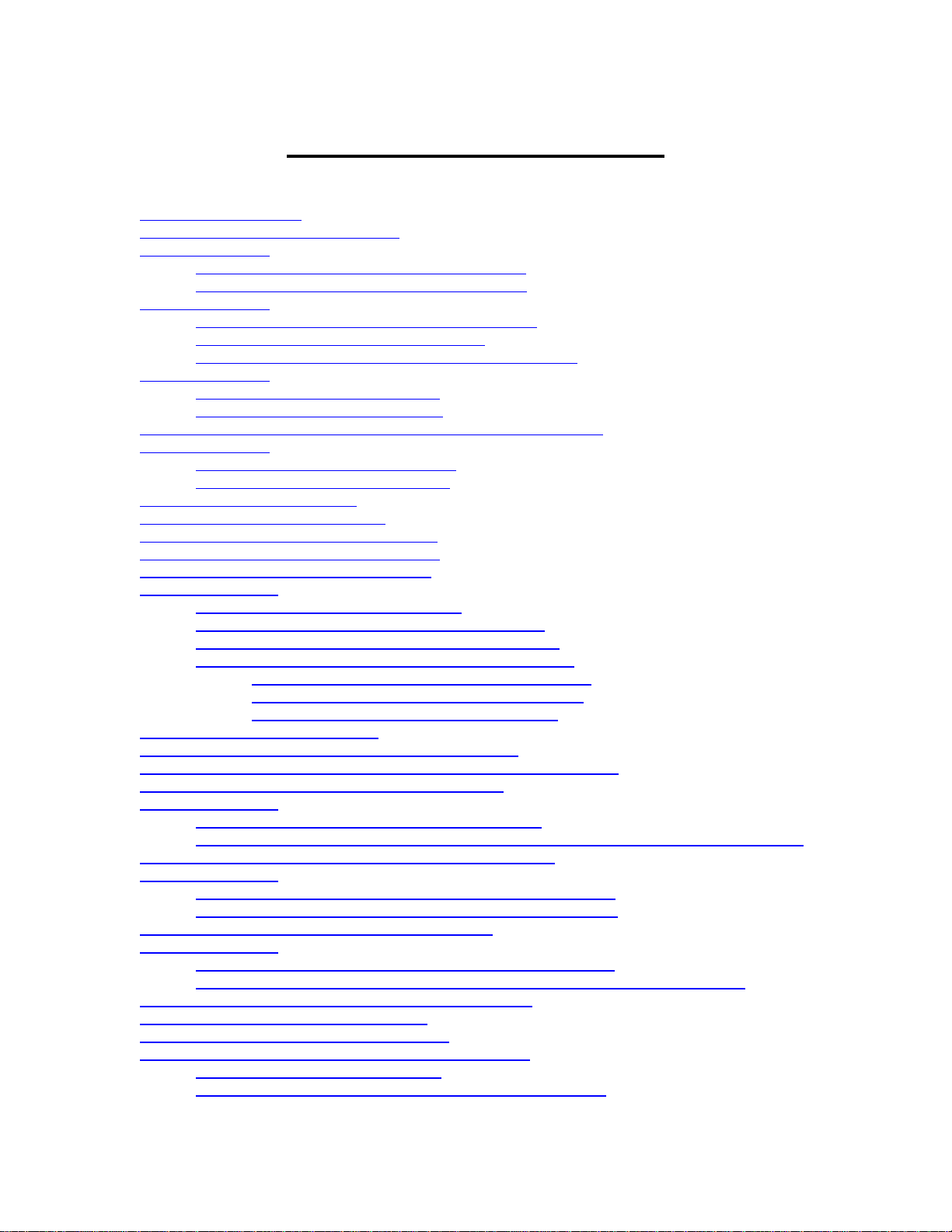
Table of Contents
Backdrop ............................................................................................................ 3
Attack Types ...................................................................................................... 3
Noteworthy Attacks of 2025 .......................................................................... 4
1. Supply Chain and Third-Party Attacks ............................................... 4
2. AI-Driven and Generative AI Abuse ..................................................... 4
3. Zero-Day Exploits and Nation-State Campaigns ............................. 5
4. Endpoint, EDR Bypass, and Malware Innovations.......................... 6
5. Firmware, IoT, and Edge Device Attacks ............................................ 6
6. Advanced Social Engineering and Human-Centric Attacks ......... 7
7. Ransomware and Financial Manipulation Evolutions .................... 7
8. Other Emerging Vectors ......................................................................... 8
Summary of Key Incidents ............................................................................ 9
How do defend? .............................................................................................. 10
Backdrop
2025 has thus far been a year of contradictions. The volume of attacks appears to have
decreased. My own servers are receiving fewer hits than last year. However, the
sophistication of cyber-attacks has markedly increased this year. The Coinbase incident
involved bribery and highlighted something we have observed on the darknet for many
years. We witnessed several sophisticated attacks that resembled certain chess moves.
They are difficult to detect until a grandmaster explains them to you.
The context for these sophisticated attacks was predictable even 12 months before they
occurred. I can confidently say that my 2024 cyber predictions materialised more
prominently in 2025.
Attack Types
The 2025 attacks exploit emerging technologies such as AI (and online LLMs), target
overlooked vectors including cloud identities and firmware and employ adaptive evasion
tactics that challenge conventional defences. Key themes include supply chain compromises
for amplified impact, AI-enhanced personalisation and automation, malware-free intrusions,
and long-term persistence strategies.
Whilst ransomware, phishing, and zero-day exploits remain prevalent, the innovation lies in
their evolution: AI-driven scalability, exploitation of trusted tools and relationships (such as
MSPs and insiders), and targeting of blind spots including edge devices and AI systems
themselves.
Note that it is extremely difficult to conclude the details of each attack, as we still do not have
the culture of transparency and information sharing. Also note, the attack none of us can
confirm is the "harvest now, decrypt later" approach associated with quantum computers.

Noteworthy Attacks of 2025
I have grouped the 2025 attacks thematically for clarity, with a summary table of key
incidents.
1. Supply Chain and Third-Party Attacks
Attackers increasingly targeted software ecosystems, vendors, and managed service
providers (MSPs) to compromise multiple victims via trusted channels, demonstrating
strategic patience with dormant payloads activated years later.
• Magento E-Commerce Extensions Backdoor: Cybercriminals inserted backdoors
into 21 popular Magento plugins as early as 2019, activating them in April 2025 to
affect 500–1,000 online stores, including a $40 billion multinational. This long-
dormant compromise evaded detection by blending malicious code with legitimate
updates. (Sources: SC-Media and BankInfoSecurity)
• Gluestack NPM Packages Trojanisation: In June 2025, 17 React Native libraries
(with ~1 million weekly downloads) were updated with hidden remote-access Trojans,
infecting developers and downstream apps before discovery. (Sources: SC-Media,
SecurityBrief, and SecurityBrief)
• SimpleHelp RMM Exploitation (DragonForce Ransomware): The DragonForce
gang chained older vulnerabilities (e.g., CVE-2024-57727, CVE-2024-57728) in
SimpleHelp remote-management tools to breach an MSP and cascade ransomware
to customers, highlighting the cascading risks of RMM platforms. (Sources: MSSP
Alert, SocRadar, Broadcom, and CVE Details)
• VeraCore Warehouse Management Software (XE Group): The XE Group exploited
zero-days since 2020, maintaining persistent webshells for espionage on
manufacturing supply chains. (Sources: CyberSecurityDive, and CyberScoop)
• General Supply Chain Sieges: Incidents like the Change Healthcare breach and
open-source backdoors (e.g., detected via unusual CPU spikes) amplified impact
through vendor ecosystems, with AI accelerating vulnerability chaining. Note: I am
aware that the breach occurred in 2024, but its repercussions were more obvious in
2025. (Sources: CyberSecurityDive, The HIPAA Journal, ETH Zurich, and
SecureWorld)
Why Noteworthy: These attacks abuse trusted software and services for broad reach, often
with years-long dormancy, bypassing endpoint security and emphasising the need for
ecosystem-wide monitoring.
2. AI-Driven and Generative AI Abuse
AI has lowered barriers for attackers, enabling automated, hyper-personalised threats and
even autonomous exploitation.
• AI-Crafted Phishing and Deepfakes: Generative AI created realistic voice/video
impersonations for BEC scams, e.g., faking executives to authorise fraudulent
transfers. Tools like Xbow autonomously discovered vulnerabilities in companies
such as Disney, AT&T, and Ford. (Sources: ZeroThreat, JPMorgan, and Vipre). The
sources for Xbow are AIinvest, ZytechDigital, and Xbow.

• AI-Powered Malware Mutation and Agent Exploitation: Polymorphic malware
changes code in real-time to evade detection, while "Agentware" hijacks AI agents for
tasks like data scraping or DoS attacks. (Sources for polymorphic malware:
SecurityWeek, Cyber Defence Magazine, and TRMLabs) (Sources for Agentware are
HiddenLayer, and UC Berkeley)
• Living Off the AI (Prompt Injection): Attackers exploited AI systems directly,
injecting malicious prompts to turn them into attack platforms. I must add that
injection attacks are a decade old, but the AI context makes them noteworthy for
2025. (Sources: OWASP, and Paul M. Duvall)
• Lowering Entry Barriers: A few years ago, I would have laughed at the idea of
mentioning less sophisticated attackers known as “script kiddies”. However, in 2025
AI tools empowered these "script kiddies" to craft custom malware, identify exploits,
or generate phishing content faster. (Sources: Dev.to, UC Berkeley, and SC Media)
Why Noteworthy: AI shifts attacks from manual to automated and adaptive, democratising
sophisticated capabilities and making social engineering more scalable and undetectable.
3. Zero-Day Exploits and Nation-State Campaigns
Please note that I am highly allergic to attribution of cyber-attacks to nation states and APTs.
However, for this section I will refer to the attribution made by other experts.
State actors and criminals used undisclosed flaws for stealthy access, often in critical
infrastructure or via chained vulnerabilities.
• Commvault Azure Breach: Attributed to a Chinese nation-state actor (Silk Typhoon),
the hacker exploited CVE-2025-3928 to install webshells in Commvault's cloud
backups. (Sources: Varonis, C. Oscar Lawshea, and New Jersey Gov)
• SentinelOne Vendor Compromise (APT41): Attributed to the Chinese APT41. The
hacker targeted SentinelOne via a trusted IT vendor, deploying the ShadowPad
backdoor (obfuscated as "ScatterBrain") with timed delays, reboots for trace removal,
and Nimbo-C2 for control. (Sources: SentinelOne, InfoSecurity Magazine, and
Industrial Cyber)
• Microsoft SharePoint Zero-Day Chain: CVE-2025-53770 was chained with CVE-
2025-49706 and CVE-2025-49704 for remote code execution on enterprise servers.
(Sources: The Stack, NIST, and Trend Micro)
• GPU Driver Zero-Days: Qualcomm Adreno flaws were exploited on smartphones,
expanding attacks to hardware layers. The concern is that GPU drivers, having direct
access to memory with kernel privileges, offer a highly attractive target for attackers,
enabling deep, privileged access to smartphones. (Sources: TechZine, and Recorded
Future)
Why Noteworthy: Chaining zero-days with supply-chain pivots allows persistent, undetected
access, even in high-security environments like cybersecurity firms.

4. Endpoint, EDR Bypass, and Malware Innovations
Techniques focused on subverting defences without new malware, using legitimate
processes for evasion.
• "Bring Your Own Installer" (BYOI) Bypass: Attackers exploited SentinelOne's EDR
update process to disable tamper protection and deploy Babuk ransomware,
leveraging signed installers to "trick" the tool into self-unloading. To be more precise,
the "trick" is to interrupt its legitimate upgrade process at a precise moment when its
protections are momentarily offline, leaving the system vulnerable. (Sources:
Halcyon, InfoSecurity Magazine, and AON)
• Infostealers via Cracked Apps: Lumma Stealer variants, distributed through fake
keygens, stole live sessions for rapid follow-on attacks. This includes stealing
session cookies from browsers. For my experimental platform (kyber.club) I spent
almost a week perfecting the cookie security by attacking it. (Sources: Cloudflare
Cloudforce, Microsoft Security, Cybereason, and Gen Digital)
• Waiting Thread Hijacking: Chinese actors (e.g., Mustang Panda) used
MAVInject.exe for stealthy code execution in certain breaches. Sources say the
breaches affected Hertz and Delhaize, but I cannot be sure. Mustang Panda uses the
official Microsoft executable to inject malicious payloads into legitimate processes
like waitfor.exe or explorer.exe, allowing their malware to execute under the guise of
a trusted process, thus bypassing many EDR and antivirus solutions. (Sources:
GrayLog, Asec, and InformationSecurity Magazine)
Why Noteworthy: These "malware-free" methods repurpose defender tools or processes,
extending dwell time and complicating forensics.
5. Firmware, IoT, and Edge Device Attacks
Attackers moved deeper into hardware for persistence that survives updates and resets.
• ASUS Router Botnet (AyySSHush): Over 9,000 routers were backdoored via
NVRAM SSH key injection after exploiting CVE-2023-39780, disabling logs and
leaving no visible malware files. The campaign was designed to be "malware-free" in
the traditional sense, relying on legitimate router features and configuration changes
to remain stealthy, making it difficult to detect with traditional EDR. (Sources: Field
Effect, Grey Noise, and SC Media)
• Pivoting Through Edge Devices: Groups like Akira routed attacks via unmonitored
IoT or appliances (e.g., Fortinet/Ivanti zero-days) to evade EDR. They used this
compromised IoT device to mount Windows SMB shares and deploy their Linux-
based ransomware encryptor, thereby bypassing EDR solutions that were not
designed to monitor such devices. (Sources: Sumo Logic, Cyfirma, HIPAA journal,
and PICUS)
Why Noteworthy: Targeting persistent memory and built-in features creates "invisible"
backdoors, shifting threats beyond software to hardware blind spots.

6. Advanced Social Engineering and Human-Centric Attacks
Exploiting trust and fatigue remained key, with novel twists.
• Insider Bribery (Coinbase Ransomware): Attackers bribed overseas support
agents to access internal tools and steal user data. This incident showed the need for
due diligence of staff and contractors throughout the supply chain. (Sources: Xcitium,
Global Relay, CM Alliance, and there was another great article that I can’t find now.)
• MFA Exhaustion and Help Desk Targeting (Scattered Spider): Repeated MFA
prompts wore down users, followed by privilege escalation via help desks. (Sources:
CyberArk, Splunk, Halcyon, and SC Media)
• Weaponised GitHub and Fake Interviews (Water Curse): Malicious "pen-testing"
tools or job challenges delivered malware to developers. By the way, another
variation of the Fake Interviews is also the “paid consultation” scam where they offer
you 300 pounds for an hour with their “customer”. (Sources: There are quite a few on
GitHub, the one from Cyware is good. For fake jobs - CyberSecurityDive and
Tecnica)
• ClickFix Attacks (iClicker): Fake CAPTCHA prompts tricked users into installing
malware on educational platforms. (Sources: University of Michigan, Kaspersky, and
Blackwired)
Why Noteworthy: Blends technical exploits with psychological manipulation, including insider
recruitment and fatigue-based tactics.
7. Ransomware and Financial Manipulation Evolutions
Ransomware added destructive elements and new models.
• Akira with Wiper Module: While Akira ransomware has been known for its double-
extortion model (encryption + data exfiltration) since its emergence in March 2023,
reports from May/June 2025 indeed confirm its evolution to include a wiper module,
creating "extinction-level" events. This means that even if a victim pays the ransom,
the data could still be destroyed, eliminating the incentive for payment and turning
the attack into pure sabotage. This reminds me of those idiots of Darkside Kingdom,
whose encryption was so rubbish that their own decryption key failed to work.
(Sources: Halcyon, Intertec, and Checkpoint)
• RaaS Enhancements (RansomHub): The APT RansomHub was already active in
2024, and such emerging groups offered affiliate models for data ransom or access
sales. Overall, I find that the new APTs created over the last 2-3 years have picked
up momentum in 2025. (Sources: Masked Actors, Checkpoint, and Halcyon)
• Cryptocurrency Market Manipulation: Japan's FSA reported $2 billion in
unauthorised trades via compromised accounts. (Sources: Recorded Future,
Japanese FSA, and another article from Recorded Future)
Why Noteworthy: Wiper integration escalates stakes, while RaaS democratises attacks.
8. Other Emerging Vectors
• Malware-Free Cloud Intrusions: Exploiting OAuth tokens and APIs for "living-off-
the-cloud" access in platforms like Microsoft 365.
• Quantum-Enabled Threats: "Harvest now, decrypt later" strategies anticipate
breaking encryption. I have always emphasised the need to improve end-to-end
encryption including the network connectivity. In addition, DNSSEC will play a greater
role in the future.
• Hacktivist DDoS via Telegram: Groups like NoName057 coordinated infrastructure
disruptions through encrypted channels.

Summary of Key Incidents
Attack Case
Attacker Type
Target
Technique
Innovative Aspect
Magento Extensions
Backdoor
Cybercriminal
E-commerce stores
Dormant supply-chain trojans
Long-term (6+ years) activation in
trusted plugins.
SimpleHelp RMM
(DragonForce)
Cybercriminal
MSPs and customers
Vulnerability chaining in RMM
tools
Cascading ransomware via
managed services.
SentinelOne Vendor
Breach (APT41)
Nation-state
(China)
Cybersecurity firm
Supply-chain backdoor with
evasion (delays, reboots)
Multi-stage stealth against security
vendors.
BYOI EDR Bypass
Cybercriminal
(Babuk)
Endpoints with
SentinelOne
Exploit update process
Subverts legitimate installers to
disable defences.
ASUS Router Botnet
(AyySSHush)
Advanced
attackers
Home routers
NVRAM firmware backdoor
Persistent, malware-free SSH
access surviving updates.
AI Deepfakes and Xbow
Cybercriminal/AI
tools
Businesses (e.g.,
Disney)
Generative AI for phishing/vuln
discovery
Autonomous, personalised attacks
at scale.
SharePoint Zero-Day
Chain
Cybercriminal
Enterprise servers
Chained vulnerabilities for RCE
Rapid weaponisation of unpatched
enterprise software.
Insider Bribery (Coinbase)
Cybercriminal
Cryptocurrency
exchange
Financial incentives to employees
Direct recruitment for internal
access.

How do defend?
Let us discuss over a coffee.
Santosh Pandit
Copyright © 2025
License: CC BY (Creative Commons with Attribution)