S&P 500 Sector Performance for January 2025 PDF Free Download
/1
100%

Copyright © 2025 FMeX Publishing. All rights reserved.
Distributed by Financial Media Exchange.
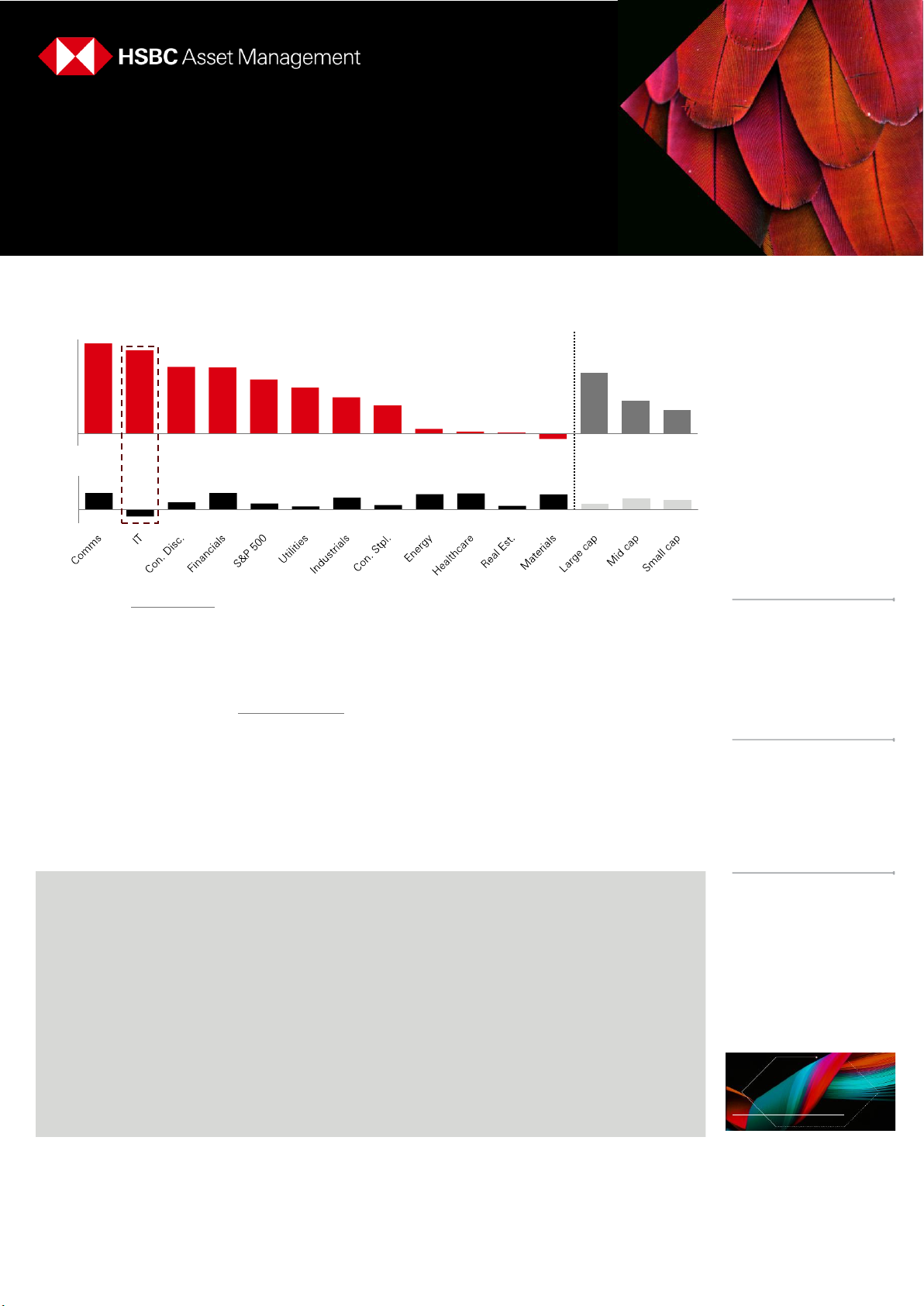
S&P 500 Sector Performance for January 2025
Sector performance was solid as leaders and laggards rotated once again
Over every single time period, sector performance will
be driven largely by factors one would expect, such as
the overall state of the economy, underlying corporate
earnings, current and predicted interest rates,
geopolitical events and inflation, among other factors.
Reviewing the sector performance for the month of
January (a very short time-period), two things become
very clear:
• First, sectors do not move in lock-step with one
another and will often provide very divergent
returns for investors – depending on timing and the
current economic climate and
• Second, January saw a big divergence in sector
performance, with the spread between the best
(+8%) and the worst (-4%) being exceptionally
wide.
Sector Highlights Through January 2025
In January, the S&P 500 sectors performed strongly,
with 10 out of 11 advancing and four gaining over 5%.
This was a stark contrast to December, when
performance was weak – 8 out of 11 sectors declined,
including three that dropped around 10%, entering
contraction territory. Interestingly, this pattern also held
for the previous two months: November saw 9 of 11
sectors rise, while October witnessed 8 of 11 retreat.
Hopefully, February will break this cycle.
On a relative basis, January saw 10 of the 11 sectors
advance, whereas December had 9 sectors decline, and
November experienced broad strength, with all 11
sectors outperforming October’s levels.
Additionally, there were some notable shifts in sector
performance. For example, Materials rebounded from an
11% decline in December to a 6% gain in January – a
clear display of volatility.
Here are the sector returns for the month of January and
December (two very short time-periods):
S&P 500
Sector
December
2024
January
2025
Information Technology
+2.18%
-3.94%
Energy
-10.76%
+3.38%
Health Care
-6.58%
+6.86%
Real Estate
-9.83%
+2.51%
Consumer Staples
-5.37%
+2.01%
Consumer Discretionary
+3.35%
+3.37%
Industrials
-7.98%
+4.85%
Financials
-5.65%
+6.47%
Materials
-11.22%
+5.90%
Communication Services
+4.25%
+8.18%
Utilities
-7.95%
+2.73%
Source: FMR
What Does It Mean for You?
The varying returns across the 11 S&P 500 sectors
emphasize two cornerstone concepts of financial
planning: asset allocation and diversification. Asset
allocation helps determine the mix of asset classes in
your portfolio, while diversification spreads risk by
investing across different sectors and industries.
In our next review, let’s take some time to delve into
these strategies further, ensuring that your investments
are not only aligned with your risk tolerance but also
optimized to meet your evolving financial objectives.
This way, we can make any necessary adjustments to
keep your portfolio in sync with both current market
conditions and your long-term personal goals.