SLIS Notes: Censorship Turbulent Times PDF Free Download
1 / 4/4
100%

SLIS Connecting SLIS Connecting
Volume 11 Issue 1 Article 4
November 2022
SLIS Notes: Censorship Turbulent Times SLIS Notes: Censorship Turbulent Times
Stacy Creel, Ph.D. USM SLIS
Follow this and additional works at: https://aquila.usm.edu/slisconnecting
Part of the Archival Science Commons, Collection Development and Management Commons,
Information Literacy Commons, Scholarly Communication Commons, and the Scholarly Publishing
Commons
Recommended Citation Recommended Citation
Stacy Creel, Ph.D. USM SLIS (2022) "SLIS Notes: Censorship Turbulent Times,"
SLIS Connecting
: Vol. 11:
Iss. 1, Article 4.
DOI: 10.18785/slis.1101.04
Available at: https://aquila.usm.edu/slisconnecting/vol11/iss1/4
This Article is brought to you for free and open access by The Aquila Digital Community. It has been accepted for
inclusion in SLIS Connecting by an authorized editor of The Aquila Digital Community. For more information, please
contact aquilastaff@usm.edu.

SLIS Notes: Censorship Turbulent Times1
By Stacy Creel, Associate Professor & Director
School of Library & Information Science at The University of Southern Mississippi
Just this past year in 2021, the American Library
Association (ALA) had to release a statement in
response to an increase in censorship of materials
centered on LGBTQIA+ issues and books by Black
authors, Indigenous authors, or other people of color.
The statement in its entirety is found here:
https://www.ala.org/advocacy/statement-regarding-
censorship. The statement reaffirms that ALA and its
Executive Board, Divisions, Roundtables, and other
units stand firm in the freedom to read and against
censorship. One paragraph of the statement
specifically focuses on the libraries instead of the
association:
“Libraries manifest the promises of the First
Amendment by making available the widest possible
range of viewpoints, opinions, and ideas, so that
every person has the opportunity to freely read and
consider information and ideas regardless of their
content or the viewpoint of the author. This requires
the professional expertise of librarians who work in
partnership with their communities to curate
collections that serve the information needs of all
their users.” (ALA, 2021).
What does it mean to manifest something? According
to the Oxford English Dictionary, it means several
things. While all of them have some similarities,
perhaps these two best fit what the American Library
Association was trying to convey: “To make (a
quality, fact, etc.) evident to the eye or to the
understanding” and to “display (a quality, condition,
feeling, etc.) by action or behaviour; to give evidence
of possessing, reveal the presence of, evince.” (OED,
2022). Another word to clarify the libraries’ role
could be embody—libraries and librarians need to
embody, exemplify, make obvious by action and
behavior their support of intellectual freedom and
anti-censorship so that all users can find themselves
in the shelves of the library.
For the last thirty years, 1990-2019, books have
continued to be challenged for a variety of reasons
with violence, sexually explicit content, and
1ReprintedfromMississippiLibraries,85(1),11‐13.
offensive language usually being the top reasons
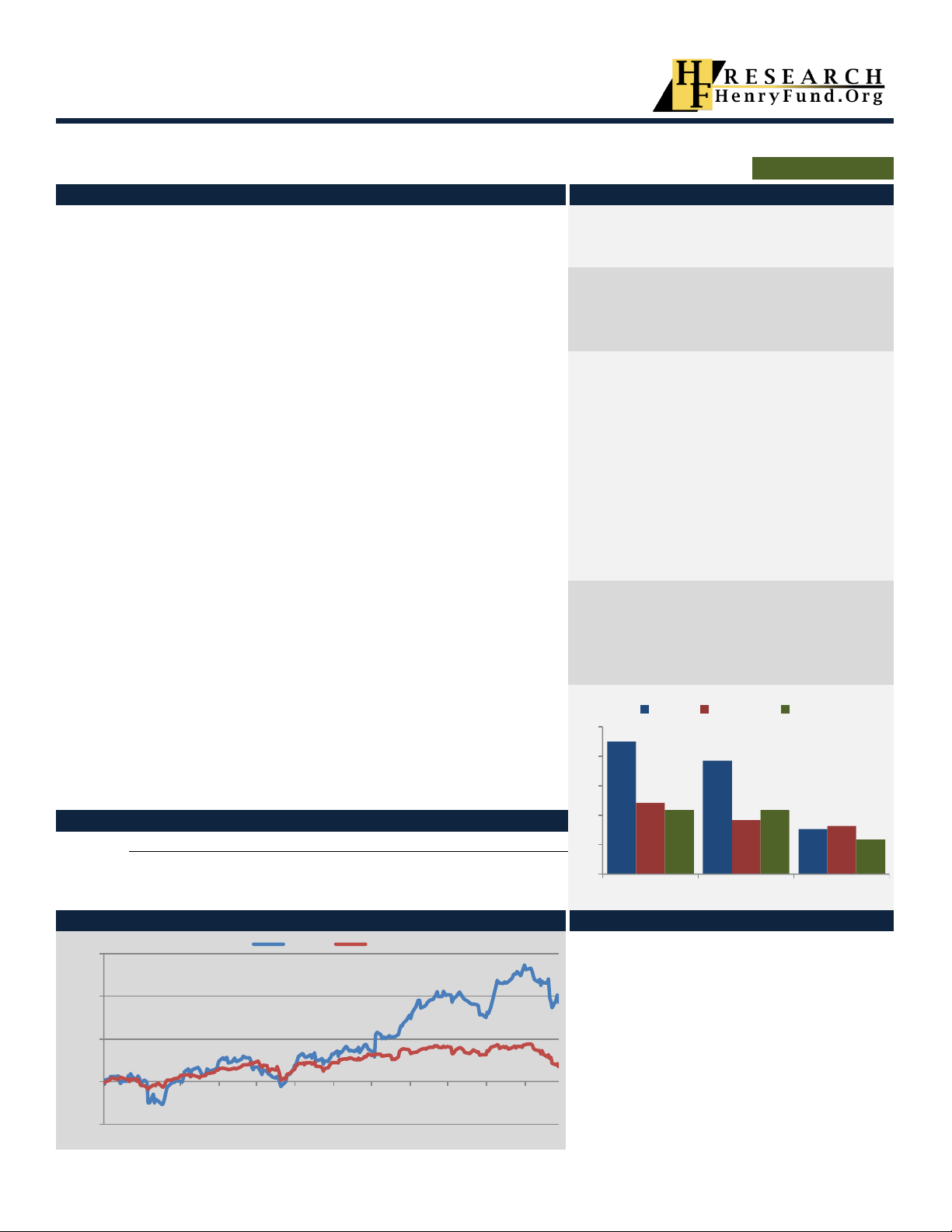
(Aucoin, 2022). Chart 1 provides a look at the top 10
challenged books from the State of American
Libraries from 2015-2020 and shows that the top
three reported reasons for challenges are
homosexuality/LGBTQ/transgender topics, themes,
and characters; use of racist language, offensive
language, and profanity; and sexual explicit materials
(Rosa, 2016, 2017, 2018, 2019; Zalusky 2020;
2021).
Traditionally, as seen in Graph 2, libraries have faced
challenges to materials and services most frequently
from parents and library patrons (Rosa, 2016, 2017,
2018, 2019; Zalusky 2020; 2021). Elected officials or
the government, on average, were responsible for
3.5% of the challenges from 2015 to 2020. However,
2021 and 2022 have been fraught with libraries and
schools across the nation facing government
interference and demands of censorship over topics
dealing with race and LGBTQ topics.
Multiple states have passed laws to restrict
educational materials and lessons on race and others
have proposed laws at various stages (2022, Legal
Insurrection Foundation). Here in the state of
Mississippi, a mayor holds the library’s budget
hostage since the materials do not match his own
personal religious beliefs (Garner, 2022), and another
state official has voiced support for banning books
from the Anti-Racism Reading Shelf program of the
Mississippi Humanities Council (Pittman, 2022).
These battles with government entities will no doubt
play out in a court of law. Censorship by the
government is unconstitutional and freedom of
expression cases are historically determined by
‘“content neutrality"-- the government cannot limit
expression just because any listener, or even the
majority of a community, is offended by its content,”
and by an “expression may be restricted only if it will
clearly cause direct and imminent harm to an
important societal interest” (ACLU, 2022).

Censorship and banning of books have a long history
with the courts and the United States Government.
James Joyce's Ulysses was banned for 12 years
before it was permitted to be published after the US
District Court ruling United States v. One Book
Called Ulysses and other government reports have
led to industry bowing resulting in self-policing like
The Comics Code Authority (Head, 2019). It seems,
for now, as if history is doomed to repeat itself with a
return to the 1950 McCarthy era, “a time in which
books or films that dealt with race issues were often
attacked as Communist propaganda” (Robbins, 1994,
p. 331). Until these things work their way through the
legal system, it is more important than ever before for
there to be plans and procedures in place given these
tumultuous times. If it has been awhile since the
libraries’ reviewed their policies for handling
complaints, some of these resources can help.
Graph 1: Top 10 challenged books by topic (Rosa, 2016, 2017, 2018, 2019; Zalusky 2020; 2021)
Graph 2: Challenges by group by year in percentages
*Other was used in 2015 and 2016 (Rosa, 2016, 2017, 2018, 2019; Zalusky 2020; 2021)

Resources:
The American Civil Liberties Union
(https://www.aclu.org/) provides resources about
censorship, anti-discrimination, LBTQ rights, race,
current fights, and more.
American Library Association (https://www.ala.org/)
offers a plethora of information on intellectual
freedom, reporting and handling challenges, and how
to gird up library collection development policies.
Mississippi Library Commission
(https://www.mlc.lib.ms.us/) has resources to help
librarians gather information to defend against
challenges and tips for handling complaints.
National Coalition Against Censorship
(https://ncac.org/) serves to provide resources
including toolkits for defending materials.
National Council of Teachers of English’s
Intellectual Freedom Center
(https://ncte.org/resources/ncte-intellectual-freedom-
center/) offers a variety of resources and kids specific
to schools.
References:
American Civil Liberties Union. (2022). What is
censorship?.ACLU.https://www.aclu.org/other/what-
censorship
American Library Association. (2022). The American
Library Association opposes widespread efforts to
censor books in U.S. schools and libraries. ALA.
https://www.ala.org/news/press-
releases/2021/11/american-library-association-
opposes-widespread-efforts-censor-books-us
Aucoin, J. (2022). Censorship in libraries: A
retrospective study of banned and challenged books.
SLIS Connecting, 10 (2), 20-39.
Garner, G. (2022, January 27). Mississippi mayor
withholds $110,000 in library funding over
‘homosexual materials’. People. https://people.com
/politics/mississippi-mayor-withholds-library-
funding-over-homosexual-materials/
Legal Insurrection Foundation. (2022). Critical race
training in education.CriticalRace.
https://criticalrace.org/
Oxford University Press. (2021). Manifest. In Oxford
English Dictionary. Retrieved February 8, 2022, from
https://www.oed.com/view/Entry/113484?rskey=RW
bFwO&result=3
Pittman, A. (2022, January 5). Auditor targets anti-
racism books in Mississippi libraries: ‘a cancer on
our society’. Mississippi Free Press.
https://www.mississippifreepress.org/19419/auditor-
targets-anti-racism-books-in-mississippi-libraries-a-
cancer-on-our-society/
Robbins, L. S. (1994). Anti-communism, racism, and
censorship in the McCarthy Era: the case of Ruth W.
Brown and the Bartlesville Public Library. Journal of
Education for Library and Information Science,
35(4), 331-334.
Rosa, K. S. (2019). The state of America’s libraries
2019: a report from the American Library
Association. American Library Association.
http://www.ala.org/news/state-americas-libraries-
report-2019
Rosa, K. S. (2018). The state of America’s libraries
2018: a report from the American Library
Association. American Library Association.
www.ala.org/news/state-americaslibraries-report-
2018
Rosa, K. S. (2017). The state of America’s libraries
2017: A report from the American Library
Association.American Library Association. www.
ala.org/news/state-americas- libraries-report-2017
Rosa, K. S. (2016). The state of America’s libraries
2016: a report from the American Library
Association. American Library Association.
https://www.ala.org/news/sites/ala.org.news/files/con
tent/state-of-americas-libraries-2016-final.pdf.
Zalusky, S. (2021). The state of America’s libraries
2021: a report from the American Library
Association.American Library Association.
https://bit.ly/soal-report-2021.
(2020). The state of America’s libraries 2020: a
report from the American Library Association.
American Library Association. http://www.ala
.org/news/state-americas-libraries-report-2020