SWARM INTELLIGENCE IN MODELLING SOCIO-ECONOMIC PROCESSES PDF Free Download
1 / 14/14
100%

INFORMATION SOCIETY | 2025 | № 5 WWW.INFOSOC.IIS.RU
_____________________________
© Alfer’ev D. А., Natsun L.N, Rigin V. А., Dianov D. S., 2025
Производство и хостинг журнала «Информационное общество» осуществляется Институтом развития
информационного общества.
Данная статья распространяется на условиях международной лицензии Creative Commons «С указанием авторства
- С сохранением условий версии 4.0 Международная» (Creative Commons Attribution – ShareAlike 4.0 International; CC BY-
SA 4.0). См. https://creativecommons.org/licenses/by-sa/4.0/legalcode.ru
https://doi.org/10.52605/16059921_2025_05_102
Use of information society technologies
SWARM INTELLIGENCE IN MODELLING SOCIO-ECONOMIC PROCESSES
The article was recommended for publication by A. N. Raikov, member of the editorial board, on 30.06.2025.
Alfer’ev, Dmitry Aleksandrovich
PhD (economics)
Vologda Research Center of the Russian Academy of Sciences, Laboratory of intelligent and software-information
systems, senior researcher
Vologda, Russian Federation
Peter the Great St. Petersburg Polytechnic University, Graduate school of industrial economics, associate
professor
Saint Petersburg, Russian Federation
alferev_1991@mail.ru
Natsun, Leila Natigovna
PhD (economics)
Vologda Research Center of the Russian Academy of Sciences, Center for social and demographic research, senior
researcher
Vologda, Russian Federation
leyla.natsun@yandex.ru
Rigin, Vasilii Aleksandrovich
Vologda Research Center of the Russian Academy of Sciences, Laboratory of intelligent and software-information
systems, head of laboratory
Vologda, Russian Federation
riginva@mail.ru
Dianov, Daniil Sergeevich
Vologda Research Center of the Russian Academy of Sciences, Laboratory of intelligent and software-information
systems, engineer
Vologda, Russian Federation
daniil.dianov@gmail.com
Abstract
The goal is to model the behavior of primitive organisms and transfer the results to human life. A human choice process
has been implemented, based on an ant algorithm that simulates the procedure for laying out an optimal, shorts route.
Keywords
swarm intelligence; bionics; biomimicry; ant algorithm; modeling of social behavior; choice
Introduction
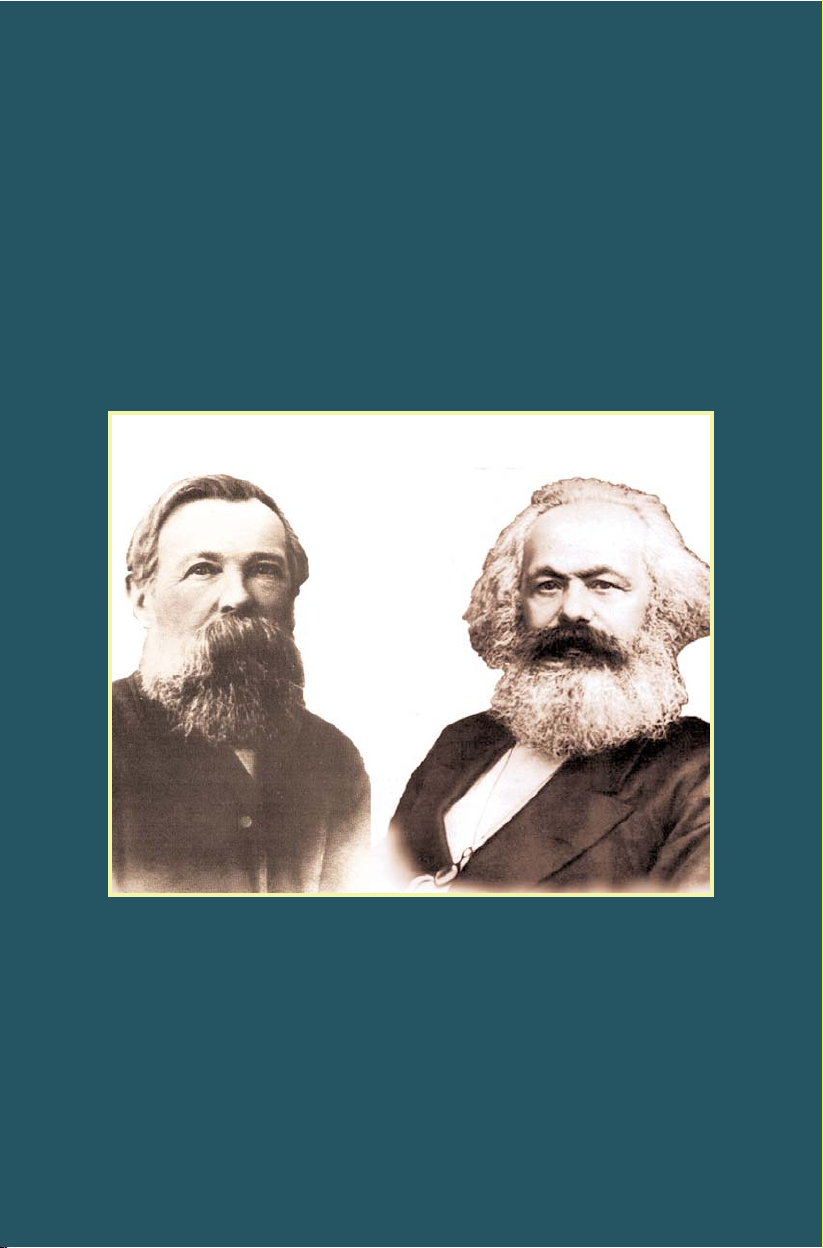
«But what distinguishes the worst architect from the best of bees is this, that the architect raises his structure
in imagination before he erects it in reality» [1, P. 185]. This famous observation by German philosopher
and economist Karl Marx highlights the advantage of human strategic thinking over an animal. However,
in 2010, a team of Japanese and British scientists have discovered that even a remarkably simple organism
– a slime mold (Physarum Polycephalum) can design highly efficient transport networks, rivaling the work
of highly qualified engineers and, in some cases, with even greater energy efficiency [2].

INFORMATION SOCIETY | 2025 | № 5 WWW.INFOSOC.IIS.RU
103
This study builds on earlier research (2000), which explored a similar experiment but in a more
theoretical and less applied form [3]. In both studies, T. Nakagaki (PhD in Biology, Japan), played a key
role – work that earned him two Ig Nobel Prizes (2008 in cognitive science and 2010 for transport network
planning).
It’s worth noting that humans have long drawn inspiration from nature to solve practical and
economic challenges, as explored in depth by T. Aguilar-Planets and E. Peralta (both – PhD in Engineering,
Spain) [4]. While these bio-inspired solutions are not exact replicas of natural systems, being heuristic in
nature, they often effectively address real-world problems with near-optimal results. This approach
diminishes the need for rigid, deterministic logic characteristic of human reasoning [5], suggesting that in
our ever-changing world, such precision may not be crucial for survival.
The collective behavior of social insects, including ants, termites, wasps, bees, bumblebees and
locusts – is of particular practical interest due to its parallels with human societal organization.
Remarkably, the engineering solutions developed by these insects often surpass human-designed systems
in efficiency. In fact, many human innovations have been directly inspired by nature’s own perfected
designs.
Interestingly, while phylogenetically distant – such as ants and termites – these insect groups exhibit
remarkably similar social structures. Even more striking is the convergence of their architectural solutions,
with near-optimal designs emerging independently in their nest construction.
Insects of the order Hymenoptera exhibit a strong propensity for collective living. Notably, they
display advanced eusocial behavior, marked by a rigid caste system and hierarchical structure. This social
organization stems from both biological predispositions and command-driven regulation within the
colony.
Each swarm develops its own sophisticated communication system within the hive, incorporating
pheromones and intricate movement patterns. These colonies may even engage in human-like activities
such as primitive agriculture (protecting aphids or cultivating fungus gardens), waging wars against other
colonies and practicing a form of slavery. Within their societies, interactions between members sometimes
include criminal behavior, while in other cases, acts of self-sacrifice can be observed, much like in human
communities.
While the hive operates under strict hierarchical structures as previously noted, individual
advancement within each insect’s specialization remains possible based on demonstrated skills and
experience. Moreover, colony members exhibit measurable personality differences rather than perfect
uniformity. For further reading on social insect behavior, see the discussion between V.I. Alipov, B.S.
Boyarshinov (PhD in Physics and Mathematics, Associate Professors) and E.B. Boyarshinova [6], or refer
to works by V.E. Kipyatkov (DSc in Biology, Professor) [7-8].
The observations above suggest that insect societies, though simpler and more primitive than human
ones, exhibit striking parallels to human communities. By modeling these simplified yet similar to complex
systems, we can learn to control it or identify certain relationships and patterns that may be scalable to
human contexts. This work aims to simulate the behavior of primitive organisms and translate the findings
into practical applications for human society.
To achieve this, the research will focus on three key objectives:
- identifying problem space of swarm technology in everyday human life and practice;
- developing a technical implementation of a selected swarm algorithm;
- adapting this algorithm to model a relevant socio-economic process or phenomenon.
A noteworthy 2024 PNAS study by Israeli researchers explored a crucial question [9]: «What enables
collective intelligence in biological systems?» Their findings revealed that swarm intelligence emerges most
effectively from the simplicity of individual swarm members. More complex and cognitively advanced
organisms tend to experience greater interpersonal conflict, which ultimately hinders collaborative
efficiency.
This concept was explored in depth in «The Mythical Man-Month» by F.P. Brooks-Jr. (PhD in
Informatics, USA) [10], where the scientist demonstrated how increased communication time reduces team
productivity. This insight highlights that modeling role-based behavior works best for mass phenomena
with predictable patterns, rather than unique or isolated cases.

INFORMATION SOCIETY | 2025 | № 5 WWW.INFOSOC.IIS.RU
104
1 Swarm Technology Origins
Stanisław Lem’s «The Invincible» provides one of the most compelling literary explorations of swarm
technology. The renowned Polish science fiction writer and futurist presents a visionary model where
simple, primitive components self-organize into highly advanced, resilient systems through their
interactions.
Swarm algorithms have found broad applications in human daily life, primarily serving as tools of
bionics and biomimicry – a scientific discipline that adapts principles from biological systems to
engineering solutions [4-5; 11]. Besides, these algorithms also incorporate organizational patterns from
inanimate systems, drawing on concepts from chaos theory [12]. The diversity of these algorithms can be
explored in the recent report by A.P. Karpenko (DSc in Physics and Mathematics, Professor) [13, 0:00-40:00]
or his textbook called «Modern Search Optimization Algorithms» [14].
A comprehensive international review on this subject has been conducted by a team of Chinese
researchers [15]. Further synthesis of swarm intelligence ideas and concepts is available in the work of L.V.
Nguyen (PhD in Informatics, Vietnam) [16].
A closely related concept is collective decision-making – the process where multiple individuals
refine and build upon each other’s perspectives to arrive at optimal solutions for complex problems. This
principle has been thoroughly examined in a joint study by V.I. Protasov (PhD in Physics and Mathematics,
Associate Professor) and B.B. Slavin (DSc in Economics, PhD in Physics and Mathematics) [17].
A key advantage of swarm systems over single entities is their inherent resilience to failure or
destruction. This robustness stems from element redundancy, the interchangeability of individual
components. Notably, N.N. Taleb (PhD in Economics, USA) identifies redundancy as a fundamental
defense against Black Swan events [18].
However, excessive resource allocation creates tradeoffs: higher agent density within the hive
reduces energy efficiency and increases interference. This implies that swarm populations require careful
optimization, not indefinite scaling, tailored to the specific operational requirements.
Advances in science have driven down technology costs while improving communication systems,
enabling the development of affordable robotics designed for swarm-based interaction in the future. This
trend is particularly prominent in military drone applications, as discussed by V.O. Kaskov and A.I.
Masalovich (PhD in Physics and Mathematics) [19]. The principles of swarm intelligence are equally
relevant to Internet of Things technologies [20], a connection substantiated by research from HSE
specialists. Their work identifies three key application areas: autonomous control, smart energy
distribution and robotics [21].
The key challenges in this domain involve establishing reliable and stable communication between
devices and developing robust infection defense mechanisms. Specifically, swarm systems must be capable
of both detecting malfunctioning components and rapidly isolating or eliminating them.
The interview reveals another notable advantage of particle swarm algorithm over gradient descent
methods. As A.I. Masalovich notes, particle swarm algorithm typically converges to extrema faster [19,
14:00-16:00]. While we find this claim may not hold universally, particle swarm algorithm’s greater
flexibility and versatility often prove advantageous in practical implementations.
This discussion naturally extends to ABM (Agent-Based Modeling), where some agents form the
core framework. In computational implementations, these agents effectively operate as a swarm, making
swarm algorithms directly applicable. An example is the Sugarscape model developed by J.M. Epstein
(PhD in Politics, USA) and R.L. Axtell (PhD in Informatics, USA), which simulates human society through
insect-inspired interactions. Here, agents follow minimalist rules to search for sugar [22].
2 Ant Colony Optimization
2.1 Mathematical Basis
To illustrate the aforementioned concepts, let us examine in detail the well-known swarm algorithm called
Ant Colony Optimization (ACO). Its development was motivated by the need to solve the Traveling
Salesman Problem – essentially, the challenge of finding the shortest possible route that visits each vertex
of a given graph (Fig. 1).

INFORMATION SOCIETY | 2025 | № 5 WWW.INFOSOC.IIS.RU
105
Fig. 1. Graph and movement along its vertices
○ – vertices of the graph;
– – possible routes of movement between the vertices of the graph;
– – the optimal, shortest route.
While this problem could theoretically be solved by exhaustively enumerating all possible paths, the
computational complexity grows prohibitively large with even minor increases in graph size (in the most
generalized case
!n
, where
n
is the number of graph vertices). This necessitates alternative approaches,
such as the aforementioned ant colony algorithm, which efficiently generates approximate or near-optimal
solution.
The algorithm was developed by scientists M. Dorigo (PhD in Informatics, Italy) and Th. Stützle
(PhD in Informatics, Belgium), who comprehensively described their methodology in the joint work «Ant
Colony Optimization» [23]. Their research was later introduced to the Russian-speaking academic
community through the works of S.D. Shtovba (DSc in Technics, Professor, Ukraine) [24-25].
The ACO algorithm’s core modeling parameters are: the distances
l
between network nodes and
the pheromone
τ
concentrations along pathways. During route selection, each ant evaluates potential
paths based on two key factors: the path’s length and pheromone amount left by previous ants (with higher
pheromone concentrations increasing the path’s selection probability).
To better understand the computational procedures of the ACO algorithm, we recommend referring
to the lecture by M.N. Kirsanov (DSc in Physics and Mathematics, Professor) [26]. The video tutorial by M.
Tsarkov is also highly useful [27], as it clearly and concisely explains key calculation details involved in
modeling insect colony behavior.
It is important to note that pheromone-based stigmergy is not the only approach for real-time route
optimization. Honeybees, for instance, employ their «waggle dance» to communicate location information
to hive mates. The intensity of these movements directly correlates with food source quality, prompting
proportional colony response – stronger dances attract more foragers. For further reading, see works by
A.N. Tsurikov (PhD in Technics, Associate Professor) [28] or the bee algorithm’s creator, Professor Derviş
Karaboğa [29].
The ant colony algorithm has several notable limitations [30, P. 108]:
- slow convergence with large-size problem (in the initial search phase, ants explore nearly all
possible paths (including those that would clearly be non-optimal upon global inspection),
significantly increasing number of calculations);
- getting stuck in local optima (this necessitates running multiple computational experiments with
different parameters, though even this doesn’t guarantee finding the global optimum).
Despite these drawbacks, the algorithm excels at mathematically formalizing selection processes.
We find it particularly effective for modeling collective social behavior.

INFORMATION SOCIETY | 2025 | № 5 WWW.INFOSOC.IIS.RU
106
2.2 Technical Implementation of the ACO Algorithm
The aforementioned ACO algorithm was implemented by our team using the AnyLogic 8.9.1 Personal
Learning Edition development environment. The implementation was based on the methodology
described in the article «Run, Ant, Run» [31]. In our model, virtual insects are represented by airplane icons
(Fig. 2-3).
Fig. 2. Basic computer simulation of the ant algorithm:
Model state at time 278.19 s
Fig. 3. Basic computer simulation of the ant algorithm:
Model state after all ants completed their routes (632.55 s)
myTown = 13 (pcs) – agents representing graph vertices;
myAnt = 666 (pcs) – ant agents moving at velocity υ = 1 m/s;
a, b = 1 – parameters controlling pheromone and path length importance;
p = 0.5 – pheromone evaporation rate;
bestAnt – identification number of the first ant to complete the optimal route;
bestDistance (m) – length of the shortest path found;
numberFinish (pcs) – number of ants that completed their routes;
– – shortest discovered route;
∙∙∙ – closing edge of the shortest discovered route.

INFORMATION SOCIETY | 2025 | № 5 WWW.INFOSOC.IIS.RU
107
Among notable observations from our computer simulations, when parameters a, b and p emphasize
pheromone trails, a larger portion of the ant population follows nearly identical paths close to the optimal
route, thereby reducing the average path length (Fig. 4). A similar effect can be achieved by introducing
elite ants into the population. Unlike their counterparts, these ants do not move probabilistically but
instead follow the current best-known route, helping establish a clear trail for the rest of the colony [24, Pp.
73-74; 25, P. 8].
If the parameters are poorly configured, the distribution of ants will tend to follow a normal
distribution (Fig. 5). However, this may sometimes yield better shortest-path results by amplifying
probabilistic aspects in the model. Introducing randomness often significantly expands the modeling
possibilities and can lead to unexpected yet insightful outcomes [32].
Fig. 4. Ant distribution by traveled route length:
With a = 1, b = 1 and p = 0.5
Fig. 5. Ant distribution by traveled route length:
With a = 0.15, b = 0.56 and p = 0.29
0%
10%
20%
30%
40%
50%
60%
121 131 141 151 161 171 181 191
Route length, m
Average route length –140.28 m
Minimum route –117.64 m
Maximum route –187.84 m
0%
5%
10%
15%
20%
25%
30%
118 136 154 171 189 206 224 242 259 277
Route length, m
Average route length –200.5 m
Minimum route –115.49 m
Maximum route –281.01 m

INFORMATION SOCIETY | 2025 | № 5 WWW.INFOSOC.IIS.RU
108
3 Practical Applications of ACO Algorithms
Let us begin by noting that many economic entities can be represented as networks of relationships – which
are essentially mathematical graphs. For real-world implementations of this framework, we recommend
the work by D.A. Alfer’ev (PhD in Economics) and K.A. Gulin (DSc in Economics, PhD in History,
Associate Professor). Their study models a product value chain through graphs, enabling effective
monitoring and real-time management of it [33].
Another noteworthy study in this context is the article by T.B. Melnikova (PhD in Economics,
Associate Professor), which employs graph-based methods to analyze and evaluate scientific collaboration
networks [34]. A recent, comprehensive and rigorous work on applying graph theory to practical human
activities is the dissertation by V.A. Khitraya (PhD in Physics and Mathematics) [35]. Let us recall that the
ants in the previously discussed algorithm navigate precisely across graphs.
Among humanity’s most critical challenges are those in healthcare. The infrastructure of this sector
can be modeled at various levels through different graph representations, which visualize flows of
material, financial, human and other resources. In these systems, the role of virtual ants could be fulfilled
by actual agents: patients, medical staff, transport units, etc.
Optimal route planning in healthcare can also be achieved through alternative methods, such as
linear programming techniques [36]. This brief study focuses specifically on determining the optimal fleet
size of ambulance vehicles required to efficiently serve communities within a given administrative district.
In a series of studies by researchers at PSI RAS, attempts were made to optimize patient-doctor
visitation routes [37-39]. These papers thoroughly describe a class of so-called «myopic» algorithms that –
analogous to dynamic programming principles – adjust routes based on real-time conditions. This
approach offers the distinct advantage of relatively interpretable scenario modeling, unlike many other
mathematical methods.
The ACO algorithm’s implementation is notably intuitive and accessible even to non-technical
specialists. Moreover, ant behavior closely mirrors simplified human social dynamics, making virtual ant-
based results readily transferable to real-world economic systems. The approach also integrates seamlessly
with Agent-Based Modeling – a cutting-edge method for simulating socio-economic processes (see [40] for
details).
The ACO algorithm can model patient-hospital selection patterns, simulating resulting facility
congestion or idle capacity. Travel distance to healthcare facilities serves as a key patient decision factor,
while an aggregated hospital rating could function as the «pheromone» analog in this system.
In our view, the simplest metric would be location ratings from GIS platforms like Google or Yandex
Maps. For more sophisticated implementations, composite scores could aggregate multiple heterogeneous
indicators.
A research team from NIIOZMM has published a booklet addressing this specific measurement
approach for healthcare facilities [41]. For broader applications across economic sectors, a SPbPU research
group proposed a method for evaluating companies’ digital profiles [42]. We have also published a detailed
study on consolidating diverse statistical metrics into unified indicators – see [43, Pp. 10-11].
3.1 Maternity Hospital Selection
Let us demonstrate with a hypothetical case. The town of Sheksna lacks a maternity hospital, forcing
expectant mothers to choose between two nearby cities: Vologda (79.7 km via road) or Cherepovets (34.6
km via road). Route distances were calculated automatically in AnyLogic using OpenStreetMap APIs.
The average ratings for maternity hospitals in these cities (based on Yandex Maps searches at the
time of writing) were: «vologda maternity hospital» – 3.7/5 and «cherepovets maternity hospital» – 3.9/5.
To properly integrate these into the ant algorithm, they need to be scaled using formula (1):
*
τη
ττ
=
, (1)
where
τ
– rating of the facility in question (in points);
τ
– average rating (in points) among all facilities of interest;
η
– average inverse of the travel distance to the facilities of interest.

INFORMATION SOCIETY | 2025 | № 5 WWW.INFOSOC.IIS.RU
109
Thus, according to the available data and
α
and
β
set at 1, the estimated probability of expectant
mothers from Sheksna choosing to give birth in Vologda is approximately 0.29, while for Cherepovets it is
0.71. Given data on road speeds, number of women and birth rates, the described scenario can be effectively
implemented in the AnyLogic environment (Fig. 6).
Fig. 6. Distribution of expectant mothers across maternity hospitals
– locations between which agents move (Cherepovets, Sheksna, Vologda);
– agents (women) moving between specified locations;
--- – roadway.
3.2 Dental Clinic Selection
Let us examine another example. Here, we will model the population’s choice of standard dental services
within these same municipalities – specifically, where people would prefer to receive dental care.
In addition to traveling to another town, patients may seek treatment locally. Therefore, to the
existing route distance data, we will add intra-city travel distances, its value calculated as the square root
of each location’s area (Table 1).
Table 1. Distances to respective municipalities, km
Vologda
Cherepovets
Sheksna
Vologda
10.8
114.3
79.7
Cherepovets
114.3
11
34.6
Sheksna
79.7
34.6
3.1
The average ratings of facilities for the search queries «vologda dentistry», «cherepovets dentistry»
and «sheksna dentistry» in Yandex Maps, recorded at the time of writing this article, were approximately
4.2/5, 4.1/5 and 3.5/5 respectively. With
α
and
β
taken at the level of 1, the probable preference of the
population of the respective settlements to receive dental treatment in one place or another was distributed
as follows (Table 2):
Table 2. Distribution of population preference for receiving standard dental services in the respective settlement
Vologda
Cherepovets
Sheksna
Population of Vologda
0.83
0.08
0.09
Population of Cherepovets
0.07
0.73
0.2
Population of Sheksna
0.04
0.09
0.87

INFORMATION SOCIETY | 2025 | № 5 WWW.INFOSOC.IIS.RU
110
Assuming that standard dental services are of roughly equal quality across all settlements, their cost
may serve as the primary deciding factor. This phenomenon of seeking acceptable medical services
(balancing quality and price) has become commonly known as «medical tourism».
According to the dental service aggregator 32top, the cost of caries treatment in Vologda in October
2024 ranged from 3.5 thousand RUB to 7 thousand RUB, while in Cherepovets it was between 3.5 thousand
RUB and 4 thousand RUB. The healthcare portal 1vrach.ru reported prices for similar services in Sheksna
during the same period at a fixed rate of 2 thousand RUB. If we use this pricing data instead of average
facility ratings (taking the inverse values, since higher prices indicate worse accessibility), we obtain the
following preference distribution (Table 3):
Table 3. Distribution of population preferences for receiving standard dental services in respective settlements when
considering service costs
Vologda
Cherepovets
Sheksna
Population of Vologda
0.68
0.09
0.23
Population of Cherepovets
0.04
0.61
0.35
Population of Sheksna
0.01
0.05
0.94
As can be observed, this distribution differs from the previous one (Table 2). When accounting for
service costs, a significant portion of preferences has shifted toward Sheksna. This finding compels us as
researchers, when modeling population behavior, to carefully determine the proper incentives that
influence their choices.
Conclusions
In summary:
- Swarm intelligence is now being successfully applied to manage complex technical systems –
particularly in robotics, drone networks and optimal energy distribution. As digital technologies
advance, its potential for socio-economic applications appears highly promising.
- The Ant Colony Optimization algorithm serves as one of the visual and easily interpretable
swarm intelligence methods. The decision-making processes of ant colonies show parallels to
human societal behavior.
The ACO algorithm’s core development focuses on pheromone updating and distribution
mechanisms. Beyond the basic representation, we’ve previously discussed the Elitist Ant System (EAS)
variant. Other common modifications include: pheromone deposition proportional to route rankings (RAS
– Rank Ant System), Enforces upper/lower bounds on pheromone levels on the edges of the graph (MMAS
– Max-Min Ant System).
Additional specialized enhancements to ACO algorithms can be found in the work by Yu.Yu.
Dyulicheva (PhD in Physics and Mathematics, Associate Professor) [44, P. 39]. Significant contributions to
this field have also been made by A.A. Kazharov (PhD in Technics) and V.M. Kureichik (DSc in Technics,
Professor), particularly in their highly cited paper «Ant Algorithms for Solving Transport Problems» [45].
Additionally, we note that most current modifications to ant algorithms are not fundamentally qualitative
in nature (their primary goal being to accelerate convergence without compromising solution quality). In
this regard, future researchers should focus greater attention on developing extensions that incorporate
novel aspects of insect behavior.
- The ACO algorithm was successfully applied in our modeling of population choices regarding
certain medical services (reproductive health and dentistry). A crucial implementation aspect
involved defining the incentive mechanism as the «pheromone» analog. The results obtained can
be scaled to other regions and, consequently, to other domains of human economic activity.
Acknowledgments
The study was supported by the Russian Science Foundation grant № 24-28-01783
(https://rscf.ru/en/project/24-28-01783/).

INFORMATION SOCIETY | 2025 | № 5 WWW.INFOSOC.IIS.RU
111
References
1. Marks K. G. Kapital: Kritika politicheskoj ekonomii v 3 t.: T. I – Process proizvodstva kapitala /
pod red. I. I. Stepanova-Skvorcova. M.: Politizdat, 1952. 797 s.
2. Tero A., Takagi S., Saigusa T., Ito K., Bebber D.P., Fricker M.D., Yumiki K., Kobayashi R.,
Nakagaki T. Rules for Biologically Inspired Adaptive Network Design // Science. 2010. V. 327.
№ 5964. Pp. 439-442. DOI: 10.1126/science.11778.
3. Nakagaki T., Yamada H., Tóth Á. Maze-solving by an Amoeboid Organism // Nature. 2000. V.
407. P. 470. DOI: 10.1038/35035159.
4. Aguilar-Planet, T., Peralta, E. Innovation Inspired by Nature: Applications of Biomimicry in
Engineering Design // Biomimetics. 2024. V. 9. № 9. 523. 30 p. DOI: 10.3390/biomimetics9090523
5. Malineckij G. G., Smolin V. S. Bionicheskoe soznanie – intuiciya i myshlenie bez ispol'zovaniya
logiki // Iskusstvennyj intellekt: Teoriya i praktika. 2023. № 2(2). S. 2-13. EDN: CIWZPO.
6. Boyarshinov B. S. Intellekt nasekomyh – eto budushchee chelovechestva? // YouTube. 2023.
URL: http://youtube.com/watch?v=m6npU4OR1ZI (accessed: 01.10.24).
7. Kipyatkov V. E. Mir obshchestvennyh nasekomyh. L.: LGU, 1991. 408 s.
8. Kipyatkov V. E. Povedenie obshchestvennyh nasekomyh. M.: Znanie, 1991. 64 s.
9. Dreyer, T., Haluts, A., Korman, A., Gov, N., Fonio, E., Feinerman, O. Comparing Cooperative
Geometric Puzzle Solving in Ants Versus Humans // PNAS. 2024. V. 122. № 1. 11 p. DOI:
10.1073/pnas.241427412
10. Bruks ml. F.P. Mificheskij cheloveko-mesyac, ili Kak sozdayutsya programmnye sistemy. S.-
Peterburg: Piter, 2021. 368 s.
11. Gerardin L. Bionika / Gusel'nikov V. I. (red). Moskva: Mir, 1971. 232 s.
12. Glik Dzh. Haos: Sozdanie novoj nauki / pod red. M. S. Nahmansona, E. A. Barashkovoj. M.: AST,
2021. 416 s.
13. Karpenko A. P. Primenenie, matematicheskie modeli, metody i algoritmy roevogo intellekta //
YouTube. 2023. URL: http://youtube.com/watch?v=gjX7W50ebwY (accessed: 01.10.24).
14. Karpenko A. P. Sovremennye algoritmy poiskovoj optimizacii: Algoritmy, vdohnovlennye
prirodoj: uch. posob. 3 izd., ispr. M.: MGTU, 2021. 448 s. EDN: NCAEFY.
15. Li H., Liao B., Li J., Li Sh. A Survey on Biomimetic and Intelligent Algorithms with Applications
// Biomimetics. 2024. V. 9. № 8. 453. 29 p. DOI: 10.3390/biomimetics9080453
16. Nguyen L. V. Swarm Intelligence-Based Multi-Robotics: A Comprehensive Review //
AppliedMath. 2024. V. 4. № 4. Pp. 1192-1210. DOI: 10.3390/appliedmath4040064
17. Protasov V. I., Slavin B. B. Sovershenstvovanie instrumentov elektronnoj demokratii s
ispol'zovaniem kollektivnogo intellekta // Informacionnoe obshchestvo. 2017. № 2. S. 37-44.
EDN: ZOFQDV.
18. Taleb N. N. Antihrupkost': Kak izvlech' vygodu iz haosa / pod red. N. Karaeva. M.: Azbuka-
Attikus, 2022. 768 s.
19. Kas'kov V.O. Roevyj intellekt: Razvitie bespilotnyh tekhnologij (Andrej Masalovich) //
YouTube. 2023. URL: http://youtube.com/watch?v=GBxJFrIihqY (accessed: 01.10.24).
20. Gulin K. A., Uskov V. S. O roli interneta veshchej v usloviyah perekhoda k chetvertoj
promyshlennoj revolyucii // Problemy razvitiya territorii. 2017. № 4(90). S. 112-131. EDN:
ZCMXIJ.
21. Bahtin P., Sokolova A., Mikova N., Kisileva L., Gutaruk E., Nazaretyan K., Voronin K. «Roevyj
intellekt» tekhnicheskih sistem // ISIEZ. 2015. URL:
http://issek.hse.ru/trendletter/news/160287919.html (accessed: 21.10.24).
22. Epstein J. M., Axtell R. L. Growing Artificial Societies: Social Science from the Bottom Up.
Cambridge: MIT Press, 1996. 226 p. DOI: 10.7551/mitpress/3374.001.0001
23. Dorigo M., Stützle Th. Ant Colony Optimization. Cambridge: MIT Press, 2004. pdf-321 p. DOI:
10.7551/mitpress/1290.001.0001
24. Shtovba S. D. Murav'inye algoritmy // Exponenta Pro: Matematika v prilozheniyah. 2003 №
4(4). S. 70-75.
25. Shtovba S. D. Murav'inye algoritmy: teoriya i primenenie // Programmirovanie. 2005. T. 31. №
4. S. 3-18. EDN: HSCKQV.
26. Kirsanov M. N. Murav'inyj algoritm // YouTube. 2012. URL:
http://youtube.com/watch?v=EwDP_bAb-OI (accessed: 02.10.24).
INFORMATION SOCIETY | 2025 | № 5 WWW.INFOSOC.IIS.RU
112
27. Car'kov M. Roevyj intellekt: Murav'inyj algoritm // YouTube. 2021. URL:
http://youtube.com/watch?v=8KTzAiusfPs (accessed: 02.10.24).
28. Curikov A. N. Polzaj, kak muravej, letaj, kak pchela: algoritmy, kotorye pridumala sama priroda //
Skillbox, URL: http://skillbox.ru/media/code/polzay-kak-muravey-letay-kak-pchela (accessed:
02.11.24).
29. Karaboga, D. (2005) An Idea Based on Honey Bee Swarm for Numerical Optimization // Artificial Bee
Colony (ABC) Algorithm, URL: http://abc.erciyes.edu.tr/pub/tr06_2005.pdf (accessed: 02.11.24).
30. Zaporozhets, D.Yu., Zaruba, D.V., Kureichik, V.V. (2014) Ant Algorithm for Determining the Critical
Linkages in VLSI // Problemy razrabotki perspektivnyh mikro- i nanoelektronnyh sistem (MES), № 2,
S. 107-112, EDN: SPTDGN.
31. P. A. Begi, muravej. Begi // Habr. 2020. URL: http://habr.com/ru/articles/500994 (accessed:
01.10.24).
32. Alfer'ev D. A. Problema konechnogo avtomata kak intellektual'nogo agenta / pod red. R.N. Pavlova
// VIII Nauchno-prakticheskaya konferenciya «Molodaya ekonomika: Ekonomicheskaya nauka
glazami molodyh uchenyh». Moskva, 9 dek. 2022. M.: CEMI RAN, 2023. S. 5-7. URL:
http://www.cemi.rssi.ru/publication/books/Sbornik-Pavlov-2023-1.pdf (accessed: 02.10.24).
33. Alfer'ev D. A., Gulin K. A. Razrabotka instrumentov modelirovaniya cepochek
vysokotekhnologichnoj produkcii lesnogo hozyajstva // Problemy razvitiya territorii. 2023. T. 27. №
6. S. 83-103. DOI: 10.15838/ptd.2023.6.128.6
34. Mel'nikova T. B. Analiticheskoe i matematicheskoe opisanie osobennostej struktury setej znanij v
malyh gorodah // Problemy razvitiya territorii. 2023. T. 27. № 4. S. 150-168. DOI:
10.15838/ptd.2023.4.126.9
35. Hitraya V. A. Teoretiko-igrovye mery central'nosti v setyah i prilozheniya: dissert. / pod red. V. V.
Mazalova // SPbGU. 2024. 129 s. URL: http://disser.spbu.ru/files/2024/disser_khitraya_vitalia.pdf
(accessed: 02.10.24).
36. Dianov S. V., Alfer'ev D. A., Dianov D. S. Reshenie zadachi optimizacii avtoparka otdeleniya skoroj
medicinskoj pomoshchi s ispol'zovaniem apparata linejnogo programmirovaniya / pod red. V.A.
Gorbunova // XII Mezhdunarodnaya nauchno-tekhnicheskaya konferenciya «Intellektual'no-
informacionnye tekhnologii i intellektual'nyj biznes» (INFOS-2021). Vologda, 29-30 iyunya 2021.
Vologda: VoGU, 2021. S. 125-128. EDN: IIDMHB.
37. Ovanesyan A. A., Levichev A. V. Algoritmy raspredeleniya vrachebnyh napravlenij v medicinskoj
organizacii // Programmnye sistemy: Teoriya i prilozheniya. 2019. T. 10. № 4(43). S. 163-180. DOI:
10.25209/2079-3316-2019-10-4-163-180
38. Ovanesyan A. A., Levichev A. V., Belyshev D. V. Algoritmy resheniya zadach sostavleniya raspisaniya
diagnosticheskih i lechebnyh meropriyatij v medicinskoj informacionnoj sisteme // Vrach i
informacionnye tekhnologii. 2020. № 5. S. 17-23. DOI: 10.37690/1811-0193-2020-5-17-23
39. Ovanesyan A. A., Levichev A. V., Belyshev D. V., Cirlin A. M. Zadachi raspredeleniya medicinskih
napravlenij // Vrach i informacionnye tekhnologii. 2019. № 4. S. 48-57. DOI: 10.37690/1811-0193-
2019-4-48-57
40. Alfer’ev D. A., Dianov S. V., Gulin K. A., Shcherbin V. K., Dianov D. S. Modeling of Socio-economic
Processes – Agent Systems / Devezas, T. C., Berawi, M. A., Barykin, S. E., Kudryavtseva, T. Yu. (eds)
// Lecture Notes in Networks and Systems. V. 951: Understanding the Digital Transformation of
Socio-Economic-Technological Systems: Dedicated to the 120th Anniversary of Economic Education at
Peter the Great St. Petersburg Polytechnic University. Cham: Springer, 2024. Pp. 123-149. DOI:
10.1007/978-3-031-56677-6_9
41. Aksenova E. I., Medvedeva E. I., Kroshilin S. V. Ocenka intellektual'nogo potenciala medicinskih
organizacij: Trendy v Rossii i zarubezhnye praktiki: ekspert. obzor. M.: NIIOZMM DZM, 2023. 42 s.
EDN: CXRDCC.
42. Rodionov D. G., Kryzhko D. A., Tenishev T. V., Uimanov V., Abdulmanova A., Kvikviniia A. M.,
Aksenov P. N., Solovyov M., Kolomenskii F., Konnikov E.A. Methodology for Assessing the Digital
Image of an Enterprise with Its Industry Specifics // Algorithms. 2022. V. 15. № 6. 177. 20 p. DOI:
10.3390/a15060177
43. Zaytsev A. A., Mihel E. A., Dmitriev N. D., Alferyev D. A., Laszlo U. Optimization of Interaction with
Counterparties: Selection Game Algorithm under Uncertainty // Mathematics. 2024. V. 12. № 13.
2079. 26 p. DOI: 10.3390/math12132079
44. Dyulicheva Yu. Yu. Algoritmy roevogo intellekta i ih primenenie dlya analiza obrazovatel'nyh
programm // Otkrytoe obrazovanie. 2019. T. 23. № 5. S. 33-43. DOI: 10.21686/1818-4243-2019-5-33-43
45. Kazharov A. A., Kurejchik V. M. Murav'inye algoritmy dlya resheniya transportnyh zadach //
Izvestiya RAN: Teoriya i sistemy upravleniya. 2010. № 1. S. 32–45. EDN: LOIUXX.

INFORMATION SOCIETY | 2025 | № 5 WWW.INFOSOC.IIS.RU
113
РОЕВЫЙ ИНТЕЛЛЕКТ В МОДЕЛИРОВАНИИ
СОЦИАЛЬНО-ЭКОНОМИЧЕСКИХ ПРОЦЕССОВ
Алферьев Дмитрий Александрович
Кандидат экономических наук
Вологодский научный центр Российской академии наук, Лаборатория интеллектуальных и программно-
информационных систем, старший научный сотрудник
Вологда, Российская Федерация
Санкт-Петербургский политехнический университет Петра Великого, Высшая инженерно-
экономическая школа, доцент
Санкт-Петербург, Российская Федерация
alferev_1991@mail.ru
Нацун Лейла Натиговна
Кандидат экономических наук
Вологодский научный центр Российской академии наук, Центр социально-демографических
исследований, старший научный сотрудник
Вологда, Российская Федерация
leyla.natsun@yandex.ru
Ригин Василий Александрович
Вологодский научный центр Российской академии наук, Лаборатория интеллектуальных и программно-
информационных систем, заведующий лабораторией
Вологда, Российская Федерация
riginva@mail.ru
Дианов Даниил Сергеевич
Вологодский научный центр Российской академии наук, Лаборатория интеллектуальных и программно-
информационных систем, инженер
Вологда, Российская Федерация
daniil.dianov@gmail.com
Аннотация
Цель проделанной работы – моделирование поведения примитивных организмов и перенос полученных
результатов в прикладную деятельность жизни людей. По итого этого был реализован процесс человеческого
выбора, основой которого выступил муравьиный алгоритм, имитирующий процедуру прокладывания
колонией насекомых оптимального, наименьшего маршрута до источника пищи.
Ключевые слова
роевый интеллект; бионика; биомимикрия; муравьиный алгоритм; моделирование поведения социума; выбор
Литература
1. Маркс К. Г. Капитал: Критика политической экономии в 3 т.: Т. I – Процесс производства
капитала / под ред. И. И. Степанова-Скворцова. М.: Политиздат, 1952. 797 с.
2. Tero A., Takagi S., Saigusa T., Ito K., Bebber D.P., Fricker M.D., Yumiki K., Kobayashi R.,
Nakagaki T. Rules for Biologically Inspired Adaptive Network Design // Science. 2010. V. 327.
№ 5964. Pp. 439-442. DOI: 10.1126/science.11778.
3. Nakagaki T., Yamada H., Tóth Á. Maze-solving by an Amoeboid Organism // Nature. 2000. V.
407. P. 470. DOI: 10.1038/35035159.
4. Aguilar-Planet, T., Peralta, E. Innovation Inspired by Nature: Applications of Biomimicry in
Engineering Design // Biomimetics. 2024. V. 9. № 9. 523. 30 p. DOI: 10.3390/biomimetics9090523
5. Малинецкий Г. Г., Смолин В. С. Бионическое сознание – интуиция и мышление без
использования логики // Искусственный интеллект: Теория и практика. 2023. № 2(2). С. 2-
13. EDN: CIWZPO.

INFORMATION SOCIETY | 2025 | № 5 WWW.INFOSOC.IIS.RU
114
6. Бояршинов Б. С. Интеллект насекомых – это будущее человечества? // YouTube. 2023. URL:
http://youtube.com/watch?v=m6npU4OR1ZI (дата обращения: 01.10.24).
7. Кипятков В. Е. Мир общественных насекомых. Л.: ЛГУ, 1991. 408 с.
8. Кипятков В. Е. Поведение общественных насекомых. М.: Знание, 1991. 64 с.
9. Dreyer, T., Haluts, A., Korman, A., Gov, N., Fonio, E., Feinerman, O. Comparing Cooperative
Geometric Puzzle Solving in Ants Versus Humans // PNAS. 2024. V. 122. № 1. 11 p. DOI:
10.1073/pnas.241427412.
10. Брукс мл. Ф.П. Мифический человеко-месяц, или Как создаются программные системы. С.-
Петербург: Питер, 2021. 368 с.
11. Герардин Л. Бионика / Гусельников В. И. (ред). Москва: Мир, 1971. 232 с.
12. Глик Дж. Хаос: Создание новой науки / под ред. М. С. Нахмансона, Е. А. Барашковой. М.:
АСТ, 2021. 416 с.
13. Карпенко А. П. Применение, математические модели, методы и алгоритмы роевого
интеллекта // YouTube. 2023. URL: http://youtube.com/watch?v=gjX7W50ebwY (дата
обращения: 01.10.24).
14. Карпенко А. П. Современные алгоритмы поисковой оптимизации: Алгоритмы,
вдохновленные природой: уч. пособ. 3 изд., испр. М.: МГТУ, 2021. 448 с. EDN: NCAEFY.
15. Li H., Liao B., Li J., Li Sh. A Survey on Biomimetic and Intelligent Algorithms with Applications
// Biomimetics. 2024. V. 9. № 8. 453. 29 p. DOI: 10.3390/biomimetics9080453.
16. Nguyen L. V. Swarm Intelligence-Based Multi-Robotics: A Comprehensive Review //
AppliedMath. 2024. V. 4. № 4. Pp. 1192-1210. DOI: 10.3390/appliedmath4040064.
17. Протасов В. И., Славин Б. Б. Совершенствование инструментов электронной демократии с
использованием коллективного интеллекта // Информационное общество. 2017. № 2. С.
37-44. EDN: ZOFQDV.
18. Талеб Н. Н. Антихрупкость: Как извлечь выгоду из хаоса / под ред. Н. Караева. М.: Азбука-
Аттикус, 2022. 768 с.
19. Каськов В.О. Роевый интеллект: Развитие беспилотных технологий (Андрей Масалович) //
YouTube. 2023. URL: http://youtube.com/watch?v=GBxJFrIihqY (дата обращения: 01.10.24).
20. Гулин К. А., Усков В. С. О роли интернета вещей в условиях перехода к четвертой
промышленной революции // Проблемы развития территории. 2017. № 4(90). С. 112-131.
EDN: ZCMXIJ.
21. Бахтин П., Соколова А., Микова Н., Кисилева Л., Гутарук Е., Назаретян К., Воронин К.
«Роевый интеллект» технических систем // ИСИЭЗ. 2015. URL:
http://issek.hse.ru/trendletter/news/160287919.html (дата обращения: 21.10.24).
22. Epstein J. M., Axtell R. L. Growing Artificial Societies: Social Science from the Bottom Up.
Cambridge: MIT Press, 1996. 226 p. DOI: 10.7551/mitpress/3374.001.0001
23. Dorigo M., Stützle Th. Ant Colony Optimization. Cambridge: MIT Press, 2004. pdf-321 p. DOI:
10.7551/mitpress/1290.001.0001.
24. Штовба С. Д. Муравьиные алгоритмы // Exponenta Pro: Математика в приложениях. 2003
№ 4(4). С. 70-75.
25. Штовба С. Д. Муравьиные алгоритмы: теория и применение // Программирование. 2005.
Т. 31. № 4. С. 3-18. EDN: HSCKQV.
26. Кирсанов М. Н. Муравьиный алгоритм // YouTube. 2012. URL:
http://youtube.com/watch?v=EwDP_bAb-OI (дата обращения: 02.10.24).
27. Царьков М. Роевый интеллект: Муравьиный алгоритм // YouTube. 2021. URL:
http://youtube.com/watch?v=8KTzAiusfPs (дата обращения: 02.10.24).
28. Цуриков А. Н. Ползай, как муравей, летай, как пчела: алгоритмы, которые придумала сама
природа // Skillbox, URL: http://skillbox.ru/media/code/polzay-kak-muravey-letay-kak-
pchela (дата обращения: 02.11.24).
29. Karaboga, D. (2005) An Idea Based on Honey Bee Swarm for Numerical Optimization //
Artificial Bee Colony (ABC) Algorithm, URL: http://abc.erciyes.edu.tr/pub/tr06_2005.pdf
(accessed: 02.11.24).
30. Zaporozhets, D.Yu., Zaruba, D.V., Kureichik, V.V. (2014) Ant Algorithm for Determining the
Critical Linkages in VLSI // Проблемы разработки перспективных микро- и
наноэлектронных систем (MES), № 2, С. 107-112, EDN: SPTDGN.
31. П. А. Беги, муравей. Беги // Хабр. 2020. URL: http://habr.com/ru/articles/500994 (дата
обращения: 01.10.24).

INFORMATION SOCIETY | 2025 | № 5 WWW.INFOSOC.IIS.RU
115
32. Алферьев Д. А. Проблема конечного автомата как интеллектуального агента / под ред.
Р.Н. Павлова // VIII Научно-практическая конференция «Молодая экономика:
Экономическая наука глазами молодых ученых». Москва, 9 дек. 2022. М.: ЦЭМИ РАН, 2023.
С. 5-7. URL: http://www.cemi.rssi.ru/publication/books/Sbornik-Pavlov-2023-1.pdf (дата
обращения: 02.10.24).
33. Алферьев Д. А., Гулин К. А. Разработка инструментов моделирования цепочек
высокотехнологичной продукции лесного хозяйства // Проблемы развития территории.
2023. Т. 27. № 6. С. 83-103. DOI: 10.15838/ptd.2023.6.128.6
34. Мельникова Т. Б. Аналитическое и математическое описание особенностей структуры
сетей знаний в малых городах // Проблемы развития территории. 2023. Т. 27. № 4. С. 150-
168. DOI: 10.15838/ptd.2023.4.126.9.
35. Хитрая В. А. Теоретико-игровые меры центральности в сетях и приложения: диссерт. / под
ред. В. В. Мазалова // СПбГУ. 2024. 129 с. URL:
http://disser.spbu.ru/files/2024/disser_khitraya_vitalia.pdf (дата обращения: 02.10.24).
36. Дианов С. В., Алферьев Д. А., Дианов Д. С. Решение задачи оптимизации автопарка
отделения скорой медицинской помощи с использованием аппарата линейного
программирования / под ред. В.А. Горбунова // XII Международная научно-техническая
конференция «Интеллектуально-информационные технологии и интеллектуальный
бизнес» (ИНФОС-2021). Вологда, 29-30 июня 2021. Вологда: ВоГУ, 2021. С. 125-128. EDN:
IIDMHB.
37. Ованесян А. А., Левичев А. В. Алгоритмы распределения врачебных направлений в
медицинской организации // Программные системы: Теория и приложения. 2019. Т. 10. №
4(43). С. 163-180. DOI: 10.25209/2079-3316-2019-10-4-163-180.
38. Ованесян А. А., Левичев А. В., Белышев Д. В. Алгоритмы решения задач составления
расписания диагностических и лечебных мероприятий в медицинской информационной
системе // Врач и информационные технологии. 2020. № 5. С. 17-23. DOI: 10.37690/1811-
0193-2020-5-17-23
39. Ованесян А. А., Левичев А. В., Белышев Д. В., Цирлин А. М. Задачи распределения
медицинских направлений // Врач и информационные технологии. 2019. № 4. С. 48-57.
DOI: 10.37690/1811-0193-2019-4-48-57
40. Alfer’ev D. A., Dianov S. V., Gulin K. A., Shcherbin V. K., Dianov D. S. Modeling of Socio-
economic Processes – Agent Systems / Devezas, T. C., Berawi, M. A., Barykin, S. E.,
Kudryavtseva, T. Yu. (eds) // Lecture Notes in Networks and Systems. V. 951: Understanding
the Digital Transformation of Socio-Economic-Technological Systems: Dedicated to the 120th
Anniversary of Economic Education at Peter the Great St. Petersburg Polytechnic University.
Cham: Springer, 2024. Pp. 123-149. DOI: 10.1007/978-3-031-56677-6_9
41. Аксенова Е. И., Медведева Е. И., Крошилин С. В. Оценка интеллектуального потенциала
медицинских организаций: Тренды в России и зарубежные практики: эксперт. обзор. М.:
НИИОЗММ ДЗМ, 2023. 42 с. EDN: CXRDCC.
42. Rodionov D. G., Kryzhko D. A., Tenishev T. V., Uimanov V., Abdulmanova A., Kvikviniia A. M.,
Aksenov P. N., Solovyov M., Kolomenskii F., Konnikov E.A. Methodology for Assessing the
Digital Image of an Enterprise with Its Industry Specifics // Algorithms. 2022. V. 15. № 6. 177. 20
p. DOI: 10.3390/a15060177
43. Zaytsev A. A., Mihel E. A., Dmitriev N. D., Alferyev D. A., Laszlo U. Optimization of Interaction
with Counterparties: Selection Game Algorithm under Uncertainty // Mathematics. 2024. V. 12.
№ 13. 2079. 26 p. DOI: 10.3390/math12132079
44. Дюличева Ю. Ю. Алгоритмы роевого интеллекта и их применение для анализа
образовательных программ // Открытое образование. 2019. Т. 23. № 5. С. 33-43. DOI:
10.21686/1818-4243-2019-5-33-43
45. Кажаров А. А., Курейчик В. М. Муравьиные алгоритмы для решения транспортных задач
// Известия РАН: Теория и системы управления. 2010. № 1. С. 32–45. EDN: LOIUXX.