The Dragon Horse in Journey to the West PDF Free Download
1 / 12/12
100%

This is an Open Access article distributed in accordance with the Creative Commons Attribution Non Commercial (CC-
BY-NC-ND 4.0) license, which permits others to copy or share the article, provided original work is properly cited and
that this is not done for commercial purposes. Users may not remix, transform, or build upon the material and may not
distribute the modified material (http://creativecommons.org/licenses/by-nc/4.0/)
Cheiron: The International Journal of
Equine and Equestrian History
Vol. 4, Issue 2/2024
© The Authors 2024
Available online at
http://trivent-publishing.eu/
The Dragon Horse in Journey to the West
Sheng-mei Ma
Abstract
Viewed as a vehicle for transportation and for glory, the horse carries the human story on its back,
designed to be ridden, stalled (stored?), and forgotten, until the next ride or flight of fancy. The horse
is taken as a symbol rather than as is—a corporeal, sentient being. In Wu Cheng’en’s sixteenth-
century Chinese classic Journey to the West, three half-divine, half-beast disciples named Monkey,
Pigsy, and Sandy escort their master Tripitaka in the quest westward with the goal of acquiring
India’s Buddhist sutras for the Tang dynasty. The company of four would not have made it without
the fifth and largely ignored member, the white Dragon Horse which carries the mortal monk on this
long journey and back through eighty-one preordained calamities. Although deemed a beast of burden
and an extra, the Dragon Horse plays an essential role in the pilgrimage not only in ferrying the
physically and temperamentally frail monk but also in his affinity to the protagonist, the powerful
Monkey King. The Dragon Horse is closely tied to both the master and Monkey, the reason and
the means of the pilgrimage.
Keywords
Journey to the West; Wu Cheng’en; the Dragon Horse; Monkey; Pou-soi Cheang.
DOI: 10.22618/TP.Cheiron.20244.2.140002
CHEIRON is published by Trivent Publishing

The Dragon Horse in Journey to the West
Sheng-mei Ma
1
Abstract
Viewed as a vehicle for transportation and for glory, the horse carries the human story on its back,
designed to be ridden, stalled (stored?), and forgotten, until the next ride or flight of fancy. The horse
is taken as a symbol rather than as is—a corporeal, sentient being. In Wu Cheng’en’s sixteenth-
century Chinese classic Journey to the West, three half-divine, half-beast disciples named Monkey,
Pigsy, and Sandy escort their master Tripitaka in the quest westward with the goal of acquiring
India’s Buddhist sutras for the Tang dynasty. The company of four would not have made it without
the fifth and largely ignored member, the white Dragon Horse which carries the mortal monk on this
long journey and back through eighty-one preordained calamities. Although deemed a beast of burden
and an extra, the Dragon Horse plays an essential role in the pilgrimage not only in ferrying the
physically and temperamentally frail monk but also in his affinity to the protagonist, the powerful
Monkey King. The Dragon Horse is closely tied to both the master and Monkey, the reason and
the means of the pilgrimage.
Keywords
Journey to the West; Wu Cheng’en; the Dragon Horse; Monkey; Pou-soi Cheang.
Viewed as a vehicle for transportation and for glory, the horse carries the human
story on its back, designed to be ridden, stalled, and forgotten, until the next ride or
flight of fancy. The horse is taken as a symbol rather than as is—a corporeal, sentient
being. In M. Oldfield Howey’s revealing title, the Western literary tradition sees the
horse in the context of “magic and myth,” from the winged Pegasus to J. R. R.
Tolkien’s Shadowfax, rarely as a subject of study unto itself. The twain of East and
West does meet on this universal, anthropocentric elision of horses. Whereas most
horses in Chinese literature are just horses, if alluded to at all, a handful stand out.
One of the most noteworthy horses in Chinese culture, Chitu Ma (Red Hare Horse),
endowed with an individual name, rises to fame because it bears Guan Gong, God
of War, in the fourteen-century classic Romance of the Three Kingdom. Even his red coat
matches Guan Gong’s legendary red face. Pertinent to the Dragon Horse under
discussion is Guan Gong’s equipage of Red Hare Hohorizontal, level bonerse
coupled with his arms, as Chapter 27 of Romance illustrates: “Guan Gong reins in Red
Hare Horse, holding steady the green-dragon [crescent-shaped] halberd” (translation
mine unless otherwise noted). The insertion completes the full name of Guan Gong’s
1
Professor of English, Michigan State University.

Sheng-mei Ma
50
fabled weapon. Guan Gong possesses the winning formula on the battlefield: astride
the galloping red horse, while wielding the green dragon in his hand, quite a shocking
color contrast to his enemies, up to the point of his death in Chapter 77 when his
horse is felled by long hooks and lassos and Guan Gong captured.
In Sima Qian’s Biographies of the Youxia (wandering swordsmen) in his magnum
opus Records of the Grand Historian, circa 100 BC, King Chu, or Xiang Yu, is vanquished
by Liu Bang, who later founds the Han dynasty (202 BC–220 AD). King Chu entrusts
his beloved mount Wuzhui Ma (Black Pinnacle Horse), yet another individual name,
to a local official before taking his own life. In comparison to the historian Sima Qian
loath to embellishment, the script to the renowned Beijing Opera Farewell My
Concubine dramatizes the tragedy by tripling death, in addition to the massive
casualties of King Chu’s army. King Chu’s concubine Yu Ji first slits her own throat.
King Chu then dispatches his subordinates to transport the horse across the river to
safety, while singing his own elegy by projecting onto and distancing through the
stallion Zhui, short for Wuzhui: “But the times were against me, And Dapple [Zhui]
runs no more. / When Dapple runs no more, What then can I do?” Burton Watson’s
translation of “The Hegemon’s Lament” chooses a dapple-colored horse instead of
black. Sensing his master’s imminent suicide, Black Pinnacle Horse jumps into the
river and perishes. Either Guan Gong’s war horse or King Chu’s sati horse, the
equine symbolism rests mainly in the association with heroes and heroic deeds, not
in itself.
In Wu Cheng’en sixteenth-century Chinese classic Journey to the West (henceforth
Journey) translated by Arthur Waley as the abridged Monkey: A Folk-Tale of China
(1942), three half-divine, half-beast disciples named Monkey, Pigsy, and Sandy escort
their master Tripitaka in the quest westward. Their goal is to acquire India’s Buddhist
sutras for the Tang dynasty. The company of four would not have made it without
the fifth and largely ignored member, the white Dragon Horse which carries the
mortal monk on this long journey and back through eighty-one preordained
calamities. Francisco LaRubia-Prado’s The Horse in Literature and Film (2017) comes
as close to imperial China as the Japanese auteur Akira Kurosawa’s Kagemusha
(1980)—not so close, after all. Although deemed a beast of burden and an extra, the
Dragon Horse plays an essential role in the pilgrimage not only in ferrying the
physically and temperamentally frail monk but also in his affinity to the protagonist,
the powerful Monkey King. Anthony C. Yu’s titles his condensed one-volume
translation The Monkey and the Monk: An Abridgment of The Journey to the West (2006),
but this argument zooms in on Monkey and the Dragon Horse.
The Dragon Horse is closely tied to both the master and Monkey, the reason and
the means of the pilgrimage. In his rebellious early days, Monkey wreaks havoc in
heaven twice, for having been assigned by the Jade Emperor in heaven such menial
jobs as the celestial groom or stableman in Chapter 4 and the immortal peach
gardener in Chapter 5. The former’s euphemistic title is Bimawen (弼馬溫 Protector
of Horses), which puns with the intended identity of “One who Wards off Equine
Epidemic” (避馬瘟) based on the folk belief that monkeys fend off equine diseases.
An ingenue in heaven, Monkey is initially unaware of the paltriness of a celestial
groom until his subordinates explain the official ranking: “It is really the meanest

The Dragon Horse in Journey to the West
51
level . . . This kind of minister is the lowest of the low ranks” (Vol. 1, p. 161). But the
kinship between Monkey and the Dragon Horse is hereby established: both
colossuses sunken to the bottom in shame. The lowly position at the celestial stables
is granted with the Jade Emperor’s blessing to initiate a pacification campaign of
Monkey, courtesy of the lobbying by the Gold Star of Venus (Taibai jinxin).
Witnessing Monkey’s destructive force, the Gold Star recommends appeasement, the
age-old Chinese policy toward neighboring countries and ethnic groups:
Your subject therefore makes so bold as to ask Your Majesty to
remember the compassionate grace of Creation and issue a decree of
pacification. Let him be summoned to the Upper Region and given
some kind of official duties. His name will be recorded in the Register
and we can control him here. If he is receptive to the Heavenly decree,
he will be rewarded and promoted hereafter; but if he is disobedient to
your command, we shall arrest him forthwith. (Vol. 1, p. 155)
“Some kind of official duties,” better translated as a “so-so job,” land Monkey in
the stable. The Gold Star counsels a tactic of subjugation without resorting to arms,
absorbing a rebel into the heavenly bureaucracy modeled after imperial officialdom.
That to be “recorded in the Register” testifies to the sanctity of the word, particularly
the written script of one’s name. The Register proclaims one’s position and the power
vested therein. By accepting the post and exercising its power, one has agreed to
serve under the imperial or celestial authority.
Summoned to heaven, Monkey is greeted by awe-inspiring palatial architecture
and décor of “the inner halls,” among which are “huge pillars / Encircled by red-
whiskered dragons whose golden scales gleamed in the sun” (Vol. 1, p. 158). This
first sighting of dragons parallels the last of the Dragon Horse when the horse, upon
completion of the journey and his atonement, is transformed back to the dragon
“soar[ing] out of the pool and circled inside the monastery gate, on top of one of the
Pillars that Support Heaven.” (Vol. 4, p. 388). “On top of one of the Pillars” appears
to be a mistranslation of “girdled the Pillar.” The dragon that used to be a horse that
used to be a dragon returns to his old niche winding around, rather than atop, the
palace column, a decorative detail for the glory of heaven.
In between the alpha and the omega, or Monkey’s and the reader’s first and last
sighting of dragons, the journey often finds Monkey holding the reins by the horse
while Tripitaka is dismounted, the lazy Pigsy with his weapon of the nine-pronged
muckrake slung over his shoulder, and the hard-working Sandy laboring under a
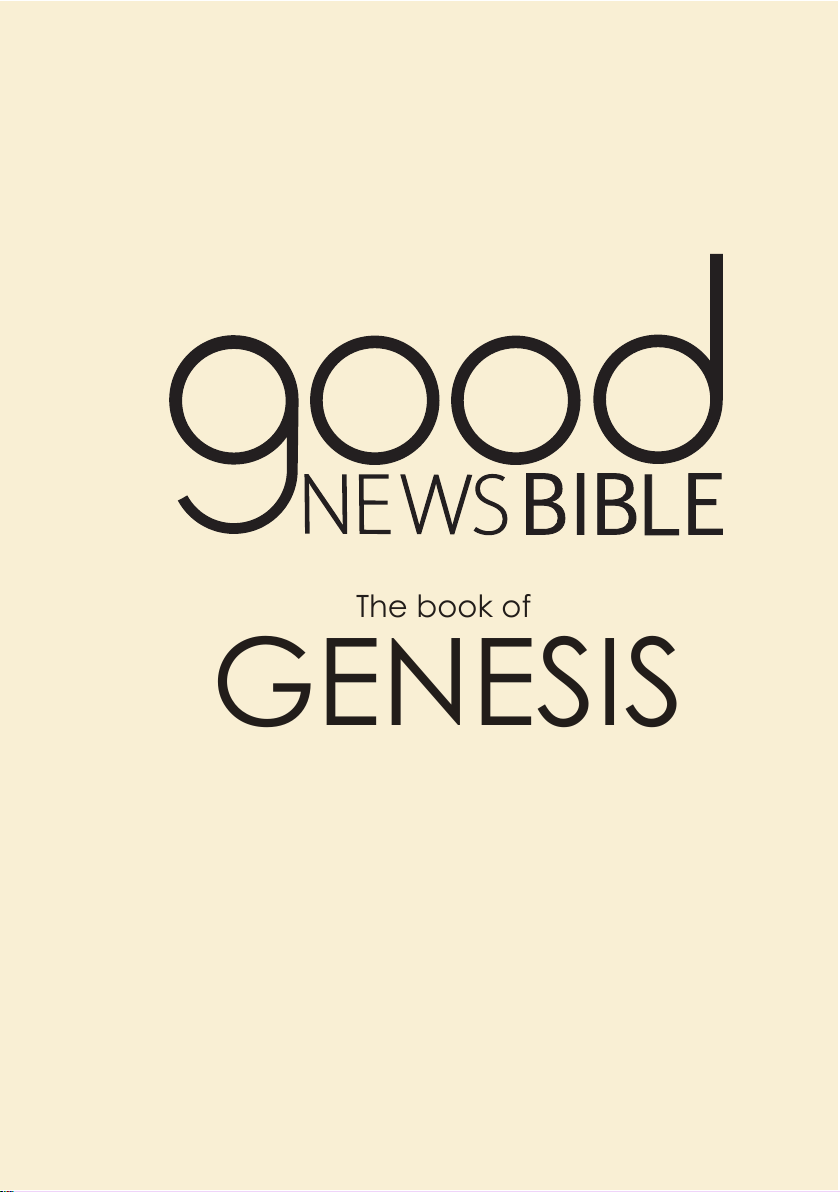
shoulder pole of heavy luggage. Figure 1 shows the book cover to Anthony C. Yu’s
magisterial four-volume translation of Journey. In the final leg of the quest crossing
the Heaven-Reaching River under the guidance of Muzha, who is Guanyin or the
Goddess of Mercy’s disciple with a young boy’s twin hair buns, the pilgrims array
themselves around Tripitaka in accordance with their usual alliance. Thus, the
Dragon Horse coddles in Monkey’s left arm and shoulder, the rein conceivably held
in his hand. Their physical proximity and body language countenance a spiritual
affinity.

Sheng-mei Ma
52
Fig. 1. The cover to Anthony C. Yu’s four-volume translation of
Journey to the West.
At first blush, both the Monkey King and the Dragon Horse come across as lil’
leviathans, or gargantuas miniaturized, caricatured, tamed. Monkey’s diminutive size,
coupled with simian features and jerky, spasmatic body movement, is a perennial
object of ridicule, until he crashes the heaven’s parties, upending the Jade Emperor’s
court. Likewise, the Dragon Horse looks a mere draft horse, misbegotten and totally
forgotten. Whereas the Dragon Horse falls through the narrative crack, Monkey stays
in the spotlight. The Dragon Horse pales in comparison to Monkey who grows in
stature. Culturally and linguistically, though, an uncanny bond exists between the two.
Monkey as the groom with reins in hand and the Dragon Horse in tow refutes the
Chinese idiom Xinyuan yima (心猿意馬), literally translated as “Heart Ape Thought
Horse.” The restless and fickle human heart and head crystalize in the figure of
speech of monkey and horse, anthropomorphized as the distracted, ever-changing
stream of consciousness. Realistically, monkey and horse are so far apart that they
are unlikely to form a united front toward a common goal. Journey, however, pairs the
whimsical, ADHD-plagued ape and the skittish horse, now jointly focused in one

The Dragon Horse in Journey to the West
53
direction to enable the mortal man Tripitaka and humanity in general. Buddhist sutras
are at best an excuse, which is why the sutras they obtain turn out to be blank initially.
Making the journey by wedding Monkey’s mighty arms and the Dragon Horse’s
strong legs, despite the drag of Tripitaka’s fragile mind and body, Pigsy’s gluttony,
and Sandy’s foolhardiness, is the hidden moral of this allegory. Instead of five
pilgrims, the Dragon Horse included, only one allegorical Everyman embarks on a
journey inward for self-discovery.
A minor character by comparison, the Dragon Horse does take center stage in
three occasions: his conversion from a banished dragon to a horse of portage in
Chapter 15; his rescue attempt of Tripitaka in the absence of the other three disciples
in Chapter 30; and his final restoration in heaven’s Dragon-Transforming Pool back
to a dragon in the 100th and last chapter. Elsewhere, brief allusions to Tripitaka on
horseback, never the horse per se, are strewn across the long novel. Ironically, this
natural arc of life in rise and fall is turned upside down into a supernatural arc in fall
and rise: first reduced from a mythological dragon to a work horse, then soaring in
the final chapter to his rightful place in heaven, albeit as an ornament contributing to
the lofty aura of the place. In fact, these rare moments of “airtime” for the Dragon
Horse invariably find the subject aloft, in the air, either before having been
condemned to land-crawling or after having reverted back to his natural self in flight,
even if temporarily. The Dragon Horse is split between two states: soaring in the sky
or sore in the stable, especially in Chapter 30.
While each of the pilgrims manifests such karmic avatars, only the Dragon Horse
folds onto himself the past transgression, present penance, and future salvation. Cast
in this light, his miniscule role throughout can be viewed as a subconscious neglect
to compensate for setting fire to the pearl of his father, Dragon King of the West
Sea. Although their trespasses vary, the heavenly wrath is incurred in an
indiscriminate group punishment. Tripitaka used to be the Golden Cicada, one of
the Buddha’s disciples who was disrespectful to the teaching; the Monkey King,
during his youthful romp, appointed himself “the Great Sage, Equal of Heaven” in
direct challenge to the authority; Pigsy was the Canopy Marshall who flirted with the
immortal beauty Chang’e, Lady of the Moon; Sandy served the Jade Emperor as the
Curtain-Raising Captain who broke a crystal chalice. Crimes and misdemeanors of all
stripes, the common thread is the threat to patriarchy, symbolized by the Buddha,
the Jade Emperor, the Dragon King of the West Sea, and even the master Tripitaka.
Monkey first meets the Dragon Horse in Chapter 15. Not knowing the other’s
identity and their shared purpose, they engage in several skirmishes. The dragon
swoops in from the river and swallows Tripitaka’s horse, saddle and all. Had it not
been Monkey’s quick thinking and agility, Tripitaka himself would have been gobbled
up. Ironically, the dragon is tasked to ensure the monk’s safe passage to India, which
would in turn lead to his own redemption. Instead, he nearly consumes out of hunger
his one chance of salvation. This mishap resonates with Monkey’s “patricidal” urge
in Chapter 14 when it dawns on Monkey that the headdress he was tricked into
wearing out of vanity contains the Buddha’s and Guanyin’s golden fillet that tightens
whenever Tripitaka recites the Fillet-Tightening Sutra. Once again, the power of
words is attributed to a magic chant, reminiscent of Monkey’s name in heaven’s

Sheng-mei Ma
54
“Register.” On the verge of beating Tripitaka to a pulp in his rage, Monkey seizes
only because the master “speed reads,” as it were, the spell, poised to crush his skull.
Both Monkey and the Dragon Horse barely escapes from the Oedipal Original Sin
against their father figure.
In the wake of their battle, the Bodhisattva or Guanyin intervenes to tame the
dragon. That the dragon has devoured Tripitaka’s horse is but one small step in the
chain reaction of karma. Guanyin proceeds to change him into the Dragon Horse in
the likeness of the one he ate, with a bit in his mouth. Guanyin explains:
“I went personally to plead with the Jade Emperor,” said the
Bodhisattva, “to have the dragon stationed here so that he could serve
as a means of transportation for the scripture pilgrim. Those mortal
horses from the Land of the East, do you think that they could walk
through ten thousand waters and a thousand hills? How could they
possibly hope to reach the Spirit Mountain, the land of Buddha? Only
a dragon-horse could make that journey!” (Vol. 1, p. 331)
The making of the Dragon Horse is thus mandated in heaven, the substituting for
the mortal horse part of his manifest destiny. The Dragon Horse bites in his mouth
a “henggu” (橫骨 horizontal, level bone) the bit with which the human rider controls
the animal’s movement. Yet instead of using the formal term of maxian (馬銜), Wu
Cheng’en elects the mot juste of horizontal bone. The chain of command from the
Buddha to Guanyin to Tripitaka lengthens like a magic bone or fast lock inside the
Dragon Horse’s chops, unextractable until the end of the journey. This resembles
Monkey’s shackles, the golden fillet girding his forehead, irremovable, deeply rooted
like bones into Monkey’s skull. Both instruments of torture are “level,” leveling or
keeping down any thought of egotistic ascendancy. Given Journey’s status as a
progenitor of the phantasmagoria of the Chinese wuxia or knight-errantry genre,
either the horizontal bone or the golden fillet conjures up the convention of a martial
artist being “locked” by any number of devices thrust into the shoulder blade or pipa
bone, so named for its pear shape that resembles the four-stringed Chinese musical
instrument pipa. A knife through the pipa bone means disempowerment and
enslavement, a symbol going all the way back to the horizontal bones around
Monkey’s head and in the Dragon Horse’s mouth that hold down any heroic ascent.
From the orthodox perspective, a.k.a., in the eye of the Buddha and the Jade
Emperor, such individualistic, obstreperous heroic feats smack of youthful rebellion
to be disciplined and eventually outgrown.
As minimal as the Dragon Horse’s role is, he surfaces in myriad ways in recent
spate of film adaptations, especially in Hong Kong director Pou-soi Cheang’s trilogy.
The Monkey King: Havoc in Heaven’s Palace (2014) features the ruthless God Erlang
whiplashing and abusing celestial steeds. Such animal cruelty prompts Monkey to
release all the horses for a jaunt, as Figure 2 captures, from the back, Monkey riding
one of the flying horses. These horses sport a dragon’s horns and whiskers that
represent their duality. The filmmaker sees fit to visualize in heaven the computer-
generated collage of a dragon’s head with antlers on top of a horse’s body, something

The Dragon Horse in Journey to the West
55
Wu Cheng’en never did. Instead, Wu takes care to describe the Dragon Horse shorn
of horns. Cheang’s sequel, The Monkey King 2 (2016), elaborates on the
metamorphosis from the dragon to the horse. Figure 3 illustrates the vanquished
dragon lying on the ground, at Monkey’s feet and resigned to his fate. Monkey
proceeds in Figure 4 to transform him into a horse. The subtitle could have been
more idiomatic: “Don’t expect me to carry you!” quips Monkey to Tripitaka. Monkey
is to lead, carrying the weight of the quintet; the Dragon Horse bears that of just one
member, albeit the key to the ensemble.
The Monkey King 3 (2018) opens with the Dragon Horse safely ensconced on a
bamboo raft towed by the pilgrims’ boat. As the going gets tough with a marauding
water demon, the boat’s roller-coaster ride is punctuated by well-timed neighing from
the shaken horse. Beyond this equine sound effect at the outset, the ensuing
adventure to the Kingdom of Amazons proceeds without much presence of the
horse. Cheang restores the integrity of the quintet as the film closes with the horse
back on the raft in tandem with the boat, as Monkey announces that they approach
Blaze Mountain, where the next calamity with Ox Demon, Iron Fan Princess, and
their Red Boy awaits. Since Ox Demon and Iron Fan Princess are cast in the first
installment, The Monkey King 3 comes across as a prequel in Cheang’s playful, circular
trilogy. But the reference to Blaze Mountain may well be Cheang’s gesture toward
the next project to make a quartet of films, as the first film focuses on the Jade
Emperor’s rather than Ox Demon’s home turf.
Fig. 2. Monkey releasing celestial horses and riding one of them in
The Monkey King: Havoc in Heaven’s Palace.

Sheng-mei Ma
56
Fig. 3. The vanquished dragon lying on the ground in The Monkey King 2.
Fig. 4. The dragon transformed into a horse in The Monkey King 2.
In Chapter 30, the Dragon Horse comes into his own when all three of his
“brothers” are otherwise engaged. Monkey was expelled by Tripitaka at Pigsy’s
instigation. Pigsy scurries away in the face of a powerful monster, the absconded
“Revatī, the Wood-Wolf Star” from heaven (Vol. 2, p. 95). The loyal Sandy has been
defeated and captured by the monster. Under the cover of darkness, the Dragon
Horse “bit through the reins and shook off the saddle; all at once he changed himself
once more into a dragon and mounted the dark clouds to rise into the air” (Vol. 2, p.
74). This transformation is followed by “a testimonial poem” that closes with “The
white horse drops reins his master to save.” The prose narrative and the poetry
epitomize the holographic Dragon Horse, the divine being in the sky and the “shed
shell,” like the chewed-through bit and halter, left on the ground.
To save Tripitaka, the Dragon Horse exhibits remarkable magic power. Turning
himself into a palace maid, the Dragon Horse tantalizes the monster with a sleight of
hand: “The little dragon took the pot and kept on pouring, until the wine rose like a
pagoda of thirteen layers with a pointed top; not a drop of it was spilled” (75). In the
magic show over a thirteen-story Chinese pagoda, the Dragon Horse has already

The Dragon Horse in Journey to the West
57
revealed his Buddhist identity, unbeknownst to the monster. Amid the ensuing sword
dance, the Dragon Horse makes an attempt at the monster’s life, only to be crushed.
Stealing back to the stall, “He looked pitiful indeed—completely soaked and
wounded on his leg!” (76), with the formulaic poem on the heels of the prose
narrative: “Horse of the Will and Ape of the Mind are all dispersed; / Metal Squire
and Wood Mother are both scattered.” Symptomatic of the minimizing of the equine
is that immediately after “baiting” with the horse in “Horse of the Will and Ape of
the Mind” or the literal translation of “Heart Ape Thought Horse,” Wu Cheng’en
switches to “Metal Squire and Wood Mother,” which refers to Monkey and Pigsy.
The horse in the first line is replaced by Pigsy in the second. “Metal Squire” ought to
be “Metal/Gold Father,” a moniker in accordance with Monkey’s wuxing (Five
Elements) of metal out of the Taoist designation of all things in the principle of Five
Elements: gold/metal, wood, water, fire, and earth. “Wood Mother,” on the other
hand, subscribes to Pigsy’s wuxing of wood.
Pigsy does serve as a messenger in effecting Tripitaka’s rescue, but only because
of the alert to their master’s danger straight from the horse’s mouth, so to speak.
“[A]ssuming human speech suddenly, he [the Dragon Horse] called out: ‘Elder
Brother!’ Idiot was so shaken that he fell on the ground. Pulling himself up, he was
about to dash outside when the white horse caught hold of the monk’s robe by his
teeth, saying again, ‘Elder Brother, don’t be afraid of me’” (77). A touch of Wu
Cheng’en comic, irreverent style, Pigsy’s shock bespeaks the Dragon Horse’s silence
heretofore, a speaking animal that has rarely done so in a life of servitude. Learning
of their master’s peril, Pigsy’s first reaction is to forgo the mission altogether. The
Wood Mother stands ready to abandon the family. Monkey and Pigsy “are both
scattered” on account of Pigsy’s Machiavellian schemes. Only at the Dragon Horse’s
urging does Pigsy venture to beseech Monkey to return, whose banishment he had
conspired in the first place.
At the completion of their pilgrimage in Chapter 100, the company of five are
escorted back to the Tang dynasty capital Chang’an by the Vajra Guardians in a gust
of fragrant wind. Monkey refuses the Guardians’ invitation to directly report to the
celestial world on account of “but how could my master tote all those scriptures?
How could he lead the horse at the same time?” (Vol. 4, p. 378). This burden too
great for a mortal to bear is two-folded: weight of the sutras and intractability of the
animal. Tripitaka used to be the load the Dragon Horse and Monkey carried; now
the horse is said to weigh down the master. The role reversal suggests that Monkey
has mellowed from a self-centered egomaniac to a considerate devotee, mirroring the
life course from youth to maturity, from the self’s urges to the common good. Just
as the Dragon Horse is pushed into the Dragon-Transforming Pool to take on his
natural form, Monkey turns to Tripitaka: “Master, I’ve become a Buddha now, just
like you. It can’t be that I still must wear a golden fillet! And you wouldn’t want to
clamp my head still by reciting that so-called Tight-Fillet Spell, would you?” (388).
Tripitaka rejoins: “’Now that you have become a Buddha, naturally it will be gone.
How could it be still on your head? Try touching your head and see.’ Pilgrim raised
his hand and felt along his head, and indeed the fillet had vanished” (388).
Subliminally yet consistently, Wu Cheng’en pairs the Monkey King and the
Sheng-mei Ma
58
Dragon Prince/Horse throughout, culminating in their concurrent deifications. Their
wild days of youthful defiance earn them the “horizontal bone” of the golden fillet
and the bit. The collaboration of Monkey’s arms and the Dragon Horse’s legs stands
them in good stead during the quest. Their apotheosis comes to pass in tandem, the
long novel’s last words, in effect. Not Tripitaka, let alone Pigsy or Sandy, closes the
journey in the Western Sky, the site of the Chinese paradise. Rather, the narrative
concludes with the “freeze frame” of the twin rehabilitated “Mind Ape and Thought
Horse.” Halfway through Chapter 100, amid the pilgrims’ ritual in the emperor’s
audience in Chang’an, the Vajra Guardians descend from heaven, summoning them
westward: “‘Recitants, drop your scripture scrolls and follow us back to the West.’
From below, Pilgrim and his two companions together with the white horse
immediately rose into the air. The elder, too, abandoned the scriptures and rose from
the platform” (386). Such an ending throws in doubt the trajectory of Journey to the
West. Conventional wisdom denotes a journey to and back, yet the closure lands them
in the West all over again.
East or West, scriptures with or without words, a feral simian or “the Buddha
Victorious in Strife” dubbed by the Buddha (387), the beast of burden or the Dragon
Horse, the Dragon Prince or the serpentine carving on the palace pillar, both the
Monkey King and the Dragon Horse testify to the Buddhist belief of forging of the
soul via adversity and pain. Such hardships range from Monkey’s playing with fire at
center stage to Tripitaka’s hobbyhorse, a prop largely forgotten off-stage. Hamlet is
prescient when he likens his dead father to the childhood toy: “the hobby-horse is
forgot” by his mother who hastens to remarry (Hamlet Act 3, Scene 2). A tool for
storytelling, a toy in anthropomorphic centrism, the horse is the vessel for flashbacks
to its previous incarnation of the dragon, no different from a child rider’s “phallacy,”
to borrow Emily Willingham’s choice word, astride a stick capped by the bulge of a
horse’s head. Just as a hobbyhorse is “ridden” as a hyperreal stallion, so does
Tripitaka’s steed shape-shift to the Dragon Prince. In and of itself, the horse in Journey
acts as a placeholder for its exchange value between an earth-bound slave and a high-
flying mythical leviathan, which is last seen, however, frozen, inanimate on a stone
figurine.
Bibliography
Howey, M. Oldfield. The Horse in Magic and Myth. 1923. New York: Castle, 1958.
LaRubia-Prado, Francisco. The Horse in Literature and Film: Uncovering a Transcultural
Paradigm. Lanham, Mayland: Lexington, 2017.
Waley, Arthur, trans. Monkey. (Xiyouji.) By Wu Cheng’en. New York: Grove, 1943.
Watson, Burton. “The Hegemon’s Lament.” In An Anthology of Translations of Classical
Chinese Literature, Volume I: From Antiquity to the Tang Dynasty. Ed. John Minford,
414–415. New York: Columbia University Press, 2000.
Willingham, Emily. Phallacy: Life Lessons from the Animal Penis. New York: Penguin,
2020.
The Dragon Horse in Journey to the West
59
Yu, Anthony C., trans. Journey to the West. (Xiyouji.) By Wu Cheng’en. Chicago:
University of Chicago Press, 1980.
Yu, Anthony C., trans. The Monkey and the Monk: An Abridgment of The Journey to the
West. By Wu Cheng’en. Chicago: University of Chicago Press, 2006.
Movies and other media cited
Farewell My Concubine (霸王别姬). Scripts of Beijing Opera. https://scripts.xikao.com/
play/04022001. (Accessed October 11, 2020)
The Monkey King: Havoc in Heaven’s Palace. Dir. Pou-soi Cheang, performances by
Donnie Yen, Yun-Fat Chow, Aaron Kwok. Global Star, 2014.
The Monkey King 2. Dir. Pou-soi Cheang, performances by Aaron Kwok, Gong Li.
Filmko Films, 2016.
The Monkey King 3. (西遊記之女兒國) Dir. Pou-soi Cheang, performances by Aaron
Kwok, Shaofeng Feng, Zanilia Zhao. Filmko Films, 2018. www.youtube.com/
watch?v=VzFLMdXqlmM.