The Global Risks Report 2025 PDF Free Download
1 / 10/10
100%

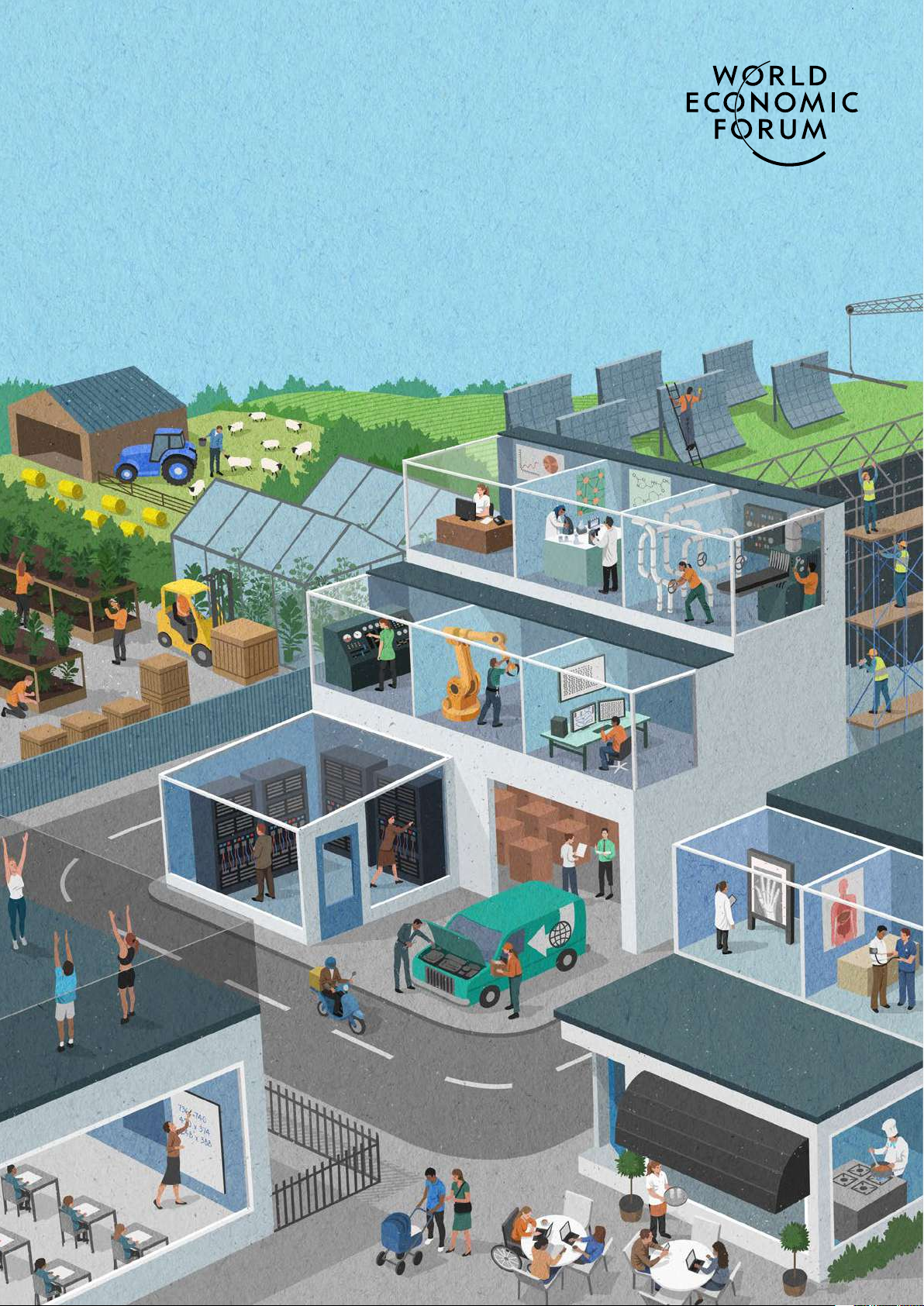
The Global Risks
Report 2025
20th Edition
I N S I G H T R E P O R T

Acknowledgement
The Global Risks Report is produced exclusively by
the World Economic Forum. We are grateful to our
longstanding partners on previous editions, Marsh
McLennan and Zurich Insurance Group. Their
generous inputs and in-depth guidance have been
invaluable over the last 20 years.
Terms of use and disclaimer
This document is published by the World Economic
Forum as a contribution to a project, insight area
or interaction. The findings, interpretations and
conclusions expressed herein are a result of a
collaborative process facilitated and endorsed by
the World Economic Forum but whose results do
not necessarily represent the views of the World
Economic Forum, nor the entirety of its Members,
Partners or other stakeholders.
World Economic Forum
91-93 route de la Capite
CH-1223 Cologny/Geneva
Switzerland
Tel.: +41 (0)22 869 1212
Fax: +41 (0)22 786 2744
E-mail: contact@weforum.org
www.weforum.org
Copyright © 2025
by the World Economic Forum
All rights reserved. No part of this publication may
be reproduced, stored in a retrieval system, or
transmitted, in any form or by any means, electronic,
mechanical, photocopying, or otherwise without the
prior permission of the World Economic Forum.
ISBN: 978-2-940631-30-8
The report and an interactive data platform are
available at https://www.weforum.org/publications/
global-risks-report-2025/.
The Global Risks Report 2025
January 2025
Global Risks Report 2025
2

Key findings
The Global Risks Report 2025 presents the findings
of the Global Risks Perception Survey 2024-
2025 (GRPS), which captures insights from over
900 experts worldwide. The report analyses global
risks through three timeframes to support decision-
makers in balancing current crises and longer-term
priorities. Chapter 1 explores current or immediate-
term (in 2025) and short- to medium-term1 (to 2027)
risks, and Chapter 2 focuses on the risks emerging
in the long term (to 2035). The report considers
not only the survey findings and the range of
implications, but also provides six in-depth analyses
of selected risk themes.
Below are the key findings of the report, in which
we compare the risk outlooks across the three time
horizons.
Declining optimism
As we enter 2025, the global outlook is increasingly
fractured across geopolitical, environmental,
societal, economic and technological domains.
Over the last year we have witnessed the expansion
and escalation of conflicts, a multitude of extreme
weather events amplified by climate change,
widespread societal and political polarization, and
continued technological advancements accelerating
the spread of false or misleading information.
Optimism is limited as the danger of miscalculation
or misjudgment by political and military actors
is high. We seem to be living in one of the most
divided times since the Cold War, and this is
reflected in the results of the GRPS, which reveal
a bleak outlook across all three time horizons –
current, short-term and long-term.
A majority of respondents (52%) anticipate an
unsettled global outlook over the short term (next
two years), a similar proportion to last year (Figure A).
Another 31% expect turbulence and 5% a stormy
outlook. Adding together these three categories
of responses shows a combined four percentage
point increase from last year, indicating a heightened
pessimistic outlook for the world to 2027.
Compared to this two-year outlook, the landscape
deteriorates over the 10-year timeframe, with 62%
of respondents expecting stormy or turbulent
times. This long-term outlook has remained similar
to the survey results last year, in terms of its level
of negativity, reflecting respondent skepticism
that current societal mechanisms and governing
institutions are capable of navigating and mending
the fragility generated by the risks we face today.
Deepening geopolitical and
geoeconomic tensions
Comparing this year’s findings for the world in
2025 with the two-year risk outlook provided
by the GRPS two years ago shows how far
Short- and long-term global outlookFIGURE A
Source
World Economic Forum Global Risks Perception Survey
2024-2025
Short term (2 years)
1%
Long term (10 years)
Stormy: Global catastrophic risks looming
Turbulent: Upheavals and elevated risk of global catastrophes
Unsettled: Some instability, moderate risk of global catastrophes
Stable: Isolated disruptions, low risk of global catastrophes
Calm: Negligible risk of global catastrophes
"Which of the following best characterizes your outlook for the world over the following time periods?"
Note
The percentages in the graph may not add up to 100% because values have been rounded
up/down.
11%52%31%5%
17% 45% 30% 8%
Global Risks Report 2025
3

Share of respondents (%)
State-based armed conflict
Extreme weather events
Geoeconomic confrontation
Misinformation and disinformation
Societal polarization
Economic downturn
Critical change to Earth systems
Lack of economic opportunity or unemployment
Erosion of human rights and/or civic freedoms
Inequality
Involuntary migration or displacement
Natural resources shortages
Adverse outcomes of AI technologies
Cyber espionage and warfare
Crime and illicit economic activity
Disruptions to a systemically important
supply chain
Concentration of strategic resources
and technologies
Biodiversity loss and ecosystem collapse
Asset bubble burst
Decline in health and well-being
Biological, chemical or nuclear weapons
or hazards
Disruptions to critical infrastructure
Debt
Infectious diseases
Intrastate violence
Insufficient public infrastructure
and social protections
Inflation
Pollution
Online harms
Censorship and surveillance
Non-weather-related natural disasters
Talent and/or labour shortages
Adverse outcomes of frontier technologies
Current Global Risk LandscapeFIGURE B
Source
World Economic Forum Global Risks
Perception Survey 2024-2025.
“Please select one risk that you believe is most likely to present a material crisis on a global scale in 2025.”
Risk categories Economic Environmental Geopolitical Societal Technological
perceptions have darkened when it comes to
conflict. State-based armed conflict, now ranked
as the #1 current risk by 23% of respondents
(Figure B), was overlooked as a leading two-year
risk two years ago.
In a world that has seen an increasing number
of armed conflicts over the last decade,2 national
security considerations are starting to dominate
government agendas. Section 1.3: "Geopolitical
recession" dives deep into the dangers of
Global Risks Report 2025 4

unilateralism taking hold in national security
considerations and highlights the worsening
humanitarian impacts of the ongoing conflicts.
The risk of further destabilizing consequences
following Russia’s invasion of Ukraine, as well as
in the Middle East and in Sudan are likely to be
amplifying respondents’ concerns beyond 2025 as
well. In the two-year outlook, State-based armed
conflict has moved up from #5 to #3 since our
GRPS 2023-24 (Figure C).
Section 1.4: Supercharged economic tensions
explores how global geoeconomic tensions
could unfold. The rise in the two-year ranking of
Geoeconomic confrontation, from #14 last year to
#9 today reflects unease about the path ahead for
global economic relations. The role of technology
in geopolitical tensions also concerns respondents,
with Cyber espionage and warfare ranked #5 in
the two-year outlook.
However, the top risk in 2027 is Misinformation
and disinformation, for the second year in a
row (Figure C). There are many ways in which
a proliferation of false or misleading content is
complicating the geopolitical environment. It is a
leading mechanism for foreign entities to affect
voter intentions; it can sow doubt among the
general public worldwide about what is happening
in conflict zones; or it can be used to tarnish the
image of products or services from another country.
A growing sense of societal
fragmentation
Societal fractures are central to the overall risks
landscape, as shown in the risk interconnections
map (Figure D). Inequality (wealth, income) is
perceived as the most central risk of all, playing
a significant role in both triggering and being
influenced by other risks. It is contributing to
weakening trust and diminishing our collective
sense of shared values.
As well as Inequality, other societal risks also
feature in the top 10 of the two-year ranking:
Societal polarization, Involuntary migration or
displacement and Erosion of human rights and/
or civic freedoms. The importance ascribed to this
set of societal risks by respondents suggests that
social stability will be fragile over the next two years.
Respondent concern around certain key economic
risks – Economic downturn and Inflation – has
subsided since last year, with these two risks
witnessing the largest falls in the two-year ranking
(Figure 1.5). Nonetheless, the impacts of the cost-
of-living crisis since 2022 contributed to Inequality
becoming the top interconnected risk this year:
Economic downturn, Inflation, and Debt were
selected among the top causes of Inequality by
GRPS respondents.
Although there are fewer societal risks in the top
10 of the 10-year risk ranking than in the top 10
of the two-year risk ranking (two compared to
four, see Figure C), the profound societal fractures
that feature prominently in this report should not
be perceived as solely short-term risks. Looking
ahead to the next decade, Inequality and Societal
polarization continue to feature among the top 10
risks. This is an important pair of risks to watch,
given how related they can be to bouts of social
instability, and in turn to domestic political and to
geostrategic volatility. In super-ageing societies
– such as Japan, South Korea, Italy or Germany –
unfavourable demographic trends could accentuate
these risks over the next 10 years. Pensions
crises and labour shortages in the long-term care
Biodiversity loss and ecosystem collapse
Global risks ranked by severity over the short and long termFIGURE C
Source
World Economic Forum Global Risks
Perception Survey 2024-2025.
"Please estimate the likely impact (severity) of the following risks over a 2-year and 10-year period."
1st
2nd
3rd
4th
5th
6th
7th
8th
9th
10th
2 years 10 years
Extreme weather events
Critical change to Earth systems
Natural resource shortages
Misinformation and disinformation
Adverse outcomes of AI technologies
Inequality
Cyber espionage and warfare
Societal polarization
Pollution
1st
2nd
3rd
4th
5th
6th
7th
8th
9th
10th
Misinformation and disinformation
Extreme weather events
Societal polarization
Cyber espionage and warfare
State-based armed conflict
Inequality
Involuntary migration or displacement
Erosion of human rights and/or civic freedoms
Geoeconomic confrontation
Pollution
Risk categories
Economic
Environmental
Geopolitical
Societal
Technological
Global Risks Report 2025
5

sector are likely to become acute and widespread
problems in super-ageing societies, with no easy
fix for governments. Section 2.5: Super-ageing
societies explores this risk theme.
Environmental risks - from long-
term concern to urgent reality
The impacts of environmental risks have worsened
in intensity and frequency since the Global Risks
Report was launched in 2006, as discussed in
depth in Section 2.6: Looking back: 20 years of
the Global Risks Report. Moreover, the outlook
for environmental risks over the next decade
is alarming – while all 33 risks in the GRPS are
expected to worsen in severity (Figure E) from the
two-year to the 10-year time horizon, environmental
risks present the most significant deterioration.
Extreme weather events are anticipated to
become even more of a concern than they already
are, with this risk being top ranked in the 10-year
risk list for the second year running. Biodiversity
loss and ecosystem collapse ranks #2 over the
10-year horizon, with a significant deterioration
compared to its two-year ranking.
The GRPS shows generational divergence when it
comes to risk perceptions related to environmental
Adverse outcomes
of AI technologies
Adverse outcomes
of frontier technologies
Asset bubble burst
Biodiversity loss
and ecosystem collapse
Biological, chemical or nuclear
weapons or hazards
Censorship and surveillance
Concentration of
strategic resources
and technologies
Crime and illicit
economic activity
Critical change
to Earth systems
Cyber espionage
and warfare
Debt
Decline in health
and well-being
Disruptions to a systemically
important supply chain
Disruptions to
critical infrastructure
Economic downturn
Erosion of human rights
and/or civic freedoms
Extreme weather
events
Geoeconomic
confrontation
Inequality
Infectious diseases
Inflation
Insufficient public infrastructure
and social protections
Intrastate violence
Involuntary migration
or displacement
Lack of economic opportunity
or unemployment
Misinformation and disinformation
Natural resource
shortages
Non-weather-related
natural disasters
Online harms
Pollution
Societal polarization
State-based armed conflict
Talent and/or
labour shortages
Concentration of
strategic resources
and technologies
Adverse outcomes
of AI technologies
Adverse outcomes
of frontier technologies
Asset bubble burst
Biodiversity loss
and ecosystem collapse
Biological, chemical or nuclear
weapons or hazards
Censorship and surveillance
Crime and illicit
economic activity
Critical change
to Earth systems
Cyber espionage
and warfare
Debt
Decline in health
and well-being
Disruptions to a systemically
important supply chain
Disruptions to
critical infrastructure
Economic downturn
Erosion of human rights
and/or civic freedoms
Extreme weather
events
Geoeconomic
confrontation
Inequality
Infectious diseases
Inflation
Insufficient public infrastructure
and social protections
Intrastate violence
Involuntary migration
or displacement
Lack of economic opportunity
or unemployment
Misinformation and disinformation
Natural resource
shortages
Non-weather-related
natural disasters
Online harms
Pollution
Societal polarization
State-based armed conflict
Talent and/or
labour shortages
Global risks landscape: An interconnections map³FIGURE D
Source
World Economic Forum Global Risks
Perception Survey 2024-2025
Edges
Relative influence
High
Low
Medium
Risk influence
Nodes
High
Low
Medium
Risk categories Economic Environmental Geopolitical Societal Technological
Global Risks Report 2025
6

issues, with younger survey respondents being
more concerned about this over the next 10 years
than older age groups. Take Pollution, for example,
which the under 30s rank as the #3 most severe
risk in 2035, the highest of any age group surveyed.
As noted in last year’s Global Risks Report, there
is also divergence in how Pollution is ranked by
stakeholder, with the public sector placing Pollution
as a top 10 risk in the 10-year ranking, but not the
private sector (Figure 2.4). Section 2.3: Pollution
at a crossroads aims to fill awareness gaps by
exploring under-appreciated pollutant risks that
need to become more prominent in policy agendas
by 2035 – and ideally much sooner given their
significant impacts on health and ecosystems.
Technological risks - still “under
the radar”
In a year that has seen considerable experimentation
by companies and individuals in making the best use
of AI tools, concerns about Adverse outcomes of
AI technologies are low in the risk ranking on a two-
year outlook. However, complacency around the risks
of such technologies should be avoided given the
fast-paced nature of change in the field of AI and its
increasing ubiquity. Indeed, Adverse outcomes of AI
technologies is one of the risks that climbs the most
in the 10-year risk ranking compared to the two-year
risk ranking (Figure G). In this report we highlight the
role of Generative AI (GenAI) in producing false or
misleading content at scale, and how that relates to
societal polarization. Section 1.5: Technology and
polarization explores this and the broader risks from
greater connectivity, rapid growth in computing power
and more powerful AI tools.
Among the areas experiencing the most rapid
technological advances is the Biotech sector.
Section 2.4: Losing control of biotech? takes
an in-depth look at emerging risks in biotech,
supercharged by AI. Over a 10-year time horizon,
low-probability, high-impact risks exist, including
Intrastate violence from biological terrorism and
Adverse outcomes of frontier technologies
involving accidental or malicious misuse of gene
editing technologies, or even of brain-computer
interfaces. At the same time, such risks do not
Short-term severity (2 years)
Long-term severity (10 years)
3.5
4
4.5
5
5.5
6
2.5
1
1
7
7
33.5 44.5 5.55
Visible area
Risk categories
Economic
Environmental
Geopolitical
Societal
Technological
Deteriorating risks
Relative severity of global risks over a 2- and 10-year periodFIGURE E
Source
World Economic Forum Global Risks Perception Survey
2024-2025.
Note
Severity was assessed on a 1-7 Likert scale [1 = Low severity, 7 = High severity].
Adverse outcomes of AI technologies
Adverse outcomes
of frontier technologies
Asset bubble bursts
Biodiversity loss and ecosystem collapse
Biological, chemical, or nuclear weapons or hazards
Censorship and surveillance
Concentration of strategic resources
Crime and illicit economic activity
Critical change to Earth systems
Cyber espionage
and warfare
Debt
Decline in health
and well-being
Disruptions to a systemically important supply chain
Disruptions to critical
infrastructure
Economic downturn
Erosion of human rights and/or of civic freedoms
Extreme weather events
Geoeconomic confrontation
Inequality
Infectious diseases
Inflation
Insufficient public infrastructure and social protections
Intrastate violence
Involuntary migration
or displacement
Lack of economic opportunity or unemployment
Misinformation and disinformation
Natural resource shortages
Non-weather related natural disasters
Online harms
Pollution
Societal polarization
State-based armed conflict
Talent and/or labour shortages
Adverse outcomes of AI technologies
Adverse outcomes
of frontier technologies
Asset bubble bursts
Biodiversity loss and ecosystem collapse
Biological, chemical, or nuclear weapons or hazards
Censorship and surveillance
Concentration of strategic resources
Crime and illicit economic activity
Critical change to Earth systems
Cyber espionage
and warfare
Debt
Decline in health
and well-being
Disruptions to a systemically important supply chain
Disruptions to critical
infrastructure
Economic downturn
Erosion of human rights and/or of civic freedoms
Extreme weather events
Geoeconomic confrontation
Inequality
Infectious diseases
Inflation
Insufficient public infrastructure and social protections
Intrastate violence
Involuntary migration
or displacement
Lack of economic opportunity or unemployment
Misinformation and disinformation
Natural resource shortages
Non-weather related natural disasters
Online harms
Pollution
Societal polarization
State-based armed conflict
Talent and/or labour shortages
Global Risks Report 2025
7

diminish the tremendous actual and potential
progress for humankind stemming from biotech.
The time to act is now - is
consensus possible in a
fragmenting world?
Deepening divisions and increasing fragmentation
are reshaping international relations and calling into
question whether existing structures are equipped
to tackle the challenges collectively confronting
us. Levels of global cooperation across many
areas of geopolitics and humanitarian issues,
economic relations, and environmental, societal and
technological challenges may reach new lows in the
coming years. Key countries appear to be turning
inward, focusing on mounting domestic economic
or societal concerns, just when they should be
seeking to strengthen multilateral ties to confront
shared challenges.
When asked about the characteristics of the global
political outlook over the next decade, 64% of GRPS
respondents believe that we will face a Multipolar
or fragmented order, in which middle and great
powers contest, set and enforce regional rules and
norms (Figure F). Perceptions in response to this
question have changed little compared to last year.
The Western-led global order is expected to continue
its decline over the next decade but will nonetheless
remain an importance locus of power. Alternative
power centres are likely to strengthen, not just led by
China, but also by key emerging powers, including
India and the Gulf states.
The decade ahead will be pivotal as leaders will be
confronted with increasingly complex global risks.
But to prevent a downward spiral in which citizens
worldwide will be worse off than before, ultimately
there is no option other than to find avenues for
dialogue and collaboration.4
Global political outlook FIGURE F
Source
World Economic Forum Global Risks
Perception Survey 2024-2025
19%
Bipolar or bifurcated order shaped by strategic
competition between two superpowers
8%
Continuation or reinvigoration of the US-led,
rules-based international order
64%
Multipolar or fragmented order in which middle and great
powers contest, set, and enforce regional rules and norms
9%
Realignment towards a new international order
led by an alternative superpower
“Which of the following best characterizes the global political environment for cooperation on global risks in 10 years?”
Global Risks Report 2025
8

Global risks ranked by severity over the short and long termFIGURE G
Source
World Economic Forum Global Risks
Perception Survey 2024-2025
"Please estimate the likely impact (severity) of the following risks over a 2-year and 10-year period."
Risk categories Economic Environmental Geopolitical Societal Technological
1st
Misinformation and disinformation
Online harms
2nd
Extreme weather events
3rd
Societal polarization
4th
Cyber espionage and warfare
5th
State-based armed conflict
6th
Lack of economic opportunity or unemployment
7th
Inflation
8th
Involuntary migration or displacement
Inequality
9th
Economic downturn
10th
Pollution
11th
Critical change to Earth systems
12th
13th
Natural resource shortages
14th
Geoeconomic confrontation
15th
Erosion of human rights and/or of civic freedoms
16th
Debt
17th
Intrastate violence
18th
Insufficient public infrastructure and social protections
19th
Disruptions to a systemically important supply chain
20th
Biodiversity loss and ecosystem collapse
21st
Censorship and surveillance
22nd
Talent and/or labour shortages
23rd
Infectious diseases
24th
Concentration of strategic resources
25th
Disruptions to critical infrastructure
26th
Asset bubble bursts
27th
Decline in health and well-being
28th
Crime and illicit economic activity
29th
Adverse outcomes of AI technologies
30th
31st
Biological, chemical or nuclear hazards
32nd
33rd
Non-weather related natural disasters
Adverse outcomes of frontier technologies
Short term (2 years)
State-based armed conflict
Inequality
Decline in health and well-being
Crime and illicit economic activity
1st
Extreme weather events
2nd
Critical change to Earth systems
3rd
Biodiversity loss and ecosystem collapse
4th
Natural resource shortages
5th
Misinformation and disinformation
6th
Adverse outcomes of AI technologies
7th
Involuntary migration or displacement
8th
Cyber espionage and warfare
9th
Societal polarization
10th
Pollution
11th
Lack of economic opportunity or unemployment
12th
Online harms
13th
Concentration of strategic resources
14th
Censorship and surveillance
15th
16th
Geoeconomic confrontation
17th
Debt
18th
Erosion of human rights and/or of civic freedoms
19th
Infectious diseases
20th
21st
Insufficient public infrastructure and social protections
22nd
Intrastate violence
23rd
Disruptions to critical infrastructure
24th
Adverse outcomes of frontier technologies
25th
Disruptions to a systemically important supply chain
26th
Biological, chemical or nuclear hazards
27th
28th
Economic downturn
29th
Talent and/or labour shortages
30th
Asset bubble bursts
31st
32nd
Inflation
33rd
Non-weather related natural disasters
Long term (10 years)
Global Risks Report 2025 9

World Economic Forum
91–93 route de la Capite
CH-1223 Cologny/Geneva
Switzerland
Tel.: +41 (0) 22 869 1212
Fax: +41 (0) 22 786 2744
contact@weforum.org
www.weforum.org
The World Economic Forum,
committed to improving
the state of the world, is the
International Organization for
Public-Private Cooperation.
The Forum engages the
foremost political, business
and other leaders of society
to shape global, regional
and industry agendas.