But It is not so Among You PDF Free Download
1 / 7/7
100%

But It is not so Among You
By G. Sujin Pak
Duke Chapel, October 21, 2012
Last week’s Sunday paper from the News & Observer had an article interviewing Rabbi
Harold Kushner on the story of Job. Kushner notes that there are two versions of Job: the
“man who endures hardship in passive humility” and the “defiant Job who shakes his fist
at the heavens.” Kushner points out that many readers of Job fail to notice that it is this
defiant Job that dominates most of the book. I think Kushner is right on this point.
Indeed, in the chapters prior to our text this morning, Job has spent a lot of time
complaining about how the wicked go unpunished and how evil continues to thrive on
earth. He spends a lot of time maintaining his own righteousness and integrity, recounting
his many righteous deeds. Job concludes, “If I had done wrong, that is one thing.” But he
proclaims without hesitation, “I have done no wrong.” Then enters our Old Testament
text for this morning, where God provides a response to Job’s litany of self-righteousness
& self-pity. And what a response!
God’s response presents a dazzling portrait of God’s sovereignty. Sometimes we need a
word from the Lord that reminds us of the majesty of God. Sometimes we need a blinding,
searing vision of God in order to see that often we really do not God or ourselves rightly.
Job might have thought that he was just being bold like the bold prayers of the Old
Testament patriarchs, except Job’s boldness was not of the right kind. He based his
boldness upon his own righteousness and exemplary acts, rather than solely upon the
character and righteousness of God.
So, Job is having a hard time rightly seeing God. Job is having a hard time rightly seeing
himself. I imagine he is not the only one.
2
Indeed, he’s not the only one in the very texts before us! I don’t know about you, but it is
an immediate red flag when one of my children comes up to me and initiates her request
by asking, “Hey, Mom, before I tell you what I’m going to ask of you, I want you to
promise me you’ll do it!” (Yeah, right, kid!) Seriously?!? You already know there’s trouble
ahead! But this is exactly how James and John approach Jesus with their request. “Hey,
Jesus, we want you to do for us what we ask of you.” Yet, Jesus, being a much more
patient and forbearing parent than I, goes ahead and plays along with their little game.
“What is it that you want me to do for you?” Already foreshadowed in Jesus’ response is
the attitude of being a servant. “What is it that you want me to do for you?”
So, can you imagine it? Not only do James and John have the nerve to preface their
question by trying to secure a positive answer from Jesus, they also have the audacity to
ask that each of them might sit beside Jesus in his glory—one on his right and one on his
left. And when the other ten disciples hear of it, are they ever angry! Who do these two
think they are?!? Are they better than the rest of us?! Wouldn’t you be angry, too?
It is like your eldest sibling pulling rank on you to secure a parent’s favor. It is like a fellow
student in a classroom, who’s been showing off all semester, asking the professor to
nominate him for the scholarship everyone wants. Or, imagine a situation in an office
setting where a colleague asks the boss for all the top-notch projects and business trips. Or
a lawyer in a firm asking the leading partners to allow her to have her first choice of all the
clients she represents.
The examples abound. No less, our ire would be raised. How dare they? Who do they
think they are? Not only are James and John seeking to secure Jesus’ special favor, they
have essentially cut in line in front of the rest of the disciples! And if you are anything like
me, you have little to no tolerance for line-cutters. Indeed, I have to admit I’m probably
one of the worst. I’m that parent who publicly reprimanded some older boys for cutting in
line in front of her two daughters at the water slide (as, by the way, my husband pleaded
with me with his eyes to just ‘let it go.’)

3
But seriously, think about how you felt the last time someone cut in line in front of you—
whether it be the car line for dropping your kid off at school or the line at Starbucks to get
that much-needed morning cup of coffee or those long, long, long lines at amusement
parks where they place one person in line to wait for a group of 10 people who essentially
get to cut in front of you! “Hey,” you yell, “I was first!” “Hey, I’ve been waiting here for
hours, buddy!” Don’t you feel justified in your anger? Even self-righteous?
The thing is, as angry as we may feel with the James and Johns in our lives, they are not
the only ones who have missed the point of Jesus’ words in our text today. Jesus’ response
to the righteous anger of the other ten reveals that James and John are not the only ones
who have missed the mark. Jesus called all the disciples together and said to them, “You
know that among the Gentiles those whom they recognize as their rulers lord it over them, and their
great ones are tyrants over them. But it is not so among you.”
But it is not so among you. In this statement we find Jesus’ declaration of a profound hope
for his disciples. In these seven brief words is a radical vision of an alternative reality.
Remember, the disciples had just argued amongst themselves only a chapter prior about
who is the greatest among them. And James and John have now beat them to the chase.
But Jesus’ response is very much the same in both instances. “Whoever wishes to become
great among you must be your servant, and whoever wishes to be first among you must
be a servant to all.”
Jesus envisions a wholly different conception of power. Jesus imagines for his disciples a
radically different community, in which power is conceived and enacted in thoroughly
alternative practices. It is a vision that—truth be told—stretches our imaginations to a
breaking point. It requires a break from the ways the world has conceived and envisioned
the practices of power—from the ways we have become accustomed to what the world has
taught us to see, taught us to be, and taught us to act.

4
Simply put, this radical re-visioning of power is embodied and enacted in the life and
Body of Jesus. It is embodied and enacted most fully in the Cross. Our Gospel text points
us to the Cross of Jesus in a manner that forces us to hear James and John’s request in the
light of the cross: “Grant us to sit, one at your right hand and one at your left, in your
glory,” they ask. To which Jesus replies, “You know not what you ask. Are you able to
drink the cup that I drink? Are you able to be baptized with my baptism?
The author of the Gospel of Mark is a master of telling his story in just a few choicely
chosen words that reverberate with meaning. In his description of the crucifixion of Jesus,
Mark comments (Mk 15:27): “And with him they crucified two bandits, one on his right and
one on his left.” One on his right, and one on his left. Little did these two bandits know that
they sat immediately beside Jesus in his glory.
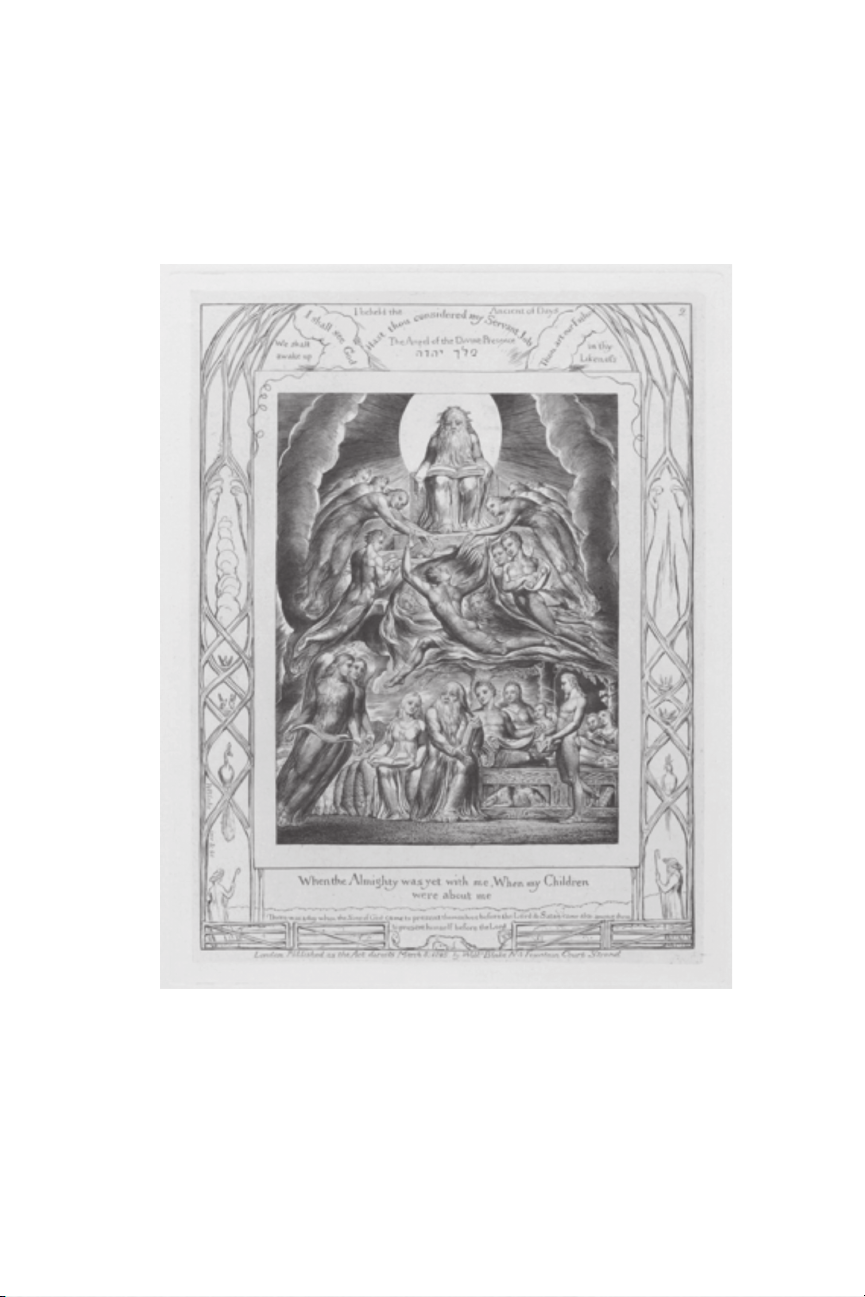
It is fitting at this point to go back to Job. Remember that vision of the awe-inspiring
sovereignty of God? We are granted here a vision of power that looks like power from any
conceivable worldly conception of it! And such power is fully available to Jesus. And yet
… and yet … this God chooses to become a servant, to embody power in an utterly
alternative manner, turning it on its very head, so that redemption may be possible. And
this redemption is not the mere salvation of each of us as individuals. It is just as much a
redeeming of communal ways of being and acting. Jesus makes possible a new
embodiment of community. Jesus calls us; Jesus exhorts us, Jesus reminds us; Jesus
rebukes us: It is not so among you.
We are invited into a way of living, a way of being, a way of acting that transforms life as
we know it. Rather than all this vying for power, rather than all this scrambling for
prestige, rather than all our scraping for recognition and admiration … Rather than the
constant acts of comparison in order to gauge our own rank or significance … Rather than
seeking to outshine others through our witty criticisms and clever disparagements of their
work, literally squashing them beneath the weight of our efforts to push ourselves head
and shoulders above our peers … And believe me, I know this firsthand! Life as an

5
academic practically demands this—as I suspect life at the corporate office or law practice
or other competitive workplaces demand. Rather than all of these things … Jesus
commands, Jesus pleads, It is not so among you.
Lording it over others –It is not so among you. Vying to be the first, the best, at the cost of
others—It is not so among you. Belittling a colleague to make yourself look better—It is not
so among you. Secretly rejoicing at the failure of another, especially when it boosts your
image—It is not so among you.
This is a hard word. I am by no means ignorant or naïve about what this asks of us who
call ourselves Christians. But, a few important distinctions need to be made. Jesus is not at
all asking us not to try to be and do our best. This is not the exhortation before us. We
should indeed aim to be and do our best. It is not even that we should not have ambition!
We should ever seek to excel; we should be ambitious. But … for what purpose, to what
end do we seek to do our best? A key passage from Rom 12 comes to mind here: “Let love
be genuine; hate what is evil, hold fast to what is good; love one another with mutual
affection; outdo one another in showing honor.” Outdo one another in showing honor. The
terms of a godly form of “competition” are fundamentally different for us as Christians.
What would it look like to genuinely rejoice in the achievements of a colleague, without
having to immediately measure your own achievements alongside hers? What might it
look like to be a person who is in a position of power, but who enacts that power by
serving others and empowering others? What might it look like for a leader to gain
satisfaction by seeing others thrive in their gifts? To be a leader who genuinely seeks the
honor of others? It would look much more like the community Jesus envisioned.
Are we so intent upon arriving, reaching some destination, attaining some goal, that we
fail to see those around us? That we fail to care for and honor those around us?

6
You can leave here and say, “This is too hard.” “This is nonsensical.” This way of being
cannot survive or thrive in this “winner takes all” world. It runs contrary to every human
impulse we have and every worldly prompt we are given. It is indeed nonsensical … just
as nonsensical as the Cross. The promise of the cross is that a new reality is indeed
possible. In the cross, an alternative conception and enactment of power has burst open
the smallness of our hearts and minds and called us to the wide embrace of God, who took
the form of a Servant and showered us with the honor that we may be called children of
God. You may indeed ask, “How can we possibly live this way?” But Jesus asks, “How
can we possibly not?”
A somewhat popular inspirational story on the Internet is too good to pass up to help
illustrate what this might look like. If I have traced its origins correctly, it is a true story
originally told by Rabbi Paysach Krohn (according to TruthorFiction.com). The story goes
something like this:
At a fund-raising dinner for a school that serves disabled children, the father of one of
these disabled students told the following story:
Shaya and his father had walked past a park where some boys Shaya knew were playing
baseball. Shaya asked, "Do you think they will let me play?" His father knew that most
boys would not want him on their team, but the father also knew it would mean a lot if
they let him play. So his father approached one of the boys on the field and asked if Shaya
could play. The boy looked around for guidance from his teammates. Getting none, he
took matters into his own hands and said, "We are losing by six runs, and the game is in
the eighth inning. I guess he can be on our team, and I'll try to put him up to bat in the
ninth inning."
By the time of the bottom of the 9th inning, Shaya’s team had caught up. Now, with two
outs and bases loaded, the potential winning run was on base. Shaya was scheduled to be
the next at-bat. Would the team actually let him bat? Surprisingly, Shaya was given the
7
bat. Everyone knew that he didn't even know how to hold the bat properly, much less
connect with the ball.
However, as Shaya stepped up to the plate, the pitcher moved a few steps to lob the ball in
softly so Shaya could at least be able to make contact. The first pitch came and he
swung clumsily and missed. The pitcher again took a few steps forward to toss the ball
softly toward Shaya. As the pitch came in, Shaya swung at the ball and hit a slow ground
ball to the pitcher. The pitcher picked up the soft grounder and could easily have thrown it
to the first baseman. Shaya would have been out and that would have been the end of the
game. Instead, the pitcher took the ball and threw it on a high arc to right field, far beyond
reach of the first baseman. Everyone started yelling, "Shaya, run to first. Run to first." He
scampered down the baseline. Everyone yelled, "Run to second, run to second!"
By the time Shaya was rounding first base, the right fielder had the ball. He could have
thrown the ball to the second baseman for a tag. But the right fielder understood what the
pitcher's intentions had been, so he threw the ball high and far over the third baseman's
head. As Shaya reached second base, the opposing shortstop ran to him, turned him in the
direction of third base, and shouted, "Run to third!" As Shaya rounded third, the boys
from both teams were screaming, "Shaya, run home!" Shaya ran home, stepped on home
plate and was cheered for winning the game.
"That day," said the father softly with tears now rolling down his face, “the boys from both
teams helped bring a piece of the Divine Plan into this world."
Imagine it … imagine it. If we learned to live into God’s vision of a community that sought
to outdo one another in showing the other honor, it would transform life as we know it at
every level.