Longstreet at Gettysburg: A Critical Reassessment PDF Free Download
1 / 21/21
100%

BRCWRT — Vol. XXX, Issue 8, AUGUST 2023 Page 1
The Newsletter of the Bull Run Civil War Round Table — Vol. XXX, Issue 8, AUGUST 2023
MEMBERSHIP MEETING
THURSDAY, August 10, 2023
6 P.M. Social Hour
7 P.M. In-person at the
Centreville Regional Library &
Streamed on Zoom & Facebook
Live
GUEST SPEAKER:
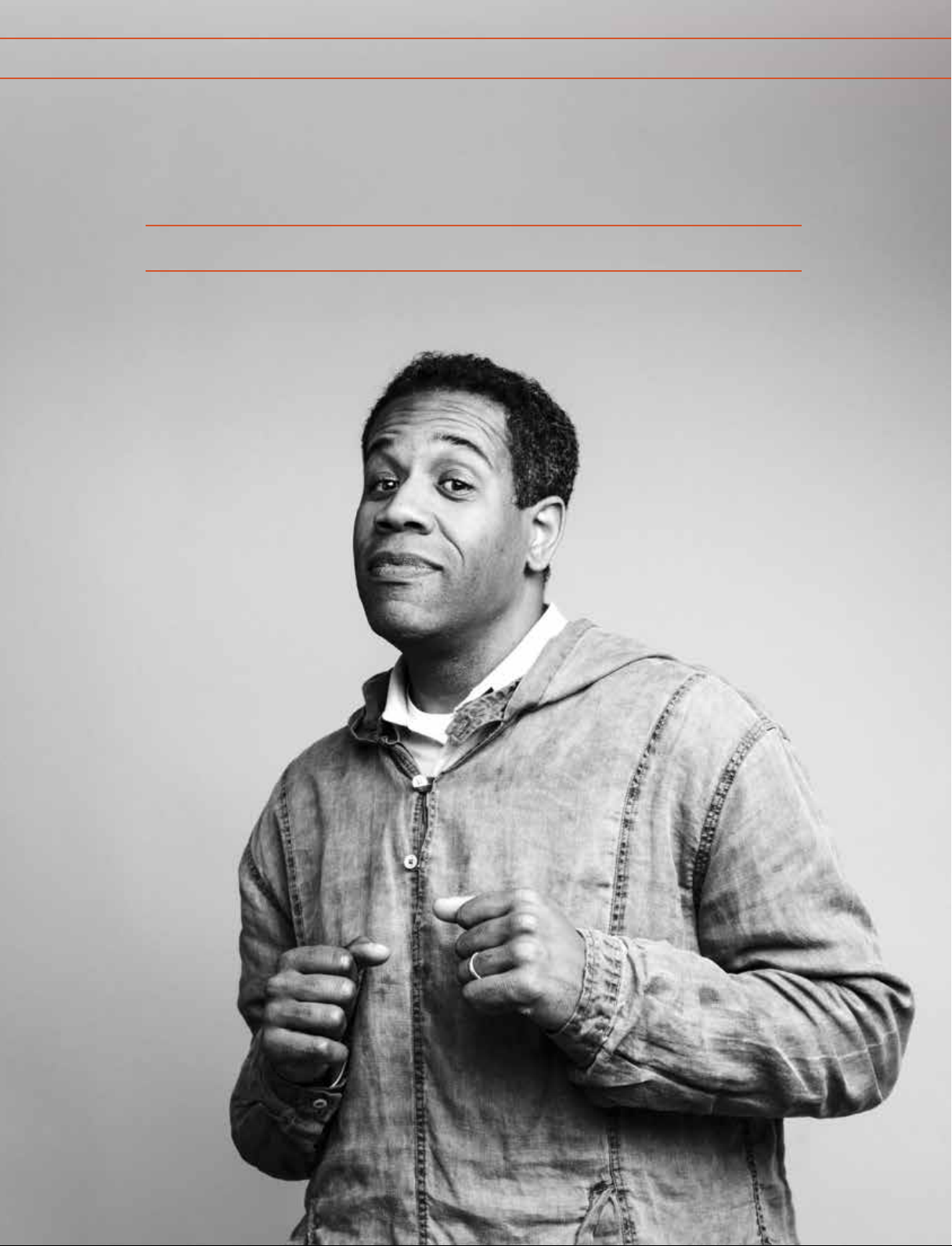
Cory Pfarr
TOPIC:
“Longstreet at Gettysburg: A
Critical Reassessment"
Come join us early at our August
10th Membership Meeting to have an op-
portunity to chat with Cory and your col-
leagues before the meeting be-
gins. Doors open at 6:00 PM; hope to
see you there.
HISTORIAN AND AUTHOR CORY
PFARR SPEAKS ON HIS BOOK
“LONGSTREET AT GETTYSBURG:
A CRITICAL REASSESSMENT” AT
THE AUGUST 10th GENERAL
MEMBERSHIP MEETING
The first book-length critical analysis
of Lieutenant General James Longstreet's
actions at the Battle of Gettysburg will be
presented to our Round Table on August
10th. The author argues that Longstreet's
record has been discredited unfairly, be-
ginning with character assassination by his
contemporaries after the war and, persis-
tently, by historians in the decades since.
By closely studying the three-day battle,
and conducting an incisive historic, graph-
ical inquiry into Longstreet's treatment by
scholars, this book presents an alternative
view of Longstreet as an effective military
leader, and refutes over a century of neg-
ative evaluations of his performance. We
are happy to have the author present his
views at our August membership meeting.
Cory M. Pfarr is employed by the
Department of Defense. He’s the award-
winning author of Longstreet at Gettys-
burg: A Critical Reassessment (2019) and
Righting the Longstreet Record at Gettys-
burg: Six Matters of Controversy and Con-
fusion (2023). He is an associate editor for
North & South Magazine, has written arti-
cles for North & South Magazine and Get-
tysburg Magazine, and has appeared on
the Pennsylvania Cable Network and C-
SPAN American History TV. He lives in
Fallston, Maryland with his wife and four
children.
Coming soon! The Bull
Run Civil War Round
Table’s Annual Picnic
and Art Auction. Sept
17th at the Winery at
Bull Run - see pages 6
through 8 for details.

BRCWRT — Vol. XXX, Issue 8, AUGUST 2023 Page 2
BULL RUN CIVIL WAR ROUND TABLE
Executive Committee
President: Mark Whitenton,
mark.whitenton@gmail.com, 703-795-8759
Past President: Mark Trbovich,
civilwarnut@comcast.net, 703-361-1396
Vice-President: Kim Brace, kbrace@aol.com
Treasurer: Joe Young,
BRCWRTTreasurer@gmail.com
Secretary: Debbie Whitenton, debd509@aol.com
At Large: Jim Lewis, Drew Pallo
Education: (vacant)
Field Trips: Sam Laudenslager,
kapel-meister1@hotmail.com
Fundraising: (vacant)
Graphic Design: Drew Pallo, dpallo3@verizon.net
Marketing: Stephanie Vale,
brcwrtmarketing@gmail.com
Membership: Kim Brace, kbrace@aol.com
Newsletter: Don Richardson,
don.richardson@erols.com
Preservation: Blake Myers, jb11thva@cox.net
Scholarship: John Carter, johnca2@yahoo.com
Webmaster: Alan Day, webmaster@bullruncwrt.org
The Bull Run Civil War Round Table
publishes the Stone Wall.
Newsletter Team: Saundra Cox, Janet Green-
tree, and Mark Whitenton.
For meeting dates and other information, please
visit the Web site: http://bullruncwrt.org
NEWSLETTER SUBMISSION DEADLINE
For the September 2023 issue, e-mail articles by
September 4th to the editor, Don Richardson, at:
don.richardson@erols.com
ADVERTISEMENT SUBMISSION DEADLINE
For the September 2023 issue, advertisers
please see “Instructions for Advertisers” at:
http://bullruncwrt.org
and e-mail ads by September 4th to Don Rich-
ardson at: don.richardson@erols.com
UPCOMING MEETINGS
August 10: Cory Pfarr - “Longstreet at
Gettysburg: A Critical Reassessment”
September 14: Jeffery Hunt - “The Battle
at Rappahannock Station, Nov 1863”
October 12 Kevin Pawlak & Kate Bitely -
“The Battle of Bristoe Station, Oct 1863”
November 9 J. Nathan McDonald - “The
Battle of Droop Mountain WV, Nov 1863”
December 14 John Quarstein - “Into The
Ring of Fire, Federal Admiral DuPont’s
attack on Charleston SC, 1863”
January 11 Harry Smeltzer - “The 69th
NY Militia at the Battle of 1st Bull Run/
Manassas”
In This Issue
President’s Column Page 3
BRCWRT Calendar of Events Page 5
Auction of Civil War Prints Page 6
BRCWRT Annual Picnic Page 8
Battle of Aldie Event Page 9
Bibliography: Civil War Intel-
ligence Resources Page 10
Welcome New Members! Page 10
Ms. Rebelle Page 11
September Caravan Tour
Marching Orders Page 18
Book Corner Page 19
PWHP Wednesday Walks Page 20

BRCWRT — Vol. XXX, Issue 8, AUGUST 2023 Page 3
The President’s Column
by Mark Whitenton
First, all of us owe our thanks to Past
-President Mark Trbovich, who has volun-
teered to continue finding excellent
monthly speakers through 2024. He has
already almost completed the scheduling
for next year. Upcoming speakers
(through April 2024) are noted on page 2
and in the Program of Events on page 5.
At last month’s General Membership
meeting, we were fortunate to have Jim
Anderson speak to us about how the Un-
ion’s intelligence operations were signifi-
cantly superior to General R. E. Lee’s in
the lead-up to Gettysburg. Not only was
Lee missing his chief source of intelligence,
General J. E. B. Stuart and his cavalry, but
the Confederate army was also now in Un-
ion territory, where the population was
providing information to General Meade’s
forces, rather than the Confederates.
Jim Anderson was also the person
who informed Jim Lewis of the availability
(for free) of eight quality, framed Civil War
prints that a round table could sell to raise
money for preservation activities. Jim
Lewis picked up the prints, and we have
made the decision to auction six of them
at the September 17 BRCWRT picnic.
See page 8 for more information about
our annual picnic and pages 6-7 for pho-
tos of the six framed prints that will be
auctioned. Each print has a base or
starting price for the silent auction. Bids
will be accepted in $25 increments. All
proceeds from the auction will be di-
rected to the BRCWRT’s Civil War preser-
vation efforts, including our support for
local Civil War Trails markers. Thank
you, Drew Pallo, for creating the flyer for
the print auction on pages 6 and 7.
Please be on the lookout for the picnic
sign-up sheet on our website at
BRCWRT.org.
Mark Whitenton, Jim Anderson, & Jim Lewis
Photo: Janet Greentree
Ben Lomond Hospital
Weekend - BRCWRT
tent (gray) at le
Photo: Sam
Laudenslager
(cont on page 4)

BRCWRT — Vol. XXX, Issue 8, AUGUST 2023 Page 4
President’s Column
On Saturday, July 22, Ben Lomond
held its annual Civil War Hospital Weekend
and the BRCWRT team was there to sell
books and recruit new members. As al-
ways, BRCWRT member Kevin Pawlak
(who is the Prince William County Site
Manager for both Ben Lomond and Bristoe
Station historical sites), provided us with a
tent to show off our display items and
books.
Photo: Kevin Pawlak
From left to right: thank you, Blake
Myers, for bringing all the books and dis-
play items and, along with Drew Pallo, for
manning the tent all day; Debbie and Mark
Whitenton for helping from noon to the
end; and also Mike Buckley and Sam
Laudenslager for supporting all morning.
At least two other BRCWRT members were
present - Dan Lundeen attended in the af-
ternoon, and John Myers helped out the
evening program by portraying a wounded
Union officer.
We hope to see you live and in per-
son on Thursday, August 10 to hear Cory
Pfarr on Longstreet at Gettysburg: A Criti-
cal Reassessment.
Hospital Weekend (more)
For those unable to attend on July
22nd, Inside Nova has an article fo-
cused on two ladies who provided in-
sights on the role of nurses in the Civil
War, centered at the Pringle House hos-
pital at Ben Lomond. The BRCWRT is
considering having them present to one
of our upcoming meetings; in the mean-
time, this is a timely article to read:
https://www.insidenova.com/headlines/insid
e-the-heads-and-hearts-of-barrier-breaking-
civil-war-nurses/article_94809490-2a6a-
11ee-bf4a-fb48c136db79.html
BRCWRT
BOOK DONATIONS
The Round Table conducts sales of do-
nated Civil War history books to raise
money for the $2,000 Annual Scholar-
ship; these books increase our members’
understanding of the Civil War.
If you wish to donate Civil War his-
tory books, please contact our Mar-
keting Committee Chair, Stephanie
Vale (brcwrtmarketing@gmail.com) or
our Preservation Committee Chair,
Blake Myers (jb11thva@cox.net) to co-
ordinate your book donation. Please
do NOT bring books for donation to a
Membership Meeting without prior
coordination. Thank you!

BRCWRT — Vol. XXX, Issue 8, AUGUST 2023 Page 5
Bull Run Civil War Round Table
Upcoming 2023-2024 Program of Events
Date Event ____
August 10 Monthly Meeting Speaker: Cory Pfarr – “Longstreet at Gettysburg: A Critical
Reassessment”
August 26 161st Commemoration of Battle of Kettle Run: Bristoe Station – BRCWRT book sales
September 14 Monthly Meeting Speaker: Jeffery Hunt – “The Battle at Rappahannock Station,
November 1863”
September 16 Ben Lomond History Day: Ben Lomond – BRCWRT book sales
September 17 BRCWRT Annual Picnic: The Winery at Bull Run - 11:30 to 2:30
September 23 Sept. Field Trip: “Bristoe Campaign Oct 13-19, 1863” – Guided by Bill Backus
October 12 Monthly Meeting Speakers: Kevin Pawlak and Kate Bitely – “The Battle of Bristoe
Station, October 14, 1863”
October 14 160th Commemoration of the Battle of Bristoe Station: BRCWRT book sales
October 21 October Field Trip: “Postscript to Gettysburg: The Mine Run Campaign” –
Guided by Mike Block
November 9 Monthly Meeting Speaker: J. Nathan McDonald - “Battle of Droop Mountain WV,
November 6, 1863”
November 11 November Field Trip: “Centreville Military Railroad (CMRR) Sites” - Guided by
Blake Myers and Jim Lewis
December 14 Monthly Meeting Speaker: John Quarstein - “Into The Ring of Fire, Federal
Admiral DuPont’s attack on Charleston SC, 1863”
January 11 Monthly Meeting Speaker: Harry Smeltzer - “The 69th NY Militia at the Battle
of 1st Bull Run/Manassas”
February 8 Monthly Meeting Speaker: Kevin Pawlak - “The Emancipation Proclamation”
March 14 Monthly Meeting Speaker: David Goetz - “Colonel John Singleton Mosby and the
Lincoln Conspiracy”
April 11 Monthly Meeting Speaker: James Anderson - “Civil War Spy Elizabeth Van Lew
And the Bureau of Military Information”
Monthly Meetings in “Black” Tours/Field Trips & Special RT Events in “Red” County or outside sponsored events in “Green”

BRCWRT — Vol. XXX, Issue 8, AUGUST 2023 Page 6

BRCWRT — Vol. XXX, Issue 8, AUGUST 2023 Page 7

BRCWRT — Vol. XXX, Issue 8, AUGUST 2023 Page 8

BRCWRT — Vol. XXX, Issue 8, AUGUST 2023 Page 9

BRCWRT — Vol. XXX, Issue 8, AUGUST 2023 Page 10
Bibliography: Civil War Intelligence
By Don Richardson
Following our well-received and in-
formative July presentation on the impact
of intelligence gathering on the Gettysburg
Campaign, our presenter, Jim Anderson,
provided a long bibliography of related
sources that, for folks like me who have a
special interest in espionage and military
intelligence, is a gold mine. Some of these
are undoubtedly familiar to many of us;
I’ve got a copy of Fishel on my “espionage”
bookshelf. But there are books here that
many of us have not heard of. Enjoy!
Military Intelligence
Allan Pinkerton: The First Private Eye, by
James Mackey (useful Pinkerton biography;
much better than Pinkerton’s self-serving
autobiography)
Grant’s Secret Service: The Intelligence
War from Belmont to Appomattox, by Wil-
liam B. Feis, University of Nebraska, 2002
(includes good detail on Grenville Dodge &
Western Theater 1861-63)
M.G. George H. Sharpe and the Creation of
American Military Intelligence in the Civil
War, by Peter G. Tsouras, Casemate Pub-
lishers, 2018 (comprehensive – 580 pages
– study of Sharpe & BMI throughout the
war; well sourced and footnoted. Very
readable)
Mosby’s Rangers, by Jeffry D. Wert, Simon
& Schuster, 1990. Best of many on Mosby.
Spies, Scouts and Secrets in the Gettys-
burg Campaign, by Thomas Ryan, Savas
Beatie LLC, 2015 (Gettysburg focus; sum-
marizes from Fishel but more readable)
The Secret War for the Union: The Untold
Story of Military Intelligence in the Civil
War, by Edwin C. Fishel, Houghton Mifflin,
1996 (most comprehensive, scholarly work,
excellent bibliography of sources. Go-to for
serious research)
The Bull Run Civil War
Round Table Welcomes
New Member
Jon Strickland
Civilian Espionage
A Southern Spy in Northern Virginia,
The Civil War Album of Laura Ratcliff,
by Charles Mauro, The History Press,
2009 (best biography on local spy)
Death to Traitors: The Story of General
Lafayette C. Baker, Lincoln's Forgotten
Secret Service Chief, by Jacob Mogelev-
er, Doubleday, 1960 (dated but solid
biography of that “Scoundrel” Baker.)
Liar, Temptress, Soldier, Spy: Four
Woman Undercover in the Civil War, by
Karen Abbott, Harper Perennial, 2015
(popular page turner; gets basic facts
right)
Lincoln’s Spies: Their Secret War to
Save a Nation, by Douglas Waller, Si-
mon & Schuster, 2019 (excellent, read-
able coverage of Pinkerton, Van Lew,
Sharpe and Baker; 580 pages & a good
bibliography)
Southern Lady, Yankee Spy, by Eliza-
beth R. Varon, Oxford U. Press, 2003.
(Best Van Lew biography)
Gettysburg
Gettysburg, by Stephen Sears, Hough-
ton Mifflin Co., 2003. (Of the many
overviews of Gettysburg, the one that
does the best job of incorporating the
intelligence picture).

BRCWRT — Vol. XXX, Issue 8, AUGUST 2023 Page 11
Samuel Davis Sturgis was born on
June 11, 1822 to James and Mary Bran-
denburg Sturgis. His middle name came
from his mother’s cousin John W. Davis, a
Representative from Indiana and also
Speaker of the House. James was a hat-
ter with a shop on King Street. He was
also a Justice of the
Peace. Samuel was
one of five children,
including Andrew
(hatter), William, Eliz-
abeth, and Henry
Bascom (Captain &
Aide-de-Camp, 2nd
Division U.S. Volun-
teers, and a cabinet
maker). The Sturgis
family was from Eng-
land; the first Sturgis
to come to America
was Edward Sturgis in
1634, who settled in Sandwich MA. The
first Sturgis to live in Pennsylvania was
John Sturgis, who settled in Fayette
County. In October of 1775, John enlist-
ed in Captain Josiah Harmer’s company of
the 1st PA Battalion in the Revolutionary
War, and he was with General George
Washington at Valley Forge. John’s
brother Amos was Samuel Sturgis’ grand-
father. Amos was a watchmaker in Ship-
pensburg and also served in the Revolu-
tionary War.
Shippensburg
Marker and
Sturgis Town-
house
(cont on page 12)
CIVIL WAR TRAVELS WITH
MS. REBELLE
By Janet Greentree
Major General Samuel
Davis Sturgis, USA
General Sturgis was born and grew
up in Shippensburg PA, about 25 miles
northwest of Gettysburg. However, he did
not fight at Gettysburg, but spent his time
mostly in the Western Theater. His Ship-
pensburg townhouse (built by his father in
the 1830’s) is still standing at 20 West King
Street. The house was turned into a show-
case house in 2017 by stripping the more
dated décor. The bottom floor is now Jane’s
Art of the Pie Café. There is a historical
marker in front of the house. Also in Ship-
pensburg, Gen. Albert G. Jenkins, CSA (see
Aug.-Sep. 2018 Stone Wall) stormed down
King Street in pursuit of Captain William
Boyd’s 1st NY Cavalry on June 24, 1863.
The Confederates took possession of the
town for three days and occupied it with
15,000-20,000 soldiers. Jenkins asked for
$1,800 in ransom to ensure the safety of
the local residents. He rescinded his order
in exchange for the residents providing
food for his horses and men. Jenkins’ men
also stole medicine and supplies from the
J.C. Altick Drugstore and paid the owner
$250 in Confederate money.

BRCWRT — Vol. XXX, Issue 8, AUGUST 2023 Page 12
Sturgis Family: Samuel, Jerusha, James, Nina , Ella
Samuel Sr. taught his daughter Ella
Marie to play chess as a child. She be-
came so proficient that she was able to
play blindfolded and beat any adult who
challenged her. In 1873 she married H.L.
Dousman in St. Paul
MN. One of the
groomsmen was Myles
Keogh of the 7th Caval-
ry. Sallie Sibley was a
bridesmaid, the daugh-
ter of Gen. Henry Hop-
kins Sibley. Ella
Marie’s daughter Elea-
nor married John S.
Pillsbury, who founded
the Pillsbury Company.
(cont on page 13)
MS. REBELLE
Samuel was appointed to West Point
at the age of 20 in the illustrious class of
1846 through the influence of Gen. Win-
field Scott. The class included 20 Civil
War generals. Nine were Confederates:
John Adams, Wm. Montgomery Gardner,
Thomas J. Jackson, David R. Jones, Samu-
el Maxey, Dabney Maury, George Pickett,
Wm. Duncan Smith, and Cadmus Wilcox.
The Union generals were: Darius Couch,
John Gray Foster, Alfred Gibbs, Charles
Gilbert, George Gordon, George McClellan,
James Oakes (refused commission), Innis
Newton Palmer, Jesse Reno, Truman Sey-
mour, and George Stoneman. Samuel
graduated 32nd in his class of 59 cadets.
He was assigned to the 2nd Dragoons with
the rank of Brevet 2nd Lt. and sent to join
the Mexican War after graduation. In
1847, he was captured near Buena Vista
and held as a prisoner of war for eight
days. After the war ended, he was sent
west, where he was stationed first in Cali-
fornia and then at many different posts
fighting the Indians. He was then sent to
West Ely MO, near St. Louis, where he
met his wife.
Samuel married Jerusha Wilcox on
July 5, 1850 in Hannibal MO. They had
eight children: Nina Linn, James Garland
(killed at Little Big Horn), William Bran-
denburg (Asst. Surgeon in the Army), Ella
Marie, Samuel Jr., Harry Cullen, Mary Ag-
nes (Catholic Mother at Academy of Sa-
cred Heart in St. Charles MO), and Thom-
as Glenn. His children were born all over
the country at Army posts, as Sturgis was
a career officer. His son Samuel, Jr. also
graduated from West Point in the class of
1884. He became a major general and
served in WWI. The son of Samuel, Jr.,
Samuel III, graduated in the West Point
class of 1918, was a career army officer
with the Engineers, and became a Lt. Gen-
eral and Army Chief Engineer.

BRCWRT — Vol. XXX, Issue 8, AUGUST 2023 Page 13
Sturgis Posion at Burnside’s Bridge, Anetam
Sturgis was not well liked in the
ranks, especially by the Army of the
Ohio at Brice’s Cross Roads. Sturgis was
said to be a drunkard and a traitor. A
story went around that the survivors of
Brice’s Cross Roads said Sturgis had sold
them out and stated that he sat under a
Sturgis Posion at Brice’s Crossroads
(cont on page 14)
MS. REBELLE
Sturgis’ last post before the Civil War
was at Fort Smith, AR. When the Civil War
began he served with the 1st Dragoons,
which later became the 1st Cavalry Regi-
ment. He achieved the rank of major in
May, 1861 and was transferred to the 4th
Cavalry Regiment. During 1861 he served
in an expedition to southwest Missouri,
fought at Dug Springs MO, commanded at
the battle of Wilson’s Creek MO after the
death of Gen. Nathaniel Lyon, and was
Chief of Staff to Major Gen. David Hunter.
In 1862 he served as the Union command-
er of the District of Kansas, commander of
the defenses of Washington, 2nd Battle of
Bull Run, South Mountain, Antietam, and
Fredericksburg, where he was brevetted
colonel for gallantry. In 1863 he fought in
central Kentucky, was Chief of Cavalry for
the Union Army and Department of the
Ohio, was with the 6th Cavalry Regiment,
the organizer of militia in Cincinnati OH,
and the Union commander at the Battle of
Mossy Creek. In 1864 he was the Union
commander at the battle of Dandridge TN,
captured Gen. Robert Vance and his com-
mand, led in the destruction of Qualla Town
NC, fought at Bolivar TN, served in the pur-
suit of Gen. Nathan Bedford Forrest to Rip-
ley MS, and at the battle of Brice’s Cross
Roads. He was mustered out on August
24, 1865 and reverted to the rank of Lt.
Colonel of the 6th Cavalry and then the 7th
Cavalry.
While serving in the defenses of
Washington, D.C., he was ordered to sup-
port Gen. John Pope’s army before the 2nd
Battle of Bull Run. When Sturgis attempt-
ed to get priority for Gen. Herman Haupt to
move his troops, Gen. Pope told Sturgis
that he would have to wait his turn, as oth-
er troops and supplies were supporting
Pope. Sturgis’ reaction: “I don’t care for
John Pope one pinch of owl dung.”

BRCWRT — Vol. XXX, Issue 8, AUGUST 2023 Page 14
General Swaim. Gen. Sturgis command-
ed an expedition in May 1864, organized
at Lafayette, Tennessee, for the purpose
of operating against the rebel forces un-
der Forrest in northeast Mississippi, with
a view of creating a diversion in favor of
Sherman’s army, then engaged in a cam-
paign against Atlanta. The expedition
was a disastrous failure. Gen. Sturgis’
command was routed, lost all its artillery
and wagons, and several thousands
killed, wounded and prisoners. He was
accused of drunkenness, cowardice and
incompetency. There was a board of in-
vestigation, but no court of inquiry. Re-
cently there seems to be a widespread
movement in the west to revive the
charges against Gen. Sturgis. In his re-
quest for a court of inquiry he cites many
officers who exonerate him from these
charges. His appeal is printed, and closes
with a letter from Gen. Grant, written in
1865, recommending Gen. Sturgis for the
brevet rank of brigadier general.”
After the Civil War Sturgis was sta-
tioned in Texas at Austin, Fort Belknap,
and Camp Wilson. He was also the com-
mander at Fort Leavenworth, KS, Louis-
ville, KY, Superintendent of the Mounted
Recruiting Service, commander of the
Cavalry Depot in St. Louis and Fort Lin-
coln in the Dakota Territory, and com-
mander of the Yellowstone Expedition.
On May 6, 1869 he was appointed
Colonel of the 7th Cavalry and command-
ed the unit until his retirement at age 65
on June 11, 1886 at Fort Meade in the
Dakota Territory. Sturgis was the first
commander of Fort Meade, which is near
Sturgis SD (named for the general).
There is a large monument of Sturgis on
his horse at the eastern entrance to town,
on Highways 34/89 near Lions Club Park
on Lazelle Street. Sturgis Road and Cus-
ter Avenue intersect each other in town.
(cont on page 15)
MS. REBELLE
tree with Gen. Forrest the day before the
battle to plan how he would hand over the
wagon train to the Rebels. The story was
not true, but it circulated for years. The
72nd Ohio, who fought at Guntown, said
that Sturgis was not only drunk and a cow-
ard but that he was a traitor and purpose-
fully sacrificed his command. Surgeon
John Rice of the 72nd Ohio wrote to his wife
that “Sturgis was crazy drunk the night be-
fore the expedition left. He went about the
city going like a mad man. He broke half
the chandeliers at the Gayoso House and
conducted himself like the beast general-
ly….” A private in the 120th Illinois wit-
nessed what happened when Sturgis got
off the cars [train] at Colliersville, TN. “I
saw orderlies take the commander
[Sturgis] out of the car hopelessly drunk,
put him on his horse, and one [orderly]
rode on each side to keep him from falling
off his horse.” Later, in 1867, Sturgis
planned to spend the summer at Put-in-
Bay near Port Clinton, OH. When he heard
there were men from the 72nd Ohio there,
Sturgis left out of fear that one of them
would kill him. He never attended a reun-
ion of the 72nd Ohio. He even asked Gen.
Sherman to conduct a board of inquiry to
clear his name, but Sherman declined.
The Morris Tribune in Morris, MN said
of Sturgis on March 16, 1882: “General
Samuel D. Sturgis, colonel of the Seventh
Cavalry and brevet major general, U.S.A.,
has addressed a request to the adjutant
general of the army for a court of inquiry
to investigate and report on the merits of
the accusations against him, which has
been revived in the form of a petition to
the senate and house of representatives by
one Dr. Gessner of Fremont, Ohio, who
wishes to have him relieved as governor of
the Soldiers’ Home, to which position he
was appointed by Garfield last year
through the influence of Judge Advocate

BRCWRT — Vol. XXX, Issue 8, AUGUST 2023 Page 15
Soldier’s Home/Lincoln Coage
Photo: Janet Greentree
His son Lt. James Garland Sturgis
graduated from West Point in 1875, rank-
ing 29th of 43 graduates. He was ap-
pointed to the 7th Cavalry on June 16,
1875. He arrived at his duty station of
Fort Lincoln, Dakota Territory, on October
29, 1875, under his father’s command.
He was part of Company E, the Gray
Horse Troop, under George Armstrong
Custer fighting the Sioux in 1876. His fa-
ther was not present at Little Big Horn
when the ferocious battle occurred on
June 25, 1876, as he was in St. Louis on
recruitment duty. Young James was
killed at the battle and his body was nev-
er found. He was killed either at the
Deep Ravine (where a marker is located
with his name on it) or with Custer on
Last Stand Hill a short distance away.
Some of his clothes were found across
the Little Big Horn
River in an aban-
doned Lakota/
Cheyenne village.
His bloody under-
wear, his buckskin
coat with two bullet
holes in it, and two
gold collar buttons
with his initials JGS
were found.
(cont on page 16)
MS. REBELLE
Sturgis, SD is also known for the huge
motorcycle rallies held in the town, which
Ms. Rebelle witnessed on a trip through
the West in 1979. In 1881 he was as-
signed as governor of the Soldier’s Home
in Washington, DC by President Garfield.
Fort Meade, Dakota Territory, 1888
Sturgis Statue, Sturgis South Dakota
Sturgis Motorcycle Rally

BRCWRT — Vol. XXX, Issue 8, AUGUST 2023 Page 16
That spot is where his marker in the Deep
Ravine is today. Sturgis never forgave
Custer for his son’s death. Custer was
second in command under Col. Sturgis.
Lt. Sturgis Marker (le)
Gravesite for his mother’s
1878 visit (below)
Custer Monument
on Last Stand Hill
(Photo: Ramona
Richardson)
(cont on page 17)
MS. REBELLE
A Private Goldin reported finding 2-3
skulls burned beyond recognition. He also
found a blue flannel shirt near the fire, al-
so embroidered with the initials JGS. The
men had been tortured on June 25th and
their heads cut off, secured with rawhide
strings and beads, and dragged around in
a circle while the Indians did their war
dance and victory celebration.
Last Stand Hill and Deep Ravine
Bale of the Lile Big Horn
In 1877 all the bodies of the soldiers
were put in a mass grave at Last Stand
Hill. His mother Jerusha was very dis-
traught that her son’s body was not found.
She came to the Little Big Horn in 1878 to
see “where” her son had died. A group of
troopers erected a burial site of bricks,
boulders and sod, and showed it to her.

BRCWRT — Vol. XXX, Issue 8, AUGUST 2023 Page 17
had hitherto enjoyed the best of health.
He took an active part in the late war
and earned great distinction for his cool-
ness and bravery, being honorably re-
tired a few years ago, after having
served long and faithfully for his coun-
try… He was also the nephew of Gen.
Scott, the hero of Lundy’s Lane [War of
1812] whose influence secured for him
an appointment to West Point in July,
1845… The floral tributes were numerous
and beautiful, testifying to the esteem in
which the deceased was held. The pall
bearers were as follows: John H.
Sanborn, Gen. R.W. Johnson, John S.
Prince, A.H. Wilder, H.M. Smith, Gen.
Thomas H. Ruger, and Col. A.F. Rock-
well. After the service the funeral pro-
ceeded to Calvary Cemetery, and his re-
mains were deposited in a vault for re-
moval to Arlington Heights, Washington,
D.C.”
Even though it was said he was
unpopular with his men, he spent his en-
tire life in the military. He must have
been doing something right. A World
War II troop transport ship was named in
honor of him – the USS General S.D.
Sturgis (AP-137).
NOTE: Ms. Rebelle’s hobby is travelling the
country finding and honoring the graves of
our 1,008 Civil War generals. So far she has
located and photographed 427 - 169 Confed-
erate and 258 Union. You may contact her
at jlgrtree@erols.com.
MS. REBELLE
Sturgis retired to St. Paul, MN and
died there on September 28, 1889 at the
age of 67 of diabetes, in his home at 611
Ashland Ave. His final interment two years
later was in Arlington National Cemetery on
November 18, 1891 in Section 2, Grave
1042. His wife Jerusha is also buried with
him in Arlington as well as Sturgis, Jr. and
Sturgis, III.
The Mitchell Capital of
Mitchell, SD published
his obituary on October
4, 1889: “A Soldier
Sleeps. Unexpected
Death of Gen. Samuel
D. Sturgis. St. Paul
News: The communi-
ty at large and the
many friends of Gen.
S.D. Sturgis through-
out the country will re-
gret to hear of his death, which occurred at
the family residence, 611 Ashland Avenue,
in this city, at 1 o’clock this morning. The
deceased was a retired army officer, sixty-
seven years of age, and he leaves a wife
and several children, his son-in-law being
the Hon. John Lawler, formerly the treasur-
er of Dakota. Gen. Sturgis was taken ill
with diabetes a few days ago, but no seri-
ous consequences were expected, as he

BRCWRT — Vol. XXX, Issue 8, AUGUST 2023 Page 18
Bristoe Station Campaign October 13 – 19, 1863
(BRCWRT Caravan Tour) +
Lunch @ Bristow Center
Saturday, September 23, 2023
Subject matter: Final week of the Bristoe Station Campaign, including the
clash at Auburn, troop movements leading to the battle, the Battle of Bristoe
Station and the Battle of Buckland Mills. 5 tour stops.
Tour Guide: Bill Backus – Preservationist/Prince William Office of Historic
Preservation.
Assembly Time/Location: 8:30 AM parking lot at Bristoe Station Battlefield
Heritage Park (Iron Brigade Unit Ave, Bristow, VA)
Tour Start Time: 9:00 AM Tour Duration: Approx. 6 1/2 Hrs
Lunch: 12:30 PM Bristow Center Shopping Center: Choice of restaurant,
Individual tabs
Mode of Transportation: Carpool caravan. We need to minimize number of
cars due to limited parking at a couple of stops.
Uniform of the Day: Appropriate dress for local weather conditions. Wear com-
fortable walking shoes. Water & insect repellent advised. Walking stick if de-
sired.
BRCWRT Contact: Gary Haskins – haskins_gary@yahoo.com / 703 850-2108
The tour is FREE! If interested in attending, please sign up via BRCWRT’s web-
site or at the August or September BRCWRT Membership meeting.

BRCWRT — Vol. XXX, Issue 8, AUGUST 2023 Page 19
Astride Two Worlds: Technology and
the American Civil War is edited by Barton
C. Hacker. The book is a collection of es-
says from a symposium held during the
Veterans Day weekend in November 2012.
The symposium topic was “causes and
consequences of technological change for
the course and outcome of the Civil War”.
The book opens with an essay by
Barton Hacker on “How Technology
Shaped the Conduct of War.” The essay’s
thrust is to give an overview of the subse-
quent essays in the collection.
Part One: Technological Realities
deals with Yankee Armorers and the Union
War Machine (chapter 2), Heavy Artillery
Transformed (chapter 3), Information
Flows and Field Armies (chapter 4), and
Veterinary Care in the Union Cavalry
(chapter 5).
Part Two: Technological Dreams
deals with Confederate Spar-Torpedo
Boats (chapter 6), Armor, Manhood, and
the Politics of Mortality (chapter 7), Quak-
er Gun vs. Observation Balloon (chapter
8), and Dreams of Aerial Navigation
(chapter 9).
Each of the chapters, with the possi-
ble exception of Chapter 1, can be read
independently of the others. As can be
seen from the titles, each deals with a
specific topic of interest during the Civil
War. To cite two examples:
Chapter 5 discusses the develop-
ment of the medical care of the Union
Army’s horses and mules, paying par-
ticular attention to the almost total lack
of qualified veterinarians associated with
the army. It also discusses the notion
that the farriers in the army were suffi-
ciently well-versed about the animals
that they could handle any medical is-
sues. This was proven to be false.
Chapter 7 discusses the conun-
drum of the use of body armor by the
soldiers on both sides. The issue was
whether the wearing of body armor re-
flected negatively on the “manhood” of
anyone who wore it. Also, as a major
component of the chapter, the quality or
perhaps the lack of quality of the armor
was a major concern.
For someone who wants to “get
into the details” this is an excellent, al-
beit not fast, read. Since these are es-
says written by scholars on the topic (all
of whom have PhD or the equivalent af-
ter their name) the detail is deep and
the discussion extremely academic.
That being said, the essays show how
the American Civil War was truly
“Astride Two Worlds”: the world of Na-
poleonic Warfare (stand in ranks and
files and shoot at the enemy who is also
standing in ranks and files) and the
world of World War I (much more mech-
anized and definitely trench warfare).
The book is published by the
Smithsonian Institution and has an ISBN
of 9781935623922. It is available at
both the Smithsonian and Barnes & No-
ble for $37.95 in hardcase. B&N also
has it available in e-book format for
$36.99.

BRCWRT — Vol. XXX, Issue 8, AUGUST 2023 Page 20

BRCWRT — Vol. XXX, Issue 8, AUGUST 2023 Page 21
THE BULL RUN CIVIL WAR ROUND TABLE
P.O. Box 2147, Centreville, VA 20122
http://www.bullruncwrt.org
A 501(c)(3) non-profit organization
MEMBERSHIP RENEWAL FORM
Thank you for your continued interest in the BRCWRT!
Here are your payment options:
Annual Dues: Three-Year Option:
Individual: $20.00 $55.00
Family: $25.00 $65.00
Student (21 & under): FREE!
You may use PayPal by going to http://brcwrt.org/?page_id=962 and then
emailing this form to BRCWRTtreasurer@gmail.com. Note that $1 is added to
cover the PayPal fee.
-OR-
You may pay by check, made payable to: BRCWRT (Bull Run Civil War Round
Table) and give the form and check to the President or Treasurer at a General
Membership meeting.
-OR-
You may mail this form and the check to:
BRCWRT Treasurer
P.O. Box 2147
Centreville, VA 20122
NAME(S)______________________________________________________
NAME(S) FOR BADGE (if different)_________________________________
If there are any changes:
ADDRESS______________________________________________________
CITY_________________________ STATE_________ ZIP_________
PHONE________________ EMAIL___________________________________
Are there any BRCWRT activities you would like to help with (tours, selling
used books, member recruitment, newsletter articles, annual picnic)?
______________________________________________________________
Do you have any suggestions for additional BRCWRT activities? ___________
______________________________________________________________