Leveraging Artificial Intelligence as a Strategic Growth Catalyst for Small and Medium-sized Enterprises PDF Free Download
1 / 16/16
100%

Leveraging Artificial Intelligence as a Strategic Growth Catalyst
for Small and Medium-sized Enterprises
Oluwatosin Agbaakin
Indiana University
olbaagba@iu.edu
September 19, 2025
Abstract
Artificial Intelligence (AI) has transitioned from a futuristic concept reserved for large cor-
porations to a present-day, accessible, and essential growth lever for Small and Medium-sized
Enterprises (SMEs). For entrepreneurs and business leaders, strategic AI adoption is no longer
an option but an imperative for competitiveness, operational efficiency, and long-term survival.
This report provides a comprehensive framework for SME leaders to navigate this technological
shift, offering the foundational knowledge, business case, practical applications, and strategic
guidance necessary to harness the power of AI. The quantitative evidence supporting AI adoption
is compelling; 91% of SMEs using AI report that it directly boosts their revenue Salesforce [2024a].
Beyond top-line growth, AI drives profound operational efficiencies, with studies showing it can
reduce operational costs by up to 30% and save businesses more than 20 hours of valuable time
each month SuperAGI [2024], ColorWhistle [2025]. This transformation is occurring within the
context of a seismic economic shift; the global AI market is projected to surge from $233.46
billion in 2024 to an astonishing $1.77 trillion by 2032 Fortune Business Insights [2024]. This
paper demystifies the core concepts of AI, presents a business case based on market data, details
practical applications, and lays out a phased, actionable adoption strategy.
Keywords: Artificial Intelligence Machine Learning Small and Medium-sized Enterprises Business Strategy
Digital Transformation Knowledge Graphs
1
Demystifying the Digital Workforce: AI and Machine Learning
in a Business Context
To strategically deploy AI, business leaders must first understand its core components not as abstract technical
terms, but as practical business tools. This section decodes the essential terminology, providing a clear
framework for thinking about how these technologies create value.
1.1 From Buzzwords to Business Tools
The terms Artificial Intelligence, Machine Learning, and algorithms are often used interchangeably, but they
represent distinct layers of a powerful technological stack.
•
Artificial Intelligence (AI) is the broadest concept, referring to the general ability of computers
to emulate human cognitive functions like problem-solving, reasoning, and learning Red Hat [2024],
Columbia Engineering [2024], IBM [2024a]. In a business context, AI is the overall field dedicated to
creating systems that can perform tasks that typically require human intelligence, from understanding
customer queries to identifying market trends. It is best understood as the entire discipline, much like
"transportation" is the discipline of moving things from one place to another.
1
arXiv:2509.14532v1 [cs.CY] 18 Sep 2025
2
•
Machine Learning (ML) is the most prevalent and practical application of AI today. It is a subset
of AI that uses algorithms to analyze large amounts of data, learn from the patterns within it, and
then make decisions or predictions without being explicitly programmed for every possible scenario
Red Hat [2024], Google Cloud [2024a], IBM [2024b]. ML is the engine that powers most modern AI
tools. Continuing the transportation analogy, if AI is the car, then machine learning is the internal
combustion engine—the specific technology that consumes fuel (data) to generate power (predictions
and insights).
•
Algorithms are the specific, step-by-step mathematical procedures or sets of rules that a machine
learning system uses to process data, learn, and arrive at a decision IBM [2024b], U.S. Small Business
Administration [2025]. They are the detailed blueprints that define how the engine works, dictating the
precise sequence of operations required to turn data into a useful output.
•
Deep Learning represents the cutting edge of machine learning. It is an advanced method that uses
complex structures called neural networks—inspired by the human brain—to learn from vast quantities
of unstructured data like text, images, and audio with minimal human supervision Red Hat [2024],
Columbia Engineering [2024], IBM [2024a]. This is the technology behind the recent explosion in
generative AI tools like ChatGPT. In our analogy, deep learning is a high-performance, self-tuning
racing engine capable of processing complex fuel mixtures (unstructured data) to achieve superior
performance.
The fundamental shift for business leaders to grasp is the move from a world of explicit programming to
one of probabilistic training. Traditional software required developers to write precise ‘if-then‘ rules to cover
every conceivable situation, a process that is rigid and cannot scale to handle the complexity of real-world
business problems like predicting customer behavior Google Cloud [2024a]. Machine learning, in contrast,
learns these rules implicitly by analyzing historical data Red Hat [2024], IBM [2024b]. This means the
quality of an AI system’s output is directly and inextricably linked to the quality and quantity of the data
it is fed. Consequently, the most valuable asset for an SME in the AI era is not its software code but its
unique, proprietary data. A local retailer’s sales history, a consulting firm’s project notes, or a manufacturer’s
equipment sensor logs become the high-octane fuel for their custom AI engine. This elevates the strategic
importance of actively collecting, cleaning, and unifying business data from a secondary IT task to a primary
driver of competitive advantage Synergy Corporate Technologies [2024].
1.2 The Machine Learning Toolkit for SMEs
Machine learning is not a monolithic technology; it is a collection of techniques, each suited for different
business problems. For SMEs, three main types are particularly relevant:
•
Supervised Learning: This is the most common and straightforward type of ML. The model is
trained on a dataset where the "right answers" are already known (labeled data) IBM [2024b]. The
algorithm learns the relationship between the inputs and the corresponding outputs and can then
predict the output for new, unseen inputs.
–
Business Application: Predicting which customers are at high risk of churning. The model is
trained on historical customer data, where each customer is labeled as either "churned" or "not
churned." The trained model can then analyze current customers and assign a churn-risk score to
each.
•
Unsupervised Learning: In this approach, the model is given unlabeled data and tasked with finding
hidden patterns, structures, or groupings on its own IBM [2024b]. It is used for exploratory data
analysis and discovering insights that are not immediately obvious.
–
Business Application: Customer segmentation. An e-commerce business can feed its entire
customer purchase history into an unsupervised clustering algorithm. The algorithm might
automatically identify distinct segments like "high-value bargain hunters," "seasonal shoppers," and
"brand loyalists" without any prior definitions, allowing for highly targeted marketing campaigns.

3
•
Reinforcement Learning: This type of learning trains a model to make a sequence of decisions in a
dynamic environment to maximize a cumulative reward IBM [2024b]. The model learns through trial
and error, receiving positive or negative feedback for its actions.
–
Business Application: Dynamic pricing. An online store could use a reinforcement learning
agent to adjust the price of a product in real-time. The agent’s "reward" is total revenue. It learns
to lower the price to stimulate demand during slow periods and raise it during high-demand surges,
automatically finding the optimal balance to maximize profit.
2
The Unignorable Business Case: Market Dynamics and the AI
Imperative
The adoption of AI is not merely a technological trend; it is a fundamental economic transformation reshaping
industries on a global scale. For SMEs, understanding the magnitude of this shift is the first step toward
recognizing AI as a strategic necessity rather than a discretionary investment.
2.1 A Tectonic Shift in the Global Economy
The economic momentum behind AI is staggering. Market analyses project the global AI market will experience
explosive growth, expanding from a valuation of $233.46 billion in 2024 to an estimated $1,771.62 billion by
2032. This trajectory represents a compound annual growth rate (CAGR) of 29.20%, signaling one of the
most rapid technological expansions in modern history Fortune Business Insights [2024], MarketsandMarkets
[2025].
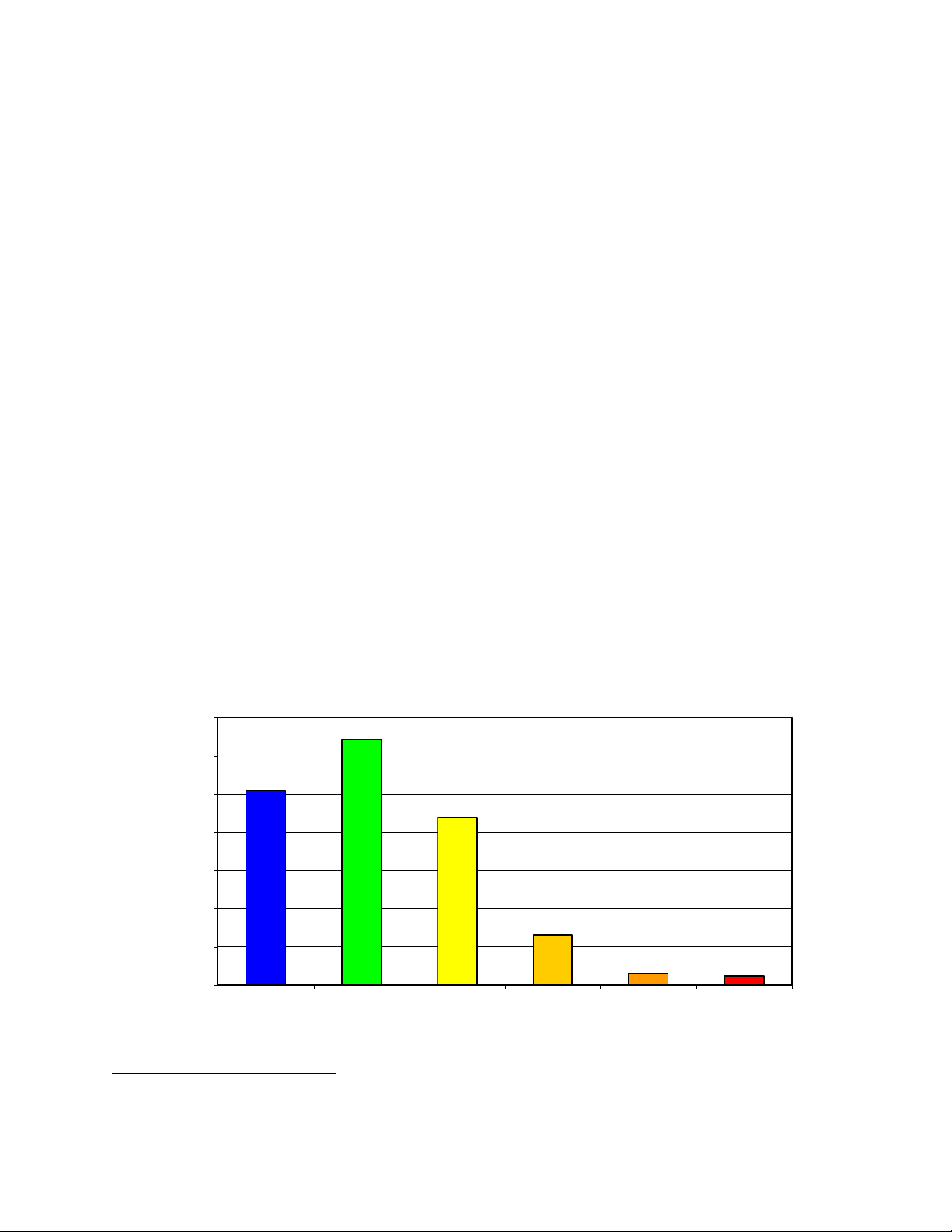
Figure 1: Projected Growth of the Global Artificial Intelligence Market, 2024-2032. Data sourced from
Fortune Business Insights and MarketsandMarkets Fortune Business Insights [2024], MarketsandMarkets
[2025].
This market growth is a reflection of AI’s profound impact on productivity and economic value. Projections
indicate that AI could contribute as much as $15.7 trillion to the global economy by 2030 Exploding Topics
[2025]. Research from IDC further quantifies this impact, predicting a cumulative global economic value
of $22.3 trillion by 2030. Their analysis reveals a powerful multiplier effect: every new dollar spent on AI
solutions and services by an adopting company is expected to generate an additional $4.90 in the broader
global economy, highlighting AI’s role as a catalyst for widespread business acceleration Microsoft [2025].
4
2.2 The SME Adoption Landscape: An Urgent Call to Action
While large corporations have been early adopters, SMEs are increasingly recognizing AI’s potential. Globally,
77% of small businesses now report using AI tools in at least one business function, such as customer service
or marketing ColorWhistle [2025]. However, a significant and potentially dangerous adoption gap persists. A
2025 survey by the World Trade Organization and the International Chamber of Commerce found that only
41% of small firms use AI, compared to over 60% of large firms World Trade Organization [2025].
More telling is the divide emerging within the SME sector itself. A recent Salesforce survey reveals that
growing SMBs are the primary drivers of adoption, with 83% of them already experimenting with
AI. Furthermore, 78% of these growing businesses plan to increase their AI investments in the coming year
Salesforce [2024a]. This proactive stance contrasts sharply with stagnant or declining businesses, creating
a widening chasm where AI-native SMEs are poised to pull away from their less technologically advanced
competitors.
This data paints a clear picture: AI is transitioning from a niche advantage to a foundational business
utility, akin to the adoption of electricity or the internet in previous eras. Early adopters of electricity did
not just replace their gas lamps; they fundamentally redesigned their factories to leverage the new power
source, enabling innovations like the assembly line. Similarly, the greatest benefits from AI are realized not by
simply plugging in a new tool, but by redesigning core business workflows around its capabilities McKinsey
& Company [2025]. The strong correlation between business growth and AI adoption suggests that AI is
becoming a key ingredient for growth, not just a byproduct of it. For an SME, the strategic question is no
longer "Should we use AI?" but "How do we rewire our business to run on AI?" Answering this question is
critical for survival and growth in the coming decade.
3 The AI-Powered Growth Engine: A Functional Deep Dive
Artificial intelligence provides SMEs with a suite of powerful tools to enhance performance across every
facet of the organization. For lean teams operating with limited resources, AI acts as a "force multiplier,"
enabling a small group of employees to achieve the analytical depth and operational capacity of a much
larger enterprise. This directly addresses the resource constraints that have historically limited SME growth,
allowing them to compete more effectively Amazon Web Services [2025], Taylor & Francis Online [2024].
3.1 Revolutionizing Marketing and Sales
AI is transforming marketing from a function based on broad assumptions to a science of precision engagement.
•
Hyper-Personalization at Scale: Machine learning algorithms can analyze customer browsing
history, purchase patterns, and demographic data to deliver uniquely tailored experiences. This moves
beyond simple name personalization in emails to recommending specific products, suggesting relevant
content, and offering timely promotions that resonate with individual needs ColorWhistle [2025],
SmartOSC [2024]. For example, an online craft store could use an unsupervised clustering algorithm to
automatically identify a "weekend DIYer" segment and schedule marketing emails with project ideas to
be sent specifically on Friday afternoons.
•Predictive Lead Scoring & AI-Powered CRM: Instead of treating all leads equally, AI-powered
Customer Relationship Management (CRM) systems can analyze lead characteristics and behaviors to
assign a "propensity to buy" score. This allows sales teams to focus their limited time on the most
promising prospects, dramatically increasing efficiency. Studies show that AI in sales can increase leads
by 50% and reduce call times by 60% Exploding Topics [2025]. Leading tools in this space include
Salesforce Einstein and HubSpot AI Salesforce [2024b], HubSpot [2024], Kipwise [2024].
•
Automated Content Creation: Generative AI has become a game-changer for small marketing
teams. These tools can rapidly draft blog posts, social media updates, email newsletters, and ad copy,
overcoming writer’s block and significantly accelerating content production schedules ColorWhistle
[2025], Makebot [2025], Advansappz [2024]. Popular and accessible tools include Jasper,ChatGPT,
and Google Gemini Sprout Social [2024], WebWave [2025], Nextiva [2025], Kipwise [2024], Google
Workspace [2024].
5
3.2 Transforming the Customer Experience
Exceptional customer service is a key differentiator for SMEs. AI enables them to provide responsive,
intelligent support at a scale that was previously unimaginable.
•
24/7 Intelligent Support: Modern AI-powered chatbots can handle a significant portion of routine
customer inquiries—reports suggest up to 80%—without human intervention ColorWhistle [2025].
They can answer frequently asked questions, track order statuses, and book appointments around the
clock. This frees up human agents to focus on more complex, high-value customer issues. For 72% of
small businesses using AI-driven support, this results in faster resolution times and higher customer
satisfaction ColorWhistle [2025]. Accessible chatbot platforms include Tidio,Nextiva, and Zoho’s
Zobot Sprout Social [2024], Nextiva [2025], Fulton Bank [2024].
•
Customer Sentiment Analysis: Using Natural Language Processing (NLP), AI tools can au-
tomatically analyze customer communications—such as emails, product reviews, and social media
comments—to determine the underlying emotional tone (positive, negative, or neutral). This provides
a real-time pulse on customer satisfaction, acting as an early warning system for widespread issues and
highlighting brand advocates.
3.3 Optimizing Operations and Supply Chain
AI brings a new level of predictive power and efficiency to the core operations of a business.
•
Intelligent Demand Forecasting: By analyzing historical sales data, seasonality, weather patterns,
and market trends, ML regression models can predict future product demand with far greater accuracy
than traditional methods. This allows SMEs to optimize inventory levels, preventing costly stockouts of
popular items and reducing capital tied up in slow-moving overstock SmartOSC [2024], ActivDev [2025a].
A small fashion retailer, for instance, could use a time-series forecasting model to more accurately
predict demand for winter coats, leading to a 25% reduction in end-of-season markdowns.
•
Predictive Maintenance: For SMEs in manufacturing or those reliant on critical machinery, AI is
invaluable. Sensors can collect operational data from equipment (e.g., temperature, vibration), and ML
models can analyze this data to predict when a part is likely to fail. This allows for maintenance to be
scheduled proactively, preventing catastrophic failures and costly operational downtime Red Hat [2024],
McKinsey & Company [2019].
•
Route Optimization: For businesses involved in delivery or logistics, AI algorithms can analyze
traffic data, delivery locations, and vehicle capacity to calculate the most efficient routes in real time.
This leads to significant savings in fuel costs and employee time, while also improving delivery speed
and customer satisfaction MarketsandMarkets [2025], SmartOSC [2024].
3.4 Streamlining Finance and Administration
AI automates and enhances the accuracy of back-office functions, reducing administrative burden and
providing deeper financial insights.
•
Automated Expense Management and Bookkeeping: AI-powered finance tools can use computer
vision to scan receipts, extract relevant information (vendor, date, amount), automatically categorize
expenses, and reconcile transactions with bank statements. This drastically reduces manual data entry,
minimizes human error, and can cut accounting costs by up to 50% SuperAGI [2024]. Leading platforms
in this area include Docyt and Vic.ai Gusto [2024].
•
Fraud Detection: Machine learning models excel at identifying anomalies in patterns. In finance,
they can monitor millions of transactions in real-time to flag behavior that deviates from the norm,
such as an unusually large purchase or a transaction from a new geographic location, thereby preventing
fraudulent activity before significant losses occur Red Hat [2024], SmartOSC [2024].

6
•
Intelligent Financial Forecasting: Beyond simple bookkeeping, AI can analyze historical cash flow,
revenue streams, and external market data to generate more accurate and dynamic financial forecasts.
This provides business leaders with a clearer view of future financial health, enabling more strategic
decisions about investment, hiring, and expansion Gusto [2024], Google Cloud [2024b].
4
Visualizing Success: Using Graphs to Monitor AI-Driven Insights
While AI models provide powerful predictions, their greatest strategic value for SMEs is unlocked when they
move beyond being a "black box" and provide interpretable insights. The true goal is not just to know what
will happen, but to understand why. This is where the synergy between AI and graph-based data visualization
becomes critical for tracking relationships and monitoring trends.
Business data is inherently relational. A customer buys a product, a marketing campaign targets a
demographic, and a supplier provides a component. As argued by Abdul-Rahman et al. [2024], representing
this information in a relational structure, such as a graph, is fundamental to building a true understanding of
the complex system that is a business. An AI model can analyze this relational data to construct a dynamic
business knowledge graph.
Figure 2: A simplified business knowledge graph. AI can analyze this structure to identify influential nodes
(e.g., key customers), strong paths (e.g., effective sales funnels), and emerging clusters (e.g., new customer
segments).
In this model, business entities (customers, products, campaigns) are represented as nodes, and their
interactions are represented as edges. This visual framework allows entrepreneurs to literally see the patterns
that the AI has uncovered:
•
Tracking Trends: By visualizing the graph over time, an SME can monitor how relationships are
changing. For example, they might see the connection between a specific social media campaign and a
new customer segment growing stronger, providing clear, visual confirmation of marketing ROI.
•
Root Cause Analysis: When a KPI unexpectedly drops (e.g., sales for a specific product), a knowledge
graph can help identify the root cause. The AI might highlight a weakening connection to a key supplier
or a competing product that is attracting the same customers, providing an immediate, data-backed
starting point for investigation.
7
•
Discovering Opportunities: AI-powered graph analysis can uncover non-obvious relationships. It
might discover that customers who buy Product A are highly likely to also buy Product C, even if they
seem unrelated. This insight can be immediately translated into a targeted cross-selling campaign.
By using AI to not only make predictions but also to build and maintain a visual map of their business
ecosystem, SMEs can transform abstract data into an intuitive, strategic dashboard. This graphical approach
makes AI insights more accessible, actionable, and transparent, fostering a deeper, data-driven understanding
of the business’s core relationships and trends.
5
Measuring the Return: Quantifying the Impact of AI on the
Bottom Line
While the functional benefits of AI are clear, the decision to invest ultimately hinges on its impact on the
bottom line. The data shows that for SMEs, AI is not just an operational enhancement but a powerful driver
of revenue growth, cost savings, and productivity.
5.1 The Revenue Revolution
The most compelling metric for any business initiative is its effect on revenue. For SMEs adopting AI, the
results are overwhelmingly positive. A landmark survey found that 91% of SMBs with AI say it directly
boosts their revenue Salesforce [2024a]. This top-line growth is driven by enhanced capabilities across the
sales and marketing funnel. AI-powered tools have been shown to increase qualified leads by up to 50% and
improve overall marketing efficiency by a similar margin Exploding Topics [2025], Vereus [2024]. Furthermore,
a McKinsey study found that 63% of businesses that implemented AI with the primary goal of reducing costs
and optimizing resources also witnessed an unexpected boost in revenue, indicating that operational efficiency
often translates directly into new growth opportunities Makebot [2025], McKinsey & Company [2019].
5.2 The Cost-Saving Imperative
AI’s ability to automate processes and optimize resource allocation delivers substantial cost reductions.
Research indicates that SMEs can save up to 30% on overall operational costs by strategically leveraging
AI-powered expense optimization SuperAGI [2024]. These savings are realized across various business
functions:
•
Customer Support: Implementing AI chatbots can cut customer support costs by as much as
one-third by handling routine queries and reducing the need for a large human support team InData
Labs [2024].
•
Procurement: Automated contract analysis and supplier negotiation tools can yield savings of 10-15%
SuperAGI [2024].
•Labor: Predictive scheduling and workforce optimization can reduce labor costs by 8-12% SuperAGI
[2024].
For many small businesses, these percentages translate into tangible monthly savings, with surveys
reporting that entrepreneurs are saving between $500 and $2,000 per month after adopting AI tools
ColorWhistle [2025].
5.3 The Productivity Dividend
Beyond direct financial metrics, AI delivers a significant "productivity dividend" by giving back the most
valuable resource: time. Many SMEs report saving 20 or more hours per month by automating repetitive
and administrative tasks ColorWhistle [2025]. This reclaimed time allows entrepreneurs and their teams to
focus on strategic, high-value activities like innovation, customer relationships, and business development.
Specific case studies have quantified these gains, showing that AI can reduce the time spent on administrative

8
tasks by 60% and cut the time required for drafting meeting minutes by a factor of four ActivDev [2025b],
Vereus [2024]. On a larger scale, companies like EchoStar have projected that their AI applications will save
an astounding 35,000 work hours annually while boosting overall productivity by at least 25% Microsoft
[2025].
5.4 Table 1: AI ROI for SMEs - A Snapshot of Key Metrics and Case Studies
The following table summarizes the quantifiable returns on investment that SMEs are achieving through AI
adoption across various business functions. It provides a powerful, at-a-glance overview of the technology’s
impact, linking specific applications to measurable outcomes.
Table 1: AI ROI for SMEs - A Snapshot of Key Metrics and Case Studies
Business Function AI Application Key Metric Quantified Result Case Study / Source
Sales/Customer Service AI Sales Assistant on Website Qualified Meetings +40% in 3 months ActivDev [2025c]
Marketing Churn Prediction (RFM Analysis) Customer Churn -15% in 6 months ActivDev [2025a]
Marketing Churn Prediction (RFM Analysis) Customer Lifetime Value +10% ActivDev [2025a]
Human Resources Automated Employee Onboarding Time Saved per Hire 2-3 hours ActivDev [2025d]
Operations Automated Meeting Summaries Time Spent on Minutes Divided by 4 ActivDev [2025b]
Sales AI-Powered Sales Outreach Qualified Leads +35% in 3 months Vereus [2024]
Operations General Workflow Automation Operational Costs -25% in 6 months Vereus [2024]
Overall Business General AI Tool Adoption Monthly Cost Savings $500 - $2,000 / month ColorWhistle [2025]
Overall Business General AI Tool Adoption Monthly Time Savings 20+ hours / month ColorWhistle [2025]
Overall Business AI Adopters vs. Non-Adopters Revenue Boost 91% of adopters report increase Salesforce [2024a]
6
From Concept to Reality: A Strategic Roadmap for AI Adoption
Successfully integrating AI requires a structured, strategic approach. Simply purchasing a tool is not a
strategy. This section outlines a phased roadmap designed specifically for SMEs, guiding them from initial
assessment to scalable, long-term value creation.
6.1 Phase 1: Readiness Assessment & Strategic Alignment (Weeks 1-4)
Before adopting any AI technology, a thorough internal assessment is crucial. This foundational phase ensures
that AI initiatives are aligned with business needs and grounded in reality.
•
Define Business Goals: The process must begin with business pain points, not technology solutions.
Identify the most critical challenges or opportunities in your organization. Is it slow customer response
times, inefficient inventory management, or an inability to generate qualified leads? Clearly defining
the problem is the most important step Behind the Design Co. [2025], Neurond AI [2024].
•
Data Audit: AI models are entirely dependent on the data they are trained on. It is essential to
assess the quality, quantity, and accessibility of your business data. Research shows that poor data
quality is a primary barrier to successful AI implementation for SMEs, and only a small fraction of
enterprises have data that is truly ready for AI ingestion Makebot [2025], arXiv [2025].
•
Skills & Culture Assessment: Honestly evaluate your team’s current understanding of AI and their
readiness for new, data-driven workflows. Studies consistently identify knowledge gaps as the most
significant obstacle for SMEs, so acknowledging this upfront is key to planning for necessary training
and change management arXiv [2025], Omdena [2025].
•
Tech Infrastructure Review: Determine if your current technology stack—your CRM, accounting
software, and other systems—can integrate with modern AI tools. For many SMEs, leveraging cloud-
based AI services can mitigate the need for large, costly on-premise hardware investments Amazon Web
Services [2025], arXiv [2025].
9
6.2 Phase 2: Identify Quick Wins & Pilot Projects (Weeks 5-8)
The goal of this phase is to build momentum and demonstrate tangible value quickly, which is critical for
securing buy-in and justifying further investment.
•
Prioritize High-Impact, Low-Complexity Projects: Avoid the temptation to tackle your most
complex problem first. Instead, identify a "quick win"—a project that can deliver measurable value
with minimal investment and risk. Examples include implementing a customer service chatbot to handle
basic FAQs or using a generative AI tool to accelerate social media content creation JD Meier [2024].
•
Embrace Rapid Experimentation: The accessibility of AI has lowered the barrier to entry. Leverage
free trials or low-cost subscription models of AI tools to test concepts and validate their potential
without significant upfront financial commitment Synergy Corporate Technologies [2024], Makebot
[2025].
•
Define Success Metrics (KPIs): Establish clear, measurable Key Performance Indicators (KPIs)
for your pilot project before it begins. Vague goals lead to ambiguous results. Be specific: "reduce
average customer email response time by 30%" or "increase marketing email click-through rates by
15%" Space-O Technologies [2025], Vereus [2024].
6.3 Phase 3: Implementation & Integration (Weeks 9-16)
With a validated pilot project, the next step is formal implementation and integration into existing workflows.
•
Choose the Right Tools & Partners: Select AI solutions that are user-friendly, scalable, and
cost-effective. Crucially, ensure they can integrate smoothly with your existing software stack to avoid
creating new data silos Neurond AI [2024]. For more complex projects, consider partnering with a
specialized AI agency. This can reduce implementation time by up to 60% and cut costs by 30-40%
compared to in-house efforts Vereus [2024].
•
Data Preparation & Cleaning: This is a non-negotiable step. The data identified in Phase 1
must be cleaned, structured, and formatted correctly for the chosen AI tool. This often represents a
significant portion of the work in any AI project but is essential for accurate results Synergy Corporate
Technologies [2024].
•
Train Your Team: AI adoption is as much about people as it is about technology. Provide comprehen-
sive training to employees who will use the new tools. Communicate clearly how AI will augment their
roles and make their jobs more effective, which is key to managing resistance to change and fostering
adoption ActivDev [2024].
6.4 Phase 4: Scaling & Fostering a Data-Driven Culture (Ongoing)
A successful pilot is not the end goal; it is the beginning. The true value of AI is unlocked when it is scaled
across the organization and embedded in its culture.
•
Analyze Pilot Results & Iterate: Use the data and feedback from your pilot project to analyze its
performance against the KPIs defined in Phase 2. Use these learnings to refine the solution and your
implementation process before attempting a broader rollout Synergy Corporate Technologies [2024].
•
Develop a Long-Term Roadmap: Based on the success of initial projects, build a strategic, long-term
AI roadmap. This plan should prioritize future AI initiatives that align with core business objectives
and build upon each other JD Meier [2024], Space-O Technologies [2025].
•
Foster a Data-Driven Culture: The ultimate goal is to transform the organization’s mindset.
This involves making data literacy a core competency for all employees, encouraging experimentation,
publicly celebrating data-driven successes, and investing in tools that make data accessible to everyone,
not just a few analysts Velosio [2025], Confluent [2024], Google Cloud [2024c].
10
Many SMEs successfully execute a pilot project but fail to scale the benefits because they treat AI as a
series of disconnected tools. The most successful adopters will pursue a "Pilot-to-Platform" strategy. The
ROI from an initial quick win, like a chatbot, should be used not just to fund the next pilot, but to invest
in building a unified data infrastructure. This creates a central, clean, and accessible data platform that
makes every subsequent AI deployment faster, cheaper, and more powerful, creating a compounding return
on investment that transforms the entire enterprise.
7
Navigating the Pitfalls: Managing Risks and Ethical Considera-
tions
While the potential of AI is immense, its adoption is not without challenges and risks. A proactive and
responsible approach is essential for SMEs to navigate these pitfalls, build trust with stakeholders, and ensure
the long-term sustainability of their AI initiatives.
7.1 The Challenge of Implementation
SMEs face a distinct set of barriers when implementing AI, which must be acknowledged and addressed in
any adoption strategy.
•
Cost & ROI Uncertainty: Despite the increasing affordability of AI tools, the initial implementation
costs, including software, infrastructure, and potential consulting fees, can be a significant hurdle for
businesses with limited capital MDPI [2025], Esade [2025].
•
Knowledge & Skills Gap: The most frequently cited barrier to AI adoption in SMEs is a lack of
in-house expertise. Many business leaders and their teams lack a deep understanding of AI’s capabilities
and how to effectively implement it, creating a major obstacle to getting started arXiv [2025], Omdena
[2025], OECD [2024].
•
Data Quality & Availability: Unlike large corporations with vast data repositories, SMEs often
have smaller, less structured, and lower-quality datasets. Since the performance of AI models is directly
dependent on data, this can be a significant technical challenge arXiv [2025].
7.2 Building a Framework for Responsible AI
Implementing AI ethically is not just a matter of compliance; it is a business necessity that builds customer
trust and mitigates significant risks. For SMEs, adopting a strong ethical framework can become a powerful
competitive differentiator. In an era of growing consumer skepticism, SMEs that are transparent and
responsible in their use of AI can build deeper customer loyalty than larger, more opaque competitors.
•
Data Privacy & Security: Protecting sensitive customer and business data is paramount. When
using third-party AI tools, especially generative AI platforms, it is critical to understand their data
usage policies and to avoid inputting proprietary or personally identifiable information Makebot [2025],
U.S. Small Business Administration [2025], IAPP [2024]. Compliance with data protection regulations
like the GDPR is non-negotiable and must be a central component of any AI strategy SmartOSC [2024],
ActivDev [2024].
•
Algorithmic Bias: AI systems learn from historical data, and if that data contains existing societal
biases (e.g., in past hiring decisions or marketing imagery), the AI will learn and potentially amplify
those biases. This can lead to discriminatory outcomes in areas like recruitment, credit assessment, and
advertising SAP [2024a], Triple L Marketing [2024]. To mitigate this, SMEs must strive to use diverse
and representative training data and regularly audit the outputs of their AI systems for fairness Secure
Privacy [2025].
•
Transparency & Human Oversight: AI should be deployed as a tool to augment human intelli-
gence, not replace it entirely. It is crucial to maintain a "human-in-the-loop" for critical or sensitive

11
decisions. All AI-generated content intended for external use, such as marketing materials or customer
communications, should be reviewed by a person to ensure accuracy, appropriateness, and alignment
with the brand’s voice McKinsey & Company [2025], Secure Privacy [2025].
•
Accountability: Clear lines of responsibility for the outcomes of AI systems must be established
within the organization. If an AI-driven decision leads to a negative outcome, there should be a clear
process for addressing the issue and a designated individual or team accountable for its resolution Secure
Privacy [2025], ProfileTree [2024]. Proactively creating and publicizing an ethical AI charter can turn
this potential risk into a brand asset, signaling to customers a commitment to responsible innovation.
8 Technical Appendix: Getting Hands-On with AI
This section provides practical, entry-level code examples to demystify the process of working with AI and
machine learning. These tutorials are designed for beginners and can be run by an entrepreneur with some
technical curiosity or a member of their team.
8.1 Tutorial: Analyzing Customer Sentiment with Python & a Cloud API
Business Goal: To automatically analyze customer feedback from online reviews to quickly identify happy
and unhappy customers, enabling rapid response to issues.
Approach: This tutorial uses Google Cloud’s Natural Language API. This approach is ideal for SMEs as
it leverages a powerful, pre-trained model, eliminating the need for complex model development and allowing
for immediate results.
Steps:
1.
Introduction to Sentiment Analysis: Sentiment analysis tools inspect text to determine the
prevailing emotional opinion, typically classifying it as positive, negative, or neutral. The API returns a
‘score‘ (from -1.0 for negative to 1.0 for positive) and a ‘magnitude‘ (the overall strength of the emotion)
Google Cloud [2024d], Microsoft Azure [2024].
2. Prerequisites:
•A Google Cloud account with the Natural Language API enabled.
•Python 3 installed on your computer.
•
The Google Cloud Client Library for Python installed (‘pip install –upgrade google-cloud-language‘).
•Authentication set up as described in the Google Cloud documentation Google Cloud [2024d].
3.
Code Walkthrough: The following Python script sends a sample review to the API and prints the
sentiment score.
1# Impor t the n ecessary Google Cloud client library
2from google . clo ud import language_v1
3
4def an a ly z e_ s en t im ent ( t e xt_ c ont e nt ) :
5"""
6Analyzes the se nti ment of a b lock of text .
7"""
8# Inst a n tiate a c l i e nt
9client = langua g e_v1 . L an gu a ge Se r vi ce C li en t ()
10
11 # The tex t to a n a l y z e
12 document = la ngu a ge_ v 1 . Docume n t ( c o ntent = text_co ntent , t ype_ = l ang uage _v1 . Do cument .
Type . PLAIN _ TEXT )
13
14 # Detects the sen t i m ent of the text
15 response = c lient . ana ly z e_ se nti me nt ( do c ument = docum e nt )
16 sentimen t = re sponse . d oc um en t_s en ti men t
17
18 pri nt (f" Tex t : { te xt _c on tent } ")

12
19 pri nt (f" Senti m ent S core : { se n timen t . score :.2 f }" )
20 pri nt (f" Senti m ent Magn i tude : { senti ment . mag n itude :.2 f} ")
21
22 return sentiment
23
24 # --- Business Ap p licat i o n - --
25 # A l ist of custo m e r re v i e w s for your product
26 customer_reviews = [
27 " The p r o d u c t is amazing ! I abs o l utely love the quality and design . " ,
28 " Comple t ely di sap p oin ted . The item a r r i v e d broken and custome r service was
u nh el pfu l . " ,
29 " It ’s an okay product . Does the job , but nothing s pecial . "
30 ]
31
32 print(" -- - Analy zing Cust omer Reviews - --" )
33 for review in customer_reviews:
34 sentime nt = an al yz e_ se nt im en t ( re view )
35 # F la g ne g at iv e r ev ie ws for i m me di ate fol low - up
36 if s enti ment . s core < 0:
37 pri nt (" !! NEGATIVE REVIEW DETECTED - ACTION REQUIRE D !! " )
38 pri nt (" - " * 20)
Listing 1: Analyzing Customer Reviews with Google Cloud API
4.
Business Application: The script loops through a list of reviews. By checking if the ‘sentiment.score‘
is less than zero, it can automatically flag negative feedback. An SME could adapt this code to read
reviews from a file, a database, or a social media feed, creating an automated system to alert the
customer service team to unhappy customers in real-time.
8.2 Tutorial: Building a Simple Predictive Model with Python & Scikit-learn
Business Goal: To build a simple classification model that predicts whether a customer will churn (stop
using a service) based on their usage patterns.
Approach: This tutorial uses ‘scikit-learn‘, a popular and user-friendly Python library for machine
learning. It demonstrates the fundamental workflow of training a model on historical data and using it to
make predictions on new data.
Steps:
1.
Introduction to Classification: A classification model predicts which category an item belongs to.
In this case, we want to classify customers into two categories: "Will Churn" or "Will Not Churn"
Scikit-learn [2024], DataCamp [2026].
2. Prerequisites:
•Python 3 installed.
•The ‘scikit-learn‘ and ‘pandas‘ libraries installed (‘pip install scikit-learn pandas‘).
3.
Data Loading & Preparation: We will use a sample dataset representing customer data. In a
real-world scenario, this would come from your CRM or sales database.
1import pandas as pd
2from sklearn . mo del _s el ect io n import train_test_split
3from sklearn . tree import DecisionTreeClassifier
4from sklearn.metrics import accuracy_score , clas s ifi cat i on_ r ep o rt
5
6# Creat e a s a m ple Dat a F rame rep r esen t i ng custome r data
7# In a real project , you would load this from a CSV file : df = pd . re a d_csv ( ’
cu st om er _d at a . csv ’)
8da ta = { ’monthly_usage_hours’: [10 , 45 , 5 , 50 , 2 , 25 , 30 , 40 , 15 , 8] ,
9’ su pp or t_ ti ck ets _f ile d ’: [1 , 5 , 0, 4 , 0, 2 , 3 , 4 , 1 , 0] ,
10 ’churned’: [0 , 1 , 0, 1 , 0 , 0, 1 , 1, 0 , 0]} # 1 = Churned , 0 = Not Churned
11 df = pd . DataFr ame ( d ata )
12

13
13 # Separate the f e a t ures (X ) from the target variable ( y)
14 X = df [[ ’monthly_usage_hours’,’support_tickets_filed’]]
15 y = df [ ’churned’]
Listing 2: Loading and Preparing Data for Churn Prediction
4.
Train-Test Split: It is crucial to split the data into a training set and a testing set. The model learns
from the training set, and its performance is evaluated on the unseen testing set. This prevents the
model from simply memorizing the data and ensures it can generalize to new customers Scikit-learn
[2024], DataCamp [2026].
1# Split data int o 80% for t r a ining and 20% for t e s t i n g
2X_ tr ain , X _te st , y_ tr ain , y_ te st = tr a in _ te s t_ s pl it ( X , y , t es t_ si ze = 0.2 , r an do m _s ta te
=42)
Listing 3: Splitting Data for Training and Testing
5.
Model Training: We will train a ‘DecisionTreeClassifier‘, a simple yet intuitive model that makes
predictions by learning a series of ‘if-then-else‘ rules from the data.
1# Initia l i ze the m odel
2mod el = De ci si on Tr e eC la s si fi er ( r a ndo m _st a te =42)
3
4# Train the mode l on the t r aining data
5mod el . f it ( X_ trai n , y_train )
6pri nt (" Model tr ain ing comple te . ")
Listing 4: Training the Decision Tree Model
6.
Evaluation & Prediction: Now, we use the trained model to make predictions on the test data and
evaluate its accuracy.
1# Make p redi c t ions on the test data
2y_pre d = model . predict ( X_test )
3
4# Eva l u a t e the model ’s pe rfor m a nce
5accu ra cy = a cc ur ac y_s co re ( y_ tes t , y_ pr ed )
6pri nt (f "\ nModel A ccurac y : { a ccura cy :.2 f} ")
7pri nt (" \ nC la ss ifi ca ti on Report :" )
8pri nt ( cl a ss i fi c at i on _ re p or t ( y_test , y_pred ))
9
10 # --- Bu siness Ap p lica tion : Predict churn for new custom e rs ---
11 n ew _c us to me rs = p d . D at aF ram e ({
12 ’monthly_usage_hours’: [55 , 12] ,
13 ’support_tickets_filed’: [6 , 1]
14 })
15
16 new_ pr edi ct io ns = m odel . pr edict ( n ew _cu sto mer s )
17 print(" \n - - - P re d ic ti o ns f or Ne w Cu s to me rs - -- " )
18 for i , pr ed ic t io n in enumera t e ( new _ pr e dic tio n s ):
19 status = " Wil l Churn " if predict i o n == 1 else " Will No t C hurn "
20 pri nt (f" N ew C u st om e r { i + 1} ( Us a ge : { n ew _ c us t om e rs [ ’ m o n th l y _u s a ge _ ho u r s ’][ i ]} ,
Tickets : { new _c ust om er s [’ su pp or t_ ti ck ets_ fi le d ’][ i ]}) : { status }" )
Listing 5: Evaluating the Model and Making Predictions
This simple model demonstrates how an SME can leverage its own data to build predictive capabilities,
moving from reactive problem-solving to proactive, data-driven strategy.
9 Conclusion: The Future-Ready SME
The evidence presented throughout this report converges on a single, unequivocal conclusion: Artificial
Intelligence is a transformative force that is now squarely within the reach of Small and Medium-sized
Enterprises. The question for entrepreneurs and business leaders is no longer if they should adopt AI, but
14
how quickly and strategically they can integrate it into the very core of their operations. The most significant
barriers to this transformation are not technological or financial, but are instead rooted in a lack of strategic
understanding and a clear, actionable roadmap—a gap this report has sought to fill.
The ROI is proven, with the vast majority of SME adopters reporting direct boosts to revenue, substantial
cost savings, and invaluable gains in productivity. The tools are more accessible and affordable than ever
before, and a phased, pilot-driven approach can de-risk investment and build crucial organizational momentum.
By focusing first on specific business pain points and leveraging AI as a force multiplier for lean teams,
SMEs can achieve a level of operational efficiency and market intelligence previously reserved for their largest
competitors.
As business leaders look to the future, the pace of change will only accelerate. The next frontier of AI will
further empower agile businesses:
•
AI Agents: The evolution from simple chatbots to autonomous AI agents is already underway. These
agents will be capable of performing complex tasks on behalf of employees—proactively scheduling
meetings, managing sales outreach, and even ordering supplies—further augmenting the capabilities of
small teams Microsoft [2024], Google Cloud [2025].
•
Hyperautomation: This strategic approach involves combining AI, machine learning, and robotic
process automation to automate as many business processes as possible. The goal is to create a highly
efficient, self-optimizing organization where human talent is focused almost exclusively on high-value,
strategic work SAP [2024b], IBM [2024c], PagerDuty [2024].
•
Democratization of AI: The rise of no-code and low-code AI platforms will continue to lower the
barrier to entry, empowering non-technical employees to build and deploy custom AI solutions to solve
their own departmental challenges, fostering a culture of bottom-up innovation US Center for Advanced
Manufacturing [2024].
The SMEs that thrive in the coming decade will be those that view AI not as a series of disparate tools, but
as a foundational platform for growth. They will prioritize building a data-driven culture, invest in unifying
their data infrastructure, and commit to responsible, ethical implementation as a source of competitive
advantage. These future-ready enterprises will not just survive the AI revolution; they will lead it, defining
the future of their industries through unparalleled agility, intelligence, and customer value.
References
Alfie Abdul-Rahman, et al. (2024). Graphs, LLMs and... a Language for Relational AI?. arXiv preprint
arXiv:2411.09999.
Salesforce. (2024). New Salesforce Research Reveals 91% of SMBs with AI See Revenue Boost. Salesforce
News.
ColorWhistle. (2025). Artificial Intelligence Statistics for Small Business (2025).
SuperAGI. (2024). AI-Powered Expense Optimization: How Small Businesses Can Save Up to 30% on
Operational Costs.
Fortune Business Insights. (2024). Artificial Intelligence Market Size, Share & COVID-19 Impact Analysis.
Red Hat. (2024). What is AI/ML and why does it matter for your business?.
Columbia Engineering. (2024). AI vs. Machine Learning: What’s the Difference?.
IBM. (2024). What is artificial intelligence (AI) in business?.
Google Cloud. (2024). What is the difference between AI and machine learning?.
IBM. (2024). What is machine learning?.
U.S. Small Business Administration. (2025). AI for small business.
15
Synergy Corporate Technologies. (2024). AI Adoption Framework: 6 Essential Strategies for SMEs.
MarketsandMarkets. (2025). Artificial Intelligence Market - Global Forecast to 2032.
Exploding Topics. (2025). Exploding AI Industry Statistics.
Microsoft. (2025). AI-powered success with 1,000 stories of customer transformation and innovation. Microsoft
Cloud Blog.
World Trade Organization. (2025). World Trade Report 2025.
McKinsey & Company. (2025). The state of AI: How organizations are rewiring to capture value.
Amazon Web Services. (2025). AI Solutions for Small and Medium Businesses.
Taylor & Francis Online. (2024). The new normal: The status quo of AI adoption in SMEs.
SmartOSC. (2024). AI Application in Business: Key Industries and Success Stories.
Salesforce. (2024). AI CRM: Grow Revenue With Our AI Powered CRM.
HubSpot. (2024). AI-Powered Smart CRM Software.
Kipwise. (2024). Best AI Tools for Startups & Small Businesses.
Makebot. (2025). How SME (Small and Medium-sized Enterprise) can leverage Generative AI for competitive
advantage.
Advansappz. (2024). Practical Use Cases for Generative AI in Small Businesses.
Sprout Social. (2024). The best AI marketing tools to try.
WebWave. (2025). AI Trends 2025: How AI Can Help Your Small Business?.
Nextiva. (2025). Best AI Tools for Small Businesses in 2025.
Google Workspace. (2024). AI for Small Business.
Fulton Bank. (2024). How to use AI for Your Small Business.
ActivDev. (2025). Artificial intelligence for SMEs: case studies & examples. (Marketing Case Study).
McKinsey & Company. (2019). Global AI Survey: AI proves its worth, but few scale impact.
Gusto. (2024). The Best AI Tools for Accounting and Budgeting.
Google Cloud. (2024). AI in Financial Services.
Vereus. (2024). Accelerate Business Growth: How AI Agencies Deliver Rapid ROI.
InData Labs. (2024). AI Cost Reduction: How AI Helps Businesses Save Money.
ActivDev. (2025). Artificial intelligence for SMEs: case studies & examples. (Operations Case Study).
ActivDev. (2025). Artificial intelligence for SMEs: case studies & examples. (Sales Case Study).
ActivDev. (2025). Artificial intelligence for SMEs: case studies & examples. (Human Resources Case Study).
Behind the Design Co. (2025). AI Strategy 101: How to Build an AI Roadmap for Your Small Business.
Neurond AI. (2024). 8 Steps To AI Implementation Roadmap For Your Businesses.
arXiv. (2025). Assessing AI Adoption and Digitalization in SMEs: A Framework for Implementation.
Omdena. (2025). Overcoming AI Adoption Challenges for SMEs in 2025.
16
JD Meier. (2024). How to Build an AI Roadmap That Scales with Your Business.
Space-O Technologies. (2025). AI Implementation Roadmap: 6-Phase Guide for 2025.
ActivDev. (2024). Artificial intelligence (AI) adoption strategies for SMEs.
Velosio. (2025). 10 Strategies for Building a Data-Driven Culture.
Confluent. (2024). Building a Data-Driven Culture: How to Empower Teams With Insights.
Google Cloud. (2024). Building A Data Driven Culture.
MDPI. (2025). Artificial Intelligence Adoption in SMEs: Survey Based on TOE–DOI Framework, Primary
Methodology and Challenges.
Esade. (2025). Advantages and challenges of AI in companies.
OECD. (2024). The Adoption of Artificial Intelligence in Firms.
IAPP. (2024). Data privacy and security basics for protecting your small business.
SAP. (2024). What is AI bias?.
Triple L Marketing. (2024). The Hidden Bias in AI: What Small Businesses Need to Understand.
Secure Privacy. (2025). Top 10 Data Protection Trends for SMEs in 2025.
ProfileTree. (2024). Implementing AI Ethics Committees in Small Businesses.
Google Cloud. (2024). Sentiment Analysis Tutorial.
Microsoft Azure. (2024). What is sentiment analysis and opinion mining?.
Scikit-learn. (2024). An introduction to machine learning with scikit-learn.
DataCamp. (2026). Python Machine Learning: Scikit-Learn Tutorial.
Microsoft. (2024). 6 AI trends you’ll see more of in 2025.
Google Cloud. (2025). AI Business Trends 2025.
SAP. (2024). What is hyperautomation?.
IBM. (2024). What Is Hyperautomation?.
PagerDuty. (2024). What is Hyperautomation?.
US Center for Advanced Manufacturing. (2024). Global Trends in AI for Manufacturing SMEs.