Amazon's Goodreads builds community but breeds division. Rival StoryGraph is playing it safe—and gaining ground PDF Free Download
1 / 7/7
100%

Amazon's Goodreads builds community but
breeds division. Rival StoryGraph is playing
it safe—and gaining ground
February 27 2025, by Julian Novitz
Credit: Sinileunen/Pexels
Reading, once a largely private activity, has become more public and
communal with the emergence of book-centered social media spaces.
But while the "BookTok" and "Bookstagram" communities are often in
the news, Goodreads, founded in 2006 and estimated to have 150 million
users, was arguably the first digital network to focus on reading.
1/7

Goodreads, which has been owned by Amazon since 2013, invites users
to track and share their reading—and their opinions—through ratings
and reviews. They can see what's popular with other readers, and easily
follow friends' reading. For now, Goodreads is the leading platform for
tracking and sharing your reading.
But a serious competitor has emerged in The StoryGraph, a similar
digital platform created by software engineer Nadia Odunayo in 2019. It
advertises itself as "a fully-featured Amazon-free alternative to
Goodreads." An easy way to import your Goodreads data is a prominent
feature. The StoryGraph's user base was recently reported to be 3.8
million and it is healthily growing.
Political aversion to supporting Amazon has only grown since Trump's re-
election (and Amazon owner Jeff Bezos' attendance at his inauguration).
This is a leading reason users are abandoning Goodreads. But it's not the
whole story.
What does Goodreads do?
A Goodreads profile allows users to publicly present and project their
tastes and preferences. It also works to build a social network and a sense
of community around reading. For many, it has become an intrinsic part
of their reading experience.
Tracking reading through Goodreads can create a sense of
accomplishment. This "gameification" of reading through the
accumulation and display of Goodreads data can also be both satisfying
and surprisingly addictive. As journalist Kat Smith put it in the
Guardian: "I love reading, but I also love the feeling of people thinking
I'm well read." (Mind you, in the same article, she said she was leaving
Goodreads because the pleasure of accumulating achievements on the
site was starting to eclipse the books themselves.)
2/7

Goodreads has become an influential part of the writing and publishing
ecosystem, too. Visibility and high ratings on Goodreads are extremely
important for new titles. This can have a very direct impact on sales. The
information users share on the site helps publishers to track reading
tastes and trends.
What about The StoryGraph?
So what is prompting the switch? Superior visual design may be one
reason. Goodreads has not been significantly updated for some time and
now appears rather clunky.
The StoryGraph's popularity skyrocketed after a 2022 review on the
popular website Book Riot. A recent Guardian profile will surely deliver
another boost.
The StoryGraph also offers a more nuanced breakdown of its users'
reading. True to the "graph" part of its name, it displays detailed
statistics on the titles they have added to their online libraries, organized
by genre, length, rating and other factors.
It also integrates AI for personalized book recommendations. The
plaform's machine-learning AI will create summaries of unread titles
that may potentially appeal to users, based on its analysis of their reading
histories.
But in some respects, the StoryGraph is more notable for what it lacks.
Early reviews criticized it for the absence of wider social media
integration. You "can't import friends from Facebook or Twitter" and
"can't directly post from The Storygraph to those platforms," wrote
Chris M. Arnone in Book Riot in 2021 (though more advanced
integration may be coming this year and you can, as mentioned, import
your Goodreads library.)
3/7

Indeed, the social features of The StoryGraph seem quite limited. You
can't comment on the reviews posted by other users. It is possible to "live
read" a book with others and post reactions, but interaction is restricted.
This may, however, be part of The StoryGraph's appeal. Odunayo told
the Guardian she wanted to avoid a situation "where anyone can just
comment on your review and you've got to deal with being scared to put
reviews up there."
It is no secret that Goodreads' focus on social features and its
encouragement of interaction has led to coordinated campaigns against
books (even pre-publication), personal attacks, deceitful reviews by
authors trying to game the system, and even extortion attempts
threatening authors with bad reviews.
Not owned by Amazon
The Storygraph's status as the only significant social book cataloging
platform not owned by Amazon lends the platform credibility.
Amazon's purchase of Goodreads was described at the time as a "truly
devastating act of vertical integration" by the US Author's Guild. It
effectively cemented Amazon's control over online book discovery and
selling.
In 2008, Amazon purchased Goodreads' now-defunct competitor
Shelfari. The same year, when it bought AbeBooks, an online
marketplace for used, rare and out-of-print titles, it acquired the
company's 40% stake in another reading tracking site, LibraryThing.
When Amazon purchased Goodreads in 2013, they pledged to "do no
harm" to the platform. While this may be the case, it has not taken any
concrete steps to arrest its decline.
4/7

Ex-Amazon employees have suggested the company is mainly interested
in Goodreads as a source of user-generated data and has little motivation
to improve it.
Despite occasional measures, such as a 2023 pledge to strengthen
account verification to block potential spammers, and an expanded team
to handle problematic behavior, a lack of effective moderation means
review bombing, extortion and bullying have gone largely unaddressed
on Goodreads.
Goodreads toxicity
"Review bombing"—where authors receive a multitude of one-star
reviews intended to lower their overall rating—has become a persistent
threat on the platform.
Sometimes this is the result of coordinated campaigns against books due
to perceived racism or insensitivity. For example, the controversy around
the portrayal of Mexican characters in Jeanine Cummins' American Dirt
saw the novel subjected to review bombing on both Goodreads and
Amazon, though this did not have a significant impact on sales.
Further, Goodreads permits pre-publication reviews, as publishers will
often distribute advance copies to significant Goodreads reviewers and
influencers. This means books can be deluged with one-star reviews
before many of the reviewers could have credibly read them.
Such campaigns will often be based more on tenuous perceptions than
reality. In June 2023, Eat, Pray, Love author Elizabeth Gilbert withdrew
her historical novel set in Soviet Siberia from publication shortly after it
was announced, following a pre-publication review bombing on the title's
Goodreads page.
5/7

With little evidence, significant numbers of the negative reviews had
concluded The Snow Forest would romanticize Russia in ways that
would be insensitive to Ukrainian readers. Most of the reviewers could
not possibly have read the book.
Some suggest non-white and LGBTQI+ authors may be at most risk
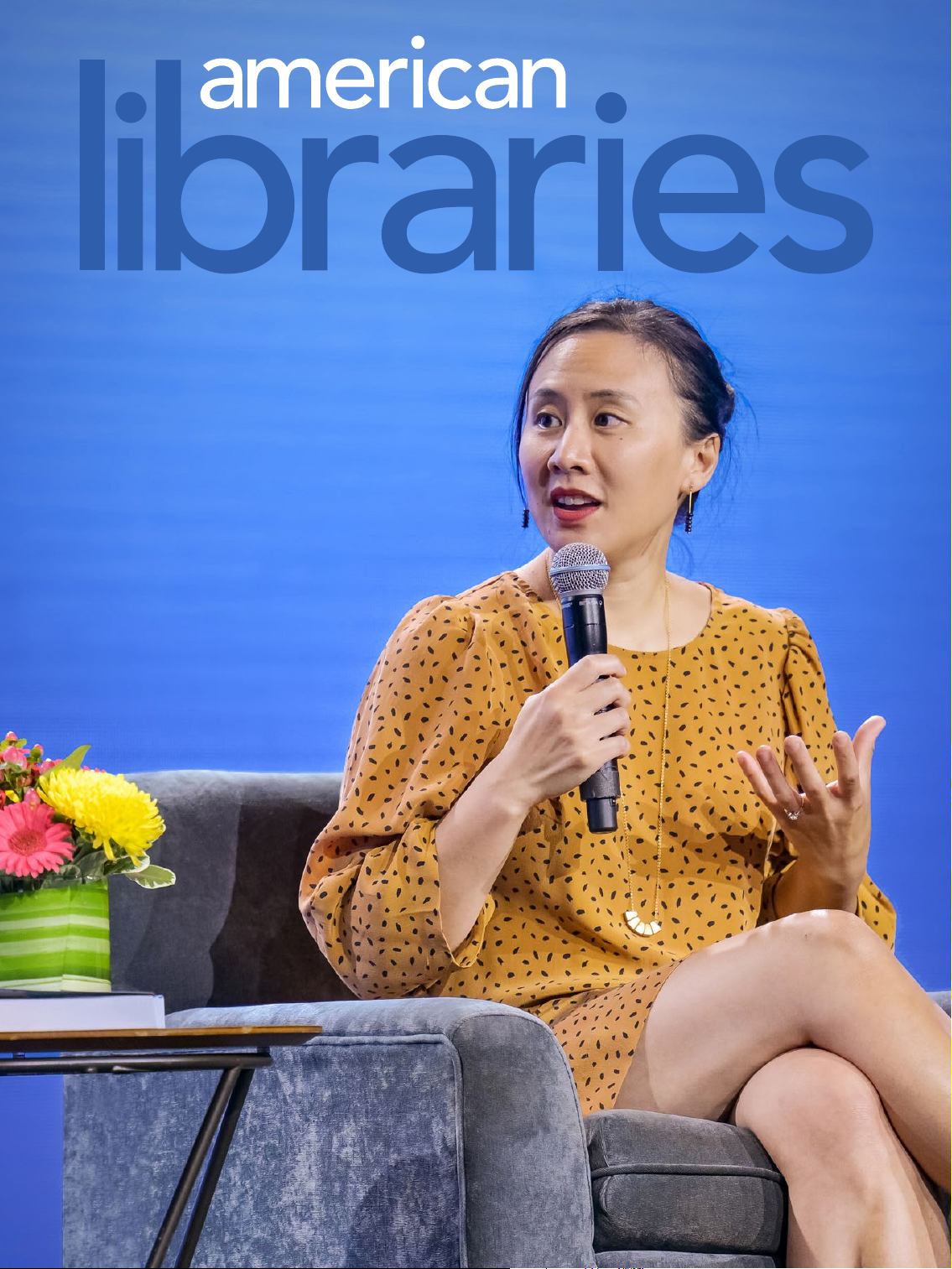
from this practice. Cecilia Rabess was subjected to an intense review
bombing campaign before the publication of her novel Everything's
Fine, about a young Black woman—an investment analyst at Goldman
Sachs—who enters a complex relationship with a conservative white
male co-worker.
Though most negative reviews felt the novel had been inappropriately
marketed as romance by the publisher, they often included personal
attacks—with many calling the book anti-Black and racist—that had a
profound impact on Rabess. "These are broader campaigns of
harassment," she told the New York Times. "People were very keen not
just to attack the work, but to attack me as well."
More recently, a soon-to-be published fantasy author, Cait Corrain, was
exposed as having used a succession of fake Goodreads accounts to post
a series of deceitful reviews. These alternatively praised her own work
and disparaged those of her perceived rivals, who included authors like
Kamilah Cole and Molly X. Chang.
Review bombing on Goodreads has even been known to escalate into
outright extortion by "scammers and cyberstalkers," according to Time
magazine. Self-published authors can find themselves held to ransom,
threatened with a series of one-star reviews that will tank their
Goodreads rating and make selling or marketing their books effectively
impossible.
In 2021, Time published an all-caps ransom email sent from an
6/7

anonymous server to one indie author: EITHER YOU TAKE CARE OF
OUR NEEDS AND REQUIREMENTS WITH YOUR WALLET OR
WE'LL RUIN YOUR AUTHOR CAREER […] PAY US OR
DISAPPEAR FROM GOODREADS FOR YOUR OWN GOOD.
"A couple hours" after she reported it to Goodreads and refused to pay
the ransom, her books began to get one-star reviews.
But the hostility on Goodreads is not only directed at authors. Reviewers
themselves are often subject to attacks and harassment. For example,
both essayist Lauren Hough and debut author Sarah Stusek have
notoriously lashed out against Goodreads users who "only" gave their
books four stars.
Given all this, it may benefit The StoryGraph to be more explicitly
focused on tracking and displaying reading data than on building
conversations and communities.
This article is republished from The Conversation under a Creative
Commons license. Read the original article.
Provided by The Conversation
Citation: Amazon's Goodreads builds community but breeds division. Rival StoryGraph is
playing it safe—and gaining ground (2025, February 27) retrieved 3 August 2025 from
https://techxplore.com/news/2025-02-amazon-goodreads-community-division-rival.html
This document is subject to copyright. Apart from any fair dealing for the purpose of private
study or research, no part may be reproduced without the written permission. The content is
provided for information purposes only.
Powered by TCPDF (www.tcpdf.org)
7/7