Efficacy of Seed Cycling as an Integrative Therapy for Premenstrual Syndrome and Polycystic Ovary Syndrome in Reproductive-Aged Women: A Systematic Review PDF Free Download
1 / 11/11
100%

Review began 08/07/2025
Review ended 08/22/2025
Published 08/25/2025
© Copyright 2025
Nagarajan et al. This is an open access
article distributed under the terms of the
Creative Commons Attribution License CC-
BY 4.0., which permits unrestricted use,
distribution, and reproduction in any
medium, provided the original author and
source are credited.
DOI: 10.7759/cureus.90997
Efficacy of Seed Cycling as an Integrative Therapy
for Premenstrual Syndrome and Polycystic Ovary
Syndrome in Reproductive-Aged Women: A
Systematic Review
Divyashri R. Nagarajan , Daya Mani Jacob , Manal Munir Mufti , Smiruti Rajesh , Rajani Dube
1. Obstetrics and Gynaecology, Burjeel Medical City, Abu Dhabi, ARE 2. Internal Medicine, Burjeel Medical City, Abu
Dhabi, ARE 3. Obstetrics and Gynaecology, Emirates Health Services, Abu Dhabi, ARE 4. Nutrition, South Warwickshire
NHS Foundation Trust, Warwick, GBR 5. Obstetrics and Gynaecology, Ras Al Khaimah Medical and Health Sciences
University, Ras al Khaimah, ARE
Corresponding author: Divyashri R. Nagarajan, divya36shri@gmail.com
Abstract
Premenstrual syndrome (PMS) and polycystic ovary syndrome (PCOS) are common hormonal disorders in
reproductive-aged women. Conventional treatments often have side effects, highlighting the need for
natural alternatives such as seed cycling, a dietary strategy involving flax, pumpkin, sesame, and sunflower
seeds consumed in specific phases of the menstrual cycle. This systematic review evaluated studies from
2015 to 2025 (PubMed, Scopus) on seed cycling or its components in women aged 15-49 years with PMS or
PCOS diagnosed using standardized criteria. Eligible designs included randomized controlled trials, cohort,
case-control, observational, quasi-experimental, and case series. Non-human studies, reviews, opinion
pieces, conference abstracts, and studies outside the age range or before 2015 were excluded. The PRISMA
2020 guidelines were followed, and the Quality Assessment with Diverse Studies Tool assessed risk of bias.
Primary outcomes included changes in hormonal markers (e.g., estrogen, progesterone, LH/FSH ratio,
testosterone), symptom scores for PMS, and metabolic parameters (e.g., BMI, lipid profile, insulin
resistance). Ten studies (n = 635) with low to medium risk of bias reported that seed cycling, particularly flax
and sesame seeds, was associated with improved menstrual regularity, reduced PMS symptom severity,
favorable modulation of sex hormone levels, and improvements in metabolic profiles. While findings
suggest that seed cycling is a low-cost, safe, and potentially effective adjunct for managing PMS and PCOS,
the conclusion is based on small sample sizes and moderate-quality evidence, underscoring the need for
larger randomized controlled trials and standardized intervention protocols.
Categories: Obstetrics/Gynecology, Nutrition, Integrative/Complementary Medicine
Keywords: hormonal imbalance, menstrual irregularities, polycystic ovary syndrome, premenstrual syndrome, seed
cycling, women's health
Introduction And Background
Premenstrual syndrome (PMS) and polycystic ovary syndrome (PCOS) are two of the most common
reproductive health disorders that have a significant impact on the health and quality of life of women of
reproductive age. PMS is defined by cyclical emotional and physical symptoms that occur before
menstruation and resolve shortly after its onset, while PCOS is a complex endocrine disorder characterized
by irregular ovulation, elevated androgen levels, and polycystic ovarian morphology [1]. Globally, PCOS
affects approximately 7-10% of women of reproductive age, while PMS is experienced to varying degrees by
the majority of menstruating women [2,3]. These conditions not only cause physical discomfort but also
impair work productivity, emotional well-being, and social participation, highlighting their significance
beyond individual health.
Disruptions in the hypothalamic-pituitary-ovarian axis, insulin resistance, chronic inflammation, and
obesity contribute significantly to PCOS pathogenesis, while cyclical fluctuations in estrogen and
progesterone underlie PMS symptoms such as mood swings, fatigue, and bloating. Both conditions share
hormonal imbalances that disrupt reproductive and metabolic function, with marked effects on quality of
life, daily functioning, and mental health [1,4,5]. PCOS is diagnosed based on the Rotterdam criteria,
requiring at least two of the following: oligo- or anovulation, clinical or biochemical signs of
hyperandrogenism, and polycystic ovaries visible via ultrasound [6,7]. PMS is typically identified by
symptom tracking over at least two menstrual cycles, with resolution at menstruation onset [1,8].
Although these conditions are prevalent and impactful, the underlying mechanisms remain incompletely
understood, and current treatments often address symptoms rather than root causes. Nonsteroidal anti-
inflammatory drugs (NSAIDs) and selective serotonin reuptake inhibitors (SSRIs) are commonly used to
manage PMS, while hormonal contraceptives are the first-line pharmacologic intervention for PCOS to
regularize menstruation and lower hyperandrogenic symptoms. Women with insulin resistance are often
1 2 3 4 5
Open Access Review Article
How to cite this article
Nagarajan D R, Mani Jacob D, Munir Mufti M, et al. (August 25, 2025) Efficacy of Seed Cycling as an Integrative Therapy for Premenstrual
Syndrome and Polycystic Ovary Syndrome in Reproductive-Aged Women: A Systematic Review. Cureus 17(8): e90997. DOI
10.7759/cureus.90997

treated with metformin, and lifestyle interventions such as diet and exercise are recommended concurrently
[1,4,9]. However, long-term use of hormonal contraceptives may not address the underlying endocrine
abnormalities, metformin may cause gastrointestinal side effects, and antidepressants can lead to weight
gain, fatigue, or sexual dysfunction [10,11].
These limitations have prompted interest in safe, accessible, and patient-centered integrative approaches
that could complement or reduce reliance on conventional therapies. The biological rationale for seed
cycling lies in the presence of bioactive compounds in specific seeds that may modulate hormonal pathways
relevant to PMS and PCOS. Flaxseeds and sesame seeds contain lignans and phytoestrogens, which can
influence estrogen metabolism by binding to estrogen receptors and modulating the conversion of stronger
estrogens (estradiol) to weaker forms (estrone), potentially alleviating estrogen-dominant states seen in
PMS and rebalancing estrogen-progesterone ratios in PCOS. Flaxseed lignans may also affect sex hormone-
binding globulin (SHBG) levels and improve androgen metabolism, while sesame seed phytoestrogens may
support luteal-phase estrogen balance. Pumpkin seeds are rich in zinc, which supports follicle-stimulating
hormone (FSH) and luteinizing hormone (LH) synthesis, thereby promoting ovulation. Sunflower seeds, high
in vitamin E and selenium, may enhance progesterone production and exert antioxidant effects, protecting
ovarian and thyroid function. Collectively, these nutrients may influence key mechanisms implicated in
PMS and PCOS, including gonadotropin release, ovarian steroidogenesis, insulin sensitivity, and oxidative
stress [5,9,11].
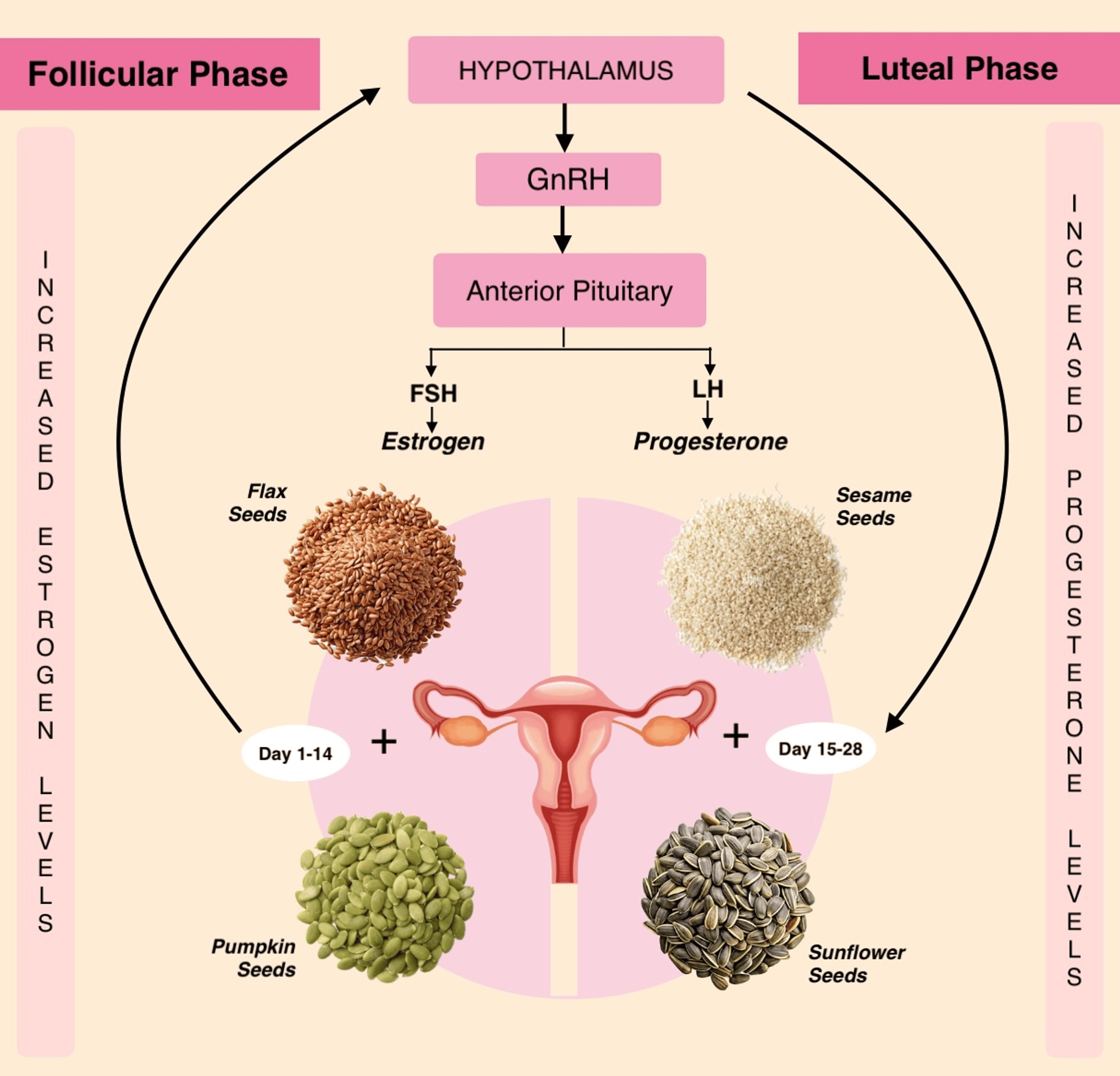
Seed cycling involves consuming flax and pumpkin seeds during the follicular phase (Days 1-14) to support
estrogen metabolism and ovulation, and sesame and sunflower seeds during the luteal phase (Days 15-28) to
enhance progesterone production and maintain hormonal balance (Figure 1). The cyclical combination of
these nutrient profiles is hypothesized to synergistically modulate hormonal rhythms, potentially reducing
PMS symptom severity and improving menstrual regularity in PCOS.
FIGURE 1: Phased Nutritional Intervention Through Seed Cycling in
Reproductive-Age Women
Adapted from Mahapatra et al. [11]
Despite its popularity in integrative health practices, seed cycling remains under-researched, with no
comprehensive synthesis of its clinical evidence representing a clear gap this review seeks to address. The
2025 Nagarajan et al. Cureus 17(8): e90997. DOI 10.7759/cureus.90997 2 of 11

aim of this systematic review is to evaluate the effectiveness of seed cycling, a dietary approach using flax,
pumpkin, sunflower, and sesame seeds in a cyclical pattern, on alleviating symptoms in reproductive-aged
women with PMS and/or PCOS. Outcomes of interest include improvements in mood, cramps, mastalgia,
cycle regularity, and other hormone-related symptoms, compared to placebo, standard care, or no
intervention.
Review
Methodology
This review was conducted in accordance with the Preferred Reporting Items for Systematic Reviews and
Meta-Analyses (PRISMA) 2020 guidelines. A comprehensive literature search was performed between April
15, 2025, and May 15, 2025, using electronic databases including PubMed and Scopus. The search strategy
combined Medical Subject Headings (MeSH) and free-text terms, using the string: ("seed cycling" OR "seed
rotation" OR "flax seed" OR "pumpkin seed" OR "sunflower seed" OR "sesame seed") AND ("premenstrual
syndrome" OR PMS OR "premenstrual symptoms" OR "menstrual symptoms" OR "polycystic ovary syndrome"
OR PCOS OR "polycystic ovarian disease" OR PCOD).
Inclusion criteria were English-language human studies published between 2015 and 2025, involving
reproductive-aged women (15-49 years) diagnosed with PMS or PCOS using established criteria such as
ACOG, Rotterdam, or DSM-5. Eligible designs included randomized controlled trials, cohort studies, case-
control studies, observational studies, quasi-experimental trials, and case series. Interventions had to
involve seed cycling or its components (flaxseed, pumpkin, sesame, sunflower), either alone or in
combination with integrative therapies.
Exclusion criteria included theses, dissertations, unpublished work, conference abstracts, expert opinion,
reviews, editorials, and studies in languages other than English where translations were unavailable. Non-
human studies, postmenopausal women, adolescents under 15 years, studies published before 2015, and
those lacking outcome measures related to menstrual health or hormonal parameters were excluded.
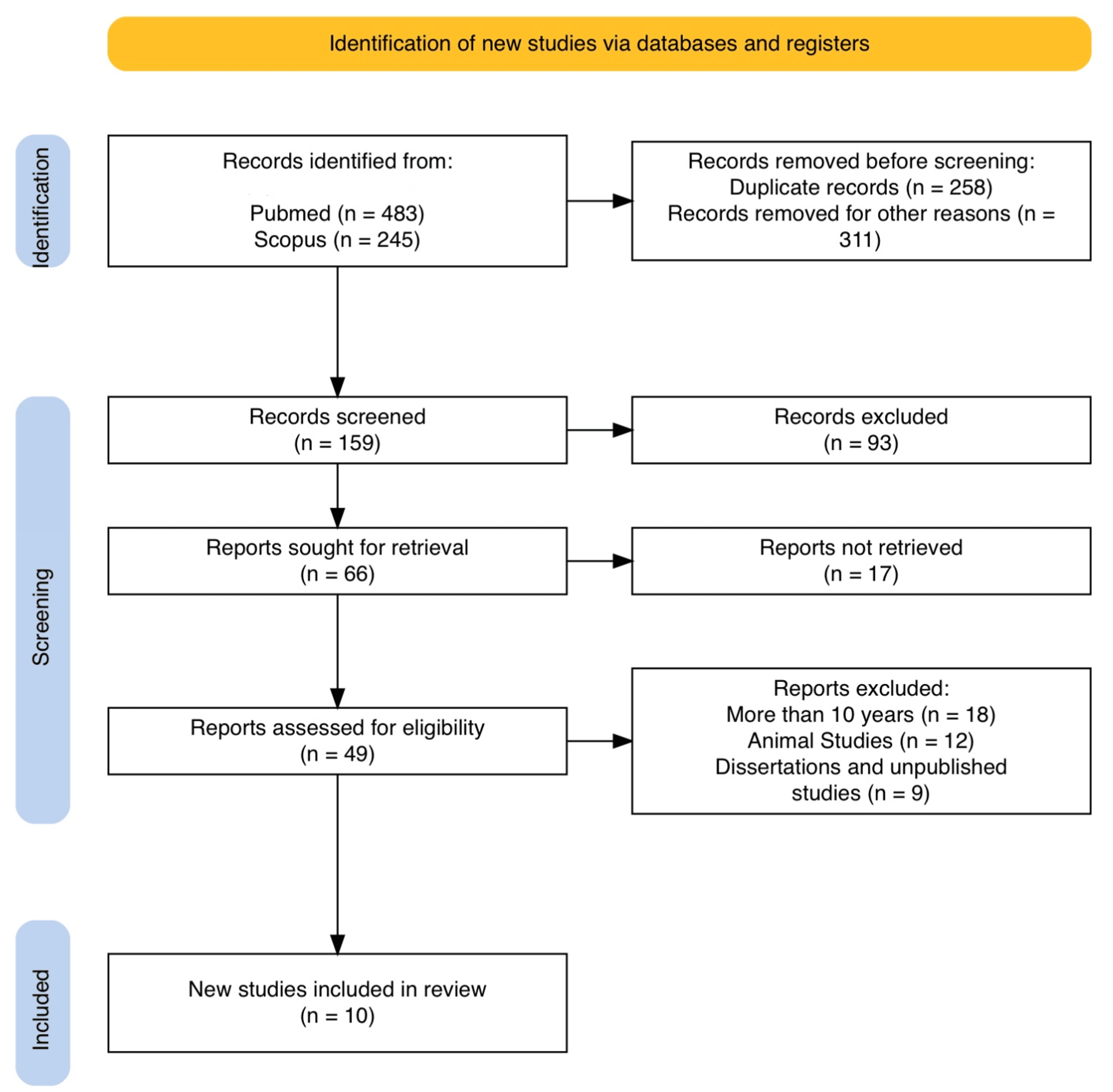
The study selection process adhered to PRISMA methodology. The initial search yielded 728 records
(PubMed: 483, Scopus: 245). After removing 258 duplicates, 470 unique records remained. Screening
excluded 311 studies for non-English language, irrelevant conditions, animal data, commentaries,
conference proceedings, expert opinions, reviews, or interventions unrelated to seeds. This left 159 articles
for title and abstract review, from which 93 were excluded for not meeting the inclusion criteria. Full texts
were retrieved for 66 studies; 17 could not be accessed. Among the 49 full texts assessed, 39 were excluded,
18 were older than 10 years, 12 were animal studies, and 9 were dissertations or unpublished work. Ten
studies met all criteria and were included in the final synthesis. The PRISMA flow diagram (Figure 2) outlines
this process.
2025 Nagarajan et al. Cureus 17(8): e90997. DOI 10.7759/cureus.90997 3 of 11

FIGURE 2: Flow diagram of study selection based on PRISMA 2020
guidelines
Adapted from Haddaway et al. [12].
Quality assessment of the included studies was performed using the Quality Assessment for Diverse Studies
(QuADS) tool [13], which evaluates methodological rigor across 13 criteria scored from 0 to 3, yielding a
maximum of 39 points. Scores were converted to percentages and categorized as high quality (>75%), good
quality (50-75%), moderate quality (25-50%), or poor quality (<25), and the results have been summarized in
Table 1. Two independent reviewers performed the assessments, resolving disagreements through
consensus and, when necessary, consulting a third reviewer. Inter-rater reliability was high (Cohen’s kappa
= 0.82). Six studies were rated high quality, and four were rated good quality, with overall scores ranging
from 51.3% to 97.4% (mean: 77.4%). No studies were rated low quality. Studies with a high risk of bias were
excluded to ensure the reliability of the synthesized evidence.
2025 Nagarajan et al. Cureus 17(8): e90997. DOI 10.7759/cureus.90997 4 of 11

Study (Author, Year) QuADS Score (/39) Percentage (%) Quality Rating
Farzana et al., 2015 [4] 29 74.36% Good
Rasheed et al., 2023 [5] 33 84.60% High
Ajith, 2024 [9] 30 76.90% High
Haidari et al., 2020 [10] 38 97.40% High
Kour et al., 2024 [14] 29 74.36% Good
Dhamija et al., 2025 [15] 20 51.30% Good
Yavari et al., 2016 [16] 37 94.90% High
Mohammadian et al., 2015 [17] 31 79.50% High
Matar et al., 2021 [18] 24 61.50% Good
Najdgholami et al., 2025 [19] 37 94.90% High
TABLE 1: Quality appraisal of included studies using the QuADS tool
> 75% (high), 50-75% (good), 25-50%(moderate), <25% (poor)
QuADS: Quality Assessment for Diverse Studies
Outcomes assessed included PMS/PCOS symptoms, hormones, menstrual regularity, mood, and metabolic
changes. Data from the included studies were tabulated using Microsoft Excel (Microsoft Corp., Redmond,
WA) to summarize key characteristics, including study year, study design, country, age group, sample size,
seed(s) used, and duration of intervention, and reported outcomes related to PMS and PCOS. Given the
limited number and quality of eligible studies and the absence of uniform outcome metrics, a meta-analysis
was not feasible. However, a qualitative synthesis was performed to identify patterns in efficacy, directions
of effects, methodological strength, and limitations.
Results
To evaluate the therapeutic potential of seed cycling and individual seed-based interventions in the
management of PCOS and PMS, 10 eligible studies published between 2015 and 2025 were included.
Interventions commonly involved dietary supplementation with flax, pumpkin, sunflower, and sesame
seeds, administered either individually or as part of a seed cycling protocol, over periods ranging from 2-6
months. The studies collectively assessed outcomes such as menstrual regularity, hormonal balance,
anthropometric indices, metabolic parameters, and symptom relief. Key characteristics and findings from
each study are summarized in Table 2.
Study, year Study
design
Country,
region
Age
group
(in
years)
Sample
size (n)
Seed
used Duration Key results
Farzana et al.,
2015 [4]
Interventional
Study
Tamil Nadu,
India
18-35
with
PCOS
32 Flaxseeds 3
months
Significant reductions in mean ovarian volume (right ovary –3.35
c.mm, p < 0.001; left ovary –2.383 c.mm, p < 0.001) and follicular
count (right –4.259, p < 0.001; left –4.519, p < 0.001) were noted,
while random blood sugar showed no significant change (p =
0.713). A total of 17 (56.7%) subjects did not have peripheral
follicles, while 16 (53.3%) exhibited normal ovarian echogenicity.
After flaxseed therapy, 10 (33.3%) experienced a regular menstrual
cycle, 5 (16.7%) noted an increase in frequency, 9 (30%) showed
no change, and 3 (10%) achieved pregnancy. There was no notable
difference in hirsutism.
Rasheed et
al., 2023 [5]
Interventional
study Pakistan
15-40
with
PCOS
90
Flaxseed,
pumpkin,
sunflower,
and
3
months
A portion-controlled diet and seed cycling reduced FSH levels by
1.2% to 2.5%. LH levels were reduced by 1.5%–2%
2025 Nagarajan et al. Cureus 17(8): e90997. DOI 10.7759/cureus.90997 5 of 11

sesame
seeds
Ajith, 2024 [9] Interventional
study
Karnataka,
India
20-32
with
PCOS
30
Flaxseed,
pumpkin,
sunflower,
and
sesame
seeds
3
months
Before therapy, only 6 (8.5%) women had a normal menstrual cycle.
Following seed cycling therapy, 18 (78%) had regularization of their
menstrual cycle, and 9 (19%) had improvement in the
frequency.19(63.3%) subjects had hirsutism, and there was no
improvement in hirsutism after treatment. There was no statistically
significant difference in the random blood sugar level before and
after treatment (p-value – 0.534)
Haidari et al.,
2020 [10]
Randomized
clinical trial Iran
18–45
with
PCOS
41 Flaxseed 12
weeks
Flaxseed supplementation in patients with PCOS could improve
some biochemical and anthropometric markers, at least partially,
through amelioration of dyslipidemia, obesity, IR, and inflammation.
The results indicated a significant decrease in body weight (P =
0.001), waist circumference (P = 0.007), BMI (P = 0.001), insulin
concentration (P = 0.021), Homeostatic Model Assessment of
Insulin Resistance (P = 0.034), TG (P = 0.013), and leptin (P =
0.007) and a significant increase in HDL-C (P < 0.001) and
adiponectin (P = 0.017) in the flaxseed group compared to the
control group.
Kour et al.,
2024 [14]
Cohort
interventional
study
Karnataka,
India
18-40
with
PCOS
290
Flaxseed,
pumpkin,
sunflower,
and
sesame
seeds
3
months
Significant improvement in waist circumference, hip circumference,
and waist-hip ratio (*p<0.05) was observed. At the end of 12 weeks,
the intervention group had decreased FBS by 4.43%, total
cholesterol by 5.49%, and LDL by 17.29%, and increased HDL by
19.29%, respectively. They also showed more
substantial Improvements, with FSH levels improving by 41.61%, LH
by 35.87%, prolactin by 13.37%, and testosterone by 3.42%. The
energy levels were improved by 5.28%, carbohydrates by 12%,
protein by 22.25%, and fats by 12.22% at the end of 12 weeks.
Dhamija et al.,
2025 [15] Case study Maharashtra,
India
29 with
PCOS 1
Flaxseed,
pumpkin,
sunflower,
and
sesame
seeds
6
months
After 6 months, the patient experienced notable improvements, such
as regular menstrual cycles, a reduction in body mass index ranging
from 29 to 24 kg/m², and normalized hormone levels.
Yavari et al.,
2016 [16]
Single-
blinded
clinical trial
Iran
20-40
with
PCOS
27 Sesame
seeds 9 weeks
18 (72%) of the patients experienced bleeding after receiving the
sesame. In the sesame group, 4 (50%) patients reported on-time
menstruation for the next (drug-free) episodes compared to the
progesterone group (p=0.016).
Mohammadian
et al., 2015
[17]
Control trial Iran 18-25
with PMS 24 Sesame
Seeds
3
months
The pain of dysmenorrhea and the amount
of medications consumed for PMS were statistically decreased in
periods with the consumption of sesame.
Matar et al.,
2021 [18]
Interventional
trial Egypt
18-40
women
with
PCOS
30 Flaxseed 3
months
Among the 10 women who were given flaxseeds, FSH increased
most significantly in the flaxseed group, indicating better follicular
development. LH and AMH decreased significantly in the flaxseed
group compared to other groups, suggesting a reduction in
hyperandrogenism and ovarian dysfunction. 4 women in the
flaxseed group became pregnant, and most had regular menstrual
cycles.
Najdgholami et
al., 2025 [19]
Open-label
randomized
controlled
clinical trial
Iran
20- 34.5
years
with
PCOS
70 Flaxseed 12
weeks
FSH levels showed a significant increase in the flaxseed group
compared to the control group. FSH levels increased from 9.72 ±
11.95 µU/mL at baseline to 10.59 ± 12.14 µU/mL after the
intervention (p = 0.027). Additionally, the LH/FSH ratio significantly
decreased following flaxseed supplementation (p = 0.031)
TABLE 2: Literature Analysing the Efficacy of Seed Cycling in PMS and PCOS in Reproductive
Age Women
Study Characteristics
2025 Nagarajan et al. Cureus 17(8): e90997. DOI 10.7759/cureus.90997 6 of 11
A total of 10 studies, conducted between 2015 and 2025, were included in this review, comprising various
interventional designs: five interventional trials, two randomized controlled trials, one cohort study, one
single-blinded trial, and one case study. The studies originated predominantly from South Asia and the
Middle East, including India (n=4), Iran (n=4), Pakistan (n=1), and Egypt (n=1). All participants were
reproductive-aged women (range: 15-45 years) diagnosed with either PCOS or Premenstrual Syndrome
(PMS). Sample sizes varied widely, from a single case to 290 participants. The most commonly used
intervention was seed cycling, involving flax, pumpkin, sunflower, and sesame seeds, administered over 2-6
months. Several studies focused on flaxseed alone (n=4), while two assessed sesame seed
(n=2)supplementation.
Menstrual Cycle Regulation
Menstrual regularity improved across several studies. Farzana et al. (2015) reported that 33.3% of women
experienced regular cycles after flaxseed use, with 10% achieving pregnancy [4]. Ajith (2024) observed 78%
menstrual cycle normalization following seed cycling [9]. In Matar et al. (2021), regular cycles were restored
in most women, and four participants conceived after three months of flaxseed intake [18]. Dhamija et al.
(2025) described complete menstrual normalization in a case report after six months of seed therapy [15].
Yavari et al. (2016) also found that 72% experienced withdrawal bleeding with sesame seeds and 50%
resumed on-time menstruation (p=0.016) [16].
Hormonal Modulation
Hormonal changes were a consistent finding across studies. Rasheed et al. (2023) observed modest
reductions in FSH (1.2-2.5%) and LH (1.5-2%) [5]. Kour et al. (2024) found significant increases in FSH
(41.61%), LH (35.87%), prolactin (13.37%), and testosterone (3.42%) [14]. Najdgholami et al. (2025) reported
a statistically significant increase in FSH (p = 0.027) and a decrease in LH/FSH ratio (p = 0.031) following
flaxseed supplementation [19]. Similarly, Matar et al. (2021) noted a significant increase in FSH and
decreases in LH and AMH, indicating improved follicular function and reduced ovarian dysfunction [18].
Metabolic and Anthropometric Improvements
Improvements in metabolic markers were documented in five studies. Haidari et al. (2020) found flaxseed
reduced BMI (p = 0.001), waist circumference, insulin, HOMA-IR, triglycerides, and leptin, while increasing
HDL-C (p < 0.001) and adiponectin [10]. Kour et al. (2024) reported reductions in fasting blood sugar
(−4.43%), LDL (−17.29%), and increases in HDL (19.29%), along with favorable changes in waist-to-hip ratio
and macronutrient intake. Dhamija et al. (2025) reported a BMI reduction from 29 to 24 kg/m² after six
months [14,15].
Potential Benefits in Women’s Reproductive Health
Seed-based interventions, such as sesame and flaxseed supplementation, have shown promising results in
women’s reproductive health. Research by Mohammadian et al. (2015) demonstrated that sesame seed
supplementation significantly alleviated dysmenorrhea and reduced the need for medication among women
with premenstrual syndrome (PMS) [17]. Additionally, studies by Farzana et al. (2015) and Matar et al. (2021)
reported improved fertility outcomes, with pregnancy occurring in 10% and 40% of women receiving
flaxseed supplementation, respectively [4,18]. Importantly, no adverse effects were reported across the
included studies, although data on long-term safety remain limited.
These collective findings are detailed in Table 3, which presents findings from the included studies,
outlining reported outcomes, statistical significance, and key methodological considerations to
contextualize the current evidence on seed cycling in PMS and PCOS.
2025 Nagarajan et al. Cureus 17(8): e90997. DOI 10.7759/cureus.90997 7 of 11

Outcome
Number
of
Studies
Effect Direction Statistical Significance Notes / Limitations
Menstrual regularity 5 Improvement in 3 studies;
Mixed results in 2
p<0.05 in 2 studies; Not
significant (NS) in 1; Not
reported (NR) in 2
Outcome definitions varied; follow-up
durations inconsistent
PMS symptom
severity 6Improvement in 4 studies;
No change in 2 p<0.05 in 3 studies; NR in 3
Varied assessment tools (e.g., symptom
questionnaires, diaries); heterogeneity
limits pooling
Hormonal profile
(estrogen,
progesterone)
4
Progesterone increased in
2 studies; No estrogen
change in 3
p<0.05 in 1 study; NR in
others
Timing of hormone testing and assay
methods differed across studies
PCOS symptom
improvement (acne,
hirsutism)
3Improvement in 2 studies;
Mixed results in 1
p<0.05 in 1 study; NR in
others
Diagnostic criteria inconsistent; small
sample sizes limit conclusions
Adverse effects 2 None reported N/A Reporting sparse; possible underreporting
TABLE 3: Statistical Summary of Findings
The table summarizes the outcomes reported across included studies, indicating the number of studies addressing each outcome, the general direction of
effects observed (improvement, no change, or mixed results), and the presence or absence of statistical significance as reported (p < 0.05 denotes
significance; NS means not significant; NR indicates that statistical testing was not reported). The notes section highlights key limitations such as
heterogeneity in outcome definitions, measurement methods, and sample sizes, which may affect the interpretation and comparability of results across
studies.
Discussion
Seed cycling may be effective because of the specific nutrients provided by the seeds consumed during each
phase of the menstrual cycle. According to the findings in the table, seed cycling may be a useful non-
pharmacological remedy for the symptoms and irregularities associated with menstruation. However, it is
challenging to conclude that seed cycling alone was responsible for these improvements due to the small
sample size and absence of a control group. Additionally, it is important to note that most of the studies
used self-reported data, which can be prone to social desirability bias and recall bias [10]. Interpretation of
the pooled findings is limited by heterogeneity in outcome definitions and metrics, with some studies
assessing menstrual regularity via self-report and others using cycle length tracking, and by inconsistent
statistical reporting.
Plant phytoestrogenic substances called lignans, which are abundant in flaxseeds, have the ability to affect
the metabolism of estrogen. In a randomized open-label controlled clinical trial by Haidari et al. (2020) [10]
investigated the effects of flaxseed supplementation on metabolic and hormonal parameters in 41 women
with PCOS. Over 12 weeks, participants in the intervention group received 30g/day of ground flaxseed. The
results showed significant improvements in insulin sensitivity, total testosterone, and hirsutism scores in
the flaxseed group compared to controls. Additionally, menstrual regularity improved notably in the
intervention group. These findings suggest that flaxseed may be beneficial in managing hormonal
imbalances and metabolic disturbances in women with PCOS. However, little is known about the precise
biological processes by which lignans influence hormone regulation at the molecular level [10]. Lignans, key
dietary phytoestrogens, are metabolized by gut microbiota into enterolignans (e.g., enterodiol,
enterolactone), which interact with estrogen receptors (ERα/ERβ) to exert weak estrogenic or anti-
estrogenic effects depending on tissue context and concentration. Recent mechanistic studies demonstrate
that lignans act as selective estrogen receptor modulators (SERMs), binding to estrogen receptors and
thereby modulating gene expression involved in steroidogenesis and hormone metabolism [20]. This
receptor interaction may explain their capacity to restore hormonal balance in endocrine disorders like
PCOS. Musazadeh et al.'s systematic review and meta-analysis showed that flaxseed supplementation has an
impact on hormones and can alter the profile of sex hormones in adults [21,22].
Zinc, abundant in pumpkin seeds, is a crucial cofactor for numerous enzymes and transcription factors
involved in the synthesis of reproductive hormones. It plays a role in the pituitary release of gonadotropins
(FSH and LH), which are essential for follicular maturation and ovulation. Beyond this, zinc influences
ovarian development, oocyte maturation, and early embryonic development, regulating meiotic progression
via the MOS-MAPK pathway and triggering the “zinc spark” at fertilization [23].
Reduced menstrual discomfort and better menstrual health are correlated with adequate zinc levels. Zinc
2025 Nagarajan et al. Cureus 17(8): e90997. DOI 10.7759/cureus.90997 8 of 11

supports reproductive health, according to studies like Syed et al. 2019. However, studies evaluating the
effects of zinc did not account for confounding factors like participants' dietary intake and other dietary
components (like magnesium or vitamin B6) and lifestyle factors (like physical activity) [24]. This may affect
the accuracy of conclusions regarding zinc’s role in PMS symptom relief. Mechanistic insights reveal that
zinc is essential for the synthesis and release of gonadotropins (FSH and LH) by modulating hypothalamic-
pituitary-gonadal axis function, thereby influencing ovarian follicle development, hormone secretion, and
receptor sensitivity [25].
Sunflower and sesame seeds are included in the luteal phase. While sunflower seeds are rich in vitamin E
and selenium, two nutrients that support progesterone and have an antioxidant effect, sesame seeds offer
lignans and phytoestrogens to balance the level of estrogen. Vitamin E plays a vital role in enhancing corpus
luteum function by stimulating progesterone synthesis, which is essential for maintaining the luteal phase
and preparing the endometrium for potential pregnancy. Additionally, its antioxidant properties protect the
corpus luteum cells from oxidative damage, supporting their viability and function. This dual action helps
sustain hormonal balance and promotes reproductive health. Vitamin E has been associated with increased
progesterone production, and selenium protects against oxidative stress and supports thyroid function, both
of which are essential for hormonal balance [26]. The antioxidant properties of these micronutrients reduce
oxidative stress, a known disruptor of endocrine function, thereby contributing to improved hormonal
homeostasis [27].
Many studies investigating micronutrient supplementation tend to evaluate isolated nutrients rather than
the complex combinations typically found in whole foods such as seeds, which contain a range of bioactive
compounds including zinc, omega-3 fatty acids, and lignans. This approach limits the ability to determine
whether observed effects are attributable to a single nutrient or the synergistic interaction of multiple
components. Moreover, the relatively short duration of some trials, often limited to three months, may not
be sufficient to capture potential long-term benefits. Furthermore, the findings' ability to be applied broadly
is limited by the absence of diverse participant representation, such as women with various menstrual
disorders.
Additionally, the fiber in these seeds promotes healthy digestion, which is necessary for regular hormone
secretion and metabolism. The gut microbiota plays a crucial role in estrogen recirculation through the
enterohepatic pathway, where certain gut bacteria produce enzymes such as beta-glucuronidase that
deconjugate estrogen metabolites excreted in bile, allowing free estrogen to be reabsorbed into the
bloodstream. This process helps maintain optimal circulating estrogen levels and supports hormonal
balance. Dysbiosis or imbalance in gut bacteria can disrupt this cycle, potentially leading to estrogen-related
disorders such as PMS and menstrual irregularities [28]. A summary of the benefits of the seeds in the
menstrual cycle is presented in Table 4. In general, aligning menstrual cycle phases with the targeted
nutritional intake of nutrient-rich seeds may support hormonal balance and help alleviate symptoms
associated with premenstrual syndrome (PMS) and menstrual irregularities [11].
Seed Name Compound present Research Finding
Flax Seeds Lignans Help improve ovulatory function which in turn helps to regulate menstrual cycle
Sesame Seed Lignans Counterbalance the level of estrogen
Phytoestrogens Counterbalance the level of estrogen
Pumpkin Seed Zinc Help produce FSH and LH which help induce ovulation
Sunflower Seed Vitamin E Increase production of progesterone
Selenium Aids thyroid health and is an oxidative protector – crucial for hormone balance
TABLE 4: Summary of Nutritional constituents in seeds and their impact on the menstrual cycle
Data in this table are drawn from the following studies included in this review: Ref [10], Ref [20], Ref [21], Ref [22], Ref [23], Ref [24], Ref [25], Ref [26], Ref
[27], Ref [28]
Limitations
The findings of this review should be interpreted in light of several limitations. Most included studies were
geographically clustered in South Asia and the Middle East, which may limit the generalizability of results to
other populations. Discrepancies in outcomes, such as improvements in follicle-stimulating hormone (FSH)
levels without corresponding changes in hirsutism, may be explained by variations in intervention duration,
baseline symptom severity, and participant heterogeneity in age, BMI, metabolic status, and lifestyle
2025 Nagarajan et al. Cureus 17(8): e90997. DOI 10.7759/cureus.90997 9 of 11
factors. Some studies monitored patient compliance through regular phone calls, text messages, and by
requiring patients to visit the clinic to consume the powder. While other studies provided only instructions
and later assessed hormonal levels to evaluate any improvements. Regardless, adherence to seed intake
protocols was not objectively verified, and none of the studies evaluated potential interactions with
concurrent medications or hormonal therapies. Furthermore, variability in study design, outcome measures,
and follow-up periods underscores the need for standardized protocols and longer-term studies to better
clarify the relationship between hormonal modulation and clinical symptom improvement.
Future Scope of Research
Although the study’s results are favourable, several crucial areas require further exploration to better
understand the therapeutic potential of seed cycling in PCOS and PMS. Larger, multicenter randomized
controlled trials using double-blind, placebo-controlled designs are needed to strengthen the validity of
findings. Standardization of seed type, dosage, and timing will facilitate more meaningful comparisons
across studies. Further research into the underlying biological mechanisms will enhance comprehension of
physiological effects. In particular, future research should investigate the interaction of seed-derived
phytoestrogens with estrogen receptors, the modulation of the hypothalamic-pituitary-gonadal axis, and the
antioxidant effects on hormonal regulation. Comparative studies with other dietary and lifestyle
interventions could clarify seed cycling’s relative effectiveness within broader treatment frameworks.
Additionally, incorporating assessments of psychosocial outcomes such as mood, stress, and quality of life,
especially in PMS patients, may provide a more comprehensive evaluation of benefits. Finally, integration of
digital health tools and cost-effectiveness analyses could support clinical and public health decision-
making.
Conclusions
This systematic review suggests that seed cycling could be a positive complementary approach for managing
the symptoms of PCOS and PMS. Improvements in lipid metabolism, insulin resistance, menstrual
regularity, and hormonal profiles (including FSH, LH, and prolactin) were noted in the included studies,
especially in PCOS patients. In addition, seed cycling contributed to overall symptom relief by alleviating
dysmenorrhea and reducing PMS-related discomfort. There is conflicting data, however, about how it affects
glycemic control, skin changes, and hirsutism. The current body of evidence is constrained by small sample
sizes, variation in intervention protocols, and a lack of long-term follow-up, despite promising findings.
Hence, well-designed, large-scale randomized controlled trials are warranted to confirm the efficacy, safety,
and mechanisms of seed cycling as a therapeutic option in hormonal regulation and menstrual health.
Additional Information
Author Contributions
All authors have reviewed the final version to be published and agreed to be accountable for all aspects of the
work.
Concept and design: Divyashri R. Nagarajan, Daya Mani Jacob, Manal Munir Mufti, Smiruti Rajesh
Acquisition, analysis, or interpretation of data: Divyashri R. Nagarajan, Daya Mani Jacob, Smiruti
Rajesh, Rajani Dube
Drafting of the manuscript: Divyashri R. Nagarajan, Daya Mani Jacob
Critical review of the manuscript for important intellectual content: Manal Munir Mufti, Smiruti
Rajesh, Rajani Dube
Supervision: Rajani Dube
Disclosures
Conflicts of interest: In compliance with the ICMJE uniform disclosure form, all authors declare the
following: Payment/services info: All authors have declared that no financial support was received from
any organization for the submitted work. Financial relationships: All authors have declared that they have
no financial relationships at present or within the previous three years with any organizations that might
have an interest in the submitted work. Other relationships: All authors have declared that there are no
other relationships or activities that could appear to have influenced the submitted work.
References
1. Aslam M, Shauket R: Nutraceutical intervention of seeds in the treatment of poly cystic ovarian syndrome;
a systematic review: nutraceutical intervention; seed cycling. Pakistan BioMedical Journal. 2021, 4:281-286.
10.54393/pbmj.v4i2.100
2025 Nagarajan et al. Cureus 17(8): e90997. DOI 10.7759/cureus.90997 10 of 11
2. Begum GS, Almashaikhi NA, Albalushi MY, Alsalehi HM, Alazawi RS, Goud BK, Dube R: Prevalence of
polycystic ovary syndrome (PCOS) and its associated risk factors among medical students in two countries.
Int J Environ Res Public Health. 2024, 21:1165. 10.3390/ijerph21091165
3. Dube R, Bambani T, Saif S, Hashmi N, Patni MAMF, Kedia NR: The prevalence of gestational diabetes
mellitus in polycystic ovary disease—a systematic review, meta-analysis, and exploration of associated risk
factors. Diabetology. 5:430-46. 10.3390/diabetology5040032
4. Farzana F K, Sulaiman AF, Ruckmani A, et al.: Effects of flax seeds supplementation in polycystic ovarian
syndrome. International Journal of Pharmaceutical Sciences Review and Research. 2015, 31:113-9.
5. Rasheed N, Ahmed A, Nosheen F, et al.: Effectiveness of combined seeds (pumpkin, sunflower, sesame,
flaxseed): As adjacent therapy to treat polycystic ovary syndrome in females. Food Sci Nutr. 2023, 11:3385-
93. 10.1002/fsn3.3328
6. Revised 2003 consensus on diagnostic criteria and long-term health risks related to polycystic ovary
syndrome (PCOS). Hum Reprod. 2004, 19:41-7. 10.1093/humrep/deh098
7. Patni MA, Dube R, Kar SS, George BT, Kuruba MG, Srinivasamurthy SK, Elamin AA: Exploring hirsutism:
Epidemiology, associated endocrinal abnormalities, and societal challenges in GCC-a narrative review. Int J
Mol Sci. 2025, 26:5575. 10.3390/ijms26125575
8. Czajkowska M, Hanzel I, Słomska A, Skrzypulec-Plinta V: Diagnostic criteria and management in
premenstrual syndrome. GinPolMedProject. 2016, 4:49-53.
9. Ajith K, Meera R: Effect of seed cycling on polycystic ovary syndrome [PREPRINT] . ResearchSquare. 2024,
10.21203/rs.3.rs-4102500/v1
10. Haidari F, Banaei-Jahromi N, Zakerkish M, Ahmadi K: The effects of flaxseed supplementation on metabolic
status in women with polycystic ovary syndrome: a randomized open-labeled controlled clinical trial. Nutr J.
2020, 19:8. 10.1186/s12937-020-0524-5
11. Mahapatra D, Jwngsar B, Das M, et al.: Advantages of seed cycling diet in menstrual dysfunctions: A review
based explanation. Pharma Innov. 2023, 12:931-9. 10.22271/tpi.2023.v12.i4k.19683
12. Haddaway NR, Page MJ, Pritchard CC, McGuinness LA: PRISMA2020: An R package and Shiny app for
producing PRISMA 2020-compliant flow diagrams, with interactivity for optimised digital transparency and
Open Synthesis. Campbell Syst Rev. 2022, 18:e1230. 10.1002/cl2.1230
13. Harrison R, Jones B, Gardner P, Lawton R: Quality assessment with diverse studies (QuADS): an appraisal
tool for methodological and reporting quality in systematic reviews of mixed- or multi-method studies.
BMC Health Serv Res. 2021, 21:144. 10.1186/s12913-021-06122-y
14. Kaur H, Anitha C, Ghatnatti V, Patil S, Kadeangadi D: Evaluation of effect of seed cycling on
anthropometric, biochemical, hormonal and nutritional parameters in the women diagnosed with polycystic
ovarian syndrome - a cohort interventional study design. Journal of Natural Remedies. 2024, 24:1547-59.
10.18311/jnr/2024/36489
15. Dhamija P, More A, Choudhary N, Wadhe T, Barai J, Shah D: Seed cycling and hormonal balance: a case
study of successful fertility intervention in polycystic ovarian syndrome. J Pharm Bioallied Sci. 2025,
17:S1030-3. 10.4103/jpbs.jpbs_164_25
16. Yavari M, Rouholamin S, Tansaz M, Esmaeili S: Herbal treatment of oligomenorrhea with Sesamum indicum
L.: a randomized controlled trial. Galen Medical Journal. 2016, 5:613-10. 10.31661/gmj.v5i3.613
17. Mohammadian F, Ghoreishi A, Sheikh Fathollali M, et al.: The effect of consuming sesame (Sesamum
indicum) on primary dysmenorrhea in students at Rafsanjan University of Medical Sciences (RUMS).
Community Health Journal. 2017, 8:1-9.
18. Matar SS, Farrag AA, Hafez SM, Fahmy RM: The bioactive effect of flaxseed on women with the polycystic
ovarian syndrome. Egyptian Journal of Nutrition. 2021, 36:49-77. 10.21608/enj.2021.209919
19. Najdgholami Z, Sedgi FM, Ghalishourani SS, Feyzpour M, Rahimlou M: Flaxseed intervention and
reproductive endocrine profiles in patients with polycystic ovary syndrome: an open-labeled randomized
controlled clinical trial. Front Endocrinol (Lausanne). 2025, 16:1531762. 10.3389/fendo.2025.1531762
20. Adlercreutz H: Lignans and human health. Crit Rev Clin Lab Sci. 2007, 44:483-525.
10.1080/10408360701612942
21. Musazadeh V, Nazari A, Natami M, et al.: The effect of flaxseed supplementation on sex hormone profile in
adults: a systematic review and meta-analysis. Front Nutr. 10:1222584. 10.3389/fnut.2023.1222584
22. Kajla P, Sharma A, Sood DR: Flaxseed: a potential functional food source . J Food Sci Technol. 2015, 52:1857-
71. 10.1007/s13197-014-1293-y
23. Garner TB, Hester JM, Carothers A, Diaz FJ: Role of zinc in female reproduction . Biol Reprod. 2021, 104:976-
94. 10.1093/biolre/ioab023
24. Syed QA, Akram M, Shukat R: Nutritional and therapeutic effects of the pumpkin seeds . Biomed J Sci Tech
Res. 2019, 21: 15798-803. 10.26717/BJSTR.2019.21.003586
25. Prasad AS: Discovery of human zinc deficiency: its impact on human health and disease . Adv Nutr. 2013,
4:176-90. 10.3945/an.112.003210
26. Irfan T, Seher K, Rizwan B, et al.: Role of seed cycling in polycystic ovarian syndrome: seed cycling in PCOS .
Pakistan BioMedical Journal. 2021, 4:21-5. 10.54393/pbmj.v4i2.122
27. Duntas LH: The role of selenium in thyroid autoimmunity and cancer . Thyroid. 2006, 16:455-60.
10.1089/thy.2006.16.455
28. Hu S, Ding Q, Zhang W, Kang M, Ma J, Zhao L: Gut microbial beta-glucuronidase: a vital regulator in female
estrogen metabolism. Gut Microbes. 2023, 15:2236749. 10.1080/19490976.2023.2236749
2025 Nagarajan et al. Cureus 17(8): e90997. DOI 10.7759/cureus.90997 11 of 11