Rethinking the Bank Marketing Budget: An Objectives-Based Approach for 2026 PDF Free Download
1 / 8/8
100%

Rethinking the Bank Marketing
Budget: An Objectives-Based
Approach for 2026
A perspective for growth-focused banks
in a transformative market

2
Rethinking the Bank Marketing Budget: An Objectives-Based Approach for 2026
Introduction:
For decades, many banks have approached marketing budgets with a simple equation:
multiply total assets by a standard percentage—often 0.05% to 0.07%—and call it done. This
method, endorsed by various banking associations and used widely for benchmarking, offers
predictability and simplicity.
But in a dynamic, digitally driven, hyper-competitive marketplace, predictability isn’t the
same as performance.
The reality in 2025 is this: a static, percentage-based budget model is backward-looking. It
reects where your bank has been—not where you’re trying to go.
Benchmarks have their place. Knowing how your
institution’s marketing spend stacks up against peer banks
is useful for context and board conversations. But it’s
a limited view. Budgeting as a at percentage of assets
assumes that marketing is a xed cost, rather than a
strategic lever.
What that approach overlooks is your most important
variable: your dened objectives.
Are you entering a new market or recovering market
share? Rolling out a digital banking platform? Rebranding
after a merger? Trying to grow deposits in a at-rate
environment?
None of those situations are recognized or captured in an
asset-based formula. And yet, they each demand specic
strategies and tailored investment.
A smarter question than “What do banks of our size
typically spend?” is “What do we need to spend to
accomplish what we’ve set out to do?”
“What do
we need to
spend to
accomplish
what we’ve
set out to
do?”

3
Rethinking the Bank Marketing Budget: An Objectives-Based Approach for 2026
Objectives-based budgeting reverses the traditional approach. Rather than letting the budget
dene the plan, it lets the plan dene the budget.
You start by identifying your top-priority marketing objectives for the year—and then calculate
what it will take to achieve each one. That includes media costs, creative development, digital
tools, internal capacity, agency resources, and measurement frameworks.
This approach promotes strategic clarity. It helps avoid a common pitfall: trying to do too many
things with too little budget. You may not be able to execute ten initiatives well—but you can likely
do ve extremely well, with the right focus.
It also creates alignment. When marketing’s budget is tied to business goals (e.g., deposit growth,
customer acquisition, market entry), the C-suite and board are more likely to support—and
defend—those investments.
For context, here’s how percentage-based marketing budgets typically shake out in the U.S.
community bank space:
While these gures provide useful guardrails, they are not mandates. Growth-focused institutions
often invest above these levels, not recklessly, but strategically. Their spend is justied by growth
goals and grounded in measurable outcomes.

4
Rethinking the Bank Marketing Budget: An Objectives-Based Approach for 2026
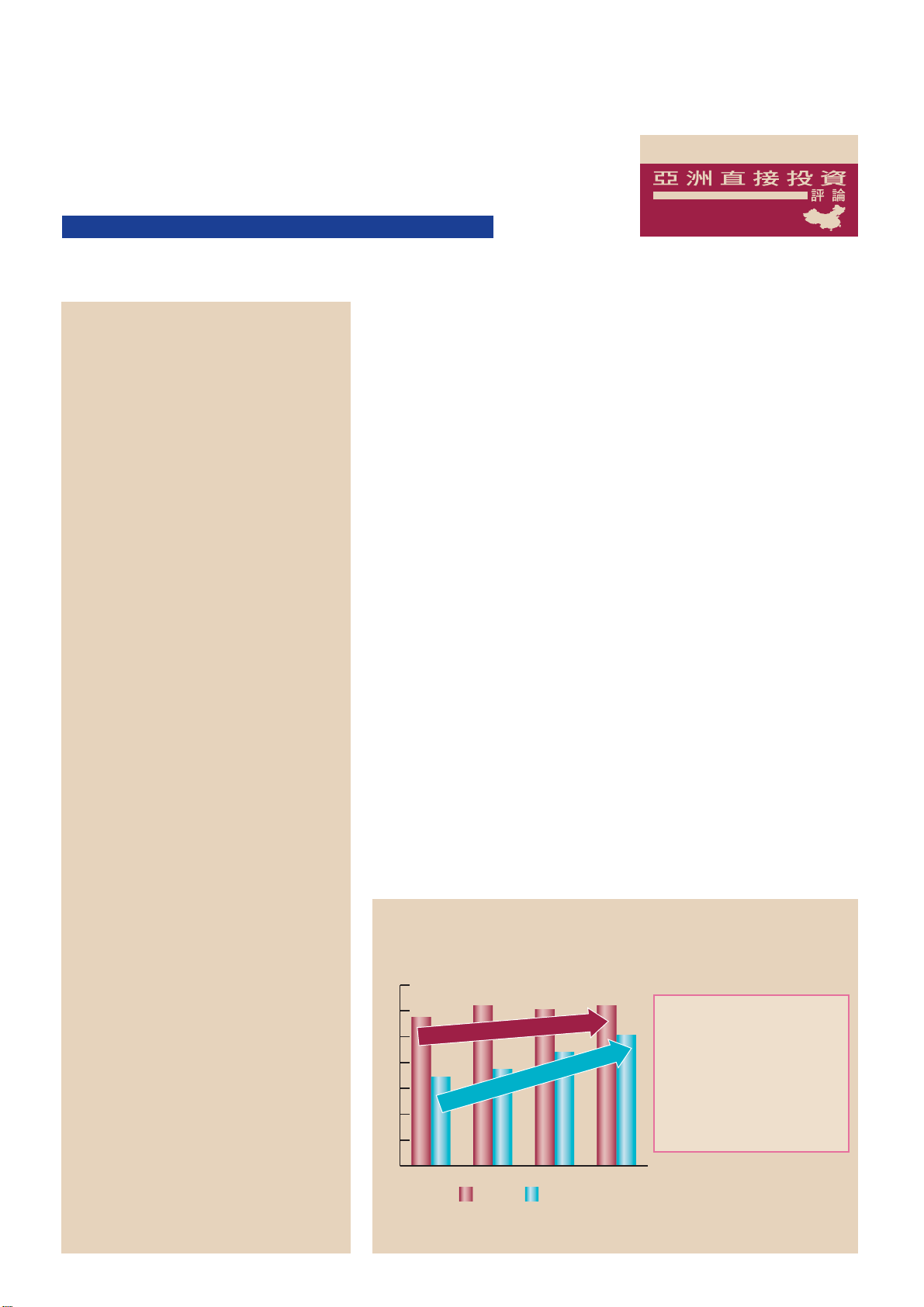
In 2025, over 50% of banks and credit unions are planning to increase their marketing
investments¹. Notably, 62% of marketing spend now goes to digital channels²—reecting a
continued shift away from traditional media. Spending on martech tools remains robust,
comprising nearly a quarter of budgets³. Institutions are increasingly funding customer
experience initiatives, where returns are higher and stickier⁴.
38%
62%
TRADITIONAL
MEDIA
2025 BANK MARKETING BUDGET ALLOCATION
DIGITAL
CHANNELS
Pandemic-Driven
Cuts (-17%)
Recovery & Digital
Acceleration
Budget Surge
Brand Reinvestment
Efciency Focus
Rising Costs
Flat Budgets
Martech Optimization
Modest Growth &
CX/Brand
Prioritization
2020 2022

5
Rethinking the Bank Marketing Budget: An Objectives-Based Approach for 2026 5
United Bank (WV): Strategic Marketing to Support Market Expansion7
Following its acquisition of Carolina Financial Corporation in 2020, United
Bank expanded its presence into North Carolina and South Carolina. To
support this growth, the bank implemented a data-driven marketing campaign
aimed at attracting and engaging new customers in competitive markets
like Washington, D.C. This campaign included digital acquisition strategies,
direct mail, and staff incentive programs, promoting a genuinely free checking
account to differentiate itself and drive growth
Pinnacle Financial Partners (TN): Marketing Reinforcing Culture and
Community Engagement8
Pinnacle Financial Partners emphasizes a culture of high-touch, personalized
service. In 2023, the rm committed approximately $902.6 million to
community development investments, representing 1.88% of its assets. This
investment includes contributions to community causes and nonprots,
reecting the rm’s strategy to align marketing efforts with community
engagement and internal branding.
Live Oak Bank (NC): : Objective-Based Digital Marketing at Scale9
Live Oak Bank focuses on lending to small businesses across various verticals.
In 2024, the bank reported a 26% year-over-year increase in core operating
leverage, attributed to its targeted marketing and lending strategies. The bank’s
approach includes afliate marketing and digital campaigns tailored to specic
industries, supporting its growth in loan production and total assets.
In a performance-driven world, it’s easy to focus only on campaign-based objectives. But
neglecting brand investment is a costly mistake.
Your brand isn’t just a logo or tagline—it’s the foundation of trust. A well-established brand
reduces customer acquisition costs and increases long-term loyalty. Institutions investing
in brand equity experience higher retention, lower customer acquisition costs, and greater
share of wallet over time.

6
Rethinking the Bank Marketing Budget: An Objectives-Based Approach for 2026
The banking industry has long favored performance campaigns for their measurable ROI.
But research shows that 70% ROI is a common return when marketing to existing customers,
versus only 10% when targeting net-new audiences5. Strong brand marketing boosts lifetime
value along with conversion rates.
To win C-suite support, marketers need to frame budgets in the
context of business outcomes: new accounts, deposit growth,
revenue.
Financial Center First CU tracked $658K in returns on $300K in
marketing—a 2.2x ROI—and used that data to gain executive and
board trust6.
Top-performing banks use internal dashboards, share campaign
results often, and align marketing initiatives with their bank-wide
strategy. The most successful bank CMOs treat their internal
stakeholders like a marketing audience—educating them year-
round with wins, updates, and impactful customer stories.
Dene Business Objectives First Tie every major budget line item to a strategic goal—whether
it’s deposit growth, new market entry, customer onboarding, or brand transformation.
Build Budgets Around Outcomes, Not History Model the all-in costs to achieve each
objective, including media, creative, technology, internal resources, and measurement tools.
Use Metrics that Matter Track performance using cost of acquistion, lifetime value, conversion
rates, and Net promoter scores—not just impressions and clicks.
Involve the Executive Team Early When the C-suite sees that marketing is aligned with the
bank’s overarching goals, the budget becomes an investment—not a line item to cut.
Budget for Agility Reserve 10–15% of your budget for emerging opportunities or mid-year shifts.
Strategic responsiveness should be part of every marketer’s toolkit.
Don’t Lose the Brand Prioritize short-term wins, but keep building long-term value. Your brand is
your future competitive edge.
tracked
in returns on
marketing
and used that data
and board trust6

7
Rethinking the Bank Marketing Budget: An Objectives-Based Approach for 2026
SOURCES
[1] The Financial Brand, “How Bank Marketers Push (and Win) for Their Budgets Amid Cost-Cutting” [2] Gartner CMO
Spend Survey 2024–25 [3] The Financial Brand, “9 Critical Priorities for Bank Marketing Budgets” [4] ABA Banking
Journal, “Marketing Budget Trends in 2025” [5] Bain & Company, Customer Loyalty & Protability Benchmarking [6]
The Financial Brand, “Proving Marketing ROI in Credit Unions: A Case Study” [7]newsandsentinel.com+4annualreports.
com+4retailbankerinternational.com+4adrenalinex.com [8] pnfp.com [9] s202.q4cdn.coms202.q4cdn.com
Marketing is not just about amplifying
where your bank is today—it’s about fueling
where you aim to be tomorrow. In a climate
where every dollar must prove its worth,
aligning budget with strategy is not a luxury.
It’s a necessity.
Objectives-based budgeting helps you
lead, not just follow. It claries priorities,
focuses resources, and drives outcomes
that matter.
In the end, your marketing budget isn’t just
a number—it’s a reection of your vision
and ambition.
your maketing
budget
isn’t just a
number—it’s
of your vision

www.stackpolepartners.com/contact
info@stackpolepartners.com
This whitepaper is designed to help bank and credit
union leaders rethink how they structure their
marketing budgets for 2025 and beyond. It challenges
outdated, percentage-based models and advocates
for a strategic, objectives-based approach that aligns
investment with outcomes. Drawing on industry
trends, recent research, and real-world examples, it
provides a roadmap for marketers to build support
among leadership, measure ROI effectively, and
allocate resources in ways that drive growth.
About This White Paper
Rethinking the Bank Marketing Budget: An Objective-Based Approach for 2026
©2025 Stackpole & Partners. All Rights Reserved.
Want to learn more?