THE ABOLITIONIST VIEWING GUIDE FOR CHRISTOPHER NOLAN'S OPPENHEIMER PDF Free Download
1 / 14/14
100%

OPPENHEIMER
THE ABOLITIONIST VIEWING GUIDE FOR CHRISTOPHER NOLAN'S
www.nycan.nyc
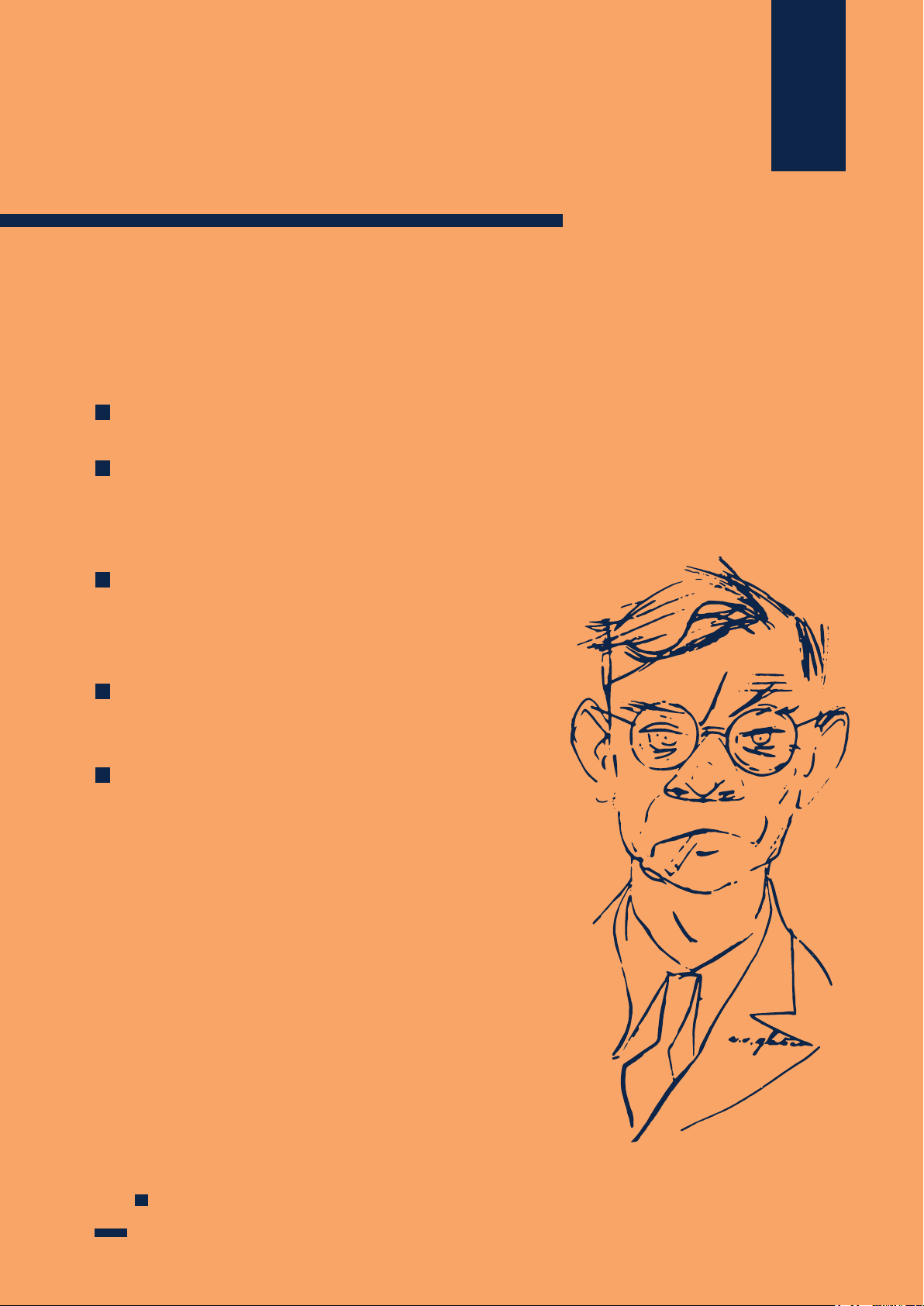
Illustrations by Amber Cooper-Davies

Oppenheimer, directed by Christopher Nolan, is the story of J. Robert
Oppenheimer and the Manhattan Project: the top-secret military
operation to develop the world’s first nuclear weapons. This
clandestine collaboration between scientists and the United States
military that opened the door to the nuclear age was aptly called
The Manhattan Project, as it was in New York City where it all began.
The Manhattan Project and its legacy lives on in NYC and across the
world. To learn more see our Nuclear NYC Map www.nuclearnyc.com
As New Yorkers, as human beings everywhere, we have a moral
responsibility to learn this story, and share it forward into action for
nuclear abolition. In this spirit, we bring you an Abolitionist Viewer’s
Guide to Watching Christopher Nolan’s Oppenheimer.

ASK QUESTIONS
What moral questions are being introduced in
this film?
How are these questions addressed? Whose
voices are most prominent in this film?
Who is made to be the hero within the narrative
of this film?
Does this film amplify the voices of atomic
bomb victims, atomic bomb survivors,
Downwinders, and those exposed to long-lived
radiation caused by the Manhattan Project and
the nuclear industry?
Are there implicit or explicit ways that this film
contributes to military violence (past, present,
and future)?
Asking questions is critical for abolition. Here are
examples of questions to consider while you watch
Oppenheimer :

ARRIVE INFORMED
Familiarize yourself with the legacy of J. Robert Oppenheimer’s work
for the Manhattan Project and be open to a more comprehensive
story about nuclear weapons.
The goal of the Manhattan Project was to weaponize the splitting of
the atom. Headquartered initially in New York City, in 1943 the
Manhattan Project secretly began operating out of Los Alamos, New
Mexico, situated within the tribal lands of Pueblo Nations. By August
1945, the purpose of the Manhattan Project was realized in the
unspeakable devastation of the atomic bombings of Hiroshima and
Nagasaki where hundreds of thousands of people perished.
Many people believe that the total destruction of the cities of
Hiroshima and Nagasaki ended the war. However, the Japanese
military was significantly weakened by this time, and Japan was
already prepared to surrender due to the threat of Russian invasion.

According to Hiroshima survivor Setsuko Thurlow, "we survivors reject
the American myth that the use of atomic bombs was necessary to
avoid a costly invasion of Japan and to save lives. This argument can
be refuted for many reasons.... [primarily] the U.S. desire to position
itself as the dominant power in East Asia in the post-war period. In
addition, decision-makers wanted to test the new weapons of two
different kinds (uranium and plutonium)...With the understanding of
this historical perspective, we survivors saw ourselves as pawns in the
opening moves of the Cold War rather than as sacrifices on the altar
of peace".
Still to this day, the Manhattan Project lives on through radioactive
harms wrought by the arms race between the United States and
Russia, and the seven other nations (U.K., China, France, India,
Pakistan, Israel, and North Korea) that have pursued technologies that
can destroy all life on earth. Nuclear weapons development has
resulted in test detonations that have been conducted all over the
globe, primarily on Indigenous Land.
ARRIVE INFORMED

ARRIVE INFORMED
After the first Trinity Test in New Mexico and the atomic bombings of
Hiroshima and Nagasaki in 1945, the United States alone detonated
over 1,000 nuclear weapons across the American Southwest, the
Marshall Islands, and in Amchitka, Alaska.
The number of deaths and illnesses caused by nuclear weapons
development and testing is ultimately unknowable, though the sheer
amount of human-made radiation in the environment will continue to
disrupt ecosystems and cause illness in humans and other living
beings for thousands of generations to come.
Today, the threat of nuclear war is the highest the world has seen
since the Cuban Missile Crisis.

Oppenheimer includes a depiction of the Trinity Test, the first-ever
detonation of an atomic bomb. The plutonium-fueled "gadget" (as it
was referred to by the scientists at Los Alamos) was detonated in
Alamogordo, New Mexico, just north of the White Sands National
Monument. The 40,000 people living nearby were not evacuated or
warned of the test and were not made aware of the harmful effects of
radiation exposure. Residents described the blast as a bright flash of
light, followed by a plume of ash that rained radioactive particles
onto their houses, farmlands, and into waterways.
Due to the long-term impact of ionizing radiation, “Downwinders,” or
those living nearby nuclear test sites, uranium mines, nuclear power
plants, nuclear bomb factories, nuclear waste dumps, and nuclear
adjacent operations may still be experiencing negative health effects
related to radioactive fallout and other types of exposure. The Trinity
Downwinders in New Mexico have faced multiple generations of
cancer, death, and reproductive health problems but are currently
not included in the U.S. Government’s Radiation Exposure
Compensation Act (RECA) and therefore have not been
compensated for their unwilling participation in the Manhattan
Project.
THE TRINITY TEST

THE TRINITY TEST:
POPULATIONS LIVING NEARBY
THE EXPLOSION
Provided by the Tularosa Downwinders Consortium

Uranium is the primary material used to produce nuclear weapons.
During the initial stages of the Manhattan Project, uranium was
brutally procured from the Shinkolobwe mine in the former Belgian
Congo by a colonialist mining company. These uranium miners
worked without protective gear and were unaware of the dangers of
radiation exposure.
A staggering 1,200 tons of this uranium were stored in a warehouse on
Staten Island. An additional 300,000 pounds of uranium were stored
at the Baker and Williams Warehouses on West 20th Street in
Manhattan. Approximately 3.75 tons of thorium oxalate sludge was
stored at the Wolff-Alport Chemical Company Warehouse in Queens.
According to the U.S. Environmental Protection Agency, this company
buried its radioactive waste onsite and may have even dumped
radioactive materials into New York City's sewer system.
The uranium would later be shipped from NYC around the country to
three secret “nuclear cities” of the Manhattan Project: Los Alamos,
Hanford, and Oakridge. By the 1950s, uranium ore was heavily mined
within the United States.
Almost half of all recoverable uranium in the U.S. lies in New Mexico,
primarily found on Indigenous Lands. During the Manhattan Project,
the majority of miners were members of the Navajo Nation. They
worked in perilous conditions, and the lack of safety regulations within
the mines resulted in widespread contamination across the region.
Currently, there are 1,100 abandoned uranium mines scattered across
the Navajo Nation.
MORE ABOUT: URANIUM FROM NYC
TO NEW MEXICO

On July 16, 1979— the 34th anniversary of the Trinity Test— the largest
nuclear accident to date in the United States took place when a dam
failed at the Nuclear United Corporation uranium mill near Church
Rock, New Mexico. More than one thousand tons of radioactive
detritus and 95 million gallons of radioactive wastewater flowed into
the Puerco River.
Despite its magnitude, the Church Rock catastrophe is barely
mentioned in public discourse. The ongoing radioactive harms of the
Church Rock spill have been systematically ignored and continue to
wreak havoc on local populations, specifically members of the Navajo
Nation. According to a U.S. Government study on uranium exposure
"about a quarter of Navajo women and some infants... had high levels
of radioactive metal in their systems, decades after mining for Cold
War weaponry ended on their reservation" (Grand Canyon Trust).
MORE ABOUT: THE CHURCH ROCK
SPILL

Share this information with your communities to normalize
disarmament. Our cause can only be achieved through local and
international awareness and support. Together we can
denormalize nuclear proliferation and the false idea that nuclear
deterrence prevents war. The only prevention is abolition.
Support RECA: Downwinders in New Mexico, including affected
communities across the United States and Pacific, are calling to
extend the Radiation Exposure Compensation Act (RECA) along
with amendments that will provide restitution and access to
cancer screenings for those affected by Trinity Test. Call on your
legislators to support the extension of and amendments to RECA.
For more information about supporting RECA Amendments, S.1751
and H.R.4426 see: www.trinitydownwinders.com
Support the TPNW: The Treaty on the Prohibition of Nuclear
Weapons (TPNW) is a legally binding international agreement
that prohibits the use, the threat of use, the possession, and the
development of nuclear weapons. Sixty-eight countries have
ratified or acceded to the Treaty since its adoption in 2017. The
United States is not yet a signatory to the TPNW.
Get your country to join the #nuclearban -
jointheban.icanw.org
Here is a template to write to your government:
jointheban.icanw.org/write_government
Share ratification kits: jointheban.icanw.org/ratification_kit
ACTION FOR ABOLITION
Here are actions you can take to support affected communities and
efforts for nuclear abolition:

Here are some organizations to get you started with nuclear abolition:
New York Campaign to Abolish Nuclear Weapons (NYCAN) www.nycan.nyc
International Campaign to Abolish Nuclear Weapons) (ICAN)
www.icanw.org
Youth Arts New York/Hibakusha Stories www.hibakushastories.org
Reaching Critical Will (RCW) www.reachingcriticalwill.org
International Physicians for the Prevention of Nuclear War (IPPNW)
www.ippnw.org
Tularosa Basin Downwinders Consortium www.trinitydownwinders.com
Youth for the Treaty on the Prohibition of Nuclear Weapons (Y4TPNW)
www.youthfortpnw.net
Nuclear Truth Project www.nucleartruthproject.org
Institute for Energy and Environmental Research (IEER) www.ieer.org
ACTION FOR ABOLITION

On Oppenheimer and the Manhattan Project:
www.thebulletin.org/magazine/2023-07
On the Trinity Test and the harms it caused:
www.trinitydownwinders.com/_files/ugd/2b2028_c92fea5300724b2c
bcd1ae585aeb241a.pdf
www.sciencehistory.org/stories/magazine/in-the-shadow-of-
oppenheimer
On Los Alamos:
www.motherjones.com/politics/2003/05/fear-and-fallout-los-
alamos
On the TPNW
www.reachingcriticalwill.org/disarmament-fora/nuclear-weapon-
ban
On the Church Rock disaster and the impacts of uranium mining Navajo
Nation:
www.storymaps.arcgis.com/stories/bcc266d0937e4e24adfb65c36b93884f
For more information on the humanitarian consequences of nuclear
weapons:
www.washingtonpost.com/outlook/americans-insist-the-atom-
bomb-ended-the-war-in-japan--ignoring-its-human-
cost/2020/08/06/2095f314-d76f-11ea-aff6-220dd3a14741_story.html
FURTHER READING

Photo by Robert Croonquist
This guide was designed and written by members of NYCAN,
The New York Campaign to Abolish Nuclear Weapons
Written By:
Sab Garduño, Antje Hipkins, Molly Rosaaen,
Mays Smithwick, Moran Smithwick, Kathleen Sullivan
Designed by: Moran Smithwick
Illustrations from animations by Amber Cooper-Davies
The Nuclear Age In Six Movements and If You Love This Planet
Special thanks to Robert Croonquist