WATER ACTION PLAN PDF Free Download
1 / 79/79
100%

1
December 20, 2013
Updated December 2017
University of California, San Diego
WATER ACTION PLAN

www.ucsd.edu
2
Table of Contents
EXECUTIVE SUMMARY……………………………………………………………………………………….. 3
INTRODUCTION………………………………………….…………………………………….......................... 4
California’s Climate
Site Overview
Regulatory Background
Purpose of the Water Action Plan
Water Action Plan Committee
Boundaries of the Water Action Plan
POTABLE WATER USE REDUCTION …………………………………………………………………… 9
Potable Water Use Baseline
Water Action Plan Implementation Tracking and Reporting
Water Use Overview
Water Reduction Progress to Date
Expansion of Recycled Water System
Water Efficient Design Standards for New Buildings
Campus Irrigation and Landscaping
Smart Meters
Laboratory Single Pass Cooling Retrofits
Plumbing Retrofits
Fire Sprinkler and Hydrant Testing Water Capture for Reuse
HVAC Condensation Collection for Reuse
Reporting Water Leaks
EDUCATION AND OUTREACH…………………………………………………………………………… 16
Outreach, Collaboration & Education
STORM WATER MANAGEMENT………………………………………………………………………… 18
Phase II Small MS4 General Permit
Industrial Storm Water Permit
NPDES Waste Discharge Permit
Construction General Permit
Appendix A: UC Sustainable Water Systems Policy
Appendix B: Water Usage Graphs
Appendix C: Water Saving Project List
Appendix D: LEED Certified Buildings on Campus
Appendix E: Definitions

www.ucsd.edu
3
UC San Diego Water Action Plan
Executive Summary
UC San Diego, like many municipalities,
operates commercial and residential
buildings, a major utility plant, fueling
stations, a vehicle fleet, hospitals, research
laboratories, event and convention centers,
public venues (aquarium, sports facilities,
music hall, etc.), shipping facilities, small
businesses, a pier, as well as police and
transportation services. UC San Diego is
responsible for the management of physical
plants and all utilities associated with them,
including the generation and maintenance of
this infrastructure in compliance with local, state and federal regulations and codes. Functioning
as a small city, UC San Diego is one of the largest water users in the City of San Diego. Therefore, it
is critical that the campus commits to water conservation.
The objective of this plan is to support, and remain in compliance with, the University of California
Office of the President (UCOP) Sustainability Water Systems Policy. In doing so, this Water Action
Plan (WAP) summarizes past efforts and best practices that UC San Diego has implemented to
reduce potable water usage including:
• Expanding the use of recycled water to offset potable water use
• Irrigation, building, and research equipment retrofits to reduce water use
• Building standards for new construction to improve water efficiency
• Replacing turf with drought tolerant landscaping
• Collecting HVAC condensation and wastewater from Reverse Osmosis systems for reuse in
irrigation.
• Smart meters
Furthermore, with consideration of UC San Diego’s unique regional conditions, this plan describes
future water reduction projects that have been designed and planned to best suit the University’s
water needs in the most efficient way possible. These projects will be implemented to reduce UC
San Diego’s potable water usage beyond 36% by the year 2025.
In addition to outlining UC San Diego’s water usage and reduction strategies, the WAP also
highlights the campus’ education and outreach to students and staff on the importance of water
conservation. UC San Diego has established a solid outreach platform which will grow over time
that involves the staff, students and local community.
Finally, this plan describes UC San Diego’s efforts to minimize the discharge of storm water
pollutants in compliance with storm water regulations and permits.
Credit: Erik Jepsen/UC San Diego Creative Services and Publications

www.ucsd.edu
4

www.ucsd.edu
5
CALIFORNIA’S CLIMATE
California is home to a semi-arid, Mediterranean type climate. As such, the Golden State typically
experiences warm, dry summers, mild winters, and regular drought events. Furthermore, in the
face of climate change, it is estimated that by the end of the 21st century, “critically dry” water
years could occur more frequently. Droughts are expected to increase by 8% in the Sacramento
Valley region, and a substantial 32% in the San Joaquin Valley in comparison to the recorded
period between years 1951 through 2000 [http://www.energy.ca.gov/2012publications/CEC-
500-2012-007/CEC-500-2012-007.pdf].
During critically dry periods in California, it is extremely difficult to satisfy the state’s water
demands such as those necessary for important agricultural and environmental purposes. Water
shortages threaten California’s economy and local ecosystems. Thus, efforts to implement and
exercise water conservation practices are critical for the future of our state.
Credit: Erik Jepsen/UC San Diego Creative Services and Publications

www.ucsd.edu
6
SITE OVERVIEW
The University of California, San Diego (UC San Diego) is located in La Jolla, a small coastal
community that sits adjacent to the Pacific Ocean within the City of San Diego. UC San Diego serves
as both a major economic engine and an entrepreneurial powerhouse for the San Diego region and
for the State of California. The 1,158-acre campus has a daily population of over fifty thousand
people, 59 acres of turf landscaping in sports fields including the perimeter landscaping, and over
700 buildings and associated infrastructure. In order to support this population, landscaping, and
infrastructure, UC San Diego is one of the largest water users in the city.
UC San Diego has 6 main City water utility meters and 600 campus sub-meters to track water use.
UC San Diego, along with the city as a whole, relies primarily on imported water. San Diego's
drinking water comes from three primary sources: Northern California, Colorado River and local
rainwater runoff. The City also produces recycled water for non-potable uses. Regionally, San
Diego lies within California’s Mediterranean semi-arid climate and receives an average of only 12
inches of rain per year.
REGULATORY BACKGROUND
In response to severe drought conditions in California,
Governor Schwarzenegger wrote to leadership of the
California State Senate on February 28, 2008,
outlining key elements of a comprehensive solution to
problems in the Sacramento-San Joaquin Delta. The
first element on the Governor's list was “a plan to
achieve a 20 percent reduction in per capita water use
statewide by 2020.” In March 2008 the 20x2020
Agency Team was convened to develop a plan to
achieve a 20 percent reduction in per capita urban
water use statewide by 2020. The final 20x2020
Water Conservation Plan, dated February 2010, sets
forth a statewide road map to maximize the state’s
urban water efficiency and conservation
opportunities between 2009 and 2020, and beyond.
The draft of this plan served as a basis for legislation
that was enacted in November 2009 to incorporate
into law (Senate Bill X7 7) the goal to achieve a 20
percent reduction in urban per capita water use in
California by 2020.
In support of these regulations, the University of
California, Office of the President (UCOP) issued a UC
Sustainable Practices Policy (Appendix A) that
requires all University of California campuses to
reduce their potable water use 36% by the year 2025
and to develop a Water Action Plan that outlines how
they will achieve their water reductions.
Credit: Erik Jepsen/UC San Diego Creative
Services and Publications

www.ucsd.edu
7
PURPOSE OF THE WATER ACTION PLAN
In compliance with UCOP’s UC Sustainable Practices Policy, UC San Diego has developed this Water
Action Plan (WAP). The purpose of UC San Diego’s WAP is to (1) identify the present and future
measures the university will implement to reduce potable water use by 36%, (2) develop and
implement a solid education and outreach platform to encourage behavior change, and (3)
establish benchmark goals to go beyond the 36% reduction in potable water use.
These benchmarks include:
1) Continuously look for new opportunities to implement measures that will reduce potable
water use and support the overall goals of the WAP.
2) Develop water standards for different types of building occupancy use (e.g., research,
industrial, administrative).
3) Research and investigate conceptual projects and new technology for potential project
development. Use the university as a “living laboratory” for water conservation innovation.
WATER ACTION PLAN COMMITTEE
The UC San Diego WAP is a collaborative document developed by the Water Action Plan Committee
(WAPC), which includes representatives from the following departments:
• Environment, Health, and Safety (EH&S)
• Facilities Management (FM)
• Housing, Dining, and Hospitality (HDH)
• Planning, Design and Construction (PD&C)
• Scripps Institution of Oceanography (SIO)
• Sports Facilities
• University Center
The WAP is a living document and will be reviewed and updated as necessary.
Credit: Erik Jepsen/UC San Diego Creative Services and Publications

www.ucsd.edu
8
BOUNDARIES OF THE WATER ACTION PLAN
The WAP boundaries are shown in Figure 1 below. The UC San Diego WAP includes the main
campus, east campus, off-campus housing, and Scripps Institution of Oceanography. Leased
facilities, off-site facilities, and buildings outside operational control have been excluded from this
plan.
Figure 1: Water Action Plan Boundaries – Black Borders

www.ucsd.edu
9
Credit: UC San Diego EH&S

www.ucsd.edu
10
POTABLE WATER USE BASELINE
In accordance with the UC Sustainable Practices Policy, UC
San Diego’s potable water use per capita is calculated by
dividing the gallons of potable water used per fiscal year
(based on City water meter billing data) by the weighted
campus user (WCU).
Per Capita Potable Water Use = Gallons of potable water
used per fiscal year /WCU
WCU = (A + B + C) + 0.75 [ (D - A) + (E - B) – F ]
A= Number of students resident on-site
B= Number of employees resident on-site
C= Number of other individuals resident on-site and/or
staffed hospital beds
D= Total full-time equivalent student enrollment
E= Full-time equivalent of employees (staff + faculty)
F= Full-time equivalent of students enrolled exclusively in
distance education.
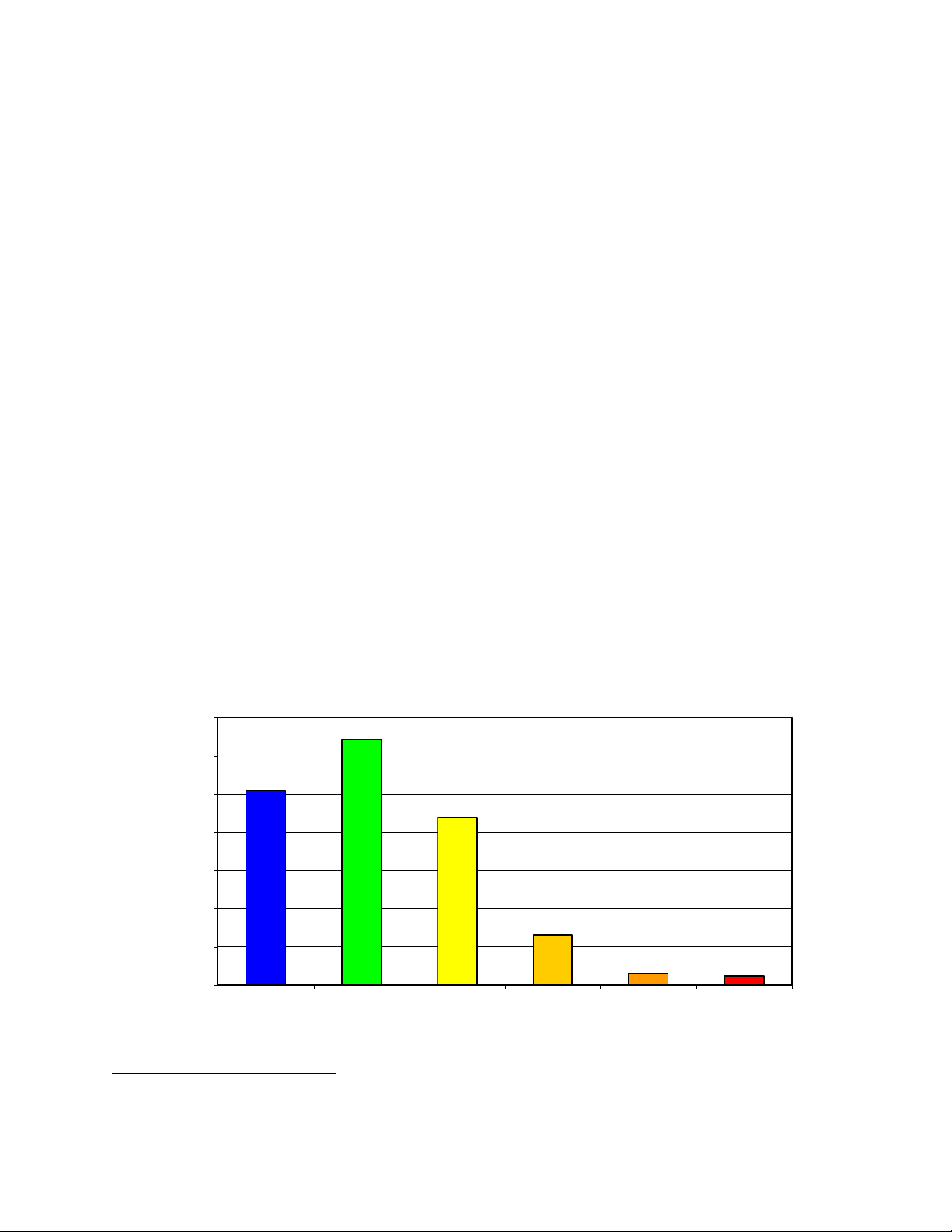
The calculated baseline, shown in Figure 2, is the average of potable water usage per capita (as
defined above) from Fiscal Years July - June 2005/06, 2006/07, and 2007/08 with the goal to
reduce potable water use from the baseline by 36% by 2025.
Figure 2: UC San Diego’s Annual Campus Potable Water Use from 2005/2006 - 2007/2008
24,112
22,706
21,940
22,919
20,500
21,000
21,500
22,000
22,500
23,000
23,500
24,000
24,500
FY 05/06 FY 06/07 FY 07/08 Baseline: FY 05/06 -
FY 07/08
Gallons/Capita
Fiscal Year
Annual Campus Potable Water Usage
Used to Set Baseline
Credit: Matthew Hansen/HDH
Marketing

www.ucsd.edu
11
WATER ACTION PLAN IMPLEMENTATION TRACKING AND
REPORTING
UC San Diego water use is tracked each fiscal year and reported to UCOP. The Water Action Plan
is updated to reflect the status of water reduction projects and the addition of new projects.
WATER USE OVERVIEW
UC San Diego potable water usage is broken
down into eight categories which include:
• Housing
• Industrial
• Irrigation
• Laboratories
• Office
• UC San Diego Health (La Jolla)
• Restaurants
• Other
The four largest water usage categories consist of housing, industrial, irrigation, and laboratories,
while the remaining four categories (office, UC San Diego Health – La Jolla, restaurants, and other)
make up less than 25% of total water use. General Water Usage graphs for each fiscal year can be
found in Appendix B.
Credit: Erik Jepsen/UC San Diego Creative
Services and Publications
Credit: Erik Jepsen/UC San Diego Creative Services and Publications

www.ucsd.edu
12
WATER REDUCTION PROGRESS TO DATE
Figure 3 summarizes UC San Diego’s potable water reductions to date.
Figure 3: UC San Diego’s Annual Campus Potable Water Use per Capita.
UC San Diego reached 20% reduction from the Baseline in FY 2015/16.
Appendix C lists water reduction projects that either have been completed, are ongoing, or are
proposed for the future. Water reduction projects and practices that have already been
implemented are described below.
Expanding the Use of Recycled Water to Replace Potable
Water Use
UC San Diego currently uses recycled water for more than 25% of
campus irrigation and is continuing to expand the number of areas
irrigated with recycled water rather than potable water. In addition,
the use of recycled water has been expanded for industrial use in the
cooling towers at the Central Utilities Plant and on east campus
reducing potable water use by more than 60 million gallons per year.
Credit: UC San Diego EH&S

www.ucsd.edu
13
Water Efficient Design Standards for New Buildings
UC San Diego requires new major construction projects to be planned, designed and built as
resource efficient facilities. At a minimum, all future buildings will meet Leadership in Energy and
Environmental Design (LEED) Silver or Gold Standards. LEED buildings consider the building site,
water efficiency, energy efficiency and other environmental standards. An example is the Platinum
rating of the new Charles David Keeling Apartments which is the first LEED Platinum student
housing in the University of California system. For a full list of LEED certified buildings see
Appendix D.
Campus Irrigation and Landscaping
The campus uses electronic controllers to efficiently irrigate the landscape in periods of only 4-6
minutes per cycle. The UC San Diego landscape staff
is trained to identify signs of overwatering and water
leaks in the irrigation system. In addition, the
irrigation system itself tracks unusually high water
use, which may signal a leak. In the event of a
reported water leakage, UC San Diego’s Facilities
Management department responds with an
irrigation maintenance crew.
UC San Diego has implemented water saving
strategies including the planting of low water,
drought-tolerant vegetation in 75% of the irrigated
campus landscape, turning off irrigation during wet
winter months, and turning off irrigation to 54,000 square feet of turf to save 1.53 million gallons
of water per year. The campus has retrofitted approximately 7,900 standard sprinklers with high-
efficiency rotating nozzles, saving 10 million gallons of water per year. Meters that measure soil
moisture that accurately target watering and a computer controlled irrigation system that tracks
current weather data and adjusts watering based on temperature and humidity have been
installed in select locations on campus and continue to be installed.
Since 2014, the campus has eliminated 352,000 square feet of turf saving 9 million gallons of water
per year. A large recreation turf field (Muir Field), for example, was replaced with artificial turf in
2015.
Smart Meters
UC San Diego is installing Sensus “smart” meters throughout
campus that transmit water use data in real time to a central
web interface. Access to water use data in real time enables
the campus to identify areas that have water leaks and to
identify areas where additional water conservation is
needed. To date, 400 smart meters have been installed.
Credit: UC San Diego EH&S
Credit: UC San Diego EH&S

www.ucsd.edu
14
Laboratory Single Pass Cooling Retrofits
As a major medical and research institution, UC San Diego houses many autoclaves. Older cold-
water flow autoclaves use between 50-100 gallons of continuous cold water per hour in order to
cool the discharged water before it enters the municipal sewer system. In order to reduce this
impact of water usage, UC San Diego has installed over 100 WATER-MIZER autoclave retrofits.
These retrofits monitor the drain temperature and apply cold water to adjust the discharge only
when needed. The installation of a single WATER-MIZER saves 75%-90% of the normal water
flow rate of a single cold-water flow autoclave. This averages
a water savings at UC San Diego of 1,000 gallons per day, per
autoclave retrofit. New autoclaves are equipped with the
WATER-MIZER.
UC San Diego has also distributed more than 300 Findensers
to labs, which has saved an estimated 22 million gallons of
potable water per year. Instead of using flowing water from a
sink to cool liquids in laboratories, a Findenser is used as a
‘super air condenser.’ The design includes an internal glass
condenser with more surface area than traditional condensers
and an external, finned (to increase surface area) aluminum
jacket. Between the two layers, a small amount of water is
permanently sealed. The higher surface area of both the
internal and external layers allows for higher heat transfer
capacity and eliminates the need for single pass cooling.
Findensers also significantly reduce the risk of water leaks and
flooding from this process.
Plumbing Retrofits
UC San Diego installs water
efficient plumbing fixtures in
new buildings and is replacing
aging infrastructure with
water efficient fixtures (e.g.,
shower heads, faucets, low
flow urinals, etc.).
Aerators have been installed on laboratory faucets to
reduce the volume of water while maintaining similar
water pressure (saves 7.5 gallons per minute from a lab
faucet without an aerator). 476 aerators have been
installed in Pacific Hall, Muir Biology, Bonner Hall,
Natural Sciences Building, Urey Hall, York, CMME,
CMMW and Leichtag saving more than 2 million gallons
of potable water per year.
Credit: UC San Diego Green Labs
Credit: UC San Diego EH&S

www.ucsd.edu
15
Fire Sprinkler and Hydrant Testing Water Capture for Reuse
The campus has implemented practices to capture fire-sprinkler and hydrant testing water for
reuse in the Central Utilities Plant cooling towers.
HVAC Condensation Collection for Reuse
Currently, UC San Diego has three buildings on campus that collect condensation from heating and
air conditioning units, reverse osmosis system wastewater, and cooling tower blow down for
reuse in toilet flushing and irrigation. The collected water is treated with ozone, gravity settling,
and ultra violet before being reused. One building alone (Biomedical Research Facility II)
generates 11,000 gallons of collected water for reuse a day.
The campus is currently working on a project to collect and reuse HVAC condensation for
irrigation in additional buildings.
Reporting Water Leaks
Campus staff are trained to report water leaks to the UC San Diego Facilities Management Help
Desk: (858) 534-2930 or email wsc@ucsd.edu. Leaks in housing areas are reported to the HDH
Service Center: (858) 534-2600.
Credit: Erik Jepsen/UC San Diego Creative Services
and Publications

www.ucsd.edu
16
Credit: Erik Jepsen/UC San Diego Creative Services and Publications

www.ucsd.edu
17
OUTREACH, COLLABORATION &
EDUCATION
UC San Diego continuously involves the campus
community in conserving water. Campus
organizations such as AQUAholics Anonymous, the
EcoNauts and the Sustainability Resource Center on
campus contribute to day to day educational
outreach to UC San Diego students and staff.
Through these organizations, students, staff, and
faculty are directly involved in campus outreach and
education.
The AQUAholics Anonymous group distributes educational
materials regarding water conservation at outreach events on
campus, such as Earth Day, and has organized and implemented
water conservation activities and programs, including Residence
Hall Water Savings Competitions
and a Combat AQUAholism Film
and Art Competition.
UC San Diego AQUAholics
Anonymous website:
http://aquaholics.ucsd.edu/
Educational signs are posted
throughout campus to inform
the campus community of
landscaped areas that are using
recycled water for irrigation and areas that have been re-
landscaped to conserve water.
Community collaborations include the following:
• Water management through campus planning: UC San Diego promotes water conservation
by replacing higher water demand landscapes with lower water demand landscapes, and
planning projects using drought tolerant vegetation and native plants to aid in water
reduction.
• Partnerships with local water agencies: UC San Diego partners with the San Diego County
Municipal Water Authority and the City of San Diego Public Utilities Department Long
Range Planning and Water Resources Division to expand the campus recycled water system
and to collaborate with on campus outreach events.
Credit: Erik Jepsen/UC San Diego Creative Services and
Publications
Credit: UC San Diego EH&S
Credit: UC San Diego EH&S
Credit: UC San Diego EH&S

www.ucsd.edu
18
Credit: Erik Jepsen/UC San Diego Creative Services and Publications

www.ucsd.edu
19
UC San Diego does not currently capture
and reuse rainwater to offset potable
water use. Opportunities to do so will be
explored in the future. UC San Diego is
collaborating with the City of San Diego on
a Storm Water Capture Feasibility Study
for the region.
UC San Diego manages storm water in
accordance with the following permits: (1)
the National Pollutant Discharge
Elimination System (NDPES) Phase II
Small MS4 General Permit; (2) the NPDES
General Permit for Industrial Storm Water
Discharges (IGP); (3) the NPDES
Wastewater Discharge Permit for
seawater and storm water discharges at
Scripps Institution of Oceanography (SIO);
and (4) the NPDES General Permit for
Storm Water Discharges Associated with
Construction Activity. All of these permits
have been developed and adopted by the
California State Water Resources Control
Board (SWRCB) and are regulated by the
San Diego Regional Water Quality Control
Board (RWQCB). Each of these is
described below.
PHASE II SMALL MS4 GENERAL PERMIT, NON-TRADITIONAL (ORDER NO.
2013-0001-DWQ):
UC San Diego’s implements a comprehensive storm water management program that includes
public education/ outreach and participation; illicit discharge detection and elimination; pollution
prevention for daily campus operations; construction site storm water runoff control; and post-
construction storm water management in new development and re-development.
The Phase II program includes water quality objectives pertaining to campus operations and all
construction. In addition, post construction guidelines are required to maintain the quality of
storm water emanating from project sites after completion and occupancy. Opportunities for
capturing and re-using storm water will be evaluated to meet post construction design
requirements.
UC San Diego’s Storm Water Management Plan, source control best management practices, and an
inventory of the treatment controls that have been installed throughout campus to prevent storm
water pollution are included on UC San Diego’s Storm Water Management Program web page:
http://stormwater.ucsd.edu
Credit: UC San Diego EH&S

www.ucsd.edu
20
INDUSTRIAL GENERAL PERMIT (ORDER NO. 2014-0057-DWQ):
The UC San Diego Nimitz Marine Facility in Point Loma and Fleet Services at the Campus Services
Complex on main campus are each regulated by an NPDES industrial storm water permit. Each
facility has developed and implements a Storm
Water Pollution Prevention Plan (SWPPP) that
identifies pollutants of concern associated
with activities at that facility and the best
management practices (BMPs) that will
reduce or eliminate these pollutants from
storm water runoff. Source control BMPs that
target pollutants of concern are implemented
such as good housekeeping, preventive
maintenance, spill and leak prevention and
response, material handling and waste
management, erosion and sediment controls,
and employee training. In addition, storm
water treatment controls have been installed
at both sites that target pollutants of concern.
For Fleet
Services, for example, a water polishing
treatment system was installed that removes
oil and grease, petroleum hydrocarbons, and
sediment. At the Nimitz Marine Facility, two
modular wetland treatment systems were
installed that remove metals, sediment, and oil
and grease from runoff.
Storm water management activities
include: weekly inspections of outdoor
material storage areas and fueling
areas; monthly inspections to look for
evidence of dry weather flows or other
storm water pollutants and to evaluate
BMP implementation; and an annual
comprehensive evaluation of the
SWPPP and BMPs. UC San Diego
collects storm water samples from
these sites to verify that the source
control and treatment control
management measures are effective.
Credit: UC San Diego EH&S
Credit: UC San Diego EH&S

www.ucsd.edu
21
NPDES PERMIT NO. CA0107239:
The western portion of the UC San Diego, SIO campus discharges into a marine area that has been
designated by the SWRCB as an “Area of Special Biological Significance.” There are 34 of these
special areas along the coastline in California (2 of which are in San Diego). The California Ocean
Plan prohibits the discharge of waste into an ASBS. UC San Diego has obtained an Ocean Plan
Exception from the SWRCB to discharge return seawater from SIO and storm water into ASBS 31.
The Ocean Plan Exception includes conditions to ensure that discharges into the ASBS do not (1)
alter “natural water quality,” (2) adversely impact the biological communities, or (3) compromise
protection of ocean waters for beneficial uses. These conditions have been incorporated into an
NPDES permit developed by the San
Diego Regional Water Quality Control
Board.
UC San Diego has implemented
source control BMPs and installed
structural treatment control BMPs to
prevent pollutants from reaching the
ASBS. For example, four urban runoff
media filters have been along the
coastline to divert and treat urban
runoff before it discharges onto the
beach. UC San Diego monitors storm
water run-off as well as the receiving
water to evaluate the effectiveness of
these BMPs.
CONSTRUCTION STORM WATER PERMIT (ORDER 2009-0009-DWQ, AS
AMENDED BY 2010-0014-DWQ AND 2012-0006-DWQ):
Construction projects on campus that disturb one acre or larger are managed in accordance with
the Construction Storm water Program Requirements identified in the General Permit including
developing and implementing a site specific Storm Water Pollution Prevention Plan (SWPPP)
which emphasizes the use of appropriately selected, correctly installed and maintained pollution
reduction BMPs that will prevent construction pollutants from contacting storm water and leaving
the project site. The SWPPP must:
A. Identify pollutant sources associated with construction activities that may affect the
quality of storm water discharges.
B. Identify and prevent non-storm water discharges.
C. Identify, construct, and implement storm water pollution prevention measures (BMPs) to
reduce or eliminate pollutants in storm water discharges from the construction site, both
during construction and after construction is completed.
Credit: UC San Diego EH&S

www.ucsd.edu
22
Storm water runoff from the construction site is monitored and analyzed based on the calculated
risk level of project.
Throughout the construction period, a qualified SWPPP Practitioner (QSP) conducts and
documents inspections and evaluations as detailed in the SWPPP, including but not limited to:
weekly site inspections, quarterly site inspections, pre-rain event inspections within 24 hours
prior to a rain event, post-rain event inspections within 24 hours after a rain event, every 24 hours
during an extended rain event (lasting longer than one day), and maintenance inspections.
Opportunities to capture and reuse storm water to off-set potable water use and meet post-
construction design requirements will be evaluated for projects subject to the Construction
General Permit.
Cover photo credit: UC San Diego EH&S
Credit: UC San Diego EH&S

Appendix A
University of California
Sustainable Practices Policy

University of California – Policy
6/6/2017 Reformatted for Accessibility 1 of 31
Sustainable Practices
TABLE OF CONTENTS
I. POLICY SUMMARY ............................................................................................... 2
II. DEFINITIONS ......................................................................................................... 2
III. POLICY TEXT ......................................................................................................... 6
A. Green Building Design ....................................................................................... 6
B. Clean Energy ..................................................................................................... 7
C. Climate Protection.............................................................................................. 7
D. Sustainable Transportation ................................................................................ 8
E. Sustainable Building Operations for Campuses ................................................. 9
F. Recycling and Waste Management ................................................................. 10
G. Environmentally Preferable Purchasing ........................................................... 10
H. Sustainable Foodservices ................................................................................ 11
I. Sustainable Water Systems ............................................................................. 12
IV. COMPLIANCE / RESPONSIBILITIES .................................................................. 13
V. PROCEDURES ..................................................................................................... 14
VI. RELATED INFORMATION ................................................................................... 30
VII. FREQUENTLY ASKED QUESTIONS .................................................................. 30
VIII. REVISION HISTORY ............................................................................................ 30
Responsible Officer:
EVP – Chief Operating Officer
Responsible Office:
ES – Energy & Sustainability
Issuance Date:
7/1/2004
Effective Date:
6/2/2017
Last Review Date:
9/23/2016
Scope:
All Campuses, Medical Centers, and the Lawrence
Berkeley National Laboratory
Contact:
Matthew St. Clair
Title:
Director of Sustainability,
UCOP
Email:
Matthew.StClair@ucop.edu
Phone #:
(510) 987-3897

University of California Policy
Sustainable Practices
2 of 31
I. POLICY SUMMARY
The Sustainable Practices Policy (“Policy”) establishes goals in nine areas of
sustainable practices: green building, clean energy, transportation, climate protection,
sustainable operations, waste reduction and recycling, environmentally preferable
purchasing, sustainable foodservice, sustainable water systems.
II. DEFINITIONS
Adjusted Patient Day: Inpatient Days x (Gross Patient Revenue/Inpatient Revenue)
where Gross Patient Revenue is Outpatient Revenue + Newborn Revenue + Inpatient
Revenue.
Average Vehicle Ridership (AVR): Calculated by dividing the number of all person trip
arrivals by the number of private vehicle trips, with adjustments for telecommuting,
compressed work weeks and zero emission vehicles (based on the South Coast Air
Quality Management District method).
Climate Neutrality: Climate neutrality means that the University will have net zero
climate impacts from greenhouse gas (GHG) emissions attributed to scope 1 direct
emission sources and scope 2 indirect emission sources as defined by The Climate
Registry, and specific scope 3 emissions as defined by the American College and
University Presidents’ Climate Commitment (ACUPCC). This neutrality will be achieved
by minimizing GHG emissions from these sources as much as possible and using
carbon offsets or other measures to mitigate the remaining GHG emissions.
CBC: California Building Code, Title 24 portion of the California Code of Regulations
Domestic Water: Potable and non-potable water provided for domestic indoor (e.g.,
toilets, urinals, showers, and faucets) and outdoor (e.g., landscape irrigation) use.
Environmentally preferable products: Designation for those products whose
manufacture, use, and disposal results in relatively less environmental harm than
comparable products.
Fleet: University-owned or operated vehicles and mobility equipment (e.g., passenger
vehicles, trucks, vans, shuttles, agricultural vehicles, marine equipment, etc.) including
vehicles operated under contract with the University and for which the
University/Campus maintains operational control.
Gross Square Foot: Pursuant to the definition in the Facilities Inventory Guide
1
, gross
square footage is the Outside Gross Area, or OGSF50, and equals the sum of Basic
1
Facilities Inventory Guide, Attachment 8, Appendix C, pages 13-15.

University of California Policy
Sustainable Practices
3 of 31
Gross Area (the sum of all areas, finished and unfinished, on all floors of an enclosed
structure, for all stories or areas which have floor surfaces) + 50% Covered Unenclosed
Gross Area (the sum of all covered or roofed areas of a building located outside of the
enclosed structure). OGSF50 is also known as “California Gross.”
Green Lab Assessment Programs: A program that works with individual laboratories
and researchers to inform, collect best practices, and assess areas for improvement in
research efficiency, including engagement, and targeted initiatives around efficiency in
natural resources and other environmental issues. This assessment program could be
based on the My Green Labs (MGL) Systemwide Checklist or another similar tool. The
MGL checklist was developed based on best practices from several UC campuses as
well as the expertise of My Green Lab.
Industrial Water: Water provided for specific industrial applications such as heating,
cooling, or lubricating equipment.
LEEDTM: Leadership in Energy and Environmental Design. LEED is a registered
trademark of the U.S. Green Building Council (USGBC). This trademark applies to all
occurrences of LEED in this document. LEED is a green building rating system
developed and administered by the non-profit U.S. Green Building Council. The four
levels of LEED certification, from lowest to highest, are Certified, Silver, Gold, and
Platinum. LEED has several rating systems. This Policy refers to the following rating
systems:
LEED for Interior Design and Construction (LEED-ID+C) for renovation
projects;
LEED for Building Operations and Maintenance (LEED-O+M) for the ongoing
operational and maintenance practices in buildings; and,
LEED for Building Design and Construction (LEED-BD+C) for new buildings
and major renovations of existing buildings.
Location: As used in this Policy, means any or all campuses, medical centers, and the
Lawrence Berkeley National Laboratory as referred to in the “Scope” above.
Low-emissions vehicle (LEV): As defined by the current California Air Resources
Board (CARB) LEV program standards, a vehicle that emits relatively low levels of GHG
emissions from the onboard source of power and may include subcategories as defined
by CARB.
Municipal Solid Waste: Garbage, refuse, sludges, and other discarded solid materials
resulting from residential activities, and industrial and commercial operations which are
legally accepted in CalRecycle permitted landfills. Municipal Solid Waste does not
include any regulated hazardous/universal waste or medical waste.
Post-Consumer Waste (PCW): Waste produced by the end-user of a product. Post-
consumer waste is differentiated from pre-consumer waste, which refers to waste
produced in the manufacture of a product.

University of California Policy
Sustainable Practices
4 of 31
Potable Water: Water that meets state water quality standards for human consumption.
Reclaimed or Recycled Water: Wastewater treated with the intention of reuse,
including:
Direct Potable Reuse: Treated wastewater reused for human consumption.
Indirect Potable Reuse: Treated wastewater blended with groundwater or
other water sources reused as potable or non-potable water.
Non-Potable Reuse: Treated wastewater reused for purposes other than
human consumption, such as irrigation, fire suppression, and industrial
processes.
Renewable power: Energy generated from inexhaustible sources, such as the sun or
wind, or from sources that can quickly be replenished, such as biomass. For the
purposes of this Policy, an energy source is renewable if it has been designated as
such by the California Energy Commission (Renewables Portfolio Standard Eligibility).
Research Group: When counting the number of laboratories assessed via a green lab
assessment program, a laboratory will be counted as a research group rather by
physical rooms. As defined in the Laboratory Hazard Assessment Tool, (LHAT) a group
includes the workers that report to one Principal Investigator (PI) or Responsible
Person. While some PI’s may have multiple groups, one assessment for the purposes
of this Policy will include all the people working under one PI or Responsible Person,
and all of the rooms they occupy or share, and field sites, if any. Total number of PI’s
and Responsible People will be tracked according to LHAT or similar tracking method at
campuses not using LHAT. LHAT includes research and teaching laboratories.
Savings by Design: An energy efficiency program offered by California’s four investor-
owned utility companies and the Sacramento Municipal Utility District. Savings By
Design provides design assistance, energy analysis, life-cycle costing, and financial
incentives for new construction and major renovation projects. The Savings By Design
program is also known as the Non-Residential New Construction Program.
Single Pass Cooling: Single Pass or Once Through cooling systems flow water
through a piece of equipment to absorb heat and dispose the water down the drain
without recirculation.
Replacing and managing these types of systems is a
recommended best practice by the International Institute
for Sustainable Laboratories
(formerly Labs 21), US Office of Energy Efficiency & Renewable Energy, and the EPA.
Equipment typically using this type of cooling includes hydraulic equipment, distillation
condensers, refrigeration condensers, air compressors, vacuum pumps, electron
microscopes, mass spectrometers, lasers, helium recovery, and electro magnets.
Single-Occupancy Vehicle (SOV): Vehicle driven by a single driver with no
passengers. SOV percentages may separate the percentage of vehicle trips occurring
in zero- or low-emission vehicles from carbon-fuel vehicles (e.g., SOV-standard fuel and
SOV-alternative fuel).
University of California Policy
Sustainable Practices
5 of 31
Sterilized Water: Water that has been cleaned to remove, deactivate, or kill
microorganisms present that may be harmful to humans; primarily used in medical
facilities and research.
Stormwater: Water that originates during precipitation events.
Strategic sourcing: A process designed to maximize the purchasing power of large,
decentralized organizations, such as the University of California, by consolidating and
leveraging common purchases.
Sustainable Water Systems: Water systems or processes that maximize water use
conservation or efficiency, optimize water resource management, protect resources in
the context of the local watershed, and enhance economic, social and environmental
sustainability while meeting operational objectives.
TDM: Transportation Demand Management. TDM is the application of strategies and
policies to reduce travel demand (specifically that of single-occupancy private vehicles).
TDM programs may include: car sharing (car share), carpools (rideshare), vanpools,
bus pools, shuttles, transit, bicycle circulation systems, pedestrian circulation systems,
emergency rides home, telecommuting, flexible schedules, parking management
(amount, access, fees), etc.
Vehicle Miles Traveled (VMT): Number of miles driven by a given vehicle(s) over a
given period of time.
UC Green Laboratories Action Plan: A document created with the goal of setting
campus specific targets; documenting the strengths and areas for improvement within
sustainable operations of research laboratories via a gap analysis; and outlining actions
that can be implemented to further targets.
USGBC: U.S. Green Building Council. The USGBC is a membership-based non-profit
organization dedicated to sustainable building design and construction, and is the
developer of the LEED building rating system.
Wastewater: Water that is discharged from domestic, industrial, or other use.
Weighted Campus User: (1 × number of on-campus residents) + (0.75 × number of
non-residential or commuter full-time students, faculty, and staff members) + (0.5 ×
number of non-residential or commuter part-time students, faculty, and staff members)
as defined by Association for the Advancement of Sustainability in Higher Education
(AASHE). When using Weighted Campus User, state whether fall-quarter/semester
headcount, three quarter/two semester average headcount, or another measure was
used in the Weighted Campus User calculation. This calculation applies only to
campuses and not to medical centers or LBNL.
Watershed: In the context of this Policy, a watershed is the area of land that drains to a
common waterway, such as a stream, lake, estuary, wetland, aquifer, bay, or ocean.
Water systems: Natural and/or human made systems that provide water to and support
the functions of watersheds and/or human communities.

University of California Policy
Sustainable Practices
6 of 31
Zero waste: For the purposes of measuring compliance with UC’s zero waste goal,
locations need to meet or exceed 95% diversion of municipal solid waste. Ultimately,
UC’s zero waste goal strives for the elimination of all materials sent to the landfill by
2020.
Zero-emissions vehicle (ZEV): As defined by the current California Air Resources
Board (CARB) ZEV program standards, a vehicle that emits no tailpipe pollutants from
the onboard source of power and may include subcategories as defined by CARB.
III. POLICY TEXT
The University of California (“University”) is committed to responsible stewardship of
resources and to demonstrating leadership in sustainable business practices. The
University’s locations should be living laboratories for sustainability, contributing to the
research and educational mission of the University, consistent with available funding
and safe operational practices. Policy goals are presented below in nine areas of
sustainable practices.
A. Green Building Design
New Buildings
1. All new building projects, other than acute care facilities, shall be designed,
constructed, and commissioned to outperform the CBC energy-efficiency
standards by at least 20% or meet the whole-building energy performance
targets listed in Table 1 of Section V.A.3. The University will strive to design,
construct, and commission buildings that outperform CBC energy efficiency
standards by 30% or more, or meet the stretch whole-building energy
performance targets listed in Table 1 of Section V.A.3, whenever possible
within the constraints of program needs and standard budget parameters.
2. Standards for energy efficiency for acute care facilities will be developed in
consultation with campuses and medical centers.
3. All new buildings will achieve a USGBC LEED “Silver” certification at a
minimum. All new buildings will strive to achieve certification at a USGBC
LEED “Gold” rating or higher, whenever possible within the constraints of
program needs and standard budget parameters.
4. The University of California will design, construct, and commission new
laboratory buildings to achieve a minimum of LEED “Silver” certification as
well as meeting at least the prerequisites of the Laboratories for the 21st
Century (Labs21) Environmental Performance Criteria (EPC)
2
. Laboratory
2
Labs21 is a voluntary partnership program that offers training and resources to support the design and operation of
high-performance laboratories. Labs21 is co-sponsored by the Department of Energy and the Environmental
Protection Agency. The Labs21 Environmental Performance Criteria (EPC) is a rating system that consists of

University of California Policy
Sustainable Practices
7 of 31
spaces in new buildings also shall meet at least the prerequisites of Labs21
EPC. Design, construction, and commissioning processes shall strive to
optimize the energy efficiency of systems not addressed by the CBC energy
efficiency standards.
5. All new building projects will achieve at least two points within the available
credits in LEED-BD+C’s Water Efficiency category.
Building Renovations
6. Major Renovations of buildings are defined as projects that require 100%
replacement of mechanical, electrical and plumbing systems and replacement of
over 50% of all non-shell areas (interior walls, doors, floor coverings and ceiling
systems) shall at a minimum comply with III.A.3 or III.A.4, above. Such projects
shall outperform CBC Title 24, Part 6, currently in effect, by 20%. This does not
apply to acute care facilities.
7. Renovation projects with a project cost of $5 million or greater (CCCI 5000) that
do not constitute a Major Renovation as defined in item III.A.6. shall at a
minimum achieve a LEED-ID+C Certified rating and register with the utilities’
Savings by Design program, if eligible. This does not apply to acute care
facilities.
B. Clean Energy
1. The University will reduce consumption of non-renewable energy by using a
portfolio approach that includes a combination of energy efficiency projects,
the incorporation of local renewable power measures for existing and new
facilities, green power purchases from the electrical grid, and other energy
measures with equivalent demonstrable effect on the environment and
reduction in fossil fuel usage.
2. The University will provide up to 10 megawatts of on-site renewable power as
of 2014.
3. The University will use energy efficiency retrofit projects to reduce system-
wide growth-adjusted energy consumption by 10% or more as of 2014 from
the year 2000 base consumption level.
C. Climate Protection
Each campus and the UC Office of the President will develop strategies for meeting the
following UC goals:
1. Climate neutrality from scope 1 and 2 sources by 2025
prerequisites and credits in several laboratory-specific areas, including laboratory equipment water use, chemical
management, and ventilation. Labs21 EPC is designed as a complement to LEED.

University of California Policy
Sustainable Practices
8 of 31
2. Climate neutrality from specific scope 3 sources (as defined by the American
College and University Presidents’ Climate Commitment (ACUPCC)) by 2050
or sooner
And at minimum, meet the following intermediate goal in pursuit of climate neutrality:
3. Reduce greenhouse gas (GHG) emissions to 1990 levels by 2020, pursuant
to the California Global Warming Solutions Act of 2006.
For purposes of this section, campuses shall include their medical centers for all goals.
GHG emissions reduction goals pertain to emissions of the six Kyoto greenhouse
gasses
3
originating from all scope 1 and scope 2 sources as specified by the Climate
Registry, and from scope 3 emissions as specified by the ACUPCC, which include air
travel paid for by or through the institution; and commuting to and from campus on a
day-to-day basis by students, faculty, and staff. These goals will be pursued while
maintaining the research and education mission of the University.
Campuses subject to the United States Environmental Protection Agency (USEPA)
Greenhouse Gas Reporting Program, California Air Resources Board (CARB)
Mandatory Greenhouse Gas Emissions Reporting, and participation in the CARB Cap-
and-Trade Program shall perform to those regulatory requirements.
D. Sustainable Transportation
The University will implement transportation programs and GHG emission reduction
strategies that reduce the environmental impacts from commuting, fleet and business
air travel related to achieving the Climate Protection section of this Policy (see Section
III.C.).
1. Each location will reduce GHG emissions from its fleet and report annually on
its progress. Locations shall implement strategies to reduce fleet emissions
and improve fuel efficiency of all university-owned or operated fleet vehicles
and equipment where practical options exist through acquisition and fleet
operation protocols.
A. By 2025, zero emission vehicles or hybrid vehicles shall account for at
least 50 percent of all new light-duty vehicle acquisitions.
2. The University recognizes that single-occupant vehicle (SOV) commuting is a
primary contributor to commute GHG emissions and localized transportation
impacts.
3
The six greenhouse gasses identified in the Kyoto Protocol are carbon dioxide, methane, nitrous oxide, sulfur
hexafluoride, hydrofluorocarbons, and perfluorocarbons.
University of California Policy
Sustainable Practices
9 of 31
A. By 2025, each location shall strive to reduce its percentage of employees
and students commuting by SOV by 10% relative to its 2015 SOV
commute rates;
B. By 2050, each location shall strive to have no more 40% of its employees
and no more than 30% of all employees and students commuting to the
location by SOV.
3. Consistent with the State of California goal of increasing alternative fuel –
specifically electric – vehicle usage, the University shall promote purchases
and support investment in alternative fuel infrastructure at each location.
A. By 2025, each location shall strive to have at least 4.5% of commuter
vehicles be ZEV.
B. By 2050, each location shall strive to have at least 30% of commuter
vehicles be ZEV.
4. Each location will develop a business-case analysis for any proposed parking
structures serving University affiliates or visitors to campus to document how
a capital investment in parking aligns with each campus’ Climate Action Plans
and/or sustainable transportation policies.
E. Sustainable Building Operations for Campuses
1. Each campus will submit for certification one pilot building at a LEED-O+M
“Certified” level or higher.
2. Each campus shall register a master site to certify campus-wide LEED-O+M
credits and prerequisites to streamline the certification of multiple buildings
through the LEED-O+M rating system by July 1, 2015. Each campus shall
certify their campus-wide credits as soon as possible after the master site has
been registered.
3. Each campus shall seek to certify as many buildings as possible through the
LEED-O+M rating system, within budgetary constraints and eligibility
limitations.
4. All locations shall implement an ongoing Green Lab Assessment Program
supported by a department on campus to assess operational sustainability of
research groups and the laboratories and other research spaces they use by
Summer 2018.
a. At least one staff or faculty member from the location must have the role
of managing the Green Lab Assessment Program.
b. Any green lab assessment programs and related efforts will adhere to all
relevant UC, state and national policies and laws. Safety will never be
compromised to accommodate sustainability goals.
University of California Policy
Sustainable Practices
10 of 31
c. All locations shall submit a UC Green Laboratories Action Plan by
Summer 2018.
F. Recycling and Waste Management
1. The University prioritizes waste reduction in the following order: reduce,
reuse, and then recycle.
2. The University’s goal for diverting municipal solid waste from landfills is as
follows:
50% as of June 30, 2008
75% as of June 30, 2012
Ultimate goal of zero waste by 2020
G. Environmentally Preferable Purchasing
1. Environmentally preferable purchasing underlies and enables all other areas
of sustainable practice in this Policy. Therefore, the University will maximize
its procurement of environmentally preferable products and services.
2. The University will use its purchasing power to target environmentally
preferable products and services for volume-discounted pricing to make them
cost-competitive with conventional products and services.
3. For products and services without available environmentally preferable
alternatives, the University will work with its existing and potential suppliers
and leverage the University’s purchasing power and market presence to
develop sustainable choices.
4. The University will integrate sustainability requirements into its practices for
competitive bidding in materiel and services procurement, allowing for
suppliers that meet these requirements to earn additional evaluation points.
5. Packaging for all products procured by the University should be designed,
produced, and managed in an environmentally sustainable manner. The
University shall seek products that have take-back programs, as appropriate.
6. When requested, suppliers citing environmentally preferable purchasing
claims shall provide proper certification or detailed information on
environmental claims, including benefits, durability, and take-back, reuse, and
recyclable properties. Additionally, suppliers are responsible for providing
proof of University of California-accepted third-party certification based upon
the requirements of the University’s Procurement Services Department
located in the Office of the President.
7. The goal of this section G shall be applied within the constraints of research
needs and budgetary requirements and in compliance with applicable rules,
regulations and laws.
University of California Policy
Sustainable Practices
11 of 31
H. Sustainable Foodservices
1. Campus and Medical Center Foodservice Operations
Campuses and Medical Centers shall develop sustainability goals and
initiatives in each of the four categories of sustainable foodservice practices
listed below.
a. Food Procurement
Each campus and Medical Center foodservice operation shall strive to
procure 20% sustainable food products by the year 2020, while
maintaining accessibility and affordability for all students and Medical
Center foodservice patrons.
b. Education
Each campus and Medical Center shall provide patrons with access to
educational materials that will help support their food choices.
c. Engagement With External Stakeholders
Campus and Medical Center departments, organizations, groups, and
individuals shall engage in activities with their surrounding communities
that support common goals regarding sustainable food systems.
d. Sustainable Operations
Campus and Medical Center foodservice operations shall strive to earn
third-party “green business” certifications for sustainable dining
operations.
2. Retail Foodservice Operations:
a. Retail foodservice tenants will strive to meet the policies in III.H.1.a-d.
above. Given the constraints faced by nationally-branded franchises that
must purchase food through corporate contracts, location departments
managing retail foodservice tenants will have the option of meeting
III.H.1.a. (procuring 20% of all sustainable food products by the year 2020)
by aggregating the purchases of all retail entities under the jurisdiction of a
single operational unit on location.
b. Locations will include Section H of this Policy in lease language as new
leases and contracts are negotiated or existing leases are renewed.
However, locations will also work with tenants to advance sustainable
foodservice practices as much as possible within the timeframe of current
leases.

University of California Policy
Sustainable Practices
12 of 31
I. Sustainable Water Systems
4
With the overall intent of achieving sustainable water systems and demonstrating
leadership in the area of sustainable water systems, the University has set the
following goals applicable to all locations:
1. In line with the Federal Government’s Executive Order
5
, locations will reduce
growth-adjusted potable water consumption 20% by 2020 and 36% by 2025,
when compared to a three-year average baseline of FY2005/06, FY2006/07,
and FY2007/08. Locations that achieve this target early are encouraged to set
more stringent goals to further reduce potable water consumption. Medical
Centers shall also strive to reduce potable water use and will identify a
separate reduction target by June 2016. Each Campus shall strive to reduce
potable water used for irrigation by converting to recycled water,
implementing efficient irrigation systems, drought tolerant planting selections,
and/or by removing turf.
2. Each location will develop and maintain a Water Action Plan that identifies
long term strategies for achieving sustainable water systems. The next
update of the plan shall be completed in December 2016.
A. Campuses will include in this update quantification of total square feet of
used turf and under-used turf areas on campus as well as a plan for
phasing out un-used turf irrigated with potable water.
3. Each Campus shall identify existing single pass cooling systems and constant
flow sterilizers and autoclaves in laboratories and develop a plan for
replacement.
4. New equipment requiring liquid cooling shall be connected to an existing
recirculated building cooling water system, new local chiller vented to building
exhaust or outdoors, or to the campus chilled water system through an
intervening heat exchange system if available.
A. Once through or single pass cooling systems shall not be allowed for soft-
plumbed systems using flexible tubing and quick connect fittings for short
term research settings.
B. If no alternative to single pass cooling exists, water flow must be
automated and controlled to avoid water waste.
4
Related sections: Green Building Design policy III.A. 5, Green Building Design procedure V.A.4, and Sustainable
Purchasing procedures V.G.10.e, V.G.15, V.G.16, and V.G.17.
5
For more information on this goal, see Executive Order -- Planning for Federal Sustainability in the Next Decade

University of California Policy
Sustainable Practices
13 of 31
IV. COMPLIANCE / RESPONSIBILITIES
A. Implementation of the Policy
The Executive Vice President-Chief Operating Officer is the Responsible Officer
for this Policy. The UC Sustainability Steering Committee, which is chaired by the
Executive Vice President-Chief Operating Officer, provides oversight for all
aspects of the Policy.
B. Revisions to the Policy
The President is the approver of this Policy and has the authority to approve or
delegate the approval of revisions to the Policy.
The systemwide Working Group corresponding to each section of the Policy
recommends Policy revisions to the UC Sustainability Steering Committee and
Executive Vice President-Chief Operating Officer. Proposed previsions accepted
by the UC Sustainability Steering Committee and the Executive Vice President-
Chief Operating Officer shall then be recommended to the President for approval
or to the appropriate delegated authority, as stated above.
The Sustainable Practices Policy will be reviewed, at a minimum, once every
three years with the intent of developing and strengthening implementation
provisions and assessing the influence of the Policy on existing facilities and
operations, new capital projects, plant operating costs, fleet and transportation
services, and accessibility, mobility, and livability. The University will provide for
ongoing active participation of students, faculty, administrators, and external
representatives in further development and implementation of this Policy.
C. Compliance with the Policy
Chancellors and the Lawrence Berkeley National Laboratory Director are
responsible for implementation of the Policy in the context of individual building
projects, facilities operations, etc. An assessment of location achievements with
regard to the Policy is detailed in an annual report to the Regents. The internal
audit department may conduct periodic audits to assess compliance with this
Policy. (Annual Report on Sustainable Practices).
D. Reporting
On an annual basis, the President will report to the Regents’ Committee on
Grounds and Buildings on the University’s sustainability efforts in each area of
the Policy.

University of California Policy
Sustainable Practices
14 of 31
V. PROCEDURES
A. Green Building Design
New Buildings and Major Renovations
1. Projects will utilize the versions of the CBC energy efficiency standards and of
LEED-BD+C that are in effect at the time of first submittal of "Preliminary
Plans" (design development drawings and outline specifications) as defined in
the State Administrative Manual.
6
2. If eligible, all new buildings and major renovations (as defined in III.A.1) will
register with the Savings By Design program in order to document
compliance with the requirement to outperform CBC energy efficiency
standards by at least 20%.
3. Projects opting to use energy performance targets for compliance with III.A.1
will at a minimum use the whole-building energy performance target listed
below that corresponds to the year of the project’s budget approval. The
whole-building energy performance target is expressed as a percentage of
the sum of the Annual Electricity and Annual Thermal targets (converted to
kBTU/gsf-yr) published as Table 1, UC Building 1999 Energy Benchmarks by
Campus, in Sahai, et al. 2014.
7
Calendar Years
Compliance Target
Stretch Target
2015-16
65%
50%
2017-18
60%
45%
2019-20
55%
40%
2021-22
50%
35%
2023-24
45%
30%
2025 or after
40%
25%
Locations will demonstrate compliance based on the results of energy
modeling that represents a best estimate of as-operated, whole-building
energy use, before accounting for on-site energy generation. Targets are
intended to be verifiable in actual operation following building occupancy.
Projects are also required to model and report on the following metrics:
annual electricity consumption (kWh/gsf/yr)
6
The State Administrative Manual (SAM) is a reference source for statewide policies, procedures, regulations and
information developed and issued by authoring agencies such as the Governor's Office, Department of General
Services (DGS), Department of Finance (DOF), and Department of Personnel Administration.
7
Sahai, R., Kniazewycz, C., Brown, K, 2014.Benchmark-based, Whole-Building Energy Performance Targets for UC
Buildings. University of California Office of the President and California Institute of Energy and Environment.
University of California Policy
Sustainable Practices
15 of 31
annual thermal consumption (therms/gsf/yr)
peak electricity (W/gsf)
peak chilled water (tons/kgsf) (if applicable)
peak thermal (therms/hr/kgsf)
The following very high-intensity process loads may be subtracted out of the
total building energy use intensity if they can be metered separately.
Clean room
Data center
Micro-chip fabrication
Accelerator (e.g. laser, light source)
Bio-safety level III Laboratory
4. Locations are encouraged to coordinate with local water districts in efforts to
conserve water and to meet reduced water use goals of the local districts.
Privatized Development
5. All privatized development of New Buildings or Major Renovations on
University-owned land, that are constructed in whole or in substantial part for
University-related purposes (i.e. in furtherance of the University’s mission,
both programmatic and auxiliary uses), and build-to-suit projects not on
University-owned land constructed for University-related purposes, shall
comply with section III.A. of this Policy. The provisions of this subsection
apply regardless of the business relationship between the parties (i.e.,
whether a gift, acquisition, ground lease and/or lease).
Building Renovations
6. At budget approval, all renovation projects should include a listing of
sustainable measures under consideration.
7. For all improvement projects in spaces leased or licensed by the Regents to
be used for University-related purposes for a term of greater than 12 months,
locations shall strive to comply with the Policy requirements in III.A.6 and
III.A.7, as appropriate.
Waiver Conditions Applicable to all Projects
8. Waivers will only be granted in exceptional circumstances and will not be
considered if the project negatively impacts the ability to comply with the
goals of this Policy, in particular the goal of achieving carbon neutrality by
2025.
9. Any proposed waiver from section III.A of the Policy may be requested
administratively from the UCOP Executive Director of Capital Programs prior
to first project approval.
University of California Policy
Sustainable Practices
16 of 31
10. New Building and Major Renovation projects applying for an exception from
section III.A.3 of this Policy should strive to achieve a USGBC LEED
“Certified” rating. New building and renovation projects that are unable to
achieve a USGBC LEED “Certified” rating shall submit a request for an
exception with a LEED scorecard and supporting documentation to the UCOP
Executive Director of Capital Programs, showing the credits that the project
would achieve.
11. Such waiver requests shall indicate the applicable section of the Policy and/or
Procedures; the proposed solution; and demonstrate equivalency with Policy
intent.
General/Miscellaneous
12. The University will develop a program for sharing best practices.
13. The University will incorporate the requirements of sections III.A. and V.A.
into existing training programs, with the aim of promoting and maintaining the
goals of the Policy.
14. The University planning and design process will include explicit consideration
of lifecycle cost along with other factors in the project planning and design
process, recognizing the importance of long-term operations and
maintenance in the performance of University facilities.
15. The University will work closely with the USGBC, Labs21, the Department of
Energy, the U.S. Environmental Protection Agency, state government, and
other organizations to facilitate the improvement of evaluation methodologies
to address University requirements.
B. Clean Energy
1. Each location will determine the appropriate mix of measures to be adopted
within its clean energy portfolio. The capacity to adopt these measures is
driven by technological and economic factors and each location will need to
reevaluate its mix of energy measures on a regular basis.
2. To achieve its renewable power goal, the University will continuously evaluate
energy technology improvements for cost and technical efficiency.
3. The University will develop and implement a strategic plan for implementing
energy efficiency projects for existing buildings and infrastructure.
4. The University will research possible funding sources and financing
alternatives for energy efficiency, renewable energy, and clean energy
projects that will enable locations to most economically address their energy
needs consistent with Policy goals.
5. If available, the University will evaluate the marketing of emissions credits as
a means to bridge the cost-feasibility gap for renewable power projects.

University of California Policy
Sustainable Practices
17 of 31
C. Climate Protection
1. Each campus will maintain individual membership with The Climate Registry
(TCR)
8
. Campuses shall include their medical centers in their membership.
2. Each campus will complete a GHG emissions inventory annually. Campuses
shall include their medical centers in the annual inventory. To comply with
TCR and American College and University Presidents Climate Commitment
(ACUPCC) requirements
9
, inventories should contain emissions of the six
Kyoto greenhouse gasses from: scope 1 and 2 emissions sources outlined in
the TCR General Reporting Protocol; and scope 3 emissions sources outlined
by the ACUPCC Implementation Guide. All UC campuses will report their
updated emissions inventories through the ACUPCC on-line reporting tool at
least biennially. Campuses must verify all emissions inventories through TCR,
but campuses may either pursue verification annually (for the previous year’s
emissions inventory) or biennially (for the emissions inventories from the
previous two years). Campuses subject to the United States Environmental
Protection Agency (USEPA) Greenhouse Gas Reporting Program, California
Air Resources Board (CARB) Mandatory Greenhouse Gas Emissions
Reporting, and participation in the CARB Cap-and-Trade Program shall
complete the relevant emissions inventories outlined in the USEPA and
CARB reporting protocols.
3. Each campus will complete an update of its climate action plan for reducing
GHG emissions to 1990 levels by calendar year 2020 (annual 2020 emissions
to be reported in 2021); achieving climate neutrality for scope 1 and 2 sources
by calendar year 2025 (annual 2025 emissions reported in 2026); and
achieving climate neutrality for ACUPCC-specified scope 3 sources for
calendar year 2050 (annual 2050 emissions reported in 2051). Campuses
shall include their medical centers in the action plan.
4. The Climate Change Working Group (CCWG), under the UC Sustainability
Steering Committee and represented on the President’s Global Climate
Leadership Council, will monitor progress toward reaching the stated goals for
GHG reduction, and will evaluate suggestions for strategies and programs to
reach these goals. The CCWG will develop protocols to allow for growth
adjustment, normalization of data, and accurate reporting procedures among
the UC campuses, as required and applicable.
8
The Climate Registry is a nonprofit collaboration among North American states, provinces, territories and Native
Sovereign Nations that sets consistent and transparent standards to calculate, verify and publicly report greenhouse
gas emissions into a single registry.
9
ACUPCC requirements are outlined at Second Nature: The Presidents' Climate Leadership Commitments.
University of California Policy
Sustainable Practices
18 of 31
D. Sustainable Transportation
1. The Sustainable Transportation Working Group, with input from the Climate
Change Working Group, will develop normalized data reporting protocols to
track progress on the implementation of sustainable transportation programs.
Annually, each location will collect and report:
a. Fleet efficiency metrics: fleet fuel consumption, total vehicle inventory, and
total number and percent of new ZEV fleet acquisitions.
b. Commute data: employee and campus-wide mode split, average vehicle
ridership (AVR), and percent of commuter alternative fuel vehicles.
c. Number and type of alternative fuel infrastructure (e.g. electric vehicle
charging stations, natural gas, etc).
2. Due to the unique characteristics of each campus’ fleet management
protocols, each location shall develop a Fleet Sustainability Implementation
Plan by January 1, 2018 to document the infrastructure and financial needs to
implement a low-carbon fleet program and lower campus fleet carbon
emissions through 2025. Location fleets shall implement practical measures
to improve fleet emissions including, but not necessarily limited to, managing
vehicle fleet size, eliminating non-essential vehicles, purchasing the cleanest
and most efficient vehicles and fuels, and investing in clean shuttle
operations.
3. To amplify the impact of campus programs, each location is encouraged to
partner with local agencies on opportunities to improve sustainable
transportation access to and around university facilities in addition to
developing its own transportation programs.
4. Each location shall implement parking management and pricing strategies to
support emissions reduction and sustainable transportation goals, including
variable pricing and unbundling parking and housing costs.
5. The University will pursue strategic programs and data collection to offset
greenhouse gas emissions related to business-related campus air travel.
6. This Policy shall be consulted for all new campus development – including
acquisitions and leases – to evaluate how the development or acquisition
would meet the transportation policies and goals of the campus and
University.
7. Sustainable Transportation Working Group will coordinate the development of
a system wide best practices guide for campus units implementing this Policy.
Mechanisms for reducing transportation emissions include, but are not limited
to:
a. Constructing additional on-campus housing (e.g., student housing and
temporary housing for new faculty)
University of California Policy
Sustainable Practices
19 of 31
b. Expanding TDM programs: car share, carpool/rideshare, vanpool,
shuttles, transit, bicycle circulation system, pedestrian circulation system,
emergency rides home, parking management and pricing, employee
service and retail amenities, etc.
c. Expanding intra-campus transportation programs such as shuttles, car
share, bike share, bicycle and pedestrian infrastructure, etc.
d. Encourage opportunities for employees to participate in flexible work
schedules and/or telecommuting programs to provide alternative commute
flexibility and options.
e. Replacing fleet vehicles with newer, more fuel-efficient vehicles when ZEV
are not available
f. Rightsizing fleets (determining the appropriate fleet size, revising business
practices to reduce need for travel)
g. Reducing fleet vehicle miles traveled
h. Increasing use of fuels with lower GHG emissions
i. Installation of telematics and GPS to measure and help reduce fuel
consumption by monitoring and reducing excessive idling and speeding.
E. Sustainable Building Operations for Campuses
1. The University will incorporate the Sustainable Building Operations policy
requirements into existing facilities-related training programs, with the aim of
promoting and maintaining the goals of the Policy.
2. The University will work closely with the USGBC to address the needs and
concerns of campuses in the further development of USGBC programs,
including the LEED-O+M rating system and the USGBC’s “Application Guide
for Multiple Buildings and On-Campus Buildings.”
3. Locations will use the LEED-O+M certification process to advance the
University’s educational and research mission by using the buildings as living,
learning laboratories.
4. Each location will assess at least three new research groups through their
Green Lab Assessment Program by Summer 2018.
5. All locations shall complete a UC Green Laboratories Action Plan by summer
2018 to determine strengths and areas for improvement within the operations
of research laboratories in respect to sustainability and carbon neutrality. A
standard template for this with required sections will be maintained and
updated by the Sustainable Operations Working Group and this plan will be
updated on a four-year cycle (2018, 2022, 2026 and so on).
University of California Policy
Sustainable Practices
20 of 31
6. Each location will report annually on their Green Labs program progress
including the number of researchers directly and indirectly engaged by the
program each year.
F. Recycling and Waste Management
1. The University will voluntarily comply with Chapter 18.5, the “State Agency
Integrated Waste Management Plan,” in California Public Resources Code
Section 40196.3.
2. Waste reduction and recycling shall be prioritized in seeking LEED credits for
LEED-BD+C, LEED-ID+C, and LEED-O+M projects.
3. The University will seek to research funding sources for financing waste
reduction projects.
4. Locations updated their waste diversion plans (formerly called integrated
waste management plans) as of 2012 to evaluate their progress towards the
2020 targets, their waste reduction and regional recycling options, campus
and medical center specific challenges and articulate their plan to reach the
2020 zero waste target. Campuses with medical centers are to include
chapters or otherwise include their medical centers in the waste diversion
plan.
5. Exceptions will be considered for entities which represent less than 1% of the
overall campus solid waste tonnage.
6. Reduction, reuse, recycling and composting are the primary methods to be
counted toward the municipal solid waste diversion from landfill goals. The
goal is to strive for the highest form of resource recovery methods and the
best use of the materials. The hierarchy for resource recovery is as follows:
a. Source reduction: The reduction of waste is the highest form of resource
recovery as it eliminates the products from being manufactured or
transported in the first place.
b. Reuse: Reuse materials in their original form (e.g. use lumber for lumber,
mugs instead of single use cups, reuse course readers in subsequent
classes. These methods maintain the embodied energy in each material.)
c. Composting and recycling: Composting is the recycling of organics such
as animal waste, bedding, greenwaste and foodwaste into compost and
mulch. Recycling refers to the conversion of waste into basic materials so
they can be made back into new products.
d. The methods of reusing and recycling waste vary and will evolve over time
as technologies improve. The Solid Waste and Recycling Working Group
– comprising waste and recycling professionals from each location – will
continue to evaluate recycling methods and recommend their
appropriateness for counting toward diversion goals.
University of California Policy
Sustainable Practices
21 of 31
G. Environmentally Preferable Purchasing (EPP)
Sustainable Economy
1. The University seeks to compare the total cost of ownership when evaluating
the cost of goods and services for the selection of suppliers. The total cost of
ownership includes the initial purchase price and all other initial costs,
including installation, freight, taxes and fees where applicable, operating cost,
maintenance cost, warranty cost, collection, and end-of-life disposal or
recycling costs.
2. “Cradle to cradle” is the University’s preferred purchasing standard. It is
defined as accountable, responsible, and environmentally preferable supply
chain management from material extraction, production, marketing, sale, use,
disposal, collection, re-use and the web of closed loop cycles and processes.
3. The University will complete the transition of all locations toward electronic
and paperless e-procurement systems, and will use web-based catalogs,
punch-out, and other electronic programs.
4. The University will incorporate the credit requirements set forth by LEED-
BD+C, LEED-ID+C, and LEED-O+M into product and service sourcing and
procurement when applicable.
5. The University will use its purchasing power and prominence to advance the
development of sustainable technologies and products by pressing markets to
continually lower resource use in the manufacturing and distribution
processes and increase productivity of their plants, warehouses, and
distribution methods.
6. Each Commodity Team working on a specific RFI, RFQ, or RFP for products
will determine the appropriate sustainability requirements to be included in
these documents. Additionally, the Commodity Team will decide if and how
many Quality Points utilized in the Total Cost per Quality Point bid evaluation
methodology will be allocated to sustainability requirements.
Sustainability and the Supply Chain
7. The University will require all strategically sourced suppliers to present their
organization’s continuous improvement with the development of sustainable
products and operational practices in the Procurement Services/Strategic
Sourcing Quarterly Business Reviews.
8. The University will require all strategically sourced suppliers, and eventually
all suppliers, to report annually on the qualitative aspects of their business
operations and to report quarterly on the sales of products, which will result in
the quantitative measurement of their EPP business with UC.
9. When requested, suppliers citing EPP claims shall provide proper certification
or detailed information on environmental claims, including benefits, durability,
and recyclability properties.
University of California Policy
Sustainable Practices
22 of 31
10. The University will recognize recycled content and the following third-party
certifications and ratings for the purpose of calculating the percentage of
sustainable products that the University purchases:
a. ENERGY STAR ® - Energy Star is a standard for energy efficient
consumer products administered by the U.S. Environmental Protection
Agency and the U.S. Department of Energy.
b. EPEAT ® - The Electronic Product Environmental Assessment Tool is a
method for consumers to evaluate the effect of a product on the
environment. It ranks products as gold, silver or bronze based on a set of
environmental performance criteria. It is managed by the Green
Electronics Council.
c. GREENGUARD ® - The GREENGUARD Environmental Institute certifies
products and materials for low chemical emissions.
d. Green Seal ® - A Green Seal Certification Mark on a product means that it
has gone through a stringent process to show that it has less impact on
the environment and human health.
e. WaterSense® - WaterSense is a U.S. Environmental Protection Agency
program designed to encourage water efficiency in the United States
through the use of a special label on consumer products.
11. Standards for packaging materials and their appropriate reuse or disposal will
be outlined in all RFIs, RFQs, and RFPs requiring potential bidders to
document their standards and practices for packaging materials, including
materials contained in the boxes of shipped products to protect goods, as well
as the boxes and cartons themselves. Suppliers who have reusable tote
programs should make these programs available to the University.
12. The University will specify that all packing materials abide by at least one, and
preferably all, of the criteria listed below:
a. Made from 100% post-consumer recycled materials and be recyclable or
reusable
b. Non-toxic
c. Biodegradable
d. Produced with the minimum amount of resources and sized as small as
possible, while still maintaining product protection during shipping; where
feasible, packaging materials should be eliminated.
13. The University will use established programs or work with its suppliers to
establish end-of-life reuse, recycling, or “take-back” programs at no extra cost
to the University, and in compliance with federal, state, and local laws, and
University environmental standards regarding waste disposal. The University

University of California Policy
Sustainable Practices
23 of 31
may use other disposition methods, consistent with University Policy BUS-38,
Disposition of Excess Property and Transfer of University-Owned Property
10
,
or other appropriate University policies. When documentation is required to
comply with federal, state, and local laws or University policy, this shall be
incorporated into the end-of-life program.
14. In the case of usable products for which there is neither a need to redeploy on
the location, nor a supplier take-back program, the University will use other
disposal methods, including sale through the Excess and Salvage units,
donation (if allowed under BUS-38, Disposition of Excess Material and
Transfer of University-owned Material), or existing location-designated
programs.
Energy and Water
15. For product categories where ENERGY STAR®-rated or WaterSense®
certified products are available, the University will focus its procurement
efforts only on products with an ENERGY STAR® rating or WaterSense®
certification, consistent with the needs of University researchers, faculty, and
staff.
16. The University will use its Strategic Sourcing Program to negotiate better
pricing and inclusion in the University’s market basket for products that are
certified through the US EPA’s ENERGY STAR® and WaterSense® programs.
17. The University will engage with the ENERGY STAR® and WaterSense®
programs to continually press the market for greater energy and water
efficiency for the products and services regularly purchased by the University.
18. For all electronic equipment, the supplier will deliver the items to the
University with energy efficiency and conservation features enabled and
locations will work to ensure that features remain enabled.
Paper
19. The University will phase out the use of virgin paper and adopt a minimum
standard of 30% Post-Consumer Waste (PCW) recycled content paper to be
used in all office equipment (e.g., multi-function devices, copiers, printers, and
fax machines).
20. University Procurement Services will use its Strategic Sourcing Program to
negotiate better pricing for commodities with recycled content compared to
commodities without recycled content, where such opportunities exist.
21. Through the Strategic Sourcing Program, University Procurement Services
will develop language and specifications for RFIs, RFQs, and RFPs stating
that recycled content product offerings be required where they exist.
10
Presidential Policies

University of California Policy
Sustainable Practices
24 of 31
22. Suppliers are discouraged from bringing hard copies of presentations to
Quarterly Business Reviews. Suppliers are encouraged to present all
information in electronic format that is easily transferable to University staff.
23. Suppliers and consultants are encouraged to print RFIs, RFQs, RFPs, Price
Schedule Agreements, and required reports on a minimum of 30% PCW
recycled content paper, using narrow margins and both sides of the page.
These documents shall be clearly marked to indicate that they are printed on
recycled content paper.
Electronics Equipment
24. All desktop computers, laptops, and computer monitors purchased by the
University are required to have achieved a minimum Bronze-level registration
or higher under the Electronic Products Environmental Assessment Tool
(EPEAT®), where applicable.
25. Preference will be given for electronics products that have achieved EPEAT®
Silver or EPEAT® Gold registration. The registration criteria and a list of all
registered equipment are provided at EPEAT.
26. All recyclers of the University’s electronic equipment must be e-Steward
certified by the Basel Action Network (BAN) (www.ban.org). In cases where
the University has established take-back programs with a manufacturer, the
University will encourage the manufacturer to become a BAN-certified e-
Steward Enterprise (e-Stewards for Enterprises)
H. Sustainable Foodservices
Campuses and Medical Centers
1. Campus and Medical Center foodservice operations subject to this Policy
shall include both self-operated and contract-operated foodservices.
2. In the context of this Policy, sustainable food is defined as food and beverage
purchases that meet one or more of the criteria listed below, which are
reviewed annually by the UC Sustainable Foodservices Working Group
(under the UC Sustainability Steering Committee).
i. Locally Grown
11
ii. Locally Raised, Handled, and Distributed
iii. Fair Trade Certified
12
11
Resulting from regional constraints, campus definitions of “Locally Grown” and “Locally Raised, Handled, and
Distributed” may vary; however, “Locally Grown” and “Locally Raised, Handled, and Distributed” distances shall not
exceed 500 miles.
12
Fair Trade Certified products must be third party certified by one of the following: IMO Fair For Life,

University of California Policy
Sustainable Practices
25 of 31
iv. Domestic Fair Trade Certified
v. Shade-Grown or Bird Friendly Coffee
vi. Rainforest Alliance Certified
vii. Food Alliance Certified
viii. USDA Organic
ix. AGA Grassfed
x. Grass-finished/100% Grassfed
xi. Certified Humane Raised & Handled
xii. American Humane Certified
xiii. Animal Welfare Approved
xiv. Global Animal Partnership (steps III, IV, V)
xv. Cage-free
xvi. Protected Harvest Certified
xvii. Marine Stewardship Council
xviii. Seafood Watch Guide “Best Choices” or “Good Alternatives”
xix. Farm/business is a cooperative or has profit sharing with all employees
xx. Farm/business social responsibility policy includes (1) union or prevailing
wages, (2) transportation and/or housing support, and (3) health care
benefits
xxi. Other practices or certified processes as determined by the location and
brought to the Sustainable Foodservices Working Group for review and
possible addition in future Policy updates.
3. With the goal of achieving 20% sustainable food purchases, all Food Service
Operations should track and report annually the percentage of total annual
food budget spent on sustainable food.
4. If cost effective, each campus and Medical Center will certify one facility
through a third-party green business certification program through one of the
following: (1) city or county’s “green business” program, (2) Green Seal’s
Restaurants and Food Services Operations certification program, or (3) the
Green Restaurant Association certification program.
5. Campuses, Medical Centers, and retail foodservice operations will provide an
annual progress report on these goals. Annual reports should include the
Fairtrade International (FLO), Fair Trade USA.
University of California Policy
Sustainable Practices
26 of 31
individual campus and Medical Center's goals as well as the progress and
timelines for the programs being implemented to reach those goals.
6. Campuses and Medical Centers are encouraged to form a campus-level
foodservices sustainability working group to facilitate the campus goal setting
and implementation process.
7. The stakeholders who are involved with the implementation of the
Sustainable Foodservice section of this Policy will participate in a system-
wide working group to meet, network and to discuss their goals, best
practices, and impediments to implementation.
8. Campuses and Medical Centers are encouraged to implement training
programs for all foodservice staff on sustainable foodservice operations, as
well as, where applicable, on sustainable food products being served to
patrons, so that staff can effectively communicate with the patrons about the
sustainable food options.
9. Campuses and Medical Centers are encouraged to participate in
intercollegiate and national programs that raise awareness on dietary health,
wellness and sustainability (e.g. the MyPyramid.gov Corporate Challenge and
the Real Food Challenge).
10. Campuses and Medical Centers are encouraged to develop health and
wellness standards for food service operators, including eliminating the use of
trans-fat oils or products made with trans-fat.
11. Campuses and Medical Centers are encouraged to undertake additional
initiatives that encourage healthy and sustainable food services operations.
Examples include tray-less dining, beef-less or meat-less days, and
preservative minimization programs.
I. Sustainable Water Systems
Reporting Methods
1. Explicitly identify the geographic and operational areas comprising the scope
of location water usage (e.g., the campus as defined by its Long Range
Development Plan boundary, excluding third-party operated facilities).
2. Locations with medical centers may choose to report medical center data and
progress toward the target separately from the main campus.
3. All locations shall report water usage in a tabular format using the following
methods:
a. Measure per capita water consumption by Weighted Campus User (WCU)
for main campuses and Adjusted Patient Day (APD) for medical centers.
If necessary, WCU and APD may be combined using the following
calculation: [(APD/360)* 1.5] + WCU;

University of California Policy
Sustainable Practices
27 of 31
b. Potable water usage for a baseline period that is three consecutive fiscal
years including FY 2005/06, 2006/07, and FY 2007/08:
i. Total location potable water usage, in gallons, for each of the three
years comprising the baseline period,
ii. WCU, or APD, for each of the three years comprising the baseline
period,
iii. Baseline Potable Water Usage: calculate the baseline metric as
follows: Step 1: Divide each year’s total water use in gallons by that
years’ WCU or APD population. Step 2: Average the three
gallons/population calculations to derive the Baseline Potable Water
Usage for the location,
iv. Multiply the Baseline Potable Water Usage figure by 0.64 to derive the
location’s 2025 Potable Water Usage Target, and
v. Unless impracticable, provide average gallons of potable water usage
per baseline year per gross square foot of location built space for
which potable water consumption is being reported, mirroring (c)
above;
c. Potable water usage for the most recent fiscal year
13
:
i. If using only the most recent fiscal year, and not an average, list in the
table the following:
1. Total location potable water usage, in gallons, for the most recent
fiscal year,
2. WCU or APD for the most recent fiscal year,
3. Divide the gallons by the WCU or APD to derive the Current
Potable Water Usage, and
ii. If feasible, provide average gallons of potable water usage per gross
square feet for either the three most current fiscal years, if that is the
method adopted, or for the single most current fiscal year, again using
the methodology described above;
d. Total location non-potable water usage, in gallons, for the most recent
fiscal year.
e. Report, or estimate if metered data is not available, water usage in the
following use categories at a minimum: buildings, landscape, and central
plant including cooling towers, identifying the quantities of potable and
non-potable used for these purposes.
13
An average of the three most current fiscal years is allowed but not required.
University of California Policy
Sustainable Practices
28 of 31
Reporting Schedule
4. Each location prepared a Water Action Plan as specified below and submitted
it to the Office of the President by December 2013.
5. Beginning the following year, each location will provide an annual progress
report on implementing its Water Action Plan to include progress on its water
usage reduction.
Water Action Plans
6. Each Water Action Plan and the water conservation and water efficiency
strategies it contains will take into account relevant regional conditions and
regulatory requirements, will recognize historical progress, and will
acknowledge current location best practices being implemented.
7. Each Water Action Plan will include a section on Water Usage and Reduction
Strategies that:
a. Describes the applicable types of water comprising water systems,
including but not limited to potable water, non-potable water, industrial
water, sterilized water, reclaimed water, stormwater, and wastewater;
b. Reports water usage in accordance with the methods set forth in these
procedures;
c. Considers setting more stringent potable water reduction goals if the
location has already achieved a 36% below baseline reduction in per
capital potable water consumption;
d. Outlines location-specific strategies for achieving the target for reduced
potable water consumption;
e. Encourages implementation of innovative water-efficient technologies as
part of capital projects and renovations (e.g., installation of WaterSense
certified fixtures and appliances, graywater reuse, rainwater harvesting,
and watershed restoration);
f. Addresses use of non-potable water sources, and how those sources
factor into overall sustainable water systems strategy;
g. Analyzes the identified water use reduction strategies using a full cost
approach by considering:
i. Projected costs and savings of the identified water use strategies,
ii. Indirect costs and savings associated with reduced energy
consumption due to the energy use embodied in water use,
iii. Savings associated with reduced or avoided infrastructure costs, and
iv. Other avoided costs; and
University of California Policy
Sustainable Practices
29 of 31
h. Sets a timeline for the strategies being implemented to reach the water
usage reduction target.
8. Each Water Action Plan will include a section on Stormwater Management
developed in conjunction with the location stormwater regulatory specialist
that:
a. Addresses stormwater management from a watershed perspective in a
location-wide, comprehensive way that recognizes stormwater as a
resource and aims to protect and restore the integrity of the local
watershed(s);
b. References the location’s best management practices for preventing
stormwater pollution from activities that have the potential to pollute the
watershed (e.g., construction; trenching; storage of outdoor equipment,
materials, and waste; landscaping maintenance; outdoor cleaning
practices; vehicle parking);
c. Encourages stormwater quality elements such as appropriate source
control, site design (low impact development), and stormwater treatment
measures to be considered during the planning stages of projects in order
to most efficiently incorporate measures to protect stormwater quality;
d. If feasible, cites relevant and current location stormwater-related plans
and permits in an appendix or reference list accompanying the Water
Action Plan; and
e. Includes, to the extent feasible, full cost evaluation of stormwater
management initiatives similar to the approach in the Water Usage and
Reduction Strategies section above.
9. Each location’s Water Action Plan will include a section on Education and
Outreach that:
a. Presents potential opportunities to serve as a living laboratory for
sustainable water projects;
b. Supports efforts of students, faculty and staff to implement sustainable
water systems on campuses and other locations;
c. Identifies opportunities for pilot projects that illustrate the University’s
commitment to sustainable water practices through teaching, research,
and service; and
d. Identifies opportunities for new practices that could create behavior
change with regard to water use and watershed management.
10. Each location’s Water Action Plan will include a section called Irrigation and
Landscape that includes:
a. Total square feet of turf area and breaks out used and under used turf
areas, and;

University of California Policy
Sustainable Practices
30 of 31
b. A description and plan to reduce irrigation with potable water.
VI. RELATED INFORMATION
UC Sustainability Website
Annual progress reports to The Regents: Annual Report on Sustainable
Practices
UC Code of Conduct for Trademark Licensees: Trademark Licensing Code of
Conduct
VII. FREQUENTLY ASKED QUESTIONS
Not applicable.
VIII. REVISION HISTORY
June 2017:
Policy remediated for accessibility according to Web Content Accessibility Guidelines
(WCAG) 2.0
Policy revised to reflect the University Carbon Neutrality Initiative, adding definitions of
green lab assessment programs, “ research group” as defined by the Laboratory Hazard
Assessment Tool (LHAT), and the inclusion of the UC Green Laboratories Action Plan.
Changes were also made to the sections for Sustainable Building Operations for
Campuses.
June 2016:
Policy revised to update the following sections with new goals and clarifying language:
definitions, green building design, sustainable transportation, and sustainable water
systems.
June 2015:
Policy revised to update the following sections: sustainable building operations,
sustainable foodservices practices, green building design, and clean energy.
July 2011:
Policy revised to update the following sections: green building design, climate protection
practices, sustainable operations, environmentally preferable purchasing, and
sustainable foodservice practices.
September 2009:
Policy expanded to include sustainable foodservice

University of California Policy
Sustainable Practices
31 of 31
March 2007:
Policy expanded to include sustainable operations, waste reduction, and
environmentally preferable purchasing; renovations guidelines added to green building
section, climate protection section refined
January 2006:
Policy expanded to include transportation and climate protection
June 2004:
President formally issued the “Presidential Policy on Green Building Design and Clean
Energy Standards.” This Policy was subsequently renamed the Policy on Sustainable
Practices
July 2003:
The Regents approved sustainability policy principles (UCOP Sustainability)
Appendix B
Water Use Graphs

General Water Usage
General Water Usage
The following charts display the breakdown of potable water use by end category for the fiscal
years 2009/10 through 2016/17.
Figure 1: 2009-2010 Water Usage Breakdown for UC San Diego
186,087,330
152,563,656
62,335,444
102,462,931
26,250,208
20,665,011
33,716,537
25,694,963
FY 2009-2010 Total Water Usage, By Type
Housing
Industrial
Irrigation
Lab
Office
UC San Diego Health (La Jolla)
Restaurant
Other

Figure 2: 2010-2011 Water Usage Breakdown for UC San Diego
Figure 3: 2011-2012 Water Usage Breakdown for UC San Diego
178,374,078
161,447,71860,766,465
105,300,839
25,772,116
21,890,746
33,523,652
23,259,690
FY 2010-2011 Total Water Usage, By Type
Housing
Industrial
Irrigation
Lab
Office
UC San Diego Health (La Jolla)
Restaurant
Other
190,235,209
147,378,741
65,310,547
111,870,346
29,441,109
24,633,272
33,774,820
24,842,339
FY 2011-2012 Total Water Usage, By Type
Housing
Industrial
Irrigation
Lab
Office
UC San Diego Health (La
Jolla)
Restaurant
Other

Figure 4: 2012-2013 Water Usage Breakdown for UC San Diego
Figure 5: 2013-2014 Water Usage Breakdown for UC San Diego
196,635,626
170,624,526
77,994,498
105,544,566
32,116,128
30,160,690
33,841,686 30,073,038
FY 2012-2013 Total Water Usage, By Type
Housing
Industrial
Irrigation
Lab
Office
UC San Diego Health (La Jolla)
Restaurant
Other
199,083,920
150,365,142
89,257,923
107,330,198
41,373,370
32,402,150
36,503,392
28,638,981
FY 2013-2014 Total Water Usage, By Type
Housing
Industrial
Irrigation
Lab
Office
UC San Diego Health (La Jolla)
Restaurant
Other

Figure 6: 2014-2015 Water Usage Breakdown for UC San Diego
Figure 7: 2015-2016 Water Usage Breakdown for UC San Diego
169,608,192
185,077,019
63,577,891
117,778,711
60,414,030
45,621,231 33,170,307
25,294,660
FY 2014-2015 Total Water Usage, By Type
Housing
Industrial
Irrigation
Lab
Office
UC San Diego Health (La Jolla)
Restaurant
Other
166,875,883
158,317,693
47,353,284
115,984,940
32,873,889
36,917,263
30,877,679 12,399,192
FY 2015-2016 Total Water Usage, By Type
Housing
Industrial
Irrigation
Lab
Office
UC San Diego Health (La Jolla)
Restaurant
Other

Figure 8: 2016-2017 Water Usage Breakdown for UC San Diego
177,496,196
136,589,610
50,326,278
122,338,429
31,531,716
19,182,475
35,830,902 15,546,282
FY 2016-2017 Total Water Usage, By Type
Housing
Industrial
Irrigation
Lab
Office
UC San Diego Health (La Jolla)
Restaurant
Other
Appendix C
Water Savings Project List

Appendix C
Page 1 of 6
Project Title Location Lead Lead Person Project Cost
($)*
Water Savings
(gallons/yr)**
Water Savings
($)1 ***
Indirect Energy
Savings (kWh)2
****
Project
Start Date
Project
Completion
Date
Notes
Capture
condensate from
air handlers and
RO waste at
Bonner, Mayer,
York, Urey, and
Galbraith Halls.
Use mixed
condensate & RO
waste for
irrigation.
Main Campus FM Ashkan
Mozaffarian Est. $559,000 4,500,000 $45,000 49,950 2018 2020 Portions of this project will be funded with
Prop. 84 Grant funding
Extension of
Recycled Water
on Main Campus
to Irrigation
Main Campus CPM Laura Moore $4,500,000 20,000,000 $200,000 260,000 Jul-15 Nov-18
Extend 12" reclaimed water line main from
SOM and connect to existing RCW main at
Voigt Drive & Gilman Drive. campus for use
in irrigation. Currently in design. Project
expected to be completed by end of 2016.
State funded Turf
Replacement and
irrigation retrofit
Projects
Main Campus CPM Ross Kunishige $900,000 Medium Medium Medium Jul-17 Sep-18
Removal of existing turf and replacement
with drought tolerant and low maintenance
landscaping in 5 areas on campus. In
addition, this project includes irrigation
controller retrofits throughout the campus.
State funded
Revelle Storm
Water Project
Main Campus CPM Ross Kunishige $2,000,000 Low Low Low Jul-17 Dec-18
Removal of existing turf and replacement
with drought tolerant and low maintenance
landscaping that serves as a storm water
treatment system.
Campus
Irrigation
Retrofits and
Scheduling /
Monitoring
Changes
Main Campus FM
Chuck Morgan
&
Greg Snelling
High 7,000,000 $70,000 77,700 Dec-14 Ongoing
The campus has replaced approximately
6,650 irrigation heads to water efficient, low
volume irrigation heads that will save 7.2
million gallons of potable water a year (a 8%
reduction in irrigation water use). The
Campus has stopped watering 54,000 square
feet of turf to save 1.53 million gallons of
water per year. Irrigation on the Campus was
shut off from December 2014 through
January 2015 to save water.
Water Saving Project List
In Progress
*Cost: Low = <$100,000; Medium = $100,000 - $1,000,000; High = >$1,000,000
**Water: Low = <10,000 gallons/year; Medium = 10,000 - 1,000,000 gallons/year; High = >1,000,000 gallons/year
***Savings: Low = <$3,333.33/year; Medium = $3,333.33 - $33,333.33/year; High = >$33,333.33/year
****Indirect Energy Savings: Low = <1,300 kWh; Medium = 1,300 - 13,000 kWh; High = >13,000 kWh

Appendix C
Page 2 of 6
Project Title Location Lead Lead Person Project Cost
($)*
Water Savings
(gallons/yr)**
Water Savings
($)1 ***
Indirect Energy
Savings (kWh)2
****
Project
Start Date
Project
Completion
Date
Notes
Water Saving Project List
*Cost: Low = <$100,000; Medium = $100,000 - $1,000,000; High = >$1,000,000
**Water: Low = <10,000 gallons/year; Medium = 10,000 - 1,000,000 gallons/year; High = >1,000,000 gallons/year
***Savings: Low = <$3,333.33/year; Medium = $3,333.33 - $33,333.33/year; High = >$33,333.33/year
****Indirect Energy Savings: Low = <1,300 kWh; Medium = 1,300 - 13,000 kWh; High = >13,000 kWh
Meter
Installations Campus Wide FM John Dilliot $1,150,000 Low Low Low Jul-15 Ongoing
144 water meter replacements have been
completed. Currently have 494 meters.
Installation of metering throughout the
campus in order to automate readings and
have real-time remote monitoring of water
consumption.* Estimates of water leakage in
typical municipal systems is as high as 25%.
Turf Removal at
6th & Marshall
Colleges, Mesa
Housing, and
Coast
Apartments (4.01
acres)
Campus
HDH
&
FM
Steve Horner $17,000 750,555 $7,506 8,331 Jan-13 Jan-19
Work ongoing to redevelop to low water
landscape. 6th, Marshall, and Coast
Apartments have been completed. Mesa is a
WIP as construction continues.
Installing low
flow lavatory
aerators
Campus FM Richard Cota Low Low Low Low Jul-05 Ongoing
Install lower flow aerators as faucets are
replaced or renovations are performed in
labs and restrooms.
Installing low
flow laboratory
aerators
Campus EH&S Valerie Fanning $1,862 2,218,000 $22,180 7,665 Jul-05 Ongoing
476 aerators installed in Pac Hall, Muir
Biology, Bonner Hall, NSB, Urey Hall, York
Hall, CMME, CMMW, and Leichtag.
At the Medical
Center, changing
irrigation from
every day to every
other day
Medical Center TFE Mike Dayton None Low Low Low Apr-15 Ongoing Ongoing
Repairing leaks at
the medical
center
Medical Center TFE Mike Dayton Medium-High Low Low Low Jul-05 Ongoing Ongoing
Completed

Appendix C
Page 3 of 6
Project Title Location Lead Lead Person Project Cost
($)*
Water Savings
(gallons/yr)**
Water Savings
($)1 ***
Indirect Energy
Savings (kWh)2
****
Project
Start Date
Project
Completion
Date
Notes
Water Saving Project List
*Cost: Low = <$100,000; Medium = $100,000 - $1,000,000; High = >$1,000,000
**Water: Low = <10,000 gallons/year; Medium = 10,000 - 1,000,000 gallons/year; High = >1,000,000 gallons/year
***Savings: Low = <$3,333.33/year; Medium = $3,333.33 - $33,333.33/year; High = >$33,333.33/year
****Indirect Energy Savings: Low = <1,300 kWh; Medium = 1,300 - 13,000 kWh; High = >13,000 kWh
Extension of
Recycled Water
on Main Campus
to Central
Utilities Plant
Main Campus
Central Utilities
Plant (CUP)
CPM Laura Moore $6,000,000 100,000,000 $1,000,000 1,300,000 Apr-15 Feb-16
Extend 12" reclaimed water main line across
campus to CUP for use in cooling towers.
Provide RCW source for existing irrigation
systems nearby. Retrofit CUP to use
reclaimed water. Project is saving more than
60 million gallons of potable water per year.
At medical
center,
converting to
recycled water in
cooling towers in
June
2014
Medical Center TFE Mike Dayton Medium 46,633,315 $466,333 1,906,233 Dec-15 Jun-16
Project completed. The cooling towers are
using 80% recycled water and 20% potable
water.
Consolidating
existing animal
cage wash services
Cage Wash OAR Keith Jenne $15,000,000 18,000,000 $180,000 High Jun-15 Dec-16
Centralized cage wash facility will begin
operation in summer of 2015. Consolidation
of other cage washing facilities will be done
in 2016.
Installing
tempering devices
in autoclaves to
reduce the use of
water to cool
discharge water
Labs on Campus FM Richard Cota Medium Medium Medium Medium 2014 2017 Installed tempering devices autoclaves were
repaired/replaced.
Meter installations
for HDH Housing HDH Aaron Mahn $285,000 Low Low Low Jun-15 Sep-16
Installation of meters to track and record
consumption values daily for all utilities.
Phase II. This project has no quantifiable
water savings because it is a leak-prevention
measure.
Extension of
Recycled Water
Line on East
Campus
East Campus
CPM
&
FM
Ross Kunishige
&
John Dilliot
$500,000 14,663,315 $146,633 190,623 Oct-14 May-15
Project has been completed. Recycled water is
being used in the cooling towers (80% recycled
water and 20% potable water) saving 20 million
gallons of potable water per year.
Irrigation Retrofits
at Scripps
Institution of
Oceanography
SIO EH&S Kimberly
O'Connell $80,000 908,820 $9,088 10,088 2012 2013
Replaced irrigation controllers with weather
based central controllers and replace standard
spray heads with low water use heads.

Appendix C
Page 4 of 6
Project Title Location Lead Lead Person Project Cost
($)*
Water Savings
(gallons/yr)**
Water Savings
($)1 ***
Indirect Energy
Savings (kWh)2
****
Project
Start Date
Project
Completion
Date
Notes
Water Saving Project List
*Cost: Low = <$100,000; Medium = $100,000 - $1,000,000; High = >$1,000,000
**Water: Low = <10,000 gallons/year; Medium = 10,000 - 1,000,000 gallons/year; High = >1,000,000 gallons/year
***Savings: Low = <$3,333.33/year; Medium = $3,333.33 - $33,333.33/year; High = >$33,333.33/year
****Indirect Energy Savings: Low = <1,300 kWh; Medium = 1,300 - 13,000 kWh; High = >13,000 kWh
Irrigation Retrofits
at Mesa Graduate
Housing/OMS
Mesa Graduate
Housing HDH Steve Horner $57,254 500,000 $5,000 5,550 2014 2015
Capping of Hunter I-20s and institutional
sprays and conversion of 31,185square feet
of turf to mulch.
ERC Water
Conservation - ERC
Resident Hall
Bathrooms.
Installing flow
control valve in
Eleanor Roosevelt
College residential
bathrooms.
ERC HDH Steve Horner $16,300 2,000,000 $20,000 26,000 2014 2015 Installed bathroom Flow Control Valve (FCV)
under each bathroom sink
Capture
condensation from
building air
handlers and use
for irrigation.
HRBF2
Campus FM John Dilliot 890,000 $8,900 1,157 2013 Mar-16
Installing artificial
turf in Muir Field Muir CPM Roland Bartsch $2,150,000 2,000,000 $20,000 22,200 Jan-15 Jun-15
Project completed. Removed 100,000 SF of
natural turf and replaced with artificial turf.
Retrofitting urinal
flush valves in the
remaining Sports
Facilities buildings
and installing low
flow lavatory
aerators in Sports
Facilities buildings.
Sports Facilities
Buildings SF Jeff Borden $725 200,000 $2,000 Medium Jun-15 Oct-15 38 units installed

Appendix C
Page 5 of 6
Project Title Location Lead Lead Person Project Cost
($)*
Water Savings
(gallons/yr)**
Water Savings
($)1 ***
Indirect Energy
Savings (kWh)2
****
Project
Start Date
Project
Completion
Date
Notes
Water Saving Project List
*Cost: Low = <$100,000; Medium = $100,000 - $1,000,000; High = >$1,000,000
**Water: Low = <10,000 gallons/year; Medium = 10,000 - 1,000,000 gallons/year; High = >1,000,000 gallons/year
***Savings: Low = <$3,333.33/year; Medium = $3,333.33 - $33,333.33/year; High = >$33,333.33/year
****Indirect Energy Savings: Low = <1,300 kWh; Medium = 1,300 - 13,000 kWh; High = >13,000 kWh
Replacing /
rebuilding shower
valves and
installing low-flow
shower heads in
Sports Facilities
buildings
Sports Facilities
Buildings SF Jeff Borden $15,000 Medium Medium Medium Apr-15 Dec-15 56 units installed
Installing
Findensers in labs
to reduce use of
cooling water
Labs on Campus EH&S Valerie Fanning $60,173 17,885,140 $178,851 232,507 Nov-14 Dec-14 217 units installed.
Installing 3 Chillers
in labs to reduce
use of single pass
cooling systems
Labs on Campus EH&S Valerie Fanning $10,740 831,134 $8,311 10,805 Oct-14 Nov-14
Installing
Findensers in labs
to reduce use of
cooling water
Labs on Campus EH&S Valerie Fanning $14,833 4,121,000 $41,210 53,573 Jul-15 Aug-15 50 units installed.
At Hillcrest medical
center, installing
water-efficient
faucets and
shower heads.
Hillcrest TFE Mike Dayton $42,000 2,000,000 $20,000 26,000 Oct-14 Nov-14
At medical center,
installing water-
efficient faucets
and shower heads.
Medical Center TFE Mike Dayton $47,567 2,838,000 $28,380 36,894 Oct-14 Nov-14

Appendix C
Page 6 of 6
Project Title Location Lead Lead Person Project Cost
($)*
Water Savings
(gallons/yr)**
Water Savings
($)1 ***
Indirect Energy
Savings (kWh)2
****
Project
Start Date
Project
Completion
Date
Notes
Water Saving Project List
*Cost: Low = <$100,000; Medium = $100,000 - $1,000,000; High = >$1,000,000
**Water: Low = <10,000 gallons/year; Medium = 10,000 - 1,000,000 gallons/year; High = >1,000,000 gallons/year
***Savings: Low = <$3,333.33/year; Medium = $3,333.33 - $33,333.33/year; High = >$33,333.33/year
****Indirect Energy Savings: Low = <1,300 kWh; Medium = 1,300 - 13,000 kWh; High = >13,000 kWh
HDH installation
of WATER-MIZER
tempering
devices in order
to reduce cold
water flow used
to cool discharge
water.
Housing HDH
Krista Mays
&
Steve Horner
$150,000 23,000,000 $230,000 299,000 Jun-13 Feb-15
Installation of WATER-MIZER tempering
device in order to reduce cold water flow
used to cool discharge water. *average water
savings is 75%-90% of water flow when
WATER-MIZER. Return of investment <1
year. Calculate savings at
http://www.rpiparts.com/water-
mizer/calculator.htm.
In progress. Installed at Mesa, ERC, Village
West, Village East.
Meter installations
for HDH Housing HDH Aaron Mahn $285,000 Low Low Low June 2014 September
2015
Installation of meters to track and record
consumption values daily for all utilities.
Phase I
No Salt No Waste
Water Softeners
at Canyon Vista
Canyon Vista HDH Dennis Jones
$1980 plus
$300/month
maintenance
26,280 $263 342 May-14 Sep-14
Retrofitting
water fixtures
with low flow
devices in 24
buildings.
Campus Wide FM John Dilliot $1,600,000 20,000,000 $200,000 260,000
SOW includes 178 urinals, 545 toilets, and
494 faucets.
Toilet retrofits that require slope changes
and ADA requirements have caused delays
and additional funding is needed.
Meter installations
for Medical Center Medical Center TFE Mike Dayton Medium Low Low Low - - Funding has not been secured.
2The factors for determining indirect energy savings (embedded energy) for the project list is 13,000 kWh/MG for Indoor water efficiencies and 11,100 kWh/MG for outdoor water efficiencies. The embedded
energy reference/information for Southern California is on page 10 of the WECalc Data and Assumptions document: http://wecalc.org/WECalc_data_and_assumptions.pdf
Future Projects
1To calculate Water Savings; water cost, sewer, and meter costs were included as a total of $0.01/Gal.
Appendix C
Page 1 of 6
Project Title Location Lead Lead Person Project Cost
($)*
Water Savings
(gallons/yr)**
Water Savings
($)1 ***
Indirect Energy
Savings (kWh)2
****
Project
Start Date
Project
Completion
Date
Notes
Capture
condensate from
air handlers and
RO waste at
Bonner, Mayer,
York, Urey, and
Galbraith Halls.
Use mixed
condensate & RO
waste for
irrigation.
Main Campus FM Ashkan
Mozaffarian Est. $559,000 4,500,000 $45,000 49,950 2018 2020 Portions of this project will be funded with
Prop. 84 Grant funding
Extension of
Recycled Water
on Main Campus
to Irrigation
Main Campus CPM Laura Moore $4,500,000 20,000,000 $200,000 260,000 Jul-15 Nov-18
Extend 12" reclaimed water line main from
SOM and connect to existing RCW main at
Voigt Drive & Gilman Drive. campus for use
in irrigation. Currently in design. Project
expected to be completed by end of 2016.
State funded Turf
Replacement and
irrigation retrofit
Projects
Main Campus CPM Ross Kunishige $900,000 Medium Medium Medium Jul-17 Sep-18
Removal of existing turf and replacement
with drought tolerant and low maintenance
landscaping in 5 areas on campus. In
addition, this project includes irrigation
controller retrofits throughout the campus.
State funded
Revelle Storm
Water Project
Main Campus CPM Ross Kunishige $2,000,000 Low Low Low Jul-17 Dec-18
Removal of existing turf and replacement
with drought tolerant and low maintenance
landscaping that serves as a storm water
treatment system.
Campus
Irrigation
Retrofits and
Scheduling /
Monitoring
Changes
Main Campus FM
Chuck Morgan
&
Greg Snelling
High 7,000,000 $70,000 77,700 Dec-14 Ongoing
The campus has replaced approximately
6,650 irrigation heads to water efficient, low
volume irrigation heads that will save 7.2
million gallons of potable water a year (a 8%
reduction in irrigation water use). The
Campus has stopped watering 54,000 square
feet of turf to save 1.53 million gallons of
water per year. Irrigation on the Campus was
shut off from December 2014 through
January 2015 to save water.
Water Saving Project List
In Progress
*Cost: Low = <$100,000; Medium = $100,000 - $1,000,000; High = >$1,000,000
**Water: Low = <10,000 gallons/year; Medium = 10,000 - 1,000,000 gallons/year; High = >1,000,000 gallons/year
***Savings: Low = <$3,333.33/year; Medium = $3,333.33 - $33,333.33/year; High = >$33,333.33/year
****Indirect Energy Savings: Low = <1,300 kWh; Medium = 1,300 - 13,000 kWh; High = >13,000 kWh
Appendix C
Page 2 of 6
Project Title Location Lead Lead Person Project Cost
($)*
Water Savings
(gallons/yr)**
Water Savings
($)1 ***
Indirect Energy
Savings (kWh)2
****
Project
Start Date
Project
Completion
Date
Notes
Water Saving Project List
*Cost: Low = <$100,000; Medium = $100,000 - $1,000,000; High = >$1,000,000
**Water: Low = <10,000 gallons/year; Medium = 10,000 - 1,000,000 gallons/year; High = >1,000,000 gallons/year
***Savings: Low = <$3,333.33/year; Medium = $3,333.33 - $33,333.33/year; High = >$33,333.33/year
****Indirect Energy Savings: Low = <1,300 kWh; Medium = 1,300 - 13,000 kWh; High = >13,000 kWh
Meter
Installations Campus Wide FM John Dilliot $1,150,000 Low Low Low Jul-15 Ongoing
144 water meter replacements have been
completed. Currently have 494 meters.
Installation of metering throughout the
campus in order to automate readings and
have real-time remote monitoring of water
consumption.* Estimates of water leakage in
typical municipal systems is as high as 25%.
Turf Removal at
6th & Marshall
Colleges, Mesa
Housing, and
Coast
Apartments (4.01
acres)
Campus
HDH
&
FM
Steve Horner $17,000 750,555 $7,506 8,331 Jan-13 Jan-19
Work ongoing to redevelop to low water
landscape. 6th, Marshall, and Coast
Apartments have been completed. Mesa is a
WIP as construction continues.
Installing low
flow lavatory
aerators
Campus FM Richard Cota Low Low Low Low Jul-05 Ongoing
Install lower flow aerators as faucets are
replaced or renovations are performed in
labs and restrooms.
Installing low
flow laboratory
aerators
Campus EH&S Valerie Fanning $1,862 2,218,000 $22,180 7,665 Jul-05 Ongoing
476 aerators installed in Pac Hall, Muir
Biology, Bonner Hall, NSB, Urey Hall, York
Hall, CMME, CMMW, and Leichtag.
At the Medical
Center, changing
irrigation from
every day to every
other day
Medical Center TFE Mike Dayton None Low Low Low Apr-15 Ongoing Ongoing
Repairing leaks at
the medical
center
Medical Center TFE Mike Dayton Medium-High Low Low Low Jul-05 Ongoing Ongoing
Completed

Appendix C
Page 3 of 6
Project Title Location Lead Lead Person Project Cost
($)*
Water Savings
(gallons/yr)**
Water Savings
($)1 ***
Indirect Energy
Savings (kWh)2
****
Project
Start Date
Project
Completion
Date
Notes
Water Saving Project List
*Cost: Low = <$100,000; Medium = $100,000 - $1,000,000; High = >$1,000,000
**Water: Low = <10,000 gallons/year; Medium = 10,000 - 1,000,000 gallons/year; High = >1,000,000 gallons/year
***Savings: Low = <$3,333.33/year; Medium = $3,333.33 - $33,333.33/year; High = >$33,333.33/year
****Indirect Energy Savings: Low = <1,300 kWh; Medium = 1,300 - 13,000 kWh; High = >13,000 kWh
Extension of
Recycled Water
on Main Campus
to Central
Utilities Plant
Main Campus
Central Utilities
Plant (CUP)
CPM Laura Moore $6,000,000 100,000,000 $1,000,000 1,300,000 Apr-15 Feb-16
Extend 12" reclaimed water main line across
campus to CUP for use in cooling towers.
Provide RCW source for existing irrigation
systems nearby. Retrofit CUP to use
reclaimed water. Project is saving more than
60 million gallons of potable water per year.
At medical
center,
converting to
recycled water in
cooling towers in
June
2014
Medical Center TFE Mike Dayton Medium 46,633,315 $466,333 1,906,233 Dec-15 Jun-16
Project completed. The cooling towers are
using 80% recycled water and 20% potable
water.
Consolidating
existing animal
cage wash services
Cage Wash OAR Keith Jenne $15,000,000 18,000,000 $180,000 High Jun-15 Dec-16
Centralized cage wash facility will begin
operation in summer of 2015. Consolidation
of other cage washing facilities will be done
in 2016.
Installing
tempering devices
in autoclaves to
reduce the use of
water to cool
discharge water
Labs on Campus FM Richard Cota Medium Medium Medium Medium 2014 2017 Installed tempering devices autoclaves were
repaired/replaced.
Meter installations
for HDH Housing HDH Aaron Mahn $285,000 Low Low Low Jun-15 Sep-16
Installation of meters to track and record
consumption values daily for all utilities.
Phase II. This project has no quantifiable
water savings because it is a leak-prevention
measure.
Extension of
Recycled Water
Line on East
Campus
East Campus
CPM
&
FM
Ross Kunishige
&
John Dilliot
$500,000 14,663,315 $146,633 190,623 Oct-14 May-15
Project has been completed. Recycled water is
being used in the cooling towers (80% recycled
water and 20% potable water) saving 20 million
gallons of potable water per year.
Irrigation Retrofits
at Scripps Institute
of Oceanography SIO EH&S Kimberly
O'Connell $80,000 908,820 $9,088 10,088 2012 2013
Replaced irrigation controllers with weather
based central controllers and replace standard
spray heads with low water use heads.

Appendix C
Page 4 of 6
Project Title Location Lead Lead Person Project Cost
($)*
Water Savings
(gallons/yr)**
Water Savings
($)1 ***
Indirect Energy
Savings (kWh)2
****
Project
Start Date
Project
Completion
Date
Notes
Water Saving Project List
*Cost: Low = <$100,000; Medium = $100,000 - $1,000,000; High = >$1,000,000
**Water: Low = <10,000 gallons/year; Medium = 10,000 - 1,000,000 gallons/year; High = >1,000,000 gallons/year
***Savings: Low = <$3,333.33/year; Medium = $3,333.33 - $33,333.33/year; High = >$33,333.33/year
****Indirect Energy Savings: Low = <1,300 kWh; Medium = 1,300 - 13,000 kWh; High = >13,000 kWh
Irrigation Retrofits
at Mesa Graduate
Housing/OMS
Mesa Graduate
Housing HDH Steve Horner $57,254 500,000 $5,000 5,550 2014 2015
Capping of Hunter I-20s and institutional
sprays and conversion of 31,185square feet
of turf to mulch.
ERC Water
Conservation - ERC
Resident Hall
Bathrooms.
Installing flow
control valve in
Eleanor Roosevelt
College residential
bathrooms.
ERC HDH Steve Horner $16,300 2,000,000 $20,000 26,000 2014 2015 Installed bathroom Flow Control Valve (FCV)
under each bathroom sink
Capture
condensation from
building air
handlers and use
for irrigation.
HRBF2
Campus FM John Dilliot 890,000 $8,900 1,157 2013 Mar-16
Installing artificial
turf in Muir Field Muir CPM Roland Bartsch $2,150,000 2,000,000 $20,000 22,200 Jan-15 Jun-15
Project completed. Removed 100,000 SF of
natural turf and replaced with artificial turf.
Retrofitting urinal
flush valves in the
remaining Sports
Facilities buildings
and installing low
flow lavatory
aerators in Sports
Facilities buildings.
Sports Facilities
Buildings SF Jeff Borden $725 200,000 $2,000 Medium Jun-15 Oct-15 38 units installed

Appendix C
Page 5 of 6
Project Title Location Lead Lead Person Project Cost
($)*
Water Savings
(gallons/yr)**
Water Savings
($)1 ***
Indirect Energy
Savings (kWh)2
****
Project
Start Date
Project
Completion
Date
Notes
Water Saving Project List
*Cost: Low = <$100,000; Medium = $100,000 - $1,000,000; High = >$1,000,000
**Water: Low = <10,000 gallons/year; Medium = 10,000 - 1,000,000 gallons/year; High = >1,000,000 gallons/year
***Savings: Low = <$3,333.33/year; Medium = $3,333.33 - $33,333.33/year; High = >$33,333.33/year
****Indirect Energy Savings: Low = <1,300 kWh; Medium = 1,300 - 13,000 kWh; High = >13,000 kWh
Replacing /
rebuilding shower
valves and
installing low-flow
shower heads in
Sports Facilities
buildings
Sports Facilities
Buildings SF Jeff Borden $15,000 Medium Medium Medium Apr-15 Dec-15 56 units installed
Installing
Findensers in labs
to reduce use of
cooling water
Labs on Campus EH&S Valerie Fanning $60,173 17,885,140 $178,851 232,507 Nov-14 Dec-14 217 units installed.
Installing 3 Chillers
in labs to reduce
use of single pass
cooling systems
Labs on Campus EH&S Valerie Fanning $10,740 831,134 $8,311 10,805 Oct-14 Nov-14
Installing
Findensers in labs
to reduce use of
cooling water
Labs on Campus EH&S Valerie Fanning $14,833 4,121,000 $41,210 53,573 Jul-15 Aug-15 50 units installed.
At Hillcrest medical
center, installing
water-efficient
faucets and
shower heads.
Hillcrest TFE Mike Dayton $42,000 2,000,000 $20,000 26,000 Oct-14 Nov-14
At medical center,
installing water-
efficient faucets
and shower heads.
Medical Center TFE Mike Dayton $47,567 2,838,000 $28,380 36,894 Oct-14 Nov-14

Appendix C
Page 6 of 6
Project Title Location Lead Lead Person Project Cost
($)*
Water Savings
(gallons/yr)**
Water Savings
($)1 ***
Indirect Energy
Savings (kWh)2
****
Project
Start Date
Project
Completion
Date
Notes
Water Saving Project List
*Cost: Low = <$100,000; Medium = $100,000 - $1,000,000; High = >$1,000,000
**Water: Low = <10,000 gallons/year; Medium = 10,000 - 1,000,000 gallons/year; High = >1,000,000 gallons/year
***Savings: Low = <$3,333.33/year; Medium = $3,333.33 - $33,333.33/year; High = >$33,333.33/year
****Indirect Energy Savings: Low = <1,300 kWh; Medium = 1,300 - 13,000 kWh; High = >13,000 kWh
HDH installation
of WATER-MIZER
tempering
devices in order
to reduce cold
water flow used
to cool discharge
water.
Housing HDH
Krista Mays
&
Steve Horner
$150,000 23,000,000 $230,000 299,000 Jun-13 Feb-15
Installation of WATER-MIZER tempering
device in order to reduce cold water flow
used to cool discharge water. *average water
savings is 75%-90% of water flow when
WATER-MIZER. Return of investment <1
year. Calculate savings at
http://www.rpiparts.com/water-
mizer/calculator.htm.
In progress. Installed at Mesa, ERC, Village
West, Village East.
Meter installations
for HDH Housing HDH Aaron Mahn $285,000 Low Low Low June 2014 September
2015
Installation of meters to track and record
consumption values daily for all utilities.
Phase I
No Salt No Waste
Water Softeners
at Canyon Vista
Canyon Vista HDH Dennis Jones
$1980 plus
$300/month
maintenance
26,280 $263 342 May-14 Sep-14
Retrofitting
water fixtures
with low flow
devices in 24
buildings.
Campus Wide FM John Dilliot $1,600,000 20,000,000 $200,000 260,000
SOW includes 178 urinals, 545 toilets, and
494 faucets.
Toilet retrofits that require slope changes
and ADA requirements have caused delays
and additional funding is needed.
Meter installations
for Medical Center Medical Center TFE Mike Dayton Medium Low Low Low - - Funding has not been secured.
2The factors for determining indirect energy savings (embedded energy) for the project list is 13,000 kWh/MG for Indoor water efficiencies and 11,100 kWh/MG for outdoor water efficiencies. The embedded
energy reference/information for Southern California is on page 10 of the WECalc Data and Assumptions document: http://wecalc.org/WECalc_data_and_assumptions.pdf
Future Projects
1To calculate Water Savings; water cost, sewer, and meter costs were included as a total of $0.01/Gal.

Appendix D
LEED Certified Buildings on
Campus

LEED Certified Buildings on Campus
Project Name
Rating
System
Achieved
Rating
Revelle College Housing
NC
LEED Platinum
MESOM Facility
NC
LEED Platinum
Biomedical Research Facility 2
NC
LEED Platinum
Muir College Housing
NC
LEED Gold
Jacobs Medical Center Central Plant
NC
LEED Gold
Rady School of Management School Phase 2
NC
LEED Gold
North Campus Housing, Phase 2
NC
LEED Gold
Telemedicine & PRIME-Heq
NC
LEED Gold
Health Sciences Graduate Housing
NC
LEED Gold
Sulpizio Family Cardiovascular Center
NC
LEED Gold
Structural & Materials Engineering
NC
LEED Gold
Sanford Consortium of Regenerative Medicine
NC
LEED Gold
Biomedical Research Facility 2
NC
LEED Gold
Spanos Athletic Performance Center
NC
LEED Gold
Central Research Services Facility
NC
LEED Gold
Revelle Plaza Café
NC
LEED Gold
East Campus Parking Structure
NC
LEED Silver
Torrey Pines Center North
NC
LEED Silver
Housing and Dining Administration Building
NC
LEED Silver
East Campus Office Building
NC
LEED Silver
SIO Research Support Facility
NC
LEED Silver
Triton Ballpark Improvement
NC
LEED Silver
SIO Seaside Forum
NC
LEED Certified
East Campus Graduate Housing
NC
LEED Certified
North Campus Housing Phase I
NC
LEED Certified
RIMAC Annex
NC
LEED Certified
Price Center Expansion
NC
LEED Certified
Goody's Place and Market
CI
LEED Silver
Geisel Teaching & Learning Commons
CI
LEED Silver
Stewart Commons
CI
LEED Gold
Student Health Services
CI
LEED Gold
Blake Hall
CI
LEED Gold
Sustainability Resource Center
CI
LEED Gold
Mesa Childhood Center
CI
LEED Gold

Galbraith Lecture Hall
CI
LEED Gold
The Zone
CI
LEED Certified
Mission Bay Aquatic Center
EBOM
LEED Platinum
San Diego Supercomputer East Expansion
EBOM
LEED Gold
SDSC East Expansion
EBOM
LEED Gold
Campus Services Complex
EBOM
LEED Silver
Rating System Key:
NC - New Construction
CI - Commercial Interiors
EBOM - Existing Buildings Operations and Maintenance

Appendix E
Definitions

Definitions
Gross Square Foot: Pursuant to the definition in the Facilities Inventory Guide1, gross
square footage is the Outside Gross Area, or OGSF50, and equals the sum of Basic Gross
Area (the sum of all areas, finished and unfinished, on all floors of an enclosed structure, for
all stories or areas which have floor surfaces) + 50% Covered Unenclosed Gross Area (the
sum of all covered or roofed areas of a building located outside of the enclosed structure).
OGSF50 is also known as “California Gross.”
Industrial Water: Water provided for specific industrial applications such as heating,
cooling, or lubricating equipment.
Purified Water: Water that is free of impurities such as microorganisms, particulate
matter, and trace elements and chemical compounds responsible for electrical
conductivity; primarily used in biological and engineering labs for research purposes.
Non-Potable Water: Water not suitable for human consumption because it contains
objectionable pollution, contamination minerals or infective agents, including:
Wastewater: A blend of graywater and blackwater.
Graywater: Wastewater originating from clothes washers, bathtubs,
showers, bathroom sinks, or any other source that has a low
likelihood of fecal contamination. Graywater may be treated or
untreated prior to reuse.
Blackwater: Wastewater originating from sources that have a high
likelihood of fecal contamination (e.g., toilets).
Potable Water: Water that meets state water quality standards for human consumption.
Reclaimed or Recycled Water: Wastewater treated with the intention of reuse, including:
Direct Potable Reuse: Treated wastewater reused for human consumption
Indirect Potable Reuse: Treated wastewater blended with natural water
sources reused as potable or non-potable water.
Non-Potable Reuse: Treated wastewater reused for purposes other than
human consumption, such as irrigation, fire suppression, and industrial
processes.
1 Facilities Inventory Guide, Attachment 8, Appendix C, pages 13-15.

Storm Water: Water that originates during precipitation events.
Sterilized Water: Water that has been cleaned to remove, deactivate, or kill
microorganisms present that may be harmful to humans; primarily used in medical
facilities.
Sustainable Water Systems: Water systems or processes that maximize water use
conservation or efficiency, optimize water resource management, protect resources in the
context of the local watershed, and enhance economic, social and environmental
sustainability while meeting operational objectives.
Weighted Campus User: Weighted Campus User = (A + B + C) + 0.75 [ (D - A) + (E - B) – F ]
A= Number of students resident on-site
B= Number of employees resident on-site
C= Number of other individuals resident on-site and/or staffed hospital beds
D= Total full-time equivalent student enrollment
E= Full-time equivalent of employees (staff + faculty)
F= Full-time equivalent of students enrolled exclusively in distance education.
Watershed: In the context of this policy, a watershed is the area of land that drains to a
common waterway, such as a stream, lake, estuary, wetland, aquifer, bay, or ocean.